
Medical Trauma Support
Sarah Stasica
0
The Medical Trauma Support Podcast explores the human impact of medical experiences for patients, parents, and healthcare professionals. Through human-centered, nervous-system-informed conversations, it examines how medical care can impact the body, trust, and sense of safety. Episodes cover medical trauma, fear, shutdown, compassion in care, provider wellbeing, and the changes needed within healthcare systems. The podcast offers education, reflection, and hope, honoring our shared humanity and the body's responses to medical experiences.
Episodios
-
 Understanding Our Nervous Systems: A Conversation with Christina Kantzavelos, LCSW 15.09.2026 31mIn this episode of the Medical Trauma Support Podcast, Sarah Stasica sits down with Christina Kantzavelos, a licensed clinical social worker, to delve into the intricate relationship between our nervous systems and our health, especially in the context of chronic illness.We talk about the importance of understanding your Nervous System and how it plays a part in everything you do, essentially, everything you are, because it's part of your whole body's system.We also talk about chronic stress and its effect as well as the Four F's: Fight, Flight, Freeze, Fawn and how knowing this information is a way to empower yourself. To learn more about Christina's work you can find her at BeginWithinToday.comIf you would like to join the Medical Trauma Support Circle community, you can Join Here.
 -
How Self-Compassion Helps Healthcare Professionals with Dr. Sharon Chang 01.09.2026 51mAre you a healthcare professional dealing with stress and burnout? Or a patient who has experienced care from a provider who didn't treat you with the compassion and care that you needed? In this episode of the Medical Trauma Support Podcast, Sarah Stasica speaks with Dr. Sharon Chang, a retired surgical oncologist and current mental fitness coach.They discuss the signs of physician burnout, the reality of working as a cancer surgeon, and how building a daily mental fitness routine helps doctors provide better care.Episode Chapters: 00:00 - Introduction to the Medical Trauma Support Podcast 02:24 - Why Dr. Chang became a surgical oncologist 08:24 - How a doctor's emotional support impacts patients 16:56 - The daily stress and reality of being a surgeon 22:47 - Dr. Chang shares her personal experience with burnout 28:22 - Working with a coach to find career clarity 33:44 - Using self-compassion to improve patient care 42:49 - What is mental fitness and how to practice it dailyConnect with Dr. Sharon B Chang on LinkedIn https://www.linkedin.com/in/sharon-b-chang-md/Listen to more from Medical Trauma Support: Subscribe to the channel for more episodes on healthcare recovery and patient advocacy.#PhysicianBurnout #MentalFitness #HealthcareProfessionals #MedicalTraumaSupport #DrSharonChang
-
How to Avoid Medical Mistakes: A Critical Care Doctor’s Patient Safety Guide 03.07.2026 36mMedical mistakes are one of the leading causes of death in the U.S. and many are preventable. In this episode, critical care physician and pulmonologist Dr. Gerardo Garza shares how to protect yourself and your loved ones, from finding the right doctor to preparing for appointments, asking better questions, and navigating a safe hospital discharge.We also talk about post-intensive care syndrome (PICS), why how you’re treated can matter as much as what happens to you, and what it really means to feel safe in medical care. Whether you’re a patient, a caregiver, or a clinician, this conversation is full of practical, nervous-system-aware tools you can use right away.Dr. Garza's Book LinkFollow Dr. Garza🔗 Free guide — https://www.medicaltraumasupport.org/free-guides Befriending Your Body After Medical Trauma (course) — https://your-bc-befriend.mn.co/plans/1948719
-
What Is EMDR? A Body-Based Approach to Healing Medical Trauma with Ingrid Nishimoto, LCSW 19.06.2026 37mIn this episode of the Medical Trauma Support Podcast, Sarah Stasica sits down with Ingrid Nishimoto, LCSW a certified EMDR therapist who also lives with a genetic cancer condition diagnosed at 17. Together they explore what EMDR actually is, how it helps shift the felt sense of powerlessness after a frightening medical experience, and why grief, collapse, and the long “in-between” after treatment deserve so much more compassion than they usually get. Ingrid shares how she helps clients feel safe in their bodies again, reconnect with their own wisdom, and move from “I’m powerless” toward “I have agency.” A warm, nervous-system-informed conversation for anyone healing after a hard diagnosis and for the clinicians who walk alongside them.To connect with Ingrid: https://www.ingridnishimototherapy.comTo find support: https://www.medicaltraumasupport.org
-
Post-ICU Syndrome: Why ICU Survivors Struggle Long After They Leave the Hospital 05.06.2026 48mMost ICU survivors are sent home and told they're lucky to be alive. But for millions of people, that's where the real struggle begins.Kali Dayton, nurse practitioner and ICU consultant, joins me to talk about Post-ICU Syndrome (PICS): the physical, cognitive, and psychological aftermath of critical illness that almost no one is warned about. We talk about why medically induced comas cause more harm than most clinicians realize, what ICU delirium actually feels like for survivors, and why the "awake and walking ICU" model is changing outcomes and saving lives. We also talk about the deep power of peer support, of having a name for what you've been through, and of knowing you are not alone in your recovery.This one is for survivors, for families, and for anyone who has ever felt like something was terribly wrong after a hospital stay that everyone else called a success.Find more about Kali's work and podcast here. If you are looking for a peer support community who gets it, join us in the Medical Trauma Support Circle.
-
When Doctors Don't Believe You: One Woman's Journey Through Medical Gaslighting and Finding Her Way to Healing 22.05.2026 41mYou know your body. You've lived in it your whole life. So what happens when you're experiencing 23 different symptoms — some of them truly bizarre — and your doctor looks you in the eye and says, "There is nothing medically wrong with you"?In this episode, I sit down with Pam, who experienced serious, life-altering adverse effects following her COVID vaccines. What followed was a painful journey through medical gaslighting, dismissal, and the relentless search for answers — all while the political climate made it even harder to be believed.But this is also a story about what happens when you finally find the right people. A naturopathic doctor who looked Pam in the eye and said, "That is medical gaslighting, and I'm sorry." A peer support group of people who got it completely. A therapist who helped her through one of the darkest seasons of her life.Pam shares what it felt like to be dismissed, how peer support became a lifeline, what she wishes she had known earlier, and why — no matter what you're going through — firing a doctor who isn't helping you is not just okay, it's necessary.Whether you're navigating COVID vaccine injury, long COVID, a chronic illness, or any experience where you've felt unseen by the medical system, this conversation is for you.In this episode:What medical gaslighting looks and feels like from the insideThe moment a doctor finally said "I believe you" and what that did for Pam's nervous systemHow peer connection became a cornerstone of her healingThe overlap (and differences) between COVID vaccine injury and long COVIDWhy it's okay to fire your doctor and find someone newPam's contact info for anyone who wants support navigating COVID vaccine injury
-
You Can Be Okay: Medical Trauma, Avoidance, and the Path Forward with Dr. Jim Jackson 08.05.2026 58mMedical trauma is real. Millions of people are living with it. And most of them don't even have a name for it yet.In this episode, Sarah sits down with Dr. Jim Jackson, neuropsychologist at Vanderbilt University and author of Reclaiming Your Life from Medical Trauma, for a deeply human conversation about what medical trauma actually looks like, why avoidance is so much more dangerous than we realize, and why you don't have to be symptom-free to live a meaningful life.Dr. Jackson has spent over 25 years working with ICU survivors, long COVID patients, and people navigating the aftermath of life-altering medical experiences. He brings both clinical expertise and his own lived experience with OCD to a conversation that is honest, warm, and genuinely hopeful.In this episode, you'll hear:Why medical trauma is "hiding in plain sight" and what it costs people to not have a name for itHow avoidance quietly shrinks your world (and what actually helps you move through it)What acceptance and commitment therapy offers people who can't imagine returning to medical careThe "beach ball in the pool" approach to distressing symptomsWhy shame keeps people stuck, and how to begin gently moving out of itJim's own story of being diagnosed with OCD and what it taught him about healing without a cureWhy post-traumatic growth isn't about gratitude, it's about finding a new opportunityResources mentioned:Reclaiming Your Life from Medical Trauma by Dr. Jim Jackson (available on Amazon, Barnes & Noble, and wherever books are sold, including an audio version)ICU Recovery Center at Vanderbilt UniversityCritical Illness Brain Dysfunction and Survivorship Center at VanderbiltMedical Trauma Support Circle: https://your-bc-befriend.mn.co/landing/medicaltraumasupport.orgThe Medical Trauma Support Podcast is a human-centered, nervous-system-informed space for anyone whose relationship with their body, safety, and trust has been shaped by medical experiences. Because your experience deserves recognition.
-
From Misdiagnosed and Dismissed to Reclaiming Her Voice: Deborah Weed's Medical Trauma Story 24.04.2026 33mHave you ever been dismissed by a doctor, told your pain wasn't real, or watched the people you love begin to doubt you? You are not alone — and this episode is for you.Sarah sits down with Deborah Weed, founder of the Self Worth Initiative, author, artist, and creator of the upcoming musical Paisley: The Fashion Forest — a story born directly out of her own experience with medical trauma. Deborah spent three excruciating years bedridden, told by doctors she might have MS or ALS, and ultimately dismissed as making it all up. All while a grapefruit-sized tumor hidden behind her uterus was slowly hemorrhaging her body to near death.What Deborah discovered on that journey, about self-worth, the difference between self-esteem and self-worth, and the healing power of creativity, is something every survivor of medical trauma needs to hear.In this episode, you will hear:What it felt like to be disbelieved by doctors and by the people closest to herThe difference between self-esteem and self-worth, and why losing one does not mean losing the otherHow gadolinium poisoning and a mismanaged black-box antibiotic added to her medical traumaWhy she believes creativity is what saved her life — not once, but three timesThe Broadway-bound musical she is building as a movement for women who have lost their voiceSarah's vision for a peer support certification program so no one ever faces a medical procedure aloneWhether you are healing from a misdiagnosis, navigating a mystery illness, supporting a loved one, or working in healthcare, this conversation will remind you: your quills grow back. So does your power.Connect with Deborah: paisleysfashionforest.comKeywords: medical trauma, misdiagnosis, dismissed by doctors, chronic illness support, medical PTSD, self-worth, mystery illness, long COVID, rare disease, reclaiming your voice, women's health, gadolinium poisoning, peer support
-
When the System That's Supposed to Help You Causes Harm: Medical Trauma, Endometriosis, and Healing 10.04.2026 54mIf you've ever left a doctor's appointment feeling worse than when you walked in — not from the news you received, but from how you were treated — this episode is for you.I sat down with Casey Berna, licensed clinical social worker, endometriosis advocate, and author of Endometriosis: From Harm to Hope, A Chronic Illness Guide, for a deeply honest conversation about medical trauma, the nervous system, and what it really means to heal.We talk about: the 7–10 year diagnostic delay so many endometriosis patients face, why gaslighting in medical settings is a form of emotional abuse, how your nervous system responds to repeated harm (and why that's not your fault), a simple nervous system regulation tool called finger breathing, the layered grief of living with chronic illness, what truly trauma-informed care looks like — from providers AND from the people in your life, and Casey's powerful message about learning to believe yourself again.Whether you're living with endometriosis, another chronic illness, or have experienced medical trauma of any kind, this conversation will remind you: your experience deserves recognition.Resources mentioned: CaseyBerna.com | @EndoSocialWorker | Endometriosis: From Harm to Hope (available at bookshop.org) | Below the Belt documentary at https://www.projectendo.org/
-
“I’m Proud of You for Coming In Today”: How Compassion Changes Healthcare 27.03.2026 55mIn this episode, I talk with family nurse practitioner Alec Bradbury about compassionate care, chronic pain, street medicine, and what it really means to make patients feel heard.We talk about the power of simple human connection in healthcare — eye contact, listening, validation, and even saying something as simple as, “I’m proud of you for coming in today.”If you have experienced medical trauma, dismissal, or feeling unheard in healthcare, this conversation is for you. There are compassionate providers out there, and conversations like this are part of how healthcare is changing.We discuss:Medical trauma and trustChronic pain and the nervous systemThe pain–fear cycleStreet medicine and meeting patients where they areBurnout, empathy, and clinician wellbeingHow healing happens in relationshipThis conversation is compassionate, validating, and full of hope.To connect with Alec you can find him at the following link: https://linktr.ee/alecbradburyfnp?utm_source=linktree_profile_share&ltsid=a5ce4795-a0a9-4860-a549-0757fee615f5#MedicalTrauma#ChronicPain#TraumaInformedCare#PatientAdvocacy#NervousSystem
-
From Clinician to Patient: A Nurse Practitioner’s Journey Through Medical Trauma 13.03.2026 1h 9mDisclaimer - This episode shares one individual’s personal medical experience. It is not intended as medical advice. The goal of this conversation is to explore the human experience of illness and the importance of compassionate care within healthcare systems.In this episode of the Medical Trauma Support Podcast, Sarah speaks with family nurse practitioner Shaun Barcavage about what happens when a healthcare provider suddenly becomes the patient.After receiving a COVID vaccine during the early rollout of the pandemic, Shaun began experiencing a cascade of complex neurological and cardiovascular symptoms. What followed was not only a medical mystery—but also a deeply challenging journey through the healthcare system.Shaun shares his experience of navigating chronic illness, searching for answers, and encountering one of the most common contributors to medical trauma: not being believed.Together, Sarah and Shaun explore:What it feels like when a clinician suddenly becomes the patientThe layers of trauma that can occur in medical settingsHow dismissal and gaslighting can compound medical sufferingThe importance of listening to patients, even when answers are unclearFinding purpose, meaning, and moments of joy during long-term illnessThis conversation is not about politics—it is about the human experience inside healthcare and the importance of compassion, curiosity, and support when patients are navigating complex and unexplained symptoms.If you have ever felt dismissed, unheard, or alone in a medical experience, this episode is for you.
-
Grief, Legacy & Gratitude: Healing Conversations After Medical Trauma with Ellie Vincent 27.02.2026 31mIn this episode of the Medical Trauma Support Podcast, I’m joined by licensed clinical social worker Ellie Vincent, founder of Manna Moments conversation cards.Ellie shares how working with patients and families facing end-of-life moments inspired her to create prompts that help people talk about grief, legacy, values, and gratitude — before it’s too late.Together, we walk through three powerful prompts from her decks and reflect on:• Disenfranchised loss and unrecognized grief• Living in alignment with your values• Practicing gratitude toward your body• Supporting yourself as a clinician in the medical system• How intentional conversations can regulate the nervous systemWhether you are healing from medical trauma, supporting a loved one, or working in healthcare, this episode offers gentle reflection and meaningful tools for connection.You can learn more about Ellie and her cards at:Instagram: @by.mannamomentsWebsite: https://www.manna-moments.com/Pause the episode, journal, and let yourself reflect alongside us.Because your experience deserves recognition.
-
“You Are Not Broken.” Healing After Medical Trauma with Kim Black 13.02.2026 54mIn this powerful and deeply human conversation, Sarah Stasica sits down with Kim Black, founder of Scarred and Fabulous, to talk honestly about healing after medical trauma and surgery.Kim shares her story of childhood surgery, nervous system survival responses, and the long journey of learning how to feel safe in her body again. Together, Sarah and Kim explore why medical experiences can feel traumatic — even when procedures “go well” — and how powerlessness, avoidance, shame, and control patterns can show up long after hospital stays are over.This episode offers gentle, practical tools for:✨ Preparing emotionally for medical appointments✨ Understanding fight, flight, and shutdown responses✨ Rebuilding trust with your body after trauma✨ Releasing stored stress and fear✨ Practicing self-compassion on the healing journeyIf you’ve ever felt disconnected from your body, anxious about doctors, overwhelmed after surgery, or wondered, “Why am I still struggling?” — this conversation is for you.You are not broken. Your nervous system adapted to protect you. And healing is possible.More about Kim: Kim Black is a Post Surgery Confidence Coach and author who helps women heal from the PTSD no one warned them about after surgery. After 30 years of misdiagnosed 'anxiety,' 'IBS,' and 'anger issues,' Kim discovered she had Medical PTSD from childhood surgeries—a condition affecting up to 20% of patients that doctors rarely mention. Now she teaches women the research-backed tools she wishes she'd had, combining neuroscience with raw honesty (zero toxic positivity). Founder of Scarred & Fabulous and previously featured on BBC Radio 5 Live. Kim's Book Launch GroupJoin the Befriend Your Body Community
-
Medical Trauma in Children: Why Supporting Parents Matters 30.01.2026 1h 1mWhen a child experiences medical trauma, parents are often overlooked—but their role is powerful.In this episode of the Medical Trauma Support Podcast, I’m joined by neuropsychologist and founder of Parenting Kids with CHD, Dawn Ilardi, who has spent over 16 years working in pediatric healthcare. Together, we explore how parents’ nervous systems, emotional responses, and sense of agency directly shape a child’s medical experience.We talk about:Why parents are often “the missing patient” in pediatric careHow parental stress, anxiety, and trauma affect children’s outcomesThe power of co-regulation, presence, and advocacyWhy dissociation can be protective—and how healing happens gentlyHow asking for “the pause” can change everythingThis conversation is for parents navigating medical systems, clinicians wanting to understand family dynamics, and anyone impacted by medical trauma .Learn more about Dawn's work, Parenting Kids with CHD, https://parentingchd.podia.com/Learn more about the Befriend Your Body Community, where you can access peer support, nervous system education and a Foundation Course: https://your-bc-befriend.mn.co/landing#MedicalTrauma#MedicalTraumaSupport#ChildhoodMedicalTrauma#TraumaInformedCare#NervousSystemHealing
-
Post-ICU PTSD (PICS) + Healing After Medical Trauma: Danielle’s Story 16.01.2026 43mIn this episode, Sarah sits down with Danielle Ford, who opens up about a life-altering medical crisis: after an MS diagnosis and years on a high-efficacy disease-modifying treatment, Danielle developed a “run-of-the-mill” infection that rapidly became life-threatening—resulting in 97 days in the ICU, 12 surgeries, months of wounds and recovery, and a permanent colostomy.Together, we explore what it means to survive—and then return to a life that doesn’t look the same. Danielle shares the mental and emotional aftermath (including post-ICU trauma/PICS and PTSD symptoms), the difficulty of seeing scars in the mirror, and how therapy, community support (including ostomy communities), and faith helped her reclaim purpose. We also talk about a rare but deeply hopeful experience: a surgeon who went beyond medical care—checking in emotionally, advocating for her readiness, and helping her feel seen when she was most vulnerable.If you’ve been through an ICU stay, a medical emergency, or a body-changing procedure, this conversation is a reminder: you’re not alone—and healing is possible.Mentioned in this episode: Post-Intensive Care Syndrome (PICS), trauma therapy, exposure/support, ostomy community support.To reach out to Danielle: Email - [email protected] - https://www.instagram.com/d.b_ford/FB - https://www.facebook.com/share/16zzudq61U/?mibextid=wwXIfrTo join us in the Befriend Your Body Community - https://your-bc-befriend.mn.co/landing/
-
 Supporting the Healers: How Support and Care for Nurses Changes Patient Outcomes 02.01.2026 42mWhat happens when healthcare providers are truly supported—and how does that ripple out to patient care?In this powerful and deeply human conversation, I’m joined by three heart failure nurses from Christ Hospital Health Network who are quietly transforming what compassionate, trauma-informed care can look like from the inside of the system.Together, we talk about:Why medical trauma can occur even when “everything goes right”How chronic illness and hospitalization impact both patients and providers.The importance of peer support—for patients and cliniciansWhat patients are really processing after they go homeWhy being seen, believed, and supported by medical staff matters so deeplyHow systems that care for their staff create better outcomes for everyoneThese nurses also share how they run a heart failure support group that welcomes both inpatients and community members—creating connection, hope, and healing during some of the hardest moments of life. We explore grief, nervous system overwhelm, and the simple yet powerful practices that help people feel safer in medical spaces.This episode is especially meaningful to me as I continue expanding my work supporting medical providers, knowing that when clinicians are resourced, regulated, and supported, patients feel it.Whether you’re:A medical professional navigating burnout or moral injuryA patient or caregiver recovering from a traumatic medical experienceOr part of a healthcare system looking to do betterTo connect with the Christ Hospital Heart Failure Support Group you can call the Heartlink Line at 513-585-0378or email Pam at [email protected] you are looking for a peer support group for medical trauma, please join us in the Befriend Your Body Community where you can feel seen and validated with others who "get it".
 -
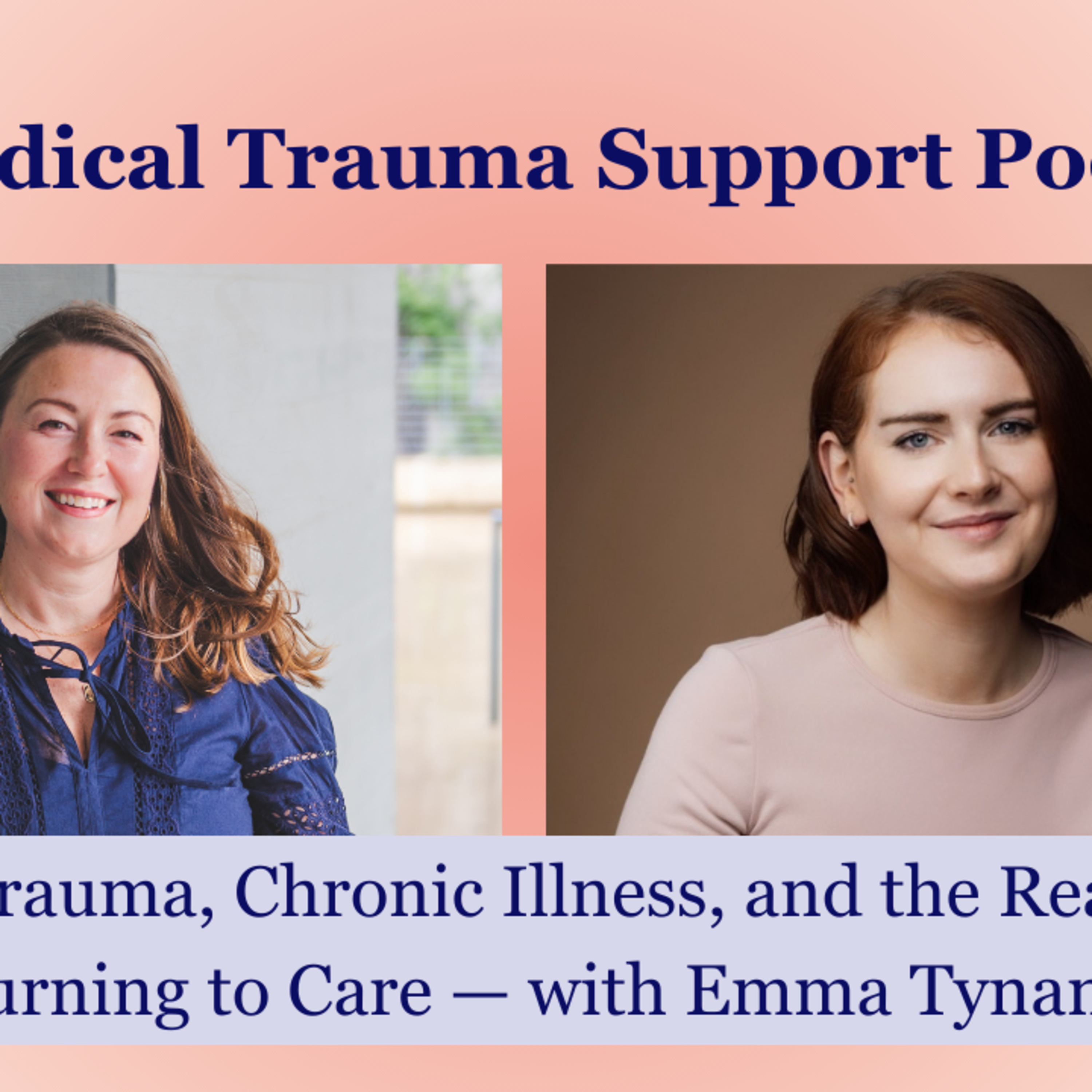 Medical Trauma, Chronic Illness, and the Reality of Returning to Care — with Emma Tynan 19.12.2025 47mWhat happens when the place that caused trauma is also the place you must return to for care?In this episode of the Medical Trauma Support Podcast, Sarah Stasica is joined by Irish psychotherapist and former emergency department nurse Emma Tynan for a deeply compassionate conversation about medical trauma, chronic illness, and the nervous system.Emma shares her journey from working in emergency care to becoming a trauma-informed therapist specializing in medical trauma and chronic illness. Together, they explore why medical trauma is uniquely complex — because unlike many other forms of trauma, healing often requires returning to the very environment where harm occurred.This episode gently unpacks:Why returning to hospitals and medical settings can feel terrifying — even years laterHow medical trauma and chronic illness impact the nervous systemWhat it means to “fall apart” in medical settings — and why that response makes senseThe importance of co-regulation, support people, and realistic expectationsWhy “good news” medically doesn’t always mean emotional reliefHow caregivers and loved ones are often traumatized tooWhy compassion — not self-judgment — is essential for healingWhether you’re living with chronic illness, navigating medical trauma, supporting a loved one, or working in healthcare, this conversation offers validation, nervous-system wisdom, and a powerful reminder:Your experience deserves recognition — even when healing isn’t linear.If you’ve ever avoided medical care, felt ashamed of your reactions, or wondered why your body responds the way it does — this episode is for you.Connect with Emma Tynan Emma Tynan Instagram Emma's Therapy Academy CourseMidlands Counselling ClinicConnect with Sarah at Medical Trauma SupportBefriend Your Body Community
 -
Finding Light After Catastrophic Trauma: A Conversation with Seantae Jackson of the Sandal Blue Foundation 05.12.2025 48mIn this episode, I’m joined by Seantae Jackson, speaker and co-founder of the Sandal Blue Foundation, who shares the life-changing story of the catastrophic car accident that reshaped her family’s world — and how that moment led to the creation of a nonprofit supporting survivors after severe crashes.We talk about:• Navigating medical trauma and long-term recovery• Parenting a child with a severe TBI and rediscovering hope• The healing power of community and nervous system regulation• Why asking “What can I do?” can transform the recovery journey• Support for caregivers and the unseen layers of traumaWe also pause for a grounding straw-breath exercise to help listeners regulate as the story unfolds.This episode is emotional, inspiring, and full of hard-earned wisdom. If you’ve ever felt alone in your healing, may this conversation help you look up and see that your island is closer to others than you think.Connect with Seantae at sandalbluefoundation.org or @seantaejacksonperspectives or [email protected] out more about Sarah's support community, the Befriend Your Body Community.
-
Medical Trauma, Endometriosis, and Finding Healing Through Community with Shakira O’Garro 21.11.2025 45mIn this episode, Sarah sits down with therapist and founder Shakira (Kira) O’Garro to talk about her powerful journey through endometriosis, medical gaslighting, and reclaiming trust in her body. Together, they explore how trauma responses like shutdown and fawning show up in medical settings, the importance of somatic healing, and the transformative power of community and faith.Whether you’ve experienced medical trauma yourself or support others on their journey, this conversation will leave you feeling seen, validated, and hopeful. Please share this episode with anyone who would benefit, the more we share, the more we spread awareness of medical trauma as well as the awareness that we can recover. Get in touch with KiraCheerful Heart Mental Health Counseling Get in touch with SarahMedical Trauma Support Website Befriend Your Body Community
-
Helping Kids Feel Safe During Medical Care: How Play Can Prevent Fear and Anxiety with Mary Jenner, RN, BSN 07.11.2025 36mMany kids feel anxious or afraid during medical visits — and parents often feel helpless watching it happen. In this powerful conversation, Sarah talks with Mary A. Jenner, pediatric nurse and founder of The Butterfly Pig, about how medical play can help children feel safe, brave, and confident during medical care.They explore how fear, anxiety, and even trauma can develop from medical experiences — and how parents and providers can take small but meaningful steps to prevent it.You’ll learn:• How to prepare kids for medical visits through play• What parents can say and do during procedures to reduce fear• Why simple tools like the Buzzy Bee or toy medical devices make a big difference• How to advocate gently but effectively for your child’s emotional safetyWhether you’re a parent, healthcare provider, or someone who’s had your own difficult medical experiences, this episode offers hope, compassion, and practical tools to help you and your loved ones feel safer in care settings.Guest: Mary A. Jenner, RN, Founder of The Butterfly PigLinks: Parent ResourcesKeywords: fear of doctorschild anxiety at doctorpreparing kids for medical procedureshow to help kids feel safepreventing trauma in healthcarepediatric medical playnervous system regulationsupporting children through medical care
Podcasts similares


Popular en
Este podcast también aparece en las listas de podcasts de estos países.
