
Sticky Notes: The Classical Music Podcast
Joshua Weilerstein
0
Sticky Notes is a classical music podcast that aims to make classical music accessible to everyone, from newcomers to lifelong enthusiasts. Hosted by Joshua Weilerstein, the show features interviews with great artists and in-depth explorations of pieces from the repertoire. It covers all eras of music with both basic and deep dives, emphasizing that classical music is for everyone. Seasons 1-5 are being re-recorded for improved sound quality and will be re-released.
Osad
-
 Shostakovich Symphony No. 6 17.09.2026 1t 2minDmitri Shostakovich: "I have set myself a task fraught with tremendous responsibility, to express in sound the immortal image of Lenin as a great son of the Russian people and as a leader of the masses. I have received numerous letters from all over the Soviet Union with regard to my future symphony. The most important advice contained therein was to make considerable use of musical folklore." In the massively consequential year of 1939, Shostakovich used these words to launch his Sixth Symphony. The piece was meant to have soloists and a chorus alongside the orchestra — perhaps a nod to his Second and Third Symphonies, which were essentially propaganda pieces. Shostakovich even promised to use the poem "Vladimir Ilyich Lenin" by Vladimir Mayakovsky as the basis for his choral text. The Soviet public eagerly awaited this new symphony, which was inevitably going to be compared with his Fifth Symphony — the piece that had brought Shostakovich back into the Soviet government's good graces, and which remains one of his most popular works even as it's also one of his most complex and nuanced pieces beneath its relatively conservative surface. But whether Shostakovich ever actually planned to write this gigantic "Lenin" symphony is highly doubtful, since no sketches of it have ever turned up. Instead, Shostakovich pivoted publicly to describing his new symphony this way: "The musical character of the Sixth Symphony will differ from the mood and emotional tone of the Fifth Symphony, in which moments of tragedy and tension were characteristic. In my latest symphony, music of a contemplative and lyrical order predominates. I wanted to convey in it the moods of spring, joy, youth."[6] As you can see, Shostakovich wasn't actually saying much about the content of the symphony — if anything at all. He was leaving things deliberately ambiguous, and, fittingly, ambiguous is a pretty good description of this highly enigmatic symphony. Everything about this symphony is slightly off. It's in three movements, not the typical four, and it opens with a massive slow movement; the two remaining movements are fast and significantly shorter, together lasting less than the first movement alone. It was written in 1939 — supposedly a year of military triumph for the Soviet Union, given the Stalin pact with Hitler that allowed Hitler to invade Poland and launch World War II — and yet there is not a hint of military triumphalism in it. In short, this symphony confused a lot of people and has always received mixed reviews, whether from musicologists trying to fit it into the traditional "everything in Shostakovich is about Stalin" narrative, or from Soviet critics of the time trying to fit it into Socialist Realist aesthetics. In the end, descriptions of Shostakovich always attempt to put him into a box — silent dissident, Soviet stooge, hero, coward, etc. The truth, of course, is complicated, and this symphony is a great example of the eternal enigma that is Dmitri Shostakovich. Today, on this Patreon-sponsored episode, I'll take you through this wonderful symphony from a musical perspective, trying to parse its unusual form, its unusually lyrical first movement, and the wild, madcap dash of the final two movements. Join us!
 -
 Grieg: Peer Gynt 03.09.2026 1t 7minGrieg's Peer Gynt suites are among the best-known and best-loved works of classical music in the world. They are practically embedded into popular culture, being used in a dizzying number of cartoons, advertisements, and films. In the classical music world, as with Beethoven's 5th symphony, they have almost become a cliché, and they are often performed on so-called Pops concerts. The two big hits from Peer Gynt, Morning Mood and In the Hall of the Mountain King, are instantly recognizable to the general public, even if they don't know who wrote the music or where it comes from. And where all this music comes from is really interesting, and is going to be one of the main topics of this show. Because the famous music from Peer Gynt comes from the two suites that Grieg took from his massive score of incidental music to Henrik Ibsen's play in verse, Peer Gynt. The two suites together take about 45 minutes to perform, but Grieg actually wrote an extra hour's worth of music! He then extracted, for his suites, the music that he felt would stand on its own without the text, and this was quite a good decision, as they are certainly his most popular pieces and have etched his name into the classical music pantheon forever. But what about the rest of that music? What about the play itself? Today, on this Patreon-sponsored episode, we'll tell the story of the origins of Peer Gynt, both from Ibsen and from Grieg, and then we'll go through the nearly 2 hours of incidental music, most of it in a bit of a cursory way (which frankly is perfectly appropriate for Grieg, whose music abounds with naive simplicity and gorgeous tunes), but all the way through we are going to tell the wacky, wonderful, and way-ahead-of-its-time story of Peer Gynt, all through the music that Grieg wrote. On the show today you'll hear some of the most famous music in the world, and then some music that only the most passionate of connoisseurs have encountered. So, in essence, my kind of show. Join us!
 -
 Mozart Clarinet Concerto 20.08.2026 51minWhen it comes to a piece like the Mozart Clarinet Concerto, a few words or phrases regularly come up: the concerto is described as "mellow" or Mozart's "swan song," but most often it is described as "perfect." Such a perfect piece as Mozart's Clarinet Concerto must have been hugely popular during Mozart's lifetime, right? It must have been played all over, by all the virtuoso clarinetists of the day. Well, that is not even close to the case. At the age of 35, Mozart was kind of old news in the economically depressed, repressed, and censored city of Vienna in 1790. There were very few concerts during this period, and Mozart's popularity had waned severely. The clarinet concerto, one of a wealth of brilliant (and yes, perfect) pieces Mozart wrote in the final year of his life, was performed once by the man for whom Mozart wrote it, Anton Stadler, before Mozart's death, but the location and the program of that concert are forgotten. The manuscript of the concerto is lost, which means we actually don't know a lot about it, especially considering it wasn't actually written for a standard clarinet, but for a basset clarinet (we'll get to that later). The piece was written just about two months before Mozart's death and was his last completed work, though there's absolutely no evidence that Mozart knew he was dying when he wrote it. All in all, there's actually a lot of mystery surrounding this perfect piece, and yet, when we hear the luminous music that Mozart wrote, all of this falls away. There is truly a kind of perfection to this music, a golden quality that is inescapable. There is no clarinet concerto that is performed more often or more recorded, and it remains a perennial favorite for clarinetists and orchestras around the world. Today, on this Patreon-sponsored episode, we'll talk about all these mysteries surrounding this concerto, Anton Stadler, the basset clarinet, and of course, the wonderful music itself, though, as always, Mozart sometimes defies description. Join us!
 -
 Bohuslav Martinu Symphony No. 1 06.08.2026 1t 1minIt took a lot to make the composer and critic Virgil Thomson happy. He was famous for savaging new works he didn't like, and the truth is, he didn't like very many new works at all. One exception was Bohuslav Martinů's very first symphony, written in 1942. Thomson said this: "The Martinů Symphony is a beaut. It is wholly lovely and doesn't sound like anything else." The story of how this symphony came to be is as fascinating as the music itself, and it's perfectly in keeping with the relentless curiosity of Martinů as a composer. Martinů, a prolific composer who wrote nearly 400 works, had just arrived in the US in 1941 as a refugee from war-torn Czechoslovakia. He was 51 years old and had never written a symphony before. This delay wasn't a case of crushing self-doubt, as it was for Brahms. It was actually a seeming lack of interest in the symphonic genre, which was not unusual at the time. But in 1942, Martinů sent a letter to Serge Koussevitzky, the music director of the Boston Symphony Orchestra and a friend to the dozens of refugee composers who had arrived from Europe during the early days of World War II. Koussevitzky commissioned Martinů to write a large-scale work, and Martinů responded with his First Symphony -- a perfect welcome to his new home, and to the grand adventure he was setting off on in a country he found intimidating, exciting, and full of opportunity. The result is a piece of remarkable contrast, energy, light, and boisterous hope, given the situation back in his homeland. As the sponsor of this episode, Pere Casan Bonet, put it, the symphony is "a pool of energy that makes me feel optimistic even at my lowest points." We'll start today with a quick overview of Martinů's life and work, since he might not be the most familiar composer to you, and then we'll talk our way through this incredible First Symphony. Martinů has always been one of my favorite "underrated" composers, so it's a thrill to get to talk to you about him today. Join us!
 -
 Scriabin Poem of Ecstasy 23.07.2026 51minThence the universe resounds With a joyful cry I AM. These are the final lines of Alexander Scriabin's epic Poem of Ecstasy, a 300-line poem that takes nearly 10 minutes to read aloud and is one of the most surreal texts in the world. Scriabin wrote a Poem of Ecstasy in text and a Poem of Ecstasy in music simultaneously. Both are absolutely wild, with the musical Poem of Ecstasy being a 20-minute thrill ride that alternates between languid, sinewy, seductive music and some of the loudest, most over-the-top, and dramatic music that could possibly exist. I've always been fascinated by Scriabin, and so this week's episode is an opportunity to talk about his wild (I'm going to be using that word a lot today) life and the eclectic philosophy behind Scriabin's works, as well as to take you through this masterpiece of musical sensuality. Scriabin not only doesn't shy away from sensual aspects in music but instead fully embraces them; in fact, the original title for this piece was Orgiastic Poem! Thankfully, since the piece probably would have never been performed with that title, Scriabin changed the name to Poem of Ecstasy, and the piece has stayed in the repertoire of most big orchestras ever since. And big is the key word here, because this piece is written for an absolutely massive orchestra. Like a Mahler symphony, the Poem of Ecstasy is an event whenever it is performed, simply from seeing the sheer size of the orchestra on stage when you see this piece live in concert. It is truly an overwhelming experience to listen to this piece, and I can't wait to share it with you this week. Join us!
 -
 Sibelius Tapiola 10.07.2026 47minAncient, mysterious, brooding savage dreams; Within them dwells the Forest's mighty God, And wood-sprites in the gloom weave magic secrets. These lines are affixed to the first page of Sibelius' tone poem Tapiola, a piece that is mysterious in many ways and stands as Sibelius' last completed major work. You might be expecting me to say that Sibelius died soon after its composition, but this is not the case. Sibelius wrote Tapiola in 1926, but did not pass away until 1957. Over the course of Sibelius' final 30 years, he wrote almost no music, a creative silence that has never been properly explained. There are many theories about this silence, but the answer to why Sibelius stopped composing might never be found. So, we have this final major piece, Tapiola, written at the very height of the composer's powers. Tapiola, a piece of around 15–20 minutes in duration, is concentrated Sibelius at its very best. It is a piece full of mystery, atmosphere, and most of all, the immense and overwhelming power of nature. Tapiola directly translates to "The Realm of Tapio," Tapio being the forest spirit that is prominent in the Finnish national epic myth, the Kalevala. Throughout this piece, Sibelius uses an incredible economy of ideas to create something wholly unique. There is not a single composer who sounds like Sibelius, and furthermore, no piece of Sibelius' that sounds like this one, save maybe for the 7th symphony, written just before Tapiola. It is a piece absolutely at odds with modern life, with the speed and energy of a city, with the short, attention-grabbing dopamine hits of social media, and even with our modern understanding of nature. As the writer Jay Goodwin says, "Like all art, music is chiefly a humanistic pursuit, meant to provide us with a window to our world. In this piece, however, there is the hair-raising sense that the paradigm has been reversed and that we are the ones being watched. There is the sense that the music is listening to us." I would only change one word in that quote: during Tapiola, I think we have the sense that nature is listening to us, because this music is, essentially, nature. I can't wait to talk you through this wonderfully enigmatic work. Join us!
 -
 Arthur Honneger, Symphony No. 3, "Liturgique" 25.06.2026 53minIn the aftermath of World War II, the Swiss composer Arthur Honegger, who had been living in occupied Paris throughout the war, wrote a new symphony entitled "Liturgical." He wrote an extended commentary on the piece, which included these lines: "My intention in this work was to symbolize the reaction of modern man against the morass of barbarism, stupidity, suffering, machine-mindedness, and bureaucracy that has been besieging us for some years now. I have reproduced in musical terms the combat that is joined in man's heart between yielding to the blind forces that encircle him and his instinct for happiness, his love of peace, his apprehension of a divine refuge. My symphony is, if you like, a drama played out between three characters, whether real or symbolic: misery, happiness, and man. These are everlasting themes. I have tried to give them new life." It doesn't get much clearer than that in terms of a "message" behind a piece, and the symphony reflects these feelings of Honegger's in almost every note. This is not a symphony to be taken lightly, and over the course of its roughly 30-minute runtime, Honegger explores these ideas from three different perspectives, all centered around the Catholic liturgy. In this symphony, we find an attempt at understanding after the unthinkable had occurred, a passionate condemnation of war, and a search for eternal peace. This is a symphony that, in its heyday, was fairly popular, with recordings by two of the world's great conductors, Herbert von Karajan and Charles Munch, but it slowly faded from concert stages and is now very rarely performed. Thanks to Staffan for sponsoring today's episode on this symphony, which was a discovery for me and which I think will be a discovery for many of you as well. Today we'll talk about the detailed program that Honegger attached to the symphony, the liturgical connections in the piece, and of course the music itself. Join us!
 -
 Dvorak Piano Quintet, Op. 81 11.06.2026 49minIn 1872, at the age of 31, Dvořák wrote a Piano Quintet designated as Opus 5. Dvořák was not a prodigy like some other famous composers; instead, his development as a composer was slow and steady. Later in his life, he would look back at some of these early pieces with a mix of nostalgia and embarrassment, burning some and revising others. In the case of the Op. 5 Piano Quintet, Dvořák decided to revise the piece in 1887, some 15 years after its original composition, at a point when he was approaching the peak of his creative powers. Soon, however, he cast aside the older quintet and decided to write an entirely new piece. What we were gifted was his Op. 81 Piano Quintet: a luminous, gorgeous, exciting, tragic, joyful, folk-like, classical, and flat-out masterful work that in some ways sums up what makes Dvořák such a wonderful composer, and why his music never really gets old. The Dvořák Piano Quintet is the kind of piece that feels like an old friend from the moment you start listening. Forty minutes later, as it comes to its rollicking end, you feel as if you've been on a journey through a familiar tale told in the most illuminating way. I've always adored this piece, and now that I'm able to explore more chamber music on the show, I'm thrilled to share it with you this week. We'll talk about Dvořák's blend of folk-like sonorities with his adherence to classical forms, his inexhaustible melodies, and the intangibles that make his music so fresh and inviting. Join us! Recording: Cleveland Quartet w/ Emanuel Ax
 -
 Mozart String Quartet, K. 465, "Dissonance" 28.05.2026 49minYou might be wondering: why on earth would I choose a piece that is literally called "Dissonance" when I was looking for something a bit simpler or cleaner to talk about on the show today? Actually, Mozart's Dissonance quartet, probably his most famous and beloved quartet, was not called "Dissonance" by Mozart, and the rest of the piece is thought of as one of Mozart's most outgoing and cheerful works, though I think there's a bit more to it than that. This quartet was part of a set of quartets dedicated to his friend and mentor Joseph Haydn, the father of the String Quartet. Upon their publication, Mozart wrote to Haydn: "Behold here, famous man and dearest friend, my six children. They are, to be sure, the fruit of long and arduous work, yet some friends have encouraged me to assume that I shall see this work rewarded to some extent at least, and this flatters me into believing that these children shall one day offer me some comfort." The final one of this set of six quartets is the one we're going to talk about today, the one that has been dubbed "Dissonance." This single dissonance caused massive controversy in its time, which we'll get to later, but it is a fascinating insight into the rules of harmony at the time. Our sojourns into late Romanticism over the last few weeks, and especially my conversation with Case Scaglione about Wagner and the Tristan Chord, should help us understand the intensely heated debates that arose over that chord I just played you. So today on the show, we'll spend some time on that famous dissonance, then dive right into this glorious quartet, exploring Mozart's unparalleled ability to write the most glorious melodies and the most perfect harmonies. Recording: Alban Berg Quartet First Sight Analysis: https://www.youtube.com/watch?v=IctjJOMU9dk Produced by: Charlie Koczela
 -
 Bonus Episode: Beethoven 5 en français! 15.05.2026 42minBienvenue dans cette édition spéciale du podcast Sticky Notes en français ! Aujourd'hui, nous parlons de la symphonie la plus célèbre du monde, et de la symphonie que nous allons interpréter à Lille les 21, 22 et 23 mai, la 5e symphonie de Beethoven. Et veuillez me pardonner pour toutes les erreurs de prononciation dans ma deuxième langue ! Bonne écoute ! »
 -
 Liszt Faust Symphony 14.05.2026 1t 3minThank you to Jerry for sponsoring today's episode on Patreon! Goethe's Faust is considered to be the greatest work of German literature. This sprawling, 2-part play occupied Goethe's life for nearly 60 years, from its original version, begun in 1772, all the way to Goethe's final revisions before his death. It inspired just about every Romantic era composer who came after it, including Beethoven, Schubert, Schumann, Brahms, Berlioz, Gounod, Mahler, and our subject for the show today, Franz Liszt. Liszt, who was in many ways the world's first pop star, was initially skeptical of Faust, saying that he couldn't relate to the eponymous main character of the play. He wrote: "Faust's personality scatters and dissipates itself; he takes no action, lets himself be driven, hesitates, experiments, loses his way, considers, bargains, and is interested in his own little happiness." But slowly, Liszt began to be taken in by this remarkable play and decided to try his hand at a reflection on it, writing a massive, 3-movement, 75-minute-long symphony that never attempts to tell the story of Faust, but instead reflects on the psychological nature of the 3 central characters: Faust, Gretchen, and Mephistopheles (the Devil). A lot of English-speaking listeners will know this as the story of a man who sold his soul to the devil, but for Goethe it was much more than that, and it was for Liszt as well. I've never talked about Liszt on the show, because frankly I've never been in love with his music. But this is one of the great things that these Patreon-sponsored episodes can do — help me discover pieces that I've never come across before. So today, we're going to talk about Liszt, Faust, and then take a stab at some of the greatest moments in this symphony. We'll talk about thematic transformation, a technique Liszt essentially invented and which is a vital part of understanding this piece.
 -
 Schubert: Die Schöne Mullerin Mini-Episode No. 1 (Free Preview) 08.05.2026 6minThis is a free preview of my new series of mini-episodes over on Patreon all about Schubert's Die Schöne Mullerin, one of the great masterpieces of the 19th century. Each week we'll explore one song from the cycle, in a series of 21 episodes! Come join us over on Patreon.com/stickynotespodcast and thanks for listening!
 -
 Wagner: Prelude and Liebestod from Tristan and Isolde w/Case Scaglione 01.05.2026 50minThis is a continuation of my new series where I learn about a new piece from a great friend/musician. This week I'm thrilled to welcome Case Scaglione, the Music Director of the Orchestre National D'Ile de France, for a discussion of the Prelude and Liebestod from Wagner's Tristan and Isolde. This is one of the most beloved pieces in the entire repertoire, and my longtime skepticism of Wagner has always kept me away. But Case has such a beautiful way of talking about Wagner that I might very well be convinced to give it another shot! This is a really fun and also philosophical episode - I hope you enjoy it! https://open.spotify.com/track/3HcRU6WhAZ6ZON9tFhanJv?si=4cf47cfde06a4434 https://open.spotify.com/track/7AtzmeOGG4PdXcfoVklSo1?si=69034a5a52704929
 -
 Lili Boulanger: Psalm 130 16.04.2026 46minThe story of Lili Boulanger's life is one of the most fascinating and tragic in all of musical history. A remarkably precocious talent, Boulanger learned to read sheet music before the alphabet, played the violin, piano, cello, and harp, and composed regularly from a young age. Despite her talent and commitment, Boulanger suffered from chronic illness her entire life, which severely dampened her budding career and prevented her from reaching her potential. She died at the age of just 24, likely from Crohn's disease, and left behind several spectacular pieces that unfortunately were soon relatively forgotten. Boulanger's sister, Nadia, became one of the preeminent composition teachers of the 20th century, working with luminaries such as Aaron Copland, Elliott Carter, David Diamond, Philip Glass, Astor Piazzolla, and many more. But throughout the 20th century there was very little interest in Lili Boulanger's musical output. That has changed somewhat with a renewed focus on bringing the works of female composers to the stage, and this has led to an explosion of performances of a few works, specifically Boulanger's brilliant short orchestral pieces D'un Matin de Printemps and D'un Soir Triste. But there is still a dearth of performances of some of Boulanger's great choral pieces, and in particular of Psalm 130, a piece that I find to be absolutely stunning but which is almost never performed. The piece, written in memory of Lili and Nadia's father Ernest, is a lament that shows off the potential of the 22-year-old composer, writing a piece far beyond her years in its emotional maturity and technical construction. In many ways, Lili Boulanger should be thought of in the pantheon of the great musical prodigies in Western classical music. Unfortunately she should also be thought of in the pantheon of the great composers who died tragically young. Today on the show, we're going to do a brief overview of Lili Boulanger's life to orient you into her style, and then we'll go through this gorgeous piece, talking about Boulanger's influences and her creative use of those influences, and discussing whether the piece was autobiographical or not. I think you will really discover something very special with this piece, so come join us!
 -
 Tchaikovsky Symphony No. 6 (Part 2) 02.04.2026 48minIn a letter to Tchaikovsky's nephew Vladimir Davydov, Tchaikovsky wrote: "I'm very pleased with its content, but dissatisfied, or rather not completely satisfied, with the instrumentation. For some reason it's not coming out as I intended. It would be typical and unsurprising if this symphony were torn to pieces or little appreciated, as that wouldn't be the first time such a thing had happened. But I absolutely consider it to be the best, and in particular the most sincere, of all my creations. I love it as I have never loved any of my other musical offspring." I'm returning to that word sincere this week for Part 2, because it's the through line that makes Tchaikovsky's music so immediately arresting. You always know exactly where you stand with Tchaikovsky, since he always seems to be speaking so honestly in his music. Well, almost always. The last two movements of Tchaikovsky's 6th Symphony are among the most fascinating in the entire Western classical repertoire, and the reason for their fascination (beyond simply being wonderful movements) is the order in which Tchaikovsky places them. In a typical symphony, the third movement would be either a fast scherzo or a slow movement, depending on what the second movement had been. Since the second movement of this symphony was a waltz, audiences would have expected a slow third movement followed by a fast finale to send them home with some energy. But that is not what Tchaikovsky does. Instead, we hear a thrilling, exhilarating scherzo followed by a devastating slow movement, a choice that completely upended the form of the symphony as a genre, and was revolutionary for its time. Why did Tchaikovsky do this? And why did this decision, in part, fuel massive controversy surrounding his death, just nine days after the symphony's premiere? We're going to explore all of that today, including the many theories about Tchaikovsky's death, before examining the 3rd and especially the 4th movements of this masterpiece in detail, unpacking the nuances of these profoundly contrasting movements.
 -
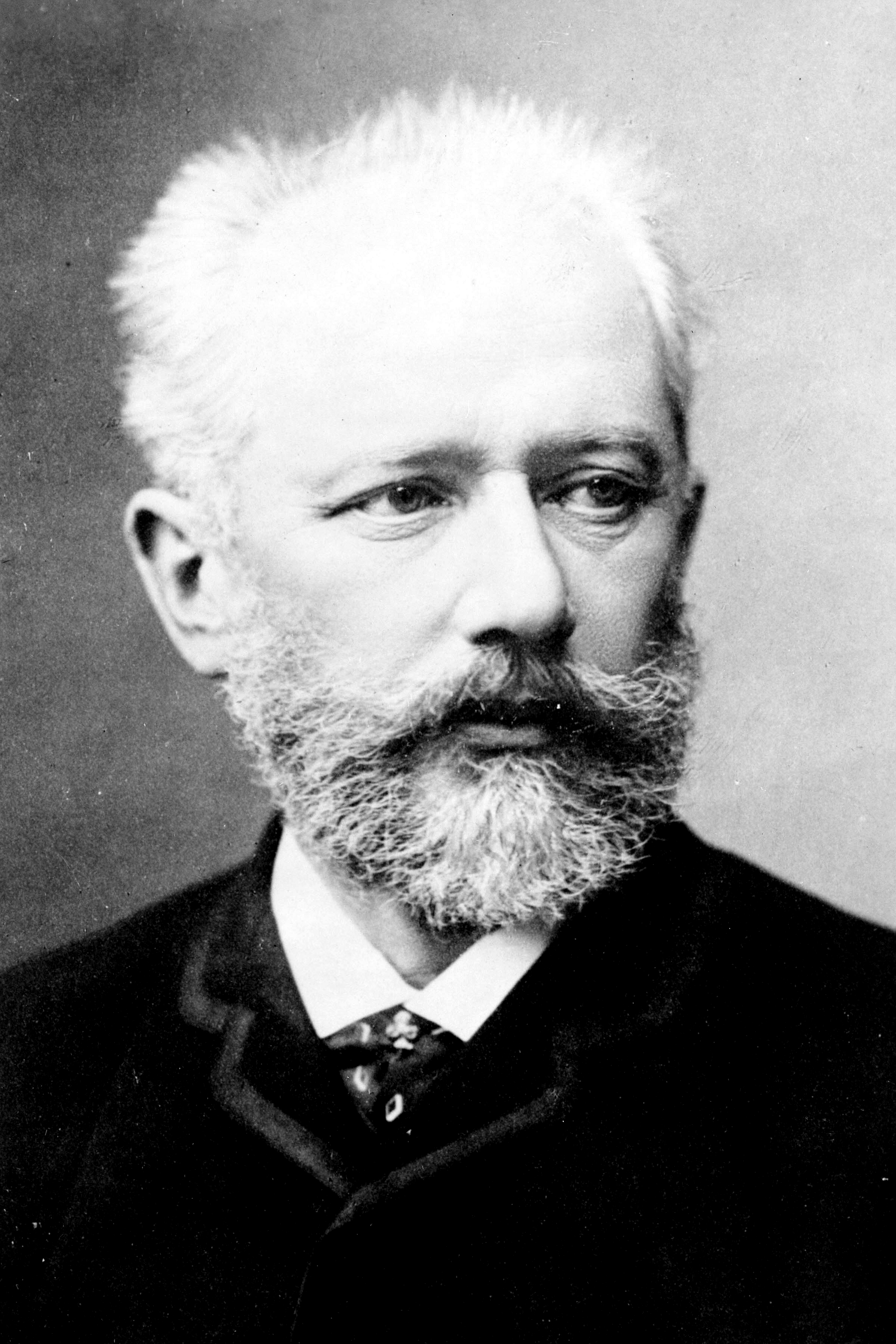 Tchaikovsky Symphony No. 6 (Part 1) 21.03.2026 50minThe great and somewhat controversial conductor Leopold Stokowski said this about Tchaikovsky: "His musical utterance comes directly from the heart and is a spontaneous expression of his innermost feeling. It is as sincere as if it were written with his blood." I couldn't agree more with Stokowski, because I think he hits on a word that has made Tchaikovsky's music so powerful to almost every audience that encounters it: sincere. Tchaikovsky's music is so profoundly moving because you feel as if there is no gap between the music and Tchaikovsky's emotions. It's as if he is earnestly speaking to you through his music. But paradoxically, this ability that Tchaikovsky had made him a punching bag of critics and cynics throughout his career and even into today. Even though Tchaikovsky remains one of the most popular composers in the Western Classical canon, his name is still not treated with the respect of a composer like Beethoven or Brahms or other luminaries. I understand that, but I also think Tchaikovsky's skills as a composer are extremely underrated, which brings me to Tchaikovsky's 6th and final symphony, nicknamed the "Pathetique." Tchaikovsky's 6th symphony essentially rewrites the traditional symphonic form. It is one of the few 19th century symphonies that end quietly, and that ending is one of the most extraordinary and daring in the entire repertoire. It is a piece of remarkable complexity and brilliant construction, and it packs an emotional wallop that leaves you walking out of the hall slightly changed from the way you walked in. In fact, this piece is so multi-layered that I wanted to devote some extra time to it, so I've decided to make this a two-part episode. This week, we're going to talk about the controversies over Tchaikovsky's emotional state as he composed this symphony, and the first two movements of the piece: a massive, 17-minute first movement that ingeniously melds multiple different symphonic forms into one long breath, and a waltz with a twist. We'll get into a lot more detail than we usually do, giving us a chance to really give Tchaikovsky the respect he deserves.
 -
 Beethoven String Quartet, Op. 59, No.2 05.03.2026 56minI'm always tickled by composer trivia questions, like which standard canon works begin in a major key and end in a minor key? I'll give you one, but please comment others below: Mendelssohn's 4th Symphony. Well, how about this one: how many of Beethoven's 16 string quartets end in a minor key? The answer? Just one, Op. 59, No. 2, the subject of today's show. And that minor key is hugely important to this darkest of the three Op. 59 quartets, three towering achievements that changed the string quartet repertoire for good. Beethoven, as I've said many times on the show, was a revolutionary within limits, always expanding, rethinking, and reshaping what was possible without breaking anything beyond repair. But make no mistake: the Op. 59 quartets were revolutionary works. No one had written anything like them before in terms of scope, emotional intensity, difficulty, and complexity. In fact, like a few of Beethoven's greatest works, they were received with confusion and, in some cases, anger by musicians, audiences, and critics. Famously, the cellist of the first string quartet to receive the parts of Op. 59, No. 1 saw the Morse code-like, one-note theme of the second movement, threw the music aside, and stomped on it! These quartets were Beethoven going out on a limb, applying the intensity and drama of his Middle Heroic Period to a genre that had been at least partly the province of amateur musicians, but not anymore. Op. 59, No. 2, as I said, is the darkest of this group: four movements all centered around the key of E, and with the exception of the glorious second movement, all in minor, presenting a seriousness and directness of purpose that is powerfully compelling. This might be my favorite of the Op. 59 quartets, and so I'm very excited to dig into it with you today. We'll discuss the enigmatic and ecstatic aspects of this quartet, as well as Beethoven's own philosophical views on life, which come to light in the second movement, one of Beethoven's greatest creations. Recording: Cleveland Quartet
 -
 Brahms Symphony No. 2 LIVE w/ The Aalborg Symphony 19.02.2026 58minBrahms spent much of his adult life battling with his ambition to write the next great symphony and his terror at the shadow of Beethoven standing behind him. Brahms tortured himself for 14 years with his first symphony, and only published it when he was 49 years old. But when that symphony finally came out, it was a relative success for a new work, and with immense relief, Brahms quickly turned out another symphony in just 4 months. Brahms' first symphony was quickly dubbed "Beethoven's 10th" something that annoyed Brahms to no end. When told that the main theme of the last movement resembled the Ode to Joy, he notoriously responded, "any ass can see that!" But all the same, Brahms had been re-anointed as Beethoven's successor with the symphony, and so therefore his second symphony would also be given a Beethovinian name, Pastoral. The question since the symphony has been written has been this: just how pastoral and idyllic is this symphony? Many commentators see an unadulterated joy and gentleness in the piece, with some melancholy moments to be sure. But overall, the piece is as sunny as it seems on its surface, with just the typical battles between happiness and sadness that mark every symphony. But there's another school fo thought with this symphony, and that is that it is marked by shadows and tremors that go way beyond simple sadness and happiness, and that these shadows and tremors leave a mark that can't be ignored. I tend to believe in the second theory, but we're going to discuss this symphony with this framework in mind; whether this piece is as sunny as some people would have you believe, or if the shadows are the lasting impression we get as we walk away from the concert hall. We'll also discuss Brahms' innovations with form, and his evergreen ability to write some of the most stunning melodies on the planet. Join us!
 -
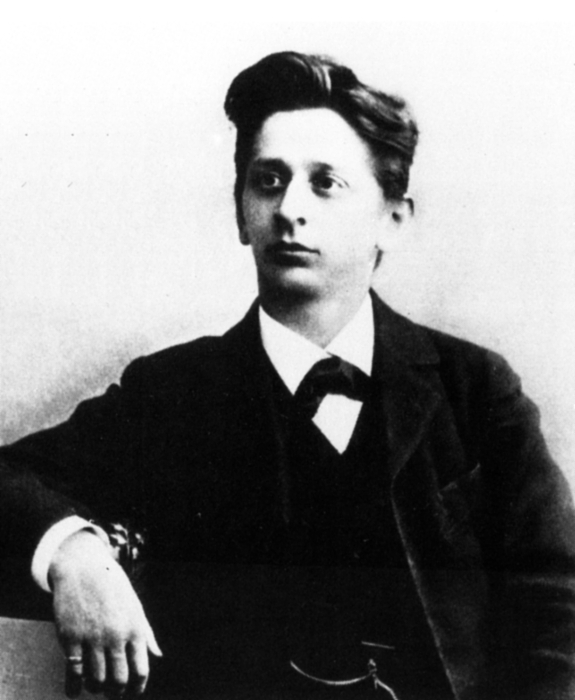 Zemlinsky: The Mermaid 05.02.2026 1t 1minThe story of Alexander von Zemlinsky's The Mermaid begins with a passionate love affair and ends in heartbreak of the most unabashedly big-R Romantic kind. In 1900, the young, fabulously talented, and famously beautiful Alma Schindler came to Zemlinsky's home to study composition. Wildly passionate feelings soon developed between them, and Alma wrote the following in her diary: "I would gladly be pregnant for him, gladly bear his children. His blood and mine, commingled: my beauty with his intellect. I would gladly serve him in his professional life, live for him and his kith and kin, breathe [for him], attend to his every happiness, serve him with a gentle hand. God give me the strength and the willpower to do so." The relationship lasted a little over a year, until one night when Schindler attended a party that happened to be frequented by a brilliant conductor and composer twenty years her senior: Gustav Mahler. The rest is history. Zemlinsky was devastated and poured his energies into a tone poem based on Hans Christian Andersen's The Little Mermaid. The source may seem surprising, but as we'll see later on, it proved to be the perfect vehicle for Zemlinsky to exorcise the tortured memories of this turbulent relationship. For a long time, however, the score was lost. It wasn't until the 1980s that the full work was reconstructed, and it has since become one of Zemlinsky's most frequently performed pieces. And it's not hard to see why. The Mermaid is a forty-minute tone poem that, from start to finish, overflows with fin-de-siècle romanticism, very much in the vein of Schoenberg's Verklärte Nacht (Transfigured Night). It is a work of irresistible beauty and passion, and it is being played more and more as Zemlinsky's name begins to take its rightful place in the standard canon of composers. Today on the show, I'll tell you a bit more about Zemlinsky in case you're not familiar with him, read more of the unbearably passionate letters and diary entries from both Zemlinsky and Alma Schindler, and, of course, walk you through the heartbreakingly beautiful music of The Mermaid, showing how Zemlinsky balances narrative and abstract form, and how he created this opulent, lush, and profoundly moving score. Join us!
 -
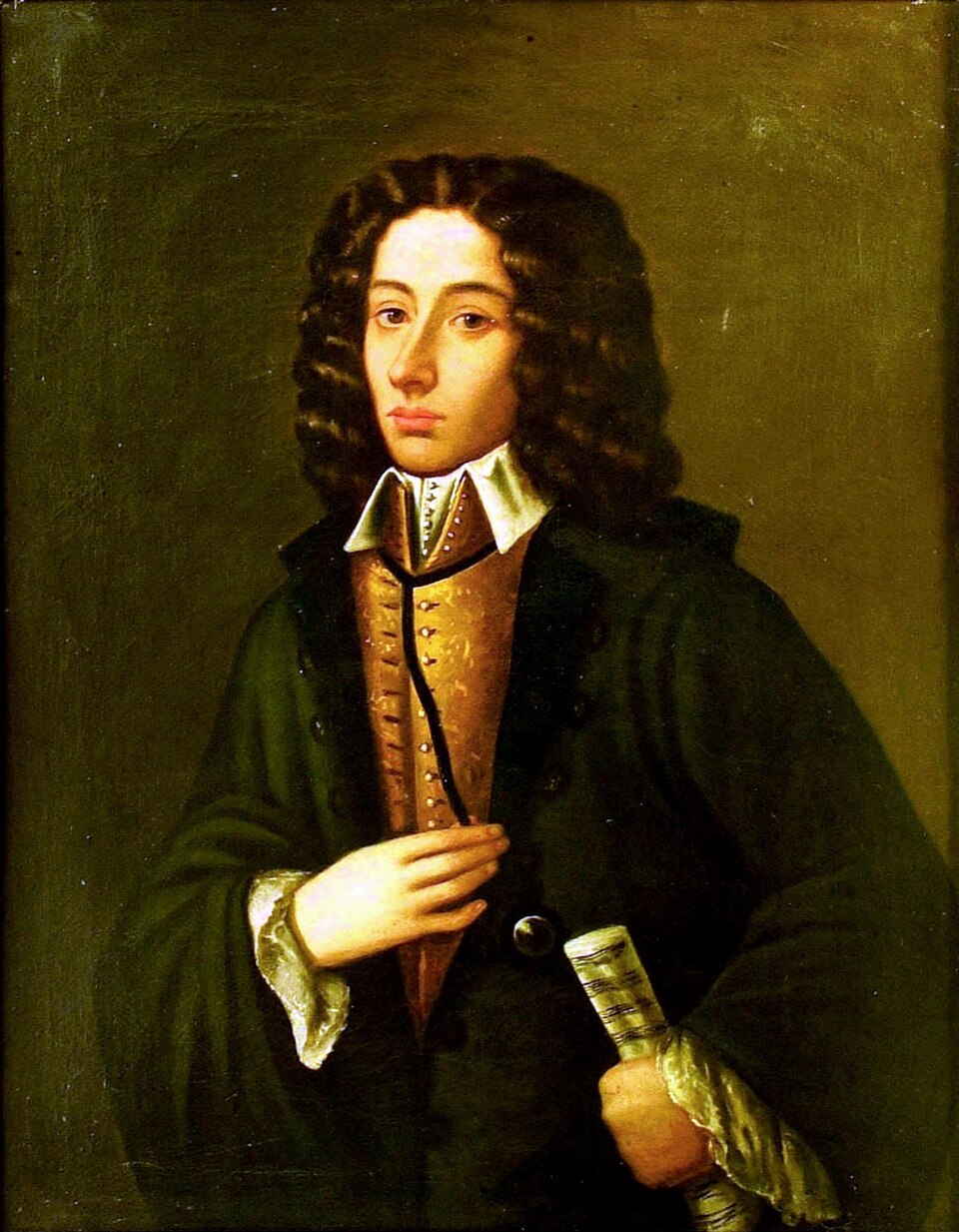 Pergolesi Stabat Mater 22.01.2026 59minMany aspects of Giovanni Battista Pergolesi's life seem relatively normal when it comes to composers of the Baroque era. He was prolific, died young, and his music became very famous only after his death. However, all three of these facts are complicated by the unique circumstances of Pergolesi's life. He was somewhat prolific, but dozens of pieces that were once attributed to him are no longer considered authentic, including much of the music that Igor Stravinsky made famous in his ballet Pulcinella. Pergolesi did not just die young; he died remarkably young, at the age of twenty-six, from tuberculosis. And the idea that he became famous only after his death actually made him unusual among composers of his time, when popularity during one's lifetime was the primary mark of success. Most composers quickly fell into obscurity after they died. In Pergolesi's case, the opposite occurred. There was a massive surge of interest in his music immediately after his death, which in some ways contributed to the museum-like atmosphere that classical music has today. Pergolesi was ahead of his time in many ways, and that brings us to the piece we are going to talk about today, his Stabat Mater. We will discuss what the Stabat Mater is in more detail later, but simply put, it is a musical setting of the poem Stabat Mater Dolorosa, which, in a rather clumsy translation, means "the sorrowful mother stood." This thirteenth-century Christian hymn and poem focuses on the Virgin Mary's suffering as she witnesses the crucifixion of Jesus. The text has been set to music by many composers, but Pergolesi's version, surprisingly given his relative obscurity today, has endured in a way that many settings by more famous composers have not. Today, on this Patreon-sponsored episode, we will learn a bit about Pergolesi's life, or at least what we know of it, and talk through this Baroque-era masterpiece. Join us!
Sarnased taskuhäälingud


Populaarne riigis
See taskuhääling on ka nende riikide taskuhäälingute edetabelites.


