
A is for Architecture Podcast
Ambrose Gillick
0
Explore the world of architecture with the A is for Architecture Podcast hosted by Ambrose Gillick. Through conversations with designers, scholars and practitioners, Ambrose unpacks the creative and theoretical dimensions of architecture. Whether you're a professional, student, or design enthusiast, the A is for Architecture Podcast offers the best insights into how buildings shape society and society shapes buildings.
Osad
-
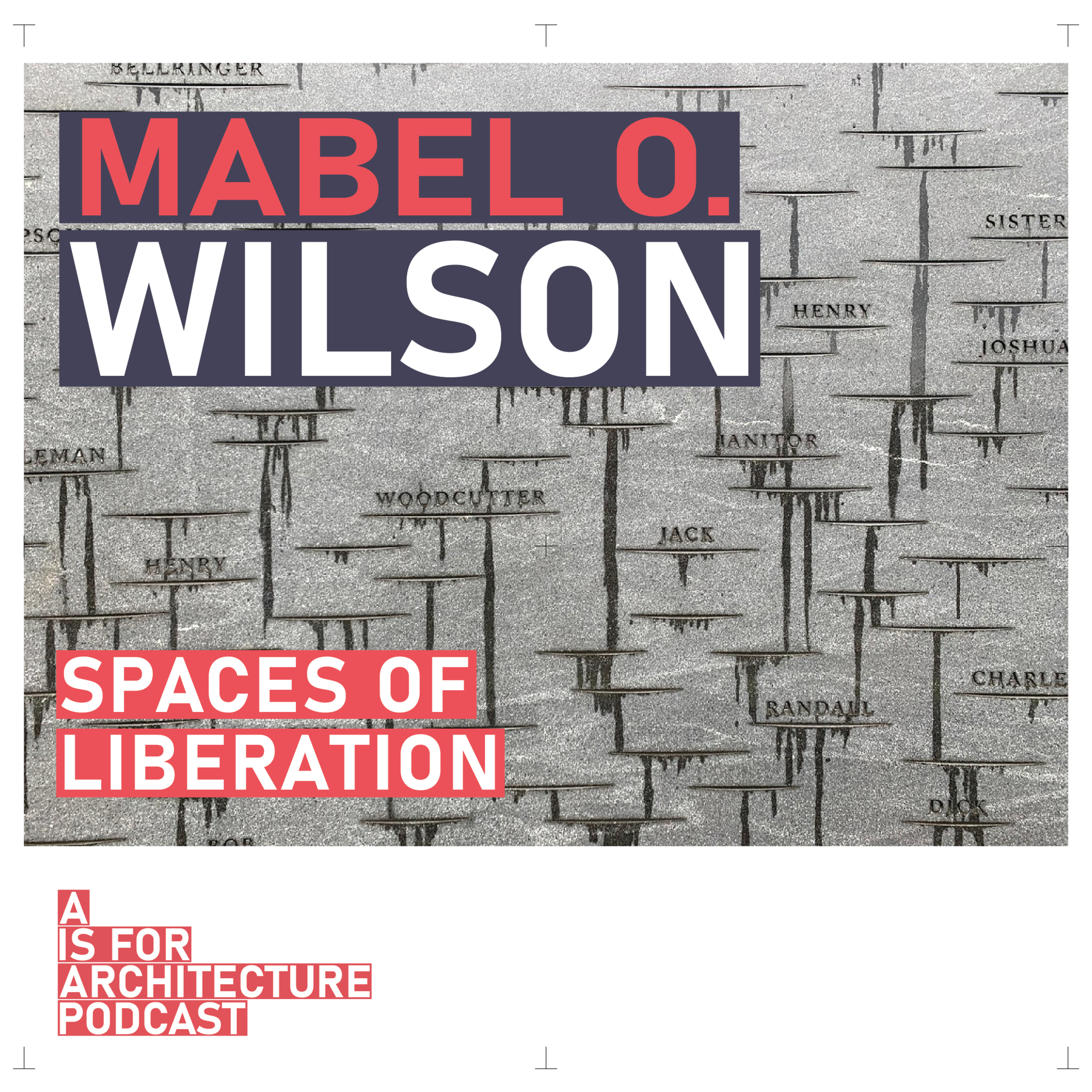 Mabel O. Wilson: Spaces of liberation. 26.09.2026 53minIn this episode of the A is for Architecture Podcast, Mabel O. Wilson - architect, historian, and professor at Columbia University, director of the Institute for Research in African American Studies - speaks about Thinking from Black: A Lexicon, published by FSG Editions this September. Thinking from Black – a product of the Practicing Refusal Collective, a forum of artists and scholars dedicated to initiating dialogues on blackness, anti-black violence and black futurity in the twenty-first century brings together artists, scholars, poets, architects and activists to build a vibrant, experimental vocabulary for black life, culture and collective imagination. Through cross-referenced and eclectic entries, the book argues for “thinking from Black” as a creative, plural, and liberatory practice rather than a fixed identity—one that refuses deficit-based frameworks and makes room for contradiction, tension, and possibility. Mabel’s work includes books, exhibitions, memorials. You can connect to her via her work, and also LinkedIn and Instagram. The book is linked above. The Practicing Refusal Collective is here.+Music credits: Bruno Gillick Image credits: Image 1: © J. Meejin Yoon: Detail of Memorial to Enslaved Laborers (2020), University of Virginia, Charlottesville, VA. +If you want and can, please support the A is for Architecture Podcast on Patreon or Buy Me a Coffee.
 -
 JL Williams: Architecture, dreams, metaphor & poetry. 18.09.2026 1t 26minIn this episode of the A is for Architecture Podcast, poet and Creative Projects Manager at the Edinburgh Futures Institute, JL Williams, spoke to me about her recent collection of poetry, Strange Architectures, her fifth book of such with Shearsman Books. In the poems, Jennifer presents visions of architectures dreamed and written, taking us the audience over thresholds and into spaces of her – and perhaps our own – inner worlds. The relationships between architecture, the psyche – literally ghost or soul in Greek– and dreamworlds is deep in architecture, manifest I’d argue throughout our modes of imagining and expressing the craft of building design. For Carl Jung, architecture was not a metaphor but a means of understanding the human psyche and his dream of a multistorey house helped shape his concept of the collective unconscious. Indeed, the homes he designed gave physical form to his propositions about the relationships between conscious and unconscious life.In this roomy conversation, Jennifer reads her poems, we discuss them, think about space and buildings, their construction, inner-life, motherhood and Jung and a lot of other stuff. It’s a ride, believe.Jennifer can be found on her website here, at work here and on LinkedIn.+Music credits: Bruno GillickImage credit: Image 1: © JL Williams#StrangeArchitectures #ArchitectureAndPoetry #ArchitectureAndPsyche #JungianArchitecture #AisForArchitecturePodcast
 -
 Shumi Bose: Words relating to theory. 12.09.2026 1t 6minIn this episode of the A is for Architecture Podcast, I spoke to Shumi Bose, about her work as a curator, chief editor of KoozArch, senior lecturer in architecture at Central Saint Martins in London and, I’d suggest, something like an activist-not-activist. Speaking here, Shumi makes a clear case for the role of critical distance as she has found it – and I’d suggest – used it in her various roles and projects. We speak about Shumi’s journey to architectural teaching and thought, her various initiatives in support of diversified knowledges and justice, and the spaces we can make to model integrity in our work. Shumi can be found at work here and on LinkedIn and Instagram. +If you want and can, please support the A is for Architecture Podcast via the Patreon or Buy Me a Coffee links in the podcast description, where you will also find links to Shumi online. +Music credits: Bruno Gillick Image credit: Image 1: Matthew Blunderfield: Shumi Bose/ Space Popular - Fables for Our Time; Image 2: Special Thanks Studios - Shumi Bose & Space Popular Collaboration; Image 3: Special Thanks Studios: Shumi Bose #ArchitecturePodcast # #ShumiBose #ArchitecturalCriticism #ArchitectureAndActivism #CriticalArchitecture
 -
 Maximillian Sternberg: Hans Dollgast: Designing in history 05.09.2026 1t 16minIn this episode of the A is for Architecture Podcast, Professor Max Sternberg discuss the Bavarian architect Hans Döllgast, the subject of his latest book, Hans Döllgast: Reconstruction and Modernity, which is being published by Lund Humphries in late September this year. Born in 1891 and surviving all Germany’s many troubles to 1974, Döllgast is known chiefly for his postwar reconstruction work in Munich. However, Max argues, in this he has been misread. Rather than an ambivalent light touch ruin architect, his post-war reconstructions in fact grew from a consistent ethos of an anti-dogmatic ‘middle ground’ embracing plurality, revealed in history materialised in accumulated city fabric. As such, his work of retaining the war scars of the Alte Pinakothek, for example, serve as an act of resistance to cultural and political amnesia, to wanting to forget and discard.Max can be found at work here. The book is linked above.If you want and can, please support the A is for Architecture Podcast by listening in and sharing it, or by either subscribing on Patreon or making a gift via Buy Me a Coffee.+Music credits: Bruno GillickImage credit: ©Michael Gaenßler (1980).#ArchitecturePodcast #HansDollgast #ArchitecturalHistory #PostwarArchitecture #ModernArchitecture
 -
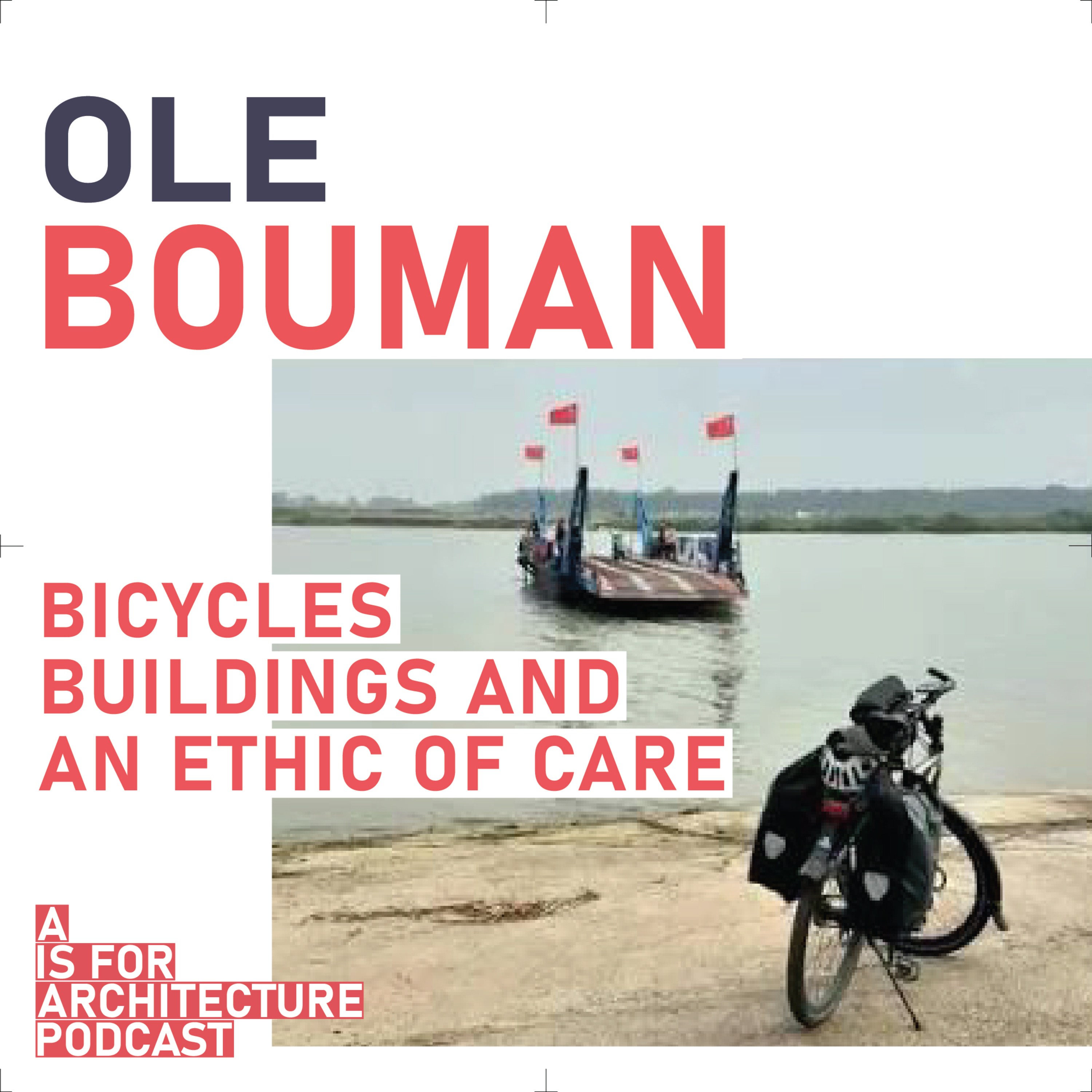 Ole Bouman: Bicycles, buildings and an ethic of care. 28.08.2026 56minArchitecture’s conscience – as building, buildings, materials and practices – is a bolt-on at best, but more often a semantic, sophistic trick. Architecture as a profession talks ethically but it’s very difficult to see where this manifests in real life. This is an agency problem but also a discipline problem – at a profession-level individualism resists collective action to solve broad social problems. At a policy level, any attempt by anybody to suggest architects have some social obligation that impinges on “design” gets shot down. In a May 2026 op-ed for the Journal of Architecture entitled Architecture et Révolution: The Engineered Consent of a Discipline, Ole Bouman, writer, curator, publisher and Professor in the College of Architecture & Urbanism, Tongji University, Shanghai, makes a strong claim: architecture is aligned with delivering the status quo, just as Le Corbusier suggested in it should. Contrary to the general belief that we ask too much of architecture, Bouman suggests perhaps in fact we ask too little.Ole suggests that the polycrisis upon us requires action at the collective level. To illustrate this, he uses the bicycle: no single bicycle fights climate change but "a culture of cycling can,". No project changes anything but the knowledge of the discipline could.Ole’s website is linked here. The essay is linked above. If you want and can, please support the A is for Architecture Podcast by listening in and sharing it, or by either subscribing on Patreon or making a gift via Buy Me a Coffee. +Music credits: Bruno Gillick Image credit: © Ole Bouman via Instagram.
 -
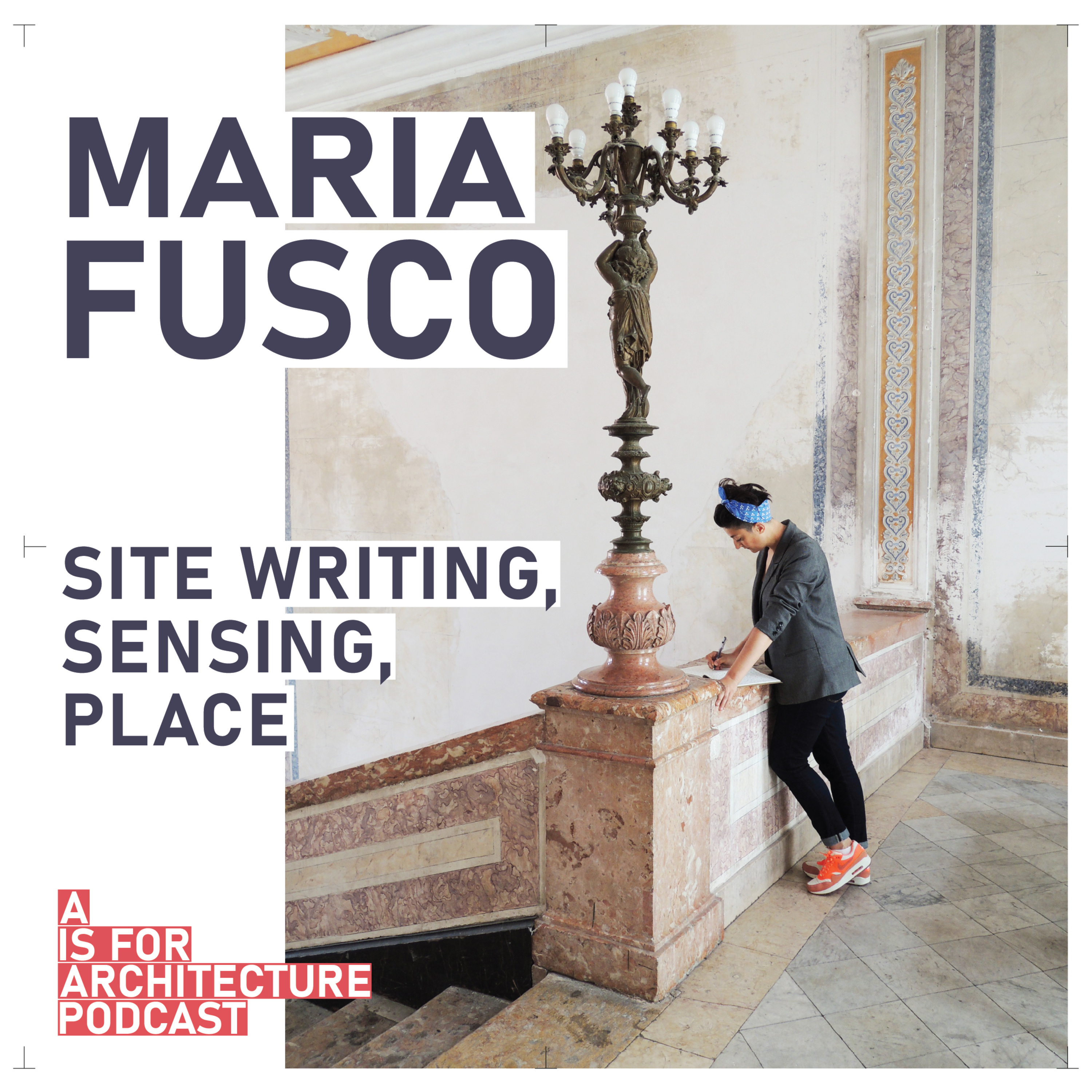 Maria Fusco: Site writing, sensing, place. 20.08.2026 1t 6minAs architects, the nature of buildings is as drawings. Even when on site, a building is read in terms of its relationship to the documents off its legal production, preeminent among which – after the contract - are the plan and elevation. As such, the buildings of architects are abstractions. To use Hayles and Gannon, 'design is a mode of practice that represents a reality, but is not the reality it represents.'For others - normal people - perhaps buildings are the sum of their stuff – materials, light, tone, smell, thresholds and transitions - bodily things. In any case, for this episode of the A is for Architecture Podcast, I spoke to Maria Fusco, Professor and Chair of Interdisciplinary Writing at the University of Dundee, about her publication, Legend of the Necessary Dreamer, published by Vanguard Editions, which describes her study of the Palacio Pombal, Lisbon, which Maria produced for the Lisbon Architecture Triennial in 2017. We discuss this, her work and practice, and hear Maria read parts of the book too.It is an elegant example of how buildings might be understood both through and as bodies, textures and histories, and through a thing other than drawing.Maria’s book is linked above; she can be found on her website, at work, Instagram and LinkedIn. If you want and can, please support the A is for Architecture Podcast by subscribing on Patreon or making a gift via Buy Me a Coffee. +Music credits: Bruno Gillick Image credit: ‘In-situ courtesy of Maria Fusco'.
 -
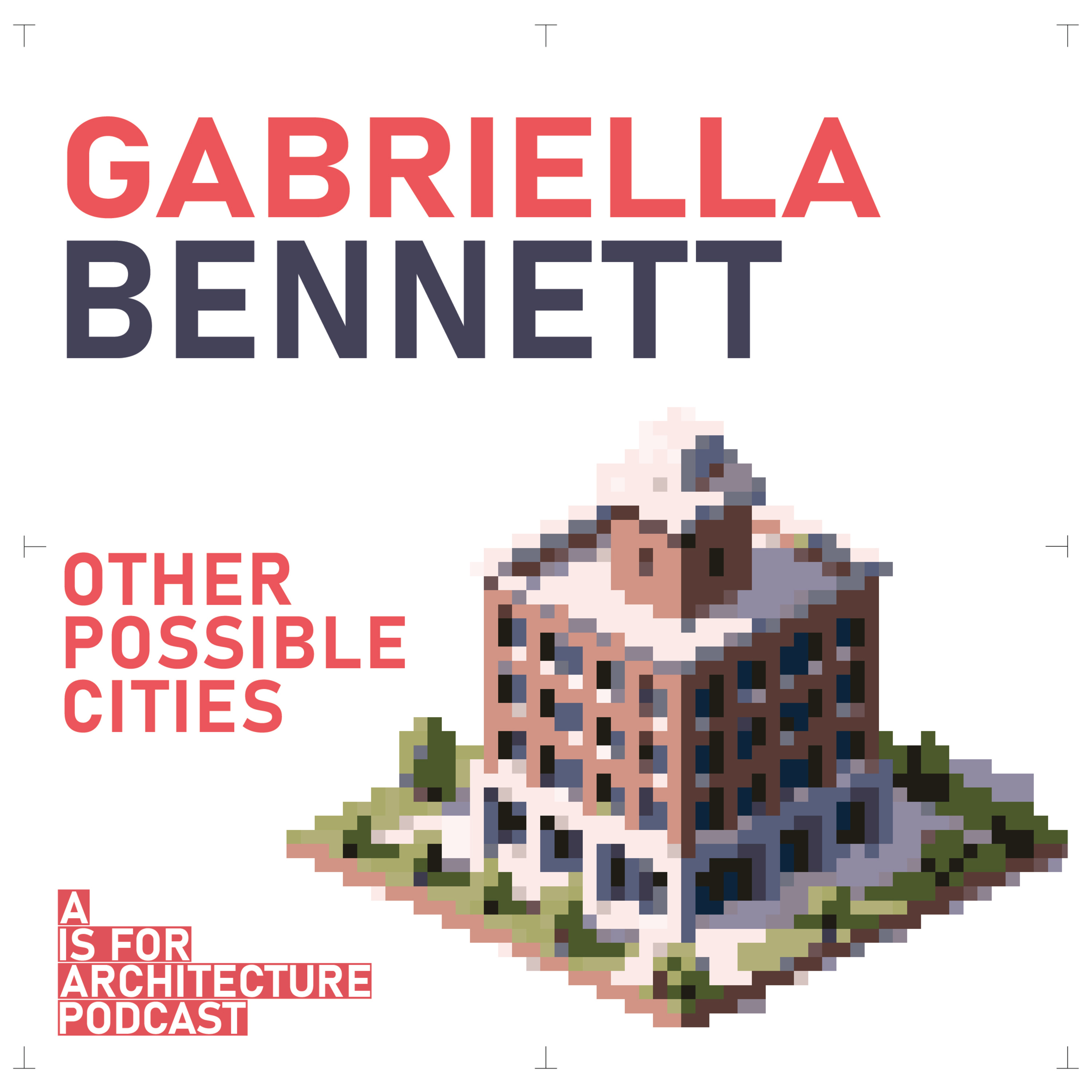 Gabriella Bennett: Other possible cities. 31.07.2026 1t 12minWhat would a failing city look like? Would one be able to tell if, for example, London or New York were a busted flush? What would be the markers? Social discord, unwalkable streets, cultivated inequality and polarization, declining mental and physical health might seem like some measures to test.Perhaps a better question is what would a growing city look like? This, as I read it, is the question Gabriella Bennett seeks to answer in her book, How to Build a City: Journeys into the Urban Future, which is coming out with Headline Press on the 13 August, and documents both her personal story and her explorations of places – from the Ukraine to Tokyo, from Florida to the Arctic - that have begun to remake themselves fit for us now. Given urbanisation, the central claim Bennett makes in How to Build a City is simple and insistent: the shape of where you live shapes the life you lead. Because cities both generate their crises and accelerate them, the act of rebuilding is the central moral and creative problem of any urban future.Gabriella’s book is linked above; she can be found on her website, Instagram and LinkedIn. +Music credits: Bruno Gillick Image credits: © Gabriella Bennett. Main: Isometric Hospital Building, SimCity 4 style, from Sprite AI.#HowToBuildACity #UrbanFuture #CityPlanning #UrbanDesign #ArchitecturePodcast
 -
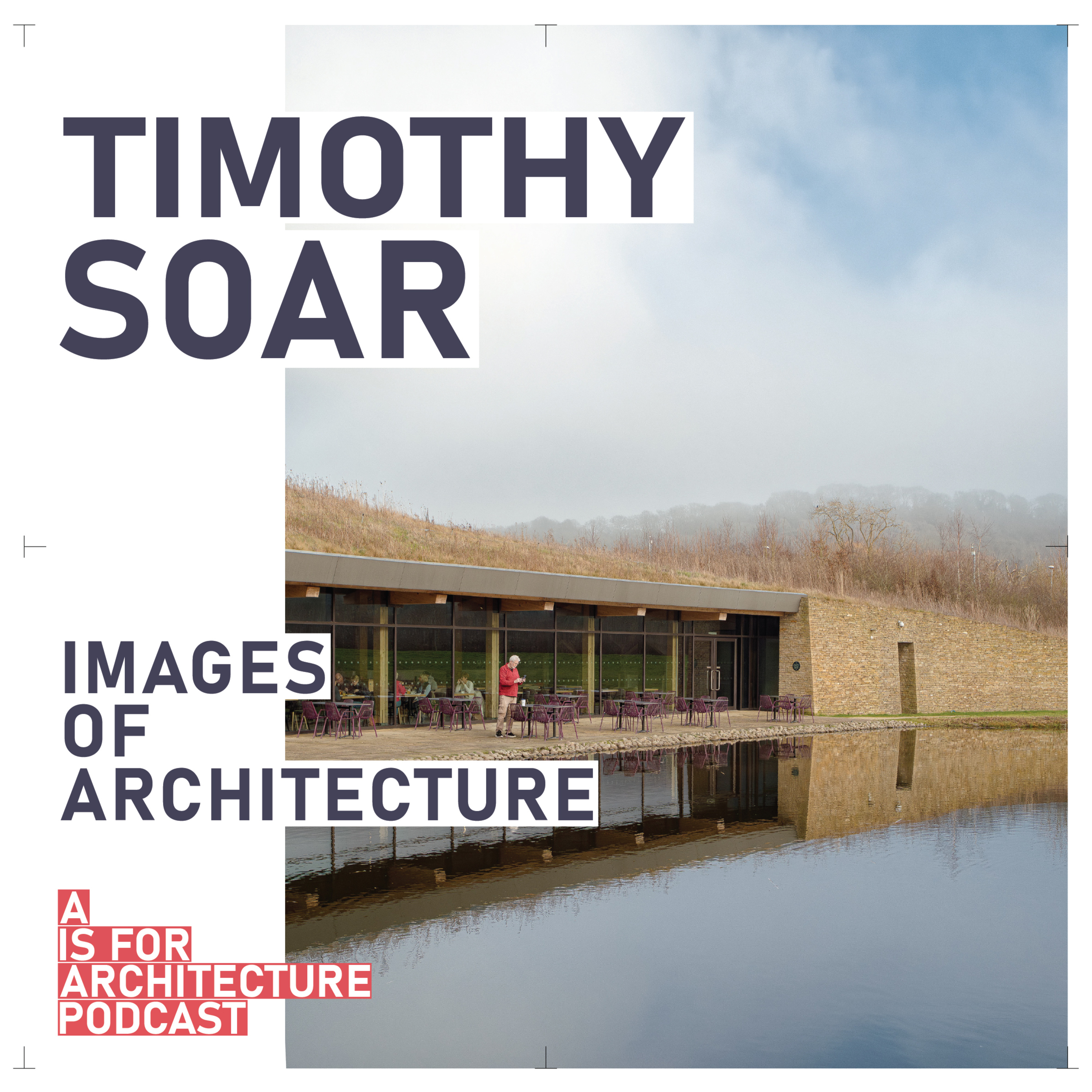 Timothy Soar: Images of architecture. 16.07.2026 1t 4minAs George Berkeley almost almost said, if architecture is built in a city but no one takes its picture, does it make a sound? Photography is intrinsic to architecture, so much so that most of us only know buildings through the images made of them. What the photographer does then is to manifest architecture in the general imagination; arguably, it makes buildings architecture, elevating it beyond context and into objects: known, identifiable and desired. That means the photograph has in itself meaning, which in turn lends photography ethical content. So it’s an important job. It needs to be done well. To do it well requires skill and craft.What though is a good photograph? To answer that, I spoke to architectural photographer Tim Soar, about his work, his philosophy, artistry, ethics and the mastery required of his method. Beginning in social photography, Tim’s is a lovely story of pursuing technical precision and emotional depth to convey architects’ visions and buildings’ social life. Tim can be found on his website, on Instagram and LinkedIn. If you want and can, please support the A is for Architecture Podcast by listening in and sharing it, or by either subscribing on Patreon or making a gift via Buy Me a Coffee. +Music credits: Bruno Gillick Image credits: © Timothy Soar. Main: Gloucester Services by Glenn Howells Architects, 2016, photographed for Architecture Today.# #ArchitecturalPhotography #TimSoar #ArchitecturePhotography #VisualCulture #ArchitecturePodcast
 -
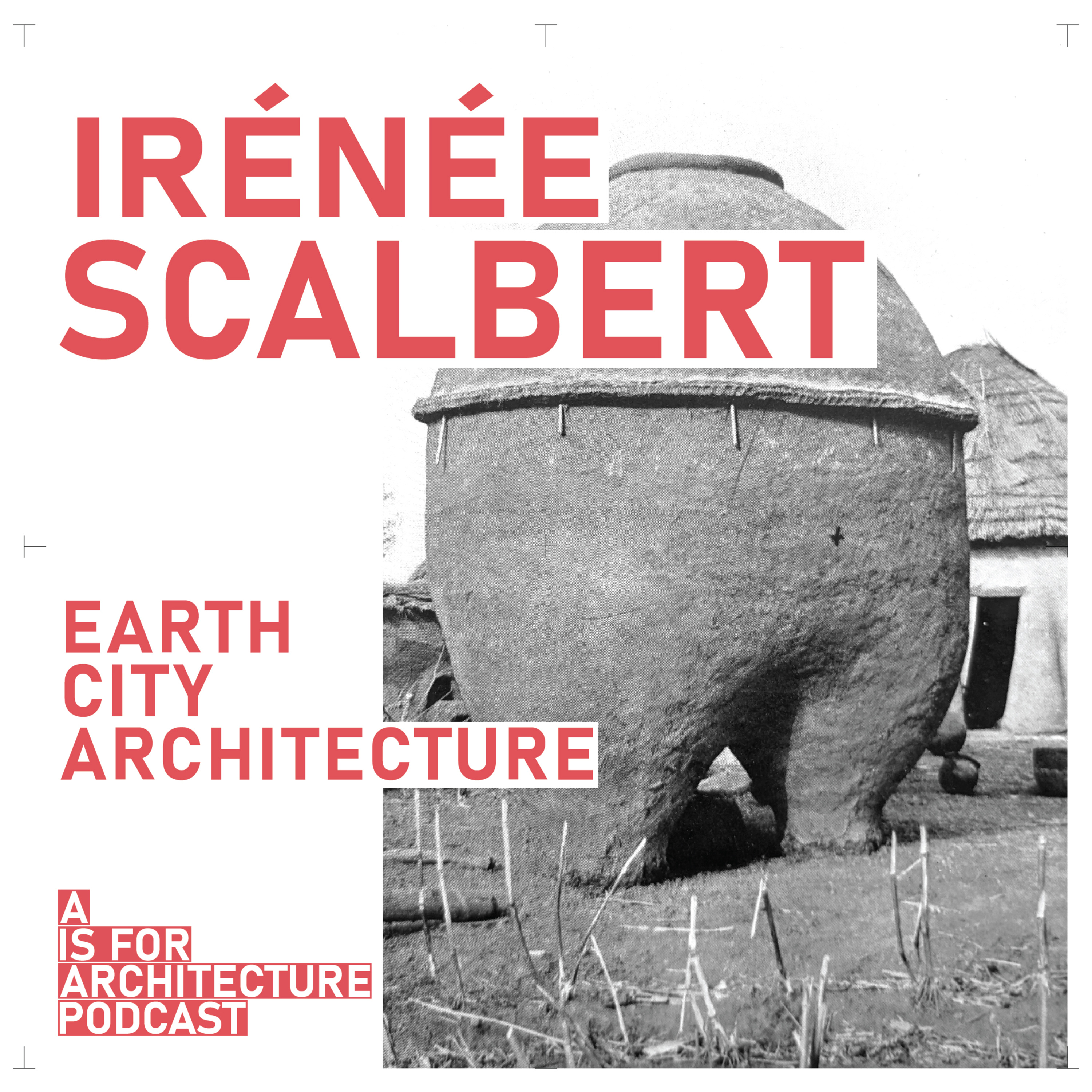 Irénée Scalbert: Earth City Architecture. 03.07.2026 1t 11minAfter the exhaustion of modernist functionalism and Koolhaasian bigness, architecture should be reconceived within the limits of the earth, as craft, stewardship, locality and bricolage. In short, architecture is just more complicated than that. So suggests Irénée Scalbert, architectural critic and historian, in his recent book, Totems: Selected Essays on Architecture, published by Park Books this year,The title image of the totem — an object whose power comes from its correct form and from its community's investment in it or that, and not from mere symbolism — seems to me to gather in Irénée’s whole project: architecture as something made, charged with collective life, and irreducible to either pure function or decoded meaning. Isn’t that architecture itself?Irénée is everywhere online, not much by his own hand, except on Insta. The book is linked above. If you want and can, please support the A is for Architecture Podcast by listening in and sharing it, or by either subscribing on Patreon or making a gift via Buy Me a Coffee. +Music credits: Bruno Gillick Image credit: Communal corn bin, Togoland. From A Camera Actress in the Wilds of Togoland, Meg Gherts, 1915.
 -
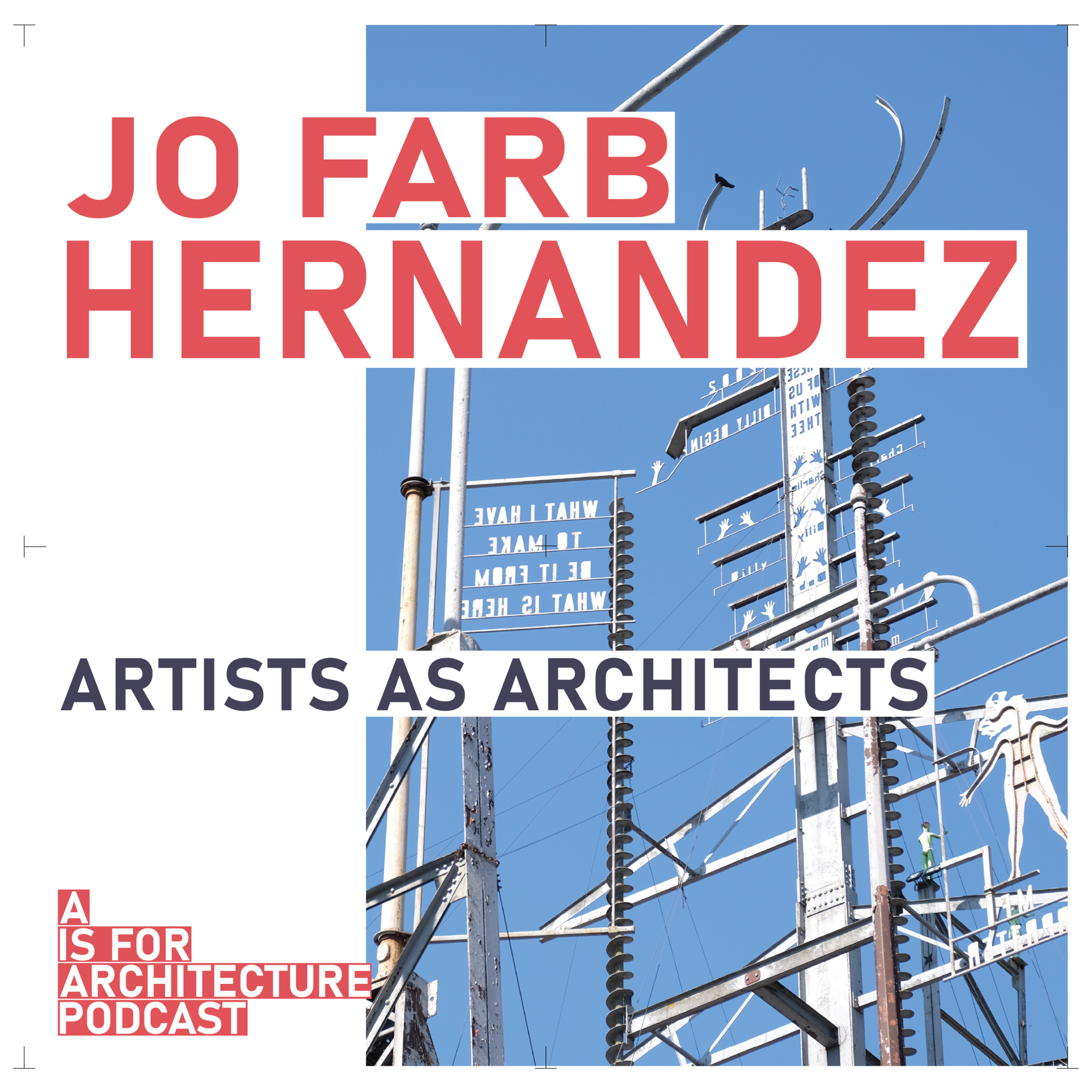 Jo Farb Hernández: Artists as architects. 26.06.2026 52minFor Immanuel Kant, an aesthetic experience required four conditions: disinterestedness, universality, purposiveness and necessity. Architecture, as such, has always struggled with this, because its appreciation is fundamentally tied to a sense of its utility – as shelter, symbol, status, want – and its designedness evidence of its adherent beauty relative to its purpose.Artist made architecture of the sort documented in scholar, author, folklorist and former director and curator of SPACES, Jo Farb Hernández's Architectural Fantasies: Artist-Built Environments, and published by Tra Publishing in April this year, might square the circle. Here we have an extraordinary range of places and spaces that we can approach aesthetically in very Kantian ways. But what are these strange, discrepant heterotopias doing, what brings them about, who are they for and what place do the have in the world of architecture proper?Jo can be found on her website, with links there to her other online appearances. The book is linked above. If you want and can, please support the A is for Architecture Podcast by listening in and sharing it, or by either subscribing on Patreon or making a gift via Buy Me a Coffee. +Music credits: Bruno Gillick Image credit: Jo Farb Hernández - The Mindfield Cemetery by William “Billy” Blevins Tripp; edited by AG.
 -
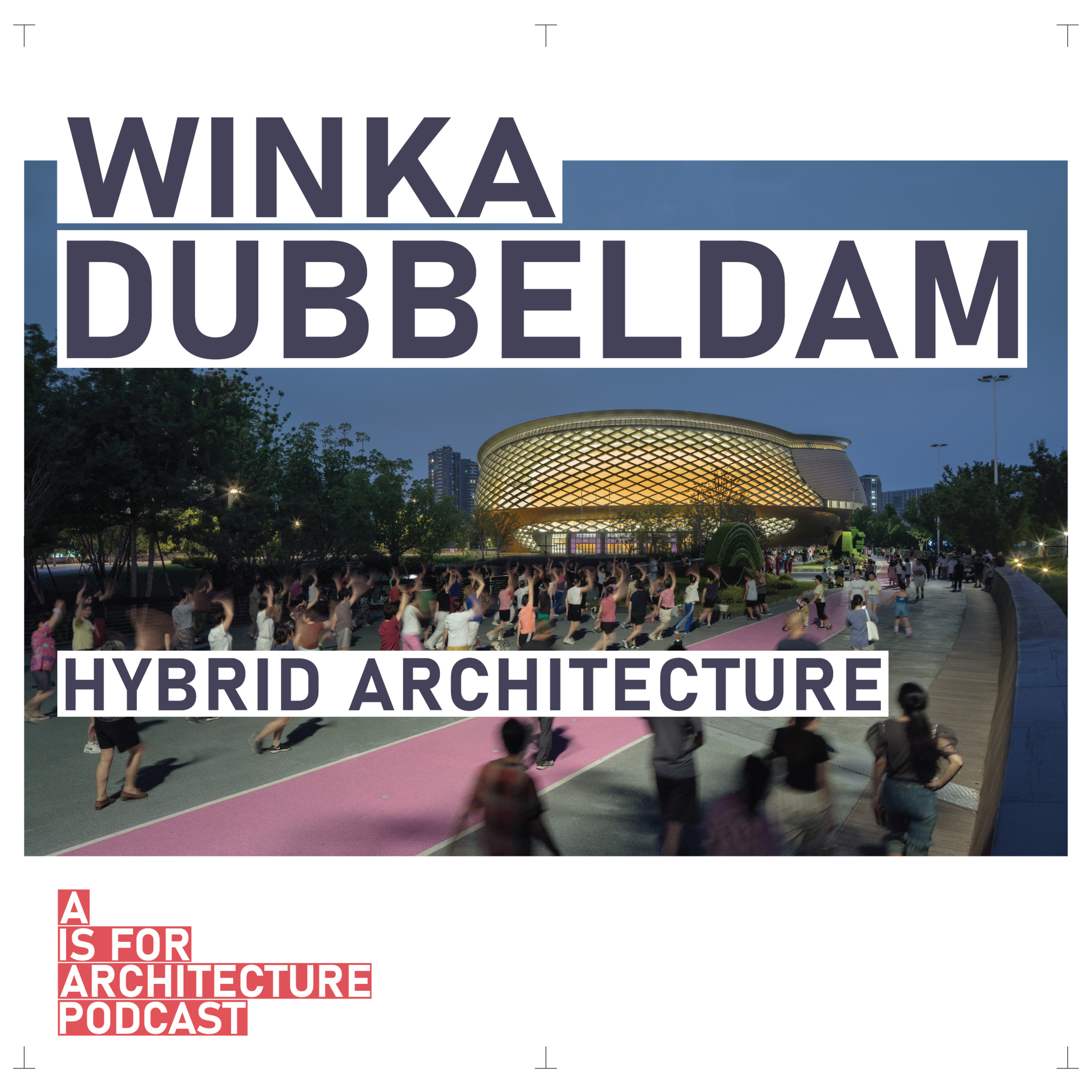 Winka Dubbeldam: Architecture and hybridity. 18.06.2026 53minWhat if buildings could free themselves – or be freed by their architects – of the stricture of type, of discrete identity, of typology? What might happen if, for example, a school and a house - schoolness and houseness – were hybridized? What if building and non-building, even, were wedded? Might this, perhaps, offer a way to negotiate, heal even, the nature-architecture divide?This is not pompous and pretentious speculation, but the proposal of Winka Dubbeldam, founder-director of Archi-Tectonics and director and CEO of the Southern California Institute of Architecture (SCI-Arc), in her recent edited book, Monsters and Mutants: Explorations in the Architecture-Nature Continuum, published by Park Books in 2025, and featuring essays by Winka, Justin Korhammer, Thom Mayne, Carlo Ratti and Mette Ramsgaard Thomsen. It is also the modus operandi of her and Justin Korhammer’s New York, Los Angles and Hangzhou practice, Archi-Tectonics. Winka and I talk all this, and intriguing and inspiring it is. For new conditions, we probably need new typologies and a taxonomy agile enough to meet a swiftly tilting planet. Here is Winka at work and university. The book is linked above. If you want and can, please support the A is for Architecture Podcast by listening in and sharing it, or by either subscribing on Patreon or making a gift via Buy Me a Coffee. +Music credits: Bruno Gillick Image credit: Hybrid Stadium & Concert Hall, by SFAP.
 -
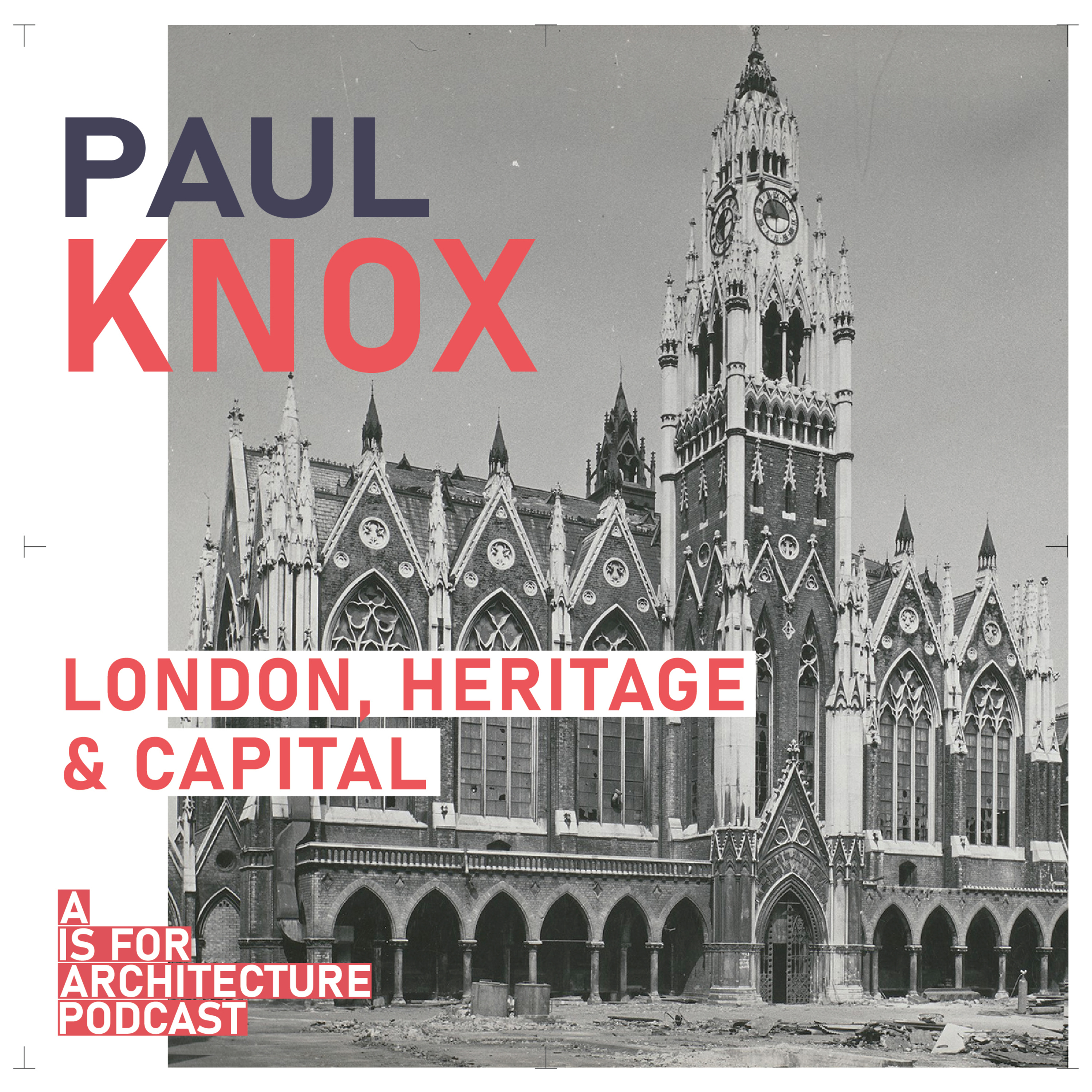 Paul Knox: London, heritage and capital. 11.06.2026 1t 5minIn this episode of the A is for Architecture Podcast, I spoke with Paul Knox, University Distinguished Professor at Virginia Tech, about his 2025 book, Lost London: From Crystal Palace to Heston Airport, a History in 25 Missing Buildings, published by Yale University Press in April this year.Lost London’s provocative move is to insist that ordinary buildings — a pub in Poplar, a roadhouse on a bypass, a block of council flats in Hackney — deserve the same analytical attention as a Wren church or a Robert Adam terrace. As one perhaps should expect from an urban geographer, this pushes back against the exquisite art-historical approach, which treats buildings as art objects and thereby frames architectural history around consecrated geniuses and great buildings. It is a seductive approach, for sure, but perhaps troubling in a different way. If everything means something to someone, how can we knock anything down at all? Paul is not much online, the lucky fella. You can find him on Grokipedia though. The book is linked above.If you want and can, please support the A is for Architecture Podcast by listening in and sharing it, or by either subscribing on Patreon or making a gift via Buy Me a Coffee. +Music credits: Bruno Gillick Image credit: London Metropolitan Archives – Colombia Road Market.
 -
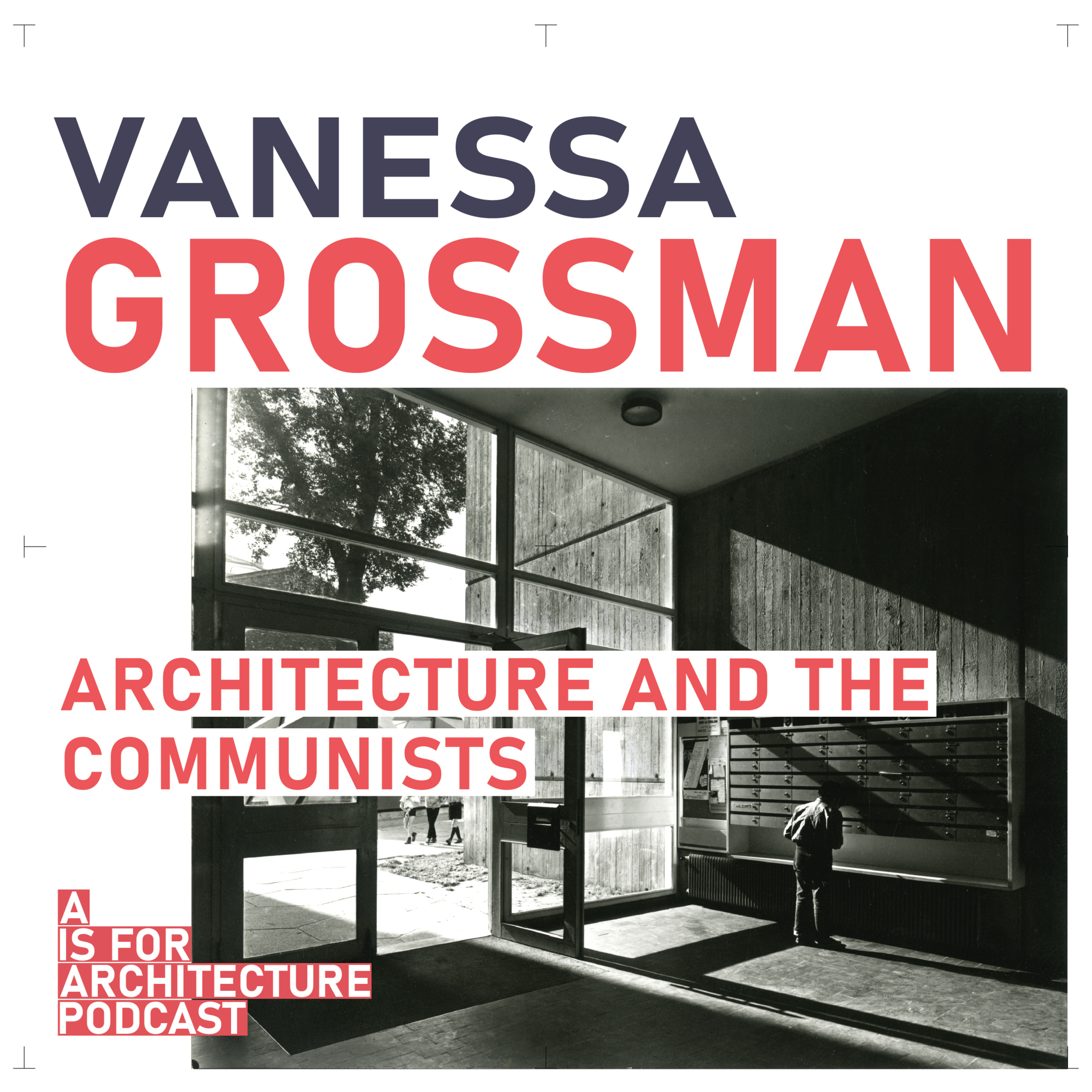 Vanessa Grossman: Architecture and the communists. 04.06.2026 1t 9minIn this episode of the A is for Architecture Podcast, I spoke to architect and historian, Vanessa Grossman, Assistant Professor of Architecture at the University of Pennsylvania’s Weitzman School of Design, about her 2024 book, A Concrete Alliance: Communism and Modern Architecture in Postwar France, published by Yale University Press. Sampling only the most tantalizing soupçon of the book’s ideas, Vanessa and I discuss the relationship between the French Communist Party and postwar modernist architects, and how for them concrete served not just as a symbol of avant-garde taste but also political commitment. Architects like Oscar Niemeyer, Renée Gailhoustet, Paul Chemetov and Patrick Bouchain, and the networks of actors and actants, programs and artefacts that were activated to deliver social housing and cultural and working spaces in communist municipalities across France, as a means of delivering, ultimately, a countersociety of architects that sought to put a new vision of modernism to work towards a better version France’s nascent Fifth Republic. Vanessa can be found at work here and she’s on the socials too; the book is linked above.If you want and can, please support the A is for Architecture Podcast by listening in and sharing it, or by either subscribing on Patreon or making a gift via Buy Me a Coffee. +Music credits: Bruno Gillick Image credit: Jean Biaugeaud, showing the hall of the Raspail housing tower by Renée Gailhoustet, 1968.
 -
 Asma Mehan: Architecture in the shadow of oil. 28.05.2026 45minIn the latest episode of the A is for Architecture Podcast, I spoke to architect and scholar, Asma Mehan, Assistant Professor at the Huckabee College of Architecture, Texas Tech University and director of the Architectural Humanities and Urbanism Lab (AHU_Lab), about her edited volume, After Oil: A Comparative Analysis of Oil Heritage, Urban Transformations, and Resilience Paradigms, published by Springer in 2025. In our conversation, Asma speaks about the close link between modern architecture, urbanism and the extraction, production and consumption of oil, what Peter Droege, I think, termed Fossil City. Asama – and the book – however, are concerned now with the next thing: as economies look to shift away from their reliance on oil, what should and can we do with oil’s infrastructure? So intrinsic to the making of the present human condition, indeed to the social and cultural making of the last 120 years, are we not obliged to consider it a repository of history, like any other significant material culture? And nothing has been more important than oil, for sure, except perhaps the wars for it, so doesn’t it deserve some sort of memorialisation too? Asma can be found at work here; the book is linked above.If you want and can, please support the A is for Architecture Podcast by listening in and sharing it, or by either subscribing on Patreon or making a gift via Buy Me a Coffee. +Music credits: Bruno Gillick Image credit: Wikimedia. Pumpjack east of Andrews, TX (2009) by Zorin09.
 -
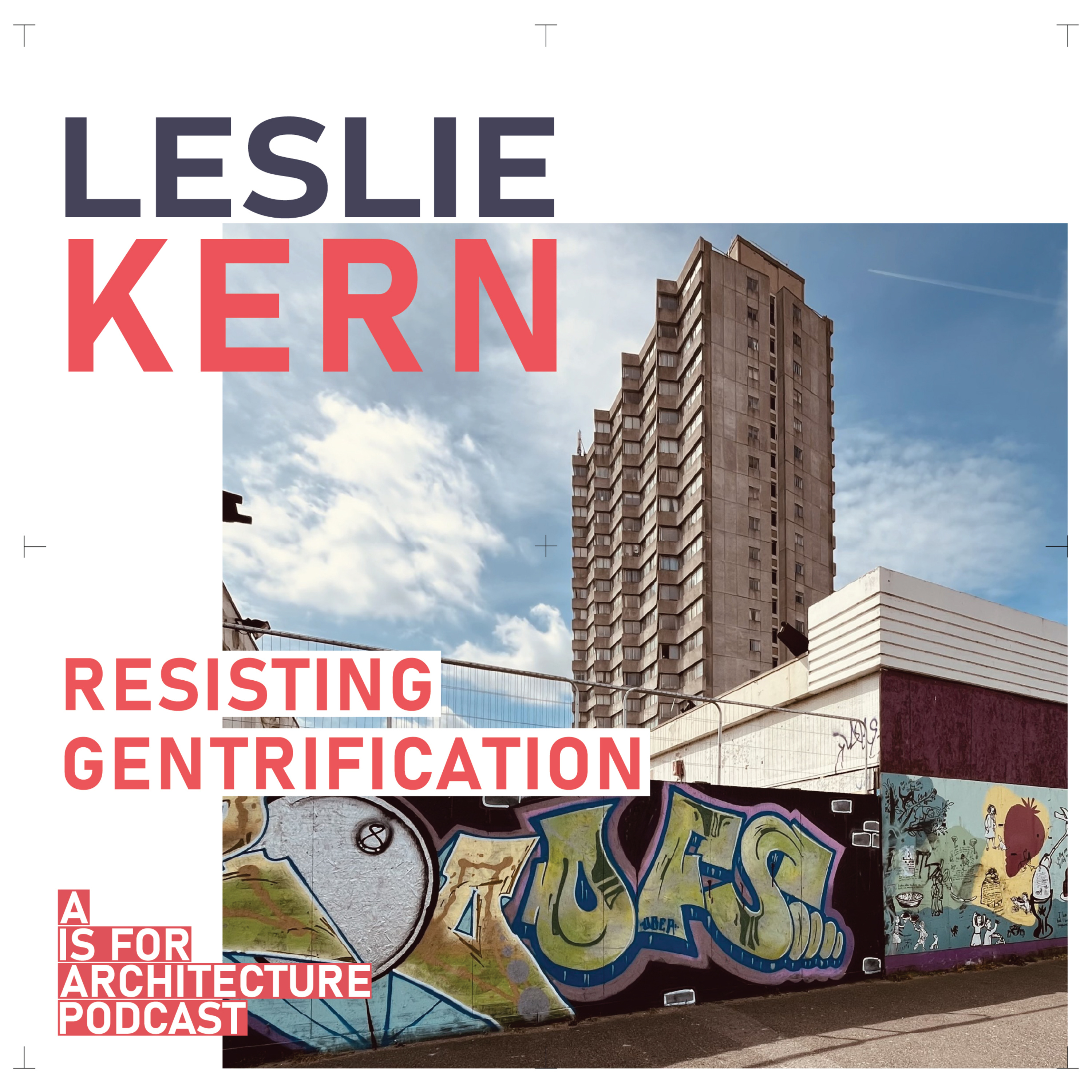 Leslie Kern: Resisting gentrification. 21.05.2026 59minIn this episode of the A is for Architecture Podcast, I spoke to scholar, activist, author and feminist totem, Leslie Kern, about Gentrification is Inevitable and Other Lies, which she published with Verso in 2022. In Leslie and my conversation we speak broadly about her work and approach, some themes from the book, and how resistance is not just necessary, but possible too.in 1964 Ruth Glass, in her introduction to London: Aspects of Change, named the phenomenon: ‘One by one, many of the working class quarters of London have been invaded by the middle classes—upper and lower. Shabby, ‘modest mews and cottages—two rooms up and two down—have been taken over, when their leases have expired, and have become elegant, expensive residences. […] Once this process of ‘gentrification’ starts in a district, it goes on rapidly until all or most of the original working class occupiers are displaced, and the whole social character of the district is changed […] The invasion has since spread.’Glass implied that what is presented as urban improvement is in fact a reassertion of class hierarchy in spatial form. In recent years things have moved on, away from what might be seen as an evolutionary process of cultural and economic enrichment , where artists, bohemians, thinkers and web designers find space for their creative praxis. Now the market makes it, and the government spends its taxes to make it more likely to occur. Leslie can be found on her website, linked above, as is the book.If you want and can, please support the A is for Architecture Podcast by listening in and sharing it, or by either subscribing via links in the podcast description. +Music credits: Bruno Gillick Image credit: Ambrose Gillick.
 -
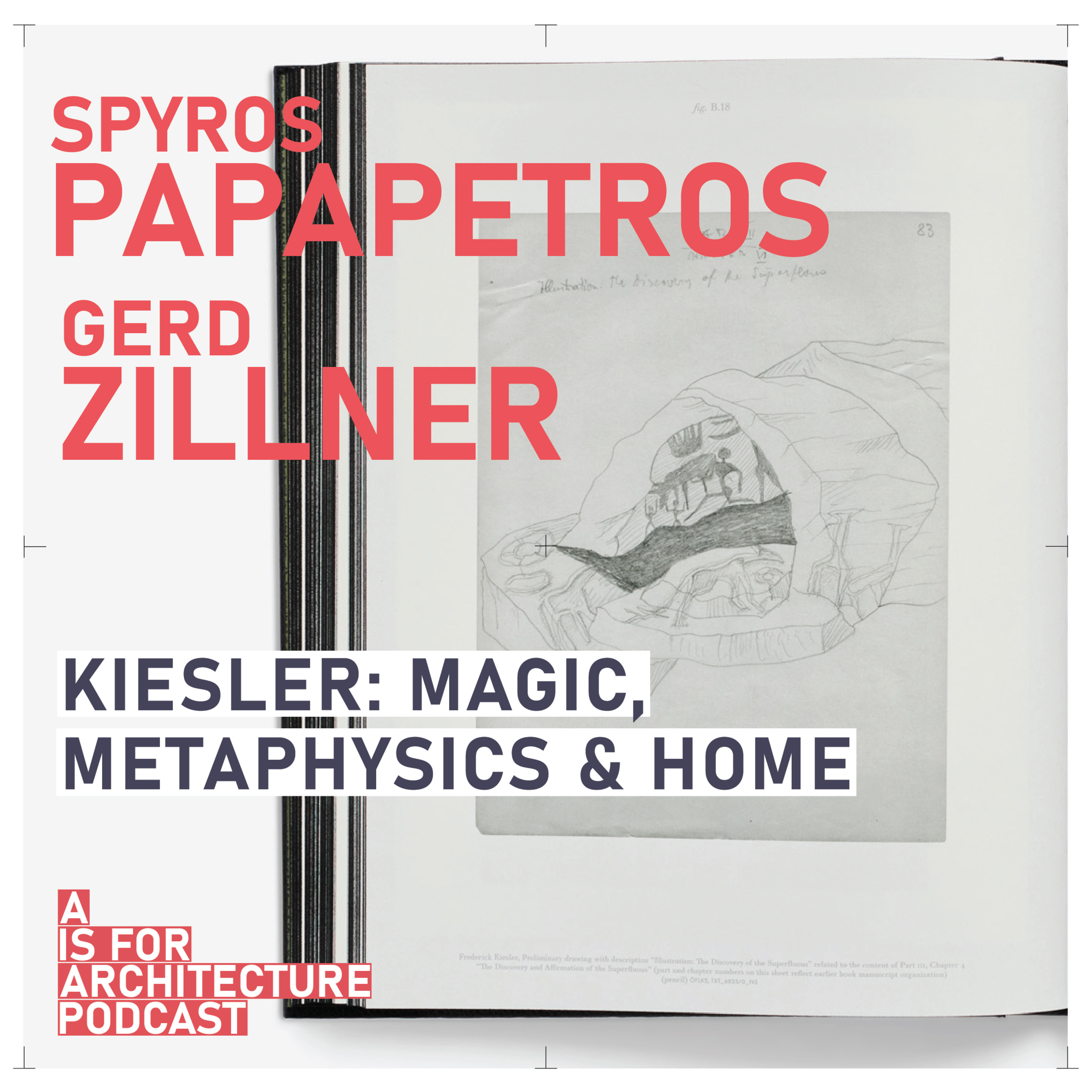 Spyros Papapetros and Gerd Zillner: Kiesler: magic, metaphysics and home. 14.05.2026 1t 9minFrederick Kiesler was an Austrian-American architect, artist and theorist who, born at the tail end of the nineteenth century, bore witness to the irresistible rise of modernism in architecture and alongside it, the pyrrhic victory of amoral, individuated thinking, revealed so starkly in the mania of colonialism and the horrors of its implosion in the first half of the twentieth century.In this episode of the A is for Architecture Podcast, I spoke with Spyros Papapetros, Associate Professor of Architecture at Princeton University, and Gerd Zillner, Director of the Frederick and Lillian Kiesler Private Foundation, Vienna, about the great man, and particularly about his hitherto unpublished opus, Magic Architecture: The Story of Human Housing, compiled between 1944–1946 and now published for the first time by MIT Press.Conceived as a Neo-Vitruvian treatise, and an implicit rival to Le Corbusier's Vers une Architecture from 1923, at the heart of the book is Kiesler's central concept of magic architecture which rejected the functionalism and efficiency of Corb, Buckminster Fuller, and modern planning. Instead, Kiesler proposed an alternative history of housing grounded in magic, ritual, dream, and the integration of animal instinct with human creativity, arguing that the deepest purpose of architecture is not physical shelter but spiritual and psychological protection — the creation of dwellings that answer humanity's fundamental fears, desires, and sense of the unknown. So, prescient indeed.If you want and can, please support the A is for Architecture Podcast by listening in and sharing it, or by either subscribing on Patreon or making a gift via Buy Me a Coffee.
 -
 Beatriz Colomina: Architecture as disease and cure. 07.05.2026 55minBellerophon, son of Poseidon and Eurynome, slew the Chimera and, full of hubris, believed he had a rightful place on Mount Olympus among the gods and set off there on his winged horse, Pegasus. Zeus did not like this and sent a gadfly to sting Pegasus, which threw Bellerophon, who fell back to Earth and died. The story of modernism has maybe been a little tinged by hubris too. We have defeated all the monsters, presented an architecture and urbanism which proclaims it will do away with social and pathological ills, if only we would let it, and thus deserves a place among the deities. But perhaps, as covid showed, modernism has somewhat over-played its hand. The monsters got amongst us again. In this episode of the A is for Architecture Podcast - the 200th - I spoke to the great architectural historian and theorist, Beatriz Colomina, Howard Crosby Butler Professor of the History of Architecture at Princeton University, about some small parts of the recently published book, Sick Architecture, which she edited with Nick Axel, Guillermo S. Arsuaga and e-flux Architecture and published with MIT Press. In the book, 35 essays from around the world present ways architecture has both engaged with sickness as illness, but also as structure, logic and motivation.If you want and can, please support the A is for Architecture Podcast by listening in and sharing it, or by either subscribing on Patreon or making a gift via Buy Me a Coffee. +Music credits: Bruno Gillick Image credit: Borja Sanchez-Trillo/Comunidad de Madrid via Getty Images.
 -
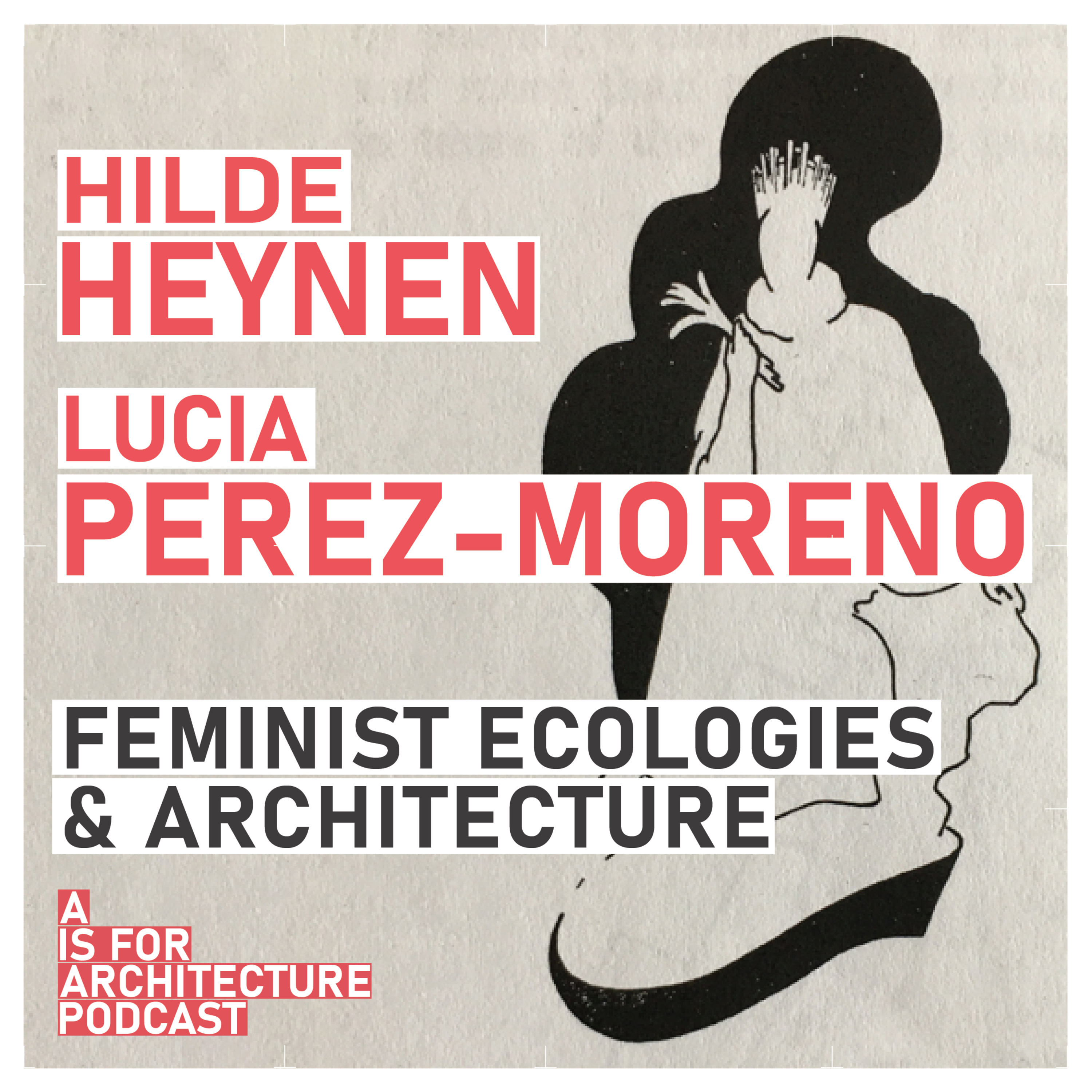 Hilde Heynen & Lucía Pérez-Moreno: Feminist ecologies and architecture. 30.04.2026 1t 9minIf one were to be the sort of inelegant person to point such things out, one might point out that despite all the egalitarian rhetoric, we still live in an architectural culture that cultivates dominance, not in the sense of dominion as rooted in domus, home, but in the dual senses of control and territory. The star architects we are assured we must look to, the big, bold, challenging buildings they erect, condition folk to see a casual way of acting act relative to ecologies, economies, cultures and justice as normative, ideal, something to believe in.In this episode of the A is for Architecture Podcast, I spoke to Professor Hilde Heynen professor of architectural theory at the Katholieke Universiteit Leuven, and Professor Lucia Pérez-Moreno, Professor of History and Theory of Architecture at the University of Zaragoza in Spain. Together, Hilde and Lucia have gathered together a number of Hilde’s most significant essays in a new book, Architecture & Feminist Critical Theory: Selected Writings by Hilde Heynen, published by Leuven University Press in 2025 and which tracks an evolving position, which emerges out of critical theory into feminist theory and latterly towards an environmental justice, but always proposing another way of seeing things in search of another path, one that is subtle, integrated, just and with just a little less man character energy.Hilde is on LinkedIn can be found at work, Lucia does do the socials and can be found on Instagram and on LinkedIn. The book is linked above.+Music credits: Bruno Gillick Image credit: Source: Sibyl Moholy-Nagy, Matrix of Man.
 -
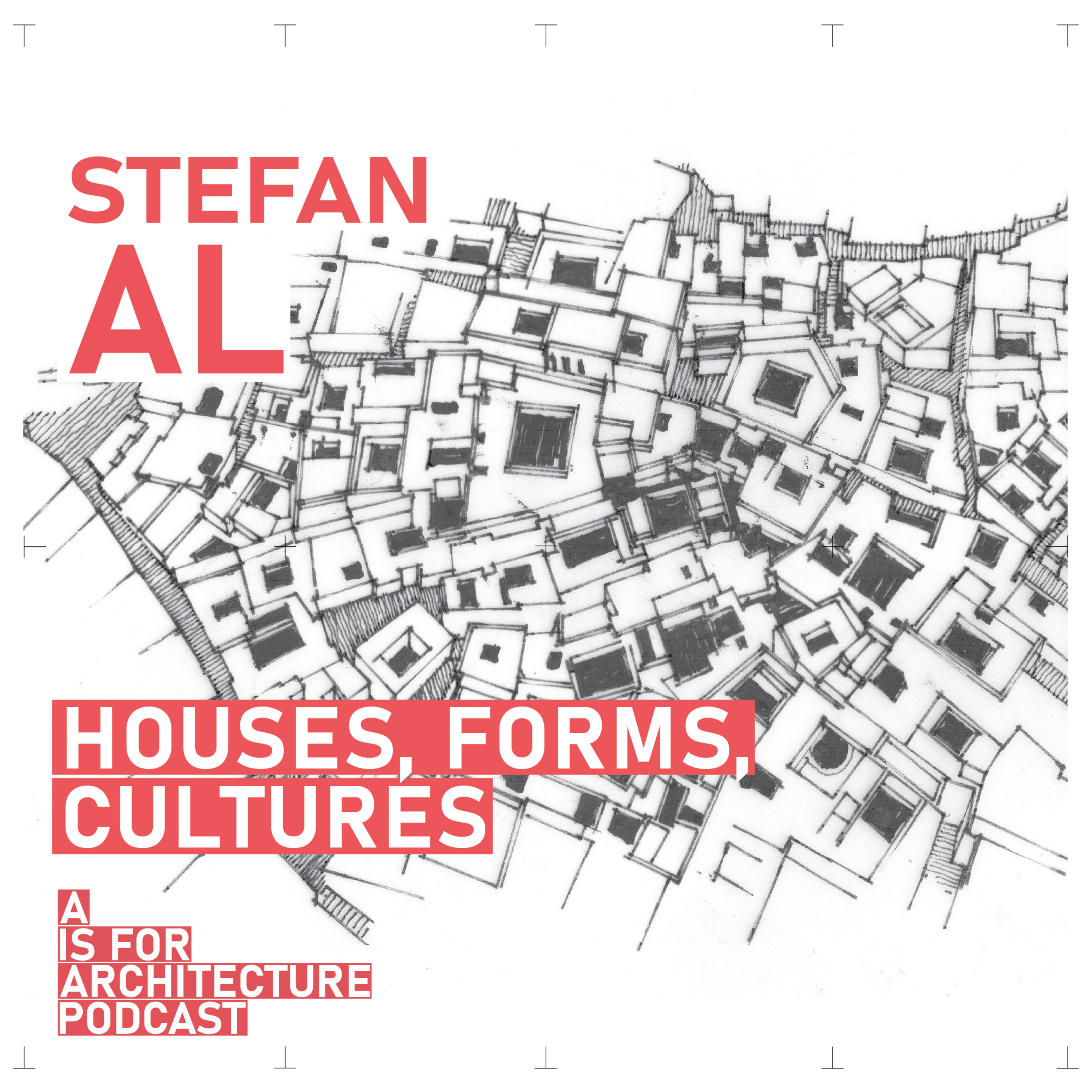 Stefan Al: Houses, forms, cultures. 24.04.2026 1t 4minDespite the fact that theorists probably live in one, homes are rather poorly theorized. Why is this so? Perhaps it is the ascent of the domestic in capitalist bourgeois culture – the world within a world – that makes them the seat of late modernity’s subjective turn which, in its turn, made home personal, and therefore ungeneralisable. Who knows.What I do know is that architect, writer and associate professor in the Department of Urban Policy and Planning at Hunter College, New York, Stefan Al has written a new book on them, Dwelling on Earth: The Past and Future of the Places We Call Home, published with W. W. Norton but nine days ago on April 14th 2026, and which makes for the subject of this newest episode of the A is for Architecture Podcast. Dwelling on Earth is a good book beautifully illustrated by David M. Dugas spanning two million years, from the caves and huts of our forebears to high-rises to 3D-printed houses of… tomorrow? Structured around the four major transformations that we use to describe human history - agriculture, urbanity, industry and now, sustainability, the book poses another meta question, one architects and writers have reflected upon more than somewhat: What is it to dwell? And, to be precise, is a home different to a house? Stefan can be found at work here, on his own website here and on Instagram and LinkedIn. The book is linked above.+Music credits: Bruno Gillick Image credits: Main: Marrakech, ©David M. Dugas. #ArchitecturePodcast #DwellingOnEarth #ArchitectureOfHome #ArchitecturalTheory #FutureOfHousing
 -
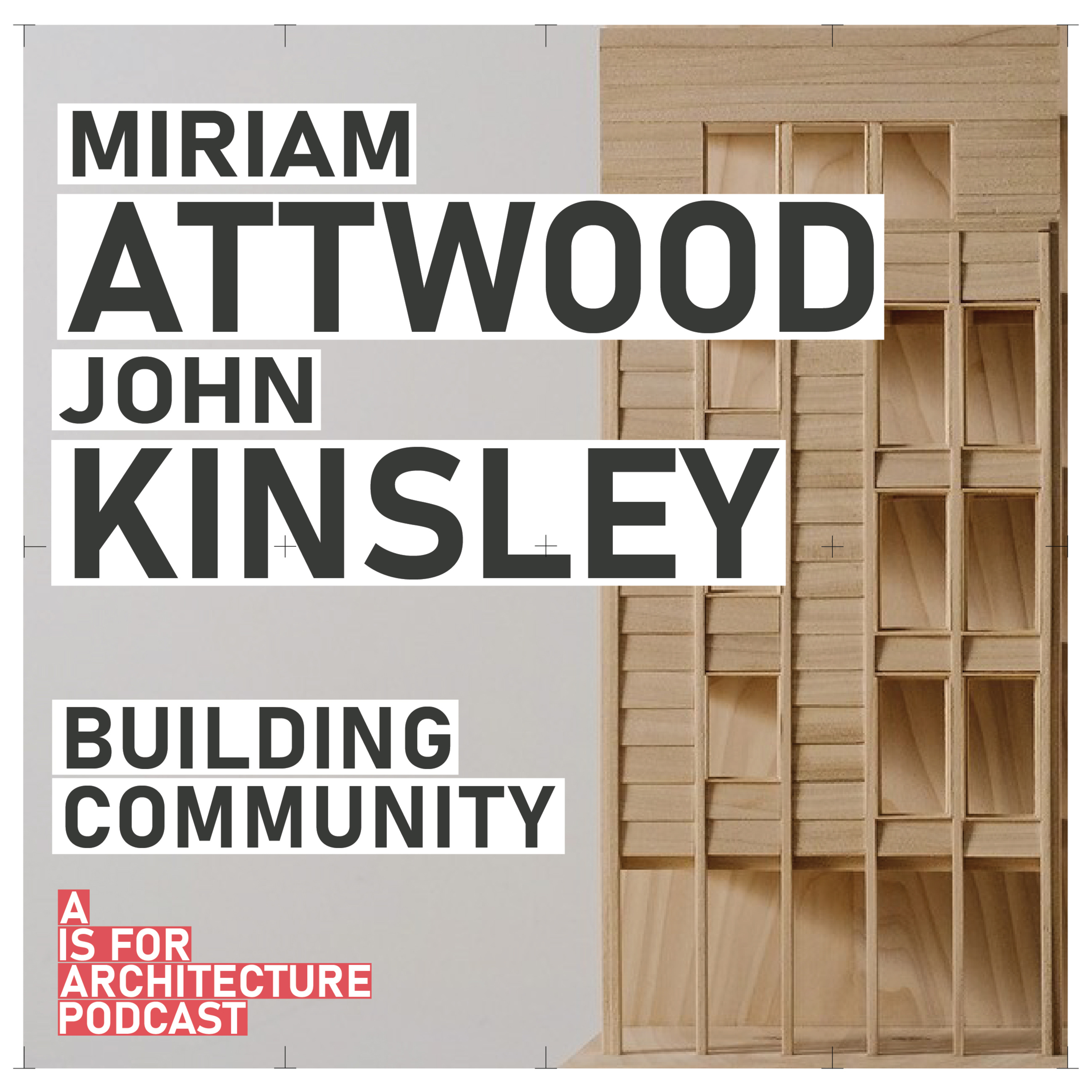 Miriam Attwood & John Kinsley: Building community. 16.04.2026 56minNine out of ten architectural practices in Europe are involved in designing private housing, according to the Architects Council of Europe, with the work generating 54% of the average practice’s turnover. But according to RIBA, in 2018 in the UK only 6% of housing was designed by architects. So housing is incredibly important to the economy of a profession which is very marginal to the production of housing in general. How did we get here?In this episode of the A is for Architecture Podcast I spoke to an architect and their client, or a client and their architect, about a project which perhaps illustrates another way of doing things. Working together, architect and Lecturer in Architecture Technology at Newcastle University, John Kinsley, and client (and Director at StorytellingPR) Miriam Attwood discuss their scheme for a collective custom build home in Leith, Scotland. It’s a good story well told of another image of housing, one which adopts a typology, form, material and technology - and a process of design – design-as-relationship - which positions the house in service to the community it is for, and preferences home making above money makers. As the Bruderhof like to say, another life is possible.John can be found on John Kinsley Architects’ website and on LinkedIn. Miriam can be found there too and at StorytellingPR.Music credits: Bruno Gillick Image credits: Main: Model of collective custom build, Leith © John Kinsley Architects. #ArchitecturePodcast #HousingDesign #CustomBuild #CollectiveHousing #waltersegal
Sarnased taskuhäälingud


Populaarne riigis
See taskuhääling on ka nende riikide taskuhäälingute edetabelites.


