
Immersion Travel Italy
Katerina Ferrara
0
Step off the beaten path and dive into the heart of authentic Italy with the Immersion Travel Podcast. Hosted by travel expert and author Katerina Ferrera, this show takes you beyond the guidebooks to uncover vibrant festivals, rich traditions, hidden gems, and must-see destinations across Italy. Whether you’re a seasoned traveler or dreaming of your first trip, you’ll discover insider tips, cultural deep dives, and expert advice to make your journey unforgettable. Join us for festival spotlights, local stories, food experiences, and travel itineraries.
Osad
-
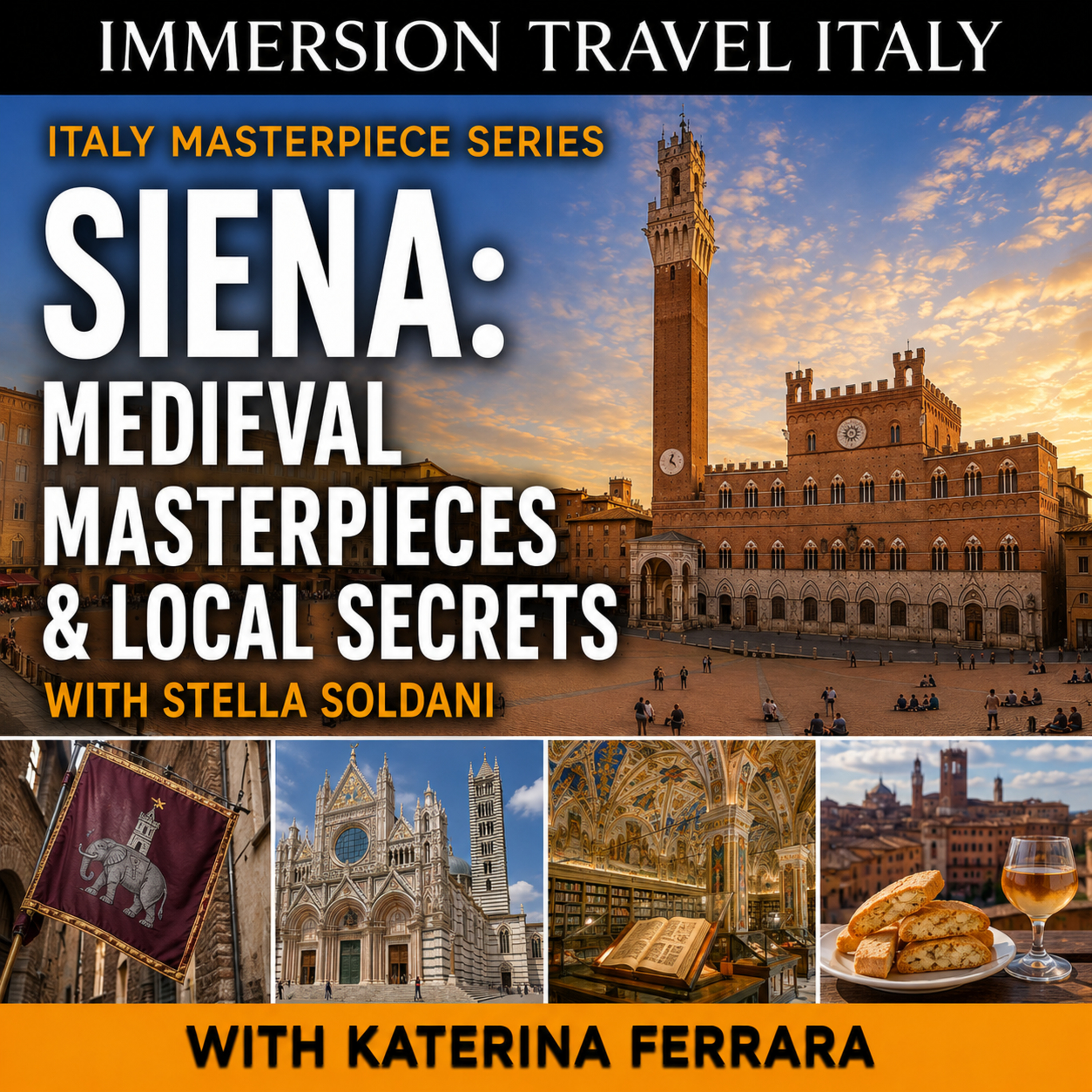 Siena, Italy: The Palio, Medieval Masterpieces & Local Secrets with Stella Soldani | Italy’s Masterpiece Series 02.10.2026 44minTravel to Siena, Tuscany, one of Italy’s greatest medieval cities, in this episode of Immersion Travel Italy and the Italy’s Masterpiece Series.I’m joined by Stella Soldani, a licensed Siena tour guide who was born and raised in the city and is a member of the Contrada della Torre. Stella takes us beyond the usual Siena day trip to understand what it really means to grow up Sienese and belong to one of the city’s seventeen historic Contrade.We explore the traditions surrounding the Palio di Siena, held each year on July 2 and August 16, and discover why the famous horse race is only a small part of a much larger celebration involving Contrada dinners, trial races, historic processions, flag throwers, religious traditions and centuries of neighborhood identity.Then we travel through Siena’s extraordinary history and masterpieces, including Piazza del Campo, Palazzo Pubblico, Torre del Mangia, Ambrogio Lorenzetti’s Allegory of Good and Bad Government, the Via Francigena, Santa Maria della Scala and Siena Cathedral.Inside the Duomo, we explore its remarkable marble floor, Piccolomini Library, Museo dell’Opera, crypt, Baptistery and Facciatone, along with works connected to Michelangelo, Donatello, Bernini, Pinturicchio and other masters.We also discuss Saint Catherine of Siena, the Basilica di San Domenico and her continuing importance to the city.Stella shares some of her own local Siena recommendations, including favorite cafés and restaurants, traditional foods such as ricciarelli, panforte and wild boar ragù, Tuscan wines, hidden viewpoints and places many visitors overlook.If you are planning a trip to Siena, Florence, Tuscany, Chianti, San Gimignano, Montalcino, Pienza, Montepulciano or the Val d’Orcia, this episode is packed with Siena travel tips, history and local insight.TOUR SIENA WITH STELLA SOLDANIStella has been a licensed guide in Siena and the surrounding region for more than twenty five years, with tours in Siena, Chianti, Montalcino, Pienza, San Gimignano and beyond.Website: https://www.stellasoldani.comEmail: [email protected] THE COMPANION BLOGEvery episode in the Italy’s Masterpiece Series has a companion blog with photographs of the places, people, art and architecture discussed in the episode.Blog: https://www.katerinaferrara.com/blogJOIN MY FREE NEWSLETTERGet Italian travel inspiration, festivals, traditions, new podcast episodes, travel planning ideas and updates from the Travel Italy Book Series.Sign up: https://www.katerinaferrara.comTRAVEL ITALY BOOK SERIESUltimate Festival and Travel Guide: Pugliahttps://amzn.to/42WEnH1Ultimate Festival and Travel Guide: Sicilyhttps://amzn.to/3KARdo8Ultimate Festival and Travel Guide: Rome and Beyondhttps://amzn.to/4gRlvz0Ultimate Festival and Travel Guide: Venice and the Venetohttps://amzn.to/48OhHfTUltimate Festival and Travel Guide: Milan and Lombardyhttps://amzn.to/46VzmQsUltimate Festival and Travel Guide: Umbriahttps://katerinaferrara.com/uncover-the-charm-of-umbria/Sicilia in Festa: Sicily in Celebration | English and Italian Dual Language Editionhttps://amzn.to/4jPVEHKComing Next: Ultimate Festival and Travel Guide TuscanyVisit https://www.katerinaferrara.com for the Immersion Travel Italy podcast, companion blogs, books and more Italy travel inspiration.
 -
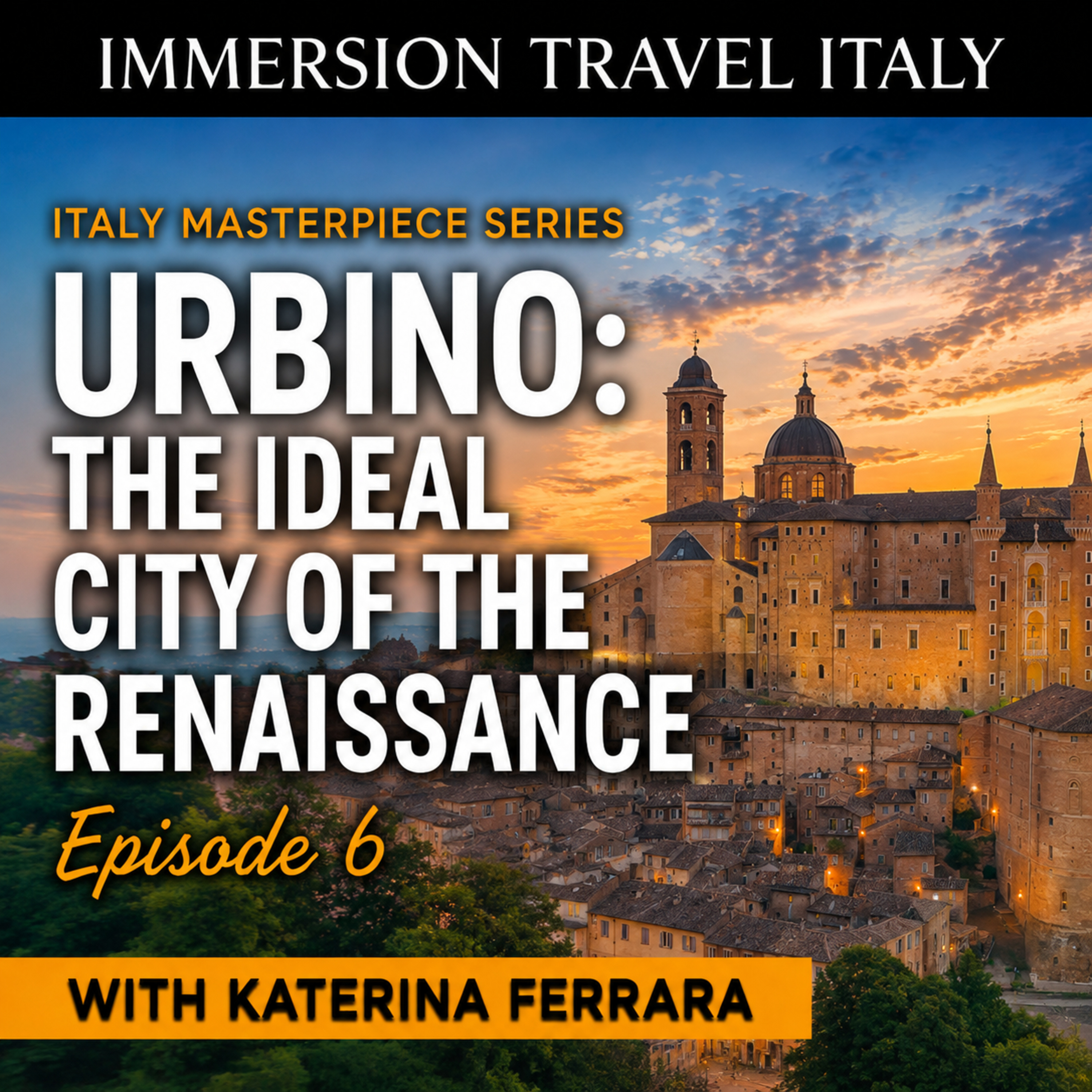 Urbino: The Ideal City of the Renaissance | Italy’s Masterpiece Series Episode 6 25.09.2026 23minHigh in the hills of the Marche lies Urbino, one of Italy’s most extraordinary Renaissance cities and a UNESCO World Heritage Site. Small in size but enormous in influence, Urbino became one of the great artistic and intellectual courts of fifteenth century Europe.In Episode 6 of Italy’s Masterpiece Series, we step inside the world of Federico da Montefeltro, the soldier, duke, humanist, and patron who transformed Urbino into a center of Renaissance art, architecture, scholarship, and culture.We explore the magnificent Palazzo Ducale, Federico’s remarkable Studiolo, and the treasures of the Galleria Nazionale delle Marche, including Piero della Francesca’s mysterious Flagellation of Christ and luminous Madonna di Senigallia.We also discover Urbino’s connection to Raphael, who was born here in 1483. We visit his birthplace, Casa Natale di Raffaello, and explore how the artistic and intellectual environment of Urbino helped shape the world into which one of the greatest painters of the High Renaissance was born.But Urbino’s story is also about the people behind the art. We meet Battista Sforza, Federico’s highly educated wife who helped govern the duchy in his absence, and look at the famous double portrait of Federico and Battista painted by Piero della Francesca.Along the way, we visit Urbino Cathedral, the fresco filled Oratorio di San Giovanni Battista, the unusual sculptural Nativity at the Oratorio di San Giuseppe, and San Bernardino, the final resting place of Federico da Montefeltro.Then we wander Urbino’s steep Renaissance streets, discover its historic university, take in the view from Fortezza Albornoz, and taste local specialties including crescia sfogliata di Urbino, Casciotta d’Urbino DOP, truffles, and passatelli.We’ll also look at the Festa del Duca, when Urbino returns to the world of Federico da Montefeltro with Renaissance costumes, processions, music, and performances.If you love Italian Renaissance art, Raphael, Piero della Francesca, historic palaces, UNESCO World Heritage Sites, the Marche, or discovering lesser known Italian cities, Urbino deserves a place on your Italy itinerary.Every episode in Italy’s Masterpiece Series also has an accompanying blog with photographs and images of the palaces, paintings, artists, rulers, and places discussed in the episode.Read the blog:KaterinaFerrara.com/blogListen and watch Immersion Travel Italy:KaterinaFerrara.com/video-podcast/Sign up for my free monthly Travel Italy Newsletter:KaterinaFerrara.comNext in Italy’s Masterpiece Series: Siena, Tuscany.Explore My Italy Travel GuidesIf you’re planning a trip to Italy and want deeper cultural insight, festival traditions, and immersive travel experiences, explore my Travel Italy guides. Ultimate Festival and Travel Guide Sicilyhttps://amzn.to/3KARdo8Ultimate Festival and Travel Guide Pugliahttps://amzn.to/42WEnH1Ultimate Festival and Travel Guide Rome and Beyondhttps://amzn.to/4gRlvz0Ultimate Festival and Travel Guide Venice and the Venetohttps://amzn.to/48OhHfTUltimate Festival and Travel Guide Milan and Lombardyhttps://a.co/d/0h0JFBhiUltimate Festival and Travel Guide Umbriahttps://amzn.to/4bRpcTjSicilia in Festa: Experience the Magic of Sicily’s History, Art and Timeless Cultural Celebrations — English Italian Dual Language Editionhttps://amzn.to/4pUxBuPGuida Completa a Feste e Viaggi Sicilia — Italian Language Editionhttps://amzn.to/44AIYQ1My NEW Tuscany guidehttps://amzn.to/4yoPTsrFollow Immersion Travel Italy for more Italian history, art, festivals, food, hidden destinations, and immersive travel planning.
 -
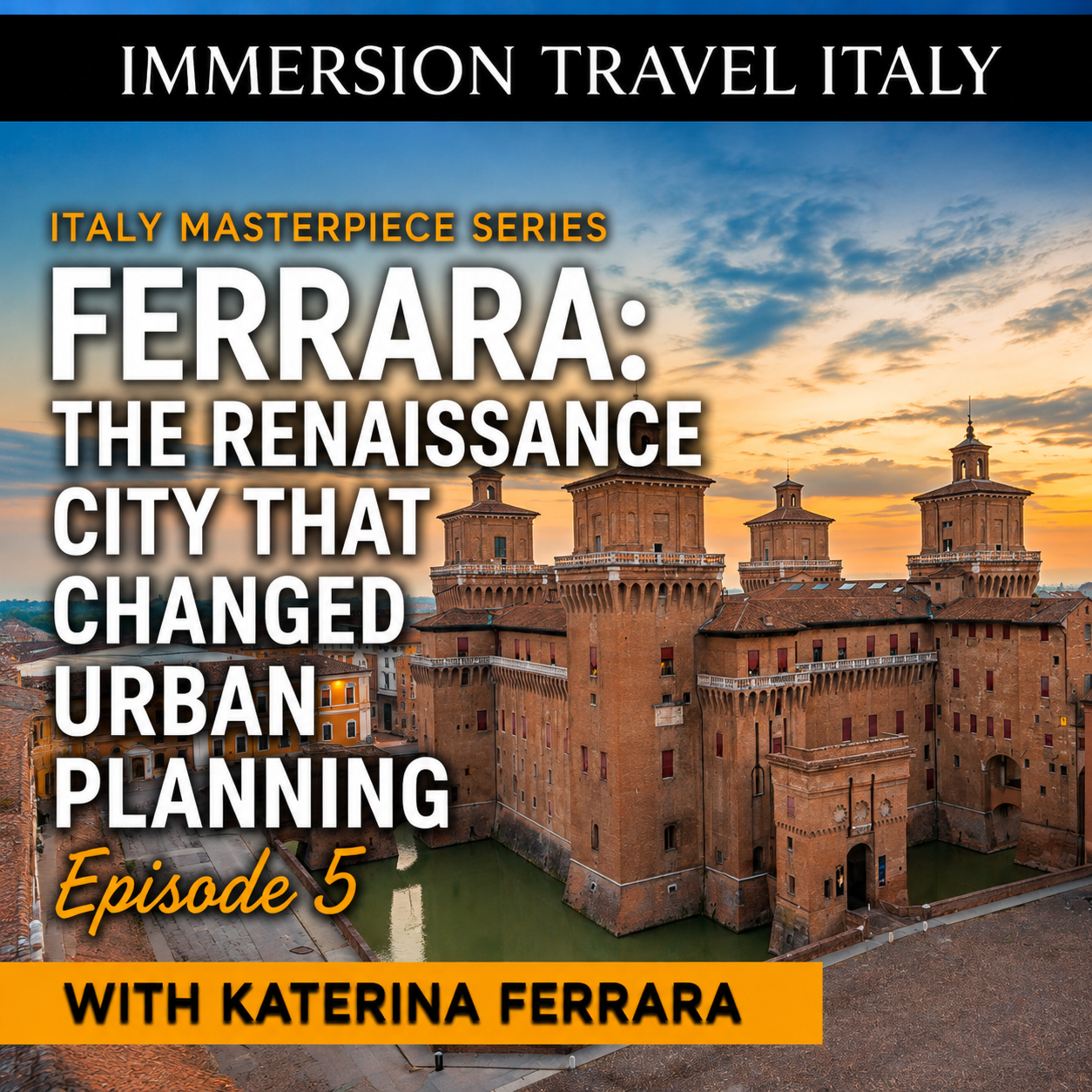 Ferrara: The Renaissance City That Changed Urban Planning | Italy's Masterpiece Series Episode 5 18.09.2026 35minDiscover why Ferrara is one of Italy's greatest hidden Renaissance treasures and a UNESCO World Heritage Site unlike any other. In this episode of the Immersion Travel Italy Podcast, we explore the remarkable city where the powerful House of Este transformed a medieval town into one of the world's first planned Renaissance cities.Walk across the drawbridge of magnificent Castello Estense, admire the stunning Cathedral of Saint George, marvel at the unique Palazzo dei Diamanti, cycle along Ferrara's perfectly preserved Renaissance walls, and discover why UNESCO considers Ferrara one of the most influential examples of Renaissance urban planning anywhere in the world.You'll also meet the extraordinary people who shaped Ferrara's history, including the Este family, Lucrezia Borgia, and Isabella d'Este. I also introduce one of my favorite Ferrarese Renaissance artists, Benvenuto Tisi, known as Il Garofalo, exploring his life, his art in Ferrara, and the remarkable connection between works created for Ferrara and paintings I have seen at the Metropolitan Museum of Art in New York. Along the way, we'll discover Ferrara's famous Palio, the Ferrara Buskers Festival, local cuisine, and the traditions that continue to make this one of Italy's most rewarding destinations.Whether you're planning a trip to Emilia Romagna or simply love Italian history, art, architecture, and culture, this episode will show you why Ferrara deserves a place on every Italy itinerary.🎧 In this episode you'll discover:• Why Ferrara became one of Europe's greatest Renaissance courts• The fascinating history of the House of Este• Castello Estense and its magnificent Renaissance apartments• The Cathedral of Saint George and its remarkable restoration• Palazzo dei Diamanti and the genius of Biagio Rossetti• Ferrara's Renaissance walls and why cycling is the best way to experience the city• The story of Lucrezia Borgia and her true legacy• Benvenuto Tisi, Il Garofalo, and his Renaissance art from Ferrara to the Met in New York• The Eucharistic Miracle at Santa Maria in Vado• Ferrara's famous festivals and traditional foods• Practical travel tips for visiting Ferrara📖 Explore my Italy Travel Guides🇮🇹 Ultimate Festival and Travel Guide Sicilyhttps://amzn.to/3KARdo8🇮🇹 Ultimate Festival and Travel Guide Pugliahttps://amzn.to/42WEnH1🇮🇹 Ultimate Festival and Travel Guide Rome and Beyondhttps://amzn.to/4gRlvz0🇮🇹 Ultimate Festival and Travel Guide Venice and the Venetohttps://amzn.to/48OhHfT🇮🇹 Ultimate Festival and Travel Guide Milan and Lombardyhttps://a.co/d/0h0JFBhi🇮🇹 Ultimate Festival and Travel Guide Umbriahttps://amzn.to/4bRpcTj🇮🇹 Sicilia in Festa (English / Italian Dual Language)https://amzn.to/4pUxBuP🇮🇹 Guida Completa a Feste e Viaggi Sicilia (Italian)https://amzn.to/44AIYQ1🌍 Podcast Bloghttps://www.katerinaferrara.com/blog🎥 Video Podcasthttps://www.katerinaferrara.com/video-podcast🌐 Website & Newsletterhttps://www.katerinaferrara.com#Italy #Ferrara #EmiliaRomagna #Renaissance #CastelloEstense #UNESCO #ItalianHistory #ItalyTravel #TravelItaly #ImmersionTravelItaly #LucreziaBorgia #EsteFamily #ItalianArchitecture #ItalyPodcast
 -
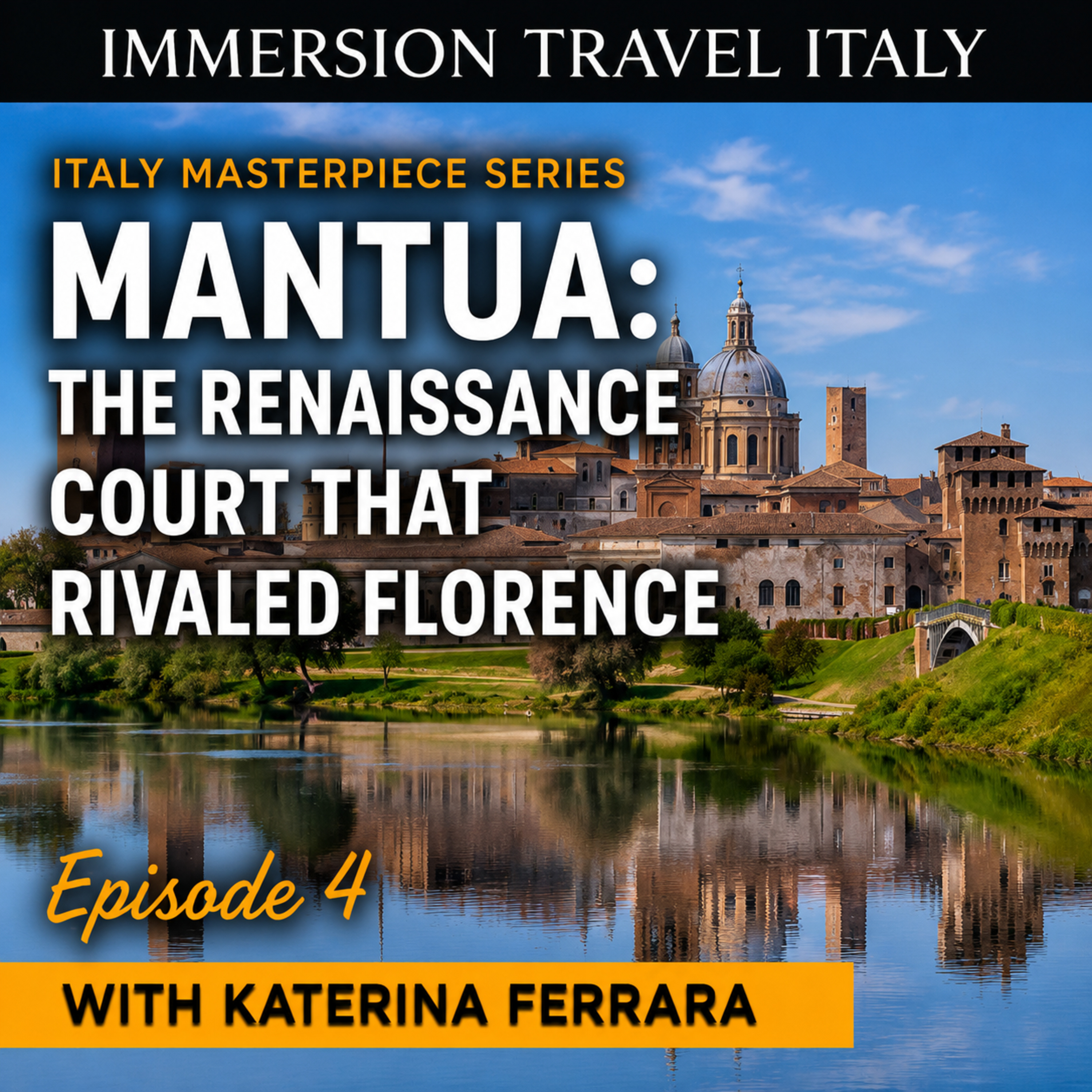 Mantua: The Renaissance Court That Rivaled Florence | Italy's Masterpiece Series Episode 4 11.09.2026 34minWhat made Mantua one of the greatest Renaissance courts in Europe? Why did UNESCO recognize this remarkable city alongside Sabbioneta? And how did the Gonzaga family transform a small city surrounded by water into a cultural capital that rivaled Florence?In this episode of Immersion Travel Italy's Italy Masterpiece Series, we journey to Mantua (Mantova), one of Italy's most overlooked UNESCO World Heritage Sites. Together we'll explore the remarkable story of the Gonzaga dynasty, step inside the magnificent Palazzo Ducale, marvel at Andrea Mantegna's revolutionary Camera degli Sposi, visit Palazzo Te and Giulio Romano's astonishing Chamber of the Giants, discover the legacy of Isabella d'Este, and wander through elegant piazzas, Renaissance churches, and centuries of artistic achievement.You'll also learn about Mantua's fascinating history, its Roman roots and connection to the poet Virgil, local foods like Tortelli di Zucca and Sbrisolona, the city's most important festivals, and practical travel tips to help you plan your own visit.🎧 In this episode you'll discover:• Why Mantua is one of Italy's greatest hidden Renaissance cities• The rise of the powerful Gonzaga family• Palazzo Ducale and the breathtaking Camera degli Sposi• Isabella d'Este, the First Lady of the Renaissance• Palazzo Te and Giulio Romano's Chamber of the Giants• Piazza Sordello, Piazza delle Erbe, Sant'Andrea, and the Rotonda di San Lorenzo• Mantua's UNESCO World Heritage designation• Local cuisine, cafés, festivals, and travel planning tips📖 Read the companion blog with photographs, maps, and travel tips:https://www.katerinaferrara.com/blog📚 Explore my Italy Travel GuidesUltimate Festival & Travel Guide: Milan & Lombardy (Includes Mantua - Chapter 37)https://a.co/d/0h0JFBhiUltimate Festival & Travel Guide: Sicilyhttps://amzn.to/3KARdo8Ultimate Festival & Travel Guide: Pugliahttps://amzn.to/42WEnH1Ultimate Festival & Travel Guide: Rome & Beyondhttps://amzn.to/4gRlvz0Ultimate Festival & Travel Guide: Venice & the Venetohttps://amzn.to/48OhHfTUltimate Festival & Travel Guide: Umbriahttps://amzn.to/4bRpcTjSicilia in Festa: Experience the Magic of Sicily's History, Art and Timeless Cultural Celebrations (English/Italian)https://amzn.to/4pUxBuPGuida Completa a Feste e Viaggi Sicilia (Italian Edition)https://amzn.to/44AIYQ1🌍 Website: https://www.katerinaferrara.com📬 Join my FREE monthly newsletter for Italy travel inspiration, festivals, hidden destinations, new podcast episodes, and behind the scenes updates.If you enjoyed this episode, please follow the podcast, leave a review, and share it with someone planning their next Italian adventure.#Mantua #Mantova #ItalyTravel #VisitItaly #Lombardy #UNESCO #Renaissance #Gonzaga #PalazzoDucale #PalazzoTe #CameraDegliSposi #AndreaMantegna #GiulioRomano #IsabelladEste #ItalianHistory #TravelItaly #ImmersionTravelItaly #ItalyPodcast #EuropeanHistory #NorthernItaly
 -
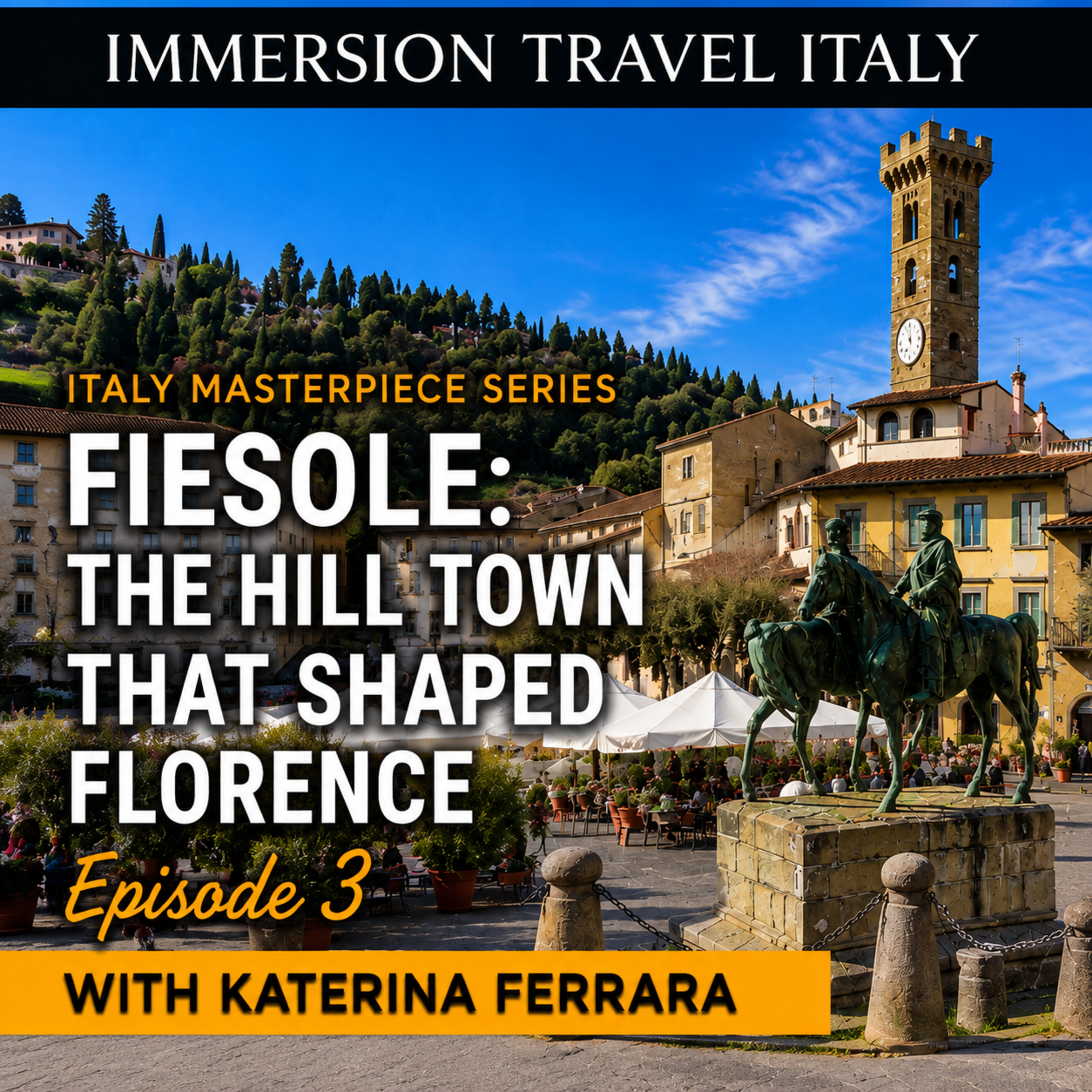 Fiesole: The Hill Town That Shaped Florence | Italy's Masterpiece Series Episode 3 04.09.2026 17minWhat if the story of Florence actually began on a hill overlooking the city?In this episode of Immersion Travel Italy, we travel to Fiesole, one of Tuscany's oldest and most fascinating hill towns. Long before Brunelleschi built Florence's famous dome, before Michelangelo sculpted David, and before the Medici transformed Florence into the cradle of the Renaissance, the Etruscans built a thriving city here overlooking the Arno Valley.Join me as we discover why this peaceful town became one of Italy's hidden masterpieces.In this episode you'll discover:• Why Fiesole is centuries older than Florence• The fascinating Etruscan civilization that ruled Tuscany before Rome• The remarkably preserved Roman Theater that still hosts performances after nearly 2,000 years• How Julius Caesar founded Florence on the plains below• The Medici villas where Renaissance ideas flourished• The best panoramic views of Florence in all of Tuscany• Practical travel tips, restaurants, and festivals for visiting FiesoleIf you love Tuscany, Roman history, Etruscan archaeology, Renaissance history, hidden Italy, and unforgettable hill towns, this episode belongs on your travel playlist.Read the companion blog with photos, travel tips, and additional resources:https://www.katerinaferrara.com/blogSubscribe to my free monthly newsletter for Italy travel inspiration, festivals, hidden destinations, and practical planning advice:https://www.katerinaferrara.comUltimate Festival and Travel Guide Sicilyhttps://amzn.to/3KARdo8Ultimate Festival and Travel Guide Pugliahttps://amzn.to/42WEnH1Ultimate Festival and Travel Guide Rome and Beyondhttps://amzn.to/4gRlvz0Ultimate Festival and Travel Guide Venice and the Venetohttps://amzn.to/48OhHfTUltimate Festival and Travel Guide Milan and Lombardyhttps://a.co/d/0h0JFBhiUltimate Festival and Travel Guide Umbriahttps://amzn.to/4bRpcTjSicilia in Festa: Experience the Magic of Sicily's History, Art and Timeless Cultural Celebrations (English and Italian Dual Language Edition)https://amzn.to/4pUxBuPGuida Completa a Feste e Viaggi Sicilia (Italian Edition)https://amzn.to/44AIYQ1Website:https://www.katerinaferrara.comTravel Blog:https://www.katerinaferrara.com/blogVideo Podcast:https://www.katerinaferrara.com/video-podcast#ItalyTravel #Fiesole #Florence #Tuscany #VisitTuscany #Etruscans #RomanHistory #Renaissance #Medici #HiddenItaly #ItalyPodcast #TravelItaly #ItalyMasterpieceSeries
 -
 Aquileia: The Forgotten Roman City That Once Rivaled Rome | Italy's Masterpieces Episode 2 28.08.2026 18minWhat if one of the greatest cities of the Roman Empire has been hiding in plain sight?In this episode of Immersion Travel Italy, we journey to Aquileia, one of Italy's most remarkable UNESCO World Heritage Sites and one of the most important yet overlooked destinations in northern Italy. Founded in 181 BC, Aquileia grew into one of the largest cities of the Roman Empire, becoming a vital commercial gateway connecting the Mediterranean with Central Europe and serving as one of the earliest centers of Christianity.Join me as we explore:• The rise of one of ancient Rome's wealthiest cities• The spectacular Basilica of Santa Maria Assunta and the world's largest surviving Early Christian mosaic floor• Ancient Roman ports, forums, and the impressive House of Titus Macro• How Attila the Hun changed Aquileia forever and helped shape the future of Venice• Practical travel tips for visiting Aquileia from Venice or Trieste• Where to eat, what to see, and why this hidden archaeological treasure deserves a place on your Italy itineraryIf you love Roman history, archaeology, UNESCO World Heritage Sites, ancient civilizations, hidden Italy, and authentic travel beyond the tourist crowds, this episode is for you.Read the companion blog with photos and additional travel information:https://www.katerinaferrara.com/blogSubscribe to my free monthly newsletter for Italy travel inspiration, festivals, hidden destinations, and travel planning tips:https://www.katerinaferrara.comUltimate Festival and Travel Guide Sicilyhttps://amzn.to/3KARdo8Ultimate Festival and Travel Guide Pugliahttps://amzn.to/42WEnH1Ultimate Festival and Travel Guide Rome and Beyondhttps://amzn.to/4gRlvz0Ultimate Festival and Travel Guide Venice and the Venetohttps://amzn.to/48OhHfTUltimate Festival and Travel Guide Milan and Lombardyhttps://a.co/d/0h0JFBhiUltimate Festival and Travel Guide Umbriahttps://amzn.to/4bRpcTjSicilia in Festa: Experience the Magic of Sicily's History, Art and Timeless Cultural Celebrations (English and Italian Dual Language Edition)https://amzn.to/4pUxBuPGuida Completa a Feste e Viaggi Sicilia (Italian Edition)https://amzn.to/44AIYQ1Website:https://www.katerinaferrara.comBlog:https://www.katerinaferrara.com/blogVideo Podcast:https://www.katerinaferrara.com/video-podcast#ItalyTravel #Aquileia #RomanEmpire #UNESCO #AncientRome #FriuliVeneziaGiulia #NorthernItaly #Archaeology #EarlyChristianity #TravelItaly #ItalyPodcast #HistoryPodcastExplore My Italy Travel GuidesFollow Immersion Travel Italy
 -
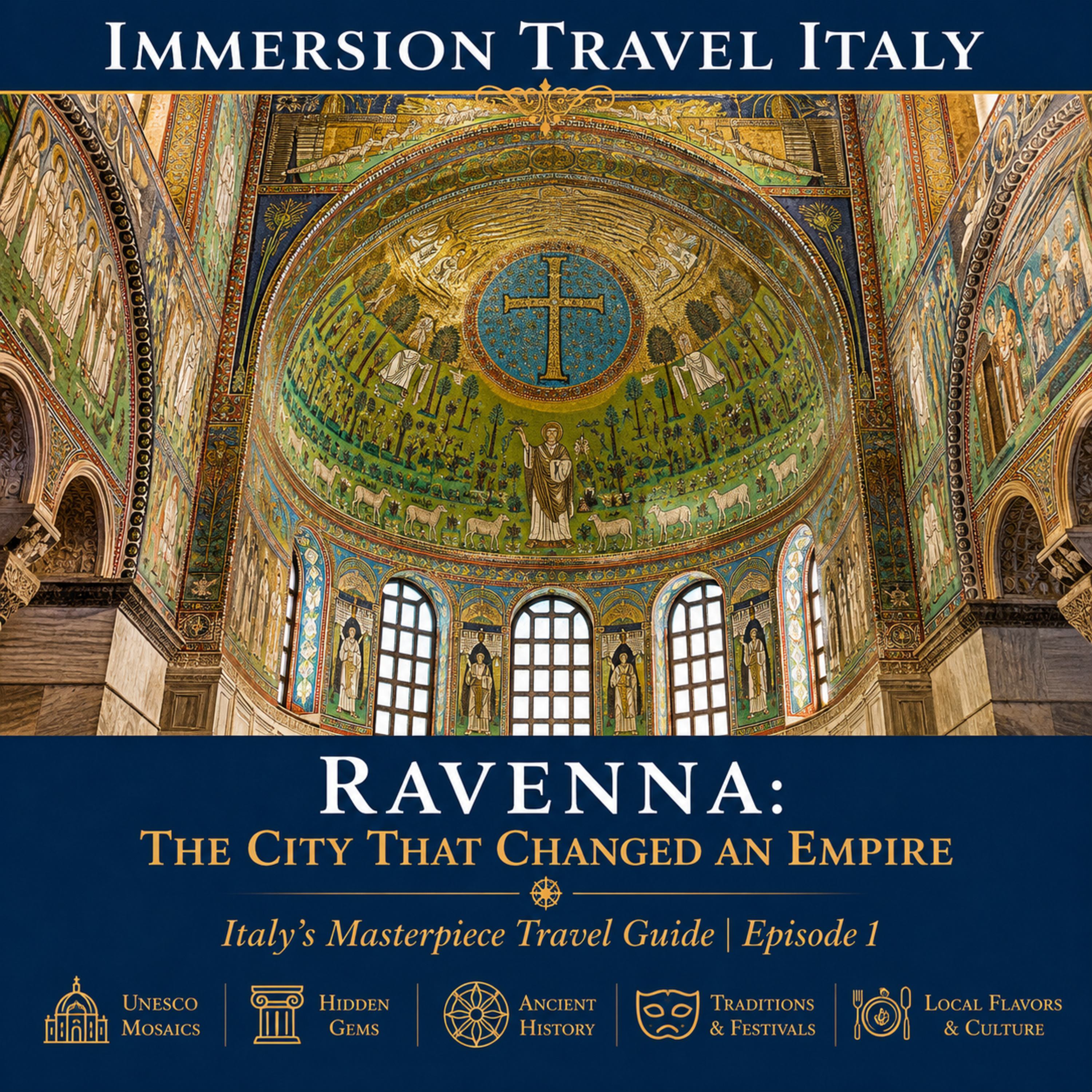 Ravenna: The City That Changed an Empire | Italy's Masterpiece Travel Guide | Episode 1 21.08.2026 25minWelcome to the premiere episode of Italy's Masterpiece Travel Guide!Most travelers know Florence, Venice, and Rome. But what if one of Italy's greatest artistic treasures lies in a peaceful city that many visitors overlook?In this episode , we journey to Ravenna, the final capital of the Western Roman Empire and home to **eight UNESCO World Heritage Sites**. Discover why emperors moved the capital here, how the Byzantine Empire transformed Ravenna into one of the greatest centers of Christian art, and why Dante Alighieri completed the *Divine Comedy* within these ancient streets.Join me as we step inside the breathtaking **Basilica of San Vitale**, stand beneath the brilliant blue stars of the **Mausoleum of Galla Placidia**, explore the magnificent mosaics of **Sant'Apollinare Nuovo**, visit **Dante's Tomb**, and uncover hidden corners that most visitors never experience.Along the way, I'll share personal stories from our family's travels, including learning the ancient art of mosaic making during a hands on workshop that completely changed the way we viewed Ravenna's masterpieces.If you love history, art, architecture, Italy, or planning unforgettable trips, this episode is for you.In This Episode• Why Ravenna became the capital of the Western Roman Empire• The rise of the Ostrogoths and the Byzantine Empire• Emperor Justinian and Empress Theodora• The Basilica of San Vitale and its world famous mosaics• The Mausoleum of Galla Placidia• Sant'Apollinare Nuovo and the Neonian Baptistery• Dante Alighieri's final years in Ravenna• Ravenna's UNESCO World Heritage Sites• Mosaic workshops and artisan traditions• The Basilica of Sant'Apollinare in Classe• Ravenna's pine forests and hidden experiences• Local food, cafés, restaurants, and market days• Festivals throughout the year• A suggested two day itinerary• Practical travel tips for planning your visitWhether you're planning a trip to **Emilia Romagna**, building the perfect Italy itinerary, or simply love discovering the stories behind Italy's greatest destinations, Ravenna deserves far more than a rushed day trip.📖 **Read the free companion blog** featuring photographs, maps, restaurant recommendations, travel tips, and additional resources:[https://www.katerinaferrara.com/blog](https://www.katerinaferrara.com/blog)🎟️ **Planning your visit?** Reserve your UNESCO monument tickets in advance. The combined pass includes San Vitale, the Mausoleum of Galla Placidia, Sant'Apollinare Nuovo, the Neonian Baptistery, and more. Official visitor information and ticket options are available here:[Ravenna UNESCO Monument Tickets](https://www.turismo.ra.it/en/school-trips/unesco-tour/?utm_source=chatgpt.com) The combined ticket is valid for seven days, and several monuments require timed entry reservations during busy periods. ([Ravenna Turismo][1])📩 **Subscribe to my free Italy Travel Newsletter** for destination inspiration, Italy travel news, festivals, and exclusive travel tips:[https://www.katerinaferrara.com]## Explore My Italy Travel GuidesRome & Beyond Travel Guidehttps://www.amazon.com/dp/B0F5LQ2H4MMilan & Lombardy Travel Guidehttps://www.amazon.com/dp/B0FC4S3LNBVenice & the Veneto Travel Guidehttps://www.amazon.com/dp/B0FJBW7KJXSicily Travel Guidehttps://www.amazon.com/dp/B0DY2L9X7Q*Puglia Travel Guidehttps://www.amazon.com/dp/B0DXD8Q9M2*Umbria Travel Guidehttps://www.amazon.com/dp/B0F1QWQF4SSicily in Celebration: Festivals & Traditionshttps://www.amazon.com/dp/B0F4P1DK6Li🏆 **Immersion Travel Italy is proud to be recognized by Feedspot as one of the Top 10 Italy Travel Podcasts.** Thank you for listening and for supporting independent travel storytelling.
 -
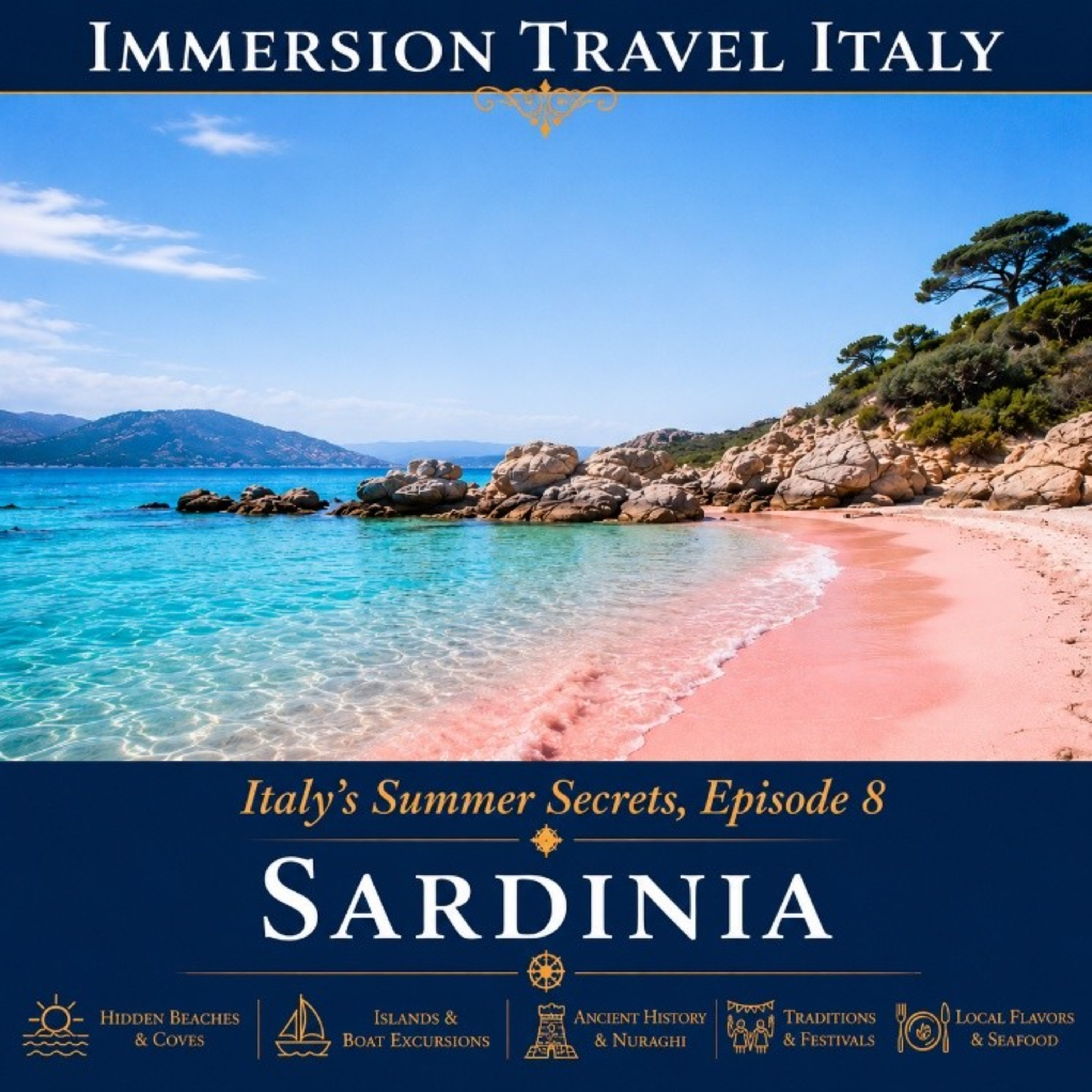 Italy's Summer Secrets Episode 8: Sardinia's Hidden Beaches, Ancient Traditions & Mediterranean Escapes 14.08.2026 12minWelcome to the final episode of Italy's Summer Secrets! In Episode 8, we're journeying to the extraordinary island of Sardinia, where emerald waters, hidden coves, ancient civilizations, and vibrant traditions come together to create one of Italy's most unforgettable destinations.Often celebrated for its Caribbean colored beaches, Sardinia offers so much more than seaside beauty. In this episode, we'll uncover the Five Faces of Sardinia, from glamorous Costa Smeralda and the spectacular Gulf of Orosei to the island's mysterious Nuragic heritage, rugged mountain landscapes, and enduring cultural traditions.We'll explore Sardinia's most breathtaking summer destinations, discover hidden swimming spots accessible only by boat, venture inland to dramatic gorges and authentic villages, celebrate centuries old festivals, and savor some of Italy's most distinctive cuisine.Whether you're dreaming of sailing through the La Maddalena Archipelago, hiking to Cala Goloritzé, relaxing on the shores of Porto Giunco, or exploring the ancient stone towers of Su Nuraxi, this episode will inspire you to experience Sardinia beyond the guidebooks.In this episode:• Sardinia regional overview and the Five Faces of Sardinia• Costa Smeralda, Villasimius, Chia, Alghero, and La Maddalena• Cala Mariolu, Cala Brandinchi, Porto Giunco, and Sardinia's best swimming experiences• Gorropu Gorge, Barbagia, and Sardinia's hidden inland escapes• Traditional Sardinian festivals including Sant'Efisio and Ardia di San Costantino• Sardinian foods including culurgiones, pane carasau, porceddu, and seadas• Practical travel tips for planning the ultimate Sardinian summer adventureDon't forget to visit www.katerinaferrara.com for the free companion blog, complete with photographs, destination highlights, and additional resources to help you plan your own Sardinian escape.And stay tuned, because next we'll begin an exciting new series exploring Italy's Hidden Masterpieces—the extraordinary cities beyond Rome, Florence, and Venice that shaped Italy's history, art, and faith. Our first stop: Ravenna, the last capital of the Western Roman Empire and home to some of the world's most breathtaking mosaics.Travel slowly. Travel deeply. And let Italy's hidden masterpieces tell their stories.#Sardinia #Sardegna #ItalyTravel #ItalianIslands #CostaSmeralda #LaMaddalena #CalaMariolu #HiddenItaly #ImmersionTravelItaly #ItalyPodcast #SummerInItaly #SlowTravel #TravelItaly #MediterraneanTravel #ItalysSummerSecretsExplore My Italy Travel GuidesIf you're planning your own Italian adventure, my travel guides will help you experience Italy beyond the guidebooks through local traditions, festivals, history, food, and immersive travel.📘 Ultimate Festival & Travel Guide: Sicilyhttps://amzn.to/4l71Pbi📘 Ultimate Festival & Travel Guide: Pugliahttps://amzn.to/3HFAe2w📘 Ultimate Festival & Travel Guide: Rome & Beyondhttps://amzn.to/440Dq0l📘 Ultimate Festival & Travel Guide: Milan & Lombardyhttps://amzn.to/3O3yR1b📘 Ultimate Festival & Travel Guide: Umbriahttps://amzn.to/4bRpcTj📘 Ultimate Festival & Travel Guide: Venice & the Venetohttps://amzn.to/4sDBS7u📘 Sicily in Celebrationhttps://amzn.to/4jPVEHK📘 Sicilia in Festa (English/Italian Dual Language Edition)https://amzn.to/4pUxBuP📘 Guida Completa a Feste e Viaggi Sicilia (Italian Edition)https://amzn.to/44AIYQ1We're Honored to Be Named a Top 10 Italy Travel Podcast!We're excited to share that Immersion Travel Italy has been recognized as one of Feedspot's Top 10 Italy Travel Podcasts!Thank you to every listener who has joined us as we explore Italy's history, hidden towns, unforgettable festivals, regional cuisine, and authentic travel experiences. Your support makes this journey possible.Whether you've been with us since the beginning or just discovered the show, thank you for traveling through Italy with us each week.https://podcast.feedspot.com/italy_travel_podcasts/
 -
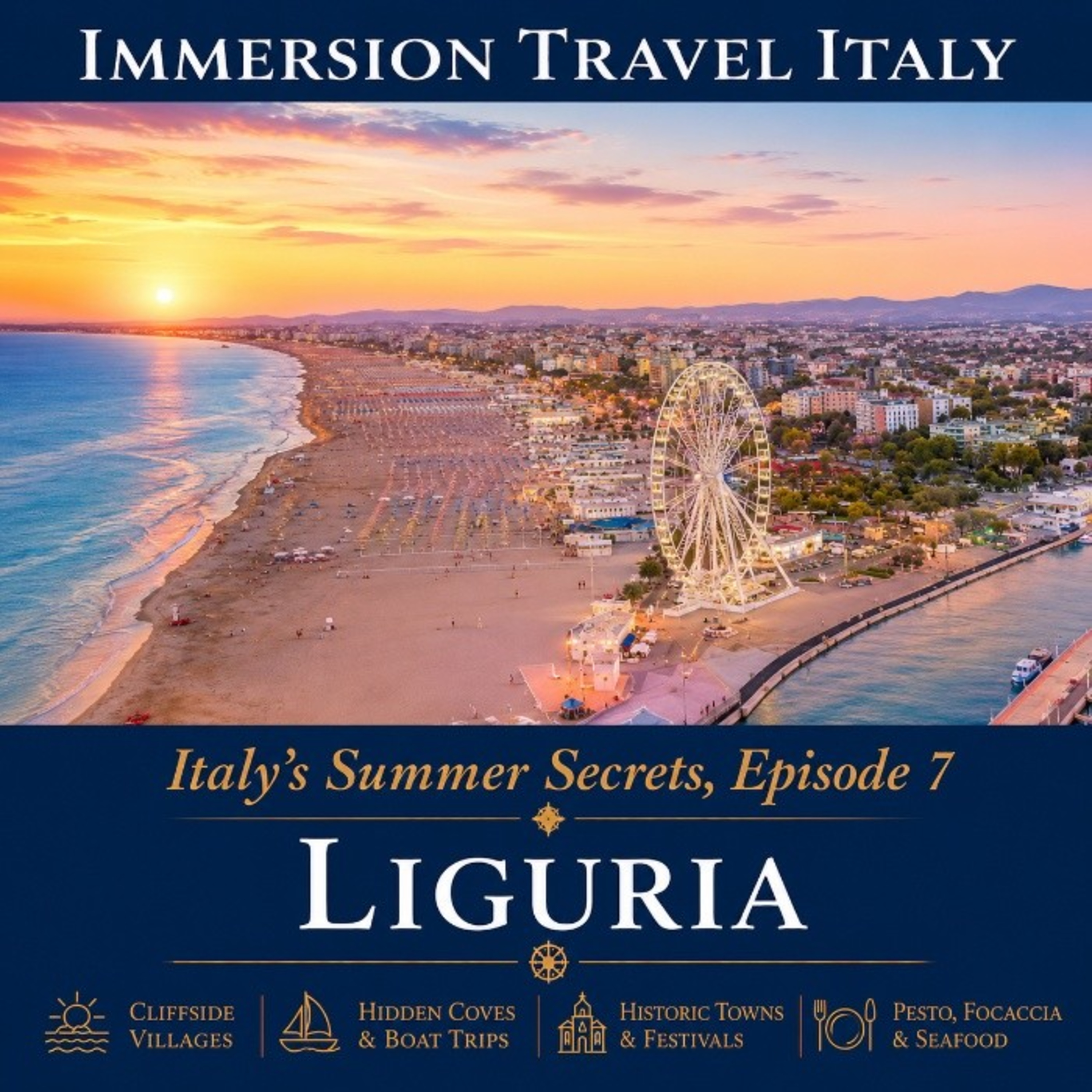 Italy's Summer Secrets Episode 7 | Cinque Terre, Portofino, Camogli, Hidden Beaches & Italy's Most Beautiful Coastline 07.08.2026 18minLiguria is home to one of Italy's most spectacular coastlines, where colorful villages cling to dramatic cliffs, crystal clear water meets the Mediterranean, and centuries of maritime tradition continue to shape everyday life.In Episode 7 of our Italy Summer Secrets series, join Katerina Ferrara as we explore far beyond the famous Cinque Terre to discover the hidden beaches, elegant seaside resorts, fishing villages, unforgettable festivals, and breathtaking boat journeys that make Liguria one of Italy's most rewarding summer destinations.Travel from the historic Maritime Republic of Genoa to the Italian Riviera, explore charming Camogli, Santa Margherita Ligure, Sestri Levante, Finale Ligure, and romantic Tellaro, then experience the Cinque Terre from the sea on an unforgettable private boat excursion.Along the way you'll discover:• Why seeing the Cinque Terre by boat completely changes the experience• The five Cinque Terre villages from Riomaggiore to Monterosso al Mare• Camogli and the Abbey of San Fruttuoso• Santa Margherita Ligure as one of Liguria's best home bases• Tellaro, one of Italy's most beautiful hidden villages• Portofino, Porto Venere, and the Gulf of Poets• The Palio del Golfo, Festa della Madonna Bianca, and Liguria's spectacular summer festivals• Boat trips, ferries, hiking trails, swimming coves, and whale watching• A complete seven day Liguria summer itineraryWhether you're planning your first visit to Liguria or returning to explore beyond the well known destinations, this episode will help you experience one of Italy's most beautiful regions more deeply.For the complete companion article, destination guides, maps, itineraries, and travel resources, visit **[www.KaterinaFerrara.com](http://www.KaterinaFerrara.com)**.**Travel Guides by Katerina Ferrara**📘 *Rome & Beyond Travel Guide*https://amzn.to/4j1M7PF📘 *Milan & Lombardy Travel Guide*https://amzn.to/4j17F0h📘 *Venice & the Veneto Travel Guide*https://amzn.to/3ZhN6bV📘 *Umbria Travel Guide*https://amzn.to/4lVCwqT📘 *Puglia Travel Guide*https://amzn.to/45aqJWY📘 *Sicily Travel Guide*https://amzn.to/45YQ8bP📘 *Sicily in Celebration*https://amzn.to/3HjWQ5u🌐 Website: https://www.KaterinaFerrara.com📸 Instagram:https://www.instagram.com/immersiontravelitalyhttps://www.instagram.com/katerinaferraraauthorImmersion Travel Italy Named a Top 19 Italy Travel PodcastI'm honored to share that Immersion Travel Italy has been recognized by Feedspot as one of the Top 19 Italy Travel Podcasts!Thank you to Feedspot for this recognition and to every listener who has joined me on this journey through Italy's history, culture, festivals, and hidden places. Your support makes every episode possible.View the full list here:https://podcast.feedspot.com/italy_travel_podcasts/Feedspot is an RSS Reader that lets you follow your favorite podcasts alongside blogs and news in one place.Grazie mille for listening, and here's to many more adventures across Italy!
 -
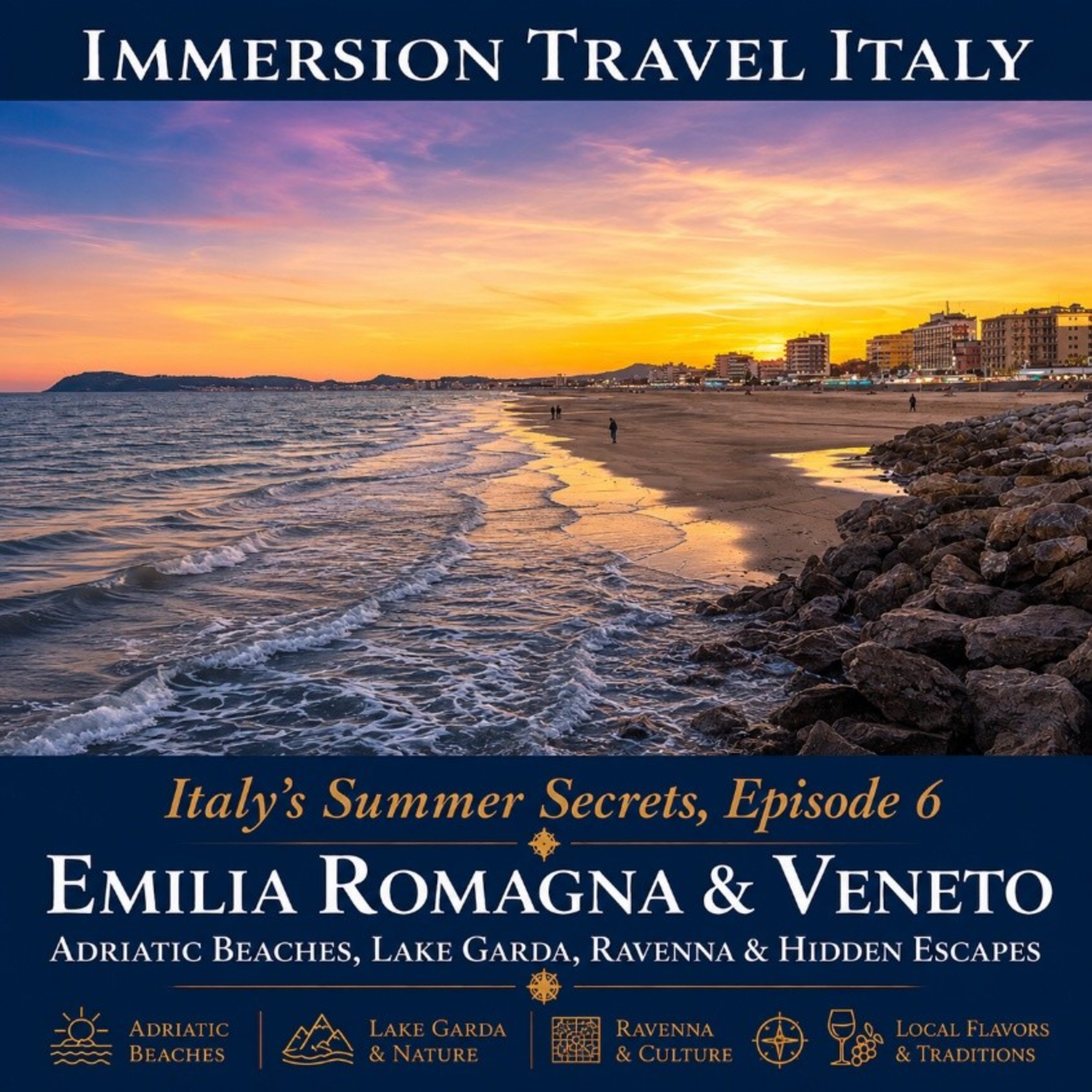 Italy's Summer Secrets Episode 6: Emilia Romagna & Veneto | Adriatic Beaches, Lake Garda, Ravenna & Hidden Escapes 31.07.2026 29minThis week on Immersion Travel Italy, we're continuing our journey around Italy's coastline as we uncover the Summer Secrets of Emilia Romagna and Veneto.Discover why generations of Italian families return year after year to the colorful beach resorts of Rimini, Cesenatico, Cervia, Jesolo, Bibione, and Caorle, where long afternoons beneath striped umbrellas, evening passeggiate, and fresh seafood dinners define the rhythm of summer.We'll explore the extraordinary mosaics of Ravenna, once the capital of the Western Roman Empire, stroll along Leonardo da Vinci's canal in Cesenatico, and watch flamingos gather among Cervia's historic salt pans. Then we'll journey north into Veneto to uncover the hidden charms of Chioggia, often called "Little Venice," relax along the Adriatic coast, and experience the timeless beauty of Lake Garda.Along the way, we'll share:☀️ The best beaches in Emilia Romagna and Veneto🏖️ Family friendly seaside destinations Italians love🚲 Hidden summer escapes beyond the crowds💦 Wild swimming spots, lakes, and thermal experiences🎭 The festivals that define summer in northern Italy🍷 Local foods, aperitivo traditions, and regional specialties🚗 A suggested 7 day Emilia Romagna and Veneto summer itineraryWhether you're dreaming of a classic Italian beach holiday, lakeside relaxation, cultural discoveries, or authentic local traditions, this episode will inspire you to experience a side of Italy that many travelers never see.If you'd like to explore these regions more deeply, be sure to check out my Ultimate Festival and Travel Guide: Venice and the Veneto, along with my other regional Italy travel guides, designed to help you travel beyond the guidebooks and immerse yourself in Italy's extraordinary local traditions.In this episode you'll discover:• Ravenna• Cervia and Milano Marittima• Cesenatico• Rimini• Chioggia and Sottomarina• Caorle• Bibione• Jesolo• Lake Garda• Veneto's summer festivals• Emilia Romagna's seaside traditions• Hidden summer secrets of northern ItalyBecause Italy isn't just a destination to see.It's a destination to experience.I'm Katerina Ferrara, and this is Immersion Travel Italy.Travel slowly. Travel deeply. And let the places tell their stories.If today's episode inspires you to explore Veneto more deeply, my Ultimate Festival and Travel Guide: Venice and the Veneto is designed to help you experience this remarkable region beyond the highlights. Inside, you'll find detailed walking tours, transportation guidance, accommodations, restaurant recommendations, practical travel tips, suggested day trips, and the extensive festival coverage that has become a hallmark of all my regional guides. From Venice's hidden neighborhoods and Verona's Roman heritage to Lake Garda's lakeside villages, the Prosecco Hills, and the traditions that bring Veneto's communities to life throughout the year, this guide will help you travel more confidently and connect more deeply with one of Italy's most diverse regions.Ultimate Festival and Travel Guide: Venice and the Veneto: https://amzn.to/4sDBS7uImmersion Travel Italy Named a Top 19 Italy Travel PodcastI'm honored to share that Immersion Travel Italy has been recognized by Feedspot as one of the Top 19 Italy Travel Podcasts!Thank you to Feedspot for this recognition and to every listener who has joined me on this journey through Italy's history, culture, festivals, and hidden places. Your support makes every episode possible.View the full list here:https://podcast.feedspot.com/italy_travel_podcasts/Feedspot is an RSS Reader that lets you follow your favorite podcasts alongside blogs and news in one place.Grazie mille for listening, and here's to many more adventures across Italy!
 -
Discover Italy's Hidden History: Joseph Walker on Forgotten Places, Festivals & Southern Italy 24.07.2026 47minWhat if the most unforgettable places in Italy are the ones most travelers never visit?In this episode of the Immersion Travel Italy Podcast, I sit down with historian, author, and tour leader Joseph Walker of Italian History with Joseph to explore the stories that lie beneath Italy's famous landmarks. Joseph shares the remarkable story of how, while serving in the U.S. Navy, he discovered the submerged Roman harbor of Portus Julius, launching a lifelong passion for uncovering Italy's hidden past.Together we discuss:Why history makes every trip to Italy more meaningfulThe rivalry between Italy's medieval city states and how it shaped the masterpieces we admire todayWhy Southern Italy deserves far more attention from travelersHidden archaeological sites and overlooked destinationsItaly's incredible historical festivals and why they are some of the country's greatest travel experiencesThe Kingdom of Sicily, forgotten history, and the rich cultural heritage of the MezzogiornoHow immersive travel creates memories that last far beyond sightseeingIf you've ever wanted to go beyond the guidebooks and discover the Italy that locals know, this conversation is for you.Learn more about Joseph Walker and his tours:https://italianhistorywithjoseph.com/immersion Joseph has also created a special resource exclusively for Immersion Travel Italy listeners, including:Free "Field Notes" featuring seven hidden destinations in ItalyA bonus chapter from his book Buried ItalyPriority access to select Buried Italy small group toursAdditional exclusive resources👉 Access Joseph's listener resources herehttps://italianhistorywithjoseph.com/immersionExplore more Italy travel inspiration:📚 Browse my Italian Masterpiece Travel Guide Series:https://www.katerinaferrara.com🎙️ Listen to more episodes of the Immersion Travel Italy Podcast:https://www.katerinaferrara.com/video-podcast🌍 Visit my website:https://www.katerinaferrara.com
-
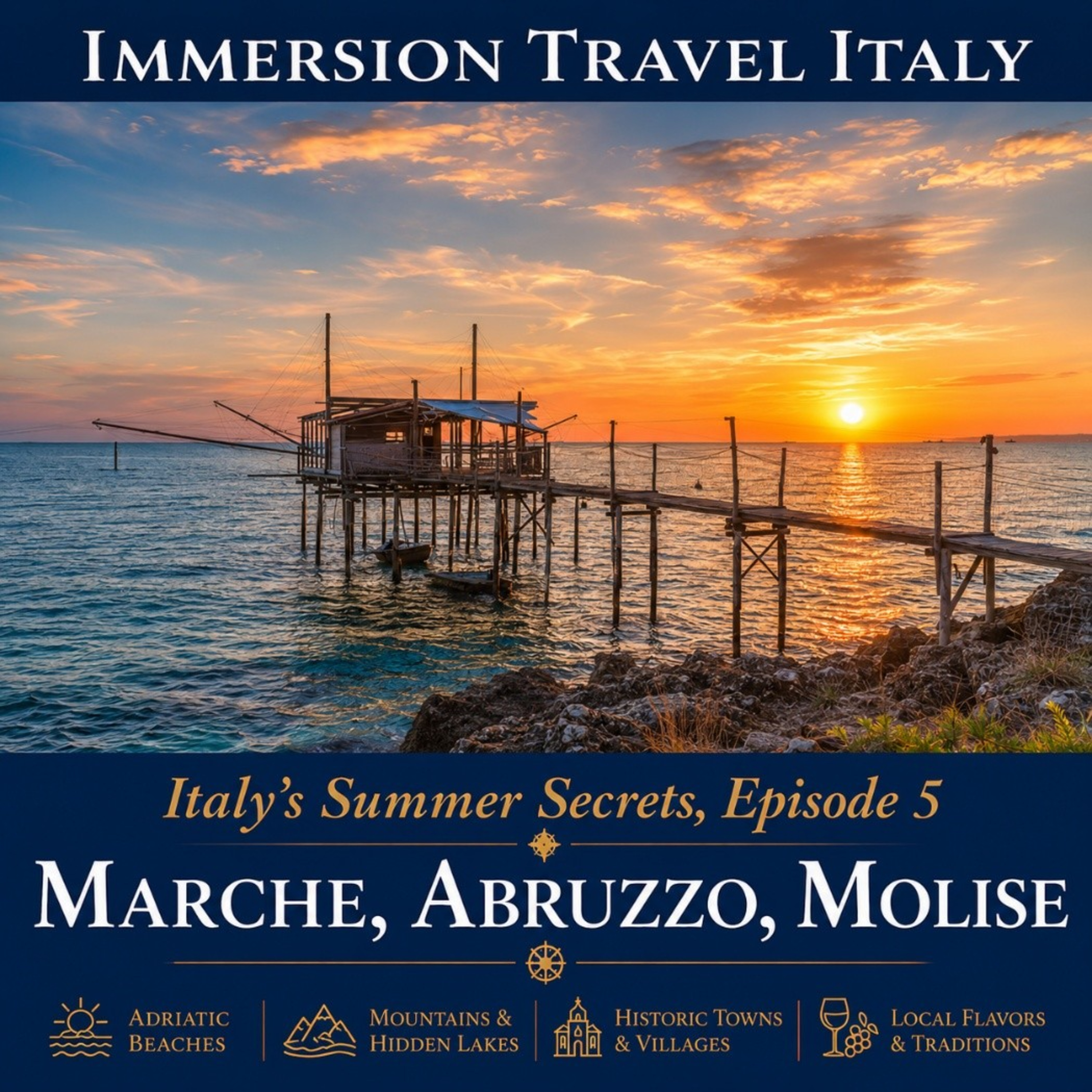 Italy's Summer Secrets, Episode 5: Le Marche, Abruzzo & Molise | Adriatic Beaches, Trabocchi, Monte Conero & Hidden Summer Escapes 17.07.2026 30minDiscover Italy's best kept summer secrets along the Adriatic coast.In Episode 5 of Italy's Summer Secrets, host Katerina Ferrara, author of the Ultimate Festival and Travel Guide series, takes you beyond Italy's most famous destinations to explore the authentic beauty of Le Marche, Abruzzo, and Molise.From the turquoise coves beneath Monte Conero and the family friendly beaches of Senigallia and San Benedetto del Tronto, to Abruzzo's dramatic Costa dei Trabocchi, medieval villages, mountain lakes, and Molise's peaceful Adriatic shores, this episode uncovers the Italy many travelers never experience.You'll discover:• The stunning beaches of Sirolo, Numana, Portonovo, Vasto, Termoli, and Campomarino• The iconic trabocchi fishing platforms of Abruzzo• Hidden swimming spots including Lago di Fiastra, Lago di Scanno, Lago di Castel San Vincenzo, Marmitte dei Giganti, and Gran Sasso National Park• Summer festivals such as the Quintana of Ascoli Piceno, Summer Jamboree, Perdonanza Celestiniana, Giostra Cavalleresca di Sulmona, and Festa di San Basso• Authentic regional foods including olive all'Ascolana, moscioli selvatici, brodetto, arrosticini, maccheroni alla chitarra, confetti di Sulmona, pampanella, cavatelli, and Tintilia wines• Insider tips on stabilimenti balneari, free beaches, hiking access, family friendly destinations, and lesser known coastal escapesWhether you're planning an Italian summer vacation, searching for hidden beaches in Italy, dreaming of the Adriatic coast, or simply looking for travel inspiration, this episode offers practical advice, cultural insight, and unforgettable destinations.📚 Looking for even more inspiration? Explore Katerina's Ultimate Festival and Travel Guide series featuring walking tours, where to stay, restaurant recommendations, transportation tips, day trips, and extensive coverage of Italy's festivals and traditions.🎧 Subscribe to Immersion Travel Italy for weekly episodes exploring Italy's regions, hidden gems, local festivals, food traditions, and immersive travel experiences.Searchable topics: Italy summer travel, Adriatic coast Italy, Le Marche beaches, Monte Conero, Sirolo Italy, Numana beaches, Portonovo Beach, Senigallia Velvet Beach, San Benedetto del Tronto, Abruzzo beaches, Costa dei Trabocchi, trabocco restaurants, Vasto Marina, Punta Aderci Nature Reserve, Gran Sasso National Park, Lago di Scanno, Sulmona, Molise beaches, Termoli Italy, Campomarino Lido, Lago di Castel San Vincenzo, Italian festivals, Italy hidden gems, Italy travel podcast.#ItalyTravel #ImmersionTravelItaly #ItalianSummer #LeMarche #Abruzzo #Molise #MonteConero #CostaDeiTrabocchi #Termoli #ItalyPodcast #HiddenItaly #TravelItaly
 -
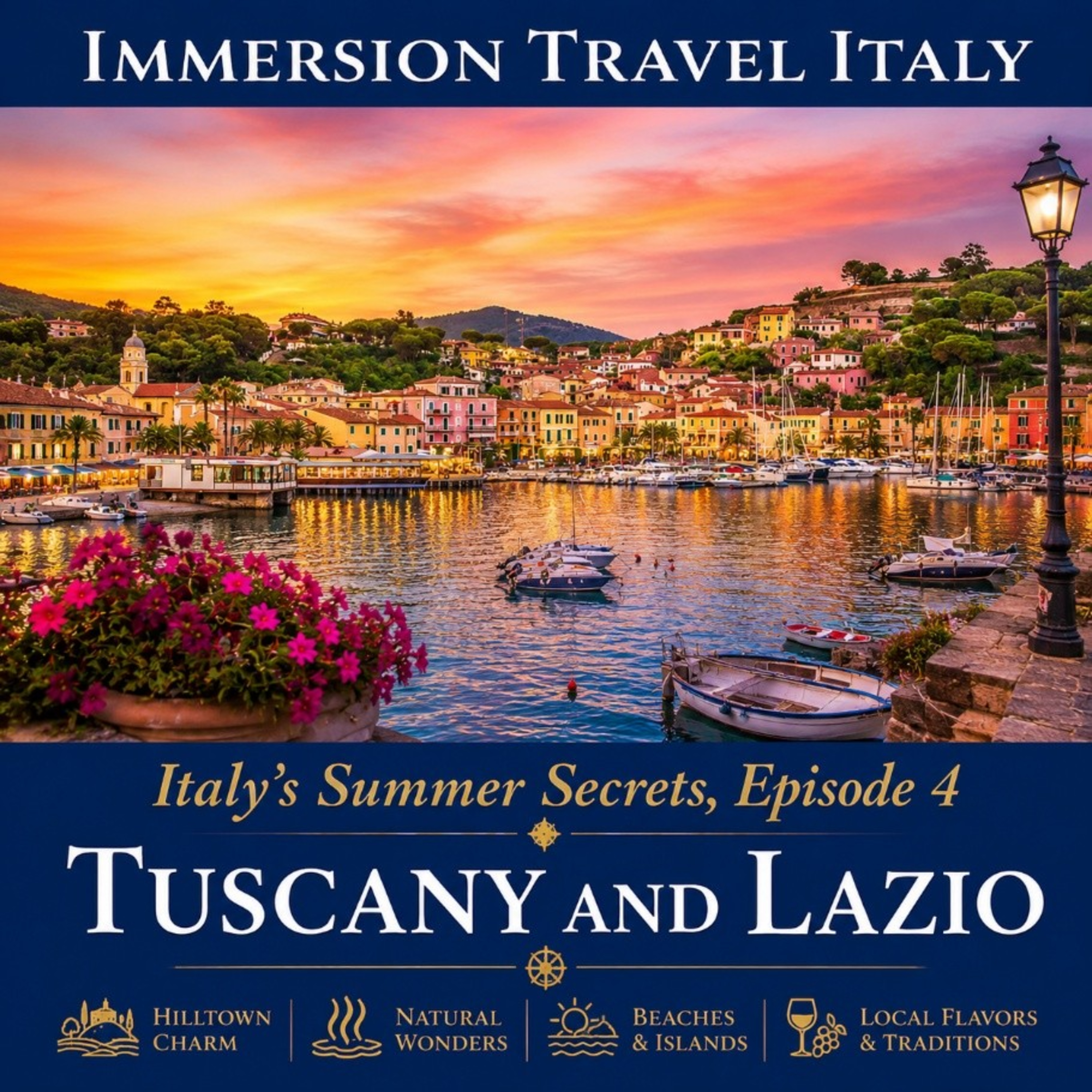 Italy's Summer Secrets: Episode 4 | Tuscany & Lazio's Hidden Beaches, Volcanic Lakes, Islands & Wild Swimming Escapes 10.07.2026 56minPlanning your Roman holiday? Explore The UltimateFestival and Travel Guide: Rome & Beyond by Katerina Ferrara fordetailed walking tours, transportation tips, accommodations, restaurantrecommendations, hidden gems, day trips, and the extensive festival coveragethat brings Lazio's traditions to life.https://amzn.to/440Dq0l📖 Coming Fall 2026:The Ultimate Festival and Travel Guide: Tuscany featuring walking tours,transportation advice, accommodations, restaurants, seasonal experiences, andthe festivals and traditions that transform a visit into a truly immersivejourney.Welcome back to Italy's Summer Secrets, the podcastseries uncovering Italy's most beautiful summer destinations beyond the typicaltourist trail.In Episode 4, we're heading into Tuscany and Lazioto reveal a side of central Italy that many travelers never experience.While most visitors know Florence, Pisa, Siena, and Rome,today's episode explores the hidden waterfalls, island escapes, volcanic lakes,seaside towns, and natural swimming destinations where Italians themselvesspend their summers.Join travel writer, podcaster, and author KaterinaFerrara as she uncovers some of central Italy's best kept summer secrets.In this episode, you'll discover:☀️ Tuscany's Greatest SummerDestinations 🏖️ Tuscany's MostBeautiful Beaches 🌊 Tuscany's HiddenWild Swimming Destinations ⛵ Tuscan Island Adventures 🏝️ Lazio's Top SummerSeaside Destinations 🏖️ Lazio's BestBeaches 💦 Lazio's VolcanicLakes & Wild Swimming Escapes 🎉 Summer FestivalsFeatured 🍝 Regional Foods toTry Whether you're planning a Tuscany itinerary,searching for the best beaches near Rome, dreaming of Elba Island,exploring Ponza, or looking for wild swimming destinations in Italy,this episode reveals a completely different side of central Italy.These are the places where locals escape the summer heat.The beaches they return to year after year.The lakes that have attracted visitors since Roman times.The hidden waterfalls tucked within forests.And the island adventures that reward travelers willing toventure beyond the expected.🎧 Next Episode:Join us as we continue our journey along Italy's Adriatic coast to uncover thesummer secrets of Le Marche, Abruzzo, and Molise, featuring dramaticcoastlines, trabocchi, mountain landscapes, medieval villages, and some ofItaly's most overlooked beach destinations.Travel slowly. Travel deeply. And let the places telltheir stories.
 -
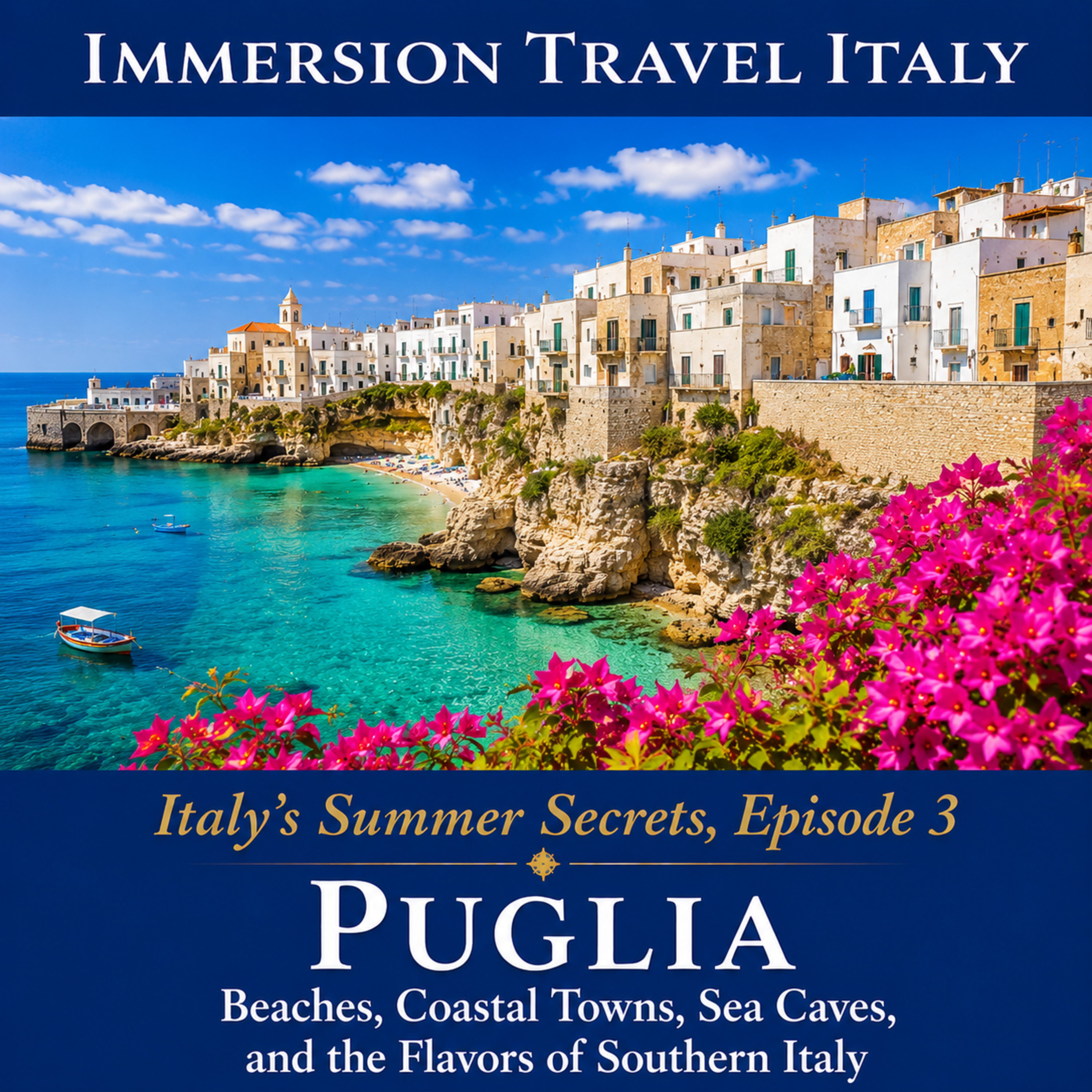 Italy's Summer Secrets: Episode 3 | Puglia's Best Beaches, Sea Caves, Trulli & Hidden Coastal Gems 03.07.2026 32minPlanning your Puglia adventure? Explore The Ultimate Festival and Travel Guide: Puglia by Katerina Ferrara for detailed walking tours, transportation tips, accommodations, restaurants, festivals, hidden gems, and practical advice for experiencing the region more deeply:https://amzn.to/3HFAe2w________________________________________Welcome back to Italy's Summer Secrets, the podcast series uncovering Italy's most spectacular summer destinations beyond the typical tourist trail.In Episode 3, we're traveling to Puglia, Italy's sun drenched heel, where whitewashed towns, crystal clear waters, dramatic sea caves, ancient olive groves, and authentic southern traditions combine to create one of Italy's most rewarding summer escapes.Join travel writer and author Katerina Ferrara as she explores the beaches, seaside villages, boat excursions, local foods, and hidden corners that make Puglia unforgettable.In this episode, you'll discover:☀️ Puglia's Top Summer Destinations• Polignano a Mare• Monopoli• Bari Vecchia• Trani• Ostuni• Alberobello• Lecce• Otranto• Gallipoli• Vieste• Altamura• Santa Maria di Leuca🏖️ Puglia's Most Beautiful Beaches• Baia delle Zagare• Vignanotica Beach• Cala della Pergola• Torre dell'Orso• Baia dei Turchi• Porto Selvaggio• Punta della Suina• Punta Prosciutto• Pescoluse, the "Maldives of Salento"• Vieste's hidden beaches and sea caves⛵ Best Boat Excursions in Puglia• Polignano a Mare sea cave cruise• Vieste sea cave tours• Tremiti Islands day trips• Grotta Zinzulusa near Castro• Santa Maria di Leuca coastal cruises🍝 Authentic Puglian Experiences• Watching local women make fresh orecchiette in Bari Vecchia• Sampling pane di Altamura, Italy's celebrated DOP bread• Enjoying a traditional masseria farm stay• Savoring a freshly made panzerotto in Lecce• Exploring the storybook trulli of AlberobelloYou'll also learn:• How to travel around Puglia by train and rental car• The differences between the Adriatic and Ionian coastlines• Where Italians themselves spend their summer holidays• The truth about Italy's stabilimenti balneari and public beaches• How to plan the perfect 7 day Puglia itinerary• Why Puglia has transformed from one of Italy's hidden secrets into one of its most beloved destinationsFrom the dramatic cliffs of Polignano a Mare and the turquoise waters of Salento to the medieval harbor of Trani and the timeless traditions of Altamura, this episode reveals the many personalities of Puglia and why travelers continue to fall in love with southern Italy's coastal jewel.Whether you're planning a Puglia itinerary, searching for the best beaches in Puglia, dreaming of the Maldives of Salento, or looking for authentic experiences beyond the guidebooks, this episode is your invitation to slow down and experience Italy more deeply.🎧 Next Episode: Tuscany and Lazio's Summer Secrets, featuring the Tuscan coast, hidden islands, seaside towns, and some of central Italy's most overlooked summer escapes.Travel slowly. Travel deeply. And let the cities tell their stories.Book link: https://amzn.to/3HFAe2w
 -
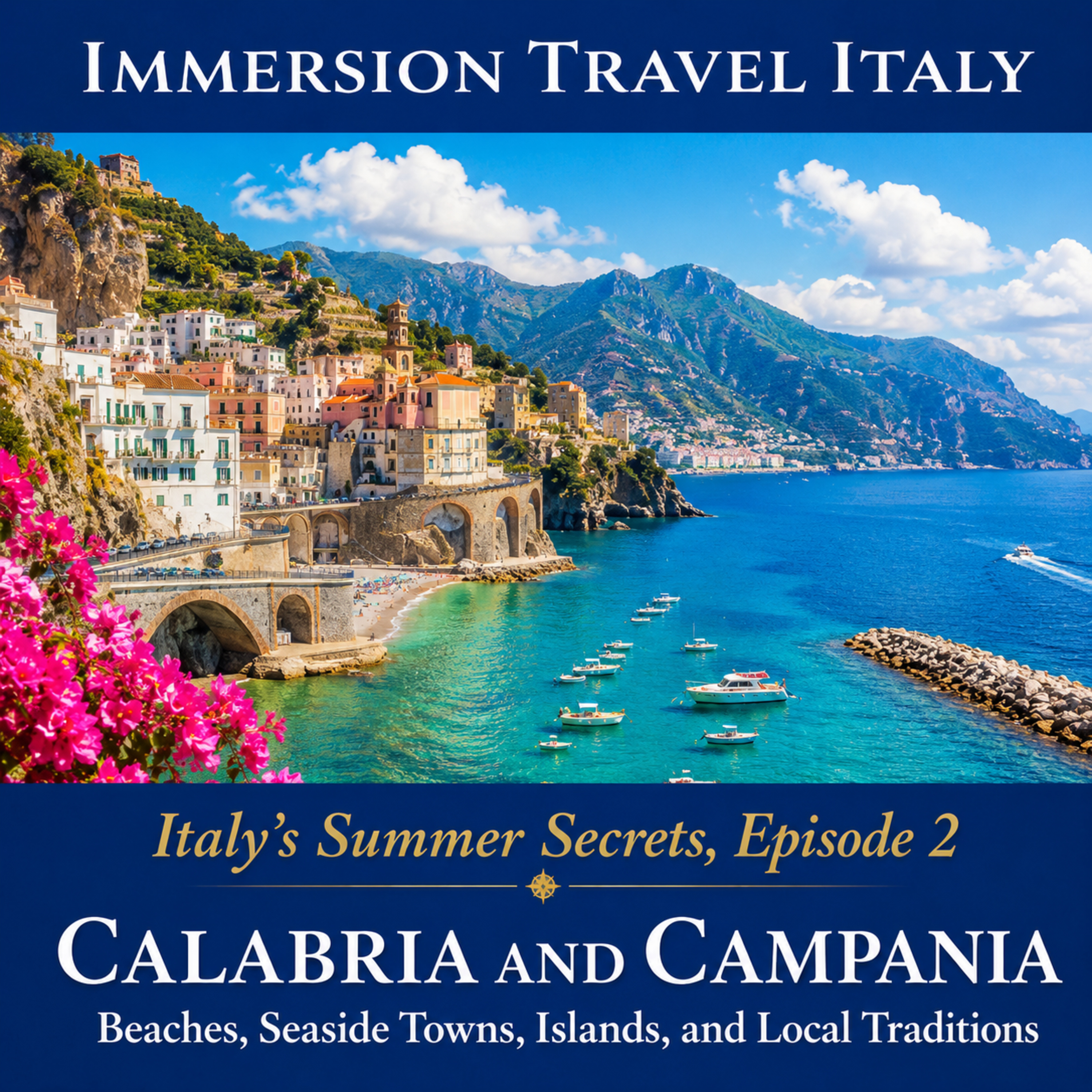 Italy's Summer Secrets, Episode 2: Calabria, Amalfi Coast, Capri & Campania's Hidden Beaches 26.06.2026 49minDiscover two completely different sides of southern Italy in Episode 2 of Italy's Summer Secrets. Travel beyond the guidebooks to explore Calabria, one of Italy's most underrated summer destinations, where you'll find Tropea's turquoise waters, Capo Vaticano's dramatic cliffs, the fishing village of Scilla, Pizzo's famous tartufo gelato, and authentic Italian seaside traditions.Then journey north to Campania, home to some of Italy's most iconic summer experiences. Visit the Amalfi Coast's spectacular towns of Positano, Amalfi, and Ravello. Explore the glamorous islands of Capri and Ischia, discover hidden beaches, take unforgettable boat excursions, hike the Path of the Gods, and step back in time at Pompeii and Mount Vesuvius.In this episode you'll discover:• Calabria's 5 greatest summer destinations including Tropea, Scilla, Capo Vaticano, Pizzo, and Soverato• The best boat tours along Calabria's Costa degli Dei (Coast of the Gods)• Campania's top destinations including Positano, Capri, Ischia, Sorrento, Amalfi, and Ravello• Hidden Amalfi Coast alternatives such as Praiano, Minori, and Cetara• Southern Italy's most beautiful beaches and swimming spots• Summer festivals and authentic local traditions• Practical transportation tips, ferry advice, and itinerary recommendations• The foods you cannot miss, from Tropea onions and tartufo di Pizzo to Neapolitan pizza, sfogliatella, limoncello, and buffalo mozzarellaWhether you're planning an Amalfi Coast vacation, dreaming of Capri, searching for Italy's hidden beach destinations, or looking for authentic experiences beyond the crowds, this episode will help you experience southern Italy more deeply.🎧 Next stop: Puglia's whitewashed towns, turquoise seas, and spectacular Adriatic coastline.For destination guides, blogs associated with these podcasts, and additional resources, visit: www.katerinaferrara.com#ItalyTravel #AmalfiCoast #Capri #Positano #Tropea #Calabria #Campania #SouthernItaly #ItalyPodcast #ImmersionTravelItaly #ItalySummer #TravelItaly #Pompeii #Ischia #Ravello
 -
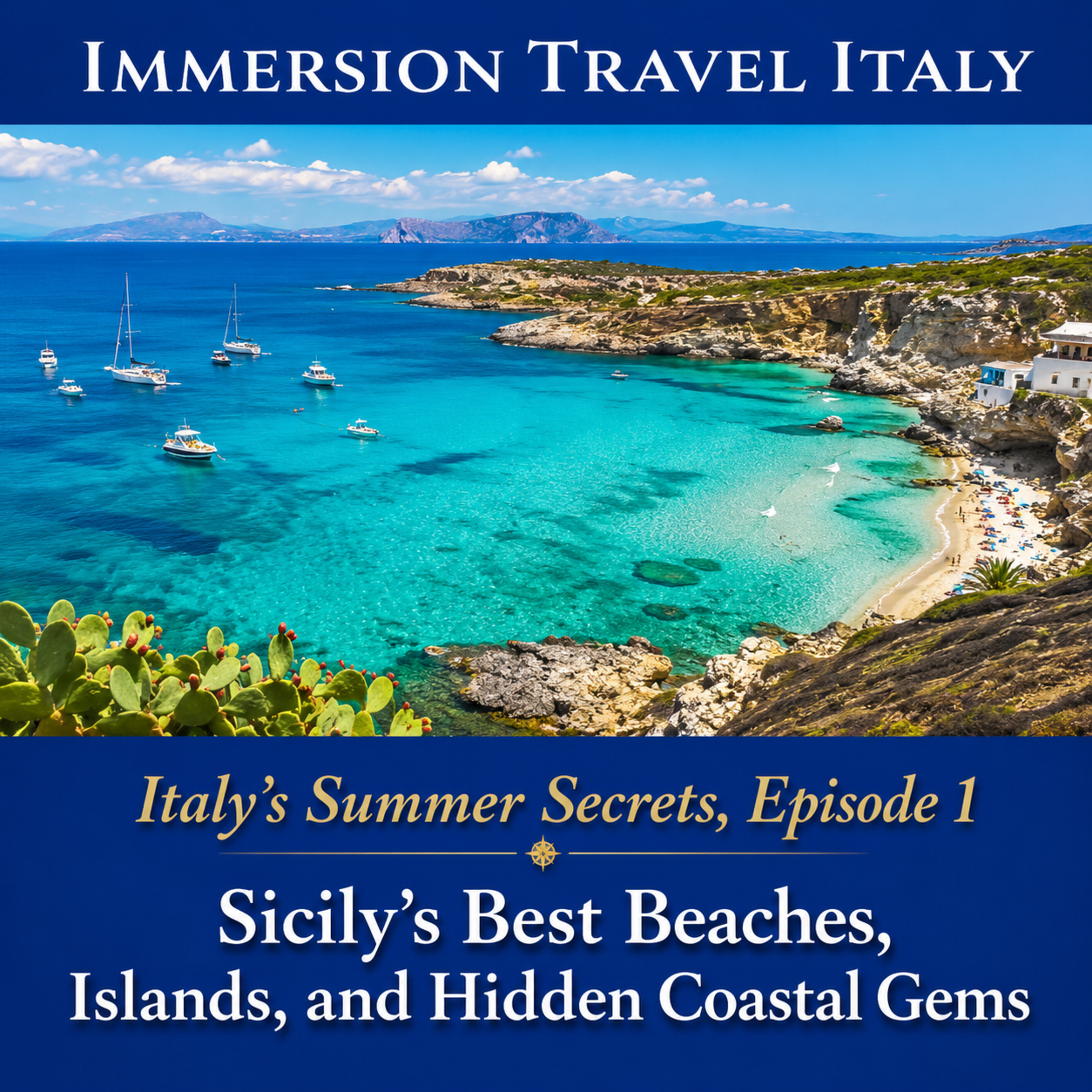 Italy's Summer Secrets: Episode 1 | Sicily's Best Beaches, Aeolian Islands, Ortigia, Taormina & Hidden Coastal Gems 19.06.2026 53minWelcome to Italy's Summer Secrets, a new travel podcast series exploring Italy's most spectacular coastlines, hidden beaches, island escapes, seaside traditions, and unforgettable summer experiences.In Episode 1: Sicily, travel writer and author Katerina Ferrara takes you on a journey through what may be Europe's most diverse summer destination. Discover Sicily's crystal clear waters, active volcanoes, ancient cities, hidden coves, island adventures, and authentic Sicilian traditions.Explore Sicily's most beautiful beaches and summer destinations, including:☀️ San Vito Lo Capo☀️ Cala Rossa, Favignana☀️ Cala Azzurra, Favignana☀️ Canneto Beach, Lipari☀️ Cala Junco, Panarea☀️ Sabbie Nere (Black Sand Beach), Vulcano☀️ Calamosche Beach, Vendicari Nature Reserve☀️ Scala dei Turchi☀️ Isola Bella, Taormina☀️ Marzamemi☀️ Cefalù☀️ Ortigia and Syracuse☀️ Zingaro Nature Reserve☀️ Stromboli☀️ Mount Etna☀️ Lipari, Vulcano, Panarea, and the Aeolian Islands☀️ Favignana, Levanzo, and the Egadi IslandsIn this episode you'll discover:• The 5 personalities of Sicily: Volcanic Sicily, Caribbean Sicily, Historic Sicily, Natural Sicily, and Island Sicily• Sicily's top beaches for swimmers and non swimmers• The best boat excursions, including Stromboli by night, Ortigia sunset cruises, and Favignana island hopping• The truth about Italy's stabilimenti balneari (beach clubs) and how to navigate Sicily's public beaches• Sicily's beloved summer festivals, including the Festino di Santa Rosalia, Cous Cous Fest, and performances in Syracuse's ancient Greek Theater• Essential Sicilian summer foods, from granita and brioche to fresh seafood, pistachios, capers, and local specialties• Hidden gems including Scicli, Caltagirone, Alcantara Gorge, Agrigento, and Lake PergusaWhether you're planning a Sicily itinerary, searching for the best beaches in Sicily, dreaming of the Aeolian Islands, or looking for authentic Italian summer experiences beyond the guidebooks, this episode is your inspiration to travel deeper.For more Sicily travel tips, walking tours, festivals, restaurants, accommodations, and hidden gems, explore The Ultimate Festival and Travel Guide Sicily by Katerina Ferrara.Pack your sunglasses, grab your beach bag, and join us as we uncover Italy's Summer Secrets. Sicily is waiting. 🌊☀️🇮🇹Next episode: Campania and Calabria, featuring the Amalfi Coast, Capri, Ischia, Procida, Tropea, Scilla, and the spectacular Costa degli Dei
 -
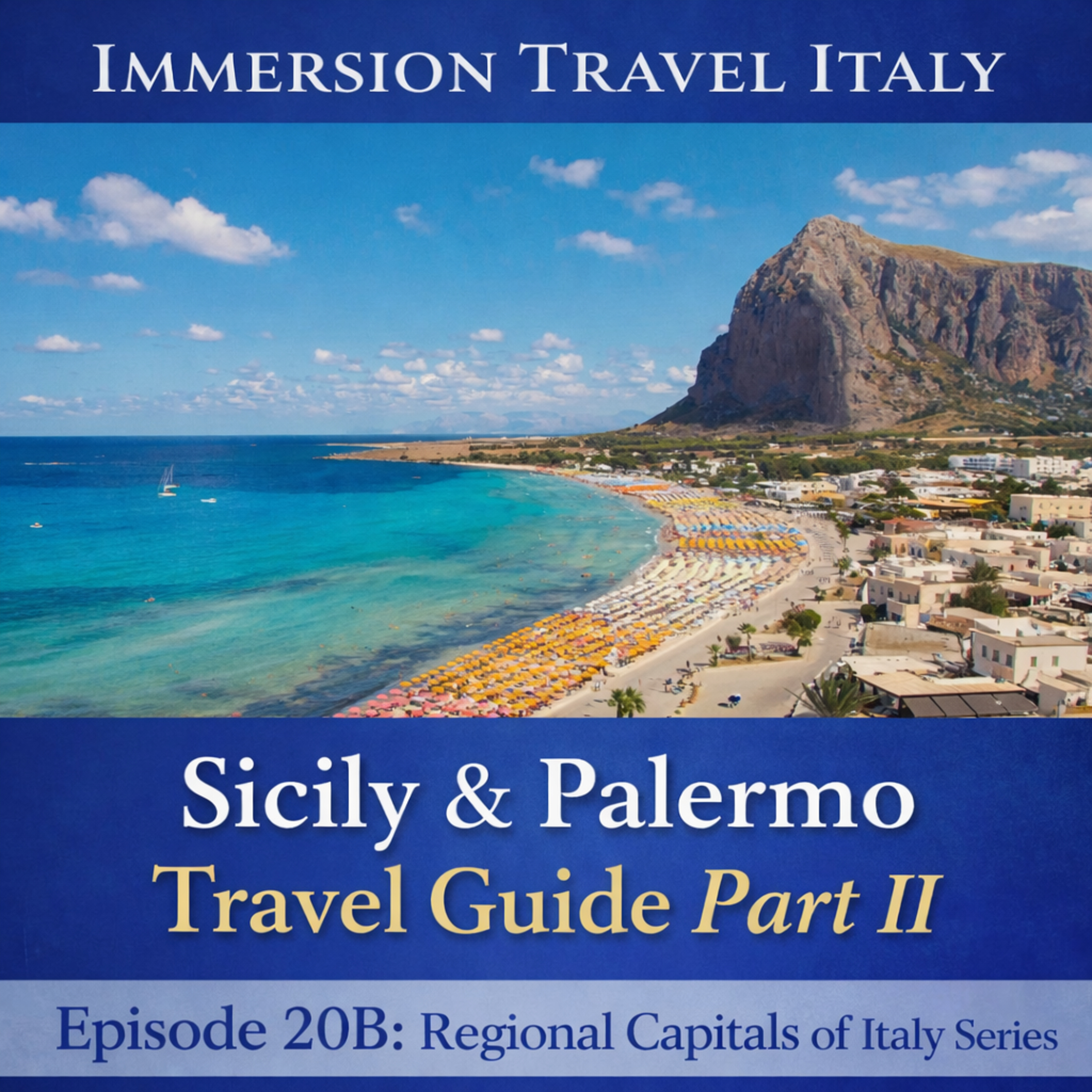 Sicily & Palermo Travel Guide (Part 2 of 2). Day Trips to Cefalu, Agrigento, Mondello, San Vito lo Capo. Festivals and Experiences 12.06.2026 31minIn this episode, we continue our journey through Palermo and Sicily, diving deeper into the experiences, festivals, day trips, beaches, and living culture that make this island unforgettable.For the full 550-page guide with detailed walking tours, logistics, restaurants, accommodations, and complete festival calendars across the entire island, explore my Ultimate Festival and Travel Guide Sicily here: https://amzn.to/4l71PbiThis episode moves beyond monuments and into the rhythm of Sicilian life.We begin with Palermo’s great festivals: the Festino di Santa Rosalia, where the Carro Trionfale rolls from Palermo Cathedral through Quattro Canti to the sea; the Sicilia Jazz Festival, echoing through Teatro di Verdura and Santa Maria dello Spasimo; Le Vie dei Tesori, unlocking hidden palaces and Arab qanat tunnels; and the sweet celebration of Sherbeth Festival, Palermo’s international gelato event in Piazza Verdi before Teatro Massimo.Then we step into Palermo’s markets — Ballarò and La Vucciria — where Arab agricultural legacy meets modern street life. Panelle, sfincione, stigghiola, espresso at metal counters. This is Sicily breathing.We share a personal cooking experience in a Palermo home, shaping arancini and stretching focaccia, discovering how Sicilian food connects family, faith, and history. We rise above the city to Monte Pellegrino and the Sanctuary of Santa Rosalia, then climb to golden Monreale Cathedral, where 12th century Byzantine mosaics shimmer in over 6,000 square meters of gold.From there, we explore the best day trips from Palermo:• Cefalù – Norman cathedral, La Rocca hike, medieval laundry, beach and the Festa del Santissimo Salvatore• Agrigento and the Valley of the Temples – Temple of Concordia, Temple of Juno, Greek ruins older than Rome, Almond Blossom Festival, Italy Capital of Culture 2025• San Vito Lo Capo – turquoise beaches, Zingaro Nature Reserve, Cous Cous Fest, Mediterranean culinary exchange• Mondello Beach – Palermo’s Art Nouveau seaside escapeThroughout this episode, we trace Sicily’s layered history: Greek foundations, Roman rule, Arab irrigation systems, Norman mosaics, Spanish Baroque devotion, Bourbon administration, and modern Italian life. Sicily is not erased by conquest. It absorbs. It layers. It remembers.If you are searching for:Palermo travel guideSicily travel podcastThings to do in PalermoSicilian festivalsSanta Rosalia FestivalCefalù day tripAgrigento Valley of the TemplesSan Vito Lo Capo beachMonreale Cathedral mosaicsMonte Pellegrino sanctuarySicilian food experiencesBallarò marketMondello beachYou are in the right place.This episode concludes our two-part Palermo and Sicily mini series and marks the final capital in our 20-episode Regional Capitals of Italy journey — from Turin in the north to Palermo in the south.Each episode includes an associated blog with photos, maps, and additional planning resources at:https://katerinaferrara.com/blogsJoin the Immersion Travel Italy newsletter for festival calendars, travel inspiration, and insider updates:https://katerinaferrara.comFor deeper planning across Italy, explore the full Ultimate Festival and Travel Guide series:Sicily: https://amzn.to/4l71PbiPuglia: https://amzn.to/3HFAe2wRome & Beyond: https://amzn.to/440Dq0lRome 2025 Jubilee Guide: https://amzn.to/4n7sBSYSicily in Celebration: https://amzn.to/4jPVEHKTravel slowly.Travel deeply.And let the cities tell their stories.
 -
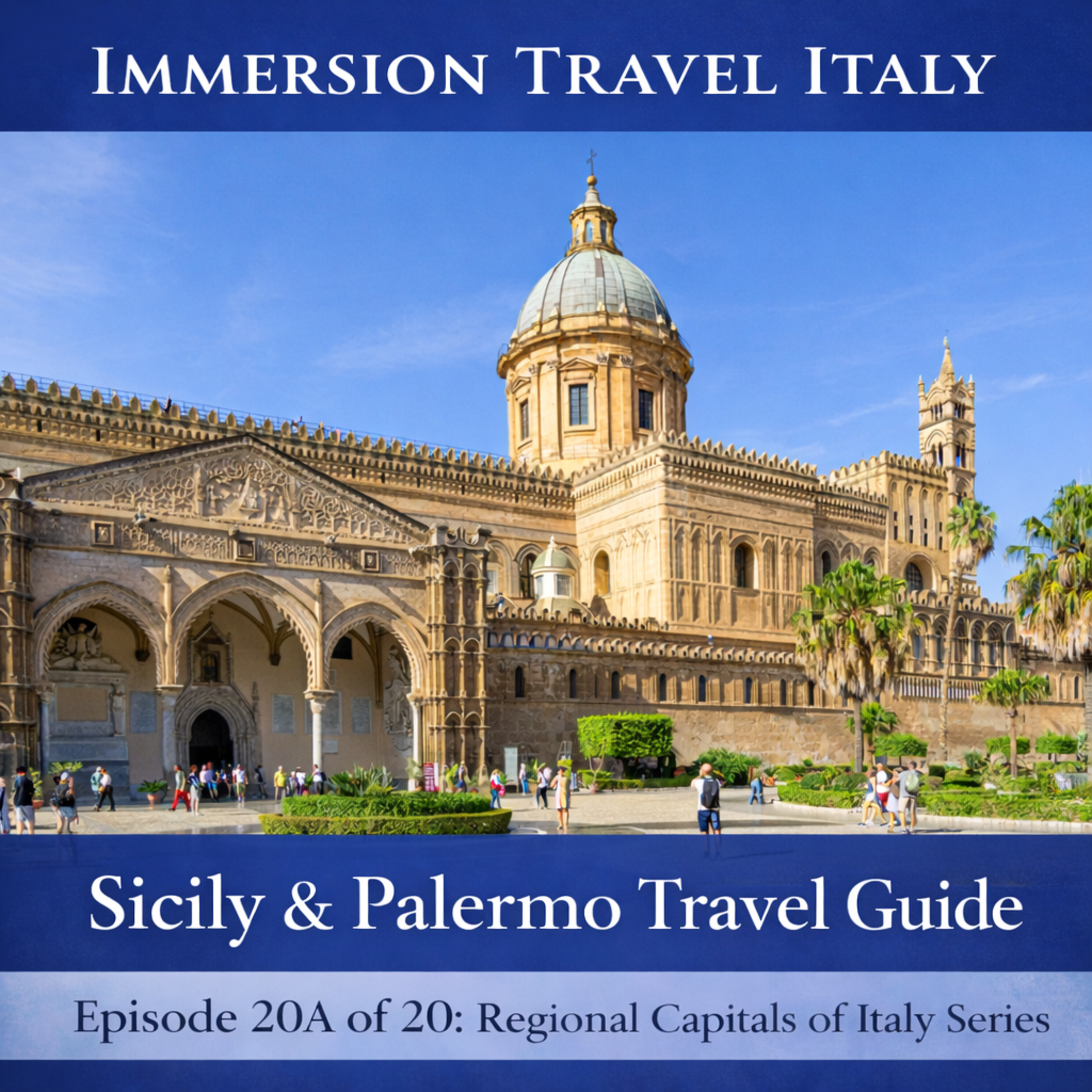 Sicily & Palermo Travel Guide (Part 1 of 2). History of Sicily, Palermo Travel Guide 05.06.2026 36minRegional Capitals of Italy SeriesWelcome to Episode 20A in the Regional Capitals of Italy Series, where we arrive at the largest island in the Mediterranean — Sicily — and begin our deep exploration of Palermo, the island’s capital and historical heart.Before we dive in, if you are planning a trip, my book Ultimate Festival and Travel Guide Sicily is designed to be your complete framework once you land. It includes structured walking tours of Palermo and beyond, restaurant recommendations, accommodations, train logistics, day trip strategy, and hundreds of festivals organized by calendar so you can time your visit intentionally.Grab your copy here: https://amzn.to/4l71PbiThis episode is about understanding Sicily before you explore it.We trace the island’s sweeping history from the Sicani, Sicels, and Elymians to Magna Graecia, from the Valley of the Temples in Agrigento to Roman rule after the Punic Wars, from Byzantine governance to Arab innovation that reshaped agriculture, language, irrigation, and cuisine. We explore the Norman conquest under Roger II, the tension of William I, the stability of William II, the intellectual brilliance of Frederick II, the Sicilian Vespers, Spanish Baroque influence, Bourbon rule, Italian unification, World War I, the Allied invasion of Sicily in World War II, and the island’s modern autonomous status.Sicily is not peripheral Italy. It is foundational Mediterranean history.Then we narrow our focus to Palermo, set in the Conca d’Oro between Monte Pellegrino and the Tyrrhenian Sea. We explore the city’s geography, port, climate, and layered identity shaped by Phoenicians, Arabs, Normans, Spanish viceroys, and modern Italy.In this episode, we walk through Palermo’s monuments of power:• Palermo Cathedral — a timeline in stone blending Byzantine, Arab, Gothic, and Neoclassical elements• The cathedral rooftops — panoramic views over the historic center• The crypt — archbishop tombs and Norman foundations• The royal tombs of Roger II and Frederick II• The Archbishop’s Palace and Diocesan Museum• The Palazzo dei Normanni, seat of Sicilian governance for nearly 1,000 years• The Cappella Palatina, where Byzantine mosaics, Arab muqarnas ceilings, and Norman architecture merge into one of the most extraordinary sacred spaces in EuropeWe also discuss how to arrive in Sicily via Palermo Airport, Catania Fontanarossa, regional rail routes along the coast, ferries across the Strait of Messina, and practical transportation strategy across the island.This episode includes searchable travel planning terms for:Sicily travel guide, Palermo walking tour, Arab Norman architecture, Cappella Palatina mosaics, Christ Pantocrator, Sicilian history timeline, Valley of the Temples Agrigento, Sicilian Vespers 1282, Santa Rosalia, Monte Pellegrino, Monreale Cathedral, Sicily train travel, Palermo Cathedral crypt, Sicilian festivals, Mediterranean travel Italy, Sicily itinerary planning.Episode 20A sets the historical and architectural foundation.In Episode 20B, we continue our Palermo walking tour, explore markets like Ballarò and La Vucciria, discuss Sicilian food traditions including arancine and pasta con le sarde, experience Monte Pellegrino and Monreale, and take day trips to Cefalù, Agrigento, San Vito Lo Capo, and Mondello — plus major festivals like Santa Rosalia and Cous Cous Fest.Associated blog for this episode:https://katerinaferrara.com/blogsJoin the Immersion Travelers Newsletter for monthly festival calendars, Italy travel strategy, and insider planning tools:https://katerinaferrara.comExplore the full Ultimate Festival & Travel Guide series:Sicily: https://amzn.to/4l71PbiPuglia: https://amzn.to/3HFAe2wRome & Beyond: https://amzn.to/440Dq0lVenice & the VenetoMilan & LombardyRome 2025 Jubilee Guide: https://amzn.to/4n7sBSYSicily in Celebration bilingual edition: https://amzn.to/4jPVEHKTravel slowly.Travel deeply.And let Sicily tell its story.
 -
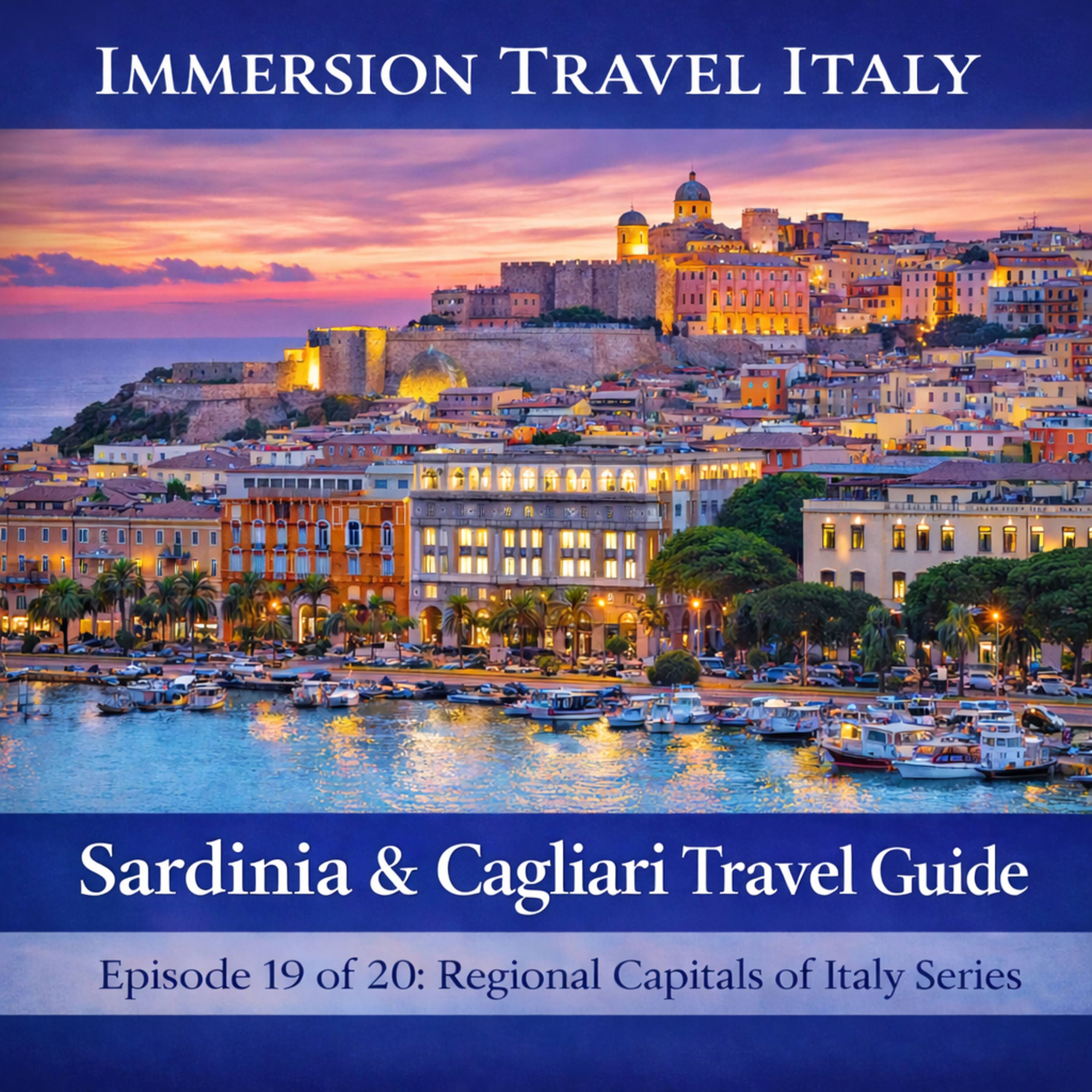 Sardinia & Cagliari Travel Guide: Best Beaches, Slow Food, Experiences. Episode 19 of 20 in the Regional Capitals of Italy Series 29.05.2026 40minSardinia & Cagliari Travel Guide | Episode 19 of 20 – Regional Capitals of Italy SeriesIn Episode 19 of 20 of the Immersion Travel Italy Podcast, we journey west into the Mediterranean to explore Sardinia and its regional capital, Cagliari — an island older than Rome, older than Carthage, and older than the very idea of Italy.This Sardinia travel guide blends deep history, archaeology, food culture, festivals, and practical travel insight into one immersive experience. If you are planning travel to Italy, researching Sardinia beaches, building a Cagliari itinerary, or looking for unique Mediterranean destinations beyond the usual tourist circuit, this episode gives you both context and inspiration.We begin with Sardinia’s ancient Nuragic civilization and the mysterious Bronze Age stone towers known as nuraghi, including the UNESCO site of Su Nuraxi di Barumini. We trace Phoenician trade routes in Nora, Roman rule beginning in 238 BC, Byzantine influence, the medieval Judicates, Spanish and Aragonese power, Savoy rule, and the island’s modern autonomous identity.Then we walk Cagliari step by step:• Castello district and medieval fortifications• Cathedral of Santa Maria• Bastione di Saint Remy overlooking the Gulf of Angels• Roman Amphitheater carved directly into limestone• Marina district and Via Roma at sunset• Flamingos in Molentargius lagoon• Hiking Sella del Diavolo• Poetto Beach and southern Sardinia coastlineWe explore Sardinian cuisine in depth:• Bottarga, the “caviar of the Mediterranean”• Fregola con arselle• Malloreddus with sausage and saffron• Pane carasau• Cannonau wine and VermentinoWe experience the island’s most powerful festivals:• Festa di Sant’Efisio, celebrated continuously since 1657• Festa della Madonna di Bonaria• International Jazz Festival in SardiniaBeyond Cagliari, we travel to:• Nora and its seaside Roman ruins• The Giants of Mont’e Prama, monumental Nuragic sculptures• Golfo di Orosei and Cala Mariolu’s dramatic limestone coastline• Alghero, Sardinia’s Catalan city with Iberian Holy Week traditionsThis episode covers Sardinia history, Cagliari travel planning, Italian island vacations, Mediterranean archaeology, UNESCO sites in Italy, Sardinian food culture, beaches near Cagliari, and how to reach Sardinia by air and ferry.Sardinia is not mainland Italy with beaches attached.It is older.Stronger.More independent.This is slow travel.This is cultural immersion.This is Italy beyond the checklist.🎧 Listen now and walk Sardinia with me.—📖 Read the full associated blog with photos, maps, and detailed planning information:https://katerinaferrara.com/blog/📬 Sign up for my FREE Immersion Travel Italy monthly newsletter for festival dates, insider tips, and region by region travel inspiration:https://katerinaferrara.com/—📚 Explore my Ultimate Festival & Travel Guide book series:Ultimate Festival and Travel Guide Sicilyhttps://amzn.to/3KARdo8Ultimate Festival and Travel Guide Pugliahttps://amzn.to/42WEnH1Ultimate Festival and Travel Guide Rome and Beyondhttps://amzn.to/4gRlvz0Ultimate Festival and Travel Guide Venice and the Venetohttps://amzn.to/48OhHfTUltimate Festival and Travel Guide Milan and Lombardyhttps://amzn.to/46VzmQsSicily in Celebration / Sicilia in Festahttps://amzn.to/4jPVEHK—Thank you for joining Episode 19 of 20 in the Regional Capitals of Italy series.Next Friday, we cross the Strait of Messina and begin the final chapter of this journey — Sicily.Travel slowly.Travel deeply.And let the cities tell their stories.
 -
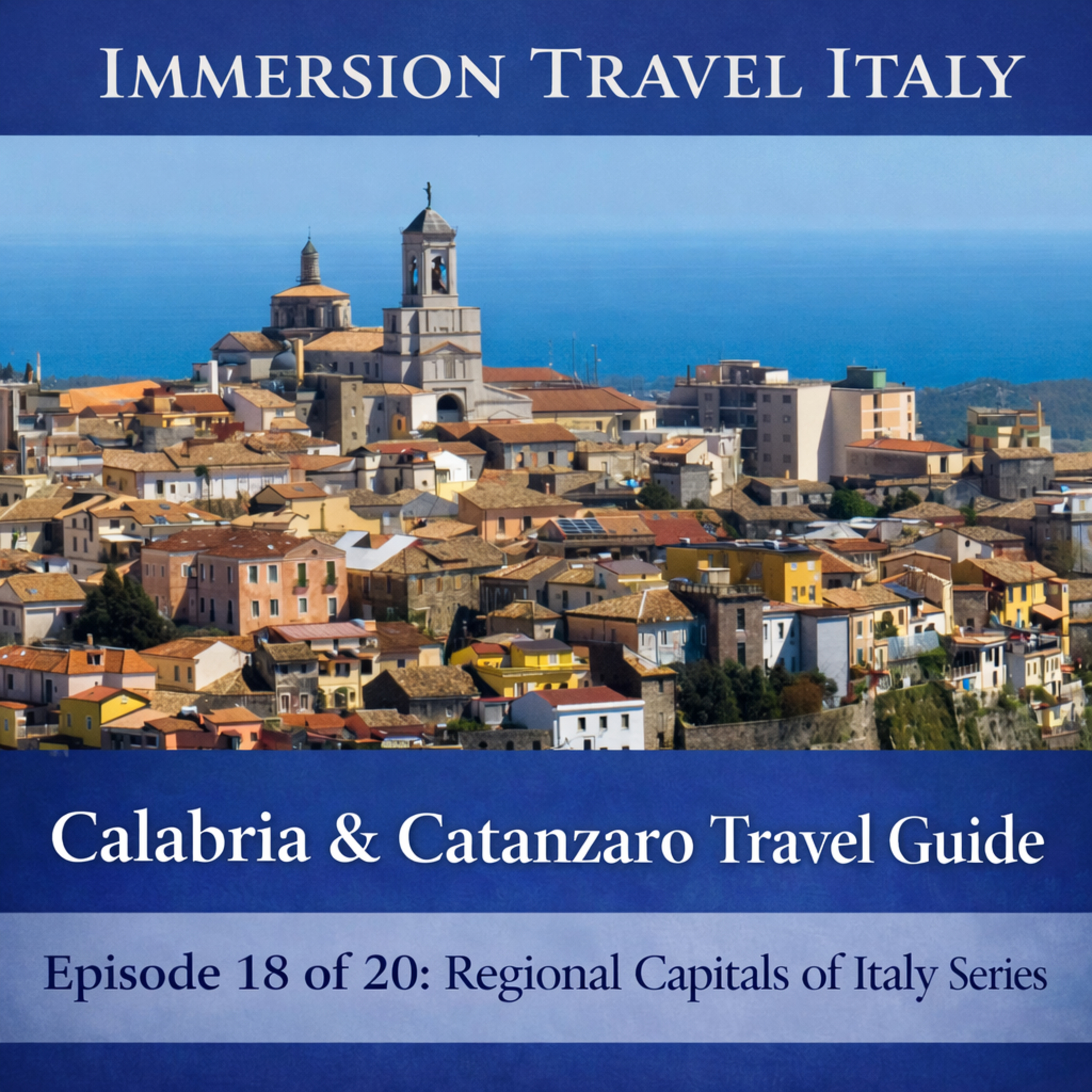 Calabria & Catanzaro Travel Guide | Episode 18 of 20: Regional Capitals of Italy Series 22.05.2026 39minIn this episode of the Immersion Travel Italy Podcast, we journey into Calabria, one of Italy’s most ancient, layered, and misunderstood regions. From the Greek foundations of Magna Graecia to Roman expansion, Byzantine monasteries, Norman fortresses, Spanish rule, Bourbon governance, devastating earthquakes, and waves of migration, Calabria tells a story of endurance rather than reinvention.We then focus on Catanzaro, the regional capital of Calabria since 1970, perched on a ridge between the Ionian Sea and the Tyrrhenian coast. Often called the “City Between Two Seas,” Catanzaro offers medieval streets, Norman foundations, Bourbon era churches, and a surprising silk heritage that once made it one of Europe’s most important textile centers.You will walk with me through the historic center along Corso Mazzini, visit the Duomo di Santa Maria Assunta, explore the Complesso Monumentale di San Giovanni, and discover why Catanzaro feels elevated, layered, and authentic. We descend to Catanzaro Lido along the Gulf of Squillace, where long sandy beaches and calm Ionian waters offer a completely different rhythm of southern Italian life.We dive into Calabrian cuisine, including ’nduja, fileja pasta, Pecorino Crotonese, Cipolla Rossa di Tropea, swordfish, and the region’s famous peperoncino. If you love bold, spicy Italian food, Calabria delivers.We also explore the most important festivals in Catanzaro, including the Festa di San Vitaliano in July, Holy Week processions, and the historic Fiera di San Lorenzo.Beyond the capital, we highlight essential Calabria day trips: Tropea’s dramatic cliffside old town and turquoise Tyrrhenian beaches, ancient Greek ruins at Capo Colonna in Crotone, the Riace Bronzes in Reggio Calabria, and the mythological fishing village of Scilla. We also discuss train options versus renting a car to explore the Ionian coast, Tyrrhenian coast, and mountain regions like Sila National Park.If you are planning travel to southern Italy, Calabria offers authentic villages, archaeological treasures, coastal beauty, medieval hill towns, Catholic festivals, and some of the most powerful historical layers in Italy.For deeper exploration of Italy through festivals and immersive travel, explore my books:Ultimate Festival and Travel Guide Sicilyhttps://amzn.to/3KARdo8 Ultimate Festival and Travel Guide Pugliahttps://amzn.to/42WEnH1 Ultimate Festival and Travel Guide Rome and Beyondhttps://amzn.to/4gRlvz0 Ultimate Festival and Travel Guide Venice and the Venetohttps://amzn.to/48OhHfT Ultimate Festival and Travel Guide Milan and Lombardyhttps://amzn.to/46VzmQs Sicilia in Festa: English Italian Dual Language Editionhttps://amzn.to/4jPVEHK For monthly festival calendars, Italy travel tips, and exclusive updates on new podcast episodes and books, sign up for my free Immersion Travel Italy newsletter at:https://katerinaferrara.comTravel slowly. Travel deeply. And let Calabria tell its story.
Sarnased taskuhäälingud


Populaarne riigis
See taskuhääling on ka nende riikide taskuhäälingute edetabelites.


