
Triathlon Nutrition Academy
Taryn Richardson
0
Welcome to the Triathlon Nutrition Academy Podcast! Brought to you by Advanced Sports Dietitian, Taryn Richardson. Listen as I break down the latest science to give you practical, easy to digest strategies to transform yourself into a Supercharged Triathlete! You have so much untapped potential...and I want to help you unlock that with the power of nutrition.
Osad
-
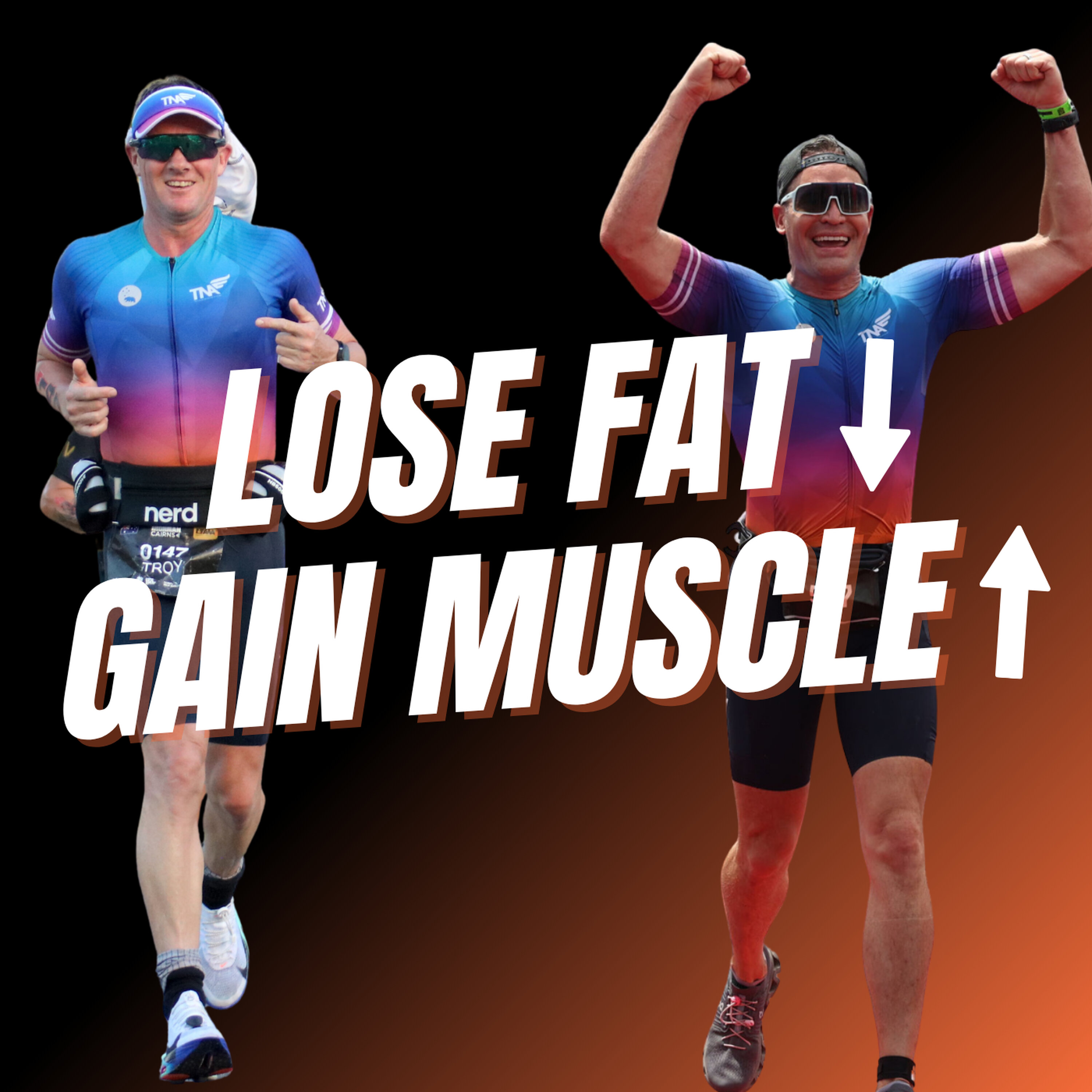 How to Gain Muscle While Losing Body Fat 24.09.2026 25minCan you gain muscle while losing body fat at the same time, or is body recomposition just a clickbait headline? For years the advice has been that you have to pick one. Eat in a calorie deficit and lose body fat, or eat in a calorie surplus and build muscle. A brand new study published in the European Journal of Applied Physiology in April 2026 says the picture is more interesting than that, and it is already being butchered all over social media. I break the whole paper down for you. What the researchers did, what they actually measured, and the bits the headlines have quietly skipped over. Then I do the part that matters most, which is translating a study done on young resistance trained lifters into what it means for someone swimming, biking and running six days a week. IN THIS EPISODE - What body recomposition actually is, and why it is not the same thing as losing weight - What the 2026 study did, and what happened to all three groups over 10 weeks - Why an increase in fat-free mass does not automatically mean a kilo of new muscle - The training detail that did just as much work as the nutrition did - Whether you really need 2.5 grams of protein per kilo of body weight a day - Why the size of the calorie deficit matters far more than most triathletes think - Where this study stops transferring the moment you apply it to endurance training - Who is well placed to recomp right now, and who is better off picking one goal - The 4 things I would start with if body recomposition is your goal TIMESTAMPS 00:00 Can you build muscle and lose fat at the same time02:01 What body recomposition actually means04:03 Inside the 2026 study05:26 The results after 10 weeks07:05 Why fat-free mass is not the same as muscle08:43 The training that made it work10:51 The big protein question13:19 Why the deficit was only 250 calories14:29 Where triathletes need a different approach15:40 Who body recomposition actually suits18:26 The 4 things I would focus on21:07 The big takeaway STUDIES MENTIONED - Vargas-Molina, S., Garcia-Palumbo, A., Garcia-Sillero, M., Bonilla, D. A., Petro, J. L., Aragon, A. A., Schoenfeld, B. J., & Benitez-Porres, J. (2026). Comparison of two nutritional protocols in body re-composition of resistance-trained participants. European Journal of Applied Physiology, 126, 4019-4030. [doi.org/10.1007/s00421-026-06209-6](https://doi.org/10.1007/s00421-026-06209-6) - Iraki, J., Fitschen, P., Espinar, S., & Helms, E. (2019). Nutrition recommendations for bodybuilders in the off-season: A narrative review. Sports, 7(7), 154. [doi.org/10.3390/sports7070154](https://doi.org/10.3390/sports7070154) If body recomposition is one of your goals, this is a very good time to stop winging it and build a strategy around your training instead. The Triathlon Nutrition Academy is where I teach you how to work out your own numbers, against your own training program, in your own body, and then I am there every week while you actually do it. Doors only open a few times a year, so get your name on the list for the next cohort at [dietitianapproved.com/academy](https://www.dietitianapproved.com/academy). SUPPORT THE PODCAST HERE CONNECT WITH TARYN Website | Instagram | Facebook | YouTube The Triathlon Nutrition Academy® is a podcast by Dietitian Approved®. All rights reserved.See omnystudio.com/listener for privacy information.
 -
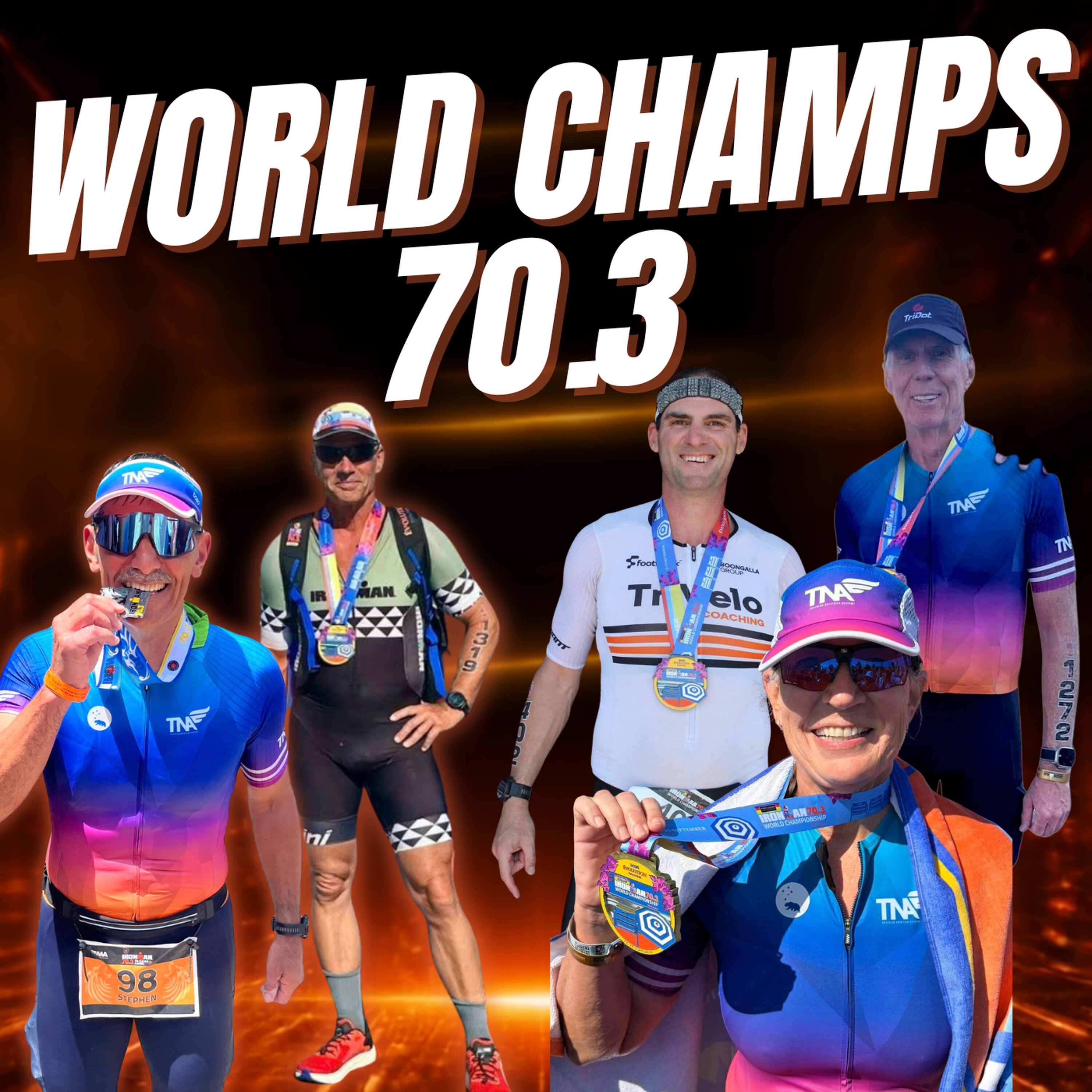 How 5 Masters Triathletes Fuelled the Hilliest 70.3 in the World 17.09.2026 1t 1minWhat does it take to fuel the hilliest 70.3 in the world? Six Triathlon Nutrition Academy athletes lined up at the IRONMAN 70.3 World Championship in Nice, France on 12 and 13 September 2026. A 1.9km swim in the Mediterranean, 90km on the bike with around 1190m of climbing, a long grind up the Col de Vence, an 11km technical descent with both hands on the brakes, then a flat half marathon in the baking French sun along the Promenade des Anglais. One day after the race, five of them sat down with me to talk through what they did, what they would change and what they would tell you if Nice is on your bucket list. Most of them are masters athletes racing in the 60 to 69 age groups. Not one of them raced on the same nutrition plan. Joining me are Kathleen Gilton, Kelly Estes, Stephen Duquette, Stanford Skelton and Daniel Walker. WHAT YOU WILL TAKE AWAY Why the athlete who was most afraid of the bike had the best ride of her life How bike choice and gearing change what you can carry, and when you can actually drink it How to ride light on a long climb without under-fuelling the back half of your race What it takes to run a hot half marathon with no cramping, four years after cramping nearly ended a triathlon career The race week mistake that cost a well-prepared athlete 20 minutes on the run, and it had nothing to do with training Why six athletes on the same course, in the same heat, all fuelled differently and all got it right TIMESTAMPS 01:46 Meet the athletes who raced Nice02:47 Kathleen on the bike leg she feared most08:53 Road bike or TT bike, and gearing11:36 Losing 8kg without losing bike power15:24 Riding light on the climb without under-fuelling17:53 A hot run and the cramps that never came23:02 When race day does not go to plan31:54 Saturday women, Sunday men: the split day40:05 What each athlete is most proud of49:40 Would they have got there without nutrition If you want to be the athlete who gets off a plane in a foreign country and knows exactly what they are doing, come and join us inside the Triathlon Nutrition Academy.See omnystudio.com/listener for privacy information.
 -
 The Next 4 Things I'd Fix If You Were My Athlete 10.09.2026 22minMost triathletes are working their nutrition list backwards. They start at number eight and skip one through seven entirely. In Episode 229 I walked you through the first four things I fix with every triathlete I work with. The big rocks. This is Part 2, and it picks up at number five. If you have not heard 229 yet, go and listen to that one first, because these next four do not work without the foundations underneath them. Number five is your hydration and electrolytes, which most athletes think they have sorted and almost never do. Number six is the three micronutrients that quietly put a ceiling on everything else. Number seven is your race nutrition strategy, which is a lot more than deciding which gel you are taking. And number eight is the fun stuff, the sprinkles on the icing on your cake, which is exactly where nearly everybody wants to start. WHAT YOU WILL TAKE AWAY Why one standalone sweat test is not a number you can set and forget for life The three micronutrients that determine whether you can train and race well, and why supplementing blindly is the wrong first move What a race nutrition strategy actually involves, and why practising your fuel is not the same as practising it at race intensity The full roll call of supplements and gadgets triathletes ask me about, and where they genuinely belong in the order Why your recovery nutrition does not finish when you cross the finish line The order I would work through all eight in, so you get the best bang for your buck TIMESTAMPS: 01:26 Hydration, sodium and sweat testing for triathletes04:57 Iron, calcium and vitamin D for endurance athletes08:59 Race nutrition strategy and recovery after racing13:36 Performance supplements and what actually works18:52 How to fix your triathlon nutrition in order WANT ALL EIGHT BUILT OUT PROPERLY, IN THE RIGHT ORDER, FOR YOU? That is exactly what the Triathlon Nutrition Academy is. It is not a meal plan and it is not one size fits all. It is me teaching you how to build your own nutrition strategy around your training, your race schedule and your actual life, so you walk out knowing how to do this for yourself for the rest of your racing life. We open the doors a few times a year. Get your name on the list at dietitianapproved.com/academy so you know the moment they open. SUPPORT THE PODCAST HERE CONNECT WITH TARYN Website | Instagram | Facebook | YouTube The Triathlon Nutrition Academy® is a podcast by Dietitian Approved®. All rights reserved.See omnystudio.com/listener for privacy information.
 -
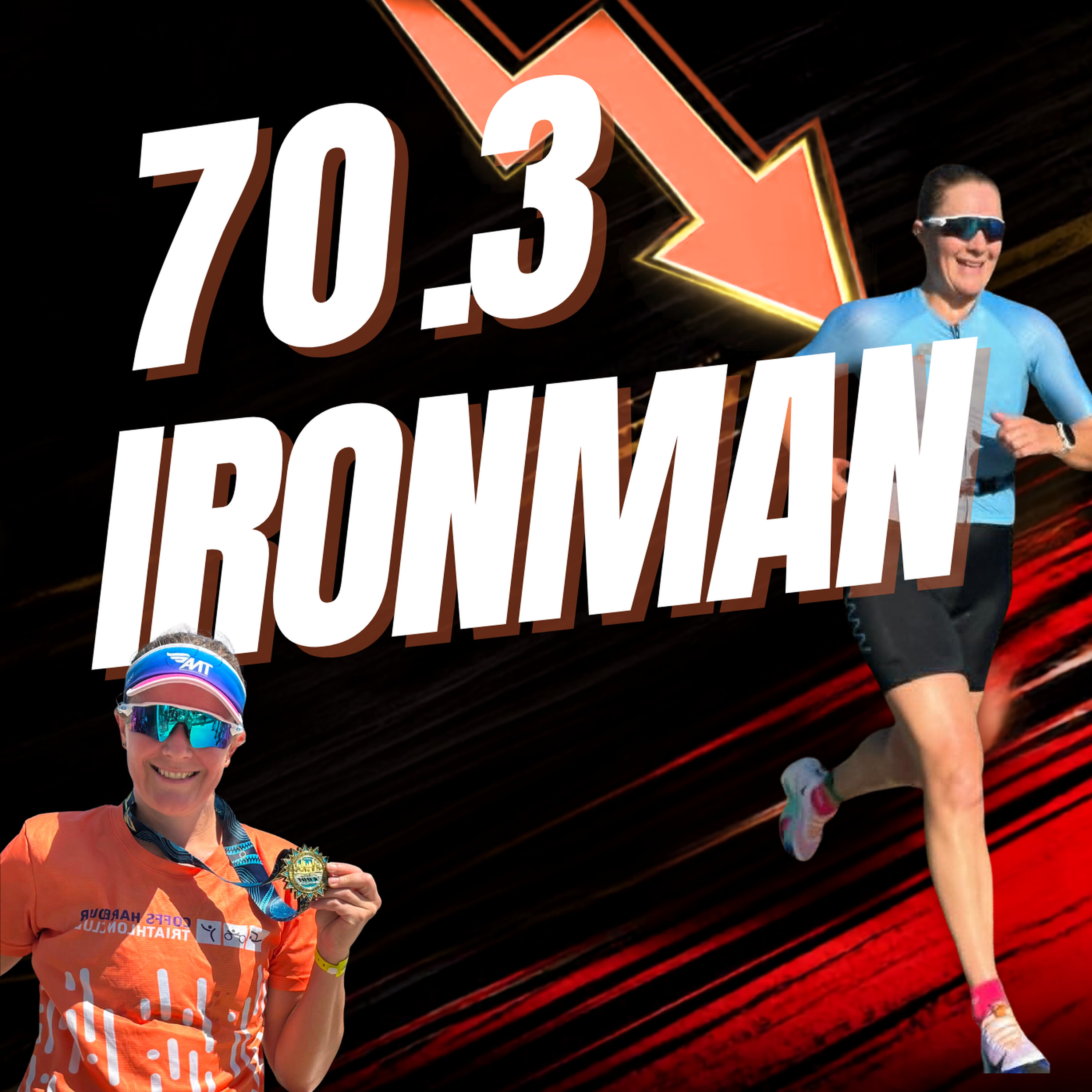 How to Fuel an Ironman When You've Only Ever Raced 70.3 03.09.2026 32minYou can get away with a fuelling gap over five hours. You cannot get away with it over 13. Stepping up from 70.3 to Ironman is the exact moment most triathletes work out that their fuelling needs attention. Julie Whitton is 13 weeks out from Ironman Western Australia, her first full distance race after a decade of racing halves. She is a paramedic with New South Wales Ambulance, she has been a shift worker for 21 years, and she trains off a nine day roster that changes constantly. In this episode she takes Taryn through exactly what she has had to upgrade to get to that start line, and where the gaps showed up once the hours went up. This is not a first Ironman story. This is the step up story, for the triathlete who already races 70.3 well and assumes that skill carries over. IN THIS EPISODE What changes in your bike and run fuelling numbers when a race goes from five hours to 13 hours Why a small hourly shortfall you got away with at 70.3 compounds into a walk at full distance The shift from liquid fuel to solid food on long rides, and the trap of swapping over too fast How to gut train on gels without hitting flavour fatigue weeks before race day What Julie was doing at 70.3 that stopped working the moment the volume climbed Why she moved her recovery from 90 percent to 100 percent, and what that changed in her week Fuelling your body for what you want it to do rather than for how you want it to look TIMESTAMPS 04:37 Training for Ironman around shift work07:12 Bike fuelling from 70 to 80 grams13:25 Run fuelling and flavour fatigue17:35 What stopped working at full distance23:35 Fuelling for performance not appearance ABOUT JULIE WHITTON Julie (Jules) Whitton is an age group triathlete and a paramedic with New South Wales Ambulance, where she has worked shift work for 21 years. She has been a Triathlon Nutrition Academy athlete since January 2023 and is now part of the Supercharged Squad. After a decade racing 70.3, she is stepping up to full distance at Ironman Western Australia on 6 December 2026. Julie was last on the show in Episode 119, Juggling Shift Work and Triathlon. If you have a couple of halves behind you and a full quietly sitting on your list, the athletes who come unstuck are almost always the ones trying to learn how to fuel and how to train for 226 kilometres at the same time. Do one of those things first. Get your name on the list for our next cohort of the Triathlon Nutrition Academy at [dietitianapproved.com/academy](https://www.dietitianapproved.com/academy) and you will be the first to know when we open doors. SUPPORT THE PODCAST [HERE](https://www.dietitianapproved.com/legend) CONNECT WITH TARYN [Website](https://www.dietitianapproved.com) [Instagram](https://www.instagram.com/dietitian.approved/) [Facebook](https://www.facebook.com/DietitianApproved) [YouTube](https://www.youtube.com/@dietitianapproved) The Triathlon Nutrition Academy® is a podcast by Dietitian Approved®. All rights reserved.See omnystudio.com/listener for privacy information.
 -
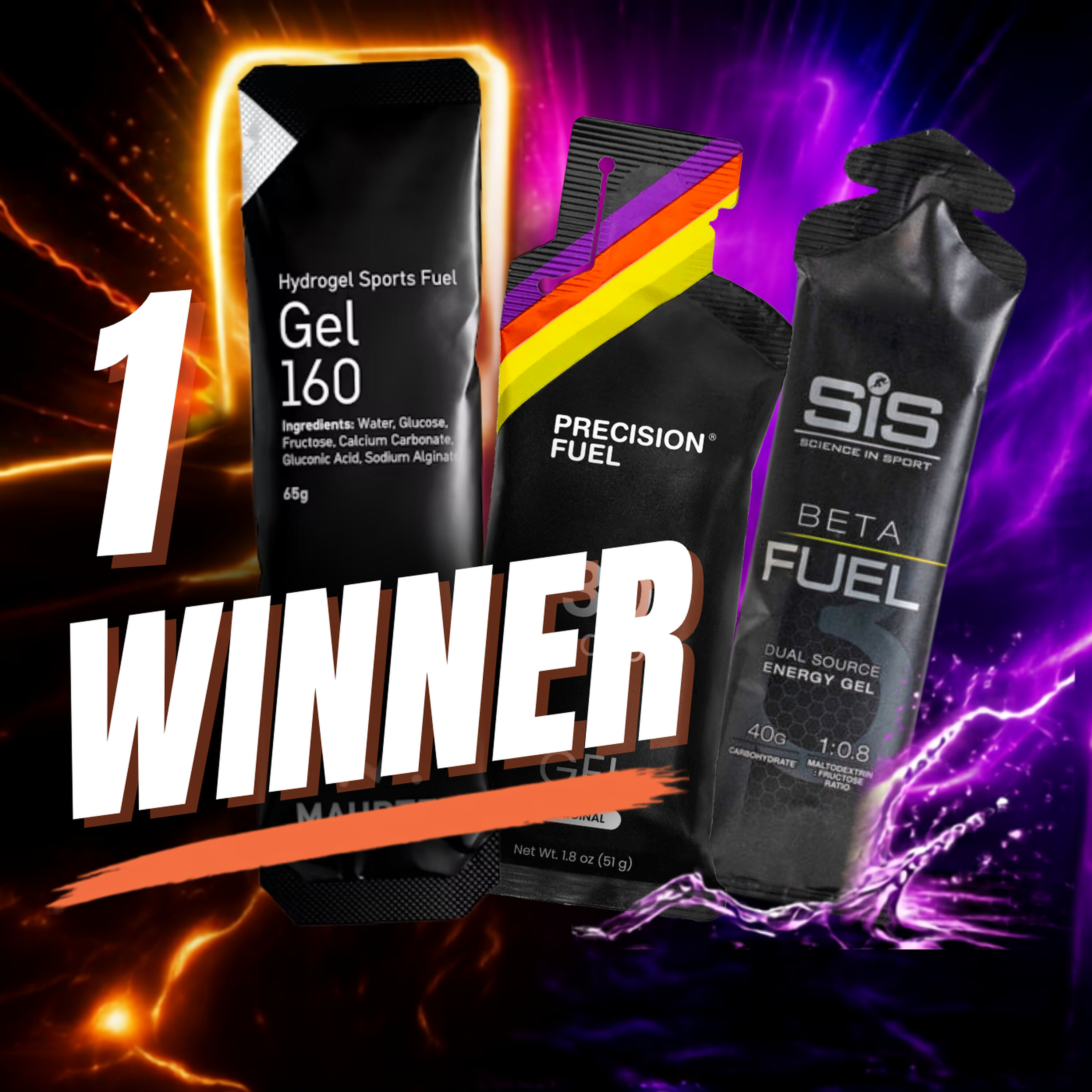 Maurten vs Precision vs SIS Beta Fuel: A Triathlon Dietitian's Verdict 27.08.2026 18minAre you paying up to $5.20 a gel because that is what they hand out on course? Maurten, Precision Fuel and Hydration and SIS Beta Fuel are the three gels I get asked about more than any others. So I put them side by side and worked out what is actually in the packet, what each one costs you per 100 grams of carbohydrate, and whether that price gap buys you anything at all. No brand has paid me a cent to talk about them. I am Switzerland when it comes to sports nutrition products. One of these gels costs roughly two thirds more than another for the exact same gram of carbohydrate. Whether that is money well spent comes down to three things most triathletes have never been taught to look for. WHAT YOU WILL TAKE AWAY What is actually inside each gel: carbohydrate, sodium, calories, caffeine and the main ingredients What it costs to fuel at 90 grams of carbohydrate an hour on each brand, in both Aussie and US dollars What the glucose to fructose ratio means in plain English, and the carbohydrate rate you need to be hitting before it matters to you Whether the hydrogel does what the marketing implies it does Which gel makes sense for Sprint, Olympic, 70.3 and full distance racing How to read a sports nutrition label so you are not at the mercy of whoever has the biggest marketing budget STUDIES MENTIONED Currell, K., & Jeukendrup, A. E. (2008). Superior endurance performance with ingestion of multiple transportable carbohydrates. Medicine & Science in Sports & Exercise, 40(2), 275 to 281. [https://doi.org/10.1249/mss.0b013e31815adf19](https://doi.org/10.1249/mss.0b013e31815adf19) O’Brien, W. J., & Rowlands, D. S. (2011). Fructose-maltodextrin ratio in a carbohydrate-electrolyte solution differentially affects exogenous carbohydrate oxidation rate, gut comfort, and performance. American Journal of Physiology-Gastrointestinal and Liver Physiology, 300(1), G181 to G189. [https://doi.org/10.1152/ajpgi.00419.2010](https://doi.org/10.1152/ajpgi.00419.2010) ALSO MENTIONED Episode 47: What is a Hydrogel? Does it improve endurance performance, with Andy King. [Listen here](https://www.dietitianapproved.com/podcast/episode-47) The exact gel you use is the last 5% of your race nutrition strategy. If you want the other 95%, the Triathlon Nutrition Academy is my nine month education program that teaches you how to fuel your training week, train your gut and build a race plan that is uniquely yours. Doors open again soon, so register your interest at [dietitianapproved.com/academy](https://www.dietitianapproved.com/academy). SUPPORT THE PODCAST (https://www.dietitianapproved.com/legend) CONNECT WITH TARYN [Website](https://www.dietitianapproved.com) | [Instagram](https://www.instagram.com/dietitian.approved/) | [Facebook](https://www.facebook.com/DietitianApproved) | [YouTube](https://www.youtube.com/@dietitianapproved) The Triathlon Nutrition Academy® is a podcast by Dietitian Approved®. All rights reserved.See omnystudio.com/listener for privacy information.
 -
 Over 45 and Losing Power? Your Protein Isn't Working Like It Used To 20.08.2026 14minEverywhere you look, someone is telling you to eat more protein. If you are over 45 and your power is going backwards, more protein is not the fix you have been promised. Back in January the US dietary guidelines roughly doubled their protein recommendation, and that was overdue. But guidelines written for a sedentary population are a very different thing to guidelines for an athlete training 10 to 15 hours a week. Something real does change in your muscles as you get older, and the research on masters triathletes makes for uncomfortable reading. What it does not show is that eating more protein fixes it. In this episode I take you through what is actually happening in ageing muscle, what happened when researchers doubled the protein after a muscle damaging session, and the 5 protein levers to pull instead of just reaching for more. WHAT YOU WILL TAKE AWAY • What anabolic resistance is in plain English, and why the rules changed at about 35 without anybody sending you the memo • Inside the Australian study that compared masters triathletes with younger ones, and what happened to their muscle repair and their cycling time trials • What doubling the post exercise protein dose actually bought masters triathletes, and what it did not • Why your total protein intake stops paying you back once you are in a reasonable range • The 5 protein levers, and why most triathletes only ever pull number 5 • Why your breakfast is almost certainly the weak link in your day • Why the same mistake is happening right now with carbohydrate TIMESTAMPS 00:00 Everywhere you look, eat more protein 00:27 Over 45 and your power is going backwards 00:55 The number is the easy part, eating it is not 01:22 Welcome 01:43 What actually changes in your body as you get older 02:10 Anabolic resistance, in plain English 02:41 Inside the study: masters versus younger triathletes 03:40 What happened over the 3 days 04:04 It is not your fault, the rules changed at 35 04:43 So should you just eat more protein? 05:08 The follow up study: double the dose 05:57 What doubling the protein actually bought them 06:43 Why simply more is not the fix 07:17 The bit that is genuinely hard for an age-grouper 08:01 What happens in the real world, week by week 09:14 The internet gives you a number and walks away 09:51 The barbecue study, Episode 141 10:14 You are a human, not a snake 10:51 Masters swimmers: the total was fine, the pattern wasn't 11:28 The 5 protein levers 12:17 Eating more is not a strategy 12:48 The recap 13:22 What to actually do about it ALSO MENTIONED • Episode 179 with Joe Friel on how masters athletes can get fast and stay fit after 50: https://www.dietitianapproved.com/podcast/episode-179 • Episode 141, affectionately dubbed the barbecue study, on large protein doses in one sitting: https://www.dietitianapproved.com/podcast/episode-141) STUDIES MENTIONED • Doering, T. M., Jenkins, D. G., Reaburn, P. R., Borges, N. R., Hohmann, E., & Phillips, S. M. (2016). Lower integrated muscle protein synthesis in masters compared with younger athletes. Medicine & Science in Sports & Exercise, 48(8), 1613-1618. [https://doi.org/10.1249/MSS.0000000000000935](https://doi.org/10.1249/MSS.0000000000000935) • Doering, T. M., Reaburn, P. R., Borges, N. R., Cox, G. R., & Jenkins, D. G. (2017). The effect of higher than recommended protein feedings post-exercise on recovery following downhill running in masters triathletes. International Journal of Sport Nutrition and Exercise Metabolism, 27(1), 76-82. [https://doi.org/10.1123/ijsnem.2016-0079](https://doi.org/10.1123/ijsnem.2016-0079) • Santos de Souza, M., Zaleski Trindade, C. D., de Souza Castro, F. A., Buss, C., & Schneider, C. D. (2025). Protein intake by master swimmers: Implications for practice in sports nutrition, a cross-sectional study. Nutrition and Health, 31(3), 1095-1101. [https://doi.org/10.1177/02601060241276918](https://doi.org/10.1177/02601060241276918) READY TO STOP GUESSING? Knowing what to eat and when, around your own training program, is the whole game as you get older. That is exactly what I teach inside the Triathlon Nutrition Academy, and then troubleshoot with you every week in our Power Hour calls, so you are still doing it in 12 months time. Register your interest for our next cohort at https://www.dietitianapproved.com/academy. Download the FREE audio series The 5 Biggest Nutrition Mistakes Costing You Time on Race Day Recovery Accelerator Program SUPPORT THE PODCAST HERE CONNECT WITH TARYN Website | Instagram | Facebook | YouTube The Triathlon Nutrition Academy® is a podcast by Dietitian Approved®. All rights reserved.See omnystudio.com/listener for privacy information.
 -
 Are you Overtraining or Under-Fuelling? 13.08.2026 26minYour legs are heavy, your easy sessions feel hard, and you are not improving despite training consistently. If you immediately thought overtraining, you are right. That is also the exact symptom list for under-fuelling. Researchers went looking for every training overload study that also measured what athletes were eating. 21 studies made the cut, and in 18 of them, 86%, the athletes were under-fuelled. So the majority of athletes diagnosed as overtrained in the research were in fact not eating enough. Which raises a fairly uncomfortable question about that extra session you are thinking of adding to your training schedule right now. In this episode, I show you how to tell whether you are overtrained or under-fuelled, why adding volume to an under-fuelled athlete makes everything worse, and the 3 signals plus 3 fixes to run through before you touch your training program. WHAT YOU WILL TAKE AWAY Why overtraining and under-fuelling start in exactly the same place in your brain, and why that changes the fix What energy availability actually is, and why it is not the same thing as calories in versus calories out The maths run on a 75 kg age-grouper training 12 hours a week, and what his number actually comes out at Why overtraining is a diagnosis of exclusion, and what the professionals rule out first The 3 signals that tell you under-fuelling is on the table at all The 3 things to fix today, before you add another hour of training TIMESTAMPS 00:00 The symptom list you are about to recognise00:54 The number that should stop you adding a session01:57 Same origin, same dials, different fix02:20 You do not get fitter during your sessions03:37 Inside the research: 18 out of 21 studies04:17 Why overtraining is a diagnosis of exclusion05:26 Energy availability, in plain English07:15 Running the numbers on a 75 kg male age-grouper09:35 The same maths for a female athlete10:31 Why your own numbers will be different11:37 What happens when training goes up and food does not13:05 But I just need to train more, right?14:55 Signal 1: your appetite has gone the wrong way16:05 The feather, the brick and the truck16:30 Signal 2: the scales are not behaving17:36 Signal 3: easy is fine, your top end has gone18:31 The fourth sign: illness and niggles that outstay their welcome19:35 Fix 1: what you do during training20:31 Fix 2: recovery nutrition and the 4 Rs21:19 Fix 3: does your food move when your training moves22:08 An important note if this episode touched a nerve23:01 The recap24:21 Run the sums before you add the session STUDIES MENTIONED Meeusen, R., Duclos, M., Foster, C., Fry, A., Gleeson, M., Nieman, D., Raglin, J., Rietjens, G., Steinacker, J., & Urhausen, A. (2013). Prevention, diagnosis, and treatment of the overtraining syndrome: Joint consensus statement of the European College of Sport Science and the American College of Sports Medicine. Medicine & Science in Sports & Exercise, 45(1), 186-205. https://doi.org/10.1249/MSS.0b013e318279a10a Melin, A. K., Areta, J. L., Heikura, I. A., Stellingwerff, T., Torstveit, M. K., & Hackney, A. C. (2024). Direct and indirect impact of low energy availability on sports performance. Scandinavian Journal of Medicine & Science in Sports, 34(1), e14327. https://doi.org/10.1111/sms.14327 Stellingwerff, T., Heikura, I. A., Meeusen, R., Bermon, S., Seiler, S., Mountjoy, M. L., & Burke, L. M. (2021). Overtraining syndrome (OTS) and relative energy deficiency in sport (RED-S): Shared pathways, symptoms and complexities. Sports Medicine, 51(11), 2251-2280. https://doi.org/10.1007/s40279-021-01491-0 READY TO STOP GUESSING? Your day to day nutrition is the single most valuable thing I help my athletes with inside the Triathlon Nutrition Academy. I teach you how to fuel for training, racing and life, so you are not asking the internet random questions at 9pm every time your program changes or you see something shiny. Get your name on the list for our next cohort at dietitianapproved.com/academy Download the FREE audio series The 5 Biggest Nutrition Mistakes Costing You Time on Race Day Recovery Accelerator Program SUPPORT THE PODCAST HERE CONNECT WITH TARYN Website | Instagram | Facebook | YouTube The Triathlon Nutrition Academy® is a podcast by Dietitian Approved®. All rights reserved.See omnystudio.com/listener for privacy information.
 -
 Is Carb Loading a Myth? 06.08.2026 19minIs carb loading a myth? A paper published in June has social media convinced that it is. A comment landed on my socials this week saying exactly that. It didn't appear out of nowhere. There is a new paper doing the rounds, the headlines have picked it up and sprinted into some pretty heavy clickbait territory, and they have taken it somewhere I don't think the authors ever wanted it to go. So I'm going to tell you exactly what that paper says, what it doesn't say and how to apply it to you as an age group triathlete. I'll walk you through the 14 studies this whole argument rests on, why only 2 of them were double blinded and the detail in the research design that changes how you should read every one of those headlines. Then I'll show you brand new data on 27 real women racing at the 2024 World Champs, which I think is the far more important number for you. IN THIS EPISODE: What the June 2026 commentary actually did, and why it is not the carb loading study everyone thinks it is How 10,422 papers were screened down to just 14 Why most of that research doesn't reflect how you actually race What happened to muscle glycogen when athletes ate enough carbohydrate Why I never wrote Matt Hauser a carb loading plan, and what that tells you about yours The World Champs food diary data on what female age groupers really ate the day before their biggest race The second problem with this research that nobody is talking about yet What I want you to do differently before your next race TIMESTAMPS00:00 The comment that kicked this off00:27 The paper behind the headlines, and what it actually is02:58 From 10,422 papers down to 1403:29 Why only two of them were double blinded04:17 Riding with no fuel on board, and some of them fasted05:42 The two studies the myth claim rests on06:23 What actually happened to muscle glycogen08:02 The one that was really a creatine study09:33 Why I'm not calling this case closed10:15 World Champs: only 26% hit their carb loading numbers12:25 Train like a professional, eat like a beginner12:48 Why Matt Hauser never needed a carb loading plan14:34 There is a ceiling, but that doesn't mean your tank is full15:40 The second problem nobody is talking about16:26 Risk versus reward17:54 What I want you to do before your next race18:42 So, is carb loading a myth? STUDIES MENTIONED - Areta, J. L., [LILY: confirm the full author list from the paper before publishing]. (2026). Beyond belief? Absence of double-blinding and limited ecological validity in carbohydrate loading research. International Journal of Sport Nutrition and Exercise Metabolism. Advance online publication. https://doi.org/10.1123/ijsnem.2026-0058 - Burke, L. M., Hawley, J. A., Schabort, E. J., St Clair Gibson, A., Mujika, I., & Noakes, T. D. (2000). Carbohydrate loading failed to improve 100-km cycling performance in a placebo-controlled trial. Journal of Applied Physiology, 88(4), 1284-1290. https://doi.org/10.1152/jappl.2000.88.4.1284 - Tomcik, K. A., Camera, D. M., Bone, J. L., Ross, M. L., Jeacocke, N. A., Tachtsis, B., Senden, J., van Loon, L. J. C., Hawley, J. A., & Burke, L. M. (2018). Effects of creatine and carbohydrate loading on cycling time trial performance. Medicine & Science in Sports & Exercise, 50(1), 141-150. [https://doi.org/10.1249/MSS.0000000000001401 - Jones, R. O., Areta, J. L., Bennett, S., Pugh, J., & Louis, J. B. (2026). Dose-response of dietary carbohydrate intake on skeletal muscle glycogen, gastrointestinal comfort and body composition in endurance-trained individuals in simulated preparation for competition. Scandinavian Journal of Medicine & Science in Sports, 36(6), e70312. https://doi.org/10.1111/sms.70312 - Fortis, H. O., Whitehead, A. E., Cronin, C. J., Johnson, K. O., Shepherd, S. O., Hackney, A. C., Close, G. L., & Strauss, J. A. (2026). From intention to execution: Pre-race nutrition behaviours, influences, and performance outcomes in female endurance athletes at the IRONMAN World Championships. European Journal of Sport Science, 26(7), e70193. https://doi.org/10.1002/ejsc.70193 If you want carb loading laid out properly in a way that is easy to understand, with a planner and a calculator that does all of the hard maths for you, my Carb Loading Masterclass is at dietitianapproved.com/carb-loading. Download the FREE audio series The 5 Biggest Nutrition Mistakes Costing You Time on Race Day Recovery Accelerator Program SUPPORT THE PODCAST HERE CONNECT WITH TARYN Website | Instagram | Facebook | YouTube The Triathlon Nutrition Academy® is a podcast by Dietitian Approved®. All rights reserved.See omnystudio.com/listener for privacy information.
 -
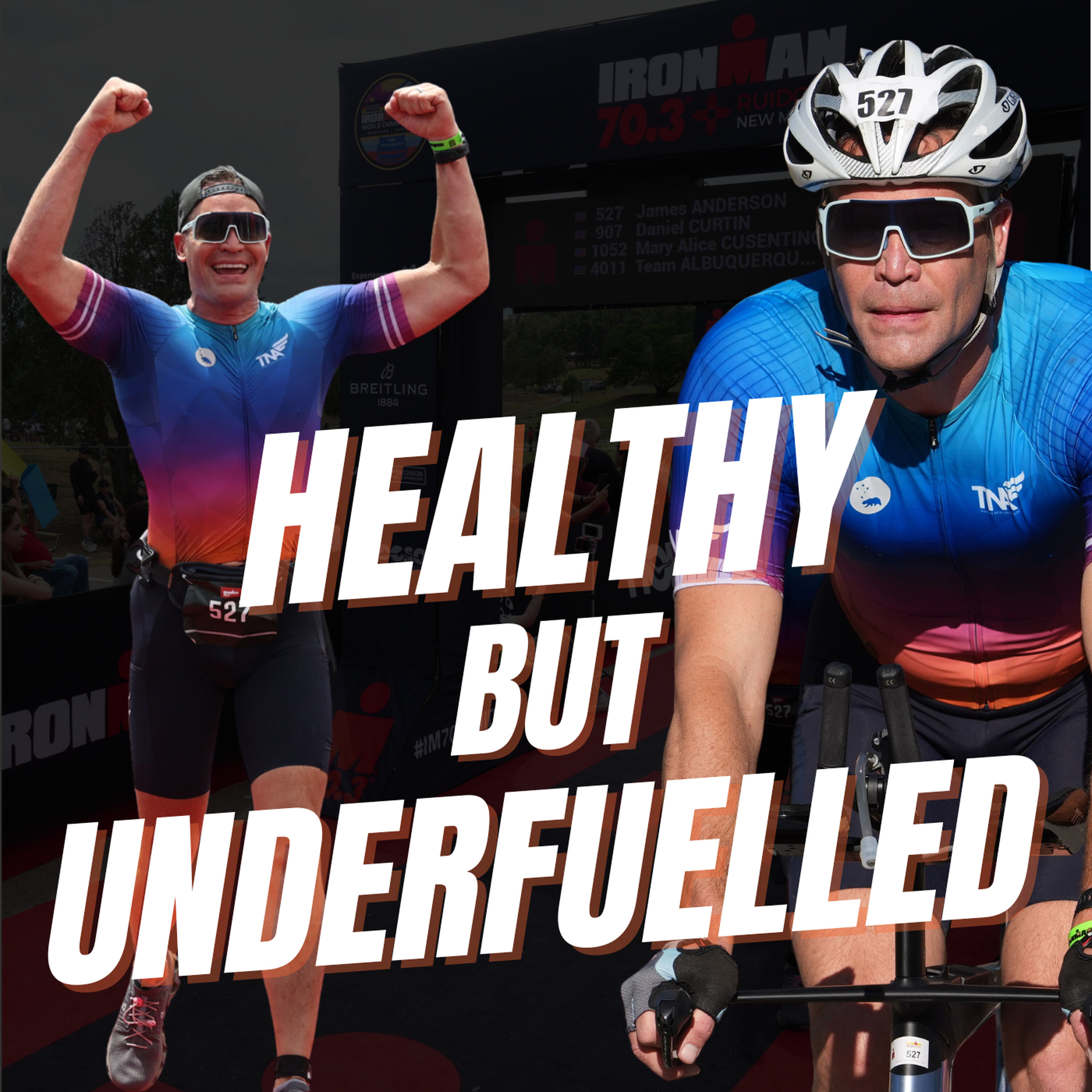 Why Eating Healthy Isn't Enough to Fuel a Triathlon with James Anderson 30.07.2026 32minYou can eat really good food all day long and still have no idea how to fuel a triathlon. Dr James Anderson is a dentist, a Triathlon Nutrition Academy athlete and one of the most organised humans you will ever meet. Smoothie bags prepped in the freezer. Snack bags packed for every work day. Quality food, every single day. He was still eating the wrong things at the wrong time for three sports, and he had no idea until he went looking for the gaps. In this episode James shares what changed between joining the Academy and crossing the line at his first 70.3 in New Mexico, including the quadrathlon that scared him into taking the detail seriously, what carb loading and sodium loading did for his cramping and headaches, and the moment on the run where his fuel stopped working and he had to think his way to the finish line. WHAT YOU WILL TAKE AWAY Why eating healthy and fuelling for triathlon are two completely different skills What being super organised with food still misses when you are training for three sports How conflicting advice online leaves smart, capable athletes stuck in paralysis by analysis What carb loading and sodium loading did for a big athlete racing at altitude How to troubleshoot on course when your race nutrition stops working, instead of taking a DNF Why James is leaving his bike computer and Strava behind next time TIMESTAMPS 00:00 Eating well and fuelling for triathlon are not the same thing 00:33 Meet Dr James Anderson, dentist and TNA athlete 01:47 The bike shop moment and a very optimistic swim time 05:26 Fitting three sports around a full time job and a business 06:40 The Apple Blossom story 09:04 Organised, disciplined and eating the wrong things at the wrong time 10:40 Why a smart, capable guy could not work it out on his own 12:51 The Mount Taylor quadrathlon reality check 16:27 How the nutrition actually went at his first 70.3 19:16 Open water panic and the note in the swim cap 25:00 What he would do differently next time 29:18 The Power Hour crew and what is next 31:10 Nobody is born knowing this GUEST Dr James Anderson is a dentist based in New Mexico, USA, a Clydesdale age grouper and a Triathlon Nutrition Academy athlete who has just finished phase three of the program. He fell for the sport after seeing his first triathlon bike in a bike shop, raced sprint distance for three years and Olympic distance for two, and recently completed his first 70.3, the longest event he has ever raced. He is not on social media, so the best place to find him is in the TNA Power Hour. WANT THIS FOR YOURSELF Nobody is born knowing how to fuel three sports and you will not learn it at school or at uni. Get your name on the list for the next cohort of the Triathlon Nutrition Academy. Download the FREE audio series The 5 Biggest Nutrition Mistakes Costing You Time on Race Day Recovery Accelerator Program SUPPORT THE PODCAST HERE CONNECT WITH TARYN Website | Instagram | Facebook | YouTube The Triathlon Nutrition Academy® is a podcast by Dietitian Approved®. All rights reserved.See omnystudio.com/listener for privacy information.
 -
 How Do You Carb Load for a Triathlon Without Feeling Bloated and Heavy? 23.07.2026 16minWant to build your own carb loading plan? Grab my complete Carb Loading Masterclass here: https://www.dietitianapproved.com/carb-loading A giant bowl of pasta the night before your race is not carbohydrate loading. Not even close. In two decades of working with age group triathletes, Taryn has never met one who carb loads properly. This episode fixes that once and for all. It breaks down the science of carbohydrate loading, why it is genuinely free speed out on the course, and the handful of mistakes that leave you feeling bloated, heavy and fading in the back half of your race. WHAT YOU WILL LEARN What carbohydrate loading actually is, and why it is not the same as demolishing a pasta dinner Why carb loading delays fatigue rather than making you faster, and how it is worth 1 to 3% performance out on course The five common mistakes that leave you bloated and heavy (you are almost certainly doing at least one) Why the number on the scales going up is a sign you have done it right, not a reason to panic Whether women really do carb load worse than men, and what the research actually says TIMESTAMPS 00:00 The pasta party myth 01:44 Why no triathlete carb loads properly 03:38 What carbohydrate loading actually is (glycogen, the fuel tank and supercompensation) 06:07 Free speed: why it delays fatigue instead of making you faster 07:21 The evidence: 90 minutes and a 1 to 3% gain 08:44 The five mistakes that leave you bloated and heavy 14:20 Do women carb load worse than men? 18:23 How to build your own carb loading plan 22:37 The five big takeaways STUDIES MENTIONED - McLay, R. T., Thomson, C. D., Williams, S. M., & Rehrer, N. J. (2007). Carbohydrate loading and female endurance athletes: Effect of menstrual-cycle phase. International Journal of Sport Nutrition and Exercise Metabolism, 17(2), 189-205. https://doi.org/10.1123/ijsnem.17.2.189 - Tarnopolsky, M. A., Zawada, C., Richmond, L. B., Carter, S., Shearer, J., Graham, T., & Phillips, S. M. (2001). Gender differences in carbohydrate loading are related to energy intake. Journal of Applied Physiology, 91(1), 225-230. https://doi.org/10.1152/jappl.2001.91.1.225 - James, A. P., Lorraine, M., Cullen, D., Goodman, C., Dawson, B., Palmer, T. N., & Fournier, P. A. (2001). Muscle glycogen supercompensation: Absence of a gender-related difference. European Journal of Applied Physiology, 85(6), 533-538. https://doi.org/10.1007/s004210100499 - Wismann, J., & Willoughby, D. (2006). Gender differences in carbohydrate metabolism and carbohydrate loading. Journal of the International Society of Sports Nutrition, 3(1), 28-34. https://doi.org/10.1186/1550-2783-3-1-28 BUILD YOUR OWN CARB LOADING PLAN You cannot copy a carb loading plan from your training buddy, your coach or the internet, because it is so individual. So Taryn has taken everything she teaches inside the Triathlon Nutrition Academy and put it into a complete carb loading masterclass, open to the public. Three video lessons, just over an hour, plus the exact tool she uses with her athletes to calculate your specific numbers and build your plan. Grab it here: dietitianapproved.com/carb-loading Download the FREE audio series The 5 Biggest Nutrition Mistakes Costing You Time on Race Day Recovery Accelerator Program SUPPORT THE PODCAST HERE CONNECT WITH TARYN Website | Instagram | Facebook | YouTube The Triathlon Nutrition Academy® is a podcast by Dietitian Approved®. All rights reserved.See omnystudio.com/listener for privacy information.
 -
 If Challenge Roth Is On Your Bucket List, Listen to This First 16.07.2026 46minThinking about putting Challenge Roth on your bucket list? Three TNA athletes just raced it, and they are telling you exactly what to get right before you sign up. Three TNA athletes share what it really takes to race Challenge Roth, from importing race nutrition into Australia to riding through Solar Hill. Real lessons on fuelling, logistics and pacing for anyone with this iconic full distance race on the bucket list. Jo, Lisa and Leanne are all TNA athletes, all from Queensland, and they have just ticked one of triathlon's biggest bucket list events off the list: Challenge Roth in Bavaria, Germany. In this episode they share what training for and racing this iconic full distance event was really like, from importing race nutrition into Australia to talking themselves through a mid-race gut issue on the run. In this episode you will learn: Why Australians book Challenge Roth through a travel company, and how fast the race actually sells out What to pack, and import, when the on-course sports nutrition brand is not sold at home How to handle a mid-race gut issue without abandoning your fuelling plan Why nailing your everyday training nutrition is what actually gets you to the start line healthy Why hiring a bike for race day can cost you more than it saves What Solar Hill is really like, and why it might make you cry TIMESTAMPS 00:00 Cold open: why you should never hire a race bike 00:41 Meet Jo, Lisa and Leanne, fresh from racing Challenge Roth 01:04 What Challenge Roth actually is, and why Solar Hill is legendary 02:06 Did the race live up to the hype 02:36 Leanne on her 19th full distance race, and feeling her best yet 03:10 Jo's emotional swim start and watching Lucy Charles-Barclay 04:33 5am beers and the Bavarian party atmosphere 05:02 Lisa on finally racing the event she watched her husband race in 2018 05:27 Getting a start line spot, and why you need a travel company 07:02 Packing and importing race nutrition from Australia to Germany 08:42 Smuggling Tim Tams, Vegemite and a confiscated jar through customs 09:19 Travelling with family, bike bags and European train stairs 10:38 Arriving early to acclimatise to the European heatwave 13:00 What they would have changed about their preparation 14:03 Testing a new tri suit at the swim practice, not on race day 14:37 Did race day nutrition go to plan 15:11 Lisa's mid-race stomach upset, and how dry pretzels fixed it 16:55 Jo losing her appetite in the carb-loading days before the race 17:50 Race morning timing, and eating on an 8:15am wave start 20:17 Jo's decision to build her own race after a stress fracture 24:10 Solar Hill: riding through a wall of 300,000 people 26:40 What they would change if they raced it again tomorrow 32:31 Their best advice if Roth is on your bucket list 33:37 How long it actually took to prepare 34:24 Why nailing everyday training nutrition kept them consistent 35:43 Practising on gravel, and an 18 month lead-in block 37:06 Confidence in your coach, and the surprises on race day 39:42 What's next: Norseman, a sub four hour marathon and a Roth return 45:10 Final thoughts and a well-earned rest Jo Hurley, Lisa McDonald and Leanne Coghill are all Triathlon Nutrition Academy athletes and all Queenslanders, who travelled to Bavaria this year to take on Challenge Roth between them. If Challenge Roth, or your first full distance race, is on your radar, the Triathlon Nutrition Academy is where we help you build a fuelling plan you can trust on race day. Get on the waitlist here. Download the FREE audio series The 5 Biggest Nutrition Mistakes Costing You Time on Race Day Recovery Accelerator Program SUPPORT THE PODCAST HERE CONNECT WITH TARYN Website | Instagram | Facebook | YouTube The Triathlon Nutrition Academy® is a podcast by Dietitian Approved®. All rights reserved.See omnystudio.com/listener for privacy information.
 -
 Pros Are Fuelling at 200g of Carbs an Hour. Should You? 09.07.2026 17minPros are fuelling at up to 200 grams of carbs an hour. Should you be chasing that number too? High carb fuelling is the hottest topic in endurance sport right now, and the numbers keep climbing. INEOS Grenadiers are fuelling their riders at up to 150 grams of carbs an hour on big Touar de France stages, and pro triathlete Cameron Wurf recently said he took on 200 grams an hour on the bike in a recent Ironman (yes, 200, in one hour). Every age grouper watching that unfold is tempted to copy it. In this episode Taryn breaks down the real science behind high carb fuelling, why it works for the pros, and the one thing most age group triathletes skip completely before they try to chase that number themselves. You'll learn: Why the pros are pushing carb intake so high, and what the official guidelines actually say The genuine recovery benefits of higher carb fuelling, backed by real research Why eating past your absorption ceiling can wreck your race instead of fuelling it Why your fuelling ceiling is nothing like the pro's ceiling, and why that's completely fine A real athlete example of building fuelling tolerance the right way, over time, not overnight TIMESTAMPS 00:00 Why high carb fuelling is exploding in endurance sport 01:24 Meet Taryn and what this episode covers 02:19 The science behind pro level carb intake 03:42 The recovery benefits backed by research 04:08 The catch: high dropout rates from gut issues 05:14 Why there is a ceiling on how much carb can help you 05:38 The cycling study that found more was not always better 06:34 Where unused carbs actually go 07:01 Why your absorption capacity is not the same as anyone else's 08:07 The trap of copying the pro's number 09:39 How the pros actually built their tolerance 10:51 Why gut training is not a DIY podcast protocol 11:54 What you can start doing today 13:34 Case study: Lynn's fuelling turnaround 15:11 The real takeaway: find your number, not theirs REFERENCES - King, A. J., O'Hara, J. P., Morrison, D. J., Preston, T., & King, R. F. G. J. (2018). Carbohydrate dose influences liver and muscle glycogen oxidation and performance during prolonged exercise. Physiological Reports, 6(1), e13555. https://doi.org/10.14814/phy2.13555 | PubMed - Viribay, A., Arribalzaga, S., Mielgo-Ayuso, J., Castañeda-Babarro, A., Seco-Calvo, J., & Urdampilleta, A. (2020). Effects of 120 g/h of carbohydrates intake during a mountain marathon on exercise-induced muscle damage in elite runners. Nutrients, 12(5), 1367. https://doi.org/10.3390/nu12051367 | PubMed - Urdampilleta, A., Arribalzaga, S., Viribay, A., Castañeda-Babarro, A., Seco-Calvo, J., & Mielgo-Ayuso, J. (2020). Effects of 120 vs. 60 and 90 g/h carbohydrate intake during a trail marathon on neuromuscular function and high intensity run capacity recovery. Nutrients, 12(7), 2094. https://doi.org/10.3390/nu12072094 | PubMed - Hearris, M. A., Pugh, J. N., Langan-Evans, C., Mann, S. J., Burke, L., Stellingwerff, T., Gonzalez, J. T., & Morton, J. P. (2022). 13C-glucose-fructose labeling reveals comparable exogenous CHO oxidation during exercise when consuming 120 g/h in fluid, gel, jelly chew, or coingestion. Journal of Applied Physiology, 132(6), 1394–1406. https://doi.org/10.1152/japplphysiol.00091.2022 | Free full text - Wilson, P. B. (2026). A narrative review of the high-carbohydrate fueling revolution (≥100 g/h) in the professional peloton. Sports Medicine, 56(2), 295-313. https://doi.org/10.1007/s40279-025-02372-6 Our final cohort of the Triathlon Nutrition Academy for the year is opening again soon. If dialling in your race fuelling and training your gut to handle it is something you need to work on, register your interest now. Download the FREE audio series The 5 Biggest Nutrition Mistakes Costing You Time on Race Day Recovery Accelerator Program SUPPORT THE PODCAST HERE CONNECT WITH TARYN Website | Instagram | Facebook | YouTube The Triathlon Nutrition Academy® is a podcast by Dietitian Approved®. All rights reserved.See omnystudio.com/listener for privacy information.
 -
 How to Swim Faster Off Just Three Sessions a Week 02.07.2026 49minSwimming more laps won't make you a faster triathlete. A three-time Olympian who used to swim 80 kilometres a week is here to tell you why. Brian Johns is a three-time Olympian, former short-course 400-metre individual medley world record holder and now Head of Coaching Science at FORM. He's spent the back half of his career figuring out why some swimmers keep improving and others stay stuck in the same lane (sometimes literally), and in this episode he brings that to the time-poor triathlete who swims two or three times a week. In this episode you'll learn: Why more kilometres in the pool almost never equals a faster triathlon swim The exact plan for getting faster off just three sessions a week, no coach required How to tell the difference between working hard and actually improving The recovery trick Brian used between a late session and an early morning swim Why open water fear is really about exposure rather than fitness, and the simple fix that builds confidence fast How to practise sighting in the pool long before race day A one-word cue to keep you calm and swimming smooth when the start line gets choppy TIMESTAMPS 00:00 Welcome to Brian Johns, Olympian, coach and FORM scientist 01:13 From 80km swim weeks to his best ever Olympic final 05:08 The injury that taught him to read his body's red flags 08:37 Why more metres doesn't mean a faster swim 13:03 The fuel check before you add more volume 15:21 How to teach technique without overloading a tired swimmer 19:30 What FORM Score reveals about real swimming efficiency 22:37 The one habit that separates improving swimmers from plateaued ones 27:10 Why open water rattles even confident swimmers 31:47 Learning to sight, the skill most triathletes skip 36:52 Surviving a rough, choppy race day swim 42:00 The three-sessions-a-week plan for the unsupported triathlete 48:18 Brian's go-to drill for every triathlete 50:43 Where to find Brian and FORM Goggles ABOUT BRIAN JOHNS Brian Johns is a Canadian three-time Olympian and former short-course 400-metre individual medley world record holder. He's the most decorated swimmer in Canadian university history, winning 33 of 34 races at the University of British Columbia and earning Canadian Interuniversity Sport Male Swimmer of the Year three times. After retiring from competition, Brian moved into coaching and now works as Head of Coaching Science at FORM, the smart swim goggles company, helping swimmers and triathletes train and race smarter with real-time data. https://au.formswim.com/ You can train smarter in the pool, but if your fuelling isn't dialled in, you're leaving performance on the table too. That's exactly what we work through inside the Triathlon Nutrition Academy. If you're ticking off the macro boxes every day without ever really being taught how to eat, the Triathlon Nutrition Kickstart course is built for exactly that. Learn how to fuel your training and recovery properly so you're never stuck when the plan changes. Head to dietitianapproved.com/kickstart Download the FREE audio series The 5 Biggest Nutrition Mistakes Costing You Time on Race Day Recovery Accelerator Program SUPPORT THE PODCAST HERE CONNECT WITH TARYN Website | Instagram | Facebook | YouTube The Triathlon Nutrition Academy® is a podcast by Dietitian Approved®. All rights reserved.See omnystudio.com/listener for privacy information.
 -
 Why Tracking Calories Is Making You Slower (Not Leaner) 25.06.2026 19minIs your calorie tracking app actually working against you? You're logging everything, hitting your macros and training hard but your long sessions are falling apart, the scale won't budge and you're exhausted in a way that sleep just isn't fixing. The app says you're on track. So what's going wrong? In this episode, Advanced Sports Dietitian Taryn Richardson breaks down why calorie and macro tracking apps - even the good ones built for active people - were never designed to teach a triathlete how to eat. The maths is educated guesswork, the protein targets are built backwards, and the app has no idea how to help you when your kid gets sick and your afternoon session gets cancelled. In this episode you'll learn: Why calorie apps were built for the sedentary population and why that model falls over for a triathlete training 10 to 20 hours a week How inaccurate your wearable device actually is at measuring calorie burn (spoiler: up to 93% off) Why the standard percentage-based protein model cuts your protein at the exact moment you need it most The difference between hitting your macro numbers and actually knowing how to eat Why underfuelling sneaks in even when you're tracking perfectly - and how quickly it affects your training Two real athlete examples: one who was significantly underfueled despite doing everything the app said, and a vegan athlete whose app couldn't come close to meeting her needs What it actually looks like to fuel for the work required, adjust on the fly and never need the app to make a decision for you TIMESTAMPS 00:00 Introduction: the athlete who's doing everything right and still going backwards 02:42 Why calorie apps were built for weight loss, not endurance athletes 05:29 The fundamental problem: apps treat food as a budget, your body treats it as fuel 06:59 How inaccurate is your wearable at measuring calorie burn? Stanford research 09:01 The problem with estimating calories in — why we're all bad at it 11:22 Why percentage-based protein targets are built wrong for athletes 14:16 Hitting your macros is not the same as eating well 16:59 The knowledge gap: how to eat for a light day versus a heavy training day 18:28 When life throws a curveball - why the app can't help you adapt 20:18 How underfueling sneaks in (2023 REDS consensus statement) 21:39 What fueling for the work required actually means 22:39 Athlete example 1: training tanked despite doing exactly what the app said 24:44 Athlete example 2: vegan athlete whose app could never meet her needs 27:04 TLDR summary: macros versus nourishment, the knowledge gap, and what to do next STUDIES MENTIONED - Shcherbina A, et al. (2017). Accuracy in Wrist-Worn, Sensor-Based Measurements of Heart Rate and Energy Expenditure in a Diverse Cohort. *Journal of Personalized Medicine, 7*(2), 3. https://doi.org/10.3390/jpm7020003 - Mountjoy M, et al. (2023). 2023 International Olympic Committee's (IOC) consensus statement on Relative Energy Deficiency in Sport (REDs). *British Journal of Sports Medicine, 57*(17), 1073-1097. https://doi.org/10.1136/bjsports-2023-106994 If you're ticking off the macro boxes every day without ever really being taught how to eat, the Triathlon Nutrition Kickstart course is built for exactly that. Learn how to fuel your training and recovery properly so you're never stuck when the plan changes. Head to dietitianapproved.com/kickstart Download the FREE audio series The 5 Biggest Nutrition Mistakes Costing You Time on Race Day Recovery Accelerator Program SUPPORT THE PODCAST HERE CONNECT WITH TARYN Website | Instagram | Facebook | YouTube The Triathlon Nutrition Academy® is a podcast by Dietitian Approved®. All rights reserved.See omnystudio.com/listener for privacy information.
 -
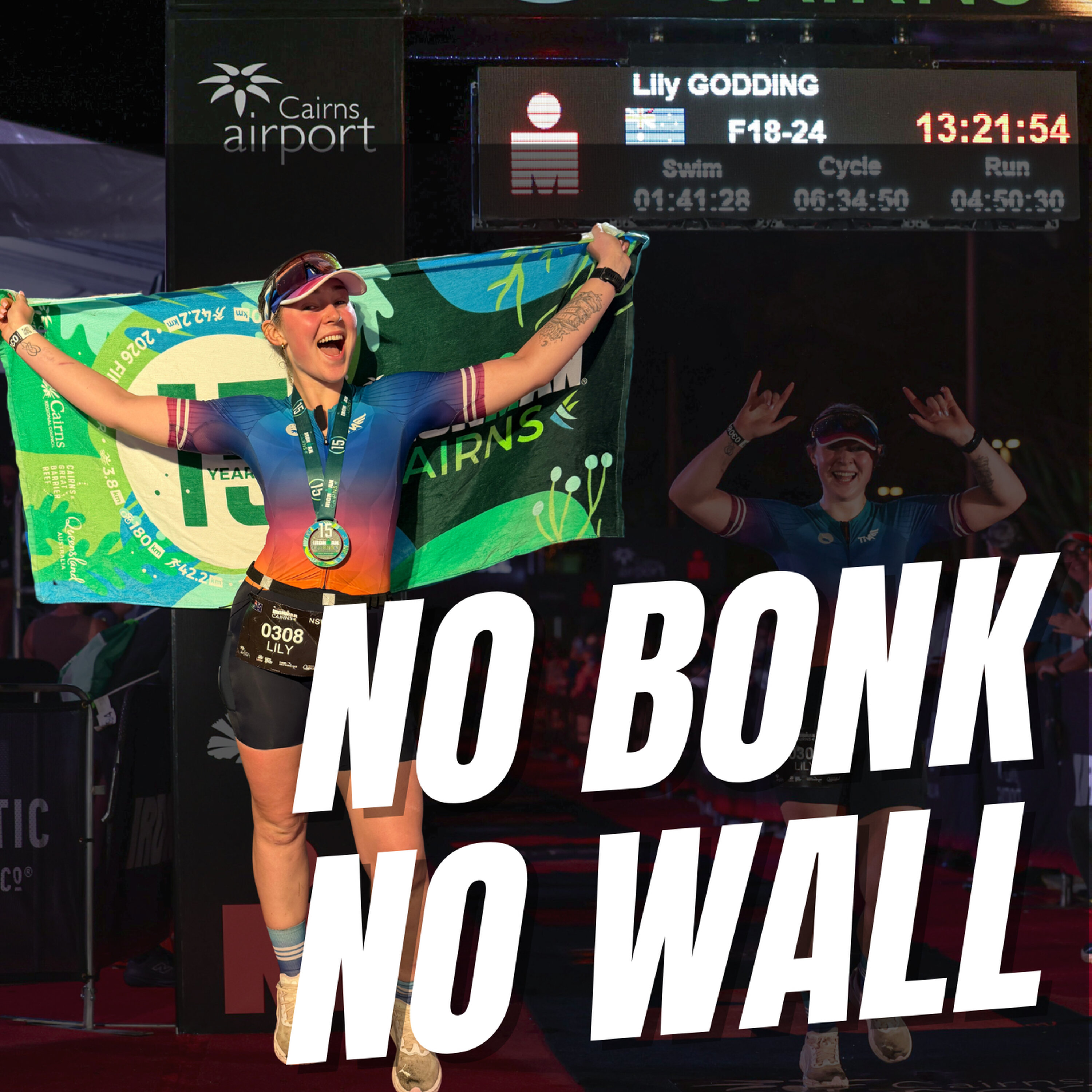 How to Fuel Your First Ironman and Actually Enjoy It with Lily Godding 18.06.2026 34minWhat does it actually take to finish your first Ironman at 22 years old - and cross that finish line with a smile? Lily Godding is a TNA athlete, a rugby rep player and a chef who had never raced a triathlon three years ago. On the weekend, she crossed the finish line of Ironman Cairns 140.6 in 13 hours, 21 minutes and 54 seconds. In this episode, Taryn sits down with Lily just days after the race to talk about what it took to get there — the brutal washing-machine swim, the six-and-a-half-hour bike leg, and the moment on the run where Lily quietly reminded herself: I can do hard things. What you'll hear in this episode: What Lily's nutrition looked like before TNA - and how far off the mark it was How her race nutrition plan held up across 140.6km (spoiler: to a T) The biggest mistakes younger triathletes make with nutrition and training Why she almost didn't join TNA because of the price — and what changed her mind How good recovery nutrition had her collecting her own bike the morning after the race What Lily wishes she'd known sooner, and her advice for anyone tackling their first Ironman TIMESTAMPS 00:00 Lily opens: race nutrition to a T — gut trained, fuelled, mapped out 00:26 Welcome — Taryn introduces Lily, Ironman Cairns finisher 00:56 From rugby to triathlon: how Lily balances two completely different sports 02:11 What made her fall in love with triathlon and sign up for a full Ironman? 03:02 Is Ultraman next? Lily's answer: a faster Ironman and maybe Kona 03:14 Come-down after Cairns — take me back to the finish line 03:54 The finish line moment: electric, community, absolutely amped 05:00 Taryn preps the toughest moment question 05:20 The toughest moment on course: the brutal washing-machine swim 06:38 70 people pulled from the water — absolute carnage 07:22 What a 13:21:54 finish at 22 years old actually meant to Lily 08:34 What young triathletes get wrong: nutrition and overtraining 09:49 Lily admits to being the over-trainer (just ask coach Pablo) 10:06 Advice for younger athletes who think nutrition can wait 10:24 TNA's first module: recovery nutrition changed everything 11:39 What Lily's nutrition actually looked like before TNA 13:05 Would she have finished Cairns without TNA? 13:20 "100% no. It was when I joined TNA I thought — yeah, I can do this" 14:00 How she tried to figure out nutrition on her own 14:27 Social media, the algorithm and the weight-loss noise aimed at female athletes 16:07 How TNA tuned out the noise — worksheets, carb loading, race plan 16:36 What TNA taught her about everyday eating 17:12 The forgotten stuff: colourful plate, healthy fats, nuts, seeds, beans 18:28 The protein myth - more protein isn't always the answer 19:03 Why nobody teaches us how to eat — health as a lifelong foundation 19:34 How did race nutrition hold up on race day? 20:01 Lily: to a T - gut trained, fuelled, everything consumed at the right time 20:55 The run: Coke, gels, chews and carrying her own water bottle 21:51 The one adaptation she'd make: take Panadol for tight calves and hamstrings 22:24 What would she do differently? Not play a rugby game the week before 22:59 First Ironman goal: just finish — next one is for performance 23:37 Recovery: went and got her own bike the morning after the race 24:31 The toilet test - she's perfected the technique 24:51 Balking at the price - what made Lily commit anyway 25:16 Joined in October after Port Macquarie with zero race nutrition plan 26:28 Is TNA worth the investment? 26:36 Lily: "113,472%. I would not be an Ironman finisher without TNA" 27:23 Youth alone isn't enough - nutrition is what gets you across 27:42 Advice for someone about to do their first Ironman 28:30 The finish line photo tip: arms up, smile, don't touch the Garmin 29:05 Has finishing an Ironman changed how Lily sees herself? 29:13 "I can do hard things" - the mantra that got her through lap three 29:49 The moment Taryn ran alongside Lily on the third lap 30:18 What's next: Kona, performance focus, so many years of triathlon ahead 30:57 The privilege of being able to race - and being an Ironman 31:14 Iron Woman? (Lily's aunt is campaigning for it) 31:26 Taryn's closing reflection on Lily's story — and the TNA CTA 33:54 Sign off ABOUT THE GUEST Lily Godding is a 22-year-old age-group triathlete, rugby rep player and TNA athlete from the Snowy Mountains, Australia. She completed her first sprint triathlon in November 2024 and progressed to Ironman 140.6 Cairns in June 2026, finishing in 13:21:54. A chef by trade, Lily balances high-level representative rugby with full Ironman training and gives a first-hand account of what evidence-based triathlon nutrition actually does for a young athlete. Connect with Lily on Instagram: https://www.instagram.com/lily.godding If the Cairns Ironman story has you thinking about your own race day nutrition, come and join us in the Triathlon Nutrition Academy. Head to dietitianapproved.com/academy and register your interest in our upcoming cohort. Download the FREE audio series The 5 Biggest Nutrition Mistakes Costing You Time on Race Day Recovery Accelerator Program SUPPORT THE PODCAST HERE CONNECT WITH TARYN Website | Instagram | Facebook | YouTube The Triathlon Nutrition Academy® is a podcast by Dietitian Approved®. All rights reserved.See omnystudio.com/listener for privacy information.
 -
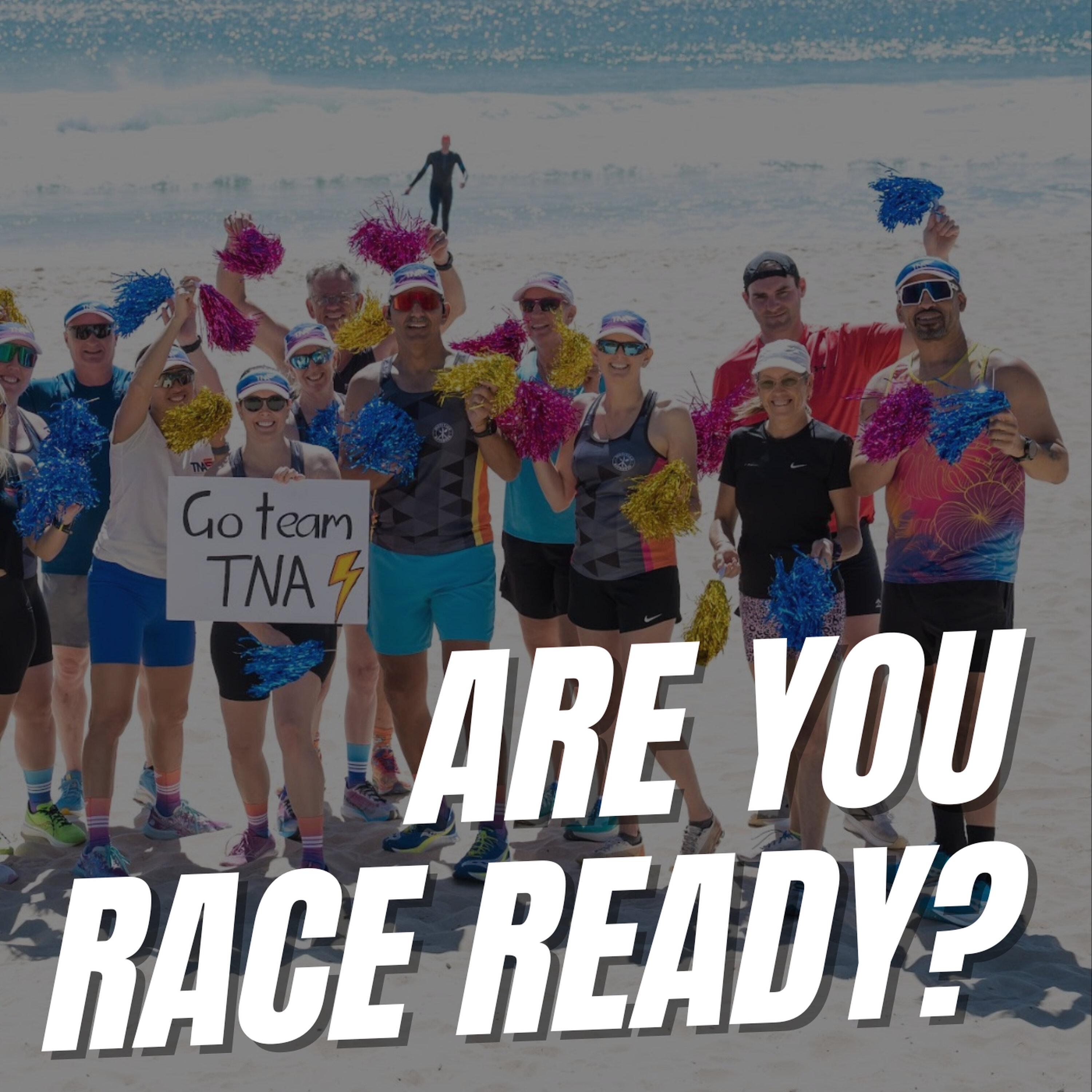 Five Habits of Triathletes Who Reach the Start Line Ready to Race 11.06.2026 14minAre you actually going to hit the start line ready - or are you going to arrive having done all the training but undone the work in race week? Taryn is recording this one live from Cairns, where the TNA crew has flown in from all over the world to race the 70.3 and Ironman. Every single one of these athletes had their race nutrition dialled in months ago. Not this week. Not over last night's bowl of pasta. Months ago. In this episode, Taryn shares the five habits that separate triathletes who arrive on race morning topped up, adapted and confident from those who roll up to the start line under-fuelled before the gun has even gone off. What you'll learn: Why race week is not the time to train harder or eat less - and what the taper trap actually does to your fuelling How recovery nutrition session by session is what makes the hard work stick Why rehearsing your race fuelling on long sessions is non-negotiable (and what happens when you wing it on race day) The one habit that quietly takes more athletes out of their A-race than any fuelling mistake out on course How to carb load properly - because no, it is not a giant bowl of pasta the night before TIMESTAMPS 00:00 Introduction — Live from Cairns 06:37 Habit 1 — Bank the adaptations and protect the taper 09:11 Habit 2 — Recover from every session 12:38 Habit 3 — Rehearse race fuelling on long sessions 15:02 Habit 4 — Protect your immune system 17:48 Habit 5 — Plan and practise your carb load 20:14 Race Day Pack List 21:40 Summary and close RESOURCES MENTIONED Recovery Accelerator - the exact framework Taryn teaches TNA athletes for what to eat after every training session and every race (the four R's, when to eat, what to eat and when to prioritise it). You can get through it all in one trainer session or one long run Free Race Day Pack List - everything you need for swim, bike and run, plus before and after your race, ready to print and reuse for every race STUDIES MENTIONED Gunzer, W., Konrad, M., & Pail, E. (2012). Exercise-induced immunodepression in endurance athletes and nutritional intervention with carbohydrate, protein and fat: What is possible, what is not? Nutrients, 4(9), 1187-1212. https://doi.org/10.3390/nu4091187 Knowledge of carbohydrate requirements does not predict carbohydrate intake around competition in endurance athletes. PMC11451575 (2025). A review of carbohydrate supplementation approaches and strategies for optimising performance in elite long-distance endurance. Nutrients, 17(5), 918. https://doi.org/10.3390/nu17050918 Gatorade Sports Science Institute. Dietary carbohydrate and the endurance athlete: contemporary perspectives. If you want to toe a start line with the TNA crew somewhere in the world, get your name on the Triathlon Nutrition Academy waitlist at dietitianapproved.com/academy. You'll be first to know when the next cohort starts. Download the FREE audio series The 5 Biggest Nutrition Mistakes Costing You Time on Race Day Recovery Accelerator Program SUPPORT THE PODCAST HERE CONNECT WITH TARYN Website | Instagram | Facebook | YouTube The Triathlon Nutrition Academy® is a podcast by Dietitian Approved®. All rights reserved.See omnystudio.com/listener for privacy information.
 -
 Does Hydrogen Water Actually Work for Triathlon Recovery? 04.06.2026 19minHydrogen water is all over your feed right now. Tablets, bottles, little machines bubbling away on the kitchen bench, all promising less soreness, faster bounce-back and recovery at the cellular level. But does it actually do anything for you as a triathlete, or are you about to drop sixty bucks on fizzy water? In this episode I give you my honest, no-BS breakdown on hydrogen water. What it actually is, what the research genuinely says about recovery and performance, and whether it earns a spot in your toolbox. Then I run the actual numbers on what it costs to replicate the research dose (you might want to sit down for that part) and weigh it up against where your money is truly best spent. WHAT YOU'LL LEARN • What hydrogen water actually is, and why the marketing sounds far more exotic than the science • What the research really shows on recovery, soreness and performance • Why mopping up every free radical from training might quietly blunt the adaptations you work so hard for • The real cost of replicating the research dose, run line by line • The two-dollar recovery option that ticks every box hydrogen water misses TIMESTAMPS 00:00 The fizzy tablet moment 01:39 What this episode covers 04:20 What hydrogen water actually is 05:45 The theory: mitochondria and selective antioxidants 08:38 What the research shows (the fin swimmer study) 12:45 The bigger systematic reviews 15:00 Why you don't want to mop up every free radical 17:50 The honest verdict on the evidence 20:11 The real cost, run line by line 23:05 The two-dollar recovery smoothie comparison 25:53 The athlete I see all the time 28:24 Red light therapy: same pitch, better evidence 30:32 Pulling it all together 33:14 Where to start instead STUDIES MENTIONED Li, Y., Bing, R., Liu, M., Shang, Z., Huang, Y., Zhou, K., Bao, D., & Zhou, J. (2024). Can molecular hydrogen supplementation reduce exercise-induced oxidative stress in healthy adults? A systematic review and meta-analysis. Frontiers in Nutrition, 11, Article 1328705. [https://doi.org/10.3389/fnut.2024.1328705](https://doi.org/10.3389/fnut.2024.1328705) Sládečková, B., Botek, M., Krejčí, J., Valenta, M., McKune, A., Neuls, F., & Klimešová, I. (2024). Hydrogen-rich water supplementation promotes muscle recovery after two strenuous training sessions performed on the same day in elite fin swimmers: Randomized, double-blind, placebo-controlled, crossover trial. Frontiers in Physiology, 15, Article 1321160. [https://doi.org/10.3389/fphys.2024.1321160](https://doi.org/10.3389/fphys.2024.1321160) Zhou, K., Shang, Z., Yuan, C., Guo, Z., Wang, Y., Bao, D., & Zhou, J. (2024). Can molecular hydrogen supplementation enhance physical performance in healthy adults? A systematic review and meta-analysis. Frontiers in Nutrition, 11, Article 1387657. [https://doi.org/10.3389/fnut.2024.1387657](https://doi.org/10.3389/fnut.2024.1387657) If recovery is the thing you keep meaning to sort, I built the Recovery Accelerator for exactly that. A clear plan for what to eat after training and racing to hit your personalised targets, with a recovery nutrition sheet, four recipes and a recovery playlist. One-off payment, no subscription, and it costs less than a single month of hydrogen tablets. Grab it HERE . Download the FREE audio series The 5 Biggest Nutrition Mistakes Costing You Time on Race Day Recovery Accelerator Program SUPPORT THE PODCAST HERE CONNECT WITH TARYN Website | Instagram | Facebook | YouTube The Triathlon Nutrition Academy® is a podcast by Dietitian Approved®. All rights reserved.See omnystudio.com/listener for privacy information.
 -
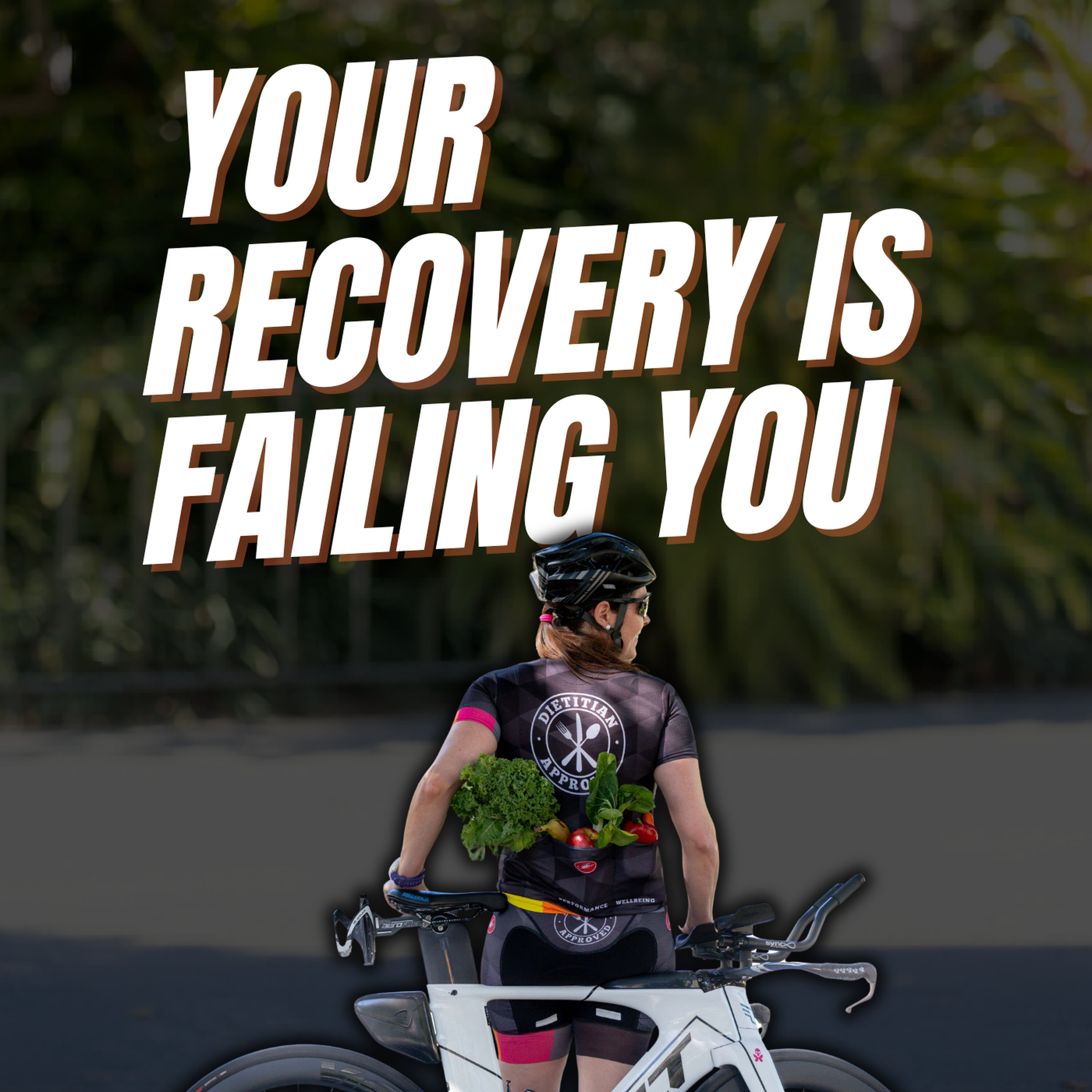 The 3 Recovery Nutrition Mistakes Triathletes Make (And How to Fix Them) 28.05.2026 14minYou’re doing the training. You’re showing up consistently. But if your legs constantly feel heavy, your energy crashes every afternoon and you can’t seem to bounce back between sessions, your recovery nutrition could be the missing piece. In this episode, Advanced Sports Dietitian and Triathlon Nutrition Specialist Taryn Richardson breaks down the three biggest recovery nutrition mistakes triathletes make and explains exactly how to fix them. Because recovery is where adaptation actually happens. Recovery Accelerator Program Taryn dives into: Why your post-training nutrition window matters more than you think The common protein mistake endurance athletes make Why carbohydrate is critical for triathlon recovery The signs your recovery nutrition is failing you How poor recovery impacts performance, body composition and immunity What proper recovery should actually feel like Practical strategies busy triathletes can use to recover properly even with work, kids and life chaos If you’re training hard but still feeling flat, sore or permanently fatigued, this episode will help you connect the dots. In This Episode: [00:00] Why recovery nutrition gets pushed aside for busy triathletes [04:20] What actually happens physiologically after training [05:45] The research on delayed recovery nutrition and glycogen restoration [08:50] Why so many triathletes get recovery wrong [09:40] Mistake #1: Having no recovery nutrition plan [11:55] Mistake #2: Focusing on protein while forgetting carbohydrate [13:50] Mistake #3: Poor timing [15:40] Signs your recovery nutrition is not working [17:50] What proper recovery should feel like [20:15] Why adaptation happens during recovery, not training [21:30] How to fix your recovery nutrition properly Research Mentioned Ivy JL et al. (1988). Muscle glycogen synthesis after exercise: effect of time of carbohydrate ingestion. Journal of Applied Physiology, 64(4), 1480–1485. Csanaky L et al. (2025). Post-Exercise Nutrition Knowledge and Adherence to Recommendations Among Amateur Endurance Athletes. Nutrients, 17(22), 3629. Burke LM et al. Postexercise muscle glycogen resynthesis in humans. Journal of Applied Physiology (review article). Download the FREE audio series The 5 Biggest Nutrition Mistakes Costing You Time on Race Day Recovery Accelerator Program SUPPORT THE PODCAST HERE CONNECT WITH TARYN Website | Instagram | Facebook | YouTube The Triathlon Nutrition Academy® is a podcast by Dietitian Approved®. All rights reserved.See omnystudio.com/listener for privacy information.
 -
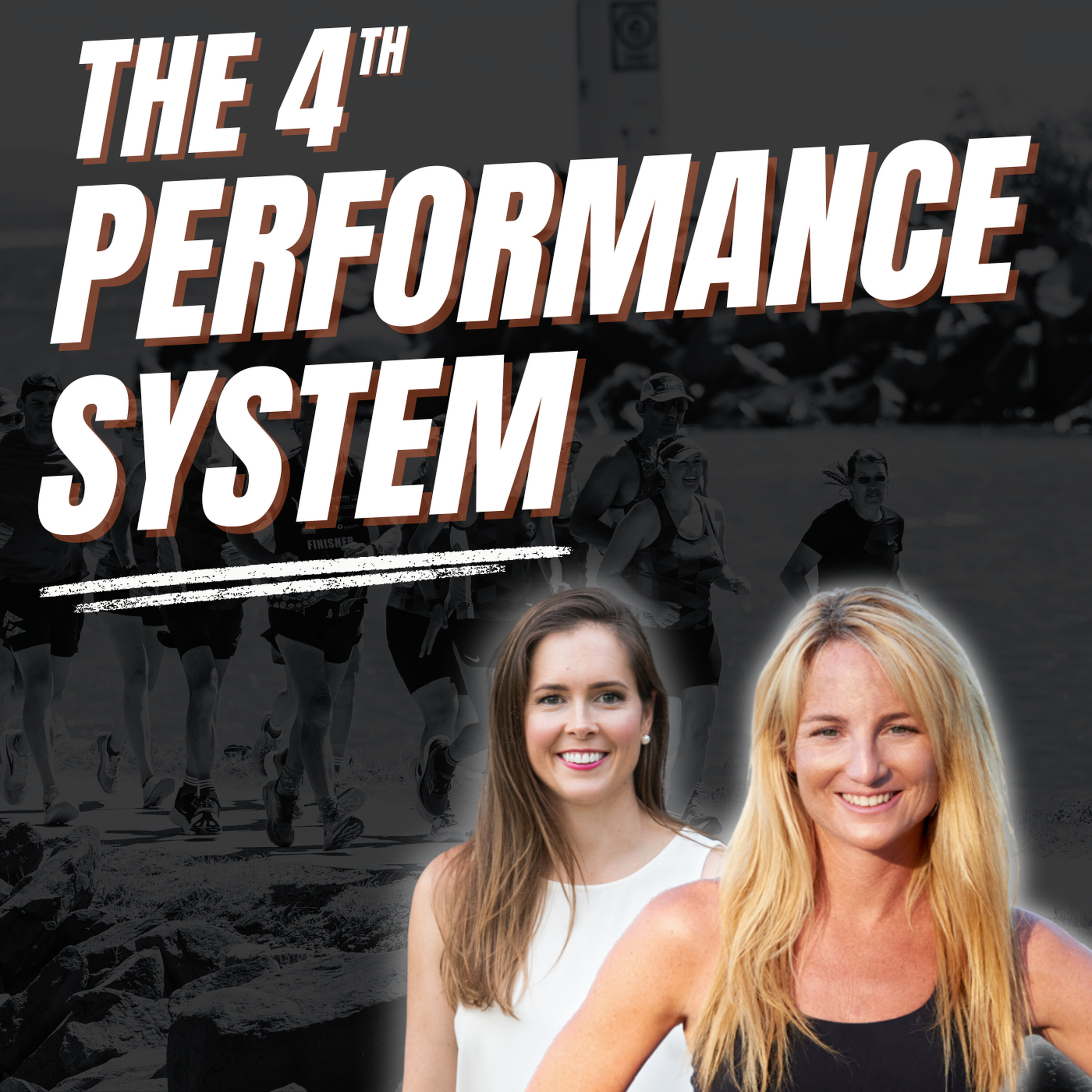 Pressure Is Not the Enemy: The Mental Game of Triathlon with Dr Haley Perlus 21.05.2026 45minDo race day nerves throw you completely off your game? Maybe you second-guess your pacing, panic when things don’t go to plan or let pressure spiral into poor decisions around fuelling and performance. In this episode of the Triathlon Nutrition Academy Podcast, Advanced Sports Dietitian Taryn Richardson sits down with performance psychologist Dr Haley Perlus to unpack the mental side of triathlon and why pressure isn’t something to avoid, but something to work with. Dr Perlus shares practical strategies to help age-group triathletes build confidence, stay focused under pressure and perform at their best when it matters most. From race day anxiety and perfectionism to resilience, self-talk and mental preparation, this conversation is packed with actionable advice you can apply straight away. In this episode, we discuss: Why pressure is not the enemy in endurance sport The difference between mental health and mental performance How fear and self-doubt show up for triathletes Practical tools to improve focus and confidence on race day Why your mindset affects pacing, fuelling and decision-making The importance of preparation and controllables How to stop spiralling when things go wrong mid-race Strategies to build mental resilience during training Whether you're training for your first sprint triathlon or chasing a PB at your next Ironman, this episode will help you strengthen the mental skills needed to race with confidence. About Dr Haley Perlus Dr Haley Perlus is a sport and performance psychologist who works with elite athletes, executives and high performers to optimise mindset, resilience and performance under pressure. With decades of experience in sports psychology, she helps athletes develop the mental tools needed to consistently perform at their best. CONNECT WITH HAYLEYWebsite | Instagram | YouTube Download the FREE audio series The 5 Biggest Nutrition Mistakes Costing You Time on Race Day SUPPORT THE PODCAST HERE CONNECT WITH TARYN Website | Instagram | Facebook | YouTube The Triathlon Nutrition Academy® is a podcast by Dietitian Approved®. All rights reserved.See omnystudio.com/listener for privacy information.
 -
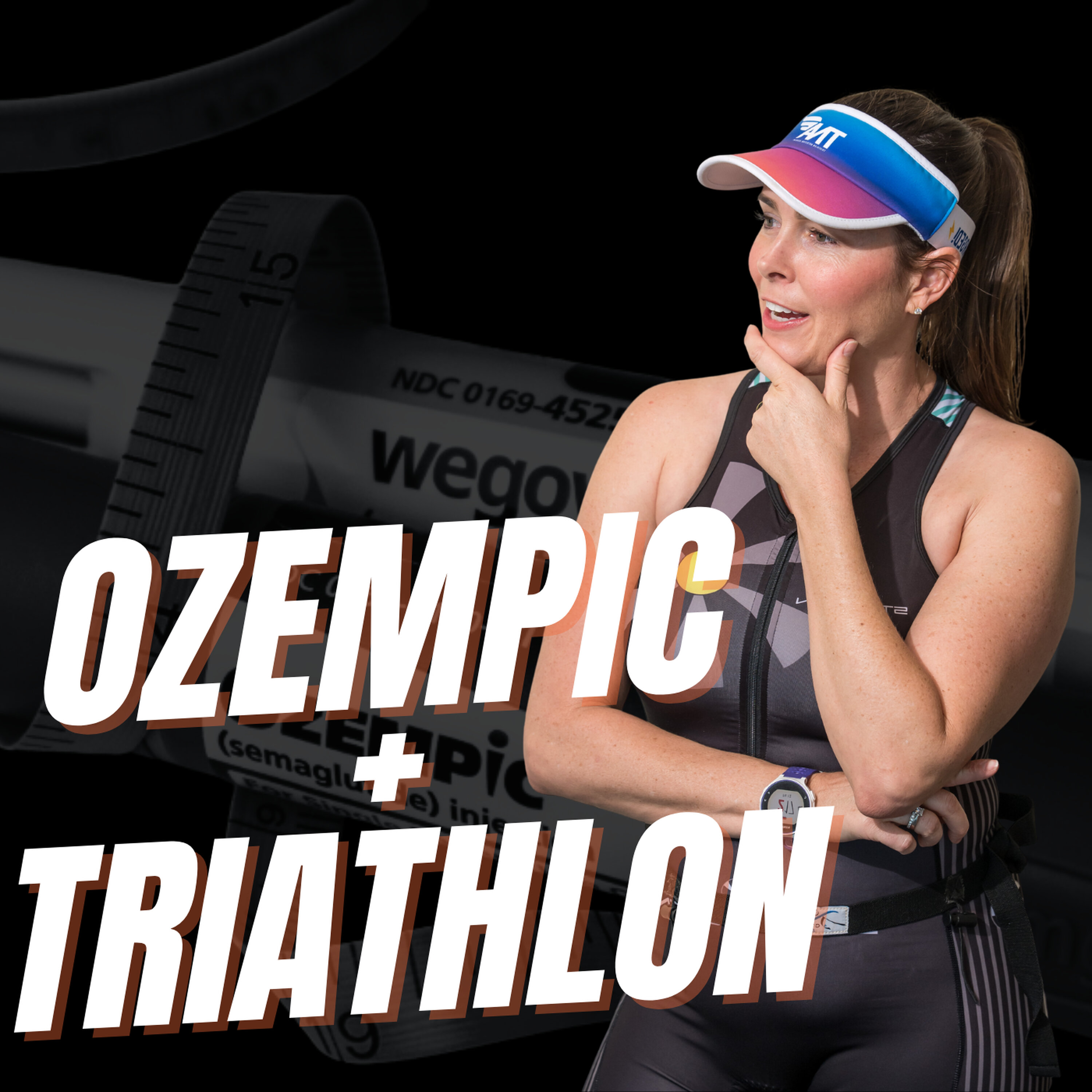 What Ozempic and GLP-1 Drugs Do to Your Triathlon Performance 14.05.2026 17minGLP-1 medications like Ozempic, Wegovy and Mounjaro are now firmly inside the triathlon conversation. Athletes are seeing dramatic weight loss results and wondering whether these drugs could help them perform better too. But what actually happens when you combine appetite-suppressing medications with the demands of swimming, riding and running for hours every week? In this episode, Advanced Sports Dietitian Taryn Richardson breaks down the science and practical realities of GLP-1 medications for endurance athletes. From muscle loss and gut issues to RED-S and race day fuelling disasters, this is the conversation triathletes need to hear before considering these medications. In this episode, you’ll learn: What GLP-1 medications actually do in the body Why delayed gastric emptying can become a major issue for endurance athletes The surprising amount of muscle mass that can be lost during rapid weight loss How GLP-1 medications may increase the risk of RED-S in triathletes Why hunger and thirst cues become unreliable on these medications The key nutrition strategies to protect your performance if you’re taking a GLP-1 How protein and resistance training can help preserve lean muscle mass Which foods give you the biggest micronutrient bang for buck when appetite is low Why fuelling to a schedule becomes critical during long training sessions and racing What WADA’s monitoring of GLP-1 medications means for athletes moving forward Key Takeaways Rapid weight loss can come with significant lean muscle loss if nutrition and strength training aren’t prioritised Slower gastric emptying may increase the risk of gut distress during training and racing Suppressed appetite can make chronic under-fuelling and RED-S much harder to detect Triathletes taking GLP-1 medications need a very deliberate fuelling plan to maintain health and performance Timestamps 00:00 – Why GLP-1 medications are suddenly everywhere in triathlon 01:47 – What GLP-1 medications actually do 03:00 – WADA monitoring and anti-doping implications 04:09 – The muscle mass problem triathletes need to understand 06:34 – Gut function, gastric emptying and fuelling challenges 08:50 – The hidden risk of RED-S and chronic under-fuelling 11:13 – Practical strategies for athletes using GLP-1 medications 12:35 – The most nutrient-dense foods when appetite is low 14:00 – Why fuelling to a schedule matters 16:00 – Final takeaways for triathletes If you know a triathlete currently taking Ozempic or another GLP-1 medication, send them this episode. These conversations are happening quietly in squads all over the world, and athletes deserve practical, evidence-based guidance to protect both their health and performance. Links & Resources Triathlon Nutrition Kickstart Course Join the waitlist for the Triathlon Nutrition Academy Free Triathlon Nutrition Checklist Download the FREE audio series The 5 Biggest Nutrition Mistakes Costing You Time on Race Day SUPPORT THE PODCAST HERE CONNECT WITH TARYN Website | Instagram | Facebook | YouTube The Triathlon Nutrition Academy® is a podcast by Dietitian Approved®. All rights reserved.See omnystudio.com/listener for privacy information.
Sarnased taskuhäälingud


Populaarne riigis
See taskuhääling on ka nende riikide taskuhäälingute edetabelites.
