
The How To Podcast Series - Podcast Co-Hosts, Practical Podcasting Tips, and Podcast Community
Dave Campbell - Podcast Coach, Cheerleader and Podcast Community Advocate
0
The How To Podcast Series is a guide to podcasting success hosted by Dave Campbell with rotating guest co-hosts. It offers practical tips on podcasting SEO, audience growth, guest booking, audio setup, social media marketing, and hosting platform suggestions. The podcast provides real-world advice, creative inspiration, and confidence to build a podcast community. Listeners are invited to join a free Podcast Community on Meetup.
Osad
-
 E822 - Your Podcast Does Not Need To Sound Like Everyone Else - What a Lighthouse and a Podcast Have in Common 27.09.2026 21minEpisode 822 - Your Podcast Does Not Need To Sound Like Everyone Else - What a Lighthouse and a Podcast Have in CommonYour Podcast Does Not Need To Sound Like Everyone ElseMost podcasters chase the same tools, titles, and trends, then wonder why they blend into the noise. This episode argues that your strongest advantage is not another hack. It is your personality, your point of view, and your willingness to be recognizably you. That is how you become a lighthouse instead of one more boat in a crowded harbourThe Lighthouse Metaphor for PodcastingA lighthouse does not chase every ship. It does not move to every port or change its color to match the latest trend. It stays put, shines consistently, and lets the right people find it. Your podcast can work the same way. You do not need to be louder than every other show. You need to be clear, consistent, and recognizable so the people who need your message can spot you in the fog.Why Copying Keeps You InvisibleThe episode calls out a common pattern. Some creators sell fast-track courses, hand out templates and scripts, and encourage students to recycle that content on their own shows. The result is a fleet of carbon copies. Same hooks, same episode titles, same interview questions, same AI workflows. When every decision comes from outside you, your show becomes predictable. Listeners can swap you for another boat without losing anything.Short sentence. That hurts growth.Your Unique Voice Is the Real AssetTools make production possible. Personality makes it memorable. Your lived experience, your humor, your values, your stories, your way of explaining complex ideas in simple terms. These are the things listeners attach to. You can borrow a strategy. You cannot borrow someone else’s soul. AI can draft scripts. It cannot replicate the way you think, feel, and show up on the mic.Practical Steps to Stand OutUse this section as a checklist to add yourself back into your process.Write a one sentence belief statement about your podcast and read it before you record.Make an only I can say this list. What stories, opinions, or experiences belong only to you.Add a recurring personal element that is uniquely yours. A signature segment, a running joke, a ritual.Audit your last five episodes. Ask, could another podcaster in my niche have made this exact episode.Treat AI and templates as assistants, not replacements. Edit every output until it sounds like you.Choose your ideal listener before you choose a trend. Ask, will this encourage, challenge, or entertain the people I serve.A Gentle Reality CheckAuthenticity is not a magic trick that guarantees viral success. It gives you something more sustainable. A show you can keep making without burning out. A message competitors cannot easily copy. An audience that trusts you because you are real. A smaller, engaged group who cares about your work beats a large crowd of random clicks.Your most valuable asset is you. Learn from the best. Use the tools. Then ask one question before you publish. Does this sound like me or does it sound like everyone else. If you answer that honestly and lean into your unique voice, you stop competing as another boat and start serving as a lighthouse. Clear. Consistent. Recognizable. Trusted____
 -
E821 - If I Hosted A Podcast Conference - My Conference Would Rival Those Other Conferences In This Way.output 26.09.2026 26minEpisode 821 - If I Hosted A Podcast Conference - My Conference Would Rival Those Other Conferences In This WayLocation and VibeThe setting matters. Picture Niagara Falls. Close to the US border. Easy for Americans and Canadians to reach. Hotels, food, and activities within walking distance. A partner who isn’t into podcasting still has plenty to do. The conference name leans into the location: Fall for Podcasting Weekend.No suits. This isn’t a marketing conference with podcasting tacked on. It’s a podcasting conference, period. Casual dress. Warm tone. Encouraging energy. The promise is simple: leave with more confidence, a clearer plan, and real friends in podcasting.Single Track, One RoomOne track. Everyone in the same room for every talk. No splintered sessions pulling people in different directions. This keeps the group together and builds a shared experience. It also means less content overall, but more time to talk to each other between sessions.Workshops run half the typical length. A thirty or forty minute talk followed by thirty or forty minutes of hallway time. People complain they never get enough time to connect at big events. This flips the script. Less talking at people. More talking with people.Networking That Works for IntrovertsColor coded lanyards solve the awkward approach problem. Yellow means “I want to be a guest.” Red means “I’m looking for guests.” Green could mean “I’m starting a show.” Blue could mean “I have a show and want to talk about it.” Instant conversation starters. No small talk needed. Just purpose driven connection.An app with QR codes helps people share their shows with one click. Free Wi-Fi throughout. A wall of podcast artwork where every attendee’s show is displayed. Take a photo pointing to your show. Your podcast becomes part of the event branding, not an afterthought.No Big Names, No IntimidationNo celebrity podcasters with million download shows. No CBC, CNN, or BBC level productions presented as the ideal. Those setups dishearten the average creator working with a fifty dollar mic in a basement. The speakers here are active podcasters doing the work. People you can actually relate toPresenters don’t fill the entire session slot. Time stays reserved for audience questions. An open mic at the end of each talk. Mandatory rule: if you have a show, state your podcast name before asking your question. Display that name and a QR code on screen so the room can find and support your show while you engage.Practical Topics, Real BudgetsSessions focus on what works for everyday creators. You don’t need permission to be a podcaster. Podcasting after work without burning out. Good enough audio on a small budget. Simple show structures for solo, co-hosted, interview, and narrative formats. Video podcasting for people who hate being on camera. Discoverability without burnout covering titles, descriptions, show notes, and SEO. Repurposing one episode into a month of content. Asking for reviews without feeling awkward.Monetization gets a realistic treatment. How to make your first dollar without quitting your day job. Local grants. Nonprofit angles for community shows. Nothing pie in the sky. Everything has an easy button for immediate implementation.The best podcast conference isn’t about big names or fancy production. It’s about creating space for real connection among everyday creators. A single track event with color coded lanyards, hallway networking time, and a pitch fest funded by vendors puts the focus where it belongs: on the podcasters in the room. Build for community, not for industry. Your people will show up.____Helping Podcasters Everyday! https://howtopodcast.ca/We would love to hear from you - here is our listener survey!https://forms.gle/GbrFv9DGszV8N4PW6
-
E820 - Podcast Spotlight - The Creator's Log with host Krloz Ruben - A Challenge for You To Do The Same on Your Show 25.09.2026 26minEpisode 820 - Podcast Spotlight - The Creator's Log with host Krloz Ruben - A Challenge for You To Do The Same on Your Show Recording from the backyardDave hosts this episode of The How To Podcast Series from his backyard in Ontario, Canada. Two back to back floods destroyed his home and podcast studio in August, so he records under a tree to keep his 365 episode streak alive. He wants listeners to hear planes, dogs, and neighbors because perfection should never stop you from publishing. You can start with what you have, where you areSpotlight on The Creators LogDave shines a light on The Creators Log, a podcast by Carlos Rubin that documents the real process of launching and growing a show from scratch. Carlos records an audio journal style podcast that walks listeners through formats, hosting platforms, solo editing, software choices, and the messy moments that come with building in public. Dave appreciates the raw, unpolished approach because it gives other creators permission to begin before they feel ready.Supporting fellow creatorsDave asks his audience to support Carlos with action. He encourages five star ratings on Spotify, comments that Carlos actually replies to, and small financial support through Buy Me a Coffee. He wants the podcast community to move beyond kind words and turn encouragement into visible support that lifts another creator's analytics and momentumA challenge for your own showDave ends with a simple challenge. Pick one podcast you admire, even a show in your niche that feels like competition. Recommend it in your next episode the way he recommends The Creators Log here. Sharing another voice does not take listeners away. It grows the whole ecosystem and invites new audiences to discover more shows.Start before you feel ready, and lift other creators while you build. Your voice matters, your story counts, and action beats perfection every time.What does it actually take to build a podcast from scratch?Here at The Creator's Log, host Krloz Ruben, will give you a behind-the-scenes, documenting what it actually takes to build a show from scratch. On your own.This isn’t theory. It’s real-time.Each episode dives into the lessons, mistakes, and decisions that come with creating. Figuring out podcast formats, choosing hosting platforms, editing solo, adapting without a co-host, recording softwares and learning how to keep going when things don’t work the first time.If you’re trying to start a podcast, build a creative project, or understand what the process really looks like behind the scenes, this is that log.No polished advice. No pretending it’s easy. Just the process, documented as it happens.https://krpodlab.com/ A storytelling podcast about the technology we remember, and the feelings we left inside it.https://artifactspodcast.com/____Helping Podcasters Everyday! https://howtopodcast.ca/We would love to hear from you - here is our listener survey!https://forms.gle/GbrFv9DGszV8N4PW6
-
E819 - November is National Podcast Post Month NaPodPoMo - A Podcaster's Challenge to Release 30 Episodes in 30 Days - Are You In 24.09.2026 21minEpisode 819 - November is National Podcast Post Month NaPodPoMo - A Podcaster's Challenge to Release 30 Episodes in 30 Days - Are You In?NaPodPoMo: 30 Episodes in 30 DaysNational Podcast Post Month, known as NaPodPoMo, invites podcasters to release one episode every day in November. This challenge builds publishing discipline, strengthens your podcast voice, and deepens listener connection through consistent daily content.Why Join the ChallengeDaily publishing removes the friction of perfectionism. You learn to create without overthinking. An episode does not need to be your most polished work. It needs to exist. This mindset shift helps you move from occasional creation to routine output. Many podcasters wait for motivation. This challenge replaces motivation with momentum.Recording thirty episodes in thirty days gives you space to experiment. Try different formats. Test solo episodes, listener questions, or short voice journals. Some experiments will work. Others will not. Both outcomes teach you something valuable about your show.Your podcast voice emerges through repetition. The more you speak into the microphone, the more comfortable you become. You discover your natural rhythm, vocabulary, and storytelling style. You cannot find your voice by reading about podcasting. You find it by podcasting.Content Ideas That WorkYou do not need to record forty-five minute episodes daily. Short episodes work well for this challenge. A one minute episode takes almost no editing. Record a quick thought, a favorite quote, or a book recommendation. Share a song that matters to you with a link. List thirty podcasts you love. Talk about thirty Bible verses if your show is faith based.Batch recording makes this manageable. Record several episodes in one sitting. Schedule them to publish on specific dates in November. You could record an entire month of one minute episodes in thirty minutes. Two minute episodes take one hour. That single hour completes your NaPodPoMo commitment.Benefits for Your AudienceListeners love hearing from you more often. Daily episodes transform your podcast from occasional content into an appointment. Your audience knows to expect you every day in November. This consistency builds a stronger relationship between you and your listeners.Daily publishing creates more opportunities for interaction. Listeners can respond to questions, share stories, or suggest topics. Your audience moves from passive consumption to active participation. They experience your journey through the challenge. Day one feels different from day thirty. That progression becomes part of your podcast story.What You Will LearnThis challenge teaches you what your podcast is really about. When you must create thirty episodes quickly, you discover whether you have enough to say. You may start November thinking your show focuses on one topic. By day thirty, you might realize another subject keeps appearing. That discovery shapes your future content strategy.The biggest lesson is simple. You do not need to be ready for thirty days. You only need to be ready for today. Show up. Press record. Publish. Come back tomorrow. That is the entire challenge.NaPodPoMo works because it forces action over perfection. Record short episodes in advance. Schedule them throughout November. Your audience will appreciate the daily connection. You will build habits that last beyond the challenge. Visit the National Podcast Post Month website for resources and community support.https://napodpomo.org/____Helping Podcasters Everyday! https://howtopodcast.ca/We would love to hear from you - here is our listener survey!https://forms.gle/GbrFv9DGszV8N4PW6
-
E818 - Podcasting Doesn’t Need a Suit and Tie - Not Every Garage Band Needs a Record Deal 23.09.2026 31minEpisode 818 - Podcasting Doesn’t Need a Suit and Tie - Not Every Garage Band Needs a Record DealPodcasting Doesn’t Need a Suit and TiePodcasting thrives because it resists corporate polish and gatekeepers. This episode pushes back hard against the idea that podcasting must become “professional” to survive or be taken seriously. Host Dave argues that the medium’s rebellious, low-barrier roots are its greatest strength, not a flaw to fix.The False Choice Between Hobby and BusinessThe episode responds to an article claiming podcasting needs to get professional to reach its potential. Dave rejects that framing. He says podcasting can be ambitious, consistent, and high quality without turning every show into a revenue-driven business.Many podcasts exist to build community, share lived experience, teach a skill, support a cause, preserve local history, or simply give underrepresented voices a platform. These goals count as success even when they do not produce income or fit an investor’s model.Why Gatekeepers Miss the PointTraditional media like radio, television, and movies rely on licenses, studios, and approval chains. Podcasting was built to bypass all of that. You do not need a radio tower, a press pass, or a degree to start. You need a microphone, an idea, and the willingness to hit publish.Pushing creators toward “professional” standards risks recreating the gatekeeping podcasting was meant to escape. It can exclude new creators, rural voices, disabled creators, minority language podcasters, older creators, working class creators, and volunteer led community shows.Growth Is Not the Only MetricThe episode challenges the assumption that audience size and revenue are the only valid measures of success. A smaller, engaged audience can be healthier than a large, passive one. Growth can mean deeper listener relationships, longer average listen time, more messages from listeners, or stronger community participation.Chasing growth can bring hidden costs. It can increase production demands, add administrative complexity, pressure you to publish more often, push you toward sensational topics, and make you dependent on platform algorithms. It can also tempt you to dilute your niche to chase advertiser friendly content.Monetization Should Not Define the RelationshipDave stresses that the listener-host relationship is valuable on its own. A loyal listener matters because of the connection, not just because they might buy something or attract a sponsor. Monetization should not become the primary justification for that relationship.For many independent podcasters, the strongest revenue comes from using the show to build trust around a related service, workshop, book, community offering, or direct listener support. Smaller shows often benefit more from loyalty based models than from chasing broad advertising deals tied to download numbers.Podcasting can be professional without becoming corporate. It can be commercially viable without becoming commercially driven. It can be ambitious without measuring every achievement through audience size or revenue. The medium does not need to abandon its punk rock roots.You do not need permission to podcast. You do not need to turn your show into a company to be legitimate. Define success on your own terms, understand the business side if you choose to monetize, and resist pressure to fit a single corporate mold. Podcasting has room for many paths, and your voice matters on any of them.Podcasting needs to get professionalPodcasting doesn’t look or behave like the multi-billion-dollar industry it is. That’s a problem.https://www.fastcompany.com/90984795/pov-podcasting-needs-to-get-professional_____Helping Podcasters Everyday! https://howtopodcast.ca/We would love to hear from you - here is our listener survey!https://forms.gle/GbrFv9DGszV8N4PW6
-
E817 - Virtual Podcast Meetups versus Live Events - What is the Better Choice For The Majoirty of Podcasters 22.09.2026 32minEpisode 817 - Virtual Podcast Meetups versus Live Events - What is the Better Choice For The Majoirty of PodcastersVirtual Podcast Meetups Versus Live EventsVirtual podcast meetups give independent creators a practical way to build community, get support, and keep learning without the high cost of travel. Live events can create memorable connections, yet many podcasters manage full-time work, family responsibilities, limited budgets, and the daily demands of producing a show.Podcast conferences often require far more than the ticket price. Travel, hotels, meals, childcare, time away from work, and lost production time can turn a valuable event into a major financial commitment. That reality can create pressure for creators who already invest their own time and money into podcasting.Community Should Stay AccessibleA free virtual podcast meetup removes many of those barriers. Podcasters can join from home, bring their own coffee, and participate from anywhere in the world. Regular online gatherings also create something annual conferences cannot always provide, frequent connection.The How To Podcast Series meetup runs twice each week, giving creators a place to talk through challenges, share wins, ask questions, and meet people who understand the work behind a podcast. The group creates room for real conversations instead of limiting participation to a quick question at the end of a presentation.Find Your Podcasting PeopleEvery podcaster benefits from community. Look for someone ahead of you who inspires your growth, someone at a similar stage who understands your current challenges, and someone who can learn from your experience.That support system helps creators stay motivated when downloads feel low, schedules become difficult, or self-doubt shows up. You may have only a few published episodes, yet you already hold knowledge that can encourage someone who has not started.Virtual Events Create ConnectionA strong virtual meetup needs active participation. Conversation, introductions, live chat, clear topics, follow-up spaces, and opportunities to ask questions help people move beyond passive attendance.Online communities can also create lasting friendships. Members may connect during a meetup, continue the conversation through the week, share resources, and celebrate each other’s progress. That ongoing support can make podcasting feel less isolated.Choose the event format that fits your life and your podcast. Live conferences offer value, and virtual meetups offer accessible, consistent community for creators who cannot travel or commit thousands of dollars. Stay connected, ask for help, share what you know, and do not podcast alone.____Helping Podcasters Everyday! https://howtopodcast.ca/We would love to hear from you - here is our listener survey!https://forms.gle/GbrFv9DGszV8N4PW6
-
E816 - How To Build a Podcast Community and Attract an Audience Without Social Media - is it even possible 21.09.2026 28minEpisode 816 - How To Build a Podcast Community and Attract an Audience Without Social Media - is it even possible??Build a Podcast Community Without Social MediaYou can build a podcast community and attract an audience without constantly promoting your podcast on social media. The alternative requires intentional work on discoverability, direct relationships, useful content, and genuine community building.Become Easier to FindHelp people discover your podcast through search. Give episodes descriptive titles that identify the listener's problem or question instead of relying on episode numbers. Write useful show notes, publish transcripts or expanded articles, connect related episodes, and make your podcast information easy for search engines and podcast directories to understand.Think about both the listener and the search engine. A strong episode can keep attracting people long after its original release.Build Direct RelationshipsEmail gives you a direct way to communicate with people who choose to hear from you. A newsletter does not need to become another demanding content platform. Send a simple message about a new episode, share one useful idea, and invite a response.Give listeners reasons to connect with you beyond pressing play. Offer bonus resources, downloadable material, private conversations, or other useful extras. When someone responds, answer personally.Join Communities and Create OneFind places where your ideal listeners already gather. Participate in professional associations, newsletters, workshops, creator groups, virtual meetups, and other communities. Contribute before asking people to listen.If you cannot find the community you need, create one. Collaboration can also open opportunities for guest appearances, cross-promotion, and meaningful relationships with other creators.You do not need to maintain a presence everywhere. Create a repeatable system around each episode. Improve the episode content, communicate with your email community, have a meaningful conversation, collaborate with someone, and invite a response.You do not need to feed an algorithm to build something meaningful. Become findable, create useful content, communicate directly with your audience, and build genuine relationships. A small engaged community can become the foundation for a podcast that grows over time._____Helping Podcasters Everyday! https://howtopodcast.ca/We would love to hear from you - here is our listener survey!https://forms.gle/GbrFv9DGszV8N4PW6
-
E815 - Turn Your Early Podcast Listeners into your marketing team - share the show - How to Launch a Podcast with No Following Mini Series 20.09.2026 13minEpisode 815 - Turn Your Early Podcast Listeners into your marketing team - share the show - How to Launch a Podcast with No Following Mini SeriesTurn Your Early Podcast Listeners Into Your Marketing TeamA small podcast audience gives you something valuable: access to every listener. When you have only a handful of people pressing play, you can create genuine connections that become the foundation for long-term growth. Your early listeners can become vocal supporters who share your show because they feel connected to you and the podcast.Show Up For Your ListenersMake your first listeners feel seen and heard. Respond to every message, comment, review, email, or direct message. Ask for feedback regularly. Find out what topics interest them, what challenges they face, and how they discovered your show.That feedback can shape your content while giving listeners a sense of participation. They become part of the podcast rather than simply numbers on a screen.Make Your Audience Part Of The CommunityYour early listeners can contribute questions, stories, recorded messages, and ideas for future episodes. Give them opportunities to participate. Invite them into behind-the-scenes conversations or a community where they can connect with other podcasters.Dave also encourages new podcasters to connect with other creators through the How To Podcast meetup. Learning alongside others can provide feedback, accountability, encouragement, and practical ideas you can apply to your own show.Build One Connection At A TimeEvery episode can bring someone new through the door. Treat each listener as a person who deserves your attention. Choose one engaged listener this week and thank them personally. Ask what they want to hear next, request feedback, and ask how they found your podcast.Those small actions can create memorable experiences. People talk about experiences where a host takes the time to connect with them.Your first listeners can help build your podcast. Show up for them, listen to them, respond to them, and invite them into the community. Build those relationships one person at a time and give people a reason to tell others about your show.____Helping Podcasters Everyday! https://howtopodcast.ca/We would love to hear from you - here is our listener survey!https://forms.gle/GbrFv9DGszV8N4PW6
-
E814 - Leverage your personal and professional Network - tell someone - How to Launch a Podcast with No Following Mini Series 19.09.2026 12minEpisode 814 - Leverage your personal and professional Network - tell someone - How to Launch a Podcast with No Following Mini SeriesLeverage Your Personal and Professional NetworkLaunching a podcast gets easier when you start with people who already know you. Your personal and professional network gives you a natural place to introduce your new show because relationships already exist. Those people may become your first listeners, supporters, reviewers, and sources of word of mouth.Tell People About Your PodcastDave challenges new podcasters who keep their show a secret from the people around them. Family, friends, colleagues, past clients, and people on your email list already have a connection with you. Tell them about the podcast.Make the request simple and specific. Give people the exact words they can use to share the show. Give them a link that lets them choose where they want to listen. Then ask them to follow or subscribe.Some people will need help.Walk them through the process. Show them how to find your podcast, press play, follow the show, leave a rating or review, and share an episode. You can also help them discover another podcast that matches their interests. That small interaction can introduce someone to podcasting while helping your show.Use Your Network to Build MomentumReaching out to people you already know does not mean you are gaming the system. You built those relationships over time. When someone trusts you and understands the topic of your podcast, they may naturally want to support what you create.Focus on people who genuinely fit the subject. Grandma might listen because she loves you, but someone interested in your topic has a stronger reason to keep listening.Start small. Five people can give you somewhere to begin.Your network already contains potential listeners. Tell people about your podcast, make your request clear, and help them take the next step. A small group of people who know you and care about what you create can give a new podcast the momentum it needs to grow.____Helping Podcasters Everyday! https://howtopodcast.ca/We would love to hear from you - here is our listener survey!https://forms.gle/GbrFv9DGszV8N4PW6
-
E813 - Celebrate the Small - Pour into your small group of new listeners - How to Launch a Podcast with No Following Mini Series 18.09.2026 18minEpisode 813 - Celebrate the small - pour into your small group of new listeners - How to Launch a Podcast with No Following Mini Series Celebrate the SmallA small podcast audience can feel disappointing when you measure success through download numbers. Dave challenges that mindset and encourages new podcasters to celebrate the listeners who already choose to spend time with their voice and message.Build With the People Who Show UpThe first listeners can become the foundation of a real podcast community. Five listeners means five real people may have found something valuable in your show. Ten people listening to you in the real world would feel significant, so Dave suggests imagining those listeners sitting in a room with you rather than viewing them as numbers on a dashboard.Early listeners also give you something valuable: room to learn. A smaller audience gives you space to experiment with formats, improve your audio and video, develop your hosting voice, strengthen episode titles, and discover which topics create a response.Grow Roots Before You Chase ReachFast growth can expose weak systems. A sudden audience increase can create pressure before your content, workflow, and production process can support it. Dave encourages podcasters to build a show they can sustain before building an audience they cannot yet support.Pay attention to signs of genuine engagement. Repeat listeners, recurring locations, shares, and conversations about your show can reveal that real connections are forming.Treat Early Listeners Like Founding MembersDave encourages podcasters to stop saying, “I only have five listeners.” Those five people could become the people who suggest topics, recommend guests, share episodes, and keep coming back.Podcasting rewards consistency and relationships. The goal is to become useful, dependable, and worth recommending. That takes time.Your first listeners matter. Learn who they are, acknowledge them, listen to their feedback, and build the show with them. Stop measuring the present against someone else's finish line. Your podcast grows one listener at a time.____Helping Podcasters Everyday! https://howtopodcast.ca/We would love to hear from you - here is our listener survey!https://forms.gle/GbrFv9DGszV8N4PW6
-
E812 - The One Question Every Podcaster Needs To Answer - No, Not How To Grow Your Show or How To Make Money As A Podcaster 17.09.2026 20minEpisode 812 - The One Question Every Podcaster Needs To Answer - No, Not How To Grow Your Show or How To Make Money As A PodcasterThe One Question Every Podcaster Needs To AnswerBefore choosing a podcast name, buying a microphone, or planning your first episode, answer one question: Is this podcast for you or for an audience?That decision shapes almost everything that follows. It affects how you define success, create content, promote the show, measure growth, choose guests, and decide how long you want to keep podcasting.A Podcast Can Be For YouA podcast can serve as a creative outlet, a place to think out loud, a personal journal, or a way to document a journey. You might create it for yourself, your family, or your community.If you are the audience, downloads become far less important. You can experiment with the format, talk about whatever feels meaningful, and skip the marketing. If you enjoy making the show, you have already achieved your goal.The trap comes when you create a podcast for yourself and then judge it using audience or business metrics. An audience of one can represent success when you intentionally built the show for yourself.A Podcast Can Serve An AudienceWhen your podcast exists to serve listeners, the strategy changes. You need to understand who those listeners are and what they need from your content.Specific audiences create clarity. A podcast for new dads, first-time authors, or Canadian podcasters gives you a much clearer direction than a show designed for everyone.From there, your topics, format, promotion, and calls to action can serve that audience. You can measure engagement, listener feedback, action, and growth because those measurements connect directly to your purpose.You Can Blend BothSome podcasts serve the host and an audience. That can work when you approach each purpose deliberately.Ask yourself: If only fifty people ever listened, would I still make this podcast?Your answer can reveal what you are really building. You might create a personal show alongside an audience-focused show, or bring some personal reflection into an audience-focused podcast.Before you worry about microphones, downloads, podcast promotion, or monetization, decide who your podcast serves. If the answer is you, give yourself permission to create for yourself. If the answer is an audience, get specific about who they are and what your show helps them accomplish. Once you know the purpose, the rest of your podcast strategy becomes much clearer._____Helping Podcasters Everyday! https://howtopodcast.ca/We would love to hear from you - here is our listener survey!https://forms.gle/GbrFv9DGszV8N4PW6
-
E811 - Be Patient with your podcast and understand Consistency vs. frequency - How to Launch a Podcast with No Following Mini Series 16.09.2026 19minEpisode 811 - Be Patient with your podcast and understand Consistency vs. frequency - How to Launch a Podcast with No Following Mini SeriesBe Patient With Your PodcastEvery podcast starts at zero. Even a well-known creator can publish episode one and see zero downloads. Podcast growth takes time, and consistency matters more than chasing an aggressive publishing schedule that you cannot sustain.Dave explores the difference between podcast consistency and frequency, and how a realistic plan can help you keep creating without overwhelming yourself.Choose a Podcast Cadence You Can SustainDecide how long your podcast will run and how often you can realistically publish. A short podcast series can have a defined beginning and ending. An ongoing show can continue as long as the host has something meaningful to say.The key comes from having a plan. A calendar gives your podcast direction and helps prevent you from reaching episode two and wondering what comes next.Publish on a Reliable ScheduleA consistent publishing day gives you a deadline. Creative people can easily keep working on something without finishing it, so a fixed release date creates accountability.Your audience also benefits from a predictable schedule. They can learn when to expect your show and gradually fit it into their own routines.Dave also recommends batch recording. Having several episodes ready gives you breathing room when life interrupts your plans. His own experience with major disruptions at home reinforced the value of recording ahead whenever possible.Take a Break When You Need OneYou can pause your podcast whenever life requires it. You do not need to create seasons simply because you want time away from the microphone.Dave explains that seasons organize episodes into a specific listening order. They do not exist solely to give podcasters permission to take breaks.If you need time away, communicate with your audience. You do not owe listeners your private details, but letting them know you are okay and when you expect to return can maintain the relationship you have built.Keep Showing UpLong gaps can interrupt momentum. Regular publishing helps you remain visible and gives listeners more opportunities to connect with your work.Forget the promise of millions of listeners overnight. Build your audience one listener at a time. Keep creating, keep learning, and give yourself enough structure to keep showing up.Podcast growth takes patience. Choose a cadence you can sustain, create a publishing plan, record ahead when possible, and communicate when you need a break. Your audience grows through the relationship you build every time you show up.____Helping Podcasters Everyday! https://howtopodcast.ca/We would love to hear from you - here is our listener survey!https://forms.gle/GbrFv9DGszV8N4PW6
-
E810 - LinkedIn, Podcasting, and the Relentless Sales Pitch - No, I Don’t Need 10,000 Downloads by Friday 15.09.2026 17minEpisode 810 - LinkedIn, Podcasting, and the Relentless Sales Pitch - No, I Don’t Need 10,000 Downloads by FridayLinkedIn, Podcasting, and the Relentless Sales PitchPodcast promotion can attract a steady stream of unsolicited offers promising more downloads, better rankings, new guests, greater visibility, and rapid growth. For podcasters, especially those new to the space, those promises can sound appealing. They can also create a lot of noise.Dave shares his experience with the growing number of LinkedIn connection requests and emails from people he does not know who want to sell podcast-related services. Some make impressive claims, including promises of reaching number one on Apple Podcasts. Others use generic praise that suggests they have listened to the show when they may have relied on AI instead.Pause Before You RespondA connection request does not create an obligation to respond. Before engaging, consider whether you recognize the person, whether they mention a specific episode, why they contacted you, and whether their service fits your current podcast goals.Dave recommends using the four P approach: pause, probe, protect, and proceed.Probe Before You BuyAsk specific questions. Which episode have they listened to? What problem do they think they can solve? What exactly does the service include? What methods do they use? What results should you realistically expect, and over what period?Ask for verifiable client references. Understand whether they use paid advertising, outreach, guest booking, playlist placement, or automated engagement. Find out who owns the accounts and data, and what happens if you cancel.Vague or defensive answers should raise concerns.Protect Your PodcastNever hand unsolicited contacts your passwords, two-factor authentication codes, email access, social media credentials, payment information, or remote access to your computer. Verify who contacted you before giving anyone access to the systems behind your podcast.Dave also shares an example of a promoter who damaged a podcast after the relationship ended, showing how much trust a podcaster can place at risk.Proceed With CareIf the answers make sense and you have completed your homework, proceed with a written agreement. Define the services, cost, timeframe, expected results, and what happens if either side decides to walk away.Dave also encourages podcasters to remember that they do not have to be available to everyone who wants access to their audience, inbox, or money.Your podcast is your responsibility. Be selective about who you let into your business, verify the promises you receive, protect your accounts, and make decisions based on your goals rather than somebody else's sales pitch.____Helping Podcasters Everyday! https://howtopodcast.ca/We would love to hear from you - here is our listener survey!https://forms.gle/GbrFv9DGszV8N4PW6
-
E809 - 3 Overlooked Podcast Tools That Podcasters Should Adopt - A Hammer Doesn't Do It All 14.09.2026 13minEpisode 809 - 3 Overlooked Podcast Tools That Podcasters Should Adopt - A Hammer Doesn't Do It AllPodcast Tools That Build Better ShowsRecording from the backyard while basement renovation fills the house with saws and drills, this episode explores a simple truth. Podcasters need the right tools for the right job. A hammer drives nails. It does not tighten bolts. Using one tool for every task creates frustration. The same principle applies to podcasting.Building a PodcastThink of your podcast like constructing a wall. Microphones, software, and hosting platforms form the basics. Strong shows require more. Three overlooked tools separate amateur efforts from professional results.Content Stud FinderA stud finder locates metal behind drywall. It finds the solid structure holding everything together. Your podcast needs the same capability. A content stud finder helps you locate the strongest ideas inside each episode.Use transcripts to mine gold from your words. Collect listener questions. Draw from accumulated ideas. AI can help generate angles. Repurpose your best episodes for LinkedIn and Substack.Torque Wrench Quality ControlA torque wrench applies exact pressure. Too little and bolts loosen. Too much strips threads. Podcasting needs this precision. Build a repeatable quality control checklist.Check your show title and episode title. Review intros and outros. Listen to audio quality. Verify names, facts, and links. Confirm your calls to action guide listeners. Inspect artwork and episode descriptions. Examine the final file before publishing.Fix small errors. Prevent rushed releases. Stop over editing. Many podcasters trap themselves in endless tweaking. Release your work.Level AlignmentYour eyes lie to you. A wall can look straight while leaning off true. A level reveals the truth. Podcasters need their own level to maintain alignment between the show and its audience.Ask two questions before every release. Who is this episode for? What value does it provide? Professional sounding podcasts feel unfocused when episodes drift from the core promise.Your Podcast ToolboxThe best podcast tools are not equipment. They are systems that help you discover ideas, improve quality, repurpose content, and deliver value consistently.Strong podcasts come from strong systems, not just strong microphones. Build your content stud finder to locate your best ideas. Create a torque wrench checklist to maintain consistent quality. Use your level to keep every episode aligned with your audience and your show's purpose.____Helping Podcasters Everyday! https://howtopodcast.ca/We would love to hear from you - here is our listener survey!https://forms.gle/GbrFv9DGszV8N4PW6
-
E808 - How To Be A More Confident Podcaster - 3 Things that Can Build Your Confidence Not Your Ego 13.09.2026 12minEpisode 808 - How To Be A More Confident Podcaster - 3 Things that Can Build Your Confidence Not Your Ego3 ways to build confidence as a podcasterHere are three high‑impact ways to build confidence as a podcaster, drawn from what experienced hosts and coaches recommend.1) Serve one specific listener (not “everyone”)Confidence rises when you know exactly who you’re talking to and why it matters. Instead of imagining a huge, faceless audience, picture one real person who needs your message—give them a name, a situation, and a goal—and speak directly to them in every episode. This narrows your focus, reduces performance pressure, and makes your tone more conversational and assuredPractical moves:- Write a one‑sentence listener avatar and keep it visible while you record.- Start episodes with “If you’re a [type of listener] who wants [outcome], this is for you.”- Rehearse key lines out loud as if you’re explaining them to that one person2) Build a simple, repeatable episode structure—and get reps inStructure lowers cognitive load so you can relax into your delivery, and repetition turns “new and scary” into “familiar and doable.” Confidence grows from clarity (a defined beginning–middle–end), a consistent publishing cadence, and enough recording reps that you stop overthinking each takePractical moves:- Use bullet points instead of full scripts; know your episode’s purpose before hitting record.- Warm up your voice for 5–10 minutes and run through your outline once before recording.- Commit to “progress over perfection”: if an episode is ~80% solid, publish it and improve on the next one.3) Keep a “kudos collection/happy folder” and reframe your inner criticImposter syndrome shrinks when you collect evidence that your work helps people—and when you challenge negative self‑talk with facts. Create a living document of testimonials, thank‑you messages, five‑star reviews, and moments you’re proud of; read it before recording to prime a confident statePractical moves:- When a thought like “This isn’t good enough” appears, counter it with specific evidence (e.g., “Three listeners said episode X helped them do Y”).- Celebrate small wins loudly (first review, tenth episode, a clean edit) to build resilience over time.- Connect with other podcasters; hearing that even pros have doubts normalizes the journey and boosts confidence____Helping Podcasters Everyday! https://howtopodcast.ca/We would love to hear from you - here is our listener survey!https://forms.gle/GbrFv9DGszV8N4PW6
-
E807 - What To Do When Someone Tries to Steal Your Identity and Your Podcast - How To Protect Your Podcast 12.09.2026 20minEpisode 807 - What To Do When Someone Tries to Steal Your Identity and Your Podcast - How To Protect Your PodcastProtecting Your Podcast IdentityWhen someone pretends to be a podcaster, steals a show’s identity, and asks potential guests for money, the damage reaches far beyond one fraudulent email. The scam can exploit unsuspecting guests, weaken audience trust, and take advantage of years of work spent building a podcast brand.A potential guest for Living The Next Chapter contacted Dave after receiving a suspicious message from someone using his name, the podcast name, and a Gmail address. The impersonator appeared to charge authors for guest appearances. Dave has never charged guests to appear on his shows, including after producing more than 2,500 episodes.Recognizing the Warning SignsPodcast guests should pause when an email feels unusual, especially when someone requests payment, sends unfamiliar documents, or communicates through an address that does not match the host’s official contact details. Visitors should verify the information through the podcast website and use a trusted contact method before responding or sending money.Podcast hosts can reduce confusion by clearly explaining their guest policies. If appearances cost money, hosts should disclose that arrangement openly. If guests appear free of charge, the host should state that on the website, in show notes, and occasionally on the podcast.Paid placements may also create disclosure responsibilities. Dave encourages creators to seek qualified legal advice instead of assuming that silence protects them.Build Trust Through VisibilityA visible online presence helps audiences identify the real host. A current photograph, video content, an official website, one clearly identified contact address, and consistent social profiles give guests practical ways to verify someone’s identity. Creators should make impersonation harder by directing all communication through reliable channels.Suspicious activity deserves a prompt response. Dave contacted the impersonator, warned them to stop, and informed the affected potential guest. He also plans to alert his audience so others can recognize the scam.Podcast creators must protect the identity behind their shows. Make your contact process obvious, state your guest policies clearly, encourage verification, and respond quickly when someone misuses your name or brand. Guests should trust their instincts and confirm every request through an official source before sharing information or paying anyone.For podcast related legal advice:https://firemark.com/_____Helping Podcasters Everyday! https://howtopodcast.ca/We would love to hear from you - here is our listener survey!https://forms.gle/GbrFv9DGszV8N4PW6
-
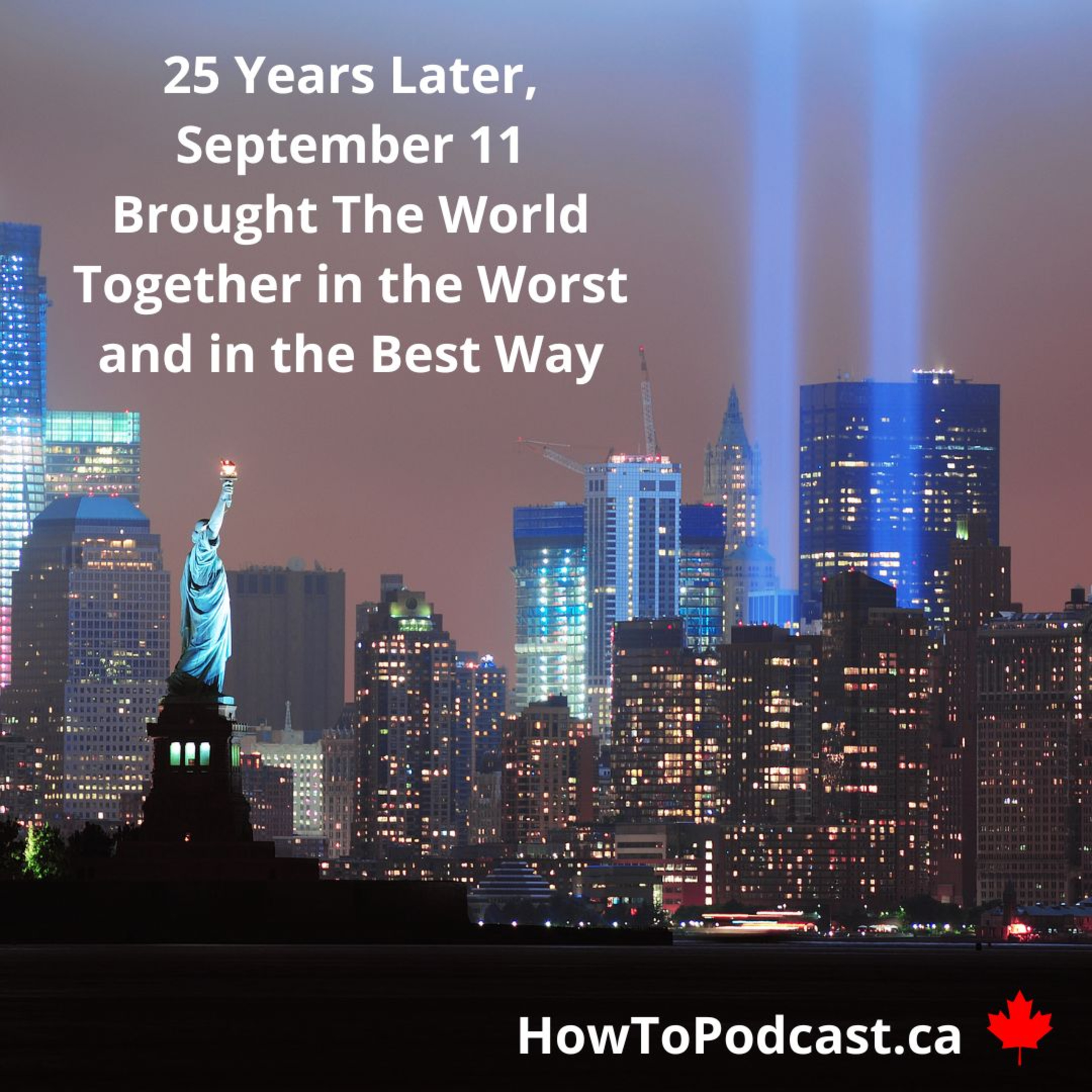 BONUS - 25 Years Later, September 11 Brought The World Together in the Worst and in the Best Way 11.09.2026 22minBONUS - 25 Years Later, September 11 Brought The World Together in the Worst and in the Best WayRemembering September 11Twenty-five years after September 11, Dave reflects on the morning that changed the world and the feeling of helplessness that followed. He remembers driving to work when reports began coming through about New York, the World Trade Center, and the unfolding attacks. Work suddenly felt meaningless as the scale of what had happened became clear.The day brought unimaginable loss. It also revealed extraordinary courage.Humanity Without BordersDave remembers how Gander, Newfoundland, welcomed passengers whose planes had been forced to land in Canada. Local people opened their homes, shared what they had, and cared for strangers regardless of where they came from.That same human connection appeared at Ground Zero, where people rushed toward danger to help others. Firefighters, police officers, first responders, workers, passengers, and ordinary people made choices that put someone else's life ahead of their own.Twenty-five years later, families still carry the loss. Some continue to receive fragments of remains. Children grew up asking where a parent had gone. A lawn could become a painful reminder of someone who never came home.The Responsibility of PodcastersDave uses the memories of Howard Stern's live broadcast from September 11 as an example of how a familiar voice can help people process a traumatic moment. Stern did not plan to become a voice for people experiencing the attacks. He stayed on the air because he felt that was where he could help.Podcasting gives creators a similar platform. People listen because they trust the person behind the microphone. Words carry influence, especially when listeners face uncertainty or difficult moments.Dave asks listeners to pause on September 11 and remember. Those who lived through the day can reflect on where they were. Those born afterward can take time to understand what happened and why people still carry its impact.September 11 remains a day of profound loss, courage, sacrifice, and human connection. Dave encourages podcasters and listeners to acknowledge the day, remember those who died, recognize those who continue to serve, and find a way to care for someone around them.Morning Timeline of Events (September 11, 2001)8:14 AM: American Airlines Flight 11 is hijacked.8:46 AM: American Airlines Flight 11 strikes the North Tower of the World Trade Center in New York City.8:51 AM: United Airlines Flight 175 is hijacked.9:03 AM: United Airlines Flight 175 strikes the South Tower of the World Trade Center.9:28 AM: United Airlines Flight 93 is hijacked.9:37 AM: American Airlines Flight 77 strikes the Pentagon outside Washington, D.C.9:45 AM: The Federal Aviation Administration (FAA) orders a nationwide ground stop, grounding all civilian flights in U.S. airspace.9:59 AM: The heavily damaged South Tower of the World Trade Center collapses.10:03 AM: United Airlines Flight 93 crashes in a field near Shanksville, Pennsylvania, after passengers and crew revolt against the hijackers.10:28 AM: The North Tower of the World Trade Center collapses____Helping Podcasters Everyday! https://howtopodcast.ca/We would love to hear from you - here is our listener survey!https://forms.gle/GbrFv9DGszV8N4PW6
 -
E806 - Promote Your Podcast on Purpose and Without Burning Out - How to Launch a Podcast with No Following Mini Series 11.09.2026 22minEpisode 806 - Promote Your Podcast on Purpose and Without Burning Out - How to Launch a Podcast with No Following Mini Series Promote Your Podcast Without Burning OutLaunching a podcast with no existing audience demands intentional promotion, yet many creators stall after publishing because they fear making noise or lack a clear plan. This episode tackles podcast promotion, podcast launch strategy, and audience growth without burnout. You will learn a soft launch approach that protects your reputation, practical ways to share your show with purpose, and how to pick one platform where your listeners already spend time.Why a Soft Launch Beats a Big SplashA soft launch opens your show to a small inner circle before you tell the world. You get to test audio quality, artwork, titles, descriptions, and distribution across apps. You catch spelling errors, fix broken links, and confirm your feed shows up on Pod.link and major directories. This prevents the embarrassment of announcing a show that is not ready. It also gives early listeners a chance to leave reviews and offer feedback while you still control the narrative.Big launch events create excitement, but they do not guarantee success. A flashy launch without consistent follow-through often leads to pod fade, where creators stop after a few episodes and never tell anyone. A soft launch reduces pressure and sets you up for steady growth.Do What You Can, With What You Have, Where You ArePromotion is not optional when you start from zero. You must tell people your show exists. That does not mean posting constantly on every platform or following rigid guru rules. One successful show grows with only a website, YouTube audio uploads, and intentional thumbnails. No Instagram, no newsletter, no paid ads. The key is consistency and clarity, not volume.Practical Ways to Share Your ShowShort clips work well on TikTok and YouTube. You can record a quick phone video summarizing an episode, or layer audio over B-roll footage in Canva. Quote graphics extend reach on visual platforms. Repurpose strong episodes into articles for Substack and LinkedIn to reach new audiences with the same core message.The most powerful tactic is appearing as a guest on other podcasts. Podcast listeners discover shows through other shows. You meet your ideal audience where they already listen. You build relationships, earn trust, and create bridges that drive organic discovery.Share With Value, Not NoiseFrame every post around listener benefit. Explain why this episode matters to them. Highlight a specific takeaway, not your ego. People respond to value, not hype. Avoid the bullhorn approach of constant self-promotion.Pick One Platform and Own ItChoose the single platform your audience uses most. Business podcasts thrive on LinkedIn or Substack. Entertainment shows benefit from YouTube. Visual content fits Pinterest. Ask listeners how they found you, then double down on that channel. Do not waste time or money promoting where your audience does not exist.Start with a soft launch to ensure quality, then promote with purpose on one platform where your listeners already spend time. Share value, not noise, and appear as a guest on other shows to grow without burning out.____Helping Podcasters Everyday! https://howtopodcast.ca/We would love to hear from you - here is our listener survey!https://forms.gle/GbrFv9DGszV8N4PW6
-
E805 - Submit Your Podcast to Every Directory, and Verify - How to Launch a Podcast with No Following Mini Series 10.09.2026 20minEpisode 805 - Submit Your Podcast to Every Directory, and Verify - How to Launch a Podcast with No Following Mini SeriesSubmit Your Podcast to Every DirectoryLaunching a podcast with no following starts with one critical step. Your show must live on a proper podcast hosting platform that distributes via RSS feed to every major directory. Without this foundation, even great content stays invisible. This episode walks through why directory submission matters and how to verify your podcast appears everywhere listeners might search.Why RSS Feed Distribution MattersPodcast hosting platforms like Buzzsprout, Captivate, Spotify for Creators, and Libsyn handle the heavy lifting. You upload once. They push your episode to Apple Podcasts, Spotify, iHeartRadio, Audible, Amazon Music, and dozens more. These directories then report listening data back to your host so you can track growth. YouTube does not function this way. It keeps content inside its own ecosystem. If you publish only to YouTube, Android users on Spotify cannot find you. Apple users cannot subscribe. You limit your reach before you even begin.Verify Your Podcast on Pod.linkPod.link acts as a free verification tool. Search your exact show title. If nothing appears, your RSS feed likely does not exist or has not propagated. If multiple listings appear, your show may have migrated between hosts without proper redirection. This splits your stats and confuses listeners. Fix duplicates through your hosting provider. One clean listing ensures all downloads count toward one growing audience.Claim Every Available DirectoryThink of directories like Halloween houses. Visit all fifty. Do not skip forty-eight because two feel easier. Regional apps like JioSaavn and Gaana serve massive English-speaking audiences in India. Arteropods reaches listeners in Japan. These platforms welcome global content. Compare your directory list against established shows. Missing fifteen apps means missing fifteen potential discovery channels. Submit manually where auto-distribution fails.Share Episode-Specific LinksWhen promoting guest episodes, share the pod.link episode page, not just your show page. This gives listeners direct access to that specific conversation and lets them choose their preferred app. Android users get Android links. Apple users get Apple links. You remove friction and increase completion rates.Your podcast cannot grow if it lives in only one place. Distribute widely through a legitimate host. Verify visibility on pod.link. Submit to every directory that accepts your content. One upload, many destinations. That is how zero becomes something.Tools to help you with your podcast delivery - It’s more than just Apple Podcasts. Similar to how your website needs to be browser compatible, your podcast feed needs to be compatible with services (platforms) that read podcast RSS feeds. If your feed can’t be read, it will most likely be skipped and not be included in other podcast apps and sites.https://www.castfeedvalidator.com/https://podnews.net/https://pod.link/_____Helping Podcasters Everyday! https://howtopodcast.ca/We would love to hear from you - here is our listener survey!https://forms.gle/GbrFv9DGszV8N4PW6
-
E804 - Make Your Show Discoverable (Podcast SEO) - How to Launch a Podcast with No Following Mini Series 09.09.2026 16minEpisode 804 - Make Your Show Discoverable (Podcast SEO) - How to Launch a Podcast with No Following Mini SeriesMake Your Podcast Discoverable With Podcast SEOPodcast SEO starts with a clear content strategy. When you launch a podcast with zero followers, you need to give potential listeners a reason to find and choose your show. Dave recommends selecting one main keyword or central idea for each episode, then building supporting terms around that focus. Use those terms naturally in the episode title and show notes to reinforce what the episode covers.Build Useful Show NotesShow notes should help listeners quickly understand the episode and find resources mentioned during the conversation. Keep them focused. Include relevant links, calls to action, guest information, and connections to related episodes.Transcripts provide another useful resource. They support accessibility and can also give podcasters source material for creating additional content.Own Your Podcast WebsiteA podcast needs a home that you control. Dave compares a personal website domain to owning internet real estate. Hosting platforms and third-party profile pages can change, while your domain can remain your consistent destination.A dedicated page for each episode can provide room for an embedded player, transcripts, and expanded information. Dave chooses a simpler approach for his own podcast because maintaining hundreds of individual episode pages would require more time than he wants to spend.Your domain can also point wherever you choose. The key lies in owning the address and directing your audience through it.Build Your Discovery StrategyPodcast SEO starts before listeners discover the show. Plan your content around clear subjects, make your show notes useful, and establish a website domain that gives your podcast a permanent online home.Give your podcast a clear path to discovery from the beginning. A focused keyword strategy, useful show notes, accessible transcripts, and a website domain you control can strengthen your podcast SEO foundation._____Helping Podcasters Everyday! https://howtopodcast.ca/We would love to hear from you - here is our listener survey!https://forms.gle/GbrFv9DGszV8N4PW6
Sarnased taskuhäälingud


Populaarne riigis
See taskuhääling on ka nende riikide taskuhäälingute edetabelites.
