
Sleep Stories from the Pioneers
Pioneers of Human Behaviour
0
Sleep Stories from the Pioneers offers slow, immersive stories designed to help listeners fall asleep. Episodes explore psychology, philosophy, history, mythology and science, from the lives of extraordinary thinkers to the mysteries of the universe. The narration is calm and the storytelling long-form, aimed at sleep, relaxation and curious minds. It is produced by Pioneers of Human Behaviour.
Osad
-
 How Big Is the Universe? A Journey Through Space for Sleep 24.09.2026 1t 7minHow do you measure a universe you can never travel across?Settle beneath the stars for a calm, carefully researched journey through the history of how humans learned to measure the cosmos — from the size of the Earth to the farthest light we can observe.Tonight, we begin on an imagined autumn hill beneath the stars, with a blanket, a flask of tea and the warm lights of a village below. From there, we begin to build a ruler long enough to measure the universe.We start close to home with Eratosthenes and his estimate of the size of the Earth. Then we follow Ole Rømer and the discovery that light takes time to travel, before visiting the eighteenth-century observations of the transit of Venus that helped astronomers establish the scale of the Solar System.As the distances grow, we meet Friedrich Bessel and the first reliable measurement of stellar parallax, Henrietta Swan Leavitt and the variable stars that became crucial cosmic yardsticks, and the astronomers whose observations transformed Andromeda from a mysterious nebula into evidence of a universe filled with galaxies.Along the way, we encounter Edwin Hubble, Vesto Slipher, Georges Lemaître, Milton Humason and others whose work helped reveal an expanding universe. We travel through the Milky Way, neighbouring galaxies and the cosmic web before reaching the oldest electromagnetic light we can observe: the cosmic microwave background.Eventually, we arrive at one of cosmology’s strangest facts. The universe is about 13.8 billion years old, yet the observable universe today is more than 90 billion light-years across. The explanation lies in the expansion of space itself.This journey also explores Voyager 1, the observable horizon, why looking farther into space means looking farther into the past, what science can and cannot tell us about what lies beyond the observable universe, and why enormous cosmic scales can produce the psychological experience of awe.The hillside and framing story are imagined. The history and science are real. Where the evidence is uncertain, that uncertainty is preserved rather than turned into fact.This podcast edition contains around 67 minutes of calm narration. There is nothing you need to memorise and nowhere you need to get to. Simply settle in, follow the journey for as long as you like, and let the universe continue without you when sleep arrives.Sleep Stories from the Pioneers is a series of calm, research-led journeys through psychology, philosophy, history, mythology and science — exploring the people, ideas and discoveries that changed how we understand ourselves and the world around us.🌙 Prefer the full 10-hour sleep version with extended ambient music?Watch How Big Is the Universe? on YouTube:https://www.youtube.com/watch?v=4x8SRGBK12c🌙 Watch the full Sleep Stories from the Pioneers playlist:https://www.youtube.com/playlist?list=PLRypv-XVJDZk🌌 Browse every Sleep Story from the Pioneers:https://pioneersofhumanbehaviour.com/sleep-stories/📖 Start with ten thinkers, free — The Gateway:https://pioneersofhumanbehaviour.com/free-guide/☕ Support Sleep Stories from the Pioneers:https://ko-fi.com/pioneersofhumanbehaviour🌐 Explore Pioneers of Human Behaviour:https://pioneersofhumanbehaviour.com/Sleep well. 🌙Stories to fall asleep to. Ideas worth waking up with.
 -
 Why You Are the Way You Are: Personality Psychology | A Sleep Story from the Pioneers 23.09.2026 56minFall asleep to the psychology of personality in a calm, carefully researched journey through the traits, temperaments, experiences and relationships that help make us who we are.Tonight, we enter an imagined second-hand bookshop, where Rowan is preparing a display called Books We Return To. Through ordinary conversations, forgotten pencils, old family books and changing memories, a simple question begins to open: why can the same person be quiet in one room, confident in another, organised in one part of life and chaotic in another?From that quiet setting, we explore the difference between traits and states, the Big Five dimensions of personality, temperament, inherited influences, experience, opportunity and the ways personality can change while still remaining recognisably our own.Along the way, we consider why sociability is not quite the same as assertiveness, why being dependable is not identical to being perfectly organised, and why a single label can hide important differences within a person.We also explore how early tendencies may interact with later experiences, why family members can share a home without sharing the same psychological history, and how work, practice, opportunity and relationships can gradually shape the ways a person moves through the world.Later, the story turns towards the different ways we know ourselves. We look at why other people sometimes notice qualities in us that we miss, why social interactions can feel different from the inside, and why broad personality descriptions can sometimes feel uncannily accurate.We also examine the limits of personality labels. A trait is not a diagnosis, a destiny or a complete explanation of a life. Being recognisably yourself does not require behaving identically in every situation, and continuity does not mean that personality can never change.This is an original narrated story and introduction to personality psychology. Rowan, the bookshop and the other characters are imagined. The psychological research explored throughout the story is real. It is not a personality assessment, an audiobook of another work, or an official or endorsed production.This sleep story contains approximately fifty-six minutes of gentle narration with soft instrumental music underneath. The narration plays once and does not repeat.There is nothing you need to memorise and no personality label you need to settle on tonight. You can simply follow the story for as long as you like, and let the questions rest when you are ready to sleep.Sleep Stories from the Pioneers is a series of calm, research-led journeys through psychology, philosophy, history, mythology and science — exploring the people, ideas and questions that changed how we understand ourselves and the world around us.🌙 Prefer the full extended sleep version with hours of ambient sound?Watch Why You Are the Way You Are on YouTube:https://www.youtube.com/watch?v=jMrszawJurg🌙 Watch the full Sleep Stories from the Pioneers playlist:https://www.youtube.com/playlist?list=PLRypv-XVJDZk🔎 Explore more questions about human behaviour:https://pioneersofhumanbehaviour.com/questions/☕ Support Sleep Stories from the Pioneers:https://ko-fi.com/pioneersofhumanbehaviour🌐 Explore Pioneers of Human Behaviour:https://pioneersofhumanbehaviour.com/Sleep well. 🌙Stories to fall asleep to. Ideas worth waking up with.
 -
 John Bowlby: Why We Attach | A Sleep Story from the Pioneers 23.09.2026 52minFall asleep with John Bowlby in a calm, carefully researched journey through attachment theory, separation, loss and the relationships that give us somewhere to return.Tonight, we begin with an imagined child playing with a ball near a parent on a park bench. The child moves a little farther away, becomes absorbed in the game, and then briefly looks back. The parent is still there.From that simple moment, we follow Bowlby’s life and the development of attachment theory: his childhood and early work with children, his psychoanalytic training, his research at the Tavistock Clinic, the hospital observations of James and Joyce Robertson, and the work of Mary Ainsworth.Along the way, we explore the attachment behavioural system, the secure base and safe haven, internal working models, the Strange Situation, separation and grief, and the later extension of attachment research into adult relationships.We also look at how Bowlby’s ideas changed over time. Some of his early claims about separation and maternal care were too broad, and later researchers refined, challenged and extended the theory. Attachment is not treated here as a fixed diagnosis, a personality type or a destiny. It is a framework for understanding patterns in close relationships, developed through decades of research and debate.The story moves between Bowlby’s biography and the human questions behind his work: why a child explores more freely when a trusted person is nearby, why separation can produce such powerful reactions, why relationships can become internal expectations, and why the need for security does not disappear simply because childhood ends.This is an original narrated biography and introduction to John Bowlby, attachment theory and the researchers who helped develop it. It is not a recording of Bowlby speaking, an audiobook of his work, or an official or endorsed production. The opening park scene and other illustrative examples are imagined.This sleep story contains approximately fifty-two minutes of gentle narration with soft classical-style music underneath. The narration plays once and does not repeat.There is nothing you need to memorise and no conclusion you need to reach tonight. You can simply follow the story for as long as you like, and let the ideas continue without you when sleep arrives.Sleep Stories from the Pioneers is a series of calm, research-led journeys through psychology, philosophy, history, mythology and science — exploring the people, ideas and questions that changed how we understand ourselves and the world around us.🌙 Prefer the full extended sleep version with hours of ambient sound?Watch John Bowlby on YouTube:https://www.youtube.com/watch?v=-fEgLe_cWDI🌙 Watch the full Sleep Stories from the Pioneers playlist:https://www.youtube.com/playlist?list=PLRypv-XVJDZk🌐 Read the sourced John Bowlby profile:https://pioneersofhumanbehaviour.com/john-bowlby/☕ Support Sleep Stories from the Pioneers:https://ko-fi.com/pioneersofhumanbehaviour🌐 Explore Pioneers of Human Behaviour:https://pioneersofhumanbehaviour.com/Sleep well. 🌙Stories to fall asleep to. Ideas worth waking up with.
 -
 Marcus Aurelius: Meditations for a Quiet Mind | A Sleep Story from the Pioneers 23.09.2026 1t 20minFall asleep with Marcus Aurelius in a calm, carefully researched journey through the Meditations, his surviving letters and the ordinary human difficulties behind Stoic philosophy.Tonight, we enter an imagined Roman room: a table beside a darkened window, a shaded lamp, an open book and several letters. The setting is imagined, but the writings are real.We begin with the young Marcus making a playful case against sleep in a letter to his teacher, Fronto. He finds examples, builds his argument and then, having said quite enough against sleep, announces that he is going to bed. Fronto answers with affection, wit and a wish that his pupil would simply take better care of himself.From those letters, we open the reflections now known as the Meditations. These were not a polished guide written for an audience. They were working notes: reminders, questions and exercises through which Marcus repeatedly tried to correct his own judgement and conduct.Along the way, we explore the ideas he returned to most often: meeting difficult people without immediately surrendering our peace; separating events from the stories we add to them; acting wholeheartedly while accepting that circumstances may change; receiving help and correction without shame; loosening our dependence on praise; and returning attention to the next reasonable thing before us.A cancelled supper, an unanswered letter, an emerald, a shaft of sunlight and the uneven crust of a loaf give those ideas a quiet, human shape. Marcus appears here as someone practising patience, justice and clearer judgement — not as a flawless sage who had already mastered them.The story also keeps sight of the tension within its subject. Marcus was a Roman emperor with extraordinary power, ruling an unequal empire during years of warfare and crisis. His private moral reminders cannot settle every question about his public decisions. They allow us to hear a powerful man repeatedly warning himself against anger, vanity, carelessness and the corrupting habits of authority.This is an original narrated exploration of Marcus Aurelius, Stoicism, the Meditations and the correspondence with Fronto. It is not a complete audiobook, a recording of Marcus Aurelius, or an official or endorsed production. The lamp-lit room and modern illustrative examples are imagined.This sleep story contains around eighty minutes of gentle narration with soothing instrumental music underneath. The narration plays once and does not repeat.There is nothing you need to remember and nowhere you need to get to. Settle in, listen for as long as you like, and let the book close when you are ready to rest.Sleep Stories from the Pioneers is a series of calm, research-led journeys through psychology, philosophy, history, mythology and science — exploring the people, ideas and questions that changed how we understand ourselves and the world around us.🌙 Prefer the full extended sleep version with hours of ambient sound?Watch Marcus Aurelius on YouTube:https://www.youtube.com/watch?v=x-q3KTCJlTc🌙 Watch the full Sleep Stories from the Pioneers playlist:https://www.youtube.com/playlist?list=PLRypv-XVJDZk🌐 Read more about Marcus Aurelius:https://pioneersofhumanbehaviour.com/marcus-aurelius/☕ Support Sleep Stories from the Pioneers:https://ko-fi.com/pioneersofhumanbehaviour🌐 Explore Pioneers of Human Behaviour:https://pioneersofhumanbehaviour.com/Sleep well. 🌙Stories to fall asleep to. Ideas worth waking up with.
 -
 The Shadow Within | Carl Jung & the Unconscious Mind 21.09.2026 32minA calm, carefully researched bedtime story exploring Carl Jung’s ideas about the shadow, the persona and the parts of ourselves we find difficult to recognise.Tonight, we begin at an ordinary family dinner with someone who is always keeping the peace. They know how to ease a disagreement and make everyone comfortable. But later that evening, they realise how angry they are — and how difficult it feels to admit it.Through this imagined peacemaker, we explore the roles we become used to playing, the feelings we leave unspoken, and Jung’s ideas about projection, the shadow and individuation. Along the way, we consider envy, the wish for recognition, neglected creativity and the possibility of knowing ourselves more fully.We also visit Jung’s early word-association research in Zürich, his relationship with Sigmund Freud, and the inner explorations that led to The Red Book. Dreams and the modern language of shadow work enter the story, with care taken to distinguish Jung’s theories from established findings and from claims sometimes made in his name.This is the 32-minute story edition. A brief settling introduction opens the episode, and the narration gradually comes to rest. Listen for as long as you like. You never need to reach the end.This is an original narrated introduction to selected ideas from Jung’s psychology. The peacemaker, everyday scenes and illustrative dream are invented examples, not documented cases. It is not a recording of Jung speaking, an audiobook of his work, a complete biography, or an official or endorsed production.For education, relaxation and sleep. It is not medical advice, psychological treatment or therapy.📚 Explore our Carl Jung book:Carl Jung: Life, Depth Psychology, Inner World, and Legacy — A Master Editionhttps://www.amazon.com/dp/B0H331RVGW🌙 Prefer extended sleep videos with hours of gentle nighttime ambience?Explore Sleep Stories from the Pioneers on YouTube:https://www.youtube.com/@SleepStoriesFromThePioneers🌐 Read more about Carl Jung:https://pioneersofhumanbehaviour.com/carl-jung/☕ Support Sleep Stories from the Pioneers:https://ko-fi.com/pioneersofhumanbehaviour🌐 Explore Pioneers of Human Behaviour:https://pioneersofhumanbehaviour.com/Sleep well. 🌙Stories to fall asleep to. Ideas worth waking up with.
 -
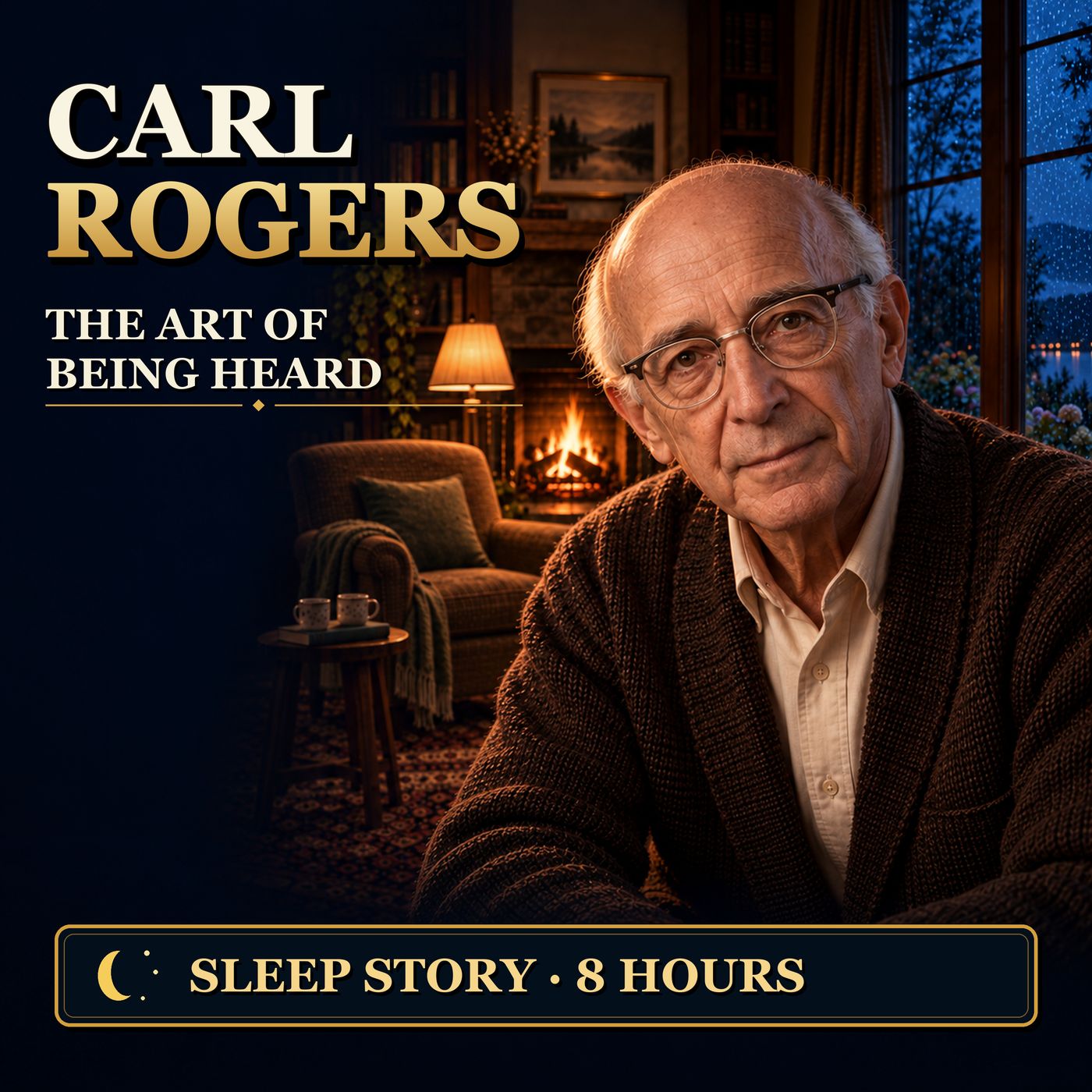 Carl Rogers: Empathy & Unconditional Positive Regard | Sleep Story 16.09.2026 45minA calm, carefully researched bedtime journey through the life and ideas of Carl Rogers — exploring empathy, acceptance, self-worth, person-centred therapy and what it means to become more fully yourself.Tonight, we follow Rogers from his childhood in Illinois and quiet years on his family’s farm to the experiences that gradually changed the way he thought about belief, authority and human nature.After initially studying agriculture and preparing for a life in ministry, Rogers moved into psychology. From his early work with children and families in Rochester to his later work at Ohio State, Chicago and Wisconsin, he began challenging the assumption that the therapist should always be the expert who interprets, directs and explains.What might happen if the therapist listened instead?That question helped shape client-centred therapy, later known as person-centred therapy. Along the way, we explore some of Rogers’s most influential ideas — including empathy, congruence, unconditional positive regard, the actualising tendency, self-concept, conditions of worth, incongruence and the fully functioning person.We also explore Rogers’s wider contribution to psychotherapy. He helped bring real therapeutic encounters into systematic research through the recording and study of sessions, and in 1957 set out his influential theory of the conditions required for therapeutic personality change.Rogers’s ideas became enormously influential, although not every part of his theory is settled science. Research has continued to examine the importance of empathy, genuineness, positive regard, the therapeutic relationship and other factors involved in psychological change.This is an original narrated biography and introduction to the psychology of Carl Rogers. It is not a recording of Rogers speaking, an audiobook of his work, or an official or endorsed production.For education, relaxation and sleep. It is not medical advice, psychological treatment or therapy.📚 Explore our Carl Rogers book:https://www.amazon.com/dp/B0CW1KDWFP🌙 Prefer the extended sleep version with hours of gentle nighttime ambience?https://www.youtube.com/playlist?list=PLRypv-XVJDZk🌐 Read more about Carl Rogers:https://pioneersofhumanbehaviour.com/carl-rogers/☕ Support Sleep Stories from the Pioneers:https://ko-fi.com/pioneersofhumanbehaviour🌐 Explore Pioneers of Human Behaviour:https://pioneersofhumanbehaviour.com/Sleep well. 🌙Stories to fall asleep to. Ideas worth waking up with.
 -
 Gabor Maté: Trauma, Belonging & Being Yourself | Sleep Story 15.09.2026 50minA calm, carefully researched bedtime journey through the life and ideas of Gabor Maté — exploring trauma, addiction, attachment, authenticity and the search for belonging without losing yourself.Tonight, we begin in Vancouver in the 1960s, where a young art student named Rae is given an assignment for her university newspaper: draw a portrait of a fellow student she has never met.His name is Gabor Maté.Two years later, they would marry.From wartime Budapest and his family's journey to Canada to medicine, family life and his later work with people experiencing severe addiction in Vancouver's Downtown Eastside, this story follows some of the experiences that shaped Maté's life and the ideas for which he would become internationally known.Along the way, we explore Scattered Minds, When the Body Says No, Hold On to Your Kids, In the Realm of Hungry Ghosts and The Myth of Normal, written with his son Daniel Maté.At the centre of Maté's work are recurring questions.What happens when the need to belong conflicts with the need to be yourself?Why do people continue behaviours that they know are hurting them?How might experiences in childhood influence patterns that continue into adulthood?And what changes when, instead of asking only what is wrong with someone, we become curious about what happened to them and how they learned to survive?Maté's work has become especially influential in public conversations about addiction, trauma, stress and childhood development. His years working with patients affected by severe drug addiction and mental illness informed In the Realm of Hungry Ghosts, while his other books have examined attention, parenting, stress, illness and the relationship between individual suffering and the wider environments in which people live.There are quieter and more personal stories too.Rae's first portrait of the man who would become her husband. The pressures that work placed on family life. Maté's own account of compulsively buying classical recordings. And the uncomfortable distinction between understanding why a pattern exists and actually being able to change it.His ideas have attracted both substantial interest and debate. Some of the connections Maté proposes — particularly around trauma, ADHD, stress and physical illness — should not be treated as settled explanations for complex medical or psychological conditions.This story therefore does not present every interpretation associated with Maté as established scientific fact. Instead, it follows his life, explains his arguments and places them within the broader questions that have made his work so widely discussed.There is nothing you need to memorise tonight.You do not need to remember every book, argument or event.Simply listen for as long as you like.As the story continues, the details become quieter. The questions can remain unanswered. And eventually, even the need to understand can be put down for the night.Sleep Stories from the Pioneers is a series of calm, research-led journeys through the lives, ideas, histories and traditions that have changed how we understand ourselves and the world around us.This is an original narrated biography about Gabor Maté. It is not a recording of Maté speaking, an audiobook of his work, or an official or endorsed production.For education and relaxation only. It is not medical advice, psychological treatment or therapy.📚 Explore our Gabor Maté books:Gabor Maté — Pioneers of Human BehaviourCurrent edition:https://www.amazon.com/dp/B0H37S5DYJGabor Mate: Legacy Editionhttps://www.amazon.com/dp/B0FMDCS9RW🌙 Prefer the extended sleep version with hours of gentle...
 -
 Fall Asleep to Ancient Egypt | Pyramids, Pharaohs & Everyday Life 15.09.2026 1t 2minA calm, carefully researched bedtime journey through Ancient Egypt — from the age of the Great Pyramid to Cleopatra, exploring pharaohs and monuments alongside the quieter lives of boatmen, bakers, craftspeople and families beside the Nile.Tonight, our journey begins with Merer, an ancient Egyptian official whose surviving papyri record the work of a crew transporting limestone towards the pyramid complex of Khufu.From there, we travel across roughly two and a half millennia of Egyptian history, moving between some of the civilisation's most famous monuments and the ordinary objects and records that allow us to glimpse everyday life.Along the way, encounter the workers and administrators behind the great pyramids, the boats, gardens and workshops represented in the remarkable models from the tomb of Meketre, Hatshepsut's celebrated expedition to the Land of Punt, Akhenaten's new royal city at Amarna and the community of skilled royal tomb workers who lived at Deir el-Medina.We also encounter Ancient Egypt through smaller traces of individual lives: bread and clothing, letters and household objects, games and tools, work and family life.The surviving models from Meketre's tomb, for example, preserve miniature scenes of boats, gardens, food production, workshops and agricultural activity, offering an extraordinary window into how Egyptians imagined both earthly life and provision for the afterlife.Eventually, our journey reaches Alexandria and the world of Cleopatra VII, as the long history of pharaonic Egypt gives way to Roman rule.Throughout the story, archaeological discoveries sit alongside surviving documents, inscriptions, museum objects and ancient literature. Where the evidence is incomplete, uncertain or preserved through later accounts, those distinctions matter.Ancient Egypt was not one unchanging civilisation. Across its long history, dynasties rose and fell, political centres shifted, religious traditions developed, foreign rulers arrived and ordinary people continued to work, trade, raise families and live beside the Nile.There is no need to remember every pharaoh, dynasty or date tonight.You do not need to follow every change in kingdom or capital.Simply follow the river for as long as you remain awake.As the journey continues, the monuments recede into darkness. The workshops become quiet. The boats settle along the riverbank. And the Nile continues beneath the night sky, as it has for thousands of years.Told slowly and gently for sleep, relaxation and peaceful late-night listening. Listen for as long as you like and allow the history to drift away whenever sleep arrives.Sleep Stories from the Pioneers is a series of calm, research-led journeys through the lives, ideas, histories and traditions that have changed how we understand ourselves and the world around us.🌙 Prefer the extended sleep versions with hours of gentle nighttime ambience?Explore Sleep Stories from the Pioneers on YouTube:https://www.youtube.com/playlist?list=PLRypv-XVJDZk☕ Support Sleep Stories from the Pioneers:https://ko-fi.com/pioneersofhumanbehaviour🌐 Explore Pioneers of Human Behaviour:https://pioneersofhumanbehaviour.com/Sleep well. 🌙Stories to fall asleep to. Ideas worth waking up with.
 -
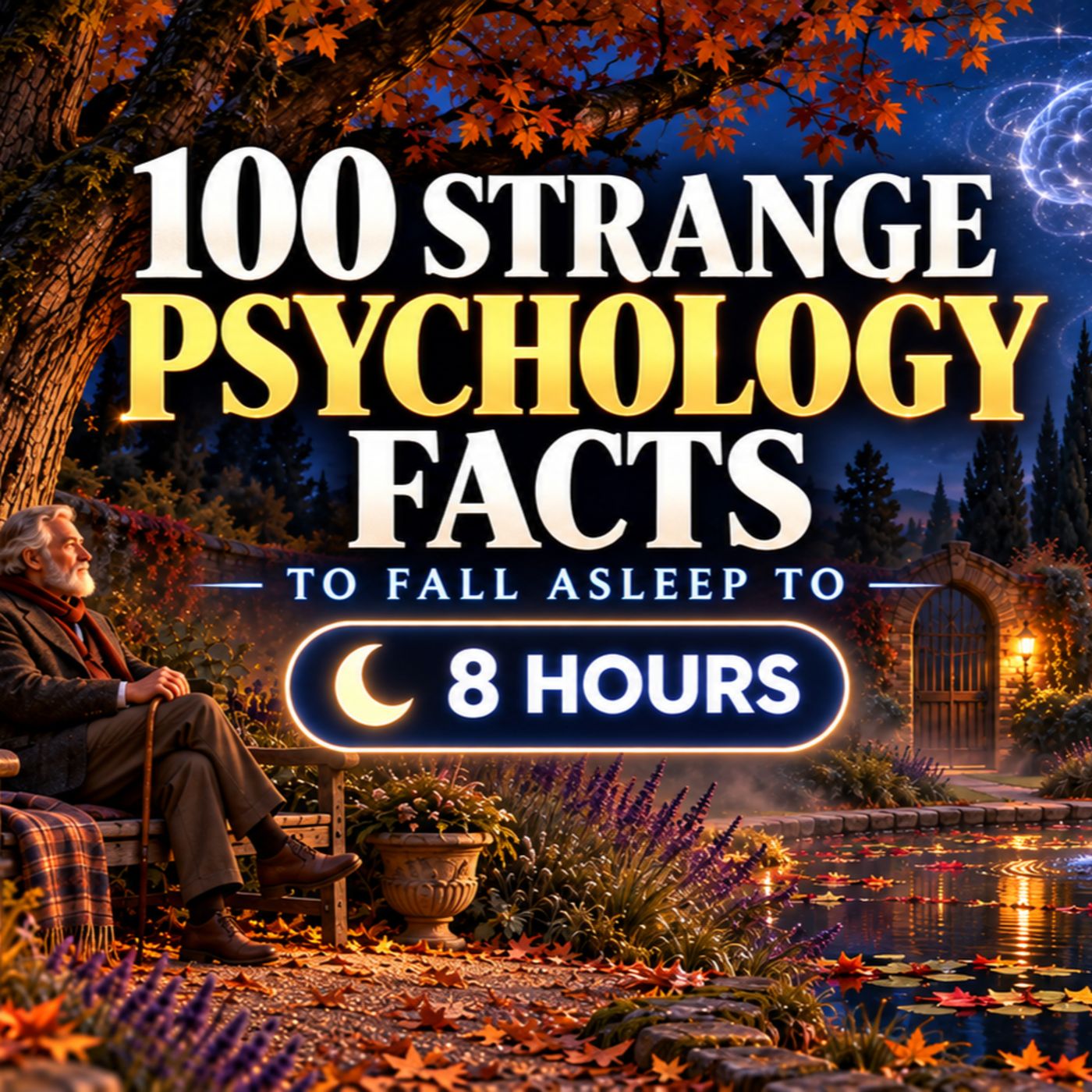 100 Strange Psychology Facts to Fall Asleep To | Psychology for Sleep 15.09.2026 1t 16minA calm, carefully researched bedtime journey through 100 strange and fascinating psychology facts about the human mind — exploring memory, perception, attention, behaviour, learning, the brain, sleep and the hidden processes shaping everyday life.Tonight, we begin outside at the end of a long day. As darkness falls, we walk home through quiet streets before stepping inside and moving slowly through the house, discovering strange things about the mind along the way.Why can a faint star disappear when you look directly at it?Why can two people see different colours in the same photograph?Why can walking through a doorway sometimes make a thought disappear?Why do first impressions form so quickly?And why is memory far less like a recording than it feels?Along the way, explore some of the most intriguing findings from psychology and neuroscience about vision, faces, attention, memory, learning, perception and human behaviour.Discover the blind spots your visual system quietly fills in, and how people can look directly at something unexpected without consciously noticing it.Explore déjà vu and tip-of-the-tongue experiences, the reconstructive nature of memory, the shortcuts our minds use when making judgements, and the remarkable capacity of the adult brain to change through experience.Some of the strangest features of the mind are also among the most ordinary.Our eyes do not simply record everything in front of us. Attention is selective. Memories can change when they are recalled. Expectations influence what we notice. Familiarity can affect what feels true. And much of the work performed by the brain happens without entering conscious awareness at all.Across 100 facts, we move gently between perception and memory, learning and behaviour, sleep and dreaming, decision-making, social psychology and the workings of the brain.These facts are not presented as a complete account of psychology, and psychological research rarely reduces human behaviour to a single simple explanation. Some effects depend upon context, researchers continue to debate how particular findings should be interpreted, and our understanding of the mind continues to change as new evidence appears.The aim tonight is much simpler: to spend a quiet evening discovering just how unusual the ordinary human mind can be.There is nothing you need to memorise.You do not need to count the facts, remember the studies or even remain awake for them.Simply listen for as long as you like.As the night continues, the streets become quieter. The rooms grow darker. The facts become gentler. And eventually, the mind we have been exploring can simply be allowed to rest.Told slowly and gently for sleep, relaxation and peaceful late-night listening. Allow each idea to pass by without needing to hold onto it, and let the journey continue for as long as sleep allows.The evening is imagined. The psychology is real.Sleep Stories from the Pioneers is a series of calm, research-led journeys through the lives, ideas, histories and traditions that have changed how we understand ourselves and the world around us.🌙 Prefer the extended sleep versions with hours of gentle nighttime ambience?Explore Sleep Stories from the Pioneers on YouTube:https://www.youtube.com/playlist?list=PLRypv-XVJDZk☕ Support Sleep Stories from the Pioneers:https://ko-fi.com/pioneersofhumanbehaviour🌐 Explore Pioneers of Human Behaviour:https://pioneersofhumanbehaviour.com/Sleep well. 🌙Stories to fall asleep to. Ideas worth waking up with.
 -
 The Most Notorious Serial Killers in History | True Crime for Sleep 13.09.2026 1t 28minA calm, carefully researched journey through nine of history’s most notorious serial-killer cases — following the lives, crimes, investigations and discoveries behind some of true crime’s most infamous names.Tonight, begin inside a quiet, rain-soaked crime archive after dark.Files sit stacked beneath the warm light of a desk lamp. Rain moves slowly across the windows. Beyond the glass, the city has settled into night.From here, we open nine very different cases.We begin with Jeffrey Dahmer and the escape of Tracy Edwards — the event that finally brought police back to apartment 213 and exposed what had been hidden there.Then we follow Ted Bundy across several American states, from the disappearances in Washington to his arrests, escapes, Florida murders and eventual convictions.In Illinois, the disappearance of fifteen-year-old Robert Piest leads investigators towards John Wayne Gacy, his home and the evidence concealed beneath it.Richard Ramirez takes us into 1980s California and the search for the Night Stalker, where fingerprints, stolen property, shoe impressions, surviving witnesses and one abandoned vehicle gradually bring investigators closer to his identity.Then the story becomes more mysterious.The Zodiac Killer sent letters, symbols and coded messages to newspapers while refusing to reveal the person behind the name. Decades later, one of his most famous ciphers would finally be solved — while his identity remained unknown.We travel next to Victorian London and the Whitechapel murders associated with Jack the Ripper. Follow the surviving evidence, disputed letters, police investigations and more than a century of theories surrounding a killer whose biography still cannot be written with certainty.In Florida, we explore the complicated case of Aileen Wuornos: a life marked by severe instability and abuse, seven admitted killings, contested claims of self-defence and six murder convictions.In Britain, respected family doctor Harold Shipman presents a very different kind of case. His patients trusted him inside their homes. It was the suspicious will of Kathleen Grundy — and her daughter’s refusal to accept it — that helped investigators begin uncovering one of the most extensive series of killings attributed to a single modern murderer.Finally, we travel to Wichita, Kansas, and Dennis Rader — BTK.For decades, Rader committed murders while maintaining a family life, working and participating in his local community. Years after the killings began, he resumed communicating with investigators and eventually asked whether a computer disk could be traced.The answer police gave him would help bring the investigation to his door.Some details remain disputed. Some crimes were never conclusively attributed. Two of the killers explored tonight were never identified.There is nothing you need to memorise.You do not need to keep track of every name, date or piece of evidence.Follow the investigations for as long as you remain awake, or simply allow the stories to continue quietly in the background until sleep arrives.⚠️ CONTENT WARNINGThis episode contains descriptions of murder, sexual violence and other disturbing real events. The tone is calm and documentary-led, but the subject matter is intended for adult listeners.Told slowly and gently for sleep, relaxation and quiet late-night listening.Sleep Stories from the Pioneers is a series of calm, research-led journeys through the lives, ideas, histories and events that have changed how we understand ourselves and the world around us.🌙 Prefer the extended sleep versions with hours of nighttime ambience?Explore Sleep Stories from the Pioneers on YouTube:
 -
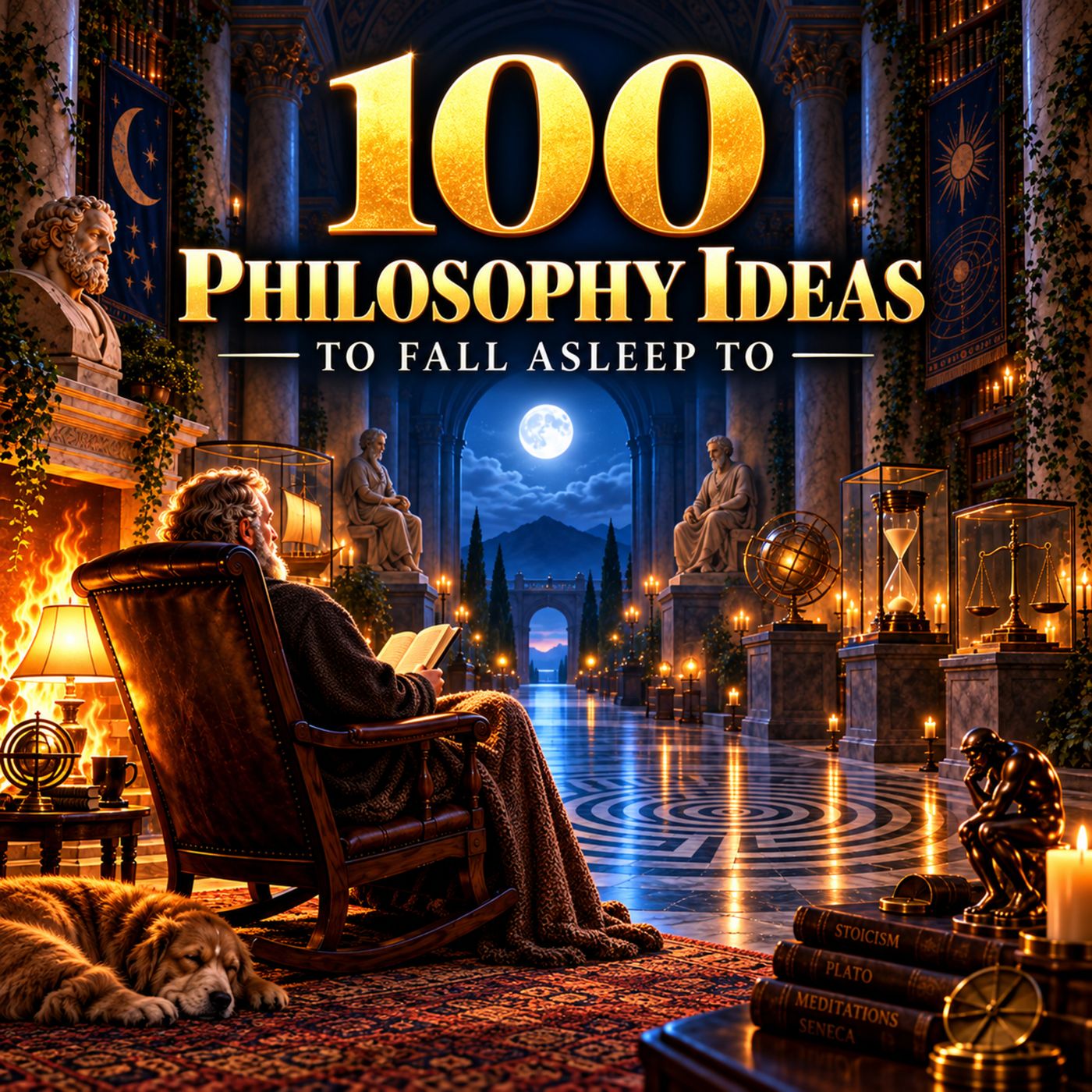 100 Philosophy Ideas to Fall Asleep To | Philosophy for Sleep 11.09.2026 1t 3minA calm, carefully researched bedtime journey through 100 fascinating ideas from philosophy — exploring happiness, meaning, reality, identity, friendship, consciousness, freedom, justice, time and what it might mean to live well.Tonight, begin in a quiet walled garden at the end of the day. As darkness settles, we move into a warm study lit by a lamp and a small fire, while one philosophical idea after another passes gently through the room.Along the way, encounter thinkers from across more than two thousand years of philosophical history, including Socrates, Plato, Aristotle, Epicurus, Confucius, Zhuangzi, Laozi, Marcus Aurelius, Epictetus, Seneca, Montaigne, Descartes, Hume, Kant, Nietzsche, Wittgenstein and many others.Explore the Socratic practice of examining our assumptions, Aristotle on character and human flourishing, Epicurus on pleasure and tranquillity, and the Stoics on judgement, virtue and what does or does not depend upon us.Travel beyond the Greek and Roman traditions as well, through Confucian reflections on character and relationships and Daoist ideas about spontaneity, flexibility, water and wu wei — often translated as non-action or effortless action, but better understood as acting without unnecessary forcing.As the night continues, the questions become broader.What makes you the same person across time?Can we know that the world outside our minds really exists?Are our choices genuinely free?What makes an action right or wrong?What makes a friendship valuable?Why does time seem to move in only one direction?What is consciousness?And why is there something rather than nothing?These 100 ideas are not presented as a definitive ranking or as one unified philosophy. Philosophers have disagreed with one another for centuries, and many of the questions explored here remain unresolved. Ancient thinkers are also known through surviving texts and traditions that do not always allow us to reconstruct exactly what a historical individual believed.The aim is therefore not to give you 100 final answers. It is to spend one quiet night in the company of some of humanity’s most enduring questions.There is nothing you need to memorise. You do not need to count the ideas, agree with them or even remain awake for them.As the journey continues, the garden grows darker. The fire burns lower. The books return to their shelves. The ideas become quieter, until eventually there is nowhere else you need to go.Told slowly and gently for sleep, relaxation and peaceful late-night listening. Simply listen for as long as you like and allow the ideas to drift away whenever sleep arrives.Sleep Stories from the Pioneers is a series of calm, research-led journeys through the lives, ideas, histories and traditions that have changed how we understand ourselves and the world around us.🌙 Prefer the extended sleep versions with hours of gentle nighttime ambience?Explore Sleep Stories from the Pioneers on YouTube:https://www.youtube.com/playlist?list=PLRypv-XVJDZk☕ Support Sleep Stories from the Pioneers:https://ko-fi.com/pioneersofhumanbehaviour🌐 Explore Pioneers of Human Behaviour:https://pioneersofhumanbehaviour.com/Sleep well. 🌙Stories to fall asleep to. Ideas worth waking up with.
 -
 The Odyssey: Odysseus’ Journey Home | Greek Mythology for Sleep 11.09.2026 52minA calm, carefully researched bedtime retelling of The Odyssey — the ancient Greek epic of Odysseus and his long struggle to return home to Ithaca after the Trojan War.Tonight, begin beside Penelope’s loom on Ithaca before crossing the ancient Mediterranean with Odysseus through one of the most enduring stories of Greek mythology.The war at Troy is over, but the journey home is only beginning. Odysseus has been away from Ithaca for twenty years — ten spent at Troy and another ten caught in the wanderings and disasters that stand between him and home.Along the way, encounter some of the most famous figures and episodes of the Odyssey: the nymph Calypso, the Cyclops Polyphemus, the enchantress Circe, the journey to the world of the dead, the song of the Sirens, the dangers of Scylla and Charybdis, and the Phaeacians who finally help Odysseus return to his island.But The Odyssey is about more than monsters and adventure. At its centre is the idea of homecoming — nostos — and the long separation of Odysseus from Penelope, Telemachus and the household he left behind.Back on Ithaca, Penelope waits while suitors occupy her home, delaying a new marriage through the famous deception of her loom. Telemachus grows towards adulthood without his father. And when Odysseus finally reaches the island again, returning home proves more complicated than simply arriving.The poem contains violence, storms, loss and darker episodes, but this telling keeps those moments brief and restrained for sleep. As the journey progresses, the narration gradually becomes quieter, eventually returning to Ithaca and to one of the epic’s most intimate images: the marriage bed Odysseus built around a living olive tree.The Odyssey emerged from the ancient Greek epic tradition and is traditionally attributed to Homer. Its exact process of composition cannot be reconstructed with certainty, and the poem reflects a long tradition of oral storytelling before reaching the form in which it survives today.This episode therefore treats the Odyssey as an ancient literary work rather than as straightforward historical reporting. Its gods, monsters and supernatural events belong to the world of Greek epic and mythology, while questions about its composition, transmission and authorship remain subjects of scholarship.Told slowly and gently for sleep, relaxation and quiet late-night listening. There is nothing you need to remember and nowhere you need to get to. Simply settle in and let the sea carry you towards Ithaca.Sleep Stories from the Pioneers is a series of calm, research-led journeys through the lives, ideas, histories and traditions that have changed how we understand ourselves and the world around us.🌙 Prefer the full extended sleep version with hours of gentle ambience?Watch The Odyssey on YouTube:https://youtu.be/PBHD6c36SWM☕ Support Sleep Stories from the Pioneers:https://ko-fi.com/pioneersofhumanbehaviour🌐 Explore traditions from Pioneers of Human Behaviour:https://pioneersofhumanbehaviour.com/traditions/🌐 Explore Pioneers of Human Behaviour:https://pioneersofhumanbehaviour.com/Sleep well. 🌙Stories to fall asleep to. Ideas worth waking up with.
 -
 How Religion Began: From Prehistory to the World's Religions | History for Sleep 11.09.2026 1t 32minA calm, carefully researched bedtime journey through the history of religion — from some of the earliest surviving traces of human symbolic life to ancient temples, sacred texts and the religious traditions that continue around the world today.Tonight, travel deep into the human past, long before Christianity, Islam, Buddhism or even the first written names of the gods, and explore what archaeology and history can actually tell us about humanity’s search for meaning.We begin more than 100,000 years ago, with objects such as shells deliberately selected, modified and worn by ancient people. From there, we encounter early art, ancient burials, communal gathering places and the monumental stone pillars of Göbekli Tepe.But there is an important uncertainty at the centre of this story: we do not know when religion began.A prehistoric burial does not automatically prove belief in an afterlife. An ancient image does not automatically depict a god. And a monumental building cannot always be confidently labelled a temple. The archaeological record preserves objects and actions far more easily than it preserves the beliefs of the people who created them.Gradually, however, the evidence changes. Writing appears. Divine names survive. Temples, hymns, prayers and sacred stories become visible in the historical record.The journey moves through the religious worlds of ancient Mesopotamia and Egypt, the Vedic traditions of South Asia and the long development of Hindu traditions, Jainism and Buddhism. We travel through ancient Chinese religious and philosophical traditions, Japanese traditions, Zoroastrianism, Judaism, Christianity and Islam.The story continues into Indigenous traditions, Yoruba religion, Maya religious life, Sikhism, the Bahá’í Faith and the many religious and non-religious ways human beings continue to understand existence today.There is no single evolutionary ladder running from “primitive” religion towards one modern destination. Traditions developed in different places, interacted with one another, changed internally and preserved many different answers to questions about gods, ancestors, suffering, death, morality, ritual and the nature of reality.This episode does not attempt to decide whether any religion is true or false. Instead, it follows something historical and deeply human: how people gathered, remembered, buried their dead, performed rituals, told stories, preserved teachings and passed traditions from one generation to another.Where archaeology and historical evidence allow us to speak confidently, we do. Where scholars disagree or the evidence cannot provide an answer, that uncertainty remains part of the story.Told slowly and gently for sleep, relaxation and quiet late-night listening. There is nothing you need to memorise and no belief you are being asked to adopt. Simply settle in and let thousands of years of human history drift quietly past.Sleep Stories from the Pioneers is a series of calm, research-led journeys through the lives, ideas, histories and traditions that have changed how we understand ourselves and the world around us.🌙 Prefer the full extended sleep version with hours of gentle campfire ambience?Watch How Religion Began on YouTube:https://youtu.be/63MNkIL6TGA☕ Support Sleep Stories from the Pioneers:https://ko-fi.com/pioneersofhumanbehaviour🌐 Explore traditions from Pioneers of Human Behaviour:https://pioneersofhumanbehaviour.com/traditions/🌐 Explore Pioneers of Human Behaviour:https://pioneersofhumanbehaviour.com/Sleep well. 🌙Stories to fall asleep to. Ideas worth waking up with.
 -
 Titanic: A Night on the Maiden Voyage | History for Sleep 11.09.2026 51minA calm, carefully researched bedtime journey aboard RMS Titanic during her maiden voyage in April 1912 — exploring the ship not through the disaster that made her famous, but as a living world filled with passengers, crew, work, meals, conversations and ordinary routines at sea.Tonight, step aboard one of the most remarkable ocean liners of the early twentieth century. We begin in a comfortable first-class cabin, where an electric lamp glows beside the bed and footsteps pass quietly through the corridor. Beyond the windows lies the dark North Atlantic, while deep beneath the decks the machinery of the ship continues working.From there, we explore Titanic as evening settles around her. Walk the promenade, enter richly furnished public rooms and pass the famous Grand Staircase. Visit dining spaces and the Café Parisien, then travel below the luxury decks to glimpse the boilers, engines, kitchens, storerooms and working spaces that kept an enormous liner moving towards New York.We also explore the quieter systems connecting Titanic to the wider world: electric lighting, the Marconi wireless room and the ship’s role as a Royal Mail vessel. Five postal clerks worked aboard Titanic, sorting thousands of mailbags during the crossing.Life aboard the ship depended greatly on class. First-class passengers occupied some of the most elaborate accommodation afloat, while second-class travellers had comfortable cabins and public rooms of their own. In third class, passengers from many parts of Europe travelled towards new lives in North America, eating, talking, resting and passing the days of the Atlantic crossing.The ship and its documented spaces are historical. Our particular journey through them is imagined.No single passenger could have wandered freely through every first-, second- and third-class area or working space visited in this story. Those boundaries mattered aboard Titanic, and the freedom to move between them here is simply a storytelling device that allows us to understand more of the ship without pretending one historical passenger experienced it all.This episode remains with the ordinary life of the maiden voyage rather than dramatising the sinking. For several days, before history transformed Titanic into a symbol of catastrophe, she was simply a working ocean liner carrying people, luggage, food, letters, hopes and plans across the Atlantic.As the night grows quieter, we return to the promenade and eventually to the cabin where the journey began. The lamp is low. The corridor has become still. The Atlantic stretches into darkness beyond the ship.Told slowly and gently for sleep, relaxation and quiet late-night listening. There is nothing you need to remember and nowhere you need to get to. Simply settle in and let the ship do the travelling for you.Sleep Stories from the Pioneers is a series of calm, research-led journeys through the lives, ideas, histories and traditions that have changed how we understand ourselves and the world around us.🌙 Prefer the full extended sleep version with hours of ocean and ship ambience?Watch Titanic: A Night on the Maiden Voyage on YouTube:https://youtu.be/wB8GlwmrW6g☕ Support Sleep Stories from the Pioneers:https://ko-fi.com/pioneersofhumanbehaviour🌐 Explore Pioneers of Human Behaviour:https://pioneersofhumanbehaviour.com/Sleep well. 🌙Stories to fall asleep to. Ideas worth waking up with.
 -
 The Complete Story of Stoicism: Zeno to Marcus Aurelius | Philosophy for Sleep 11.09.2026 1t 25minA calm, carefully researched bedtime journey through the history and philosophy of Stoicism — from Zeno of Citium in ancient Athens to Seneca, Musonius Rufus, Epictetus and Marcus Aurelius.Tonight’s story begins around 300 BCE beneath the Stoa Poikile, the Painted Porch in the Athenian Agora from which Stoicism took its name. Here, Zeno began teaching a philosophy that would develop into one of the most influential schools of the ancient Mediterranean world.From Zeno, we move through Cleanthes and Chrysippus, whose work helped turn early Stoicism into a systematic philosophy embracing logic, physics and ethics. Much of their writing is lost, so our knowledge of the early school survives largely through fragments and later authors.The journey then moves into the Roman world. We meet Seneca, the wealthy statesman and writer who reflected on anger, mortality and the use of time; Musonius Rufus, who treated philosophy as something to be practised in ordinary life; and Epictetus, who lived in slavery before becoming one of antiquity’s most influential Stoic teachers.Along the way, we explore some of Stoicism’s central questions. What is genuinely good? What depends upon us, and what does not? How do our judgements shape emotional experience? What did the Stoics mean by living according to nature? How could they defend both fate and meaningful human agency? And why did they place virtue above wealth, status, health and comfort?Ancient Stoicism is often simplified today as emotional suppression or simply “not caring.” That is misleading. The Stoics did aim to overcome destructive passions they understood as involving mistaken judgements, but they did not imagine the ideal person as numb or incapable of feeling. Their accounts also allowed for involuntary first reactions and for rational forms of joy, caution and goodwill.Eventually, we reach Marcus Aurelius — Roman emperor, student of Stoic philosophy and author of the private writings now known as the Meditations. Written in Greek largely as exercises and reminders to himself, they show someone repeatedly trying to bring his conduct back into line with the philosophy he believed he should practise.Stoicism changed across the centuries, and the surviving Roman texts do not preserve every aspect of the earlier Greek school. This journey therefore distinguishes between early Stoic doctrine, later Roman Stoicism and ideas now commonly presented under the Stoic name.Told slowly and gently for sleep, relaxation and quiet late-night listening. There is nothing you need to memorise and nowhere you need to get to. Simply settle in and let the arguments, philosophers and ancient city streets drift quietly past.Sleep Stories from the Pioneers is a series of calm, research-led journeys through the lives, ideas, histories and traditions that have changed how we understand ourselves and the world around us.🌙 Prefer the full extended sleep version with hours of Mediterranean night ambience?Watch The Complete Story of Stoicism on YouTube:https://youtu.be/MHjlbeBGsCo☕ Support Sleep Stories from the Pioneers:https://ko-fi.com/pioneersofhumanbehaviour🌐 Explore Pioneers of Human Behaviour:https://pioneersofhumanbehaviour.com/Sleep well. 🌙Stories to fall asleep to. Ideas worth waking up with.
 -
 The World Before Noise: A Night 170,000 Years Ago | Prehistory for Sleep 11.09.2026 56minA calm, carefully researched bedtime journey into the prehistoric world — imagining one ordinary night at Border Cave in southern Africa around 170,000 years ago.Tonight, leave the modern world behind and travel deep into prehistory. Roads disappear. Electric lights go dark. Buildings, clocks and writing fall away until we arrive at a rock shelter in the Lebombo Mountains, close to the modern border between South Africa and Eswatini.Here, beside the warmth of a fire, we imagine the quieter rhythms of an evening almost beyond historical memory: food being prepared, stone being worked, grass beneath resting bodies, familiar people nearby and the vast darkness beyond the shelter.What might an ordinary evening have felt like before cities, electricity, traffic and the constant background noise of modern life? How did people rest, eat, work and spend time together in a world illuminated only by fire, moonlight and stars?The setting is real, but the particular night experienced in this story is imagined.Archaeological discoveries at Border Cave provide the foundation for the journey. Researchers have identified ancient plant bedding at the site dating back at least 200,000 years, with further bedding preserved through later periods. Charred remains of starchy underground plant foods dating to around 170,000 years ago also provide direct evidence that people were cooking and eating plant foods there.Border Cave was occupied repeatedly across an immense span of time, so evidence from different archaeological layers cannot simply be combined into the belongings of one family or one evening. This story therefore distinguishes carefully between archaeological evidence and reconstruction. Where the surviving record cannot tell us exactly what happened, uncertainty remains part of the story.Rather than imagining prehistoric people as primitive versions of ourselves, the journey stays close to what archaeology allows us to glimpse: skilled hands completing familiar work, food and warmth, places prepared for rest, social lives shared with others, and a landscape deeply familiar to the people who inhabited it.As night deepens, everything becomes simpler.Stone overhead. Grass beneath you. Warmth nearby. People resting close by. And an enormous dark world beyond the fire.Told slowly and gently for sleep, relaxation and quiet late-night listening. There is nothing you need to remember and nowhere you need to get to. Simply settle in and let the prehistoric night unfold around you.Sleep Stories from the Pioneers is a series of calm, research-led journeys through the lives, ideas, histories and traditions that have changed how we understand ourselves and the world around us.🌙 Prefer the full extended sleep version with hours of fire and nighttime ambience?Watch The World Before Noise on YouTube:https://youtu.be/qrPgTEZarGY☕ Support Sleep Stories from the Pioneers:https://ko-fi.com/pioneersofhumanbehaviour🌐 Explore Pioneers of Human Behaviour:https://pioneersofhumanbehaviour.com/Sleep well. 🌙Stories to fall asleep to. Ideas worth waking up with.
 -
 The Great Maya Collapse | Ancient History for Sleep 08.09.2026 1t 6minA calm, carefully researched ancient history sleep story exploring the Great Maya Collapse — why many powerful Maya cities and dynasties declined, fragmented or were abandoned between roughly the eighth and tenth centuries.Tonight, journey into the Classic Maya world through moonlit plazas, temples, reservoirs, fields and forest paths as we explore how large populations were sustained through agriculture, water management, trade, political alliances and sophisticated urban systems.Then follow the evidence behind one of ancient history’s most fascinating transformations. There was no single Maya collapse and no single cause. Drought, warfare, political fragmentation, changing trade networks, pressure on food and water systems, and population movement affected different Maya regions in different ways.Archaeology, inscriptions, settlement evidence and climate records allow us to reconstruct parts of this story, but they also reveal its complexity. Monumental building declined and dynasties ended across many cities of the southern lowlands, while other Maya centres continued, adapted and reorganised.And the Maya did not disappear. Maya societies continued beyond the Classic period, and millions of Maya people remain part of living communities today. This episode keeps that continuity at the centre of the story rather than turning political and urban change into a myth of a vanished civilisation.Told slowly and gently for sleep, relaxation and quiet late-night listening. There is nothing you need to remember and nowhere you need to get to. Simply settle in and let the ancient cities, forest and night carry you towards sleep.Sleep Stories from the Pioneers is a series of calm, research-led journeys through history, philosophy, psychology and science.🌙 Prefer the full extended sleep version with hours of ambient sound?Watch The Great Maya Collapse on YouTube:https://youtu.be/-4r2zcSa4ww🌙 Watch the full Sleep Stories from the Pioneers playlist:https://www.youtube.com/playlist?list=PLRypv-XVJDZk☕ Support Sleep Stories from the Pioneers:https://ko-fi.com/pioneersofhumanbehaviour🌐 Explore Pioneers of Human Behaviour:https://pioneersofhumanbehaviour.com/Sleep well. 🌙Stories to fall asleep to. Ideas worth waking up with.
 -
 A Night Aboard Blackbeard’s Ship | Pirate History for Sleep 08.09.2026 47minA calm, carefully researched pirate history sleep story aboard Blackbeard’s Queen Anne’s Revenge — imagined at anchor in the Caribbean in early 1718.Tonight, drift through the everyday world of an eighteenth-century sailing ship: timber and rope, simple meals, quiet work, sleeping spaces and the sound of water against the hull, while exploring the history behind Blackbeard and his famous flagship.Historical records and archaeology inform the episode, but the listener’s journey aboard the ship is imagined. Before Blackbeard’s company captured the vessel and renamed it in 1717, Queen Anne’s Revenge had sailed as the French slave-trading ship La Concorde — a part of its history this story acknowledges rather than omits.Told slowly and gently for sleep, relaxation and quiet late-night listening. There is nothing you need to remember and nowhere you need to get to. Simply settle in and let the ship and the water carry you towards sleep.Sleep Stories from the Pioneers is a series of calm, research-led journeys through history, philosophy, psychology and science.🌙 Prefer the full extended sleep versions with hours of gentle nighttime ambience?Explore Sleep Stories from the Pioneers on YouTube:https://www.youtube.com/playlist?list=PLRypv-XVJDZk☕ Support Sleep Stories from the Pioneers:https://ko-fi.com/pioneersofhumanbehaviour🌐 Explore Pioneers of Human Behaviour:https://pioneersofhumanbehaviour.com/Sleep well. 🌙Stories to fall asleep to. Ideas worth waking up with.
 -
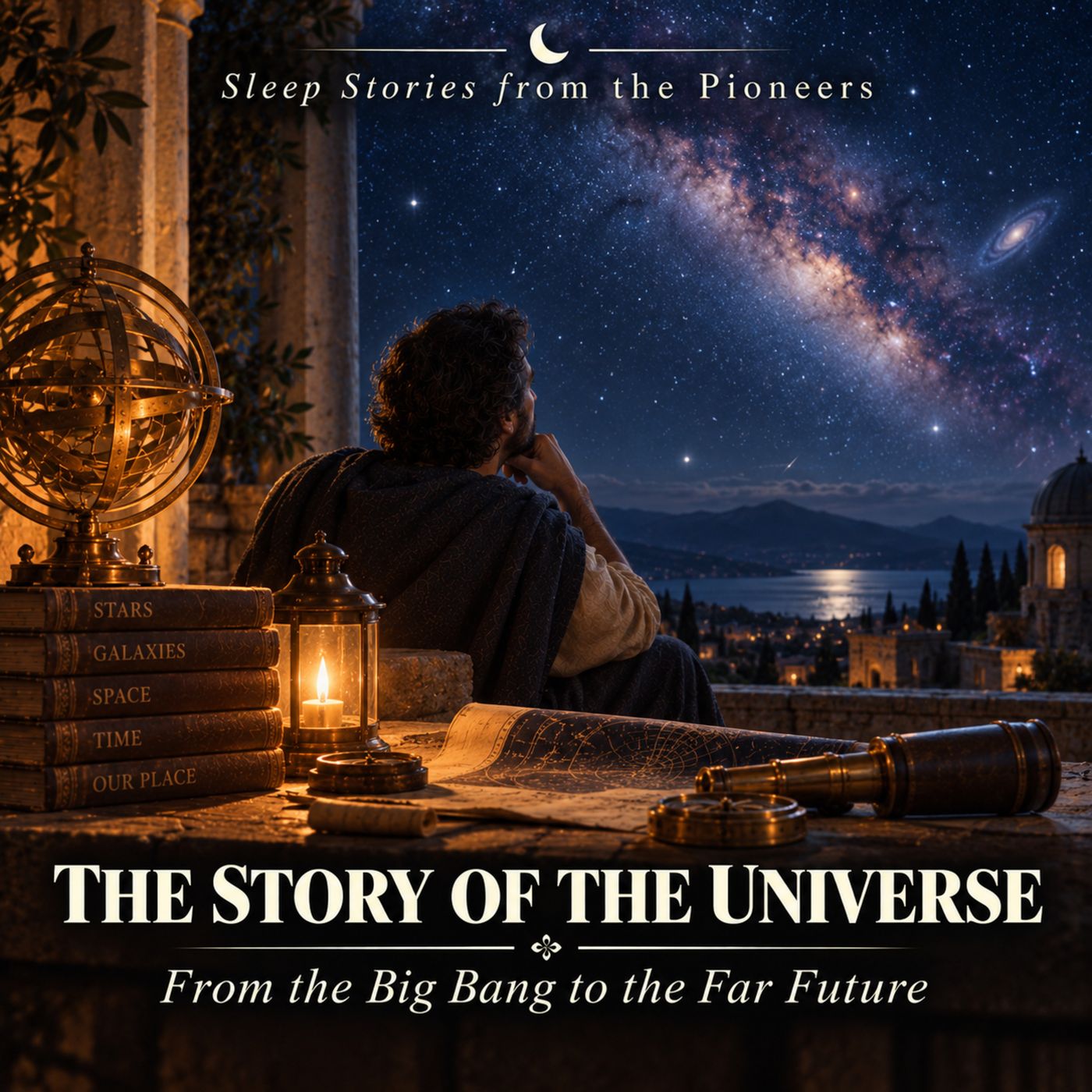 The Story of the Universe: From the Big Bang to the Far Future | Science for Sleep 05.09.2026 1t 32minA calm, carefully researched journey through the story of the Universe — from its hot, dense early state almost 13.8 billion years ago, through the formation of atoms, stars, galaxies and planets, to the distant future of the cosmos.Tonight’s story begins with the early Universe and the expansion of space itself. We follow matter as it cools enough for the first atoms to form, then move forward into the long cosmic darkness before gravity gathers material together and the first stars begin to shine.Along the way, we explore how stars and galaxies formed, how generations of stars produced many of the heavier elements from which planets and living things are made, and how our own Solar System emerged billions of years later around an ordinary star in the Milky Way.From there, the journey widens again — beyond Earth, beyond the Solar System and out across the observable Universe, where galaxies continue to evolve while space itself expands.Finally, we travel far beyond the present day and consider what modern cosmology suggests may happen in the distant future: the gradual decline of star formation, the fading of the last stars, the remnants they leave behind, black holes on immense timescales, and a Universe becoming progressively colder, darker and more diffuse.Some details of the Universe’s ultimate future remain uncertain, so where cosmology moves from well-established observation into prediction, this story keeps that distinction clear.Told slowly and gently for sleep, relaxation and quiet late-night listening. There is nothing you need to remember and nowhere you need to get to. Simply settle in and let billions of years drift quietly past.Sleep Stories from the Pioneers is a series of calm, research-led journeys through the people, ideas, histories and worlds that have shaped how we understand ourselves and the universe around us.🌙 Prefer the full extended sleep version with hours of ambient sound?Watch The Story of the Universe on YouTube:https://youtu.be/bhKsu2fUFdI🌙 Watch the full Sleep Stories from the Pioneers playlist:https://www.youtube.com/playlist?list=PLRypv-XVJDZk☕ Support Sleep Stories from the Pioneers:https://ko-fi.com/pioneersofhumanbehaviour🌐 Explore Pioneers of Human Behaviour:https://pioneersofhumanbehaviour.com/Sleep well. 🌙Stories to fall asleep to. Ideas worth waking up with.
 -
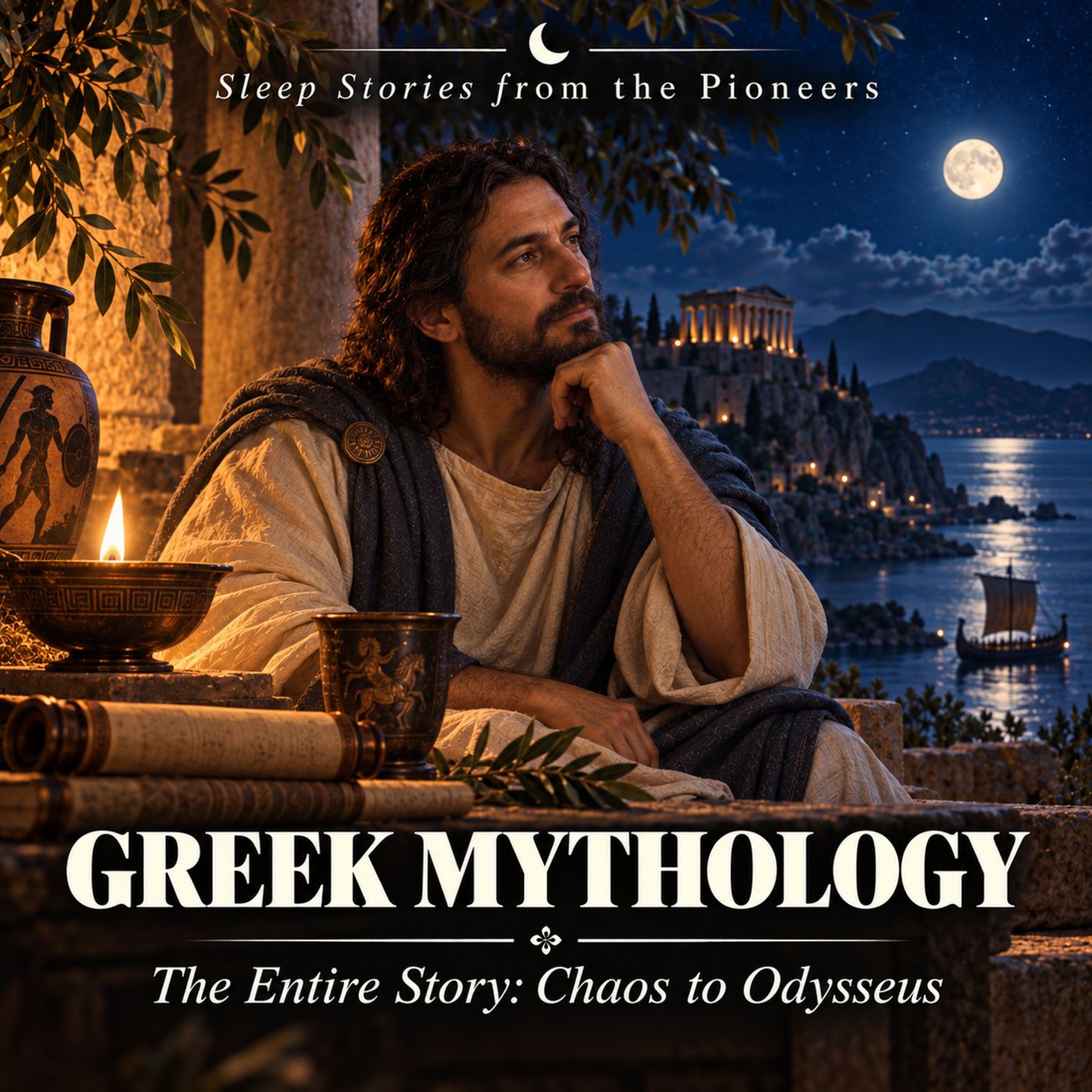 Greek Mythology for Sleep | The Entire Story: Chaos to Odysseus 05.09.2026 1t 41minA calm, carefully researched journey through Greek mythology — from the earliest stories of Chaos and the first generations of gods, through the Titans and Olympians, to the great heroes, the Trojan War and the long voyage home of Odysseus.Tonight’s story begins before Mount Olympus, with Chaos, Gaia and the ancient succession myths that eventually lead to Zeus and the Olympian order. From there, we move gently through some of the best-known stories of the Greek world.Along the way, we encounter Prometheus and Pandora, Hades and Persephone, Athena, Apollo, Artemis, Poseidon, Aphrodite and Hermes, before entering the age of heroes with Perseus and Medusa, Theseus and the Minotaur, Heracles and his labours, and Jason, Medea and the Argonauts.The journey then leads towards Troy — Achilles, Hector, Priam and the wooden horse — before following Odysseus across the sea through the Cyclops, Circe, the Sirens and the many strange islands that stand between him and home.Greek mythology was never one single fixed story with an authorised timeline. Different poets, cities and traditions preserved different versions, and later Roman writers reshaped many of them again. Where those differences matter, this episode keeps them visible rather than quietly merging every tradition into one.Told slowly and gently for sleep, relaxation and quiet late-night listening. There is nothing you need to remember and nowhere you need to get to. Simply settle in and let the old stories drift past.Sleep Stories from the Pioneers is a series of calm, research-led journeys through the people, ideas, histories and traditions that have shaped human life.🌙 Prefer the full extended sleep version with hours of ambient sound?Watch Greek Mythology for Sleep on YouTube:https://youtu.be/M0JU5MUl1y4🌙 Watch the full Sleep Stories from the Pioneers playlist:https://www.youtube.com/playlist?list=PLRypv-XVJDZk🌐 Explore traditions from Pioneers of Human Behaviour:https://pioneersofhumanbehaviour.com/traditions/☕ Support Sleep Stories from the Pioneers:https://ko-fi.com/pioneersofhumanbehaviour🌐 Explore Pioneers of Human Behaviour:https://pioneersofhumanbehaviour.com/Sleep well. 🌙Stories to fall asleep to. Ideas worth waking up with.
Sarnased taskuhäälingud


Populaarne riigis
See taskuhääling on ka nende riikide taskuhäälingute edetabelites.

