
Food Code Matrix PodCast
Cagdas INAL
0
Food Code Matrix explores food as a complex system shaped by science, technology, culture, history, economics, and human behavior. Each episode uncovers the hidden codes behind ingredients, dishes, and culinary traditions, connecting topics like food science, gastronomy, AI, nutrition, sustainability, and global trade. From the chemistry of garlic to the future of kitchens, the podcast asks: What is really behind the food we eat? It's for curious minds who want to look beyond the plate and understand the stories and systems hidden within food.
Osad
-
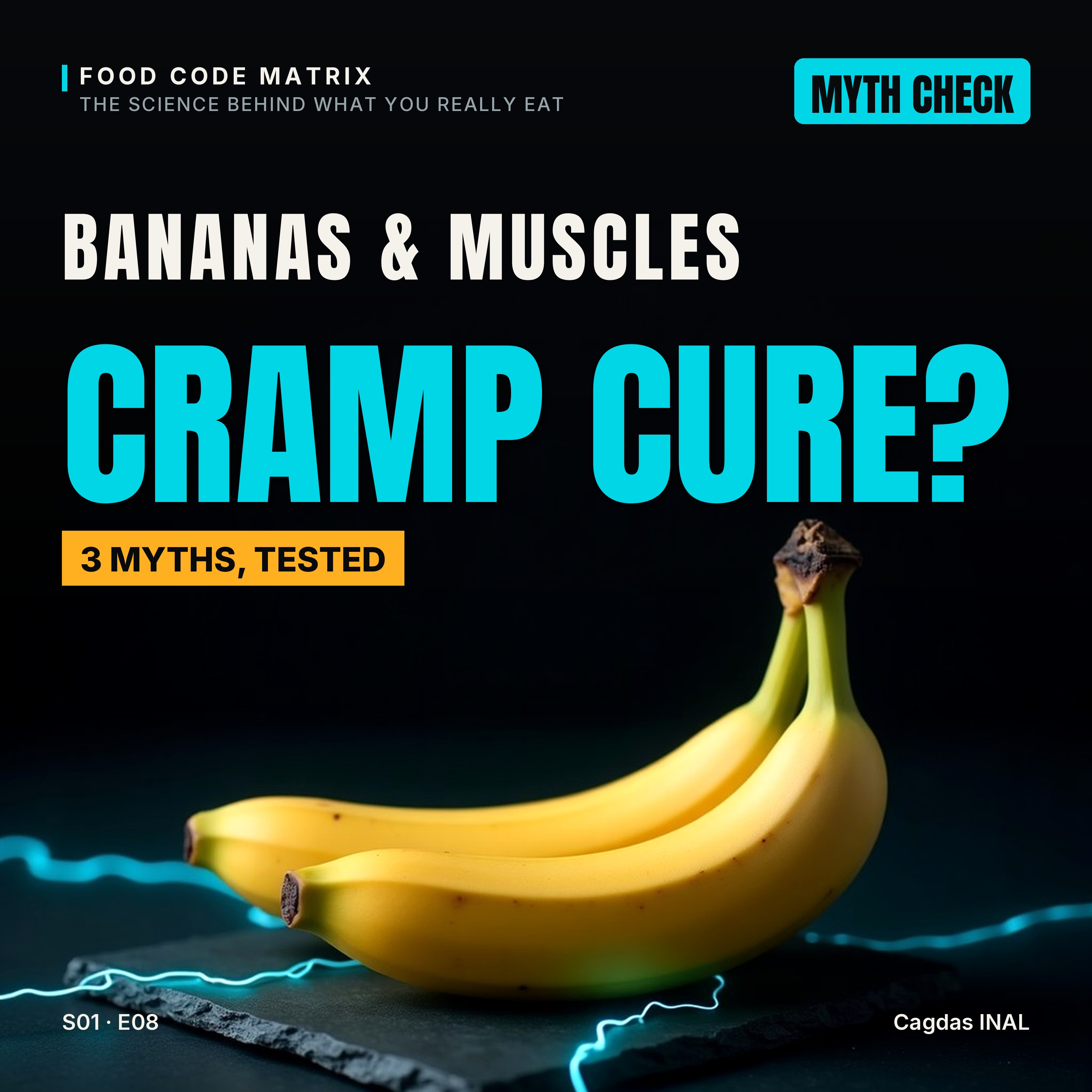 Bananas and Cramps: What Bananas ACTUALLY Do for Your Muscles (3 Myths, Tested) 26.09.2026 37minHey! I'd love to hear your thoughts, send me a voice note.Someone cramps up on the pitch and the advice is always the same: eat a banana, you're low on potassium. In this episode, I put that advice to the test, along with two more banana myths that fill fitness feeds.Myth 1: bananas fix cramps. A small crossover trial found that eating bananas after exercise raised blood potassium only marginally, within normal values, and not fast enough to stop a cramp. Exercise cramps look far more neuromuscular than nutritional.Myth 2: "it's not about the carbs." When 14 trained cyclists rode 75 km on either bananas or a 6% carbohydrate drink, blood glucose and performance didn't differ. The banana works because it's excellent fuel. (The study was funded by Dole — worth knowing.)Myth 3: banana tryptophan makes exercise feel easier. A banana has about 10 mg of tryptophan, a tiny fraction of the doses used in research, and the central fatigue hypothesis suggests more brain serotonin may make prolonged exercise harder, not easier.In this episode:- What's actually in a banana: potassium, B6, carbohydrate, fibre- How nerves and muscles really fire: sodium, potassium and calcium- Food vs pill: is banana potassium better absorbed? (No.)- Who genuinely runs low on potassium- The dopamine twist in the cyclist study- Does B6 "activate" protein? What it really does- Green vs ripe: resistant starch and glycaemic index- The fridge myth: chilling injury explained- Three evidence-based steps for your next workoutThe takeaway: a banana is brilliant fuel. It isn't medicine.Sources discussed:- Miller KC (2012). Plasma potassium concentration and content changes after banana ingestion in exercised men. Journal of Athletic Training.- Nieman DC et al. (2012). Bananas as an energy source during exercise: a metabolomics approach. PLoS ONE.- Macdonald-Clarke CJ et al. (2016). Bioavailability of potassium from potatoes and potassium gluconate. American Journal of Clinical Nutrition.- Segura R, Ventura JL (1988). Effect of L-tryptophan supplementation on exercise performance. International Journal of Sports Medicine.- NIH Office of Dietary Supplements: Potassium and Vitamin B6 fact sheets.Chapters:00:00 Why Everyone Hands You a Banana01:36 What's Actually in a Banana03:10 Myth 1: Bananas Fix Cramps05:29 How Nerves and Muscles Really Fire08:09 Food vs Pill: Potassium Absorption10:46 Who Really Runs Low on Potassium11:38 Myth 2: It's Not About the Carbs15:49 The Dopamine Twist19:00 Myth 3: Tryptophan and Serotonin24:09 Does B6 Activate Protein?28:51 Green vs Ripe: The Chemistry of Ripeness33:12 The Fridge Myth35:39 Three Evidence-Based Steps36:53 Food Is Fuel, Not MedicineHost: Cagdas INALFood Code Matrix: the science behind what you really eat.This episode is educational and not medical advice. If you have frequent cramps, speak to a qualified health professional.
 -
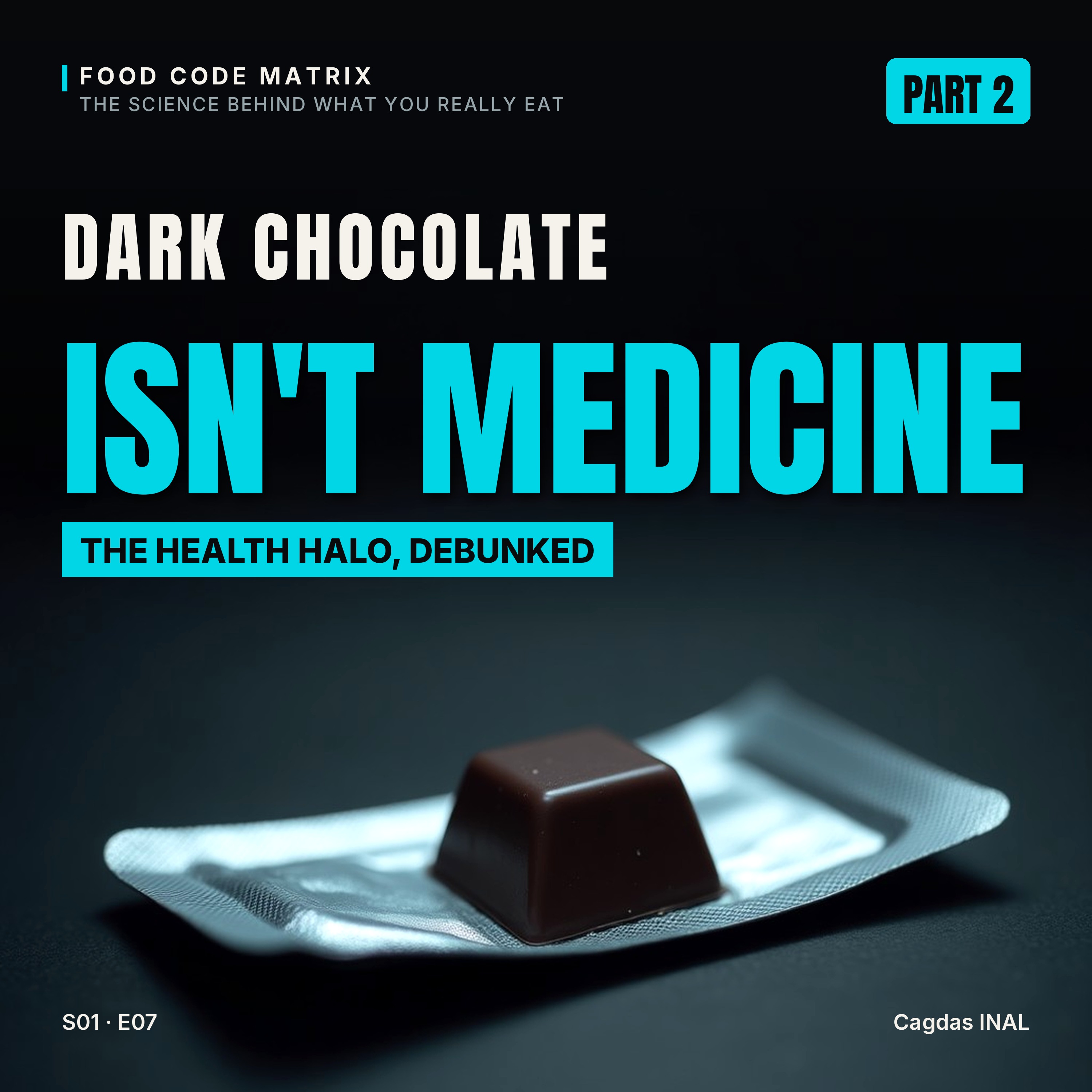 The Health Halo Rule: Why Dark Chocolate ACTUALLY Isn't Medicine | Part 2 25.09.2026 52minHey! I'd love to hear your thoughts, send me a voice note.Two squares of 85% after dinner and a little voice saying "this is basically medicine". In Part 2, I pull that voice apart.We go past the "what" and into the "why": how epicatechin works on the lining of your blood vessels, why the memory research keeps shifting, and why so many headlines get the actual findings wrong.In this episode:- The nitric oxide mechanism, and why a wider blood vessel doesn't automatically mean a sharper brain- Inside COSMOS: the 2x2 design, the cocoa result that flatlined, the multivitamin twist, and the funding caveats worth knowing- The 85% vs 70% chocolate study: mood, gut bacteria and the gut-brain axis (promising, but only 48 people over three weeks)- Why "cocoa processed with alkali" on the label changes everything- What the "chocolate buzz" really is: caffeine and theobromine- Heavy metals without the panic: portion size and brand rotationWe finish with a harder question: why do we feel we have to medicalise every pleasure? Sometimes a treat is just a treat.Sources discussed:- Baker LD et al. (2023). Effects of cocoa extract and a multivitamin on cognitive function: a randomised clinical trial (COSMOS-Mind). Alzheimer's & Dementia.- Shin JH et al. (2022). Consumption of 85% cocoa dark chocolate improves mood in association with gut microbial changes in healthy adults: a randomised controlled trial. Journal of Nutritional Biochemistry.- Miller KB et al. (2008). Impact of alkalization on the antioxidant and flavanol content of commercial cocoa powders. Journal of Agricultural and Food Chemistry.- Consumer Reports (December 2022). Lead and cadmium testing of 28 dark chocolate bars.Missed Part 1? Start there for the basics and the heavy metal findings.Next episode: green tea. Can its flavanols do what cocoa couldn't?Host: Cagdas INALFood Code Matrix: the science behind what you really eat.This episode is educational and not medical advice.
 -
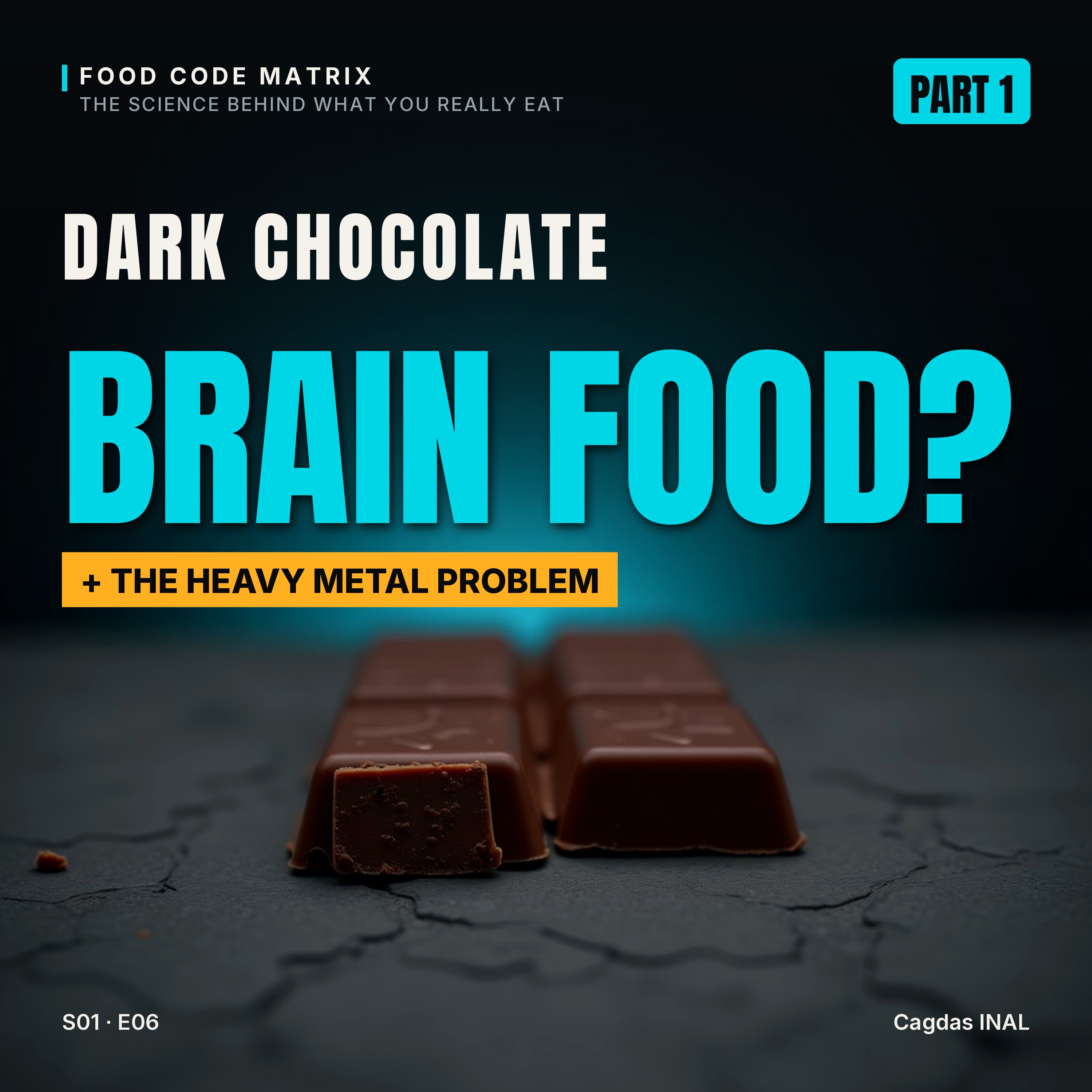 Dark Chocolate and Your Brain: What It ACTUALLY Does (and the Heavy Metal Problem) | Part 1 25.09.2026 52minHey! I'd love to hear your thoughts, send me a voice note.We've quietly agreed that dark chocolate is the one sweet that counts as medicine. In this episode, I put that idea on trial.We start at the molecular level: how cacao flavanols like epicatechin are thought to trigger nitric oxide, relax blood vessels and push more blood to the brain. Then we test that story against COSMOS-Mind, a three-year trial where thousands of older adults took cocoa extract or a placebo. The result wasn't what the marketing promised, and a basic multivitamin quietly did better.Then the part most biohackers skip: how Dutch processing, invented in 1828, strips out most of the flavanols, and what Consumer Reports found when it tested dark chocolate bars for lead and cadmium.In this episode:- The flavanol and nitric oxide theory behind "chocolate for your brain"- Why most commercial bars have had the "medicine" processed out- COSMOS-Mind: cocoa extract vs multivitamin over three years- Lead and cadmium in dark chocolate: where they come from and why they matter- A practical guide for the chocolate aisle: treat it as a treat, pick tested brands, keep portions smallThe takeaway: dark chocolate can be a lovely occasional joy. It just isn't a brain supplement.Sources discussed:- Baker LD et al. (2023). Effects of cocoa extract and a multivitamin on cognitive function: a randomised clinical trial (COSMOS-Mind). Alzheimer's & Dementia.- Miller KB et al. (2008). Impact of alkalization on the antioxidant and flavanol content of commercial cocoa powders. Journal of Agricultural and Food Chemistry.- Consumer Reports (December 2022). Lead and cadmium testing of 28 dark chocolate bars.Part 2 goes deeper: the gut-brain link, the mood studies and how to read a chocolate label properly.Host: Cagdas INALFood Code Matrix: the science behind what you really eat.This episode is educational and not medical advice.
 -
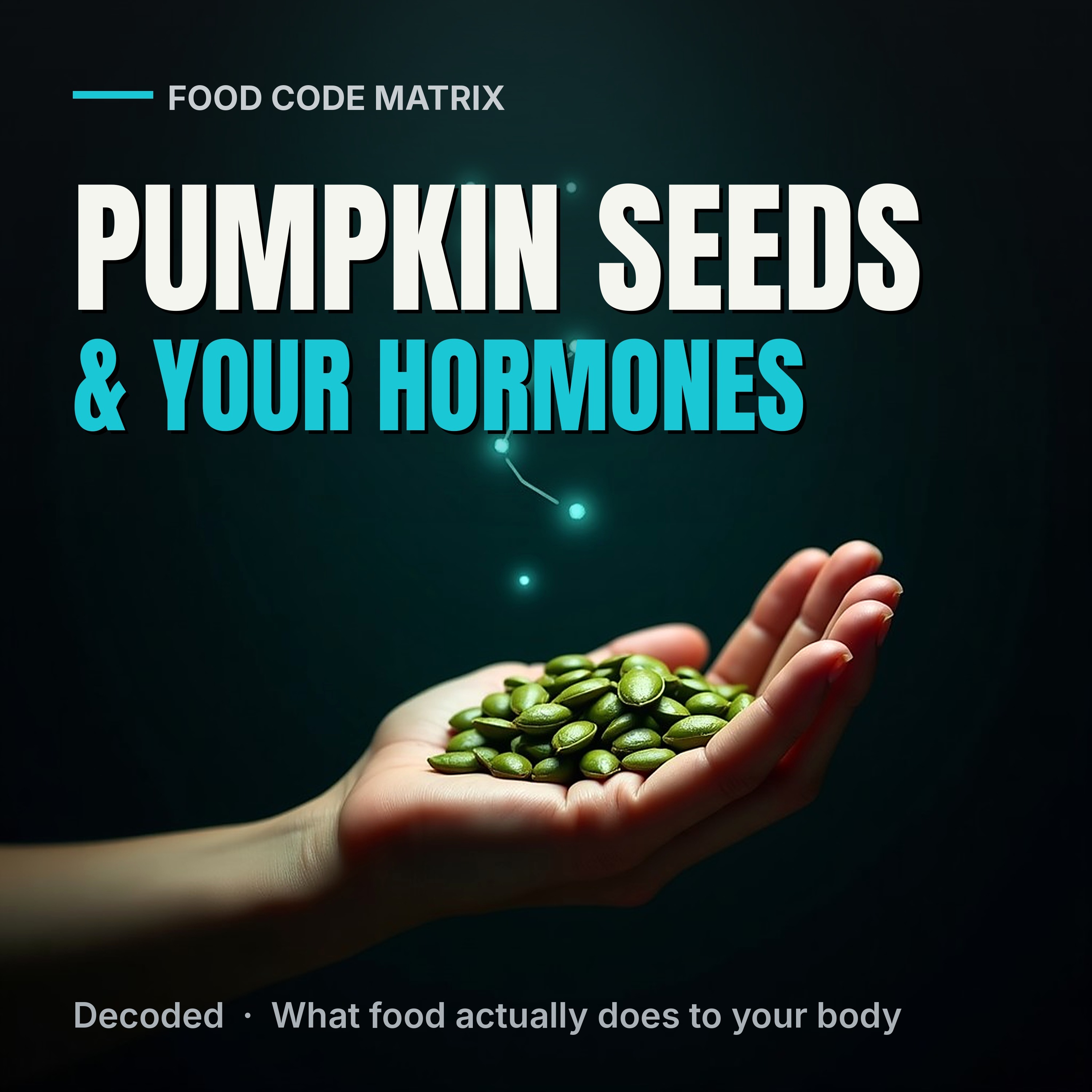 Pumpkin Seeds and Your Hormones: What the Evidence Actually Says 23.09.2026 15minHey! I'd love to hear your thoughts, send me a voice note.Are pumpkin seeds messing with your hormones? A viral claim says yes, and it comes with studies attached. So I tracked them down and read them. What I found: a test on cancer cells in a dish, a study on rats with their ovaries removed, and a computer simulation. Not one of them looked at people eating seeds.In this episode of Food Code Matrix:• How much zinc is really in a handful of pumpkin seeds, and how much it takes to cause copper problems• Why the real zinc risk lives in supplements, not snacks• What lignans (plant oestrogens) are, and what the research on them actually tested• The largest human trial: 1,431 men, 12 months, and what it found• Why your gut bacteria decide how much of these compounds you absorb• The flaxseed advice that contradicts the whole claim• Three simple steps for eating pumpkin seeds without worryThe one question to ask next time a food claim comes with studies attached: were they done on people?Chapters0:00 The claim0:45 Welcome to Food Code Matrix1:24 Why this matters: pumpkin seeds are everywhere2:25 The claim, laid out fairly3:21 How much zinc is really in a handful4:13 The copper problem and where it really lives5:59 The testosterone myth6:21 Halfway checkpoint6:48 Lignans: the plant compounds behind the fear7:41 Following the paper trail: cells, rats and a computer9:51 What happens in actual humans11:12 Your gut bacteria decide12:06 The flaxseed twist12:42 What I'd actually do: three steps13:28 The limits of the evidence13:54 The answer, and the one question to ask14:36 Sources and next episodeSources• NIH Office of Dietary Supplements, Zinc: Fact Sheet for Health Professionals (updated January 2026)• Richter et al., Nutrition and Cancer, 2013. DOI: 10.1080/01635581.2013.797000• Phytotherapy Research, 2019. DOI: 10.1002/ptr.6280• Sicilia et al., Journal of Agricultural and Food Chemistry, 2003. PMID: 12590454• Vahlensieck et al., Urologia Internationalis, 2015. DOI: 10.1159/000362903• Vahlensieck et al., Clinical Phytoscience, 2022, 8:13• Hullar et al., Cancer Epidemiology, Biomarkers & Prevention, 2015. DOI: 10.1158/1055-9965.EPI-14-0262Heard something scary about a food? Tell me and I'll check the research.Food Code Matrix: what food actually does to your body. Hosted by Çağdaş İNAL.This podcast is for educational purposes only and is not medical advice.
 -
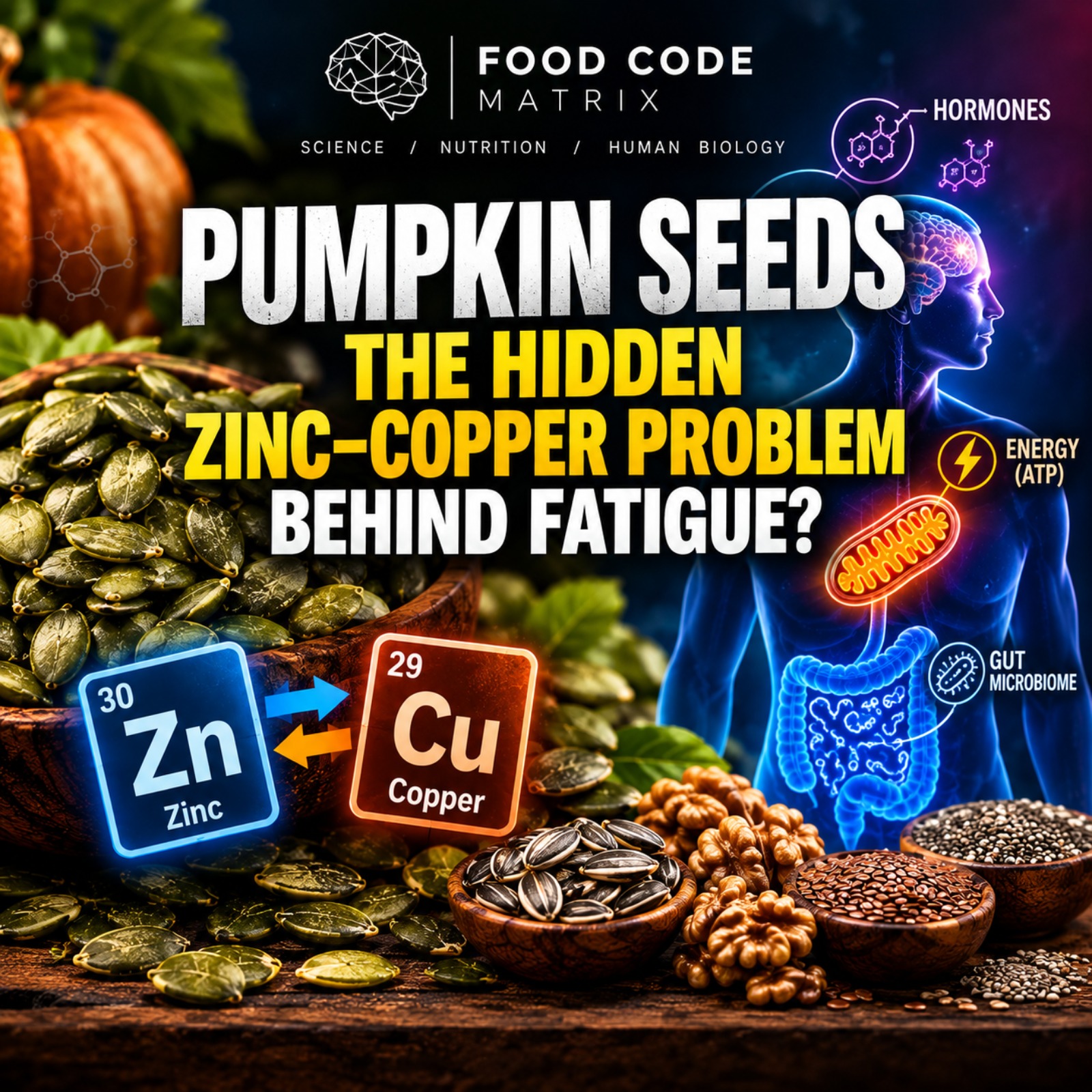 Pumpkin Seeds, Zinc, Copper & the Hidden Biochemistry of Fatigue 23.09.2026 28minHey! I'd love to hear your thoughts, send me a voice note.Pumpkin seeds are often considered one of the healthiest everyday snacks. They are rich in minerals, protein, healthy fats and other bioactive compounds. But could the amount we consume matter more than we think?In this episode of Food Code Matrix, we explore the biochemistry of pumpkin seeds and examine the proposed connections between zinc, copper metabolism, mitochondrial energy production, hormones, plant lignans and the gut microbiome.We begin with the familiar afternoon energy crash and investigate why copper matters for mitochondrial function and cytochrome c oxidase, an essential component of cellular respiration.We then examine zinc–copper interactions, including the role of metallothionein in intestinal mineral metabolism. The discussion moves into the more complex territory of aromatase, testosterone and estrogen metabolism, followed by the metabolism of plant lignans such as secoisolariciresinol and lariciresinol.Finally, we explore the gut microbiome and why people may metabolise the same dietary compounds differently.The practical takeaway is not that pumpkin seeds are inherently “bad”. Instead, the episode asks a broader nutritional question: what happens when a food that is nutrient-dense becomes a repetitive and concentrated part of the diet?We also discuss dietary variety and alternative sources such as sunflower seeds, walnuts, flaxseed and chia seeds.This episode is an educational exploration of nutrition science and biochemical mechanisms. Proposed mechanisms and research findings should not automatically be interpreted as evidence that ordinary pumpkin-seed consumption causes disease or hormonal dysfunction.Topics: • Pumpkin seed nutrition • Zinc and copper metabolism • Metallothionein • Copper and mitochondrial ATP production • Cytochrome c oxidase • Aromatase and hormone metabolism • Plant lignans • Estrogen receptors • Gut microbiome • Nutritional diversity • Food science and human metabolismFood Code Matrix explores the science behind everyday foods, cooking, nutrition, food chemistry and human biology.
 -
 Ayurveda Knew the Truth: Why We Should Never Consume Raw Ginger 22.09.2026 35minHey! I'd love to hear your thoughts, send me a voice note.What if we told you that the fiery, neon-yellow ginger shot you knock back every morning for "health" is actually creating an "acid storm" in your stomach? 🌪️The wellness industry has been selling us the "if it burns, it's working" lie for years. In this episode, we deconstruct the uncomfortable scientific truths behind popular health trends. We dive deep into how raw ginger breaks down the protective barrier in your stomach, and why that beloved burning sensation isn't a sign of detox, but a desperate warning of tissue damage.But should we give up ginger completely? Absolutely not!In This Episode, You Will Learn:🧪 How raw ginger dismantles the protective shield (COX enzymes) in your stomach wall.🔥 Why the burning sensation is a tissue damage alert, not a detox mechanism.🫖 How Traditional Chinese Medicine and Ayurveda have safely used ginger for thousands of years. (Hint: The secret is in the heat!)🌱 The ultimate stomach-friendly, anti-inflammatory alternatives: The magic of Turmeric and Fennel seeds.Don't miss this eye-opening episode that will radically change your morning routine and teach you how to truly listen to your body's biological feedback. If you have a friend who takes a raw ginger shot every morning, share this episode with them immediately to save their stomach! 🎧#GingerShot #GutHealth #WellnessMyths #DigestiveHealth #FunctionalNutrition #Ayurveda #Turmeric #Fennel #HealthPodcast #Biohacking #StomachHealth #WellnessIndustry
 -
 Turning Molecular Biology into Actionable Cooking 20.09.2026 18minHey! I'd love to hear your thoughts, send me a voice note.Turning Molecular Biology into Actionable Cooking 🔬Are you suffering from "optimization anxiety" in the kitchen? This deep-dive episode explores how to translate dense molecular biology into practical, actionable cooking steps without driving yourself crazy.We analyze a comprehensive culinary biology manual and critique its focus on anatomical systems rather than kitchen prep. Discover how to stop viewing your kitchen as a high-stakes medical lab and start practicing true culinary alchemy. We break down crucial temperature thresholds—like why heating broccoli sprouts above 60°C destroys myrosinase, and why cooking wild salmon above 200°C obliterates astaxanthin.Learn how to turn "fatal cooking mistakes" into healthy habits, use visual metaphors like the "seesaw" to balance your zinc and copper intake, and implement a practical seed rotation calendar.Stop stressing over complex medical jargon and start turning molecular biology into actionable cooking today.👇 Subscribe to Food Code Matrix for more culinary alchemy and food science!#foodscience #molecularbiology #biohacking #culinaryalchemy #foodcodematrix #nutritionhacks
 -
 How Kitchen Habits ACTUALLY Sabotage Your Biology 19.09.2026 24minHey! I'd love to hear your thoughts, send me a voice note.How Kitchen Habits ACTUALLY Sabotage Your Biology 🔬You are not what you eat; you are what survives the preparation. Most people completely misunderstand how their daily cooking routines are destroying the molecular benefits of their food.From using an antibacterial mouthwash that kills the bacteria necessary to convert beet juice into blood pressure-lowering nitric oxide, to hard-boiling eggs that oxidize healthy cholesterol into arterial plaque-causing oxysterols, this podcast decodes the biological machinery of your kitchen.Discover why you must wait 10 minutes after crushing garlic to create Allicin, why Dutch-processed dark chocolate loses up to 90% of its brain-boosting flavanols, and the strict 90-minute morning coffee rule to prevent adenosine crashes. Stop eating on autopilot and learn the food science that actually works.⏱️ Chapters: 0:00 You are what survives the preparation 1:30 The mouthwash and beet juice mistake 4:15 Dark chocolate & the Dutch processing scam 7:45 The 10-minute garlic rule for Allicin 12:00 Why green bananas are better for your gut 16:30 The 7-minute egg rule and oxidized cholesterol 21:00 The 90-minute coffee protocol#foodscience #biology #nutritionhacks #kitchenhabits #foodcodematrix #neuroscience
 -
 You Are What SURVIVES the Preparation (Extended Deep Dive) 20.09.2026 1t 2minHey! I'd love to hear your thoughts, send me a voice note.You are not what you eat. You are what survives the preparation.This is the extended, full-length version of the deep dive — just over an hour taking the kitchen apart as a chemistry lab.Nutrition is sold to us as arithmetic. Eat spinach, collect iron, tick the box. In molecular culinary biology that ledger burns. Your ingredients are raw machinery and nothing more. Heat, timing, cutting and pairing decide whether a compound reaches your bloodstream or dies on the board.What we work through:• Garlic and beetroot — and why antibacterial mouthwash can cancel the blood-pressure benefit of beet juice before you swallow it • Coffee and roast level: the neuroprotective compounds burnt off in dark roasting • Ginger, yoghurt and live cultures — what actually survives, and what pasteurisation removes • Broccoli sprouts and turmeric: the activation rules most people get backwards • Extra virgin versus refined "light" olive oil — the peppery burn at the back of your throat IS the active compound, and refining strips it out entirely • Sardines, EPA and DHA, and their effect on platelet behaviour • The quiet disruptors: eggs, and dried fruit carrying a full bunch of grapes' sugar with none of the brakesOne word holds it together: intention. The cleanest groceries on earth are worthless if you boil, scorch or mistime them. Preparation is the intervention.General information only, not medical advice.
Sarnased taskuhäälingud


Populaarne riigis
See taskuhääling on ka nende riikide taskuhäälingute edetabelites.
