
Uncapped: Stories from the Grey Market
krysia
0
Uncapped explores the underground grey market for peptides, research compounds, and the Discord and Telegram communities that operate around it. Each episode combines real events—from chaotic group buys to vendor takedowns—with educational breakdowns, industry interviews, and commentary from people involved in the unregulated trade. The show examines what happens behind the scenes of so-called trusted vendors and how these informal markets function.
Osad
-
 Copyright claims. Trademark threats. Tacky 3D keychains. 03.05.2026 6minJust normal life in this crazy grey market communityIn this episode, I look at another ridiculous corner of the grey market community, where public kit photos can suddenly become a copyright issue, and a petty trademark attempt over the name K-Hole somehow becomes part of the drama.From the JEEP T30 fallout to a completely separate attempt to claim ownership over my server name, K -Hole, this one is less about peptides and more about control, assumptions, and grey market nonsense.Same madness. Nothing dull here.
 -
Krysia's FREE Guide to "Going Grey" 02.05.2026 9minA practical guide to navigating vendors, risk, and uncertainty for those new to this worldThis guide is for anyone trying to crack the grey market for the first time. It’s what I would do if I were starting out now, knowing everything I know today.This episode covers the basics: what to do after joining my servers, how to start reading the market, and how to find a vendor for your very first order.I cover how vendors operate, how to spot red flags in live chats, why a COA is only one piece of the puzzle, and why your first purchase should be treated as a trial run, not a lifetime commitment.There are no shortcuts. You need to be prepared to make some effort, spend some time, and learn how this world actually works before you send money.It's a practical look at how not to get caught out on your first move.Happy Shopping
-
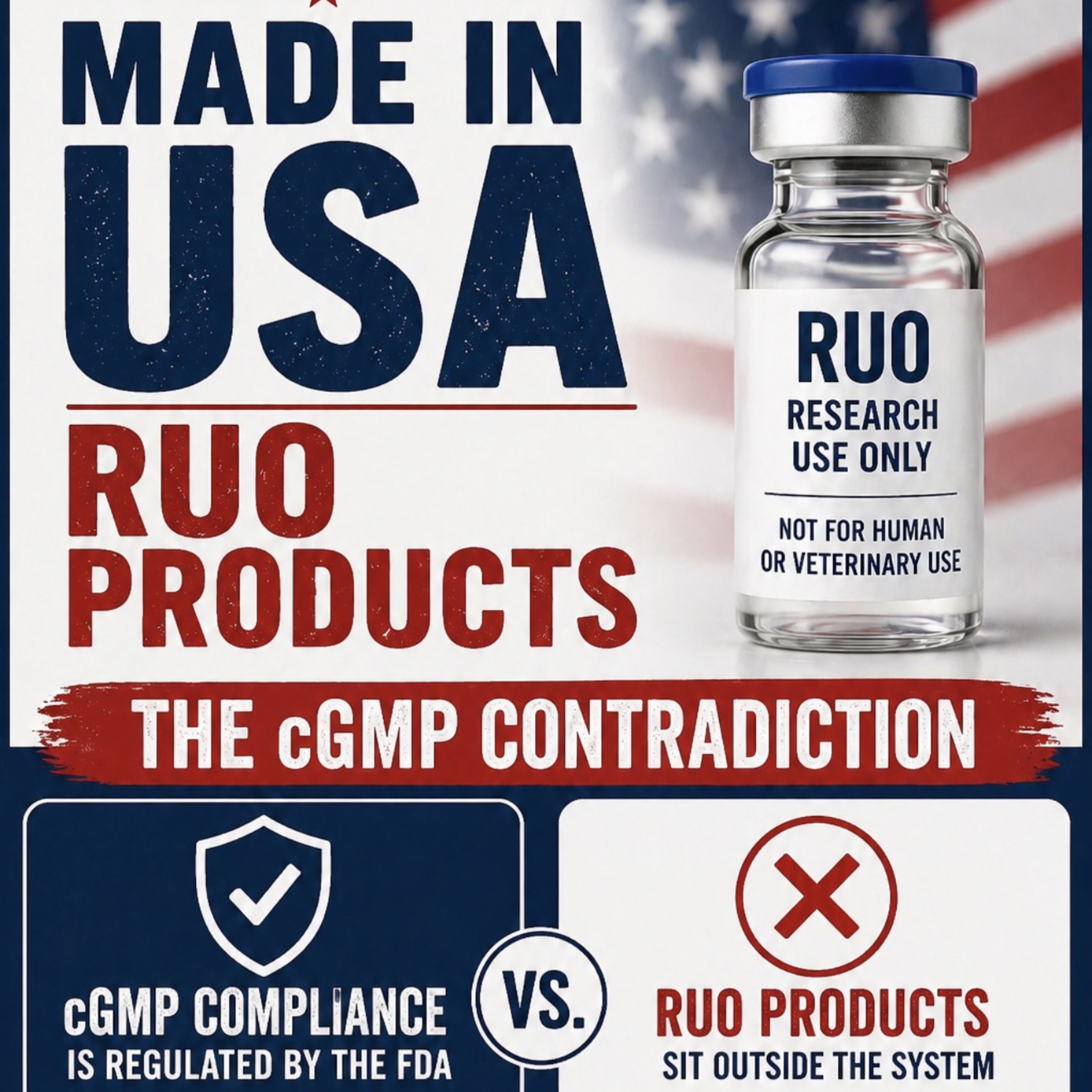 CGMP claims in the RUO Peptide Space 30.04.2026 23minThis episode breaks down what GMP and cGMP actually mean, and why broad cGMP claims on RUO peptide websites should be treated with scepticism.GMP and cGMP are strict quality systems overseen by regulators such as the FDA. They require traceability, documented processes, controlled environments, QA oversight, and inspection. If those controls are missing, the GMP claim falls apart.A major grey-market tactic is confusing API GMP with finished-product GMP. An API certificate may say something about the raw peptide powder, but it does not prove anything about the final vial: filling, lyophilisation, sterility, storage, or batch release.The contradiction becomes sharper when products are labelled Research Use Only while also being marketed as cGMP compliant. RUO products sit outside the drug regulatory framework, while cGMP implies regulated manufacturing controls.A legitimate US cGMP claim should be traceable. At minimum, buyers should be able to ask for the facility name, FEI number, registration status, inspection history, and the scope of what is actually GMP-compliant.Without that, “cGMP compliant” is not evidence. It’s marketing.
 -
 The Phoenix Group Buy Scam; Part 1 06.04.2026 10minHow “seized shipments” turn into second profits and why the same buyers may pay twiceScams are nothing new in the grey market.But this one works a little differently.In this episode, we break down what’s being described as the “Phoenix group buy scam” a pattern where a failed or allegedly failed group buy may not be the end of the story.Instead, it can become the starting point for something else.We walk through how these setups typically unfold:how trust is built inside the communityhow buyers are funnelled into group buyshow delays and shortages are normalisedand how the narrative is already in place before anything goes wrongUsing the Opaline Health & Science case as a real example, Part 1 focuses on the structure, not the outcome.Because the key question isn’t just what happened.It’s how the system was built to begin with.
 -
Friendship in the Grey Zone; Useful until you're not 28.03.2026 5minThis episode explores a side of the grey zone that isn’t talked about enough.Not the peptides. Not the vendors. Not the scams.But the people.Inside tight-knit communities, friendship often comes with conditions. You’re valuable while you’re useful. But when that changes, so does the relationship.From gossip, alt accounts, back stabbing and surveillance… to something more personal, the emotional whiplash of people who feel real, disappear, and then return like nothing happened.This episode is a reflection on hypocrisy, status, loyalty and the shifting terms of friendship in the grey zone
-
 Just another day in the Grey Zone 25.03.2026 7minScams, impersonators, vendor disputes, disappearing chats, and a collaboration offer I definitely wasn’t expecting.This episode is a real-time look at what one day in the grey zone actually looks like for me, narrated in my own voice.
 -
 Vial vs body; Tirzepatide + vitamin B12 22.03.2026 19minWhat really happens when tirzepatide and vitamin B12 are mixed in the same vial?In this deep dive, we break down the science behind Eli Lilly’s recent warning and preprint, which identified a previously unknown tirzepatide–B12 molecular complex in compounded samples, in some cases making up a significant portion of the vial. The analysis also revealed major potency variation, with some products testing far below their labelled strength.But the real question isn’t just what was found, it’s what it actually means.We explore:how and why molecules interact differently in a shared vial vs the human bodywhat Lilly’s analytical data proves, and what it doesn’twhy formulation conditions (pH, concentration, solvent) can drive structural changeand how theoretical risks like aggregation and immunogenicity should be interpretedThis episode separates chemical possibility from clinical reality, and explains why understanding where interactions occur is key to understanding whether they matter at all.
 -
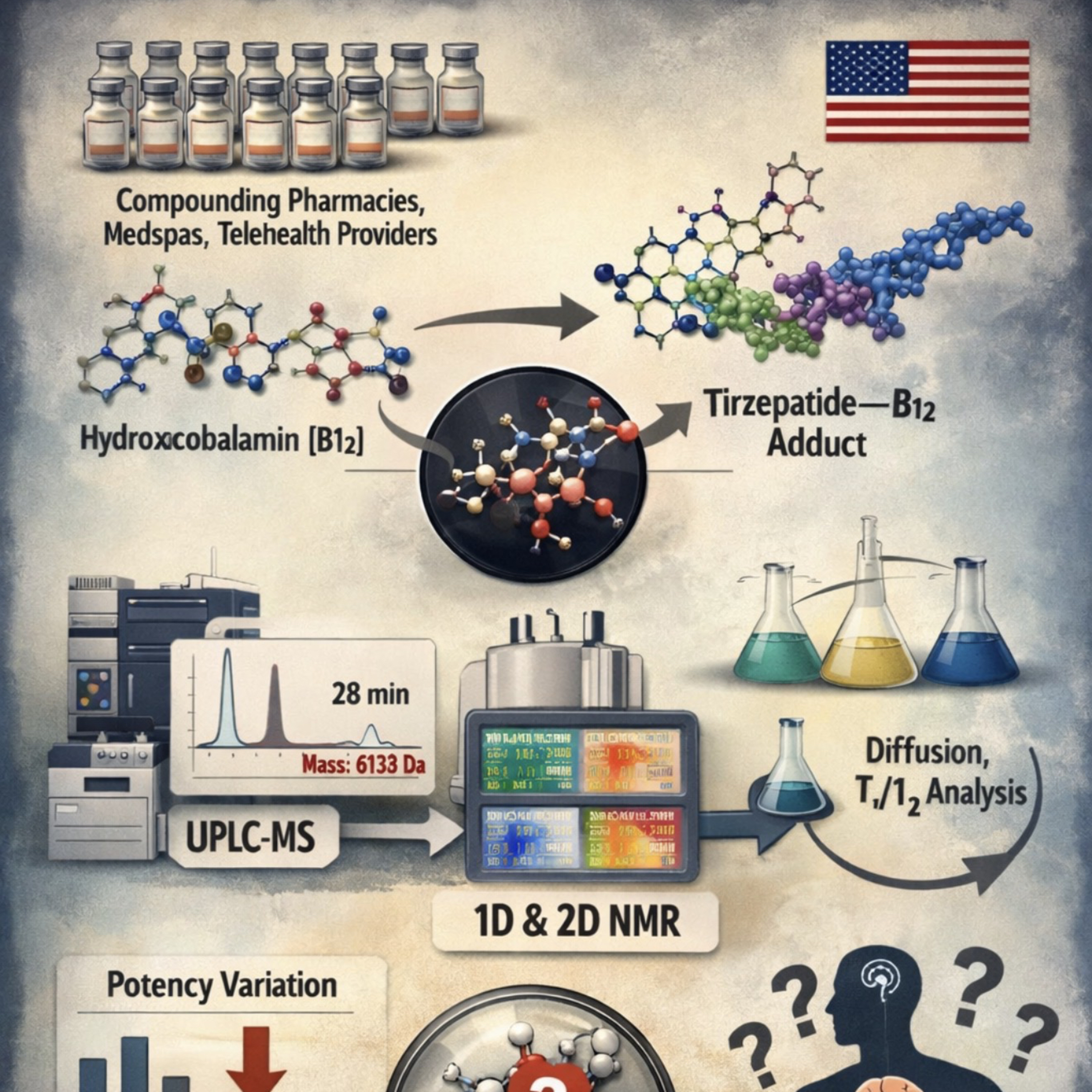 Eli Lilly's Tirzepatide and B12 warning; 20.03.2026 20minWhat their data shows and what it still doesn't explain.What happens when a blockbuster drug meets a common vitamin?In this deep dive, we unpack Eli Lilly’s warning about tirzepatide mixed with vitamin B12, and the science behind the controversy.A newly released preprint shows that when the two are combined, they can form a previously unknown molecular complex, detected in real world samples. Some products were also found to be significantly under strength, raising broader concerns about quality in the secondary market.But while the chemistry is real, the key question remains unanswered:does any of this actually matter for patients?We break down:what Lilly’s data actually proveshow the molecules interact at a structural levelwhy lab findings don’t automatically translate to real-world riskand how this fits into the wider $100B GLP-1 market battleThis isn’t just a story about one drug or one impurity, it’s about the gap between analytical evidence and clinical reality, and what happens when patients are caught in the middle.
 -
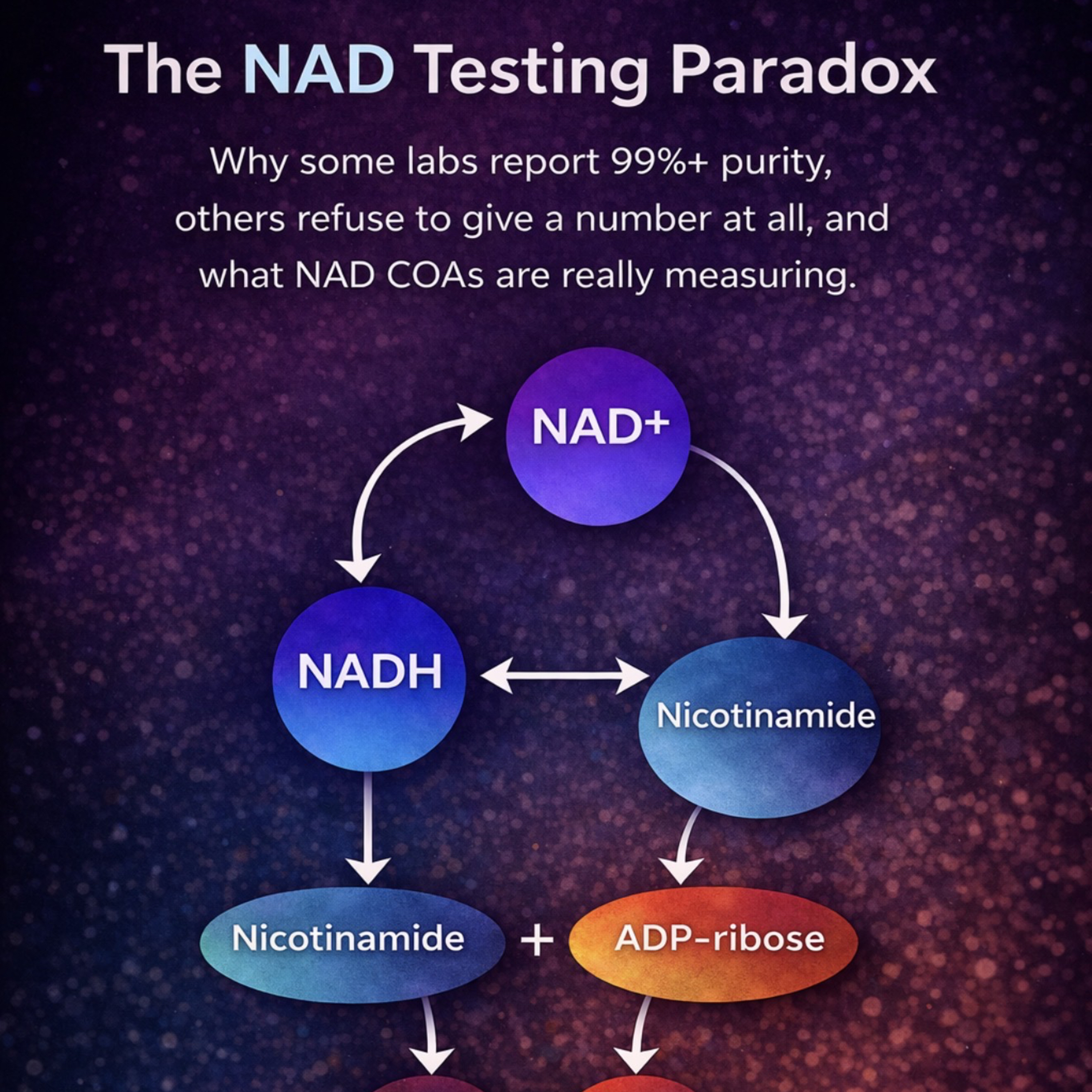 The NAD Testing Paradox 16.03.2026 9minWhy do some labs report 99%+ purity for NAD, while others refuse to give a purity number at all?This episode unpacks what is known as the NAD Testing Paradox.NAD is often analysed using methods designed for peptides, but chemically it behaves very differently. Because NAD naturally breaks down into related molecules like nicotinamide, ADP-ribose, AMP and ADP, purity numbers can sometimes reflect the analytical method used, rather than the actual chemical state of the molecule.Using real COA examples, this episode explores;why peptide style testing can be misleading for NADhow different labs can end up reporting very different numberscases where laboratories even disagreed on the identity of a samplewhat a properly selective NAD testing method actually looks likeThe goal isn’t to criticise labs, but to explain why NAD purity numbers can appear contradictory, and what those results may actually be measuring.
 -
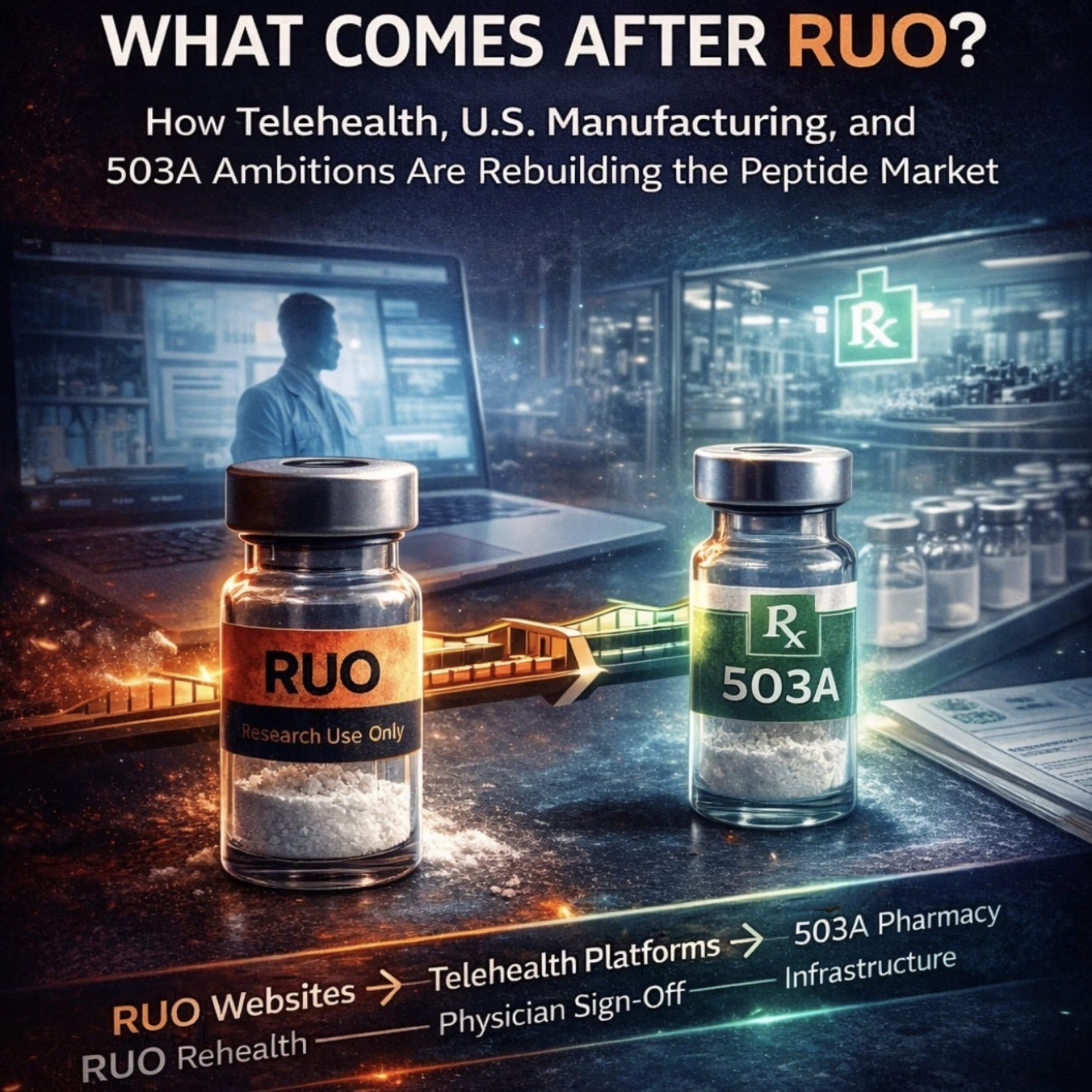 What comes after RUO? 15.03.2026 19minHow Telehealth, US Manufacturing and 503A Ambitions are Rebuilding the Peptide MarketThe peptide market may be moving into a new phase.For years, much of the industry operated through Research Use Only (RUO) websites selling peptides in a legal grey zone. But that model is coming under pressure from payment processors, regulators, and changing mrket expectations.This episode explores what may be replacing it.Rather than a simple shift from RUO vendors to legitimate pharmacies, a more complex infrastructure appears to be emerging: telehealth platforms, physician sign-off models, compounding pharmacies, and even underground U.S. manufacturing operations trying to move toward 503A licensing over time.We break down how clinics created demand for alternative peptide supply, why telehealth has become such an attractive distribution layer, what legitimate sterile compounding actually involves, and why some operators may be using telehealth as a bridge toward a more defensible healthcare structure.The key point is that this is not a clean transition from grey market to regulated pharmacy.It is a hybrid phase in which:some operations are fully licensed pharmaciessome are Telehealth driven prescribing systemssome are clinic facing vendor networks wrapped in physician sign-offand some may be underground U.S. manufacturers trying to acquire the telehealth layer now and the 503A wrapper laterDemand for peptides hasn’t disappeared.What’s changing is the infrastructure through which that demand is served, and who manages to control the next version of the market.
 -
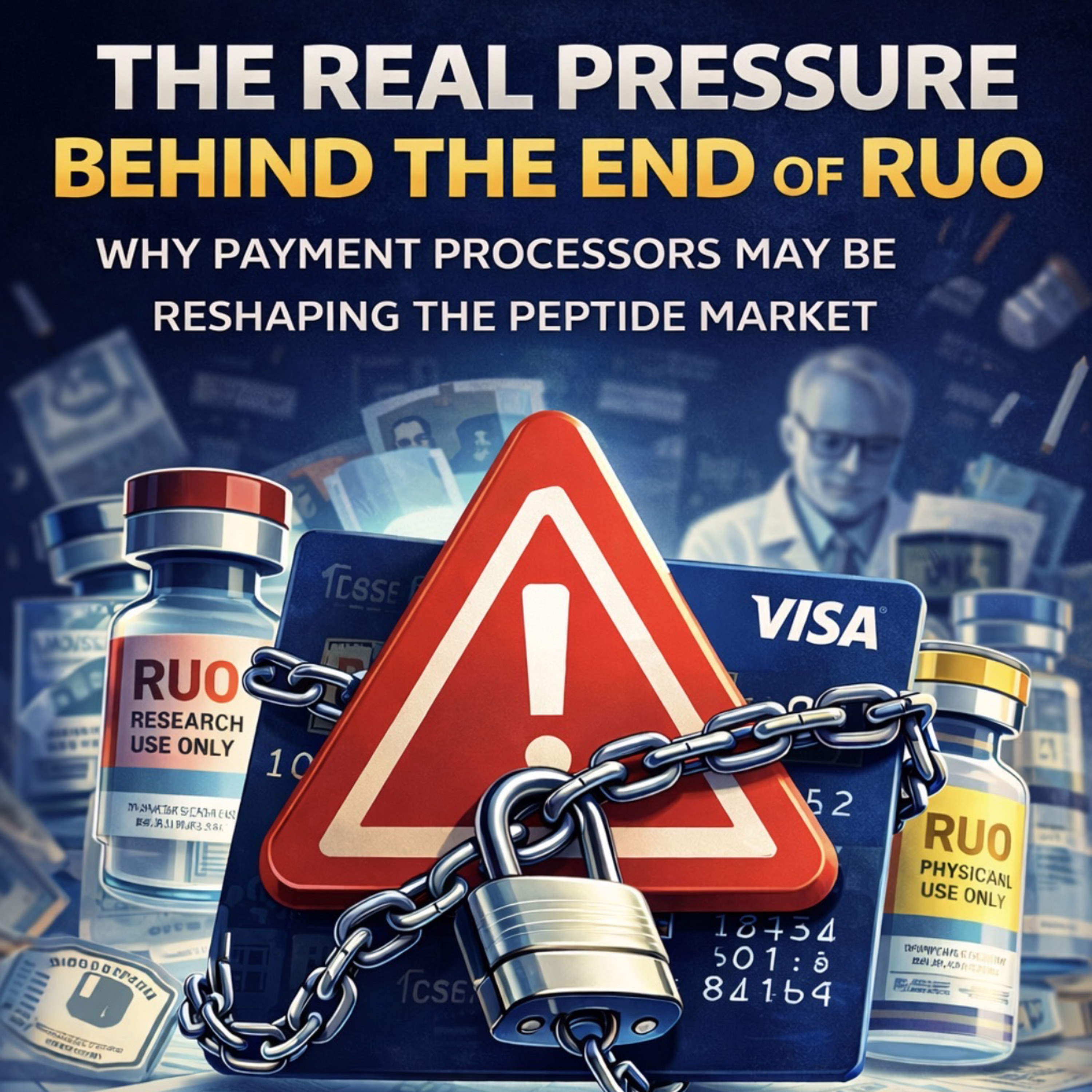 The Real Pressure Behind the end of RUO; The Payment Processors 14.03.2026 23minFor years the grey-market peptide ecosystem operated in a strange legal balance. Products were sold under “Research Use Only” labels while being widely discussed in wellness communities, clinics, and online forums. Regulators knew the contradiction existed, but the system continued to function.So what is actually destabilising the RUO model now?In this episode we look at a factor that rarely gets discussed: payment processors.Behind the scenes, vendors report increasing pressure from banks and card networks. High-risk merchant classifications, rolling reserves, frozen balances, and sudden account shutdowns are becoming common. Some companies now struggle not because they can’t produce peptides, but because they can’t reliably get paid for them.We explore how payment infrastructure is beginning to shape business behaviour across the peptide market. Vendors are experimenting with crypto checkout bridges, limiting sales volumes to avoid scrutiny, or moving toward telehealth and compounding pharmacy partnerships that qualify for healthcare merchant certifications like LegitScript.From this perspective, the shift happening in the peptide industry may not simply be RUO vendors rebranding as PUO or moving toward compounding pharmacies.It may be something more fundamental.The companies that control the rails of money may ultimately decide which peptide business models survive.
 -
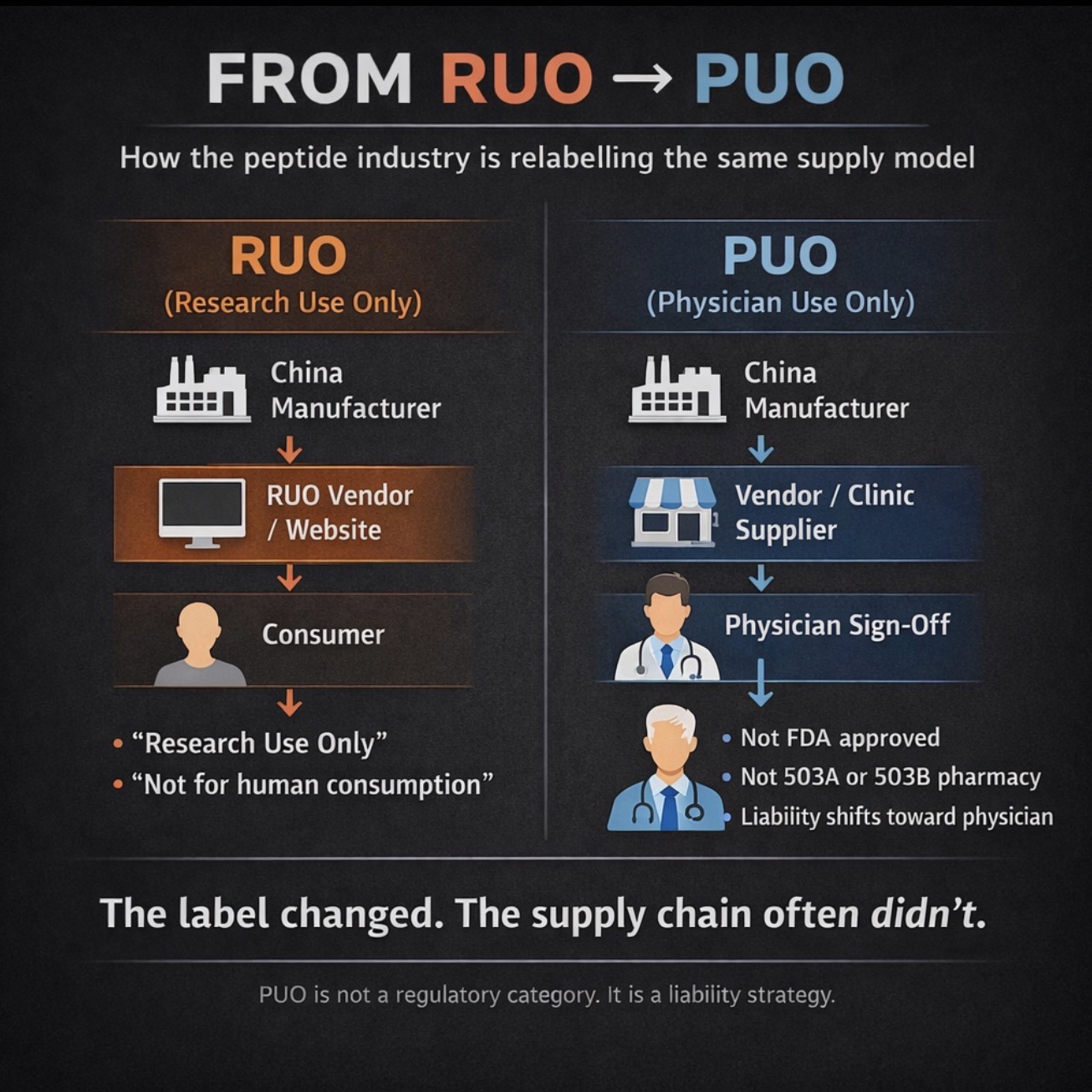 From RUO to PUO; How the peptide industry is relabelling the same supply model 14.03.2026 19minIn this episode we unpack the shift from Research Use Only (RUO) peptides to the emerging Physician Use Only (PUO) label.At first glance, PUO might look like a move toward a more legitimate, physician-driven distribution model. But a closer look suggests something more complex.PUO is not an FDA regulatory category and does not automatically place peptides inside licensed pharmacy frameworks such as 503A or 503B compounding. Instead, it appears to function primarily as a liability repositioning strategy, allowing vendors to distance themselves from direct human use claims while shifting more responsibility toward physicians and clinics.We explore how the original RUO label emerged, why that model began to break down, and how some vendors are now rebranding products for “physician use” while still operating outside formal drug approval pathways.The episode also looks at real examples from companies marketing peptides to clinicians while still including research-use disclaimers , creating a hybrid system where the marketing suggests therapeutic use but the legal framework remains unchanged.The key takeaway: PUO may change the language around peptides, but it does not necessarily change the underlying regulatory structure.And while RUO vendors rebrand, a parallel system built around telehealth and compounding pharmacies may be emerging at the same time.
 -
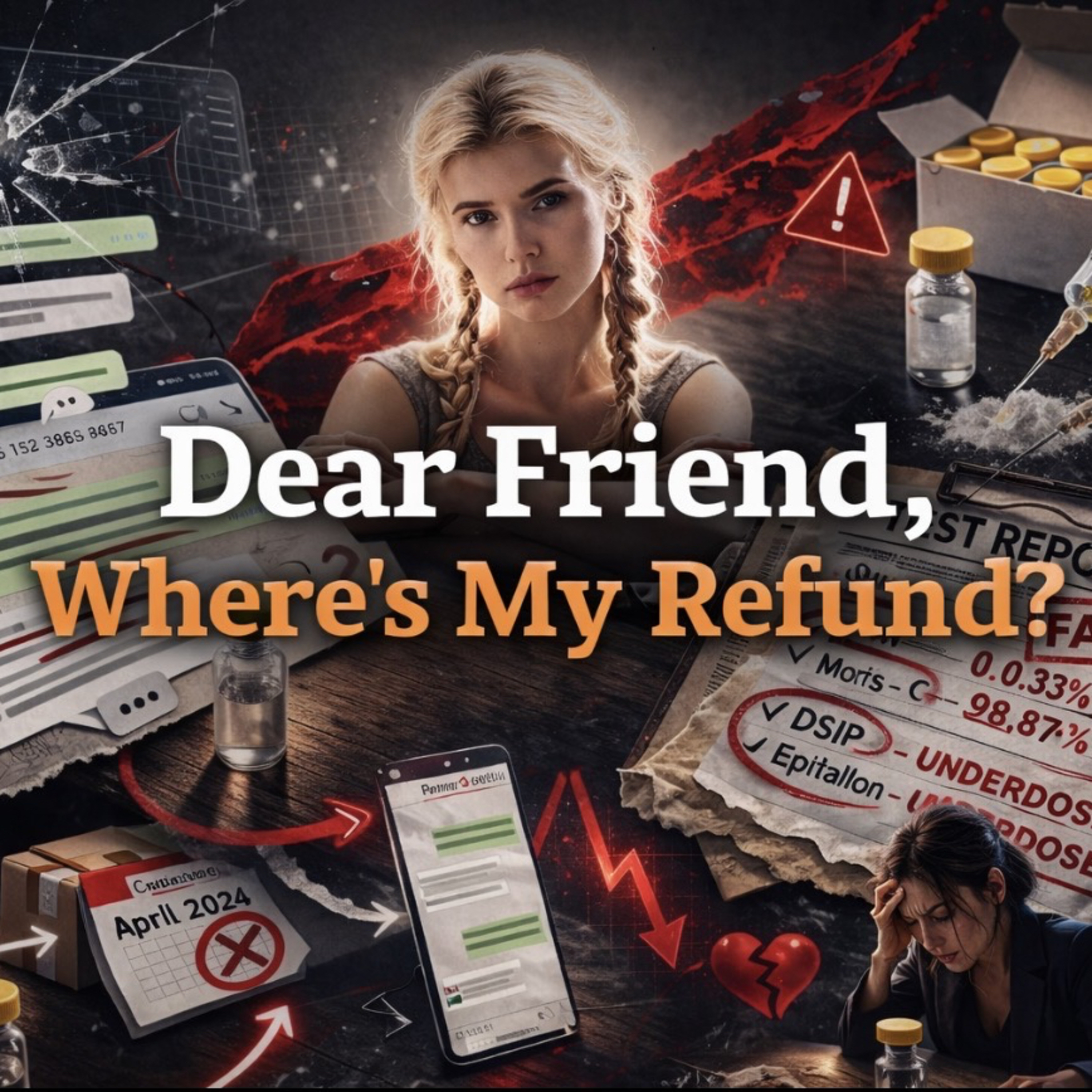 K-Hole Origins; #4; Dear Friend, Where's my Refund 14.03.2026 16minIn this audio version episode of K-Hole Origins: My Road to Grey, I talk about my experience with a vendor known as Cora and how a seemingly normal transaction slowly turned into a lesson in how the grey market actually works.It started in March 2024. Cora approached me warmly, calling me “dear friend,” reassuring me about shipping and reship policies, and sending an Alibaba payment link for tirzepatide. The first order actually arrived, which gave me confidence to place a second, larger order for several peptides.But once testing results came back through PTDS, the picture changed. Multiple products, MOTS-C, DSIP and Epitalon, were under dosed. When I asked for a refund, the conversation shifted into what I now recognise as the classic grey-market script: reassurance, batch excuses, replacement offers instead of refunds, and endless procedural delays.The refund became a negotiation. The amount kept shrinking. I was asked to keep the agreement secret and even asked to delete posts discussing the issue. When the agreed refund still didn’t appear, the process was pushed into complicated Alibaba procedures that never actually resolved anything.In the end, the only thing that worked was a credit-card chargeback.What began with hearts, “dear friend,” and friendly messages ended with a defence letter claiming I was unreasonable and spreading rumours.
 -
 K-Hole Origins #3: When XCE Went Dark 08.03.2026 9minXCE goes dark, panic spreads, and the scramble to replace a dominant vendor begins. In this episode of K-Hole Origins, I share the surreal reality of early group buys, the post-XCE chaos, and the moment I realised the grey market was never just about peptides, it was about power, loyalty, and who fills the vacuum next. 
 -
 K-Hole Origins #2: First Order, First Doubts 08.03.2026 9minIn Episode 2 of K-Hole Origins: My Road to Grey, my first peptide order from China finally arrives. What should have been a straightforward experiment quickly raises doubts and pulls me deeper into the strange dynamics of the grey-market peptide community
 -
 K-Hole Origins #1: From Ozempic to China Direct 08.03.2026 10minIn this episode I share the personal story of how I entered the grey-market peptide world, from early experiences with GLP-1 medications to placing my first direct order from China, the beginning of the journey that eventually led to K-Hole.
 -
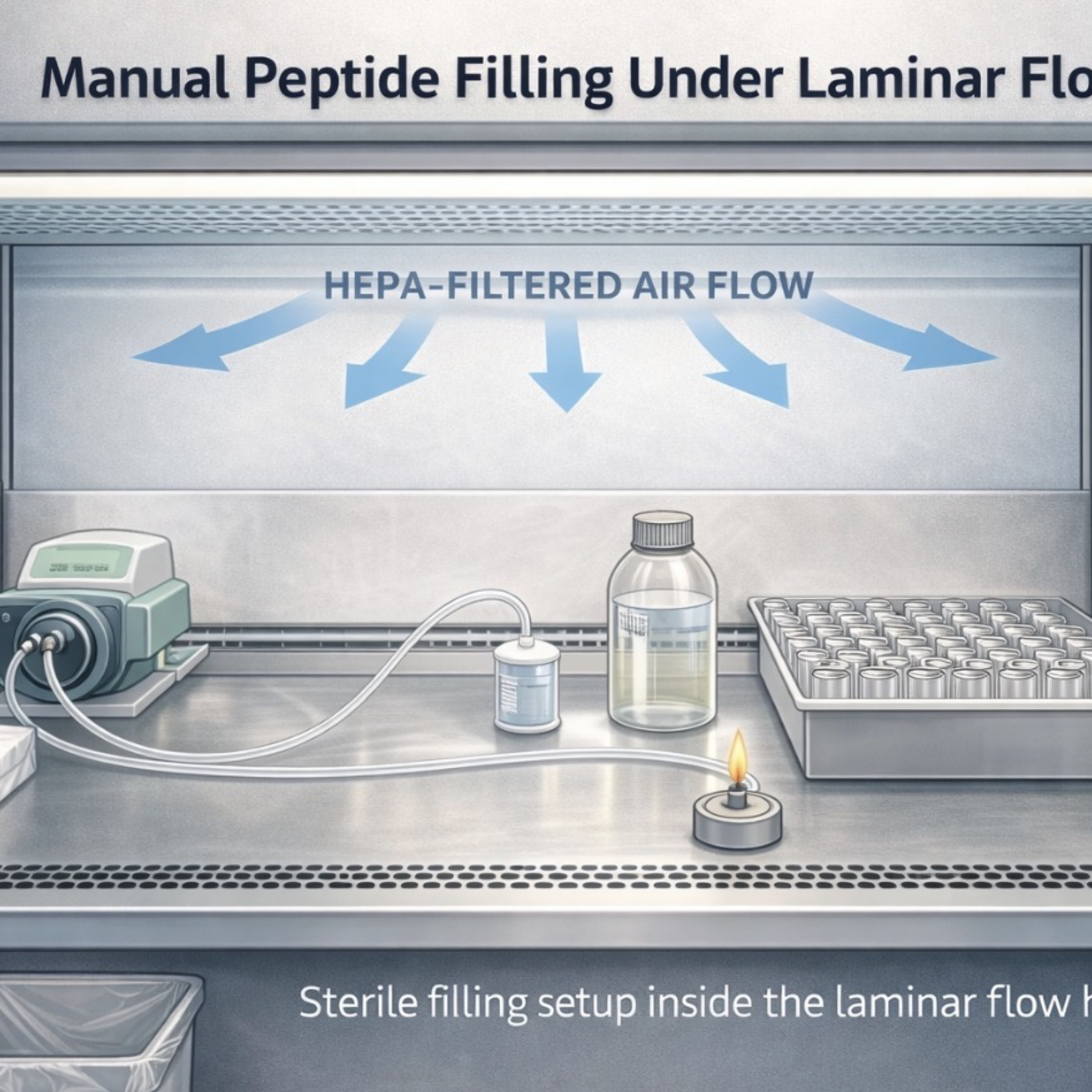 Behind the Vial; Understanding manual peptide filling 08.03.2026 21minThis episode of Behind the Vial explores what happens just before peptides are freeze-dried. It looks at the stage where the peptide is still in liquid solution, covering sterile filtration, solution preparation, peristaltic pump setup, and manual vial filling under laminar airflow. Using real factory footage, the episode shows how the solution is filtered, transferred, and dispensed into vials before moving on to the lyophilisation stage.
 -
 How Grey Market Communities Engineer Reputations 07.03.2026 22minGLP1Forum; Manipulated Labels, Word Filters & BansIn grey-market communities, information and reputation are everything.But what if the reputations people see forming online aren’t as organic as they appear?This piece explores how moderation tools, word filters, bans, and platform design can influence which narratives survive and which disappear.Sometimes rumours spread.Sometimes they’re built directly into the system.
 -
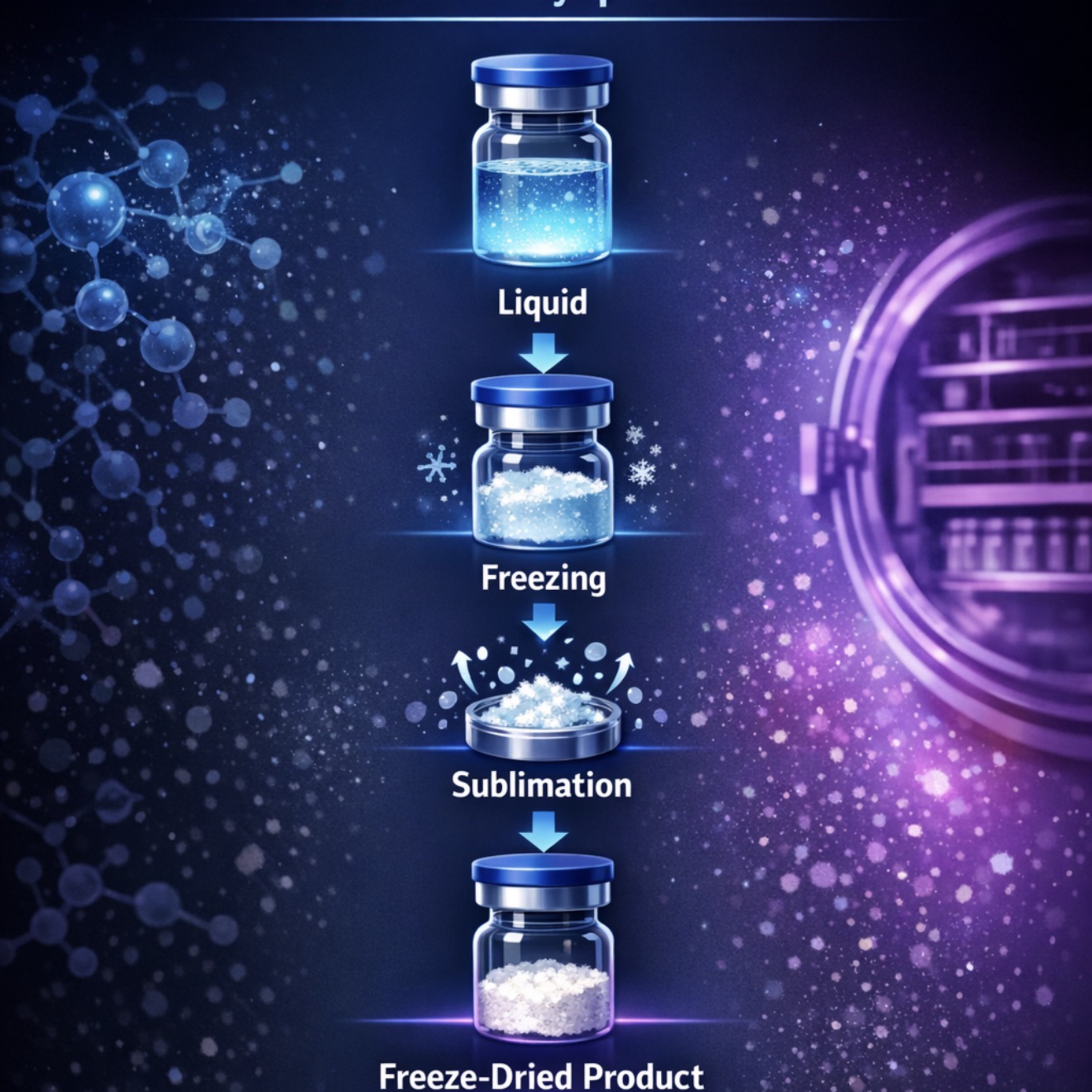 Behind the Vial; Freeze Drying 101; Why Lyophilisation works and what is Sublimation 06.03.2026 18minThis episode explains the lyophilisation process used in peptide manufacturing, showing how liquid formulations are freeze dried to improve stability. It covers the key stages of freezing, primary drying, secondary drying, and final stoppering, and explains how water is removed by sublimation under vacuum. Using real factory footage from Aaron’s Biochemapi facility, the episode walks through what happens inside the freeze dryer and shows how partially stoppered vials become sealed, freeze-dried products.
 -
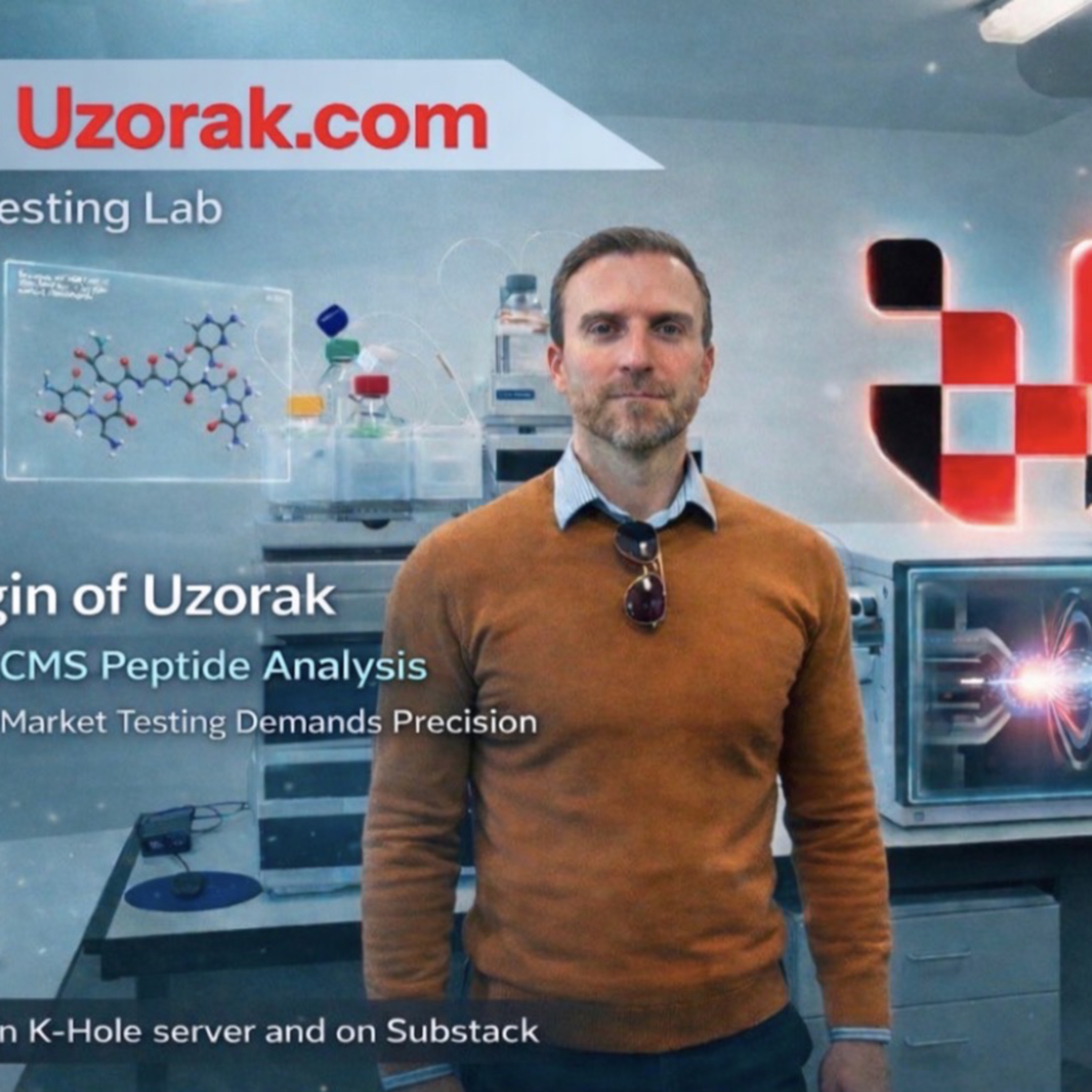 Inside uzorak.com, a peptide testing lab in Zagreb, Croatia 28.02.2026 19minThis is a summary of my interview with Alex, co-founder of Uzorak, a new peptide testing lab based in Zagreb, Croatia, planning to operate globally.Alex comes from a health-tech background, including a DNA analytics company , and says his own peptide research is what pushed him into building a testing lab. His core argument is simple: in an unregulated market, testing standards should be higher, not lower. He believes people are going to use these compounds regardless, so harm reduction starts with better information about what’s actually in the vial.Uzorak’s offering goes beyond the standard “HPLC-UV purity + mass confirmation” COA. Their “Advanced LCMS Peptide Analysis” is positioned as a bundled package: high resolution LC-MS, impurity identification and quantification, MS/MS sequence confirmation, and tandem MS fingerprinting to check for structural damage versus a reference. They also add a scoring model with published weights, purity, potency, and integrity, plus risk triggers, and they separate “alteration” signals like oxidation and deamidation from “hazard” categories like hydrolysis, cleavage, and synthesis residues.One of the big clarifications in the interview is language: “structure” here doesn’t mean 3D protein folding. Alex notes that folding becomes relevant for large biologics like interferon, filgrastim, or erythropoietin, but for GLP-class peptides, they’re focused on identity, sequence integrity, and detectable chemical modification.We also talked about thresholds and risk messaging. Uzorak presents specific warning triggers, and Alex described red-level findings as potentially more serious, while also acknowledging that analytical flags are not the same thing as clinical diagnosis. They are not ISO/IEC 17025 accredited yet, but say they follow many of the principles where applicable. Sterility, endotoxin, and heavy metals aren’t included by default currently, though an ICH Q3D-aligned heavy metals panel is planned.Bottom line: this interview focuses on analytical substance, not surface - level claims. It’s about whether grey market testing evolves beyond a reassuring purity percentage into a more complete picture , what’s in the peak, what’s outside it, what’s degraded, and what the limits of testing still are.www.uzorak.com
Sarnased taskuhäälingud


Populaarne riigis
See taskuhääling on ka nende riikide taskuhäälingute edetabelites.
