
Unstoppable Mindset
Michael Hingson
0
Unstoppable Mindset explores inclusion, diversity, and how people respond to differences and unexpected situations. Host Michael Hingson, a blind World Trade Center survivor and bestselling author, interviews thought leaders about fear, prejudice, and resistance to change. The show examines how our own fears often become the biggest barriers to moving forward. It encourages listeners to confront biases and embrace inclusion.
Osad
-
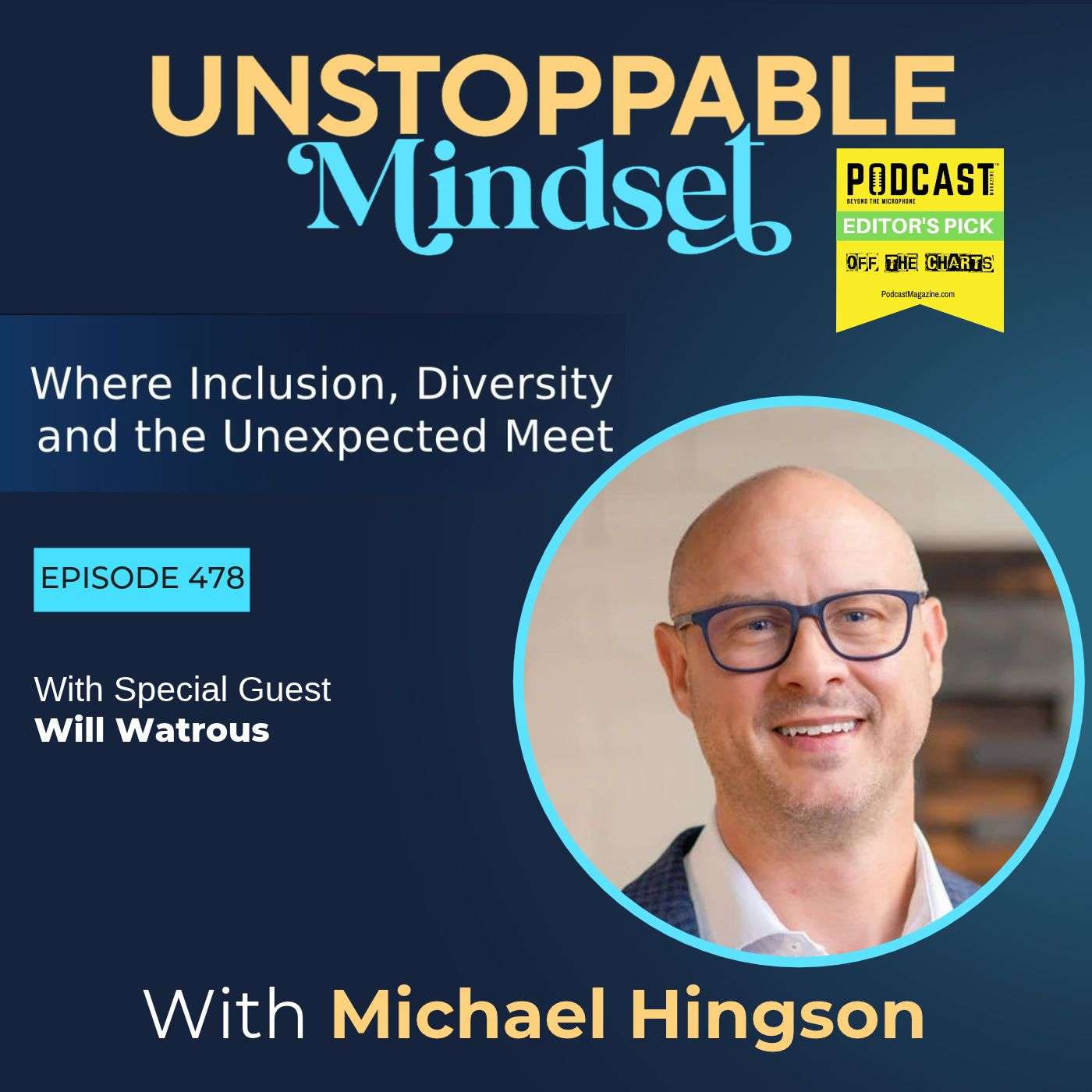 Episode 478 – Unstoppable Leadership: Building Teams That Trust and Deliver with Will Watrous 25.09.2026 1t 2minStrong businesses do not become healthy by accident. They are built through trust, clear leadership, accountability, and a willingness to face problems together. Will Watrous joins me to explore what makes leadership teams work and why so many companies struggle even when good people are involved. Will shares how his own entrepreneurial journey led him from marketing into helping leadership teams use the Entrepreneurial Operating System, or EOS, to create greater vision, traction, and team health. We discuss vulnerability-based trust, productive conflict, accountability, business complexity, data-driven decisions, and why leaders must take responsibility for both what works and what does not. Will also explains why simplicity matters as companies grow, how weekly meetings can keep teams focused, and why leaders need quiet thinking time to gain clarity. You will find practical leadership lessons here for building stronger teams, making better decisions, and creating a healthier business. Highlights: 05:22 How helping one business owner launched Will’s entrepreneurial journey. 11:42 Why strong leadership creates accountability. 15:29 How trust becomes the foundation of healthy teams. 26:20 Why productive conflict leads to better decisions. 40:44 How leaders can reduce complexity as a business grows. 54:04 Why clarity breaks help leaders think and lead better. . About the Guest: Will Watrous is a business owner, EOS Implementer, and advisor to growth-minded leaders in the Tulsa and Broken Arrow area. He works primarily with founders and leadership teams of companies with 10 to 250 employees who want more clarity, discipline, and traction in their organizations. His work centers on helping leaders simplify complexity, make better decisions, and consistently execute on what matters most. As a Certified EOS Implementer, Will guides leadership teams through the Entrepreneurial Operating System, focusing on vision, accountability, data, and healthy team dynamics. He is known for being practical, direct, and grounded in real-world business experience. Clients value his ability to ask hard questions, create focus, and turn strategy into clear priorities that actually get done. Beyond EOS, Will owns and advises multiple businesses, including a marketing company and commercial real estate investments. This firsthand ownership experience shapes how he works with clients. He understands cash flow, hiring decisions, sales challenges, and the pressure leaders face when growth creates complexity. His approach blends structured systems with sound judgment and financial awareness. Will is deeply interested in finance, long-term wealth building, and disciplined execution, both personally and professionally. He values tools, scorecards, and measurable outcomes, but believes strong businesses are ultimately built by healthy, aligned leaders. His Christian worldview influences how he thinks about stewardship, integrity, and responsibility. He lives in the Tulsa area with his wife Jenny and their two children, Eli and Ellie. Outside of work, Will enjoys fitness, hiking, travel, learning, and time with his family. He is driven by helping leaders build organizations that are not only successful, but sustainable and well-run for the long term. Ways to connect with Will**:** LinkedIn: https://www.linkedin.com/in/willwatrous/ Website: https://implementer.eosworldwide.com/will-watrous/ About the Host: Michael Hingson is a New York Times best-selling author, international lecturer, and Chief Vision Officer for accessiBe. Michael, blind since birth, survived the 9/11 attacks with the help of his guide dog Roselle. This story is the subject of his best-selling book, Thunder Dog. Michael gives over 100 presentations around the world each year speaking to influential groups such as Exxon Mobile, AT\&T, Federal Express, Scripps College, Rutgers University, Children’s Hospital, and the American Red Cross just to name a few. He is Ambassador for the National Braille Literacy Campaign for the National Federation of the Blind and also serves as Ambassador for the American Humane Association’s 2012 Hero Dog Awards. https://michaelhingson.com https://www.facebook.com/michael.hingson.author.speaker/ https://twitter.com/mhingson https://www.youtube.com/user/mhingson https://www.linkedin.com/in/michaelhingson/ Thanks for listening! Thanks so much for listening to our podcast! If you enjoyed this episode and think that others could benefit from listening, please share it using the social media buttons on this page. Do you have some feedback or questions about this episode? Leave a comment in the section below! Subscribe to the podcast If you would like to get automatic updates of new podcast episodes, you can subscribe to the podcast on Apple Podcasts or Stitcher. You can subscribe in your favorite podcast app. You can also support our podcast through our tip jar https://tips.pinecast.com/jar/unstoppable-mindset . Leave us an Apple Podcasts review Ratings and reviews from our listeners are extremely valuable to us and greatly appreciated. They help our podcast rank higher on Apple Podcasts, which exposes our show to more awesome listeners like you. If you have a minute, please leave an honest review on Apple Podcasts. Transcription Notes:
 -
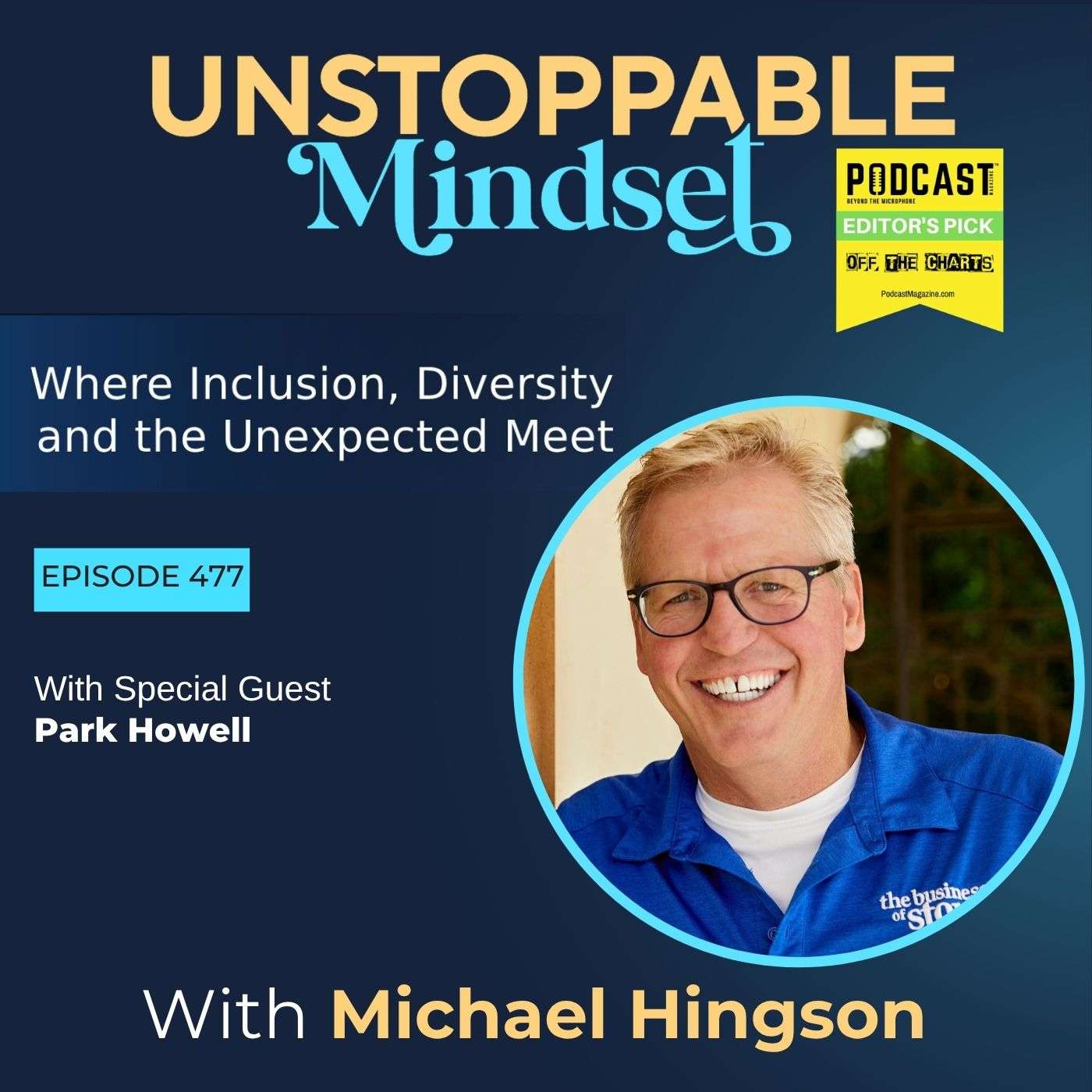 Episode 477 – The Storytelling Framework Behind Unstoppable Brands with Park Howell 22.09.2026 1t 7minA strong story can do more than sell a product. It can change how people see a brand, a problem, and even themselves. I talk with advertising and brand storytelling expert Park Howell about why our brains respond to simple problem-and-solution stories, how trust shapes buying decisions, and why your story should focus on your audience instead of you. Park shares the ABT storytelling framework, lessons from decades in advertising, and how one campaign helped drive major growth for Goodwill. We also explore AI storytelling, brand identity, human creativity, and why the best use of AI still requires a human voice. I believe you will find Park’s ideas useful whether you lead a business, market a brand, speak to audiences, or simply want to communicate with greater impact. Highlights: 01:19 - Why every strong story starts with a problem that needs solving. 14:46 - How shifting the story away from yourself makes it more relevant to your audience. 19:55 - What one advertising campaign taught Park about the power of story structure. 30:25 - How the ABT framework turns a message into a clear, compelling story. 44:39 - How storytelling helped Park make a major career shift at age 55. 53:50 - Why finding key moments in your life can reveal the story worth telling. About the Guest: Park Howell is known as The World's Most Industrious Storyteller, having helped purpose-driven brands grow by as much as 600 percent through the power of strategic narrative. With over 40 years in brand creation, including 20 years running his own advertising agency Park and Co, Park was named Advertising Person of the Year in 2010 by the American Advertising Federation of Metro Phoenix. The following year, his agency was recognized among the Top 10 Impact Companies in Arizona by the Phoenix Chamber of Commerce. Park is an EMMY Award-winning storytelling strategist and the founder of the Business of Story, a proven platform based on his 10-step Story Cycle System to clarify your story, amplify your impact, and simplify your life. His popular weekly Business of Story podcast is ranked among the top 10 percent of downloaded podcasts worldwide, and Feedspot.com named it the number one business storytelling podcast for 2022. In 2020, Park published Brand Bewitchery: How to Wield the Story Cycle System to Craft Spellbinding Stories for Your Brand, which teaches readers how to use three proven narrative frameworks to captivate audiences and convert customers. He followed this with The Narrative Gym for Business in 2021, a practical 75-page guide on using the ABT framework—And, But, Therefore—to make all business communications compelling and persuasive. Most recently, Park launched the StoryCycle Genie, an AI-powered platform that helps business leaders craft lucrative brand story strategies in minutes rather than months, using his proven Story Cycle System that has grown brands by as much as 600 percent. The platform democratizes strategic storytelling expertise, making it accessible to businesses of all sizes. Park consults, teaches, coaches, and speaks internationally, having guided hundreds of brands and developed thousands of leaders in organizations including Dell, The Home Depot, Hilton, Cummins, Walgreens, Banner Health, and the United States Air Force. A graduate of Washington State University, he combines his degrees in communications and music composition to help leaders excel through the stories they tell. Ways to connect with Park**:** StoryCycle Genie™ Linkedin.com/in/ParkHowell Twitter.com/ParkHowell Facebook.com/Park.Howell Instagram.com/ParkHowell YouTube/BusinessOfStory The Business of Story About the Host: Michael Hingson is a New York Times best-selling author, international lecturer, and Chief Vision Officer for accessiBe. Michael, blind since birth, survived the 9/11 attacks with the help of his guide dog Roselle. This story is the subject of his best-selling book, Thunder Dog. Michael gives over 100 presentations around the world each year speaking to influential groups such as Exxon Mobile, AT\&T, Federal Express, Scripps College, Rutgers University, Children’s Hospital, and the American Red Cross just to name a few. He is Ambassador for the National Braille Literacy Campaign for the National Federation of the Blind and also serves as Ambassador for the American Humane Association’s 2012 Hero Dog Awards. https://michaelhingson.com https://www.facebook.com/michael.hingson.author.speaker/ https://twitter.com/mhingson https://www.youtube.com/user/mhingson https://www.linkedin.com/in/michaelhingson/ Thanks for listening! Thanks so much for listening to our podcast! If you enjoyed this episode and think that others could benefit from listening, please share it using the social media buttons on this page. Do you have some feedback or questions about this episode? Leave a comment in the section below! Subscribe to the podcast If you would like to get automatic updates of new podcast episodes, you can subscribe to the podcast on Apple Podcasts or Stitcher. You can subscribe in your favorite podcast app. You can also support our podcast through our tip jar https://tips.pinecast.com/jar/unstoppable-mindset . Leave us an Apple Podcasts review Ratings and reviews from our listeners are extremely valuable to us and greatly appreciated. They help our podcast rank higher on Apple Podcasts, which exposes our show to more awesome listeners like you. If you have a minute, please leave an honest review on Apple Podcasts. Transcription Notes: Michael Hingson 00:04 What if the biggest thing holding you back isn't what's in front of you, but rather what you believe? Welcome to Unstoppable Mindset, where inclusion, diversity, and the unexpected meet. I'm your host, Michael Hingson, speaker, author, and advocate for inclusion and possibilities. This podcast explores how the beliefs we carry shape the way we live, lead, and connect with others. Each week, I talk with people who challenge assumptions, face adversity head-on, and show what's possible when we choose curiosity over fear. Together, we focus on mindset, resilience, and the small shifts that lead to meaningful change. Let's get started. Hi, everybody! Wherever you happen to be welcome to another episode of Unstoppable Mindset. I am your host Mike Hingson, and our guest today is Park Howell, who has been in advertising for quite a number of years. So he's going to talk about a lot of that kind of stuff, and I think it'll be fascinating. He's been Advertiser of the Year in the Arizona area, and he's just done a lot of different kinds of things over the years that will be interesting to hear about. I suspect that you'll all find what he has to say pretty fascinating, and he has done a lot with helping people and companies improve their brands, as you'll see. Anyway, I'm not going to give it away. Where would the fun be in that? So, Park, welcome to Unstoppable Mindset. We're glad you're here. Well, Mike, thank you so much for having me. It's a true honor. Well, thank you. I'm I'm honored that you're you're here as well. Well, why don't we start? I'm I'm going to start. I usually like to start by asking people to talk about their their kind of early life, and I'll do that in a minute. But I want to start with something else. What is advertising? I'll ask for an opening question. Park Howell 02:08 The desperate act of selling something. How about that? It if you've got you know if you're going to sell something out there, you got to let the world know what that is. Of course, I had a mentor of mine, Sandy Peterson, when I was just growing up in the ad world, and he often said to me, "He said, 'Hey, Park, even 2000 year old churches ring their bells every Sunday morning to let their people know that the doors are open, and that to me is advertising that you've got to be able to communicate and tell stories, share stories about your brand and your world that connects from your target audience's point of view to solve a problem they have. You know, every story is about a problem. Without a problem, without conflict, you have no story, and that is the essentials of advertising: is what is the problem you are solving for whom, and how do you do it better than anyone else? Yeah, and I think the the key to that is stories, and and so many people just don't understand why storytelling and having stories is such an integral and important part of everything that we do. Yeah, well, if you think about it, you know everyone is is fearing this existential crisis of AI, the most remarkable technology our brilliant brains have been able to create. But if you think about it, and you go back 75,000 years when our ancestors were navigating and surviving the savanna. They were using the technology of storytelling in the way of rebel storytelling, cave paintings, and so forth, to be able to not just evolve but become you know the Homo sapiens storytelling apes we are today. So that particular structure, that technology of storytelling, speaks specifically to our very primal limbic brain, where all of our real decisions are being made, and that brain has not changed appreciably in 75,000 years, even though our neurofrontal cortex has enabling us to create what we have today in technology, and that's why I get asked this a lot. You know, they'll say, "How is AI changing storytelling? And I said, "Well, it's not. Storytelling is fundamentally the same. It is changing the storyteller and how we share those stories with the world. And I think we need to be careful with AI because right now we're sort of on a cusp. So part of AI can be very accurate. Sometimes it's not, but the reality is that AI is not going to replace the human being storyteller and. Michael Hingson 05:00 So it's really important that although we can use AI to help, we still have to be the ones that are in charge and tell the stories. Park Howell 05:08 Well, the fundamental structures or algorithms of storytelling are the exact same as they always have been: setup, problem resolution. That is your, you know, Kurt Vonnegut, famous American writer, said, you know, a story is about a man falls in a hole, a man gets out of a hole. It needn't be about a man, and it needn't be about a hole. People love that story. Yeah, that is so true. So that's something that is innate in us human beings. You can certainly teach, and we have AI how to use those frameworks, but AI can never replace the actual human experience that you're talking about. Michael Hingson 05:50 How often do we refer to the TV show Lassie, and everybody keeps thinking that sometime Timmy fell into the well, and he never did once, Park Howell 06:00 and Lassie was there to pull them out, right? Yeah, Michael Hingson 06:03 but but Timmy never did fall in the well. But anyway, whatever. Well, well, Park Howell 06:08 Mike, our our brains are problem solution brains. I mean, again, that primal limbic brain of ours is all about survival. That is our survival center, and whenever we're buying anything, it yeah, a lot of times it's driven by ego. But emotionally, first and foremost, it's driven by what problem are you solving? How are you going to help me survive this problem and get me out of this mess faster than anyone else? Just the other day, went in for a haircut. My hair was atrocious. The longer it got, the worse my original haircut was, and I had a problem. And I went in and sat with a young guy by the name of Ray down at V's Barber Shop in North Phoenix, and in you know in under 30 minutes he got me cleaned up, looking my best again, and he solved a basic primal problem. I want to look good. I want to be socially acceptable. I don't want to look like a jerk. That's the problem solution dynamic, right? It Michael Hingson 07:09 is. You know, one of the most interesting and compelling stories I can think of, and I think people mostly forget about it today, but was back in the early 1980s when we had the Tylenol crisis, when somebody planted cyanide in one bottle of Tylenol in a restaurant in a in a drugstore, and the thing that that happened was that within like a day, the president of the the company that manufactured Tylenol went on the air in public and said, "We are going to pull every bottle of Tylenol off the shelves until we verify that there are no other problem bottles of Tylenol. And by doing that, I mean he first of all he he taught us a basic business lesson that we really ought to take more to heart, which is you confront problems and you are very upfront with with the with the problem and what you're going to do. But it was just such a compelling thing that he did. He said that, and then they did, and eventually, then of course everything went away, and because there were no other bottles, but still, he just he handled it in such an incredible what an incredible way! What a what a great feat of advertising, if you will. Park Howell 08:31 Well, Mike, if we don't have trust with our target audiences, then we have nothing. Yeah, and so yeah, they had a major problem of trust when that happened, it wasn't their fault necessarily. Some lunatic planted that, but the fact that they didn't have you know secure caps and so forth, it revealed a problem in the industry. But he was very smart in taking immediate action and doing what he did to help maintain that trust for Tylenol, and hopefully build on that trust over time. That we are here for you, and we will protect you in every possible way we can, Michael Hingson 09:09 because that's who we are. And and of course, it did lead to changes. Now we do have more secure caps and and other things like that. So there were changes in the industry. It's unfortunate that they had to happen, but understand it, and so we now have what we have. But but it still is just kind of one of the most dramatic business cases and and if you will advertising cases that I can think of. Park Howell 09:36 Well, it's interesting too because it underscores a fundamental way we storytelling Homo sapiens make sense to the world, and we will tend to remain in status quo as the over-the-counter pain reliever industry was, and not securing those caps because they never had a problem. So why change them? They never anticipated that to be a problem, and then what happened? A problem happened. You know, a big hole. This, you know, Tylenol fell in, as did the entire industry, and that's what shakes people out of status quo. Status quo will kill us faster than anything if we are not continuing to evolve and move forward. Michael Hingson 10:16 No one anticipated that there would be a group of people who would deliberately fly fully loaded with jet fuel airplanes into the World Trade Center until it happened, and I still, having read all the reports, I am not at all convinced that we would have been able to figure it out, even if every government department was communicating together, which they still don't know how to do, but the bottom line is that we didn't anticipate it. We did make buildings that were flexible. We did a lot. I think we did all that we could do at the time, but by the same token, nobody anticipated it until a bunch of people got together and worked and and did what they did and brought the world almost to its knees, and and I hate to say it, but I talk about trust and teamwork a lot, and talk about teamwork. The 19 hijackers kept their mouths shut. They they did what they set out to do to a large degree, although I don't even know whether they thought that they were going to cause the buildings to collapse. But still, they they did what they did, and it also has caused so many other positive things to happen since. But nevertheless, again, nobody thought it was going to happen, and so we had the situation that we had, yep, yep, that's exactly right. And I mean, you lived through it, thank God. But boy, being right in the heart of all of that, what an impact it had on your life! It certainly caused me to to change what I do. So now, instead of selling computer hardware and managing a hardware sales team, as I tell people I get to sell life and philosophy and and travel the world and be a keynote speaker and it's a lot of fun and it's not the and it's not the story of getting out of the World Trade Center nearly as much as it is the story of how I got there all the things that led up to it and the things that I learned that allowed me to be able to survive getting out of the World Trade Center, and unfortunately, one of the the challenges that that I continue and blind people in general continue to face is that sighted people think that you're less of a person if you can't see, and it is really a challenge to get people to recognize that's not true, and you're really misassessing the situation. But it is what we face. Park Howell 12:45 Yeah, no doubt. And you are a great voice and advocate for your community to go and demonstrate that to people. It's like, all right, so I've lost my sight, but now let me re, you know, reframe my life and my message to the world, or just look at the impact you're having on people. Michael Hingson 13:02 Well, and and you know the reality is, I was I've been blind my whole life, and and the the the idea is that it is important that we learn that blindness isn't the problem; it's the misconceptions that so many of us face at the hands of others that that tends to be the real difficulty. So we ought to maybe get your help to do better advertising. I don't know. We'll have to see. Well, tell us a little about. I will go back to it now. Tell us a little about kind of the early part, growing up and all that. Park Howell 13:30 Yeah, I grew up in the Seattle area, just north of Seattle, in a place called Bothell Woodenville area. Ah, one of seven kids, and we were all born within nine years of each other, so we were quite a pack of of crazed Northwesterner little kids. We had a lot of fun. Great parents took us on lots of adventures and always encouraged us to do what we always wanted to do. And one of the things I wanted to do at a very young age was learn how to play the piano because my grandmother Mabel, who played the piano like nobody's business, and it just always blew me away, and so they gave me piano lessons, and I, as a little kid, just started writing these little ditties, these little songs, and whatever, and kept writing more of them, and just had fun with it. Ended up getting a degree in music composition in theory, but figuring Mike that I probably starved to death as a composer. At the same time, I also got a degree in marketing in you know communications, and it's really you know blessed me. My whole musical background has played a very important role in me over my 40 years in the branding world on writing, finding the theme to a brand story, introducing interesting characters and twists to the plot that you do in music writing, just as you do in storytelling. And here I am, you know, 40 years later, I ran my own ad agency for 20 years in Phoenix, but. I pivoted away from that 2016 just to simply coach, speak, and teach people leaders how to use stories to have the impact in the world that they want. So I find it ironic. I come full circle where I studied music composition in theory, and now I teach brand storytelling composition in theory, wow, and and clearly it is it's a it's an interesting challenge. Do you find many people who, at least at first, resist this whole concept of telling stories that they're just not used to it and they resist it? Not as much anymore, and a lot of people will ask me, you know, how do you sell people on storytelling? And I tell them I don't. The people that hire me are already sold on story. They know how powerful it is. They just don't know how to do it. And when I come in and find someone very resistant to storytelling and whatever, I'm like I respect that. That's cool. Keep doing your features lists and your you know functions lists and that sort of thing, and see where it gets you. Because Mike, one of the two true story truths that I talk about is number one is your story is not about you. It's always about your audience and what's in it for damage. Story truth number two is your story is not about what you make, but what you make happen in people's lives. So those that are resistant to storytelling are focused on themselves and communicating about what they make, and just assume you will arrive at the marvelous conclusion that gee, what you make is for me, where storytelling is what you make happen, and that word happen is so important because it speaks to the outcomes, the activity, the momentum of the story that you tell that that describes the impact you have on them, and I think you said something that's really key. It's not about you; it's about what you make happen, and and it's about the audience. I know as a speaker, I learned really early on, fortunately, that it's not about me, and that's also partly why I say it's not so much about escaping from the World Trade Center, it's all the other things that that led up to it and have happened since. But it isn't about me as a speaker. It's about Michael Hingson 17:30 what I do to connect with the audience and what the audience needs from me. And I have to learn that so that I can best tell my story in a way that will be relevant to Park Howell 17:42 them. Yeah, Mike. One of the best pieces of advice I ever got is if you are speaking, and before your presentation could be to a small group of people, could be a large auditorium. If you are really stressed out, freaked out, major butterflies. A few butterflies are normal to keep you on your toes, but if you are really stressing out, it's because your ego has taken over and you're making that presentation about you. As soon as you make that shift to say, no matter what happens on that stage, if I totally forget where I am, if I fall off the front of the stage, if I go into a coughing attack, it doesn't matter because I am in service to them. As long as I can impart wisdom to my audience that they can leave with at least one takeaway, then that makes all the difference. Your your butterflies go away, and you're like, I'm just here to help. Michael Hingson 18:36 And and that's exactly right. And I tell that to people when I'm discussing coming to to speak at events for them, is it's not about me. My job is to be a guest, to be a servant, and I need you to tell me the kind of messaging that you need if you have anything like that, and we'll put it together. But I'm here to do what you need to make your conference more successful than it might otherwise be, and that's that's my job, and I can do that, and I know I can do that because I know how people react to the story, and the reason I love to give in-person presentations more than virtual presentations is that when I'm telling the whole story, including growing up and all that, I've learned how audiences typically react to different things that I Park Howell 19:30 say, and if I'm not hearing the reactions that I expect, then I have to change something around to deal with it because I want to draw them in. But at the same time, I I do know that typically audiences are interested in what I have to say, and as long as I make that interesting for them, then we're good. Yeah, without a doubt, and you know it goes back to even your first question about what. Is advertising. Advertising is that storytelling that you make it about your audience, whether they're reading a Facebook ad, or watching a TV commercial, or listening to a radio commercial, or reading a white paper that you wrote. If you take the approach of making it about them, and I've got a framework, I'd be happy to share with you and your audience on how to do that, then the impact of all of your communications goes through the roof. If Speaker 1 20:32 you enjoy Unstoppable Mindset and would like to help us continue bringing these conversations to you each week, we've created a way for you to support the show, your contribution helps us cover production costs and continue sharing stories, insights, and ideas that inspire people to live with purpose and possibility. If supporting the podcast feels right for you, you'll find the link in the show notes. Thank you for being part of the Unstoppable Mindset community. Michael Hingson 21:04 When did you realize? Was there a moment that you kind of had this aha moment that said storytelling is wasn't just a creative technique, but was really part of the whole fundamental process? Park Howell 21:17 Yeah, it you know something that I had thought about early in my career, I just was intuitive about it, innate, and all the great ads I loved always had story. But I never thought to myself, "Boy, that's a great story. I think that's a great ad. And something happened in 2003 when I was running my ad agency, Park and Co. in Phoenix. We were working with Goodwill. Now, Goodwill Industries-they're a bunch of franchises all around the country-and we were working with the Phoenix franchise. They had 24 stores at the time. It was a big account. They were going to spend spend well over a million dollars with us to help them with their marketing. And we went out, we toured all their stores, and we said the first things you need to do is clean it up. It just they don't smell great. You got to have more inventory out there before you do any marketing. Get your operations together, and they were smart. They listened to us and they did. And then we created an advertising 32nd commercial campaign. Two spots in that campaign. One of them polled unbelievably well, Mike. I mean, same store sales a month after the campaign started running went up 42% with this one commercial in the campaign. The second commercial in the campaign didn't poll at all. It just didn't work. It fell flat, and I sat there at my agency, scratching my head, and said, "Why did this ad work so well, and this other one, Buckus, got nothing out of? In fact, the very first ad we created, we won an Emmy award for because it was so well produced and worked so well. Well, when I started studying true story architecture and storytelling, I'm like, oh my goodness! That first spot is a perfect setup, problem resolution story. We had fun with it, kind of you know sharing a real world experience. And in fact, the goodwill said you were you were telling the story that we feel like you were going to be making fun of our customers when in reality we weren't. We were calling them out. We were saying, "Listen, we know you're a closet shopper, and you might even be embarrassed to shop at Goodwill to go and find your treasures, but don't let that stop you. That played and pulled in. You know, increased sales by 42% The other one was just kind of this creative, clever spot that we were very proud of as an agency, but it never ever landed with our audience because it wasn't speaking to them, nor did it follow a story structure. Now, again, that first one was just an intuitive, innate story structure in there, and when I started studying it, I'm going. Oh, let's follow this structure with all of our commercials, you know, all of our work moving forward. And then I did a deep dive with Hollywood to truly understand why does this structure work in our human brains. And when I started studying, then that took over my life. I was so fascinated by it. Again, I think it was my music composition theory background where I was fascinated as to why does music work on us and what are the algorithms that work better than others. That I was now enthralled with storytelling. What are the algorithms, the story structures that work better than anyone else. That was my awakening back then. Michael Hingson 24:45 What have you discovered about storytelling that traditional advertising doesn't do? That has in turn made you so successful. I think you're kind of alluding to it, but I gather that what you do is a little bit different than. Oftentimes, what we see in the advertising world. Well, I would say advertising world is in decline. Just watching the Super Bowl Park Howell 25:08 over the weekend, I could not tell you one of those commercials that I thought was any good at all. It just seemed like a bunch of creative noise out there, and yet our brains still fundamentally lean into and make meaning with the you know set up problem resolution story structure, and yet it seems like the ad world has completely abandoned it, and makes no sense to me. If you compare advertising today back to the 60 s, 70 s, 80 s, 90 s, even you will see a marked difference. And today, it's more wallpaper noise in abundance. Where back then it was much more curated storytelling. Fewer people were doing it, fewer channels to expose you to it, and they just had a much greater impact. So I always say, if you want to hack through the noise and hook into the hearts of your audiences that emotional center where they actually make their decisions, their buying decisions, then share a story in a structure that's been around for 75,000 years. That is what overcomes this technology that is just bombarding us with slop today. What I find really fascinating, in part, about what you just said, and I didn't get to watch the Super Bowl. I was flying back from freezing in Delaware on Saturday, but yeah, it was 60 mile an hour winds and it was 17 degrees. It was it was so cold that Michael Hingson 26:44 that my guide dog Alamo didn't even want to go outside and do his business when the wind was up so high. We walked out. We went 10 feet, and he just turned around. I'm not going out there, brother. You stay out here if you want, but I'm going in. But but later it worked okay. But still, I didn't see coming up to the Super Bowl any major discussion, as we've seen in past years about a lot of the Super Bowl commercials and so on. And there hasn't there hasn't been much discussion of it all this year about it, which I find interesting. And of course, what you're saying kind of verifies and justifies that. Yeah, yeah, they spent. big money producing big time spots that just left me, anyways, very flat. I'm like, what, Park Howell 27:30 what's going on here? It's you know, I, you know, it's ironic humor, goofy stuff, whatever, and that's fine, but it does not play to our meaning making limbic buying brain. It just doesn't. Michael Hingson 27:42 Have you ever done a Super Bowl commercial? Park Howell 27:45 No, never had one, huh? That would be fun. It's rarefied air to be able to do one of those, but no. Most of my work was in the B 2b world, coming out of Phoenix. Some some national accounts, a couple global accounts, but nothing to the level of Super Bowl. You know, Michael Hingson 28:01 well, maybe we need to advocate for a switch. Park Howell 28:05 Well, I'm kind of out of that world. I am much more of a story consultant now to work with teams and agencies and leaders and so forth. On all right, show me what you got, and let's figure out how can we make it better, if not way better. Michael Hingson 28:22 Yeah. Well, and and and hopefully you'll have some significant influences in that. You said that you've helped some companies increase their brand by 600% How do you measure that? Park Howell 28:36 Yeah. Well, they measured it, and so that was Clinica Adelante, a 33-year-old community health center in Phoenix, Arizona. At the time, this was back in 2009, 2010. They were their business model was coming under immense fire with immigration. With they were really working with farm workers out in the West Valley farms were getting bladed over with big subdivisions, and their their basic clientele was going away, and so they needed to attract and maintain their core mission of of making healthcare sustainable and available to anyone, regardless of your ability to pay, but in order for that to happen, they had to bring in regular insured patients to help pay the bills. Which means they had to attract even better doctors so that people would move from their traditional healthcare into Clinica Adelante. And we told that story. We changed the name because there was a fear that Clinica Adelante was a little bit too, you know, Hispanic for. I'll just be honest with you, you know, the white folks to come there, but we kept Adelante because that means advancement, moving forward, becoming, and you know, in in Spanish. So it became. Adelante Healthcare, and we branded it all around sustainable healthcare for all. And they were one of the first big community health community groups to really embrace green healthcare, sustainability in operations, sustaining the ability to get healthcare, and then sustaining the individual health of each one of their people that came in, and so how they measured that is they looked at the growth of their doctors, and they went from having just a couple clinics into 12 clinics, and the new ones that they added were all leed certified sustainable clinics. They then looked at the growth of the practitioners came in their administration, the growth of their actual patients that came in, and across the board over the course of six years they grew by 600% Wow! Avensate to Foya at the time when she's no longer their CEO, she was the one instrumental in building all this growth. She told me on my business of story podcast that she goes. We would never have grown that way had you not helped us get our overarching brand narrative in place and taught us how to tell the story to the world to attract those top tier practitioners, to attract the Anglo community that was ensured that we're going to come in, and then to attract national attention on their sustainable healthcare model that brought them even more cred. So yeah, they were looking at the measurement was purely by practitioners and then actual patients coming in. Michael Hingson 31:36 Well, and and clearly it worked. Park Howell 31:39 Yeah, yeah, very effective. Michael Hingson 31:41 Tell us about something that you talk about the ABT network framework. Park Howell 31:47 Yeah, and this is one of the most basic structures I teach. In fact, I call it the DNA of storytelling because you get this three-word structure down, and yeah, it sounds simple, but it takes a little practice. Then all of your messaging will be way more impactful, way more engaging, and it's called the and but therefore or NABT narrative framework. And here's the way it works very quickly. It's three sentences. The first one is your and statement of agreement. You want to identify your audience again, placing them at the beginning of the story. Describe what they want relative to your offering. They may not even know what you have to offer yet. You're foreshadowing that, and why is it important to them? So, who's your audience? Where they want, and why is it important to them? Raising the stakes with that. Why is it important to them? Then you introduce the but statement of contradiction, the problem. But you're frustrated, you're concerned, you're overwhelmed. You follow that with a negative emotion because you're speaking to their emotional heart, right? Because of this problem that's keeping you from getting what you want, therefore, then you follow that. Therefore, it's a positive emotion. Imagine what it's going to feel like when you get this by doing such and such with us. Your brand, your call to action doesn't come in until the second clause in the third sentence, which is your therefore statement of consequence, and if you like, Mike, we could build one really quick just to show all of your listeners how to do it, and let's do it for your show. All right, and I'm going to make some notes on my end because I'm going to ask you a couple questions. Do you want to do that? Michael Hingson 33:39 Sure, why not? Park Howell 33:40 It'll take about five minutes. Michael Hingson 33:42 I'm flexible, so my tell me who is your number one audience for this show. I think the the the the audience is is pretty eclectic overall because we don't have a specific theme that the podcast deals with. So I would say that the audience is is composed primarily of people who are curious, who want to get life lessons, to learn how to to to do things better, and to find ways to move forward in life without as much fear as we typically encounter in our world. Park Howell 34:25 All right, so let's dig down a little bit deeper. And you're in sales, so you know this: that it's great to have an eclectic audience, but the Pareto principle always comes into play. That means that 80% of your audience is usually made up of 20% of your listeners or one target audience. If that is true for you, and you are really even though it's eclectic, I get that. But who are you really speaking to? Even though you're attracting in a lot of others, who's your. Michael Hingson 35:00 Are they professionals? Are they, you know, non-professionals? Or is it for speaking gigs? What What is it? I would say that to a very large degree, it's professionals, and I know that that there are also a number of people who are curious to to hear me because I am a speaker, and some of them have have have brought us in as a result of the podcast. But I think we're dealing primarily with more of a professional-oriented audience that wants to hear ways that they can do things better, and they love the fact that we have a lot of general, different kinds of categories, rather than one specific thing that every episode goes towards. But it's all about trying to figure out how they can use the things that they hear each week to make themselves and their businesses or their world better. Park Howell 36:00 Okay, so that's the curious professional who want to learn how to do things better, and if they they listen weekly, they are going to be exposed to an eclectic group of guests that have all achieved a certain amount of success in their individual area. Michael Hingson 36:21 Right, Park Howell 36:22 that fair enough? Michael Hingson 36:23 I think that's fair. Park Howell 36:24 So that would that might be your statement of agreement. You know, you want to learn how to do things better, and if you tune in to the unstoppable mind, that we will, you will learn from some of the most eclectic leaders in the world, so that you can have the impact in your career and on other people that you seek. All right, science, Michael Hingson 36:48 good, right? Park Howell 36:48 Okay, but let's introduce a problem because I don't actually want to introduce your show quite yet. I just was kind of getting that sort of out in my mind. But what are they? What what's a negative emotion that that they are are experiencing because they don't typically have access to these you know sort of eclectic minds. Are they frustrated? Are they concerned? Are they? Michael Hingson 37:11 I think I think there is a a level of frustration and concern, but I also think that there is a lot of fear. We talk about subjects like disabilities. We talk about subjects like AI, and I think that, to a large degree, those are things that people don't understand very well, and so they're afraid of them. They're afraid of trying different kinds of things where they can use some of the the the concepts to improve what they do, so I think that there is there is a level of fear that more people have than than people who don't, and so they come into the podcast with the idea that well I don't know what I'm going to hear this week, and so something comes up on AI or disabilities, or or even advertising, and and people fear, oh, there are just too many problems, or it's going to be too expensive to fix, or it's not going to help me in what I do, which is something that, of course, you see. So I think that fear is is probably a good overarching concept that people deal with. Park Howell 38:22 Okay, so we've got the emotion, negative emotion of fear. Now let's add the problem that's creating that fear. Because of what? You're fearful because of lack of knowledge in these areas, or Michael Hingson 38:37 I would say so. I think it's more fear of a lack of knowledge, and societal norms have said do it this way, and a lot of times on this podcast we hear that that's not the way to that that isn't correct. But I think that a lot of it is societal, and a lot of it is just plain when societal is is guilty of that as anything, but it's a lack of knowledge. Park Howell 39:05 Okay. Then by listening, let's move on to the therefore. Just writing here the therefore statement of consequence. Therefore, what will be their positive state by listening to your show. You know, imagine what you're going to feel like, or what is the positive state? Michael Hingson 39:28 The positive state is that they're going to hear things and and encounter people who talk about a lot of the the very same things that they've been feeling, but who have learned how to overcome or deal with issues, and who have, as a result, become more successful and more confident in in their world. And and the reality is, I think that most everyone who comes on the the podcast has a story to tell about challenges they faced. And they talk about what they did to overcome it, and how it has helped them grow and improve themselves as a result. Park Howell 40:11 Interesting. Okay, so this is good, and this is the way an ABT always comes together. You just kind of formulate your thoughts. If you were to sum up this story that you're sharing with me right now, as we create the ABT, and you could give it one word that becomes your story theme. What would that word be? Michael Hingson 40:32 Unstoppable. Park Howell 40:34 Okay. So you want to become unstoppable, Michael Hingson 40:37 right? And I don't mean that in a negative sense or in an egotistical sense, it it it really is a a competence thing. But unstoppable, I would say, is a is a good term to use. Park Howell 40:51 All right, excellent. So now again, I'm just kind of you know I'm free, right? I'm freely working here. So I'm going to just say here, folks. This is how you do it. Mike has given us a ton of great information, and you've just seen how I've kind of pulled that out of him. And I've, for my mind, I'm the outside looking in because I don't know his business or brand that well. It gave me a number of different threads to work from, and when I have that, then I ask myself, what's the one story theme? You know, name of the show, so it's be unstoppable. So I'm going to want to introduce that right up top, and it's going to come down to what we call the conversational ABT first, just to get our singular problem solution set up. And this, when I say conversational ABT, it's very vacuous. It's very simple, just to make sure we've got the right problem solution lever in there, and in this case, you want to be unstoppable, but you don't feel unstoppable right now. Therefore, we're going to help you become unstoppable by listening to our show. Now, granted, that is very vacuous, but is that essentially the problem solution dynamic that we're dealing with, I think so. If you were standing in front of a group of 5000 people speaking as you do, and they don't know who you are or why you're there, what you're going to talk about, and you could just start your your speech with, "You all want to be unstoppable, right? But you don't feel unstoppable right now. Therefore, over the next 60 minutes, I'm going to show you how to become unstoppable. Yes, it's redundant, but boy, everybody in the room knows what you're talking about, and they're Michael Hingson 42:32 going to pay attention. Park Howell 42:33 They're like, "Thank you, I've got a theme. I've got a singular theme that I'm going to focus on. So now let's take that in and build out a little bit bigger, and but therefore, so it becomes more of a story, more of a talking foundation that you can build from. So you can say, as a curious professional, you want to learn new things so that you can be unstoppable in your career, in your life, and with the impact that you're making in the world, but you're fearful, maybe even frustrated, because there are so many things like, you know, disabilities and the existential crisis of AI and other things that you feel like are holding you back, because you don't have a place to go and hear from people that have overcome these sorts of things. Therefore, imagine your abundant mindset growing and your unstoppability taking over when you start listening to my show, where I introduce you to an eclectic array of professionals from around the world that have overcome great obstacles to to find tremendous success, and will show you how to do the exact same thing. There you go. So again, I was kind of vamping on that, but you can see you set it up. You identify the audience. What do they want to become unstoppable? But why don't they currently have it? Because they don't know where to turn to learn about how do you overcome things like disabilities and the existential crisis of AI. Therefore, put your mind at ease. Let's replace that fear with an abundance mindset and learn from you know the people that we we host on the show. So I would share that with anybody out there, and that's what I'd ask them to do. The breakout is write down who's your number one audience, what do they want relative to your offering, and why is that important to them? But why don't they currently have it? What's the problem standing in their way? Therefore, how are you going to help them achieve it? Yeah, and that's a great explanation of the ABT method, which I love. And I didn't invent it; I learned about it from Dr. Randy Olson back in 2013. He's a Harvard PhD evolutionary biologist. Gives up 10 years ago's to film school in his mid 30s at USC. Graduates, produces writes, directs, and produces three movies on climate change and global warming. But the body of his work is about taking this basic framework of the ABT and teaching scientists and academics how to make their complex messages simple and compelling, and what I've learned from Randy over the years of working with him directly on this is the ABT has been around literally since the beginning of storytelling. He didn't invent it either. We are just revealing it to the world and say this is how you engage with that storytelling monkey sitting across from you. Yeah, which is which is cool. Well, you've you have I'm sure had situations where you use the ABT method in your own life to kind of reframe a story that that help you become stronger or more unstoppable? Can you cite an example of that? Yeah, I can tell you. It was back in September of 2015, and I had been running my agency at that time for about 20 years, and I just did not enjoy the advertising agency world anymore. It was got overrun by technology and digital marketing, and I thought I was getting the creativity sucked out of it. And my first thing was like, how do I fix this? And I found that storytelling was really the way to go. And it was we were very successful with it for 10 years, and my agency was growing. But I didn't care to be in an agency anymore. I wanted to teach people how to do it. And I remember waking up one morning with a total pit in my stomach, and the ABT essentially was, Park, you're an accomplished advertising professional, and you've got you know an amazing agency and team, but you are looking to make a bigger impact in the world than you can just simply do with your agency. Park Howell 47:02 Therefore, at the age of 55, you have to take a leap of faith, wind down your agency, start the business of story, and follow your true passion of consulting, teaching, coaching, and speaking on the power of story the world over. That essentially was my new mantra. That was my ABT. And what did you do? I wrapped up my agency by the end of 2015, 2016, January one. I launched the business of story. It was nice because it was kind of an extension or an off ramp of what I had already been doing. It wasn't like I was completely changing careers and industries. I just saw a new way forward to have impact in the world through communication, not just being an ad agency, but now being a teacher. And I mean, I went on right after that, or actually leading up to that, while I was still running Park and Co. Arizona State University came to me in 2013, and they saw the success I was having as an agency in the sustainability world with storytelling and my structures. I wrote a book on it, and I've since co-wrote a second book with Dr. Randy Olson, and they invited me to come in and teach a master's course on sustainable storytelling. Now, Mike, I had never taught anything in my life at that level, and I wasn't even the greatest student back in my days at Washington State University. But what I had learned over the course of the 30 years leading up to that, I was became a professor of practice, and I spent five years teaching storytelling, and I realized that that was my next calling-not just an ad guy, but to teach people how to do that. Michael Hingson 48:47 You talk about the story cycle system. What is that? Park Howell 48:50 Well, back in 2006, when I was struggling with our agency, trying to figure out how do you operate in this new digital realm and and actually make it work for clients. Our son Parker was going to film school at Chapman University, which is a very prominent film school over in Orange, California. He really wanted to be a film director, and I said, "Yeah, that's great. Go for that, and you might want to get your minor in business too, because business drives everything, even filmmaking. Well, while he was going to school there, and he has since moved on and has has a very prosperous career in the virtual reality mixed reality filmmaking world. So his education did him well. But while he was there, I was saying, you know, Parker, send me your books and your recorded lectures when you're done with them, since I'm paying for them, because I want to know what does Hollywood know about storytelling that we don't know, and that's when I was introduced to Joseph Campbell and the Hero's Journey. And as soon as I saw The Hero's Journey, I thought to myself, "By golly, this is a customer journey. This is a sales representative's journey." This is an agency owner's journey. This is all of our journeys. Why don't they teach this in the advertising world? It seemed like it was such a blueprint to success. It blew my mind. So I took it. It's a between a 12 and 17 step story structure is the hero's journey, or as Campbell would call it, the mono myth. And I mapped it to business because I knew the business people would say that's woo-woo Hollywood stuff. So I created my 10-step story cycle system, and Climate Adelante was the very first brand I used it on, and looked at it. It was kind of a science experiment, Mike. I didn't know if it was going to work or not, and it worked beyond my wildest imagination. And that's when I said, "There's magic here. There's incantations here. There's algorithms here that I need to understand much better. And by the way, it was Joseph Campbell who famously said, "Follow your bliss. You know what do you really love to do? And doors will open where there were only walls before, and in doing that, well, number one, we started having tremendous success in branding. Arizona State University shows up and says, "We want you to teach a master's course in this. I got a chance to sit down with the legendary screenwriting coach Robert McKee in his home in Connecticut and interview him for three hours for my podcast, even before I had a podcast. And I'm like, this stuff works. The magic of story works, and that's really what got me going. Is I had to take that leap of faith several years later and say, all right, you know, at 55, most people don't make that change, but I thought everything else has been telling me this is the way forward. I need to respect that and have the courage and the curiosity and go for it. Michael Hingson 51:51 And it worked, Park Howell 51:52 and it's worked fabulously. I've been able to travel around the world, teach people all over the place how to do this stuff. We have embraced AI. I think, by the way, I got to laugh because artificial intelligence is like the worst brand name you could ever advance for our most dynamic technology ever created. Think about it, though. It plays to one of the story truths I talked about earlier, right? The technologist that created AI named what they made artificial intelligence. Yeah, I reframe it as to what can artificial intelligence actually make happen in your life to artful intelligence because it doesn't work very well without you, and it can absolutely amplify your ability to create, to connect, to to have a tremendous impact in the world, and so I think about a little bit like emotional intelligence (EI) plus AI, artificial intelligence equals a whole new kind of ROI, and to me, that's your return on intelligence because it can make you smarter, it can make you faster, it can make you a better writer. I've experienced it myself, and that's why I look at artificial intelligence as artful intelligence when used right. Michael Hingson 53:17 And I think the key is when used right, and and the the operative part of all that is, it isn't going to do the writing. It isn't going to do the creating, but it's going to give you tools and assets that you can use to make you a much better writer and creator. Park Howell 53:36 Yeah, to me, it replaces the blank page and the blank stare with a right piece of content that you can now become the chief copy editor and writer on, Michael Hingson 53:48 right? Which which is fine. Yeah, I I don't think you're ever going to be able to take the human out of the creativity, no matter how good artful or artificial intelligence becomes. There's still that human element that that really is going to be part of it and should be part of it, Park Howell 54:06 yeah, without a doubt. One of my favorite piano players, Ben Folds and writer, you know, songwriters. He was a guy that back in the '90s, I was listening one of his first albums, and it was the first artist I had ever heard that left mistakes in his recording. He didn't go back. He didn't auto tune. If he missed a note on his piano playing, he left it. And there was such an authenticity to his singing, songwriting, and music because of that, there was nothing artificial about it. You knew you were hearing from an artist, warts and all, very endearing. And as AI gets better and better and better, it's going to erase those warts and it's going to give you synthetic pablum that is going to give you a toothache. Is it is not going to feel feel human unless you know how to use Michael Hingson 55:05 it, right? Which is which is the important part. So there are a lot of entrepreneurs and and people who have great stories. How do you help them learn to tell those stories? What do you do today? The Park Howell 55:21 best thing, the best tip I can give to anyone to that excellent question, is when you're telling a story, don't think about some big epic arc of a story. Those are like impossible to tell. Forget about it. And actually, your audience pretty much doesn't care about it. Think about a moment in time when everything changed for you, that woke you up, that set you on a new trajectory, tell that story. Have you noticed with a lot of the stories I've told, I've always given you a timestamp. I woke up in September of 20. What was it? September of 2015 with a knot in my stomach. Well, you do that. I purposely do that because if I start with a timestamp, it triggers my limbic brain to say, "Oh, something must have happened. Park started with a timestamp. I'd better pay attention to hear what happened to him, so I know what to do in case it ever happens to me. That's the essential sort of biology around it, as we believe. Then I followed up with a location stamp in bed in Phoenix, Arizona, with a knot in my stomach. Well, everyone's woken up with a knot in their stomach. They can relate to it. They can picture it. They can feel it. So now, opening up the theater of the mind. Oh, I can see it. You know, and then what happened? I loved my advertising world, you know, and I was really good at it. Got ad guy of the year in Phoenix in 2010, but there's the plot twist. But I no no longer liked it. Didn't want to be an ad guy anymore, and I was 55 years old. Let's raise the stakes a little bit more. So what did I do about it? I wound down my agency over the course of the next four months, launch business of story, and I've never looked back. That is a story about a moment in time for me that everything changed, and I share those with you. And how did I learn about storytelling? Gave you a timestamp, 2006. Gave you a location stamp, Chapman University in Orange, California gave you an individual, Parker, our son. Everyone you know that has kids have been in and out of college. They can relate to that. So I tell everybody, don't look for your story. Find your scenes. Those moments when things change in your life that you did not anticipate, or those moments of overcoming something that informs who you are today, knit together those scenes, and your story will find you. Yeah, Michael Hingson 57:50 what is the story cycle genie? Park Howell 57:53 Well, what we did, and then we took two years to create it. So we've got our story cycle system. I wrote a textbook on it, and I've taken numerous brands through it, and it typically takes 345, months to actually do. After all the due diligence, research, and creative brainstorming, whatever, one of my clients who had been through it and built it for his agency and a content management system ended up selling both of them after we rebranded. Came to me and said, "I love the StoryCycle system. We can make it way more efficient through AI. We're going to build it. And I said, "Okay, you build me a prototype, and away we go. Well, he did. I was blown away. We spent next two years. We launched it in July, and now anybody can use my process through the StoryCycle Genie at StoryCycleGenie AI, and all you have to do is give it your brand name, give it your website, and if you want to add a couple of other documents to it, you can. You don't have to. The genie is going to go through your website, give you a brand assessment on how you're currently showing up in the world with your story, and then it's going to create with you your overall brand narrative strategy. So you are interacting with the genie through that artful intelligence engagement to really dial in your foundational brand story. It finishes creating your overall brand brain with audience stories in your content playbook, and then from there you can build any sort of marketing strategy that's going to be on brand because it knows all about your brand and what you do, and every piece of content it will write for you with you, and it's always on brand. And with every iteration you make, every change, every instruction you give to it, it gets smarter about how you show up in the world. So we just took months of brand development and boil it down to you can do it in a couple of hours. What used to cost 50, $60,000 to do might cost you 200. Let's all send them to build that brand brain out, and then from there it becomes your brand content agency in a bottle. You can use. With your people for all kinds of sales and marketing, from producing videos, it doesn't do images yet. It does all the content strategy around those, and so it's just taken our human invention of the story cycle genie based off of foundational narrative frameworks and makes it available to anybody that wants to build a world-class brand. What's the biggest mistake that you see that most people make when they're trying to share and tell their story and so on? What's the biggest storytelling mistake they usually make? They make it about themselves, and even if your story is about you, which is fine, we tell a lot of stories about ourselves because it's a great example of what we experience, what you can learn from our experience. But always tell it from the point of view of your audience. Why does Mike care about this story? Well, he he asked me, so you know that question about you know what'd you do as a young kid. So I want to tell that story, but I want to try to get it to be relatable to you, you come from a sales background, right? You have to get hardware, computer hardware, and so forth. And so, a lot of the things that I was talking to you about, and hoping that your audience would be triggering in on, was from your perspective through my experience. Michael Hingson 1:01:17 Right. Park Howell 1:01:19 That makes sense. Michael Hingson 1:01:20 It does. So, Park Howell 1:01:21 and then be brief. You know, one of the best copywriting tips I got was out of an old, old, old direct mail copywriting book. Said, you know, in this case, it was about writing. So, write with vigor. Brevity is vigor. Yeah, storytelling is the same way. You want to be specific and have specifics in the story, but you got to balance it with brevity. If to your point, Michael Hingson 1:01:47 yeah, people oftentimes take way too long. They have to explain too many things, or they think they have to explain that that they don't, and they take way too long to get to the point. Park Howell 1:02:00 Yeah, yep. The only way to overcome that is start your story with the end. You know, you could might it's sort of like a moral of a story. Like, gosh, Mike, have you ever been in a situation where you did something that surprised the hell out of you, and you found kind of a whole new calling? Yeah. Well, what are you talking about? Well, let me tell you what happened to me. Time stamp, location stamp. I was trying to do this, but then this thing happened to me that opened my eyes to this whole new world. Now I'm doing this. Makes perfect sense. So for listeners who want to develop their unstoppable mindset through clear storytelling and so on, how and what would be the best way for them to start? Well, like you, I also have a podcast. There you go. 10 years, and it's always story artists from around the world. It's called the Business of Story. We talk a lot about storytelling in every aspect of business: sales, marketing, branding, and personal development, and in fact, I end each show with the simple thought of remember that the most potent story you'll ever tell is a story you tell yourself. So make that a good one. So that's that unstoppable mindset, right? So go there. You can find me too on LinkedIn, Park Howell. Let me know. You know, reach out. Let's let's connect. Tell me you heard me on Mike's show, so I know where you're coming from. And then, of course, if you want to check out the Story Cycle Genie, you can even test the strength of your brand story for free. Just go to StoryCycleGenie.ai. You're going to click on a button that says "Give me my brand story grade. It's going to ask you for your name, an email, and your website. That's all. No credit cards. No nothing. And in under a minute, it's going to give you a grade from A plus to F minus, and a 14 point storytelling assessment that will validate what you're doing well, reveal gaps that you can easily fix, and even inspire you with new ways to tell your story. Michael Hingson 1:04:03 So there you are, and I hope people will reach out to you. I think that you have offered a whole lot of very relevant and useful stuff, which I'm not surprised at. I figured you would, and I personally really appreciate the time that you've taken with us. Maybe we should do more of this in the future. We'll have to discuss it and plot. Park Howell 1:04:23 I love it, Mike, and I got to have you over on my show if you're open to coming on the beach. Absolutely Michael Hingson 1:04:28 love the feature there. Absolutely, I always start my stories with a long time ago in a galaxy far, far away. Do you think anybody? Nobody's used that, right? You know, fair enough. Park Howell 1:04:38 Fair enough. I like it. There should be a movie out of that. Michael Hingson 1:04:41 They really should. What would they call it? Star something. Anyway, I really, I really Park Howell 1:04:48 unstoppable Star Wars. Michael Hingson 1:04:49 Unstoppable Star Wars. Right. Well, thank you for being here. I want to thank all of you for listening and watching. I'd love to hear from you. Hear what you think about today and. Everything with Park that we went through. Love to get your ideas. Feel free to email me at speaker at michael Hingson m i c h a e l h i n g s o n.com. Wherever you're observing our podcast, please give us a five star rating. But even more important, give us a great review. People love reviews when they're considering what podcasts they're going to devote their time to, so we really appreciate reviews. And of course, as I also always say, if you know anyone who ought to be a guest on our show, Park, including anybody you may know, we're always looking for people you would introduce us to who can come on and tell their stories. So with that, I want to thank you once again, Park, for for being here and working with us and and putting us through some great exercises today. So thank you very much. Well, thank you, Mike. I really appreciate it, and I can't wait to have you all run the business of story. Thank you for being here with me on Unstoppable Mindset. I hope today's conversation left you with a fresh perspective, a new insight, or at least something worth thinking about. If you're ready to go deeper into the ideas that shape how we see ourselves and others, I have a free gift for you. Head over to michaelhingson.com and download my free ebook, Blinded by Fear. It explores the invisible beliefs that hold us back, and shows you how to reframe them so you can move forward with clarity and confidence. Be sure to subscribe to our podcast, leave a review, and share this show with someone who can use a reminder that growth starts with mindset. When people think differently, we all move forward together. Thanks again for listening. Keep learning, keep questioning, and keep choosing to live with an unstoppable mindset.
 -
 Episode 476 – How Better Questions Create an Unstoppable Attitude with Stephen Shaner 18.09.2026 1t 4minWhat if changing your attitude starts with changing the questions you ask yourself? Stephen Shaner has taken a remarkable path through music, the military, firefighting, air traffic control, technology, leadership, magic, and public speaking. Along the way, he became fascinated with how people respond to life and why some people remain positive when things go wrong. Stephen and I explore how attitude becomes a choice, why focusing on what you can control can reduce fear and frustration, and how simple changes in vocabulary can shift your outlook. We also talk about gratitude, energy, service, leadership, passion, and discovering who you are beyond what you do for work. Stephen shares lessons from Stephen Covey, Toastmasters, his own leadership experiences, and everyday moments when one different question changed everything. I believe you will find some useful ideas here for building a more positive attitude and making choices that help you move forward. Highlights: 02:58 – Follow Stephen’s unusual path from music and the military to leadership and speaking. 10:21 – Discover why knowing who you are matters more than defining yourself by your job. 13:44 – Learn why attitude is a choice, even when circumstances are difficult. 22:42 – See how changing your words can shift the way you experience everyday challenges. 30:21 – Hear how gratitude can quickly change your focus and mood. 52:30 – Learn how one different question can turn a negative situation into a positive one. About the Guest: Stephen Shaner has been studying the concept of “attitude” for more than 35 years. Specifically, his interest has focused on how attitude affects people, and the people around them. He has incorporated learning experiences from a multitude of sources, research, and training relative to behavior, attitude, ethics, and business and personal relations. Stephen, as a facilitator of Stephen Covey’s “The Seven Habits of Highly Effective People" for 15 years, was able to gain powerful insight. These opportunities led him to design informative and relevant presentations. Coupled with his contagious attitude, his extensive experience has made him a popular resource for keynotes, seminars, workshops, private sessions, newsletters and articles. He is a sought-after mentor for business professionals and individuals seeking for meaningful and lasting improvement. In his professional life, after 20 years of employment with HealthPartners, Stephen recently retired as the Manager of the Regional Technology Center in Duluth, Minnesota. He has been an active member of Toastmasters International for over 23 years, where he has held many leadership positions, including District Director for a membership base of approximately 5,000, and Region IV Advisor, with responsibilities covering six U.S. states and four Canadian Provinces. Stephen currently lives with his wife in Tennessee. Stephen continues to incorporate his leadership and communication skills to help professional and private entities meet their specific demands and goals. His success is based on delivering personalized training, guidance, and entertaining messages, and his passion for teaching and sharing his knowledge for the benefit of those around him. As an award-winning international speaker, his presentations have reached around the globe to businesses including England, Germany, Canada, the Philippines, and India. Stephen is also building a successful podcast titled, “Are You Awesome Today?” He will soon be releasing his 200th episode, all featuring a truly international cache of professionals, covering a myriad of relevant, interesting and dynamic topics. Stephen has developed presentations that reach to the core of what attitude is and how having the right one can dramatically change lives professionally and personally. You are invited to explore all Stephen has to offer, or contact him to discuss a presentation that fits your needs. Ways to connect with Stephen: Website: www.awesomeattitude.net LinkedIn: https://www.linkedin.com/in/stephenshaner/ About the Host: Michael Hingson is a New York Times best-selling author, international lecturer, and Chief Vision Officer for accessiBe. Michael, blind since birth, survived the 9/11 attacks with the help of his guide dog Roselle. This story is the subject of his best-selling book, Thunder Dog. Michael gives over 100 presentations around the world each year speaking to influential groups such as Exxon Mobile, AT\&T, Federal Express, Scripps College, Rutgers University, Children’s Hospital, and the American Red Cross just to name a few. He is Ambassador for the National Braille Literacy Campaign for the National Federation of the Blind and also serves as Ambassador for the American Humane Association’s 2012 Hero Dog Awards. https://michaelhingson.com https://www.facebook.com/michael.hingson.author.speaker/ https://twitter.com/mhingson https://www.youtube.com/user/mhingson https://www.linkedin.com/in/michaelhingson/ Thanks for listening! Thanks so much for listening to our podcast! If you enjoyed this episode and think that others could benefit from listening, please share it using the social media buttons on this page. Do you have some feedback or questions about this episode? Leave a comment in the section below! Subscribe to the podcast If you would like to get automatic updates of new podcast episodes, you can subscribe to the podcast on Apple Podcasts or Stitcher. You can subscribe in your favorite podcast app. You can also support our podcast through our tip jar https://tips.pinecast.com/jar/unstoppable-mindset . Leave us an Apple Podcasts review Ratings and reviews from our listeners are extremely valuable to us and greatly appreciated. They help our podcast rank higher on Apple Podcasts, which exposes our show to more awesome listeners like you. If you have a minute, please leave an honest review on Apple Podcasts. Transcription Notes: Michael Hingson 00:04 What if the biggest thing holding you back isn't what's in front of you, but rather what you believe? Welcome to Unstoppable Mindset, where inclusion, diversity, and the unexpected meet. I'm your host, Michael Hingson, speaker, author, and advocate for inclusion and possibilities. This podcast explores how the beliefs we carry shape the way we live, lead, and connect with others. Each week, I talk with people who challenge assumptions, face adversity head-on, and show what's possible when we choose curiosity over fear. Together, we focus on mindset, resilience, and the small shifts that lead to meaningful change. Let's get started. Hi there, everyone. Wherever you happen to be, welcome to another episode of Unstoppable Mindset. I am your host Michael Hingston, and today we get to chat with Stephen Shainer. And Stephen is a person who's going to talk a lot about attitudes. So we ought to have a great discussion about cats. Then we'll see. Anyway, Stephen, welcome to Unstoppable Mindset. We're glad you're here. Stephen Shaner 01:23 Well, thank you so much, Michael. It's an honor to be here. Thanks for having me. Michael Hingson 01:26 Actually, my cat does does pretty well. My cat has developed this habit that she likes to be petted while she eats, and I'm the one that has to pet her since now I'm the only one in the house. But literally, she'll yell and won't eat until I go in and pet her while she's eating, it's it's really funny. Stephen Shaner 01:45 Ours was abused in two homes before we got her by both people and animals, and we got her from the shelter. She had very little fur from the anxiety. They told us she was a medium-haired tabby, and we got her home, and she just went poof, and just this giant fur ball. And it turns out she's part Norwegian forest cat, but she's just a little angel. She just her favorite place to be is on one of our laps, and she she doesn't get into anything. She doesn't scratch furniture. She has no interest in people, food. She just wants to be held and likes to purr. Michael Hingson 02:14 Well, and that's what counts. Well, we rescued this one. We rescued Stitch 11 years ago. Now it's actually getting 11 years and almost a month. And people lived in the apartment next to us, and the the wife died, and it was the wife's cat basically because the husband decided to go live in an assisted living facility and had absolutely no interest in the cat. Just told his caregiver and his sister who were moving out his furniture, take the cat to the pound. I don't want anything to do with it. We learned about that, and we said, "Well, we'll find it a home, because we didn't want a cat at the time. We was all we were living in apartments and had two golden or two Labrador Retriever dogs, a guide dog, and the dog's mother, who was also a service dog for my wife. And so we said, "We'll find it a home, and as I love to say, I then made the mistake of asking what the cat's name was, and they told me the cat's name was Stitch, and I realized that this cat was going nowhere since my wife had been a quilter since 1994. Stephen Shaner 03:15 That's a great story, Michael Hingson 03:16 and Stitch has been now with us for over 11 years, and it's and it's great. And my wife has passed away, but you know, Stitch and my current guide dog Alamo keep an eye on me. And I'm sure my wife is monitoring from somewhere, so I got to be a good kid, or I'm going to get in trouble. Stephen Shaner 03:32 Yep, good. Michael Hingson 03:33 So you know, it kind of works. Well, tell us about kind of maybe the early Stephen growing up. Let's start there. It's always great to start at the beginning. Stephen Shaner 03:41 Wow, way back there. I know Michael Hingson 03:43 a long time ago. Stephen Shaner 03:45 Yeah, early. My my dad played guitar professionally for many years, and he's done some other things as well. But that was his primary love, his passion. And growing up, I learned guitar a little bit, and then by the time I got to elementary school, I had picked up trumpet and did well with the trumpet. Had fun with it in high school. By my 10th grade, I was playing in the the college jazz band, and then when I graduated from high school, I joined the army and I went through the Navy School of Music and graduated from that. I played trumpet and guitar in the army for three and a half years. The Michael Hingson 04:17 boogie woogie bugle boy of Company B Stephen Shaner 04:20 did a lot of funerals. Yes, I did. I was a bugler and got out of the army and didn't do much with music after that. But I I got a job at the mines, copper mines there in Arizona. Worked there two weeks and we had a cave in one night. And okay, that's the end of that. Were you out near Bisbee Michael Hingson 04:37 or where were you? Stephen Shaner 04:38 I was out near Superior. Michael Hingson 04:40 Superior. Okay. Yeah, Stephen Shaner 04:41 that that area. So then I became a full time firefighter EMT, and did that for a couple years. I left that job through something less stressful. I became an air traffic controller. Michael Hingson 04:53 Yeah, that was less stressful, right? Stephen Shaner 04:55 It was, yeah. Good job. So that was in San Diego, and did not like. The job and ended up going out to Florida, Daytona Beach, Florida, and it was in San Diego. I started picking up Magic a little bit, and went to Florida and went to Embry-Riddle Air Natical University for a year. Didn't care for that. I got hired by GE to do some computer type stuff and worked with them for a little bit. Then I was accepted to Magic College, and they only take so many students a year, and I was accepted. They were in Los Angeles, you know. So I went San Diego, Florida, then went back to L.A. I went to Magic College, spent some time Michael Hingson 05:31 at the Magic Castle, of course. I Stephen Shaner 05:32 worked the Magic Castle for a few years while I was out there, and just had a good time and left L.A. Went up to Washington State and got back into computers, and continued to do the magic, and then I ended up getting a job at the Nevada Tuss Site. So I worked there for five and a half years, along with Area 51, a little bit, and then. So, are there are Michael Hingson 05:52 there any aliens out there? No, Stephen Shaner 05:53 it's it's a great subterfuge, though. I know people think that's it. They don't know what's really going on out there. So, I was out at Michael Hingson 06:03 Roswell several years ago speaking somewhere, and it was fun to to make jokes about the the aliens. And I'm sure that they stored them out there somewhere. Stephen Shaner 06:12 Yeah. So, and then when I when that job, they stopped doing nuclear testing about three four months after I got there, and so my company went from a little over 10,000 employees, and over the next five and a half years, they were doing, you know, reduction in forces every six months, and we got down to about 1800. And I was like, you know, there's no future here. So we went to Minnesota, and I took a little time off, figure out what I wanted to do. When I grew up, at that point, I had I had two Oracle certifications, Oracle programming language, and so I got to Minneapolis then and got a job with the U.S. Postal Service as a contractor and helped them develop a national training database. And then I went to work for a healthcare company when that project was done, and I was with them for 20 years. Michael Hingson 06:58 Wow! Stephen Shaner 06:59 And they eventually moved me up to Duluth. They asked me to go relocate up there. They're going to open a new IT facility up in Duluth, Minnesota, and they asked me to consider relocating up there and managing this new facility. So did that, and I ran that place for about 14 years before I retired in 2019. Now I'm down here in Tennessee, speaking and doing magic, and I've got the podcast. I just published my third book and doing a lot of emergency communications on radio and that type of stuff and having a good time. Michael Hingson 07:27 I, when I was doing computer sales, especially the last few years, worked for Quantum Corporation, so we were the manufacturers of a lot of the digital linear tape technology and tape libraries and so on, and it was fascinating to to see all the things that the companies were doing. Wall Street used a lot of Sybase much more than Oracle, and I guess it all had to do with the fact that they were not formatted fields so much in Sybase. And I'm not quite sure what the advantage of that was, but people seemed to like Sybase at least for a while. Stephen Shaner 08:02 Yeah, I I knew some people that did both at at I don't remember what companies were at, but they were doing both Oracle and Sidebase, and there were some you know pros and cons for both. Michael Hingson 08:13 Yeah, is Sybase still around today? Stephen Shaner 08:16 That I don't know. Michael Hingson 08:17 Yeah, I don't either. I mean, Oracle certainly is, but yeah, Stephen Shaner 08:20 Oracle. It's been Michael Hingson 08:20 a long time since since I was involved with it all. It kind of really ended a few months after September 11th for me, so I've never really checked. I should go back and check and see if Sybase is around. I know it it was it would it would definitely be a problem for for blind people to do a lot with with Sybase when they were not formatted fields, but there are some technologies that even can handle that today, which which is kind of cool. Yes, but Oracle definitely certainly made life great for Larry Ellison anyway. Stephen Shaner 08:52 Yeah, it did. I met him. We were at a. It was a different company. It was a company that manufactured the computerized maintenance management software that we use at the Nevada test site. We was having a user group meeting in Dallas, and he came in during the last day and talked to us for a few minutes. It was when they were promoting Oracle Personal Seven, ah, and so he came in. So I did get to beat Larry Ellison. He's a he's a different guy. Michael Hingson 09:18 Well, that's cool. So so now today, what do you do exactly? Stephen Shaner 09:23 Well, along the way, along through all of those travels, I really became a people watcher. I just loved watching people and and how they acted, how they reacted, how they proacted, and the vocabulary they use, and just how they how they interacted with other people, I was fascinated by that, and that's how I kind of got caught up into this this attitude stuff, and learned quite a bit along the way just by watching people. I got involved in Toastmasters about 24 years ago, and kind of went up through the ranks there, and and was a what they every club is in an area. Are in a dis in a division. Every division is in a district, and the districts are pretty large. And the top three people in in the district are what they call the district trio. And I ended up serving in those three positions. First, I was the what they called the lieutenant governor of marketing. So I spent a year marketing Toastmasters. I created 16 clubs, new clubs for our district. Our district was most of Minnesota, North Central Ontario. It was big, and had over 5000 members, almost 300 clubs at that point. And then the next year, I was Lieutenant Governor of Education training, so I was working on you know training district leaders and club officers and those those programs. And then I was elected district governor. As district governor, I had 10 division governors, 58 area governors, and a leadership team of about 30. Did that for a year, and just loved it. What a great experience! And then I was immediate past district governor for a year, and then the board of directors, Toastmasters, appointed me to be a region advisor, and I did that for a year. And I had I had Minnesota, Iowa, North and South Dakota, part of Wyoming, part of Nebraska. I had Montana, I had Alberta, Saskatchewan, Manitoba, and Western Ontario. Michael Hingson 11:06 Wow! Stephen Shaner 11:07 Yeah, so and that was a fabulous experience. Yeah, then after that, done a lot of mentoring. Been mentored by a lot of people. I served as a past region advisor on the past region advisor council, where we looked at the past the Regent Advisor program, then I spent two years serving on the International Disciplinary Committee. So I've done done a lot of things in that organization, but my whole focus has been you know speaking on attitude and and those types of topics. I I do I have a real passion for helping people find their passions. Too often you know, ask somebody who are you, and they'll say things like, "Well, I'm a computer programmer. I'm a lawyer. No, that's what you do. Are you? And they don't know how to answer that question. Or, or you ask them, "What are you passionate about? And you get a blank stare. So, I I developed a program called Find Your Peace, which is your passion, your purpose, your potential, and your personal mission. And it's a month long, and it just takes these people through a exercise of self discovery, and they discover really who they are and why they do the things they do and think the way they think. And it's just it's really a lot of fun watching them go through that that transformation. Michael Hingson 12:10 Stephen Covey been a pretty significant influence for you. Stephen Shaner 12:14 I met him, and that that was yeah. I I was a facilitator of Stephen Covey's Seven Habits when I got to the healthcare company I worked, they that was a mandatory class for all new employees, and I had been using it for years before that, and had taught some of it to a few people here and there. Nothing formal, but after I took the class, they had they had six certified instructors there at the company, and the head guy came to me and he says, "You know this stuff better than we do. Would you be willing to help us teach this stuff? I said, "Sure. Shortly after that, four of the other instructors left the company, so it was him, me, and one other person. Then the other person left, so it was just him and me. And then he said, "I'm just too busy take it over. So, so I was running that program for a while until the company dropped it. But in I don't remember what year it was was when Stephen Covey released the Eighth Habit. He was doing a seminar in Minneapolis, and I and I went to that, and there was about 250 of us in attendance, and they brought in box lunches for us. And so I ate lunch, and I walked out to the lobby. This was at the Minneapolis Convention Center, and I walked out to the lobby, and was throwing my lunch stuff away, and I turned around and he was walking up. So I stuck my hand out and I shook his hand. I said, "Thank you. And he smiled. He says, "What are you thanking me for? I says, "Your seven habits have changed my life in so many ways. And I thought that would be the end of the conversation. It wasn't. He put his arm around me and he pulled me over to the corner, and he said, "Tell me your story. And so I told him, you know, about my life, pre-seven habits, and some things I've been doing since. Then he asked me a question I wasn't expecting. He says, "Which habit do you think is most important? I says, "Well, for me, habit one, be proactive. He said, "Really? Why one? I says, "Well, I think if you master habit one, you'll have huge successes with the other six habits. I says, and if you don't, you may have some successes, but nowhere near the level, you know, that you could. And he he smiled and he says, "You get it. Then he then he says, "What's your name? I says, "Stephen. He goes, "Oh, great name. But the the lesson for me was, if somebody like Stephen Covey can make me the most important person in his life for 10 minutes, you know, how should we be treating the people we that we interact with. Michael Hingson 14:23 Yeah, where does attitude come from? Stephen Shaner 14:25 You know, this is a this is this is a thing that when I when I talk about it, I get a lot of you know people looking at me like no, no, no. So, but here's here's here's the way we feel, and I felt this way for a long time too. It's okay. I'm this way because of my parents or because of my grandparents. Okay, I have a negative attitude because it's Monday, or because it's you know the sun isn't shining, or because so and so is in the White House, or whatever. So many people feel like attitude is placed upon us. I'm this way because of what's going on around me. When the fact is, attitude is a choice that we can make. And that's the whole habit. One be proactive, you know. He, Stephen Covey, teaches us that between stimulus and our response, there is a space, you know, where we can choose what our response is going to be, and we're the only animal that can do that. I mean, if I if I'm hiking through the woods and I accidentally walk between Mama Bear and her cub, she's not going to be proactive. She's she's going to react, and so so those those or she or Michael Hingson 15:25 you can say she's going to be proactive and get you out of the world. But yeah, I hear you. Maybe Stephen Shaner 15:29 yeah. So but and I was working for a guy when I when I first started looking at some of the stuff. I was working for a guy who took credit for everything I did, and he wasn't shy about it. We'd be sitting in a meeting, and I'd be sitting next to him. He'd go, "Yep, I did this, and I did this, and I did this, and I just sit there quietly. And one day, he, the whole day long, is over there typing on his computer. Finally, he's the printer, and he he comes over and he hands me. He had just he had just redone his resume, and he handed it to me. And I'm I'm looking at this, and I'm thinking, you know, I could put my name at the top of this resume. It would be perfect, and it got to the point. So you imagine the emotions. I mean, those negative emotions come in-the frustration, the anger, and those types of things. And I decided it was time to move on. But before I did, I took some time. I went out into the wilderness, and I took Seven Habits book. I took Tony Robbins' Awaken the giant within. I took my scriptures and I took my journal and I took some food and water and I just went out there and and so I'm reading Stephen Covey and he's telling me that if I'm having a bad day, it's because I decided to, not what I wanted to hear. Then I'm reading Tony Robbins and he's telling me frustration is a good thing and it's also not what I wanted to hear. But then as I read my scriptures and and was writing my journal, I kind of came back to this concept of being of service, and I came out of that weekend with a huge breakthrough. And it was like, so what? So what if he's taking credit for what I do? Is it my job to make him look good? You know. And so my attitude completely changed because I asked different questions, and I and I decided that, you know, I can have good attitude anyway. Went back to work. He continued to do that. Didn't matter. I I had a better attitude. I was more energetic. I had fun at the job, and it was because you know it was all on me. I had to make a decision and decide. So so I've learned, and I've helped a lot of other people realize that you know if you're having this, and Stephen was right, if you're having a bad day, it's because you decided to, and yeah, bad things do happen, okay, to us. But it's still, if we decide to be in a negative mood, that is because we decided to. I know people have gone through divorce, have been thrilled, you know, and it's just it's it's how you look at it. The questions you ask are so important. Michael Hingson 17:38 Well, I know everybody talks about September 11th. What a horrible time it was! How stressful it was, and so on. And yeah, it was a bad thing. On the other hand, as as I point out to people, people ask me all the time, "Well, you survived. What do you think about that? And I said, "Well, I know there were people who who did not, and I am I'm sad about that. But by the same token, the very fact that I survived really means what I need to do is decide how I'm going to live my life and what I'm going to do with that. And we were very blessed. I think almost immediately the media got a hold of of my story. That happened because we we started by talking with the person who was in charge of information at Guide Dogs for the Blind, where I've gotten all of my dogs, and she wanted to put out a story, and that got to the media, and I chose to start to answer questions that people wanted to ask from the media. What I learned was that was much more therapeutic than in going to any kind of counseling sessions would be because you never knew what they were going to ask. Some people asked really good questions. Some people asked really dumb questions. But the point is that that allowing myself to be subjected to all of that taught me how to how to think and deal with all of it. And and the reality is, what I learned was ultimately for me, it's what am I going to do with my life because I survived, and then phone calls started coming in from people saying we'd love to have you come and speak and talk to us about what we should learn from the World Trade Center, which over the years has evolved to a lot more than what happened on September 11th, but why I got to the World Trade Center in the first place, and the the lessons to be learned from all of that, and the bottom line is that that I learned, as as you pointed out, how much of it is really choice, and I could be negative about the World Trade Center or not. Certainly, it was a not a very very positive thing, but how I deal with it is really the issue as far as my personal life is concerned. Stephen Shaner 19:47 Yeah, you get it. That's that's exactly it. We have we have that opportunity to make that choice. I Michael Hingson 19:53 met someone who had a brother who was a police officer. And died at the World Trade Center. He was a fireman, and he switched and decided he wanted to become a police officer because he wanted to go kill terrorists and he wanted to capture them and put them in jail and maybe get a chance to kill them. That was his choice, and that always struck me as that's not going to help. On the other hand, I can certainly talk to to people here and anywhere about the World Trade Center and how we deal with our lives, and we can talk about God and where God is in all of it. People always ask me if you know if I think that God just really blew it that day, and and again, my my point is, why do you think that? You know, the reality is, everyone has a choice in the world that they can make at any given time, and and we need to make those choices, and we need to live by the choices that we make. Stephen Shaner 20:54 Yes, absolutely. And there's some other things we can do when we find ourselves in those negative places. Number one is ask different questions. Sometimes negative things happen, and we're asking the wrong questions. You know, why me? You know, those those types of questions. And guess what? We'll get the answers. So, and it seems a funny one. I had a when I was working up in Duluth. My my direct report manager was down in Minneapolis, so we were about 160 miles away, and every now and then my team would make a mistake of some kind, and there was a senior director down there that every time that happened, he would immediately go to my boss, you know, and and question this, and then I get pulled in later, and I just I would get so frustrated that he wouldn't come to me with this stuff, you know, and this went on for a long time, and one day we had we'd made a mistake, and so he sent an email to my boss. Look what they did this time. So my boss forwarded to me, and he just simply typed in Stephen question mark. You know, of course, as soon as I saw it, you know, I was like, I was so frustrated, and I kept asking, does he go to my boss? Why doesn't he come to me? Why did you know? And it was just these negative anger, frustration. And finally, I calmed down. I said, "Okay, why am I really upset here? Am I upset because my team made a mistake? No, they make mistakes. They're exceptional at fixing problems and making sure they don't happen again. That wasn't. Was I upset that my boss knew? No, I'd already told him, you know, he needed to know. Okay, so that wasn't it, and I kept coming back to this. Why does he go to him? Why did he come to me? And then finally, I changed a little bit, and I said, Why would he go to my boss? And I thought, I was, well, they've known each other for years, they have a relationship, they have trust, and I said, maybe he doesn't even know he can come to me. I was just thinking that. Stephen Shaner 22:42 Yeah, all of a sudden, I was like, "Okay, I'm in control again. So I called or I replied to the email. Here's what happened. Here's what we've done to fix it. It won't happen again. And I said, "If anything like this happens in the future, please let me know. Okay. I set that off. I then called this this gentleman and I and I set up a one-on-one with him that we could meet every two weeks, and I could start building that relationship with him, build the trust. And after a while, he didn't go to my boss anymore. He came to me. But by changing the questions, Michael Hingson 23:10 yeah, Stephen Shaner 23:10 you know, we'll get different answers. If Speaker 1 23:16 you enjoy Unstoppable Mindset and would like to help us continue bringing these conversations to you each week. We've created a way for you to support the show. Your contribution helps us cover production costs and continue sharing stories, insights, and ideas that inspire people to live with purpose and possibility. If supporting the podcast feels right for you, you'll find the link in the show notes. Thank you for being part of the Unstoppable Mindset Community. Stephen Shaner 23:48 Well, and and then there's you know the vocabulary we're using too. Michael Hingson 23:52 I was Stephen Shaner 23:52 sitting at a Toastmasters conference one night, Friday night dinner, the round table. There's I think eight of us at the table. So it was me, my wife Nancy was next to me, and my former boss was next to her. He he and I joined Toastmasters at the same time, and and this was right when I was getting ready to become the district governor. And I and I looked over at at my former boss. I says, "Are you going to be an area governor next year? And him being him and his sense of hearing, he says, "Well, why would I want to do that? So I replied, "It's the best job in the district. You get to visit clubs, you get to give presentations, you get to organize speech contests. It's a lot of fun. And at the same time, then a lady across the table I just met, she she piped up. She says, "Well, a lady in my club is an area governor, and she hates it. And I said, "Really? Why? She says, "Well, she has to go visit clubs, and she has to organize speech contests, and she has to give presentations. And you see the difference. I was saying you get to do these things. She was saying you have to have to do these things. Yeah. How do you feel when you have to do something? You know, versus get to, and we can change our vocabulary just that simple, and it it makes a. Huge difference. If I say, "Oh, this is devastating, what am I going to experience? Devastation, whatever that means to me, you know. And I used the words like that. There's something bad happening. I'd use those negative words, and now I've just I've switched it up. So something like that happens. I just I just go, okay, this is entertaining because that changes me instantly because being entertained is a completely different experience than being devastated. Okay, so I can look at whatever is going on completely differently from an entertaining standpoint, and it takes me in a completely different direction. So vocabulary is huge. The the words we use, and I and I always tell people: take if you're in a negative place, what do you what are you watching? What are you listening to? What are you reading? You know what were you with? You know, take a look at those things. For years, I would watch the news programs on Sunday, you know, and I just scream at the TV. And I haven't watched news on on television now probably in going on 20 years. You know, I don't need that because most of it is negative, you know. And I can get my news into, you know, as much as I need where I want to get it from, and and do it that way. So I watch Michael Hingson 26:11 I watch the news, but I also recognize something, and you're you're alluding to it certainly, which is it's it's all about how you choose to deal with what you see. When I was running from the collapse of Tower Two, the first thing I thought of when I started to run was God, I can't believe that you got us out of a building just to have it fall on us. And as soon as I thought that, I heard a voice in my head as clearly as you hear me that said, don't worry about what you can't control. Focus on running with Roselle, and the rest will take care of itself. And I also had this absolute perfect sense of conviction that if I and my guide dog Roselle worked together, we would be fine. And I have lived by that concept for now the last 24 and a half years, which really is one of things happen. There are a lot of things that we don't have control over. It doesn't mean that we shouldn't necessarily be aware of them, but it does mean that we don't need to let those things be things that we worry about because we're not going to have any control over them anyway. And that's 90 to 95% of what comes across in our lives, so it's it's for me. I don't mind watching the news. I I expect not very much from all of it, and I know they're going to come through every time. So it works out really well. But but the fact is that it's one of the ways that I have to get the news since I don't read newspapers directly. I can read. I can get the L.A. or the New York Times online, but still the news is is there, and I'll take what I can learn from it and move forward. But it is it gets back to again. It's a choice, right? Stephen Shaner 27:53 Yes. And you just you just nailed habit one. Be proactive. Yeah. There's a lot of things going on in the world. Okay. All the things of all the things we want in the world, some things we don't care about. Okay, but there are some things that concern us. Okay, so we we we pay more attention to those. There are a lot of things out there. They have no concern about that. And then inside all those things that concern us, there are things that we can influence and things that we can't. Okay, so proactive people focus on the things they can influence, the things they can control primarily themselves, okay, right? And yeah, reactive people. Where do they focus? They focus on the things they have no influence over, and they yell and scream and gripe and and do all those things like I used to do, and and that's the difference. That's really habit one in the nutshell. Yeah, focus on the things you control, and I and I work with people all the time, and I had one here recently. The guy was very frustrated about some things other people were doing, and and was just you know upset and frustrated. And I said, "Look, I says you have no control over those people. Don't worry about them. Focus on the wonderful things that you do every day for people, you know. And immediately his demeanor changed, his attitude changed, and and it really can be that simple, you know, just by changing, you know, asking different questions, using different vocabulary, and and especially if you focus on the things you can control, primarily yourself, it's huge. Michael Hingson 29:13 Yeah. Well, and and the reality is that just so many people just seem to enjoy worrying about all these things, and all they're doing is creating fear in their lives, which is which is so unfortunate, and we fear so many things, and and there's nothing that we're going to be able to do about most all of them because they're not really affecting us, or are touching us in any way. So it doesn't do us any good to to go off and continue to fret, but we do, and we we need to learn not to do that. And it's one of the the things I talk about in my my latest book, "Live Like a Guide Dog, which is all about learning lessons from dogs. You know, dogs don't do what ifs when something happens and it's over. It's over for the dog. They don't they don't go back. Well, what if. This had happened instead. They don't do that, and and it makes such a big difference. There's so much we could learn from observing our dogs. I don't know about cats. No, I do. Cats are good too, but but you know we we can learn so much from the way dogs behave. Dogs are are open to trust. I'm not going to say they're trusting all the time. I do think that dogs love unconditionally, but I don't think that they necessarily trust unconditionally. But they're open to trust, and that's the thing that we have forgotten how to do: is to be open to trust. Stephen Shaner 30:33 Very true, very true. Michael Hingson 30:35 And it is something that we really need to learn to deal with it, and hopefully, over time we will we will do more to catch on. I mean we've got all the stuff going on with politics today, and yeah, it doesn't matter what side of the the spectrum that you're on with with all of that. The bottom line is deal with what you can control, and don't worry about the rest. It makes such a big difference. So the problem is negativity is so much all around us. How do we get ourselves out of a negative mood? I think I kind of know where you're going to go with this, but I think it's a relevant question. How do we how do we get ourselves out of feeling negative all the time? Stephen Shaner 31:15 Touch on some of them. You know, change your vocabulary. You know, take a look at what's going on around you. See if you can eliminate what's causing that negativity, gratitude is huge. Michael Hingson 31:24 Yeah, Stephen Shaner 31:25 and in any given situation, there have been times when I've you know been okay, I've been down or there. But if I just take a breath and say, okay, what am I grateful for right now? You know that that can turn you around instantly. And in my workshops, I'll I'll ask that question. We'll go around the room, and people say, "Well, I'm grateful for you know my health, or my family, or my wife, or my creator, or whatever it may be. There's all these different things, but I take it a step further, and I say, "Okay, all of those things that you said you're grateful for have a relationship associated with it. Okay, so if you say you're you're grateful for your health, well, that's a relationship with yourself, perhaps your doctor, perhaps your creator. If you're grateful for your family, that's a relationship. Your employees, there's these relationships behind that. And then the next question I ask: Okay, so all those things that you're grateful for, all those relationships you're grateful for, do they know? And we miss that part sometimes. We miss Michael Hingson 32:19 that part. Stephen Shaner 32:19 Yeah, and if we if we are truly grateful for a certain thing in our life, and there's that relationship with it, let that person know, and that includes you know being grateful for yourself. You know, give yourself a pat on the back from time to time, and be grateful for that. In my book, I have the line, you know, every day above ground is a great day. Yeah, and and I was at a seminar, and there was a the guy in attendance that was you know three piece suit, Italian suit, you know the fancy shoes, and and the seminar leader asked him. He says, you know, do you consider yourself to be successful? He says, well, no. He says, well, how do you know when you're successful? The guy says, well, when I have a you know four and a half million dollar home and a and you know a $200,000 car and and all this stuff he listed off he says well how much or and he made and he he wanted to make an income of you know it was like you know 5 million a year or something he says well how much you make now he says well I'm at about 3 million a year you know and how much is your house well it's only about 2 million you know but he didn't consider himself successful and then there was another guy there in jeans, cowboy boots, a cowboy hat, and and the the some earlier asked him. He says, "Are you successful? He says, "Absolutely. And he asked him. He says, "How do you know you're successful? He says, "Every day above ground is a great day. And there you Michael Hingson 33:33 go. Stephen Shaner 33:33 And it's just and it's so true. But gratitude is huge. Just taking, like I said, take a step back, take a breath, and okay, what am I grateful for right now? And you can always be grateful for something, and that can change your attitude instantly. Michael Hingson 33:48 Well, and I think there's a lot of merit to that. I know for me, I'm grateful because I get to do what I think I've always wanted to do. I've always wanted to be a teacher. I didn't get to teach for the longest time directly, but since September 11th, that's really what I do. I teach about life and philosophy. I get to teach about disabilities and help try to educate people. And most of the time, I think it probably goes over most people's heads. But every so often, you just never know when you might strike a nerve or you might say something that somebody just goes off and thinks about, and you've you've scored points and you've helped, and so I think that's that's extremely important. I I hear what you're saying. Every day above ground is a is a good day. There's no question about that. Stephen Shaner 34:32 And I don't want to make light of people that you know life through any illnesses and stuff like that. But again, in those situations, Michael Hingson 34:38 if Stephen Shaner 34:38 you if you think about what you are grateful for and have a positive attitude, you'll get through those situations a lot easier. That's for sure. Michael Hingson 34:46 I had a situation last year. Actually, it started in 2023, but I had a a or 2024. I had a a pain in my left arm, and it turns out when we finally. Dealt with it, and and and I had to take some blood tests, and discovered that we had a very elevated heart enzyme called troponin. I had a bad heart valve, and I knew immediately I have two ways to deal with this. I can be scared, fretful, why me? Or I can say, okay, we're going to fix it. And for me personally, I choose the positive way. I'm going to we're going to deal with it and all that. And and we did. I went into the the hospital for an operation to to replace the valve, which they did, And so this operation was supposed to take like two hours or two and a half hours, and it actually only took about an hour for me because, as I love to tell people, I have good veins and good arteries, so no problem. So they they went in, they replaced the the valve, and I wake up and I've had colonoscopies before, so I had some experience with this. I wake up, I'm listening to them, and so I I figure I had to to deal with these guys a little bit. So I started kind of moaning, and I said, "Gee, Doc, do you ever think I'll be able to play the violin? Unfortunately, somebody knew that one, and they said, "Probably. I said that's good because I never play it before. But but then I said, but you know what the doctor said is he sewed himself up, right? Suit yourself, and and you know they said you came right out of that anesthetic, didn't you? And I said, yeah, I told you I was going to come right out of it. But but you know it's been great ever since the valve got replaced, and and I was told that if I hadn't done it, I would have lived anywhere from six months to at most two years. But the valve was replaced, and I still get to to be around my guide dog Alamo and and my cat Stitch. So you know, Stephen Shaner 36:54 yeah, my wife Nancy here is a little over a year ago now. She had an episode where her her blood pressure was going up, but then it would come back down. So we're about there. There's a hospital about a half hour from us, but they don't have all the the fancy facilities and stuff. the The nearest big hospital is is about an hour from here. So I called the paramedics, and they came in and they got her hooked up the KG and were kind of monitoring everything. He says we're going to take her down to Cookville because they've got a good cardiology cardiology department at that hospital where they don't have one here locally. So halfway there, her blood pressure just dropped, and she went unconscious. Michael Hingson 37:40 So Stephen Shaner 37:41 they got her stable license, sirens rest the way in. So she was in that hospital for four days, had every heart test known to man, and you know I would go visit her and and spend a little time with her. And one of the visits, one of the nurses cornered me in the hallway, and she says, "Can I ask you a question? I said, "Sure. She says, "How can you be so positive during all this? And Alex Troy says, "Okay. I says, "Suppose I was very negative and very grumpy about all this. How would that help the situation, right? And I says, "Or if I was grumpy and in a negative mood, how would that help Nancy? And she just said, "You know, I never thought about it that way. And when they were checking her out, the the doctors and all the nurses came in and thanked both of us for for being so positive and friendly and nice with everything that was going on. So little things. And what did they finally decide? Nothing was wrong with her heart. So she has since now this year she had some more heart problems. She started having AFib issues, so they put a watchman in, and that kind of you know plugged that hole in the left ventricle so that she won't get the blood clots. So she doesn't have to be in a blood thinner. And about six days after that, her heart was kind of not working so well with it, so they put a pacemaker in. So she had two heart surgeries in about six days. But now, sounds like what what's going on is all of these problems are being caused by the COVID shots. Ah, and so because her heart was fine, you know, before, but now all of a sudden she's got these. But right now she's doing great. In fact, she had an appointment last two weeks ago, right before the ice storm, and the Cardia says everything's looking good. We'll see you in a year, so so things are going well now. Michael Hingson 39:32 Interesting. Well, you know, I've I've heard that some people have had reactions to the COVID shots, son, but I've never bought into the concept that they're just injecting you with a bunch of trackers to follow you wherever you go. I remember the first few times we had vaccinations, they did it in our in our cars, and so we drove up, and they would come out and they gave injections, and after they gave the injections, I'd reach over with my left hand. I go wait a minute, and I'd hit my right shoulder where they did the injection. I said I was just getting one of them little things that tried to get away, and you know, and the and the nurses finally say, "You don't really believe in those trackers, do you? And I said, "Heck no, I'm having too much fun, you know. Stephen Shaner 40:15 No, it's a Frank Stein monster you stuck in there that scares me. That's right. Yeah, Michael Hingson 40:20 but but you know, and you know, I I I do get vaccinations. I get the COVID vaccinations, and I asked someone when I I think it was November that we went in and had one. I travel enough that I'm always going to take no chances, so it's better to get vaccinated, and I don't have any reactions to them. But I asked if people still come in and talk about the trackers and all the the horrible things, and she said, "You just wouldn't believe how many people still buy into that. It's crazy. Stephen Shaner 40:49 Yes, indeed. Michael Hingson 40:50 If you really want to scare them, then you can tell them that AI helped develop the vaccinations and see what they do with that because it's true. But yeah, I Stephen Shaner 40:58 know everybody's loving AI. I said, yeah. Just go back on what 2001 of Space Odyssey and see how you feel about it. Yeah, right. Michael Hingson 41:05 Open the Pod Bay doors, Dave. You know what are you doing, Dave? Oh gosh, people are amazing, aren't they? Stephen Shaner 41:13 Yep. Yes, they are. But that's what makes life fun. You know, it's just the fact that people are different. It makes life fun because if everybody was the same, it'd be a boring place. It Michael Hingson 41:23 would be a boring place, so it's more fun to have people who are different and people who are not necessarily thinking the same way you are and intend to be negative. And maybe sometimes you can change some of those people, which is good. And it's always fun to to try. That's the Stephen Shaner 41:38 goal. Yeah, that's the goal. You know, be an example and show there's a different way. Michael Hingson 41:42 So, do questions matter? Asking questions matter. Stephen Shaner 41:44 Absolutely. Like I shared, you know, with the questions I was asking about this this this manager that was going to my boss, you know, just by asking different questions. And another thing is is I've had a lot of fun with this word, awesome. My company is awesome attitude, and I'm the bottom of all my emails, you'll see a "You are awesome, and I type that in every time. Michael Hingson 42:07 It's Stephen Shaner 42:07 not part of my signature, so I might say, "You know, thanks, you are awesome, or you know, you know, whatever message. I've gotten Michael Hingson 42:12 those. Stephen Shaner 42:13 Yeah, you are awesome, and people don't realize I type. In fact, I misspelled "awesome" one time when I sent the email, and the guy, the guy wrote back says you need to fix your signature. Awesome is misspelled, and I replied, "Oh, I says that's not part of my signature. I typed there time. And he was like, "Wow, personalized awesome messages. But it's amazing because people will respond to those emails, go, "Well, thank you so much. I wasn't expecting that. And barely a week goes by where somebody doesn't send me a text or something that they saw the word "awesome" somewhere, like recently, the guy was walking his dog, and he came across on the sidewalk where kids with chalk had had written "You are awesome" on the sidewalk, and he took a picture and he said, "Thought of you, and this happens all the time, and is another one of those vocabulary things, and and I'll share how the question changed that. In my first book, I talk about you know how are you today, and you think about all the different responses you can get to that question, and some are like I'm fine, you know I'm or I'm good. They're just pretty routine answers. I had one guy ignore me completely, just walked past me, you know. Then I had a guy one time. I was like, "Well, I'm alive, you know. So you get this variety of answers. And I had a guy one time. He asked me, "How are you today? And I said, "I'm awesome, thanks. And I kid you not, he looked at me and says, "That's too bad. I'm sorry to hear that. And and I smiled, and and he realized what he had done, and he says, and he apologized again. I was not sorry. He says, "I'm so used to hearing negative responses. I automatically assumed you said awful. Michael Hingson 43:47 Oh, okay. So, Stephen Shaner 43:48 so, and again, we asked that same question over and over. How are you today in this video? How are you? How's it going? What's up? You know, what's new? We we asked that same question. So I changed the question. The question is, "Are you awesome today? Michael Hingson 44:05 I know, and that's oh yeah, Stephen Shaner 44:07 that's it's unexpected. People don't expect that, and they think, "Oh, you know, yeah, I am awesome. That's the the title of my podcast: "Are you awesome today? And when I answer the phone, you know, it's, "Are you awesome today? Or if I call somebody and they answer the phone, I'll say, "Are you awesome today? And it's completely different. It gets them thinking differently, and it gets them. Yeah, I am awesome today. You know. So rather than the the same old, how are you today? I'm fine. It's yeah, I'm awesome. Thanks for asking. You know. So questions do matter. Michael Hingson 44:35 When people ask me how I am, I just say I'm lovely, and I learned that from a friend, and I love it. It's great, you know. And and I've had some people who go, "What? But but you know, awesome. Yes, absolutely. But I do love to say I'm lovely, and I love Stephen Shaner 44:52 that. And it's different. People don't expect it, and no, it'll make their day. Believe it. It has an effect. Had a young lady on ham radio, teenager. And I'd always, whenever I talked to her on the radio, they said, "How are you today? Or this was, you know, this back when I was asking that question, and she would reply, "Dandy, thanks. You know, there you go. Yeah, and it was just, it was so much fun. It was like that's the kind of things we like to hear. Michael Hingson 45:14 You still a ham operator? Stephen Shaner 45:15 Oh yeah, yeah. I've I'm the emergency coordinator for Macon County, and I'm the district emergency coordinator for 13 counties here in Middle Tennessee for Aries Amateur Emergency Services, and president of our local club, and so very active. I just did some some Poda before I got on on here with you. Parks on the air got three contacts: a guy at Oklahoma, South Carolina, and Michigan. Michael Hingson 45:39 If I got industrious, I would get an antenna and connect my Kenwood back up. It's been a while since we moved down here, and I haven't had this running at all down here. And I really need to get it get it back up on the air. I've been a ham operator since 1964. I got my novice license in '64. My dad could have gotten his at any time. He wanted to wait until I could get mine, so we got them at the same time. Nice. And then in '65, got technician, and then soon after that, general class. Nice. And we we set up rigs at opposite ends of the house, and we would talk to each other and drive people around the whole town crazy because we would be talking about the weather. You know, I'd say, "How's the weather over there? And he'd say, "Oh, it's raining over here, and people knew that we were at opposite ends of the same house. I say, well, it's really nice and sunny here, and just drove people crazy. Stephen Shaner 46:27 I bet, but yeah, Nancy's got her. She's a she's an extra amateur extra, and we've got our VE credential, so we give the tests, and we just have a blast with the hobby. It's a fun hobby, and then when you can do the committee service too, it's it's great. Michael Hingson 46:39 I used to do things with races and also with Mars. Stephen Shaner 46:42 Yeah, Michael Hingson 46:43 and it's been a while, but I really need to get the antenna up and get an antenna in here and get back on the air. I think it'd be a lot of fun to do. Stephen Shaner 46:53 Contact a local club. I'm sure some people help you get that. Yeah, Michael Hingson 46:55 I just really need to do that. Yeah. So, how does energy affect attitude, and how do I get more energy? Stephen Shaner 47:02 Ah, boy, you know that's such a great question. That's a that's Michael Hingson 47:05 a that's a detailed one, isn't Stephen Shaner 47:07 it? It is, and I awesome Michael Hingson 47:09 question. It Stephen Shaner 47:10 is. I watch people; those people that are positive all the time. You you know, we meet them. They're just no matter what's going on, they're always positive. They always seem to have a lot of energy, and and I found that if we we want more energy, what we need to do is give energy. What I mean by that is is movement. Okay, if we find ourselves kind of low on energy, the battery is a little low. Just get up and move. And it doesn't have to be anything, you know, strenuous. Just in my office, I had a sit stand station, which meant I could take my whole computer and to monitor everything, raise them up. I could stand for you know, and I would stand for hours during the day. They gave me energy. Take a five minute walk, you know. And music is huge. If you know, play some music, dance in your cube. You know, sell tickets, have a little concert in your cube, fight your coworkers, and have a good time. But but just get up, move. That's really all it is. I get up at four a.m. every day, and I do an exercise program called the Five Tibetans, and then I do Tai Chi, and then you know read or work on the computer, whatever, and do until Nancy gets up around seven. And but that those two things give me energy throughout the day. And if I find myself in a slump, just getting up and taking a short walk will boost my energy level up Michael Hingson 48:18 every time. Stephen Shaner 48:20 Yeah. So I Michael Hingson 48:21 we didn't design our house this way, but we have a long island, but separating the family room living room area from the kitchen. And now, since it's just me, I will do I will put an audio book on and just do laps around the island, and I can get up to 15,000 steps without any great difficulty, just reading a book and and doing it, and it's a great way to get energy. And to I Stephen Shaner 48:45 bought Nancy a walk pad. These are these are fairly new. It's like a little miniature treadmill. There doesn't have the big handle thing sticking up. It's just a flat treadmill for walking. They're designed so you can like sit it under your desk and you can you know take some steps while you're at your computer or something. Yeah. But but because it's you know a little rough for her. It's pretty hilly out here to to get us up. So she's got a nice level place that she can just you know walk for 2030 minutes every day in the house. Where especially when it was our ice storm going on a couple weeks ago, you know, stay in and stay warm and not slip and fall. And but there's there's ways to do that. And like I said, even just standing up, I did a presentation at the local chamber of commerce this morning, and when I was in my presentation, rather than go back and sit down, I went to the back and stood the whole time. And at church on Sunday, I stand through the entire service in the back and just keeps my energy up. So Michael Hingson 49:36 I don't always do that, but I oftentimes stand, and I've been to to many meetings, and I'll just stand in the back of the room. And frankly, given some of the speakers, it's better to stand and get a little bit more energy. But but a lot of times, it's just good for me anyway to to do that, which is cool. Stephen Shaner 49:54 Yeah. Michael Hingson 49:56 So, do you think? People generally tend to truly understand gratitude, or is that still a hurdle that a lot of people need to work to get through? Stephen Shaner 50:09 I think they, like I said, I think they say the word, you know, and I say, you know, I'm grateful for this. But what does that mean exactly? I don't think they take it down to the the detail. Okay, and like I said that there's relationships there. So if I say you know I'm grateful for my health, what does that mean? Okay, well you know I'm I'm grateful that and and I come from a every male on my dad's side and every male on my mom's side has had heart disease, died of heart disease. My dad had his first bypass surgery at 48. He had a second. He died of a heart attack. You know so I'm 67 and I take no medications. Okay, so I'm grateful for my health. You know, so and the relationship there, me, my family is affected by my health. You know, my friends, my coworker, everybody that is is in my life is affected by my health. I'm grateful for. I don't go to the doctors very often because I don't need to, but I'm grateful that you know you had a heart valve problem, and our medical system for those types of things is second to none. Michael Hingson 51:11 Yeah, Stephen Shaner 51:12 you know. So and even though I'm an hour away from a big hospital, I'm grateful that that is there if I do need it in in some way. You know, exactly, exactly right. Michael Hingson 51:21 Same thing for me. Stephen Shaner 51:23 Yeah. So we don't. I don't think we say, "Yeah, I'm grateful for that. But what does that really mean? And I think you're right. We don't. We don't take it deep enough and really think about. Okay, what does this really mean? And and again, with those relationships, okay, I'm grateful for my wife. Does she know? I hope so. You know, because I I do tell her frequently. I say Michael Hingson 51:42 telling her helps. Stephen Shaner 51:43 Yeah, it does. It really really does. So, Michael Hingson 51:48 and likewise, I'll bet she's grateful for you. Stephen Shaner 51:51 I think so. I hope so. So we've been we've been married. It'll be 45 years in July. So Michael Hingson 51:56 we were married 40 years before Karen passed. Karen was in a wheelchair her whole life, and the body just eventually slows down. I I learned from her sister that I've I've never heard this from my wife, but her sister told me, oh, they never thought she was going to live live past 30. Well, she lived to be 73, and the reality is, I I'm not sure. I totally buy that that that what her sister said was true because I've never been able to to verify it anywhere else. But Karen Karen lived a good life, but as I said, the body eventually does slow down, especially dealing with a wheelchair and all that, and things happen. But I know that we have 40 years of wonderful marriage memories, and as I said, she's out there monitoring. And if I misbehave, I'm going to hear about it. So I don't even chase the girls. Stephen Shaner 52:48 Yeah, I would Michael Hingson 52:49 point out they don't seem to be chasing me either. No, no reference to anything on the podcast, folks. Just saying. So, Stephen Shaner 52:56 and I think attitude plays a huge role in your health too. And I know there's a lot of literature out there that would back that up. Michael Hingson 53:04 So clearly, a positive attitude is a wonderful thing, and I'm sure that that given all that you do with a positive attitude, you you by definition affect a lot of other people as well. Stephen Shaner 53:16 It's it's amazing how many people just make comments. You know, comment I'll make. Oh, I wasn't expecting that. Thank you so much, or anything like that. I was in a, I was out running errands one day for work at lunchtime, and as I was heading back to the office, I got rear-ended, and pretty substantially. And so I got to the side of the road and and kind of shut everything off. I took inventory. I was okay, but those negative emotions, you know, the frustration, the anger, and those things started to creep in, and I finally just I took a breath and I said, and I asked a question. The question was, can I make this a positive experience for everybody involved? And so I got out of the van, I went back. The car that hit me was there were two teenage girls, two sisters. The driver was 18. I think her sister was 16, and first thing I asked, "Are you guys okay? And they said, "Yep. So I called 911, said accident. Here's location. No injuries, and I had to really work to pry the door open on the car because the front end of the car was smashing. But I got him out, and she just she the fear that she had was you know just evident, and she's. I'm so sorry. I I just got distracted for a sec. I didn't mean to hit you, and I looked at her and I just I just said, I'm pretty sure when you got up this morning, you didn't tell yourself that you were going to go hit some old man on the highway today, and she didn't expect him. Then I just kind of smiled, and then then she smiled, and then her sister kind of smiled. The atmosphere completely changed. Yeah, and so we were having fun, you know, talking and laughing and everything. So the police car pulls up, and this lady police officer gets out. She walks up. Now I was wearing a bright orange Hawaiian shirt. I had on tan pants, and I had on orange Crocs. And this police officer walks up, and she goes, "What happened? The girl says, "I got distracted, and I hit him. And this police officer looked at me, and she said, "You deserve to get hit dressed like that. I'm good now. Yeah. Now four of us were having a good time. Now, if I had not made that decision, asked that question made that decision, if I'd gone into this situation with the negativity, anger, and the frustration. I guarantee you that cop would have never said something like that, because it was it would have been a completely different atmosphere. But that's just a simple example. We we have that ability to choose. Michael Hingson 55:35 Yeah, Stephen Shaner 55:36 and when we do, wonderful things will happen. Look at your vocabulary. Change some of the words. Start telling people you're awesome. I tell you what, you do this stuff for 30 days. You know, every time you find yourself negative, look at what you're doing, what you're reading, what you're listening to. Make some changes, simple changes. You, your life will change. And the great part is, it'll have a very profound effect on those people around you-the people that you love, your kids, your spouses, you know your cowork, your boss, whoever it is, you know the community. People notice, and and they will they will want to be around you, and they want to be like you. Michael Hingson 56:10 Yeah, and and that's the way it it really ought to be. And I just really wish more people would be more positive. But again, we we need to work on not fearing so many things, among other things, and there are probably so many things that one could point out. But all we can do is is our best, and all we can do is is live our lives, and then either people will catch on or they won't. Stephen Shaner 56:35 Yes, Michael Hingson 56:36 which is which is really, you know, the way the way it works. But so you read a lot of success literature. Stephen Shaner 56:45 I do. I I read a lot. I'm an avid reader. I read books like crazy. But like in the morning, you know, I get up, I do my train of stuff, and and I'll read. You know, it doesn't have to be a lot. It's not like you have to 24/7 read success literature. But even 10 minutes a day, read an article, read a paragraph out of a book. You know, watch a TED talk, watch a YouTube video, listen to a podcast. There's so many sources for positive positivity out there. Take advantage of that and and let that kind of you know information feed into your brain every day. And wow, Michael Hingson 57:18 yeah, it's as we've talked about so often during the last hour. It's all about choice. Tell us about your books. Stephen Shaner 57:29 My first book is called The Art of Being Awesome, and it's proven techniques to add to your attitude palette. And it's mostly a lot of the things we talked about here today. You know, your vocabulary, questions, gratitude, success literature, energy. You know those types of things. All of my books are are small. You can read them in about you know 45 minutes or so. The second book is called An Attitude of Service, exploring the attitudes of servant leadership, and where I define what the difference between management leadership is, proper vocabulary for both. You know situational leadership. You know those different types of things, and then the third book I just released in November is called The Perfect Gift, and it's mastering the art of effective feedback. My my title that I have been given is the Attitude Chiropractor, and I give pain-free attitude adjustments, and that's kind of what that book is about. We there's way too much contention out there in the world, and we can all learn to, me included, can learn to to give feedback. You know, better that's not so negative all the time. Michael Hingson 58:30 Yeah. Well, by the way, while I am thinking of it, not to chastise you too much, but I would appreciate it if you would send me pictures of your book covers so that we can put them in the show notes. Stephen Shaner 58:41 Yeah, I can. I can do that very easily. Michael Hingson 58:43 I was just just checking to see if you had sent them and you didn't. And yeah, I always love to promote the books. That's okay. You know, they're in print, so I'm not going to read the print anyway. But other people will. But that's okay. But no, seriously, I'd love it if you send the pictures to the book covers because we'll put them in into the show notes. Stephen Shaner 59:00 I can do that. Michael Hingson 59:01 So, if somebody comes up to you and says, "I'm frustrated with life, and so on, what's your call to action? Stephen Shaner 59:10 Call to action is let's take a look at what's going on in your life. Let's find out where that negativity is coming from, and then let's figure out what things that you can control that you can focus on instead. And and you said it. That's that's really the key is focus on the things you control, and that's where we start. But you can do that on your own too. Like I said, you know, look at what's going on in your life when you're in that negative mood, and say okay. And guess what? 99% of the time that you're in one of those moods, you're focused on something you have no control over. Yeah. Michael Hingson 59:42 So, which is the point? Stephen Shaner 59:44 Yeah, which is the point. So, the call to action is take a look at that. Say, okay, what can I control here? And when, and then you get you you you you really get control back, and the negativity will go away. And it may take a time or two. Michael Hingson 59:58 Yeah, takes practice. Stephen Shaner 59:59 Yeah, it takes practice. Yes, and that's okay. But have fun with it, and and believe me, your life will change in ways you can't imagine. But the answer, Michael Hingson 1:00:06 I'm sorry, go ahead. Stephen Shaner 1:00:07 I was going to say is just I have a little sign up here says one day or day one you decide. Michael Hingson 1:00:14 Yeah, Stephen Shaner 1:00:14 and I just love that because we sometimes well, I'll do that tomorrow or I'll do that next month. No, do it now. Michael Hingson 1:00:21 Do it now. Stephen Shaner 1:00:22 Yeah. So take advantage of the sort of the same con Michael Hingson 1:00:26 sort of same concept of when you come to a fork in the road, take Stephen Shaner 1:00:30 it. Yeah. And you just talk about unstoppable mindset. You know, that's it. And for me, it's it's the passion that I have that gets me out of bed every every morning at four and doing the things I do, and and my number one passion and is to add value every day. That's what that's what gets me up at four a.m. is is the opportunity to add value. Michael Hingson 1:00:49 So, do people reach out to you from all over the country or all over the world to to learn from what you have to say and think about? Stephen Shaner 1:00:56 Yeah, I've worked with people in India. I've worked in people in Asia, England, a lot around the U.S. I'm doing a lot more local stuff here too, which has been kind of nice in these small communities out here where I live. Michael Hingson 1:01:10 Well, I am with you. I get up at about four to 420 in the morning as well, and I do it very deliberately because I don't have to rush through breakfast, and I can can think about things, and it's a great way to start the morning and really put positive spins on the day. And and I do, and and I think that's just so important to do. So I really am glad that that there are other people that do that as well. And if people want to reach out to you, how do they do that? Stephen Shaner 1:01:40 My website is awesomeattitude.net, so you can go there. You'll there's a podcast tab. You can see all the podcast episodes, the guests, links. When is our when is Michael Hingson 1:01:50 our episode coming out, or did it all? It's already out. Yep, it Stephen Shaner 1:01:53 came out two Mondays ago. Okay, yeah. So yep, I've been on this Michael Hingson 1:01:57 podcast, everyone. Yeah, it was Stephen Shaner 1:01:58 wonderful conversation. It was an awesome Michael Hingson 1:02:00 content, awesome podcast episode. Stephen Shaner 1:02:02 So, and then there's information about my books. You can contact me, and my my email address and everything is there. So, yeah, just go to awesomeattitude.net, and you can get a hold of me there. Michael Hingson 1:02:12 Great. Well, I hope people will do that. I think it's absolutely relevant to do, and I think it is important to have an awesome attitude, and everyone should feel awesome and forget all the negativity. It doesn't do you any good. So thanks very much, Stephen, for being here. I want to thank all of you for listening today and watching, whichever you happen to do or both. I'd love to hear from you. Love to hear your thoughts about our episode today. Please feel free to reach out to me. I'm easy to reach. It's speaker at Michael Hinkson M I C H A E L H I N G S O n.com. Love to hear from you. Would appreciate it if you give us a five star rating. But even more important, give us a great review. People who are interested in listening or watching our podcasts want to know what other people are thinking about it, so we appreciate reviews. It's always an important thing to do. So thanks for doing it in advance, and for all of you, Stephen, including you. If you know anyone else who ought to be a guest on Unstoppable Mindset who has a story to tell, love to hear it. Please introduce us. We're always looking for more folks to chat with. And with that, Stephen, once again, I want to thank you for being here. This has been absolutely fun. Stephen Shaner 1:03:23 Thanks for having me. This has been fun. Have an awesome day. Michael Hingson 1:03:28 Thank you for being here with me on Unstoppable Mindset. I hope today's conversation left you with a fresh perspective, a new insight, or at least something worth thinking about. If you're ready to go deeper into the ideas that shape how we see ourselves and others, I have a free gift for you. Head over to michaelhingson.com and download my free ebook, Blinded by Fear. It explores the invisible beliefs that hold us back and shows you how to reframe them so you can move forward with clarity and confidence. Be sure to subscribe to our podcast, leave a review, and share this show with someone who can use a reminder that growth starts with mindset. When people think differently, we all move forward together. Thanks again for listening. Keep learning, keep questioning, and keep choosing to live with an unstoppable mindset.
 -
 Episode 475 – Unstoppable After 9/11: Lessons in Trust and Teamwork 15.09.2026 1t 8minThe lessons I carried away from September 11 did not begin that day, and they certainly did not end there. In this solo episode, I reflect on how my parents taught me not to accept the limits others placed on blindness, how my guide dogs taught me about trust and teamwork, and how September 11 confirmed so much of what I already believed about fear, leadership, change, and possibility. I share why I work hard not to worry about things I cannot control, why I believe we can never truly go back to “normal,” and why strong teams are built through trust rather than control. I also challenge some of the ways we think about blindness and disability, because different does not mean less capable. I hope these lessons help you think differently about fear, change, leadership, and what it really means to live with an unstoppable mindset. Highlights: 00:46 – Why the lessons of September 11 began long before that day. 08:56 – How Michael learned that blindness is not the real barrier. 17:13 – Why focusing on what you can control can reduce fear. 24:28 – Why getting back to “normal” is not always the answer. 32:30 – What guide dogs taught Michael about trust and teamwork. 1:01:37 – Why disability does not mean a lack of ability. About the Host: Michael Hingson, blind since birth, was born in Chicago to sighted parents who believed in raising their son with a can-do attitude. Treated like all other children in his family, Michael rode a bike did advanced math in his head and learn to read and write – Braille that is! Michael’s family relocated to the warm Palmdale area of California when he was five years old. It is here that Hingson had his first adventure with Guide Dogs for the Blind and received his first guide dog. He later went to college receiving a bachelor’s and master’s degree in Physics along with a secondary teaching credential from the University of California at Irvine. Michael then enjoyed a nearly-30-year career working for high tech companies spending most of his time in management roles. Michael Hingson’s life changed dramatically on September 11, 2001 when he and his guide dog, Roselle, escaped from the 78th floor of Tower One in the World Trade Center moments before it collapsed. Soon after, Michael and Roselle were thrust into the international limelight where Michael began to share his unique survival story and 9-11 lessons of trust, courage, heroism, and teamwork. Mike has served as The National Public Affairs Director for one of the largest Nonprofit organizations in the nation: Guide Dogs for the Blind; He has served as the vice president of the National Association of Guide Dog Users; Michael has held a seat on the Fort Worth Lighthouse for the Blind. He is the chair of the board of directors of the Earle Baum Center for the Blind and is the vice chair of the Colorado Center for the Blind; Michael is The National Ambassador for the Braille Literacy Campaign of the National Federation of the Blind. Until October 2019 he worked as the CEO of the Do More Foundation, the non-profit arm of Aira Tech Corp, a manufacturer of assistive technology which makes a revolutionary visual interpreter for blind people. In January 2021 Mike joined accessiBe as its Chief Vision Officer to help advance the company goal of making the entire internet fully inclusive. He held this position through June of 2026. He is the author of the #1 New York Times Best Seller: “Thunder dog –The True Story of a Blind Man, a Guide Dog & the Triumph of Trust” – selling over 2.5 million copies Worldwide. In 2013 Mr. Hingson published his 2 book “Running with Roselle”- which Is the first of its kind- A story for our youth shedding light on one of Americas Darkest Days. Mr. Hingson’s third book, “Live Like A Guide Dog”, was released on August 20, 2024. This book shows readers how they can learn to control fear and not, as Mike would say, “become blinded by fear in the face of crisis”. Aside from his talents and advocacies, Mr. Hingson has traveled the Globe from Japan to New Zealand, the Netherlands to his hometown, Chicago. Speaking to some of the world’s most elite: from former President, George W. Bush to Larry King, to Fortune 500 companies and colleges and Universities Nationwide. After sharing his story of survival on hundreds of TV and Radio programs, Michael is now an Expert hired by many of today’s major corporations and organizations. Speaking and consulting on the importance of Teamwork and Trust, Moving from Diversity to Inclusion, as well as offering Adaptive Technology Training – spearheading innovation for ALL! - Thus, bringing organizations to the forefront of the ever-changing competitive modern world. In June, 2024 Mike was inducted as an alumni member into the honors Fraternity Phi Beta Kappa. Currently Michael lives in Victorville, California with Alamo, Michael’s eighth guide dog and his rescue feline, Stitch. More information on Mr. Hingson is available on his website. Here also is a link to Mr. Hingson’s press kit: https://www.dropbox.com/scl/fo/q8uxu9u7pap4puj5de7rg/h?rlkey=22bziy0wmghf8111kad73685y\&dl=0 http://www.michaelhingson.com/live-like-a-guide-dog www.michaelhingson.com www.michaelhingson.com/podcast Facebook, https://www.facebook.com/mhingson https://www.facebook.com/michael.hingson.author.speaker/ https://www.facebook.com/Roselle911GuideDog/ https://www.facebook.com/groups/1568642850718948 https://www.facebook.com/?paipv=0\&eav=AfZNi2VDR2R4nC6SveyCvZIyKtyi9VOLOzOKcG-v0Hk1glaVssEHwdR920w1_u-8B-k&_rdr https://www.facebook.com/?paipv=0\&eav=AfZNi2VDR2R4nC6SveyCvZIyKtyi9VOLOzOKcG-v0Hk1glaVssEHwdR920w1_u-8B-k&_rdr Twitter, https://twitter.com/mhingson LinkedIn, https://www.linkedin.com/in/michaelhingson Youtube channel, https://www.youtube.com/channel/UCfCx2L9OVN38Dv4mX6udP8g Thanks for listening! Thanks so much for listening to our podcast! If you enjoyed this episode and think that others could benefit from listening, please share it using the social media buttons on this page. Do you have some feedback or questions about this episode? Leave a comment in the section below! Subscribe to the podcast If you would like to get automatic updates of new podcast episodes, you can subscribe to the podcast on Apple Podcasts or Stitcher. You can subscribe in your favorite podcast app. You can also support our podcast through our tip jar https://tips.pinecast.com/jar/unstoppable-mindset . Leave us an Apple Podcasts review Ratings and reviews from our listeners are extremely valuable to us and greatly appreciated. They help our podcast rank higher on Apple Podcasts, which exposes our show to more awesome listeners like you. If you have a minute, please leave an honest review on Apple Podcasts. Transcription Notes: Michael Hingson 00:04 What if the biggest thing holding you back isn't what's in front of you, but rather what you believe? Welcome to Unstoppable Mindset, where inclusion, diversity, and the unexpected meet. I'm your host, Michael Hingson, speaker, author, and advocate for inclusion and possibilities. This podcast explores how the beliefs we carry shape the way we live, lead, and connect with others. Each week, I talk with people who challenge assumptions, face adversity head-on, and show what's possible when we choose curiosity over fear. Together, we focus on mindset, resilience, and the small shifts that lead to meaningful change. Let's get started. Well, hello, everyone. I am Michael Hingson. I am your host on Unstoppable Mindset, and this happens to be episode 475. Yeah, we've done a lot of these, and most all of them have been conversations with people who said that they wanted to come on the podcast and talk about one thing or another. And I was really pleased to have them. This episode is going to be a little bit different, as the last few have been. Episode 472, which we published on September 4, was a talk I gave in April of 2024, which told my story of being in the World Trade Center on september 11, on episode 473 on the eighth of September, Michelle Abraham interviewed me, and we talked about a number of things around september 11 and so on. Episode 474, which was published on the 11th of September, 2026. was a conversation with Bob Ellis, who was in the Pentagon on September 11, 2001, an escape, and we hear his story, and we got to chat and kind of talked about notes from both of us. Now it's episode 475, and it was suggested that I ought to talk about things that I learned from September 11th and how my life has changed, and I'm going to do the best I can to talk about all that. So you're just going to be hearing me today. I hope you won't go away. I hope that you'll enjoy it. I just returned from speaking all week from September 9th through September 11th in Kilgore, Texas, at Kilgore College, they did an incredible job of doing some things to help people become aware of September 11th. They actually had in the library and around the library at Kilgore College a monument to September 11th. They had some columns or portions of columns from the World Trade Center. They had a list of all of the names. They had flags in a in a in several rows with the names of all of the people who were lost on September 11th. They had a timeline from my book Thunderdog: The Story of a Blind man, his guide dog, and the triumph of trust at Ground Zero-a timeline of what I experienced, and they also had, I think, a timeline of just the World Trade Center events in in general. Well, okay, so all of that happened. I got back last night, and now here it is, Sunday. It is the 13th of September, and I'm recording this so that we can publish it on Tuesday, september 15. So that's a little bit of a long way to get to where we are. But as I said, people asked me to talk about what I learned that day, and how I proceeded and progressed from that day, but I have to go back to long before September 11th to really do everything justice and to put it all in context. So let me start this way. I believe that I have said a few times on this podcast, and certainly in some of the speeches that I've given, that I was born two months premature, and I was given a pure oxygen environment when I was born, because I was born early. Medical science had started to hear that even too much oxygen might not necessarily be a good thing, but the doctors in Chicago where I was born didn't buy into that concept yet, and so the result was I was given a pre-oxygen environment, and my retinas didn't develop as they should, and I became blind. So was I born blind? If you're very technical, no. But for all intents and purposes, yes. The doctors told my parents to send me to a home, to send me away, because no blind child could ever. Michael Hingson 04:59 Grow up to amount to anything, and all I would be would would end up being a drain on my family, sucking up all the love that my parents might have had for their older son, two years older than I, my brother Ellery. But the reality is, my parents said you're wrong. He can grow up to do whatever he chooses, and we're going to give him that opportunity. And I grew up with that idea. I grew up with that concept. My parents told me at some point when I was still fairly young about what the doctors had said, and they said, "You know, we think that you can do whatever you want. We want you to have that opportunity. Well, they did a number of things to help the process along. For example, we lived in Chicago until I was five, but at the age of four, typically children in in Illinois start or in Chicago start kindergarten, and I did as well. My parents worked with other parents and the school district to start a kindergarten class for children who were blind, and there were a number of preemies in the Chicago area. In that class, Miss Lapree, my teacher, taught me Braille. See, I remember her name. Taught me Braille. Taught me other skills. Taught the other blind kids because it was a kindergarten class for blind children. Taught us all a variety of different things that we could use, and then unfortunately, in a sense, I guess after kindergarten at the age of four, and it was over, my father had gotten an offer and took a job out in California, and we moved to California. Well, in California, kindergarten starts at five, and even though I had had a course in kindergarten already, I had to go through a second year of it, but we didn't have any kind of facilities to teach us or teach me about Braille going forward, getting me Braille books and so on. So kindergarten, first, second, and third grade, I didn't have access directly to textbook material. My parents helped me though. My father taught me math. He was an electronics and electrical engineer. I was doing algebra in my head by the time I was six. My mother read other assignments to me, taught me the spelling words because in first, second, and third grade you learned to spell, and in theory beyond third grade as well, of course. But what happened for me was that I learned about spelling by my mother teaching me how to spell the words, and then she would say the words, and then I would spell them. Well, that ended up going even further because typically in classrooms, what happened was that when it came time to take the actual spelling test, which happened on Fridays, the teacher would say the words. All of us or all the children in the class would write down the answers. Then we would exchange papers, and the teacher would then write the correct spellings on the board. Not in my class. I had to. Well, I got to get up. I. I don't want to say I had to. That's a lesson that I want to get to. wasn't that I had to get up. I got to get up, and actually spell the words out loud. I remember once missing a word, at least starting to miss a word, and somebody made a noise, and I realized, oh, that must be wrong, and I corrected it. But I learned how to spell words, and I learned to spell them out loud for the whole class, and not be afraid of them, and that way students could grade each other's papers. And so, in a sense, I could say that's where I started to learn how to be involved in doing public speaking, and I learned not to be afraid of standing up and and saying things as long as they were the right kinds of things. Well, between third and fourth grade, I got access to Braille books. Cora Hershberger was hired by the school district to come in. She was a resource teacher with training in dealing with blindness and blind kids and so on. Michael Hingson 08:56 And there were a number of us, and she she was able to get us books, she was able to work with each of us and prove our Braille skills and my Braille skills especially, and so on. So I tell you all of that because I want to put things in perspective, and I think that the most important thing is the doctors told my parents that I couldn't do anything. My parents said, "Of course he can, and they brought me up believing that I could. So I rode a bicycle to school. Everybody still thinks that's amazing. One of the important things that I have learned over the years, and I've learned to articulate it even more effectively. I hope, certainly, I believe better since the World Trade Center, and I became a full-time keynote public speaker, which I've been doing for 25 years, I have learned to discuss this whole concept of blindness and accept the fact that there are going to be a lot of people who have eyesight who get it wrong. They think that, like the doctor said, blind people really can't do anything. You can't absorb the same material, or at least you don't get the same. As sighted people do, so you really aren't going to be able to do the things that we can do. And I have learned that I can't be angry at that. I've learned that in reality, I need to articulate the fact that blindness isn't the problem. The problem happens to be the misconceptions and poor attitudes that people have about blindness. It would be so easy just to be upset every time I hear some comment that talks about what I can do and what I can't do. You can't really ride a bicycle. That's amazing that you could do that. I can't imagine anybody else doing it. I know lots of blind kids who rode bikes, and I'm sure that they still do. Blindness isn't the problem. The reality is the problem consists of the misconceptions and poor attitudes that sighted people have about blindness. Whether you like it or not, that's the way it is. Blindness isn't the problem. We can learn to do the same things pretty much that you can do, and we can learn to do things that you can't do, and we learn all of that and use that knowledge to help us move forward and be more effective. What can I do that you can't do? Try walking around in the dark. You can't do it. You don't know how to do it. You don't have the techniques to do it. One of the things that has cropped up over the past significant number of years is restaurants do something called dining in the dark. Dining in the dark, and there are organizations that promote that, and they say, "Oh, you get to learn how blind people eat and how much of a challenge it is. That is so disgusting that people do that because dying in the dark isn't going to teach you anything about blindness. You don't get the training that you need in order to function as a blind person. Just like I don't get the training to learn how to function as a sighted person. Although I've spent a lot of time observing sighted people, and I understand a lot about eyesight, and I understand what you can do, and I accept that. But I expect, and I think it is reasonable for you to understand and accept that I can do lots of things. That it's not about eyesight. I wrote a book in 20, and it was published by Thomas Nelson Publishing in 2011. I and Susie Florey wrote the book. It's called Thunderdog: The True Story of a Blind Man, His Guide Dogs, and the Triumph of Trust at Ground Zero. And there is a section near the end of the book called Guide Dog Wisdom. And number two in Guide Dog Wisdom includes a sentence that says, "Don't let your sight get in the way of your vision. You all strictly deal with eyesight, and if it's not something that you can see with your eyes, or you don't really separate eyesight from vision, you tend to really misunderstand so many things. But the reality is, don't let your sight get in the way of your vision. Recognize there's a whole lot more to life than eyesight. Michael Hingson 13:01 SEAL Team Six, other military teams, so many other people learn how to use those other senses, and that's the same thing that we as blind people do. We learn to use our other senses. They're not magically enhanced simply because we go blind, but rather we learn how to use those senses? I hope, or we try to, and by doing so, we improve them and we develop them. And those of us who truly do that are a lot more better off, and we're able to do so many things that people think are amazing, but they're not. They're not really amazing. They're certainly not amazing to me. Anyway, I grew up believing all of that, and of course, I was also very fortunate to have a number of jobs throughout my career. And the final result of all of that was I ended up getting the opportunity to open an office in the World Trade Center for Quantum ATL, the company that hired me to open an office in New York, and there we were on September 11th when everything happened. The night, as September 11th ended, was spent by me and my wife Karen. By the way, Karen was in a wheelchair her whole life. We got married in November of 1982, and we were married through into November of 2022. We were married 40 years. Karen was in a wheelchair her whole life. It was a great marriage, as I love to tell people. She read, I pushed, worked out well. How do I push a person in a wheelchair? Well, she used a manual chair, and when we got to curbs and so on, she would stop, and she would hold the wheels, and and I knew that she had stopped. And I would tip the chair back. She might say, "There's a curb. I would tip the chair back onto its back wheels. We'd roll down off the curb, put the chair down. We'd cross the street, tip the chair up. Front wheels go up on the curb on the other side, unless there was a ramp to go up. And we continued on our way. It's not that magical. It is just what I learned to do, and I enjoyed it. and And I enjoyed Karen's company and so on for 40 years. We were locked down during the pandemic and so on. We'll get to some of that in a bit. But I learned overall that in reality, what my parents taught me was true. Blindness wasn't going to be the problem; eyesight was going to be the problem. And that night after September 11th, we kind of tried to make sense of it. It was me and Karen and a friend of Karen's who I also got to know, and who became a friend of mine. Tom Painter had come down. Tom and Karen went to the same high school, but we all ended up in New Jersey. And Tom came to visit us, actually visit Karen after September 11th started. When he heard about the terrorist attacks, he just came down, not knowing whether I was in the office or not. But I was, and Karen and Tom, well, Tom stayed with Karen and and drove her to pick me up at the Westfield, New Jersey train station at about 7p.m. on september 11. We went home with my guide dog Roselle. When we got home, I took Roselle's harness off because I was going to take her outside. She would have none of it. She ran off. She grabbed her favorite tug bone and started playing tug of war with my retired guide dog Linnie. Well, that was kind of fun, and I didn't think a lot about it. But I went. That was interesting. The next day, I contacted Guide Dogs for the Blind because several people from there had visited us in the World Trade Center, and among others, I spoke to the head of the veterinary department, and I said, "So, tell me, how is all this going to affect Roselle? Because everybody's talking about how it's going to affect everyone and all that, and and he asked me, "Did anything threaten directly Roselle? Did anything really threaten her? And I said, No, not really. Nothing directly affected her. And he said, Well, there you go. Dogs don't do what if. They live in the moment. Michael Hingson 17:13 And when you took the harness off, it was over for her, and she was ready to go play. She wanted to relax. She wanted to play, and she did. Oh, and yes, we did eventually get her outside. But the bottom line is, I think that's one of the most important things that I learned coming out of September 11th, and I, I kind of knew it beforehand, but I really got to understand it afterward. We what if everything to death? We what if anything that comes into our lives, well, we're we're in a war with Iran. Well, what if Iran bombs us? What if Iran does this? What if the Hooties do that? What are we going to do? What if our government takes us to war in the first place? Well, they have. The bottom line is, though, we don't have control over all of that. We do have control over some things in our lives, and those are the things that we should worry about. We should stop worrying about everything else. And people say, "Well, it's natural to worry. No, it's not. Not any more natural to worry than it is not to worry. We learn to worry because we're taught that. But the bottom line is, if we learn only to focus on the things over which we truly have control, and be aware of the other things, but don't let them worry us. Don't let them cause fear in our lives. We will live much less fearful and much more stress-free lives than in any other way. If you want another example of why I believe this, on September 11th, David Frank, my colleague who had come in to be involved with the seminars, David had come in the night before, and he came to our office about 8o'clock in the morning on the 11th of September. When we were escaping from the towers, we ended up downstairs and outside. David saw fire in Tower Two, and the way we happened to walk took us very close to Tower Two. We were at Broadway and Vessi Street, maybe 100 yards away from Tower Two. And when David stopped, he said, "You know, there's fire in Tower Two. I want to take pictures of it. And and I also wanted to try to call my wife Karen to let her know that we had gotten out of the towers, I couldn't get through. The circuits were busy because, as we later learned, people were calling and talking to loved ones. But anyway, David had just started putting his camera away. I had put my phone away, and a police officer yelled, "Get out of here! It's coming down right now! And we heard this sound I describe as kind of a combination of a freight train and a waterfall. I could hear glass breaking, metal clattering, and then just the building collapsing straight down. We didn't necessarily know that it was going to do that, but it did. It did exactly what it was designed to do. Anyway, everyone turned and ran. David ran. I turned 180 degrees. With Roselle, and started running back the other way. And as soon as I started to run, I thought to myself, "God, I can't believe that you got us out of a building just to have it fall on us. And I heard in my head a voice as clearly as you hear me right now-a voice that said, "Don't worry about what you can't control, focus on running with Roselle, and the rest will take care of itself. And I had this absolute sense of conviction that if we worked together, we would be fine. Well, we were. Where'd that voice come from? It was God talking to me. I grew up with my father very seriously believing in the concept of God. If you don't, that's fine. That is your choice. I've had people on my podcast who don't necessarily have strong beliefs and convictions about God. I do, but it's not my job to force people or compel people to believe in God. I will tell my story, and people can accept it or reject it as they choose. But that's what happened to me, and I've realized from that time on: don't worry about what you can't control. And I really, truly work very hard to focus on not worrying about the things that I don't have any influence over. Michael Hingson 21:16 I like to be aware of them. I hear from people all the time today about don't watch the news. I don't like to watch the news because it just makes me so angry and so fearful. And my response is, I'm going to watch the news because I want to know what's going on. And sometimes I'll yell at politicians through the TV, but I won't really overall get angry at them. I will hear it. I will either accept it or decide I don't have any influence over it, so I'm not going to worry about it, and I don't because it isn't going to help me to worry about it. It isn't going to help anyone else to worry about any of those kinds of things. Don't worry about what you can't control. Focus on what you can and leave the rest alone, and that's one of the basic premises of the third book that I wrote, which was published in 2024, entitled "Live Like a Guide Dog: True Stories from a Blind Man and His Dogs About Being Brave, Overcoming Adversity, and Moving Forward in Faith. And that book was written by me and Carrie Wyatt Kent. The book was published by Tyndale House, and is out there for people to to read. The first book was published by Thomas Nelson Publishing, which is now part of Harper Collins, and a lady, Jeanette Hanscom, and I wrote the second book, which is called Running with Roselle, which is really a book more for children, teaching them about me growing up, Roselle growing up, and how we met. A little bit about the World Trade Center. That one was self-published, but all three books are available wherever you can find books, so you can get them always from Amazon, of course. And so I hope that that you'll get them and read them. They will help. Live Like a Guide Dog probably is the best book for me to talk about in terms of things that I learned over the years, but if I really summarize mostly what happened for me after September 11th, it is that what happened on that day validated everything that I've believed about me. Certainly, what I believe about God, but it validates everything that I've ever thought about blindness, blind people, what we can do, the challenges we face, some of the issues that other people have, and the validation is certainly something that helped what I learned. But I learned other things along the way, and you know I want to talk about some of those things. The first, as I said, is don't worry about what you can't control. Focus on what you can, and let the rest take care of itself. Speaker 1 23:56 If you enjoy Unstoppable Mindset and would like to help us continue bringing these conversations to you each week, we've created a way for you to support the show. Your contribution helps us cover production costs and continue sharing stories, insights, and ideas that inspire people to live with purpose and possibility. If supporting the podcast feels right for you, you'll find the link in the show notes, thank you for being part of the Unstoppable Mindset Community. One Michael Hingson 24:28 of the things that happened to me almost immediately after September 11th is I started hearing people say, "We got to get back to normal. If we don't get back to normal, that's a problem. We got to get back to normal. And I always reacted internally, at least pretty negatively to that. And I finally realized why I reacted to that statement about we got to get back to normal. The reason I reacted to that statement, and I still react to to myself to that statement, is normal will never be the same again. We can't get back to normal. If we get back to normal the way it was prior to September 11th, the same thing will happen again. We can't do that. We have to get back to a different normal, and and in fact, normal is probably going to be an ongoing, constant process of change. We ought to learn not to fear that either. Change is all around us. We always say that, but then we don't like change. It's kind of a paradox. But the reality is, change is all around us. And what we really need to do is to learn how to focus in change. And we need to learn that in reality, we can deal with change. And if we have any influence over it, then we should do something about that too. But the bottom line is, getting back to normal prior to September 11th isn't going to help any of us, and and it isn't going to happen. So that is an one thing that I will say definitely. I learned from September 11th: normal will never be the same again. As I said a lot earlier, I think I probably learned about public speaking at least the beginning of it by doing the spelling tests and so on. But after September 11th, the media got my story, and that happened because Joanne Ritter, the public and information services person at the time at Guide Dogs wanted to write a story, and I kind of agreed. And I said, "That's fine. And then she said, "I'll bet you'll be on TV. What television show do you want to be on first? So I kind of just sort of flippantly said, "Larry King Live. That was on the 12th of September when I talked with her. On the 13th, she called back and she said, "Larry King wants you on his show on september 14, which was a Friday, and they sent a car to pick me up, and and I recall Karen and and Tom one as well, and anyway, we went into the World Trade Center, not to the World Trade Center, but we went into New York, and I appeared on CNN, which was the first of five interviews with Larry. Larry also, by the way, at my request, wrote the foreword for Thunderdog. So when you read Thunderdog, you'll get to read Larry's words as well. But after being on Larry King, the media really got my story, and a lot of things happened after that. I started getting literally calls every day for interviews. People wanted to talk to me about September 11th and ask questions and so on. And one of the things that I learned was that talking to reporters could be a great therapy because they would ask virtually any kind of question you can imagine. And of course, a lot of people said things like, "Well, did you know what happened on September 11th when it was happening? And I said no. And they said, well, of course you didn't. You're blind, you know. And my response is, anybody who says that really needs to not let their sight get in their way or their vision to be polite about it. The fact of the matter is, as we were going down the stairs, no one knew anything about what was going on. When I got into the stairwell, I began smelling an odor, and it took me four floors to realize I was smelling the fumes from burning jet fuel. I did a lot of travel for my company, and so I was in airports a lot. So I recognized that smell. People were speculating about what they were smelling. People were speculating about what was going on. Nobody had a clue. Michael Hingson 28:20 When I realized I was smelling jet fuel, I observed it to everyone around me, and they said, "You're right. That's what we're smelling. It's burning jet fuel. We must have been hit by an airplane. You see, no one knew. We had no clue. Superman and X-ray vision just aren't real. And the bottom line is, nobody knew what was actually happening on September 11th. Blindness have nothing to do with it. People want to feel more comfortable by saying, "Well, most people probably did know, but you're blind. You didn't know. We've got to get away from these habits of thinking that just because somebody is different than we are, that they're less than we are. That's just not true. In any case, the bottom line is that we we really deal with those kinds of things, and that helped me as as time went by recognize and realize that normal would never be the same again, and it validated more my belief that blindness isn't the problem; it's the misconceptions and poor attitudes that people have about blindness that tends to truly be the problem that we face. So, as I began to talk with reporters, I didn't think about what was actually happening. But later, I realized when people started saying, "Well, did you ever get counseling or therapy, and I said no. And then it just popped into my head to say I probably had the best therapy around. I got interviewed by hundreds of reporters that asked basically any question that you can imagine, and I learned to answer those questions without being upset, especially when they were asking pretty derogatory questions or making derogatory comments. Your dog led you down the stairs. No, my dog did not lead me down the stairs. Guide dogs do not lead; they guide. And I understand the definition of lead, but it's a little bit different than what people were truly saying. What they were saying is you didn't know anything, and the dog took you all the way down the stairs because the dog could see. No, in fact, Roselle didn't lead me. Roselle's job wasn't, and no guide dog's job is to lead a person or to take charge. The dog's job is to make sure that we walk safely. I also have a job on the team. My job is to make sure that I know where we're going and how to get there. A lot easier now than it was 25 years ago, but the bottom line is that I'm the one that has to direct the dog and give the dog commands, and the dog needs to make sure that we carry out those commands safely. We are a team; we work together. I've always kind of known that guide dog schools didn't necessarily early in my guide dog career, express it that way, but it's it's a much stronger statement now. They recognize that truly we're a team. We each have a job to do on the team, and we have to work together to make the team work, which is true of any team. I've mentioned Seal Team Six earlier. They're a team. They work together. The firefighters in the World Trade Center and the other people who who were around there worked as a team, and they had to work as a team in order to develop a level of trust and a relationship where essentially each person knew what the others on their team were going to do, and it gave them more of a confidence to be able to function. Teamwork is so crucial in our world, and I learned, and and again on September 11th, it was totally validated how teamwork is so important. Roselle and I worked together well. The firefighters worked together well. Yes, we lost people, but the team really is so important, and we need to recognize that anyone listening to this ought to work in any of the things that they do to develop teams. Being alone makes no sense; it isn't going to work. You're going to have to and should learn to work with other people to make teams work better. I've seen companies where when they have award ceremonies, the leader of a team or the boss of a team gets an award, but the rest of the team doesn't really get the same recognition. Michael Hingson 32:30 If a leader is truly doing a good job at creating a team and being a part of a team, then that leader is really enhancing everyone else on the team, and that leader is the person who should help to make sure that when awards are given, that everyone on a team is recognized. We need to to learn and realize that a team is a bunch of people. It's not just one people, but they learn to work together, and that is also so important. And as I learned more and more about the events of the World Trade Center, I learned and realized more about the whole understanding of teamwork and trust and the value of it. I knew about it with me and Roselle, and I recognized the concept of teamwork. But certainly, September 11th again validated that a whole lot more effectively than anything else that I could think of, but I worked with eight dogs over the years, and working with eight dogs from my first guide dog Squire, who was a golden retriever, up through my current guide dog Alamo, I've learned probably I think more than I ever learned from experts and teamwork and sales and so on and motivation. I learned more from those dogs than I ever learned from the human experts because of the fact that one, I had to build a team with a creature who didn't think the same way I did, who didn't talk the same language that I did, and that expected things from me, and and as one of the things that I've learned is that dogs who are guide dogs really want the human to be the pack leader because it is the pack leader, it is the human who's supposed to tell the dog what they want the dog to do, and dogs take that so incredibly seriously. I mentioned Linny. Well, I didn't mention her, I think, by name. But Lenny was my fourth guide dog, and we were out in in San Diego at a company meeting one Friday in May of 1999, and we came home. It was a Saturday morning that we got home. I flew a red eye home, fed Lenny, and then rested and and all that. But Saturday night, when it came time to feed Linny, I called her. She wouldn't come. Karen even called her. She wouldn't come. We went. Upstairs and found her lying on her bed, kind of really not very responsive. We got her to a veterinarian, and it took a few days for the veterinarian to diagnose what she had as something called glomerular nephritis, which is a disease where the kidneys, the glomeria of the kidneys, which would normally pass out bad stuff from the kidneys but not the good stuff. They were passing out the good stuff as well, and Lenny was was not doing well. We were able to reverse that, but she had to retire from being a guide dog. In fact, we thought in late June of 1999 that we were going to lose her. We went off to a a meeting, not a meeting, but we went off to a hotel to say goodbye to Linny, if you will, on like the second of July. But Linny didn't pass away then, and she did get better. And then Roselle came into our lives, and Roselle and Linny became really good friends, but I mention all of it because I had no clue what was happening to Linny. Guide dogs love their jobs; they take them very seriously. And the fact of the matter is, as I learned, and especially after September 11th, I learned that these dogs will work till they drop. They will. They will do everything they can to please us, because they love what we do. They love us, and we need to bestow the same kind of love on them, which is all part of what teamwork is all about. Well, the bottom line was with Linny. She was with us for three more years, and she got to play with Roselle a lot, and so on. Michael Hingson 36:41 Of course, as I also mentioned after September 11th, but I again, especially because of what happened to Linny, but then afterward on September 11th, I realized how much it was important for me to do all I could to keep the team relationship a positive, strong one, to recognize that in reality these dogs work so hard on their own part to make the team's relationships work. They they deal with what they have to deal with. They get very stressed if we're upset. They take it very personally if we get upset, even if we're not necessarily upset at them; they still take it very personally. The more stress that a guide dog faces in their lives, the harder it's going to be for them, and frankly, the shorter their lives are going to be. So I learned, even before September 11th, but especially after September 11th, to do all I could to keep the stress away from the dog. As we were going down the stairs on September 11th, I constantly encouraged and praised Roselle. What a good dog! Keep going. What a good job! Good girl, Roselle. Even if I wasn't able to hold the harness because the stairs were so crowded that Roselle couldn't walk next to me and had to walk behind me at heel, and I would just hold the leash. I kept praising her because I wanted her to know for her I was okay, and I had to focus on not being afraid and letting that fear come out. Well, I was fearful like anyone was, and in fact, I love to tell people. Being a great fan of science fiction, I have a great imagination, and I was listening for the building to make creaks and groans, and you never knew what was going to happen. Fortunately, it didn't all the way down. But the bottom line for me was that doing so kept me focused. And I and I learned later that while I might have been afraid on September 11th, partly because I was encouraging Roselle and working to sound very calm and confident, I was able to also help other people, but help Roselle and keep Roselle from being afraid and and being stressed. And I work very hard to do that with my guide dogs that I've had since even more than prior to September 11th. My current guide dog Alamo and I travel the world speaking all over the place, if you will. We've been to Israel. We've been well, actually, Alamo didn't get to go to London, but we've been to Israel with my seventh guide dog, Africa. We went to the Netherlands, Alamo and I have been to Wisconsin. I've been to a variety of places, and of course, all around the the world, all around the United States, to Canada, everywhere. And again, I don't necessarily know a lot about where we're going in advance, but I ask a lot of questions so that I can learn where we're going to go, so that I can give the dogs the appropriate commands. I mentioned Wisconsin's. I've been all over the United States. It's been an honor, and I'm going to continue to do that. If anybody wants a public speaker to come and talk to their organization, please reach out to me. I'd love to hear from you. My email address is really simple. It's [email protected]. We'll put that in the show notes, and love to hear from you. So anyway, I learned a lot about teamwork from working with eight guide dogs, and I continue to learn every day. I think it's very important for me to learn and to focus all that I can to make sure that I do what it is that's necessary to make a team work, and I believe it is all about the team. I've mentioned that I've written three books, and each one was a collaboration with someone else: Susie Florey with Thunderdog, Jeanette Hanscom with Running with Roselle and Carrie Wyatt Kent with Live Like a Guide Dog, and and the fact of the matter is those collaborations I think were very important. Michael Hingson 40:49 They made the books come out a lot different than I might have imagined them coming out by themselves and the way I would have written them without having collaboration, and probably Live Like a guide dog more than more than the other two, just because of the way it all went. But with live like a guide dog, we focused on each of my my guide dogs and the lessons that we learned. So I mentioned Squire, who I worked with in high school and then went to college with Squire, and Squire was was all around where wherever I was. One night in a dorm, I was with a roommate. Well, actually, a person who lived in a room next door to mine, and I was in his room. We were dealing with a physics problem. By the way, my master's degree is in physics. I have a secondary teaching credential, but I was in with Richard dealing with a physics problem. When I went back into my room, there was no Squire. I didn't realize that a couple of the students decided to play a trick and kidnap him. I went looking around the dorm. I even went into the bathroom and opened the shower door and called Squire, and nothing was totally quiet, and finally, I was getting a little bit concerned. And one of the people said, "Oh well, look, we took the dog. We'll show you. They went into the bathroom, opened the shower door, and out comes Squire. He was in on it. He didn't do a thing when I opened the door, but when the other people did, then then he came out. I wasn't mad at him. Sneaky dog that he is, he had a great sense of humor. But I got vengeance because that that person didn't tell the other people that they showed him where showed me where Squire was. I went and hit Squire somewhere, and then I went back out into the main part of the dorm and I started going, "Who took my dog? What's going on? Where is he? And all the other people said, "Oh, come on, he's in the bathroom. And they went in and opened the door to the shower. No Squire, and they were starting to worry about what happened to him. And Squire, of course, was again not making noise. But eventually, I brought him out and I said, "Okay, I found him. I knew where he was. We're playing a trick on you just like you played a trick on me. That'll teach you. I learned that dogs have a sense of humor that day, but I also learned how much I valued having Squire around, and so Squire worked with me up until and through my first graduate year in physics at UC Irvine, and then Squire retired and went to live with my parents. And in 1973, I got my second guide dog, Holland. Holland was with me through 1986. He worked for almost 13 years, and in fact, was two weeks from retiring when he collapsed in our backyard one day, and we took him to the vet. And the vet said, "I could probably bring him out of whatever he's got, maybe a stroke or a heart attack or both, but he won't have a good quality of life. And so we said goodbye to to Holland. Holland and Squire were both golden retrievers, but again, Holland so strongly reinforced all the things that that I had felt about teamwork, and I learned so much more from him about what I needed to do in order to to function well, not just with a dog, but in my whole life. Then I got Klondike, who was my third guide dog, who was also a golden retriever. Soon after I got Klondike, well, about a year after I got Klondike, suddenly one day he had a very strong grand mal epileptic seizure, and we took him to the vet, and they put him on some medication that wasn't really helping that. And we then kept trying to to deal with it, and finally, and during that same time, I was looking for a job. I had owned my own company for four years, but decided I wanted to go back into the workforce, and and I finally got a job with a company. Michael Hingson 44:52 And on one of the first days that I worked there, Klondike had four grand mal seizures in the. Period of time, and we thought we were going to have to say goodbye to Klondike. But I talked to our veterinarian, and he said, "You know, before we do that, I want to send him to a neurologist who did an electroencephalograph. And he said, "I didn't see much, but he said one thing he did was to take some blood tests, and he said I noticed that his Klondike's thyroid level is low, and low thyroid levels in dogs like Klondike can make them more susceptible to have seizures, just like it can for children. Well, we put Klondike on synthroid, synthetic thyroid, as well as on phenobarbital to control the seizures. The synthroid had much more of an effect than the phenobarb did, Klondike actually became a much more active and playful and interactive dog, and did not have from that time on for the next seven years that he worked for me as a guide dog never had a single seizure. So the thyroid theory was a good one. Again, with with Klondike, it was about developing a team and recognizing that we had to work together. Well, then I got Linny, and again I mentioned Linny only worked for three years. Linny had glomerular nephritis that was really probably from a tick bite where the tick had Lyme's disease, and we didn't know any of that was happening until that night that Linny didn't wake up at all or didn't get up from her bed, and we finally got it diagnosed. And then I got Roselle. Now Roselle was a a wonderful dog. One of the things that I've always said is that when I get a new guide dog and I tell the trainers I want a dog with an on-off switch. That is, I want a dog that knows when the harness is on, it's time to work, and when the harness is off, then they can play. Clearly, Roselle had that when she was in harness. She was very focused. She did develop a phobia of thunderstorms, but there were a few times that we had thunderstorms, and she was able to continue to guide, even though she would shake and she would shiver a little bit. But she continued to guide. She focused. In fact, there was a thunderstorm the morning of September 11th, about 12:30 in the morning. But there was no thunder when we were going through what we did in the World Trade Center, so none of that caused her to be fearful. But again, Roselle was a dog that that taught me a lot about observation, learning what the dogs do, what what they fear, and how to help keep them focused and calm. And so I did that. My sixth guide dog was Meryl. Meryl only worked for about a year. Roselle retired in 2007. Merrill worked from 2007 to 2008, but Merrill became very fearful of guiding, and so ended up not being a guide dog very long. And I I'd never experienced that, although I had heard other people who had issues where dogs didn't work very long. Lenny only worked for three years, but a dog that didn't work for more than a year-that was unusual for me. However, poor Meryl wasn't able to do well as a guide, and so she retired. And then we got Africa. Now Africa was my seventh guide dog. Africa's mother was Fantasia. In January of 2006, we were working. I was working at Guide Dogs for the Blind, and we applied to be what were called breeder keepers. That is, they were the the people who would keep a breeder dog in their home because the guide dogs for the blind bred their own guide dogs and so on. And breeder keepers would keep dogs in their homes so that the dogs weren't just cooped up in kennels all day, and we volunteered to do that. And the director of breeding, Marina Hall, called us and said, "I've got four dogs for you to look at. I think one's better than the others for you, but I want you to come and meet these dogs. So we went down, and and she made the comment again. I think one dog is going to be better than the others. Michael Hingson 49:02 And and I said, well, if you think so strongly, but which one is it? Well, she finally sort of told us. She said, I didn't want to tell you, but I'll tell you. So she did. But anyway, the first dog who came in was a dog named Fantasia, and it works sort of the same way that when people get guide dogs, you're in a room. The dog is allowed to come in, and you see how the dog reacts to you. When I met Squire for the first time, I was sitting in a chair. They let Squire in. He came over and started sniffing me all over. Didn't leave me. He just started sniffing. And Bruce Benzler, who was the apprentice instructor at the time, later became director of Guide Dogs for the Blind, CEO anyway, anyway. Bruce then said, "Looks like you found a friend already, and we became friends. But anyway, when when Fantasia came into the room, she took one look at Karen and leaped into Karen's lap. She had no fear of the power wheelchair that Karen was using by that time. The other three dogs, we still looked at them, and they all expressed one level of fear or concern about being around this wheelchair. But Marina said Fantasia was the one that we thought you'd like best and would like you best, and she was. So anyway, in 2006, we got Fantasia in January, and later that year, she had a litter of puppies, and then in early or mid 2007, she Fantasia had her second litter. I guess it was late in 2006 she had the second litter, but anyway, by the middle of 2008, when we had to retire Meryl because she wasn't working out very well, we were notified that they found a dog that they thought would be a really good replacement for Meryl, and that's a dog named Africa. And Karen and I realized Africa was a name that we suggested as as breeder keepers that they could name one of their puppies if they had puppies who came from an A litter. And the way it works, by the way, is when a litter is born, they're assigned a letter of the alphabet, and they got a big book, and they go into that book and they get the next names that are available. They don't use names of current guide dogs, so when a dog retires, then they can start using that name again. But anyway, Africa was a name that we suggested, and as soon as we saw the email that said Africa, we knew Fantasia was Africa's mother. Well, Africa came and joined us, and mom and daughter did really well, and Roselle was still with us. So the three of them have a lot of fun together, but again with Africa, I learned about teamwork and doing the things that I needed to do. Every dog is different, and one of the things that I developed over the years was an understanding that to truly develop a relationship with a dog takes probably close to a year by the time we really are totally comfortable with each other, but I worked with Africa. We became good friends. Africa became good friends with Roselle. Of course, Africa liked her mom, and all worked out really well. Developing those teeming relationships is so important, and you can learn a lot more about them if you get live like a guide dog. I think you'll find them all very interesting to to read about. So in 2017, I noticed that Africa was starting to slow down and not do as well. She wasn't able to see as well at night. Sort of typical signs of a dog getting older, even though I work to to keep stress out as much as possible, but I applied and in 2018 on the 9th of February, Africa's puppy raisers, Bill and Peggy Sproul from San Francisco or San Diego rather, came to visit us in Victorville, and we had offered them the opportunity to take Africa because we had Fantasia, and we had Africa. And if we kept Africa and Fantasia, and I got a new guide dog, Karen would have a hard time taking care of two dogs when I traveled, because I was doing a great deal of travel by then as a keynote speaker, and so the Sprouls came and got Africa. Michael Hingson 53:26 Left our house, Africa didn't even look back. She was gone. We had visited her several times since then, and and in in the Sprouls home, Africa died in 2020. But we we got to visit Africa several times and it was a lot of fun and and she she loved us and all that and remembered us anyway on the 11th of February two days later I went to Guide Dogs for the Blind and I met Alamo who was my first black Labrador and I met him we we met in the room and he kind of sniffed me a little bit and walked around the room. But then came back and sniffed me, and then I took him on leash back to our our dorm room at Guide Dogs for the Blind, and I decided I'd sit on the floor to to visit with him. And the next thing I know, this big, huge, 60 pound Labrador is in my lap. Alamo was and is a lapdog, but he doesn't know a stranger, which is great. I mentioned earlier that I always said that when I get a guide dog, I want a guide dog that has an on and off switch. Another thing that I require is that guide dogs that I get be raised by cats. I have known of animals who of guide dogs who don't like cats, and I would not want that because we always have had cats. And by that time, when we got Alamo, we had Stitch, who we rescued in January of 2015. So now here it is, February of 2018. So I knew that we needed to have a dog that wasn't going to be. Be afraid of cats. Well, so Stitch and Alamo kind of walked around each other a little bit when we first went home, but they got to like each other pretty well pretty quickly, and they have been together ever since. Alamo has been on a number of aircraft, as I've mentioned over the years, he went to Israel with me. He didn't go to England when I spoke in 2024, but he's been to other places and will continue to travel with me. I work really hard to keep the stress out of his life. I don't want him to become any more stressed than he ever has to be, and he feeds off of how I behave, as as I've learned guide dogs do. So that's one of the most important things that I've learned is to keep that stress out of his life. I would point out that is just as much true for human teams. Don't stress out your team. If you are a leader, your job is to enhance what those leaders, what the team does. Your job isn't to boss them around. If you're doing that, you're only causing more stress, and you're going to find you're going to have a big job turnover, much more than you really should. I've always felt that my job isn't to boss people around when I hire them, my job is to enhance their abilities by using the skills that I have and learning to work with them to give them the benefit of what I know and to use the benefits of what they know to learn myself as well, so that we become more effective. And the people who really get that do very well. The people who didn't get that tend not to last very long at the company because they don't perform very well. Because I know that in reality, I add value to the team by working to add value, not bossing the team around. I think there's a big difference between leaders and bosses, and I've learned that over the years. That leaders are people who can enhance what other people do, who work to make the whole team effective and not just try to boss people around. In late 2020, I discovered a company called Accessibe, A C C E S S I capital B E. Website is accessibee.com. Was a company that made products to help make internet websites more inclusive, and at first, they had some challenges because they were using a lot of AI stuff to make their products work, and they sort of did. But there were there were challenges. But one day in January of 2021, the founder of the company, Sheer Eckerling. Michael Hingson 57:41 contacted me and said we're interested in you joining the company. I had been looking at possibly selling their products because the pandemic had hit, and I thought I could sell them from home because we were locked down. And and he said, well, you know, we we'd like you to not sell as a partner, just on your own, we'd like you to join the company. Well, he asked what I was doing, and by that time I had started to learn about podcasting because I couldn't travel and speak all over the world. So what I decided to do was to look at using podcast as a revenue source. And Shear said, "Well, you know, we we're really interested in having somebody do a podcast for us. And I said, "What do you want? And he said, "I want to just get somebody who will do a podcast to show that we're part of the world. And you join the company; you could do that in part. I joined the company, and he didn't have any specific agenda for the podcast. So, in August of 2021, I began Unstoppable Mindset, and soon it became unstoppable mindset where inclusion, diversity, and the unexpected meet. And I'll explain all of that in a moment. But the point is that we started the podcast. I created the title. I recreated the description, and I wanted the podcast to be conversations. And as anyone who has been on the podcast knows, we don't do interviews as such. We do conversations, and I ask people to send me materials to help me prepare to be able to do the conversation. And so a number of times we've had diversity experts on people from the DEI world, and when I ask them what they do, they say, you know, we focus a lot on diversity, and I say, what does that mean? And they say, well, we deal with race, gender, sexual orientation, and so on. And we chat for a little while, and then I say, but you haven't talked about disabilities. And they say, oh, disability is not a minority. And I say, what do you mean? He said, well, disability is a social justice thing. It's not like race, gender, or sexual orientation. And my response to that is balderdash. I like to use balderdash. I could go back and use what Colonel Sherman Potter did on Mash and say monkey muffins. But anyway, balderdash because diversity should include disability because it is a minority. Even the Center for Disease Control says that. Adversity, or that that people with disabilities are a minority of about 25% of people in the United States. Well, so the bottom line for me is that I would say to them, "What do you mean you're you're not including it? And they say, "Well, it's a it's a disability, but it's social justice. It's always about being a lack of ability, and as I have learned, especially since September 11th and and beyond, disability does not mean a lack of ability. You might want to think it does. You might want to try to make that fit, but it doesn't. And I learned that most effectively in March of 2023 when I went to something, by that time Karen had passed, and I was working with a person who had been Karen's caregiver, who decided to work for me. Very grateful for Josie doing that. Josie entered my name in the contest to be a guest at the Kelly and Ryan Oscar after party, which was going to be held the Monday after the Oscars at the Dolby Theater, well, I didn't even know she entered me, but I got a call the Tuesday before the Oscar after party and the Oscars, and I was and I picked up the phone and they said congratulations, and I said for what? Oh, you won an invitation to come to the Kelly and Ryan Oscar after party, and I went really well. Anyway, I went down with my niece and nephew, Tracy and Charlie Green. The there wasn't room for taking Josie, her husband, and her mother and her five kids. So it was just me, Tracy, and Charlie. Michael Hingson 1:01:37 We got up to our room about 3o'clock in the afternoon on the Saturday before the Oscars, the day before the Oscars, we put our luggage in our room and we were coming back down the main stairwell staircase actually from the third to the first floor in the Hollywood Roosevelt. It's a very open staircase, and all of a sudden I heard people screaming, and it took me a while to to try to understand what's going on, and finally I couldn't figure it out. I said, Tracy, what's going on? And she said, Oh, we just lost power and lighting on the stairs, and and power and lighting in and around the entire hotel. Now it didn't bother Tracy. Tracy had known me for a long time, but people were panicky because they weren't getting all the light they expected, even though the windows were open, the the shades were up on the first floor in the lobby, and so on. Lots of light, but it wasn't all that people expected. And I thought about that, and what I learned from that was, it proves that disability isn't a lack of ability; it proves that disability is a characteristic that we all have. Thomas Edison and others worked on the light bulb, and Thomas Edison is credited with developing the electric light bulb back in 1878. But in the 148 years since the light bulb was developed, all society has done in that regard is worked very hard on coming up with better ways of providing light on demand, so that you sighted people could have all the light you want when you want it. Nowadays, we have smartphones, we have flashlights, we have other ways of getting light on demand. But as the Americans with Disabilities Act would describe it. The light bulb is simply, or any piece of technology that produces light on demand, is simply a piece of technology that provides light on demand to light-dependent people who otherwise don't function well without it. The bottom line is, disability is not a lack of ability. We got words like discrete, discern, disciple. What is discern? Is it a lack of discern? What is it? What is disciple? A lack of viple? No. Disability is not a lack of ability. Disability is a characteristic that every certain, every single person on the planet has. But the reality is, what we need to understand is that the characteristic of disability is different for different people. It doesn't mean, however, that you should judge someone just because their capabilities and gifts are different than yours. And that's kind of one of the last things I'd like to leave you with. The reality is, disability is something that we all have, whether you like it or not. The fact of the matter is, I have my own set of gifts. I have a master's degree in physics. I have a secondary teaching credential. I have learned to function, and and I can do a lot of the things that you can do, but I don't necessarily do them exactly the same way. So what? The bottom line is I can do it. Left-handed people do things differently than right-handed people. People who are deaf or hard of hearing may do things differently than people who do hear. And by the way, you'll notice I said deaf or hard of hearing, not deaf or hearing impaired, like blind and visually impaired. Visually impaired, I have learned and articulate now pretty effectively. I hope visually impaired is a horror. Term that the professionals in the field of work for the blind created visually we're not we're not different simply because we're blind. Just because we are blind, it doesn't mean we look different. Visually is inaccurate and grammatically incorrect for us. Impaired we are not. Just because we don't see, don't call us impaired. Blind and low vision is much more effective and much more relevant to talk about. So, when you talk about me or other people who have some eyesight, maybe or have no eyesight, it's blind or low vision, not blind or visually impaired. I've given you a lot of information. Some of you have heard some of this on past podcasts, but I hope that this has been helpful, and I will say that either I've learned new things, and I have learned new things since September 11th, like what I just talked about. Michael Hingson 1:05:49 But I've also learned to articulate more effectively things that I knew even prior to September 11th, but that I have learned to articulate more effectively and more strongly since then, I'd love to share them with you. Anytime you have an organization that needs a speaker, you're welcome to email me at speaker s p e a k e r at michael hingson m i c h a e l h i n g s o n.com, or you can go to my website michaelhingson.com m i c h a e l h i n g s o n.com and we'll put these in the show notes. Also, I'd love to have you come on the podcast. I believe that Unstoppable Mindset is a podcast where anyone can come on and talk about things they've done to show themselves and others that we're all more unstoppable than we think we are, or than we think we can be. So I want to thank you for being here with us today. I hope that this has been helpful for some of you who have listened to most of my podcasts. Maybe some of this you've heard before, but I hope you've learned some new things. I hope you will go get our books, Thunderdog, Running with Roselle and live like a guide dog. I hope that you'll enjoy them and that you'll you'll read them. And again, if you'd like to be on the podcast, let me know. We are always looking for more people to come on the podcast. So again, I want to thank you for being here. And next week we'll get back to our regularly scheduled program, actually starting on Friday, september 18. We'll be getting back to our regularly scheduled program. But for now, I want to thank you for being here with us. Thank you for listening. Thank you for watching, and just make it a good day and help the good guys win no matter whatever happens. Thanks very much. Thank you for being here with me on Unstoppable Mindset. I hope today's conversation left you with a fresh perspective, a new insight, or at least something worth thinking about. If you're ready to go deeper into the ideas that shape how we see ourselves and others, I have a free gift for you. Head over to michaelhingson.com and download my free ebook, Blinded by Fear. It explores the invisible beliefs that hold us back and shows you how to reframe them so you can move forward with clarity and confidence. Be sure to subscribe to our podcast, leave a review, and share this show with someone who can use a reminder that growth starts with mindset. When people think differently, we all move forward together. Thanks again for listening. Keep learning, keep questioning, and keep choosing to live with an unstoppable mindset.
 -
 Episode 474 – Unstoppable After 9/11: Two Survivors Share Their Stories with Bob Ellis 11.09.2026 1t 19minSeptember 11, 2001, changed Bob Ellis’s life, just as it changed mine. Bob was working at the Pentagon that morning and had walked out of the building only minutes before Flight 77 struck the area where his meeting had taken place. You will hear how he immediately became part of the response, helping organize emergency supplies and support for those working at the Pentagon. We also compare our experiences from two different locations that day, Bob at the Pentagon and me at the World Trade Center with my guide dog Roselle. Twenty-five years later, our conversation is about more than remembering 9/11. It is about leadership, teamwork, service, controlling fear, and deciding what we do with the life we have been given. I believe Bob’s story offers lessons we can all use when the unexpected happens. Highlights: 05:29-Bob shares how his early life and military support career shaped his path. 23:53-He recalls realizing the first World Trade Center strike was not an accident. 32:59-Bob describes being just 300 yards away when the Pentagon was hit. 37:00-He explains how he helped organize emergency relief supplies within hours. 1:03:54-Michael reflects on survival, fear, and the responsibility to move forward. 1:06:55-Bob shares the lasting life lessons he took from September 11. About the Guest: Bob Ellis is the Vice President, American Logistics Association responsible for Exchange, MWR, Food Service Operations. The native of Fort Walton Beach, Florida began his career with AAFES in 1972. From 1972 through 1984, he held retail management positions as a Branch Manager, and Operations Manager Main Store. In 1985, Ellis began a string of assignments as an Exchange General Manager trainee at Fort Belvoir, VA, and Exchange General Manager, Fort Hamilton, NY and Carlisle Barrack PA, (Army War College). Assignments as Area Retail Manager and General Manager at the former Japan Area Exchange ran from 1989-1992. In 1992, Ellis was transferred to Travis AFB in California as Retail Manager, Main Store. In 1994, Ellis was selected for the General Manager's position at Travis and spent three years assisting in the design and new construction effort of the largest retail Main Store ever constructed by AAFES. From 1997 to 2002, Ellis held the position of Director of AAFES' Washington Office, serving as the principal representative of the Commander, AAFES to the Office of the Secretary of Defense, the Departments of the Army and the Air Force, Congressional offices and industry representatives. Notable among his accomplishments, Ellis was instrumental in spearheading AAFES support to the Pentagon after the attacks of September 11th. Within 48 hours of the event, AAFES established a mobile exchange in the shadow of the impact site to support rescue workers and investigators with critical need and personal comfort items. After Washington, Ellis moved to AAFES Headquarters' in Dallas to assume the Vice President Specialty and Consumables position. In this role, Ellis was responsible for the SD-C Category Team Managers/Buyers. In August 2003, Ellis took his a position as Vice President of Corporate Planning and Communications where he managed the development of AAFES long range and contingency planning programs, oversight of corporate public affairs and ensured compliance with Department of Defense policy guidance with the goal of preserving and protecting the exchange benefit for soldiers and airmen and their families around the globe. Bob joined the ALA on 31 July 2006 where he continues to serve a role in military resale supporting Exchange, MWR, and Food Service, operations still serving military resale over 51 years continuous service. Ways to connect with Bob**:** You can find more benefits how Branded Riches can help you build your Brand, Product, Business, and Yourself at https://www.BrandedRiches.com Connect: https://www.linkedin.com/in/neryk-davydov Branded Riches Audiobook by Neryk Davydov https://www.audible.com/pd/Branded-Riches-Audiobook/B0GCP9MMRB Branded Riches Book https://www.amazon.com/Branded-Riches-Increase-Income-Irresistible/dp/1987753836 $5 Free Gift for Creating A New Ovato Wallet www.ovatoCoin.com About the Host: Michael Hingson is a New York Times best-selling author, international lecturer, and Chief Vision Officer for accessiBe. Michael, blind since birth, survived the 9/11 attacks with the help of his guide dog Roselle. This story is the subject of his best-selling book, Thunder Dog. Michael gives over 100 presentations around the world each year speaking to influential groups such as Exxon Mobile, AT\&T, Federal Express, Scripps College, Rutgers University, Children’s Hospital, and the American Red Cross just to name a few. He is Ambassador for the National Braille Literacy Campaign for the National Federation of the Blind and also serves as Ambassador for the American Humane Association’s 2012 Hero Dog Awards. https://michaelhingson.com https://www.facebook.com/michael.hingson.author.speaker/ https://twitter.com/mhingson https://www.youtube.com/user/mhingson https://www.linkedin.com/in/michaelhingson/ Thanks for listening! Thanks so much for listening to our podcast! If you enjoyed this episode and think that others could benefit from listening, please share it using the social media buttons on this page. Do you have some feedback or questions about this episode? Leave a comment in the section below! Subscribe to the podcast If you would like to get automatic updates of new podcast episodes, you can subscribe to the podcast on Apple Podcasts or Stitcher. You can subscribe in your favorite podcast app. You can also support our podcast through our tip jar https://tips.pinecast.com/jar/unstoppable-mindset . Leave us an Apple Podcasts review Ratings and reviews from our listeners are extremely valuable to us and greatly appreciated. They help our podcast rank higher on Apple Podcasts, which exposes our show to more awesome listeners like you. If you have a minute, please leave an honest review on Apple Podcasts. Transcription Notes: Michael Hingson 00:00 Everyone, I am Michael Hingson, the host of Unstoppable Mindset. You've heard my voice for the last 471 episodes, but I'm calling you all out today and asking you to listen to this because we're going to make a special announcement now regarding the next four episodes, starting with 472. We're going to help commemorate the historic events of September 11, 2001. Yes, they're definitely historic, although not necessarily the most positive things that have ever happened. But as many of you may know, I was in the World Trade Center working on September 11, 2001, on the 78th floor of Tower One, and escaped with my guide dog. I've delivered a speech about that, which we put in the first episode of this podcast series back in August of 2021. But this Friday, episode 472 is going to have an updated speech that I delivered just a few years ago at the Marshfield, Missouri Cherry Blossom Festival. That festival is a yearly event celebrating different kinds of things that have happened in American history, and I was invited to come and speak, which I did. I'm going to put that speech up for you as episode 472. I think you'll find it enlightening. It'll teach you something about blindness and blind people. It'll tell you my story, and it'll give you some inspiration that I hope you will find helpful. Next Tuesday, september 8, Michelle Abraham is going to interview me. Michelle is with Amplify You, the company that does all of our back office stuff and helps me with the editing and other things regarding the podcast. Michelle owns her own podcast, and she is going to interview me about September 11th and other kinds of things relating to what I've learned and things that have happened over the past 25 years. She's also going to be putting this up on her podcast Amplify You, so you can find us in a lot of different places. On September 11th, I'm going to chat with Bob Ellis. Bob was in the Pentagon on September 11, 2001, and had literally just walked out the door of the Pentagon when the plane crashed into the Pentagon and did the things and the damage that it did, and of course generated all the things that occurred at the Pentagon. On the 15th of September, I'm going to come back and have a conversation with all of you about lessons that I've learned over the past 25 years, and just reminisce a little bit about all of that. While the podcast is occurring on September 11th, I will be actually in Kilgore, Texas, doing a speech about September 11th. So lots of things going on, I hope you listen to these episodes. I hope that you'll tell everyone that you can about them. I really enjoy all of the support that you've given us over the years, and we're going to continue to do things with Unstoppable Mindset. And of course, as always, if you'd like to come on or know anyone who would, please let us know. We're always looking for guests. Thanks very much. We'll see you on Friday with the first of these four episodes. What if the biggest thing holding you back isn't what's in front of you, but rather what you believe? Welcome to Unstoppable Mindset, where inclusion, diversity, and the unexpected meet. I'm your host, Michael Hingston, speaker, author, and advocate for inclusion and possibilities. This podcast explores how the beliefs we carry shape the way we live, lead, and connect with others. Each week, I talk with people who challenge assumptions, face adversity head-on, and show what's possible when we choose curiosity over fear. Together, we focus on mindset, resilience, and the small shifts that lead to meaningful change. Let's get started. Hi everyone, and welcome to another episode of Unstoppable Mindset. You are listening to us today, or at least I'm assuming you're listening just when this came out. But whenever you're listening, it is today, September 11th, 2026, which is needless to say, a special day. If you have kept up with my podcast from the beginning, you know that I worked in the World Trade Center on September 11th, and ever since then I've been a public speaker, traveling the world, talking about trust, teamwork, leadership, the human-animal bond, and a variety of things. But recently, I met Bob Ellis. Michael Hingson 04:40 Now, Bob, as it turns out, on September 11th worked at the Pentagon, and I have not ever really had the opportunity to talk with someone who was at the Pentagon, especially on September 11th. But we get to chat about that today, and Bob knows our rules, which are basically. He sent me a series of questions that he wants to cover, but we are doing this as a conversation, so we'll probably talk about a lot of the things that he specifically sent. But we can go any old way that Bob wants to go, so that's what we'll we'll make this really fun. And I'm really looking forward to having the opportunity to talk with Bob. So again, welcome to September 11th, and Bob, I want to welcome you to Unstoppable Mindset. We're really glad you're here, Bob Ellis 05:28 Michael. Thank you for inviting me. I know you you've inquired several times, and I've debated it, and and I was just holding it for the right time, and this is the right time-the 25th anniversary of the event. Michael Hingson 05:40 Yeah, it is, and and and as as we've said, if you find anybody who needs a a speaker to come in and speak, let me know. But but for now, we get to chat about you and and hear your story, which I think is the important thing. I think we'll probably talk about both of our stories in the course of the day, no doubt about it. But I really am glad that you are here and that you are able to to talk with us today and and and talk about things. So let's start the way I love to start with people. Let's start at the beginning. Tell me kind of about the early Bob growing up and so on. Let's start with that. Bob Ellis 06:17 Well, I I grew up in let's say grew up until I was four years old. I lived. I was born in Pensacola, Florida. Lived in the Panhandle. Mother and father got divorced, and we moved to Norfolk, Virginia. And it was just my my mother and I until I was 14 years old. And I found out about my dad and found some letters from him and insisted to go see him. And so, between 14 and 15, I made a couple of unauthorized attempts to to make my way to Florida. On the third attempt, I made it, and it was quite a surprise for my father. Ended up living with him and being my closest friend up until I had he had grandkids, we had kids, and so I lived and grew up in the Destin, Fort Worth, Fort Walton area. Went to work, and this is where the story begins. I went to work at Eglin Air Force Base as a as a janitor in a gas station for the Army Air Force Exchange Service, so that I could continue to play high school football and practice, was a great job. It was an opportunity to work with the military, be around the military, and I took great pride in that feeling that that that that while I I wanted to go into the air force and I wanted to fly jets, that opportunity just never presented itself because the Vietnam War was going on and they were banking pilots instead of taking pilots. Anyway, I I ended up staying with the Army Air Force Exchange Service for 34 years. I moved all over the world. I've seen the every AOR and every combat scenario since the Vietnam War. Not in the Vietnam War, but I was in the refugee program, helping with the resettlement back in 1972, 1973. Spent the rest of my career going wherever they sent me, and and and that was from Tokyo, Japan, to to Tuli, Greenland, to California, and ultimately to to Texas. Michael Hingson 08:30 I remember during the Vietnam War, someone called me one day. I was a student at UC Irvine, and there was a refugee camp fairly close to the university, and someone said, and someone said, "There's a blind young man at the sent at the refugee center, and we should go see him. And so we we bought a transistor radio for him and went out to visit with him and spent some time with him, and I never got to see him after that. But I hope I hope he did well. He he seemed like he was doing okay, but he was a little bit lost, needless to say, because it's a whole bunch of people. There are no a lot of people who knew much about blindness and blind people, but I would presume he did reasonably okay. I hope so, but that was the only time I specifically had an involvement with him or anyone at the refugee camps. Later, when I met my wife Karen, she lived, I think, a door down, and she and her parents lived a door down from a Vietnamese couple, and he was a tailor and actually made her wedding dress, which was kind of cool, and so we got to spend a fair amount of time with the Voo's, which was was good, but what's. Interesting for me now, with with now being well so many years later. In November, I will be going to do a speech in Hanoi, so I'm really looking forward to to going over there and and experiencing it. At least it'll be a little bit cooler then than it probably is now. So we'll see, but it'll be it'll be pretty enjoyable to go and again see a different a different part of the world, and I I think we'll be fine. At least that's that's that's the plan. Bob Ellis 10:34 That that that that tour that I had at Eglin Air Force Base with the refugees, will come back to to to 911 2001 and the experiences that I had at that refugee camp replicated in the Pentagon park and lot there in 911. So we'll get to that. I'll explain it further. Michael Hingson 10:56 Yeah, I'm sure it was a a great a great lesson. Where did you do college, or did you Bob Ellis 11:03 went to went to Duke University and the University and the University of Maryland? Michael Hingson 11:10 Okay. Well, at Bob Ellis 11:12 least much of it was correspondence as well, only because I was deployed for for so many years back to back, 17 moves in 34 years. Michael Hingson 11:22 Wow, Duke University. At least you didn't go to one of those other schools in North Carolina. Boy, talk about talk about rivalries and basketball. What a what a group down there. Bob Ellis 11:35 Oh, I know, I know. Michael Hingson 11:38 I once spoke in Kentucky, and the Wildcats were in the NCAA championship that year, and I was asked to speak at an event on the night of the championship. But I was told I had to end by 630. I could not go one second past 630 because the gym I was speaking in was going to clear out. Well, I ended in time so that at 630, what they said was absolutely true. That gym cleared out. Everybody went home to watch the game. Bob Ellis 12:09 That's that's sports. Michael Hingson 12:11 Not sports. It is, but it's okay. I I learned a lot down there and got to meet a number of people, and so it was it was a lot of fun to to do it, and then years later I was in North Carolina when NC State and UNC were playing to see who was going to go into the championship. So again, pretty interesting world, and and sports ruled everything then, so it's okay. It Bob Ellis 12:43 hasn't it hasn't changed at all because my my my daughter I got her graduate studies done at NC State, and it hasn't changed a bit. It's just I'll bet it's just crazy as it's when was 20 3040 years ago, Michael Hingson 12:58 and it shall ever be, won't it? Bob Ellis 13:01 Yeah, yeah. Her undergraduate degree was at University of Texas. This was my son's, and she went on to NC State, and and he went on to medical school in in Houston. Michael Hingson 13:16 Okay. Well, UC Irvine, when I was there, had the championship water polo team, but that's what we had. But they started basketball while I was there, although it wasn't anything huge. But a couple of years ago, they made it to the Sweet 16, and that was kind of fun for UC Irvine. One of these days, it'll go all the way. Bob Ellis 13:40 Yep. Michael Hingson 13:41 Well, anyway, so you you went to college, and and what did you major in? Bob Ellis 13:45 Political science. Michael Hingson 13:47 Okay, political science Bob Ellis 13:48 and business management. With a with my two aspirations, I wanted to. I really wanted to major in in aviation science, but that that wasn't offered. So that's political science and business science, business law. Michael Hingson 14:06 But you were working for the Army Air Force Exchange Service. What is that exactly? Bob Ellis 14:11 Yeah, it's a it's it's it's a non-appropriated funded Service provided all goods. I think of it as the the Walmart or the Target of of the civilian sector, except the Army Air Force Exchange Service has stored everything from stores, every business that you can think of therein, from stores to convenience stores to gas stations to beauty shops and barber shops to dining facilities, franchise Burger Kings, anything that a soldier and his family needs at the base or overseas or in the combat arena, where we were there with it, providing it. It's been a great career. Michael Hingson 14:59 Did you? Do you have any involvement with, especially here in the U.S. the the Randolph Sheppard programs, the blind vending stand operations at any of the facilities? Bob Ellis 15:09 Yep, sure did many many times. We're still working with it. There's there's some issues present right now under the Randolph Shepherd that they're looking at. I don't know what what's going to change, but yes, sir, we were very, very close to that. Michael Hingson 15:24 Yeah, I know there. The current government's looking at it; they want to scale a lot of it back, which would, I think, not be a good thing. I think there's a lot of reasons to keep it, but we'll see. We'll see. We'll see how it goes. But I, the closest I ever came to dealing with anything from AAES was I was invited to speak once at an organizational meeting of the National Property Managers Association in the military. Are you familiar with that? Bob Ellis 15:56 I am. Yes. Michael Hingson 15:57 And when I was asked to come, the Speakers Bureau didn't do a good research job because they told me, "Oh, it's the people who rent apartments and all that. When I got down to the to the event, I will say that the National Property Managers Association certainly serves a nice breakfast. But anyway, the conversation just didn't seem like what I what I was expecting. So I asked somebody, and they told me that the organization was the organization that had complete jurisdiction over anything physical that the government owned, and Bob Ellis 16:30 absolutely Michael Hingson 16:31 that that changed my grass. Sorry, Bob Ellis 16:34 right down to the grass, right down to the grass and the concrete. Michael Hingson 16:37 There you go. Well, it also changed my speech in 10 minutes, but it was fun. They invited me back the next year, so that was good. But it's it's fun when you're you're planning to do a particular speech, and suddenly it turns out it's got to change. It's good to have the flexibility to do that. But I'm I'm glad I had the opportunity to do it, and hopefully we'll have opportunities to do it again, but you have served a lot of different kinds of of services within AAES, and and I assume that's all worked out pretty well. Bob Ellis 17:14 That that worked out very well. Yep, I had I started at the bottom and and climbed as close to the top as I possibly could, but Michael Hingson 17:23 you eventually got the the highest medal that was available for civilians when you retired or after you retired. Bob Ellis 17:31 No, the highest award that I ever received was from my man over the Pentagon 911 support program, which was a nice medoris civilian award. Michael Hingson 17:46 Okay, where is your favorite place to live in the world? Or is that really easy to say? I mean, you've been all over the place and seen a lot of different kinds of places. Don't know how much you got to two of them, but anyway, Bob Ellis 18:00 it wasn't the two places that I that I went overseas, which was Japan and Greenland. Those were the longest tours of my life. Beautiful country in Japan, and and great facilities and support in tuning Greenland. But I would I would guess throughout the United States, I had a great assignment at the Army War College, and I had a great assignment at Travis Air Force Base here in Michael Hingson 18:26 California. Yeah, Bob Ellis 18:28 yeah. Michael Hingson 18:30 I've spoken. Bob Ellis 18:30 My son was born in Japan. He's dual citizen as a result on the Air Force Base, and my daughter was born in California. So it was a great time, mainly because the kids were younger and and and and we were in great climate areas. Michael Hingson 18:48 When people ask me what my favorite place in the United States is, I say everywhere. I I just enjoy meeting people wherever I go in the U.S. It's so many different cultures and customs and ways of doing things. It is so fun to to see all the different places and see how they are. People ask what I like, where I like outside the U.S. And so far, it's been New Zealand. I would say is probably the best, but Japan has to be up there too. I've really enjoyed being in Japan. I've been there a couple times, and I thoroughly enjoyed Bob Ellis 19:23 it. I, I had, I think the most the the greatest thing about the assignments was some of the people I I got to to meet in in my in my tours. One of them would be the Crown Prince of of Thailand, who who is now the king of Thailand, King Rama, got to meet him when he was a pilot, and supported him when when I was at Yokota Air Base, and multiple other celebrities. I I had the opportunity as a kid to attend the funeral. For Douglas MacArthur, and and his his memorial was right across the street in North Virginia from where my mother worked. And 20 years later, I had the opportunity to to meet mrs. Mcarthur, Jean MacArthur, at Gracie Mansion in New York, and I I I wrote protocol. I when it came time for her to to meet me and meet meet her, I got down on one knee and I held her hand and I said, "I want to tell you a little story, ma'am. And she said, "Well, certainly, absolutely. And I told her the story how when the general had died in in 1964, I was required by my my mother to go to the funeral, and the most fascinating person I'd ever seen in my life was herself, and she just got she just turned red. Well, long story short, I was at an army command at Fort Hamilton. The next day, the the group the the installation commander called me over to his office, very angry, but he wanted me to know that I was going to be the first civilian aide for the old lady, which was mrs. Mcarthur, and he had to take one of his lieutenants off. And I got to know the family and and the Mcarthurs as a result of that. So lots of opportunities, just absolutely amazing. 911, and we'll get to it. I got to meet President Bush momentarily, but I I got to meet him and have a short conversation. Michael Hingson 21:32 I got to meet him in 2005. We went to the Oval Office, and we were supposed to have a two minute photo op, but he kept wanting to interact. We ended up talking for about 15 minutes. He kept the Italian ambassador or prime minister waiting, but it was a was a great conversation. I very much enjoyed having the opportunity to meet with him. Bob Ellis 21:53 Yeah, he was remarkable. Michael Hingson 21:54 Yeah, in in so many ways. If Speaker 1 22:00 you enjoy Unstoppable Mindset and would like to help us continue bringing these conversations to you each week, we've created a way for you to support the show. Your contribution helps us cover production costs and continue sharing stories, insights, and ideas that inspire people to live with purpose and possibility. If supporting the podcast feels right for you, you'll find the link in the show notes. Thank you for being part of the Unstoppable Mindset Community. Michael Hingson 22:33 So that's that's pretty cool. So as you were going around to all these different places, what would you say you were learning. Bob Ellis 22:41 I was learning business. I was learning relationships. I was learning marketing. Pretty much anything that you wanted to do as a general manager or a vice president, the exchanges let you do it. You know, until you got too far gone, and they they reel you back in. But I love being able to run multiple businesses on the installation, and and be accountable for them, and run them at a profit, and and at the end of the day, do great things for military families. Michael Hingson 23:16 Wow! So you um, you you've you've had a lot of challenges and and had to learn a lot of different things. Needless to say, but I would would think that you've you've been able to to keep a lot of that and use it. And you know we've referred to September 11 th, and so let's let's get to around that time. The first thing I would ask, and people have asked me, but you're in a better position in theory than I. Did you have any inkling that something like September 11th was going to happen? Bob Ellis 23:53 Well, actually, September 11th was was happening. I left for work about 4:30 in the morning. I lived out in the suburbs in Centerville, Virginia, and it was one of those days that you just wished you didn't have to go to work. It was the as the sun was coming up, it had a little cold breeze to it. The skies were blue. It was just one of those days that you just wanted to sit out in the yard and and relax or go bicycling, whatever. But I did my duty and I drove in to the Washington D.C. area and reported to my office on time, which was right around 5o'clock. My staff showed up around six and some at seven, and my secretary came in, and I don't know exactly what time it was, but it was shortly after, right around 9o'clock in Eastern Time, when the first airplane had hit the the trade center. Michael Hingson 24:49 Yeah, Bob Ellis 24:49 846-940-6846, Yes, right, 846. Yeah, and and so I I went in to look at the. The the television monitor standing there it was just her and I at the time and and and I said that's not an accident and she says how do you know that I said look at the skies that was an airliner they were talking about it was a little small private aviation well I'm a pilot I've been a pilot for 40 years 41 years I knew exactly, you know, that that where it was, what it was doing, and that wasn't a it wasn't an accident. And and my inkling was is that I was in a in rented space in Arlington, Virginia, because we had been moved out because the wedge that got attacked was the one that was still under construction. My office had not been completed there, and and I had a meeting in that wedge at 9o'clock that morning. And my secretary said to me, "You know, Bob, the Pentagon is next. And I paused for a minute and I looked at her and I said, "How in the world could you even imagine that, you know that that that's a fortress? Who would be crazy enough to attack the Pentagon? And she says, I I just I don't want you to go over, you know, just just just do it by phone, which I I probably could have done. And I said, No, I'm I'm going to go over there. If they're going if they're going to attack the Pentagon, I'm going to go down with it, and that was kind of my philosophy. So, in the back of my mind, seeing that airplane hit the Trade Center and her telling me that certainly made me wonder if it wasn't a possibility. Michael Hingson 26:33 So, you didn't. You don't think that anyone, and I've never heard of any such, but that anyone had any advance notice? There wasn't chatter. There wasn't anything that made people suspect what might be getting ready to happen. Bob Ellis 26:47 No, I I I think that is the the worst our country has ever been off guard. It reminds me of you know the the attack on Hawaii and that you know in in Pearl Harbor. We were completely unprepared, and I thought we were completely unprepared on 911. And in fact, after the attack, I knew we were unprepared when I saw the two jets fly over with no armament on the wings. So no, I don't think anybody had any idea. Michael Hingson 27:18 Well, the other side of it, and I've talked about this in in some talks I've given. I talk a lot about trust and teamwork, and like it or not, one of the things that I observe is you had 19 terrorists who functioned well enough as a team that they didn't talk about it. They didn't let anything come out. So no matter how much armament or whatever we might have had, I'm not sure whether we could have predicted that on September 11th, what occurred was going to happen. Bob Ellis 27:49 You know, all the indicators were there. You know, those those 19 trained at private airports, and they and during their training, it was it was reported multiple times that all they were interested in was taking off, not landing. I mean, first clue, you know. Okay. Why would you just be interested? He's taking off an airplane, and and I always found that very curious, and I'd heard it several times. That should have set alarm bells off. Should have. It didn't. Apparently, it did. Michael Hingson 28:20 Good point, and you know the the thing is though that, as as you pointed out, who would have thought that anybody would attack the Pentagon, the fortress that it was? Who Bob Ellis 28:33 yeah, Michael Hingson 28:33 who would have thought? So again, you can only go by what you got, and so nobody, I think, would have ever imagined that. Well, of course, the first plane hit the World Trade Center, and at first, people didn't really know what happened because there were really not very many people who who saw it. In fact, we only have the few photos that were taken by the French photographers who were there for something else, but then a little after nine, the second plane hit, and that changed the dynamic and changed the perspective a lot. Although a bunch of people who started seeing it on TV thought it was just a movie, and it wasn't true, but the second plane hitting changed the attitudes. I think for most people, and that's when people knew something was going on. Bob Ellis 29:24 Yeah, I didn't know anything about the second trade center. I had left my office in Crystal City, and I had headed to the Pentagon. And the meeting, the meeting that I had was with the Army Personnel Chief and several other folks. And as it turned out, that is exactly the window that the airplane flew into. That was ground zero for the for the for the target for the airplane going in just above the first floor for the Pentagon. So I didn't know anything. I was I was trapped at that point. I was trapped. Couldn't go um. Wouldn't go um. Didn't want to go um. And I had lived in New York City for five years, and I was my biggest. I was always impressed by the New York City Fire Department. I mean, they're they're just walking heroes if you've ever seen them. I mean, they were like they were like giants when you got next to them, and that they would they were just superhumans. And I always wondered upon the top floors how in the world you would get a fire put out at the top of the World Trade Center, and and I did not know until two days later when I made it home. That was my first question to my family: How did they get the the fire out at the top of the World Trade Center? And I and and it was repeated to me centers, and I said, What are you talking about? Centers in my family, and they said, "Bob, the World Trade Centers are gone. I said, "I don't understand. How could they be gone? And that was that. That was you know two days later that I found out about that. It was quite a shock to me to learn what it actually while I was on on the Pentagon mission. Michael Hingson 30:58 Well, when the first plane hit. Well, in the second plane, the firefighters were going up the stairs carrying all their equipment, and I had had had known about that and asked people, "Well, why are you or would you be carrying equipment? Because I met I I didn't meet the FDNY people ahead of the World Trade Center attacks, but I did meet with other people to learn about emergency preparedness and so on because I felt as the leader of an office, it was my job to know because I wasn't going to be able to read signs, and I love information, so I was trying to learn all I could, and they told me that where would if you if you had equipment stored in the in the towers, then people would go to it. Firefighters would go to it and get the the equipment. What floor do you put it on? Because no matter what floor you put it on, what if the fire broke out one floor below? You know, you can't get to the equipment. So the only way they could get up the stairs to fight the fires was to carry all of the equipment with them, yep, yep. Not enough is said about those guys in history. No, and I met a number of them coming up the stairs as we were going down, and they wanted to escort me down, and I didn't want them to do that because I knew they were a team, and I I pushed back pretty hard and said, no, you guys go up and we'll go down unless we can help you fight the fires, and they said no. The reason they eventually let me go down without any assistance was I had a friend with me who could see, and I said, "Look, David can see. Don't worry about us. And David and they turned to David and they said, "You're with him. And David said, "Yeah, leave him alone. He's fine. So we went on down, and they went up. I don't know whether the people we interacted with made it down or perished up above. It was about 10 after 10 after nine or so when we got to the 30th floor where we met them. So it was another hour and almost 20 minutes before the tower collapsed, but I don't know where the firefighters were, or how many people from the groups that we interacted with perished, or if they all made it out. I don't know, but Bob Ellis 33:12 yep, I I memorized all those numbers. You know, 189 between the airplane and the Pentagon, 200 injured, but 189. 189 total were 64 on the airplane, 125 in the Pentagon, and I'll never forget those numbers. Yeah, I'll never forget the time. I looked at my watch at 9:17, and and I have to tell you that on 9/11, I always sit very quietly until I get past 917, not 937. I'm sorry, 937. Michael Hingson 33:48 So Bob Ellis 33:48 in the morning. Michael Hingson 33:49 So, how close were you to where the plane came into the Pentagon? Bob Ellis 33:56 About 300 yards. When when it was clear that the meeting wasn't going to happen because the air traffic control system had been shut down. They released us to go back to our our offices, and I was going out the front door. I left about 930. It was supposed to start at nine 930. The generals said we'll just reconvene, and and I agreed. And from his office on on the south portico, I was walking out the front door. Literally, I heard the engines spool up. I had been in the AOR in rail combat munitions, and and I've heard cruise missiles, and and I could hear this one spinning up, and I thought it was a cruise missile, and so when it hit when it hit the building, it was just it was just a horrendous sound. But my first impression was to run to it to see what happened, what what what caused that, and there was nothing there. It was just four or five cars burning and smoke billowing out of the building. And and the the rest turned into a you know a rescue and a a recovery. Michael Hingson 35:08 AOR is what Bob Ellis 35:10 the area of responsibility. Michael Hingson 35:13 Okay, area of responsibility. Okay, Bob Ellis 35:16 yeah, Kuwait, Saudi Arabia, wherever we are, it's it's N A O R, and that's your A O R. That's state. That's where you are. So that that's where I encountered first first and only live person coming out of the building, and which was a which was a really big surprise. But I knew that there was something that I I had to do, and and one of the things was to, if he needed assistance, getting him assistance. And there were several people. He was he was he was burned third degree burns over his whole body. He lived. I said one prayer was for him. And as it turned out, he became a a great ambassador. Turned out to be a great friend, and is actually back in the Pentagon to this day, just steps away from his old office as a civilian, went went back on a presidential appointment. Michael Hingson 36:09 So, you mentioned the general a while ago. Was did he survive? Bob Ellis 36:15 No, he was the he was the highest ranking person that we lost in in the entire encounter, and it was the entire office was just instantly vaporized. So he did not survive. Michael Hingson 36:33 Well, so you heard the engines revving up, and you went after you heard the explosion and so on. You went over to see what was going on, and then what did you do? Because it certainly had to be a major surprise and a shock by any standard. Bob Ellis 36:49 Yeah, I went that side of the building, saw the hole in the building, kind of convinced myself it was a cruise missile, but I never heard such a loud engine noise. As it turned out, it was it was two big engines off of a 757 200, and so I immediately tried to figure out you know what can I do? What should I do? Should I even be here? And that's when I saw the colonel coming out of the building, and I was able to walk with him and four others over to the the road, the Washington Boulevard that goes around the Pentagon, and and I sat down on the telephone pole, a light pole that the airplane hit going in. Now I'm a pilot, and and I have to tell you to take an airplane going at Mach point eight seven, and hit a target, hit the building, and not hitting the ground was just absolutely amazing to me. So as they got the colonel into an SUV and and and got him out of the the scene, I sat there. Just it was almost like a movie I was watching. The triage was being set up. The Pentagon was burning. The emergency services units were starting to show up, and we had very intermittent phone capability. And I had I had a a friend, my my the commander that I worked for in Dallas at the time. This secretary's husband was a bodyguard for Secretary Rumsfeld, and and Secretary Rumsfeld was actually carrying litter patients, carrying people out of the debris area and out of the offices. He was actually helping people, and he he realized that something needed to be done. So he gave Jerry a note, a piece of paper. We called them snowflakes, but it was a tablet, and he had listed what needed to be done and what needed to be done now. And Jerry found me sitting over there and gave me that that piece of paper, and it had everything listed on it. He wanted a a tactical field operation in place. He wanted it now, not yesterday. He wanted something in the interim, and it was to provide emergency relief supplies. So I I sat down on that telephone pole and I called our our local dist not local our largest distribution center in the world was down in Newport News, and I got the director on the phone and I said, I have an official order from you coming from the Secretary of Defense, and and don't override, don't just just follow my instructions until we can get to the commander at AFIS headquarters, and so I gave him the list. I just gave him the full list of things that we needed to get rolling, and I called another gentleman that was just across the river, the American Logistics Association, which owned all of the brokers and manufacturers, and I gave him a list of stuff that we needed now, like Gatorade boots. the The surface was over 2000 degrees, and the emergency service boots were melting almost upon contact. So I had I had 1000s, hundreds of 1000s of dollars of equipment. And supplies coming in, and we set up the USO tent, put everything in the USO tent. We raided all the stores in the in the Washington D.C. area. I was able to contact the region manager, and I told him, you know, what we needed to take it off the shelf, put it in the back seat of the cars, don't account for it, and get it to me. And that's what we did the entire first night was setting up the USO trailer, and the next morning I had two tactical field tractor trailers coming up the ramp just as the sun was coming up, and they were loaded with supplies, and that's what stayed in place for the next two months. Over $2 million worth of merchandise, emergency recovery type merchandise, everything from linens to the towels to eye wash, and and and we had to actually have some special boots made out of leather for the dogs because the dogs' feet were so it was it was quite an operation. We ended up well running within within 24 hours of the attack, Michael Hingson 41:04 why is it that you are able to stay pretty focused through all of this? Bob Ellis 41:08 I you know I you know I I've often asked that question. I wanted to go home. Alls I could think of is my kids, my wife. What what are they doing? What are they thinking? They're watching this on the news, and I had I had drifted over to which my car was very close, and it was taped off. The parking lot was taped off. It was a crime scene. There was no going anywhere. There was no transportation. If I wanted to walk 40 miles, I guess I could have, but because I couldn't go anywhere, I had to do something there on the scene, so that's that's that's what I did, and and it wasn't until the next day when the phone started working again, our two star in Dallas was able to get through to me on on my BlackBerry, and he wanted to know what the situation was, and and and I told him, and and he said, what what are we going to do? And I explained to him what we had done already, and he says, "How did you do all of that? I said, "I picked up the phone and I told him I was working for Secretary Rumsfeld, and this is the order. And and he says, "How are we going to pay for all of this? I said, "Sir, this is our finest hour. We're not. We're going to donate. These are all donating goods, and and it really was an interesting. I I just I just don't know. I was compelled. He he he ordered me on that second day to go home, and and I said I had no way to go home. And he said go to the motor pool. I'm going to call the motor pool. He had been the commander of the Air Force One Squadron, so he had a lot of connections in Washington, and he he got me a car, and I went home long enough to change clothes and and and to come back out. So it was it was just out of adrenaline, I think. Somebody had to do something, and and everything that I've told you here today is not written anywhere in history. I own every bit of what happened in in in that story, other than some of the people that were working there. Michael Hingson 43:07 What phone did you use that first day? You said you're you're it was the second day or the next day that you're phoned. So how were you able to communicate? Bob Ellis 43:17 We had Blackberries, and and until the networks got completely overrun, we were able to use it. And and so by the second third day, we we had pretty consistent communication, because the the the commander called me back that same morning, and and he said, you know, he said, how come you haven't been home? And I explained to him, and he says, "Will you do me one favor? And I said, "I would. He said, "Will you go back into the building? Said, "Sir, the building's on fire. He says, "Well, well, you get in the front, and I'm looking at it. He was looking at it on television, and the military clothing store was in the very front, within 100 feet, probably of that door that I went out of. And he says, "Would you see if our people survive, and if the store itself survived? It was sitting near the the area. I went in the store. I went into the building, into the burning building, and was able to look in the door, and I could see that the the room was full of smoke, and the door was locked. So I told him I would assume that our people made it out, alive and okay. And they say that was a, and they did, and they absolutely did. And in fact, everybody that that that that had any kind of supervisory capability around the Beltway, they volunteered to come over and work for me and and operating that facility for 2024 hours a day, seven days a week. Wow! So and not and not to shorten the the question, I wasn't there, but because of what I was doing in the in the Pentagon, my old homestead was at Fort Hamilton. Fort Hamilton picked up the same thing and went over to the Trade Center area, and they gave them a place to put a mobile. Food truck, and they brought supplies in and pretty much supported the firefighters and the and the and the police there. So so we had quite an operation going for a long time. Michael Hingson 45:11 Yeah, and and needed to, but it was interesting and commendable that in both places people were able to focus, and were able to carry out missions. I know at the World Trade Center when the two towers collapsed. Of course, it was it was unexpected, but we know now, of course, why they collapsed. It wasn't that the planes hit; it's that they were they were full of what 36,000 pounds of jet fuel each, and that exploding jet fuel is what damaged the infrastructure of the buildings to cause them to be able to collapse. But as well as at the Pentagon, but very quickly people were able to start to move and deal with issues and put procedures in place that were able to, I'm sure, keep more people from perishing and keep kept more people being able to focus throughout the whole the whole sequence of events. It it certainly was very scary, but it is something that that people like you were able to do. I know for me, the reason I was able to focus was because I had learned what to do in an emergency at the World Trade Center. I spent time with people and I learned how the whole building was structured, so I knew when the building tipped, why it tipped, and and things like that. You Bob Ellis 46:40 felt it. You you felt it. Michael Hingson 46:43 Oh yeah. Oh my god. We moved probably at least 20 feet, and then it came back, and oh my Speaker 2 46:48 god, it Michael Hingson 46:48 got vertical again. It got vertical again, and then a few seconds later, it dropped about six feet because the expansion joints went back to their normal configuration. But Bob Ellis 46:59 we uh we we knew from 937 till about 5o'clock that evening there would be no more survivors. It was over, and and and the dogs were getting depressed because they were they were they were not cadaver dogs. They were recovery dogs, and they were used to fight. And we we actually had ceremonies for the dogs every day, where we sewed flags onto their collars, and they had special water and special food. So they played a big, big role in morale, mine especially. Michael Hingson 47:33 And at the same time, I know people had to do drills to keep the dogs focused because they weren't able to find people, as you said, so they had to do things to give them something to find to keep them happy, which was was so important. Bob Ellis 47:50 Yeah, that we had two two tractor trailers lined up. It was just just two 300 feet from where you went into the damaged area of the Pentagon, and those dogs and their handlers would get up underneath those trailers and sleep, and they would play with the dogs. We actually had some carpets brought out, tarps brought out, and that's kind of where that was kind of their headquarters during 911. We had to make it up as we went along, and and the other interesting part of this story is in 1972 at the at the refugee camp, I was sleeping in the back of a van because there was just no way to go home. It was too it was too far to drive home to turn around and come back at 8o'clock the next morning, and I heard somebody knocking at the door, and and and I and I opened up the door, and it was a military colonel in uniform, and there was a civilian standing there with him. And he says, "Are you part of this operation? And I said, "Yes, sir, I am. He said, "Who are you with? And I said, "The Army Air Force Exchange Service. And and he says, "You're not provided any other facilities. This, I said, that was my choice. And as it turned out, I was speaking to Secretary Rumsfeld during his first administration as Secretary of Defense, and it was interesting that when he found out that what I did in in that program, I won the Indo Indo China Award for service, and then of course you you move ahead to to 2001, and we we knew each other. I had briefed him several times, and we we knew each other in the Pentagon. And that day, he knew that I would know what to do for the support role, and that's why he sent the letter up. And as it turned out, when he retired and and left the Pentagon, he was on a book tour, and and the the general secretary and myself got an invite to come to the book tour with him and and have lunch with him. And he handed me a book and he said, "I want you to have this, but I don't want you to open it up until you, Bob. I don't want you to open it up till you get home. I don't want you to give it to your wife. And and it was like this. Sure, I'm not not a problem, and so I got I got home. You know, this is this is 10 years later, and handed the book to her, and I said, "Open it up. I'm not wasn't allowed, and there's a nice thank you page on the front from Secretary Rums for allowing him to use me on 9/11, and you just you just that's the best reward that I could have ever ever expected. A guy that I just idolized to do that. Michael Hingson 50:26 When you got home, so you weren't able to talk to your wife before you got home, or did you ever get communication so you could call her? Bob Ellis 50:33 No, I didn't. I when I finally got the phone back up and running and got in the car. I had lost the battery, so I said, "I'm gonna be home in in an hour. I'll just be there. But General Wax called up, and she answered the phone. She went. She went sometime during that day and pulled the kids out of the private school, brought them home. She could see my car. It was a yellow SUV, and she could see it in the South parking lot in the news choppers going around. She said that was my car where my spot was, and General Wax got her on the phone and she and and she answered the phone and he said this is C J Wax and she thought that was the call. She thought that was it, and she alls I could do was drop to my knees and and and C J said and it's it's okay. I've ordered him to come home. He's all right. He's running. He's running a a program for us for for recovery. And if he's not there, he should be there shortly. And then by the time I got there, I got to the front step. I'm asking the question about the World Trade Center, how they got the fire out, and I was ordered that I could not go in the house because I smelled like smoke. So, so two minutes before that, I was the most important person in the world, and and then all of a sudden, I was I was back to Bob, and I wasn't going to wear that that suit in the house to to smoke it. So anyway, that's that's how she found out. He he called her up. I asked him. I think I asked him if he would get in touch with her at our last conversation, and he did. Michael Hingson 52:06 Soon after both towers collapsed, like a minute or so later, I called and got through to my wife Karen. I had talked with her before we left our office, and then when we got downstairs, I couldn't get through to her because the circuits were busy, and it was obvious that everyone we learned later was saying goodbye to loved ones, and so the circuits were busy. So after both towers collapsed, I was able to get through to her, and as I tell people, there were tears on both sides of the phone at the when that conversation started, but she was the first one who told us how two aircraft had been crashed into the World Trade Center towers, one to the Pentagon, and at that time, the fourth one was apparently still missing over Pennsylvania, and of course, then it crashed at Shanksville. Bob Ellis 52:52 I love it. Michael Hingson 52:54 Yeah, but we, you know, we talked, so she knew I was okay. Then a friend of ours, Tom Painter, who had been a friend of Karen's at high school out in California, but Tom, over the years, had ended up moving to New Jersey. He came down to stay with her, not knowing until he arrived whether I was in the office that day or out with a customer or what was going on. And of course, then she told him, and so he drove her to the train station to pick me up. When, when I got back out to Westfield, we went home. And you talk about with with dogs. We got in the house, and I took Roselle's harness off because I was going to take her out, and she would have none of it. She ran off, grabbed her favorite tug bone and started playing tug of war with my retired guide dog Linny, and I talked to the veterinarians at Guide Dogs for the Blind in San Rafael the next day, and they said, "Did anything threaten her? And I said, "No, not directly. And they said, "That's why she ran off because it was over. Nothing threatened her. Bob Ellis 53:58 Comfortable. Michael Hingson 53:59 She, they don't. Dogs don't do what if like we do, and so she was comfortable. She was happy. She wanted to play, and then then she did go out. But by the same token, the the whole point was that she was able to deal with with all of it and was able to to focus. Then we got her outside and and came back in, and she ate and and all that. But the the the thing is that she focused all day, and and she did a a wonderful job. And the reason that she focused and did so well was mainly because I worked at keeping her focus by telling her every chance I got. You're a good girl. What a good dog! Good dog. You're doing a great job. Keep going. I did that all the way down the stairs in the World Trade Center, and I was very deliberate about that because I knew she had to sense the fear and what was going on, and I wanted her to know that I was okay and I was going to be there for. Her, which is of course what teamwork and support is all about. You understand that very well. You you proved it in so many ways. I kept working with Roselle and kept her focused, and you know it all it all really went well. I still think one of the most relevant things for me in the World Trade Center. I went down the stairs with a guy named David Frank. David was from our corporate office in California, and David and I were going to be conducting sales seminars that day, teaching some resellers how to sell our products. And we got down to about the 50th floor, so David was there to talk about the the pricing and so on. I was going to do the majority of the presentation because I was going to be their technical contact, anyway, and we got to about the 50th floor, going down, and suddenly David said, "Mike, we're going to die. We're not going to make it out of here. And as I tell people, since I got a teaching credential, I had learned all about the secrets of how to yell at students. So I just said, "Stop it, David. If Roselle and I can go down these stairs, so can you. And he then immediately said that I brought him out of his spunk, and he told me that later as well. But what he told me was that he wanted to walk a floor below me on the stairs and shout up to me everything that he was seeing. He had to take his mind off of what was going on, and so he asked if I cared, and I said, "No, go ahead. That's what you need to do. That's fine. So I got like down to the 48th floor, and he yelled, "47th floor, Mike. All's clear here. Going on down. So we went down several floors that way. Eventually, I got to 45, and he was 44th floor. This is where the Port Authority cafeteria is not stopping. And the reason I mention it is because I think what David did is one of the unsung things that is so important from September 11th. He kept shouting up to me everything that he saw, but the reality is, anyone in the sound of his voice heard that there was someone who was okay going down the stairs, and he had to keep panic out of people's senses for so many individuals, because they just heard him, Mike, 43rd floor, all's good here. Going on down the stairs, all the way down the stairs. He had to have been able to keep so many people focused because he was able to keep his mind off of what was going on by shouting to me, and I think that that's so important, and so I'm. I always tell that story. I've been telling it for many years now because I want people to know what he did to keep so many people focused going down the stairs, and he had to have done that. Bob Ellis 57:31 Well, you know, I have. That's that's the first I've heard that, and and and and I read everything that I followed your story very closely, as well as the colonel who I was so close to, but there there are a couple of stories that are just never mentioned, not talked about, and one of them where we had to do every day. There was an update that the military gave the families an update as to what is happening, what was found, what was recovered, what to expect, and they would bring the kids in to listen to these brutal military briefings. I mean, just you know, these were these were soldiers, these were these were combat folks, and this is the way they briefed. And the therapy dogs were brought in, and there wasn't but about a dozen of them, and I will never forget not only the kids on the floor with the arms around those dogs, but some of the adults were as well. And I thought, what what a moment! That was the most touching moment of my entire life witnessing that. I mean, I could have done without it, but it was it was a very special moment. And then the the other thing that the world doesn't know about is on the second day, I got a I got a phone call from Secretary Rumsfeld's office that the VA was completely out of coffin flags. We had nothing in inventory to to cover the remains or the caskets for burial, and what could I do? And and right right from the Pentagon parking lot, I I called one of the buyers that bought American flags in Dallas, and then I asked her who do you get flags from, and she says it's American Flag Company. I'll give them credit for that, and and I said you need you need to get their entire inventory. We need to get it flown in, whatever expenses cover it, and get them here. The Pentagon doesn't have them, and New York doesn't have them. And those flags came in. They were they were there about that midnight that that that night. Now boxed up, thrown in the bag box, whatever tape they were bound, but everybody that came out later, you know, the recoveries as we got deeper into the debris, that had a had a flag that that came that came from us in the as well as at the Pentagon, and they put two very big special flags in there. I mean, like you see flying over a car dealer. And they hung that on the side of the Pentagon. And if you look at any of the any of the news willers of that time, it was on day two that flag was hanging that that came in with the rest of the other flags. So it was it was quite impressive. You never know what the next moment was going to bring you on you know from my side and and and can I meet the challenge? That was what I constantly worry about. How could I let any of this down? And I've got to do something. And and we were making it up as we went along. Michael Hingson 1:00:33 Yeah, that's all you could do. And so when I go back to Bob Ellis 1:00:37 to to this to this day, you know, we go back. They've got 184 markers. I don't know how many people attend it, but it's it's right in that zone, right outside the building, in that grassy area where they they they've made that memorial. And 184 people, to include I think two infants, are are memorialized there forever, which is very touching. It was a that was a hard place to go back to. Still was New York City when I went to it because I'd never I had never been 20 years 20 years yet 18 years before I ever went to to New York City to see the recovery there. I've never I've not been to the to the to the Pennsylvania field. I plan to go. I want to go. Just hadn't been convenient to get there, but but if I do that, I will have seen all all the sites. Michael Hingson 1:01:26 Yeah, I haven't been to Pennsylvania either. In 2017, I did make it to the World Trade Center Museum. In well, so we moved out of Westfield, and I moved back to California in late January, beginning of February of 2002, to work for Guide Dogs for the Blind and and speak from there. And traveled around and speak. Karen was there for a couple more months selling our home, and then she came out. But in May of 2002, Roselle was going to be honored by Hart's Mountain, the pet food and pet supply company. So, so we went back to New York, and while we were there, I met one of the police officers with with one of the service with one of the rescue dogs that that had been around the World Trade Center, and he arranged for us to get in a vehicle and drive down into the pit that was where the World Trade Center was, and they had built an artificial, well, a temporary road, and they were bringing things up, but we got to go down to what would have been the seventh sublevel, the bottom of the tower, and it was just a for me just imagining it standing in that dirt area in a hole seven stories deep and remembering what what it was like, and then in 2017 I went to the World Trade Center Museum and got to spend a little bit of time there, and of course everything had been rebuilt. The reflecting pool was there, and so on. But it was nothing like what I remembered from having been in the World Trade Center, and I walked around with someone who was able to be aware and describe what was where we were and what was above us, or what part of the building we were in as we walked through the complex. But of course, it was totally different. So it was it was such a strange feeling to experience all of that. But we did it, you know. And so now I've been to the museum, and actually there is a there's an animal exhibit in the basement, and Roselle's collar is is part of that exhibit. We donated that to oh Bob Ellis 1:03:50 really, oh really, oh God, I I was I was thinking that when I asked you that question earlier today, and I was thinking about that that has got to be remarkable, you know that that that's what touched me so much at the period. That the fact that the two of you were such a team, and I read everything that newspapers printed and watched. I guess there was some there was some CBS specials and so forth too, where you were interviewed, and it was it was just it was just absolutely amazing. Michael Hingson 1:04:21 Well, it is. you know, it is a an awe-inspiring sort of thing. And you know, people always say, you know, don't you feel guilty about surviving when so many people didn't? And and I said, no, I I didn't have any control over that. But what I do have control over is having been a survivor. What am I going to do about it? It's my responsibility to decide how I'm going to deal with moving forward after something like that. And of course, the opportunity opened to travel and speak, and so I've been doing it ever since. And I believe my job is. Is to educate people about what happened on September 11th, and let them know that in reality, you don't need to fear things that are unexpected. You can learn how to control that fear, and that's part of what I try to really work with people about: is teaching them to control fear, because the reality is we fear so many things now, and we don't have control over most all of them, so why fear them? Focus on the things that you have control over, and don't worry about the rest. But it's so hard to get people to understand that because they get we all get brought up thinking that we ought to be able to control everything, and so we fear it, which is too bad. Bob Ellis 1:05:36 You know, I never felt like I gave enough. I felt that you know was there something that I could have done? Is there something that I missed? And I and I and I second guessed myself for for years. But you know, right after that, as soon as things kind of settled down, the the two star in Dallas called me up and he said, if I could have any job in the world, what would it be? And I told him what what it would be, and and that was to come to Dallas and and to go into the corporate planning side where I would be responsible for the contingency operations around the world, and I I actually got that opportunity. But as soon as I got there, as soon as I this was a year later, as soon as I got to Dallas, I had orders to the AOR, which I had requested as well, and I said, "I want, I want to go in. I want to go into Iraq. I want to go into Afghanistan. I want to go into anywhere where I can feel that that that I'm punching back at these guys. Yeah. And as it turns out, I was one of the earlier teams that went in, and we set up we set up everything from the world's largest Burger King. The the line would be as much as three to five miles long to get into it, right at the Baghdad airport. Did the same thing. We went over to Afghanistan and put a. I think it was a Baskin Robbins there. The command there wouldn't let us do a whole lot, but I gave it everything we had to make sure that the troops were taken care of there and why I was doing it. Yeah, and that was kind of mine. And then after that, I came back to Dallas. Michael Hingson 1:07:13 So, given everything that happened, what have you learned? What do you take away from all of it? What what lessons? What what life lessons? Bob Ellis 1:07:22 Well, I guess there's lots of life lessons to it. Is that tomorrow was never promised. Do your best you can. You you never know a little minuscule job, you know, sweeping up the floors in a Vietnamese village trailer was going to lead to the most monumental moment of my life and my career, you just you just don't know you just don't know what is going to take you there. As as as as pilots, I've often heard say, you know, you lose all the electrics on the airplane. All you got to do is turn the lights out and follow the follow the green algae bubbling up to the top, back to the carrier. Well, I followed that green algae for 34 years, and I found you know a place to land everywhere. And this was just my you know my my crown moment that I'll never forget. Michael Hingson 1:08:13 Yeah, I I know what you're saying. I think for me, I I've never felt I didn't do enough, but I always ask, what else can I do? And if something comes up, I'll do it. But for me, traveling and speaking has been a great joy, and I get to teach people about blindness and work to try to teach people that blindness isn't what defines me. What defines me are the choices I make and how I choose to live my life. Blindness is as much a part of my life as eyesight is a part of yours, and we shouldn't in any way denigrate either one of those. Because the reality is, everybody has a disability. Most of you are light dependent, and you don't do well if suddenly the lights go out and you don't have a way to get light into your world. But the reality is you can learn to do that, and likewise for me, I'm light independent, so I don't need to worry about that. But I also know that teaching people that and getting them to understand that in reality, disability is a characteristic that we all have, and we need to truly recognize that just because somebody's different than we are, that doesn't mean that they're less than we are. And getting people to accept that can be a challenge. So I, that's going to be a lifelong thing that I get to continue to do as I speak. Bob Ellis 1:09:31 Yeah, I certainly understand that. You know, I was I was seven minutes. the The meeting finally terminated at 930, and 937, I walked out the front door just as that airplane flew into the window of the office, annihilating everybody that I had just said goodbye to. And I thought, why me? Why me? You know, you're you're you're going to have to do something to repay that favor. You're going to have to live your life a little different. And and and and get through that because that was just the luck of of of saints. Well, have you written any books about all this? No, the only thing that I did do, I had a granddaughter this year, and I spent about preparing for it. I went to story time. My my daughter made me do it actually, and and I did a documentary of kind of a high level of my whole life, and I touched on the Pentagon and some of the things that that we had to do serving in the and some of the things that I that I'd done that were great that were documentable. You know, from the time that I ran away from home three times when I was 14 years old to to the day I retired and to the day that that I stepped into the Pentagon. So not a not a published book, but there is a record of what what I did and and I had this speech in the headquarters. There is an archive that's got exactly what happened to the men in every day in the archives there. If they ever care to go back and look at it, it's it's documented. So yeah, but you know, it's been 25 years. Most of the people that I work with today don't even remember. Yeah, or have no knowledge other than what they've read. So I'm glad this is the 25th anniversary. I'm glad that I had the opportunity to do this with you of all people, and and and and and I think about those that that that didn't make it, and I think about those that did, and that went overseas to defend our freedoms and didn't come home. So I owe so so many, and I I could never repay. Michael Hingson 1:11:40 I I I hear what you're saying, and I agree. There are so many people who have no memory of it because they weren't born yet, or they weren't old enough to have a memory. And as I tell people, my job in part is to take people into the building with me and take them into my world, if you will, and go down the stairs, take them down the stairs with me, and eventually bring them out. But I have to do that in a way that's respectful and not traumatizing even to kids. And I've spoken to a number of elementary schools and and so on. And I can do that because there I'm talking more about the dog and all that. But the bottom line is that I don't want to shock anybody. I don't want to scare anyone. In fact, what I want people to do is to learn how not to be scared. They need to know that things happen, and some of us have experienced those things. And what we need to do is to learn how to move forward from them. But we can't live our lives in fear, and we don't need to live our lives in fear. So I, I very joyously get to do what I do, and now speak to more and more people who come from that arena where they have no knowledge at all of what happened on September 11th because they weren't around. Bob Ellis 1:12:52 I've I've walked those stairwells, not very many of them, in in the World Trade Center, living there for five years, and I cannot imagine anything that would scare me worse than to be in the dark and trying to get out of that building. I just I I can't imagine what was going through your mind. Michael Hingson 1:13:09 Well, and and there you go. See, at least we had power and lighting. If we had lost power, we would have made it out. I would have helped more people. We would have we would have made it out. But by the same token, at least we did have power and lighting for all the time I was in the tower. We got out, and when Tower Two fell, I think that had an effect on things. But, but again, we were able to do it and keep people focused. So I'm I'm grateful for the way it all worked out, and I'm grateful for the fact that so many people were able to escape that day, and and our our many are still here to talk about it, which is so good. So I, you know, so many Bob Ellis 1:13:49 people. I'm just thinking, rambling, thinking about things that have really never been reported. You may know this, but but the worst place that the airplane flight 77 could have hit a missile or anything. Was the was the corridor and the cordon that that airplane hit? It was the most reinforced. It was the first wedge, and it was the it it had the security glass in it. It had the sprinkler systems in it. It was reinforced, rebarred. I mean, it was impenetrable to both. You see the word, and people people don't realize that had had it been any other just just just two wedges to the to the to the north of to the north of that, yeah, would have been the secretary's corridor, which had none of that reinforcements in it. So, if there was anything good about it, it hit it hit in the toughest spot that it could have, and it wasn't populated. People weren't moved back into the offices. There would have been hundreds of more casualties had we had had they done it two weeks later. Michael Hingson 1:15:00 Yeah, I understand. Well, and you know, in the in the World Trade Center, it was a blessing that so many people were not there that day. School was beginning, and other things. So, I think there were only about half the normal number of people who would be in the in the towers. So, we we didn't lose nearly as many people as as we could have either. So, so many things, but so many people did survive, and I think a number of people have really worked to try to help make the world a better place. And I'm going to continue to do all of that that I can, and I know you are as well. Bob Ellis 1:15:38 Yeah, I'll I'll be on my knees at 937 on september 11 for the rest of my life, and and and I've I've been I've been rewarded many times over in life, and since retiring, so so I'm happy, you know, where I'm at, what I did, where we're going. It's a lot of luck. I think there was a lot of luck involved in my side of the story. But I just thank you for letting me finally tell what I know and what I felt and what may be of some interest to people. Michael Hingson 1:16:15 Well, I appreciate you doing it, and I appreciate you being here on September 11th to talk about It and I I really am joyous in that we did get a chance to meet and talk and hopefully we'll be able to get together in person sometime in the near future. Bob Ellis 1:16:32 I hope I hope so. In in the the magazine article that that I did last week, I was talking to some of the folks and you came up several times in that in that conversation. So hopefully we'll we'll we'll I'll work on that for you. Okay, Michael Hingson 1:16:49 I appreciate that. So what does Bob Ellis do? The company Bob Ellis 1:16:53 right now it's just my own consulting company is what it is, and I still work with vendors and brokers and suppliers. My job at the Pentagon was was director of the Boston office, so I did all the legislative work and and and and for APHIS globally out of that office. And so I'm kind of still doing the same thing for people that that that have an interest in doing business with, or have a problem in trying to do business with, and I I kind of resolve those issues for them. Michael Hingson 1:17:27 Well, if people want to reach out to you, how do they do it? Bob Ellis 1:17:30 It's uh really the easiest email that I have, and I have several is [email protected]. Any questions, comments? Yeah, I'm open to anything. But we've talked about things here tonight that had never been discussed. So, so if there are other questions as I head for you, just drop me a line, lsre at msn.com. Michael Hingson 1:17:56 Well, I'm honored and really appreciate the fact that you were here with us. Love to hear from any of you out there. If you'd like to reach me, it's easy. It's [email protected]. That's s p e a k e r at m i c h a e l h i n g s o n.com. Love to hear from you. Please give us a really high positive review wherever you're observing the podcast. Reviews always help people want to know that they're tuning into podcasts that people like, so your reviews are very helpful. So I want to thank you all for being here, and Bob especially. I want to thank you again for being here and spending so much time with us and and sharing your world with us. I really appreciate it a lot, Michael. God bless, and just just to know that I got to finally meet you in person. As in person as this can be, it's been my honor. Bob Ellis 1:18:47 Thank you Michael Hingson 1:18:47 for being here with me on Unstoppable Mindset. I hope today's conversation left you with a fresh perspective, a new insight, or at least something worth thinking about. If you're ready to go deeper into the ideas that shape how we see ourselves and others? I have a free gift for you. Head over to michaelhingson.com and download my free ebook, Blinded by Fear. It explores the invisible beliefs that hold us back and shows you how to reframe them so you can move forward with clarity and confidence. Be sure to subscribe to our podcast, leave a review, and share this show with someone who can use a reminder that growth starts with mindset. When people think differently, we all move forward together. Thanks again for listening. Keep learning, keep questioning, and keep choosing to live with an unstoppable mindset.
 -
 Episode 473 – Unstoppable 25 Years After 9/11: Fear, Preparation and Leadership with Michelle Abraham 08.09.2026 51minTwenty-five years after September 11, I still believe that day has important lessons to teach us about fear, preparation, and leadership. This time, Michelle Abraham from AmplifYou takes over the hosting seat and interviews me about my experience escaping the World Trade Center with my guide dog, Roselle. We talk about why knowing the building and its emergency procedures mattered, how I worked to keep fear from taking control, and why focusing on what I could control helped me keep moving. I also share how September 11 changed the direction of my life, led me into professional speaking, and helped shape the Unstoppable Mindset philosophy I continue to share today. Highlights: 02:30 – The ordinary morning that became September 11. 08:04 – How preparation shaped Michael’s response when the tower was hit. 18:34 – How Michael and David helped keep panic from taking over. 27:15 – Why trusting Roselle mattered during the collapse. 31:38 – The lesson of focusing only on what you can control. 41:52 – How September 11 helped shape the Unstoppable Mindset philosophy. About the Host: Michael Hingson is a New York Times best-selling author, international lecturer, and Chief Vision Officer for accessiBe. Michael, blind since birth, survived the 9/11 attacks with the help of his guide dog Roselle. This story is the subject of his best-selling book, Thunder Dog. Michael gives over 100 presentations around the world each year speaking to influential groups such as Exxon Mobile, AT\&T, Federal Express, Scripps College, Rutgers University, Children’s Hospital, and the American Red Cross just to name a few. He is Ambassador for the National Braille Literacy Campaign for the National Federation of the Blind and also serves as Ambassador for the American Humane Association’s 2012 Hero Dog Awards. https://michaelhingson.com https://www.facebook.com/michael.hingson.author.speaker/ https://twitter.com/mhingson https://www.youtube.com/user/mhingson https://www.linkedin.com/in/michaelhingson/ Thanks for listening! Thanks so much for listening to our podcast! If you enjoyed this episode and think that others could benefit from listening, please share it using the social media buttons on this page. Do you have some feedback or questions about this episode? Leave a comment in the section below! Subscribe to the podcast If you would like to get automatic updates of new podcast episodes, you can subscribe to the podcast on Apple Podcasts or Stitcher. You can subscribe in your favorite podcast app. You can also support our podcast through our tip jar https://tips.pinecast.com/jar/unstoppable-mindset . Leave us an Apple Podcasts review Ratings and reviews from our listeners are extremely valuable to us and greatly appreciated. They help our podcast rank higher on Apple Podcasts, which exposes our show to more awesome listeners like you. If you have a minute, please leave an honest review on Apple Podcasts. Transcription Notes: Michael Hingson 00:00 Everyone, I am Michael Hingson, the host of Unstoppable Mindset. You've heard my voice for the last 471 episodes, but I'm calling you all out today and asking you to listen to this because we're going to make a special announcement now regarding the next four episodes, starting with 472. We're going to help commemorate the historic events of September 11, 2001. Yes, they're definitely historic, although not necessarily the most positive things that have ever happened. But as many of you may know, I was in the World Trade Center working on September 11, 2001, on the 78th floor of Tower One, and escaped with my guide dog. I've delivered a speech about that, which we put in the first episode of this podcast series back in August of 2021. But this Friday, episode 472 is going to have an updated speech that I delivered just a few years ago at the Marshfield, Missouri Cherry Blossom Festival. That festival is a yearly event celebrating different kinds of things that have happened in American history, and I was invited to come and speak, which I did. I'm going to put that speech up for you as episode 472. I think you'll find it enlightening. It'll teach you something about blindness and blind people. It'll tell you my story, and it'll give you some inspiration that I hope you will find helpful. Next Tuesday, september 8, Michelle Abraham is going to interview me. Michelle is with Amplify You, the company that does all of our back office stuff and helps me with the editing and other things regarding the podcast. Michelle owns her own podcast, and she is going to interview me about September 11th and other kinds of things relating to what I've learned and things that have happened over the past 25 years. She's also going to be putting this up on her podcast Amplify You, so you can find us in a lot of different places. On September 11th, I'm going to chat with Bob Ellis. Bob was in the Pentagon on September 11, 2001, and had literally just walked out the door of the Pentagon when the plane crashed into the Pentagon and did the things and the damage that it did, and of course generated all the things that occurred at the Pentagon. On the 15th of September, I'm going to come back and have a conversation with all of you about lessons that I've learned over the past 25 years, and just reminisce a little bit about all of that. While the podcast is occurring on September 11th, I will be actually in Kilgore, Texas, doing a speech about September 11th. So lots of things going on, I hope you listen to these episodes. I hope that you'll tell everyone that you can about them. I really enjoy all of the support that you've given us over the years, and we're going to continue to do things with Unstoppable Mindset. And of course, as always, if you'd like to come on or know anyone who would, please let us know. We're always looking for guests. Thanks very much. We'll see you on Friday with the first of these four episodes. What if the biggest thing holding you back isn't what's in front of you, but rather what you believe? Welcome to Unstoppable Mindset, where inclusion, diversity, and the unexpected meet. I'm your host, Michael Hingson, speaker, author, and advocate for inclusion and possibilities. This podcast explores how the beliefs we carry shape the way we live, lead, and connect with others. Each week, I talk with people who challenge assumptions, face adversity head-on, and show what's possible when we choose curiosity over fear. Together, we focus on mindset, resilience, and the small shifts that lead to meaningful change. Let's get started. Hi, everyone, and welcome to another episode of Unstoppable Mindset. When and today is a little bit different than what we normally do because I'm going to be the guest on the podcast, Michelle Abraham from Amplify You, who is also putting this particular podcast episode on her podcast, but Michelle is going to mainly be interviewing me. As many of you should know, this is the 25th commemoration or remembrance of the terrorist attacks on the World Trade Center on September 11, 2001, and we thought it would be very relevant to to spend some time on a few podcast episodes talking about that a little bit. Michael Hingson 04:46 For those of you that listened to the last episode before this one, you heard me deliver my speech talking about what happened to me on september 11. I used. A speech that we we delivered just a couple of years ago. So it's a little bit different than the one that, if you listen to the initial episodes of Unstoppable Mindset, you heard way back 472, 473 episodes ago. But this one still tells the the same story, which is which is kind of cool, and so we're going to talk about that, and we'll talk about our next episode, which will be delivered on September 11th, and that one will be a conversation between me and Bob Ellis, who was in the Pentagon on September 11th, and so that'll be a little bit fun, and then we'll talk about some other stuff as well. But I'm going to turn this over to Michelle because she's the the interviewer, the the boss, and I'm just a guest today. So hi, Michelle. Amplifyou 05:50 Hey, Michael. Well, thanks for being a guest on your own show today for us. It's great to be here with you, and we've been with you all along the Instoppable Mindset Show. It's been really fun to work with you on this show, and so I know we've had we've recorded episodes around your story, and our listeners would have just listening to your keynote. But I would like to tap into Michael 25 years later. When you think back of the morning of September 11, 2001, what comes to your mind? It Michael Hingson 06:23 was a typical day. We we did have a thunderstorm about 1230 that morning, and Roselle, my fifth guide dog, who was my guide dog at the time, was afraid of thunder. She had developed this phobia. The theory, basically, about dogs being afraid of thunder is it's not just the thunder sounds, but it's also the fact that the dogs have a static charge that builds up on their fur, and that gives them a tingly and kind of a strange feeling, and between that and the thunder, they learn to equate the two, and that just causes a lot of angst. And in Roselle's case, at 1230 in the morning, we weren't even hearing a thunderstorm, but she started getting really nervous, and so I took her down to my office. And as I was going downstairs, we started hearing thunder, and the storm actually came right over our house. So I love to say God clearly has a sense of humor of some sort because the thunder-I had never heard thunder like I heard That morning, that is, literally, it came right over our house, so we heard what were explosion sounds. It was it was different than I had ever heard before, but I didn't have any message that said you shouldn't go into the World Trade Center or go to work that day, and I had been planning on going to work that day because we were going to be conducting some sales training seminars, teaching about 50 people from a bunch of resellers under the auspices of Ingram Micro, our major distributor. We were going to be teaching them how to sell our products, so I was going to be there. David Frank, a colleague from our corporate office, was going to be there. He was flying. He flew in to deal with the pricing and distribution models that the Ingram Micro salespeople and resellers would be dealing with, but I was going to be doing the majority of the seminar. Well, anyway, at 1230, I took Roselle down and we stayed there in my office at home until 2o'clock, and then the thunderstorm had passed away and Roselle had calmed down. So we went back up and got to sleep, and woke up at five in the morning, which is what I originally planned on doing. I'd actually planned on going in a little bit earlier than usual, just to be able to spend more time preparing. And I got to the New Jersey train station in Westfield, the New Jersey Transit train station, at somewhere around 615, and I had been planning on taking a 6:18 train into the city. And at about 6:20 or 6:21, train having not arrived, an announcement came over the PA system that there was a problem with the train, and another train would be coming. The next train would be there in a little bit, and we could get on it, and and all that. The day was a calm day. It was a nice autumn day. was great. No indication of of anything to worry about. And I didn't read anything into trains not working, much less the thunderstorm before. So when the train finally arrived, I got on the train and we went into Newark. Then I caught the train that takes me directly to the World Trade Center. It's called Path Train. Path stands for Port Authority Trans Hudson, and that train went straight in from Newark Penn Station with the well to the World Trade Center, and so I got there. And by the time all of a sudden done, I got there at the normal time I would get there rather than getting there 20 or 25 minutes earlier. Go figure, but I went upstairs and I went to the office and there was a person standing outside the door with a big cart. We had ordered breakfast for all the early arrivals, and so I took him in and showed him where to set up, and then I went in. And got my laptop projector and other things that I needed to be able to set up to do the presentations, and went in and set all that up. And then David Frank, my colleague from our corporate office, got there about 8o'clock and helped do the final things, like making sure the projector was totally appropriately aimed. His aim is better than than mine was, anyway. Michael Hingson 10:21 So again, everything was proceeding just as we expected it to do. David came with some early arrivals from Ingram Micro, and we put them in the in the conference room where we were going to be doing the presentations, and the the cart was all set up so they could have breakfast. As I love to tell people, best ham and cheese croissants in the city-they're still good, as far as I remember-but all was was going well, and so we we were getting prepared. And the last thing we had to do before the seminars were to start was to create a list of all the people who would be attending that day and put it on letterhead. We had a spreadsheet with all the names, but we had to put it on letterhead and then fax the list on letterhead to the Port Authority security people so that they would have a list that they would recognize was legitimate. And then when people came into the World Trade Center, they'd go up to the security counter, they'd show their ID, and their names would be compared with a list, and if their name was on the list, then they would just be given a badge with a a barcode where they could go to the appropriate elevator and come up to our floor. So that was kind of the last thing we had to do before the seminars were to start. Amplifyou 11:34 Kind of sounds like business as a norm and business as usual kind of morning for you. It Michael Hingson 11:40 was. It was a total business as usual morning, by every stretch of the imagination. No clue about anything else. Amplifyou 11:48 So, did you guys begun your seminar when the the troy towers were hit? Michael Hingson 11:55 No, the seminar was supposed to start at 9o'clock, and literally, I was reaching for letterhead to print the list at about 845, 846. When suddenly we heard a muffled kind of explosion, the building sort of shuddered. And then, if you imagine my hand as the tower, literally as I'm tipping my hand towards the camera, that's exactly what the tower did. It started tipping and tipping and tipping, and we moved maybe about 2025 feet before the building stopped. Now the thing is that I had spent time learning all I could know about the World Trade Center, learning what to do in an emergency, learning what the fire department did, learning what the police would do, learning where the emergency exits were, learning about all the emergency evacuation procedures, and the reason that I learned all of that was I had opened this office for Quantum Corporation, and I was the Mid-Atlantic region sales manager. I was the leader. I was going to be the person who would be running the office, and I knew that I needed to do what any other leader would do difference being I didn't see stuff, so I needed to learn rather than rely on signs and other things that most sighted people would do. I actually had to learn everything to be able to function. But the difference is that by doing that, what I didn't really realize was I was creating a mindset that says you know what's going on, you know what to do. I knew why the building tipped because tall buildings like that are built with expansion joints. They're made to be buffeted in windstorms, and I had felt that happen many times at the World Trade Center. If there were a wind, we could feel it sort of shake a little bit. But who would have ever thought that somebody would fly into the building with a plane load of jet fuel, 36,000 pounds of jet fuel? But nevertheless, I knew all that I could learn about everything. I learned where different offices and built and and organizations were in the World Trade Center. I had explored the kiosks on the first floor and the shopping mall, so I knew where all the phone kiosks were and where other things were. I knew where the restaurants were, so that if we ever had guests in and we were doing demonstrations and then we were going to be negotiating contracts, we decided to take a break for lunch. I could say, "What kind of lunch do you want? "Oh, you want a deli sandwich? There's this great restaurant downstairs called Fine and Shapiro. Let me take you there, and I would take them. I would lead the way because I couldn't very well say, "Oh, I don't know how to get anywhere. I'm blind. Someone's going to have to lead me. How's that going to work a couple of hours later if we're negotiating multi-million dollar contracts? I needed to literally work, and I don't mean this in a negative way, but from a position of strength. I needed to know all of this in order to be able to do my job as the appropriate leader of the office, and so I learned all of that and put all of that together for whatever was going. On in the World Trade Center at any given time, and so when the building was struck and and the building was tipping, I was standing in my doorway, the doorway between my office and the other parts of of our facility, and the building tipped. David was holding on to my desk as it was tipping. Roselle was asleep under my desk, and finally, David and I were speculating about what was going on. He thought maybe it was an earthquake, and I said no because the building's not shaking around; it's going in one direction. I thought maybe it was just some sort of an explosion, which in a sense it was. But he said it didn't sound like it, and it didn't. But the issue was that we were 18 floors on average below where the tower was hit and on the other side of the building, but that was a calculation that came later. But the bottom line is that the building tipped and then it stopped, and it came back the other way and got vertical again. Amplifyou 15:54 That's incredible! Wow. Michael Hingson 15:56 And as soon as it got vertical, I went back into my office. I met Roselle coming out from under my desk. I took her leash. I told her to heal, which meant to come around on my left side, which she did. She sat down, and about that time, the building dropped straight down about six feet. Amplifyou 16:10 Wow! Michael Hingson 16:10 Now, the reason it dropped is because tall buildings like that are constructed with expansion joints, which is why that it tipped in the first place, and the building didn't break off, but then when it got to be vertical again, after a few seconds, literally the expansion joints contracted and the building went back to its normal configuration, which is exactly what happened. Amplifyou 16:32 Gosh, interesting like technology that that's built in there. I know you you never really I would never known that. Had you not explain that in the story? That's very interesting. That expands like that, and then the six foot drop was then it contracting Michael Hingson 16:47 again. The expansion joints were going back to normal configuration. Amplifyou 16:50 Interesting. If Speaker 1 16:55 you enjoy unstoppable mindset and would like to help us continue bringing these conversations to you each week. We've created a way for you to support the show. Your contribution helps us cover production costs and continue sharing stories, insights, and ideas that inspire people to live with purpose and possibility. If supporting the podcast feels right for you, you'll find the link in the show notes. Thank you for being part of the Unstoppable Mindset Community. Amplifyou 17:28 And so there's so then what happened? So take us to the next steps. Michael Hingson 17:32 So the building dropped about six feet, and then David turned from holding onto my desk and looked out the window, looking south toward Battery Park, and he started shouting, "Oh my God, Mike! There's fire and smoke above us! There are millions of pieces of burning paper falling outside our window! And I could hear stuff going by our window, and I was wondering what it was because normally the sound was sort of like what window washers would do if they were on their tracks washing windows, but that wasn't what was going on. It was debris falling, and David was describing it: millions of pieces of burning paper falling outside our window, and he said, "We got to get out of here right now. And I said, "Slow down, David. We'll get out, but we're not going to rush. No, we got to get out of here right now. Slow down, David. We'll get out. Don't worry about it. And finally, I I said several times, "Slow down. He kept saying we got to get out of here right now, and then he used what I call the big line: "You don't understand. You can't see it. Well, first of all, I knew everything that David was seeing and saying because he was telling me about it. So I knew we had millions of pieces of burning paper. Clearly, he said, "There's fire and smoke above us, so the building's on fire. I had all that information, but the problem was that it wasn't what I wasn't seeing that was the issue; it was what David wasn't seeing. David wasn't seeing that sitting next to me was my guide dog Roselle, yawning and wagging her tail, going, "Who woke me up anyway? I was sleeping real good here, sports fans, and and Roselle was not reacting. I wasn't smelling anything that gave me an indication that we were in such peril that we had to run for our lives, and so I kept telling David to slow down. And finally, David did. He stopped. I said, "David, get our guests to the stairs. Do not let them take elevators, because I had learned, of course, that if the building's on fire anywhere, if fire gets into elevator shafts, then anybody in elevator cars is probably going to perish, which did happen. And so David took our guests out of our office, got them to the stairs, and I made it really clear: do not let them take elevators, because there could be fire in the elevator shafts. Well, he got them to the stairs, and then he came back. Meanwhile, I called my wife Karen to let her know that something had happened, or an explosion, or something. But we didn't know. People tell me all the time, even today. Well, of course you didn't know because you couldn't see it. You know, I think all these people who tell me I didn't know because I couldn't see it need to get a. The problem is they really don't know a whole lot about blind people. The airplane hit, on average, 18 floors above us. It hit between floors 93 and 99, so I just say 96, which is 18 floors above where we were in on the 78th floor. But it also hit on the other side of the building. It hit on the north side, and we were on the south side. The last time I checked, Superman and X-ray vision are fiction, and people can't really see through buildings, see through rebar and steel and concrete. The fact of the matter is that they no one knew what was going on. I didn't know, but other people did, and I'll prove that in a moment, but the fact of the matter is, you can't see through all that stuff. Blindness had nothing to do with it, but people keep saying, "Well, you didn't know because you couldn't see it. Well, yeah, well, we'll get to that. Anyway, David got our guest to the stairs. I called Karen. I told her that something had happened. We didn't know what. She wanted to know more, but there was nothing else I could tell her, and so we we parted. I just said, "I'll call you back as soon as I can, and by that, you know, the media hadn't even gotten the story yet. Michael Hingson 21:12 So I love to joke around and say that I beat Charlie Gibson in Good Morning America by eight minutes, but I still haven't gotten a Pulitzer Prize for it. But it's very disappointing. But anyway, so I disconnected with Karen. David came back. We swept the office. We went to the stairs, and we started down. Almost immediately, I began smelling an odor, and it was a familiar odor, but I couldn't quite place it. And it took me a while to realize I was smelling the fumes from burning jet fuel. I did a lot of traveling for my company, and so I was very used to what was in airports and the smells and the odors. But it took me like four floors to figure out that I was smelling burning jet fuel. Other people were speculating, wondering what happened, why were we evacuating, what was the building doing, why did it shake, and all that. And then I observed that I was smelling burning jet fuel, and other people said, "You're right. That's burning jet fuel. We must have been hit by an airplane. But you see, we didn't know. We had no clue. Eyesight had nothing to do with it. The fact is that we only figured out we were hit by an airplane because the blind guy realized he was smelling burning jet fuel, and so anyway, we went down the stairs. A couple of burn victims passed us along the way, and a woman, when we got down about 10 floors, stopped and she said, "I can't go on, and we're not going to make it out of here. And I literally just stopped and turned around and gave her a hug right there on the stairs. Roselle gave her some kisses, and other people stopped and joined us. And we all said, "Come on, you can keep going. You can do it. Let's go. And she was able to keep going as we went down the stairs. But we knew instinctively we had to make sure that panic didn't ensue on the stairs. Amplifyou 22:56 Right. Michael Hingson 22:57 We got to about the 50th floor, and then David suddenly said, and he had been getting quieter, but suddenly he said, "Mike, we're going to die. We're not going to make it out of here. And I said, in my best sharp voice, "Stop it, David. If Roselle and I can go down these stairs, so can you. And he told me that that brought him out of the funk that he was singing into. And he said, "I want to walk a floor below you, if it's okay, and I'll tell you whatever I see on the stairs. But I got to do something to get my mind off of worrying about all this stuff. Is that okay? And I said, sure. If that's what you need to do, go ahead. Did it really matter? Well, you know, it did to David, and that's all that really counted. But anyway, David walked a floor below us, and so when I got to the 48th floor, for example, I heard, "Hey, Mike, I'm on the 47th floor. All's good here. Going on down the stairs. We went down, and finally I got to the 45th floor. And David said, '44th floor is where I am. This is where the Port Authority cafeteria is. Not stopping. Going on down the stairs, and he did that all the way down the stairs. Why is that important? And why do I even mention it? Because we all did everything we could to keep panic from taking over on the stairs, and by definition, because David was just speaking up, "Hey, Mike, 42nd floor, all's good here, and just shouting up to me what he saw on the stairs and sounding confident. By definition, anyone who was in the sound within the sound of his voice heard someone who was sounding okay and just able to go down the stairs and wasn't seeing any problem, and so they focused on him, and that certainly had to help keep panic from ensuing on the stairs as we went down, and it's so often not even mentioned, but David had to do that for maybe hundreds or 1000s of people who could hear him all the way up and down the stairwell, and I think that's just one of the most important things that I remember about the day that David had to, by definition, help keep panic from going on on the stairs. Now, meanwhile, I was up. Encouraging Roselle, what a good dog, good girl, Roselle. Keep going, let's go, good dog, doing that all the way down the stairs. And I've had people come up to me at speeches that I've given ever since. For example, one in Kansas City, and a woman came up afterward, and she said, "I came into the stairwell on the 54th floor just as you passed by, and I heard you praising your dog and encouraging your dog and sounding very confident, I and other people just followed you because you sounded really good and you didn't sound like you had a problem at all and weren't afraid. We just followed you, so you know that's why I also know that what David was doing was so important because people focused on his voice. Amplifyou 25:42 How fascinating! Someone that was right behind you that day in the stairwell, too. Michael Hingson 25:46 Yeah, yeah. So we continued down. We got to the 30th floor, and that's where we met firefighters coming up. They wanted to help me go down the stairs, and I didn't want their help. I didn't need their help, first of all, but I didn't want their help because that would have meant we were always walking at least two abreast, and they were going to grab my arm and try to lift me as we were going downstairs and do other things that sighted people think you got to do if you're helping a quote a blind person go down the stairs. But there was a more important reason that I didn't want their help, and you know when the firefighter, the first guy, came up and he said, "We're going to send somebody with you. I kept saying, "No, don't do that. We don't need that. What I knew because of all that I had learned was that they were a team. They had to carry all their equipment up the stairs with them. Why? Where would you store it? Let's say you decided to store it on the 34th floor, and fire broke out on the 33rd floor. You'd never get to the equipment. They had to carry all their equipment up with them. They were a team, all 50 of those firefighters, and so I was not about to want to break up the team when, especially, I didn't need it anyway. And I I worked at getting them finally to focus, and I said, look, I got my guide dog here, and they started petting Roselle, and it wasn't the time to give them a lecture about don't pet a guide dog in harness. And by the way, don't pet a guide dog in harness. If you see a guide dog in harness, you can ask me if you can pet the dog, and if I have time, I will stop and I'll take the harness off because Roselle likes to relax, Alamo, my current guide dog, likes to relax. The dogs all love to relax, but if I don't have time, I'll say, "Look, we're kind of in a hurry, so sorry, but we just don't have time. But the firefighters were petting her, and it wasn't the time to give him a lecture about don't pet the guide dog and harness, and it wasn't the time to give him a lecture about don't worry about the blind guy just because he can't see and you can. The reality is that blindness isn't the problem; it's your attitudes about blindness that are more of the problem. But anyway, they finally agreed. When I finally said, "Look, I got my friend David over here who can see, and David and I are going down the stairs together, and they turn to David and they go, "You're with him. And David said, "Yeah, Lee Malone, he's fine. And mention all the hundreds Amplifyou 28:06 of people that are following you. Michael Hingson 28:08 Yeah, and and they all had to stop as we're talking to the firefighters. But anyway, so they eventually started going up the stairs, and I continued down. David reassumed his scouting position, and we followed David by a floor down the stairs, and and did what we needed to do, and then we we finally got to the first floor. Well, David did, and he said the water sprinklers are on. You're going to have to run through a curtain of water to get out of the stairwell, and the the reason there were sprinklers on is if there was fire in the stairwell, the water sprinklers would be keeping the fire from getting into the lobby. But if it were in the lobby, the sprinklers would be keeping the fire from getting into the stairwell. That's part of what was supposed to happen. Well, it it all worked perfectly. So David went through the curtain of water, and I got down to the first floor, and I took Roselle's harness and said forward and hop up and let's go. And we went through this curtain of water and came out the other side into the lobby of Tower One. There was a guy with a bullhorn going, "Go this way, no, no, don't go over that way, go this way, go to the central part of the building, don't go outside, no, no, don't go that way, go this way. And that was because that if they had gone outside, they would have been below where people were jumping, and you know who knows what else, so they didn't, and and they went to the central part of the building. We got out, and I was hearing the guy with the bullhorn. This guy comes up to David and me, and he said he's with the FBI, and he'll take us where we need to go. And I asked him what's going on. He said, "There's no time to tell you. I wish he had, but he didn't know me. He didn't know that information was what I really valued more than anything else, and I wasn't going to panic just because I heard information. But he took us through the complex and eventually up an escalator by the borders books, as far away from the towers as we could be, and then we got out. And as soon as we got out, David saw fire in Tower Two. We had no idea where that came from. We speculated that maybe our building, which had been tipping toward Tower Two, had its fire sort of jump across, maybe somehow. But we didn't know what was going on, and so we were told to leave the area, which we did. We went over to Broadway, which is again what we were told to do and told to get away from the complex, so we went over to Broadway and started walking north on Broadway. So as we were walking north, on my left side was the building, on my right side was Broadway. We're on the west side of Broadway as we're going north, and we passed several streets, and then after we passed all the well, we passed a number of streets, and we finally got to Vessi Street. And David said, "You know, we're very close to Tower Two. I want to take pictures of this fire I see in Tower Two. I said, "Okay. I took out my phone. I tried to call Karen. I couldn't get through. The circuits were busy, as we now know. Of course, people were saying goodbye to loved ones, but for me, I couldn't get through, so I put my phone away. And David was putting his camera away when a police officer yelled, "Get out of here! It's coming down now! And we heard this sound, as I describe it, as kind of a combination of a freight train and a waterfall. What we heard was Tower Two collapsing like 100 yards away from us. You could hear glass breaking and shattering, you could hear metal clattering, and then the white noise of Tower Two just collapsing straight down, which is exactly what it was supposed to do. David and everyone turned and ran. I lifted Roselle by the harness, turned her 180 degrees, and started running back the way I came. David was long gone. Michael Hingson 31:36 I got to the next street back that we had crossed a little while before, and that was Fulton Street. Turned right on Fulton to get more of a building between us and what was collapsing, and we ran about 25 yards and caught up to David. It turns out that we had gone the same way he went, but he had stopped realizing that he had left me and was going to come back and find me. But I found him first, and he apologized. I said, "Don't worry about it, David. Let's keep going. And we kept running. We got caught in all the dirt and the dust and the debris from Tower Two's collapse. As David said, he couldn't see his hand six inches in front of his nose. For my part, I couldn't. With every breath I took, I could feel debris going down my throat into my lungs and settling. It was crazy, and we ran, and eventually, I decided we got to get out of this. So I started telling Roselle right, right, giving her hand signals. I don't know whether she could hear me over the noise of the building collapsing, or whether she could see my hand signals. But I kept telling her to turn right because I wanted her to, because there was a building on my right. Now that we were going the other way, I wanted her to go into the nearest opening that she could find. As we ran, I suddenly heard an opening, and Roselle obviously knew what I wanted because she turned right. She took one step. She stopped. She wouldn't move. Come on, Roselle, keep going. She wouldn't move. Come on, Roselle, you can do it. Keep going. She wouldn't move, and I realized, wait a minute, she's a guide dog. She's doing what she's supposed to do. She stopped for a reason, which she had. I checked. I stuck out my foot, stuck a hand out along the wall, discovered we were at the top of a flight of stairs. Roselle had done her job perfectly. She stopped. So when I gave her the command to go forward, she went down the stairs, and we went down into what was the Fulton Street subway station, and we were there for about 15 minutes or so. Then a police officer found a bunch of us together and said, "The air is clear up above. You need to leave now. And didn't wait for a response; just turned, and we all followed him back to the stairwell, up the stairs, through the little arcade that we had we had passed through part way down the stairs before, up the rest of the stairs and got outside. David looked around and he said, "Oh my God, Mike, there's no Tower Two anymore. And I said, "What do you mean? He said, "All I see are pillars of smoke, hundreds of feet tall. There's no Tower Two. It's gone. Are you sure, David? "Yeah, it's gone. It's not here. We stood there for a moment, and then we continued to walk west on Fulton Street. And we walked for about 10 minutes, and then we were in this little plaza area when suddenly we heard that freight train waterfall sound again, and we figured it was probably our tower collapsing. David looked back and he saw another dust cloud coming our way, and in this plaza where we were, there was a small retaining wall, probably a planter or something, but anyway, there was a retaining wall. We got behind it, we ducked down, and we just waited till everything passed us by and stopped. And then we got up, and David looked around and he said, "Oh my God, Mike, there's no World Trade Center anymore. And I said, "What do you see? And he said, "All I see are fingers of fire and flames, hundreds of feet tall, and pillars of smoke. It's gone. The towers and everything are gone. And we stood there a moment, not able to fathom it. Then I tried to call Karen again, and this time I got through because all the circuits freed up from all the loved ones saying goodbye. Needless to say, and after, as I put it, tears on both sides of the phone line. Michael Hingson 34:59 Karen was finally the first one who told us how two aircraft had been crashed deliberately into the towers of the Pentagon, hijacked aircraft towers at the World Trade Center. That is, one into the Pentagon, and a fourth was still missing over Pennsylvania at that moment. And so that's kind of what happened. The rest of the day we spent getting up toward Midtown Manhattan, and eventually was able to get trains back to New Jersey and so on. And David walked up to where he was staying with his sister, who lived on the Upper East Side of Manhattan. Amplifyou 35:30 What an experience, Sue! Thank you for going through that with us again. And you know, there's there's a lot of things that I want to well, there's something I want to ask you. It's like we often talk about preparation of that day, like all the things you did to prepare for what what you actually were able to do during that day. What mattered on that day from all that preparation? Michael Hingson 35:55 That I knew what to do in an emergency. Also, although I really started learning to verbalize it more later, what I learned was how to control the things that I could and not worry about everything else. We what if everything to death as human beings? Yeah. And we what? Well, what if what if you were in the build in the World Trade Center and it collapsed? Well, okay. What could I have done about that? So it's no sense worrying about it, because I, you know, I didn't have access to something to hold the building up, you know, and so many different things. Well, what if Roselle had panicked? Well, that's why I encouraged her and praised her so she wouldn't. But the bottom line is, I didn't have control over that, other than the fact that I encouraged her and and worked with her so well. Well, what if other people panicked on the stairs? I didn't have control over that, other than doing all I could to try to keep panic from happening. And you know, I and other people did a number of things like what David did to keep people from panicking on the stairs. But the bottom line is, there was no sense worrying about those things because we had no control over them. And when we got home that night, I took Roselle's harness off and I was going to take her outside. She ran off. She wouldn't. She wouldn't go outside right away. She grabbed her favorite tug botobone and started playing tug of war with my retired guide dog Linnie. And they were having a good old time just playing. When I talked to the veterinarians of Guide Dogs for the Blind the next day, I asked them, "What's it going to be like for Roselle going forward? And they asked, "Did Roselle have anything that specifically threatened her? And I said, "No, not really, because nothing hit her, nothing threatened her in any way, shape, or form, and the veterinarian who I spoke with said, "Well, there you are. She wasn't threatened. Dogs don't do what if about everything. They live in the moment. It was over for her. She wanted to play, and that's what she did, which was great anyway. But we what if everything to death, and we need to learn how to stop doing that and worry about just the 5% over which we really have control, and not worry about the rest. That's one of the lessons that I learned. I learned about don't worry about what you can't control. Focus on what you can and leave the rest alone. I learned about what if you know and things like that. Amplifyou 38:18 You and Roselle really understood each other in those moments. So what she realized what her job was, and you you were a leader in keeping everyone else under under control from you know reacting. Did you ever? You seem to have been very positive right from the beginning. Were there other moments that you were not sure that you or guys were going to get out of there. Michael Hingson 38:44 No, and my response is there wasn't time to worry about that for me. I was focused on Roselle. I was focused on listening because if people started to panic, I wanted to deal with it. There was a time on the 37th floor where people just started not talking. They were getting very quiet, and I went, "Oh, they're going to be like David was, and so I said, "Hey, everybody, whether you can see me or not, my name is Mike, and I've got my guide dog Roselle here. I'm blind, but I don't want anybody to worry, because if the power and lights go out in the World Trade Center, we're offering a half-price special to get you out today only. You know, and and that's exactly what I wanted them to do was to laugh, and I got people to laugh, which, which I'm sure helped. But those are the kinds of things that that I could focus on dealing with. But I I didn't worry about what I couldn't control, even though that was sort of an instinctive thing. But the mindset kicked in. All the things that I had learned that led up to September 11th kicked in that day, that allowed me to be able to function and and also help other people, and that's the the important part about it is that they all did kick in the mindset kicked in and it all worked well. Amplifyou 39:54 You've told this story so many times. Has the meaning of the story ever changed for you over 25 years? Michael Hingson 40:00 No, I got to say that it hasn't. Well, in some, yeah, I guess in some senses it has. Maybe some of the reasoning has changed. For example, speaking today, I'm speaking to oftentimes a generation of people who have absolutely no memory of the World Trade Center because they weren't even born yet, or they were too young to remember it. Probably, if you're under 30 years old, you really don't have any memory of it. And if you're under 25, you weren't even born at the time. My job, I believe, and so I've expressed this more lately than I have in the past. But my job is to take people in as I speak to the building with me, and take them down the stairs. Take them through the experiences that I had and went through, and why I went through those experiences, and the lessons to be learned from those. And then bring them out when we get to the bottom and outside. Take them all the way through and out, so that they get the full sense of what I experienced. And I've had so many people tell me we were with you every step you took down the stairs. You tell the story so vividly and so well, and and you just you just had us with you all the way down the stairs, which is exactly what I wanted, because I want them to understand that in reality you can learn to deal with things that come along, there are going to be things that you can't deal with because you don't have the skill or whatever. But we all have a lot of skills that we don't think we do, and one of them is that we can learn to control fear. We can learn that fear is around us, but we don't have to let it overwhelm, blind, or paralyze us. We can learn to use fear in a very positive, constructive way to keep us focused and going down the stairs. Amplifyou 41:45 What made you to decide to keep using your experiences each other's? Michael Hingson 41:49 Well, after September 11th, we and and the media got the story, and then people started calling because we got very visible in the media, and people started calling and saying we'd like to hire you to come and talk to us about what we should learn from September 11th. Learn about teamwork. Learn about what happened that day. Learn the lessons of World Trade Center, and so I decided that I would would do that and teach people what they could remember and and take away from it, and people started calling and saying, "Gee, would you come and let us hire you to tell the lessons of September 11th? And by the beginning of 2002, I had so many of those kinds of requests that Karen and I decided that selling life and philosophy was a whole lot more fun than selling computer hardware and being a computer hardware sales manager, and so that's what I turned to doing full time, and learning to help people understand that the reality is that you are a lot better than you think you are, and you need to learn that. But you really can do in a more strong way what you think you can do than than a typical way. Amplifyou 43:02 That's what I was just going to ask you: is if September 11th changed the direction of your life, and it did, from the career you had into now being a professional speaker. Interesting. Michael Hingson 43:13 Oh, yeah, it's helped a lot. And you know, I I also there are other things that that helped me in terms of dealing with public speaking, I love to tell the story that when I was growing up, before I had access to braille, I had braille in kindergarten in Chicago, but then I didn't have braille in California until the fourth grade, and my parents helped me learn things, and I learned all the spelling words that you know you had every every week you had to learn words, and then on Friday you the teacher would tell you the words, and you had to write them down, and you change papers, and the teacher would write the words on the board. Except in my class, in my class the teacher didn't write the words on the board. The teacher would say, "Mike, you have to spell the words out loud for everybody. So I learned how not to fear crowds and learned that I could spell the words. I know one time I messed up a word, and I don't even remember what the word was, but I heard somebody go, "Uh-uh, and I and I went, "Oh, I must have got it wrong, and I figured it out, and then I spelled it right. But that that only happened one time that I can recall. But clearly, that helped me learn not to be afraid of audiences. And today, I don't even understand why people are afraid to speak publicly. The fact of the matter is, audiences don't come to hear you so they can joke at you, make fun of you, yell at you, and so on. They come because they value what you're you're going to talk with them about, and they want to hear it. They want you to be successful, and they'll help you be successful if you let them, Amplifyou 44:41 I think you were always destined to be a public speaker, but it seems like the September 11th really just the universe conspired to make that happen. Maybe sooner than it would have. Did you ever see yourself before that becoming a public speaker? Michael Hingson 44:57 I never thought of being a public speaker before that. Neither had I ever thought of being an author. I I was used to it because working at Quantum on any given day I could be speaking to anybody from the board of directors of a Wall Street firm to IT people to other management people and so on. So I got used to doing it, and I and I learned all about selling and being articulate in sales, so I kind of learned a lot about public speaking from that. But I never really thought I would just be speaking for a living. But given what happened on September 11th, and that I get the opportunity to talk with people and help them see that in reality, what happened on September 11th is a day of lessons that taught us, or can teach us about resilience, can teach us about dealing with things that we don't expect to happen, and that we can learn how to control fear and so on, rather than letting it overwhelm us. So it it is it's really been pretty good. Amplifyou 45:57 Yeah, and when you hear the phrase "unstoppable mindset, how much of that philosophy do you think was shaped on that day, september 11? Michael Hingson 46:05 Oh, I think a lot of it came from from that day and and beyond. You know, the mindset kicked in on september 11 because of what I knew. But I think also that when it came time to start this podcast, which someone asked me to do as part of being involved with the company. I heard a lot of people talking about resilience and so on, and I just thought of unstoppability, unstoppable mindset, because the reality is we all are more unstoppable than we think we are, and so the podcast is literally an opportunity to converse with anyone who wants to come on, and it is a conversation more, much more than an interview, but it's a conversation about them, their lives, what they've done, and including what did you do that made you realize that you're more unstoppable than you think you are, and maybe you didn't realize that, but you are, and here's let's talk about this, and so those are those are things that I talk about. But I believe that everyone has a story to tell, so I'm always looking for people to come on the podcast and tell their stories and talk with with me about their experiences and so on, and that's how you know we found Bob Ellis, who's going to be with us on the Pentagon. I had actually contacted him about speaking to his organization, and I always mentioned the World Trade Center in initial introductory letters. And he wrote back and said that he would love to help, but he also wrote back and said, you know, I was in the Pentagon on September 11th, and that opened our dialog. And the result was that we finally set up for him to come on Unstoppable Mindset. And when when we did our conversation, I learned, for example, that he walked out the door, and it just he was supposed to be in a meeting that was right near where the plane actually came through the window, and in Bob's case, he had literally just left because the meeting ended up not happening, and he had just walked outside the door when he heard the plane, and he didn't really understand what was happening. But the plane sped up, and then it just crashed right into the tower, into the Pentagon, and he ran from the area, but he was very much involved with with talents that allowed him to help acquire things to help other people survive and so on, and did that for a couple of days or four days. But Bob will tell his story on September 11th. But he was literally just out the door when the plane hit. Amplifyou 48:42 Wow! Well, your guests can look forward to that interview. Will be the next up after this one. And I want to thank you, Michael, for sitting down with me today. I oh, it's always a pleasure, and thanks for allowing me to take over the hosting seat for today on your show, so we can hear more of your story, and thank you for sharing all the lessons you've learned from this experience. Michael Hingson 49:07 Well, well, thank you, and and I hope people will take them to heart. And I would say, if anyone wants to be on the podcast, we would love to have you send me an email at speaker s p e a k e r at michael hingson m i c h a e l h i n g s o n.com. If you know of any speaking opportunities that need a keynote speaker to come in, not only to tell an inspiring story, but I want to make it very clear, but to teach also lessons about resilience, business continuity, and other things like that, email me at [email protected]. Would love to talk with you about that. My website is www.michaelhinkson.com, or you can go to www.michaelhinkson.com/podcast. But we'd love to hear from you in in any way and and get to know you better and you know go from there. Amplifyou 49:57 Awesome. Well, thank you so much, Michael, for today. We'll take care and see you soon. Michael Hingson 50:02 Sounds good. Thank you for being here with me on Unstoppable Mindset. I hope today's conversation left you with a fresh perspective, a new insight, or at least something worth thinking about. If you're ready to go deeper into the ideas that shape how we see ourselves and others, I have a free gift for you. Head over to michaelhingson.com and download my free ebook, Blinded by Fear. It explores the invisible beliefs that hold us back and shows you how to reframe them so you can move forward with clarity and confidence. Be sure to subscribe to our podcast, leave a review, and share this show with someone who can use a reminder that growth starts with mindset. When people think differently, we all move forward together. Thanks again for listening. Keep learning, keep questioning, and keep choosing to live with an unstoppable mindset.
 -
 Episode 472 – Unstoppable Lessons From My 9/11 Survival Story 04.09.2026 58minSurviving September 11 took more than courage. It took preparation, trust, and the ability to manage fear. I share my experience escaping from the 78th floor of the World Trade Center with my guide dog, Roselle, and the lessons that shaped how I responded that morning. You’ll hear how years of learning my surroundings, trusting my training, and understanding my role as a leader helped me stay focused during the evacuation. I also explore blindness, the limits society places on blind people, and the power of teamwork between a guide dog and handler. Most of all, this story is about focusing on what you can control, trusting the relationships you’ve built, and preparing yourself to act when fear shows up. Highlights: 00:10 – Why Michael is revisiting September 11, 25 years later. 11:45 – How Michael learned that blindness itself isn’t the limitation. 32:50 – Why preparation inside the World Trade Center mattered when crisis hit. 36:40 – How staying calm helped Michael lead others toward safety. 44:46 – The lesson Michael heard while running from the collapsing tower. 51:59 – What Roselle taught Michael about fear, trust, and moving forward. About the Host: Michael Hingson is a New York Times best-selling author, international lecturer, and Chief Vision Officer for accessiBe. Michael, blind since birth, survived the 9/11 attacks with the help of his guide dog Roselle. This story is the subject of his best-selling book, Thunder Dog. Michael gives over 100 presentations around the world each year speaking to influential groups such as Exxon Mobile, AT\&T, Federal Express, Scripps College, Rutgers University, Children’s Hospital, and the American Red Cross just to name a few. He is Ambassador for the National Braille Literacy Campaign for the National Federation of the Blind and also serves as Ambassador for the American Humane Association’s 2012 Hero Dog Awards. https://michaelhingson.com https://www.facebook.com/michael.hingson.author.speaker/ https://twitter.com/mhingson https://www.youtube.com/user/mhingson https://www.linkedin.com/in/michaelhingson/ Thanks for listening! Thanks so much for listening to our podcast! If you enjoyed this episode and think that others could benefit from listening, please share it using the social media buttons on this page. Do you have some feedback or questions about this episode? Leave a comment in the section below! Subscribe to the podcast If you would like to get automatic updates of new podcast episodes, you can subscribe to the podcast on Apple Podcasts or Stitcher. You can subscribe in your favorite podcast app. You can also support our podcast through our tip jar https://tips.pinecast.com/jar/unstoppable-mindset . Transcript: Michael Hingson 00:04 Hi everyone, and welcome to another episode of Unstoppable Mindset. I am your host, Mike Hingson, and today we're doing something a little bit different. This is Friday, september 4, 20/26, and this is the first of four episodes commemorating all of the events that happened in and around September 11, 2001. As many of you know, I was in the World Trade Center working for a company. I had opened an office for them on the 78th floor of Tower One of the World Trade Center, and on September 11th, I was in my office because we were going to be doing some special sales training for people, and I was there getting prepared to do all of that when the terrorists attacked the towers, and then later the Pentagon. And as you may know, a fourth aircraft was crashed in Shanksville, Pennsylvania, because people on the aircraft took it over from the terrorists or tried to anyway, so one of the things that we thought would be helpful would be for me to give you again a taste of what I actually went through and what occurred on September 11, 2001, when we started this podcast back in August of 2021, I played a speech that talked about some of what happened to me in the World Trade Center. But today we're going to do a different speech. In April of 2024, I was invited to be a speaker at the Marshfield, Missouri Cherry Blossom Festival. Now that festival is a yearly event celebrating and commemorating different events in American history. In 2024, I was invited to come and speak and talk about my experience at the World Trade Center and to help put some of that into context. I thought it would be very relevant for all of you if we played that speech for you, so that you would again get a taste of what occurred with me, why I was able to survive and escape, and a little bit about the lessons that we should learn about not only September 11th, but frankly, from my perspective, being the fact that I have been blind since I was born in 1950, I want you to learn a little bit more about blindness. So we're going to present to you now my speech delivered in April on April 27, 2024, at the Marshfield, Missouri Cherry Blossom Festival. I hope that you'll enjoy it. I hope that it will teach you some things, and don't forget that we have other episodes coming up. We have another episode occurring on the eighth of September where I'm going to be interviewed by Michelle Abraham from Amplify You. Amplify You is the company that I work with to get these podcasts out twice a week, and Michelle has her own podcast, and she's going to interview me to talk about lessons we've learned, to talk a little bit about what happened on September 11th. But we won't give anything away for what's going to happen later in this series of episodes. On September 11th, I will be talking with Bob Ellis. Bob was at the Pentagon on September 11th and literally just walked out the door just before the aircraft hit the Pentagon. We're going to talk about that and again, hopefully, put some of things in perspective for you. Then on the 15th of September, I'm going to come back on episode 475 of our podcast, and talk a little bit more in detail about the lessons that I've learned, and talk about things that I hope people will take away and remember from september 11. I know many of you weren't even born when the World Trade Center terrorist attacks occurred, and so this episode 472, especially, I hope will give you a little bit better sense of what occurred, and from my perspective, why things occurred the way they did, and and how we proceed. So I hope you'll enjoy this episode. Hope that you'll enjoy what it brings, and we will definitely be moving forward to talk about some other things later on. Speaker 1 04:24 There are moments in American history that changed the national conscience. Yesterday, we heard about the assassination of President Kennedy. Some of you might be old enough to remember the attack of Pearl Harbor, and for most recently in American history, of course, the terrorist attacks September 11th. Today, you're going to hear a riveting account, a a heroic story of a man whose story I believe will really pull at your heartstrings. And to moderate that panel today, or that interview, to do is conduct our interview. Today is Mary Acher, who's no stranger to this stage, good friend, presidential historian, and a great interviewer. If you'll put your hands together for Miss Mary, Speaker 2 05:11 I just am so honored to met Michael Hinkson and Alamo. You know by what you see that he came down on the 78th floor of the North Tower with his guide dog Brosel, but I have a friend named Doug Weed who always told me, "You don't brag on yourself; you get somebody else to brag on you. And I want to brag on Michael before we start this. Before I ask him to tell this story, Michael was a premature baby, and at the time when he was born, they put the babies in pre in a the premature babies in a incubator sealed with 100% oxygen, and the doctors didn't know that then, but it blinded the children, and Michael was blinded at birth. So Michael was very fortunate that he had parents that refused to allow him to even think about being disabled. They mainstreamed him before mainstreaming was even known, and they taught him to ride a bicycle. They let him drive a car, and later in his life, he actually piloted an airplane. Is that amazing? He loved mathematics. He loved physics. He was taught geometry. He solved math problems in his head. He's got a master's degree in physics and another-not a master's, but a regular in in teaching. So that is why he is such an amazing man. He's never ever let this what enough people call a disability stop him at all? As a matter of fact, he has been such an amazing gift to the unsighted community in in the Braille and things that technology that blind people can utilize to be online and be all kinds of of things that they wouldn't ever have been allowed to do even 50 years ago. So anyway, I'm just so honored to have met you, Michael. It's just been amazing. I'm going to take him to Lambert's tomorrow. He says I have to catch the rolls, or somebody else will catch them and they'll eat them and he won't get it. I promised him I'd catch the rolls. All right, my dear Michael, would you start telling us about that horrendous day? I am Michael Hingson 08:00 going to not do what I said I was gonna do. I'm gonna stand up, and I'm gonna be very interested to go to Lambert's to see what they do with me, since normally they would throw the rolls, as I understand it. And I'm gonna point out that doesn't really work. So now, what are you gonna do? Because if they all fall on the floor and the dog gets them, and the dog gets sick, you guys are in trouble. So I'll be interested to see exactly what happens. No, I'm sure it will work out. Mary, thank you for those those kind words. I'd like to start by defining a couple things to help us in all of this. Mary is absolutely right about what my parents did in their position, the doctors told my parents when it was discovered I was blind at about four months of age that I should be sent to a home because no blind child could ever grow up to amount to anything or contribute to society. If you think that's bad, it was worse in other parts of the world where, when children were born who were blind, were just drowned in a bucket of water. So, in a sense, it wasn't as bad. Not every child who was born premature and put in an incubator did go blind, and it's unfortunate, in a sense, that at the time that I was born. Dr. Arnold Papps at the Wilmer Eye Institute at Johns Hopkins University had discovered that, in fact, oxygen could cause blindness, and even a few minutes a day of a non-oxygen environment would drop the incidence of blindness down to zero. But medical science didn't believe him because they said, "Well, too much oxygen can't be a problem. And what Dr. Arnold Pats essentially really proved is that too much of anything can be a problem. So it is it is an issue. I finally actually some time ago got to meet Dr. Pats. Before he passed, it was it was fascinating to talk with him about that. The condition at the time when I was born was called retroenterial fibroplasia. If you want to know how to spell that, I wrote a book called Thunderdog: The Story of a Blind Man, His Guide Dog, and the Triumph of Trust at Ground Zero, which we plan to have here, but the publisher messed up, so it wasn't. But you can go buy Thunderdog anywhere, and you can learn how to spell retrolateral fibroplegia. It is now called retinopathyoprematurity. I guess that's a little easier to spell. I don't know still why they changed the name, but they did. So fine, I don't care. I am blind. I don't care. Blindness isn't the problem. I've learned from my parents and growing up and being alive now for yep 74 years, blindness isn't the problem. The problem is our perception of blindness, what we believe blind people can and can't do, as opposed to what they truly can and can't do. If you want to really see a story or something about a blind person driving a car, there is a website www.blinddriverchallenge.org. Blinddriverchallenge.org. The president of the National Federation of the Blind in October of 2001 challenged private industry and universities to create a vehicle that a blind person could drive, not an autonomous vehicle, but truly a vehicle that would transmit to the blind person the information necessary for them to drive the vehicle. What you will see at blinddriverchallenge.org is a video of a gentleman named Mark Riccobono. Too many marks. Mark Riccobono driving a vehicle independently without any assistance around the Daytona Speedway, right before the 2011 Rolex 24 race, he will go through an obstacle course. He will pass boxes that are being thrown out of a van to try to block his way. He will pass the van and a number of things like that. The reality is, what is driving? It's all about you having the information necessary for you to control your vehicle, and as far as I'm concerned, given what Mark Riccobono did, and given the reality that the information is available to us, given the way most sighted drivers drive, I'll take me any day, especially where I live in Victorville. My gosh! But the the reality is, blindness isn't the problem. I grew up believing that I went to public school. I went to college. Michael Hingson 12:26 I did get a master's degree in physics. As I love to tell people, I'm as good as Doc Brown from Back to the Future in building reactors and nuclear bombs. The only difference between me and Doc Brown is I won't go steal fissionable material from some source that might come after me later. So you know, I think I was a little smarter than Doc Brown, but the fact is, again, it's not the problem. I was also the program director of the campus radio station for a while, and I worked at the campus radio station KUCI 89.9 on your FM dial for seven years. I did a show playing old radio shows every Sunday night from six to nine. Didn't even know what 60 minutes was. I heard about it, and one day finally somebody from the show or from the the Orange County Jail called and said, "We really got a situation. We want you to know about it here at the jail. People who heard about you, they've heard about 60 minutes, and on Sunday nights we have to divide the jail in half. Half of the people go up to a television room to watch 60 Minutes, and the other half, which is the bigger half, want to hear your show playing old radio shows on Sunday nights. So you know we must be doing something right. That even at the jail, they liked us. I went to work in 1976 for the National Federation of the Blind. It's the largest organization of blind consumers in the country. I was offered a position because I was in in the science world, one of the few at the time in that world. And the president of the federation, Dr. Jernigan, told me in late 74, early 75, we got a situation. There's a guy named Ray Kurzweil. You may have heard of Ray. He's a futurist. He's an inventor. He's invented the singularity. I'm not totally sure I agree with everything that Ray says. You know, Ray once said the only problem with God is we haven't invented it yet. I don't agree with that. And the other part about it is Ray says that we're really going to all become part of the world when chips are created that will allow us to directly interact with computers. Well, we'll see. I don't want to chip in my brain yet. But Ray at that time had developed a piece of technology that would actually look at a printed page. It actually had to build it up line by line, so it wasn't like snapping a picture. But it would learn to recognize all the characters on that page, no matter what their type styles or print styles were, and it would read it out loud, called the Kurzweil Reading Machine for the Blind. Just like with blindness and retro-entral fibroblasia, the government didn't believe he could do it because nobody else had been able to do it, and so they wouldn't help fund it. He came to the federation, and the federation said, "Tell you what we're going to do." Ray, I'm not sure they said it quite that way, but tell you what we're going to do, Ray. We're going to send somebody up there with a bunch of material, and if your machine reads what we bring up, not what you want to read, if it reads what we bring up, then we're going to help you get funding. And Ray, I'm sure again it wasn't quite the way he said it, but he said, "Bring it on. They did. It did, and a relationship began that exists to this day-a machine that literally would read print out loud. And Ray wanted the first application of omnivore optical character recognition to be a machine that would read print out loud for blind people. We created a project where we purchased several machines, and then for 18 months, from 1976, in October through June of 1978, I lived in suitcases or out of suitcases in hotels, traveling around the country where we put machines at places like the New York Public Library, the Iowa Commission for the Blind, the San Francisco Public Library, and some other agencies for the blind around the country. Michael Hingson 15:59 The idea being that we wanted blind people to come and use the machine, read whatever they wanted to read, and then give us information about what needed to go into a final production model of the machine. I wrote training curriculum. I wrote the the technical manuals for teaching people how to use the machine. I taught people to use it. I observed people using it. Sometimes grabbed my old soldering gun and fix things that broke on the machines. These were $50,000, 400 pound machines. They weren't little things like an app on an iPhone today, right? So anyway, we finally wrote the final recommendations, and then Ray said, "I want to hire you to come and do the same sort of thing within the company. So I went to work for Ray, moved to Cambridge, Massachusetts. Actually, I learned I moved to Winthrop, Massachusetts, learned how to go from Winthrop to Cambridge every day, and we began a relationship. And I worked at Kurzweil Computer Products, in and that started in again October of 1978. In May of 1978, I was called into the office of the VP of Marketing, and Andrew Parson said, "We're laying you off. What? We're laying you off. Why? Oh, it's not that you're doing a bad job or anything, but unfortunately, like a lot of engineering startup companies, we've hired too many people who aren't revenue producers, and we have to have more revenue producers. And so, as important as your job is, it's not as important as making money for the company. So we have to lay you off. Then he paused and he said, "Unless you'll go into sales. Now, I'm a science guy. However, I thought about it for a micro nanosecond, and I said, "Sure, I'll go into sales. As I love to tell people, I decided I would lower my standards and go from science to sales, and did. I said I don't know anything about sales. He said we'll send you to a Dale Carnegie sales course and all that. Well, I started selling, but not the reading machine for the blind. Instead, I sold a new product they had called the Kurzweil Data Entry Machine, and unlike the reading machine for the blind that sold for $50,000, if you want one, we might be able to find one of the old machines for you for 49 995. Instead, I sold a new product called the Kurzweil Data Entry Machine, which was only $125,000. I guess they had confidence in my ability, and I was very grateful for it. The real reason that I didn't want to refuse the sales position is I knew that at that time, and it's still somewhat today, the unemployment rate among employable blind people is close to 70. That is seven 0% It's not because we can't do the work; it's because people think we won't be able to do the work and don't give us the opportunity. So the bottom line is, I lowered my standards and went from science to sales, and did that for a while. And then in 1981, while Xerox was considering and actually working toward buying the product, I was asked by Ray and the VP of Sales to move back to California, where I was from, to help integrate Kurzweil into the Xerox West Coast environment, including their research center called Palo Alto Area Research Center Park, and I did. And my thanks for that was that after the the whole sale was consummated and Xerox completely took over. I was the last salesperson in June of 1984 to receive a FedEx letter saying thank you for your service, but we don't want you anymore. Goodbye, because all Xerox wanted was the technology. They didn't want the people. Now I was confronted with the situation. How am I going to find a job? What am I going to do? 70% unemployment. and I went out and I wrote lots of cover letters, sent out lots of resumes, and I even got a headhunter who called me and said, "Love your resume. We're going to have you interview with this company up in San Jose, California. We'll send you a ticket. They sent me the ticket the night before the flight. The guy called. Back and he says, "You know, I was just looking at your resume again. I see you do a lot of things with blind people. Michael Hingson 20:04 Is there somebody in your family who's blind? You notice that? And I said, "Yeah, I'm blind. You're blind? Well, I'm going to have to call them. They're not going to want to talk to you. I said, "Nothing has changed. My resume is still the same, but you're blind. It's all changed. No, it hasn't. There were no laws to stand on. The reservation was canceled, and I didn't do the interview. Their loss. If Speaker 3 20:30 you enjoy Unstoppable Mindset and would like to help us continue bringing these conversations to you each week, we've created a way for you to support the show. Your contribution helps us cover production costs and continue sharing stories, insights, and ideas that inspire people to live with purpose and possibility. If supporting the podcast feels right for you, you'll find the link in the show notes. Thank you for being part of the Unstoppable Mindset Community. Michael Hingson 21:02 Eventually, not finding a job, I started my own company selling computer-aided design systems to architects. A blind guy selling CAD systems? Why the heck not? I didn't need to work the machine. What I needed to know was how to work the machine, so I could describe it to architects, and I could sit them down in front of a machine and talk with them and talk them through it. We also hired people to demo CAD systems, and I did that for four years. And then I went back into the workforce. And when I went back into the workforce, my wife and I were talking one day, and she said, "You know, I got this great job I just discovered in the newspaper. It's selling high-end, new, revolutionary, hot, pluggable disc technology. It's perfect for you. You should apply. And I said to my wife Karen, who I had married in 1982. By the way, Karen also had a disability. She was in a wheelchair her whole life. She reads. I push. Worked out well. I said, so do I say in my cover letter I'm blind or not? Because typically, if you say you're blind, same thing will happen with the headhunter. You won't even get a call back if you don't say you're blind. You might get a callback, but then they're going to have all their defenses go up when you show up for the interview. And she said, "You're an idiot. Wives can do that, gentlemen, and it's fine. You're an idiot. Why? What's the most important thing you always said to every salesperson you ever hired, well, I wasn't quite sure which things she was thinking of. I had several things that I always said to salespeople I hired. She said, "You always told every salesperson you ever hired turn here's the operative word perceived liabilities into assets. You ever watch those little cartoons in the newspapers and all that, where the light bulb goes on over your head. Well, that's what happened, and I went and I wrote a cover letter to send with this resume to this company. And here are the last two paragraphs of the letter. The most important thing you need to know about me is that I am blind. As a blind person, I have had to sell all my life just to be able to function and survive. I've had to sell to take my guide dog on airplanes. I didn't tell them that we had to sue one airline because they violated their own policy because they wouldn't let me go on an airplane with my guide dog. I've had to sell to convince people to let me buy a house, move into apartments, sometimes take my guide dog into grocery stores, and do anything else because I was blind, I've always had to sell. So, second paragraph: When you're hiring someone for this job, do you want to hire somebody who comes in and works for eight or 10 hours a day, and then just goes home because the job is over, or do you want to truly hire somebody who understands sales for the science and art that it is, and who sells 24 hours a day as a way of life. Sent off the letter. Waited for two weeks, wondering if I'd get a call or an email. Well, no, not an email, not back then. But in late June 19 or May 1989, I got a call. This is Doug Cooper, head of marketing for Articon. We love your letter. Would you come for an interview? And I said sure. Next day we were down there. I was hired and started on july 2, 1989. Love to start on the second of July, or actually the third of July, because then I got the next day off. It was great. So I went to work for them, and we moved from where we were living in Mission Viejo down to Vista, California. The company was in Carlsbad. I began selling to the East Coast, selling our technologies and other technologies, Sun Microsystems products, and so on. And then in 1996, the owner of the company asked me to move to New York for them because we were selling to Wall Street. Michael Hingson 24:37 Wall Street was always good at getting and demanding and getting what they demanded, and they always said, "If you are a manufacturer and you're selling products to us, we want a representative, not an agent, but we want the company in Wall Street Arena to be able to to hold responsible and deal with. So we moved to New York. And I went to work on the 23rd floor of Tower Two of the World Trade Center, and was there for about a year, and then was recruited away by another company, and it wasn't hard because Articon did not figure out how to support a branch operation. So I was recruited away, and then in 1999 I was recruited away by Quantum Corporation, and now we're getting to what Mary asked about. But I needed to give you the background. Hope it was okay. So in 1999, I was hired to open an office for Quantum Corporation on well in New York City. Quantum was a company that made products called tape libraries. They were big boxes that consisted of tape drives and lots of tape cartridges, and you would attach them to computer networks, and then you would use software like one called Veritas, which is still used today. And what you would do is you would back up all of your data over the network into these tape libraries, onto tape cartridges, and then you would take the tape cartridges out and store them off-site. Now I gotta stop and be spiteful because in New Jersey they love to say that they stored them in a town called Mountainside Under a Mountain. You ever see a mountain in northern New Jersey? I came from California where we had mountains that were eight, 910, 1000 feet tall. They didn't even have decent hills, but they still called it a mountain. That was fine, whatever. They still were able to store the tapes in safe places. But the point is that all the data was backed up off-site, which is what they needed to do. We opened the actual office on august 1, 2000. I hired a staff, and we had a staff that came in and and sold, and we also worked with resellers. And in August of 2001, our main distributor Ingram Micro said, "You know, we got a lot of resellers who are selling your products, but they don't really know how to do it. Can we hold some seminars to teach our your reseller partners, our customers, the resellers, how to sell your product? I said, "You bet. We worked it out with the folks at Quantum. David Frank, who was in charge of pricing and distribution, said he wanted to come back to be a part of the seminars, and we set up doing the seminars. The idea was that we would teach them. I would be their main point of contact since I worked and lived there. David would be the person that I or they would contact without with any pricing issues, but I would be the technical point of contact contact. Master's degree in physics helps, and so we set up the seminars. And wouldn't you know it, we set them up to be held on september 11, 2001. The evening before, or the morning of September 11th, about 12:30, Roselle, my guide dog at the time, woke me up. She was very nervous and fidgety. I knew what it was like when she was fidgety. It was usually because it was a thunderstorm. She didn't like thunder, and we went down to my office. And of course, a thunderstorm did happen, and the storm literally came right over our house. I've never been in an environment where bombs went off around me, but I got to say that in this case, the thunder claps were, as I said, literally right over us, and it had to be like what a bomb sounds like going off. Anyway, it went on till about two, and then we went back up and got a couple more hours of sleep, three more hours of sleep. I got up. We went in and got to the office at about 7:40 in the morning on September 11th. As I came to the door, somebody came up with a cart. It turns out it was a guy from the Port Authority cafeteria. Michael Hingson 28:33 We were going to be providing breakfast and snacks for the first and second seminarians. We had seminars going all day, so we went in. I showed him where I wanted to set up everything in the conference room. I went in, got my laptop computer out of my backpack briefcase. I got my PowerPoint projector, and I went into the conference room and set everything up because I was going to be doing a PowerPoint show that day to give people all the information they needed about the ATLP 3000, the ATLP 1000, and so on. Yes, blind people can do PowerPoint, folks. It's not magic. You sighted bigots. So I had a script, and my wife and I had created the script, and I'd used it many times. The script was in Braille. I knew what was on every slide. We put a couple of things in addition on the script. We put all the wording from the slides on the script, and we also put on the script descriptions of the pictures, as well as where the picture would show up on the screen. So I would, for example, when we showed this to other customers around the city, I'd blow their minds because I would be doing the presentation. My sales guys loved it when I went out and did PowerPoint presentations because I could just point over my shoulder. On the left side of your screen, you'll see the ATLP 3000 with 16 cartridge, 16 drives, 326. Cartridges, and you see the label that says Prism Technology. We could hook five of them together. On the right side of your screen, you'll see the ATLP 1000, which was a single unit with 30 cartridges and one tape drive. And people would come up to me afterwards, and they say, "You know, we're ticked at you. I go, "Why? Well, first of all, your presentation was not boring, which usually they are. But second of all, you never turned and looked at the screen. You kept looking at us, even though you were pointing right to where everything was with your laser pointer. We didn't dare fall asleep. We forgot you were blind. And my response was, "You don't get it. My dog was down here taking notes. If you'd fallen asleep, we would have got you anyway. But that was what it was about. My responsibility was to be the leader of that office, and I had to do what anyone else would do. One of the main things that I did was spend hours, days walking around the World Trade Center, learning what the kiosks were in the shopping mall on the first floor, learning where different offices were, consulting with the Port Authority police and the fire prevention people learning what to do in case of an emergency because sometimes I might be in the office all by my little self. There would be nobody else around. I didn't want my staff in the office. I wanted them out selling and working and supporting customers. Not being in the office, of course, they did usually come in at least once a week. And and so I learned never watched The Sopranos, but I got to tell you, I learned more about the Sopranos from all the Italian Americans on my staff who talked about the Sopranos constantly. Bada bing, bada boom, and I learned a whole lot about Tony Soprano without ever watching the show. But the point is that I needed to know all that stuff. I needed to know where the restaurants were. Customers come into the office. Oh, you want to go out to lunch? What kind of food do you want? There's a great deli downstairs called Fine and Shapiro. Let me take you there. How would it have looked if I didn't know how to do that, and I had to say to someone, "You're going to have to let me take your arm and lead me there because I don't know how to get there, and two hours later we're supposed to be negotiating multi-million dollar contracts? No, I needed to know it. I didn't have the luxury, and I don't regard it as a luxury. I regard it as a disability of reading signs. I needed to know all of that stuff. What I didn't realize is that was creating a mindset in me, which I'll talk about in a moment. Michael Hingson 32:15 Anyway, got all the laptop projectors and everything set up. The only thing I knew I didn't know how to do extremely well is to get it exactly aimed right, but about 8o'clock, David Frank came in and I said, "Say, David, this is all set up, but let's aim the projector just exactly where you want it on the screen. And we did have to turn it just a little bit, but not too much. But anyway, at 845, I was in my office and David was with me. We were creating a final list of all the people who were going to be attending the seminars, because the Port Authority police, the security people, needed to know who was coming. There were two ways you could get into the building: either we faxed on letterhead a list of people who were coming on any given day, and then the people coming in would show their photo IDs, and it would be verified against the list. And if they were allowed in, then they would be given a badge that they would put over their neck, and they would carry that, and they could scan barcode and go into the appropriate elevator to come onto our floor, or they'd have to call us every time somebody came in. And I didn't want a lot of phone calls coming in, so we were faxing the list. I was reaching for Letterhead to fax to to print the list on Letterhead when suddenly I heard and felt kind of a muffled thump and a vibration. And then literally, if you any blind people in the room, well, I'll do it anyway. I'm holding up my hand, and what happened was that literally, as I'm now tipping my hand toward you, the building began to tip. We probably moved about 20 feet. The building kept tipping and tipping. David and I said together, "What's going on? I don't know. What's going on? What do you think? Was it an explosion? I said. David said, "Didn't sound like it. Is it an earthquake? David was from New York, and now he's living in California. He didn't know about earthquakes. I said, "No, the building wasn't shaking around. It was going in one direction. And finally, and I went over and I stood in the doorway between my office and the the outside lobby of our our offices, and I stood there. Roselle was asleep under my desk. David was just on the other side of my desk, holding it near our windows, looking out over Manhattan, the south side of Manhattan. And finally, David and I both said goodbye to each other because we thought we had moved so far that the building was going to take a 78 floor plunge to the street. And then the building slowed down, and it stopped, and it moved back. As soon as it got vertical, I started walking back into the office. I met Roselle coming around from under my desk. I took her leash. I said "heel, which meant to come around behind me to sit and lie down, which is what I would normally have Alamo do, but he's comfortable, so we'll just leave him there. Roselle sat down, and about that time. The building dropped straight down about six feet. Why did it drop down? Because tall buildings like that literally are springs. They're made to flex in windstorms and other things like that. An Empire, an airplane hit the Empire State Building in the 1940s because it got lost in a fog bank. Tall buildings are flexible. They have expansion joints, and when the building was hit, the expansion joints took up all of the the things that were going on. And then when the building got straight again, the expansion joints dropped back down to their normal configuration. I knew that because I had talked to people about stuff like that. I'd forgotten it until later, but I knew it. What I hadn't realized is that what was happening when I was learning so much stuff was that a mindset was being developed in me that said, "You know what to do in an emergency. And as soon as the building dropped, David turned and looked out the window and started shouting, "Oh my God, Mike! There's fire and smoke over us! There were millions of pieces of burning paper falling outside the windows. Michael Hingson 35:59 We got to get out of here right now! Slow down, David. No, we got to get out of here. The building's on fire. I could hear things rushing and brushing outside our windows, and now I knew what they were. David told me millions of pieces of burning paper, right? And I didn't smell any smoke. Roselle wasn't doing anything to indicate any concern, and David kept saying, "We got to get out of here. The building's on fire. And I kept saying, "Slow down. Our guests began to scream. We had like five or six who were in our conference room. Early arrivals. They started coming out, but then they heard me say, "Slow down, stop, David. Just wait. And they waited to see what was going to happen. And finally, David used the big line: "You don't understand. You can't see Speaker 4 36:37 it. The Michael Hingson 36:38 problem wasn't what I wasn't seeing, the problem was what David wasn't seeing-a dog sitting next to me, wagging her tail, yawning, going, "Who the heck woke me up? I was comfy, not giving any indication of fear. And I eventually got David to focus, and I said, "David, get our guests to the stairs. Don't let them take the elevators, because I knew if there's fire, especially because if there's fire, the elevators could become fire traps. The fire could get into the elevator shafts, which it did, and anybody in the cars would be burned. David left with our guests, got them to the stairs. Meanwhile, I called Karen and told her that there had been an explosion or something. We had no clue. There was no way to know. I love it. Reporters, even today, and other people say, "Well, of course you didn't know you couldn't see it. Excuse me, you numbskulls. The last time I checked, Superman and X-ray vision were fiction, and the airplane hit 18 floors above us on the other side of the building. No one knew. All the way down the stairs, we didn't know because no one saw it. No one knew. Anyway, I called and told Karen she wanted to know more. I said, "I don't know anything else. I've got to go because we're not staying here. We knew instantly that we had to leave, but we got our guests out. Then David came back. We swept the offices one last time. Went to the stairs and we started down. If I knew it was the last time I was going to be in the building, I would have taken a couple of things that I didn't take. Like I had a really neat talking scientific calculator that I couldn't replace. And if I had known that I wasn't coming back, I would have taken it. It would have been a little heavier, but I would have taken it anyway. We started down the stairs. There were other people, of course, on the stairs. We got down about four floors, and I was smelling an odor. I couldn't quite figure it out, and suddenly I realized I'm smelling the fumes from burning jet fuel. I traveled 100,000 miles a year for my company. I knew what the odor of jet fuel was like. I knew the kerosene smell, but it took a while to associate it with the World Trade Center because no one would have ever thought you would have smelled it there. When I realized what it was, I observed to the other people around me on the stairs, "I'm smelling the fumes from burning jet fuel. And they said, "Yeah, you're right. That's what it is. We must have been hit by an airplane. You understand? Nobody knew. We must have been hit because of what we're smelling, so we all accepted that that was what was going on, but we had no clue. We continued down the stairs, about 10 floors down. At one point, a woman stopped right behind me, and she said, "I can't go on. I can't breathe. We're not going to make it out. And I stopped and turned around and said, "Sure, we are. Come on, this is my guide dog Roselle. He's guiding me, and and she'll encourage you. Roselle gave her kisses, and this lady gave Roselle a few pets, and so on. And other people surrounded her, and we had a group hug, and the lady was able to keep going. A few burn victims passed us on the stairs as we went down. At about the 50th floor, David, who had gotten a little quiet. Suddenly said, "Mike, we're going to die. We're not going to make it out of here. Now you heard that I have a teaching credential. What you don't know, and teachers won't generally acknowledge it, but I'm going to tell you anyway. There's a secret class we take called Voice 101: How to Yell at Students. Didn't know that, did you? And anyway, as soon as David. Said Mike, "We're going to die. We're not going to make it out of here. I just said as sharply and with a snap into my voice that I could, "Stop it, David! If Rosella and I can go down these stairs, so can you. And David told me later that that brought him out of his funk. Michael Hingson 40:12 What he then said is, "I got to keep my mind off this. I want to walk a floor below you and shout up to you what I see on the stairs. Is that okay? And I said, sure. Did I really need him to do that? No. Did it matter? No, but it did to David. However, what I came to realize over time was, David doing that was one of the most important things that I experienced on that day. So I'm going down the stairs. I get to floor 49. David, I'm on the 48th floor. All's clear here, Mike. Going on down. I get to 48 floor, 47. We keep going down. Finally, I get to the 45th floor, David. I'm on the 44th floor. This is where the Port Authority cafeteria is. Not stopping. So David was obviously doing better, and he kept going down. Why do I say what I did about David and doing that? Because David became a focal point for anyone within the sound of his voice who could hear him say, "43rd floor, all's clear, everything is good. He had to have helped 1000s of people stay focused and not panic going down the stairs, and I think that was so cool that he did that all the way down 42nd floor, all good. We kept going down the stairs. We met firefighters on the 30th floor. They wanted to escort me down, and I finally convinced them that I was capable of going down without them. And I did it by playing the sight card. I said, "Look, my friend David is here. He can see we're good, and the firefighters let us go. I didn't want them to escort me. First of all, they don't know how to work with a blind guy and do sighted guide. But second of all, I didn't want to break up their team because I knew that each of those people were carrying the equipment that they had to use to fight the fire. You couldn't store it somewhere. Where would you store it? Oh, the 34th floor. And what happens if a fire broke out on the 33rd floor, you couldn't get to it. You had to carry the equipment, so we kept going down the stairs. Finally, got to the first floor. David got there, and I was at floor two. And he said, "Hey, there are water sprinklers running. You're going to have to run through a waterfall or a down torrent of water to get out of the stairwell. Why was there all that water? Because it wanted to keep fire either in or out of the stairs, if fire was around. David ran through. Then I got to the bottom. Roselle stood there, and I picked up her harness and said, "Rosel, forward, hop up, which is a command to speed up. We went through this torrential downpour. It was a waterfall, and we came out the other side, soaking. David was there, and there were voices. Hey, don't go outside! No, no, don't go that way. Go this way. A PA system, a guy on a bullhorn. No, no, no! Don't go outside. Don't go to the outside. Go this way. What we didn't know is, if they had let people go out, they might have been right below where people were jumping. And so that was one of the reasons they didn't want anyone out. They wanted people to go through the complex and get out at the far side, as far away from where everything was occurring that they could. This guy comes up to us and he goes, "I'm with the FBI. I'll get you where you need to go. And of course, I'm sitting there with my warped sense of humor, going, "I'm sorry, I only talked to McGarrett, and I didn't do it. I'm innocent. I just thought that I didn't say any of it out loud. Anyway, he got us through out to the outside of Tower One. We passed now the empty Ben and Jerry's ice cream kiosk that was there. Darn didn't get a chance for a scoop. Kept going. Finally, went up an escalator and got outside into the sunshine outside of Tower. Well, of the whole complex, as far away from the towers as we could be, we got outside. Michael Hingson 43:44 We were told to leave the area, but David looked around and he said, "Mike, I see fire in Tower Two. And I said, "What are you talking about? There's fire in Tower Two, really? What's that all about? We didn't feel a thing going down. We were in our own little cocoon, our own little cave. We had no clue. Anyway, we were told to leave, so we went to Broadway. We walked across the plaza to Broadway, turn left, going now north on Broadway. There was a building on my left. Broadway was on my right. We crossed several streets, crossed Fulton Street, finally got to Vetsy Street. David said, "I want to stop because I can see the fire in Tower Two really clearly from here, I want to take some pictures, and I said, "Great, I'll try to call my wife. I got out my phone. David was taking pictures, which I have today. I tried to call Karen. I couldn't get through. Later, of course, we learned that people were saying goodbye to loved ones, and that was why the circuits were busy. I had just put my phone away, and a police officer, and while David was putting his camera away, and a police officer yelled out of here! It's coming down now. We heard this rumble that became this deafening roar. I describe it as kind of a combination of a freight train and a waterfall. You could hear glass breaking and tinkling, and metal crashing down, and then this white noise sound as Tower Two, 100 yards away from. Pancake down. Everyone turned and ran. David ran. He was gone. I literally lifted Roselle by the harness, turned her 180 degrees, and started running back the way we came. And the first thing I remember saying in my mind was, "God, I cannot believe that you got us out of a building just to have it fall on us. And as soon as I thought that, I heard in my head as clearly as you hear me now, a voice that said, "Don't worry about what you can't control. Focus on running with Roselle, and the rest will take care of itself. Who is God? Absolutely no question. Don't worry about what you can't control. Focus on running with Roselle, and the rest will take care of itself. And so I also had this incredible sense of peace and calm that came over me. That said, you're okay if you work together. We kept running. We got back to Fulton Street, turned right on Fulton Street, and ran about 25 yards. And suddenly we caught up to David, who had apparently gone the same way. And David suddenly realized that he had left us behind and he was going to come back, but we caught up to him first, and he apologized. I said, "David, don't worry about it. Let's just keep going. The building's coming down, you know. And we both just started to run with Roselle, and suddenly we were engulfed in all the dirt and debris and the dust cloud from Tower Two. It was so thick that David said he couldn't see his hand six inches in front of his face, and all I can tell you is that every breath I took, I felt dirt and debris and junk going down my throat into my stomach, and we knew we had to get out of that. So I started telling Roselle, "Go right, right. There was a building on our right side, and I wanted her to find the nearest opening if she could even hear me, see my hand signals, or whatever. And I was also listening for openings. Yes, I can hear when I pass an opening, and I and I can tell it's there and deal with it accordingly. Like during a time when you're running away from a collapsing building, run into it. Suddenly, I heard an opening on the right, and Roselle must have known what I wanted. She must have been able to see my hand signals or something because she turned right, she took one step, she stopped, and she would not move. Come on, Roselle, keep going. She wouldn't move. Come on, Roselle. Nope, wouldn't do it. And I realized, focus on running with Roselle, and the rest will take care of itself. So I stuck out a foot. Michael Hingson 47:13 I trailed a hand along a wall, and realized that we were at the top of a flight of stairs. Roselle had done exactly what she was supposed to do, and I knew what I was supposed to do if I wanted to get her to move. But before I did that, I gave her a big hug, good girl, and then I said, "Roselle, forward! That's the command. And we went down the stairs into an arcade area that was the entrance to the Fulton Street subway station. There were a few other people down there. Then a guy came up from the subway system and saw about eight or nine of us there. He introduced himself as Lou, an employee of the subway system, and he took us down to an employee locker room where we could sit down and and kind of hack and cough and get the dust out of our lungs. There was a water fountain and there were fans. We were there about 10 minutes. Then a police officer came, and he said, "You got to get out of here right now. The air's clear up above. You can't stay here. And so we followed him. Of course, he probably had already been told that Tower One was going to collapse. the The officials knew that each building was going to collapse probably about a half hour before it actually did. At least that was their presumption, and that's what I've been told. Anyway, we followed him back up the stairs, through the arcade, up the last two flights of stairs. We got outside. David looked around and he goes, "Oh my God, Mike, there's no Tower Two anymore. And I said, "What do you see? And he said, "All I see are pillars of smoke, hundreds of feet tall. We stood there for a moment, and then we just turned, and we kept walking. Now west on Fulton Street, we walked about 10 minutes, and we were in this little plaza area when we heard that freight train waterfall sound again, and we knew it must be our tower collapsing. We saw a little retaining wall David did, and we got behind it and ducked down, and we waited until everything stopped, and then we stood back up. And David looked around and he said, "Oh my God, Mike, there's no World Trade Center anymore. And I said, "What do you see? And he said, "I just see fingers of fire and flame, hundreds of feet tall. We see, I see pillars of smoke. It's gone. Are you sure? Yeah, it's gone. It's not there. We stood there a moment, then I tried to call my wife Karen again. That was kind of my first thought. I need to tell her we're okay. This time I did get through because clearly the circuits were were free. And after some tears on both sides of the phone, she is the one who told us how two aircraft had deliberately been hijacked and crashed into the towers, one into the Pentagon, and a fourth at that time was still missing over Pennsylvania. Who would have thought? We spent the rest of that day getting up toward Midtown Manhattan, and eventually I got to Penn Station, learned that the trains were running, and went back. Out to New Jersey, David wanted to go back up to be with his sister, who he who he was staying with. She lived on the Upper East Side, so I got on trains and I went back over toward New Jersey. I called Karen and told her what was going on, and a friend of ours, a friend that Karen had known since high school out in California, Tom Painter, was also living in New Jersey, he had come down to be with her, not even knowing at the time whether I was in the World Trade Center or working from home that day or whatever. But he drove her to the station in our accessible van, and as I came off the train, I heard the van show up. I went downstairs, climbed and went up the ramp into the van, and got to hug Karen about 7o'clock that night, for the first time since leaving home, we got home. Tom drove us home. We all went inside. I was going to take Roselle outside because she hadn't been out since like five that morning. Michael Hingson 50:53 Well, I take that back about six that morning, and I took her harness off. But before I could do anything else, she was off like a shot. She went to her toy box, found her favorite tug bone, and started playing tug of war with my retired guide dog Linny. Why? Because it was over for her. And I talked to the guide dog people later, and I said, "Will any of this affect her? And they said, "Was she threatened? Did anything hit her or injure her in any way, and I said no. They said then no. It was over for her because dogs don't do what if. It was over. It was done. She was fine. Lesson to be learned. Lesson you will learn more about if you buy our new book, Live Like a Guide Dog: True Stories from a Blind Man and His Guide his dogs about being brave, overcoming adversity, and walking in faith. That that book is available for pre-order, and I've been signing bookmarks all day. I still even have a few with me. But the point is, you can pre-order it, and and it's about something that I learned later. I thought about during the pandemic. I've talked a lot about escaping and not being afraid because I developed a mindset that said you know what to do, but what I've not done is to teach others how they can learn to recognize that fear is not something that needs to blind or overwhelm you. You can use fear as a very powerful tool to guide you and steer you in the right direction if you know how to control it, and live like a guide dog is all about that. So I hope that you'll all get that when it comes out in August. But again, you can pre-order it now if you go to michaelhinkston.com. There's a link there where you can go to a web page to get information and to go to a link where you can pre-order it. And like I said, I have some bookmarked with a QR code on it, and and I'm and I yes I am plugging the book, but I'm also saying, look, folks, the bottom line is we operate in so many ways with misconceptions about things. I've talked about blindness. Anybody could have been in the World Trade Center, and and a lot of people were. The reality is, though, if you learn what to do and how to prepare for situations in general, when it becomes something specific, you'll know what to do. People have asked a number of times, "Well, wasn't your guide dog trained to operate in an emergency like the World Trade Center? How are we going to do that? No, the dog isn't trained to do that. The guide dog's job is not to lead. Guide dogs do not lead blind people. Guide dogs' jobs are to make sure that we walk safe. It's my job to know where to go and how to get there to give the dog direction. The dog depends and relies on me to give it direction. The dog's job, as I said, is to make sure we walk safely. It's a team effort. We each have a job to do, and we develop a trusting relationship when we learn to trust each other and respect the job the other member of the team is doing, which is what it's all about. Which is what happens on any team, trust is all around us. Trust is under attack in so many ways from our politicians, and in so many ways. But the reality is, trust is all around us. I think we all trust that the roof isn't going to fall in on the church. I think that we trust that the PA system is going to continue to work, and so on. Trust is all around us. The difference between dogs and people is that dogs, while they do love unconditionally, do not trust unconditionally. But dogs are open to trust unless some incredibly traumatic thing has happened to them where they lose that ability. But dogs are open to trust, dogs want humans to give them direction to establish rules, and all too often with our pets and so on, we don't do that. We don't really develop the relationship that we should and can with them. Michael Hingson 54:54 If we would, we would have so much stronger bond and relationships with them. It would be. Amazing for for all of us, but the bottom line is that's the relationship that I get with each guide dog. That's the relationship I have with Alamo. He trusts that I am going to feed him before too awfully long. He trusts that you guys are going to buy books, so he'll have kibbles for me to feed him. Just saying, but but seriously, the the trust has to be earned with a dog or with people or whatever, and if you find that you you discover you can't trust someone, don't wish them ill will, forgive them and move on. So you don't trust them, but you know what you have, and you go off and make new friends and learn other trusting relationships that you can develop. Focus on running with Roselle; the rest will take care of itself. The reality is, we worry so much about so many things. We are always doing what if we create most of the fears that we face in our lives, and we Don't need to do that. If we would focus on just the things that we have some control over and leave the rest alone, well, we might want to be aware of them, but we don't have to worry about them. We don't have control over them. Trust and deal with the things that you have to deal with, and let the rest take care of itself. And that was what I learned on September 11th, listening to the voice of God, absolutely, and that is something that I pass on to all of you, and I think that's the most important thing that I can leave you with. Hi again, everyone. This is Mike Hingson. I hope that you found that speech to be helpful and relevant and interesting. I hope that you learn some things from it. From a personal standpoint, I hope that you learn that blindness isn't really the big problem that I face. The challenge that I face really comes from the fact that people who have eyesight tend to believe that blind people are not capable of doing much because they can't see. Wrong thing to believe. I'm not going to spend a lot of time on that because we did it during the speech, but I just wanted to thank you for being here today, for listening and watching this episode. I hope that you will also tune in for our episode on Tuesday, where I'm in conversation with Michelle Abraham on next Friday, the 11th of September, that you will tune in to hear the conversation with Bob Ellis, and then episode 475, which will occur on the 15th of September, where we will talk about lessons to be learned and and give you some things to hopefully take away that maybe you haven't thought about. Thanks very much for being here with us. I really very much appreciate all of your support. If any of you have any questions or want to reach out to me, you are welcome to do so. Please feel free to email me at [email protected]. That's s p e a k e r at m i c h a e l h i n g s o n.com [email protected] hope to hear from you and as you gather I do speak I continue to speak publicly I've been a keynote speaker since September 11 if anybody knows of anyone that needs a keynote speaker or you can use us in events that you have please reach out to me at [email protected] let's talk about it. Let's see how we can help. I'm always looking for ways to inspire, but also to teach and help. And I'd like to be part of your world in that regard. Thanks again for being here. Thanks for listening, and come back next time for another episode of Unstoppable Mindset.
 -
 Episode 471 – Creating Unstoppable Business Growth One Move at a Time with Neryk Davydov 01.09.2026 59minA chessboard can teach you a lot about building a business. I talk with entrepreneur and Branded Riches author Neryk Davydov about how chess shaped his approach to sales, branding, money management, customer relationships, and business growth. Neryk shares lessons from selling as a teenager, building a distribution business, creating private-label brands, and developing multiple streams of income. We also explore financial freedom, passive income, customer trust, time management, and knowing when to act fast or study your next move. Neryk believes strong businesses come from understanding people, managing what you already have, and staying ready for the opportunities in front of you. Highlights: 01:57 – Discover how Neryk’s early sales experiences began shaping his business mindset. 08:18 – Explore how chess influences the way Neryk approaches decisions and opportunities. 15:57 – Learn a simple system for managing money and building stronger financial habits. 30:30 – Hear how spotting the right opportunity can lead to creating a new product. 38:01 – Discover why understanding the customer matters before trying to make the sale. 48:38 – Explore why money management should begin long before you feel wealthy. About the Guest: Neryk Davydov brings more than 20 years of Marketing, Branding, and Sales experience from a variety of companies like Distributors, Wholesaler, and Retailers. His entrepreneur life has helped 3 other companies to become millionaires before he started his own company because of loyalty. He has grown a company from having 3 reps into 10 reps and causing the company to expand in different territories. Neryk has always been the #1 company income earner and always gave new ideas and product lines to introduce to his company which would quadruple in sales and earned lots of profits for the company. In 2006, Neryk finally opened his own successful company and from that point it was history. The big success started coming when Neryk has invested in his own personal growth and development education learning from Millionaire all the secrets about sales, marketing and branding. One can become rich is when you create your own brand and sell it by the bunches, then you will earn a passive or business income through other people’s efforts instead just yourself. Along the way he also started to do Joint Ventures with big companies and CEO’s and started to create his own brands and products which went on to become a huge success. He has helped other leading bigger companies to learn lots of skills on branding, and marketing ideas from his products. Neryk has an amazing, passionate, loving wife, Kelly Davydov and two kids Tova and Avichai which was an inspiration to write this book to show that anybody can do anything they want in life when they have their mindset. Now Neryk focus his time on giving back to other Entrepreneur and sharing the secrets to success through helping them Brand their products or themselves from offline marketing to online marketing to see more entrepreneur succeed instead of fail. Ways to connect with Neryk**:** You can find more benefits how Branded Riches can help you build your Brand, Product, Business, and Yourself at https://www.BrandedRiches.com Connect: https://www.linkedin.com/in/neryk-davydov Branded Riches Audiobook by Neryk Davydov https://www.audible.com/pd/Branded-Riches-Audiobook/B0GCP9MMRB Branded Riches Book https://www.amazon.com/Branded-Riches-Increase-Income-Irresistible/dp/1987753836 $5 Free Gift for Creating A New Ovato Wallet www.ovatoCoin.com About the Host: Michael Hingson is a New York Times best-selling author, international lecturer, and Chief Vision Officer for accessiBe. Michael, blind since birth, survived the 9/11 attacks with the help of his guide dog Roselle. This story is the subject of his best-selling book, Thunder Dog. Michael gives over 100 presentations around the world each year speaking to influential groups such as Exxon Mobile, AT\&T, Federal Express, Scripps College, Rutgers University, Children’s Hospital, and the American Red Cross just to name a few. He is Ambassador for the National Braille Literacy Campaign for the National Federation of the Blind and also serves as Ambassador for the American Humane Association’s 2012 Hero Dog Awards. https://michaelhingson.com https://www.facebook.com/michael.hingson.author.speaker/ https://twitter.com/mhingson https://www.youtube.com/user/mhingson https://www.linkedin.com/in/michaelhingson/ Thanks for listening! Thanks so much for listening to our podcast! If you enjoyed this episode and think that others could benefit from listening, please share it using the social media buttons on this page. Do you have some feedback or questions about this episode? Leave a comment in the section below! Subscribe to the podcast If you would like to get automatic updates of new podcast episodes, you can subscribe to the podcast on Apple Podcasts or Stitcher. You can subscribe in your favorite podcast app. You can also support our podcast through our tip jar https://tips.pinecast.com/jar/unstoppable-mindset . Leave us an Apple Podcasts review Ratings and reviews from our listeners are extremely valuable to us and greatly appreciated. They help our podcast rank higher on Apple Podcasts, which exposes our show to more awesome listeners like you. If you have a minute, please leave an honest review on Apple Podcasts. Transcription Notes: Michael Hingson 00:04 What if the biggest thing holding you back isn't what's in front of you, but rather what you believe? Welcome to Unstoppable Mindset, where inclusion, diversity, and the unexpected meet. I'm your host, Michael Hingston, speaker, author, and advocate for inclusion and possibilities. This podcast explores how the beliefs we carry shape the way we live, lead, and connect with others. Each week, I talk with people who challenge assumptions, face adversity head-on, and show what's possible when we choose curiosity over fear. Together, we focus on mindset, resilience, and the small shifts that lead to meaningful change. Let's get started. Hello, everyone, and welcome to another episode of Unstoppable Mindset. Today we get to talk with Neryk Davydov, and I want you to understand his name is Neryk, not Eric. I asked that question because I've seen him print it both ways, but a lot of people tend to to get it wrong. But his name is actually Neryk. Anyway, he is an interesting person who I think will have a lot to offer to us. He brings a lot of experience in marketing and branding and sales, and has worked with a variety of different companies to what he is doing today. He started his own company a number of years ago, and I'm sure he's going to tell us about that. I'm not going to give it away, and I want him to do it, so I'm going to be quiet and let him do it. But I want to just say at the outset, Neryk, we're really glad that you're here with us, and I really appreciate you coming on Unstoppable Mindset. Neryk Davydov 01:56 Same as well, Michael. Thanks for inviting. Michael Hingson 01:59 Well, glad to do it. Neric is down in Florida, where I assume it's reasonably warm weather. Is it warm down there? Neryk Davydov 02:08 Oh yeah, around 80s, 70s. It depends. Michael Hingson 02:11 Yeah, we're where I live in Southern California, and we're up in what's called the high desert. We are in an area where it can get pretty cool earlier in the week, it was only in the high 40s for a a high. But today, it's supposed to get up to 71. Go figure. So, we we have that. Well, why don't we start? If you would, I love to start this way. Why don't you tell us about kind of the early Neryk growing up and some of the the early stuff about you? Neryk Davydov 02:40 Early stuff about me, so Michael Hingson 02:43 we might as well. Neryk Davydov 02:45 So when I was six years old, actually, my father taught me how to play chess, and that's where the whole concept came out with branded riches and connecting all the business wise. And I had an entrepreneurial life where I would go out and clean snows and do different things as an entrepreneur, and I've been learning different skills and marketing and branding and sales. Like for example, I had one story I remember. This guy came to us from a Boy Scout, and he says, "Hey guys, would you like to go and sell some cookies in Long Island? I said, "Yeah, let's do it. So we got in, we sold some cookies in a rich neighborhood, and that's how we were learning how to sell. And then when we came to Queens, we were selling, not selling. We were shoveling snow, and we were making like 10, $15 back in the days per house because we were working with immigrants. And then I had an idea where I would say to my friends, I'd say, "Hey, listen, you guys are driving. Let's go the four of us to Long Island, where they taught me how to sell cookies there, and all of a sudden, our customers were actually paying us from 50 to $100 per house instead of $10. So we're looking and learning from the quality of people that we had. Michael Hingson 04:16 What did that teach you when you were moving over and starting to sell in Long Island, what what did that what did that actually teach you? Neryk Davydov 04:24 So it taught me about the location that location really matters and the quality of people that you work with. It's you'll get the same amount of money or higher amount of money for the quality of service that you provide for other people. Michael Hingson 04:44 I know, as a public speaker, I oftentimes get organizations. They say I can't pay you a lot, and I'd like to work with budgets. But the thing that I notice most often is that the organizations that say they can't pay a lot are won't. Pay a lot. Also, happen to be the organizations that make life harder than anything else for for me as a speaker. They have too many demands and other things like that. It just gets pretty interesting after a while, and I find that the organizations that tend to pay more for speakers and that tend to really put the time into researching you don't have the same level of demands, and they have a greater understanding of the whole process, which I find interesting. Neryk Davydov 05:33 Correct. Yeah. Michael Hingson 05:35 Not a surprise. Neryk Davydov 05:37 No. Michael Hingson 05:40 Well, so you did that. So did you? So you actually were a part of the Boy Scouts? Neryk Davydov 05:46 No, it was actually an immigrant Russian guy that came from Russia. He learned about Boy Scouts, and then he implemented that same system with his own Boy Scout theory that he created. Michael Hingson 06:01 Okay. Neryk Davydov 06:02 Back in the days, I didn't know that, and then I learned from this entrepreneur that he has actually created a whole system through it. Michael Hingson 06:10 Oh, okay. Well, Girl Scouts have been selling cookies for years and being quite successful with Neryk Davydov 06:16 it. Right. Michael Hingson 06:19 Oh, that's that's pretty cool. Well, so so you you did that so when you were a teenager, I gather. Neryk Davydov 06:29 That was in the teenagers, yeah. And then when I moved down to South Florida, I was working for a corporate office, and I was making pretty good money back in the days. It was where I was making $12 an hour, which is pretty high, and it was like a temp job for six months. And then after that, they laid me off because I really did my job. And I said, "Oh man, you think something bad has happened to you, right? Because you you're not working anymore. Then I went to a company called Cutco Knives. They taught me how to sell. Yeah, they taught me how to sell knives, how to create appointments, how to do schedule, how to do a lot of things. And Cutco knives, as you know, they're not cheap knives. You got to sell 1200 knives in order to make it successful, and because I was connected with a lot of Jewish people, I used to sell them two sets of knives: one black and one white, because they eat different types of food, right? Meat dairy separate. So, and that's where I learned my skills, and then my father said, "You know, you need a real job. I said, "If it's sales, I'd love it. So that's how I got into the distribution business. He was bragging about me to his friends that I'm a best salesperson, and when I got into that company, it was called Yimagination. I came in as a wholesale distributor, and when I looked at the prices, I was like, "Wow, this is nothing compared to what I was selling. And I built up that company so fast that they had to hire eight different salespeople to take care of all of my accounts. Michael Hingson 08:17 So, how old were you at this time? Neryk Davydov 08:22 That was around 18 years old. Michael Hingson 08:25 Okay, so you just graduated from high school. Neryk Davydov 08:28 Correct. Correct. Michael Hingson 08:29 Okay. Neryk Davydov 08:31 And doing in between college as well, going into college, working as a salesperson, and getting into international business Career. Michael Hingson 08:42 Where does chess fit into all of that? I understand what what you said about learning to play chess when you were six. When did you start really incorporating and thinking about chess as being a part of that? Neryk Davydov 08:57 Since I was little and actually implementing and creating my brands, it also it affects you a lot. Like when you play chess, it's it's an amazing thing because you learn how to manage your time, manage your money, how to take action fast, and there's a lot of things incorporate. Do calculations the right way. There's a lot of things incorporated there. It's like timing. I talk about timing all the time. I'm a blitz player. Blitz player means we play five minute games and long hour games, which is three hours. So you and I still compete in the competitions as of now. So when I play in the Long-term competitions, the three-hour games, I just go nuts. Fly on a blitz, I love it because I take action fast and I make moves. Like when business opportunities come my way, I actually look it over and I take action right away. Don't lose the opportunities. Michael Hingson 10:02 When do you find that it's more worth it to spend a little bit of time and analyzing before you make a move or before you do something in business, as opposed to when do you find that it's best if you take action right away? I assume that there are sort of different rules or different conditions that cause you to choose to make different choices based on what you're looking at, Neryk Davydov 10:30 right? So in blitz, usually when you play, you play pretty fast, but because you you have the same intuition that you would have in the long games. It's just that you have so much practice and knowledge and skills that you'll see those moves and those tactics and those strategies come your way right away. And then in the long games, like when I play long games against somebody else, which must must be even stronger player than me, when they make a critical move, in some points I would take that five extra minutes just to look over the game because he might see something better than I have. So just like in business, we have the same thing. Like if if it's an opportunity for me to get into a new product, I would get into that product and then tweak it and make it better little by little, and that's how you would get into the business right away. But then you have different aspects where you have to analyze and take your time, where the projects are way way bigger and you have other partners involved. Michael Hingson 11:41 So you really equate a lot of business and business life and business thinking with the same things that you you think about when you're playing chess. Neryk Davydov 11:52 Yes, correct. Actually, we play at Panera all the time. I'm the club in the Panera Club. We play chess, and it's amazing because I have venture capitalists at the place, I have app guys that design their own apps, and every person that I play against, I could actually tell how they live their life based on the simple game of chess that I play with them on a five-minute game. If they procrastinate, if they overthink, like I had the other day. This player is stronger than me, but what happens is he keeps on losing because his time runs out because he doesn't know how to manage his time the right way. Michael Hingson 12:33 Yeah, I know that when I play chess, I probably well, I've I've never tried to do a blitz game, but I think I would probably have more of a challenge with it, just because I know that I haven't spent enough time practicing to really totally memorize the board. So I have to keep looking at the board, and the result of that is that I take time doing that. But but I also understand and value a a blitz game, and I know I've I've known people who do that very well, Neryk Davydov 13:04 right? Okay, Michael Hingson 13:06 but but it's a but it's an interesting process, needless to say, and the fact that you've trained yourself to be able to work fast or slow depending on the circumstances is what really makes for an interesting situation, which I can appreciate. Neryk Davydov 13:24 Yeah, you know, the hardest project that I had actually was writing my book, Branded Riches, because my language, my second language is English, so my first language is Russian. So coming as an immigrant, my skills was pretty high in math because of chess, but and English was the hardest because I had to learn four different languages and and then write a book. So that was the challenging out there that I had. If Speaker 1 13:59 you enjoy Unstoppable mindset, and would like to help us continue bringing these conversations to you each week. We've created a way for you to support the show. Your contribution helps us cover production costs and continue sharing stories, insights, and ideas that inspire people to live with purpose and possibility. If supporting the podcast feels right for you, you'll find the link in the show notes. Thank you for being part of the Unstoppable Mindset Community. Michael Hingson 14:32 Well, so you you spend a lot of time today. You do you conduct a lot of seminars, sales seminars, and so on. Neryk Davydov 14:45 So mostly I do trainings. We had different companies where I used to train other salespeople to become successful, and from that point on, I trained them so well that they became my competition. They started. Creating their own brands and becoming successful, you know, but but that's what I do. Actually, I train other people. If you see on the background of Auto, so we train other people how to create a brand and how to label and how to market and how to create CRMs and how to brand themselves as a company and create CRMs for them and make money through our cryptocurrency them out with. Michael Hingson 15:33 Right. The the other aspect of of all of that is that when they become your Competition. It seems to me you have two possible options as to how you look at it. One is that they're your competition; they're the enemy. But the other is it's a great compliment that they thought so highly of you that they became your competition, which I would think is a whole lot better way to look at Neryk Davydov 15:57 it. Right. Actually, competition is great, and I love it because we actually work with each other and help each other out. Right. I remember I had a partner where I had the money. No, he had the money, and I had the customers. And then at the end, we split up, and then I had the money, and we're still doing business together because we have the customers, we have the products, we do private branding and stuff like that. Michael Hingson 16:30 Right. Well, and there's a lot to be said for that. And as you said, competition is a is a good thing, positive, and it it doesn't hurt to to have a little bit of competition to keep you on your toes, if as it were. Neryk Davydov 16:47 Right. Michael Hingson 16:48 So, what do you advise people on regarding if they're in debt, getting out of debt? Neryk Davydov 16:57 Perfect question. I actually I went to a training called Millionaire Mind Intensive with Tiha Record, and it was a bunch of millionaires teaching us how to manage our money. And I was actually $40,000 in debt. And when I went through that seminar, he taught us something amazing called a six jar system. It's how you manage your money. Most of the people actually put all their money in one basket. Like for example, they receive the check, and what they do is they put that into the bank account, and then all of a sudden, at the end of the week or the end of the month, they have no money available. So what we do is we teach them the six jar system, which is the FFA, which is financial freedom account. You would put 10% into it. Then you have LTSS, which is long-term saving spending, which is luxury. Another 10% That means that if you want to buy a nice house, a nice car, you would put another 10% away. Then you would put 10% into education, which is on personal growth and development, like seminars to train yourself to become better. Under always give charity, which is 10% And then you gotta have this account called play, and as you play, you have to remember as a child that you need to spend that money because if you don't spend that money, that 10% what happens with it is you're actually working, working, working, and then at the end you're not spending anything, so you get frustrated, you know, and then the necessity would be the 50% which is your bills and stuff like that that you need to pay off. Michael Hingson 18:47 Right, Neryk Davydov 18:48 and and let's say some people say, "Oh, I can't live on 50%. So what we tell them is, you should start out with even $100, and as you grow, just keep on adding more money, but keep dividing them and spreading the income in different jars or different envelopes or different bank accounts, and that way you become successful because now you know how to manage your money. Michael Hingson 19:17 Yeah. Well, and it is about money management. It is all about recognizing that you have to, and you have control over your money, and you have to exercise control. For me, one of my favorite things. My wife and I, she is passed now, but my late wife and I had a couple of times where we went into credit card debt, or we had a business for a while that worked, but it wasn't selling enough to make enough money for us to really survive. But what we what we did is that we worked both times to make sure we paid off all of our. Bills, although sometimes it didn't happen quite as fast as we would like, but what I really like today is that, and I executed this once after my wife passed. I pay every credit card bill every month, so I don't have any balances on any of the cards because I was able to automatically have all the the bills paid, which is such a comfort, because I'm not going to overspend, and I'm also going to make sure that I really look at what I'm what I'm paying for. But it's just such a wonderful thing to be able to tell the bank take the money right from the outset, so I take the choice away from me and won't ever be tempted to to spend money in a different way and add a lot of credit card bills to it because credit card debt to it because I've adjusted the process through a mindset to make sure that we we pay everything off at the end of every month. Neryk Davydov 21:03 So, so I'll tell you my secret that I learned from one of the millionaire. His name is Marshall Silver, and he said that people that pay off their credit cards, they're actually making a lot of money on free vacations, and they get credit card cashbacks. Yeah. So, what I do in my business, since I run a distribution business, I buy merchandise 3040, 50, $100,000 worth of merchandise, and I pay with my credit card. So now I'm actually getting 2% cash back. Michael Hingson 21:33 Yep. Neryk Davydov 21:33 While other people that are overpaying and not paying everything on time, they're actually paying the interest and my vacations for free, Michael Hingson 21:41 yeah. Neryk Davydov 21:42 So that's what happens. Yeah, you're right. Michael Hingson 21:45 Yeah, and the other thing that I've learned, which I find interesting, and I heard this: we bought a car a few years ago and had a a six year loan, but in addition to the monthly car payment, we pay $100 a week, and at in sometime in the next two or three months, in like only about three years, the car will be completely paid off because we're not paying all that interest. We're paying it off and and getting it all done. Neryk Davydov 22:16 Right. Yep. Michael Hingson 22:18 Which which is very helpful thing to do as well. Neryk Davydov 22:21 Yes. Michael Hingson 22:23 So, talk to me if you would like about how you increase your income and where that relates to chess. Neryk Davydov 22:32 Okay. How to increase my income? So let me just share something that I have for you guys, so there's something in our life that we created through a game of chess. Like we have pawns, right? When we start out in the beginning, we are all pawns, and we are growing gradually. We become bishops, we become knights, we become rook, and we become a queen. A queen means when you actually become either self-employed or you have passive income just coming in. But you can never become a pawn again. You could always upgrade to something else because once you learn your lessons, you become more successful on it, and for example, the way I used to increase my income in multiple streams of income, one way is by creating a brand. When you create your own brand, now you are in charge of it. Now you're actually making more money, and you are in control of it. So now you could charge people more money that it's supposed to be worth because everybody is using marketing advertising for the same product that you have created. I'll tell you a story that happened with me with my Fire Hookah brand many many years ago. I came to this guy and he created a vape that was very popular and it had nicotine on it and everything, and I told him, "Hey, how would you? Can I sell your product? He says, "No, I cannot sell you. You cannot buy my product and sell it because I have exclusivity with all these distributors. I said, "But all these distributors, they sell to big stores. They don't sell to mom and pop stores where I am, and I would respect those stores, he says. "No, I can't sell it to you. I said, "No problem. I went, I called China. I created my own brand, and but I created one without nicotine. I didn't want to give him a competition. I created something different. Six months later, he created one without nicotine because I bypassed them on all the sales, and my brand became more popular than his brand. And then I had another idea where I was getting into Ovato, which is the crypto coin, and I saw this guy coming into one of my stores, and he's he was putting these Bitcoin ATM machines out there, and I said. Hey, this is a great opportunity for me to do joint ventures with somebody. So I gave him a call and I said, "Hey, listen, how would you like to do joint ventures? I have a lot of convenience stores and gas stations. I will put your machines in all my stores. Let me just get a percentage of every store that I put it in. And I started with $400 per store, and then I told them, let's change it around. Instead of $400 per store that I initially gave you, I want to get residual income, which means I want $100 per store that will make me pay me passive income, and that went for five years nicely. If you put in in a lot of stores, Michael Hingson 25:43 yeah. Well, and of course, it's a lot of times it is all about quantity, especially if you're doing distribution, having a number of different places to go into. Neryk Davydov 25:57 Correct, correct. Michael Hingson 26:00 So, what got your interest aroused to go into crypto? Neryk Davydov 26:06 So, when I got into Ovato back in the days, and I was hearing about Bitcoin, I was so new that I thought I actually invested into Bitcoin. And as I was finding out that Bitcoin and Ovato was totally different thing. I said, "So what is this? And my friend Raja was telling me, "You don't worry. Keep on investing into Bitcoin because this thing is just gonna shoot up. And back in the days, Bitcoin was only $3,000, and so I kept buying a little bit here, a little bit there, and as I learned, I learned Ethereum and stuff. But I saw huge potential to Ovato, where I could help my customers and business owners because on credit card fees, they actually have to pay 3% on every transaction. Where Ovato will come in, and it will save them 1% on transaction fee. So that's where usually, what what I like to do is I like to do business with what I'm doing with my customers and help them on top. That way, it doesn't waste my time, and also it helps my customers and saves them money and makes them money as well. So that's why I got into Bitcoin and crypto and Ethereum and Ovato and all these different coins. So is Ovato one type of Bitcoin? Yeah. So Ovato is actually a utility coin, and this is how you know when a coin is successful. There's a lot of coins out there. There's like Mimi coins, which is like Pepe, Fort Coin, Dogecoin. Those coins can be like a pump and dump. With a utility coin, it's different because if you have a utility coin where people can buy things with it and save money and use it every day, those are the coins. In the long term, they will succeed, so that's the difference between our coin and any other coin out there. Michael Hingson 28:08 So who created Ovato as a coin? Neryk Davydov 28:11 His name is Albert. He's the guy behind the technology out there. So what I did is actually when I got into it, it was 60 cents. I brought investors at 90 cents. Our coin went to $10, and a lot of investors cashed out, made money. But what happened is they cashed out in the wrong time because we didn't build out the interface, the front, the you know how you call it, the infrastructure. We didn't build it yet. Now we build the infrastructure. We have the tablets. We have the stores. We have an ambassador program. We have a super affiliate marketing. Everything built out. So when our coin went from $10 to 15 cents, within one year we took the coin for 15 cents to 94 cents, and we and now we went on the exchange. So the difference between our coin and other coins, most all the coins they usually go on the exchange first, and they wish that their coin goes up. And if it goes up, they will succeed. If it doesn't, they won't they won't succeed. Right. But we we on the other hand, we build out the stores, we help them out, and then we go on the exchange for our customers to cash out if they need to cash out to run their business, right? And they get also loyalty rewards program. And every customer that signs up, they would make a profit because now they're creating a loyalty customer like a CRM, so instead of paying $10,000 on CRM to somebody else, they're actually creating money. So I would compare our company like a Groupon with crypto and rewards program, but you get to keep the customers. That's the difference between our company. Michael Hingson 29:57 So our and and this is what you're. Doing today, Neryk Davydov 30:01 correct. Well, I still run my distribution business. That's my bread and butter, you know. But then what I do is I reinvest into different crypto, real estate, different businesses out there, or startups. But I take Ovato. Ovato is like my baby. That's gonna explode, go to like 2030, $40. That's where I look at Ovato, where it's going to be hitting. So what I'm doing is I'm acquiring as many wallets as we can and as many customers as we can to help them out, because Ovato is going to be all over the world. We're already all over the world, but our merchant program, we're already building it in three different markets, which is Florida, New York, and UK. Those are the three main markets where we're building, and then we're going to go worldwide everywhere else. Michael Hingson 30:53 What do you mainly distribute as a distributor? What what what products typically? Neryk Davydov 30:59 So, if you heard the brand Raw, I was the one that made them popular. The Clipper lighters, the 420 sprays, mostly like smoke smoke shop item products that are very popular and on the shelves. Michael Hingson 31:15 Okay. Neryk Davydov 31:17 And actually, I just we just created our own brand, and it was funny how it happened. So I was helping my nephew in a barber shop. He wanted to become a distributor selling barber supplies. So I went to a trade show with him, and the show was quiet. And all of a sudden, I see this guy, and his booth was busy, and he's like, "Are you in pain? I'm like, yeah, I have a shoulder that hurts a little bit. He's like, sit down. He puts on this cream, and the scream hits me up, and the pain goes away instantly. So I came to him and I told him, hey, how would you like to do joint ventures? See, I always think three or four or five or six moves ahead, like in chess. Right. And I tell them instead of me selling the big creams that he has, I want to create a small little packs where, like, they're gonna be like a tonal packs, and that's where I tell them, let's create a private brand for us with your name on it. But I want exclusivity where we have little packs like the tonals where I could sell them wholesale to the stores, and the stores sell them to the customers, and that's what we have created. It's called Powerful X, and now we're distributing that product as well. Michael Hingson 32:27 Wow, is it making a fair amount of money for you? Neryk Davydov 32:31 So right now is the stage of building it up. So we just got project, Michael Hingson 32:36 ah, Neryk Davydov 32:37 and we got it. It's all about marketing, branding. It takes time to to brand the and make it popular because in order to sell to big distributors, you first have to do the legwork. You have first I have to build it up, and I teach actually how to take the products and build them into the store. So you want to put them either on consignment and charge them a little bit higher, and then when you want to close the deal, you're gonna give them for a cheaper price. And then once it's in like let's say 150 stores, then you could hit a big distributor and tell them, hey, would you like to sell distribute my product because I have it in all these stores, and they'd love to see if you have the product as well, and then they'll take on the product. But they wouldn't buy a product from you until it's popular, so you have to do the public work first. Michael Hingson 33:32 It's all about credibility, Neryk Davydov 33:34 correct? Michael Hingson 33:37 So tell me more about the whole concept of of a brand, which I think also has a lot to do with credibility, but why is having a brand as such so important, and what does it really mean to have a brand? Neryk Davydov 33:48 Well, it's first of all, it's your brand; you're building it out, so it's like you're building a name for yourself. It's like, for example, the day we were promoting Ovato, and when I spoke with one of the football players, and I told him I wrote a book about branded riches and stuff like that. Now he's looking into a different level of investment with Ovato because you have the credibility of creating that brand, and if I didn't have that credibility of creating my own brand, my own name. It would be hard to get NFL players or any popular people to invest into you or into your products or into your brands that you create. Michael Hingson 34:35 Well, and having a a brand, I I talk about it all the time when people talk to me as a speaker. Well, you know, what are you worth? When I say, well, my brand is worth a lot. Neryk Davydov 34:51 That's it. You can sell it in the future, right? Yeah, Michael Hingson 34:54 and it is worth a lot. It is. It is important to understand that. And if people don't see the value in that, then then that's unfortunate. But the brand does count for a for a whole lot, Neryk Davydov 35:08 right? Even some people, like for example, when I distributed some products, I might have a higher price on it. Why? Because I'm actually the first one who gets in the new products, and I make them popular. So by the time every other distributor gets it, it's going to be too late for them to make that money. So that's what I do in the beginning. And they say, "How come you're more expensive? I'm like, "I'm here building the brands. But in the future, when everybody has the product, then the price goes down because now you guys are all competing against each other. Michael Hingson 35:42 Yeah, yeah. How do you how do you manage your time and your schedule? Neryk Davydov 35:50 That's incredible. That's where actually chess comes in, and there's a lot of things on how to manage your time, and and that's where the chess comes in, right? Five minutes, three hours difference. And if especially if you're in sales, and that's what I learned from Cutco Knives, which is amazing. They teach you to create a calendar, to be organized, do customer analysis. Like for example, I visit customers over 300 customers. So what do I do. I go in special area where I circle around and I see them on Mondays. Then I have Tuesday customers. Then I have Wednesday customers. And let's say if a Friday customer calls me on Monday and says I need product, I said I'm going to be in your area on Friday. I'm not going to just go make a circle to see them because now I'm losing time, and then you would also analyze who bought, who didn't buy, and that's how you would manage it and just follow up with them and resell them and and analyze like your customers how you sell. Michael Hingson 36:55 How do people react when you say, "Well, I'll be in your area on Friday, as opposed to they want it today. Neryk Davydov 37:03 They actually learn, and actually sometimes I have a holiday and I don't go there. Let's say holiday shows up on Tuesday, and if I didn't show up on Tuesday and I showed up on Wednesday, they hold hold to me and they tell me, "Hey, what happened with you? You were not here on Tuesday. You were supposed to be on Tuesday. So what I do is before I go on vacation, this is how I manage my customers. Before I go on vacation for one week, I tell them, "Hey, listen, I'm going on vacation next week. Let's make double the order. That way, they have enough product before and after I come back from the trip, Michael Hingson 37:41 okay, and so it's it's all about customer management. It's all about setting expectations, which is one of the most important things that people generally tend not to learn about sales. It's all about setting appropriate customer expectations. But when they when they get your information and you set proper expectations, and then you come through. They learn they can trust you, which is what is what's most important about sales, anyway. Neryk Davydov 38:11 Correct. Michael Hingson 38:11 Well, so when you're selling to different customers, are are you basically of the opinion that you can take any product and and make it successful, or or how does that work? Neryk Davydov 38:30 So what I it depends. First of all, I need to be connected with the product, and if it adds value to my customers, I will sell the product. And there's something that I teach that I learned actually from one of my trainers, and I use it all the time. And there's a few things the way I qualify the people for the product. It's called form. It's family, friends, where they're from. You get to know more about them. Then you do the occupation. You find out what they do for a living, and then you do the recreation. Recreation is what do they do for fun? You need to connect with your person, and then the message is where you would send them the message and see if your product will qualify, and you'll be able to sell it to them. If it doesn't connect with them, what I would usually do is I build that contact relationship, and if I have somebody that I connect can connect them with, I would just connect them with that person and add value. And it's amazing because later on in the future they'll call you back and they'll connect you with somebody else. Michael Hingson 39:42 Have you ever had a product that you sold where it really just didn't fit in some particular person's environment? That is, it wasn't going to work for them. And if so, how did you how did you handle that? Neryk Davydov 39:59 Yes. So I have that in my distribution business because what I do is I create brands and I have to put it out there. So let's say if the customer didn't buy it, I put it on consignment to first test if the product is there, and then some people they trust you so much because all the other products that I put in there they became successful, so they're like, "Okay, this product will work too. So what I do is I sell to them, but I also guarantee them. So if the product doesn't sell, I could Michael Hingson 40:29 always switch it for another product, and that's what they like about me. You know, it's always guaranteed that if my product doesn't sell, I'll switch it for something else that will sell, because every area is actually different, so you can't analyze one in Broward and one in Miami or one in Fort Lauderdale or Kindle, and it'll sell different ways. You know, different personalities will know about this product, and different people won't. I've had products that we sold when I worked for a manufacturer, and I've gone to customer sites where they ask us to come out and give a presentation about what we do. But I ask enough questions that I really learn before we even start our demonstrations and our discussions, whether my product will work, and what I've done in the past is, when I when I figure out what works and what doesn't work, I'll still go through my presentation, but at the end I'll say you may have already figured out that our product won't work for you, and here's why. On the other hand, here's what will work for you, but it is all about. It is totally about developing trust. Neryk Davydov 41:46 Correct. All right. Michael Hingson 41:48 And the the end result of that is they'll come and order from us when they know that we have a product that will solve their problem because we've developed that trust, which is of course part of our brand as well. Having a having a brand that that basically says you can trust this person means a lot. Neryk Davydov 42:11 Yes. Michael Hingson 42:12 So, how do you start to develop a relationship with a new customer or prospect? How do you start that process? Neryk Davydov 42:21 So the the thing is we form them, and then the other thing is there's something called the four type personalities, and most of it, when you sell a product to to a person, you actually get connected with that same person who has the same personality as you, and so there's four types of personalities: one, red, blue, yellow, and green. Red would be like leaders, decision makers. They take action quick. They go getters. They're number one. So how would you approach them, or how would you sell to them? You get straight to the point. You show them results. You get to the top. They want exclusivity. That's how you would get to them. Then there's blue type personality, which is all about having fun, outgoing. They're visionaries. They're dreamers. They talk a lot. They like attention. So how do you sell to them? You make sure to greet them, to be social, have a drink, go on vacation, have fun with the friends. It's all about that. Then you have the yellow person, which is all about helping people, and those are people are actually connected with churches, synagogues. They don't have money because they give it all away, and they got lots of friends because their friends actually trust them. And how would you sell to them? Well, you sell to them by giving the products and promoting it towards their friends, not even them. And and you never lead them with money because they don't care about money, and they care about testimonies. Is this really working, or is it not? And then you have the green people, which is the analytical people. Those are people that actually play a lot of chess for long-term game, and they like to analyze. They like to do detail orientation before they take action. They need lots of information. They got money, but they don't like to spend it. They suffer from analysis over paralysis. They take time to decide long time chess. And how do you sell them? You give them enough information. You give them date, location, who, what, where, when, why, and they need to really trust you in order to do business with you, and that's how you qualify which person will be good for that particular product that you're selling. But you need to speak their language. Michael Hingson 44:59 Yeah, it's always all. About communicating with the customer and making sure that you're communicating in a way that they understand. Neryk Davydov 45:05 Correct. Michael Hingson 45:06 Yeah. Have you ever had a customer that you should just never really develop a trusting relationship with them? Neryk Davydov 45:16 Yes. Yes. Well. Well, actually, when you have a lot of customers out there, and time after time, when you see you have challenges, you say, you know, it's not worth my time. I think I could let go of this customer and find a better customer. Yeah, you know, because sometimes you don't want that headache. Michael Hingson 45:38 Do you find though that you've got some people that you want to make that decision, but then they just won't let you go. Neryk Davydov 45:47 Yeah, you have those. Like for example, I have a I have customers that give me $1,000 orders, and then you have those customers that'll give you $100 orders, but they're like pain in the butt, you know. But the whole thing is you're in the area, and the funny thing is when you're slow with those big clients, and you want to do some sales, you go back to those little customers once a month that really give you a headache sometimes. Michael Hingson 46:16 You have to figure out when to fish and when you cut bait or or stop working with them, and you know it's it would be nice to have every customer decide to work with you and so on. But but it doesn't always happen, Neryk Davydov 46:31 right? Right. So what you do is you just build on more customers, and as you have built more customers, just let go of the other ones that really are not worth your time. Yeah, Michael Hingson 46:44 and if it becomes worth your time, they're going to show you that. Neryk Davydov 46:48 That's right. Michael Hingson 46:49 Yeah. So I'm just looking at and thinking about what you've said, and I guess one of the questions that really comes to mind Is and you talked about this with the different kinds of people that you have the the yellow, the green, and and so on. Do you find that there are a lot of people who just lock themselves into selling to people who are like them, as opposed to people who are are different? Neryk Davydov 47:19 Oh, definitely, definitely. That's why you see a lot of these salespeople. They'll do a lot of sales based on their personality, but then they're leaving 90% of the people that was that could be sold, but because they don't know how to connect with them the right way, they don't speak their language, sales communication, and they lose all their sales because of that, Michael Hingson 47:41 yeah, Neryk Davydov 47:42 yeah. Like for example, my colors when I started this industry, I was actually green. I was very analytical because I played chess, and my first major was computer science, and I transformed that into international business, and my 80% was green. But now I have all different colors more dominant. I have the red, which is the leader, and I have still green, but I also have the blue and yellow here and there. And like for example, my wife, she's blue. So what happens with that is you have to know how to communicate with her, you know. And the way I communicate with her, it's all about let's go have fun or this and that. You know, it's a different communication. Yeah, Michael Hingson 48:32 and and that makes sense. So, going back to money management, when do you? When should a person start to manage their money now, or when they actually have money to manage, Neryk Davydov 48:42 right? So that's a good one. I actually have an amazing story on that-the ice cream story. So this little girl goes with her daddy, and she says, "Daddy, daddy, I want that ice cream. So daddy gives her a scoop of ice cream, and she's about to eat it, and that scoop of ice cream falls down on the floor. So, Daddy, what is he gonna do? He's gonna buy another ice cream, right? So he goes to the truck and he says, "Can I have another ice cream? And the and the little daughter says, "I want that, dad, daddy, which is three scoops of ice cream. And she says, and the dad says, "No, I'm not gonna put you up for failure. So the same thing with money management. If you know how to manage your money now with $100, God will give you a lot more money because now He knows you know how to manage your money. It's not about saying I have a million dollars and then I will manage the money. It's when you have $100 and you know how to manage it. You'll get 1000s and millions of dollars coming to you. Michael Hingson 49:47 Well, and the ice cream story is is definitely a a good story. How do you then equate that or or translate that to when you when you start to get a lot of money? How do you stay disciplined so that you continue to manage that money rather than letting it overwhelm you and you you waste a lot of time and effort? Neryk Davydov 50:11 Right. So if you do do the jar system, you'll be able to diversify all that money, where you could have when somebody comes to you and he says, "Can you give a donation? And you say yes because I already have a jar separate just for that donation. If you want to go on vacation with your family, you're gonna have that jar that has 10% that you could go on vacation. So I remember one of our first trip that we went to. It was a Bora Bora trip. That trip cost us $11,000 wholesale price for one week to go to Bora Bora. If I would have had that mindset that I have all my money in one basket, I would say I can't afford that trip. But because I had the jar set aside for that vacation, it was just piling up, piling up, and we went to Bora Bora for $11,000 in one week. Yeah. So you'll be able to manage your money the right way, and you can have money coming in as an investment as well. Because like one of the jar, it's called FFA, which is you have the money work for you instead of you working for the money, which is that's how you create passive income and you diversify. You put in real estate, stocks, crypto, and just let it run and compound interest and different way. And as you have more golden gooses coming in, you'll be able to diversify more and more into Michael Hingson 51:41 it. Do you find that you get or you observe a lot of businesses, and you can take ideas from one business and bring it into your business? Neryk Davydov 51:52 Oh, definitely, definitely, and that's what I have done with different businesses out there. And just like the bishop in chess, you have two bishops. You have a black bishop that holds the white squares, and then you have another bishop that holds the black squares. So white and black squares, and they control the whole board. And sometimes, when you go into a different industry and you see that successful, you take that business and you put it into your business, and then it just becomes success. It's very easy. Michael Hingson 52:27 You may have to modify it or move or or change something about it, but the whole point is to be meticulous and be observant enough to figure out how to make that business model something that works for you, Neryk Davydov 52:42 correct, correct. Like for example, what we did is, I'll tell you a story with Ovato. We had this brewing company up in New York, and every Thursday they would charge people $5 to come in and do their event, and for the concert and everything. So what we did is we created them a wallet, a a merchant wallet, and we said, go ahead, and every person that comes in, let them just come in and create a wallet, and you get them in for free. So with that happens, we created a whole loyalty program for them, and instead of them making only 100 $500 profit, they actually made $2,000 profit with us. So what we did is we took something they really have, but we added something else into it, like Ovato, and then they saw a huge success because now they're creating a loyalty customers, and they're making profit, and then what happened is the next day the waiters would go around and they would tell them, "Hey, would you have ovato? And let's say if they had a vato, all they had to do is just increase more ovato coins into it, and they would get a free chip that gives them a free beer on top of that, Michael Hingson 54:02 okay, Neryk Davydov 54:03 and now they created a whole loyalty rewards program that helps them to get customers, and then they could create their own campaigns as well to bring more customers and let them come back. Michael Hingson 54:18 You say that you like to reward action takers. Tell me more about that. Neryk Davydov 54:23 So yes. So like for example, if you see the the picture behind me, we put a gift card. It's a $5 gift card. So and all you have to do is just scan that QR code and create a wallet. And the minute they create the wallet, I will send them $5 as a gift, and that's what we like about action takers. And by the way, my book called Branded Riches on Amazon. If you get that book and you do the jar system, the six jar system, just read that chapter. You will see your financial will change. It will transform. I mean, my daughter is doing it, and she's making passive income already because of the jar system that I taught her when she was four years old. And yeah, so they could go there, or they could go to ovatoCoin.com and create get the wallet for free, and I would send them $5, and our company will actually have a video there that will start teaching them on how to invest into Ovato, or or if you're a business owner, it's gonna actually help you how to create a loyalty rewards program on top of that. Michael Hingson 55:42 So the QR code takes you to ovatocoin.com. Neryk Davydov 55:46 Correct. Michael Hingson 55:47 Okay, I ask that because some of us aren't going to be able to easily scan the QR code. Okay. So ovato is a v a t o Neryk Davydov 55:58 a v a t o and then coin.com.com correct Michael Hingson 56:04 okay great well I hope people will do that take advantage of it and that they will go and and also get your book branded riches which is which is pretty cool so that's available on Amazon and wherever books are sold, Neryk Davydov 56:22 yes, and we also have an audio that we just launched, Brandon Rich's audio as well. Michael Hingson 56:27 Okay, well, great. Well, I want to thank you for being here. This has been fun. It validates a lot of things that I've felt about sales for years, and I really appreciate you taking the time to be here, and I think you've offered a lot of good insights and a lot of good ideas that people can use, and I hope that they will. So I want to thank you for that, and I want to thank all of you for being here and listening to Neric today. We'd love to hear from you. Please feel free to email me at michael [email protected], a c c e s s i b e.com. Nerrk, if people want to reach out to you, how do they do that? Neryk Davydov 57:06 They could find me on they could find me on LinkedIn, and it says Neryk N E R Y K Davydov Michael Hingson 57:15 D A V Y D O V. Neryk Davydov 57:18 Correct. Michael Hingson 57:19 Okay. Well, I hope people will, and I hope they'll reach out to you wherever you're listening or watching our podcast today. I hope that you'll give us a five star rating. But more important than a rating, please give us a review. People really value hearing and seeing good reviews about people's podcasts, and we hope that people are are doing that, and we'll continue to do that. So, the five star rating is great, but give us a review. We appreciate that as well. And anyone out there observing the podcast today, and Neryk, you as well. If you know anyone else who ought to be on our podcast, we would love it if you would introduce us. We're always looking for more people who will be willing to come on the podcast and tell their stories, but for now, I would just like to thank you once again for being here, and we appreciate it very much. And I want to thank you for your time. So thank you, Neryk Davydov 58:12 thank you, Michael. Yeah, definitely, you're unstoppable. Michael Hingson 58:19 Thank you for being here with me on Unstoppable Mindset, I hope today's conversation left you with a fresh perspective, a new insight, or at least something worth thinking about. If you're ready to go deeper into the ideas that shape how we see ourselves and others, I have a free gift for you. Head over to MichaelHingson.com and download my free ebook, Blinded by Fear. It explores the invisible beliefs that hold us back and shows you how to reframe them so you can move forward with clarity and confidence. Be sure to subscribe to our podcast, leave a review and share this show with someone who can use a reminder that growth starts with mindset. When people think differently, we all move forward together. Thanks again for listening. Keep learning, keep questioning, and keep choosing to live with an unstoppable Mindset.
 -
 Episode 470 – Living With FSHD and Building an Unstoppable Life with Paul Bugeja 28.08.2026 1t 7minA diagnosis can change your life, but it does not have to decide what comes next. My guest Paul Bugeja has built a life shaped by curiosity, career change, travel, creativity, and a determination to keep moving forward. Paul lives with facioscapulohumeral muscular dystrophy, or FSHD, a condition he calls his “dark angel.” We talk about how disability has influenced his choices without defining them, why staying active matters to him, and how personal agency has helped him face uncertainty without becoming trapped by fear. Paul also shares his path from acting and writing into journalism and digital media, where he now works as a quizmaster. We explore disability advocacy, media accessibility, the role of AI in journalism, and the danger of losing critical thinking. Paul’s story reminds us that resilience is not about denying challenges. It is about understanding them while continuing to choose how we live. Highlights: 01:10 – How moving often helped Paul learn to adapt. 12:15 – How a gym visit led to his FSHD diagnosis. 20:39 – Why disability gave Paul a stronger drive to live fully. 22:53 – How knowledge of his condition gave him more agency. 38:35 – Why accessible media still has room to improve. 45:57 – How staying present helps Paul manage worry and fear. About the Guest: Working as a quizmaster for a major media organisation isn’t somewhere I could have predicted I’d end up professionally, but, then again, life has taken so many twists and turns it doesn’t surprise me this is where I currently find myself. Despite early aspirations to be an actor, I completed a double degree in Arts and Commerce at the University of Melbourne, with the final year spent on exchange at UC Berkeley, California. On my return to Australia, not to be denied, the ever-persistent actor in me got me admission to the prestigious Victorian College of the Arts Drama School: the decade or so following saw me immersed in the challenging but exciting life of the struggling actor. This period was also the launching pad into studies in writing, editing, journalism and screenwriting, which I did as I worked in book publishing and wrote half a dozen books, even as I edged into the rapidly evolving professional world of content, digital marketing and journalism. Throughout this entire time, I’ve lived alongside and managed my “dark angel”—a diagnosis of facioscapulohumeral muscular dystrophy—which has only served to galvanise me further to live a life less ordinary along the road less travelled … And that has made all the difference. Ways to connect with Paul**:** LinkedIn https://www.linkedin.com/in/peebee/ About the Host: Michael Hingson is a New York Times best-selling author, international lecturer, and Chief Vision Officer for accessiBe. Michael, blind since birth, survived the 9/11 attacks with the help of his guide dog Roselle. This story is the subject of his best-selling book, Thunder Dog. Michael gives over 100 presentations around the world each year speaking to influential groups such as Exxon Mobile, AT\&T, Federal Express, Scripps College, Rutgers University, Children’s Hospital, and the American Red Cross just to name a few. He is Ambassador for the National Braille Literacy Campaign for the National Federation of the Blind and also serves as Ambassador for the American Humane Association’s 2012 Hero Dog Awards. https://michaelhingson.com https://www.facebook.com/michael.hingson.author.speaker/ https://twitter.com/mhingson https://www.youtube.com/user/mhingson https://www.linkedin.com/in/michaelhingson/ Thanks for listening! Thanks so much for listening to our podcast! If you enjoyed this episode and think that others could benefit from listening, please share it using the social media buttons on this page. Do you have some feedback or questions about this episode? Leave a comment in the section below! Subscribe to the podcast If you would like to get automatic updates of new podcast episodes, you can subscribe to the podcast on Apple Podcasts or Stitcher. You can subscribe in your favorite podcast app. You can also support our podcast through our tip jar https://tips.pinecast.com/jar/unstoppable-mindset . Leave us an Apple Podcasts review Ratings and reviews from our listeners are extremely valuable to us and greatly appreciated. They help our podcast rank higher on Apple Podcasts, which exposes our show to more awesome listeners like you. If you have a minute, please leave an honest review on Apple Podcasts. Transcription Notes: Michael Hingson 00:04 What if the biggest thing holding you back isn't what's in front of you, but rather what you believe? Welcome to Unstoppable Mindset, where inclusion, diversity, and the unexpected meet. I'm your host, Michael Hingston, speaker, author, and advocate for inclusion and possibilities. This podcast explores how the beliefs we carry shape the way we live, lead, and connect with others. Each week, I talk with people who challenge assumptions, face adversity head-on, and show what's possible when we choose curiosity over fear. Together, we focus on mindset, resilience, and the small shifts that lead to meaningful change. Let's get started. Hi, everyone. I'd like to thank you once again for coming to another episode of Unstoppable Mindset. And if you're new to the podcast, we hope you enjoy our episode today. We're glad you're here wherever you may happen to be. Today we are communicating a long way away. We're communicating with Melbourne, Australia, to Paul Bugeja, and Paul is fondly known as a quizmaster. We're going to have to find out more about that, but he's had a lot of interest in acting and media and such things as that, and has had clearly a pretty adventurous life. And again, I'm sure we're going to hear a lot about a lot of that today. So, Paul, welcome to Unstoppable Mindset. We're really glad you're here. Paul Bugeja 01:44 Thank you for having me, Michael. Michael Hingson 01:46 So why don't we start? I love to do this with the early Paul, kind of growing up and how things all got started. If you remember back that far, or at least as far back as you remember, or what you were told anyway. Paul Bugeja 01:59 You know, pretty standard like childhood story for me. Grew up in the green leafy sort of suburbs of Melbourne. You know, did all the things that kids do in their growing up years. My my mother actually divorced my father quite young for me, so that was a little bit of a a critical sort of point for a child to sort of, you know, have to grapple with, but um, it was pretty smooth, and you know, um, it didn't really disrupt my childhood, except it meant that I moved around a lot when I was quite young. So I probably moved about seven or eight times by the time I was maybe eight years old. Um, but I think, in a way, that that that sort of has worked for me because it meant that even as a young child, I had to learn to adapt and change and evolve very quickly. Particularly when it came to meeting people, and you know, as a child, obviously making friends-that's one of the trickiest parts as a kid sometimes. So I think that actually stood me in good stead in in that regard, yeah. Michael Hingson 03:04 Well, I I didn't have to move a whole lot growing up. We moved from Chicago to California when I was five and stayed in the same house since college. I have moved a bunch of times, but those things happen. I understand what you're saying. I'm I'm used to it, but am am of the opinion that I'd rather not move again. It is a lot of work to move, and now also it's just me. My wife passed away two almost two and a half years ago, so I don't want to pack and move again. But yeah, well, we're in a house that we built, and and so we built it really around her because she's in a wheelchair her whole life. So it's an accessible house, but it's a very comfortable house. So I I have no complaints, and and the dog and the cat seem to like it as well. So we're here. Paul Bugeja 04:01 It's a win for everyone, and I think look, that's that's a really interesting. I had this very similar conversation with a friend yesterday about there's a time to put down roots and there's a time to be a you know a rolling stone, and and for some people that's at different times in their life, you know. So I I can understand why you would have chosen to find your comfy spot to settle into and enjoy. Michael Hingson 04:23 Well, and I have a good mortgage rate and all that, so yeah, we're happy with with things the way they are. And as long as the dog and the cat are happy, I can't complain a bit. Paul Bugeja 04:33 Excellent, excellent. Michael Hingson 04:34 But but now you're and and you you're not moving as much around anymore. Paul Bugeja 04:40 Sort of the opposite, actually. I think, like, to to go back to what we were originally discussing. Like, I think having moved so much as a younger person has meant I've lived a life that's almost constantly moving. Like, there certainly have been periods where I've lived for reasonably long periods in the one place, but particularly over the past. We maybe 10 to 12 years or so. I've moved like literally maybe 10 to 12 times. Like it's becoming, Michael Hingson 05:09 it Paul Bugeja 05:10 almost becomes a bit addictive. Sort of the ability to to be transportable when your professional life allows you and your personal life allows you as well. Michael Hingson 05:18 Yeah, I can understand that. For me, I don't want to go through all the rigors of packing and finding a new home and all that, so we're good. But but it it's okay because I can go anywhere from here, and so that works out pretty well. So I'm I'm content, and that that's the way it it should be. So we'll see how it all goes. But I'm glad that you did well, so you grew up, had kind of a normal life, even though you moved around a lot. Yeah, did all the things that that that kids do growing up, and so on. And where did you go to college, or did you? Paul Bugeja 05:53 Yeah, so I my original, I've I was a bit of a perpetual student for probably you know the first several decades as an adult, my original degree was from the University of Melbourne, which is one of the sort of larger universities in both Melbourne and Australia, and I did a double degree in arts and commerce. But you know, I had long wanted to be an actor, and so originally, like when I finished high school, my my intention was to audition for drama school. But my mother very wisely convinced me to go to university first, and then check that out. And if I didn't like it, then maybe audition for drama school a bit later on. And it was, as mothers can be on most occasions, very sagely advice from her, because the thing that she wasn't aware of was that even though I I definitely enjoyed the academic aspect of my studies at MLB Uni, it has a very strong theater department as well, and very big names have actually been through there and gone on to bigger and better things, namely Kate Blanchett. She was one of my colleagues back in the day. So you know, it was a it was a proving ground for talent. And so I did a lot of theater during my my studies at the University of Melbourne while completing the academic side as well. So I never quite lost that sort of underlying desire to maybe go on and and study acting and maybe do some acting. I actually completed the final year of my degree at Cal at UC Berkeley, which was an amazing experience, and sort of also launched me into the next part of my life. So that that was at a time when you know, like I think in a lot of ways, more and more students were traveling between countries to study. It was becoming a real thing to study overseas, so it was such an amazing experience to finish at Cal. Michael Hingson 07:48 So, do you keep in touch with Kate at Paul Bugeja 07:52 all? Haven't seen Kate in probably maybe 20 years or so. We kept in contact during the beginning of her career, of course, and then you know that life has taken her to such places that it's almost impossible to keep Michael Hingson 08:07 touch, right? Paul Bugeja 08:08 That's right. But you know, I dare say, if I think she's probably maintained the sort of personality and character that she had when I knew her, which would mean that if I bumped into her on the street and I said hello and gave her a bit of a nudge about where we knew each other from. She'd be the first one to lean into that and and you know be quite happy to reminisce on old times as you know she's not an aloof sort of person. I think that's my feel about her, even given her amazing success. Michael Hingson 08:37 I've never had that impression of her either, so I I'm with you. Well, that's pretty cool. What What took you to Berkeley for your last year? Paul Bugeja 08:45 Yeah, so I actually started working during my studies on campus at the university, and I worked in the international student office. So I was dealing with a lot of incoming study abroad and exchange students, which meant I began to have a real desire to do the same thing myself, and initially I was looking at a couple of other universities like Georgetown. I think NYU was one of the options, and I actually met a guy from Cal who was like, "You should come to Berkeley and study. It's an amazing institution. You'll love California. It's so similar to Australia, and I'd I'd I'd actually been to California before my first overseas trip when I was 19, and so I had a taste of California already. So initially, I was looking at the whole sort of Cal system, the whole you know UC system. So I looked at UCLA, UC San UCSJ maybe and anyway yeah and and then I fell and I fell in Berkeley as the final one just because what a great city to live outside of you know San Francisco's such a beautiful city and and yeah so I ended up spending an entire year there which was just like you know life defining. Michael Hingson 09:57 What'd your mom think of that? Paul Bugeja 10:00 Yeah, typical of mum's. There was a lot of tears at the airport, but you know, and this was you know like at a time when social media was really not even happening, so it was all about the phone calls regularly. But she was happy. She's I'm very lucky in that, even though I'm an only child, mum's not a clingy a clingy mum, you know, she has always encouraged me to just go out and do everything that I possibly can, and and she would never, she would rarely, you know, get get in the way of me living out my life and my dreams. Michael Hingson 10:33 Do you still? Is she still here? Paul Bugeja 10:35 She is. Yep, she's um 78, so she's you know I'm still a youngish older person, and even though we don't, we sort of you know like see each other as much as maybe I'd like because we don't live in the same place. You know, we we talk every two days or so on the phone, and I stay in regular contact. And yeah, it's it's still a very very strong relationship. Michael Hingson 10:56 That's cool. That that's a good thing though. So you you went to Berkeley. You were here. You were out here in California for a year, and then what happened? Paul Bugeja 11:05 Well, I actually I bounced back to Australia, feeling very encouraged to to follow my acting pursuits because I I did a couple of shows at when I was at Cal. I did one drama class as well in the drama department, you know, made some lifetime friendships and and felt very connected to myself as an actor again. And so, even though originally my plans were to apply to become a diplomat through the Department of Foreign Affairs and Trade, the acting thing was a bit too strong. So I came back and and felt a little not torn, but certainly I had to I had to weigh up the competing desire to want to be an actor against the fact that I had a great degree that I could maybe go on and do something completely different with. So in fact, I spent a year thinking about that and ended up quite on a different track and enrolled in a master's of environmental studies, which you know was something that interested me definitely. And but decided that I would, in addition to drama school as well, which I did do, and I got into. So I did one year of that master's, and then I went on to study at the Victorian College of the Arts, which is one of the big three drama schools in Australia, and so I finally got to that took that circuitous route to drama school, despite my mum's earlier advice, and she was happy because you know I got there under my own auspices in terms of I'd made a decision as an adult to finally get there, rather than maybe as an excited teenager who you know could obviously do so many things, and so I had both the academic degree, and now I was into a program that I'd always wanted to sort of be involved with. Michael Hingson 12:49 Right. Well, and and that that's fine. That makes sense. Yes. So I'm not sure when to bring this up. So I'll bring it up now. Sure. Tell us about your dark angel. Paul Bugeja 13:01 Yeah, absolutely. So probably in my in my in my late 20s, I started working at a university in back at University of Melbourne. Actually, my old alma mater, and by then, you know, I was actually you know sort of I I was doing some acting, you know, some professional acting, not a lot of it, but enough to sort of be remain interested. So I needed a part time job on the side, you know, to to keep it going as most actors do. And when I started working at the university, I became very interested in fitness as well. I joined a gym and started going to the gym there and made some sort of friends with the local personal trainers. And one day I was doing some training and on one of the big, big sort of bouncy medicine balls that you can sit on for balance and training work, and one of the instructors came up to me and said, "Do you realize that your scapular wings? And I was firstly thinking, "Well, what the hell is my scapular? And then I sort of made sense that it was my shoulders, you know. And and I said, "What do you mean? He said, "Well, when you do upper body workouts, your scapula has quite a lot of movement in it, and it's quite visible. Now, I've always been a very thin person, like I've always sort of been. We've joked about being a tall, skinny dude, you know, and and so I I'd never thought anything about maybe the fact that my my shoulder blades were a bit more prominent. I figured that was because I was a slim person, you know. Of course, so he recommended I see a physiotherapist, and I did. I saw a sports physio in case I'd injured myself or there was some underlying issue. After a couple of sessions with a sports physio. I was referred to a neurologist because the sports physio had some inklings about it may be being a neurological condition potentially of some kind, but had no idea what it might be. And this is when I guess my dark angel first really. Began alerting me to its presence in the background of my life, and I'll explain why I call it my dark angel in a moment. Yeah, the neurologist and I did some tests, and I went in for a biopsy, a muscle biopsy, and I was diagnosed with one of the variants of muscular dystrophy, which is fascioscapiohumeral muscular dystrophy, so it affects the face, the humerus, and the scapula, but in general affects the muscles across the body. It's a degenerative neuromuscular disease. It's not that common; about one in 8000 have it. So you know, enough people have it that it's out there. Some people live with live with it their entire lives and don't know they have it for the reasons that I've just sort of elaborated on, which are it can it can be there but be so minor that you just think it's because you're a slim person or you don't have much you don't go to the gym so you don't work out so your muscles aren't growing or whatever. So yeah, and I was not that thrown by it at the time. It was it was in our family, so it wasn't that much of a surprise to me that maybe I had it. Given that another family member, even though they're quite distant on the family tree for me, also had it, and yeah, I began to just think about you know like what life would be like with this condition, and you know began to have regular sort of checks with the neurologist and you know other sort of allied health professionals around how to manage that. Luckily, it was very my and still is very mild in terms of how severe that it can be. But as I sort of began thinking more about my professional life. I I actually took on a an editing and writing degree and a screenwriting degree as I started to move away from acting because I figured I am a creative person. I love writing and I want to improve my craft. I was interested in journalism as well and I could do that as part of this degree. Paul Bugeja 16:58 So I started studying and that then led to me actually writing a couple of books, four or five books, working as an editor, and then at one point I began thinking, I think I need to write my own book about my journey with this condition, or you know, disability, whatever you want to call it. And I had watched the TV show Dexter, which you may or may not have watched. Yep, and Dexter talks about his dark passenger. You know, as and that's the the sort of I mean, it's a weird correlation. I know in some ways, but that's the serial killer in him. That's his dark passenger. But it really resonated as um this idea of there being this sort of passenger in your life. You know, for whatever reason, whatever it is, and I didn't obviously want to steal that sort of figurative term, but I began thinking about a dark angel instead because, for me, it's a double thing. I mean, I was whatever Catholic. I'm not a practicing Catholic anymore, but you know, the notions of angels around us is something you know we all sort of think about, I guess. But the notion of my scapular wing and those being wings as well was very sort of resonated with me, and so I began feeling that for me my entire life this dark angel had been somewhere in the background, very very far in the background to the point where I wasn't even really aware of that dark angel, and then of course when the diagnosis came along, the dark angel began to make its presence more known, and yeah, and and then over time, I'm very, I live with, you know, like anyone with any sort of disability or chronic medical condition, like you live with it 24/7, and some days it's more of a burden, other days you don't not even aware of it, but you have to learn to live with it, and and so I now feel like I have this sort of dance with the dark angel, I like to call it, who sometimes is more present in my life and sometimes much more in the background. Michael Hingson 18:53 So, what kinds of things does it sort of limit you, or what what do you have to do to to make sure you don't let it get too much of a control over you. Paul Bugeja 19:04 Sure. So for me, the biggest thing I ever did was start going to the gym. You know, I did that just out of pure practicality because there was a gym on campus. It was very easy to join it. It was very close to go to on my lunch break, and so I've now maintained a really rigorous gym schedule, even though my upper body strength is quite weak and limited. I've been able to, I think, the my GP and say allied healthcare professionals like physios and exercise physiologists and occupational therapists have all commented that my gym program is one of the things that may you know this it's a may but may have prevented the condition progressing more severely than it has. So staying fit has been really important. I think by nature, I like to call myself a pragmatic optimist or optimistic pragmatist. By nature, I'm a practical person. I sort of feel as though, unlike I mean, look, everyone manages the news of some sort of health situation differently. You know, some people it can lay low, and I understand why because it can be very confronting, and every condition has a different set of limitations, like you know, it can be quite severe for some people. Like my my cousin had a different form of muscular dystrophy, Duchenne muscular dystrophy, which meant that he was in a wheelchair from the age of five and died at the age of 28. So you know, like like in my case, I feel blessed on some level that my condition is slowly deteriorating, but I do think that I'm lucky that I have enough of a practical and positive attitude about not letting it. I don't call, I never ignore it or or deny it, but I call about. I just resist it. The resistance is there. Like I I push back against it. So mentally, I try to stay positive physically. I try to stay healthy, but you know it does limit me. I have part of the condition. I have something called foot drop, which means that my feet catch a lot as I walk. So I trip a lot. So I I have damaged elbows and knees a lot because of that. So as a consequence, I have to be conscious when I walk. It's not just a. It's not like for most people, walking is an unconscious action. Of course, for me, it's a conscious action to ensure that I trip less. And of course, as I get older, tripping becomes a thing as you get older anyway, because you know your muscle tone changes and you know all kinds of things. So you know, it's about almost in a way you have to become. You do have to be aware of it all the time, and you have to manage it all the time. But that doesn't mean it has to become a burden. I think in many ways it's pushed me the other way, which is it's made me have a lust for life. It's made me want to do more. It's it's probably pushed me to be more nomadic while I can be, just in case there's a point where I can't be, and that sounds a little bit sad, and I mean probably in some ways, but I see that as a positive. Like a really small example I can give you is whenever I visit my mum, like I don't drive, so I use public transport like trains and busses and and the like. And if I catch a train to to go visit my mum, she always insists I'll come and pick you up at the at the train station, rather than you walk to my place, and I insist every time I'm going to walk because while I can walk, I want to walk. You know, so I don't. It's not. I reject. I don't reject her kindness, and I understand it. But it's me saying to the dark angel, "No, I will. Does she? Michael Hingson 22:36 Does she understand Paul Bugeja 22:38 it? I think so on some level, but she still Michael Hingson 22:41 wants to come and get you. Of course, Paul Bugeja 22:43 she does. Of course, there can be the tiniest trickle of rain, and she's like, "Oh, you can't walk in that rain. You know, I've got an umbrella, mum. No, no, no. You know, it's all that stuff. Um, it's it's delightful of her, and I'm glad, and I'll always expect the offer in those situations. But um, yeah, no, she um, you know, unfortunately, and I think a lot of parents will who pass on genetic conditions because this is a genetically passed on condition for me. She feels a sense of guilt about you know having passed on through her line, and so I think she we've talked about it a few times, and it's not a heavy weight on her shoulders, but she has a sense of it. Yeah. Michael Hingson 23:20 Well, I I appreciate that. What was it like when you first got the diagnosis? Though, did it did did it depress you? Did it kind of knock you on your ear in in any way, or did you really decide almost right from the beginning? Okay, this is here, but I can deal with Paul Bugeja 23:37 it. Yeah, it look, you know. So I'm writing a book about this, as I was saying at the moment, and in the in the chapter of the book that I'm writing, I think I wrote something along the lines of life just moved on. You know, like there was no discernible difference. Like I didn't feel physically any difference because there was no physical difference. But for me, I mean, you know, I I work in the media and I've worked in the knowledge industries of any kind for quite some time. Knowledge is power, you know. And and I would rather know about something and then be able to to to have some agency about how to act on it than to bury my head in the sand. Or, but by the same token, I can understand that knowledge can really throw some people. And you know, I have a friend, for example, who I was diagnosed with MS, and that can be an awful condition to be diagnosed with because it can progress very quickly. And for her, the knowledge wasn't great. You know, it's it's been a very big challenge for her. But you know, five years on, now that she has much more knowledge about it because she's had to live with it, she's going the opposite way. So you know, everyone is different, but for me, the knowledge actually catapulted me forward rather than weighed me down. Michael Hingson 24:46 Well, that was a choice that you had to make, or that you got to make, and you made it. And you're you're choosing to move forward with life, which is great. Paul Bugeja 24:55 Yeah, yeah. I feel lucky. As I said, I know. Everyone can can make that choice because of their own set of circumstances, and I do feel lucky about some of my circumstances. And you know, so I don't think everyone can necessarily be that practical or optimistic about things. But I encourage people to you know take a breath and and try and sit with whatever it is that they have to manage at any particular time, because you know people. A lot of people have a lot heavier challenges than I do, and they meet them as well. So it's possible to meet your challenges, I think, even if it limits you still. Michael Hingson 25:36 Well, so it's something that you live with, and so on. And I appreciate that. What what makes you get out of bed every day and and move forward, or is that what what you've been describing? Paul Bugeja 25:48 Look, I think I mean you know I'm I'm an I'm a lark, so I'm at about 430 in the morning, and I'm a Monday person, and I had this conversation with someone just this past Monday at the gym who you know dragged herself into the gym, and she was you know can't be bothered. I hate Mondays so much, you know, blah blah blah. And I get all that, you know. People love their weekends and a break. I love, I love the beginning of a day, and I and I have no problems getting up because I love the thought of there being so much in front of me, you know. And and even as as I grow older, and and you know, life obviously begins to go into a different phase. I still feel there's so much ahead, and and and it sounds a little bit Pollyanna of me, maybe, and a little bit overly optimistic, and a little bit Hollywood. But you know, I feel so hungry for life, and and even though that doesn't mean my life is perfect by any means, and that every day is perfect, and that there are some days that are are challenging. I face that all the time, as do we all in our different ways. But I I just feel so eager for the things that I mean. I have a great professional life, I have a great personal life, I have great friends, I have a good family. You know, my health is fine given the situation. Doesn't mean it's perfect, like I just said. But I don't have much to complain about, really. So, really, getting up is each day is is not a hard thing for me. It's it's it's a joy most days. Michael Hingson 27:15 So, are you married? Paul Bugeja 27:17 No, single. And this is, and I often frame conversations with this because sometimes my friends say to me, "Gosh, you have a great life, and I say, "Yeah, but I chose to be single, to not have children, and to not have pets-the three big things that change the course of your life sometimes in a good way, quite often. But also, I have more choices ahead of me because I am single and childless and petless, you know. Michael Hingson 27:42 Yep. Paul Bugeja 27:43 But you know, I don't. I'm not. I don't. I don't feel. I feel like I could have made other choices around this, of course. And I don't think there is a right or a wrong choice. It's just you have to find the right choice for you, especially when it comes to these big life choices. Michael Hingson 27:59 Well, you know, and when I got married, my wife and I had discussions about children, and she felt that she didn't want to have a child because she was in a wheelchair, and she felt in her specific situation, it would have been a lot harder on the body, and she would have been in bed a whole lot during a pregnancy, and she was afraid she would lose a lot of the the upper body strength and so on that she had. And my belief was that was her choice to make, and so we we both decided that we didn't want children. We would very happily entertain our nieces and nephews and throw them out of the house at the end of the day and send them home, which worked out really well. Paul Bugeja 28:49 I can I can understand that choice, and I I certainly I always thought I would be a father to be to be honest about that. When I was in my late teens and early 20s, it was forefront of my mind. Even though I had all these other adventures planned, and I had a couple of opportunities, actually, probably in my 30s, where I could have chosen to go down that road. And yeah, around the time I was diagnosed, I began thinking what that might mean. Like, and I began to not fear passing on my my FSHD to my potential children, but because often it passes through the female to the male, so it's less likely to pass through me. But if I had a female child, I might have passed it on genetically to her, who then passed it on to my grandchild. And not that that should stop anyone ever wanting children, but to your point and and the way you and your wife discuss the situation, I I made a conscious decision that probably given the life choices I was making around my career as well and other and personal life, it might not be the best choice. So yeah, I can understand where where. If Speaker 1 30:04 you enjoy Unstoppable Mindset and would like to help us continue bringing these conversations to you each week, we've created a way for you to support the show. Your contribution helps us cover production costs and continue sharing stories, insights, and ideas that inspire people to live with purpose and possibility. If supporting the podcast feels right for you, you'll find the link in the show notes. Thank you for being part of the Unstoppable Mindset Community. Michael Hingson 30:36 So, in in your life, what is one of the well? What would be the greatest thing in your life, personal or professional, that you've experienced so far? Paul Bugeja 30:47 The greatest thing, yeah, it's a it's a great question. That's a Michael Hingson 30:52 toughie because there are probably several. Paul Bugeja 30:54 Yeah, no, there are, there are. I mean, you know, I think, and this will seem a little sort of not so great. I mean, as in not great. Sorry, but I think the the first job in journalism that I got, which was working for the Guardian, the Australian Mars said version of the Guardian, that was pretty amazing for me because I had I had thought, and it wasn't as a journalist. It was as a like a community sort of an audience sort of person, basically. So I wasn't writing and I wasn't generating content, but just to be finally in a media organization after probably 10 or 15 years of always thinking, God, I'd love to work in the media. I'm a real news hound. I love news. I love current affairs, and even though for some it was just getting a job, for me it was taking a step into something that I had thought about for a while, and finally, and you know, working for a really reputable and very well known masthead as well, that had a lot of credibility. So that was pretty exciting, and and that sort of set me on the path of, I think this is where I will stay now if I can. Even though, as you would know, the media is under a lot of pressure to sort of evolve with a lot of external threats to the way it works and and you know staying financially viable. So I've sort of put myself into a very hot pot, and I hope I'm not the frog that jumps out. But I don't think I will be. I think I've managed to forge a bit of a career now that will keep me going. So yeah, it's not a a life like sort of fireworks sort of moment, but it was a it was certainly the day that I got the phone call saying we'd we'd love you to come and join us was was you know very similar to that? I got the phone call from drama school saying you got into drama school. It was a real like everything felt lifted. You know the whole I felt like I was floating that day. Michael Hingson 32:52 Yeah, I'm with you. So what other kinds of jobs then did you progress to over time? Paul Bugeja 32:59 Yeah, so because because I was pursuing acting for for quite some time, probably for about 10 to 15 years, really. You know, I had to do what most actors do, which is work a lot of other jobs. You know, like you just have to. The work is never constant, even for the for the biggest actors in the world. You know, I mean, most of them obviously work constantly, but you know, like to be a working actor is is never let anyone say that being an actor is not a real job. It's a really hard job, you know. And so, I I worked for a long time in casual jobs. I worked in a lot of theaters in in like the sort of the ticketing sort of area of of theaters. So I worked at both the Sydney Opera House and the Victorian Art Center, two big theater. You would know the Sydney Opera House, obviously, but yeah, Victoria Arts Center is another big theater organization in Australia. And while I was doing that, I began doing some freelance editing as a book editor. This was where I really began getting interested in content and copy, and and I had the part-time job at the university while I was studying and sort of doing all these other casual things and acting, and a role came up working in digital sort of content with a large betting agency. So you know, sports betting, which is very big in Australia, and it was managing their blog, their sports blog. So lots of content about what's happening in all the different sports, but you know, sort of a marketing slash copy role. But it was my first foray into digital content, you know, and this was at a time when it was really starting to amp up, and that therefore, you know, made me really think much more about journalism and and wanting to pursue that. So that was sort of the springboard into working in digital marketing, working as a sub editor, and then sort of finally landing this role at the Guardian, which didn't last super long, unfortunately, because I was completing a master's in publishing and communications at the time, and discovered that I. I'd left I'd left Melbourne to move to Sydney to work in the role and had two subjects left and I'd been told by the university that I could complete them in Sydney, and then I was told by an administrator that that was not possible, so I had to leave my job at the Guardian to go back to Melbourne to finish the masters, which was fine to do, and I kept doing other casual kind of jobs and you know contract roles. Well, I did that, but it meant leaving the Guardian, which was a bit disappointing. But it meant I got my masters, which was really critical because again, that was more of a springboard onwards. In fact, I, as part of my masters, I went to China and did a an intensive class in Shanghai, and from that, got offered a role in China, in Shanghai, with a with a Chinese media company that that produced content for for the very big expat community in Shanghai, and I was about to leave to go to Shanghai to take up the role, and you'll you'll probably will have a wry smile, which was February 2020, and fortunately, not long after that, everything kind of went pear-shaped with COVID, and so had to. I mean, it's sort of lucky in a way because Shanghai had a pretty awful time during COVID, where it was a very strict lockdown. So I probably dodged a bit of a COVID bullet in that regard, even though Australia had its own share of lockdowns. But yeah, so that sort of threw a bit of a spanner in the works of what looked like the next part of my media career. But then, of course, you know, I'm a I'm a fatalist. I I run with fate. I I don't push back against the things that sort of maybe look like negatives or or take us off our path. Paul Bugeja 36:38 And I just feel like it's another another fork in the path that takes us on a on a route that will hopefully get us to where we were meant to be, and not taking that role meant, of course, about a year later, I saw the job with Stuff, which is the New Zealand media company that I currently work for, and that was the middle of 2021. It was based in Auckland. We were still in the middle of COVID, but I applied anyway because why not? And yeah, they offered me the role pending the borders opening, effectively. And luckily for me, there was a two-week window where New Zealand and Australia thought things were going to go okay, and the borders opened, and I jumped on the first flight out and got myself to Auckland, and then I started my current job, or actually a different version of my current job with stuff. Michael Hingson 37:27 And what is your your current job? Paul Bugeja 37:30 So I am currently I create digital content for stuff for stuff digital, as we're called now. I mostly create trivia quizzes, so fun daily quizzes that we have a very very dedicated audience for. People love a quiz. I also create a word puzzle called the Hard Word, which is an anagram kind of puzzle. I create that every day. I create a news quiz for them. I also help manage the community, the online community that interacts with with us as another part of my role, which is the role that I originally went to New Zealand for, but as a full time gig, and now it's just sort of part of my my role. So yeah, I am a quizmaster. I love it. I had previously worked in television quiz shows during my time in Australia when I was juggling other stuff, so I had a bit of a background in in quiz question writing and quiz research and verifying, and so I'm now really in such a wonderful job. But I always like to be very clear about this to people because it sounds like the best job in the world. Wow, sitting and making cool quizzes every day-it's a really involved job, and it it takes a lot of kind of like time to research and put together these quizzes because you know you're trying to please a very broad audience of from you know 15 year olds to 75 year olds. So you know, it's it's a it's a very involved job, even if it's a fun job, and so it does, you know, it it does still have a very critical kind of like professional aspect to it, even though it sounds like to some of my friends and and people who learn about it the best job in the world. Michael Hingson 39:17 Well, I'm sure it's a great job, but it is a clearly a challenging job. Have you ever encountered people who talk to you about making your your quizzes or trying to work with staff to make quizzes and some of the things they do more accessible? So, like people who are blind can solve the quizzes or work the quizzes and use screen readers and so on to do the same things that others do. Paul Bugeja 39:45 Excellent point. So yeah, I feel quite often when I'm making my quizzes that clearly they are for an audience that can access them very easily. You know, as opposed to an audience that might need assistance to access. Them and you know we do the the the basic stuff as we you know you must you know um like you know putting an alt tag so that um you know people who maybe are but are able to to use to access the quiz as a as a an audio rather than a video rather than a written um quiz but you know, I think you're right. And look, to be fair, I think you know the way that the media is going. The media is going very video oriented now, anyway. I think, which is a brilliant thing for people who do need have some access, because you know, with the video, of course, a video quiz, there'll be audio as well as visual, as well as the written word potentially. So there's a way that covers off all the bases, you know, or you know, many of the bases anyway. At the moment, you know, we are starting to bring in some minor changes, but I think going forward, it's pretty critical because you know the world is very aware that people do have some limitations in the way that they can access, especially digital content, and even though there are a lot of great forms of software that you can use to to make like your your life less limited by whatever you know sort of limitation you may have, it still isn't as good as it can be. And and I think certainly as someone with a disability, I'm an advocate for disability. You know, I'm on the board of a major disability organization in Australia. I'm on an engagement advisory committee for the same organization. I'm very pro and very much an advocate for ensuring that anyone with any form of disability can access and have as as great a life as possible, as untrammeled. I'm not untrammeled. That's the wrong word. As as as you know, as a life that has no barricades to them, basically. Michael Hingson 41:49 Well, the the reality is that crossword puzzles, for example, can be made accessible. Yep. And of course, I wouldn't expect the organization to suddenly produce Braille puzzles, but there are there are still ways Speaker 2 42:11 to do it Michael Hingson 42:11 to create audio, for example, kinds of things. And you mentioned the the value of video that only works if people truly put the appropriate descriptions in in audio form, the video, which a lot of people don't do, which is unfortunate, but it is possible to make to make them more accessible than they are. Paul Bugeja 42:36 Yeah, but it is a but it is a it is Michael Hingson 42:38 a challenge, and I hope that over time more more kinds of things will be accessible. I get the New York Times online, and a lot of what they do isn't nearly as accessible as it should be, and I can see how it it could be made more Accessible, but they haven't just been really willing to do it. And and ironically, a lot of the media has been one of the places where access has has truly not been addressed nearly like it it should be. And and the the result of that is that there are problems, and of course they say, well, things change so fast. They they do, except that it's all about coding and it's all about understanding programming and coding. And if you do it right, and if you know it, you can keep up either way. But you know, people don't necessarily do that. Paul Bugeja 43:38 Yeah, look, I agree, and I think you know. Look, without I'm not going to become a defender of the media, even though I'm part of it. But I think they definitely can do better as a as an entire sort of profession. I think that the tricky thing for the media at the moment is, I mean, you look at what happened this week. You know, 300 reporters, you know, sacked at the Washington Post. You know the media is under a lot of pressure to be financial, and that's not a great defense against not being accessible, mind you. But their mind is on survival at the moment, and that's an unfortunate thing because it means that they can't do the stuff that would actually benefit everyone, you know, their entire audience. So, not to defend it, but that's that's the only sort of rationale I can think of as to why they're not doing more. But that shouldn't stop them trying. That shouldn't stop them trying. Michael Hingson 44:32 Well, and I think that's really the issue: is that people do need to try, and people need to make an effort. And if they would, it would help a lot more than than it does today. Paul Bugeja 44:43 Agreed. Michael Hingson 44:44 So, if you could change one thing about your life, what would it be? Paul Bugeja 44:47 Not very much. Like I really love my life. You know, I I I even and this will sound quite odd. I even probably wouldn't change having a disability. You know, like it it who I am. It's it's in my. You know, it's it's so it's in my DNA. Like you can't get any deeper into someone than their DNA. You know, like of course I'd rather not have this, but it's it it it doesn't as we've discussed. It doesn't stop me. It doesn't limit me. It just modifies my life on the edges. It's Michael Hingson 45:16 just it's just part of you. Paul Bugeja 45:18 That's exactly right. And so I have to embrace that. You know, as you know, does anyone with any sort of situation that is slightly left of you know what people might call you know normal or ordinary, you know? And I, I always say I try to live my life less ordinary, you know, and and I think it's that attitude which really stands me in good stead because when you choose like I like as we discussed earlier, I'm in a position where I can make different choices to people who do have a partner, or do have kids, or do have a massive mortgage, or do have whatever you know job that keeps them in one place. But you know, you know the old saying about you make your own luck, right? And circumstance does change things definitely, and some circumstances are outside of our control. For example, getting having a genetic disability is outside of my control, but you know you do make your own luck as well. And I sort of feel that I am so about agency, and I'm so about you know like taking responsibility for your actions that I feel that everything about my life is because of the choices that I've made, and I want to own that. So you know why would I want to change any of that? In terms of, if I want to change it, then I will change it. So I think I have a great life. I'm healthy. I'm happy. I've got a you know like I was saying earlier, I have great friends, a good family, a great job. I'm able to you know like talk to people like this about things and and and like it's yeah life's pretty life's pretty good for me. Um, you know, there are things about the world I'd like to change, like as would we all, you know, like, um, but those things we can only sort of change on the edges, and I do that as much as I can as well. So, well, there are things that we don't Michael Hingson 46:54 have control over, and and if we worry about them, that's just going to cause us grief. It's not going to bother others. Paul Bugeja 47:01 No, no worries. Worry. I mean, I worry about something. Of course, I do. We all do. But you know, eventually, I manage to bat most of my worries away because I realize, as you said, it's usually something that is out of my control. It's funny when I talk to my actor friends, and speaking for myself, of course, you know, actors have to rehearse. You know, we rehearse favorite. You know, you rehearse for roles and whatever, and that sometimes for me has meant that I tend to rehearse things prior to you know the situation. So it means that my mind goes at 100 miles an hour about a lot of things, and that can lead to anxiety and worry. You know because you overthink, you worry about a situation that hasn't even occurred yet. You're thinking, not over. Well, that's exactly right. That's exactly right. So, you know, I think the the biggest lesson I've probably taken as well from my diagnosis and and the the thing I committed to this year a little bit as a part of my New Year's resolution or whatever you want to call it is to just be as present as I can. You know, like to live in this moment right now. That doesn't mean I don't have an eye to the future, and and I don't make plans, and I don't am not excited about the future. But I'm I'm trying to be as present as I can because if you're present, then all then all this worry disappears in a way because you just can only deal with with with what's right in front of you. Michael Hingson 48:18 Right. Do you have any regrets? Paul Bugeja 48:22 Um, not really. I mean, you know, like there've been a few moments in my life. So, for example, I can I can name a few things. Like when I was in my early 30s, I entered the the diversity visa program, which is the green card lottery in America. Yeah, and I I got it. I got a green card, you know, and so I was all ready to move to the states back in the late 90. Oh no, when was it? Yeah, the late 90s. Yeah, yeah, um, early noughties, and I got into the writing editing course in Australia. So I was really enjoying that. I was doing some acting and some paid acting work, and so I had to. I had a moment where I was like, "Well, do I really want to take up this green card off and become a resident of America? I have lived there before when I studied. I travel there regularly to see my friends, you know. And so I had this crunch time. It was a sliding doors moment. I I did visit a few times. I spent a bit of time in the states, and then I eventually dropped the green card. Now, occasionally, I look back on that and think, "Was that a silly thing to do with what would have opened up to me had I moved to the states? You know, like would my acting career have taken off? Would I have ended up working for the New York Times? Look, whatever it is. So there's a sense of regret about it, but it's such a faint shade of regret that it doesn't it doesn't hold me back. You know, I don't want to be held back by anything in my life. And I think, for me, regrets can hold you back too much. You know, oh yeah, Michael Hingson 49:49 yeah. Oh, absolutely. Well, and and it seems to me that that it's one of those things that could have gone either way, as you said, a sliding door moment. I think that's a really interesting way to put it. But but the fact of the matter is, you made a choice. You're happy with the choice, and you may or may not have been as happy with the choice if you had moved to America. But you wouldn't have experienced a lot of the things that you have experienced. So it's okay. Paul Bugeja 50:14 That's exactly right. That's exactly right. So even you know occasional relationships that went awry, or you know what else? Gosh, what if I stay pursue my career as an actor? There are always going to be what ifs with life, you know, and it's the what ifs that tend to cause us regret. I think, and Michael Hingson 50:29 well, and and cause us so much fear. Paul Bugeja 50:32 That's exactly right. And regret and fear should be the same word, effectively, because that's all that's playing. And if you can find a way to manage that as best you can, and and look. I always say I try to to look down at my feet on the ground to see where I am, and to look forward to see where I'm going, rather than look back where I've come from. And look, we can learn a lot from where we've come from. And in fact, the book that I'm writing is almost like a detective novel, where I track back through my life to see if I can see moments where I might have known that I had FSHD much earlier, so in that regard, I do look backwards. You know, I'm happy to to to have a critical eye on the past and to learn from it. You know, but I don't ever want it to drag me back to it. I'm always looking to be pulled forward. Michael Hingson 51:18 Well, that's the operative part, right? There's nothing wrong with looking back and and learning from what you've experienced, and and more people should should do more of that. It seems to me, but Paul Bugeja 51:29 oh yeah, let's. That's a much longer conversation, isn't it? It Michael Hingson 51:32 is. Who's been the most most influential person in your life, and why? Paul Bugeja 51:38 Yep. Michael Hingson 51:40 Besides Kate Blanchett, but that's another yeah, Paul Bugeja 51:42 of course, very influential, Kate. If you're listening, if she is, I hope she'll Michael Hingson 51:47 reach out. I'd love to have her on the podcast. But anyway, you Paul Bugeja 51:50 never know, my friend. You never know. Look, I mean, it's it's a hard question because, but it's a good question. I mean, there have been so many influences in my life, you know, and and I don't want to step on toes by not naming people in a way, but you know, for one one really influential person who has given me, you know, I have a friend who's a film journalist actually, and has written, you know, a lot mostly about the production side of the industry rather than film reviews, and I feel she only came into my life about maybe 10 or 12 years ago. So she's a relatively new friend, but a very dear friend. And I think I did an internship at a magazine that she worked for, and she was the the editor of at the time, and I think she had a really great influence on my life because she made me realize that I definitely wanted to pursue a career in the media. That I was done with journalism. That working in the media was exciting and interesting. You know, she made sure she pushed me in a lot of ways that I might not have been pushed otherwise, and she's remained a really dear and constant president in my life ever since. So yeah, I really feel like her coming into my life at that particular moment really was like critical in a lot of ways. But you know, she was one of many that have that have definitely given me great advice, or have been very supportive, or have just been there for me. So, yeah, big call out to her. She's she was being wonderful. Michael Hingson 53:29 Do you think that if you had never been diagnosed with or ever had FSHD, that your your job and your careers would have gone differently, or do you think that this was just a natural progression and FSHD is there, but it didn't really dictate what you did. Paul Bugeja 53:46 I think because of my approach to this situation, which is it's there, but it's not going to stop me. I think that look clearly, it's a physical condition, so it does limit me a little bit physically. So, like, I was never going to be like for for instance even with acting you know it did limit me a little bit with acting like there were certain things that like I can't do a headstand you know and I know that's a really a small thing but like in in drama classes there was I remember one class particularly always asked to do a headstand and I couldn't do it and this was pre diagnosis and I had I just thought it was because I was clumsy or uncoordinated or not muscular enough, so like certainly the diagnosis probably gets in the way of some some some kinds of careers that I might have pursued. But generally, you know, I'm a I'm a computer based person. I'm a knowledge and and and and content based person, and I was already going that way pre-diagnosis, so you know I don't think it really intervened in where I would have gone, whether it helped me or not, or whether you know it was part of the reason why I'm where I am. Look, I think it's it's part of the reason of everything that I do. You know, even if it's not all. That the defining reason, but it's it's a consideration definitely. Michael Hingson 55:04 Well, it is, and and it's helped build your resilience, and there's nothing wrong with that. Paul Bugeja 55:10 Yep, and that's right. And I'm in a career that requires resilience, and so it definitely, in that regard, yes, it's it's helped me build that further resilience. Michael Hingson 55:18 So there you go. Has AI helped you in terms of any of the things that you do on your job? Do you use it to to help in finding out information about quizzes or or that you put in quizzes or any of that? Has AI been a useful tool for you? Paul Bugeja 55:35 So again, this we could talk about this for 12 hours a time. Topics right, especially working in the media. I am. I love the fact that I'm an early adopter. Right, I love technology. I I embrace it. I'm you know I'm that guy who gets the new iPhone not every year but every other year. You know, I I'm really I embrace the new. You know, I was doing digital content well the beginning like not at the beginning of it all but you know I was I was I jump in quickly with AI I have reservations I certainly you know I tend to still use standard search but of course now with Google search AI is built into that Google search so I am using it in that regard as a media organization, we have a very strict policy about AI, as one must. You know, we have to be very careful because while it's definitely the next big revolution for everyone, whoever you are, from you know like a dog walker to a you know president, like it's going to affect everyone's lives, you know. I feel as though, so you know, for example, as a media organization, we're encouraged. We are looking at improving the way we work with AI, but there always needs to be a human oversight. Yeah, Michael Hingson 56:57 absolutely. Paul Bugeja 56:58 Yep, yep. And you would appreciate that, of course. So I don't use it in the way I think. I I think over time I will have to use it because I won't have any choice. But you know, we in the media, I think we're looking at. I don't think this is giving anything away, but we're looking at agentic AI more than generative AI because agentic AI is really useful. If I can ask an AI bot to put together the the not the quiz itself, but the the actual article the quiz will appear in that goes on the site. Well, that's just a practical like role you've given a system if you had one anyway, right? So I definitely think the media and me in in my role will will more and more embrace agentic AI as we're able to build it into our systems to help us with mundane practical tasks that you'd give the intern, that you'd give the the first year journal student out or whatever. Right? In terms of generative AI, I I've used it a bit just to see what it will throw back at me, and for example, I do a lot of quizzes as a quizmaster because I love to just do quizzes. I can tell a quiz that's been made with AI. It's very clear. I did a quiz the other day, and I kid you not. The first question was, "If I'm a Bolivian, what country might I come from? Now, I mean, for an editor or the actual person who put together that quiz, not to realize that a that's a pretty awful quiz question, but but it's such an obviously AI generated quiz question, you know. So yeah, I think we I think, and I'm also very aware that the amount of money that's being poured into AI at the moment is looking like a big bubble that will burst at some point, you know, because they can't keep plowing all this money in and expect big returns because it's not returning anything at the moment to them. Really, that doesn't mean it's not going to continue. That doesn't mean that we shouldn't embrace it. That doesn't mean that it's not going to maybe find a cure for cancer. Like I feel like there is a lot of positive that can come from it, so long as the humans stay in control. Michael Hingson 59:03 Well, I think that's the the real issue in the operative part of it. I have used AI in in writing articles, and the way I've used AI is I've I've asked it to give me give me your thoughts on or write an article about, and I'll do that like about six or seven times, and I will go through all of the things that that are created, and it gives me ideas. But I would never let it write the article, and I I would never do that because I want it to be me. And even if it could get to the point where it truly emulates me, it's not me, and I wouldn't want to do that. I so I'm I'm with what you're saying. Paul Bugeja 59:44 Yeah, yeah, and I think that's the trick. My, I think probably like with all you know, sort of new ages of technology, whether it was just the internet, and then it was sort of probably social media was the next big you know sort of critical juncture, and now it's AI. You know, it it means that the a younger. Generation that comes along that only knows this. So my my probably biggest concern would be, and I don't have children, but you know for my friends' children and the children that are going to grow up with AI, that they come to rely on it so heavily that they lose the ability to critically think, that they that they believe everything that AI says, and it will get better and it will get more accurate, but it's still throwing back. So I'll give you one quick example. When I was playing around with it back in 2022, I think, or whatever year the Queen died, Queen Elizabeth II died. I asked it, "Who's the current monarch of England? And I kept bringing Queen Elizabeth II back, and I kept arguing with it, and it kept saying no, and I started feeding it New York Times articles, Guardian articles, you know the Telegraph articles, and I kept saying these aren't reliable sources. Now this was you know back three or four years ago now, but that really concerned me, and I fear that that's the only fear for me is that people will lose their curiosity and their own ability to critically think and and and rely on it so heavily that they forget how to do really simple tasks that we should still be able to do. Michael Hingson 1:01:04 If you could change one thing about the world, whether it's big or small or whatever, what would Paul Bugeja 1:01:10 it be? I actually, so this will reveal me as a like a bit of a almost a communist. But I wish that people's obsession with money would change. I would love to change that. Like I love that people want to be comfortable and they want good lives and that we want our creature comforts and that we want to travel and have a great TV and all that somewhere to live. But I do feel like greed and and the desire to be more than just comfortable is is creating half of the problems in the world right now, and if I could magically get rid of the whatever part of the brain has you know is stuck is caught up with that, I would love to change that. Michael Hingson 1:01:49 Yeah. Well, if someone came up to you who had a disability or who has some sort of challenge in their life and asked you what should they do, what would you say? Paul Bugeja 1:02:01 I would say to them to take a breath with it, to sit with it, to try and not let the fear of this challenge overtake them, to try and understand what it really means, and and to seek as much like advice as they can from the people who understand their situation to talk to others in the same situation as them who've lived that life because those people completely understand and to try and embrace it in a way that is not threatening to them, but which can hopefully allow them to move forward with it and not let it become something that holds them back. But as we've talked about earlier, that something that can still let them live their best life. You know, Michael Hingson 1:02:55 there you go. Paul Bugeja 1:02:57 Yep. Michael Hingson 1:02:57 Well, Paul, if people want to reach out to you, how can they do that? Paul Bugeja 1:03:01 So I am one of these. Even though I talk about being an early adopter and grabbing a hold of all new tech, I'm not on social media. I decided to give that up a few years ago when I felt it was going a way I didn't like. I am on LinkedIn though, so people can just you know like Google my name on LinkedIn and oh sorry I search my name on LinkedIn and find me. Michael Hingson 1:03:20 Can you spell? Paul Bugeja 1:03:20 Sorry, Michael Hingson 1:03:22 spell your name if you would. Paul Bugeja 1:03:23 Yeah, sure. So it's Paul, as in P A U L, and the surname is B U G E J A. Okay. I do have a website which I don't really use so much anymore. It was more for when I was a contractor and you know like looking for work on an ongoing basis, and it's but it is there, and there is a contact page on it, and it's just www dot shipof fools, so s h i p o f f o o l s.com dot a u, and you know I'm actually about to revamp that site again because I feel like I should have a digital footprint that you know has things like this podcast on it, that has articles I've written. You know, I write a lot of travel content, or quite a bit of travel content, and that's all just out there. But it should be in one place, and also just a place of my own, a little spot on the net. So there Speaker 1 1:04:15 you go. That Paul Bugeja 1:04:16 hopefully get vamped up, amped up in the next couple of months. Michael Hingson 1:04:19 So you're writing a book. Have you written other books? Paul Bugeja 1:04:22 I have. I've written a few. I like to call them airport books because they're certainly not Nobel, you know, literature prize-winning books. I've written a great book on stories about famous Australian dogs, for example, called Aussie Dog Tales. I've written a book about crimes of passion that sort of rocked Australia. I've written a dream dictionary. I've written a book on Aussie slang. So they're kind of fun, you know, like easy reads. Most of them are probably out of print now because I wrote most of those back in the late noughties, early teens. But some of them are still available out there. I guess. Yeah, like I, I'm sure a couple of swim prints. So, yeah, yeah. Michael Hingson 1:05:04 Well, I want to thank you for being here with us. We've been doing this for over an hour. Can you believe it? Paul Bugeja 1:05:09 I know. Well, that went like a flash, my friend. Thank you so much. It was great talk. Michael Hingson 1:05:12 And and now we do need to let you go get breakfast. But I want to thank you again for being here, and I want to thank all of you for listening. I'd love to hear from you. Please feel free to email me and love to hear your thoughts on our podcast episode today. You can email me at [email protected]. Michaelhinkson is m i c h a e l h i n g s o n.com. Love it if you'd give us a five star rating wherever you're monitoring our podcast today. But also, more important than a rating, give us a review. I'm sure Paul would love to hear and see good reviews. We would as well. So please give us reviews because people who are interested in the podcast are more interested if they find that people give reviews that that say we like this. You should come and listen to it or watch it too. If you know anyone who ought to be a guest, let us know. Paul, you as well, and we'd love to have them come on because I want everyone who wants to tell a story to come and tell their stories. But for now, thanks again, Paul. This has been absolutely fun. I really appreciate you taking the time to be here today. Paul Bugeja 1:06:14 No worries. Thanks a lot, Michael. Michael Hingson 1:06:18 Thank you for being here with me on Unstoppable Mindset. I hope today's conversation left you with a fresh perspective, a new insight, or at least something worth thinking about. If you're ready to go deeper into the ideas that shape how we see ourselves and others, I have a free gift for you. Head over to michaelhingson.com and download my free ebook, Blinded by Fear. It explores the invisible beliefs that hold us back and shows you how to reframe them so you can move forward with clarity and confidence. Be sure to subscribe to our podcast, leave a review, and share this show with someone who can use a reminder that growth starts with mindset. When people think differently, we all move forward together. Thanks again for listening. Keep learning, keep questioning, and keep choosing to live with an unstoppable mindset.
 -
 Episode 469 – Becoming Unstoppable Through Fear, Failure and Baseball with Evan Katz 25.08.2026 1t 5minIt is never too late to chase a dream, even one that has waited decades for its turn. My guest, Evan Katz, built a career in journalism, public finance, and local government before taking an unexpected path into professional baseball. After first playing organized baseball at age 45, Evan became a professional player at 61 and later coached professional baseball at 69. We talk about how fear can become motivation, why setbacks can be powerful learning opportunities, and how skills gained across a lifetime can prepare us for challenges we never expected to face. Evan also shares what he learned from calling himself the “least qualified coach in professional baseball,” and how listening, mentoring, and supporting others became some of his greatest strengths. His story is a wonderful reminder that personal growth, career change, and lifelong learning do not come with an expiration date. Highlights: 02:47 – How family work ethic shaped Evan’s drive. 11:26 – How fear can become motivation. 13:08 – Why setbacks can become learning opportunities. 35:06 – What local government taught Evan about growth. 42:29 – Why he started playing baseball at 45. 53:37 – How he became a professional baseball coach at 69 About the Guest: Evan grew up in Brookline, Massachusetts two miles from Fenway Park in the 1960s and quickly learned the emotional highs and lows of being a Red Sox fan. When the Red Sox won the World Series in 2004, after an 86-year championship drought, he rang church bells to celebrate. After a long award-winning career in municipal and public school finance in Massachusetts, and raising a family of four with his wife Liz, Evan began his late-life baseball career in earnest at age 65. He was an assistant high school coach for three years, and documented the team’s Massachusetts state championship in the story “No Earbuds in the Outfield.” Evan Katz’s pro baseball career began at age 61 when he pitched for the White Sands Pupfish of the independent Pecos League in 2017. When euphoria subsided and his infinity ERA began to sting, Evan returned to the Pecos League at age 67. With the Austin Weirdos he became one of the oldest pitchers ever to start a minor league game and lowered his ERA to 29.25 After an aborted stint as pitching coach with the Roswell Invaders in 2024, Evan returned to the Pecos League in 2025 as bullpen coach of the North Platte 80s. As the 80’s scout he recruited players for the second-year Nebraska team. As bullpen coach he supported the North Platte pitching staff which anchored the team’s 27-21 record and helped the team reach the second round of the playoffs. And this despite just three years as a high school coach, and no college coaching experience. There were more than 2000 coaches among nearly 300 major, minor and independent pro baseball teams and Evan was the least qualified. To share his second career in baseball and other inspiring baseball stories, Evan manages his baseball website “Baseball by the Sea Media.” It includes exclusive feature stories plus biographies and game stories published by the Society for American Baseball Research. It also links to the 2024 award-winning two-season podcast he co-hosted with Bruce McClure, “Baseball’s Last Frontier: Stories from the Pecos League.” Ways to connect with Evan**:** https://sites.google.com/view/baseballbythesea/home https://www.linkedin.com/in/evan-katz-351554b/ About the Host: Michael Hingson is a New York Times best-selling author, international lecturer, and Chief Vision Officer for accessiBe. Michael, blind since birth, survived the 9/11 attacks with the help of his guide dog Roselle. This story is the subject of his best-selling book, Thunder Dog. Michael gives over 100 presentations around the world each year speaking to influential groups such as Exxon Mobile, AT\&T, Federal Express, Scripps College, Rutgers University, Children’s Hospital, and the American Red Cross just to name a few. He is Ambassador for the National Braille Literacy Campaign for the National Federation of the Blind and also serves as Ambassador for the American Humane Association’s 2012 Hero Dog Awards. https://michaelhingson.com https://www.facebook.com/michael.hingson.author.speaker/ https://twitter.com/mhingson https://www.youtube.com/user/mhingson https://www.linkedin.com/in/michaelhingson/ Thanks for listening! Thanks so much for listening to our podcast! If you enjoyed this episode and think that others could benefit from listening, please share it using the social media buttons on this page. Do you have some feedback or questions about this episode? Leave a comment in the section below! Subscribe to the podcast If you would like to get automatic updates of new podcast episodes, you can subscribe to the podcast on Apple Podcasts or Stitcher. You can subscribe in your favorite podcast app. You can also support our podcast through our tip jar https://tips.pinecast.com/jar/unstoppable-mindset . Leave us an Apple Podcasts review Ratings and reviews from our listeners are extremely valuable to us and greatly appreciated. They help our podcast rank higher on Apple Podcasts, which exposes our show to more awesome listeners like you. If you have a minute, please leave an honest review on Apple Podcasts. Transcription Notes: Michael Hingson 00:04 What if the biggest thing holding you back isn't what's in front of you, but rather what you believe? Welcome to Unstoppable Mindset, where inclusion, diversity, and the unexpected meet. I'm your host, Michael Hingston, speaker, author, and advocate for inclusion and possibilities. This podcast explores how the beliefs we carry shape the way we live, lead, and connect with others. Each week, I talk with people who challenge assumptions, face adversity head-on, and show what's possible when we choose curiosity over fear. Together, we focus on mindset, resilience, and the small shifts that lead to meaningful change. Let's get started. Hi, everyone, and welcome to another Unstoppable Mindset podcast episode today. We get to chat with Evan Katz, and Evan's got an interesting life, especially since, if you will, he started the second part of his life, or maybe it's not the second, maybe it's later, of being a professional baseball coach at the age of 61. Well, we're going to hear about that. Evan lives in Massachusetts, in Swampscott, grew up in Brookline, which was very close to where the Red Sox play. I'm sure he's got lots of stories that we get to talk about with that. But anyway, Evan, I want to welcome you to Unstoppable Mindset. We're really glad you're here. Evan Katz 01:42 Thanks, Michael. I really appreciate the invitation. I I think that I'm excited to be part of a show with with with the theme that that you emphasize because I think that that when you reached out to me to ask if I was interested in in sharing some of my life experiences, I realize that there's a there's an unstoppable part of my mindset that has allowed me to achieve some things I didn't think were going to be possible. Michael Hingson 02:10 There you go. Well, you know, a lot of times we plan, and what we plan doesn't always necessarily go exactly the way we thought. But that's okay. It's it's a question what we do with it and what we learn from it. I suppose why don't we start by you telling us a little bit maybe about the early Evan growing up and and all that. And I know that you had mentioned that you think you actually got your kind of unstoppable mindset attitude from your parents and all that. So if you want to talk about that as as we go, you're welcome to. But anyway, why don't you start by telling us a little bit about the early Evan, if you will. Evan Katz 02:42 Sure. Well, you know, as you mentioned, I grew up outside of Boston in the town of Brookline, which is about two miles from Fenway Park. I'm a baby boomer. My my parents worked really hard, and they they worked hard to get their first house. They worked hard to fix it up. My mother was at home. My father worked in his parents' hardware store and was always fixing up the house. We ended up upgrading houses because of all the work that he did. And my mother, although she wasn't working, you know, she was involved in local politics, trying to improve the schools. And one of the stories I told when she passed away a number of years ago that she was so effective about mobilizing people to make changes in the school system. One of the school principals said to somebody else, "Get that Pawnee cats off the phone, Michael Hingson 03:34 because of course Evan Katz 03:35 at the time telephone was the only way to connect with people. But you know she had her unstoppable mindset in terms of making changes in public education in Brookline, my dad in terms of living the dream that he had for his family, and I really think that that in my own way I picked up that same hard worth it work ethic, and it's popped up along the way throughout my my life and my career. I Michael Hingson 04:00 I know what you mean. I know my parents were somewhat the same way. My dad worked at. Well, we moved to California when I was five, and before we moved, we were in Chicago. And he and my uncle owned a TV repair shop, and my dad left that to move to California. Wanted to do that anyway, but he began working at a government installation, was called Plant 42, and then later transferred to Edwards Air Force Base. My mom stayed home for a while. She actually helped sell real estate, helped sell some of the houses on the street where we moved because they were they were brand new, and the real estate people trusted her, so she she did some of that. Don't know what she earned or how all that worked, but but she did okay. But my dad worked, and I I feel very blessed. They they clearly taught me a lot, and I value very much their work ethic. I know what you're talking about. Evan Katz 05:01 Well, family is a great resource, whether it's your immediate family or extended family. And also, again, at the time that that I was growing up, most of our extended family lived right in the area, so there was a lot of connecting with cousins and uncles and grandparents. And I think that had its own way of shaping because we had a pretty hardworking, determined family, and I think that got passed on again, not just in my parents, but from my extended family as well. We Michael Hingson 05:28 had aunts and uncles and cousins. A lot of them were in Chicago. Then aunt and uncle and their two boys and our cousins moved out to California, but it was long after we moved. And then our next closest relative was actually up in the San Francisco area. Aunt Bella and Uncle Oscar owned a shoe store, and but and there were some other people who we called aunts. I'm not sure that they actually were, but aunts and uncles. But they they lived in the L.A. area. But most of our relatives were not very close by. Well, that's that's fine, but value the relationships nonetheless. So what was what was school like for you? Well, elementary school and high school and so on. Evan Katz 06:22 Well, I went to the local elementary school, and as I think, as I as I suggested, it was one of the schools that was being neglected by the town. My mother and her friends advocated for equal resources. It was also during the time where Christmas carols were being sung in school, and it was not something that my parents thought was appropriate. I was Jewish. There were other Jewish kids in school, not very many, and just didn't seem like this was the thing that should be happening, given where our country was at the time. And so I did well in elementary school. I mean, the interesting thing was I skipped kindergarten, so I was always the youngest and the slowest on the playground, and it actually contributed to my not participating in sports through my early years and into into high school, which we will we'll hear more about that later. But I got a good education. I loved numbers. I learned in high school after I had horrible year my sophomore year writing. I was determined to learn. I took a couple of English classes from mr. Carey at Newton South High School. Learned to become a good writer, and ultimately that led to my writing on college newspapers and becoming a newspaper reporter. My first job out of college. So, you know, the kind of thing when you go through school, you try to figure out, you know, what are the things that that that sing to you. And first, it was numbers for me, and I ended up going into a career in public finance, and then the writing, which I ended up becoming a newspaper reporter, put that on hold. And about 10 years ago, or eight years ago, I started a baseball social media website, and I ended up writing baseball stories. So, so here I am in my my my formative years in school, taming numbers, becoming a CFO in the public sector, and becoming a good writer-they got me through life. Michael Hingson 08:33 How did you end up being able to skip kindergarten? Evan Katz 08:37 That was back in the day. They didn't have minimum age requirements. If you pass the test, you you got to go right to first grade. Michael Hingson 08:44 Ah, well, I know I went to kindergarten in Chicago, and you started in Chicago at age four. Then we moved to California, and the problem is in California you couldn't start kindergarten till age five, but I had had a year of kindergarten already, but they wouldn't let me just go to first grade because I was only five, so I ended up with two years of kindergarten. And I'm not sure that second year was all that exciting for me, because kids were drawing and doing all sorts of stuff that I wouldn't do being blind. But we coped, and we got through it. I also did love numbers and so on, and my dad taught me how to do math in my head, so I was really doing well with math. And my my mother helped me with spelling tests and reading other material to me, and so on. So we got through it, and again, they took that on without any remorse at all, which, as I think back on it, was just part of their gutsiness and their unstoppability. Because the doctors told them that no blind child could ever amount to anything, and they were going to prove the doctors wrong. And I would like to think that they did, but we. We went through it, and I didn't actually. I learned Braille when I was in kindergarten in Chicago, but then didn't have access to Braille till the fourth grade out here in California. Yep. Yeah. Well, but my my parents read and kept me up with everything, but still it was a problem. But then I got Braille again, and so it all worked out, but I, but I, but I know what you're saying. It still gets back to the work ethic, and our parents were gonna do everything they could to make sure we all succeeded, didn't they? Evan Katz 10:32 Well, and I think also, Michael, you've touched on it, and I did as well. You know, there are things, there are areas we go into, whether it's school or work or relationships, we're blessed with certain talents and traits, but we also have areas that are not our strengths, and we're always having to work to figure out how to how to compensate for our areas of call it weakness or limitations, and also how to allow our strengths to to overcome those and and then to help generate success. Michael Hingson 11:05 Yeah, and and we do need to do that. And and the reality is that we're all generally better at some things than we are at other things, but we can make it work if we if we try. I wrote and published with a colleague, Carrie Wagg Kent, two years ago a book called *Live Like a Guide Dog* which is all about learning to control fear and its life lessons that that tell us that fear doesn't need to overwhelm us or, as I put it, blind us. That that we can use fear as a very powerful tool to help us, and I mention that because there are so many things that we fear in the world, and most of them we don't have any control over. I mean, I know that there are things that that I don't get to do right now that other people do because they can see different things. But at the same time, I have gifts that most of those people never either learn to use or choose to use or can use, and so we all have to work together to make the world successful. And I think that's the big issue. Evan Katz 12:11 Well, I think your point about fear is really important because we we all have fears, we all have worries, and fear can be paralyzing, and but it can also be motivating, and I think it's important that if you get into a situation that that you're concerned about or worried about, you should acknowledge that you're in something. Maybe you're over your head, and we'll talk about my coaching a professional team at age 69 without ever having coached college baseball, going right from high school coaching to professional coaching, that was the hardest job of my life, and that fear motivated me to figure out how am I going to come up with those compensating skills? How am I going to be able to succeed? Because I want this to succeed not just for me, but for the players around me. So, so fear. It's important to to recognize it, and so that you know that it's there, but also be able to take advantage of what fear can motivate you to do. Michael Hingson 13:13 Well, and fear doesn't need to paralyze you unless you let it. And that's the the big issue: is that we don't learn generally how to control fear and to use fear in a positive way. We worry about so many things over which we'll never have control because we just don't, and we let all of that worry us, and that that certainly adds so much to the fear levels that we face, and if we would only learn to just focus on what we can control, that doesn't mean you don't be aware of other things. But don't worry about the things over which you don't have control. It will help your life a whole lot. Evan Katz 13:53 And another aspect to that is, and I and I learned this, and as I mentioned, I worked in the public sector for for for almost 40 years, and I came up with the phrase at one point, and I I don't remember the circumstances. And somebody said, "I don't know if this is going to work. I don't know if we have the money. I don't know we have the people. This may not be a good solution, or the operation may not work. And I said, "Well, I think we have to see if it fails because if it fails, then we're going to learn something. Obviously, we didn't want anyone to lose a job or to get hurt. It wasn't failing in that regard, but but the you have to have enough courage so that if something isn't going to work, you can use that as as a learning opportunity as well, so you can't have fear of failure either. Because then we can all look back. You're old enough. I'm old enough to look back on our lives and see those learning moments. Many of them came from times that didn't work out so well, Michael Hingson 14:55 which doesn't mean that we failed. And I think that's the big issue. I think we have to deal with. Failure is is something that we have to really get over thinking about because failure isn't really it. What what it is is that things didn't work out the way we planned, but that doesn't mean that we failed, which means we just can't go on. We're we're stuck. It's it's a learning experience, and that is part of what dealing with fear is all about. Is rather than worrying about it. All right, so this didn't work. Don't fret. Don't worry. Don't panic. What did you learn from it? How do we get beyond that? And that's the thing that we generally tend not to do very much: is to do a lot of self-analysis in our own lives. Take time at night to step back and look at what worked during the day, what didn't work, and the what didn't works weren't failures, but they were learning opportunities if we take advantage of our own skills to develop our mind muscle to do that. Evan Katz 15:57 Absolutely, I Michael Hingson 15:58 think that's that's so important. Well, so for you, you you where did you go to college? Evan Katz 16:08 I graduated from Newton South High School. We went from Brookline to Newton in the 70s. I went to a small college in Western New York, Alfred University, for two years, and ultimately graduated from Colby College in Maine in 1977. As I mentioned, I wrote for both the newspapers at Alford and Colby, and that's where I got my my my journalistic experience back then. Writing for college newspapers was was a big deal back then, Michael Hingson 16:39 yeah, Evan Katz 16:39 and that worked out really well. I was going to go into teaching. That was my original plan. I did some internships in college. I even, when I was at Colby, I took a semester and helped out at a small fourth grade class in neighboring Oakland, Maine, helping out kids doing lessons in the in the corridor and in the back of the room to help them with their math, but when I left college, I had done enough writing, primarily sports, that I decided to to follow journalism. But the college years were really an eye opener for me. As I mentioned, I was a year young. You know, I was the drinking age was 18, and I was still only 17 and a half when I went to college, but somehow my IDs got me through into the pub. But it was a really eye-opening experience going to college in New York. I'd been in Massachusetts my whole life and was in a small town in Western New York, and it was just so eye-opening to see a part of the country and people that were very unlike where I lived in terms of Alfred. Most of the kids were from New York, and then going to Maine, they were more from New England. But it was just a real eye-opening experience. I think we all go through that in our late teens and early 20s, really beginning to discover, you know, who we are, what situations are we comfortable in? We test ourselves. We do crazy things, and it all turned out okay because I was able to get a job right out of college. Michael Hingson 18:11 So teaching was your plan, but it didn't go that way. Evan Katz 18:16 No, it didn't. And interestingly enough, I was looking back through my father's memorabilia when he died, and I think I knew this, but I was reminded that he wanted to teach originally, and he actually was a mentor to many people during his working career. And he took great pride and went to the Peace Corps actually for a number of years in his 60s, and so you know the whole teaching mentoring thing ran in our family, so I guess it's kind of ironic that I ended up coaching baseball at age 65 as a as a teacher and a mentor. But but the college experience, you know, I still think about it. I just sold my vinyl records. It was it was a little traumatic, but I did sell my vinyl records recently because I can listen to everything over the internet now, and but that was a water watershed moment selling my vinyl that I listened to in college for all those years. Michael Hingson 19:14 I still have mine from working at the campus radio station. I got a lot of records back here, and I I am somewhat of the opinion of the I don't know whether I would call them snobs, but I still think the best quality is still vinyl. Evan Katz 19:30 Well, as you know, Michael, one of the best attributes of vinyl records is when they were originally the songs were compiled and sequenced. It was they were designed to listen through the whole side of an album. Michael Hingson 19:44 Yeah, Evan Katz 19:44 and I mean obviously Pink Floyd was classic, and I'm sure that there were others that come to mind that I can't think of. And I was a big fan of the Doobie Brothers, and to this day I'll still turn off my radio in the car and put on a couple of Doobie Brothers albums and listen to them straight. Same with Chicago. It just the music was meant to be arranged, you know, for half an hour or 35 minutes, not just three and a half minutes. And I think a little bit of that has been has been lost with today's music. Michael Hingson 20:13 Yeah. Well, I think there's there's truth to that. And I even go back further. I've been a fan for many many years of big bands, primarily Swing, Benny Goodman, and and so on, but also doop and early rock. But I and I like some of the other rock. But I've never been a great heavy metal fan. But that's okay. Some people like it, and then that's fine too. But I really enjoy my records as well, which is a lot of fun. Yeah, I Evan Katz 20:42 did listen to Van Halen cassettes driving. Somehow, a Van Halen arrangement wasn't quite the same as Chicago. No, Michael Hingson 20:50 no, it is a little bit different. There's no doubt about that. So, what was your job that you ended up getting out of college? Evan Katz 20:57 I ended up worked as a stringer, which I don't even know if there are any anymore, but I think I got paid 10 cents an inch for covering soccer for the Newton graphic. I covered the Newton South soccer team, and also I I don't know how much an hour I got. I covered the Westin Wildcats. That's a small town west of Boston for the Westin Town Crier. That's how I got started in journalism, and I ultimately was hired as a part-time reporter by the Walpole Times, which is small town southwest of Boston. And I eventually became a full-time reporter there, covering town government, writing feature stories, learned how to use a 35 millimeter camera. We we had our own darkroom there, and I thought it was so much fun going out to meetings, interviewing people, compiling stories. It was just it wasn't like work. It was it was it was exciting, and it paid the bills, and I was living on my own for the first time. Michael Hingson 22:06 That didn't get you to graduate to things like going into television on WEEI and doing sports for them, huh? Evan Katz 22:13 No, the the the written word at the time, and even today still is is where I am. Although, as I joke with my friends, just put a microphone in front of me, and I'll start talking. Michael Hingson 22:26 So that's okay. Well, so how long did you write? And then what happened Evan Katz 22:32 was, so as I mentioned, my mother was very involved in local government, and I grew up in Brookline. And the interesting thing was, I was covering the planning board and the school committee in Walpole, and I'm I'm going to the meetings and I'm listening to them talking about the issues that they're dealing with, and I'm thinking to myself, so this is what 1979. I'm 23 years old, and I'm thinking, I mean, I can do better than this. I mean, listening to these these people talk about how they're going to solve problems, and I said, I think I can really help. So, the local legislator from Walpole, his name was Frank Woodward, had an opening in his office, and I started working as a legislative aide for him, working in the state house. It was very exciting. My mother was so proud. When some one morning in March, I don't know if it was 1979 or 1980, and I walked up the steps of the State House. Big blue sky in Boston. It was a big golden dome. I'll never forget. I walked up the front steps, looked up at the golden dome and the big blue sky in March of whatever year that was, so excited. My mother was so proud. My dad was too, obviously. And then I got involved in government, and that's where it all started. Working in the state house to really begin to understand the importance of issues. You know, it wasn't just local government, but how the state government intersected with the federal government, and how much how how important government is to making people's lives safe and protected. Michael Hingson 24:07 Yeah, and I think that is that is something that although there is certainly a lot going on today that is not necessarily the the model of what government ought to be, probably, but still, government and what the House of Representatives and the Senate do at the federal level, and what happens at the at the state house and in the state government is really important. And I wish more people would seriously get involved with it, and and do it from an ethical standpoint. But you know, we, I guess, we go through through different kinds of eras of how things work. Evan Katz 24:54 Well, it's interesting in the tumult that we're going through here. I recently had a chance. Last month to go to England with my wife. I hadn't been there for a while, and and I was really struck by how the history dates back centuries and centuries and centuries prior. You know, to 1066, I guess is one of the lines in the sand or the dirt in England. But when they started the more modern era, and what I was really struck by when you think about a country like England and all the difficulties, all the changes, all the times that they were under threat from external forces, internal forces, all the chaos, and somehow they've survived. And I think this is one of the real attributes of Great Britain. And I just began to think about what we're going through here, and I think I have to be hopeful in the same way. Michael Hingson 25:56 Yeah, I agree that Evan Katz 25:57 that that we've been here for 250 years. I know it's short compared to England. Supposedly, one author says that republics die after 250 years. I don't know if I buy that necessarily, but but the point is that that that I think somehow, some way, we're going to survive this because other countries have been through much more over much longer periods of time, and here they are. And 2026 is stable, viable countries. Michael Hingson 26:25 Yeah, and they're still there, and they're going to be there. And I agree with you. I think that we're we're going to continue, and maybe republics die after 250 years, but it doesn't mean they have to. And I think that's that's part of it. So what did you what did you do in terms of you you went to work in the state house or what did you do? Evan Katz 26:48 And I was a legislative aide, so we would get information on legislation, take a lot of constituent phone calls because at the time the only time only way you got a hold of your legislator was either make a phone call. Of course, I think from Walpole to Boston, it might have been a toll call at that time. So maybe we got more letters from Walpole. I don't know, but constituent constituent concerns, working with state agencies to resolve things, and and it just got me acquainted with with with how government works, and it just gave me an appreciation for what it takes to make government work for for the the residents of Walpole and a couple other nearby towns, and also you get to see the the leaders of the state at that time the the Senate President and the the Speaker of the House, and you get to understand a little bit more how they show leadership and what skills and attributes work well, and what ones in your mind don't work well. But the whole bottom line is, you know, how is it working for the constituents? And to me, that became more and more important. Is what's the bottom line here? It's not about power. It's not about success at the legislator. The bottom line is the impact on people. Michael Hingson 28:13 Well, I remember that when I lived in Winthrop, every year I would go with people from the National Federation of the Blind, we went to Washington every year. Five, 600 of us descended on Washington and visited all of our legislators. And I remember actually once having the opportunity to set up an appointment and meet with Tip O'Neill. What an amazing guy he was! Yeah. But then also there was a new congressman who had just joined, Ed Markey. Evan Katz 28:45 Oh sure. Michael Hingson 28:46 Now look where he is. He's but but it was it was so much fun seeing Congress in action and actually being a part of it, talking about different kinds of issues, and of course it got to meet Ted Kennedy and also Paul Songas along the way as well. And I and I also was involved in things in in Massachusetts because one of the problems we had in the early '80s in Massachusetts and around the country was that blind people couldn't buy life insurance because the life insurance companies said we're a higher risk, we'll have a higher mortality rate, and finally, to keep the story short, we discovered that unlike what insurance companies say they do, which is they make their determinations always based on actuarial statistics, evidentiary data, and they create mathematical models based on evidence. They had absolutely not one single solitary thing to show that blind people or other people with disabilities were a higher risk than anyone else. So I worked back in the late 70s, early 80s with I don't you may. I've known him, Al Evan Katz 30:02 Sagasi. I recognize the name. Michael Hingson 30:03 Yeah, and so he he helped us shepherd a bill through that eventually eliminated discrimination in dealing with life insurance in Massachusetts, and and actually was something that passed in every state that all all the states dealt with that because the insurance companies were just playing games, which was so unfortunate. So when I was growing up, my parents couldn't insure me. When I was in college, I couldn't buy life insurance, and and eventually it got addressed. But it was, and it still is fascinating to think back and be a part of making a difference and really working to help constituents and help the legislature. Evan Katz 30:48 Well, there's a great example of numbers not being in action. You know, they're hiding behind perceived numbers, and then you do do a little bit of digging, and you find out that it's not quite as fact-based as they made it sound, Michael Hingson 31:02 yeah, and in fact there was no fact, and but still we worked through it, but the process was, I think, and still is for me one of the most fascinating things to to be able to go and be a part of dealing with things and and hopefully getting legislators to deal with issues and I'm not sure that there's as much of that that's happening today with everything going on but it'll come back. Evan Katz 31:34 Not not in Washington anyway. I think you've got to look to the states more than Washington. Washington's an anomaly right now. Michael Hingson 31:42 Yeah, Washington is really a big problem, and and but it'll it'll it'll switch at some point. I hope. I think it's going to have to, but but we'll see how it goes. If Speaker 1 31:55 you enjoy Unstoppable Mindset and would like to help us continue bringing these conversations to you each week, we've created a way for you to support the show. Your contribution helps us cover production costs and continue sharing stories, insights, and ideas that inspire people to live with purpose and possibility. If supporting the podcast feels right for you, you'll find the link in the show notes, thank you for being part of the Unstoppable Mindset Community. Michael Hingson 32:27 So you you went to work and you were legislative aide. How long did you do that? Evan Katz 32:32 Actually, not not. I think it was a little over a year because I ended up working on a referendum campaign. There's a thing in Massachusetts to limit property taxes, that's called Prop Two and a Half, that passed in 1980. I ended up working for Representative Woodward and a couple of other reps. There was an alternative on the tried to get on the ballot as an alternative to Two and a Half that wouldn't be quite as dramatic. Although I think, looking back as someone in the public sector, I think it's a good thing that Prop two and a half passed, but I got involved in working on a referendum campaign as an alternative to Prop two and a half. It didn't pass, and then at that point, I decided needed to get some professional training, and I went to get my graduate degree in public administration from the Kennedy School at Harvard, so I would have more credentials and I could really get into local government, and that really opened the door. Once I got my master's degree, I ended up working for the state. I think I mentioned my mother and family were from were from Brookline. We were acquainted with Governor Dukakis, and my mother worked actually very close with Govern was very close with Governor Dukakis, and he really encouraged me to go to graduate school, and I ended up going to the Kennedy School. And from there, I went and worked for his administration. The Massachusetts Department of Revenue started a division to support local government finance. It was really very innovative at the time in the early '80s. You know, cities and towns were separate. The state was just a regulatory reagency, and Governor Dukakis wanted to create an agency that could be a resource to local government to help them make better decisions. We created a municipal data bank to try to gather information to get to gather statistical information and ultimately help guide cities and towns to budget better, to plan their capital budgets better. And I was involved in the formation of that bureau in the Mass Department of Revenue. It was called the Division of Local Services, and I ended up working there in the early '80s, to really get a feel for how state government worked, state aid, and all that sort of thing, and then I learned enough there and decided to go out and see what it was like myself to work in a city or town, and that that's was around 1980. So I got my training at is in graduate school, learned more in state government, and then in the mid '80s went out to work in town halls and and city halls, and that that talk about fear, that that was frightening. Michael Hingson 35:18 It was a new experience. Evan Katz 35:20 Absolutely, you know, you you you you're in the state house, and there's there's 240 state reps and 40 senators, I think, all kinds of legislative aides. You're working in a state agency, and it's a whole bunch of 20 something and 30 something colleagues and bosses and this and that. There's always someone you can ask, always someone that can support you. You go to a town hall, and there's there's three clerks and a bunch of select board members. In Massachusetts, there are boards of selectmen in the small towns, or the select board now. Back then, it was select men, but you're on your own out there, and it's very, very different. You know, having a bunch of colleagues to support you in the big city when you're out in the small town of Groton, 40 miles from Boston, with 7000 people, and you're the resource in town hall. It's a lot different. Michael Hingson 36:18 I was just going to say that you you became the resource that people look to. Evan Katz 36:24 Yeah, and and so you take your professional training and you begin to develop some of those personal skills. And how do you relate to people? How do you gather information? How do you recover from from your mistakes? How do you make sure you have enough successes so that you got a good success to mistake ratio? But it's it it is very scary. I mean, I was what how old in 1986? So I was 30 years old, and it never. And I wanted to work in a small town, and I did, but it was a real, real eye-opening experience. But by the same token, you know, one of our biggest fears-you're the only person. One of the greatest attributes to the situation was you're immersed in everything. You learn everything. You learn about the police department, the fire department, which was a call department at that time. You know, if there was a fire, all the firemen, there might have been a couple of women as well, went to some went to the station to get the truck, and some drove in their cars to the scene of the fire, and and and you get a small town with one police officer on duty, you know, from from 11 to seven, you got a water department with two employees. You really get a feel for what's important and what isn't, and how do you make the system go, and what do you do in an emergency, and how do you plan for the future? And so it was it was it was frightening at one level because you're on your own and you're learning a brand new thing, but at the same time you're immersing yourself so deeply, and you're learning so much that that that that you're growing, you know, professionally and personally at a very very fast rate. Michael Hingson 38:16 And although you may or may not realize it at the time, those fears that that you started with slowly would be dissolving away because you were learning how to deal with things, and you were discovering that you had the ability to deal with things, and so you became less afraid in a positive way. Evan Katz 38:37 Right. Well, you know, you all know that the cycles in in businesses and cities and towns, and it's all in an annual cycle, the budget cycle, and you know you get through the first year and you start doing it again, and you're doing it again, and you really then you begin to expand your knowledge base. You're willing to to to experiment a little bit more, and and you're growing again at a very fast rate because you're able to do more and more that you weren't able to do when you first got there. Michael Hingson 39:10 Did you ever run for any office? Evan Katz 39:13 Actually, I did. When I left Groton, I finance was my area of interest, as as I mentioned earlier. I was hired by the city of Medford, which is just north of Boston, up Route 93, probably I don't maybe 810 miles north. And when I was working there, I was the city's finance director. You talk about culture shock, so I go from the small town of Groton with seven people to a to a 50,000 the city of 50,000 with a with a palatial city hall right off Route 93 and but I was chosen for because of my background in finance. And when I was working there, I decided that the town of Groton might benefit from my experience as an elected official. So I was working in Medford as finance director, and I ran for assessor in Groton to get started. Elected assessors to value properties and administered the taxes, and then ultimately I ran for select board a couple years after that. Michael Hingson 40:27 Were you elected? Evan Katz 40:29 I did. Yeah, I won. Okay. And here's another thing that I learned. You know, I haven't always seen elected boards, whether it was the select board or city councils or legislators, you see elected officials in action at meetings and talking about problems and making phone calls, but you forget there's a lot of other work that goes on behind the scenes when you're at home at night and when you run into somebody on the street. And so I was I was very prepared for the for the technical aspects of it, the problem solving, but I forgot about the time that it takes when people call you or have a have a have a problem with a nearby dog, or someone put up a fence, or the traffic on my street is going too fast. You have to call people. You got to follow up. You got to again. Back in the old days, it's all by telephone. So the amount of time that it took to resolve problems and have meetings, I forgot about the the the extra time that it takes when you're an elected official to do that behind the scenes stuff. But but I enjoy doing that as well. Michael Hingson 41:41 Yeah, I'll bet. And you know, it it is just it it you figure out that that's part of what you have to do. And again, I think the big issue is in figuring all that out is learning to recognize that's part of what you have to do, and accepting that that's definitely part of the job, and not trying to blow it off, not trying to get angry at people, which all too often happens today, I think more than it than it needs to. But it is part of the job. It's all part of the job, and no matter what, that hasn't really changed. Evan Katz 42:19 And I think it's I think it's in any job, and I think people have perceptions about certain types of jobs, whether it's you're you're you're a plumber, a truck driver, a lawyer. You know, people understand the responsibilities at the surface level and the visible level, but they're they're not as aware of what goes on behind the scenes, what it takes to to get things going, and and I think that's probably not and maybe underappreciated in some situations about what it takes to to to do things behind the scenes that are not as exciting, where there's more drudgery, and and and the amount of time that it takes to get you into the seat of the truck, to get you to have a meeting with clients, if you're some kind of professional, if you're a doctor, there's there's there's a lot more to any job, and I think that that that it's important to recognize it for ourselves. You know, it's not just the let's call it the glamorous part of the job. Michael Hingson 43:29 Yeah, Evan Katz 43:30 there's the behind the scenes part of the job, and the same goes for all jobs. And I think it's important to remember that. Michael Hingson 43:36 I agree. Well, you did all this work, and you kept doing it for quite a while. So, what got you into baseball, other than being a fan? But you know, Evan Katz 43:46 well, loyal Red Sox fan, been to Fenway hundreds of times, as I mentioned earlier. Was started school a year early, so I never played sports, and my kids in my 40s had finished little league, and they were all done with their sports careers at that point. And I decided I wanted to play baseball at age 45. Michael Hingson 44:14 There you go. I had Evan Katz 44:15 never played. I had never played little league. I never played high school. Never played college. And at age 45, a friend of mine who I grew up with in Brookline, he encouraged me to go to a baseball camp in Florida in 2002, and at that point, my my interest in baseball and my fandom in baseball expanded to becoming a a player and having to learn about the game as a player, not just as someone watching the game. Michael Hingson 44:47 And what did your wife think of that? Evan Katz 44:49 Well, my my wife will mention that my my wife Liz, our first date was on march 30, 2002, and that was the date. Of my first baseball practice in Massachusetts, so she has been there from the beginning of my baseball career. And if it wasn't for her one acceptance of it and her support of it, I never would have been able to achieve and enjoy all that all that I have, but she she is is is my biggest fan and supporter. Michael Hingson 45:29 That's great. She's a Red Sox fan, I would presume. Evan Katz 45:33 Yeah, Red Sox fan. Yep, and you know we watched them clinch it in 2004. We've been to Fenway together, and you know she, you know, like I played adult baseball, and and you know the when guys join, their spouses or girlfriends come the first for a bunch of games in the beginning, but then they just lose interest. Understandably, it's you know it's old man baseball. It's not like it is on TV. She she comes from time to time, but but she she's got her own life to live now. So that's okay. Michael Hingson 46:05 Well, so so tell me how baseball progressed for you. So you you started working at playing. Evan Katz 46:15 Yeah. So I went to this baseball camp in Florida, which I actually just came back from. It's called the Ponstellion Baseball Camp, and it's from a league in Washington, and they started going down for a week of what they call spring training. Well, for Washington, baseball starts a little earlier, Washington D.C. So we go down the end of January, and you know, getting on the field isn't too far away as long as there's no snow on the ground in the DC metro area. But I started going to that camp in 2002, and there was a group of professional coaches at this camp who were major league and minor league affiliated, and they have been coming to this camp since the beginning. This is now 2026. They've been going to the camp as long as as the longtime players, and so what happened was, you know, I was playing adult baseball, and there was a year where it rained a lot, and we had games postponed, and I'm driving around Fort Myers, and I think I was 60 years old at the time, so this would be 2016. And I said to myself, you know, what would be the chances that I could find a minor league team that would let me play, so I could live my dream of being a professional baseball player? And I grew up around in Brookline. I collected baseball cards. I played imaginary baseball games in my yard. Played wiffle ball with my friends. Watched the Red Sox on TV. You know, it's been in my blood since I was a little kid. And of course, many little kids want to be professional basketball players, hockey players, football players. Well, for me, it was baseball. So here I am, 60 years old, and I asked a couple of people at the camp. One of them was Stan Clyburn, played for the Angels in the 80s, and he's managed in the minor leagues for 1000s of games. He's still managing to this day. And Steve Little, who was a coach at the time with the Twins, I asked them, "Do you think I could find a minor league team that would allow me to play for them, so I could live my dream, play professional baseball? And they said, "Sure. Oh yeah, you you should give it a shot. And they gave me a couple names. Ultimately, it took me a year and a half, and I found the Pecos League, which is a low level of independent baseball. I got a hold of the commissioner. His name is Andrew Dunn, and I called him up in March. It turned out this would be March of 2017. I went out to my car at a lunch break from school. I had his phone number, and he answers the phone, "Hello, baseball. And I explain the situation, and he said, "You want to get in a game? We'll get you in a game. And that was that was in 2017. Michael Hingson 49:15 Wow! Evan Katz 49:16 And way it the way it turned out, he invited me out to play for the White Sands Pupfish the last weekend of the season, it had to be with teams that it wouldn't affect the playoffs. And I went out to White Sands, New Mexico, White Sands National Park is there. Alamogordo and the the White Sands Pupfish. I I pitched to two batters, walked one and hit one. I had one plate appearance and was called out on strikes. Didn't lift the bat off my shoulder. Too much fear, as I look back on it. But I became a professional baseball player at age 61. Michael Hingson 49:57 Well, so you got to live your dream. Evan Katz 50:00 Yep, Michael Hingson 50:00 and so after you pitched, what did you do? Evan Katz 50:04 Well, it was all very exciting, and I I actually was interviewed by Bill Littlefield on the NPR radio show Only a Game, talking about playing baseball at age 61, and my friends thought it was really neat and cool, and I had some pictures made, and I gave a lot of graph pictures to Stan Clyburn and Steve Little to thank them for inspiration, and it was all fun. But you know, in baseball, if you're a pitcher and you give up a run without getting anybody anybody out, you have an ERA, which is an earned run average. How many runs you give up in nine innings? Michael Hingson 50:43 Right. Evan Katz 50:43 I had an ERA of infinity. I'm in baseball reference with all these big known baseball players. I'm there with my my my stat line with an ERA of INF infinity, and I'm 65 years old, and I'm saying, man, I don't want to have an ERA of infinity. I don't want to retire with an ERA of infinity, so I got a hold of of Andrew Dunn again, and I said, Andrew, can I come out and pitch again? I want to get my ERA below infinity. I want to get somebody out. So it turns out in 2023, he assigned me to pitch for the Austin weirdos keep Austin weird, right? Keep Portland weird. Keep Burlington weird. You know, keep but whatever weird city you know they have their slogans of keeping the city weird. So Austin weirdos. And the interesting thing was that the weirdos that year in 2023, they had a home field in Austin, but it got burned out. They didn't they didn't have enough water, so they lost their home field. They turned into an all road team, and no player likes to drive through the Pecos League through the desert Southwest from Texas to Arizona, Michael Hingson 52:00 right Evan Katz 52:01 up to Kansas and Colorado for weeks on end. I get to the end of the season, the last weekend of the season in Alpine, Texas, to play the Alpine Cowboys, of course, in Texas, and the Austin Weirdos only have 11 players, and I can pitch. It's a Friday night, and there's a doubleheader on Saturday, and the manager decides, well, we got a guy here who hasn't pitched recently. He should start the game on Friday night. I get a text from the manager in the middle of the day. Evan, you're starting tonight, Derek Dominguez. Talk about no fear. Yeah, starting a 67-year-old pitcher against a lineup of 20-year, 25-year-olds, and I I started against the Alpine Cowboys, and talk about managing your fear. They have it's an old baseball stadium was built in the 1940s. It's got a grandstand behind home plate. You know, a couple things happen there. First of all, I get to the park early because the team was driving. They had to drive. This is the amazing thing. 1111, players. They had to drive 700 miles from the night before from Blackwell, Oklahoma, to Alpine. Michael Hingson 53:20 Wow. Evan Katz 53:22 The catcher comes in the dugout. Wonderful young man. You know, pitchers always worry who is going to catch them. Who's my catcher? And I'm in the dugout waiting, and a young man comes up to me, and he knows who I am, and he says, "I'm Marcus Bracy, and I'm catching you tonight. And the way he said that to me made me feel like he was going to take care of me, and we warmed up. I didn't have any fear. And one thing I did though, when I went out to the mound in the bottom of the first inning, and every inning after that, I made it to the fifth. By the way, I never looked up into the stands. I never wanted to see the crowd. I wanted to keep my eyes focused on this catcher, and that is what helped me get through. And I gave up two runs an inning into the fifth inning. And the interesting thing was that that that was about the team's average. The earned run average for the Austin Weirdos that year was 18 because they had lost so many players, they didn't have many pitchers, and I ended up for that game with an ERA of about 18. So I pitched the same as all the 25-year-old pitchers that pitched for Austin that year. Michael Hingson 54:39 There you go. That certainly is. That certainly is pretty cool. So, what year was that? Evan Katz 54:48 That was 2023. Michael Hingson 54:49 Okay. So, what's happened since? Evan Katz 54:52 Well, I was so taken by the Pecos League and some of the players there, and I had been coaching high school for three years. You know, I had. I had coached at Manchester Essex High School, just north of Boston. I had coached the pitchers and the catchers there. We won the state championship in 2022, and yeah, I saw I'd done a little bit of coaching. And I knew the Pecos League didn't have a lot of money. It didn't pay the players anything hardly. Players make less than $1,000 for most of the teams, and many of the coaches are volunteer coaches. And I asked one of the players; his name was Alex Westman, really nice, nice fellow. I met him for breakfast actually in the fall after the season. I was out visiting my my son in Arkansas. Met him in Missouri for breakfast, and I said, think, think the Pecos League could use a coach like me, and Alex is always an upbeat guy. And unfortunately, Alex was passed away a couple years ago in a tragic motorcycle accident. But I'll always be thankful for Alex for him saying to me, "Oh yeah, you should coach. So I got a hold of the commissioner. I I did coach for a few games for Roswell in 2024, but my mother-in-law took ill, and I had to come home. So last season I ended up teaming up with Todd Everleth, the manager of the North Platte '80s, who I had connected with during 2024 and introduced him to the league. He managed in North Platte, and I asked Todd if he could use a coach, and Todd invited me out to North Platte, Nebraska. And last summer, I was the bullpen coach. One of the hardest things I've ever done, if not the hardest, going from high school coaching to professional coaching at age 69, but somehow it was successful. I helped the pitchers. We ended up going to the the second round of the playoffs. We had a couple of guys called up to higher level leagues, and and it was a success. But but it was again one of the hardest things I've ever done, but at the same time, one of the most rewarding. Michael Hingson 57:04 That's pretty cool. You you did you did so much of that. So you also you've been coaching. So you've been coaching a fair amount over the last few years. You said I think at one point, you were the worst coach in 2025. Evan Katz 57:23 Oh right, not not the worst, close, the least qualified. Oh, the Michael Hingson 57:28 least qualified. Okay, right. Yeah, this is a good story. Evan Katz 57:31 So, so, so Todd and I, you know, Todd Everleth, we're driving his truck around the Midwest. I don't know, it's probably the second second or third road trip, but I'm I'm sitting there, and I'm really beginning to understand the credentials, my new Todd's credentials, and the credentials of the other coaches in in in the Pecos League, which, as I mentioned, is the lowest level of independent baseball. It's not connected to Major League Baseball, and I'm thinking to myself, there's got to be 1000s and 1000s of coaches in professional baseball, major leagues, minor leagues, other independent leagues. Here I am. I'm a coach in the Pecos League. I I have three years of high school coaching experience. I have got to be the least qualified coach in professional baseball. So I said, Todd, I think I'm the least qualified coach in professional baseball, and he he got a real kick out of that. Michael Hingson 58:30 Well, so the real question is, what's going to happen this year? What are you doing now? Evan Katz 58:35 Well, this year, you know, I I am definitely retiring from coaching, as I mentioned, you know, at my age, 69, coaching in professional baseball, you know, your your days start early. They go till late at night. You're traveling a lot in the Pecos League. We drove our own cars, so we drove over 7000 miles last summer. Michael Hingson 58:57 Wow! Evan Katz 58:57 And that that was on top of driving out to Nebraska and coming home, so over 10,000 miles over the course of the summer, way way too demanding. So, but what I'm what I'm doing, Michael, is I think that that I really have some some lessons to share and some experiences to share. And as I as I joked with Todd and some of the other players, the the pitchers out in the bullpen. We were sitting out in the bullpen one night, and the pitchers knew that I wasn't didn't have a lot of experience. And once we all got used to each other, we had a really good time out there. And I'd said to them, I said, I think I'm going to write a book, and the book is going to be the least qualified coach in professional baseball, a survival guide, basically telling the story of how somebody with the least credentials of all the professional coaches was able to figure out how to cope with the challenges and ultimately support the pitching staff. And contribute to the teams going 27 wins and 21 losses, making it the second round of the playoffs, and having players called up to higher level leagues. I think there's some lessons there to share to inspire other people, and so that that's my plan. I'm hoping to do a little bit of motivational speaking. I'm planning to write a book and tell the story of the least qualified coach in professional baseball. Michael Hingson 1:00:28 But you brought a lot of life experience to coaching. Evan Katz 1:00:31 Absolutely, absolutely. I mean, this is one of the things I had to figure out. I knew my technical background was limited, so I had to figure out how can I support these players, how can I be available, and I figured out where to where to sit in the bullpen, so I could listen to their conversations and chime in when needed, and still see what's going on in the game, where to where to be in the outfield during batting practice to have casual conversations, and then I also-I don't think I mentioned this earlier-I had a podcast that I did, and so the podcast, which had a weekly episode and a guest from the Pecos League, I was always looking for stories from the team to interject into the podcast, and that was a great conversation starter. I also took a lot of pictures of the players, candid shots that they would never have been able to take on their own, and then also provide some baseball lessons along the way. You know, there was one pitcher who was very dissatisfied with his outing one night. He said, "I didn't, I don't, I didn't strike out as many guys as I wanted, or I gave up too many runs. And I said, "You left the game when we were ahead here in the Pecos League, where the team score a lot of runs. It's not the absolute results; it's the relative results. Yeah, you did your job. You left the game with the '80s in the lead, and you did great. So I figured out ways to support these guys because they had their own challenges, being away from college, being away from home. Try to figure out how I could support them to bring out their best. Michael Hingson 1:02:12 What a great story, and what a a great insightful thing you said to that pitcher. Well, if people want to reach out to you, how can they do that? Evan Katz 1:02:21 Well, I have a website called Baseball by the Sea Media, where I have some of my writing that I talked about. I've done some baseball biographies and some baseball game stories and some exclusive stories. Baseball by the Sea Media. I'm also on LinkedIn. Those are probably the two easiest ways to find me. Michael Hingson 1:02:44 How do they find you on LinkedIn? Evan Katz 1:02:46 Evan Katz, just I don't think least qualified as a search parameter on LinkedIn. No, it's probably blocked. So, Michael Hingson 1:02:55 so Evan Katz is spelled Evan Katz 1:02:57 E V A N K A T Z. Michael Hingson 1:03:00 So there you go. Well, I want to tell you that when that book comes out, we have to to do another one of these because I want to really have a chance to feature the book and all that. So keep us posted. Evan Katz 1:03:13 Absolutely, I'm I'm I'm looking forward to to working on it, Michael. And I appreciate you having me on today. Michael Hingson 1:03:18 Well, I want to thank you, and I want to thank all of you for watching and listening, and I'd love to hear from you. Feel free to email me at speaker at michaelhinkson m i c h a e l h i n g s o n.com. Love it if you'd give us a five star rating, but more important than a rating, please give us a great review. Review the podcast and say nice things about Evan. That's a that's a beautiful thing to do. If anyone knows anyone who ought to be a guest on our podcast, Evan, including you, feel free to introduce us. We're always looking for people to come on and tell their stories. But for now, I want to thank you for being here, and I want to thank you for spending an hour with us and and making it a very enjoyable and an unstoppable day. Evan Katz 1:04:03 Absolutely, Michael, it's my pleasure. Michael Hingson 1:04:08 Thank you for being here with me on Unstoppable Mindset. I hope today's conversation left you with a fresh perspective, a new insight, or at least something worth thinking about. If you're ready to go deeper into the ideas that shape how we see ourselves and others, I have a free gift for you. Head over to michaelhingson.com and download my free ebook, Blinded by Fear. It explores the invisible beliefs that hold us back and shows you how to reframe them so you can move forward with clarity and confidence. Be sure to subscribe to our podcast, leave a review, and share this show with someone who can use a reminder that growth starts with mindset. When people think differently, we all move forward. Together, thanks again for listening. Keep learning, keep questioning, and keep choosing to live with an unstoppable mindset.
 -
 Episode 468 – Building an Unstoppable Life Without Comparing Your Journey with Dr. Stephanie Gutnik 21.08.2026 1t 4minSuccess does not always mean moving faster, achieving more, or keeping up with someone else’s timeline. Dr. Stephanie Gutnik has built a career across marketing, business development, media, travel, and entrepreneurship, yet some of her biggest lessons have come from learning when to slow down. Stephanie and I explore burnout, wellness, fear, AI, social media, intuition, and why our lives rarely follow a straight path. We talk about doing your best without needing to be the best, trusting your instincts, letting go of what you can’t control, and staying open when life changes the plan. I believe you’ll find useful ideas here about personal growth, resilience, and creating a life that feels like your own. Highlights: 0:10:15 - How high achievement can lead to burnout, stress, and health issues. 0:16:09 - Learning to control fear instead of letting fear control you. 0:24:30 - How asking, trying, and taking initiative can open new career paths. 0:35:35 - Doing your best matters more than being the best. 0:45:26 - Knowing when to stop pushing and let life unfold. 0:58:37 - Trying more helps you discover what you’re capable of. About the Guest: Dr. Stephanie Gutnik is President of tuxedo concepts, providing management consulting and public speaking to organizations across the world. Her focus areas are integrated marketing communications, business transformation and corporate wellness. She is also the author of the children’s book, “My Very Best”. Stephanie has spoken globally from Taiwan to Brazil, with notable events including Advertising Week New York and London, Ad Age’s Business of Brands in Chicago, Brand Innovators in New York, Possible in Miami and AdAI in Toronto. Her articles and interviews can be found in publications such as Adweek, AdExchanger, Digiday and the Association of National Advertisers. She has also been a juror for the likes of The Drum and Future is Female. As EVP Omnichannel at Wilkins Media, Stephanie has previously held roles as Global Chief Strategy Officer at Billups, Global Head of DOOH at Yahoo, Vice President of Digital Strategy and Programmatic Sales at OUTFRONT Media, and Vice President, Business Development at Broadsign. She sits on the Board of Directors of the Canadian Association of New York and Jewish Community Foundation of Montreal. Stephanie graduated with a BA from McGill University and has a MBA and doctorate from Edinburgh Business School. Ways to connect with Dr. Stephanie**:** People can follow me on LinkedIn (https://www.linkedin.com/in/stephaniegutnik/) Tuxedo concepts (tuxedoconcepts.com). My book is available through Amazon and directly through Book Baby (https://store.bookbaby.com/book/my-very-best) About the Host: Michael Hingson is a New York Times best-selling author, international lecturer, and Chief Vision Officer for accessiBe. Michael, blind since birth, survived the 9/11 attacks with the help of his guide dog Roselle. This story is the subject of his best-selling book, Thunder Dog. Michael gives over 100 presentations around the world each year speaking to influential groups such as Exxon Mobile, AT\&T, Federal Express, Scripps College, Rutgers University, Children’s Hospital, and the American Red Cross just to name a few. He is Ambassador for the National Braille Literacy Campaign for the National Federation of the Blind and also serves as Ambassador for the American Humane Association’s 2012 Hero Dog Awards. https://michaelhingson.com https://www.facebook.com/michael.hingson.author.speaker/ https://twitter.com/mhingson https://www.youtube.com/user/mhingson https://www.linkedin.com/in/michaelhingson/ Thanks for listening! Thanks so much for listening to our podcast! If you enjoyed this episode and think that others could benefit from listening, please share it using the social media buttons on this page. Do you have some feedback or questions about this episode? Leave a comment in the section below! Subscribe to the podcast If you would like to get automatic updates of new podcast episodes, you can subscribe to the podcast on Apple Podcasts or Stitcher. You can subscribe in your favorite podcast app. You can also support our podcast through our tip jar https://tips.pinecast.com/jar/unstoppable-mindset . Leave us an Apple Podcasts review Ratings and reviews from our listeners are extremely valuable to us and greatly appreciated. They help our podcast rank higher on Apple Podcasts, which exposes our show to more awesome listeners like you. If you have a minute, please leave an honest review on Apple Podcasts. Transcription Notes: Michael Hingson 00:04 What if the biggest thing holding you back isn't what's in front of you, but rather what you believe? Welcome to Unstoppable Mindset, where inclusion, diversity, and the unexpected meet. I'm your host, Michael Hingston, speaker, author, and advocate for inclusion and possibilities. This podcast explores how the beliefs we carry shape the way we live, lead, and connect with others. Each week, I talk with people who challenge assumptions, face adversity head-on, and show what's possible when we choose curiosity over fear. Together, we focus on mindset, resilience, and the small shifts that lead to meaningful change. Let's get started. Hi there! Welcome to another episode of Unstoppable Mindset. We're glad you're with us wherever you happen to be. Hope you're having a good day. Our person that we get to chat with today is Dr. Stephanie Gutnik, Doctor No Less. We'll have to find out about that, but she is is here from Toronto, where right now it's pretty cold because we're recording this on the 30th of January, so it's cold where she is. It's not quite as cold where I live in Victorville, California, but we're doing okay and we'll cope. So Dr. Gutnik is the president of Tuxedo Concepts, and I'm not going to go into any detail about it because I want to leave all that for her. So we'll just do it this way. Stephanie, welcome to Unstoppable Mindset. We're glad you're here. Dr. Stephanie Gutnik 01:49 I am so glad to be here. Thank you. Michael Hingson 01:51 Why don't you tell us a little about maybe the early Stephanie growing up and all that? Let's start with that. Dr. Stephanie Gutnik 01:57 All right. The early Stephanie grew up in Winnipeg, Manitoba, which is even colder than Toronto is this time. So I'm definitely used to snow and negative temperatures, and I just had a wonderful, wonderful upbringing to be in the prairies. You get perspective on a lot in life, and was very close with family, friends, and then very quickly I wanted to discover more of the world, so I left to study at McGill for undergrad, and it's in Montreal, in Canada. And my life took shape around that. I traveled the world. I continued my academic pursuits and certainly climbed my way up in the business world as well. Michael Hingson 02:47 How did travel to various places sort of shape your outlook on things? Dr. Stephanie Gutnik 02:54 I've always had the travel bug. Growing up, we would go away to you know different parts of the states and some warmer destinations with a family road trip as well. And then as I got older, it was it was Europe, it was Australia, and I was always very happy to travel alone or with groups of people that I met for the first time. And I was just really curious to see what life was like in other places, and that translated very nicely into my my working reality, where I was largely in marketing and business development throughout my career, and I was with companies at first that were rapidly expanding internationally. So I was able to open an office in China and set a business plan for you know hiring in the Middle East and go to South America and speak and and grow the business. So I'm really grateful because when I meet people now, typically wherever they're from, I can you know pick my favorite food that I ate while I was there, and we have something to smile about and talk about. Michael Hingson 04:04 That's pretty cool. Well, I I haven't traveled as as much as you have, but I've traveled enough, and I enjoy travel. I enjoy going to different places and meeting people and experiencing different customs. And even around the United States, there's so many diverse and different kinds of environments. It's it's pretty fascinating. Dr. Stephanie Gutnik 04:25 Very much. Do you have a favorite place in the U.S. Michael Hingson 04:29 Oh, it's still going to be California because the weather's better. Dr. Stephanie Gutnik 04:34 I hear you. I Michael Hingson 04:35 my favorite place is probably in the San Diego area because I think it's still the best weather anywhere. It's a temperate climate. It's a good climate. It doesn't really get cold to freezing very often, although it can in the winter. But it warms right up during the day. So I really like San Diego. We enjoyed my wife and I living in San the San. San Francisco area. We lived in a town called Novato, which is in the North Bay of the San Francisco area. We lived there for 12 years, and I enjoyed that too. But San Diego still has the best weather. Dr. Stephanie Gutnik 05:12 The air in La Jolla is is delicious. Michael Hingson 05:17 Oh yeah, Speaker 1 05:18 yeah, Michael Hingson 05:19 and and of course that's the whole point. La Jolla is such a nice place, and it's northern San Diego County, and you've got the beach, and you've got the university there, and so many other things that make it a nice place. Dr. Stephanie Gutnik 05:32 Very true. Michael Hingson 05:33 Now I live in Victorville, which is kind of up on the high desert of California, so it's not exactly the same. And I never thought I would live here. But we moved here because it was the only property in Southern California when we wanted to move down to be closer to family. It was the only property that we or place where we found property where we could build a home, and we wanted to build a home because my wife was in a wheelchair her whole life, so we wanted to build an accessible home, and that's what we did. So we've been here now. I've been here for well. We moved down in July of 2014. So my gosh, it's going to be 12 years in five months, Dr. Stephanie Gutnik 06:13 isn't it? It's funny that you say that because I always find in life there just you find yourself in circumstances that you did not plan, and then they become rather permanent, and you can't really envision your life without that place or that circumstance. Michael Hingson 06:30 I hear you. I agree. And well, and you know, this house is very comfortable. I like it. My wife unfortunately passed away in November of 2022, so it's me, a dog, and a cat, but I enjoy it, and I'm I'm perfectly happy here. I said I never thought I would live in Victorville, but that's okay. That is where I am, and the house is wonderful, so I I'm I'm fine with it. If I had one thing to say about Victorville, it is the drivers up here all think they own the road, and they're as far as I'm concerned. I ought to be able to get a driver's license because I could drive as well as a lot of the people up here. I don't see the problem myself. Dr. Stephanie Gutnik 07:12 But up until recently, I hadn't driven a car in like at least 12 years, just from living, you know, in more cosmopolitan cities, and really enjoying a good walk. Michael Hingson 07:24 Yeah, Dr. Stephanie Gutnik 07:24 just yeah. Michael Hingson 07:25 But you drive now? Dr. Stephanie Gutnik 07:27 No, I've just been behind the wheel to break that. Break that. Michael Hingson 07:31 Just to get into that habit. Yeah. Dr. Stephanie Gutnik 07:33 Totally. Yeah. Michael Hingson 07:35 Well, and Toronto, you you can certainly get around Toronto without a lot Of grief, Speaker 2 07:41 totally, Dr. Stephanie Gutnik 07:41 yeah. I am. I very much value the ability to live somewhere where you can just run out and pick something up to eat, or you know, see people around you. I think it's important. Certainly, it feeds me. Michael Hingson 07:58 Yeah. So, and I and really, for the most part, enjoyed living in New Jersey and working in New York City. New York City is a great place to be able to get around. It's pretty easy to to travel anywhere in the city, subways and all that. Now, it wasn't as easy for my wife because she was in a wheelchair her whole life, and a lot of subway stations and so on aren't accessible. But one day, it was actually before we moved back there. We were both we were in the city, and my wife wanted to go see the UN, and it turns out that she could go downstairs in the hotel where where we were staying, and I was doing other work. But she was able to get a bus that took her right to where the UN was. She could wheel across the street and take a tour of the United Nations and so on, and then take the bus back home because everything was accessible. So she was really excited about having had the opportunity to do that. Dr. Stephanie Gutnik 09:09 I love that. Michael Hingson 09:11 Yeah, I was at. Dr. Stephanie Gutnik 09:12 It really is, and it's important. I was at Yahoo for a couple years, running a division there globally, and when I started, it was part of Verizon Media. Yes, Verizon Media, part of Verizon, and the work that groups were doing on accessible features and technology really intrigued me. And you kind of think there should be an element of that at every company producing whatever it is that they're doing because it makes such a difference. Michael Hingson 09:41 Well, when you think about it in terms of, let's say, in the U.S. for example, the Center for Disease Control says that up to 25% of all people have a disability. Now, I disagree with that, and I'll come back to that in a moment. But they say 25% have a disability, and so often. Often companies don't deal with that. They're leaving out 25% of their prospective customers because they don't want to make things accessible. And there is so much evidence to show that companies that do create accessibility get the brand loyalty and they get the business, Dr. Stephanie Gutnik 10:21 yeah. Michael Hingson 10:22 And the reason I object to 25% is my belief is everybody has a disability. For most of you, it's light dependence. You all don't do well when the lights go out, unless you happen to have a smartphone or a flashlight or whatever. So I describe disability as a characteristic that everyone has. It's just that it manifests itself differently for different people, but that's that's that's my view on it. And one of these days, we'll get more of society to recognize that there is a lot more that they need to do to to to deal with preventing this whole business of leaving so many people out. Dr. Stephanie Gutnik 11:00 I mean, I couldn't agree more with you. By the way, and there's also, you know, call it disability or whatever you want. Everybody has something in their life that you know it either doesn't make it as easy or makes it their own. And so the whole point of you know when you talk about a customer base, really just interacting as humans, it's how do we how do we understand that everybody is dealing with you know one thing and what can we do and you know throughout my throughout my working career I was somebody who like despite being born in Winnipeg I should have been born in Manhattan because my work ethic is one where I'll work day and night and be very happy about it. I walk quickly. I get things done quickly, and so it was. You know, if you if you give me a challenge, I'll do anything to you know fulfill it. And I think what has what I've seen with myself and amongst others in my network, is that that type of personality begets a whole slew of other issues: burnout, health issues, stress. And so, one thing that I developed and have started to take on the road. I know you're a public speaker. I am as well. I call it the wellness workshop, and it's not you know get up at five in the morning and do your yoga and then your 30 minute meditation and then your your 5k run or it really is much more more tangible and certain tips and tricks that we can do when we're on an airplane or you know in a hotel or just in a period where we're feeling overwhelmed, and I really believe that we have to be cognizant of what's going on with each other in the workplace and just in general, and be able to offer some of the these these guidelines to just help everyone, you know, be okay, if you will. Michael Hingson 13:00 One of the things that I have adopted as a pretty hard line way of living is when I'm flying to travel and speak. I don't want to work on the airplane going or coming. Rather, I'll use that time to sort of mentally prepare because when I get off the airplane at a destination, I know I'm on until I get off until I fly out again. There are going to be people who want my attention and all that. So I use that time to relax, and then when I leave again, I don't want to work. I want to be able to kind of unwind. So I like to read and do things like that, but I I use those airplane flights basically as a time to unplug. Dr. Stephanie Gutnik 13:49 Yeah, and see, you're being mindful of the space that you need to let yourself unwind and be that much more productive, and have your battery recharged when you're when you're landed. But I think more Michael Hingson 14:01 people should do that. And there are so many different kinds of things that we can do. We collectively, as a society, tend not to be overly introspective. We don't think about things. So something doesn't go right. We consider it a failure. We worry about it. We fret about it. But what we don't do is listen to our own inner voice, and we don't analyze well. So, what was the real problem here? What am I afraid of? What can I do to make sure that this doesn't happen again? We don't ask ourselves those questions. Dr. Stephanie Gutnik 14:31 Oh wow! I kind of needed to hear that actually today. So, thank you for bringing that up. You're very right. Michael Hingson 14:37 Is that because you haven't figured out why you live in the snow. Dr. Stephanie Gutnik 14:41 I'm working on that. Yeah, there you are. Yeah, cold is actually very good for our vagus nerves. So yeah, Michael Hingson 14:48 well, I it it gets fairly cool here at night. It was down to oh what 27 degrees, so it was like minus. Two or three Celsius a couple of weeks ago here, and but I am I I can keep pretty warm, and when I'm sleeping at night, my cat sleeps right up next to me. She does it because it keeps her warm, but it helps keep me warm too. So I'm not complaining. Dr. Stephanie Gutnik 15:19 There you go. Michael Hingson 15:20 But I minus Dr. Stephanie Gutnik 15:21 minus two. By the way, that's beach weather. Michael Hingson 15:24 Yeah, yeah. Well, there you are. Yeah, fine. You go to the beach then. But I, but I think that we we really do need to collectively and individually think about the need to unplug to to not just always do every single thing and that the same way, and then when there's a problem, we don't take time to think about it, which is a real problem. Dr. Stephanie Gutnik 15:51 There's also the concept of I don't know if we're raised with this or if at some point we think this is what happens in society, but to think that our lives are almost like a staircase, and that the older we get, the further up the staircase we should be going, is is quite a fallacy. Because again, it you know you're gonna it's just not how it works. Sometimes things stay flat. Sometimes you're gonna go down a few steps. And no, this is called. We're all about the unstoppable mindset here, right? So it really is. If you're falling down a few stairs, what do you do to get back up? I would say, Michael Hingson 16:31 right? Yeah, and that's and that's it. And you have to really look for that answer, which is which is Dr. Stephanie Gutnik 16:40 the issue. So, Michael Hingson 16:41 yeah, go ahead. Dr. Stephanie Gutnik 16:42 I was just going to say, like, is that something that people can learn, or is it something that you, you know, is ingrained in you from a younger age? Michael Hingson 16:51 Well, I think that for some people it it may be, and I think, but it is a matter of life. It is a matter of upbringing. I think it is something that people can learn. So during the pandemic, I wrote my book "Live Like a Guide Dog: True Stories for a Blind Person and His Dogs About Being Brave, Overcoming Adversity, and and Moving Forward in Faith. And what I talk about through as the basic premise of the book is that in reality, we can learn to control fear. I will not say we should never be a. We should never say we're not afraid. We should never say that. Oh, I don't ever experience fear. We do experience fear, and it's evidenced in so many ways. But you can either allow fear to overwhelm you and and as I would put it, blind you, or you can learn to control fear. You can learn that fear can be a very powerful tool to help you. And my evidence of that is that I learned so much prior to September 11th about what to do in emergency and other things like that. And all of that clicked in on September 11th. But I realized during the beginning of the pandemic that I'd never taught other people to do the kinds of things that that I do, and that I still tend to do. And so, I wrote "Live Like a Guide Dog" to to try to teach people by using examples that I learned from my eight guide dogs and my wife's service dog about how to live. So, the example I use most often is people. What if everything to death? Well, what if this happens? What if that happens? What if this? What if that? And the reality is, 95% of that will we have no control over, and all we do is create fear and worry because we keep going "What if" about this, and there's nothing we can do about it. I'm not saying that we shouldn't be aware of things, but we don't have to worry about them. We don't have to focus on all the stuff over which we have no control. Dogs don't. What if anything? And I learned that because on September 11th, when we got home, I was going to take my guide dog Rozelle out. I took the harness off, and she ran off and grabbed her favorite tug toy and started playing tug of war with my retired guide dog Linnie. And when I talked to the people, the veterinarians at Guide Dogs for the Blind, where I got Roselle, I talked to them the next day. They said, "Well, did anything threaten her at the World Trade Center? And I said, "No. And they said, "There's your answer. When the harness came off, it was over for her. They don't. They don't. What if? And we should learn that. Dr. Stephanie Gutnik 19:27 And she wasn't. She wasn't processing what just happened. She just moved on. Michael Hingson 19:32 She moved on. You know, and and people still today fear it, and they worry about so many Things as I said, the the fact is we should be aware, but it doesn't mean that we have to worry about, especially if we don't have control over it. I rented office space in the World Trade Center in late 1999, early 2000, and. I was able to get office space because there had been a bombing in the World Trade Center in 1993. It wasn't much of a bombing. It was an explosion in a parking lot on the fourth sub sub level of the World Trade Center. So it wasn't the last. Yeah, it wasn't a big thing, but the occupancy rate by the time I was looking for office space, had dropped to 80% and why? If if something were to happen, something would would happen. But people worried about it, and so many people left the World Trade Center, and I thank them for doing that because I got a great rate, and we rented office space there. So fine, but but the fact of the matter is that we worry about so many things over which we just don't have control, Dr. Stephanie Gutnik 20:48 right? So you're a bit of a risk taker too in that sense. Michael Hingson 20:51 Well, in a sense, but you know, so there was a bomb that a car something exploded, and I understand that, but was it a true risk to go off and rent space in that building and that complex afterward? Well, is there risk in doing it today with the new complex? The fact of the matter is that there are always going to be things that can happen. the The question is, is it really taking a risk, or are you being silly and putting yourself in harm's way? I won't do that if I can avoid it. But that doesn't mean that I'm not gonna gonna be out there and try to live my life and and help others do the same. Dr. Stephanie Gutnik 21:38 That's the biggest thing: not living in fear of of so many different variables, Michael Hingson 21:44 right? So you went to McGill, and you you worked in you graduated with what degrees in business or what? Dr. Stephanie Gutnik 21:53 No, I graduated with a bachelor of arts in political science and communications. Okay, I went to McGill thinking that I was going to become a broadcast journalist. I loved the idea of being on camera and in the heat of something going on. And I've been told that I ask a lot of questions, and it's just it comes naturally. I'm very curious, so I love speaking to people and getting their opinions on various things, and then bringing that all together for what hopefully is a representative story of multiple truths, right? And I'm still like that to this day. So everything, if I had you know strength, it would be how do I compile a lot of information and then kind of organize it to to cut certain things out and really get at the crux of whatever it is that we're dealing with. So I loved I loved that. I still do. I had an internship at CTV Montreal, so it was a big news station nationally in Canada. And you know what? It was one of those things where I just didn't feel like a fit for me at that time, and so again, it's what do you do after? Oh, I was entering my my last year of undergrad, and I I thought, okay, maybe I'll just go do a master's because I really loved. I've always loved school, and instead, I got the advice: just go out there and pick something and work a little bit and figure out, you know, what it is that you want to do from there. When you're, I graduated a year early, so I was 21. It is hard to know what you want to do, right? I think a lot of young people find themselves in that position, and instead of, I guess, going back to the idea of fear, instead of being paralyzed by it and not doing anything, just do something, and at least it puts you on some sort of path. So, what did Michael Hingson 23:44 you do? Dr. Stephanie Gutnik 23:45 I got lucky. I ended up working for News Corp in Montreal for a couple of years in advertising sales, and that introduced me to the world of advertising. It helped me refine sales sales, you know, efforts and and skills, and I think that understanding how sales work, whatever you do in your life, that's going to come in handy, right? So I was doing that, and I was dealing with agencies and marketers for various different brands, like L'Oreal, for example, Denon, and I liked what they were doing. So then that led me to a job in marketing for a software company, and that's the story: is marketing turned into business development and partnerships, and launching a new tech effort and expanding with that company across the world. And I was able to lean into a lot of writing and speaking, and that's that's how my career evolved. And I did my MBA while I was working for that company, so there were a lot of lots of studying during plane rides. So not quite the unwinding, but it was definitely a break. From the actual work, Michael Hingson 25:02 well, that's fine, and you, you, you've you've done a lot with it. So you got your master's degree. Where did you get that from? Dr. Stephanie Gutnik 25:11 That was from Edinburgh Business School. So I did that remotely because I was traveling a lot, and I had a lot of business in the UK. So it made sense to do something around there, and again from there I was recruited to. I built a lot of my own positions while I was at this company, always going, "Oh, this isn't being dealt with. Why don't I take a stab at it and see what happens? Oh, there's a gap here. Let me figure that out. Even you know, the Middle East is one that I like talking about because at the time we were not doing any business there, and I had a hunch that I was like, "Look at all the research. We should be there. We should have a sales rep at least. And the CEO at the time said, "No, no, it's it's not really. I don't agree. So we made a deal for a small amount of money. I was able to figure out my trip and see if I could make a business plan, and so I took a flight from Montreal that had two stops to get there. Lost my luggage, and I know. But on the way back, I mean, long story short, the company now has a thriving business in that region, and while I was there, maybe there's a certain age at which you don't know any better. But I think I've always had this and always will. Is I was raised to understand that if you don't ask, either you don't get or you won't know. So I reached out to the editor of Golf News, which is their biggest paper there? And I said, "Hey, you know, I'm here growing a business in this industry. Can I write an article for you? And he said, "Yes, and it was published. And so stories like that is it kind of defines my life. I always like to figure out what else I could do and and learn from it and push the envelope a little bit. Michael Hingson 27:02 Yeah, sometimes you have to to take a stand. Sometimes you you have to develop your own mental toughness. And when when people disagree, you unless they can really present some strong argument, then you really just need to to push forward. And and clearly that's what you did, Dr. Stephanie Gutnik 27:21 yeah. And look, sometimes you're right, and sometimes you're wrong, and that's a learning experience in itself, and that's part of being humbled. And I think that's equally as important. Michael Hingson 27:32 Yeah, and it's all part of the adventure of life. If Speaker 3 27:40 you enjoy Unstoppable Mindset and would like to help us continue bringing these conversations to you each week, we've created a way for you to support the show. Your contribution helps us cover production costs and continue sharing stories, insights, and ideas that inspire people to live with purpose and possibility. If supporting the podcast feels right for you, you'll find the link in the show notes. Thank you for being part of the Unstoppable Mindset Community. Michael Hingson 28:13 What made you decide to get a doctorate? Dr. Stephanie Gutnik 28:16 Ah, so after the MBA again, I loved school, and I figured, why not just keep going? And I was moving to New York, and it was my mom who said, "You know what, Steph? Like, you're. I think I was I was 26. She goes, "Just enjoy your life a little bit, and she wasn't wrong. So I took a few years, and after that, it was still at the back of my mind. I still really wanted to continue and take my education as far as I could. So I thought long and hard about what I would want to study for that kind of time. And you know, it's not going to change the world. But I studied the advertising effects of mass media and ones that have been changing as a result of you know the whole media landscape has been digitized, so that's what I did. And actually, the the brand that I worked with for my research is a company out of California called Goodr. So they they make sunglasses, and I worked with their marketing team, and it was just a wonderful experience. And again, it's a different way of thinking. By that point, I was very much an executive, and I had been at private and public companies. And going back to school in that sense and learning, you know, in the business world, everything is about being concise, which I think is a very powerful skill to have. And in academia, you slow things down, and you really look at the whole picture plus all of the small, small details that build it. So, I'm an impatient person, and that definitely took some some work, but I loved the whole process. It wasn't easy, but I'm very happy that I did it. Michael Hingson 30:03 So, when did you get your PhD? Dr. Stephanie Gutnik 30:05 I graduated. I want to say two odd years ago, two or three years ago. Michael Hingson 30:11 Congratulations! Well, that's cool. Thank you Dr. Stephanie Gutnik 30:13 very much. Yeah. Michael Hingson 30:15 How how do you think that AI is affecting the the world of media, the world of public relations and marketing, and so on. Dr. Stephanie Gutnik 30:27 So, despite working in ad tech, I myself am quite a luddite. I I'm very removed. I don't have too much social media, and usually with technology, unless it really benefits me, I'm not going to be the first. I'm not going to be an early adopter, if you will. So with AI, I appreciate you know the the code and so on that it's built on all of the the knowledge behind it and how it works. And I definitely think there's so many realms in which it's going to help us advance as a society, and I think that with advertising and marketing and media, AI helps take out. It's there's something that preceded it in terms of media buying called programmatic that I've spent a lot of my career dedicated to, and programmatic just really automated media buying and selling, made a little bit easier than picking up the phone and calling two dozen different vendors to put a campaign together, and so with AI, it does that even more so. It just takes out a lot of the more tedious and redundant work from media planners to strategists and helps us understand a little bit better how marketing dollars are actually put to work, and how effective they are in terms of the results that we see. But here's the thing: is as much as AI is going to simplify certain processes, we, at the end of the day, are human beings, and the reason why, as far as I know, nobody's really mastered the stock market yet. It's because we're driven by emotion and we're fickle, and think it takes a lot for a machine to understand how we think and how we work. And so the same thing applies to advertising because for an ad to be effective, it has to strike a chord with humans somehow. So I think that by nature of us being human, the the world of advertising will still have media departments and creative teams, and have to continue to think about you know the strategy behind what it is that we're doing. Michael Hingson 32:34 How about social? What would you say? Well, I I think there's a lot of truth to all that. I think that AI is a tool, and different people will use it in different ways. And I'm not going to even go to the negative aspects of it because the the reality is most anything that we create, somebody will find a way to misuse it, and and I can't worry about that. But I do see the value of AI and the AI technology, in terms of how it can help us codify or create different kinds of aspects of whether it's marketing or or anything else, AI can assist us. But it is a tool, and we're still the humans, and we're going to be the ones that will be in control. I'm not ready to accept that it can take over in the end. I don't think that's going to happen. Dr. Stephanie Gutnik 33:28 I'm still. I'm still not even thinking about Michael Hingson 33:32 it. Yeah, I just think I think there are a lot of ways that we can use it. AI has done already a number of really good things for us collectively, and I think that's great. That doesn't mean that we're all going to use it, or that doesn't mean that we'll all use it extremely, well, in an extremely productive way all the time. But it is out there, and I think it's again, it's one of those things that's worth learning about and understanding because it's going to be here. It's not going away, Dr. Stephanie Gutnik 34:07 right? Michael Hingson 34:08 How about social media? That's the that's the other one that's become even more pervasive. Dr. Stephanie Gutnik 34:14 And social media, again, just by nature of who I am, I am not big on it, and it's not knocking it. I just know that it's not, it's not something that I want to have in my life to the extent that some others do want it in theirs. I'm really good with just doing my own thing and focusing on my little bubble in terms of you know the restaurants that I choose to go to and what food I'm eating and and all of that and with the people who are in my life I love hearing from them directly and getting updates and seeing their pictures so I definitely I use LinkedIn for business I think it's fantastic yeah and it's a wonderful platform to to build a profile and interact with people. Your world that way, and I think that there's a lot of people doing the same with other platforms. And so, when I look at social media from a business perspective, I think it's amazing. And when I look at it from a personal perspective, again, it's not for me, but I I think if people enjoy being on it, that's totally up to them. I can't. I just don't really have the patience to to. I'd rather do something else. I'd rather work on, you know, either my my full time job or my my business is on the side, or go for a walk. Quite frankly. Well, Michael Hingson 35:39 I think again, I'm I'm I'm kind of with you. I think that, especially personally speaking, people who spend hours a day on social media are missing out on so many other kinds of things that would would be even better. And and a lot of that has to do with personal contact with other people, which you don't have. No matter what people may say, you don't have when you're just dealing with communicating through social media. That's not the same. Dr. Stephanie Gutnik 36:08 It's true. Plus, there's the element. Yeah, and there's I think people feel pressure, and we see this. It goes both ways, but I do think there's a bit of a pressure to put your best foot forward in a social media environment, right? Whether it's Photoshop or editing or posing for you know a lovely photo when you're not doing great, whatever it might be, and I think that's slowly changing. But for me, it's more. Think we're all just trying to do our best, and you know, I don't. It just doesn't work for me on a personal level. Michael Hingson 36:45 Yeah, I think we should try to be doing our best all the time, anyway. Dr. Stephanie Gutnik 36:48 Yeah, that's true. Exactly. We should. Well, that actually leads me to. This is a. You know, I'm. I'm going to go for it. This is a plug. It's. I wrote a book called My Very Best for that reason. Actually, I was going to talk to you about that. Yeah, go Michael Hingson 37:03 ahead. Dr. Stephanie Gutnik 37:04 So you know exactly what you're doing. Yeah. And by the Michael Hingson 37:07 way, I would appreciate it because I don't think that you did send me a picture of the book cover that we can put in the the notes, the show notes. I Dr. Stephanie Gutnik 37:14 did, and I will follow up with that again. Thank you so much. It's that was something that I've always wanted to do. When I was younger, my mom tells me about how I used to bring a stack of books over to her to read to me, and I definitely have fond memories of reading books to my sister, who's younger than me. And I've always just loved children's books because they're they're so beautiful in their simplicity and the way that they can frame a young mind into being curious and imagining and learning so much about the world, and so I wanted to definitely write a book about the values that my sister and I were raised with. She told me that she was having our first child about a year ago at this time, and so in that time frame, I was like, "This is the moment. This is when I have to write a book. And so I wrote it for for him and her, my nephew. And it was one thing where I just I started with writing out the the copy, and then I needed to get it illustrated, and then from there I was like, you know what? I've done all this work. Let me let me publish it. And so I just was a big learning experience and so much fun. And I had readings, and I just went to go see it on the shelf at Canada's biggest bookstore called Indigo. And I'm I'm so thrilled. So I wrote it because my parents really-they raised my sister and I to really understand that it's not about being the best; it's about giving something your best effort. Because that way, you know, if you do well, great-you worked really hard to get there. And if you don't do well, you're not going to be wondering, hmm, if I only had tried more, because then you're disappointed with yourself. So it's about setting yourself up to always be proud of who you are, and that's really important to me. Michael Hingson 39:11 Are there any books, other books inside of you that may come on in the future? Dr. Stephanie Gutnik 39:14 Oh, well, that one I I'm loving right now. If we consider my thesis, my doctoral thesis, a book, that one will put you to sleep because it's long and quite academic. Many theses Michael Hingson 39:31 will do that. Dr. Stephanie Gutnik 39:32 Yeah, and I think I quite like. I can see moving forward the more journalistic style articles. So maybe there are a few of those that address very specific moments or questions. Maybe we'll we'll see some of those come out. And what about you? Given that you are also you're a New York Times bestseller, do you have anything up your sleeve? Michael Hingson 39:53 Not at the moment, but we'll see down the line. But one of the things that that I believe. His and I and I've roused about this even on the podcast a few times. I think that textbooks are so boring, and they shouldn't be. I think that every every textbook that that someone writes ought to have some personal things in it to help draw readers into being more excited about learning more about what's in the textbook. So a physics book is is real lovely, but it's very boring. Why don't Why don't they have Why don't the physicists, the scientists who create those books, put in as part of what they do some stories about their efforts, some stories about the discoveries they've made to really make the books more personal and to draw people in. Publishers don't want that, but the reality is it would really attract, I think, a lot more interest in textbook material. And and the same thing with technical journals and technical manuals. They're so boring, and there's so much more that could be done with them. I think that would would attract people much more than than they do today. Dr. Stephanie Gutnik 41:07 There's something about humanizing and adding a little bit of maybe even imperfection. Dare I say, like, hey, this is what happened, and let's be real about the situation. That yeah, makes it more entertaining for sure. Yeah, Michael Hingson 41:20 yeah, which I think makes makes perfect sense, and and it would be I think a wonderful thing to do. Well, maybe we'll have to start a new publishing company and insist that the people who write books for our company do that. Some to think about it. I'm with you. We Dr. Stephanie Gutnik 41:38 can we can offline on that. Michael Hingson 41:40 Yeah, ought to be able to do something with it. Well, so anyway, for you, so you wrote the children's book, and and it's out there. Did you self publish it, or was it published by a company? Dr. Stephanie Gutnik 41:53 Yeah, I went through a company based in New Jersey, and they just had the perfect platform and distribution for me, and it really-I would say-around the time that I was 35, which is now when I turned that age, I really started thinking about like you know, okay, our life doesn't have to be cut and paste, and there really is no manual. And I had thought that for most of it, I would look at people that I admire or respect, or people around me, and look at them, evaluate the milestones that they had reached by specific ages, and then I'd look at myself, and you know, sometimes I was feeding those milestones. In my opinion, like I, I worked my way up the corporate ladder very quickly, but there were other ways in which, at the time, I thought I was lagging or, or dare I say, failing, because certain other elements of my life weren't where other people's were, or I thought it should be. So I've been going through a process really of of letting that go, and again, just to your going full circle to what you said earlier, just being a bit more introspective and appreciating that we're all again trying to just do our best here, and nobody's journey is going to look the same. So with that has just come. I've always again I've always wanted to try new things, but it always is. I'll wake up in the morning and go like, you know, what do I want to do today? Who should I reach out to to see if there's some way to collaborate or have a new experience? And it's just made for really fun travels and stories and successes and and learning experiences. And I'm, but I'm working on that. I can say that as much as I want, and I think, you know, it's it's really believing it that is a bit more of an effort. Michael Hingson 43:48 Well, there you go, and you know, it'll it'll be interesting to to see how it all comes out as you go forward. Dr. Stephanie Gutnik 43:54 Yeah, did you have that at all throughout yours? As you know, those periods of of Like plateaus, Michael Hingson 44:02 I think probably so, but I but I don't think that I really ever thought that that I was failing. There were times that that things were not happening the way I would like, and usually what I needed to do was to make an adjustment in my attitude to understand why things were going slower or not the way I expected, and sometimes they weren't going the way I expected because I had the wrong expectations. And again, I love introspection, and those are things that I learned along the way. And I also discovered that when I reevaluated and said, "Oh, maybe this really wasn't the right way to do this. Let's look at this. I think that's that's an important thing to do, but I usually find, and I still do, that if something's not working right. Usually, my inner voice, if you will, will tell me what is good, what's working, what's not working, what should be done, and I have to be the one to pay attention to that. and And if I don't, then I can get into trouble. Dr. Stephanie Gutnik 45:15 It's amazing how much our our gut instincts really know what's best for us in certain situations, and how sometimes it takes a minute for our brain to to get there too. Michael Hingson 45:29 Yeah. Now, are you a spiritual person at all? Dr. Stephanie Gutnik 45:32 Oh, totally. Another good segue. Yes, I believe in the scientific method, obviously. So, so that's that's that. But I am comforted by the idea that there's a lot more to what we're doing here than what is commonly accepted. Michael Hingson 45:50 Yeah, I think I think that's absolutely true, and that gets back to my comment about the inner voice, which is, if you want to say God talking to us or however you want to view it. It doesn't matter. the The point is that I think the information is there if we learn to listen and and accept it. Our our own minds absorb so many things that we tend to forget about, but all that information is there for us to use if we would, but tap into it, Dr. Stephanie Gutnik 46:24 yeah, Michael Hingson 46:24 or allow it, or when it and it when it tries to tap us on the shoulder and say do it this way, we need to learn to listen. Dr. Stephanie Gutnik 46:32 Ooh, and that's a great point too. Is for people who are used to propelling, you know, things forward, and you had mentioned what's out of our control. That's another really important word that I speak about in wellness and has been given to me. Yeah, do I see a do I see a psychic? Absolutely. I often get the words render because, again, sometimes it's just it's being able to to accept, and I do a little bit of Kabbalah in terms of reading and and learning about how that works. And the the term actually means to receive. So when we look at what we're doing here again, I think you want to put out some energy to put things in motion, and then there's a point where you just have to let life come to you. Michael Hingson 47:21 Well, and I think also it's it's so helpful at night to when when falling asleep, even you want to do something. Ask your ask yourself, what do you think about this? Should I do this? Give me guidance and give me insight as to what works. The more of that we do, the more we develop our mind muscle to be able to get the information and process it and do something with it, and that will help us. But it it has to be a discipline that we create and develop to really work on getting that information and seeking it every day, and listening to what our minds are telling us. I, people probably will get bored with this because I say it often on the podcast, but I talk about Trivial Pursuit. You know the game. How often do we get a question asked on a game, Trivial Pursuit, and we immediately think of an answer, and we go, "Oh, that was just too easy. That can't be it. And we think a little bit more about other options, and we choose a different option. But the first one that we thought about was really the right answer. Dr. Stephanie Gutnik 48:33 Yes, Michael Hingson 48:34 exactly. And the point is that happened, and people agree. Now, what do we do about it? Well, we learn to listen to that inner voice. Dr. Stephanie Gutnik 48:42 The same thing happens with students, by the way, on exams. Multiple choice is not always that easy because so many students have the tendency to second guess themselves. Michael Hingson 48:53 Yeah, Dr. Stephanie Gutnik 48:54 and it's usually that their first instinct was the right answer. Michael Hingson 48:57 Right. Yeah. If they would just but listen and learn; they'll get the right answer by doing that. And and the reality is that I think there are some studies that have been done that people that truly do learn to listen and take those first answers and use them tend to be right a whole lot more often than they otherwise would have been, Dr. Stephanie Gutnik 49:21 yeah. Again, trusting our instincts, Michael Hingson 49:25 right? Yeah. So, what kind of projects are you working on now? Dr. Stephanie Gutnik 49:30 Oh, well, again, I I'm an EVP at an ad agency, so that's my that's my full time project. EVP. But then I always EVP, Executive Vice President. Michael Hingson 49:40 Oh, EVP. Okay, yeah, Dr. Stephanie Gutnik 49:41 yeah. Okay, Michael Hingson 49:42 VP. Okay, got Dr. Stephanie Gutnik 49:43 it. Yeah, with an E. You know, if we're if we're looking at, so that keeps me very busy. And then on the side, I always again, I think it's very important to have an identity outside of work, and this is something that I actually had to learn. Because for a while there, my my job title and so on was my whole life, and you can do have hobbies and so on. The side for me, it has to be more constructive than that. So the other things that I have on the go is I have my company Tuxedo Concepts, where I do all different types of consulting work. I have clients across the world in the world of media through to you know a private equity fund called Links Equity, and I'm actually working on a protein superfood snack right now called Balance Bites. So that's another I'm snacking all the time, and I have a massive sweet tooth, so usually I'm going for like the brownies and the cookies, and I work with the founder of this brand, and they're packed with a lot of nutrients that give me a lot more energy throughout the day. So that is something that I definitely want to bring to more people. Michael Hingson 50:58 Oh, that's exciting! Dr. Stephanie Gutnik 50:59 It lines very nicely with this this whole wellness kick that that I'm trying to bring to others, but not not in the lifestyle that's impractical to some people or makes them you know not even want to think about it. More so again with those ideas of if you're feeling overwhelmed or anxious, splash some cold water on your face, right? Like there's there's certain tips like that that you don't have to go to a yoga studio or sign up for a gym membership. Though you know you should be exploring physical activity. It's what are small things that we can be doing for ourselves to bring us back into the moment. Michael Hingson 51:37 Do you think there are things in your life that that you're not doing that-that you should be doing, or that that you miss. Dr. Stephanie Gutnik 51:46 Oh, on a personal level, I feel yeah. At this age, that probably from a family perspective, I should be getting on that. But that is one of those things that is so out of our control, and I find that in those instances, just it's very easy to look at what we don't have and yearn for it, but that can be depressing. So instead, it's it's much more fulfilling to look at what we do have and lean into that. Right? Michael Hingson 52:19 Yeah, I know that when my wife and I got married, we both pretty much thought we knew what we wanted in a partner, and we kept looking until we found it. We found each other, and and that worked. But we were I was 32 and she was 33, so we didn't get married right away, but the other side of it is we met in January of 1982, and we got married in November of 1982 because it clicked. We knew what we wanted, and we saw things in so many ways exactly the same. But there were also times that we disagreed with things. But you communicate. You you work through it, right? Michael Hingson 53:03 So, for example, she didn't want to have children because she felt that that would be kind of hard on her body being in a chair in her case, and I was fine with that. But our our solution to that was we'll be glad to entertain nieces and nephews and things like that because at the end of the day, we can either sell them to the gypsies or send them home, Dr. Stephanie Gutnik 53:24 and that's beautiful, right? You still have such a wonderful impact on other people, and that's a thank you for sharing that. And one of my one Michael Hingson 53:34 of our nieces lives about three miles from me, and we see each other all the time. She and her husband, and now their kids are grown and have kids of their own, so we we get to see everybody. Dr. Stephanie Gutnik 53:47 That is lovely. What about you? Are there any things that you still have on your bucket list that you'd like to be doing right now? Michael Hingson 53:55 Well, I certainly want to do more speaking because I want to keep that going. I'd like to to travel more, but it's not nearly as fun for me, at least traveling alone. But one of these one of these years, certainly in the next two or so years, I'll probably decide to take a cruise because I love cruising. Yeah, me Dr. Stephanie Gutnik 54:15 too. Michael Hingson 54:16 And I and I can do really fine cruising. I think that's a lot of fun to Dr. Stephanie Gutnik 54:21 do. Definitely. Which which part of the world would you cruise in? Michael Hingson 54:25 You know, I'm pretty open on that. I I first of all, I've been to New Zealand. I'd love to go to Australia, but as far as cruising, I'm pretty open. I'd like to to do a cruise up and down the Mississippi River, but I'd like to to to do some cruising around Europe or other places as well. I think it'd be fun. Dr. Stephanie Gutnik 54:46 Yes, I I very much agree. My family went on. I was very fortunate. We did four cruises together, my parents, sister, and I all over the Caribbean and Mexico, and then I did one in South America, and I've done one. In Greece and Turkey, and I also I took a catamaran with about a dozen strangers in Thailand for almost two weeks. Yes, well, because why not? Michael Hingson 55:12 First cruise that we took, Karen was a travel agent at the time, actually, and her family wanted to go on a cruise. We did a two week Trans Panama Canal cruise, that was a lot of fun. Loved it. Then we did a cruise to Mexico, and I think we did another cruise in the Caribbean, and then the last cruise we took was to Alaska, which was a lot of fun. Dr. Stephanie Gutnik 55:42 Okay, that is wonderful. Michael Hingson 55:45 Yeah. Was there anything Dr. Stephanie Gutnik 55:45 in Alaska that surprised you? Michael Hingson 55:48 Nothing that surprised me. It was just fun to go for me and and Karen actually. Although it's fun to get off and tour, we're fine if we're just on the ship the whole time, even just because it's the it's relaxing, it's the attitude and and and having fun. But but I would like to go and and cruise some. I think we'll do that sometime in the near future. Dr. Stephanie Gutnik 56:13 Well, I mean, I'm all for it. You let me know when you go. Want to go? Yeah, I'm down. Michael Hingson 56:20 Yeah, we'll have to do that. That'd be fun, but yeah, we'll kick off Dr. Stephanie Gutnik 56:24 our textbook company on the cruise. Michael Hingson 56:26 There you go. Dr. Stephanie Gutnik 56:27 Multitask Michael Hingson 56:28 books afloat Inc. Dr. Stephanie Gutnik 56:30 Love Michael Hingson 56:33 it, but I think there's there's so much to do that you know we'll make it work. So you um um we talked about a little bit, but you really feel that having been in a variety of cities has helped your life perspective. Dr. Stephanie Gutnik 56:48 Definitely. Look, the the way that you're just talking about travel, it's the same thing. Where I've lived in four cities and have traveled to many more, and it shapes you certainly when you when you make moves, I moved a couple times for work, for example. You are often finding yourself somewhere where you're alone, and you have to build a whole new community and support system. And sometimes that can be very lonely. And as much as I love spending time with myself, or but I think overall it really proves to you that you can be resilient and you can make you know wonderful things out of situations that you you didn't know what would happen, right? So similar to you not knowing that you would live where you do now, yeah, it's a beautiful testament to what we can do as humans, what we're capable of. Michael Hingson 57:44 Life's an adventure. Dr. Stephanie Gutnik 57:46 I know. I love that theory. Michael Hingson 57:48 So, for you, what's been one of your biggest learning lessons over the last year? Since I assume you still believe that you learn all the time, Dr. Stephanie Gutnik 57:57 I learn all the time. And again, I think it really is just going back to the spirituality element. Man plans, God laughs. I definitely have thought that there's a lot in my life that I had the ability to plan out. And even when I think things are going in a certain direction, the universe has this fun way of you know establishing a plot twist and seeing how I react to it. So yeah, maybe it's it's not take certain things as seriously and and kind of learn to go with the flow a little bit more. That's the biggest lesson there. Michael Hingson 58:33 Good for you. That's a that's a very important lesson. Dr. Stephanie Gutnik 58:37 Yeah. So maybe it's a little bit later in life, but you know, it's never too late for these things. Michael Hingson 58:43 Never. What would be Dr. Stephanie Gutnik 58:44 one of yours? Michael Hingson 58:46 Well, I think for me, spending more time being introspective has has been a great lesson for me, and I've learned to to step back and again not plan so much, as you said. Man plans, God laughs. I don't know. I would say God laughs. God's just patient, and He says, "Go do what you're going to do, and then let me know when you're ready to get real. But you know, I I think there's a lot of truth to that. So for me, I'm just constantly learning to be a little bit more patient, Dr. Stephanie Gutnik 59:22 a good one too. Michael Hingson 59:24 So, what kind of advice would you give to an up-and-coming entrepreneur or person about living life? Dr. Stephanie Gutnik 59:32 Ah, Speaker 4 59:34 just Dr. Stephanie Gutnik 59:35 do do everything. Do everything that you want to do. Really, would be because I think that like the more that you try, the more you are learning about what you are capable of and who you are as a person. The more different types of people that you meet, the more opportunities that might come your way. And some of it you're not going to like. That's a learning lesson. And some of it. You're going to love. So, if there's, so I would say do all of that, and then the other one is, is make it happen, because nothing will come to you if you are not going after it. And I just said that we have to surrender and let things come to us, but I really believe that there has to be not a manifestation, but really just some intention to push us in a certain direction, and that that hard work is necessary in anything that's really good that comes to us in life. Anything that's good is going to take work. Michael Hingson 1:00:36 The only thing that I would add to that is when you said there are things that might might be happening. That might happen that you don't like. My only comment to that would be: step back and try to figure out why you don't like them, and see if there's really a reason. Because we we we are such a knee jerk reaction society. It's always good to analyze and go, what really is the issue here? Dr. Stephanie Gutnik 1:01:00 Yeah, you're so right. Michael Hingson 1:01:02 Well, I want to thank you for being here. This has been absolutely fun. It has now been over an hour, and it's got to be past the beginning of your dinner time. Dr. Stephanie Gutnik 1:01:12 It's almost past my bedtime on a Friday night. How about there? You go. Well, Michael Hingson 1:01:17 I really appreciate you doing this and and spending the time with us, and I I've learned a lot, and I hope other people have. If people want to reach out to you, how do they do that? Dr. Stephanie Gutnik 1:01:27 Oh, please reach out on LinkedIn. It's just Stephanie Gutnick. You'll find me. Michael Hingson 1:01:33 Spell that if you would, just to play safe. Dr. Stephanie Gutnik 1:01:35 Yes, absolutely. S T E P H A N I E, and the last name is Gutnick. G U T is in Tom and is in Nancy I K. Michael Hingson 1:01:45 So hunt down Stephanie on LinkedIn. Dr. Stephanie Gutnik 1:01:49 Stephanie doesn't know who Tom or Nancy are, but she just thought that those would be helpful names. Well, Michael Hingson 1:01:54 there you go. Well, hey, whatever works. Yeah, Dr. Stephanie Gutnik 1:01:57 exactly. Michael Hingson 1:01:58 There you are, Michael. Dr. Stephanie Gutnik 1:01:59 Thank you so much. Michael Hingson 1:02:00 It's been a pleasure. Well, I want to thank all of you for being here with us, and hope you've learned some things today, and that you've enjoyed it. Wherever you're monitoring our podcast, please give us a five star review. But even more, or rating, but more important, give us a great review. Reviews are things that people like to see when they're thinking about what podcast to listen to, so we value your reviews greatly. And if you'd like to reach out to me, it's easy. It's speaker, S P E A K E R at Michael Hinkson, M I C H A E L H I N G S O n.com. Love to hear from you. If you know anyone who ought to be a guest on the podcast, let us know. Stephanie, you as well. Always looking for more people, and so I appreciate you doing that. And with that, Stephanie, once more, thanks for being here. This has been fun. Dr. Stephanie Gutnik 1:02:50 Thank you so much. I very much agree. Michael Hingson 1:02:55 Thank you for being here with me on Unstoppable Mindset. I hope today's conversation left you with a fresh perspective, a new insight, or at least something worth thinking about. If you're ready to go deeper into the ideas that shape how we see ourselves and others, I have a free gift for you. Head over to MichaelHingson.com and download my free ebook, Blinded by fear, it explores the invisible beliefs that hold us back and shows you how to reframe them so you can move forward with clarity and confidence. Be sure to subscribe to our podcast, leave a review, and share this show with someone who can use a reminder that growth starts with mindset. When people think differently, we all move forward together. Thanks again for listening. Keep learning, keep questioning, and keep choosing to live with an unstoppable mindset.
 -
 Episode 467 – How to Make an Unstoppable Career Change Without Losing Yourself with Nicole Pytel 18.08.2026 1t 6minWhat happens when the career you built changes, disappears, or no longer feels right? I talk with content marketing leader Nicole Pytel about career change, burnout prevention, imposter syndrome, entrepreneurship, professional identity, and the growing role of AI in content marketing. Nicole shares how she moved from sports journalism into business, built her own agency, learned to shut work off, and later chose employment over entrepreneurship without seeing it as a step backward. We also explore what layoffs can teach us about identity, why confidence can exist beside fear, and how AI can support human skill instead of replacing it. Her story is a strong reminder to trust what you know, keep learning, and ask yourself one powerful question: Why not you? Highlights: 21:44 - The turning point that pushed Nicole to leave television. 28:50 - Why never shutting off from work led to burnout. 39:34 - How confidence can exist alongside fear and imposter syndrome. 45:35 - What a layoff can reveal about professional identity and self-worth. 50:24 - Why AI still needs human judgment, strategy, and creativity. 1:00:24 - Why trusting your gut can make career change worth the risk. About the Guest: Nicole Pytel is a content marketing leader who's spent her career translating complicated things into stories people actually want to hear — first from a newsroom, now from the executive table. Her career started in TV news as a sports reporter, where she covered the legendary Friday night lights of high school football and spent her Saturdays on the sidelines of Texas A\&M's Kyle Field. She was eventually promoted to news anchor, and those days of turning complex topics into compelling stories still shape how she approaches content strategy today. Nicole then spent nearly a decade as the founder of Premier Content Source, a content marketing agency she grew to serve over 1,000 clients across multiple industries. She later worked as an embedded content marketing expert inside teams at Google Cloud, Chrome Enterprise, and YouTube. Most recently, Nicole served as Vice President of Content Marketing at Firebrand Communications, where she built the agency's content marketing line of business from zero and held a seat on the executive leadership team. Today, Nicole is focused on how AI is changing content marketing, building a four-chapter framework for how content teams should operate now that AI has fundamentally changed how buyers search, discover, and evaluate the companies they work with. Whether it's a thirty-second news segment or a company's entire content strategy, Nicole's guiding belief hasn't changed: if you can't make the audience care, you're just making noise. Ways to connect with Nicole**:** LinkedIn, https://www.linkedin.com/in/nicolepytelmarketing/ About the Host: Michael Hingson is a New York Times best-selling author, international lecturer, and Chief Vision Officer for accessiBe. Michael, blind since birth, survived the 9/11 attacks with the help of his guide dog Roselle. This story is the subject of his best-selling book, Thunder Dog. Michael gives over 100 presentations around the world each year speaking to influential groups such as Exxon Mobile, AT\&T, Federal Express, Scripps College, Rutgers University, Children’s Hospital, and the American Red Cross just to name a few. He is Ambassador for the National Braille Literacy Campaign for the National Federation of the Blind and also serves as Ambassador for the American Humane Association’s 2012 Hero Dog Awards. https://michaelhingson.com https://www.facebook.com/michael.hingson.author.speaker/ https://twitter.com/mhingson https://www.youtube.com/user/mhingson https://www.linkedin.com/in/michaelhingson/ Thanks for listening! Thanks so much for listening to our podcast! If you enjoyed this episode and think that others could benefit from listening, please share it using the social media buttons on this page. Do you have some feedback or questions about this episode? Leave a comment in the section below! Subscribe to the podcast If you would like to get automatic updates of new podcast episodes, you can subscribe to the podcast on Apple Podcasts or Stitcher. You can subscribe in your favorite podcast app. You can also support our podcast through our tip jar https://tips.pinecast.com/jar/unstoppable-mindset . Leave us an Apple Podcasts review Ratings and reviews from our listeners are extremely valuable to us and greatly appreciated. They help our podcast rank higher on Apple Podcasts, which exposes our show to more awesome listeners like you. If you have a minute, please leave an honest review on Apple Podcasts. Transcription Notes: Michael Hingson 00:04 What if the biggest thing holding you back isn't what's in front of you, but rather what you believe? Welcome to Unstoppable Mindset, where inclusion, diversity, and the unexpected meet. I'm your host, Michael Hingston, speaker, author, and advocate for inclusion and possibilities. This podcast explores how the beliefs we carry shape the way we live, lead, and connect with others. Each week, I talk with people who challenge assumptions, face adversity head-on, and show what's possible when we choose curiosity over fear. Together, we focus on mindset, resilience, and the small shifts that lead to meaningful change. Let's get started. Well, hi again, everyone, and once again, it is time for another episode of Unstoppable Mindset. We are having a lot of fun doing these podcast recordings, and I really appreciate all of you being out there. Love to hear from you if any of you have any comments on any of the things that we talk about, or even if you don't comment anyway. We'd love to hear from you, but I really appreciate you all being here and and and interacting with us today. We get to chat with Nicole Pytel. My screen reader pronounces it Pytel, but you know we were just besmirching technology, and it deserves it because it should pronounce it right. But anyway, that's okay. But no help. Nicole has been very much involved in a lot of content marketing and in a variety of things. I think we're going to have a lot of fun chatting and talking about different business things, and who knows what else will come up in the course of the conversation. That's what makes it fun because it is truly and always is intended to be a conversation. And who the heck knows where things may go as we follow along? But we'll make it work. So Nicole, welcome to Unstoppable Mindset. We're glad you're here. Nicole Pytel 02:08 Thank you for having me. I'm thrilled to be here. I'm so excited, and yeah, I can't wait to see where the conversation goes. Michael Hingson 02:14 I can't either. It'll we'll have a lot of fun with it. Well, I love to start this way. Tell us about the early Nicole, growing up and and all that. Let's get people to have a chance to get to know you a little bit. Nicole Pytel 02:28 Yeah, well, the the early Nicole is a a Florida native. I know people are always a little baffled by that. Not everybody in this state is from a transplant from New York or Philly or Boston or any of those places. Some of us are born here. And have you made Michael Hingson 02:43 and have you made friends with all the gators? Nicole Pytel 02:46 Ah, no, no. I stay away from the gators. Antisocial, Michael Hingson 02:50 aren't Nicole Pytel 02:51 they? They're yeah, they're they're a bit unfriendly. Yeah, I've I've never seen one in the wild, and I I'd like to keep it that way. Yeah, I hear you for sure. Yeah, yeah. Well, yeah, born in Miami, grew up in Fort Lauderdale. the The only daughter of two former Miami Dade police officers. So, yes, yes. My mom was actually an undercover narc in the days of the cocaine cowboys. So, she is incapable of being intimidated. And personally, I think she's amazing and also a little crazy for doing that. But yeah, grew up as an only child, had you know four-legged brothers. You know, just had a great childhood. You know, just really like as great as it could be. You know, dad worked from home, had his own business. Mom worked with dad a lot of the time and was in the PTA and running the Girl Scouts and the young astronauts and all all the things. So, you know, really great childhood and a lot of lessons that really kind of you know still stick with me today and kind of gave me that foundation to go and do all the really cool things I've done as a grown-up. A lot of lessons learned. So you know, it was a good childhood. Michael Hingson 04:06 What did your dad do, and what does he do? Nicole Pytel 04:09 He well, he was after he left the police force. He started his own business. He reconstructed traffic accidents. So he was an expert witness. His clients were personal injury attorneys in South Florida, which is probably the worst client you could have on the planet. Those are some demanding folks. He handled it really, really well. He had his own business for gosh, 30 years. So yeah, he was he was amazing. Michael Hingson 04:38 Did he ever consult for CSI Miami. Nicole Pytel 04:43 No, he did not. Just checking. Did not. The one that was the one cool thing he didn't do. No. Michael Hingson 04:48 Yeah. Well, talk about the potential for pressure, but that's okay. Sounded like he had a a good time and enjoyed what he did, and and it does sound very fascinating. It is. It is Nicole Pytel 05:02 indeed. Although you know, when you're learning to drive as a teenager and your father does that for a living, you know, you've you've seen all the terrifying accident photos and heard all the stories, and so it's a it's a little stressful learning to drive from somebody who sees the worst of the worst every single day, but you know, we made it. Michael Hingson 05:23 And did Dad work as a backseat driver for you every so often? Nicole Pytel 05:27 Oh, 100% 100% literally. I mean, till the day he died, he was the world's worst backseat driver. I, you know, I'm in my 30s, and he's like, "What are you doing? You know, so yeah, absolutely, 100% Michael Hingson 05:42 How about mom? Nicole Pytel 05:44 Oh, mom, mom is amazing, and yes, she's a backseat driver as well. Okay, I am as well. So, but you know, mom, mom is tough and and also amazing, and you know, such a a great mom to her fur kids and a good grandma to my fur kids, and you know, just just amazing the life that she's had. You know, just grew up as a State Department brat, lived all over the world, was cop, like just wild, just wild. So I I have I have some very cool parents. Michael Hingson 06:15 Do you have any kids of the two legged variety? Nicole Pytel 06:18 Not the two legged variety. I've got two of the four-legged kind. Yeah, Michael Hingson 06:22 that works. Yeah, they're they're demanding enough. Nicole Pytel 06:26 Oh, mine are little little tiny divas. Absolutely, and I'm proud of it. They were raised to be little spoiled divas. Michael Hingson 06:33 Well, I have my guide dog Alamo, and we have a cat who's now 16 and a half years old, named Stitch. She's the real demanding one, she she likes to be petted while she eats, and the only way to keep her from disturbing a podcast to get fed is to keep the door closed, which I do. But the the thing is that if if the door opened, she'd probably be in here, and she would be insisting pretty loudly if I didn't respond, that she needs me to go pet her while she eats. She loves it, and it's fine. There are just a few times that she doesn't get to do it, and mostly she's pretty quiet about it since the door's closed. But when we're done, I'll open the door, and I will hear from her pretty quickly that time for more food. Nicole Pytel 07:21 She's got you well trained. Very good. Have you well Michael Hingson 07:24 trained? Yeah. Now Alamo, Alamo, my guide dog, is a clock watcher, so he's going to get his his afternoon treat a half hour late, and and he's pretty quiet about that sort of stuff. He's pretty pretty nonplussed about it. He won't come over and bug me, even though he's here in the room during the podcast because he knows what's going on, but by the same token, as soon as we're done, he's going to be out there going, "It's after 130, Buster. Nicole Pytel 07:51 I hear you. Minnie, Minnie and Megs will be the same way. Don't you worry; it'll be time for their dinner when we're done here. So, yeah, they'll they'll be ready. Michael Hingson 08:00 Yeah, well, and Stitch also gets some treats in the evening. She gets them around 630 at night, but at five she starts demanding them, and she doesn't want to eat anything that's left over in her food bowl. She wants her treats, and she knows she's not going to get them until after 630, but she pushes anyway. Ah, it's fun. I wouldn't have it any other way, though. Nicole Pytel 08:23 No, absolutely not. They are just little rays of sunshine. Michael Hingson 08:27 They are. So you went to college, I gather. Nicole Pytel 08:30 I did. I went to the University of Miami. Both my parents did as well. Dad actually played football there back in the day. Yeah, actually, I mean, honestly, growing up, I pretty much lived at the Orange Bowl on Saturdays. We had season tickets to the Hurricanes, and you know, learned about football very, very early on. I was actually, I think I was like five, and I was sitting there on a Saturday playing with my Barbies, and Dad came in and was like, "All right, come on, put the Barbie dolls down. We're gonna go watch football. You're gonna learn about football, and I was I was hooked ever ever since. So you know, who needs copies? Michael Hingson 09:10 I got hooked more on on baseball. Of course, I still am of the opinion that for the longest time, we had the best announcers in baseball here in California. We had Vince Scully, we had Dick Enberg, and so many people. And I learned baseball from Vin Scully. I learned all about the rules and so on, because he could announce the game, and he could include stories, but never missed announcing what was going on on the field. So you you got both, and I don't think there are many announcers today who can do that. And they've got buddies, and they they kind of talk together, but they're yammering a lot and not announcing the game, which is all the more no fun. So yeah, what do you do? Nicole Pytel 09:54 Yeah, there's something special about those guys that can just do it solo for nine innings, especially with all the break. In between pitches and things like that, I mean that's it's a lot of air to fill. So yeah, I mean Vince Gully. There's there's nobody better to learn from. Michael Hingson 10:09 No, nobody better than Vinny ever ever in baseball. And and as I said, Dick Enberg was out here, and and then in basketball we had Chick Hearn who could talk faster than anybody in the world, which was pretty cool, and there were some other announcers. They weren't necessarily just announcers like Vinny. I mean, Harry Carey, who did the Cubs, and but he was well loved and had a great personality, and it was a lot of fun. But Vinny was definitely the best, and then Dick Enberg, who also did football, and I learned a lot about football from from him, which was kind of fun. But I've always been a baseball fan. Nicole Pytel 10:46 Same, I love baseball as well. There's just something so quintessentially like wholesome and American about baseball. It's just like the hot dog, and you know, there's just something about baseball where you just feel like just a pure good old fashioned American kind of thing, you know. It's just got this feeling Michael Hingson 11:08 to it. Yeah. Well, so you went and got. Did you do advanced degrees or just a bachelor's? Nicole Pytel 11:14 I did my bachelor's. Yeah. I I went into broadcasting. Actually, majored in in broadcast journalism and psychology. Ah, wow, that's a Michael Hingson 11:23 combination. Nicole Pytel 11:24 It is, you know, I the psychology part. You know, I've always been fascinated of like why people do what they do, and I wanted to be a sports journalist. You know, ever since I can remember, and I was like, well, what a great way to really understand people if you're going to interview them and talk to them all the time, and and tell them stories, you know, through the TV. Like, what a great way to understand them. Take take psychology, learn all about that. And and now that I'm in marketing, it's it's the same thing. Trying to figure out, you know, why'd they click on that ad and not this one? Why'd they open this email and not that one? Why'd they, you know, read this case study and not that one. So it's it that that major was kind of the gift that keeps on giving. Michael Hingson 12:07 Now you, so you got your bachelor's and then you went into broadcast journalism. Nicole Pytel 12:13 I did. I did. I I took off to College Station, Texas, to be a great reporter. Yeah, really no better place. I mean, you know, you start in broadcasting, and you're going to start in a small market. And there's all kinds of cities in in the country that I'm sure are lovely, but you've never heard of them before. Your God only knows what you're going to cover. But I was very, very blessed. I got to go to College Station, Texas, so that is the home of Texas A and M, and of course Friday Night Football, the local high schools. You know that the that was my job to cover that stuff. So you can't really ask for anything better than that for a first job out of school. Michael Hingson 12:55 So did you did you announce the games or what did you do? Nicole Pytel 12:58 I didn't. I was a I was a sports reporter for one of the local affiliates in town. So, and I was a one-man band. So I shot everything, edited everything, reported everything. I did, I did all the things, all the things. No photog following me around. No, no, nothing. It was all me. So I was the one, you know, on the sidelines shooting the games or standing behind home plate, and you know it was it was fun. It was it was definitely an adventure. We could probably do an entire podcast just on crazy stories about that. Well, Michael Hingson 13:29 how long ago was that? Nicole Pytel 13:30 Oh gosh, more years ago than I I'd like to think. My goodness, I went out there in 2006. So Michael Hingson 13:39 digital cameras had started to come into play. Nicole Pytel 13:44 Yeah, sort of. Although when you're working in a small market, they don't have the newest equipment, so the cameras were still big and heavy. You had this big bag of stuff to lug around. You had the big heavy tripod. You know, you're kind of going like carrying your weight in stuff. Yeah, you know, and and I'm doing it, you know, depending on where I'm going, you know, in in like dress clothes and and heels and and trying not to fall over, you know. So, but um, yeah, no, it's that was still the big and bulky stuff back then. Michael Hingson 14:14 Yeah, yeah, I'm I'm not surprised, and at the same time, you did it. What's what's the most memorable, if you have one, memorable event or thing that you can think of that you did while you were out there in Texas doing football and baseball and all that? Nicole Pytel 14:30 Oh man, there's there's so many, there's so many. But I think one of the coolest things I got to do was, you know, Kyle Field, which is Texas A\&M's home stadium. It is it is enormous. It seats you know 100,000 plus people, and you know being there on a Saturday is is unreal. It's loud. Those are probably some of the most devoted fans on the planet. They never sit down. They they. Practice all their cheers the night before. I mean, it's just wild. But you know, I used to do obviously during the season. I'd go to the weekly press conferences during the week, and I'd I'd do stories. And you know, I never. I don't know if I ever told anybody this publicly, but they used to leave a chain link gate open at Kyle Field on Tuesday afternoons. It was just unlocked, and so I would I would go in there, and the stadium would be totally empty except for me, not a soul. And I'd go in there, and I was you know shooting my own stuff. So I had it all figured out where exactly where I had to put the camera and exactly how I had the angle of the tripod and exactly where I had to stand, so that I could get there. Home of the 12th man sign like right over my shoulder, the perfect shot for you know my stand up and my story. And so every every Tuesday I'd go in there. I'd kind of sneak in. I don't know to this day if they ever knew I was in there, but but being in there, you know, on the 50-yard line of this enormous stadium, all by yourself-it's totally silent. You know what it's like at at peak velocity volume, and being in there all by yourself, you're just like, this is the coolest thing I know ever. Like this is amazing. It's wild. It's just wild. Michael Hingson 16:19 Well, I won't tell anyone. I mean, it's sort of like Vin Scully, who always said, "This is between me and you, nobody else. Nicole Pytel 16:24 Exactly, exactly. Michael Hingson 16:26 Nobody will hear it. It's okay. That's that's cool. The only thing I would say about that is, and I experience this. If you talk about crazy fans, Kentucky and football is just as challenging, I went to do a speech somewhere, and the speech was on Monday night. It was the NCAA championship in football, and the and the Kentucky Wildcats were one of the teams. And I was told that my speech had to end at 630. It could not go any later because if it went later, I'd be speaking to an empty gym. Nicole Pytel 17:04 Yes, you would absolutely no pressure, no pressure. No, no Michael Hingson 17:07 pressure at all. Well, I kept an eye on the time and and ended it right at 630, and by 631, the place was empty. It was crazy. Nicole Pytel 17:14 Cleared out, cleared out. Well, hey, that speaks well for you that they were all there before the game. They weren't tailgating or anything, you you were bigger than the tailgate. Michael Hingson 17:22 I guess so, but it was it was fun, and and then you've got North Carolina for basketball, so oh yeah, it's again it's it's pretty amazing. Well, how long did you do your your stint dealing with sports and and being in the news media? Nicole Pytel 17:41 Yeah, so I was a sports reporter for two years, and then my contract was up in the summer of 2008 when the the economy was not so great. Yeah, and I I didn't want to stay in my job not because I didn't love it. I just wasn't really making any money. You don't make any money in TV. That's the big secret. It looks so glamorous, and and you're broke. But it was so it was basically impossible to get another sports job at at that time, you know. And I got a really good opportunity at the station I was at. They were like, you know what? Like everybody in town knows you. They see you on the sidelines. They see you behind home plate. Like they see you at all the things. And so why don't you be the main news anchor? Because they were rebranding the station, and I said, you know what? Okay, cool. I'll do that. You know that that'll be something new and different. And you know it kind of hurt to leave sports, but it was a challenge. You know to be the main anchor and the producer. So it was it was my show to run. So I did that for two years as well. No pressure, no pressure at all. No, it's fine. Michael Hingson 18:51 Yeah, Nicole Pytel 18:51 pressure. Michael Hingson 18:53 So you did that for two years, and then, Nicole Pytel 18:56 and then I left, and I totally did something different. I left TV and I started my own content marketing agency. Just me, myself, and I, and my little my little built-in desk in my kitchen in my apartment. So couldn't be more different. Michael Hingson 19:12 Did you do now? Was that in Texas? It Nicole Pytel 19:15 was in Texas. It was you know it was it was you know time to leave TV, and it was just like, okay, well, what am I good at? Like, what can I do? And I said, well, shoot, I can write anything, you know. So I'll do content marketing, and and there's so many journalists that go into PR. That's kind of like the the thing they all do. And I was like, I don't want to do that. Like, I don't know. It's just like being on the journalism side, you know, all the PR people. It's like, oh, come on, guys, stop! So I went into content marketing, started my own agency, just just me, myself, and I. And you know, was it was scary, but it was fun. It was you know throwing yourself into the deep end of the pool and and seeing if you could swim. If Speaker 1 20:02 you enjoy Unstoppable Mindset and would like to help us continue bringing these conversations to you each week, we've created a way for you to support the show. Your contribution helps us cover production costs and continue sharing stories, insights, and ideas that inspire people to live with purpose and possibility. If supporting the podcast feels right for you, you'll find the link in the show notes. Thank you for being part of the Unstoppable Mindset Community. Michael Hingson 20:35 So now, tell me something about what content marketing Nicole Pytel 20:40 is. Yeah, so you know content marketing, and and I I've always been on on the B 2b side, the business to business. So and usually, and most of my career has been in in tech. So you know, selling very expensive things to people who are very skeptical of whether or not it works and don't want to make the wrong decision on you know a six figure platform or something like that, and it's really the content marketer's job to really kind of give them almost like a buffet of things that that they need to really figure out. Okay, what problem do I have? What solutions are there for this problem? Like, who are the different vendors? What what are the different ways to solve this problem? What makes all these vendors different? How do I know which vendor you know will actually give me ROI? Like, do they understand my business? Do they understand people like me, and then you know, getting them all the way through until they're ready for a sales conversation. And as you might imagine, people don't like to talk to salespeople. They're you know at this point probably probably 80% of the way through. You know they they probably are pretty set on on which vendor they're going to go with before they talk to sales, but you know there's all kinds of different marketing. But content's the one that really runs the whole gamut of everything. You know, you everything ties back to content because you've got to bring them to something. Like you know, ads have got to drive to something. The website's got to say something. You know, like PR has got to plug something. So, you know, content's kind of that that through line for the entire process of them making these, you know, huge expensive decisions. Michael Hingson 22:33 Well, still going into content marketing, since you were in TV, is a pretty major, pretty major switch all the way around. And what makes me curious is how did you discover you really knew and understood content marketing? And more important, even than I guess, would be since you loved TV so much, when did you decide that it was worth staying in TV than it was to switch careers? That had to be a pretty scary thing, or maybe it wasn't. You may be just used to doing that sort of thing. Nicole Pytel 23:05 Yeah, no. Leaving TV, there was a there was a day, you know, when I knew I was done with TV, and and I was kind of frustrated with it. You know, you're not making much money, and and at that time it was so tough. The economy was was still tough, even even a couple years after that, and and it was just was tough. And news is a totally different kettle of fish than sports. Sports is is fun, and the fun stories and the feature stories and news is just it can be depressing. It can you know, it like you know. If it bleeds, it leads. That's you know where we're at, and that just started to get to me. And there, there was one day where things were just really, really slow, and and I was just like, oh my god, we don't have a lead story, and time is a ticking, and 10 o'clock is coming, whether I'm ready or not, and it's not like you can get on TV and go. Well, hey, good evening. Nothing happened today. Shut off your TV and go to sleep. And that's a story. That's a story in and of itself. Nothing happened, and I was really struggling. Like, oh my God, what's the lead story? What's the lead story? Am I going to have to take something and just kind of you know make make chicken salad out of chicken you know what and try to pass this off as important, and then we heard over the scanner there had been this this fatal car accident and this teenage girl had died in a car accident you know and for a split second I thought, "Oh, thank God, I have a lead story. And then, in the next second, I went, "Oh my God! Like, how is that your reaction to this story? Like, this girl is gone; her family is destroyed forever. Like, how did your brain even get to oh my god?" Thank God, I have a lead story, and and it was then that I was like, I don't want to do this anymore. You know, I was one foot out the door, and then I was like, uh, I don't like this. And to this day, I don't remember the girl's name. I don't remember any of the details, but I still think about it because it was really this turning point of like, I just don't want to do this anymore. Like I want to go do something else. That you know, maybe if I had stayed in sports, it would have been totally different. But the news side is just-it's tough. It's tough to see all that bad stuff day after day after day and kind of capitalize on it. Yeah, Michael Hingson 25:34 I-I'm amazed at some of the reporters that that I watch and and just listen to how they report the news, and now there's always it seems in our country a lead story of some sort. But how they do it and how they're able to do it day after day without registering too much emotion is pretty amazing. And I and I hope that their characters just don't become so hardened that they don't feel sympathy, and I and I think they don't. The reporters that I tend to watch, I think, are very human oriented, but and and they they behave appropriately, but at the same time, I'm amazed that they're able to do what they do, and it's got to be so tough. Nicole Pytel 26:24 It is tough. It is tough because sadly, you're kind of seeing the worst of the worst. I mean, you know, that's that's the stuff that that makes the news. And and today, you know, I don't watch local news really at all anymore. But it seems like now it's just kind of the police blotter, and it's like when I hear about all these bad things, you know. It's just, you know, the the storytelling has has kind of fallen out of it quite a bit. Michael Hingson 26:49 I collect old radio shows as a hobby, and I'm very fascinated to listen to the all the old news broadcasts from the 20s, well, the 30s, 40s, and into the 50s mainly. And I've heard some interviews with people who did news back in those days, and and who are somewhat still well, they're still alive or they used to be, and they talk about how news broadcasting has changed over the years, and they don't they don't do the same kind of news that they they used to do where they would report on things. Now they've got different people sort of chattering back and forth, and and they're they sometimes make light of stories and they just do a lot of different things, but they're not reporting the news the way the old reporters used to do. Nicole Pytel 27:36 Yeah, yeah. I mean, you know, back in the day, you had you know Walter Cronkite kind of ripping the paper off, you know, or you know they're sitting there smoking a cigarette, giving the news. I mean, you know, stuff like that, and you know, yeah, it's just it's totally different. I think it's become so sensationalized, and everybody's obsessed with being first. I think, I mean, you always want to be first, but I I think people are obsessed with being first, even if they don't always get it right. Yeah, and that's Michael Hingson 28:08 happened a lot. It Nicole Pytel 28:09 happens a lot, and and also it's like who can be the most sensational, who can make the biggest splash, and you know it just I don't know. It's it has it's changed so much. Yeah. Michael Hingson 28:25 Well, so now, but but again, well, not now. But then you went into contact mark content marketing. Do you feel that you knew that business as you were going into it, or or did you have a lot to learn? And how did you do it? Because for a while, it was just you doing everything? Nicole Pytel 28:41 Yeah, it was it was me doing literally everything. And did I know about content marketing? No, I didn't. I knew how to write, so I knew I could do copywriting. And I said, okay, well, I'll I'll figure out the marketing part. And it took a lot of courses. I learned about SEO. I learned about email marketing. I learned about inbound marketing. You know, I just took every course that I could and kind of just built the plane as I flew it. And you know, because yeah, when you start your own business and you're all by yourself, there's no there's no senior person to go ask. You're the person, and you've got to figure it out, and you know, I like to say the money train doesn't doesn't just magically show up every two weeks. You know, you've got to you've got to work and you've got to earn it. And so, when you've got your own business, you know, that's just it's a lot of pressure. And so, yeah, I just I just went and and learned as I went and learned a lot quickly. And you know, would would I tell everybody to go do that? No, but for me it was like, well, if I can do that, I can I can probably do anything. I mean, shoot, I kept a a roof over my head and food food on the table for for eight years with my. Business, so that's that's something that a lot of people can't say. Michael Hingson 30:03 Did you make any kind of mistake at the beginning, or as you were starting and running this business, that you're very grateful today that you made? Nicole Pytel 30:11 Oh, I I made plenty of mistakes. Oh my goodness! And of course, you're going to make mistakes. You're you're just learning. You're just drinking from the fire hose and just hanging onto the bowl, you know, and I think there was a there was a couple of mistakes I made. I think probably the biggest was not shutting off, you know. And I had come from news where at 10 o'clock the news started, at 1030 the show was over. You were done for the day. Nothing carried over to the next day. You came into work the next day. You started over, and it was really hard to have work that dragged on for days or weeks at a time. And you know, it was hard to shut off, especially when it's your own business. It's like, oh, let me just reply to this one email, or let me check this one thing, or let me go do this one thing over here. And and when I started my own business, you know, I was working, I was working out of the kitchen. So you know, you go to sit down and relax on the couch at night, and and your computer's you know four feet away in the kitchen. So oh, I'll I'll just go check this one thing, and I never was shutting off, and you burn out that way. You really, you really do. And I'm glad I learned that lesson. And I'm not saying I've never repeated that lesson because I've definitely, you know, it's it's a very acquired skill to be able to just turn your brain off and and go focus on something else. But I'm glad I made that mistake because it really showed me, like, you don't have to be on 24/7 even to run your own business, you know, like, and you have to stop. And so, what I've done ever since then, ever since I was able to afford, you know, a two-bedroom apartment or whatever, even my house now. I've always had an office so that you know I go, I do my work, and then at the end of the day, I shut off the computer and I leave that room, and I don't come back until the next day. Where it's like you know, like if you go to a traditional office, you get up at 5o'clock, you walk out, you're back at 9o'clock the next morning, like I've worked really hard to do that at home to really avoid that whole always on kind of mentality because you've just got to kind of stop, you know. Michael Hingson 32:34 Yeah, I my wife passed away in November of 2022, and she was more of a late riser, and I was more of a morning person, but we compromise pretty well. But since she has passed, I tend to get up pretty early because I can eat breakfast and then come in and spend time before anything else happens, going through emails and doing some things. But I don't have to rush doing it, and that helps. But then, then then the the other things happen in the course of the day. But I I know what you're saying, and I work pretty hard at shutting things down by around 5o'clock. Of course, I also have to do that because I have two creatures who say it's five here, not somewhere else, and we better get our food. Yeah. Yep. So they help, but I hear what you're saying, and it and it is a it is a discipline. Working at home and working for yourself is a is a discipline that a lot of people Nicole Pytel 33:33 oh yeah Michael Hingson 33:34 could learn and don't or just don't have the skills to do. But it is, I think, a very doable thing, and I enjoy it. And I usually have I usually have television as well. I have television or something on in the background, although I don't listen to much of it. It's just background noise, but it's there and it helps. Nicole Pytel 33:53 Yeah, yeah. There's something about silence. I've always got to have you know some music on or something. It's like the silence gets a little deafening when you're at home working, it's it's it's funny that way. Michael Hingson 34:03 I do some stuff on the weekends, and when I when I do catching up on letters and things like that on the weekends, I typically don't turn anything on. I just focus and get it done, and then I go off and read and do other things. So it works out. But I but I hear what you're saying, and I think it's an important lesson to learn that you've got to learn. You've got to find a way to recognize that that it is important to turn off. And if you don't, you're going to drive yourself crazy. Nicole Pytel 34:30 You will. And and you know now that we've got you know email on our phones and Slack on our phones and LinkedIn on our phones, it's really easy to sit on the couch at night after dinner and just let me check my email this one more time, or or let me reply to this Slack message, and you just gotta stop because you will burn out, and and then you know you're you're of no use to anybody, most of all yourself, you know. And I think that Michael Hingson 34:57 oh, go ahead. Nicole Pytel 34:58 I was just gonna say I think it. I think it's a lesson that a lot of people struggle with, you know, because everything is just this on-demand one tap of your phone. You can just be back at work 24 hours a day, and I think you have to learn that I don't have to be on 24-seven to be successful. Think that's the thing you've got to learn. Michael Hingson 35:20 Do you think you've experienced burnout along the way? Nicole Pytel 35:23 Oh yeah, absolutely, absolutely. You know, I, I, you know, one of my bad habits is, you know, I'll kind of like put myself last, and I've learned that, you know, oh, it's really easy to, you know, oh, I won't go for a run this morning because I've got you know this work thing that I've got to do, and you know you've got to kind of treat yourself as a non-negotiable as well. You know, not that you get to do the run every morning. There's some mornings when you really can't, but if you look at the run as you know something of that's you taking care of yourself, and something that that is pretty non-negotiable, and it needs to be part of the schedule. You're you're more likely to to stick with it and not push it off to the side. Because yeah, I'm guilty of that. You know, you you push things off to the side. You're eating at your desk. You're passing up on this, or oh, I'm not going to go out to dinner tonight because I'm going to sit here and catch up on stuff, and and you burn out, you know, and it's exhausting. Michael Hingson 36:28 Yeah, yeah, you gotta gotta learn to keep things in perspective, and you're right. Yeah, yourself is is an important part of of what you do, and you have to be able to take care of yourself along the way as well, Speaker 1 36:42 yeah. Michael Hingson 36:42 Well, you had your own company for almost 10 years, and then you decided to go back to work for someone else. What what caused that to happen? Nicole Pytel 36:50 Yeah, so it was a couple of things. You know, one was you know when you own your own business, and and Michael, you understand this. You're you're the everything. You're you're the you're the president. You're the head of marketing. You're the head of sales. You're the head of operations. You're doing the taxes. You're you're doing all the things, and you're not necessarily good at all the things, and you don't necessarily enjoy all the things. You know, and so there was kind of two reasons. So I wanted to really focus on what I was good at, which was the content marketing part. You know, I didn't want to have to fill out quarterly reports for the state or you know things like that. All the admin work that goes in into running your own business, and so I said, okay, I want to be able to do what I do best, and I want to be able to work with clients that are bigger than I can get myself. And so I was really, really lucky to land at an agency. I worked remotely, but the agency was was based in Silicon Valley, and you know our our biggest client was Google, and you know for clients it doesn't get any bigger than that so you know I got to just focus on the content marketing part and work with with companies and and people that I never would have been exposed to if I had stuck with my own business you know no matter what I was never going to break into Silicon Valley from from my apartment in Florida, so you know it was the right decision. It really was, and and in job interviews, people asked me, "Well, you're giving up being your own boss? And it's like I've got very specific reasons for doing that. It was just time, you know. Michael Hingson 38:35 Do you feel like in any way it was a step backwards going to work for somebody rather than being the boss? Nicole Pytel 38:42 No, I don't think so. You know, because I've that eight years that I had in my own business, I got I I've got that under my belt, and you know, no one can take that experience away. You know, it is it is what it is. I learned a lot of lessons. I learned a lot of lessons the hard way too, and it was a great springboard. But I like being able to focus on what I'm best at, and you know the stuff that I've been able to do since then. I wouldn't have had those opportunities if I had just kind of kept with my own business. So I didn't see it as a step back at all because I had very specific reasons for making the move. Michael Hingson 39:20 Yeah, and you know I respect that, and and went through the same sort of thing. I owned my own company for four years back in the mid 1980s because I wasn't able to find a job at the time. People just wouldn't hire blind people, so I started my own company, and then eventually decided to go back into the workforce. And my wife and I worked out a a plan for that, and I created a cover letter that actually impressed some people, and I got a job out of it. But by the same token, I wasn't at all regretful about having to stop doing what I was doing and go back to work for someone else, partly because some of those very pressures that. We're talking about went away, and partly because, as you said, it was time, and I knew it, so we did. Nicole Pytel 40:07 Yeah, yeah. You've got to you've got to go with your gut and stuff like that. You know, like if if your gut is telling you something, or if you're like, I think I'd be a little bit happier doing something else, or if I didn't have to do this part of it, you know, go for Michael Hingson 40:24 it. Well, so there were times that, as you describe it, you would go into a role with no map. You were the only and the first content marketing hire, and you did a lot of stuff with Google Cloud marketing and and so on. What's the difference? I guess the best way to put it. What's the difference between, well, yeah, what's the difference between confidence and just hiding fear? That's probably the good basic question. Nicole Pytel 40:51 Yeah, yeah, they're probably kind of on the same plane, but they project Michael Hingson 41:00 differently. Nicole Pytel 41:01 They project very differently. They they project very differently. So so yes, you know, I created my own business, and then two of the agencies I've worked at, I was the first you know full time content hire. Built the content marketing practice. It was like building a business within a business, and and all the things that go along with that, I just didn't have to do the taxes, and which is a good thing. Yeah, it's a great thing. And then at the same time, yeah, I was I was embedded with with Google Cloud's marketing organization, and and so I think confidence is you know you can do it. Like deep down, you're like I know my stuff, I can do the work, I can do this, and then of course there's the fear of, oh my god! Like Google, like I'm gonna have a Google email address. I'm gonna have you know a title at Google and a supervisor at Google. Like, oh my god! Like, and then of course you know the the fear comes in. The imposter syndrome kind of comes in. Like me, me, really? And I think it's kind of like jumping into a really cold pool. You're scared, but you just gotta do it and kind of not fake it till you make it, but just dive in and trust in the confidence side. You know, there's like it's like the devil and the angel on your shoulder. One is your confidence. That's the angel, and the devil is the fear. And just listen to that confident part, and eventually, I feel like the fear gets drowned out. Now, does the imposter system ever imposter syndrome ever totally go away? Of course not. Of course not. We all have days where you're like, why am I here? Why is anybody listening to me? Why does anybody think I'm smart? We all have those days, but you know, eventually, you know, if you've got that confidence in yourself, it will win out. Michael Hingson 42:52 Yeah, and and it is something that we all have to deal with. But I think we can. I think if we truly understand ourselves and we listen to our inner voice. We'll get the guidance and the confidence that we need. I think so many people tend not to be introspective and tend not to go back and listen to the lessons that they could learn from their own inner subconscious, their own inner voice. And the result of that is that they they end up being very clueless, but the fact of the matter is, there's a part of you that monitors every single solitary thing that you do, and it's ready to give you the information that you need if you'll but take the time to learn to listen to it. And most people just don't do that. But the fact is, we should take that time because we'll get better results than we would ever get any other way. Nicole Pytel 43:45 It's funny because we'll say things to ourselves that we would never say to somebody else. Like you'd never say it to a friend, but you say it to yourself. It's like, why do we do that? And you know, sometimes I think one of the most important questions I've ever asked myself is why not you? You know, you want to go be a sports journalist in Texas? Why not you? Why can't you do that? You want to own your own business? Why not you? People do that all the time. Why? Why can't you do it? And I think if you if you're really honest with yourself, and you say, "Well, why not you? And you force yourself to kind of have this conversation with yourself and give an answer. A lot of times, you can't think of Michael Hingson 44:33 one, and you create excuses. Nicole Pytel 44:37 You do, which Michael Hingson 44:38 really are are not helping, and they're not healthy, but you do it anyway. And I understand the concept of imposter syndrome, but you ultimately have control over that. Nicole Pytel 44:50 You do, and I think that's the thing. It's you know I think anxiety gets the best of us a lot of the time, and and you've got to be like, okay, well, what can I control? What is totally out of my control? I actually heard somebody say today, you know, when anxiety creeps in and you have a thought, "Oh my God, what if X Y Z happens? You say to yourself, "So what if it does? Like, so what? Like, can you control it? Can you fix it? And if not, then then you shouldn't just give it airtime in your brain, you know. We Michael Hingson 45:23 spend so much time worrying about everything over which we don't have control, and we don't really learn the about the things over which we truly have control and should focus our time on, which is which is such an issue because the reality is over 95% of the things that we worry about and what if about all the time are things over which we have no control. I hear a lot of people say I don't watch the news because I just get angry at all that. Well, I like to watch the news because I love information, but I can do that generally without getting angry. Now, sometimes I will, I will yell at somebody on the the TV because they say dumb things. There are people who have learned how to do that, but I also don't spend a lot of time at it, and I also know that I'm not going to hurt them, even if they hear me. So the Michael Hingson 46:16 the bottom line is that I I work at not doing that, but I still want to get the information as to what's going on, so I do. Nicole Pytel 46:24 Yeah, and that's you. I want to know, and what can I control my reaction to it? I'm not going to get angry unless somebody says something really, really stupid, and and then you know it comes out. But yeah, it's it. That's a great example. I want to know what's happening, and I'm going to control my reaction to it, and a lot of times that's all we can control is our reaction to things. Michael Hingson 46:45 But we don't, which is really and we don't. We don't, and we should. Nicole Pytel 46:49 Yep. Michael Hingson 46:50 Well, speaking of reactions, earlier this year you got laid off from your VP role. I'm I'm curious, what did that do to how you see your own professional identity and and and so on, or did you know it was coming, or anything like that? Nicole Pytel 47:05 There, there were some rumblings right before it happened that it was coming, and you know I'm one of sadly very very many people, you know, 1000s, 10s of 1000s, maybe even hundreds of 1000s of people in this position, and and it's it's tough because you're not your job, but when you do something 40 hours a week and and you get up every day and that's what you do, it becomes part of who you are. It's like that's what I do, and then when that's gone, it's just like, well, now like am I still am I still useful? Like, am I still smart? You know, and and all these things go go through your mind, and you learn a lot about yourself when that happens. You know, talking about hey, all I can control is how I react to it. You know, Lord knows. You know, when you get laid off, like there's a a million what ifs running through your brain, and and all you can do is just keep putting one foot in front of the other, and and controlling how you react to it. But it absolutely, you know, it definitely shakes your confidence, and you know, it's it's it's a very weird feeling, you know that first Monday when you don't go to work. It's like, oh my God, the rest of the world went back to work, and and I didn't, and it's very jarring. You know, especially when you're when you're as old a fossil as me and you've been working for so long, it's like now you're not. You know, I've been I've been very very lucky to take on you know some freelance work and stuff like that, and and you know it's given me an opportunity to really catch up on a lot of the things that I wanted to learn and try and do when I was working full time and didn't really have the time. So from that perspective, it's been really good. But it it it'll knock you down for a minute, and it's up to you to kind of pick yourself back up, and that's where you kind of learn a lot about yourself as to how how you react to that. Michael Hingson 49:08 Yeah, and you have to again. It's a matter of choice, and you have to decide what what you want to do. Well, so you got laid off. Did you sleep late that first Monday? Nicole Pytel 49:19 I didn't. You know what I did. You know what I did. I I knew I had to give myself something to do, so I got up early on that first Monday and I went and got the oil changed in my car. I was like, I'm gonna go out and be productive. You know, could I have laid in bed all day and just kind of wallowed in self. Yeah, that doesn't help. Yeah, but that's not helpful. So I was like, "I'm going to go get that oil change I've been putting off for like two months. And you got to go Michael Hingson 49:49 in earlier than you otherwise would have, and probably got it done sooner. Nicole Pytel 49:53 There you go. There you go. Sometimes it just works out. Michael Hingson 49:57 And you probably had two little fur creatures who. We're very glad to see you continuing to support their habits. Nicole Pytel 50:04 Yes, yes, they my little fur divas. Yes, they're kind of like you know now you know Minnie Minnie's worked with me her whole life. She just turned 14. I've had her since she was 11 months old, and and I've I've worked at home her whole life, and so she she comes to the office with me every single day with her little memory foam, and and and and she gets her decompression time too. You know, she knows at 5o'clock when I take her memory foam bed back into the bedroom. Like, all right, I'm done working for the day. I'm good. But you know, at first she was like, "Why aren't we working, mom? And then you know, we got some freelance work and got back in the office, and I could tell she was like, "Okay, we're getting back to normal. Because at first they were both like, "What are we doing? Aren't you supposed to be working? Like, what's happening? But as long as they've got all their treats and all their toys and and and you know all their things, they're good. Michael Hingson 50:58 Didn't you tell them that was time for them to go get a job? Nicole Pytel 51:01 Oh yeah, absolutely. Michael Hingson 51:03 And how'd that work for you? Absolutely. Nicole Pytel 51:04 No, it didn't work out. They were like, "We don't do that. Like, I don't think you understand, Mom. Yeah, this is not how this works. Yeah, Michael Hingson 51:11 yeah. Well, so one of the things I think that's interesting, we're and we're all facing it to one degree or another, is the whole concept of of AI, a lot of people are afraid that AI is coming for their jobs, and I can make some comments, and I will about that. But you've chosen to face that fear and confront it. So I guess the real question is, why do you think that was the right call, and what do you think about this whole business of AI? Nicole Pytel 51:39 AI is really something, and so so I I've seen both sides of it. As a content marketer, you know we were supposed to become extinct because AI could just write everything. And my point is, is like, can AI create content? Sure, but it doesn't know what to create, and that's where the human comes in. It like the human has to come up with the strategy, and you know I remember the first time trying out ChatGPT and having it write stuff, and it wasn't very good, and and you know obviously things have gotten much much better in in the past 334 years, but you know it just became obvious that that this is a thing, and I guess you know, as a benefit, so many of of my clients were AI companies in some way, shape, or form, and it's like this is happening, and you have got to learn how to deal with it. And at least in my job, it can it can make me better at my job because it can speed things up. It can kind of eliminate some redundancies, you know. And is it ever going to replace me? No, because I'm the human with the judgment, and I understand, you know, the business goals of of what we're trying to do and how we hit the revenue goals and who the audience is and what they care about and all of those things, but I think one of the the silver linings of of getting laid off was you know I've I've had a you know a chunk of time to really dive in and get my hands dirty with AI like the things that I was like, oh, if I could have it do this, this, and this, that'd be really cool. And then go in and build it and see, hey, can I actually build this and go into Claude Code and see if if I really can do that, you know? And and it's given me a chance to really do that and go, okay, well, when I when I get another job, this is how I'm going to use AI on day one. I'm going to create, you know, this list of things, and here's why. Here's the order I'm going to do them in, and here's where I'm going to use AI to make it better. But more importantly, here's kind of the framework for how humans and AI should work together in content marketing, because there's so many people out there that are like, "Hey, ChatGPT, go write my website for me, and then they wonder why it's not very good or or why it sounds the same as as their competitors. You know, there's studies out there that say you know buyers think that these companies all sound the same, and you know AI is a big reason for that. So if you can really figure out how humans and AI work together, I think that's that's the piece, you know. And and there at the beginning there were a lot of content marketing kind of purists out there that were like, I will never use this. I'm gonna write everything myself. I'm gonna do everything from scratch, and I was just like, "That's like saying, you know, when cars came out, like I'm not, I'm not riding a horse. I'm not getting a car. I'm taking my horse and buggy to work. You know, I mean, it's the same thing. Like things evolve, and and you know, take advantage of it. Michael Hingson 54:56 Well, the reality is that AI is here. And I think you're right. What we need to do is to learn how to use it. I heard a friend comment a couple months ago that was talking to his boss about AI, and his boss said, "I will never fire you and replace you with AI. I won't do that, he said. "I might fire you if you don't learn how to use AI. Nicole Pytel 55:26 Yes, and Michael Hingson 55:26 I think that's absolutely true. I I use AI when I write because it gives me ideas, but ultimately I have to still be the one to create them, and I am not convinced that we're going to see AI in anywhere in the near future, develop the true human spirit and learn how to do the things that we do, Nicole Pytel 55:48 right? Michael Hingson 55:50 And so I think it's important that we learn how to use AI, and we I get a lot of great ideas from it, and so I go into what I write, and that's great because it's got a lot more information and experience than I do. So I don't mind doing that, and I'll be glad to take the ideas. The first time I heard anybody talking about AI was in a Christmas party with relatives, and somebody was complaining because teachers were grousing about the fact that kids were just letting AI write their papers, Nicole Pytel 56:22 yeah. Michael Hingson 56:22 And I said, why not let AI write the papers? You're missing a golden opportunity, and the golden opportunity. And I've said this before on Unstoppable Mindset, but the golden opportunity is the teacher should let students, if they want to use AI to write their papers, let them use AI to write their papers. But then, after you collect the papers, take a period, call each student to the front of the class, and say, "Now defend your position. You're going to find out who really knows what they're talking about and who doesn't. Nicole Pytel 56:50 Yep. Michael Hingson 56:51 What a great opportunity! Nicole Pytel 56:53 That's one way to do it for sure. And my guess is most of them would have no idea. Yeah. Michael Hingson 57:00 How was your view of a special of a professional career change since you started years ago, or has it? Nicole Pytel 57:08 Yeah, many, many, many moons ago. Many Michael Hingson 57:11 moons. Nicole Pytel 57:12 You know, I think when when you first start out in your career, and tell me, Michael, if you agree with this, you know, you just want to get going. It's like I'm a grown up now. I get to do all these grown up things and all the things that I learned about in school. I'm gonna run off and do them, and I want to do as much as I can, as fast as I can, and and climb the ladder and do all the things. And then, you know, that's still important, obviously. But I think it's more about, you know, am I doing something that I take? I truly, truly take pride in something that I believe in. You know, like you know, I could never go work for a company and and do marketing if if I thought the product was boring. You know, I just couldn't. I I don't really care what title you give me, or you know how much money you want to pay me. It's like if it's going to be boring, I don't, I don't want to do it. So I think part of it is, you know, are are you getting satisfaction out of what you're doing? Michael Hingson 58:13 Also, we need to recognize and understand that sometimes life gets in the way, and you start out with a great plan. This is what I'm going to do, and something happens to change it. And the reality is, again, it's of course how you approach that change. But that change might very well be for the best. I know that's happened to me several times, and I have learned that life may happen, things may happen, but I'm gonna not. I don't. I didn't have control over the change necessarily happening. So it's a question more about how I decide to deal with it and what I'm going to do. And I think that's what's really so important to be able to do. And so I find that it's so important to let life do what life is going to do, and you evaluate which way you want to go, but truly evaluate it. Don't don't just react. Sit back and think. You may decide to keep on doing what you're doing, and you're given another opportunity. And of course, for me, the most dramatic example of that is after September 11th, people started calling and saying, "Gee, would you come and talk to us and tell us what we ought to know about September 11th and talk to us about leadership and so on. We saw your name in the media and we want to hear from you and we'll pay you. And of course, you'll pay me. That was a great start. But but what happened was that so many of those happened that my wife and I at the by the beginning of 2002 realized that this was an incredible opportunity. It would take work, but it was an incredible opportunity, and that in reality, as I tell people, selling life and philosophy is a whole lot more rewarding than being a computer hardware sales manager and selling computer hardware. And so I've been doing it ever since, and I've had so many wonderful advances. And I've I've met so many people, learned so many things, and I spend the time working on learning wherever I go and wherever I speak, and so I can't complain at all about what what caused my life to change. Nicole Pytel 1:00:15 Yeah, I mean everything happens for a reason. I really do believe that, and and you may not know what that reason is right away, but yeah, I mean, look at you. I I I can't even imagine having been there on September 11th. It was it was jaw dropping enough to to watch it on TV, and and I'm sure there was a lot that went through your mind and and went through your mind during and right after. And but now look at I mean all the people that that you've gotten to inspire and and educate and motivate and and people who have really learned something and you never would have had that platform. It's it's it's really something. Michael Hingson 1:00:56 Yeah, and and it's and and if you're given a choice between two things that both really sound great, you make a choice, and then you live with the choice you made. Again, don't don't what if the things over which you don't have control, Nicole Pytel 1:01:13 right? Exactly. Michael Hingson 1:01:15 Well, if someone is in a position today where they're listening and they're standing kind of in the same place you were when you decided to go leave television, so on, and they're certain that they should be going off and doing something different, but they're terrified to admit it. What would you say is the one thing that you should tell them? Nicole Pytel 1:01:36 I would say if your gut is telling you to do something, you need to listen to it, and I would say, ask yourself why not me? Why can't I go do this now? If you want to run off and be an astronaut and go to Mars and do something that's that's totally unrealistic, okay, no, don't don't go do that. But you know, assuming it's feasible, go do it. Go try it. What What's the worst that can happen? It doesn't work, and you go do something else. That's the worst that can happen. But if you don't do it, you're always going to wonder: Could I have made that work? Could I have done something really cool? And I think that would be so much worse than trying and failing is the looking back, the what if looking back. What if I had done that? How? What would life be like right now? And and I'd rather try and fail than than live with the regret of of never having tried. Michael Hingson 1:02:35 Well, and I you know and I try to tell people I reject the concept of failure. We don't fail. It didn't go the way you plan, but then that gets back to look at it in the evening before you go to bed. What what didn't work? Why didn't it work? What could I have done differently? And use it as a teaching moment. I think we're truly our own best teachers. We we we tend to think of ourselves as our own worst critics, and I did that for many years. And I finally realized when someone once said, "You know, no one can teach you anything. You can only teach yourself. That I'm looking at it all wrong, and I now say I'm my own best teacher, which is so much more positive. And the reality is, you can always learn from things that happen. So it's not a failure. It may not go the way you plan, but why didn't it? What could you have done differently? How do you deal with it in the future, and I think that's so important. Nicole Pytel 1:03:23 Yeah, totally agree. I think of it as like a little plot twist. You know, it's just up that didn't work. Let's just pivot and go to the next thing. Michael Hingson 1:03:32 Yeah, and and figure out. And it may very well be that in a couple of years it will work. As far as being an astronaut and going to Mars, go meet a Martian. Then you'll get there. Nothing wrong with that. Nicole Pytel 1:03:43 There you go. Michael Hingson 1:03:44 I'm sure they're out there somewhere. Nicole Pytel 1:03:46 They're out there somewhere. I'm sure. Michael Hingson 1:03:48 Well, I want to thank you for being here. If people want to reach out to you and learn more, or you know, get a chance to to learn from you and so on, how do they do that? Nicole Pytel 1:03:58 Yeah, connect with me on LinkedIn. Just look for Nicole Pytel. It's P Y T E L. Happy to connect. Happy to chat. Always, always looking forward to meeting new people. And hey, if you want to geek out on marketing or AI, all all the better. Michael Hingson 1:04:13 Have you written any books? Nicole Pytel 1:04:16 Not yet. Well, maybe one day. I never say never, right? But Michael Hingson 1:04:20 I've seen so many ads over the past few weeks that say, "Just let AI write your book for you. Yeah, right. Oh, Nicole Pytel 1:04:26 have you have you seen the books where they they accidentally leave the ChatGPT prompt in there and it makes it into the Speaker 1 1:04:32 book? Nicole Pytel 1:04:33 Oh, it's so cringe. Yeah, Michael Hingson 1:04:37 that's lovely. Oh well, what do we do? Yeah, no, I haven't. I haven't. I haven't even tried. When I get those, I delete them. There's just not worth reading. Nicole Pytel 1:04:46 Yeah. Well, Michael Hingson 1:04:47 I want to thank you for spending all this time with us. This has been fun, and you've got creatures that are demanding your attention, and I've got one over here who wants his treat, and he's being very patient. So I want to thank you for being here, and I'm. To thank all of you who are out there observing us today, wherever you're monitoring our podcast, thanks for doing it. Love to hear from you. I'd appreciate if you'd email me. It's real easy. You can email me at [email protected]. That's s p e a k e r at m i c h a e l h i n g s o n.com. And of course, please give us a great review wherever you're listening. Nicole would appreciate it. I would appreciate it. But we would love to hear from you, and and we we love all the stories that people like Nicole get to come and tell us. So really, thank you for your time being here with us. And Nicole, especially you, thanks for being here. This has been fun. Nicole Pytel 1:05:40 Yeah, thanks for having me. It was a blast. Michael Hingson 1:05:46 Thank you for being here with me on Unstoppable Mindset. I hope today's conversation left you with a fresh perspective, a new insight, or at least something worth thinking about. If you're ready to go deeper into the ideas that shape how we see ourselves and others. I have a free gift for you. Head over to michaelhingson.com and download my free ebook, Blinded by Fear. It explores the invisible beliefs that hold us back and shows you how to reframe them so you can move forward with clarity and confidence. Be sure to subscribe to our podcast, leave a review, and share this show with someone who can use a reminder that growth starts with mindset. When people think differently, we all move forward together. Thanks again for listening, keep learning, keep questioning, and keep choosing to live with an unstoppable mindset.
 -
 Episode 466 – From Doom Scrolling to Faith Scrolling with Kevin Clark 14.08.2026 1t 5minWhat if social media left you feeling encouraged instead of angry, anxious, or drained? I talk with Kevin Clark, one of the people behind Blessn, a faith-based social media app built around positive connection, community, and creator monetization. Kevin shares how a friendship that began backstage at the Academy Awards grew into years of entrepreneurship, failed ideas, successful homes for people with developmental disabilities, and eventually app development. We also explore doom scrolling, fear management, trust, learning from failure, listening to your inner voice, and focusing on what you can control. Kevin’s story is a reminder that building something worthwhile often takes far more persistence than expected, but community and purpose can make the effort worth it. Highlights: 00:10:46 - Learn why repeated business failures can become valuable training for future success. 00:21:17 - Discover how Blessn combines faith, positive social media, and creator income. 00:26:19 - Explore how fear can become a tool instead of something that controls you. 00:37:20 - Consider what changes when doom scrolling is replaced with faith-focused content. 00:47:03 - Learn how trust and shared values can strengthen an online community. 00:54:12 - Hear what founders often underestimate about app development, testing, and feedback. About the Guest: Gerald Jones and Kevin Clark's friendship goes back over 20 years, to the night they first met backstage at the Academy Awards. Their bond grew through creativity, shared values, and a deep desire to make a difference. Together, they later won an Emmy Award for a public service announcement addressing school gun violence - a project that reflected their heart for inspiring hope and protecting the next generation. Beyond their work in media, Gerald and Kevin have also been long-time business partners supporting individuals with developmental disabilities, running programs focused on empowerment and compassion. This commitment to community is woven into everything they do - and it became the foundation of Blessn. The story of Blessn began in March 2023, when Gerald Jones became sick of doom scrolling on social media, and found himself bummed out after every TikTok session. It occurred to him that maybe there was a better way. There should be a short form video social media that uplifted and encouraged instead. He thought it would be better to faith scroll instead of doom scroll. He called his business partner, Kevin Clark, who was feeling the exact same way. They decided to create something themselves, that uplifted people about the world and each other. Something that encouraged connectedness. Over the next several years, the two friends poured their faith, creativity, and personal savings into developing the Blessn app, testing every detail to make sure it felt safe, uplifting, and positive. Their mission is to shift the culture of social media and to make it a place where kindness, faith, and encouragement are celebrated, not drowned out by negativity. At its heart, Blessn is more than an app - it’s a movement. A space where users can share uplifting videos, connect with others who believe in goodness, and replace endless “doom scrolling” with “faith scrolling.” Gerald and Kevin believe that positive scrolling has the power to change hearts, strengthen communities, and remind people that light always wins over darkness. **For more information on the Blessn app, visit: blessn.com** Ways to connect with Richard**:** The Blessn website is: https://blessn.com Follow on social media @blessnapp social media links: Instagram: https://www.instagram.com/blessnapp Facebook: https://www.facebook.com/Blessnapp About the Host: Michael Hingson is a New York Times best-selling author, international lecturer, and Chief Vision Officer for accessiBe. Michael, blind since birth, survived the 9/11 attacks with the help of his guide dog Roselle. This story is the subject of his best-selling book, Thunder Dog. Michael gives over 100 presentations around the world each year speaking to influential groups such as Exxon Mobile, AT\&T, Federal Express, Scripps College, Rutgers University, Children’s Hospital, and the American Red Cross just to name a few. He is Ambassador for the National Braille Literacy Campaign for the National Federation of the Blind and also serves as Ambassador for the American Humane Association’s 2012 Hero Dog Awards. https://michaelhingson.com https://www.facebook.com/michael.hingson.author.speaker/ https://twitter.com/mhingson https://www.youtube.com/user/mhingson https://www.linkedin.com/in/michaelhingson/ Thanks for listening! Thanks so much for listening to our podcast! If you enjoyed this episode and think that others could benefit from listening, please share it using the social media buttons on this page. Do you have some feedback or questions about this episode? Leave a comment in the section below! Subscribe to the podcast If you would like to get automatic updates of new podcast episodes, you can subscribe to the podcast on Apple Podcasts or Stitcher. You can subscribe in your favorite podcast app. You can also support our podcast through our tip jar https://tips.pinecast.com/jar/unstoppable-mindset . Leave us an Apple Podcasts review Ratings and reviews from our listeners are extremely valuable to us and greatly appreciated. They help our podcast rank higher on Apple Podcasts, which exposes our show to more awesome listeners like you. If you have a minute, please leave an honest review on Apple Podcasts. Transcription Notes:
 -
 Episode 465 – How Servant Leadership Builds an Unstoppable Life with Richard Battle 11.08.2026 1t 8minWhat makes a leader worth following when money and job security are not enough? Richard Battle has spent more than 40 years learning that leadership is built through service, purpose, and the way we respond when life does not go as planned. Richard and I explore lessons from corporate leadership, volunteer organizations, grief, personal growth, lifelong learning, and his American Can-Do book series. You will hear why servant leadership can motivate people far beyond a paycheck, why Richard replaced “Why me?” with “What now?” during adversity and how recording our stories can leave lessons for generations we may never meet. I believe you will find Richard’s approach to leadership and purpose both practical and encouraging. Highlights: 00:03:57 – What a major financial setback taught Richard about real-world learning. 00:16:46 – Why volunteer leadership can make you a stronger business leader. 00:23:19 – Why preserving your stories can matter to future generations. 00:30:24 – How shifting from “Why me?” to “What now?” changes adversity. 00:46:28 – What inspired Richard’s American Can Do book series. 1:03:36 – Why Richard believes purpose can continue beyond our lifetime. About the Guest: Author, Speaker, and Advisor “Richard Battle is the antidote to that which brings you down.” – Gail Fallen, 1310KFKA Veteran of life’s’ battles whose mission is Helping People Win Every day! Richard has been a public speaker on leadership, inspiration, history, sales, volunteerism, and patriotism for over 30 years. He is the multi-award-winning, Best-Selling author of 12 books. Richard Battle was a corporate executive with decades of experience in leadership, sales, and executive management. Texas Governor Rick Perry appointed him to the Texas Judicial Council and the Texas Emerging Technology Fund. He served on the board of directors and was a past chairman of Alpha Kappa Psi, an international professional business fraternity. As president of the Austin Junior Chamber of Commerce, the U.S. Junior Chamber of Commerce recognized the chapter as the Most Outstanding chapter in the United States, and the Junior Chamber of Commerce International recognized Richard as the Outstanding Chapter President in the world. His board service includes the John Ben Shepperd Leadership Institute, Boy Scouts of America, the Muscular Dystrophy Association, and Keep Austin Beautiful. Richard serves as master of ceremonies for the Texas State Prayer Breakfast, which honors the governor for the National Day of Prayer. Not immune to challenges, Richard has survived an apartment fire in which his neighbor died, experienced financial ruin with the Texas real estate collapse in the 1980s, divorce, experienced two heart procedures, survived cancer, and the most significant loss of all, the death of his only son. Richard lives in Lakeway, Texas Aim High Work Hard! NEVER Quit! ® Ways to connect with Richard**:** www.richardbattle.com [email protected] X = @richardvbattle Richard V. Battle Published Works on FB P.O. Box 341911 Lakeway, Texas 78734 512-987-2058 For interview requests, contact Allen Media Strategies: Shaili Priya at [email protected] or 703-589-8960. About the Host: Michael Hingson is a New York Times best-selling author, international lecturer, and Chief Vision Officer for accessiBe. Michael, blind since birth, survived the 9/11 attacks with the help of his guide dog Roselle. This story is the subject of his best-selling book, Thunder Dog. Michael gives over 100 presentations around the world each year speaking to influential groups such as Exxon Mobile, AT\&T, Federal Express, Scripps College, Rutgers University, Children’s Hospital, and the American Red Cross just to name a few. He is Ambassador for the National Braille Literacy Campaign for the National Federation of the Blind and also serves as Ambassador for the American Humane Association’s 2012 Hero Dog Awards. https://michaelhingson.com https://www.facebook.com/michael.hingson.author.speaker/ https://twitter.com/mhingson https://www.youtube.com/user/mhingson https://www.linkedin.com/in/michaelhingson/ Thanks for listening! Thanks so much for listening to our podcast! If you enjoyed this episode and think that others could benefit from listening, please share it using the social media buttons on this page. Do you have some feedback or questions about this episode? Leave a comment in the section below! Subscribe to the podcast If you would like to get automatic updates of new podcast episodes, you can subscribe to the podcast on Apple Podcasts or Stitcher. You can subscribe in your favorite podcast app. You can also support our podcast through our tip jar https://tips.pinecast.com/jar/unstoppable-mindset . Leave us an Apple Podcasts review Ratings and reviews from our listeners are extremely valuable to us and greatly appreciated. They help our podcast rank higher on Apple Podcasts, which exposes our show to more awesome listeners like you. If you have a minute, please leave an honest review on Apple Podcasts. Transcription Notes:
 -
 Episode 464 – Building an Unstoppable Film Career with William Joseph Hill 07.08.2026 1t 11minWhat does it take to carry one film idea for more than 20 years and finally bring it to the screen? William Joseph Hill is an actor, writer, martial artist, producer, and independent filmmaker whose love of movies began with Star Wars. We explore how his childhood in Hawaii, business training, acting career, and martial arts experience led him to create Cyber Fighter. William shares how he turned the story into a novel, comic book, audiobook, and short film while learning crowdfunding, directing, visual effects, sound design, and post-production. You will also hear how AI tools are changing independent filmmaking, why strong preparation matters, and how support from the right people can keep a creative dream alive. William’s story clearly shows what can happen when you keep learning, trust your vision, and refuse to stop. Highlights: 00:04:35 How movies and Star Wars inspired William’s filmmaking dream. 00:21:51 How martial arts and brain science shaped Cyber Fighter. 00:26:39 Why a short film became the best way to prove his vision. 00:32:44 How William moved forward without waiting for Hollywood gatekeepers. 00:46:30 Why persistence and support are key to an unstoppable mindset. 00:56:35 How AI can support filmmakers without replacing human creativity. About the Guest: William Joseph Hill is a SAG-AFTRA actor, filmmaker, writer, and producer based in Los Angeles, California. Raised in San Diego and Hawaii on Ford Island — the historic naval base at the center of Pearl Harbor — William grew up with a perspective shaped by the intersection of military history, multicultural community, and the vast Pacific. That island upbringing instilled in him a belief that where you come from is never a limitation on where you can go. He began making films as a teenager on Ford Island. Returning to San Diego after college, William moved to Hollywood where he began his professional acting career. He met his actress wife Pamela through a theater group and the both of them founded Four Scorpio Productions where they’ve created their own content including three seasons of That Darn Girlfriend, their YouTube channel sitcom which is an homage to classic 1960s/1970s TV. In 2023, William channeled more than two decades of experience into his most ambitious project: CYBER FIGHTER, an original sci-fi martial arts short film that he wrote, directed, produced, and completed entirely in post-production — solo. With a $20,000 budget raised entirely through an Indiegogo crowdfunding campaign launched during the SAG-AFTRA and WGA strikes, William refused to let industry upheaval stop him from making his vision real. He performed his own stunts, edited the film, created all visual effects, mixed a 5.1 surround soundtrack, and delivered a 4K DCP for festival screenings — all from his home studio in Hollywood. CYBER FIGHTER is more than a short film — it is the proof of concept for a full transmedia franchise that William has been building since 2015. The IP exists across multiple formats: a completed short film now entering the festival circuit, a feature-length screenplay, an original novel, and a comic book adaptation. It is the story of a filmmaker who refused to wait for permission, refused to accept that resources determine vision, and refused to quit when everything around him said stop. Ways to connect with William**:** Personal Website: www.williamjosephhill.com Production Company: www.fourscorpio.com Film and Video CYBER FIGHTER Official Trailer: https://youtu.be/Ja-S5HgNK5E YouTube Channel (Four Scorpio Films): https://youtube.com/fourscorpio Making CYBER FIGHTER BTS Series: https://www.youtube.com/watch?v=v5Sj6Du4oNA\&list=PLbYhzGWWTWrpvoT2eh730iA6_b_2qhFsO IMDb Profile: https://www.imdb.com/name/nm0384069 Social Media LinkedIn: https://www.linkedin.com/in/williamjosephhill/ Instagram: https://www.instagram.com/williamjosephhill/ Facebook: https://www.facebook.com/CyberFighterMovie Stage32: https://www.stage32.com/williamjosephhill Amazon Listing CYBER FIGHTER - novel: https://www.amazon.com/dp/B081SJRMJ1 CYBER FIGHTER comic adaptation: https://www.amazon.com/dp/B08ZL6X6W6 About the Host: Michael Hingson is a New York Times best-selling author, international lecturer, and Chief Vision Officer for accessiBe. Michael, blind since birth, survived the 9/11 attacks with the help of his guide dog Roselle. This story is the subject of his best-selling book, Thunder Dog. Michael gives over 100 presentations around the world each year speaking to influential groups such as Exxon Mobile, AT\&T, Federal Express, Scripps College, Rutgers University, Children’s Hospital, and the American Red Cross just to name a few. He is Ambassador for the National Braille Literacy Campaign for the National Federation of the Blind and also serves as Ambassador for the American Humane Association’s 2012 Hero Dog Awards. https://michaelhingson.com https://www.facebook.com/michael.hingson.author.speaker/ https://twitter.com/mhingson https://www.youtube.com/user/mhingson https://www.linkedin.com/in/michaelhingson/ Thanks for listening! Thanks so much for listening to our podcast! If you enjoyed this episode and think that others could benefit from listening, please share it using the social media buttons on this page. Do you have some feedback or questions about this episode? Leave a comment in the section below! Subscribe to the podcast If you would like to get automatic updates of new podcast episodes, you can subscribe to the podcast on Apple Podcasts or Stitcher. You can subscribe in your favorite podcast app. You can also support our podcast through our tip jar https://tips.pinecast.com/jar/unstoppable-mindset . Leave us an Apple Podcasts review Ratings and reviews from our listeners are extremely valuable to us and greatly appreciated. They help our podcast rank higher on Apple Podcasts, which exposes our show to more awesome listeners like you. If you have a minute, please leave an honest review on Apple Podcasts. Transcription Notes:
 -
 Episode 463 – Why Live Radio Creates an Unstoppable Human Connection with Joe Kendrick 04.08.2026 59minWhat can live radio offer that an algorithm never will? I talk with WNCW radio host and Southern Songs and Stories creator Joe Kendrick about music discovery, public radio, human connection, and the changing music industry. Joe shares how childhood mixtapes led to more than 30 years at WNCW, where live DJs help listeners find new artists while reflecting the communities they serve. We also explore emergency broadcasting, vinyl records, streaming royalties, podcasting, bluegrass history, and why supporting artists and public media still matters. I believe you will enjoy Joe’s stories and his clear reminder that technology can offer endless choice, but it cannot replace a trusted human voice. Highlights: 01:23 – How a small-town childhood shaped Joe’s curiosity. 04:29 – How radio and mixtapes sparked his love of music. 17:49 – Why live radio creates a stronger human connection. 22:28 – How public radio supports people during crises. 31:16 – Why public radio still matters to communities. 41:38 – How streaming affects artists and music value. About the Guest: Fascinated by radio at an early age, I was having “driveway” moments by grade school, or at least moments when I wished my parents would let the song play out before cutting off the engine. My father’s turntable, with its enchanting cue lamp shining on the platter’s pattern of dots indicating whether it was at the correct speed, was like a lighthouse beckoning me to a land filled with yet-to-be discovered, electrified bliss. I was also enamored of stars on television, including sportscasters and newscasters, taking on their persona to call an imagined NASCAR race on a portable cassette recorder for example, and imitating Robin Williams in front of my fourth-grade class. By middle school, I got my first jam box and was off to the races with mix tapes, recording songs straight off the radio, my favorite study aid. I was keenly interested in not only the music on the radio but also how the DJs presented it, and would call in to make requests or to ask why they kept playing the Guns N’ Roses songs I did not like. I started collecting music, primarily though tape clubs like Columbia House. I read Rolling Stone and wrote to the editor to disagree with a David Fricke review of Jimmy Page’s album Outrider. By college, I was determined to become a DJ, the coolest job on the planet. At UNC-Chapel Hill, WXYC beckoned, and after trying and failing to get on staff (the screening process was quite challenging, filled with questions about music I had never heard of on commercial radio or in print), I landed there in my junior year. There, my musical horizons expanded beyond where I could have imagined when transfixed by that vintage Technics turntable spinning Queen’s News of the World a few years before. There was more, of course, like college basketball (asking Dean Smith a question about how he coached his teams to shoot free throws so well at a student forum was likely my first brush with greatness), and a budding instinct to make sense of the world via the written word. Journalism school (specifically advertising) and hand-written album reviews at WXYC were early outlets. During and after college, there was also the occasional short story or essay, along with a few features on other passions like mountain biking, and more music reviews to write for zines and entertainment weeklies. Writing and radio remained an avocation for the next fifteen years, with a notable stretch of ten years as a franchise owner in the landscape lighting business dominating my resume before selling that and becoming full time morning host at public radio WNCW in 2006, where I had been volunteering following college before working part-time in the early 2000s. In the mid-1990s, I moved into the old family homestead, which my great-grandparents begun in the 1880s. I got married and had kids, and learned about being a husband and father, as well as how to take up the mantle of family legacy. Two ancestors who became more and more important in this legacy are Earl Scruggs (see: banjo) and W.J. Cash, author of The Mind of the South. Fast forward to 2014, and the concept for Southern Songs and Stories had taken firm root, after previous music-oriented endeavors Lingua Musica and What It Is had run their courses. As a video documentary series before lack of funds cut it short at two episodes, it became obvious that my ambitions outstripped my means, and making it a podcast was the way to go. DIY, y’all. Southern Songs and Stories is primarily a music artist-focused series, with interviews, music excerpts, and commentary. The concept of elision is my north star: I edit conversations to fit for length (typically a half hour each episode, currently) and for the overarching statements that each episode should make. Marrying concepts and focusing on the intersection of ideas is typically my goal, along with the foundational work of highlighting engaging conversations and music. My hope is to bring in casual fans and die-hards alike: whether you know anything about artist X, Y or Z, I aim to pull you into their world within the first three minutes and keep you engaged there for the remainder of each podcast. I also love working with a chain saw and making campfires, but that conversation can wait until we might connect later on. Ways to connect with Joe**:** WNCW https://www.wncw.org/people/joe-kendrick-1 Southern Songs and Stories: https://www.southernsongsandstories.com/ Because WNCW is an NPR station, I have gotten involved with many projects there. For example, I was featured for a week during The World Café’s “Sense Of Place” series when they came to Asheville, NC in 2016. I produced videos in their Night Owl series which they posted on their Facebook for a while. This is the most recent example, when I was on their podcast New Music Friday: https://www.npr.org/2025/07/25/1256217309/new-music-friday-july-25-2025 Social links: https://substack.com/@joekendrick – I post scripts and transcripts of the podcast here https://www.facebook.com/joseph.kendrick -- I mostly remain quiet here so as not to work for free https://www.instagram.com/southstories/ -- likewise, I post infrequently https://www.youtube.com/@JoeKendrickNC – all my podcasts go here, plus very many other videos I make About the Host: Michael Hingson is a New York Times best-selling author, international lecturer, and Chief Vision Officer for accessiBe. Michael, blind since birth, survived the 9/11 attacks with the help of his guide dog Roselle. This story is the subject of his best-selling book, Thunder Dog. Michael gives over 100 presentations around the world each year speaking to influential groups such as Exxon Mobile, AT\&T, Federal Express, Scripps College, Rutgers University, Children’s Hospital, and the American Red Cross just to name a few. He is Ambassador for the National Braille Literacy Campaign for the National Federation of the Blind and also serves as Ambassador for the American Humane Association’s 2012 Hero Dog Awards. https://michaelhingson.com https://www.facebook.com/michael.hingson.author.speaker/ https://twitter.com/mhingson https://www.youtube.com/user/mhingson https://www.linkedin.com/in/michaelhingson/ Thanks for listening! Thanks so much for listening to our podcast! If you enjoyed this episode and think that others could benefit from listening, please share it using the social media buttons on this page. Do you have some feedback or questions about this episode? Leave a comment in the section below! Subscribe to the podcast If you would like to get automatic updates of new podcast episodes, you can subscribe to the podcast on Apple Podcasts or Stitcher. You can subscribe in your favorite podcast app. You can also support our podcast through our tip jar https://tips.pinecast.com/jar/unstoppable-mindset . Leave us an Apple Podcasts review Ratings and reviews from our listeners are extremely valuable to us and greatly appreciated. They help our podcast rank higher on Apple Podcasts, which exposes our show to more awesome listeners like you. If you have a minute, please leave an honest review on Apple Podcasts. Transcription Notes:
 -
 Episode 462 – Unstoppable Legal Protection for Podcasters and Creators with Gordon Firemark 31.07.2026 1t 1minCan creative people protect their work without letting fear stop them from being bold? Gordon Firemark’s path from a teased redheaded kid and backstage theater technician to entertainment lawyer and podcast lawyer shows how unexpected turns can shape a meaningful career. Gordon and I explore entertainment law, podcast legal protection, career setbacks, asking for help, trusting your skills, and knowing when to test your limits. You will also hear how podcasting changed his legal practice, why teaching helps him become a better lawyer, and how creators can share their ideas with greater confidence and less legal risk. Highlights: 00:02:15 - How a school principal redirected Gordon toward theater, media, and law. 00:11:17 - How surviving a bus crash became a lesson in perseverance. 00:15:30 - Why asking for help is a sign of strength. 00:21:07 - How entertainment law protects creators and their work. 00:28:36 - Why resourcefulness helps you say yes and figure things out. 00:44:29 - How Gordon became a leading podcast lawyer. About the Guest: Gordon Firemark helps creatives, artists, entrepreneurs and businesses achieve the dream of getting their messages out so they can achieve the impact, influence, and income they deserve. An entertainment and media lawyer who is often referred to as The Podcast Lawyer™, he has represented some of the top voices in digital media, as well as in independent film, television and live theatre. A podcaster himself, he’s been producing and hosting the Entertainment Law Update podcast since 2009, and more recently, live-streaming Legit Podcast Pro weekly, featuring audio and video legal tips and strategies for podcasters and YouTubers. Gordon is the author of the Podcast, Blog & New Media Producer’s Legal Survival Guide and creator of several online courses for creatives, coaches and lawyers in small or solo practice. His undergraduate degree in radio, television and film and experience in live theatre production informs his thinking about all things legal. In addition to his busy law practice, he has taught college and law school courses in Entertainment Law, Intellectual Property law, Media ethics and theatre law. Gordon lives in the Los Angeles area with his wife, three children and a menagerie of pets. Ways to connect with Gordon**:** Web and Social Channels Law Firm Blog - http://firemark.com Facebook - http://facebook.com/gfiremark The Podcast Lawyer (on Facebook) - http://facebook.com/podcastlaw Linkedin -http://linkedin.com/in/gfiremark Instagram -http://instagram.com/gordonfiremark Youtube -http://youtube.com/gfiremark Podcasts Entertainment Law Update - http://entertainmentlawupdate.com Legit Podcast Pro - http://legitpodcastpro.captivate.fm Courses, Memberships, Forms & Templates Easy Legal For Podcasters - https://easylegalforpodcasters.com Easy Podcast Law Forms - https://podcastlawforms.com Easy Legal For (Digital) Entrepreneurs - https://easylegalforentrepreneurs.com Easy Legal Forms & Templates - https://easylegaltemplates.com e-Book The Podcast, Blog & New Media Producer’s Legal Survival Guide - https://podcastlawbook.com Workshops & MasterClass Sessions Podcast Growth & Profit: Mastering the Fundamentals, Avoiding Common Mistakes - https://podcastertraining.com Legal Protection for Online Entrepreneurs, Coaches & Courses - Https://law4courses.com How To Protect your Podcast: Easy, affordable legal strategies without expensive lawyers! - https://podcastlaw.net Own Your Brand Before Someone Else Does! - https://ownyourbrandnow.com About the Host: Michael Hingson is a New York Times best-selling author, international lecturer, and Chief Vision Officer for accessiBe. Michael, blind since birth, survived the 9/11 attacks with the help of his guide dog Roselle. This story is the subject of his best-selling book, Thunder Dog. Michael gives over 100 presentations around the world each year speaking to influential groups such as Exxon Mobile, AT\&T, Federal Express, Scripps College, Rutgers University, Children’s Hospital, and the American Red Cross just to name a few. He is Ambassador for the National Braille Literacy Campaign for the National Federation of the Blind and also serves as Ambassador for the American Humane Association’s 2012 Hero Dog Awards. https://michaelhingson.com https://www.facebook.com/michael.hingson.author.speaker/ https://twitter.com/mhingson https://www.youtube.com/user/mhingson https://www.linkedin.com/in/michaelhingson/ Thanks for listening! Thanks so much for listening to our podcast! If you enjoyed this episode and think that others could benefit from listening, please share it using the social media buttons on this page. Do you have some feedback or questions about this episode? Leave a comment in the section below! Subscribe to the podcast If you would like to get automatic updates of new podcast episodes, you can subscribe to the podcast on Apple Podcasts or Stitcher. You can subscribe in your favorite podcast app. You can also support our podcast through our tip jar https://tips.pinecast.com/jar/unstoppable-mindset . Leave us an Apple Podcasts review Ratings and reviews from our listeners are extremely valuable to us and greatly appreciated. They help our podcast rank higher on Apple Podcasts, which exposes our show to more awesome listeners like you. If you have a minute, please leave an honest review on Apple Podcasts. Transcription Notes:
 -
 Episode 461 – How Clear Communication Creates Unstoppable Leadership with Dan Gookin 28.07.2026 1t 3minA bestselling computer book and a mayor’s office may seem worlds apart, but Dan Gookin’s path connects them through curiosity, clear communication, and public service. I talk with the DOS for Dummies author and Coeur d’Alene mayor about making technical writing useful, challenging industries that resist new ideas, and finding success by improving work others do poorly. Dan also shares why he entered local politics, how transparency and community engagement built public trust, and why responsible leadership often means asking the questions others overlook. We close by exploring political division, religious freedom, social media algorithms, and the need to reduce online anger without losing the internet’s benefits. Highlights: 00:06:48 - Why leaving your comfort zone creates growth. 00:11:07 - How doing something better can become a business. 00:12:39 - Why writing for beginners changed computer publishing. 00:27:06 - How transparency concerns led Dan into politics. 00:37:30 - Why responsiveness helped Dan earn public trust. 00:54:49 - How social media fuels anger and division. About the Guest: Dan Gookin is the mayor-elect of Coeur d’Alene, Idaho, having won election in November 2025 after serving on the City Council since 2011. Known as a fiscal conservative, outspoken advocate for government transparency, and a committed budget hawk who asks tough questions, he is often described as “the lone voice of reason” on the council, consistently championing the public and the “little guy” against bureaucracy. Gookin views his public service as protecting individual rights. He prides himself on listening to all perspectives, welcoming alternative viewpoints, remaining open to new information, and never being a rubber-stamp vote. Professionally, Gookin is known as a writer and online trainer. He has been writing about technology since the early days of personal computing, combining his humor with a passion for gadgets to create informative and entertaining books. He authored the groundbreaking DOS For Dummies in 1991—the world's fastest-selling computer book at the time and the title that launched the iconic For Dummies series, now a publishing phenomenon. With more than 170 titles to his credit, over 12 million copies in print, and translations into more than 30 languages, his popular works include PCs and Laptops For Dummies, Android For Dummies, Word For Dummies, and C For Dummies. He maintains two helpful websites, wambooli.com and c-for-dummies.com. He creates online courses for LinkedIn Learning on diverse topics, and in 2020 published Running for Local Office For Dummies. Gookin graduated from the University of California, San Diego with a BA in Communications/Visual Arts and minors in cognitive psychology and theatrical design. He put his creative talents to work as artistic director of the Lake City Playhouse, where he designed sets, lighting, and directed many productions between 1997 and 2002. First and foremost, Dan considers himself a father who raised four boys in Idaho. Gookin resides in Coeur d’Alene with his wife, Brie, along with various children and pets. In his leisure time, he enjoys woodworking, playing the piano, riding his bike, cooking, gardening, and making lists of things he enjoys doing along with occasionally annoying those who think that they’re important. Ways to connect with Dan**:** LinkedIn: https://www.linkedin.com/in/dan-gookin-46995713/ YouTube: https://www.youtube.com/dangookin About the Host: Michael Hingson is a New York Times best-selling author, international lecturer, and Chief Vision Officer for accessiBe. Michael, blind since birth, survived the 9/11 attacks with the help of his guide dog Roselle. This story is the subject of his best-selling book, Thunder Dog. Michael gives over 100 presentations around the world each year speaking to influential groups such as Exxon Mobile, AT\&T, Federal Express, Scripps College, Rutgers University, Children’s Hospital, and the American Red Cross just to name a few. He is Ambassador for the National Braille Literacy Campaign for the National Federation of the Blind and also serves as Ambassador for the American Humane Association’s 2012 Hero Dog Awards. https://michaelhingson.com https://www.facebook.com/michael.hingson.author.speaker/ https://twitter.com/mhingson https://www.youtube.com/user/mhingson https://www.linkedin.com/in/michaelhingson/ Thanks for listening! Thanks so much for listening to our podcast! If you enjoyed this episode and think that others could benefit from listening, please share it using the social media buttons on this page. Do you have some feedback or questions about this episode? Leave a comment in the section below! Subscribe to the podcast If you would like to get automatic updates of new podcast episodes, you can subscribe to the podcast on Apple Podcasts or Stitcher. You can subscribe in your favorite podcast app. You can also support our podcast through our tip jar https://tips.pinecast.com/jar/unstoppable-mindset . Leave us an Apple Podcasts review Ratings and reviews from our listeners are extremely valuable to us and greatly appreciated. They help our podcast rank higher on Apple Podcasts, which exposes our show to more awesome listeners like you. If you have a minute, please leave an honest review on Apple Podcasts. Transcription Notes: Michael Hingson 00:04 What if the biggest thing holding you back isn't what's in front of you, but rather what you believe? Welcome to Unstoppable Mindset, where inclusion, diversity, and the unexpected meet. I'm your host, Michael Hingston, speaker, author, and advocate for inclusion and possibilities. This podcast explores how the beliefs we carry shape the way we live, lead, and connect with others. Each week, I talk with people who challenge assumptions, face adversity head-on, and show what's possible when we choose curiosity over fear. Together, we focus on mindset, resilience, and the small shifts that lead to meaningful change. Let's get started. Hello there, everyone. Welcome to another episode of Unstoppable Mindset. I am your host, Michael Hingston, and today we get to chat with Dan Gookin. Do you know who Dan Gookin is? Probably not, but you will by the time we're done. But I will tell you one thing about Dan. He was elected mayor of Coeur d'Alene, Idaho, in November of 2025. I think Dan, you're the first political person as such that we have had on, which is kind of cool. I'm really honored to to have you here, and and we can spend the the whole time picking on on other politicians, but there's no need to do that. I mean, what good does it do? It's a waste of time. But I want to welcome you to Unstoppable Mindset, and Dan, thanks very much for being here. Dan Gookin 01:44 Thank you, Michael. Thank you for having me on. Michael Hingson 01:46 Well, this will, I think, really be a lot of fun. I'm sorry that you guys aren't getting a lot of snow up there. My brother-in-law has been keeping me posted on the lack of snow, so today here we're expecting a temperature at about 70 degrees. Last week it got up to 39. So I don't know. There's something going on with the climate. Dan Gookin 02:10 Something. Michael Hingson 02:11 Yeah, whatever it is. Speaker 1 02:13 Well, there was a name for that. Michael Hingson 02:15 Yeah, yeah. If if there were enough people, would only believe it. But that's another story. You are right. Well, thanks very much for being here. Why don't we start? Tell me about the early Dan growing up and all that. Speaker 1 02:31 So I grew up in San Diego, California. Good place. I still say San Michael Hingson 02:35 Diego has the best weather in the country. Speaker 1 02:38 They do. It's changed a little bit as everything has, but I escaped from there back in 1991. Went up to Washington State because I was doing some work with Microsoft, and then decided that that was Seattle was another big city. So we kept looking east and finally landed in Idaho in Coeur d'Alene because it's pretty. Michael Hingson 03:01 It's a nice area. So you you did your schooling and all that down in San Diego. Speaker 1 03:06 Yeah, I graduated from the University of California, San Diego with a degree in communication visual arts. That was in 1983. Michael Hingson 03:13 Cool, wow. I've spent many a a day down in San Diego. I lived in Vista for six years, so I'm familiar with the area. Yeah, I liked Vista. Vista was a nice place to be. You Speaker 1 03:24 did a radio show out of Vista. Did you for a while? Yeah, computer call-in show. So that was way back. Michael Hingson 03:32 What did you discuss, or just anything dealing with computers? I Speaker 1 03:36 was editing a magazine, a local computer magazine at the time, and we purchased an hour, and so I would drive from my home in Tierra Santa all the way up to Vista to be in this little tiny radio station, where we would do call-ins. And sometimes people would call in, and I would help them solve their computer problems. And sometimes I had to talk to myself for Michael Hingson 03:57 an hour. And and and did you get answers when you talk to yourself. Speaker 1 04:02 No, but I got really hoarse. Ah, okay. Michael Hingson 04:04 Well, you know, just just checking. Well, that's cool. Well, I guess we could tell everyone that, among other things, Dan is also the author of a number of books, including DOS for Dummies. I still like DOS. Thank you. I I like DOS. I've just always enjoyed it. Although, I have to admit, Windows has progressed a whole lot more. But I always liked DOS. Speaker 1 04:27 Yes, it was good, and and it was its complexity or its a rudeness, I shall say. Yeah, that's a good. Sold the book because you had to type. You had to know the commands in Windows. You can kind of look and point and do all this stuff, but in DOS, you had to know the commands and type the commands, and people wouldn't-they couldn't remember. There were all these options, and so we sold a lot of books doing that. It's still, like I said, I I like it too. I like the command line because it's faster if you know what you have to type. Yeah, it takes less time to type. Than it does to look around, point and shoot with the mouse. Michael Hingson 05:04 Yeah, there are a number of blind people on some list serves that I am part of that every so often something regarding DOS comes up, which is I think kind of cool. Speaker 1 05:15 Yep, hasn't gone away. It's it's still lurking in there somewhere. Michael Hingson 05:19 It is still a kind of the basic underpinning foundation of a lot of Windows, isn't it? Speaker 1 05:25 Well, Windows actually does run on top of it still. If you if you when you start a program in Windows, you're actually issuing a text command. So inside there is a long text command that is issued that gets everything running. It's just that you're configuring that from a graphical perspective, Michael Hingson 05:44 right? Yeah, but but it is still running. DOS essentially runs under Windows, which is which is something that is is relevant. So I guess we could blame that on Bill Gates, Speaker 1 05:57 or credit him. I don't know. Michael Hingson 05:58 Or yeah, yeah, one of the other. Well, so you you graduated, you moved to Seattle. As you said, it is a big city, although you know it's kind of hard to fight Pike's fish market. Speaker 1 06:11 Well, there's there's the fun and charming parts of of Seattle that I really enjoyed. So I mean, I can't say that you know it was a horrible city. The thing I admired about Seattle the most was that Seattle would occasionally not take itself seriously, and I liked that it had a sense of humor and that people there were generally good natured. San Diego was a little bit more uptight, you know, fair weather fans, that kind of stuff, where Seattle was more of a community, and I admired that greatly. Michael Hingson 06:43 And there used to be a lot of rain up there. Speaker 1 06:45 Not as much as people say. That's kind of their reputation. The Pacific Northwest we do have. So I moved from Southern California where you have 360 days of sun a year to Pacific Northwest where you have 180, so it was kind of a shock from that point of view. It's mostly like today; it's overcast. It's just there's no sun, so that's the big difference. Michael Hingson 07:10 And then you moved up to Idaho, and and how many days of sun or not sun are there a year? Speaker 1 07:16 Oh, still about 180. 180. Uh huh. But it's you know so you get used to it after a while, and when the sun comes out, you're all happy, and it's like, look, the sun's out, everything's pretty. Michael Hingson 07:27 Yeah, fair. Yeah. So when you were in San Diego and so on, what did you want to do or be when you grew up? Speaker 1 07:36 So originally, I wanted to be a doctor, and then I had the misfortune of being in a hospital, and I said I don't ever want to be back here, and changed my mind and figured I would be a writer. So for years I started writing and submitting things to magazines, trying to work on books and stuff. I mean I wrote a few books, and they say that you have to get about a million words of junk out before you actually are a good writer. So I I worked on that for a long time, and got to the point where I I actually had a reputation with some of the editors in the magazines who would write me back personal notes instead of the generic you know dismissal, and so that was working really well. But then what happened in 1984 was I wrote something for the local computer flyer, and they liked that, and it got published, and that was what really started the career for tech because tech wanted people who knew how to write, so that was good timing. Michael Hingson 08:35 Yeah, so many technical manuals are just so boring. I really wish people would learn how to write more interesting books. Of course, I say that about textbooks as well. I am of the opinion that having a master's degree in physics and having read many a physics book, the and there are so few of them. The best books are the ones where the authors have put some actual personal stories in to draw people in with human interest parts of the science, and I wish more people would do that. Speaker 1 09:03 And that was my point too. It was like these books are dull and boring. And the problem I had because I was writing computer books at the time, I had a computer book literary agent. There is such a thing, and it's it's backwards in that industry though, because the publisher says what they want a book on, and then they have you write the book on the topic, and so I was doing that for many years. But I did not like the fact that they would edit my books to make them dry, and the editors would actually complain to me and say, "There's too much personality in here. You can't have this. It was like it was like they thought that was a built-in feature of the book, and my protest was, "Well, no. Let's make them interesting. Let's use real life examples. Let's have some personality in there. Let's have some interaction with the with the reader. And they didn't like that until DOS for Dummies came around, and the publisher was willing to change the paradigm. Michael Hingson 09:55 Jeez, yeah, it's so unfortunate. They they think they know. Everything there is to know, and the reality is they don't. Speaker 1 10:04 That's the way it is with just about any industry. You know that I think the corporate mentality is kind of to resist innovation, even in the most innovative industries, until something crazy comes along. And I think that's why in Silicon Valley you had all these startups. You know, if you look, if you trace the lineage of a lot of the big companies, they started at other big companies that were unwilling to do the crazy ideas these guys had, and so they went off. I mean, Steve Jobs, Steve Wozniak left Hewlett Packard and started up Apple Computer, and I'm pretty sure there's probably been some engineers from Apple Computer who've left and started up their own company and becoming Michael Hingson 10:43 well. And Bill Gates is essentially the same way. It's it's he started out doing something, but he attracted people's attention by some of the other things that he did. Speaker 1 10:53 Yep. Michael Hingson 10:54 And that was was very relevant. But I I hear what you're saying. It makes perfect sense because people just don't like to be innovative and don't like change, and and that's unfortunate that we have so many people that just, as much as they talk about the fact that change is everywhere, they don't like it. Speaker 1 11:10 No, it's well, I think yeah, we we get in our comfort zone, and you don't grow out in the comfort zone. So I like to challenge myself and do interesting things like become mayor, and you know you leave your comfort zone. And what what can I do here, or how can I do this better? Michael Hingson 11:26 Yeah, well, and that makes makes perfect sense. Well, what got you started writing about technology? Just because you were writing that that one article there, or those articles that got interest on the part of a publisher, or what? Speaker 1 11:41 What got me started was that I got paid. Ah, Michael Hingson 11:44 good point. Speaker 1 11:45 You know, they they paid me, and then you know, as as someone who was you know using a computer at the time, and they were called microcomputers, and they were really primitive compared to what we have today. Oh yeah, I I used it to write. So, and the the problem with that was that the the documents, the manuals that we talk about, were so dry and boring, and eventually, all of a sudden, it would dawn on me: it's like, well, this is what it's trying to say. So why don't they just come out and say it this way, or why don't they use an analogy and try to explain it in that manner instead of coming at it from this hardcore technical? And that was what really turned off a lot of people, so it motivated me to want to do it better, and that's kind of what I tell the kids, like my kids. I say you should start up a business. That's really the best way to get successful is start up your own business and become famous like that. And they're well, what business should I start up? I said that the easiest way is to find something that you like, something that's being done poorly, and just do it better. Yeah, and that's really a lot of the the creative, insanely genius stuff that's happened throughout the world is just someone who does something routine but does it better. Michael Hingson 12:52 And that's really the operative part about it, and and the real key. I think you're you're absolutely right. Find something that people aren't doing well, and by the time you get creative enough to figure that out, you're well on your way. Speaker 1 13:05 Yep. So that's that's what I did. Michael Hingson 13:08 Yeah. And so you started going off and and writing a variety of things. What what actually got you to write Dos for Dummies? What specifically? That's first of all, I love the the title of all the Four Dummies books. I think it makes sense. But what got you started in writing DOS for Dummies directly? Speaker 1 13:27 Well, I I knew that there was an appetite out there for beginner computer books, but the publishing industry would not publish beginning computer books because they said beginners don't buy computer books. And I explained to them, well, your problem is you don't write beginner computer books. You write something and you call it, you know, the easy guide to whatever, but the content of it is not written for a beginner. Maybe the first chapter is very condescending and patronizing, and then the rest of it is just technical garbage. So I said you have to keep that tone throughout the entire text. You have to identify who it is you're writing to, as who's a smart person who may just not get it, and explain it to them, and just keep going. And that was the problem. So I I did originally called it the Idiots Guide for DOS, which was based after the Idiots Guide to Volkswagen Repair. My dad had a copy of that, and I thought, well, what a brilliant idea. Michael Hingson 14:20 Yeah. Speaker 1 14:21 And so the publisher saw me speak at a conference, and where I was bemoaning the fact that the books were so boring, and they kept editing out my personality. And then went to to him, and and he's like, "This is great. Your outline that you have for this book is perfect. Except we want to call it DOS for Dummies. I thought, like a lot of other people, that was condescending and patronizing, but that it's an alliteration, so that's what they go with. And then he said to make it a reference. Don't make it a tutorial because, and this is brilliant, these people don't want to learn anything; they just want to do their job. Yeah, that makes sense. So that was and that was it, and we put a lot of humor in it. You know, people would tell me that they'd read the book on the subway, and you know, you'd see someone laughing reading a computer book. That's weird, but there would just be enough humor, and I'd use Mad Magazine as my inspiration. So it was kind of like us versus the nerds, and and that was what really founded the whole thing, and I tell you what, it caught on. I did not think it would. There was no way we were planning on writing a book that would sell, you know, 8 million copies. We were just thinking, well, this is going to be fun. Let's just do this, get it out of our system, and then go back to writing boring books. Michael Hingson 15:36 Made the publisher very happy. Speaker 1 15:39 Oh yeah, they were printing Gold bricks, yeah. Michael Hingson 15:43 That, of course, was the real key. Well, that started a brand, didn't it? Speaker 1 15:47 Oh yeah, they did. There was no intention to do that, but then they they followed that up with Max for Dummies and a bunch of other titles that were just very popular at the time. AOL for Dummies, you know, Windows for Dummies eventually came out, and that was the King for Dummies book. But yeah, they have and they have it on all topics. I've even so as someone who is you know starting in government, I got Robert's Rules for Dummies, which you know you've been to a meeting, you know they follow Robert's Rules, which is very dry and boring, but it's it's important. And Robert's Rules for Dummies is a good example of a For Dummies book because it explains everything carefully. Lots of humor in there, and so there's a lot of them. Wine for Dummies was another one that I really liked. I thought they did a good job. Golf for Dummies. There's a there's on every topic. There's a For Dummies book. Michael Hingson 16:37 How many of them did you write? Speaker 1 16:40 Only wrote the ones with my names on them, but probably about 40 separate titles. So over the years, most of them have been rewrites. So technology changes. So there have been 16 editions of Word for Dummies, and 13 editions of PCs for Dummies. There were four editions of DOS for Dummies. So you're you're always writing new editions, so all totaled 180 separate titles. But individual titles, without not counting multiple editions, right? About 60. Michael Hingson 17:09 Wow. Speaker 1 17:10 Yeah. Yeah, Michael Hingson 17:10 and I can appreciate that that books like Word for Dummies or even iPhones for Dummies has to change over time. Speaker 1 17:19 Yeah. Well, some of them. I mean, I've been doing a kind of a review on on YouTube. I've been doing short videos highlighting some of the goofy images that I put in the books over the years. And way back about 20 years ago, I think I was updating these titles once a year. They would say, "We need a new version of this. We need a new version of this. And at the time, technology was just. I mean, they were cranking out new stuff all the time. Michael Hingson 17:44 So, who's written AI for Dummies? Speaker 1 17:47 I don't know, but that is a title, so I wouldn't be Michael Hingson 17:50 surprised. Speaker 1 17:51 It should write itself, though. You think about Michael Hingson 17:53 it. Yeah, you you know, they they really should do that. It should write itself. Speaker 1 17:56 Someone told me once that they they they wanted to do a manual in my style, so they directed AI to write something in the style of Dan Gukan, and apparently AI can do that. So, am I going to get paid? I don't know. Michael Hingson 18:10 Well, that's another story, of course. Yeah, but still, it it is a it's a it's a great franchise. It's a great brand all the way around, and I know different people have written different different kinds of books like that, but still, the the fact is we need that in the world, and and I agree with you, especially that it's good to put humor and personality into it. And I really wish more people would do that. I really wish that would go into the the textbook world, but it hasn't yet. Speaker 1 18:37 No, that's that, and that's a different planet. I tried to break into that world, and that academia is is it's different. It is weird. Michael Hingson 18:44 Yeah, there are just not that many people who can get away with it like Richard Feynman did with some of the things that he did in physics, and even there, his his books were a little boring at times. But still, Speaker 1 18:56 he was awesome. His of course, his his autobiography is a lot of fun. Michael Hingson 19:00 Yeah, surely you're joking, mr. Fineman. Speaker 1 19:03 Exactly. Michael Hingson 19:04 Adventures of yeah, it is. I I keep it around. I've got an audio copy of it, and every so often I will go back and read parts of it. It's a it's a great book. Speaker 1 19:14 He's kind of an inspiration to me, especially in the area of government. And one of the parts of his book where he was on the panel that was reviewing textbooks for, I think, the state of California, and he noticed that one of the books was blank; it was empty, and he was the only one on the panel who did it. And I kind of echo that often in government because I'm occasionally the only person who actually reads some of the material they provide. Yeah, and and those kind of moments are classic. I love those. You know, when you can say, "Well, as everyone notices, you know, page 14 is blank, and they all madly flip to page 14, like, "Oh my gosh, how did you find this? Well, I, I did my job. I read the thing. Michael Hingson 19:54 I had a roommate in college, and we at that time we were using the Berkeley Physics series. I don't know. Whether that even still exists anymore, but different professors from Berkeley wrote various books, and the guy who wrote the book on waves, I had a roommate who was reading that book, and he searched vigorously to try to find a single misspelling of a word in the whole book. Wow! He finally found one. He said there really was one in the book. Kind of makes you wonder if that was deliberate, but but he actually found one. But it took him most of the quarter we had the book to find it. But but he did. Speaker 1 20:33 Excellent. Yeah, I got to say that's that's an art form. I used to work in a publishing house, and we would pore over books looking for spelling errors and mistakes and punctuation and all this stuff and of course you don't find them until the book's actually printed. Michael Hingson 20:46 Of course not. Yeah, yeah. Now it's it should be easier, but it's not, and they still don't come out until the book is already published and it's out there, and then you find out what isn't right. Speaker 1 20:58 Right. Michael Hingson 21:00 I suppose that gives the publisher an excuse to republish the book and make more money. Speaker 1 21:05 Well, yeah, it depends. It's if it is selling. If it doesn't sell, then obviously the the mistake's going to linger out there. Of course, with digital copies, they can update it right away, but not with a print book. Michael Hingson 21:17 Yeah, nowadays there's so many print books that are done pretty much on demand, so that if you want a copy, unless it's just something where they're selling literally millions a month, the book is available on demand. Although there's a little bit of a lag time to get it, my book Thunderdog, which is the story of Roselle and me in the World Trade Center, is is still selling pretty well, but it is more printed on demand by Thomas Nelson than now Harper Collins. Speaker 1 21:46 Yeah, Michael Hingson 21:47 and I understand that as long as it's available, I'm not going to complain. Speaker 1 21:51 And they and they they prefer to sell it that way as opposed to printing out 5000 copies they have to store somewhere. So Michael Hingson 21:56 right, yeah, they don't have to pay for storage and they just print it, and so it takes an extra week to get somewhere. That's fine. We can cope with that as long as it's available, and then that's all that really matters. Speaker 1 22:08 Yeah. Michael Hingson 22:09 But you've written a lot of books. How come so many? Because they're not all for dummies. Ah, okay. Speaker 1 22:16 Well, it just you know that was my profession, and that's what I did. And so, and I had a good agent who would find me a lot of work, so yeah, they would come up and they would want me to write a book on this or that, and a lot of it was because at the time in that industry I had a name and a reputation. I'm also very fast, so and that that kind of surprises people. In fact, there's some someone who accuses me of having a ghostwriter, which I do not. It's just I've been doing it so long, and you know, when I started, my agent said that he said the more you do this, the faster you'll get, the better you'll get. So, whereas in the original book, the first book I wrote took about six months to to write. I've written books in less than a month. It really depends. It depends on the topic, how well I know the topic, but also I do a lot of organizing with an outline, and so I will will work with an outline almost until it's down to the paragraph level, and then that makes it really easy to write the book, especially a technology book where there's a lot of cross references, and this sequence, you know, assuming someone's reading it front to back is really important, so you got to make sure that you touch upon things and do it in the right order. And then that's so yeah. I just got really good at it, which annoyed a lot of my fellow authors because as I was writing and I would get faster and faster, the contracts would start demanding the books in a more expedient manner, so other authors would complain to me and say, "You know, I have to write this book, and they're only giving me three months to do it. They're blaming me because I can do it in three months, and they figure everyone can do it in three months. So that was fun. Michael Hingson 23:54 Have you had books that someone asked you to write where you really didn't know much of anything about the subject, and you had to spend more time researching it, or you just spend time researching it, but you still did that very quickly. Speaker 1 24:06 Yeah, when I first started, that was pretty much the case. In fact, I talked with a guy who he had written the like the best-selling DBase three book. So DBase was a database way back in DOS, and it was the most popular database program, and he wrote the number one best-selling DBase three book that everyone who used that that program would buy, and he told me that he knew nothing about it when he signed the contract. So the the process of writing the book involved this intense deep dive into finding out what it is the program does, and then working on that. Of course, in those days, the books, the software came with a manual, so it was possible to go through the manual and see what the thing was capable of, and maybe get a few hints about that. But the books were not just a rephrase. The manual; they were a little bit better, the project oriented, whatever. So there was one one book that I did on a program called Super Card for the Macintosh, and it was the it was the there was no documentation, and I could call up the developer and I could ask him. So that was that was a tool I could use if I had access to the developer. I could call them up and I could say, "Okay, so I'm I'm doing this. What can you tell me that's like a secret or that is not obvious? And they love to share that stuff. Sure, I just write it all down, and then that that'll make the book better. If you could get through the the gatekeepers and get into where the nerds were, then you could get a lot of good information, and they were happy to share it. I did a few books on OS two that were like that, where I finally was able to escape into the lab and ask them. And the the guy they were so friendly, and they're like, "Oh, you got to tell him this, this, this, this. You know, we we couldn't put this in the manual. You have to tell him this, and so you write a great book. But of course, OS two, no one used it, so no one bought the book. Michael Hingson 26:05 Yeah, yeah, OS two was not one of those things that everybody loved. If Speaker 2 26:13 you enjoy Unstoppable Mindset and would like to help us continue bringing these conversations to you each week, we've created a way for you to support the show. Your contribution helps us cover production costs and continue sharing stories, insights, and ideas that inspire people to live with purpose and possibility. If supporting the podcast feels right for you, you'll find the link in the show notes. Thank you for being part of the unstoppable mindset community. Michael Hingson 26:46 I remember when I was a student at UC Irvine. I wasn't an information computer science major. I was physics major, but several people took ICS one, two, and three, which was a three quarter course, or well, it was a year course, and the the book they used was Introduction to Computer Programming by Ken Ingram. And what was fun about that was that on the first day of class, the professor would come in and he'd say, "Okay, I want you to read chapter one of information of introduction to computer programming by Ken Ingram. It's the textbook we're going to use. I want you to read that before our next class. And of course, most everyone had not touched the book prior to that. And what he didn't say was that that first chapter took up half the book. Speaker 1 27:40 I like it. Michael Hingson 27:43 Yeah, I know. Wasn't that? And I, I, I heard about it. I, I never did get the book, and I didn't get it transcribed into Braille. But I thought that was cute. Chapter one was half the book. Speaker 1 27:53 No one would have suspected chapter one's an easy chapter. It's four pages. Right, supposed to be right. I think it was like Michael Hingson 28:00 180 pages. It was amazing. Michael Hingson 28:03 I'm not sure whether Ingram had a sense of humor or what, but anyway, there you go. But yeah, that that was kind of kind of amazing. So you you wrote all these books and you continue to do that, but somewhere along the line, you got interested in doing things in politics. What was that all about? Speaker 1 28:25 Well, that was frustrating. Not Michael Hingson 28:28 bad, Speaker 1 28:29 because I. So I think a lot of people are kind of interested. They follow politics. If I call up my mom in San Diego, she has to complain to me about you know the mayor of San Diego and what the city council is doing and and it's it's common it's just I think I think the most most people who are active in in their community know a little bit about politics or whatever and in my case I had just moved from the county here near Courtland and then I'd moved into the city, and I had heard that there was someone was buying up properties in my neighborhood, and I thought that was curious, and I wanted to see if this was something that you know are they going to tear down houses? What are they going to do? So I started researching using the the county website to see who was own who owned these properties, and it was a place called the Lake City Development Corporation, and I thought, well, I need to find out what that is, and it turned out that was an urban renewal agency that was formed by the city of Cortland, and I started reading the statutes and I started reading their minutes and finding out what it is they do, and while on the surface it sounded really fun, there were a lot of curious things that I didn't like. A lot of non-transparent things, a lot of things where you know they're spending public money on what I thought were frivolous things, and so I started asking questions. I started coming to meetings, and they're missing. Was that they pushed back, and so I just something triggered me, and I had a red flag, and I just started going after it. We started, we formed a group of people who were all interested in this, and we would meet regularly and go over what was going on with the government. We'd find issues regarding transparency and spending, and lots of interesting stuff. Never really anything nefarious. Never anything that would. But just a lot of stuff that, as we let the public know about what was going on, they would become outraged and they would say, "Wait a second! They're spending millions of dollars on this, and you know, with property taxes so high, and what is this, and why is it affecting me? And and so I went to the city council meetings here in Portland, and I was frustrated because no one else seemed to get it. And I would look at them, and they would have some issue that would come up, and everyone on the council-there were six members on the council-they would all vote in unison, and no one had asked a question. And I would say, "Well, wait a second, why aren't they asking a question about this, or why aren't they concerned about this, or what about the side effects of this? And so I started writing articles for the paper. I eventually did videos and to speak to various groups and such because I was like, we got to hold government accountable. So I ran for office in ran for the city council in 2007, and I lost. And then I ran in 2009, and I lost, but only by like 29 votes. And then I was done at that point. I really didn't want to do it again because running for office is a pain. Michael Hingson 31:33 Yeah. And Speaker 1 31:34 then they had this huge thing where all of a sudden they were going to redo a park without a public vote, and I wanted a public vote. Lots of people wanted to vote on it, but no, they were going to do it, and they didn't care what the public thought. So they made me run. They made me run a third time, and I won. And I've been on the city council ever since. And then, of course, well, since last November when I got kicked up to the mayor seat, which is where I'm sitting Right now, strange journey. Michael Hingson 32:04 Well, yeah, but on the other hand, there is something to be said for transparency, and there's somebody something to be said for somebody who really wants to look out for what what people want and what people are doing. I I got involved. Well, I've not run for public office, but I've been very much involved in political kinds of things because I've been involved in the blindness world since early 1970s, and the National Federation of the Blind has had for well now, gosh, more than 50 years or around 50 years, what used to be called the March on Washington. Now it's called the Washington Seminar, which is a an event that takes place every year, where several 100 blind people descend on Washington and go off and visit legislators. And the idea is to really get them to understand what the needs of blind people are and try to get them to vote on issues that directly relate to issues concerning us, and sometimes they do. Although it's gotten a lot harder to get things passed, especially in the last eight or nine years. But still, that it it has to be done. But I remember, among other things, I was living in Massachusetts when I first started going, and among other things, we we went and saw the Speaker of the House, who was Tip O'Neill at the time, which was kind of fun. And what an interesting, what a charismatic guy! Didn't matter what party he was with; it was a charismatic guy. And we also visited people like Senator at the time Paul Songis, and what was interesting about him was we we talked about our issues, and it was the end of the day, and then suddenly he said, you know, I'm not going anywhere for the next few minutes. Do you guys have time? And we ended up just talking for about an hour and a half about his view of of and our views of what Massachusetts needed to do, not only for blind people but just in general, it was just fascinating. There weren't very many politicians who would do that. Speaker 1 34:08 That's awesome. Yeah, I liked him. I liked Tungus a lot. Michael Hingson 34:12 Yeah, I wish he'd been able to run for president, but he got cancer, and that's that's unfortunate. Yeah, but because I think that he's one of those people who would do what really needed to be done and do it the right way. Speaker 1 34:26 In other words, the people who never win. Yeah, that's unfortunately Michael Hingson 34:31 really the case, isn't it? Speaker 2 34:33 Yeah, Speaker 1 34:33 yeah. Michael Hingson 34:34 But but you got to do that. Speaker 1 34:36 Yeah. Michael Hingson 34:38 So you you know, but you you hopefully you'll make a big difference, and maybe you'll be able to get people to believe in climate change. Oh, did I say that Speaker 1 34:48 this year? Nah, Michael Hingson 34:53 not unless you predict snow when it actually comes. Speaker 1 34:56 That and that and that's the key. Yeah, Michael Hingson 34:59 yeah. No, I understand, but it but it is fascinating. I you know I I enjoy the concept of politics. I enjoy people who really have a vested interest in making government go well, but it is so unfortunate that we don't see that much of it, which is just too bad. Speaker 1 35:18 There are a lot of good dedicated people out there. I think so. Of course, the the problem is is you know, like they say, politics is sports for the uncoordinated, and it's drama for the ugly. But the the thing is, the people who really do a good job, who are out there doing what you want them to do, they don't get the headlines. It's the noisemakers. It's the extremists. It's the people who are going to have some obnoxious opinion because that that gets everyone's attention. You know, the the guy out there who's doing the job, who's putting in the time, representing the citizens, and making his community a better place. You know, you're never going to read that guy in the paper, unfortunately. Michael Hingson 35:59 Yeah, and that's also part of the problem: is that the media looks for all the drama rather than really looking to to represent the the average citizen and what they truly want and need. Speaker 1 36:10 So those don't the actual the things don't make headlines. In fact, it was a it was really funny. There was a guy who was elected to the state house from this county, and one of his campaign platforms, he was going to repeal all the useless laws, all the things that are still on the books. That you know, just we don't need those laws anymore. They're old. They're outdated, and he did that for about a week, and it doesn't make headlines. So here he is, you know, doing this, doing the job that you think they they would want to do and making government more effective, no one cared. I remember there was one year where we actually we cut property taxes here in the city, and I thought, wow, everyone's going to come up and say thank you. No, no one did. So it's like, what's the motivation? If you go, they say, I want you to be I want you to be my mayor and I want you to work to cut that budget and so you cut the budget and then no one says thank you. Michael Hingson 37:08 We got Tom Steyer here in California who wants to become governor and he's talking about all these things that he's going to do. He's going to get electric utility rates lowered by a significant amount. He's going to encourage and bring competition to the electric grid industry, and he talks about lowering housing costs by building a million homes and doing so many things. And every time I hear his campaign commercials, the thing that I keep asking myself is, haven't we learned anything? And no offense to Donald Trump, but Donald Trump made a lot of promises that we're not seeing. Steyer is making a lot of promises that he has yet to say how he's going to pull any of them off. Speaker 1 37:56 Oh yeah, and that's and that's the thing is you got to. There's so much. There's only so much you can do. But you can you when you campaign, they can say anything. Of course, I know they might as well just say free ice cream and ponies for everyone. Michael Hingson 38:07 Yeah, and and that's almost essentially what's happening. And I'm not saying that he'd be a bad governor. I I haven't researched him enough, but the commercials just don't do anything to make me thrilled because he's not saying how he's going to do any of it, and and that's what I really want to know. Speaker 1 38:25 Yeah, I didn't when I when I ran this campaign, I didn't really promise anything that was sexy at all. I said, you know, I'm going to work on a policy manual. I'm going to increase the amount of information and transparency, and it was like nothing that you want to put on a bumper sticker, but I still won. I mean, there were people who were in the race who were promising this and that, and they were going to do this and all this stuff, and somehow I eked it out. Michael Hingson 38:51 Why do you think you won? Speaker 1 38:52 Name recognition, Michael Hingson 38:54 okay, Speaker 1 38:55 and that's and that's pretty much that's a lot of what politics is is is just the the name recognition. You can win on that. I also do have a reputation. I mean, being on council for 14 years and being often called the lone voice of reason, like I said earlier, I'm the one who asked that obvious question. Yeah, and people are in the audience are going, "Well, thank you. Someone's finally asking what what they wanted to ask, and so there was there was that, and and I also, you know, I I do return my emails. I answer the phone calls. I make sure that I'm I'm available. So you know, and I think that that reputation kind of spread itself around that that I would be responsive. It didn't mean that I actually did anything because the you know the powers are really limited. So if someone wanted you know they want to put in a stop sign somewhere, I'll go visit them, and we'll look at the thing, and we'll look at the traffic data, and all this stuff. But there may not be a stop sign there. Still, I showed enough time that I paid attention to them, and I responded to them, and you know, we'll see what we can do. That's the best you can say. Michael Hingson 39:55 And if it didn't happen that there was a stop sign, but there was a good reason for it. I would suspect that you would be the kind of person who would say, "Here's why it didn't happen. Speaker 1 40:03 Right, exactly, and and to explain that for and a lot of people don't understand things like that because it's easy to get defensive with government because sometimes it can be so colossally stupid. Yeah, but but it's just as long as you have that explanation, and sometimes it's it's really it's refreshing because then they hear the answer and they're good with it, so we have a problem here with there's noise on the freeway because they're expanding the freeway, and a lot of people are upset, so they call city hall, but it's not our project; it's the state highway district. So you know, it's like I can do only what I can do, but it's still you know, if you're the only elected official who bothered to reply to them and told them, you know, I hear what you're saying. I'm going to do whatever we can. Sometimes that makes people happy. They may not be happy in the big picture, but at least they got a response. Michael Hingson 40:48 And when you discover something that's relevant, I'll bet you are the kind of person who would then initiate another letter saying, "Here's why it didn't work, or "Here's why it will work. Speaker 1 40:59 Right, and I do follow up. So I did. In that case, I wrote a letter to the governor and said, "You know, is there anything you can do? And then I forwarded the letter on to the person who had contacted me and said, "Okay, this is the best I can do. Let's let's see what he can do. So yeah, Speaker 1 41:14 yeah. Michael Hingson 41:15 I'm I'm curious. You mentioned that property taxes did get lowered once in Cordellane, but nothing. No one ever did anything with that. How come? Speaker 1 41:23 Well, no. It's just we we did. We we kept them. You got you got them lowered. Michael Hingson 41:27 But but why didn't anybody pay attention to that? Speaker 1 41:30 No. Well, see, I'm sure they paid attention to it. We are only one entity on your property tax bill, so there's there's a few. Ah, good Michael Hingson 41:39 point. Speaker 1 41:39 We might have been the the one who kept it down, but the other ones may have kept it up. And then there's all the the formula is really complex, and so it could be that you know their assess property assessment went up, a lot of other things that would have happened that would have affected it. But like I said, I mean we made a big to do about it, saying hey look we worked, we cut the budget. We kept it flat for all you guys, and then no one said anything. But you know that that's it's discouraging, but it doesn't discourage me from continuing to try because I'll always try. Michael Hingson 42:12 You can only do what you can do, but at least at least you're doing it. Yeah. Now, if you want to live in a state where the taxes are very interesting, move to New Jersey, yeah, where we lived, the the taxes every town, every city had its own property taxes. You could live on a street, yeah, you could live on a street where you had a property tax of some amount, and if you walked across to the other side of the street, the property tax would be twice what yours was because the border runs right down the middle of the street. Speaker 1 42:45 That's crazy. Michael Hingson 42:47 We thought it was. Yeah, we thought it was kind of interesting, but we fortunately never had too horrible of property taxes in Westfield. But still, we heard about some other places that had some some horrible property taxes, but you know it's it's what what you have. Speaker 1 43:07 Yep. Michael Hingson 43:08 So you were in the city council for 14 years. What made you decide that you were going to run for mayor? Because you had to do that. You had to make that decision. Speaker 1 43:17 Yeah, didn't want to. You know, wasn't on my on my dance card to like, oh, next step up is going to be mayor. It was more of there was frustration that I had because the the past couple of mayors, good men, good people, but I always wanted to do more. I mean, being on the council, it was frustrating because I wanted a little more leadership out of the center seat wasn't seeing that, and then I worked earlier last year. I called up a bunch of people to see if they'd be willing to do the job. You know, good strong community members who would be provide the leadership and had the name recognition required to do the job, and no one wanted to do it. So I was like, okay, well, I'll I'll see if I can do it. I still have two years left on my council term, so if I lost, I'd still be part of the process. But there ended up being four people in that race, so it was pretty crowded. Which to me, you know, if if you're running if you run unopposed, it's pretty much a sign that people kind of like the way things are going. They're not they're not upset with you. Generally, if you have one opponent, you're considered that you know oh well good you know I get to compete for for the job or someone else is unhappy. But if you have a lot of opponents, it generally means that the public isn't happy with what's going on and they want to see some change. So there were four people in the race. I won with like 38% of the vote, so that's wow, Michael Hingson 44:45 yeah. Well, but clearly you're different than a lot of people. For example, you're a member of the Kootenay County Republican Central Committee, and yeah, and they sued you for defamation. What was all that about? Speaker 1 44:59 Well. So we had an episode here where the first of all the local Republican Party decided that running partisan races wasn't enough; that they wanted to get involved with nonpartisan races. And in Idaho, a lot of the local offices are nonpartisan. So city council is nonpartisan, school districts are nonpartisan. You know, water district, highway district, all these smaller local offices, and we have a community college here called North Idaho College. And the Senate committee decided that they would start to what they call rating and vetting candidates to determine who was the most conservative. And while a lot of Republicans appreciate that and they want to know who the real conservative is. The central committee realized that it was a way for them to exercise political power, because when people would get their recommendations, that would be the person who would win. And so they got power mad, and in my opinion, they hijacked the trustees of our local community college, and pretty much almost ran the thing into a ground. It was the it's the only college a community college in the history of the country that's ever been put on probation for disaccreditation due to board governance. Normally, when you disaccredit a college, you're disaccrediting it because of financial reasons, or something else, but or academics. Never, never has it happened that the board has been so crazy that the the ACL ACCU whatever it is the accreditation agency for community colleges has said, "What we're gonna we're gonna pull away your credentials, and all your students will not be receiving college credit. So, I mean, what what this board did that was endorsed by the local Republican Party, the extremists on the party, they they fired the president for no reason. They they started running up the bills, increasing the athletics budget. The board meetings were just pure chaos. Employees would leave. The local high schools stopped their their co education programs. It was just crazy. Wow! And and a lot of people didn't really understand what was going on. So I did a YouTube channel called Kootenay Rants, and Kootenay is the name of our county. Michael Hingson 47:20 Kootenay, yeah. I said Kootenay. Sorry about that. Speaker 1 47:22 It's no, it's okay. It's it could be either way. Who knows? Up north, they do say Kootenai, so we don't know. But anyway, this really got under the skin of the central committee because I pinned the blame on what was going on at the college on them, which is was justified, and I would not make anything up. Instead, I would just put in highlights from the meetings and say, "Here's what's happening, and here's the crazy stuff. You know, trustees yelling at members of the audience, making fun of them. You know, interrupting people, saying just weird, strange things. I mean, it just-it was odd. It was so bizarre, and so it was easy for me to make these videos. My background is in communications, and I know video production, so I was able to put together these videos on a YouTube channel, and you know, hundreds of people in the county would start watching them, including the central committee that did not like that I was exposing what I consider to be their corruption and their the the fact that I think they were responsible for this and they didn't like that so they accused me of defamation basically mean tweets because I would tweet about them and their nonsense and it was like they they made a big to do out of it because I was running for re-election for city council, so they came to a city council meeting to serve me, and you know recorded it and put it up on the internet and all this other stuff that that was just crazy. But my insurance company fortunately decided to represent me, and they just they thought the the suit was without merit. They don't say frivolous. They say without merit. Without Michael Hingson 49:04 merit. No, yeah. Speaker 1 49:05 And so yeah. And so eventually, now the suit is over, and I figured I would either win in court or it would be dismissed. But the insurance company settled, and I it was against my wishes. I said no. I said don't settle with these people. But the insurance company did settle, and I made sure that, as part of the settlement, that they would not say that I agreed to it, or that I said I was wrong, or I apologized, or anything. No, the insurance company just didn't want to waste any more money, so they decided to settle. They wrote a check. I don't know what it cost the central committee. As a member of the central committee, it has never been reported to the committee how much money they spent on that? Because it's it's pretty much the the Republican Central Committee of Kootenay County is pretty much a tyranny run by one guy and a personality cult, and there are members of the committee. There are some good Republicans such as myself on the committee who do believe in transparency and limited government and all those Ronald Reagan things. But there are these extremists on there who are just nutballs, and so there's a group of us here called North Idaho Republicans who are working to counter their insanity. And we've done a good job, but we need to do more work, and that's the story of the KCRCC. And they sued me for defamation. Michael Hingson 50:21 That's kind of crazy, though. Nevertheless, Speaker 3 50:23 of course. Michael Hingson 50:24 And it's only kind Speaker 1 50:26 of that. I wasn't laying awake. I mean, occasionally someone would call me up and they would say, "So what's the case? What's the what's happening with a lawsuit? And I'd say, "Well, a lawsuit. I said, "Oh yeah, that's right. They're suing me. I mean, it was never really. I was never obligated for it. Michael Hingson 50:39 Yeah. Well, so just out of curiosity, since the Republicans were doing this, where were the Democrats in all of that? Speaker 1 50:47 Well, we don't really have a lot of Democrats. That's Michael Hingson 50:49 what I was wondering. Yeah, Speaker 1 50:51 and so and and I always used to joke. I would say that the the Democrats, the Kootenai County Democrats, are looking for a new meeting location, and if anyone has a spare closet, got it. You let them know. No, they're they're all they're all very nice people. Michael Hingson 51:05 Yeah, Speaker 1 51:05 but they're they are in an extreme minority, and unfortunately, they they do try. So last time they had a body for every seat up for election, but they don't really come close. And it's a lot of it comes down to name recognition, but you also have a lot of red blue state refugees who come here. You have a lot of COVID refugees who came here, and so Idaho is very red. Kootenay County is very red, and it would take a tremendous amount of effort to to have a Democrat win here. We do have Democrats in the legislature, not a lot, but we do have them, and the the National Democratic Party is unwilling to spend a lot of money here because they know they're going to lose. So that's what I hear from them. But they are they are generally nice people. I mean, like you said, you if you wanted to vote for me here and you're a Democrat, I'd happily accept the vote. It's a nonpartisan position. We don't deal with those big divisive issues that you know that you you see on the news. Yeah, we're pretty much community-minded people, and I appreciate anyone who is. I do fight the KCRCC because I don't see them as community-minded, and that's one of the issues. Michael Hingson 52:18 Yeah. Well, it's it's unfortunate that that people are that way, but I I see it all too often in so many different ways. I mean, we face it with even in the blindness world with so many things where there ought to be major improvements and there ought to be defenses of the civil rights of blind people. For example, some of the rideshare programs don't do a lot to train their drivers about the fact that in reality they're obligated to take blind people with guide dogs, and oh, there's there is a fair amount of that, and it's and and the companies aren't willing to do anything about it, and we have to keep fighting it, which is just too bad. But there's just so many stuff, and there are so many people who just have these hidden agendas, or they just what it really comes down to is we don't want anybody telling us what to do, Speaker 1 53:09 right? Michael Hingson 53:11 And that's what it really comes down to. So, do you find that that religion gets into any of it at all, like with the conservative Christian movement or any of that, Speaker 1 53:24 there well, there's I do not like the politicization of the church. Michael Hingson 53:29 Yeah, Speaker 1 53:30 my favorite quote on that is that politics poisons the purity of the church. So I think we should keep the separation of church and state as much as possible, but there are you know politically motivated, politically active pastors, and I just I I think that's that's not the proper role of religion. I know that that there's kind of a battle going on in the far right about you know how much religion or how much that should should should be involved in politics in the public arena. In fact, there's a little across from the Costco up here. There is a little yard sign in front of some business that says "Vote Bible, and I always think that's kind of. I mean, I understand what the sentiment is, and I would always want to think that the people who we elect are good moral people. You know, Adam said that our Constitution is best suited for a moral people. I don't believe that means that there's morality in the Constitution. I believe there's morality in people, Michael Hingson 54:32 right? Speaker 1 54:33 And we do want people who have good ethics and good morals in public office, and it's very obvious when that doesn't happen. But I do not think. I think the purpose of our Constitution and the First Amendment is to ensure that we all have the the right to enjoy whatever religion we want, and we don't want to pick favorites. And so, what I see with a lot of these people is that they want to pick a favorite. Michael Hingson 54:55 Yeah, Speaker 1 54:56 they they not only want to pick the first religion, but they want. Everyone to go to the same church and the same service and sit in the same pew. Yeah, and that's not going to happen in any church. It's not going to happen in any denomination of any church. And then, and see, that's the other question: is if you know if you're going to insist that this is a Christian nation, it's like okay, but which denomination is it? Catholic? Is it Protestant? Is it Mormon? I mean, I you know you tell me because it's just going to be this incredible knot of worms, which is why I think the genius of the founders was that you know the the clause about religion is is two things: it gives you the freedom to exercise your own religion, and it also restricts the government from declaring that there's a religion. Yeah, and I think the far right kind of misses that when they when they take the message of we like moral people in office, but to dictate the morals to someone else is wrong. Michael Hingson 55:52 You know, I and it was Tolstoy who once said the biggest problem with Christianity is that people don't practice it, and I I see that so often. It's it is so unfortunate, but it is Speaker 1 56:03 there. Yeah. So that is a tough one. Michael Hingson 56:07 So if you could change one thing in the world, what would it be? I'd Speaker 1 56:12 get rid of the internet in a heartbeat. Specifically, social media. I think the the problem with social media is it amplifies our immaturities, and that is a huge issue. the The solution to that is to make the the publishers responsible for the content. So, in other words, Facebook could be sued for anything that someone puts on Facebook, and that would terrify Facebook, but it would terrify them to the point that they would actually regulate themselves and and start dialing back. I mean, I can say 20 years ago or so, when I whenever I was first on Facebook, I would go on there and I would see my kids, and they'd be playing a ball game or they'd be over at a friend's house. You'd see birthdays, vacations. It was just kind of like it was a social thing. You go on there now, and it's politics, and it's like this person deserved to be shot, and it's just-it's so-it's so extreme, and it's so rude. And you know, some of the stuff they said about me is not very nice, but I think that if we're going to solve one problem in the world, we really need to dial back all the animosity that's on the internet. It's not doing anyone any good. Michael Hingson 57:30 Yeah, I know that when Charlie was was shot, what in October was it? Speaker 1 57:34 Yes. Michael Hingson 57:35 I just couldn't believe some of the content that I was hearing. Some of the things. I mean, I I didn't know anything about the guy really beforehand, but by the same token, that is not what you talk about. You don't say the things these people were saying, and nobody deserves to be shot. Christians, by the way, you know there is something in the Bible about thou shalt not kill. But anyway, what do you do? Speaker 1 57:59 Yeah, and that really came as a shock to me. I mean, that was, and and the the fact that that and some of the other stuff that we've seen in the news that continue we see all the time in the news, the fact that it's politicized Michael Hingson 58:10 is Speaker 1 58:11 just it's it's embarrassing and it's horrifying. And I don't think any any one of these people needs to step back and realize what they're doing, but they won't. I mean, because you're encouraged by the the the algorithm, you know, and and in the you know when I took psychology, and they're talking about addiction, and they're talking about you know the the monkey who's tapping the bar, and every so often an M and M rolls out, and so what happens is the monkey will die tapping the bar, and that's the same psychology you have on the internet in that people will keep posting this stuff because they want that M and M to roll out every so often, and it is just sick. So that's what I would want to fix with the world. Michael Hingson 58:49 Yeah, and I I would not want to get rid of the internet as such because from a from my standpoint, it's a treasure trove. It's a great place where I get so much information that I don't get any other way because the information is not made accessible for me. But I also, at the same time, the internet is one thing. Social media and the other things that you're talking about is a totally different animal, and I agree with that. Speaker 1 59:14 Yeah. So I would, I would, I could, you know, we could put bumpers on that and say, yeah, we like we like the internet, we like the access that it has, we like the convenience that it's provided. That the data. I mean, to be able to look up stuff. I mean, just did that the other day. You know, hey, when did when did the Seahawks play? You know, the 40 Niners last, and what was the score? And to be able to have that information right at your fingertips is awesome. But still, the the the abuse that happens with it and yeah, absolutely follows. Yeah, we could we could fix that one easy, Michael Hingson 59:44 and should. But whether they you know, but they they don't seem to be very willing to do it. But I don't know. Maybe AI will come along and and who knows, do something. Speaker 1 59:54 Let's hope it does something good. Michael Hingson 59:57 Yeah, that's important. Well, we've been. Doing this for an hour, can you believe Speaker 1 1:00:01 it? Yeah, it's been great, Michael Hingson 1:00:03 and I'm sure you've got lots of things that you need to do. So I'm going to go ahead and and end. But if people want to reach out to you or whatever, how would they do that? Speaker 1 1:00:12 Well, you can send me email. I am available on the internet. Michael Hingson 1:00:17 There you go. Speaker 1 1:00:18 And it's you can go to you can go to Dan Gukan, all one word, D A N G O O K I n.com, and it has all my tada social media links, but also my the web pages that I run. I do a C programming blog that's updated every week. I haven't really been on social media much because I got I got attacked, so I had to lock down my account, but they can find me there easily. My email address is in the front of all my books, and it's dgukan d g o o k i n at wambouli w a m b o o l i.com, and you can send me email there. And I love to hear from people. Michael Hingson 1:01:01 Now, where did Wambuli come from? Speaker 1 1:01:03 It was a word that I made up in college. Michael Hingson 1:01:05 Good for you. Speaker 1 1:01:06 It's really funny because it's been in all my books. Whenever I need to use an example, I use Wambuli. Michael Hingson 1:01:12 Wambuli. Speaker 1 1:01:12 And then I wrote a book in 1997 called Web Wambuli. The publisher loved the name, and I wrote. I did the web page to supplement the book, and then I just since I owned the domain, I just kept it, and I use it to support all my books and all the stuff I do. Michael Hingson 1:01:28 So there's a wambuli.com. Speaker 1 1:01:30 Yep, wambuli.com. Michael Hingson 1:01:32 Cool. Well, thank you, Dan, for being here, and I want to thank all of you for being out there and listening to this today. I hope that you've enjoyed it. I'd love to hear from you. Feel free to email me at Michael H I M I C H A E L H I at accessibly a c c e s s i b e.com. Love to hear from you. Love to get your thoughts. Wherever you're listening to our podcast or watching it, please give us a five star rating. But even more important than a rating, please give us a review. We love your reviews. We love to hear your thoughts, see your thoughts. So feel free to give us a review. And if you know anyone who ought to be a guest on Unstoppable Mindset, please introduce us, Dan. If you've got any thoughts of anybody that you think ought to come on, we're always looking for guests. So would appreciate any any ideas that you have. But for now, I want to thank you once again for being here. This has been a lot of fun, so thanks very much. Speaker 1 1:02:26 Thank you, Michael. It's great. Michael Hingson 1:02:32 Thank you for being here with me on Unstoppable Mindset. I hope today's conversation left you with a fresh perspective, a new insight, or at least something worth thinking about. If you're ready to go deeper into the ideas that shape how we see ourselves and others, I have a free gift for you. Head over to michaelhingson.com and download my free ebook, Blinded by Fear. It explores the invisible beliefs that hold us back, and shows you how to reframe them so you can move forward with clarity and confidence. Be sure to subscribe to our podcast, leave a review, and share this show with someone who can use a reminder that growth starts with mindset. When people think differently, we all move forward together. Thanks again for listening. Keep learning. Keep questioning, and keep choosing to live with an unstoppable mind
 -
 Episode 460 – Creating an Unstoppable Creative Career After Failure with Jeff Brown 24.07.2026 1t 8minSometimes the hardest setback becomes the start of a far better life. I speak with Jeff Brown, an international photography business mentor whose path began with dyslexia, school struggles, and a fishing fly business at age 16. Jeff shares how military photography, personal branding, and business skills helped him build a successful creative career. He also opens up about losing everything through a failed pub, rebuilding his mental health, and creating a global photography mentoring business. His story shows how persistence, clear goals, strong branding, and the courage to change direction can create an unstoppable life. Highlights: 00:01:38 - How dyslexia and school struggles shaped Jeff’s drive to work for himself. 00:05:58 - The first sale that showed him entrepreneurship was possible. 00:14:50 - Why passion and effort mattered more than early photography skills. 00:35:49 - How branding and marketing helped grow four photography businesses. 00:39:06 - The business failure that forced Jeff to rebuild his life. 01:01:49 - Why clear goals, strong branding, and steady action create growth. About the Guest: Jeff Brown is an International Photography Business Mentor, Best Selling Photography Business Author, Public Speaker and President of The British Institute of Professional Photography. Also working for The International School Photography Conference Team he has delivered sell-out courses and workshops around the world. Jeff works closely with photographers from all niches and photographic backgrounds having a real passion to help them grow their online brand and achieve their goals. Jeff first dipped his toe into entrepreneurship at the age of 15 while still at school, selling handmade fishing flies to local tackle shops to boost his pocket money. After leaving school at 16 he set up his first full-time venture, a mail-order fishing tackle business. His fishing tackle business came to an end 7 years later, shortly after Jeff enlisted in the Royal Navy where he went on to serve as a military photographer and intelligence analysist. Following nearly 10 years service he left the armed forces to set up his own photography company, and eighteen months later had a successful six-figure wedding photography company and a commercial photography business, then going on to open a separate school photography business and a Boudoir Makeover studio turning over 1,000 boudoir and model shoots per year. In 2014 Jeff decided to follow his dreams of owning a country food pub by investing over £120k of his own money into a pub venture, which turned out to be his greatest ever failure, losing his entire investment and racking up £60k of debt in just 12 months while at the same time going through a divorce. After suffering from depression in 2015, he changed direction again and developed an online photography business mentoring program, making it his mission to help and inspire photographers worldwide to market their businesses better. Part of Jeff’s major focus and teachings are in the areas of Goal Setting, Brand Message, Consistency, and Website Content including the new AI and AEO search on Google, and also his favourite social media platform which is LinkedIn. It’s essential to have a mindset for success and a clear path to follow. No business can truly succeed without goals, direction, a powerful brand and a positive mindset to achieve. Jeff has written 4 internationally best-selling photography books and recently published his first travel book – · The Photographers Missing Link-edIn · The Ambitious Photographer’s Journal · Help My Photography Website Needs More Customers · The Photographer’s Gratitude & Mindset Journal · Plan Your Ultimate Northumberland 250 Road Trip He writes for several photography magazines and associations and is also a brand ambassador for OM System (Olympus Cameras), The British Photography Awards, Studio Ninja, The Societies of Photographers, and the UK and US Brand Ambassador for The Shutter Studio App. Jeff lives in the beautiful scenic county of Northumberland, England. He’s a keen traveller having visited over 60 countries so far, as well as being an outdoor enthusiast, motorbiker and loves getting out in nature when ever he can. Ways to connect with Jeff**:** Website: www.thephotographersmentor.comFacebook: www.facebook.com/JeffBrownThePhotographersMentorLinkedIn: www.linkedin.com/in/thephotographersmentorAmazon: https://www.amazon.com/stores/Jeff%20Brown/author/B09M76J1XK About the Host: Michael Hingson is a New York Times best-selling author, international lecturer, and Chief Vision Officer for accessiBe. Michael, blind since birth, survived the 9/11 attacks with the help of his guide dog Roselle. This story is the subject of his best-selling book, Thunder Dog. Michael gives over 100 presentations around the world each year speaking to influential groups such as Exxon Mobile, AT\&T, Federal Express, Scripps College, Rutgers University, Children’s Hospital, and the American Red Cross just to name a few. He is Ambassador for the National Braille Literacy Campaign for the National Federation of the Blind and also serves as Ambassador for the American Humane Association’s 2012 Hero Dog Awards. https://michaelhingson.com https://www.facebook.com/michael.hingson.author.speaker/ https://twitter.com/mhingson https://www.youtube.com/user/mhingson https://www.linkedin.com/in/michaelhingson/ Thanks for listening! Thanks so much for listening to our podcast! If you enjoyed this episode and think that others could benefit from listening, please share it using the social media buttons on this page. Do you have some feedback or questions about this episode? Leave a comment in the section below! Subscribe to the podcast If you would like to get automatic updates of new podcast episodes, you can subscribe to the podcast on Apple Podcasts or Stitcher. You can subscribe in your favorite podcast app. You can also support our podcast through our tip jar https://tips.pinecast.com/jar/unstoppable-mindset . Leave us an Apple Podcasts review Ratings and reviews from our listeners are extremely valuable to us and greatly appreciated. They help our podcast rank higher on Apple Podcasts, which exposes our show to more awesome listeners like you. If you have a minute, please leave an honest review on Apple Podcasts. Transcription Notes: Michael Hingson 00:04 What if the biggest thing holding you back isn't what's in front of you, but rather what you believe? Welcome to Unstoppable Mindset, where inclusion, diversity, and the unexpected meet. I'm your host, Michael Hingston, speaker, author, and advocate for inclusion and possibilities. This podcast explores how the beliefs we carry shape the way we live, lead, and connect with others. Each week, I talk with people who challenge assumptions, face adversity head-on, and show what's possible when we choose curiosity over fear. Together, we focus on mindset, resilience, and the small shifts that lead to meaningful change. Let's get started. Hi again, everyone. Welcome to another episode of Unstoppable Mindset. You know what's really fun about this podcast is we get to meet all sorts of people who talk about all sorts of different kinds of things, and today we get to talk to a gentleman from England, Jeff Brown, and Jeff, among other things, is an international photography business mentor, best-selling photography business author, he's a public speaker and also the president of the British Public Institute of Photography. I think I said that right. Jeff Brown 01:36 British British Institute of Professional Photography. British Michael Hingson 01:40 Institute of Professional Photography. Got to say it right, but anyway, and and all sorts of other things. He's an adventurous kind of person, as you're going to learn in the course of the day. So, Jeff, I want to welcome you to Unstoppable Mindset, and we're really glad you're here. Jeff Brown 01:55 Thank you. Thanks for having me on. Michael Hingson 01:57 Well, I'm glad to do it, and I have a visitor in the studio today, my cat Stitch, who is monitoring this, and I'm sure that if she has any opinions, she's going to voice them. But we'll see. Stitch is a wonderful kitty. She's almost 16 years old, and we we love having her around. But anyway, so Jeff, why don't we start by you telling us kind of maybe about the early Jeff growing up and some of those things, and we'll go from there. Jeff Brown 02:25 So growing up, so I grew up in the northeast of England, and I was born in 1970. So I'm 55 now, and back in sort of late 70s, early 80s, the northeast of England was a was a bit of a grim place. It was gray. It was there was a lot of poverty. It was mainly coal mining and shipbuilding, and it was the old sort of mentality of you know you go to school, you study hard, you get a job, you stay in the job for for your life, you retire, and then you're dead. That's it. Yeah. So, for some reason, that didn't really, really appeal to me. And I used to love reading. I read loads of books. I was obsessed with books. Got into books from a very early age. Into sort of fantasy type books, Lord of the Rings, The Hobbit, and stuff like that. But it was only when I got into maybe probably about the the junior schools I'd gone through the infant school I got to about eight or nine year old that I realized there was something the matter with me in the fact that I'm really struggled with with school I wasn't very good at it years and years later, I found out I was dyslexic, but I couldn't read out aloud. I had real problems with numbers. Numbers seemed to always look the wrong way around to me, and I got an instant dislike of school and an instant dislike of authority. I had I just I couldn't wait to get out of it, but I was quite creative when I got into fishing, I was good at making fishing flies. I got into photography, and that sort of gave me more of a creative mindset. Where I thought, well, I don't want to work for anybody else. I don't want to be told what to do. I want to try and make my own direction. And I decided that I was going to be self-employed or you know start my own business at the age of 14, Michael Hingson 04:23 what did your parents think of your your kind of independent mindset or entrepreneurial mindset? Because you must have voiced it along the way. Jeff Brown 04:31 Well, I did, yeah, and funny enough, you know, I said I had a real dislike of school. I mean, I actually not not overly proud of it, but I was expelled from school at the age of 16, kicked out of school because I got into quite a bit of trouble. I was I was very rebellious. I really disliked it with the passion, and I left school with zero qualifications. So I didn't I didn't pass any exams. I filled every exam that I actually bothered to turn up for, but to. It matters worse. My dad was a college lecturer, and my mum was a teacher. So, so obviously it didn't go down well with with having two parents who were in the education system. But they backed me 100% They were they they could see that I was struggling, but dyslexia wasn't really a thing that was talked about back. Yeah, and yeah, my my dad put forward at the time one and a half 1000 pound to help me get onto the you know get the equipment I needed and the the office space to start my first business. Michael Hingson 05:34 So it was pretty supportive, Jeff Brown 05:36 very supportive. Yeah, yeah, yeah, and and and I think it helped as well that my first business was making fishing flies and tying and exporting fishing flies to fishing businesses around the world. But my dad was keen on fishing as well, so he had he had an attraction to the business. Michael Hingson 05:54 Okay. Well, I know that my wife had lots of relatives in England. A lot of them were from the Cornwall Mosel area, and a lot of them, of course, were very much into fishing. Jeff Brown 06:05 Oh yeah, yeah. I know Cornwall. In fact, I spent a year in Cornwall on on Navy search and rescue, and that would have been 1919 98 I think it was then very beautiful place. Michael Hingson 06:19 I've not been. I'd love to go sometime. We'll have to figure that out. Jeff Brown 06:23 Yeah, it is. It's gorgeous. It's gorgeous. Michael Hingson 06:26 So you started this business. So you were basically 15 when you started the the business, which I think is kind of interesting. That's at a young age, and of course, by the time you were 16, as you said, you got expelled from school, which had to not be very very much fun. Jeff Brown 06:44 Yeah, I mean, well, to be honest, so the the starting of the business, I used to I used to go into the fishing tackle shops at weekend myself and one of my friends who who I used to go fishing with, and he was good at making flies. He was called Phil. Obviously, I'm called Jeff, and we decided we were going to create a business called PJ Flies. And one weekend, we we went into one of the local fish and tackle shops, and we were buying some some bits and bobs to make fish and flies with. And the business owner, the owner of the shop, said, "Look, says, look, if you bring me some flies down next week, if they if they if they're any good, I'll buy them off you. So we walked into the shop and took these fishing flies in the following week in a little presentation box. And I remember him individually taking each fly out at a time because he said, "How much how much how much are you going to sell me them for? And I said, "Well, I'll sell them for 10 pence each. So he was taking them out, and I was counting up in my head. And at the time, my pocket money was, I think, was three or four pounds a week, and I came out of that shop with a 10-pound note. So it was double what I was getting paid off my pocket money, and it was such a great feeling. So that was my first ever sort of dip into entrepreneurship, earning money, and and he said, and the last thing he said as I went out the door, he says, if you can if you can make the same amount next week or even double, bring them back and I'll buy them off you. So the following week I went back and made 20 quid. Michael Hingson 08:18 Wow, what goes into making a fly, I'm not a fisherman by by training or anything, so I don't know a lot about fly fishing. Jeff Brown 08:27 Yeah, so it's all feathers and so feathers and furrows, and it's all held onto the hook with with a very fine thread, like what's called a gossamer thread. It takes it takes a while to learn. So I was taught by an old guy who was a really good fisherman, and he he had a caravan on the same caravan site that my parents had that they used to go on holiday on, and because we we we never used to go abroad in those days, all the holidays were spent in England, and that he he saw that I was getting into fishing, and he came and taught me how to how to tie fishing flies, which was great. Michael Hingson 09:06 Yeah, and of course, the whole idea behind the fly is to attract the fish, right? Jeff Brown 09:10 That's right. Yeah, yeah. Michael Hingson 09:13 So that they will, if you will, take the bait. Jeff Brown 09:16 Yeah, yeah, totally. And the funny thing was, I was yeah, I used to love fishing, but I don't need fish, so I would either put you know put them back in the in in the river, or I'd I'd give them away to to members of the family. Michael Hingson 09:30 Wow. Well, and suddenly fortunes changed, and there you were making flies and selling them. Jeff Brown 09:37 That's right. That's right. Michael Hingson 09:39 So how long did you do that? Jeff Brown 09:42 So we we got we got a proper sort of business premises in 1986. So when I was I was 16 year old, and we applied for a grant with the then Prince's Trust, which was run by Prince Charles, who's now King Charles. And we were the youngest people in in the UK to be accepted for a grant. They bent the rules and they give us the grant under the age of 18. So we got the grant at 17 year old, and then shortly after, we were in a business sort of a business community, a big a big workspace with lots of offices with other creative people in, and shortly after the the center had opened, about six months after, the the the manager of the center came up and says, "Well, look, we'd like to we'd like you to make a box of salmon flies, but a really good box of salmon flies, all the best ones, and we'll pay you. And it's going to be a presentation box for a special guest who's coming to officially open the business center in a few months. But we can't tell you who it is. And anyway, it turned out two months later it was it was Prince Charles. Speaker 1 10:59 He Jeff Brown 10:59 came to visit us, and he was presented with a box of fishing flies-the the flies that we tied from. Michael Hingson 11:07 Wow, that was pretty cool. So you got to meet him. Jeff Brown 11:11 So yeah, we got to meet him. He talked about fishing. He talked about fly tying. He said he'd he'd been bought a fly tying kit for Christmas one year from his wife, who would have been Princess Diana, but he couldn't get away from get away from it. It was too. He found it too complicated and too complex. So he says, "I really admire that you you know that you guys can can tie the flies. So so yeah. So it was nice. It was nice to meet him. It was nice to be able to do that presentation box, and we had that business till I was 26 so Michael Hingson 11:45 10 years, Jeff Brown 11:46 nearly 10 years. Yeah. Michael Hingson 11:48 Now, have you met him ever since Jeff Brown 11:52 then? I haven't met him, but I have met other members of the the royal family because I was a my next stage in business, so my next stage in life was to become a a military photographer. I met a few members of the royal family in my capacity as a military photographer. So I went from so one avenue being creative, which was the fishing flies, into sort of another avenue being creative. And the funny thing was, I'd never had any intention of John in the military. None of my family were in the military. My dad had done his national service, and my granddad had served in the in the navy during the Second World War. But just on a whim, one day I happened to be walking past a military careers office, and I thought I'd pop in. I love cooking. I thought, oh look, I'd seen a picture on the window where he could train to be a military chef. Yeah, okay. So I went into enquire about being a chef, joined as an aircraft engineer, and then transferred across to become a military photographer. And funny enough, like I said early on, that I hate authority and I hate being told what to do because that came from a hatred of hatred of schools. Michael Hingson 13:10 A school, right? Jeff Brown 13:11 But I believe that the military was different because people say, "Well, you know, if you if you hate authority and hate being told what to do, why the hell did you go and join the military? But the military was very different in the fact that I put up with the I put up with the authority because the military give you adventure. It wasn't a nine foot nine to five. It wasn't a routine job, you know. So it give and I love excitement. I love adventure. I love the the idea of every day being different. So so I was happy enough to put up with military life, and I did that for nearly nine years. Michael Hingson 13:49 Well, so did you find that the military respected your creativity as you grew at being a photographer, and so you were a photographer, so that you were allowed to, to to be creative and do the things that you wanted to do, or did you find that there was just as much authoritarianism, if you will, and they kept telling you what to Jeff Brown 14:15 do? No, no, they were very good at being creative. Funny, the the military photography branch-it's only a small branch. It's about 80 people in the in the in the navy photography branch. So by comparison to all the other branches of the navy, it's tiny, and it's always also a very sought after branch. So basically, have to wait till somebody retires or somebody, you know, gives up their position that you can actually request, and I just managed to get in at the right time where somebody had left, and I applied, and I got accepted and went on to their training course, and their training course is is quite intense, 26 exams in six months, but. All the people who run it are really passionate photographers, so they're all about developing your own creativity. Yes, there's rules and regulations to follow, but it was very different than other other avenues of the armed forces. And then, you know, your average working day, you were you were given a lot of freedom. You were given a brief for a job, but then quite often you would just go off and design that job the way you wanted, you know. Michael Hingson 15:24 But why did you, since you, I guess you, as you said, joined as an aircraft engineer? Why did you decide to look at photography? What what attracted you to that? Jeff Brown 15:35 Because I didn't. Well, first of all, I didn't realize you could be a military photographer. So it was, and you can't join as a military photographer anyway. It's what's called a sidewards entry branch. You have have to have served three years in a in a another part of the armed forces before you can apply. And to apply to get into the military military photography branch, you have to pretty much do it on your own merit. So you've got to build a portfolio up. You've got to do all the application yourself, and they also look at your. It's not like the way you react to discipline, the way you think on your own two feet, sort of thing. So, funny enough, when I went through the interviews and and they looked at my portfolio, they said that my my work was pretty poor, but they loved the way I thought, and they loved the way I was driven, and would get up early and go out and do stuff. This is, you know, it's the it's the passion and the the willingness to learn. We can teach you all the other stuff, but you you know you you're showing that willingness and and going that extra mile. That's that's what got us in and and got us to be accepted into the into the branch. It wasn't my skills as a photographer because I was that was pretty useless. Pretty new, Michael Hingson 16:49 yeah, Jeff Brown 16:50 yeah. But you know they they developed that. Michael Hingson 16:55 So the the whole idea of going in and learning to cook and being a chef kind of went by the wayside, huh? Jeff Brown 17:00 It did, yes. But I still, I still, I still love cooking to this day, and I was still very passionate about it. And I always had a dream of, you know, one day owning a a pub or running a food pub, Michael Hingson 17:12 right? Well, and you know things happen, but you you clearly are an adventurous sort of person that you even chose to do all of this, and that-that's in of itself, I think, admirable to you know to do that. So you you became a photographer, and so what kind of things did you do during the time you were in the military from a photographic standpoint? Jeff Brown 17:40 So we would do everything. We do everything from portraits of sort of admirals in uniform, official portraits. We do big presentations and awards. We do a lot of PR photography. So we'd be we'd be tasked with with a concept or an idea, or being told something is happening, or we want to promote this, so they might say, right? We've got an aircraft carrier coming into your area. Can you come up with some ideas to to sort of really promote it? Something that look really exciting. It'll encourage people to to join the military because one of the one of the things military photography branch, it's it's about PR. It's trying to get pictures of the military into the into the newspapers in a positive light. So you know, young young men and women go, "Oh, that looks great! I'd love to join, and it serves them an absolute fortune in in in advertising. So so that was that was a lot of the stuff we did, we create concepts and ideas, and quite often the concept and ideas led to having a lot of fun. You know, I'd say like, well, what have I got at my disposal? And then an admiral might say, well, what do you need? I said, well, I need a few helicopters. I need some fast patrol boats. I need some marines on on on ribs lent over these these you know rigid inflatable boats all camouflaged up with their cam cream on and their rifles and they'll be in front of the in front of the the aircraft carrier then we'll have the the helicopters flying in the background and all this was was so basically controlled by us, so we would have headsets on. We'd be talking to the, talking to the the pilots. We'd be directing people, and those shoots probably cost 10s and 10s of 1000s of pounds to to put together. When you think about it, but it was great to see some of the images come out. And in those days, when I first started doing it, we were shooting a lot of the stuff on film, so we didn't have the the the the benefit of seeing the images instantly, as in you know with digital photography. Michael Hingson 19:51 I was going to say much less digitally editing it. It was all on film. Jeff Brown 19:54 Yeah, yeah, yeah. Michael Hingson 19:56 When did it migrate over to be more digital? Jeff Brown 20:00 So we were still we when I was in training we we were using digital but still preferred you to to do a bit more on the film side of things Michael Hingson 20:08 higher quality Jeff Brown 20:10 yeah and and they also I think for like an archival purposes for the idea of have negatives and hard print Speaker 2 20:18 yeah Jeff Brown 20:19 but then you know towards like the 2004 two you know 2003 2004 Then they were starting to embrace digital fully, and and you know do away with all the the film. Michael Hingson 20:33 Wow! Jeff Brown 20:34 And obviously there is the cost aspect as well. You know because you with film it costs every time you you press the shutter button, you know you can you can take a lot more images. But I suppose it does it does make you a bit more of a lazy photographer. Michael Hingson 20:49 Well, I I suppose in some senses it can. It just depends on how disciplined you are. Well, you seem to be a pretty disciplined kind of person, and so you you worked at that pretty well, and I can. I can appreciate that. So so when did you start doing photography for the military? When did you enroll in the military? Jeff Brown 21:11 So that was 1997 Michael Hingson 21:14 Okay, so you were what 2526 25 Jeff Brown 21:19 Yeah, 2026 Yeah, yeah, 2627 yeah. Michael Hingson 21:23 Well, and the the thing about photography or or any skill like that that is is pretty unique and pretty new for you is that you had to really develop the knack to doing it, but you obviously also had to have a lot of understanding about things like, as you said, PR and all that. I mean, some of that just had to be a little bit more natural, or just you observed so much that you realized the value of it. And as you pointed out, having the the whole photography branch in the military had to be incredibly much less expensive for the military, no matter what you wanted them to do, than them doing PR in other ways because it was all done internally. Yes, yes, you had to have helicopters and military people and all that other stuff, but they didn't have to pay the company to go out and, or didn't have to pay it much to go out and do the photography because you're the company. Jeff Brown 22:29 That's right. That's right. And also, some some of the jobs were required a certain level of vetting that they couldn't bring a company in unless those people were vetted. To you know, like on, I did quite a few photography shoots on nuclear submarines, which you you can't enter a nuclear submarine base unless you're you're vetted to a certain level. Michael Hingson 22:51 Right. Now that brings up a point. So let's let's go back to that. So going into a nuclear submarine base and so on, and and doing photography. What what was the purpose of pictures for that? Since it had to be pretty cleared and must have been somewhat classified. Jeff Brown 23:11 Well, sometimes some of the the shoots on board the submarine would be like award ceremonies. So okay, yeah, you know, people getting medals or achievements, and actually getting a photograph from receiving their award from the captain of the submarine. But then sometimes we would have PR photographs of of the the submarine sailing, and we'd be on speedboats going down the lock, photographing the submarine. Michael Hingson 23:41 But what you were not doing was taking pictures of things that were so classified that they didn't dare show them to the public or whatever. Jeff Brown 23:49 Yes, yes, Michael Hingson 23:50 yeah. Which which makes sense. Speaker 1 23:57 If you enjoy unstoppable mindset and would like to help us continue bringing these conversations to you each week, we've created a way for you to support the show. Your contribution helps us cover production costs and continue sharing stories, insights, and ideas that inspire people to live with purpose and possibility. If supporting the podcast feels right for you, you'll find the link in the show notes. Thank you for being part of the Unstoppable Mindset Community. Michael Hingson 24:30 So you you did that, and so you clearly found a niche to to do and to to work at, and obviously loved it. Jeff Brown 24:43 I do. I mean, it took it took a while to get the confidence. I'm quite an introverted person, so where I love taking photographs, and you know, it's easy to take photographs of things and objects and landscapes and that sort of stuff. It's. It's quite hard when you don't have a lot of confidence and you are quite introverted to start directing people and telling people what to do, especially when you had to direct, you know, entire ships, companies, or groups of 4050, people to do a a group shot at the awards ceremony. So that that was something that took a bit of getting used to and put me out of my comfort zone to to become a bit more sociable and a bit less introverted, and also direct people from behind the camera. Michael Hingson 25:31 So you you became a director, Jeff Brown 25:35 I suppose. Yeah, you do. In some senses, Michael Hingson 25:38 anyway. Jeff Brown 25:38 Yeah, yeah, and from from another point of view, I sudden realized that you know you might not like directing people, or you might be really nervous about speaking to people you've never met before and telling them what to do. But quite often, the people on the other side of the camera are just as nervous as you because they don't like having their photograph taken. They feel awkward, so you know part of your job as a photographer is to put people at ease and make people feel comfortable. Michael Hingson 26:03 Yeah, and I think about it as a public speaker. I keep hearing all the time that one of the top fears that people have is speaking and standing on a stage and speaking. And I and I finally realize that that's because we're conditioning people to think that it's scary, but the fact of the matter is that, and I still believe this to this day, audiences want speakers to succeed. Unless you're just a real jerk, audiences want you to succeed, and I would think that that some of that same level of confidence goes into what you do as a photographer. You are-they want you to succeed, and the people who are nervous about you taking their pictures and so on. Your job, as you point out, is to kind of help make them feel more comfortable about Jeff Brown 26:55 it. Yeah, and and you, you know, on from your point of view, you know, you you want somebody to love the picture? Michael Hingson 27:02 Yeah, Jeff Brown 27:02 you want someone to go, oh wow, you know, like actually take away their their dislike and awkwardness of having a photograph taken, and you know it's it's quite rewarding when you see somebody go, oh wow, I didn't know I could look that good, you know, because you've you've directed them, you've posed them, you've helped them feel more relaxed, and they see themselves in a different because it's it's quite it quite often it's not that somebody always looks awkward or you know they don't take a good picture as people say oh don't take my picture I don't take a good picture you know it's the fact that they've never been directed they've never they've always felt felt uncomfortable and awkward so it comes through in the the final image because they don't look relaxed. They don't look natural. They've got this fake smile. They look uncomfortable. Michael Hingson 27:49 I know. For me, I've I've never worried about that. Of course, being blind my whole life, I never really cared a whole lot about pictures. Yeah. So I love to pick on pictures all the time. So you know, for example, people say that a picture is worth 1000 words, and I just point out, yeah, but it takes a whole lot more memory. So, but but but I I appreciate pictures, and I've learned a lot more about photography and appreciating photography ever since September 11th. And part of that was my guide dog Roselle at the time, who became a real camera ham hound. She loved to be in front of the camera, and there was one time we were on a Larry King show on CNN, and you know his shots are and the photographers and and the and everything on the show is basically front like from the chest up, and and so on, and they take pictures. So one day we were going to be on the show, and they made a a little platform that Roselle, my guide dog, could lie on, and they said, "Okay, put her up on there, and I did, and she laid down, put her head between her paws, and that was it. And the director came like about a minute before the show started, and he said, "Isn't there anything you can do to get her to react more and to be a little bit more involved in the show? And I said, "Are the Klieg lights on yet? And he said, "No. I said, "Just wait till you turn the lights on. Everything will change. The lights came on. She lifted up her head, started blinking her eyes and flashing her eyelashes, smiling and licking her chops, and just having a good old time. She loved the camera. It was so funny. Jeff Brown 29:39 Yeah, I can't get. I can't get my dog to sit. He won't sit in front. He won't sit in front of the camera. He's a working Springer Spaniel. He will not stay still for two minutes. And there's something about it. Every time you look, you pick up the camera. I think he knows that you want to take a picture, and he turns his head away. He looks the opposite direction. Michael Hingson 29:57 Yeah. See, Roselle was exactly the opposite. Knew you wanted to take her picture, and she was going, "Bring it on! She just absolutely loved it. It was so funny, and and and it was it was a blessing. But it it as as we talked about it, as I talked to photographers and other people when we dealt with different interviews and so on, I grew to appreciate the value of pictures and what it was that they were trying to get, and it didn't take any work really to get Roselle to be involved in that. It didn't take a lot of work to get me involved with it, but I gained a greater understanding of it. So I certainly value the fact that there's there's a lot of reasons for taking photographs, although I also like audio input and other things like that that I'm going to see. But still, it's it's great that we have this technology, and nowadays, of course, because it is so digital, it makes it so much easier. Jeff Brown 30:59 It does. I think I think obviously there's you know everybody's using photographer now. Everyone walks around with a camera in their pocket, which is you know effectively a smartphone, and the quality of the images that you can take on a phone are fantastic. You know the you know the the resolution, the color saturation, the the look absolutely amazing. But sometimes I think people forget to stop and appreciate the moment. So everybody is more, you know, getting the picture taken, sticking it onto Instagram, onto Facebook, and also we have all these digital memories. But not many people are printing pictures out and putting them on the walls like we used to in the 80s and 90s. You know, family portraits, and I think that is a big thing that photographers need to be to be sort of reinventing and encouraging people to to enjoy the wall art, personalize the home, have a picture on the wall that brings a smile to your face every time you see it. Because if you take it on your phone, you you enjoy it for a second, and then it becomes a memory, and it goes in. I looked the other day. I've got 14 and a half 1000 pictures on my phone. Yeah. So, and I only ever see them, you know, seconds after I take them and I post them on Facebook, and then maybe a year later when a Facebook memory comes up and reminds me, oh, this is what you were doing this time last year. Michael Hingson 32:20 Yeah. Well. Well, and I understand that, and I, I, I also understand what you're saying about lazy photography because, as you said, you take the picture, you look at it, and it's gone, and you don't necessarily do all you can to make sure that the picture is looking as good as it as it can look, and sometimes we just rely on the automatic zoom and other things like that to make the picture look good. But the bottom line is that ultimately we're in control of it and really should make the picture as good as we can make it. Jeff Brown 32:54 Yeah, I mean that was that was what we were taught in the military right at the very beginning. And as I say, you know, was starting out on on on film cameras. It was get it right in the camera. You know, get it right in the camera. It'll look a lot better, and it'll save you hours of time in the dark room. And then there's a tendency now for photographers to think, "Oh, that'll do. I'll just sort it out in Photoshop afterwards, and which again takes time. And as a photographer, time is money. So yeah, yeah. The better you can get the composition and the and the way a photograph looks in the camera, then the less work you're going to have to do afterwards. Michael Hingson 33:35 Yeah, which makes perfect sense. And so I appreciate that. Well, so you were in the military for 10 years, and what made you retire from the military? And also, what kind of skills did you learn that you then took away from the military? One of them had to be accepting authority a little bit more, but I'm being sarcastic. But still, what what kind of skills and so on did you learn, and and did you take away, and and why did you even leave the military after 10 years? Jeff Brown 34:07 So, so being a military photographer, I was a military photographer, and there was a new a new sort of breed of like a new discipline that was coming into into the into our area into the the photography branch, and it was called IA, which is an intelligence analyst, and they believed that photographers, probably rightly, had a real attention to detail and a keen a keen eye for spotting things, and they were so they recruited intelligence analysts from the photography branch to analyze intelligence imagery, satellite imagery, reconnaissance, and then collate this information with other intelligence services. Like Lacher on I six and JCHQ, so so people on the ground, you know, and and military listening outposts, and so I got sent to work. So I did my intelligence course, and I got sent to work for with the intelligence services for about two and a half years now. While I was while I was doing my job as a military analyst, intelligence analyst, I started getting people coming into my office and saying, "You're a military photographer, aren't you? Yeah. Would you photograph my dog? Can you can you photograph my daughter at her birthday? Do you do weddings? Can you do my my my partner's wedding and stuff like that? So started doing a little bit of stuff on weekends, and then soon realized that there was actually quite a good bit of money being a photographer. So that was it. So that that set me on the path of right. I'm going to get out the military. I'm going to start with my own business. I'm going to go back to being self-employed again, but this time using my skills as a photographer. And yeah, I had good photography skills. I had other skills that the military had sort of drummed into me, which was you know timekeeping, organization, attention to detail, and that would work brilliant with a wedding because with a wedding you've got to organize people, everything's got to be on time. You've you've got to have that attention to detail, so started doing weddings on weekends, and then I left, and now decided to go into partnership with another military photographer who was working at the same the same base as me, and was also from the same the same area, the same the same city. So I left first because he was married with two kids. Alif first to set the business up and get the business bringing in money, and then about six months later, the business was bringing in enough money for him to put his notice in and and come out and and join me full time in the photography business. So and then it just skyrocketed from there. We ended up having four different photography businesses, Michael Hingson 37:03 pretty impressive, huh? Jeff Brown 37:05 It was good, but I think you know a lot of the lot the stuff that we did is when we left the military is you get a resettlement grant to resettle you back into civilian life to to to get you ready to work for other people, but obviously we were going to go self employed, so we we spent this resettlement grant of 7000 pound on marketing and branding training. So I got 7000 Kev got 7000 So we spent spent a lot of our money on understanding how to run a business, understanding what brand was all about and brand concept and and marketing. And it wasn't necessarily our photography skills that helped us succeed. It was the skills of actually understanding how to run a business and how to market our brand, Michael Hingson 37:49 which also goes a little bit back to understanding PR and just as you said, understanding all about business, which is which is pretty cool. Speaker 3 37:57 Yeah. Michael Hingson 37:59 Well, as you as you did that, how easy was it for you to integrate back into society and become disciplined enough to run your own business? Because when you were in the military, you had other people who were making a lot of those decisions, but you had to learn something along the way or figure out something along the way that allowed you to truly run your own business. Jeff Brown 38:22 To be honest, I felt I felt quite excited to be going back to it because, obviously, you know, from sort of 1415, year old, I'd had I'd had my own business, and that that was my first my first ever job. You know, working for myself with fish and fish and tackle business, and I sort of realized early on that yes, I don't have a boss, but ultimately the business is the boss because the business demands from you all the time. It demands how much work you need to put in, and if you don't put the work in, then you don't get the money. But the other good thing about running your own business is you're not on a fixed wage. You know, you have that ability to make a lot more money, without having to be promoted or or impress somebody else, you know. So for some people, it doesn't work. Like my girlfriend always says, she doesn't think she could do what I do because she doesn't like that uncertainty. Of you know, because every business is ups and downs, ups and downs. You have low moments. You have high moments, but that's life in general, isn't it? And I think you've just got to have more high moments than low moments. But yeah, I love it. I don't think I could ever work for anybody else. But a lot of, I think I'm unemployable. I don't think I can. I don't think I could go into a normal job. But a lot of those high Michael Hingson 39:40 moments are also moments that essentially you create. It's your mindset. That's Jeff Brown 39:45 right. Yeah, Michael Hingson 39:46 because you know, like failure. Everybody talks about failure. Well, you know, you're going to experience failure in your life, and I have gotten to the point where I tend to react and say there really is no such thing as failure. Because failure seems to be an absolute-you screwed up, and that's all there is to it. And the reality is, it's not. Failure isn't really the issue. The issue is okay. You made a plan. Something didn't work right. The question really is now: Where do you go from here? How do you fix it? What have you learned from what happened? And I think that's really the issue. Jeff Brown 40:20 That's totally that's totally right, and you know, but I made a a decision back in 2014 So you said, you know, I love cooking, and had the photography businesses, which which were both doing very well. They were both they were all super successful, you know, bringing in the money, and I decided, wouldn't it be nice to buy a really, really beautiful traditional country pub, one with log fires, you know, in the middle of the countryside, maybe a two, 300 year old building, and and run my own pub? So that was that was my idea. So so I found this this beautiful little country pub in Durham, in the northeast of England, and it was like a picture postcard country pub that looked beautiful. It actually had two log fires. It had, I think, it was about 300 year old. It had wooden beams, everything, and so I fell in love with it. I I bought the lease on it. I plowed 120,000 pounds of my own money into it, and within 12 months, I'd lost all that money. I was a further 60,000 pound in debt, and I couldn't see any way out. Because you say, you know, like failure. Sometimes people think failure is that's it, that's the end. They can't see past it, and stupidly, I decided that that was it. I couldn't go on anymore, so I tried to drive my car off a bridge. I was, I was drunk at the time, but you know, luckily I didn't. I just damaged the car. I didn't damage myself. I woke up the next morning feeling utterly disgusted with myself because my daughter at the time would have been seven year old. and I realized I needed to get out the pub, and I needed to change a different direction, which I did. So I ran away, and I came to the countryside where I live now in Northumberland, and moved away from all my family and and my friends, about an hour away from all my family and friends to restart my life again, and I spent probably about six months listening to positivity books and audio books, and and trying to rewind my mindset, and then take a new direction. And that's when I got into the idea of because I was in the middle of the countryside, I could run an online business training photographers in marketing and branding, and you know how to how to promote themselves on the internet, and I could do that with anybody anywhere in the world who was a photographer. So that was my idea, and that's what I went for. And you know, looking back at it, 11 years on from that, it would be 11 years in March when I tried to take my own life, and I thought that was that was the biggest worst failure I'd ever have. It was the best failure I ever had because I've never been as happy. I've never been as stress free. My work takes me all over the world, speaking and meeting photographers. I have an absolutely amazing community. No day is the same because I'm on all different time zones, speaking to different people, and and I just love it. It's stress free, but you know, if I'd stayed at the pub, that wouldn't have been stress free. So, Michael Hingson 43:33 so what happened? That why did the pub fail? Fail, or or why didn't the public pub succeed? And what did you learn from that? Jeff Brown 43:40 So, well, first of all, probably I probably fell in love with the idea of the pub, but I probably didn't do enough research. Now, funny enough, it was in an old mining village, my coal mining village, that was very, very much based around if you weren't born and bred in the area, you didn't fit in, so first of all, I think fit into the village very well. But the profitability in the pub trade is is very hard, especially if the pub, if the building is owned by a brewery and you've got to buy your beer direct from the brewery, it reduces the profit margins. And I just think everything that could go wrong in that 12 month did go wrong. We had staff stealing offers. We had a couple of sabotages to the pub, a couple of really big bills that wasn't expected, equipment going wrong and equipment failing, and yeah, the costs just spiraled out of control. Michael Hingson 44:38 Just a lot of lack of research, Jeff Brown 44:41 yeah, yeah, yeah, Michael Hingson 44:42 and I would suspect that you would say that because of that, and because you realized all that, you learned. Jeff Brown 44:50 I learned, yeah, yeah, I, I totally learned, and I think you know that I, I, I fell in love with the idea of it. I fell in love with the building, and probably, probably didn't research it. And also, you know, yeah, I was great at marketing. I was great at business, but I'd never run a pub before. And yeah, it was probably a bit of a. I'd probably sort of trying to run before I could walk. In that, you know, might have been better off going and working for somebody else and being a manager or working in a bar. And you know, the the day I opened the pub, I'd never even pulled a pint before. Never stood behind a bar and served served a drink. So, Michael Hingson 45:28 yeah, and that's that's an art in of itself. Jeff Brown 45:32 Yeah, yeah, that's right. Michael Hingson 45:34 I used to when I lived in New Jersey and worked in New York. I used to go to a restaurant called Virgil's Real Barbecue, best barbecue I think in the country, and so if you're ever in New York, it's Virgil's. Anyway, they had opened a facility in Las Vegas. Also, they opened a restaurant in Las Vegas, and so last week when I was at the Consumer Electronics Show, I went there, and one of the things I had heard early on when they I heard about them opening the restaurant several years ago, was that the people who opened the restaurant before they could open it had to go spend six months in New York at the original Virgil's, learning everything about it, so that they could make this restaurant and the food be the same as as what they experienced, because they wanted Virgil's to be the same in both places, and they did. And I can say that, from my perspective, at least, they did a really great job, and they learned from that, which was exactly what you wanted for the people in Las Vegas to do, and they survived the pandemic, and it's still open. So when you're in Las Vegas next time, Jeff Brown 46:47 yeah, I'm there next week. So yeah, I'll have to Virgil's. Yeah, I'll check it out. Michael Hingson 46:52 Virgil's real barbecue, best ribs in the country. That's my opinion, and I'm sticking to it, everybody. Well, that's cool. So. So, do you believe that things happen for a reason? I mean, a lot has happened, and of course, the pub closed and and all that. Do you believe that things happen for a reason? Jeff Brown 47:13 I do, and and you know now I I think one of the things as well when you get to that point where you you don't believe there's there's there's any way out, and and you know you you get that alone, you get depressed, but you you feel that you've got to take your own life. You are right at the very bottom. I think for you to go to the very bottom and then come back up again, it changes your mindset about stuff. And I I never get stressed. I am a very, very chilled out person. If something goes wrong now or something fails, I just go. Well, it's happened for a reason. Maybe something better is around the corner. Maybe it's the universe trying to direct me in a in a different path. You know, and and I think the less you live, the more you live by that mindset, the more it opens you up to other opportunities. Yeah, keeps you living it. You know, you're not living in the past; you're living in the future. It it was for the first six months coming up here 11 years ago. It was hard to move away from that failure in my mind. I kept playing it over and over again, but you know, playing it over and over again wasn't going to make that failure with the pub any different. The outcome had happened, and what I needed to do was focus on the future, get back together and get my myself back together, both mentally and also establish a new business and a new way of life. And that in itself was a a massive learning curve, but for the better. Michael Hingson 48:44 Well, and and the reality is, it it certainly has made a big difference in your life. And the fact is that, again, it goes back to failure isn't the end all, and failure is is probably the wrong way to put it. It's a learning experience, and I think that it's so important to do that. I am like you. I refuse to feel stress. I've been through too many experiences in my life that that caused stress, and I've learned that there are always ways to to deal with things, and so it's important to not let the stress overwhelm you. I wrote a book that was published in 2024 called "Live Like a Guide Dog: True Stories from a Blind Man and His Dogs About Being Brave, Overcoming Adversity, and Moving Forward in Faith. And moving forward in faith is part of it, but the whole issue is we focus on our lives on so many things. We think we need to control everything, and the reality is, we only control probably much less than 10% of all the things that we experience, but we worry about 100% of everything, and that doesn't help. And so, it builds up so much fear and causes so much stress. And if we would just focus on the things over which we really can control, we would be much better off. Jeff Brown 49:59 Saying that, you know, after leaving the pub, because my mindset was very, very delicate, and I had to build my my mental health back up, I decided to stop watching the news. So I used to used to get up and go downstairs and put the news on TV and have my morning coffee and and listen to all this negativity, all this drama, every single morning, which I've done for probably 40, you know, well, at least 30-five years, and and that was it. I've never watched the news since. I don't watch any live TV. I don't watch the news. People say, "Well, how do you manage? So, well, somebody will tell me something, but most of the time, half the stuff that people get worried about never actually happens. And if it does happen, quite often there's nothing you can do about it because it's the other side of the world. Michael Hingson 50:53 Well, even if it's in England, you don't have control over it, so why worry about it? Now, I watch I watch the news, but I do it because I want to get the information. But I won't worry about it. And there's so much that happens. But I feel that that at least there is information to be gained by watching the news. But what I had to learn somewhere along the line is don't take it personally because you don't have any control over it. And there are so many things that that go on, but the the trick is not to let things you don't have any control over really affect you to the point where you get nervous and stressful again. Jeff Brown 51:34 Yeah, yeah, and I think that you know the the same thing can be put into social media. You know, people say social media is negative. Social media is dangerous, and it depends how you react to it and what you engage on. You know, in my own social media, I follow a lot of photographers, a lot of people who talk about adventures and motorcycle rides and travel and nature. So my news feed is filled with a lot of positive stuff. And if if I see something negative or see something sensationalist, what I do is I don't unfriend that person. I just unfollow them, so I don't see their content again. Michael Hingson 52:09 Yeah. Jeff Brown 52:10 But from from the plus side, you know, social media has bought me more opportunity than anything else, and and effectively for free. And I've traveled traveled a lot because of my work. I have over 100,000 followers across my my social media platforms, and social media brings me customers, brings me clients. It helps me sell books, so there is a lot of positivity to it. I suppose it. The negative is only if you engage in the negative, then you will you'll find the the negative aspect. Michael Hingson 52:40 Yeah. Well, and the reality is that again, it's it's how you approach life, and you've clearly learned a lot about how to approach life in a much more positive way. You've developed, well, we'll call it an unstoppable mindset. You've developed a mindset that allows you to go through life and do the things that you need to do, and focus on the things that you can, and you leave the rest of it alone. Jeff Brown 53:06 Yeah, yeah, totally, totally. Michael Hingson 53:08 Which which makes a lot of sense. Well, for you, you you talked earlier about the fact that you have dyslexia, and you've been with dyslexia for most of your life, or maybe all of your life. It's interesting. I've talked to so many people who didn't know that they had dyslexia when they were in school and so on, and experienced a lot of the same frustrations and kinds of experiences that that you've experienced. And somewhere along the line, they finally discovered that they they had dyslexia. How did that when you when you finally realized that? What did that do for you? How did how did that really affect you? Jeff Brown 53:52 Well, funny enough, I I can remember a moment where I must have been about eight year old, where a teacher and you know, back in the 70s, teachers weren't as kind, weren't as kind to to schoolchildren as they are now. You know, and and this this teacher singled me out in front of the class and and told me that I was stupid and I wouldn't amount to anything because I kept struggling with this reading and my numbers. And at the time, I I was I was chubby. I had ginger hair, so I didn't have a I didn't have a lot going for us in in the popularity front, and also being you know the the stupid one in the class. So I found it really negative, and I found it really really personal because I didn't realize that I was dyslexic because nobody knew what dyslexia was now, and when I got to my mid 30s, and I went to train to go into the work with the intelligence services and be an image analyst, I had to redo my English and maths all level qualifications that I should have passed at school, but obviously I didn't. I had to do them through the military, and that was when I found out I was dyslexic, and I didn't actually know what dyslexia was until until I made up on it, and then it all made sense. You know why why I'd struggled for so long. I have my own workarounds. I know what my I know what my what my issues are. I mean, now with with with my work, there's so much out there that helps you as a dyslexic. You know, you you have you have spell checker, you have read aloud where you might not be able to see see it. You know, so quite often I'll do a social media post, and I'll I'll get Word document to read it out aloud so I can hear it. But if I if I if I read it back, I can't see the mistakes I've made because my mind doesn't process that. I know when I write a number down, I probably write write it down the wrong way. So if somebody gives me a phone number and I phone it and it's dead, I just change some of the digits around and figure Michael Hingson 55:58 it out. Do you agree? Do you use technology like Dragon, naturally speaking, to dictate? Jeff Brown 56:04 I tend, I tend to. So I started using only in the past six months. I was quite, I was quite sort of against AI, and well, not against it, but everybody was jumping on the chat, ChatGPT bandwagon, and I always tend to do something different than everybody else does. Six months ago, I jumped on a piece of software called Claude, and because I've because I've written five books now, I've written four business books, and I've written a travel book. I also had a lot of content to give to Claude to feed Claude, and then I had transcripts from my YouTube channel, and and then I gave them some do's and don'ts about you know tone of voice and language, and you know I would never say things like this, I would never say things like that. Told them that you know don't be spelling color without a U. Don't put a Z in sympathize because not American English. It's English, English, and the funny thing is, like over the over the past few months, he's he's pretty much replicated my tone of voice, so I can get Claude to write me a social media post, and then I I just tweak it slightly, and I'll make some changes, and then when I've written that social media post, I give it back to Claude and say, can you note? Can you identify the changes that I've made from what you've originally made, Michael Hingson 57:24 right? Jeff Brown 57:25 And take them on board for the next one, and then you give a summary of the changes. And it's yeah, it's it's it's quite impressive. It's quite scary as well because he he says things like, "Am I becoming more Jeff? Yeah, yeah, you are a bit. Michael Hingson 57:42 Well, the other thing is there are programs and technologies, as I mentioned, like Dragon, which is a a technology that you can get where you dictate, and it recognizes your voice, and it will then convert what you say directly into digitized form, which is pretty cool. I use Dragon when I write a fair amount, and and so that that goes back far earlier than AI. Although I'm sure that there are AI, there are AI components to Dragon naturally speaking today. But it's a it's a great program, and it makes writing a lot easier. So rather than typing on a keyboard, I'm speaking, and it is essentially taking what I write, and it just completely digitizes it by recognizing my voice and then putting it out in in in a digital form for me. I can use it with Microsoft Word and other things like that, Jeff Brown 58:41 yeah. And then do then do you listen back to that and then give edits on on what has been on what is being done? Michael Hingson 58:49 Yeah, I can. I just go back and read the word doc, and but it's but it literally is is transcription of what I say, so I can then go back and say, okay, let's fix this, or everything is fine, and I can go even go back and figure out what's misspelled if there are things that it misrecognized. But it works pretty well. Jeff Brown 59:12 Yeah, tech technology is is is fantastic. It's also got it's it's it's I suppose worrying sides for creative people, where there's a lot, a lot of creatives that potentially AI could could really damage their careers going forward. So it's it's interesting to see which direction it's taken. You know, work with it, but then also be aware of it. Michael Hingson 59:40 Yeah. Well, you still need to take control. Jeff Brown 59:43 Yeah, yeah. Michael Hingson 59:45 So, what's the most unusual or interesting country that you've ever visited since you do so much traveling? Jeff Brown 59:52 I've been to North Korea. So, 2019 I went to North Korea for New. New Year's Eve to celebrate New Year in in Pyongyang Square with another 100,000 North Koreans. There was only 12 Western tourists in Pyongyang at the time, and we were there for 10 days. So yes, I've I've done North Korea, which it took a bit getting into getting into North Korea. It's not as easy as just you can't go on and book a holiday. He can't choose a hotel. It all has to be done through a third-party agent, and it took about six months to get the whole thing to together. But it was-it was very interesting. It was a completely different than every anything I'd ever experienced before, and it's also supposed to be one of the safest countries you can travel to because you you're followed by the North Korean secret police everywhere you go, even inside buildings, when you're in restaurants, when you're in bars. That nothing could ever happen to you, but the North Korean people would never dare to come up and speak to you anyway, you know. But the the thing with North Korea is everything is everything is orchestrated. Everything is set for you alive and there in advance, so you only ever see what they want you to see. You never see the other side of North Korea. I've also been to Chernobyl, where the the last was that was absolutely fascinating, and last year I went to Transnistria, which is one of these countries that doesn't exist. It's not officially recognized by by the UN, and that was like stepping back into the 1980s Speaker 1 1:01:38 That was, Jeff Brown 1:01:39 but everywhere I've been, you know, I think that that's the other thing is I've learned to travel with a really open mind, and you know, I tend not to worry. I've been, I've got, I've just booked two more holidays for this year, and the the last one will be my 70th country that I've been to, and and you know, out of all my travels, Touchwood, I've never had anybody be. You know, I always say that 90% or 99% of people in the world are probably good people. Yeah. So just don't go by preconceptions. Just because you go into a country where you don't understand the culture, or you you've heard different opinions about it. Quite often, the people in that country are lovely, you know. Michael Hingson 1:02:28 Well, and I find that if if you go somewhere, wherever it is, if you treat people well, they're going to treat you well. Jeff Brown 1:02:37 Exactly. Yeah. Yeah. Treat people like you expect to be treated. Michael Hingson 1:02:42 So. what are your plans for this year? What are your big plans? And also, the other and kind of the last question I have to to to pose is, what would you advise for someone who wants to start out in a business, whether it's photography or whatever? What what kind of words of wisdom do you have? Jeff Brown 1:03:04 So my my big plans for this year is to do a lot more public speaking and and outside of the UK, do more more travel in more more places. As I'm in the US next week, I'm in Vegas and then Miami. I've just booked some workshops in in Prague, which which is nice to have some some in Europe. So yes, that's some of my big goals to keep on traveling, but also be able to travel for my business as well. But I think one of the big things for anybody starting a business is to understand what brand is, because a lot of people don't understand brand, and brand is ultimately what makes people set a price on something and determine something. and And brand is what people think, feel, and believe about you and your your products and your services and your business. And if you want to try, if you want to charge a a higher end amount for your products and services, then you need to have a brand and a message, and you need to have that connection. So I think it's really, really important that okay, you perfect your skills in whatever your business is, but branding is so important. If you want to be, if you want to stand out, you want to be different, you want to connect with your, you know, your potential clients. But the other thing is, we have more opportunity available to us now than we've ever had through likes of social media and email. That means that if you set big goals and you you plot out some a direction and ideas to get to those goals, quite often though, if you're persistent and you just do it one step at a time. You'll achieve them, and and and and I believe that. And pretty much every single goal I've set over the the past 10 years for the business after my failure has come true. I've done it. There you go. And never did it overnight. It it was just consistency. It's a bit like social media. You know, everybody starts off with one follower, but if you if you be consistent and you connect with people and you post and you engage with people, then your following will grow. And it's and like going to the gym. You know, if you if you keep exercising, you'll get fitter and you'll get stronger. Michael Hingson 1:05:18 Well, it's it still means you got to do the work. Jeff Brown 1:05:21 Yep, you've got to do the work. Yeah, yeah. Michael Hingson 1:05:24 Well, Jeff Brown, I want to thank you for being here. This has been fun. Can you believe it? We've been doing this now for over an hour. Jeff Brown 1:05:30 So we have here. Yeah, Michael Hingson 1:05:32 time flies. Well, I want to thank you for being here, and I want to thank all of you for being out there and observing the podcast, listening or watching it or both. We appreciate you doing it. If people want to reach out to you, Jeff, how do they do that? Jeff Brown 1:05:47 So you can you can find me on Facebook, just Jeff Brown, the photographer's mentor. You can get me on LinkedIn, where I am very active. Jeff Brown, the photographer's mentor, or you can visit my website, which is www.thephotographersmental.com. Michael Hingson 1:06:07 Well, great! I hope people will reach out, and maybe you'll get some business. That would be great. And if you, unless I get over to England first, if you ever get to Southern California, let me know. Hopefully, Jeff Brown 1:06:19 we'll meet you in Michael Hingson 1:06:21 person, Jeff Brown 1:06:22 and thank you very much for having me on, and also thank you to Stitch in the background there, who Michael Hingson 1:06:28 she stayed here the whole time. This good kitty. Well, for all of you, I'd love to hear from you. Love to hear your thoughts about today's episode. Feel free to email me at Michael M I C H A E L H I at accessibly accesibe.com and we appreciate it wherever you're listening to the podcast or watching us today. Please give us a five star rating. But even more important than that, please by all means give us a review. Review the podcast. We love your reviews. We appreciate them very much. If you know anyone who ought to be a guest on the podcast, Jeff, including you, if you know anyone, we sure appreciate if you'd introduce us. We're always looking for people to tell their stories. And with that, again, I'm going to say, Jeff, we really enjoyed you being here. Thanks very much. Jeff Brown 1:07:17 It's been a pleasure. Thanks for thanks for having me on board. Michael Hingson 1:07:22 Thank you for being here with me on Unstoppable Mindset. I hope today's conversation left you with a fresh perspective, a new insight, or at least something worth thinking about. If you're ready to go deeper into the ideas that shape how we see ourselves and others, I have a free gift for you. Head over to michaelhingson.com and download my free ebook, Blinded by Fear. It explores the invisible beliefs that hold us back and shows you how to reframe them so you can move forward with clarity and confidence. Be sure to subscribe to our podcast, leave a review, and share this show with someone who can use a reminder that growth starts with mindset. When people think differently, we all move forward together. Thanks again for listening. Keep learning, keep questioning, and keep choosing to live with an unstoppable mindset.
 -
 Episode 459 – Unstoppable Student Success with John Frost 21.07.2026 1t 1minWhat if the future of higher education depends less on old systems and more on curiosity? I speak with John Frost, vice president of marketing and enrollment management at Doane University, about his path from basketball dreams and local news to student recruitment and educational leadership. John shares how storytelling, liberal arts education, strong relationships, and applied learning can turn natural talent into career skills. We also explore AI in education, college costs, financial aid, trade schools, and why higher education is changing rather than fading away. You will find a hopeful look at student success, lifelong learning, and the human support that helps people become unstoppable. Highlights: 04:58 - Why student opportunity matters more than campus image. 12:22 - How one conversation can change a student’s future. 16:51 - Why respectful disagreement keeps curiosity alive. 24:55 - How applying knowledge creates real impact. 36:28 - Why AI should support learning, not replace it. 55:12 - How higher education will keep shaping future leaders. About the Guest: How one storyteller–turned–strategist is transforming the way America thinks about college. Meet JOHN FROST, the enrollment innovator on a mission to rebuild faith in higher education. As Vice President of Enrollment Management and Marketing at Doane University, a four-year public university, John is rewriting the playbook on how colleges attract, inspire, and serve the next generation of learners. Before he led campuses, John led with a camera, as a reporter, editor, and photojournalist covering real human stories that shaped communities. That same instinct for truth and connection now drives his work in education, where he helps institutions move beyond numbers and focus on what really matters: student purpose and success. With nearly two decades of experience across Metropolitan Community College, Southern Illinois University Carbondale, and Doane University, John has guided organizations through shifting markets, declining enrollments, and cultural change. His leadership has sparked bold conversations around student engagement, workforce readiness, and the evolving value of a college degree. John’s voice bridges two worlds, media and academia, helping audiences understand not just why college is changing, but how it can thrive again. Ways to connect with John**:** - Facebook link: https://www.facebook.com/DoaneUniversity/ - Instagram link: https://www.instagram.com/doaneuniversity/ - LinkedIn link: linkedin.com/school/doane-university/ - X link: https://x.com/DoaneUniversity - YouTube link: https://www.youtube.com/user/DoaneCollegeNE - Website link: https://www.doane.edu/ About the Host: Michael Hingson is a New York Times best-selling author, international lecturer, and Chief Vision Officer for accessiBe. Michael, blind since birth, survived the 9/11 attacks with the help of his guide dog Roselle. This story is the subject of his best-selling book, Thunder Dog. Michael gives over 100 presentations around the world each year speaking to influential groups such as Exxon Mobile, AT\&T, Federal Express, Scripps College, Rutgers University, Children’s Hospital, and the American Red Cross just to name a few. He is Ambassador for the National Braille Literacy Campaign for the National Federation of the Blind and also serves as Ambassador for the American Humane Association’s 2012 Hero Dog Awards. https://michaelhingson.com https://www.facebook.com/michael.hingson.author.speaker/ https://twitter.com/mhingson https://www.youtube.com/user/mhingson https://www.linkedin.com/in/michaelhingson/ Thanks for listening! Thanks so much for listening to our podcast! If you enjoyed this episode and think that others could benefit from listening, please share it using the social media buttons on this page. Do you have some feedback or questions about this episode? Leave a comment in the section below! Subscribe to the podcast If you would like to get automatic updates of new podcast episodes, you can subscribe to the podcast on Apple Podcasts or Stitcher. You can subscribe in your favorite podcast app. You can also support our podcast through our tip jar https://tips.pinecast.com/jar/unstoppable-mindset . Leave us an Apple Podcasts review Ratings and reviews from our listeners are extremely valuable to us and greatly appreciated. They help our podcast rank higher on Apple Podcasts, which exposes our show to more awesome listeners like you. If you have a minute, please leave an honest review on Apple Podcasts. Transcription Notes: Michael Hingson 00:04 What if the biggest thing holding you back isn't what's in front of you, but rather what you believe? Welcome to Unstoppable Mindset, where inclusion, diversity, and the unexpected meet. I'm your host, Michael Hingston, speaker, author, and advocate for inclusion and possibilities. This podcast explores how the beliefs we carry shape the way we live, lead, and connect with others. Each week, I talk with people who challenge assumptions, face adversity head-on, and show what's possible when we choose curiosity over fear. Together, we focus on mindset, resilience, and the small shifts that lead to meaningful change. Let's get started. Well, hello everyone, and welcome to another episode of Unstoppable Mindset. Today we're going to have a lot of fun. Today we're going to talk to John Frost. John is an interesting kind of guy. He's a higher education strategist. He is the vice president of marketing and enrollment management at Doane University in Crete, Nebraska. And before we started, we were just talking about the weather. We're recording this on the 10th of March, and he said he's in the about 60. We're 60-eight, going up to 70-three here, so maybe spring is finally coming. We can hope. I remember once when we were still living in New Jersey. It was May of 2001. We thought the spring was here, and we got a bunch of snow one afternoon or one evening in New Jersey. Yeah. Well, the next morning, so where I I took the dogs out when we lived in New Jersey, we had to I had to actually walk down a hill, and the next morning, some of the snow started to melt, and that night the whole hillside was as slick as glass because the ice there the snow froze, so it was ice. John Frost 02:10 Oh my goodness! Michael Hingson 02:12 And so what I did was not walk down the hill. I went. I put my snow boots on, and I and I made it down once and came back up. I said I'm not doing that anymore. I had a long flex leash, and I put the long leash on each dog separately, and let them go down the hill. And I stayed at the top to make sure that they didn't slide. John Frost 02:30 It sounds, hey, I like that. It sounds like you're a great strategic person because you came up with a game plan to allow them to go down up and down the hill. Michael Hingson 02:39 Yeah, I certainly wasn't going to go down that hill with him anymore because that was too scary. John Frost 02:43 Yeah, that's dangerous. Michael Hingson 02:45 Well, John, welcome to Unstoppable Mindset. We're glad you're John Frost 02:49 here. Hey, I'm happy to be here, and thank you for allowing me to be on your platform and taking time out of your day. And I'm looking forward to the great discussion that we're going to have. Michael Hingson 02:57 Well, and taking the time out of your day, we appreciate that too. So it's it's 2o'clock there. So by the time we're done, it's going to be time for the afternoon coffee break. John Frost 03:06 Hey, hey, good call, great call. Michael Hingson 03:10 Well, tell us kind of about the early chon growing up. Yeah, that's fun to start there. John Frost 03:15 Yeah, that's a great question. So one of the things I always like to share with people is that when I was a young man, I wasn't planning to go to college to work at a college. That wasn't the game plan. If anything, just like a lot of young, especially young boys growing up in North Carolina, we want to grow up and play basketball. And I thought I was going to go to the NBA, and we all know the greatest basketball player of all time is Michael Jordan. He's from North Carolina, so we all dreamed of that dream. But you know, I played sports growing up. I was fortunate enough to to get an athletic scholarship to go to college, and went to college. Didn't really know exactly what I was going to do already. Well, I finished at Wayne State College, and got my bachelor's degree there. But you know, while I was there, I figured out like, okay, I'm not going to the NBA. What I'm going to do, and so somebody, somebody was like, hey, you know, John, you don't mind, you know, connecting with people, having conversations. You don't, you're not, you're not afraid to talk in public. Maybe you should think about going into broadcasting, and so that's what I started to study. And so I was fortunate enough to get a communications degree, and then I was from that point I went and worked in local news for about four years. So I was able to be a reporter and a photojournalist and an editor, and was able to connect with a lot of people and tell a lot of stories, but the unique thing about doing news is that the only opportunity you have with the story is just to share it. Right? You can't really impact it. And so, one of the things that I appreciate about higher education is that when I transitioned to higher education after four years in local news, I realized. I had the ability to impact the story, so it wasn't just about sharing the story of the individuals that I serve. It was about making their stories a little bit better through education, and so I started my career in higher education as a recruiter, worked my way up, worked at you know for profits and private schools and state schools, colleges and universities, and and now I'm fortunate enough to be the vice president at Doan University, and I've been here for about three years. So that's kind of like a little snapshot of my story. Michael Hingson 05:28 How long were you in broadcasting? John Frost 05:30 For about four years. About four years, Michael Hingson 05:33 sir. And then you went to the schools, huh? John Frost 05:35 Yes, sir. Yes, sir. Michael Hingson 05:36 Wow. So you went. So where did you where did you start, and what kind of colleges did you did you go to all over the country, or what? John Frost 05:46 Yeah. So what's funny is when I started my career in higher education, I started out as a recruiter, and I was working for a for-profit institution. And here's a unique thing: the school that I worked at was in a strip mall, so you could go to Sears and look at a lawnmower, and you can go to Verizon and get a phone, and you can go to the Slurpee shop and get you a slushie, and then you come talk to me about about college. And one of the things that taught me about working at a college in a strip mall was you really had to get to understand the students, and it wasn't about all the glitz and glamor that you may think about a traditional college. It was still about the opportunity. It was about the dream, and that's what I learned when I first started out as a recruiter: is being able to help somebody to make their dream into a reality and having those great conversations. Michael Hingson 06:38 How did you learn the art of storytelling? What what is it that that caused that to happen? Because it sounds like it's kind of natural for you, but did you learn it growing up or what? John Frost 06:49 Well, you know what? That's a great question. One of the things I like to share with people is the art of dialog, right? Just discussion, engagement, and growing up as a kid in North Carolina, we didn't have too much, but we always was able to run our mouths. Right, we was always able to talk. We was always able to talk about what we did or what we didn't do because, as you know, back in the day, we didn't have camera phones. We didn't. We didn't have all this technology that captured everything that we did. And so, when you would when you would you know get somebody's attention, you had to hold it. You couldn't just say, "Hey, I played basketball and it was fun. It would be like, "Hey, I played basketball and I did this move, and this guy tried to guard me, and I blocked the shot and I did this. Or even if you went down the street because your mom wanted you to go get a you know a gallon of milk or a carton of eggs, that was the story behind it because you got chased by a dog and and or whatever. So I think the the the art of storytelling is just something that's natural to the human spirit. But then also not just talking about your story, but being able to understand somebody else's and and being able to connect with them because if you talk to people long enough, you'll find a connection. Michael Hingson 08:02 Yeah, did did your parents encourage storytelling, or did they think about that at all? John Frost 08:07 You know, that's a great question. My dad was probably one of the greatest storytellers I ever met. He was, I mean, the stories that he would tell me about how he grew up, the things that he experienced. I mean, even though he may not had a photo, even though he may not have had like video, he can get you to where he was at, and you could and you could see it. I mean, my dad was a was a guy that could tell you a story, and he'll tell you about hey, because he grew up around a bakery, and he would tell you how the bread smelled. So no matter what the story meant, he would always start off well. You know, I grew up by a bakery, and this is what it smelled like. And and and you would get yourself to that point. And so I would say, if I if if my ability to tell the story, I would say I got that from my dad. Michael Hingson 08:54 Yeah. So it it was something that you learned. Now, are there other kids in your family, or just you? John Frost 09:00 No. So I'm fortunate enough to have. I'm the youngest out of four, so I have an older brother. I had an older sister, and I have another older sister. But unfortunately, she passed away probably like 16 years ago. So, yep. But so it's just three of us now. But but yeah, you know, I was the youngest, so I was the one that's always causing trouble. Michael Hingson 09:24 Well, gives you something to do in your free time. Yeah, exactly. Did did the other two also grow up to tell stories and and appreciate John Frost 09:35 it? Yeah, they was they grew up to tell stories. They couldn't tell them as good as I could, though. But no, my brother he he spent 25 years in the military in the Air Force, and was a Persian linguist, and so he has some really cool stories about his travels in the military. He still works for the military right now as a civilian, and my sister. She works in behavior science. She helps with social work and things like that. And my oldest sister, she helped run her own business before she passed away. Michael Hingson 10:10 Now you were in the military for 24 years. John Frost 10:12 No, my my brother. My brother was okay. I wasn't Michael Hingson 10:15 sure. Okay, great. Yeah, my brother. That makes more sense. Time. Yeah, yeah. No, John Frost 10:18 no. He he decided to take that route. I didn't. Michael Hingson 10:20 Cool. Well, but you're going to claim credit for being the best of the three in storytelling. John Frost 10:26 Absolutely. There you go. Michael Hingson 10:29 And and how would they react if they heard us talking about that? John Frost 10:32 It don't matter. They're not on the call, so it's all good. Michael Hingson 10:37 Good point. Can't can't argue with that. So you. you, so you were in broadcasting for four years, and then you went into to different things in higher education. Why did you end up going into higher education? You know, why didn't you continue in broadcasting, or what happened? John Frost 10:57 Well, you know, I love broadcasting. Don't get me wrong, and it was it was. But I always say broadcasting is a is a very unique career path. You always running and gunning, and I worked here in Lincoln, Nebraska. So you know you doing snow stories, you doing Husker football, you doing things about the budget, things about whatever the government the governor is saying, and at some point, I know for me personally, it was a guy that I ran into who who done what I did when I was in news for 30 years, and one of the things that he had shared with me was don't get jaded, don't go to a story and it's just another story. Don't forget the the human approach. Don't forget the people that you're talking about. And he said the mistake that he made was again he did this for 30 years. He said he he got he stayed in the business too long, that it was just another day. It was just a job. And when he shared it with me, that made me have a lot of time for reflection and thinking about okay, so what is it that I really want to do? Even though I love the broadcasting field, it was always on the go, which I loved to do. I said, "Is there something else for me to to do? And I didn't know anything about higher education, you know. To be honest with you, sir, I did not. Other than I went to college, that's about good as it was. I didn't understand the business. Yeah, yeah. I didn't know the business of higher education and things like that. But anyway, you know, I remember back in the day, I just was curious and looking at some different options, and I happened to apply for a recruiter job. And when I went in for the interview, they said, "Hey, you know, your job is to have conversations with people and try to get them enrolled in school. I was like, "Well, that's simple enough. I don't have to be out in the cold, you know, covering snow stories anymore. And I'm from North Carolina, so I don't have to worry about covering Husker football no more. And then, you know, I get to really make an impact. So that's all it was. It was just, you know, I was still a young man. I was still looking to find my way, and I was fortunate to find higher education. Michael Hingson 13:04 So, when you did recruiting, what what's a favorite story and success that you had at recruiting? John Frost 13:10 Oh, thank you! I love when people ask me this question. So, I always share in my colleague Andrew's in the room with me, helping me do this podcast, and he's probably heard this story like 13,000 times, but you know, Michael, the best story that I like to share is the story when I was a first, and I started out as a recruiter, not really knowing what I was doing. But I had a conversation with a young lady. She was a single mom, and she was a single mom, and we went through the whole process of talking about her goals and her dreams and how we can help, but then as we was kind of finishing up, you know, kind of getting towards the end of the process of the conversation, started getting teary-eyed, and so my first thing is like, oh my goodness, what's going on? Why is she getting teary-eyed? Like, what did I say? What did I do wrong? And then you know, I paused there, and she looked at me, and she said, "You know, you're the first person ever tell me that I can accomplish this goal. You're the first person ever tell me I can do this. And right then and there, sir, that's when I realized what the opportunity I had in front of me is that she went on to get her degree and went and get a master's degree, but with whatever was going on in her life, that was a that was a game changer, and I was happy and fortunate enough to be a part of that. And so that's when I realized what I get to do for recruitment, and I never forgot about that. And and when people ask about why we're successful in doing the things that we're doing, I think you never forget that that it's not just a job. It's an honor. It's a privilege to get to change people's lives through education. Michael Hingson 14:47 You know, going back to what your your friend in the the media for 30 years said, I I agree with that. I have been a speaker now for 24 years, and my belief is it's it's. Never about me. It's about what I can do to be involved and enhance what goes on at an event where I'm invited to come and speak. And I I spend time asking the event organizers what kind of messaging do you want? What can I do? How can I best be of of help to you in making this event as successful as possible because I know there are so many speakers who think it's all about them and and it's not it's it certainly isn't for me so I hear what you say about him saying don't ever let yourself get jaded because that I can see how it could happen, but but I've always just believed that's that's not the way to go. You know, we've got a lot of things going on in the media, and in in our country today, and I talk to so many people who say I don't even watch the news anymore because it just upsets me and so on, and and I say, look, one of my basic philosophies is: don't worry about what you can't control. Focus on what you can. That doesn't mean you're not aware of the other stuff going on, but you don't have to let it affect you because you're not going to be in a position to really control it. Actually, you can once every four years, and that's at the ballot box. But John Frost 16:16 yeah, Michael Hingson 16:17 but but the bottom line is, you can you can still watch the news, but you can choose not to let it affect you and drive you crazy, and and I think that's so important. And you know, all of the all of the presidents lately have all done things that were productive, and they've done things that weren't productive. And you know, we can't. I I I love to say I'm an equal opportunity abuser, which is why we don't talk about politics much on the podcast. But you know I remember so much when the when Barack Obama was about to be inaugurated as president, and I was watching the Letterman show one night, and and Letterman was bemoaning the fact that it's going to get boring around here. We're not going to have a president to pick on anymore. We got a good guy coming in, so you know you knew where he stood. But you know we can't we can't tell the jokes. Well, you know that didn't last very long, but that's okay. But we have control over what we let affect us. It doesn't mean that we don't need to be aware, but we can control whether we allow it to affect us and bother us or not. And I think that's part of the whole art of conversation because we're in a world where people don't want to talk to each other. If you don't believe what I believe, then you're wrong, and and that's just not the way to do John Frost 17:39 it. No, I agree 100% and that and that's one of the things I like to tell people about the how important a college campus is. It's one of the few places still on the planet and in our country where you can agree to disagree, and it's okay. It's called class, right? Yeah. And so, and and you can have different conversations. You can you can share different perspective. The one thing about I think sometimes when we leave college that we forget is that we forget the ability to still be curious, right, and still want to learn and still want to understand. It's not about being right; it's about getting it right. And so I think that's one of the most powerful things that happens on a college campus is that you still are somewhat not forced, but you encourage to engage with people from different walks of life for different perspectives and things like that. So, really good point, and I think it just feeds into what we do here on a college campus. Michael Hingson 18:36 Do you find that that's true across colleges that people are still able to to participate in the art of conversation? John Frost 18:44 Yes, one of the things that one of the things that I've been fortunate enough to do, especially in my role, and I've done it at every school that I worked at, is that I like to sit in the classroom. I like to go to the classes to see what's going on, and I'm telling you, and it never fails. I mean, there's a lot of opinions and thoughts about the future and about the current generation and the future generations, but man, their thought patterns, their ability to kind of have different discussions and conversations. I mean, it's 10 times better than it was when I was that age because they do have access to so much information, so they they can construct a really great argument. One of the things that you see in the classroom is them being able to know how to learn how to deal with disagreement, and so that's been taking place. But yeah, I think the art of conversation is still profound, and I think it's still being encouraged in our classrooms by our faculty members. Michael Hingson 19:44 Isn't it great when you're in a classroom or you're either involved or observing a conversation, and someone just comes up with something incredibly-and I don't mean this in a bad way-but unusual or profound that you never thought of, and maybe the other people hadn't thought of. That's the whole issue with thought patterns, and people just come up with unique things that make you go off in different directions. John Frost 20:07 Yes, yes, it's a beautiful thing. Michael Hingson 20:09 Fun, yeah, John Frost 20:10 fun. It's a beautiful thing. That's what I say. It's a beautiful mind, right? I mean, it's it's that's what we should be doing, right? I always say we're not here to to do this on our own. We're here to to do it together in different ways by conversation, by engagement, by agreeing to disagreeing. Sometimes when somebody disagrees with you, it challenges you to think a little different to make sure what you're saying is: Do you really believe that, or you just saying what you think you know, right? And so I think it's a beautiful thing, Michael Hingson 20:40 and I think it's great when professors contribute to that and make you think in different directions, and you don't even need to know what what they actually think about whatever. Although I'm sure that that usually comes out as as time goes by. But still, if they make people think, then that's a good thing. John Frost 20:59 Yes, yes, Michael Hingson 21:01 it's so important to do, and I think it's important that that all of us do that. I know I had an academic advisor who spent lots of time with me. He was the dean of physical sciences, actually. So I'm not quite sure why I got Dr. Rhinos. He was the discoverer of the neutrino, but I did, and and he he and I had a lot of interesting conversations, and I hope I challenged him too. But he certainly challenged me in terms of some of the ways that that I thought about things, and sometimes we agreed, and sometimes we didn't necessarily agree. But what a what a neat guy, and and it's so great to have people that that basically are in their own way philosophers in whatever they do. John Frost 21:47 Absolutely. Speaker 1 21:51 If you enjoy Unstoppable Mindset and would like to help us continue bringing these conversations to you each week, we've created a way for you to support the show, your contribution helps us cover production costs and continue sharing stories, insights, and ideas that inspire people to live with purpose and possibility. If supporting the podcast feels right for you, you'll find the link in the show notes. Thank you for being part of the Unstoppable Mindset Community. Michael Hingson 22:24 So, what did you do after recruiting? How long did you recruit, and what did you do after that? John Frost 22:30 Well, I mean, I was fortunate enough to to always get promoted and move up, but I'm always recruiting. I always tell people I'm always selling because we're always selling the opportunity of education. I don't, whatever role that I may have, if it's a director or if it's a assistant director or vice president, I feel like the most important role that I have is being an educational advocate. At the end of the day, I know a lot of people have their opinions about higher education or about education in general, but the one thing that I always challenge them with is that education is one of the still one of the real resources that still can change people's lives. It's it's still one of those things. People say, "Well, well, why should I do this and why should I do that? Because it works. You're looking at it. If I mean, if it wasn't for higher education, I probably wouldn't be here. I don't know what I would have done, but because of higher education, just like I mentioned at the beginning of our conversation, it provoked me to think differently about my own skill set beyond just athletics. It was about some of those soft skills, and and hey, John, you naturally don't mind conversating with people and and and talking. Like I didn't know you can get paid to talk. You know what I mean? Like I didn't know that was an option. That wasn't on the bingo card. So, but if it wasn't for education and having those conversations, as we as we talked about, I wouldn't have known that that was an option. And so, at the end of the day, I mean, I'm just a country kid from East Winston, North Carolina, who wanted to be a basketball player. Instead, I turned out to be a guy that's an educational advocate that probably did more in this role than I ever would have done by shooting a basketball. Michael Hingson 24:15 Couldn't get Michael Jordan to come and give you a few pointers, huh? John Frost 24:18 Nah, he he didn't have time for me. You know, maybe he can do that to my sons or somebody, but now he ain't have time for me. Michael Hingson 24:24 Well, you know, that's that's okay. You could have always you could have always gone off and tried to get Magic Johnson or Larry Bird. John Frost 24:31 Yeah, that's true. That's true. But I'm a Mike guy. I'm a Mike guy. Michael Hingson 24:34 Yeah, yeah, yeah, and whatever. That's that that works well. So you you've always been promoted. You said you've been at Doane for three years. Where were you before that? John Frost 24:47 Yeah, so I was fortunate enough to work at College of St. Mary, which is the the undergrad program was for all females, and the graduate program was inclusive of everybody. So I worked there for a few years, and then before. There, I was at Southern Illinois University in Carbondale, in Illinois, and that was a great experience as well. And then several other places, like I said, I worked in community colleges, and and then also some private schools throughout the Midwest. And so, been a lot of different places, learned a lot. Every school is different, but they also the same. That's why I tell people because they're the same because they all are trying to do the same things and trying to help people get their educational credentials and opportunities. But they're different in how they go about it. They all have their own character. They all have their features and benefits, and they all have all have their own unique stories. And so, again, it it it ties into our discussion about stories because every person that walks one of those university halls are going to be able to have be part of that overall story of that university. Michael Hingson 26:01 I like one of the things that you said. You learned a lot. You you are always learning, and I think that's so important because the reality is you never know when a new nugget of knowledge will come and be profound and hit you right in the head, and you take it and run with it. But learning a lot is so important. John Frost 26:18 Yes, yes, and and I will piggyback on that is, you know, and something that I try to tell the people I serve and also my kids, you know, information is power. It's power, but information with application allows you to have impact, and so it's great to have the information, but if you're not applying it, then it's not going to be useful, right? Yeah. So even though we all are learners, once you learn something, the question would be, how will you use it moving forward? Michael Hingson 26:49 Yeah, and that's and that's an important part of it. It isn't enough to let it build up inside of you and have all this information if you're not doing something with it. What good John Frost 26:58 is it? Absolutely. Michael Hingson 27:00 And and information and knowledge changes over times. Things that maybe 30 and 40 years ago people studied are so commonplace today because there's so many new things that you know we we evolve. John Frost 27:14 Yes, yes. I always tell people, you know, 40 years ago they used to smoke in airplanes, right? Yeah. At some point, somebody figured out that wasn't a good idea because they got new information. Right. So I agree 100% to what you said. Michael Hingson 27:30 I think one of my best best examples of information is for years the movie Airplane wasn't shown on airplanes, and I flew on a flight once, and then they showed it. I was going, I can't believe it, but they're showing airplane on an airplane. That was great things people do, but but yeah, I hear what you're saying. Yeah, for for years people smoked on airplanes. They had a non-smoking section where I always sat, but still, it's great that there's not smoking. Although they still haven't totally done away with liquor on airplanes, and I've I've seen some people who've gotten pretty exposed to having a number of drinks on an airplane. I was on a flight with one guy. It was a morning flight, actually. We're flying from Ontario to Dallas, and I had gotten upgraded, so I was sitting next to this guy. He ordered a double vodka tonic, and he had nine of them. But by the time we got to Dallas, John Frost 28:26 oh wow! Michael Hingson 28:27 And I'm oh wow, my gosh! I don't know how he got off the plane, but he did. But I'm just, I guess the body adjusts. But I didn't even have one, you know. I'm whatever. Oh John Frost 28:39 my goodness! He must. He must be either either really excited or really nervous, one of the two. Michael Hingson 28:43 I don't know, one of those something, but it was pretty fascinating because he just kept ordering them, and and the other part about it was they kept bringing them. So, wow, yeah, ah, well, the world is a funny place. John Frost 28:58 It is. Michael Hingson 28:58 So tell me a little bit about Doane College, and and I know it's a liberal arts college. So tell me about that. But tell me about Doane. John Frost 29:05 Yeah, Doane University. Doane University. Michael Hingson 29:08 I said college. I'm sorry. John Frost 29:09 No, no worries, no worries. We've been around for 153 years. You don't. You don't Michael Hingson 29:14 sound that old. John Frost 29:15 That's a good one. And we have undergraduate programs. Have about 30-five undergraduate programs. Education was what was built on, was built on again educating the community, educating future leaders, and that's one of the things with our president of the university is that we build leaders. That's one of our mantras that we that we stand on. At the same time, we have opportunities for online, in person, hybrid. So we have a lot of different modalities. We also have graduate programs within business and education, leadership. In addition to that, we have Open Learning Academy. Which that that platform is built for students that may even go to other schools that are looking to take additional courses to get into medical school or some type of additional schooling, but they may not have the the right classes or skills yet, so they take those courses with Open Learning Academy, and we have a lot of non degree seeking opportunities, certifications. So Doane is just is one of those schools that's a leader in building the future. It's a leader in trying to think differently. It's it's a organization that's that's embracing the things that are changing in our society. We don't run from those things. We run we don't run from them. We run to them because we want to be the the leaders in making the world a better place, but also being able to solve problems, be able to have innovation and enhancement to the human experience, and that's what we do. So I can go on and on, but Darwin University is a wonderful place. We have the Crete campus here, which is our main campus, and then we also have class offerings in Lincoln, Nebraska, and also in the Omaha metro area. And then, as I mentioned, online. Michael Hingson 31:12 Where is Crete? John Frost 31:14 Crete is about 40-five minutes away from the state capital of Lincoln, Nebraska. Lincoln. Michael Hingson 31:19 Okay. John Frost 31:20 Yep, and it's about an hour away from the the largest city in Nebraska of Omaha. So that's where it's about at. So it's it's more on the eastern side of the state, but it's a great place to come and and get your education. Michael Hingson 31:35 So it's a liberal arts college. What does that mean exactly? John Frost 31:39 Oh, that's a great question. So the one of the things about the liberal arts is that it's a holistic view of the human experience, right? It's not just hey, I'm learning something just to learn it. It's not just focus on a physical or medical perspective. It's a overall leader, I would say, human experience, so you're not just going to come to school and focus on just your program. You're going to come to school here and get an education in the classroom and outside of the classroom. You're going to study some different things. You're going to do some worldly things. It's going to be hands-on. So the liberal arts is really big because we feel like that's what's missing. I mean, unfortunately, in higher education, sometimes people just want to get the degree and go on with their lives. We want to make sure you understand the degree that you have and how you can utilize it in a multiple of ways beyond just whatever the whatever the program was that you got your degree in. Michael Hingson 32:39 I had the pleasure last September 11th of speaking at the Massachusetts College of Liberal Arts, and I had never actually heard of MCLA, but until they they reached out to me, but it was it was kind of fun and and very enjoyable. And people asked really good, well-rounded questions when we had some Q and A sessions, which I always really appreciate. It's it's good to really get people who are are thinking, and so it was a lot of fun. John Frost 33:06 Awesome, yeah, that sounds great. Michael Hingson 33:08 Yeah, they wanted to do something around September 11th, and we did. So John Frost 33:13 yes, Michael Hingson 33:13 I I can't complain about that at all. It was um a it was a little bit of a challenge to get to, because it was the the nearest airport is Albany, and it was like, well, about an well an hour hour and 20 minutes away. But but we got there, so it worked out. So I I but I enjoy the the whole concept of what liberal arts colleges are about. I think it's important to deal with your degree, but I think it's important to also, as as you say, get a more rounded understanding and learn how to use the degree and learn to use the skills that you get. John Frost 33:48 Absolutely, absolutely. Michael Hingson 33:51 Which I think is so. What sets Doane apart? What makes Doane unique? Maybe from a lot of other places. John Frost 33:58 You know, I get that question a lot of what separates Don, and I think it's it's beholden to the individual that I'm talking to. The one thing about Don is I think that separates us from everybody else. It's not about telling somebody what they can't do. It's about figuring out how they can do it, and that's what Don does with us being a small liberal arts college. We're very hands-on, and I know a lot of colleges say that, but we're about relationships. We're not about being order takers. We're about being dream makers, and that's just as simple as I can make it. If you come to Doane University, you're not just coming just to go through the process and and go through the ups and downs of being a college student. We're trying to make sure that you understand what it is that. Because here's the thing: majority of the students that start sometimes don't know exactly what they want to do. I mean, we have a lot of students that start college and they're undecided, and so what. We like to make sure that we do is build that relationship, understand that particular student, and then come up with a game plan to get them to where they want to be. And I feel like that's what we do. We're not just going to say, "Hey, I'm interested in criminal justice, or "I'm interested in nursing, or "and we just say you go, yeah, go ahead. We have that good luck. God bless. We're going to say, hey, you know what? Tell me more about that. Why are you interested in in nursing? And again, one of the things I used to always use when people say they're interested in nursing, I'll ask these three questions. I ask these three questions. First question: Are you afraid of blood? Right. Michael Hingson 35:35 Good point. John Frost 35:36 Second question: What would you do if I vomited right now? Would you be the person that run, or would you be the person that help? And the last question: How do you feel being on your feet for 12 hours a day? Michael Hingson 35:46 Yeah, John Frost 35:47 right. So by the time I get through those questions, I kind of have a good understanding exactly if they are want to be a nurse or not. But then the follow-up question, which is the most important question, Michael, is tell me why do you want to be a nurse? Well, I want to help people, and so, granted, sometimes just like I mentioned about my story, sometimes you're limited on what your options are. So even though somebody wanted to be a nurse because they want to help people, but they may not be a good fit. However, we can show them, hey, there's a variety of ways that you can help people. It may not be nursing, but here's some other options that we can look into, and that's what separate us. That's what we do. We have a conversation, and we don't rush that conversation. It's just like what we're doing right now. We get to know each other, and we get to help. For by the time they walk across that stage, they're excited about that degree they have in their hand. Michael Hingson 36:37 That's great. I every every year I I just always make it a habit to get a physical, and there usually blood draws as part of it. And it's so fun to go in and when I sit down and they're getting the needle and everything ready to do the blood test, I say, now I just have to ask, what are you going to do if I can't stand the sight of blood? I've had a couple who fall into the trap, and then they finally figure out. Oh, this guy's blind. What's he talking about? Oh gosh. But you know, I guess I'd probably be a good nurse. I can I can answer those three questions. But you know, things things happen, and you know, you got to do what you got to do. Well, absolutely. So right now, higher education, like I think so many things are, is going through some some major changes. We're seeing so many technological advances. So higher education is being challenged to adapt faster because so many things are happening. We haven't even talked about AI, but how is Doane responding to all the the new and sometimes innovative ways of of dealing with education and and helping students progress. John Frost 37:51 Yeah, it's just like I mentioned. We embracing all the new changes. I mean, one of the things that Doan is doing is really embracing AI, looking out, looking at how do you teach the future about AI? How do you utilize it? How do you harness it in a way that it makes it something that it's a resource? It's not a shortcut, and and and use it as a prompt to again, as we talked about earlier, to to create curiosity, and it's just like I mentioned before, you know, yeah. There's conversations about higher education, but as I mentioned, I would put higher education up against any other industry about how it changed society. Like I said, it works; it changes people's lives. You have people that come from all over the world to get a college education, right? Because they know it's something that they need to have to be able to move forward in their life, and also to amplify and enhance their abilities that they have. The one thing that I say about college is that it takes those natural talents and make it into a marketable skill set, and so that's what we're doing with the rhetoric and the conversation about higher education, is it worth it? Should people still do it? The one thing that I've always said is like maybe you may not be the student that starts college right out of high school, but at some point in time, you're going to have to get some additional training. At some point in time you're going to have to go get some additional post-secondary education just to be able to progress in life, because as we all said, you know, with AI, different things with technology, different ways of thoughts, being able to work with different people-that that's what a college does, and and that's what you are investing in. That's probably going to be one of the best investments that you're going to have in your life. Michael Hingson 39:40 Do you find that there are some people who still do, or who just do treat AI as as a shortcut and try to use it to circumvent doing the real work that they need to do? John Frost 39:53 Absolutely, but I think that tells more about that person than AI. Yeah. Right. Michael Hingson 39:57 Oh, I agree. I agree. One of one of. My favorite comments about AI is back in I think it was 2022 around Christmas time. I was at a family gathering and there were a couple people there who were complaining about AI, and then teachers are so frustrated because students just write their papers using AI and you don't know that they're learning anything and. and I I popped up and I said, "You're approaching this all wrong. Let if a student wants to use AI to write their paper, let them write their paper. But what the teacher should do is collect all the papers and then take one period and call each student up to the front of the class, right in front of everybody, and give them a minute to defend their paper. John Frost 40:44 Yes, without the paper, Michael Hingson 40:46 you know either they know it or they don't, and you're going to find out very quickly who really did the work and and who didn't, and people who didn't are going to catch on pretty quickly that that doesn't work. John Frost 40:57 Yes, and isn't it funny that when you think about education, when you think about the philosophers from back in the day, you know you had some philosophers who thought writing was the wrong thing to do, right? Because they they they they would get up and just have these lone soliloquies about what they know and and challenge things. So I think it's funny that with AI allowing us to write, it's going to make us be more verbal and have to articulate our stance and perspectives on things a little bit more. So I think it's fascinating how there's a full circle approach because when you first start thinking about education and those things, it wasn't about writing long solitarys about things. It was about being able to get up and and articulate it, and so I think to your point, I think that's what is going to somewhat force us to do is people be able to get up and to defend what they're sharing with other people. Michael Hingson 41:54 Yeah, and if they're and if they're smart, they'll do it right. Yes, I've I've used AI in writing articles. I'll I'll even ask it several times to write an article about something, and then I read through them. And when I find an idea or something that I think is great, I'll incorporate it into what I write Speaker 2 42:11 to to Michael Hingson 42:12 create the article. Well, I think AI is a great tool as far as it goes, but it is a tool. Yes, and it's never going to be as smart as I am, John Frost 42:21 no, and I don't mean Michael Hingson 42:22 that in an egotistical way. It just isn't. John Frost 42:24 No, and AI can only do what we teach it, right? Michael Hingson 42:27 Right. John Frost 42:27 I mean that's the thing. And and what's fascinating is that if you look at electricity, electricity was criticized when it first came out. You know what is this going to do? When you looked at the news, well, there was that Michael Hingson 42:39 that dumb guy who sent his kite up in the air and finally shocked himself. Yeah, exactly, John Frost 42:43 Benjamin Franklin. Yeah, so I mean, throughout history, every new thing has been challenged, and it has been told that it was the beginning of the end of the world. And but you know, 1000s years later, we're still here. Michael Hingson 42:55 Yeah, but as we all know, the Earth is flat. There is still a flat Earth society out there, and they come up with pretty creative things to try to convince people the world is flat. So there you go. Yes. Ah, well, but you know, I think it's a great tool, and people will find ways to use it and use it effectively, and that's what should happen. What about higher education in general, why is, to some degree, it declining, and how do we deal with that? John Frost 43:26 And that's a great question. I'm not sure when people say that. I'm not sure if higher education is declining. I just think people are, aren't doing the normal trend of just coming to higher education straight out of high school. I think that's where the. I think most people are doing education. They're just doing it a different way. I mean, are people going to trade schools? Yes, but everybody's not going to be able to be a plumber or electrician or anything like that. I think it's not declining. I just think it's changing. To be honest with you, I just think people are looking at it from a different perspective and utilizing it, and and that's what it should do. I mean, it should not stay the same forever. And so that's why I'm fortunate enough to be in this industry because I get to be part of that conversation and process of what it's going to look like for my kids, what it's going to look like for my grandkids. To be honest, if we're doing the same things they did when I was in college, we're doing something wrong. Yeah. And so I think it's changing. I think humans are changing, and I think that's what's so exciting about what's happening in higher education right now. Michael Hingson 44:28 One of the big problems, of course, though, with higher education, and I'm I'm assuming I may be wrong, but more now than somewhat in the past is is the cost. It's getting more and more expensive to do, and I don't know whether that's a relative thing or an absolute percentage-wise. You can prove that it's more expensive, but still, how do you deal with with the people who say it's just so much more expensive to go? John Frost 44:51 Yeah, no, that's a great one. And and I think it depends on what are you looking for, right? I mean, everybody is. Looking to go to X Y Z University. I never Michael Hingson 45:03 go to X Y Z anyway. John Frost 45:05 I mean X Y Z because A B C is probably better. Yeah, exactly. But the the thing is, is understanding what is your. It's just like anything. It's an investment, and if it's an investment, it's what is your financial ability to to work towards that investment, and that again goes back to our conversations with the students that we serve, is them understanding what does it cost to come to Doane University, what does it mean to invest in Doane University, and how does that return looks like once you're done here at Doan University? The one thing that I always would tell people, I can't guarantee anything, but what I can guarantee is that you're going to do a lot better with a degree than without it, because you're going to provide yourself an abundance of options that wouldn't be available if you did not have that degree. In which, because if you have those options, that's going to allow you to be able to create revenue for yourself, that then allows you to have additional options that wouldn't have been that you wouldn't have been to have if you didn't make that initial investment up front by investing in college. But like I said, with ever since I've been in this industry, the one thing that I've always stressed to the people that I serve is, you know, understanding your financial responsibility, understanding scholarships, understanding your ability to get scholarships, understanding financial aid, understanding grants, understanding there's a variety of ways that you can get support to support you to finance college, and so that's the main thing is being able to understand those options and knowing how to move forward with those. Michael Hingson 46:38 Do you think there are some people who are better off not going to a four-year college, or rather, let's just say higher education in general. They're more technical, and they should just do a trade school. Or do you think everyone should get a a full bachelor's degree at least in college? John Frost 46:56 Yeah, and as I mentioned, I think everybody deserves the opportunity for some post-secondary education. Not does everybody need to go to a four-year school or two-year school? No. If you put me in a trade school right now, I probably flunk out. That's just not my skill set, right? Me too. Yeah. So, but I do. That's one of the Michael Hingson 47:14 reasons I never go to X, Y, Z. But yeah, John Frost 47:16 you may be more of an A, B, C. You know, yeah, and so, but that's the see, but that's the that's the uniqueness and the joy that I get in what I get to do, is that I get to help qualify what are some of the best options for the individual that I'm working with and serving, and and being able to tell them, hey, I think this is may maybe a better option, or have you thought about these particular things? Because no, I don't think everybody needs to go to Harvard or everybody needs to come to Doane. But I do think if you do decide to go to Doane, you're going to have a wonderful experience, and you're going to be able to do some really great things. But no, I think at the end of the day, is what's best fit for you, and being able to understand those post-secondary education options. Michael Hingson 48:06 How does college, or how should college, work to help people not only prepare for that first career, but for careers, especially those that perhaps we haven't even thought of yet? And how do you do that? John Frost 48:19 Yeah, I think it comes down to like we talked about the curiosity. What are you naturally good at? I think the one thing that I've seen that I guess I I wouldn't say I've been disappointed, but I've seen a decline, is that I don't I don't see a lot of people who are dreaming or curious about what they're good at. It's almost like they're waiting for somebody to tell them what it is. I don't know if that's an online thing or what have you. But even even when I was a recruiter and I would work with young people, they would say, "Well, I don't know what I want to do. And I always say, "I don't care what it is. Take the top 10 things that you dislike. I don't. It could be basketball. It can be writing. It can be candy. It can be whatever. It can be great shoes, whatever, and take the top 10 things. And we have this thing called Google. I don't know if you heard about it, but and just plug those things in there. Hey, I love candy. Is there a career in candy? I love you know looking at shoes and and understanding shoes. Is there a career? I mean the the the uniqueness of information that we have now than we had 30 years ago is amazing, and so I I think that's what I've I've seen a decline. And the way colleges can help prepare people is to to allow them to be courageous and being curious, and and Michael Hingson 49:44 oh, go ahead. No, John Frost 49:46 and I think that's the thing that we want to do. But go ahead, I'm sorry. Michael Hingson 49:48 Do you think that there's so much access to so many things online? You mentioned Google, but just the whole concept of smartphones and and everything else. Do you think that that's. Sort of helping people do less real dreaming and imagination because they just expect everything to be spelled out right in front of them. John Frost 50:09 And I think it's to the eye of the beholder. You know, smartphones are not good for dumb people, right? So, but I think smartphones for curious people are a powerful thing. I can honestly say, and this is kind of off topic, but I wouldn't consider myself a cook about 1012, years ago. But if it wasn't for the internet, if it wasn't for YouTube, I wouldn't have learned how to smoke meat and do barbecue, right? Yeah. Because that wasn't something I did when I was a kid. It wasn't something I was even thinking about, but because I had a curiosity and I and I love barbecuing and I love smoked meats and I love grilling and things like that, I I learned because of my smartphone how to do all those things, how to prep the meat and how to marinate things and how to be curious about recipes and how to develop flavor profiles and all those things that I did not know about. If it wasn't for the the advent of having a smartphone to just look it up, like, hey, how do you how do you make pulled pork? You know what I mean, and just taking it from there. So I think I think again, smartphones are not good for dumb people. I'm not saying people are dumb, but I think it's powerful for curious people. And as long as you're curious, I think it can be a really great asset for you if you utilize it right. Michael Hingson 51:31 And I think that's absolutely true. I think it all comes down again to curiosity. It's great to have a technology so that you can look things up and and satisfy your curiosity, but what we what we do need to do is to try to work as best we can at encouraging curiosity at all levels and encouraging more people to be curious. And that's where I think the real challenge is because people think you don't have to really be curious because you can look things up, they they don't get John Frost 52:03 it. Yes, no, I agree 100, and that's why I say it depends on the type of person you are, right? I mean, if I mean, I don't spend a lot of time on my phone if I don't have to, but when I am curious about certain things, I can go to it and learn more about it and say, "Oh, this is what I need to do. And but if you was a person that was going to cut a corner or do shortcuts, you was going to figure out a way to do that anyway. It's not the it's not the resources you Michael Hingson 52:29 right, and the the time is going to come when you're going to regret taking those shortcuts because you didn't really imagine very well. And I, I always regarded the internet, dark web notwithstanding, as as a as a treasure trove, yes. Of course, I'm I'm waiting for someone since the Department of Justice and the Attorney General back in I think 2022 said that the internet is a true place of business, and so it falls under the ADA, and all websites have to be accessible. I'm just waiting for somebody to go off and challenge one of the dark web sites. That's probably not accessible. I'm waiting for that to happen. Take that before a judge, you know. But but still, but I I think that the internet and and so many things and ChatGPT and all the other large language model technologies are great because they really give you the ability to exercise curiosity, and I think that's so fun. John Frost 53:32 Yes, sir. Yes, sir. Michael Hingson 53:34 So, what's an example that you can talk about? Let's say from Doane about how industry and the college have collaborated to help in terms of education and showing people what they can really do. John Frost 53:49 You know, that's a good question. It happens every day. It happens every day. It happens every day when the first day of school to the last day of graduation. You're looking at the the ultimate collaborative effort of maybe hundreds of people for that individual to walk across that stage. Even though it's one name on that degree, it might have taken 100 people to get them there, from the advisors, from the faculty members, from the friends that they meet, from the from the from the from the coaches, from all types of different people that that one individual encountered to keep them encouraged, to keep them going. Always tell people, especially being here in Nebraska, when you go to school in Nebraska, one day you're gonna have a class that's at 8o'clock in the morning, and you're gonna wake up, and you're gonna walk out there. You're gonna feel negative 10 degree weather, and you're gonna first thing you're gonna think about is I can go right back in and go lay back down. But it's that encouragement of your friends. It's the encouragement of the folks that that are behind you that's gonna tell you you can make it to class. You can make it to class, and that's all it takes. And so I think the the culmination of all those things is what it is that we do. I mean, when that individual walk across that stage and they see grandma or mama or daddy or whomever screaming their name and yelling and all that, they went to class. They didn't turn back around and go. They lay back down. They stood up, and that's why they walk across that stage. So that's the greatest example I can give you, because that's what Dome does. And like I said, we've been doing it for 153 years. So it's not going to be too many places. It's not going to be too many things where you're not going to see a Dome graduate that's doing great things, not necessarily just for themselves, but for the organizations that they serve and and the people that they serve, and then for the greater good of the world. Michael Hingson 55:42 I don't know. For me, I had classes almost every day at eight in the morning. But the other part about it was, if I had a schedule for whatever reason where I didn't have a class at eight in the morning, I felt funny. I was so used to having classes then. I didn't know what you know. I I I I I did figure out I could go study and I could do things and and did, but still I love those early morning classes. That was me. But yeah, I didn't like those John Frost 56:10 early morning classes. No, I didn't like them. Michael Hingson 56:12 You didn't like them, huh? No, that was when Michael Jordan was looking for you to do basketball stuff. Where were you? But yeah, I I hear you. Well, tell me what's next? What's next for the whole future of higher education? Where is it going, or what do you see happening in the future? John Frost 56:30 We're just going to get better. We're just going to get better. That's all. That's that's that's what's happening. I mean, the unique thing about any college campus is that you you have the future in your hands with the people, the people that's going to be running corporations, the people that's going to be finding cures for certain illnesses or things like that, the people that's going to be teaching the youth, future business people, politicians-they're on our campus and they're going to leave their mark because that's one thing that I've always said. I mean, it's not too many discoveries. It's not too many great things that's happening in our society that's not oriented with a college campus. And so the future is that a college campus is just. It may look different. It may feel different. We may do things a little different. But at the end of the day, it's still going to be part of our future. It's still going to be getting better. It's still going to be helping humanity. I always tell the folks that I serve that I don't care what title you have. The first title, the most important title is being a human, and so that's what the future of higher education is going to look like. It's just going to get better. Like I said, it's going to be different. I mean, you got to think when higher education first started. You know, women couldn't go to school, minorities couldn't go to school, and there were so many different things that you couldn't do. Now look at it. I mean, if you talk to the forefathers or the presidents of some of these universities, if you told them that that you and I would even be doing this, they'd be thinking they would throw you an insane asylum, right? That you'll be able to talk to somebody in California and you're in Nebraska, but this this is what this is what curiosity, this is what higher education provokes, Michael Hingson 58:10 as it should be. It's so cool, and I know it's only going to continue, and it will continue to get better. If people want to reach out to you and pick your brain, or just talk with you about Doan, or just talk with you about education, or whatever. How do they do that? John Frost 58:26 Yeah, of course. Feel free to email me at [email protected]. So J J O H N dot frost frost at don d o a n e at.edu and then also follow us on social media. Just put us on any social media platform and put don.edu. You can find us, and then if you want to just connect with us, just look us up on our website doane.edu. That's our website. We'd love to learn more about you. If you're thinking about coming to college or looking more into learning about higher education, just start there and reach out to me, and we'd love to have a conversation. Michael Hingson 59:06 Well, there you go. Well, I hope people will reach out, and I'm sure we stimulated a lot of little gray cells over the last hour, which is as good as it could get. But I hope people will reach out, maybe just enter in discussions with you, and so on, and and that if you can can help encourage people, that's as good as it gets. So I really think that's a cool thing, and I want to thank you for being here, and I want to thank all of you for being here with us. This has been fun for the last hour. My gosh, time flies when you're having fun, but I really I really appreciate y'all being here wherever you are. I'd appreciate it if you'd give us a great review on whatever site you're at. We appreciate reviews, and people who are interested in exploring podcasts will read those reviews. Trust me. If you'd like to reach out to me, I'd love it if you would. You can reach me at Speaker S P E A K E R. At Michael Hinkson, M-I-C-H-A-E-L-H-I-N-G-S-o.com-N [email protected] and for all of you listening and being here, John, including you, if you know anyone else who ought to be a guest on Unstoppable Mindset, would really appreciate it if you would introduce us, provide a mutual introduction. We're always looking for people who want to tell their stories and talk about things? So we really appreciate you doing that, and thank you in advance for doing it. So, John, once again, thank you for being here. This has been absolutely fun. John Frost 1:00:31 Yeah, thank you, and I appreciate you allowing us to come to your platform, and look forward to connecting with you hopefully in the future again. Michael Hingson 1:00:42 Thank you for being here with me on Unstoppable Mindset. I hope today's conversation left you with a fresh perspective, a new insight, or at least something worth thinking about. If you're ready to go deeper into the ideas that shape how we see ourselves and others, I have a free gift for you. Head over to michaelhingson.com and download my free ebook, Blinded by Fear. It explores the invisible beliefs that hold us back and shows you how to reframe them so you can move forward with clarity and confidence. Be sure to subscribe to our podcast, leave a review, and share this show with someone who can use a reminder that growth starts with mindset. When people think differently, we all move forward together. Thanks again for listening. Keep learning, keep questioning, and keep choosing to live with an unstoppable minds
Sarnased taskuhäälingud


Populaarne riigis
See taskuhääling on ka nende riikide taskuhäälingute edetabelites.
