
Creator Science with Jay Clouse
Jay Clouse
0
Creator Science goes inside the strategies, systems, and decisions behind the world's most successful creator businesses. Each episode features candid conversations with creators like James Clear, Ali Abdaal, Tim Urban, and Codie Sanchez. Host Jay Clouse explores the experiments they're running, the data they're tracking, and the frameworks they use to grow their audience, build trust, and increase income. The podcast is practical, specific, and grounded in what's actually working today.
Jaksot
-
 #318: The $9/month membership earning more than $500k/year AND buying Smart Passive Income — Pt. 2 featuring Liz Wilcox 15.09.2026 1tMy guest is Liz Wilcox, the creator behind Email Marketing Membership — a $9/month newsletter template subscription she’s kept at the same price for six years, that now generates close to half a million dollars a year. Liz built the whole thing as a single parent with no support system and no reliable internet, working from library parking lots and Lowe’s lots during nap times. She launched in February 2021, kept the price at $9, maintained a 5% churn rate, and grew to over 4,400 paying members. She and her sister run the operation — no upsells, no masterminds, no group coaching. Just the membership. Then in April 2026, she quietly closed a deal to buy Smart Passive Income — the 18-year-old creator education brand Pat Flynn built from scratch. She spent five months operating as SPI’s director of community before anyone outside the deal knew it had happened. This is Part 2 of a two-part conversation. Last week, Pat and Matt told the seller’s story. This week, Liz tells the buyer’s. In this episode, we talk about: Why the $9 price point has worked for six years — and why she’ll never raise it How she grew a half-million-dollar membership without social media, using podcasts and a 50% affiliate program What had to be true before she’d pull the trigger on buying SPI How she’s thinking about merging EMM with the SPI community — and why she doesn’t have the answer yet By the end of this episode, you will understand how a $9 offer can compound into a half-million-dollar business — and what it actually looks like when someone buys a legacy brand and tries to honor it. Liz Wilcox Email Marketing Membership Smart Passive Income Episode 317: Pat Flynn & Matt Gartland — Part 1 Superfans by Pat Flynn Full transcript and show notes *** TIMESTAMPS (00:00) Introduction (01:14) The $9 membership (03:48) The retention rate (07:54) Low stakes for both sides (11:06) The four thousand member math (12:39) AI and the membership (14:55) Who this model isn’t for (16:38) Growing without social media (20:23) Single parent, no backup plan (31:41) Buying Smart Passive Income (34:51) What made the deal happen (43:49) Why she hasn’t cross-promoted yet (48:34) Merging the two memberships *** RECOMMENDED NEXT EPISODE #317: Selling Smart Passive Income (And What We Can Learn From It) — Pt. 1 featuring Pat Flynn and Matt Gartland *** ASK CREATOR SCIENCE Submit your question here *** WHEN YOU’RE READY 📬 Creator Science Newsletter 🚀 Get CreatorHQ (creator operating system) 🧪 Join The Lab (private membership community) 🧞♂️ Get a Personalized Offer *** CONNECT 🐦 Connect on Twitter 📸 Connect on Instagram 💼 Connect on LinkedIn 📹 Subscribe on YouTube *** SPONSORS 💼 View all sponsors Learn more about your ad choices. Visit megaphone.fm/adchoices
 -
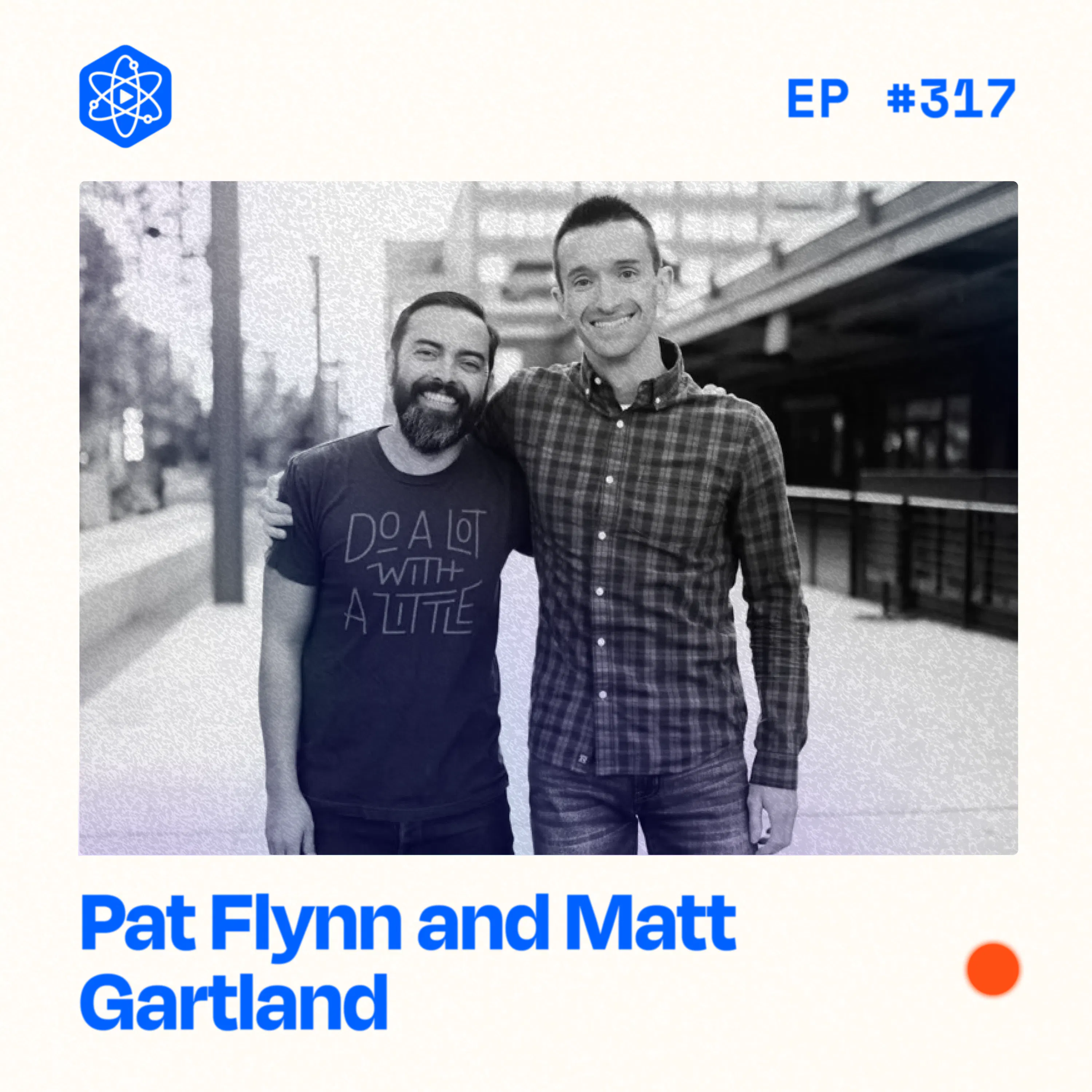 #317: Selling Smart Passive Income (And What We Can Learn From It) — Pt. 1 featuring Pat Flynn and Matt Gartland 08.09.2026 54minThis week I’m joined by two longtime friends — Pat Flynn and Matt Gartland. Pat is the founder of Smart Passive Income, the creator education brand he started in 2008 and ran for 18 years. Matt came on around 2018 — first as an advisor, then as CEO — and spent years making SPI operationally strong enough to stand without Pat at the center. They spun SPI out into a separate entity called SPI Media, pivoted from courses to community with recurring revenue, and quietly prepared the business for a sale they weren’t sure would ever happen. In September 2026, they announced that SPI had sold. The deal had closed five months earlier. The buyer is Liz Wilcox, an email marketing expert who spent those five months operating publicly as SPI’s “director of community” before anyone knew the deal had closed. The community doubled in size during that window. Part 2 is next week, with Liz. In this episode, we talk about: How Pat and Matt deliberately structured SPI over 8 years so it could be sold — including spinning out a new company, removing Pat’s face from the website, and making the community the hero Why Pat turned down multiple VC and PE offers worth more than the final sale price The deal mechanics: seller financing, no broker, 160 documents of due diligence, and how it closed in 6 months when deals like this typically fall apart What creators who operate entirely under their own name are missing when they eventually want to exit By the end of this episode, you will understand what it actually takes to build a creator business that could outlive you — and what the groundwork for an exit looks like years before anyone is thinking about it. Smart Passive Income Liz Wilcox — the buyer (she’s on next week’s episode) Deep Pocket Monster — Pat’s Pokémon YouTube channel (2.4M subscribers) Built to Sell by John Warrillow — the book that shaped their thinking on making a business sellable Superfans by Pat Flynn — his self-published book, part of the deal’s licensing terms Full transcript and show notes *** TIMESTAMPS (00:00) The news (01:44) The first seeds of the idea (03:10) The VC and PE offers (05:52) Building for optionality (13:20) Running two companies at once (18:11) Why real partnership is the unlock (21:17) Who to hire first (38:16) Why the negotiation wasn’t about money (40:38) What seller financing actually means (41:24) The due diligence process (45:26) The transition strategy (47:37) Part 2 preview: Liz Wilcox next week *** RECOMMENDED NEXT EPISODE #122: Pat Flynn and Matt Gartland – Courses, community, and the future of education *** ASK CREATOR SCIENCE Submit your question here *** WHEN YOU’RE READY 📬 Creator Science Newsletter 🚀 Get CreatorHQ (creator operating system) 🧪 Join The Lab (private membership community) 🧞♂️ Get a Personalized Offer *** CONNECT 🐦 Connect on Twitter 📸 Connect on Instagram 💼 Connect on LinkedIn 📹 Subscribe on YouTube *** SPONSORS 💼 View all sponsors Learn more about your ad choices. Visit megaphone.fm/adchoices
 -
 #316: Kallaway’s EXACT System For Going Viral (Almost Every Time) 01.09.2026 39minMeet Kallaway, the creator behind the Kallaway Marketing channel and the founder of Sandcastles — an AI research tool that helps creators find and validate viral video topics before they ever hit record. Kallaway started 4 businesses. All 4 failed for the same reason: no one knew who he was. No audience meant no customers, no leverage, no second chances. So he made it his mission to understand how audience growth actually works. He cracked short-form content at scale after years of building online businesses, and he built the research system he wished he’d had from the start. Now he has over a billion views, a 50% viral hit rate, and he built a tool to help other creators do the same. This episode is the full system. In this episode, we talk about: Content minutes — the framework for mapping how much trust your audience needs before they’ll buy at each price point on your offer ladder The modern content stack: why short-form and long-form both need to funnel into email, and why that’s the golden goose The 3 metrics that actually matter for content creators — ranked in order of importance, with views coming in third A live walkthrough of Sandcastles: channel watchlists, outlier score, deep video analysis, and how to use the MCP to run research through Claude By the end of this episode, you will have a clear research system for finding validated, high-trust video topics — and a framework for staying creative while using data to de-risk almost everything else. Book a free discovery call with 1of10 StrategyTry Sandcastles for free Full transcript and show notes *** TIMESTAMPS (00:00) Intro to Kallaway (01:03) Introducing “content minutes” (02:12) The modern content stack (03:45) Why you want a narrow ICP (05:40) The 3 metrics that matter (14:38) Sandcastles demo: building a channel watchlist from scratch (16:14) Why you study mid-size creators, not mega-famous ones (22:18) Deep video analysis: hook formula, storytelling structure, contrarian angle (24:59) Kallaway’s research flow (30:47) Solving structure and scripting problems using your own channel’s data (36:34) Data-enabled creativity: the thesis behind the whole system *** RECOMMENDED NEXT EPISODE #303: Riley Brown — The AI Content Creator Who Doesn’t Write With AI *** ASK CREATOR SCIENCE Submit your question here *** WHEN YOU’RE READY 📬 Creator Science Newsletter 🚀 Get CreatorHQ (creator operating system) 🧪 Join The Lab (private membership community) 🧞♂️ Get a Personalized Offer *** CONNECT 🐦 Connect on Twitter 📸 Connect on Instagram 💼 Connect on LinkedIn 📹 Subscribe on YouTube *** SPONSORS 💼 View all sponsors Learn more about your ad choices. Visit megaphone.fm/adchoices
 -
 #254: Caleb Ralston – Meet the Secret Strategist Behind Alex Hormozi and GaryVee [Greatest Hits] 25.08.2026 1t 14minCaleb Ralston is a strategist and brand builder for some of the biggest names in business. His breakthrough was back in 2018 when he grew GaryVee’s TikTok from 300k to 3.5 million followers in just 3 months. In 2022 he joined Alex and Leila Hormozi’s team as content employee #1, where he grew their audience from 1.2 million to 11.5 million. Caleb just doesn’t miss – and now that he’s out on his own, he’s here to help YOU. In this episode, you'll learn the content strategy he used, how to improve your content, and where to start if you're feeling overwhelmed. Full transcript and show notes Caleb's Website / Twitter / LinkedIn / YouTube / Instagram *** TIMESTAMPS (00:00) The Secret Man Behind GaryVee and the Hormozi’s (01:11) How Often Do the Top 1% Post? (03:31) The Brand Journey Framework (05:18) Being Intentional With Your Content (08:51) Is It Possible to NOT Niche Down? (13:55) Say the Same Things in Different Ways (18:07) Tracking and Analyzing Data (22:36) Maintaining Quality While Increasing Quantity (24:27) What it Actually Takes to Perform like the 1% (27:21) Where to Start (30:22) Building a Personalized Team (34:54) Agency vs Full Time vs Contractor (41:58) Developing a Content Strategy (45:15) Width Content vs Depth Content (46:55) Scaling Trust Using Educational Content (50:02) Best Call to Action Strategy (52:10) Email and Web Traffic Strategy (55:27) How Caleb is Going About Hiring His Own Team (58:53) The Correct Way to Give Feedback to Your Team (1:03:17) How to Take Inspiration from Others (1:04:55) Which Platform Has the Biggest Opportunity (1:06:57) Audio Content Strategy (1:08:47) Why You Need to Collaborate with Others *** RECOMMENDED NEXT EPISODE → #175: Angus Parker – Ali Abdaal’s right-hand man shares a YouTuber’s guide to hiring. *** ASK CREATOR SCIENCE → Submit your question here *** WHEN YOU'RE READY 📬 Creator Science Newsletter 🚀 Get CreatorHQ (creator operating system) 🧪 Join The Lab (private membership community) 🧞♂️ Get a Personalized Offer *** CONNECT 🐦 Connect on Twitter 📸 Connect on Instagram 💼 Connect on LinkedIn 📹 Subscribe on YouTube *** SPONSORS 💼 View all sponsors and offers *** SAY THANKS 💜 Leave a review on Apple Podcasts 🟢 Leave a rating on Spotify Learn more about your ad choices. Visit megaphone.fm/adchoices
 -
 #315: Breaking Down Our $101,666 Launch: The Mechanics And Lessons Learned From Our Virtual Summit 18.08.2026 59minOur first-ever 6-figure launch started with a cold email I didn’t respond to. Twice. The third time, I wrote back. A few months later, we ran a 3-day free virtual summit that drove $101,666 in revenue — with a $78,400 margin. This is the full breakdown of how it happened, what we’d do the same way again, and what we’d change. Joining me for this behind-the-scenes recap is Anna Reich, the integrator here on the Creator Science team. This was Anna’s first launch — 3 and a half months into the job — and she was right in the middle of all of it. We ran this summit in partnership with a third-party team called After Harvest, who pitched us on the whole concept via cold email and worked on a 15% performance-based fee. In this episode, we talk about: The full mechanics: $101,666 in revenue, $23,300 in costs, and the exact offer stack that got us there What we’d absolutely do the same — the VIP ticket, aggressive email volume, and the live pitch with a day-2 bonus What we’d do differently — a simpler structure, a new webinar platform, and building the presentations before everything else The 80/20 version: what a stripped-down, repeatable launch playbook actually looks like By the end of this episode, you will have a clear-eyed view of how a virtual summit launch actually works from the inside — with all the numbers, the chaos, and the lessons on the table. Work with Sean and the After Harvest team Build a Beloved Membership — 50% off the self-paced version Full transcript and show notes *** TIMESTAMPS (00:00) Introduction: the first-ever 6-figure launch and what this episode covers (03:44) Registration and attendance numbers: 3,145 registered, 1,000+ live on day 1 (04:34) Revenue breakdown: $63K cohort, $9K upsell, $17K downsell, $11K VIP tickets (08:29) Cost breakdown: After Harvest’s 15% deal, $1,800 in affiliates, $7,800 domain (10:01) Timeline: cold email in February to contract in April to summit in June (13:56) Things we’d do the same: VIP ticket, compelling web work, full offer stack (16:12) Why the $47 VIP ticket was the biggest surprise of the whole launch (20:54) The live day-2 pitch — 30 minutes, almost no drop-off, and why the bonus mattered (24:30) Things we’d do differently: simpler structure, drop WebinarJam, build launch capability in-house (36:24) The core mistake: building all the assets before locking the presentation content (42:10) The 80/20 version: what to lock in before you open registration (52:28) Skipping affiliates for high-ticket offers, and why one-click opt-ins backfired *** RECOMMENDED NEXT EPISODE #144: Bari Baumgardner – How to create the perfect 3-day event (IRL or virtually)#191: Breaking down my $60,723 product launch *** ASK CREATOR SCIENCE Submit your question here *** WHEN YOU’RE READY 📬 Creator Science Newsletter 🚀 Get CreatorHQ (creator operating system) 🧪 Join The Lab (private membership community) 🧞♂️ Get a Personalized Offer *** CONNECT 🐦 Connect on Twitter 📸 Connect on Instagram 💼 Connect on LinkedIn 📹 Subscribe on YouTube *** SPONSORS 💼 View all sponsors Learn more about your ad choices. Visit megaphone.fm/adchoices
 -
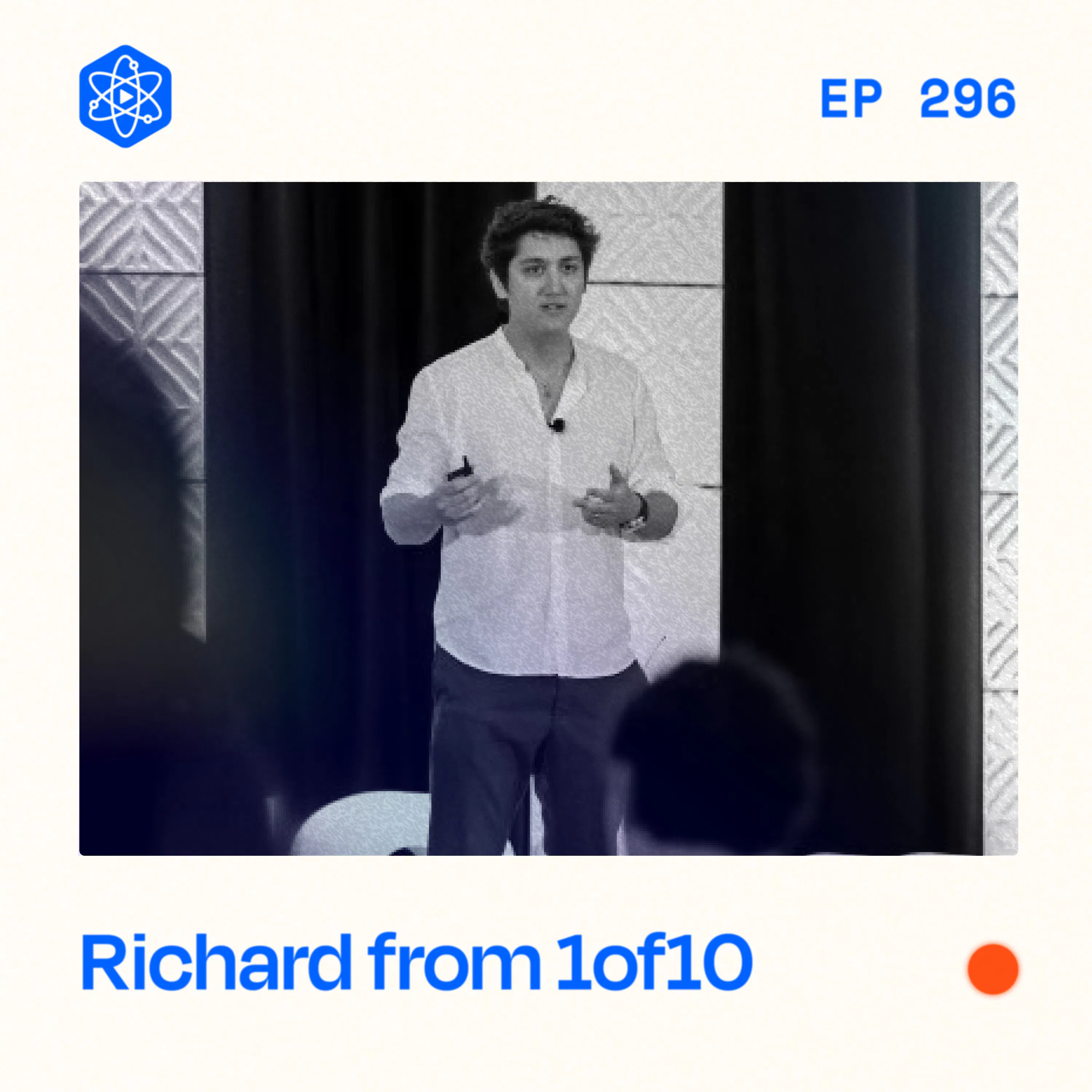 #296: Meet The Man Who Solved YouTube (With Data)—Richard from 1of10 [Greatest Hits] 11.08.2026 51minRichard is the co-founder of 1of10, a research platform built by YouTube strategists, and his team has quietly been behind the scenes for some of the biggest channels on the platform—helping creators accumulate over 2 billion views through a repeatable, data-backed system. In this episode, Richard walks through his complete four-phase ideation system—audience identification, outlier research (using five distinct methods), idea remixing, and validation—and backs every step with real examples. We talk about what happens when the wrong audience floods your channel, why creators should double and triple down on formats that work, and how a single title change took one creator's video from 10,000 views to 150,000. He also shares data from 300,000+ YouTube outliers on the ideal title length (hint: shorter than you think) and where the sweet spots are for video duration across different niches. Save 20% on 1of10 using code JAY20 Schedule a 1of10 Strategy Call Full transcript and show notes *** TIMESTAMPS (01:12) Where 80-85% of YouTube success comes from (01:50) Phase 1: Audience (03:19) When should you start a fresh channel instead of pivoting? (04:09) The danger of going viral with the wrong audience (05:40) Phase 2: Research (07:37) Format vs. Interest Topic (08:00) Method 1: Inside your own channel (10:52) Tripling and quadrupling down (12:33) Method 2: Inside your niche (13:45) Method 3: Adjacent niches (16:00) Method 4: Outside your niche (17:37) The "Japanese Rule" format (20:56) Method 5: External inspiration (22:07) Phase 3: Remixing (23:00) Escalation, inversion, and interest topic replacement (24:10) Viral vectors: concepts that work across all niches (25:28) Phase 4: Validation (27:00) Optimal video duration by niche (30:45) Why long videos are making a comeback (31:39) Total Addressable Viewership (34:36) Titles: Fear, Curiosity, and Desire as the three core drivers (37:17) Data: Title Length (37:51) Three methods for generating title angles (42:11) Thumbnails: Composition and Elements (45:11) It's never too late: title/thumbnail changes (46:10) Live demo: 1of10 thumbnail generator (48:10) The full 1of10 workflow *** RECOMMENDED NEXT EPISODE → #282: David Altizer — How to Make Great Thumbnails (For Non-Designers) *** ASK CREATOR SCIENCE Submit your question here *** WHEN YOU'RE READY 📬 Creator Science Newsletter 🚀 Get CreatorHQ (creator operating system) 🧪 Join The Lab (private membership community) 🧞♂️ Get a Personalized Offer *** CONNECT 🐦 Connect on Twitter 📸 Connect on Instagram 💼 Connect on LinkedIn 📹 Subscribe on YouTube *** SPONSORS 💼 View all sponsors Learn more about your ad choices. Visit megaphone.fm/adchoices
 -
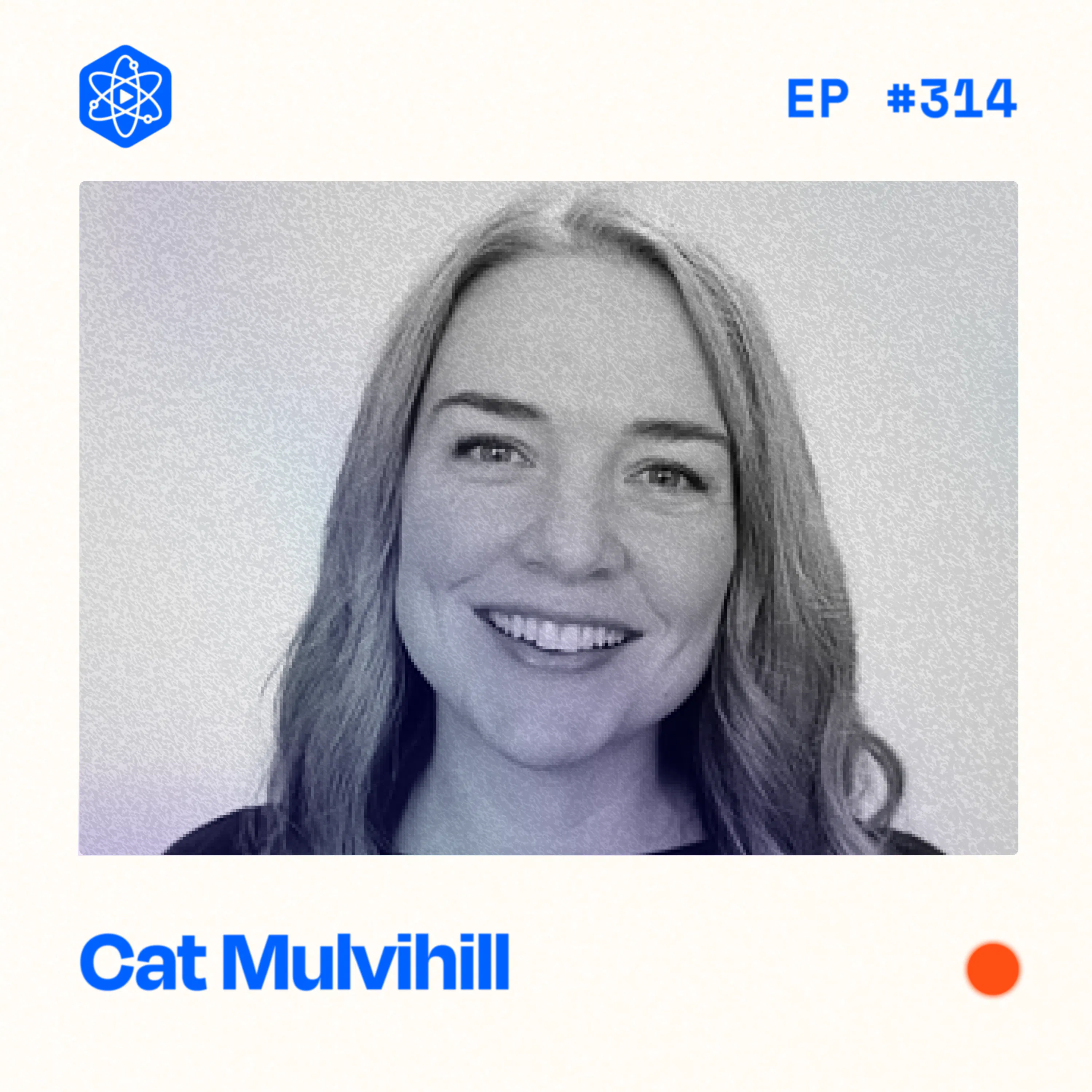 #314: Getting Unstuck: The Three Hidden Roadblocks Blocking Your Progress with Cat Mulvihill 04.08.2026 45minMost productivity advice operates in one of two categories: you’re missing a skill or system, or you have a mindset problem. Cat Mulvihill thinks both camps are right — and both are incomplete. There’s a third category that almost nobody is talking about, and she argues it’s the one most likely to be the actual culprit when you’re stuck. My guest this week is Cat Mulvihill, a speaker, trainer, accountability coach, and licensed Immunity to Change facilitator who has been leading workshops for more than 20 years. After being formally diagnosed with ADHD in 2024, she developed the Momentum Formula — a framework separating the reasons we fail to follow through into three distinct categories: logical, biological, and psychological. Cat is a longtime Lab member and led the second-highest-rated session at this year’s Lab Offline event in Boise. In this episode, we talk about: The three roadblocks to follow-through — and why the biological one is the category almost everyone overlooks How to diagnose which roadblock is actually keeping you stuck, and why the order you check them matters The “dreaded identity” — the hidden, subconscious version of yourself you’re afraid of becoming — and how it quietly kills follow-through Why knowing your tendency from Gretchen Rubin’s Four Tendencies framework changes which accountability strategies actually work for you By the end of this episode, you will have a concrete diagnostic framework for understanding why you’re not doing the things you know you should be doing — and what to try first. Cat Mulvihill — website and upcoming workshops The Four Tendencies quiz by Gretchen Rubin Immunity to Change by Robert Kegan and Lisa Lahey LinkedIn bookmarked search overview LinkedIn Instagram — @catmulvihill X — @catmulvihill The Momentum Experiment Podcast Full transcript and show notes *** TIMESTAMPS (00:00) “Are people going to think I’m a sellout?” — the dreaded identity, cold open (00:19) Introducing Cat: the Momentum Formula and why the biological roadblock gets missed (01:59) The 3 roadblocks — logical, biological, psychological — and where brain chemistry fits in (04:29) Diagnosing which roadblock you’re facing: why Jay thinks his problems are “just chemicals” (08:04) How to check the roadblocks in order — and the patterns that signal it’s not logical (10:55) A real Lab member example: when great systems still don’t get used (14:40) The Four Tendencies (Gretchen Rubin): upholders, questioners, obligers, rebels (19:25) The “dreaded identity” — the hidden psychological block most creators can’t see (21:14) Working through all 3 roadblocks with a LinkedIn example (25:44) Energy management and the biological roots: dopamine, blood sugar, sleep, environment matching (32:17) How to work with obliger tendencies instead of against them (36:18) The Immunity to Change framework and next steps for going deeper *** RECOMMENDED NEXT EPISODE #171: Nir Eyal – Writing books, persuasion vs. coercion, and how to be indistractable *** ASK CREATOR SCIENCE Submit your question here *** WHEN YOU’RE READY 📬 Creator Science Newsletter 🚀 Get CreatorHQ (creator operating system) 🧪 Join The Lab (private membership community) 🧞♂️ Get a Personalized Offer *** CONNECT 🐦 Connect on Twitter 📸 Connect on Instagram 💼 Connect on LinkedIn 📹 Subscribe on YouTube *** SPONSORS 💼 View all sponsors Learn more about your ad choices. Visit megaphone.fm/adchoices
 -
 #313: How Tom Ross Doubled His Community Engagement and Retention With Training Pathways 28.07.2026 56minClosing the doors to a membership is supposed to hurt signups. But one of Tom's clients did exactly that — closed it, added an application, doubled the price, then reopened. His next launch sold out in 4 minutes. Same community. Same people. Just different mechanics. My guest this week is Tom Ross, the founder of Learn.Community, where he helps community builders design learning experiences that actually stick. His clients have reached millions of people and generated tens of millions of dollars in revenue. Tom has been building online communities for 20 years, and he's been a member of The Lab since 2022. In this episode, we talk about: Why an application process might be the most underused retention lever in the membership world The “bacon medicine” framework for making your membership both sellable and sticky long-term Tom’s “delight, direct, connect” onboarding philosophy — and what almost every community gets wrong How he rebuilt his course into learning pathways, drove completion from 20% to 50%, and turned a siloed module into the main engine of community engagement By the end of this episode, you will understand exactly why most membership churn is decided before someone joins, and what to actually do about it. Learn.Community Tom's Community Compass Framework Tom's YouTube Channel The Lab Full transcript and show notes *** TIMESTAMPS (00:00) “People inherently don’t know what they don’t know” (00:29) Tom's background: 20 years building communities, what we're covering (04:06) Most retention problems start before someone joins — the targeting failure (07:51) Application process as the biggest membership lever — and how to handle rejections kindly (10:09) Closing doors creates demand: one client’s launch sold out in 4 minutes (14:43) The “bacon medicine” approach to membership positioning (24:28) Tom’s “delight, direct, connect” onboarding framework (29:01) Responsive vs. linear onboarding — why static sequences break (33:01) Learning pathways: reinventing the traditional course (36:47) AI agents, deep worksheets, and vibe-coded SaaS tools inside the pathways (40:02) Turning off course comments and routing engagement back into the community (50:49) Real results: completion up from 20% to 50%, churn down, engagement way up *** RECOMMENDED NEXT EPISODE #260: Detailed Breakdown: Our First Offline Event (And What We’ll Do Differently Next Time) *** ASK CREATOR SCIENCE Submit your question here *** WHEN YOU’RE READY 📬 Creator Science Newsletter 🚀 Get CreatorHQ (creator operating system) 🧪 Join The Lab (private membership community) 🧞♂️ Get a Personalized Offer *** CONNECT 🐦 Connect on Twitter 📸 Connect on Instagram 💼 Connect on LinkedIn 📹 Subscribe on YouTube *** SPONSORS 💼 View all sponsors Learn more about your ad choices. Visit megaphone.fm/adchoices
 -
 #312: Everything We Learned From Our Second In-Person Event — The Good, The Bad, and The Full Economics 21.07.2026 1t 1minThis week, my wife Mallory joins me for only her second podcast appearance ever to break down everything from The Lab Offline Powered by Circle — our second annual 2-day in-person retreat for Lab members, hosted June 8–9 at Hotel Renegade in Boise, Idaho. Mallory planned essentially everything: seating charts, venue contracts, menus, swag, run of show. She's been at it for roughly 6 months. In this episode, we talk about: The full economics of running a community retreat (we lost $8,300, which is actually an improvement) How we took breakfast from a 4.8 to an 8.1 rating — and what we'd cut to reduce costs next year What ranked #1 for attendees 2 years running, and why trivia (our favorite activity) came in 7th Whether we'll keep doing this in Boise — and what Columbus, Toronto, and doing 2 events per year might look like By the end of this episode, you will have a clear picture of what it actually costs to run a high-quality community event, what's worth paying for, and what we'd do differently. Circle (event sponsor) Hotel Renegade Boise Craft and Commerce Conference The Lab Full transcript and show notes *** TIMESTAMPS (00:00) Cold open: people were moved, tears were shed (00:53) The Lab Offline explained: 2-day member retreat, goals, and agenda (06:44) Initial impressions: a reunion feeling, smoother logistics, zero fires (13:08) Attendee feedback numbers: 9.3/10 overall, 91% returning, 34% said underpriced (18:46) Event economics: $30,459 revenue, $38,800 costs, $8,300 loss (23:05) Top cost drivers: hotel catering, travel, venue rental, dinners (26:52) Planning challenges: acoustics, dietary restrictions, every decision is a trade-off (36:52) What to keep: assigned seating, Kat's Immunity to Change workshop, Fighting Off the Sleepies (42:04) What to improve: more mastermind sessions, less solo writing, better acoustics (47:49) Open question: should the event stay paired with Craft and Commerce? (53:49) The case for Columbus, 2 events per year, and an international option *** RECOMMENDED NEXT EPISODE #260: Detailed Breakdown: Our First Offline Event (And What We’ll Do Differently Next Time) *** ASK CREATOR SCIENCE Submit your question here *** WHEN YOU'RE READY 📬 Creator Science Newsletter 🚀 Get CreatorHQ (creator operating system) 🧪 Join The Lab (private membership community) 🧞 Get a Personalized Offer *** CONNECT 🐦 Connect on Twitter 📸 Connect on Instagram 💼 Connect on LinkedIn 📹 Subscribe on YouTube *** SPONSORS 💼 View all sponsors Learn more about your ad choices. Visit megaphone.fm/adchoices
 -
#311: How to Build a Successful Paid Community | Growth in Reverse 14.07.2026 55minThe highest month of membership revenue in Lab history was also the setup for the highest month of churn. One year later, February delivered both records. I have been building community in some form since 2012. I ran Startup Weekend events in Columbus, led online Mastermind groups, consulted on the launch of SPI Pro, and spent 2021 leading the community team at Smart Passive Income before going back out on my own. In early 2022, I launched what became the Lab, a membership for creators earning at least $10,000 per month in non-service revenue or with 10,000 followers on a single platform. The Lab now has around 340 members across three tiers and is still standing after years of waves of communities coming and going. In this episode, we talk about: Why scarcity and urgency drive signups but can crater your retention a year later The two onboarding "secrets" I kept quiet for a while The mastermind paradox How to think about scaling a community without accidentally eroding the culture you've built What I would tell anyone thinking about launching a membership before they write a single line of copy By the end of this episode, you will have a clearer picture of how a membership actually works over years, not just at launch. Subscribe to Growth in Reverse Watch on YouTube The Lab Membership The Lab Membership Teardown (free) Circle (community platform) Kit Craft and Commerce Conference Chenell Basilio on Creator Science Full transcript and show notes *** TIMESTAMPS (00:00) Introduction and episode context (02:08) How Jay started the Lab (from Startup Weekend to SPI Pro to Creative Companion Club) (09:37) The scarcity play: record revenue month followed by record churn (10:38) What actually works as a marketing lever for a community (13:46) Why Jay runs applications and has a 90% conversion rate for accepted members (16:30) The design philosophy: reduce effort, increase impact (24:19) Mid-boarding: the missing piece between onboarding and renewal (35:13) Jay's onboarding framework and the two secrets he's been keeping (40:46) Why offline events matter for retention (not necessarily growth) (47:00) How to think about scaling community without destroying culture (49:19) Who shouldn't launch a membership (and what to figure out first) *** RECOMMENDED NEXT EPISODE #292: Chenell Basilio — The state of email in 2026, growing your list without social media, and new predictions. *** ASK CREATOR SCIENCE Submit your question here *** WHEN YOU'RE READY Creator Science Newsletter Get CreatorHQ (creator operating system) Join The Lab (private membership community) Get a Personalized Offer *** CONNECT Connect on Twitter Connect on Instagram Connect on LinkedIn Subscribe on YouTube *** SPONSORS View all sponsors Learn more about your ad choices. Visit megaphone.fm/adchoices
-
 #310: Brad Hoos — What 50,000 influencer campaigns tell us about what brands really care about 07.07.2026 48minBrad Hoos is the CEO of Outloud Group, one of the top influencer marketing agencies in the United States. His clients include AG1, Chomps, KitchenAid, and Whirlpool, and he’s managed campaigns across tens of thousands of creator partnerships. Jay found Brad while researching for his book proposal on trust, trying to track down the agency behind AG1’s dominance in podcast advertising. In this episode, we talk about: Why the creators who say no the most often are actually the most valuable to brands The difference between brand voice and brand advocacy, and why getting this wrong kills campaigns What Outloud learned running AG1’s campaigns across tens of thousands of creators The data across 50,000 campaigns showing no meaningful correlation between CPM and performance By the end of this episode, you will think differently about how brands choose creators and how creators should position themselves for long-term partnership success. Outloud Group Full transcript and show notes *** TIMESTAMPS (00:00) Introduction (01:10) What brands actually want when they hire an agency (06:20) The two things brands need to understand before a campaign starts (07:09) Brand voice vs. brand advocacy: why the difference matters (10:18) How trust changes what brands allow creators to do (15:48) What running AG1’s campaigns taught Brad about influencer marketing (20:39) How creators can position themselves to attract brand deals (22:52) Why entertaining your audience beats being the “perfect” brand advocate (27:24) Why the creators who say no most often perform best (39:10) The data: no meaningful correlation between CPM and creator performance (42:47) What Brad believes is true but can’t yet prove with data (44:09) If you could only pick two platforms right now *** RECOMMENDED NEXT EPISODE #179: Justin Moore – A step-by-step strategy to get anyone sponsored, regardless of audience size *** ASK CREATOR SCIENCE Submit your question here *** WHEN YOU’RE READY 💬 Creator Science Newsletter 🚀 Get CreatorHQ (creator operating system) 🧪 Join The Lab (private membership community) 🧞♂️ Get a Personalized Offer *** CONNECT 🐦 Connect on Twitter 📸 Connect on Instagram 💼 Connect on LinkedIn 📹 Subscribe on YouTube *** SPONSORS 💼 View all sponsors Learn more about your ad choices. Visit megaphone.fm/adchoices
 -
I want to help you build a membership in July. (limited time opportunity) 28.06.2026 13minFor the first time ever, I'm teaching my most popular course, Build A Beloved Membership, live over four weeks. You'll learn the exact approach I've taken to building The Lab to a ~$500K/year membership. Here's what you'll get: 4 weeks live. 10 sessions taught by me (July 3 to August 3). Kickoff call (Friday July 3) and Sendoff call (Monday August 3). Recordings of every session. A Circle space for homework, questions, and cohort chat. A year of Lab Basic (member directory, questions answered, frameworks). That last bullet is a big deal. Because after these four weeks are over, a year inside our Basic Membership (which typically costs $699/yr on its own) gives you monthly office hours with me for a year. So after the cohort, you aren't totally on your own again; you still have our community by your side. → Learn more and enroll I won't run this again in 2026. The timing just doesn't work with our next baby on the way—so I'll be going all out on THIS cohort. By the way, it’s going to be a hell of a lot of fun. Here's the full cohort page to learn more. We have more than 30 students enrolled already, and enrollment closes Wednesday, July 1 at 11:59pm ET. Learn more about your ad choices. Visit megaphone.fm/adchoices
-
 #295: Community Building Trends for 2026 with Becky Pierson Davidson [Greatest Hits] 25.06.2026 56minI brought back Becky Pierson Davidson to compare notes on where community is headed — and we found a few areas of disagreement. Becky works with 6, 7, and 8-figure businesses helping them build memberships and courses through design thinking and customer research, and she's seeing a major shift right now: course businesses are slowing down, and the smart ones are pivoting to membership models. The difference? Shared learning experiences are replacing self-paced education. Community is what people stay for. We dig into the real mechanics: how to set expectations that don't feel like a bait-and-switch, why meaningful engagement isn't what most people think it is, the mastermind paradox (increases retention, decreases forum activity), and why in-person events might be the most important retention lever you're not using. Becky's hot take for 2026: content drops are dying. People don't need more stuff — they need connection and programming that moves them forward. Affinity Collective Build with Becky podcast Episode 197: Building Raving Fans (with Becky & Chanel) Circle (community platform) TightKnit (Slack archive plugin) Dreamers and Doers Full transcript and show notes *** TIMESTAMPS (02:35) Defining community as a product, not a growth engine (04:09) Why community is rising as a business model in 2026 (06:02) The reality of transitioning from courses to memberships (08:01) Finding the right community design for your appetite (10:02) How to avoid the bait-and-switch with member expectations (13:06) Value perception vs. value experience (13:57) The smallest viable promise for your sales page (16:44) Where we disagree: transformation vs. community of practice (21:14) Forum design: why fewer spaces wins (23:17) Solving the engagement problem (what meaningful engagement actually is) (25:50) How the best members actually use your community (29:46) The mastermind paradox: retention up, forum participation down (32:09) In-person experiences and the graduation weekend model (36:39) The economics of offline events (39:35) 2026 Hot Take: Content drops are dying (43:07) Retention rethink: Did I get my money's worth vs. Will I next year? (46:04) Why connection drives retention more than results (48:23) Tool stack: Circle 9 times out of 10 (51:14) The future: personalization in community software *** RECOMMENDED NEXT EPISODE → Episode 197: Building Raving Fans *** ASK CREATOR SCIENCE → Submit your question here *** WHEN YOU'RE READY 📬 Creator Science Newsletter 🚀 Get CreatorHQ (creator operating system) 🧪 Join The Lab (private membership community) 🧞♂️ Get a Personalized Offer *** CONNECT 🐦 Connect on Twitter 📸 Connect on Instagram 💼 Connect on LinkedIn 📹 Subscribe on YouTube *** SPONSORS 💼 View all sponsors Learn more about your ad choices. Visit megaphone.fm/adchoices
 -
 #309: A Deeper Look at Circle Eclipse with Circle CEO Sid Yadav 17.06.2026 53minSid Yadav is the CEO and co-founder of Circle, a community platform trusted by creators like Jay and thousands of others to build membership businesses. Today, Circle has ~280 employees and has raised around $30 million. Before Circle, he was the third hire at Teachable, where he helped build the infrastructure for the creator economy before the term even existed. He spent four years as a tech blogger, writing about startups five to ten times a day, and was one of the first people to ever cover YouTube—back when it was a dating platform! The one thing Sid says separates successful communities from the rest Circle Eclipse: what it is (AI partner + connective tissue + Discover marketplace) and why 80 of 100 engineers have been on it for 4 months The “course as wrong abstraction” insight: why Sid saw self-paced courses heading toward terminal decline as early as 2018 By the end of this episode, you will understand why the most successful community businesses aren’t built around content — they’re built around a specific transformation. Join the waitlist for early access to Circle AI Full transcript and show notes *** TIMESTAMPS (00:00) Introduction (01:44) Teachable origin story: the “I don’t want to play Tinder with you” email that started it all (06:18) Tech blogger at Mashable — and the story of being first to write about YouTube (09:15) ~280 employees, $30M raised — the scale of Circle today (12:52) Why self-paced courses are in terminal decline (the leading indicators Sid saw in 2018) (17:16) The “course as the wrong abstraction” moment — community as the right container (22:00) Circle Eclipse: the three major updates launching (24:00) The connective tissue opportunity: one plus one must equal ten (33:19) Admin dashboard evolution — where Circle AI lives for returning users (35:30) The morning brief: five recommended next steps, then you’re good for the day (38:50) The biggest bet in Circle’s history: 80 engineers, 4 months, Spain offsite (40:00) Member-side AI agents and where they’re heading (43:24) Discover: from supply-side listing directory to the first real marketplace for transformations (48:00) The promise: Discover will never market inside your community — ever (51:55) Sid’s #1 recommendation: define your transformation *** RECOMMENDED NEXT EPISODE #295: Community Building Trends for 2026 with Becky Pierson Davidson *** ASK CREATOR SCIENCE Submit your question here *** WHEN YOU'RE READY 📬 Creator Science Newsletter 🚀 Get CreatorHQ (creator operating system) 🧪 Join The Lab (private membership community) 🧞♂️ Get a Personalized Offer *** CONNECT 🐦 Connect on Twitter 📸 Connect on Instagram 💼 Connect on LinkedIn 📹 Subscribe on YouTube *** SPONSORS 💼 View all sponsors Learn more about your ad choices. Visit megaphone.fm/adchoices
 -
 #308: Live Podcast Audit: Jeremy Enns Diagnoses What’s Holding Creator Science Back 09.06.2026 58minEvery few years, someone asks you the question you've been avoiding. For me, this was it: does your show actually have a premise, or does it just require people to already know and like you? Jeremy Enns is the founder of Podcast Marketing Academy, where his primary product is podcast audits. He has spent years analyzing what separates shows that grow from shows that stall, and he runs Podcast Marketing Academy to help hosts fix both. He has been a member of The Lab since the early days. In this episode, we talk about: Why podcast problems are almost always brand and product problems in disguise The difference between a show that requires you to already be known vs. one that earns listeners on its own merits What "killer concepts" are — and why a sharper premise makes episodes easier to produce, not harder The case for featuring Lab members as guests, and why it could be the highest-converting version of Creator Science By the end of this episode, you will have a new framework for auditing any creative project — including your own — and asking whether it's designed to grow or just to persist. Jeremy's resources for US! Podcast Marketing Academy Killer Concept Jeremy Enns on LinkedIn Full transcript and show notes *** TIMESTAMPS (00:00) Cold open: what a "killer concept" actually is (02:20) How this episode came to be: Jeremy's years of quiet notes on Creator Science (04:04) What Jay actually wants from this conversation (09:36) Where podcasting fits in the funnel — why it's the Lab's best front door (13:23) "If you were starting today": the co-host question (22:14) Does Creator Science have a premise? Jeremy's honest take (26:11) The container model: Song Exploder vs. Reply All (31:09) The density problem: why 80% of episodes aren't relevant to most listeners (34:49) The missing IP: Jay's philosophy exists in his head, not on paper (38:31) Why featuring Lab members could be the highest-converting version of the show (44:51) A three-part lens: discovery, trust, monetization (53:28) Jeremy's prescription: what the ideal Creator Science show looks like *** RECOMMENDED NEXT EPISODE #273: How to create a scrappy industry report that elevates your brand | Jeremy Enns *** ASK CREATOR SCIENCE Submit your question here *** WHEN YOU'RE READY Creator Science Newsletter Get CreatorHQ (creator operating system) Join The Lab (private membership community) Get a Personalized Offer *** CONNECT Connect on Twitter Connect on Instagram Connect on LinkedIn Subscribe on YouTube *** SPONSORS View all sponsors Learn more about your ad choices. Visit megaphone.fm/adchoices
 -
 #307: Richard van der Blom — The state of LinkedIn in 2026 (based on data from 1.3 million posts) 02.06.2026 50minRichard van der Blom published his first LinkedIn algorithm report years ago as a curiosity project. This year, he and his team analyzed 1.3 million posts from 50,000 creators — and the headline number is hard to ignore: reach is down 60% for active creators over the last two years. Even harder to stomach: 80% of the comments Richard receives in the first five minutes of any post are written by AI. Richard is the author of the annual LinkedIn Algorithm Insights report — the most data-backed independent study of the platform I've found. He's also been targeted by LinkedIn's legal team, banned from the platform, and watched the third-party tools he relied on get shut down one by one. He keeps publishing anyway. In this episode, we talk about: Why reach is down 60% for active creators — and why LinkedIn says that's intentional What "topic fingerprinting" is and how to use it to re-teach the algorithm who you are How your comments now shape your interest graph, not just your human visibility Why LinkedIn newsletters are outperforming regular posts on reach, engagement, and conversion By the end of this episode, you will understand exactly what changed in the LinkedIn algorithm, why the old playbook is working against you, and the specific moves to make in 2026. 2026 LinkedIn Algorithm Insights Report Richard van der Blom on LinkedIn Full transcript and show notes *** TIMESTAMPS (00:00) Introduction (02:36) Richard's one-word description of LinkedIn in 2026: "turbulent" (07:38) The shift from relationship graph to interest-based graph — the biggest change in 10 years (11:36) Topic fingerprinting: how to re-teach the algorithm who you are (14:47) Why commenting on the wrong posts actively hurts your reach (16:41) Richard's 25-30 minute daily commenting system, broken down (25:17) The free bookmark search trick for building curated feeds (31:41) Newsletters vs. standalone articles — the numbers are not close (35:16) LinkedIn newsletter analytics: click-by-link tracking is now live (39:37) Optimal posting frequency: down from 5-6x to 2-4x per week (41:18) Why text-only posts require exceptional copywriting to work (43:20) What the top LinkedIn creators know that everyone else misses (45:29) Richard's prediction: LinkedIn is at a crossroads *** RECOMMENDED NEXT EPISODE #188: Richard van der Blom – How the man behind the LinkedIn Algorithm Report uses LinkedIn. *** ASK CREATOR SCIENCE Submit your question here *** WHEN YOU'RE READY Creator Science Newsletter Get CreatorHQ (creator operating system) Join The Lab (private membership community) Get a Personalized Offer *** CONNECT Connect on Twitter Connect on Instagram Connect on LinkedIn Subscribe on YouTube *** SPONSORS View all sponsors Learn more about your ad choices. Visit megaphone.fm/adchoices
 -
 #306: What 16 Years Behind YouTube's Biggest Channels Taught Josh Mattingly About Hiring And The Current State of YouTube 26.05.2026 1t 10minJosh is the founder of Upright Media, an operating partner for content creators handling operations, consulting, recruiting, and post-production. His clients include some of YouTube's biggest channels — Erak, Smosh, Emma Chamberlain, Dude Perfect, Matthew Beam, and Chris Williamson. He runs 11 full-time staff and about 40 contractors worldwide. He describes himself as a creator without a channel. This conversation also took a turn into what YouTube actually rewards right now, why "companionship content" is quietly eating the internet, and the concept of the "shitty flow state" — that experience where you put down your phone 35 minutes after opening Instagram and can't name a single thing you saw. Upright Media Brad Stulberg — The Way of Excellence Monday.com (project management tool Josh uses) Topper Guild (YouTube channel) Speeed (James Pumphrey + Jesse Wood) Full transcript and show notes *** TIMESTAMPS (00:00) Josh's opening: don't lose sight of the big goals that motivate your team (00:26) Who Josh Mattingly is and what Upright Media does (08:16) Excitement vs. panic — how much of working 80 hours a week is actually anxiety (12:49) Why most creators hire from panic — and how Josh reframes it around a goal (22:35) Build the team around what you're doing well, not where you think you're going (24:36) The positioning exercise: what is your channel, actually — and why it drives every hire (20:36) Speeed channel case study: lean team, clear mission, "GQ for this generation" (27:02) What YouTube is biased toward right now: real connection over spectacle (30:02) The content spectrum: entertainment → education → companionship content (40:01) The "shitty flow state" — why most of what we consume doesn't satisfy (55:52) Hiring mistake: moving too fast — interview 10 more after you find "the one" (56:56) Building a hiring committee as a solopreneur using peers and friends *** RECOMMENDED NEXT EPISODE #175: Angus Parker – Ali Abdaal’s right-hand man shares a YouTuber’s guide to hiring. *** ASK CREATOR SCIENCE Submit your question here *** WHEN YOU'RE READY 📬 Creator Science Newsletter 🚀 Get CreatorHQ 🧪 Join The Lab 🧞♂️ Get a Personalized Offer *** CONNECT 🐦 Connect on Twitter 📸 Connect on Instagram 💼 Connect on LinkedIn 📹 Subscribe on YouTube *** SPONSORS 💼 View all sponsors Learn more about your ad choices. Visit megaphone.fm/adchoices
 -
#305: Big 3: Three Wins, Three Concerns, and Three Experiments for May 19.05.2026 35minEvery month inside the Lab, I do a full retrospective: wins, concerns, experiments, with all the numbers on the table. I've never felt comfortable putting the whole thing out publicly, but I do think the practice itself is worth sharing. So this episode is my lightweight version: three big wins from April, three things I'm genuinely worried about heading into May, and three experiments I'm kicking off. I'm also testing a new name for this format: the Big Three. April was, by most measures, a really good month. A baby boy on the way, the biggest partnership deal I've ever signed, and a speaking slot at Press Publish LA. But sitting alongside all of that is a real anxiety: I'm watching my audience pull back, sales slowing, people tightening up. And I'm rebuilding a lot of the business simultaneously, too. This episode is me thinking out loud about all of it. The Lab — Creator Science membership community Circle — community platform powering the Lab Press Publish LA — Colin & Samir's creator event, late May Build a Beloved Membership — Jay's membership course (cohort coming July) Full transcript and show notes *** TIMESTAMPS (00:14) Introducing the lightweight retro format ("the Big Three") (01:38) Win #1: Baby boy on the way — and what it means for the next six months (04:28) Win #2: Biggest partnership deal ever — Circle for the rest of the year (06:03) Win #3: Speaking at Press Publish LA (07:24) Concern #1: The oxygen mask moment — slowing sales and audience withdrawal (09:47) "Give where it hurts" — the counter-intuitive move in uncertain times (13:41) Concern #2: Rebuilding the business from the ground up (18:56) Concern #3: Are we trying to do too much? (19:25) Experiment #1: Building out the team (Ana, Ritzy, and Tubey in Slack) (27:46) Experiment #2: The Membership Summit (June 23–26) + cohort in July (30:41) Experiment #3: A new AI-forward product model, piloting inside the Lab first *** RECOMMENDED NEXT EPISODE #291: 48 Hours With Clawdbot: How I’m Using It and Initial Reactions *** ASK CREATOR SCIENCE Submit your question here *** WHEN YOU'RE READY 📬 Creator Science Newsletter 🚀 Get CreatorHQ (creator operating system) 🧪 Join The Lab (private membership community) 🧞 Get a Personalized Offer *** CONNECT 🐦 Connect on Twitter 📸 Connect on Instagram 💼 Connect on LinkedIn 📹 Subscribe on YouTube *** SPONSORS 💼 View all sponsors Learn more about your ad choices. Visit megaphone.fm/adchoices
-
#277: The best and worst income streams for creators (ranked) [Greatest Hits] 12.05.2026 20minI’ve been a full-time creator for 8 years now and have earned $2,192,000 since 2022. I’ve spent a LOT of time and money experimenting with different ways to make money on the internet, so I’m going to rank them. The best and the worst. I show you 15 different revenue streams and rate them from S to F based on their potential versus the effort required. By the very end of the video, you’ll know which ones are right for you. And at any point, if you agree or disagree, let me know in the comments. Full transcript and show notes *** TIMESTAMPS (00:32) AdSense (01:36) Sponsorship & Brand Deals (03:30) Content Memberships (04:30) Done-For-You Services (05:27) Royalties (06:28) 1-to-1 Coaching & Consulting (07:38) Affiliates (09:36) User Generated Content (UGC) (10:17) Group Programs (11:25) Digital Products (12:56) Speaking (14:27) Live Events (15:53) Community Memberships *** RECOMMENDED NEXT EPISODE → #267: When to use low-ticket offers, refund policies, how much I earned in the last 12 months, and my 5-year vision [Ask CS Pt. 1] *** ASK CREATOR SCIENCE → Submit your question here *** WHEN YOU'RE READY 📬 Creator Science Newsletter 🚀 Get CreatorHQ (creator operating system) 🧪 Join The Lab (private membership community) 🧞♂️ Get a Personalized Offer *** CONNECT 🐦 Connect on Twitter 📸 Connect on Instagram 💼 Connect on LinkedIn 📹 Subscribe on YouTube *** SPONSORS 💼 View all sponsors Learn more about your ad choices. Visit megaphone.fm/adchoices
-
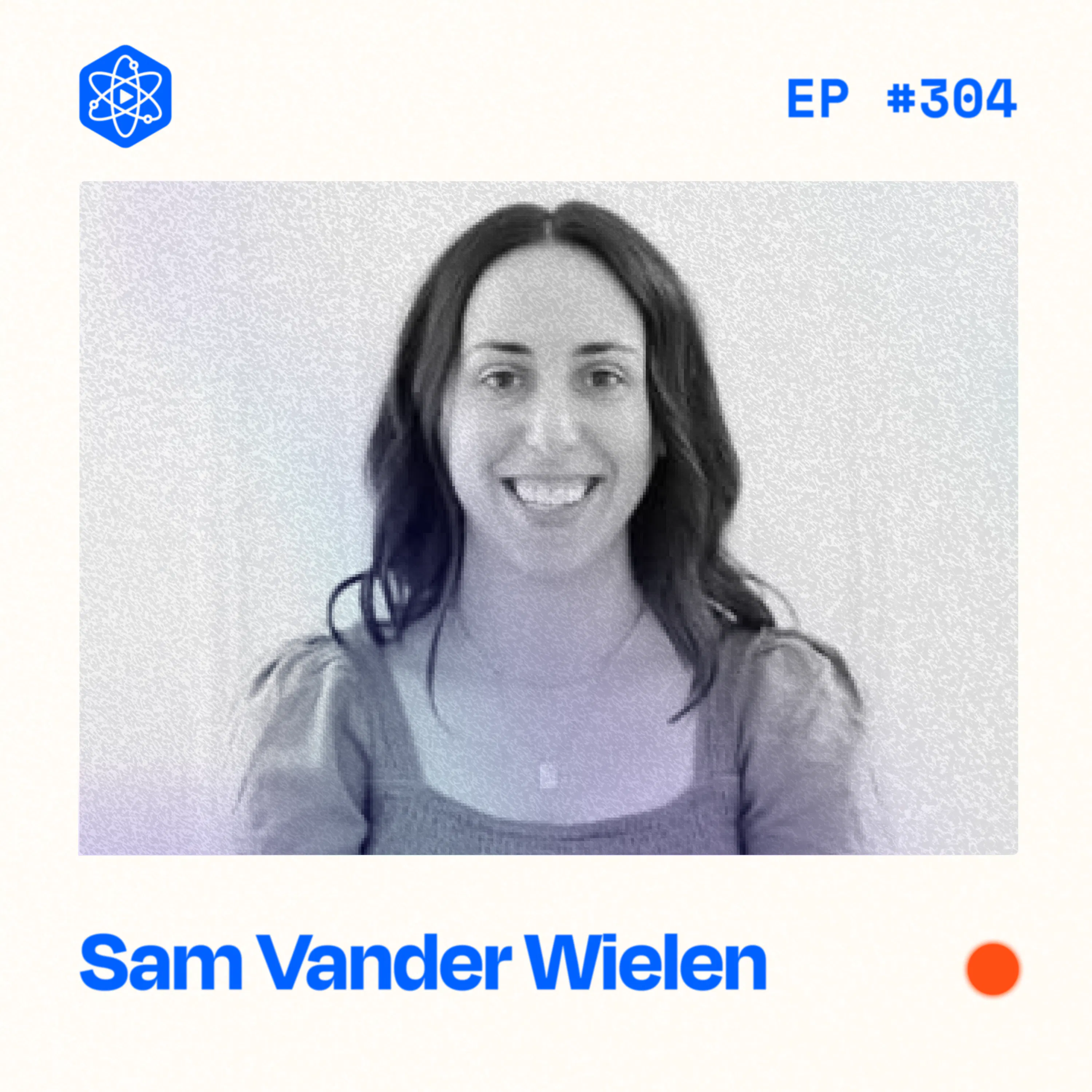 #304: Sam Vander Wielen’s Beautifully Elegant Business: $8M+ From One Product. No Pivots. No New Offers. No Down Years. 05.05.2026 52minSam Vander Wielen is an attorney turned entrepreneur who built the go-to legal template shop for online businesses. Her flagship product, the Ultimate Bundle, a package of fill-in-the-blank contracts and video trainings, has generated over $8 million in lifetime revenue and now earns close to $2 million per year with essentially one full-time employee. She published her first book with Hachette in April 2025, and she runs everything through a single evergreen webinar funnel that quietly generates six figures a month between launches. I met Sam at Craft and Commerce last year, and when I saw her post about 10,000+ webinar registrants and a $500,000 launch, I knew I had to talk to her. What blew me away wasn't the numbers; it was the simplicity. One product. One funnel. Two launches a year. Relentless customer research. She's the clearest example I've seen of someone who found the main thing and refused to let anything pull her off it. Sam Vander Wielen Sam's Sidebar Newsletter The Ultimate Bundle Book: When I Start My Business, I'll Be Happy (Hachette, 2025) On Your Terms Podcast Sam on Barrett Brooks' podcast (referenced in intro) VideoAsk Growth in Reverse (Chenell Basilio) — referenced interview Full transcript and show notes *** TIMESTAMPS (00:00) Jay introduces Sam and her $8M+ legal template business (02:27) What the Ultimate Bundle actually is — and why it hasn't changed much since 2017 (03:47) The Olive Garden effect: how Sam thinks about community and lifetime customer support (10:00) The $500K launch breakdown — what went right and why it wasn't an accident (13:28) Sam's full launch strategy: the teaser period, invite period, and treating registration like concert tickets (18:03) The on-webinar bonus that drove 128 purchases live — and why a book beat a $100 discount (22:56) How Sam uses VideoAsk to boost show-up rates and make 11,000 registrants feel personally seen (28:39) Voice of customer research: quarterly customer calls, AI transcript synthesis, and why Sam still reads the raw transcripts herself (33:14) Why working less keeps making the business better — and what the 'entrepreneurial gap year' actually means (36:04) What motivates Sam (honest answer: fear) — and what Jay relates to in that (42:00) Why AI isn't a threat to Sam's business — and how she reframed the 'doubt language' from Google to Claude *** RECOMMENDED NEXT EPISODE #292: Chenell Basilio — The state of email in 2026, growing your list without social media, and new predictions. *** ASK CREATOR SCIENCE Submit your question here *** WHEN YOU'RE READY 📬 Creator Science Newsletter 🚀 Get CreatorHQ 🧪 Join The Lab 🧞 Get a Personalized Offer *** CONNECT 🐦 Connect on Twitter 📸 Connect on Instagram 💼 Connect on LinkedIn 📹 Subscribe on YouTube *** SPONSORS 💼 View all sponsors Learn more about your ad choices. Visit megaphone.fm/adchoices
Samankaltaiset podcastit


Suosittu maassa
Tämä podcast esiintyy myös näiden maiden podcast-listoilla.

