
Design Better
The Curiosity Department
0
Design Better co-hosts Eli Woolery and Aarron Walter explore the intersection of design, technology, and the creative process through conversations with guests across many creative fields, helping you hone your craft, unlock your creativity, and learn the art of collaboration. Whether you’re design curious or a design pro, Design Better is guaranteed to inspire and inform. Vanity Fair calls Design Better, “sharp, to the point, and full of incredibly valuable information for anyone looking to better understand how to build a more innovative world.”
Jaksot
-
 Federico Casalegno: Samsung EVP and MIT Design Lab founder on what 20,000 years of human creativity means for design today 10.09.2026 24minWhen Samsung’s CEO asked Federico Casalegno to redesign the cameras on the company’s phones, Federico told him he was the wrong person for the job. He wasn’t an optical engineer. He didn’t understand cameras. What he understood was storytelling — and he pointed to the Lascaux caves in France, where people were marking walls twenty thousand years ago for the same reason we hold up our phones today: to capture a moment, and tell it to someone we love. Find the full episode on our Substack:https://designbetterpodcast.com/p/federico-casalegno That’s the kind of answer you get from a designer who arrived by way of studying human society. Federico is Head of Samsung’s Global Design Studios, with teams spread across San Francisco, Europe, and Seoul. Before that he spent two decades at MIT, where he co-founded the MIT Design Lab with Bill Mitchell, and before that he was a social scientist embedded with engineers and psychologists at Philips Design in the nineties — back when “cross-disciplinary” wasn’t yet a word anyone put on a job posting. We talk about what that looks like in practice at the scale Samsung operates at. His team builds digital twins of human ears — thousands of 3D and 4D scans across real demographics — then simulates millions of variations to figure out how an earbud should fit. Then they strap the buds onto robots and make them run. Then they test with actual humans, because at some point a person still has to decide what “comfortable” means. There’s a phrase Federico kept returning to: technology without humanity is merely perfection without purpose. The designer’s role is problem making first, problem solving later. We also get into how critique works inside a company that speaks a dozen native languages, what he actually looks for when hiring, and the French philosopher who, at 102, looked at his calendar and said he was booked until next year. Bio Federico Casalegno is Executive Vice President at Samsung, where he leads product experience innovation across business units and heads the company’s Global Design Studios. Reporting directly to the CEO, he builds teams of designers, engineers, creative technologists, and strategists working on advanced design and next-generation experience planning. As head of design and AI, he established Samsung’s Computational Design function and leads digital transformation across the organization. Before Samsung, Federico spent two decades at MIT, where he founded the MIT Design Lab and the MIT Mobile Experience Lab and taught at MIT and the MIT Media Lab, researching the intersection of design, AI, and emerging technology. He previously worked at Motorola and Philips Design, and holds a PhD in sociology from the Sorbonne. *** Premium Episodes on Design Better This is a premium episode on Design Better. We release two premium episodes per month, along with two free episodes for everyone. New premium subscriber benefit: Get design and career support in Design Club Weekly Portfolio Club calls this summer helped our paid subscribers build portfolios that land great jobs. Experts joined us weekly to provide feedback, and we compiled lessons from each session into a portfolio design guide. We’ve launched a private Slack workspace…join now to connect with designers, product leaders & creative practitioners in our community. And get a behind-the-scenes pass to every episode with The Roundup, where each week we bring you insights and actionable tactics from recent episodes. Premium subscribers get access to the documentary Design Disruptors and our growing library of books. You’ll also get access to our monthly AMAs with former guests, ad-free episodes, discounts and early access to workshops, and our monthly newsletter The Brief that compiles salient insights, quotes, readings, and creative processes uncovered in the show. And subscribers at the annual level now get access to the Design Better Toolkit, which gets you major discounts and free access to tools and courses that will help you unlock new skills, make your workflow more efficient, and take your creativity further. Upgrade to paid *** Visiting the links below is one of the best ways to support our show: Masterclass: MasterClass is the only streaming platform where you can learn and grow with over 200+ of the world’s best. People like Steph Curry, Paul Krugman, Malcolm Gladwell, Dianne Von Furstenberg, Margaret Atwood, Lavar Burton and so many more inspiring thinkers share their wisdom in a format that is easy to follow and can be streamed anywhere on a smartphone, computer, smart TV, or even in audio mode. MasterClass always has great offers during the holidays, sometimes up to as much as 50% off. Head over to http://masterclass.com/designbetter for the current offer. If you’re interested in sponsoring the show, please contact us at: [email protected] If you’d like to submit a guest idea, please contact us at: [email protected] Learn more about your ad choices. Visit megaphone.fm/adchoices
 -
 Jonathan Adler returns: The minimalist inside the maximalist 02.09.2026 44minJonathan Adler was one of our favorite guests, so we’ve been angling to get him back ever since. He started as a potter and now designs furnishings and interiors that are decadent, but layered with meaning and humor. A lot has happened since we last spoke: he had a retrospective at the Museum of Arts and Design — the same institution whose gift shop took a chance on his pots 32 years ago — and launched a sprawling collaboration with Michaels, which he calls a temple of craft. Find bonus content and more on our Substack: https://designbetterpodcast.com/p/jonathan-adler-returns We talk with Jonathan about what it felt like to stop making long enough to curate three decades of his own work, why he’s grateful he chose commerce over the gallery world, and whether people really are trading doomscrolling for making things with their hands. Along the way, we talk about his father, the lawyer who painted — and why the maximalist you think you know insists he’s a minimalist. Also, much like our last conversation with Jonathan, there are some instances of adult language and humor, so if you have kids around it might be a good idea to throw on some headphones. Bio Potter, designer, and author Jonathan Adler launched his namesake brand after leaving his day job to pursue his first love: pottery. In 1993, Barneys bought his collection of pots, and five years later, he opened his first store in Soho. Today, Jonathan Adler is a design company with retail locations worldwide, a thriving e-commerce site, a full slate of residential and commercial projects, and a global wholesale business. They strive to create luxe and livable interiors that are seriously designed, but don’t take themselves too seriously. Earlier this year, the Museum of Arts and Design mounted a retrospective of his work, presented in dialogue with pieces he curated from the museum’s own collection. He lives in New York with his husband, the writer Simon Doonan. *** Premium Episodes on Design Better This ad-supported episode is available to everyone. If you’d like to hear it ad-free, upgrade to our premium subscription, where you’ll get an additional 2 ad-free episodes per month (4 total). Premium subscribers also get access to the documentary Design Disruptors and our growing library of books. New premium subscriber benefit: we’ve launched a private Slack workspace…join now to connect with designers, product leaders & creative practitioners in our community. And get a behind-the-scenes pass to every episode with The Roundup, where each week we bring you insights and actionable tactics from recent episodes. You’ll also get access to our monthly AMAs with former guests, ad-free episodes, discounts and early access to workshops, and our monthly newsletter The Brief that compiles salient insights, quotes, readings, and creative processes uncovered in the show. And subscribers at the annual level now get access to the Design Better Toolkit, which gets you major discounts and free access to tools and courses that will help you unlock new skills, make your workflow more efficient, and take your creativity further. Upgrade to paid *** Visiting the links below is one of the best ways to support our show: Masterclass: MasterClass is the only streaming platform where you can learn and grow with over 200+ of the world’s best. People like Steph Curry, Paul Krugman, Malcolm Gladwell, Dianne Von Furstenberg, Margaret Atwood, Lavar Burton and so many more inspiring thinkers share their wisdom in a format that is easy to follow and can be streamed anywhere on a smartphone, computer, smart TV, or even in audio mode. MasterClass always has great offers during the holidays, sometimes up to as much as 50% off. Head over to http://masterclass.com/designbetter for the current offer. If you’re interested in sponsoring the show, please contact us at: [email protected] If you’d like to submit a guest idea, please contact us at: [email protected] Learn more about your ad choices. Visit megaphone.fm/adchoices
 -
 Clay Parker Jones: author of "Hidden Patterns" on why your team isn't really a team 28.08.2026 23minWe all know that there is something fractured about the workplace, that makes it inefficient, and at times inhumane. If only someone was thinking deeply about those problems, and how to address them… Visit our Substack for the full episode: https://designbetterpodcast.com/p/clay-parker-jones That’s what Clay Parker Jones is working on right now. Clay has spent close to two decades on this problem — first at the consultancy undercurrent, and today as Head of Org Design and Development at Airbnb. He advocates for investment in creativity and humanity at work, something you might think would be obvious for any company, but sadly is eclipsed by short term thinking. His new book, Hidden Patterns: A Playbook for More Human Workplaces, is one of the most cohesive philosophies of organizational structure we’ve come across. And his diagnosis of what’s broken is simple: there aren’t enough real teams. Most of us work in what he calls “co-acting groups” — people who convene for a meeting and then scatter back to their actual work. In this conversation, we get into why psychological safety stays a platitude until you make it structural, what rule of law looks like inside a company, and how to break a manager’s job into atomic pieces and hand away the parts you’re bad at. We also chat about why the org chart is a design problem that designers should be at the table for. Bio Clay Parker Jones leads Organizational Design & Development at Airbnb, refining how a creativity-first company learns and ships new ideas. A former Chief Strategy Officer at Black Glass, co-founder of August, and transformation lead at R/GA, his work has been recognized by B Lab and profiled in a Harvard Business School case study. A former bike mechanic with a BA in Diplomacy and World Affairs from Occidental College, Clay now resides in Brooklyn with his wife Emily and cat Ian. You can find him on the Fort Greene tennis courts in his spare time. *** Premium Episodes on Design Better This is a premium episode on Design Better. We release two premium episodes per month, along with two free episodes for everyone. New premium subscriber benefit: we’ve launched a private Slack workspace…join now to connect with designers, product leaders & creative practitioners in our community. And get a behind-the-scenes pass to every episode with The Roundup, where each week we bring you insights and actionable tactics from recent episodes. Premium subscribers get access to the documentary Design Disruptors and our growing library of books. You’ll also get access to our monthly AMAs with former guests, ad-free episodes, discounts and early access to workshops, and our monthly newsletter The Brief that compiles salient insights, quotes, readings, and creative processes uncovered in the show. And subscribers at the annual level now get access to the Design Better Toolkit, which gets you major discounts and free access to tools and courses that will help you unlock new skills, make your workflow more efficient, and take your creativity further. Upgrade to paid Learn more about your ad choices. Visit megaphone.fm/adchoices
 -
 Angel Steger: Wealthfront's VP of Design on what architecture teaches you about software 21.08.2026 52minA few years ago, Dropbox redesigned its website and revenue dropped by thirty percent. It was an all-hands-on-deck moment: people working weekends, everyone hunting for a systemic failure. Visit our Substack for bonus content and more: https://designbetterpodcast.com/p/angel-steger The culprit turned out to be a pricing page — specifically, the white space between the feature list items was slightly too generous. Angel Steger noticed that her eye kept landing on the white instead of the words. They tightened the gaps, and the revenue came back. That’s the kind of thing Angel notices, and it’s not an accident. Currently the VP of Design at Wealthfront, She trained as an architect at RISD, where the first question in her first architecture class wasn’t about buildings. It was “What is a drawing?” — the sort of question that makes you realize every tool you reach for carries a point of view you probably haven’t examined. Angel’s path into tech was less deliberate. By her own account, she mouthed off to her boss, got fired, and spent the severance on O’Reilly books, taught herself to code, and became the first designer at MySpace — where the head of engineering proudly informed her that they had never had design and never would need it. She went on to become the first product designer at 23andMe, learned usability from Larry Tesler, and led design teams at Pinterest, Dropbox, and Meta before landing at Wealthfront. In this conversation, we get into what architecture teaches you about solving one problem at a time, why she tells her team to go lower fidelity, how a default chart setting can push someone into a financial decision they’ll regret, and what she looks for in a portfolio — high craft, high intentionality, and no boiled broccoli. Bio Angel joined Wealthfront in November 2023 and leads product design, content design, and creative teams, bringing 20+ years of experience building and leading customer-centric, business-focused design and product teams. What makes her perspective rare is the through-line she draws between business model and design quality — she's a practitioner who built her career arguing that growth design, done with rigor and craft, isn't a compromise but the highest form of product work. Beyond Wealthfront, she holds advisory positions at AudiencePlus and Ameelio, and previously held leadership design roles at Meta, Dropbox, and Pinterest, where major growth and user engagement initiatives were implemented. She guided Wealthfront's design organization through its December 2025 IPO, in which Wealthfront's shares began trading on the Nasdaq Global Select Market under the ticker "WLTH" — the first robo-advisor to go public. *** Premium Episodes on Design Better This ad-supported episode is available to everyone. If you’d like to hear it ad-free, upgrade to our premium subscription, where you’ll get an additional 2 ad-free episodes per month (4 total). Premium subscribers also get access to the documentary Design Disruptors and our growing library of books. New premium subscriber benefit: we’ve launched a private Slack workspace…join now to connect with designers, product leaders & creative practitioners in our community. And get a behind-the-scenes pass to every episode with The Roundup, where each week we bring you insights and actionable tactics from recent episodes. You’ll also get access to our monthly AMAs with former guests, ad-free episodes, discounts and early access to workshops, and our monthly newsletter The Brief that compiles salient insights, quotes, readings, and creative processes uncovered in the show. And subscribers at the annual level now get access to the Design Better Toolkit, which gets you major discounts and free access to tools and courses that will help you unlock new skills, make your workflow more efficient, and take your creativity further. Upgrade to paid Learn more about your ad choices. Visit megaphone.fm/adchoices
 -
 Ben Drury: Yoto co-founder on audio, imagination, and screen-free design 13.08.2026 50minLike a lot of parents, Eli struggled over the years to get his kids more into reading and away from screens. He wasn’t necessarily on the search for a technological solution, but then an interesting device came our way: the Yoto Player, a screen-free audio player for kids. Eli’s 10-year old son has been loving to read along to the Harry Potter books (and he often finds him after he falls asleep, and the player is still going). Visit our Substack for bonus content and more: https://designbetterpodcast.com/p/ben-drury The story behind Yoto is from a similar moment of parental struggle. About a decade ago, Ben Drury was shopping for a stroller in a London department store and found one with an iPad mount built in. For a newborn. He remembers the reaction being physical — this is just wrong. But if you’re expecting an anti-screen crusade, that’s not quite what happened . The line Ben uses is: we don’t say screens are bad, we say audio is good. Listening is good for creativity and imagination — and there’s research going back to the 1980s to back that up. Ben is the co-founder and CEO of Yoto, makers of a kids’ audio player that works by dropping a physical card into a small speaker. Before Yoto Ben spent about a decade building a B2B digital music platform called 7digital which he took public. What he learned from that experience proved helpful as he and his co-founder started Yoto. Ben and his co-founder became parents at roughly the same time, and wanted a way for their kids to connect with music and books like they did in childhood. So they started hacking on Raspberry Pis with no hardware experience whatsoever. How hard could it be, right? The 3rd Gen Yoto Player Turns out, it’s pretty hard. They took a restrained approach. Yoto is a cube, because it was the simplest shape they could think of. It uses NFC cards that have a Pokemon card feel. The 16 by 16 pixel display presents pixel art that gives Yoto a fun personality. In this conversation, we get into the design principles that came out of Montessori, their experience working with Pentagram on product design and branding, why Paul McCartney became an early angel investor, and what changes when you go from a Kickstarter that raised fifty thousand dollars to nine-figure revenue. Bio Ben Drury is the co-founder and CEO of Yoto, the screen-free audio player that lets children control their own listening by dropping a physical card into a speaker. Before Yoto, he spent roughly a decade building 7digital, a B2B digital music platform he took public. He and his co-founder started Yoto in 2017 with a Kickstarter campaign and no hardware experience between them; today the company employs about 220 people across six countries, sells in 1,900 Target stores in the US, and counts Paul McCartney among its early angel investors. He lives in London with his wife and two sons. *** Premium Episodes on Design Better This ad-supported episode is available to everyone. If you’d like to hear it ad-free, upgrade to our premium subscription, where you’ll get an additional 2 ad-free episodes per month (4 total). Premium subscribers also get access to the documentary Design Disruptors and our growing library of books. New premium subscriber benefit: we’ve launched a private Slack workspace…join now to connect with designers, product leaders & creative practitioners in our community. And get a behind-the-scenes pass to every episode with The Roundup, where each week we bring you insights and actionable tactics from recent episodes. You’ll also get access to our monthly AMAs with former guests, ad-free episodes, discounts and early access to workshops, and our monthly newsletter The Brief that compiles salient insights, quotes, readings, and creative processes uncovered in the show. And subscribers at the annual level now get access to the Design Better Toolkit, which gets you major discounts and free access to tools and courses that will help you unlock new skills, make your workflow more efficient, and take your creativity further. Upgrade to paid Learn more about your ad choices. Visit megaphone.fm/adchoices
 -
 Jeff Hammoud: Chief Design Officer of Rivian on constraints, color, and what separates designers from stylists 05.08.2026 46minThis is a special bonus episode, an interview with Rivian’s Chief Design Officer, Jeff Hammoud. We’ve got all the audio here, but it’s worth heading over to our Youtube channel at dbtr.co/youtube to watch the video. We recorded this one live in Miami, in the Rivian Pavilion during Art Basel, with a R1T truck in a new eggplant-purple called Boreal parked just over Jeff’s shoulder. Jeff runs a team of about 140 people across Irvine and Palo Alto — interior and exterior designers, color and materials, digital surfacing, perceived quality, even an in-house painter and a clay milling shop. And he has a strong opinion about what all that machinery is for: constraints are what separate designers from stylists. Anyone can make a beautiful concept car, but making the production version look like the concept is the challenge. We talked about why Rivian keeps making colors most people won’t buy, and how limited-run “Studio Originals” work like sneaker drops. Jeff makes the case that AI is going to level the playing field in design — shifting the advantage from whoever illustrates best to whoever has the better idea. We got into which controls stay physical and why, the haptic halo wheels coming in R2, and how scent ties a car to memory. *** Premium Episodes on Design Better This ad-supported episode is available to everyone. If you’d like to hear it ad-free, upgrade to our premium subscription, where you’ll get an additional 2 ad-free episodes per month (4 total). Premium subscribers also get access to the documentary Design Disruptors and our growing library of books. New premium subscriber benefit: we’ve launched a private Slack workspace…join now to connect with designers, product leaders & creative practitioners in our community. And get a behind-the-scenes pass to every episode with The Roundup, where each week we bring you insights and actionable tactics from recent episodes. You’ll also get access to our monthly AMAs with former guests, ad-free episodes, discounts and early access to workshops, and our monthly newsletter The Brief that compiles salient insights, quotes, readings, and creative processes uncovered in the show. And subscribers at the annual level now get access to the Design Better Toolkit, which gets you major discounts and free access to tools and courses that will help you unlock new skills, make your workflow more efficient, and take your creativity further. Upgrade to paid Learn more about your ad choices. Visit megaphone.fm/adchoices
 -
 Eric Ries: Lean Startup author on why good companies go bad, and why good design is critical to success 22.07.2026 34minFifteen years ago, Eric Ries handed a generation of founders a playbook. When Eli was in a Palo Alto-based startup accelerator in 2011, The Lean Startup felt like the only book anyone in that ecosystem was talking about. It was in the middle of a wildly optimistic moment for tech. Marc Andreessen declared that “software is eating the world,” social media was blooming, and there was a widespread belief that technology was about to democratize everything and bring us closer together. Concepts like the MVP (“minimum viable product,”), the pivot, and build-measure-learn became the operating language of Silicon Valley. This is a preview of a premium episode. Listen to the full interview on our Substack: https://designbetterpodcast.com/p/eric-ries But a lot of the companies built on those ideas went on to get corrupted by forces Eric hadn’t yet named. His new book, Incorruptible: Why Good Companies Go Bad and How Great Companies Stay Great, is his reckoning with what happens after you build something great — and how to keep it from falling apart. Buy the book In this conversation, we get into why speed itself wasn’t the problem, but treating a rising stock price as proof of health is like assuming more exhaust means a faster car. Eric explains why doing the right thing 100% of the time is actually easier than doing it 98% of the time, and how companies behave like superorganisms with their own emergent character — a point he illustrates with a genuinely mind-bending study about ants solving a puzzle that no single ant ever could. We talk about the “harder is easier” principle through stories from Patagonia and the long-term stock exchange he built as a design challenge, and why the value a company makes comes from the design of its products. And because we couldn’t resist, we get into AI slop, LLM psychosis, and Eric’s clear, simple antidote: never ask these tools to make you an artifact — ask them to teach you how to make one yourself. Bio Over the last two decades, Eric Ries’s ideas about continuous innovation, long-term thinking, governance, and market reform have reshaped company building and management practices. He is the creator of the Lean Startup method, and the author of the New York Times bestseller The Lean Startup; The Leader’s Guide; and The Startup Way. As a founder, he has put his own ideas into practice with The Long-Term Stock Exchange (LTSE); Answer.AI, an AI R&D lab; the Lean Startup Co, which teaches and supports the implementation of Lean Startup; Virgil, a legal services startup; and IMVU, where the ideas that became the Lean Startup method were forged. On his podcast, The Eric Ries Show, he talks to guests including world-class technologists, thought leaders, and executives working to build profitable companies for the long-term benefit of society. Eric has served as an entrepreneur-in-residence at Harvard Business School and IDEO. He lives in the San Francisco Bay Area with his wife and three children. *** Premium Episodes on Design Better This is a premium episode on Design Better. We release two premium episodes per month, along with two free episodes for everyone. New premium subscriber benefit: we’ve launched a private Slack workspace…join now to connect with designers, product leaders & creative practitioners in our community. And get a behind-the-scenes pass to every episode with The Roundup, where each week we bring you insights and actionable tactics from recent episodes. Premium subscribers get access to the documentary Design Disruptors and our growing library of books. You’ll also get access to our monthly AMAs with former guests, ad-free episodes, discounts and early access to workshops, and our monthly newsletter The Brief that compiles salient insights, quotes, readings, and creative processes uncovered in the show. And subscribers at the annual level now get access to the Design Better Toolkit, which gets you major discounts and free access to tools and courses that will help you unlock new skills, make your workflow more efficient, and take your creativity further. Upgrade to paid Visiting the links below is one of the best ways to support our show: Masterclass: MasterClass is the only streaming platform where you can learn and grow with over 200+ of the world’s best. People like Steph Curry, Paul Krugman, Malcolm Gladwell, Dianne Von Furstenberg, Margaret Atwood, Lavar Burton and so many more inspiring thinkers share their wisdom in a format that is easy to follow and can be streamed anywhere on a smartphone, computer, smart TV, or even in audio mode. MasterClass always has great offers during the holidays, sometimes up to as much as 50% off. Head over to http://masterclass.com/designbetter for the current offer. Learn more about your ad choices. Visit megaphone.fm/adchoices
 -
 Ian Bogost: Game designer, Atlantic writer, and philosopher of the ordinary, on the small stuff that makes life delightful 15.07.2026 47minA few years ago, Ian Bogost wrote what he thought was a throwaway Atlantic piece about how electric vehicles would finally kill the manual transmission. It went off like a bomb — and the reaction told him people weren’t mourning a car part. They were mourning the feeling of dropping a gear into place, a small moment of sensory connection quietly disappearing without anyone choosing to give it up. Find the full episode and bonus content on our Substack: https://designbetterpodcast.com/p/ian-bogost That feeling is the subject of his new book, The Small Stuff. Ian calls it gratification — distinct from happiness or satisfaction, it’s the immediate sensory delight of communing with ordinary things: the ridged coffee cup, the click of an elevator button, the tink of ice in a water bottle. And he diagnoses what he calls dematerialization: the slow way efficiency, automation, and software have severed us from the physical texture of daily life. A game designer, longtime Atlantic contributor, and philosopher of the everyday at Washington University in St. Louis, Ian has spent his career — across books like Persuasive Games and Play Anything — arguing that the systems we build carry values whether we intend them to or not. Here he turns that lens on the ordinary objects most of us stopped noticing long ago. For designers, this is becoming more and more relevant. Ian argues that somewhere between the mid-90s and now, user-centered design quietly mutated into outcome-oriented design — we kept the language of user experience while the goals drifted toward the organization instead of the person. But this isn’t nostalgia or a plea for friction. Gratification, he insists, is easy. It’s already happening to you all the time. The designer’s job isn’t to add friction, but to notice where the sensory life has quietly drained out of the things we build, and to re-introduce it. And the challenge he leaves us with is deceptively simple: get curious. The Small Stuff is out now. You can find Ian at bogost.com. Dr. Ian Bogost is a writer, designer, and scholar of media and technology. He is the Barbara and David Thomas Distinguished Professor and Assistant Vice Provost at Washington University in St. Louis. At WashU, he is appointed in three colleges and the co-executive director of the Office of Public Scholarship. Bogost is also a contributing writer at The Atlantic and the founding partner of Persuasive Games LLC, a game and design studio. He is the author of 11 books, most recently The Small Stuff: How to Lead a More Gratifying Life. Bogost’s award-winning games and artworks, which include Cow Clicker and A Slow Year have been played by millions of people and held in permanent collections around the world, including at the Smithsonian American Art Museum. *** Premium Episodes on Design Better This ad-supported episode is available to everyone. If you’d like to hear it ad-free, upgrade to our premium subscription, where you’ll get an additional 2 ad-free episodes per month (4 total). Premium subscribers also get access to the documentary Design Disruptors and our growing library of books. New premium subscriber benefit: we’ve launched a private Slack workspace…join now to connect with designers, product leaders & creative practitioners in our community. And get a behind-the-scenes pass to every episode with The Roundup, where each week we bring you insights and actionable tactics from recent episodes. You’ll also get access to our monthly AMAs with former guests, ad-free episodes, discounts and early access to workshops, and our monthly newsletter The Brief that compiles salient insights, quotes, readings, and creative processes uncovered in the show. And subscribers at the annual level now get access to the Design Better Toolkit, which gets you major discounts and free access to tools and courses that will help you unlock new skills, make your workflow more efficient, and take your creativity further. Upgrade to paid Learn more about your ad choices. Visit megaphone.fm/adchoices
 -
 Chris Entwisle and Mark Havens: authors of WAIL on the constraints that led to timeless designs for Prestige Records 01.07.2026 24minYears ago, two friends in Philadelphia — both designers, both obsessed with jazz — kept noticing the same notation on the back of their favorite records: “recorded by Van Gelder in Hackensack.” So one Saturday they drove out to find it. They tracked down the address in a 1955 phone book, pulled up — and found a parking lot. No sign, no plaque, nothing to mark that Rudy Van Gelder had once turned his parents’ living room into a recording studio there, capturing some of the most important American music of the century. This is a preview of a premium episode. To hear the whole thing, head over to our Substack:https://designbetterpodcast.com/p/chris-entwisle-and-mark-havens That quiet drive home planted the seed for a twenty-year project. Mark Havens and Chris Entwisle are the authors of WAIL: The Visual Language of Prestige Records — the first real look at the design history of a label that, unlike Blue Note, never got its design mythology, despite cover art that’s just as striking and durable. They tracked down original pressings, interviewed the designers before that history disappeared for good, and uncovered how a label run, in one historian’s words, “like a mom and pop store” — no budget, no briefs, no marketing department — produced a visual identity coherent enough to still echo through design today. Buy the book What we love about this conversation is how much of it comes down to constraints driving creativity. Reid Miles couldn’t afford imagery, so he made typography the art. Tom Hannon had no budget for stock photography, so he shot the musicians himself. Designers got an album title and nothing else — no brief, no comp, no client approval — and turned that absence of direction into creative freedom, because Bob Weinstock simply “viewed it all as art,” the music and the covers alike. This is a conversation about jazz, but it’s also about what happens to creative work when nobody’s watching too closely, and why limitations so often produce things that last. Bios Chris Entwisle is an artist and illustrator. For over thirty years, he has used his passion for both jazz and postwar graphic design in his illustration work. Entwisle has a BA in graphic design from Rutgers University. He and his wife live in the Philadelphia area. Mark Havens is an artist and educator with a dual background in graphic and industrial design. His work has been exhibited internationally and is held in both public and private collections. Out of Season, his first major monograph, was described by the New York Times as “a decade-long elegy.” Havens is a professor of industrial design at Thomas Jefferson University. *** Premium Episodes on Design Better This is a premium episode on Design Better. We release two premium episodes per month, along with two free episodes for everyone. New premium subscriber benefit: we’ve launched a private Slack workspace…join now to connect with designers, product leaders & creative practitioners in our community. And get a behind-the-scenes pass to every episode with The Roundup, where each week we bring you insights and actionable tactics from recent episodes. Premium subscribers get access to the documentary Design Disruptors and our growing library of books. You’ll also get access to our monthly AMAs with former guests, ad-free episodes, discounts and early access to workshops, and our monthly newsletter The Brief that compiles salient insights, quotes, readings, and creative processes uncovered in the show. And subscribers at the annual level now get access to the Design Better Toolkit, which gets you major discounts and free access to tools and courses that will help you unlock new skills, make your workflow more efficient, and take your creativity further. Upgrade to paid Learn more about your ad choices. Visit megaphone.fm/adchoices
 -
 Niyati Gupta: Netflix Product Design Lead on what happens when a designer becomes a product manager, and why your influence might not be in your title 25.06.2026 44minNiyati Gupta describes her career as one long experiment — deliberately putting herself in uncomfortable, ambiguous situations and treating every move as a personal learning loop. That instinct took her from a bachelor’s in design inside one of India’s most prestigious engineering colleges, where almost nobody understood what design was, to a research role at Carnegie Mellon where she studied health info needs for low-literacy users in rural India, to Autodesk’s bio-nano innovation lab building molecular visualization tools for scientists — and eventually to Google, where she joined the Next Billion Users team. Find bonus content and more on our Substack: https://designbetterpodcast.com/p/niyati-gupta That team’s mission was to ask an open question: where would the next wave of users come from, what did they need, and what products didn’t exist yet to serve them? Niyati ran immersion sprints in the Philippines, India, Indonesia, and Mexico — shadowing users, building prototypes in the field, testing them in the wild, and bringing those insights back to a team that was building products like Camera Go and Google Files from the ground up. And she’ll tell you that the swim lanes between designer, engineer, and PM felt just as artificial out there in the field as they do today with AI accelerating everything. These days she’s a senior product designer at Netflix, working on commerce and partnerships — which means thinking hard about discovery, about fandom, about how you help someone decide what to watch on a Friday night without making them feel like the choosing is harder than the watching. It also means designing across a ten-foot TV screen, a phone, and every device in between, and trying to make all of it feel like one seamless experience. In this conversation, we get into what the Next Billion Users work taught her about designing for people who aren’t like you, how she thinks about influence as a designer — and why she’s convinced the title was never where the influence actually lived — and what Netflix’s design culture looks like from the inside, including how they run crits and how they think about A/B testing. *** Premium Episodes on Design Better This ad-supported episode is available to everyone. If you’d like to hear it ad-free, upgrade to our premium subscription, where you’ll get an additional 2 ad-free episodes per month (4 total). Premium subscribers also get access to the documentary Design Disruptors and our growing library of books. New premium subscriber benefit: we’ve launched a private Slack workspace…join now to connect with designers, product leaders & creative practitioners in our community. And get a behind-the-scenes pass to every episode with The Roundup, where each week we bring you insights and actionable tactics from recent episodes. You’ll also get access to our monthly AMAs with former guests, ad-free episodes, discounts and early access to workshops, and our monthly newsletter The Brief that compiles salient insights, quotes, readings, and creative processes uncovered in the show. And subscribers at the annual level now get access to the Design Better Toolkit, which gets you major discounts and free access to tools and courses that will help you unlock new skills, make your workflow more efficient, and take your creativity further. Upgrade to paid Learn more about your ad choices. Visit megaphone.fm/adchoices
 -
 Mike Schnaidt: Fast Company Creative Director on typography, creative endurance, and designing for the long haul 17.06.2026 23minTypography is often treated as a detail — the thing you finalize after the real design decisions are made. But for our next guest, it’s closer to the foundation everything else rests on. He’s spent two decades in editorial design at some of the most iconic American magazines — Men’s Health, Esquire, Popular Science, Entertainment Weekly — and he’s now the Creative Director of Fast Company, where he recently led a redesign that does something pretty unusual: the magazine gets a completely new typeface every single issue. His name is Mike Schnaidt. This is a preview of a premium episode. Visit our Substack to listen to the entire interview: https://designbetterpodcast.com/p/mike-schnaidt Mike’s also a professor, a runner, and the author of Creative Endurance — a book that maps the principles of physical and mental endurance onto the creative life. It’s built around 56 rules for sustaining a career in design, drawn from interviews with ultra-marathoners, astronauts, and designers who’ve pushed way past the limits most people set for themselves. And as you’ll hear, he’s already working on book two. We chat about the nuts and bolts of typography (utilitarian vs. expressive, food metaphors, Fast Company's per-issue typeface system) to the philosophy underneath it all (design as service, authorship, hospitality). We dig into his book Creative Endurance — 56 rules for sustaining a creative career drawn from athletes, astronauts, and designers — and his counterintuitive take on burnout: the cure isn't rest, it's picking up something creatively different. Bio Mike Schnaidt is the creative director of Fast Company. He’s also the host of the Webby-awarded video series It’s All in the Typeface, a professor of illustration at the School of Visual Arts, and the former president of the Society of Publication Designers. One of the coolest moments in his life was when Paula Scher said his first book, Creative Endurance, was “beautifully designed.” His second book arrives in 2028. *** Premium Episodes on Design Better This is a premium episode on Design Better. We release two premium episodes per month, along with two free episodes for everyone. New premium subscriber benefit: we’ve launched a private Slack workspace…join now to connect with designers, product leaders & creative practitioners in our community. And get a behind-the-scenes pass to every episode with The Roundup, where each week we bring you insights and actionable tactics from recent episodes. Premium subscribers get access to the documentary Design Disruptors and our growing library of books. You’ll also get access to our monthly AMAs with former guests, ad-free episodes, discounts and early access to workshops, and our monthly newsletter The Brief that compiles salient insights, quotes, readings, and creative processes uncovered in the show. And subscribers at the annual level now get access to the Design Better Toolkit, which gets you major discounts and free access to tools and courses that will help you unlock new skills, make your workflow more efficient, and take your creativity further. Upgrade to paid Learn more about your ad choices. Visit megaphone.fm/adchoices
 -
 Bonus Episode: Dorrian Porter returns with the Vestaboard Note 11.06.2026 39minThere’s something magical about the Vestaboard: it’s a physical, split-flap display connected to the internet that displays missives and useful information with a charm that we love. The Vestaboard in our kitchen greets our family with the family schedule for the day, riddles, updates from our favorite sports teams, and the best/worst dad jokes. Everyone who visits our house is amazed by it. Vestaboard is the vision of Dorrian Porter, and has its origin story in a Parisian train station. A few years ago, we had Dorrian Porter on the show to tell us about Vestaboard, and since then, we’ve become even bigger fans of the product. We keep spotting them in the wild, from coffee shops in Savannah to airport storefronts in Minneapolis. Dorrian is back to tell us about the Vestaboard Note, a smaller, more affordable, and more versatile version of the original that went from basic prototype to Red Dot Award winner in about a year — a story that starts, believe it or not, with tariffs. We talk about what it’s like to build a hardware company through supply chain disruptions and trade wars, why Dorrian keeps betting on the consumer market when the easier path might be B2B, and how Vestaboard is finding its way into classrooms, baseball stadiums, and a bar in Northern California born out of a community recovering from wildfire. We also dig into the tension between nostalgia and innovation — Dorrian’s honest about the fact that split-flap displays attract people who love vintage and transportation, but his ambition goes further than retro. He wants to build products that pull meaningful content out of our phones and into the physical spaces where we actually live together. This is a special sponsored episode of Design Better, and we’re happy to share it because Vestaboard is a brand we truly love. Their mission to inspire and connect people resonates with us, and we think it will with you, too. *** There’s currently a waitlist for the Vestaboard Note. But as a Design Better listener, you can head over to vestaboard.com/designbetter to skip the waitlist and receive a special offer. Claim your special offer Learn more about your ad choices. Visit megaphone.fm/adchoices
 -
 Tina Roth Eisenberg: Creative Mornings founder on building communities that run on trust 10.06.2026 37minWhen Tina Roth Eisenberg moved to New York in 1999 as a new designer, she kept asking herself the same question: where are my people? Eighteen years ago, she answered it by starting Creative Mornings—a free breakfast lecture series that has since grown into what she describes as the world’s largest face-to-face creative community: 252 cities, 70 countries, and more than a thousand volunteers gathering with around 25,000 people every month. Or, as she puts it, “church for creativity.” Visit our Susbtack for bonus content and more: https://designbetterpodcast.com/p/tina-roth-eisenberg-creative-mornings But Creative Mornings is just one thread in Tina’s story. She’s the voice behind Swiss Miss, the beloved design blog she’s kept up for 21 years; the founder of FRIENDS, a creative coworking community in Brooklyn; and the creator of Tattly, the designer temporary tattoo company that started as a joke and turned into a business. In our conversation, Tina shares what she’s learned about building communities that scale on trust rather than control, why she measures success in “return on friendship,” and how playful side projects increase “the surface area for luck to find you.” We also talk about commitment as a creative practice, raising creative kids, and why she believes the future isn’t lonely—it’s hyperlocal. Bio Tina Roth Eisenberg is a Swiss-born, Brooklyn-based designer and serial founder—though many know her simply as "swissmiss," after the design blog she started in 2005 as a personal visual archive, which grew into a popular design journal drawing an average of a million unique visitors a month. Raised in Speicher, Switzerland, and shaped by Swiss design (and, as she puts it, a lot of fresh mountain air), she completed her design studies in Geneva and Munich before moving to New York in 1999. She is the founder of CreativeMornings, the world's largest face-to-face creative community, with monthly talks in 252 cities across 70 countries; the founder of Tattly, the designy temporary tattoo company; co-creator of the to-do app TeuxDeux; and founder of FRIENDS, a creative coworking space in Brooklyn. She lives in beautiful Fort Greene, Brooklyn, with her two children, Ella and Tilo, who teach her about current memes and TikTok. Books & Links mentioned: CreativeMornings.com Creative Quests, Sam Furness Dark Forest,Yancey Strickler Nanowrimo Swissmiss Yancey Strickler: Creative Mornings talk from May 2025 Vacation With An Artist Creative Mornings Field Trips Creative Morning Clubs The Serviceberry: Abundance and Reciprocity in the Natural World *** Premium Episodes on Design Better This ad-supported episode is available to everyone. If you’d like to hear it ad-free, upgrade to our premium subscription, where you’ll get an additional 2 ad-free episodes per month (4 total). Premium subscribers also get access to the documentary Design Disruptors and our growing library of books. New premium subscriber benefit: we’ve launched a private Slack workspace…join now to connect with designers, product leaders & creative practitioners in our community. And get a behind-the-scenes pass to every episode with The Roundup, where each week we bring you insights and actionable tactics from recent episodes. You’ll also get access to our monthly AMAs with former guests, ad-free episodes, discounts and early access to workshops, and our monthly newsletter The Brief that compiles salient insights, quotes, readings, and creative processes uncovered in the show. And subscribers at the annual level now get access to the Design Better Toolkit, which gets you major discounts and free access to tools and courses that will help you unlock new skills, make your workflow more efficient, and take your creativity further. Upgrade to paid Learn more about your ad choices. Visit megaphone.fm/adchoices
 -
 Paul Ford: Writer, developer & "fun Cassandra" on why everything is changing (but not how you think) 03.06.2026 26minPaul Ford likes to call himself a “fun Cassandra” — someone who, like the priestess in Greek mythology, sees trouble coming, but unlike her tries to make the warning as entertaining as possible. He’s the writer, developer, and co-founder of the tech agency Aboard who saw Claude Code drop last November and immediately understood it was going to change everything — while finding, to his surprise, that most people around him simply weren’t seeing it that way. This is a preview of a premium episode. Find the full interview on our Substack: https://designbetterpodcast.com/p/paul-ford That same instinct is what drew him into AI early. Where others hedged, Paul dove in — vibe coding nonstop, running full enterprise subscriptions for his entire team, and building in earnest. But he’s not a fanboy. He’s a critical optimist who believes something important is happening, while holding equal concern about the companies pushing it, the students expected to learn from it, and the decades of hard-won knowledge that might be quietly evaporating in the rush. Paul is also an English major who sold an agency, a developer who thinks in prose, and a father of 14-year-old twins — one of the most multi-disciplinary thinkers we’ve had on the show. He won the National Magazine Award for writing an entire issue of Bloomberg Businessweek dedicated to explaining programming to a mass audience — a 38,000-word essay called “What Is Code?” A regular contributor to Wired and published in The New Yorker and MIT Technology Review, he’s one of the rare writers who can make the inner workings of software feel urgent and human. He’s exactly the kind of thinker this moment needs: someone who can write code and read the room, and who cares about quality as much as velocity. He can also make you laugh while explaining why you should probably be a little worried. Bio One of the world’s leading technology thinkers, Paul Ford has written about the way that software works for dozens of publications like Wired, Businessweek, and the New York Times, including his National Magazine Award–winning Bloomberg cover story “What Is Code?” After years of writing about technology, Paul decided to do something about it, co-founding Postlight and Aboard to help deliver quality products to the people who need them. Learn more about your ad choices. Visit megaphone.fm/adchoices
 -
 Jessie McGuire: National Design Award-winning studio leader on design as a civic tool 27.05.2026 41minAs the United States approaches its 250th anniversary, the Constitution remains the most consequential document in American life — and more people are reading it than ever. But pick up almost any commercial edition and you’ll find the same thing: small type, no imagery, nothing that invites you in. Jessie McGuire noticed this too. Find bonus content and more on our Substack: https://designbetterpodcast.com/p/jessie-mcguire Every copy her studio ordered looked identical — dense, utilitarian, forgettable. So they redesigned it. They printed thousands of copies, donated them to New York City schools, and invited designers like Milton Glaser and Seymour Chwast to create posters for each amendment in the Bill of Rights. That project became a turning point — not just for the studio, but for how they think about what design is actually for. Jessie is Managing Partner of Thought Matter, the independent design and creative studio that just won the 2026 National Design Award for Communication Design from the Cooper Hewitt, Smithsonian Design Museum — the field’s highest national honor. It’s an award that recognizes not a single project but a decade of practice, and Thought Matter’s practice has been built around a bold idea: that imagination is a radical act. A Salvadoran-American designer, New Yorker, and mother of two, Jessie brings a perspective shaped by navigating spaces that weren’t always designed for her. She teaches entrepreneurship at Pratt, mentors emerging designers, and leads a studio that works with cultural institutions, nonprofits, and commercial brands — all grounded in the belief that design is civic infrastructure, a tool for helping people see themselves as participants in shaping the world around them. In this episode, Jessie talks about the origin of the Constitution project, what it means to fund the work you actually want to talk about, why she thinks scale and speed aren’t serving us, and why sitting down to make something with your hands — like the beaded bracelets she makes with her kids — still matters. Bio Jessie McGuire is Managing Partner of Thought Matter, the independent design studio that won the 2026 National Design Award for Communication Design from Cooper Hewitt, Smithsonian Design Museum — the field’s highest national honor. She leads the studio’s strategy and long-term vision, working with cultural institutions, nonprofits, and commercial brands on work grounded in the belief that design shapes what people believe. A Salvadoran-American designer and mother, Jessie is committed to expanding who gets to lead in the design industry. She teaches entrepreneurship at Pratt Institute, lectures on design as civic infrastructure, and mentors emerging designers. Before Thought Matter, she worked in-house at Kimberly-Clark and led projects for multinational brands. She holds a BFA from Pratt Institute and an MPS in Branding from the School of Visual Arts. *** Premium Episodes on Design Better This ad-supported episode is available to everyone. If you’d like to hear it ad-free, upgrade to our premium subscription, where you’ll get an additional 2 ad-free episodes per month (4 total). Premium subscribers also get access to the documentary Design Disruptors and our growing library of books. New premium subscriber benefit: we’ve launched a private Slack workspace…join now to connect with designers, product leaders & creative practitioners in our community. And get a behind-the-scenes pass to every episode with The Roundup, where each week we bring you insights and actionable tactics from recent episodes. You’ll also get access to our monthly AMAs with former guests, ad-free episodes, discounts and early access to workshops, and our monthly newsletter The Brief that compiles salient insights, quotes, readings, and creative processes uncovered in the show. And subscribers at the annual level now get access to the Design Better Toolkit, which gets you major discounts and free access to tools and courses that will help you unlock new skills, make your workflow more efficient, and take your creativity further. Upgrade to paid Learn more about your ad choices. Visit megaphone.fm/adchoices
 -
 Colin Fisher: The lone genius is a myth 20.05.2026 33minThis is a preview of a premium episode. To listen to the full thing, visit our Susbtack: https://designbetterpodcast.com/p/colin-fisher In jazz, there’s a concept called minimal structures — a rhythmic framework, a harmonic pattern, an implied order of solos. Just enough to hold the band together, but plenty of space for autonomous creativity. It’s a useful lens for thinking about how any team works, and it comes directly from today’s guest. Colin Fisher was a professional jazz trumpet player before he became one of the leading researchers on group dynamics. He’s now an Associate Professor of Organizations and Innovation at University College London, with a PhD in Organizational Behavior from Harvard, and his new book is The Collective Edge. In it, he makes a case that we systematically underestimate the role groups play in every breakthrough we celebrate. We love stories about lone geniuses — Newton, Einstein, Miles Davis — but when you peel back almost any one of them, you find a group behind it. We just tend to forget that part, because our brains are wired to remember heroes, not ensembles. Ask everyone on a six-person team how much credit they deserve for the group’s output, and one study found the total came to 235%. In this conversation, we get into why teams are 6.3 times more likely than individuals to produce breakthrough work, why the sorting hat in Harry Potter is actually the series’ true villain, and why 84% of managers try to coach their way out of team problems when the real fix is structural. We also talk about the dangers of using competition to motivate creative teams, why the ideal team size hovers around 4.5 people, and what it would take to pull our increasingly individualistic world back toward something more collective — without tipping into the other extreme. Bio Colin M. Fisher is an Associate Professor at University College London’s School of Management and the author of The Collective Edge: Unlocking the Secret Power of Groups (Avery/Penguin Random House), translated into ten languages. His research on group dynamics, creativity, and improvisation has been published in top academic journals and featured in BBC, Harvard Business Review, NPR, Forbes, and The Times. Before earning his PhD in Organizational Behavior from Harvard, Colin was a professional jazz trumpet player and longtime member of the Either/Orchestra. He lives in London with his wife and two children, and can sometimes be found sitting in at jazz jams around the city. Learn more about your ad choices. Visit megaphone.fm/adchoices
 -
 Nir Eyal: Beyond Belief and how to change your mind to change your life 14.05.2026 1t 7minVisit our Substack for bonus content and more: https://designbetterpodcast.com/p/nir-eyal-returns If you want to understand how much your beliefs shape your reality, try this quick exercise. Google the “checkerboard illusion” below and you can witness first-hand that even when you know two squares are the same shade of gray, your brain still refuses to show you the truth. If it can’t get a simple shade right, imagine what it’s doing with everything else. In his book Hooked, Nir Eyal helped people build habit-forming products for good. Then he wrote Indistractable to help people break free from the ones that weren’t. But after years of hearing from readers who knew exactly what to do and still couldn’t make themselves do it, he realized something was missing from the equation entirely. His new book, Beyond Belief, argues that motivation isn’t a straight line between behavior and benefit — it’s a triangle, and the third side is belief. The convictions we carry about ourselves, our abilities, and our circumstances quietly determine what we see, what we feel, and ultimately what we do. In this conversation, we dig into why your brain actively resists changing its mind, how the placebo effect is reshaping what we know about pain and performance, and what all of this means for designers and creative thinkers navigating the uncertainty of AI. Nir also gets personal about living with ADHD and dyslexia, stage fright, and how a single reframe — not a new fact, just a new belief — changed the way he experiences all of it. Bio Nir Eyal is a globally recognized authority on behavior change and human potential. His frameworks have empowered millions to build better habits, enhance focus, and unlock greater agency in their lives and work. A former lecturer at the Stanford Graduate School of Business and the Hasso Plattner Institute of Design at Stanford, Nir has collaborated with leaders and organizations worldwide to boost performance through behavior design. He is the New York Times bestselling author of the international bestsellers Hooked: How to Build Habit-Forming Products and Indistractable: How to Control Your Attention and Choose Your Life, which have sold over one million copies in more than 30 languages. Hooked was a finalist for the 2014 Goodreads Choice Awards. Indistractable won the 2019 Outstanding Works of Literature (OWL) Award and was named one of the Best Business & Leadership Books of the Year by Amazon, Audible, and The Globe and Mail. His third book, Beyond Belief: The Science-Backed Way to Stop Limiting Yourself and Achieve Breakthrough Results, became an instant New York Times best-seller and reveals how to identify and replace the hidden beliefs that define our limits. *** This ad-supported episode is available to everyone. If you’d like to hear it ad-free, upgrade to our premium subscription, where you’ll get an additional 2 ad-free episodes per month (4 total). Premium subscribers also get access to the documentary Design Disruptors and our growing library of books. New premium subscriber benefit coming soon: we’re launching a private Slack community…join now so you get access when it launches! And get a behind-the-scenes pass to every episode with The Roundup, where each week we bring you insights and actionable tactics from recent episodes. You’ll also get access to our monthly AMAs with former guests, ad-free episodes, discounts and early access to workshops, and our monthly newsletter The Brief that compiles salient insights, quotes, readings, and creative processes uncovered in the show. And subscribers at the annual level now get access to the Design Better Toolkit, which gets you major discounts and free access to tools and courses that will help you unlock new skills, make your workflow more efficient, and take your creativity further. Upgrade to paid Learn more about your ad choices. Visit megaphone.fm/adchoices
 -
 Mason Currey: Mason Currey: Author of Daily Rituals on Making Art and Making a Living 06.05.2026 27minThis is a preview of a premium episode. To the listen to the full thing, head over to our Substack: https://designbetterpodcast.com/p/mason-currey At several points in his life, Eli imagined what it would take to become a full-time artist — a photographer or illustrator free from client work. What he didn’t realize was that he already had an example of a different path right in front of him: his father, a practicing physician whose published poetry earned recognition from luminaries like John Ashbery. Mason Currey’s most recent book explores these alternate paths. He’s the author of Daily Rituals, the beloved book that catalogued the working habits of nearly 200 artists, writers, and composers. His new book, Making Art and Making a Living, goes deeper — into the financial realities, the schemes, the compromises, and the surprising strategies that creatives have used to keep their work alive across centuries. What he found is both humbling and strangely reassuring. Virginia Woolf had inherited investments. Kafka had insurance. Chantal Akerman had a cash register she skimmed from. John Cage had Italian game show winnings. And yet, running through all of it is the same question that Mason has been asking about his own life since the day he sat down to write a novel and couldn’t: How am I going to pay for this? In this conversation, Mason walks us through the four funding models his book explores — family money, day jobs, patronage, and schemes — and what the lives of creatives from Kafka to Murakami can teach us about building a practice that actually lasts. Bio Mason Currey is the author of the Daily Rituals books, featuring brief profiles of the day-to-day working lives of more than 300 brilliant minds. His latest book, Making Art and Making a Living, was published by Celadon Books on March 31, 2026. Currey lives in Los Angeles and writes Subtle Maneuvers, a twice-monthly newsletter on the creative process. *** Premium Episodes on Design Better This is a premium episode on Design Better. We release two premium episodes per month, along with two free episodes for everyone. New premium subscriber benefit coming soon: we’re launching a private Slack community…join now so you get access when it launches! And get a behind-the-scenes pass to every episode with The Roundup, where each week we bring you insights and actionable tactics from recent episodes. Premium subscribers get access to the documentary Design Disruptors and our growing library of books. You’ll also get access to our monthly AMAs with former guests, ad-free episodes, discounts and early access to workshops, and our monthly newsletter The Brief that compiles salient insights, quotes, readings, and creative processes uncovered in the show. And subscribers at the annual level now get access to the Design Better Toolkit, which gets you major discounts and free access to tools and courses that will help you unlock new skills, make your workflow more efficient, and take your creativity further. Upgrade to paid Learn more about your ad choices. Visit megaphone.fm/adchoices
 -
 Etinosa Agbonlahor: Behavioral economist on why pricing belongs in the design process 29.04.2026 48minFind the full episode and bonus content on our Substack: https://designbetterpodcast.com/p/etinosa-agbonlahor For product teams at startups and established tech giants alike, finding the right pricing and value proposition often feels more like alchemy than science. It’s a high-stakes game of guesswork involving the complex psychology, shifting values, and ingrained behaviors of your customers. While it can take years of trial and error to dial in, our guest today is here to help us decode the pricing formula and understand the behavioral drivers that make a product indispensable. Etinosa Agbonlahor is a behavioral economist and founder of Decision Alpha, a consultancy that helps businesses understand the psychology behind how people make financial decisions. She’s worked with organizations like Fidelity and Commonwealth Bank of Australia studying how people save, spend, and invest — and she’s turned those insights toward one of the trickiest challenges any business faces: pricing. In this episode, Etinosa walks us through the cognitive shortcuts that shape how customers perceive value — from anchoring and the decoy effect to the surprising power of round numbers. She explains why pricing should be a conversation that starts early in product development, not an afterthought tacked on at launch. And she offers practical guidance for freelancers and studio owners who struggle with that uncomfortable moment of telling a client what they charge. We even put her to work live on the show, walking through the Design Better membership page to diagnose what’s working and what we could improve. Her advice was immediate, specific, and — honestly — a little humbling. Whether you’re designing a SaaS pricing page or figuring out how to raise your freelance rates without apologizing, this one’s packed with insights you can use right away. Bio Etinosa Agbonlahor is a behavioral economist and CEO of Decision Alpha, a behavioral firm that helps businesses understand what customers value and turn that into clearer pricing and growth. Passionate about helping people reduce financial stress and live healthier financial lives, Etinosa brings over a decade of experience working across the U.S., Australia, Africa, and the U.K. She has shaped financial wellbeing, engagement, and customer behavior strategies for global financial institutions, private businesses, and venture-backed startups. Her work has been featured in MarketWatch, Morningstar, and other leading platforms, highlighting her focus on how behavior drives healthier financial outcomes. Etinosa is the author of How to Talk to Your Parents About Money, a guide to navigating complex financial conversations. Learn more about your ad choices. Visit megaphone.fm/adchoices
 -
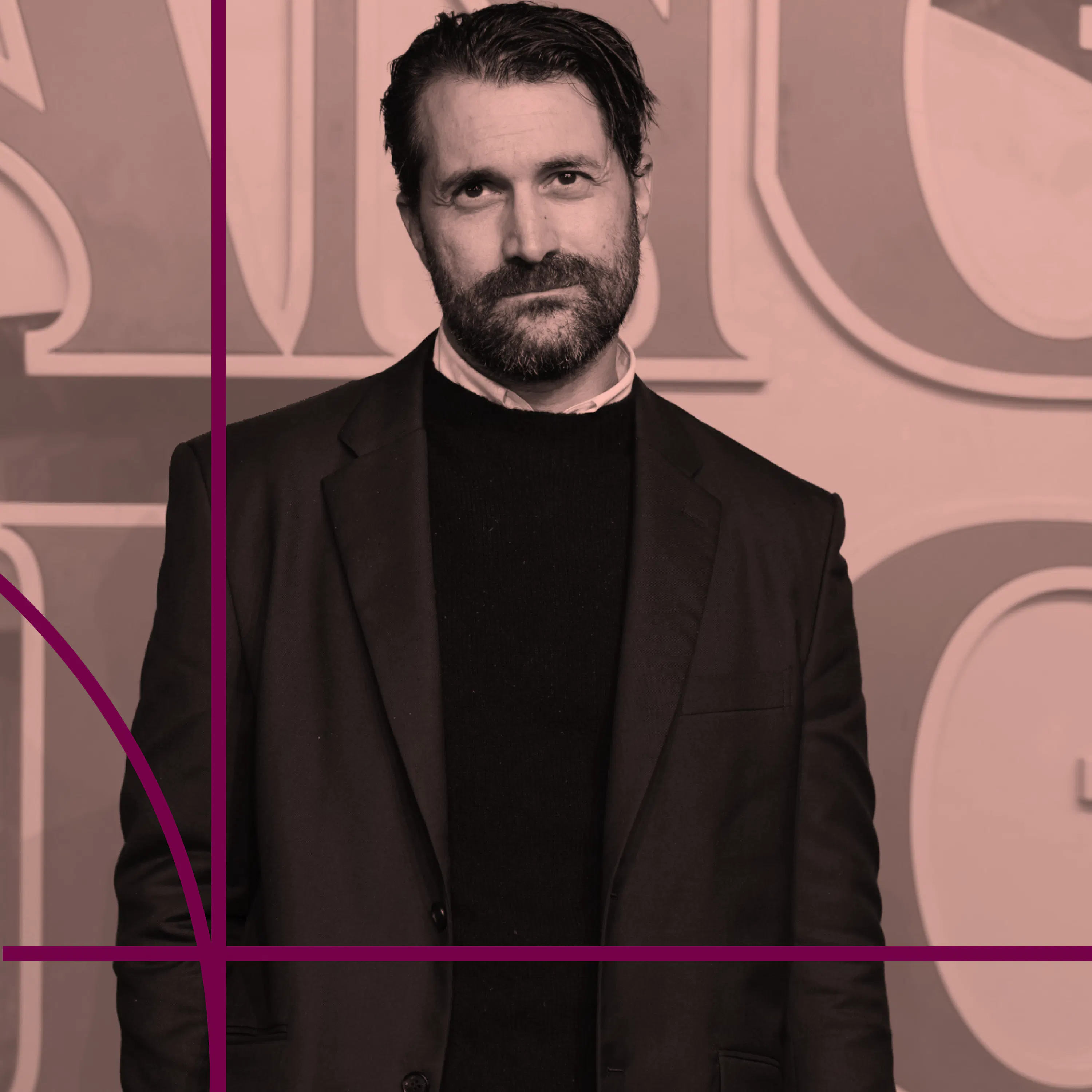 Paul Dichter: Stranger Things writer on why the writers’ room isn’t so different from the design studio 22.04.2026 32minBoth Aarron and I are official Stranger Things nerds. We watched the show ourselves when they came out, and again when our kids were old enough. As children of the 80s, the way it captured that particular feeling of freedom — biking with friends through the neighborhood, the movies and music of the era — struck exactly the right balance of nostalgia: present enough to feel real, but never forced. For that, much of the credit goes to the writers. So, we were thrilled to get a chance to talk to one of the head writers for Stranger Things, Paul Dichter. This is a preview of a premium episode. To hear the whole thing, head over to our Substack: https://designbetterpodcast.com/p/paul-dichter We’d always wondered what actually happens in a writers’ room for a show like this. Heated debates? Storyboards and character maps to keep a sprawling plot straight? As we learned in this interview: yes to all of it. And in many ways, the writers’ room isn’t so different from the design studio — a place where creative ideas collide and combine, and when it’s working well, produce something greater than the sum of its parts. Paul discusses the dynamics of the Stranger Things writers’ room, describing the diverse roles—from enthusiasts to skeptics—that drive creative teams. He explores the discipline of restraint in using 80s nostalgia and the balance between following systemic logic and knowing when to break the rules for a great idea. There’s also a lot here about how story structure maps onto design work — the idea that every scene needs an engine, that meaningful change has to register at every level, and that the best creative decisions often come not from defending what you already know, but from sitting with a note you hate long enough to find what’s really underneath it. *** Premium Episodes on Design Better This is a premium episode on Design Better. We release two premium episodes per month, along with two free episodes for everyone. Get a behind-the-scenes pass to every episode with The Roundup, where each week we bring you insights and actionable tactics from recent episodes. Premium subscribers get access to the documentary Design Disruptors and our growing library of books. You’ll also get access to our monthly AMAs with former guests, ad-free episodes, discounts and early access to workshops, and our monthly newsletter The Brief that compiles salient insights, quotes, readings, and creative processes uncovered in the show. And subscribers at the annual level now get access to the Design Better Toolkit, which gets you major discounts and free access to tools and courses that will help you unlock new skills, make your workflow more efficient, and take your creativity further. Upgrade to paid *** Learn more about your ad choices. Visit megaphone.fm/adchoices
Samankaltaiset podcastit


Suosittu maassa
Tämä podcast esiintyy myös näiden maiden podcast-listoilla.


