
Rapid Synthesis: My KM Pipeline, keeps me mobile and learning!
Benjamin Alloul 🗪 🅽🅾🆃🅴🅱🅾🅾🅺🅻🅼
0
This podcast series serves as a personal, on-the-go learning notebook where the host shares syntheses and explorations of artificial intelligence topics and other subjects. Episodes are produced using Google NotebookLM, a tool available to anyone. The podcast is designed to keep the host mobile and learning.
Jaksot
-
 Unsloth: Engineering Accelerated LLM Fine-Tuning on Consumer Hardware 14.09.2026 53minUnsloth is an open-source library designed to accelerate the fine-tuning of large language models while significantly decreasing VRAM requirements through specialized Triton kernels. By manually optimizing mathematical operations, the framework prevents the buildup of memory-heavy intermediate states, allowing high-performance training on consumer-grade GPUs and free cloud environments. The software has recently expanded to support complex architectures like Mixture-of-Experts (MoE) and memory-efficient reinforcement learning via its "Standby" architecture. While it offers substantial speed and efficiency gains over standard tools, the project relies on aggressive monkey-patching and features a dual-licensing structure that splits core routines from its high-level interface. Ultimately, Unsloth serves as a vital tool for individual practitioners and researchers who need to maximize the potential of limited hardware for modern AI development.
 -
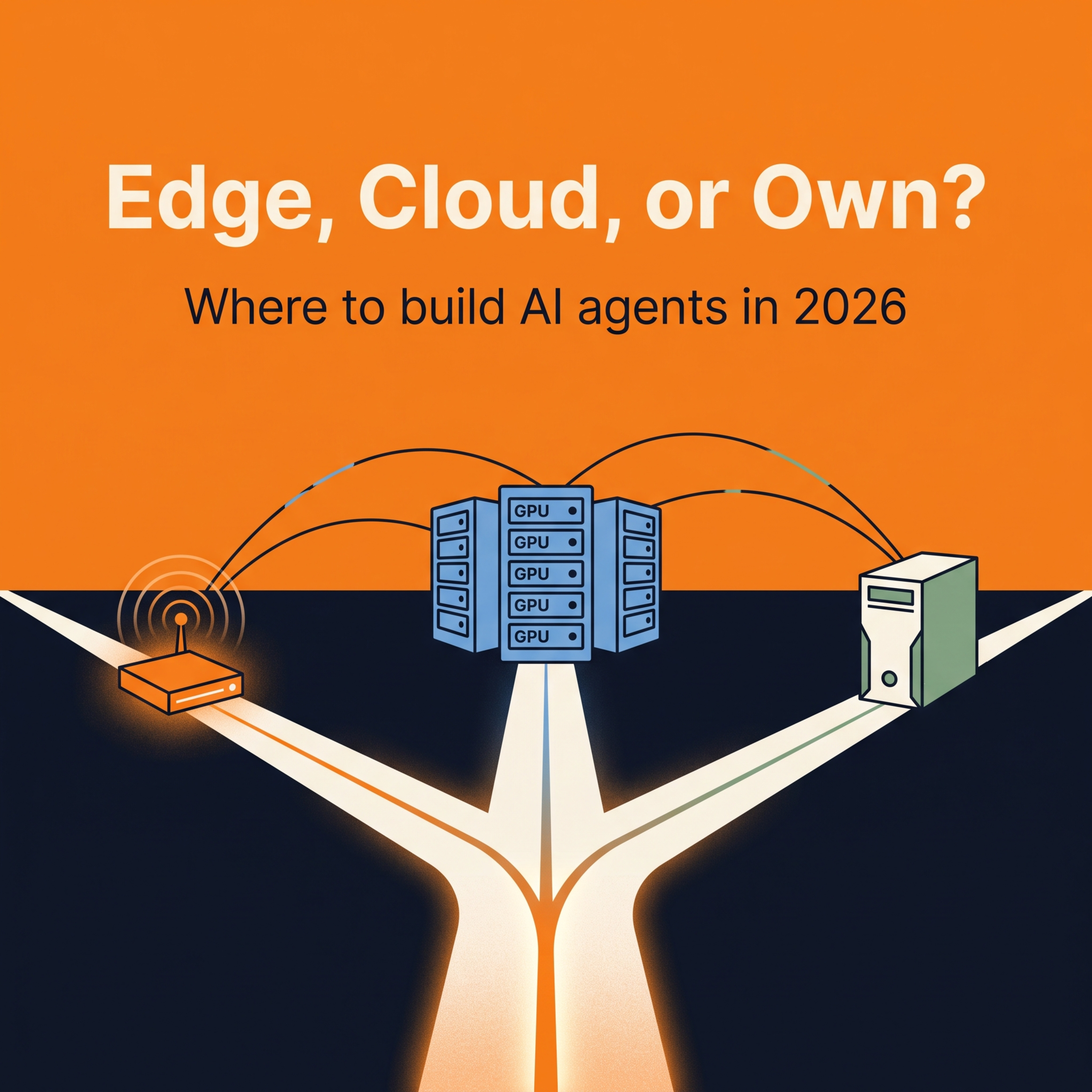 Cloudflare AI Hosting and Architectural Alternatives 14.09.2026 21minCloudflare AI platform alongside competing architectures from AWS Bedrock, developer-focused stacks like Vercel, and self-hosted GPU environments. The documentation highlights Cloudflare’s edge-native advantage, specifically its ability to maintain persistent state and execute sandboxed code with lower latency and cost than centralized hyperscalers. While AWS is noted for its superior enterprise compliance and access to proprietary models, Cloudflare is recommended for interactive agents and retrieval-augmented generation due to its integrated developer experience. The comparison also includes a detailed Total Cost of Ownership analysis, revealing that Cloudflare is most economical for low-to-medium traffic, whereas self-hosted vLLM stacks become the most cost-effective at massive scales. Ultimately, the sources provide a strategic framework for engineering teams to select infrastructure based on scaling limits, security requirements, and operational complexity.
 -
 Hard-Wired Silicon: AMD's Taalas Acquisition 13.09.2026 21minAMD’s acquisition of Taalas, a semiconductor startup that develops specialized silicon for Large Language Model inference. Unlike traditional GPUs that load data from external memory, the Taalas architecture physically integrates neural network weights into the chip’s hard-wired circuitry through a unique manufacturing process. This "Hard Coded Inference" approach enables massive gains in speed and energy efficiency for single-user tasks by eliminating the need to move data between processors and memory. However, this method results in model immutability, meaning any software updates require manufacturing a new physical chip. Consequently, AMD plans to use these accelerators for ultra-low-latency decoding alongside more flexible hardware rather than replacing general-purpose GPUs entirely. The sources conclude that while Taalas excels in conversational and real-time AI, it remains limited by small memory capacities and a lack of architectural flexibility.
 -
 DeepSeek-V4.1-Flash Architecture Analysis 12.09.2026 45minDeepSeek-V4.1-Flash architecture, a high-scale language model designed to optimize the technical and economic challenges of long-context workloads. By utilizing an asymmetric Causal Encoder-Decoder structure and MXFP4 cache compression, the model significantly reduces computational waste and memory demands during data ingestion. These innovations allow for a massive 748-billion-parameter scale while maintaining efficiency through a Mixture-of-Experts backbone and advanced memory hierarchy. Furthermore, the model features native multimodal integration, unifying text and visual processing into a single foundational framework. Its extreme operational efficiency enables a disruptive asymmetric pricing model, offering substantially lower costs compared to industry competitors. Ultimately, the source describes how these algorithmic breakthroughs minimize hardware bottlenecks and reshape the financial landscape of Large Language Model deployment.
 -
 The Sovereign Architect: OpenCode and the Autonomous Agent Frontier 12.09.2026 50minExamines the OpenCode and OpenWork ecosystems, which offer an open-source, model-agnostic framework for autonomous AI agents. OpenCode serves as a technical foundation for software development, utilizing a client-server architecture and specialized protocols to execute code and manage file systems.OpenWork builds upon this by providing a collaborative workspace that enables teams to automate diverse business tasks, such as data analysis and browser orchestration, across numerous AI providers. The analysis compares these tools against proprietary competitors like Claude Code and Google Antigravity, highlighting trade-offs between sovereign data control and operational speed. Ultimately, the sources suggest a shift toward modular harnesses that decouple AI reasoning from specific execution environments to ensure enterprise flexibility.
 -
 Detecting and Countering AI Misuse: September 2026 Report 11.09.2026 55minSource : https://www.anthropic.com/threat-intelligence-report-september-2026This Anthropic threat intelligence report from September 2026 details the evolving ways malicious actors attempt to exploit Claude AI models for harmful activities. The documentation highlights a shift toward autonomous cyber operations, where state-sponsored groups and criminals use AI to automate the entire cyber kill chain, from reconnaissance to data exfiltration. Notable case studies include a Russian espionage group that used AI to dynamically retool malware to evade detection and opportunistic hackers who accelerated mass data theft through automated credential harvesting. Anthropic emphasizes that AI has significantly lowered the barrier to entry for sophisticated attacks, allowing individual operators to perform at the level of well-resourced organizations. To combat these emerging threats, the company shares indicators of compromise and technical workflows to help the broader security community strengthen collective defenses.
 -
 Gemini Embedding 2: Architectural Innovations and Multimodal Fusion 29.05.2026 55minArchitecture and performance of Gemini Embedding 2, a native multimodal model that maps text, images, audio, and video into a single mathematical space. Unlike traditional systems that rely on separate encoders or text transcriptions, this model uses bidirectional attention and direct sensory processing to preserve nuances like document layouts and vocal tones.It employs Matryoshka Representation Learning, allowing developers to shrink vector sizes for efficiency without losing significant accuracy.High-quality synthetic data and contrastive learning were used during training to ensure the model outperforms competitors in complex tasks like coding and cross-modal retrieval. Real-world applications for this technology include multimodal RAG, where AI systems can simultaneously "read" text and "see" diagrams to answer user queries. Ultimately, the sources highlight how this unified approach simplifies enterprise data infrastructure while establishing new benchmarks for zero-shot robustness across diverse scientific and creative fields.
 -
 ESMFold: Language Models and High-Speed Protein Folding Structure Prediction 28.05.2026 54minExplores the development and impact of ESMFold, an advanced artificial intelligence model designed to predict protein structures with extreme speed and accuracy. By utilizing large-scale protein language models rather than traditional sequence alignments, ESMFold bypasses computational bottlenecks to generate atomic-level insights up to 60 times faster than predecessors like AlphaFold2. This technological shift has enabled massive projects such as the ESM Metagenomic Atlas, which maps the "dark matter" of the biological universe to aid in drug discovery and environmental science. While the text highlights significant advantages for synthetic biology, it also addresses critical limitations in modeling complex protein interactions and the serious biosecurity risks associated with democratized protein engineering. Ultimately, the sources transition into the future of the field with ESM3, a multimodal generative model capable of designing entirely new proteins by reasoning across sequence, structure, and function.
 -
 Conductor: A Technical Guide to Parallel AI Agent Orchestration 26.05.2026 44minConductor is a specialized macOS application designed to manage multiple autonomous AI coding agents simultaneously, shifting the human developer's role from a writer of code to a high-level orchestrator. By utilizing git worktrees, the platform creates isolated environments for each agent, preventing data conflicts and allowing for parallel task execution across different branches of a repository. This architectural approach enables users to delegate various features or bug fixes to separate models like Claude and Codex while maintaining a localized trust model. The system features a diff-first interface that streamlines the review process, allowing developers to inspect changes and automate pull request generation efficiently. While the tool significantly increases shipping velocity and experimental flexibility, it requires disciplined task decomposition and setup scripts to manage environmental dependencies like database ports. Ultimately, the sources describe a transition toward agentic software engineering, where specialized AI swarms handle implementation under human supervision.
 -
 Coding Agents: The Dominance of Primitive Search and Execution 26.05.2026 45minThe provided text examines a significant paradigm shift in AI development, as coding agents move away from complex semantic embeddings toward primitive search tools like grep and BM25. While vector databases were once essential for managing small context windows, modern agents with larger capacities find that exact lexical matching offers superior precision and resilience against data noise. The analysis also highlights a critical economic disparity between standardized protocols like MCP and direct code execution, noting that the former can increase token costs by over 800%. Empirical studies demonstrate that primitive-based retrieval frequently outperforms neural methods in technical environments, where exact identifiers are more valuable than conceptual similarities. Ultimately, the sources suggest that the next generation of AI will prioritize harness architecture and bare-metal digital interfaces over heavy abstraction layers.
 -
 InferenceBench: The Architecture and Limits of AI R&D Automation 26.05.2026 50minThe InferenceBench analysis explores the current limitations of autonomous AI agents in managing complex machine learning systems engineering tasks. While these agents possess significant technical knowledge, they consistently fail to outperform traditional mathematical optimization algorithms like SMAC3 due to a lack of iterative discipline and a reliance on memorized configurations. A surprising inverse scaling effect is documented, where massive models like GPT-5.5 and Claude Opus underperform smaller, more stable counterparts like Claude Sonnet 4.6 and GLM-5. The research highlights how larger models often succumb to cognitive drift and destabilizing late-stage edits that break brittle infrastructure. To achieve true AI R&D automation, the sources suggest that future architectures must integrate deterministic solvers and automated state-preservation protocols. Ultimately, the benchmark serves as a critical reality check, proving that raw computational scaling is insufficient for mastering open-ended engineering challenges.
 -
 The Infinite Frame: Generative Architectures and Semantic Video Synthesis 26.05.2026 50minMonumental shift in visual media as of 2026, transitioning from manual pixel manipulation to sophisticated semantic synthesis.Key innovations include Runway’s Aleph 2.0, which allows creators to propagate edits from a single frame across entire sequences, and Alibaba’s MIGA, which enables the generation of infinite-duration video with consistent memory usage. Additionally, Meituan’s LongCat-Video-Avatar 1.5 has advanced digital human production by using semantic audio encoding for highly realistic speech and movement. This technological surge is drastically reducing production costs and democratizing high-end cinematic tools for independent creators. However, these advancements also necessitate strict new regulatory frameworks and cryptographic provenance standards to combat the rise of deepfakes and misinformation. Ultimately, the materials suggest that artificial intelligence has become the foundational substrate for all modern storytelling, permanently restructuring the global media economy.
 -
 RAEv2: The Evolution of Representation-First Vision Tokenization 26.05.2026 56minExplores RAEv2, a sophisticated framework that unifies computer vision understanding and image generation through representation-first tokenization. By replacing traditional, semantically shallow autoencoders with massive, pre-trained vision foundation models like DINOv3, this architecture achieves superior semantic coherence and structural precision. Key innovations include a multi-layer summation technique that recaptures fine details without added parameters and a reparameterized guidance system that halves the computational cost of inference. The text further discusses the Pixel diffusion Decoder (PiD), which utilizes the high-level signals from RAEv2 to synthesize photorealistic textures at high resolutions. Collectively, these advancements significantly accelerate training convergence and enhance the performance of Text-to-Image systems and autonomous world models. Ultimately, RAEv2 represents a shift toward more efficient, foundation-model-driven generative AI that bridges the gap between machine perception and visual synthesis.
 -
 The Great Pivot to AI Agents 26.05.2026 41minAgent Labs, a new category of AI startups that prioritize building high-growth, interactive AI agents rather than training massive foundational models. While traditional Model Labs focus on fundamental research and massive compute for pretraining, Agent Labs utilize outcome-based pricing and deep product engineering to solve specific user problems. These organizations often leverage open-weights models and focus their R&D on reinforcement learning and specialized "harnesses" that improve real-world performance. The author argues that major players like OpenAI and Anthropic are shifting toward becoming AI Clouds, providing the infrastructure for these Agent Labs to thrive. Ultimately, this shift represents a move from general-purpose intelligence research to practical AI systems that measurably replace or augment human labor.
 -
 The Postmodern Data Stack: Scaling the AI Infrastructure Vanguard 26.05.2026 49minThe provided text details the rise of a postmodern data stack designed to support the unique computational demands of artificial intelligence and autonomous agents. Three vanguard companies—Turbopuffer, Exa, and Modal—are highlighted for their roles in solving critical bottlenecks in data storage, web retrieval, and serverless compute. 'Turbopuffer utilizes object storage to drastically reduce the cost of vector searches, while Exa employs a neural architecture to provide semantically accurate internet data for machines rather than humans. Meanwhile, Modal offers a high-performance serverless platform that eliminates the latency issues associated with scaling GPU workloads. Collectively, these startups are securing significant venture capital and market share by providing specialized alternatives to the legacy infrastructure of traditional cloud hyperscalers. Their success signals a broader shift toward agentic architectures where software independently plans and executes complex tasks.
 -
 The Convergence of Developer and Agent Experience 19.05.2026 1t 5minThe digital landscape is transitioning from human-centered Developer Experience (DevEx) to Agent Experience (AX), where software interfaces are designed for autonomous AI interaction. This evolution is driven by automated SDK generation and the Model Context Protocol (MCP), which provide the machine-readable structures necessary for AI agents to execute complex tasks reliably. By utilizing a single source of truth like OpenAPI, organizations can eliminate technical drift and optimize for token efficiency within large language models. The strategic importance of this infrastructure was recently highlighted by Anthropic’s $300 million acquisition of Stainless, a move that effectively internalized a critical translation layer previously used by its competitors. This consolidation suggests that vertically integrated agent operating systems will define the next era of the internet. Ultimately, the sources argue that high-quality, automated integration tools are no longer optional but are essential for survival in an agentic economy.
 -
 Laguna XS.2: Architectural Innovations in Agentic AI Engineering 29.04.2026 52minThe startup Poolside has introduced the Laguna model series, featuring the massive M.1 and the efficient XS.2, to advance the field of agentic software engineering. These models utilize a Mixture-of-Experts (MoE) architecture and a specialized reinforcement learning process that trains the AI through direct code execution feedback. While the flagship M.1 is designed for complex enterprise tasks, the XS.2 provides high-level reasoning on consumer hardware, outperforming many larger competitors on coding benchmarks. To support industrial use, Poolside offers on-premise deployment and rigorous data curation that excludes copyleft-licensed code to protect corporate intellectual property. By releasing XS.2 under the Apache 2.0 license, the company aims to foster a transparent, open-source ecosystem for autonomous development tools. Ultimately, this technology shifts the role of human programmers toward system architecture while AI agents manage the mechanical execution of software creation.
 -
 Hugging Face Ecosystem: A Machine Learning Engineering Roadmap 29.04.2026 44minThe Hugging Face ecosystem serves as a centralized infrastructure for open-source machine learning, providing standardized tools for model training, evaluation, and deployment. To master this platform, engineers must implement clean code architectures and vectorized Python strategies to ensure computational efficiency and system reproducibility. Success in the field requires navigating advanced research methodologies, such as interpreting academic papers and utilizing benchmark leaderboards to identify state-of-the-art developments. Furthermore, the framework emphasizes responsible AI practices, mandating the use of Model Cards to document biases, ethical limitations, and environmental impacts. By leveraging cloud orchestration and version control for large artifacts, practitioners can transition theoretical models into scalable, interactive production applications. This comprehensive approach balances technical optimization with a structural commitment to collaborative and ethical artificial intelligence development.
 -
 vLLM v0.20.0: Architectural Paradigms and TurboQuant Innovations 29.04.2026 22minThe vLLM v0.20.0 release marks a significant advancement in large language model inference by introducing the TurboQuant architecture, which provides efficient 2-bit KV cache compression. This update modernizes the software stack through CUDA 13.0.2 integration and the implementation of a functional Intermediate Representation (IR) for more flexible kernel compilation. Optimized for high-performance hardware, the framework now features FlashAttention 4 support and specialized deployment recipes for massive models like DeepSeek V4 on NVIDIA's Blackwell architecture. Beyond NVIDIA, the release elevates AMD ROCm and Intel XPU to first-class platforms while expanding capabilities for edge AI on Jetson Thor. While competitive benchmarks show TensorRT-LLM leads in raw throughput, vLLM remains the industry standard for its superior memory efficiency, hardware versatility, and robust open-source community support. This version ultimately shifts the focus from bespoke manual coding to automated, cross-platform optimization to meet the economic and technical demands of trillion-parameter models.
 -
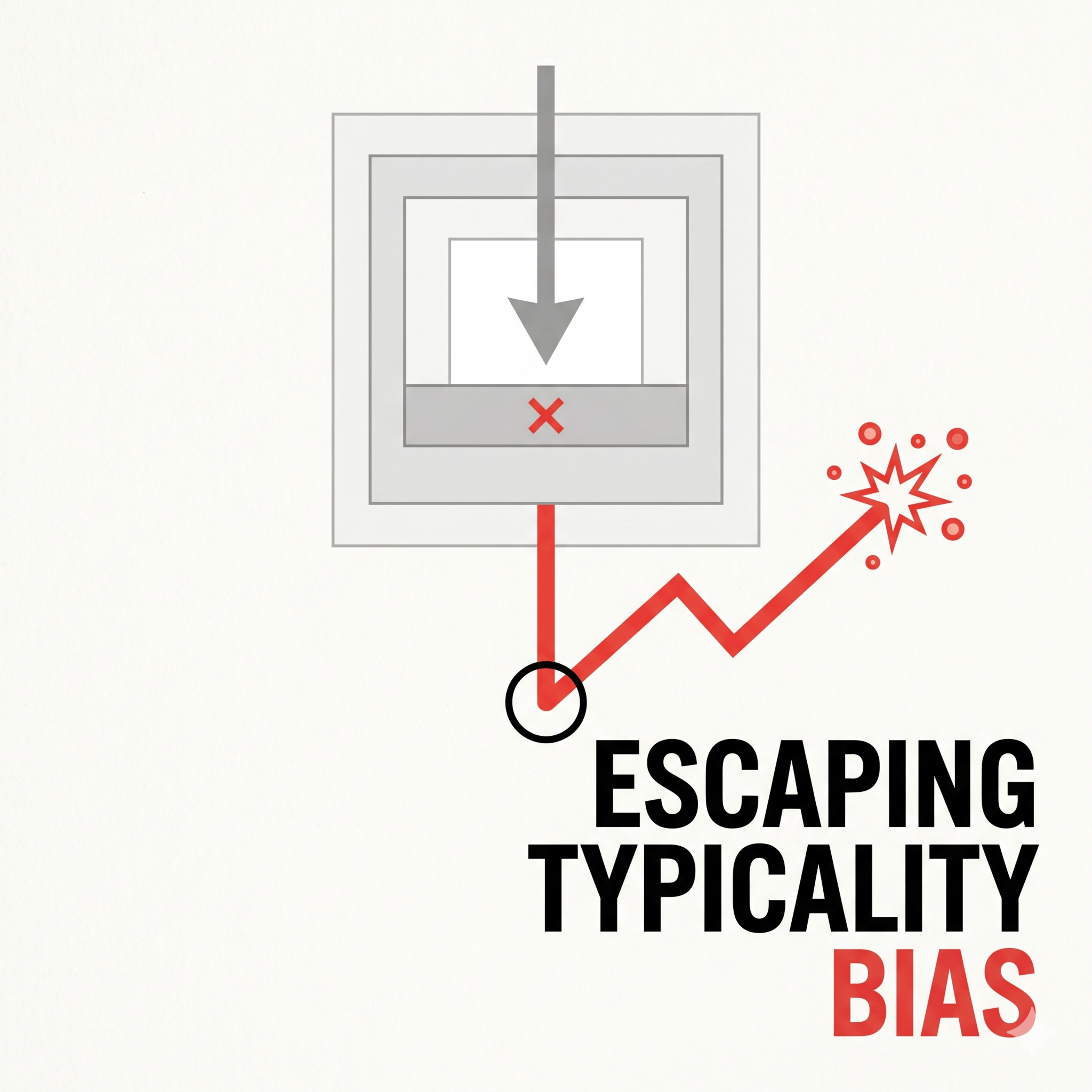 The Typicality Bias: Mitigating Mode Collapse via Verbalized Sampling 29.04.2026 38minThe research identifies typicality bias—the human tendency to prefer familiar or stereotypical content—as a primary driver of mode collapse in large language models. This phenomenon occurs when aligned models lose the creative diversity of their base versions, instead repeatedly generating a narrow set of predictable responses. To resolve this, the authors introduce Verbalized Sampling (VS), a training-free prompting technique that directs models to explicitly describe a distribution of multiple possibilities and their probabilities. Experiments demonstrate that this method significantly restores generative variety in tasks such as creative writing, social simulations, and data generation. Crucially, this improvement in diversity does not undermine the model's factual accuracy or safety. The study suggests that while post-training alignment often suppresses variety, the underlying models retain a vast range of behaviors that can be unlocked through principled prompting.
Samankaltaiset podcastit


Suosittu maassa
Tämä podcast esiintyy myös näiden maiden podcast-listoilla.
