
Small Business Big Visibility
Jason McKenzie
0
Are you a small business owner seeking effective, efficient, and profitable ways to grow your business without the overwhelm? Welcome to "Small Business Big Visibility", the podcast dedicated to empowering adventurous entrepreneurs like you to simplify marketing, reduce stress, and boost revenue. Hosted by Jason McKenzie, we dive into topics from different angles, providing actionable insights, innovative strategies, and easy-to-implement tools. Our mission is to help you focus on what truly matters: your passion, your family, and your freedom.
Jaksot
-
 Is Your Call Tracking Losing You Customers? 10.09.2026 7minIs your call tracking losing you customers? Here's how it happens. A business owner once got a call from a confused customer: "Why'd you change your phone number? I called your number and got a shoe store." He hadn't changed anything. His call-tracking service had swapped the number on his website months earlier, customers had saved the tracking number, and now it was ringing a shoe store across town. Call tracking is one way your business ends up showing the wrong phone number, and it's a version of a bigger problem quietly costing local businesses customers every day: your business information doesn't agree with itself across the web.In this episode, I'll explain NAP consistency (it just means your Name, Address, and Phone match everywhere they appear), why machines care so much about it (Google and AI assistants build a picture of your business by cross-checking mentions, and when those mentions disagree, their confidence drops and they may lean toward a competitor whose details line up cleanly), and exactly how much of this deserves your time, which is less than most people tell you. I'll also warn you off the services promising to fix your listings across 5,000 directories, most of which are the equivalent of a flower shop in Bangladesh that has nothing to do with your business.This is the fifth episode in the series on building your business foundation for both search and AI, and it fits inside the factor I've been calling Presence. Your homework is a single afternoon: pull up your Google Business Profile and your website, compare your name, address, and phone, fix what doesn't match, and then stop.After 15+ years helping small businesses get found, I've learned this is table stakes, not the whole game. Get it reasonably clean, then put your real energy where it actually moves the needle: clear brand information, genuine reviews, and real expertise on your site.CHAPTERS:0:00 The customer who called and got a shoe store0:46 What NAP consistency actually means1:23 Why machines care: how Google builds a picture of your business1:57 When mentions disagree, confidence drops2:18 A worked example: three addresses that don't match2:59 The whole mechanism: doubt costs you visibility3:13 How to get it right: pick one version and use it everywhere4:11 Why you should ignore the "5,000 directories" services5:01 The Pareto principle: fix the 20% that carries the weight5:11 NAP consistency is table stakes, not the whole game5:47 Where it fits: the Presence factor6:09 Your homework (one afternoon)6:31 A note for businesses without a storefront (coming next)MENTIONED IN THIS EPISODE:🧰 GeniePress (surfaces the mismatches that actually matter): https://geniepress.app📘 Small Business Big Visibility: Local SEO Made Easy (on Amazon): [book link]🎧 Start the series: Why AI Might Be Recommending Your Competitor, Not You.ABOUT SMALL BUSINESS BIG VISIBILITY:A podcast for small business owners who want practical, real-world strategies to grow without burnout. Hosted by Jason McKenzie, founder of Boise Web and a 15+ year veteran helping small businesses become more visible, more profitable, and more sustainable.Episode 419🔗 https://smallbusinessbigvisibility.com/#LocalSEO #GEO #SmallBusinessMarketing
 -
The Google Business Profile Mistake Costing You Customers 03.09.2026 7minDo you know if your Google Business Profile is quietly costing you customers? There's one specific mistake that keeps more good local businesses out of Google's map results than almost anything else, and it's probably not what you'd guess. It isn't bad reviews or a weak website. It's an incomplete profile.In this episode, I'll show you why that little map box with three businesses (the map pack) is some of the most valuable real estate on the internet, why it's powered by your Google Business Profile and not your website, and the three things Google actually uses to decide who gets a spot: relevance, distance, and prominence. Then I'll walk through the real checklist, in the order it pays off: claim and verify your profile, fill in every field (wrong hours alone will cost you customers), get your primary category right, add ten real photos, and ask for reviews the honest way. I'll also cover the shortcuts to never touch (keyword-stuffed names, directory blasts, fake reviews) because getting caught can get your whole profile suspended.This is the fourth episode in the series on building your business foundation for both search and AI. Most of this checklist takes an afternoon and costs nothing, and it's one of the highest-return things you can do for a local business.After 15+ years helping small businesses get found, I've watched genuinely good businesses stay invisible on Google for one reason: nobody ever finished setting up the free listing that puts them on the map. None of the fix is a trick. It's just the unglamorous work of being a complete, accurate, active listing, done honestly.CHAPTERS:0:00 Is your Google Business Profile costing you customers?0:30 What the map pack is and why it matters0:55 Why the map box is powered by your profile, not your website1:14 The mistake: an incomplete profile1:37 The three things Google measures: relevance, distance, prominence2:42 What "complete" actually means: the checklist2:49 Step 1: Claim and verify3:02 Step 2: Fill in every field3:20 Step 3: Get your category right3:45 Step 4: Add real photos4:01 Step 5: Ask for reviews (only real ones)4:51 A note on NAP consistency (coming next episode)5:22 Why there are no shortcuts here6:01 Worth an afternoon this weekMENTIONED IN THIS EPISODE:🧰 GeniePress (helps keep your online presence complete and consistent): https://geniepress.app📘 Small Business Big Visibility: Local SEO Made Easy (on Amazon): [book link]🎧 Start the series: Why AI Might Be Recommending Your Competitor, Not You.ABOUT SMALL BUSINESS BIG VISIBILITY:A podcast for small business owners who want practical, real-world strategies to grow without burnout. Hosted by Jason McKenzie, founder of Boise Web and a 15+ year veteran helping small businesses become more visible, more profitable, and more sustainable.Episode 418🔗 https://smallbusinessbigvisibility.com/#LocalSEO #GoogleBusinessProfile #SmallBusinessMarketing
-
How to Write an About Page That Gets You Hired 27.08.2026 6minDoes your About Us page actually explain why someone should hire you? Most don't. They fail in one of two predictable ways, and there's a good chance yours does at least one of them right now. The fix is a simple five-part structure that turns a page most owners treat as an afterthought into one that quietly closes the deal.In this episode, I'll walk through the two failure patterns (the diary entry that tells your founding story but nothing useful, and the corporate press release so generic it could describe any business on earth), and the five-part structure that actually works: a one-sentence opener that says what you do and who it's for, a credibility section built on facts instead of adjectives, values backed by real evidence, objection handling that answers the doubts people arrive with, and a clear next step. I'll also cover why this page matters more in the AI era (assistants pull from clear, factual pages to decide who to recommend), and, just as importantly, why you shouldn't spend three weeks agonizing over it while your service pages sit half-finished.This is the third episode in the series on building your business foundation for both search and AI. Get your About page clear in an afternoon, then move on to the pages that actually do the selling.After 15+ years helping small businesses get found, I've read a lot of About pages that were written for the wrong reader. The ones that work aren't clever or polished. They're clear, they're specific, and they answer the one question the visitor actually came to the page to settle: can I trust these people?CHAPTERS:0:00 Does your About page explain why anyone should hire you?0:25 The two ways About pages fail0:34 Failure 1: the diary entry0:46 Failure 2: the corporate press release1:12 The five-part structure that works1:16 Part 1: One sentence, no warm-up1:49 Part 2: Why you're credible (facts, not adjectives)2:30 Part 3: What you stand for, backed by evidence3:24 Part 4: Objection handling3:57 Part 5: A clear next step4:22 Why this page matters more in the AI era5:03 The difference between a link and a name AI speaks out loud5:25 Why the About page isn't your most important page6:08 Get it clear in an afternoon and move onMENTIONED IN THIS EPISODE:🧰 GeniePress (tells you what to fix and in what order): https://geniepress.app📘 Small Business Big Visibility: Local SEO Made Easy: [book link]🎧 Start the series: Why AI Might Be Recommending Your Competitor, Not You.ABOUT SMALL BUSINESS BIG VISIBILITY:A podcast for small business owners who want practical, real-world strategies to grow without burnout. Hosted by Jason McKenzie, founder of Boise Web and a 15+ year veteran helping small businesses become more visible, more profitable, and more sustainable.Episode 417🔗 https://smallbusinessbigvisibility.com/#LocalSEO #GEO #SmallBusinessMarketing
-
This Mom-and-Son Team Teaches Teens What School Won't 20.08.2026 39minTara Lynn Haley wanted a doctorate in psychology. Instead, she failed Psych 101 and started her adult life thousands of dollars in debt. What followed was a winding path (flight attendant, an injury, an ADHD and OCD diagnosis, and years teaching alternative and neurodivergent students) that led her somewhere she never expected: building a business with her teenage son, Liam.In this conversation, Tara Lynn and Liam share the "false finish line" idea at the heart of their work: the myth that high school, then college, then a job is the destination, when it's really the start of 40-plus years most people were never prepared for. They talk about why students leave school knowing calculus but not how to budget, secure their digital accounts, file the adult documents families discover too late, or build the intergenerational connections that research links most closely to human happiness. Liam shares what it's like to build something alongside his mom, and why a teenager telling other teenagers this message lands differently than a teacher saying it. They also get into a practical take on using AI well (why endless "redo it" prompting wastes tokens, money, and energy) and the years-long journey of turning a classroom budgeting exercise into the program they're launching now: Jobsperience™, a 105-day system that helps teens build real independence in about 10 minutes a day.This is an interview episode, and it's a genuine story-over-expertise conversation with a mom-and-son team building something they care deeply about.Please note: this episode includes a brief, non-graphic discussion of youth mental health, including suicide and overdose, as part of what motivated Tara Lynn's work. If that's a hard topic for you right now, please take care. In the US, you can reach the 988 Suicide and Crisis Lifeline by calling or texting 988.CHAPTERS:0:00 Meet Tara Lynn and Liam, a mom-and-son business team0:34 A failure story that became a resilience story1:28 The "false finish line" and what school gets wrong3:36 The many jobs and paths along the way4:44 The skills students leave school without5:19 Loneliness, connection, and the Harvard study on happiness5:52 Liam's view: why he chose to build this with his mom18:39 Using AI well: why "redo it" wastes tokens and energy21:39 What pushed Tara Lynn to go back for her doctorate34:00 Building Jobsperience since 201938:47 Where to find them and what's launching nowMENTIONED IN THIS EPISODE:🌐 Tara Lynn Haley: https://taralynnhaley.com🎓 Jobsperience™ (the 105-day program): https://taralynnhaley.com/purchase/🆓 Free sample (Emergency Readiness, 4 Practice Steps): https://taralynnhaley.com📺 YouTube: https://youtube.com/@TaraHaley📸 Instagram: https://www.instagram.com/taralynn.haley/🎵 TikTok: https://tiktok.com/@taralynn.haley💼 LinkedIn: https://www.linkedin.com/in/tara-lynn-haley/👥 Facebook: https://www.facebook.com/tara.haley/ABOUT SMALL BUSINESS BIG VISIBILITY:A podcast for small business owners who want practical, real-world strategies to grow without burnout. Hosted by Jason McKenzie, founder of Boise Web and a 15+ year veteran helping small businesses become more visible, more profitable, and more sustainable.Episode 416🔗 https://smallbusinessbigvisibility.com/#SmallBusinessOwner #Entrepreneurship #LifeSkills
-
How to Write a Homepage AI Can Actually Recommend 13.08.2026 6minWhen someone asks an AI assistant for a good local business, the AI reads your website to decide whether to recommend you. If your homepage says something like "we provide quality solutions for all your needs," it has nothing to work with, and it moves on to the business that made itself easy to understand. Writing a homepage AI can actually recommend starts with one thing: brand clarity.In this episode, I'll break down brand clarity, the first of the five factors, and why it quietly wrecks more websites than any other. You'll learn the four things your website needs to plainly say (what you do in your customers' words, where you serve, who it's for, and why choosing you is the easy decision), the difference between vague copy and jargon (two ways to be unclear), and a two-minute test you can run on your own homepage right now: cover the logo and navigation, read only the first two sentences, and see if a stranger could tell what you do, where, and for whom.Here's what's new in the AI era. A human who lands on a vague page might squint and poke around before giving up. An AI assistant won't. It doesn't guess what you probably mean. If your site doesn't clearly say what you do, the AI has nothing to work with and moves on to the business that made it easy. You don't get partial credit for being almost clear.This is the second episode in the series on building your business foundation for both search and AI. The good news: brand clarity is the cheapest factor to fix. No redesign, no new developer, no new photography. Most businesses could fix their biggest clarity problem in an afternoon, just by writing down, in plain language, the four things a stranger actually needs to know.CHAPTERS:0:00 Could a stranger tell what your business does?0:33 The sentence that says nothing: "quality solutions for all your needs"0:59 Why the vague feels obvious from the inside1:14 Brand clarity: the first of the five factors1:36 The four things your website needs to plainly say1:58 Fixing the vague sentence (a real example)2:13 The anatomy of a page that gets found2:54 Why AI punishes vagueness harder than humans do3:41 The two-minute test: cover the logo, read two sentences4:18 Words to watch for: solution, excellence, quality, trusted4:49 The opposite problem: too much jargon5:14 Why this is the cheapest fix on the whole listMENTIONED IN THIS EPISODE:📘 Small Business Big Visibility: Local SEO Made Easy: [book link]🎧 Start the series: Why AI Might Be Recommending Your Competitor, Not You.🔗 https://smallbusinessbigvisibility.com/ABOUT SMALL BUSINESS BIG VISIBILITY:A podcast for small business owners who want practical, real-world strategies to grow without burnout. Hosted by Jason McKenzie, founder of Boise Web and a 15+ year veteran helping small businesses become more visible, more profitable, and more sustainable.Episode 415🔗 https://smallbusinessbigvisibility.com/
-
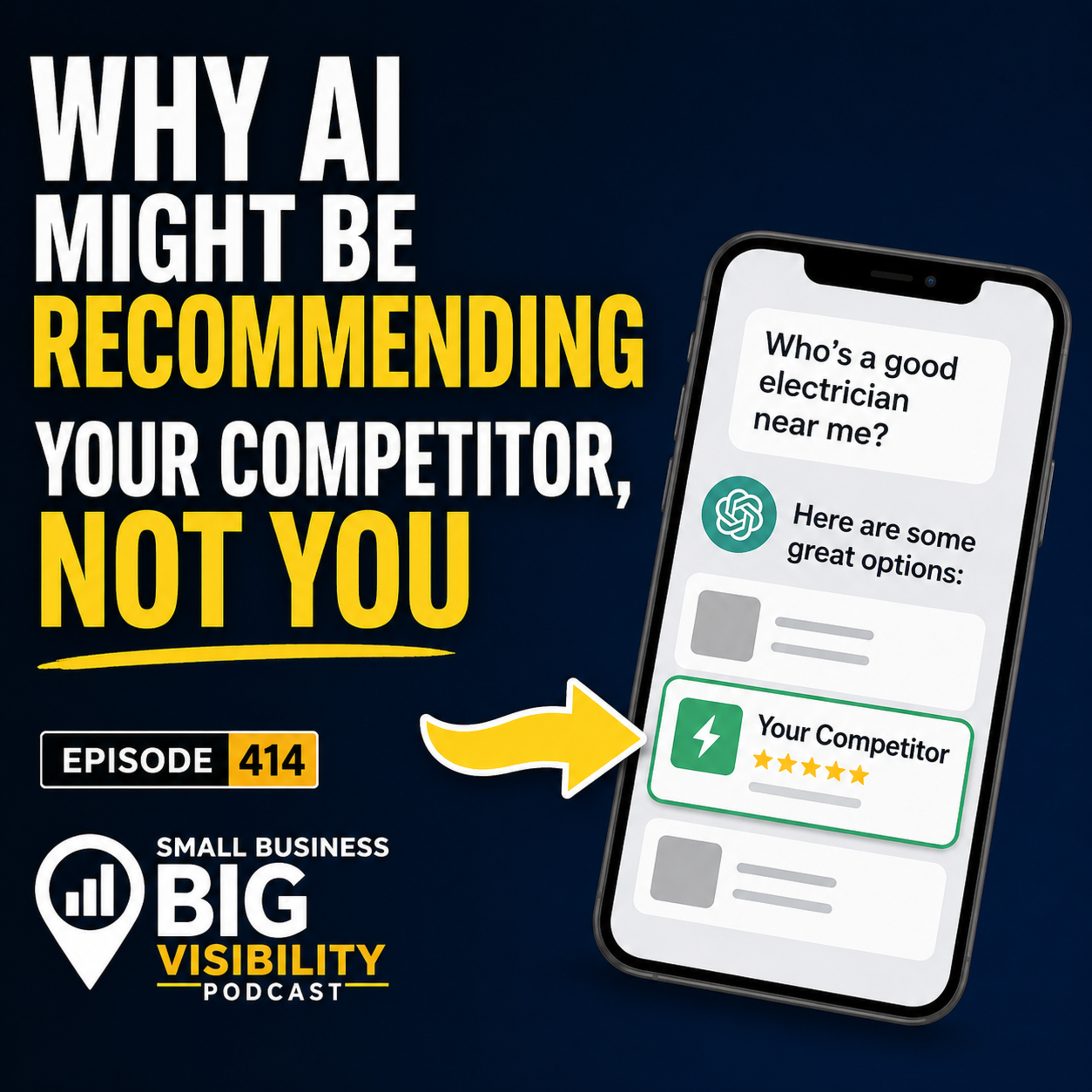 Why AI Might Be Recommending Your Competitor, Not You 06.08.2026 8minSomeone in your town grabs their phone and asks, "who's a good electrician near me?" The AI gives them a short, confident answer with just a few names. Your business was either in that answer or it wasn't. If AI is naming your competitor instead of you, this series is about fixing that.In this episode, I'll explain what GEO (Generative Engine Optimization) actually is in plain language, why it's not the mysterious new discipline a lot of people online make it out to be, and how it connects directly to the local SEO you may already be doing. The core idea: AI assistants aren't inventing businesses out of thin air. They pull from your website, your Google Business Profile, your reviews, and directories, the same web content everything else runs on. I'll also introduce the five factors this whole series is built around: brand clarity, presence, popularity and reputation, expertise and depth, and the technical stuff, in the specific order that actually matters (which is not the order most of the industry sells).This is the first episode in a new series on building your business foundation for both search and AI. Do the fundamental work well and you show up in both places. Skip it and you risk being invisible in both.After 15+ years helping small businesses get found, I've watched providers oversell the technical checklist because it's easy to charge for, while ignoring the fundamentals that actually move the needle. This series is the honest version: what's testable, what's repeatable, and what genuinely helps you get recommended, whether the recommendation comes from Google or from an AI.CHAPTERS:0:00 Have you heard the term GEO and have no idea what it means?0:35 What GEO stands for, in plain language0:52 SEO gets you the top link. GEO gets you named.2:07 Why you could be invisible to people asking AI2:27 GEO is not a separate system from getting found on Google2:57 AI isn't inventing businesses. It pulls from your existing presence.3:55 The five factors this series is built on4:22 Factor 1: Brand clarity4:37 Factor 2: Presence4:52 Factor 3: Popularity and reputation (and the no-fake-reviews rule)5:22 Factor 4: Expertise and depth5:42 Factor 5: The technical stuff (and why it's deliberately last)5:59 Why the order matters7:10 Why nobody fully understands the whole system (including the AI companies)8:19 Where to start: brand clarityMENTIONED IN THIS EPISODE:📘 Small Business Big Visibility: Local SEO Made Easy: [book link]🧰 GeniePress: https://geniepress.app🔗 https://smallbusinessbigvisibility.com/ABOUT SMALL BUSINESS BIG VISIBILITY:A podcast for small business owners who want practical, real-world strategies to grow without burnout. Hosted by Jason McKenzie, founder of Boise Web and a 15+ year veteran helping small businesses become more visible, more profitable, and more sustainable.Episode 414🔗 https://smallbusinessbigvisibility.com/#LocalSEO #GEO #SmallBusinessMarketing
 -
 The 4 Referral Partners You Should Fire 30.07.2026 7minSome of your referral partners are actually costing you business, and you're still buying them lunch. Every piece of networking advice tells you to build your network, add more partners, grow it bigger. Almost none of it tells you that some partners are worth more gone than kept, and that hanging on to the wrong ones quietly drains the time and energy you should be spending on the right ones.In this episode, I'll walk through the four kinds of referral partners you need to fire (the taker who never reciprocates, the low-quality referrer who sends you junk, the reputation risk who treats your clients badly, and the faded partner whose fit simply ran out), the three questions that tell you whether a partnership is slow or genuinely dead, and how to actually end it without burning the relationship or your reputation (in most cases, you just quietly stop).This is the final episode in the referral engine series. Across the series we've covered finding the right partners, giving first, making yourself easy to refer, running the meeting, following up, and staying in touch. This episode is the discipline that protects all of it: keeping your network to the people who genuinely earn their place in it.After 15+ years helping small businesses get more visible, I've learned that the owners with the strongest referral networks aren't the ones with the most partners. They're the ones who put their energy where it actually comes back. Do that consistently, and referrals stop being something you chase and start being something that comes to you.CHAPTERS:0:00 Some of your partners are costing you business0:27 The advice nobody gives you: some partners are worth more gone0:47 Why your time is the real constraint1:08 Partner #1 to fire: the taker2:07 Partner #2 to fire: the low-quality referrer3:04 Partner #3 to fire: the reputation risk4:02 Partner #4 to fire: the faded partner4:35 Three questions: is it slow or is it dead?5:09 How to actually end a partnership without drama5:42 What to say if they ask why6:02 The whole game, in one sentenceMENTIONED IN THIS EPISODE:🎧 Earlier in the referral engine series: 15 Minutes a Week Keeps Your Referral Network Alive.🎧 Start the series from the beginning: Stop Networking for Clients. Network for Partners.ABOUT SMALL BUSINESS BIG VISIBILITY:A podcast for small business owners who want practical, real-world strategies to grow without burnout. Hosted by Jason McKenzie, founder of Boise Web and a 15+ year veteran helping small businesses become more visible, more profitable, and more sustainable.Episode 413🔗 https://smallbusinessbigvisibility.com/#SmallBusinessOwner #ReferralMarketing #SmallBusinessNetworking
 -
15 Minutes a Week Keeps Your Referral Network Alive 23.07.2026 7minA referral partner you never talk to isn't really a partner. They're someone you used to know, and they've probably already forgotten what you do. Referral relationships decay over time, quietly, without either person deciding to let them go. The good news: keeping an entire network alive takes about 15 minutes a week.In this episode, I'll walk through a simple three-tier system for deciding how often to reconnect with each partner based on how much they matter to your business (core partners monthly, active partners quarterly, wider network twice a year), the four things that make a reconnect land instead of feeling like an empty check-in, and the one type of reconnect that's worth more than all the others combined. I'll also show you the weekly habit that turns all of this from a nice idea into something that actually happens.This is the eleventh episode in the referral engine series. Last episode covered the follow-up message that gets the first meeting on the calendar. This episode is about keeping those partnerships alive over the long haul, so your partners still think of you the moment the right client walks through their door.After 15+ years helping small businesses get more visible, I've watched plenty of good partnerships fade to nothing, not from conflict, just from silence. The owners with steady referrals aren't luckier or more charming. They just never let a good relationship go cold.CHAPTERS:0:00 A partner you never talk to isn't a partner0:31 Why referral relationships decay over time1:14 How often should you reconnect? It depends on the partner.1:32 Tier 1: Core partners (monthly)2:32 Tier 2: Active partners (quarterly)3:00 Tier 3: Wider network (twice a year)3:22 What to actually say (and the message to never send)3:56 The four things every reconnect should carry5:22 Why all four have one thing in common5:50 The weekly habit that keeps it running7:04 What's coming next in the seriesMENTIONED IN THIS EPISODE:🎧 Earlier in the referral engine series: The 90-Second Message That Saves a Networking Connection.🎧 Earlier in the referral engine series: The 4 Questions That Turn a Meeting Into a Referral Partner.ABOUT SMALL BUSINESS BIG VISIBILITY:A podcast for small business owners who want practical, real-world strategies to grow without burnout. Hosted by Jason McKenzie, founder of Boise Web and a 15+ year veteran helping small businesses become more visible, more profitable, and more sustainable.Episode 412🔗 https://smallbusinessbigvisibility.com/#SmallBusinessOwner #ReferralMarketing #SmallBusinessNetworking
-
The 90-Second Message That Saves a Networking Connection 16.07.2026 5minYou met someone great at a networking event. You both said you should sit down for a one-to-one. And then neither of you ever did. That connection, one that could have sent you business for years, quietly evaporated in the gap between meeting someone and actually meeting with them. The fix is a single follow-up message that takes about 90 seconds to write.In this episode, I'll give you the exact follow-up message that turns a business card into an actual meeting, the timing window where this works (and after which it dies), and the three things every good follow-up needs: a specific reference to your conversation, a reason to meet framed around them, and an easy next step. I'll show you the full message put together, plus two variations for when you only met someone briefly and for when they reach out to you first.This is the tenth episode in the referral engine series. Last episode covered how to run the one-to-one meeting itself. This episode is about the message that actually gets that meeting on the calendar.After 15+ years helping small businesses get more visible, I've watched plenty of promising connections die in a desk drawer. The owners with the strongest referral networks aren't better at working the room. They're better at the 90 seconds that come after, usually sitting in their car in the parking lot before they even drive home.CHAPTERS:0:00 The connection that dies before the first meeting0:28 Why networking connections evaporate in the gap1:11 Timing: the 24-hour follow-up window1:56 The three things every good follow-up needs1:59 Reference something specific from the conversation2:25 Give a reason to meet, framed around them3:07 Propose an easy, specific next step3:20 The full message, put together4:02 Two variations: brief meetings and when they reach out first4:45 Send it before you leave the parking lot5:16 What's coming next in the seriesMENTIONED IN THIS EPISODE:🎧 Earlier in the referral engine series: The 4 Questions That Turn a Meeting Into a Referral Partner.🎧 Earlier in the referral engine series: How to Build an Offer That's Easy to Refer.ABOUT SMALL BUSINESS BIG VISIBILITY:A podcast for small business owners who want practical, real-world strategies to grow without burnout. Hosted by Jason McKenzie, founder of Boise Web and a 15+ year veteran helping small businesses become more visible, more profitable, and more sustainable.Episode 411🔗 https://smallbusinessbigvisibility.com/#SmallBusinessOwner #ReferralMarketing #SmallBusinessNetworking
-
 4 Questions That Turn a 1:1 Meeting Into a Referral Partner 09.07.2026 6minYou sat down with a potential referral partner. You talked for an hour. You both had a great time. And you never got a single piece of business from it. That's the most common outcome of a networking meeting, and it's completely avoidable.In this episode, I'll walk through what a one-to-one meeting actually is (a working session disguised as a friendly conversation), the single mistake that makes most of these meetings a pleasant waste of time, and the four questions that turn a friendly chat into a working partnership: who's your ideal client, what does a good referral versus a bad one look like, what's the moment someone realizes they need you, and how do you want to be introduced. I'll also share two bonuses that separate a productive meeting from a wasted one, including the note-taking habit that makes you look like a genius a month later.This is the ninth episode in the referral engine series. Previous episodes covered building a referable offer. This episode is about the meeting where the partnership actually gets built.After 15+ years helping small businesses get more visible, I've sat through plenty of pleasant meetings that went nowhere. The owners who walk out of these meetings with a real partnership aren't more charming. They walk in with a purpose and a few specific questions, and they steer the conversation toward the things that actually produce referrals.CHAPTERS:0:00 The meeting that feels great and produces nothing0:33 What a one-to-one actually is0:56 How most owners run it wrong1:26 The mistake: treating it as a social event1:58 Step one: set the frame2:27 Question 1: Who's your ideal client?3:04 Question 2: What's a good referral vs. a bad one?3:35 Question 3: What's the moment someone needs you?4:08 Question 4: How do you want to be introduced?4:50 Bonus 1: Take notes on paper5:25 Bonus 2: End with one concrete action6:07 What's coming next in the seriesMENTIONED IN THIS EPISODE:🎧 Earlier in the referral engine series: How to Build an Offer That's Easy to Refer.🎧 Earlier in the referral engine series: Every Referral Happens in a Conversation You're Not In.ABOUT SMALL BUSINESS BIG VISIBILITY:A podcast for small business owners who want practical, real-world strategies to grow without burnout. Hosted by Jason McKenzie, founder of Boise Web and a 15+ year veteran helping small businesses become more visible, more profitable, and more sustainable.Episode 410🔗 https://smallbusinessbigvisibility.com/#SmallBusinessOwner #ReferralMarketing #SmallBusinessNetworking
 -
How to Build an Offer That's Easy to Refer 02.07.2026 7minYour offer can be perfectly clear and still be impossible to refer. Clear and referable are two different things, and most small business owners only build for one of them. You can fully understand what someone does and still never send them a single client.In this episode, I'll walk through the three properties that make an offer easy to hand off: a trigger (the specific situation that makes your partner think of you, not your whole industry), a low-risk entry point (the front door that's almost impossible to say no to), and a clean handoff (the copy-pasteable link or simple mechanism that removes all the friction). I'll also show you how a free website teardown can generate more referrals than your highest-value service, and how to assemble all three properties into a single offer your partners can hand out all day long.This is the eighth episode in the referral engine series. Last episode covered why a clear offer matters. This episode is about the next step: making that clear offer genuinely referable, so your partners refer you without you having to ask.After 15+ years helping small businesses get more visible, I've watched plenty of owners with clear, well-understood services still get almost no referrals. The fix usually isn't a better pitch. It's an offer engineered to travel from one person to the next without losing anything along the way.CHAPTERS:0:00 Clear and referable are not the same thing0:34 The three properties of a referable offer0:44 Property #1: A trigger that fires in real conversation2:29 Property #2: A low-risk entry point3:40 The three traits of a good entry point4:07 Property #3: A clean handoff5:45 Putting all three together: the website teardown example6:57 Why this gets referred without you asking7:13 What's coming next in the seriesMENTIONED IN THIS EPISODE:🎧 Earlier in the referral engine series: Every Referral Happens in a Conversation You're Not In.🎧 Earlier in the referral engine series: How to Answer "What Do You Do?" in One Sentence.ABOUT SMALL BUSINESS BIG VISIBILITY:A podcast for small business owners who want practical, real-world strategies to grow without burnout. Hosted by Jason McKenzie, founder of Boise Web and a 15+ year veteran helping small businesses become more visible, more profitable, and more sustainable.Episode 409🔗 https://smallbusinessbigvisibility.com/#SmallBusinessOwner #ReferralMarketing #SmallBusinessNetworking
-
Every Referral Happens in a Conversation You're Not In 23.06.2026 7minA confused referral partner sends you nothing. Not because they don't like you, but because they don't actually understand what your business does, and they can't explain you to someone else. Here's the thing most small business owners miss: every referral happens in a conversation you're not in. Your partner is at a barbecue or a job site, someone mentions a problem, and your partner has about 10 seconds to explain what you do to a stranger, with you nowhere in the room.In this episode, I'll walk through why clarity beats cleverness every time a referral changes hands, the three moments where an unclear offer quietly kills referrals (the recall moment, the explanation moment, and the confidence moment), and the spouse test for figuring out whether your offer is actually clear enough to travel from person to person. I'll also clear up a common misunderstanding: getting clear on your offer doesn't mean dropping all your other services. It means making one offer easy enough to hand off.This is the seventh episode in the referral engine series. Last episode covered crafting your one-sentence introduction. This episode is about the offer underneath it, the thing that has to be clear before any introduction can work.After 15+ years helping small businesses get more visible, I've watched plenty of owners with great reputations get almost no referrals, simply because nobody could explain what they did. Clever marketing belongs in your advertising, where you control the delivery. Clarity is what you need when someone else is doing the talking for you.CHAPTERS:0:00 A confused referral partner sends you nothing0:40 Every referral happens in a conversation you're not in1:47 Why clever pitches don't survive the handoff2:54 The recall moment: will your name even come up?3:40 The explanation moment: can they describe you accurately?5:09 The confidence moment: people won't refer what they can't explain5:53 The spouse test for a clear offer6:43 Clarity doesn't mean dropping your other services7:14 Where cleverness actually belongs8:06 What's coming next in the seriesMENTIONED IN THIS EPISODE:🎧 Earlier in the referral engine series: How to Answer "What Do You Do?" in One Sentence.🎧 Earlier in the referral engine series: The 3 Tests for Spotting a Real Referral Partner.ABOUT SMALL BUSINESS BIG VISIBILITY:A podcast for small business owners who want practical, real-world strategies to grow without burnout. Hosted by Jason McKenzie, founder of Boise Web and a 15+ year veteran helping small businesses become more visible, more profitable, and more sustainable.Episode 408🔗 https://smallbusinessbigvisibility.com/#SmallBusinessOwner #ReferralMarketing #SmallBusinessNetworking
-
 How to Answer 'What Do You Do?' in One Sentence 16.06.2026 9minThe most important 30 seconds in networking is the moment someone asks what you do. Most small business owners blow it. They launch into a wandering explanation of their title, their company history, and every service they offer, and by the time they finish, the person who asked has completely forgotten what they actually do.In this episode, I'll walk through why your answer should be one sentence instead of a one-minute dissertation, and the simple two-part formula that makes that sentence land: who you help, and the specific problem you solve for them. I'll compare weak introductions (technically accurate, functionally useless) against strong ones for a plumber, a financial advisor, and a web designer, so you can hear the difference. Then I'll cover three delivery rules that separate a confident intro from an insecure one.This is the sixth episode in the referral engine series. The goal of introducing yourself isn't to explain your whole business. It's to earn the next question.After 15+ years helping small businesses get more visible, I've sat through more rambling networking introductions than I can count (including one memorable four-minute monologue about the paper shredding business). The owners who win the room aren't the ones who say the most. They're the ones who say one clear thing and let it land.CHAPTERS:0:00 The most important 30 seconds in networking0:35 A cautionary tale: the paper shredding monologue2:27 The softer version happening at events every day3:20 Why one sentence is the right length4:48 The two-part formula: who you help and the problem you solve5:33 Weak vs. strong: plumber, financial advisor, web designer7:10 The one question to answer before writing your own7:57 Three delivery rules: don't rush, don't apologize, let it land8:43 What's coming next in the seriesMENTIONED IN THIS EPISODE:🎧 Earlier in the referral engine series: How to Turn Your Referral List Into a Referral Team.🎧 Earlier in the referral engine series: Stop Networking for Clients. Network for Partners.ABOUT SMALL BUSINESS BIG VISIBILITY:A podcast for small business owners who want practical, real-world strategies to grow without burnout. Hosted by Jason McKenzie, founder of Boise Web and a 15+ year veteran helping small businesses become more visible, more profitable, and more sustainable.Episode 407🔗 https://smallbusinessbigvisibility.com/#SmallBusinessOwner #ReferralMarketing #SmallBusinessNetworking
 -
 How to Turn Your Referral List Into a Referral Team 09.06.2026 10minA list of 50 potential referral partners isn't a referral team. It's a list. And most small business owners stop there, then wonder six months later why no referrals ever came in. The conversion from list to team is a four-step process, and most people skip the middle two steps entirely.In this episode, I'll walk through the actual sequence: the warm introduction or cold ask (and how to make the ask specific enough to get a yes), the first meeting (where most people blow it by pitching when they should be asking), the giving phase that builds the relationship before any business is exchanged, and the second meeting that turns a connection into a formal referral partnership. I'll also cover what to do if your target partner already has a full referral network (don't walk away, ask to be the backup), and the calendar trick that keeps the follow-up from falling through the cracks.This is the fifth episode in the referral engine series. Previous episodes covered the bigger reframe of networking for partners instead of clients, the giver mindset that makes referrals flow, identifying who your real referral partners are, and the different types of referral relationships (upstream, downstream, cross).After 15+ years helping small businesses get more visible, I've watched plenty of owners build great lists and then sit on them. The owners who actually generate referrals aren't the ones with the longest contact lists. They're the ones who turn five or ten of those contacts into a working team.CHAPTERS:0:00 A list isn't a referral team0:32 Why most business owners leapfrog the middle steps1:04 Step 1: The warm introduction or cold ask2:13 What to say in a cold ask (and what not to)3:00 Step 2: The first meeting (ask, don't pitch)4:50 Spending 80% of the first meeting listening5:35 Step 3: Give before they've earned it6:38 The follow-up window that matters7:14 Step 4: The second meeting and formalizing the partnership8:14 What to do if they already have a full referral network9:32 What's coming next in the seriesMENTIONED IN THIS EPISODE:🎧 Earlier in the referral engine series: Stop Networking for Clients. Network for Partners.🎧 Earlier in the referral engine series: The 3 Tests for Spotting a Real Referral Partner.ABOUT SMALL BUSINESS BIG VISIBILITY:A podcast for small business owners who want practical, real-world strategies to grow without burnout. Hosted by Jason McKenzie, founder of Boise Web and a 15+ year veteran helping small businesses become more visible, more profitable, and more sustainable.Episode 406
 -
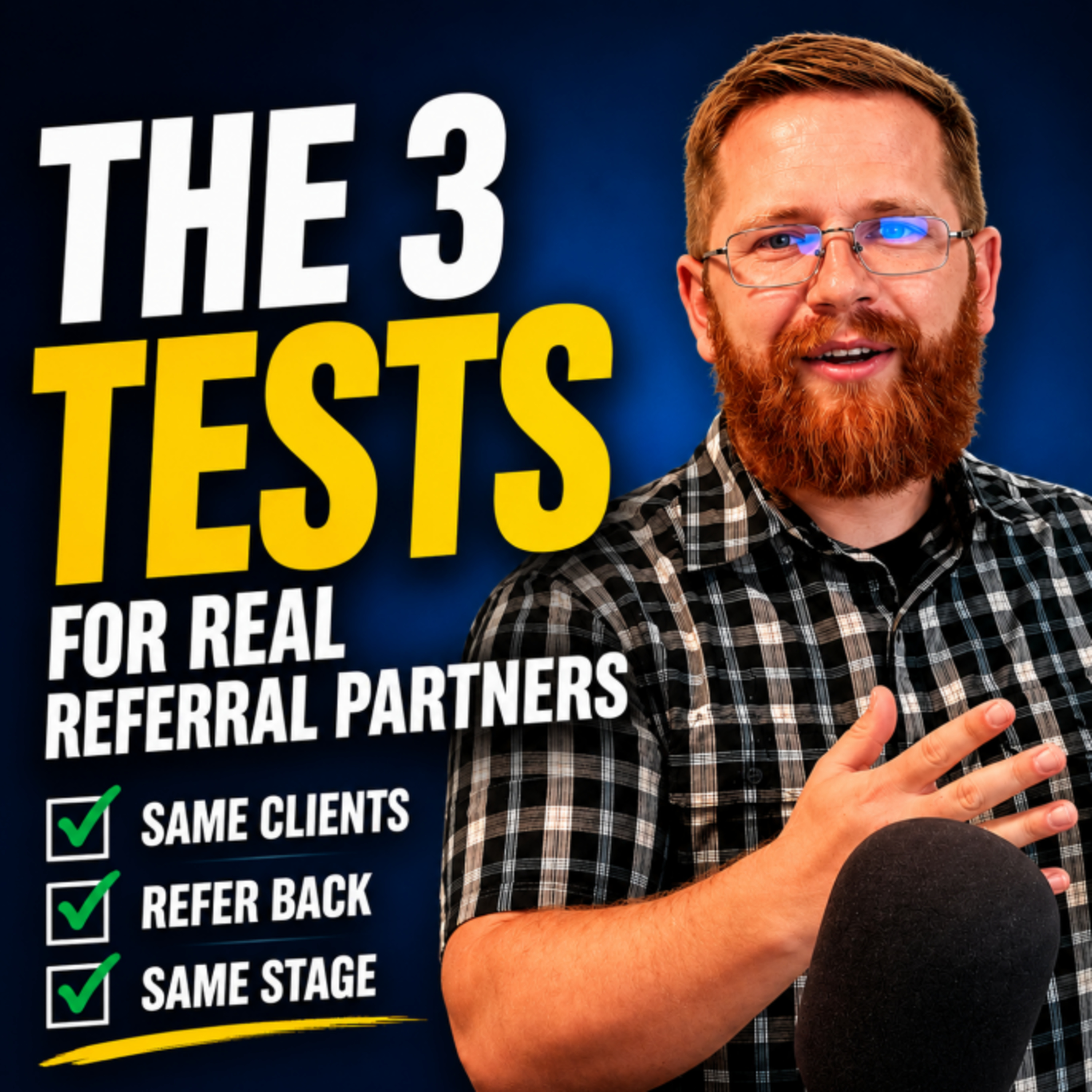 The 3 Tests for Spotting a Real Referral Partner 02.06.2026 7minMost small business owners can't name five people who could realistically send them a referral every month. And that's exactly why their networking isn't working. They're showing up at events being polite to everyone, hoping the right relationships will just emerge from the chaos. They almost never do.In this episode, I'll walk through the three tests that separate a real referral partner from a polite acquaintance: whether they serve the same clients at a different stage of the customer journey, whether you'd actually refer business back to them (the reciprocity test), and whether they're at a similar stage of business growth to you. I'll cover real examples (wedding photographer + wedding planner, residential plumber + real estate agent, small business accountant + banker), and walk through the journey-mapping exercise that turns these tests into an actual list of 5-20 specific people you should be building relationships with.This is the third episode in the referral engine series. Episode one covered the bigger reframe of networking for partners instead of clients. Episode two covered the giver mindset that makes those partnerships work. This episode is about identifying exactly who those partners should be.After 15+ years helping small businesses get more visible, I've watched plenty of owners network themselves to exhaustion because they were meeting everyone instead of meeting the right people. Random networking produces random results. Targeted networking produces a referral engine.CHAPTERS:0:00 Can you name five people who could refer you every month?0:41 Why most small business owners can't answer that question1:26 Random networking produces random results1:53 Test #1: Do they serve the same clients at a different stage?2:49 Real examples: photographer, plumber, accountant4:10 Test #2: Would you refer business back to them?5:07 Why referrals are reputation5:46 Test #3: Are they at a similar stage of business to you?6:25 The journey-mapping exercise to build your target list7:10 What's coming next in the seriesABOUT SMALL BUSINESS BIG VISIBILITY:A podcast for small business owners who want practical, real-world strategies to grow without burnout. Hosted by Jason McKenzie, founder of Boise Web and a 15+ year veteran helping small businesses become more visible, more profitable, and more sustainable.Episode 405#SmallBusinessOwner #ReferralMarketing #SmallBusinessNetworking
 -
 How to Identify Your Top 5 Referral Partners 28.05.2026 7minMost small business owners can't name five people in their network who could realistically send them a referral every month for the next year. If you can't either, you're spending your networking time at random. Random networking produces random results.In this episode, I'll walk through three quick tests that separate your actual referral partners from polite acquaintances you happened to meet at a networking event. The first test is whether they serve the same client you do at a different stage of that client's journey (the wedding planner for the photographer, the real estate agent for the plumber, the banker for the small business accountant). The second is whether you'd be willing to refer business to them. The third is whether they're at a similar stage of business to you, because the most powerful referral relationships compound when both partners grow together. Then I'll walk you through a customer journey exercise that gives you a real list of who you should actually be targeting in your networking time.This is the third episode in the referral engine series. Episode one covered networking for partners instead of clients. Episode two covered giving first. This episode is where you actually identify who those partners are.After 15+ years helping small businesses get more visible, I've watched plenty of owners spend years networking with the wrong people because they never sat down and defined the right ones. This is the exercise most business owners skip, and it's why their networking never produces what they're hoping for.CHAPTERS:0:00 Can you name five people who could send you referrals every month?0:41 What happens when you can't answer that question1:33 Why random networking produces random results1:53 The 3 tests that separate real referral partners2:08 Test 1: Same client, different stage of the journey2:49 Examples: wedding planner, real estate agent, banker4:05 Test 2: Would you be willing to refer business to them?4:48 Why referrals are reputation5:20 Test 3: Are they at a similar stage of business to you?6:25 The customer journey exercise: building your real list7:01 What's coming next in the seriesABOUT SMALL BUSINESS BIG VISIBILITY:A podcast for small business owners who want practical, real-world strategies to grow without burnout. Hosted by Jason McKenzie, founder of Boise Web and a 15+ year veteran helping small businesses become more visible, more profitable, and more sustainable.Episode 404🔗 https://smallbusinessbigvisibility.com/#SmallBusinessOwner #ReferralMarketing #SmallBusinessNetworking
 -
 Stop Asking for Referrals. Start Giving First 26.05.2026 9minWhy do some small business owners get a steady stream of referrals while others, doing the same amount of networking, get nothing? The difference usually isn't talent or charisma. It's one specific mindset shift in how you show up to every conversation.In this episode, I'll walk through why givers build referral pipelines that compound for years while takers burn out their network in months, what "give first" actually means (it's not what most people think), and the three-word rule for giving in a way that actually generates business back: specific, valuable, and unsolicited. I'll also cover the trap that turns giving from a habit into a transaction, and how to use it as a real test against your own last five networking conversations.This is the second episode in the referral engine series. Episode one covered the bigger reframe of networking for partners instead of clients. This episode covers what to actually do in those partner conversations once you're there.After 15+ years helping small businesses get more visible, I've watched plenty of owners burn through their network because they were always looking for what they could get. The owners with steady referrals years later aren't the most outgoing or the best closers. They're the ones who figured out, intentionally or by accident, that the giving comes first and the receiving takes care of itself.CHAPTERS:0:00 Why some business owners get referrals and others don't0:48 The pattern: two business owners, same networking, different results2:25 What happens when you walk in looking for what you can get3:01 What happens when you walk in looking to give value3:55 Why givers get referred and takers don't4:00 What "give first" actually means (and what it doesn't)4:41 The three-word rule: specific, valuable, unsolicited6:23 The real estate agent example: giver vs. taker in action7:07 The trap that destroys giving (keeping score)7:50 A quick test: your last five networking conversations8:33 What's coming next in the seriesMENTIONED IN THIS EPISODE:🎧 Earlier in the referral engine series: Stop Networking for Clients. Network for Partners.ABOUT SMALL BUSINESS BIG VISIBILITY:A podcast for small business owners who want practical, real-world strategies to grow without burnout. Hosted by Jason McKenzie, founder of Boise Web and a 15+ year veteran helping small businesses become more visible, more profitable, and more sustainable.Episode 403🔗 https://smallbusinessbigvisibility.com/#SmallBusinessOwner #ReferralMarketing #SmallBusinessNetworking
 -
 Stop Networking for Clients. Do this instead 21.05.2026 7minMost small business owners network for the wrong reason. They walk into a room looking for clients. They leave with nothing. Six months later, they've spent thousands of hours and zero dollars made, and they conclude networking doesn't work.The truth: networking works fine. The version most small business owners practice is broken. In this episode, I'll walk through three broken assumptions costing small business owners thousands of hours: that more events equals more clients, that the people in the room are your prospects, and that good work earns referrals automatically. Then I'll cover the three shifts that actually build a referral engine, including why 5 strong referral partners outperform 50 weak acquaintances every time, who actually belongs in your referral ecosystem (it's rarely who you think), and the follow-up cadence that separates business owners with steady referrals from the ones still chasing every new networking event.This is the first episode in a new series on building a referral engine for your small business. We'll cover who your actual referral partners are, how to find them, how to build the relationship, and how to keep it producing over years.After 15+ years helping small businesses get more visible, I've watched plenty of owners burn out on networking before they ever figured out what it was for. The owners who win at this aren't more outgoing or more charming. They're playing a completely different game.CHAPTERS:0:00 Have you been networking for months with nothing to show?0:33 Meet Bob: six months of effort, zero clients1:24 Broken assumption #1: more events equals more clients2:33 Broken assumption #2: the people in the room are your prospects3:54 Broken assumption #3: good work means referrals show up automatically4:46 Shift #1: measure depth, not events attended5:09 Shift #2: identify your actual referral ecosystem6:13 Shift #3: treat referral partnerships as long-term assets6:48 The follow-up mistake that kills most networking relationships7:21 What's coming in the rest of this seriesMENTIONED IN THIS EPISODE:🎧 Coming next in the referral engine series: identifying your real referral partnersABOUT SMALL BUSINESS BIG VISIBILITY:A podcast for small business owners who want practical, real-world strategies to grow without burnout. Hosted by Jason McKenzie, founder of Boise Web and a 15+ year veteran helping small businesses become more visible, more profitable, and more sustainable.Episode 402🔗 https://smallbusinessbigvisibility.com/#SmallBusinessOwner #ReferralMarketing #SmallBusinessNetworking
 -
Trust Is the New Currency. AI Is Burning It 19.05.2026 51minTrust is becoming the most valuable currency in business, and AI is accelerating its erosion. People can spot a fake response, a cloned voice, or an AI-written book within paragraphs, and the moment they do, you're done. The fix isn't to avoid AI. It's to be transparent about exactly where you're using it.In this conversation with Andrea Peer and Susan Leonardson, founders of Geekout Connect, we cover how the trust deficit is reshaping marketing, why the uncanny valley is hardwired into human psychology (and what that means for AI clones, fake testimonials, and generic AI content), and what it actually takes to deliver results in an environment where customers default to skepticism. Andrea brings a PhD in human-computer interaction and 18 years in corporate R&D working with Fortune 100 brands. Susan came up through her parents' garage door business, eight years of network marketing, and a freelance design career that led her into building course experiences for online experts. They share the partnership philosophy that's kept their business together for three and a half years (most don't last six months), and why the future of online courses is about results, not promises.This episode runs longer than the typical Small Business Big Visibility solo. If you're focused on the AI and trust angle, the conversation gets there in the second half.CHAPTERS:0:00 Meeting Andrea and Susan1:36 Favorite concerts and the music question4:14 Susan's journey: from garage door business to design freelancer10:55 Andrea's journey: merchant marine, Air Force, PhD, and ayahuasca17:07 How two competitors became partners23:38 What kept the partnership alive when most don't last six months31:13 The temperament tool that helped them work together33:46 What they actually do: building learning experiences for online experts41:31 Why most online courses don't deliver results44:00 Trust as currency in the AI era47:51 The uncanny valley and why fake content kills credibility50:21 The transparency rule for using AI54:08 Where to find Andrea and SusanMENTIONED IN THIS EPISODE:🌐 Geekout Connect: https://geekoutconnect.com🎧 The We Are Human Podcast: https://wearehumanshow.com🧠 The temperament assessment they reference: https://whatsmycore.comABOUT SMALL BUSINESS BIG VISIBILITY:A podcast for small business owners who want practical, real-world strategies to grow without burnout. Hosted by Jason McKenzie, founder of Boise Web and a 15+ year veteran helping small businesses become more visible, more profitable, and more sustainable.Episode 401🔗 https://smallbusinessbigvisibility.com/#AIForSmallBusiness #SmallBusinessOwner #TrustInBusiness
-
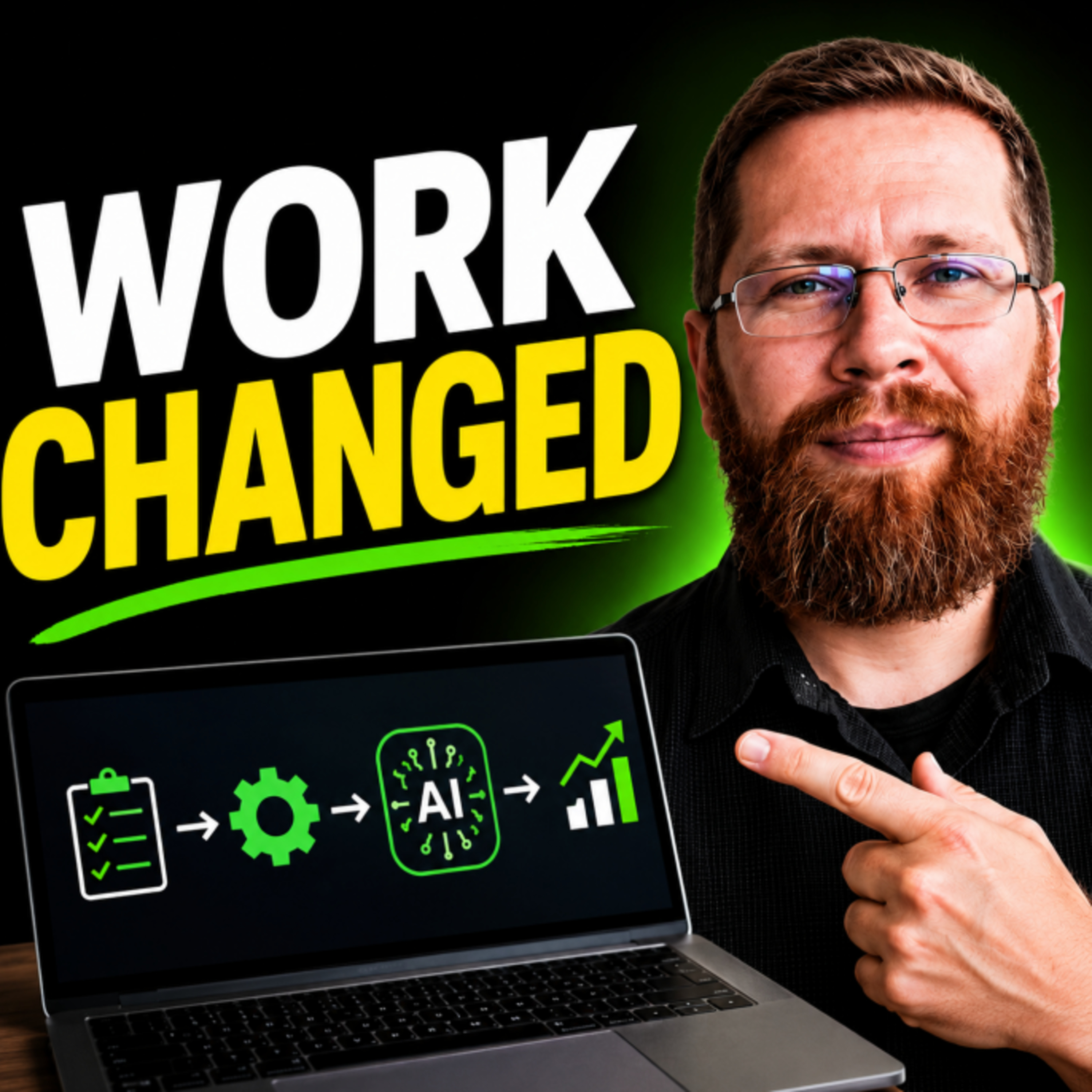 AI Isn't About Tools. It's About How Work Gets Done 14.05.2026 9minThe future of AI isn't about which tool you use. It's about how work gets done, and four specific shifts are already underway that will reshape what running a small business looks like over the next few years.In this episode, I'll walk through the four shifts I'm betting on: AI filling the gaps where software couldn't and humans had to (the systems shift), smaller teams producing dramatically more output through unprecedented leverage, faster delivery times that may actually drive prices down across whole categories, and a move from humans doing the work to humans designing the work while AI executes it. I'll also flag what's NOT changing. The foundational pieces of business (trust, relationships, reputation, real value) survive every technology shift, and "everything's changing so fast I can't keep up" is mostly an illusion.This is part of the AI for Small Business miniseries, a run of episodes on what AI actually changes for small business owners, what's worth using, and what's a waste of time.After 15+ years helping small businesses get more visible, I've watched plenty of business owners burn out chasing every new tool that came out. The owners who win the next five years won't be the ones with the biggest AI stack. They'll be the ones who got clear on their systems first, then pointed AI at the right problems. That's the playbook.CHAPTERS:0:00 Where is AI actually going?0:43 The two wrong reactions: all-in vs. head-in-the-sand1:30 The real shift: it's not about tools, it's about how work gets done2:24 Shift #1: AI fills the gaps software couldn't3:38 Shift #2: Smaller teams, bigger output (and possible deflation)5:21 Shift #3: Faster expectations and what they do to pricing6:25 Shift #4: From doing the work to designing the work7:05 What's NOT changing: the football field metaphor8:36 Bad tools and failed bets are part of every innovation cycle9:13 Why smaller businesses might actually win this eraMENTIONED IN THIS EPISODE:🎧 Earlier in the AI for Small Business miniseries: Stop Using AI as a Tool. Start Using It as an Employee.🎧 Earlier in the AI for Small Business miniseries: Don't Start with AI. Start with the Problem.ABOUT SMALL BUSINESS BIG VISIBILITY:A podcast for small business owners who want practical, real-world strategies to grow without burnout. Hosted by Jason McKenzie, founder of Boise Web and a 15+ year veteran helping small businesses become more visible, more profitable, and more sustainable.Episode 400🔗 https://smallbusinessbigvisibility.com/#AIForSmallBusiness #SmallBusinessOwner #SmallBusinessMarketing


