
Literacy in Color: A Science of Reading Aligned Podcast for Educators
Michelle Sullivan • Literacy Coach & Science of Reading Advocate
0
Literacy in Color is a podcast for elementary teachers, literacy coaches, and reading interventionists who want to apply the Science of Reading in engaging ways. Hosted by Michelle Sullivan, a seasoned literacy expert with over a decade of experience, the show offers practical tips, proven strategies, and creative ideas for phonics, morphology, vocabulary, and comprehension. Each episode aims to make literacy instruction colorful and impactful, helping all learners become confident readers.
Jaksot
-
 111. When Language is the Missing Piece: DLD & SWI with Two SLPs, Kathleen Love & Beth Coppoc Gunshor 15.09.2026 1t 8minDevelopmental Language Disorder (DLD) affects approximately 1 in 14 people, yet many educators have never heard of it. So what might DLD actually look like in the classroom? How can we better support students when difficulties with language intersect with dyslexia, ADHD, executive function, reading, spelling, and writing?Speech-language pathologists, Kathleen Love and Beth Coppoc Gunshor take us for a deep dive into DLD and language-based literacy intervention.Kathleen and Beth unpack the differences and overlap among DLD, dyslexia, and ADHD, including why a student who appears inattentive or off-task may actually be struggling with the language demands of a task. They also share subtle signs of DLD educators can watch for: from vague vocabulary and word-retrieval difficulties to challenges following directions, understanding complex sentences, and telling cohesive stories.Then, the conversation turns practical. Kathleen and Beth explore ways educators can manage cognitive load, strengthen vocabulary instruction, and provide the repeated, explicit language experiences students with DLD may need. They also take us inside their intervention practices to show how Structured Word Inquiry (SWI) can extend far beyond spelling – supporting morphology, vocabulary, syntax, semantic networks, executive function, oral language, and even confidence.Key Takeaways:DLD definedThe overlap and distinctions among DLD, dyslexia, and ADHDPractical ways to reduce unnecessary cognitive load without reducing the thinkingHow to strengthen vocabulary instruction for students with language difficultiesWhy Structured Word Inquiry can be a powerful tool for building language as well as literacyResources Mentioned:Conifer literacy appDLD and MeOxEd & Assessment / NELIDr. Tiffany Hogan / The Speech and Language (SAiL) Literacy Lab2026 ASHA ConventionConnect with Kathleen Love:Website: https://conifermatrix.com/Instagram: @conifermatrixConifer Matrix on FacebookWebsite: https://www.raincityreading.com/Instagram: @rain.city.readingRain City Reading on FacebookRain City Reading on YouTubeRain City Reading NewsletterConnect with Beth Coppoc Gunshor:Website: http://bcgslp.com/Instagram: @bcgslpBCG SLP on FacebookBCG SLP Shop - T-ShirtsBCG SLP Shop - StickersThis podcast is brought to you by Reading Science Academy, where our friend Stephanie Stollar is giving Literacy in Color listeners an exclusive, free grouping resource bundle designed to help you spend less time figuring out what to do with screening data and move more quickly into purposeful, skill-based groups. Get your FREE grouping resource bundle here.Or, become a member of Reading Science Academy to learn in community and receive research-backed support alongside over 1,600 literacy educators. Connect with Michelle:Visit: www.michelleandthecolorfulclassroom.comFollow me on Instagram: @michelle_thecolorfulclassroom & @logosliteracyacademyJoin our Facebook CommunitySign up for my NewsletterShop on TPT: The Colorful ClassroomFor Phonics Resources, grab: The COLORFUL Phonics ToolkitWant to Support the Podcast?Make a Donation to Support ProductionInterested in Learning More about Morphology?Logos Literacy Academy with Michelle Sullivan & Sarah PaulJoin: Beyond Phonics Club - our Membership CommunityMentioned in this episode:SOR Fall Book Study Join us: https://colorful-classroom.mykajabi.com/sor-fall-book-study-2026Reading Science AcademyGet your FREE grouping resource bundle here: https://www.stephaniestollarconsulting.com/groupingsheets?utm_source=podcast&utm_medium=show_notes&utm_campaign=podcast Join The Reading Science Academy: https://www.stephaniestollarconsulting.com/register?utm_source=podcast&utm_medium=show-notes&utm_campaign=literacy-in-color
 -
 110. Decodable Texts Done Right: How to Leverage Them for Phonics, Fluency, Vocabulary & Writing with Dr. Wiley Blevins 08.09.2026 52minDecodable texts are an important tool for helping readers apply their phonics knowledge, but are we squeezing everything we can out of them?Dr. Wiley Blevins – longtime educator, researcher, author, and one of the most recognized voices in phonics instruction – shares all about choosing and using decodable texts.When it comes to choosing decodable texts, Wiley shares the prevailing thinking around how decodable a text actually needs to be. We also tackle a question that doesn't always have a neat answer: When are students ready for less-controlled text? Wiley shares what he's currently exploring in his research, why that transition may look different from student to student, and why we shouldn't confuse being able to read a pattern with truly mastering it for spelling.We also get into using decodable texts for all they’re worth. In fact, decodables certainly can go far beyond simply getting students to practice a target phonics pattern. Wiley shares how he uses decodable texts across multiple days and throughout the literacy block to build oral language, fluency, vocabulary, syntax, writing, knowledge-building, and of course, comprehension. He walks us through practical routines teachers can use and explains how decodables can support differentiation for students who need additional practice with previously taught skills.Key Takeaways:Why decodable texts are a practice tool, fluency-building tool, and support for spellingWhat the research actually says (and doesn't say) about decodability percentagesWhat makes a high-quality decodable text & why natural language mattersHow to scaffold grade-level decodables for students who need additional supportHow to get more mileage from a decodable after the first readResources:Book: Differentiating Phonics Instruction for Maximum Impact by Wiley BlevinsBook: Choosing and Using Decodable Text by Wiley BlevinsBook: A Fresh Look at Phonics by Wiley BlevinsBook: Phonics from A to Z by Wiley BlevinsBook: The Megabook of Spelling (K-2) by Wiley BlevinsBook: The Megabook of Spelling (3-5) by Wiley BlevinsBook: Teaching Phonics & Word Study in the Intermediate Grades by Wiley BlevinsReycraft BooksThis post may contain affiliate links, which means if you click on a link and make a purchase, I may earn a small commission at no additional cost to you. Thank you for supporting the podcast!Connect with Dr. Wiley Blevins:Website: http://www.wileyblevins.com/LinkedInTwitter/XInstagramThis podcast is brought to you by Reading Science Academy, where our friend Stephanie Stollar is giving Literacy in Color listeners an exclusive, free grouping resource bundle designed to help you spend less time figuring out what to do with screening data and move more quickly into purposeful, skill-based groups. Get your FREE grouping resource bundle here.Or, become a member of Reading Science Academy to learn in community and receive research-backed support alongside over 1,600 literacy educators. Connect with Michelle:Visit: www.michelleandthecolorfulclassroom.comFollow me on Instagram: @michelle_thecolorfulclassroom & @logosliteracyacademyJoin our Facebook CommunitySign up for my NewsletterShop on TPT: The Colorful ClassroomFor Phonics Resources, grab: The COLORFUL Phonics ToolkitWant to Support the Podcast?Make a Donation to Support ProductionInterested in Learning More about Morphology?Logos Literacy Academy with Michelle Sullivan & Sarah PaulJoin: Beyond Phonics Club - our Membership CommunityMentioned in this episode:SOR Fall Book Study Join us: https://colorful-classroom.mykajabi.com/sor-fall-book-study-2026Reading Science AcademyGet your FREE grouping resource bundle here: https://www.stephaniestollarconsulting.com/groupingsheets?utm_source=podcast&utm_medium=show_notes&utm_campaign=podcast Join The Reading Science Academy: https://www.stephaniestollarconsulting.com/register?utm_source=podcast&utm_medium=show-notes&utm_campaign=literacy-in-color
 -
 109. Phonological Awareness & the Alphabet: What the Research Says – and What We Still Don't Know with Dr. Shayne Piasta 01.09.2026 1t 11minBefore we get into what the research currently says about teaching phonological awareness and the alphabet, this episode begins by breaking down some key terminology. What makes a practice evidence-based? What’s the difference between research-based and research-tested? What should we consider when implementing instruction aligned with the Science of Reading?Dr. Shayne Piasta, Distinguished Professor at THE Ohio State University and Faculty Associate at the Crane Center for Early Childhood Research and Policy, helps unpack what we know, what we’re still learning, and how educators can make evidence-informed decisions.We then dig into phonological and phonemic awareness. Dr. Piasta explains what research has established about the importance of PA, why phonemic awareness ultimately matters for reading and spelling, and where questions remain about exactly how PA should be taught. We discuss larger versus smaller units of sound, advanced tasks, group size, dosage, incorporating letters, and even differentiation.Next, we turn to alphabet learning and instruction. Research increasingly supports teaching names and sounds simultaneously. We also discuss what makes certain letters easier (or harder) to learn, the acrophonic principle, letter sequence and pacing, and what effective alphabet instruction can look like in a kindergarten classroom.Finally, Dr. Piasta shares trusted sources for evaluating evidence and reminds us why evidence-informed instruction requires research, professional expertise, and knowledge of the students sitting in front of us.*Please Note: We experienced some audio issues toward the very end of the episode. We did our best to improve the audio quality and appreciate your understanding. Key Takeaways:Evidence-based vs. evidence-informed literacy instructionThe difference between research-based and research-tested practicesWhat we confidently know about phonological and phonemic awarenessWhat we still don’t know about the most effective way to teach PAInformation about Project OPAL and the questions researchers are currently testingWhether letter names or letter sounds should be taught firstAlphabet scope, sequence, and pacingWhat effective alphabet instruction can look likeInformation about CREATE-EBP and teacher-researcher collaborationHow educators can become better consumers of literacy researchResources Mentioned:Project OPAL: Optimizing Phonological Awareness LearningCREATE-EBP: Collaborating Researchers & Educators Apply Technology to Establish Evidence-Based PracticesDr. Shayne Piasta's Early Literacy and Learning Lab, including research, current projects, opportunities to collaborate, and a newsletterThe Early Literacy and Learning Lab Research Interest SurveyDuke & Martin (2011) - 10 Things Every Literacy Educator Should Know About ResearchNational Reading PanelRice et al. (2022) - Phonemic Awareness: A Meta-Analysis for Planning Effective InstructionErbeli et al. (2024) - A Meta-Analysis on the Optimal Cumulative Dosage of Early Phonemic Awareness InstructionAlphabet Learning & InstructionWhat Works Clearinghouse & Institute of Education Sciences Practice GuidesRegional Educational LaboratoriesBest Evidence EncyclopediaReading RocketsNational Center on Improving LiteracyThe Reading LeagueFlorida Center for Reading ResearchLet's Know! / Let's Know! 2 - language-focused curriculumConnect with Dr. Shayne PiastaLinkedInDr. Shayne Piasta's Early Literacy and Learning LabThis podcast is brought to you by Reading Science Academy, where our friend Stephanie Stollar is giving Literacy in Color listeners an exclusive, free grouping resource bundle designed to help you spend less time figuring out what to do with screening data and move more quickly into purposeful, skill-based groups. Get your FREE grouping resource bundle here.Or, become a member of Reading Science Academy to learn in community and receive research-backed support alongside over 1,600 literacy educators. Connect with Michelle:Visit: www.michelleandthecolorfulclassroom.comFollow me on Instagram: @michelle_thecolorfulclassroom & @logosliteracyacademyJoin our Facebook CommunitySign up for my NewsletterShop on TPT: The Colorful ClassroomFor Phonics Resources, grab: The COLORFUL Phonics ToolkitWant to Support the Podcast?Make a Donation to Support ProductionInterested in Learning More about Morphology?Logos Literacy Academy with Michelle Sullivan & Sarah PaulJoin: Beyond Phonics Club - our Membership CommunityMentioned in this episode:Reading Science AcademyGet your FREE grouping resource bundle here:...
 -
 108. Making Phonics Richer with Multiple Meaning Words 25.08.2026 19minWhat if one of the richest language opportunities in your literacy block is already hiding inside your phonics word list? Even the simplest decodable words can carry surprisingly rich meanings. A word like “cap” might be something you wear on your head, the top of a bottle, an action you perform when you cover something, or even part of the phrase “no cap.” Simple to decode doesn't necessarily mean simple in meaning. In this episode, I share a few simple ways to intentionally sprinkle meaning into the decoding and spelling practice you're already doing.Key Takeaways:Why multiple-meaning, or polysemous, words offer such rich opportunities for language developmentWhy a quick contextual sentence during decoding or dictation is so importantHow "Word of the Day” and/or Multiple-Meaning Word Anchor Chart get students noticing interesting words across the school dayEven while sprinkling in meaning, it’s still essential to keep the pace and offer repetitions students need during phonicsIt’s unnecessary to explore every potential meaning at onceWe know explicit & systematic phonics helps students unlock the code, but meaning gives them something worth unlocking.Want to go Beyond Phonics?Join Beyond Phonics Club: A Membership Community with Michelle Sullivan & Sarah Paul (Logos Literacy Academy)Inside the Beyond Phonics Club, Michelle Sullivan and Sarah Paul have created ready-to-use lessons and resources, including lessons targeting multiple-meaning words, that help you expand phonics into richer work with meaning, morphology, vocabulary, grammar, and comprehension in mind.Go beyond phonics – without leaving phonics behind!This podcast is brought to you by Reading Science Academy, where our friend Stephanie Stollar is giving Literacy in Color listeners an exclusive, free grouping resource bundle to help you turn fall screening data into skill-based groups that actually move students forward.Get your FREE grouping resource bundle here.Or, become a member of Reading Science Academy to learn in community and receive research-backed support alongside over 1,400 literacy educators.Connect with Michelle:Visit: www.michelleandthecolorfulclassroom.comFollow me on Instagram: @michelle_thecolorfulclassroom & @logosliteracyacademyJoin our Facebook CommunitySign up for my NewsletterShop on TPT: The Colorful ClassroomFor Phonics Resources, grab: The COLORFUL Phonics ToolkitWant to Support the Podcast?Make a Donation to Support ProductionInterested in Learning More about Morphology?Logos Literacy Academy with Michelle Sullivan & Sarah PaulJoin: Beyond Phonics Club - our Membership CommunityMentioned in this episode:Reading Science AcademyGet your FREE grouping resource bundle here: https://www.stephaniestollarconsulting.com/groupingsheets?utm_source=podcast&utm_medium=show_notes&utm_campaign=podcast Join The Reading Science Academy: https://www.stephaniestollarconsulting.com/register?utm_source=podcast&utm_medium=show-notes&utm_campaign=literacy-in-colorSOR Fall Book Study Join us: https://colorful-classroom.mykajabi.com/sor-fall-book-study-2026Reading Science AcademyGet your FREE grouping resource bundle here: https://www.stephaniestollarconsulting.com/groupingsheets?utm_source=podcast&utm_medium=show_notes&utm_campaign=podcast Join The Reading Science Academy: https://www.stephaniestollarconsulting.com/register?utm_source=podcast&utm_medium=show-notes&utm_campaign=literacy-in-color
 -
 107. Stop Overcomplicating Big Words: How to Teach Polysyllabic Word Reading with Dr. Devin Kearns 18.08.2026 1tWhat happens after students master single-syllable words in phonics, but the words in their books keep getting longer?Dr. Devin Kearns takes us for a deep dive into polysyllabic word reading and what the research tells us about helping students tackle increasingly complex words. He explains why the transition into longer words presents challenges that simply don't exist in single-syllable words, including the unpredictability of single-letter vowels, reduced vowels & schwa, and the growing prevalence of derivational suffixes. He also challenges some long-standing approaches to syllable division and explains why more rules and terminology aren't necessarily better for students.You'll learn about ESHALOV ("Every Syllable Has At Least One Vowel") as well as the “peeling-off strategy” for recognizing affixes and accessing the base of polymorphemic words.The conversation also explores lexical verification (i.e., set for variability): how readers adjust an initially decoded pronunciation until it connects with a word in their mental lexicon.Key Takeaways:What the research suggests about traditional syllable division rulesHow to use the strategy: ESHALOV for polysyllabic wordsHow to use the “Peeling-off” strategy for polymorphemic wordsHow lexical verification helps students move from a plausible pronunciation to a known spoken wordWhat advanced decoding instruction might look like in the upper elementary classroomsResources Mentioned:PhinderHigh-Frequency Syllables & Morphemes (compiled by Dr. Devin Kearns)The Word Complexity of Primary-Level Texts: Differences Between First and Third Grade in Widely Used Curricula by Devin Kearns & Elfrieda HiebertHelping Students With Dyslexia Read Long Words by Devin Kearns & Victoria WhaleyBuilding BRIDGES: A Design Experiment to Improve Reading and United States History Knowledge of Poor Readers in Eighth Grade - O’Connor, Beach, Sanchez, Bocian, & Flynn - ESHALOV principle (Every Syllable Has At Least One Vowel)Components of effective remediation for developmental reading disabilities: Combining phonological and strategy-based instruction to improve outcomes - Lovett, M. et al. - “Peeling Off” StrategyConnect with Dr. Devin Kearns:Website: https://www.devinkearns.com/LinkedInInstagram: @devin.kearnsX: @devin_kearnsThis podcast is brought to you by Reading Science Academy, where our friend Stephanie Stollar is giving Literacy in Color listeners an exclusive, free grouping resource bundle to help you turn fall screening data into skill-based groups that actually move students forward.Get your FREE grouping resource bundle here.Or, become a member of Reading Science Academy to learn in community and receive research-backed support alongside over 1,400 literacy educators.Connect with Michelle:Visit: www.michelleandthecolorfulclassroom.comFollow me on Instagram: @michelle_thecolorfulclassroom & @logosliteracyacademyJoin our Facebook CommunitySign up for my NewsletterShop on TPT: The Colorful ClassroomFor Phonics Resources, grab: The COLORFUL Phonics ToolkitWant to Support the Podcast?Make a Donation to Support ProductionInterested in Learning More about Morphology?Logos Literacy Academy with Michelle Sullivan & Sarah PaulJoin: Beyond Phonics Club - our Membership CommunityMentioned in this episode:Reading Science AcademyGet your FREE grouping resource bundle here: https://www.stephaniestollarconsulting.com/groupingsheets?utm_source=podcast&utm_medium=show_notes&utm_campaign=podcast Join The Reading Science Academy: https://www.stephaniestollarconsulting.com/register?utm_source=podcast&utm_medium=show-notes&utm_campaign=literacy-in-colorReading Science AcademyGet your FREE grouping resource bundle here: https://www.stephaniestollarconsulting.com/groupingsheets?utm_source=podcast&utm_medium=show_notes&utm_campaign=podcast Join The Reading Science Academy: https://www.stephaniestollarconsulting.com/register?utm_source=podcast&utm_medium=show-notes&utm_campaign=literacy-in-colorSOR Fall Book Study Join us: https://colorful-classroom.mykajabi.com/sor-fall-book-study-2026
 -
 106. How New York City Is Transforming Reading Instruction with Dr. Katie Pace Miles 11.08.2026 47minWhat does it actually mean for a word to become "stored" in the brain – and how do we design instruction that helps that happen for every student?In this episode, I'm joined by Dr. Katie Pace Miles, associate professor at Brooklyn College, founder of The Reading Institute, co-founder of CUNY Reading Fellows, and one of today's leading voices in reading science.She not only shares about the cognitive process of orthographic mapping, but also why understanding how words become permanently stored in memory changes the way we think about reading instruction and intervention.Dr. Miles also shares the fascinating origin story behind Reading Ready, the structured literacy intervention she originally created while teaching her own daughter to read during the pandemic, and explains how both Reading Ready and Reading Go have expanded to support thousands of students through The Reading Institute and CUNY Reading Fellows.She shares the dramatic literacy shifts happening across New York City Public Schools: from increased use of structured literacy and decodable texts to high-impact tutoring, universal screening, and stronger teacher preparation – and what still lies ahead.Key Takeaways:What orthographic mapping really is Why oral language is foundational for orthographic mappingThe origin behind Reading Ready and Reading GoWhy intervention dosage matters more than many educators realizeHow The Reading Institute and CUNY Reading Fellows are expanding access to high-quality literacy interventionThe biggest shifts happening across New York City Public SchoolsWhy teacher preparation must include authentic practice, not just courseworkResources Mentioned:The Reading InstituteReading ReadyReading Go10-hour Science of Reading Micro-CredentialCUNY Reading FellowsBrooklyn College: Advanced Certificate in Reading ScienceBook: Making Words Stick by Dr. Katie Pace Miles & Dr. Molly NessPublications written by Dr. Katie Pace MilesThis post may contain affiliate links, which means if you click on a link and make a purchase, I may earn a small commission at no additional cost to you. Thank you for supporting the podcast!Connect with Dr. Katie Pace Miles:Instagram: @thereadinginstitutenycLinkedIn: The Reading InstituteFacebook: The Reading InstituteWebsite: https://www.katiepacemilesphd.com/This podcast is brought to you by Reading Science Academy, where our friend Stephanie Stollar is giving Literacy in Color listeners an exclusive, free grouping resource bundle to help you turn fall screening data into skill-based groups that actually move students forward.Get your FREE grouping resource bundle here.Or, become a member of Reading Science Academy to learn in community and receive research-backed support alongside over 1,400 literacy educators.Connect with Michelle:Visit: www.michelleandthecolorfulclassroom.comFollow me on Instagram: @michelle_thecolorfulclassroom & @logosliteracyacademyJoin our Facebook CommunitySign up for my NewsletterShop on TPT: The Colorful ClassroomFor Phonics Resources, grab: The COLORFUL Phonics ToolkitWant to Support the Podcast?Make a Donation to Support ProductionInterested in Learning More about Morphology?Logos Literacy Academy with Michelle Sullivan & Sarah PaulJoin: Beyond Phonics Club - our Membership CommunityMentioned in this episode:Reading Science AcademyGet your FREE grouping resource bundle here: https://www.stephaniestollarconsulting.com/groupingsheets?utm_source=podcast&utm_medium=show_notes&utm_campaign=podcast Join The Reading Science Academy: https://www.stephaniestollarconsulting.com/register?utm_source=podcast&utm_medium=show-notes&utm_campaign=literacy-in-colorReading Science AcademyGet your FREE grouping resource bundle here: https://www.stephaniestollarconsulting.com/groupingsheets?utm_source=podcast&utm_medium=show_notes&utm_campaign=podcast Join The Reading Science Academy: https://www.stephaniestollarconsulting.com/register?utm_source=podcast&utm_medium=show-notes&utm_campaign=literacy-in-colorSOR Fall Book Study Join us: https://colorful-classroom.mykajabi.com/sor-fall-book-study-2026
 -
 105. From Imposter Syndrome to Impact: A Literacy Coach's Journey & the Power of SRSD for Writing Instruction with Leah Ruesink 04.08.2026 53minTransitioning from classroom teacher to literacy coach is exciting, but it can also be overwhelming. How do you build trust? Support veteran teachers? Know when to offer advice...and when to simply listen?Today’s episode is part Coaching Conversation, as literacy coach Leah Ruesink shares about her transition to coach and what coaching really looks like behind the scenes. Leah shares some lessons she’s learned along the way, including how to build meaningful relationships, navigate imposter syndrome, and support teachers through instructional change.Then the conversation shifts into one of Leah's greatest passions: writing instruction. Leah introduces listeners to Self-Regulated Strategy Development (SRSD), an evidence-based writing framework that explicitly teaches students how to plan, organize, and write – all while regulating themselves throughout the writing process.So, while this episode speaks directly to a literacy coach’s heart, classroom teachers will walk away with some really practical ideas and valuable insights for explicitly teaching writing in your classrooms.Resources Mentioned:Leah Ruesink's Literacy Coaching HubBook: The Impact Cycle by Jim KnightBook: Better Conversations by Jim KnightSRSD - Self-Regulated Strategy DevelopmentReleasing Writers (Formerly Think SRSD) Releasing Writers Facebook PageBook: Executive Skills and Writing Instruction by Dr. Leslie LaudBook: Rock Your Literacy Block by Lindsay KemenyTIDE chant and writing routinesBook: The Writing Rope by Joan SeditaThis post may contain affiliate links, which means if you click on a link and make a purchase, I may earn a small commission at no additional cost to you. Thank you for supporting the podcast!Connect with Leah Ruesink:Instagram: @theearlyliteracycoachTikTok: @theearlyliteracycoachLiteracy Coaching HubLeah’s Stan.StoreThis podcast is brought to you by Reading Science Academy, where our friend Stephanie Stollar is giving Literacy in Color listeners an exclusive, free grouping resource bundle to help you turn fall screening data into skill-based groups that actually move students forward.Get your FREE grouping resource bundle here.Or, become a member of Reading Science Academy to learn in community and receive research-backed support alongside over 1,400 literacy educators.Connect with Michelle:Visit: www.michelleandthecolorfulclassroom.comFollow me on Instagram: @michelle_thecolorfulclassroom & @logosliteracyacademyJoin our Facebook CommunitySign up for my NewsletterShop on TPT: The Colorful ClassroomFor Phonics Resources, grab: The COLORFUL Phonics ToolkitWant to Support the Podcast?Make a Donation to Support ProductionInterested in Learning More about Morphology?Logos Literacy Academy with Michelle Sullivan & Sarah PaulJoin: Beyond Phonics Club - our Membership CommunityMentioned in this episode:Reading Science AcademyGet your FREE grouping resource bundle here: https://www.stephaniestollarconsulting.com/groupingsheets?utm_source=podcast&utm_medium=show_notes&utm_campaign=podcast Join The Reading Science Academy: https://www.stephaniestollarconsulting.com/register?utm_source=podcast&utm_medium=show-notes&utm_campaign=literacy-in-colorSOR Fall Book Study Join us: https://colorful-classroom.mykajabi.com/sor-fall-book-study-2026Reading Science AcademyGet your FREE grouping resource bundle here: https://www.stephaniestollarconsulting.com/groupingsheets?utm_source=podcast&utm_medium=show_notes&utm_campaign=podcast Join The Reading Science Academy: https://www.stephaniestollarconsulting.com/register?utm_source=podcast&utm_medium=show-notes&utm_campaign=literacy-in-color
 -
 104. Building the Biliterate Reading Brain: Multi-Component Instruction & Deep Reading with Dr. Maryanne Wolf 28.07.2026 52minOne of the most influential voices around “the reading brain”, Dr. Maryanne Wolf, joins the show to tackle that very subject. Our brains were never wired to read. Reading is a learned, plastic circuit that develops through instruction – and how we teach profoundly shapes how that circuitry is built.Dr. Wolf explains dyslexia, why fluency is much more than reading quickly, and why decoding alone is not enough for deep comprehension. She shares the research behind her POSSUM framework and explains why integrating phonology, orthography, semantics, syntax, and morphology creates stronger, more fluent readers.The conversation also turns toward one of today's biggest challenges: the digital age. Dr. Wolf discusses how technology and AI are reshaping the reading brain, why deep reading matters now more than ever, and how parents and educators can intentionally cultivate what she calls a biliterate brain: one that can thrive in both print and digital environments.This episode offers a hopeful vision for building readers who don't simply decode words, but think deeply, read thoughtfully, and engage fully with language.Key Takeaways:How reading circuitry developsThe evolving understanding of dyslexiaWhy fluency is the bridge between decoding and comprehensionThe importance of multi-component literacy instructionDr. Wolf's POSSUM approach: Phonology, Orthography, Semantics, Syntax, Understanding, and MorphologyThe research behind the RAVE-O interventionWhy vocabulary and oral language matter for reading successThe importance of deep reading in the age of AIHow technology is changing the reading brainPractical advice for raising lifelong readersResources Mentioned:Book: Proust and the Squid by Dr. Maryanne WolfBook: Reader, Come Home by Dr. Maryanne WolfProgram: RAVE-OPOSSUM ApproachNido LearningReading Nest essaysThis post may contain affiliate links, which means if you click on a link and make a purchase, I may earn a small commission at no additional cost to you. Thank you for supporting the podcast!Connect with Dr. Maryanne Wolf & Nido Learning:Website: https://www.nidolearning.com/ Email: [email protected] podcast is brought to you by Reading Science Academy, where our friend Stephanie Stollar is giving Literacy in Color listeners an exclusive, free grouping resource bundle to help you turn fall screening data into skill-based groups that actually move students forward.Get your FREE grouping resource bundle here.Or, become a member of Reading Science Academy to learn in community and receive research-backed support alongside over 1,400 literacy educators.Connect with Michelle:Visit: www.michelleandthecolorfulclassroom.comFollow me on Instagram: @michelle_thecolorfulclassroom & @logosliteracyacademyJoin our Facebook CommunitySign up for my NewsletterShop on TPT: The Colorful ClassroomFor Phonics Resources, grab: The COLORFUL Phonics ToolkitWant to Support the Podcast?Make a Donation to Support ProductionInterested in Learning More about Morphology?Logos Literacy Academy with Michelle Sullivan & Sarah PaulJoin: Beyond Phonics Club - our Membership CommunityMentioned in this episode:Reading Science AcademyGet your FREE grouping resource bundle here: https://www.stephaniestollarconsulting.com/groupingsheets?utm_source=podcast&utm_medium=show_notes&utm_campaign=podcast Join The Reading Science Academy: https://www.stephaniestollarconsulting.com/register?utm_source=podcast&utm_medium=show-notes&utm_campaign=literacy-in-colorReading Science AcademyGet your FREE grouping resource bundle here: https://www.stephaniestollarconsulting.com/groupingsheets?utm_source=podcast&utm_medium=show_notes&utm_campaign=podcast Join The Reading Science Academy: https://www.stephaniestollarconsulting.com/register?utm_source=podcast&utm_medium=show-notes&utm_campaign=literacy-in-colorSOR Fall Book Study Join us: https://colorful-classroom.mykajabi.com/sor-fall-book-study-2026
 -
 103. 5 Quick Tips for b/d Letter Reversals 21.07.2026 20minLetter reversals are one of the most common concerns among parents and teachers. In this episode, we dive into what’s happening in the brain when it comes to letter reversals, when reversals may be expected, and 5 practical tips for fixing b/d reversals specifically.Resource Mentioned:Forthcoming Book: Developing Proficient Writers by Amy Siracusano & Michelle Sullivan (Solution Tree, expected late Spring 2027)This podcast is brought to you by Reading Science Academy, where our friend Stephanie Stollar is giving Literacy in Color listeners an exclusive, free grouping resource bundle to help you turn fall screening data into skill-based groups that actually move students forward.Get your FREE grouping resource bundle here.Or, become a member of Reading Science Academy to learn in community and receive research-backed support alongside over 1,400 literacy educators.Connect with Michelle:Visit: www.michelleandthecolorfulclassroom.comFollow me on Instagram: @michelle_thecolorfulclassroom & @logosliteracyacademyJoin our Facebook CommunitySign up for my NewsletterShop on TPT: The Colorful ClassroomFor Phonics Resources, grab: The COLORFUL Phonics ToolkitWant to Support the Podcast?Make a Donation to Support ProductionInterested in Learning More about Morphology?Logos Literacy Academy with Michelle Sullivan & Sarah PaulJoin: Beyond Phonics Club - our Membership CommunityMentioned in this episode:Reading Science AcademyGet your FREE grouping resource bundle here: https://www.stephaniestollarconsulting.com/groupingsheets?utm_source=podcast&utm_medium=show_notes&utm_campaign=podcast Join The Reading Science Academy: https://www.stephaniestollarconsulting.com/register?utm_source=podcast&utm_medium=show-notes&utm_campaign=literacy-in-colorReading Science AcademyGet your FREE grouping resource bundle here: https://www.stephaniestollarconsulting.com/groupingsheets?utm_source=podcast&utm_medium=show_notes&utm_campaign=podcast Join The Reading Science Academy: https://www.stephaniestollarconsulting.com/register?utm_source=podcast&utm_medium=show-notes&utm_campaign=literacy-in-colorSOR Fall Book Study Join us: https://colorful-classroom.mykajabi.com/sor-fall-book-study-2026
 -
 102. Powerful Fluency Instruction & Performance-Based Practices with Dr. Chase Young 14.07.2026 1t 4minFluency serves as the critical bridge between accurate word reading and deep comprehension, so how can we build it? In this episode, Michelle sits down with literacy scholar, author, and educator, Dr. Chase Young shares what fluency really is, why it matters, and how teachers can transform fluency instruction from repetitive practice into engaging, meaningful learning experiences.Chase shares the research behind performance-based fluency instruction, including Reader’s Theater, Poetry Slams, Teddy Talks, and his evidence-based intervention framework, Read Like Us. We discuss how fluency supports comprehension, why repeated reading works, and how teachers can create classrooms where students want to practice reading.Key Takeaways:What reading fluency actually is (and what it isn't)Performance-based fluency instruction and the research behind it (like Reader’s Theater, Poetry Slams, and Teddy Talks)The importance of complex texts during fluency instructionThe Read Like Us intervention frameworkWays to make fluency instruction engaging, authentic, and joyfulHelpful ResourcesResources from PodcastReader’s Theatre Scripts (The Best Class)Professional Development Parent ResourcesResearch Article: Read Like Me: An Intervention for Struggling Readers (Chase Young, Stacey Lagrone, Joyce K. McCauley)Research Article: Promoting Fluency Through Challenge: Repeated Reading with Texts of Varying Complexity (Jake Downs, Chase Young, Alycia Cole)Research Article: Promoting Reading Accuracy and Fluency Outcomes with Complex Texts: A Grade 3 Intervention Comparison (Jake Downs, Elfrieda Hiebert, Kristen Conradi Smith, Katie Martz)Connect with Dr. Chase Young:Email: [email protected]: @ChaseJYoung1Website: https://www.thebestclass.org/Website: http://www.literacylive.orgThis podcast is brought to you by Reading Science Academy, where our friend Stephanie Stollar is giving Literacy in Color listeners an exclusive, free grouping resource bundle to help you turn fall screening data into skill-based groups that actually move students forward.Get your FREE grouping resource bundle here.Or, become a member of Reading Science Academy to learn in community and receive research-backed support alongside over 1,400 literacy educators.Connect with Michelle:Visit: www.michelleandthecolorfulclassroom.comFollow me on Instagram: @michelle_thecolorfulclassroom & @logosliteracyacademyJoin our Facebook CommunitySign up for my NewsletterShop on TPT: The Colorful ClassroomFor Phonics Resources, grab: The COLORFUL Phonics ToolkitWant to Support the Podcast?Make a Donation to Support ProductionInterested in Learning More about Morphology?Logos Literacy Academy with Michelle Sullivan & Sarah PaulJoin: Beyond Phonics Club - our Membership CommunityMentioned in this episode:SOR Fall Book Study Join us: https://colorful-classroom.mykajabi.com/sor-fall-book-study-2026Reading Science AcademyGet your FREE grouping resource bundle here: https://www.stephaniestollarconsulting.com/groupingsheets?utm_source=podcast&utm_medium=show_notes&utm_campaign=podcast Join The Reading Science Academy: https://www.stephaniestollarconsulting.com/register?utm_source=podcast&utm_medium=show-notes&utm_campaign=literacy-in-colorReading Science AcademyGet your FREE grouping resource bundle here: https://www.stephaniestollarconsulting.com/groupingsheets?utm_source=podcast&utm_medium=show_notes&utm_campaign=podcast Join The Reading Science Academy: https://www.stephaniestollarconsulting.com/register?utm_source=podcast&utm_medium=show-notes&utm_campaign=literacy-in-color
 -
 101. Science of Reading Hot Topics: Navigating the Nuance with Anna Geiger, Reach All Readers 07.07.2026 1t 3minThe Science of Reading has transformed literacy instruction, but with that shift has come a new challenge: navigating the growing number of debates, disagreements, and hot topics within the field itself.Author, podcaster, and doctoral student Anna Geiger of Reach All Readers joins the show to explore the nuance behind some of the most talked-about conversations in literacy today. We discuss what research can (and cannot) tell us, why instructional decisions are not always black and white, and how educators can thoughtfully evaluate practices while keeping student outcomes at the center.From heart words and phonemic awareness to decodable texts, sound walls, and structured literacy approaches, this conversation offers a perspective that encourages teachers to think critically and embrace the complexity of literacy instruction. Whether you're new to the Science of Reading or deep into your own learning journey, this episode will leave you reflecting on what it means to be both evidence-informed and responsive to students.We Discuss:How teachers can navigate conflicting opinions in literacy educationHeart wordsWhether any English word is truly irregular (with the role of etymology and morphology)The debate surrounding oral-only phonemic awarenessStructured Linguistic Literacy vs. traditional phonics approachesAre we overdoing phonics?Syllable divisionDecodable texts versus authentic reading experiencesSound wallsWhy teaching remains both a science and an artHow educators can become wise consumers of literacy researchResources Mentioned:Book: Reach All Readers by Anna GeigerThe Right to Read ProjectBlog Post: What Do I Do with All These Predictable Books? by Margaret GoldbergReading Science Academy with Dr. Stephanie StollarThis post may contain affiliate links, which means if you click on a link and make a purchase, I may earn a small commission at no additional cost to you. Thank you for supporting the podcast!Connect with Anna Geiger:Email: [email protected]: https://reachallreaders.com/Reach All Readers PodcastReach All Readers Plus MembershipThis podcast is brought to you by Reading Science Academy, where our friend Stephanie Stollar is giving Literacy in Color listeners an exclusive, free grouping resource bundle to help you turn fall screening data into skill-based groups that actually move students forward.Get your FREE grouping resource bundle here.Or, become a member of Reading Science Academy to learn in community and receive research-backed support alongside over 1,400 literacy educators.Connect with Michelle:Visit: www.michelleandthecolorfulclassroom.comFollow me on Instagram: @michelle_thecolorfulclassroom & @logosliteracyacademyJoin our Facebook CommunitySign up for my NewsletterShop on TPT: The Colorful ClassroomFor Phonics Resources, grab: The COLORFUL Phonics ToolkitWant to Support the Podcast?Make a Donation to Support ProductionInterested in Learning More about Morphology?Logos Literacy Academy with Michelle Sullivan & Sarah PaulJoin: Beyond Phonics Club - our Membership CommunityMentioned in this episode:Reading Science AcademyGet your FREE grouping resource bundle here: https://www.stephaniestollarconsulting.com/groupingsheets?utm_source=podcast&utm_medium=show_notes&utm_campaign=podcast Join The Reading Science Academy: https://www.stephaniestollarconsulting.com/register?utm_source=podcast&utm_medium=show-notes&utm_campaign=literacy-in-colorSOR Fall Book Study Join us: https://colorful-classroom.mykajabi.com/sor-fall-book-study-2026Reading Science AcademyGet your FREE grouping resource bundle here: https://www.stephaniestollarconsulting.com/groupingsheets?utm_source=podcast&utm_medium=show_notes&utm_campaign=podcast Join The Reading Science Academy: https://www.stephaniestollarconsulting.com/register?utm_source=podcast&utm_medium=show-notes&utm_campaign=literacy-in-color
 -
 100. A Literacy Manifesto After 100 Episodes: 3 Hills I'd Die On, 3 Things I Hope We Leave Behind, and 3 Things I'm Watching Closely 30.06.2026 32minHappy 100th Episode!!! To celebrate this milestone episode, I share:3 literacy hills I’d die on3 things I hope we can leave behind, and3 things I’m watching closely Thank you for helping make the first 100 episodes possible. Here's to the next 100!Favorite Episodes Mentioned:Playlist (if listening from your computer)Playlist (if listening from a podcast player)This podcast is brought to you by Reading Science Academy, where our friend Stephanie Stollar is giving Literacy in Color listeners an exclusive, free grouping resource bundle to help you turn fall screening data into skill-based groups that actually move students forward.Get your FREE grouping resource bundle here.Or, become a member of Reading Science Academy to learn in community and receive research-backed support alongside over 1,400 literacy educators.Connect with Michelle:Visit: www.michelleandthecolorfulclassroom.comFollow me on Instagram: @michelle_thecolorfulclassroom & @logosliteracyacademyJoin our Facebook CommunitySign up for my NewsletterShop on TPT: The Colorful ClassroomFor Phonics Resources, grab: The COLORFUL Phonics ToolkitWant to Support the Podcast?Make a Donation to Support ProductionInterested in Learning More about Morphology?Logos Literacy Academy with Michelle Sullivan & Sarah PaulJoin: Beyond Phonics Club - our Membership CommunityMentioned in this episode:Reading Science AcademyGet your FREE grouping resource bundle here: https://www.stephaniestollarconsulting.com/groupingsheets?utm_source=podcast&utm_medium=show_notes&utm_campaign=podcast Join The Reading Science Academy: https://www.stephaniestollarconsulting.com/register?utm_source=podcast&utm_medium=show-notes&utm_campaign=literacy-in-colorSOR Fall Book Study Join us: https://colorful-classroom.mykajabi.com/sor-fall-book-study-2026Reading Science AcademyGet your FREE grouping resource bundle here: https://www.stephaniestollarconsulting.com/groupingsheets?utm_source=podcast&utm_medium=show_notes&utm_campaign=podcast Join The Reading Science Academy: https://www.stephaniestollarconsulting.com/register?utm_source=podcast&utm_medium=show-notes&utm_campaign=literacy-in-color
 -
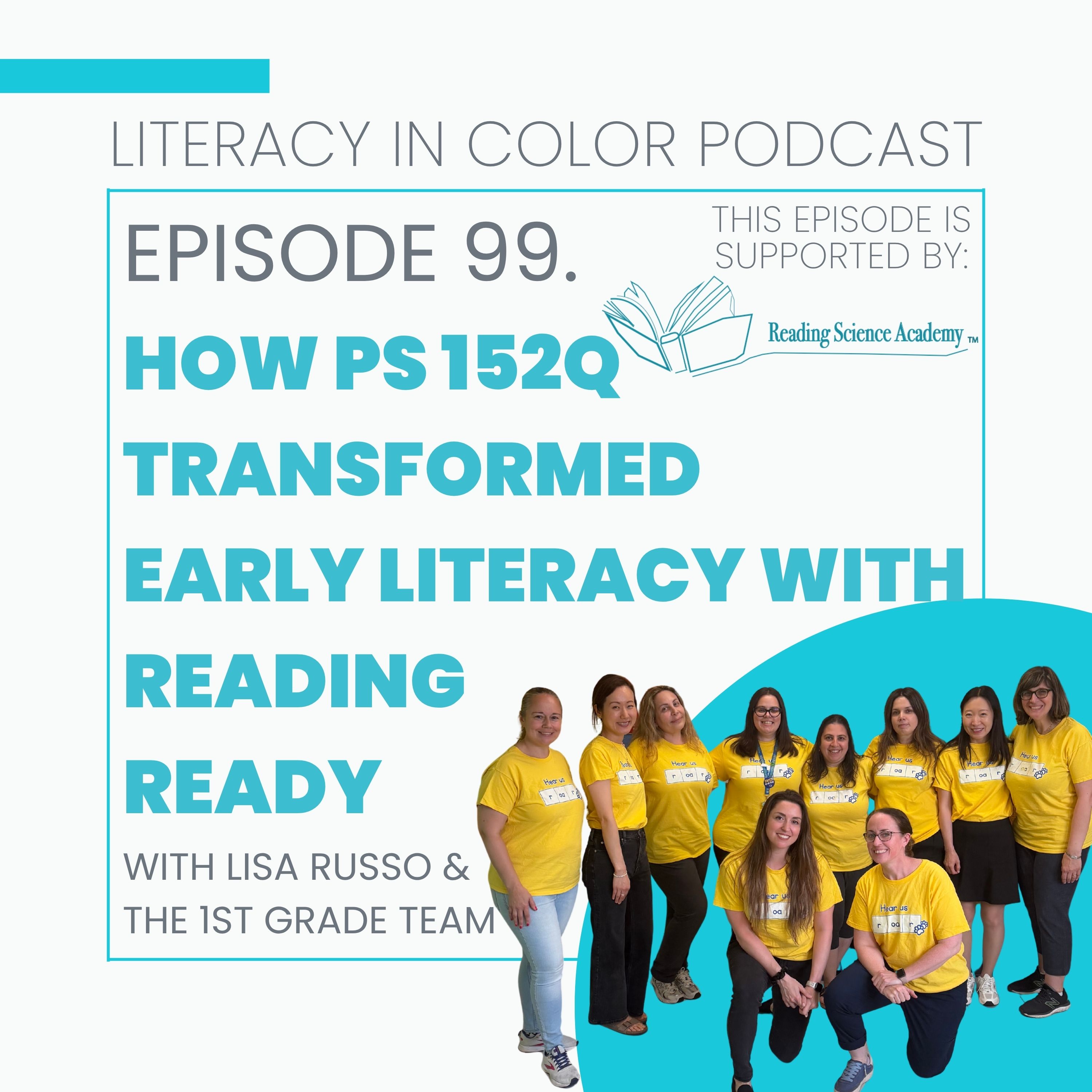 99. How PS 152Q Transformed Early Literacy with Reading Ready with Lisa Russo & the 1st Grade Team 23.06.2026 42minWhat happens when a school decides that "business as usual" is no longer good enough? Principal Lisa Russo and the first-grade team at PS 152Q to discuss their remarkable literacy transformation. After years of using balanced literacy practices, the school shifted toward structured literacy, embraced the science of reading, and implemented a schoolwide intervention block supported by Dr. Katie Pace Miles' Reading Ready intervention program.The team shares their journey from seeing students struggle with foundational skills to creating a system that provides targeted instruction based on student needs. You'll hear how leadership, teacher buy-in, strategic grouping, and a commitment to following the research helped create meaningful change for young readers.Resources Mentioned:Reading Ready (The Reading Institute)Book: Making Words Stick by Dr. Katie Pace Miles & Dr. Molly NessThis post may contain affiliate links, which means if you click on a link and make a purchase, I may earn a small commission at no additional cost to you. Thank you for supporting the podcast!Connect with Lisa Russo & PS 152Q:Website: https://www.ps152q.org/Instagram: @ps152q & @littleextraliteracyThis podcast is brought to you by Reading Science Academy, where our friend Stephanie Stollar is giving Literacy in Color listeners an exclusive, free grouping resource bundle to help you turn fall screening data into skill-based groups that actually move students forward.Get your FREE grouping resource bundle here.Or, become a member of Reading Science Academy to learn in community and receive research-backed support alongside over 1,400 literacy educators.Connect with Michelle:Visit: www.michelleandthecolorfulclassroom.comFollow me on Instagram: @michelle_thecolorfulclassroom & @logosliteracyacademyJoin our Facebook CommunitySign up for my NewsletterShop on TPT: The Colorful ClassroomFor Phonics Resources, grab: The COLORFUL Phonics ToolkitWant to Support the Podcast?Make a Donation to Support ProductionInterested in Learning More about Morphology?Logos Literacy Academy with Michelle Sullivan & Sarah PaulJoin: Beyond Phonics Club - our Membership CommunityMentioned in this episode:SOR Fall Book Study Join us: https://colorful-classroom.mykajabi.com/sor-fall-book-study-2026Reading Science AcademyGet your FREE grouping resource bundle here: https://www.stephaniestollarconsulting.com/groupingsheets?utm_source=podcast&utm_medium=show_notes&utm_campaign=podcast Join The Reading Science Academy: https://www.stephaniestollarconsulting.com/register?utm_source=podcast&utm_medium=show-notes&utm_campaign=literacy-in-colorReading Science AcademyGet your FREE grouping resource bundle here: https://www.stephaniestollarconsulting.com/groupingsheets?utm_source=podcast&utm_medium=show_notes&utm_campaign=podcast Join The Reading Science Academy: https://www.stephaniestollarconsulting.com/register?utm_source=podcast&utm_medium=show-notes&utm_campaign=literacy-in-color
 -
 98. Syntax is Everything: The Backbone of Comprehension with Dr. Julie Van Dyke 16.06.2026 55minWhen educators discuss reading comprehension, the conversation often centers around vocabulary, background knowledge, and comprehension strategies, but what if we've been overlooking one of the most critical components of comprehension all along?Research scientist, Dr. Julie Van Dyke shares about the powerful role syntax plays in reading comprehension. Drawing from decades of research in cognitive psychology, neuroscience, linguistics, and language processing, Dr. Van Dyke explains why syntax is much more than word order; it's the system that helps readers determine who did what to whom and construct meaning moment by moment.We discuss what happens in the brain when we read, why comprehension occurs word by word rather than after a passage is finished, how Developmental Language Disorder (DLD) impacts reading, and practical ways teachers can begin supporting syntactic development in their classrooms.We also dive into Cascade Reading, an innovative tool designed to make sentence structure visible and support comprehension for all learners.Key Takeaways:Syntax is not simply word order.Comprehension happens continuously, word by word, as the brain integrates new information into what has already been processed.The brain relies on multiple systems during reading, including perception, language, and thought networks.Syntax serves as the foundation of language comprehension in much the same way phonology serves as the foundation of decoding.Explicit attention to sentence structure can be embedded into existing literacy instruction.Resources Mentioned:IDA Perspectives 2025: Volumes 1 & 2 - Syntax Comes First (Available through the IDA)FREE Tool: Cascade ReadingSyntax Usage SurveyConnect with Dr. Julie Van Dyke:Website: https://www.drjvandyke.net/LinkedInStay tuned for her upcoming Substack: Decoding SyntaxThis podcast is brought to you by Reading Science Academy, where our friend Stephanie Stollar is giving Literacy in Color listeners an exclusive, free grouping resource bundle to help you turn fall screening data into skill-based groups that actually move students forward.Get your FREE grouping resource bundle here.Or, become a member of Reading Science Academy to learn in community and receive research-backed support alongside over 1,400 literacy educators.Connect with Michelle:Visit: www.michelleandthecolorfulclassroom.comFollow me on Instagram: @michelle_thecolorfulclassroom & @logosliteracyacademyJoin our Facebook CommunitySign up for my NewsletterShop on TPT: The Colorful ClassroomFor Phonics Resources, grab: The COLORFUL Phonics ToolkitWant to Support the Podcast?Make a Donation to Support ProductionInterested in Learning More about Morphology?Logos Literacy Academy with Michelle Sullivan & Sarah PaulJoin: Beyond Phonics Club - our Membership CommunityMentioned in this episode:Reading Science AcademyGet your FREE grouping resource bundle here: https://www.stephaniestollarconsulting.com/groupingsheets?utm_source=podcast&utm_medium=show_notes&utm_campaign=podcast Join The Reading Science Academy: https://www.stephaniestollarconsulting.com/register?utm_source=podcast&utm_medium=show-notes&utm_campaign=literacy-in-colorSOR Fall Book Study Join us: https://colorful-classroom.mykajabi.com/sor-fall-book-study-2026Reading Science AcademyGet your FREE grouping resource bundle here: https://www.stephaniestollarconsulting.com/groupingsheets?utm_source=podcast&utm_medium=show_notes&utm_campaign=podcast Join The Reading Science Academy: https://www.stephaniestollarconsulting.com/register?utm_source=podcast&utm_medium=show-notes&utm_campaign=literacy-in-color
 -
 97. Effective Universal Instruction with Dr. Sarah Brown & Dr. Kimberly Gibbons 09.06.2026 58minDrawing from decades of experience in literacy, school psychology, systems-level leadership, and MTSS implementation, Dr. Sarah Brown and Dr. Kimberly Gibbons explain why strong universal instruction is the true foundation of student success. They explore what Tier 1 actually includes, why intervention alone cannot solve widespread literacy struggles, and how leadership, collaboration, fidelity, coaching, and systems-thinking all work together to improve outcomes for students.Key Takeaways:What Tier 1 really means inside an MTSS frameworkWhy MTSS is about resources and systems, not “Tier 2 kids” or “Tier 3 kids”Why buying a new curriculum alone won’t solve literacy problemsThe role of leadership in sustaining effective instructionThe importance of job-embedded coaching and ongoing supportWhy fidelity data matters (...and why it shouldn’t feel punitive)How collaborative teams build consensus and instructional coherenceThe power of strong questioning to uncover root causesWhy prevention through effective Tier 1 instruction is more powerful than over-relying on interventionPractical first steps schools can take immediately to strengthen instructionResources:Book: Effective Universal Instruction: An Action-Oriented Approach to Improving Tier 1 by Sarah Brown & Kimberly GibbonsBook: MTSS for Reading Improvement by Stephanie Stollar & Sarah Brown from Solution Tree (or on Amazon)This post may contain affiliate links, which means if you click on a link and make a purchase, I may earn a small commission at no additional cost to you. Thank you for supporting the podcast!Connect with Dr. Sarah Brown:Website: https://systemimpactconsulting.com/Contact Dr. Sarah Brown on her WebsiteLinkedIn: Sarah Brown Ph.D.Join Dr. Brown’s MTSS Data AcademyDr. Brown also offers Virtual Coaching Sessions!Connect with Dr. Kimberly Gibbons:CAREI DirectorCAREI at the University of MinnesotaThis podcast is brought to you by Reading Science Academy, where our friend Stephanie Stollar is giving Literacy in Color listeners an exclusive, free grouping resource bundle to help you turn fall screening data into skill-based groups that actually move students forward.Get your FREE grouping resource bundle here.Or, become a member of Reading Science Academy to learn in community and receive research-backed support alongside over 1,400 literacy educators.Connect with Michelle:Visit: www.michelleandthecolorfulclassroom.comFollow me on Instagram: @michelle_thecolorfulclassroom & @logosliteracyacademyJoin our Facebook CommunitySign up for my NewsletterShop on TPT: The Colorful ClassroomFor Phonics Resources, grab: The COLORFUL Phonics ToolkitWant to Support the Podcast?Make a Donation to Support ProductionInterested in Learning More about Morphology?Logos Literacy Academy with Michelle Sullivan & Sarah PaulJoin: Beyond Phonics Club - our Membership CommunityMentioned in this episode:SOR Fall Book Study Join us: https://colorful-classroom.mykajabi.com/sor-fall-book-study-2026Reading Science AcademyGet your FREE grouping resource bundle here: https://www.stephaniestollarconsulting.com/groupingsheets?utm_source=podcast&utm_medium=show_notes&utm_campaign=podcast Join The Reading Science Academy: https://www.stephaniestollarconsulting.com/register?utm_source=podcast&utm_medium=show-notes&utm_campaign=literacy-in-colorReading Science AcademyGet your FREE grouping resource bundle here: https://www.stephaniestollarconsulting.com/groupingsheets?utm_source=podcast&utm_medium=show_notes&utm_campaign=podcast Join The Reading Science Academy: https://www.stephaniestollarconsulting.com/register?utm_source=podcast&utm_medium=show-notes&utm_campaign=literacy-in-color
 -
 96. Reading’s Dynamic Duo: How Fluency & Vocabulary Fuel Comprehension with Melissa Loftus & Lori Sappington 02.06.2026 59minMelissa Loftus and Lori Sappington from the Melissa & Lori Love Literacy podcast take their hosting hats off for the day to share their expertise around fluency, vocabulary, and comprehension – and why comprehension instruction is far more complex than simply teaching “strategies.”Melissa and Lori explain why comprehension is considered an unconstrained skill, how fluent word recognition frees up cognitive space for meaning-making, and why vocabulary and knowledge building are essential for students to truly understand text.Resources Mentioned:Sign up for Melissa & Lori’s email list and grab a free, fun fluency resource pack!Book: The Literacy 50 by Melissa Loftus & Lori SappingtonFive Step Vocabulary Routine (from the Literacy 50)Research: Spencer, Quinn, and Wagner tested 425,000 children from first through third grade on decoding, vocabulary, and comprehension. Among those who had adequate decoding and adequate vocabulary, fewer than one per cent scored poorly on comprehension. Fewer than one in a hundred. Once the word-level problems are solved, the decoding and the vocabulary, comprehension takes care of itself in virtually every case. This post may contain affiliate links, which means if you click on a link and make a purchase, I may earn a small commission at no additional cost to you. Thank you for supporting the podcast!Connect with Melissa Loftus & Lori Sappington:Melissa & Lori Love Literacy PodcastWebsite: literacypodcast.com/Instagram: @literacypodcastWebsite: sorinpractice.com/Instagram: @sorinpracticeThis podcast is brought to you by Reading Science Academy, where our friend Stephanie Stollar is giving Literacy in Color listeners an exclusive, free grouping resource bundle to help you turn fall screening data into skill-based groups that actually move students forward.Get your FREE grouping resource bundle here.Or, become a member of Reading Science Academy to learn in community and receive research-backed support alongside over 1,400 literacy educators.Connect with Michelle:Visit: www.michelleandthecolorfulclassroom.comFollow me on Instagram: @michelle_thecolorfulclassroom & @logosliteracyacademyJoin our Facebook CommunitySign up for my NewsletterShop on TPT: The Colorful ClassroomFor Phonics Resources, grab: The COLORFUL Phonics ToolkitWant to Support the Podcast?Make a Donation to Support ProductionInterested in Learning More about Morphology?Logos Literacy Academy with Michelle Sullivan & Sarah PaulJoin: Beyond Phonics Club - our Membership CommunityMentioned in this episode:Reading Science AcademyGet your FREE grouping resource bundle here: https://www.stephaniestollarconsulting.com/groupingsheets?utm_source=podcast&utm_medium=show_notes&utm_campaign=podcast Join The Reading Science Academy: https://www.stephaniestollarconsulting.com/register?utm_source=podcast&utm_medium=show-notes&utm_campaign=literacy-in-colorSOR Fall Book Study Join us: https://colorful-classroom.mykajabi.com/sor-fall-book-study-2026Reading Science AcademyGet your FREE grouping resource bundle here: https://www.stephaniestollarconsulting.com/groupingsheets?utm_source=podcast&utm_medium=show_notes&utm_campaign=podcast Join The Reading Science Academy: https://www.stephaniestollarconsulting.com/register?utm_source=podcast&utm_medium=show-notes&utm_campaign=literacy-in-color
 -
 95. Affixes in Action: Our A4 Framework for Teaching Affixes with Sarah Paul and Michelle Sullivan of Logos Literacy Academy 26.05.2026 34minExciting news! Sarah & Michelle share their signature A4 Framework for teaching affixes inside of Logos Literacy Academy! Rather than treating prefixes and suffixes as isolated definitions to memorize, we explore how affixes function as meaningful structural units that help words grow and change across the English writing system.If you loved the BASE Framework episode, this conversation is the perfect companion episode!Key Takeaways:Affixes, definedWhy affix instruction should connect meaning, structure, spelling, grammar, and pronunciationCommon practices they see in affix instruction – and how their approach differsHow they intentionally embedded affix instruction within a phonics progressionHow their A4 Framework supports transfer into reading and writingResources Mentioned:K-2 Course & Curriculum from Logos Literacy AcademySave with a Bundle: Get Mastering Morphology AND our K-2 Course & Curriculum bundled together!Connect with Sarah & Michelle:Website: https://www.logosliteracyacademy.com/Instagram: @logosliteracyacademyLogos Literacy Academy Beacons PageConnect with Michelle:Visit: www.michelleandthecolorfulclassroom.comFollow me on Instagram: @michelle_thecolorfulclassroom & @logosliteracyacademyJoin our Facebook CommunitySign up for my NewsletterShop on TPT: The Colorful ClassroomFor Phonics Resources, grab: The COLORFUL Phonics ToolkitWant to Support the Podcast?Make a Donation to Support ProductionInterested in Learning More about Morphology?Logos Literacy Academy with Michelle Sullivan & Sarah PaulJoin: Beyond Phonics Club - our Membership CommunityMentioned in this episode:Reading Science AcademyGet your FREE grouping resource bundle here: https://www.stephaniestollarconsulting.com/groupingsheets?utm_source=podcast&utm_medium=show_notes&utm_campaign=podcast Join The Reading Science Academy: https://www.stephaniestollarconsulting.com/register?utm_source=podcast&utm_medium=show-notes&utm_campaign=literacy-in-colorSOR Fall Book Study Join us: https://colorful-classroom.mykajabi.com/sor-fall-book-study-2026
 -
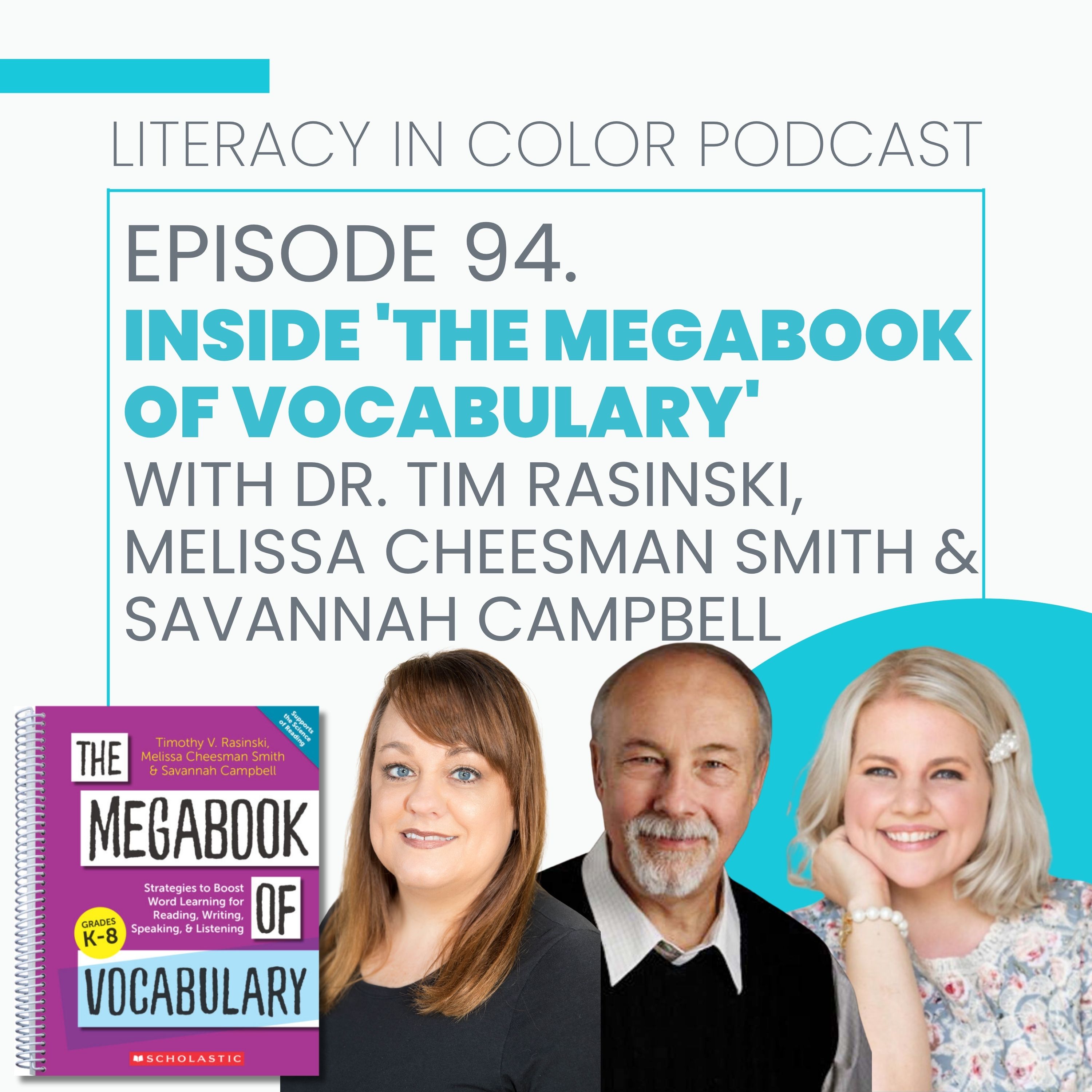 94. Inside 'The Megabook of Vocabulary' with Dr. Tim Rasinski, Melissa Cheesman Smith & Savannah Campbell 19.05.2026 48minDr. Timothy Rasinski, Melissa Cheesman Smith, and Savannah Campbell join the show to discuss their newest resource, The Megabook of Vocabulary. They unpack why vocabulary is far more than a list of words to memorize. This conversation explores the research behind vocabulary instruction, why background knowledge matters, and how teachers can intentionally build language-rich classrooms without making vocabulary “one more thing.”The authors also introduce their WISE framework from the book:Word ConsciousnessIndividual Word LearningStudent Tools for Determining MeaningExploration of Word RelationshipsYou’ll even hear practical classroom ideas for morphology instruction, context clues, nuanced word study, playful word exploration, and how to move beyond rote memorization toward deep, meaningful word learning.Whether you’re a classroom teacher, interventionist, literacy coach, or school leader, this episode is packed with strategies and joyful ideas to help students become truly word conscious.Resources Mentioned:Book: The Megabook of VocabularyFREE Download: Inside the Megabook of VocabularyBook: The Megabook of FluencyThis post may contain affiliate links, which means if you click on a link and make a purchase, I may earn a small commission at no additional cost to you. Thank you for supporting the podcast!Connect with the Guests:Dr. Tim Rasinski’s Website: https://timrasinski.com/Dr. Tim Rasinksi’s Email: [email protected] Cheesman Smith on Instagram: @melissa.cheesman.smithSavannah Campbell’s Website: https://www.campbellcreatesreaders.com/Savannah Campbell on Instagram: @campbellcreatesreadersConnect with Michelle:Visit: www.michelleandthecolorfulclassroom.comFollow me on Instagram: @michelle_thecolorfulclassroom & @logosliteracyacademyJoin our Facebook CommunitySign up for my NewsletterShop on TPT: The Colorful ClassroomFor Phonics Resources, grab: The COLORFUL Phonics ToolkitWant to Support the Podcast?Make a Donation to Support ProductionInterested in Learning More about Morphology?Logos Literacy Academy with Michelle Sullivan & Sarah PaulJoin: Beyond Phonics Club - our Membership CommunityMentioned in this episode:SOR Fall Book Study Join us: https://colorful-classroom.mykajabi.com/sor-fall-book-study-2026Reading Science AcademyGet your FREE grouping resource bundle here: https://www.stephaniestollarconsulting.com/groupingsheets?utm_source=podcast&utm_medium=show_notes&utm_campaign=podcast Join The Reading Science Academy: https://www.stephaniestollarconsulting.com/register?utm_source=podcast&utm_medium=show-notes&utm_campaign=literacy-in-color
 -
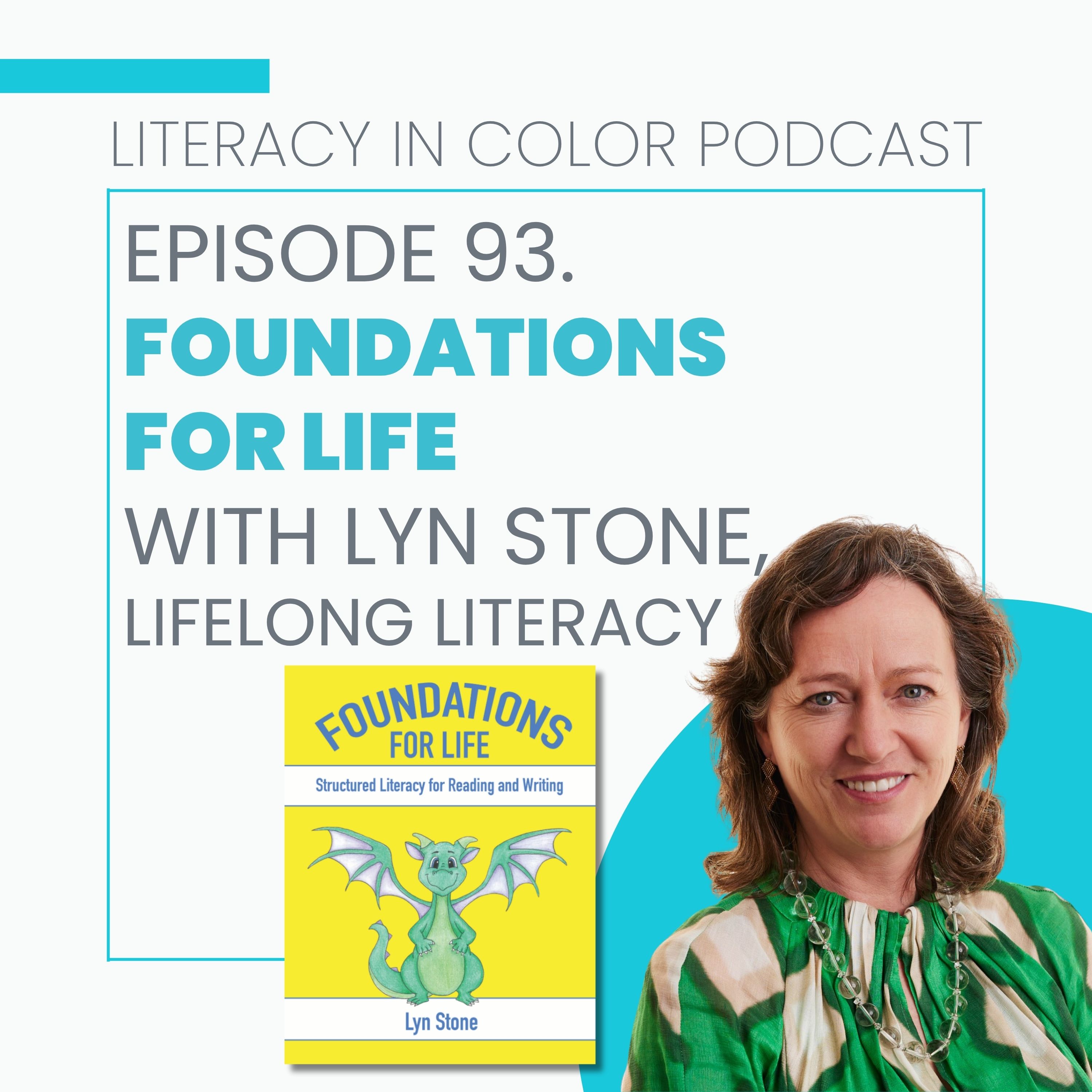 93. Foundations for Life with Lyn Stone, Lifelong Literacy 12.05.2026 54minWe hear an awful lot about the importance of foundational literacy skills, but exactly belongs in that foundation? Educational linguist and author Lyn Stone discusses her newest resource: Foundations for Life — a structured literacy intervention manual designed for educators, interventionists, and parents supporting developing readers and writers.Lyn also shares her thoughts on the Science of Reading movement and considerations when it comes to thoughtful implementation. This conversation is equal parts intellectually rich, practical, and deeply hopeful for educators looking to better understand how the English writing system actually works – and how to teach it effectively.Key TakeawaysPhonics is necessary, but not sufficient.Writing should begin immediately – not “later”, after reading develops.Graphemes spell morphemes; morphemes spell words.Word relatives help students build durable mental models of the writing system.We also get to hear a live demonstration of one of her lessons, exploring the word family for: oneResources Mentioned:Book: Foundations for LifeMore About “Foundations for Life"Book: Spelling for LifeBook: Language for LifeBook: Reading for LifeLyn Stone’s Courses through Lifelong LiteracyThis post may contain affiliate links, which means if you click on a link and make a purchase, I may earn a small commission at no additional cost to you. Thank you for supporting the podcast!Connect with Lyn Stone:Website: https://lifelongliteracy.com/LinkedIn: Lyn StoneInstagram: @lynstone8 Email: [email protected] with Michelle:Visit: www.michelleandthecolorfulclassroom.comFollow me on Instagram: @michelle_thecolorfulclassroom & @logosliteracyacademyJoin our Facebook CommunitySign up for my NewsletterShop on TPT: The Colorful ClassroomFor Phonics Resources, grab: The COLORFUL Phonics ToolkitWant to Support the Podcast?Make a Donation to Support ProductionInterested in Learning More about Morphology?Logos Literacy Academy with Michelle Sullivan & Sarah PaulJoin: Beyond Phonics Club - our Membership CommunityMentioned in this episode:Reading Science AcademyGet your FREE grouping resource bundle here: https://www.stephaniestollarconsulting.com/groupingsheets?utm_source=podcast&utm_medium=show_notes&utm_campaign=podcast Join The Reading Science Academy: https://www.stephaniestollarconsulting.com/register?utm_source=podcast&utm_medium=show-notes&utm_campaign=literacy-in-colorSOR Fall Book Study Join us: https://colorful-classroom.mykajabi.com/sor-fall-book-study-2026
 -
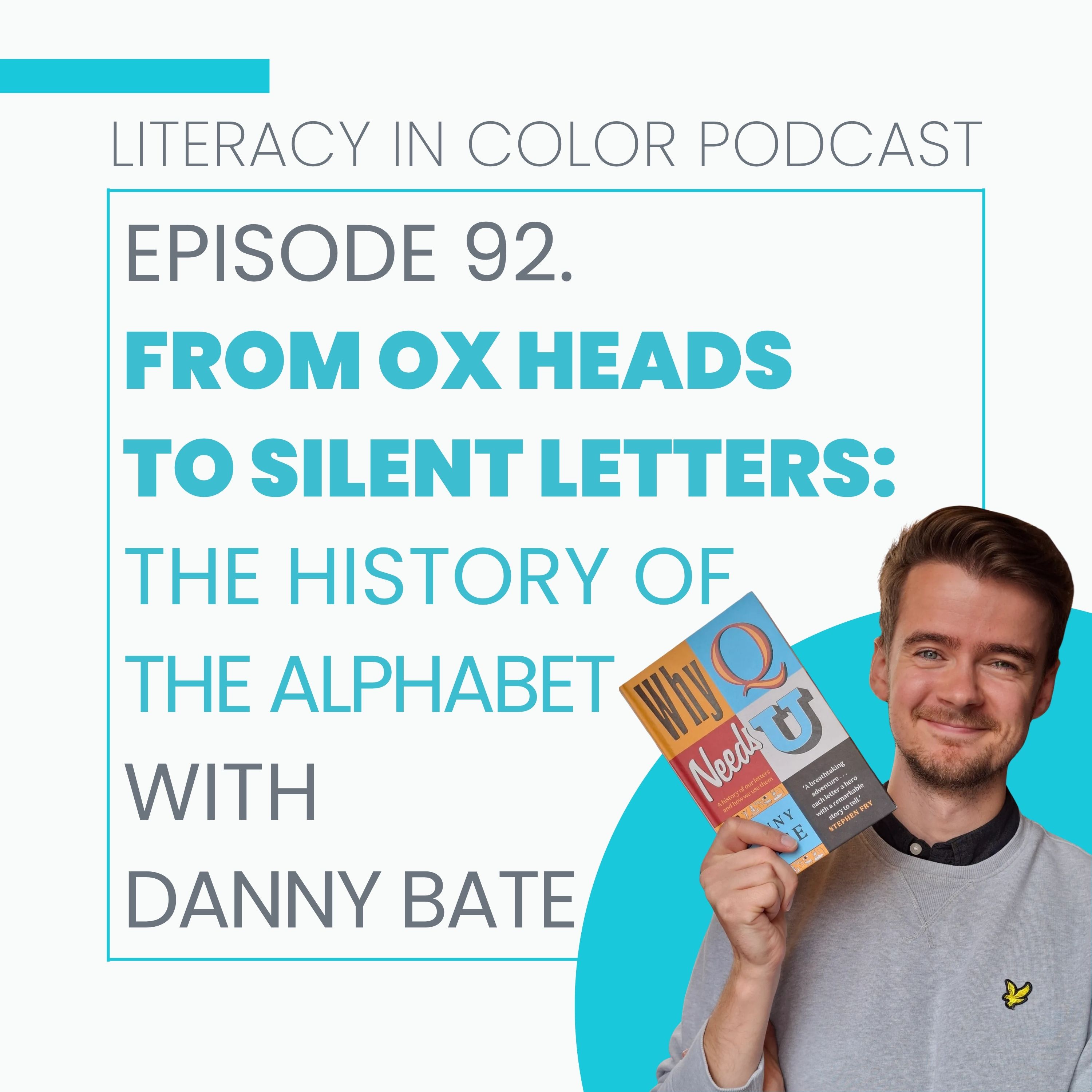 92. From Ox Heads to Silent Letters: The History of the Alphabet with Dr. Danny Bate, author of "Why Q Needs U" 05.05.2026 1t 14minLinguist and author, Dr. Danny Bate brilliantly shares the fascinating history of the alphabet, while also uncovering some of the logic behind English spelling. You’ll hear about the surprising origins of letters (yes, <A> was once an ox’s head!), that vowels weren’t originally part of the alphabet, how the Great Vowel Shift transformed pronunciation, and of course, “Why Q Needs U”. This episode is a must-listen for educators, language lovers, and anyone who has ever wondered: Why is English spelled this way?Key Takeaways:The earliest alphabet was built on the acrophonic principle (symbols representing the first sound of a word)Early alphabets represented consonants only (vowels were added later by the Greeks)English spelling reflects both: Sound change over time AND Historical and cultural influences (i.e. Norman Conquest, Latin influence)The Great Vowel Shift dramatically changed pronunciation, but spelling stayed mostly the sameSo-called “irregularities” often preserve morphological and etymological meaning connectionsConnect with Danny BateWebsite: https://dannybate.com/Podcast: A Language I Love Is…Book: Why Q Needs U: A history of our letters and how we use themThis post may contain affiliate links, which means if you click on a link and make a purchase, I may earn a small commission at no additional cost to you. Thank you for supporting the podcast!Connect with Michelle:Visit: www.michelleandthecolorfulclassroom.comFollow me on Instagram: @michelle_thecolorfulclassroom & @logosliteracyacademyJoin our Facebook CommunitySign up for my NewsletterShop on TPT: The Colorful ClassroomFor Phonics Resources, grab: The COLORFUL Phonics ToolkitWant to Support the Podcast?Make a Donation to Support ProductionInterested in Learning More about Morphology?Logos Literacy Academy with Michelle Sullivan & Sarah PaulJoin: Beyond Phonics Club - our Membership CommunityMentioned in this episode:SOR Fall Book Study Join us: https://colorful-classroom.mykajabi.com/sor-fall-book-study-2026Reading Science AcademyGet your FREE grouping resource bundle here: https://www.stephaniestollarconsulting.com/groupingsheets?utm_source=podcast&utm_medium=show_notes&utm_campaign=podcast Join The Reading Science Academy: https://www.stephaniestollarconsulting.com/register?utm_source=podcast&utm_medium=show-notes&utm_campaign=literacy-in-color
Samankaltaiset podcastit


Suosittu maassa
Tämä podcast esiintyy myös näiden maiden podcast-listoilla.

