
"Between Chaos & Bedtime" the Podcast
Carignane von Pohle
0
Between Chaos & Bedtime is a podcast where the host shares his personal story of being a father with late-diagnosed ADHD. It explores the messy middle between work, parenting, and trying to hold everything together. Each episode features voiceovers of his written stories, offering honest reflections on what's working and what's not. The podcast is designed for those who want the content but don't have time to read, perfect for listening on the go.
Jaksot
-
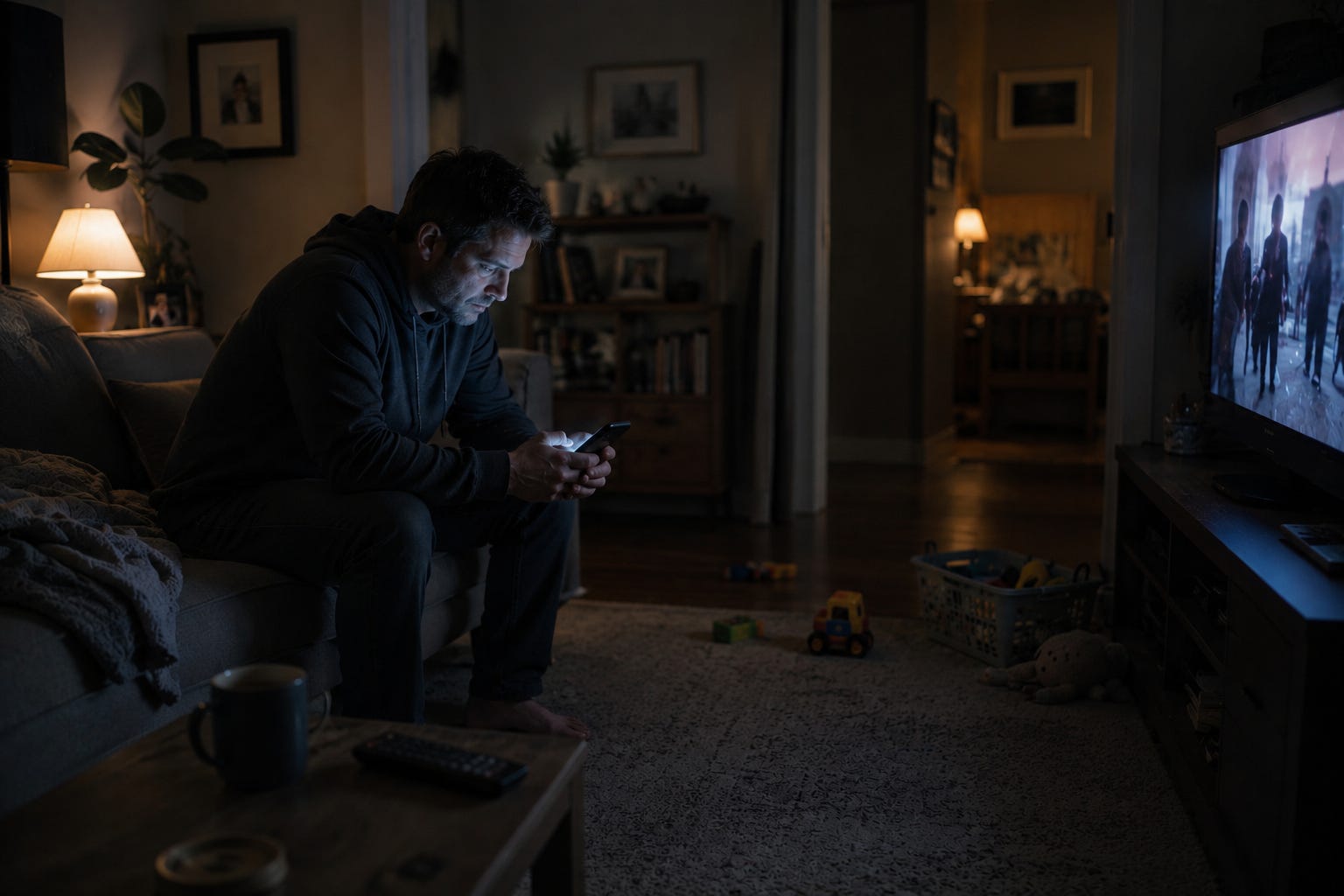 When Your ADHD Never Gets a Break 08.07.2026 4minThis past weekend was hard.And I wish I could say it was an anomaly, but unfortunately, hard weekends have become my norm.My wife works as a nurse. Thank goodness for that. If it weren’t for her steady, dependable career, our family would be in a very different situation. But one of the realities of her job is that every other weekend, I’m solo parenting our two kids.Those weekends don’t usually feel like anyone is thriving.More often, we’re just surviving.The Breaks I Didn’t Know I HadBefore kids, I got breaks without even realizing they were breaks. A thirty-minute commute. A walk across campus at work. Sitting in my office for a few quiet minutes before the next meeting. None of those moments were remarkable, but they gave my brain permission to disengage.That’s the part I miss. It wasn’t simply being alone. It was knowing I wouldn’t be interrupted. For a few minutes, I could exhale.That’s one of the biggest challenges I’ve faced as a parent with ADHD: finding genuine downtime. And, when you’re the only parent home, it’s almost impossible to find those moments.Even if the kids are happily playing in another room, part of my brain never leaves them. My ears are always listening. My attention is always divided. I’m waiting for the next argument to referee, the next snack to prepare, the next “Dad!” shouted from somewhere in the house.It’s difficult to explain to someone who doesn’t have ADHD, but my brain rarely gets the chance to fully disengage, even under normal circumstances. When I’m solo parenting, it never pauses.Over several hours—or several days—that adds up. It’s like a kettle that slowly begins to boil until it finally boils over. I can never take it off the heat.“Just Step Away”I’ve heard all the advice for those moments:”When you feel yourself getting overwhelmed, just step away.”That’s great, but what if the thing overwhelming you is on the other side of the door, knocking?What if there isn’t another adult to tag in?What if stepping away simply isn’t an option?The kind of rest my brain needs isn’t five interrupted minutes scrolling my phone. It’s uninterrupted time where my nervous system can let its guard down—when it doesn’t have to stay on alert.For a solo parent, that’s hard to come by.When Everything Feels Like a DecisionIronically, those weekends are usually the ones where I most want to get everyone out of the house. Staying home can start to feel like being trapped.But then my ADHD brain starts running through every possible scenario.Has everyone eaten recently?Do we need snacks?Water bottles?How much is this going to cost?Will we end up buying lunch?Does everyone have the right clothes?Should I clean the house before we leave so I don’t come home to an even bigger mess?None of those questions is unreasonable. It’s the fact that they all arrive at once when my executive function is already at it’s limit.Instead of helping me make a decision, they create gridlock.I overthink everything, second-guess every plan, and somehow end up just staying home in the chaos getting more mentally exhausted. And that usually leads to me making the same mistake over and over: I stay up too late trying to steal back a little time for myself. A couple of hours in front of the TV. A little doomscrolling. Anything that feels like it belongs only to me.Except it isn’t restorative. It just pushes my bedtime later, shortens my sleep, and leaves me waking up already depleted for the day ahead. Then I’m more impatient, more reactive, and far less equipped to be a good parent.It’s a cycle I’ve repeated more times than I’d like to admit.Sometimes There Isn’t a HackI’m slowly learning one of the hardest lessons about living with ADHD. Not every problem has a clever strategy or productivity hack waiting to solve it.Sometimes you’re simply overwhelmed.Sometimes parenting is just really hard.Sometimes your ADHD brain has reached its limit.Recognizing that isn’t giving up.It’s being honest.Because once I can admit, “I’m overwhelmed,” I stop wasting energy pretending I should be handling it better, that I’m somehow failing at parenting and life.Then I can focus on the next small thing. Drink some water. Admit I need help and ask for it when it’s available. Go to bed earlier tonight instead of trying to reclaim the day. Cut myself some slack and start again tomorrow.I know I don’t always get it right. In fact, some weekends I get almost none of it right. But I’m learning that merely surviving those weekends doesn’t make me a bad parent. It makes me a parent with ADHD. And some weekends, doing my best is enough. This is a public episode. If you would like to discuss this with other subscribers or get access to bonus episodes, visit carignanevonpohle.substack.com
 -
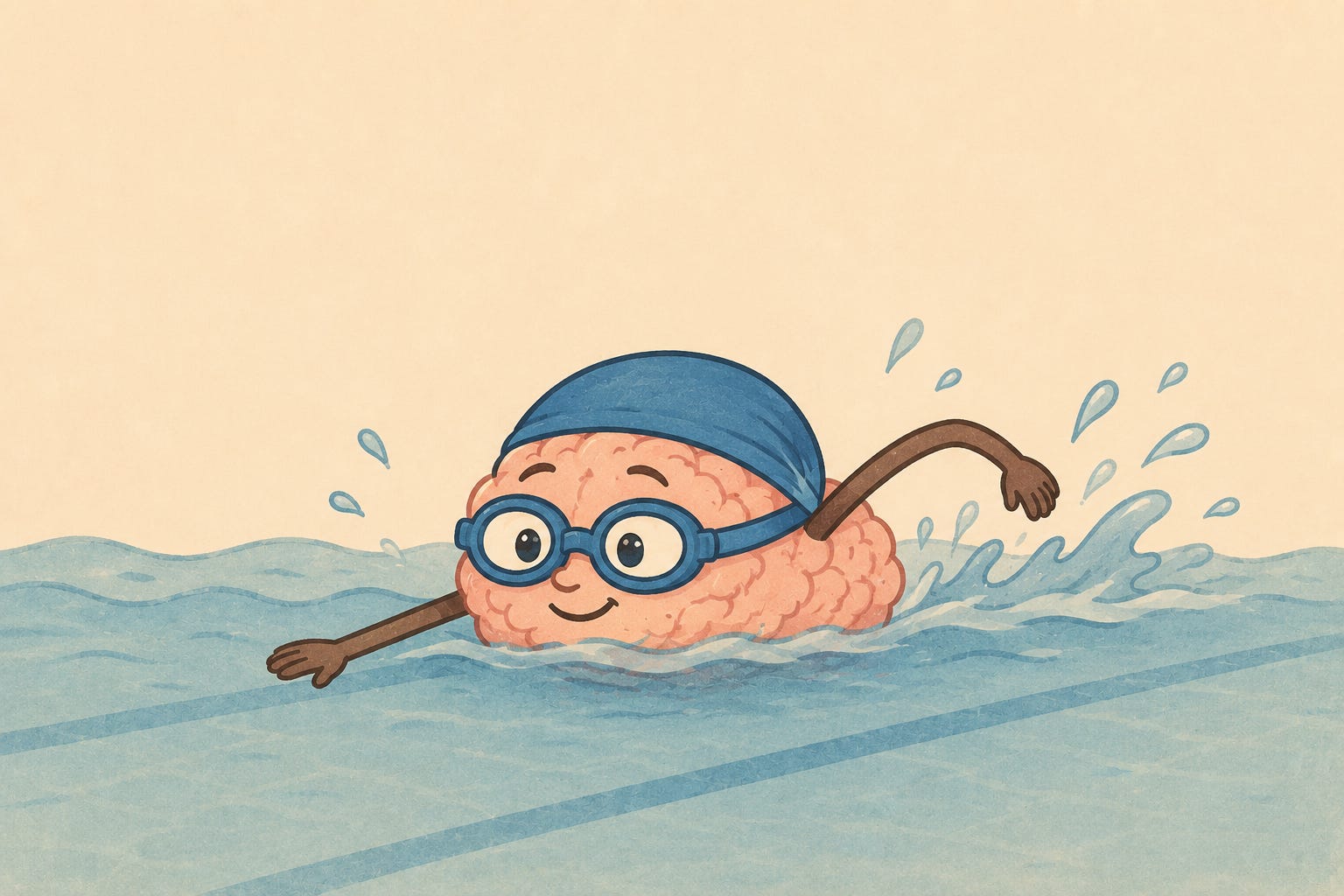 Your ADHD Brain Was Made to Move 01.07.2026 5minIf you’ve been reading my series Managing ADHD in Real Life, you’ve probably noticed that I’ve mentioned exercise several times. That’s no mistake. In my experience, there are few things that help manage ADHD like moving my body.There’s plenty of good science to back up why exercise is so effective for managing ADHD. It’s worth checking out.I want to focus on the anecdotal evidence, share what’s worked for me, and show why every ADHDer should incorporate exercise into managing their symptoms.A Reminder of Why It MattersLast week, I was really struggling. I wasn’t sleeping well and woke up several mornings in a row with a tired feeling behind my eyes. That’s usually a good sign that the sleep I’m getting isn’t restorative. I can’t undersell the importance of sleep for an ADHD brain.I couldn’t figure out why I was having such a hard time, but then I realized I hadn’t been exercising with my usual consistency. Since my kids have been on summer break, I’ve been unable to swim with the same regularity. And let me tell you, I was feeling it.The lesson was clear: getting exercise ensures that by bedtime, my body and brain are ready to rest.Find Your ThingStaying consistent is all about finding something you’re willing to return to. It’s about finding something that you enjoy—finding something that’s not a burden. Because that’s one of the biggest challenges to overcome: how do I keep doing this? If you have to work to convince yourself to do it, maybe it’s not for you. There are already enough demands on your executive function on a daily basis. Don’t make overcoming your resistance to workout one of them.The first thing to recognize is there’s no “right way” to move your body. You don’t have to follow someone else’s plan that requires you to stand in front of a gym mirror for several hours at a time lifting weights. I can’t stand working out in a gym. It took me too long to realize that suffering through a gym workout was not the only way to do it.Maybe your thing isn’t gyms or sports at all. Maybe you’re into dancing. Maybe moving your body is just that—moving your body to music.ADHD brains don’t need the “perfect” workout. They need one they’ll actually do. The less friction between you and movement, the more likely it becomes part of your life.Rethinking ExerciseAs I’ve gotten older, I’ve also realized that my past motivation for exercising was all wrong. A lot of it was for vanity. I wanted to look good, and if the results weren’t coming fast enough, then I’d usually give it up.Now I realize the physical transformation that comes from exercise is icing on the cake. What I’m really getting is the benefits to my brain, my sleep, my stamina, my mobility. I overlooked so many of the benefits because I was solely focused on aesthetic results.It also just feels good to move your body regularly. I like feeling strong. I like feeling that my muscles are doing something. I like the feeling of sore muscles instead of stiff joints. And that’s a difference you get through exercise.That shift in perspective also changed the question I was asking. I stopped wondering what the “best” workout was and started asking what kind of movement I’d actually keep coming back to.For me, the answer was swimming.Why Swimming Works for MeI’ve mentioned swimming several times in this series, and I keep coming back to it because it’s the one thing that I’ve stuck with the longest. At the heart of it is my love of the water. But there are other reasons why it’s become my thing.I struggle when I have to do things alone. It’s hard for me to find motivation to go somewhere, by myself, and spend an hour suffering alone. If I can do it with other people, it’s going to be more successful.I’m also really good at talking myself out of things. I can come up with all kinds of excuses to not push myself or even show up. When I’m surrounded by other people—or I think about the people in my Masters group who would question why I didn’t show up—it’s a kind of peer pressure. Or maybe it’s called accountability. Either way, it works.There’s also not guesswork when it comes to swimming with a Masters group. You show up, the coach gives you the workout, and you do it. I don’t have to expend finite executive function on deciding what I’m going to do or for how long. I just follow along. A bonus is, as I get older, having an exercise that’s low impact and doesn’t hurt my aging body is a tremendous benefit.We Were Made to MoveExercise is crucial when it comes to regulating our nervous systems. I watch my kids and marvel at their boundless energy. I also marvel at the way they instinctively choose to move their bodies to help regulate themselves when they feel restless.My daughter climbs her indoor swing, hangs upside down, and runs laps around the house. She’s at her best when she’s free to move. It’s when she’s required to stay still for long periods that the challenges arise.I can relate.Somewhere along the way, we decide that adulthood means sitting still. We spend our days in cars, behind desks, and on couches, then wonder why our bodies and brains feel restless.The Real LessonAt the end of the day, moving your body is about far more than looking good in the mirror.It’s about sleeping better. Quieting your mind. Regulating your nervous system. Feeling strong. Remembering that your body was made to move.The question isn’t, “How do I motivate myself to exercise?”It’s, “What kind of movement makes me want to come back tomorrow?”Find that thing. Then protect it. Because if you have ADHD, exercise isn’t just another healthy habit. It’s one of the best tools you have. This is a public episode. If you would like to discuss this with other subscribers or get access to bonus episodes, visit carignanevonpohle.substack.com
 -
 Not Everything Needs a Finish Line 24.06.2026 4minFor most of my life, I believed that if something couldn’t be measured, completed, or achieved, it probably wasn’t worth doing.Then I learned about the philosophical distinction between telic and atelic pursuits.A telic pursuit has an endpoint. It’s done to achieve something—graduate, lose weight, finish the project, check the box. You complete something, and it’s done. It’s satisfying, and easy for an ADHD brain like mine to grasp.An atelic pursuit is different. It’s done for its own sake. Walking. Playing. Swimming. Having a conversation with a friend. The value isn’t found at the finish line—it’s found in the doing. It’s abstract, and hard for me to wrap my ADHD brain around.We Love Finish LinesFor much of my life I’ve believed that in order for something to be worthwhile—in order for something to be deserving of my time and energy—it needs to be something that I can complete.Value is derived from a tangible result that you—and especially other people—can point to and say, “You did a thing, and here’s evidence to prove it.”Like a lot of people with ADHD, I crave the dopamine hit that comes from completion. Sometimes it’s not so much a feeling of accomplishment as it is relief, but crossing something off a list provides a defined endpoint, a predictable “high”, and that’s simple to grasp.But, understanding that not everything needs a defined goal is harder to accept. And that distinction has fundamentally changed the way I think about ADHD.When Structure Becomes a TrapWhen you read about strategies to manage ADHD or find “ADHD hacks” online they often suggest making lists, creating defined timeframes, or checking a box—essentially turning things into telic pursuits.Those strategies have a time and place. The goal-oriented approach can provide satisfaction, and in the right circumstances, help you get things done when you’re struggling with executive function.But you can’t apply that same strategy to everything. Clearly defined objectives in the wrong circumstances can create stress and achievement traps. Worst of all, they can restrict the ADHD brain’s natural strengths. They prevent daydreaming, they keep your mind from wandering, they don’t provide the space for discovery. And that’s a problem, too.It’s a balancing act. It’s important to understand and recognize that there are times when you need to get things done and be productive. But not everything should adhere to the same rigid framework and be solely focused on results.There are times when you need to provide space for your ADHD brain to wander and recharge. And more often than not, the opportunity to recharge is found in atelic pursuits.Sometimes the Point Is the DoingThe more I’ve thought about it, the more I’ve realized that I avoided doing things simply for the sake of doing them. Pursuing passions became a value proposition, focused on the tangible things I got out of it.If it couldn’t be measured, it wasn’t worthwhile.Understanding the difference between telic and atelic pursuits helped me realize that life isn’t just about hustle and achievement. My value isn’t defined by how much I can accomplish, and there’s not always a finish line.Sometimes the point of swimming is swimming.Sometimes the point of reading is reading.Sometimes the point of spending time with your kids is simply being present—it’s not a constant attempt to make “core memories” by providing structured enrichment that’s over-planned and micro-managed.It’s about play, creativity, imagination, and just existing together.In our current culture, it’s hard to admit that not every moment needs to be optimized.Coming to that realization is liberating. It’s a relief to accept that I don’t have to constantly be moving towards goalposts.I can give myself permission to do things for their own sake and let my brain lead.It can be hard for an ADHD brain to accept that simply doing is enough, but often, that’s exactly what we need. This is a public episode. If you would like to discuss this with other subscribers or get access to bonus episodes, visit carignanevonpohle.substack.com
 -
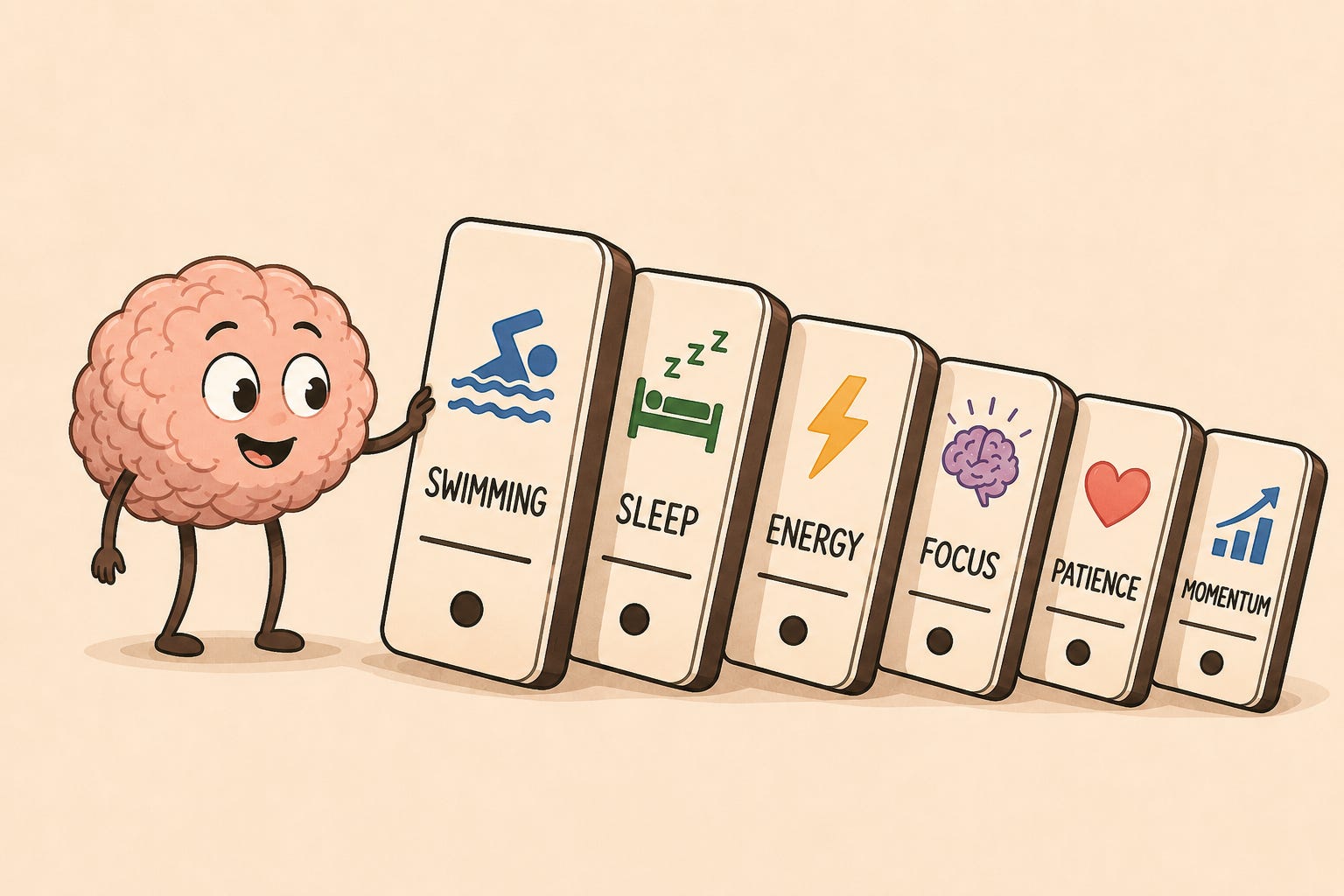 The Dominoes Are Already Falling 17.06.2026 5min*This is my third post in a series called Managing ADHD in Real Life. Subscribe so you don’t miss upcoming posts!If you read my last post in this series, I wrote about momentum.Momentum can be an essential part of managing your ADHD.Momentum creates a sense of progress and allows your brain to use today’s wins to encourage future wins.This week I want to talk about the improvements you can experience in your life if you recognize that good lifestyle decisions beget other good lifestyle decisions.The Domino EffectOften when you hear “domino effect,” it might conjure images of your life falling apart, piece by piece, with one negative thing triggering a chain reaction.Chain reactions are real, but I would argue that a chain reaction can work in your favor with a few key decisions.Before I was diagnosed with ADHD, I was very aware that I had a tendency to be impulsive. I would go all in on things, and not always in a way that improved my life.I can think of many instances when life wasn’t going my way, and I’d lean into it.It would usually start with several late nights in front of the TV. Lounging on the couch, watching shows that didn’t really entertain me as much as occupy my mind.Those late nights would lead to inadequate sleep and rough mornings. I was easily agitated. My kids would wake up before me and I would start each day on their terms instead of my own. Those days always made me feel like I was playing from behind.I’d also spend many of those late nights on the couch eating—snacking for no other reason than searching for the dopamine my brain so desperately craved.It was an unfortunate cycle that perpetuated itself. Each additional late night would lead to additional hours of snacking and binging, which would lead to a fitful night of sleep, which would lead to a rough morning, which would lead to an unproductive day, which would lead to another night of revenge sleep procrastination.I didn’t feel good, and before I was even diagnosed with ADHD, I could understand that I wasn’t doing my brain any favors.It was a domino effect in its worst form.Tipping Things in the Other DirectionThings can go the other way, and the domino effect can create positives in your life too.At the end of last summer—just after my kids returned to school—I recognized that something needed to change.I’d been in the midst of a bad cycle of dominoes falling in the wrong direction.And one day I just decided I needed something different in my life, and impulsively, I went for it.For me, one of the first dominoes was getting back in the water.I started swimming with a local masters group a few mornings each week. At first, it was simply about moving my body and doing something that made me feel good. But I quickly realized it was influencing much more than just my fitness.To get up before sunrise and swim, I had to go to bed earlier. Going to bed earlier meant I wasn’t spending hours mindlessly snacking in front of the TV. Better sleep gave me more energy and patience during the day. And because I felt better, I was more motivated to make other healthy choices.What started as swimming became a whole series of dominoes falling in the right direction.When I think about my life and consider what’s best for me, I think about all the lifestyle choices I can make that will benefit me the most.This includes:* Good sleep* Fueling my body (which I like to say instead of eating because every body is unique and needs the correct blend of fuel to function at its best. Pop-tarts are not good fuel.)* Moving my body (Swimming!)* Limiting things that don’t serve me (alcohol, and sometimes even coffee)* Mornings on my terms (beating the kids out of bed)All of these things play a crucial role in my physical and mental health and help me better manage my ADHD. I’ve found that when I have several of them going in my favor, it’s easier to do the other things well.That’s what I mean by “good dominoes.”One good choice doesn’t just give you one benefit—it makes the next good choice easier.When I’m sleeping well, I have more energy to exercise. When I’m exercising regularly, I’m less likely to reach for foods that I know don’t make me feel my best. When I’m fueling my body well, I have better focus and emotional regulation. When my brain is functioning better, I’m more productive during the day, which makes it easier to wind down at night and get to bed on time.It’s All ConnectedNone of these things exist in isolation. They’re all connected.The goal isn’t perfection. The goal is to create enough positive momentum that the next healthy decision requires a little less effort than the last one.Sleep is probably the biggest domino for me.When I sleep well, almost everything else gets easier. I have more patience with my kids. I make better decisions about food. I have more motivation to exercise. I focus better. I’m more productive. And because my day goes better, I’m less tempted to stay up late looking for dopamine from a screen.The dominoes start falling in the right direction.And believe me, I understand just how difficult it can be to break a negative cycle.In fact, when you’re in the middle of one, it can feel almost impossible. ADHD brains are particularly vulnerable because we’re often looking for immediate relief from boredom, stress, overwhelm, or exhaustion.That’s why I don’t try to change everything at once.I just look for the next domino.Maybe that’s going to bed 30 minutes earlier. Maybe it’s taking a walk. Maybe it’s getting in the pool. Maybe it’s putting my phone down and reading a book.The important thing is recognizing that one good choice rarely stays isolated. It has a way of creating opportunities for other good choices.Momentum matters. Good dominoes matter.Sometimes the biggest changes in our lives don’t come from one massive decision. They come from a single domino that starts falling in the right direction. This is a public episode. If you would like to discuss this with other subscribers or get access to bonus episodes, visit carignanevonpohle.substack.com
 -
 My Eyes Were Working Too Hard 03.06.2026 2min*I’m taking a pause from my series “Managing ADHD in Real Life” so I can get my kids squared away on summer break. Stay tuned for more in the weeks to come and be sure to subscribe so you don’t miss any future posts!I got glasses for the first time about a year ago.I turn 40 this year, and my eyesight seems to be the first thing that’s failing me.Up until the exam, I’d never had any issues with my vision. I’d do the test in the doctor’s office where you look at the progressively smaller letters on the wall, and I’d consistently pass with flying colors.The whole eye-exam experience was completely new, and I have to say, there were parts of it that I DID NOT enjoy. Nobody warned me about the puff of air they shoot into your eyes. That device is sadistic.I scheduled the appointment because I was struggling with eye pain by the end of most days. I would emerge from my office after a long day staring at the computer with eyes that felt like someone was trying to push them out of my head from inside.After the exam, the optometrist indicated that I needed prescription glasses. She explained that my eyes were experiencing strain as a result of having to repeatedly refocus throughout the day. My left eye in particular needed more correction and had to constantly adjust to try and compensate. The need to constantly refocus meant my eyes were doing a lot of extra work.It got me thinking. My eyes were tired because they had to constantly refocus.Reminds me a lot of my ADHD brain.See, the ADHD brain takes in information non-stop. It’s being pulled in countless directions, and when you’re meant to be concentrating on one thing, it can take a tremendous effort to refocus your attention on the task at hand.It’s no wonder that most days I feel wiped out—especially if I’m doing work that’s not particularly interesting or engaging.The demands of the day—a job, a partner, kids, responsibilities, commitments—require a lot of attention and focus. If your brain is wired to follow impulses, instead of staying on task, you end up using a massive amount of energy just doing life.After a full day of constant self-correction, your brain is exhausted.My advice? Cut yourself some slack.Remember that your brain is working so much harder than a lot of the people around you. You may get tired more easily. You may need to take breaks. If you need a moment of rest, don’t feel ashamed. It’s what’s necessary for you and your brain to function at its best.My glasses aren’t about helping me see—they’re about making it so my eyes don’t have to work so hard.I think it’s a lot like ADHD.Sometimes the answer isn’t to push harder, try harder, or focus harder.Sometimes the answer is finding the right support so you don’t have to spend all day refocusing. This is a public episode. If you would like to discuss this with other subscribers or get access to bonus episodes, visit carignanevonpohle.substack.com
 -
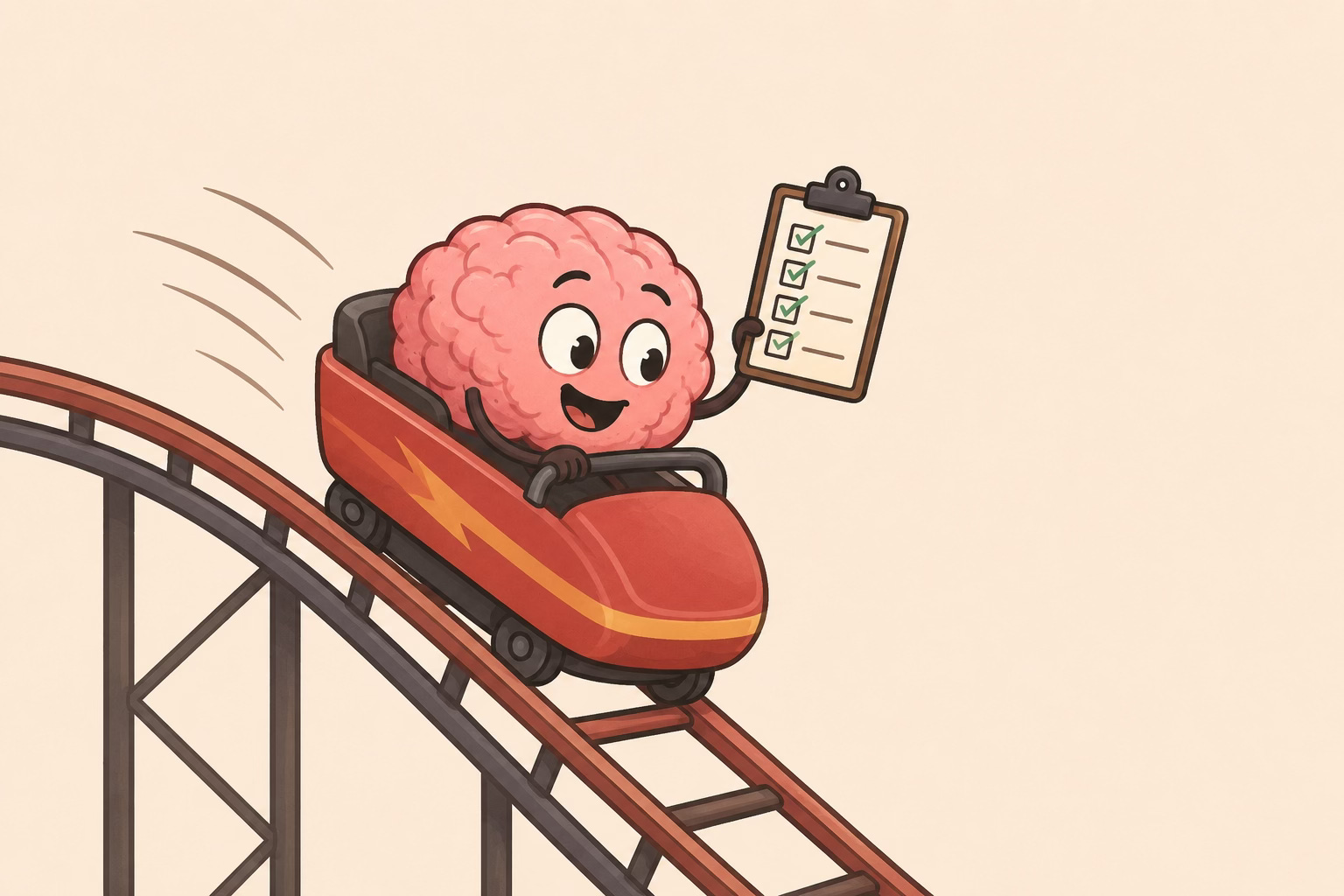 Momentum is Your Friend 27.05.2026 6min*This is my second post in a series called Managing ADHD in Real Life. Subscribe so you don’t miss upcoming posts!“It’s all about momentum.”It’s advice a friend with ADHD gave me a few years ago, and it’s been a game-changer.Momentum isn’t just about maintaining forward motion. It’s an approach that focuses on stacking wins so your brain thinks, “Hey, I’m making progress and being productive! I like this!”ADHD brains crave that feeling.But momentum can be fleeting. It’s easy to derail. Small interruptions and distractions can bring it to a screeching halt. That makes it imperative that you take care to protect your momentum and give yourself the best chance to capitalize when you capture it.Here are some things to try.Thanks for reading! This is my second post in a series, so be sure to subscribe for free so you don’t miss any upcoming posts!.Strategies for Building and Maintaining MomentumTo-Do ListLet’s start simple. Never underestimate the power of checking items off a list. It’s a visual, tangible way to see how much progress you’re making. Your to-do list isn’t a work of art. It doesn’t have to be perfect. It doesn’t have to make sense to anyone but you. If something comes to mind, just write it down! My favorite thing to do? Add a few EASY items to the top of the list so you can check things off right out of the gate. That makes for a happy ADHD brain. Remember, we are stacking wins, so don’t make a task a heavy lift.Remove DistractionsThis is a big one. If you’re looking to get something done, identify all the things that regularly interrupt you. Public enemy number one is usually smartphones. Stick it in a drawer somewhere or stash it on the other side of the house. The world can wait.Speaking of Distractions, Computers are Distraction MachinesAvoid computers if you need to get on a roll. Need the computer to do your work? Turn off Wi-Fi; write with pen and paper; avoid your email if you can; avoid social media (don’t ask me how many times I checked Facebook while writing this piece). When you have to use your computer, try to make it as boring as possible.Just StartMy grandpa always used to say, “Let’s do something, even if it’s wrong”, and I think about that a lot. The greatest source of friction is often initiating a task. So, if you remove the need for something to be correct, and you allow yourself to be imperfect, you significantly reduce the friction. Reduced friction means better initiation, and initiation is the first step towards momentum.“Friction” ItemsWhat is slowing you down? Make a list. What frequently stands in your way? Is it too many decisions? Poor initial planning? Too much planning? It’s different for everyone. Like I tell my clients, “you are your own internal expert.” As an expert, figure out what works best for you and put it to practice.Visual ClutterDoes visual clutter derail you? Is there stuff on your desk, laundry in your home office? Think about where you go to get things done. Is it a space that’s free from things that draw your attention away? What about other work you have to do? Is there a stack of projects that you’ll come across that can distract you? Clean space, clear mind.Avoid Doing Too MuchTry to stick to one thing at a time. Trust me when I tell you, trying to multitask will not help your momentum.Time BlockingSet aside time to focus and allow yourself the space to build momentum. If you work in an office, that can be hard because there are so many ways to get distracted. But block the time on your calendar. Don’t schedule anything and respect it. Some people call it focus time. I call it momentum building time. And sure, maybe a chunk of that time will be spent actively building up your momentum at the start, but once you’re moving, you might surprise yourself with what you can accomplish. I get it. It’s hard to just turn your brain on and be productive when you have to be. That’s okay. Providing yourself with the space to be productive will make a difference.Momentum Inhibitors as a Dad (i.e. my kids)If you’ve ever tried to do anything efficiently with children in tow, you know that kids are pretty effective momentum killers. It’s not out of malice. They aren’t intentionally preventing me from getting things done. But man, if they don’t pick the perfect moment to interrupt progress.It’s especially hard to focus when I’m solo-parenting. And when I struggle to focus, I tend to just give up what I’m working on. In truth, I’ve probably exploited that tendency. I let my brain convince me that, if I’m going to get constantly interrupted—and keeping in mind that my goal has always been to follow the path of least resistance—I shouldn’t even try to do things.Don’t be like me. Try to do things, even if you’re guaranteed to get interrupted. I can think of many projects around the house that I’ve avoided doing because I feel like the possibility of being interrupted is enough of a deterrent. I’m working on changing that.Part of that change has been to accept that things aren’t perfect, and I may not complete a project in one go. That makes me twitch a little, but some progress is definitely better than no progress at all. Right? Train your brain to try, even when the circumstances are less than ideal.Did I mention it’s not easy being a parent?Your Version of Momentum Needs to Work for YouThe moral of the story is, momentum can be your friend. Find ways to get on a roll. Stacking easy wins is a good place to start. Protect the space you need to focus so that you don’t get derailed as easily.It’s not always going to go smoothly. Sometimes real life will get in the way. But if you practice ways to capture momentum—and realize being a parent means it won’t always look perfect—you will discover you can get things done.At the end of the day, it’s all about momentum…on your terms. This is a public episode. If you would like to discuss this with other subscribers or get access to bonus episodes, visit carignanevonpohle.substack.com
 -
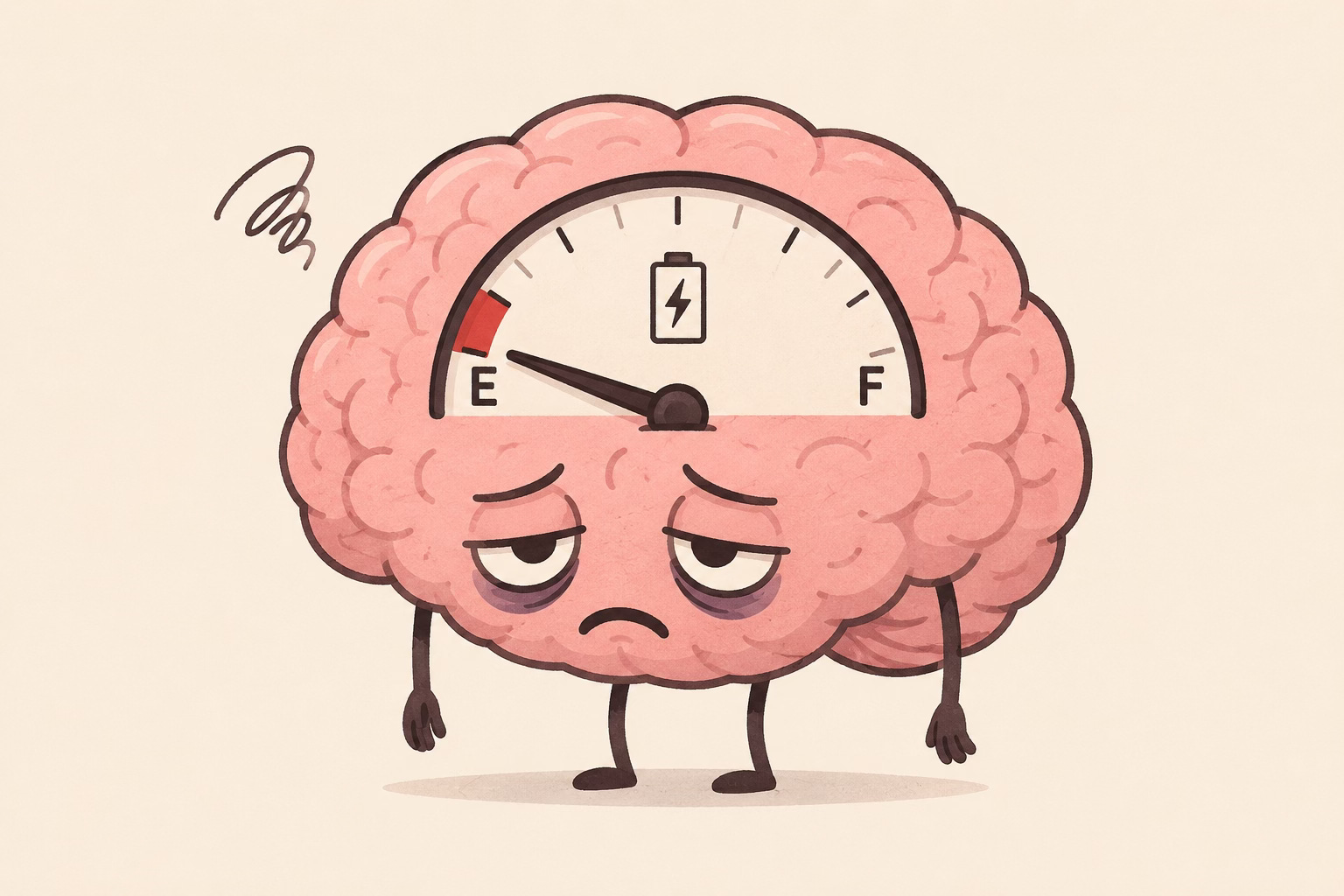 Managing Your Energy to Manage Your ADHD 20.05.2026 12min*This is my first post in a series called Managing ADHD in Real Life. Subscribe so you don’t miss upcoming posts!If you have ADHD, you’re likely familiar with the feeling of burnout.Life is piling on, you become overwhelmed, and you can’t snap out of it. You might find yourself sprawled out in your bed, or plopped down on the couch, unable to move, unable to find the motivation to go forward. You’re mentally paralyzed.That’s ADHD burnout.The question is: how do you avoid burnout?It’s not a simple answer.There’s no fool-proof plan to avoid it entirely, but there are strategies that can help. One of the strategies I’ve had success with is figuring out how to manage my energy.Thanks for reading! This is Post #1 in my series Managing ADHD in Real Life. Be sure to subscribe so you don’t miss a thing!Life Comes at You Fast and Your Brain Can’t Keep UpFor me, burnout arrived on the scene about a decade ago. In the years before I was diagnosed with ADHD—the years before a career, family, and adulting—it was easy to mange life and stick to a pace that was sustainable.But, as so often happens, my responsibilities increased, and that’s when things started to change. Each year of school added more to my plate. Then, I got my first “real” job. Soon I was in a serious relationship. I got married.And then, the big moment arrived. I woke up one day and I was a dad. In the blink of an eye I was personally responsible for the life of a helpless, pink, mini-human who wasn’t worried about my energy, stress, or mental load.It was around that time that I first experienced burnout. Adult life felt like too much, and I couldn’t figure out why I was so overwhelmed. It’s ultimately what motivated me to pursue an ADHD diagnosis. Life was coming at me fast and I felt completely ill-equipped to keep up. It wasn’t a question of failing to multi-task. It was failing to effectively manage my energy—failing to understand how my executive function was letting me down.If you’re not familiar with the term, executive function “describes a set of cognitive processes and mental skills that help an individual plan, monitor, and successfully execute their goals. The executive functions, as they’re known, include attentional control, working memory, inhibition, and problem-solving.”In people with ADHD there’s a delay in the development of executive function. This means we have to work even harder than neurotypical people to keep up with the requirements of life. All the decisions that you make on a daily basis take a lot of brainpower. An ADHD brain is working overtime to compensate for executive function delays. With each new responsibility that life throws at you, brain capacity is depleted more quickly.The struggle for people with ADHD is: How do you manage life with more asked of you, finite brain capacity, an executive function system that’s working overtime, all while trying to avoid burnout?It’s a tough formula to get right. I haven’t cracked the code, but here’s what I’ve learned.Energy InventoryWhen was the last time you sat down and really thought about the things that you have to do? I’m not talking about all the things you manage to squeeze into your life. I’m talking about the things that actually have to get done to survive.Being an adult feels like a sunrise to sunset sprint during which you cram in as much as you can before your heads hit the pillow. But when you step back, how much of what you’re doing really has to be done?A lot of it comes down to figuring out what’s necessary and what’s optional. In order to decide, you need to take a pause. This might be one of the hardest things for an ADHD brain, and something that I constantly have to work on with my ADHD Coaching clients. Our brains just want to MOVE FORWARD. No pauses, no brakes. Taking an intentional pause is just not in our nature.Try this: Set aside a few minutes and ask yourself, “what’s required of me?” There are things that you have to do. Work; intentional time spent with wife and kids; fueling your body; getting some movement (yes, I consider this a requirement). Outside of the basic needs for survival a lot of the rest is just window-dressing, and that’s where we tend to get ourselves into trouble.In my experience an ADHD brain’s craving for novelty and variety means that we often don’t know where to stop when it comes to saying yes. Our impulsivity drives us to overcommit in the moment only to pay for it later.Ask yourself:* Is the decision I’m making for me or someone else?* Am I saying “yes” because I’m worried about hurting someone’s feelings?Relationships are important, but remember, only you can protect your energy.* Am I saying “yes” because I haven’t set clear boundaries?* How much real time does this take? For example, are your kids in a lot of sports? That’s great, but did you think about the practice, games, and travel time that’s involved? Are the kids getting as much out of it as it’s taking out of you? If their extracurricular are spreading you thin it might be time to reconsider some commitments.* What am I possibly giving up in order to do this? Maybe you’re sacrificing valuable time to recharge.* Does it deplete my energy or recharge my energy?These are just a few questions you should answer.And I know—establishing boundaries with family can be a minefield. It can be especially difficult when you were brought up to believe that people-pleasing should dictate your actions. Breaking that family norm is not easy. But remember, you’re just establishing boundaries to protect your energy and avoid burnout. It’s not personal. In my experience, people like having me around more when I show up rested and recharged, not hanging on by a thread in the midst of burnout.Decisions Drain EnergyAfter you’ve done your inventory, take a deeper look at all the little decisions you make on a daily basis. How many times are you asking your brain to make a decision? It might seem inconsequential, but the little choices you have to make throughout your day can really add up and take a toll on your executive function.Questions like:* What to eat for breakfast?* What to wear?* What to pack for lunch?* What projects or tasks to prioritize?* To stop for coffee or not?* What to pack for after school sports for the kids?* Did I send the money for my kids field trip?* Who needs to do homework?* Should I attend that network event?* Did that bill get paid?* What to make for dinner?The list only scratches the surface of the decisions you have to make throughout the day. In some cases the executive function required to make decisions is outsourced to partners. But that only means that the neurotypical partner assumes a larger burden—which can cause additional problems—and it doesn’t address the heart of the issue.The challenge becomes, how do you reduce the number of decisions you make during the day? One simple suggestion: create a “morning launch pad”. Designate a specific place for the items you need every day. Think keys, phone, wallet, and sunglasses. The easier it is to find these items, the less time you spend thinking about what you need to grab or have to hunt for items around the house.The late apple founder Steve Jobs famously wore the same outfit every day: black mock turtle neck sweater, jeans, and sneakers. His reasoning? He saved a lot of energy by not having to decide what to wear every morning. I’m not suggesting that everyone empty their closet and wear the same outfit, but it does illustrate my point: the less you have to think about, the smaller the mental load.Kids Have Boundless Energy. They Also Deplete Yours! When I had kids, I never realized that I could love another person so completely while also being so frustrated and overwhelmed by their every action. It’s a feeling only parents can relate to.Having kids takes a lot of executive function. Some mornings it feels like my kids dreamt an endless list of questions that they have to ask me the moment they get up for fear they go through life ignorant and ill-informed. It’s nonstop, and again, when your brain is trying to get everyone out the door in the morning, making sure to remember permission slips and lunches, it’s energy-depleting. I need every ounce of capacity I can get just to start my day. Making decisions that protect your energy and setting appropriate boundaries will ensure you have more capacity.It can also be tempting to try and ensure your kids have everything. For a lot of parents this means scheduling every second of our lives to make sure the kids are in music, sports, playdates. Doing ALL the things has become the new norm. But it comes a cost—both financially and mentally.My wife and I have made a real effort to provide our kids with opportunities, but we’ve been very intentional about creating boundaries, and not overcommitting ourselves. Life’s already busy enough. As an example, we’ve chosen not to do travel sports even though it’s common among families in our community. It’s a decision we’ve made to protect our time and energy.Think about your life right now and ask yourself: What do the decisions and commitments I’ve made mean for my energy and mental load?Setting Yourself Up for Good Energy UsageI once heard someone compare an ADHD brain to a sparkler and a neurotypical brain to a candle. The ADHD brain burns bright, burns with a lot of energy, but burns out quick. The neurotypical brain on the other hand is more consistent and more measured. It emits a steady light and is much less likely to burnout.Those of us with ADHD tend to go in 110%, but that has consequences. It’s not uncommon for ADHDers to try and imitate neurotypical people. It usually doesn’t work. Our brains just aren’t the same and you can waste a lot of time and energy trying to fit the wrong mold. One thing I’ve said to clients over and over is, “You are not neurotypical. Stop trying to live life according to rules and systems taught to you by neurotypical people!”How, then, do you create your own set of rules for your ADHD brain?Here are just a few helpful suggestions:* Utilize visual cues and reminders: Don’t rely solely on your brain for remembering things, it will let you down.* Launch pads: All the things you need daily should live together in the same place.* Homes for things: If you know where it lives it’s easy to find and easy to tidy-up.* Reduce commitments: Do you really need to do [fill in the blank], or is it just your impulse to say “yes” that’s motivating you?* Do a kindnesses for your future self: If you have the time and energy to do things now that will save you time and energy in the future, do them. Future self with thank you.* Establish clear parameters with kids: It can be hard to set routines, but by establishing norms, and clearly communicating your intentions, you can lessen the load of being asked “when can I?” questions every 5 minutes.Recharging Your EnergyWe’ve talked a lot about ways to protect your energy to avoid burnout. But the other side of the coin is, what are ways you can recharge your energy? For some it may simply be retiring to a quiet place. For other’s, it’s a long walk. You might choose to step away when a moment escalates. Find your way to recharge, take opportunities to be in that space, and DON’T FEEL BAD FOR TAKING THE TIME. There’s a guilt that comes with doing something for yourself—especially if your ADHD saboteur is people pleasing. But the benefit of feeling recharged quickly replaces the feeling of guilt, so take the time you need.Energy levels also change as we get older. I used to consider myself an extrovert. I gained energy from being around groups. Now, I feel like more of an introvert. But in truth, I think it has more to do with life demanding more of my energy. Being in groups used to be how I recharged. Now it’s just one more way I get overwhelmed. It can be hard to admit you’ve changed. But the sooner your figure it out, the sooner you start effectively managing your energy.A Final ThoughtIt’s up to you to manage your energy so you can live the life you want. You need to think about what’s good for you. There are things that have to get done. We all have responsibilities. But there are also things that maybe don’t need to be done—things you’ve added to your plate without realizing how much they deplete your capacity and drain your executive function.With ADHD, it’s easy to follow your impulses and overcommit yourself. But, life already requires so much from your ADHD brain that you can’t let others expectations dictate your decisions.Completely avoiding burnout may not be possible. But, you can make changes that improve your life. And, while some of the changes you make may seem like sacrifices at first, protecting your energy and showing up as the person you want to be is a major win.Thanks for reading! This is the first post in a series so be sure to subscribe so you don’t miss a thing. This is a public episode. If you would like to discuss this with other subscribers or get access to bonus episodes, visit carignanevonpohle.substack.com
 -
 When My Kids Take the Field, So Do I 06.05.2026 3minLast week I was at my son’s baseball game when I realized something…It’s hard for me to watch my kids play sports.Not because they aren’t athletic or talented (thank goodness they take after their mother).It’s because I can’t help but see myself out there.Somehow, when they step onto the field, a part of me goes with them.And it’s not the part of me that’s confident and athletic.It’s the part of me that’s terrified to mess up.Every misplay, dropped ball, strikeout, stumble, whiff—I have a visceral response.I remember what it was like being that kid out there. I remember the overwhelming fear of failure.It was never about doing my best, showing up, and finding opportunities to improve.It was about avoiding defeat.I didn’t handle failure well.In Little League, if I didn’t reach base, I’d melt down. I’d cry, throw my bat. My emotional dysregulation was on full display.It wasn’t that I got out. It was that failure proved something damning about me—people could see the “real” me. The me that crumbles in the big moment.My self-worth was dependent on my athletic performance. It was a tremendous burden. It wasn’t about participation, it was about validation.Watching my own kids, I worry that they feel the same way. Does my son feel like every eye is on him if he misses a grounder? Does he feel the judgement? Does he question his self-worth?Sports are meant to be fun. I only allowed myself to have fun if I was succeeding.That’s a lesson that I’ve tried hard not to pass on to my kids. There’s so much to be gained from sports—the teamwork, camaraderie, being active.I’m working hard to let my kids live their own experience. I want them to know that failure is inevitable in life. That’s one of the great lessons of sports. How we handle failure is what’s most important.Fortunately, the next generation seems to have it figured out. My kids don’t carry the self-doubt I did. They’re learning how to handle defeat without losing control.If I struck out, I would melt down and throw my bat. If my son strikes out, he calmly walks himself back to the dugout and waits for his next chance. No tears, no tantrums.I’m filled with pride. He’s already so far ahead of where I was at his age.Is it still painful to remember my own experience with sports? Sure.But when I watch my kids, I see them play with a joy I spent years trying to earn. That makes it a whole lot easier to be a spectator…and a dad! This is a public episode. If you would like to discuss this with other subscribers or get access to bonus episodes, visit carignanevonpohle.substack.com
 -
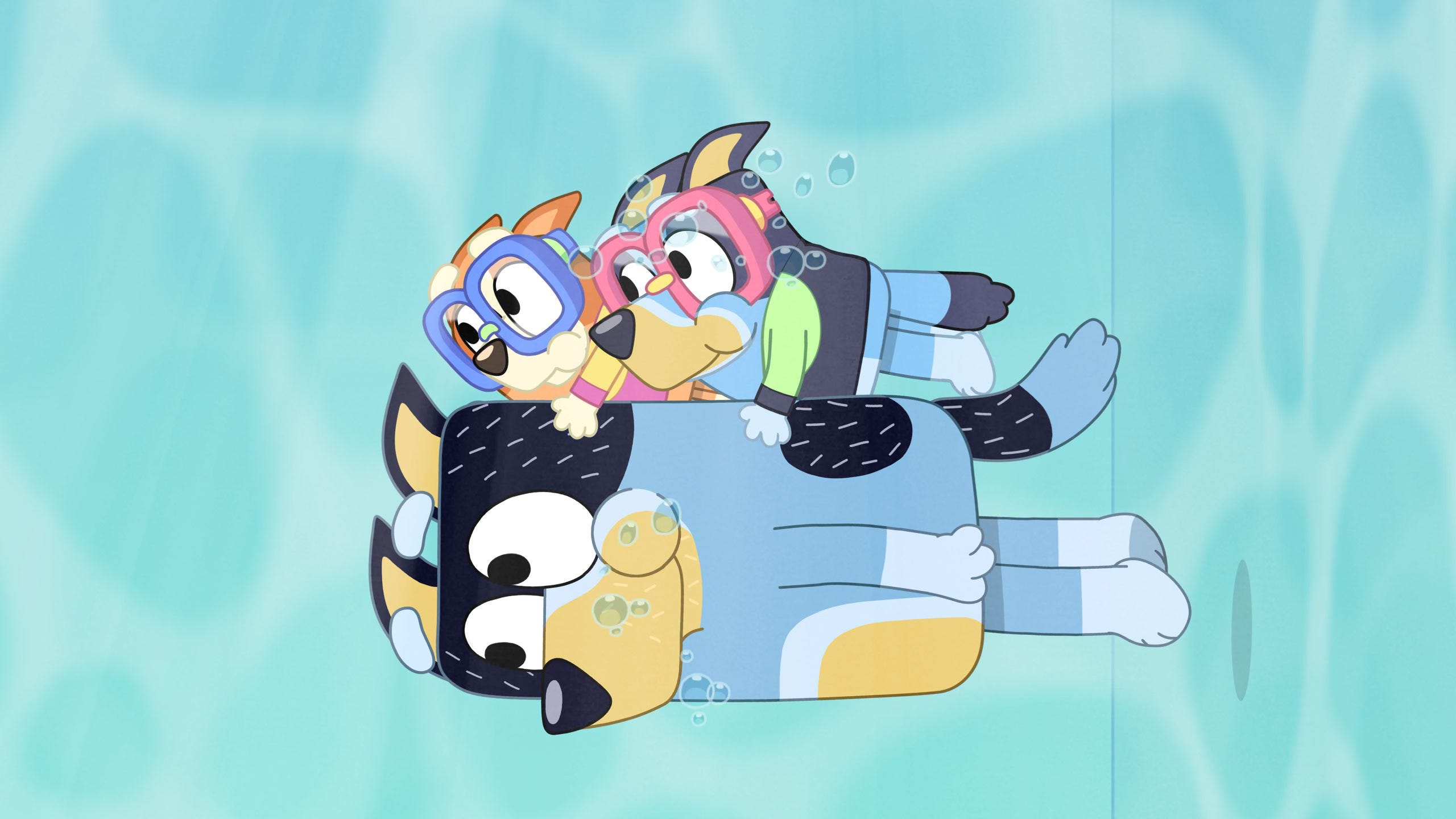 The Day I Peaked as a Dad 29.04.2026 4minLast summer a friend told me I reminded him of a blue cartoon dog.Honestly, I’ve never been more proud.As a millennial dad, one of the highest possible compliments you can receive is being likened to Bandit Heeler, the dad in the insanely popular show Bluey.If you’ve never seen the show, let me tell you what you’re missing.Bluey follows the everyday lives of a family of four “Heeler” (also the families’ surname) dogs living in Brisbane, Australia. There’s mom (Chilli) and dad (Bandit), their two daughters Bingo (4) and Bluey (6), and a cast of other memorable characters.During each 7 minute episode Bingo and Bluey learn about life—sharing, humility, helping others, acceptance, growing up, and even death.It’s a “kids show”, but any parent who knows will tell you that it’s equally as entertaining for adults. The episodes are clever and funny. The show is never preachy or condescending. It’s relatable without being cliche. When there’s a lesson to be learned, it’s delivered in a fun, engaging way. It’s also emotional and moving. If you’re a parent who has watched the show, it’s very likely that you’ve been brought to tears at least once.Bluey is brilliant because it captures the true essence of childhood—learning and discovery through play.And that’s when the dad, Bandit, is at his best. When it’s playtime he’s in the middle of it. The games are immersive, and the kids lead. They do skits, make-believe, and tell stories. Their curiosity, enthusiasm, and creativity are encouraged. And Bandit—who really is the north star for most millennial fathers—remains calm, and engaged. He’s patient with missteps, expertly handles conflict, and celebrates successes. He’s carefree without being chaotic.His ability to completely surrender to play is enviable.He’s all the things I want to be as a dad, and for one magical afternoon last summer, I fulfilled my dream.It happened at a friend’s pool party.We’d been playing for hours. In and out of the water, chasing the kids, flinging myself off the side of the pool, “fainting” and lifelessly flopping into the water, throwing water balloons. It was fun-filled and accompanied by lots of laughter and giggles. It should be said, when it comes to water-play, I become a kid myself. I LOVE to be in the water. As a child I was always the last one out of the pool or ocean, and not a lot has changed in 40 years.After witnessing my “man-child” act for most of the afternoon my friend remarked, “I feel like I’m watching an episode of Bluey!”Truth is, that version of me—the playful fun-loving version that reminds people of Bandit Heeler—is the version that I wish I could be more often.I understand that not every situation calls for play. As a parent it’s important to create some structure for your kids. Kids do well with structure. And sometimes there are rules to enforce—not everything is sunshine and rainbows. But when it is about growth and enrichment, play is the best way to connect with kids.During a recent conversation with a friend who works with kids who have ADHD, he shared that the kids he’s worked with—those who are struggling to cope with a brain that doesn’t always fit in a neurotypical world—connect best with adults who have ADHD. What he’s heard over and over is that kids with ADHD recognize that adults who also have ADHD remember better what it’s like to be a kid themselves.The term “ADHD Superpower” gets thrown around a lot. But if being able to connect with children and speak through the universal language of play isn’t among the greatest ADHD superpowers, I don’t know what is!I know I’m at my best as a dad when I remember how to play. Unfortunately, somewhere along the way, play became a liability. Being fun and goofy revealed too much, and I worked to suppress that side of myself.That mentality has negatively influenced my parenting. Because I lost touch with my playful side, I struggle to be engaged. I’m working so hard to be something I’m not—the serious, determined dad—that I struggle to hear the voice in my head telling me to lighten up.Truth is, I’m working hard to embrace my playfulness and recognizing how it makes me a better person and a better dad. I know that’s the version of me my kids love to have around.And, if it gets me compared to a cartoon dog named Bandit, I must be doing something right.That’s the goal, after all…isn’t it? This is a public episode. If you would like to discuss this with other subscribers or get access to bonus episodes, visit carignanevonpohle.substack.com
 -
 My ADHD Means I've Learned to Live Behind a Mask 22.04.2026 4min“I had no idea you have ADHD!”It’s a common reaction when people learn of my diagnosis.As a child, I didn’t exhibit the usual symptoms.I wasn’t hyperactive.I did well enough in school that I didn’t draw any attention.I was labeled “bright.”That’s probably why it took 36 years to finally arrive at a diagnosis.To be honest, going that long without a diagnosis feels like an achievement.For 36 years, I effectively veiled my symptoms. I compensated for my shortcomings, learned how to act so I didn’t arouse suspicion, and made the rest of it up on the fly.I got really good at masking.For a lot of people with ADHD, masking is an essential part of life. It’s a way to conceal the frenetic, chaotic, and disorganized way our brains work. It disguises impulsive, erratic, or sensory seeking behavior, so we appear in control. It helps us fit in because standing out isn’t encouraged.I started masking early.Even as a child I had a nagging feeling that something was different—my brain was operating on a different wavelength from the people around me. I struggled to fit in with my peers and I didn’t make friends easily. I was insecure and hyper-aware of what people thought of me. My behavior evolved to meet others’ expectations in an attempt to earn their approval.My primary strategy was to make people laugh. If I was the funny guy, people wouldn’t look deeper and see the struggles just underneath the surface. I would crack jokes in class, do bits—anything to distract from the vulnerability concealed inside.Masking became my default.Only after diagnosis—and learning about ADHD—did I being to recognize how much I was hiding behind different masks, each one serving a different purpose, intended for different situations or different people.When I became a dad, I put on a new mask.Before I had kids I was convinced I was going to be great at fatherhood. I’d watch friends with their kids and take mental notes on all the ways I felt they could do better. It was easy to be on the outside looking in. If they made mistakes or stumbled, I was quick to judge. “That won’t be me”, I thought. I was going to be perfect.Well, I haven’t been perfect. But I have worked tirelessly to keep up the act. I regularly have family members commend me on what a great job I’m doing, and how I’m such an engaged, attentive dad. What they don’t realize is, I’m on my best behavior and trying to hold it all together because I don’t want to disappoint anyone.In reality, fatherhood has been a white-knuckle thrill ride and, at times, I’m barely hanging on.When the mask does fall, and my family sees the real struggle that I’ve been hiding underneath, it’s shocking. My frustrations and stress build up to a point where I can’t hold it all together, and I snap. The expressions of those witnessing my meltdown punctuates how effectively I’ve worn a mask. They suddenly realize I’ve been working overtime to appear like everything is great. When the veil comes crashing down, it’s a shocking surprise.Always hiding behind a mask means I’ve lost myself along the way. The constant pressure to fit in, to perform, has eroded my ability to be authentically and unapologetically me.My personality has become a hodgepodge of personas, each intended for specific interactions. They help me get along without revealing the person underneath. But, the more I mask, the more exhausted I become.Removing the mask is scary and it requires vulnerability, which is not something I was raised to cultivate. Pleasing other people was what I was taught. Self-sacrifice for the sake of other’s comfort and welfare.I want to do it differently—for my own sake, and for my kids. I want them to grow up to know that the best they can offer is their most authentic self. That’s the lesson we are learning together. Not perfection, not performance. Just the slow, uncomfortable process of taking the mask off, piece by piece, and learning to trust that what’s underneath is already enough.Thanks for reading! Subscribe for free to receive new posts and support my work. This is a public episode. If you would like to discuss this with other subscribers or get access to bonus episodes, visit carignanevonpohle.substack.com
 -
 Comparison Didn’t Just Steal My Joy—It Changed the Dad I Was Becoming 15.04.2026 2minThey say, ”Comparison is the thief of joy.”True.It’s also very hard for me to avoid.In recent years, social media has become a steady stream of updates showcasing the accomplishments, achievements, and possessions of my friends and peers.Try as I might, I can’t help but feel envious.And that envy extends to parenting.The parents I follow seem to have more to offer in time and resources. They’re present in a way that I struggle to be. Their kids have opportunities that mine don’t—whether it’s trips or experiences.I’ve just always felt like I’m playing from behind.Maybe it’s my ADHD; maybe it’s just my own deep-seated insecurities. But I can’t shake the feeling that other people are just so much better at parenting than me!People’s lives on social media are a highlight reel that underscores all the ways I don’t measure up. I get distracted easily. I struggle to be present. I get bored with the same game over and over. I’m not like them, so I’m not enough.Unfortunately, the fun-loving, playful, spontaneous, carefree person my wife assumed she would raise her kids with, got lost along the way—a casualty of my envy and constant comparisons.But it’s clear I’ve lost the plot.I forget the only measurement that matters: being the best dad I can be.It’s fun to be a dad, and I often forget how good I can be at fun.Somehow I let life and parenting get too serious. I lost sight of what really matters.I got caught up in comparing myself to others, and lost my joy along the way.The real lesson, the lesson I have to constantly remind myself, is: Comparison is only valuable when you’re comparing your current self to your past self.Are you working to be better today than you were yesterday? That’s the real measure of success. My kids only have one dad, and I need to make sure they get the best version.That’s where I’ll find my joy. This is a public episode. If you would like to discuss this with other subscribers or get access to bonus episodes, visit carignanevonpohle.substack.com
 -
 I’m Not the First Man in My Family with a "Short Fuse" 08.04.2026 6minI want to be a dad that doesn’t shout, lose his temper easily, or choose anger as his default emotion.So far, it feels like I’m failing.I’ve struggled with emotional regulation as long as I can remember. One of the few home-movies from my childhood shows a 3 year old me—shouting, with tears streaming down my face—throwing my bike across the driveway because I’d fallen off. I wasn’t physically hurt or in trouble. But getting angry was my default response, and I hadn’t been taught otherwise. When I had a “meltdown” it was either ignored, dismissed, or laughed at.I didn’t know it then, but it’s common for ADHD brains to struggle with emotional dysregulation. As a child I wasn’t trained to identify or understand my “big feelings”. I wasn’t taught to learn my triggers or avoid situations that may cause me to loose my temper.I also didn’t always have the best examples to follow. The number of golf clubs I saw thrown, tennis rackets hurled across the court, toes stubbed that would trigger a tirade and string of expletives. The men I looked up to would erupt when things didn’t go their way—uncles, grandfathers, parents, siblings.I never feared physical retribution and I was never abused. But when tempers flared, I was paying attention.These men rarely acknowledged their outbursts or really worked to change their behavior. And a lot of the women who were around just let it happen. That didn’t make it okay, but that’s the way it was. When it came to emotional regulation, the expectations were low.Now, several decades later, I’m a husband and father with the same “short fuse”, but with a very different set of expectations.Let me give you an example…Last week, my kids were on spring break. They are 6 and 8. Lots energy, lots of enthusiasm, and lots of curiosity. My wife planned an impromptu trip to San Francisco for a little fun and diversion. I grew up close enough to the city that my family went countless times when I was a kid, and it’s a thrill for me to share a place I love so much with my children.When I think back to my childhood I can remember riding along as we navigated the patchwork of city streets, gawking from the backseat as I took in the sights, sounds, and kaleidoscope of characters passing by.I can also remember being acutely aware of the mood of whoever was behind the steering wheel.Usually, the driver’s nerves would become increasingly frayed—the city’s traffic a ceaseless frustration. When they ultimately reached their limit and snapped, the nearest kids were typically the target, shouted down and told to “be quiet back there!”Predictably, another adult in the car would turn and say, “[dad, grandpa, uncle] is having a hard time driving right now, let’s keep it down”.The driver was never held to account. Their behavior was never corrected and they certainly didn’t face consequences. They weren’t told they were overreacting or that their response was excessive.It was the kids who were expected to pipe down.Fast forward to this past week in SF with my own kids in the backseat and suddenly I was the parent driving through the city, frustrated with traffic, and lashing out because they were too loud and I was on my last nerve.But here’s the big difference: Instead of turning to the kids and telling them to quiet down, and stifle their excitement and enthusiasm—because daddy can only access anger in times of stress, and driving in the city makes him want to shout, and that’s an okay way to respond— my wife turned directly to me and said I needed to “get a grip” [not those words exactly, but you get the idea]. She wasn’t going to let the kids be the target of my frustrations and receive a reprimand because of my emotional outburst.She was going to hold me accountable for my actions.It’s a flavor of accountability I rarely witnessed when I was the kid in the backseat, and it got me thinking: when did we make such a significant pivot in what’s expected of a dad as male role model? When did greater emotional literacy become required of us?Instead of my kids feeling like they were responsible or should be blamed for someone else’s dysregulation, it was an opportunity for them to realize that individuals have a responsibility to themselves and those around them. Grownups make mistakes and can get frustrated too, but I had an opportunity to set a new example, and a better example than the one I had to follow. Sure, I’d blown it in that moment, but there would be more opportunities to do it right. As a dad I can offer a better example and demonstrate greater emotional literacy to the next generation.And let me tell you, it is HARD, especially when you’re working with a brain that gets angry before you even realize it’s happening.After we got home from San Francisco I reminded my wife of the moment in the car when I’d lost my temper. I asked her how many times as a kid she’d witnessed men in her life get their behavior corrected, or be held accountable for emotional outbursts? She took a moment, but couldn’t really think of any examples. In her memory, men were allowed to be angry, volatile, and emotional without consequence.In the days that followed I continued to think about that moment in the car, and how my wife held me accountable. When she pointed out my behavior I’d become defensive (I could write a whole book of why I responded that way, but another time) and was reluctant to admit fault. But then I thought back to how I felt as a kid when someone would get angry and raise their voice around me. For me, having ADHD meant that when someone was having “big feelings” I felt it personally. When someone would shout, I would feel to my core. I could put myself in my kids shoes. I knew what it felt like when someone’s “short fuse” got the best of them. I could see the emotion written on their faces. It’s the same emotion I felt as a kid.It’s moments like I had in the car in San Francisco, and countless others, that inspire me to do better. And I’m not the only dad who feels this way. The current generation of dads is more involved and more emotionally available than the generations before.I sometimes still fail to set a good example of emotional regulation, and I’m afraid that failure is reflected in my kids when I witness their own emotional outbursts.But I’m making an effort (with a big dose of help from my wife) to empower them to recognize their feelings and reflect on their outbursts. I want them to understand the emotions and triggers that cause them so they’re better equipped in the future. I want them to grow up to know that emotions are not bad, but getting angry and loud is the not the only way to respond when things don’t go your way.I may not be the first man in my family with a “short fuse” —but I’m trying, every day, to do something about it.Thanks for reading! Subscribe for free to receive new posts and support my work. This is a public episode. If you would like to discuss this with other subscribers or get access to bonus episodes, visit carignanevonpohle.substack.com
 -
 Introducing "Between Chaos & Bedtime" 01.04.2026 1minWhen I was diagnosed with ADHD in my mid-30’s I was left wondering, “what now?”I looked for answers and resources, hoping to find stories of people’s lives that echoed my own.There were countless books and articles about ADHD written by researches and subject experts, but for me, they didn’t resonate. They were too clinical and academic. Plus, reading was never the way I learned, and the stack of books I hadn’t read was just one more task I was failing to complete.I didn’t want click-bait or social media—the countless videos and reels that perpetuated stereotypes about ADHD.I wanted real stories of late-diagnosed parents trying to figure out life, work, a family, and a brand new understanding of their brain.I wanted to know there were other people living in what felt like perpetual chaos, juggling responsibilities, trying their best everyday to hold it together, but always feeling like they were coming up short.I wanted ADHD in real life.My ADHD only became evident after my first child was born and I realized that fatherhood had re-written every rule I thought I knew about myself and how I’d learned to manage life.For a lot of parents, the same is true.It’s a daily struggle—trying to figure out how to do life in “hard mode” while raising kids.This is my story, but it might seem familiar.I’m a work-from-home husband and father, just trying to make it day by day, sharing the life I live Between Chaos and Bedtime.Thanks for reading! Subscribe for free to receive new posts and support my work. This is a public episode. If you would like to discuss this with other subscribers or get access to bonus episodes, visit carignanevonpohle.substack.com
 -
 The Long Road to Adult ADHD Diagnosis 01.04.2026 13minFor the first 30 years of my life, I managed to get by.Granted, I was never known for my ambition or drive, but I was bright enough to keep up in school and at work, and made up for most of my shortcomings with creativity, personality, and charismaEven after my first child was born in my early 30’s, I was making it work. Life got harder, but I managed.But what I didn’t realize then was, I’d spent my life devising strategies to manage ADHD and care for my own needs. And it mostly worked. If it was just me, I was okay. Even caring for one infant child proved to be mostly doable.The first real cracks started to show in early 2020. My second child was born in January of that year, and when the Covid-19 pandemic shut the world down, I—like so many—was forced to completely change the way I lived and worked.It was a major transition.No longer was I going to an office every day, providing me with structure and accountability. Up to that point I hadn’t even realized how essential that was to my ability to function.No longer was my free time filled with trips to the beach, or spontaneous adventures.Suddenly, my entire life was under one roof. Wife, kids, work, recreation. My office was a spare room at my house where I sat alone for hours each day. No diverting trips to the water cooler. No quick chats with colleagues in the hall. I was isolated. It was like Groundhog Day: the same monotony on an endless loop.I also struggled with the shame and guilt of being home, but not really being there. I could hear my wife on the other side of the door, doing her best to manage a newborn and a toddler, knowing that if I stepped out of my cocoon, I would get distracted and derailed from my work.My life, and my mood, became harder to manage.Months passed and slowly the world began to open back up. In-person work returned, but the rules were strict. My employer limited how many people could be there at one time. If you were in-person, social distancing was required. It was back to the office, but certainly not back to normal.I remember sitting there one day, alone in the office, eating by myself, thinking, “I could be doing this at home, and at least then I could take a break with my wife and kids and pitch in to help.”It was all the challenges of “remote work” without any of the advantages, and it went on for months.The following spring my wife and I moved our life from Southern to Northern CaliforniaIt was a move we’d talked about for years, and I was optimistic that it would improve our lives by being closer to grandparents and other extended family.I hoped it would offer more hands-on help with my kids as my wife and I struggled to manage life with full-time work and a baby and toddler at home.It also meant that my time working for my employer in Southern California came to an end and—without any jobs lined up and a wife who was working night shifts—I transitioned into a full-time stay-at-home dad.I went from days structured around clearly defined expectations and specific job-related tasks, to managing the lives of an 18-month-old, and a 3-year-old.Suddenly, I had to become the person defining expectations and creating structure for others.I was way outside my depth.I’d always been able to do fun. I could play games, and move on to the next activity at the drop of a hat. I could do chaos without consequence. But staying on top of things; feeding everyone; maintaining order; laundry; chores. Our household was in a constant state of disorder and stress.When my wife would come home after a long day at work, she would be faced with incomplete chores, chaos, and dysregulation. The kids were alive and fed, but it wasn’t a welcoming environment.It became clear I was the wrong person for the job. I didn’t possess the skills to maintain order and stay on top of things. I was struggling to handle the basics, and everyone around me was suffering as a result.I became discouraged. I started to focus on all the ways I wasn’t contributing as a good partner to my wife and a good dad to my kids. I was anxious, over-analyzing every aspect of life where I didn’t measure up. I was hyper-aware of my shortcomings. I was depressed, thinking about all the ways I was letting people down.I spiraled.I knew I needed help. I knew I needed support. I needed to talk to someone. I just didn’t know who, or where to even begin. I was struggling to clearly articulate why I felt so “off”.After months of spinning my wheels, I started meeting with a counselor. It only took a few sessions for them to diagnose me with generalized anxiety disorder and depression.I can’t say I was too surprised—I certainly wasn’t the first man in my family to struggle with those type of symptoms.Finally, I had something I could point to and say, “Here’s the root of my struggles”.Unfortunately, the roots of my struggle went much deeper.The depression and anxiety were there. No denying it. But that didn’t explain everything.It didn’t explain my inability to focus, or the decision paralysis that often prevented me from starting projects and tasks, or the overwhelm of trying to manage two small humans, show up as a good dad, and be a good partner to my wife.There was more to it than anxiety and depression…I just didn’t know what, and I needed more answers.I found a new counselor. She made more of an effort to connect with me, and understand my concerns and struggles. I felt validated. She listened when I told her about the challenges I had with anxiety and depression, and how they were paired with issues related to focus, productivity, and dysregulation.It felt like I was finally getting somewhere.Then, I had my “lightbulb” moment.I was aimlessly scrolling through Twitter one day and came across a tweet that said: “ADHD is feeling like you’re always behind, afraid of being seen as lazy, and overworking to compensate until you burn out in a blaze of glory.”I was struck. That was me! It so accurately described my experience!I scrolled to the next tweet and had the same “AH HA!” moment. Then the next, and the next.I could have written each tweet myself. They described experiences I’d had my entire life. Experiences that I’d assumed were unique to me—just the typical things everyone goes through.“I think I have ADHD”, I said out loud to no-one.I shared what I’d discovered with my wife. She agreed—sounded like me. The tweets finally articulated what I had been trying to explain to her.During my next counseling session, I shared my revelation.The counselor listened and agreed too—it sounded like I had ADHD. It felt liberating. Suddenly, I’d found an answer! I wasn’t just lazy, unfocused, underachieving. I was trying to function in a world that wasn’t designed for a brain like mine.And a diagnosis would finally provide me with something concrete to point to and say, “This is what is going on with my brain! This is why my life feels like chaos.” It would provide a direction for seeking the right kind of help.My counselor continued to listen, then said, “Why would you want to get a diagnosis for ADHD? All that will do is get you a prescription for medication.”Here I was, 35, feeling like my life was unraveling, but on the verge of a major breakthrough, and instead of my experience and concerns being validated, my counselor was dismissing my desire for answers as just a way to get ADHD drugs.I couldn’t have been more discouraged.It took me some time to rally from that disappointment.But I needed to keep going, despite what my counselor said. Even if I found out that I didn’t have ADHD, at least confirming one way other the other would be a result. I could check that off the list and keep looking. Either way, it felt like the best first step on the path to understanding and charting a way forward.Unsure of where to even begin, I reached out to my primary care provider. I shared an account of my struggles and how, based on doing my own research (no, that does not mean just watching TikTok’s), I thought I might have ADHD. They agreed and referred me to psychiatry to start the evaluation process.It didn’t take me long to learn that ADHD is most commonly diagnosed during childhood. The diagnostic process looks at developmental challenges demonstrated by school-age children and uses those behaviors to identify whether or not someone has ADHD.As such, a large portion of the evaluation focused on my elementary school years and required me to remember specific interactions with teachers and peers.My brain struggles to remember what happened to me yesterday. So, being asked at 35 to remember specific instances from my time in second grade was difficult to say the least. I tried my best to recall past experiences and moments that would illuminate the struggles and obstacles I had faced in school.It was a nearly impossible task.Part of my “problem” was that I wasn’t a problem. I did well in school as a kid. It was easy for me. My behavior didn’t raise any alarms. I was labeled “bright” with lots of potential—something I’ve since learned is a hallmark of many people with ADHD.I wasn’t chronically disruptive. I wasn’t always “bouncing off the walls.” The only thing I got “in trouble” for was distracting others when I would finish my work early.The further I got in the assessment process, the more I worried that my diagnosis was going to be overlooked.I wasn’t trying to get an ADHD diagnosis, but I worried that because I wasn’t a “problem child” I might slip through the cracks.The other complicating factor in the evaluation process was that my parents were required to complete a questionnaire.When they were asked to identify instances and anecdotes from my childhood that might point to something “out of the ordinary”, I worried that their own experiences were “out of the ordinary” enough that they wouldn’t see my struggles as actual struggles because they’d experienced the same struggles themselves and just thought, “eh, everyone goes through this!”I worried their hindsight might not be 20/20, and they would miss the telltale signs from my childhood that were clearly there.I gently, guided, their responses.After several weeks I had collected all the required responses and submitted the information.It was time to wait. Several weeks later, a message arrived in my inbox.I scanned the letter from the psychiatrist, looking for the answer I had assumed was coming.I had ADHD.There it was. I felt a sense of relief. Finally I had something I could point to and say, “This is it!”But just as quickly as I received my ADHD diagnosis, I found myself wondering, “now what?”And that’s the question that I’ve spent the last 4 years trying to answer.It’s been 4 years of experimenting with the best way to manage my ADHD so I can achieve the future I want, do the kind of work I want to do, and be a present husband and father.If you’ve made it this far, you’re probably trying to answer a lot of the same questions.I’ve thought a lot about what it would have been like if I’d been diagnosed with ADHD earlier in life. What decisions would I have made differently? How would I have changed the way I approached school—especially college? Would my career trajectory have been more…intentional?There are a lot of “what ifs”, and it’s easy to look back and think about what might have been. But if you’re always looking behind you, you won’t be able to see what’s ahead.I know change doesn’t come overnight (which is really annoying for an ADHD brain). I stumble a lot, and have days where it feels like it’s too much—like the life I want is beyond my grasp.But, I’m not the only husband and father struggling to be the best me while also living with ADHD.That’s probably why you’re reading this.You might be in the same place, so stick around, and drop your comments about your own experience below. I’d love to hear from you. And, be sure subscribe so you can hear more stories of all the life that happens Between Chaos & Bedtime.Thanks for reading! Subscribe for free to receive new posts and support my work. This is a public episode. If you would like to discuss this with other subscribers or get access to bonus episodes, visit carignanevonpohle.substack.com
Samankaltaiset podcastit


Suosittu maassa
Tämä podcast esiintyy myös näiden maiden podcast-listoilla.


