
Moonshots Podcast: Superstar mindsets and success habits
Mike Parsons & Mark Pearson Freeland
0
The Moonshots Podcast explores the mindsets and habits of the world's most successful superstars, thinkers, and entrepreneurs. Each episode deconstructs the success strategies of figures like Elon Musk and Brene Brown, offering listeners actionable insights. The hosts, Mike Parsons and Mark Pearson Freeland, aim to help listeners apply these lessons to their own lives.
Jaksot
-
 How to Spend Money Without Ruining Your Life — Morgan Housel 13.09.2026 45minIn Episode 296 of the Moonshots Podcast, Mike and Mark kick off a brand new series on money with Morgan Housel’s The Art of Spending Money.Money is on everybody’s mind.The cost of living keeps rising. Many people are living paycheck to paycheck. Relationships are strained by financial pressure. And everywhere we look, we are encouraged to spend more, upgrade more, and chase the next bigger, faster, shinier thing.But Morgan Housel invites us to ask a better question:What is money actually for?In this episode, Mike and Mark explore the psychology of spending, the trap of lifestyle inflation, and the quiet power of knowing what is enough. They unpack why so many people become captive to their spending, why status purchases rarely create lasting happiness, and why financial freedom often comes from spending less than you earn.The conversation begins with the story of the Vanderbilts and the danger of building a life that owns you. Mike and Mark then explore practical ways to spend more wisely, including delaying purchases, avoiding spontaneous dopamine spending, buying second-hand, choosing experiences over status, and experimenting with what actually brings you joy.They also reflect on the bigger idea behind Morgan Housel’s work: money should create peace, freedom, control, and contentment — not stress, debt, and comparison.In this episode, you’ll learn:• Why spending can quietly become a trap• How lifestyle inflation steals your freedom• Why bigger houses, faster cars, and fancier brands may not make you happier• How to experiment with what you genuinely enjoy spending money on• Why “I have enough” might be the most powerful money mantra• How experiences can create more lasting satisfaction than things• Why financial freedom starts with living within your means• How to spend money in a way that supports your best lifeThis is a Moonshots episode for anyone who wants to rethink money, reduce financial stress, and make wiser choices with their time, energy, and resources.Because the goal is not just to earn more.The goal is to spend better.Listen now and discover how to get out of the money trap, spend with intention, and find contentment in having enough.Buy the book: The Art of Spending Money by Morgan HouselJoin the Moonshots community: https://www.patreon.com/MoonshotsVisit Moonshots: https://www.moonshots.io/
 -
 How to Become Great at Anything — Anders Ericsson’s Peak 07.09.2026 42minIn Episode 295 of the Moonshots Podcast, Mike and Mark dive into Peak by Anders Ericsson, one of the most important books on mastery, expertise, and human performance.What does it really take to become great at something?The answer is not overnight success. It is not raw talent. And it is not simply repeating the same thing for 10,000 hours.Ericsson’s research shows that extraordinary performance is built through deliberate practice, purposeful learning, feedback loops, and a commitment to getting better — especially when the work becomes uncomfortable.In this episode, Mike and Mark explore how expertise is available to all of us when we are willing to train with intention, seek feedback, and push beyond our usual limits. They connect Ericsson’s ideas to classic Moonshots themes including Carol Dweck’s growth mindset, Cal Newport’s deep work, James Clear’s habit building, David Goggins’ discomfort mindset, and even the modern opportunity of learning faster with AI tools.Along the way, they unpack the difference between naive practice, purposeful practice, and deliberate practice — and why true mastery requires more than just showing up. It requires discomfort, accountability, coaching, goals, and a clear mental map of where you are trying to go.Mike also shares his own reflections on marathon training, coding, and the deep satisfaction that comes from setting an audacious goal, doing the work, and crossing the finish line.In this episode, you’ll learn:• Why there is no such thing as an overnight expert• How deliberate practice helps you break through your current ceiling• Why feedback and coaching are essential for mastery• How discomfort becomes the pathway to growth• Why mental representations help you map the road to expertise• How AI can accelerate learning when combined with discipline and practice• Why setting clear goals, dates, and milestones makes performance easier to sustainThis is a classic Moonshots episode for anyone who wants to get better — at work, creativity, sport, learning, leadership, or life.Because peak performance is not reserved for the naturally gifted.It is built.One focused practice at a time.Listen now and start building your path to mastery.Buy the book: Peak by Anders EricssonJoin the Moonshots community: https://www.patreon.com/MoonshotsVisit Moonshots: https://www.moonshots.io/
 -
 Show Your Work!: 10 Ways to Share Your Creativity and Get Discovered by Austin Kleon 31.08.2026 46minAdd this at the top of the Austin episode notes:As part of our Creativity Series, we’re revisiting Austin Kleon’s *Show Your Work!* — a practical guide to sharing your ideas, building creative confidence, and finding your audience.The biggest takeaway is simple: start sharing early. Don’t wait until your work is perfect. Share the process, the progress, and the things you’re learning. Small, consistent acts of openness can build momentum, connection, and confidence over time.In this exciting new episode of the Moonshots Podcast, Mike and Mark explore Austin Kleon’s influential book “Show Your Work!” They also discuss how to embrace and share one's creativity with the world. Links:• Buy The Book on Amazon• Become a Moonshot Member on Patreon• Watch this episode on YouTubeThis episode features insightful clips that highlight key themes from the book: 1. INTRO: • Austin Kleon speaks with Brian Johnson about the most significant misunderstanding of the book.Clip: Start Sharing Early (2m47) 2. Insights from Mike Nardi: • Mike Nardi encourages listeners to be more open with their interests and creativity.Clip: You Don’t Have to Be a Genius (57s) 3. Advice from Brian Johnson: • Brian Johnson emphasizes the importance of working hard and finding rhythms of rest to foster creativity.Clip: Micro Sabbaticals (2m49) 4. OUTRO: • Austin Kleon closes the show by highlighting the value of reading other people’s work.Clip: Start Absorbing Today (2m32)About “Show Your Work!” by Austin Kleon:“Show Your Work!” is a guide for people who want to share their creativity and get discovered. The book outlines ten simple steps to make sharing your work and ideas less daunting. Here are some key concepts: 1. You Don’t Have to Be a Genius: Focus on the process, not the product. Share your journey and the work you do daily. Kleon emphasizes that you don’t need to be an expert to share your work. Instead, being a learner and sharing your progress can inspire others. 2. Think Process, Not Product: Show your process, the behind-the-scenes work, and how you make what you make. Sharing the steps and thought processes involved in your work makes it more relatable and exciting to others. It can also help you build a community around your creative process. 3. Share Something Small Every Day: Consistently share small bits of your work, including notes, sketches, and ideas. This habit keeps your audience engaged and allows them to follow your creative journey. It also helps you build momentum and stay motivated. 4. Open Up Your Cabinet of Curiosities: Share your influences and inspirations. Let others see what you find interesting. You provide context for your work and help others discover new ideas and perspectives by showcasing what inspires you. 5. Tell Good Stories: Learn to tell your work story and journey. People are drawn to stories because they create emotional connections and make your work more memorable. Developing storytelling skills can help you communicate your ideas more effectively. 6. Teach What You Know: Share your knowledge and what you’ve learned. Teaching can be a great way to connect with others. By explaining your methods and insights, you help others and reinforce your understanding and expertise.About Moonshots Podcast:The Moonshots Podcast is your go-to source for unleashing the best possible version of yourself. Hosts Mike and Mark delve into the secrets of success by dissecting the mindset and daily habits of the world’s greatest superstars, thinkers, and entrepreneurs. Join them as they learn out loud, exploring behind the scenes to discover actionable insights that can be applied to your life.Don’t miss out on this inspiring episode! Tune in now and start showing your work!Links:• Buy The Book on Amazon• Become a Moonshot Member on Patreon• Watch this episode on YouTube
 -
 Ethan Mollick: Stop Using AI Like Google — Use It as a Thinking Partner 18.08.2026 46minWhat if AI wasn’t here to replace your intelligence—but to extend it?In Show 294 of the Moonshots Podcast, Mike and Mark explore Co-Intelligence, inspired by Ethan Mollick’s approach to collaborating with AI. They unpack how to move beyond basic question-and-answer prompting and instead use AI as a critic, creative collaborator, research assistant, teacher, and tireless sparring partner.The episode starts with an important principle: if you want AI to sharpen your thinking rather than simply flatter you, ask it to push back. Invite criticism. Request pros and cons. Ask it to identify weaknesses, challenge assumptions, apply mental models, and generate alternatives.Next comes a powerful metaphor: AI is your sous chef. It can bring knowledge, options, speed, and seemingly endless energy to the kitchen—but it can’t taste the food for you. Human judgment remains essential. Mike and Mark explore how better context, iterative prompting, voice conversations, clarifying questions, and feedback can dramatically improve what you create with AI.Finally, the conversation turns to learning. Rather than only asking AI to give you answers, make it your teacher. Ask it to quiz you, expose gaps in your understanding, recommend further study, and help you develop genuine expertise.Watch the episode:https://www.youtube.com/watch?v=GjY8bsYmwwE&feature=youtu.beExplore Moonshots:https://www.moonshots.io/Buy Co-Intelligence on Amazon:https://geni.us/l4Kya3
 -
 Big Magic by Elizabeth Gilbert 10.08.2026 1t 8minToday, we continue our creativity series with an audience favourite: Elizabeth Gilbert.In this episode of the Moonshots Podcast, hosts Mike and Mark dive into the enchanting world of Big Magic by Elizabeth Gilbert. This book has inspired countless creatives to live beyond fear and embr ace the magic of creativity. Whether you’re an artist, writer, or someone looking to infuse more creativity into your life, this episode offers a treasure trove of insights and practical advice.Listen and Learn More:• Listen to the Episode: Episode 143 – Elizabeth Gilbert: Big Magic• Watch on YouTube: Big Magic by Elizabeth Gilbert | Book Summary• Read a Summary: Creative Living Beyond Fear – Elizabeth Gilbert | Book Summary• Become a Member: Support the Moonshots Podcast on PatreonEpisode Highlights: • What is Big Magic? • Discover the essence of Big Magic and how Elizabeth Gilbert views creative inspiration as a mysterious force that calls us to engage with it. • Lessons on Confidence: • Learn why fear shouldn’t stop you from creating and how permitting yourself to fail can lead to unexpected breakthroughs. • Explore getting comfortable with your fears rather than overcoming them entirely. • Lessons on Creating: • Understand the difference between originality and authenticity and why Gilbert champions the latter as the key to meaningful creative work. • Find out why finishing your creative projects, even imperfect, is more important than striving for unattainable perfection. • Final Takeaways: • Mike and Mark wrap up the episode by discussing embracing your inner creative trickster and why taking yourself too seriously might be the most significant barrier to your creative success.Why You Should Listen:This episode will resonate deeply if you’ve ever struggled with fear, self-doubt, or the pressure to be perfect. Gilbert’s approach to creativity is liberating and empowering, reminding us that the journey is just as important as the destination.Listen and Learn More: • Listen to the Episode: Episode 143 – Elizabeth Gilbert: Big Magic • Watch on YouTube: Big Magic by Elizabeth Gilbert | Book Summary • Read a Summary: Creative Living Beyond Fear – Elizabeth Gilbert | Book Summary• Become a Member: Support the Moonshots Podcast on Patreon
 -
 The Creative Act by Rick Rubin 03.08.2026 53minToday, we continue our creativity series with an audience favourite: Rick Rubin.Join Mike and Mark as they uncover the secrets of creativity with the legendary Rick Rubin. In a captivating discussion with Andrew Huberman, Rubin reveals his unique approach to the creative process and the importance of selective focus. Doug Neill from ‘Verbal to Visual’ breaks down Rubin’s four phases of creative work, from the inception of an idea to its playful exploration, meticulous crafting, and completion.This episode offers insights for anyone looking to harness their creative potential.Clips FeaturedIntro: Rick Rubin talks to Andrew Huberman about selective focus and creative energy.Hold Problems Lightly: Doug Neill explains the role of ideas’ inception and intuition.Experimentation: Doug discusses the playful exploration of possibilities without judgment.Crafting: Understanding Rubin’s ‘winding staircase’ approach to meticulously shaping and refining ideas.Completion: The final stage of refinement and launching projects ready for the world.Listen to the full episode here: Rick Rubin: The Creative ActFor a detailed book summary, check out Summary of The Creative Act by Rick RubinWatch the episode on YouTube: Rick Rubin: The Creative Act - Moonshots PodcastBecome a member and support the show: Patreon - MoonshotsKey Concepts and InsightsSelective Focus and DisengagementRick Rubin emphasises the importance of focusing selectively and the power of disengagement to channel creative energy effectively. This approach allows creatives to manage their energy and maintain a fresh perspective.The Four Phases of Creative WorkInception: Intuition plays a critical role in the early stages of an idea. Trusting one’s instincts can lead to the birth of innovative concepts.Experimentation: Exploring possibilities without judgment is crucial for innovation. This phase involves playful exploration and openness to new ideas.Crafting: Rubin likens this phase to a ‘winding staircase 100 stories tall,’ where meticulous shaping and refining of the idea takes place.Completion: The final stage is about refinement, perspective, and finalising the project or product, making it ready for the world to see.Holding Problems LightlyRubin advocates for holding problems lightly, which means not getting bogged down by challenges and maintaining a flexible approach to problem-solving.Thanks to our monthly supportersMikeEdwin DeitchJamie DorwardEmily Rose BanksMalcolm MageeNatalieRyan N.Marco-Ken Möller孤鸿 月影FabianJasper VerkaartAndy PilaraOlaAustin HammattZachary PhillipsMike Leigh CooperGayla SchiffLaura KERoar Nikolay Ytre-EideStefRoger von Holdtvenkata reddyIngram CaseyOlarahul groverRavi GovenderCraig LindsaySteve WoollardDeborah SpahrSamoelaJo HatchardKalman CsehBerg De BleeckerPaul AcquaahMrBonjourKonnor Ah kuoiMarjan ModaraDietmar BaurBob Nolley ★ Support this podcast on Patreon ★
 -
 You’re Not “Uncreative” — Here’s How to Train Your Imagination 28.07.2026 45minn Episode 293 of the Moonshots Podcast, Mike and Mark dive into Albert Read’s inspiring book The Imagination Muscle to explore why imagination isn’t an inborn gift—it’s a muscle that grows stronger with deliberate practice.Together they unpack how the world’s greatest creators develop original ideas, why boredom may be one of your greatest creative assets, and how adopting a beginner’s mindset can unlock fresh thinking. They also discuss practical exercises to strengthen your imagination, overcome fear, and make creativity part of your everyday life.If you’ve ever felt stuck, uninspired, or convinced that you’re “just not creative,” this episode offers a refreshing perspective—and a practical roadmap—to help you think differently and create with greater confidence.Primary Website: https://www.moonshots.io/Book: The Imagination Muscle by Albert ReadBuy on Amazon: https://geni.us/TsrReYWatch on YouTube: https://youtu.be/-bZ3cn7rCVw⸻Key Themes* Imagination is a skill that can be trained.* Great ideas come from combining diverse sources of inspiration.* Creativity flourishes when we deliberately make time for quiet thinking.* A beginner’s mindset helps us escape routine and discover fresh perspectives.* Social media and constant stimulation can limit original thinking.* Fear is one of the biggest obstacles to creativity.* Small, consistent creative habits compound into lasting growth.⸻Concepts & BreakthroughsImagination Is a MuscleAlbert Read reframes creativity as a practice rather than a personality trait. Like physical fitness, imagination strengthens through regular use. Mike and Mark reflect on how this simple shift removes the pressure of waiting for inspiration and replaces it with consistent action.Collect Better InputsThe episode highlights that creative breakthroughs often result from unexpected combinations of ideas. Picasso, Aaron Sorkin and other creative masters all developed unique rituals for gathering inspiration before producing original work.Rather than searching for one brilliant idea, listeners are encouraged to become collectors—of books, conversations, observations and experiences—that can later combine into something entirely new.Protect Space for ThinkingModern life is filled with interruptions, notifications and endless streams of information. Albert argues that imagination needs space to breathe.Mike and Mark discuss creating intentional moments of quiet through walks, uninterrupted mornings, observation exercises and even scheduled boredom—allowing the mind to connect ideas naturally.The Power of the Beginner’s MindExperts often become trapped by familiar thinking. Approaching problems with curiosity instead of certainty creates opportunities for innovation.Reading outside your normal interests, asking simple questions and deliberately seeking unfamiliar experiences all help develop fresh perspectives.Courage Before CreativityOne of the episode’s strongest insights is that imagination grows alongside courage.Every sketch, poem, voice memo or imperfect idea strengthens resilience against fear of failure. Rather than waiting until ideas are perfect, creative confidence develops through repeated attempts and experimentation.⸻Habits, Tools & Mental Models* Treat imagination like a daily workout.* Collect ideas, quotes and observations in an idea bank.* Schedule periods without digital distractions.* Go for curiosity walks with the goal of noticing something new.* Read outside your usual genres and interests.* Combine two unrelated ideas to generate fresh thinking.* Use voice notes or journals to capture ideas immediately.* Practice one small creative act every day.* Embrace boredom instead of filling every quiet moment.* Ask beginner’s questions, even when you think you know the answer.
 -
 Why Journaling Might Be the Most Powerful Habit You'll Ever Build | Suleika Jaouad 13.07.2026 46minHow do we turn life's hardest moments into something meaningful?In Episode 292, Mike and Mark explore The Book of Alchemy by Suleika Jaouad, a powerful guide to creativity, resilience, and self-discovery through the practice of journaling.Beginning with Suleika's remarkable story of transforming pain into purpose, the hosts unpack why journaling isn't about writing perfectly—it's about thinking clearly, processing honestly, and creating space for growth. Together they explore practical frameworks for reflection, the importance of embracing uncertainty, and why every journal entry has value.The episode concludes with one of Suleika's most inspiring ideas: instead of living each day as if it's your last, try living it as if it's your first—bringing curiosity, playfulness, and openness into everyday life.Whether you're looking to unlock your creativity, build resilience, or simply reconnect with yourself, this conversation offers practical tools you can begin using today.Featured ClipsDoubling Down – Transforming pain into purposeThere Are No Bad Journal Entries – Journaling as a creative practiceLive Every Day As If It's Your First – Curiosity, playfulness, and renewalResources🌐 Episode page: https://www.moonshots.io/📚 Buy The Book of Alchemy: https://geni.us/Ki3GD0▶️ Watch on YouTube: https://youtu.be/6P3leblzCXMKey ThemesTransforming adversity into purposeJournaling as a creative and reflective practiceBuilding resilience through self-awarenessCuriosity as a pathway to growthEmotional honesty and self-understandingGratitude and perspectiveCreativity through reflection rather than perfectionConcepts & BreakthroughsTransforming Pain into PurposeSuleika Jaouad demonstrates that hardship doesn't have to define us—it can refine us. Rather than avoiding suffering, she encourages embracing reflection as a way to uncover meaning and build resilience.Journaling Creates ClarityOne of the episode's biggest insights is that journaling isn't about producing beautiful writing. It's about making sense of your inner world. Mike and Mark explore how putting thoughts onto paper creates distance from emotional noise and opens the door to better decisions and deeper creativity.Reflection Leads to ActionThe hosts introduce a practical journaling framework that moves from capturing thoughts, to understanding emotions, and finally identifying the next meaningful step. Reflection becomes an active tool for progress rather than passive introspection.Living Every Day as Your FirstSuleika's refreshing inversion of the famous "live every day as if it's your last" philosophy encourages listeners to meet each day with curiosity instead of pressure. Approaching life with beginner's eyes creates more room for creativity, joy, and discovery.Habits, Tools & Mental ModelsDevelop a daily journaling practice without worrying about quality.Use writing to process emotions before solving problems.Practice gratitude by recognizing when you already have enough.Reflect on patterns over time rather than isolated moments.Approach uncertainty with curiosity instead of fear.Use creativity as a response to challenge rather than waiting for inspiration.Treat each day as a fresh opportunity to learn, explore, and grow.Listener TakeawaysDiscover how journaling can improve clarity, resilience, and creativity.Learn practical ways to transform setbacks into opportunities for growth.Build greater emotional awareness through consistent reflection.Replace perfectionism with curiosity and experimentation.Develop simple habits that support both personal and creative development.Gain a fresh perspective by approaching each day with openness instead of expectation.Find inspiration to create meaning from both life's challenges and its everyday moments.Become a Member of the Moonshots Podcast:https://www.patreon.com/Moonshots
 -
 The Science of Flow: Steven Kotler's Secret to Peak Performance 29.06.2026 44minWhat if your greatest work isn't a matter of talent, but of entering the right state of mind?In Episode 291 of the Moonshots Podcast, Mike and Mark launch a brand-new series on creativity with Steven Kotler's The Art of Impossible. Together, they explore the science of flow, revealing why peak performance is available to far more people than we often believe.Discover the six signs you're entering flow, the daily habits that make it easier to access, and why sleep, energy, gratitude, deep work, and focused attention all play a critical role. You'll also learn why flow isn't something you wait for—it’s a skill you can deliberately practice.If you want to improve your creativity, produce better work, and spend more time fully immersed in what matters most, this episode provides practical tools you can begin applying today.Primary Website: https://www.moonshots.io Book: The Art of Impossible by Steven Kotler — https://geni.us/Arofimpossibl Watch on YouTube: https://youtu.be/L-sA1KeS-RAKey ThemesUnderstanding the science of flowThe six indicators that you're entering flowWhy peak performance is learnableBuilding the physical foundations for creativitySleep, nutrition, hydration, and energy managementReducing distraction through deep workRituals that trigger focused performanceFlow as a daily practice rather than a rare eventCreativity through consistency and deliberate focusConcepts & BreakthroughsFlow Is a Learnable SkillSteven Kotler reframes peak performance as something that can be intentionally cultivated rather than something reserved for exceptional individuals. Mike and Mark discuss how flow becomes more accessible through repeated practice, making creativity and high performance attainable for anyone willing to build the right habits.Recognising the Flow StateThe episode explores the characteristics of flow, including deep concentration, effortless action, reduced self-consciousness, altered perception of time, intrinsic motivation, and the feeling that action and awareness merge into one seamless experience. Recognising these signals helps listeners intentionally recreate the conditions where they perform at their best.Energy Creates OpportunityFlow begins long before focused work starts. Sleep quality, proper nutrition, hydration, stress management, and gratitude all contribute to the mental and physical energy required for sustained concentration. Rather than treating performance as purely mental, the episode highlights the importance of preparing both body and mind.Rituals Reduce ResistanceMike and Mark emphasise that consistent routines make it easier to enter flow. Simple rituals—playing the same music, preparing a workspace, turning off notifications, taking a short walk, or enjoying a favourite coffee—become psychological cues that help the brain transition more quickly into deep work.Focus Is the Ultimate Competitive AdvantageIn an increasingly distracted world, the ability to sustain attention becomes a powerful differentiator. The conversation reinforces that eliminating interruptions and creating uninterrupted periods of concentration dramatically increases both the quality of work and overall enjoyment.Habits, Tools & Mental ModelsProtect consistent sleep schedules throughout the week.Prioritise hydration and nutrition before demanding cognitive work.Schedule deep work during your highest-energy hours.Eliminate digital distractions before beginning focused sessions.Develop a personal pre-work ritual to trigger concentration.Use music consistently as a focus cue.Journal before deep work to clear mental clutter.Time-block creative work and defend those commitments.Increase challenge gradually to maintain engagement without creating overwhelm.View flow as a skill strengthened through repetition.
 -
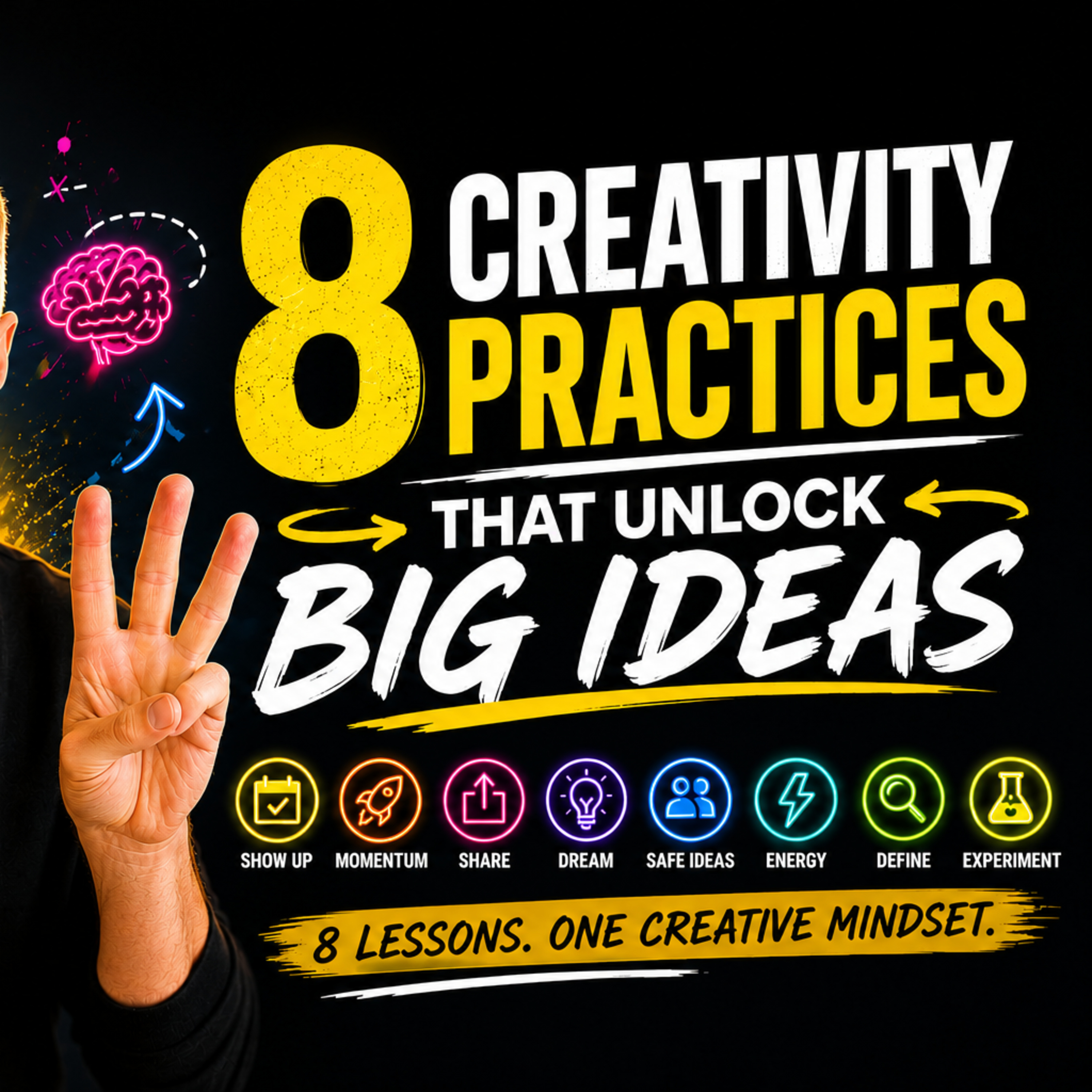 I Studied 100+ Creativity Experts. Here Are the 8 Ideas That Matter. 23.06.2026 22minOver the last eight years of Moonshots, we've explored the work of hundreds of authors, entrepreneurs, scientists, artists, educators, and innovators. We've studied creativity from every angle imaginable. We've looked at the habits of musicians, the methods of filmmakers, the thinking of scientists, the systems of entrepreneurs, and the practices of some of the most creative people who have ever lived.As we prepare to launch a new creativity series on Moonshots, beginning with Steven Kotler's *The Art of the Impossible*, I wanted to pause and reflect on what we've learned so far.What surprised me most wasn't how different these thinkers are. It was how often they arrived at the same conclusions.A legendary music producer, a bestselling novelist, the founder of Pixar, one of history's greatest physicists, an education visionary, and a pair of Stanford design professors all seem to be pointing toward the same set of principles.Creativity is not a gift possessed by a lucky few.It is a practice.It is a way of approaching problems, ideas, opportunities, and life itself.In this episode, I share eight creative practices that have had the biggest impact on my own work as a founder, advisor, podcaster, writer, speaker, software builder, and lifelong learner.The first lesson comes from Rick Rubin and *The Creative Act*. One of the most valuable ideas I've taken from Rick is the importance of showing up early and allowing ideas time to develop. Great work rarely appears on demand. Whenever I'm preparing a keynote, building a product, creating content, or solving a difficult client problem, I start earlier than I need to. I immerse myself in the work and then let it sit. I allow ideas to ferment. Some of my best work has emerged not from pushing harder, but from creating enough space for intuition and imagination to do their job.Elizabeth Gilbert's *Big Magic* offers another powerful reminder. Momentum is more important than perfection. I see perfectionism derail founders every week. They delay launches, delay decisions, delay customer conversations, and delay progress because they want everything to be perfect. The reality is that creative people create. They publish. They ship. They learn. Progress compounds. Perfection delays.Austin Kleon's *Show Your Work* reinforces this principle. Big achievements are usually the result of many small outputs shared consistently over time. Moonshots itself is a perfect example. The show didn't grow because of one viral episode. It grew because Mark and I showed up repeatedly for years. Small contributions, delivered consistently, eventually become meaningful bodies of work.Walt Disney reminds us to dream first and judge later. Too many ideas are destroyed before they have a chance to grow. Whether it's our own self-talk or feedback from others, premature judgement can suffocate creativity. Disney's genius was creating environments where imagination could run free before practicality entered the conversation. Creativity often requires us to suspend disbelief long enough to discover what might be possible.Ed Catmull, in *Creativity, Inc.*, extends this idea even further. He argues that unfinished ideas need safety. Great ideas rarely arrive fully formed. They emerge through discussion, experimentation, and collaboration. Teams that create psychological safety unlock more creativity because people feel comfortable sharing incomplete thoughts. Innovation depends on creating environments where ideas can evolve rather than be evaluated too early.Ken Robinson's work on *The Element* introduces one of my favourite questions. Rather than asking what your passion is, ask yourself what feels good. What activities energise you? What work absorbs your attention?
 -
 Dave Asprey’s Biohacking Secrets for More Energy and Less Brain Fog 15.06.2026 51minWhat if the food you eat could make you smarter, sharper, and more energized?In Episode 290 of the Moonshots Podcast, Mike and Mark dive into The Bulletproof Diet by biohacker and entrepreneur Dave Asprey. Together they challenge common diet myths, explore the science behind fasting, discuss the rise of Bulletproof Coffee, and examine how inflammation impacts performance, energy, and longevity.This episode is not about chasing the perfect diet. It's about discovering how nutrition can become a practical tool for better thinking, deeper focus, and sustainable wellbeing. Whether you're curious about intermittent fasting, optimizing your morning routine, or simply improving your relationship with food, this conversation offers practical insights you can start applying immediately.Buy The Bulletproof Diet:https://geni.us/FQVMdjDLearn more:https://www.moonshots.ioYouTube Channel:https://www.youtube.com/channel/UCGqs7VdIufLYNWnzZYuVaTAKey ThemesThe role of willpower in sustainable health habitsCommon myths and misconceptions about dietingBiohacking as a framework for personal optimizationThe impact of inflammation on health and performanceIntermittent fasting and metabolic flexibilityBulletproof Coffee and cognitive performancePersonalized nutrition versus one-size-fits-all dietsHealth as a vehicle for achievement and fulfillmentConcepts & BreakthroughsChallenging Diet MythsThe episode opens by examining some of the most persistent misconceptions about nutrition. Ideas such as "fat makes you fat," "skipping breakfast is unhealthy," or "healthy eating is always expensive" often survive because they are simple, not because they are accurate.Dave Asprey encourages listeners to question assumptions and focus on experimentation. The most effective dietary strategy is often the one that aligns with your unique biology, lifestyle, and goals.Biohacking Your EnergyAt the heart of Asprey's philosophy is biohacking—the practice of systematically improving physical and mental performance through observation and experimentation.Rather than accepting fatigue, brain fog, or poor energy as inevitable, biohacking asks a simple question:What small change could improve how I feel today?This mindset turns health into an ongoing process of discovery rather than a rigid set of rules.The Inflammation ConnectionOne of the most important insights discussed is the relationship between diet and inflammation.Many modern foods contribute to chronic low-grade inflammation, which can manifest as fatigue, digestive discomfort, reduced cognitive performance, and long-term health challenges.By focusing on higher-quality foods and reducing inflammatory triggers, listeners can create an environment where their bodies and minds perform more effectively.Fasting for FocusFasting is often viewed solely as a weight-loss tool, but the episode explores its broader benefits.Strategic fasting may help:Improve mental clarityIncrease focusEnhance metabolic flexibilityReduce reliance on constant food intakeMike and Mark discuss how many people discover that delaying breakfast can provide a surprising boost in productivity and concentration during the morning hours.Bulletproof CoffeeOne of Dave Asprey's most recognizable contributions is Bulletproof Coffee—a combination of coffee, healthy fats, and MCT oil designed to support sustained energy.The concept challenges traditional breakfast habits by providing fuel without triggering the energy crashes often associated with carbohydrate-heavy meals.Whether listeners adopt the practice or not, the larger lesson is to think intentionally about how morning nutrition affects cognitive performance.Health as a Means to an EndPerhaps the most powerful idea in the episode is that health is not the destination.Health is the vehicle.The purpose of eating well, sleeping better, exercising, and managing energy is not simply to achieve perfect health metrics.
 -
 Becoming a Supple Leopard - Dr. Kelly Starrett 01.06.2026 44minIn this episode of Moonshots, Mike and Mark dive into the groundbreaking ideas of Dr. Kelly Starrett, author of Becoming a Supple Leopard. Through insights shared with Dr. Andrew Huberman, they explore why movement quality matters, how poor posture quietly impacts health and performance, and what we can do to reclaim our natural mobility.From understanding common movement dysfunctions to embracing play and exploration as part of physical development, this episode offers practical tools for anyone looking to feel stronger, move better, and stay capable for years to come.At a time when many of us spend more hours sitting than moving, Starrett's message is especially relevant: the body adapts to what we repeatedly do. By making small but intentional changes, we can build resilience, improve performance, and enhance our overall quality of life.Whether you're an athlete, professional, parent, or simply someone who wants to move through life with greater ease, this episode provides actionable insights you can start applying today.Key ThemesMovement as a foundational human skillIdentifying and correcting common movement problemsThe relationship between posture and performanceBuilding long-term physical resilienceMobility as a daily practiceAdapting the body through consistent movement habitsThe importance of play and movement varietyConcepts & BreakthroughsMovement Quality Drives LongevityStarrett emphasizes that movement is not merely exercise; it is a fundamental expression of human capability. Poor movement patterns often accumulate gradually, leading to discomfort, inefficiency, and reduced performance. By improving movement quality, individuals can enhance both everyday function and long-term health.Posture Is a Performance ToolGood posture is often misunderstood as simply standing up straight. Starrett reframes posture as the body's ability to organize itself efficiently under load. Better posture supports breathing, stability, mobility, and strength, allowing us to perform tasks with less strain and greater effectiveness.The Body Adapts to RepetitionOne of the most important ideas in the episode is that our bodies constantly adapt to the positions and movements we practice most often. Long hours spent sitting or maintaining limited movement patterns can create restrictions over time. The solution is not occasional exercise alone but regular exposure to healthy movement throughout the day.Play Expands Human CapacityThe discussion closes with a reminder that movement should not always be structured or performance-focused. Play introduces new shapes, challenges, and experiences that help maintain mobility, coordination, and adaptability. Exploration keeps the body learning and developing across all stages of life.Habits, Tools & Mental ModelsDaily Movement AuditRegularly assess how much time you spend sitting, standing, walking, and moving. Awareness is the first step toward meaningful improvement.Position VarietyAvoid remaining in any single position for extended periods. Introduce different postures and movement patterns throughout the day to encourage adaptability.Posture CheckpointsCreate simple reminders to evaluate posture while working, walking, or exercising. Focus on alignment that supports breathing, stability, and efficient movement.Mobility as MaintenanceTreat mobility work as routine maintenance rather than rehabilitation. Consistent practice helps preserve range of motion and movement quality before problems arise.Play-Based MovementIncorporate activities that encourage exploration, balance, coordination, and enjoyment. New movement experiences challenge the body in ways traditional exercise often does not.Become a Member of the Moonshots Podcast:https://www.patreon.com/Moonshots
 -
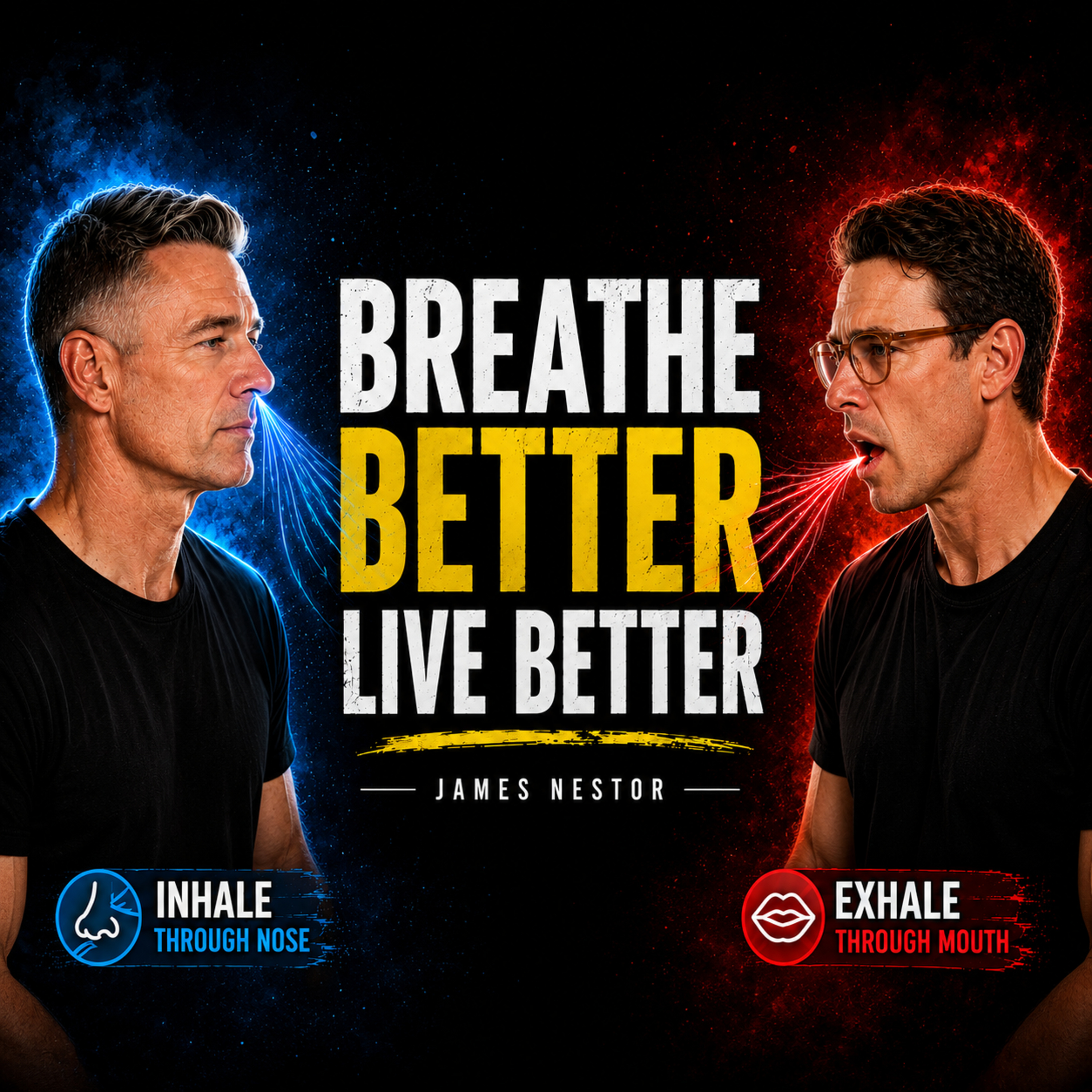 James Nestor’s bestselling book Breath. Breathe Better, Live Better. 24.05.2026 43minBreathing is automatic — but optimal breathing is learned.In Episode 288 of Moonshots, Mike and Mark dive into the remarkable science and practical wisdom behind James Nestor’s bestselling book *Breath*. Together, they explore how conscious breathing can improve health, productivity, sleep, performance, and emotional balance in a world that constantly pushes us into stress and overstimulation.Featuring insights from James Nestor and practical reflections from Productivity Game, this episode reveals why better breathing may be one of the most overlooked keys to living well. Listeners will discover simple techniques, surprising research, and actionable habits that can create immediate and lasting benefits.Whether you want greater calm, sharper focus, or more energy throughout the day, this episode offers a compelling reminder that transformation often starts with the smallest actions — including every breath you take.**Primary Link:**[https://www.moonshots.io](https://www.moonshots.io)**Related Reading:**[https://geni.us/w5zo](https://geni.us/w5zo)**YouTube:**[https://www.youtube.com/channel/UCGqs7VdIufLYNWnzZYuVaTA/](https://www.youtube.com/channel/UCGqs7VdIufLYNWnzZYuVaTA/)---# Key Themes* The hidden power of conscious breathing* How modern lifestyles negatively affect breathing patterns* Expanding breathing capacity for improved health and performance* The relationship between breathing, stress, and productivity* Nasal breathing versus mouth breathing* Breath awareness as a daily practice* Small physiological changes creating large life impacts---# Concepts & Breakthroughs## Breathing as a Performance ToolJames Nestor reframes breathing from a passive biological process into an active tool for enhancing physical and mental performance. The episode explores how better breathing habits can increase endurance, improve sleep quality, support emotional regulation, and sharpen concentration.## “Could I Breathe Less?”One of the standout ideas comes from Productivity Game’s reflection on breathing efficiency. Rather than taking bigger breaths, listeners are encouraged to consider whether calmer, slower, and more efficient breathing could improve energy and reduce anxiety. This shift in perspective highlights how overbreathing can actually stress the body.## Capacity Creates ResilienceThe discussion around improving breathing capacity reveals a broader insight about resilience. Expanding lung function and breath control trains the body to tolerate stress more effectively, helping listeners remain calmer under pressure and recover more quickly from challenges.## Ancient Wisdom Meets Modern ScienceThe episode bridges scientific research with long-standing breathing traditions practiced for centuries in meditation, yoga, and martial arts. Mike and Mark show how modern evidence increasingly validates practices once dismissed as purely spiritual or alternative.---# Habits, Tools & Mental Models## Breathe Through Your NoseNasal breathing filters, humidifies, and optimizes airflow more effectively than mouth breathing. Building awareness around this habit can improve sleep, endurance, and relaxation.## Slow Down Your BreathingReducing breathing rate can calm the nervous system and improve focus. Intentional slower breathing supports emotional regulation and decreases physiological stress.## Daily Breath Check-InAsk yourself throughout the day:**“Could I breathe less?”**This simple prompt encourages mindfulness and helps reduce unconscious overbreathing during stressful moments.## Build Breath CapacityPractices such as breath holds, controlled breathing exercises, and aerobic conditioning can help improve respiratory efficiency and overall resilience.## Use Breath as a Reset MechanismBreathing can become an immediate tool for resetting attention, calming anxiety, and returning to the present moment during demanding situations.
 -
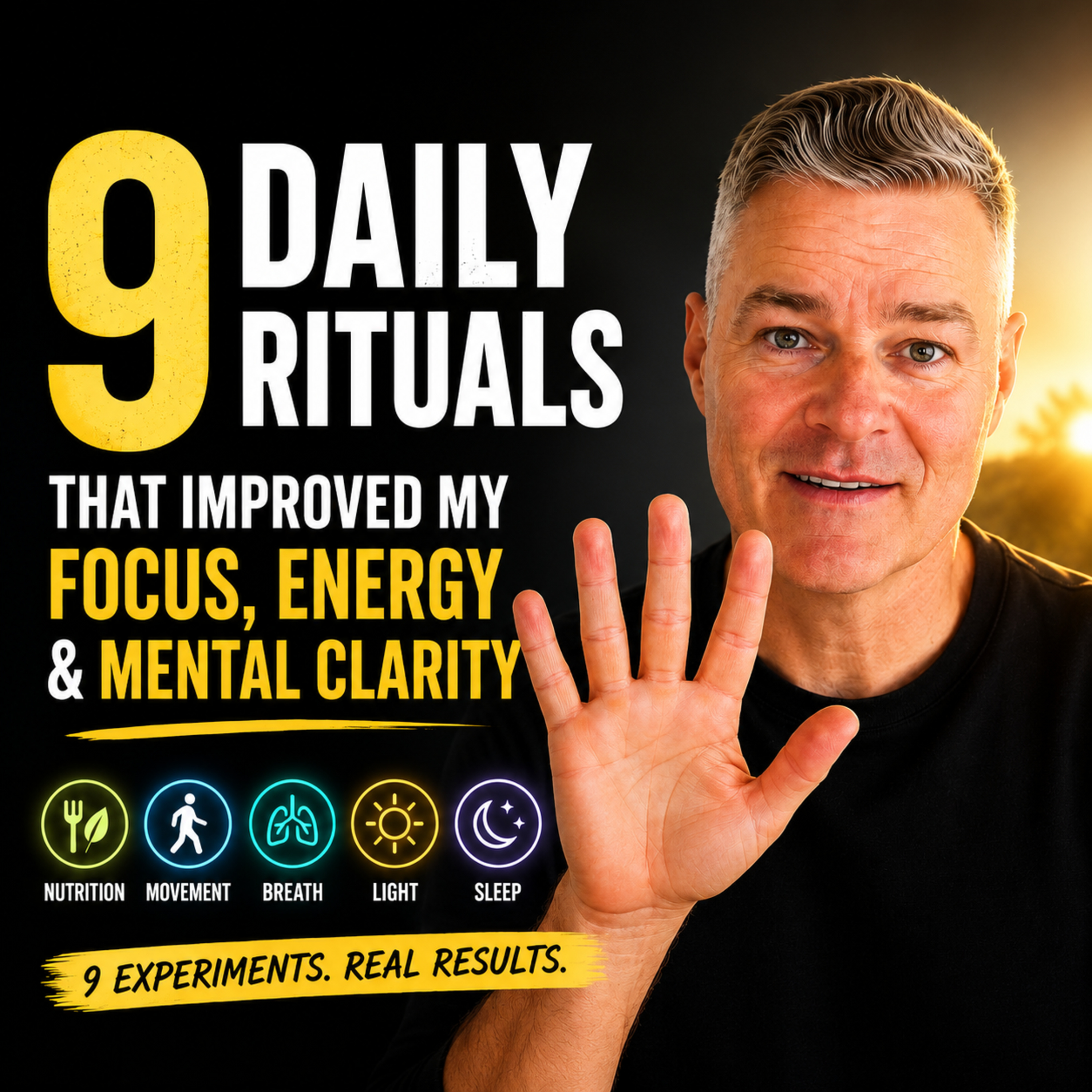 9 Daily Rituals That Improved My Focus, Energy & Mental Clarity | Biohacking 14.05.2026 20minWhat if improving your focus, energy and mental clarity wasn’t about working harder… but building better daily rituals?In this solo Moonshots episode, Mike Parsons shares 9 personal biohacking experiments inspired by some of the world’s leading thinkers on health, longevity, sleep, stress and performance. From intermittent fasting and breathwork to sleep routines, walking, stretching and cold exposure, these are the habits Mike actually uses to feel calmer, sharper and more energized every day.This isn’t about extreme optimization or guru culture.It’s about practical daily practices that help entrepreneurs, creators and high performers operate at their best.In this episode:Intermittent fasting and mental clarityWalking after meals and glucose regulationBreathwork for stress and nervous system controlMorning sunlight and circadian rhythmSleep optimization and recoveryStretching, mobility and resiliencePlant-focused eating and energy managementCold showers and nervous system activationUsing the Oura Ring to track recovery and performanceFeaturing insights inspired by:David SinclairCasey MeansBessel van der KolkAndrew HubermanPatrick McKeownMatthew WalkerRoger FramptonMichael PollanWim HofMoonshots helps entrepreneurs become the best version of themselves by learning out loud from the world’s greatest thinkers, creators and performers.🎧 Subscribe for weekly episodes on entrepreneurship, mindset, creativity, leadership and high performance.🌐 Learn more: Moonshots.io#Biohacking #MentalClarity #HighPerformance #Entrepreneurship #SleepOptimization #Breathwork #Focus #Productivity #HealthHabits #MoonshotsPodcast
 -
 It’s Never Too Late to Live Longer | David Sinclair Lifespan 30.04.2026 47minWhat if aging isn’t a fixed path—but a system you can influence?In this episode of Moonshots, Mike and Mark dive into the groundbreaking ideas of Dr. David Sinclair, author of Lifespan. Through a curated set of powerful clips, they unpack the science and philosophy behind longevity—and, more importantly, what it means for how we live today.Get your copy of Lifespan by David Sinclair here:👉 https://geni.us/zYl1cFYou’ll hear why small changes can still have a profound impact, the five foods that may shape your long-term health, and how fasting could play a role in extending not just lifespan, but healthspan.This episode is a call to action: to rethink habits, challenge assumptions, and take ownership of your future biology—starting now.Aging as a modifiable biological processIt’s never too late to improve health outcomesNutrition as a lever for longevityThe impact of specific foods on lifespanFasting and metabolic healthSmall habits, long-term consequencesOne of the most powerful ideas explored is that aging is not simply wear and tear—it’s a loss of biological information that may be slowed or restored. This reframing opens the door to action. Instead of accepting decline, listeners are encouraged to view their daily choices as inputs into a dynamic system.The discussion on nutrition cuts through complexity by focusing on high-impact foods. Rather than chasing trends, Sinclair emphasizes consistency and quality—choosing foods that support cellular health and reduce inflammation over time.Fasting emerges as another compelling concept. It’s not framed as a quick fix, but as a strategic stressor that can activate the body’s repair mechanisms. The idea is simple but powerful: giving your body periods of rest from constant digestion may unlock longevity benefits.The “It’s Not Too Late” Mindset: Shift from regret to action—biology responds to change at any stageNutritional Leverage: Focus on a handful of high-impact foods rather than overhauling everythingStrategic Fasting: Introduce structured eating windows to support metabolic healthLongevity Lens: Evaluate daily habits based on long-term health outcomes, not short-term comfortConsistency Over Perfection: Small, repeatable actions compound into meaningful changeYou can influence how you age starting today—your biology is more adaptable than you thinkEven late changes in lifestyle can produce measurable health benefitsPrioritizing a few key foods may have an outsized impact on longevityFasting, when done thoughtfully, can support your body’s natural repair systemsLong-term health is shaped by consistent daily habits, not dramatic overhaulsThinking in terms of “healthspan” shifts the goal from living longer to living betterBecome a Member of the Moonshots Podcast:https://www.patreon.com/MoonshotsGet your copy of Lifespan by David Sinclair here:👉 https://geni.us/zYl1cF
 -
 Good Energy: Casey Means on Metabolism, Glucose & Daily Vitality 13.04.2026 48minWhy do so many of us feel constantly tired, foggy, or out of sync—despite doing “all the right things”?In this episode of the Moonshots Podcast, Mike and Mark dive into Good Energy by Dr. Casey Means to uncover the hidden driver behind modern health struggles: metabolic dysfunction. Drawing on insights from leading voices like Andrew Huberman and practical frameworks from Productivity Game, they explore how small daily habits can either drain or fuel our energy at a cellular level.From understanding the key biomarkers that predict long-term health to experimenting with food and movement routines that actually work for your body, this episode is a wake-up call—and a roadmap.If you want consistent energy, sharper focus, and a body that supports your ambitions, this conversation will show you where to start.Key ThemesMetabolic health as the foundation of energy and longevityThe cellular origins of chronic disease and fatigueThe impact of ultra-processed foods and sedentary lifestylesBiomarkers as a personal “health scorecard”The link between glucose regulation and daily performanceMovement as a biological necessity, not an optional extraPersonal experimentation as the path to optimal healthConcepts & BreakthroughsDr. Casey Means reframes health as something deeply measurable and actionable. Rather than treating symptoms in isolation, she highlights how dysfunction begins at the cellular level—specifically within mitochondria, the engines of our energy. This perspective shifts the conversation from reactive healthcare to proactive self-optimization.One of the most powerful ideas is the concept of biomarkers as feedback loops. Metrics like blood glucose, cholesterol, and waist circumference aren’t abstract medical data—they’re signals. When tracked consistently, they provide early warnings and guide behavior change long before disease appears.The episode also challenges the default “three meals a day” paradigm. Through experimentation, Mike and Mark reveal how different eating patterns—like fasting, reducing processed carbs, or choosing slow-release foods like oats—can dramatically influence energy stability.Movement emerges as equally critical. It’s not just about workouts; it’s about integrating motion into daily life. Whether it’s walking after meals or using a standing desk, these micro-adjustments compound into meaningful metabolic improvements.As highlighted in the episode, even simple habits like walking can outperform medication in certain contexts —a striking reminder that our biology responds powerfully to natural inputs.Habits, Tools & Mental Models1. The Biomarker ScorecardTrack key health indicators annually (or more often) to detect early signals and guide lifestyle changes.2. Food as Energy ProgrammingThink of every meal as an input that either stabilizes or spikes your energy. Prioritize whole, slow-release foods.3. The Experimentation MindsetThere is no universal diet. Test, observe, and refine what works best for your body.4. Movement SnacksBreak up sedentary time with small bursts of activity—walking, stretching, or light exercise every 30–60 minutes.5. Post-Meal MovementWalking after eating helps regulate glucose and improves energy levels.6. “Hacked Carbs” StrategyCooling and reheating carbs like rice or potatoes can improve their metabolic impact by increasing resistant starch.Listener TakeawaysYou can dramatically improve your daily energy by focusing on metabolic health, not just symptomsTracking a few key biomarkers gives you control over your long-term health trajectorySmall changes in diet—especially reducing processed carbs—can eliminate energy crashesConsistent, light movement throughout the day is more powerful than occasional intense workoutsYour ideal routine is personal—experiment to find what fuels your best performanceBecome a Member of the Moonshots Podcast:https://www.patreon.com/Moonshots
 -
 Bessel Van Der Kolk - The Body Keeps the Score 06.04.2026 46minAs part of our biohacking series, Mike and Mark enthusiastically kick off the episode as they delve into the transformative work of Dr. Andrew Huberman from Stanford University. Andrew sets the stage by sharing a personal anecdote that profoundly influenced his journey.Clip 1: Find Your Motivation (3m44):Andrew recounts a pivotal moment that shifted his perspective, emphasizing the importance of finding one's motivation in life. This introspective discussion sets the tone for exploring the depths of human potential.Clip 2: Starting the Day (4m29):Listeners learn a valuable tip from Andrew: a simple morning activity can supercharge energy levels and enhance sleep quality. The hosts delve into practical strategies for optimizing daily routines for peak performance.Clip 3: How to Do It (2m32):Andrew illuminates the physiological sigh and its profound impact on reducing anxiety and stress levels. This insightful discussion unveils a simple yet powerful technique for cultivating resilience and emotional well-being.Clip 4: Building Your Best Self (4m19):In a dynamic exchange with a renowned physical therapist, Jeff Cavaliere, Andrew explores the fundamentals of crafting an effective weekly workout program. Listeners gain valuable insights into optimizing physical fitness and performance.Clip 5: Embracing Detachment (5m):Andrew engages in a thought-provoking dialogue with Jocko Willink, underscoring the significance of detachment and broadening one's perspective in life. This poignant conversation highlights the transformative power of stepping back and gaining a holistic view of one's journey.Conclusion:As the episode draws to a close, Mike and Mark reflect on Dr. Andrew Huberman's wealth of wisdom. From motivational insights to practical strategies for enhancing well-being, listeners are empowered to unlock their full potential and embark on a journey of growth and self-discovery.Thanks to our monthly supportersMikeEdwin DeitchJamie DorwardEmily Rose BanksMalcolm MageeNatalieRyan N.Marco-Ken Möller孤鸿 月影FabianJasper VerkaartAndy PilaraolaAustin HammattZachary PhillipsMike Leigh CooperGayla SchiffLaura KERoar Nikolay Ytre-EideStefRoger von Holdtvenkata reddyIngram CaseyOlarahul groverRavi GovenderCraig LindsaySteve WoollardDeborah SpahrSamoelaJo HatchardKalman CsehBerg De BleeckerPaul AcquaahMrBonjourKonnor Ah kuoiMarjan ModaraDietmar BaurBob Nolley★ Support this podcast on Patreon ★
 -
 Andrew Huberman, Ph.D: The Practical Science of Living Healthy 22.03.2026 1t 7minAs part of our biohacking series, Mike and Mark enthusiastically kick off the episode as they delve into the transformative work of Dr. Andrew Huberman from Stanford University. Andrew sets the stage by sharing a personal anecdote that profoundly influenced his journey.Clip 1: Find Your Motivation (3m44):Andrew recounts a pivotal moment that shifted his perspective, emphasizing the importance of finding one's motivation in life. This introspective discussion sets the tone for exploring the depths of human potential.Clip 2: Starting the Day (4m29):Listeners learn a valuable tip from Andrew: a simple morning activity can supercharge energy levels and enhance sleep quality. The hosts delve into practical strategies for optimizing daily routines for peak performance.Clip 3: How to Do It (2m32):Andrew illuminates the physiological sigh and its profound impact on reducing anxiety and stress levels. This insightful discussion unveils a simple yet powerful technique for cultivating resilience and emotional well-being.Clip 4: Building Your Best Self (4m19):In a dynamic exchange with a renowned physical therapist, Jeff Cavaliere, Andrew explores the fundamentals of crafting an effective weekly workout program. Listeners gain valuable insights into optimizing physical fitness and performance.Clip 5: Embracing Detachment (5m):Andrew engages in a thought-provoking dialogue with Jocko Willink, underscoring the significance of detachment and broadening one's perspective in life. This poignant conversation highlights the transformative power of stepping back and gaining a holistic view of one's journey.Conclusion:As the episode draws to a close, Mike and Mark reflect on Dr. Andrew Huberman's wealth of wisdom. From motivational insights to practical strategies for enhancing well-being, listeners are empowered to unlock their full potential and embark on a journey of growth and self-discovery.Thanks to our monthly supportersMikeEdwin DeitchJamie DorwardEmily Rose BanksMalcolm MageeNatalieRyan N.Marco-Ken Möller孤鸿 月影FabianJasper VerkaartAndy PilaraolaAustin HammattZachary PhillipsMike Leigh CooperGayla SchiffLaura KERoar Nikolay Ytre-EideStefRoger von Holdtvenkata reddyIngram CaseyOlarahul groverRavi GovenderCraig LindsaySteve WoollardDeborah SpahrSamoelaJo HatchardKalman CsehBerg De BleeckerPaul AcquaahMrBonjourKonnor Ah kuoiMarjan ModaraDietmar BaurBob Nolley★ Support this podcast on Patreon ★
 -
 Roger Frampton: The Flexible Body 15.03.2026 55minJoin us for our Bio Hacking series, Mike and Mark stretch into Roger Frampton: The Flexible Body.0:00 Introduction to Roger Frampton: The Flexible Body04:30 An introduction to the Frampton Method15:56 Prioritise your spine21:36 Sitting too long is back for your back28:59 Have the mindset of an athlete47:31 Notice every movementForget everything you think you know about exercise. International model and fitness expert Roger Frampton has developed a revolutionary new approach to movement, designed to get your body working in the way it was designed to.Just 10 minutes of training per day can help you work towards unlocking your body’s full potential. ‘ The Flexible Body: Move better anywhere, anytime in 10 minutes a day guides you through a series of positions, stretches, rolls, and balances that retrain your body to move like it once could.Buy Flexible Body on Amazonhttps://geni.us/FlexibleBodyBecome a memberhttps://www.patreon.com/Moonshots
 -
 Breathing Techniques for Health & Performance | The Oxygen Advantage by Patrick McKeown 08.03.2026 55minJoin us for our Bio Hacking series, Mike and Mark explore the transformational power of conscious breathing through the lens of Patrick McKeown’s groundbreaking book, The Oxygen Advantage. Backed by science, McKeown’s methods focus on improving health, reducing stress, and optimizing performance through simple yet effective breathing techniques.Get the book on Amazon https://geni.us/PatrickOxygenAdvantageThe episode covers practical insights and easy-to-follow exercises to help listeners manage stress, improve sleep, and enhance focus. Breathing is something we do automatically, but Patrick reveals that most people are doing it wrong. By retraining your breath, you can unlock mental clarity, Resilience, and energy gains you never knew you had.🔑 Key Themes and Takeaways🎧 1. INTRO: Using Your Breath (2m37)In the opening segment, Patrick McKeown introduces the idea that most people aren’t breathing optimally. We tend to take shallow breaths, use our mouths instead of our noses, and overbreathe without realizing it.Patrick explains that conscious, mindful breathing is a powerful tool to improve energy levels, mental focus, and physical performance.💡 Key Insight:Most people breathe too much and too fast, which lowers their body's oxygen efficiency. The goal is to breathe less but more efficiently, using nasal breathing and controlled rhythms to optimize oxygen use.🎯 2. FOCUS: Breath-Holding to Build Resilience (3m20)One of Patrick’s most impactful techniques is breath-holding exercises. These exercises simulate stress by making the body uncomfortable in a controlled way.💡 Practical Tip: • Start with short breath-holds and gradually increase the duration. • Practice during moments of calm to improve your mental toughness and performance under pressure.🔧 3. PRACTICE TIPS: Avoid Over-Breathing & Hack Your SleepTip 1: Don’t Breathe Too Much (1m55)Brian Johnson from Optimize joins the conversation to discuss the dangers of chronic over-breathing. Most people take in more air than they need, which causes increased stress, anxiety, and lower energy levels.✅ Solution:Practice slow, light nasal breathing to reduce stress and improve oxygen absorption. This will help you feel calmer, more focused, and less reactive to everyday stressors.Tip 2: Hack Your Breathing While You Sleep (2m01)One of Patrick McKeown's most surprising tips is mouth-taping while you sleep. This simple hack ensures that you breathe through your nose all night long, which has major benefits for your sleep quality and energy levels.✅ Why It Works:Breathing through your nose helps maintain proper oxygen balance, reduces snoring, and improves restful sleep.💡 Practical Tip: • Use medical-grade tape to keep your lips closed at night gently. • Start practicing a few minutes before bed to get used to the sensation. • Gradually work your way up to using tape throughout the night.✅ Results: • Reduced snoring • Deeper sleep • More energy during the day💆 4. COUNTERACTING STRESS: The Cadence of Good Breathing (2m59)Patrick emphasizes the importance of breathing cadence to manage stress. By slowing your breath to a 5-second inhale and a 5-second exhale, you can activate your parasympathetic nervous system, which promotes calmness and relaxation.💡 Practical Tip: • Practice cadence breathing for 5 minutes a day. • Use it when you’re feeling anxious, overwhelmed, or stressed. • It’s a simple way to calm your mind, improve focus, and build emotional Resilience.📚 Additional Resources📖 Book Summary:👉 The Oxygen Advantage Summary🎥 YouTube Link:👉 Watch the Full Episode💡 Why This Episode MattersWe take breathing for granted but learning to breathe correctly can have life-chan...
Samankaltaiset podcastit


Suosittu maassa
Tämä podcast esiintyy myös näiden maiden podcast-listoilla.


