
BUILDERS
Front Lines Media
0
BUILDERS is a podcast that explores how founders get new technology adopted. Each episode features a founder sharing their journey of breaking into an industry, earning early believers, building credibility, and achieving real technology adoption. The show is part of a network of 20 industry-specific shows with over 1,200 founder interviews. It is produced by Front Lines Media.
Jaksot
-
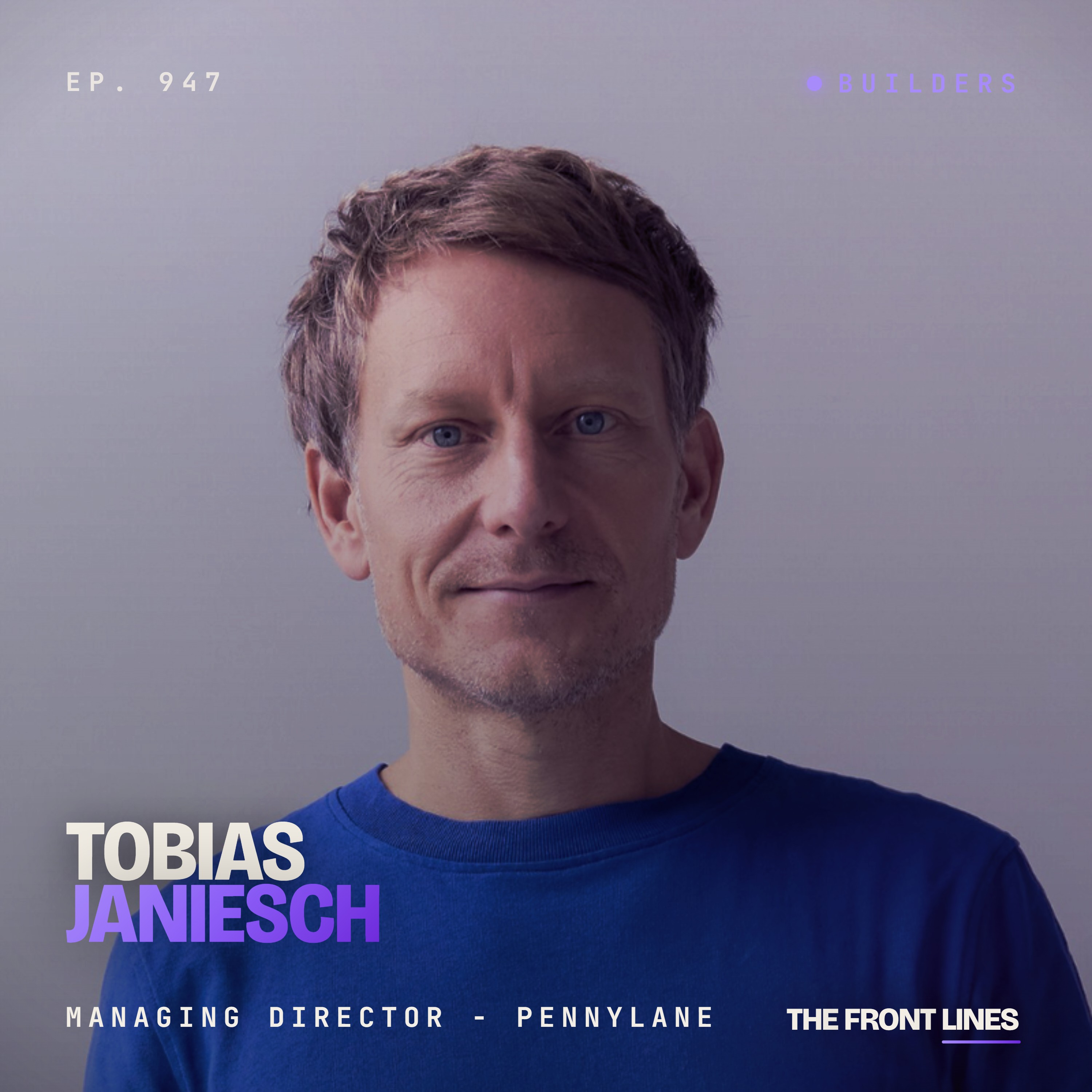 Founder-led roadshows: how Pennylane built trust inside local accounting communities across Germany and France | Tobias Janiesch 04.09.2026 25minPennylane spent its first two years operating an accounting firm to experience the workflows it intended to fix. It then sold the profitable business, removed the channel conflict, and went all-in on software. After three years of deliberate customer development, growth accelerated to more than one million SMEs on the platform. In this episode of BUILDERS, Tobias Janiesch, Managing Director - Germany at Pennylane, breaks down the accountant-led distribution model, the trust-building behind its growth, and why entering Germany required both a product rebuild and a startup-style local team.Topics Discussed:Why Pennylane operated—and then sold—its own accounting firmHow accountants became the channel behind roughly 95% of leadsThe customer sequence behind Pennylane's growth inflection pointUsing founder-led roadshows and peer referrals in a trust-driven marketWhy Germany offered a four-year window but required a 40% product rebuildGiving a local team startup autonomy inside a scaled companyBuilding embedded AI on a unified financial data layerGTM Lessons for B2B Founders:Make the channel successful before asking it to distribute: Pennylane saves accountants 30–40% of their time and gives them a workspace their clients use. The accountants then invite the SMEs; approximately 95% of leads originate through them. The channel works because the product improves the partner's own economics.Earn the right to move upmarket: Pennylane first made 20 digital-first firms successful, expanded to the next 50, and used each cohort to uncover edge cases. Only then did it pursue larger firms. The first flagship customer helped turn three years of steady growth into rapid acceleration.Enter conservative markets through the progressive edge: Pennylane started with accountants already running digital firms. Their recommendations in WhatsApp, Facebook, and professional communities transferred trust to more cautious peers. Identify the insiders whose credibility can bridge the adoption gap.Localize the product and the operating model: Germany could reuse roughly 60% of the French product; 40% required rebuilding around local rules. Pennylane added German accounting expertise early and let the local entity operate like a startup, using lightweight tools before institutionalizing systems such as Salesforce.Turn trust into operating metrics: The founders avoided promising features they could not ship and reviewed commitments against delivery each year. In Germany, the team measures real activation through monthly VAT submissions and expects no early churn. Track recurring workflow adoption—not logins or account creation.//Sponsors:Front Lines — We help B2B tech companies launch, manage, and grow podcasts that drive demand, awareness, and thought leadership.www.FrontLines.ioThe Global Talent Co. — We help tech startups find, vet, hire, pay, and retain amazing marketing talent that costs 50-70% less than the US & Europe.www.GlobalTalent.co//Don't Miss: New Podcast Series — How I HireSenior GTM leaders share the tactical hiring frameworks they use to build winning revenue teams. Hosted by Andy Mowat, who scaled 4 unicorns from $10M to $100M+ ARR and launched Whispered to help executives find their next role.Subscribe here:https://open.spotify.com/show/53yCHlPfLSMFimtv0riPyM
 -
 Finding the buyer who was already on the hook | Ria Shah 24.08.2026 15minHandl Health is building an AI platform that aggregates and analyzes publicly available healthcare pricing data, helping brokers and benefits consultants design, evaluate, and personalize health plans for self-insured employers. In a recent episode of BUILDERS, we sat down with Ria Shah, Co-founder & Chief Product Officer of Handl Health, to learn how the company turned newly mandated price transparency data into a plan design platform that brokers and benefits consultants rely on.Topics Discussed:How price transparency legislation created a now-or-never moment to build on terabytes of newly published contracted ratesWhy neither co-founder was technical, and how Ria learned Python and PySpark to ingest 300 billion row machine readable filesHow an NIH grant and a free consumer cost estimator revealed the wrong initial customerWhy Handl Health moved past direct-to-employer sales to the broker and benefits consultant channelWhere brokers see value first: prospecting new business with carrier comparisons and personalizing renewals with claim-level cost projectionsThe three-year education arc from explaining what an MRF is to a market where everyone needs a price transparency partnerHow Handl Health escaped the checkbox compliance perception by layering actuarial modeling and steerage on top of public dataWhy white glove service remains core even as the company productizes a services-heavy workflowGTM & Technology Adoption Lessons:Follow the burden until you find the buyer who owns it: Handl Health started consumer-facing with a free cost estimator, then realized that reaching the masses meant going through self-insured employers, who hold majority market share in how most Americans access healthcare. But employers are overburdened and understaffed, so the company went to the brokers and benefits consultants those employers already trust.Sell to the channel that is already on the hook: Brokers must give sound recommendations to employer clients about which network to rent and which point solutions to buy, while working with disparate data and no ROI visibility on vendors. When they started using the platform, Ria said their reaction was "wait, we can do this in minutes." Adoption is fastest where accountability and pain already sit together.Market education runs in stages, then flips: Ria described years one to three as skepticism that the regulations would even hold and that the data was useful. The company went from explaining what an MRF was, to convincing the market that MRFs contain useful data, to a market where everyone needs a price transparency partner and the only question is which one. Early adopter champions carried the company through the skeptical years.Regulation creates data, not a category: Early on, products like Handl Health's were perceived as checkbox compliance costs. The escape was the layer above the public data: actuarial modeling, cost projections, and steerage assumptions that help employers bring down costs and help members shop for higher value, lower cost care.Align the commercial model with channel growth: Ria said the commercial model came down to aligning incentives. As long as the platform helps brokers grow their book of business and differentiate in the market, they keep coming back and find new ways to partner.Productize the workflow, keep the concierge: Handl Health is productizing a highly services business. AI tooling automates much of the analytics, but when brokers run reports or stratify networks, the team wraps their arms around those partners to interpret results together. Ria does not expect that to go away, because the white glove layer is what makes the channel stick.// Sponsors: Front Lines -- Silicon Valley's leading Podcast Production Studio.We help B2B tech companies launch, manage, and grow podcasts that drive demand, awareness, and thought leadership. Mention you are a listener and get a 10% discount. www.FrontLines.io/Podcast-as-a-Service
 -
 AI visibility is not SEO 2.0 | Imri Marcus 24.08.2026 23minBrandlight is building an AI visibility platform that helps enterprise brands, most of them Fortune 500 companies, monitor and influence how they show up in AI engines across AI search, AI ads, and agentic commerce.In a recent episode of BUILDERS, we sat down with Imri Marcus, CEO & Co-Founder of Brandlight, to learn how the company won Fortune 500 customers from day zero and turned AI visibility into a CMO priority instead of an SEO project.Topics Discussed:Why calling AI visibility "SEO 2.0" is the industry's most prevalent misconceptionWho owns AI visibility inside enterprise marketing departments, and why Brandlight always starts from the CMOHow Brandlight answers skeptics who claim AI engine results cannot be influencedThe advisory board of Fortune 50 CMOs and agency CEOs that opened enterprise doors from day zeroWhy enterprise AI visibility programs require orchestrating close to a hundred stakeholdersHow the education burden in first CMO conversations disappeared between late 2024 and todayWhat happens to SEO, brand, legacy search, and Google as search shifts into AI enginesReddit's real role in an AI visibility strategyGTM & Technology Adoption Lessons:Refuse the frame that shrinks your category: Imri said the most prevalent misconception is that AI visibility is SEO 2.0. Brandlight positioned it as a completely new marketing channel where traffic just happened to be the first KPI that got hit. The framing decides who owns the problem and how big the budget conversation can be.Start the sale where the orchestration lives: The SEO team is involved in every account Brandlight works with, but Imri called a single-department home the wrong place for a big enterprise. Brandlight always tried to start from the CMO and preach a holistic orchestrated approach, because PR, content, partnerships, and even legal teams need to get involved.Build the door-opening system before the market exists: Brandlight went after the Fortune 500 from day zero and built an advisory board of over a dozen advisors, people who are or were Fortune 50 CMOs and CEOs of some of the biggest agencies. The advisors made the initial connections, and the first iterations of the platform were seen by Fortune 50 CMOs.Treat early education as pipeline, not lost deals: At the end of 2024, the first 15 minutes of every CMO conversation was education. Not all of those CMOs purchased in 2024 or 2025, but it made sense to all of them, and Imri said the vast majority became customers later on.Answer skepticism with proof at the largest possible scale: Against the claim that AI answers cannot be influenced, Brandlight presented on the ANA's big stage with its customer Kimberly-Clark: over 12 months, the program took 12 out of 12 brands to lead their categories.Anchor urgency in behavior data, not predictions: Imri said that when Brandlight started, less than 1% of search happened in AI engines, and now it is over 50%. Brandlight analyzes billions of data points daily and can show traditionally successful marketing organizations losing share of voice while smaller companies overtake them.Position the new channel as additive, not substitutive: Imri argued SEO foundations still matter and brand still matters. AI visibility is an addition, not a substitution, which lowers the perceived risk of adopting it.// Sponsors: Front Lines -- Silicon Valley's leading Podcast Production Studio.We help B2B tech companies launch, manage, and grow podcasts that drive demand, awareness, and thought leadership. Mention you are a listener and get a 10% discount. www.FrontLines.io/Podcast-as-a-Service
 -
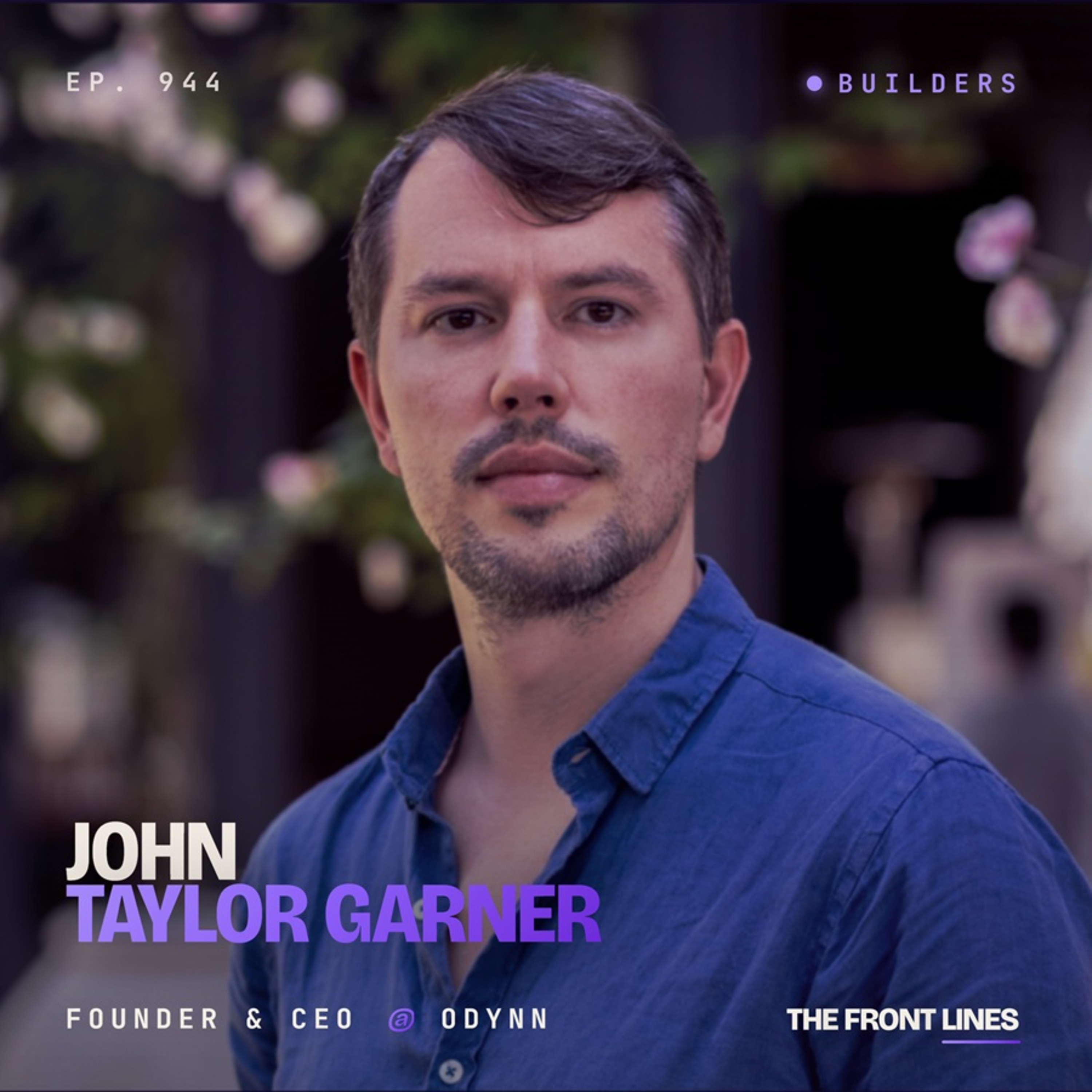 Selling into 95% market concentration | John Taylor Garner 24.08.2026 29minOdynn is an AI-powered, fully modular platform that helps fintechs, banks, card issuers, and travel companies launch embedded travel, loyalty, and rewards programs. The company's flagship product, Awayz, gives financial institutions a white-label travel portal where cardholders can search, plan, and book hotels and flights with side-by-side points, miles, and cash pricing.In a recent episode of BUILDERS, we sat down with John Taylor Garner, Founder & CEO of Odynn, to learn how the company is taking on a market where Booking, Expedia, and Hopper collectively hold 95% market share by offering financial institutions a personalized, modular alternative to their monolithic competitors.Topics Discussed:How John's background as a points and miles enthusiast led him to identify the gap in embedded travelWhy John shut down his first startup, Card Curator, and how that experience led to founding OdynnHow Built Rewards became Odynn's first customer and what they saw that other banks had not yet recognizedHow the market shifted from requiring heavy customer education to prospects who arrive already understanding the problemWhy US customers immediately understand the cardholder retention problem while European markets require more educationWhere the term "embedded travel" came from and how Odynn uses it to define the categoryThe critical marketing decisions John made to reach six different types of buyersHow Odynn structures its approach across personal banking, business banking, BaaS, credit card affiliates, card issuers, and corporate travel managementWhat selling to tier-one banks actually looks like in terms of sales cycle lengthWhat John learned transitioning from direct-to-consumer to enterprise financial institution salesTactics that have helped shorten long enterprise sales cyclesAdvice for founders selling technology to banksGTM & Technology Adoption Lessons:Solve a problem before customers know they have it: Odynn launched in January 2022 with the hypothesis that airlines and hotels moving toward dynamic pricing would cause points to become less valuable, which would hurt cardholder retention. As John put it, "fixing a problem that nobody really knew that they had was a hard thing to do." The company had to wait for market timing to catch up with its thesis before the sales motion became straightforward.Let customers tell you what product to build: Odynn originally focused on the loyalty layer of the problem. Customers like Built Rewards pushed them toward building a full travel portal. "It wasn't just the loyalty space that was broken," John said. "It is the entire experience of redeeming points or just booking travel with cash, either way, on the embedded side was really bad." The product pivot came from listening to customers, not from an internal strategic decision.Land a lighthouse customer who already sees what is coming: Built Rewards was Odynn's first customer and remains one today. John credited Built with being "one of the few customers that were savvy enough to know that this was going to be a big problem and ultimately in their favor, because they got ahead of it." Built had team members from airline and bank loyalty backgrounds who could read the trajectory of dynamic pricing before most banks could.
 -
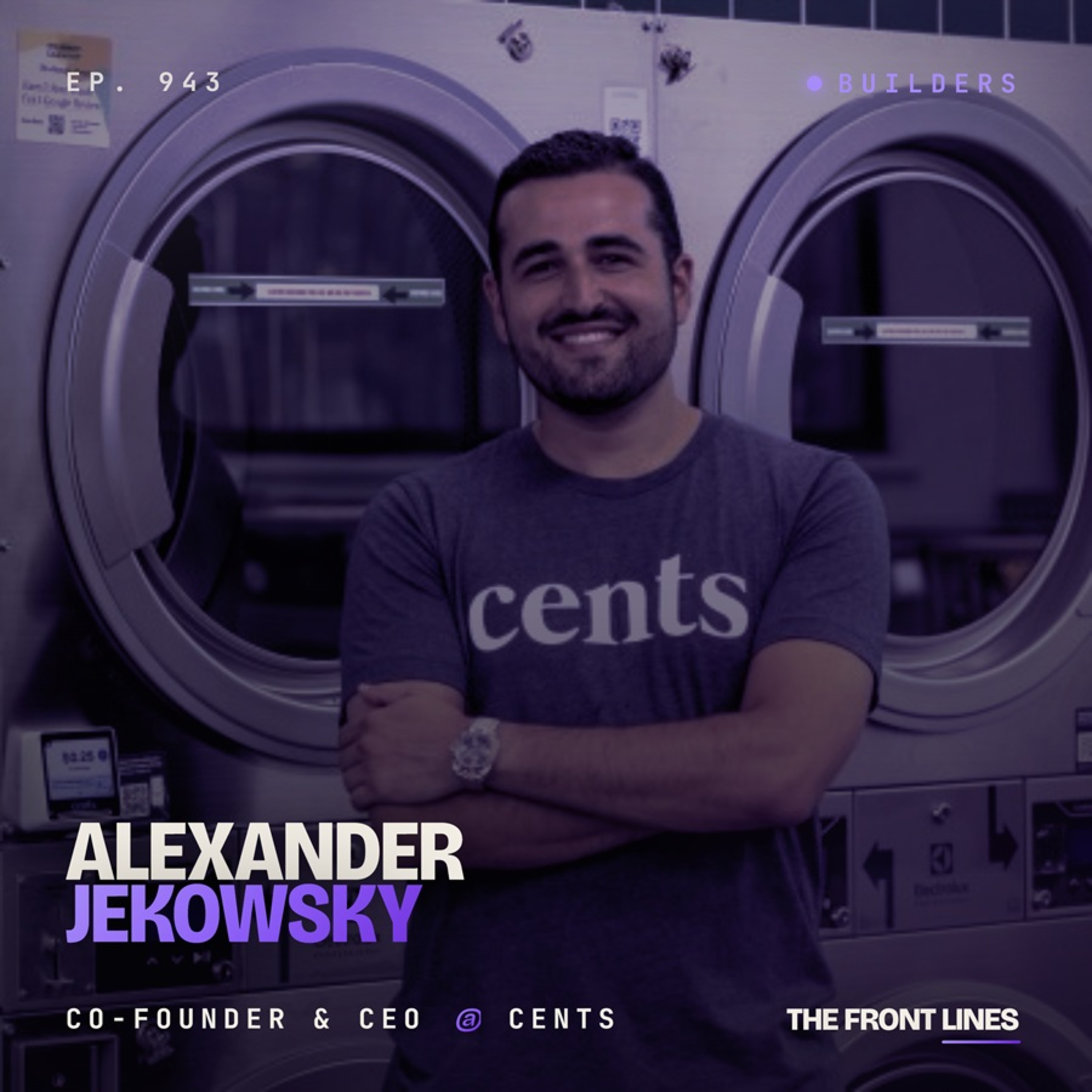 The market nobody wanted | Alex Jekowsky 20.08.2026 23minCents builds software, payments, and hardware for the laundry industry, serving laundromat operators and other commercial laundry businesses. The company is the only venture-backed company operating at scale in a market that most technology companies had overlooked, and has reached approximately one in six U.S. laundromats.In a recent episode of BUILDERS, we sat down with Alexander Jekowsky, CEO & Co-Founder of Cents, to learn how the company grew to serve roughly one in six U.S. laundromats by building technology for operators that most software companies had written off.Topics Discussed:How Alex discovered the laundromat industry while looking to buy a small business after selling his previous company, a payment system for college campusesWhy laundromats generate durable cash flows -- 30% margins, 20-plus year equipment lifespans, and leases that can outlive their operatorsHow Cents became the only venture-backed company in the laundry software space and what Alex means by "first executor advantage"Why 70% of Cents's early sales were inbound -- and what that revealed about how badly the market was underservedHow trade shows became Cents's "Super Bowl" and why they staffed booths 25 to 50% heavier than plannedThe tension between brand building and product credibility in SMB tech, and the question operators ask when they see a high-profile marketing spendWhy the laundromat business is "a highly services-based business" despite appearing commoditized on the surfaceHow AI and robotics fit into laundry -- and why improving efficiency without improving service quality is "net worse"Why Cents describes its role as digitizing, not transforming, the laundromat industryGTM & Technology Adoption Lessons:Build in markets where buyers are already searching. Alex said 70% of Cents's early sales were inbound. The market was ready -- operators were actively looking for product. Know who you're actually selling to. Laundromat operators are not the unsophisticated buyers that investors and technology companies assume. Alex said they are often "more cash generative than any of the portfolio companies of a seed or series A investor." The insult embedded in that assumption had left a massive gap -- and Cents walked into it with 70% inbound demand.First executor advantage is more durable than first mover advantage. Cents was not first to try selling software to laundromats. But Alex described the company's edge as "first executor advantage" -- being the only company willing to raise the capital and build the balance sheet to actually execute at a level operators were searching for.Use events as trust infrastructure, not just brand exposure. Trade shows were Cents's "Super Bowl." The company staffed booths 25 to 50% heavier than planned because Alex believed the people behind the brand were what converted attention into trust. Earn the right to innovate before leading with transformation. Alex described Cents's job as "to not transform or change" the laundromat business -- it's to "digitize, create optionality, and earn the opportunity to drive innovation over time." Understand why the business looks commoditized but isn't. Two laundromats can use the same equipment, detergent, and labor pool and still deliver entirely different customer experiences. The laundromat business is actually "a highly services-based business." Adoption required understanding that operators cared deeply about how customers felt in the store, not just about technology features.// Sponsors: Front Lines -- Silicon Valley's leading Podcast Production Studio. We help B2B tech companies launch, manage, and grow podcasts that drive demand, awareness, and thought leadership. Mention you are a listener and get a 10% discount. www.FrontLines.io/Podcast-as-a-Service
 -
 The friends-of-friends GTM model in cybersecurity | Elad Ben Meir 20.08.2026 18minOnit Security builds AI agents for exposure management, helping security teams cut through the noise of tens of millions of vulnerability scanner findings to identify and prioritize the ones that can actually be exploited. The company is built from the ground up on agentic infrastructure, positioning itself as the fifth generation of exposure management tooling in a category that has evolved from basic vulnerability scanners to AI-native platforms over three decades.In a recent episode of BUILDERS, we sat down with Elad Ben Meir, CEO & Co-Founder of Onit Security, to learn how a cybersecurity founder with a marketing background is building go-to-market motion in one of the most competitive markets in tech.Topics Discussed:How Onit Security's AI agents filter tens of millions of scanner findings to identify the ones that can actually be exploitedWhy exposure management is still an unsolved problem after three decades and how the category has evolved through five generationsWhy early GTM in cybersecurity is built entirely on relationships and CISO trustHow Elad used channel partnerships at his previous company SCADAfence to scale from early stage to growth, and why he's running the same playbook at Onit SecurityThe "mailbox money" channel model where partner sellers identify opportunities and hand off to Onit Security's sales teamWhy spreading marketing risk across field marketing, brand, digital, social, and employee evangelism is the right approach at the early stageHow a branding agency investment Elad almost didn't make became one of the best decisions in the company's historyThe VC defensibility question: how Onit Security is building its moat as frontier AI models expand into adjacent marketsWhy technical founders find storytelling the hardest GTM skill to developGTM & Technology Adoption Lessons:Trust before pipeline: Elad said early GTM in cybersecurity is "all about relationships." The first customers came from existing CISO relationships built over years. The story wasn't about product features alone -- it was about the founding team's personal track record and direct understanding of the problem. One co-founder had their previous company breached by a nation-state actor, and the forensic investigation traced the cause to an unmanaged vulnerability. Friends of friends compounds without effort: The second phase after direct relationships is peer referrals within the CISO community. Elad said the community is "very well knitted and close to one another," and successful deployments generate organic pipeline through peer trust. Channels are how you move from zero to scale: At SCADAfence, the GTM inflection came from strategic channel partnerships. Partners would identify the opportunity, open the door, and SCADAfence's sellers would close. Elad called it "mailbox money."Spread marketing risk early: At the early stage, a data-driven marketing machine is aspirational, not operational. Elad's approach is deliberate diversification: field marketing, brand building, digital, social, personal brand, and employees as evangelists. Branding is a bet, not a line item: Elad almost didn't sign the branding agency contract. The cost didn't justify itself analytically. His co-founders persuaded him: "We're building something big here. Let's bet on something big." He called it one of the best decisions the company has made. Marketing background as both asset and filter: Elad's time as VP of Marketing at a previous company gives him patience with early-stage marketing economics -- no direct correlation between money and results when you're starting -- and zero tolerance for agency narratives that don't hold up.// Sponsors: Front Lines -- Silicon Valley's leading Podcast Production Studio. We help B2B tech companies launch, manage, and grow podcasts that drive demand, awareness, and thought leadership. Mention you are a listener and get a 10% discount. www.FrontLines.io/Podcast-as-a-Service
 -
 The growth engine hiding in a 28-week order set | Andrea Ippolito 20.08.2026 22minSimpliFed is a maternal care at home platform focused on virtual breastfeeding and baby feeding support, delivering insurance-covered care from pregnancy through the first year postpartum.In a recent episode of BUILDERS, we sat down with Andrea Ippolito, CEO and Founder of SimpliFed, to learn how the company built a referral engine that is on track to receive referrals representing about five percent of all births in the US this year.Topics Discussed:How Andrea validated that parents would pay out of pocket for feeding support before pursuing insurance contractsWhy SimpliFed enters health plans bottoms up through the provider credentialing page rather than selling as a vendorWhy the company moved away from a large commercial team and built a credentialing team insteadHow integration into the 28-week prenatal order set inside OB electronic medical records became the growth engineThe three-legged stool behind SimpliFed's growth: patient demand, health plan coverage, and referral partnersWhy SimpliFed spent three years on a clinical study with UMassCurrent coverage: roughly 50% of commercial health plans, Medicaid in 12 states, all 50 states commercially, and two national TRICARE contractsWhat it would take to grow from referrals representing five percent of US births to fifty percentGTM & Technology Adoption Lessons:Validate willingness to pay before chasing contracts: Andrea knew insurance contracts would take years, so the first test was whether parents would pay out of pocket. She recruited local lactation consultants as 1099 providers, ran the service on commercial off-the-shelf software, and let real payment behavior justify the harder infrastructure investments that followed.Know whether you are a vendor or a provider: SimpliFed originally built a large commercial team, then learned it did not need one. As Andrea said, "We are an in-network provider with a health plan. We're not a vendor." Providers enter health plans bottoms up through the provider credentialing page, so the company replaced its commercial engine with a strong credentialing team.Distribution beats proprietary software: Andrea said that with AI, "having proprietary software and all that is not as exciting as it used to be. It's about distribution." SimpliFed's growth runs on EMR and API integrations, not product novelty.Make the referral structured, not handcrafted: Posters and handcrafted outreach were fine for customer discovery, but growth came from integration into the 28-week prenatal order set template inside the OB's electronic medical record. The provider refers without changing their workflow, and the consented, structured referral data makes the motion scalable, predictable, and high growth.Augment the clinician instead of competing with them: With one in three counties lacking access to OB-GYNs and fewer OBs entering practice, SimpliFed positions itself as taking work off providers' plates. OB adoption depends on showing the company complements their care rather than threatening it.Buy evidence early because it cannot be rushed: SimpliFed's clinical study with UMass took three years and a full IRB process. The results, including 16 weeks longer breastfeeding duration and lower PHQ-9 scores at six months, are what make the ROI case to health plans, whose number one postpartum cost driver is maternal mental health.// Sponsors: Front Lines -- Silicon Valley's leading Podcast Production Studio. We help B2B tech companies launch, manage, and grow podcasts that drive demand, awareness, and thought leadership. Mention you are a listener and get a 10% discount. www.FrontLines.io/Podcast-as-a-Service
 -
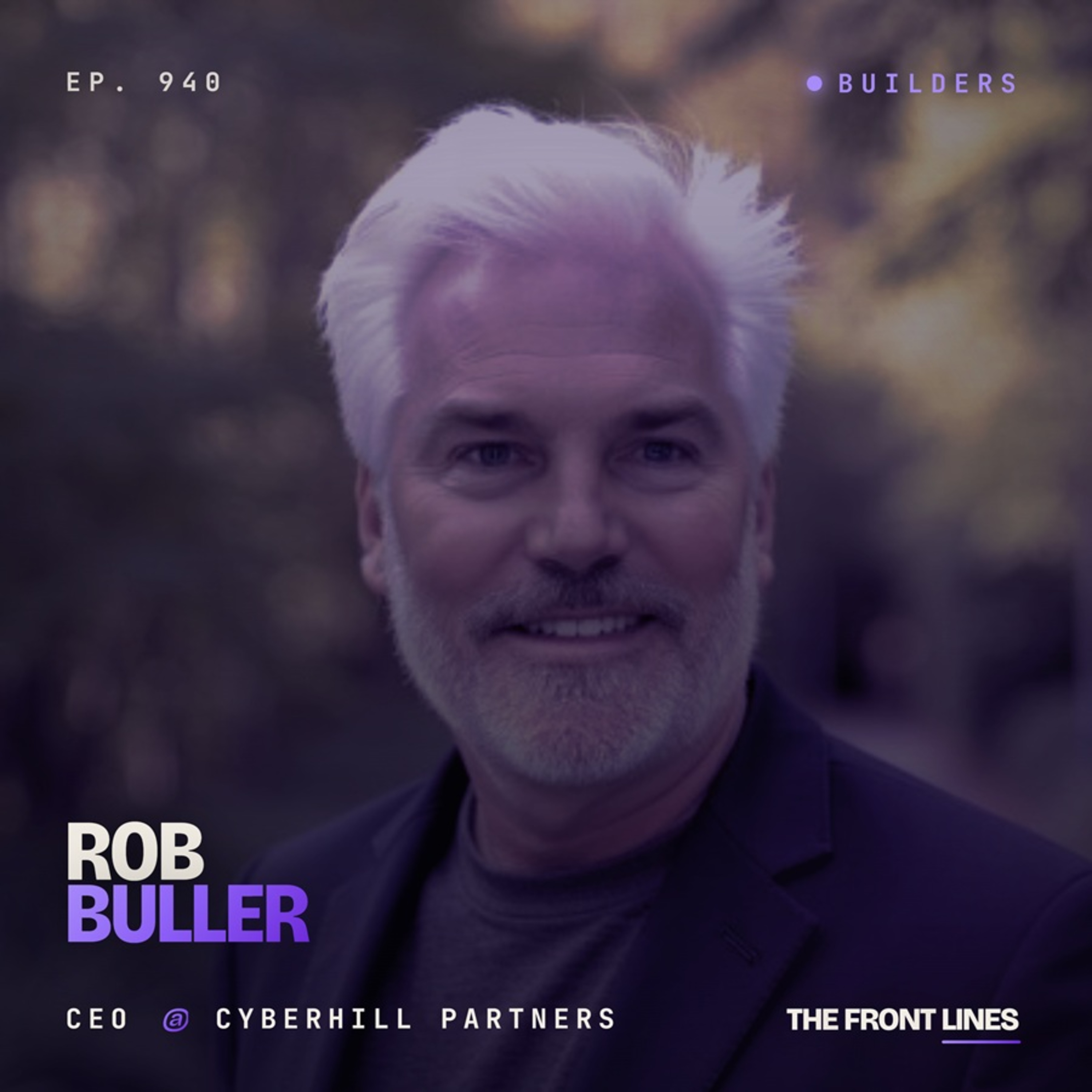 The head of AI who had never heard of an ontology | Rob Buller 20.08.2026 19minCyberhill Partners builds and deploys enterprise AI solutions, including Cerebro, an enterprise AI platform Rob describes as AI in a box, and Wolverine, a digital twin product, drawing on eight years of AI work inside the intelligence community.In a recent episode of BUILDERS, we sat down with Rob Buller, Chief Executive Officer of Cyberhill Partners, to learn how the company is bringing intelligence-community-grade AI to enterprise buyers who are still missing the semantic layer that makes AI work.Topics Discussed:Why the core principles of technology adoption have not changed, but complexity has, splitting the buyer across CIOs, CTOs, and CISOsThe AI factory model: a runtime AI fabric that plugs into Snowflake, Databricks, Grok, or Gemini instead of shipping compiled, embedded logicHow Cyberhill positions Cerebro against Palantir on cost, vendor lock-in, and implementation speedWhy Rob has been shocked that heads of AI at multi-billion dollar companies do not know what an ontology isHow large incumbents like Workday and Salesforce try to freeze the market when new technology emergesWhy Cyberhill picks verticals by following demand into government, automotive, and healthcareMarketing at the local level in secondary markets like Dallas and Denver with billboards, airports, and quarterly steak dinnersPartnerships with ServiceNow and Databricks, and government AI work including a global biosurveillance platformGTM & Technology Adoption Lessons:The market cannot buy what it does not understand: Rob has been on roughly a hundred client calls where heads of AI at multi-billion dollar companies could not define an ontology. Without the semantic layer, he argues, you cannot apply context to AI or get traceability. Until buyers understand that, adoption stalls, so education is now part of the sales motion whether Cyberhill wants it or not.Sell the problem solved, not the underlying technology: "People don't care about ontologies and knowledge graphs, they care about can you solve my problem." Cyberhill leads with the business problem and only opens up the technical underpinnings when a buyer wants to know why the product is different.Expect incumbents to freeze the market: Rob says large companies respond to new AI entrants by telling customers they already have AI covered. He admits it does not really work, but it works a little bit. Plan the GTM knowing buyers are hearing "you don't need AI" from vendors they already pay.Let demand pick your verticals: "I've found that business is a lot like water. It finds the lowest level." Rather than forcing a vertical strategy, Cyberhill follows where demand shows up: government, automotive, healthcare. When healthcare demand grew, the company hired a doctor, because subject matter experts are how it enters an industry credibly.Position against the expensive incumbent on speed to value: Rob calls Palantir a great company and a great platform, but points to cost and vendor lock-in. Cyberhill's counter is malleability and implementation speed: "we can implement it in days, not months."Compete where the playing field is level: Instead of fighting Salesforce for attention in New York, LA, and San Francisco, Cyberhill markets at the local level in secondary markets like Dallas and Denver, with billboards, airport advertising, and quarterly steak dinners. Own the category conversation before the window closes: Rob predicts everybody will be talking about the semantic layer in enterprise AI within three years, if not sooner. He also acknowledges the loudest technology does oftentimes win, which makes owning that conversation early a strategic requirement, not a vanity project. // Sponsors: Front Lines -- Silicon Valley's leading Podcast Production Studio. We help B2B tech companies launch, manage, and grow podcasts that drive demand, awareness, and thought leadership. Mention you are a listener and get a 10% discount. www.FrontLines.io/Podcast-as-a-Service
 -
 Breaking into the twenty-year startup graveyard of mortgage lending | Naren Krishna 18.08.2026 22minBalerion AI is an agentic AI platform for mortgage loan manufacturing, automating origination work like document analysis, income review, and underwriting for lenders. The company came out of stealth this spring and is backed by a $6M seed round led by Kleiner Perkins, with its platform in production at FM Home Loans, a lender originating two billion dollars in annual loan volume.In a recent episode of BUILDERS, we sat down with Naren Krishna, CEO and Co-Founder of Balerion AI, to learn how the company is breaking into an industry he describes as a twenty-year startup graveyard.Topics Discussed:Why lending has been a startup graveyard for twenty years, and the three failure buckets Naren sees in past mortgage tech companiesWhy the cost to originate a loan went from about $4,500 in 2007 to around $13,000 in 2026 even as technology improvedWhy Naren argues the worst thing that happened to the mortgage industry was its vendors, with lenders using an average of 32 point solutionsHow 100 pages of guidelines became an 800-page PDF that changes every couple of months, and why people spend, not technology spend, absorbed the complexityThe stare and compare problem: multiple roles reviewing the same 800 pagesHow Balerion recruited by marrying AI talent, infrastructure talent, and lending expertiseWhat made FM Home Loans the right pilot partner, and how the case study opens the rest of the marketThe launch video that led to hiring a VP of sales off a LinkedIn likeHis color-coded framework for executive updatesHow the vision expanded from automated underwriting toward loan quality for capital and secondary marketsGTM & Technology Adoption Lessons:Study the graveyard before entering it: Naren puts past mortgage tech failures into buckets: companies beholden to macroeconomic shocks because they served only one loan category, companies that forced their own UI or database onto lenders instead of living where underwriters and processors already work, and companies that never understood the distinct needs of independent mortgage banks, depository institutions, and the secondary market.Sell a generalizable system, not a point solution: Lenders use an average of 32 vendors for one manufacturing process, which means underwriters must learn the process, what each vendor does, and how to fill the gaps between them. Pick a pilot partner who already believes: FM Home Loans wanted a world where a mortgage application works like a credit card application, knew it lacked the in-house AI expertise to build it, and originates two billion dollars in annual volume across a broad mix of loan types. Buy credibility in relationship-based industries: Balerion's VP of sales has been in mortgage for decades and opens doors the technology alone cannot. In an industry where everyone claims AI, relationships get the meeting and the technology has to back up the claims.Marketing bets pay off in unpredictable ways: The launch video cost about ten grand and could not be tied to a tangible outcome, until someone liked the LinkedIn post about it and Balerion recruited them. Simplify communication to match attention spans: Naren color-codes executive updates green, amber, and red. Green means do not even look at it; red means you will get a call from me in four hours.Hire against the bet, not the present: Naren spends a quarter to a third of his time on hiring and posts JDs six months ahead of anticipated need, because finding the right person takes three to four months.// Sponsors: Front Lines -- Silicon Valley's leading Podcast Production Studio. We help B2B tech companies launch, manage, and grow podcasts that drive demand, awareness, and thought leadership. Mention you are a listener and get a 10% discount. www.FrontLines.io/Podcast-as-a-Service
 -
 The 90% trust artifact that opened OPAQUE's market | Aaron Fulkerson 17.08.2026 19minIn a recent episode of BUILDERS, we sat down with Aaron Fulkerson, CEO of OPAQUE, to learn how the company found its market in sovereign AI deployments after discovering that customers would accept 90% verifiability with known gaps rather than waiting for perfect end-to-end confidential computation.Topics Discussed:Why Aaron joined OPAQUE from ServiceNow only after the founders agreed to apply the technology to language modelsHow generative AI systems leak data by architecture, and why that threatens both enterprises and frontier labsThe first customer: a European Union cybersecurity agency running analytics and MLHow the focus evolved from high tech to regulated industries to sovereign deployments over roughly sixteen monthsThe 2025 realization that a trust artifact with 90% verifiability and known gaps was good enough for customersTurning down a nation-state-scale sovereign deployment in the UAE, and how that honesty turned the entity into a Series B investorWhy OPAQUE handed the Confidential Computing Summit to the Linux FoundationWhat Apple's private cloud compute expansion signals for enterprise AI adoptionGTM & Technology Adoption Lessons:Refuse to commercialize the wrong product: Before joining, Aaron told the founders that if the product did not involve language models, it was probably not interesting and would be too difficult to build a commercial effort around. The replatforming from confidential Spark analytics to language models started essentially on day one.Let customers define good enough: OPAQUE assumed it needed end-to-end confidential computation across CPUs and GPUs, but confidential GPU availability through hyperscalers was slow. The company discovered through customers that a trust artifact delivering roughly 90% verifiability of policies, with known gaps, was acceptable. Aaron called it a we-have-been-overthinking-this moment.Honesty about scale limits can win the deal: When a UAE entity wanted OPAQUE to roll out as part of a sovereign stack for a 13 gigawatt build-out, Aaron told them nation-state scale was not deliverable in 2025, since the company had just put its first customers into production. OPAQUE took on two or three enterprise-scale projects instead, and the entity became an investor in the Series B round.Follow the pain into regulated industries: The initial focus was high tech, but OPAQUE learned that regulated industries with strict requirements had the real urgency. Just over a year before the conversation, the company shifted focus to sovereign deployments: healthcare data, banking data, and high tech that is critical infrastructure.Build the ecosystem, not just the brand: OPAQUE hosts the Confidential Computing Summit, which grew until the Linux Foundation became co-host and took ownership. Aaron's view is that no one entity can own the digital sovereignty conversation; OPAQUE needs Google, Microsoft, and Apple building interoperability for the category to exist.Use the anchor example customers already trust: Aaron points to Apple architecting Siri's Gemini-powered processing to be confidential end-to-end. If a basic chatbot was too great a data leakage risk for Apple, enterprises running far leakier AI agents on far more valuable data have their answer.// Sponsors: Front Lines -- Silicon Valley's leading Podcast Production Studio. We help B2B tech companies launch, manage, and grow podcasts that drive demand, awareness, and thought leadership. Mention you are a listener and get a 10% discount. www.FrontLines.io/Podcast-as-a-Service
 -
 You don't evangelize the product, you evangelize the category | Gerardo A. Dada 17.08.2026 32minIn a recent episode of BUILDERS, we sat down with Gerardo A. Dada, former CMO of Catchpoint, to learn how the company created the internet performance monitoring category and got customers, press, and analysts to adopt its language. Topics Discussed:Why category creation only matters when it actually grows the businessHow Gerardo found the category by studying what Catchpoint did better than anybody else: monitoring the internet itselfThe three factors that made internet performance monitoring stick: a real market problem, full CEO support, and a disciplined language architectureHow Catchpoint validated the category with interviews with ten of its best customers before launching, and how SAP renamed internal teams using the category languageWhy Catchpoint told buyers their two options were Cisco or CatchpointThe newsjacking system behind Catchpoint's best traffic days of the monthThe three-phase analyst relations sequence, from accessible analysts up to Gartner and ForresterGiving journalists free survey data and direct access to the same outage alerts customers receivedWhere category creation money gets wastedGerardo's book OutPosition, and why strategy, competitive differentiation, and positioning must work as one systemGTM & Technology Adoption Lessons:The market decides whether your category exists: Gerardo said, "What matters is the market needs to say that category exists." Anchor the category in a real problem, not product uniqueness: "It was not the company making up a category just to try to differentiate, or making a category based on what we think makes our product unique. It was made on a real need in the market." Validate the language before you launch it: Catchpoint ran interviews with ten of its best customers and asked how they would react if the company explained itself in the new language. The feedback: "I think that describes exactly what the company does and what is unique." Some customers renamed their teams using the proposed language, with SAP calling teams application and internet performance monitoring, AIPM.Evangelize the category, not the product: Catchpoint told customers their two options for solving the problem were Cisco or Catchpoint. Build newsjacking as a system, not a reflex: Pre-approved talking points, an analysis team, and executive calendars were ready by six in the morning after a five a.m. wake-up call. Gerardo's filter: "We should only talk to the market when it has something unique and interesting about the news that is happening." Major outages became Catchpoint's best traffic day of the month, with spikes of five to ten times.Think about the headline first: Ballpark financial impact estimates gave journalists what they needed. "You need to be prepared with those zingers for the press so that they actually pay attention to what you're saying and increases your likelihood of being quoted if you say something that's short, bold, and interesting to the market. So think about the headline first."Sequence analysts by path of least resistance: Start with analysts who are paid to write articles that validate the category, then bring that evidence to mid-tier analysts, and only then to Gartner and Forrester, who by that point are seeing market evidence of a trend. Treat journalists as customers to serve: Catchpoint handed the press its full survey data to use freely and gave journalists the same outage alerts that IT teams at Amazon received, instead of watered-down quotes that survive three rounds of legal review.Concentrate resources behind fewer concepts: Overdoing category creation wastes money that could promote the brand or product. // Sponsors: Front Lines -- Silicon Valley's leading Podcast Production Studio.We help B2B tech companies launch, manage, and grow podcasts that drive demand, awareness, and thought leadership. Mention you are a listener and get a 10% discount. www.FrontLines.io/Podcast-as-a-Service
 -
 What it actually means to build AI-enabled services | David DeWolf 11.08.2026 23min2X is a go-to-market services company that has grown 50% YoY for seven straight years, scaling to roughly 1,200 people, with new investment from Insight Partners last year. On BUILDERS, CEO David DeWolf explains why his prior company, 17-person agentic platform Knownwell, combined with 2X, why he ended up leading the merged entity, and how he is rethinking pricing and AI enablement as services and software collide.Topics discussed:How the acquisition came together and why it moved so fastWhy KnownWell was getting pulled into services and 2X was getting pulled into softwareWhy David was named CEO of the combined companyThe vision for a human-agentic go-to-market operating systemWhat changes when specialization disappears and generalists take overHow 2X differs from a traditional agency modelWhere AI pricing actually stands: inputs, outputs, and outcomesWhy replacing humans with AI costs more than the humansHow to run AI enablement beyond handing out licensesWhy rigid AI policies kill experimentationHow headcount scales when services and software combine
 -
 Why SubBase's founder still listens to every sales and support call | Eric Helitzer 06.08.2026 22minEric Helitzer is the Founder and CEO of SubBase, a B2B vertical SaaS platform giving construction subcontractors and self-performing GCs a system for managing materials, a workflow historically run on email, text, and phone calls. Eric returns to BUILDERS to unpack an ICP that emerged on its own, the "AI wrapper" defensibility question he faced at Series A, and how he stays embedded in sales and support at scale.Topics Discussed: How self-performing GCs became a fast-growing segment SubBase never originally targeted Why paid social and paid advertising failed to convert in a relationship-driven buying process A phone-first, discovery-led outbound motion and the signal used to separate real pipeline from booked meetings Defining the category as a materials operating system rather than a point solution Why "is this just an AI wrapper" was the core Series A defensibility question, and how Eric answered it Staying embedded in sales and support detail as the company scales past founder-led sellingGTM Lessons For B2B Founders: Let adjacent ICPs surface through usage, not planning: Self-performing GCs, contractors who take on their own labor and material risk instead of subcontracting it out, were not a segment SubBase set out to sell. Eric called it "our newest, not a new ICP, but one that we've seen gravitating towards us." Overlap in workflow with existing customers made the expansion visible before it became a strategy.Qualify for pain on the call, not after it: SubBase reps diagnose the prospect's actual procurement pain during the cold call itself, not just book time. Eric's bar for a correctly pain-funneled call is simple: does the prospect show up to the follow-up meeting. "If that person shows up on a call, that's real pain." A no-show is coaching data on messaging, not a scheduling problem.Defensibility in an AI-native narrative sits in the data layer, not the workflow: Series A investors pushed on whether SubBase could be replicated as a thin AI wrapper. Eric's answer centered on proprietary data from vendor communication, pricing, and reconciliation across a fragmented industry, something "you can't just rip off of a Claude or GPT." When your workflow looks simple, your case has to rest on compounding data, not interface.Separate the investor narrative from the customer narrative on purpose: Framing SubBase as an "operating system" answered investor questions about moat. But construction buyers aren't shopping for an OS, they want one acute pain solved. Audit whether category language built for fundraising has quietly become what your sales team pitches.// Sponsors: Front Lines — We help B2B tech companies launch, manage, and grow podcasts that drive demand, awareness, and thought leadership. www.FrontLines.ioThe Global Talent Co. — We help tech startups find, vet, hire, pay, and retain amazing marketing talent that costs 50-70% less than the US & Europe. www.GlobalTalent.co//Don't Miss: New Podcast Series — How I Hire Senior GTM leaders share the tactical hiring frameworks they use to build winning revenue teams. Hosted by Andy Mowat, who scaled 4 unicorns from $10M to $100M+ ARR and launched Whispered to help executives find their next role.Subscribe here: https://open.spotify.com/show/53yCHlPfLSMFimtv0riPyM
 -
 How CisLunar discovered its real product while building a power supply for internal use only | Gary Calnan 06.08.2026 22minCisLunar Industries builds the power electronics that run everything on a satellite, taking raw power and converting it into what a spacecraft's systems actually need, similar to how a laptop's charging block converts wall power into something the machine can use. The company was founded in 2017 with a different mission, aiming to become the steel mills of space by manufacturing usable materials from what's mined in the solar system. That early work led the team to build its own power supply for an experimental foundry, and the flexibility of that system turned into the company's real business: power processing units that run electric propulsion systems on satellites. In a recent episode of BUILDERS, we sat down with Gary Calnan, CEO of CisLunar Industries and a returning guest, to learn how the company pivoted from space manufacturing to power electronics, what it takes to win government contracts as an unknown startup, and the near death experience that nearly ended the company right before Thanksgiving.Topics Discussed:CisLunar's original thesis as the "steel mills of space," built to manufacture materials mined off-world How an internally built power supply for an experimental foundry became the company's actual productThe EPIC-PPU-1000, the dual mode power processing unit that runs both a Hall Effect Thruster and an ArcJet thruster off one system Using a smaller, paid partner role on an SBIR proposal to borrow credibility as an unknown startup Resubmitting the same proposal multiple times, adding named suppliers each round until it won The near death stretch that cost the team a commercial customer and a government contract at once Using an externally imposed grant deadline to force undecided investors to commitThe plan to scale from single digit units a month to over 100 a month within two yearsGTM Lessons For B2B Founders:Pay a name-brand player to co-sign your first proposal: With no track record, Gary paid NanoRacks roughly $5,000 to take a small role on CisLunar's phase one SBIR. NanoRacks's existing standing with NASA Marshall functioned as an implicit endorsement of an unproven team. The mechanism: a small paid role, not a free favor, gets a bigger name to formally attach itself to your submission. Resubmit with new suppliers attached, not new copy: The EPIC-PPU-1000 proposal was rejected two or three times with the same core idea. It won only after Lockheed Martin and Safran Space joined as thruster suppliers. Shape the proposal before you write it, not after rejection: program officers stake personal credibility on their picks, per Gary. Use a real deadline as investor leverage: When CisLunar's only commercial customer and its Space Force contract lapsed simultaneously, the team went to partial pay. A matching NASA grant with a fixed deadline forced fence-sitting investors to decide, and converted into the round's eventual lead. Let your core architecture define your second market: CisLunar's power supply used a hybrid digital-analog design to auto-adjust as metal resistance shifts during induction heating. // Sponsors: Front Lines — We help B2B tech companies launch, manage, and grow podcasts that drive demand, awareness, and thought leadership. www.FrontLines.ioThe Global Talent Co. — We help tech startups find, vet, hire, pay, and retain amazing marketing talent that costs 50-70% less than the US & Europe. www.GlobalTalent.co //Don't Miss: New Podcast Series — How I Hire Senior GTM leaders share the tactical hiring frameworks they use to build winning revenue teams. Hosted by Andy Mowat, who scaled 4 unicorns from $10M to $100M+ ARR and launched Whispered to help executives find their next role.Subscribe here: https://open.spotify.com/show/53yCHlPfLSMFimtv0riPyM
 -
 How Badge chose retail and commerce as its entry vertical inside a horizontal wallet market | Eric Senn 04.08.2026 22minBadge is building the infrastructure layer for digital wallets, giving businesses a single integration point to issue, manage, and update loyalty cards, gift cards, and tickets across Apple Wallet, Google Wallet, and Samsung Wallet. The company counts Stripe among its Series A investors. In a recent episode of BUILDERS, we sat down with Eric Senn, Co-Founder and CEO of Badge, to learn how the company found its ICP, built its go-to-market motion, and positioned itself as category infrastructure.Topics Discussed: Eric's path from the consumer app Storr to discovering wallet infrastructure through the airline boarding pass Landing Carrefour as Badge's first major enterprise customer The three-platform integration problem across Apple, Google, and Samsung Wallet Building the product market fit bingo card to map verticals against company segment Why airlines were early wallet adopters and how that shaped Badge's go-to-market focus The shift from market education to inbound demand as wallet adoption matured Badge's Wallet Urgency Score and account-based marketing approach Matching go-to-market hires to actual deal complexity, not seniority alone The naming process behind Badge and modeling the brand after Stripe and Twilio Eric's vision for wallets absorbing every consumer touchpoint over the next five yearsGTM Lessons For B2B Founders: Match sales hires to your actual motion, not a generic enterprise team: Badge's first two go-to-market hires came from Splash, an events company acquired by Cvent, and from Cardlytics and Amex. Both backgrounds mirrored Badge's real ICP: long enterprise cycles, acquisition experience, and patience for category education. Eric named the exact failure mode this avoids: "you might end up with enterprise guys when you really have a more of a PLG motion." Hire for the validated deal cycle, not the seniority.Build a two-axis discovery framework before committing to a vertical: Badge's "product market fit bingo card" plotted verticals, including banking, retail and commerce, and travel and hospitality, against company segment, from SMB to enterprise, then worked the grid systematically. This turns an unfocused TAM into a prioritized sequence of bets instead of chasing whichever prospect answers first. Build an internal intent-signal system instead of running broad campaigns: Badge created "the Woo score, the wallet urgency score," a social listening system that pings Slack when a market signal suggests a company needs a wallet solution now, paired with account-based marketing and zero paid ads. Use your core creative asset to break one false belief, not to explain generically: Badge's adoption barrier wasn't awareness, it was that buyers assumed the wallet was static. Eric said, "we wanted to invest in video because video shows motion," engineering the homepage hero video to counter that specific assumption. Treat naming as an early positioning bet, not a branding exercise: Eric's advice, "look at who you want to be when you grow up," reflects modeling Badge's name and positioning after infrastructure companies like Stripe and Twilio instead of the loyalty and commerce use case Badge started in. Stripe later became a Series A investor.// Sponsors: Front Lines — We help B2B tech companies launch, manage, and grow podcasts that drive demand, awareness, and thought leadership. www.FrontLines.ioThe Global Talent Co. — We help tech startups find, vet, hire, pay, and retain amazing marketing talent that costs 50-70% less than the US & Europe. www.GlobalTalent.co//Don't Miss: New Podcast Series — How I Hire Senior GTM leaders share the tactical hiring frameworks they use to build winning revenue teams. Hosted by Andy Mowat, who scaled 4 unicorns from $10M to $100M+ ARR and launched Whispered to help executives find their next role. Subscribe here: https://open.spotify.com/show/53yCHlPfLSMFimtv0riPyM
 -
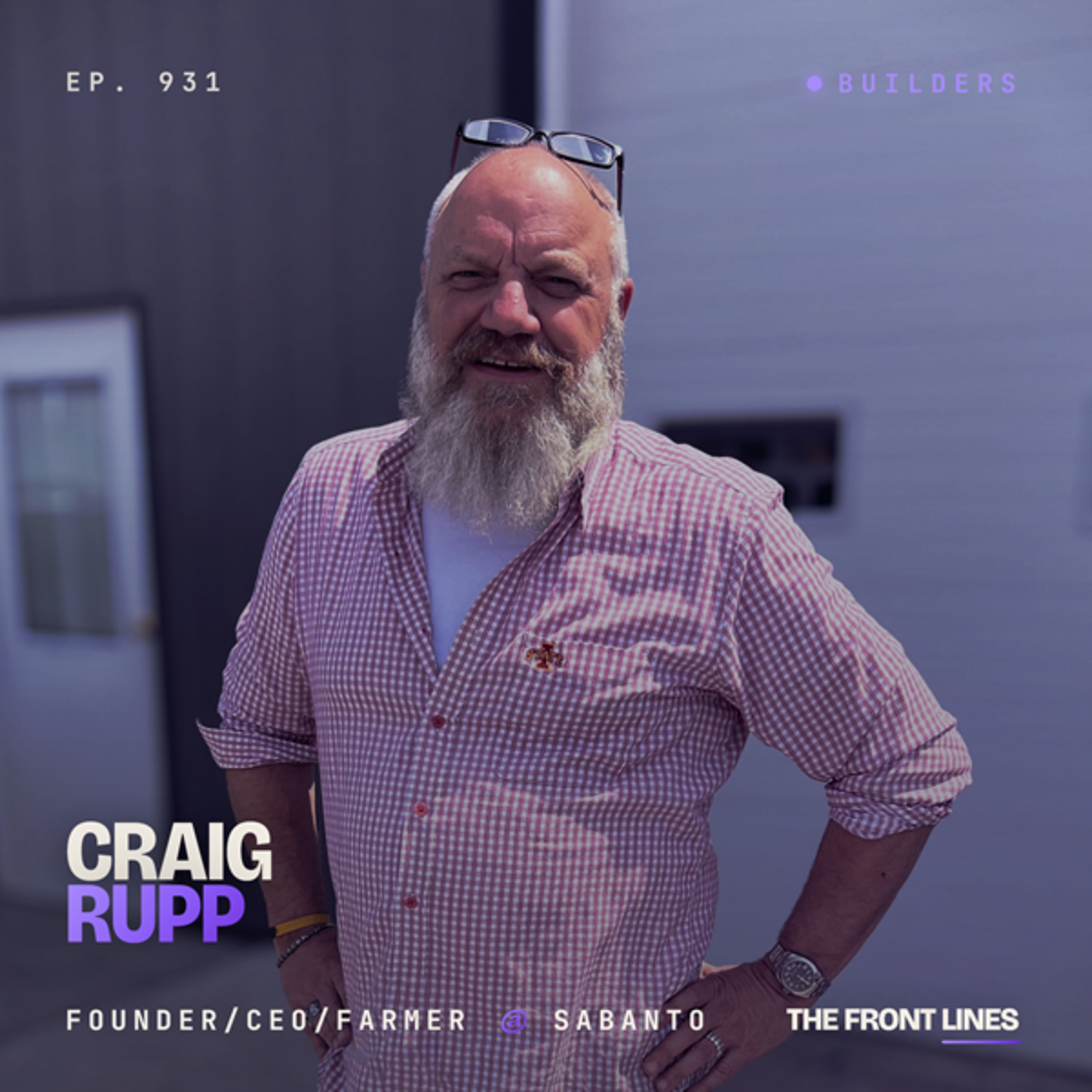 How Sabanto runs its 20-person Farmer Advisory Board | Craig Rupp 04.08.2026 22minSabanto makes a retrofit autonomy kit that attaches to off-the-shelf tractors — converting machines farmers already own into autonomous systems capable of performing field operations without a driver. In this episode of BUILDERS, Craig Rupp returns three years after his first appearance to share what he's learned building the commercial motion for ag autonomy from scratch, in a market where no playbook existed.Topics Discussed:Why Sabanto chose retrofit over building from scratch — and why that decision defined their GTMPioneering a farm-by-farm demo motion in a market where trade shows don't close dealsBuilding Sabanto's 12-dealer network and why co-selling was non-negotiable in the early daysWhy change management is a product problem, not a customer success problemThe Farmer Advisory Board: structure, mechanics, and why sales is never in the roomWhat Monarch's collapse reveals about deployment pacing and investor-driven GTM pressureCraig's vision for smaller, redundant autonomy systems replacing $1.2M high-horsepower tractorsGTM Lessons For B2B Founders:Count the change vectors your customer must absorb — then minimize them. Monarch asked farmers to switch brands, switch fuel types, add electrical infrastructure, and adopt autonomy simultaneously. Sabanto's retrofit model collapses that to one: the autonomy layer on a tractor they already own, service, and trust. When Craig designed the product, he was designing the adoption surface too. Founders entering operationally entrenched markets should map every change vector before locking in architecture.In a "show me" market, the demo is the sales motion. Video doesn't close. Trade shows don't close. Craig drove to farms across the US in a three-quarter ton truck, had the system running in under two hours, and left it for a week or two before a farmer would buy. The unlock wasn't features — it was: can I see it on my land? For founders selling physical or deeply operational technology, the on-site proof-of-concept is the primary revenue activity.Be present for every early channel installation — not to audit, but to train the trainer. Sabanto's 12 dealers handle installation, training, and support. But early on, Craig's team was on-site for every install, training the dealer to train the end customer. You can't delegate institutional knowledge you haven't compressed yet. Channel doesn't scale until your learning is transferable.Structure your advisory board so sales can't contaminate it. Craig's Farmer Advisory Board has about 20 members selected for candor. Monthly, his COO runs the session alone — no marketing, no sales. Opens with the top five problems engineering is working on, then hands the mic to customers. Most founders run advisory boards as a brand exercise. Craig runs his as a direct engineering input.Deployment pacing is a GTM decision. Craig's read on Monarch: investor pressure drove volume before support, distribution, and bug resolution could keep pace. His countermodel — 10 units over the first six months, then 50 — isn't ops discipline. It's a market trust calculation. In hardware and deep tech, burning early adopters poisons the category at first contact.// Sponsors: Front Lines — We help B2B tech companies launch, manage, and grow podcasts that drive demand, awareness, and thought leadership. www.FrontLines.ioThe Global Talent Co. — We help tech startups find, vet, hire, pay, and retain amazing marketing talent that costs 50-70% less than the US & Europe. www.GlobalTalent.co//Don't Miss: New Podcast Series — How I Hire Senior GTM leaders share the tactical hiring frameworks they use to build winning revenue teams. Hosted by Andy Mowat, who scaled 4 unicorns from $10M to $100M+ ARR and launched Whispered to help executives find their next role. Subscribe here: https://open.spotify.com/show/53yCHlPfLSMFimtv0riPyM
 -
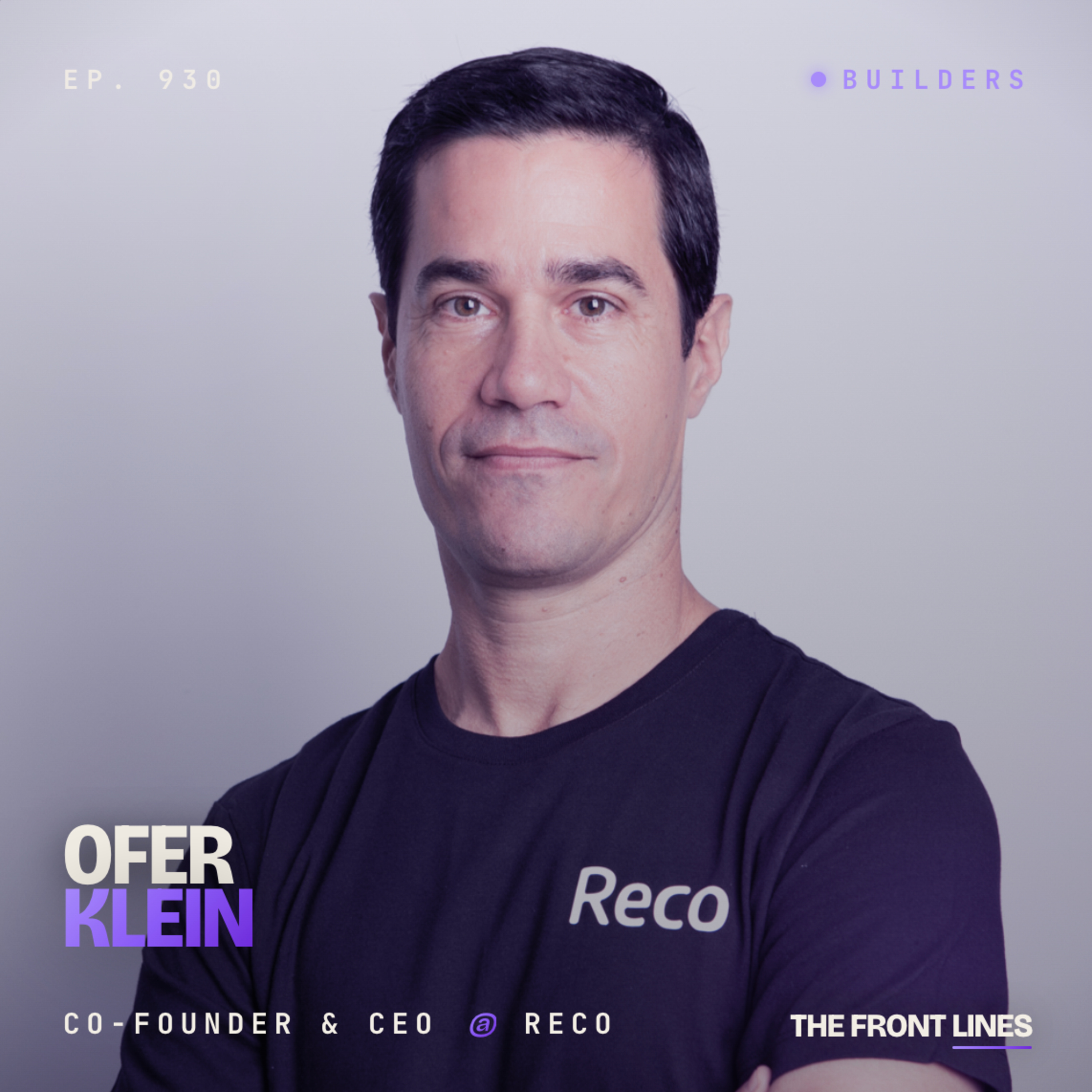 How Reco validates AI security bets: A three-signal framework before scaling any decision | Ofer Klein 31.07.2026 21minReco is an AI SaaS security company that helps enterprises discover and secure the AI agents and applications spreading across their SaaS environments. In a recent episode of BUILDERS, we sat down with Ofer Klein, Co-Founder and CEO of Reco, to unpack the two sequential bets that reshaped the company's direction, and the operating discipline — borrowed from his time as an Israeli Air Force pilot — that he uses to validate every major GTM decision before scaling it.Topics Discussed:The two sequential bets: securing the SaaS layer first, then AI security, and why each one only felt obvious in hindsightA customer who had built their entire security practice around Reco, and how Ofer handled that conversation mid-pivotThe three-part validation framework Ofer runs before doubling down on any bet: pipeline, purchase, adoptionReframing security spend as a mandate the buyer's leadership has already funded, not a new budget requestWhy roughly eighty percent shadow AI usage is the predictable result of strict blocking policies, not an anomalyThe specific headcount and complexity thresholds (2,500 vs. 25,000+ employees) that forced Reco to rebuild its commercial team for enterprise motionWhy the AI security category will keep fragmenting into specific use cases rather than consolidate into one buyer-desired platformTiming the RSA Conference spend to actual market pull rather than internal convictionGTM Lessons For B2B Founders:Test pipeline with the "kitchen table" filter, not enthusiasm: Ofer's litmus test is whether a prospect has real budget and is already evaluating competitors. If they love the pitch but there's no budget conversation happening, "it means they're bullshitting you." Founders selling into security or infra should qualify only on active competitive evaluation, not expressed interest.Sell into an already-funded mandate, don't create a new budget line: Reco's fastest deals came from connecting to a commitment the customer's CEO had already resourced, like a stated goal to save a billion dollars through AI, not from pitching security as new spend. Founders should map their product against budgets that already exist.Treat shadow usage as a measurable byproduct of policy, not a rogue-actor problem: Roughly eighty percent of a typical customer's AI usage was happening outside sanctioned tools before Reco engaged, driven directly by strict blocking. Founders in security or compliance should build the sanctioned path as the differentiator, not the enforcement layer.Re-underwrite your team against the next stage's deal complexity, not the current one: Reco's shift from sub-2,500-employee commercial deals to 25,000-plus employee enterprise accounts required replacing sellers and managers who had performed well at the smaller stage. The tell isn't past performance, it's whether that person has sold at the buyer sophistication the next stage requires.Resist "one platform" category thinking, even when the buyer asks for it: Ofer said buyers consistently want a single solution that secures everything, but that outcome has never materialized and he doesn't expect it will. Founders should design roadmap and messaging around the specific slice they win, not a mythical all-in-one.// Sponsors: Front Lines — We help B2B tech companies launch, manage, and grow podcasts that drive demand, awareness, and thought leadership. www.FrontLines.ioThe Global Talent Co. — We help tech startups find, vet, hire, pay, and retain amazing marketing talent that costs 50-70% less than the US & Europe. www.GlobalTalent.co//Don't Miss: New Podcast Series — How I Hire Senior GTM leaders share the tactical hiring frameworks they use to build winning revenue teams. Hosted by Andy Mowat, who scaled 4 unicorns from $10M to $100M+ ARR and launched Whispered to help executives find their next role. Subscribe here: https://open.spotify.com/show/53yCHlPfLSMFimtv0riPyM
 -
 How GlobalComix is building a publisher operating system | Henrik Rydberg 30.07.2026 21minGlobalComix operates a digital comics platform that brings stories from more than 330 publishers and 25,000 independent creators around the world to readers on their phones. In this episode of BUILDERS, we sat down with Henrik Rydberg, CEO of GlobalComix, to learn how the company is building the licensing infrastructure and creator tools needed to bring one of the last major entertainment categories to fully digitize, and why GlobalComix increasingly thinks of itself as a "publisher operating system" rather than a consumer app.Topics Discussed:Why comics are one of the last major entertainment mediums to go digitalThe licensing complexity behind working with 330+ publishers across countries and languagesGlobalComix's shift from a consumer product to a "publisher operating system"Why aggregation, not individual publisher platforms, wins in a fragmented marketThe role of translation and manga localization in the fight against piracyHow movie and streaming releases drive traffic back to source materialThe 50/50 revenue split between creator content and publisher IPGlobalComix's expansion into merchandise as a new revenue streamGTM Lessons For B2B Founders:Enter through the strategic problem, not the department that mirrors your product. Henrik calls pitching the licensing team directly "the most boring way to enter," and where they see the least success, because the real value is strategic: expanding into an untapped market. With Japanese manga publishers, that pitch becomes a shared fight against piracy, since less than 1% of manga has ever been officially translated to English. Find who owns the strategic problem your product solves, even if it means skipping the department with the matching title.Turn adoption resistance into an ICP filter, not an objection to overcome. Henrik targets publishers confident enough in their own IP to see digital exposure as additive, not cannibalizing: a reader who discovers a story online still buys the hoodie or the movie ticket. Publishers protecting print at all costs are the wrong first customers. In channel-conflict-sensitive industries, qualify prospects by their confidence in their own asset, not by pitching harder to the fearful ones.Your moat might be supply, not software. Publishers found it easy to spin up their own platform, then discovered they lacked enough catalog to make it consumer-compelling alone, which is why an aggregator model wins in a fragmented market. If a customer can clone your interface fast, check whether your real defensibility sits one layer down, in the supply you've aggregated.Give customers proof they can see, not proof you tell them. GlobalComix's tools let publishers and creators watch traffic lift directly off UTM-tagged links, so the link between action and result lives in their own dashboard. In a low-trust industry, a visible feedback loop converts faster than a case study.Compete for the budget line, not the seat at the table. GlobalComix measures itself against every use of a reader's attention, not other comics platforms, the same logic Henrik cited when referencing Netflix positioning against sleep. Define your competitive set by what's actually competing for the customer's time or budget, since the wrong comp set caps how big you let yourself think.// Sponsors: Front Lines — We help B2B tech companies launch, manage, and grow podcasts that drive demand, awareness, and thought leadership. www.FrontLines.ioThe Global Talent Co. — We help tech startups find, vet, hire, pay, and retain amazing marketing talent that costs 50-70% less than the US & Europe. www.GlobalTalent.co//Don't Miss: New Podcast Series — How I Hire Senior GTM leaders share the tactical hiring frameworks they use to build winning revenue teams. Hosted by Andy Mowat, who scaled 4 unicorns from $10M to $100M+ ARR and launched Whispered to help executives find their next role. Subscribe here: https://open.spotify.com/show/53yCHlPfLSMFimtv0riPyM
 -
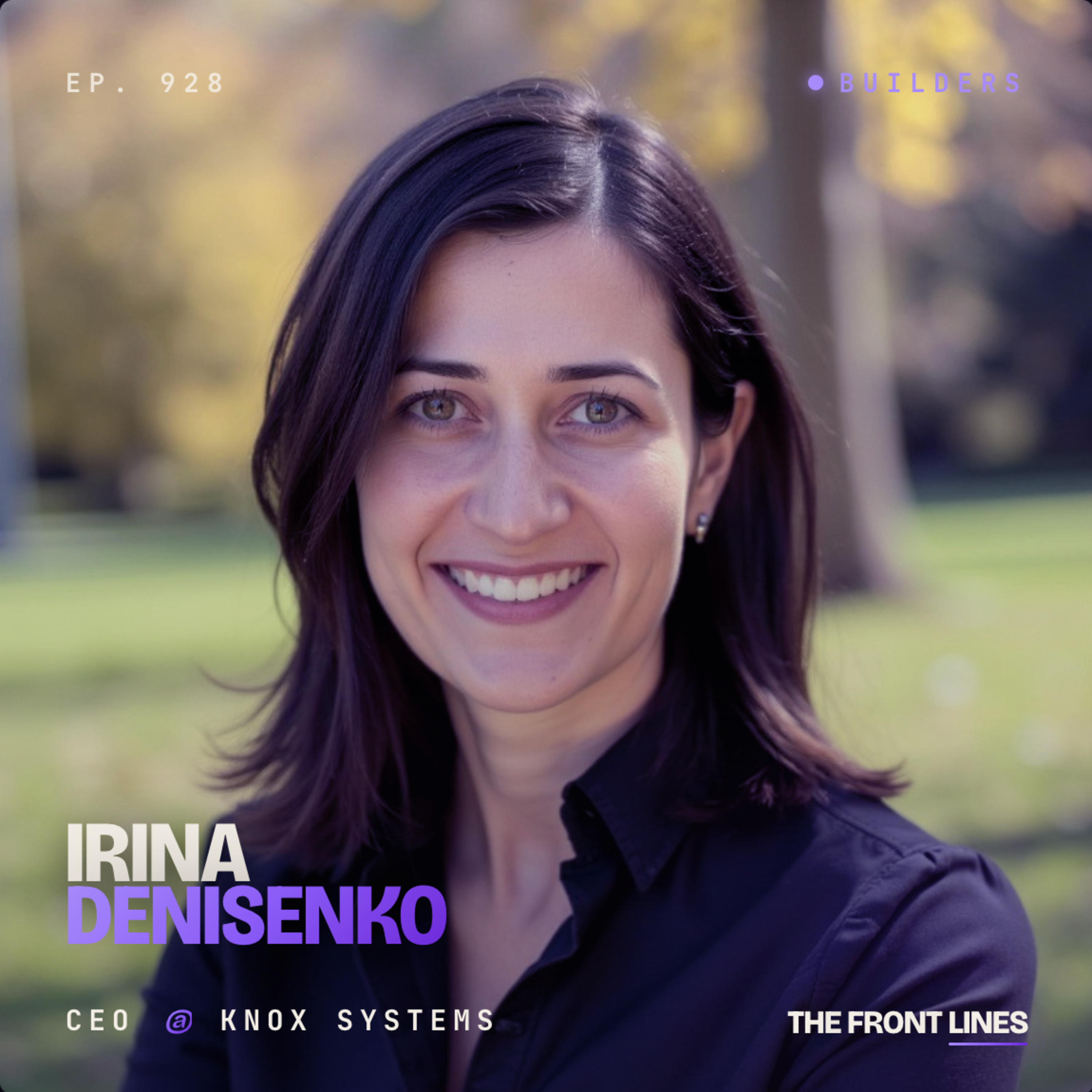 How Knox turned a blunt SLA into its entire marketing message | Irina Denisenko 28.07.2026 23minKnox Systems has built a path around one of the most exclusive certifications in enterprise software. FedRAMP, the security standard required to sell cloud technology to the US federal government, has fewer than 500 companies holding it worldwide, versus more than 10,000 apps on the AWS Marketplace. Earning it independently typically takes three years and roughly $3 million. Knox compresses that to 90 days at 90% less cost by letting customers inherit authorization from its own infrastructure, which carries 16 sponsorships across agencies including the Army, Air Force, Navy, DHS, Treasury, and VA. In a recent episode of BUILDERS, we sat down with Irina Denisenko, CEO of Knox Systems, to learn how she built this model and how the government's relationship with Silicon Valley has shifted.Topics Discussed:How Knox lets customers inherit federal sponsorships instead of building authorization from scratch The acquisition behind Knox's core technology, which hosted Adobe's federal environment for over a decadeWhy FedRAMP has become a competitive differentiator with commercial enterprise buyersHow Knox judged the market large enough despite only 500 existing FedRAMP holdersThe shift from convincing buyers FedRAMP matters to meeting buyers already sold on itKnox's strategy of partnering with 3PAOs and GRC platforms instead of competing with themHow Silicon Valley's relationship with the federal government has shifted since enterprise AIGTM Lessons For B2B Founders:Make your tagline an operational guarantee, not a slogan: Irina turned "90 days for 90% less" into a literal SLA on the homepage. The discipline behind it: "over-index on say what you're gonna do, do it in the time that you said you would do it, and then rinse and repeat." Provocative claims work only if the operating model can satisfy them every time.Prove the moat with cross-industry customers, not hypotheticals: Knox's authorization helped Sierra AI reach FedRAMP High and brought Armis, a company heavily focused on OT cybersecurity, into the federal market through Knox's platform.Track inbound conviction as a market-maturity signal: Irina measures GTM motion by what share of conversations start with buyers already sold on the category. Knox is now at three-in-four, up from the inverse a few years ago, and expects it to flip again at saturation. Track this ratio as a leading indicator of how much market education your sales motion still requires.Become a customer of the incumbents you'd otherwise compete with: Knox didn't build its own GRC tooling or displace 3PAOs. It became a Vanta and Drata customer and works alongside 3PAOs on complex cases, while putting engineering effort into autonomous cloud management instead. In a regulated market, coexisting with established players can open more doors than disrupting them.Let acquired infrastructure define your speed advantage: Knox's 90-day timeline exists because its core technology is 15 years old, built to host Adobe's federal environment before Knox opened it to other applications. When evaluating M&A, weigh whether a target's infrastructure maturity creates a structural edge competitors can't replicate organically.// Sponsors: Front Lines — We help B2B tech companies launch, manage, and grow podcasts that drive demand, awareness, and thought leadership. www.FrontLines.ioThe Global Talent Co. — We help tech startups find, vet, hire, pay, and retain amazing marketing talent that costs 50-70% less than the US & Europe. www.GlobalTalent.co//Don't Miss: New Podcast Series — How I Hire Senior GTM leaders share the tactical hiring frameworks they use to build winning revenue teams. Hosted by Andy Mowat, who scaled 4 unicorns from $10M to $100M+ ARR and launched Whispered to help executives find their next role. Subscribe here: https://open.spotify.com/show/53yCHlPfLSMFimtv0riPyM
 -
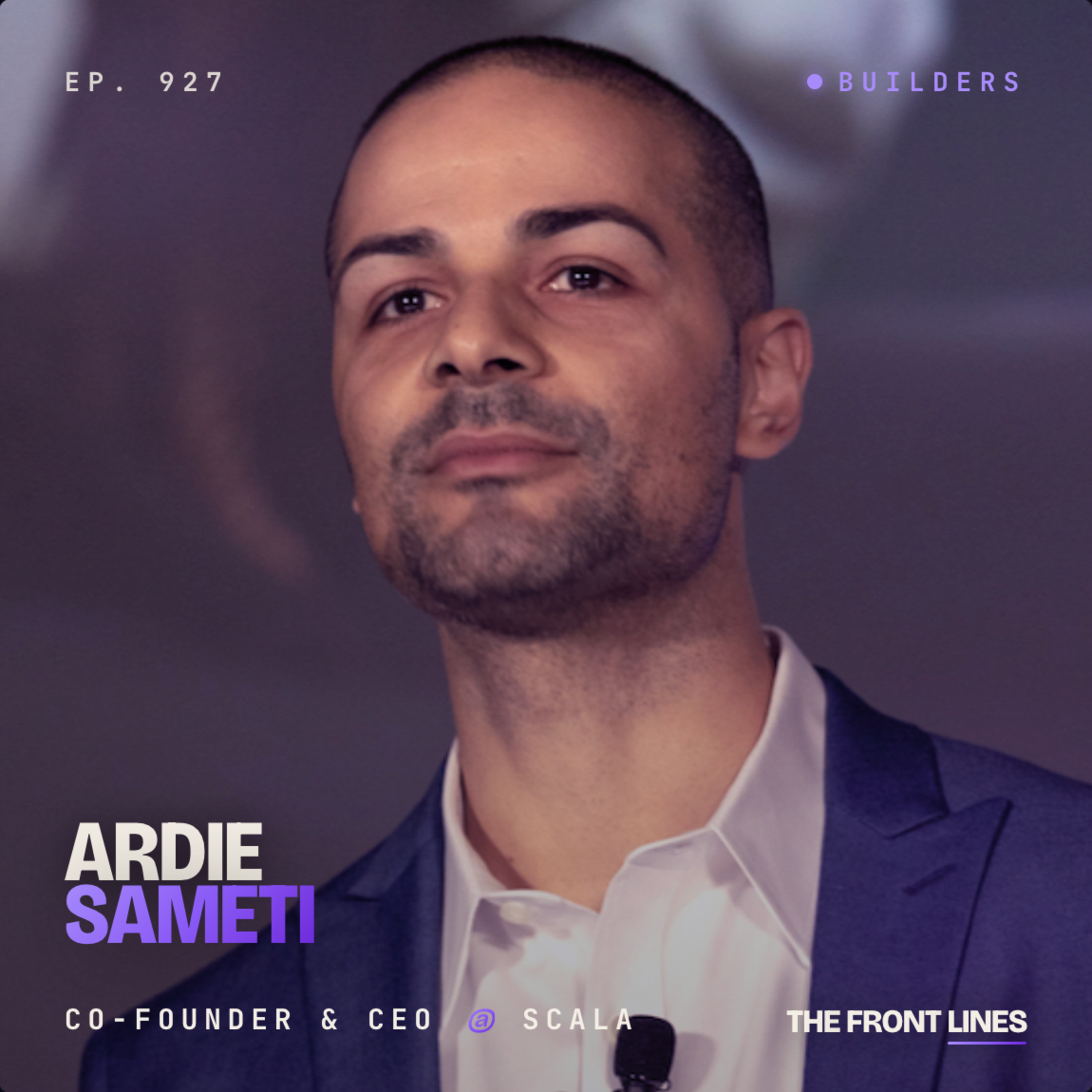 How Scala tracks every closed deal back to its source before scaling spend | Ardie Sameti 20.07.2026 31minScala is reimagining how operators run customer experience and contact center operations, shifting the model from software as a service to what its founder calls intelligence as a service. In a recent episode of BUILDERS, we sat down with Ardie Sameti, Co-Founder and CEO of Scala, to learn how a decade scaling healthcare technology company Accolade shaped his decision to start over and build an AI-native operations platform from scratch.Topics Discussed:Why operational fragmentation at scale, not a single bad decision, created the gap Scala was built to fillWhy Scala held off adding headcount even while tracking ahead of its investor-approved hiring planThe shift from software as a service to intelligence as a service, and why proprietary data is the real moatHow Scala attributes closed deals back to specific channels before scaling spend on any of themThe guardrails Scala applies to AI avatars and outbound to avoid the brand cost of generic AI spamThe long-term vision: an autonomous operations agentic platform where humans supervise fleets of AI agentsGTM Lessons For B2B Founders:Resist headcount growth even when you're ahead of plan. Ardie's go-to-market and marketing leads were tracking ahead of their investor-approved hiring milestones, but chose not to add headcount anyway, because every new layer between founders and prospect calls dilutes the firsthand signal driving product and positioning decisions. Founders should treat being "ahead of schedule" as a reason to slow hiring, not speed it upBuild a per-person output multiplier into headcount planning, not just budget. Scala's internal framework reframes each hire's expected output as a multiple of what the same role would have produced a few years ago, the same way Ardie now expects to operate at several times his own historical output. Founders should use this to decide which roles get automated versus hired for.Attribute every closed deal to its actual source before scaling spend on any channel. Scala tracks which deals originated from warm network intros versus AI avatar-driven inbound versus paid social, and only increases investment in a channel after it has produced enough closed deals to justify the cost. Founders should build this kind of deal-level channel attribution before assuming a new GTM motion is working.Apply explicit guardrails to AI outreach the same way you would onboard a junior SDR. Scala intentionally avoids blasting AI avatars at scale, instead targeting them using intent signals like active buying patterns and in-market status, with guardrails on what the AI is and isn't allowed to say. Founders should define those boundaries before scaling AI-driven outreach volume.Architect around proprietary data and workflow context, not the model layer. Ardie's view is that frontier models are now a commodity anyone can access, so the durable advantage is the specific data, workflows, and context a company accumulates inside its customers' operations. Founders should evaluate moats by asking what data a competitor cannot replicate, not which model they've shipped.// Sponsors: Front Lines — We help B2B tech companies launch, manage, and grow podcasts that drive demand, awareness, and thought leadership. www.FrontLines.ioThe Global Talent Co. — We help tech startups find, vet, hire, pay, and retain amazing marketing talent that costs 50-70% less than the US & Europe. www.GlobalTalent.co//Don't Miss: New Podcast Series — How I Hire Senior GTM leaders share the tactical hiring frameworks they use to build winning revenue teams. Hosted by Andy Mowat, who scaled 4 unicorns from $10M to $100M+ ARR and launched Whispered to help executives find their next role. Subscribe here: https://open.spotify.com/show/53yCHlPfLSMFimtv0riPyM
Samankaltaiset podcastit


Suosittu maassa
Tämä podcast esiintyy myös näiden maiden podcast-listoilla.
