
The Intercept Briefing
The Intercept
0
The Intercept Briefing is a weekly podcast that cuts through the noise with incisive political analysis and deep investigative reporting. Hosted by The Intercept's journalists including Jessica Washington, Akela Lacy, and Jordan Uhl, it tackles the most urgent issues of the moment. The show delivers news and in-depth reporting on critical topics.
Jaksot
-
 The AI Doomsday Future Is Not Inevitable 14.09.2026 49minLocal police departments use Flock cameras to track license plates. ICE uses Palantir software to track and round up immigrants. Defense Secretary Pete Hegseth’s war department uses Claude to bomb Iran. The U.S. government spends billions employing private corporations to obtain mountains of data — and the surveillance space is only getting more privatized in Donald Trump’s second term. “It really has become a Wild West,” 404 Media co-founder Jason Koebler tells host Akela Lacy on The Intercept Briefing, on the state of the U.S. surveillance apparatus today. While Palantir and Flock have become household names, Koebler says, “anything that can be surveilled is being surveilled, and a lot of this is happening from companies that very few people have heard of, and companies that are willing to push the envelope on what they're willing to do, like how far they're willing to go to surveil people."“A lot of the stuff that you used to associate with the NSA or CIA or another state spy agency, those kinds of capabilities you can now just buy,” Intercept senior technology reporter Sam Biddle notes of the ease and accessibility of the tools now available to the government. “You don't need to be a top-secret government agency. You can just be a contractor in Virginia.”“It's a way to sidestep warrant requirements,” says Koebler. Surveillance contractors “are doing things that if the government were doing directly, they would need to get a warrant in order to do it.”This week, for a special recording of the podcast, independent tech outlet 404 Media and The Intercept teamed up in front of a live audience in Los Angeles to discuss how the U.S. government weaponizes private data to surveil and kill abroad and at home, the resulting backlash and potential regulations on the table, what tangible actions the average person can take to “divest from the contemporary surveillance hellscape,” and refocusing AI-ending-humanity doomerism.“When you ascribe motives and agency to AI, you're letting Sam Altman off the hook,” says Biddle. “There are human beings building this technology. It's not inevitable. This doomsday future is not inevitable,” adds Koebler. “We can't bury our heads in the sand and say, ‘This is not changing society in some way.’ But it is being driven by very rich humans, and they can be regulated. They can be held to account.”“What's been really interesting about the Flock backlash, and heartening, is that it is completely apolitical, or it's nonpartisan. It is completely — from the deepest red to the people in this room right now — the entire political spectrum hates these,” says Biddle. “There's the real potential for the first time in a while to create a pro-privacy coalition that bridges a lot of the otherwise pretty giant political gaps.”Full transcript: https://interc.pt/4hqwQrKKeep our investigations free and fearless at theintercept.com/join. Hosted on Acast. See acast.com/privacy for more information.
 -
 25 Years After 9/11, Muslims Are Still Politicians’ Favorite Scapegoat 04.09.2026 42minRSVP for The Intercept and 404 Media Live Podcast, September 10 in LA: https://interc.pt/livepodcast Show Description: A quarter century after the September 11 attacks emboldened then-President George W. Bush to launch the “war on terror,” many Americans might like to think they’re wiser than the politicians and pundits who unleashed a flood of anti-Muslim hatred and eroded civil liberties through warrantless wiretaps and racist deportation campaigns.But some of the most notorious Bush-era advents — like the Department of Homeland Security and the prison colony at Guantánamo Bay — don’t appear to be going anywhere. Nor does the phenomenon of Islamophobia, which is playing a major role in the current political cycle. Michigan Democratic Senate nominee Abdul El-Sayed — who, if elected, would be the first Muslim U.S. senator — has been called a terrorist, a radical Islamist, and a threat to national security, as pro-corporate and pro-Israel super PACs spend millions on ads that paint him as a terrorist sympathizer. In New York City, meanwhile, local media has suggested that the city’s first Muslim mayor, Zohran Mamdani, should not attend the commemoration of the World Trade Center attacks, as if to do so would be an insult to the victims and their families.“Islamophobia actually becomes more rampant during election season — not necessarily after a terrorist attack, but actually during election season in the U.S.,” journalist Rozina Ali tells The Intercept Briefing. “What's happened over the last three decades is that Islamophobia has become a feature of American politics. ... When you can't actually discuss the policies, when we're not willing to engage in facts, it's really easy to throw racist rhetoric at people.”“The fight that we're seeing now is whether we are willing to accept all forms of religion in this country. And as much as I want to say this is just more of what we've seen in the past, I think what does frighten me is how quickly we are moving to a place where some governor or some local official might try to outlaw Islam altogether. And mind you, this is even a policy shift from 10 years ago when Trump called for a Muslim ban,” says Ali. “What has been happening recently is that the rhetoric ... has been shifting toward, ‘Islam is not a religion, it’s a political ideology.’ This is not a new talking point, but it is becoming institutionalized. There are efforts to make it into law, which is a frightening place to be.”This week on the podcast, host Akela Lacy speaks to Ali about how anti-Muslim rhetoric and policies are on the rise and have endured, or even worsened, in the post-9/11 world, as well as her new book, “Seasons of Fury: Four Families and the Rise of Islamophobia in America.” Ali shares the first case in which the NSA admitted to spying on a U.S. citizen, Arab American attorney Abdeen Jabara, as well as the story of imam Yassin Aref, a victim of a controversial sting operation who served 15 years in federal prison due to the ambiguous “material support” for terrorism law first passed in the ’90s. It was the same charge used to convict anti-ICE protesters at Prairieland Detention Center to decades in prison this year.“This was something lot of civil rights lawyers and activists were warning about even back then, because they recognized that this law and this war on terror can be used to attack dissidents and eventually will be used to attack a lot more people than the Muslim community. And that is what we're seeing now,” says Ali.“Because we've given so much power to the executive branch, because we've given so much power to the government over the last 25 years, the government gets to decide who they consider enemies, who they consider terrorists, and what they consider support for terrorism,” says Ali. “The Trump administration can say, ‘I now consider leftists terrorists,’ and unfortunately, there are laws in the books that allow him to do that.”Full transcript: https://interc.pt/4zPINyl Hosted on Acast. See acast.com/privacy for more information.
 -
 Right-Wing Trans Hate Comes for the WNBA 28.08.2026 33minThe WNBA is having a moment. Viewership is up. Attendance for this year’s WNBA All-Star Game surpassed the NBA’s All-Star Game. Games and events can be viewed in a record number of places, from broadcast to cable and streaming. And just this week, Angel Reese of the Atlanta Dream set a single-game record. But the stories about the WNBA capturing national attention in recent weeks are about none of that. Instead, the focus has been on two retired NBA players, including Enes Kanter Freedom, who showed up courtside at an August 23 Chicago Sky–Indiana Fever game wearing a T-shirt that said "Woman: noun. adult human female."“I don't believe that he's being genuine in any realm, in order to create this mass hysteria of sorts for an issue that's actually simply a non-issue,” says Angela Perry, a WNBA content creator, tells The Intercept Briefing. “There are no trans women in the WNBA; there are none attempting to be in the WNBA.”This week on The Intercept Briefing podcast, host Jessica Washington speaks to Perry and journalist Katelyn Burns about how the premier women’s professional basketball league has found itself at the center of a right-wing manufactured panic.“The right has made such hay out of trans women in women's sports that they need to keep inventing controversies in order to keep this issue front of mind,” says Burns who writes for the independent newsletter Burns Notice and co-hosts the Cancel Me, Daddy podcast. “We have a midterm election coming up, and to be frank with you, the only thing that the right has done besides terrorizing immigrants is banning trans women from women's sports. It's at the center of almost all of their policies,” continues Burns. “They are inventing controversies about trans people in sports where there are no trans people involved.”“This is about women in general. They're already talking about not wanting women to have the right to vote,” says Perry. “This isn't just about sports. There's a political party trying to scale us back to what they perceive was a time where things were better. But really, it was when women were more controlled.”“The bigger issue is that the people who think that they're protected, it's always going to get to the protected class eventually,” warns Perry. “Right now, the focus is trans, and people think they're safe because ‘I'm not trans. I'm a cis woman and I'm protected.’ But it will impact you.”For more, listen to the full conversation of The Intercept Briefing on Apple Podcasts, Spotify, YouTube, or wherever you listen.Full transcript: https://interc.pt/3UXTwXsKeep our investigations free and fearless at theintercept.com/join. Hosted on Acast. See acast.com/privacy for more information.
 -
 What American Doctors Saw in Gaza 21.08.2026 34minIt’s been nearly three years into Israel's genocidal war on Palestinians, and still no step closer to its end. Since the latest “ceasefire” began in October 2025, Israel has continued to bombard Gaza and has killed more than 1,200 people, United Nations experts reported earlier this month. Israeli Prime Minister Benjamin Netanyahu more recently rejected President Donald Trump’s Board of Peace agreement with Hamas for Israeli troops to withdraw from the Gaza Strip.“The burden has really continued to devastate the healthcare system in general. So you're hearing from colleagues every day. They don't have the materials that they need to serve their patients,” Dr. Thaer Ahmad tells The Intercept Briefing. “They don't have even the basic sort of guarantee that there is a cloak of security allowing them to operate in the traditional ways that they would like to.” This week on the podcast, Intercept reporter Jonah Valdez speaks to Ahmad, an emergency medicine physician and humanitarian who has provided medical relief in conflict zones including Gaza, and director Poh Si Teng about their new documentary “American Doctor.” It follows three U.S. physicians from three different states who volunteer to enter Gaza to provide emergency medical care as best they can, with the insufficient supplies they have, to save lives — under the threat, as healthcare workers and hospitals have repeatedly been the target of strikes, of losing theirs.The American doctors were not just targeted by the Israeli military, however. Upon returning home and trying to share the atrocities they had witnessed in Gaza, they were “pummeled,” says Teng, in interviews with mainstream media outlets and ignored by lawmakers in Congress.“There's this refusal to acknowledge what most American people are interested in — and that is money out of the Middle East in terms of military and wars, and into our communities here, into healthcare, and into some of the services that we are deprived of, that, for example, Israeli society is able to provide for their citizens: free education, free healthcare,” says Ahmad. “We don't even have that here, and yet we're still providing a significant amount of aid.”Teng says, “For everybody who's trying to do something in this moment, it's not like as individuals we have no agency. We do. But it's also important to remind people of the systems in place that make it very hard for us to do the right thing. If there was any path forward or a glimmer of inspiration, I felt, follow these doctors.”For more, listen to the full conversation of The Intercept Briefing on Apple Podcasts, Spotify, YouTube, or wherever you listen.Full transcript: https://interc.pt/4xbqfa5 Hosted on Acast. See acast.com/privacy for more information.
 -
 Has the Left Really Met Its Limit? 14.08.2026 30minThe stunning momentum of the insurgent left hit a roadblock this week when democratic socialist Francesca Hong narrowly lost her primary race for Wisconsin governor to Milwaukee County Executive David Crowley, a moderate who garnered significant support from establishment Democrats. “The collective power of that Democratic establishment in a state, where there is a Democratic governor and there is a real Democratic Party establishment machine, all of that power was required to eke out a 0.4 percent victory in the party’s own primary against a previously unknown candidate running as a Democratic socialist,” The Lever’s David Sirota tells The Intercept Briefing. This week on the podcast, host Jessica Washington speaks with Sirota, founder and editor-in-chief of The Lever, about the primaries and how the left is building power within the Democratic Party. There were bright spots for progressives on Tuesday night. In Minnesota, progressive Lt. Gov. Peggy Flanagan defeated AIPAC-backed Rep. Angie Craig, D-Minn., in the Senate primary race. Craig had previously voted for the Laken Riley Act, which requires the federal government to detain people for certain crimes, including shoplifting and burglary. Flanagan, by contrast, told supporters on election night: “We need to rip ICE apart and stop them from terrorizing our communities.” “What you’re seeing now is, and I don’t want to call it a Democratic Tea Party, but it is certainly organizing and pressuring to take back power in an adversarial way from a set of forces to the left of the Democratic establishment,” says Sirota. “That is what’s new, and that is what’s driving the political dynamic now.” Washington and Sirota also discuss the intensifying democracy crisis unfolding in the United States. According to Sirota, it “stands on two pillars: concentrated executive power and the supremacy of money.”Sirota explores this theme and more, in the new season of his show, Master Plan: The Kingmakers. The podcast is all about how a once-fringe legal theory moved into the mainstream and transformed the power of the American presidency. Full episode transcript here. Keep our investigations free and fearless at theintercept.com/join. And if you haven’t already, please subscribe to The Intercept Briefing wherever you listen to podcasts. Hosted on Acast. See acast.com/privacy for more information.
 -
 The Most Expensive Democratic Senate Primary Has a Winner 05.08.2026 34minOver the course of Donald Trump's second term, Democratic voters have expressed dissatisfaction with their party over what many view as an inability to stand up to the president and his broader movement. That dissatisfaction with the establishment has manifested in primaries in coastal cities across the country, where the progressive movement appears to be ascendant. On Tuesday, that test played out in Midwestern states, Michigan and Missouri.Within roughly two hours of polls closing, The Associated Press called the closely watched rematch between Cori Bush and Rep. Wesley Bell for the incumbent. In 2024, AIPAC and other outside groups spent more than $18 million to oust Bush from her Missouri district, and her defeat, along with New York Rep. Jamaal Bowman’s, has served as a warning sign for Democrats not to be too progressive or too pro-Palestine.But by Wednesday morning, Abdul El-Sayed, who ran on Medicare for All and ending military aid to Israel for its continued genocide in Gaza, narrowly defeated Rep. Haley Stevens by less than 20,000 votes. According to AdImpact, the Michigan Democratic Senate primary saw $98 million in ad spending and reservations. At least $60 million was spent boosting Stevens or attacking El-Sayed, with more than $30 million from the American Israel Public Affairs Committee’s super PAC, United Democracy Project — its largest spend in a single race ever, nearly double the then-record-breaking amount spent on Bowman's 2024 primary race.This week on The Intercept Briefing, host Jessica Washington and colleagues Akela Lacy and Jonah Valdez discuss what results from Tuesday's primaries signal for progressives and the broader left in the Democratic Party, especially in swing states and outside of coastal cities.Full transcript: https://interc.pt/4wgacXj Keep our investigations free and fearless at theintercept.com/join. Hosted on Acast. See acast.com/privacy for more information.
 -
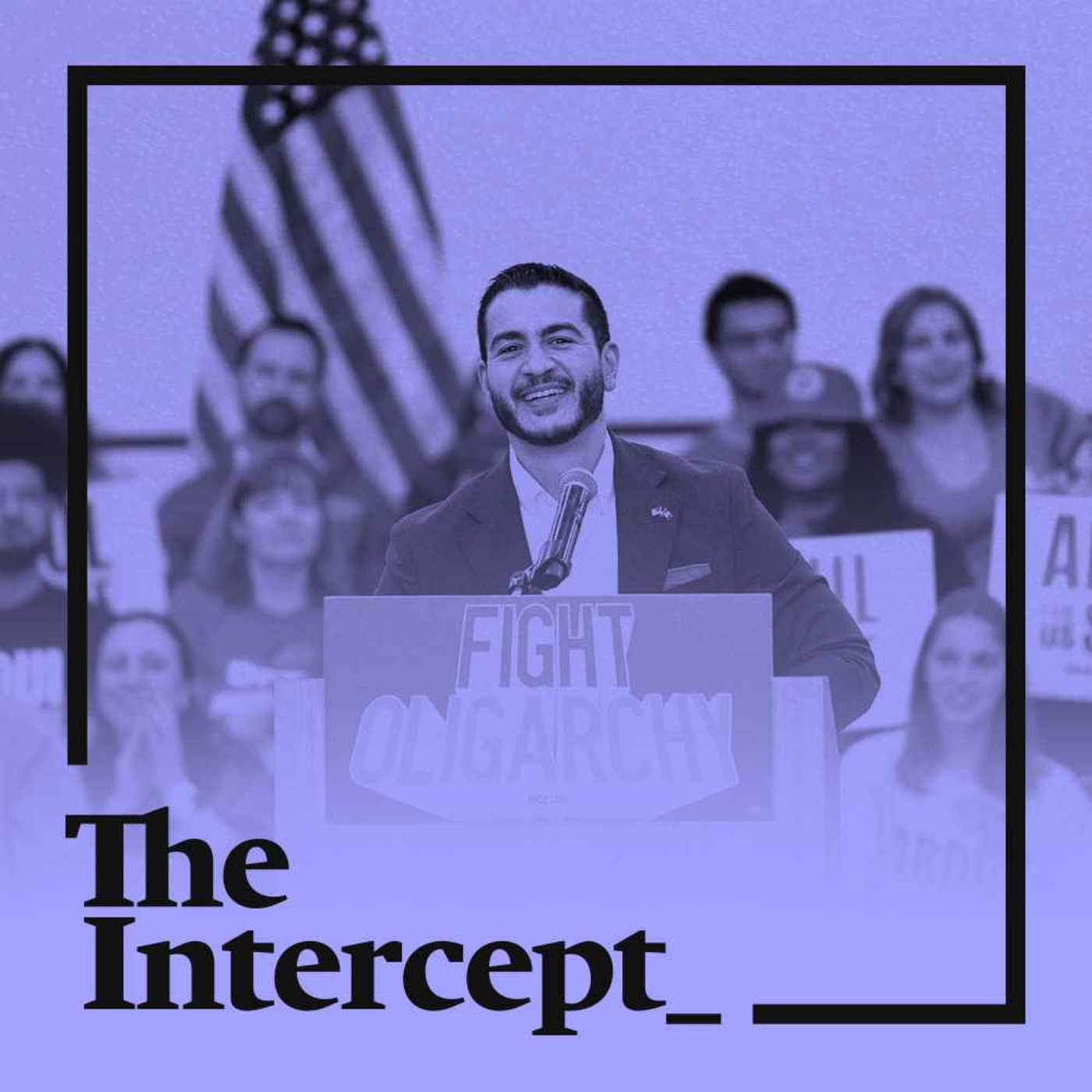 Abdul El-Sayed on The Intercept Briefing 31.07.2026 48minOn Tuesday, Abdul El-Sayed and Rep. Haley Stevens, D-Mich., will face off in the Michigan Democratic Senate primary. The race is the next biggest test of whether progressives can win statewide, particularly in purple territory.The Michigan race is one of the most expensive primaries of the cycle. Outside groups have spent upward of $50 million in support of Stevens or against El-Sayed. Most of that money is coming from the American Israel Public Affairs Committee and its affiliated groups — close to $30 million, which their largest investment ever in a single race, according to The AP.“It's just anti-democratic on its own terms,” El-Sayed, the former public health official, tells The Intercept Briefing. “I always ask people, “OK, you're covering this as a very close race, but would it be close if they didn't have $60 million to spend? Would it even be a close race at all?’”This week on The Intercept Briefing podcast, host Akela Lacy asks, can progressives win outside of blue cities? El-Sayed argues, if you focus on the issues people care about and act on them, you can: "Look, you have an option that's not bought off by all the same corporations. And that option is desperately clear about wanting you to have healthcare, and also wanting your kid to have a good school, and also making sure that there's not a data center that gets planted in your backyard to automate your job away.”Lacy explores that question further with Ryan Clancy, a Wisconsin state representative and founding member of the state legislature’s current Socialist Caucus, and Thom Hartmann, a progressive political commentator. Clancy says voters he speaks to in Milwaukee “want a fighter. People want people in office who are going to fight for the middle class, fight for actual transformative change.” He adds, “The idea that in order to win in a purple district that is roughly split between Democrats and Republicans, that you need when you're a Democrat, to look as much like a Republican as possible is just not helpful.” Polling suggests that El-Sayed has a commanding lead over Stevens in the Democratic primary. But polls for the November general election narrow sharply when El-Sayed is up against Trump-backed Republican candidate Mike Rogers; one shows Rogers beating him by 10 percentage points, which the Stevens’s campaign has leaned into.“We've been in this change moment. We're sick and tired of neoliberalism. We're sick and tired of Reaganism. We're sick and tired of the status quo. We're sick and tired of a dying middle class. We have been living in this moment, in my opinion, since 2000, and I think in a big way since 2008. Obama promised hope and change, and really just brought us a bunch of health insurance companies,” says Hartmann. “I'm not sure if we're there yet to the point where a good message like El-Sayed's message can overcome millions of dollars from Israel and from big corporations. That's going to be the big challenge.”The Intercept invited Stevens on the program for an interview but as of publishing have not heard back yet.Full transcript: https://interc.pt/4fRLS8aKeep our investigations free and fearless at theintercept.com/join. Hosted on Acast. See acast.com/privacy for more information.
 -
 Trump’s National Killer Police Force 24.07.2026 43minWithin the span of a week, federal immigration agents shot and killed two people in Maine and Texas, and another was hit by a truck and killed in Florida after trying to avoid ICE agents. A fourth person recently died in ICE custody after reportedly being denied medication. Their deaths prompted yet another round of questioning as to how federal immigration agents have amassed so much power and so little accountability. This week on The Intercept Briefing, host Akela Lacy speaks with Naureen Shah, of the American Civil Liberties Union, and Nayna Gupta, of the American Immigration Council, on the consequences of allowing the government to build a national policing force that’s bringing Trump’s war on immigrants into communities across the country.“The $240 billion injection that the Trump administration has given ICE and Border Patrol make these agencies — which already were the largest federal law enforcement agencies — make them far larger than anything that we've seen at the federal law enforcement level,” says Shah. “Their budgets are bigger than that of many, actually most militaries around the world.”“It's not really just about who they're hiring and even the training that they're getting — it's the message that they get all the way from the top,” says Shah. “And of course, the message after the killings of Alex Pretti and Renee Good was, you have immunity in the conduct that you're engaged in. It's basically a message of, you're going to get away with it. Don't worry about it.”“The signal from the very top of the administration is unmistakable: Arrest as many people as possible without regard for the actual impact on public safety, without regard for the killings that may result, the harm that results.”Congressional funding for those agencies has outpaced any action on comprehensive immigration reform. And with Republicans pushing to strip voting rights from millions of Americans while campaigning against immigrants, says Gupta, the solution is to neutralize their argument by creating a path to citizenship — a proposal with broad bipartisan support. “There's no question that the immigration enforcement agenda that this administration is pursuing ties to voting rights. Now, the question is, given that, how do we still make sure we're offering solutions and reforms that can be viable and build a broad enough coalition of support to overwhelm that far-right base and the way they've weaponized this issue?” Gupta says. “I think those kinds of conversations are a more effective antidote to the far right's effort to weaponize the immigration system, not only to hurt immigrants, but to hurt core democratic rights like the right to vote.”Full transcript: https://interc.pt/4wk7elzKeep our investigations free and fearless at theintercept.com/join. Hosted on Acast. See acast.com/privacy for more information.
 -
 Trump’s Formula for Forever Wars 17.07.2026 38minPresident Donald Trump blew up the temporary ceasefire after the U.S. launched a series of airstrikes against Iran over the weekend. The two nations have continued to exchange strikes throughout the week, with Iran targeting U.S. allies in the Middle East, as Congress debates further entangling the United States military with Israel — a proposal that would give Israel enormous leverage over U.S. defense policy.“This is a formula for a forever war,” national security reporter Spencer Ackerman tells The Intercept Briefing. A major champion of such forever wars was Sen. Lindsey Graham, who passed away over the weekend. “Lindsey Graham never met a war he didn’t like, never met a war he didn’t want to send other people’s children to wage,” says Ackerman, who writes the Substack Forever Wars. “The white whale for Lindsey Graham and many others in the bridge between neoconservatism and MAGA was Iran — assaulting Iran not only at home, but rolling back its regional challenge to U.S. and Israeli power in the Middle East.”“Whatever else MAGA says about wars,” says Ackerman, “what it wants is domination. It wants domination not only at home, but abroad. That’s where Graham recognized — that instead of being someone like John McCain, who sought to occasionally butt against, fight against Donald Trump — that Graham could help maneuver Trump into being a vehicle for their shared project. And he did that with really tremendous success.”“You are seeing a more rent-seeking U.S. empire than ever before as a defining characteristic … of the Trump-era empire,” says Ackerman, on the administration’s thirst to turn countries in its orbit, like Venezuela, into “vassal that pay tribute.” “This is the sort of thing that an empire in decline does. Rather than figuring out new strategies to growth, it redistributes wealth from its own people to its driving oligarchic sectors.”Ackerman has reported from Iraq, Afghanistan, Guantánamo Bay, and many U.S. bases. He currently writes for Zeteo and Forever Wars, where you can sign up for his newsletter. Politics reporter Akela Lacy also drops in to discuss how the turmoil at home and abroad is impacting the midterms. After Democratic Senate candidate Graham Platner dropped out of the race, Lacy says, “Maine Democrats are in a situation where they’re all trying to become the nominee that the party picks to replace Platner on the ballot to go against Collins in November. Many of those candidates have now come out and called to abolish ICE outright after the shooting in Maine.”Keep our investigations free and fearless at theintercept.com/join. Full transcript: https://interc.pt/4wMaTbq Hosted on Acast. See acast.com/privacy for more information.
 -
 INTRODUCING: First America by Rebecca Nagle 11.07.2026 36minThe Intercept Briefing is happy to share the first episode of journalist Rebecca Nagle's new podcast series, First America. Episode Description: We’ve all been told the American Revolution was fought over taxation and representation. But that’s not what the Declaration of Independence says. According to our founders, in their own words, what they were most upset about was Native Americans. How did we all miss that? Rebecca sits down with historian Ned Blackhawk (Western Shoshone) to talk about how hunger for Indigenous land drove the Revolution. Welcome to First America, the true story of how the United States came to be, and how our current political moment was 250 years in the making.Rebecca Nagle is an award-winning advocate and writer focused on advancing Native rights and ending violence against Native women. Nagle is a citizen of Cherokee Nation and a two spirit/queer woman. Nagle is the host of the podcast This Land focused on treaty rights and tribal sovereignty in Oklahoma. Hosted on Acast. See acast.com/privacy for more information.
 -
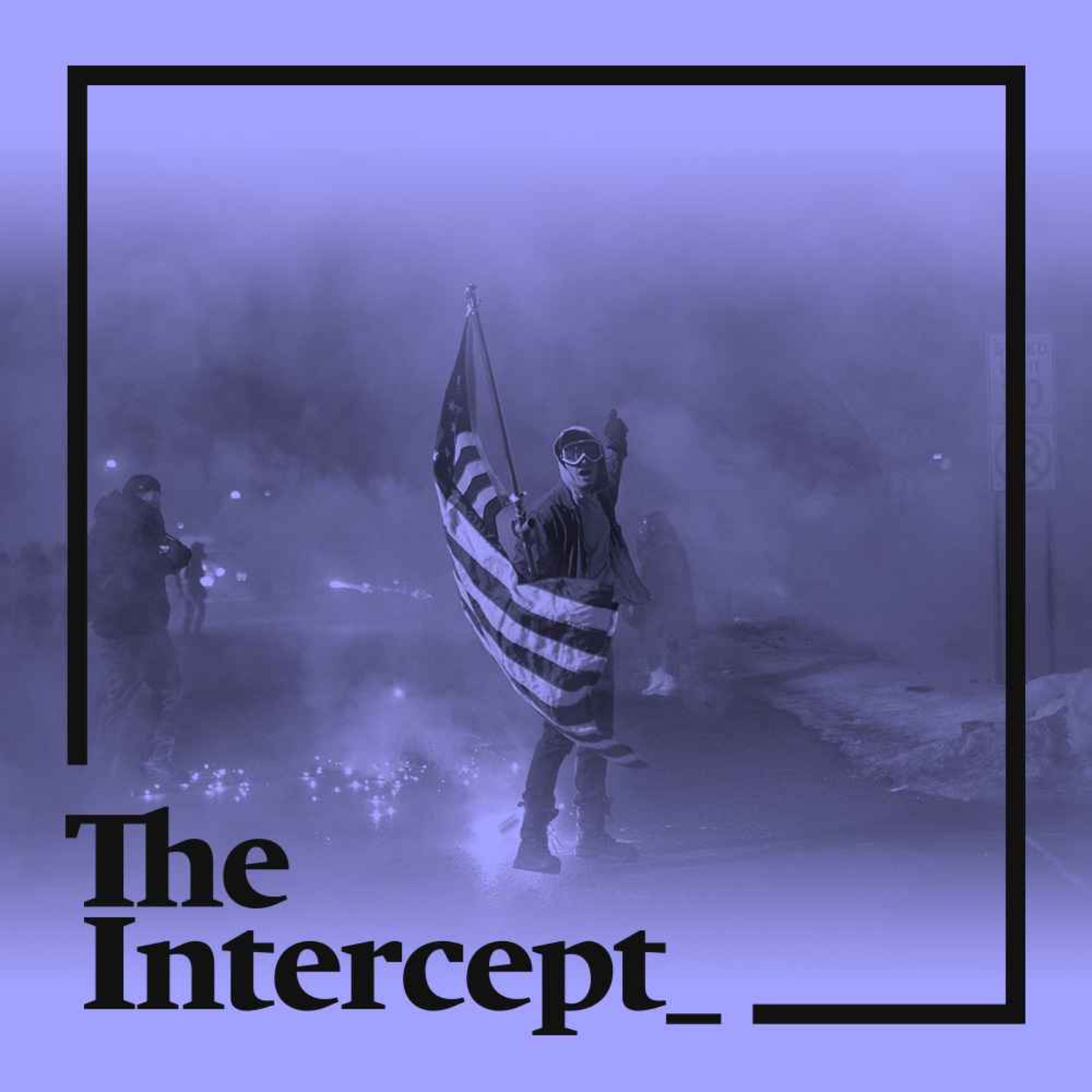 Rebecca Nagle on the Boomerang of Empire 11.07.2026 40minLast spring, President Donald Trump issued the “Restoring Truth and Sanity to American History” executive order, taking aim at federal parks, monuments, museums, and sites that have cast the United States’s “founding principles and historical milestones in a negative light.” On the Fourth of July this year, the White House published its 162-page “Saving America’s Story,” attacking the Smithsonian Institution directly for “anti-white activism,” “illegal alien activism,” “transgender activism,” and more broadly for adopting “an ideological framework that no longer treats the American story as a shared national inheritance to be taught or celebrated, but as a political instrument to divide, dispirit, and discourage our citizens.”“We're in this moment where we are fighting over how America tells its past,” journalist Rebecca Nagle tells The Intercept Briefing. “It can be scary in a moment when it feels like the stakes are really high to really interrogate the myths that we all carry, that we all hold about who our country is and where it started because it's really tempting to want to think, 'OK, if we just wind the clock back 10 years, if we just go back a few election cycles, we'll be back to a democracy that's strong, that's stable, that's solid, and we'll all be fine.’ It's much more scary to say, ‘Oh, actually, if we want to talk about where authoritarianism comes from in the United States, it's actually at the foundation.’”As the United States celebrates its 250th birthday this year, the Trump administration has been ramping up its efforts to erase not just the dark parts of U.S. history but also the contributions of basically anyone who isn’t a white, Christian man. That project has included taking concrete steps to remove all traces of the history of people who don’t fit that description, Black people, immigrants, civil rights advocates, women and gay and trans people — including the first people to live on this land: Native Americans.This week on the podcast, Nagle speaks to host Akela Lacy about her new podcast series “First America,” which examines how Native people have been largely written out of the American story, and how that story informs the current political crisis in the U.S.“One of the big claims that the series makes is that the foundation is in itself is a myth. Because at the same time that our founders were building a democracy, they were also building an empire. The way that you govern an empire, the way that you govern other people by force, is not democratic,” says Nagle, a citizen of Cherokee Nation. “This identity crisis we're having around authoritarianism and democracy, and how could authoritarianism be sneaking into our democracy — what we argue is that it's actually always been there.”“A lot of what is happening now — it's not new, it's not un-American, it's not unprecedented. Sometimes it's not even unconstitutional! It's actually just taking these parts of our government that for a long time most Americans didn't know was there or didn't really think about, and Trump is just pulling it into the center,” says Nagle. Full transcript: https://interc.pt/44WnPj7Keep our investigations free and fearless at theintercept.com/join. Hosted on Acast. See acast.com/privacy for more information.
 -
 The People Who Stood By Graham Platner — Until He Was Accused of Rape 07.07.2026 26minThe Democratic Party is once again in upheaval as Graham Platner, its unconventional nominee to knock out longtime Republican Sen. Susan Collins in Maine, faces a rape accusation that threatens to end his once-powerful campaign and endanger Democrats’ chances of flipping a key seat in the November midterm elections.Platner, a Marine veteran and oyster farmer whose anti-establishment campaign had already weathered a series of scandals, has denied the rape allegation from ex-girlfriend Jenny Racicot, which Politico first reported on Monday. His campaign said the allegation was “coached and coordinated by out of state establishment operatives,” though it was supported by messages Racicot sent in 2023, long before Platner had a political profile. Despite Platner’s denials, a cascade of Democratic politicians, operatives, and organizations have called on him to drop out of the race by 5 p.m. next Monday, in time to be removed from the general election ballot. Platner has said he would only drop out if he’s allowed to pick his successor to face Collins in November. If Platner withdraws, Maine Democrats would have to pick a new candidate by July 27.That’s set off a scramble to find a replacement nominee and point fingers over the darkest chapter yet in a race that had already drawn national attention for a series of controversies — including accusations that Platner had twisted another woman’s arm behind her back and trapped her in a room; a sexting scandal; a Nazi tattoo; and a series of Reddit posts in which he belittled sexual assault, asked why Black people don’t tip, and disparaged white and rural voters. (Platner has denied that he mistreated women and apologized for the tattoo, text messages, and Reddit posts.)Where does the Democratic Party — and the insurgent movement that saw Platner as a powerful rebuke to the establishment — go now? We’re bringing you an extra episode of The Intercept Briefing this week to cover Platner’s downfall and where Maine voters might look next. In this episode, host Akela Lacy speaks with Adam Carlson, a Democratic strategist and founding partner of the polling firm Zenith Research who supported Platner through all the other scandals until Monday — and now says he was wrong.“We — as in, the people who were looking for something different — looked at past nominees against Collins and wanted to try something different,” Carlson told The Intercept Briefing. “An outsider, someone who could appeal to white working-class voters, appeal to disaffected Trump voters, independents, Republicans, maybe someone who didn't fall neatly along partisan lines, progressive economic populist, but also pro-Second Amendment. A bit more heterodox.” When Platner launched his campaign, “it's, like, here comes this guy who epitomizes what we are lacking.”The story has reanimated the age-old feud between Democrats loyal to the party establishment and a surging cohort of progressive and leftist candidates bucking the party line. But while competing factions rush to use Platner’s downfall as evidence of their own political prowess, Carlson says, they’re learning the wrong lessons.“Yes, you should have better vetting. Yes, having people who are in public office who have faced some level of media scrutiny are less likely to have these kinds of things appear. Not foolproof — look at Eric Swalwell,” Carlson said. “But I think you can overlearn the lessons from this and try and turn this into a factional win. And I think that all this is subtext for the conversation that we're about to have in 2028.”Full transcript: https://interc.pt/4vUSFVg Hosted on Acast. See acast.com/privacy for more information.
 -
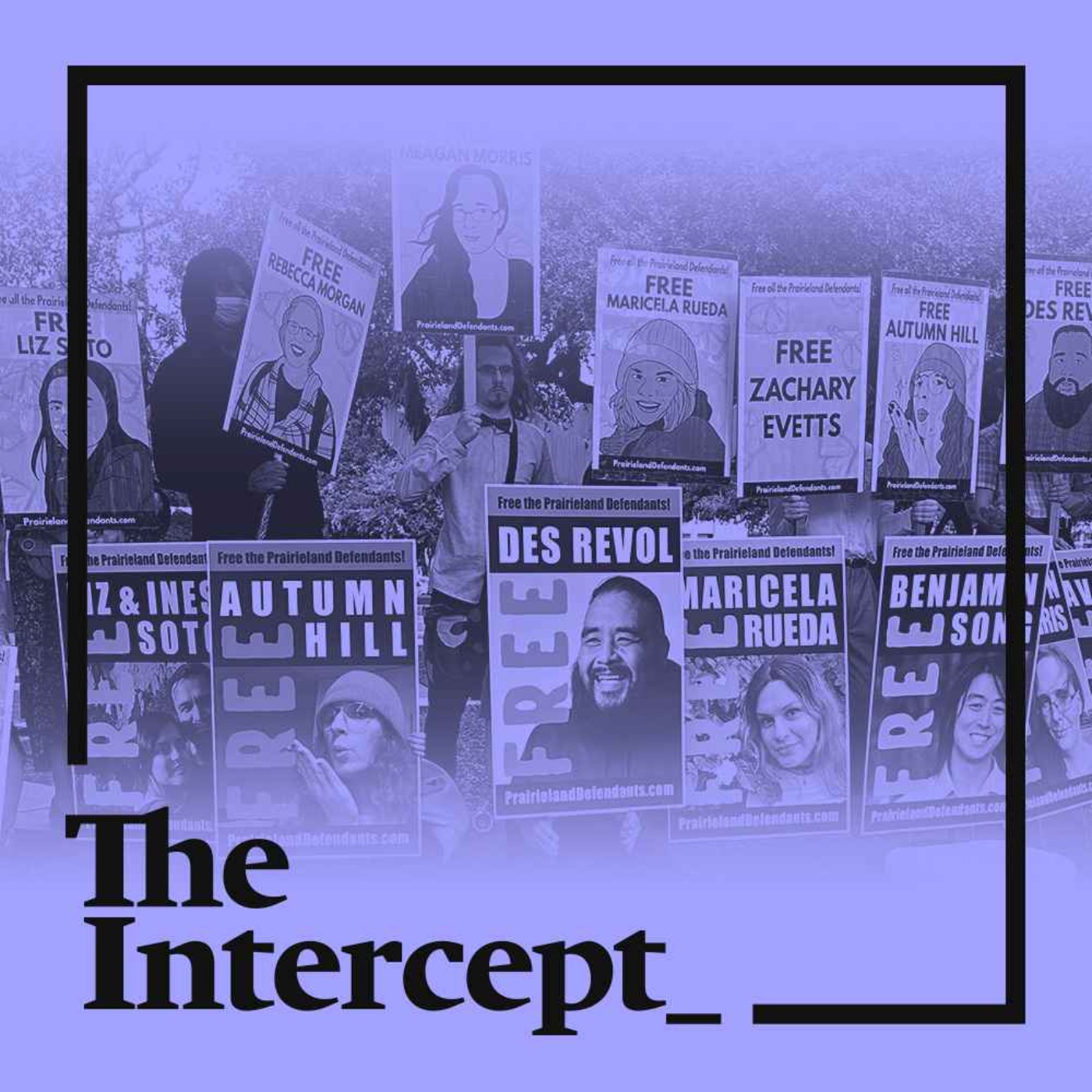 Trump’s Communist Boogeyman Playbook: Charging Protesters as Terrorists 03.07.2026 38minA noise demonstration that took place outside of the Prairieland Detention Facility in Texas one year ago has resulted in decades of prison time for the anti-ICE activists involved. Federal judges sentenced eight defendants, who the government cast as antifa operatives, to between 30 and 100 years in prison for terrorism-related charges last week; seven more people were sentenced this week.“There's a stunningly wide gap between what the Justice Department has put in its press releases and what top officials have said, versus the evidence that was actually presented at trial,” says Intercept reporter Matt Sledge, who has been covering the Prairieland case and was present at the sentencing. “It’s a real stretch to assert, as the government did, that this was all one coherent group.”“There's a concerted effort to characterize opposition to ICE or opposition to the Trump administration as some form of conspiracy, as an effort to provoke terrorism,” says Mark Bray, author of “Antifa: The Anti-Fascist Handbook.” “There are a number of things that can be said about the various sentences, but perhaps the most obviously egregious is that handed out to Daniel Sanchez [Estrada]: 30 years for moving some zines, some literature, which is not illegal to possess.”This week on The Intercept Briefing, host Jessica Washington speaks with Bray and Sledge about Prairieland as a test case in Trump’s war on dissent, and why the administration is determined to convince the public that antifa is a domestic terrorist organization.“I don't think Trump or his allies really care about antifa per se. It's a useful umbrella term to craft into a boogeyman scare tactic. In a way that ‘Communist’ was used in past generations, antifa is used now,” says Bray. He and Sledge point out that in the wake of Charlie Kirk’s killing, the Trump administration became much more aggressive in its targeting of the left and dissent in general.A noise demonstration that took place outside of the Prairieland Detention Facility in Texas one year ago has resulted in decades of prison time for the anti-ICE activists involved. Federal judges sentenced eight defendants, who the government cast as antifa operatives, to between 30 and 100 years in prison for terrorism-related charges last week; seven more people were sentenced this week.“There's a stunningly wide gap between what the Justice Department has put in its press releases and what top officials have said, versus the evidence that was actually presented at trial,” says Intercept reporter Matt Sledge, who has been covering the Prairieland case and was present at the sentencing. “It’s a real stretch to assert, as the government did, that this was all one coherent group.”“There's a concerted effort to characterize opposition to ICE or opposition to the Trump administration as some form of conspiracy, as an effort to provoke terrorism,” says Mark Bray, author of “Antifa: The Anti-Fascist Handbook.” “There are a number of things that can be said about the various sentences, but perhaps the most obviously egregious is that handed out to Daniel Sanchez [Estrada]: 30 years for moving some zines, some literature, which is not illegal to possess.”This week on The Intercept Briefing, host Jessica Washington speaks with Bray and Sledge about Prairieland as a test case in Trump’s war on dissent, and why the administration is determined to convince the public that antifa is a domestic terrorist organization.“I don't think Trump or his allies really care about antifa per se. It's a useful umbrella term to craft into a boogeyman scare tactic. In a way that ‘Communist’ was used in past generations, antifa is used now,” says Bray. He and Sledge point out that in the wake of Charlie Kirk’s killing, the Trump administration became much more aggressive in its targeting of the left and dissent in general.Full Transcript: https://interc.pt/4wnyW0eKeep our investigations free and fearless at theintercept.com/join. Hosted on Acast. See acast.com/privacy for more information.
 -
 The Democratic Party Gets Its Populist Takeover 25.06.2026 36minAll three congressional candidates that New York City Mayor Zohran Mamadani endorsed won their primaries on Tuesday. The races were widely viewed as a test of just how much influence the left would have in charting the next chapter for the Democratic Party — and a referendum on Mamdani's power.“Mamdani is the one variable that truly matters,” Michael Lange, political writer and elections analyst of The Narrative Wars Substack, tells The Intercept Briefing as he breaks down the wins of Claire Valdez, Brad Lander, and Darializa Avila Chevalier by district. “You pair that type of broad cultural political figure with the block-by-block organizing of New York City DSA — it's a very powerful thing.” “You had a candidate who said ‘Fuck Kamala Harris’ win the historic capital of Black America," says Lange, of Avila Chevalier’s win over five-term incumbent Rep. Adriano Espaillat. “If that is not a distillation of the ‘Democratic tea party,’ I don't quite know what is.”This week on the podcast, host Akela Lacy speaks to Lange and Intercept managing editor Maia Hibbett about the strategic mistakes of the traditionally progressive Working Families Party, the growing influence of the Democratic Socialists of America on the Democratic Party, and how the DSA is upending electoral politics from the left.“Here in New York, a lot of the momentum is being driven by the DSA, of course, but there are these progressive and insurgent candidates across the country who are trying to change the course of the Democratic Party," says Hibbett, “and excite voters who might not have been into the Democratic establishment in past cycles.”Lange notes how demographic changes and pressures on the Democratic Party base are impacting voters’ priorities. “The party's becoming younger, more educated, and increasingly squeezed financially,” says Lange. “There's just this broad alienation of people who have not really been able to get ahead, not for their own fault, and I think it's like downstream of our economy, and that's why the affordability zeitgeist is so potent.” He adds, "You spin the wheels up in two years, what could this look like in a Democratic presidential primary?"Full transcript: https://interc.pt/4vsuUDFKeep our investigations free and fearless at theintercept.com/join. Hosted on Acast. See acast.com/privacy for more information.
 -
 The Performative Ceasefire in Gaza 19.06.2026 45minOver the last few years, the world has seen unspeakable violence, death, and devastation from Israel’s war on Gaza. During that time, global perception has shifted as the scale of Israel’s destruction grew, with the death toll climbing to more than 73,000 people. Since the October 2025 “ceasefire,” Israeli military attacks have killed more than 1,000 Palestinians in Gaza.“Spending years building a movement for an end to this genocide around the slogan ‘Ceasefire now’ alone, it was successful in building quite a substantial following,” Tariq Kenney-Shawa, an associate fellow at Palestinian think tank Al-Shabaka, tells The Intercept Briefing. “It was vague enough to bring a lot of people into the movement against genocide — because who's going to disagree with calling for an end to war?”“But at the end of the day, what it really laid the groundwork for was ... the potential of signing this empty ceasefire agreement, in which there is an agreement on paper, there is a framework, and a phased approach to this.”Since the U.S.-brokered ceasefire last year between Israel and Hamas, Gaza has largely fallen out of the news, as Israel, along with the U.S., launched attacks on Iran and Lebanon. But Israel’s genocidal assault on Palestinians never really stopped. “Palestinians continue to be killed every single day, albeit at a more piecemeal slower pace that is more difficult for the international community to oppose,” says Kenney-Shawa.This week on the podcast, Intercept reporter Jonah Valdez speaks to Kenney-Shawa about how the fight for Palestinian rights and sovereignty can’t end at demands for ceasefires and conditioning aid — and should shift to sanctions and arms embargoes — and about how Gaza fits into Israel’s ambitions for the region and efforts to more deeply enmesh the U.S. and Israeli military.“This is the most important thing to look at in the course of the next few months and few years,” says Kenney-Shawa, warning of new Israel-led initiatives like Section 224, an unprecedented integration of the U.S. military–industrial complex and Israeli defense and technology sectors. Israel and American leaders “recognize the fact that criticism of Israel in the U.S. is skyrocketing. ... In many ways, they've recognized the need to shift this U.S.–Israel relationship from one of dependency, both militarily and financially, to one of further entrenchment.”“Obviously, it's a very strategic move by the Israelis to take advantage of this period in time where there is this huge chasm between public opinion and actual policy,” says Kenney-Shawa. “They're essentially recognizing that, ‘Hey, we might not have total impunity in the United States forever, but we do for now while establishment Democrats and Republicans are running the ship. We have a Trump administration that's essentially willing to do whatever we want.’ So what they're trying to do now is essentially push this process through while Trump is in power, while Republicans have a majority in the Senate and the House.”Full transcript: https://interc.pt/3SdcRCVKeep our investigations free and fearless at theintercept.com/join. Hosted on Acast. See acast.com/privacy for more information.
 -
 The Right’s “Election Fraud” Cry for Midterms Previewed in Primaries 12.06.2026 32minOn Tuesday night, oyster farmer and combat veteran Graham Platner overwhelmingly sailed to victory in the Democratic Senate primary in Maine. His opponent, Gov. Janet Mills unofficially dropped out in late April, leaving Platner effectively unopposed. But a series of scandals rocked his candidacy, leaving his viability against Republican Sen. Susan Collins in November in question.The veteran has repeatedly emphasized the way his combat trauma made him a worse version of himself, and how in later years he has been able to heal and evolve. In Maine, Democrats so far appear to have accepted that message of redemption, and his promise to provide a progressive economic agenda for Maine.“It’s a very working-class state that has been very badly impacted by job loss and then, in recent years, by a pretty extreme wave of gentrification,” Intercept reporter Noah Hurowitz says. “The progressive policy agenda of Graham Platner combined with the perceived authenticity of his ‘I am a fighter, I will actually do this,’ whereas Janet Mills who has been in power and overseen a lot of this and has not been perceived to bring a lot of the changes that Mainers seek” is resonating with voters. We also check in on California, where Intercept contributor Jordan Uhl breaks down the latest conspiracy theories about voter suppression, which conservatives have hinged on the defeat of former reality TV star Spencer Pratt, and the early results in the governor’s race. Uhl also breaks down how betting platforms like Kalshi and Polymarket are adding to the confusion, and what that could mean come November. “If they don't like the outcome, it's rigged. If they like the outcome, it's fine,” says Uhl. “At the gubernatorial level, you can see how Megyn Kelly pointing to prediction market data is symptomatic of a larger problem here. People weren't looking to actual polling data. They were looking to the behavior of gamblers to inform their analysis.”Full transcript: https://interc.pt/3S6IcaaKeep our investigations free and fearless at theintercept.com/join. Hosted on Acast. See acast.com/privacy for more information.
 -
 Warehousing Human Beings 05.06.2026 40minJoin The Intercept Briefing podcast on Tuesday, June 16, at 5 pm ET (2 p.m. PT) for a live episode. Intercept journalist Jonah Valdez and Tariq Kenney-Shawa, an Al-Shabaka U.S. policy fellow, will discuss the not-so-real ceasefires in Gaza, Iran, and Lebanon. You can RSVP here.Episode Description: Hundreds of detained people launched a hunger and labor strike at Delaney Hall in Newark, New Jersey, over Memorial Day weekend to protest inhumane conditions at the immigration detention facility run by the for-profit company GEO Group. Protesters flocked to the scene to echo detainees’ pleas for release and better conditions — and were met with brutal tactics from federal, local, and state law enforcement officials, who beat, tear-gassed, and arrested protesters.“Detainees are raising that they have no access to quality medical care, that they're not getting needed medications,” Andrea Sáenz, a former federal appellate immigration judge who was fired by the Trump administration last year, tells The Intercept Briefing. “They don't have enough food to eat. The food that they are getting is spoiled. They're facing hostility and harassment and violence from the guards.” This week on the podcast, host Jessica Washington speaks to Sáenz and Aaron Reichlin-Melnick, a senior policy fellow at the American Immigration Council, about the conditions at the 1,000-bed jail and other detention centers across the country. The Trump administration has restricted members of Congress and state officials from oversight of federal immigration detention centers. “ICE doesn't want people to see the way that they're treating human beings in these facilities,” says Sáenz. Intercept reporter Noah Hurowitz, who covers federal law enforcement and immigration, was on the scene at Delaney Hall on Monday. He describes the violence that erupted outside of the facility between protesters and law enforcement officers.“The ICE agents on the scene were quite willing to use violence at times against protesters,” says Hurowitz. “But from everything I saw, the Newark and New Jersey police were much more indiscriminate with their violence and much more willing to attack outright and fire tear gas and really put people in danger.”Reichlin-Melnick says that the Trump administration’s war on immigrants should concern everyone. “We're seeing every government database being turned into a tool of the mass deportation state, and that is something that impacts all Americans,” he adds, “because you cannot carry out a mass deportation of 4 percent of the U.S. population without fundamentally transforming the United States into more of a police state.” Full transcript: https://interc.pt/4dQhgnDKeep our investigations free and fearless at theintercept.com/join. Hosted on Acast. See acast.com/privacy for more information.
 -
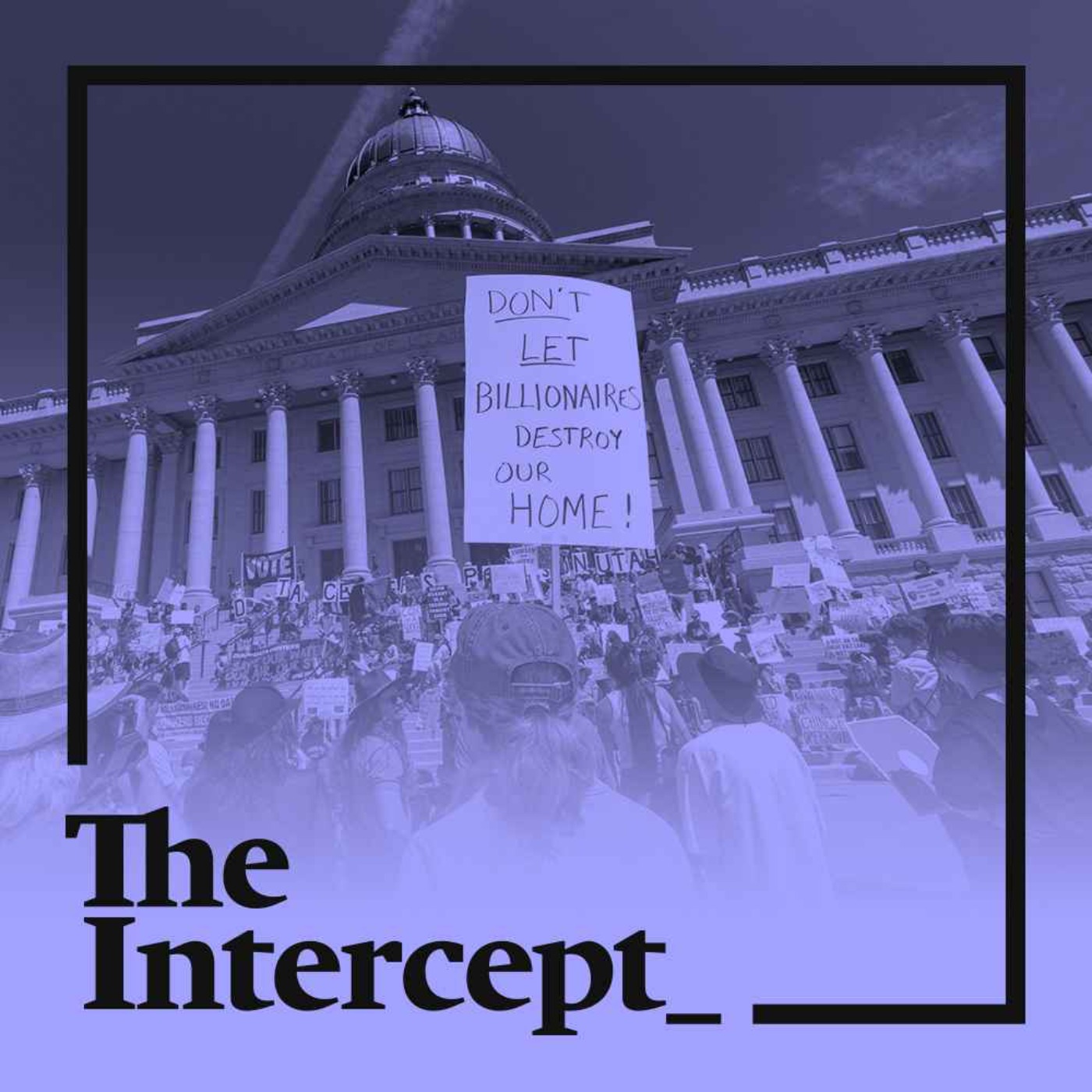 The Race to Build AI Data Centers — Before the People Can Protest 29.05.2026 36minShark Tank’s Kevin O’Leary has been making the media rounds defending the 40,000-acre data center project he’s backing in northern Utah. Dismissing residents’ concerns over the environmental impacts and water demands of the proposed project in the drought-stricken Great Salt Lake region, O’Leary has claimed protesters are “bused in,” “misinformed,” and alleged that China has had a hand in orchestrating the public push back.“The Stratos project in Utah is an example of data center largesse,” says Jim Walsh, the policy director of Food and Water Watch, an organization leading a campaign to stop the rapid development of data centers across the country. As proposed, the project would be more than double the size of Manhattan. Walsh adds, “It's important to recognize that the impacts of this data center go beyond the water and energy concerns that impact the residents of Salt Lake. They're going to be pulling gas from the Ruby Pipeline, and this project is going to perpetuate more fracking in the Western U.S., a practice for extracting natural gas that uses extreme amounts of water.”This week on The Intercept Briefing, host Jordan Uhl speaks to Walsh about the massive Utah project, the environmental and economic impact of data centers on communities especially where water is already scarce, and the Trump administration’s push to cut regulations at the federal and local level to accelerate the build-out of data centers and AI infrastructure.In response to O’Leary claiming data center development is a national security priority to beat out China in the AI race, Walsh says, “National security isn't just about having technological and military superiority.” We're not safe if we don't have clean air and clean water to drink and breathe. We're not safe if our communities have massive data centers that are extracting our natural resources. Our entire economy functions on access to water.”For more, listen to the full conversation of The Intercept Briefing on Apple Podcasts, Spotify, YouTube or wherever you listen.Keep our investigations free and fearless at theintercept.com/join. Hosted on Acast. See acast.com/privacy for more information.
 -
 AIPAC, AI, Crypto and Gambling Are Hiding Their Big Election Spends 22.05.2026 26minRepublican Rep. Thomas Massie was decisively ousted on Tuesday night in his Kentucky primary, a win for President Donald Trump, who had launched an all-out attack on the congressman for his role in pushing for the release of the Epstein files. But in Pennsylvania, the left had a lot to celebrate. Chris Rabb won by nearly 15 points in Philadelphia in a major win for progressives. And Bob Brooks, a retired firefighter and union head, sailed to victory with the support of both the left and moderates. Mysterious super PACs with ties to Republican donors poured millions into influencing the election results in both states with varying degrees of success. In Kentucky, AIPAC’s super political action committee and two other groups backed by pro-Israel donors spent more than $15 million in opposition to Massie or in support of his opponent, according to Federal Election Commission reports released through Tuesday. In Pennsylvania, advertisements from Lead Left — a super PAC that reportedly has ties to Republican donors — dropped ads attacking two of the candidates as not progressive enough, leading to speculation that Republicans were trying to prop up a weaker candidate for the general election. This week on The Intercept Briefing, host Jessica Washington and politics reporter Matt Sledge break down the contentious primary races, the record-level campaign spending and how obscure groups funding the midterm elections are hiding donors' tracks.“Groups can kind of game campaign finance deadlines and create super PACs to funnel money to other super PACs so that reporting deadlines are missed and use these ‘pop-up super PACs’ to ensure that ordinary voters never find out who is funding ads before a campaign happens,” says Sledge. “Sometimes there's even a second layer of pop-up super PACness where those bland-sounding groups send money to other bland-sounding groups. God help you if you're an ordinary voter trying to track all this money.”The consequential U.S. Supreme Court decision in Citizens United 16 years ago has allowed courts to chip away at campaign financing restrictions. “Now here we are where any industry that's facing regulation or any donors who support an unpopular cause can really just open the spigots and try to throw primaries their way,” adds Sledge. Certain industries have gotten smart about how to hide where the money is coming from. “Ordinary voters don't generally like crypto, AI or gambling. They may tolerate it at a maximum, but they're not motivated by the idea of electing pro-crypto, pro-AI, pro-gambling people,” notes Sledge. “But all of these industries have realized, ‘OK, we can use super PACs that run ads that have nothing to do with our industry and get our friends elected to Congress, and they are going to remember that we spent a lot of money on their races.’”For more, listen to the full conversation of The Intercept Briefing on Apple Podcasts, Spotify, YouTube or wherever you listen.Keep our investigations free and fearless at theintercept.com/join. Hosted on Acast. See acast.com/privacy for more information.
 -
 “We Will Find You and We Will Kill You” 15.05.2026 41minRSVP for The Intercept Briefing Podcast’s Live Conversation on Gaza. Sign up to join us on Tuesday, May 19, at 5 p.m. ET/2 p.m. PT.Join The Intercept Briefing podcast for a special live episode taping with Intercept journalist Jonah Valdez and Tariq Kenney-Shawa, an Al-Shabaka U.S. policy fellow and co-host of Al-Shabaka’s Policy Lab series.Show description:In 16 pages, the Trump administration’s new official counterterrorism strategy outlines in broad terms who it views as terrorist threats and priority targets, ranging from anti-fascist activists to ISIS and so-called narco-terrorists. The line “We will find you, and we will kill you” appears in the memo.“[The] strategy brings together Trump's war on the wider world, which stretches from interventions and wars in Yemen and Somalia to Venezuela and the Caribbean Sea,” says Intercept senior reporter Nick Turse. “It combines it with the administration's war on dissent at home which has also been lethal, as we saw on the streets of Minneapolis. ... We can consider this strategy a new declaration of war by the Trump administration on its enemies both foreign and domestic, both real and imagined.”This week on The Intercept Briefing, host Jessica Washington and colleagues Turse and Noah Hurowitz, who covers federal law enforcement, dissect how the Trump administration is painting anyone it wants to go after — state and non-state actors — as terrorists. “Fundamentally, this document is a list of the administration's enemies and a promise of what they're going to do to them,” says Hurowitz. “This anti-terror imperative makes for a very flexible and useful means of tamping down on dissent.”“We're not just talking about rhetoric here,” says Washington. “We've seen the administration actually use these terms in action when it comes to the boat strikes in the Caribbean and Pacific that killed nearly 200 people as of early May.” “The actual legal justification for the strikes is, like so much else, secret,” says Turse, who has been covering the attacks on so-called narco-terrorists. “We're talking about a fake war in which the enemies aren't even read into the fact that they're in an armed conflict with the United States.” He adds, “It's really built on a quarter-century of executive overreach and targeted killings around the world. It's the price of Congress allowing Presidents Bush, Obama, Biden, and Trump to hunt and kill people by drone from Afghanistan and Pakistan to Yemen and Somalia. It took this legally dubious, at best, post-9/11 drone war and laid the groundwork for a completely illegal one in the Caribbean and the Pacific Ocean.”“Say what you will about the people around President Trump,” Hurowitz notes, “but they have proved very adept at finding levers of power and levers of pain to go after their enemies.”For more, listen to the full conversation of The Intercept Briefing on Apple Podcasts, Spotify, YouTube, or wherever you listen.Keep our investigations free and fearless at theintercept.com/join. Hosted on Acast. See acast.com/privacy for more information.
Samankaltaiset podcastit


Suosittu maassa
Tämä podcast esiintyy myös näiden maiden podcast-listoilla.


