
The Energy Talk - Storytellers of Africa's Energy Transition
CleanTech Africa
0
The Energy Talk is a podcast that tells the stories of Africa's energy transition, featuring perspectives from financiers, policymakers, and operators working towards a sustainable energy future. Hosted by Olubunmi Olajide and Chigozie Ubah, the show is produced by EnergyHaus Africa and releases new episodes every two weeks.
Jaksot
-
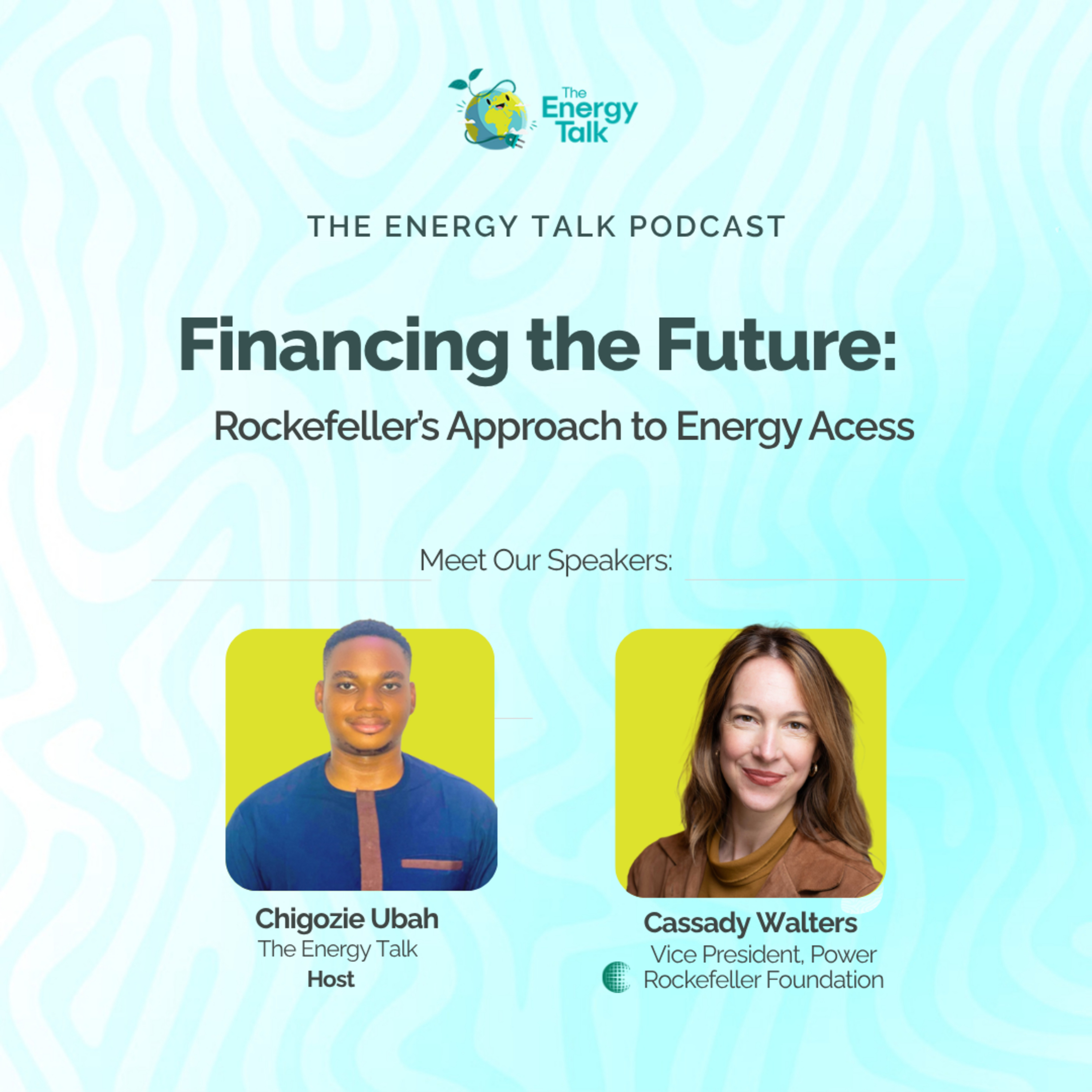 Financing the Future: Rockefeller's Approach to Energy Access 15.09.2026 36minThis episode features Cassady Walters, Vice President of the Power Portfolio at the Rockefeller Foundation, and our host Chigozie (‘Gozie”) Ubah. Cassady shares her career trajectory—from her early experience as a Peace Corps volunteer in rural Mali witnessing how energy poverty directly impaired healthcare and education, to strategic advisory at Albright Stonebridge Group analyzing industrial constraints such as diesel costs for Nigerian manufacturing. These experiences anchored her belief in energy access as the foundational backbone of economic and human development.The conversation highlights the Rockefeller Foundation’s "all-of-the-above" approach to energy solutions, emphasizing catalytic finance and country-led decision-making over picking specific tech winners. A recent report from the foundation details how small modular nuclear reactors could lower total system costs by up to 30% alongside renewables, provided local capacity and regulatory frameworks are built out.Cassady then analyzed Mission 300—an initiative jointly led by the World Bank and African Development Bank and supported by philanthropy—whose aim is to connect 300 million Africa-based residents to electricity by 2030. Anchored by national energy compacts and country delivery units, the effort combines high-level political commitments with systemic market creation.On financial models and strategy, Cassady outlines how the foundation leverages innovative finance and risk-tolerant capital. Through mechanisms like returnable grants and a $10M first-loss capital contribution to the IFC-led Zuri vehicle, Rockefeller aims to crowd in private capital for distributed renewable energy projects. She emphasizes that as a systems builder, philanthropy must focus on catalytic risk-taking rather than prioritizing traditional financial returns.Cassady and Gozie also examine the importance of cross-border knowledge exchange, citing initiatives like South-South transition mineral cohorts and cross-country productive use of energy roadshows. Then, when asked to define failure in Africa's energy transition, Cassady points to a future where African economies remain stagnated by unreliable power, or, alternatively, where African nations remain passive recipients of a global climate agenda rather than shaping energy systems built by and for Africans.Learn more about:The Rockefeller FoundationThe Energy Talk PodcastConnect on LinkedIn with:Cassady WaltersChigozie Ubah
 -
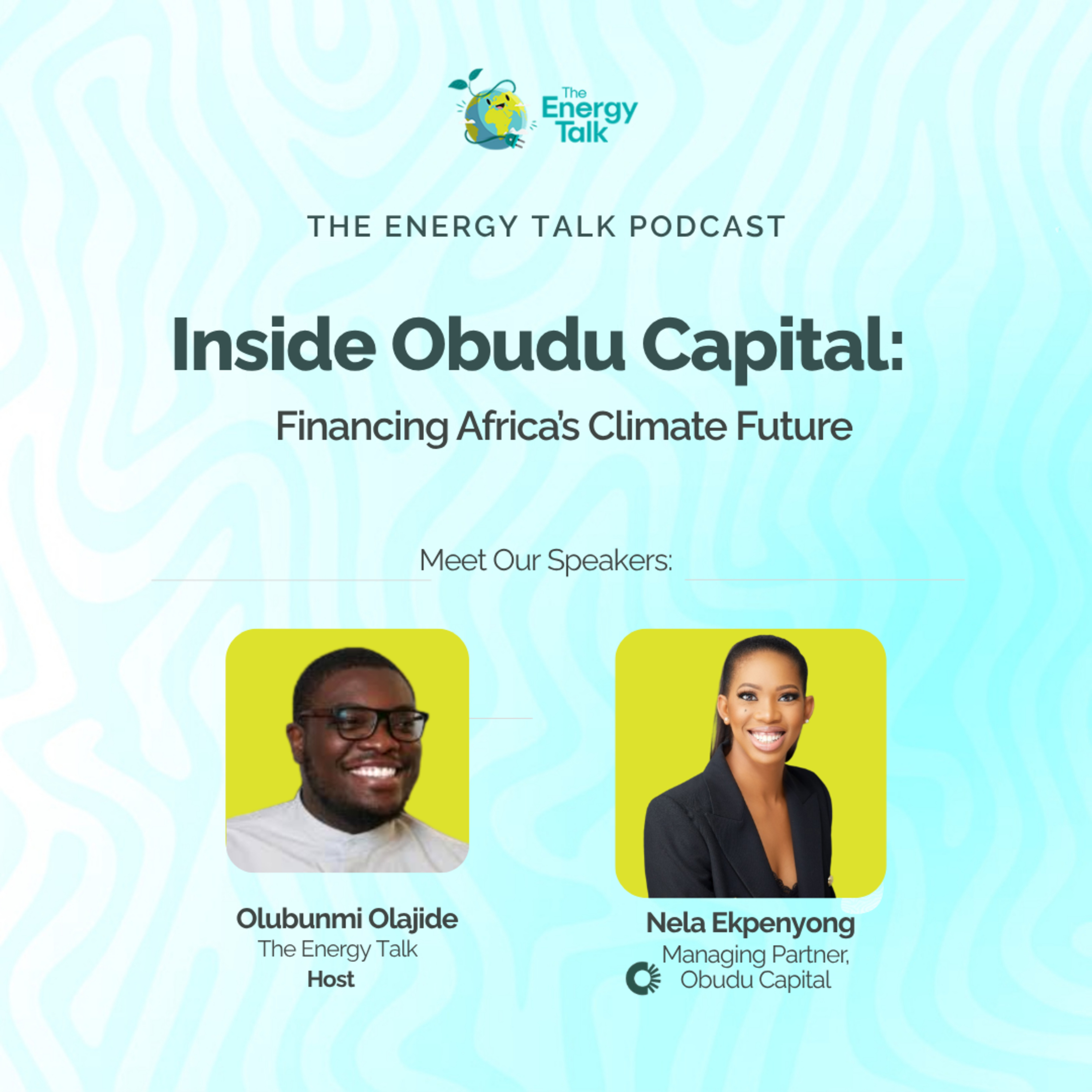 Inside Obudu Capital: Financing Africa's Climate Future 25.08.2026 45minThis episode welcomes Nela Ekpenyong, Co-founder of and Partner at Obudu Capital, a $20M climate tech fund investing in early-stage startups across Nigeria, Ghana, Uganda, and Kenya. Nela's path into climate began with a formative visit to the Obudu Mountains in 2013, where she witnessed, firsthand, ecosystem collapse — vanishing wildlife and dwindling water — that later compelled her to build her conservation nonprofit and, eventually, the fund mentioned earlier.Obudu Capital focuses on climate finance, health and wellbeing, sustainable resource use (agritech and waste management), and sustainable infrastructure like mobility. Nela describes raising capital for climate tech in Nigeria as historically harder than in countries like Kenya or South Africa, though rising fuel costs and a new presidential push toward carbon credit regulation are shifting the narrative. She notes it's often easier to raise capital for African climate tech outside the continent than within it.On business models, Nela explains that climate tech doesn't fit the "asset-light, high-margin" mold Venture Capitals, such as Obudu Capital, are built for, so Obudu uses a blended finance approach — equity, convertible notes, revenue-based financing, and debt — paired with a patient 10+3 fund lifecycle. She pushes back on the myth that impact-driven funds sacrifice returns, citing increased decarbonization, job creation, and women's empowerment as core metrics alongside financial performance.Nela and Olu (host) also discuss the risks of grant capital distorting otherwise-viable business models, the underappreciated role of academia in bridging data gaps for climate tech, and the shifting power dynamics between founders and funders as African founders grow more discerning. She argues for more "shameless capitalists" in the space — founders who sell tangible value (cheaper power, better harvests) rather than abstract climate narratives — and urges investors to see climate tech's asset-heavy nature as a feature, not a bug. When asked about failure, Nela says she doesn't believe in it, only redirection.Learn more about:Obudu CapitalThe Energy Talk PodcastConnect on LinkedIn with:Nela EkpenyongOlubunmi Olajide
 -
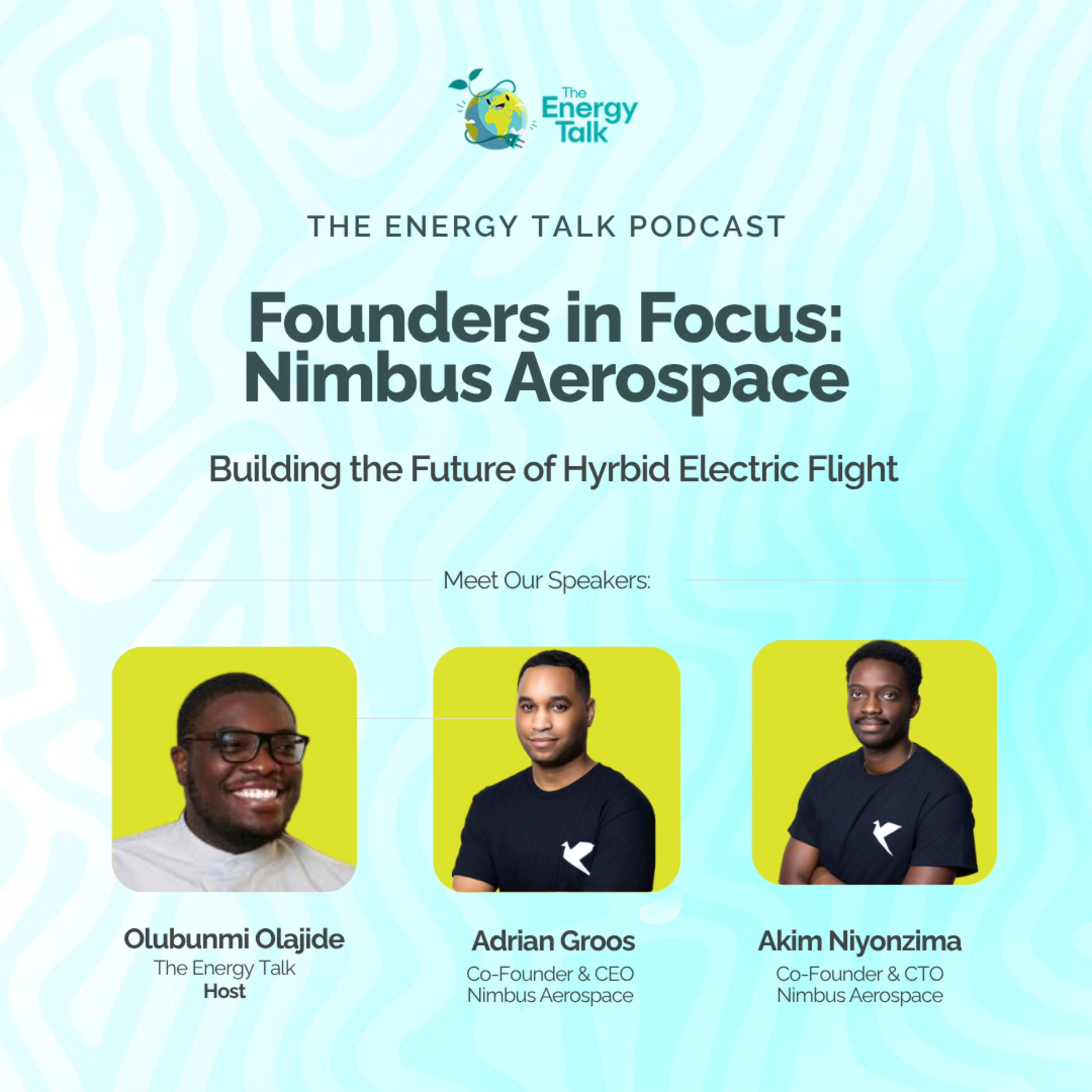 Founders in Focus: Nimbus Aerospace 03.08.2026 31minOlu sat down with Adrian Groos (CEO) and Akeem Niyonzima (CTO), co-founders of Nimbus Aerospace, an aerospace company building a six-passenger hybrid-electric light jet. At the time of recording, Nimbus Aerospace had grown after successful entry into Techstars and was also raising a VC-led round. Additionally, Nimbus Aerospace plans to sell their aircrafts at around $12.5M (vs the ~$12M light jet market leader), to lower CAPEX costs for consumers while expanding options.As Adrian notes, Nimbus Aerospace went hybrid-electric to reduce consumers’ OPEX costs and carbon emissions. Hybrid jets’ comparative edge over standalone propulsion systems such as gas-, hydrogen-, and electric-powered jets enables both outcomes for various reasons. For one, compared to full electric (battery energy density/weight limitations) or hydrogen (infrastructure and cost hurdles), hybrid-electric uses already-available technology, cutting fuel use by ~50% and lowering maintenance costs (electric engines cost ~80% less than jet engines), while remaining compatible with existing infrastructure. Adrian also discloses the exact findings informing Nimbus Aerospace’s decision to manufacture six-passenger light jets. Light jets make up ~36.5% of the U.S. private jet market and service ~80% of private jet trips, making it an attractive segment for a new entrant.On engineering progress, Akim shared that the team is currently flight testing a quarter-scale, fully electric prototype — deliberately not yet incorporating the hybrid propulsion system — to first nail down the aerodynamics and design data needed before integrating the hybrid powertrain into the full-scale aircraft. As he disclosed, the build was the fastest turnaround of any prototype worked on thus far; further, Nimbus Aerospace aims to leverage already-established manufacturing processes to hasten certification timelines.Additionally, Akim revealed that safety remains his number one filter on every decision, from flight testing to design changes. Akim then spoke candidly about representation in the industry, noting that he and Adrian are regularly approached by people — including women — who prior to their conversation did not realize people from diverse ethnic backgrounds could start a company like Nimbus Aerospace, underscoring why diverse leadership matters for driving innovation in aviation and aerospace.Learn more about:Nimbus AerospaceThe Energy Talk PodcastConnect on LinkedIn with:Adrian Groos Akim Niyonzima
 -
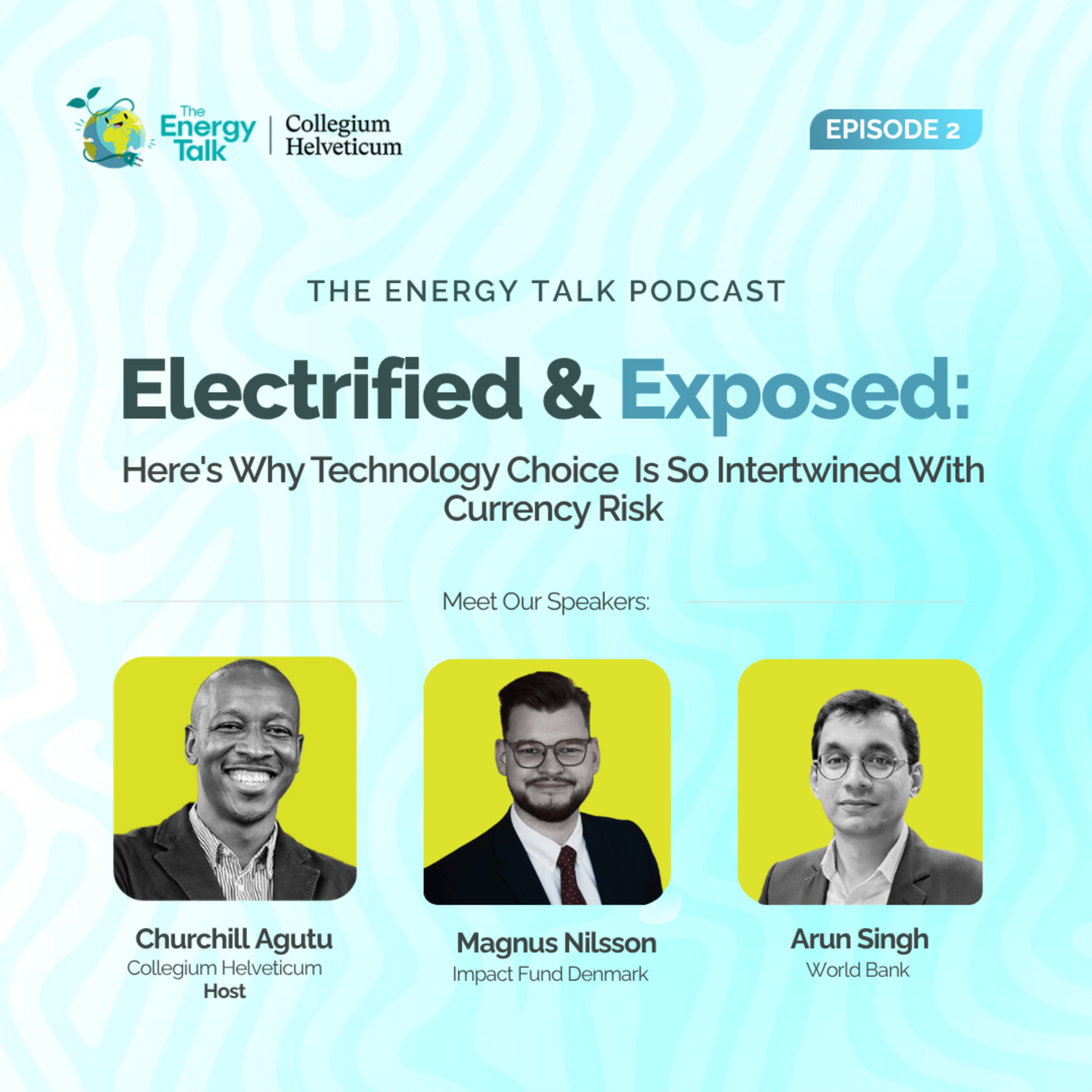 Electrified & Exposed Ep.2: Here's Why Technology Choice Is So Intertwined With Currency Risk 26.06.2026 45minIn the final episode of the Electrified & Exposed mini-series, we are pivoting from the private sector perspective to the public sector perspective. Podcast series host, Churchill spoke to two finance experts who are at the heart of the design and the implementation of currency risk solutions in Africa’s energy transition.Arun Singh (Senior Energy Specialist) & Magnus Nilsson (Impact Fund Manager) talk to us about why currency risk will significantly shape which technologies are deployed across sub-Saharan African countries, why some technologies are more likely to benefit from currency risk mitigation instruments, and of course, we touch on local currency financing touching on questions such as why institutional investors are still not in a position to invest in the energy sector in parts of the region. We also cover a lot of ground from solar home systems to geothermal, from parallel market rate distortions to pension fund investment mandates that could be the game changers for the energy transition.Views expressed are those of our guests in their personal capacities and do not represent the official positions of their organisations.Reference to IMF report: IMF (2021), Recognizing Reality: Unification of Official and Parallel Market Exchange Rates. Link: https://www.imf.org/en/publications/wp/issues/2021/02/06/recognizing-reality-unification-of-official-and-parallel-market-exchange-rates-50047 If you haven't listened to Episode 1 yet, featuring Daniel Komolafe (First Electric, Nigeria) and Bodunde Akinola (CrossBoundary) — that is a good place to start! Listen here: https://creators.spotify.com/pod/profile/the-energy-talk/episodes/Electrified--Exposed-Ep-1-Why-Currency-Risk-Matters-for-Sub-Saharan-Africas-Off-Grid-Energy-Future-e3j6mon Podcast hosted by Churchill Agutu (Collegium Helveticum Research Fellow, 2025/26)Produced and edited by (Tosin George, Churchill Agutu)Sound editing (Victor Adeolu)Learn more about:Collegium HelveticumConnect on LinkedIn with:Churchill Agutu Arun SinghMagnus Nilsson
 -
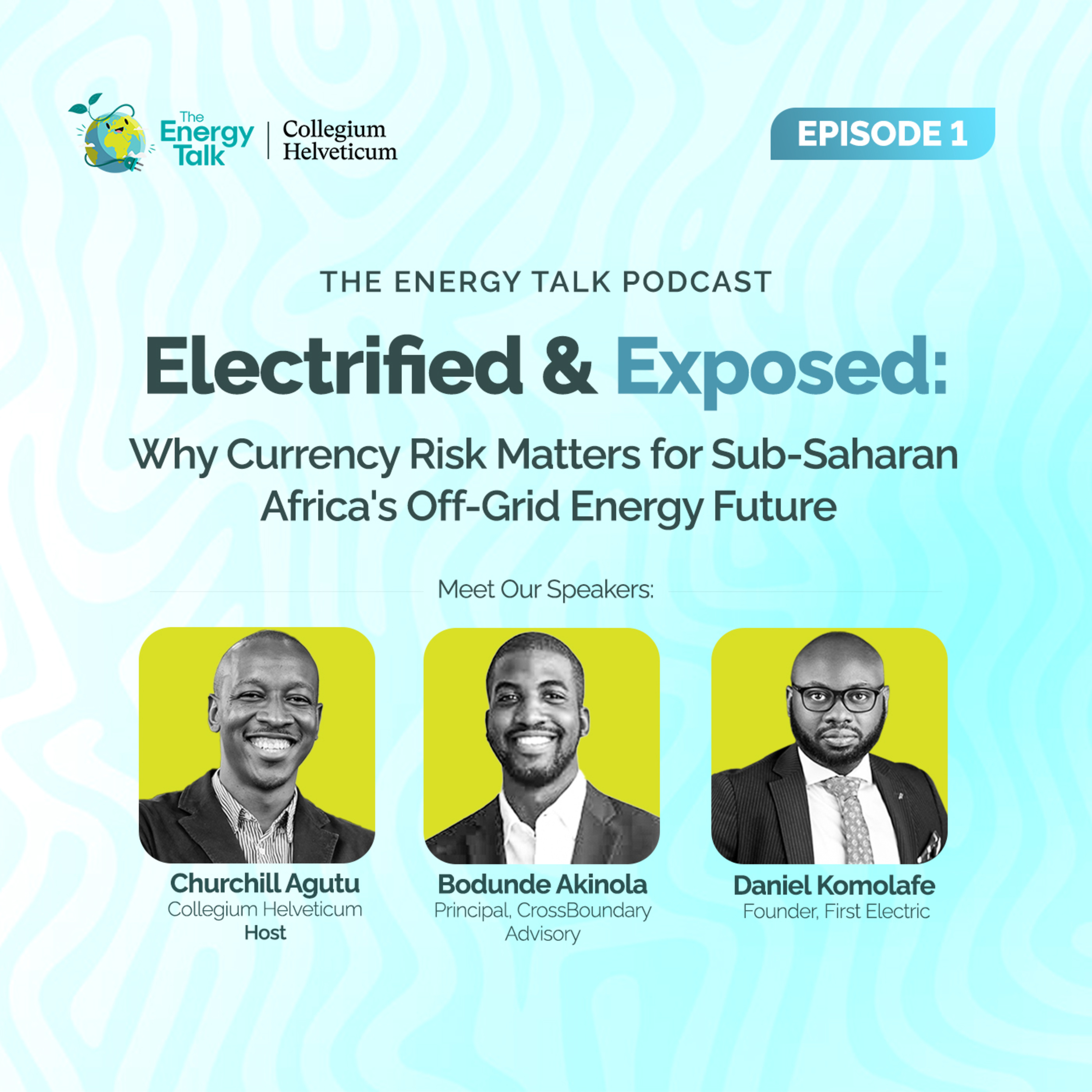 Electrified & Exposed Ep.1: Why Currency Risk Matters for Sub-Saharan Africa's Off-Grid Energy Future 11.05.2026 30minCurrency risk (often referred to as FX risk) is one of the most under appreciated barriers to sub-Saharan Africa's energy transition. In many contexts it is not just a financing headache. It shapes which projects get built, which companies survive, and which communities remain without power.The Energy Talk partnered with Dr. Churchill Agutu from the Collegium Helveticum to explore this issue through the voices of the practitioners navigating it every day — developers, advisers, investors, and institutions working at the heart of the challenge. We are doing a 2 episode mini-series on the topic. In Episode 1, we zoom into the off-grid electricity sector.We speak with Daniel Komolafe, CEO and Founder of First Electric, Nigeria, and Bodunde Akinola at CrossBoundary.Daniel takes us back to First Electric's early days deploying mesh grids in rural Nigeria. He describes how the Naira moved from 300 to the dollar to 1,500 to the dollar, a fivefold depreciation, pushing his company to the verge of insolvency on a $50,000 blended debt facility. As he puts it: if they had taken a more significant loan, the company would have been totally bankrupt. It is a story many energy entrepreneurs across the continent will recognise.Bodunde brings a different lens. Drawing on his experience advising companies across frontier markets, he walks through the core solutions: hedging, tariff indexing, blended financing, and local currency financing, and is candid about where the real difficulty lies: scaling local currency financing remains the hard problem that the sector has not yet solved.Learn more about:Publication on financing costs for off-grid electrification in sub-Saharan AfricaCollegium HelveticumFirst Electric CrossBoundary Advisory Connect on LinkedIn with:Churchill Agutu Bounde AkinolaDaniel Komolafe
 -
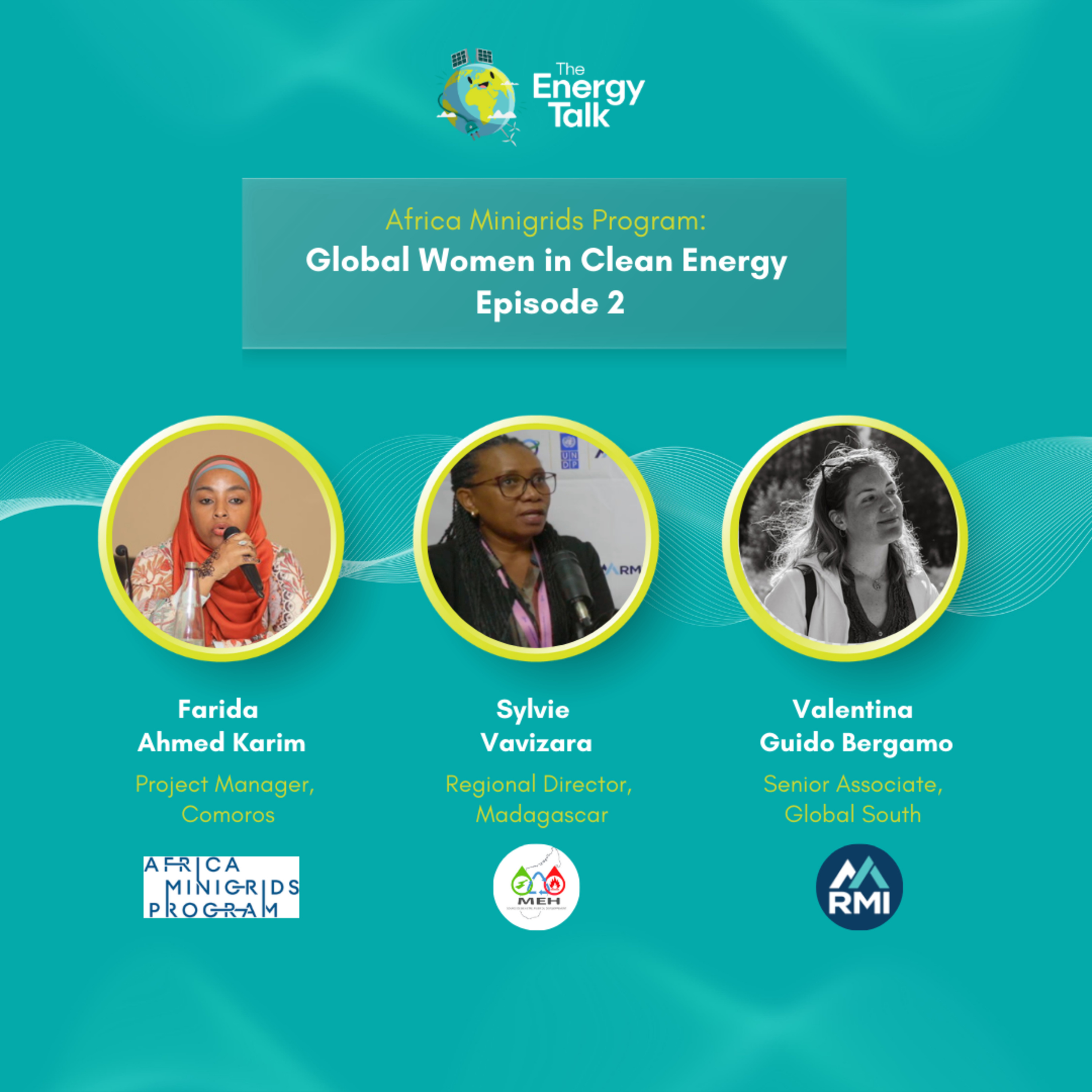 Africa Minigrids Program: Global Women in Clean Energy Episode 2 02.02.2026 48minValentina Guido Bergamo, Senior Associate at RMI, joins as guest host on this episode of The Energy Talk podcast recorded in Kampala, Uganda during the Energy Access Investment Forum (EAIF) in 2025.We discuss the role of women in Africa’s clean energy transition through the Africa Minigrids Program (AMP) and the Global Women in Clean Energy Fellowship, including the launch of its first cohort across Nigeria, Ethiopia, and Zambia. This episode also features interviews with Farida Ahmed Karim, AMP Project Manager in Comoros, and Sylvie Vavizara, Regional Director at Madagascar’s Ministry of Energy and Hydrocarbons, highlighting leadership, community impact, and efforts to advance gender equality in the minigrid sector.The Africa Minigrids Program (AMP) is funded by the Global Environment Facility (GEF), led by UNDP and implemented in partnership with RMI and the African Development Bank. Some activities are also supported by the Governments of Denmark and Luxembourg. Learn more about:African Minigrids Program (AMP)RMI Global Women in Clean Energy FellowshipEnergizing Women and Youth in Agri-Food Systems ProgramConnect with:Farida Ahmed KarimSylvie VavizaraValentina Guido Bergamo
 -
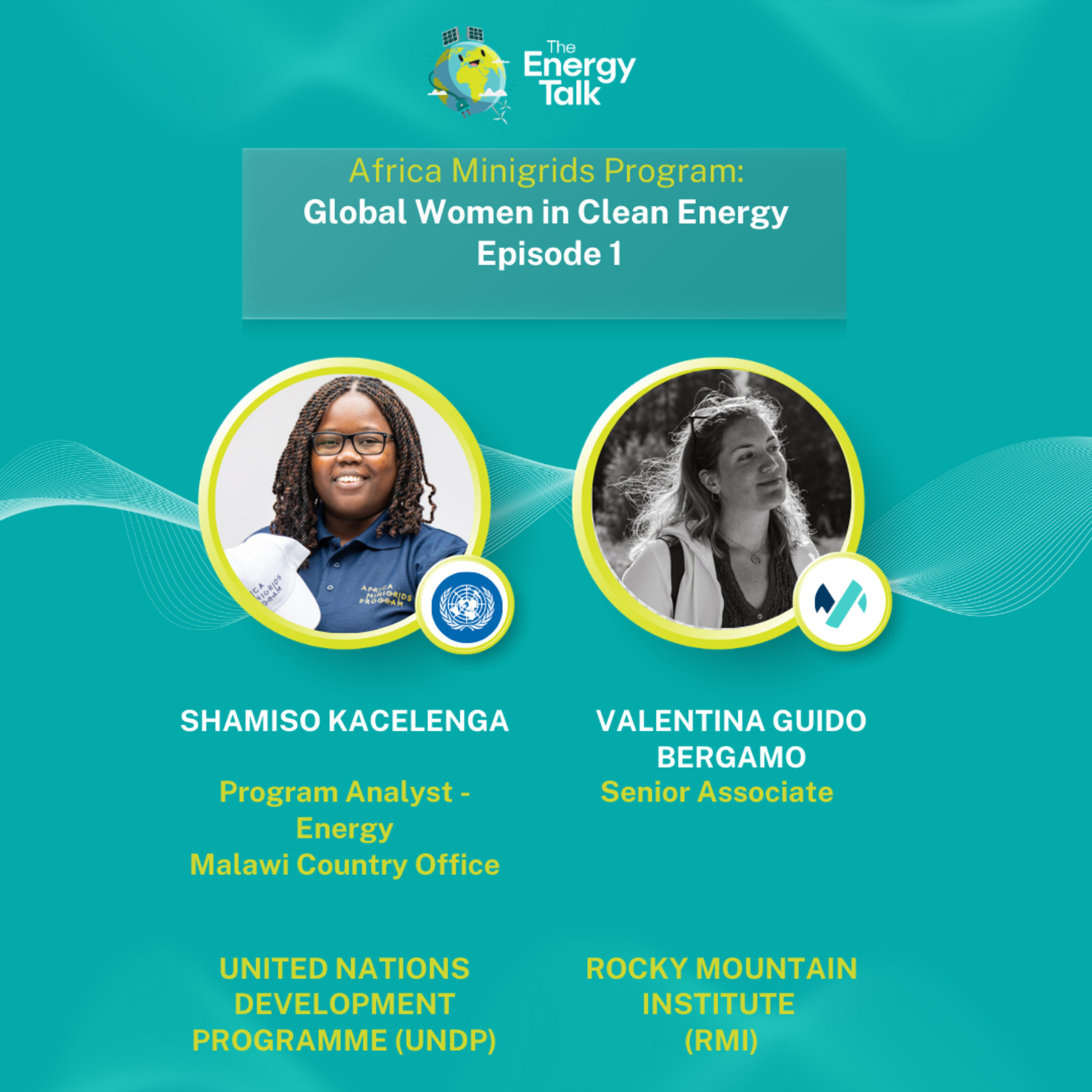 Africa Minigrids Program: Global Women in Clean Energy Episode 1 30.09.2025 36minValentina Guido Bergamo, Senior Associate at RMI, joins as guest host on this episode of The Energy Talk podcast recorded in Kampala, Uganda during the Energy Access Investment Forum (EAIF) in 2025. We discuss the Global Women in Clean Energy Fellowship program that recently launched its first cohort in Nigeria, Ethiopia, and Zambia. This episode also includes a feature interview with Shamiso Kacelenga, Program Analyst for energy with the UNDP, Malawi Country Office.The Africa Minigrids Program (AMP) is funded by the Global Environment Facility (GEF), led by UNDP and implemented in partnership with RMI and the African Development Bank. Some activities are also supported by the Governments of Denmark and Luxembourg. Learn more about:Needs assessment findingsAfrican Minigrids Program (AMP)Global Women in Clean Energy Fellowship Connect with:Shamiso KacelengaValentina Guido
 -
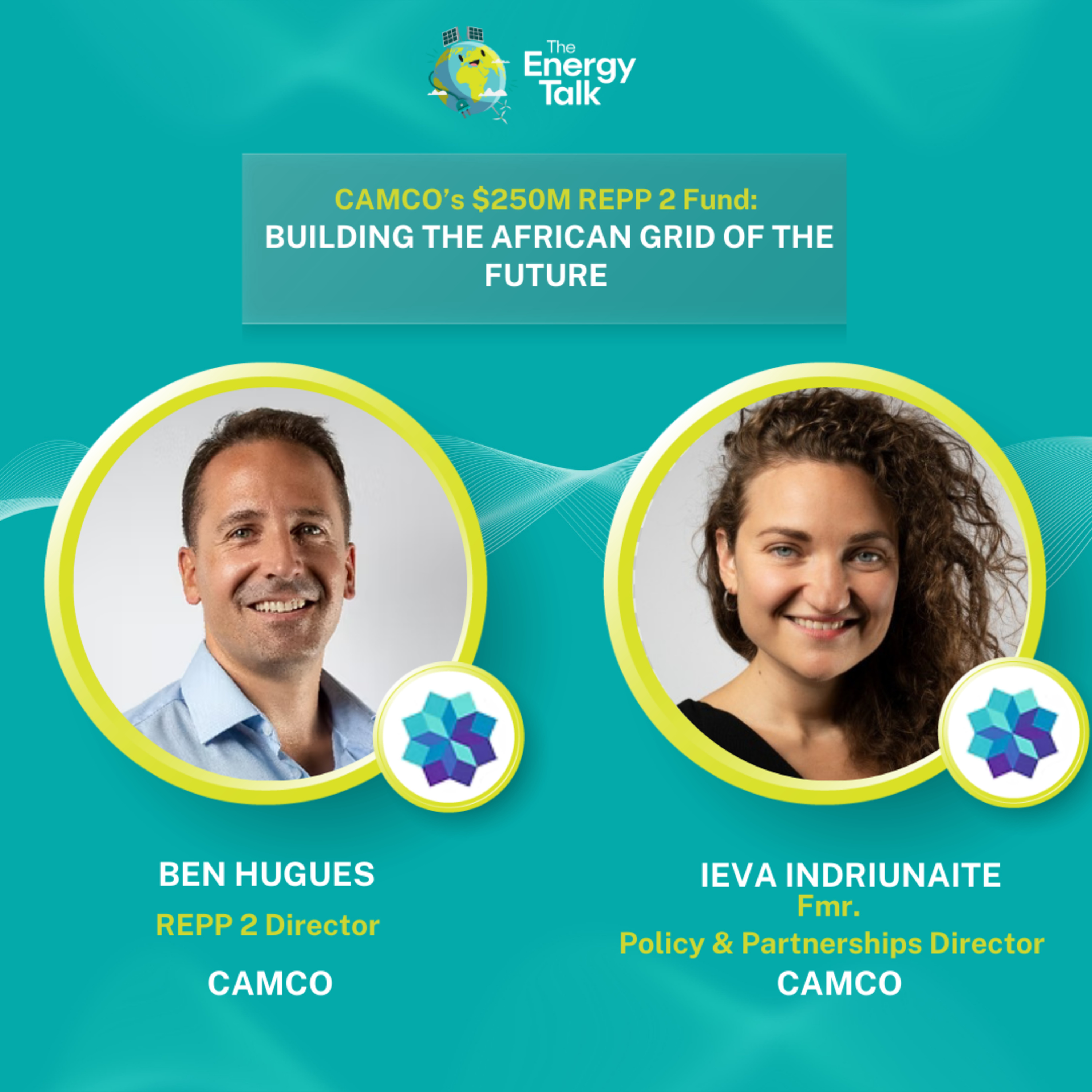 CAMCO’s $250M REPP 2 Fund: Building the African grid of the future 19.08.2025 41minIn this episode of The Energy Talk, we delve into the inner workings of the REPP 2 fund, a groundbreaking initiative managed by Camco, aimed at transforming the renewable energy landscape in Sub-Saharan Africa. We welcome Ben Hugues (Fund manager of REPP 2) and Ieva Indriunaite (former head of REPP 2’s technical assistance facility), to share insights into the fund's blended finance structure, which not only mobilizes substantial investments but also prioritizes social impact and sustainability. The conversation covers key strategies for selecting projects, the challenges of navigating diverse regulatory environments, and the critical role of partnerships in driving success. We also explore exit strategies and how they balance financial returns with lasting community benefits. Tune in to discover how REPP 2 is poised to make a significant impact in providing clean, reliable energy access to millions across the continent.
 -
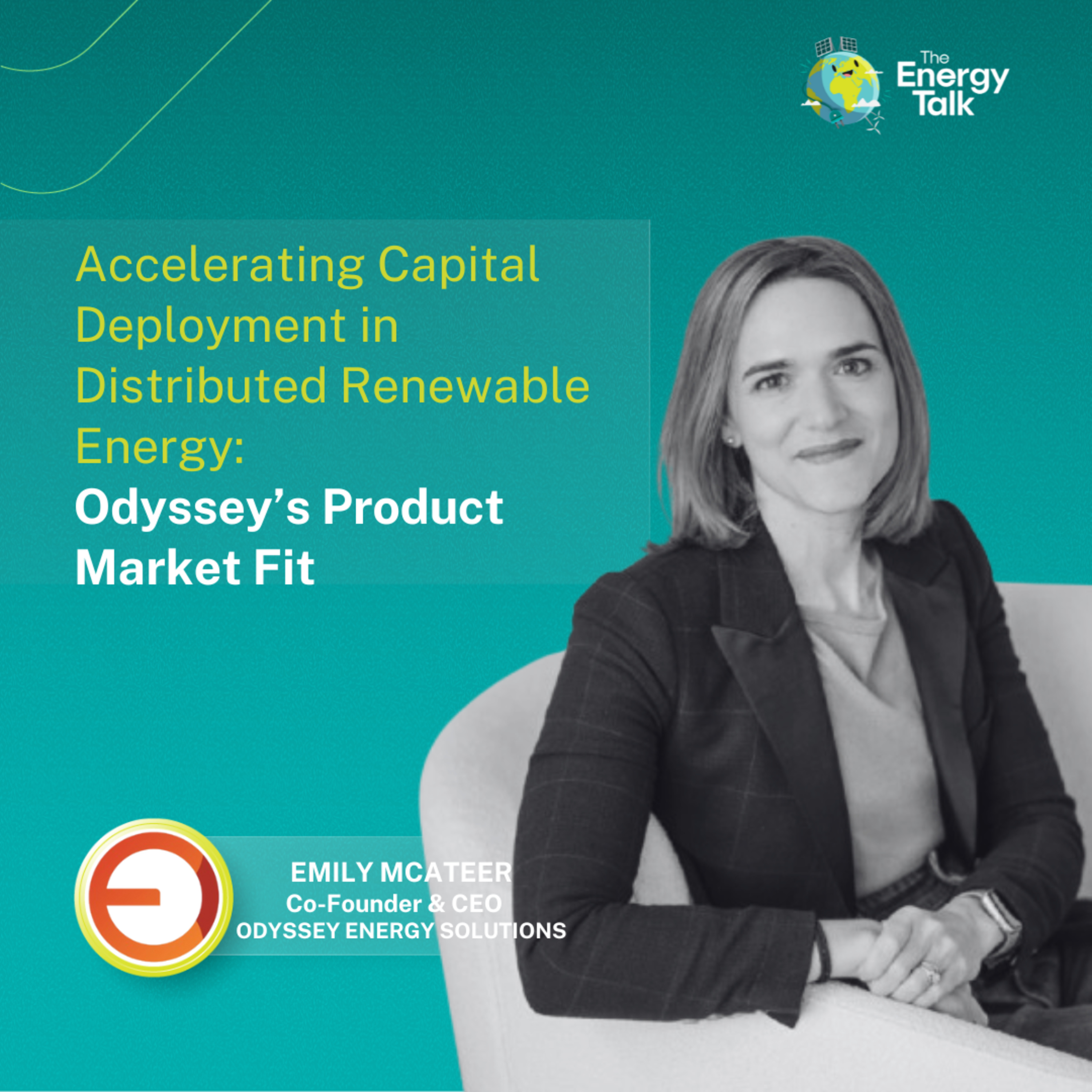 Accelerating Capital Deployment in Distributed Renewable Energy: Odyssey’s Product Market Fit 01.07.2025 30minIn this episode, we sit down with Emily McAteer, CEO and Co-founder of Odyssey Energy Solutions, one of the most influential startups in the climate tech space for emerging markets. Odyssey is transforming how Distributed Renewable Energy (DRE) projects are financed, procured, and managed—especially in emerging markets across countries in Africa, and also India, Mexico, and Brazil.What began as a platform supporting DFIs like the World Bank to deploy capital into DRE projects has evolved into a robust end-to-end solution for the entire ecosystem. Today, Odyssey powers asset monitoring, equipment procurement, and most recently direct credit financing for DRE developers.Timestamps: 00:00 Introduction to the Energy Talk Podcast01:36 Emily's Journey into the Energy Sector04:53 The Birth and Growth of Odyssey.08:41 Challenges and Evolution of Odyssey.11:11 Odyssey's Procurement and Credit Platform19:30 Global Expansion and Product Market Fit24:12 Partnerships and Future Prospects28:00 Defining Success and Failure
 -
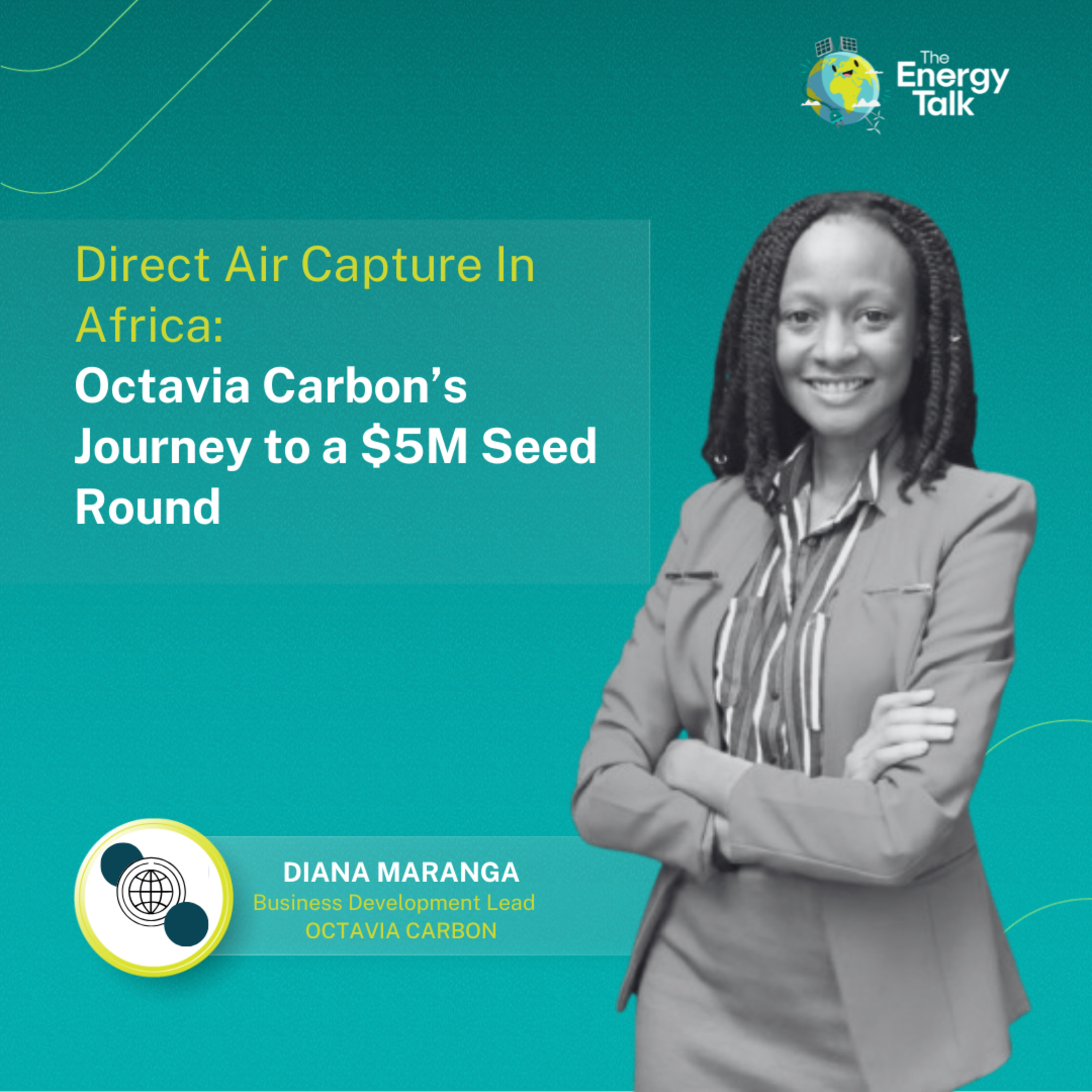 Direct Air Capture In Africa: Octavia Carbon’s Journey to a $5M Seed Round 11.03.2025 42minRegister for the Included VC Africa Reimagined: VC & Beyond SummitJoin Diana Maranga, Head of Commercialization at Octavia Carbon, as she shares her unique journey from growing up inspired by environmental hero Professor Wangari Mathai to leading a pioneering direct air capture and storage company in Kenya. In this episode, Diana discusses Octavia Carbon's early stages, key growth milestones, and the complex challenges of commercializing new technology in the climate tech sector. She also delves into Kenya's advantageous position for direct air capture, the pivotal role of community engagement, and the broader implications for Africa's green transition.00:00 Introduction to Diana Maranga and Octavia Carbon00:17 Early Inspirations and Environmental Passion01:46 Career Path and Joining Octavia Carbon03:37 What is Octavia Carbon?05:17 Challenges and Growth in Direct Air Capture07:10 Kenya as a Hub for Climate Tech12:58 Commercialization and Market Challenges32:26 Community Engagement and Impact37:03 Defining Success and Avoiding Failure
 -
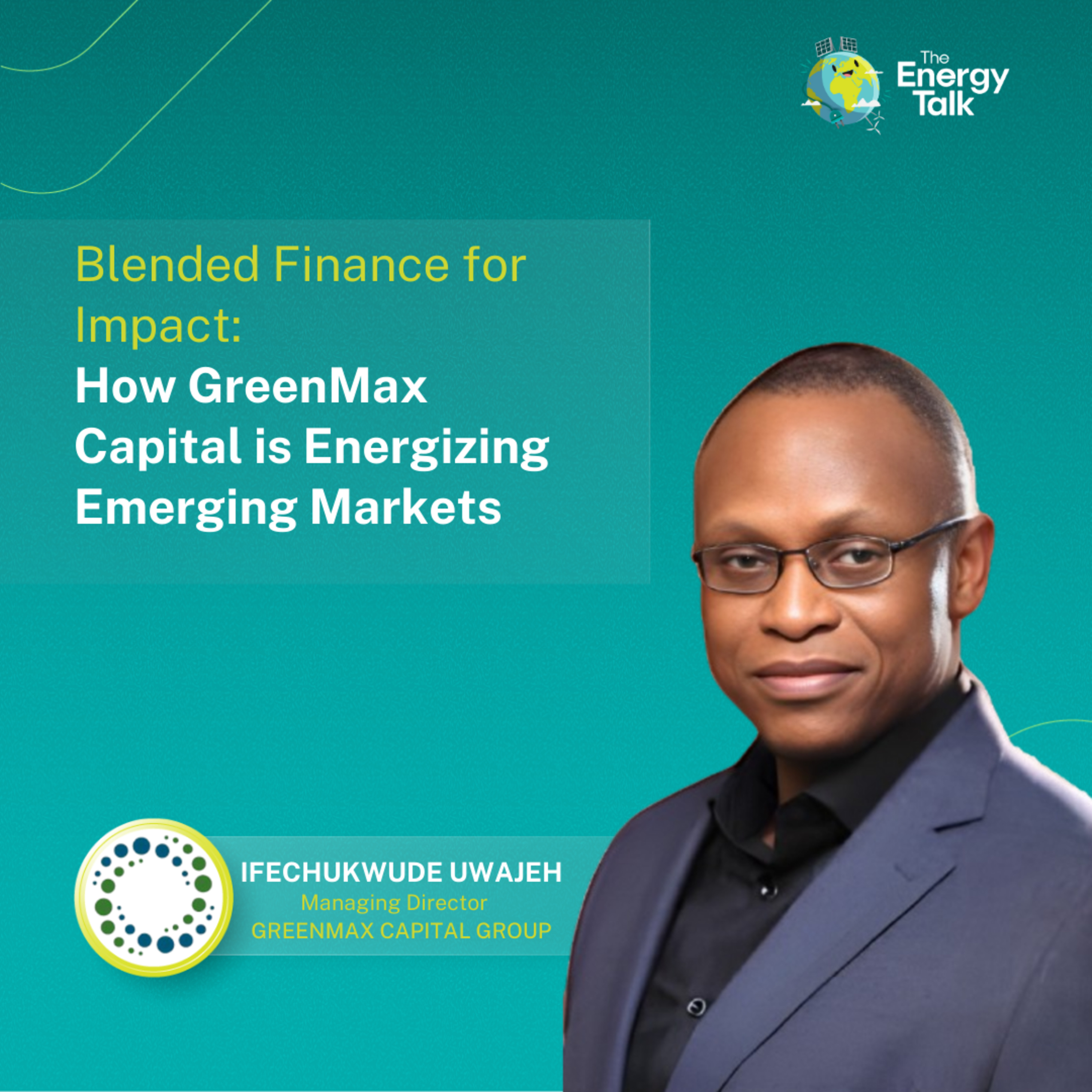 Blended Finance for Impact: How GreenMax Capital is Energizing Emerging Markets 03.02.2025 43minIn this episode, Ifechukwude 'Chude' Uwajeh, Managing Director of Blended Finance at GreenMax Capital Group, shares his professional journey from large-scale thermal power projects to clean energy advisory and fund management. He discusses the challenges of electrification in Africa, the importance of creative financing models, and the implementation of the Small Outcomes Fund aimed at energy projects in sub-Saharan Africa. Chude also highlights the necessity of blending donor and DFI capital with private capital, the pivotal role of government partnerships, and the innovative financing instruments deployed for off-grid projects. 00:00 Introduction and Background 00:29 Early Career in Project Development 01:31 Transition to Clean Energy Advisory 01:54 Role at Greenmax Capital Advisors 03:22 Challenges in Electrification 04:12 Creative Financing Solutions 04:50 Differences Between Large-Scale and Renewable Projects 11:30 Blended Finance Explained 14:08 Greenmax's Fund Management and Initiatives 34:39 Government Partnerships and Success Stories 41:09 Defining Failure and Future Goals
 -
 Meet The Team: Bonus Episode 29.01.2025 6minQuick and casual check with the team behind the podcast on our plans for the year. Sign up for our newsletter (we have not yet changed the name): https://mailchi.mp/dc168bd41a97/sign-up-here
 -
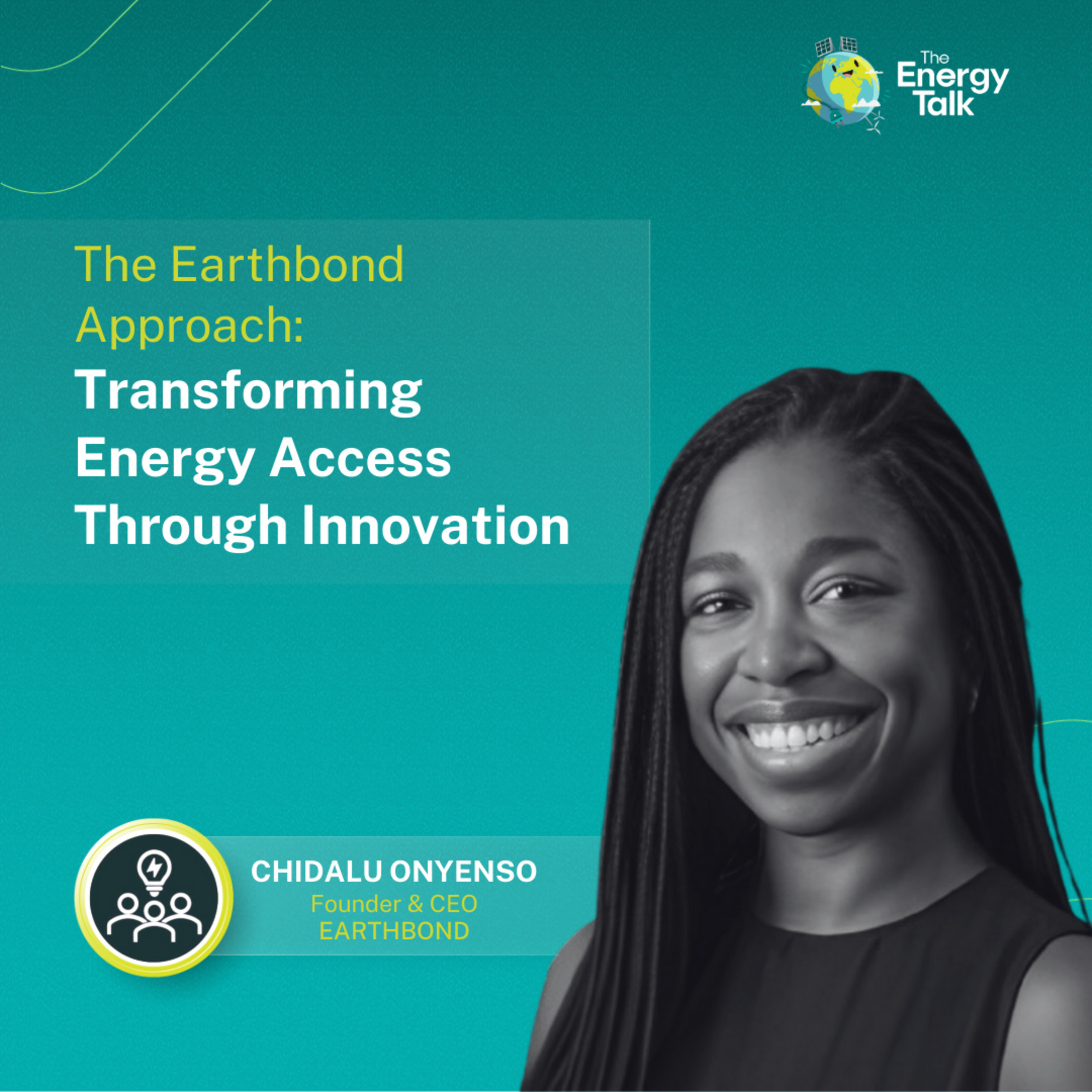 The Earthbond Approach: Transforming Energy Access Through Innovation 20.01.2025 44minIn this episode of The Energy Talk, we sit down with the CEO of Earthbond, Chidalu Onyenso, to explore the company’s innovative approach to solving Nigeria’s energy crisis through solar energy solutions tailored for SMEs. We explore Earthbond's mission, financing models, and the challenges of scaling renewable energy solutions in underserved regions. The episode also takes a detailed look at Earthbond’s potential role in the emerging African carbon market, discussing how solar energy projects can generate carbon credits and unlock new revenue streams for businesses. Listeners will gain insights into the intersections of energy access, climate finance, and sustainable growth in Africa. Learn more about Earthbond: https://earthbond.co/ Subscribe to our Clean Energy Africa newsletter: https://mailchi.mp/dc168bd41a97/sign-up-here
 -
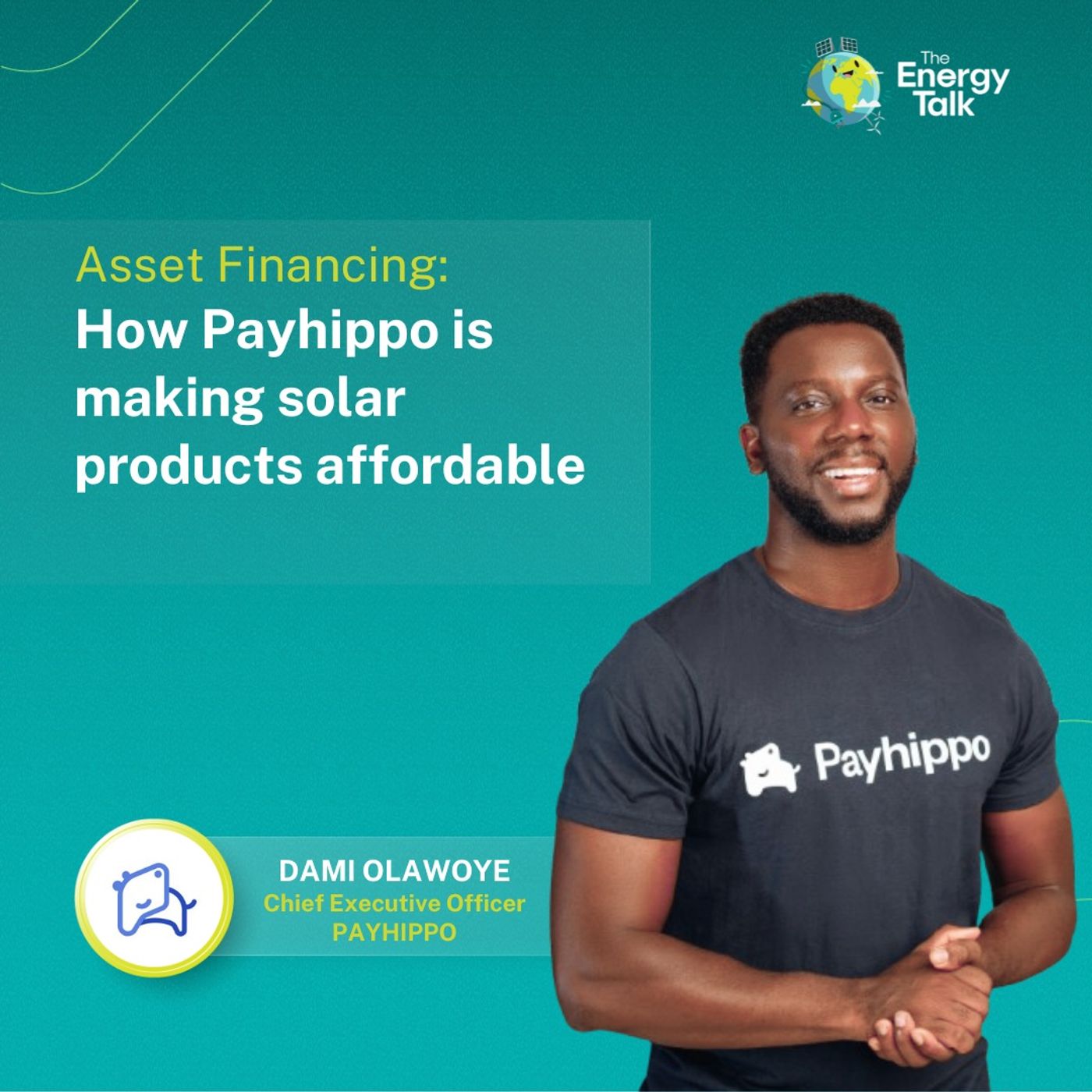 Asset Financing: How Payhippo is making solar products affordable 21.10.2024 38minDami Olawoye joins us as we explore his remarkable career as a finance veteran turned clean energy champion and his role in revolutionizing solar energy financing in Nigeria as the CEO of Payhippo. From a big four-chartered accountant to leading a startup, our guest shares how his organization has raised $5 million to tackle Nigeria's electricity challenges with solar solutions. Subscribe to our Clean Energy Africa newsletter: https://mailchi.mp/dc168bd41a97/sign-up-here
 -
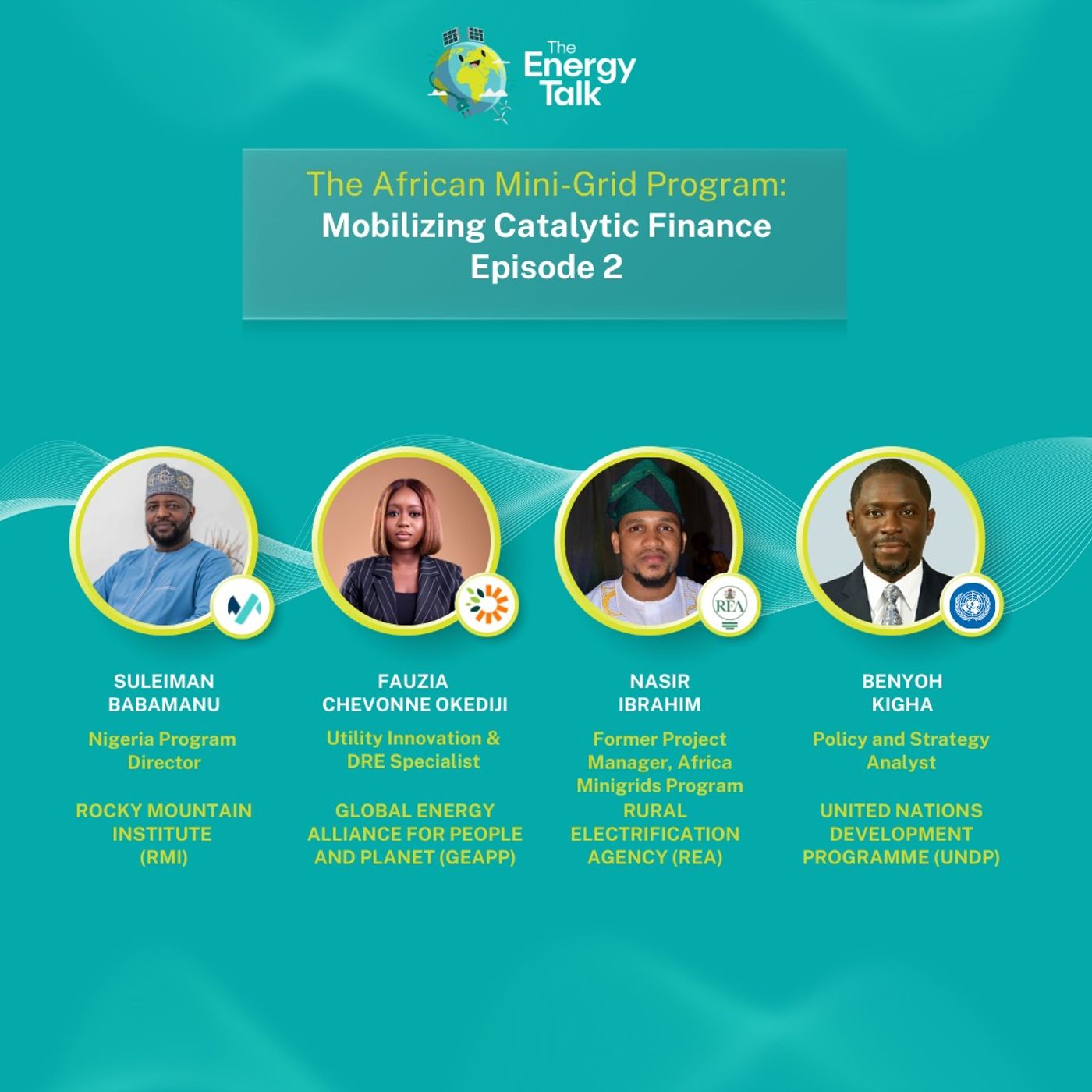 The African Mini-Grid Program: Mobilizing Catalytic Finance Episode 2 07.10.2024 36minSubscribe to our Clean Energy Africa newsletter: https://mailchi.mp/dc168bd41a97/sign-up-here Recorded live during the Energy Access Investment Forum in May, this 2 part mini-series covers the African Mini-Grid Program (AMP). The AMP is a USD 50 million country-led technical assistance program designed to stimulate the solar-battery mini-grids market to boost electricity access in 21 countries, its mission is to enhance economic development and improve livelihoods through increased financial investment and innovative business models. The first episode in the series: https://theenergytalk.simplecast.com/episodes/amp-ep-1 For feedback and inquiries please reach out to the podcast team: [email protected]
 -
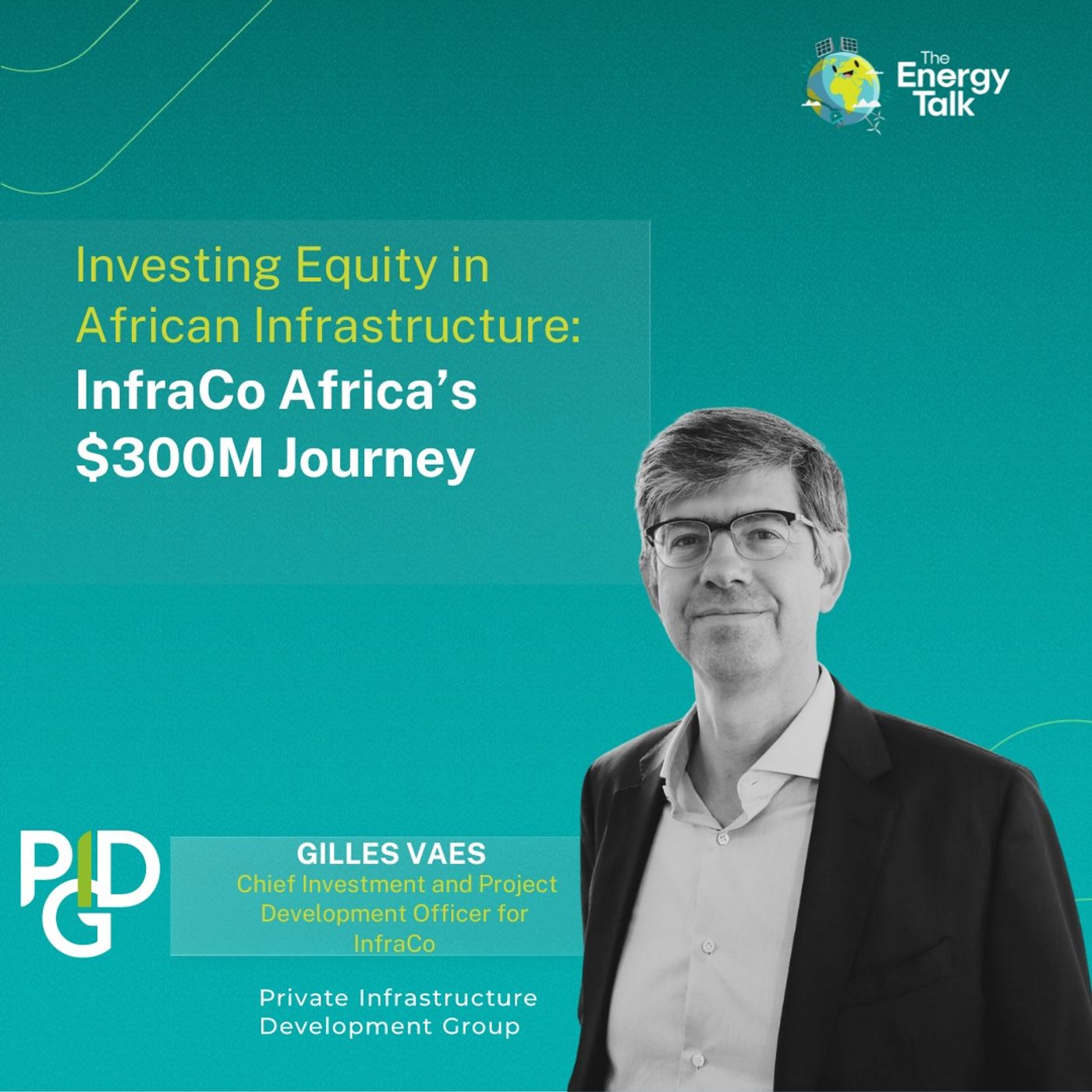 Investing Equity in African Infrastructure: InfraCo Africa’s $300M Journey 11.09.2024 33minSubscribe to our Clean Energy Africa newsletter: https://mailchi.mp/dc168bd41a97/sign-up-here InfraCo Africa is one of the few financiers that provides equity investments in large-scale infrastructure projects in Africa. Typically investing in projects in the early stages of their development, all the way through construction and operational stages. So far, Infraco has invested over $300 million into projects in Sub-Saharan Africa, supporting 39 projects and businesses and mobilizing over $1.5 billion. In this episode, Gilles -the group's former CEO, will talk to us about their investment mandate, the theory behind the operating model, and the notable projects that InfraCo Africa has been involved in; including the CLEAR fund which achieved its first close of $200 million and aims to close the fund at $400 million raised to invest in sustainable infrastructure projects in Africa.
 -
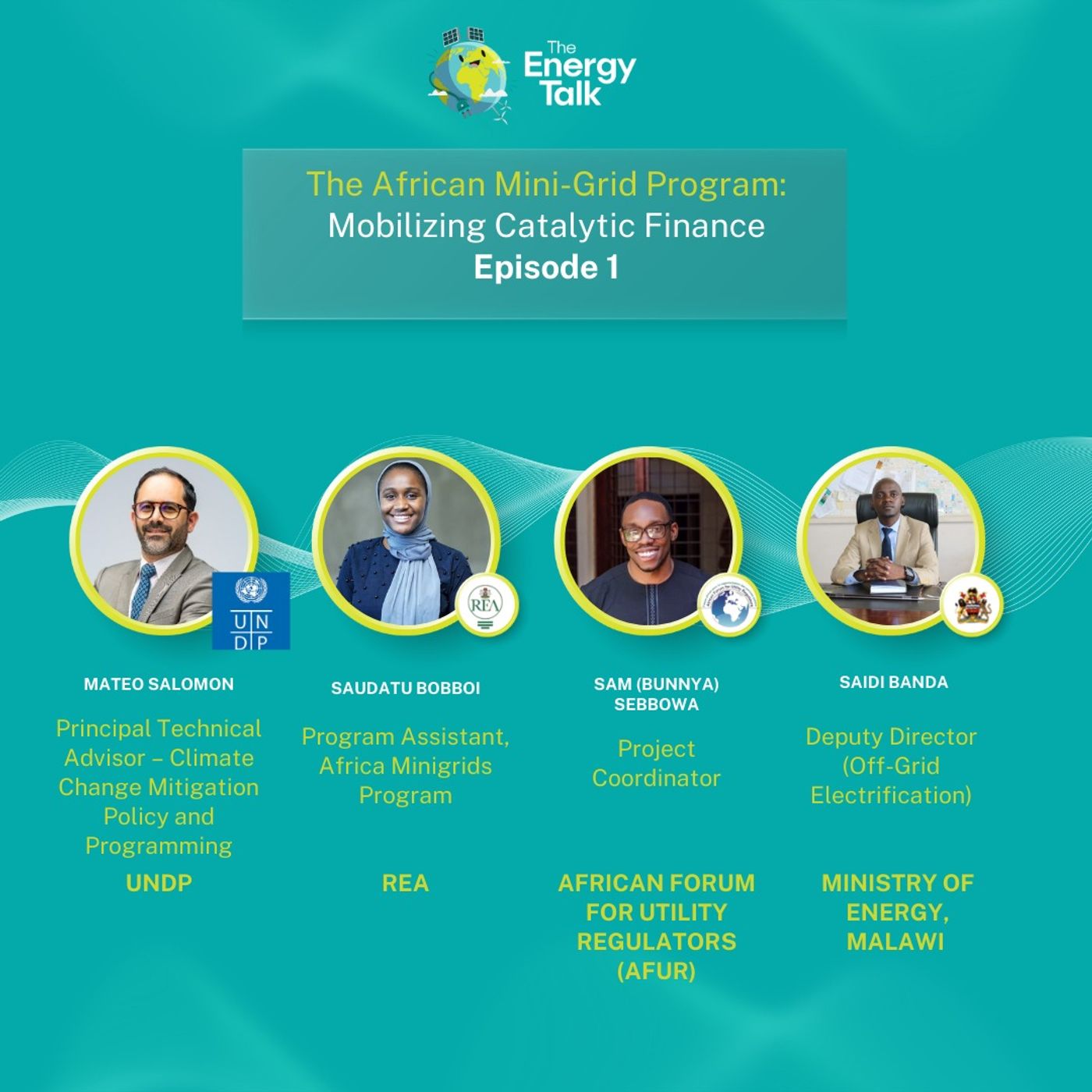 The African Mini-Grid Program: Mobilizing Catalytic Finance Episode 1 28.08.2024 40minSubscribe to our Clean Energy Africa newsletter: https://mailchi.mp/dc168bd41a97/sign-up-here Recorded live during the Energy Access Investment Forum in May, this 2 part mini-series covers the African Mini-Grid Program (AMP). The AMP is a USD 50 million country-led technical assistance program designed to stimulate the solar-battery mini-grids market to boost electricity access in 21 countries, its mission is to enhance economic development and improve livelihoods through increased financial investment and innovative business models. For feedback and inquiries please reach out to the podcast team: [email protected]
 -
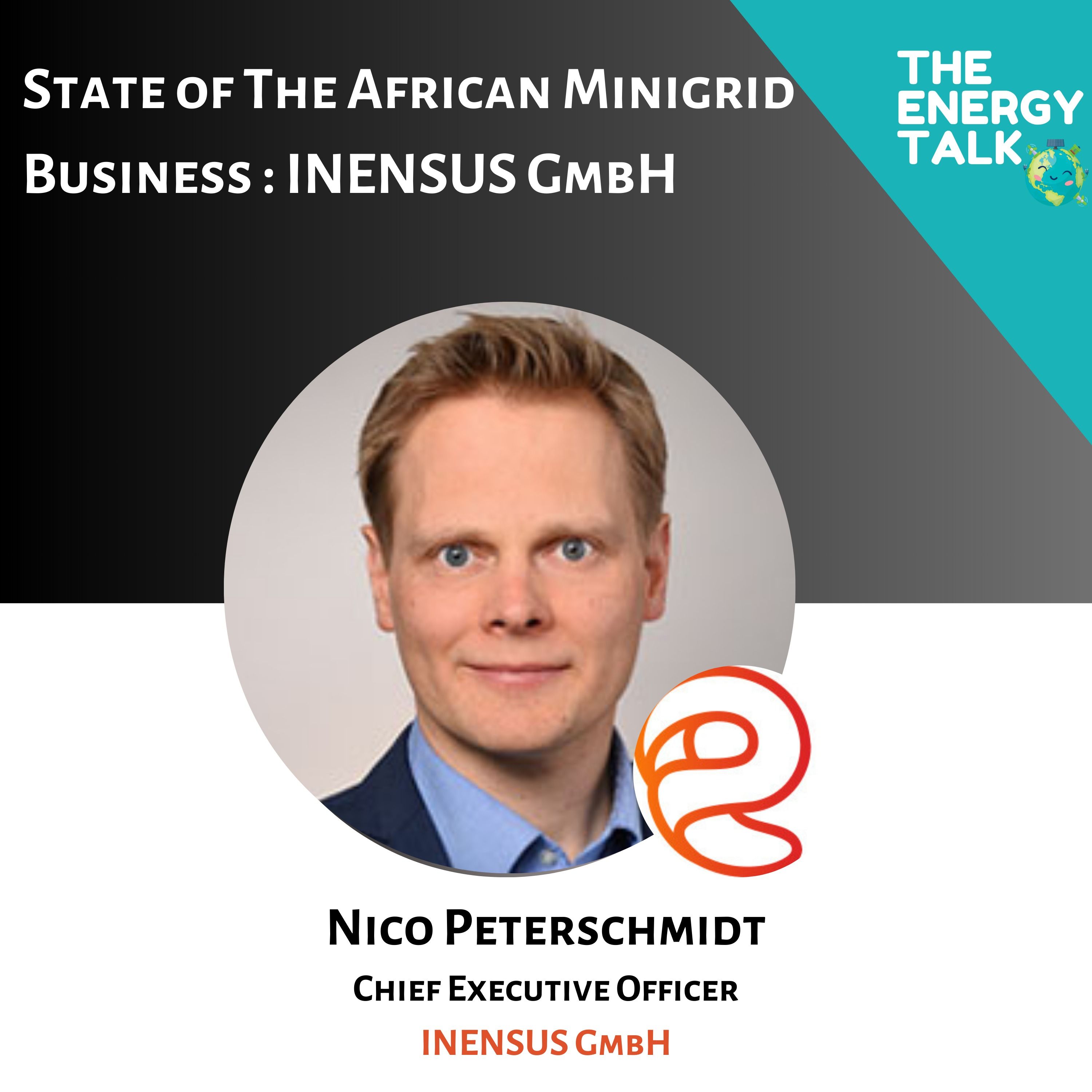 State of The African Minigrid Business: INENSUS GmbH 22.07.2024 36minNico joins us this week to share from his two decades of experience deploying Decentralized Renewable Energy projects, consulting governments on off-grid electrification policy, and what the emerging trends mean for financiers looking into Sub-Saharan Africa. This episode has already been published on "The Mini-Grid Business" podcast hosted by Nico. You can listen to an exclusive part 2 here: https://bit.ly/4cPNqg2
 -
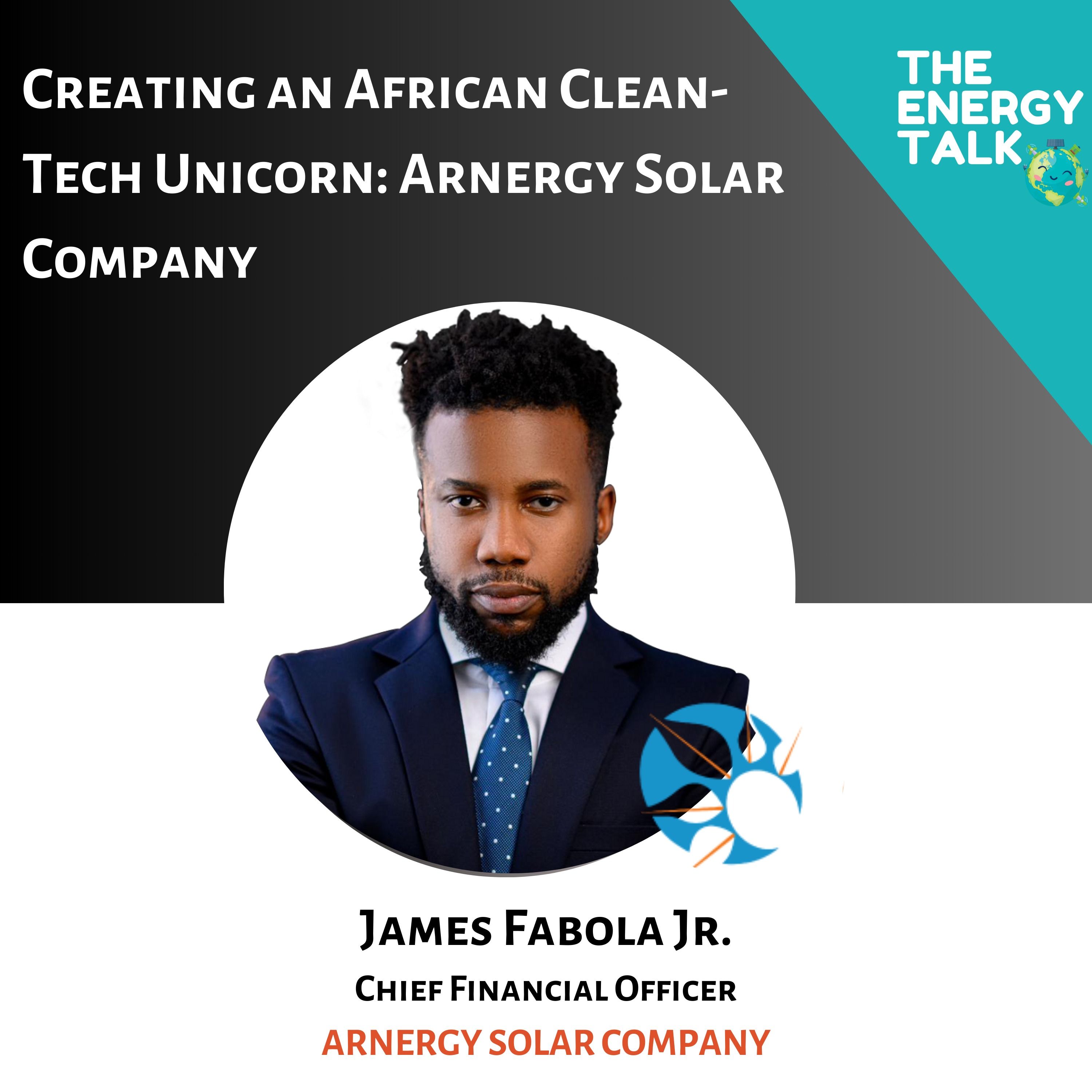 Creating an African Clean-Tech Unicorn: Arnergy Solar Company 16.07.2024 48minArnergy is a renewable energy company providing solar solutions to residential and commercial customers. Combined, Arnergy has raised $12M in a Series A and bridge round and is now gearing up for a big Series B fundraiser. In this episode, we speak with the company's CFO, James Fabola Jr., about operating in a difficult market and exciting growth opportunities.
 -
 Empowering The Last Mile: SolarAid’s Unique Model to Scaling Energy Access. 29.04.2024 38minIn this episode, we explore SolarAid's visionary work under CEO John Keane, aiming to deliver sustainable energy solutions to remote African communities. Focused on last mile areas, SolarAid's unique model tackles energy poverty while empowering communities with clean, affordable energy access. Through innovation and strategic partnerships, SolarAid is reshaping energy accessibility in Africa, paving the way for a brighter, more sustainable future continent-wide.
Samankaltaiset podcastit


Suosittu maassa
Tämä podcast esiintyy myös näiden maiden podcast-listoilla.
