
Autistic and ADHD Kids Parenting Strategies: Every Brain is Different
Samantha Foote & Lauren Ross | Parenting Neurodiverse Kids
0
This podcast offers practical parenting strategies for raising children with Autism, ADHD, and other neurodiverse conditions. It features expert insights and real-life stories that highlight the strengths and challenges of neurodivergent individuals. The show aims to connect parents with a supportive community and provide tools to help their children thrive. Each episode celebrates the unique ways every brain works.
Jaksot
-
 What to do When You Face Judgement With Your ADHD/Autistic Child | Ep. 183 14.09.2026 18minSamantha and Lauren discuss Samantha’s weekend camping trip with extended family and how a recent change in her son’s ADHD medication affected his behavior. Her son had previously thrived on stimulant medication, describing a “quiet” brain and better focus, but after switching meds due to appetite concerns, he became unusually emotional, restless, and reactive which led to conflicts, safety concerns, and relatives criticizing Samantha’s parenting strategies and implying he needed more discipline. Once Samantha realized the new medication needed a higher dose and adjusted it, he returned to baseline and listened better, though others attributed it to discipline. Samantha and Lauren emphasize advocating for neurodivergent kids, using teachable moments to educate family, balancing compassion with expectations, and offering positive feedback amid frequent negative comments.
 -
 How to Make Sensory Friendly Hygiene Routines for Your Neurodiverse Child | Ep. 182 07.09.2026 38minSamantha and Lauren discuss sensory-friendly hygiene routines for neurodivergent kids, emphasizing that hygiene is a health skill, not a test of compliance, and the goal is a safe, sustainable routine that supports autonomy and sensory needs. They review how sensory factors (noise, bright lights, smells, water pressure/temperature, textures) and executive-function demands can make tasks like showering, hair washing, deodorant, toothbrushing, menstrual care, and shaving difficult, and they encourage parents to “get curious, not furious.” Using a notice–name–modify framework, they suggest practical adaptations such as adjusting the bathroom environment, using handheld showerheads, keeping preferred towels nearby, offering shortened routines on hard days, trying different toothpaste/toothbrush options, and using visual schedules and timers. They also cover respectful prompting, privacy and dignity during puberty-related care, when to involve professionals, and the takeaway that sensory distress is information, not defiance.
 -
 How to Talk to Your Autistic Boys About Puberty | Ep. 181 31.08.2026 31minSamantha and Lauren discuss how to support autistic boys through puberty. They emphasize that physical puberty changes are generally typical, but sensory sensitivities, uncertainty, social rules, and indirect language can make the experience harder, so autistic youth need complete, factual information about bodies, relationships, boundaries, and safety through many short, ongoing conversations. They recommend explicitly teaching what to expect (odor, acne, hair, genital growth, voice changes, erections, etc.), building visual and predictable supports (timelines, social stories, checklists), and giving choice in how information is delivered, including AAC vocabulary. They myth-bust that education encourages sexual behavior and stress concrete rules for privacy, consent, trusted-adult disclosure, and risks of nude images, plus when to consult a clinician.
 -
 Why Your PDA Child Isn’t Being Defiant and How to Support Them (Ep. 143 Rerun) 24.08.2026 25minIn this episode, Samantha and Lauren discuss strategies for effectively parenting children with Pathological Demand Avoidance (PDA). They emphasize the importance of collaboration over direct demands to help children feel more in control and safe, which mitigates reactive behaviors. They explain how giving children choices and involving them in decision-making can prevent the activation of their parasympathetic nervous system, which is linked to anxiety and defensive behaviors. Practical examples like offering options instead of direct commands are given and the importance of flexibility and patience in parenting, particularly for neurodivergent families is discussed. Samantha and Lauren also highlight the significance of co-regulation and maintaining a calm demeanor to support a child's sense of autonomy and safety. A PDA cheat sheet with useful scripts and strategies is available for listeners.
 -
 What are Non-Traditional Therapies? | Ep. 179 17.08.2026 33minSamantha and Lauren discuss non-traditional, child-led approaches to therapy for kids diagnosed with autism, ADHD, and related needs, contrasting them with more compliance-based, clinical models and emphasizing that therapy should match the child. They highlight alternatives that can complement traditional services like OT, speech, and PT, including equine-assisted services, animal-assisted interventions, aquatic/swim therapy (including water safety), creative arts therapies (music, art, dance/movement, drama) provided by credentialed professionals, nature-based/outdoor therapy, and technology/gaming/special-interest-based approaches like Minecraft and GarageBand. They stress these therapies are not about reducing autistic traits but improving quality of life and participation, and they outline how to evaluate legitimacy by asking about evidence, risks, credentials, meaningful progress measurement, and goals, while warning against “cure,” “detox,” guarantees, and testimonial-only expensive programs.
 -
 What to Expect When Your Child Needs an Evaluation (ADHD, Autism, and More) | Ep. 178 10.08.2026 30minSamantha and Lauren explain the child evaluation process for concerns like ADHD, autism, anxiety, and learning differences. They normalize parents’ nervousness about labels and judgment, emphasizing that evaluations don’t change a child but provide baseline understanding, shared language, and access to resources. They describe signs that may warrant discussion with a primary care provider, encourage trusting instincts, and outline steps: talk to a pediatrician or school staff, get referrals (developmental pediatrician, psychologist, neuropsychologist, psychiatrist, specialty clinics), and prepare for long waitlists. They explain typical multi-visit evaluations, forms to complete, what to bring, observation and standardized testing, parent involvement, and the feedback report with diagnoses, strengths, challenges, and recommendations, noting that support is needed even without a diagnosis.
 -
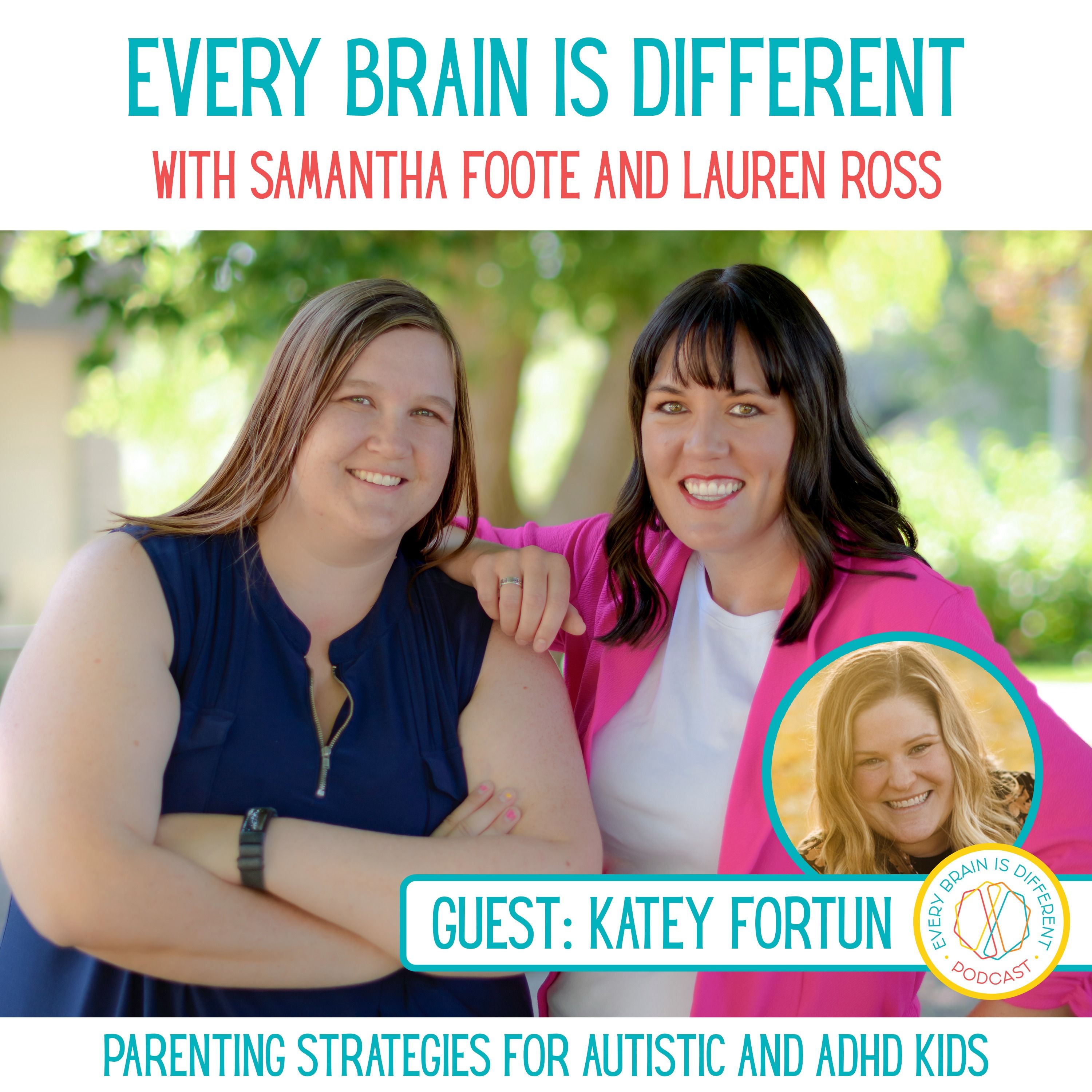 Embracing Your Different Ability with Katey Fortun | Ep. 177 03.08.2026 32minSamantha and Lauren welcome back disability advocate and dyslexic speaker Katey Fortun to discuss her newly published book, "Embracing Your Different Ability," available in standard print, dyslexic-friendly print, and audiobook, along with her "Different Ability Podcast." Katey shares that she was inspired to write the book after feeling prompted on a walk in late 2023, committed in early 2024 to doing “one new thing,” and self-published through Amazon with support from a book-coaching team, ultimately releasing it on March 26, 2024—the same date she signed up to begin the process. Written initially for her eight-year-old self, the book aims to help kids feel seen and understood while also supporting parents, guardians, and teachers, including chapters from Katie’s mother to show both child and parent perspectives. They discuss distinguishing “won’t” vs. “can’t” by defaulting to “can’t” and investigating, the hidden struggles of kids who appear “fine” at school, the trauma of forced reading aloud, and how diagnosis can be validating and unlock resources; Katey also shares a free “welcome package” with sample chapters and resources at her website.
 -
 What is the Third Thing to do After Your Child Gets an Autism Diagnosis? | Ep. 176 27.07.2026 16minSamantha and Lauren discuss the third step after a child is diagnosed with autism: building a support system. They recap the first two steps—learning about autism by getting curious about your own child and connecting with autistic adults and other parents, and applying early for resources like Medicaid and therapy waitlists. They validate how overwhelming ongoing therapies and frequent specialist appointments can be, emphasizing that parenting isn’t meant to be done alone and that some family or friends may not provide the support you expect, making it okay to set boundaries or create distance. They outline professional supports (pediatricians, therapists, mental health providers) and personal supports (spouses, friends, online communities), encourage learning from parents further along while avoiding comparison, and note research linking parental support to lower stress and improved outcomes.
 -
 What is the Second Thing to do After Getting an Autism Diagnosis? | Ep. 175 20.07.2026 22minSamantha and Lauren continue their discussion on what to do when you suspect or receive an autism diagnosis, revisiting the idea of “being a detective” to learn what makes your child tick while also debating the line between respecting boundaries and pushing kids to get out into the world for social learning and health. They emphasize acting early to access supports, highlighting Medicaid options like the disability-based Katie Beckett Waiver (which can cover broad healthcare and therapies) and other state-specific waivers for non-traditional therapies, plus early intervention (Zero to Three), developmental preschool requirements, IEPs/504s, respite care, parent training, adaptive equipment, grants, and case management. They stress that professionals often won’t volunteer these resources, approvals can take months to years, denials are common, and parents should reapply, follow up persistently, join local Facebook groups for area-specific guidance, get on multiple therapy waitlists, keep organized records, and request school assessments in writing.
 -
 What is the Number 1 Thing To Do After Your Child Gets Diagnosed With Autism? | Ep. 174 13.07.2026 30minSamantha and Lauren discuss the number one thing they would do after getting an autism diagnosis for your child: learn about your child, not just autism. Samantha emphasizes that a diagnosis is a tool for understanding, not fixing, and that parents may feel relief and grief, all of which are valid. They stress that autism presents differently in each person, caution against overreliance on online checklists, and encourage neurodiversity-affirming thinking over deficit-based views by asking what behaviors communicate and what needs they meet. Examples include sensory accommodations for loud toilets, avoiding uncomfortable clothing, and allowing harmless stimming, while still intervening for safety concerns like self-injury or eloping. They suggest tracking strengths, triggers, and ABC patterns, seeking professional or community support, and preview next week’s focus on applying for resources early due to long waitlists.
 -
 How to Build a Supportive Mental Health Network | Ep. 173 06.07.2026 24minSamantha and Lauren discuss why building a supportive network matters for mental health and how to do it, drawing from Samantha’s postpartum psychosis and breakdown in 2016 and the challenges of parenting children with medical needs. They outline key benefits of support, which include emotional encouragement, practical help, accountability, perspective when “your brain is lying to you,” and connection. They describe four types of support: personal (friends, family, faith/community), professional (primary care, therapists, psychiatrists, coaches, support groups), peer (special-interest and parenting/disability communities), and practical (cleaning, childcare, meal services, assistants). They offer steps to build support without shame: start small, be specific about needs, allow imperfect help while avoiding toxic relationships, and find aligned communities, ending with a one-step takeaway and available resources.
 -
 Why Your Child Falls Apart After Vacation (And What to Do About It) | Ep. 172 29.06.2026 22minSamantha and Lauren discuss how returning home from vacation can be dysregulating for neurodivergent kids due to transitions and delayed stress responses from masking, sensory input, uncertainty, and social demands. They recommend not scheduling extra activities immediately after returning, prioritizing rest and recovery over productivity, and giving kids (and parents) grace during reintegration. They advise returning to familiar routines without trying to overhaul life, focusing on connection before correction, debriefing the trip to build self-awareness and plan future supports, and watching for delayed burnout days or weeks later.
 -
 Why Family Vacations Feel Hard with Autistic and ADHD Kids (And What Actually Helps) | Ep. 171 22.06.2026 29minSamantha and Lauren discuss how to help vacations go more smoothly for neurodivergent kids by prioritizing safety, predictability, and regulation over nonstop activities. They explain how vacations disrupt routine, sensory input, and expectations (new places, foods, people, airports, planes, theme parks, beaches), which can overwhelm autistic and ADHD children. They recommend preparing kids in advance with photos, maps, videos, itineraries, visual schedules, and honest communication about uncertainty; using supports like airport assistance (Sunflower lanyards, practice tours, early boarding); and building recovery time with hotel breaks, quiet spaces, and rest days. They suggest creating an escape plan or safe word, avoiding forced socialization, packing sensory tools and familiar items, watching early signs of overload, and adjusting parental expectations so everyone ends the day regulated, safe, supported, and connected.
 -
 Dance as Self-Care for Parents with Annett Bone | Ep. 170 15.06.2026 24minSamantha and Lauren welcome dance artist and creative coach Annett Bone to discuss dance as self-care—especially for stressed parents raising neurodivergent kids. Annett shares that returning to dance at 43 after a 20-plus year hiatus helped her heal and that dance can be expression, creativity, processing, release, or a way to get out of your head. She encourages starting with the end in mind, then taking small, realistic steps, sometimes just a few minutes alone with music, without fear of judgment. The conversation offers practical ideas like family dance parties, using Just Dance for guidance, exploring movement one body part at a time, and combining movement with writing, drawing, senses, and imagery like animals or weather. Annette invites listeners to DM her “brain” on Instagram for a free customized 20-minute movement session and mentions her podcast, The Dancepreneuring Studio.
 -
 The Neurodivergent Family Road Trip Survival Guide | Ep. 169 08.06.2026 27minSamantha and Lauren introduce a multi-part series on road tripping, focusing in this episode on strategies for smoother car travel, especially for kids with autism. They explain why road trips are hard-loss of routine and predictability, sensory overload, limited autonomy, sibling noise conflicts, motion sickness, and movement needs—and emphasize that success is about regulation, not perfection. Tips include planning seating ahead of time, packing comfort items and regulation tools first (headphones, sunglasses, weighted items, fidgets), keeping snacks and water accessible, using GPS timing to reduce “are we there yet,” creating visual roadmaps/schedules, practicing expectations, building in movement breaks, and watching early meltdown signs.
 -
 How to Help Your Child With Dyslexia and Dysgraphia with Daniela Feldhausen | Ep. 168 01.06.2026 26minSamantha and Lauren interview Daniella Feldhausen, a former DC attorney who founded Kids Up Reading Tutors after earning a master’s in special education and focusing on helping children with reading and spelling challenges, including dyslexia and dysgraphia. Daniella explains that her team tailors one-on-one, high-dosage tutoring (multiple sessions per week) based on a detailed skills evaluation rather than relying on a diagnosis, aiming to help students catch up quickly and build confidence.
 -
 Why Good Kids Get Bad Grades: Becoming Your Child’s Ally with Linda Silbert | Ep. 167 25.05.2026 29minSamantha and Lauren interviews Dr. Linda Silbert of Strong Learning Incorporated about supporting neurodivergent learners and reframing bad grades as symptoms rather than reasons for punishment. Dr. Silbert urges parents to stop blaming children or schools, become detectives about root causes (academic, social, emotional, bullying, sensory, or anxiety), and approach teachers and IEP meetings collaboratively. She emphasizes repairing parent-child friction by apologizing, listening, and teaching practical study skills in short, effective bursts rather than long sessions, noting that stress can make students “blank” during tests. Dr. Silbert describes gamifying reading intervention, using card-deck games, fluency activities, and plays aligned with Orton-Gillingham, to reduce anxiety, build confidence, and improve reading, and shares resources including her new book Why Good Kids Get Bad Grades.
 -
 Why Your Child Holds It Together at School, Then Explodes at Home (And How Masking Plays a Role) | Ep. 166 18.05.2026 18minSamantha and Lauren discuss how neurodivergent children may mask at school or other settings: suppressing stims, sensory distress, and authentic behavior to appear “typical” and then have meltdowns at home because home feels safest, a pattern also described as after-school restraint collapse. They emphasize that these explosions are nervous system and stress responses, not manipulation, and that chronic masking drains executive functioning and can leave kids in fight-or-flight. The episode outlines signs a child may be struggling at school (shutdowns, irritability, control-seeking, sibling conflict, isolation, increased PDA behaviors, avoiding help, and even not using the bathroom) and suggests ways to reduce nervous system load and improve safety at school through sensory-friendly routines, supportive accommodations, authenticity at home, and self-advocacy skills, while avoiding forced eye contact, dismissing concerns, over-scheduling, and rewarding extreme compliance.
 -
 Why Your Child ‘Falls Apart’ at Home (But Not at School) | Ep. 165 11.05.2026 24minSamantha and Lauren open by discussing mom guilt and the importance of giving yourself grace when you miss commitments, lose your cool, or have hard parenting moments, emphasizing that apologies and tomorrow-as-a-reset matter. They then explain masking: children, especially neurodivergent kids, may hold it together at school and unravel at home because home is emotionally safe, not because parents are doing something wrong or the child is being manipulative. They describe how cognitive fatigue (executive-function demands), emotional exhaustion (managing expectations, social stress, fear of trouble, rejection sensitivity), and sensory overload (noise, lights, clothing discomfort) accumulate during the day, leaving kids with no capacity for even small demands like “How was your day?” They note masking can also differ between co-parents, and suggest school accommodations (movement, no forced eye contact, IEP/504 supports) and coping skills, with next week focused on making school feel safer.
 -
 How to Handle Finances When You Have ADHD with Julian Kohlbrand | Ep. 164 04.05.2026 31minSamantha and Lauren interview Julianne Kohlbrand, an ADHD financial coach who became debt-free after $107,000 in consumer debt and a later-in-life ADHD diagnosis at 42, and now helps neurodivergent families simplify money management. Julianne shares how motherhood intensified overwhelm and led to her diagnosis, and explains that neurodivergent people often need different, less perfection-driven approaches than strict dollar-by-dollar budgets. Key strategies include giving yourself grace, automating bills, weekly calendar check-ins, reducing tempting triggers (like removing budget apps), using visuals and a “would you rather” gamified decision tool, and adding accountability partners while avoiding shame through agreed budgets and separate “fun money” line items for each spouse. They discuss impulse spending, the 24-hour cart rule, a separate email for bills, and ways to teach kids about money through open conversation, goal-setting, savings accounts, and age-based paid home tasks.
Samankaltaiset podcastit


Suosittu maassa
Tämä podcast esiintyy myös näiden maiden podcast-listoilla.
