
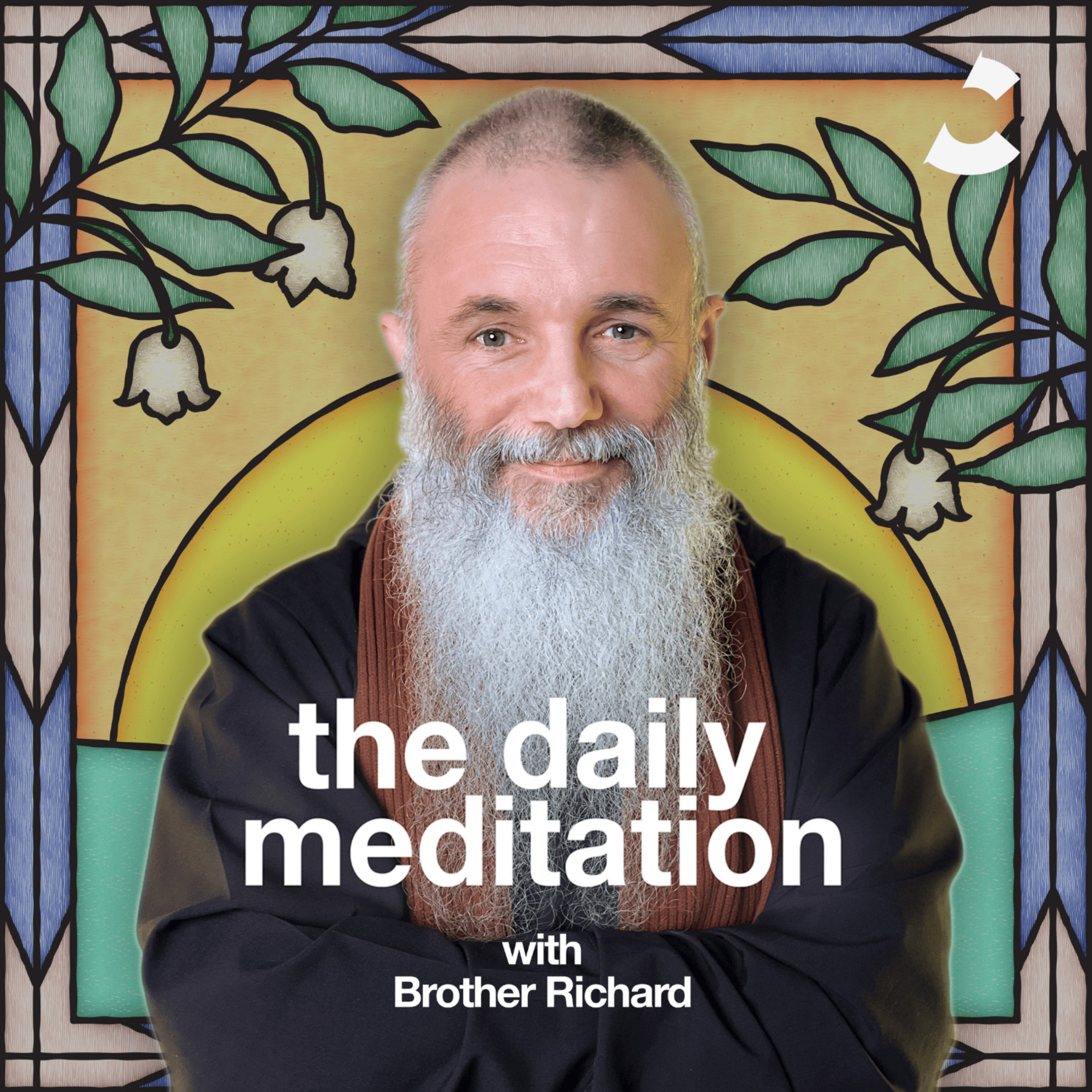
The Daily Meditation with Brother Richard
Cutdown Studios
0
The Daily Meditation with Brother Richard is a short daily podcast offering stillness, clarity and spiritual grounding. Hosted by Brother Richard, a Capuchin Franciscan friar and meditation teacher, each episode draws on the Christian monastic contemplative tradition. With warmth and simplicity, Brother Richard offers reflections and guided meditations shaped for modern life. These meditations are open to people of all faiths and to those with none.
Jaksot
-
 Beginning Again Meditation 16.09.2026 11minIn this meditation, I reflect on a simple teaching from the early desert monks: the work of meditation is the work of beginning again and again.Every time we come to meditation, the moment is new. Whatever has happened before, whatever our experience of practice has been, we are invited to meet this particular moment without judgement and begin from where we actually are.We start by noticing how we have arrived. There may be enthusiasm, resistance, tiredness or simply the discipline of showing up. Rather than judging any of these responses, we allow them to be and gently release the secondary voices that praise, criticise or evaluate our practice.From there, awareness moves through the body and breath before turning towards our inner life. Thoughts, emotions and sensations are allowed to pass while we rest in the deeper awareness that observes them.Each breath then becomes another beginning — a reminder that even when our external circumstances remain unchanged, we can meet them inwardly in a new way.This meditation offers a practice of renewal, acceptance and contemplative awareness, reminding us that every breath and every present moment offers the possibility of beginning again.Chapters:00:00 – Introduction: The work of beginning again00:44 – Opening bell00:55 – Entering a new moment01:47 – Noticing how we arrive02:39 – Letting go of judgement03:59 – The freedom of a new beginning05:06 – Awareness of the body05:52 – Releasing points of tension06:23 – The breath as a beginning07:17 – Observing our inner life08:27 – The unchanging inner observer09:36 – Beginning again in every moment10:20 – I choose to begin again11:07 – Returning to the body11:20 – Closing bell Hosted on Acast. See acast.com/privacy for more information.
 -
Prayer of Saint Francis Meditation (Part 4): Sense and Knowledge 15.09.2026 9minIn this meditation, I bring our series on the Prayer of Saint Francis before the Crucifix to a close, reflecting on the final petition of the prayer: the desire for sense and knowledge.Knowledge can give us information, but discernment helps us understand what matters and how we should respond. Francis asks for both — for a deeper awareness that allows us to choose wisely and to act with greater attention, compassion and openness to divine grace.We begin by settling into the body and breath, letting go of what came before and what might follow. From that stillness, we allow Francis’s prayer to sound within us once again: asking for light in darkness, right faith, certain hope, perfect love, sense and knowledge.As the meditation deepens, we consider how contemplative practice can accompany the decisions we make in everyday life. Rather than reacting automatically, we can create space to reflect, discern and listen.This meditation offers a contemplative practice for discernment, decision-making and prayer, inviting us to bring greater awareness and wisdom into the choices of daily life.Chapters:00:00 – Introduction: Sense and knowledge 00:40 – Opening bell 00:43 – Entering the present moment 01:50 – Letting go of past and future 02:25 – Resting in the breath 03:07 – The prayer for sense and knowledge 03:19 – Knowledge and discernment 04:25 – Choosing wisely through awareness 04:39 – Bringing decisions into meditation 05:26 – The full Prayer of Saint Francis 06:10 – Light, faith, hope and love 07:11 – Living with discernment 07:51 – Making decisions contemplatively 09:07 – Returning to the body 09:30 – Closing bell Hosted on Acast. See acast.com/privacy for more information.
-
Emotional Awareness Meditation: Unravelling the Fibres 14.09.2026 11minIn this meditation, I explore how meditation can help us move beneath the surface of our emotional life and begin to understand the many influences that shape a feeling or reaction.We begin by settling into the body, releasing tension and becoming grounded in the breath and the present moment. From this place of stability, we bring to mind a recent experience of happiness or joy and observe it carefully.Rather than simply enjoying the memory, we begin to ask where that emotion came from. What circumstances allowed joy to arise? Why did we respond to those particular circumstances in that particular way? What experiences in our lives made us ready to receive that happiness?Meditation teachers sometimes describe the connection between stimulus and response as a rope. When examined closely, the rope turns out to contain many individual fibres: emotions, thoughts, sensations, memories and experiences woven together.In meditation, we can allow that rope to loosen and examine its individual strands with curiosity and compassion. We can understand what is useful and what we may wish to release.Although we begin here with happiness and joy, the same method can be brought to any emotional experience, helping us become more aware of the deeper causes behind our reactions and behaviours.Chapters:00:00 – Introduction: Getting to the roots of emotion00:55 – Opening bell01:06 – Entering the present moment01:30 – Relaxing the body02:20 – Settling into stability and calm02:59 – Remembering a moment of happiness or joy03:53 – Observing the experience of joy04:22 – Exploring what caused the feeling04:41 – The seven circumstances of experience05:20 – Looking beyond the immediate cause06:22 – What made me ready to receive joy?07:22 – Discovering deeper emotional patterns07:37 – The image of the rope and its fibres08:13 – Unravelling thoughts, feelings and memories08:39 – Examining the emotional fibres09:30 – What would I weave in or leave out?09:56 – Applying the practice to every emotion10:24 – Receiving what arises with compassion10:51 – Returning to the body11:20 – Resolving to notice the causes of our reactions11:35 – Closing bell Hosted on Acast. See acast.com/privacy for more information.
-
Coffee Meditation: Mindfulness in an Everyday Moment 13.09.2026 12minIn this meditation, I explore how something as ordinary as drinking a cup of coffee can become a contemplative practice. As a Capuchin Franciscan, I can even claim a particular connection with coffee through Blessed Mark of Aviano, whose story became associated with the cappuccino.You can practise this meditation with coffee, tea or another warm drink, either holding a real cup or simply visualising the experience.We begin by feeling the warmth and weight of the cup in our hands. We notice its texture, the steam, the fragrance and the anticipation of taking a drink. As we take each sip, we pay attention to sensations that usually pass unnoticed: the cup against the lips, the warmth of the liquid, its movement through the mouth and throat, and the memories or stories awakened by taste and smell.By attending closely to an ordinary action, we begin to see how rich even the simplest moment can be.Towards the end of the meditation, we reflect with gratitude on everything that has allowed this drink to reach us: the coffee bean, its journey, its preparation and the many people and places involved along the way.This mindfulness meditation is an invitation to rediscover the ordinary miracles of daily life and to bring greater awareness to experiences we might otherwise overlook.Chapters:00:00 – Introduction: Coffee as meditation01:19 – Opening bell01:29 – Meditation as a moment of rest01:47 – Preparing a cup of tea or coffee02:09 – Feeling the warmth of the cup02:55 – Fragrance, steam and anticipation03:37 – Exploring the cup through the senses04:10 – Taking the first mindful sip04:55 – Taste, memory and story05:31 – Observing the narratives that arise06:30 – Taking another sip06:53 – The full sensory experience07:38 – Becoming aware of ordinary sensations08:31 – Taking a third sip08:47 – The drink becoming part of us09:13 – An ordinary moment of grace09:50 – Receiving the drink with gratitude10:08 – Remembering the journey of the coffee bean10:59 – Giving thanks11:15 – Noticing the ordinary miracles of the day11:46 – Closing bell Hosted on Acast. See acast.com/privacy for more information.
-
Elijah Meditation (Part 3): The Earthquake 12.09.2026 10minIn this meditation, I return to the story of Elijah in the First Book of Kings and to the archetypal map of meditation practice we find in his experience of the cave.In previous meditations, we considered the storm as an image of the thoughts, sensations and emotions that can distract us when we seek stillness, and the fire as an image of our desire for reality to be different from what it is. Today we encounter Elijah’s third trial: the earthquake.The earthquake represents those periods of life when what once seemed secure begins to shake. A relationship may end, a job may be lost, an identity may change, or an understanding we have carried about ourselves may begin to break down.Elijah teaches us to abide. We return to the cave of stillness, to the breath, to the present moment and to divine grace. Every trial has a beginning and an end. The storm comes and goes. The fire comes and goes. The earthquake comes and goes.Our practice cannot prevent difficult circumstances from arising, but it can help us discover a deeper stability from which to meet them. In the midst of change, uncertainty and suffering, we learn to abide in stillness, equanimity and peace.Chapters:00:00 – Introduction: Elijah and the earthquake01:09 – Opening bell01:25 – Entering the cave of stillness02:07 – Grounding in the body and earth02:53 – Anchoring ourselves in the breath03:29 – The storm of thoughts and emotions04:12 – Allowing the storm to come and go04:36 – The fire of desire05:05 – Working with reality as it is05:27 – Abiding in sacred stillness05:52 – The trial of the earthquake06:28 – When what seemed secure begins to shake06:57 – The breakdown of identity and ego07:13 – Abiding through difficult times08:07 – Returning to breath, stability and grace08:33 – Growing in equanimity and peace08:47 – Storm, fire and earthquake09:37 – Nothing can remove our inner stability10:21 – Remembering the teaching in difficult moments10:55 – Closing bell Hosted on Acast. See acast.com/privacy for more information.
-
Gratitude Meditation: Giving Thanks for Others 11.09.2026 11minIn this meditation, I return to the practice of gratitude and focus particularly on giving thanks for the people who have brought goodness, love and connection into our lives.Gratitude is one of the values at the heart of meditation. Learning to count our blessings and recognise what is good, even when circumstances are difficult, can help us develop greater equanimity and stability.After settling into the body and breath, we begin to bring to mind the people closest to us. They might be family members, friends, colleagues, teachers or simply people who have offered us kindness or inspiration along the way. We picture their faces, perhaps remember their voices, and notice the warmth that arises as we hold them in awareness.We consider the ways these people have blessed our lives and what we may have learned from them. At the same time, we acknowledge the nuanced reality of human relationships. Gratitude does not require us to pretend that relationships have been perfect. Sorrow and difficulty can coexist with genuine love and goodness.As we remember the support we have received, we make a resolution to become more loving, present and compassionate ourselves, allowing gratitude for others to shape the way we move through the world.Chapters:00:00 – Introduction: Gratitude for others 01:05 – Opening bell 01:16 – Settling into meditation 02:05 – Gratitude for the opportunity to meditate 02:53 – Finding the breath 03:27 – Breathing out stress and breathing in peace 03:55 – Bringing loved ones to mind 04:27 – Feeling the warmth of connection 05:11 – Recognising the gifts others bring 05:43 – Giving thanks for each person 06:13 – Holding someone in awareness 06:45 – What can we learn from others? 07:14 – Acknowledging the complexity of relationships 08:11 – Becoming more loving and compassionate 08:35 – Resting in a circle of connection 09:17 – Offering deliberate thanks 09:38 – What can these people teach us? 10:05 – Allowing the images to fade 10:41 – Returning to the body 11:15 – Resolving to walk in compassion and love 11:25 – Closing bell Hosted on Acast. See acast.com/privacy for more information.
-
Prayer of Saint Francis Meditation (Part 3): Faith, Hope and Love 10.09.2026 12minIn this meditation, I continue our exploration of the meditative prayer of Saint Francis, moving from the search for light towards the fruits that can emerge from that search: faith, hope and love.We begin by deliberately choosing the time of meditation and settling into the stability of the body and breath. Returning to the prayer of Francis, we ask the Most High and glorious God to bring light to the darkness of our hearts, imagining that light filling our entire being.We then allow the prayer to deepen through three great virtues: right faith, certain hope and perfect love.Faith invites us to trust in the fundamental goodness at the heart of existence and in the grace of the present moment. Hope is not a naive belief that circumstances will automatically improve, but a deliberate choice that influences how we act and enables us to become bringers of hope to others. Love moves outward through compassion for ourselves, for others and for all that is.The prayer ultimately becomes a challenge as well as a comfort: to choose faith, choose hope and choose love, and in doing so to become a place where light can enter the world.Chapters:00:00 – Introduction: Faith, hope and love 00:39 – Opening bell 00:50 – Deliberately choosing meditation 01:19 – Settling into the breath 02:14 – Breathing out tension and breathing in peace 03:15 – Bring light to the darkness of my heart 03:40 – Filling the whole being with light 04:37 – Right faith, certain hope, perfect love 05:29 – The light of faith 06:18 – Choosing hope as a discipline 07:27 – Becoming bringers of hope 08:00 – Perfect love and compassion 08:55 – Knowing ourselves as beloved 09:04 – Returning to the prayer of Saint Francis 09:42 – Choosing faith, hope and love 10:18 – Becoming a place where light enters 10:30 – Pursuing truth, goodness and compassion 11:00 – Carrying the prayer into daily life 11:52 – Closing bell Hosted on Acast. See acast.com/privacy for more information.
-
Heart Meditation: Engaging the Heart 09.09.2026 13minIn this meditation, I explore the importance of engaging the heart in our contemplative practice. Meditation is sometimes imagined as something purely cerebral, distancing us from feelings or emotions. In the tradition to which I belong, the opposite is true. Our emotional life is acknowledged as part of the fullness of who we are.We begin by noticing our emotional weather without judgement. Whatever feelings are present are allowed to be present. As the body settles, we gently release tension from the jaw, throat, chest, shoulders and abdomen, areas where emotion and physical tension can often be held.We then bring our awareness to the centre of the chest and imagine a field of rose-white light emerging from the heart. This heart is more than the physical organ. It represents the affective centre of our being: a place of true desire, love, longing and our hunger for communion with the divine.Resting in this awareness, we consider the heart as an inner compass capable of orientating our decisions, relationships and actions towards compassion, grace and love.Drawing on the words of Saint Augustine, we finish by recognising the deep restlessness of the human heart and its longing to rest in divine love.Chapters:00:00 – Introduction: Engaging the heart 01:06 – Opening bell 01:17 – Checking our emotional weather 02:36 – Settling the body and breath 03:03 – Releasing tension from the jaw and face 04:09 – Relaxing the chest and shoulders 05:10 – Emotions and the solar plexus 05:56 – Following the breath through the body 06:36 – Resting awareness in the heart 07:18 – Visualising the rose-white light 08:19 – The heart as the centre of desire and love 09:23 – The heart as an inner compass 10:02 – Expanding the field of love 10:57 – Aligning our lives with the heart 11:59 – Returning the light to the heart 12:41 – Resolving to live from love and compassion 13:19 – Saint Augustine and the restless heart 13:57 – Returning to the day 14:11 – Closing bell Hosted on Acast. See acast.com/privacy for more information.
-
Reset Meditation: Recovering the Form 08.09.2026 11minIn this meditation, I return once again to the basic form of relaxation that leads us towards stillness. Repeating this foundational practice from time to time helps us develop what we might call the muscle memory of meditation, making it easier to enter a meditative state whatever circumstances we find around us or within us.We begin by deliberately crossing the threshold into meditation, perhaps using a simple ritual gesture to mark this time as sacred and special. From there, we establish a stable sitting posture and become aware of our connection with the ground, the earth and everything supporting the body.Moving slowly through the body, we notice areas of stress or tension and allow the breath to bring relaxation, warmth and calm. We then turn towards our thoughts and emotions, observing them without judgement or censorship.As the practice deepens, we recognise that while we have a body, thoughts and feelings, we are more than any one of these things. At the centre of the breath, we encounter a place of stillness and rest our attention there.This is a useful meditation for anyone beginning a meditation practice, returning after some time away, or simply wanting to reconnect with the foundational form that supports a deeper contemplative practice.Chapters:00:00 – Introduction: Recovering the form00:49 – Opening bell00:58 – Crossing the threshold into meditation01:40 – Finding a stable sitting posture02:13 – Grounding through the earth03:12 – Asking: How am I?03:50 – Scanning the body04:33 – Releasing tension and stress05:26 – Relaxing the whole body06:42 – I have a body, but I am more than my body06:58 – Noticing thoughts and emotions07:35 – More than thoughts and feelings08:10 – Finding the still point of the breath09:15 – Resting in pure awareness09:39 – Choosing to meditate for ourselves and others10:14 – Returning to the body and the earth10:44 – Carrying peace into the day10:57 – Closing bell Hosted on Acast. See acast.com/privacy for more information.
-
Peace and Joy Meditation: The Fruits of Practice 07.09.2026 12minIn this meditation, I reflect on the fruits of meditation practice and the difference our practice can make beyond the time we spend sitting in stillness. Meditation can offer relaxation and rest, but its deeper value is found in the way it gradually shapes how we relate to ourselves, to others and to the circumstances of daily life.We begin by noticing what it is like simply to enter meditation. There may be openness, resistance, discipline or a hunger for stillness. Rather than judging any of these reactions, we meet them with curiosity and allow ourselves to become present to the body, the breath, our thoughts and our feelings.From this place of awareness, we consider what our meditation practice is producing in our lives. Can we notice a difference between the days when we meditate and the days when we do not? Can we recognise the beginnings of greater peace, stability or joy?The meditation then focuses on peace and joy as fruits of practice. Peace is not a flatness or withdrawal from life, but the ability to remain connected to an inner stillness even when circumstances around us are unsettled. Joy, similarly, is more than a response to happy circumstances. It can emerge from the deeper knowledge that we are held in unconditional and infinite divine love.This meditation offers an opportunity to reflect on your own daily meditation practice and to gently cultivate the seeds of peace and joy already present within it.Chapters:00:00 – Introduction: The fruits of meditation00:50 – Opening bell01:04 – Entering the time of meditation01:56 – Sitting with awareness02:52 – Noticing body, thoughts and emotions03:57 – Deepening into the breath04:58 – What is the truth of my meditation practice?06:38 – How meditation permeates our lives07:10 – The fruit of peace08:22 – Touching the peace within08:38 – The fruit of joy09:31 – Resting as the beloved10:28 – Breathing in peace and breathing out joy11:03 – Seeking the seeds of peace and joy12:11 – Returning to the day12:25 – Closing bell Hosted on Acast. See acast.com/privacy for more information.
-
Moon Meditation: Trusting the Changing Phases 06.09.2026 10minIn this meditation, I turn to the moon as an ancient image of the contemplative life.Across many meditation traditions, the changing phases of the moon have been used as a symbol of our own inner experience. The moon grows towards fullness, gradually fades, disappears and then begins again.Our meditation practice can move through similar phases.There are times when awareness feels clear, full and bright. At other times, we may experience distraction, tiredness, uncertainty or even a sense that our practice has disappeared altogether.The moon reminds us that none of these phases is permanent.We begin by settling into the body and breath before recalling the last time we noticed the moon. From there, we allow its different phases to become images of growth, fullness, decline and renewal within our own lives.In the Franciscan tradition, the moon is affectionately called Sister Moon, accompanying us through the darkness with reflected light.This meditation offers a gentle practice of patience, perseverance and acceptance, reminding us to continue through every phase and trust that light will return.Chapters: 00:00 – Introduction: The moon as an image of meditation 01:57 – Opening bell 02:30 – Settling through the senses 03:10 – Resting in the breath 04:20 – Remembering the moon 05:29 – Learning from its changing phases 06:00 – Seasons of growth and decline 06:25 – Accepting the phase you are in 06:59 – Visualising the cycle of the moon 07:26 – The changing phases of meditation 08:10 – Resting beneath the night sky 08:59 – Letting the image fade 09:19 – Carrying the moon’s lesson forward 09:45 – Returning from meditation 09:55 – Closing bell Hosted on Acast. See acast.com/privacy for more information.
-
Versiculum Meditation: Returning to the Little Word 05.09.2026 9minIn this meditation, I return to the ancient contemplative practice of the versiculum — the “little word.”A versiculum is a short sacred word or phrase repeated inwardly during meditation. Used alongside the breath, it becomes a strong anchor that can help steady attention and draw us away from distraction.We begin by settling into the body and senses before bringing awareness gently to the rhythm of breathing. When thoughts, emotions or inner narratives arise, we simply notice them and return to the breath.From there, we choose a word or short phrase that feels appropriate for this particular meditation. It might be a traditional sacred word such as Maranatha, a simple word such as “peace” or “calm,” or another phrase that arises naturally.Rather than forcing the word to match the breath, we allow each to find its own rhythm until word and breath begin to work together.Eventually the word fades, leaving only the breath and the present moment.This meditation offers a practical method for developing concentration, contemplative prayer and a simple anchor that can also be used throughout everyday life.Chapters:00:00 – Introduction: Returning to the versiculum01:22 – Opening bell01:54 – Settling into the body and senses02:46 – Bringing awareness to the breath03:41 – Returning when distraction arises04:33 – Choosing a sacred word or phrase04:52 – Examples of the little word05:19 – Finding the word that calls to you05:48 – Learning the shape and sound of the word06:32 – Repeating the word in stillness07:22 – Silent practice with the versiculum08:03 – Bringing word and breath together08:42 – Allowing the word to fade09:06 – Using the word throughout the day09:26 – Returning to the body09:39 – Closing bell Hosted on Acast. See acast.com/privacy for more information.
-
Autumn Meditation: Embracing the Season You Are In 04.09.2026 11minIn this meditation, I use the changing seasons — particularly the movement into autumn — as a way of reflecting on change within our own lives.Meditation invites us into the present moment, but the present moment itself is always moving. Seasons change, weather shifts and our own circumstances continually unfold.We begin by grounding ourselves in the earth beneath us and becoming aware of its constant movement. Just as nature gradually passes from spring into summer, autumn and winter, our lives also move through different seasons.The tree becomes our central image. It does not resist the season it finds itself in. Bud, leaf, fruit and bare branch each belong to a different moment.In the same way, meditation can help us ask what response is appropriate to this particular season of our own life. What needs nourishment? What needs to be released? What might peace or joy look like here, rather than in some other season?This practice offers support during periods of transition and change, encouraging acceptance, grounding, compassion and trust in the present moment.Chapters: 00:00 – Introduction: Meditation and the changing seasons 00:52 – Opening bell 01:21 – Receiving meditation as a gift 02:24 – Grounding in the earth 03:18 – Moving through the seasons 03:56 – Entering autumn 04:54 – Our emotional response to change 05:32 – Learning from the tree 06:13 – Accepting the season of your life 06:40 – Letting go of the narrative 07:16 – Responding appropriately to the moment 08:07 – What does this season ask of me? 09:00 – Rooted like the tree 09:21 – Growing towards the future 10:18 – Returning to the body 10:32 – Intending to live seasonally 11:08 – Preparing to return 11:16 – Closing bell Hosted on Acast. See acast.com/privacy for more information.
-
Elijah Meditation (Part 2): The Fire of Desire 03.09.2026 10minIn this meditation, I continue our series exploring the story of the prophet Elijah as a map of the contemplative journey.Previously we encountered the storm, an image of the distracting thoughts that arise when we enter meditation. The second trial Elijah encounters is fire.Here, fire becomes an image of desire — particularly the desire for ourselves, our circumstances or the present moment to be different from what they are.Desire itself is not necessarily negative. Some desires may lead towards growth, goodness and change. Others may arise from fear, ego or dissatisfaction. The work of meditation is not to suppress desire, but to hold it clearly in awareness and discern which movements are useful and which can be gently released.Using the breath as an anchor, we return again and again to the quiet centre beneath both thought and desire.This meditation offers a practice of contemplative awareness, acceptance and discernment, helping us recognise the sparks of desire without allowing them to consume us.Chapters:00:00 – Introduction: Elijah and the second trial01:26 – Opening bell02:26 – Entering the cave through the breath03:34 – Meeting the storm of thoughts04:05 – Finding the eye of the storm05:10 – The fire of desire05:27 – Wanting reality to be different06:19 – Discerning the sparks of desire07:09 – Finding stillness within the fire07:54 – Abiding until desire recedes08:28 – Trusting the peace of the breath09:06 – Resting beyond thought and desire09:35 – Returning to the body09:48 – Choosing the good and letting go10:18 – Closing bell Hosted on Acast. See acast.com/privacy for more information.
-
Object Meditation: Memory, Meaning and Letting Go 02.09.2026 10minIn this meditation, I invite you to work with an object that has meaning or affection attached to it.It may be something you can physically hold, such as a ring, photograph or small memento, or simply an object you bring clearly to mind.We begin by settling into stillness and breath before allowing the chosen object to come into awareness. As we look at it inwardly or outwardly, we notice the story that surrounds it — where it came from, how we received it and the emotions or memories connected with it.The meditation then explores the different layers of experience: the object itself, the story we associate with it and our emotional response to that story.As awareness deepens, we begin to recognise that the object is not the memory itself. It is a cue that connects us with something deeper.This allows us to appreciate meaningful objects without needing to cling to them. We can value what they represent while learning to hold them gently and lightly.This meditation offers a contemplative exploration of memory, attachment, detachment and the stories that shape our experience.Chapters:00:00 – Introduction: Choosing a meaningful object00:45 – Opening bell01:27 – Settling into stillness and compassion02:39 – Bringing the object to mind03:27 – Noticing its story03:51 – Memories and emotions arising04:46 – The object, the narrative and the response05:08 – How memory reaches into the present06:12 – Seeing the object in detail06:27 – Exploring its sensory qualities07:12 – Allowing the object to teach you07:44 – Attachment and detachment08:10 – The object is not the story08:43 – Holding meaningful things lightly09:13 – Letting the object fade09:38 – Bringing the lesson into daily life10:11 – Closing bell Hosted on Acast. See acast.com/privacy for more information.
-
St. Francis Meditation (Part 1): Bring Light to the Darkness 01.09.2026 10minIn this meditation, I begin a new series exploring the meditative wisdom of St. Francis of Assisi.For Francis, contemplation was at the centre of his life and spiritual practice. Among the prayers associated with his tradition is a simple request: “Most high and glorious God, bring light to the darkness of my heart.”We begin by creating an inner cave of meditation — a quiet heart space in which we can encounter ourselves honestly, rest in the present moment and become open to divine grace.All of us experience darkness at different times: stress, sorrow, struggle, temptation, uncertainty or a loss of hope. Meditation does not require us to deny these experiences. Instead, we acknowledge the darkness and consciously invite light.Using breath and visualisation, we breathe in light and breathe out peace. We can also extend that light towards people or situations in need of compassion, healing and hope.This meditation offers a gentle practice of Christian meditation, contemplative prayer and Franciscan spirituality, helping us respond to darkness not with fear, but with awareness, compassion and light.Chapters:00:00 – Introduction: The meditations of St. Francis00:58 – Opening bell01:25 – Choosing the present moment02:20 – Relaxing areas of tension02:30 – Entering the inner cave03:18 – The prayer for divine light03:41 – Acknowledging darkness04:44 – Bringing light into difficult places05:27 – Breathing in light06:45 – Offering light to others07:06 – Interceding with compassion07:58 – Light for the darkness within08:15 – Resting in divine presence09:22 – Letting the prayer fade09:29 – Returning to the body09:51 – Closing bell Hosted on Acast. See acast.com/privacy for more information.
-
Reset Meditation: Recovering the Form 31.08.2026 10minIn this meditation, I return once again to the foundational form of relaxation and contemplative awareness.Repeated practice creates a kind of meditation muscle memory. Just as physical movements become more natural through repetition, the basic form of meditation gradually teaches the body and mind how to enter stillness more readily.We begin deliberately, marking the start of meditation with a ritual gesture before settling into a stable posture. From there, we check in with the body honestly and compassionately, noticing any areas of tension without trying to force them to change.The breath then becomes our anchor. We breathe out tension, worry and anxiety, allowing the body to become increasingly still and relaxed.As awareness deepens, we recognise that although we have a body, thoughts and emotions, we are more than any of these passing experiences. At the centre of the breath we discover a point of stillness, peace and deeper consciousness.This foundational practice is suitable both for beginners and for experienced meditators who want to reconnect with the basics of meditation, relaxation, grounding and contemplative awareness.Chapters:00:00 – Introduction: Recovering the form00:55 – Opening bell01:12 – Beginning with ritual and intention01:45 – Establishing a stable posture02:34 – Asking: How am I in this moment?03:12 – Scanning the body for tension03:57 – Breathing out stress and worry04:58 – Relaxing the whole body06:20 – I have a body, but I am more06:40 – Observing thoughts and emotions07:33 – Finding the still point of the breath08:17 – Resting in absolute stillness08:51 – I am I09:35 – Resting in awareness10:06 – Carrying peace into the day10:23 – Closing bell Hosted on Acast. See acast.com/privacy for more information.
-
Blessing Meditation: Receiving the Good with Gratitude 30.08.2026 11minIn this meditation, I explore the meaning of blessing within the contemplative tradition.To bless something is to recognise and name the goodness already present within it — a person, a moment, a relationship or even our own life. Rather than trying to make something good, blessing invites us to notice the goodness that is already there and receive it with gratitude.We begin by recognising the simple gift of being present, alive and breathing. From there, we become aware of the blessings of the body, the breath and the opportunities contained within each new moment.As the meditation deepens, we bring awareness to thought, emotion and sensation, receiving these channels of experience without judgement. We also call to mind the particular blessings of our own lives — perhaps family, friendship, wisdom, work or something deeply personal.Even during difficulty, sorrow or uncertainty, there may still be aspects of life that can be received with gratitude.This meditation offers a gentle practice of gratitude, Christian meditation and contemplative awareness, helping us become more attentive to the goodness already present within ordinary life.Chapters:00:00 – Introduction: What does it mean to bless?00:54 – Opening bell01:29 – Recognising the goodness of meditation02:00 – Settling into stillness02:37 – Counting the blessings of the day03:01 – The blessing of being alive04:17 – Deepening awareness of the breath04:49 – Receiving the blessing of breath06:03 – Meditation as relief and release06:22 – Blessing thought, emotion and sensation07:03 – Receiving the world with compassion07:50 – Holding the world in peace08:19 – Naming the blessings in our lives08:53 – Choosing gratitude10:08 – Receiving the present moment as gift10:48 – Intending to live gratefully11:12 – Returning to the body11:29 – Closing bell Hosted on Acast. See acast.com/privacy for more information.
-
Cellular Healing Meditation: Visualising Light and Renewal 29.08.2026 10minIn this meditation, I return to the contemplative imagery of breath and light, using a visualisation of golden light as a symbol of renewal, peace and healing.We begin by settling into the body and finding the natural rhythm of the breath. Between each in-breath and out-breath, we notice the still point — a moment of spaciousness and quiet awareness.Gradually, each breath becomes connected with an image of warm golden light. The light expands until we imagine ourselves sitting within a sphere of brightness, surrounded and held by divine presence.From there, we allow the imagery to move inward through the body, imagining every part of ourselves filled with light, peace and renewal. Where there is tension or discomfort, we gently direct our compassionate awareness there without strain.The purpose of the practice is not to force the body to change, but to cultivate deep relaxation, hope, awareness and a loving relationship with our physical being.Finally, the sphere of light gently contracts and we return to ordinary bodily awareness, carrying a sense of energy, peace and divine love into the rest of the day.Chapters: 00:00 – Introduction: Light, breath and renewal 01:29 – Opening bell 01:34 – Entering meditation with intention 02:26 – Finding the still point of the breath 03:07 – Breathing out anxiety and stress 03:45 – Expanding into golden light 04:46 – Sitting within a sphere of light 05:21 – Bringing light through the body 06:47 – Directing compassionate awareness towards discomfort 07:38 – Resting within white-golden light 08:26 – Connecting with divine love 09:03 – Allowing the sphere of light to contract 09:54 – Carrying the awareness into the day 10:22 – Closing bell Hosted on Acast. See acast.com/privacy for more information.
-
Recollection Meditation: Gathering the Scattered Mind 28.08.2026 13minIn this meditation, I explore the ancient contemplative practice of recollection.The word itself means to collect again. Within the monastic tradition, it describes the practice of gathering back a mind and attention that have become dispersed across many different concerns.Throughout an ordinary day, our awareness can be pulled towards news, social media, conversations, memories, worries, plans and countless other stimuli. An old contemplative image compares this scattered attention to a great river dividing into many smaller streams. As the water spreads out, its strength is diminished.Recollection reverses that process.We begin by honestly noticing where the mind has been today. Rather than judging distraction, we simply recognise it and deliberately choose to return to one place, one moment and one experience.Bodily sensation and the breath become anchors. When attention drifts towards the past, future, imagination or inner conversation, we gently invite it home again.With repeated practice, recollection strengthens focus, stability and presence — reminding us of the ancient principle that where attention goes, energy flows.Chapters: 00:00 – Introduction: The meaning of recollection 02:19 – Opening bell 02:24 – Arriving honestly to meditation 02:58 – Noticing where the mind has been 04:32 – Recognising a distracted day 05:27 – Choosing the here and now 05:56 – Anchoring in bodily sensation 07:19 – Anchoring awareness in the breath 08:02 – Calling the mind back from past and future 09:36 – Gathering scattered energy 11:08 – Returning whenever attention wanders 12:31 – Strengthening recollection over time 12:51 – Resolving to become more present 13:24 – Closing bell Hosted on Acast. See acast.com/privacy for more information.
Samankaltaiset podcastit


Suosittu maassa
Tämä podcast esiintyy myös näiden maiden podcast-listoilla.


