
The Christian Mind Reset
The Christian Mind Reset
0
The Christian Mind Reset blends Scripture, psychology, and neuroscience to help you renew your thoughts and break mental strongholds. Hosted by April Joy DNP, APN-C, each episode explores real struggles, intrusive thoughts, anxiety, and how God's Word rewires the brain. Learn how to feed truth instead of strongholds and walk in the peace Christ promises.
Jaksot
-
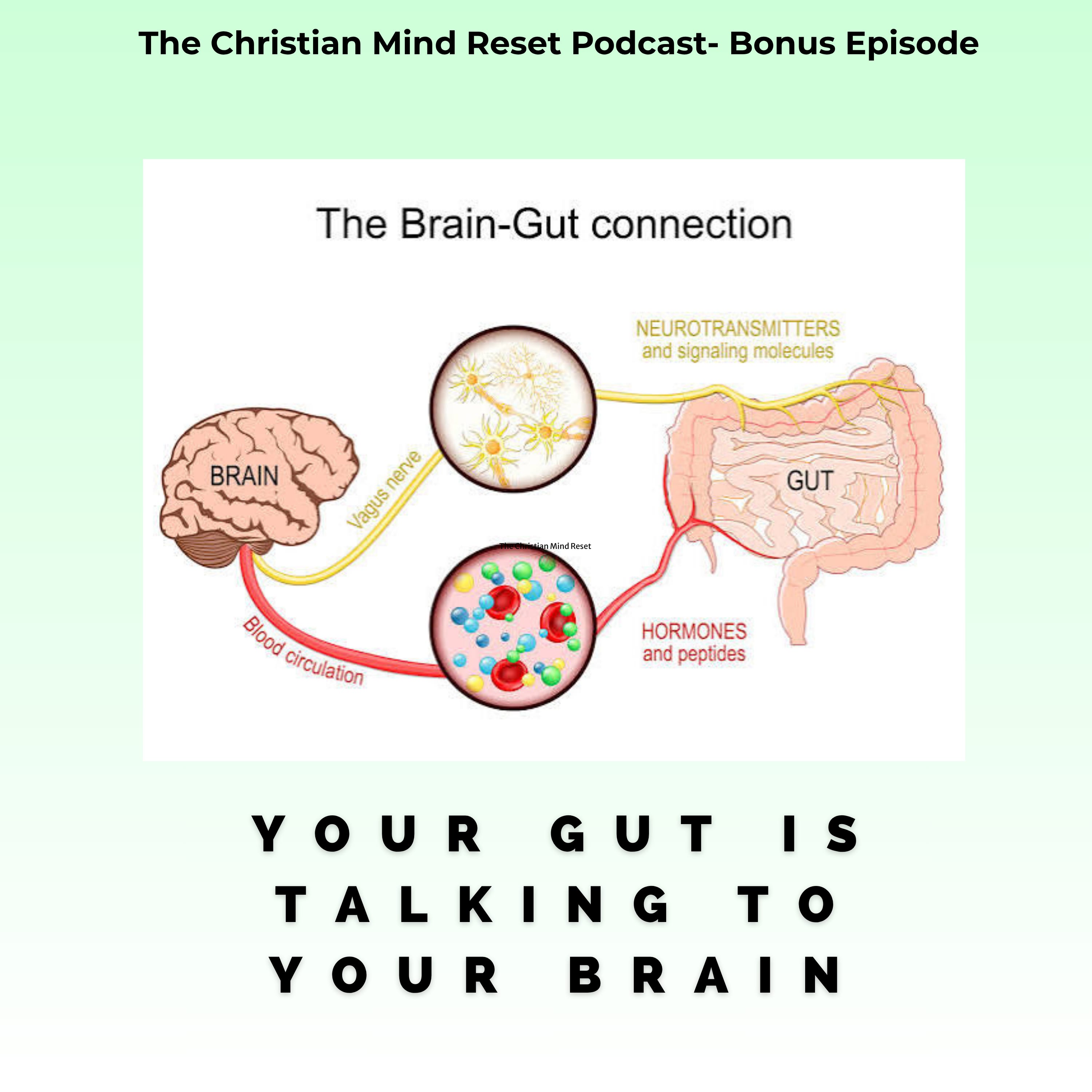 Your Gut Is Talking To Your Brain: Why Anxiety Can Make You Feel Sick & What Psalm 23 Teaches Us About Peace 10.09.2026 39minBonus EpisodeSeason 2, Episode 1Show NotesWhy can anxiety make the stomach hurt? Why do some people feel nauseated, lose their appetite, experience digestive changes, or feel a pit in their stomach when they are stressed?In this episode of The Christian Mind Reset, Dr. April Joy explores the fascinating connection between anxiety, the gut-brain axis, the nervous system, and gastrointestinal symptoms—and brings the conversation back to one of Scripture's most familiar passages: Psalm 23.As a board-certified psychiatric mental health nurse practitioner, psychotherapist, Bible teacher, and student of neuroscience, Dr. April Joy explains how the brain and gut are constantly communicating through a complex bidirectional system involving the central nervous system, enteric nervous system, autonomic nervous system, stress-response pathways, immune and endocrine signaling, the vagus nerve, and the gut microbiome.She explains why anxiety is not experienced only as worried thoughts. Stress can also show up physically through nausea, appetite changes, abdominal discomfort, diarrhea, constipation, muscle tension, changes in breathing, and other bodily sensations.The episode also explores interoception, the brain’s ability to sense and interpret signals coming from inside the body, and how physical sensations can sometimes become part of an anxiety cycle. A person notices a racing heart, tight stomach, nausea, or another uncomfortable sensation, interprets it as threatening, becomes more anxious, and then experiences even stronger physical sensations.Dr. April Joy also discusses emerging research on the gut microbiome and brain, including why intriguing findings from animal studies should not automatically be interpreted as evidence that gut bacteria cause human psychiatric disorders.But the heart of this episode returns to Psalm 23:5:“You prepare a table before me in the presence of my enemies.”Dr. April Joy considers this verse through the lens of anxiety and the nervous system. The table is prepared while the enemies are still present. The circumstances have not necessarily disappeared, yet David describes the Shepherd's provision and presence in the middle of them.For someone whose anxiety makes eating difficult, that image carries special meaning.The episode connects this truth with Jesus calming the storm, Isaiah 26:3, Philippians 4:6, Matthew 6:34, taking thoughts captive, biblical meditation, neuroplasticity, and prayer. It also examines an fMRI study of committed Christians that found personal, improvised prayer recruited brain regions involved in social cognition, offering an interesting neuroscientific window into the relational experience of prayer without using neuroscience to prove theological claims.Listeners will also learn about research in people with generalized anxiety disorder showing that 91.4% of the worry predictions recorded in one study did not come true, illustrating how often anxiety can pull the mind into feared futures that never arrive.In This EpisodeDr. April Joy discusses:* The gut-brain axis and anxiety* Why anxiety can cause nausea and loss of appetite* The enteric nervous system or “second brain”* The vagus nerve and parasympathetic nervous system* Stress, the HPA axis, and gastrointestinal symptoms* Interoception and the anxiety-sensation cycle* Serotonin and the gastrointestinal system* The gut microbiome and mental health research* Why animal microbiome studies require careful interpretation* Neuroplasticity and repeated patterns of thinking* What neuroscience can—and cannot—tell Christians about prayer* Psalm 23 and God’s presence during anxiety* Why worry often pulls the mind into the future* Scripture-based breath prayer using Psalm 23* Biblical declarations for anxiety, fear, and uncertaintyThe episode closes with declarations from Psalm 23, a guided prayer, and a reminder that Christians can pray, renew their minds, and trust God while also receiving appropriate medical, psychological, and pastoral support.Persistent nausea, unexplained weight loss, abdominal pain, appetite changes, changes in bowel habits, or other unresolved gastrointestinal symptoms should not automatically be attributed to anxiety. Appropriate medical evaluation is important.For more conversations at the intersection of neuroscience, psychology, mental health, Scripture, anxiety, and renewing the mind, follow The Christian Mind Reset Podcast and subscribe to Dr. April Joy’s Substack.Connect with Dr. April Joy:Substack: The Christian Mind ResetIf you liked today’s episode, please subscribe, leave a review, follow, like, or share. You can find me on Instagram at @thechristianpsychnp and on Substack at The Christian Mind Reset for more Scripture, neuroscience, and practical tips for renewing your mind.Listen to The Christian Mind Reset on Apple, Spotify, YouTube, and Substack.My eBook, The Christian Mind Reset: A 28-Day Psalms Guide to Biblical Meditation, Neuroscience, and Renewing Your Mind, which is a companion to Season 1, is available in my Stan Store at https://stan.store/thechristianpsychnp and on my Substack.Scriptures ReferencedPsalm 23Isaiah 26:3Joshua 1:8Matthew 6:34Matthew 26:38Luke 8:22–25Philippians 4:6–82 Corinthians 10:5Hebrews 4:15Romans 8:28ReferencesHaug, T. T., Mykletun, A., & Dahl, A. A. (2002). Are anxiety and depression related to gastrointestinal symptoms in the general population? Scandinavian Journal of Gastroenterology, 37(3), 294–298. https://doi.org/10.1080/003655202317284192Haug, T. T., Mykletun, A., & Dahl, A. A. (2002). The prevalence of nausea in the community: Psychological, social, and somatic factors. General Hospital Psychiatry, 24(2), 81–86. https://doi.org/10.1016/S0163-8343(01)00184-0LaFreniere, L. S., & Newman, M. G. (2020). Exposing worry’s deceit: Percentage of untrue worries in generalized anxiety disorder treatment. Behavior Therapy, 51(3), 413–423. https://doi.org/10.1016/j.beth.2019.07.003Schjoedt, U., Stødkilde-Jørgensen, H., Geertz, A. W., & Roepstorff, A. (2009). Highly religious participants recruit areas of social cognition in personal prayer. Social Cognitive and Affective Neuroscience, 4(2), 199–207. https://doi.org/10.1093/scan/nsn050Zhao, Z., et al. (2023). Effectiveness of probiotic/prebiotic/synbiotic treatments on anxiety: A systematic review and meta-analysis of randomized controlled trials. Journal of Affective Disorders.Zheng, P., Zeng, B., Liu, M., Chen, J., Pan, J., Han, Y., Liu, Y., Cheng, K., Zhou, C., Wang, H., Zhou, X., Gui, S., Perry, S. W., Wong, M.-L., Licinio, J., Wei, H., & Xie, P. (2019). The gut microbiome from patients with schizophrenia modulates the glutamate-glutamine-GABA cycle and schizophrenia-relevant behaviors in mice. Science Advances, 5(2), eaau8317. https://doi.org/10.1126/sciadv.aau8317Zhu, F., Guo, R., Wang, W., Ju, Y., Wang, Q., Ma, Q., Sun, Q., Fan, Y., Xie, Y., Yang, Z., Jie, Z., Zhao, B., Xiao, L., Yang, L., Zhang, T., Liu, B., Guo, L., He, X., Chen, Y., … Ma, X. (2020). Transplantation of microbiota from drug-free patients with schizophrenia causes schizophrenia-like abnormal behaviors and dysregulated kynurenine metabolism in mice. Molecular Psychiatry, 25(11), 2905–2918. https://doi.org/10.1038/s41380-019-0475-4Biblical References:NIVHoly Bible, New International Version. (2011). Zondervan. (Original work published 1978). YouVersion Bible App.ESVThe Holy Bible, English Standard Version. (2016). Crossway. (Original work published 2001). YouVersion Bible App.NKJVHoly Bible, New King James Version. (1982). Thomas Nelson. YouVersion Bible App.Disclaimer: This podcast/letter is for informational purposes only. It contains general information, drawn from my experience, research, and best practices. It is not health care advice and is not intended to replace the counsel of your health care provider. Consult your provider before starting any new treatments or changing your health routine. This message does not constitute a provider-patient relationship between us.If you are experiencing significant anxiety, distress, or need support, please seek care from a qualified healthcare professional. You may also consider reaching out to a licensed Christian counselor or pastor for additional support.Emails, portal messages, text messages, and other communications are not monitored and will not receive a response in an emergency or crisis, or regarding medical or therapy advice. Do not use these methods for medical advice, therapy, urgent, crisis, emergent, or time-sensitive concerns. If you are experiencing a medical or psychiatric emergency, are in crisis, have thoughts of harming yourself or others, or feel unsafe, call 911 (US), contact your local emergency services, or go to the nearest emergency room or hospital immediately. This is a public episode. If you would like to discuss this with other subscribers or get access to bonus episodes, visit thechristianmindreset.substack.com
 -
 The Neuroscience of Renewal: What the “Batman Effect” Can Teach Us About Putting On the New Self 04.09.2026 1t 25minEpisode 29, Season 1In the final episode of Season One of The Christian Mind Reset, Dr. April Joy brings together the neuroscience, psychology, and biblical practices explored throughout the past 28 days and looks at what it actually means to renew the mind.The brain is capable of change. What people repeatedly think about, focus on, practice, and return to can strengthen patterns in the brain and make certain responses more automatic over time. But Romans 12:2 is not simply a lesson in neuroplasticity, and Christian renewal cannot be reduced to “rewiring the brain.”So what does renewal actually look like?Dr. April Joy explores that question through Scripture and also through the life of Jesus. If Christians are called to have the mind of Christ and to walk as He walked, it matters how Jesus actually lived. Throughout the Gospels, Jesus prayed, fasted, knew and spoke Scripture, withdrew to be alone with the Father, gave thanks, gathered with others, lived in community, served, showed compassion, and remained dependent upon and obedient to the Father.This episode looks at some of those practices alongside what neuroscience and psychology have found about attention, repetition, meditation, self-talk, gratitude, emotional regulation, relationships, and repeated behavior.Dr. April Joy also returns to the biblical language of putting off the old self and putting on the new.Colossians 3 does not simply tell believers what to stop doing. It tells them what to put on instead: compassion, kindness, humility, gentleness, patience, forgiveness, love, peace, and gratitude.This is where Batman comes in.Research sometimes referred to as the “Batman Effect” found that young children who approached a difficult task from the perspective of an exemplar character, such as Batman, showed greater perseverance and were better able to resist distraction. Researchers have studied this in the context of self-distancing, the ability to create some psychological distance from an immediate thought, feeling, or impulse.Dr. April Joy looks at what this research can teach us about pausing long enough to consider a different response and then connects it to the biblical picture of putting off and putting on.For the Christian, this is obviously not about pretending to be Batman, or even pretending to be Jesus. It is about remembering who Scripture says believers are, what they are called to put off, what they are called to put on, and then practicing a response consistent with that truth.The episode also explores why thoughts and feelings are important without automatically treating them as facts, how repeated responses can become more automatic over time, why gratitude is not the same as denying pain, the importance of Christian community, and how prayer, fasting, Scripture, meditation, and speaking truth can become regular rhythms of renewal.Neuroscience can help explain mechanisms involved in attention, learning, memory, emotional regulation, repetition, and behavior. It can study what happens in the brain during practices such as meditation and prayer. But it cannot measure the work of the Holy Spirit, tell people the meaning of their suffering, or explain away spiritual transformation as brain activity.Ultimately, Christian renewal is not about becoming better at optimizing the brain.It is about becoming more like Christ.And that brings the episode back to one of the most important practices of renewal: abiding.Jesus said, “Apart from me you can do nothing.”The goal is not to manufacture renewal or the fruit of the Spirit by trying harder. Fruit grows from connection to the source. Christians participate through obedience, practice, prayer, Scripture, community, and continually bringing the mind back to truth, but Jesus remains the source.Connect with Dr. April Joy:Substack: The Christian Mind ResetIf you liked today’s episode, please subscribe, leave a review, follow, like, or share. You can find me on Instagram at @thechristianpsychnp and on Substack at The Christian Mind Reset for more Scripture, neuroscience, and practical tips for renewing your mind.Listen to The Christian Mind Reset on Apple, Spotify, and Substack.My eBook, The Christian Mind Reset: A 28-Day Psalms Guide to Biblical Meditation, Neuroscience, and Renewing Your Mind, is available in my Stan Store at https://stan.store/thechristianpsychnp and on my Substack.In this episode:* What neuroplasticity can, and cannot, tell us about renewing the mind* How attention, repetition, and practice shape patterns in the brain* Why thoughts and feelings are important but are not automatically facts* Biblical meditation and repeatedly returning attention to God’s Word* Self-talk and speaking truth rather than simply repeating positive affirmations* Gratitude and the brain* Prayer, fasting, solitude, and community* Looking at the practices and rhythms seen throughout the life of Jesus* Identity in Christ and why the past does not have to become identity* Putting off the old self and putting on the new* What the “Batman Effect” teaches us about self-distancing, perspective, and behavior* Colossians 3 and intentionally “putting on” compassion, kindness, humility, gentleness, patience, forgiveness, and love* The armor of God as another biblical picture of intentionally putting on what God has given* Having the mind of Christ* Why Christian transformation is more than brain change* Abiding in Christ and the fruit of the SpiritKey ScripturesRomans 12:2; Colossians 3:1–17; 1 Corinthians 2:16; Philippians 2:5; 1 John 2:6; Joshua 1:8–9; Psalm 1:1–3; Psalm 46:10; Proverbs 18:21; Hebrews 4:12; Matthew 4:1–11; Matthew 6:5–18; Luke 5:16; 1 Thessalonians 5:16–18; Ephesians 4:22–32; Ephesians 6:10–18; Galatians 5:22–25; John 15:4–5.ReferencesCascio, C. N., O’Donnell, M. B., Tinney, F. J., Lieberman, M. D., Taylor, S. E., Strecher, V. J., & Falk, E. B. (2016). Self-affirmation activates brain systems associated with self-related processing and reward and is reinforced by future orientation. Social Cognitive and Affective Neuroscience, 11(4), 621–629. https://doi.org/10.1093/scan/nsv136Hölzel, B. K., Lazar, S. W., Gard, T., Schuman-Olivier, Z., Vago, D. R., & Ott, U. (2011). How does mindfulness meditation work? Proposing mechanisms of action from a conceptual and neural perspective. Perspectives on Psychological Science, 6(6), 537–559. https://doi.org/10.1177/1745691611419671Kini, P., Wong, J., McInnis, S., Gabana, N., & Brown, J. W. (2016). The effects of gratitude expression on neural activity. NeuroImage, 128, 1–10. https://doi.org/10.1016/j.neuroimage.2015.12.040Schjoedt, U., Stødkilde-Jørgensen, H., Geertz, A. W., & Roepstorff, A. (2009). Highly religious participants recruit areas of social cognition in personal prayer. Social Cognitive and Affective Neuroscience, 4(2), 199–207. https://doi.org/10.1093/scan/nsn050White, R. E., & Carlson, S. M. (2016). What would Batman do? Self-distancing improves executive function in young children. Developmental Science, 19(3), 419–426. https://doi.org/10.1111/desc.12314White, R. E., Prager, E. O., Schaefer, C., Kross, E., Duckworth, A. L., & Carlson, S. M. (2017). The “Batman Effect”: Improving perseverance in young children. Child Development, 88(5), 1563–1571. https://doi.org/10.1111/cdev.12695Yeung, A. W. K., Wong, N. S. M., Tsui, I. S. Y., & Lee, T. C. P. (2025). Neural correlates of religious behavior related to Christianity: An ALE meta-analysis. Frontiers in Psychology, 16, 1557796. https://doi.org/10.3389/fpsyg.2025.1557796Bible References:NIVHoly Bible, New International Version. (2011). Zondervan. (Original work published 1978). YouVersion Bible App.ESVThe Holy Bible, English Standard Version. (2016). Crossway. (Original work published 2001). YouVersion Bible App.NKJVHoly Bible, New King James Version. (1982). Thomas Nelson. YouVersion Bible App.Thanks for reading The Christian Mind Reset's Substack and Podcast! This post is public, so feel free to share it.Disclaimer: This podcast/letter is for informational purposes only. It contains general information, drawn from my experience, research, and best practices. It is not health care advice and is not intended to replace the counsel of your health care provider. Consult your provider before starting any new treatments or making changes to your health routine. This message does not constitute a provider-patient relationship between us.If you are experiencing significant anxiety, distress, or need support, please seek care from a qualified healthcare professional. You may also consider reaching out to a licensed Christian counselor or pastor for additional support.Emails, portal messages, text messages, and other communications are not monitored and will not receive a response in an emergency or crisis, or regarding medical or therapy advice. Do not use these methods for medical advice, therapy, urgent, crisis, emergent, or time-sensitive concerns. If you are experiencing a medical or psychiatric emergency, are in crisis, have thoughts of harming yourself or others, or feel unsafe, call 911 (US), contact your local emergency services, or go to the nearest emergency room or hospital immediately. This is a public episode. If you would like to discuss this with other subscribers or get access to bonus episodes, visit thechristianmindreset.substack.com
 -
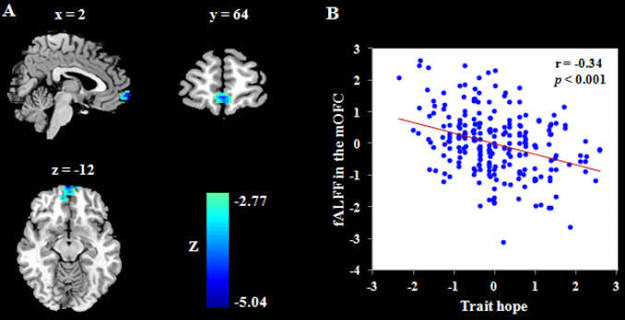
 The Neuroscience of Hope: Why What You Believe About Tomorrow Matters Today 20.08.2026 45minEpisode 28, Season 1Show NotesWhat happens in the mind and brain when we have hope? Why can hope change the way we experience the present, even when our circumstances have not changed? And how is biblical hope different from optimism, wishful thinking, or simply trying to “think positive”?In Episode 28 of The Christian Mind Reset, Dr. April Joy explores the psychology and neuroscience of hope alongside the biblical understanding of what it means to place our hope in God.The episode begins with C. R. Snyder’s Hope Theory, which describes hope through two important processes: agency, our perceived ability to move toward a goal, and pathways, our ability to identify ways forward when obstacles arise. We review research exploring the relationship between hope, anxiety, brain function, and meaning in life.But psychology and neuroscience only take us so far.The Bible presents a deeper picture of hope.Biblical hope is not pretending that everything will work out the way we want. It is not denial of suffering, and it is not positive thinking with a Christian vocabulary. Biblical hope is confidence in God's character, promises, and faithfulness, even when the outcome is still unknown.Through Psalm 130, Romans 8, and Hebrews 6:19, we explore what it means to hope while waiting, suffering, grieving, and facing an uncertain future. We also look at the lives of Abraham, David, Joseph, Jeremiah, Job, and Paul, people who experienced seasons when God’s promises and their present circumstances did not appear to match.Their stories remind us that hope does not require us to ignore what is happening around us.Hope does not mean everything around you is steady. Biblical hope gives your soul something steady to hold onto when everything else is not.In the final portion of the episode, we move from understanding hope to practicing hope through Scripture-based declarations, grounding, reflection, and prayer. The goal is not simply to learn something about hope, but to begin training our minds to remember where our hope is anchored.Connect with Dr. April Joy:Substack: The Christian Mind ResetIf you liked today’s episode, please subscribe, leave a review, follow, like, or share. You can find me on Instagram at @thechristianpsychnp and on Substack at The Christian Mind Reset for more Scripture, neuroscience, and practical tips for renewing your mind.Listen to The Christian Mind Reset on Apple, Spotify, and Substack.My eBook, The Christian Mind Reset: A 28-Day Psalms Guide to Biblical Meditation, Neuroscience, and Renewing Your Mind, is available in my Stan Store at https://stan.store/thechristianpsychnp and on my Substack.In This Episode, We Explore:* The psychology of hope and Snyder’s Hope Theory* The difference between agency and pathways* What neuroscience can tell us about hope* The relationship between hope, anxiety, and meaning* Why hope is more than optimism or positive thinking* What the Bible means by hope in God* What it looks like to hope while waiting* Hope in seasons of suffering, uncertainty, and grief* Lessons about hope from Abraham, David, Joseph, Jeremiah, Job, and Paul* Why Christian hope is ultimately anchored in God rather than circumstances* How Scripture can help us renew our minds when hope feels difficult* Scripture-based declarations, grounding, and prayerScriptures We ExplorePsalm 130Romans 8Hebrews 6:19ReferencesCoan, J. A., Schaefer, H. S., & Davidson, R. J. (2006). Lending a hand: Social regulation of the neural response to threat. Psychological Science, 17(12), 1032–1039. https://doi.org/10.1111/j.1467-9280.2006.01832Edwards, M. E., Booker, J. A., Cook, K., Miao, M., Gan, Y., & King, L. A. (2025). Hope as a meaningful emotion: Hope, positive affect, and meaning in life. Emotion, 25(6), 1365–1380. https://doi.org/10.1037/emo0001513Snyder, C. R. (2002). Hope theory: Rainbows in the mind. Psychological Inquiry, 13(4), 249–275. https://doi.org/10.1207/S15327965PLI1304_01Snyder, C. R., Harris, C., Anderson, J. R., Holleran, S. A., Irving, L. M., Sigmon, S. T., Yoshinobu, L., Gibb, J., Langelle, C., & Harney, P. (1991). The will and the ways: Development and validation of an individual-differences measure of hope. Journal of Personality and Social Psychology, 60(4), 570–585. https://doi.org/10.1037/0022-3514.60.4.570Wang, S., Xu, X., Zhou, M., Chen, T., Yang, X., Chen, G., & Gong, Q. (2017). Hope and the brain: Trait hope mediates the protective role of medial orbitofrontal cortex spontaneous activity against anxiety. NeuroImage, 157, 439–447. https://doi.org/10.1016/j.neuroimage.2017.05.056Disclaimer: This podcast/letter is for informational purposes only. It contains general information, drawn from my experience, research, and best practices. It is not health care advice and is not intended to replace the counsel of your health care provider. Consult your provider before starting any new treatments or making changes to your health routine. This message does not constitute a provider-patient relationship between us.If you are experiencing significant anxiety, distress, or need support, please seek care from a qualified healthcare professional. You may also consider reaching out to a licensed Christian counselor or pastor for additional support.Emails, portal messages, text messages, and other communications are not monitored and will not receive a response in an emergency or crisis, or regarding medical or therapy advice. Do not use these methods for medical advice, therapy, urgent, crisis, emergent, or time-sensitive concerns. If you are experiencing a medical or psychiatric emergency, are in crisis, have thoughts of harming yourself or others, or feel unsafe, call 911 (US), contact your local emergency services, or go to the nearest emergency room or hospital immediately. This is a public episode. If you would like to discuss this with other subscribers or get access to bonus episodes, visit thechristianmindreset.substack.com
 -
 The Neuroscience of Gratitude and Self-Talk: What the Bible Says About Complaining 09.08.2026 54minEpisode 27, Season 1Show NotesCan gratitude really change your brain? Why does the Bible repeatedly tell us to “give thanks,” while also warning us against grumbling? In this episode of The Christian Mind Reset, we explore what psychology, neuroscience, and Scripture reveal about gratitude, complaining, and the way repeated thought patterns shape our minds.Together, we’ll examine research on gratitude, neuroplasticity, negativity bias, emotional regulation, and stress while walking through some of the Bible’s richest passages on thanksgiving. We’ll look at David in the Psalms, Israel in the wilderness, and the moments Jesus gave thanks—even in the face of rejection, grief, scarcity, and the cross.You’ll discover why biblical gratitude isn’t pretending life is easy or denying suffering. Instead, it’s intentionally remembering God’s faithfulness and bringing your attention back to what is still true, still good, and still worthy of praise.In this episode, we discuss:* What gratitude does in the brain* The neuroscience of neuroplasticity and negativity bias* Healthy lament versus chronic complaining* Why God repeatedly commands thanksgiving* What Jesus thanked the Father for* Psalm 107 and the power of remembering God’s faithfulness* Practical ways to cultivate biblical gratitude in everyday lifeIf you’re struggling with anxiety, discouragement, stress, or simply want to renew your mind through Scripture, this episode will encourage you to see gratitude as more than a feeling; it is a spiritual discipline that shapes both the heart and the mind.Connect with Dr. April Joy:Substack: The Christian Mind ResetIf you liked today’s episode, please subscribe, leave a review, follow, like, or share. You can find me on Instagram at @thechristianpsychnp and also on Instagram and Substack at The Christian Mind Reset for more Scripture, neuroscience, and practical tips for renewing your mind.Listen to The Christian Mind Reset on Apple, Spotify, and Substack.My eBook, The Christian Mind Reset: A 28-Day Psalms Guide to Biblical Meditation, Neuroscience, and Renewing Your Mind, is available in my Stan Store at https://stan.store/thechristianpsychnp and on my Substack.ReferencesCheng, S.-T., Tsui, P. K., & Lam, J. H. M. (2015). Improving mental health in health care practitioners: Randomized controlled trial of a gratitude intervention. Journal of Consulting and Clinical Psychology, 83(1), 177–186. https://doi.org/10.1037/a0037895Emmons, R. A., & McCullough, M. E. (2003). Counting blessings versus burdens: An experimental investigation of gratitude and subjective well-being in daily life. Journal of Personality and Social Psychology, 84(2), 377–389. https://doi.org/10.1037/0022-3514.84.2.377Fox, G. R., Kaplan, J., Damasio, H., & Damasio, A. (2015). Neural correlates of gratitude. Frontiers in Psychology, 6, 1491. https://doi.org/10.3389/fpsyg.2015.01491Froh, J. J., Sefick, W. J., & Emmons, R. A. (2008). Counting blessings in early adolescents: An experimental study of gratitude and subjective well-being. Journal of School Psychology, 46(2), 213–233. https://doi.org/10.1016/j.jsp.2007.03.005Hölzel, B. K., Carmody, J., Vangel, M., Congleton, C., Yerramsetti, S. M., Gard, T., & Lazar, S. W. (2011). Mindfulness practice leads to increases in regional brain gray matter density. Psychiatry Research: Neuroimaging, 191(1), 36–43. https://doi.org/10.1016/j.pscychresns.2010.08.006Kini, P., Wong, J., McInnis, S., Gabana, N., & Brown, J. W. (2016). The effects of gratitude expression on neural activity. NeuroImage, 128, 1–10. https://doi.org/10.1016/j.neuroimage.2015.12.040Disclaimer: This podcast/letter is for informational purposes only. It contains general information, drawn from my experience, research, and best practices. It is not health care advice, and is not intended to replace the counsel of your health care provider. Consult your provider before starting any new treatments or making changes to your health routine. This message does not constitute a provider-patient relationship between us.If you are experiencing significant anxiety, distress, or need support, please seek care from a qualified healthcare professional. You may also consider reaching out to a licensed Christian counselor or pastor for additional support.Emails, portal messages, text messages, and other communications are not monitored and will not receive a response in an emergency or crisis, or regarding medical or therapy advice. These methods should never be used for medical advice, therapy, urgent, crisis, emergent, or time-sensitive concerns. If you are experiencing a medical or psychiatric emergency, are in crisis, have thoughts of harming yourself or others, or feel unsafe, call 911 (US), contact your local emergency services, or go to the nearest emergency room or hospital immediately. This is a public episode. If you would like to discuss this with other subscribers or get access to bonus episodes, visit thechristianmindreset.substack.com
 -
 Your Brain on Hope: The Psychology, Neuroscience, and Bible Study of Perseverance 05.08.2026 1t 2minEpisode 26, Season 1Show NotesWhat does it mean to “strengthen yourself in the Lord,” and what can David’s life teach us about persevering through suffering?In this episode of The Christian Mind Reset, Dr. April Joy explores perseverance through the life of David, with a particular focus on 1 Samuel 30:6 and the Psalms. Throughout David’s life, readers see a consistent pattern of returning to God through prayer, worship, gratitude, remembering God’s faithfulness, and fixing his hope on the Lord, even in seasons of fear, betrayal, grief, and waiting.Drawing from Scripture alongside current research in psychology and neuroscience, this episode examines how practices woven throughout David’s life align with what is known about hope, attention, memory, metacognition, worship, and emotional resilience. Rather than placing confidence in psychological techniques, the episode points listeners back to the biblical truth that lasting perseverance is found by continually returning to God, who is the source of our hope and strength.Whether listeners are walking through disappointment, suffering, uncertainty, or simply finding it difficult to keep going, this episode offers biblical encouragement and practical insight for persevering while keeping their eyes fixed on Christ.In This Episode* What it means to strengthen yourself in the Lord* Perseverance through the life of David* Hope through the lens of psychology and neuroscience* Remembering God’s faithfulness* Metacognition and biblical self-talk* Worship, music, and the brain* Gratitude, prayer, and redirecting attention* Fixing our eyes on Jesus* Persevering through difficult seasons with hope anchored in GodScriptures* 1 Samuel 24* 1 Samuel 30:6* Psalm 23* Psalm 27:13* Psalm 42:5* Psalm 56:3–4* Isaiah 40:29–31* Romans 5:3–5* James 1:2–4* Galatians 6:9* Hebrews 12:1–2Connect with Dr. April Joy:Substack: The Christian Mind ResetIf you liked today’s episode, please subscribe, leave a review, follow, like, or share. You can find me on Instagram at @thechristianpsychnp and also on Instagram and Substack at The Christian Mind Reset for more Scripture, neuroscience, and practical tips for renewing your mind.Listen to The Christian Mind Reset on Apple, Spotify, and Substack.My eBook, The Christian Mind Reset: A 28-Day Psalms Guide to Biblical Meditation, Neuroscience, and Renewing Your Mind, is available in my Stan Store at https://stan.store/thechristianpsychnp and on my Substack.References* Chanda, M. L., & Levitin, D. J. (2013). The neurochemistry of music. Trends in Cognitive Sciences.* Fleming, S. M., Dolan, R. J., & Frith, C. D. (2012). Metacognition: Computation, biology and function.Philosophical Transactions of the Royal Society B.* Gross, J. J. (2015). Emotion regulation: Current status and future prospects. Psychological Inquiry.* Koelsch, S. (2014). Brain correlates of music-evoked emotions. Nature Reviews Neuroscience.* Kross, E., et al. (2014). Self-talk as a regulatory mechanism: How you do it matters. Journal of Personality and Social Psychology.* Kross, E., & Ayduk, O. (2017). Self-distancing: Theory, research, and current directions. Advances in Experimental Social Psychology.* Müller, T. H., et al. (2021). Dissociable neural systems for recoverable versus unrecoverable effort. Nature Communications.* Roediger, H. L., III, & Karpicke, J. D. (2006). Test-enhanced learning: Taking memory tests improves long-term retention. Psychological Science.* Snyder, C. R. (2002). Hope theory: Rainbows in the mind. Psychological Inquiry.* Vickers, J. N. (2016). Origins and current issues in Quiet Eye research. Current Issues in Sport Science.Disclaimer: This podcast/letter is for informational purposes only. It contains general information, drawn from my experience, research, and best practices. It is not health care advice, and is not intended to replace the counsel of your health care provider. Consult your provider before starting any new treatments or making changes to your health routine. This message does not constitute a provider-patient relationship between us.If you are experiencing significant anxiety, distress, or need support, please seek care from a qualified healthcare professional. You may also consider reaching out to a licensed Christian counselor or pastor for additional support.Emails, portal messages, text messages, and other communications are not monitored and will not receive a response in an emergency or crisis, or regarding medical or therapy advice. These methods should never be used for medical advice, therapy, urgent, crisis, emergent, or time-sensitive concerns. If you are experiencing a medical or psychiatric emergency, are in crisis, have thoughts of harming yourself or others, or feel unsafe, call 911 (US), contact your local emergency services, or go to the nearest emergency room or hospital immediately. This is a public episode. If you would like to discuss this with other subscribers or get access to bonus episodes, visit thechristianmindreset.substack.com
 -
 When Obedience Is Hard: What Nathan Teaches Us About Following God | Psychology, Neuroscience & the Bible 28.07.2026 36minEpisode 25, Season 1Show NotesMost people remember David’s repentance after his sin with Bathsheba. Far fewer pause to consider the man who made that repentance possible.Before David confessed, Nathan obeyed.In this episode of The Christian Mind Reset, Dr. April Joy explores one of Scripture’s most overlooked examples of courageous obedience. Through the story of Nathan confronting King David in 2 Samuel 12, listeners will discover what it looks like to obey God when the outcome is uncertain, the cost feels high, and remaining silent would be far easier.The episode examines the biblical meaning of obedience through the Hebrew word shāmaʿ, revealing that throughout Scripture, hearing God has always been inseparable from responding to Him. It also explores how Jesus fulfilled the Law, why obedience is the evidence of a transformed heart rather than a means of earning salvation, and how love, not legalism, has always been at the center of God’s commands.Drawing from psychology and neuroscience, the episode explains why obedience can feel so difficult, how fear influences moral decision-making, and what research reveals about agency, cognitive control, and the courage to do what is right even when it comes at a personal cost.Whether facing a difficult conversation, a call to speak truth with grace, or a season requiring costly faithfulness, this episode offers both biblical encouragement and practical insight for following God with courage and conviction.In This Episode* Nathan’s role in David’s repentance and why his obedience matters* What the Hebrew word shāmaʿ teaches about hearing and obeying God* Why biblical obedience is rooted in love rather than legalism* How Jesus fulfilled the Law and summarized God’s commands* The psychology and neuroscience of obedience, fear, and moral courage* Practical encouragement for obeying God when obedience is costlyScriptures ReferencedGenesis 26:5Deuteronomy 6:4–52 Samuel 12Psalm 51Matthew 5:17–20Matthew 7:24–27Matthew 22:37–40Luke 6:46–49John 14:15John 15:10James 1:22Ephesians 2:8–10Connect with Dr. April Joy:Connect with Dr. April Joy:Substack: The Christian Mind ResetIf you liked today’s episode, please subscribe, leave a review, follow, like, or share. You can find me on Instagram at @thechristianpsychnp and also on Instagram and Substack at The Christian Mind Reset for more Scripture, neuroscience, and practical tips for renewing your mind.Listen to The Christian Mind Reset on Apple, Spotify, and Substack.My eBook, The Christian Mind Reset: A 28-Day Psalms Guide to Biblical Meditation, Neuroscience, and Renewing Your Mind, is available in my Stan Store at https://stan.store/thechristianpsychnp and on my Substack.ReferencesBandura, A. (1999). Moral disengagement in the perpetration of inhumanities. Personality and Social Psychology Review, 3(3), 193–209. https://doi.org/10.1207/S15327957PSPR0303_3BibleProject. (n.d.). Shema (Hear). https://bibleproject.com/explore/video/shema-hear/Bible Hub. (n.d.). Strong’s Hebrew 8085: Shamaʿ (שָׁמַע)—to hear, listen, obey. https://biblehub.com/hebrew/8085.htmBlass, T. (1999). The Milgram paradigm after 35 years: Some things we now know about obedience to authority. Journal of Applied Social Psychology, 29(5), 955–978. https://doi.org/10.1111/j.1559-1816.1999.tb00134.xBrown, F., Driver, S. R., & Briggs, C. A. (1906). A Hebrew and English lexicon of the Old Testament. Clarendon Press. https://archive.org/details/hebrewenglishlex00browuoftThe Holy Bible, English Standard Version. (2016). Crossway. (Original work published 2001)Burger, J. M. (2009). Replicating Milgram: Would people still obey today? American Psychologist, 64(1), 1–11. https://doi.org/10.1037/a0010932Caspar, E. A., Christensen, J. F., Cleeremans, A., & Haggard, P. (2016). Coercion changes the sense of agency in the human brain. Current Biology, 26(5), 585–592. https://doi.org/10.1016/j.cub.2015.12.067Caspar, E. A., Vuillaume, L., Magalhães De Saldanha da Gama, P. A., & Cleeremans, A. (2018). The influence of (dis)belief in free will on immoral behavior. Frontiers in Psychology, 9, Article 20. https://doi.org/10.3389/fpsyg.2018.00020Caspar, E. A., et al. (2020). Coercion reduces the neural processing of victims’ pain. Social Cognitive and Affective Neuroscience, 15(11), 1184–1194. https://doi.org/10.1093/scan/nsaa148Crone, E. A., & Steinbeis, N. (2017). Neural perspectives on cognitive control development during childhood and adolescence. Trends in Cognitive Sciences, 21(3), 205–215. https://doi.org/10.1016/j.tics.2017.01.003Haggard, P. (2017). Sense of agency in the human brain. Nature Reviews Neuroscience, 18(4), 196–207. https://doi.org/10.1038/nrn.2017.14Haney, C., Banks, W. C., & Zimbardo, P. G. (1973). Interpersonal dynamics in a simulated prison. International Journal of Criminology and Penology, 1, 69–97.Haslam, S. A., & Reicher, S. D. (2006). Rethinking the psychology of tyranny. Scientific American, 295(6), 68–73.Hollander, M. M. (2015). The repertoire of resistance: Non-compliance with directives in Milgram’s “obedience” experiments. British Journal of Social Psychology, 54(3), 425–444. https://doi.org/10.1111/bjso.12099 (PubMed)Milgram, S. (1963). Behavioral study of obedience. Journal of Abnormal and Social Psychology, 67(4), 371–378. https://doi.org/10.1037/h0040525Milgram, S. (1974). Obedience to authority: An experimental view. Harper & Row.Packer, D. J. (2008). Identifying systematic disobedience in Milgram’s obedience experiments: A meta-analytic review. Perspectives on Psychological Science, 3(4), 301–304. https://doi.org/10.1111/j.1745-6924.2008.00080.x (Association for Psychological Science)Nye, C. (2017, September 9). What does the Hebrew term “Shema” mean? Medium. https://medium.com/@chrisnye/what-does-the-hebrew-term-shema-mean-6fd3a1e5eeb2Seyll, L., et al. (2025). When the brain says “No!”: An MRI study on the neural correlates of resistance to immoral orders. Cortex. (PubMed)Disclaimer: This podcast/letter is for informational purposes only. It contains general information, drawn from my experience, research, and best practices. It is not health care advice, and is not intended to replace the counsel of your health care provider. Consult your provider before starting any new treatments or making changes to your health routine. This message does not constitute a provider-patient relationship between us.If you are experiencing significant anxiety, distress, or need support, please seek care from a qualified healthcare professional. You may also consider reaching out to a licensed Christian counselor or pastor for additional support.Emails, portal messages, text messages, and other communications are not monitored and will not receive a response in an emergency or crisis, or regarding medical or therapy advice. These methods should never be used for medical advice, therapy, urgent, crisis, emergent, or time-sensitive concerns. If you are experiencing a medical or psychiatric emergency, are in crisis, have thoughts of harming yourself or others, or feel unsafe, call 911 (US), contact your local emergency services, or go to the nearest emergency room or hospital immediately. This is a public episode. If you would like to discuss this with other subscribers or get access to bonus episodes, visit thechristianmindreset.substack.com
 -
 Psalm 23 Explained: The Neuroscience and Psychology of Rest 22.07.2026 54minThe Christian Mind Reset | Episode 24, Season 1Show NotesPsalm 23 is one of the most beloved passages in all of Scripture, but what if we’ve only scratched the surface of what David was teaching?In this episode of The Christian Mind Reset, we take a deep dive into Psalm 23, verse by verse, through the lens of both Scripture and neuroscience. Together, we’ll discover how the Good Shepherd leads us from fear to trust, from striving to surrender, from survival mode to soul rest.We’ll explore why sheep will only lie down when they feel safe, why they’re led beside still waters, what it means for God to restore our souls, and how every verse of Psalm 23 paints a beautiful picture of the rest Jesus later offers in Matthew 11 when He says, “Come to Me... and I will give you rest.”Along the way, we’ll examine what chronic stress does to the brain, nervous system, immune system, heart, and body, and why modern neuroscience confirms what Scripture has been teaching for thousands of years: we were never designed to live in constant survival mode.You’ll also learn about allostatic load, the body’s stress response, secure attachment, and how the presence of the Good Shepherd provides the safety our minds and bodies were created to experience.If you’ve been feeling anxious, overwhelmed, emotionally exhausted, burned out, or simply weary, this episode is an invitation to slow down, lift your eyes to the Shepherd, and discover the kind of rest that reaches far deeper than sleep.Because Psalm 23 isn’t simply about comfort.It’s about learning to trust the One who leads us beside still waters, restores our souls, walks with us through every valley, prepares a table in the presence of our enemies, and faithfully leads us all the way home.In This Episode• Psalm 23 explained verse by verse• What sheep teach us about anxiety, trust, and rest• The neuroscience and psychology of chronic stress and survival mode• Why your brain and nervous system need safety to truly rest• Matthew 11 and Jesus’ invitation to find rest for your soul• The Good Shepherd, secure attachment, and emotional resilience• How Scripture renews the mind and calms the anxious heart• Practical ways to rest in God’s presence this weekKey Scriptures* Psalm 23* Matthew 11:28–30* Psalm 91:1* Psalm 62:1* John 10:11* John 10:27* Isaiah 26:3* Proverbs 3:5–6* 1 Peter 5:7* Philippians 3:20* Hebrews 12:2* Hebrews 13:14* Colossians 3:2Connect with Dr. April Joy:Connect with Dr. April Joy:Substack: The Christian Mind ResetIf you liked today’s episode, please subscribe, leave a review, follow, like, or share. You can find me on Instagram at @thechristianpsychnp and also on Instagram and Substack at The Christian Mind Reset for more Scripture, neuroscience, and practical tips for renewing your mind.Listen to The Christian Mind Reset on Apple, Spotify, and Substack.My eBook, The Christian Mind Reset: A 28-Day Psalms Guide to Biblical Meditation, Neuroscience, and Renewing Your Mind, is available in my Stan Store at https://stan.store/thechristianpsychnp and on my Substack.References American Psychological Association. (n.d.). Stress effects on the body. https://www.apa.org/topics/stress/bodyArnsten, A. F. T. (2009). Stress signaling pathways that impair prefrontal cortex structure and function. Nature Reviews Neuroscience, 10(6), 410–422. https://doi.org/10.1038/nrn2648Bar-Haim, Y., Lamy, D., Pergamin, L., Bakermans‐Kranenburg, M. J., & van IJzendoorn, M. H. (2007). Threat-related attentional bias in anxious and nonanxious individuals: A meta-analytic study. Psychological Bulletin, 133(1), 1–24. https://doi.org/10.1037/0033-2909.133.1.1Bowlby, J. (1982). Attachment and loss: Vol. 1. Attachment (2nd ed.). Basic Books. (Original work published 1969)Coan, J. A., Schaefer, H. S., & Davidson, R. J. (2006). Lending a hand: Social regulation of the neural response to threat. Psychological Science, 17(12), 1032–1039. https://doi.org/10.1111/j.1467-9280.2006.01832.xCohen, S., & Wills, T. A. (1985). Stress, social support, and the buffering hypothesis. Psychological Bulletin, 98(2), 310–357. https://doi.org/10.1037/0033-2909.98.2.310Dhabhar, F. S. (2014). Effects of stress on immune function: The good, the bad, and the beautiful. Immunologic Research, 58(2–3), 193–210. https://doi.org/10.1007/s12026-014-8517-0Emmons, R. A., & McCullough, M. E. (2003). Counting blessings versus burdens: An experimental investigation of gratitude and subjective well-being in daily life. Journal of Personality and Social Psychology, 84(2), 377–389. https://doi.org/10.1037/0022-3514.84.2.377Grupe, D. W., & Nitschke, J. B. (2013). Uncertainty and anticipation in anxiety: An integrated neurobiological and psychological perspective. Nature Reviews Neuroscience, 14(7), 488–501. https://doi.org/10.1038/nrn3524Harvard Health Publishing. (2022). The gut-brain connection. Harvard Medical School. https://www.health.harvard.eduHeinrichs, M., Baumgartner, T., Kirschbaum, C., & Ehlert, U. (2003). Social support and oxytocin interact to suppress cortisol and subjective responses to psychosocial stress. Biological Psychiatry, 54(12), 1389–1398. https://doi.org/10.1016/S0006-3223(03)00465-7Keller, W. P. (1970). A shepherd looks at Psalm 23. Zondervan.Lazarus, R. S., & Folkman, S. (1984). Stress, appraisal, and coping. Springer.Mayo Clinic. (2024). Chronic stress puts your health at risk. https://www.mayoclinic.org/healthy-lifestyle/stress-management/in-depth/stress/art-20046037McEwen, B. S. (1998). Protective and damaging effects of stress mediators. The New England Journal of Medicine, 338(3), 171–179. https://doi.org/10.1056/NEJM199801153380307McEwen, B. S. (2017). Neurobiological and systemic effects of chronic stress. Chronic Stress, 1, 1–11. https://doi.org/10.1177/2470547017692328Mikulincer, M., & Shaver, P. R. (2007). Attachment in adulthood: Structure, dynamics, and change. Guilford Press.Newberg, A. B., & Waldman, M. R. (2009). How God changes your brain: Breakthrough findings from a leading neuroscientist. Ballantine Books.Porges, S. W. (2011). The polyvagal theory: Neurophysiological foundations of emotions, attachment, communication, and self-regulation. W. W. Norton & Company.Segerstrom, S. C., & Miller, G. E. (2004). Psychological stress and the human immune system: A meta-analytic study of 30 years of inquiry. Psychological Bulletin, 130(4), 601–630. https://doi.org/10.1037/0033-2909.130.4.601Southwick, S. M., & Charney, D. S. (2018). Resilience: The science of mastering life’s greatest challenges (2nd ed.). Cambridge University Press.Yao, Y., et al. (2024). Immunology of stress: A review. Journal of Translational Medicine. (Review article on stress, inflammation, and immune function.)Disclaimer: This podcast/letter is for informational purposes only. It contains general information, drawn from my experience, research, and best practices. It is not health care advice, and is not intended to replace the counsel of your health care provider. Consult your provider before starting any new treatments or making changes to your health routine. This message does not constitute a provider-patient relationship between us.If you are experiencing significant anxiety, distress, or need support, please seek care from a qualified healthcare professional. You may also consider reaching out to a licensed Christian counselor or pastor for additional support.Emails, portal messages, text messages, and other communications are not monitored and will not receive a response in an emergency or crisis, or regarding medical or therapy advice. These methods should never be used for medical advice, therapy, urgent, crisis, emergent, or time-sensitive concerns. If you are experiencing a medical or psychiatric emergency, are in crisis, have thoughts of harming yourself or others, or feel unsafe, call 911 (US), contact your local emergency services, or go to the nearest emergency room or hospital immediately This is a public episode. If you would like to discuss this with other subscribers or get access to bonus episodes, visit thechristianmindreset.substack.com
 -
 Episode 23: The Neuroscience of Trust: Why Betrayal Hurts and How God Restores 16.07.2026 37minEpisode 23, Season 1Show NotesHave you ever wondered why betrayal hurts so deeply—or why it can feel so difficult to trust again?In this episode of The Christian Mind Reset, we explore what psychology, neuroscience, and Scripture reveal about trust, betrayal, and healing. You’ll learn how God designed the brain to learn from repeated experiences, why broken trust affects both the mind and body, and how the Psalmist's example in the Psalms points us toward lasting hope.We’ll discuss attachment, neuroplasticity, predictive processing, emotional memory, and the neuroscience of social pain, while keeping Scripture at the center of the conversation. Rather than using science to validate God’s Word, we’ll see how studying God’s creation helps us better appreciate His design.In this episode, you’ll learn:* Why trust is built through repeated experiences of faithfulness.* How attachment shapes our earliest understanding of safety and relationships.* Why betrayal feels physically painful and what neuroscience says about social rejection.* How the brain updates its expectations after relational wounds.* The role of neuroplasticity in healing after betrayal.* Why remembering God’s faithfulness is one of the most powerful biblical practices for renewing the mind.* The difference between biblical forgiveness and rebuilding trust.* Practical encouragement for learning to trust God while exercising wisdom in relationships.Key ScripturesPsalm 9:10Psalm 77Proverbs 3:5–6Lamentations 3:22–23Hebrews 10:23Malachi 3:6Hebrews 13:8John 2:24Psalm 147:3Connect with Dr. April Joy:Connect with Dr. April Joy:Substack: The Christian Mind ResetIf you liked today’s episode, please subscribe, leave a review, follow, like, or share. You can find me on Instagram at @thechristianpsychnp and also on Instagram and Substack at The Christian Mind Reset for more Scripture, neuroscience, and practical tips for renewing your mind.Listen to The Christiand Min Reset on Apple, Spotify, and Substack.My eBook, The Christian Mind Reset: A 28-Day Psalms Guide to Biblical Meditation, Neuroscience, and Renewing Your Mind, is available in my Stan Store at https://stan.store/thechristianpsychnp and on my Substack.ReferencesAinsworth, M. D. S., Blehar, M. C., Waters, E., & Wall, S. (1978). Patterns of attachment: A psychological study of the strange situation. Lawrence Erlbaum Associates.Berg, J., Dickhaut, J., & McCabe, K. (1995). Trust, reciprocity, and social history. Games and Economic Behavior, 10(1), 122–142. https://doi.org/10.1006/game.1995.1027Bowlby, J. (1982). Attachment and loss: Vol. 1. Attachment (2nd ed.). Basic Books. (Original work published 1969)Carter, S C. (2018). Oxytocin and Human Evolution. Current topics in behavioral neurosciences, 35, 291–319. https://doi.org/10.1007/7854_2017_18Clark, A. (2013). Whatever next? Predictive brains, situated agents, and the future of cognitive science. Behavioral and Brain Sciences, 36(3), 181–204. https://doi.org/10.1017/S0140525X12000477Eisenberger, N. I. (2012). The neural bases of social pain: Evidence for shared representations with physical pain. Psychosomatic Medicine, 74(2), 126–135. https://doi.org/10.1097/PSY.0b013e3182464dd1Eisenberger, N. I., Lieberman, M. D., & Williams, K. D. (2003). Does rejection hurt? An fMRI study of social exclusion. Science, 302(5643), 290–292. https://doi.org/10.1126/science.1089134Freyd, J. J. (1996). Betrayal trauma: The logic of forgetting childhood abuse. Harvard University Press.Friston, K. (2010). The free-energy principle: A unified brain theory? Nature Reviews Neuroscience, 11(2), 127–138. https://doi.org/10.1038/nrn2787Froemke, R. C., & Young, L. J. (2021). Oxytocin, neural plasticity, and social behavior. Annual Review of Neuroscience, 44, 359–381. https://doi.org/10.1146/annurev-neuro-102320-102847Hancock, P. A., Kessler, T. T., Kaplan, A. D., Brill, J. C., & Szalma, J. L. (2023). How and why humans trust: A meta-analysis and elaborated model. Frontiers in Psychology, 14, Article 1081086. https://doi.org/10.3389/fpsyg.2023.1081086Kandel, E. R., Koester, J. D., Mack, S. H., & Siegelbaum, S. A. (2021). Principles of neural science (6th ed.). McGraw Hill.Kosfeld, M., Heinrichs, M., Zak, P. J., Fischbacher, U., & Fehr, E. (2005). Oxytocin increases trust in humans. Nature, 435(7042), 673–676. https://doi.org/10.1038/nature03701Lancaster, M. E., & Anbar, R. D. (2024, March 30). How oxytocin affects our relationships. Psychology Today. https://www.psychologytoday.com/us/blog/understanding-hypnosis/202402/how-oxytocin-affects-our-relationshipsMcGaugh, J. L. (2004). The amygdala modulates the consolidation of memories of emotionally arousing experiences. Annual Review of Neuroscience, 27, 1–28. https://doi.org/10.1146/annurev.neuro.27.070203.144157Disclaimer: This podcast/letter is for informational purposes only. It contains general information, drawn from my experience, research, and best practices. It is not health care advice, and is not intended to replace the counsel of your health care provider. Consult your provider before starting any new treatments or making changes to your health routine. This message does not constitute a provider-patient relationship between us.If you are experiencing significant anxiety, distress, or need support, please seek care from a qualified healthcare professional. You may also consider reaching out to a licensed Christian counselor or pastor for additional support.Emails, portal messages, text messages, and other communications are not monitored and will not receive a response in an emergency or crisis, or regarding medical or therapy advice. These methods should never be used for medical advice, therapy, urgent, crisis, emergent, or time-sensitive concerns. If you are experiencing a medical or psychiatric emergency, are in crisis, having thoughts of harming yourself or others, or feel unsafe, call 911 (US), or contact your local emergency services, or go to the nearest emergency room or hospital immediately. This is a public episode. If you would like to discuss this with other subscribers or get access to bonus episodes, visit thechristianmindreset.substack.com
 -
 Praise Is Spiritual Warfare: What David Knew About Worship, Neuroscience, and Renewing Your Mind 11.07.2026 43minEpisode 22, Season 1Show NotesCan praise actually change the way we experience a battle?What if God commands us to praise not only because He is worthy, but because He designed worship to strengthen His people?In this episode of The Christian Mind Reset, we explore the powerful connection among praise, worship, prayer, singing, and the renewing of the mind, drawing on both Scripture and neuroscience. Looking at the lives of David, Jehoshaphat, Paul and Silas, and Samuel, we’ll discover why praise is far more than an emotional response to victory. It is a spiritual discipline that helps us remember God’s faithfulness even as the battle is still before us.We’ll examine the neuroscience of attention, attentional bias, emotional memory, and the brain’s attentional filtering system, including the Reticular Activating System (RAS), to better understand why fear naturally captures our focus. We’ll also explore what research reveals about prayer, worship, singing, gratitude, lifting our hands, embodied cognition, and how these practices influence attention, emotional regulation, stress, and resilience.Finally, we’ll unpack the biblical meaning of an Ebenezer, why God repeatedly commands His people to remember, and how praise becomes an act of spiritual warfare that shifts our attention from fear to God's faithfulness.Whether you’re walking through anxiety, disappointment, unanswered prayers, grief, spiritual warfare, or a season of waiting, I pray this episode encourages you to remember that praise is not pretending your pain doesn’t exist. It is choosing to worship the God whose character never changes.In This Episode* Why praise is spiritual warfare* Why God commands us to sing* The neuroscience of praise and worship* Prayer and focused attention* Singing, stress, mood, and the immune system* Why lifting our hands matters* Embodied cognition and worship* David’s pattern of remembering God’s faithfulness* The neuroscience of attention and attentional bias* The Reticular Activating System (RAS) and the brain’s attentional filtering system* The amygdala, hippocampus, and emotional memory* Neuroplasticity and renewing the mind* Jehoshaphat and praising before the battle* Paul and Silas worshiping in prison* Ebenezer: Remembering God’s faithfulness* Practical ways to worship while you’re still waitingScriptures ReferencedPsalm 27Psalm 34Psalm 63Psalm 77Psalm 103Psalm 134Isaiah 26:3Colossians 3:2Romans 12:2Hebrews 13:81 Samuel 7:122 Chronicles 20Acts 16Neuroscience & Psychology ConceptsAttentional bias • Reticular Activating System (RAS) • Attention networks • Emotional regulation • Neuroplasticity • Amygdala • Hippocampus • Emotional memory • Focused attention • Prayer and the brain • Singing and worship • Embodied cognition • Gratitude • Secretory immunoglobulin A (sIgA) • Cortisol • Christian psychology • Faith and neuroscienceConnect with Dr. April Joy:Connect with Dr. April Joy:Substack: The Christian Mind ResetIf you liked today’s episode, please subscribe, leave a review, follow, like, or share. You can find me on Instagram at @thechristianpsychnp and also on Instagram and Substack at The Christian Mind Reset for more Scripture, neuroscience, and practical tips for renewing your mind.Listen to The Christiand Min Reset on Apple, Spotify, and Substack.My eBook, The Christian Mind Reset: A 28-Day Psalms Guide to Biblical Meditation, Neuroscience, and Renewing Your Mind, is available in my Stan Store at https://stan.store/thechristianpsychnp and on my Substack.ReferencesBar-Haim, Y., Lamy, D., Pergamin, L., Bakermans-Kranenburg, M. J., & van IJzendoorn, M. H. (2007). Threat-related attentional bias in anxious and nonanxious individuals: A meta-analytic study. Psychological Bulletin, 133(1), 1–24. https://doi.org/10.1037/0033-2909.133.1.1Barsalou, L. W. (2008). Grounded cognition. Annual Review of Psychology, 59, 617–645. https://doi.org/10.1146/annurev.psych.59.103006.093639Beck, R. J., Cesario, T. C., Yousefi, A., & Enamoto, H. (2000). Choral singing, performance perception, and immune system changes in salivary immunoglobulin A and cortisol. Music Perception, 18(1), 87–106.Draganski, B., Gaser, C., Busch, V., Schuierer, G., Bogdahn, U., & May, A. (2004). Neuroplasticity: Changes in grey matter induced by training. Nature, 427(6972), 311–312. https://doi.org/10.1038/427311aFancourt, D., Williamon, A., Carvalho, L. A., Steptoe, A., Dow, R., & Lewis, I. (2016). Singing modulates mood, stress, cortisol, cytokine and neuropeptide activity in cancer patients and carers. ecancermedicalscience, 10, 631. https://doi.org/10.3332/ecancer.2016.631Fredrickson, B. L. (2001). The role of positive emotions in positive psychology: The broaden-and-build theory of positive emotions. American Psychologist, 56(3), 218–226. https://doi.org/10.1037/0003-066X.56.3.218Kreutz, G., Bongard, S., Rohrmann, S., Hodapp, V., & Grebe, D. (2004). Effects of choir singing or listening on secretory immunoglobulin A, cortisol, and emotional state. Journal of Behavioral Medicine, 27(6), 623–635. https://doi.org/10.1007/s10865-004-0006-9McGaugh, J. L. (2004). The amygdala modulates the consolidation of memories of emotionally arousing experiences. Annual Review of Neuroscience, 27, 1–28. https://doi.org/10.1146/annurev.neuro.27.070203.144157Newberg, A. B. (2014). The neuroscientific study of spiritual practices. Frontiers in Psychology, 5, 215. https://doi.org/10.3389/fpsyg.2014.00215Posner, M. I., & Petersen, S. E. (1990). The attention system of the human brain. Annual Review of Neuroscience, 13, 25–42. https://doi.org/10.1146/annurev.ne.13.030190.000325Thomas Nelson. (2017). The NKJV Study Bible (2nd ed.). Thomas Nelson.Disclaimer: This podcast/letter is for informational purposes only. It contains general information, drawn from my experience, research, and best practices. It is not health care advice, and is not intended to replace the counsel of your health care provider. Consult your provider before starting any new treatments or making changes to your health routine. This message does not constitute a provider-patient relationship between us.If you are experiencing significant anxiety, distress, or need support, please seek care from a qualified healthcare professional. You may also consider reaching out to a licensed Christian counselor or pastor for additional support.Emails, portal messages, text messages, and other communications are not monitored and will not receive a response in an emergency or crisis, or regarding medical or therapy advice. These methods should never be used for medical advice, therapy, urgent, crisis, emergent, or time-sensitive concerns. If you are experiencing a medical or psychiatric emergency, are in crisis, having thoughts of harming yourself or others, or feel unsafe, call 911 (US), or contact your local emergency services, or go to the nearest emergency room or hospital immediately This is a public episode. If you would like to discuss this with other subscribers or get access to bonus episodes, visit thechristianmindreset.substack.com
 -
 Why Disappointment Hurts: What the Bible and Neuroscience Reveal 05.07.2026 24minEpisode 21, Season 1Show NotesWhy does disappointment hurt so deeply?Whether it’s an unanswered prayer, a broken relationship, a diagnosis you never expected, or a dream that feels out of reach, disappointment has a way of shaking not only our hearts but also our understanding of God.In this episode of The Christian Mind Reset, we explore what happens in the brain when our expectations collide with reality, and how God’s Word offers hope amid unmet expectations. Together we’ll look at the neuroscience of disappointment, including prediction error, dopamine, the lateral habenula, hopelessness, neuroplasticity, and the brain’s remarkable capacity for resilience.We’ll spend time in Psalm 22, where David cries out with complete honesty, “My God, My God, why have You forsaken Me?” We’ll see why Jesus quoted those very words from the cross and what they teach us about bringing our disappointment to God without losing our faith.We’ll also discover how Psalm 34 reminds us that God’s goodness is not determined by our circumstances, but by His unchanging character. Finally, we’ll explore how Scripture and neuroscience beautifully agree that our repeated thoughts shape how we experience life, and how the Holy Spirit renews our minds as we continue to bring our disappointments back to the Lord.If you’ve ever wondered where God is in your waiting, this episode is for you.In this episode, we’ll discuss:• Why disappointment affects both the brain and the heart• The neuroscience of prediction error, dopamine, and unmet expectations• The role of the lateral habenula in disappointment and hopelessness• David’s honest prayer in Psalm 22• Why Jesus quoted Psalm 22 from the cross• How hopelessness changes our thinking—and how Scripture corrects it• Psalm 34 and trusting God’s character over our circumstances• Neuroplasticity, perseverance, and renewing your mind• Biblical declarations and a guided prayer for seasons of disappointmentKey ScripturesPsalm 22Psalm 34Psalm 30:5Psalm 62:5Romans 5:3–5Romans 8:28Romans 12:2Lamentations 3:22–23Philippians 1:6Matthew 27:46Mentioned ResearchLiu, R. T., Kleiman, E. M., Nestor, B. A., & Cheek, S. M. (2015). The hopelessness theory of depression: A quarter-century in review.Matsumoto, M., & Hikosaka, O. (2007). Lateral habenula as a source of negative reward signals.Schultz, W., Dayan, P., & Montague, P. R. (1997). A neural substrate of prediction and reward.Touroutoglou, A., Andreano, J. M., Dickerson, B. C., & Barrett, L. F. (2020). How the anterior mid-cingulate contributes to achieving goals. Cortex, 123, 12–29.Connect with Dr. April Joy:Connect with Dr. April Joy:Substack: The Christian Mind ResetIf you liked today’s episode, please subscribe, leave a review, follow, like, or share. You can find me on Instagram at @thechristianpsychnp and also on Instagram and Substack at The Christian Mind Reset for more Scripture, neuroscience, and practical tips for renewing your mind.Listen to The Christian Min Reset on Apple, Spotify, and Substack.My eBook, The Christian Mind Reset: A 28-Day Psalms Guide to Biblical Meditation, Neuroscience, and Renewing Your Mind, is available in my Stan Store at https://stan.store/thechristianpsychnp and on my Substack.ReferencesSchultz, W., Dayan, P., & Montague, P. R. (1997). A neural substrate of prediction and reward. Science, 275(5306), 1593–1599. LinkMatsumoto, M., & Hikosaka, O. (2007). Lateral habenula as a source of negative reward signals in dopamine neurons. Nature, 447(7148), 1111–1115. LinkLiu, R. T., Kleiman, E. M., Nestor, B. A., & Cheek, S. M. (2015). The hopelessness theory of depression: A quarter century in review. Clinical Psychology: Science and Practice, 22(4), 345–365. LinkThomas Nelson. (2017). The NKJV Study Bible (2nd ed.). Thomas Nelson.Touroutoglou, A., Andreano, J., Dickerson, B. C., & Barrett, L. F. (2020). The tenacious brain: How the anterior mid-cingulate contributes to achieving goals. Cortex, 123, 12–29. LinkDisclaimer: This podcast/letter is for informational purposes only. It contains general information, drawn from my experience, research, and best practices. It is not health care advice, and is not intended to replace the counsel of your health care provider. Consult your provider before starting any new treatments or making changes to your health routine. This message does not constitute a provider-patient relationship between us.If you are experiencing significant anxiety, distress, or need support, please seek care from a qualified healthcare professional. You may also consider reaching out to a licensed Christian counselor or pastor for additional support.Emails, portal messages, text messages, and other communications are not monitored and will not receive a response in an emergency or crisis, or regarding medical or therapy advice. These methods should never be used for medical advice, therapy, urgent, crisis, emergent, or time-sensitive concerns. If you are experiencing a medical or psychiatric emergency, are in crisis, having thoughts of harming yourself or others, or feel unsafe, call 911 (US), or contact your local emergency services, or go to the nearest emergency room or hospital immediately This is a public episode. If you would like to discuss this with other subscribers or get access to bonus episodes, visit thechristianmindreset.substack.com
 -
 Waiting on God | The Neuroscience of Waiting, Biblical Hope, and Renewing Your Mind 01.07.2026 20minEpisode 20, Season 1Show NotesWhy is waiting on God so difficult?If you’ve ever wondered why unanswered prayers feel so emotionally exhausting, why uncertainty can trigger anxiety, or why waiting can feel harder than receiving bad news, you’re not alone.In this episode of The Christian Mind Reset, we explore how neuroscience and Scripture together help us understand one of the hardest parts of the Christian life: waiting.You’ll discover why the brain naturally struggles with uncertainty, how our minds are wired to seek closure, and why seasons of waiting can leave us feeling discouraged even when our faith remains strong. We’ll also examine how God designed the brain to change through neuroplasticity and how renewing our minds with His truth can shape our experience of seasons of uncertainty.Then we’ll turn to Psalm 27, following David’s journey from the cave to the crown. Together we’ll study the beautiful Hebrew word qāvâ, often translated as “wait,” which means to bind together or become intertwined. David’s story reminds us that waiting is not passive—it is an invitation to become more deeply connected to God as He prepares us for what lies ahead.Whether you’re waiting for healing, restoration, direction, reconciliation, or an answer to prayer, this episode will encourage you to trust God’s timing, renew your mind, and remember that His silence is never His absence.In This Episode* Why uncertainty feels so stressful to the brain* The neuroscience of waiting and anxiety* Intolerance of uncertainty* Dopamine, anticipation, and delayed expectations* Neuroplasticity and renewing your mind* David’s years of waiting before becoming king* The Hebrew meaning of qāvâ* Psalm 27 and learning to wait with courage* Practical ways to renew your mind while you wait* Biblical declarations and a closing prayerKey Scriptures* Psalm 27:14* Psalm 130:5–6* Isaiah 40:31* Romans 12:2* Numbers 23:19Connect with Dr. April Joy:Connect with Dr. April Joy:Substack: The Christian Mind ResetIf you liked today’s episode, please subscribe, leave a review, follow, like, or share. You can find me on Instagram at @thechristianpsychnp and also on Instagram and Substack at The Christian Mind Reset for more Scripture, neuroscience, and practical tips for renewing your mind.Listen to The Christian Min Reset on Apple, Spotify, and Substack.My eBook, The Christian Mind Reset: A 28-Day Psalms Guide to Biblical Meditation, Neuroscience, and Renewing Your Mind, is available in my Stan Store at https://stan.store/thechristianpsychnp and on my Substack.ReferencesClark, A. (2013). Whatever next? Predictive brains, situated agents, and the future of cognitive science. Behavioral and Brain Sciences, 36(3), 181–204. https://doi.org/10.1017/S0140525X12000477PMID: 23663408. (PubMed)Draganski, B., Gaser, C., Busch, V., Schuierer, G., Bogdahn, U., & May, A. (2004). Neuroplasticity: Changes in grey matter induced by training. Nature, 427(6972), 311–312. https://doi.org/10.1038/427311aPMID: 14737157. (PubMed)Dugas, M. J., Gagnon, F., Ladouceur, R., & Freeston, M. H. (1998). Generalized anxiety disorder: A preliminary test of a conceptual model. Behaviour Research and Therapy, 36(2), 215–226.PMID: 9613027. (PubMed)Dugas, M. J., & Robichaud, M. (2007). Cognitive-behavioral treatment for generalized anxiety disorder: From science to practice. Routledge.Gross, J. J. (1998). The emerging field of emotion regulation: An integrative review. Review of General Psychology, 2(3), 271–299. https://doi.org/10.1037/1089-2680.2.3.271 (Sage Journals)Hsu, M., Bhatt, M., Adolphs, R., Tranel, D., & Camerer, C. F. (2005). Neural systems responding to degrees of uncertainty in human decision-making. Science, 310(5754), 1680–1683. https://doi.org/10.1126/science.1115327PMID: 16339445. (PubMed)Kolb, B., & Gibb, R. (2011). Brain plasticity and behaviour in the developing brain. Journal of the Canadian Academy of Child and Adolescent Psychiatry, 20(4), 265–276.PMID: 22114608. (PubMed)Masicampo, E. J., & Baumeister, R. F. (2011). Consider it done! Plan making can eliminate the cognitive effects of unfulfilled goals. Journal of Personality and Social Psychology, 101(4), 667–683. https://doi.org/10.1037/a0024192McEwen, B. S. (2007). Physiology and neurobiology of stress and adaptation: Central role of the brain. Physiological Reviews, 87(3), 873–904. https://doi.org/10.1152/physrev.00041.2006PMID: 17615391. (PubMed)Mischel, W., Shoda, Y., & Rodriguez, M. I. (1989). Delay of gratification in children. Science, 244(4907), 933–938.PMID: 2658056. (PubMed)Ochsner, K. N., & Gross, J. J. (2005). The cognitive control of emotion. Trends in Cognitive Sciences, 9(5), 242–249. https://doi.org/10.1016/j.tics.2005.03.010PMID: 15866151. (PubMed)Schultz, W., Dayan, P., & Montague, P. R. (1997). A neural substrate of prediction and reward. Science, 275(5306), 1593–1599.PMID: 9054347. (PubMed)Thomas Nelson. (2017). The NKJV Study Bible (2nd ed.). Thomas Nelson.Disclaimer: This podcast/letter is for informational purposes only. It contains general information, drawn from my experience, research, and best practices. It is not health care advice, and is not intended to replace the counsel of your health care provider. Consult your provider before starting any new treatments or making changes to your health routine. This message does not constitute a provider-patient relationship between us.If you are experiencing significant anxiety, distress, or need support, please seek care from a qualified healthcare professional. You may also consider reaching out to a licensed Christian counselor or pastor for additional support.Emails, portal messages, text messages, and other communications are not monitored and will not receive a response in an emergency or crisis, or regarding medical or therapy advice. These methods should never be used for medical advice, therapy, urgent, crisis, emergent, or time-sensitive concerns. If you are experiencing a medical or psychiatric emergency, are in crisis, having thoughts of harming yourself or others, or feel unsafe, call 911 (US), or contact your local emergency services, or go to the nearest emergency room or hospital immediately This is a public episode. If you would like to discuss this with other subscribers or get access to bonus episodes, visit thechristianmindreset.substack.com
 -
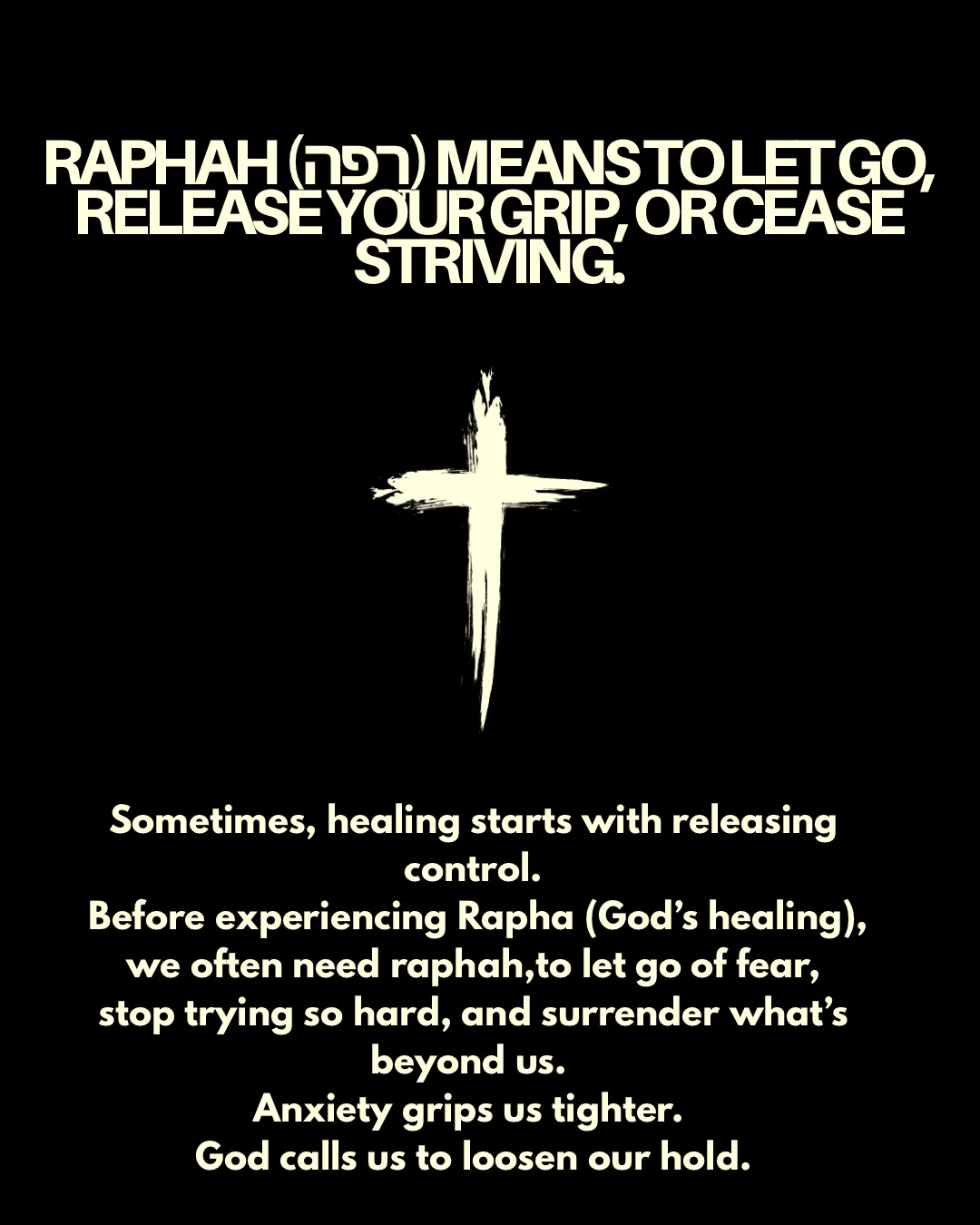 The Neuroscience of Letting Go | Renewing Your Mind Through Biblical Surrender 28.06.2026 41minEpisode 19, Season 1Show NotesWhy is letting go so difficult?If you’ve ever found yourself replaying painful memories, holding onto regret, struggling with control, or wondering why you keep returning to the same fears even after you’ve prayed about them, you’re not alone.In this episode of The Christian Mind Reset, we will examine how the biblical invitation to let go is brought into sharper focus by neuroscience and psychology, uncovering the ways God has intricately fashioned the mind to encounter freedom through the practice of surrender.We will consider how the brain encodes emotionally significant experiences, why uncertainty so often unsettles us, how cycles of rumination can entrap the mind, and how the reality of neuroplasticity echoes the biblical promise that our minds can be renewed.Yet long before neuroscience named these processes, Scripture was already inviting us to release burdens we were never created to bear in isolation.Together, we will trace the stories of Samuel, David, Paul, and ultimately Jesus, recognizing that biblical surrender is not denial or passivity, but a profound trust in the character of God—a trust that enables us to entrust what is heavy into His hands.We will also linger with Psalm 46, reflecting on what it means to hear God say, ‘Be still, and know that I am God,’ and how the Hebrew word raphah invites us to loosen our grip and cease striving.If you find yourself struggling to release the past, anxiety, grief, shame, fear, disappointment, control, or unanswered prayer, my hope is that this episode will remind you: the God who formed your mind is faithful to renew it.In This Episode• Why letting go is so difficult from a neuroscience perspective• Predictive processing and why the brain anticipates future threats• The roles of the amygdala, hippocampus, and prefrontal cortex• Emotional memory and why painful experiences are easier to remember• Memory reconsolidation and how healing changes our relationship to painful memories• Rumination, the default mode network, and repetitive thinking• Fear extinction, neuroplasticity, and renewing the mind• The psychology of control, grief, and uncertainty• Samuel mourning Saul (1 Samuel 16)• David’s response after the loss of his son (2 Samuel 12)• Paul’s encouragement to forget what lies behind (Philippians 3)• Psalm 46 and the biblical invitation to “Be still”• The Hebrew word raphah and the practice of releasing our grip• Jesus in Gethsemane as the ultimate picture of surrenderKey ScripturesPsalm 461 Samuel 16:12 Samuel 12:15–23Philippians 3:13–14Romans 12:21 Peter 5:7Matthew 11:28–30Luke 22:42Connect with Dr. April Joy:Connect with Dr. April Joy:Substack: The Christian Mind ResetIf you liked today’s episode, please subscribe, leave a review, follow, like, or share. You can find me on Instagram at @thechristianpsychnp and also on Instagram and Substack at The Christian Mind Reset for more Scripture, neuroscience, and practical tips for renewing your mind.Listen to The Christian Min Reset on Apple, Spotify, and Substack.My eBook, The Christian Mind Reset: A 28-Day Psalms Guide to Biblical Meditation, Neuroscience, and Renewing Your Mind, is available in my Stan Store at https://stan.store/thechristianpsychnp and on my Substack.ReferencesBar, M. (2009). The proactive brain: Memory for predictions. Philosophical Transactions of the Royal Society B: Biological Sciences, 364(1521), 1235–1243.Carleton, R. N. (2016). Fear of the unknown: One fear to rule them all? Journal of Anxiety Disorders, 41, 5–21.Friston, K. (2010). The free-energy principle: A unified brain theory? Nature Reviews Neuroscience, 11(2), 127–138.Fullana, M. A., Harrison, B. J., Soriano-Mas, C., et al. (2018). Neural signatures of human fear conditioning and fear extinction: A meta-analysis of fMRI studies. Biological Psychiatry, 84(8), 579–593.Hamilton, J. P., Farmer, M., Fogelman, P., & Gotlib, I. H. (2015). Depressive rumination, the default mode network, and the dark matter of clinical neuroscience. Biological Psychiatry, 78(4), 224–230.Kolb, B., & Gibb, R. (2011). Brain plasticity and behaviour in the developing brain. Journal of the Canadian Academy of Child and Adolescent Psychiatry, 20(4), 265–276.LeDoux, J. E. (2000). Emotion circuits in the brain. Annual Review of Neuroscience, 23, 155–184.McGaugh, J. L. (2004). The amygdala modulates the consolidation of memories of emotionally arousing experiences. Annual Review of Neuroscience, 27, 1–28.Nader, K., & Hardt, O. (2009). A single standard for memory: The case for reconsolidation. Nature Reviews Neuroscience, 10(3), 224–234.Pessoa, L. (2008). On the relationship between emotion and cognition. Nature Reviews Neuroscience, 9(2), 148–158.Phelps, E. A., Delgado, M. R., Nearing, K. I., & LeDoux, J. E. (2004). Extinction learning in humans: Role of the amygdala and vmPFC. Neuron, 43(6), 897–905.Thomas Nelson. (2017). The NKJV Study Bible (2nd ed.). Thomas Nelson.DisclaimerDisclaimer: This podcast/letter is for informational purposes only. It contains general information, drawn from my experience, research, and best practices. It is not health care advice, and is not intended to replace the counsel of your health care provider. Consult your provider before starting any new treatments or making changes to your health routine. This message does not constitute a provider-patient relationship between us.If you are experiencing significant anxiety, distress, or need support, please seek care from a qualified healthcare professional. You may also consider reaching out to a licensed Christian counselor or pastor for additional support.Emails, portal messages, text messages, and other communications are not monitored and will not receive a response in an emergency or crisis, or regarding medical or therapy advice. These methods should never be used for medical advice, therapy, urgent, crisis, emergent, or time-sensitive concerns. If you are experiencing a medical or psychiatric emergency, are in crisis, having thoughts of harming yourself or others, or feel unsafe, call 911 (US), or contact your local emergency services, or go to the nearest emergency room or hospital immediately. This is a public episode. If you would like to discuss this with other subscribers or get access to bonus episodes, visit thechristianmindreset.substack.com
 -
 Why Loneliness Hurts: The Neuroscience of Social Connection and What the Bible Says About Being Alone 24.06.2026 18minEisode 18, Season 1Show NotesLoneliness is more than an emotion. It affects the brain, the body, and the way we experience the world.In today’s episode of The Christian Mind Reset, Dr. April Joy explores the neuroscience, psychology, and biblical perspective on loneliness. You’ll learn why social rejection activates some of the same brain regions involved in physical pain, how chronic loneliness impacts stress hormones and overall health, and why God designed human beings for connection.Dr. Joy will discuss research on loneliness from neuroscientists such as Naomi Eisenberger and John Cacioppo, explore the surprising health benefits of strong relationships, and examine what Scripture teaches about friendship, community, and God’s presence during lonely seasons. We’ll look at Genesis 2:18, Psalm 27, Psalm 34, David and Jonathan’s friendship, and the role of the church in helping us move from isolation toward connection.Whether you’re walking through a season of loneliness, grieving a relationship, struggling to find community, or simply wanting to understand God’s design for human connection, this episode offers hope, practical encouragement, and biblical truth.In This Episode* What loneliness does to the brain* Why social rejection can feel physically painful* The role of the dorsal anterior cingulate cortex (dACC)* John Cacioppo’s research on chronic loneliness* Cortisol, inflammation, and the stress response* Loneliness in Gen Z and older adults* Why healthy relationships improve mental and physical health* Genesis 2:18 and God’s design for community* David and Jonathan’s friendship* The importance of church community and belonging* How God remains present when we feel alone* Practical steps toward building healthy relationshipsKey Scriptures* Genesis 2:18* Ecclesiastes 4:9-12* Proverbs 18:24* Proverbs 27:17* Psalm 27:10* Psalm 34:18* Hebrews 10:24-25* 1 Thessalonians 5:11* Matthew 28:20* Hebrews 13:5Key Takeaways* Loneliness is both a psychological and biological experience.* The brain processes social pain using some of the same neural networks involved in physical pain.* Chronic loneliness can increase stress, inflammation, and emotional distress.* Strong relationships are associated with better emotional health, resilience, and longevity.* God created human beings for connection and community.* Friendship is one of God’s gifts for encouragement, support, and growth.* Even when human relationships are absent, God’s presence is not.* Healing from loneliness often begins with one small step toward connection.Practical ChallengeThis week:* Spend time meditating on Psalm 27:10.* Reach out to one person through a text, phone call, or invitation.* Pray specifically for godly friendships and community.* Move beyond attending church and toward belonging by joining a group, volunteering, or introducing yourself to someone new.Connect with Dr. April Joy:Connect with Dr. April Joy:Substack: The Christian Mind ResetIf you liked today’s episode, please subscribe, leave a review, follow, like, or share. You can find me on Instagram at @thechristianpsychnp and also on Instagram and Substack at The Christian Mind Reset for more Scripture, neuroscience, and practical tips for renewing your mind.My eBook, The Christian Mind Reset: A 28-Day Psalms Guide to Biblical Meditation, Neuroscience, and Renewing Your Mind, is available in my Stan Store at https://stan.store/thechristianpsychnpReferencesBaek, E. C., Hyon, R., López, K., Du, M., Porter, M. A., & Parkinson, C. (2021). Lonely individuals process the world in idiosyncratic ways. Nature Communications, 12, 639.Cacioppo, J. T., & Cacioppo, S. (2018). The growing problem of loneliness. The Lancet, 391(10119), 426.Cigna. (2020). Loneliness and the workplace: 2020 U.S. report.Dunn, R. S. (2025). When you don’t have the words: Praying the Psalms. Lexham Press.Eisenberger, N. I., Lieberman, M. D., & Williams, K. D. (2003). Does rejection hurt? An fMRI study of social exclusion. Science, 302(5643), 290–292.Holt-Lunstad, J., Smith, T. B., & Layton, J. B. (2010). Social relationships and mortality risk: A meta-analytic review. PLoS Medicine, 7(7), e1000316.Koenig, H. G. (2012). Religion, spirituality, and health: The research and clinical implications. ISRN Psychiatry, 2012, 278730.National Institute on Aging. (2024). Loneliness and social isolation — tips for staying connected.Rote, S., & Hill, T. D. (2014). Religious attendance and loneliness in later life. The Gerontologist, 54(1), 39–50.Thomas Nelson. (2017). The NKJV Study Bible (2nd ed.). Thomas Nelson.Disclaimer: Disclaimer: This podcast/letter is for informational purposes only. It contains general information, drawn from my experience, research, and best practices. It is not health care advice, and is not intended to replace the counsel of your health care provider. Consult your provider before starting any new treatments or making changes to your health routine. This message does not constitute a provider-patient relationship between us.If you are experiencing significant anxiety, distress, or need support, please seek care from a qualified healthcare professional. You may also consider reaching out to a licensed Christian counselor or pastor for additional support.Emails, portal messages, text messages, and other communications are not monitored and will not receive a response in an emergency or crisis, or regarding medical or therapy advice. These methods should never be used for medical advice, therapy, urgent, crisis, emergent, or time-sensitive concerns. If you are experiencing a medical or psychiatric emergency, are in crisis, having thoughts of harming yourself or others, or feel unsafe, call 911 (US), or contact your local emergency services, or go to the nearest emergency room or hospital immediately. This is a public episode. If you would like to discuss this with other subscribers or get access to bonus episodes, visit thechristianmindreset.substack.com
 -
 Anger, Neuroscience, and Biblical Truth: What the Bible Really Says About Anger 23.06.2026 21minEpisode 17, Season 1Show NotesAnger, Neuroscience, and Biblical Truth: What the Bible Really Says About AngerIs anger always sinful?Many Christians have been taught that anger is something to avoid, suppress, or feel guilty about. Yet Scripture tells a different story. Ephesians 4:26 says, “Be angry, and do not sin.” Even Jesus experienced anger without sinning, and God repeatedly invites His people to bring their emotions honestly before Him.In today’s episode of The Christian Mind Reset, Dr. April Joy explores anger through the lenses of neuroscience, psychology, Scripture, and theology. You’ll learn why anger is often a protective emotion, what happens in the brain during experiences of injustice and unfairness, and how neuroscience confirms the biblical distinction between feeling anger and acting on it.We’ll examine the fascinating research of Klimecki and colleagues on anger and emotional regulation, look at Jesus’ righteous anger in Mark 3, explore Jonah’s struggle with anger and disappointment, and reflect on David’s wisdom in Psalm 37.If you’ve ever struggled with resentment, bitterness, frustration, or guilt about being angry, this episode will help you understand how God designed emotions and how to process anger in a healthy, biblical way.In This Episode* What anger actually is from a neuroscience perspective* The difference between anger and aggression* Why suppressing anger often makes it worse* The role of the prefrontal cortex in emotional regulation* Jesus’ example of righteous anger* Jonah’s anger toward God’s mercy* Psalm 37 and trusting God with justice* Practical steps for processing anger biblically* Scripture declarations for emotional healingKey Scriptures* Psalm 4:4* Psalm 7:11* Psalm 37:8* Mark 3:5* Jonah 4:4* Ephesians 4:26-27* James 1:19-20* Romans 12:19* Hebrews 12:15* 2 Timothy 1:7Connect with Dr. April Joy:Connect with Dr. April Joy:Substack: The Christian Mind ResetIf you liked today’s episode, please subscribe, leave a review, follow, like, or share. You can find me on Instagram at @thechristianpsychnp and also on Instagram and Substack at The Christian Mind Reset for more Scripture, neuroscience, and practical tips for renewing your mind.My eBook, The Christian Mind Reset: A 28-Day Psalms Guide to Biblical Meditation, Neuroscience, and Renewing Your Mind, is available in my Stan Store at https://stan.store/thechristianpsychnpReferencesDenson, T. F., Pedersen, W. C., Ronquillo, J., & Nandy, A. S. (2009). The angry brain: Neural correlates of anger, angry rumination, and aggressive personality. Journal of Cognitive Neuroscience, 21(4), 734–744. https://doi.org/10.1162/jocn.2009.21051Dunn, R. S. (2025). When you don’t have the words: Praying the Psalms. Lexham Press.Klimecki, O. M., Sander, D., & Vuilleumier, P. (2018). Distinct brain areas involved in anger versus punishment during social interactions. Scientific Reports, 8(1), 10556. https://doi.org/10.1038/s41598-018-28863-3Shimbo, D., et al. (2024). The effects of negative emotions on vascular function. Journal of the American Heart AssociationThomas Nelson. (2017). The NKJV study Bible (2nd ed.). Thomas NelsonDisclaimer: This podcast/letter is for informational purposes only. It contains general information, drawn from my experience, research, and best practices. It is not health care advice, and is not intended to replace the counsel of your health care provider. Consult your provider before starting any new treatments or making changes to your health routine. This message does not constitute a provider-patient relationship between us.If you are experiencing significant anxiety, distress, or need support, please seek care from a qualified healthcare professional. You may also consider reaching out to a licensed Christian counselor or pastor for additional support.Emails, portal messages, text messages, and other communications are not monitored and will not receive a response in an emergency or crisis, or regarding medical or therapy advice. These methods should never be used for medical advice, therapy, urgent, crisis, emergent, or time-sensitive concerns. If you are experiencing a medical or psychiatric emergency, are in crisis, having thoughts of harming yourself or others, or feel unsafe, call 911 (US), or contact your local emergency services, or go to the nearest emergency room or hospital immediately. This is a public episode. If you would like to discuss this with other subscribers or get access to bonus episodes, visit thechristianmindreset.substack.com
 -
 Comparison, Contentment, and Keeping Your Eyes on God | Neuroscience, Psychology, and Psalm 73 22.06.2026 24minEpisode 16, Season 1Show NotesWhy does comparison steal our peace so quickly?In today’s episode of The Christian Mind Reset, we explore the psychology, neuroscience, and biblical perspective on comparison, envy, contentment, and keeping our eyes on God.Using Psalm 73 as our anchor passage, we walk through Asaph’s honest struggle with comparison and discover how looking at everyone else’s life distorted his perspective. Long before psychologists studied social comparison, Scripture described what happens when we measure our lives against others.We’ll discuss Social Comparison Theory, the impact of social media on mental health, what neuroscience reveals about the brain’s reward system and social comparison, and why gratitude and worship help restore perspective.We’ll also look at Peter's comparison of himself to John, Paul’s teaching on examining our own work, and the invitation to run our own race with endurance.If you’ve ever felt behind, overlooked, discouraged, or tempted to compare your life to someone else’s, this episode is for you.In This Episode• Psalm 73 and the psychology of comparison• Why comparison often leads to discouragement and envy• Leon Festinger’s Social Comparison Theory• Social media, comparison, and mental health• The neuroscience of comparison and the brain’s reward system• Why the brain naturally notices what appears missing• Peter, John, and Jesus’ response to comparison• The vineyard workers and comparison-driven resentment• Contentment as a learned skill• Gratitude as an antidote to comparison• The Comparison Audit exercise• Daily declarations and prayerKey ScripturesPsalm 73:3Psalm 73:17Psalm 73:25–26Psalm 16:6John 21:20–22Galatians 6:4–5Hebrews 12:1–22 Corinthians 10:12Ecclesiastes 4:4Philippians 1:6Philippians 4:11Matthew 20:1–16Key TakeawaysComparison distorts perspective.Worship restores perspective.Nothing changed about Asaph’s circumstances. Nothing changed about God’s faithfulness. What changed was where Asaph fixed his attention.Comparison asks, “Why them?”Faith asks, “Lord, what have You entrusted to me?”Comparison focuses on what is missing.Gratitude helps us remember what God has already provided.Connect with Dr. April Joy:Connect with Dr. April Joy:Substack: The Christian Mind ResetIf you liked today’s episode, please subscribe, leave a review, follow, like, or share. You can find me on Instagram at @thechristianpsychnp and also on Instagram and Substack at The Christian Mind Reset for more Scripture, neuroscience, and practical tips for renewing your mind.My eBook, The Christian Mind Reset: A 28-Day Psalms Guide to Biblical Meditation, Neuroscience, and Renewing Your Mind, is available in my Stan Store at https://stan.store/thechristianpsychnpResourcesThe Christian Mind Reset PodcastThe 28-Day Christian Mind Reset GuideSubstack Articles on Neuroscience, Psychology, and Biblical MeditationReferencesEmmons, R. A., & McCullough, M. E. (2003). Counting blessings versus burdens: An experimental investigation of gratitude and subjective well-being in daily life. Journal of Personality and Social Psychology, 84(2), 377–389. https://doi.org/10.1037/0022-3514.84.2.377Festinger, L. (1954). A theory of social comparison processes. Human Relations, 7(2), 117–140.Fliessbach, K., Weber, B., Trautner, P., Dohmen, T., Sunde, U., Elger, C. E., & Falk, A. (2007). Social comparison affects reward-related brain activity in the human ventral striatum. Science, 318(5854), 1305–1308.Hunt, M. G., Marx, R., Lipson, C., & Young, J. (2018). No more FOMO: Limiting social media decreases loneliness and depression. Journal of Social and Clinical Psychology, 37(10), 751–768.Krasnova, H., Wenninger, H., Widjaja, T., & Buxmann, P. (2013). Envy on Facebook: A hidden threat to users’ life satisfaction. Proceedings of the International Conference on Information Systems.Takahashi, H., Kato, M., Matsuura, M., Mobbs, D., Suhara, T., & Okubo, Y. (2009). When your gain is my pain and your pain is my gain: Neural correlates of envy and schadenfreude. Science, 323(5916), 937–939.Wood, A. M., Froh, J. J., & Geraghty, A. W. A. (2010). Gratitude and well-being: A review and theoretical integration. Clinical Psychology Review, 30(7), 890–905. https://doi.org/10.1016/j.cpr.2010.03.005Thanks for reading The Christian Mind Reset's Substack! Subscribe for free to receive new posts and podcasts, and support my work.DisclaimerDisclaimer: This podcast/letter is for informational purposes only. It contains general information, drawn from my experience, research, and best practices. It is not health care advice, and is not intended to replace the counsel of your health care provider. Consult your provider before starting any new treatments or making changes to your health routine. This message does not constitute a provider-patient relationship between us.If you are experiencing significant anxiety, distress, or need support, please seek care from a qualified healthcare professional. You may also consider reaching out to a licensed Christian counselor or pastor for additional support.Emails, portal messages, text messages, and other communications are not monitored and will not receive a response in an emergency or crisis, or regarding medical or therapy advice. These methods should never be used for medical advice, therapy, urgent, crisis, emergent, or time-sensitive concerns. If you are experiencing a medical or psychiatric emergency, are in crisis, having thoughts of harming yourself or others, or feel unsafe, call 911 (US), or contact your local emergency services, or go to the nearest emergency room or hospital immediately. This is a public episode. If you would like to discuss this with other subscribers or get access to bonus episodes, visit thechristianmindreset.substack.com
 -
 Perfectionism, Anxiety, and God's Grace | Neuroscience, Psychology, Bible, and The Anxious Generation 19.06.2026 25minEpisode 15, Season 1Show NotesWhy does perfectionism leave so many of us feeling exhausted, anxious, and never quite good enough?In today’s episode of The Christian Mind Reset, Dr. April Joy explores the psychology, neuroscience, and biblical perspective on perfectionism. We discuss how perfectionism differs from healthy striving, why it is often rooted in fear rather than excellence, and how perfectionistic thinking can contribute to anxiety, procrastination, burnout, and chronic self-criticism.Drawing from research by Thomas Curran, Paul Hewitt, Gordon Flett, Kristin Neff, and others, we examine why perfectionism has increased dramatically in recent decades and why many young adults report greater pressure than ever before to perform, achieve, and avoid mistakes. We also explore how perfectionism affects the brain, activating stress responses that can make mistakes feel like threats rather than opportunities for growth.From a biblical perspective, we look at the story of Martha in Luke 10 and discover how Jesus responded not with condemnation, but with compassion. We also spend time in Psalm 103, reflecting on the comforting truth that God knows our frame and remembers that we are dust.If you have ever struggled with feeling like you must earn your worth, prove yourself, or get everything right before you can rest, this episode is for you.In This Episode• The difference between healthy striving and unhealthy perfectionism• Why perfectionism is often driven by fear of failure, criticism, and rejection• The neuroscience of perfectionism, stress, and threat perception• Why perfectionism and procrastination often go together• What recent research says about the rise of perfectionism in young adults• The connection between perfectionism, anxiety, depression, and burnout• Martha, Mary, and the pressure to perform• Self-compassion through a Christian lens• Psalm 103 and God’s compassion for our humanity• Practical strategies for overcoming perfectionism• Guided declarations and prayerKey ScripturesLuke 10:41–42Psalm 103:13–14Romans 3:23Philippians 1:6Romans 15:7Colossians 3:23Matthew 11:28–30Hebrews 12:2Connect with Dr. April Joy:Connect with Dr. April Joy:Substack: The Christian Mind ResetIf you liked today’s episode, please subscribe, leave a review, follow, like, or share. You can find me on Instagram at @thechristianpsychnp and also on Instagram and Substack at The Christian Mind Reset for more Scripture, neuroscience, and practical tips for renewing your mind.My eBook, The Christian Mind Reset: A 28-Day Psalms Guide to Biblical Meditation, Neuroscience, and Renewing Your Mind, is available in my Stan Store at https://stan.store/thechristianpsychnpDisclaimerDisclaimer: This podcast/letter is for informational purposes only. It contains general information, drawn from my experience, research, and best practices. It is not health care advice, and is not intended to replace the counsel of your health care provider. Consult your provider before starting any new treatments or making changes to your health routine. This message does not constitute a provider-patient relationship between us.If you are experiencing significant anxiety, distress, or need support, please seek care from a qualified healthcare professional. You may also consider reaching out to a licensed Christian counselor or pastor for additional support.Emails, portal messages, text messages, and other communications are not monitored and will not receive a response in an emergency or crisis, or regarding medical or therapy advice. These methods should never be used for medical advice, therapy, urgent, crisis, emergent, or time-sensitive concerns. If you are experiencing a medical or psychiatric emergency, are in crisis, having thoughts of harming yourself or others, or feel unsafe, call 911 (US), or contact your local emergency services, or go to the nearest emergency room or hospital immediately.ReferencesBenedetto, L., et al. (2024). Well-Being and Perfectionism: Assessing the Mediational Role of Self-Compassion in Emerging Adults.Curran, T., Pose, P. M., & Hill, A. P. (2026). Perfectionism is accelerating over time: A cross-temporal meta-analytic review of 35 years of college student data. Psychological Bulletin.Egan, S. J., Wade, T. D., & Shafran, R. (2014). Perfectionism as a transdiagnostic process: A clinical review.Galloway, R., et al. (2022). Meta-analysis of CBT interventions for perfectionism. Discussed in recent reviews showing CBT reduces perfectionism, anxiety, and depression symptoms.Haidt, J. (2024). The Anxious Generation The anxious generation: How the great rewiring of childhood is causing an epidemic of mental illness. Penguin Press.Hewitt, P. L., & Flett, G. L. (1991). Perfectionism in the self and social contexts: Conceptualization, assessment, and association with psychopathology. Journal of Personality and Social Psychology, 60(3), 456–470.Neff, K. D. (2003). Self-compassion: An alternative conceptualization of a healthy attitude toward oneself. Self and Identity, 2(2), 85–101.Limburg, K., Watson, H. J., Hagger, M. S., & Egan, S. J. (2017). The relationship between perfectionism and psychopathology: A meta-analysis. Journal of Clinical Psychology, 73(10), 1301–1326. https://doi.org/10.1002/jclp.22435Smith, M. M., Sherry, S. B., Saklofske, D. H., Mushquash, A. R., & Flett, G. L. (2017). Clarifying the perfectionism–procrastination relationship: A meta-analysis. Journal of Research in Personality, 70, 57–70. https://doi.org/10.1016/j.jrp.2017.04.002 This is a public episode. If you would like to discuss this with other subscribers or get access to bonus episodes, visit thechristianmindreset.substack.com
 -
 Control, Fear, and Faith | The Neuroscience of Worry, Anxiety, and Trusting God 19.06.2026 17minEpisode 14, Season 1SHOW NOTESWhy is it so hard to let go?Why do we replay conversations, overthink decisions, strive for perfection, try to keep everyone happy, worry about tomorrow, and attempt to manage outcomes that haven’t even happened yet?In today’s episode of The Christian Mind Reset, Dr. April Joy explores the connection between fear, control, anxiety, perfectionism, people-pleasing, neuroscience, psychology, and biblical faith.Many of us believe that if we can just plan enough, prepare enough, perform well enough, keep everyone happy enough, analyze enough, or worry enough, we will finally feel safe. Yet neuroscience shows that the brain often seeks control to reduce uncertainty and calm fear. Unfortunately, control rarely produces lasting peace.In this episode, you’ll learn about the psychology of control, the neuroscience of uncertainty, and the fascinating concept known as the illusion of control—a cognitive bias first described by psychologist Ellen Langer that explains why humans often overestimate their ability to influence outcomes that are actually beyond their control.We’ll also explore what Scripture says about surrender, trust, and faith through the story of Sarah, the wisdom of the Psalms, and Jesus’ powerful teaching:“Therefore do not worry about tomorrow, for tomorrow will worry about its own things” (Matthew 6:34).Together we’ll discuss:• The connection between fear, anxiety, and control• How perfectionism and people-pleasing can be attempts to create safety• The neuroscience of uncertainty and the brain’s need for predictability• The amygdala, fear, and threat detection• The neuroscience of worry, rumination, and overthinking• The Illusion of Control (Ellen Langer, 1975)• Why control often feels safer than trust• Sarah’s struggle with God’s timing• Psalm 131 and the quieted soul• Psalm 46:10 and the biblical invitation to let go• The difference between preparation and worry• How faith differs from certainty• Practical declarations for renewing your mind• A guided Christian breath prayer for surrenderWhether you struggle with anxiety, overthinking, perfectionism, people-pleasing, fear of the future, uncertainty, intrusive thoughts, worry, trust issues, or difficulty surrendering control to God, this episode will encourage you to shift your focus from controlling outcomes to trusting the God who holds them.Key ScripturesPsalm 46:10Psalm 55:22Psalm 131:1–3Proverbs 3:5–6Isaiah 26:3Matthew 6:25–34Matthew 11:28–301 Peter 5:7Romans 8:282 Timothy 1:7ResourcesThe 28-Day Christian Mind Reset Guide: A Psalms-Based Journey Through Biblical Meditation, Neuroscience, and Renewing Your MindThe Christian Mind Reset PodcastSubstack articles on neuroscience, psychology, neuroplasticity, biblical meditation, anxiety, fear, perfectionism, people-pleasing, and renewing the mindFollow Dr. April Joy for Christian mental health education, neuroscience insights, and biblical encouragement.Connect with Dr. April Joy:Connect with Dr. April Joy:Substack: The Christian Mind ResetIf you liked today’s episode, please subscribe, leave a review, follow, like, or share. You can find me on Instagram at @thechristianpsychnp and also on Instagram and Substack at The Christian Mind Reset for more Scripture, neuroscience, and practical tips for renewing your mind.My eBook, The Christian Mind Reset: A 28-Day Psalms Guide to Biblical Meditation, Neuroscience, and Renewing Your Mind, is available in my Stan Store at https://stan.store/thechristianpsychnpDisclaimerDisclaimer: This podcast/letter is for informational purposes only. It contains general information, drawn from my experience, research, and best practices. It is not health care advice, and is not intended to replace the counsel of your health care provider. Consult your provider before starting any new treatments or making changes to your health routine. This message does not constitute a provider-patient relationship between us.If you are experiencing significant anxiety, distress, or need support, please seek care from a qualified healthcare professional. You may also consider reaching out to a licensed Christian counselor or pastor for additional support.Emails, portal messages, text messages, and other communications are not monitored and will not receive a response in an emergency or crisis, or regarding medical or therapy advice. These methods should never be used for medical advice, therapy, urgent, crisis, emergent, or time-sensitive concerns. If you are experiencing a medical or psychiatric emergency, are in crisis, having thoughts of harming yourself or others, or feel unsafe, call 911 (US), or contact your local emergency services, or go to the nearest emergency room or hospital immediately.ReferencesLanger, E. J. (1975). The illusion of control. Journal of Personality and Social Psychology, 32(2), 311–328. https://doi.org/10.1037/0022-3514.32.2.311Thomas Nelson. (1982). The Holy Bible, New King James Version. Thomas Nelson. This is a public episode. If you would like to discuss this with other subscribers or get access to bonus episodes, visit thechristianmindreset.substack.com
 -
 Intrusive Thoughts, Taking Thoughts Captive, and the Neuroscience of Renewing the Mind 18.06.2026 23minSHOW NOTESHave you ever had a thought enter your mind that felt disturbing, unwanted, or completely inconsistent with who you are?Many Christians experience intrusive thoughts and immediately feel fear, guilt, or shame. They wonder if the thought means something about their character, their faith, or their relationship with God.But what if the presence of a thought is not the same thing as agreement with a thought?In today’s episode of The Christian Mind Reset, Dr. April Joy explores intrusive thoughts through the lens of Scripture, neuroscience, and psychology. You’ll learn what intrusive thoughts are, why they occur, what happens in the brain when unwanted thoughts become “sticky,” and how biblical principles align with what we know about attention, thought patterns, and neuroplasticity.We’ll discuss the neuroscience behind intrusive thoughts, including the role of the amygdala (the brain’s alarm system), the hippocampus (memory processing), and the prefrontal cortex (reasoning and decision-making). We’ll also examine Daniel Wegner’s famous “White Bear” studies and why trying to force thoughts away often makes them more noticeable.Most importantly, we’ll explore what Scripture teaches about taking thoughts captive, renewing the mind, and finding freedom from shame.Today’s episode reminds us that we are not defined by every thought that enters our minds. Our identity is found in Christ.In This Episode• What intrusive thoughts are and why they are often misunderstood• The difference between a thought, a temptation, and an action• The neuroscience of intrusive thoughts explained in simple language• Daniel Wegner’s thought suppression research and the “White Bear” experiments• Why fighting a thought can sometimes make it feel stronger• Psalm 139 and the comfort of being fully known by God• What 2 Corinthians 10:5 means when it says to “take every thought captive”• Neuroplasticity and how repeated focus shapes the brain• Practical ways to respond to unwanted thoughts• Biblical truths for overcoming shame and fearKey ScripturesPsalm 139:1-3Psalm 139:23-24Philippians 4:82 Corinthians 10:5Romans 8:1Romans 8:62 Timothy 1:71 Peter 5:7Hebrews 4:15Key TakeawayThe thought that arrives is not your identity.Not every thought deserves your attention, agreement, or fear. Scripture teaches us to examine our thoughts, compare them against truth, and redirect our minds toward what is good, true, and praiseworthy. Through God’s Word, the renewing work of the Holy Spirit, and intentional focus, we can learn to respond to unwanted thoughts with wisdom rather than shame.Connect with Dr. April Joy:Connect with Dr. April Joy:Substack: The Christian Mind ResetIf you liked today’s episode, please subscribe, leave a review, follow, like, or share. You can find me on Instagram at @thechristianpsychnp and also on Instagram and Substack at The Christian Mind Reset for more Scripture, neuroscience, and practical tips for renewing your mind.My eBook, The Christian Mind Reset: A 28-Day Psalms Guide to Biblical Meditation, Neuroscience, and Renewing Your Mind, is available in my Stan Store at https://stan.store/thechristianpsychnpDisclaimerDisclaimer: This podcast/letter is for informational purposes only. It contains general information, drawn from my experience, research, and best practices. It is not health care advice, and is not intended to replace the counsel of your health care provider. Consult your provider before starting any new treatments or making changes to your health routine. This message does not constitute a provider-patient relationship between us.If you are experiencing significant anxiety, distress, or need support, please seek care from a qualified healthcare professional. You may also consider reaching out to a licensed Christian counselor or pastor for additional support.Emails, portal messages, text messages, and other communications are not monitored and will not receive a response in an emergency or crisis, or regarding medical or therapy advice. These methods should never be used for medical advice, therapy, urgent, crisis, emergent, or time-sensitive concerns. If you are experiencing a medical or psychiatric emergency, are in crisis, having thoughts of harming yourself or others, or feel unsafe, call 911 (US), or contact your local emergency services, or go to the nearest emergency room or hospital immediately.ReferencesAnderson, M. C., & Green, C. (2001). Suppressing unwanted memories by executive control. Nature, 410(6826), 366–369.Harvard Health Publishing. (2024). Managing intrusive thoughts. Harvard Medical School.Norman, L. J., Taylor, S. F., Liu, Y., Radua, J., Chye, Y., & de Wit, S. J. (2019). Error processing and inhibitory control in obsessive-compulsive disorder: A meta-analysis. Biological Psychiatry, 85(9), 713–725.Thomas Nelson. (1982). The Holy Bible, New King James Version. Thomas Nelson.Wegner, D. M., Schneider, D. J., Carter, S. R., & White, T. L. (1987). Paradoxical effects of thought suppression. Journal of Personality and Social Psychology, 53(1), 5–13. This is a public episode. If you would like to discuss this with other subscribers or get access to bonus episodes, visit thechristianmindreset.substack.com
 -
 Identity in Christ, Limiting Beliefs, and Renewing Your Mind | The Christian Mind Reset 17.06.2026 19minEpisode 12, Season 1SHOW NOTESHave you ever felt like God is disappointed in you?Have you ever confessed a sin, asked for forgiveness, and yet still found yourself replaying the same mistake over and over again?Many Christians know they are forgiven in their heads, but continue to live as though they are condemned in their hearts.In today’s episode of The Christian Mind Reset, Dr. April Joy explores the difference between conviction and condemnation through the lenses of Scripture, psychology, and neuroscience.We’ll discuss how shame can become part of our identity, why the brain tends to rehearse painful memories and failures, and how condemnation often keeps us hiding from the very God who invites us to come near. We’ll also explore what research teaches us about self-condemning beliefs and how repeatedly identifying ourselves by our failures can shape the way we see ourselves.Most importantly, we’ll look at what God’s Word says.Through David’s prayer of repentance in Psalm 51, we’ll discover that God’s response to a repentant heart is not rejection but restoration. We’ll examine Paul’s journey from persecutor to apostle and the life-changing truth found in Romans 8:1:“There is therefore now no condemnation for those who are in Christ Jesus.”If you’ve been carrying guilt, shame, regret, or the feeling that you have somehow gone too far for God’s grace, this episode is for you.Your failure is not your identity.Your shame is not your identity.Your diagnosis is not your identity.Your past is not your identity.If you belong to Christ, your identity is found in Him.Join us as we learn how to release condemnation, receive God’s grace, and renew our minds with what He says is true.In This Episode• The difference between conviction and condemnation• Why shame often becomes an identity instead of an emotion• What neuroscience teaches about self-beliefs and rumination• David’s response to failure in Psalm 51• Paul’s transformation from persecutor to apostle• How to stop defining yourself by your past• Practical ways to renew your mind with God’s truthKey ScripturesPsalm 51Romans 8:1John 3:16–17Romans 5:81 John 1:9Psalm 103:122 Corinthians 5:211 Corinthians 6:11Philippians 3:13–14Revelation 12:10ResourcesIf you’re following along with The Christian Mind Reset series, my companion eBook, The Christian Mind Reset: A 28-Day Psalm Guide to Biblical Meditation, Neuroscience, and Renewing Your Mind, is available in my Stan Store. The guide includes daily Scripture readings, reflections, journaling prompts, practical exercises, neuroscience insights, and biblical meditation tools designed to help you renew your mind through God’s Word.Connect with Dr. April Joy:Connect with Dr. April Joy:Substack: The Christian Mind ResetIf you liked today’s episode, please subscribe, leave a review, follow, like, or share. You can find me on Instagram at @thechristianpsychnp and also on Instagram and Substack at The Christian Mind Reset for more Scripture, neuroscience, and practical tips for renewing your mind.My eBook, The Christian Mind Reset: A 28-Day Psalms Guide to Biblical Meditation, Neuroscience, and Renewing Your Mind, is available in my Stan Store at https://stan.store/thechristianpsychnpDisclaimerDisclaimer: This podcast/letter is for informational purposes only. It contains general information, drawn from my experience, research, and best practices. It is not health care advice, and is not intended to replace the counsel of your health care provider. Consult your provider before starting any new treatments or making changes to your health routine. This message does not constitute a doctor-patient relationship between us.If you are experiencing significant anxiety, distress, or need support, please seek care from a qualified healthcare professional. You may also consider reaching out to a licensed Christian counselor or pastor for additional support.If you are in crisis, having thoughts of harming yourself or others, or feel unsafe, please call 911 or go to your nearest emergency room immediately.ReferencesBeck, A. T. (1976). Cognitive therapy and the emotional disorders. International Universities Press.Gilbert, P. (2005). Compassion: Conceptualisations, research and use in psychotherapy. Routledge.Kross, E., & Ayduk, O. (2011). Making meaning out of negative experiences by self-distancing. Current Directions in Psychological Science, 20(3), 187–191.Longe, O., Maratos, F. A., Gilbert, P., Evans, G., Volker, F., Rockliff, H., & Rippon, G. (2010). Having a word with yourself: Neural correlates of self-criticism and self-reassurance. NeuroImage, 49(2), 1849–1856.Pennebaker, J. W., & Beall, S. K. (1986). Confronting a traumatic event: Toward an understanding of inhibition and disease. Journal of Abnormal Psychology, 95(3), 274–281.\Tangney, J. P., & Dearing, R. L. (2002). Shame and guilt. Guilford Press.Thomas Nelson. (2022). The Holy Bible, New King James Version (NKJV). Thomas Nelson. (Original work published 1982). This is a public episode. If you would like to discuss this with other subscribers or get access to bonus episodes, visit thechristianmindreset.substack.com
 -
 Worthiness, Mattering, and the Love of God | Psychology and the Bible 16.06.2026 18minEpisode 11, Season 1SHOW NOTESHave you ever wondered, “Do I matter?”It is a simple question, but for many people, it sits beneath years of striving, perfectionism, people-pleasing, comparison, and exhaustion.In today’s Daily Reset, Dr. April Joy explores the psychology of mattering, the fundamental human need to feel valued, significant, and loved, and how Scripture answers the question many of us are afraid to ask out loud.Drawing from Psalm 8, Romans 5, Ephesians 2, and the lives of Gideon, Moses, the Samaritan woman, the leper, and the Apostle Paul, we’ll discuss why so many people tie their worth to performance, productivity, approval, and achievement, and why God’s definition of worth is radically different.You’ll learn about the psychology of mattering and anti-mattering, why feelings of unworthiness can leave us trapped in cycles of striving and self-doubt, and how God’s Word provides a foundation that is far more secure than success, appearance, accomplishments, or the opinions of others.Most importantly, we’ll explore how the cross completely changes the way we define our value. The Gospel is not the story of worthy people finding God. It is the story of a gracious God pursuing people who could never earn His love on their own.If you’ve ever struggled with feeling not good enough, unseen, forgotten, or as though you have to continually prove your value, this episode is for you.In This EpisodeThe hidden question beneath perfectionism, people-pleasing, and comparison.The psychology of mattering and anti-mattering.Why do so many people base their worth on performance?What Psalm 8 teaches about human dignity and value.How the cross answers the question, “Do I matter?”Biblical declarations to help renew your mind with God’s truth.A practical exercise to help anchor your identity in Christ.Key ScripturesPsalm 8Romans 5:8Ephesians 2:8–9Ephesians 2:13John 1:12Psalm 139:13–14Galatians 3:26Jeremiah 31:3Reflection QuestionWhat would change in your life if you truly believed that your worth was settled in Christ and not dependent on your performance?ResourcesIf you’re following along with The Christian Mind Reset series, my companion eBook, The Christian Mind Reset: A 28-Day Psalm Guide to Biblical Meditation, Neuroscience, and Renewing Your Mind, is available in my Stan Store. The guide includes daily Scripture readings, reflections, journaling prompts, practical exercises, neuroscience insights, and biblical meditation tools designed to help you renew your mind through God’s Word.Connect with Dr. April Joy:Connect with Dr. April Joy:Substack: The Christian Mind ResetIf you liked today’s episode, please subscribe, leave a review, follow, like, or share. You can find me on Instagram at @thechristianpsychnp and also on Instagram and Substack at The Christian Mind Reset for more Scripture, neuroscience, and practical tips for renewing your mind.My eBook, The Christian Mind Reset: A 28-Day Psalms Guide to Biblical Meditation, Neuroscience, and Renewing Your Mind, is available in my Stan Store at https://stan.store/thechristianpsychnpDisclaimerDisclaimer: This podcast/letter is for informational purposes only. It contains general information, drawn from my experience, research, and best practices. It is not health care advice, and is not intended to replace the counsel of your health care provider. Consult your provider before starting any new treatments or making changes to your health routine. This message does not constitute a doctor-patient relationship between us.If you are experiencing significant anxiety, distress, or need support, please seek care from a qualified healthcare professional. You may also consider reaching out to a licensed Christian counselor or pastor for additional support.If you are in crisis, having thoughts of harming yourself or others, or feel unsafe, please call 911 or go to your nearest emergency room immediately.ReferencesFlett, G. L. (2022). The psychology of mattering: Understanding the human need to be significant. Academic Press.Giangrasso, B., Casale, S., Fioravanti, G., Flett, G. L., & Nepon, T. (2022). Mattering and anti-mattering in emotion regulation and life satisfaction: A mediational analysis of stress and distress during the COVID-19 pandemic. Journal of Psychoeducational Assessment, 40(1), 125–141. https://doi.org/10.1177/07342829211056725McComb, S. E., Goldberg, J. O., Flett, G. L., & Rose, A. L. (2020). The double jeopardy of feeling lonely and unimportant: State and trait loneliness, feelings, and fears of not mattering. Frontiers in Psychology, 11, 563420. https://doi.org/10.3389/fpsyg.2020.563420Prilleltensky, I. (2020). Mattering at the intersection of psychology, philosophy, and politics. American Journal of Community Psychology, 65(1–2), 16–34. https://doi.org/10.1002/ajcp.12368Thomas Nelson. (2022). The Holy Bible, New King James Version (NKJV). Thomas Nelson. (Original work published 1982). This is a public episode. If you would like to discuss this with other subscribers or get access to bonus episodes, visit thechristianmindreset.substack.com
Samankaltaiset podcastit


Suosittu maassa
Tämä podcast esiintyy myös näiden maiden podcast-listoilla.


