
Sounds of SAND
Science and Nonduality
0
Sounds of SAND invites listeners into a contemplative journey through the infinite cycles of existence - from its raw beauty to its deepest mysteries, from its intricate complexity to its profound wonder. Through intimate conversations, thought-provoking interviews, poetic readings, and carefully curated music, we weave together ancient wisdom with lived experience, creating a tapestry of sound that honors the great questions of being.
Jaksot
-
 AI & Colonial Logic: Christian “ZacaTechO” Ortiz & Thema Monroe-White 10.09.2026 51minPart of SAND’s The Great AI Unraveling Series Artificial intelligence is often framed as a leap forward, a technical revolution, or an inevitable stage in human progress. But what if AI is also asking us to confront something older: the colonial logic embedded in how we define intelligence, progress, neutrality, knowledge, and the human itself? This conversation brought together voices working across technology, culture, race, power, and society to examine what AI reveals about the systems that built it. Rather than treating bias as a technical glitch, this conversation asks what must be unlearned at the level of worldview, institution, data, design, and collective imagination. Facilitated by Christian “ZacaTechO” Ortiz, this dialogue explored AI through a decolonial lens asking necessary questions: Whose knowledge is extracted? Whose futures are optimized away? Whose bodies are surveilled? Whose intelligence is dismissed? And what can liberated knowledge make possible beyond colonial technology? This is not a conversation about making machines more ethical within the same old systems. It is an invitation to question the systems themselves, and to imagine intelligence beyond extraction, domination, and control. Topics 00:00 Welcome, and ZacaTechO 00:04 Why researchers are trained to disconnect 00:09 Red teaming, and what it misses 00:12 John is the doctor, Juan is the patient 00:18 Christian's first encounter with ChatGPT 00:21 How bias became normal 00:26 Justice AI as a model of refusal 00:29 Breaking a language model in the classroom 00:32 One model to rule them all, and the logic of eugenics 00:35 Galton, Namibia, and the through line 00:39 What do we mean by intelligence? 00:41 Emancipatory data science, and where to begin Guests Christian ZacaTechO Ortiz is an Afro-Indigenous decolonial social scientist and technologist. He is the founder of Justice AI GPT and author of the Decolonial Intelligence Algorithmic Framework. He studies how colonial systems still shape law, education, entertainment, and our bodies. The name ZacaTechO came from his father, after the family's origins in Zacatecas. justiceaigpt.ca LinkedIn Academia.edu Profiled in Forbes, September 2025 Substack Dr. Thema Monroe-White is Associate Professor of Artificial Intelligence and Innovation Policy in the Schar School of Policy and Government and the Department of Computer Science at George Mason University. Her work spans bias mitigation in AI, critical computational methods, and emancipatory data science. She holds a PhD in Science, Technology and Innovation Policy from Georgia Tech, and master's and bachelor's degrees from Howard University. She is an advisory board member and fellow of the Institute in Critical Quantitative and Mixed Methodologies. Faculty profile, George Mason University Research profile The research discussed Laissez-Faire Harms: Algorithmic Biases in Generative Language Models — Shieh, Vassel, Sugimoto & Monroe-White. The open-ended prompting study described in the episode, the one where John is the doctor and Juan is the patient. Emancipatory Data Science: A Liberatory Framework for Mitigating Data Harms and Fostering Social Transformation — Monroe-White's framework for using computation to diagnose rather than to solve. Dismantling Eugenics Logics in Data Science and Artificial Intelligence — the through line from Galton to contemporary machine learning. On the Dangers of Stochastic Parrots: Can Language Models Be Too Big? — Bender, Gebru, McMillan-Major & Shmitchell, 2021. Emergent Abilities of Large Language Models — Wei et al., Transactions on Machine Learning Research, 2022. Scholars named in the conversation Timnit Gebru — founder of the Distributed AI Research Institute Joy Buolamwini — founder of the Algorithmic Justice League Ruha Benjamin — author of Race After Technology Safiya Noble — author of Algorithms of Oppression Meredith Broussard — author of More Than a Glitch Emily Bender — co-author of the Stochastic Parrots paper Historical references Francis Galton, who coined the term eugenics and whose statistical methods underpin modern machine learning. R.A. Fisher and William Shockley are named alongside him. The Nama and Herero genocide in Namibia, 1904 to 1908, discussed as a precursor to the Nazi Holocaust, and the site Galton had visited fifty years earlier. Tristan Harris is referenced on AI systems behaving unpredictably. His conversation with SAND is The Great AI Unraveling. Contact SAND [email protected] Support the mission of SAND and the production of this podcast by becoming a SAND Member
 -
 The Flow of Coherence: Cynthia Li 03.09.2026 1t 3minDr. Cynthia Li joins us to talk about her new book, The Medicine of Flow. Trained as an internist, Cynthia developed an autoimmune condition and then chronic fatigue and dysautonomia, illnesses largely dismissed at the time as being in her head. Her own body pushed her out of the paradigm she was trained in and into functional medicine, qigong, and intuitive healing. A decade later, a second crisis took her back to housebound and taught her what all her effort hadn't: coherence, and what she calls embodied flow. We talk about surrender that isn't passivity, why nervous system regulation is only part of the picture, and how coherence moves between bodies. Guest Cynthia Li, MD, is a physician who moved from public health to integrative medicine and intuitive healing, with earlier work at Kaiser Permanente's HIV/AIDS group, San Francisco General Hospital, St. Anthony Clinic, and Doctors Without Borders in rural China. A certified qigong teacher and healer since 2014, she has served as faculty for Rachel Remen's Healer's Art program at UCSF, and her story appeared in Dr. Kelly Turner's Radical Remission documentary. She is the author of Brave New Medicine and The Medicine of Flow (May 2026). Timestamps 00:00 Introduction 00:01 From internist to patient: the first illness 00:05 Intuitive medicine, and learning to rule things in 00:07 The second health crisis and the turn to surrender 00:09 What coherence is, and why it isn't just relaxation 00:14 Too many apps: the body in incoherence 00:23 Breath, spiritus, and the nondual 00:27 Physics 101: why we are electromagnetic beings 00:31 Coherence in a time of polycrisis 00:34 Overlapping fields, and the living mandala 00:40 Why the collective comes sixth 00:47 Bamboo in the wind, and whether the future of medicine is ancient Books and practices The Medicine of Flow: Harmonizing Your Inner State for Effortless Healing (Reveal Press, May 2026) Brave New Medicine: A Doctor's Unconventional Path to Healing Her Autoimmune Illness (New Harbinger, 2019) Embodied Flow Methods, free guided audio and video for the practices in the book, including coherent breathing and a downloadable 30-day worksheet Find Cynthia cynthialimd.com Instagram LinkedIn Facebook Psychology Today Her New York Times piece on the pandemic, poverty, and homelessness Going deeper Awakin Call with Michael Lerner, July 2026, on The Medicine of Flow Her first Awakin Call, 2020, on healing from the first crisis HeartMath Institute, the heart coherence and HRV research referenced in the conversation Contact SAND [email protected] Support the mission of SAND and the production of this podcast by becoming a SAND Member
 -
 The Dance of Exile & Settlement: Bayo Akomolafe 27.08.2026 1t 27minFull interview with Dr. Bayo Akomolafe, recorded by SAND founders Zaya and Maurizio Benazzo. Edited portions appear in The Eternal Song; this is the whole conversation. Bayo moves from his childhood in Lagos to the Orisha who wanted only to travel, from the psychologist's couch he calls too small a space for healing, to the nets slave ship captains strung along their hulls to stop people from jumping. Along the way: why decolonization isn't individual work, why wellness might be a net rather than a cure, what a monster does to a world that's stuck, and the story of a dried African lake whose dust still feeds the Amazon. Topics 00:00:00 — Introduction 00:12:00 — A recovering psychologist 00:18:30 — The plurality of healing 00:28:00 — The one world worldview 00:36:00 — Addiction, sleeplessness, and dreaming 00:40:30 — Decolonization, monsters, and the cracks 00:53:00 — Intergenerational trauma 00:57:00 — Wellness, and the nets on the slave ship 01:04:30 — Captivity is never total 01:08:00 — Arriving on shore 01:11:00 — Artificial intelligence 01:18:00 — The collapse of modernity, and dead bones Bayo Akomolafe Yoruba philosopher, psychologist, poet, and writer. Founder and Executive Director of The Emergence Network, host of the postactivist course series We Will Dance with Mountains, and inaugural Global Senior Fellow of UC Berkeley's Othering and Belonging Institute. He is a board member of Science and Nonduality. bayoakomolafe.net The Emergence Network These Wilds Beyond Our Fences: Letters to My Daughter on Humanity's Search for Home (North Atlantic Books, 2017) We Will Tell Our Own Story: The Lions of Africa Speak, with Molefi Kete Asante and Augustine Nwoye From SAND Liberation Psychology: Roots, Memory & Practice A nine-month journey with Dr. Pumla Gobodo-Madikizela, Dr. Jennifer Mullan, Dr. Samah Jabr, Dr. Eduardo Duran, Linda Thai, Dr. Daniel Foor, Dr. Bayo Akomolafe, Alnoor Ladha, and Dr. Lynn Murphy. Bayo teaches Module 8, The Cracks Are the Medicine: Fugitive Healing in a Broken System, with Staci Haines. The Eternal Song SAND's documentary series on indigenous cultures, in which Bayo appears. Contact SAND [email protected] Support the mission of SAND and the production of this podcast by becoming a SAND Member
 -
 The Unbroken Thread: Pir Zia Inayat Khan 20.08.2026 1t 2minPir Zia on the secret history of the world From a nondual perspective, aren't the world's great spiritual traditions expressions of a single living wisdom? In this intimate conversation, Pir Zia Inayat Khan explores the inspiration behind Tears from the Mother of the Sun, a sweeping mythic chronicle of sages, exiles, and revelations spanning continents and planes of existence. Drawing on sacred stories from Persia, India, Egypt and beyond, the book weaves the world's legends into a vision of humanity's shared spiritual inheritance. Together we discover the place of myth in a modern world, the imagination as a path of knowing, and the role of our deepest stories in restoring a sense of belonging to one another, to the Earth, and to the mystery that animates us all. Topics 00:00 Welcome 00:03 Growing up in a universalist lineage 00:06 Ferdowsi, Soroush, and the frame of the book 00:11 Why the world's traditions belong to one story 00:14 History as a living stream: the three worlds 00:16 The Mongols, violence, and unification 00:19 "I was a hidden treasure": the beginning of history 00:22 Syzygy, and the question of AI 00:29 Honoring the Earth inside our devices 00:34 Isis, Osiris, and the birth of music at Gaza 00:43 Grief, contraction, and the opening of the heart 00:49 Rabia, Noor Inayat Khan, and the green shoots Pir Zia Inayat Khan Pir Zia Inayat Khan, PhD, is a scholar of religion and teacher of Sufism in the universalist Sufi lineage of his grandfather, Hazrat Inayat Khan. He is president of the Inayatiyya and founder of Sulūk Academy, a school of Sufi contemplative study and practice. He divides his time between Richmond, Virginia and Suresnes, France. pirzia.org Inayatiyya Sulūk Academy The book Tears from the Mother of the Sun: A Secret History of the World, Inner Traditions, 2026, with full-color paintings by Amruta Patil Amruta Patil, writer, painter, and India's first female graphic novelist, author of Kari, Adi Parva, Sauptik, and Aranyaka Also by Pir Zia Immortality: A Traveler's Guide Mingled Waters: Sufism and the Mystical Unity of Religions Saracen Chivalry: Counsels on Valor, Generosity and the Mystical Quest Dream Flowers: The Collected Works of Noor Inayat Khan Caravan of Souls: An Introduction to the Sufi Path of Hazrat Inayat Khan (editor) Figures and ideas in the conversation Lineage Hazrat Inayat Khan (1882–1927), who brought universal Sufism to the West Pir Vilayat Inayat Khan, who convened interspiritual dialogues and conversations with modern science, including with David Bohm Noor Inayat Khan, storyteller, author of children's tales and retellings of the Jātaka tales, and SOE wireless operator in occupied France. Killed at Dachau in 1944. Her last word was liberté. Persia and the frame of the book Ferdowsi, author of the Shahnameh, who died in Tus believing his life's work had come to nothing Soroush, the tutelary daimon who narrates the book The Ishraqi or Illuminationist tradition Sufi teaching The Hadith Qudsi: I was a hidden treasure and I longed to be known, so I created the world that I might be known Rabia al-Adawiyya, who carried a torch to burn down paradise and water to quench the fires of hell, so that God would be loved for God's own sake Najm al-Din Kubra, killed on the battlefield during the Mongol invasion Qabz and bast, contraction and expansion Ar-Rahman, Ar-Rahim, and rahma as the action of the womb History, empire, and emanation Genghis Khan and the Palace of Myriad Peace at Karakorum Akbar and the interreligious debates at Fatehpur Sikri, under the policy of sulh-i-kul, peace with all Tahqiq, experiential knowing, as against taqlid, following what one has heard Avicenna and the three contemplations of emanation Syzygy, the alignment of beings into a molecule of spiritual work Isis and the birth of music The story of Isis and Osiris as told by Plutarch, in which Isis buries Osiris at Gaza and blesses a boy named Palestinos, who becomes the first musician Sirius, whose rising signals the Nile flood, understood as the tears of Isis Also mentioned Descending into Light: A Pilgrimage to the Center of the Earth, a seven-week series with Pir Zia and Yuz Ata, October 11 to November 22, 2026 Rumi & The Fire of Radical Love: A Path Through Global Rupture, a four-part SAND course with Omid Safi. Sessions on August 30 and September 6 still to come. The Eternal Song, SAND's collection of twelve films Support this gathering
 -
 Arborescence: Robert Moor 13.08.2026 57min Robert Moor is a journalist and essayist whose work has appeared in The New Yorker, Harper's, The Atlantic, Emergence, and The New York Times. His first book, On Trails, won the National Outdoor Book Award and the William Saroyan International Prize. He lives in Halfmoon Bay, British Columbia. His new book is 'In Trees'. Topics 00:00 Welcome, and the new SAND course 00:04 A tree is a verb, not a noun 00:06 Branching, brains, and why AI has no roots 00:13 Pruning, gnarling, and the beauty of wounds 00:16 The Bodhi tree at Bodh Gaya 00:19 From On Trails to In Trees 00:22 Tree thinking and the tree of contents 00:27 Intelligence without anthropomorphizing 00:34 Cedars, Haida Gwaii, and deep time 00:38 Branching futures, many apocalypses, and grief 00:47 Hierarchy, the rhizome, and the Korowai 00:52 Rootedness and relationality Robert Moor In Trees: An Exploration (Simon & Schuster, April 2026) On Trails: An Exploration Robert Moor at Hill Nadell Literary Agency Books mentioned Songs for Relinquishing the Earth by Jan Zwicky. Originally hand-sewn by the author on recycled stock and distributed by request; later won the Governor General's Award for Poetry. Between Earth and Sky: Our Intimate Connections to Trees by Nalini Nadkarni The Hidden Life of Trees by Peter Wohlleben Finding the Mother Tree by Suzanne Simard The Light Eaters by Zoë Schlanger Thus Spoke the Plant by Monica Gagliano The Secret Life of Trees by Colin Tudge, source of the "big plant with a stick up the middle" definition Indigenizing Philosophy through the Land by Brian Burkhart Sand Talk by Tyson Yunkaporta A Thousand Plateaus by Gilles Deleuze and Félix Guattari, source of the rhizome A Secular Age by Charles Taylor, source of the buffered and porous self “Ancient Green” by Robin Wall Kimmerer The Garden of Forking Paths by Jorge Luis Borges A Walk in the Woods by Bill Bryson People mentioned Patrick von Aderkas, tree biologist at the University of Victoria, who described a tree as "a growth form" Jeff Lichtman, neuroscientist and Dean of Science at Harvard Robert J. O'Hara, who coined the term "tree thinking" Umeek (Richard Atleo), Nuu-chah-nulth hereditary chief and philosopher, author of Tsawalk: A Nuu-chah-nulth Worldview Michael Pollan, on the distinction between sentience, intelligence, and consciousness John McPhee, on structural experimentation in nonfiction Stephen Tamatea King, the first known tree sitter, who climbed totara trees in New Zealand in the 1970s Joanna Macy, "there is no away to throw things to" Places and peoples Gwaii Haanas National Park Reserve, Haida Gwaii The Korowai of Papua, treehouse dwellers with almost no hierarchy Nuu-chah-nulth communities of Vancouver Island The Bodhi tree at Bodh Gaya, a Ficus religiosa replanted from the offspring of the original Lucy, the Australopithecus afarensis fossil in Ethiopia Purgatorius, the ground-dwelling ancestor of mammalian life From SAND Liberation Psychology: Roots, Memory, and Practice, the new nine-month course with Dr. Samah Jabr, Dr. Eduardo Duran, Linda Thai, Daniel Foor, Dr. Jennifer Mullan, and Dr. Bayo Akomolafe. Scholarships available for 20 to 30 percent of seats. Sila, a nonlinear documentary following Inuit women through 300 years of Danish colonialism, available to watch now The Eternal Song film series Previous episodes with Monica Gagliano and Tyson Yunkaporta Contact SAND [email protected] Support the mission of SAND and the production of this podcast by becoming a SAND Member
 -
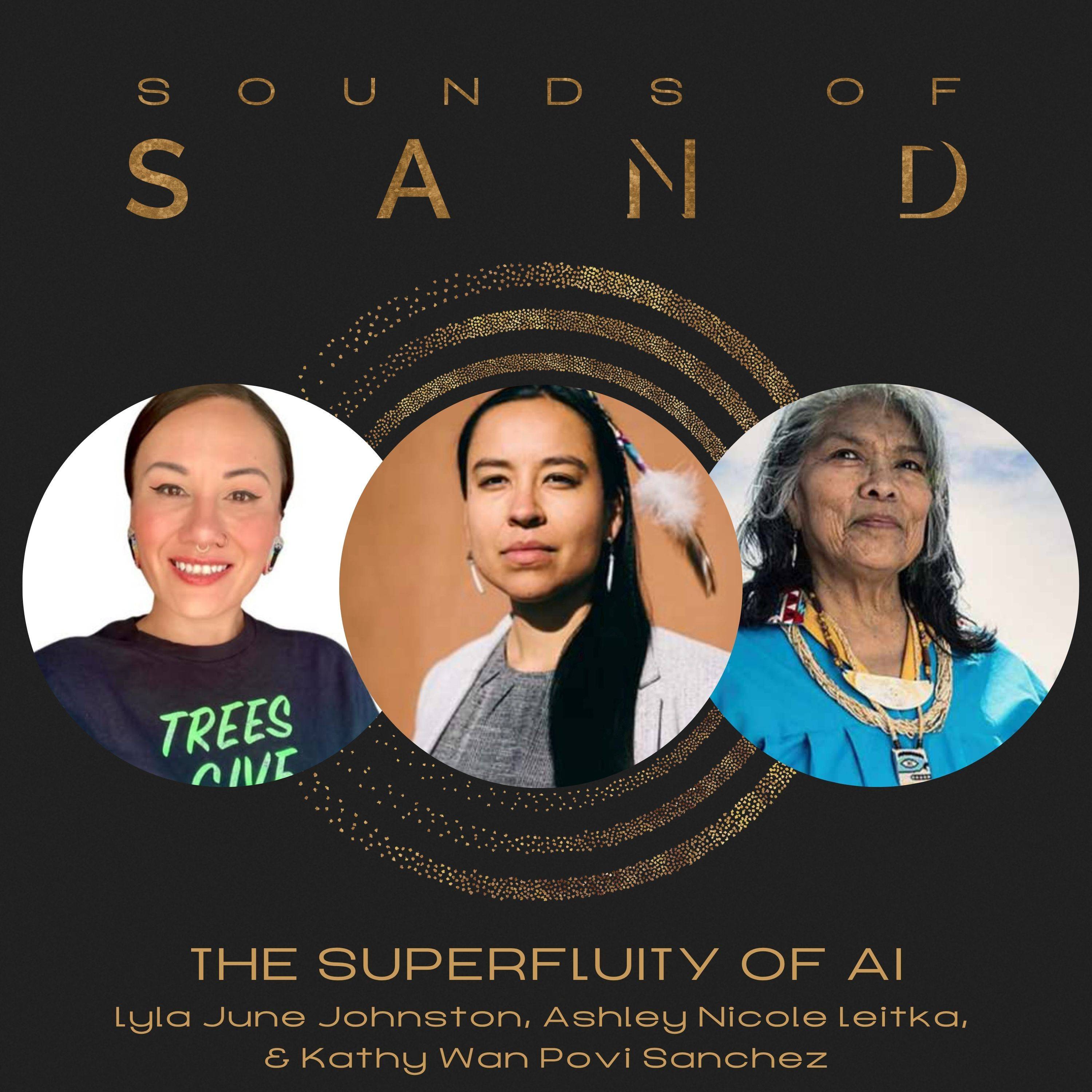 Superfluity of AI: Lyla June, Kathy Wan Povi Sanchez & Ashley Nicole Leitka 06.08.2026 1t 15minThe third conversation in "The Great AI Unraveling", recorded live with our community on July 10, 2026. Throughout time, humanity has experimented with playing God, and each time we have been humbled by forces larger than ourselves. Many Indigenous Nations consciously chose not to pursue certain technologies, recognizing that not every innovation serves life, and that wisdom lies in understanding the boundaries of nature and those of our human condition. As artificial intelligence promises ever greater efficiency, productivity, and control, we are invited to ask a deeper question: Which problem are we really trying to solve? Beneath the relentless pursuit of more—more knowledge, more power, more convenience—lies a profound inquiry into sufficiency, relationship, and meaning. Guests Dr. Lyla June Johnston (aka Lyla June) is an Indigenous musician, scholar, and community organizer of Diné (Navajo), Tsétsêhéstâhese (Cheyenne) and European lineages. Her messages focus on Indigenous rights, supporting youth, traditional land stewardship practices and healing inter-generational and inter-cultural trauma. She blends her study of Human Ecology at Stanford, graduate work in Indigenous Pedagogy, and the traditional worldview she grew up with to inform her music, perspectives and solutions. Her doctoral research focused on the ways in which pre-colonial Indigenous Nations shaped large regions of Turtle Island (aka the Americas) to produce abundant food systems for humans and non-humans. Ashley Nicole Leitka comes from the Absentee Shawnee Tribe of Oklahoma and the Oglala and Sicangu Lakota nations. She lives on Absentee Shawnee land in so-called Oklahoma and is the Director of the Department of Sovereignty and Self-Determination at Honor the Earth. Kathy Wan Povi Sanchez is a native spirit-rooted social activist, community educator, traditional blackware potter, and fluent Tewa language speaker from the Tewa Pueblo of San Ildefonso in New Mexico. For more than two decades, she has been a guiding force within Tewa Women United, advancing environmental justice, cultural revitalization, healing, and social transformation. A respected elder, teacher, and mentor, Kathy developed the acclaimed Two World Harmony Butterfly Model and Trauma Rocks, innovative frameworks that support cross-cultural understanding and intergenerational healing. Her lifelong work bridges Indigenous wisdom, environmental stewardship, community empowerment, and the protection of cultural and spiritual traditions. Through local, national, and international advocacy, she continues to inspire pathways of healing, resilience, and right relationship with the Earth and one another. Topics 00:00:00 — Welcome and The Great AI Unraveling 00:04:00 — Superfluity: what if we don't need it 00:08:00 — The maple syrup story 00:12:00 — Kathy Wan Povi Sanchez on natural law 00:19:00 — Data centers on Native land 00:24:00 — Falsely generated demand and cognitive decline 00:27:00 — The data center toolkit and Stop Data Colonialism 00:30:00 — AI as ancestral intelligence: the Butterfly Model 00:38:00 — Why ceremony is never filmed 00:39:00 — Water, energy, and the growth curve 00:48:00 — Surveillance, ICE, and biometrics 00:57:00 — Yvette Running Horse Collin on Lakota science 00:58:00 — Einstein, Hiroshima, and being humbled 01:01:00 — Choosing oral tradition 01:08:00 — Love is the greatest technology 01:10:00 — A litmus test for any technology Resources & Links Lyla June — lylajune.com Tewa Women United — tewawomenunited.org Honor the Earth Honor the Earth data center toolkit Stop Data Colonialism, national coalition and manifesto Big Tech Is Now Targeting Native American Land for Massive Data Centers, The New York Times, July 2026 Yvette Running Horse Collin on Lakota science, interviewed in Science ACLU campaign on Flock surveillance cameras Ashley Nicole Leitka and Dallas Goldtooth in conversation The Great AI Unraveling series #1 AI risks, societal impacts, and apocaloptimism: Tristan Harris #2 Reclaiming the Conversation and the Commons: Tiokasin Ghosthorse and Pooja Prema Upcoming guests: Christian "Zacatecho" Ortiz, Bayo Akomolafe, Vanessa Machado de Oliveira, Alnoor Ladha, Baratunde Thurston, and Thema Monroe-White Contact SAND [email protected] Support the mission of SAND and the production of this podcast by becoming a SAND Member
 -
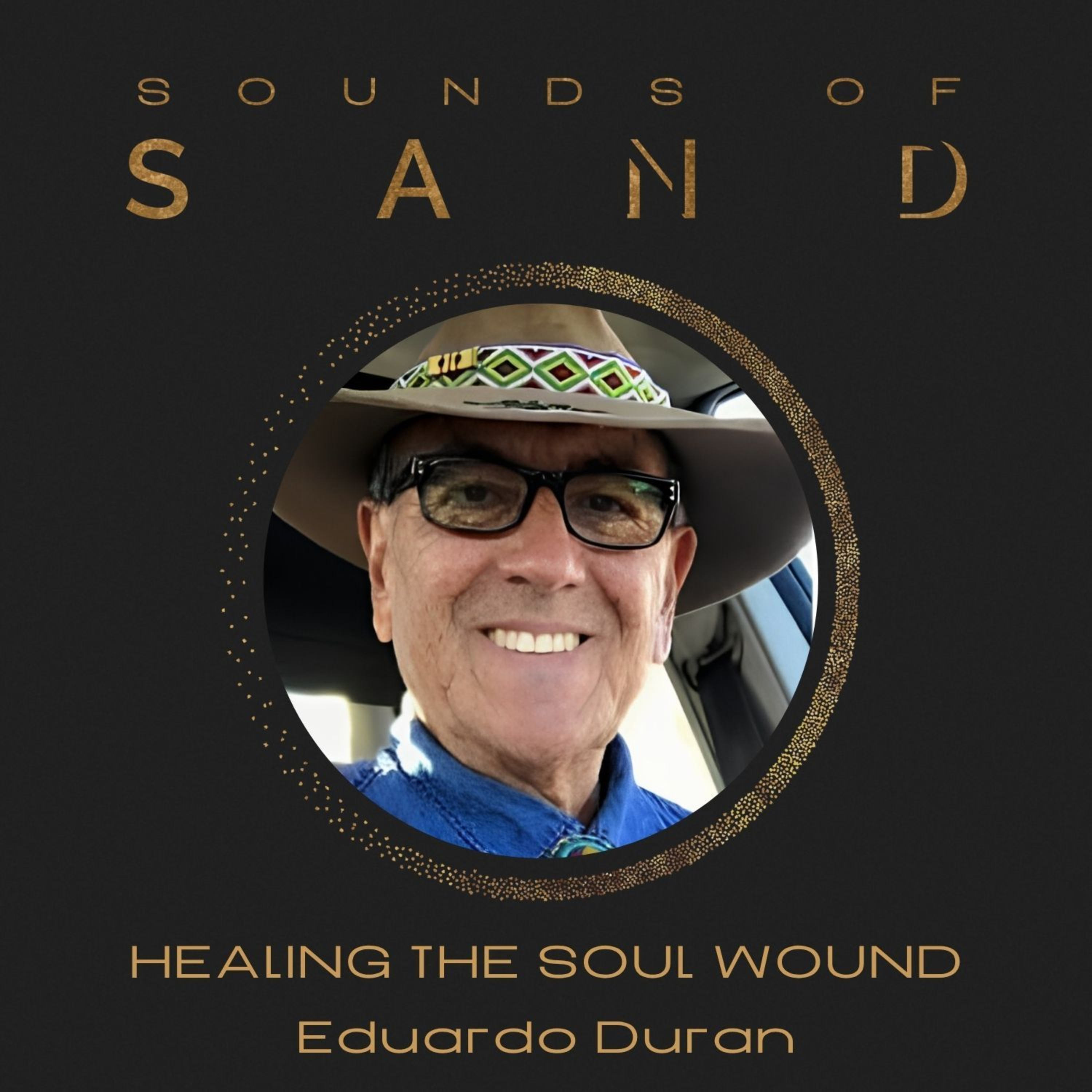 Healing the Soul Wound: Eduardo Duran 30.07.2026 1t 4minRecorded live at our May 2026 online gathering celebrating Little Singer, the Diné film in The Eternal Song series, this conversation with psychologist Eduardo Duran (Apache/Tewa/Lakota) begins with the prophecy of Crazy Horse and moves through the teachings of the elder who trained him, the soul wound and the origins of the term historical trauma, why Indigenous languages of verbs change how we understand diagnosis, and the Diné teaching of K'é: the universe wired in complete relationship. Trauma, he reminds us, is a movement and not an identity, and the medicine is in the song itself. Eduardo joins the teaching panel of our upcoming live course, Liberation Psychology: Roots, Memory & Practice. Eduardo Duran (Apache/Tewa/Lakota) is a psychologist and Vietnam veteran who has spent most of his career working in Indigenous communities, informed by Buddhist practice, Native teachings, and heart knowing. His work introduced the concepts of the soul wound and historical trauma into clinical practice. He is the author of Buddha in Redface, Healing the Soul Wound, and Native American Postcolonial Psychology. Topics 00:00:00 — Introduction 00:01:00 — The prophecy of Crazy Horse 00:04:00 — Meeting the elder 00:10:00 — Ordered to write 00:13:00 — Languages of verbs 00:19:00 — "They're there" 00:22:00 — Ceremony and the eternal song 00:26:00 — Quantum entanglement and K'é 00:30:00 — Trauma is not an identity 00:35:00 — Healing the land with prayer 00:40:00 — "Already holy, sacred, and divine" 00:44:00 — The dream had you 00:49:00 — Finding your own roots 00:55:00 — Closing gratitude Resources & Links Eduardo Duran Buddha in Redface Healing the Soul Wound: Trauma-Informed Counseling for Indigenous Communities Native American Postcolonial Psychology (with Bonnie Duran) SAND & The Eternal Song Liberation Psychology: Roots, Memory & Practice — a new live course by SAND, registration is now open Watch Little Singer — the Diné film in The Eternal Song series The Eternal Song film series Watch Sila — streaming now Referenced in the conversation International Council of Thirteen Indigenous Grandmothers Contact SAND [email protected] Support the mission of SAND and the production of this podcast by becoming a SAND Member
 -
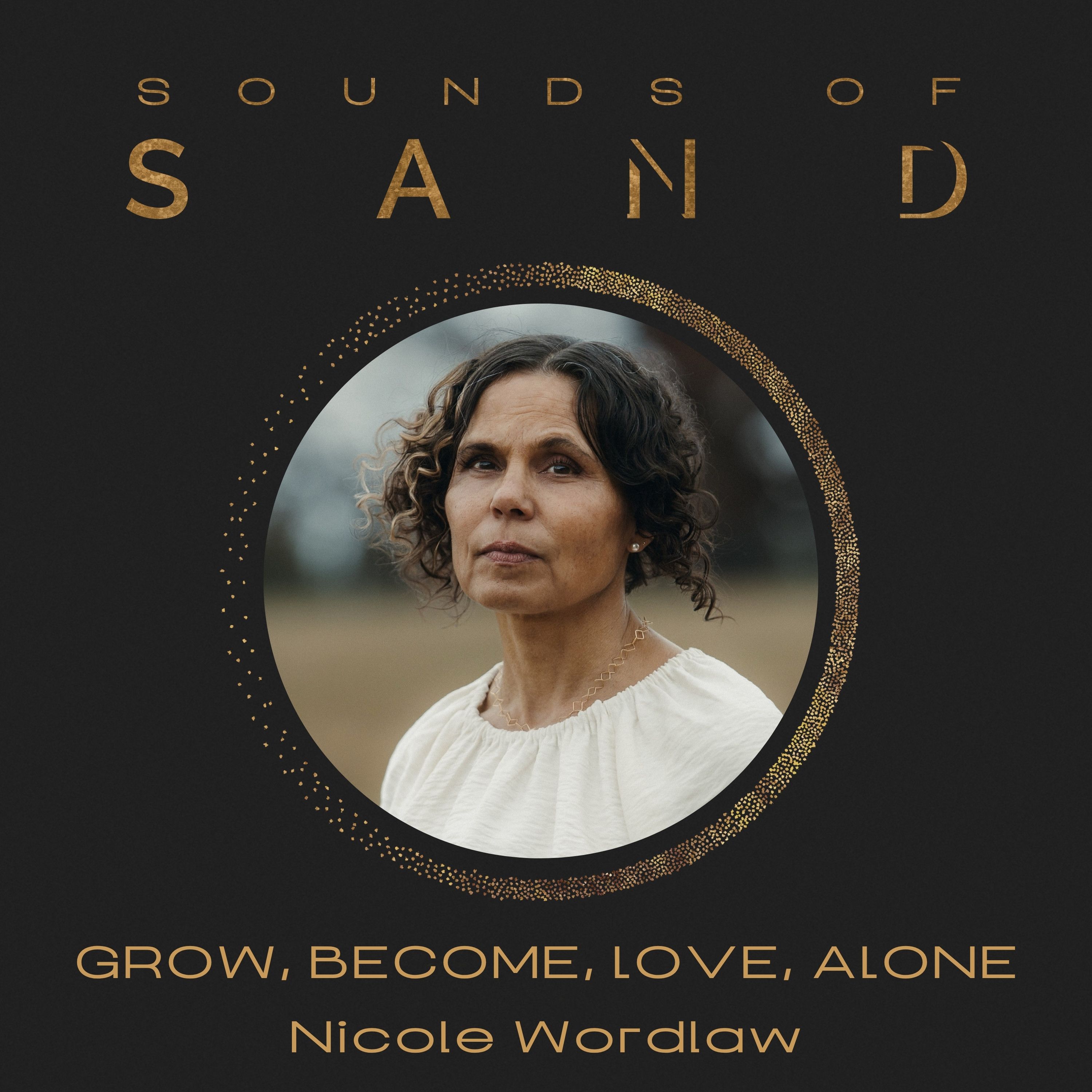 Grow, Become, Love, Alone: Nicole Wordlaw 23.07.2026 50minClinical psychologist and longtime Buddhist meditator Dr. Nicole Wordlaw joins us to talk about her new memoir, Waking Up Alone: Navigating the Narrow Passage Through Master-Slave Narratives. Nicole came to practice to end suffering, and found instead that enlightenment as an arrival, all bliss, all peace, was one more construction of the conditioned mind. The conversation moves through the single pattern she came to see beneath white supremacy, patriarchy, and the harm spiritual teachers do to their students; writing as prayer; pain as a door; and the intergenerational line of women whose voices run through the book. A tender and unflinching conversation about telling the whole story, uprooting the internal oppressor, and the quiet, still voice that always sounds like Love. Dr. Nicole Wordlaw is a clinical psychologist and longtime practitioner of Buddhist meditation whose work bridges psychology, spirituality, and identity. The daughter of a white mother and a Black father, Dr. Wordlaw brings a deeply personal understanding of belonging and self-discovery to her writing and teaching. A Stanford University graduate with honors and distinction, she went on to earn her Ph.D. in clinical psychology from UC Berkeley. In her forthcoming book Waking Up Alone, she vulnerably shares her story of trauma and awakening, and offers gentle guidance for her readers to tune into the quiet voice of truth within. Topics 00:00:00 — Introduction 00:01:00 — Coming to Buddhism 00:02:00 — Enlightenment as construction 00:05:00 — Love meeting pain 00:06:00 — One pattern of harm 00:09:00 — Writing as prayer 00:11:00 — A naked story 00:15:00 — Somatic abolitionism 00:19:00 — A long line of women 00:23:00 — Shadow and teacher misconduct 00:24:00 — The Sangha Sutra 00:34:00 — Risking making sense to no one 00:38:00 — The Word Story 00:42:00 — The inner teacher 00:47:00 — Love is not an idea Resources & Links Dr. Nicole Wordlaw Website: nicolewordlaw.com Waking Up Alone: Navigating the Narrow Passage Through Master-Slave Narratives — out now Substack Referenced in the conversation Sounds of SAND — Somatic Abolitionism: Resmaa Menakem & Gabor Maté Sounds of SAND — The Architecture of Silence in Spiritual Culture Steve Hagen — Buddhism Plain and Simple Nisargadatta Maharaj — I Am That Contact SAND [email protected] Support the mission of SAND and the production of this podcast by becoming a SAND Member
 -
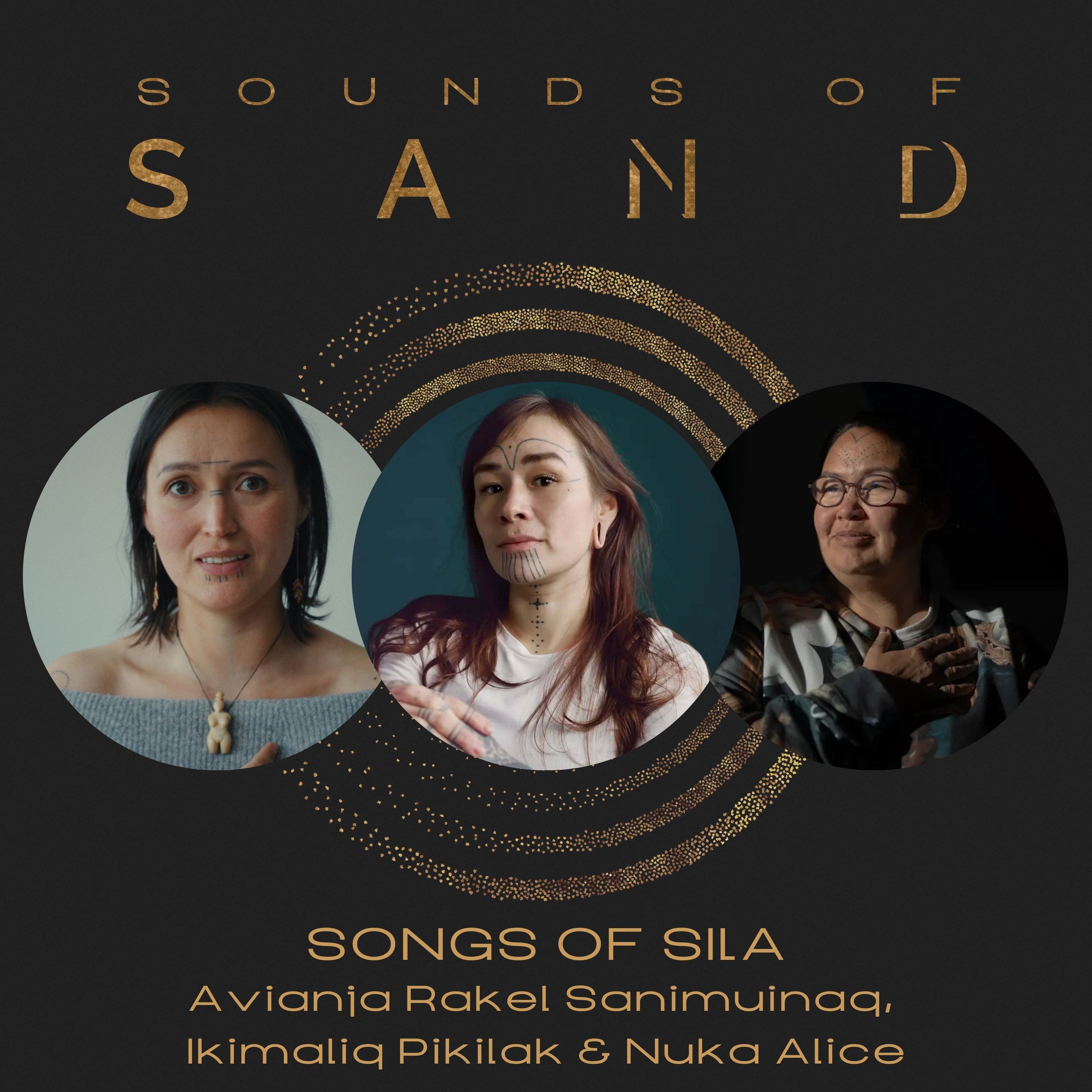 Songs of Sila: Avianja Rakel Sanimuinaq, Ikimaliq Pikilak & Nuka Alice 16.07.2026 1t 6minThree Kalaallit Inuit women sit with Zaya and Maurizio Benazzo, who met them while filming on their traditional land in Kalaallit Nunaat (Greenland). Ikimaliq Pikilak carries the revival of Inuit tattooing, Nuka Alice carries drum dance, and Avianja Rakel Sanimuinaq carries her family's lineage of healing. Together they speak about what colonization severed, what gratitude makes survivable in the Arctic, and Sila, the word that holds weather, breath, and the consciousness connecting all living things. Recorded in June 2025 during the launch week of The Eternal Song, this conversation arrives now to celebrate Sila, the new film from Science and Nonduality featuring all three women, streaming at theeternalsong.org/sila. Guests Ikimaliq Pikilak is a Kalaallit tattoo practitioner. Trained in the Western tattoo industry in Denmark, she returned to Greenland and, through the traditionally tattooed mummies of Qilakitsoq, began an eleven-year journey of reclaiming Inuit women's markings: their meanings, their protocols, and their place in healing. Nuka Alice Lund is a drum dancer and teacher from the west coast of Kalaallit Nunaat. Taught by Paulina, who gathered songs from the elders of East Greenland, she works to normalize the use of Inuit drum dance and its songs, teaching adults and carrying the stories, intentions, and patience the practice asks for. Avianja Rakel Sanimuinaq is a healer working within her family's ancestral lineage. Her practice spans soul retrieval, putting souls to rest, and the older responsibility of rebalancing relations between people, land, and the spirit world. Of mixed Inuk and Danish parentage, she speaks in the conversation about finding her roots through her ancestors and helping others use her roots to find their own. Timestamps 00:00 — Introduction: The Eternal Song, the new film Sila, and the July 28–29 live gathering 00:05 — Ikimaliq: the mummies, the gap in memory, and the return of Inuit tattooing 00:07 — What the markings mean: confession, womanhood, gratitude, kinship 00:13 — Nuka Alice: unlearning the colonial narrative, finding the drum at 19 00:19 — Sila: weather, consciousness, the universe we have in common 00:22 — Aviaja: a family of shamans and the responsibility of the angakkoq 00:29 — Trailer: Sila, streaming now at theeternalsong.org/sila 00:31 — Soul sickness, mind sickness, and the body as self-healing land 00:42 — Drum battles: conflict resolution, truth-telling, and lifelong bonds 00:49 — "Start looking in the mirror": finding your own ancestral roots 00:55 — Eyes as pathway to the soul; growing up between Inuk and Danish worlds 01:02 — Loneliness, homesickness of the soul, and dandelion root medicine Resources & Links Watch Sila — streaming now The Eternal Song film series Sila Live Online Gathering, July 28–29, 2026: two days of conversations with guest speakers and Inuit wisdom keepers Ikimaliq Pikilak on Instagram Nuka Alice Lund at Arctic Sounds Avianja Rakel Sanimuinaq on Instagram Contact SAND [email protected] Support the mission of SAND and the production of this podcast by becoming a SAND Member
 -
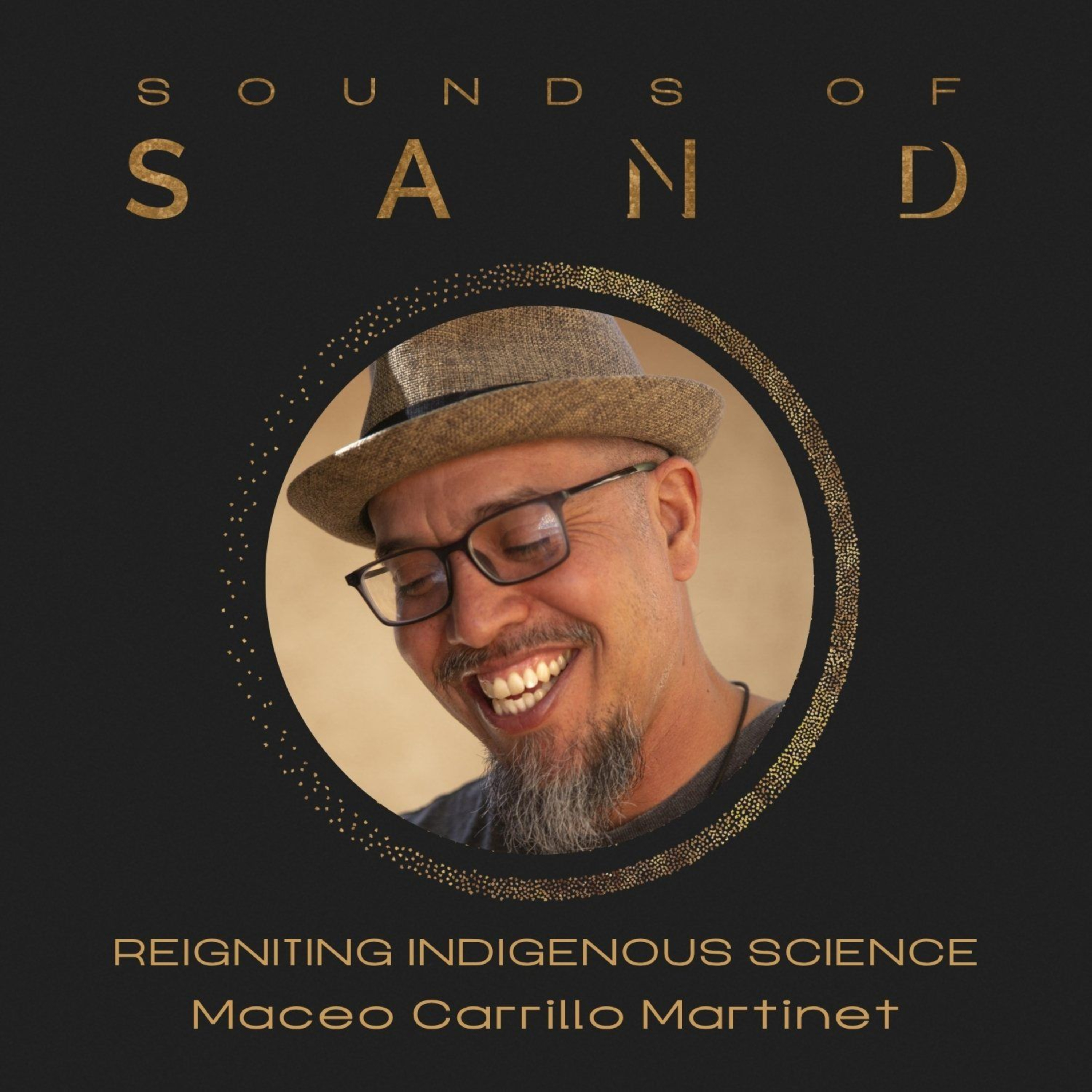 Reigniting Indigenous Science: Maceo Carrillo Martinet 09.07.2026 50minRestoration ecologist and author Dr. Maceo Carrillo Martinet joins us to talk about his new book Healing the Land Teaches Us Who We Are: How Indigenous Cultural Resistance Can Restore the Earth, Recover Community, and Create Sustainable Futures. Grounded in over two decades of community-based restoration work across New Mexico, Maceo makes the case that the climate solutions we're searching for already exist and are already being practiced by communities around the world. The book is structured around the four elements — water, earth, fire, and air — treating each not as a category but as a relative with something to say. We move through the memory of ancient Pueblo dry-land farming still visible on La Bajada Mesa, the racism embedded in the history of American fire suppression, and the idea that culture and science were never actually separate to begin with. A conversation about returning to first principles, in a time when the polycrisis makes that return feel urgent. Guest Dr. Maceo Carrillo Martinet is an award-winning restoration ecologist who has spent over 20 years co-creating community-based restoration and education projects across New Mexico and beyond. Since 2008, he has worked with the Partners for Fish and Wildlife Program, assisting private landowners, tribes, cities, and counties. He holds a PhD in biology from the University of New Mexico with a focus on ecology, freshwater sciences, and environmental education. He teaches a hands-on course at UNM on watershed and community restoration. Topics 00:00 — Introduction 00:02 — The Rio Grande community tree planting during COVID 00:06 — Wounds as portals: what the pandemic revealed 00:09 — La Bajada Mesa & ancient Pueblo dry-land farming 00:14 — Redefining Indigenous science as communal science 00:20 — The four-element framework of the book 00:23 — Elements as relatives, not categories 00:26 — Wildfires, racism & the history of fire suppression 00:33 — The Oakland Museum's "Good Fire" exhibit 00:37 — Fire as community energy, fire inside us 00:42 — The metacrisis & the land as teacher 00:47 — Closing: no silver bullets, only relationship Resources & Links Dr. Maceo Carrillo Martinet Website: maceocm.com Healing the Land Teaches Us Who We Are: How Indigenous Cultural Resistance Can Restore the Earth, Recover Community, and Create Sustainable Futures — North Atlantic Books, June 2026 Publisher page & book description at Penguin Random House Read an excerpt Referenced in the conversation Jessica Hernandez — Fresh Banana Leaves Dr. Lyla June Johnston — Architects of Abundance dissertation Stephen Pyne — fire historian, ASU Arundhati Roy — "The pandemic is a portal" Bioneers Conference Contact SAND [email protected] Support the mission of SAND and the production of this podcast by becoming a SAND Member
 -
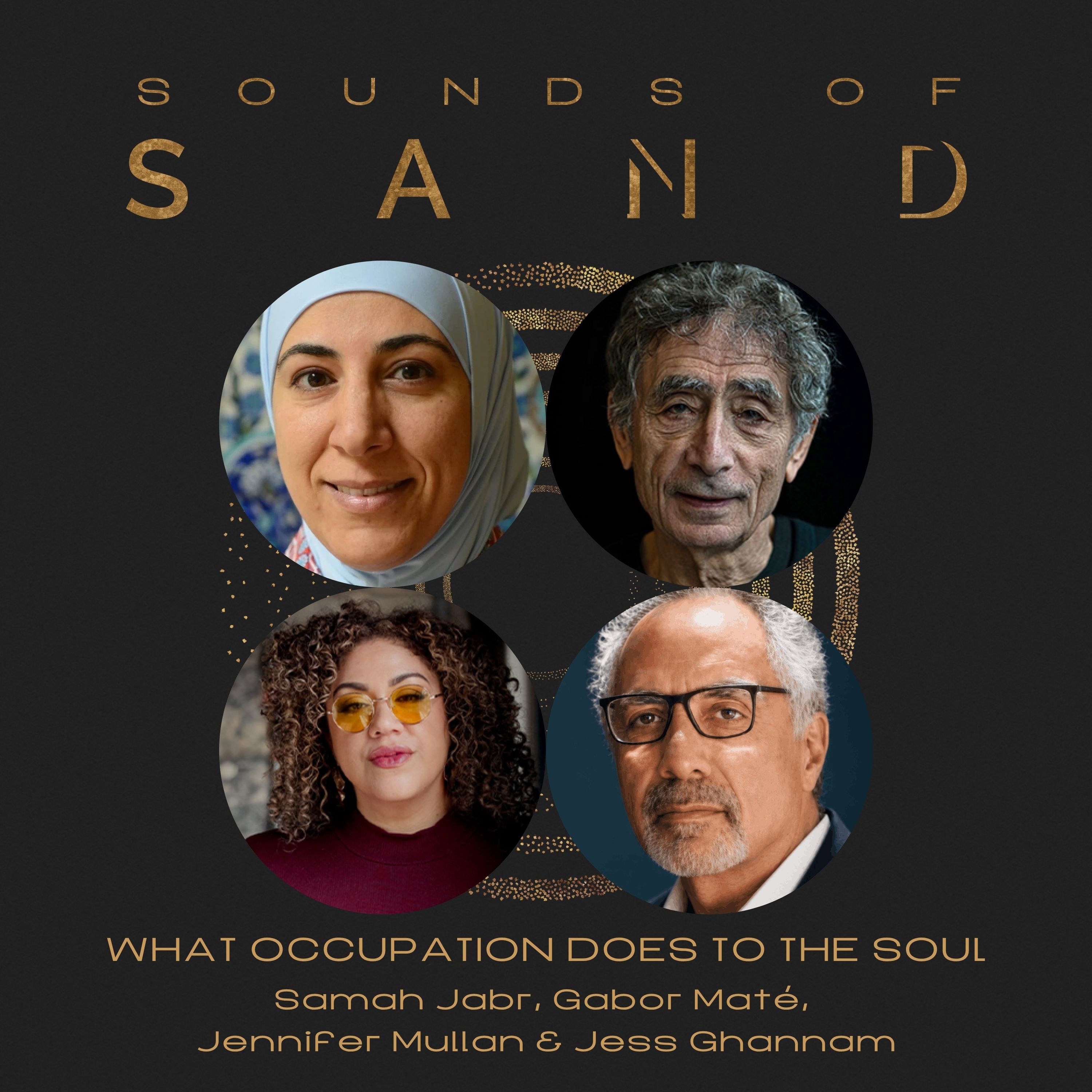 What Occupation Does to the Soul: Samah Jabr, Gabor Maté, Jennifer Mullan, Facilitated by Jess Ghannam 02.07.2026 1tGlobal Reverberations of Palestinian Historical Trauma: A SAND Community Gathering with Dr. Samah Jabr, Dr. Gabor Maté & Dr. Jennifer Mullan, facilitated by Dr. Jess Ghannam Join us for a conversation marking the book launch of Radiance and Pain in Resilience, a powerful collection of essays by Palestinian psychiatrist, psychotherapist, and internationally respected mental health advocate Dr. Samah Jabr. We are gathering in the midst of genocide. The massive, deliberate traumatization of an entire people, cheered, funded, and shielded from accountability by Western governments, is unfolding in real time. As Israel’s assault on Gaza continues to annihilate bodies, families, and entire lineages, this conversation refuses to look away. It asks what it is to tend to the psyche under conditions of systematic destruction. Drawing on decades of clinical practice, political analysis, and lived experience under occupation, Dr. Jabr examines the psychological consequences of colonization, displacement, and historical trauma on the Palestinian people. Through personal reflections, case studies, and cultural critique, she challenges dominant Western paradigms of mental health and offers a decolonial, psycho-spiritual framework rooted in dignity, collective care, resistance, and truth. Proceeds from this conversation go directly to Project Hope Palestine, supporting 500 orphaned children living at Al-Baraka orphan camp in Gaza. Guests Dr. Samah Jabr is a psychiatrist practicing in Palestine, serving communities in East Jerusalem and the West Bank. She was formerly Head of the Mental Health Unit within the Palestinian Ministry of Health and is an Associate Clinical Professor of Psychiatry and Behavioral Sciences at George Washington University. She is the author of several books including Behind the Frontlines, Sumud, Sumud in Times of Genocide, and most recently Radiance in Pain and Resilience: The Global Reverberations of Palestinian Historical Trauma. Dr. Gabor Maté is a physician, trauma expert, and bestselling author of The Myth of Normal, In the Realm of Hungry Ghosts, and When the Body Says No. Dr. Jennifer Mullan is a clinical psychologist and the author of the national bestseller Decolonizing Therapy: Oppression, Historical Trauma, and Politicizing Your Practice. She is the founder of Decolonizing Therapy®. Dr. Jess Ghannam (facilitator) is Clinical Professor of Psychiatry and Global Health Sciences at UCSF. Timestamps 00:00 — Welcome & introductions 00:04 — Dr. Jabr's path into psychiatry and writing 00:06 — Dr. Maté's journey from Zionism to Palestine solidarity 00:10 — Dr. Mullan's path & the political nature of the body 00:17 — Why PTSD doesn't capture the Palestinian experience 00:22 — The DSM, pain, and what diagnosis fails to explain 00:30 — Colonial trauma: cumulative, collective, and intentional 00:33 — Collective healing circles over individual diagnosis 00:39 — Rethinking the role of the mental health worker 00:43 — The colonial roots of Western therapy models 00:50 — Fratricide, domestic violence & the fabricated "lesser nation" 00:55 — Closing reflections: existence as resistance Resources & Links Dr. Samah Jabr Radiance in Pain and Resilience: The Global Reverberations of Palestinian Historical Trauma — Dr. Jabr's book Decolonial Mental Health Practices: Clinical and Ethical Insights From Palestine — Part 2, four-part course starting Hosted By SAND (Starting July 5, 2026) Dr. Gabor Maté The Myth of Normal: Trauma, Illness, and Healing in a Toxic Culture Dr. Jennifer Mullan Decolonizing Therapy: Oppression, Historical Trauma, and Politicizing Your Practice Center for Decolonizing Therapy® Support Project Hope Palestine — supporting 500 orphaned children at Al-Baraka orphan camp in Gaza; proceeds from this event go directly here Thinkers referenced in the conversation Frantz Fanon — referenced by Dr. Jabr in her theorization of colonial trauma Dr. Kenneth Hardy — Black psychologist referenced for the concept of the "assaulted sense of self" Dr. Na'im Akbar — author of The Psychological Chains of Slavery, referenced by Dr. Mullan Roberto and Bonnie Duran, Dr. Maria Yellow Horse Brave Heart — referenced for the concept of the "soul wound" and historical trauma Contact SAND [email protected] Support the mission of SAND and the production of this podcast by becoming a SAND Member
 -
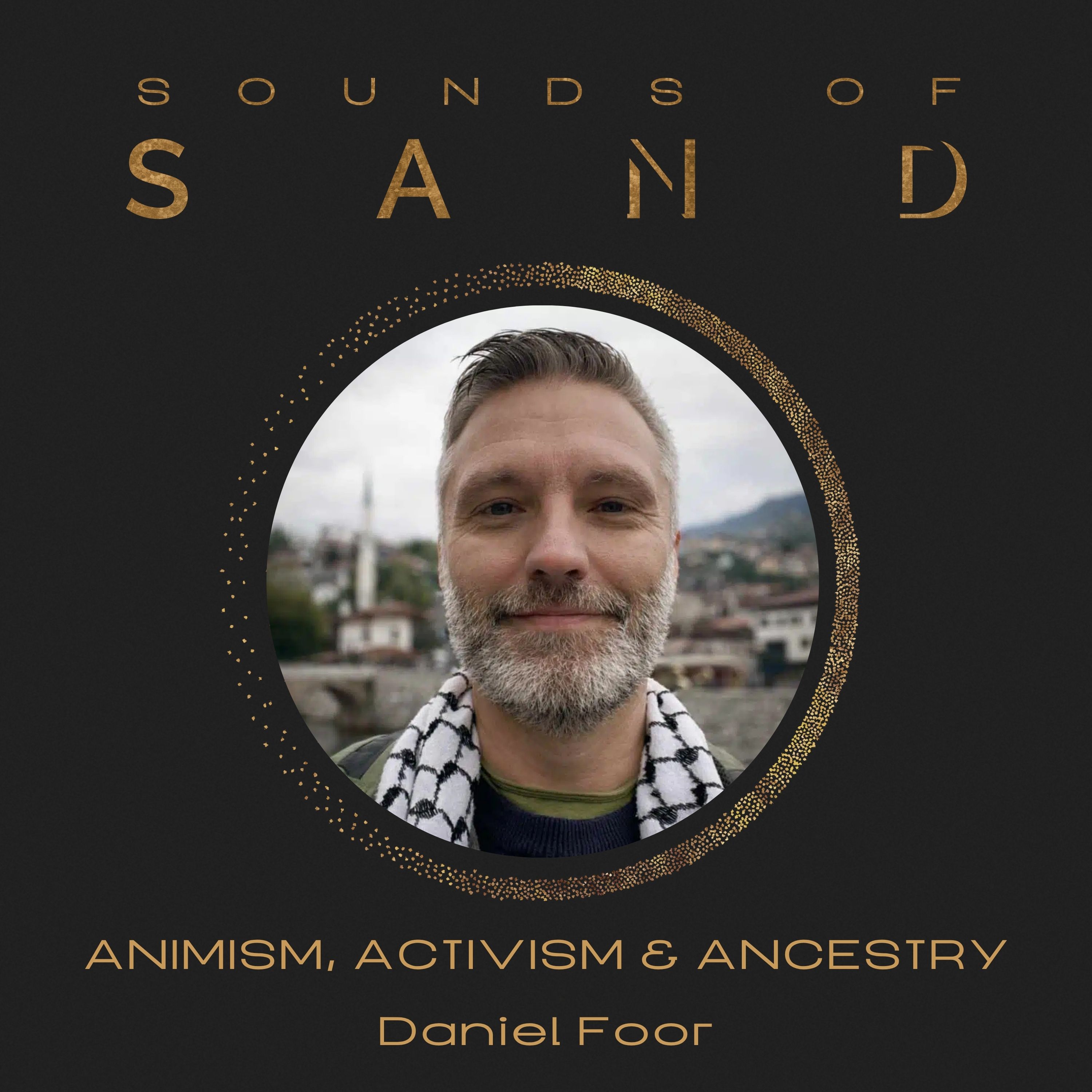 Animism, Activism & Ancestry: Daniel Foor 25.06.2026 52minDaniel Foor returns to Sounds of SAND for a wide-ranging conversation that moves from his own winding spiritual path to the urgent question of why so many spiritual teachers stay silent in the face of injustice. A doctor of psychology, initiated priest in the Yoruba Ifá tradition, and practicing Muslim, Daniel makes the case that animism is the antidote to human supremacy, that Islam is fundamentally a relational and earth-honoring tradition, and that genuine spirituality cannot retreat from the political realities of our time. Along the way, he speaks candidly about ancestral healing, decolonization, the genocide in Gaza, and what it means to become "regular-sized" in a culture built on separation. Topics 00:00 — Welcome back & reconnecting with SAND 00:01 — Daniel's path: shamanism, psychology & many lineages 00:04 — Animism as the antidote to human supremacy 00:09 — Environmental problems are human behavior problems 00:10 — Is Islam animist? Sufism & the heart of the tradition 00:15 — Relationship is not worship: rethinking animism 00:20 — Giving the more-than-human a seat at the table 00:23 — "Blown-out" lineages & relearning relationship 00:26 — Spiritual responsibility & the silence around Gaza 00:31 — When silence becomes a moral failure 00:34 — The differential valuation of human life 00:38 — What Daniel is building: ancestral & earth ritual trainings 00:42 — Why pre-colonial ancestral connection matters 00:43 — Becoming "regular-sized": the antidote to extreme individualism 00:49 — Right relationship, humility & closing reflections Resources & Links Ancestral Medicine — Daniel Foor's website, courses, trainings & practitioner directory Ancestral & Lineage Healing Course Practitioner Directory — ancestral healing in 30+ languages, offered remotely with financial accessibility Ancestral Medicine: Rituals for Personal and Family Healing (book) SAND Films Where Olive Trees Weep The Eternal Song (series of 12 films) Referenced Graham Harvey — scholar of the "new animism," referenced in the discussion of relational worldviews Surah Al-Tin (The Fig) and the animist verses of the Quran — referenced throughout the conversation on Islam as a relational tradition Contact SAND [email protected] Support the mission of SAND and the production of this podcast by becoming a SAND Member
 -
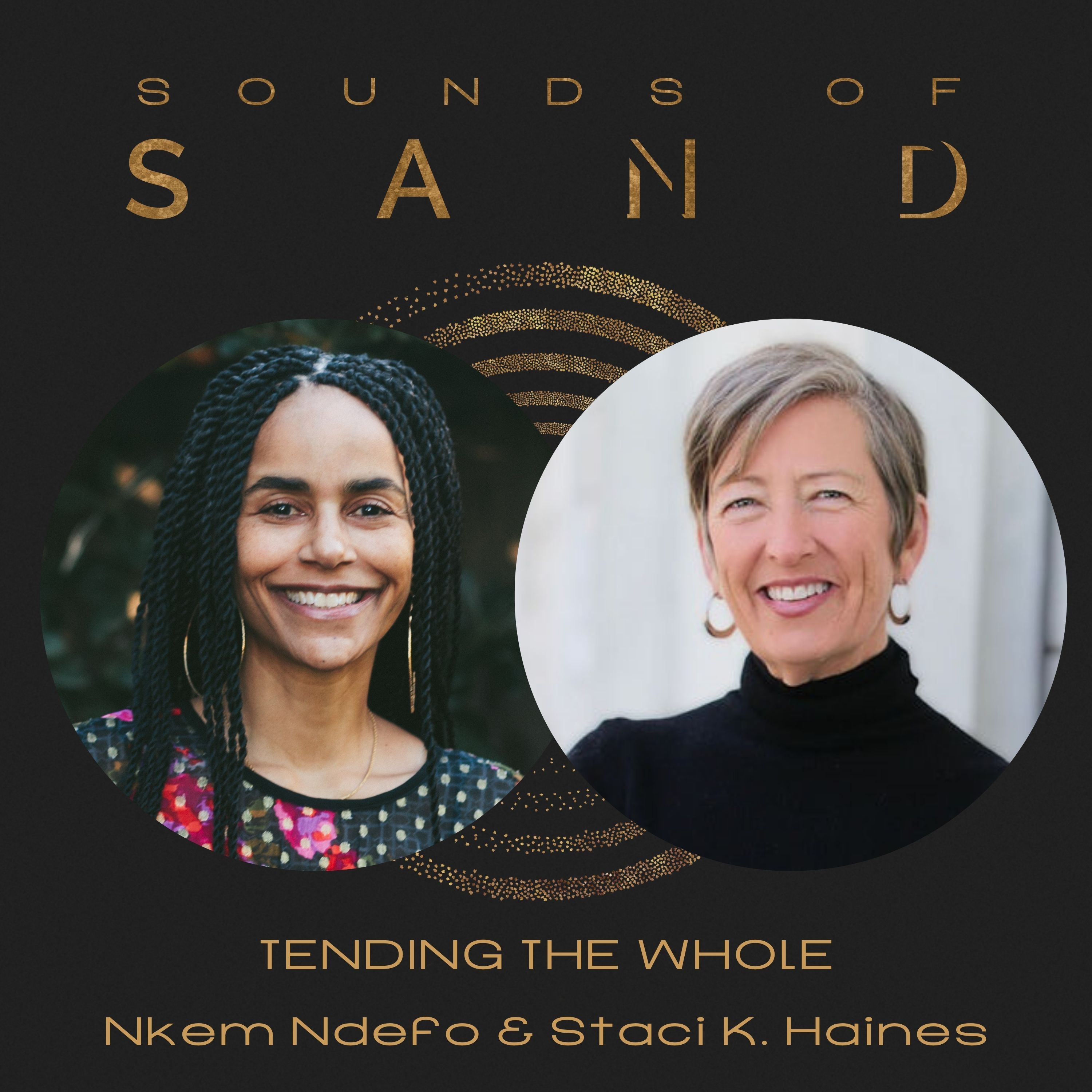 Tending the Whole: Nkem Ndefo & Staci K. Haines, Facilitated by Rae Abileah 18.06.2026 55minThere is a “false wall” often placed between contemplative life and political action—a story implying that inner peace and outer justice are separate vocations. This imaginary divide exhausts us. In a world facing converging crises, how do those dedicated to healing move beyond the limits of individualized work to support systemic transformation? Join somatics experts and social change practitioners Nkem Ndefo and Staci K. Haines for a conversation introducing The Outer Work Project; an initiative dedicated to bridging trauma healing spaces with sustained social and climate justice movements. This episode explores how to move from personal healing as solely an inward practice into a rooted force for collective change. Guests Nkem Ndefo is an alchemist, disabled Black midwife, facilitator, coach, and strategist. She is the founder of Lumos Transforms and creator of The Resilience Toolkit, a model for embodied healing and liberatory change rooted in neuroscience and social justice. Her work spans the US, UK, and Palestine. Staci K. Haines has been working at the intersections of personal and social transformation for over 30 years through politicized somatics, trauma healing, embodied leadership, and transformative justice. She is the co-founder of Generative Somatics and co-leads The Outer Work Project. She is the author of The Politics of Trauma: Somatics, Healing and Social Justice. Rae Abileah (facilitator) is a social change strategist, Jewish faith leader, and member of the SAND team. Her work spans Beautiful Trouble, The Nature Conservancy Agility Lab, and ALAS, weaving cultural connection, the arts, and frontline community leadership as pathways to healing and climate justice. Timestamps 00:00 — Welcome & opening from SAND 00:03 — Rae opens: breathing, interdependence, and tending the whole amidst brokenness 00:07 — Nkem and Staci introduce themselves: lineage, the politic of suffering, and why this work 00:15 — The false wall: separating spiritual and political 00:16 — Case study: National Domestic Workers Alliance and embodied leadership 00:19 — Case study: LA County health system, anti-racism work, and the word "love" 00:25 — Burnout, overwhelm, and sustaining movement work from the inside out 00:35 — Consent, boundaries, and building a somatic culture in organizations 00:43 — Tearing down vs. building: holding contradictions without collapsing 00:48 — Visioning our yes: what a racially just feminist social democracy could feel like 00:50 — Legacy, small acts, and what we're building together 01:00 — Closing reflections: love as action and trusting our courage Resources & Links Nkem Ndefo Lumos Transforms — website The Resilience Toolkit Lumos Transforms Community (global network) Practicing Liberation — contributing author (North Atlantic Books, 2024) Staci K. Haines Website: StaciHaines.com The Politics of Trauma: Somatics, Healing and Social Justice — North Atlantic Books, 2019 Generative Somatics The Outer Work Project Strozzi Institute Rae Abileah CreateWell Beautiful Trouble ALAS — Ayudando Latinos a Soñar Organizations & concepts referenced National Domestic Workers Alliance — Staci's 7-year embodied leadership program with domestic worker organizers Ai-jen Poo — founder of NDWA — referenced throughout the NDWA story Movement Generation — Just Transitions zine — "From Banks and Tanks to Cooperation and Caring," referenced by Staci as an essential framework for a regenerative economy Terry Tempest Williams — The Glorians (audiobook) — Rae references the passage "We cannot breathe" during the opening generationFIVE — founded by Staci, committed to ending child sexual abuse within five generations using transformative justice approaches SAND Events, Courses and Films What Occupation Does to the Soul: A Global Reverberations of Palestinian Historical Trauma — June 26th, with Dr. Samah Jabr, Dr. Gabor Maté, and Dr. Jennifer Mullan Decolonial Mental Health Practices — Four-part webinar series with Dr. Samah Jabr The Eternal Song film series Contact SAND [email protected] Support the mission of SAND and the production of this podcast by becoming a SAND Member
 -
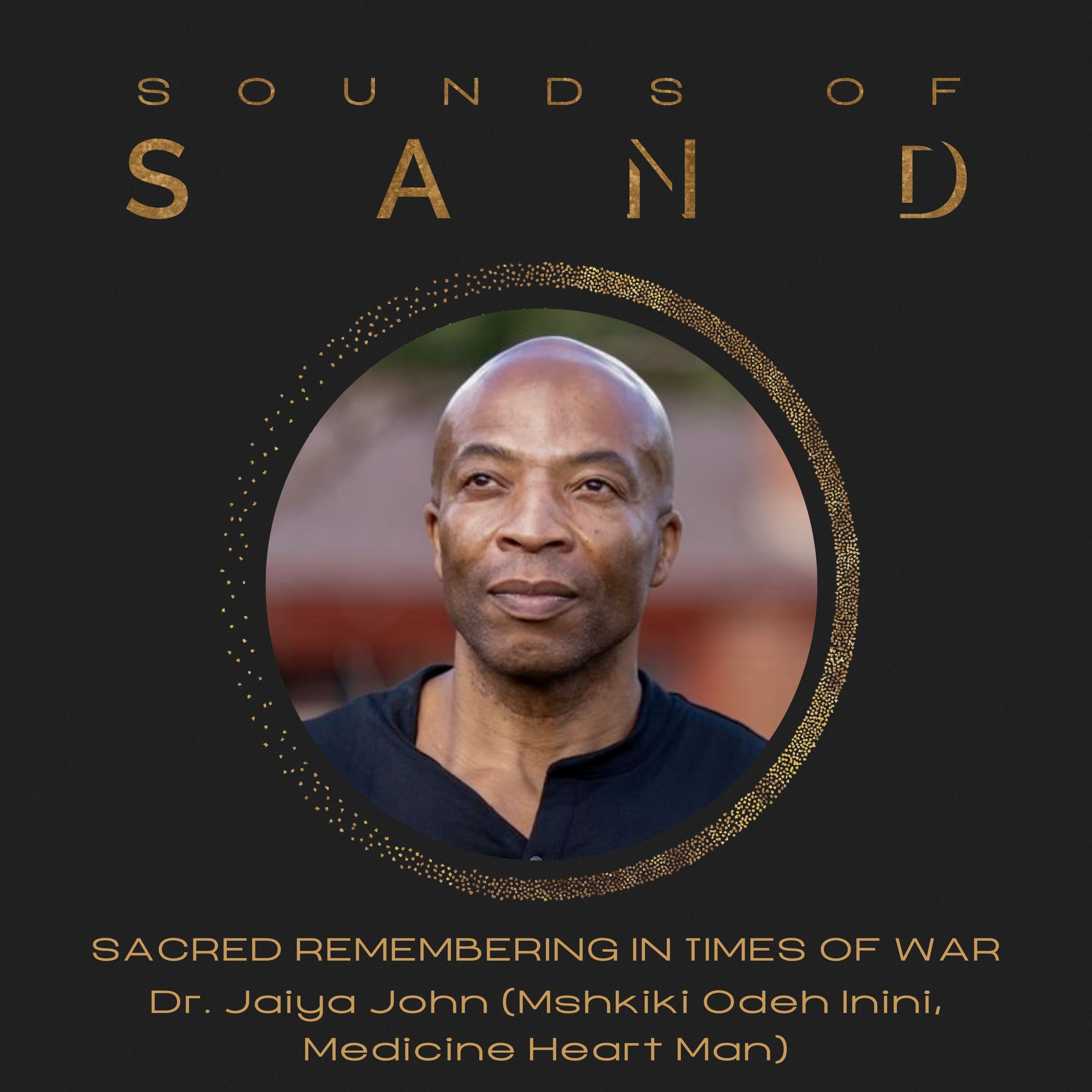 Sacred Remembering in Times of War: Dr. Jaiya John (Mshkiki Odeh Inini, Medicine Heart Man) 11.06.2026 1t 25minRecorded live at a SAND Community Gathering (April 2026) Hard times are here, we hunger for voices that can see beyond the fear, beyond the noise, beyond the technologies consuming our attention. We need poets and visionaries. People who remember freedom. Dr. Jaiya John (Mshkiki Odeh Inini, Medicine Heart Man), medicine poet, freedom worker, is one of those voices. He has spent his life gathering words that heal. In this conversation, we enter the beauty, the grief, and the medicine together. We sit with the devastation tearing our world, the sorrows cracking us open, the ancestors still holding us—and the radical insistence that collective freedom is not something we chase. It is something already alive in and between us, waiting to be birthed. Dr. Jaiya John (Mshkiki Odeh Inini, Medicine Heart Man) was orphan-born on ancient Indigenous Anasazi and Pueblo lands in the high desert of New Mexico. He is an ancestral Baba, freedom worker, medicine poet, and the founder of Soul Water Rising—a global mission to eradicate oppression through re-humanization, book donations, and grants to displaced youth. He is the author of numerous books including Freedom: Medicine Words for your Brave Revolution and Fragrance After Rain, and the creator of the podcast I Will Read for You. A former professor of social psychology at Howard University, he holds a doctorate from UC Santa Cruz and has spoken to over a million people worldwide. His Indigenous soul dreams of frybread, sweetgrass, bamboo in the breeze, and turtle lakes whose poetry is peace. Watch the full video version of this conversation. Topics 00:00 Welcome and Land Acknowledgment 02:31 Guest Bio and Introduction 03:51 Opening Blessing and Heart Question 05:10 Reclaiming Anger as Medicine 08:08 Libation Prayer for the World 15:57 Anger Rage and Lifted Veils 20:19 Rethinking War and Remembering Water 25:18 Gather Your People Reading 33:04 Grief Poetry and Inner Wars 36:13 War Wants Us Small 40:30 Soul Conditions That Grow War 42:14 Oxygen of War 44:12 Harvesting Clear Vision 47:05 Ferocious Grief Revival 49:38 How Grief Behaves 51:59 Poetry Against Silence 55:08 From Muteness to Voice 58:33 Artistry as Resurrection 01:03:42 Womanhood as Creativity 01:07:23 History as Sacred Hoop 01:12:45 Composting Harm into Healing 01:16:33 Intentional Living Practice 01:19:22 All These Rivers Choose Love 01:23:01 Blessings and Farewell Dr. Jaiya John — Guest Website: jaiyajohn.com Soul Water Rising — global mission Podcast: I Will Read for You: The Voice and Writings of Jaiya John Freedom Medicine: Words for Your Brave Revolution — book Wildflowers Praying at Midnight — book We Birth Freedom at Dawn — book All These Rivers and You Chose Love — book Fragrance After Rain — book Dr. Jaiya John's YouTube channel — where his poem for the Martyred Poets of Gaza and Palestine is available Substack: jaiyajohn.substack.com Dr. Jennifer Mullan — Referenced Website: decolonizingtherapy.com — Dr. Mullan's "rage doctor" ministry and upcoming work Decolonizing Therapy: Oppression, Historical Trauma, and Politicizing Your Practice — book Therapy is Not Neutral: Dr. Jennifer Mullan & Iya Affo (SAND Podcast episode) The Gaza Monologues — Referenced The Gaza Monologues — ASHTAR Theatre — the global project of 33 young people from Gaza, which Dr. Jaiya John contributed a poem to Support ASHTAR Theatre / Gaza Monologues writers — GlobalGiving Nikki Giovanni — Referenced Nikki Giovanni — Poetry Foundation — the poet whose performance broke Dr. Jaiya John open as a young man and birthed him as a poet nikki-giovanni.com Ancestors Referenced El-Hajj Malik El-Shabazz (Malcolm X) — quoted: "Out of all our studies, history is most qualified to reward our research" Geronimo — Dr. Jaiya John's ancestral grandfather spirit, whose question "What is in your heart?" opens the gathering John Lewis — referenced for "good trouble" and getting in the way of harm Hopi Nation / Turtle Island The concept of Sipapu (the Hopi place of emergence/womb place) is discussed at length as a framework for understanding history as circular, not linear Connect with more talks and films from the SAND film Series The Eternal Song Support the mission of SAND and the production of this podcast by becoming a SAND Member
 -
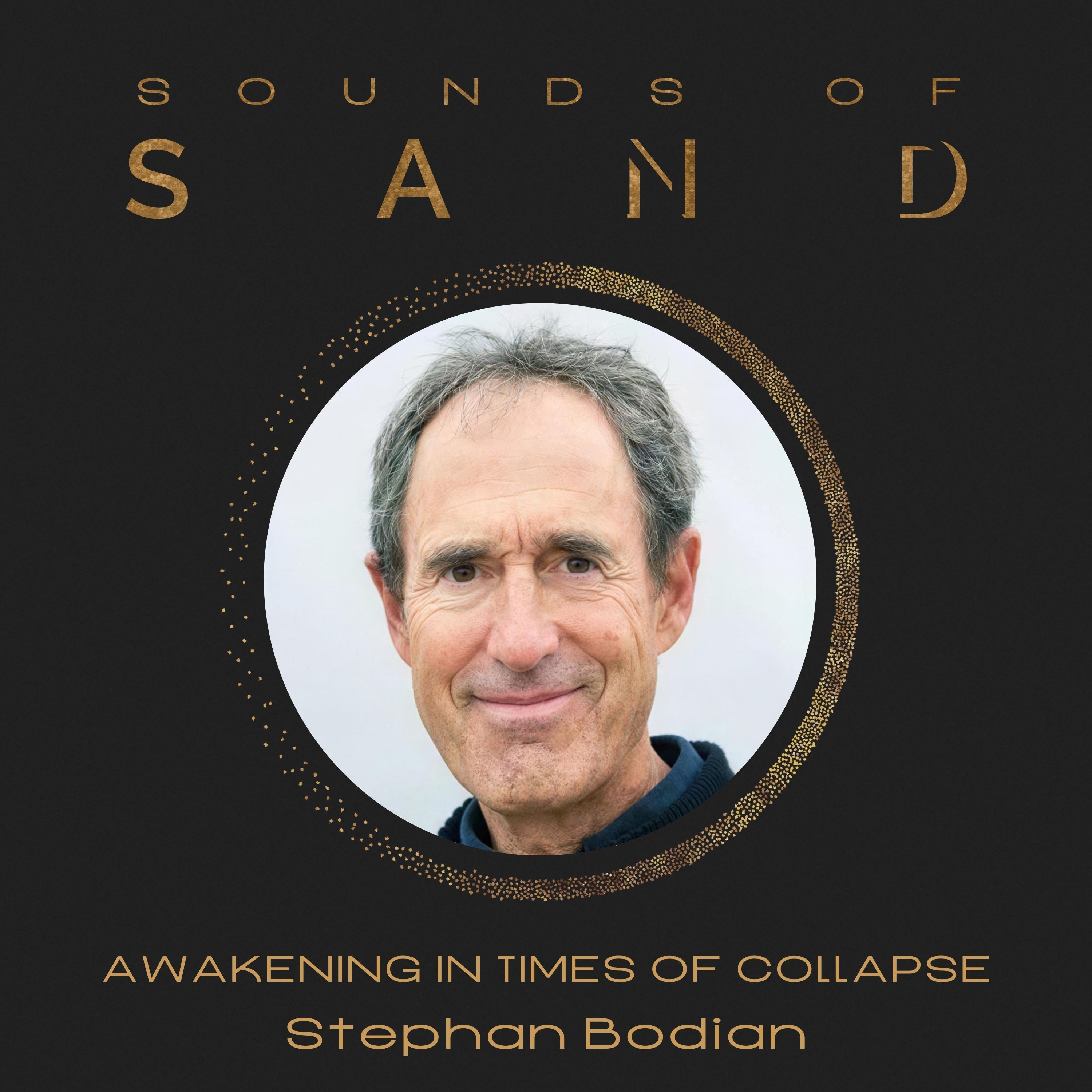 Awakening in Times of Collapse: Stephan Bodian 04.06.2026 40minStephan offers webinars, retreats, videos, books, and spiritual counseling that make profound spiritual teachings and practices accessible to a global audience. He studied and practiced for many years with great masters in the nondual wisdom traditions of Zen, Dzogchen-Mahamudra, and Advaita Vedanta, and in 2001 he received Dharma transmission (authorization to teach) from Adyashanti. In this conversation, recorded to mark the release of his new book Infinite Awakening: A Guide to Nondual Wisdom and the Pathless Path (Shambhala, May 2026), Stephan and Michael explore awakening not as a destination but as an ongoing, infinite process. They move through trauma and trust, the limits of mindfulness, the role of intimate relationship as spiritual path, and how nondual realization speaks — or fails to speak — to the metacrisis we're all living through. The episode closes with a guided "rest and allow" meditation from Stephan. Topics 00:00 — Reconnecting 00:04 — Awakening as a Path 00:10 — Trauma & Trust 00:16 — IFS & Somatic Therapy 00:18 — Intimate Relationships as Spiritual Path 00:21 — Spiritual Bypassing 00:27 — The Limits of Mindfulness 00:33 — Guided Meditation: Rest and Allow by Stephan Resources & Links Stephan Bodian Website: infinite-awakening.org Infinite Awakening: A Guide to Nondual Wisdom and the Pathless Path — Shambhala/Penguin Random House, May 2026 Beyond Mindfulness — referenced in the conversation Meditation for Dummies — Stephan Bodian Psychology Today interview: "Stephan Bodian on Our Innate Drive to Awaken" Referenced teachers and books Adyashanti — website — gave Stephan Dharma transmission; wrote the foreword to Infinite Awakening Ramana Maharshi — Wikipedia — referenced in discussion of awakening ideals Nisargadatta Maharaj — Wikipedia — "I am That"; referenced in discussion of true nature Thich Nhat Hanh — "inter-being" — referenced in discussion of inseparability and nonduality Ram Dass — "go home to your parents" — referenced in discussion of relationships as spiritual mirror Andrew Holecek — I'm Mindful, Now What? (Sounds True, 2024) — referenced as a companion conversation on the limits of mindfulness Glissando of Consciousness SAND Podcast with Andrew Holecek Gabor Maté — referenced in discussion of trauma as universal human condition Psychological Modalities IFS — Internal Family Systems — referenced as a somatic approach that complements awakening EMDR — Eye Movement Desensitization and Reprocessing — referenced alongside somatic therapy SAND The Wisdom of Trauma — SAND film The Eternal Song — SAND film series SAND membership Contact SAND [email protected]
 -
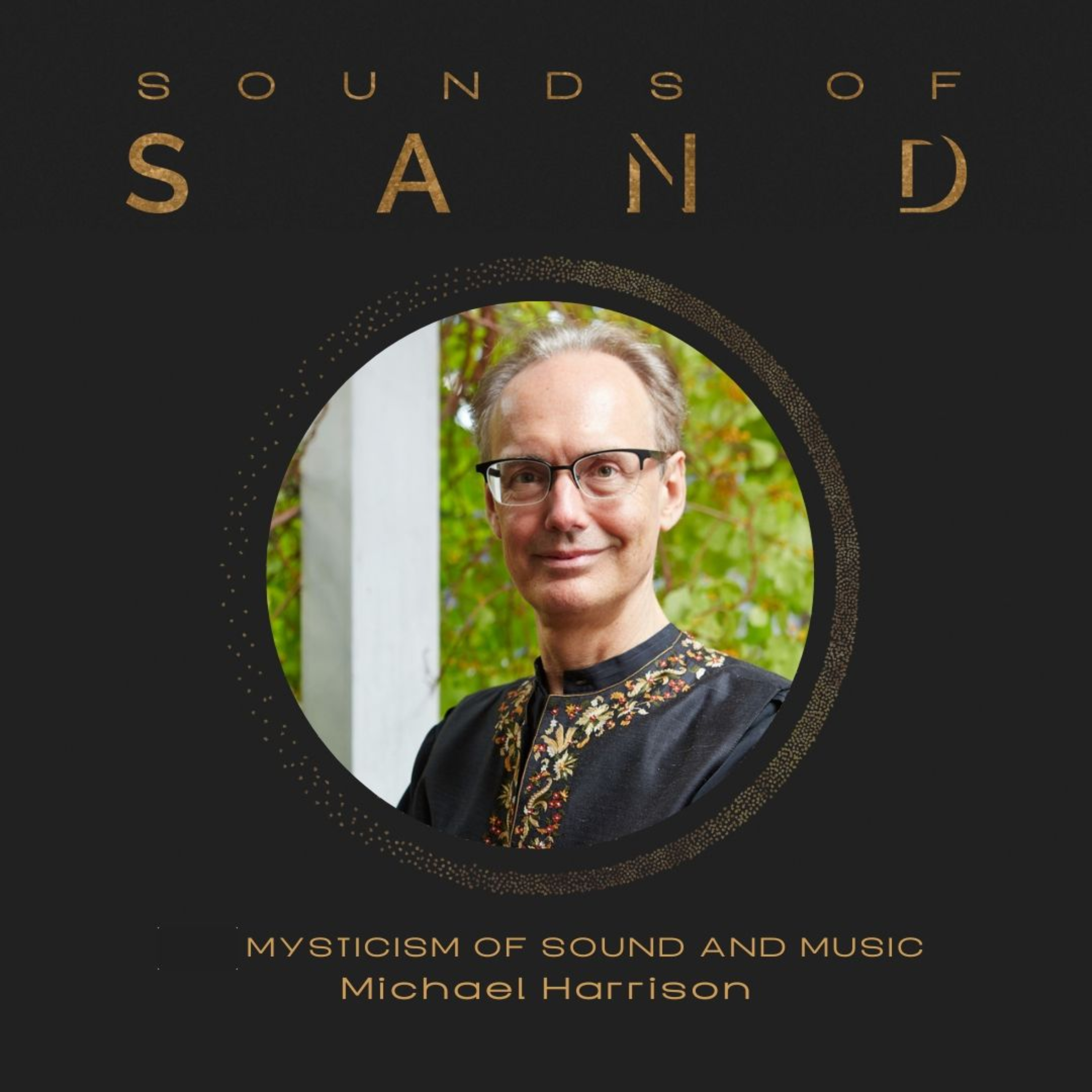 Mysticism of Sound & Music: Michael Harrison (Encore) 21.05.2026 59minWe are resharing this episode in memory of Michael Harrison, who passed away on April 17, 2026. He was 67. In this episode, we discuss the life and work of musician and Sufi teacher Hazrat Inayat Khan with composer/pianist and Inayat Khan scholar Michael Harrison. Hazrat Inayat Khan ( July 1882 – 5 February 1927) was an Indian professor of musicology, singer, exponent of the saraswati vina, poet, philosopher, and pioneer of the transmission of Sufism to the West. At the urging of his students, and on the basis of his ancestral Sufi tradition and four-fold training and authorization at the hands of Sayyid Abu Hashim Madani (d. 1907) of Hyderabad, he established an order of Sufism (the Sufi Order) in London in 1914. By the time of his death in 1927, centers had been established throughout Europe and North America, and multiple volumes of his teachings had been published. Michael Harrison (October 24, 1958 - April 17, 2026) forged a new approach to composition through just intonation (the system of tuning based on pure harmonic proportions). His works blend classical music traditions of Europe and North India. He is a Guggenheim Fellowship and NYFA Artist Fellowship recipient. Michael created dedicated tuning systems for many of his works. He pioneered a structural approach to composition in which the proportions of harmonic relationships organically determine other musical elements such as pitch, duration, and dynamics. He also invented the “harmonic piano,” a grand piano that plays 24 notes per octave, documented in the Grove Dictionary of Musical Instruments. Harrison seeks expressions of universality via the physics of sound – music that brings one into a state of concentrated listening as a meditative and even mind-altering experience. At the time of his death he was working on “The Raga Cycle”, a series of albums charting the hours of the day through Hindustani raga. The first installment, Evening Light, was released in March 2026 on Cantaloupe Records. More albums in the series were recorded before he became too ill to continue. They will be released in the years ahead. Donations in his memory can be made to the Michael Harrison Foundation for Just Music at JustMusic.org. Topics 00:00 Podcast Welcome 00:22 Encore Tribute 02:28 Mysticism Book Intro 02:49 Spiritual Music Path 04:32 Conservatory And Tonality 06:37 Daily Raga Practice 12:55 Voice Breath And Wazifa 16:48 Creation As Vibration 20:14 Harmony East And West 24:07 Math Of Consonance 25:32 Temperament Versus Just 28:24 Tuning The Soul Quote 32:03 Piano Retuning Journey 35:54 432 Versus 440 39:56 Music As Universal Religion 46:02 Cage Oliveros Deep Listening 51:16 Commentary And Curriculum 53:08 Teaching Programs 55:26 Closing Thanks And Outro Links Michael Harrison — His Own Work Evening Light: Raga Cycle I — Cantaloupe Music (2026) Seven Sacred Names — Bandcamp (2021) Revelation: Music in Pure Intonation — Cantaloupe Music (2007) From Ancient Worlds — michaelharrison.com Time Loops with Maya Beiser — Cantaloupe Music (2012) Michael Harrison website Episode Music Michael Harrison — "Mureed" from Seven Sacred Names (2021, Cantaloupe Music) Michael Harrison — "Alim: Polyphonic Raga Malkauns" from Seven Sacred Names (2021, Cantaloupe Music) Michael Harrison — "Qadr: Etude in Raga Bhimpalasi" from Seven Sacred Names (2021, Cantaloupe Music) Hazrat Inayat Khan — "Purvi Khal: Kamli Wale Tope Sabkuchhvare" (2022, Primitiv) Michael Harrison – “Sami: The Acoustic Constellation” from Seven Sacred Names (2021, Cantaloupe Music) Hazrat Inayat Khan The Mysticism of Sound and Music — Goodreads Inayat Khan 1909 78rpm Recordings — YouTube Hazrat Inayat Khan — Wikipedia The Inayat Order — Pir Zia Inayat Khan Turning Toward the Heart — SAND Podcast with Pir Zia Inayat Khan Teachers & Lineage Pandit Pran Nath — Wikipedia La Monte Young — Wikipedia Terry Riley — Wikipedia Pir Vilayat Khan — Wikipedia Ustad Mashkoor Ali Khan — Wikipedia Other Composers & Artists Referenced Pauline Oliveros — Center for Deep Listening® — Michael Reiley's teacher; creator of Deep Listening practice Pauline Oliveros — paulineoliveros.us John Cage — Wikipedia — composer, Zen Buddhist, creator of 4'33" Arvo Pärt — Wikipedia Hildegard of Bingen — Wikipedia Ravi Shankar — Wikipedia George Harrison Concert for Bangladesh — YouTube Roomful of Teeth — website John Eliot Gardiner — Wikipedia Josquin des Prez — Wikipedia Claudio Monteverdi — Wikipedia J.S. Bach — Wikipedia Programs & Institutions Arts, Letters and Numbers — Creative Music Intensive Michael Harrison Foundation for Just Music — donations in his memory Manhattan School of Music — where the harmonic piano is now archived Contact SAND [email protected] Support the mission of SAND and the production of this podcast by becoming a SAND Member
 -
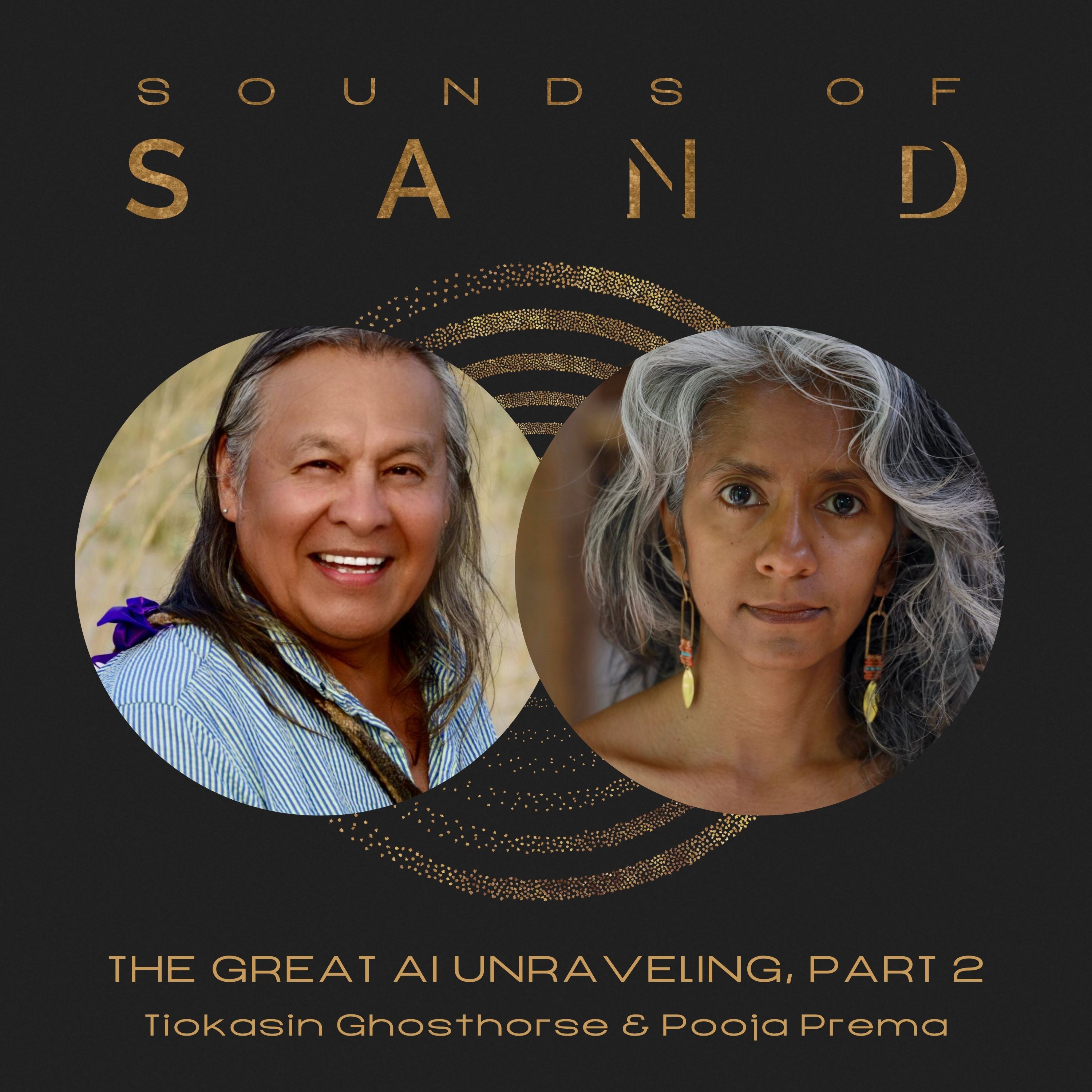 The Great AI Unraveling, Part 2: Tiokasin Ghosthorse & Pooja Prema 14.05.2026 1t 23minThis is the second gathering in SAND's ongoing series on AI and the human spirit — and it takes a deliberately different rhythm. Rather than asking "is AI safe?" or "will it take our jobs?", Tiokasin Ghosthorse and Pooja Prema invite us to slow down and ask the deeper questions: What cosmology is AI extending? What is intelligence, really? And what happens when the earth-based, organic, living intelligence of Indigenous and ancestral ways of knowing gets replaced by a synthetic one? A spacious, felt-sense conversation that asks us to remember what a living mind actually is. Timestamps 00:00 — Welcome & framing the deeper questions 00:04 — Opening body practice: tuning into felt sense before speaking 00:07 — Tiokasin: AI as the latest ship on the shore — colonization in a new form 00:17 — "There is no artificial intuition" — what technology cannot replace 00:18 — Pooja: the cosmology behind AI — colonial linearity vs. the curving motherboard of Earth 00:25 — AI as the latest savior narrative — and why that story keeps repeating 00:45 — Who owns the data? Who controls the intelligence? The politics of AI 01:05 — AI as therapist, AI replacing elders — the cost to young people and mental health 01:10 — Ghost in the Machine: how to resist empire over the long game 01:15 — Closing: "Our body is the mystic" — an invitation to make this a living inquiry Guests Tiokasin Ghosthorse is a member of the Cheyenne River Lakota Nation and lifelong Indigenous activist. He is the founder and host of First Voices Radio, which broadcast for 33 years before its final episode in July 2025. He was nominated for the Nobel Peace Prize in 2016, is a National Native American Hall of Fame nominee, and a master musician who performs worldwide. He describes himself simply as "a perfectly flawed human being." He is also featured in SAND's film The Eternal Song. Pooja Prema is a first-generation Indian American writer, multidisciplinary artist, and ritualist from Kerala, South India. Her work weaves ecofeminism, decolonial somatic practice, and animistic cosmologies. She is the founder of The Rites of Passage Project and The Ritual Theatre. Her work has been featured at the Kennedy Center, Ebony Magazine, and NPR. Resources & Links Tiokasin Ghosthorse Akantu Intelligence — website First Voices Radio — archive Featured in The Eternal Song — SAND film Pooja Prema Website: poojaprema.com The Rites of Passage Project The Ritual Theatre Instagram: @thecabinwitch Film referenced Ghost in the Machine — documentary directed by Valerie Veatch, Sundance 2026 — traces the buried history of AI and its roots in eugenics, racism, and colonial power. Featuring Tasheka Lavann on how indigenous nations are resisting data centers and how we resist empire over generations. Concepts discussed Conspecific aggression — Tiokasin's term for what happens when a species competes so aggressively over shared resources that it turns on itself Present-phobic language — technology as a tool for escaping the present into an imagined future The real motherboard — Pooja's framing of Earth and cosmos as the original curving, relational, non-linear intelligence that AI's linear grid cannot replicate SAND series context Part 1 of The Great AI Unraveling — with Tristan Harris The Eternal Song — SAND film series Contact SAND [email protected] Support the mission of SAND and the production of this podcast by becoming a SAND Member
 -
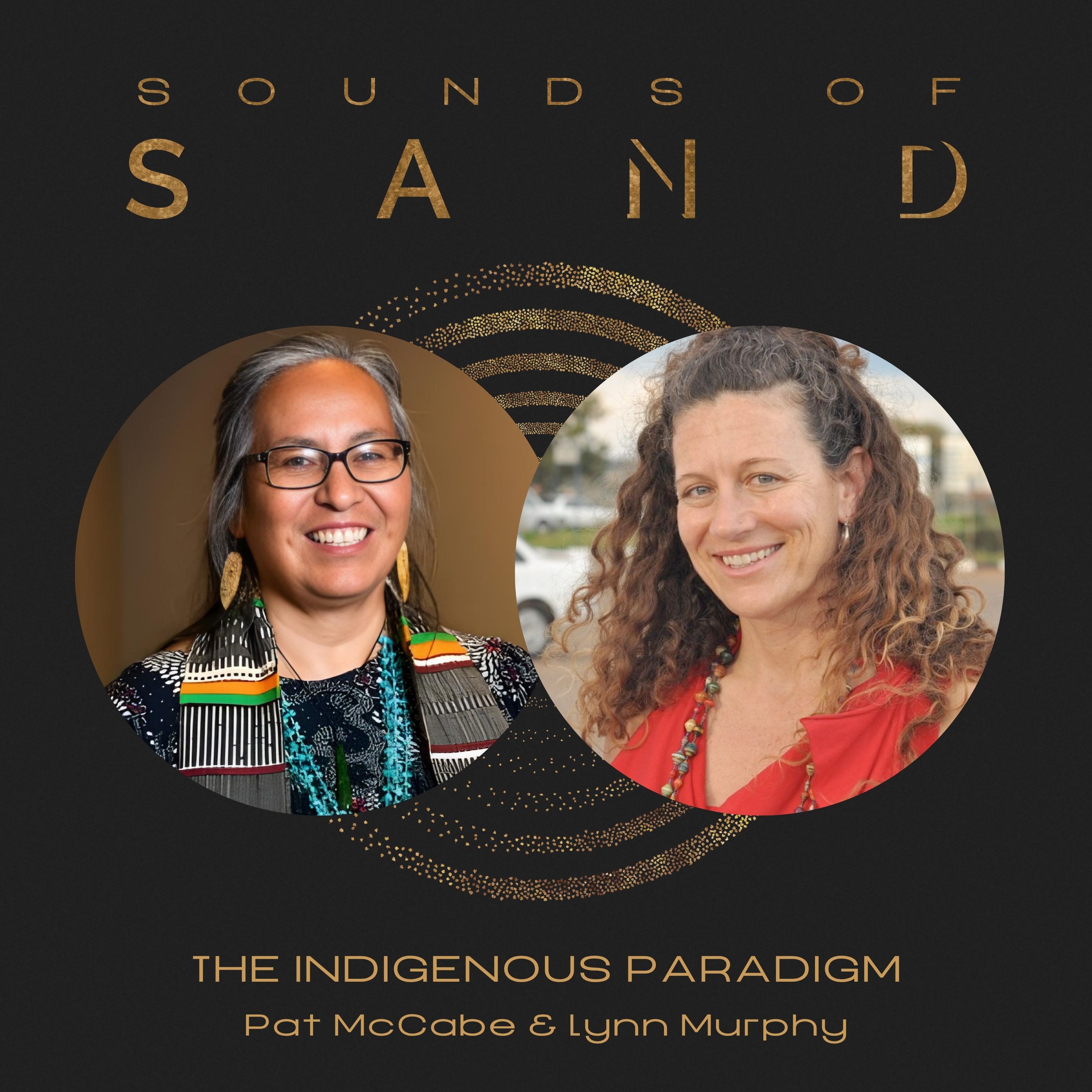 The Indigenous Paradigm: Pat McCabe & Lynn Murphy 07.05.2026 1t 1minOriginally recorded at Science and Nonduality, 2021 Pat McCabe, also known as Woman Stands Shining, is a Diné elder, ceremonial prayer leader, and international speaker adopted into the Lakota spiritual way of life. In this conversation hosted by Lynn Murphy, Pat offers a profound invitation to examine the foundational assumptions of the modern world paradigm and consider what it might mean to live from a genuinely different understanding of what it is to be human. Drawing on teachings from her clan grandfather, her experience of intergenerational trauma and survival, and her deep inquiry into masculine and feminine principles, Pat maps the territory between the glittering world we are leaving and the green world we are entering. The conversation opens in ceremony and closes with a practice: a morning sunrise offering that anyone can begin today. Lynn Murphy is a strategic advisor for foundations and NGOs working in the geopolitical South. She was a senior fellow and program officer at the William and Flora Hewlett Foundation where she focused on international education and global development. She resigned as a ”conscientious objector” to neocolonial philanthropy. She holds an MA and PhD in international comparative education from Stanford University. She is also a certified Laban/Bartenieff movement analyst. This episode is released in celebration of SAND’s new film featuring Pat McCabe, Little Singer, premiering online May 26-28, 2026, as part of the Eternal Song series. Timestamps 00:00:00 — Introduction 00:01:45 — Lynn Murphy introduces Pat McCabe: Diné nation, Lakota spiritual way, Defend the Sacred alliance 00:05:00 — Pat introduces herself through her clans — clan names as places on the earth, worlds more than this one 00:07:00 — Traveling through worlds: the flood, men and women, and the movement from the glittering world to the green world 00:15:00 — The two paradigms: indigenous versus modern world — "I am a human being, relative to all my relations" 00:34:00 — Trailer for Little Singer — premiering online May 26-28, 2026 — theeternalsong.org/littlesinger 00:35:00 — Masculine and feminine principles: power over versus power with, the sacred hoop, and right relations 00:52:00 — A practice for beginning: the morning sunrise offering and the teaching on consent, sovereignty, and honorable relationship with all beings Resources and Links Pat McCabe — Woman Stands Shining Website: patmccabe.net Little Singer — Eternal Song Series Online premiere: May 26-28, 2026 Three-day event with Diné voices Mentioned in the episode Robin Wall Kimmerer — Braiding Sweetgrass (plant sovereignty, honorable harvest) Lakota spiritual traditions — Seven Generations teaching Diné (Navajo) Nation — Long Walk history, Bosque Redondo concentration camp, 1860s Residential boarding school history — US government and church collaboration Masculine and feminine principles in economics and right relations — ongoing inquiry in Pat's work Episode artwork “Woman Stands Shining” by Namita Contact SAND [email protected] Support the mission of SAND and the production of this podcast by becoming a SAND Member
 -
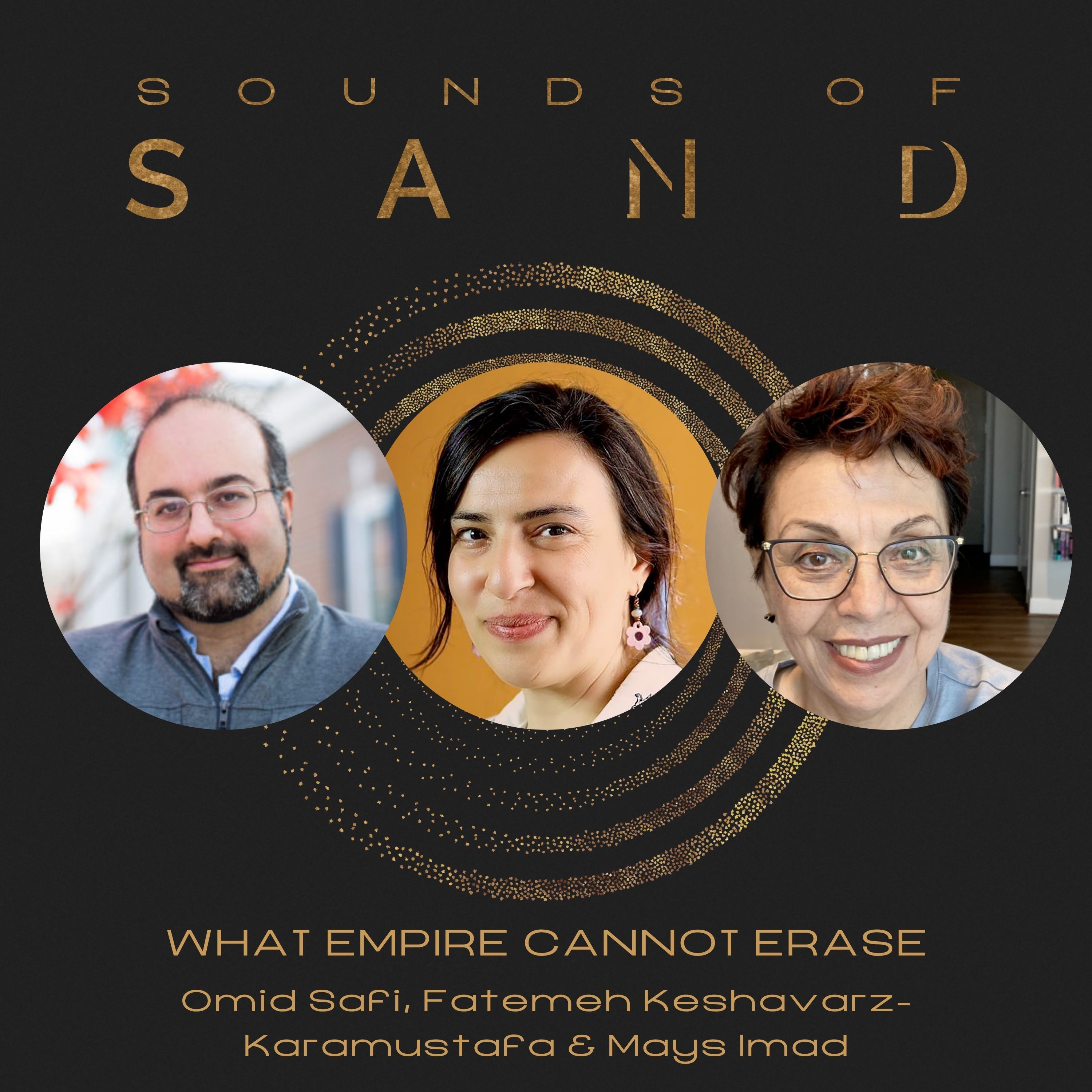 What Empire Cannot Erase: Fatemeh Keshavarz-Karamustafa, Omid Safi & Mays Imad 30.04.2026 1t 17minPersian Poetry, Radical Love, and the Soul of Iran“The path to God goes through that most difficult of beings, the human being.” – Omid SafiRecorded live at a SAND Community Gathering (April 2026). Watch the full conversation on the SAND Website. We are watching, once again, what empire does: not only to bodies, but to the long memory of a people; to the libraries and sacred sites; to art, language, and the ruins that hold the oldest threads of human spiritual inquiry. We are thinking of the civilization that gave us Rumi, Hafez, Omar Khayyam, Forough Farrokhzad — mystics and rebels and lovers of paradox who understood something about the human soul that we are still, centuries later, trying to catch up to. This gathering invited us to come together: to read poetry aloud, to hear from Iranian voices, to sit with grief and beauty together rather than alone. We work with political and moral vocabulary shaped by Iranian thinkers such as Ali Shariati, who wrote against domination, spiritual emptiness, and the violence of imposed power. We make space for what doesn’t fit into headlines or talking points—the complexity of empire, the difference between a government and its people, the authoritarian forces at work not only abroad but here at home. We also gather with the political inheritance of those who taught generations to resist domination and spiritual emptiness, including Ali Shariati. Guests Omid Safi is a scholar of the Islamic mystical tradition and professor of Islamic Studies at Duke University. He is the author of Memories of Muhammad and Radical Love: Teachings from the Islamic Mystical Tradition, and teaches online courses on Muslim mysticism. He leads contemplative journeys to Turkey, Morocco, and Mecca/Medina through Illuminated Courses. Fatemeh Keshavarz is the Roshan Institute Chair in Persian Language and Literature and Director of the Roshan Institute Center for Persian Studies at the University of Maryland. A poet in Persian and English, she is the author of Reading Mystical Lyric, Recite in the Name of the Red Rose, Jasmine and Stars: Reading More Than Lolita in Tehran, and Lyrics of Life: Sa'di on Love, Cosmopolitanism and Care of the Self. She has spoken at the UN General Assembly and received the Peabody Award for her NPR program on Rumi. Mays Imad, PhD (facilitator) is a neuroscientist, educator, and associate professor at Connecticut College whose work bridges neuroscience, philosophy, and education. An Iraqi immigrant who lived through wars and displacement, she brings both personal and scholarly depth to the themes of trauma, remembrance, and repair through the embodied nervous system. Timestamps 00:00 — Welcome & framing 00:02 — Mays Imad opens: grief, urgency, and love 00:06 — Introducing Omid Safi & Fatemeh Keshavarz 00:07 — Saadi, Rumi, and the Persian tradition 00:12 — The war on Iran: what is being destroyed 00:21 — Don't bypass grief — the Persian mystics knew this 00:27 — Saadi on truth, power, and interconnection 00:32 — Fatemeh: togetherness, invisibilization, and Iranian resilience 00:38 — Poetry as the Silk Road of imagination 00:52 — War's corruption of language — and poetry as antidote 01:04 — Remembrance as ethical act 01:10 — Intergenerational love & closing Resources & Links Omid Safi Illuminated Courses — books, podcast, courses, tours Duke University faculty page Radical Love: Teachings from the Islamic Mystical Tradition — Yale University Press Memories of Muhammad: Why the Prophet Matters — HarperOne Podcast: Sufi Heart — Be Here Now Network The Heart of Rumi's Poetry — online course Upcoming events: Evening workshop in London, May 5th — "Islamic Spirituality in an Age of Conflict" Contemplative journey to Turkey, June 1–12 Rumi Retreat in Marrakech, November 22–28 Fatemeh Keshavarz Website Jasmine and Stars: Reading More Than Lolita in Tehran Lyrics of Life: Sa'di on Love, Cosmopolitanism and Care of the Self Cowboys and Iranians — poem by Fatemeh Keshavarz (video) Birds Without a Name — poem by Fatemeh Keshavarz, read at ARHU event on Hope & Home (video) Mays Imad Personal website Connecticut College faculty page Music featured Watan (وَطَن — "Homeland") performed by Shaghayegh Amiri, playing the Daf — the ancient Persian frame drum central to Sufi musical tradition Ali Ghamsari — solo on the Kamancheh (Persian bowed string instrument), taught by Hamidreza Afarideh, music teacher in Tehran Poets and texts referenced in depth Rumi (Jalal al-Din Rumi, 1207–1273) — Persian Sufi mystic and poet; his Masnavi opens with pain and grief; central throughout Sa'di Shirazi (1210–1291) — Iranian Sufi poet; his Golestan (Garden of Roses) is where Iranians learn to read and write; complete English translation by Thackston available; Fatemeh's Lyrics of Life goes deeper on Sa'di Hafez (14th century) — Persian lyric poet; Fatemeh discusses his use of the word hush as an example of how poetic language restores meaning Farid ud-Din Attar (born 1150) — author of Mantiq ut-Tayr (The Conference of the Birds / The Parliament of the Fowls) — referenced by Mays in her opening Abu Sa'id (Abu Sa'id Abi'l-Khayr, 967–1049) — Persian Sufi mystic referenced by Omid: "Don't just write down stories — become someone others want to write down what you say" Shams of Tabriz — Rumi's spiritual companion; Fatemeh discusses how Shams urged Rumi to live his knowledge Jamiluddin Aali — Urdu poet whose work was recited in the live chat Historical & contextual references Sharif University of Technology, Tehran — described as "the MIT of the Middle East," bombed during the war Leston Palace, Tehran — UNESCO World Heritage Site, bombed and referenced as a war crime The Iran-Iraq War (1980–1988) — Fatemeh's personal reference point for civilian life under bombardment George Orwell's Animal Farm and 1984 — referenced by Omid in discussion of the corruption of language Next SAND Community Gathering Voices of the Land: Resistance & Solidarity with Lebanon — April 28th Contact SAND [email protected] Support the mission of SAND and the production of this podcast by becoming a SAND Member
 -
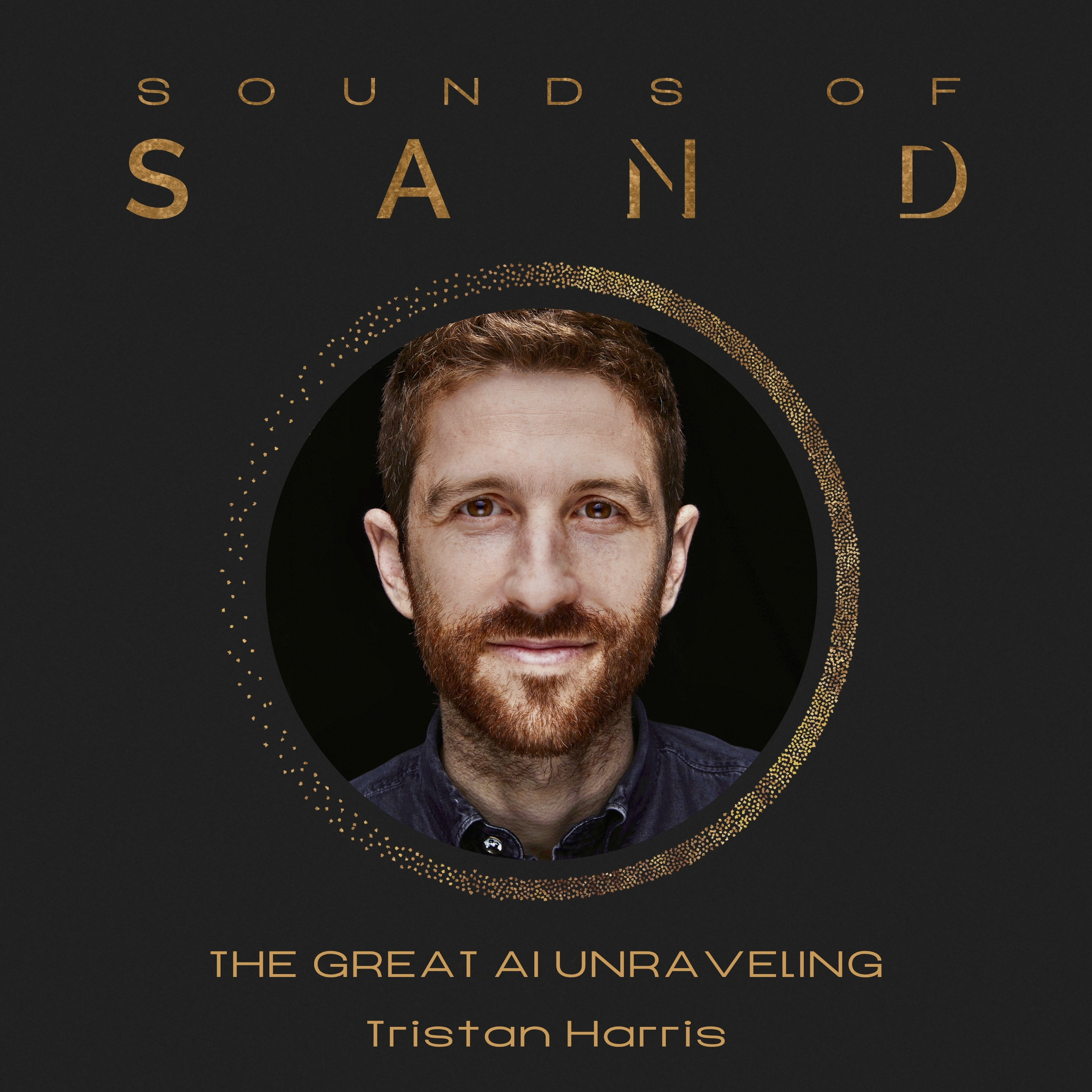 The Great AI Unraveling: Tristan Harris 23.04.2026 1t 29minRecorded live at SAND Community Gathering (April 2026). Watch the full conversion on the SAND Website. SAND has launched a special series on Artificial Intelligence. To premiere this series, we spoke with tech ethicist Tristan Harris—co-founder of the Center for Humane Technology. In this conversation, we explored his warnings about the impending age of AI. According to Harris, the current trajectory isn’t just menacing the economy, but fundamentally rewiring human relationships, altering parenting and mental health, potentially accelerating climate collapse, and even threatening the very fabric of society. We inquired into ways to remain human in an era where machines can simulate empathy, displace our labor, and potentially outmaneuver us. Topics 00:00 Welcome and Context 00:42 Why This AI Talk 01:32 Introducing Tristan Harris 03:15 Setting the Basics 04:10 From Narrow to New AI 06:18 Rubber Band Reality Check 08:31 Transformers and Scaling 11:00 Infinity Upside and Risk 14:49 Defining AGI and ASI 18:18 Jagged Capabilities and Hype 21:33 Singularity and Anti Human Drift 23:26 Incentives Behind the Future 27:29 The Intelligence Curse 32:22 Devaluing Humans and Consensus 37:56 Planetary Costs of Data Centers 39:41 Why We Keep Building It 42:46 Extinction Risk and Safety Math 45:20 AI in War and Arms Race 47:36 Leaders Unaware of Runaway Signs 48:26 Leaders Fear AI Power 49:02 Nuclear War Game Theory 49:41 Infinite Games Mindset 51:11 AI as Extractive Empire 52:27 From Shadow to Action 53:55 Building the Human Movement 57:25 Four-Step Action Plan 59:44 Grassroots Wins and Bans 01:02:18 Nonprofit Progress and Lawsuits 01:07:51 Talking to Teens Effectively 01:10:05 Governance and Citizen Assemblies 01:12:19 Spiritual Hopes vs Incentives 01:15:12 Accelerationism and Choice 01:18:22 Policy Maker Ten Minute Brief 01:21:26 Countering Transhumanist Ideology 01:23:45 Changing Culture and Incentives 01:27:12 Final Reflections and Gratitude Resources Websites & Organizations Center for Humane Technology (Tristan Harris's website) The Human Movement AI Dialogue Prohuman AI Statement / Declaration Roadmap to How We Ensure AI is Serving Humanity Indigenous Perspectives on AI Course Metarelational AI Tech Workers Coalition Panel on AI + Embodiment Luma Invite Purge Palantir Action Links Purge Palantir Campaign Pledge Articles & Documents Alibaba Security Paper The Intelligence Curse by Luke Drago and Rudolf Laine The Shape of AI Jaggedness Harvard Gazette: Why are Communities pushing back on data centers The Palantir Payroll PDF New York Times Opinion: Yuval Harari AI ChatGPT Archive Article on Billionaires' Brains New York Times Opinion: Anthropic’s Restraint Is a Terrifying Warning Sign Videos & Films The Social Dilemma The AI Doc / How I Became an Apocalyptimist - Official Trailer Ghost in the Machine The Day After War Games Bernie vs. Claude (YouTube) Joanna Macy and the Great Turning How To Make AI Good For Humanity by Siliconversations (YouTube) Books & Textbooks Artificial Intelligence: A Modern Approach by Peter Norvig and Stuart J. Russell (PDF) States of Denial by Stanley Cohen (PDF) Finite and Infinite Games by James P. Carse (PDF) Hospicing Modernity by Vanessa Machado de Oliveira Outgrowing Modernity by Vanessa Machado de Oliveira The Anxious Generation by Jonathan Haidt IntraConnected: MWe (Me + We) as the Integration of Self, Identity, and Belonging by Daniel J. Siegel, M.D. Empire of AI By Karen Hao More Everything Forever by Adam Becker Why Do We Tell Ourselves Scary Stories About AI? by Amanda Gefter Podcasts & Audio Your Undivided Attention - Tristan Harris, Aza Raskin, and Daniel Barcay The Emerald - Joshua Michael Schrei The Great Simplification - Nate Hagens Support the mission of SAND and the production of this podcast by becoming a SAND Member
Samankaltaiset podcastit


Suosittu maassa
Tämä podcast esiintyy myös näiden maiden podcast-listoilla.


