
The Great Coaches: Leadership & Life
Paul Barnett & Jim Woolfrey
0
We explore leadership through the lens of high performance sport, by interviewing great coaches from around the world, to try and find ideas to help all of us be better leaders.
Jaksot
-
 Gordon Herbert on Pressure, Pleasure and the Making of Championship Teams 16.09.2026 39minWe believe that there is no algorithm for leadership. So we ask the world's great coaches how they do it.In this episode, Paul speaks with Gordon Herbert about the leadership lessons behind a life in elite basketball. From early influences and painful setbacks to championship success with Germany, Gordon reflects on authenticity, adversity, mental fitness, role clarity and the importance of creating joy inside high-performing teams.In This Episode•Why great coaches are authentic, knowledgeable teachers with deep passion for their work.•How Gordon’s mother taught him to face adversity rather than make excuses.•The meaning behind his phrase, “Life’s a mountain, not a beach.”•Why asking better questions and listening more carefully became central to his leadership.•How pressure can never be allowed to exceed the pleasure of the journey.•The role of laughter, competition and care in championship environments.•Why elite teams need clear roles, strong individuals and a shared team mentality.•How mental health, psychological safety and the human element shape Gordon’s approach to coaching.Memorable Quotes•“Life’s a mountain, not a beach.”•“Pressure cannot exceed the pleasure of the journey.”•“I’d rather tame a lion than teach a cat to roar.”•“A committed person is focused on what he can give. A non-committed person is focused on what he can get.”•“One alone we cannot reach greatness. Together, united as one, we can.”Key Takeaways•Authentic leadership starts with knowing who you are and having the courage to lead from that place.•Adversity becomes useful when it is embraced as a chance to learn, adapt and improve.•Great teams are built on vision, direction and support, reinforced by values that leaders model every day.•Role clarity helps individuals understand how their contribution serves the team.•Joy, laughter and care are not distractions from performance; they are part of what makes performance sustainable.If you would like to send us any feedback or if you know a great coach, who has a unique story to share, then we would love to hear from you, please contact us at [email protected] and if you would like to receive our newsletter with 5 ideas to help you improve your leadership, then sign up at: https://thegreatcoaches.beehiiv.com/subscribe Hosted on Acast. See acast.com/privacy for more information.
 -
 From Iran to Global Courts: Leadership Lessons with Naeimeh Zafar 03.09.2026 34minNaeimeh Zafar: Coaching Across Cultures, Resilience, and Leading Beyond BarriersWe believe that there is no algorithm for leadership. So we ask the world's great coaches how they do it. Naeimeh Zafar shares how coaching across Iran, Serbia, Qatar, Oman, Vietnam, Thailand, and France demanded cultural adaptation, humility, and clear communication when language and perceptions created barriers, and how she learned to respect athletes’ privacy and judge only commitment and performance. She describes building resilience amid restrictions in Iranian women’s sport, using her Serbian studies to raise coaching standards, and pursuing opportunities abroad when institutional constraints outweighed development. She reflects on the controversy and success of coaching a men’s team in Oman—reaching a grand final and being voted best coach—and on staying focused while unable to contact family during war. She hopes her legacy is defined by discipline, professional values, and six coaching books. If you would like to send us any feedback or if you know a great coach, who has a unique story to share, then we would love to hear from you, please contact us at [email protected] and if you would like to receive our newsletter with 5 ideas to help you improve your leadership, then sign up at: https://thegreatcoaches.beehiiv.com/subscribe Hosted on Acast. See acast.com/privacy for more information.
 -
 John Speraw: Coaching from the Court to the Boardroom 20.08.2026 47minJohn Speraw on Systems, Feedback, and Winning Under PressureWe believe that there is no algorithm for leadership. So we ask the world's great coaches how they do it. John Speraw reflects on how great coaches lean into singular strengths while staying humble and learning from staff, and how early mentors helped him see what was possible. He describes choosing coaching over medical school, building a “systems coach” identity at UC Irvine by maximizing limited resources, and returning to UCLA ready to follow Al Scates by being himself. Speraw shares practical lessons on feedback—asking athletes how they want to hear it, creating cultures that accept critical input, and using routines for mistake recovery—plus integrating visualization, breathwork, and journaling into practice to prepare for championship moments when things go sideways. Now as USA Volleyball CEO, he’s focused on scaling culture, improving communication, increasing volleyball’s cultural relevance, lowering barriers to play, and ensuring kids have great growth experiences through sport. If you would like to send us any feedback or if you know a great coach, who has a unique story to share, then we would love to hear from you, please contact us at [email protected] and if you would like to receive our newsletter with 5 ideas to help you improve your leadership, then sign up at: https://thegreatcoaches.beehiiv.com/subscribeHere are 3 self-reflective questions based on the interview:1.What are one or two strengths I naturally bring to a team, and how could I use them more intentionally?2.what routine or mindset could help me stay composed and useful in high pressure moments?3.Who has helped me see a possibility for myself that I could not yet see, and how can I now do that for someone else? Hosted on Acast. See acast.com/privacy for more information.
 -
 Book Club: Percy Cerutty 06.08.2026 51minThis episode is a recording of our book club. The book we discuss is Why Die? The Extraordinary Percy Cerutty, 'Maker of Champions' by Graem Sims (Author).Percy Cerutty was an Australian athletics coach who transformed distance running in the 1950s and 1960s. Based at his rugged Portsea training camp, he developed the Stotan philosophy, blending Stoic discipline, Spartan toughness, natural diets, sand-hill running, weight training and intellectual growth. Best known for coaching Herb Elliott to world records and Olympic gold, Cerutty inspired athletes to pursue physical excellence and personal mastery. Our discussion is led by Dr David Turner, a Senior Lecturer in Sports Coaching at Anglia Ruskin University in the United Kingdom, and we are also joined by Andrew Gunn the author of Percy Cerutty: Life Lessons From A Remarkable Coach by Andrew Gunn.I scribbled down these 3 self-reflective questions:· Where in my life could I benefit from choosing growth over comfort?· What is one challenge I have already overcome that shows I am capable of reinvention?· How do I personally measure success: by outward achievement, or by how far I have come from where I started? If you would like to send us any feedback or if you know a great coach, who has a unique story to share, then we would love to hear from you, please contact us at [email protected] and if you would like to receive our newsletter with 5 ideas to help you improve your leadership, then sign up at: https://thegreatcoaches.beehiiv.com/subscribe Hosted on Acast. See acast.com/privacy for more information.
 -
 Coaching Across Continents: Lessons from Mick Byrne 30.07.2026 1t 2minMick Byrne on Preparation, Player Education, and Coaching Across Codes and CulturesWe believe that there is no algorithm for leadership. So we ask the world's great coaches how they do it. Mick Byrne reflects on elite coaching influences from Allan Jeans to Rod McQueen and the All Blacks, arguing great cultures are built on education, clarity of roles, consistent messaging, and disciplined weekly preparation so coaches and players can “sleep when the wind blows.” He explains his rare shift from AFL to rugby through skill transfer in kicking and high-ball work, and how he approached pressure roles by bringing an attacking kicking philosophy that manipulates defenses and makes fly-halves a triple threat. Byrne also shares how he tailors communication across countries through questioning rather than telling, helping players own solutions, recall them under pressure, and shape positive self-talk, while personally learning patience and healthy conflict. If you would like to send us any feedback or if you know a great coach, who has a unique story to share, then we would love to hear from you, please contact us at [email protected] and if you would like to receive our newsletter with 5 ideas to help you improve your leadership, then sign up at: https://thegreatcoaches.beehiiv.com/subscribeThree self-reflective questions based on this conversation:1.Where in my own leadership do I need to create better preparation, so that I can “sleep when the wind blows” and respond calmly when pressure arrives?2.Am I telling people what to do too often, or am I asking the kinds of questions that help them discover the answer, build confidence, and take ownership?3.What part of my leadership has grown most over time? Hosted on Acast. See acast.com/privacy for more information.
 -
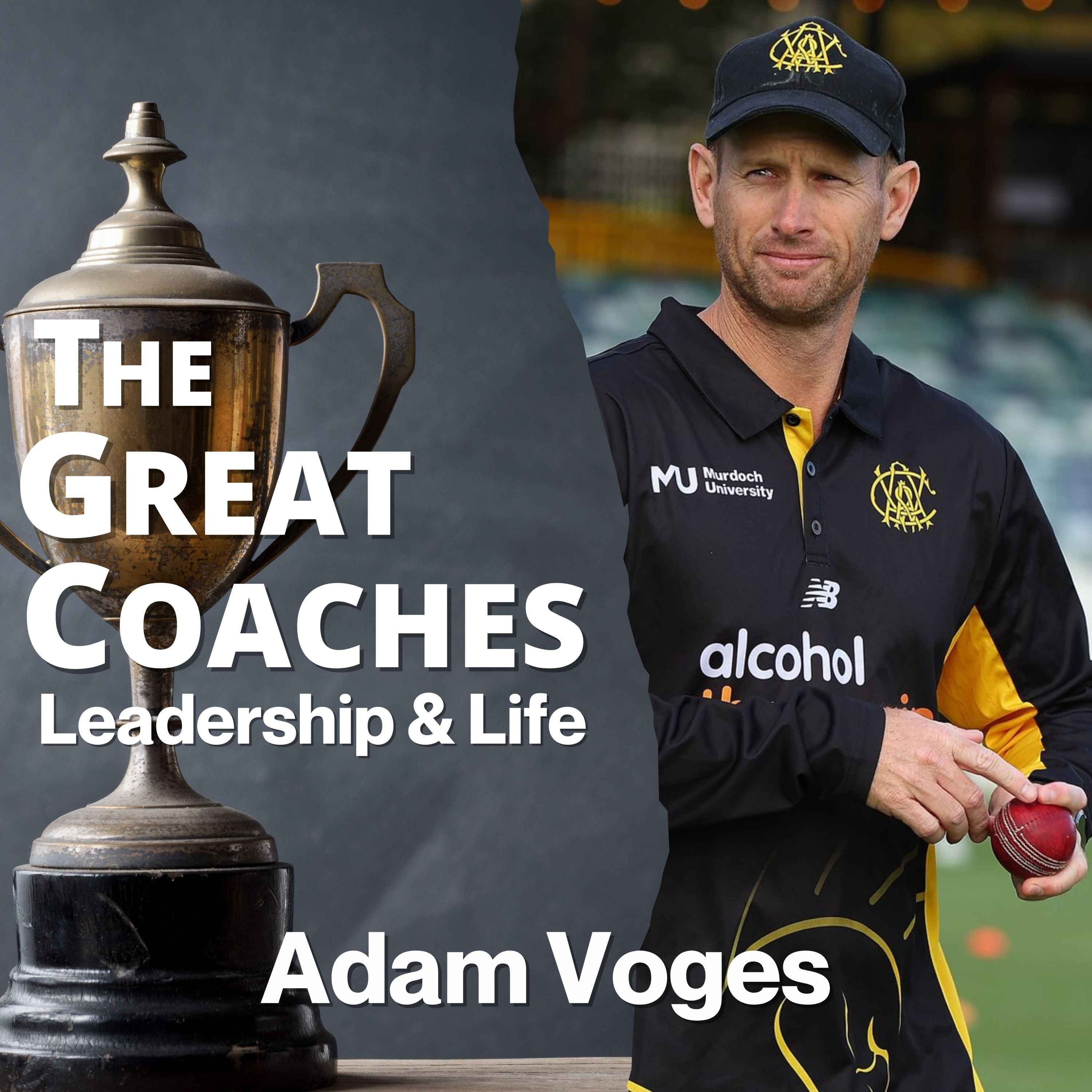 Adam Voges: Excellence Over Perfection 23.07.2026 42minWe believe that there is no algorithm for leadership. So we ask the world's great coaches how they do it.Adam Voges discusses how Justin Langer’s first address as Western Australia coach showed the power of clear communication, aligning the group through a shared vision and the idea that players ultimately determine a coach’s success, so they must be brought along and empowered. Ben reinforces this as interdependence in team sport and leadership, likening it to CEOs needing buy-in. Adam describes his rapid transition from player to head coach in 2018, the challenges of shifting relationships, managing staff, and relying on mentors like Bob Muirhead and Justin. He explains revisiting team values with players and staff at Rottnest Island to define their “why” (family pride, representing WA, winning) and values (trust, humility, commitment). He contrasts perfection with striving for excellence, details feedback that improved his emotional control, and emphasizes using emotion objectively while empowering others to avoid burnout and help athletes become self-reliant across changing teams and coaches.If you would like to send us any feedback or if you know a great coach, who has a unique story to share, then we would love to hear from you, please contact us at [email protected] and if you would like to receive our newsletter with 5 ideas to help you improve your leadership, then sign up at: https://thegreatcoaches.beehiiv.com/subscribeHere are 3 self-reflective questions I took from the interview:•Where am I trying to do too much myself, instead of trusting and empowering the people around me?•Do the people I lead feel genuinely brought along on the journey, or am I asking them to follow decisions they had no part in shaping?•When pressure rises, do I become more helpful and clear — or do my emotions make the situation harder for others? Hosted on Acast. See acast.com/privacy for more information.
 -
 The Magic of Sports with 92 year old George Selleck 16.07.2026 44minThe Magic of Sports: Putting Humans First in Coaching, Leadership, and LifeWe believe that there is no algorithm for leadership. So we ask the world's great coaches how they do it. In this episode, Dr. George Selik and Alan Gregerman discuss how early self-organized play shaped George’s coaching philosophy around joy, belonging, and learning, and why sport should prioritize human development alongside performance. George reflects on the tension between striving to be “great” and the costs of neglecting family, sharing lessons from divorce, self-coaching, and reflective decision-making that integrates head (facts), heart (values), and gut (instinct). Both guests argue that leadership is action—creating environments where everyone grows—by listening, building ownership, and developing each person’s strengths. George outlines sport’s “gifts” for life: empathy, belief, expectations, accountability, resilience, and celebration, and urges making sport accessible as a classroom for community and social connection. If you would like to send us any feedback or if you know a great coach, who has a unique story to share, then we would love to hear from you, please contact us at [email protected] and if you would like to receive our newsletter with 5 ideas to help you improve your leadership, then sign up at: https://thegreatcoaches.beehiiv.com/subscribeHere are three self-reflective questions to take away from this episode:1.Where in my life am I treating sport, work, or leadership as only a competition, when it could also be a place for growth, belonging, learning, and joy?2.What kind of environment do I create for the people around me, and does it help them grow as human beings, not just perform better?3.When I face setbacks or big decisions, how deliberately do I pause, reflect, and listen to my head, body, and gut before choosing my next step? Hosted on Acast. See acast.com/privacy for more information.
 -
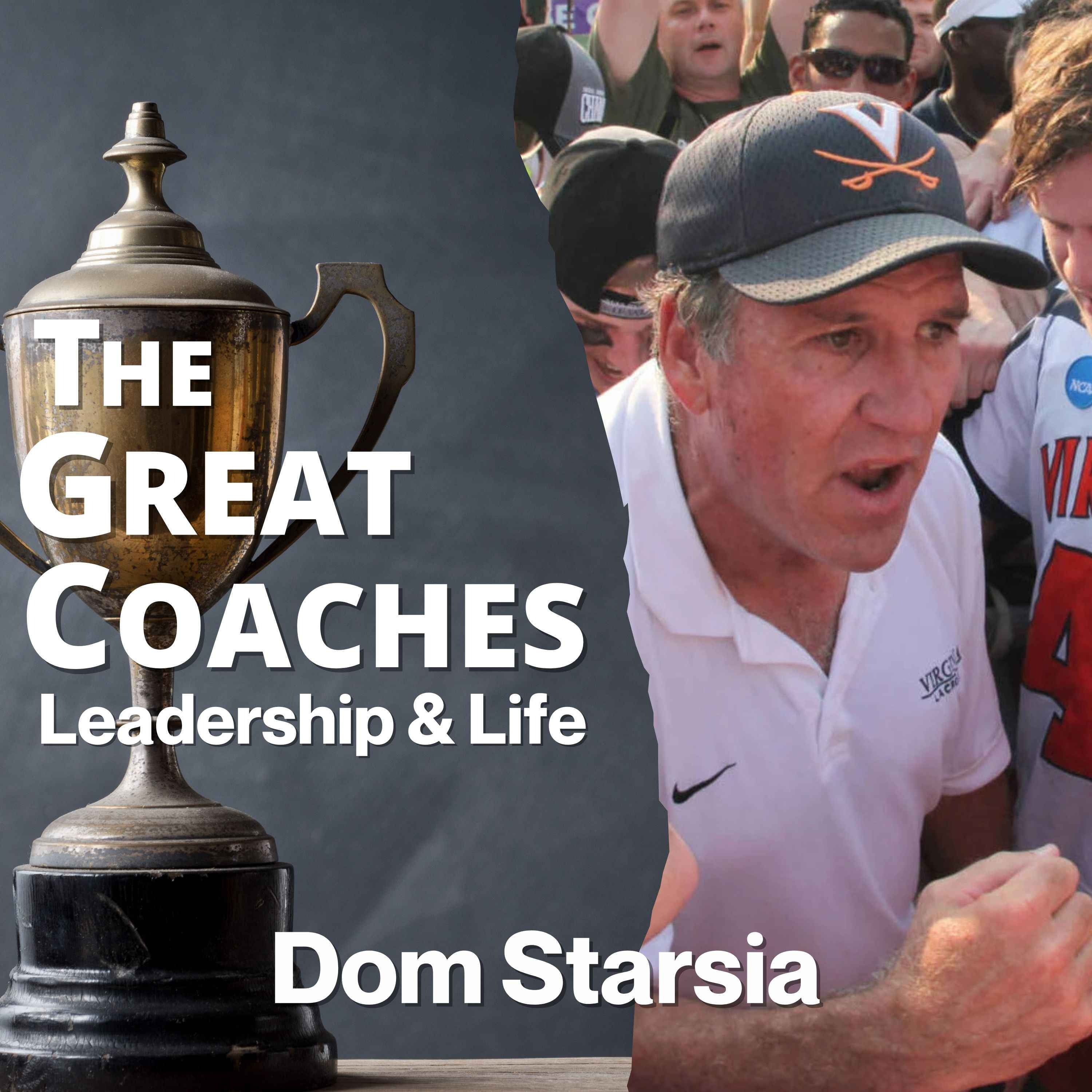 Authenticity and Leadership in Sports: Dom Starsia's Approach 09.07.2026 41minDom Starsia on Authentic Coaching, Sacrifice, and Relationships That Outlast WinsWe believe that there is no algorithm for leadership. So we ask the world's great coaches how they do it. From Charlottesville, Virginia, former Virginia lacrosse coach Dom Starsia reflects on learning from coaching greats while ultimately finding success through authenticity—taking useful ideas from others but staying comfortable in your own skin. He explains how team excellence depends on selflessness and sacrifice, sharing examples of players changing roles for the good of the group, and why “no big games” means consistent preparation and focusing on the process of daily improvement. Starsia describes a gratitude ritual—reminding players they have much to be thankful for—and reframes toughness as consistency and a willingness to communicate. He emphasizes positive language over sarcasm, learning from “scars” and mistakes, and concludes that wins and losses are fickle, but relationships endure and should never be spoiled in pursuit of victory. If you would like to send us any feedback or if you know a great coach, who has a unique story to share, then we would love to hear from you, please contact us at [email protected] and if you would like to receive our newsletter with 5 ideas to help you improve your leadership, then sign up at: https://thegreatcoaches.beehiiv.com/subscribeHere are three self-reflective questions based on the interview:1.Where in my life am I trying to copy someone else’s style instead of trusting my own authentic way of leading or contributing?2.What does “toughness as consistency” look like for me?3.when could I choose more positive or patient language? Hosted on Acast. See acast.com/privacy for more information.
 -
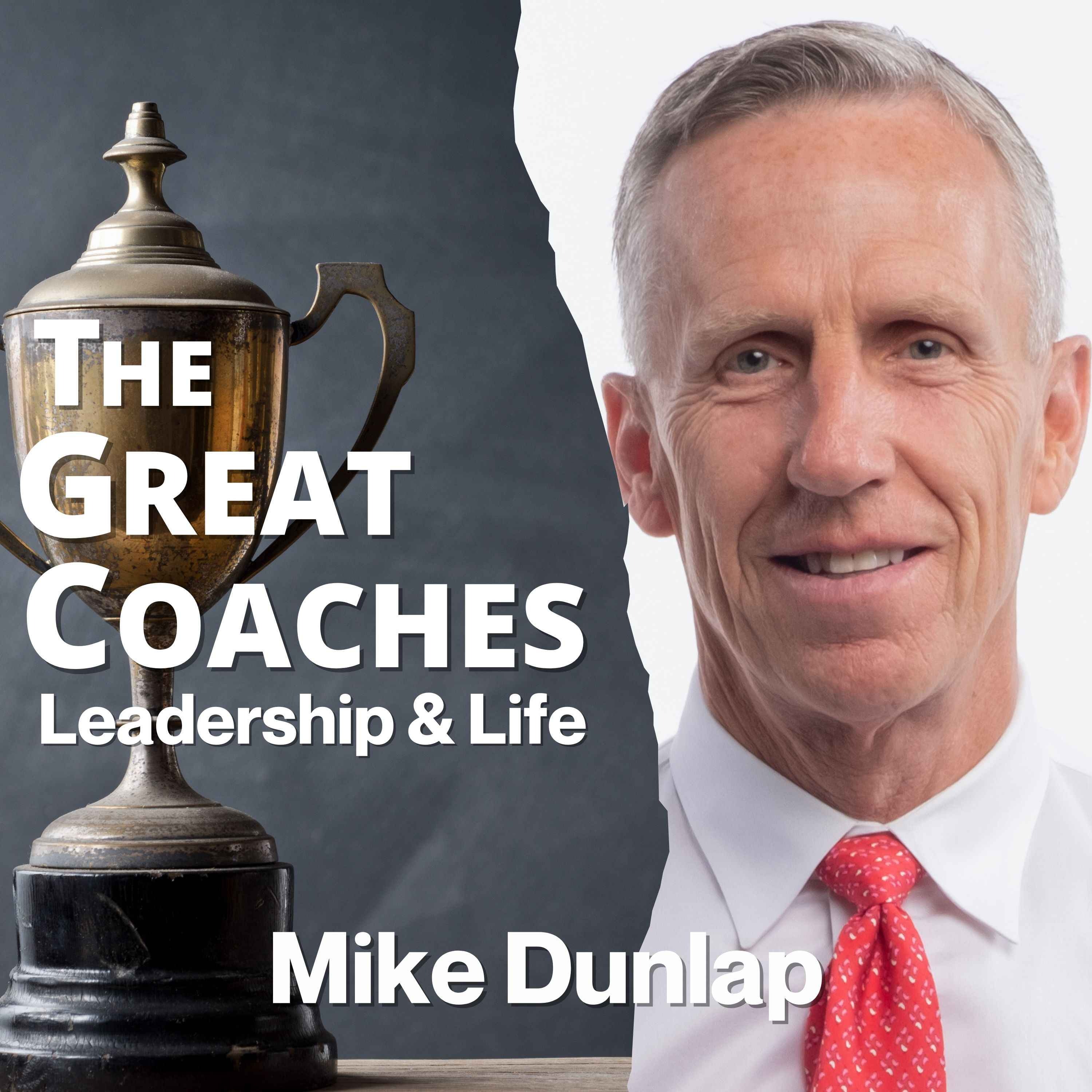 Leadership Through the Lens of Poetry: A Conversation with Mike Dunlap 02.07.2026 1t 13minMike Dunlap on Coaching Joy: Poetry, Purpose, and Teaching Beyond the ScoreboardWe believe that there is no algorithm for leadership. So we ask the world's great coaches how they do it. In this episode, Mike Dunlap reflects on returning to Division II coaching at Colorado Mesa and now living in La Jolla, arguing that money, NIL, and the transfer portal can distort the game’s “innocence,” while true purpose is found in relationships, service, and “victory beyond the scoreboard.” Using three poems—“Why Me?,” “Chasing Heaven,” and “Quiet Down”—he explores joy within competition, the dangers of perfectionism, and how coaches can nudge “me to we” through simple, detailed habits like journaling, planning, and intentional teammate touch. Dunlap shares how naming vulnerabilities and reframing losses into learning protect self-esteem, and how parenting mentor Diana Gilman helped him reject inherited myths and lead with curiosity. If you would like to send us any feedback or if you know a great coach, who has a unique story to share, then we would love to hear from you, please contact us at [email protected] and if you would like to receive our newsletter with 5 ideas to help you improve your leadership, then sign up at: https://thegreatcoaches.beehiiv.com/subscribeWhere am I currently measuring success too narrowly by outcomes, and what “victory beyond the scoreboard” might I be overlooking?How well do I balance high standards with joy — and do I pause long enough to recognise the “good” that may be the gateway to great?What does my inner voice sound like under pressure, and what practices help me quiet the chatter enough to respond with awareness rather than react automatically? Hosted on Acast. See acast.com/privacy for more information.
 -
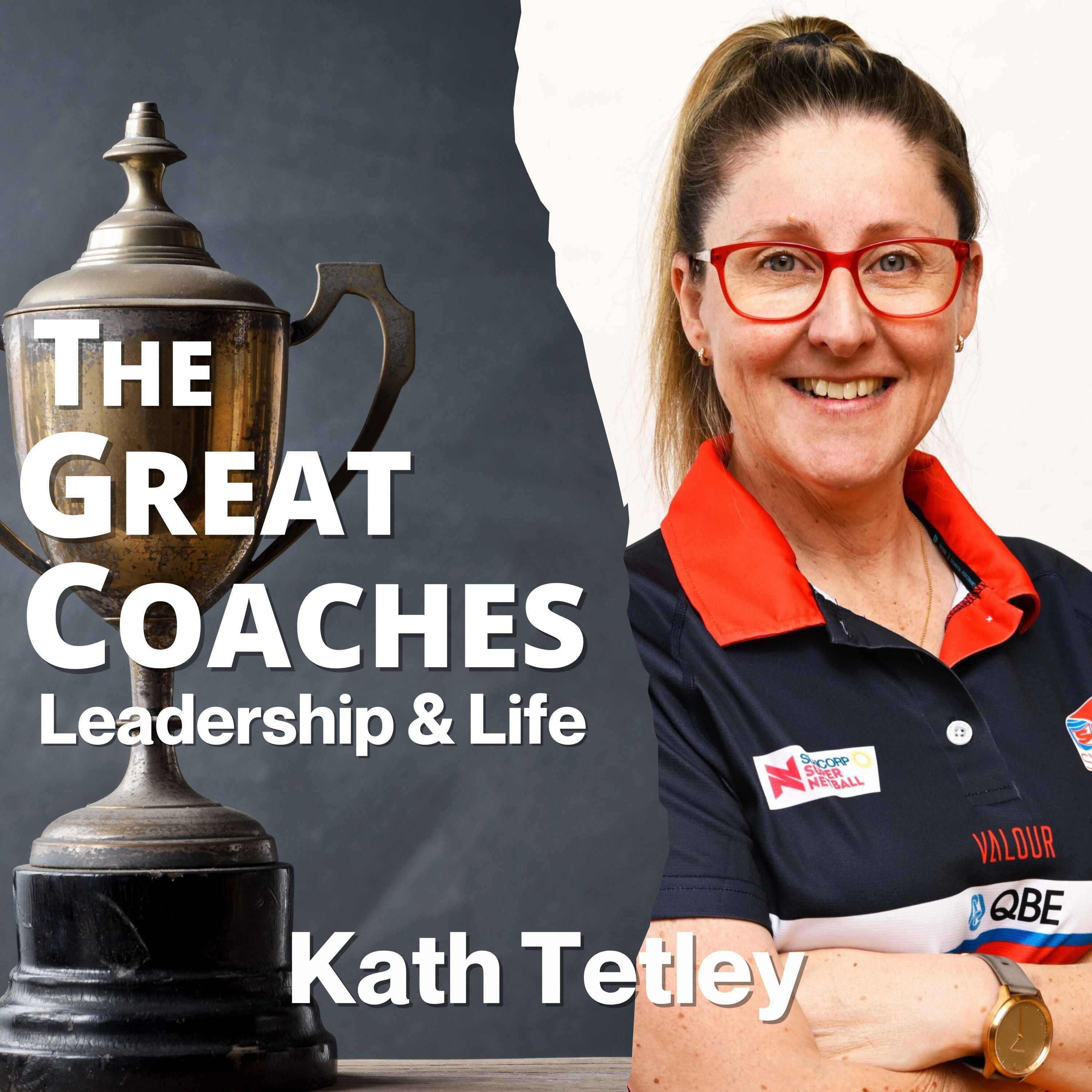 Navigating Leadership Challenges: A Conversation with Kath Tetley 25.06.2026 53minCath Tetley on Great Coaching: Building the Bus, Speaking a Shared Language, and Making the Thistles FearedWe believe that there is no algorithm for leadership. So we ask the world's great coaches how they do it. In this episode, Cath Tetley shares lessons from coaching Scotland’s national netball team as an Australian in a new culture: great coaches know their gaps, build strong teams by getting the right people “on the bus,” and handle hard decisions with empathy and support from trusted local leaders. She explains how pathway experience and being a strong assistant coach shaped her head-coaching approach, including learning organization and preparation. Tetley uses the Smalley Trent animal framework to create shared language about personalities under pressure, and advocates authenticity while adapting communication to the people in front of you. She describes creating a safe training space, building belief and “beast mode” to shift the Thistles from being liked to being feared, and relying on a “pit crew” of mentors and data when confidence dips. She hopes to leave a legacy of stronger on-court performance and more professional business, sponsorship, and athlete support structures in Scottish netball. If you would like to send us any feedback or if you know a great coach, who has a unique story to share, then we would love to hear from you, please contact us at [email protected] and if you would like to receive our newsletter with 5 ideas to help you improve your leadership, then sign up at: https://thegreatcoaches.beehiiv.com/subscribe1. How does Kath Tetley’s willingness to acknowledge her own gaps challenge traditional ideas of what strong leadership looks like?2. What does Tetley’s approach to difficult conversations reveal about the role of empathy in high-performance coaching?3. How does Tetley’s emotional journey—from doubt and retreat to connection and trust—show the importance of vulnerability in leadership? Hosted on Acast. See acast.com/privacy for more information.
 -
 Book Club: Sum It Up by Pat Summitt 23.06.2026 43minPat Summitt’s “Sum It Up”: Transformation, Triumph, Tragedy—and the Hard Edges of Great CoachingThere is no algorithm for leadership. So we ask the world's great coaches how they do it.In this book-club podcast, the host and Dr. David Turner discuss Pat Summitt’s memoir Sum It Up through themes of “transformation, triumph, and tragedy,” including her rise from a tough Tennessee farm upbringing to Olympic success, 38 years coaching the Lady Vols, and her Alzheimer’s diagnosis. They debate uncomfortable elements such as Summitt’s blunt framing of coaches as “emotional manipulators,” the tension between harshness and care (“Mama Pat”), and whether they’d want daughters in such a program, while noting her evolution from commander to collaborator and use of tools like motivational profiling. They highlight her impact beyond wins: innovation amid Title IX-era change, consistent excellence, high standards and honest feedback, 100% graduation, many players becoming teachers/coaches, and her legacy of resilience, sisterhood, and purpose.If you would like to send us any feedback or if you know a great coach, who has a unique story to share, then we would love to hear from you, please contact us at [email protected] or contact us through our website thegreatcoachespodcast.com Hosted on Acast. See acast.com/privacy for more information.
 -
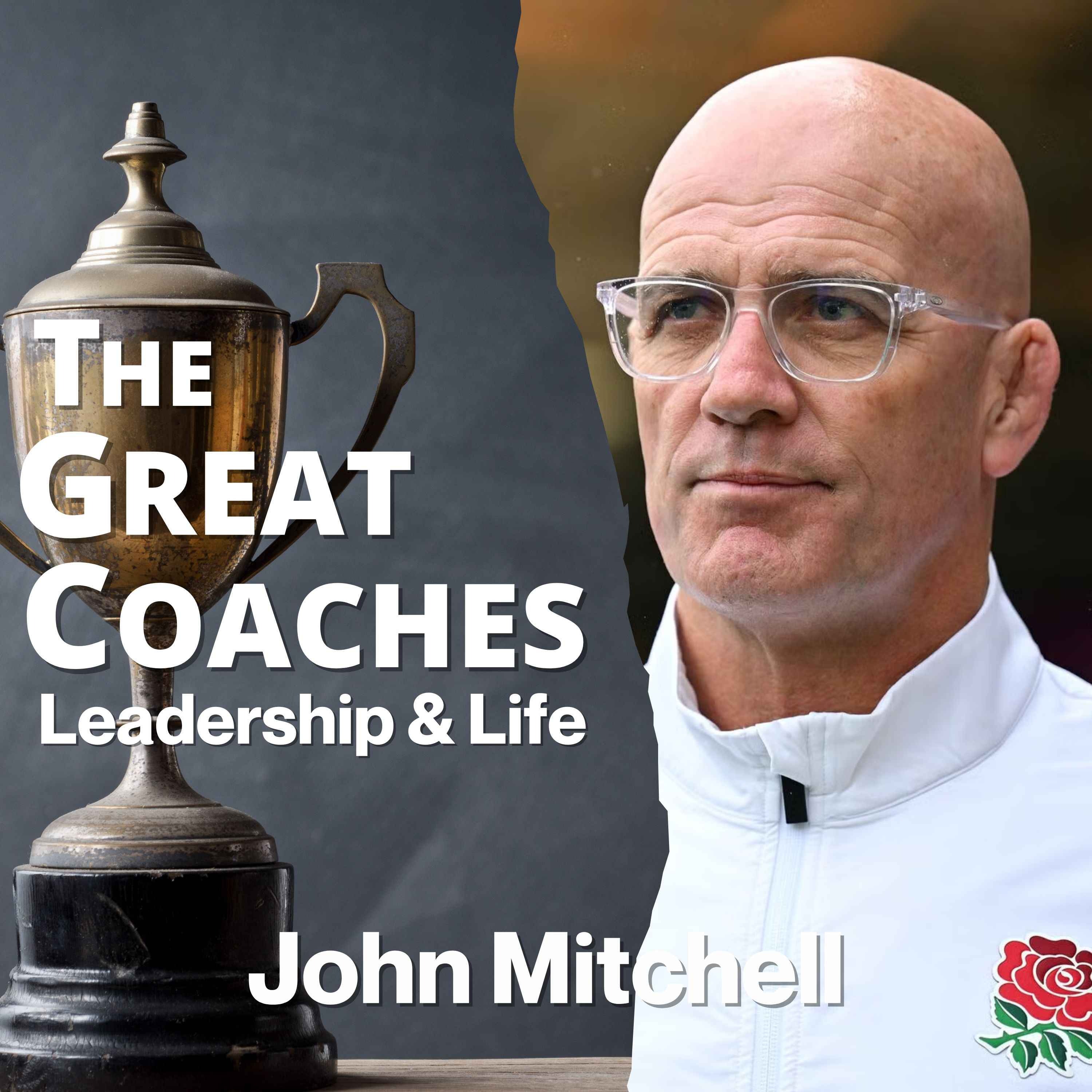 Leading from Within: The Coaching Philosophy of John Mitchell 18.06.2026 40minJohn’s Leadership Formula: People First, Process AlwaysWe believe that there is no algorithm for leadership. So we ask the world's great coaches how they do it. John reflects on becoming a better leader by putting people first, understanding personality, and building clear processes, drawing on his early coaching in Ireland where he relied mainly on his playing experience. He shares a simple chain—leadership shapes culture, culture drives behavior, behavior creates results—and a key question from Ivan Cleary: what do you want the team to look, feel, and act like? A pivotal “stairway/landing” lesson helped him set clearer endpoints, while a 2010 Johannesburg assault pushed him away from chasing outcomes and toward staying on process and regulating emotion. He emphasizes communication that checks for understanding across personality types, creating safe spaces for self-discovery, and balancing discipline with creativity through “handbrake off,” failing fast, and recovering quickly, anchored by authenticity, care, and challenge. If you would like to send us any feedback or if you know a great coach, who has a unique story to share, then we would love to hear from you, please contact us at [email protected] and if you would like to receive our newsletter with 5 ideas to help you improve your leadership, then sign up at: https://thegreatcoaches.beehiiv.com/subscribeHow well am I putting people before performance or outcomes in the way I lead?What do my current behaviours say about my self-awareness, values, and the culture I’m creating?Am I communicating in a way that builds trust, understanding, and enough freedom for others to grow? Hosted on Acast. See acast.com/privacy for more information.
 -
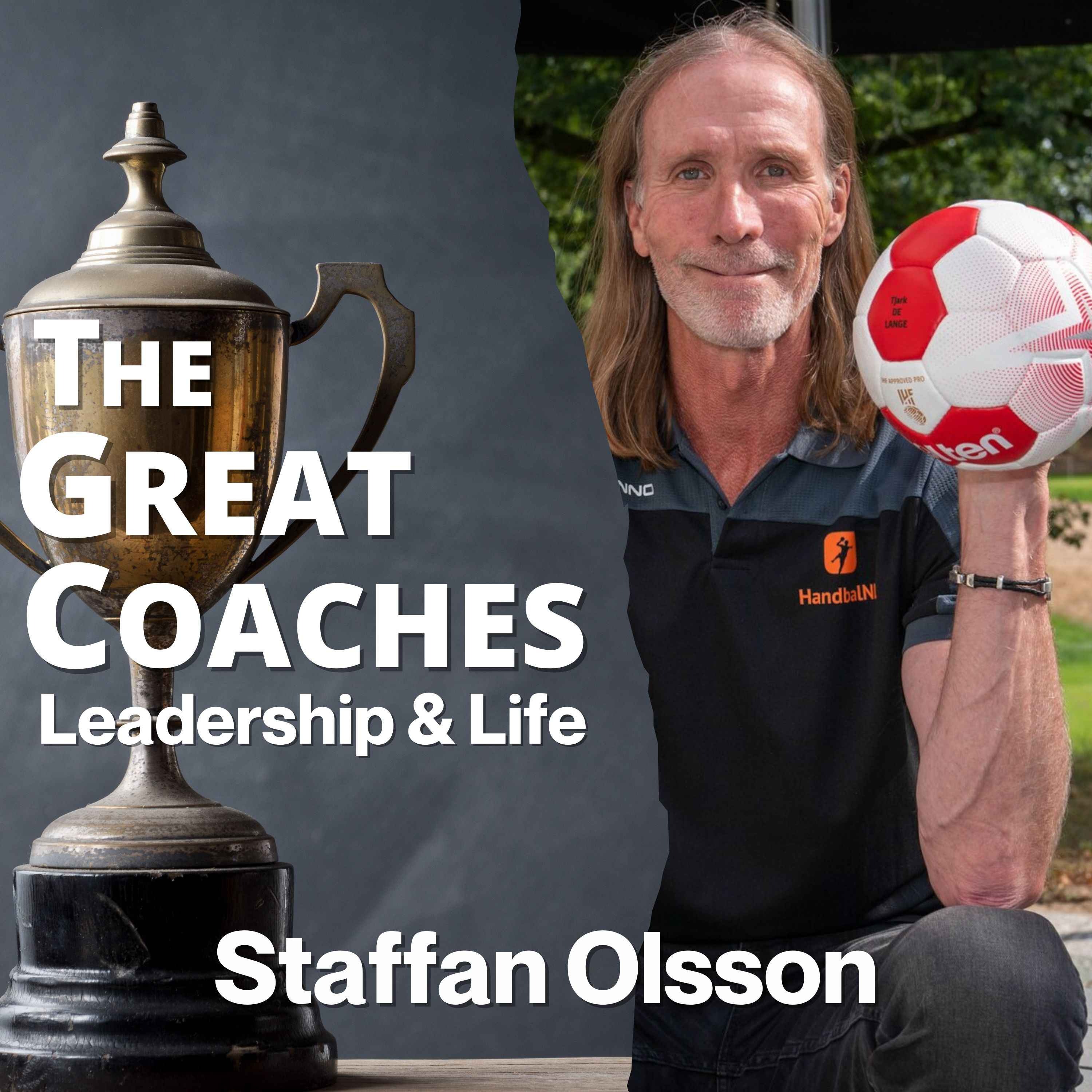 Coaching Excellence: A Journey Through Sports and Leadership with Staffan Olsson 11.06.2026 53minStefan Olsson on Handball Leadership, Decision-Making, and Cognitive ProfilingThere is no algorithm for leadership. So we ask the world's great coaches how they do it.Handball coach and former Swedish legend Stefan Olsson joins the Great Coaches podcast from Stockholm, where he coaches the Dutch men’s national team and works with cognitive testing. He contrasts two influential coaches: Bengt Johansson’s democratic, player-involving leadership and Vlada/Noka Serdarusic’s authoritarian, performance-demanding approach, noting success can come from different styles and that national-team coaching allows far less time than club coaching. Olsson reflects on winning three Swedish titles with Hammarby, preferring the pride of winning as a coach, and emphasizes training fast decision-making through progressive practice. He argues talent identification is nonlinear, warns against early “super talent” labeling, and values learning through failure. He discusses Olympic pressure, his heart surgeries, and a mobile-based cognitive profiling tool measuring traits like impulse control, creativity, flexibility, memory, and strategic thinking to tailor communication, concentration, and development.1. Am I leading in a way that is genuinely authentic to me, or am I copying a style that doesn’t fit who I am?2. How do I respond to mistakes — do I treat them as failures to avoid, or as necessary moments for growth and learning?3. Do I spend enough time understanding the people I lead as individuals, not just focusing on performance and outcomes?If you would like to send us any feedback or if you know a great coach, who has a unique story to share, then we would love to hear from you, please contact us at [email protected] or contact us through our website thegreatcoachespodcast.com Hosted on Acast. See acast.com/privacy for more information.
 -
 Crafting Football Culture: Identity and Values with Joe Montemurro 04.06.2026 48minIdentity, Culture, and Values-Led Coaching: Clear Principles Over NoiseWe believe that there is no algorithm for leadership. So we ask the world's great coaches how they do it. Joe Montemurro explains that effective leadership starts with a clear identity and a few non-negotiable playing principles that reduce “copious” information into simple teaching tools players can use to coach themselves, especially during tough periods. He emphasizes adapting leadership to national workplace cultures (Italy, France, England) by learning local norms, hierarchy, and language, while keeping consistent messages and standards. Training should be tightly planned to achieve key outcomes, allow creativity within a framework, and avoid wasting time with long talks. He manages match emotions by stepping back, avoiding reactive decisions, and reviewing games days later for objectivity; yelling is only useful when purposeful, not emotional. His core values—selflessness, honesty, humility—come from family and underpin team culture and player development. If you would like to send us any feedback or if you know a great coach, who has a unique story to share, then we would love to hear from you, please contact us at [email protected] and if you would like to receive our newsletter with 5 ideas to help you improve your leadership, then sign up at: https://thegreatcoaches.beehiiv.com/subscribeWhat are the few core principles that define how I want to lead or work, and are they clear enough for others to act on without constant direction?How well do I understand the culture of the environment I’m working in, and where might I need to adapt my approach?Which values truly guide my behaviour each day, and how visible are they to the people around me? Hosted on Acast. See acast.com/privacy for more information.
 -
 Jeroen Delmee: Forging a Legacy in Leadership and Coaching 28.05.2026 53minJeroen Delmee on Culture, Clarity, and Winning as a TeamWe believe that there is no algorithm for leadership. So we ask the world's great coaches how they do it. In this episode, Olympic gold-winning Dutch field hockey coach Jeroen Delmee shares that great coaching starts with selflessness, deep player connection, and creating clarity, while adapting communication to different cultures and flatter modern team hierarchies. He explains how international hockey has become a sprinting game requiring higher intensity, smarter load management, and training plans that close the gap between club and international demands. Delmee describes learning “soft skills” through mistakes in Belgium and France, using doubt to make rational, transparent decisions, and building trust through individual attention and development plans. He details how he rebuilt Dutch team culture after Tokyo by prioritizing cohesion over star names, protecting standards (“ignoring is accepting”), and defining winning as both medals and restoring pride, energy, and legacy. If you would like to send us any feedback or if you know a great coach, who has a unique story to share, then we would love to hear from you, please contact us at [email protected] and if you would like to receive our newsletter with 5 ideas to help you improve your leadership, then sign up at: https://thegreatcoaches.beehiiv.com/subscribe If you would like to send us any feedback or if you know a great coach, who has a unique story to share, then we would love to hear from you, please contact us at [email protected] or contact us through our website thegreatcoachespodcast.com Hosted on Acast. See acast.com/privacy for more information.
 -
 Game Day: There Is No Algorithim (Part 2) 14.05.2026 38minTodays episode is On Game Day and to explore the topic I am joined by Eamon Devlin. Eamon is the founder of Minute9, a consultancy that works with some of the world’s elite teams and coaches in helping them improve their half time talks and preparation. This discussion is so rich in information, and useful to any of us that are leading sporting teams or work teams that have split into 2 parts. Eamonn Devlin on Game-Day Leadership: Halftime Protocols, Culture, and Coach ControlIn this episode, former financial services lawyer Eamonn Devlin explains how personal adversity and his daughter’s negative team-talk experience led him to research and advise elite teams on communication, culture, and match-day environments. He shares common traits of top coaches (welcoming others, curiosity, confident challenge, and clear problem definition), and outlines a halftime framework prioritizing players “landing” mentally, refuelling, then concise, specific information supported by visuals, followed by re-warm-up. Devlin discusses reading the room, the risks of anger, declining player voice as coaching becomes more controlling, and how his team runs intrusive game-day reviews measuring 154 factors to provide comparative insights and recommendations. If you would like to send us any feedback or if you know a great coach, who has a unique story to share, then we would love to hear from you, please contact us at [email protected] and if you would like to receive our newsletter with 5 ideas to help you improve your leadership, then sign up at: https://thegreatcoaches.beehiiv.com/subscribe If you would like to send us any feedback or if you know a great coach, who has a unique story to share, then we would love to hear from you, please contact us at [email protected] or contact us through our website thegreatcoachespodcast.com and if you would like to receive our newsletter with 5 ideas to help you improve your leadership, then sign up at: https://thegreatcoaches.beehiiv.com/subscribe Hosted on Acast. See acast.com/privacy for more information.
 -
 Game Day: There Is No Algorithim (Part 1) 14.05.2026 44minTodays episode is On Game Day and to explore the topic I am joined by Eamon Devlin. Eamon is the founder of Minute9, a consultancy that works with some of the world’s elite teams and coaches in helping them improve their half time talks and preparation. This discussion is so rich in information, and useful to any of us that are leading sporting teams or work teams that have split into 2 parts.Eamonn Devlin on Game-Day Leadership: Halftime Protocols, Culture, and Coach ControlIn this episode, former financial services lawyer Eamonn Devlin explains how personal adversity and his daughter’s negative team-talk experience led him to research and advise elite teams on communication, culture, and match-day environments. He shares common traits of top coaches (welcoming others, curiosity, confident challenge, and clear problem definition), and outlines a halftime framework prioritizing players “landing” mentally, refuelling, then concise, specific information supported by visuals, followed by re-warm-up. Devlin discusses reading the room, the risks of anger, declining player voice as coaching becomes more controlling, and how his team runs intrusive game-day reviews measuring 154 factors to provide comparative insights and recommendations. If you would like to send us any feedback or if you know a great coach, who has a unique story to share, then we would love to hear from you, please contact us at [email protected] and if you would like to receive our newsletter with 5 ideas to help you improve your leadership, then sign up at: https://thegreatcoaches.beehiiv.com/subscribe If you would like to send us any feedback or if you know a great coach, who has a unique story to share, then we would love to hear from you, please contact us at [email protected] or contact us through our website thegreatcoachespodcast.com and if you would like to receive our newsletter with 5 ideas to help you improve your leadership, then sign up at: https://thegreatcoaches.beehiiv.com/subscribe Hosted on Acast. See acast.com/privacy for more information.
 -
 From Rugby to Leadership: Mike Cron's Coaching Journey 07.05.2026 44minMike Cron on Alignment, Learning Beyond Rugby, and Coaching with HonestyWe believe that there is no algorithm for leadership. So we ask the world's great coaches how they do it. In this episode, rugby coach Mike Cron shares lessons from decades with the All Blacks and recent work with the Wallabies, emphasizing that great leaders are consistent, build alignment across coaches, staff and players, listen while making firm decisions, and stay willing to adapt. He explains how policing developed his prioritization, planning and people skills, and how better coaching comes from observation, confidence, and embracing silence when asking questions. Cron advocates learning from outside your field—sumo, netball, gymnastics, shot put—to convert insights into performance, and describes tools like “old way/new way,” the Ringelmann Effect to counter social loafing, and delivering brutal honesty with permission and care. If you would like to send us any feedback or if you know a great coach, who has a unique story to share, then we would love to hear from you, please contact us at [email protected] and if you would like to receive our newsletter with 5 ideas to help you improve your leadership, then sign up at: https://thegreatcoaches.beehiiv.com/subscribe1. Where am I being “firm” when I actually need to adapt—and what feedback would I need to hear (and accept) to make that change?2. When I lead or coach, do I rely more on a script or on observation—and what would improve if I became more comfortable with silence and listening?3. In my team (or work group), where might social loafing be showing up subtly, and what specific commitment can I make so that “it will not be me”?If you would like to send us any feedback or if you know a great coach, who has a unique story to share, then we would love to hear from you, please contact us at [email protected] and if you would like to receive our newsletter with 5 ideas to help you improve your leadership, then sign up at: https://thegreatcoaches.beehiiv.com/subscribe Hosted on Acast. See acast.com/privacy for more information.
 -
 Book Club: World's Best by Ric Charlesworth 30.04.2026 43min This episode is a recording of our book club. The book we discuss is World’s Best by Ric Charlesworth, the iconic Australian Field Hockey Coach Ric Charlesworth. Ric led both the Australian and Men's Hockey teams to World Cup victories. He also ed the women to an An Olympic Gold. He has also worked in Cricket, Australian Rules Football, is a medical Dr and spent 10 tears as a federal politican. Our discussion is led by Dr David Turner, a Senior Lecturer in Sports Coaching at Anglia Ruskin University in the United Kingdom, If you enjoy todays discussion and would like to join us for a future book club you can contact me on [email protected] Hosted on Acast. See acast.com/privacy for more information.
 -
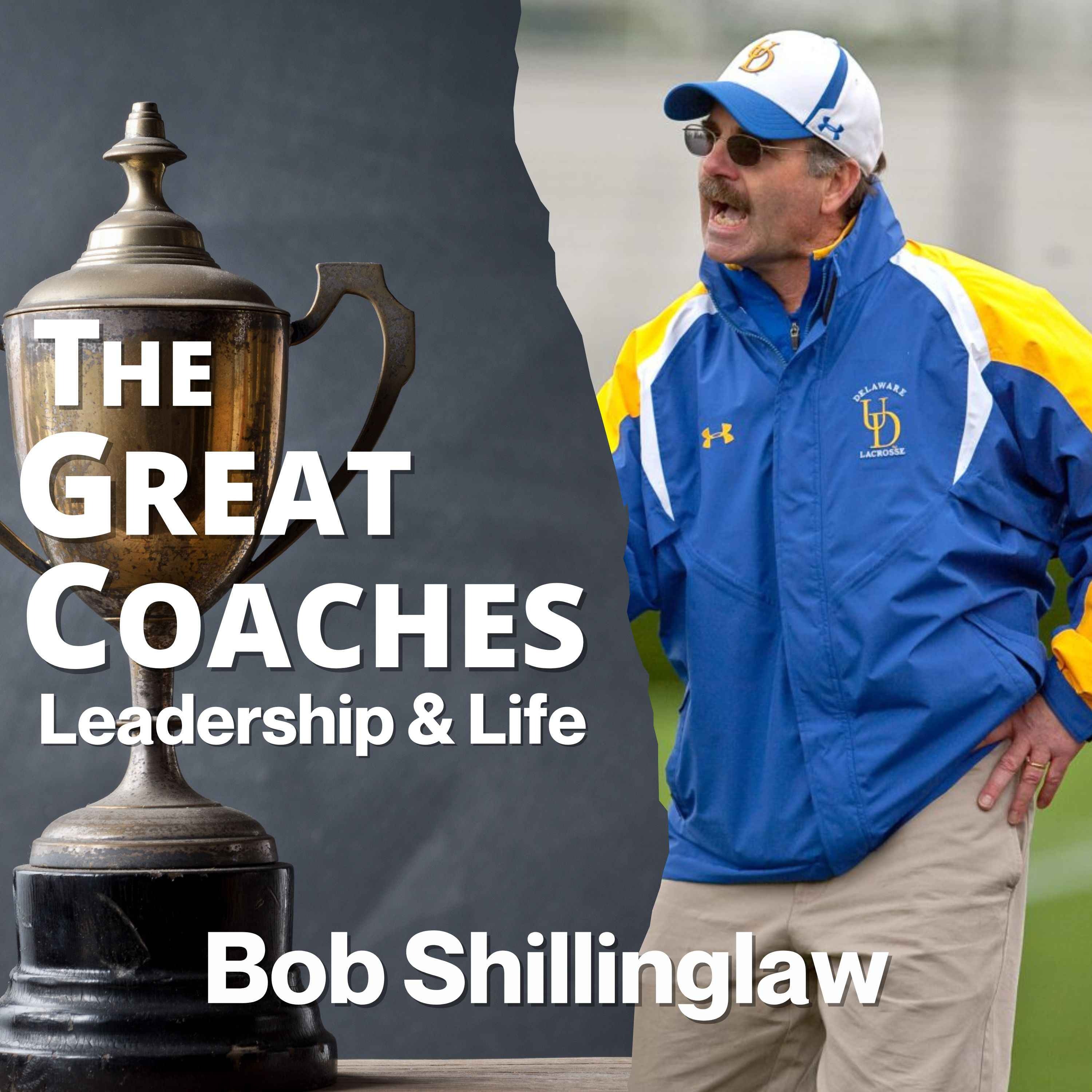 Coaching with Heart: Bob Shillinglaw on Emotion and Strategy 23.04.2026 42minBob Shillinglaw on Coaching Longevity, Mental Training, and Caring LeadershipWe believe that there is no algorithm for leadership. So we ask the world's great coaches how they do it. Retired after 43 years of college coaching (39 at the University of Delaware), Bob Shillinglaw reflects on how early experiences in sports—including competing against Bill Belichick and attending a camp coached by Belichick’s father—shaped his desire to coach. He describes choosing UNC, breaking into college coaching through low-paid roles while earning a master’s in sports psychology, and jump-starting Delaware’s program, including building alumni support and helping grow lacrosse statewide. Shillinglaw shares leadership lessons on integrating daily mental training (goals, visualization, reframing negative thoughts), applying consistent discipline, managing emotion on game day, communicating with players and staff, being empathetic and available off the field, and striving to be present with family despite the “coaching stare.” If you would like to send us any feedback or if you know a great coach, who has a unique story to share, then we would love to hear from you, please contact us at [email protected] and if you would like to receive our newsletter with 5 ideas to help you improve your leadership, then sign up at: https://thegreatcoaches.beehiiv.com/subscribe If you would like to send us any feedback or if you know a great coach, who has a unique story to share, then we would love to hear from you, please contact us at [email protected] or contact us through our website thegreatcoachespodcast.com Hosted on Acast. See acast.com/privacy for more information.
Samankaltaiset podcastit


Suosittu maassa
Tämä podcast esiintyy myös näiden maiden podcast-listoilla.

