
This Week in Business
The Wharton School
0
This Week in Business brings together top leaders, innovators and renowned faculty from the Wharton School of the University of Pennsylvania to discuss topics that matter to consumers and the business world. The podcast features insightful conversations on current business trends, leadership, and innovation. It is hosted on Acast.
Jaksot
-
 The FDNY's Transformation After 9/11 11.09.2026 15minWhat happens when one of the world’s busiest fire departments faces a catastrophe unlike anything it has experienced before?Gregory P. Shea, Wharton Adjunct Professor of Management, and Author of Rising from Ground Zero, examines how the FDNY responded to the unprecedented challenges of 9/11.Shea explains how the department transformed its psychological support, leadership training, incident management, and collaboration with outside agencies. The conversation explores how the FDNY turned lessons from Ground Zero into lasting organizational change and became an all hazards department. Hosted on Acast. See acast.com/privacy for more information.
 -
 The Business of Shared Scooters 09.09.2026 12minShared bikes and scooters have transformed how people move through cities, but can the business model actually work?Gad Allon, Wharton Professor of Operations, Information and Decisions, explores the economics behind companies like Lime, including subscriptions, pay per trip models, utilization, and the challenges of operating across different cities.Allon also explains why cities have embraced and restricted scooters, how Lime emerged as a dominant player, and why building a culture around shared transportation may be just as important as the technology itself. Hosted on Acast. See acast.com/privacy for more information.
 -
 The Hidden Financial Risks of the AI Boom 04.09.2026 12minThe AI boom could transform the economy, but who is financing it and where the risks are building may matter just as much as the technology itself.Joao Gomes, Wharton Professor of Finance and Senior Vice Dean of Research, Centers, and Academic Initiatives, argues that the Federal Reserve is too focused on inflation and not focused enough on financial stability.Gomes discusses the opaque role of private credit, lessons from the housing crisis and internet boom, the potential impact of AI investment on long term productivity, and why the Fed needs better models for understanding the financial risks surrounding AI. Hosted on Acast. See acast.com/privacy for more information.
 -
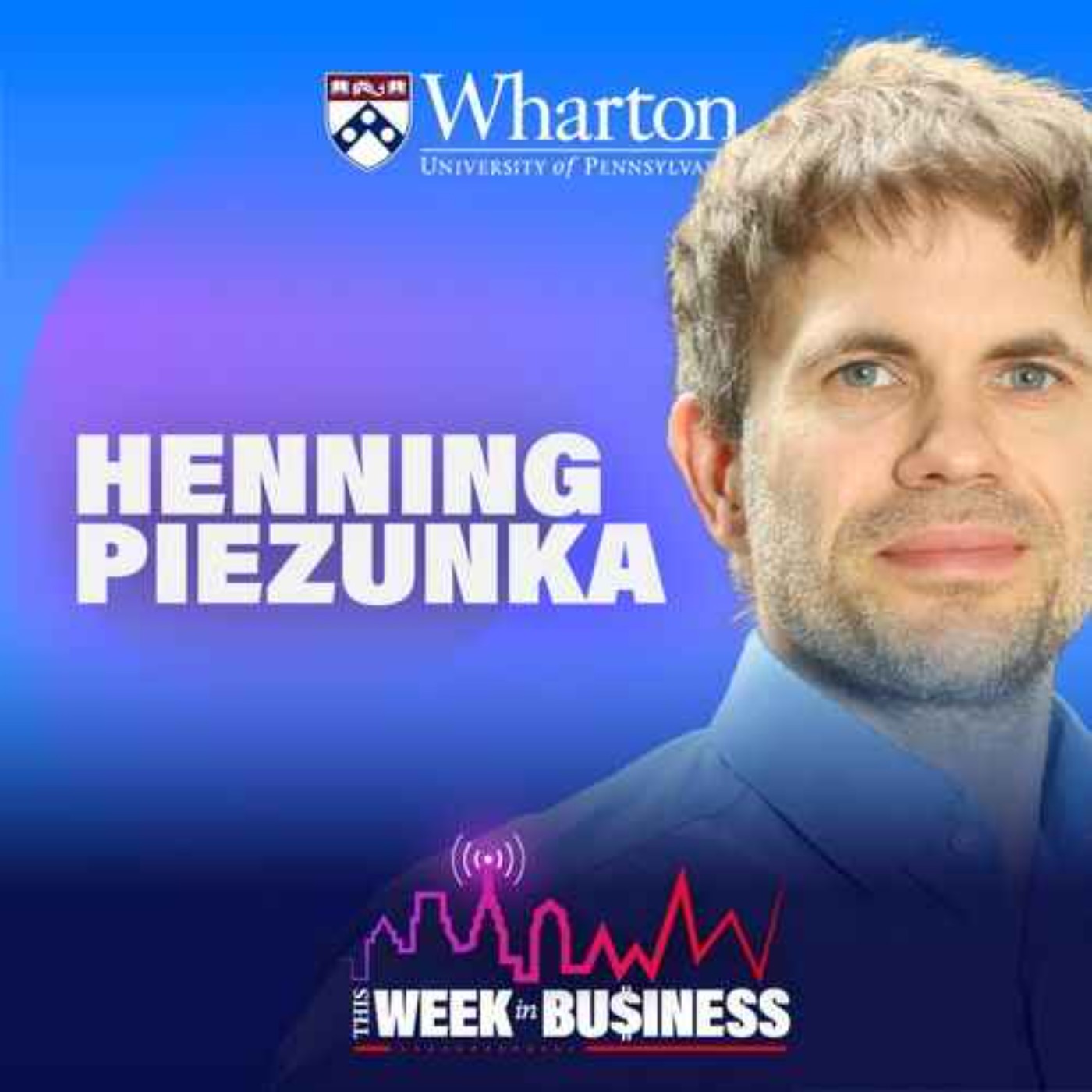 When Teammates Become Competitors 02.09.2026 17minWe often think of competition and collaboration as opposites. But in reality, we frequently do both at the same time. Henning Piezunka, Wharton Associate Professor of Management, explains why competing with someone can fundamentally change how we view and work with them.Piezunka uses World Cup soccer to examine what happens when teammates become opponents, finding that players collaborated less after competing against one another. The research offers surprising lessons for managers dealing with promotions, bonuses and other competitive workplace dynamics. Hosted on Acast. See acast.com/privacy for more information.
 -
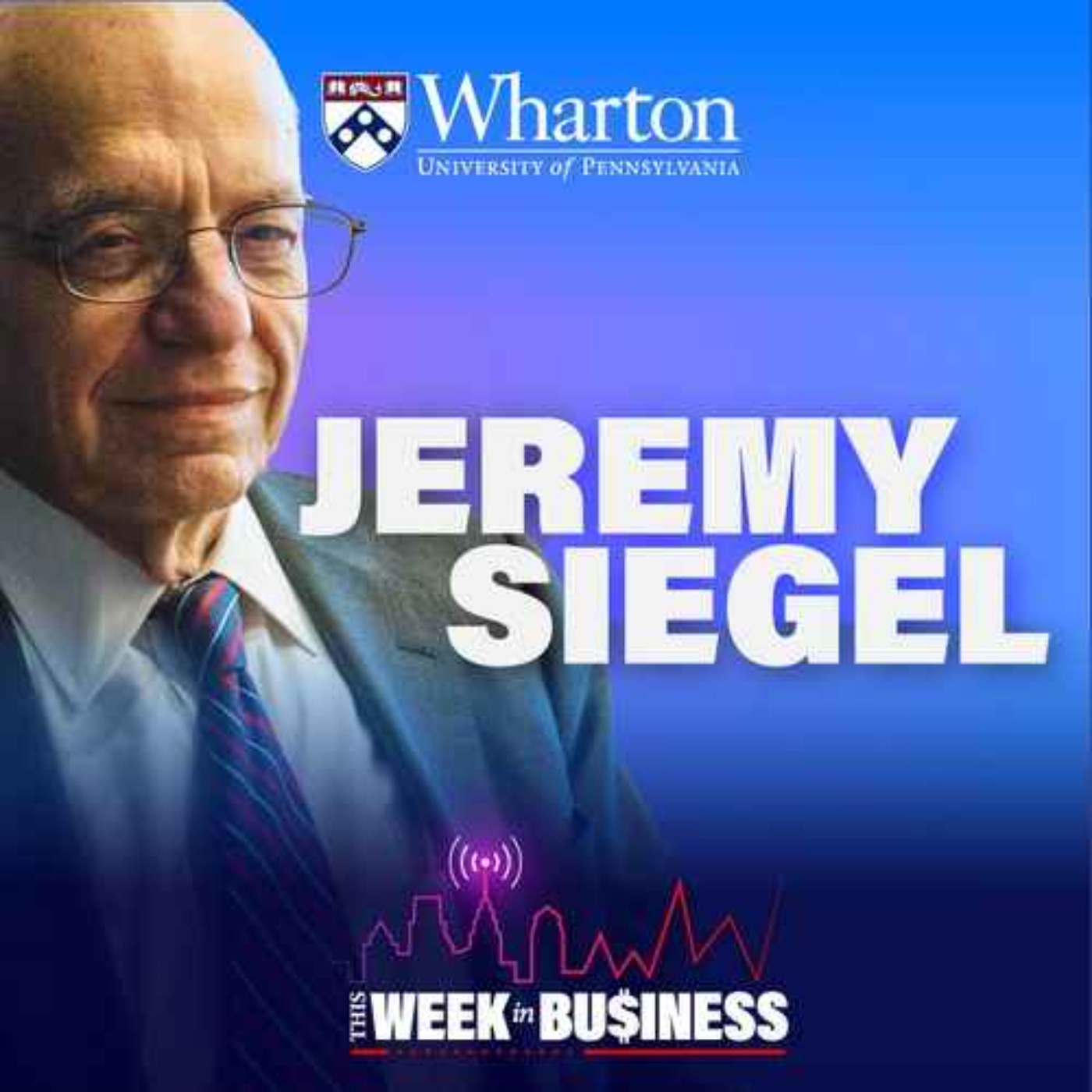 Why Bond Yields Are Warning Washington 28.08.2026 12minWhat do rising bond yields, new tariffs and soaring AI investment mean for the U.S. economy and financial markets?Wharton Emeritus Professor of Finance and WisdomTree Senior Economist Jeremy Siegel joins the conversation to assess the latest economic and market developments.Siegel discusses the impact of higher tariffs on Canada and Mexico, why rising Treasury yields are signaling concern about U.S. deficits, and why he believes Washington may eventually be forced to take action on fiscal policy.He also weighs in on the resilience of the stock market, the extraordinary performance of AI-related companies, and what could determine whether equities reach new highs in the months ahead. Hosted on Acast. See acast.com/privacy for more information.
 -
 The Bond Market Is Losing Confidence in the Fed 26.08.2026 11minThe bond market is sending a warning to the Federal Reserve. With long-term yields climbing to levels not seen in decades, questions are mounting about the Fed’s ability to control inflation while maintaining market confidence.Wharton Finance Professor Nikolai Roussanov explains why Kevin Warsh’s recent messaging has unsettled investors and why the Fed’s reaction function may matter more than its guidance on the path of interest rates.Roussanov also examines the tension between monetary and fiscal policy, including whether Treasury efforts to push down long-term yields could undermine the Fed’s strategy.As inflation, energy prices and fiscal pressures evolve, the Fed faces a critical test: preserve its 2% inflation target—or risk losing credibility with the bond market. Hosted on Acast. See acast.com/privacy for more information.
 -
 When Food Safety Becomes the Family’s Responsibility 21.08.2026 11minWhat happens when the systems designed to keep our food safe start to break down?Corinne Low, Wharton Associate Professor of Business Economics and Public Policy, argues that food safety is a public good—one that individuals and families simply can't provide for themselves.She explains how reduced staffing, weakened inspections and changes to disease surveillance can leave consumers more vulnerable to foodborne illness.Low also examines what happens when that responsibility gets pushed onto parents, and why trusting companies to regulate themselves isn't enough.The result is a larger question about government, business and the basic protections consumers should be able to count on. Hosted on Acast. See acast.com/privacy for more information.
 -
 Should AI Companies Be Supervised Like Banks? 19.08.2026 13minAI is advancing rapidly—but who is responsible when the risks become too big to ignore?Peter Conti-Brown, Professor at the Wharton School, explores whether the banking system offers a useful model for supervising powerful AI companies.Rather than relying solely on rules written years in advance, bank supervision involves ongoing conversations between public officials and private institutions to identify and manage emerging risks.Conti-Brown discusses how AI stress tests could work, what might happen if powerful models are hijacked or misused, and why consumers could ultimately end up holding the bag when things go wrong. Hosted on Acast. See acast.com/privacy for more information.
 -
 Why Gen Z Is Choosing Entrepreneurship Over Traditional Careers 14.08.2026 11minWhy are more young Americans turning to entrepreneurship, and what role will AI play?Lori Rosenkopf, Vice Dean of Entrepreneurship at the Wharton School, explores how Gen Z’s shifting expectations, a tougher entry-level job market, and the desire for flexibility are reshaping career paths. She also examines how AI tools are making it easier to turn ideas into products while intensifying competition, and what venture capital, failure, the creator economy, and programs like VentureLab can teach aspiring founders. Hosted on Acast. See acast.com/privacy for more information.
 -
 Can AI Companies Regulate Themselves? 12.08.2026 13minAs AI becomes more powerful, who should be responsible for governing it?Kevin Werbach, Wharton Professor and Chair of Legal Studies and Business Ethics, explores the growing challenges of AI governance, from accountability and safety to the difficulty of creating effective regulations across countries. He explains why AI companies can't be expected to regulate themselves and why governments need to play a more constructive role in managing the risks of increasingly powerful AI. Hosted on Acast. See acast.com/privacy for more information.
 -
 Will the Government Bail Out Your 401(k) in a Market Crash? 07.08.2026 18minWhat happens to your 401(k) if the stock market drops 25%, and would the government step in to help?Nikolai Roussanov, finance professor at the Wharton School, explains the real risks behind modern retirement investing and why volatility is built into the system.From the 1987 crash to COVID-19, he breaks down how markets recover, why long term investors tend to win, and why bailouts are more likely to support companies, not individual portfolios. If you’re relying on a 401(k), this episode will reshape how you think about risk, recovery, and protection. Hosted on Acast. See acast.com/privacy for more information.
 -
 Why AI Makes Collective Intelligence More Valuable Than Ever 05.08.2026 12minArtificial intelligence is reshaping work, but human ideas remain essential. Henning Piezunka, Associate Professor of Management at the Wharton School, explains how organizations can combine AI with collective intelligence to accelerate innovation, improve learning, and help employees turn ideas into action.He also explores AI’s role as a substitute, collaborator, and training tool, along with the business case for adoption and the organizational changes leaders will need to make. Hosted on Acast. See acast.com/privacy for more information.
 -
 Oil, AI, and the Fed: What's Next for Markets? 31.07.2026 14minCould rising oil prices, interest-rate uncertainty, and massive AI spending change the market outlook?Jeremy Siegel, Wharton Emeritus Professor of Finance, examines how energy supply disruptions could affect inflation and growth, what the Federal Reserve may do next on interest rates, why Wall Street is scrutinizing AI infrastructure spending, and how tariffs and demographic change could shape the broader economy. Hosted on Acast. See acast.com/privacy for more information.
 -
 Why Prediction Markets Are More Than a Passing Trend 29.07.2026 15minPrediction markets are becoming an increasingly visible part of sports, politics, business, and culture. But what makes them different from traditional betting?Abraham Wyner, Wharton Professor of Statistics and Data Science and Co-Director of the Wharton Sports Analytics and Business Initiative, explains the wisdom-of-crowds theory behind prediction markets, how these platforms make money, and why their structure creates a different relationship between bettors and the market. He also examines regulation, the risks of gambling, and whether prediction markets and sportsbooks can continue growing alongside one another. Hosted on Acast. See acast.com/privacy for more information.
 -
 The New Strategy Behind Revenue Growth 24.07.2026 12minThe chief revenue officer is no longer just a sales leader.Raghu Iyengar, Wharton Marketing Professor and Academic Director of Wharton’s Chief Revenue Officer Program, explains why companies are turning to CROs to align sales, marketing, product, finance, and growth around a single revenue strategy.He also discusses how AI is raising the stakes for revenue leaders, why a holistic view of the organization matters, and how the role will continue to evolve as new sources of revenue emerge. Hosted on Acast. See acast.com/privacy for more information.
 -
 What the World Cup Teaches Brands About Cultural Marketing 22.07.2026 12minThe biggest marketing wins at the World Cup did not always come from official sponsors.Americus Reed, The Whitney M. Young Jr. Professor of Marketing at Wharton and co-host of Marketing Matters, examines how brands connected with fans during one of the world’s largest cultural events.He discusses the power of iconic brands, social sharing, earned media, culturally relevant advertising, and creative ways companies can become part of the conversation beyond traditional sponsorship. Hosted on Acast. See acast.com/privacy for more information.
 -
 Social Security’s Funding Crisis and the Future of Retirement 17.07.2026 12minSocial Security’s main trust fund could be depleted by early 2033, leaving incoming payroll taxes sufficient to cover only about 86% of scheduled benefits.Kent Smetters, Wharton Professor of Business Economics and Public Policy and Faculty Director of the Penn Wharton Budget Model, explains why the program is approaching a critical funding deadline and what it could mean for current and future retirees.He also discusses the impact of falling birth rates and longer lifespans, why delaying reform makes the eventual solution more difficult, and the policy options Congress could consider to strengthen Social Security. Hosted on Acast. See acast.com/privacy for more information.
 -
 Why Companies Are Rethinking the Rush to Implement AI 15.07.2026 13minWhat happens when companies move AI from a promising experiment into everyday operations and the technology starts making costly mistakes?Santiago Gallino, Associate Professor of Operations, Information and Decisions and Associate Professor of Marketing at the Wharton School, examines why companies such as Starbucks and Ford have reconsidered AI-driven processes after accuracy and quality problems exposed the technology’s limitations.Gallino explains how unreliable systems can erode employee trust, why human judgment remains essential, and how implementation failures can affect customers and brand reputation. He also discusses the risks of scaling AI too quickly and why companies must determine whether their technology investments deliver meaningful customer value and measurable returns. Hosted on Acast. See acast.com/privacy for more information.
 -
 Why Big Companies Are Rethinking How They Work With Startups 10.07.2026 12minBig companies need innovation, while startups need capital, customers and opportunities to prove their ideas work.Wharton Professor of Operations, Information and Decisions and Senior Vice Dean of Innovation Serguei Netessine explains how corporate venturing is evolving beyond traditional investment models. He explores the rise of venture building and venture clienting, why becoming a startup’s customer can be more valuable than simply investing in it, and how these partnerships can help established companies innovate faster while giving startups a path to scale. Hosted on Acast. See acast.com/privacy for more information.
 -
 Can Congress Fix America’s Housing Affordability Crisis? 08.07.2026 13minA new bipartisan housing bill promises to tackle America’s affordability crisis, but will it actually make housing more accessible?Wharton Professor of Real Estate Ben Keys examines the Road to Housing bill and its potential to address the rising cost of buying and renting a home. He discusses proposals to streamline permitting and environmental reviews, expand manufactured housing and small dollar financing, and support home repairs and local innovation. Keys also explains why limits on corporate homebuyers could have unintended consequences and why funding constraints, tariffs, labor shortages, and high mortgage rates could limit the bill’s near term impact. Hosted on Acast. See acast.com/privacy for more information.
Samankaltaiset podcastit


Suosittu maassa
Tämä podcast esiintyy myös näiden maiden podcast-listoilla.
