
Traditional Catholic Daily Devotional
SSPX US District, Angelus Press
0
This daily devotional podcast, produced by the SSPX US District and Angelus Press, offers a concise 8-10 minute start to each day. It includes the Collect of the Mass, a reflection on the saint or feast of the day, a Scripture reflection, and updates on Church news or previews of other podcasts and sermons. Each episode closes with a thought from Archbishop Lefebvre.
Jaksot
-
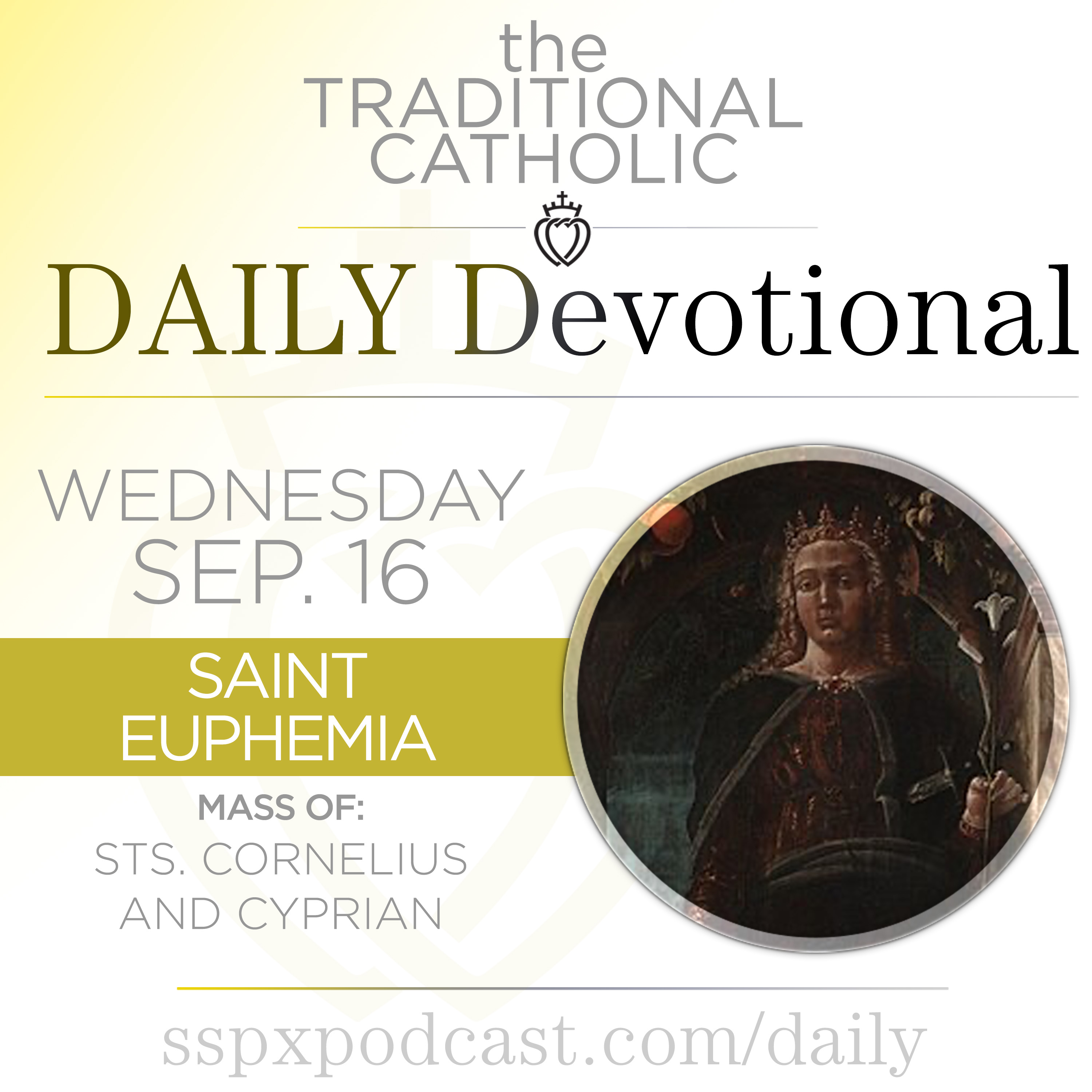 Sep 16 – Ss Cornelius & Cyprian / S Euphemia 16.09.2026 8minIt's the Feast of Sts. Cornelius and Cyprian, 3rd Class, with the color of Red. In this episode: the meditation: "Sanctification of the Family Through Mass", today's news from the Church: "Small but Important Victory in the Euthanasia Law in France", and today's thought from the Archbishop Marcel Lefebvre. Have feedback or questions about the DD or our other shows? [email protected] Sources Used Today: "Sanctification of the Family Through Mass" — From the Assumption to Adventhttps://angeluspress.org/products/from-trinity-sunday-to-the-assumption "Small but Important Victory in the Euthanasia Law in France" (FSSPX.news) https://fsspx.news/en/news/france-small-important-victory-euthanasia-law-61080 The Spiritual Life — Archbishop Marcel Lefebvre (Angelus Press) https://angeluspress.org/products/spiritual-life-archbishop Please support our new project, the Archbishop Lefebvre Biography Audiobook: Learn more:https://www.youtube.com/watch?v=Y-Wp4MQdK2oDonate:https://sspx.gifts/audiobook Saint Euphemia is one of those early martyrs whose story didn't end with her martyrdom. More than a century after her death, her tomb became connected with one of the most important councils in Church history. Euphemia lived in Chalcedon, across the water from Constantinople, around the beginning of the fourth century. She came from a Christian family and was still a young woman when Emperor Diocletian's great persecution reached the city. According to the ancient accounts, the governor ordered everyone to participate in sacrifices to the pagan god Ares. Euphemia refused. She was arrested with other Christians and subjected to a series of tortures intended to make her abandon the faith. The traditional account describes the rack, fire, and eventually the arena, where she was exposed to wild animals. She died around the year 303. Christians buried her with honor in Chalcedon, and a great basilica eventually rose over her tomb. And that's where the story gets especially interesting. In 451, nearly 150 years after Euphemia's death, hundreds of bishops gathered in Chalcedon to settle an enormous controversy over the Person of Christ. The question was how Christians should speak correctly about Christ being both truly God and truly man. The meetings took place in the basilica dedicated to Euphemia. According to a beloved Eastern Christian tradition, the disagreement became so intense that representatives placed competing statements of faith inside Euphemia's tomb and sealed it. Then everyone prayed. When the tomb was reopened, tradition says the orthodox profession was found in Euphemia's hand, while the rejected statement lay at her feet. Whether we treat that account as miraculous history or later devotional tradition, it tells us how closely Christians associated Euphemia with the Council of Chalcedon. She became not merely a martyr of the early persecutions, but a symbol of the Church's defense of the truth about Christ. Her relics also had quite a journey. After Persian invasions threatened Chalcedon, they were eventually brought across the Bosporus to Constantinople. During the later Iconoclast persecutions, tradition says her relics were thrown into the sea, recovered, and eventually restored. They can still be venerated today in the Church of Saint George in Istanbul, the cathedral of the Ecumenical Patriarchate. That's an extraordinary journey for a young woman killed more than seventeen centuries ago. Euphemia never wrote a theological book. She never attended a council. She simply refused to deny Christ. Yet generations later, bishops debating exactly who Christ is gathered around her tomb to do it. Saint Euphemia, great martyr and witness to the true faith of Christ, pray for us. Please Support this Apostolate with 1-time or Monthly Donation >> - - - - - - Explore more: Subscribe to the email version of this Devotional- it's a perfect companion!Subscribe to this Podcastto receive this and all our audio episodesSubscribe to the SSPX YouTube channelfor video versions of our podcast series and SermonsFSSPX News Website:https://fsspx.newsVisit the US District website:https://sspx.org/ What is the SSPX Podcast? The SSPX Podcast is produced by Angelus Press, which has as its mission the fortification of traditional Catholics so that they can defend the Faith, and reaching out to those who have not yet found Tradition. What is the SSPX? The main goal of the Society of Saint Pius X is to preserve the Catholic Faith in its fullness and purity, to teach its truths, and to diffuse its virtues, especially through the Roman Catholic priesthood. Authentic spiritual life, the sacraments, and the traditional liturgy are its primary means of bringing this life of grace to souls. Although the traditional Latin Mass is the most visible and public expression of the work of the Society, we are committed to defending Catholic Tradition in its entirety: all of Catholic doctrine and morals as the Church has always defended them. What people need is the Catholic Faith, without compromise, with all the truth and beauty which accompanies it. https://sspx.org
 -
 Sep 15 – Seven Sorrows of Our Lady 15.09.2026 8minIt's the Feast of Seven Sorrows of Our Lady, 1st Class, with the color of White. In this episode: the meditation: "Attendance at Mass", a preview of this week's episode of The SSPX Podcast: "Audiobook Chapter 17 "I Adhere to Eternal Rome"", and today's thought from the Archbishop Marcel Lefebvre. Have feedback or questions about the DD or our other shows? [email protected] Sources Used Today: "Attendance at Mass" — From the Assumption to Adventhttps://angeluspress.org/products/from-trinity-sunday-to-the-assumption The SSPX Podcast: "Audiobook Chapter 17 "I Adhere to Eternal Rome"" (SSPX Podcast) View on YouTubeListen & Subscribe on SSPXpodcast.com The Spiritual Life — Archbishop Marcel Lefebvre (Angelus Press) https://angeluspress.org/products/spiritual-life-archbishop Please support our new project, the Archbishop Lefebvre Biography Audiobook: Learn more:https://www.youtube.com/watch?v=Y-Wp4MQdK2oDonate:https://sspx.gifts/audiobook The Feast of Our Lady of Sorrows asks us to look at the life of Christ from a perspective we don't always stop to consider: what was all of this like for His Mother? Catholics have meditated on Mary's suffering since the earliest centuries, especially her presence at Calvary. Simeon had foretold it when Jesus was still an infant: "Thy own soul a sword shall pierce." Medieval Christians eventually began identifying particular moments when that sword seemed especially sharp. These became the Seven Sorrows of Mary: Simeon's prophecy, the Flight into Egypt, losing the Child Jesus in Jerusalem, meeting Christ on the road to Calvary, standing beneath the Cross, receiving His dead body, and watching Him placed in the tomb. And devotion to them became enormous. By the Middle Ages, Christians were meditating on Mary's sorrows through prayers, artwork, processions, and hymns. The most famous is the Stabat Mater, traditionally attributed to the thirteenth-century Franciscan Jacopone da Todi. Its opening image is simple and devastating: Mary standing beside the Cross while her Son dies. The Servite Order made this devotion especially their own. Founded in Florence in the thirteenth century by the Seven Holy Founders, the Servites spread devotion to the Seven Sorrows throughout Europe. The familiar image of Mary's heart pierced by seven swords comes directly from this tradition. Interestingly, the Church eventually had two feasts honoring Mary's sorrows. One developed on the Friday of Passion Week, focusing particularly on Mary's compassion during the Passion. The other was celebrated by the Servites in September. In 1814, after returning to Rome following his captivity under Napoleon, Pope Pius VII extended the September feast to the universal Church in thanksgiving. Pope Pius X later fixed it on September 15, immediately after the Exaltation of the Holy Cross. That placement is almost perfect. September 14: look at the Cross. September 15: look at the Mother standing beneath it. The feast also inspired some striking traditions, particularly in Mediterranean countries. In Spain, Italy, Malta, and parts of Latin America, statues of the Sorrowful Mother are carried through streets dressed in dark robes, sometimes beneath elaborate canopies. During Holy Week, confraternities still carry enormous images of the Dolorosa, surrounded by candles and flowers, while crowds watch in silence. Our Lady of Sorrows isn't really about asking which of Mary's sufferings was worst. It's about remembering that she stayed. At Bethlehem, she held Christ when almost no one knew Him. At Calvary, she remained when almost everyone had left. Our Lady of Sorrows, Mother who stood faithfully beneath the Cross, pray for us. Please Support this Apostolate with 1-time or Monthly Donation >> - - - - - - Explore more: Subscribe to the email version of this Devotional- it's a perfect companion!Subscribe to this Podcastto receive this and all our audio episodesSubscribe to the SSPX YouTube channelfor video versions of our podcast series and SermonsFSSPX News Website:https://fsspx.newsVisit the US District website:https://sspx.org/ What is the SSPX Podcast? The SSPX Podcast is produced by Angelus Press, which has as its mission the fortification of traditional Catholics so that they can defend the Faith, and reaching out to those who have not yet found Tradition. What is the SSPX? The main goal of the Society of Saint Pius X is to preserve the Catholic Faith in its fullness and purity, to teach its truths, and to diffuse its virtues, especially through the Roman Catholic priesthood. Authentic spiritual life, the sacraments, and the traditional liturgy are its primary means of bringing this life of grace to souls. Although the traditional Latin Mass is the most visible and public expression of the work of the Society, we are committed to defending Catholic Tradition in its entirety: all of Catholic doctrine and morals as the Church has always defended them. What people need is the Catholic Faith, without compromise, with all the truth and beauty which accompanies it. https://sspx.org
 -
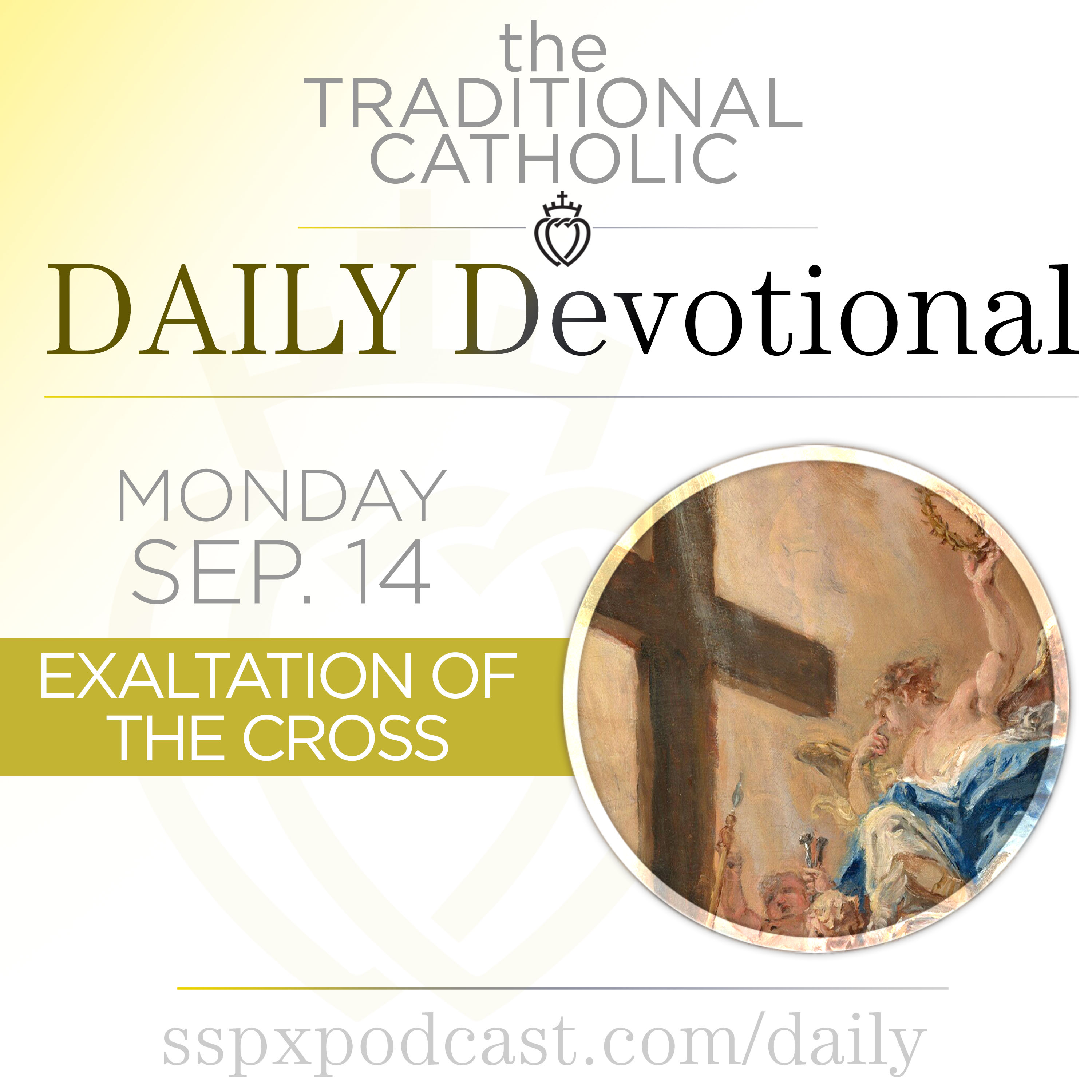 Sep 14 – Exaltation of the Holy Cross 14.09.2026 10minIt's the Feast of Exaltation of the Holy Cross, 2nd Class, with the color of Red. In this episode: the meditation: "The Sanctification of Sunday", today's news from the Church: "Could the SSPX still wait for Rome?", a preview of the Sermon: "Trusting Providence", and today's thought from the Archbishop Marcel Lefebvre. Have feedback or questions about the DD or our other shows? [email protected] Sources Used Today: "The Sanctification of Sunday" — From the Assumption to Adventhttps://angeluspress.org/products/from-trinity-sunday-to-the-assumption "Could the SSPX still wait for Rome?" (FSSPX.news) https://fsspx.news/en/news/could-sspx-still-wait-rome-61047 "Trusting Providence" (SSPX Sermons) SSPX YouTube: Sermons PlaylistListen & Subscribe: SSPX Sermons Podcast The Spiritual Life — Archbishop Marcel Lefebvre (Angelus Press) https://angeluspress.org/products/spiritual-life-archbishop Please support our new project, the Archbishop Lefebvre Biography Audiobook: Learn more:https://www.youtube.com/watch?v=Y-Wp4MQdK2oDonate:https://sspx.gifts/audiobook The Feast of the Exaltation of the Holy Cross has one of the most interesting histories on the Catholic calendar because it celebrates not simply Christ's Crucifixion, but the strange journey of the Cross itself through history. The story begins with Helena, mother of Emperor Constantine. Around the year 326, Helena traveled to Jerusalem looking for the places associated with the Passion of Christ. According to ancient tradition, excavations near Calvary uncovered three crosses. That created an obvious problem. Which one was Christ's? Tradition says the True Cross was identified through a miraculous healing when a sick woman touched it. Other versions tell of a dead man being restored to life. Whatever the precise details, devotion to the Cross in Jerusalem developed very early. Constantine soon ordered a magnificent church built over Calvary and Christ's tomb. The complex was dedicated in September of 335 and eventually became the Church of the Holy Sepulchre. The following day, September 14, the relic of the True Cross was solemnly displayed, or "exalted," before the people so everyone could venerate it. That's where our feast gets its name. But the Cross wasn't finished traveling. In 614, Persian armies captured Jerusalem, destroyed churches, and carried away the relic of the True Cross as war booty. Imagine the shock. One of Christianity's holiest relics was now in the hands of an invading army. Years later, the Byzantine emperor Heraclius defeated the Persians and recovered the Cross. In 629, he solemnly returned it to Jerusalem. Then comes one of the feast's most memorable traditions. Heraclius supposedly approached Calvary wearing his imperial robes, jeweled crown, and all the splendor of an emperor. But when he tried to carry the Cross forward, he couldn't move. The Patriarch of Jerusalem pointed out the obvious contrast. Christ had carried that Cross wearing a crown of thorns. Heraclius was carrying it dressed like a king. So the emperor removed his crown, exchanged his rich garments for simple clothing, took up the Cross again, and this time carried it forward. Whether every detail happened exactly that way or not, medieval Christians loved the story because it captures the entire meaning of the feast. The Cross was once an instrument designed to humiliate criminals. Christianity turned it into a throne. That's why Catholics place crosses above altars, wear them around their necks, and raise them over churches. We don't honor suffering for its own sake. We honor the Cross because Christ took the thing meant to destroy Him and made it the instrument of our salvation. We adore Thee, O Christ, and we bless Thee, because by Thy Holy Cross Thou hast redeemed the world. Please Support this Apostolate with 1-time or Monthly Donation >> - - - - - - Explore more: Subscribe to the email version of this Devotional- it's a perfect companion!Subscribe to this Podcastto receive this and all our audio episodesSubscribe to the SSPX YouTube channelfor video versions of our podcast series and SermonsFSSPX News Website:https://fsspx.newsVisit the US District website:https://sspx.org/ What is the SSPX Podcast? The SSPX Podcast is produced by Angelus Press, which has as its mission the fortification of traditional Catholics so that they can defend the Faith, and reaching out to those who have not yet found Tradition. What is the SSPX? The main goal of the Society of Saint Pius X is to preserve the Catholic Faith in its fullness and purity, to teach its truths, and to diffuse its virtues, especially through the Roman Catholic priesthood. Authentic spiritual life, the sacraments, and the traditional liturgy are its primary means of bringing this life of grace to souls. Although the traditional Latin Mass is the most visible and public expression of the work of the Society, we are committed to defending Catholic Tradition in its entirety: all of Catholic doctrine and morals as the Church has always defended them. What people need is the Catholic Faith, without compromise, with all the truth and beauty which accompanies it. https://sspx.org
 -
 Sep 13 – XVI Sun of Pentecost / S Amatus of Remiremont 13.09.2026 9minIt's the Feast of XVI Sun of Pentecost, 2nd Class, with the color of Green. In this episode: the meditation: "The Virtue of Religion", today's news from the Church: "In Salzburg, Artisans Are Building a Church "For Eternity"", and today's thought from the Archbishop Marcel Lefebvre. Have feedback or questions about the DD or our other shows? [email protected] Sources Used Today: "The Virtue of Religion" — From the Assumption to Adventhttps://angeluspress.org/products/from-trinity-sunday-to-the-assumption "In Salzburg, Artisans Are Building a Church "For Eternity"" (FSSPX.news) https://fsspx.news/en/news/austria-salzburg-artisans-are-building-church-eternity-61040 The Spiritual Life — Archbishop Marcel Lefebvre (Angelus Press) https://angeluspress.org/products/spiritual-life-archbishop Please support our new project, the Archbishop Lefebvre Biography Audiobook: Learn more:https://www.youtube.com/watch?v=Y-Wp4MQdK2oDonate:https://sspx.gifts/audiobook Saint Amatus of Remiremont is one of those early medieval saints whose story involves an unusual amount of moving farther and farther away from everyone, only to discover that people kept following him. He was born around the year 560 in the region of Grenoble in southeastern France. As a young man, Amatus entered the famous monastery of Agaunum, today's Saint-Maurice in Switzerland. It was built near the traditional site of the martyrdom of the Theban Legion and had become one of the great monastic centers of the region. Amatus liked monastic life. He just wanted even more silence. So he eventually withdrew to live as a hermit high in the mountains. Tradition places him near a rocky retreat where he spent years praying, fasting, and living largely alone. That worked for a while. Then Eustace of Luxeuil came looking for him. Eustace persuaded Amatus to leave his solitude and join the great monastery of Luxeuil, founded by the Irish missionary Saint Columbanus. Amatus became a preacher there and soon attracted the attention of a wealthy nobleman named Romaric. Romaric listened to Amatus, converted his enormous estate into a religious foundation, and eventually became a monk himself. Together, the two men established a monastery in the Vosges Mountains around the year 620. And this monastery was unusual. Rather than following the arrangement that would later become standard in Western monasteries, Remiremont developed as a double monastery, with communities of men and women living separately but sharing a common spiritual life. According to early tradition, the monks maintained something called the laus perennis, or "perpetual praise," organizing themselves so that the Psalms and prayers continued through the day and night. Imagine building an entire community around the idea that somebody should always be praying. Amatus became its first abbot, while Romaric eventually succeeded him. The monastery became so closely associated with Romaric that the surrounding settlement eventually took his name: Remiremont, essentially "Romaric's mountain." That town still exists in northeastern France. Over the centuries, the monastery changed dramatically. Its community of women eventually became an influential house of noble canonesses, and Remiremont developed into an important religious and political center of medieval Lorraine. Amatus probably would have found all that rather surprising. He had originally gone into the mountains because he wanted to be left alone with God. Instead, his life helped create a religious community, a town, and a tradition of prayer that survived for more than a thousand years. Sometimes God has a funny way of using people who want obscurity. Saint Amatus of Remiremont, hermit of the mountains and father of perpetual prayer, pray for us. Please Support this Apostolate with 1-time or Monthly Donation >> - - - - - - Explore more: Subscribe to the email version of this Devotional- it's a perfect companion!Subscribe to this Podcastto receive this and all our audio episodesSubscribe to the SSPX YouTube channelfor video versions of our podcast series and SermonsFSSPX News Website:https://fsspx.newsVisit the US District website:https://sspx.org/ What is the SSPX Podcast? The SSPX Podcast is produced by Angelus Press, which has as its mission the fortification of traditional Catholics so that they can defend the Faith, and reaching out to those who have not yet found Tradition. What is the SSPX? The main goal of the Society of Saint Pius X is to preserve the Catholic Faith in its fullness and purity, to teach its truths, and to diffuse its virtues, especially through the Roman Catholic priesthood. Authentic spiritual life, the sacraments, and the traditional liturgy are its primary means of bringing this life of grace to souls. Although the traditional Latin Mass is the most visible and public expression of the work of the Society, we are committed to defending Catholic Tradition in its entirety: all of Catholic doctrine and morals as the Church has always defended them. What people need is the Catholic Faith, without compromise, with all the truth and beauty which accompanies it. https://sspx.org
 -
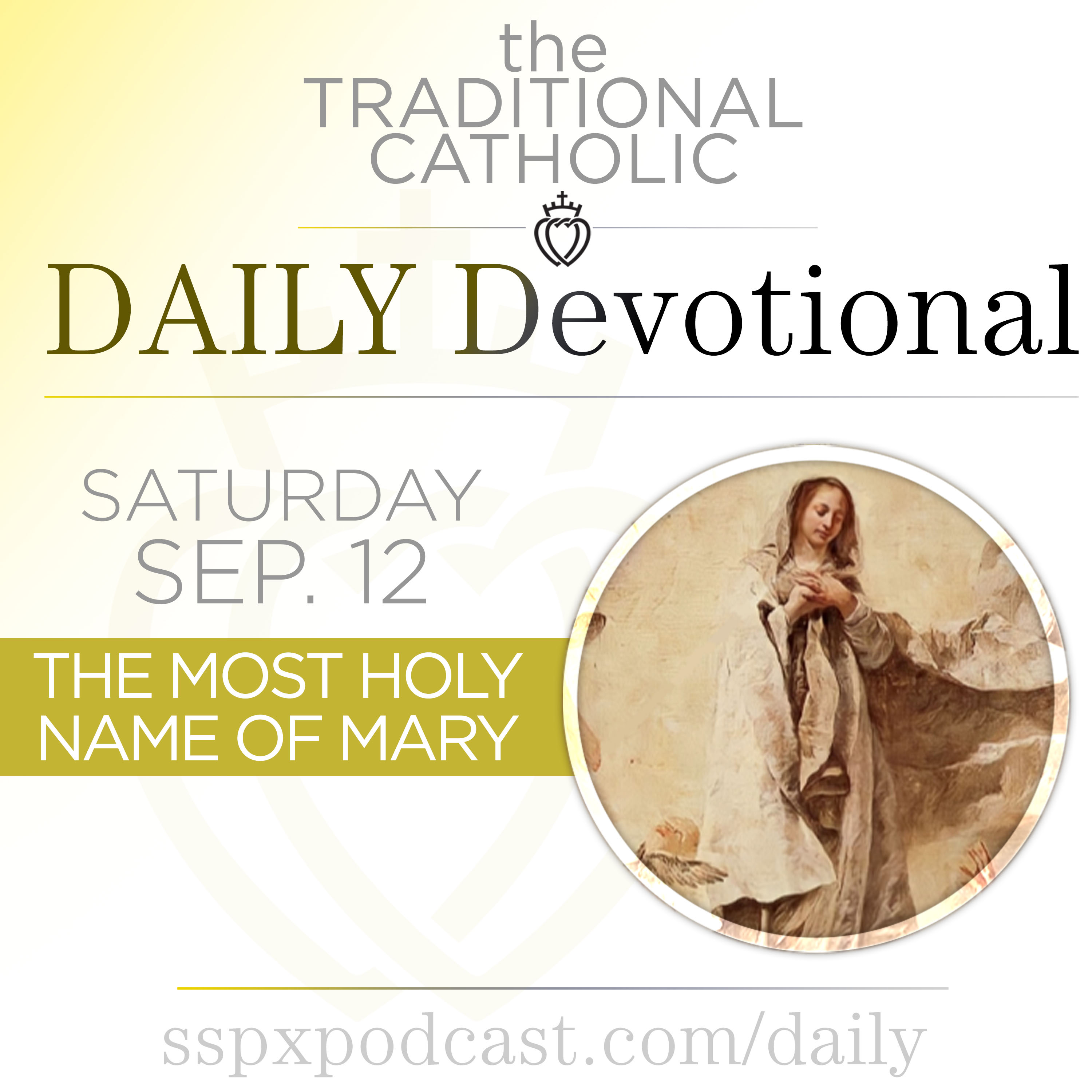 Sep 12 – Holy Name of Mary 12.09.2026 9minIt's the Feast of The Most Holy Name of Mary, 3rd Class, with the color of White. In this episode: the meditation: "The Resurrection of the Body", today's news from the Church: "Freemasonry in France: Thirty days of influence in the open", and today's thought from the Archbishop Marcel Lefebvre. Have feedback or questions about the DD or our other shows? [email protected] Sources Used Today: "The Resurrection of the Body" — From the Assumption to Adventhttps://angeluspress.org/products/from-trinity-sunday-to-the-assumption "Freemasonry in France: Thirty days of influence in the open" (FSSPX.news) https://fsspx.news/en/news/freemasonry-france-thirty-days-influence-open-61041 The Spiritual Life — Archbishop Marcel Lefebvre (Angelus Press) https://angeluspress.org/products/spiritual-life-archbishop Please support our new project, the Archbishop Lefebvre Biography Audiobook: Learn more:https://www.youtube.com/watch?v=Y-Wp4MQdK2oDonate:https://sspx.gifts/audiobook The Feast of the Most Holy Name of Mary celebrates something wonderfully simple: the name by which Christians have called upon the Mother of God for nearly two thousand years. The name Mary comes to us through the Hebrew Miriam, and scholars have proposed several meanings over the centuries. Christian writers have especially loved titles such as "Star of the Sea." Saint Bernard famously developed that image, telling Christians caught in the storms of temptation and suffering to look toward the star and call upon Mary. But the feast itself has a surprisingly dramatic history. Devotion to Mary's name existed long before there was a universal feast. By the Middle Ages, Catholics regularly invoked her name in hymns, prayers, and preaching. A formal feast developed in Spain during the sixteenth century and gradually spread elsewhere. Then came Vienna in 1683. The Ottoman Empire had advanced deep into Europe, and a massive army surrounded Vienna. If the city fell, the road into central Europe would be dangerously exposed. For weeks the defenders held out while relief forces gathered under the Polish king John III Sobieski. Before the battle, Sobieski and his soldiers attended Mass and entrusted themselves to the Blessed Virgin. On September 12, the Christian relief army attacked. Sobieski's famous Polish Winged Hussars joined what is often described as one of the largest cavalry charges in history, sweeping down upon the Ottoman positions. By evening, the siege had been broken. Sobieski reportedly adapted Julius Caesar's famous words afterward: "We came, we saw, God conquered." Pope Innocent XI attributed the deliverance of Vienna to divine assistance obtained through Our Lady's intercession. In thanksgiving, he extended the Feast of the Most Holy Name of Mary to the universal Church, connecting it permanently with September 12. So behind this gentle-sounding feast stands one of the most dramatic moments in European history. The devotion itself, however, is much quieter. Catholics have traditionally been encouraged simply to develop the habit of saying Mary's name with love and confidence, especially during temptation, fear, or suffering. Saints repeatedly recommended it as one of the simplest prayers a person can make. You don't always need many words. Sometimes "Mary, help me" is enough. And perhaps that's why this feast has endured. It celebrates no complicated theological idea and requires no elaborate devotion. It simply reminds us that God has given Christians a Mother, and children naturally call for their mother by name. Most Holy Name of Mary, consolation of Christians and terror of demons, be always on our lips and in our hearts. Please Support this Apostolate with 1-time or Monthly Donation >> - - - - - - Explore more: Subscribe to the email version of this Devotional- it's a perfect companion!Subscribe to this Podcastto receive this and all our audio episodesSubscribe to the SSPX YouTube channelfor video versions of our podcast series and SermonsFSSPX News Website:https://fsspx.newsVisit the US District website:https://sspx.org/ What is the SSPX Podcast? The SSPX Podcast is produced by Angelus Press, which has as its mission the fortification of traditional Catholics so that they can defend the Faith, and reaching out to those who have not yet found Tradition. What is the SSPX? The main goal of the Society of Saint Pius X is to preserve the Catholic Faith in its fullness and purity, to teach its truths, and to diffuse its virtues, especially through the Roman Catholic priesthood. Authentic spiritual life, the sacraments, and the traditional liturgy are its primary means of bringing this life of grace to souls. Although the traditional Latin Mass is the most visible and public expression of the work of the Society, we are committed to defending Catholic Tradition in its entirety: all of Catholic doctrine and morals as the Church has always defended them. What people need is the Catholic Faith, without compromise, with all the truth and beauty which accompanies it. https://sspx.org
 -
 Sep 11 – Feria / S John Gabriel Perboyre 11.09.2026 9minIt's a Feria, 4th Class, with the color of Green. In this episode: the meditation: "Christian Hope", today's news from the Church: "700 Traditional Pilgrims at the Feet of Our Lady of Częstochowa", a preview of this week's episode of The SSPX Podcast: "What Is the Difference Between a Priest and a Bishop?", and today's thought from the Archbishop Marcel Lefebvre. Have feedback or questions about the DD or our other shows? [email protected] Sources Used Today: "Christian Hope" — From the Assumption to Adventhttps://angeluspress.org/products/from-trinity-sunday-to-the-assumption "700 Traditional Pilgrims at the Feet of Our Lady of Częstochowa" (FSSPX.news) https://fsspx.news/en/news/poland-700-traditional-pilgrims-feet-our-lady-czestochowa-60973 The SSPX Podcast: "What Is the Difference Between a Priest and a Bishop?" (SSPX Podcast) View on YouTubeListen & Subscribe on SSPXpodcast.com The Spiritual Life — Archbishop Marcel Lefebvre (Angelus Press) https://angeluspress.org/products/spiritual-life-archbishop Please support our new project, the Archbishop Lefebvre Biography Audiobook: Learn more:https://www.youtube.com/watch?v=Y-Wp4MQdK2oDonate:https://sspx.gifts/audiobook Saint John Gabriel Perboyre spent years dreaming about the missions in China before he ever imagined he would actually go there. He was born in 1802 in a small farming village in southern France, one of eight children. As a boy, John Gabriel wasn't originally planning to become a priest. He accompanied his younger brother to a school run by the Vincentians and intended to stay only long enough to help him settle in. Instead, John Gabriel discovered his own vocation. He entered the Congregation of the Mission, founded by Vincent de Paul, and was ordained in 1826. His great desire was to become a missionary in China, partly inspired by his younger brother Louis, who had volunteered for the Chinese missions but died during the voyage. John Gabriel asked to take his place. His superiors initially refused because his health seemed too fragile. Eventually, they changed their minds. In 1835, he sailed for China. After months at sea, John Gabriel entered the country disguised in Chinese clothing, learned the language, and began traveling between scattered Catholic communities. Missionary life meant long journeys, unfamiliar food, hiding from authorities, hearing confessions, celebrating Mass secretly, and teaching Catholics who might see a priest only occasionally. Then, in 1839, persecution intensified. John Gabriel was betrayed for money, arrested, and dragged from prison to prison. Authorities repeatedly demanded that he renounce Christianity. When he refused, he was beaten and tortured. One detail of his imprisonment is particularly striking. His captors tried to force him to trample on a crucifix. He wouldn't do it. Eventually John Gabriel was condemned to death. On September 11, 1840, he was taken to an execution ground near Wuchang and strangled on a wooden cross-like structure. The resemblance to the Passion of Christ was not lost on later Catholics. His body was eventually recovered by Christians and buried in China. Years later, his remains were returned to France and placed in the Vincentian motherhouse in Paris, where they can still be venerated today. There's also a fascinating family detail. John Gabriel wasn't the only Perboyre drawn toward religious life. Several of his siblings entered religious communities, and the brother whose death opened the way for John's mission to China had wanted exactly the same vocation. John Gabriel finally reached the country he had prayed to serve, but he spent only a few years there. It was enough. In 1996, he became the first canonized saint among the missionaries martyred in China. Saint John Gabriel Perboyre, missionary of China and courageous imitator of the Crucified Christ, pray for us. Please Support this Apostolate with 1-time or Monthly Donation >> - - - - - - Explore more: Subscribe to the email version of this Devotional- it's a perfect companion!Subscribe to this Podcastto receive this and all our audio episodesSubscribe to the SSPX YouTube channelfor video versions of our podcast series and SermonsFSSPX News Website:https://fsspx.newsVisit the US District website:https://sspx.org/ What is the SSPX Podcast? The SSPX Podcast is produced by Angelus Press, which has as its mission the fortification of traditional Catholics so that they can defend the Faith, and reaching out to those who have not yet found Tradition. What is the SSPX? The main goal of the Society of Saint Pius X is to preserve the Catholic Faith in its fullness and purity, to teach its truths, and to diffuse its virtues, especially through the Roman Catholic priesthood. Authentic spiritual life, the sacraments, and the traditional liturgy are its primary means of bringing this life of grace to souls. Although the traditional Latin Mass is the most visible and public expression of the work of the Society, we are committed to defending Catholic Tradition in its entirety: all of Catholic doctrine and morals as the Church has always defended them. What people need is the Catholic Faith, without compromise, with all the truth and beauty which accompanies it. https://sspx.org
 -
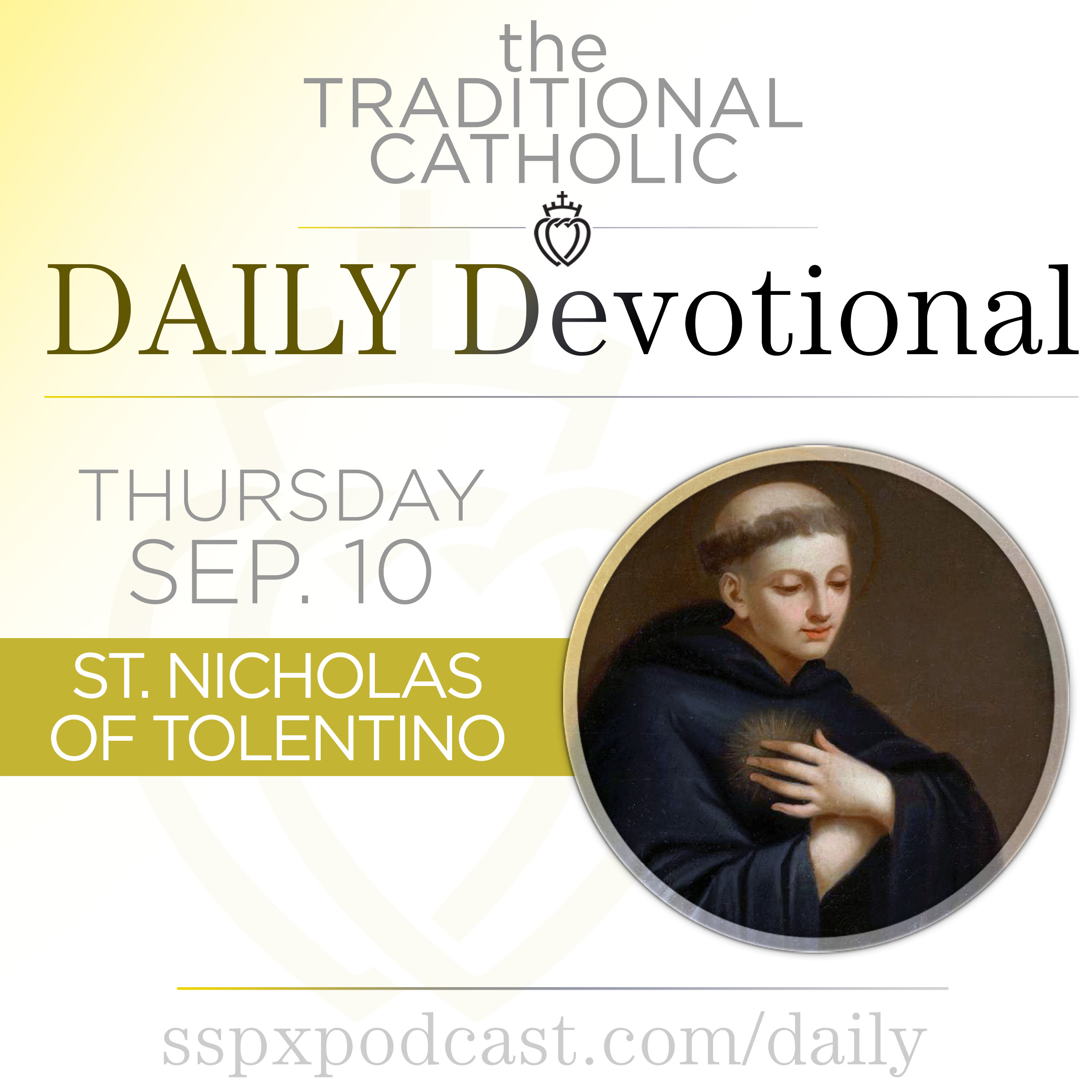 Sep 10 – S Nicholas Tolentino 10.09.2026 9minIt's the Feast of St. Nicholas Tolentino, 3rd Class, with the color of White. In this episode: the meditation: "The Particular Judgement", today's news from the Church: "Pilgrimage to Bourguillon Under the Theme "Francis, Repair My Church"", a preview of the Sermon: "Without Me You Can Do Nothing", and today's thought from the Archbishop Marcel Lefebvre. Have feedback or questions about the DD or our other shows? [email protected] Sources Used Today: "The Particular Judgement" — From the Assumption to Adventhttps://angeluspress.org/products/from-trinity-sunday-to-the-assumption "Pilgrimage to Bourguillon Under the Theme "Francis, Repair My Church"" (FSSPX.news) https://fsspx.news/en/news/switzerland-pilgrimage-bourguillon-under-theme-francis-repair-my-church-60927 "Without Me You Can Do Nothing" (SSPX Sermons) SSPX YouTube: Sermons PlaylistListen & Subscribe: SSPX Sermons Podcast The Spiritual Life — Archbishop Marcel Lefebvre (Angelus Press) https://angeluspress.org/products/spiritual-life-archbishop Please support our new project, the Archbishop Lefebvre Biography Audiobook: Learn more:https://www.youtube.com/watch?v=Y-Wp4MQdK2oDonate:https://sspx.gifts/audiobook Saint Nicholas of Tolentino became one of the most beloved Augustinian saints of the Middle Ages, and his story has a little bit of everything: miraculous bread, visions, souls in Purgatory, and a lifetime spent quietly helping ordinary people. He was born around 1245 in central Italy. His parents had struggled for years to have a child, so they made a pilgrimage to the shrine of Saint Nicholas of Myra in Bari and prayed for a son. When that son finally arrived, there wasn't much debate about the name. Nicholas eventually joined the Augustinians and was ordained a priest. After several assignments, he was sent to the town of Tolentino, where he would spend roughly thirty years. And apparently, he became the priest everybody came looking for. Nicholas preached, heard confessions, visited prisoners, settled arguments, cared for the poor, and spent long hours in prayer. He was especially known for seeking out people who had drifted away from the Church rather than simply waiting for them to return. One of the most unusual traditions about Nicholas concerns blessed bread. During a serious illness, Nicholas was reportedly told in a vision of the Blessed Virgin Mary to eat a small piece of bread dipped in water. He recovered, and afterward he began blessing pieces of bread and giving them to the sick. The custom never really went away. Even today, Augustinians bless what are called the Breads of Saint Nicholas, which are distributed to the faithful and used as a sacramental, especially in prayers for healing and protection. But Nicholas is probably best known for his connection with Purgatory. According to tradition, a deceased friar appeared to him and begged for Masses because he and many other souls were suffering in Purgatory. Nicholas spent the following days offering Mass and prayers for them. The friar later appeared again, this time surrounded by souls who had been released through those prayers. That story spread everywhere. Nicholas became one of the great patrons of the souls in Purgatory, and medieval paintings frequently show him celebrating Mass while souls rise from the flames toward heaven. His relics are still venerated at the Basilica of Saint Nicholas of Tolentino. The basilica's extraordinary medieval frescoes make it one of the most interesting Augustinian shrines in Italy. Nicholas never founded an order or became a bishop. He simply stayed in one town for thirty years, said Mass, heard confessions, fed people, prayed for the dead, and helped whoever showed up. Sometimes that's more than enough for a lifetime. Saint Nicholas of Tolentino, friend of the poor and tireless intercessor for the souls in Purgatory, pray for us. Please Support this Apostolate with 1-time or Monthly Donation >> - - - - - - Explore more: Subscribe to the email version of this Devotional- it's a perfect companion!Subscribe to this Podcastto receive this and all our audio episodesSubscribe to the SSPX YouTube channelfor video versions of our podcast series and SermonsFSSPX News Website:https://fsspx.newsVisit the US District website:https://sspx.org/ What is the SSPX Podcast? The SSPX Podcast is produced by Angelus Press, which has as its mission the fortification of traditional Catholics so that they can defend the Faith, and reaching out to those who have not yet found Tradition. What is the SSPX? The main goal of the Society of Saint Pius X is to preserve the Catholic Faith in its fullness and purity, to teach its truths, and to diffuse its virtues, especially through the Roman Catholic priesthood. Authentic spiritual life, the sacraments, and the traditional liturgy are its primary means of bringing this life of grace to souls. Although the traditional Latin Mass is the most visible and public expression of the work of the Society, we are committed to defending Catholic Tradition in its entirety: all of Catholic doctrine and morals as the Church has always defended them. What people need is the Catholic Faith, without compromise, with all the truth and beauty which accompanies it. https://sspx.org
 -
 Sep 9 – S Peter Claver 09.09.2026 8minIt's the Feast of St Peter Claver, 3rd Class, with the color of White. In this episode: the meditation: "A Salutary Meditation", today's news from the Church: "The Hymn of the Society of Saint Pius X", and today's thought from the Archbishop Marcel Lefebvre. Have feedback or questions about the DD or our other shows? [email protected] Sources Used Today: "A Salutary Meditation" — From the Assumption to Adventhttps://angeluspress.org/products/from-trinity-sunday-to-the-assumption "The Hymn of the Society of Saint Pius X" (FSSPX.news) https://fsspx.news/en/news/hymn-society-saint-pius-x-60879 The Spiritual Life — Archbishop Marcel Lefebvre (Angelus Press) https://angeluspress.org/products/spiritual-life-archbishop Please support our new project, the Archbishop Lefebvre Biography Audiobook: Learn more:https://www.youtube.com/watch?v=Y-Wp4MQdK2oDonate:https://sspx.gifts/audiobook Saint Peter Claver spent nearly forty years meeting ships that most people in seventeenth-century Cartagena wanted nothing to do with. He was born in Spain in 1580 and entered the Jesuits as a young man. While studying on the island of Majorca, he met an elderly Jesuit brother, Saint Alphonsus Rodríguez, who became convinced that Peter's vocation was waiting for him across the Atlantic. So Peter went to Colombia. Cartagena was one of the great ports of the Spanish Empire, and tragically, one of the principal entry points for enslaved Africans brought to South America. Ships arrived carrying hundreds of people who had endured weeks below deck in horrific conditions. Many were sick. Some were dying. Few spoke Spanish. Peter decided this would be his parish. Whenever word came that a slave ship was approaching, he headed for the docks carrying whatever he could gather: water, fruit, bread, medicine, clothing, tobacco, and interpreters who spoke African languages. Then he went below deck. The conditions were awful. Heat, disease, filth, and fear filled the holds. Peter crawled into those spaces anyway, tending wounds and reassuring people who had no idea where they were or what was going to happen next. He called himself "Petrus Claver, Aethiopum servus," Peter Claver, slave of the Africans. And he meant it. Peter understood that preaching Christianity to people while ignoring their suffering would ring hollow. So he cared for bodies first. He washed wounds, fed the starving, embraced people others refused to touch, and then, with interpreters and religious pictures, taught them about Christ and prepared many for baptism. Tradition credits him with baptizing roughly 300,000 people during his ministry. But his work didn't stop at the docks. Peter visited plantations and prisons, confronted slave owners about mistreatment, and insisted that the Africans he baptized be treated as Christians with human dignity. He could not dismantle the enormous slave system surrounding him, but he refused to let that system convince him that the people trapped inside it were anything less than children of God. Near the end of his life, Peter became seriously ill and spent several years largely confined to his room. The man who had cared for thousands was himself often neglected. He died in 1654. Today his remains are venerated in the San Pedro Claver Church and Convent, only a short distance from the harbor where he spent his life meeting those terrible ships. There's something powerful about that location. Cartagena remembers the wealth of an empire. Peter Claver reminds us who paid for it. Saint Peter Claver, servant of the enslaved and defender of forgotten souls, pray for us. Please Support this Apostolate with 1-time or Monthly Donation >> - - - - - - Explore more: Subscribe to the email version of this Devotional- it's a perfect companion!Subscribe to this Podcastto receive this and all our audio episodesSubscribe to the SSPX YouTube channelfor video versions of our podcast series and SermonsFSSPX News Website:https://fsspx.newsVisit the US District website:https://sspx.org/ What is the SSPX Podcast? The SSPX Podcast is produced by Angelus Press, which has as its mission the fortification of traditional Catholics so that they can defend the Faith, and reaching out to those who have not yet found Tradition. What is the SSPX? The main goal of the Society of Saint Pius X is to preserve the Catholic Faith in its fullness and purity, to teach its truths, and to diffuse its virtues, especially through the Roman Catholic priesthood. Authentic spiritual life, the sacraments, and the traditional liturgy are its primary means of bringing this life of grace to souls. Although the traditional Latin Mass is the most visible and public expression of the work of the Society, we are committed to defending Catholic Tradition in its entirety: all of Catholic doctrine and morals as the Church has always defended them. What people need is the Catholic Faith, without compromise, with all the truth and beauty which accompanies it. https://sspx.org
 -
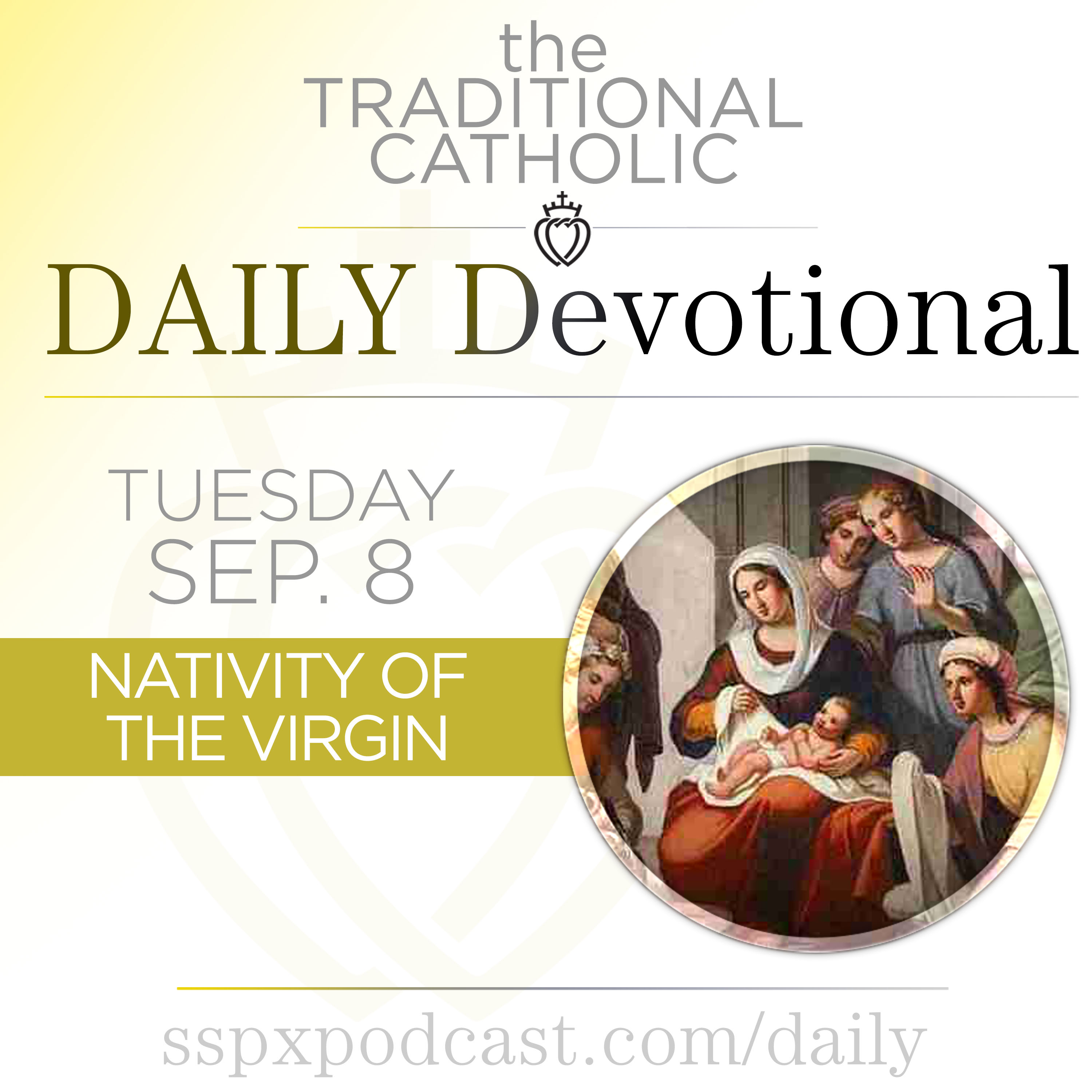 Sep 8 – Nativity of the Blessed Virgin 08.09.2026 8minIt's the Feast of Nativity of the Blessed Virgin, 2nd Class, with the color of White. In this episode: the meditation: "The Thought of Death", today's news from the Church: "Sisters of the Society of Saint Pius X: Their Life in 100 Images", a preview of this week's episode of The SSPX Podcast: "Audiobook Chapter 16", and today's thought from the Archbishop Marcel Lefebvre. Have feedback or questions about the DD or our other shows? [email protected] Sources Used Today: "The Thought of Death" — From the Assumption to Adventhttps://angeluspress.org/products/from-trinity-sunday-to-the-assumption "Sisters of the Society of Saint Pius X: Their Life in 100 Images" (FSSPX.news) https://fsspx.news/en/news/sisters-society-saint-pius-x-their-life-100-images-60865 The SSPX Podcast: "Audiobook Chapter 16" (SSPX Podcast) View on YouTubeListen & Subscribe on SSPXpodcast.com The Spiritual Life — Archbishop Marcel Lefebvre (Angelus Press) https://angeluspress.org/products/spiritual-life-archbishop Please support our new project, the Archbishop Lefebvre Biography Audiobook: Learn more:https://www.youtube.com/watch?v=Y-Wp4MQdK2oDonate:https://sspx.gifts/audiobook The Nativity of the Blessed Virgin Mary is one of only three birthdays celebrated in the Church's liturgical year: the birth of Christ, the birth of Saint John the Baptist, and the birth of Our Lady. Interestingly, the Bible never tells us when Mary was born. Even the names of her parents, Saints Joachim and Anne, come from ancient Christian tradition rather than Scripture. One of the earliest sources is the second-century Protoevangelium of James, which tells the beautiful story of Joachim and Anne as an elderly, childless couple whose long prayers were finally answered with the birth of Mary. The feast itself seems to have developed first in Jerusalem, where Christians honored a church dedicated to Saint Anne near the traditional site of Mary's childhood home. By the sixth century, Mary's birth was being celebrated in the Christian East, and over the following centuries the feast spread westward to Rome. But why September 8? There's actually a wonderfully simple explanation. The Church celebrates Mary's Immaculate Conception on December 8. Count forward nine months. September 8. In fact, historically the Nativity came first. The date of the Immaculate Conception was later calculated backward nine months from Mary's traditional birthday. The feast developed some wonderfully local customs across Catholic Europe. In parts of France, it became associated with the grape harvest, and farmers brought their finest grapes to church to be blessed. In Austria and other Alpine regions, Mary's birthday became connected with thanksgiving for the summer harvest. One of the most colorful celebrations developed in Malta, where September 8 became known as the Bambina, or "Little Mary." Statues of the infant Virgin are carried through decorated streets amid processions, music, fireworks, and enormous crowds. The date gained even greater significance because several major military victories in Maltese history occurred around September 8, including the end of the Great Siege of Malta in 1565. In parts of Italy, devotion focuses on Maria Bambina, Mary as a little child. Small statues show the infant Mary wrapped in swaddling clothes, sometimes resting in an ornate cradle. One of the best-known shrines to Maria Bambina is in Milan, where devotion to the image became especially popular in the nineteenth century. There's something charming about this feast because it celebrates no miracle Mary performed and no words she spoke. She's a baby. That's the whole point. The world didn't know it yet, but the little girl born to Joachim and Anne would become the Mother of God. Salvation history was quietly moving forward in a home where, as far as the neighbors could tell, a perfectly ordinary child had just been born. Holy Mary, whose birth announced the approaching dawn of our salvation, pray for us. Please Support this Apostolate with 1-time or Monthly Donation >> - - - - - - Explore more: Subscribe to the email version of this Devotional- it's a perfect companion!Subscribe to this Podcastto receive this and all our audio episodesSubscribe to the SSPX YouTube channelfor video versions of our podcast series and SermonsFSSPX News Website:https://fsspx.newsVisit the US District website:https://sspx.org/ What is the SSPX Podcast? The SSPX Podcast is produced by Angelus Press, which has as its mission the fortification of traditional Catholics so that they can defend the Faith, and reaching out to those who have not yet found Tradition. What is the SSPX? The main goal of the Society of Saint Pius X is to preserve the Catholic Faith in its fullness and purity, to teach its truths, and to diffuse its virtues, especially through the Roman Catholic priesthood. Authentic spiritual life, the sacraments, and the traditional liturgy are its primary means of bringing this life of grace to souls. Although the traditional Latin Mass is the most visible and public expression of the work of the Society, we are committed to defending Catholic Tradition in its entirety: all of Catholic doctrine and morals as the Church has always defended them. What people need is the Catholic Faith, without compromise, with all the truth and beauty which accompanies it. https://sspx.org
 -
 Sep 7 – Feria / S Magdalene of Nagasaki 07.09.2026 11minIt's a Feria, 4th Class, with the color of Green. In this episode: the meditation: "The Sorrowing Mother", today's news from the Church: "St. Pius X Against Half-Hearted Journalism", a preview of the Sermon: "Total Confidence in God", and today's thought from the Archbishop Marcel Lefebvre. Have feedback or questions about the DD or our other shows? [email protected] Sources Used Today: "The Sorrowing Mother" — From the Assumption to Adventhttps://angeluspress.org/products/from-trinity-sunday-to-the-assumption "St. Pius X Against Half-Hearted Journalism" (FSSPX.news) https://fsspx.news/en/news/st-pius-x-against-half-hearted-journalism-60892 "Total Confidence in God" (SSPX Sermons) SSPX YouTube: Sermons PlaylistListen & Subscribe: SSPX Sermons Podcast The Spiritual Life — Archbishop Marcel Lefebvre (Angelus Press) https://angeluspress.org/products/spiritual-life-archbishop Please support our new project, the Archbishop Lefebvre Biography Audiobook: Learn more:https://www.youtube.com/watch?v=Y-Wp4MQdK2oDonate:https://sspx.gifts/audiobook Saint Magdalene of Nagasaki was only twenty-two when she was killed, but by then she had already watched nearly every spiritual guide in her life suffer for the Catholic faith. She was born around 1611 near Nagasaki, Japan, into a Christian family. This was no longer the hopeful age when Saint Francis Xavier had first brought the Gospel to Japan. Christianity was now outlawed, missionaries were hunted, and Catholic families faced imprisonment, torture, or death. Magdalene's own parents were reportedly martyred while she was still young. She remained Catholic. Later, she came under the spiritual direction of Augustinian missionaries, including Saints Francis of Jesus and Vincent of Saint Anthony. She wanted to belong more completely to God, so she became an Augustinian tertiary, living a consecrated life while helping the underground Church. Then her priests were arrested and killed. Magdalene remained Catholic. She worked with two more missionaries, Saints Martin of Saint Nicholas and Melchior of Saint Augustine. They were killed too. At some point, hiding probably began to feel like simply waiting for the authorities to find her. So Magdalene did something extraordinary. She turned herself in. According to the traditional accounts, she appeared before the authorities wearing her Augustinian habit and openly declared that she was a Christian. She hoped that by publicly defending the faith, she might strengthen Catholics who were frightened into silence. The authorities subjected her to one of the most horrifying punishments used during the Japanese persecution, the ana-tsurushi, or "pit torture." The prisoner was suspended upside down over a pit, often with the body tightly bound and the head lowered into the opening. The torture could continue for days because the authorities wanted apostasy, not simply death. Magdalene endured it for nearly two weeks. Witnesses later remembered her remarkable composure. Even during the torture, she reportedly continued praying and singing hymns. Eventually she died in 1634, probably from suffocation after heavy rain flooded the pit. The authorities burned her body and scattered the ashes into Nagasaki Bay so Christians would have no relics to venerate. That didn't erase her memory. In fact, Nagasaki became home to one of the most astonishing stories in Catholic history. For more than two centuries after the missionaries were expelled, communities of hidden Christians, the Kakure Kirishitan, secretly preserved baptism, prayers, and fragments of Catholic tradition without priests. Magdalene never lived to see that. But she belonged to the generation whose courage made that survival possible. Saint Magdalene of Nagasaki, fearless daughter of Japan's hidden Church, pray for us. Please Support this Apostolate with 1-time or Monthly Donation >> - - - - - - Explore more: Subscribe to the email version of this Devotional- it's a perfect companion!Subscribe to this Podcastto receive this and all our audio episodesSubscribe to the SSPX YouTube channelfor video versions of our podcast series and SermonsFSSPX News Website:https://fsspx.newsVisit the US District website:https://sspx.org/ What is the SSPX Podcast? The SSPX Podcast is produced by Angelus Press, which has as its mission the fortification of traditional Catholics so that they can defend the Faith, and reaching out to those who have not yet found Tradition. What is the SSPX? The main goal of the Society of Saint Pius X is to preserve the Catholic Faith in its fullness and purity, to teach its truths, and to diffuse its virtues, especially through the Roman Catholic priesthood. Authentic spiritual life, the sacraments, and the traditional liturgy are its primary means of bringing this life of grace to souls. Although the traditional Latin Mass is the most visible and public expression of the work of the Society, we are committed to defending Catholic Tradition in its entirety: all of Catholic doctrine and morals as the Church has always defended them. What people need is the Catholic Faith, without compromise, with all the truth and beauty which accompanies it. https://sspx.org
 -
 Sep 6 – XV Sun of Pentecost / S Liberato of Loro Piceno 06.09.2026 8minIt's the Feast of XV Sun of Pentecost, 2nd Class, with the color of Green. In this episode: the meditation: "The Resurrection of the Widow's Son", today's news from the Church: "The Hymn of the Society of Saint Pius X", and today's thought from the Archbishop Marcel Lefebvre. Have feedback or questions about the DD or our other shows? [email protected] Sources Used Today: "The Resurrection of the Widow's Son" — From the Assumption to Adventhttps://angeluspress.org/products/from-trinity-sunday-to-the-assumption "The Hymn of the Society of Saint Pius X" (FSSPX.news) https://fsspx.news/en/news/hymn-society-saint-pius-x-60879 The Spiritual Life — Archbishop Marcel Lefebvre (Angelus Press) https://angeluspress.org/products/spiritual-life-archbishop Please support our new project, the Archbishop Lefebvre Biography Audiobook: Learn more:https://www.youtube.com/watch?v=Y-Wp4MQdK2oDonate:https://sspx.gifts/audiobook Blessed Liberato of Loro Piceno is one of those medieval Franciscan figures where the history is a little hazy, but the tradition surrounding him gives us a beautiful glimpse into the earliest generations after Saint Francis. Liberato lived in thirteenth-century Italy and came from Loro, in the Marches, the region facing the Adriatic Sea. Some traditions identify him with a nobleman named Liberato da Loro who gave up wealth and status to enter the Franciscan life. And this was still very early Franciscanism. Saint Francis had died only a generation before. His memory was fresh. Friars were still trying to figure out exactly what it meant to live his radical ideal of poverty after the order had expanded across Europe. Liberato wanted the simplest version possible. He withdrew to a small hermitage at Soffiano, in the wooded hills near Sarnano. There he lived with other friars in prayer, fasting, manual work, and the kind of poverty that had characterized the first companions of Saint Francis. The place itself is worth imagining. No great monastery. No elaborate choir stalls. Just a few friars living in the hills, trying to pray and stay out of everyone's way. One reason Liberato became remembered is his connection with an extraordinary medieval book, the Little Flowers of Saint Francis. A friar named Liberato appears in stories surrounding the hermitage of Soffiano, along with Brothers Humble and Pacificus. These accounts describe a small community marked by contemplation and mystical prayer. One particularly beautiful tradition says that Liberato received a warning in prayer that his death was approaching. Rather than being frightened, he prepared quietly, received the sacraments, and entrusted himself to God. After his death, devotion remained local but persistent. And that's fitting, because Liberato's entire life was local. The region around Loro Piceno and Sarnano is still filled with Franciscan history. Ancient hermitages, mountain sanctuaries, and little churches dot the landscape, preserving the memory of friars who deliberately chose places where almost nobody would notice them. Liberato never became a famous preacher like Saint Anthony. He never led the Franciscan Order like Saint Bonaventure. He didn't leave behind great books. Instead, he belonged to that quieter stream of Franciscan life: men who heard Francis say that poverty, prayer, and simplicity were enough, and then spent their lives trying to prove it. There's something refreshing about a saint whose great accomplishment was essentially disappearing into the hills to pray. Blessed Liberato of Loro Piceno, hidden son of Saint Francis and lover of holy poverty, pray for us. Please Support this Apostolate with 1-time or Monthly Donation >> - - - - - - Explore more: Subscribe to the email version of this Devotional- it's a perfect companion!Subscribe to this Podcastto receive this and all our audio episodesSubscribe to the SSPX YouTube channelfor video versions of our podcast series and SermonsFSSPX News Website:https://fsspx.newsVisit the US District website:https://sspx.org/ What is the SSPX Podcast? The SSPX Podcast is produced by Angelus Press, which has as its mission the fortification of traditional Catholics so that they can defend the Faith, and reaching out to those who have not yet found Tradition. What is the SSPX? The main goal of the Society of Saint Pius X is to preserve the Catholic Faith in its fullness and purity, to teach its truths, and to diffuse its virtues, especially through the Roman Catholic priesthood. Authentic spiritual life, the sacraments, and the traditional liturgy are its primary means of bringing this life of grace to souls. Although the traditional Latin Mass is the most visible and public expression of the work of the Society, we are committed to defending Catholic Tradition in its entirety: all of Catholic doctrine and morals as the Church has always defended them. What people need is the Catholic Faith, without compromise, with all the truth and beauty which accompanies it. https://sspx.org
 -
 Sep 5 – S Lawrence Justinian / 1st Sat 05.09.2026 9minIt's the Feast of St. Lawrence Justinian / First Sat, 3rd Class, with the color of White. In this episode: the meditation: "Recourse to God", today's news from the Church: "Education: An Agreement Between Parents", and today's thought from the Archbishop Marcel Lefebvre. Have feedback or questions about the DD or our other shows? [email protected] Sources Used Today: "Recourse to God" — From the Assumption to Adventhttps://angeluspress.org/products/from-trinity-sunday-to-the-assumption "Education: An Agreement Between Parents" (FSSPX.news) https://fsspx.news/en/news/education-agreement-between-parents-60845 The Spiritual Life — Archbishop Marcel Lefebvre (Angelus Press) https://angeluspress.org/products/spiritual-life-archbishop Please support our new project, the Archbishop Lefebvre Biography Audiobook: Learn more:https://www.youtube.com/watch?v=Y-Wp4MQdK2oDonate:https://sspx.gifts/audiobook Saint Lawrence Justinian became the first Patriarch of Venice, but he spent most of his life trying to avoid exactly the kind of attention that came with that title. He was born in Venice in 1381 into the powerful Giustiniani family. Wealth, connections, and a comfortable future were all waiting for him. As a young man, however, Lawrence became convinced that God was calling him somewhere very different. So he joined a community of canons living on the little island of San Giorgio in Alga, across the lagoon from Venice. His family wasn't exactly thrilled. According to tradition, when relatives tried to persuade him toward a prestigious marriage, Lawrence chose instead a life of poverty, prayer, and penance. Once ordained, he became known for walking through Venice begging alms for his community. That could be humiliating for anyone. For a member of one of Venice's noble families, it was especially noticeable. When people insulted him or refused him, he simply moved on. When they gave generously, he sometimes deliberately returned to houses where he had been treated badly, reasoning that begging was supposed to teach humility, not make him popular. Eventually, his reputation reached Rome, and in 1433 Pope Eugene IV appointed him Bishop of Castello, the diocese that then included much of Venice. Lawrence reportedly tried very hard to get out of it. He failed. As bishop, he lived with the same simplicity he had practiced in the monastery. He reduced unnecessary expenses, improved the formation of clergy, visited parishes, and quietly redirected money toward the poor. His episcopal household looked considerably less impressive than people expected from a Venetian bishop. Then, in 1451, something historically important happened. The old Patriarchate of Grado was reorganized and united with the Venetian see. Lawrence became the first Patriarch of Venice, beginning the line of patriarchs that continues today. Centuries later, three Patriarchs of Venice would become popes: Pius X, John XXIII, and John Paul I. Lawrence was also a serious spiritual writer. His works focused especially on prayer and the interior life, and people sought his advice because he had a gift for making deep spiritual ideas practical. When he died in 1456, devotion spread quickly. His body became an object of particular veneration and was preserved for centuries in Venice. There's something wonderfully Venetian about his story. Lawrence lived amid one of Europe's wealthiest cities, surrounded by merchants, palaces, ships, and political power. Yet right in the middle of all that splendor, he chose simplicity. He became important almost despite himself. And when the Church gave him greater authority, he simply found more people to serve. Saint Lawrence Justinian, first Patriarch of Venice and humble shepherd of the poor, pray for us. Please Support this Apostolate with 1-time or Monthly Donation >> - - - - - - Explore more: Subscribe to the email version of this Devotional- it's a perfect companion!Subscribe to this Podcastto receive this and all our audio episodesSubscribe to the SSPX YouTube channelfor video versions of our podcast series and SermonsFSSPX News Website:https://fsspx.newsVisit the US District website:https://sspx.org/ What is the SSPX Podcast? The SSPX Podcast is produced by Angelus Press, which has as its mission the fortification of traditional Catholics so that they can defend the Faith, and reaching out to those who have not yet found Tradition. What is the SSPX? The main goal of the Society of Saint Pius X is to preserve the Catholic Faith in its fullness and purity, to teach its truths, and to diffuse its virtues, especially through the Roman Catholic priesthood. Authentic spiritual life, the sacraments, and the traditional liturgy are its primary means of bringing this life of grace to souls. Although the traditional Latin Mass is the most visible and public expression of the work of the Society, we are committed to defending Catholic Tradition in its entirety: all of Catholic doctrine and morals as the Church has always defended them. What people need is the Catholic Faith, without compromise, with all the truth and beauty which accompanies it. https://sspx.org
 -
 Sep 4 – Feria / 1st Fri / S. Ultan 04.09.2026 10minIt's a Feria / 1st Fri, 4th Class, with the color of Green. In this episode: the meditation: "Trust In Providence", today's news from the Church: "What "Communion"?", a preview of this week's episode of The SSPX Podcast: "The Incarnation and the Virgin Birth", and today's thought from the Archbishop Marcel Lefebvre. Have feedback or questions about the DD or our other shows? [email protected] Sources Used Today: "Trust In Providence" — From the Assumption to Adventhttps://angeluspress.org/products/from-trinity-sunday-to-the-assumption "What "Communion"?" (FSSPX.news) https://fsspx.news/en/news/what-communion-60832 The SSPX Podcast: "The Incarnation and the Virgin Birth" (SSPX Podcast) View on YouTubeListen & Subscribe on SSPXpodcast.com The Spiritual Life — Archbishop Marcel Lefebvre (Angelus Press) https://angeluspress.org/products/spiritual-life-archbishop Please support our new project, the Archbishop Lefebvre Biography Audiobook: Learn more:https://www.youtube.com/watch?v=Y-Wp4MQdK2oDonate:https://sspx.gifts/audiobook Saint Ultan of Ardbraccan is one of those early Irish saints whose biography comes to us in fragments, but one particular detail makes him stand out immediately. He cared for abandoned children. Ultan lived in seventh-century Ireland and became bishop and abbot at Ardbraccan, in what is now County Meath. He belonged to the remarkable age of Irish monasticism when monasteries were not simply places where monks prayed. They functioned as schools, farms, libraries, hospitals, and centers of charity for the surrounding countryside. Then Ireland was struck by a terrible epidemic. A plague sometimes called the Buidhe Chonaill, or Yellow Plague, swept through the country during the seventh century. Among its victims were enormous numbers of adults, leaving children without parents to care for them. Ultan saw what was happening and stepped in. Later Irish tradition remembers him gathering orphaned children around the monastery at Ardbraccan and personally helping care for them. One particularly memorable story says that there were so many infants needing to be fed that Ultan devised ways of supplying them with milk, including keeping cows specifically for the children. It's a wonderfully practical image of sanctity. A bishop surrounded by crying babies, trying to figure out how to feed everybody. For that reason, Ultan became especially associated with the care of children and the poor. Centuries before orphanages or organized social services existed, monasteries like his often became the only safety net available when families were destroyed by disease or famine. But Ultan wasn't only remembered for charity. Irish tradition also describes him as a scholar and a collector of writings about Saint Brigid of Kildare. One medieval source even credits him with assembling hymns and accounts concerning her life. That gives us another glimpse of what an Irish bishop actually did in this period: care for the poor, govern a monastery, teach, preserve manuscripts, and somehow keep the local Church functioning. Even the place connected with him is interesting. Ardbraccan comes from the Irish Ard Breacáin, meaning the "height of Breacán." It became an important ecclesiastical center for centuries after Ultan's time. The old Diocese of Ardbraccan was eventually absorbed into the Diocese of Meath, but the area retained its religious importance long afterward. Very little of Ultan's personal story survives. But maybe the detail that survived is exactly the one worth remembering. When plague swept through Ireland and children were left with nobody to care for them, Ultan didn't write a treatise about the problem. He picked them up. He fed them. And he gave them a home. Saint Ultan of Ardbraccan, father of orphans and protector of abandoned children, pray for us. Please Support this Apostolate with 1-time or Monthly Donation >> - - - - - - Explore more: Subscribe to the email version of this Devotional- it's a perfect companion!Subscribe to this Podcastto receive this and all our audio episodesSubscribe to the SSPX YouTube channelfor video versions of our podcast series and SermonsFSSPX News Website:https://fsspx.newsVisit the US District website:https://sspx.org/ What is the SSPX Podcast? The SSPX Podcast is produced by Angelus Press, which has as its mission the fortification of traditional Catholics so that they can defend the Faith, and reaching out to those who have not yet found Tradition. What is the SSPX? The main goal of the Society of Saint Pius X is to preserve the Catholic Faith in its fullness and purity, to teach its truths, and to diffuse its virtues, especially through the Roman Catholic priesthood. Authentic spiritual life, the sacraments, and the traditional liturgy are its primary means of bringing this life of grace to souls. Although the traditional Latin Mass is the most visible and public expression of the work of the Society, we are committed to defending Catholic Tradition in its entirety: all of Catholic doctrine and morals as the Church has always defended them. What people need is the Catholic Faith, without compromise, with all the truth and beauty which accompanies it. https://sspx.org
 -
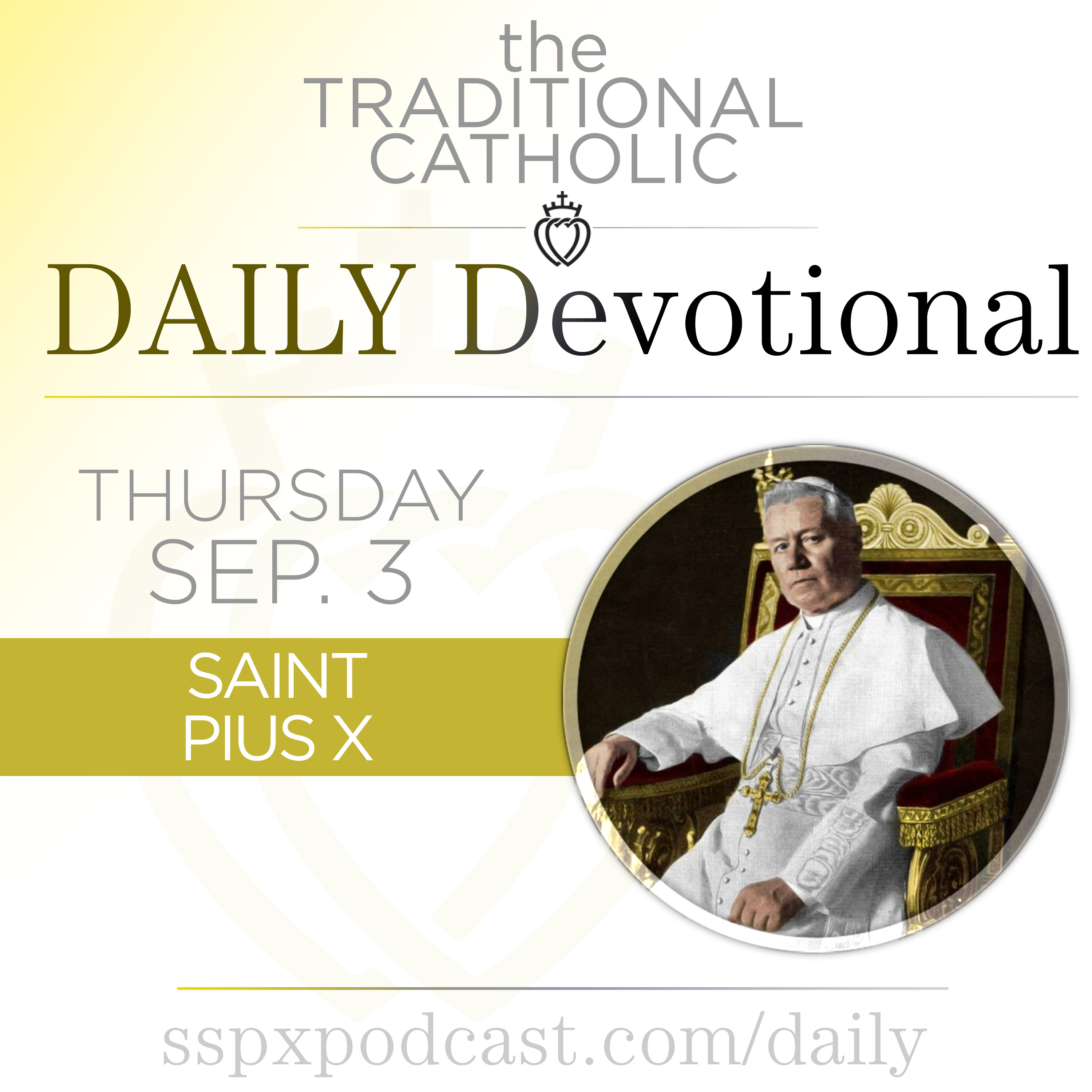 Sep 3 – S Pius X 03.09.2026 11minIt's the Feast of St Pius X, 1st Class (SSPX), with the color of White. In this episode: the meditation: "The Meaning of Our Trials", today's news from the Church: "Ceuta in Turmoil: Can Christian Charity Ignore the Common Good?", a preview of the Sermon: "St. Pius X and His Example for Us", and today's thought from the Archbishop Marcel Lefebvre. Have feedback or questions about the DD or our other shows? [email protected] Sources Used Today: "The Meaning of Our Trials" — From the Assumption to Adventhttps://angeluspress.org/products/from-trinity-sunday-to-the-assumption "Ceuta in Turmoil: Can Christian Charity Ignore the Common Good?" (FSSPX.news) https://fsspx.news/en/news/ceuta-turmoil-can-christian-charity-ignore-common-good-60746 "St. Pius X and His Example for Us" (SSPX Sermons) SSPX YouTube: Sermons PlaylistListen & Subscribe: SSPX Sermons Podcast The Spiritual Life — Archbishop Marcel Lefebvre (Angelus Press) https://angeluspress.org/products/spiritual-life-archbishop Please support our new project, the Archbishop Lefebvre Biography Audiobook: Learn more:https://www.youtube.com/watch?v=Y-Wp4MQdK2oDonate:https://sspx.gifts/audiobook Saint Pius X became pope in 1903, but he never really stopped thinking like the village priest he had once been. He was born Giuseppe Sarto in 1835 in Riese, a small town in northern Italy. His family was poor. His father worked as a postal carrier, and Giuseppe sometimes walked miles to school, reportedly carrying his shoes to keep from wearing them out and putting them on when he reached town. From parish priest to bishop, cardinal, and eventually pope, he kept moving upward through the Church almost despite himself. When he was elected pope, he reportedly protested that he was unworthy and begged the cardinals to choose someone else. They didn't. Pius chose as his motto: "To restore all things in Christ." And he got to work. One of his most important reforms affected something Catholics today barely think twice about: frequent Holy Communion. In many places, even devout Catholics received Communion only occasionally. Pius strongly encouraged frequent, even daily, Communion for properly disposed Catholics. Then he turned his attention to children. At the time, First Communion was often delayed until twelve, fourteen, or even later. Pius thought that made very little sense. If a child could understand the basic difference between ordinary bread and the Eucharist, why keep him away from Our Lord? In 1910, he lowered the normal age of First Communion to around seven, the age of reason. Millions of Catholic childhoods changed because of that decision. Pius also loved sacred music and wanted Gregorian chant restored to Catholic churches. He reformed seminaries, reorganized parts of Church government, promoted better catechesis, and began the enormous project of organizing centuries of canon law into a single code. But his pontificate also involved a serious intellectual battle. Pius saw Modernism as a threat that could hollow out Catholic doctrine from within by treating dogma as something that evolved according to changing religious experience. In 1907, he condemned these errors in Pascendi Dominici Gregis and required strong measures to prevent them from spreading through seminaries and Catholic institutions. Then came 1914. Europe moved toward war. Pius watched the crisis with horror and repeatedly urged peace. According to those around him, the prospect of Catholic nations tearing one another apart weighed heavily on him. He died on August 20, only weeks after the First World War began. There's a wonderfully tangible connection to him in Rome today. His body rests beneath an altar in Saint Peter's Basilica, dressed simply in papal vestments. Pilgrims still stop there to pray before the pope who wanted ordinary Catholics, especially children, to draw much closer to the Eucharist. And perhaps that's the simplest way to remember Pius X. For all the reforms, controversies, and enormous responsibilities of his pontificate, he wanted Catholics to know Christ, receive Christ, and build their lives around Christ. Saint Pius X, pope of the Eucharist and courageous defender of the faith, pray for us. Please Support this Apostolate with 1-time or Monthly Donation >> - - - - - - Explore more: Subscribe to the email version of this Devotional- it's a perfect companion!Subscribe to this Podcastto receive this and all our audio episodesSubscribe to the SSPX YouTube channelfor video versions of our podcast series and SermonsFSSPX News Website:https://fsspx.newsVisit the US District website:https://sspx.org/ What is the SSPX Podcast? The SSPX Podcast is produced by Angelus Press, which has as its mission the fortification of traditional Catholics so that they can defend the Faith, and reaching out to those who have not yet found Tradition. What is the SSPX? The main goal of the Society of Saint Pius X is to preserve the Catholic Faith in its fullness and purity, to teach its truths, and to diffuse its virtues, especially through the Roman Catholic priesthood. Authentic spiritual life, the sacraments, and the traditional liturgy are its primary means of bringing this life of grace to souls. Although the traditional Latin Mass is the most visible and public expression of the work of the Society, we are committed to defending Catholic Tradition in its entirety: all of Catholic doctrine and morals as the Church has always defended them. What people need is the Catholic Faith, without compromise, with all the truth and beauty which accompanies it. https://sspx.org
 -
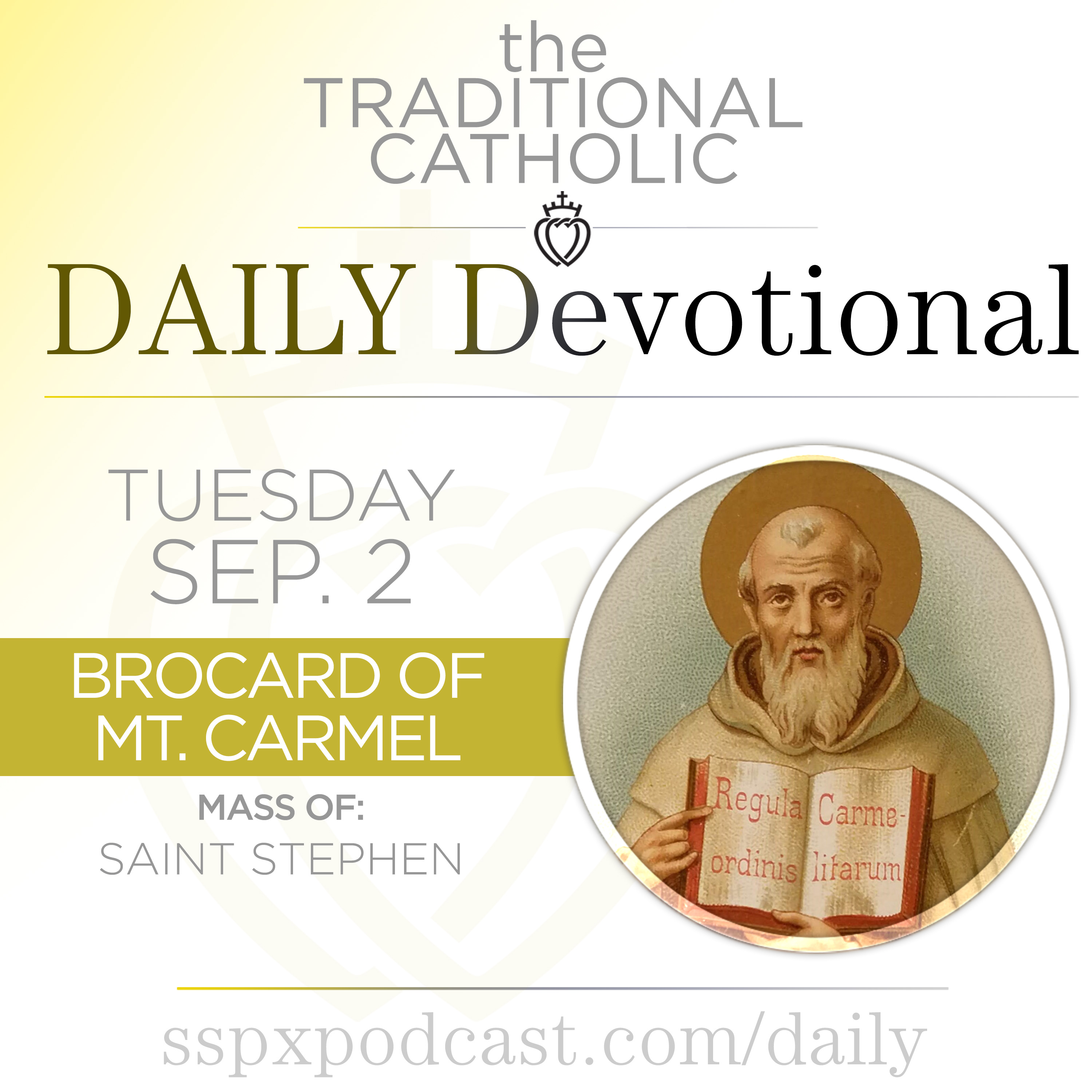 Sep 2 – S Stephen / Bl Brocard of Mt Carmel 02.09.2026 11minIt's the Feast of St Stephen, 3rd Class, with the color of White. In this episode: the meditation: "The Tribulations of the Holy Family", today's news from the Church: "Rosa Mystica Mission in the Philippines: Testimonies from Volunteers", a preview of the Sermon: "How to Live Free", and today's thought from the Archbishop Marcel Lefebvre. Have feedback or questions about the DD or our other shows? [email protected] Sources Used Today: "The Tribulations of the Holy Family" — From the Assumption to Adventhttps://angeluspress.org/products/from-trinity-sunday-to-the-assumption "Rosa Mystica Mission in the Philippines: Testimonies from Volunteers" (FSSPX.news) https://fsspx.news/en/news/rosa-mystica-mission-philippines-testimonies-volunteers-60733 "How to Live Free" (SSPX Sermons) SSPX YouTube: Sermons PlaylistListen & Subscribe: SSPX Sermons Podcast The Spiritual Life — Archbishop Marcel Lefebvre (Angelus Press) https://angeluspress.org/products/spiritual-life-archbishop Please support our new project, the Archbishop Lefebvre Biography Audiobook: Learn more:https://www.youtube.com/watch?v=Y-Wp4MQdK2oDonate:https://sspx.gifts/audiobook Blessed Brocard of Mount Carmel takes us back to a version of the Carmelite Order that looked very different from the Carmelites we know today. No Saint Teresa of Ávila yet. No Saint John of the Cross. Not even the familiar Carmelite monasteries of Europe. Instead, picture a handful of Western hermits living in small cells scattered across the slopes of Mount Carmel in the Holy Land. Brocard lived around the beginning of the thirteenth century, during the Crusader period. Very little is known about his early life, and even some details of his later story come from Carmelite tradition rather than contemporary records. But he is remembered as one of the earliest leaders of the hermits on Mount Carmel, succeeding Saint Berthold. These men had gathered near a spring traditionally associated with the prophet Elijah. They lived separately in little cells, coming together for Mass and community prayer. And they had a particular devotion to the Blessed Virgin Mary. Their small chapel was dedicated to her. Eventually, they needed something more organized. The hermits asked Albert of Jerusalem, the Latin Patriarch of Jerusalem, to give them a formal rule of life. Around the beginning of the thirteenth century, Albert wrote what became the Rule of Saint Albert, traditionally addressed to Brocard and his companions. It's surprisingly short. Rather than creating an elaborate system, the Rule tells the hermits to remain in their cells meditating on the law of the Lord, pray the Psalms, celebrate Mass together, work, fast, keep silence, and obey their prior. That little document became the foundation of Carmelite spirituality. And here's the fascinating part. The order that would eventually produce Teresa of Ávila, Thérèse of Lisieux, John of the Cross, Elizabeth of the Trinity, and generations of contemplatives began with these mostly anonymous hermits trying to pray quietly on a mountain. Brocard's own life remained largely hidden. Later Carmelite tradition remembers him as a holy superior who guided the community through its fragile early years. Some accounts connect him with miracles and with dealings involving the rulers of the Holy Land, but the historical evidence is thin, so it's better not to make those the center of his story. The more interesting legacy is the place itself. Mount Carmel rises above the Mediterranean near modern Haifa, and Carmelites still live there. The Stella Maris Monastery preserves the order's connection with the mountain from which it takes its name. Brocard didn't leave us famous books or sermons. He helped preserve something quieter: a way of life. Eight hundred years later, Carmelites around the world are still living from it. Blessed Brocard of Mount Carmel, guardian of Carmel's first contemplative spirit, pray for us. Please Support this Apostolate with 1-time or Monthly Donation >> - - - - - - Explore more: Subscribe to the email version of this Devotional- it's a perfect companion!Subscribe to this Podcastto receive this and all our audio episodesSubscribe to the SSPX YouTube channelfor video versions of our podcast series and SermonsFSSPX News Website:https://fsspx.newsVisit the US District website:https://sspx.org/ What is the SSPX Podcast? The SSPX Podcast is produced by Angelus Press, which has as its mission the fortification of traditional Catholics so that they can defend the Faith, and reaching out to those who have not yet found Tradition. What is the SSPX? The main goal of the Society of Saint Pius X is to preserve the Catholic Faith in its fullness and purity, to teach its truths, and to diffuse its virtues, especially through the Roman Catholic priesthood. Authentic spiritual life, the sacraments, and the traditional liturgy are its primary means of bringing this life of grace to souls. Although the traditional Latin Mass is the most visible and public expression of the work of the Society, we are committed to defending Catholic Tradition in its entirety: all of Catholic doctrine and morals as the Church has always defended them. What people need is the Catholic Faith, without compromise, with all the truth and beauty which accompanies it. https://sspx.org
 -
 Sep 1 – Feria / Anna the Prophetess 01.09.2026 11minIt's a Feria, 4th Class, with the color of Green. In this episode: the meditation: "The Thoughts of the Heart of Jesus", today's news from the Church: "Defending the Liturgical Reform Despite a Crisis", a preview of this week's episode of The SSPX Podcast: "Audioboook Ch. 15 - Charter of Resistance", and today's thought from the Archbishop Marcel Lefebvre. Have feedback or questions about the DD or our other shows? [email protected] Sources Used Today: "The Thoughts of the Heart of Jesus" — From the Assumption to Adventhttps://angeluspress.org/products/from-trinity-sunday-to-the-assumption "Defending the Liturgical Reform Despite a Crisis" (FSSPX.news) https://fsspx.news/en/news/defending-liturgical-reform-despite-crisis-stemming-novus-ordo-60728 The SSPX Podcast: "Audioboook Ch. 15 - Charter of Resistance" (SSPX Podcast) View on YouTubeListen & Subscribe on SSPXpodcast.com The Spiritual Life — Archbishop Marcel Lefebvre (Angelus Press) https://angeluspress.org/products/spiritual-life-archbishop Please support our new project, the Archbishop Lefebvre Biography Audiobook: Learn more:https://www.youtube.com/watch?v=Y-Wp4MQdK2oDonate:https://sspx.gifts/audiobook Anna the Prophetess appears in only a few verses of Saint Luke's Gospel, but those few verses describe a woman who had spent almost her entire adult life waiting for one particular moment. She lived in Jerusalem and belonged to the tribe of Asher, one of the ancient tribes of Israel. Luke even preserves the name of her father, Phanuel, which is remarkable considering how little Scripture tells us about her. Anna had been married as a young woman, but her husband died after only seven years. And then she did something unusual. Rather than remarry, Anna devoted the rest of her life to God. By the time we meet her in the Gospel, she is an elderly widow, traditionally understood to be eighty-four years old. Saint Luke tells us that she "departed not from the temple," serving God night and day with fasting and prayer. Think about how many ordinary days that represents. She watched generations of families enter the Temple. She saw priests come and go. She watched children grow into adults and bring children of their own. And she kept praying. Then one day, an ordinary-looking young couple walked in carrying a baby. Mary and Joseph had come to present Jesus according to the Law of Moses. There was no royal procession. No crowd waiting for the Messiah. Just two parents carrying a child and making the offering of a poor family. But Anna knew. The elderly Simeon had already taken Jesus into his arms and proclaimed Him the salvation God had promised. Then Anna approached. Scripture doesn't tell us exactly what she said, which almost makes the scene more intriguing. We are simply told that she began giving thanks to God and speaking about the Child "to all that looked for the redemption of Israel." In other words, Anna became one of the very first evangelists. Before the Apostles. Before John the Baptist began preaching. Before Jesus had spoken a single public sermon. An elderly widow was already telling people that the Redeemer had arrived. There's another beautiful detail hidden in her name. Anna, or Hannah, means "grace" or "favor." Her father Phanuel's name recalls Peniel, "the face of God." Ancient Christian writers naturally saw something fitting there: Anna, after decades of prayer, was finally given the grace of looking upon the face of God in the Christ Child. And then she almost completely disappears from history. We don't know how long she lived afterward or what became of her. Perhaps that's appropriate. Anna's whole life wasn't about becoming known. It was about being ready. She reminds us that years spent quietly praying are never wasted. Sometimes God is preparing us for a moment we cannot yet see. Holy Anna the Prophetess, patient watcher of Israel and joyful herald of the Christ Child, pray for us. Please Support this Apostolate with 1-time or Monthly Donation >> - - - - - - Explore more: Subscribe to the email version of this Devotional- it's a perfect companion!Subscribe to this Podcastto receive this and all our audio episodesSubscribe to the SSPX YouTube channelfor video versions of our podcast series and SermonsFSSPX News Website:https://fsspx.newsVisit the US District website:https://sspx.org/ What is the SSPX Podcast? The SSPX Podcast is produced by Angelus Press, which has as its mission the fortification of traditional Catholics so that they can defend the Faith, and reaching out to those who have not yet found Tradition. What is the SSPX? The main goal of the Society of Saint Pius X is to preserve the Catholic Faith in its fullness and purity, to teach its truths, and to diffuse its virtues, especially through the Roman Catholic priesthood. Authentic spiritual life, the sacraments, and the traditional liturgy are its primary means of bringing this life of grace to souls. Although the traditional Latin Mass is the most visible and public expression of the work of the Society, we are committed to defending Catholic Tradition in its entirety: all of Catholic doctrine and morals as the Church has always defended them. What people need is the Catholic Faith, without compromise, with all the truth and beauty which accompanies it.
 -
 Aug 31 – S Raymon Nonnatus / S Aidan of Lindisfarne 31.08.2026 13minIt's the Feast of St. Raymond Nonnatus, 3rd Class, with the color of White. In this episode: the meditation: "The Ritual Of the Miracle", today's news from the Church: ""I am the one you seek!"", a preview of the Sermon: "The Virtue of Obedience", and today's thought from the Archbishop Marcel Lefebvre. Have feedback or questions about the DD or our other shows? [email protected] Sources Used Today: "The Ritual Of the Miracle" — From the Assumption to Adventhttps://angeluspress.org/products/from-trinity-sunday-to-the-assumption ""I am the one you seek!"" (FSSPX.news) https://fsspx.news/en/news/i-am-one-you-seek-60727 "The Virtue of Obedience" (SSPX Sermons) SSPX YouTube: Sermons PlaylistListen & Subscribe: SSPX Sermons Podcast The Spiritual Life — Archbishop Marcel Lefebvre (Angelus Press) https://angeluspress.org/products/spiritual-life-archbishop Please support our new project, the Archbishop Lefebvre Biography Audiobook: Learn more:https://www.youtube.com/watch?v=Y-Wp4MQdK2oDonate:https://sspx.gifts/audiobook Saint Aidan of Lindisfarne helped bring Christianity to northern England, and one of the best things about his story is that he got the job because somebody else was apparently terrible at it. In the seventh century, King Oswald of Northumbria wanted his newly recovered kingdom evangelized. He asked the monks of Iona in Scotland to send a missionary. Their first choice returned frustrated, complaining that the Northumbrians were stubborn and practically impossible to teach. Aidan listened and suggested that perhaps the missionary had simply expected too much too quickly. Maybe, he said, the people needed the "milk of simpler teaching" before they were ready for stronger things. The monks apparently looked around the room and thought: Fine. You go. So Aidan went. And he was exactly the right man. King Oswald gave him the island of Lindisfarne, just off the Northumbrian coast. There Aidan founded a monastery in 635 that became one of the great centers of Christianity in medieval Britain. At first, there was a language problem. Aidan spoke Irish. The Northumbrians spoke Old English. So Oswald, who had learned Irish during his years of exile, sometimes sat beside Aidan and translated his preaching for the people. It's a wonderful image: the king acting as interpreter for the missionary bishop. Aidan's own missionary method was remarkably personal. He preferred walking rather than riding horseback because it allowed him to stop and talk with ordinary people along the road. If they were Christians, he encouraged them. If they weren't, he gently introduced them to the faith. Someone eventually gave him a fine horse so he could travel more efficiently. Aidan gave it away to a poor man. When the donor complained, Aidan reportedly asked why the son of a mare should be valued more highly than a son of God. That pretty much ended the discussion. Aidan also used gifts from wealthy people to ransom slaves, and some of those freed men later became his students and eventually priests. His monastery at Lindisfarne became known as Holy Island, and its influence continued long after Aidan's death. Missionaries trained there traveled throughout England establishing churches and monasteries. Later, Lindisfarne would produce the magnificent Lindisfarne Gospels, one of the treasures of medieval Christian art. Visitors can still reach Holy Island today by a tidal causeway. Twice each day, the sea covers the road completely, temporarily cutting the island off from the mainland. Pilgrims have to check the tide tables before crossing, which somehow feels appropriate for a place where monks once built their lives around rhythms of prayer and nature. Aidan died in 651, leaning against the outside wall of a church near Bamburgh. He had arrived among people another missionary considered hopeless. He simply approached them differently. Saint Aidan of Lindisfarne, gentle Apostle of Northumbria and friend of the poor, pray for us. Please Support this Apostolate with 1-time or Monthly Donation >> - - - - - - Explore more: Subscribe to the email version of this Devotional- it's a perfect companion!Subscribe to this Podcastto receive this and all our audio episodesSubscribe to the SSPX YouTube channelfor video versions of our podcast series and SermonsFSSPX News Website:https://fsspx.newsVisit the US District website:https://sspx.org/ What is the SSPX Podcast? The SSPX Podcast is produced by Angelus Press, which has as its mission the fortification of traditional Catholics so that they can defend the Faith, and reaching out to those who have not yet found Tradition. What is the SSPX? The main goal of the Society of Saint Pius X is to preserve the Catholic Faith in its fullness and purity, to teach its truths, and to diffuse its virtues, especially through the Roman Catholic priesthood. Authentic spiritual life, the sacraments, and the traditional liturgy are its primary means of bringing this life of grace to souls. Although the traditional Latin Mass is the most visible and public expression of the work of the Society, we are committed to defending Catholic Tradition in its entirety: all of Catholic doctrine and morals as the Church has always defended them. What people need is the Catholic Faith, without compromise, with all the truth and beauty which accompanies it. https://sspx.org
 -
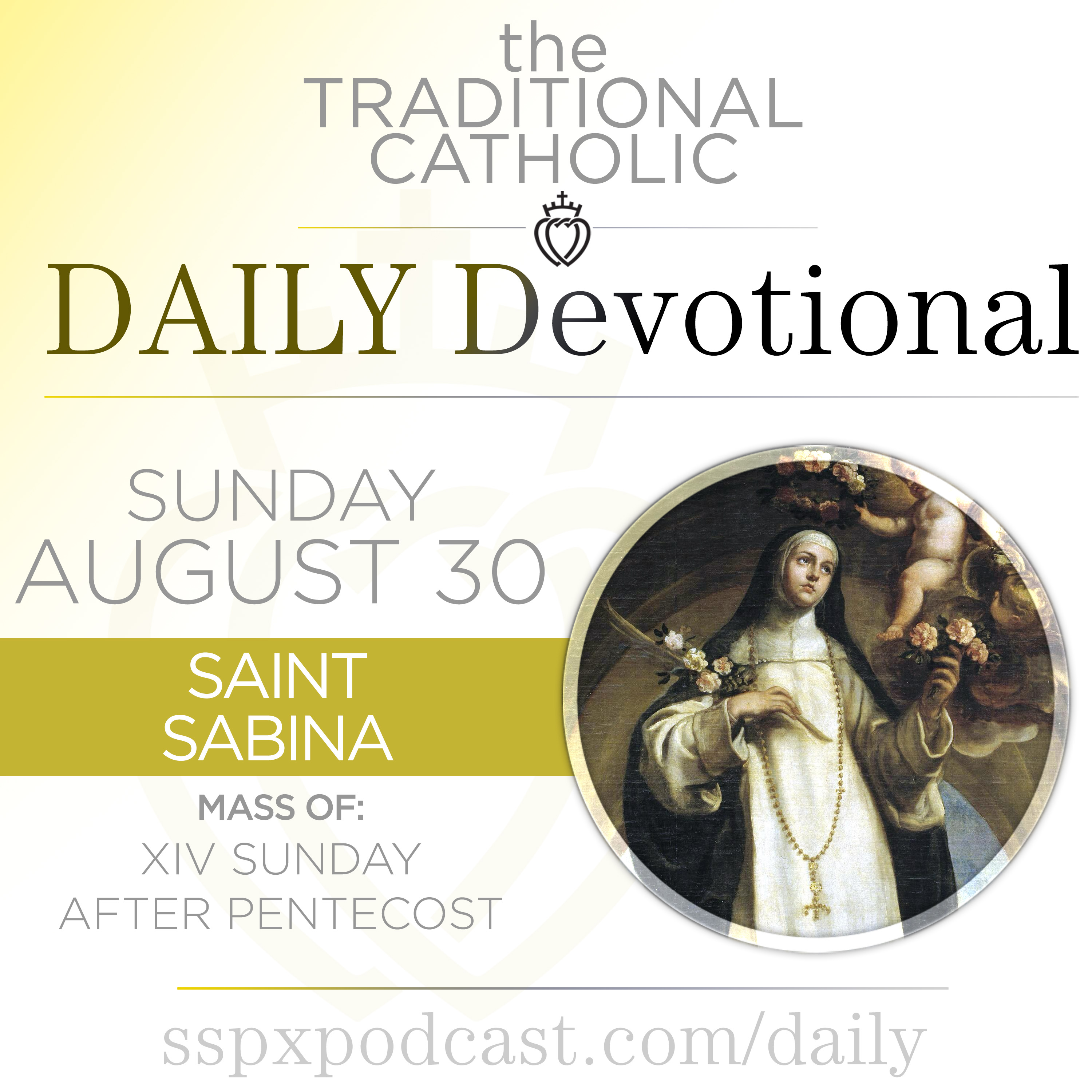 Aug 30 – XIV Sun of Pentecost / S Rose of Lima 30.08.2026 10minIt's the Feast of XIV Sun of Pentecost, 2nd Class, with the color of Green. In this episode: the meditation: "The Healing of the Deaf-Mute", today's news from the Church: "Leo XIV Consolidated Women's Access to Church Government", and today's thought from the Archbishop Marcel Lefebvre. Have feedback or questions about the DD or our other shows? [email protected] Sources Used Today: "The Healing of the Deaf-Mute" — From the Assumption to Adventhttps://angeluspress.org/products/from-trinity-sunday-to-the-assumption "Leo XIV Consolidated Women's Access to Church Government" (FSSPX.news) https://fsspx.news/en/news/leo-xiv-consolidated-womens-access-church-government-60725 The Spiritual Life — Archbishop Marcel Lefebvre (Angelus Press) https://angeluspress.org/products/spiritual-life-archbishop Please support our new project, the Archbishop Lefebvre Biography Audiobook: Learn more:https://www.youtube.com/watch?v=Y-Wp4MQdK2oDonate:https://sspx.gifts/audiobook Saint Rose of Lima was the first canonized saint born in the Americas, but during her lifetime she was mostly known as a young woman who took prayer and penance much more seriously than anyone around her expected. She was born Isabel Flores de Oliva in Lima, Peru, in 1586. According to tradition, a servant once saw the infant's face mysteriously transform into the appearance of a rose, and the nickname stuck. Rose herself later took the name formally at Confirmation. She was famous for her beauty, which actually became something of a problem. Her family expected her to marry. Rose had absolutely no intention of doing that. When admirers praised her appearance, she deliberately tried to avoid encouraging the attention. Eventually she consecrated herself to God and became a Dominican tertiary, taking Catherine of Siena as one of her great models. But Rose didn't enter a convent. Instead, she built herself a tiny hermitage in her family's garden. There she spent long hours in prayer while still helping support the household by sewing, embroidering, and growing flowers to sell. She also turned part of the family home into a place where she cared for sick and poor people who had nowhere else to go. Her penances could be extremely severe, even by the standards of her time, and they're probably not the part of her life most people should try to imitate. What mattered underneath them was something simpler: Rose had an intense desire to belong completely to Christ. And she lived in an extraordinary Catholic city. Seventeenth-century Lima produced an almost unbelievable cluster of saints. Rose knew Martin de Porres, and she was confirmed by Turibius of Mogrovejo. Imagine having three canonized saints crossing paths in the same city within a single generation. Rose died in 1617 at only thirty-one. Her funeral became an enormous public event. Crowds filled the streets, and important officials reportedly helped carry her coffin because so many people already considered her a saint. Her canonization in 1671 was historic. She became the first saint canonized from the New World and soon became a patroness not only of Peru, but of the Americas and the Philippines. Today, visitors to Lima can still see the house where she lived and the garden connected with her little hermitage. One particularly beloved tradition involves a well there. Pilgrims write letters containing their prayers and intentions and drop them into the well, continuing a devotion that draws thousands of visitors each year. Rose spent much of her life trying to disappear into a garden and pray. Instead, she became one of the most beloved saints of an entire hemisphere. Saint Rose of Lima, first flower of sanctity in the Americas, pray for us. Please Support this Apostolate with 1-time or Monthly Donation >> - - - - - - Explore more: Subscribe to the email version of this Devotional- it's a perfect companion!Subscribe to this Podcastto receive this and all our audio episodesSubscribe to the SSPX YouTube channelfor video versions of our podcast series and SermonsFSSPX News Website:https://fsspx.newsVisit the US District website:https://sspx.org/ What is the SSPX Podcast? The SSPX Podcast is produced by Angelus Press, which has as its mission the fortification of traditional Catholics so that they can defend the Faith, and reaching out to those who have not yet found Tradition. What is the SSPX? The main goal of the Society of Saint Pius X is to preserve the Catholic Faith in its fullness and purity, to teach its truths, and to diffuse its virtues, especially through the Roman Catholic priesthood. Authentic spiritual life, the sacraments, and the traditional liturgy are its primary means of bringing this life of grace to souls. Although the traditional Latin Mass is the most visible and public expression of the work of the Society, we are committed to defending Catholic Tradition in its entirety: all of Catholic doctrine and morals as the Church has always defended them. What people need is the Catholic Faith, without compromise, with all the truth and beauty which accompanies it. https://sspx.org
 -
 Aug 29 – Beheading of S John Baptist / S Sabina 29.08.2026 10minIt's the Feast of Beheading of St. John the Baptist, 3rd Class, with the color of Red. In this episode: the meditation: "Prayer", today's news from the Church: "Bishops Consecrated Clandestinely to Ensure "The Survival of the Church"", and today's thought from the Archbishop Marcel Lefebvre. Have feedback or questions about the DD or our other shows? [email protected] Sources Used Today: "Prayer" — From the Assumption to Advent https://angeluspress.org/products/assumption-to-advent "Bishops Consecrated Clandestinely to Ensure "The Survival of the Church"" (FSSPX.news) https://fsspx.news/en/news/china-bishops-consecrated-clandestinely-ensure-survival-church-60711 The Spiritual Life— Archbishop Marcel Lefebvre (Angelus Press)https://angeluspress.org/products/spiritual-life-archbishop Please support our new project, the Archbishop Lefebvre Biography Audiobook: Learn more:https://www.youtube.com/watch?v=Y-Wp4MQdK2oDonate:https://sspx.gifts/audiobook Saint Sabina is one of those early Roman saints whose biography is difficult to separate from ancient tradition, but whose name has been preserved in a very tangible way. You can still walk into her church in Rome. According to tradition, Sabina was a wealthy Roman widow who lived sometime around the end of the first or beginning of the second century. She belonged to the upper levels of Roman society and lived on the Aventine Hill, one of the city's most fashionable neighborhoods. Her path to Christianity began through someone Roman society probably considered far less important: an enslaved woman named Serapia. Serapia was a Christian. Through her influence, Sabina became interested in the faith and eventually converted. It's a fascinating little reversal of the social world of ancient Rome. The wealthy mistress possessed money, property, and status, but the enslaved woman possessed the one treasure Sabina didn't have. She introduced her to Christ. Eventually Serapia was arrested for being a Christian and put to death. Sabina recovered her body and gave her an honorable burial. That was dangerous. In the Roman world, publicly caring for the body of an executed Christian could advertise your own allegiance. According to tradition, Sabina was soon denounced, arrested, and ordered to sacrifice to the pagan gods. She refused. Sabina was beheaded, probably sometime in the early second century, and Christians preserved her memory alongside that of Serapia. But here's where the story becomes especially tangible. About three hundred years later, a magnificent basilica was built on the Aventine Hill, traditionally over or near Sabina's home. The Basilica of Santa Sabina still stands today, and it is one of the best-preserved early Christian basilicas anywhere in Rome. Even its wooden doors are extraordinary. They date from the fifth century and contain some of the oldest surviving carved Christian scenes in the world, including what may be the earliest surviving public depiction of Christ's Crucifixion. Centuries later, Santa Sabina became closely connected with the Dominican Order. Dominic lived there, and the basilica eventually became the headquarters of the Dominicans. Saint Thomas Aquinas also taught there. So the memory of an obscure Roman widow ended up attached to a church that has witnessed nearly sixteen centuries of Catholic history. And perhaps the most interesting part of Sabina's story is still where it began: with Serapia. A woman with almost no social power helped convert a woman with enormous social privilege. Together, they became saints. Saint Sabina and Saint Serapia, courageous daughters of the early Roman Church, pray for us. • • • • • Please Support this Apostolate with 1-time or Monthly Donation >> - - - - - - Explore more: Subscribe to the email version of this Devotional- it's a perfect companion!Subscribe to this Podcastto receive this and all our audio episodesSubscribe to the SSPX YouTube channelfor video versions of our podcast series and SermonsFSSPX News Website:https://fsspx.newsVisit the US District website:https://sspx.org/ What is the SSPX Podcast? The SSPX Podcast is produced by Angelus Press, which has as its mission the fortification of traditional Catholics so that they can defend the Faith, and reaching out to those who have not yet found Tradition. What is the SSPX? The main goal of the Society of Saint Pius X is to preserve the Catholic Faith in its fullness and purity, to teach its truths, and to diffuse its virtues, especially through the Roman Catholic priesthood. Authentic spiritual life, the sacraments, and the traditional liturgy are its primary means of bringing this life of grace to souls. Although the traditional Latin Mass is the most visible and public expression of the work of the Society, we are committed to defending Catholic Tradition in its entirety: all of Catholic doctrine and morals as the Church has always defended them. What people need is the Catholic Faith, without compromise, with all the truth and beauty which accompanies it. https://sspx.org
 -
 Aug 28 – S Augustine 28.08.2026 12minIt's the Feast of St. Augustine, 3rd Class, with the color of White. In this episode: the meditation: "The Means of Acquiring Humility", today's news from the Church: "Does the SSPX practice a "Free Examination" of Tradition?", a preview of this week's episode of The SSPX Podcast: "Catechism: What Catholics Mean By Christ", and today's thought from the Archbishop Marcel Lefebvre. Have feedback or questions about the DD or our other shows? [email protected] Sources Used Today: "The Means of Acquiring Humility" — From Trinity Sunday to the Assumptionhttps://angeluspress.org/products/from-trinity-sunday-to-the-assumption "Does the SSPX practice a "Free Examination" of Tradition?" (FSSPX.news) https://fsspx.news/en/news/does-sspx-practice-free-examination-tradition-60713 The SSPX Podcast: "Catechism: What Catholics Mean By Christ" (SSPX Podcast) View on YouTubeListen & Subscribe on SSPXpodcast.com The Spiritual Life — Archbishop Marcel Lefebvre (Angelus Press) https://angeluspress.org/products/spiritual-life-archbishop Please support our new project, the Archbishop Lefebvre Biography Audiobook: Learn more:https://www.youtube.com/watch?v=Y-Wp4MQdK2oDonate:https://sspx.gifts/audiobook Saint Augustine may be one of the easiest saints to relate to because he spent a surprising amount of his early life knowing exactly what he should do and finding reasons not to do it yet. He was born in 354 in North Africa. His mother was Monica, whose years of prayer for her son we've already talked about. Augustine was brilliant, ambitious, and restless. He studied rhetoric, built a successful teaching career, and searched everywhere for answers, including philosophies and religions far outside Christianity. The problem wasn't that Augustine never thought about God. He thought about God constantly. He just wasn't ready for God to interfere with his lifestyle. In his Confessions, Augustine famously remembers praying, essentially, "Lord, give me chastity and continence... but not yet." That's Augustine in one sentence. Eventually he moved to Milan, where he began listening to Ambrose of Milan. Augustine initially went because Ambrose was famous as a speaker. Then, inconveniently, he started realizing that what Ambrose was saying actually made sense. His conversion finally came in a garden. Tormented by indecision, Augustine heard what sounded like a child's voice repeating, "Take and read." He opened the letters of Saint Paul and read a passage calling him to abandon his old life. That was it. The years of arguing stopped. Augustine was baptized by Ambrose in 387, with Monica finally seeing the answer to the prayers she had offered for decades. He eventually returned to North Africa, hoping for a quiet life of prayer and study. That plan lasted about as well as most plans to become a quiet saint. While visiting Hippo, Augustine attended Mass, and the local bishop mentioned that the Church needed another priest. The congregation apparently decided Augustine was the obvious candidate. They surrounded him and essentially pushed him toward ordination. He later became Bishop of Hippo and spent more than thirty years preaching, writing, debating heresies, caring for his people, and producing some of the most influential works in Christian history. His Confessions still feels surprisingly modern. Augustine writes openly about ambition, lust, friendship, grief, memory, temptation, and the strange ways we hide from ourselves. His famous line captures the whole journey: "Our heart is restless until it rests in Thee." Augustine died in 430 while Vandals were literally besieging Hippo outside the city walls. As his world collapsed around him, the former restless young man spent his final days praying the penitential psalms. He had spent decades searching everywhere for happiness. In the end, he found exactly where his mother had always told him it would be. Saint Augustine of Hippo, restless seeker who became a great Doctor of grace, pray for us. Please Support this Apostolate with 1-time or Monthly Donation >> - - - - - - Explore more: Subscribe to the email version of this Devotional- it's a perfect companion!Subscribe to this Podcastto receive this and all our audio episodesSubscribe to the SSPX YouTube channelfor video versions of our podcast series and SermonsFSSPX News Website:https://fsspx.newsVisit the US District website:https://sspx.org/ What is the SSPX Podcast? The SSPX Podcast is produced by Angelus Press, which has as its mission the fortification of traditional Catholics so that they can defend the Faith, and reaching out to those who have not yet found Tradition. What is the SSPX? The main goal of the Society of Saint Pius X is to preserve the Catholic Faith in its fullness and purity, to teach its truths, and to diffuse its virtues, especially through the Roman Catholic priesthood. Authentic spiritual life, the sacraments, and the traditional liturgy are its primary means of bringing this life of grace to souls. Although the traditional Latin Mass is the most visible and public expression of the work of the Society, we are committed to defending Catholic Tradition in its entirety: all of Catholic doctrine and morals as the Church has always defended them. What people need is the Catholic Faith, without compromise, with all the truth and beauty which accompanies it. https://sspx.org
Samankaltaiset podcastit


Suosittu maassa
Tämä podcast esiintyy myös näiden maiden podcast-listoilla.


