
The Personal Success Podcast with Ryan Watts
Ryan Watts
0
We explore the paths to living authentically, finding fulfillment, and defining success on your own terms.
Jaksot
-
 #189 - The Goal That Was Never Yours: Andrea Mancuso on The Space Between 14.09.2026 1t 11minMost people never ask whether the goal belongs to them. Andrea Mancuso is a licensed mental health counselor, an ICF-certified coach, and a former New York City public school psychologist who spent 14 years in the system before founding Intentional Healing & Wellness. Her book, The Space Between: Navigating the Journey from Dream to Success, is about the part of the journey nobody documents: everything that happens after you decide and before you arrive. In this conversation she names something that catches a lot of high achievers off guard. When a client brings her a goal and they start taking it apart, the goal often turns out to belong to someone else. It was suggested. It was gifted. And that is usually why finishing it produces so little. Ryan tests it against his own twenty years of completing a checklist he never chose. They also get into why change is so hard even when it clearly helps, why flexibility is an emotional intelligence skill and not a personality trait, why healing tends to happen in community rather than alone, and Andrea's answer to the question most ambitious people are quietly afraid of: does doing the inner work slow you down? Her answer is no. It makes you travel lighter. What you'll take from this episode: A test for whether a goal is yours or inherited, and why goal precision comes first Why the life you already know exerts more pull than the life you want What healing work actually looks like when you strip away the mysticism Why failure is more usefully read as a reroute than a verdict How to leave room in a plan for the outcome you could not have predicted Chapters (00:00) Introduction (00:15) Who Andrea Mancuso is and what Intentional Healing & Wellness does (01:53) The father who taught her emotional intelligence in 1980s Brooklyn (04:10) What 14 years as a school psychologist taught her about change (06:35) What people underestimate: the pull of the life you already know (10:13) Flexibility as an emotional intelligence skill (14:03) When you cannot change what is out there, go inward (17:57) How The Space Between started as an event, in the shower (20:38) Failure as a reroute, not a verdict (24:52) The arrival fallacy and becoming the person first (27:14) Patience and the undeniable process (30:39) The goal that was never yours (35:26) Ryan finishes the checklist and finds nothing there (36:58) Why one-size-fits-all leadership advice misses the person (40:46) Why healing happens in community (44:14) Wired for connection (48:45) Leaving space on purpose so something unplanned can happen (51:11) Spaciousness and force in the same day (56:18) Presence, and what is relevant right now (59:23) Gabor Maté and healing as a direction, not a destination (1:02:17) Does healing slow your ambition? (1:08:07) Where the sense of insufficiency comes from (1:11:46) The legacy Andrea wants for the book (1:16:01) Where to find Andrea Mentioned in this episode The Space Between: Navigating the Journey from Dream to Success by Andrea Mancuso (Mascot Books) The Myth of Normal by Dr. Gabor Maté Bronnie Ware's work on the regrets of the dying, which Andrea recounts in the episode Jay Shetty's story about reciting scripture as a monk, told in Andrea's own words Connect with Andrea Mancuso Website: https://www.iamandreamancuso.com The book: https://www.iamandreamancuso.com/book Amazon: https://www.amazon.com/Space-Between-Navigating-Journey-Success/dp/1637555008/ Bookshop.org: https://bookshop.org/p/books/the-space-between-navigating-the-journey-from-dream-to-success-andrea-mancuso/a377783b675889d5 Barnes & Noble: https://www.barnesandnoble.com/w/the-space-between-andrea-mancuso/1149729657 LinkedIn: https://www.linkedin.com/in/iamandreamancuso/ Instagram: @iamandreamancuso Andrea asked listeners to reach out. If something in this conversation lands, send her a DM and tell her you heard it here. The Personal Success Podcast New episodes weekly. Follow so the next one finds you. Apple Podcasts: https://podcasts.apple.com/us/podcast/the-personal-success-podcast-with-ryan-watts/id1699785392 Spotify: https://open.spotify.com/show/0poXmaxpjA6ViNDy1KOh9c Show page: https://www.ryanwattslifecoaching.com/podcasts/the-personal-success-podcast-with-ryan-watts
 -
 #188 - Turning Setbacks Into Fuel || When Life Falls Apart, with John Ulsh 07.09.2026 1t 29minJohn Ulsh was a thirty-six-year-old marathon runner with a young family and a good life. One turn onto a scenic road ended it in an instant. What followed was eighteen days in a coma, forty-five surgeries, and a long stretch in a nursing home where he could not brush his own teeth. The comeback most people imagine is a straight line up. John's was not. He talks openly here about the anger, the nights that were always the worst, the year he sat still because he was not ready to commit, and the loss of his best friend to suicide. He also talks about the two moments that turned him: seeing his four-year-old son wheeled in on Christmas Eve, and the day his daughter Katie said she missed her old daddy. The idea that carried him is simple and hard to live: commit to the process, not the goal. Fall in love with the practice, the way a Division III athlete loves practice with no trophy waiting. Learn the difference between pain you cannot control and pain you choose. Give yourself grace without giving up. Ryan and John go deep on all of it, plus what nearly two decades of recovery taught John about leadership, gratitude, and building a life on your own terms. In this episode: Why John now calls himself an accident survivor first, and what his mission became The full story of the crash and the eighteen days he does not remember The nursing home, the anger, and a pastor's line: you can be pissed off and still be positive "I miss my old daddy," and the day he quit physical therapy to train himself Working out beside a group of teens with Down syndrome, and what they taught him about showing up Pain you can control versus pain you cannot, and why gym soreness felt like a gift Commitment over motivation, and why he never wants a finish line Firing the doctors who told him to be happy just to be alive How The Upside of Down got its title, and why he is giving the audiobook away About John Ulsh: John Ulsh is a keynote speaker, coach, and the author of The Upside of Down: A Survivor's Guide to Turning Setbacks Into Success. Based in central Pennsylvania, he works with leaders and teams on commitment, resilience, and using setbacks as fuel. Learn more at johnulsh.com. Chapters: 00:00 Meet John Ulsh and his mission 01:26 The accident: December 1, 2007 07:49 Life before the crash 09:02 Waking up: the first thoughts 20:37 The nursing home and the anger 28:22 "I miss my old daddy" 34:13 Pain you choose versus pain you cannot 40:32 Fall in love with the process, not the goal 54:09 The Upside of Down: the book and its title 01:08:16 What the crash taught him about leadership 01:16:13 Gratitude, mental health, and a second chance 01:26:07 Where to find John and the free audiobook Links: Please find the link to download the free audiobook here:https://johnulsh.com/the-upside-of-down/free-audiobook/ John's site: johnulsh.com The book, The Upside of Down: available on Amazon, Barnes & Noble, and wherever books are sold
 -
 #187 - Reinvention: Why it’s never too late to change, credentials don’t matter, and there are no small moments 31.08.2026 1t 1minJay Sargeant has never had a job. At 79, he is building his eighth working life. Before that he was a community organizer, a tennis professional, a franchise developer, an NLP training consultant, the builder of a distributor network, and, starting at 72, a pickleball coach. He started most of those with no credential, no background, and no backup plan. In this conversation Jay tells Ryan how he became a tennis pro before he ever hit a tennis ball, how he walked into the office of one of the biggest names in franchising with no resume and left with the job, and what a stranger at a Marina del Rey swimming pool handed him that redirected the next decade of his life. He also names the three things he believes hold people back: credentials are overrated, there are no small moments, and it is never too late to change. The last one he learned from his grandmother, who found a second great love at 94. If you are competent, respected, and quietly finished with what you are doing, this one is worth an hour. What you will hear Why Jay will help you rebuild your house for free but cannot be told to show up at seven The five-person question he asked when he wanted out of tennis, and the answer all five gave The blue suit, the briefcase he never opened, and the meeting with no resume Graduating 326th out of 327 at Boston Latin, and what six years of excuses actually taught him The stranger at the pool, Frogs into Princes, and eleven pages that changed his career The 90-year-old with a $1,000 annual growth budget Why he walked away from a business he was winning at, more than once Connect with Coach Jay Sargeant The Shift Project Academy: https://www.theshiftproject.academy/ Shift: The Gift of Reinvention (Kindle and paperback): https://www.amazon.com/Shift-Gift-Reinvention-Jay-Sargeant-ebook/dp/B0GX2WMQZD The SHIFT course ($99): https://www.theshiftproject.academy/thecohort Free readiness scorecard: https://view.genially.com/6a460ab616a6e13e09878263 YouTube: https://www.youtube.com/@TheShiftProjectAcademy LinkedIn: https://www.linkedin.com/in/coachjaysargeant/ If this conversation lands, follow The Personal Success Podcast so the next one finds you.
 -
 #186 - The Barbarian in You: Vigor, Wonder, and Fellowship | Ed Hinman 24.08.2026 1t 10minEd Hinman graduated from the U.S. Naval Academy, played four years of college football, served eight years in the Marine Corps, earned a master's degree in history, and has spent the last seventeen and a half years in public figure protection at Gavin de Becker & Associates. On paper that reads like a straight line. It was not. In this conversation, Ed lays out the idea behind his book, The Barbarian in You: we inherited bodies and nervous systems built for vigor, wonder, and fellowship, and almost everything about modern life pulls us away from all three. Vigor is physical effort and the state change that follows it. Wonder is the spiritual and imaginative side, the part you reach through nature, art, reading, or belief. Fellowship is the one Ed says we are losing fastest, especially men. Ed explains why he redefines barbarian as anyone who lives with those three things, which is how a book about Julius Caesar and the Battle of Hastings also has chapters on Ralph Waldo Emerson, Arnold Schwarzenegger, and David Lee Roth. The turn in the conversation comes when Ryan asks where Ed's self-trust came from. Ed describes standing at a service academy career conference, surrounded by employers who wanted to hire him, feeling like a product on a shelf. He went home and told his wife he would rather eat baloney cereal than take one of those jobs. Ryan shares his own version of that moment, finishing an MBA and realizing he had completed somebody else's checklist. They also get into the part most conversations about this skip. Ed does not tell anyone to quit. He says there is honor in doing work you do not want to do so you can provide for your family, and then moves the question to the hours you actually control. What are you doing at home? The back half turns to men, fellowship, and resistance. Ed's advice on checking in on a struggling friend is two words long, and it is the most useful thing in the episode. In this conversation: Why vigor, wonder, and fellowship are described as nature's rules rather than a self-improvement goal What Ed means by redefining the word barbarian, and why the Germanic tribes turned down Roman roads Following a history degree with no idea how it would pay off, and how writing became the vehicle for his career Trusting yourself when the credential you earned turns out to be someone else's plan Why Ed romanticizes his own life on purpose, and what he pictures when he lifts Resistance as a signal rather than an obstacle, from Steven Pressfield's The War of Art The two-word answer to "I do not want to bother him" Connect with Ed Hinman Book: The Barbarian in You: Living With Vigor, Wonder, & Fellowship, available in hardback, paperback, and Kindle on Amazon Website and blog: https://www.barbarianinyou.com Connect with Ryan Watts Website: https://www.ryanwattscoaching.com The Personal Success Podcast: https://www.ryanwattscoaching.com/thepersonalsuccesspodcast Apple Podcasts: https://podcasts.apple.com/us/podcast/the-personal-success-podcast-with-ryan-watts/id1699785392 Spotify: https://open.spotify.com/show/0poXmaxpjA6ViNDy1KOh9c YouTube: https://youtube.com/@thepersonalsuccesspodcast LinkedIn: https://www.linkedin.com/in/ryanwattsmba New conversations every Monday.
 -
 #185 - Why Motivation Fades in a Week and Rhythm Doesn't | David Ray Fullmer 19.08.2026 1t 11minDavid Ray Fullmer moved 29 times before he turned 17, was homeless at 15, and grew up as one of thirteen children. He is now a roofing contractor working across 18 states, and the creator of a seven-day framework he calls Becoming Seven, or B7. The premise is that you cannot hold every personal development principle at once, so you stop trying. You give each day of the week one attribute and let the week carry the load: Motivation Monday: read your why Tracking Tuesday: observe and correct your own thinking Whisper Wednesday: silence, and listening to intuition Thankful Thursday: gratitude, on purpose Forgiveness Friday: put something down Satisfaction Saturday: memories over hours Supplication Sunday: submission and humility In this conversation David explains why he believes motivation on its own produces what he calls a motivated idiot, how he built the rhythm over roughly a decade, and what happened when he called a rival contractor who was telling the industry he was going to smash him. He also names the line that organizes everything else for him: "no success in this world can account for a failure in the home." Ryan came into this recording with a headache and a plan to keep it short. That is not how it went, and he says so on air. A note on the numbers: David cites several statistics during the conversation, including figures on daily thought volume and Monday morning heart attacks. Those are his claims, offered as he understands them. Show notes links: Ryan Watts Coaching: https://www.ryanwattscoaching.com The Personal Success Podcast: https://www.ryanwattscoaching.com/thepersonalsuccesspodcast Apple Podcasts: https://podcasts.apple.com/us/podcast/the-personal-success-podcast-with-ryan-watts/id1699785392 Spotify: https://open.spotify.com/show/0poXmaxpjA6ViNDy1KOh9c YouTube: https://youtube.com/@thepersonalsuccesspodcast Ryan on LinkedIn: https://linkedin.com/in/ryanwattsmba David on Instagram: https://www.instagram.com/davidrayfullmer/ David's book: Becoming Seven: https://a.co/d/0jjXXyBW
 -
 #184 - Dan Shapiro on Chess, Confidence, and Kids Who Don't Fit the Mold 17.08.2026 1t 2minNot every kid finds their confidence on a field, a stage, or a court. Dan Shapiro's son found his across sixty-four squares. Dan Shapiro has spent nearly three decades in the investment industry. When remote school arrived in 2020, he and his wife started noticing things in their younger son that were hard to watch. Distraction that would not lift. Not responding to his name. Walking in circles in his room. The family went looking for help and came back with a term Dan had never heard before: twice exceptional. Bright kids whose brains work differently, and who are very capable, but for whom it can be hard to get it all together. What followed was not a rescue plan. It was after-school chess club. In this conversation with Ryan, Dan explains why he wanted his son to have at least one thing he could be genuinely good at, the best in his immediate surroundings, and why chess turned out to be that thing. He walks through chess notation, the habit of writing down every decision you and your opponent make so you can review it afterward and improve, and he makes the case that if that were the only skill a kid took from the game, it would still be worth it. Dan also did something most parents skip. He started taking chess lessons himself, once a week, so his son would not have to love something alone. The conversation moves into blitz chess and pre-moving, where a player executes ten moves in a second because the outcome is already known, and Dan ties it to Sully Sullenberger landing in the Hudson in roughly the same span as a blitz game after a lifetime of preparation. It moves into a hard stretch at Nationals in Baltimore where his son lost two games in a row, knew the math had taken a medal off the table, went to bed early, and won the rest. It moves into a yo-yo, a three-week sleepaway camp, and a Foo Fighters cover sung in front of the whole camp after twenty hours of practice. And then Ryan turns it toward work. If a father can misjudge his own son's best use, what are the rest of us doing with the people we lead? Dan's answer is one line long: do not be afraid to move the pieces around. Dan's book, Decoding Genius: The Unexpected Lessons of After-School Chess Club, arrives in August 2026. In this episode 00:00 Meet Dan Shapiro 01:24 What remote school revealed 02:16 What "twice exceptional" means 03:51 Wrestling with the label 07:27 Why sports and music were not the fit 07:50 One thing they can be the best at 10:56 Chess notation, or how to review your own decisions 14:37 Memory as the raw material of creativity 16:58 Writing the book he wished he had 18:52 Blitz chess, pre-moving, and Sullenberger 22:47 Losing two in a row at Nationals 25:12 Yo-yo, camp, and a Foo Fighters cover 33:35 Flow, meditation, and a pre-move checklist 36:20 Genius made, not born 50:36 The leadership translation 52:45 The paper airplane talent show 56:30 Chess as the third option 59:29 Where to find the book About Dan Shapiro Dan Shapiro has worked in the investment industry for nearly three decades and has served as a volunteer and board member for many nonprofit organizations. He is a musician, home cook, wine collector, and vintage guitar collector. He lives in Philadelphia with his wife and two sons. His book, Decoding Genius: The Unexpected Lessons of After-School Chess Club, draws on his son's experience in after-school chess club and on the history, players, and habits of mind that have made the game a training ground for fifteen hundred years. Early reviews have come from Kirkus Reviews and IndieReader. Connect with Dan Book and free parent companion: https://www.decodinggeniusbook.com LinkedIn: https://www.linkedin.com/in/~dan-shapiro/ Instagram: https://www.instagram.com/decoding.genius/ Connect with Ryan Watts Website: https://www.ryanwattscoaching.com Podcast: https://www.ryanwattscoaching.com/thepersonalsuccesspodcast LinkedIn: https://www.linkedin.com/in/ryanwattsmba YouTube: https://www.youtube.com/@ryanwattslifecoaching Have a story worth telling? Apply to be a guest on The Personal Success Podcast: https://www.ryanwattscoaching.com/podapp If this conversation was useful, follow The Personal Success Podcast so the next one finds you.
 -
 #183 - Why Success Isn't Enough: Larry Kesslin on Joy and Identity 10.08.2026 1t 16minLarry Kesslin achieved his own definition of success and found out it was not enough. He had defined it at 28 as the ability to do what he wanted whenever he wanted. Twenty years later he spent a month in rural villages in eastern and northern Uganda, met people with almost nothing who were plainly happier than he was, and came home understanding that his definition had a hole in it. In this conversation with Ryan Watts, he lays out what he put in its place: joy comes from knowing what you are, who you are, and why you are here, in that order, and it deepens through real connection with other people. Larry is a coach, speaker, and author of The Joy Molecule and Success Redefined. He left the corporate world in 1993 after a week in Aspen with 85 inner city kids, built and sold businesses, ran peer groups for fifteen years, and now works almost entirely within San Diego by choice, because he believes connection is built face to face. What this episode answers What is the difference between joy and happiness? Larry defines happiness as getting his needs met, and he has named those needs specifically so the definition stays achievable. Joy is different. Joy is knowing what you are, who you are, and why you are. His argument is that most people never define either word, which is why they keep chasing something they cannot describe. Can you be deeply aligned and still be unhappy? Yes, and Larry's answer to Ryan on this is the sharpest moment in the episode. If you have defined happiness in a way that cannot be achieved, alignment will not save you. He connects it to how we keep moving the goalposts and never let ourselves finish anything. Why does achievement stop feeling like enough? Because achievement and fulfillment were never the same problem. Larry traces his own version of that discovery through two moments, twenty years apart, where he met people with far less than he had who were carrying far more joy. Also in this conversation Why Larry says he is not Larry Kesslin, and what he means by calling it a character he plays The question that reorganized his life: what are you solving for? What happened when three questions at a conference in Mexico took apart his definition of poverty The difference between a coach and a consultant, in his words Why he refuses to ask anyone what they do, and the deck of 54 questions he built to replace it Sky, clouds, and weather, and why identifying with your thoughts makes life harder than it needs to be What separates thinking from knowing Ryan on the subtractive process of putting down the masks he had picked up Connect with Larry Kesslin Website: https://5-dots.com The Joy Molecule: https://thejoymolecule.com LinkedIn: https://www.linkedin.com/in/larrykesslin Connect with Ryan Watts The Personal Success Podcast: https://www.ryanwattscoaching.com/thepersonalsuccesspodcast Ryan Watts Coaching: https://www.ryanwattscoaching.com LinkedIn: https://www.linkedin.com/in/ryanwattsmba
 -
 Bonus: Leadership Fatigue: The Internal Negotiation No One Sees | Skot Waldron Interviews Ryan Watts 06.08.2026 43minMost leaders who feel worn down are not failing. They are running a constant internal negotiation about whether a decision is really theirs to make, and that negotiation is where the energy goes. This week is a role reversal. Ryan sits in the guest chair while Skot Waldron, internal communication strategist and host of Unlocked, asks the questions. What follows is the clearest account Ryan has given of the work he actually does. Skot opens with the thing most leadership development skips: the problem usually is not a missing skill. Ryan traces it back to his own corporate career, when he read every book on the shelf and still went home replaying conversations. The language finally arrived during a six-hour session with a friend who owns a marketing company, and it reframed everything: the work is resolving an internal negotiation, and what comes out the other side is calm authority and momentum that does not require force. From there the conversation gets specific. Why "you're not paying in failure, you're paying in fatigue" is the real tell. Why conviction tends to come before confidence, and why "confidence is certainty of self" rather than certainty of outcome. What it looks like when a leader is quietly waiting for permission they already have. The moment on a date, years ago, when someone asked Ryan a question so simple it embarrassed him into seeing it. Skot pushes on the part that is easy to miss: sometimes the tension is doing something for you. Staying in it can be cheaper than the conversation that would end it. Ryan's answer is that the fear is usually Pandora's box, and what is actually on the other side is"a blank spot in the leader"on the other side of the table, someone waiting to be led there. They also get into healthy discipline versus force, whether a leader can be effective while internally misaligned (yes, and here is what it costs), and the image Ryan keeps returning to: a high-performance car with your foot on the gas and the brake at the same time. The car moves. It is not good for the car. The closing action is small and not comfortable. Have the conversation with yourself first. Take it down two levels past the email you keep rewriting. Then name the tension. Key moments 03:33 Where the language of internal negotiation came from 06:08 Not paying in failure, paying in fatigue 07:43 Conviction first, confidence follows 11:33 The question that ended one leader's overthinking 13:16 What the tension might be doing for you 15:08 The blank spot, and people waiting to be led 16:58 The hidden question: is this within my authority? 24:12 Healthy discipline versus unhealthy force 25:35 Performing leadership versus embodying it 30:24 Foot on the gas and the brake 35:53 The first move: name the tension Mentioned in this episode John Maxwell. Good to Great by Jim Collins. Chase Hughes on authority and human behavior. Andy Stanley on tensions to manage rather than problems to solve. Connect with Skot Waldron Website: https://skotwaldron.com Unlocked podcast: https://podcasts.apple.com/us/podcast/unlocked-with-skot-waldron/id1680026365 YouTube: https://www.youtube.com/@skotwaldron Connect with Ryan Watts Website: https://www.ryanwattscoaching.com LinkedIn: https://www.linkedin.com/in/ryanwattsmba YouTube: https://www.youtube.com/@ryanwattslifecoaching The Personal Success Podcast Apple: https://podcasts.apple.com/us/podcast/the-personal-success-podcast-with-ryan-watts/id1699785392 Spotify: https://open.spotify.com/show/0poXmaxpjA6ViNDy1KOh9c Show page: https://www.ryanwattscoaching.com/thepersonalsuccesspodcast New conversations every week. Follow the show wherever you listen.
 -
 #182 - Julian Reeve: Perfectionism, Burnout, and the Identity AI Cannot Copy 03.08.2026 1t 5minJulian Reeve was the music director on the first national tour of Hamilton. Three months into the job, at 43, he had a stress-related heart attack. He was diagnosed on a Sunday, received two stents, and was back conducting ten days later. In this conversation, Julian tells Ryan Watts what he found underneath it. Working with a psychologist, he traced the heart attack to years of lifestyle choices driven by low self-esteem, workaholism, and perfectionism. That perfectionism went back to his first piano lesson at four years old, when a mistake became, in his mind, an opportunity to be loved less. Two years later, a repetitive strain injury ended his performing career altogether. He talks openly about what he actually lost: the job, the leadership, and eventually, joy. He also names something most high performers never get to say out loud, which is that there were no obvious warning signs, because running that hard was simply what he did. The second half of the conversation moves to what Julian works on now. He calls it Unmistakable Identity: the intentional synthesis of identity, creativity, and judgment. His argument is that as AI absorbs more output, differentiated human contribution becomes the thing that gets noticed, and that it starts with knowing yourself far earlier and far better than most of us do. Ryan and Julian also cover the difference between control and coordination, why most leaders overestimate their own self-awareness, how to build precision without making people afraid to make mistakes, and what a leader should actually do on Monday when nobody has the answers yet. In this episode: Why the pain point usually arrives before the insight How to talk about sustainability as addition rather than subtraction Acceptance and permission as the two stages of mourning an identity Identity, creativity, and judgment, with a chef and Lin-Manuel Miranda as the worked examples Why "we value our people" is now a claim that has to be proven What Julian believes stays uniquely human Connect with Julian Reeve Website: https://www.julianreeve.com Free assessment, the Human Capability Indicator™: https://www.julianreeve.com/capabilityindicator LinkedIn: https://www.linkedin.com/in/julianreeve/ Book, Captain Perfection & the Secret of Self-Compassion: https://www.julianreeve.com/captain-perfection Connect with Ryan Watts Coaching: https://www.ryanwattscoaching.com The Personal Success Podcast: https://www.ryanwattscoaching.com/thepersonalsuccesspodcast Apple: https://podcasts.apple.com/us/podcast/the-personal-success-podcast-with-ryan-watts/id1699785392 Spotify: https://open.spotify.com/show/0poXmaxpjA6ViNDy1KOh9c YouTube: https://youtube.com/@thepersonalsuccesspodcast Mentioned in this episode: Insight by Tasha Eurich; The Gifts of Imperfection by Brené Brown; Julian's TEDx talk on perfectionism.
 -
 #181 - Inner State as Performance: J. Johnson Jr on Mental Frequency 27.07.2026 45minWhat if your next level does not begin with a better strategy…but with the state you bring to the starting line? In this episode of The Personal Success Podcast, Ryan Watts speaks with multidimensional athlete, inventor, and entrepreneur J Johnson Jr. about the relationship between consciousness, athletic performance, visualization, and action. J shares how a powerful meditation experience changed the way he understood himself and the world around him. He explains why our internal state influences what we notice, how we interpret our experiences, and the choices we make next. Drawing from his experience as a competitive sprinter, J explores what it means to prepare the mind before pressure arrives. He describes how visualization helps him rehearse each phase of a race…and why complete presence is essential when the starting gun fires. But an elevated state is not the finish line. You can visualize the future. You can feel inspired. You can believe something new is possible. Eventually, you still have to move. In this episode • J’s mission to contribute to greater peace in the world • How meditation changed his relationship with his mind • The difference between mood and intentional state • Why presence matters in life and athletic performance • How inherited beliefs shape our understanding of reality • The importance of becoming more intentional about what we consume • What sprinting taught J about discomfort and perceived limitations • Why the mind’s first message may not reflect your full capacity • How visualization prepares the body before competition • What it means to embody aspects of your future self today • Why changing your internal state does not automatically change your circumstances • How action turns insight into a tangible result • Why neutrality can help high performers remain steady when conditions change The central tension An internal shift can feel like progress. You may feel focused, inspired, grateful, or completely prepared. But feeling different is not the same as living differently. The internal friction is the quiet negotiation between inspiration and movement. You know what you want to do. You can imagine yourself doing it. But part of you is still waiting for more certainty, better conditions, or the right feeling. As J explains, you must meet the world halfway. Your state can prepare you for the action. It cannot take the action for you. A question to consider What physical action would make your current insight real? Choose one step you can complete today. Connect with J Johnson Jr. Explore J’s projects and resources Instagram YouTube X Facebook World Athletics profile Connect with The Personal Success Podcast Receive new conversations about success, personal growth, and human potential by joining the email list at thepersonalsuccesspodcast.com. Advertisement Steve Lang’s Aura Marketing Agency: Connect with Steve Lang on LinkedIn Listener note This episode contains personal perspectives on meditation, consciousness, nutrition, mental performance, and physical limits. These ideas are shared for reflection and education. They are not medical, nutritional, or athletic training advice.
 -
 #180 - Healing Trauma Bonds: Somatic Work and Healthier Relationships With Nima Rahmany 20.07.2026 1t 4minWhat if the ambition driving your success is also protecting a part of you that still feels unworthy, rejected, or afraid of being abandoned? In this episode of The Personal Success Podcast, Ryan Watts speaks with Nima Rahmany, a former chiropractor and the creator of the Trigger Proof methodology. Nima shares the personal breakdown that forced him to confront his anger, codependency, trauma bonds, and fear of abandonment. He explains why years of personal development did not change his deepest patterns…and how some forms of self improvement can become sophisticated ways of avoiding pain. Together, Ryan and Nima explore the relationship between the nervous system, emotional triggers, leadership, parenting, ambition, and secure connection. This conversation asks a difficult question: Are you leading from purpose…or is a frightened part of you still trying to prove that you are worthy? In this episode • Why Nima moved from treating physical symptoms to exploring their emotional roots • The moment that forced him to take responsibility for his anger and behavior • How personal development can become a form of self rejection • Why understanding a pattern intellectually may not change the body’s response • What your triggers may be trying to protect • How anger can protect shame, fear, rejection, and vulnerability • The difference between suppressing an emotion and learning to remain present with it • How unresolved attachment wounds can shape the partners we choose • Why criticism can activate an earlier version of ourselves • The relationship between ambition, validation, and the need to prove your worth • How fight, flight, freezing, and appeasing can appear in leadership • Why people pleasing prevents leaders from offering honest direction • How to recognize whether ambition feels driven by pressure or pulled by purpose • The three parts of the Trigger Proof process…regulate, integrate, and communicate • Why inner leadership shapes our ability to lead other people • What it means to become more capable of being misunderstood without abandoning yourself A central question from the conversation When something activates you, ask: “What am I making this mean about me?” The reaction may be connected to more than the present moment. It may be protecting a part of you that expects rejection, shame, abandonment, or the loss of belonging. Awareness creates space between the trigger and the response. That space gives you the opportunity to choose which part of you leads next. Connect with Nima Rahmany Trigger Proof website Free Attachment Style Quiz Trigger Proof methodology Free resources Becoming Trigger Proof book information and free chapter Instagram YouTube LinkedIn Trigger Proof Facebook community Trigger Proof Transmissions on Spotify TikTok Connect with The Personal Success Podcast Join the email list and explore more conversations about success, leadership, and becoming more fully yourself at thepersonalsuccesspodcast.com. Advertisement Steve Lang’s Aura Marketing Agency: Connect with Steve Lang on LinkedIn Listener note This episode includes candid discussion of intimate partner violence, childhood trauma, emotional distress, and relationship conflict. Please listen with care. The conversation reflects the personal experiences and perspectives of the participants. It is intended for educational purposes and is not a substitute for medical care, psychotherapy, diagnosis, or individualized mental health support.
 -
 #179 - Luxury Design and Family Legacy with Sebastian Saavedra 13.07.2026 33minMost people think luxury is about price. Sebastian Saavedra says it is about the people behind the product. He grew up watching his parents build businesses between Ecuador and Canada, and today he leads Metaval Canada, a brand carrying fifty years of Latin American craftsmanship into the North American market. This conversation is about what heritage actually teaches you that business school cannot. Luxury design, family legacy, and Latin American craftsmanship: Sebastian Saavedra explains how Metaval Canada brings 50 years of heritage into the North American market. Sebastian Saavedra is the CEO and Director of Operations for Metaval Canada, a luxury kitchen, closet, and bathroom design company rooted in Latin American craftsmanship and founded fifty years ago. The point of this conversation is that identity and heritage are not soft backstory, they are operational strategy. Sebastian explains how growing up between Ecuador and Canada shaped the way he runs a business, why branding matters more than product specs in the luxury market, and what carrying a family name actually demands of you as a leader. He also talks about the tension between rebellion and alignment that every second-generation entrepreneur recognizes, and what he most wants to be known for when the titles are stripped away. Chapters:0:00 Introduction and who Sebastian Saavedra is2:13 Growing up between Ecuador and Canada5:02 Being raised inside an entrepreneurial family10:58 How to differentiate a luxury brand12:16 The Metaval Toronto Showroom and what to expect16:06 Carrying a 50-year family legacy21:34 What craftsmanship teaches that business school cannot25:55 The work Sebastian most wants to be known for Links:Metaval Canada Instagram: https://www.instagram.com/metavalcanadaMetaval website: https://www.mataval.comThe Personal Success Podcast: https://www.thepersonalsuccesspodcast.comRyan Watts Coaching: https://www.ryanwattscoaching.com
 -
 #178 - What Men Need Now: Identity, Purpose and Real Direction 06.07.2026 1t 9minMen's mental health and identity crisis explained. Bill McCamley breaks down why so many men feel confused, isolated, and stuck, and what actually helps. This episode covers the core argument of Bill McCamley's book "Now What, My Dudes?", out August 4th. The conversation works through male loneliness, the confusion driving men toward figures like Andrew Tate, why barbershops and other informal male spaces have declined, the online disinhibition effect and how it pushes men toward conflict, and what practical steps men can take to find direction. Every claim is grounded in a specific situation or number from Bill's research and experience as a coach, legislator, and punk band member who has spent years working with men across backgrounds. Chapters:0:00 Who is Bill McCamley6:01 Why the book was written8:15 Confusion as the core problem for men13:39 The Manosphere and why it is dangerous20:30 The study: 70 percent of women want men to approach them29:36 Competition, identity, and how men find purpose52:29 Men and emotional expression55:52 What men can do right now1:01:55 The online disinhibition effect1:06:39 The legacy of the book Links:Bill McCamley's book "Now What, My Dudes?": https://a.co/d/02dtoav5ryanwattscoaching.comthepersonalsuccesspodcast.comScott Galloway: https://www.instagram.com/profgalloway
 -
 #177 - From Stage 4 Cancer to No Evidence of Disease: Dale Atkinson on Self Advocacy, Patient Trust, and Fighting for More Time 01.07.2026 1t 4minIn this powerful episode of The Personal Success Podcast, Ryan sits down with Dale Atkinson for a conversation about cancer, self advocacy, patient trust, fatherhood, and what happens when life strips away the illusion of unlimited time. Dale’s story is almost impossible to hold lightly. After building a successful career in finance, compliance, governance, and fraud prevention, Dale’s life changed in 2024 when his partner was diagnosed with lung cancer. Soon after, on his youngest son’s first birthday, Dale underwent an endoscopy and was told he had cancer. Days later, his mother passed away. Then Dale was told his cancer was stage 4, inoperable, incurable, and terminal. But this conversation is not only about diagnosis. It is about what Dale chose next. Rather than becoming passive inside the system, Dale became an active participant in his own care. He read thousands of research papers. He pursued deeper testing. He built a multidisciplinary support team. He combined conventional treatment with carefully researched adjunct approaches. He asked better questions. He pushed for more complete answers. Today, Dale is using his lived experience as a stage 4 cancer patient, his professional background in trust and governance, and his deep belief in patient advocacy to help others navigate healthcare with more clarity, courage, and agency. This episode explores what it means to fight for your life without losing your life in the process. It is a conversation about grief, fatherhood, data, faith, healthcare systems, and the quiet force of refusing to disappear. In this episode, Ryan and Dale discuss: • Dale’s background in financial crime, compliance, governance, and regulated trust • The moment Dale was told he had cancer after years of unresolved symptoms • Receiving a stage 4 terminal diagnosis while raising two young children • Why Dale’s first goal was not a cure, but more quality time with his family • How self advocacy became central to his health journey • Why Dale read thousands of research papers after diagnosis • The role of next generation sequencing and personalized data in his treatment decisions • Building a care team instead of outsourcing responsibility • The difference between trusting doctors and blindly surrendering authority • Why patient experience is often invisible inside healthcare systems • How patients silently disappear when trust breaks down • Dale’s work with Clear Signal Partners and patient trust audits • Why healthcare organizations often miss what patients actually see, feel, and decide • The deeper meaning of success after a terminal diagnosis • How Dale turned despair into purpose • The Life Organic, Peak Health & Fitness, Beyond the Standard, and Pure Serenity Foundation • What Dale wants every patient to understand about self advocacy Key themes Self advocacy changes the experience of healthcare Dale makes a clear distinction between rejecting medical care and becoming an active participant in it. His message is not to ignore doctors. His message is to ask questions, seek understanding, build the right team, and remember that the person most invested in your life is you. Trust is not a soft metric Dale’s work shows how trust is built or broken long before a patient reaches the clinician. Websites, booking systems, follow up, reviews, communication, tone, and clarity all shape whether a patient feels safe enough to continue. The patient experience is often the missing record Healthcare systems record clinical actions, operational costs, and regulatory requirements. But Dale argues that many systems fail to record what patients actually experience, search for, feel, fear, and decide outside the formal pathway. Purpose can emerge from devastation Dale does not romanticize cancer. He does not make suffering sound beautiful. But he does show how crisis can clarify what matters. For him, that meant family, impact, patient support, and helping others see that there may be more options than they first believed. Powerful quotes from the conversation “I made a very conscious choice at the beginning of this process not to roll over and die.” “I needed them to see that I was fighting with everything I had to be with them.” “It was never about curing myself. It was about getting myself to a position where my kids could look back and go, my daddy really tried.” “I was the collection point. I was the person coordinating, pulling it all together and overseeing it all.” “The system has a protocol and the protocol doesn’t flex.” “Who else is going to stick up for your health and who else is going to fight for you in the same way that you would yourself?” “The best thing you can do for yourself, be it in a cancer journey or any form of health journey, and generally in life, is to self advocate.” Medical note This episode is shared for education, personal reflection, and inspiration. It is not medical advice. Dale’s story reflects his personal experience and decisions made with his care team. Always consult qualified healthcare professionals before making medical decisions or changing treatment plans. Connect with Dale Atkinson Dale Atkinson on LinkedInhttps://uk.linkedin.com/in/dalejatkinson The Life Organichttps://thelifeorganic.com Clear Signal Partnershttps://clearsignalpartners.co.uk Peak Health & Fitnesshttps://peakhealthandfitness.co.uk Pure Serenity Foundationhttps://www.pureserenityfoundation.co.uk Astron Healthhttps://www.astron.health How to Starve Cancer by Jane McLellandhttps://www.howtostarvecancer.com HIMSShttps://www.himss.org Connect with Ryan Watts The Personal Success Podcasthttps://thepersonalsuccesspodcast.com Ryan Watts Coachinghttps://ryanwattscoaching.com The Private Leadership Reset Podcasthttps://privateleadershipreset.com Private Leadership ResetFor leaders who are carrying responsibility well, but feel the internal cost rising.https://privateleadershipreset.com Advertisement ADVERTISEMENT: Steve Lang's Aura Marketing Agency:https://www.linkedin.com/in/stevelangauraaiagency/ Listen to more episodes For more conversations on success, purpose, leadership, resilience, identity, and becoming who you are here to be, visit: https://thepersonalsuccesspodcast.com
 -
 #176 - Leaders: Your Nervous System Teaches the Room || Amar Dahll 29.06.2026 1t 5minIn this episode of The Personal Success Podcast, Ryan Watts sits down with Dr. Amar Dhall for a deep conversation on leadership, coherence, nervous system regulation, power, authenticity, and meaning. Dr. Dhall’s mission is simple, but not small… To support powerful people in becoming good humans. Together, Ryan and Dr. Dhall explore what happens when leaders operate from pressure, stress, survival, and unconscious patterning. They unpack why leadership is never just about strategy or productivity, but about the state a leader brings into the room. This conversation moves through law, psychoanalysis, nervous system science, trauma, flow, coherence, music, and the difference between generative power and extractive power. At the center is one essential question… How do humans and systems stay connected under pressure? This episode is for leaders, coaches, founders, executives, and anyone carrying responsibility who wants to lead with more presence, clarity, and humanity. About Dr. Amar Dhall Dr. Amar Dhall works at the intersection of law, psychoanalysis, neuroscience, somatic psychology, leadership, and systems thinking. A former lawyer and law lecturer, Dr. Dhall now helps leaders and organizations develop greater coherence under pressure. His work focuses on nervous system regulation, trauma wise leadership, psychosocial safety, emotional intelligence, and the human systems that shape culture. His mission is to help powerful people become good humans. What We Discuss • Why leadership begins in the nervous system • How pressure distorts perception • The difference between healthy pressure and dysregulated pressure • What coherence feels like in the body • Why flow and coherence are related, but not the same • How trauma can shape leadership behavior • Why leaders often confuse stress responses with personality • The difference between power over and power with • Why authentic leadership is not simply saying whatever is on your mind • How leaders create either safety or distortion in the room • Why internal negotiation drains so much energy • The difference between generative and extractive leadership • Why music, silence, and art reveal something important about leadership • How Dr. Dhall defines a successful life Key Takeaways Your inner state is not private. The way a leader enters a room affects the system around them. Stress, reactivity, calm, coherence, presence, and fear all communicate before words do. Pressure changes perception. When a nervous system feels unsafe, the leader may feel more certain while actually seeing less clearly. Coherence is not passivity. Coherence is a regulated, connected state where body, mind, emotion, and meaning are working together. Leadership is relational. The point is not just to accomplish more. The point is to hold power in a way that supports the people and systems touched by that power. Generative leadership feels different. A generative leader builds capacity. An extractive leader consumes capacity. The difference eventually shows up in culture, relationships, and results. Authenticity requires depth. Authentic leadership is not unfiltered expression. It is the ongoing practice of knowing what is meaningful, becoming more congruent, and taking responsibility for impact. Success is meaningful living. For Dr. Dhall, success is about living a meaningful life, honoring the mystery of being alive, building good relationships, doing good, and not taking it all too seriously. Memorable Quotes “Your nervous system teaches the room.” “Power is not the problem. Unexamined power is.” “Pressure is not the problem. Unregulated pressure is.” “The nervous system of an organization mirrors the nervous system of its leaders.” “Am I being generative or extractive?” “Success is living a meaningful life.” Key Moments 00:00 Who is Dr. Amar Dhall? 01:00 Why law alone could not answer the deeper question 02:41 Horizontal doing versus vertical meaning 06:06 How humans and systems stay connected under pressure 08:17 How pressure distorts perception 10:29 Healthy pressure versus dysregulated pressure 12:38 What coherence really means 14:03 What coherence feels like in the body 19:30 Flow, coherence, and the body 26:28 Psychological entropy and internal inefficiency 30:58 Why “higher self” language can become hierarchical 35:04 What happens when a dysregulated leader enters the room 39:05 The cost of unrecognized trauma in the workplace 44:00 What leaders miss when they push through instead of settle first 45:35 Generative versus extractive leadership 51:07 Why investing in people creates better systems 54:25 Internal negotiation from a nervous system perspective 59:35 Power over versus power with cultures 01:02:18 What authenticity really requires 01:05:34 What music teaches about leadership 01:10:20 How Dr. Dhall defines success 01:11:44 Dr. Dhall’s final invitation to the audience Links and Resources Dr. Amar Dhall Website:https://www.amardhall.com/ Dr. Amar Dhall About Page:https://www.amardhall.com/aboutamar Dr. Amar Dhall Research and Insights:https://www.amardhall.com/research Neuro Somatic Leadership:https://www.amardhall.com/neuro-somaticleadership Book a Complementary Leadership Strategy Call with Dr. Amar Dhall:https://api.leadconnectorhq.com/widget/booking/dN3Vk8eLRHzFwO6jLhJx Dr. Amar Dhall on LinkedIn:https://au.linkedin.com/in/dramardhall Dr. Amar Dhall on Instagram:https://www.instagram.com/dr.amar_dhall/ The Personal Success Podcast:https://thepersonalsuccesspodcast.com Ryan Watts Coaching:https://ryanwattscoaching.com The Private Leadership Reset Podcast:https://privateleadershipreset.com ADVERTISEMENT:Steve Lang's Aura Marketing Agency:https://www.linkedin.com/in/stevelangauraaiagency/ Mentioned and Related Resources Flow Research Collective:https://www.flowresearchcollective.com/ Steven Kotler:https://www.stevenkotler.com/ Huberman Lab:https://www.hubermanlab.com/ Huberman Lab at Stanford:https://hubermanlab.stanford.edu/ Harvard Study of Adult Development:https://www.adultdevelopmentstudy.org/ Rachel Yehuda Lab:https://labs.icahn.mssm.edu/yehudalab/ Dr. Rachel Yehuda Profile:https://profiles.icahn.mssm.edu/rachel-yehuda Deb Dana:https://www.rhythmofregulation.com/ Joel Solomon:https://joelsolomon.org/ Rick and Morty:https://www.adultswim.com/rick-and-morty The Private Leadership Reset If you are a leader who looks steady on the outside but feels the cost of internal negotiation on the inside, listen to The Private Leadership Reset Podcast. It is for leaders who want calm authority, cleaner decisions, and momentum without force. Listen here:https://privateleadershipreset.com Closing Reflection This episode invites a different kind of leadership question. Not just… What am I building? But… What state am I building it from? Because leadership is not only what you say, decide, or produce. It is what your nervous system teaches the room.
 -
 #175 - The Three Headed Dragon of Transformation With Misha Saidov 24.06.2026 1t 6minThe Three Patterns Keeping Successful People from Feeling Alive In this episode of The Personal Success Podcast, Ryan Watts sits down with Misha Saidov for a deep conversation on psychology, behavior change, mysticism, leadership, identity, and real transformation. Misha’s work lives at the intersection of psychology, behavioral change, and mysticism. He explains how transformation happens when a person begins to shift identity from an old self into a newer, truer one. What begins as a conversation about hypnosis and metacognitive programming becomes a powerful exploration of success, emotional inhibition, leadership, authority, and the quiet emptiness that can follow achievement. Misha shares how his own journey began at 14, when he started studying psychology, NLP, Ericksonian hypnosis, psychoanalysis, and behavioral change in an effort to address his own existential fear. That early search became the foundation for a career helping thousands of people understand the thought patterns that shape their lives. Ryan and Misha discuss what Misha calls the three headed dragon many people face… • the belief that I am not good enough• the belief that I am alone and different from others• the belief that the best things in life are unreachable for me They also explore why successful people often carry three hidden patterns… • emotional inhibition• entitlement or grandiosity• unrelenting standards and perfectionism These patterns can drive achievement. But they can also create a life that looks successful from the outside while feeling empty on the inside. Misha explains why transformation is not only about insight. Real transformation requires an emotional experience that helps the insight become embodied. Without emotion, a moment may be interesting. With emotion and insight together, it can become identity shifting. The conversation also moves into leadership. Misha offers a powerful distinction between belief and knowing. Leadership, he says, is not built by copying other leaders. It is built through lived experience that changes what a person knows to be true. This episode is for leaders, coaches, high achievers, and anyone who has reached a level of success and quietly wondered why it does not feel the way they thought it would. In this episode • Why Misha began studying psychology at 14• How hypnosis helped him understand the mind• The three headed dragon of insufficiency, isolation, and unreachable desire• What metacognitive programming is• Why successful people often disconnect from emotion• The cost of emotional inhibition• Why achievement can create emptiness• The difference between insight and real transformation• Why emotional experience helps identity shift• The internal negotiation behind leaving a safe career path• Why leadership requires knowing, not just belief• The difference between reluctant leaders and self directed leaders• Why true ambition is about scaling your values• Misha’s definition of personal success• What makes a life well lived Key ideas from the conversation Transformation begins when we stop treating every thought as truth. Many successful people have learned how to function by disconnecting from what they feel. Emotional inhibition can help a person achieve, but it can also remove access to joy, love, meaning, and inner navigation. A powerful emotional moment is not always transformation. Transformation requires insight and emotion together. Leadership is not a future performance. It is the result of lived experience that changes what you know to be true. The real work is not becoming impressive. It is becoming honest. Memorable moments Misha describes the three headed dragon many people fight internally. Ryan reflects on the belief that doing more would make him worth more. Misha explains why some people are not ready to stop suffering until they have had enough. The conversation explores why high achievers may protect the very patterns that are causing them pain. Misha shares the heartbreaking story that led him to leave his corporate path and fully commit to his coaching and psychology work. Ryan and Misha discuss leadership as an ontological phenomenon rooted in lived experience. Misha closes with a powerful reflection on ambition, values, and what it means to scale what matters most. Guest Misha Saidov is a transformational expert whose work integrates psychology, behavioral change, mysticism, metacognitive programming, and identity transformation. He has certified thousands of coaches and worked with thousands of clients around the world. Learn more about Misha’s work:https://imcp.org Misha’s books:https://a.co/d/0c5vLZVA Recommended starting point mentioned in the episode:Conversations That Change Lives Additional book mentioned in the episode:Mind Your Mind, Heart Your Heart Instagram: https://www.instagram.com/mishasaidov_official Twitter: https://x.com/MikhailSaidovLinkedIn: https://www.linkedin.com/in/mishasaidov/Website: https://imcp.org Listen to The Personal Success Podcast The Personal Success Podcast:https://thepersonalsuccesspodcast.com New from Ryan Watts The Private Leadership Reset Podcast:https://privateleadershipreset.com ADVERTISEMENT Steve Lang's Aura Marketing Agency:https://www.linkedin.com/in/stevelangauraaiagency/
 -
 #174 - When Success Still Feels Unsafe: Dr. Maria Elena Lukeides on Fear, Flow, and Self Love 22.06.2026 1t 14minIn this profound episode of The Personal Success Podcast, Ryan Watts sits down with Dr. Maria Elena Lukeides, a clinical psychologist, meditation and mindfulness teacher, speaker, trainer, and psychedelic assisted therapist. This conversation moves through psychology, spirituality, fear, flow, healing, self acceptance, and the deeper meaning of success. Dr. Lukeides shares how one early experience of being truly seen helped shape her path into psychology. From her work in adoption, foster care, psychiatric settings, pain management, private practice, coaching, and psychedelic assisted therapy, one clear thread emerges. People are seeking love, safety, acceptance, and the felt sense that they are okay. Ryan and Dr. Lukeides explore why so much human suffering is rooted in the fear of failure, incompetence, humiliation, exposure, and unlovability. They also discuss how meditation, mindfulness, exposure, and flow can help us stop resisting our own inner experience. This episode helps listeners recognize the internal friction of trying to earn love, safety, and enoughness through achievement. At the center of the conversation is a simple but life changing possibility. What if success is not finally proving you are enough? What if success is becoming okay with yourself while you are still alive? In this episode • Why fear of failure is often fear of losing lovability • How one validating therapy session changed Dr. Lukeides’ life • The connection between psychology, spirituality, mindfulness, and healing • Why flow states can feel like a glimpse of oneness • How music, writing, coaching, crochet, yoga, and work can become portals into flow • Why fear blocks creativity • How meditation can function as exposure and response prevention • Why feelings are survivable when we stop making them mean something permanent about who we are • The difference between symptom reduction and real healing • What psychedelic assisted therapy may reveal about love, safety, and the self • Why set, setting, preparation, screening, and integration matter • How self love is not always liking yourself • Why success may be the ability to die at peace with who you are Key idea So much of life is spent trying to earn the feeling of being okay. Through achievement.Through work.Through approval.Through performance.Through becoming impressive enough to finally relax. But real success may begin when the internal argument softens. When we stop fighting who we are.When fear becomes something we can feel without obeying.When love is no longer something we are waiting to receive before we allow ourselves to belong. Memorable moments Dr. Lukeides describes the common thread beneath human suffering as the fear of failure, incompetence, and unlovability. She shares how one therapy session as a teenager helped her feel sane, seen, and validated. Ryan and Dr. Lukeides explore flow as a state where the self quiets and the activity begins to move through us. Dr. Lukeides explains meditation as a place where we can practice staying with discomfort long enough to realize it does not consume us. The conversation moves into psychedelic assisted therapy, where Dr. Lukeides discusses how some people experience insights not as ideas, but as embodied truths. Near the end, Dr. Lukeides names success in its simplest form. Being okay with yourself. Guest links Dr. Maria Elena Lukeides website: https://www.drmariaelenalukeides.com.au Psychedelic and MDMA Assisted Therapy: Learn more here Instagram: @drmariaelena_lukeides Book mentioned: No Parts Left Behind by Dr. Maria Elena LukeidesPublication forthcoming Courses mentioned: Foundations of Mindfulness and Pillars of HappinessWaiting list available through Dr. Lukeides’ website Resources mentioned Alan Watts: https://alanwatts.org Flow Research Collective: https://www.flowresearchcollective.com Steven Kotler: https://www.stevenkotler.com Ryan Watts links The Personal Success Podcast: https://thepersonalsuccesspodcast.com Ryan Watts Coaching: https://www.ryanwattslifecoaching.com Private Leadership Reset Podcast: https://privateleadershipreset.com LeaderShift Scorecard: https://www.ryanwattslifecoaching.com/scorecard Advertisement ADVERTISEMENT: Steve Lang's Aura Marketing Agency: https://www.linkedin.com/in/stevelangauraaiagency/ Closing reflection If this conversation moved something in you, take a moment before rushing to the next thing. Ask yourself: Where am I still trying to earn the right to feel okay? That question may be the beginning of a very different kind of success.
 -
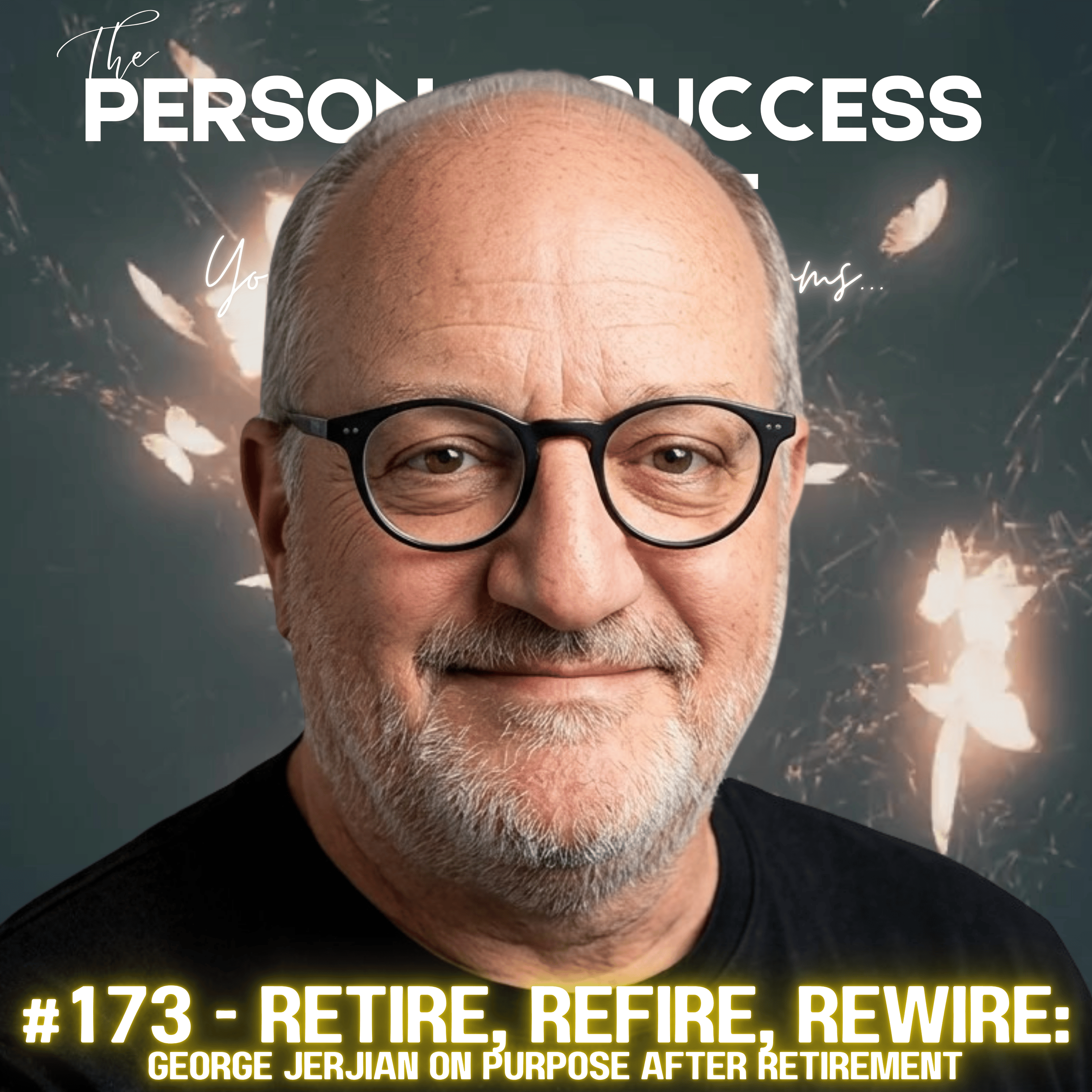 #173 - Retire, Refire, Rewire: George Jerjian on Purpose After Retirement 17.06.2026 54minIn this episode of The Personal Success Podcast, Ryan Watts sits down with George Jerjian, author, retirement mindset mentor, and creator of the DARE Method, for a powerful conversation about retirement, identity, purpose, and the courage to begin again. George’s life changed when an oncologist told him he may have only six months to live. After discovering he belonged to what he calls “the 2 percent club,” George realized he was living on bonus time. That experience led him to retire at 52, expecting freedom, ease, and fulfillment. Instead, he found himself drifting. For nine years, George lived inside what he now calls the myth of retirement. His identity felt compromised. His energy faded. The question became unavoidable. Who am I now? This conversation explores why retirement is not simply a financial transition. It is an emotional, psychological, and spiritual crossing. George shares how a 30 day silent retreat helped him reconnect with buried parts of himself, how purpose can return after success, and why the next chapter of life requires courage, not comfort. Ryan and George also discuss the difference between success and significance, the danger of drifting into oblivion, the power of desire, the role of gratitude, and why retirement can become a second hero’s journey. In This Episode Ryan and George explore: • George’s diagnosis and the moment he was told he might have six months to live• Why retirement can create a deep identity crisis• The danger of sleepwalking into the next chapter of life• Why success and significance require different mindsets• The emotional negotiation many people face after retirement• Why courage is essential for reinvention• The DARE Method…Discover, Assimilate, Rewire, Expand• How a 30 day silent retreat helped George reconnect with himself• Why travel can help reveal who we are not• George’s 80 day journey around the world• The importance of self love, gratitude, and inner authority• Mary Oliver’s question…what will you do with your one wild and precious life? Key Takeaways Retirement is not the finish line. For many people, retirement removes the structure, identity, and meaning that work once provided. Without a new sense of purpose, freedom can quietly become drift. Purpose does not end with age. George makes the case that later life is not a time to disappear. It is an opportunity to move from success into significance. Courage is the turning point. George’s DARE Method begins with courage because beginning again requires emotional willingness. It is not only a strategic decision. It is a heart decision. The next chapter requires a new identity. Who you were may not be who you are becoming. That transition can be painful, but it can also become deeply meaningful. Gratitude changes perception. George connects thinking and thanking, reminding us that gratitude is not passive. It changes how we see the life already in front of us. Memorable Quotes “Retirement is our opportunity to become who we’re meant to be.” “You can retire from work, but you can’t retire from life.” “We’re moving from the concept of success to the concept of significance.” “If you feel that you’ve still got a lot to give, then this is for you.” “Every single day is a lifetime.” “What will you do with your one wild and precious life?” About George Jerjian George Jerjian is an author, speaker, and retirement mindset mentor who helps retirees find a new beginning. After a life changing health scare and his own difficult transition into retirement, George began helping others rethink retirement as a chapter of purpose, passion, and significance. He is the author of multiple books, including Dare to Discover Your Purpose: Retire, Refire, Rewire and Odyssey of an Elder: Around the World in Eighty Days. Connect With George Jerjian Website: https://georgejerjian.com Books: https://georgejerjian.com/books LinkedIn: https://uk.linkedin.com/in/georgejerjian YouTube: https://www.youtube.com/channel/UCQAHngaJVQiuQixO6Q01rVA George’s Books Dare to Discover Your Purpose: Retire, Refire, RewireAmazon: https://www.amazon.com/Dare-Discover-Your-Purpose-Retire/dp/1774820749 Odyssey of an Elder: Around the World in Eighty DaysAmazon: https://www.amazon.com/Odyssey-Elder-Around-World-Eighty/dp/1774823438 Listen to The Personal Success Podcast Website: https://thepersonalsuccesspodcast.com ADVERTISEMENT Steve Lang's Aura Marketing Agency: https://www.linkedin.com/in/stevelangauraaiagency/ Subscribe and Follow Subscribe to The Personal Success Podcast for conversations on purpose, leadership, personal growth, self awareness, and what it means to create a life that actually feels like your own. Website: https://thepersonalsuccesspodcast.com
 -
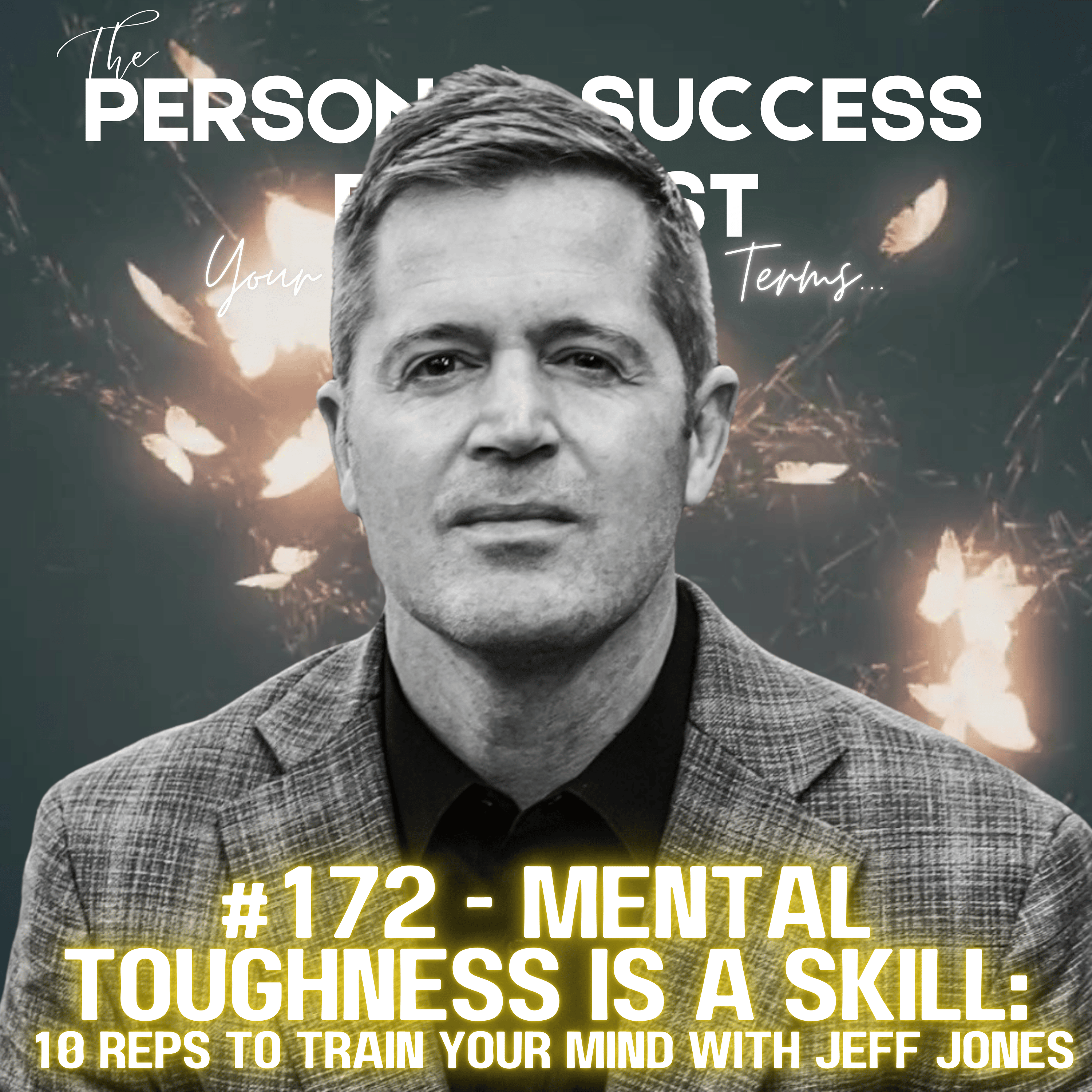 #172 - Mental Toughness Is a Skill: 10 Reps to Train Your Mind with Jeff Jones 15.06.2026 1t 10minIn this episode of The Personal Success Podcast, Ryan sits down with Jeff Jones, a strength and conditioning coach, performance coach, speaker, and author of The Intentional Edge: 10 Reps to Mental Toughness. Jeff has spent more than 20 years coaching college football athletes. Early in his career, his work focused on physical performance…speed, strength, explosiveness, and athletic development. Over time, he saw something deeper. Physical talent matters. But what usually limits performance is mental. That realization led Jeff into the world of mindset, motivation, habits, discipline, gratitude, identity, focus, and mental toughness. His work now centers on helping athletes, leaders, and high performers train the mind with the same intention they bring to the weight room. Ryan and Jeff explore the difference between knowing mental performance concepts and actually living them. They talk about why mental toughness is not a personality trait, why motivation is a responsibility, how the brain creates automatic negative thoughts, and why the quality of your daily reps determines the quality of your life. Jeff also shares key ideas from The Intentional Edge, including the importance of talking to yourself instead of listening to yourself, building a stronger identity beyond performance, creating boundaries with your phone, celebrating daily wins, and choosing hard things on purpose. This conversation is for athletes, leaders, entrepreneurs, coaches, parents, and anyone who wants to become more intentional with how they think, act, lead, and live. In this episode, Ryan and Jeff discuss: • Why mental toughness is trained, not given• The shift from physical performance to mental performance• Why most people are already putting in mental reps without realizing it• The difference between default reps and intentional reps• Why talking to yourself matters more than listening to yourself• How automatic negative thoughts shape confidence and behavior• The “penthouse versus outhouse” mindset framework• Why motivation is your responsibility• How values and identity create stronger performance• The danger of tying self worth only to outcomes• Why achievement alone does not create fulfillment• How progress creates meaning• Why gratitude belongs inside mental toughness• The role of solitude, boredom, and focus in a distracted world• How smartphones steal attention and weaken presence• Why doing hard things builds resilience• The difference between performing toughness and training toughness• How leaders and athletes can become more intentional every day Featured Guest Jeff Jones is a performance coach, strength and conditioning coach, speaker, and author. He has spent more than two decades working in college football, helping athletes develop physically, mentally, and personally. His book, The Intentional Edge: 10 Reps to Mental Toughness, gives readers a practical framework for training the mind through daily intentional reps. Connect with Jeff Jones Jeff’s Book: The Intentional Edge: 10 Reps To Mental Toughness: https://a.co/d/0inmge95 Website:https://coachjeffjones.com Instagram:https://www.instagram.com/coachjeffjones X:https://x.com/JonesyJeff1 Connect with Ryan Watts Ryan Watts Coaching:https://www.ryanwattslifecoaching.com The Personal Success Podcast:https://thepersonalsuccesspodcast.com Private Leadership Reset:https://privateleadershipreset.com ADVERTISEMENT Steve Lang's Aura Marketing Agency:https://www.linkedin.com/in/stevelangauraaiagency/ Listen and Subscribe Listen to The Personal Success Podcast wherever you get podcasts. Apple Podcasts:https://podcasts.apple.com/us/podcast/the-personal-success-podcast/id1682844152 Spotify:https://open.spotify.com/show/0f9xZkY8gNHSHxWcZy9RrQ YouTube:https://www.youtube.com/@ThePersonalSuccessPodcast Closing Mental toughness is not something you wait to feel. It is something you train. One thought.One choice.One rep at a time.
 -
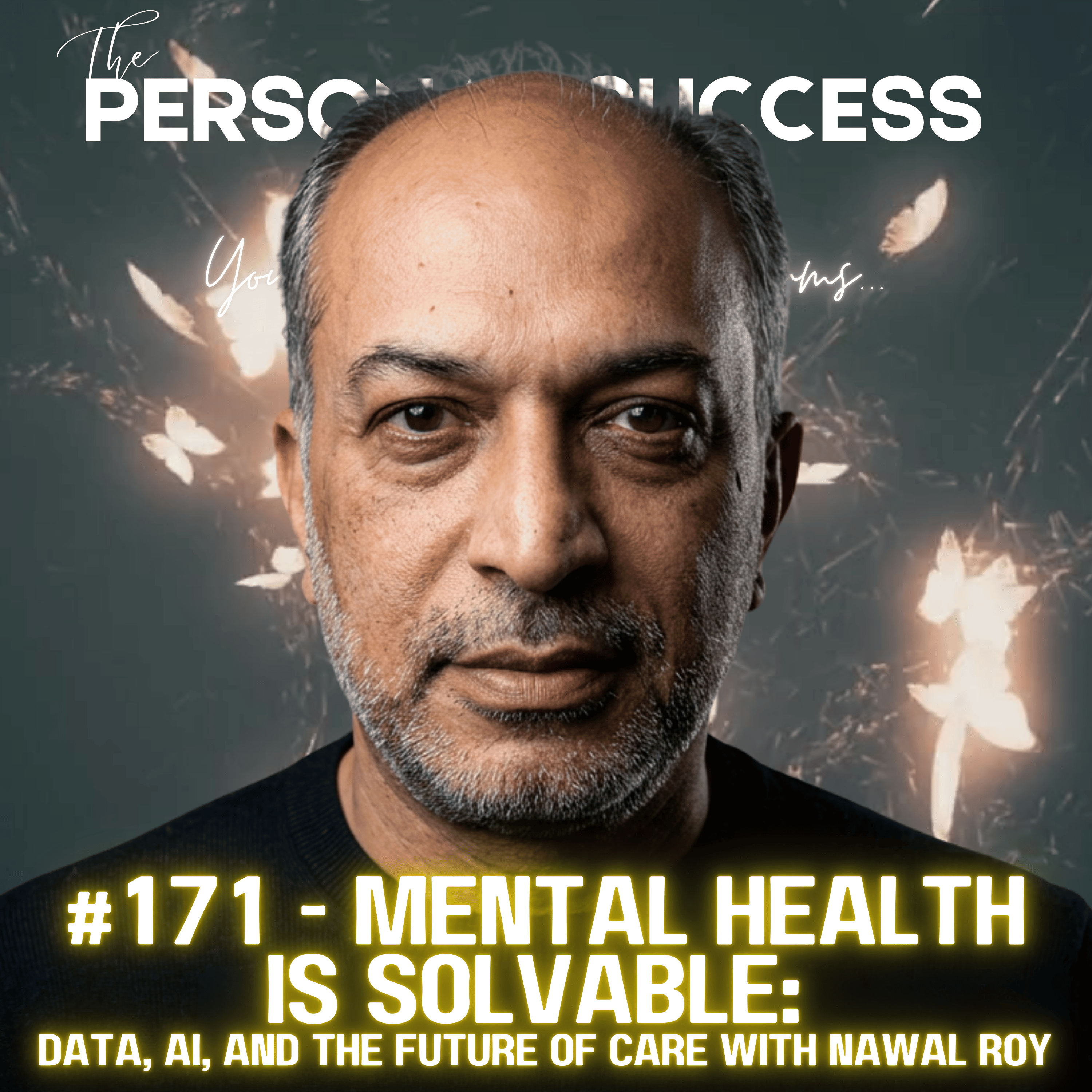 #171 - Mental Health Is Solvable: Data, AI, and the Future of Care with Nawal Roy 10.06.2026 50minRyan sits down with Nawal Roy, Founder and CEO of Holmusk, for a powerful conversation about the future of mental health care, the role of data, and why one of the world’s most complex problems may also be one of the most solvable. Nawal brings a rare combination of conviction, humility, and systems thinking to the conversation. With a background in economics, finance, and strategy, he entered the mental health space after recognizing one massive gap…the lack of high quality data needed to improve research, treatment development, care delivery, and patient outcomes. His company, Holmusk, has spent more than a decade building one of the largest behavioral health data platforms in the world. In this conversation, Nawal explains why mental health has remained far behind other areas of medicine, why trial and error still dominates treatment, and what could become possible if society committed to solving mental health as a true healthcare problem. In this episode, Ryan and Nawal discuss: Why mental health care is still years behind fields like cardiology and oncology How data became the missing infrastructure in behavioral health Why mental health should be treated as a healthcare problem, not a moral failure or social defect The role of stigma in delaying care and limiting access How AI may help improve mental health treatment and global access Why trial and error remains one of the biggest problems in psychiatric care What Holmusk has learned from millions of patient records Why healthcare payment models are often harder to solve than the technology itself The leadership required to take on a complex, generational problem Why meaningful work often begins with attempting something that may never be fully solved by one person Key Themes Mental health is not unsolvable. Nawal makes a clear case that mental health can be improved in the same way other major health challenges have been improved…through research, funding, measurement, infrastructure, and serious societal commitment. His position is simple and hopeful. Mental health is a health problem. Health problems can be measured. Measured problems can be studied. Studied problems can be improved. Data is the foundation for better care. Nawal compares the need in mental health to what Bloomberg created for finance…high quality data at your fingertips. His belief is that better data can reduce trial and error, improve outcomes, support clinicians, help researchers, and eventually give patients access to better treatment earlier in the process. Stigma changes when the frame changes. One of the strongest moments in the episode comes when Nawal compares the stigma around mental health to the historical stigma around AIDS. His point is not that the problems are identical. His point is that stigma can change when society begins to understand a condition as a health issue and commits real research, funding, public policy, and clinical infrastructure toward solving it. Leadership requires sustained conviction. This conversation is also about leadership. Nawal does not romanticize the work. He names the difficulty clearly. Capital is hard. Talent is hard. Partnerships are hard. Business models are hard. Healthcare payment systems are hard. And still, he continues. For Nawal, the attempt matters. The work matters. The problem is large enough that even solving a small percentage of it would be meaningful. Memorable Ideas From the Conversation Mental health should be treated as a healthcare problem. Trial and error in psychiatric treatment can and should be reduced. The lack of high quality data has slowed progress in mental health. The future of mental health may depend on better measurement, better research, and better infrastructure. AI can only be as useful as the quality of the data underneath it. Hard problems are hard for a reason. The attempt matters, even when the full outcome is uncertain. About Nawal Roy Nawal Roy is the Founder and CEO of Holmusk, a company focused on transforming mental and behavioral health through real world data, analytics, and evidence generation. Before founding Holmusk, Nawal built a career in finance, economics, and strategy. His work now centers on solving one of the most complex and consequential challenges in healthcare…improving mental health outcomes through better data, better research, and better systems. Connect with Nawal Roy Holmusk: https://www.holmusk.com/ Nawal Roy Website: https://www.nawalroy.com/ Nawal Roy on LinkedIn: https://www.linkedin.com/in/nawalroy Listen to The Personal Success Podcast Website: http://thepersonalsuccesspodcast.com Apple Podcasts: https://podcasts.apple.com/us/podcast/the-personal-success-podcast-with-ryan-watts/id1699785392 Spotify: https://open.spotify.com/show/0poXmaxpjA6ViNDy1KOh9c YouTube: https://youtube.com/@thepersonalsuccesspodcast Connect With Ryan Website: http://ryanwattscoaching.com ADVERTISEMENT Steve Lang's Aura Marketing Agency: https://www.linkedin.com/in/stevelangauraaiagency/ Closing Reflection This episode is a reminder that some problems are too important to avoid simply because they are complex. Mental health care may be fragmented. It may be under measured. It may be far too dependent on trial and error. But according to Nawal Roy, it is not beyond repair. With better data, better leadership, better infrastructure, and a serious commitment from society, mental health can become more measurable, more treatable, and more humane. That is not hype. That is conviction. And it may be exactly the kind of conviction this field needs.


