
Agency Intelligence: The Insurance Podcast Network
Agency Intelligence
0
Agency Intelligence: The Insurance Podcast Network is a top insurance podcast network featuring multiple series. It offers insights from insurance agency owners and industry influencers, covering the latest trends and best practices in the insurance industry.
Jaksot
-
 Insurance Shoptalk: The PAYGO Defense Strategy: How Agents Protect Their Workers’ Comp Book 14.09.2026 51minIn this episode of Insurance Shoptalk, Eric Stein sits down with Patrick Davis, CEO of InsurePay, to discuss how pay-as-you-go workers’ compensation is changing the way businesses pay premiums—and why insurance agents should understand it as both a client benefit and a retention tool. Patrick explains how pay-as-you-go connects workers’ compensation premiums directly to actual payroll, recalculating exposure with every payroll cycle instead of relying on annual estimates. The conversation covers how this approach can improve cash flow, reduce large audit surprises, lower the risk of cancellations for nonpayment, and simplify the workers’ comp experience for insureds. For insurance agents, carriers, MGAs, and business owners interested in workers’ compensation, payroll integration, premium billing, client retention, and reducing audit headaches, this episode provides a practical look at why pay-as-you-go is becoming an increasingly important option. #InsuranceShopTalk #WorkersCompensation #PayAsYouGo #InsuranceAgency #CommercialInsurance #InsuranceTechnology #Insurtech #Payroll #InsuranceAgents #WorkersComp
 -
 Insurance Shoptalk: The New Agency Workforce: AI Tools + Offshore Talent 10.09.2026 48minIn this episode of Insurance Shoptalk, Eric Stein chats with Norm Hudson, CEO of Staff Boom, to explore why insurance agencies need to build the right operational foundation before AI and automation can deliver meaningful results. Norm shares lessons from working with insurance agencies, MGAs, wholesalers, and other organizations that have attempted to automate processes only to discover that inconsistent data, workflows, and naming standards can prevent even good technology from succeeding. The conversation covers operational readiness, process documentation, data quality, change management, offshore support, and how AI can amplify the productivity of account managers and producers rather than simply replace employees. Eric and Norm also discuss practical AI applications including supplemental forms, policy checking, renewal preparation, proposals and quote comparisons, along with strategies for helping smaller agencies reduce administrative work and restore their focus on organic growth. If you're interested in AI, automation, offshore talent, operational efficiency, organic growth, or practical ways to help your insurance agency become more productive, this episode offers valuable insights into combining technology, people, and better processes. #InsuranceShopTalk #ArtificialIntelligence #InsuranceTechnology #InsuranceAgency #InsuranceAutomation #Insurtech #OffshoreStaffing #AgencyOperations #AgencyGrowth #CommercialInsurance
 -
 Stuff About Money: What Does Wealth Mean to You?: A Father-Daughter Conversation 09.09.2026 32minWhat does “building wealth” mean when you’re still trying to figure out rent, your career, debt, relationships, and adulthood? In this episode of Stuff About Money They Didn’t Teach You in School, Xavier Angel, CFP®, sits down with his daughter, Caitlin, for a conversation that started when she gave him some unexpected feedback: “I don’t think you should give this presentation.” Xavier had built a financial presentation for young adults around investing early, compound interest, and building wealth. The problem wasn’t that the advice was wrong. Caitlin helped him realize he was talking about what young adults needed to hear without first asking what they were ready to hear. Together, Xavier and Caitlin explore what the word “wealth” means to a younger generation, what young adults are actually thinking about financially, and why building wealth may need to be framed less around a number and more around creating choices. Because before we ask, “How do I build wealth?” there may be a more important question: What do I want my money to make possible? Episode Highlights: Caitlin shares that she wished she'd known money wouldn't work the simple way she expected: paycheck in, bills on autopay, and leftover cash to spend freely. (03:45) Caitlin explains that the original presentation missed the mark because it assumed young adults already understood why the concepts mattered, when they were focused on immediate financial survival. (06:15) Caitlin describes wealth as "the margin," meaning bills on autopay and being able to buy what she needs or say yes to plans without running the numbers first. (09:50) Caitlin shares how immediate pressures like rent and debt make it hard to think about long-term wealth when she's focused on getting through the week. (12:30) Caitlin completes the thought "I would feel wealthy if..." by describing being able to send a future child to the school of her choice. (15:45) Xavier discusses the building blocks of wealth for young adults: understanding cash flow, building emergency reserves, controlling high-interest debt, and using employee benefits like a 401(k). (19:30) Xavier explains the "pay yourself before you pay debt" approach, walking through how to redirect leftover cash flow into savings first. (24:15) Caitlin advises listeners to find a neutral, outside person like a financial planner to talk to about money instead of relying only on family. (26:45) Xavier shares that a financial planner also serves as an accountability partner and cheerleader who helps clients celebrate their financial wins. (28:00) Key Quotes: “As of now, building wealth seems like something that I'm gonna have to do eventually when I get a job that supplies more for me than what I'm currently paying for.” - “ To me, wealth, if I were living here and where I am now, and I still had an excess amount of money to build an investment portfolio, that would mean wealth to me.” - “ Wealth is what you're able to build and keep from what comes in, keep from what's coming in, and ultimately, the goal isn't simply to make more money. It's to turn that money you make into greater security, the freedom and choices over time” - Resources Mentioned: Erik Garcia, CFP®, BFA Xavier Angel, CFP®, ChFC, CLTC Plan Wisely Wealth Advisors
 -
 Troy Korsgaden's Ten Appointments A Day Rule For Growth 08.09.2026 42minWhat can four decades in the restaurant business teach an insurance agency about running a tighter, more profitable operation? Jason Cass sits down with Troy Korsgaden, Founder of Korsgaden Consulting Services and Keynote Speaker for IndieTech 2027, to unpack lessons on client engagement, AI adoption, and building a resilient agency built to last. Key Topics: Parallels between running Crawdaddy's restaurant and building a profitable insurance agency Studying dentists as a model for training, technology adoption, and client experience Consistent payroll and marketing percentages that keep both restaurants and agencies profitable Updating "Power Position Your Agency" with Bradley Flowers for a 2.0 release Why client engagement should happen year round instead of only at renewal How the client engagement matrix schedules touchpoints by alphabet and month Launching Korsgaden Consulting Services' AI powered practice management platform Rising valuations for virtual employee services despite predictions AI would replace agents Why specialization and collaboration matter more than agency headcount Using a 10 appointments a day standard to grow new and renewal business together Reach out to: Troy Korsgaden Jason Cass Visit Website: Korsgaden Consulting Services IndieTech 2027 Agency Intelligence Produced by PodSquad.fm
 -
 Rough Notes Front Cover, September 2026: Robbie Smith, Oakbridge Insurance 01.09.2026 28minIn this episode of Front Cover: A Rough Notes Podcast on the Agency Intelligence Podcast Network, Jason Cass sits down with Robbie Smith, Co-Founder of Oakbridge Insurance the agency featured on the September 2026 front cover of Rough Notes Magazine. Key Topics: Robbie reflects on Oakbridge Insurance earning a spot on the cover of Rough Notes Magazine Oakbridge Insurance formed five and a half years ago when four Georgia agencies came together The firm now generates over $210 million in revenue across nine Southeast states Business mix spans 60% commercial P&C and surety, 22% personal lines, 18% employee benefits Third party capital from Corsair Capital and now Audax Private Equity fuels growth and M&A A COVID era frustration with failed internal perpetuation sparked the idea behind Oakbridge Insurance Valuing agencies the way they're run, tracking KPIs like shareholder and producer age Structuring deals so the "last generation" gets cash while the "current generation" earns equity Oakbridge Insurance's four guiding principles: opportunity, excellence, collaboration, and community Passing leadership to a new CEO, president, and COO as Oakbridge Insurance targets its next five years Reach out to: Robbie Smith Jason Cass Visit Website: Oakbridge Insurance Rough Notes Magazine Produced by PodSquad.fm
 -
 Stuff About Money: Your Thoughts Shape You. Your Habits Build You. Your Choices Define You 26.08.2026 23minIn the final episode of the series, Erik Garcia, CFP®, ChFC®, BFA™ and Dr. Matt Morris, LMFT bring together the core ideas explored throughout The Psychology of Money. They revisit the framework that ties the entire series together: Your thoughts shape you Your habits build you Your choices define you The conversation expands beyond investing and budgeting into fulfillment, relationships, identity, and purpose. Erik reflects on how his work as a financial planner has evolved from simply giving technical advice to helping people create meaningful behavioral change. Together, they explain why financial success is ultimately less about spreadsheets and more about psychology, self-awareness, discipline, and consistency over time. This episode serves as both a recap and a challenge: if listeners want financial freedom, they must begin paying attention not just to what they do with money — but why they do it. Episode Highlights: Erik explains that the future of financial planning is about helping clients make meaningful behavior changes, not just giving technical advice. (03:22) Dr. Matt discusses how mental health and financial health are closely connected, noting it's still overlooked in therapist training. (06:19) Erik shares that clients often hire him for technical help but find greater value in having a thought partner for financial decisions. (08:26) How a client's stated priorities, like family time, can directly conflict with their actual spending and time habits. (10:37) Dr. Matt explains how emotions act as data points revealing what matters, rather than instructions for what to do. (13:18) Dr. Matt shares an example of a 20-year-old investing $100 a month, showing the long-term power of compounding. (16:11) Erik mentions that financial success is shaped by psychology and habits as much as by numbers. (19:34) Key Quotes: “Spend less than you make, save as much as you can, and don't do anything foolish with your money. Super simple.” - Erik Garcia, CFP®, ChFC®, BFA™ “It's really our behavior and our habits that will determine our financial future so much more than our motivation, our intentions, or things that are beyond our control, like the market ups and downs.” - Dr. Matt Morris, LMFT “ Good financial habits compound more powerfully than investment returns.” - Erik Garcia, CFP®, ChFC®, BFA™ Resources Mentioned: Dr. Matt Morris, LMFT Dr. Matt Morris & Associates Erik Garcia, CFP®, ChFC®, BFA™ Xavier Angel, CFP®, ChFC, CLTC Plan Wisely Wealth Advisors
 -
 Insurance Shoptalk: Building an Agency People Want to Join — and Owners Want to Sell To 20.08.2026 46minIn this episode of Insurance Shoptalk, Eric Stein sits down with Marc Duffy of Duffy Insurance to explore how a family-owned independent insurance agency can grow through acquisitions while maintaining its culture, personal service, and local identity. The conversation covers agency integration, technology and management systems, employee training, recruiting, producer incentives, and the different reasons agency owners choose to sell. Eric and Marc also explore how Duffy is using AI, automation, and offshore support to improve efficiency while keeping customer relationships at the center of the business. If you're interested in insurance agency acquisitions, organic growth, succession planning, technology, AI, or building a larger agency without losing the personal service that made it successful, this episode offers practical insights from an experienced independent agency owner. #InsuranceShopTalk #InsuranceAgency #InsuranceAcquisitions #IndependentInsurance #AgencyGrowth #InsuranceTechnology #ArtificialIntelligence #InsuranceOperations #AgencyManagement #InsuranceIndustry
 -
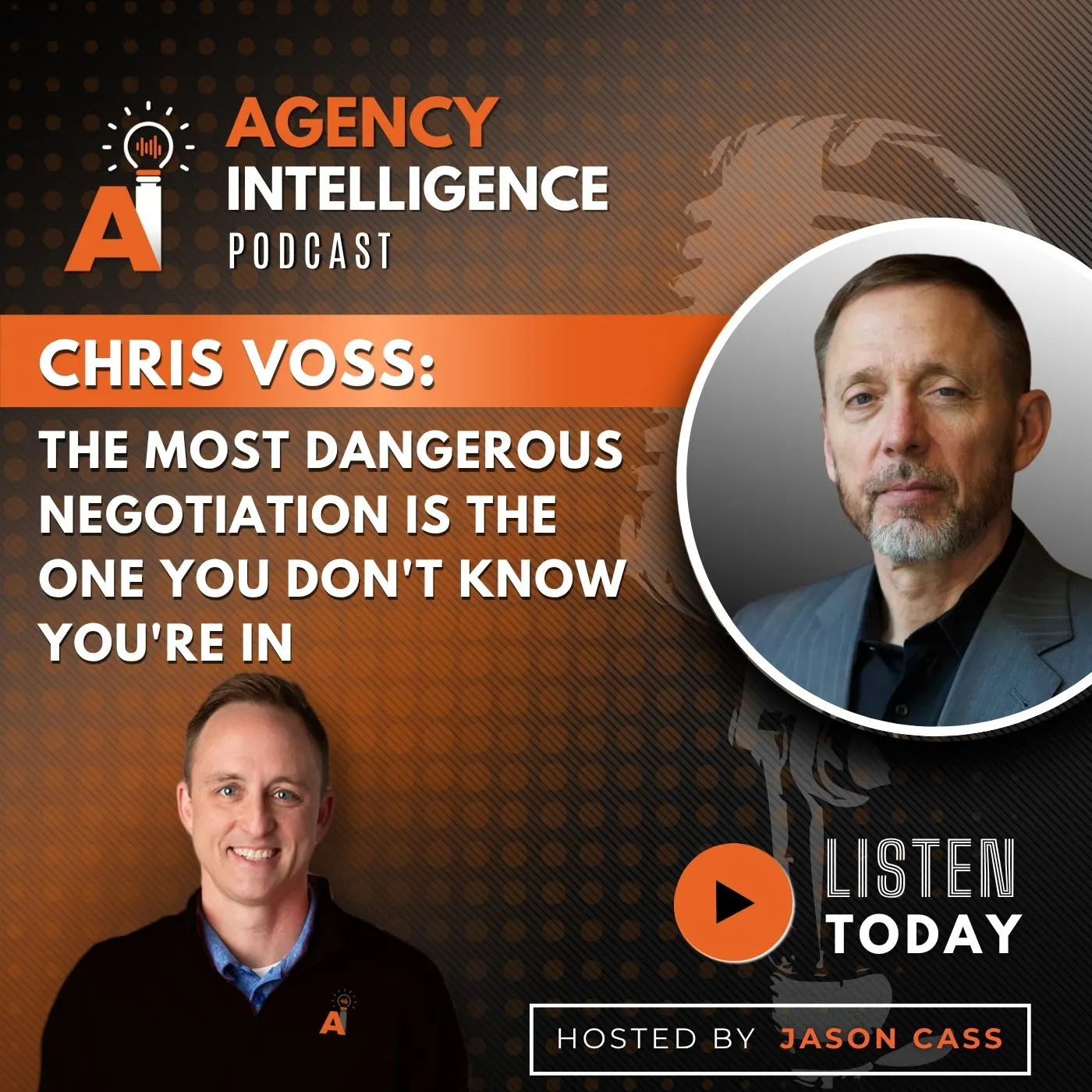 Chris Voss: The Most Dangerous Negotiation Is the One You Don't Know You're In 18.08.2026 1t 2minWhat if the negotiation you're losing has already started before you even open your mouth? Jason Cass sits down with Chris Voss, CEO and Founder of The Black Swan Group, to unpack the tactics behind high-stakes negotiation, from hostage crises to closing sales. Key Topics: The negotiation has already started before the first word is spoken Lessons learned from the Burnham-Sobero hostage case in the Philippines The chaotic real-world logistics behind hostage negotiation deployments The Black Swan Group's approach: doing, teaching, and coaching negotiation skills Using labels to build trust and de-escalate at every level of a relationship Reframing "no" as a safe response that opens real conversation The power of dynamic silence and the six-second neurochemical window AI's double-edged effect on communicators, sharpening or dulling their skills Compromise as a lose-lose outcome, illustrated through the steel analogy The Christmas tree story and what it reveals about uncovering real motivation Reach out to: Chris Voss Jason Cass Visit Website: The Black Swan Group Agency Intelligence Produced by PodSquad.fm
 -
 Stuff About Money: Is Financial Control an Illusion? 12.08.2026 18minHow much control do we really have over our financial future? In this episode, Erik Garcia, CFP®, ChFC®, BFA™ and Dr. Matt Morris, LMFT explore the tension between external circumstances and personal responsibility. While economic conditions, inflation, taxes, and unexpected crises are outside anyone’s control, the conversation highlights the many financial choices that still remain firmly within reach. Using concepts like “internal locus of control” and “external locus of control,” they explain how mindset shapes behavior and outcomes. Erik shares practical examples of decisions people can control — saving, spending, insurance, debt management, and lifestyle choices — while Dr. Matt explains how a sense of agency creates resilience and confidence. The episode challenges listeners to stop wasting emotional energy on uncontrollable variables and instead focus on the habits and decisions that move them forward. Episode Highlights: Erik discusses the belief that financial success can feel dictated by external forces outside someone's control. (02:19) Understanding how much control you actually have over your finances is the focus of this episode, Dr. Matt shares. (03:13) Dr. Matt explains the psychological concept of an internal locus of control, describing it as being "the captain of your own ship." (04:44) Entrepreneurs often carry a strong sense of influence and control over their financial outcomes, Erik shares. (06:47) Erik shares a friend's rule that if you can't afford something twice, you can't really afford it, using a car purchase as an example. (09:22) Dr. Matt recounts helping under-resourced clients in New Orleans save small amounts toward $100 so they'd have money to evacuate during a hurricane. (10:36) Recognizing personal control over spending and impulses, rather than adopting a victim mindset, is key to financial success, Erik shares. (13:00) Key Quotes: “Money's emotional. It's tied to fear, identity, habits, and even relationships, and we've learned that long-term financial success is as much about behavior as it is math.” - Erik Garcia, CFP®, ChFC®, BFA™ “Even the best financial plan can be undone by poor behavior, while good financial behavior has the potential to compound more powerfully than investment returns.” - Erik Garcia, CFP®, ChFC®, BFA™ “We don't have control over the weather, but we do have control over saving a little money so we can get to a destination that might be safer.” - Dr. Matt Morris, LMFT Resources Mentioned: Dr. Matt Morris, LMFT Dr. Matt Morris & Associates Erik Garcia, CFP®, ChFC®, BFA™ Xavier Angel, CFP®, ChFC, CLTC Plan Wisely Wealth Advisors
 -
 Rough Notes Front Cover, August 2026: Michael Cruz, Foresight Insurance 01.08.2026 29minIn this episode of Front Cover: A Rough Notes Podcast on the Agency Intelligence Podcast Network, Jason Cass sits down with Michael Cruz, Principal Owner of Foresight Insurance, the agency featured on the August 2026 front cover of Rough Notes Magazine. Key Topics: Michael's reaction to being featured on the cover of Rough Notes Magazine Foresight Insurance's growth to 13 employees and 10 years in business near DC Why starting with a strong carrier like Erie beat going the aggregator route Michael's journey from Cuba to Maryland and adjusting to a new culture at 13 How networking, not cold outreach, led to his Liberty Mutual and Erie opportunities Building a bilingual agency that serves a 40 to 50% Spanish-speaking client base Moving client-facing work to trained offshore virtual employees instead of call centers Rolling out a four-day, 32-hour work week to fight burnout during the hard market Using cross-training, shared inboxes, and team-based service to keep the agency running smoothly Michael's push for agents to get involved through groups like the Erie Task Force Reach out to: Michael Cruz Jason Cass Visit Website: Foresight Insurance Rough Notes Magazine Produced by PodSquad.fm
 -
 Your AMS Isn't Dying, It's Getting Demoted 30.07.2026 51minWhy do less than a third of independent agents actually use a CRM, and what is that gap costing them? Jason Cass sits down with Mariah Gates, Founder of Accelerated Automation, to unpack agency operations, the shifting role of AMS platforms, and what it really takes to prepare an agency for AI. Key Topics: Why less than 27% of agents actually use a CRM, per a Vertafore study Growth through acquisition creates operational struggles even for large agencies Fixed owner pay leads to healthier cash flow and tech decisions The "AMS Demotion": AMS shifting from operating system to system of record AMS platforms need open APIs and two way sync to stay relevant Point solutions expose gaps that AMS systems fail to solve Why integration philosophy separates open platforms from closed ones like EZLynx Software companies must listen closer to users to avoid disconnected decisions AI adoption requires documented processes before layering on new tools Why agentic AI replaces unlicensed work while virtual employees remain essential Reach out to: Mariah Gates Jason Cass Visit Website: Accelerated Automation Agency Intelligence Produced by PodSquad.fm
 -
 Stuff About Money: Love, Trust, and Money 29.07.2026 19minMoney is rarely just about numbers inside a relationship. In this episode, Erik Garcia, CFP®, ChFC®, BFA™ and Dr. Matt Morris, LMFT unpack why financial conflict in marriages and partnerships is often rooted in deeper emotional needs like trust, security, control, communication, and vulnerability. Drawing from years of counseling couples and advising families, they discuss financial infidelity, power imbalances, differing money philosophies, and the emotional meaning attached to spending and saving. Rather than focusing solely on budgets and spreadsheets, the conversation centers on how couples can create healthier conversations around money — with more compassion, curiosity, and honesty. This episode helps listeners understand that strong financial partnerships are built less on perfect math and more on trust, communication, and shared purpose. Episode Highlights: Erik recounts the phone call years ago that sparked his ongoing collaboration with Dr. Dr. Matt Morris. (02:14) Financial infidelity surfaces in couples counseling as a serious, though less frequent, presenting issue. (03:23) Money problems in couples counseling are rarely about the money itself, but a disguise for deeper relationship issues. (07:34) Dr. Matt explains how people protect themselves financially in relationships with earning discrepancies, from squirreling away money to becoming controlling or people-pleasing. (08:59) Erik shares that even as a financial planner married almost 25 years, money has still been a point of pain in his own marriage. (10:44) Dr. Matt explains that financial planners should first determine whether a couple's conflict is a technical money issue or an emotional relational one. (12:14) Money conversations go further when approached with care, curiosity, and compassion instead of criticism. (14:56) Key Quotes: “We're going to have to learn to talk about money in new and different ways.” - Dr. Matt Morris, LMFT “Money is like this persistent stream that kind of runs in the background that impacts everything.” - Erik Garcia, CFP®, ChFC®, BFA™ “As a financial planner, I think when a couple comes to you, you need to be thinking about is this a problem that relates to the technicalities of money management.” - Dr. Matt Morris, LMFT Resources Mentioned: Dr. Matt Morris, LMFT Dr. Matt Morris & Associates Erik Garcia, CFP®, ChFC®, BFA™ Xavier Angel, CFP®, ChFC, CLTC Plan Wisely Wealth Advisors
 -
 Stuff About Money: Your Past Financial Mistakes Are Not Your Identity 15.07.2026 17minEveryone has financial regrets. In this episode, Erik and Dr. Matt tackle the emotional weight people carry from past financial decisions — debt, overspending, failed investments, divorce, financial scams, and seasons of instability. The real danger, they explain, isn’t the mistake itself; it’s allowing the mistake to become an identity. Dr. Matt introduces the difference between guilt and shame: “I made a bad decision” versus “I am bad with money.” Together, they explore how language, self-perception, and emotional patterns influence future behavior. Erik shares examples of clients who rebuilt their financial lives after major setbacks, proving that financial mistakes can become chapters of growth rather than permanent labels. The episode is ultimately about hope, ownership, and reclaiming the belief that your financial story is still being written. Episode Highlights: Dr. Matt discusses the range of financial mistakes he sees in his practice, including overspending and secret debt kept from a spouse. (03:11) Dr. Matt shares the costly timeshare he and his wife bought while on their honeymoon in Mexico. (04:38) A language strategy for separating personal identity from a past financial mistake. (07:52) Dr. Matt mentions that reframing a mistake as "a chapter, not the whole story" is a simple but powerful shift. (10:54) Erik shares an analogy about his CrossFit coach calling him an athlete and how that language shaped his choices. (12:01) Erik concludes that a past financial mistake doesn't determine your future and that it's never too late to build wealth. (14:19) Key Quotes: “There is a difference between a bad decision and feeling some regret about that decision versus shame over that decision.” - Dr. Matt Morris, LMFT “You want to start separating yourself from the problem. And the first way to do that is linguistically, using your language.” - Dr. Matt Morris, LMFT “If you make a small plan and you strategize on small wins and you celebrate those small wins as you go, that reinforces this idea that, hey, I can do this. I can overcome this, that that is a chapter. The story is still being written.” - Erik Garcia, CFP®, ChFC®, BFA™ Resources Mentioned: Dr. Matt Morris, LMFT Dr. Matt Morris & Associates Erik Garcia, CFP®, ChFC®, BFA™ Xavier Angel, CFP®, ChFC, CLTC Plan Wisely Wealth Advisors
 -
 Michael Cruz: The Virtual Employee Playbook 07.07.2026 32minWhat does it actually look like when an independent agent builds a fully staffed, four-day-workweek agency that outpaces the captives? Jason Cass sits down with Michael Cruz, COO of Virtual Intelligence and ERIE agent based in Maryland outside Washington DC, to unpack how virtual employees, smart staffing, and operational flexibility are reshaping what an independent agency can be. Key Topics: Michael's agency: started from scratch in 2015 through ERIE's Scratch Agency program, now running 7 virtual employees How VEs handle calls, quoting, changes, and admin so licensed staff stay in licensed work Using VEs as claims liaisons to reduce dropped balls and improve the client experience Why missing a claims call sends clients straight to the carrier and costs you the relationship Why overseas talent often brings higher qualifications than entry-level domestic hires How Virtual Intelligence screens for C1/C2 English proficiency and why it matters Michael's 32-hour, four-day workweek: what drove it, how it forced cross-training, and why it stuck Why independents can compete on culture and flexibility where captives and big brokers cannot Thinking long-term in a turbulent industry and why insurance still checks all the right boxes Reach out to: Michael Cruz Jason Cass Visit Website: Virtual Intelligence Agency Intelligence Produced by PodSquad.fm
 -
 Rough Notes Front Cover, July 2026: Angela Trimble & Janet Payne, TrustPoint Insurance 01.07.2026 32minIn this episode of Front Cover: A Rough Notes Podcast on the Agency Intelligence Podcast Network, Jason Cass sits down with Angela Trimble & Janet Payne, Co-owners of TrustPoint Insurance the agency featured on the July 2026 front cover of Rough Notes Magazine. Key Topics: How Angela and Janet went from college roommates to agency co-owners 17 years later Agency overview: three locations, 22 staff, and lines spanning commercial, farm, ag, crop, life, Medicare, and real estate Writing municipalities, school districts, and rural water districts as a niche commercial specialty How complementary strengths, Angela in HR and innovation, Janet in analytics and coverage expertise, make their partnership work Janet's background in grain elevators and farm insurance and what it takes to earn farmer trust Why technology is non-negotiable: VoIP, AI, bots, virtual employees, and mobile apps all in play Using custom-built bots to automate tasks that don't require a licensed agent A decade-plus of virtual employee experience and why agentic bots are the future agency workforce Why structured intake forms are the foundation for AI-ready agency operations How digital documentation and intake forms have improved claims handling and efficiency Walk-in clients vs. mobile app clients and which ones are more loyal Carrier frustrations: the challenge of losing direct underwriter access in an email-first Reach out to: Angela Trimble Janet Payne Jason Cass Visit Website: TrustPoint Insurance Rough Notes Magazine Produced by PodSquad.fm
 -
 Stuff About Money: Motivation Won’t Build Wealth. Habits Will 01.07.2026 25minMost people believe financial transformation starts with motivation. Erik Garcia, CFP®, ChFC®, BFA™ and Dr. Matt Morris, LMFT argue the opposite: motivation fades, but habits compound. In this episode, they explain why relying on bursts of inspiration or willpower almost always leads to inconsistency — especially when it comes to money. Using stories from fitness, personal finance, and everyday life, they break down how systems and routines quietly shape long-term outcomes. From automating savings and debt payments to separating spending accounts and reducing decision fatigue, listeners learn practical ways to create financial habits that work even when emotions and motivation disappear. This episode reinforces one of the core themes of the series: long-term financial success is behavioral more than intellectual. Episode Highlights: Erik explains why motivation is a poor long-term financial strategy. (04:41) Dr. Matt shares that habits and systems are the real answer to lasting financial change. (05:49) Erik connects accountability and environment-building to showing up consistently, using his gym experience as an example. (08:27) Automating savings removes the need to make the same decision repeatedly. (09:14) Dollar cost averaging is explained and how automated investing helps combat emotional reactions to market swings. (10:42) Automating debt payments eliminates willpower battles when tempting expenses arise. (12:48) A one-week waiting rule is shared as a practical way to curb stress-driven impulse shopping. (13:52) Erik walks through his budgeting system of separating fixed expenses from variable spending into different accounts. (15:31) Dr. Matt reflects on how good financial systems become boring in the best way, eliminating repeated emotional decision-making. (17:26) Erik recommends keeping savings at a different bank to create friction and reduce the urge to raid savings impulsively. (19:00) Building systems tailored to your own tendencies works better than following generic budgeting advice. (20:01) Dr. Matt closes by reinforcing that willpower has limits and lasting financial progress comes from habits and systems. (21:09) Key Quotes: “Motivation deals with willpower, and generally speaking, we have willpower to do things in bursts, but anything that takes energy is really, really, really hard to sustain.” - Erik Garcia, CFP®, ChFC®, BFA™ “You need habits. You need patterns. You will not rise to the level of your financial intentions. You will fall to the level of your financial systems.” - Dr. Dr. Matt Morris, LMFT “It really helps to have a disinterested third party to help you think. We have blind spots, and oftentimes we don't know what we need to do.” - Erik Garcia, CFP®, ChFC®, BFA™ Resources Mentioned: Dr. Matt Morris, LMFT Dr. Matt Morris & Associates Erik Garcia, CFP®, ChFC®, BFA™ Xavier Angel, CFP®, ChFC, CLTC Plan Wisely Wealth Advisors
 -
 Stuff About Money: Emotions Are Signals, Not Instructions 17.06.2026 22minMoney is emotional — and in this episode, Erik Garcia, CFP®, ChFC®, BFA™ and Dr. Matt Morris, LMFT explore why emotions have such a powerful influence on financial behavior. From market volatility and economic uncertainty to comparison, insecurity, and fear of failure, people rarely make purely rational financial decisions. Instead, emotions often drive reactions that conflict with long-term goals. Dr. Matt introduces a powerful framework: emotions are signals, not commands. Fear, anxiety, and stress may reveal that something matters deeply, but they should not automatically dictate behavior. Erik shares real examples from his work as a financial planner, explaining how emotional reactions during market downturns or financial stress can sabotage otherwise solid plans. The episode offers practical tools for slowing down emotional reactions, identifying what feelings are trying to communicate, and responding with intention rather than panic. Episode Highlights: Dr. Matt explains that emotions drive thoughts and behaviors, making it essential to pay attention to the feelings behind financial actions. (03:03) Dr. Matt clarifies that people tend to treat emotions as facts rather than signals worth examining. (04:44) Dr. Matt shares that emotions are good data points but not directives. (06:05) Erik recalls choosing to validate clients' fear during a market crisis rather than dismissing it with "don't panic." (07:52) Dr. Matt recounts calling Erik during a market drop and how Erik's grounding in market history helped calm his fear. (09:00) Erik discusses how social media and financial content creators trigger emotional responses that push people toward decisions inconsistent with their values. (10:48) Dr. Matt explains that financial fear often points to a deeper concern such as "Will I have enough?" rather than surface-level market activity. (14:24) Erik emphasizes that emotions have legitimacy and decisions should align with what matters most rather than being hijacked by emotion. (15:31) Dr. Matt recommends using an emotions wheel to name feelings precisely, which slows reactive thinking. (17:07) Erik believes that talking through high-stakes emotional moments with a professional, whether a therapist or financial planner, is especially valuable. (19:01) Key Quotes: “Emotions are good data but they're not directives. They're not marching orders.” - Dr. Matt Morris, LMFT “Let's make sure that we make a good decision that's consistent with the things that are most important to you.” - Erik Garcia, CFP®, ChFC®, BFA™ “We think about feelings as being signals that something is really important to you. And then we want to be able to connect that to the thing that's really important.” - Dr. Matt Morris, LMFT Resources Mentioned: Dr. Matt Morris, LMFT Matt Morris & Associates Erik Garcia, CFP®, ChFC®, BFA™ Xavier Angel, CFP®, ChFC, CLTC Plan Wisely Wealth Advisors
 -
 Athena Page On What Is Really Driving Producers Out The Door 16.06.2026 32minWhat's really behind the growing wave of producers walking out the door? Jason Cass sits down with Athena Page, Head of Sales at Virtual Intelligence, to unpack the real reasons good producers leave agencies and what owners can do to stop the cycle before it starts. Key Topics: Why producers leave: overwhelm, admin burnout, and doing multiple jobs at once Career path and culture rank above money as reasons employees stay Over 60% of a producer's day lost to non-licensed tasks No CSR backup forcing producers into service work with no time to sell Why producers walk when they can't own their book of business Jason's story of leaving an agency that offered no path to ownership The five things owners want from licensed staff and why service work blocks them The call no producer wants to take and how virtual employees change that Two similar $2M agencies, opposite outcomes, and the role of work routing The math of retaining a producer versus replacing one Reach out to: Athena Page Jason Cass Visit Website: Virtual Intelligence Agency Intelligence Produced by PodSquad.fm
 -
 Insurance Shoptalk: AI vs. AI The New Battle Against Insurance Claim Fraud 10.06.2026 49minIn this episode of Insurance Shoptalk, Eric Stein sits down with David Prejeant, Vice President of Client Relations at Alacrity Solutions, to discuss one of the fastest-growing challenges facing the insurance industry: AI-powered fraud. With more than two decades of experience in claims operations, property adjusting, catastrophe response, and commercial claims management, David shares firsthand insights into how artificial intelligence is changing the way insurers, MGAs, MGUs, carriers, and claims professionals evaluate risk and investigate claims. The conversation explores how AI can be used to create convincing but fraudulent documentation, including weather reports, business interruption records, loss histories, and other claim-related materials. Eric and David discuss the growing need for new fraud detection strategies, enhanced adjuster training, and AI-powered verification tools that can help insurers identify inconsistencies before fraudulent claims are paid. They also examine how organizations can use AI responsibly to improve claims handling, streamline data analysis, connect fragmented systems, and provide better information to underwriters and clients. If you're interested in claims management, insurance fraud prevention, underwriting, AI-powered analytics, risk management, or the future of insurance operations, this episode offers valuable insights into both the opportunities and risks that AI brings to the industry. #InsuranceShopTalk #InsuranceFraud #ArtificialIntelligence #ClaimsManagement #Insurtech #Underwriting #RiskManagement #PropertyClaims #CommercialInsurance #ClaimsTechnology
 -
 Why Gen Z Could Be Your Agency's Secret Weapon 09.06.2026 27minThe agencies that figure out Gen Z first will have a serious edge. As part of the Virtual Intelligence series, Jason Cass sits down with Juan Rueda, Managing Director at Virtual Intelligence, to break down what it actually takes to lead, train, and retain a Gen Z workforce. Key Topics: Why Gen Z's tech fluency and questioning mindset are underused agency assets How Juan built a virtual employee training program without being a licensed agent Agency Training Institute: training people to get licensed and do the job Why Gen Z thrives with ownership, fast feedback, and clear standards Owning an outcome vs. completing a checklist and why it matters Why job hopping usually reflects a broken system, not a broken generation Structured training programs as the key to retaining young hires How rising costs and eroded company loyalty reshaped Gen Z's work expectations Five reasons insurance is an ideal career for young people Juan's closing challenge: stop assuming Gen Z is the problem Reach out to: Juan Rueda Jason Cass Visit Website: Virtual Intelligence Agency Intelligence Produced by PodSquad.fm
Samankaltaiset podcastit


Suosittu maassa
Tämä podcast esiintyy myös näiden maiden podcast-listoilla.
