
Frank Growth
Jason Shafton
0
Frank Growth is a sharp, execution-first podcast about how companies actually grow. Hosted by Jason Shafton, it features candid conversations with founders, operators, and investors who are in the work right now. The focus is real decisions: distribution, demand, pricing, org design, incentives, and what breaks once the early playbooks stop working. No hype. No recycled advice. Just clear thinking from people accountable for outcomes.
Jaksot
-
 Stop Buying Users Who Leave with Michelle Matthews 15.09.2026 27minEpisode #237: Michelle Matthews - Acquisition is the easy part in health and wellnessThis episode is about the gap between what marketing promises and what the product delivers, and what that gap actually costs a company.For growth leaders, founders, and product teams building for people who show up on a bad day.Michelle Matthews is a product and service designer with over 15 years of experience building consumer and healthcare products, at scale and from inception, including work with Brightline and Headspace. She started as a social worker, and she brings that systems view to onboarding flows, research practice, and behavior change design. Jason and Michelle cover where marketing hands off to product, why a clean divide between the two breaks the story users experience, and how to measure real change instead of engagement. She describes a user interview at Brightline where a participant walked from marketing assets through the end of onboarding and asked, are you messing with me. When a mental health company overpromises, the fallout is not just churn. It is bad reviews, lost trust, and therapists warning each other on Reddit before they apply.What you'll hearThe three B's from Irrational Labs: name the behavior you need, find the barriers in someone's real life, then design a benefit that counteracts each oneHow Brightline rebuilt onboarding by body storming the signup as a phone call, so the first question is how can I help you instead of what is your child's insurance card numberWhy targeting the entire mindset matrix brings in low-intent users who leave bad reviews, skip appointments, and damage lagging metricsThe pre-research exercise: write down your assumptions, your biases, and the answer you are hoping for, then rewrite any question that leads people toward itChapters00:00 - Cold open: are you messing with me00:41 - Why acquisition is the easy part in health and wellness02:50 - Social work to UX and what therapy training carries over03:40 - The day someone signs up for Brightline is not a good day04:55 - Selling research to a team that just wants to ship05:54 - Where marketing stops and product takes over07:09 - Headspace versus Calm: the Tylenol and the vitamin08:31 - Engagement metrics versus real change, and the three B's10:07 - Why marketers and researchers keep landing in the same rooms12:08 - Where a growth-obsessed CMO gets it wrong14:28 - Mindsets instead of personas, and the cost of spray and pray15:42 - What overpromising costs: reviews, trust, and hiring17:44 - Growing from ego versus growing in a way you can sustain19:31 - Career advice for early-career designers in an AI job market21:20 - Nobody is sticking around: the first thing to look at22:31 - Design is not just screens23:04 - Lightning round and Soft FuturesLinks & resourcesGuestMichelle Matthews, product and service designer, consumer and healthcare productsLinkedInAbout Frank GrowthFrank Growth is a podcast about how companies actually grow, real operators, real constraints, real decisions. Hosted by Jason Shafton.Promotional linksWork with Winston FrancoisSubscribe / Follow Jason
 -
 Turn Marketers Into AI Strategists with Elyssa Steiner 08.09.2026 28minEpisode #236: Elyssa Steiner - Rebuilding a 21-person marketing team in 30 daysMarketing is not a lead factory. It is a growth system, and the operating model is the ceiling on what ships.For CMOs and marketing leaders who inherited a team built for a smaller company.Elyssa Steiner is Chief Marketing Officer at Kahua and a B2B growth leader with more than 15 years of experience. She came from nearly nine years at Cantaloupe, through multiple acquisitions and the sale of the company, into construction project management software, and restructured a 21-person team in her first 30 days while the revenue org was verticalizing around her. She and Jason get into how she backed marketing targets into revenue targets in a workshop with the VP of sales three weeks in, why she refused to accept MQL volume as the definition of success, and how she built 14 vertical ICPs using internal knowledge and AI as a first draft. Her VP of sales called them 90 to 95 percent of the way there after 45 days, and they became custom GPTs the whole revenue org now uses.What you'll hearStructuring marketing around verticals instead of channels, with solution marketers embedded in each sales pod as the vertical SME and one digital team running paid across all of themBacking marketing targets into revenue targets using historical conversion data, then tracking marketing sourced opportunities and closed won deals by vertical instead of MQL volumeThe mistake she names directly: scaling AI before standardizing the process, which she says she learned firsthandHow to run the ICP exercise yourself, ship it at good enough, and let your sales SMEs throw darts at it rather than spending six months making it perfectChapters00:00 - Why marketing teams have a throughput problem, not a strategy problem02:31 - Leaving fintech for construction software, and what carries over03:14 - What she found walking in the door, and why the team was hungry for clarity07:12 - Keeping four vertical pods from turning into four silos08:19 - Writing marketing OKRs that back into revenue, and why not MQLs10:09 - Building 14 ICPs with AI in 45 days12:39 - ABM from 18 accounts to 400, and the budget constraint reframe14:07 - Selling AI to federal buyers when trust is the whole story17:05 - Throughput across brand, product marketing, and advocacy18:59 - The daily AI mandate, no layoffs, and everyone becoming a strategist22:41 - Marketing to a buyer who has been burned before23:38 - Lightning roundLinks & resourcesGuestElyssa Steiner, Chief Marketing Officer at KahuaKahuaLinkedInAbout Frank GrowthFrank Growth is a podcast about how companies actually grow, real operators, real constraints, real decisions. Hosted by Jason Shafton.Promotional linksWork with Winston FrancoisSubscribe / Follow Jason
 -
 The Marketing Engineer with Nick Lafferty 01.09.2026 24minEpisode #235: Nick Lafferty on Marketing Engineering, Category Creation, and Closing His Own DealsHe was the first marketing hire at Profound, and within weeks he was shipping production code and taking sales demos himself.For founders making their first marketing hire and for marketers deciding what to learn next.Nick Lafferty is the Founding Marketing Engineer at Profound, where he joined as the first marketer on a 20-person team that has since grown to 200 and raised Series A, B, and C in 10 months. He walks through what a marketing engineer actually does, what broke as the company scaled, and why he put himself in the lead round robin and gave close to a hundred demos when there weren't enough AEs to cover pipeline. He also breaks down the system he built to connect HubSpot deal data to LinkedIn impressions, the interview question he opens with, and why he is openly against token maxing. Before Profound, Nick ran growth at Loom through its acquisition by Atlassian.What you'll hearWhy the first marketing hire should be a marketing engineer, with a product marketer as the fast followHow Nick shipped a social proof quote to the live contact sales page in 15 minutes using Cursor, and the required "how did you hear about us" field that powers his attribution systemWhat broke first at speed: lead routing running through a Google Sheet, deliverability issues, and then more meetings than sales reps to take themHow Profound builds a category by publishing research to customers in Slack first, then LinkedIn, then email and webinarsChapters00:00 - Cold open: "I have contracts with real ARR tied back to my name"00:45 - Frank Growth intro: three things going wrong with marketing teams02:11 - Nick's background, from Loom to Profound03:02 - What a marketing engineer actually does03:50 - The first thing he ever shipped, and it's still live04:45 - Building the LinkedIn to HubSpot attribution system05:47 - The result: 20% of inbound lead forms from LinkedIn06:37 - What broke first at scale08:18 - Hiring the first four marketers09:14 - The interview question: show me your GitHub repo10:21 - What Loom taught him about horizontal products12:00 - Marketing a category that didn't exist 18 months ago13:23 - The research drumbeat, and giving customers early access in Slack15:04 - Why Profound turns away the self-service market15:45 - Profound University and the marketing engineer job board16:34 - From analytics product to AI agent workbench17:37 - What to look for in a first marketing hire today18:50 - Anti-token maxing, and where marketing engineers come from20:04 - Lightning round21:30 - Jason's top three takeaways and one thing to do this weekLinks & resourcesGuestNick Lafferty, Founding Marketing Engineer, ProfoundLinkedInX/TwitterProfoundProfound on LinkedInProfound IndexAbout Frank GrowthFrank Growth is a podcast about how companies actually grow: real operators, real constraints, real decisions. Hosted by Jason Shafton.Promotional linksWork with Winston FrancoisSubscribe / Follow Jason
 -
 Nobody Has The Playbook Yet with Dave Steer 25.08.2026 22minEpisode #234: Dave Steer on repositioning a brand around AI in three monthsWebflow's CMO had 90 days to relaunch the website, reposition the brand, and ship an ad campaign.For marketing leaders whose board just told them to become AI native, and who don't have a playbook for it.Dave Steer is CMO at Webflow, leading brand, demand, and product marketing after two decades at GitLab, Cloudflare, Twitter, Facebook, and Mozilla. His mandate came from the board and leadership team, timed to Webflow Conf three months from his start date. We cover how he reorganized a 50-to-60-person marketing team around AI tools, why he ran positioning as an executive exercise with April Dunford rather than a marketing one, and where he draws the line between what a human writes and what an agent touches. He also walks through Webflow's AEO Maturity Index, a study of 2,000 US websites where the average site scored about two or three, and where the problem was site structure rather than content volume.What you'll hearWhy positioning is a corporate strategy activity, not a marketing activity, and who has to be in the roomHow the team moved from a relay race of specialists to treating everyone as an orchestrator and connectorThe two instincts that go wrong first: buying a pile of ChatGPT licenses, and optimizing for day one instead of day twoWhere the human/agent line sits: the human owns the argument, the agent owns the permutationChapters00:00 - The human owns the argument, the agent owns the permutation00:33 - Three ways marketing leaders are handling the AI mandate badly02:24 - The three things every CMO has to be expert in now03:11 - Where the three-month mandate came from05:00 - What "agentic" means when the web has two audiences06:14 - April Dunford and why positioning is an executive staff exercise07:13 - The AEO Maturity Index: 2,000 sites, average score of two or three08:40 - Rebuilt, not retooled: ending the relay race12:26 - Four human roles: strategist, orchestrator, creator, connector17:13 - The single biggest mistake CMOs are making right now18:55 - Lightning round20:49 - Top three takeaways and one thing to do this weekLinks & resourcesGuestDave Steer, Chief Marketing Officer, WebflowWebsiteWebflow ConfLinkedInAbout Frank GrowthFrank Growth is a podcast about how companies actually grow. Real operators, real constraints, real decisions. Hosted by Jason Shafton.Promotional linksWork with Winston FrancoisSubscribe / Follow Jason
 -
 Stop Writing Only for Humans with Jesus Requena 18.08.2026 27minEpisode #233: Jesus Requena — Dropping SEO entirely to optimize for LLMsSanity stopped producing SEO content and started building pages only machines will read. Roughly 60% of last month's signups came from LLMs.For B2B growth leaders watching organic traffic fall and trying to work out what replaces it.Jesus Requena is CMO at Sanity, and previously led growth marketing at Figma, demand gen at Unity and Algolia, and growth at Hex. After watching client SEO traffic fall to a tenth of what it had been, he stopped SEO content production entirely and rebuilt Sanity's content for LLMs to parse rather than humans to read. He walks through the three-layer playbook: fixing contradictions across 100 to 200 pages on their own site, converting roughly 1,000 FAQ pages from user-centric to LLM-centric, building five single-topic microsites excluded from Google, then correcting third-party citations that conflicted with their own story. Sanity moved from ranking 15th or 20th in LLM visibility to top five.What you'll hear Why visibility comes from reasoning: if an LLM can reason your concepts clearly, it recommends you, which makes first-party consistency the starting point How they executed it — crawling their own site to find unclear terms, writing content no human is expected to read, and partnering with AirOps to fix obsolete third-party citations Why attribution breaks when signups arrive through a CLI or MCP without ever touching the website, and the self-reported "where did you find us" question they fell back on Where to start from zero, in order: audit your own site, then third-party mentions, then microsites — plus the caveat that Reddit's influence is fading and LLMs are pulling more from videoChapters 00:00 — Cold open: "We literally just stopped any SEO content" 00:38 — The AEO shift: what's going wrong and what works 02:12 — Meet Jesus Requena: Figma, Unity, Algolia, Hex, Sanity 02:45 — The common thread in marketing to technical audiences 04:30 — SEO traffic drops to a tenth, and the bet that followed 06:15 — The three layers of AEO content 08:22 — Citations, visibility, and going from 15th to top five 10:37 — Authority, and becoming the thought leader for the LLM 12:07 — 1,000 FAQ pages and five microsites excluded from Google 14:23 — Why brand investment went physical: events, swag, billboards 17:30 — Measuring attribution when nobody clicks 19:17 — Is the growth repeatable or is it timing? 20:41 — Where to start from zero 22:38 — Scaling agents, and humans handling the exception 23:59 — Lightning round 25:14 — Jason's top three takeawaysLinks & resourcesGuestJesus Requena — CMO, SanityWebsiteLinkedInAbout Frank GrowthFrank Growth is a podcast about how companies actually grow—real operators, real constraints, real decisions. Hosted by Jason Shafton.Promotional links Work with Winston Francois Subscribe / Follow Jason
 -
 His AI Employee Works While He Sleeps with Andrew Mok 11.08.2026 27minEpisode #232: Andrew Mok — What the CMO job becomes when AI runs the mechanicsHeyGen doubled to $200M ARR in eight months, is cash-flow breakeven, and runs on about 130 people. Its CMO explains how marketing actually operates there.For marketing leaders deciding what to keep, what to cut, and what to hand to an agent.Andrew Mok spent 12 years at Turo building a category nobody believed in, then joined HeyGen as CMO four months ago in the middle of its fastest growth stretch. He walks through the operating details: a verticalized stack that runs inference 10x cheaper than general video models, 100 to 200 customer interviews a week piped into an internal MCP that any employee can query, and a personal agent named Mara (marketing automation and research agent) that hands him a metrics digest on his drive into the office. He's also blunt about the parts most people won't say out loud — that job replacement is real, and that it will come mostly from lean AI-native companies growing into big ones, not from big companies running layoffs. He does three to five customer interviews a week himself, and that's the metric he checks every week.What you'll hearThe three Cs he runs on — customers, company fundamentals, culture — and how customer voice became infrastructure instead of a slide: 100–200 interviews a week, curated by agents, queryable for pain points, churn reasons, and competitor chatter.How Mara actually gets used: metrics digests over voice in the car, deep dives before he reaches the office, and why documents and decks went from a multi-week exercise to 30 seconds.What was slowing the company down: leading with technical capability instead of the human problem, which works on AI enthusiasts and stalls with the mainstream. Plus how Turo handled its worst crisis — the New Year's terror attacks — by putting everything in the open instead of covering it.Jevons paradox applied to video: lower the price and friction, and quantity goes up. HeyGen's five-person internal video team produces roughly 100x more video than a company not using AI tools, and it's the biggest video team Andrew has ever run.Chapters00:00 — Cold open: AI-native companies will hire far fewer people00:49 — Intro: if AI handles the mechanics, what's left of the CMO job03:29 — 12 years at Turo and what long tenure teaches you about brand04:34 — The New Year's terror attacks and handling crisis with transparency05:44 — Turo vs. HeyGen: trusting a stranger with your car vs. a company with your likeness06:52 — Who the real customer is: small business owners, skewing older, not AI enthusiasts08:26 — Why he left Turo, and the introvert founder story behind HeyGen09:51 — $200M ARR, doubled in eight months: what marketing changed at that velocity11:09 — Breakeven economics: owning the model and running inference 10x cheaper12:16 — Customers, company, culture: 100–200 interviews a week and an internal MCP13:56 — Mara, the marketing agent: morning digests, campaigns, weekly team updates15:27 — Which bottleneck disappeared first, and what's still hard16:23 — AI and jobs: replacement comes from lean new companies, not big layoffs18:21 — Jevons paradox: lower the barrier to video and demand outstrips it19:50 — Hyperframes: why HTML, and why they open sourced it21:56 — What surprised him inside an AI company: refusing deepfakes when allowing them would pay23:17 — Lightning round23:51 — The creator who kept her livelihood after long COVID24:45 — Where to find Andrew25:20 — Jason's top three and one action for this weekLinks & resourcesGuestAndrew Mok — CMO, HeyGenWebsiteLinkedInXMentionedHyperframes — HeyGen's open source HTML-based video rendering framework, on GitHubJulia McCoy's YouTube channelAbout Frank GrowthFrank Growth is a podcast about how companies actually grow—real operators, real constraints, real decisions. Hosted by Jason Shafton.Promotional linksWork with Winston FrancoisSubscribe / Follow Jason
 -
 What is Growth Design? with Philip Lowe 04.08.2026 31minEpisode #231: Philip Lowe - Growth creative isn't art, and the customer is the judgeHow to build creative that moves a number (a click, a conversion, a download) instead of creative that only wins the room.For growth marketers, creative directors, and in-house studio leads deciding what to test, what to produce, and what to kill.Philip Lowe runs creative, brand, and marketing operations at Quicken, and previously built Instacart's growth creative team from scratch after starting there as a creative director for CRM. He and Jason worked together at Soothe and Headspace, and this conversation covers what actually separates creative that's good from creative that performs: hiring people who understand both brand and performance, testing hooks, concepts, and narratives as a stage gate before anything gets produced, and knowing where AI helps and where it doesn't. Philip walks through the four-pillar roadmap he uses (exploration, production, learning, infrastructure) and explains why the old path of $30,000 per storyboard and a week and a half of waiting is no longer the only option. He's blunt about the limits too. An AI-generated couple reviewing their finances cycled through eight facial expressions in seconds, which is a non-starter for a brand that has built 40 years of trust.What you'll hear Why growth creative sits at the intersection of brand and performance, and why separating the two is the biggest mistake leaders make How Philip built and staffed a growth studio at Instacart, and why the asset was the vehicle and the insight was the point Where AI delivers, including stylized worlds, claymation, stop motion, and surrealism, anywhere imperfection is the aesthetic, and where it falls flat on human emotion, eyes, hands, and quiet moments What the job of creative becomes in CRM and lifecycle when AI is reading the inbox and open rates stop being the focusChapters 00:00 - Three seconds to hook, like a comedian on stage 00:29 - What growth creative is, and why it's not decoration 01:24 - Sooth, Headspace, and having conviction in the work 04:11 - Growth creative vs. brand creative vs. design 05:56 - The kangaroo video: when it clicked 07:24 - Building Instacart's growth creative team from scratch 09:27 - Good creative vs. creative that performs 11:05 - Testing before you spend a dollar producing 12:41 - Taking on ops: from tastemakers to operators with good taste 14:24 - What changes when production gets cheap 16:38 - The four pillars: exploration, production, learning, infrastructure 18:20 - Where AI delivers a performance and where it doesn't 20:31 - Real humans, real stories, and trust in finance 21:56 - CRM and lifecycle when AI reads the inbox 24:12 - Breaking through when agents do the browsing 25:53 - Hiring for taste 27:01 - The one thing leaders get wrong 27:39 - Lightning round 29:48 - Top three takeawaysLinks & resourcesGuestPhilip Lowe, creative, brand, and marketing operations at QuickenLinkedInTikTokAbout Frank GrowthFrank Growth is a podcast about how companies actually grow: real operators, real constraints, real decisions. Hosted by Jason Shafton.Promotional links Work with Winston Francois Subscribe / Follow Jason
 -
 Growth's Most Dangerous Trap With Sara Wallace 28.07.2026 21minEpisode #230: Sara Wallace — Repositioning a consumer cashback app into a B2B platformIbotta is known as a cashback app. It's also a white-label promotions platform for the largest retailer in the world.For marketers at consumer companies standing up an enterprise or platform business alongside the one that made them.Sara Wallace is Head of Brand Marketing at Ibotta, which runs both the consumer cashback app and the Ibotta Performance Network. Five months into the role, after building executive marketing and global AI go-to-market strategy at Google Cloud, she's working the problem of building B2B awareness for a company whose recognition lives almost entirely on the consumer side. We get into why she treats the two audiences as genuinely separate rather than migrating one into the other, the one channel where that split breaks down, how she handles AI thought leadership under legal and compliance constraints, and why she argues brand is the engine that makes performance marketing work rather than a luxury line item. She also walks through Ibotta's annual State of Spend findings, including a decline in grocery list-making as shoppers plan loosely and let promotions fill the gaps.What you'll hear Why Ibotta doesn't try to convert cashback users into a B2B audience, and where the two narratives still collide (social media) What Google Cloud taught her about selling to CIOs and CTOs: show how you support the work their org is already doing instead of proving you're the smartest in the room Why public AI messaging stays stunted at most companies — legal exposure, and stories that aren't fully baked yet How to make the case for brand investment when leadership is pushing for immediate ROIChapters 00:00 — Cold open: brand building feels like a luxury, and why it isn't 00:45 — Intro: most companies die from brand confusion, not obscurity 02:33 — Two distinct audiences, not one rebrand 03:32 — Building awareness for the Ibotta Performance Network 05:01 — Google Cloud lessons: talking to technical buyers like people 05:46 — Rebuilding momentum under a new CRO after the CMO left 06:33 — Talking about AI inside legal and compliance limits 07:55 — Founder-led content and the CEO-hosted podcast 08:46 — Enterprise marketing lessons: Walmart, Uber, DoorDash 10:51 — Differentiating against Amazon DSP, Google Ads, and Meta 11:37 — Denver as a hiring market outside Silicon Valley 12:36 — What she hires for: ownership, fail-fast, decision-making 13:23 — State of Spend: fewer lists, more promotion-driven baskets, private label 15:28 — Brand as the engine for performance marketing 16:44 — Brands she admires: Nike and Shopify 17:52 — The overlooked story: Ibotta as a technology company 18:47 — Lightning round 19:29 — Jason's top three takeaways and the 10-minute actionLinks & resourcesGuestSara Wallace — Head of Brand Marketing, IbottaWebsiteLinkedInAbout Frank GrowthFrank Growth is a podcast about how companies actually grow—real operators, real constraints, real decisions. Hosted by Jason Shafton.Promotional links Work with Winston Francois Subscribe / Follow Jason
 -
 Longevity Medicine's Dirty Secret with Jim Donnelly 21.07.2026 23minEpisode #229: Jim Donnelly — Franchising longevity medicine without losing medical qualityHow to scale a medical franchise when you can't train a local owner to interpret biomarkers.For operators and founders standardizing a complex, high-trust service across many locations.Jim Donnelly scaled Restore Hyper Wellness to 260 locations before starting Humanaut Health, a concierge longevity practice he's now bringing to market through a franchise model he describes as ten times more complex. With his third location opening in Dallas, he walks through how he splits growth across corporate sites, franchisees, and a real estate joint venture, why the company hires and trains every doctor centrally, and how it backs a results guarantee tied to a client pledge and an accountability protocol. He shares concrete numbers, including 87% of clients arriving with metabolic dysfunction showing no sign of it six months later, and a Dallas clinic set to open cash flow positive and profitable in month one. It's a tactical look at standardizing a category most people can't yet define.What you'll hear The two rules of franchising anything: provide value constantly and remove the complexity a franchisee can't handle, plus the test that if you need exceptional operators, you don't have a franchise How Humanaut centralizes doctors, tech, and supply chain while leaving franchisees local hiring, sales culture, and marketing, each backed by a playbook Why most medical businesses fail by leaning too far to the medical or the business side, and the "you can't start at your PhD" progression that got Jim here Reframing longevity as health optimization you feel today to drive retention, and the unit-economics bar: high AUV, 20%+ net margins, and a sub-two-year paybackChapters 00:00 — Longevity is a bad word: reframing it as health optimization 02:48 — The 25-year path to Humanaut: health clubs, Restore, cancer, a car crash 05:03 — The value prop: proactive care, a focus three, and a results guarantee 08:58 — Franchising health optimization: provide value, remove complexity 13:37 — Unit economics: AUV, margins, and opening profitable in month one 18:39 — What it actually takes, plus the lightning roundLinks & resourcesGuestJim Donnelly — Co-Founder and CEO, Humanaut HealthWebsiteLinkedInAbout Frank GrowthFrank Growth is a podcast about how companies actually grow—real operators, real constraints, real decisions. Hosted by Jason Shafton.Promotional links Work with Winston Francois: Work with Winston Francois Subscribe / Follow Jason: Subscribe / Follow Jason on LinkedIn
 -
 Your Bookkeeper Is Failing You with John Zdanowski 14.07.2026 24minEpisode #228: John Zdanowski — Why you're losing money on 80% of your customersMost owners can tell you last month's revenue but not which customers actually make them money. This episode gives you the math to find out.For founders and operators—especially DTC brands—who suspect they're spending too much to acquire customers who never come back.John Zdanowski is co-founder and CEO of Weekly Accounting and a Harvard MBA who describes himself as a sonar engineer applying signal-processing math to business data. He previously co-founded Assembled Brands, a $100M fund that has seen the financials of 3,000+ emerging consumer brands—the vantage point where his core thesis formed: most brands optimize for revenue growth and quietly lose money on customers who only buy once. In this episode he walks through his "fourth statement" (audience to first-time customer to repeat), the sets of books every business already has or still needs, and why he runs accounting on a weekly cadence instead of monthly. He gets specific: the lifetime-gross-profit-to-CAC ratio, why a 1.7 ratio means you're grinding the engine, and how he turns a quarterly goal of $189,000 for 6,100 customers into a weekly target of $14,500 and ~470 customers.What you'll hear The "fourth statement" framework: turning audience → first purchase → repeat into unit economics you can forecast growth and saturation from How to run the numbers weekly—divide a quarterly goal by 13, compare this week to the same week last year—for 52 feedback loops a year instead of 12 The common mistake: optimizing for revenue growth and losing money on one-time buyers instead of optimizing for contribution The first number to calculate: lifetime gross profit (purchases per customer × average order value × gross margin) ÷ CAC, and why anything near 1.7 means you're overspending to acquireChapters 00:00 — The fourth statement: audience, first purchase, repeat 01:16 — Why most owners are flying blind on customer profitability 02:44 — Assembled Brands, and optimizing for contribution over revenue 03:59 — The break-even math on a first-time DTC customer 05:22 — What bookkeepers actually deliver vs. what you need 07:07 — Two sets of books, then a third, then a fourth 08:05 — Weekly cadence: 52 feedback loops instead of 12 09:53 — Daily vs. weekly vs. monthly, and troubled to world-class 11:58 — The integrated financial model: weekly tied to the quarter 14:45 — Warning signs your accounting is broken 15:25 — Why accounting is a venture-scale opportunity 17:11 — Inside the Weekly Accounting platform 19:48 — The one number: lifetime gross profit to CAC 20:32 — Lightning round 21:59 — Takeaways and a 10-minute actionLinks & resourcesGuestJohn Zdanowski — Co-founder & CEO, Weekly AccountingWebsiteLinkedInAbout Frank GrowthFrank Growth is a podcast about how companies actually grow—real operators, real constraints, real decisions. Hosted by Jason Shafton.Promotional links Work with Winston Francois Subscribe / Follow Jason
 -
 The Three-Sided Growth Problem with Robin Izsak-Tseng 07.07.2026 27minEpisode #227: Robin Izsak-Tseng — Marketing one brand to three audiences at onceMost B2B companies fight to win one customer segment. WellHub has to win three at the same time.For marketers and operators running multi-audience, marketplace, or multi-country growth.Robin Izsak-Tseng is VP of global B2B marketing at WellHub, a corporate wellness platform serving over 40,000 companies across 18 countries. She runs a three-sided marketplace — HR buyers, fitness partners, and the employees who use it — through three distinct teams that report to one CMO. In this episode she breaks down how those teams stay aligned without becoming siloed, how acquisitions like Urban Sports Club buy instant brand recognition, and why pulling back GymPass paid search and web properties too early after the rebrand opened a door for a competitor in Brazil. She also names the simple mistake complex teams make: assuming the same level of market maturity everywhere, when a household name in one country still gets "what's WellHub?" at marketer dinners in another.What you’ll hear How WellHub structures three marketing teams (B2B, partners, B2C) under one CMO and keeps them aligned around a single company story Using zip-code-level data to map partner supply down to individual neighborhoods, not just cities Why cutting GymPass search bids and web properties too soon let a competitor gain authority in Brazil When to put the product in employees' hands first (a SoulCycle class, 30 days on the diamond plan) so engagement opens the door to HRChapters 00:00 — The market-maturity trap (cold open) 00:42 — The three-sided growth engine 02:46 — Inside WellHub's triple-sided marketplace 04:48 — Proving ROI on employee wellness 05:49 — Acquisitions and instant brand recognition 08:24 — The GymPass to WellHub rebrand 10:08 — Martech, HubSpot, and AI disruption 15:35 — Events and the product-led sell-through 20:11 — The biggest mistake: assuming market maturity 22:58 — Lightning roundLinks & resourcesGuestRobin Izsak-Tseng — VP of Global B2B Marketing, WellHubWebsiteLinkedInAbout Frank GrowthFrank Growth is a podcast about how companies actually grow—real operators, real constraints, real decisions. Hosted by Jason Shafton.Promotional links Work with Winston Francois: Work with Winston Francois Subscribe / Follow Jason: Follow Jason on LinkedIn
 -
 The $10 Million Rule with Seth Lowery 30.06.2026 19minEpisode #226: Seth Lowery — The $10M rule that kills good ideas, not just bad onesHow to decide which growth bets to fund when every idea on the table already looks good.For marketing and growth leaders drowning in too many opportunities and a team that's too small to chase them all.Seth Lowery is VP of Marketing at Octane, a fintech that has originated over $8 billion in consumer loans and runs both a lending arm (Roadrunner Financial) and an in-house SaaS layer—with close to 50% of the company in product and tech. On Seth's first day, his CEO handed him a single rule: a new initiative needs to clear $10 million in incremental originations to get approved. In this episode he breaks down why that number is a guideline rather than a hard rule, how it forces his team into P1/P2/P3 backlogs, his four-prong method for working with sales, and how he runs three different go-to-market motions—OEMs, dealers, and B2B2C—at the same time.What you'll hear The $10M incremental-originations bar, and why Seth treats it as a compass rather than a cage The four-prong method for sales and marketing: to sales, for sales, through sales, and in lieu of sales Why the hardest no's are the easy internal asks—a better-looking slide deck, an event t-shirt—and why he tells his team "let me be the bad guy" How he runs three GTM motions at once while deliberately keeping Octane's own brand in the backgroundChapters 00:00 — Cold open: the problem isn't too few ideas, it's too many 00:33 — Intro and the initiative-overload problem 02:35 — Lending company or tech company? 03:40 — Where the $10 million rule came from 05:13 — How the rule changes what to run and what to kill 06:30 — The hardest no's and "let me be the bad guy" 07:57 — Running a remote team to results, not hours 08:40 — The four-prong method for sales and marketing 11:21 — Hiring for B2B and channel marketing over fintech 12:15 — Octane's moat: the octane score and the soft pull 12:54 — Running three GTM motions at once 15:04 — The overlooked lever: loyalty 15:34 — The two biggest prioritization mistakes 16:33 — Lightning round 17:53 — Jason's top three takeawaysLinks & resourcesGuestSeth Lowery — VP of Marketing, OctaneWebsiteRoadrunner FinancialLinkedInAbout Frank GrowthFrank Growth is a podcast about how companies actually grow—real operators, real constraints, real decisions. Hosted by Jason Shafton.Promotional links Work with Winston Francois: Work with Winston Francois Subscribe / Follow Jason: Follow Jason on LinkedIn
 -
 The Taylor Swift Effect with Blakely Neilson 23.06.2026 17minEpisode #225: Blakely Neilson — Building a high-growth EdTech brand when buyers aren't on LinkedInThis episode is a tactical playbook for marketing to a buyer that ignores LinkedIn, retargeting, and white papers: the school district.For operators and founders selling into education, or any relationship-first market where you can't performance-market your way to pipeline.Blakely Neilson came from finance and joined the founding team at Parallel Learning, an EdTech company building virtual special education services for school districts in over 25 states. She built the B2B marketing function from scratch as the company pivoted from DTC to B2B, which meant trading paid social and paid search for conferences, webinars, email, and thought leadership, and shifting the message from emotion and urgency to compliance, scale, and risk mitigation. She gets concrete about what works: a lemonade-stand booth during a California heat wave, a Taylor Swift email sent the minute the engagement news broke, and using AI to track Google alerts so the message can adapt when a district like Wake County cuts $18 million from special education.What you'll hear Why the DTC-to-B2B pivot meant moving from paid acquisition to an organic mix of conferences, webinars, email, and thought leadership, with messaging built around compliance, scale, and risk mitigation How the team pairs marketing with revenue at conferences, sets up pre-conference meetings, and uses creative on-the-ground tactics like a lemonade stand during a heat wave to drive top-of-funnel leads Why leading with "we're radically changing the field through AI" backfires with late-adopter special-ed buyers, and why the message instead focuses on absorbing administrative burden How to keep one core message constant while tailoring execution state by state, using Google alerts to flex when budgets get cutChapters 00:00 — Cold open: why most B2B EdTech marketing is boring 00:27 — Why EdTech marketing breaks the standard playbook 01:33 — Meet Blakely Neilson and Parallel Learning 02:32 — From finance to building marketing through a DTC-to-B2B pivot 03:39 — Building trust with relationship-first district buyers 04:44 — Making conferences a real pipeline driver 05:59 — The webinar formula that stands out post-COVID 07:17 — Marketing an AI product to AI-skeptical buyers 08:27 — Pop culture, the Taylor Swift email, and humanizing B2B 11:05 — Awareness vs. conversion in a two-sided marketplace 11:45 — Scaling across 25 states with Google alerts and AI 13:01 — Sales and marketing operating rhythm 13:50 — Lightning round 15:22 — Jason's top three takeawaysLinks & resourcesGuestBlakely Neilson — Founding team, Parallel LearningWebsiteLinkedIn (Blakely)LinkedIn (Parallel Learning)InstagramAbout Frank GrowthFrank Growth is a podcast about how companies actually grow—real operators, real constraints, real decisions. Hosted by Jason Shafton.Promotional links Work with Winston Francois Subscribe / Follow Jason
 -
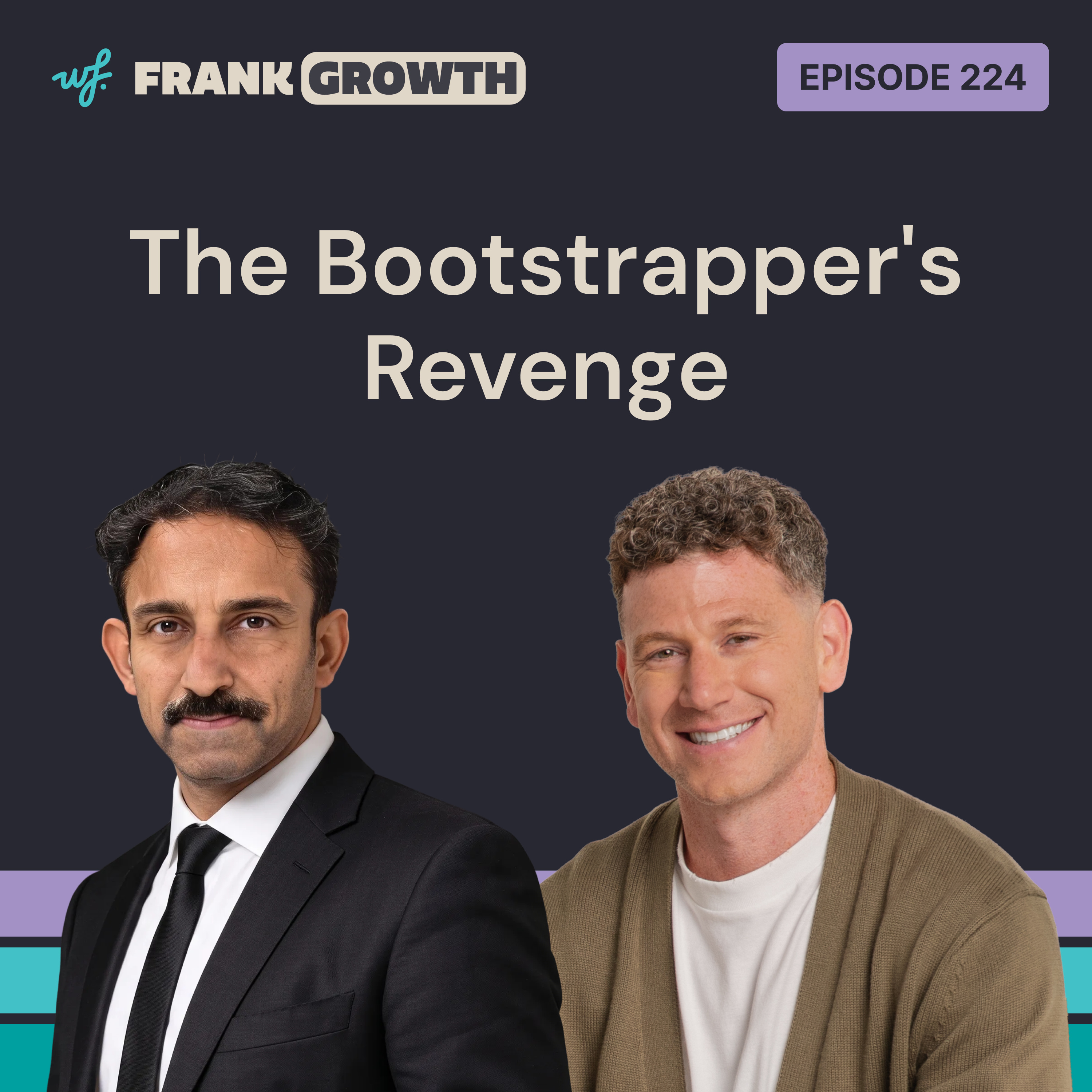 The Bootstrapper's Revenge with Alex Roy 16.06.2026 23minEpisode #224: Alex Roy — Bootstrapping an AI company for 12 years, no fundingHe founded an AI company in 2014—when AI was a punchline—bootstrapped it with zero outside capital, and landed Fortune 50 clients.For founders and growth operators figuring out how to build (and sell) AI products in a market that shifts every few weeks.Alex Roy is the founder of SalesBox AI, a single-founder, bootstrapped company he started in 2014 after 20+ years in martech (MarketFirst, TrueInfluence). With no outside funding, he reached Fortune 50 clients through a partner-led, agency managed-service model—building the part of the product that generated both capital and data first. In this episode he walks through why he moved from lead-centric to a buying-group, opportunity-centric model, how SalesBox's agents work toward one unified revenue goal, how he proves ROI to enterprises burned by AI promises, and why he says product-market fit now lasts "maybe a month."What you’ll hear Why he scrapped lead-centric and account-based marketing for a revenue/opportunity model that scores and prioritizes buying groups How he bootstrapped: building the managed-service module first to capture both capital and data, then reaching Fortune 50 through a partner-led agency model Where founders go wrong—chasing the hype to "hop off" in a couple of years instead of building, and not yet knowing when to override the agent How to apply it: start with a pilot before a full rollout, and learn how the system makes decisions so you know when to step inChapters 00:00 — Cold open: don't build it for free 00:31 — Intro: the three AI traps 01:50 — What breaks when you scale revenue 02:29 — Betting on AI in 2014 03:39 — Building in 2014 vs. 2026: PMF as a moving target 05:10 — Why bootstrap, and what it cost 05:52 — Landing Fortune 50 clients with no VC logos 06:38 — What makes SalesBox AI different 08:00 — How the platform works 08:51 — Lead to account to buying group 09:45 — Hype vs. real: start with a pilot 10:27 — What AI can't do: knowing when to override 11:37 — Proving ROI to burned enterprises 12:56 — What founders get wrong about timing 14:39 — Advice: get someone to pay the first dollar 15:38 — Lightning round 16:22 — Live demo: RevOps, voice agents, LinkedIn 20:47 — Where to find Alex + the offer 21:28 — Closing takeawaysLinks & resourcesGuestAlex Roy — Founder, SalesBox AIWebsiteLinkedInMentionedGet $1,000 in SalesBox AI creditsAbout Frank GrowthFrank Growth is a podcast about how companies actually grow—real operators, real constraints, real decisions. Hosted by Jason Shafton.Promotional links Work with Winston Francois Subscribe / Follow Jason
 -
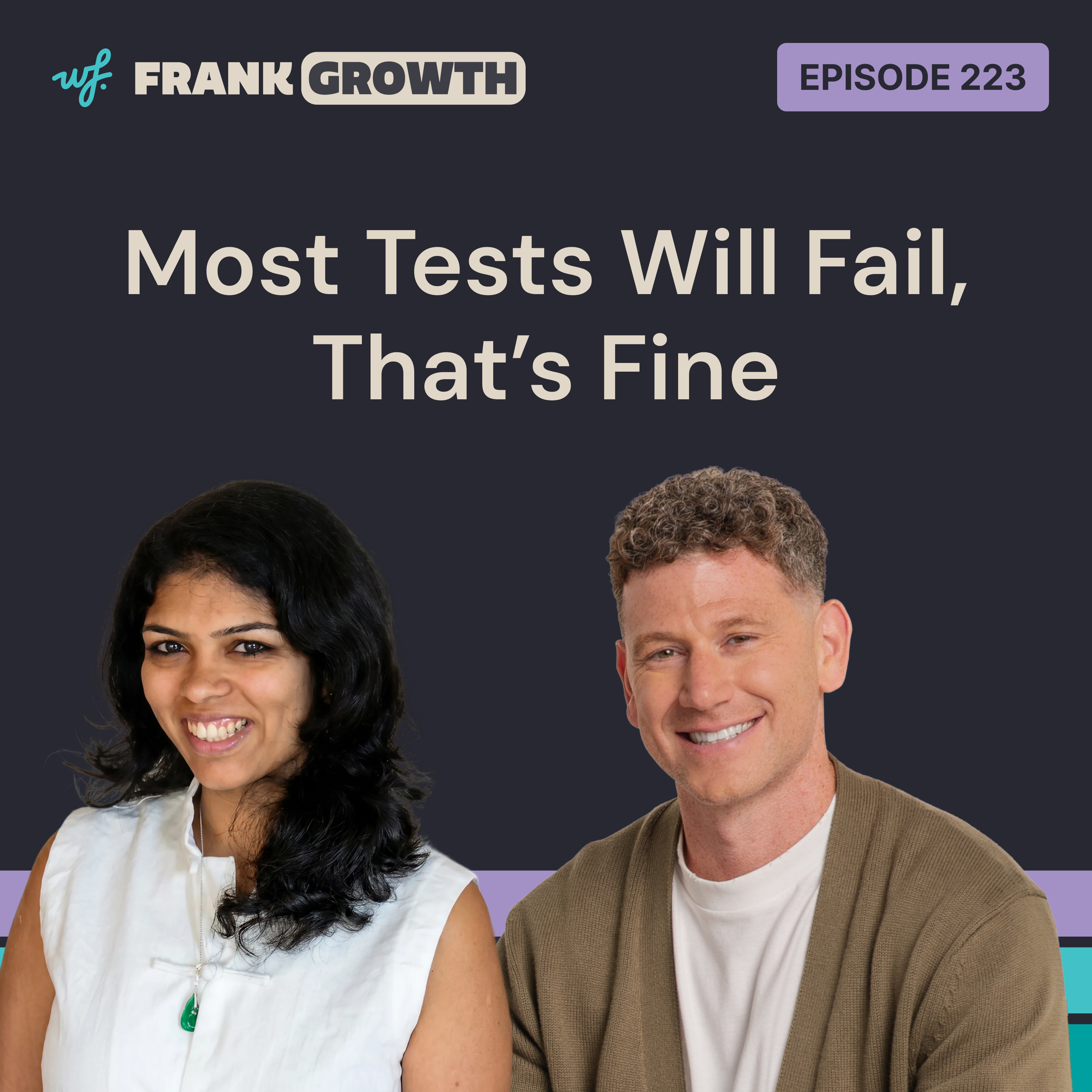 Most Tests Will Fail, That's Fine with Divya Ramaswamy 09.06.2026 21minEpisode #223: Divya Ramaswamy — Running one growth function across travel and fintechHow a lean team runs acquisition, retention, and cross-sell across a travel marketplace and a fintech suite on a single brand.For growth leaders who own multiple products serving one customer across very different trust thresholds.Divya Ramaswamy runs growth across travel and fintech at Super.com—acquisition, activation, retention, and cross-sell—on a lean team of around 16 people. The products span hotels, flights, cash advance, credit, cash back, direct deposits, and a new pharmacy product, built for everyday Americans that premium brands typically walk past. She explains how the Super+ membership ties these disparate products together, why turning a $79 hotel booking into a fintech relationship is the hardest conversion they face, and what building financial trust actually requires beyond performance marketing. She also walks through the company's first major brand push—New York subway and out-of-home ads, plus becoming NASCAR's official savings partner—and why ruthless prioritization is the underrated lever that keeps the team focused.What you’ll hear Why Super+ membership is the flywheel that ties travel and fintech together, not just a perk layer on top (the “house and rooms” frame) How the team predicts cross-product adoption using behavioral signals—booking frequency, product bundles, in-app activity like games and surveys—alongside direct user research Why a direct travel-to-fintech handoff doesn’t happen, and how they build the journey through “value moments” instead (cashback on headphones, gas savings on the drive to a hotel) How they split channels by intent—Google for demand capture, Meta for storytelling—and use quarterly OKR resets to ruthlessly prioritize on a lean teamChapters 00:00 — Why trust in fintech can never be taken for granted (cold open) 00:29 — Intro: one growth function across travel and fintech 02:16 — What Super.com is, in one sentence 02:42 — The day-to-day operating model: acquisition to cross-sell 03:40 — Running one growth function across products that don’t behave alike 04:32 — The Super+ membership flywheel (house and rooms) 05:59 — The customer Super.com is built for 07:01 — Turning a $79 hotel booking into a fintech relationship 08:19 — Signals for predicting cross-product adoption 09:22 — Channel strategy built on customer context, not product category 10:20 — Google vs. Meta: capturing demand vs. storytelling 11:36 — What building financial trust actually requires 12:36 — The brand push: NYC subway and out-of-home 13:43 — Betting on quality creative and the NASCAR partnership 14:45 — One creative team, one brand voice across products 15:44 — The most underrated growth lever: prioritization 16:51 — Hard lessons on meaningful testing and embracing failure 17:57 — Advice for leading a complex product portfolio 18:33 — Lightning round 19:15 — Where to find Divya + closing takeawaysLinks & resourcesGuestDivya Ramaswamy — leads growth (travel and fintech) at Super.comWebsiteLinkedInAbout Frank GrowthFrank Growth is a podcast about how companies actually grow—real operators, real constraints, real decisions. Hosted by Jason Shafton.Promotional links Work with Winston Francois Subscribe / Follow Jason
 -
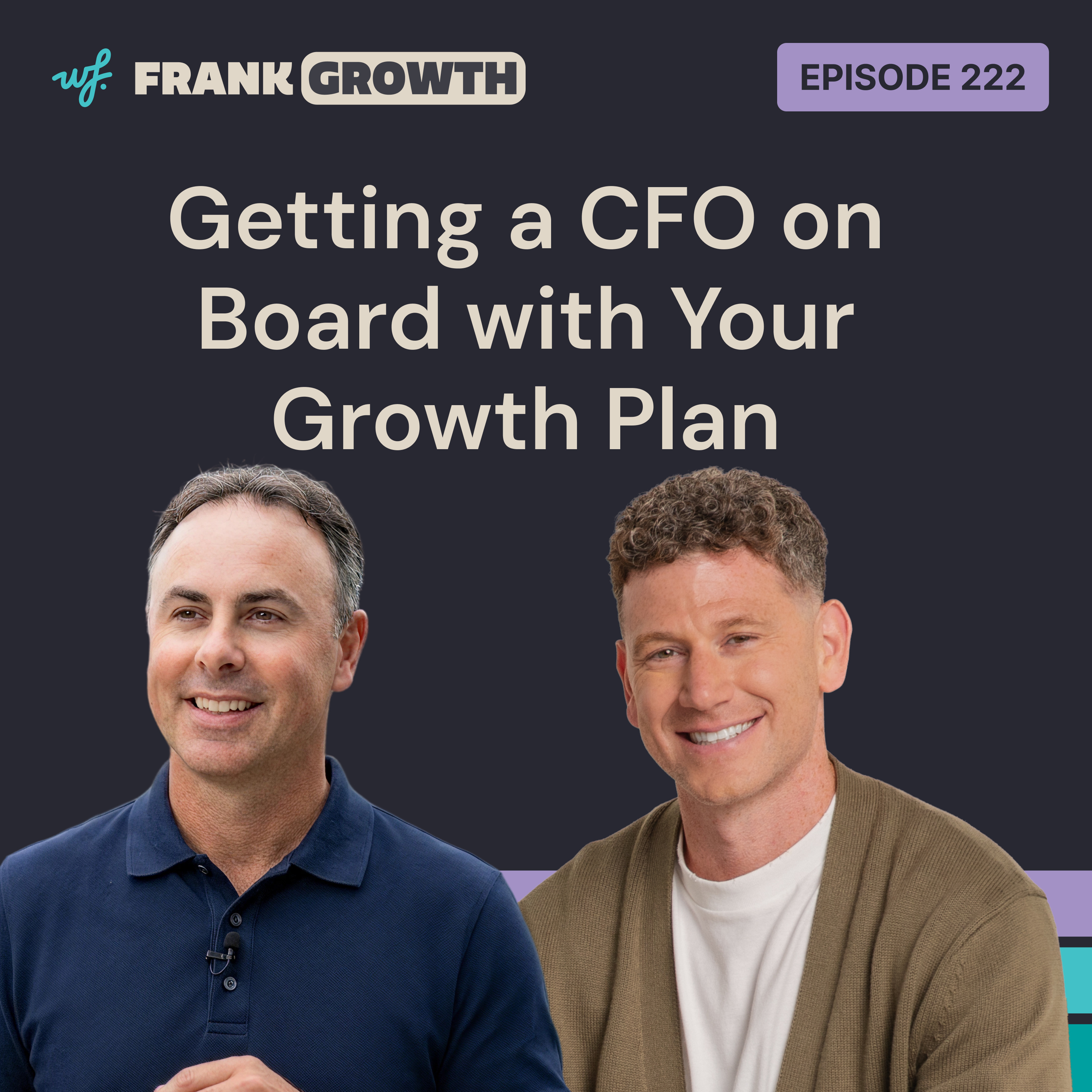 Getting a CFO on Board with Your Growth Plan with Simon Heyrick 02.06.2026 36minEpisode #222: Simon Heyrick — How CFOs become real growth partnersWhat it actually takes to turn your CFO into a growth ally instead of a gatekeeper.For founders, CEOs, and CMOs trying to align finance with marketing and growth investments.Simon Heyrick is the CFO of Sun World International and was Jason's CFO and then CEO at Soothe. In this conversation, Simon walks through what changes the moment you step into the CEO seat ("overnight, there was a shift in the relationships"), what every CFO role across green Dot, Soothe, and Sun World has had in common, and how he evaluates growth pitches from CMOs. He shares the story of Soothe's brand refresh that didn't survive a single board member's objection, the TV spend he'd take back in hindsight, and why at Sun World — a 50-year-old PE-backed agriculture IP business — the finance model runs out 25 years and the data sets matter more than the AI strategy.What you'll hear The two CFO archetypes — growth partner vs. growth gatekeeper — and how risk tolerance separates them How to pitch growth investments to a CFO without getting dismissed (skip the impression counts, bring an intellectually honest ROI story) Why institutional investors rarely understand operations, and how to manage the "feet below the surface" dynamic What Simon learned moving from tech and marketplaces to a 50-year-old agriculture IP company where customers are farmers, not consumersChapters 00:00 — Stepping into the CEO seat: the loneliness shift 00:54 — Introducing Simon Heyrick 02:19 — The through line across a CFO career 05:37 — From CFO to interim CEO at Soothe 08:33 — What translates across every CFO role: managing institutional investors and the under-promise / over-deliver rule 11:32 — The growth bet Simon greenlit and the brand refresh that didn't land 14:16 — Growth partner CFO vs. growth gatekeeper CFO 17:21 — How CMOs should (and shouldn't) pitch growth investments 21:53 — Inside Sun World: a 50-year-old PE-backed agriculture IP business 24:31 — Climate risk, varietal IP, and a 25-year forecast model 25:56 — Data as the linchpin of the AI strategy 28:07 — Lessons across five C-level roles, and advice to a younger Simon 30:57 — Lightning round 32:33 — What a founder should do this week to turn their CFO into a partner 34:17 — Jason's three takeawaysLinks & resourcesGuestSimon Heyrick — CFO, Sun World InternationalWebsiteLinkedInAbout Frank GrowthFrank Growth is a podcast about how companies actually grow—real operators, real constraints, real decisions. Hosted by Jason Shafton.Promotional links Work with Winston Francois Subscribe / Follow Jason
 -
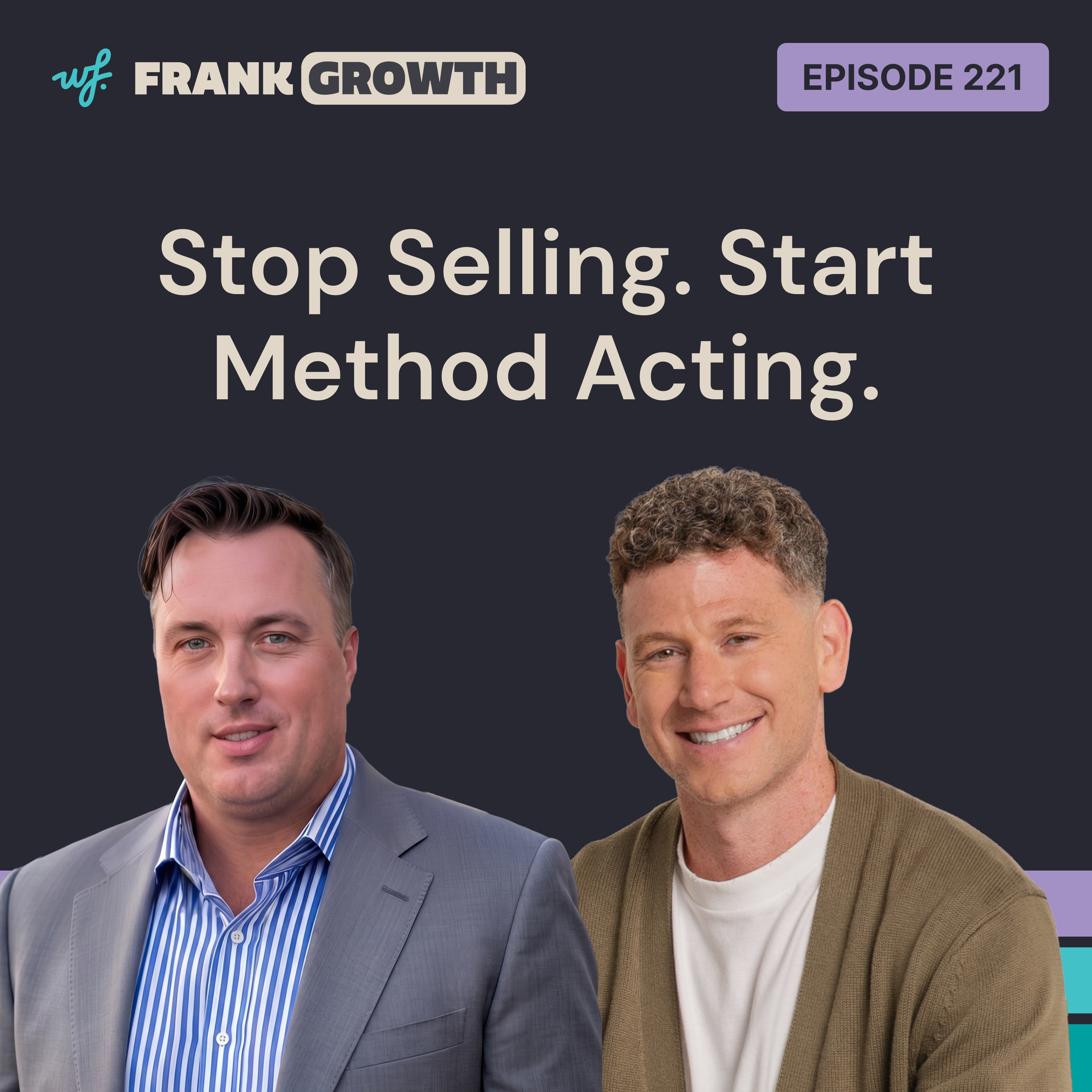 Stop Selling. Start Method Acting. with John O'Donnell 26.05.2026 23minEpisode #221: John O'Donnell — Selling AI Trust When Your Best Outcome Is InvisibleHow do you sell infrastructure that works best when nothing bad happens?For GTM leaders, founders, and sellers building pipeline in category-creating, mission-critical sales motions.John O'Donnell leads go-to-market at Alice, where he sells AI trust and safety to the top foundation model companies and the enterprises deploying AI in production. Before Alice, he built pipeline at Rapid7 in cybersecurity and led GTM in music distribution. In this episode, John breaks down his "method acting" approach to selling, why storytelling beats feature pitches in invisible-infrastructure categories, the milestone approach Alice uses to convert AI FOMO into committed deals, and why he sees the AI trust category today as the cybersecurity space in 2008-2010. He also shares the one discovery question most enterprise sellers never ask: "Can you live with your current situation for another year?"What you'll hear The "method acting" framework for entering a buyer's world before the first call Why Alice leans on storytelling and 200+ PhD dark web experts instead of feature pitches The milestone approach for converting AI FOMO buyers into committed deals What breaks when you scale founder-led sales too fast, and how to train a team to replicate itChapters 00:00 — Cold open and the three GTM traps in invisible-infrastructure sales 02:56 — Method acting: living inside the buyer's character 06:13 — Marketing something mission-critical but invisible 09:33 — The AI FOMO problem and the milestone approach to closing 12:19 — Scaling beyond founder-led sales without breaking culture 16:58 — Where the AI trust category is now, lightning round, and takeawaysLinks & resourcesGuestJohn O'Donnell — AliceWebsiteLinkedInAbout Frank GrowthFrank Growth is a podcast about how companies actually grow—real operators, real constraints, real decisions. Hosted by Jason Shafton.Promotional links Work with Winston Francois Subscribe / Follow Jason
 -
 The Neobank of Insurance Playbook with Jacob Batist 19.05.2026 26minEpisode #220: Jacob Batist — Launching the first new health insurance company in Canada in 70 yearsHow a European challenger broke into a market controlled by three incumbents — without a CEO on the ground, without brand awareness, and without growth-at-all-costs spend.For founders and growth leaders entering markets dominated by entrenched incumbents, where trust is the real constraint and speed alone won't win.Jacob Batist is Head of Growth at Alan in Canada — the first new health insurance company to launch in the country since 1957. Backed by a European parent valued at over 5 billion euros, Alan competes against three companies that hold roughly 80% of policies. Jacob breaks down why their initial blitz strategy failed, the warm-first pivot they made instead, why they target 20–100 employee companies, and how they say no to revenue they're not ready for. Concrete detail: Alan can process claims in as little as 15 minutes and onboard employees same-day.What you'll hear Why Alan positions itself as "the neo bank of insurance" and what that means operationally (sign-ups in minutes, claims in 15 minutes, one platform vs. multiple vendors) The warm-first pivot: what they tried first, why it failed, and the four credibility levers (events, organic media, partnerships, in-person moments) they replaced it with Why 20–100 employee companies are the sweet spot — and how Jacob says no to larger deals that would damage trust How to balance European credibility with the local Canadian story without leaning too hard on eitherChapters 00:00 — Cold open and host intro: Canada's silent oligopoly 04:28 — The "neo bank of insurance" positioning, in practice 09:42 — Why 20–100 employee companies are the sweet spot 11:56 — The warm-first pivot: why blitzing failed and what replaced it 18:59 — Saying no to revenue you're not ready for 21:27 — Lightning round and closing principleLinks & resourcesGuestJacob Batist — Head of Growth, Alan CanadaAlanJacob on LinkedInAbout Frank GrowthFrank Growth is a podcast about how companies actually grow—real operators, real constraints, real decisions. Hosted by Jason Shafton.Promotional links Work with Winston Francois Subscribe / Follow Jason
 -
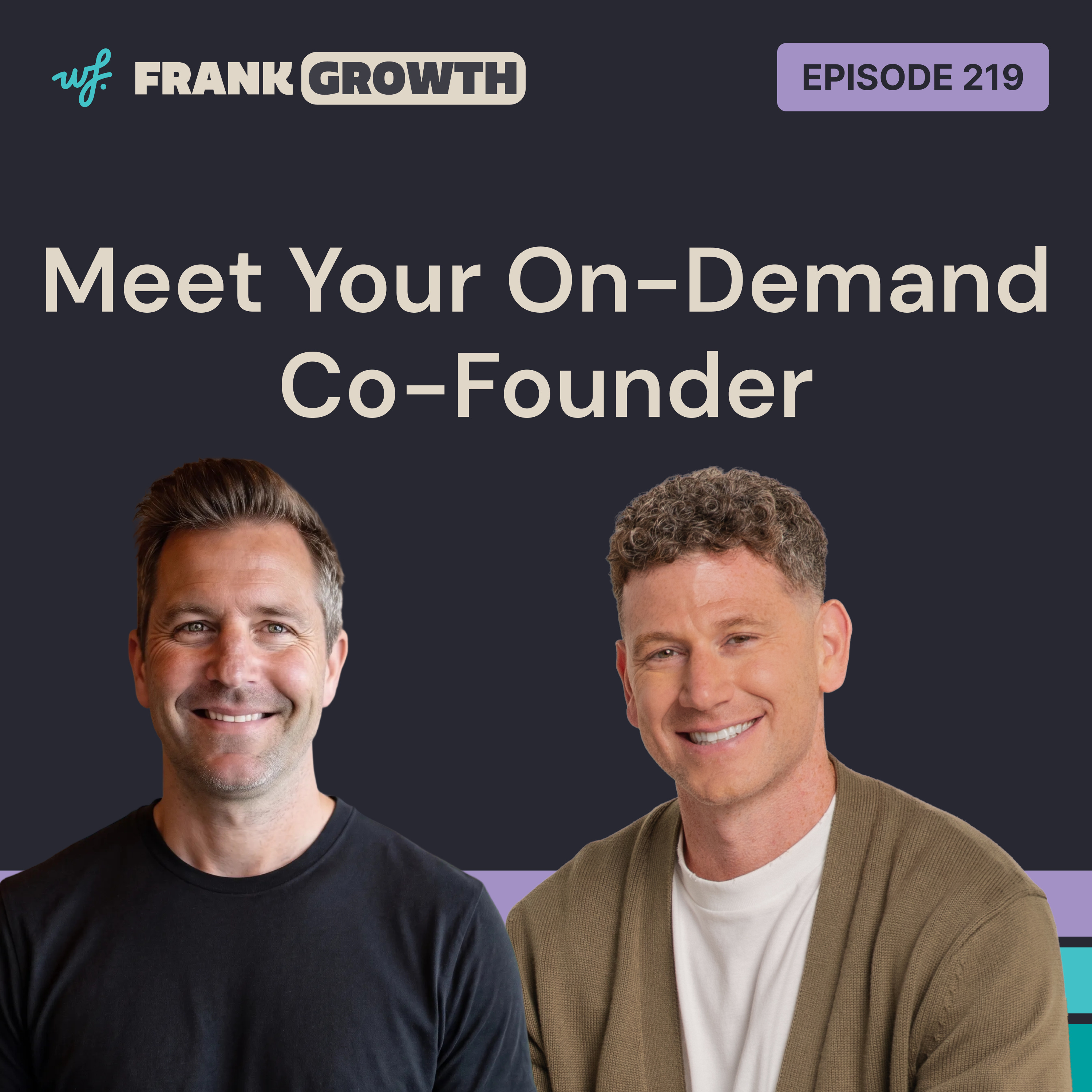 Meet Your On-Demand Co-Founder with Wade Lowe 12.05.2026 23minEpisode #219: Wade Lowe — Why GTM in the AI era is a Rubik's CubeThe business takes on the personality of the founder. If there are problems, look at thyself.For founders running $5M–$50M companies trying to crack go-to-market when the playbook keeps changing.Wade Lowe is a 3x co-founder with two exits, focused on bootstrapping, AI, and mindset. He's led revenue at two Inc 500 companies (ranked 72nd and 23rd) and now embeds with founders as a co-founder on demand. Jason and Wade get into how to diagnose a stalled growth motion, why the operating model is the first thing to fix, and how to play where the smartest people aren't — equipment rental, construction, fuel. Wade is direct about the trade-offs he made to be present for his kids and the hard truth most founders resist hearing.What you'll hear Why acquisition has to come before retention and expansion when budgets are tight How Wade diagnoses the operating model first in every $5M–$50M company he embeds with The Google AdWords inbound engine behind two Inc 500 companies — and why being first to a keyword segment was the unlock How to evaluate talent quickly using soft-skill signals: response time, commitments kept, and whether someone proposes solutions or just critiquesChapters 00:00 — Cold open: the business goes as the founder goes 03:01 — GTM in the AI era: test, test, test 06:22 — Playing where the smartest people aren't 12:13 — What Wade diagnoses first in a $5M–$50M company 17:17 — The hard truth founders resist hearing 20:29 — One operating principle for cracking GTMLinks & resourcesGuestWade Lowe — 3x Co-Founder | 2x Exit | Bootstrapping | AI | MindsetLinkedInAbout Frank GrowthFrank Growth is a podcast about how companies actually grow—real operators, real constraints, real decisions. Hosted by Jason Shafton.Promotional links Work with Winston Francois Subscribe / Follow Jason
 -
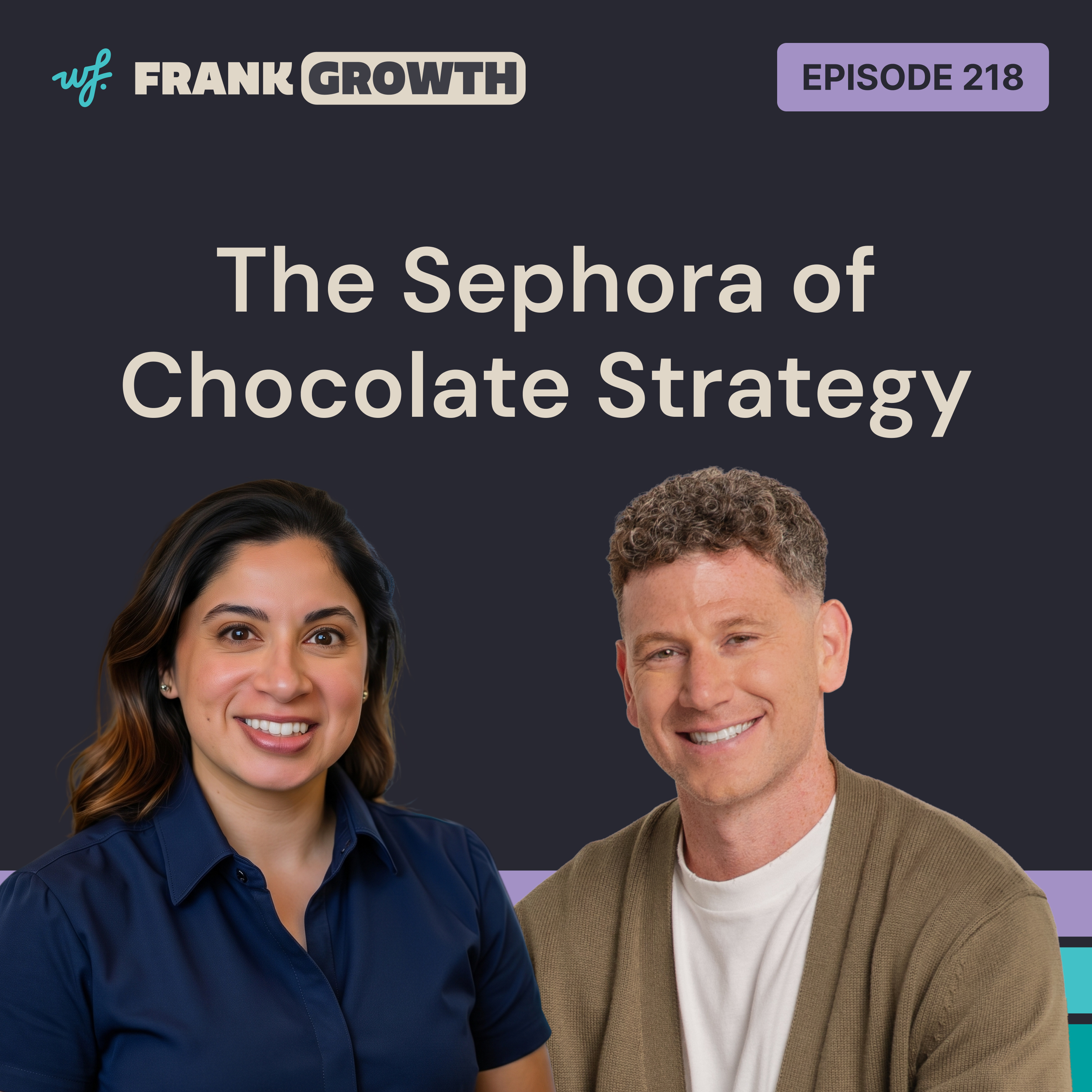 The Sephora of Chocolate Strategy with Pashmina De Shon 05.05.2026 20minEpisode #218: Pashmina De Shon — Why Friction Is The Moat In Craft ChocolateHow a bootstrapped founder built a $3M+ craft chocolate marketplace by owning the operational pain everyone else outsources.For e-commerce operators, bootstrapped founders, and brands weighing the jump from DTC to physical retail.Pashmina De Shon is the founder of Bar and Cocoa, a curated marketplace for craft chocolate featuring 1,200 SKUs from 60 makers across 30 countries. After a decade running the business purely online, she recently opened a physical store in Greensboro, North Carolina. In this conversation, she breaks down why she runs her own warehouse instead of using a 3PL, how owning fulfillment keeps her waste rate at 2% versus industry norms of 10-12%, why the subscription model forced early clarity on curation, and what actually changes in the P&L when you move from DTC to brick and mortar.What you'll hear Why "even Amazon doesn't ship chocolate" became both the warning and the opportunity How owning fulfillment, FDA compliance, and temperature-sensitive shipping creates a moat competitors can't copy The plateau that hit at scale — and the boring, decisive fixes that got Bar and Cocoa past it How to think about retail economics as a marketing and retention channel, not just a sales channelChapters 00:00 — Cold open and Frank Growth intro 02:45 — The thesis: why the easy e-commerce business is the shortest-lived 07:12 — Owning fulfillment and a 2% waste rate vs. the 10-12% norm 11:53 — Moving from DTC to physical retail: what changes, what stays 14:10 — Educating the craft chocolate market while selling 17:04 — Lightning round and three takeawaysLinks & resourcesGuestPashmina De Shon — Founder, Bar and CocoaWebsiteInstagramLinkedInAbout Frank GrowthFrank Growth is a podcast about how companies actually grow—real operators, real constraints, real decisions. Hosted by Jason Shafton.Promotional links Work with Winston Francois Subscribe / Follow Jason
Samankaltaiset podcastit


Suosittu maassa
Tämä podcast esiintyy myös näiden maiden podcast-listoilla.
