
Critique of the Podcast Form
Critical Theory Working Group
0
Critique of the Podcast Form is a bi-weekly podcast by the Critical Theory Working Group. It covers topics such as Critical Theory, socialism, philosophy, Marxism, and social theory. New episodes featuring a rotating cast of hosts and guests are posted every other Thursday.
Jaksot
-
 Episode 27: A History of Marx's Charaktermaske feat. Billie Cashmore 03.09.2026 1t 7minNora and Imogen are joined by Billie to discuss her forthcoming essay 'Charaktermasken: Value, Relation and Performance in Marx's Critique of Political Economy' in which she traces the history of Marx's concept of the Charaktermasken.. With excursions into Goethe's Faust, the critique of Marx brought to bear by Black radical thinkers (namely Sylvia Wynter and Fred Moten), the antinomies of the structuralist reading of Capital and the comedy of the Rosean recovery of speculative thought, the three consider the Charaktermaske first as tragedy and again as farce.Donate to Billie's FFS fund! https://gofund.me/0a72791c1 Billie's Acid Horizon Course on the Commodity, starting September 8: https://www.acidhorizonpodcast.com/ahrc-courses/p/the-commodity-appearance-reification-and-practice-from-karl-marx-to-sylvia-wynterTexts mentioned:• Louis Althusser (1963) 'The ‘Piccolo Teatro’: Bertolazzi and Brecht - Notes on a Materialist Theatre' in: For Marx•Theodor S. Adorno (1966) 'Negative Dialectics'•Gillian Rose (1978) 'The Melancholy Science: An Introduction to the Thought of Theodor W. Adorno'• Fred Moten (2003) 'The Resistance of the Object' I&II in: 'In the Break: The Aesthetics of the Black Radical Tradition'•Sylvia Wynter (unpublished) 'Black Metamorphosis: New Natives in a New World'
 -
 Episode 26: MUG Moment (ft. Ben L) 20.08.2026 1t 21minResident CTWG Infantiles Morrain and Cam meet CTWGs resident Marxist Unity Group member Mac, with backup from NYCDSA MUG member Ben, to get to the bottom of what the heck this renegade Kautsky guy is all about and why today's hot TV stars such as Bill Maher can't get enough of him. In play is Lars Lih's book Lenin Rediscovered, as well asRevolutionary Social Democracy: Working-Class Politics Across the Russian Empire (1882-1917) by Eric BlancRevolutionary Strategy: Marxism and the challenge of left unity by Mike Macnairhttps://prometheus-mag.com/2026/07/29/a-short-course-on-the-history-of-the-marxist-unity-group-part-one-background-and-foundation/https://prometheus-mag.com/2026/07/30/a-short-course-on-the-history-of-the-marxist-unity-group-part-two-partyism-in-practice/https://www.marxists.org/archive/lenin/works/1908/nov/13.htm
 -
 Episode 25: Cisification of the Bourgeoisie (ft. Ashley) 06.08.2026 1t 1minNora, Imogen, and Helen are joined by friend of the pod Ashley to discuss two articles from the new volume of Mediations: Emma Heaney's "On the Cisness of the Bourgeoisie" and Amy De'Ath's "Two Substantialisms: On Value and Sexual Difference." Together, they answer a burning question of our movement: are trans women bourgeois?
 -
 Episode 24: Schelling’s Clara: Conversations on the Absolute. 23.07.2026 1t 20minFor episode 24 and part 2 in our Schelling series, James is joined by Imogen and Nora to discuss one of Schelling's unfinished works: Clara, or On Nature's Connection to the Spirit World. After situating the text within Schelling's wider oeuvre and patiently clearing the author from accusations of dark magic, we ruminate on its themes of resurrection, transmigration, the singularity of the soul and the magnificence of beavers. Putting Schelling in discussion with Kant, Fichte, Hegel, Freud, Mao, Bordiga and Kazuo Ishiguro we ask the ultimate question: can Naturphilosophie mourn?
 -
 Episode 23: Schelling's Early Philosophy of Nature 09.07.2026 1t 31minIn this episode, Anatarah, Bile, and Crane discuss the introduction to Schelling’s 1797 Ideas for a Philosophy of Nature and the introduction to Schelling’s 1799 First Outline. Working up to Schelling’s ambitious declaration that philosophy is a “natural history of our mind,” the hosts discuss some of the fundamental concepts—like force, equilibrium, and organism—in Schelling’s philosophy of nature, the difference between Schelling’s earlier philosophy of nature and his “identity system,” and the relationship between Schelling’s project and those of his contemporaries in philosophy and natural science. In conclusion, we debate whether and, if so, how Schelling’s early philosophy of nature might provide us with a basis for a critical theory of nature and natural science.Recommend readings:Ideas for a Philosophy of Nature as Introduction to the Study of This Science, 1797. Cambridge University Press, 2001.First Outline of a System of the Philosophy of Nature. State University of New York Press, 2004.The Schelling Reader. 1st ed. Bloomsbury Academic, 2020.The Palgrave Schelling Handbook. Palgrave Handbooks in German Idealism. Palgrave Macmillan, 2026.
 -
 Episode 22: Everybody Female 26.06.2026 55minImogen, Helen, and Nora kvetch about "The Logic of Gender" from Endnotes 3. Topics include whether capital is a totality (it is), whether Butler reduces gender to the value-form (they don't), and whether this article gets into enough detail regarding the history of the family (absolutely not.)Texts:The Logic of Gender in Endnotes Vol 3: https://www.endnotes.org.uk/issues/issue-3/endnotes-the-logic-of-gender
 -
 Episode 21: A Critical Theory of Christianity? (Ft. Julian Assele) 13.06.2026 1t 37minIn this episode, Crane is joined by Julian Assele to discuss Max Horkheimer’s long-running critical engagement with contemporary Neo-Thomism, the history of Catholic thought, and the social content of theological controversies dating back to the early Christian church. Starting from Horkheimer’s 1930s short-form polemics on the church and fascism, the hosts turn to his extensive criticism of Neo-Thomism in “Conflicting Panaceas” from Eclipse of Reason (1947)—as well as the earlier version of the text, the unpublished “The Revival of Dogmatism” (1943)—and conclude with a critical look at the late Horkheimer’s neo-conservative instrumentalization of religion in “Theism and Atheism” (1963), posing the question: what might a “critical theory of religion” look like today?Texts:“On the Concept of God” [or: “Thoughts on Religion”] (1935): https://jamescrane.substack.com/p/collection-horkheimers-fragments“On Theodor Haecker’s Der Christ und die Geschichte [The Christian and History]” (1936): https://jamescrane.substack.com/p/collection-the-materialist-as-polemicist“The Revival of Dogmatism” (1943): https://jamescrane.substack.com/p/collection-society-and-reason-1944“Conflicting Panaceas,” in Eclipse of Reason (1947)“Theism and Atheism” (1963), in Critique of Instrumental Reason (1974)Follow Julian on Substack https://substack.com/@julesnotesIf you want to support the show donate to us on PatreonVisit our website for writing and updatesFollow our socials:TwitterBlueskyInstagram
 -
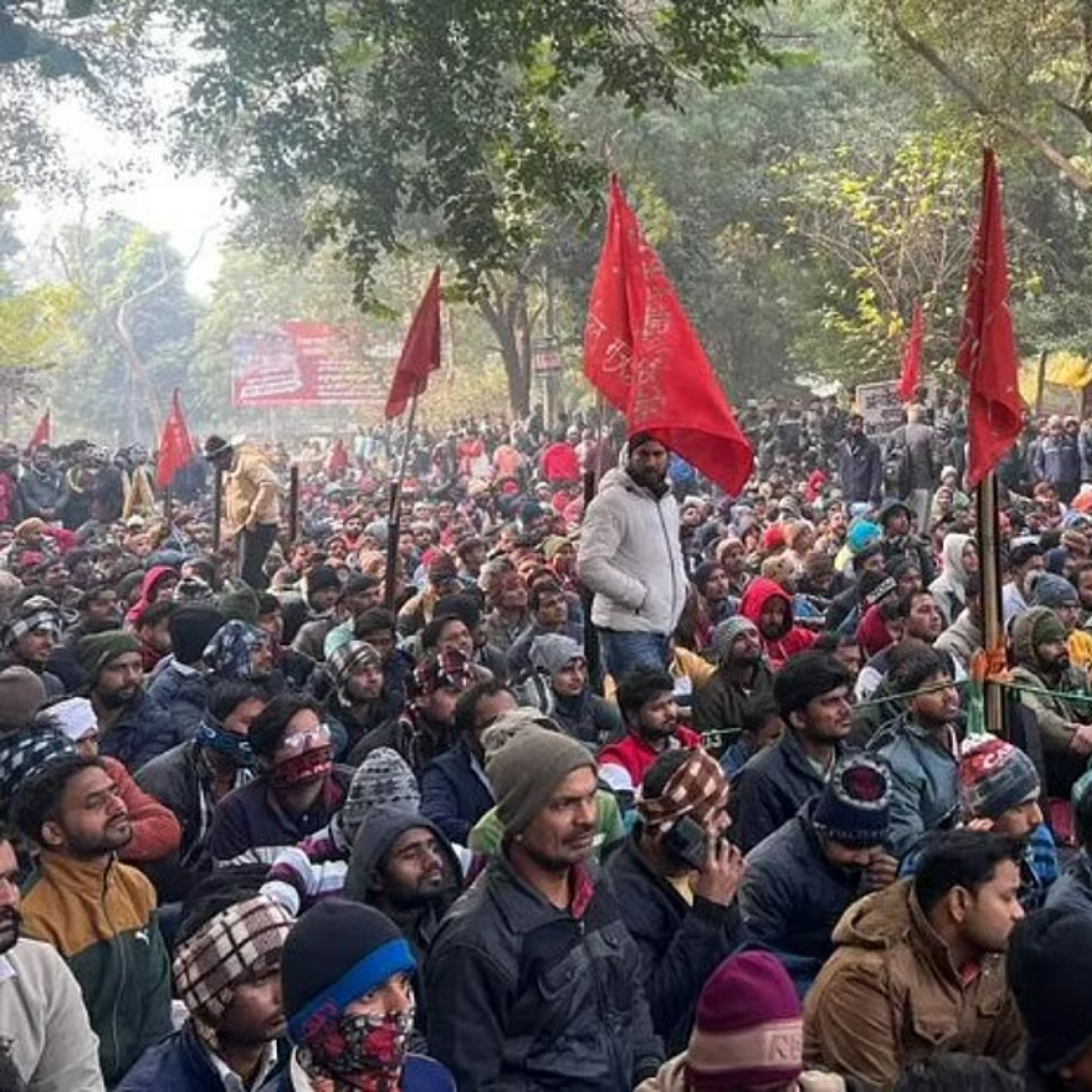 Episode 20: Inside the Manesar Labor Movement (ft. Shreya) 28.05.2026 58minMac and Re are joined by Shreya from the Center for Struggling Trade Unions (CSTU) to discuss the recent workers strikes in various industries of North India. Since March, workers in the automobile and garment industry were joined by domestic service workers to mobilize against low wages, unpaid overtime and deteriorating labor conditions. We also discuss the history of the workers mobilization in North India and raise some questions of the problems of labor organizing today.History of the Manesar automobile workers struggle: https://class-notes.org/2025/06/04/maruti-story-book/If you want to support the show donate to us on PatreonVisit our website for writing and updatesFollow our socials:TwitterBlueskyInstagram
 -
 Episode 19: Peter Damerow and the Ontogeny of Thinking 14.05.2026 1t 12minAnatarah, Mac, and Re return once more to the realm of science studies. This time it is to discuss the indomitable Peter Damerow and the Max Planck history of science’s program of historical epistemology via their book Abstraction and Representation: Essays on the Cultural Evolution of Thinking. We discuss the usage and development of (reflective) abstractions, the similarities between Piaget and Hegel, and finally the genesis of the number concept. Along the way, we discuss Damerow's theory of writing and language as well as his concept of historiogenesis.Recommend readings:The new Damerow translation by the Marxism & Science JournalThe Creation of Numbers from Clay by McLaughlin & SchlaudtEye of the Master by PasquinelliMaterial Engagement Theory by Malafouris
 -
 Episode 18: Rupture Theory (Ft. Cam West) 30.04.2026 1t 15minJ. E., Cam, and Mac are joined by Cam West of Negation Magazine to discuss his essay "Rupture Theory" and the possibility of politics at a distance from the state. We discuss the status of the party-form, the dialectic of spontaneity and organization, and so on, especially as they pertain to the last 10 years in the US.Cam West's article = https://www.negationmag.com/articles/rupture-theory
 -
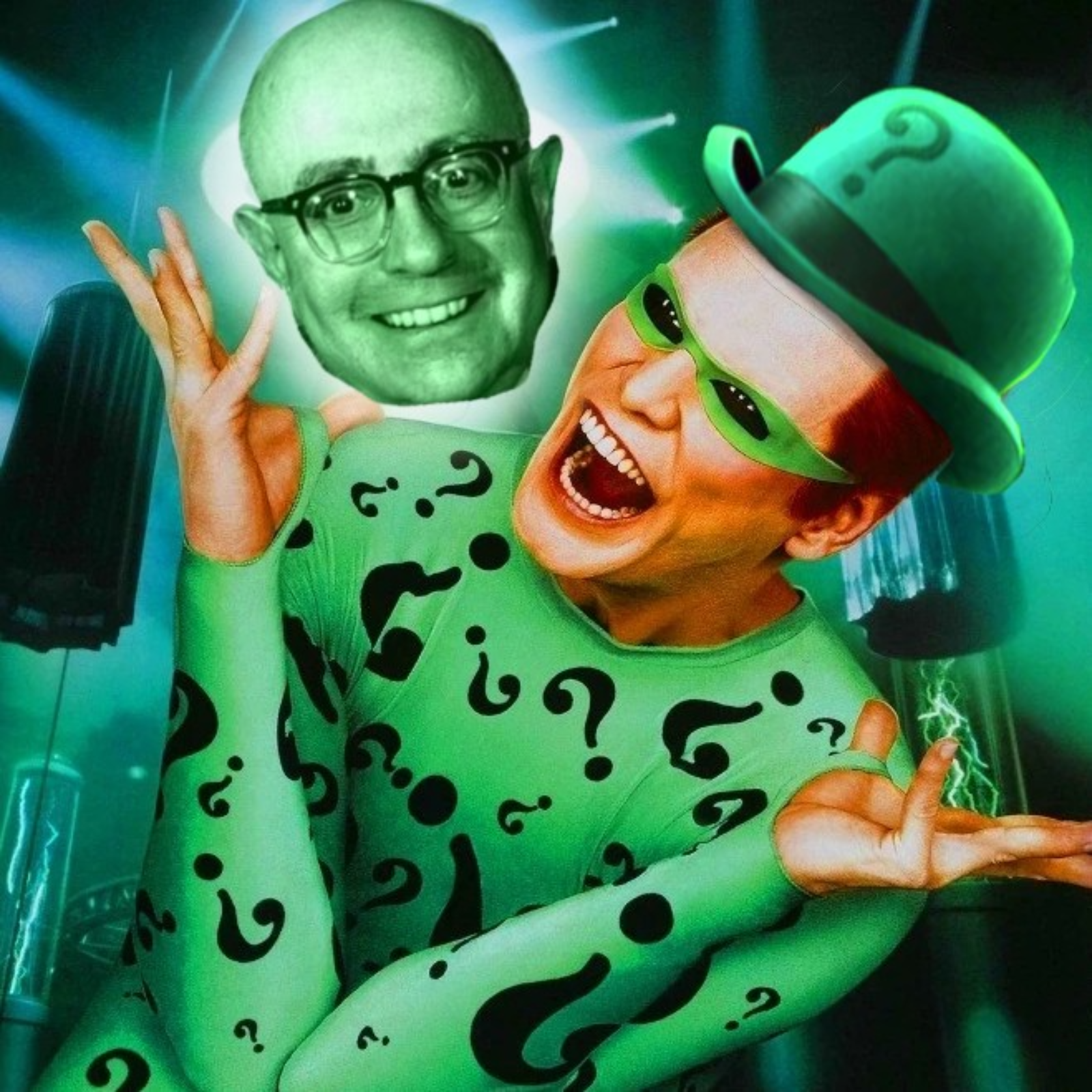 Episode 17: Who Paid The Riddler of Western Marxism? (Part 2) 21.04.2026 1t 11minBy popular demand, J. E. and Crane unite in a two-part episode (of which this is the second part) to, uh... review? critique? lampoon? Gabriel Rockhill's book Who Paid the Pipers of Western Marxism Inter alia, they answer pressing questions like, who controls the academic world? (Probably not annoying "idealist" grad students) Did the Frankfurt School destroy the American labor movement? (No, lol) And, what does it mean to use wissenschaftlich DHM hermeneutics to dialectically situate subjective agency with the objective totality of material conditions? (Hell if we know!)
 -
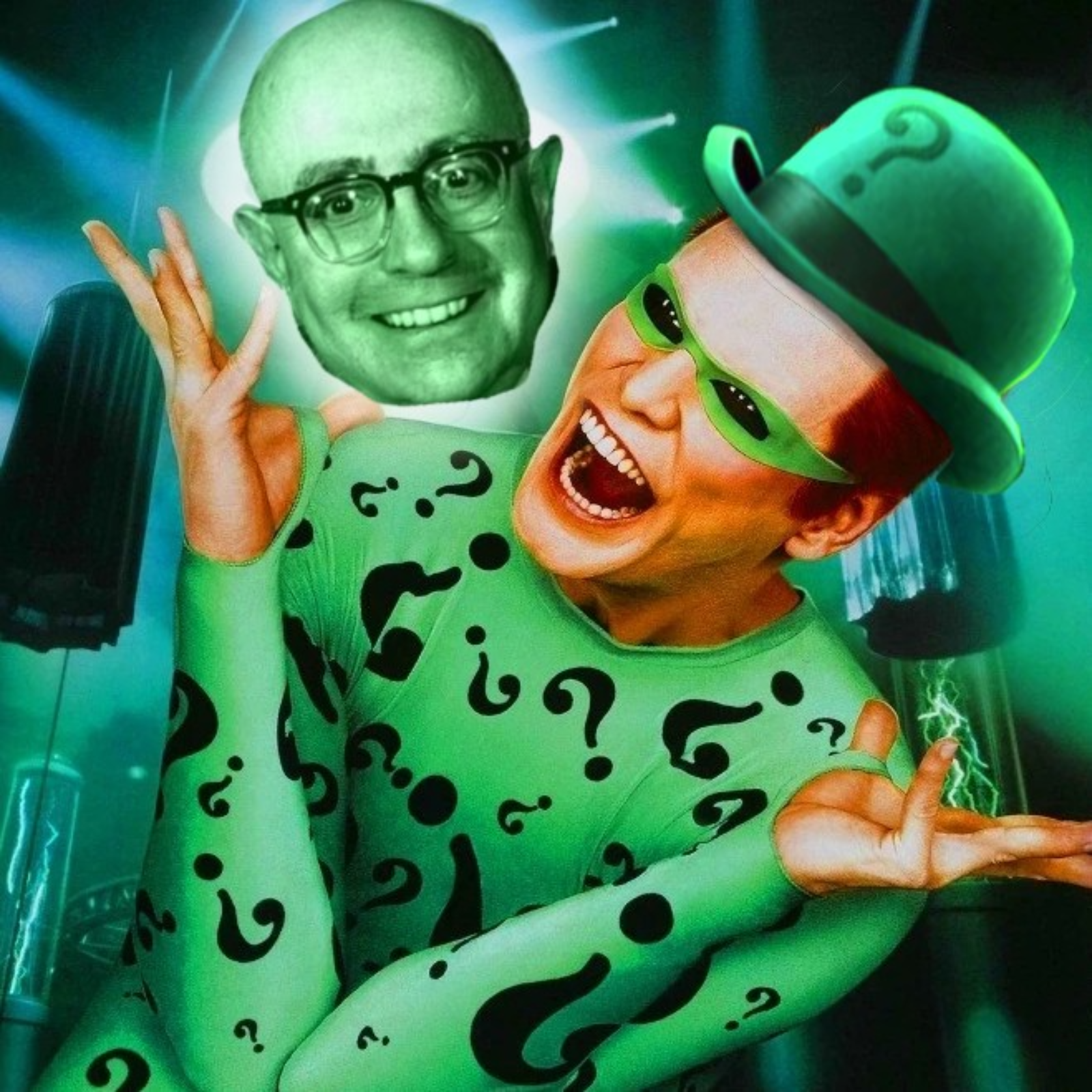 Episode 16: Who Paid The Riddler of Western Marxism? (Part 1) 21.04.2026 1t 11minBy popular demand, J. E. and Crane unite in a two-part episode to, uh... review? critique? lampoon? Gabriel Rockhill's book Who Paid the Pipers of Western Marxism. Inter alia, they answer pressing questions like, who controls the academic world? (Probably not annoying "idealist" grad students) Did the Frankfurt School destroy the American labor movement? (No, lol) And, what does it mean to use wissenschaftlich DHM hermeneutics to dialectically situate subjective agency with the objective totality of material conditions? (Hell if we know!)
 -
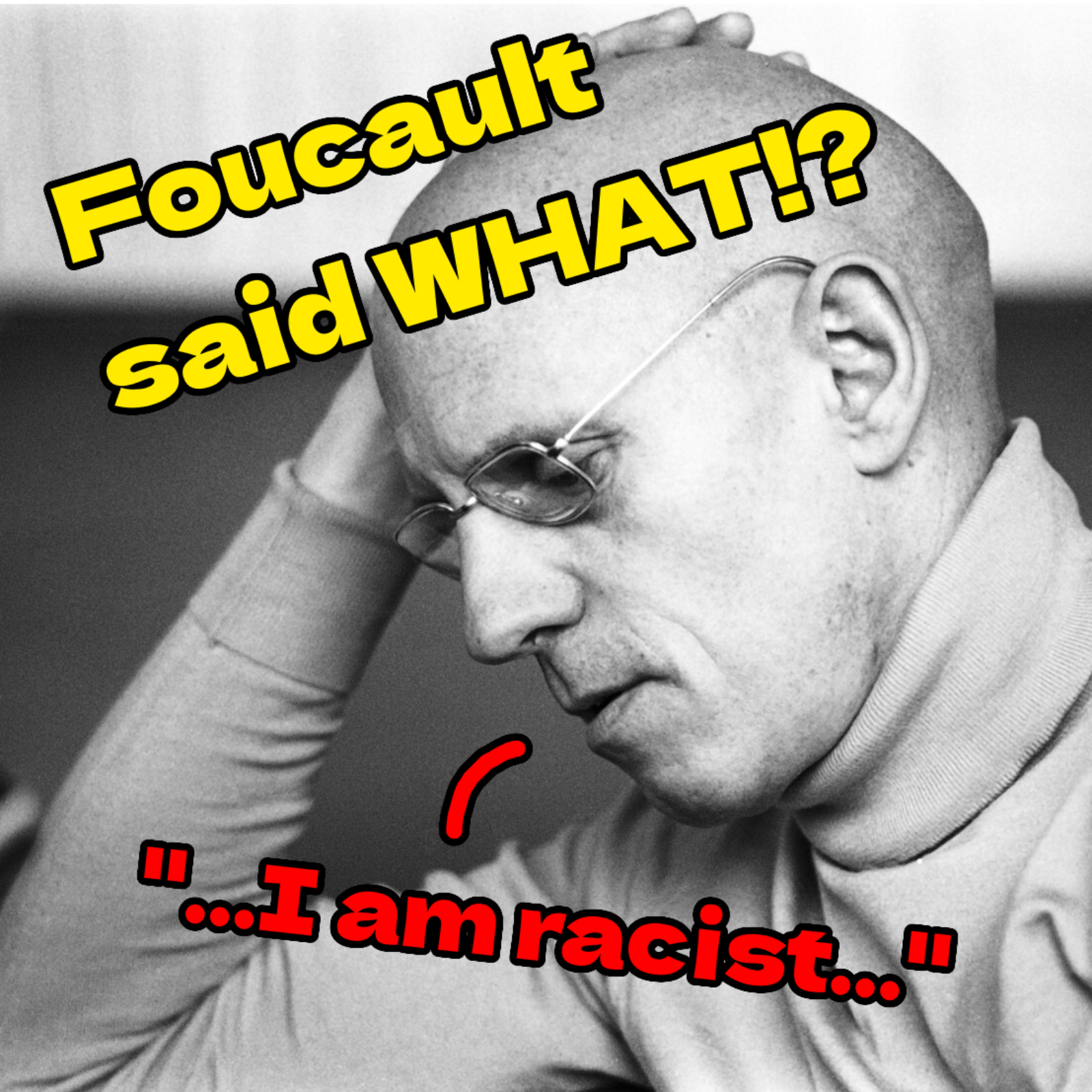 Episode 15: Wokeness Must be Defended 03.04.2026 1t 13minThe description: JE, Cam and Re interrogate Foucault's mid 1970s lectures at the Collège de France, Society Must be Defended. They discuss Foucault's method, his genealogy from Race Wars to Racism and modern conspiratorial thinking among other things.
 -
 Episode 14: Theoretical Players' Ball 21.03.2026 1t 6minJ. E. and Anatarah discuss Johan Huizinga's classic book Homo Ludens, a foundational work for game studies.
 -
 Episode 13: Discoursing the Discorsi 05.03.2026 1t 31minHelen, Esther, and Crane tackle the first book of Machiavelli's Discourses on Livy, reading Machiavelli as a precursor to historical materialism and a radical republican. In the process, they pose the question: what can the critical theory of society learn from Machiavelli today?
 -
 Episode 12: A User's Guide to Montaigne and the Function of Skepticism 20.02.2026 1t 57minCrane and Helen talk about Horkheimer's 1938 essay "Montaigne and the Function of Skepticism," which sees Horkheimer both show the skeptical core of both religious dogmatism and philosophical skepticism, as well as its changing valence throughout the development of the capitalist mode of production.
 -
 Episode 11: Situationism and the Critique of Reification 06.02.2026 1t 25minImogen, Sebastian, and Sam discuss Situationism as a vindication of Hegelian Marxism and a critique of reified life through its various forms of appearance: artistic production, urban planning, and student life.
 -
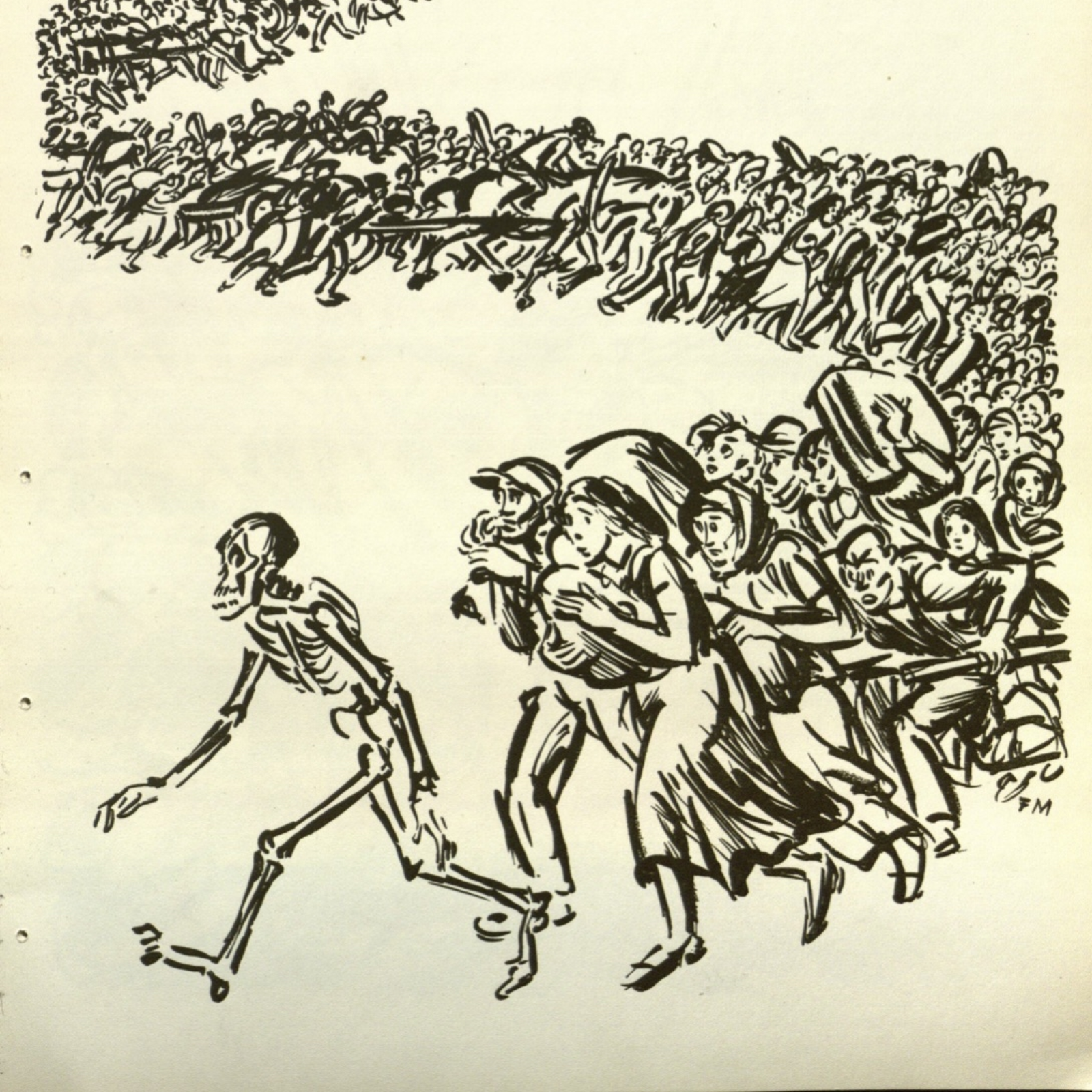 Episode 10: Working Through the Past with Ernst Bloch 23.01.2026 1t 15minEsther and Sebastian discuss the 1932 fragment Nonsychronism and the Obligation to its Dialectics from Bloch's Heritage of our Times. Our hosts talk about their personal encounters with Bloch, revolutionary traditions and the meaning of the communist dictatorship of the present over the past. Special guests include: Kanafani, Amel, and Pasolini. Bloch's essay, as Walter Benjamin commented, "takes its place inappropriately". Perhaps its time was never there, perhaps it contains a utopia waiting to be excavated.
 -
 Episode 9: Fighting About Lukács Again 09.01.2026 1t 21minMac and Crane are joined by J. E. to continue the discussion about Lukács's politics and his essay "Legality and Illegality." This episode goes into depth on the historical and political context of Lukács's work, debates in the Comintern, and the aftermath of the Hungarian Revolution.
 -
 Episode 8: The Anime Question 26.12.2025 1t 19minThe culture industry is at it again! Their new weapon: anime. Their strategy? The media mix. In this episode, the anime subcommittee of the CTWG tackle the anime media-form by discussing Marc Steinberg’s anime’s media mix. We talk about modern anime’s history, the emergence of the media mix, and transition from Fordism to post-Fordism.
Samankaltaiset podcastit


Suosittu maassa
Tämä podcast esiintyy myös näiden maiden podcast-listoilla.
