
Thriving Kids
The Child Mind Institute
0
Thriving Kids is a podcast for parents and caregivers seeking clear, science-backed advice on child and adolescent mental health. Hosted by clinical psychologist Dr. Dave Anderson, each episode tackles common parenting challenges like anxiety, behavior issues, and school struggles. The show offers practical strategies grounded in clinical expertise, with new episodes weekly and companion newsletters.
Jaksot
-
 Q&A: Anger, ADHD, Lying, OCD, and Big Feelings 17.09.2026 39minIn this Q&A episode of Thriving Kids, Dr. Dave Anderson answers eight parent questions about some of the most common — and challenging — behaviors families face. From aggression and ADHD to lying, motivation, OCD, and big emotions, Dr. Dave explains what may drive these behaviors and offers practical, evidence-based strategies parents can use to respond.In this episode, Dr. Dave covers:• Why is my three-year-old so angry and aggressive?• How can I help a child with ADHD without medication?• My child is out of control. Where can I send him?• How do I motivate a “lazy” child?• How do I explain OCD to a child?• Why does my child lie about everything?• Why won’t my child listen unless I yell?• Why is my child so sensitive?Key takeaways• Anger and aggression in young children can stem from temperament, development, family stress, and other factors. Behavioral parent training can help parents combine warmth with clear expectations and consistent consequences.• Medication is not the only evidence-based ADHD treatment. Parent training, classroom support, organizational skills, and help with peer relationships can all be effective but require consistent adult involvement.• Even when behavior feels out of control, behavioral and family interventions can help. Families may also consider school-based services, therapeutic programs, residential treatment, or hospitalization when safety is a concern.• What looks like “laziness” may reflect depression, ADHD, learning challenges, or other difficulties. Parents can build motivation through meaningful rewards and opportunities for success.• OCD involves intrusive thoughts and/or repetitive behaviors a person feels driven to perform. Treatment, including exposure and response prevention (ERP), can help kids tolerate anxiety without compulsions.• Lying is common in childhood. Parents can emphasize honesty, reinforce truth-telling — especially when it’s difficult — and use calm, proportionate consequences when needed.• If kids only listen after a parent yells, the family may be in a coercive cycle. Calm directions and predictable consequences can break the pattern and show that yelling isn’t what makes a direction matter.• Some children experience emotions more intensely. Parents can help them identify feelings, build coping skills, and learn to move forward after difficult moments. Further ReadingAngry Kids: Dealing With Explosive BehaviorBehavioral Treatments for Kids With ADHDBehavioral Parent TrainingSchool Success Kit for Kids With ADHDComplete Guide to ADHDWhy Kids Lie and What Parents Can Do About ItHow to Give Kids Effective InstructionsHealthy Minds, Thriving Kids
 -
 Dad Brain: Fatherhood, Parenting, and the Brain 10.09.2026 46minBecoming a father doesn’t just change your life, research suggests it can actually change your brain. In this episode of Thriving Kids, Dr. Dave Anderson sits down with psychologist and researcher Dr. Darby Saxbe, author of Dad Brain: The New Science of Fatherhood and How It Shapes Men’s Lives, to explore the emerging science of what happens to men’s brains, hormones, relationships, and sense of identity when they become fathers.Dr. Saxbe explains why some of the brain changes associated with fatherhood may help dads become more attuned to their children, how testosterone levels can shift as men move into caregiving roles, and why becoming a parent can bring both psychological vulnerability and long-term neurological benefits. They also discuss paternal mental health, loneliness, and social connection among men, the pressures created by online messages about masculinity, and how being an engaged father can offer men a powerful source of connection and purpose.In this episode, they cover:• How men’s brains can change during the transition to fatherhood• Why some brain changes may help fathers become more responsive to their babies• What researchers are learning about paternal postpartum depression and anxiety• Why the popular idea that “higher testosterone is always better” misses what the research actually shows• How relationships and social connection contribute to men’s long-term health• How fatherhood can encourage healthier behaviors in menKey takeaways• Fathers’ brains change, too. Research suggests that becoming a father is associated with changes in brain structure and function, including areas involved in understanding and responding to other people’s thoughts and emotions.• Those changes can bring both opportunity and vulnerability. In Dr. Saxbe’s research, some of the brain changes associated with stronger bonding and greater caregiving involvement were also associated with more symptoms of anxiety, depression, psychological distress, and sleep problems.• Fathers’ mental health deserves attention. Becoming a parent is a major physical, emotional, and social transition for all parents, yet fathers are often overlooked in conversations about postpartum well-being.• Testosterone isn’t simply a “more is better” hormone. Testosterone can naturally change as men transition into caregiving roles, and Dr. Saxbe argues that flexibility — rather than maximizing testosterone — is a more useful way to understand these changes.• Fatherhood can encourage healthier habits. Research suggests fathers may be more likely to engage in protective health behaviors and less likely to engage in some risky behaviors once they become responsible for a child.• Great parents are made, not born. One of Dr. Saxbe’s central messages is that good parenting isn’t innate. Investment, motivation, practice, and experience help parents develop the skills they need.Further reading10 Tips to Help Dads and Daughters Stay Close – Child Mind Institutehttps://childmind.org/article/parenting-through-depression/Parenting Through Depression – Child Mind InstituteDad Brain: The New Science of Fatherhood and How It Shapes Men’s Lives by Dr. Darby Saxbe
 -
 Q&A: Friendship, Neurodiversity, and Staying True to Yourself 03.09.2026 32minIn this Q&A episode of Thriving Kids, Dr. Dave Anderson answers listener questions inspired by last week’s conversation with Caroline Maguire about friendship, neurodivergence, masking, and building authentic relationships.Dr. Dave discusses how parents can help kids make friends without making them feel like they have to change who they are, how to understand the difference between practicing social skills and masking, and how to support kids who over-apologize, over-explain, or spiral after awkward social moments. He also offer advice on navigating social anxiety, loneliness, and friendship expectations — and talks about how adults can model healthier friendship habits for kids.This episode offers practical, compassionate guidance for helping children build meaningful connections, tolerate the ups and downs of friendship, and find relationships where they feel accepted for who they really are. In this episode, Dr. Dave covers: How to help kids make friends without pressuring them to change who they areWhy one awkward moment does not mean a friendship is ruinedWhat to do when kids say they “don’t need friends”How to help kids who move too quickly from meeting someone to “best friend”How adults can model boundaries, repair, and healthier friendship habits Further ReadingHow to Help Kids Who Are LonelyHelping Young Children Who Are Socially AnxiousHow to Help Kids Who Are Too Hard on ThemselvesCaroline MaguireWhy Will No One Will Play With Me
 -
 Summer Hot Takes: Parenting Advice With Dr. Aliza Pressman 27.08.2026 48minFrom gentle parenting to strict rules about screen time, today’s parents are constantly bombarded with advice about the “right” way to raise their kids. But how much of that advice is actually supported by research?In this special Summer Hot Takes episode, Dr. Dave Anderson sits down with developmental psychologist, bestselling author, and Raising Good Humans podcast host Dr. Aliza Pressman to explore some of parenting’s most talked-about topics. Together, they discuss why it’s important for any approach to be rooted in science, how authoritative parenting (not to be confused with the harder-to-define gentle parenting) balances warmth with boundaries, and how families can develop healthier relationships with technology.They also talk about the importance of letting kids experience disappointment, navigate failure, and learn from difficult emotions without treating every feeling like an emergency. Throughout the conversation, Dr. Dave and Dr. Pressman remind parents that thoughtful, flexible parenting is the goal, not perfection.In this episode, they cover:What people often mean when they talk about “gentle parenting” and common misunderstandings about the termWhat authoritative parenting is and why it remains one of the most evidence-supported parenting approachesPractical ways to create healthier screen habits for children and teensWhy boredom, waiting, and feeling lonely sometimes can help kids build resilience and independenceHow to help kids tolerate disappointment, failure, and rejectionKey takeawaysHealthy screen habits focus on balance, connection, and intentional use.Kids benefit from experiencing age-appropriate disappointment and failure.Parents don’t need to solve every emotion immediately to support emotional health.Parenting trends come and go, but warmth combined with clear boundaries remains the most effective approach. Further reading from the Child Mind Institute· Helping Kids With Flexible Thinking· Three Common Parenting Traps· How to Set Limits on Screen TimeMore from Dr. Aliza Pressman· Raising Good Humans With Dr. Aliza (podcast)· The 5 Principles of Parenting: Your Essential Guide to Raising Good Humans
 -
 Q&A: Back-to-School Survival Guide 21.08.2026 35minBack-to-school season can bring a lot of excitement, but it can also bring anxiety — stressful mornings, friendship worries, homework battles, and questions about how to help kids adjust after summer break.In this Q&A episode of Thriving Kids, Dr. Dave Anderson tackles some of the biggest concerns families face as a new school year begins. From how to tell the difference between normal first-day jitters and more serious anxiety to how to reset kids’ sleep routines after summer, Dr. Dave offers compassionate guidance and practical strategies you can put into practice right away.In this episode, Dr. Dave covers: How to recognize the difference between typical back-to-school nerves and anxiety that may require extra supportPractical ways to reset sleep schedules, screen time, and morning routines after the summer breakHow to help children build friendships and navigate worries about fitting inWhy stomachaches and headaches can sometimes be signs of anxiety — and when to seek a medical evaluationStrategies for supporting students with ADHD, learning disorders, and executive functioning challengesHow to partner effectively with teachers at the beginning of the school year Key TakeawaysSmall, gradual routine changes make the back-to-school transition easier for children.Anxiety about going to school is common, but persistent school avoidance can benefit from early support.Strong parent-teacher partnerships help children succeed academically and emotionally.Sleep, consistent routines, and healthy technology habits create a stronger foundation for learning.Family schedules should prioritize wellness, not just productivity. Further ReadingBack-to-School HubThe Child Mind Institute’s comprehensive collection of expert advice for preparing children and families for the new school year.Help for School RefusalManaging Back-to-School Anxiety
 -
 Helping Neurodivergent Kids Make Friends 13.08.2026 37minIn this episode of Thriving Kids, Dr. Dave Anderson is joined by Caroline Maguire, an ADHD and executive function coach and author of Friendship Skills for Neurodivergent Adults. They discuss friendship, social anxiety, and how neurodivergent kids and teens can build more authentic relationships without feeling pressured to hide or “mask” who they are.In this episode, they cover:• What masking is and how it can affect kids’ mental health• Why getting support for social skills doesn’t mean people need to abandon their authentic selves• How black-and-white thinking can make social situations feel more painful• How parents, clinicians, and coaches can help kids build confidence in relationshipsKey takeaways• Masking — hiding how you really feel — can help people get through social situations, but over time it may lead to anxiety, depression, people-pleasing, and disconnection from the self.• Neuro-affirming social support should help kids and adults connect with others while still honoring their own needs, values, and personalities.• Social mistakes are part of being human, and over-apologizing or repeatedly revisiting them can make anxiety worse.• Black-and-white thinking can turn a mostly positive interaction into something that feels like a failure.• Building authentic friendships often starts with understanding your own patterns, communicating your needs, and finding people who appreciate you as you are.Further readingKids Who Need a Little Help to Make FriendsHelping Girls With ADHD Make FriendsWhat Is Neurodiversity?
 -
 Q&A: Sleep, Safety, Resilience, and More 06.08.2026 22minIn this Q&A episode of Thriving Kids, Dr. Dave Anderson answers listener questions inspired by last week’s conversation with Dr. Lisa Damour about how to “future-proof” kids in an uncertain world.Dr. Dave breaks down the simple but powerful habits that help protect children’s mental health over time, including consistent sleep, family connection, face-to-face time with peers, satisfying hobbies, and emotional flexibility. He also discusses how parents can tell whether changes in a child’s mood, focus, or behavior might be related to sleep, how to handle bedtime resistance, and why family meals matter even when no one is having a deep conversation.This episode offers practical guidance for helping kids build resilience, confidence, and a perseverance. In this episode, Dr. Dave covers:The basic habits that support kids’ long-term mental healthHow sleep affects mood, focus, behavior, and stressWhat to do when kids push back hard against bedtimeWhy “pointless” hobbies can still build pride, confidence, and identityHow to help kids practice flexible thinking when faced with a challenge Further ReadingHealthy Sleep Habits for KidsHow to Help Kids Learn to FailRaising Resilient Kids Who Are Prepared for the Future
 -
 How to Future-Proof Kids for an Uncertain World 30.07.2026 39minIn this episode of Thriving Kids, Dr. Dave Anderson welcomes back Dr. Lisa Damour for a conversation about how parents can help kids prepare for an uncertain future. Drawing on decades of clinical experience, Dr. Damour explains why the most protective tools are often the simplest: sleep, safety, family connection, coping skills, and opportunities for kids to develop interests that truly belong to them.In this episode, they cover:• Why sleep is one of the most important foundations for kids’ mental health• How safety, structure, and clear limits help kids feel secure• Why family meals can matter even when the conversation is not perfect• How hobbies help kids build confidence, identity, and coping skills• Why parents should make room for interests that are not tied to achievement• What families can do now to help kids face an unpredictable futureKey takeaways• Sleep is one of the strongest protections for kids’ mental health, learning, attention, mood, and emotional regulation.• Parents do not need to control every part of a child’s future, but they can build routines and expectations that help kids feel grounded.• Safety is a reasonable area for parents to be firm about, including issues like seatbelts, helmets, substance use, and other non-negotiables.• Family meals are not valuable because they are always magical; they matter because they create warmth, structure, and regular connection.• Hobbies give kids a sense of ownership, pride, mastery, and healthy coping that may not come from school or achievement alone.Further readingWhy Are Teenagers So Sleep-Deprived?Media Guidelines for Kids of All AgesHelping Kids Who Struggle With Executive Functions10 Tips for Parenting Anxious KidsWhat to Do and Not Do When Children Are AnxiousPre-Order Lisa Damour's newest book: The Emotional Lives of Parents: Caring for Ourselves to Better Care for Our Children
 -
 An Expert Perspective at the Intersection of Journalism and Mental Health 16.07.2026 43minIn this episode of Thriving Kids, Dr. Dave Anderson is joined by NBC News anchor and Senior National Correspondent Kate Snow for a conversation about journalism, mental health, and the power of telling stories that can reduce stigma. Kate discusses how personal loss shaped her reporting on mental health, as well as suicide prevention, substance use, access to care, and the systems that families often have to navigate during moments of crisis.In this episode, they cover:• Why journalists can play an important role in reducing stigma• What Kate has learned from reporting on teen mental health, substance use, and access to care• Why transitions or experiencing a loss of purpose can be mental health risk factors• How young people are broadening conversations about mental healthKey takeaways• Sharing personal stories about mental health can help people feel less alone and make it easier for them to seek support.• Suicide loss can be traumatic for an entire family, and talking about it thoughtfully may help reduce shame and stigma.• Young people may be more open to conversations about mental health than previous generations, but they still need trusted adults and systems that can respond when they ask for help.Further reading (and viewing)NBC’s Kate Snow Shares Impact of Her Father-in-Law’s Suicide on Her Family, Today ShowThe Link Between Smartphones and Kids' Mental Health, NBC Nightly NewsOpioid Crisis: Historic Cape Cod Town Experiencing Staggering Toll, NBC Nightly NewsAllegations of Abuse at Home for At-Risk Kids, NBC NewsFurther reading from the Child Mind InstituteWhat to Do if You’re Worried About Suicide
 -
 Q&A: Talking to Kids about Mental Health, Suicide, and Suicide Loss 23.07.2026 26minIn this Q&A episode of Thriving Kids, Dr. Dave Anderson answers listener questions inspired by last week’s conversation with NBC News anchor and correspondent Kate Snow about mental health, journalism, and how suicide loss has shaped her reporting.Dr. Dave discusses how parents can talk with kids about suicide and mental health honestly and in age-appropriate ways, what changes in a child’s mood or behavior may indicate that they need support, and why asking directly about suicidal thoughts does not make those thoughts worse. He also explains how families can determine what level of care a child may need, what to look for in a treatment or residential program, and how to build emotional skills and family connection before a crisis occurs.This episode offers compassionate, practical guidance for recognizing when a child may be struggling, keeping communication open, and helping families find the right support. In this episode, Dr. Dave covers:How to talk with kids about suicide or a suicide loss honestly and appropriatelyWhat changes in mood, behavior, and personality parents should take seriouslyWhy parents should ask direct questions about sadness and suicidal thoughtsHow to understand the differences among therapy, psychiatry, school support, higher-level care, and emergency helpWhat to look for in a treatment, residential, or intensive-care programHow families and schools can build resilience and connection before a crisis Further ReadingSigns a Child Might Be SuicidalReducing Suicide Risk With Safety PlansSupporting Children After the Suicide of a ClassmateComplete Guide to Emergency Hospitalization
 -
 Q&A: Talking to Kids About Mental Health, Processing Current Events, and More 09.07.2026 39minIn this Q&A episode of Thriving Kids, Dr. Dave Anderson answers listener questions inspired by last week’s conversation with actress and author Busy Philipps about parenting, mental health, technology, and staying actively involved in kids’ lives.Dr. Dave discusses how parents can stay connected to what kids are seeing on the internet, including how to help them think critically about influencers and what to do when they start wondering if they have ADHD, depression, or another diagnosis based on mental health content they see online. He also explores how ADHD can be missed in girls and high-achieving kids, how to talk with children about scary news and current events, and why building a parent “village” can help families better understand what’s happening socially, online, and at school.This episode offers practical guidance for staying curious, setting limits, building trust, and helping kids develop the critical thinking skills they need as they grow more independent.In this episode, Dr. Dave covers:• How to stay involved in kids’ online lives without becoming “Big Brother”• Why screen independence should grow through an “I do, we do, you do” model• How to help kids think critically about influencers and online algorithms• What to do when kids self-diagnose after seeing mental health content online• How AI and social media can be useful tools without replacing real support• Why ADHD is often missed in girls, women, and high-achieving kids• How to talk with kids about politics, school safety, traumatic upsetting news, and current eventsFurther ReadingSocial Media and Self-DoubtDoes Social Media Use Cause Depression?Not All Attention Problems Are ADHDBig TalksDon’t forget, you can now watch Thriving Kids on Apple Podcasts and our Thriving Kids YouTube channel!
 -
 Q&A: Setting Healthy Screen Limits and Supporting Kids’ Well-Being Offline 25.06.2026 32minIn this Q&A episode of Thriving Kids, Dr. Dave Anderson answers listener questions inspired by last week’s conversation with Dr. Candice Odgers about kids, social media, and what the research really says about screens and youth mental health.Dr. Dave discusses how parents can set healthy limits around phone use without reacting out of fear, why screens are often part of a much bigger picture, and how families can focus on the core drivers of kids’ well-being — including sleep, school, friendships, family connection, offline activities, and caregiver mental health. He also explains how to respond when kids see something upsetting online, how to manage parent anxiety around tech headlines, and how to model healthier screen habits at home.This episode offers practical guidance for helping kids use technology more intentionally, while keeping the focus on connection, communication, and the everyday habits that help children thrive. In this episode, Dr. Dave covers:How to tell the difference between healthy phone limits and fear-based reactionsWhy screens should be considered in the context of a child’s whole lifeWhat to focus on first when you’re worried about a child’s mental healthHow to respond when kids see something upsetting onlineWhy parents should avoid passing tech anxiety on to kidsWhy caregiver mental health is a major driver of child well-beingHow to approach online risk when a child is already struggling offline Further ReadingHow to Set Limits on Screen TimeMedia Guidelines for Kids of All AgesHow Phones Ruin ConcentrationCommon Sense MediaAmerican Association of Pediatrics
 -
 Q&A: Parental Stress 14.05.2026 36minIn this Q&A episode of Thriving Kids, Dr. Dave Anderson answers parents’ questions about the intense stress that can come with raising young children. Inspired by his recent conversation with pediatrician Dr. Lauren Hughes, this episode focuses on the early years of parenting: feeding decisions, sleepless nights, emotional overload, relationship strain, and the pressure many parents feel to do everything “right.”Dr. Dave also explains how parents can recognize when stress is affecting their mood, relationships, or ability to function — and why asking for extra support is not a failure.He covers:• Supporting moms and birthing parents around breastfeeding, formula, and feeding pressure• Creating emotional safety at home• Navigating sleepless nights and early infant care• Avoiding comparison around developmental milestones• Knowing when to seek early intervention or professional guidance• Staying connected as a family during the early years of parenting• Practical self-care habits for overwhelmed parentsKey takeaways• A parent’s mental health matters, especially during the early years when stress and sleep deprivation can be intense.• Supporting a partner often starts with asking what would actually help, not making them carry the burden of explaining everything.• Developmental milestones matter, but children grow at different rates, and variation is normal.• Self-care does not have to be expensive or time-consuming; small changes in sleep, hydration, movement, relationships, or screen use can help parents feel more grounded.Further reading• 8 Self-Care Tips for Parents• [Video] How can I take care of myself to be the best parent I can be?• Mindful Parenting
 -
 Q&A: Dyslexia Myths, Learning Differences, and How to Help Your Child Thrive 30.04.2026 28minIn this Q&A episode of Thriving Kids, Dr. Dave Anderson answers parent questions sparked by the Orlando Bloom conversation, focusing on dyslexia myths, practical at-home learning strategies, self-esteem, movement and focus, AI tools, and the emotional impact of learning differences. He explains what dyslexia actually is, why evaluation and targeted support matter, and how parents can help kids understand a learning disorder in a way that feels honest, empowering, and grounded in their full identity — not just their struggle. Show Notes· What dyslexia really is — and why letter reversals are not required for a diagnosis. · How schools and neuropsychological testing can identify reading, writing, or math-related learning disorders. · At-home strategies that may help kids learn, including writing things out by hand, trying creative workarounds, and measuring what actually improves retention or task completion. · How to protect a child’s self-esteem when they feel “stupid” or defeated by school. · Why movement breaks can help with focus, and how to talk with teachers about using them thoughtfully and effectively. · Where the line is between AI as a helpful learning tool and AI as a crutch. · Whether learning differences can be linked to strengths like creativity, resilience, or big-picture thinking — and what the research can and can’t say yet. · Signs that a learning disability may be affecting a child’s anxiety, mood, identity, or school engagement beyond academics. · How parents can talk about a learning disorder in a way that is truthful, supportive, and empowering. Relevant Links from the Child Mind Institute· Understanding Dyslexia: Signs of Dyslexia in Kids· Inside an Evaluation for Learning Disorders· How to Help Kids Talk About Learning Disabilities
 -
 Q&A: Your Questions About Learning Disabilities 16.04.2026 30minIn this Thriving Kids Q&A, Dr. Dave Anderson explains how parents can recognize early signs of dyslexia, ADHD, and learning disabilities, advocate for school support, and protect their child’s self-esteem while they struggle academically. This episode offers practical guidance on evaluations, IEPs and 504 plans, reading intervention, ADHD treatment, and why early support can change a child’s trajectory.In this episode, we cover:· Early signs of dyslexia and learning disabilities· ADHD in kids and why it’s not just about trying harder· When to ask for a school evaluation· IEPs, 504 plans, and school accommodations· The emotional impact of academic struggles· How early intervention supports confidence and long-term success· What parents can do when teachers say a child will “grow out of it”Podcast Links· Understanding Dyslexia· Getting Support From Your Child’s School· Inside an Evaluation for Learning Disorders
 -
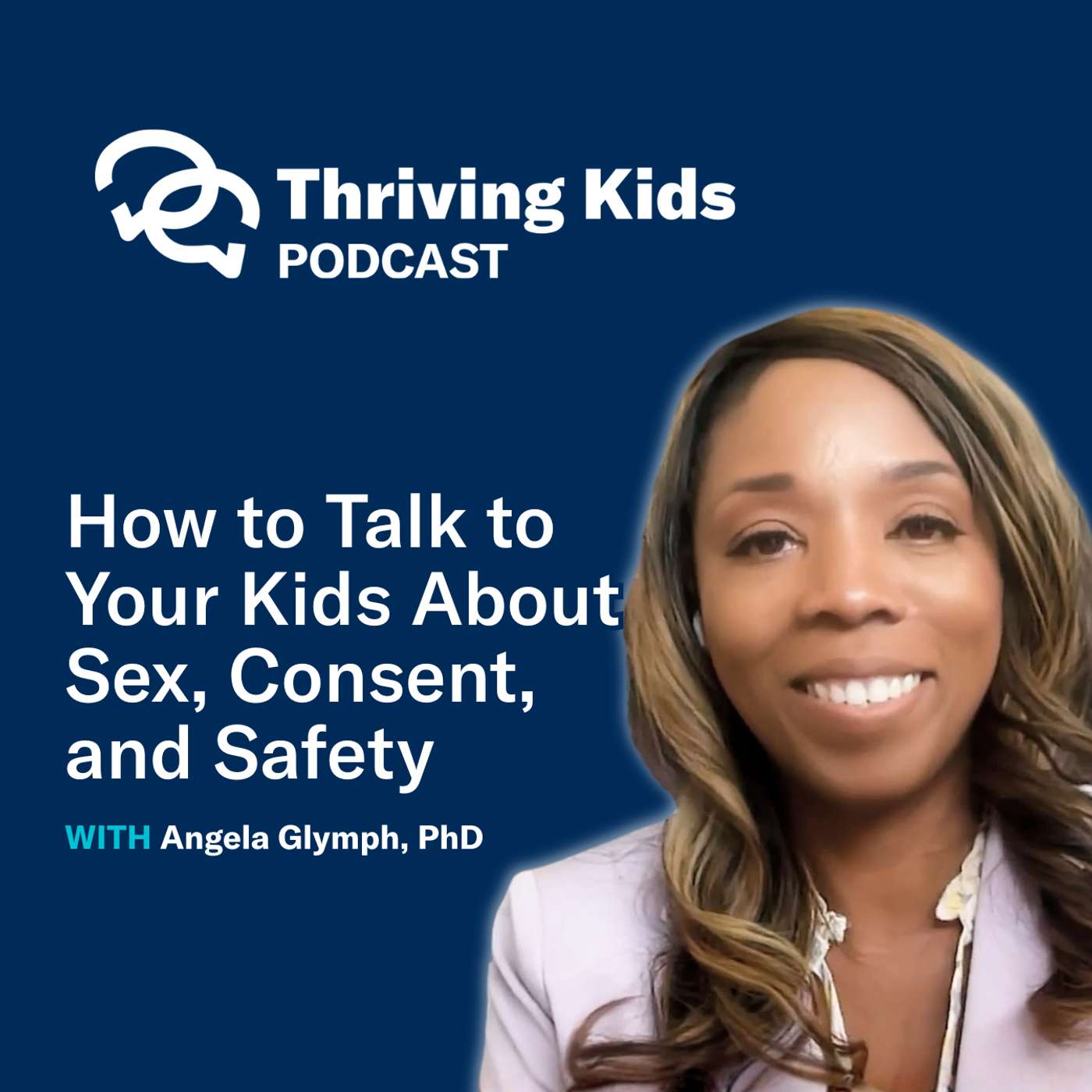 How (and When) to Talk to Your Kids About Sex, Consent, and Safety 06.11.2025 36minTalking to kids about sex, consent, and safety can feel intimidating — or like something you’d rather put off. But kids are already getting information from somewhere, and it’s not always accurate or safe. In this episode of Thriving Kids, clinical psychologist and host Dr. Dave Anderson talks with Dr. Angela Glymph, CEO of Peer Health Exchange, about how to have honest, age-appropriate conversations that protect kids, affirm who they are, and strengthen your relationship with them.They break down what “comprehensive sex education” really means, how to start early with body autonomy and consent, and how to keep the conversation going through elementary school, middle school, and the teen years — without needing to be a “perfect” expert.GuestDr. Angela Glymph is the CEO of Peer Health Exchange, a national youth nonprofit dedicated to helping young people stay safe, healthy, and affirmed — no matter who they are or where they live. Her work centers adolescent health equity, social-emotional learning, and youth-led, inclusive health education. She’s also a parent, navigating these conversations at home herself.In this episode, we discuss:What comprehensive sex education actually includes (it’s more than just “the talk”)Why medically accurate, truthful information keeps kids saferHow kids really learn about sex, consent, and relationships (school, peers, online, social media)The benefits of giving kids good information vs. leaving them to “figure it out”How to teach body autonomy and consent starting in early childhoodWhy using correct terms (like vulva, penis, sperm, egg) mattersHow to build on the conversation in elementary school, middle school, and beyondWhen and how to talk about contraception, STIs, and safetyWhy abstinence can be part of the conversation — but not the whole thingHow to respond if your teen is already sexually activeWhat to do if you feel too awkward or underqualified to have these talksThe myth that teens don’t want to talk to parents about sex (and why it’s wrong)Age-by-age: Laying the groundworkAges 3–5 (early childhood)Simple yes/no and body boundariesNaming body parts accurately (including genitals)Basic explanation of where babies come from using truthful, simple language (e.g., sperm and egg)Ages 6–8 (early elementary)Building on earlier explanations with more biologyTalking about different family structures and ways babies come into familiesNormalizing questions and curiosityAges 9–11 (upper elementary)Puberty: what’s happening in their changing bodiesFactual explanation of sexual intercourse and pregnancy in developmentally appropriate termsIntroducing contraception and safety basicsReinforcing body autonomy and boundariesAges 12+ (middle & high school)Relationships, identity, and decision-makingMore detailed conversations about contraception, STIs, and safer sexConsent in the context of romantic and sexual experiencesHow to think about risks, pressure, and personal valuesKey takeaways for parents:If kids don’t get information from you or other trusted adults, they will seek it elsewhere — online, from peers, or pornography.Comprehensive sex education is lifesaving: it helps prevent unintended pregnancy, STIs, and sexual violence, and it builds communication skills kids use far beyond this topic.Using medically accurate terms normalizes the conversation and gives kids language to advocate for themselves and report if something is wrong.Abstinence is a valid choice and part of comprehensive education — but it shouldn’t be the entire message.You don’t have to do this alone: your pediatrician, your child’s school, faith community, and trusted adults (like an aunt/uncle or family friend) can all help.Teens may act like they don’t want to talk to you, but many do want open, nonjudgmental conversations — they’re also trying to figure out how to approach you.Resources mentioned in the episode:Books for kids & familiesCory Silverberg – books about bodies, reproduction, and growing up (including What Makes a Baby and later titles for older kids and teens)Megan Madison – Being You and Yes! No! (early childhood books covering gender, consent, and body autonomy)Organizations & platformsPeer Health Exchange – comprehensive, inclusive, peer-led health educationSelfsea (selfsea.org) – Peer Health Exchange’s digital platform created with and for young people, including stories and resources on sex, consent, and talking to parentsPlanned Parenthood – education and resources for teens and parents on sexual and reproductive healthFurther readingTalk to Your Kids About Sex and Healthy Relationships – health.govhttps://odphp.health.gov/myhealthfinder/healthy-living/sexual-health/talk-your-kids-about-sex-and-healthy-relationshipsThe Best Sex Education Books for Kids of All Ages (And Their Parents!) – Healthy Children / AAPhttps://www.parents.com/kids/health/best-sex-education-books-for-kids-by-age/How to Talk to Kids About Sex and Boundaries – Child Mind Institutehttps://childmind.org/article/how-talk-kids-sex-consent-boundaries/How to Talk to Your Kids About Porn – TIMEhttps://time.com/4277188/how-to-talk-to-your-kids-about-porn/About Thriving KidsThriving Kids is a podcast from the Child Mind Institute that helps you raise emotionally healthy children with practical, expert-backed advice.
 -
 Big Emotions, Meltdowns, and “I Can’t Do It”: Thriving Kids Q&A 11.12.2025 36minJoin Dr. Dave Anderson for this special Q&A edition of Thriving Kids, where he addresses parenting questions ranging from managing a 6-year-old's meltdowns to navigating screen time battles to keeping the peace between siblings. Dr. Anderson offers advice on emotion regulation, developing coping skills, setting effective boundaries, and more.
 -
 Q&A: Your Questions about Your & Your Child's Mental Health 11.06.2026 29minIn this Q&A episode of Thriving Kids, Dr. Dave Anderson answers listener questions inspired by last week’s conversation with Dr. Alfiee about youth mental health, community care, and what it really means to help young people thrive.Dr. Dave discusses how parents can talk with kids about mental health without making them feel like something is “wrong” with them, how to help children process stressful news and current events, and how families can think about social media in a balanced way. He also explores the mental health needs of marginalized kids, how to reduce stigma around therapy — especially for boys and young men — and why community support can make parenting feel less isolating. In this episode, Dr. Dave covers:What to do when kids are stressed by politics, current events, or frightening newsHow to balance concerns about social media with the belonging some kids find onlineWhat parents should understand about the mental health needs of marginalized kidsHow to reduce stigma around therapy, anxiety, depression, and asking for helpWhy boys and young men may need extra support talking about emotionsRealistic ways to build community around parenting and caregivingWhat parents can do while waiting for therapy or additional supportFurther ReadingHelping Children Cope After a Traumatic EventHelping Children Cope With Frightening NewsMental Health Challenges of LGBTQ+ KidsMental Health Support for Black FamiliesMeeting the Mental Health Needs of Black Adolescent BoysWhat to Do (and Not Do) When Children Are AnxiousVideo LibraryFamily Resource Center
 -
 Your Questions About School Success, Answered 18.09.2025 34minHow do you help your child do well in school — without constant stress or conflict? In this Q&A edition of Thriving Kids, Dr. Dave Anderson answers your top questions about supporting kids’ academic success. He covers how to support teens when they're unmotivated, what to do when school doesn’t fit your child’s learning style, balancing activities without burnout, keeping kids focused when they’re not interested, what to do when kids say they “hate school,” and how to talk about grades without piling on pressure.What you’ll learn:• How to use motivational interviewing to help teens set their own academic goals• How to collaborate with teachers on realistic supports for neurodivergent learners• Drop-off rituals and coping strategies for separation anxiety• A developmental checklist for balancing school, activities, and downtime• Practical focus hacks: participation checklists and active note-taking• Visual cues and positive reinforcement to build independence in organization• Shifting the conversation from grades and achievement to effort and processHave a question for Dr. Dave? Email [email protected].
 -
 How Do I Help My Child Do Well in School? 12.09.2025 30minHow can I help my child do better in school — without pushing too hard or taking over? In this episode, Dr. Dave Anderson sits down with Dr. Adam Zamora, a neuropsychologist at the Child Mind Institute, to talk about how to build the habits, mindset, and support systems that help kids thrive academically. From kindergarten through college, they cover everything from procrastination and motivation to homework battles, parent-teacher communication, and how to know when it’s time to get extra support.Key topics include:Building a growth mindset vs. a fixed mindsetSupporting effective homework routines (without micromanaging)When to push, when to scaffold, and when to step backHow to work with schools and teachers as part of your child’s “village”The value of neuropsych evaluations and what they actually tell usPrepping kids for college success — academically and emotionallyFurther readingCollege Readiness Toolkit – Child Mind InstituteStrategies to Make Homework Go More Smoothly – Child Mind Institute
Samankaltaiset podcastit


Suosittu maassa
Tämä podcast esiintyy myös näiden maiden podcast-listoilla.

