
Cinematography Salon
Cinematography Salon
0
Tune in to the Cinematography Salon Podcast every other Thursday for an enlightening journey into the realm of cinematography, hosted by Peter Pascucci and Ava Benjamin Shorr. Drawing inspiration from the rebellious ethos of historic art salons, our show serves as a platform for emerging talents to both showcase their art and challenge the conventional boundaries of our craft. Through our podcast, we connect like-minded filmmakers and catalyze the exchange of resources, ideas, and wisdom in the cinematography community.
Jaksot
-
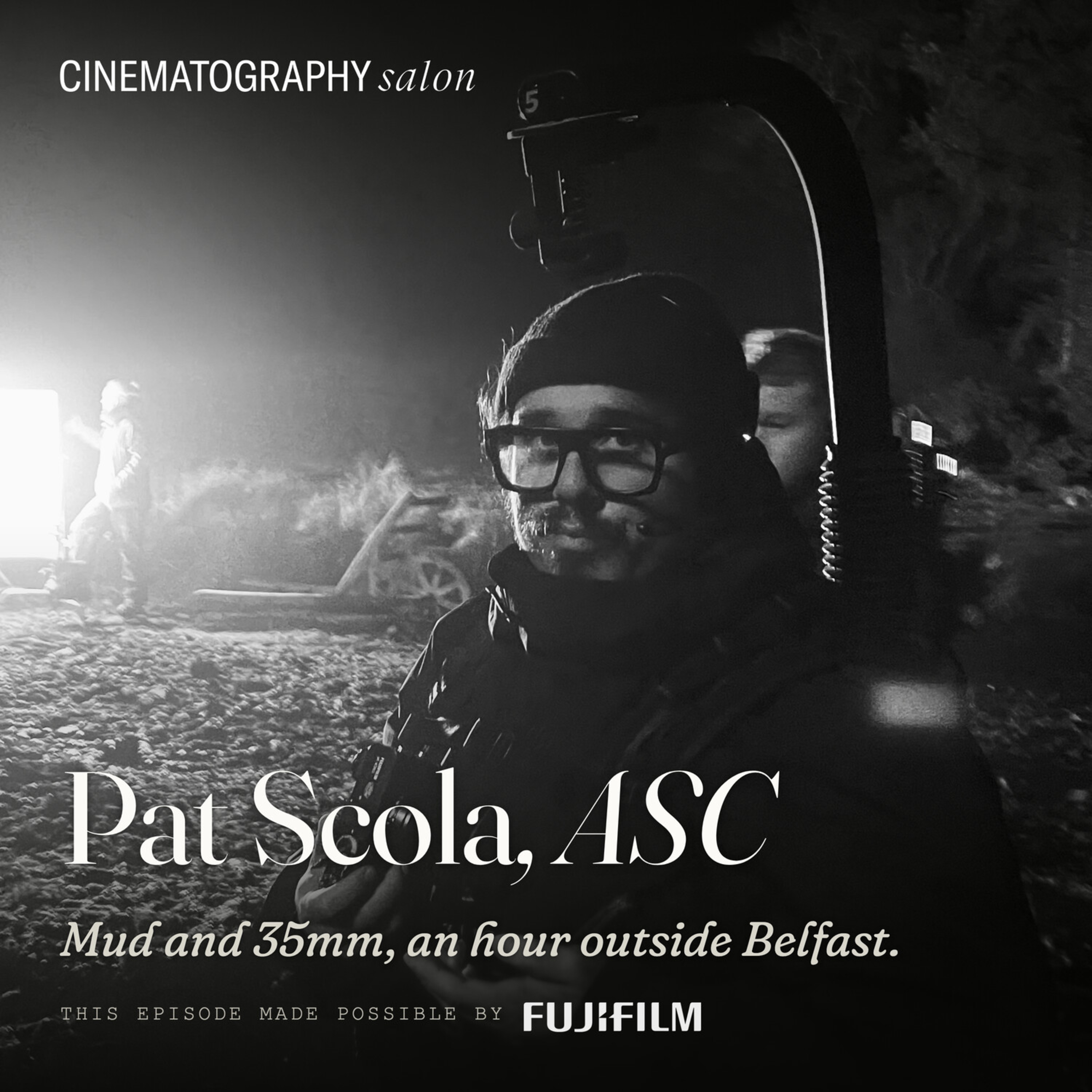 Pat Scola, ASC: Grit, Restraint, and Firelight in The Death of Robin Hood 17.09.2026 1t 1minThe Death of Robin Hood is Pat Scola's third film with Michael Sarnoski, made an hour outside Belfast on a production budget of around eleven million, somewhere between the scrappiness of Pig and the scale of A Quiet Place: Day One. Sarnoski wanted grit, and Scola is precise about the word. He does not mean film grain. "Grit comes from restraint and control," he says, and a large part of the job now is "the choices you decide not to make." The fight in the mud, Robin and a peasant trying to drown each other, was conceived as a oner so the viewer would be stuck inside the brutality with no cut to hide behind. The film opens in 2.39 anamorphic for the myth of Robin, and across his wounded transfer to the priory the mattes open to 1.66, invisibly.His rule for lighting is that it should not feel lit. The keeper from a firelight test in prep was a rig the gaffer called the Dalek, a sheet of plywood carrying twenty-odd 500 watt clear bulbs, driven by fire footage so the light moves the way a real fire's does. Where real fire could carry a scene, it did. The scene of Bill Skarsgard's character washing his dead wife is a single fireplace and the only roll in the picture that was pushed. The final scene was shot on Kodak's new stock, so new it was still called SO55 and had no official rating. He is equally frank about fear. After day two he called his wife and told her he should never have shot the film on film, that it looked terrible, and that was the day whose dailies held the first shot of Jodie Comer at the window in blue. The fear burned off at about two and a half weeks.CREDITSPat Scola, ASCInstagram · Website · IMDbJared Levy, hostInstagram · Website · IMDbDavid Kruta, producerInstagram · Website · IMDbTopher Hammond, producerInstagramMUSICOriginal music by One Wave.THE SALONEpisode page and full gallery: https://cinematographysalon.com/podcast/pat-scola-asc-the-death-of-robin-hoodNewsletter and events: cinematographysalon.comInstagram: @cinematographysalonPRESENTING SPONSORThis episode is made possible by Fujifilm — home of GFX ETERNA 55, the large format, IMAX®-Certified digital camera, and FUJINON cinema lenses. https://fujifilm-x.comSUPPORT THE SALONThe podcast, the writing, and both Resources tools are free. No paywall, no membership, no login. That is on purpose: learning to light a scene should not depend on what you can afford. Sponsors cover part of it and readers cover the rest. If you want to chip in, it starts at the price of a coffee a month at https://cinematographysalon.com/support. If your company wants to reach working cinematographers, get in touch at https://cinematographysalon.com/sponsors.
 -
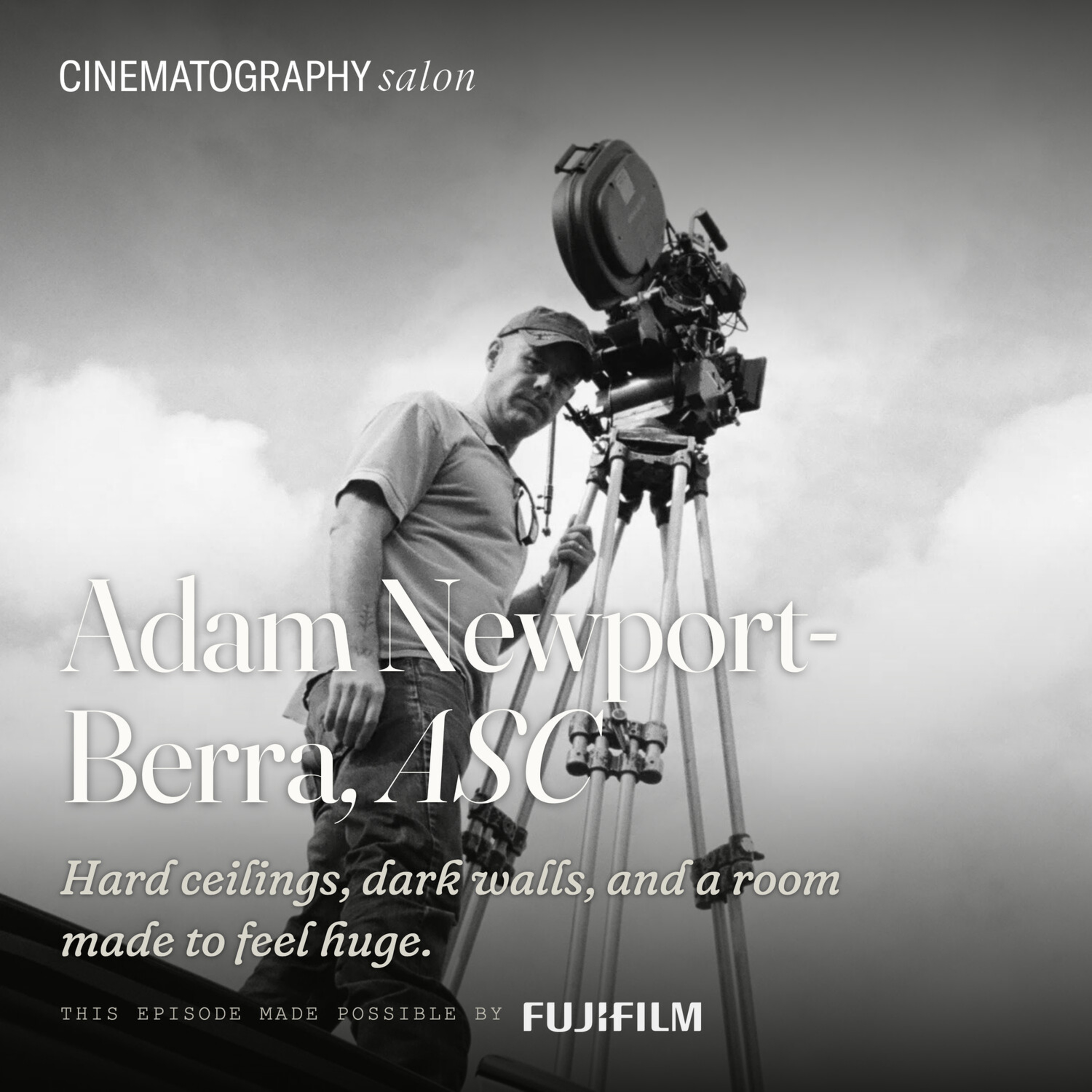 Adam Newport-Berra, ASC: Four Faces in One Apartment for The Invite 03.09.2026 1t 2minThe Invite, Olivia Wilde's comedy for A24, plays out almost entirely inside one San Francisco apartment, where a couple played by Wilde and Seth Rogen host an evening that goes sideways with visitors played by Penélope Cruz and Edward Norton. Adam Newport-Berra, ASC photographed it on 35mm, in story order, on a Los Angeles soundstage with a single day of exteriors in San Francisco. The brief he set himself was that one enclosed space should feel, in his words, like a landscape, and never like a set.The first plan was to light it practically, in the spirit of Husbands and Wives, and let the actors move in and out of shadow. A test with the cast said otherwise. Nobody liked the dailies, and Newport-Berra got some phone calls afterward. What replaced it was hard ceilings, because an open set lit from above reads as a set, with the light built into the ceilings. Key grip Adam Kolegas fabricated low-profile softboxes, tube fixtures wrapped in muslin and skirted, light enough to hang from putty knives slid into the stretch-canvas ceiling and quick enough to pop off in ten minutes when the camera needed to tilt up. Gaffer Len Levine ran them by remote. Doorway moldings that dropped a foot below the ceiling hid the boxes behind them, and six to eight more lights sat on the floor for nearly every setup. With production designer Jade Healy and costume designer Arianne Phillips, the walls, the wood, and the hosts' clothes were kept dark so the faces would carry the light; the visitors' wardrobe was made to stand apart from the room. Every shot in the film, he says, is very lit.There was no shot list on set. Newport-Berra wrote one for the whole film, in a Google Doc, and says he never looked at it once. Prep was a wall of two hundred reference frames, and each morning he walked the set before anyone else arrived, photographing angles on his iPhone with his crew standing in for the cast. Wilde, who stepped into the role of Angela after an actor dropped out, ran each scene with the cast, then handed it to a stand-in and watched from outside while she and Newport-Berra picked frames. The camera stayed on the dolly and mostly locked off; there is no handheld in the film. The tools were lens, height, and eyeline. Norton is held slightly low on a 35mm, almost heroic. Cruz moves on Steadicam on a longer lens. Rogen and Wilde are pinned flat against a wall with too much headroom. For the couple's first argument the rule was cat and mouse: never on the same level, never in the same frame, together only in mirrors and window glass, until the scene lands on a head-on two-shot. The last shot of the film, a move through the building's shaftway that Healy had designed the set around, went at four in the morning on the final night on stage.CREDITSAdam Newport-Berra, ASCInstagram · Website · IMDbJared Levy, hostInstagram · Website · IMDbDavid Kruta, producerInstagram · Website · IMDbTopher Hammond, producerInstagramMUSICOriginal music by One Wave.THE SALONEpisode page and full gallery: https://cinematographysalon.com/podcast/adam-newport-berra-asc-the-inviteNewsletter and events: cinematographysalon.comInstagram: @cinematographysalonPRESENTING SPONSORThis episode is made possible by Fujifilm — home of GFX ETERNA 55, the large format, IMAX®-Certified digital camera, and FUJINON cinema lenses. https://fujifilm-x.comSUPPORT THE SALONThe podcast, the writing, and both Resources tools are free. No paywall, no membership, no login. That is on purpose: learning to light a scene should not depend on what you can afford. Sponsors cover part of it and readers cover the rest. If you want to chip in, it starts at the price of a coffee a month at https://cinematographysalon.com/support. If your company wants to reach working cinematographers, get in touch at https://cinematographysalon.com/sponsors.
 -
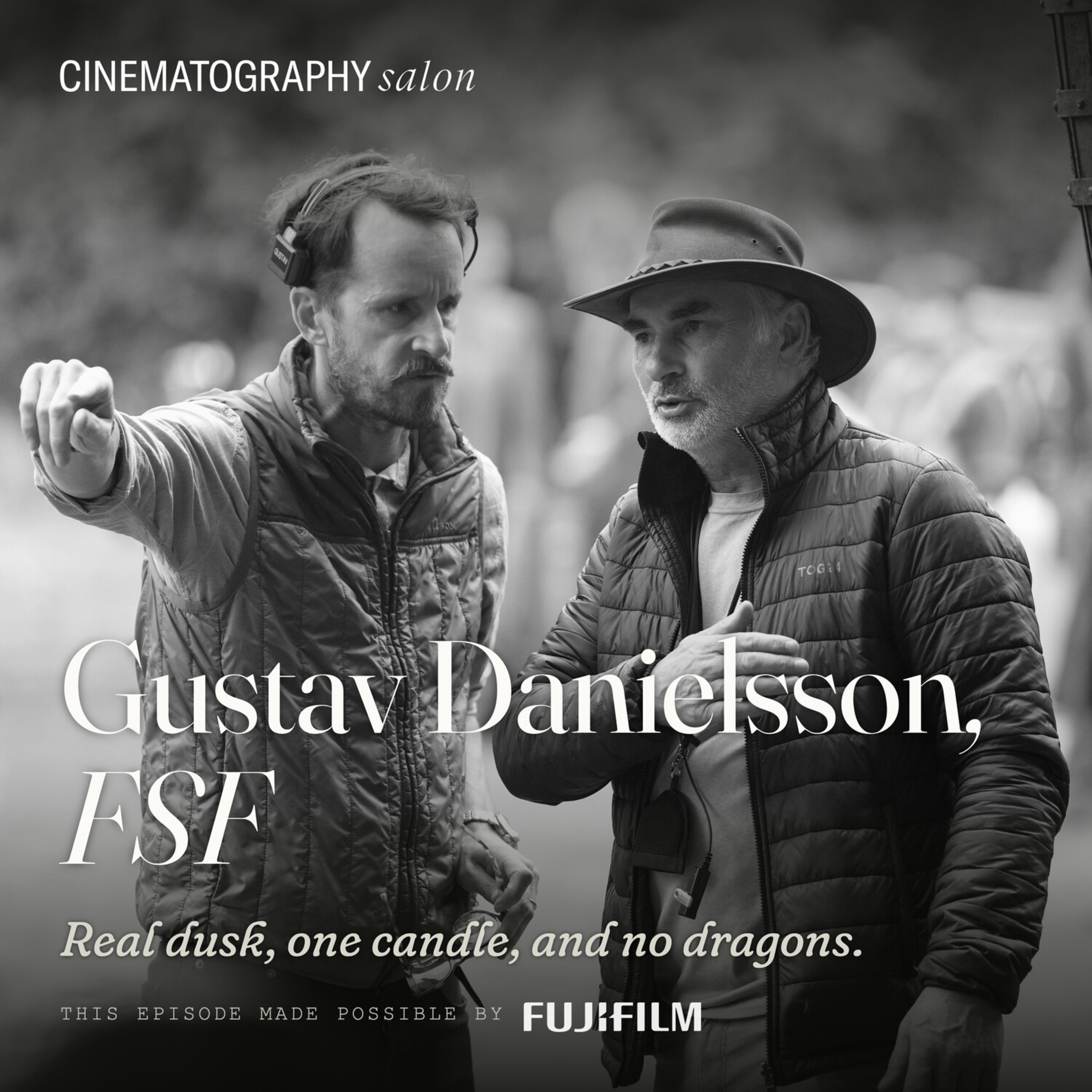 Gustav Danielsson, FSF: Chasing Dusk in A Knight of the Seven Kingdoms 20.08.2026 1t 10minGustav Danielsson, FSF got the job by text message. "Do you wanna shoot a sequel to Game of Thrones?" arrived from director Owen Harris, who had made San Junipero with him, and it landed while Danielsson was at home rewatching the original series with his kids and buying them the board games. He cut short a show in Sweden to take it. The result, A Knight of the Seven Kingdoms, is HBO's return to Westeros at a fraction of the usual scale, and it earned him a 2026 Emmy nomination for cinematography.He and host Jared Levy work through how you make a two-hander feel as large as a war on a budget that rules out burning cities. Night scenes pushed into the half hour of real dusk, the same trick he used on San Junipero because South African nights go completely black. An Alexa Mini LF shot at 3:2 and squeezed to 2:1 on Panavision Ultra Panatars, whose 1.3x squeeze fills almost the whole sensor, with faster Panavision VA spherical primes held back for the scenes a single double-wick candle had to carry on its own. Every flashback on one de-tuned Panavision T Series lens built for Super 35 and run on a larger sensor, so the image falls apart at the edges on purpose. Firelight from a bank of up to 48 photo flood bulbs that gaffer Seamus Lynch built and named the Dalek, programmed against video of a real fire. And the afternoon an oven on set caught fire for real, which Danielsson spent a few seconds trying to dim.CREDITSGustav Danielsson, FSFInstagram · Website · IMDbJared Levy, hostInstagram · Website · IMDbDavid Kruta, producerInstagram · Website · IMDbTopher Hammond, producerInstagramMUSICOriginal music by One Wave.THE SALONEpisode page and full gallery: https://cinematographysalon.com/podcast/gustav-danielsson-fsf-a-knight-of-the-seven-kingdomsNewsletter and events: cinematographysalon.comInstagram: @cinematographysalonPRESENTING SPONSORThis episode is made possible by Fujifilm — home of GFX ETERNA 55, the large format, IMAX®-Certified digital camera, and FUJINON cinema lenses. https://fujifilm-x.comSUPPORT THE SALONThe podcast, the writing, and both Resources tools are free. No paywall, no membership, no login. That is on purpose: learning to light a scene should not depend on what you can afford. Sponsors cover part of it and readers cover the rest. If you want to chip in, it starts at the price of a coffee a month at https://cinematographysalon.com/support. If your company wants to reach working cinematographers, get in touch at https://cinematographysalon.com/sponsors.
 -
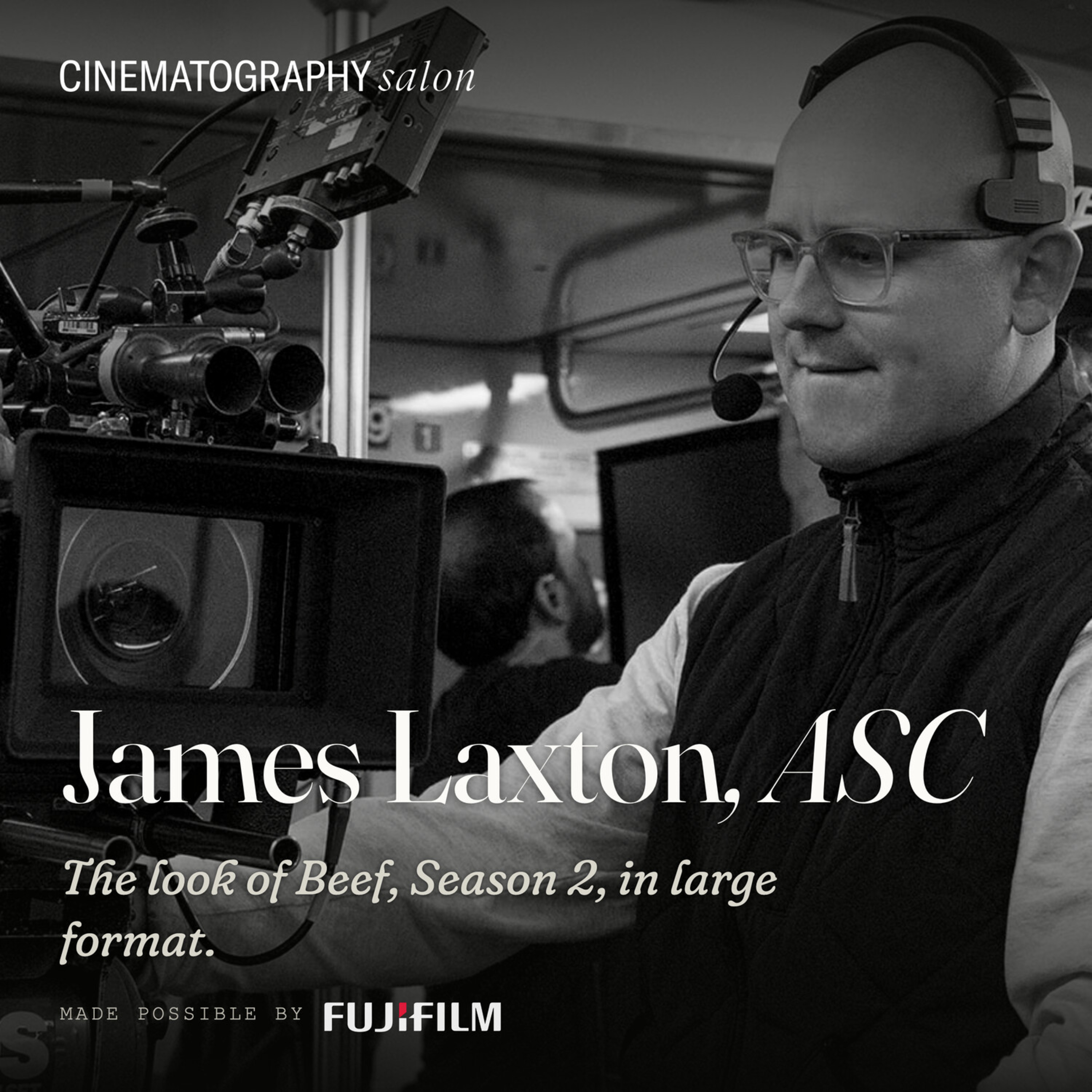 James Laxton, ASC: Shooting Beef, Season 2 13.08.2026 58minJames Laxton, ASC came to Beef for its second season as the one new voice in a room that had already made something people loved. His job, as he saw it, was to carry forward what Beef is at the level of shot structure, whose shoulder the camera sits over, whose scene it is, how far back the wide holds, while telling a different story than Season 1.He and host Jared Levy get into the season's organizing idea: four couples as four seasons, spring to winter, an ensemble led by Oscar Isaac, Carey Mulligan, Charles Melton, and Cailee Spaeny, and a color language built with the production designer, Grace, to track love across a lifetime. Laxton talks through shooting large format, 65mm, for the weight it gives a face, the episode-eight silhouettes he is proudest of, and the night he calls "impending doom," a car fight shot at the end of an already full day, where the thing he feared most was not the lighting but letting the actors down.CREDITSJames Laxton, ASCInstagram · Website · IMDbJared Levy, hostInstagram · Website · IMDbDavid Kruta, producerInstagram · Website · IMDbTopher Hammond, producerInstagramMUSICOriginal music by One Wave.THE SALONEpisode page and full gallery: https://cinematographysalon.com/podcast/james-laxton-asc-beef-season-2Newsletter and events: cinematographysalon.comInstagram: @cinematographysalonPRESENTING SPONSORThis episode is made possible by Fujifilm — home of the GFX Eterna 55, the large format, IMAX-certified cinema camera, and FUJINON cinema lenses. https://fujifilm-x.comSUPPORT THE SALONThe podcast, the writing, and both Resources tools are free. No paywall, no membership, no login. That is on purpose: learning to light a scene should not depend on what you can afford. Sponsors cover part of it and readers cover the rest. If you want to chip in, it starts at the price of a coffee a month at https://cinematographysalon.com/support. If your company wants to reach working cinematographers, get in touch at https://cinematographysalon.com/sponsors.
 -
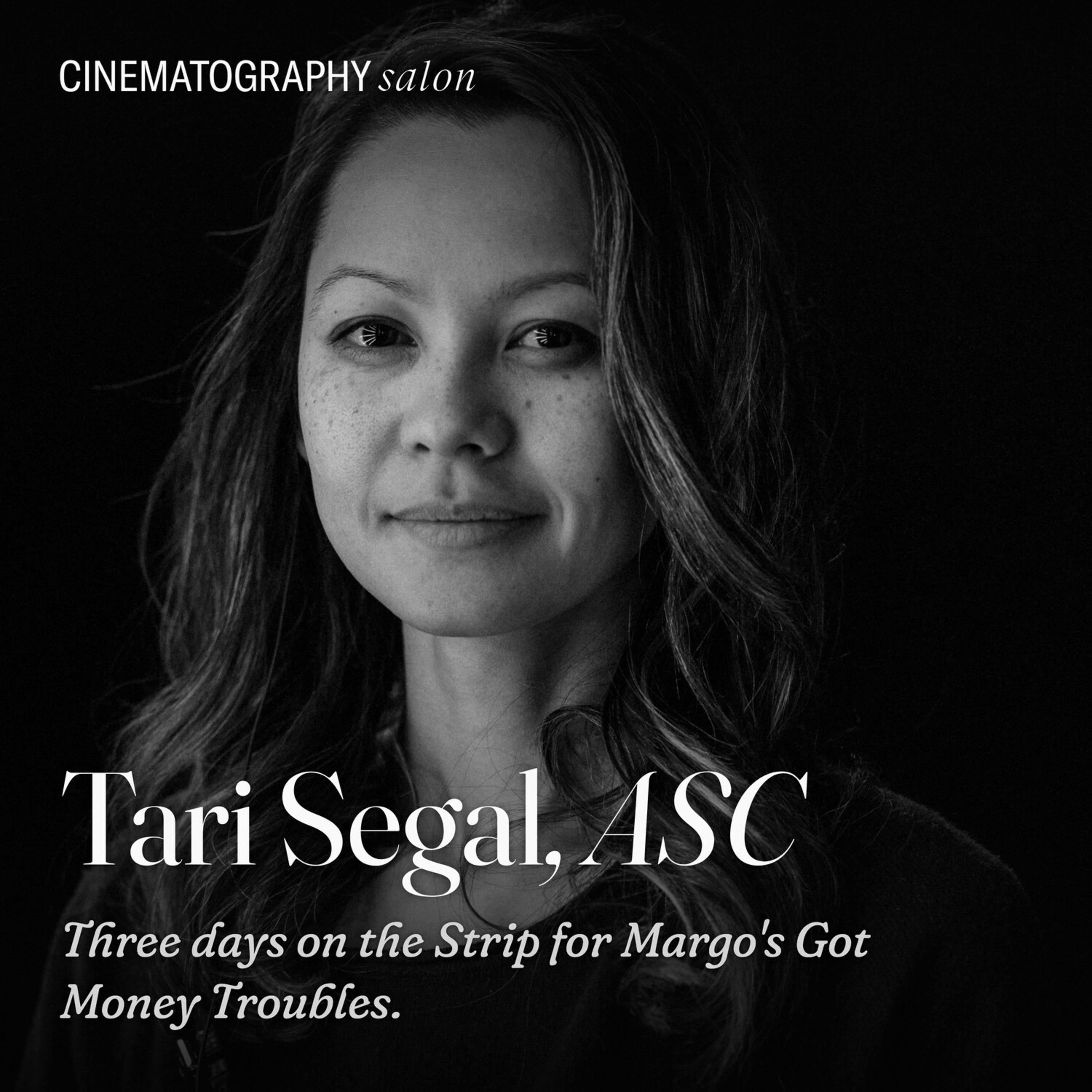 Tari Segal, ASC: Three Days on the Strip for Margo's Got Money Troubles 06.08.2026 57minWhen Tari Segal, ASC, took over the Las Vegas block of Margo's Got Money Troubles, the A24 series for Apple TV adapted by David E. Kelley from Rufi Thorpe's novel, she had three days and a working casino floor on which to extend a look someone else had established. It is the episode that earned her an ASC Award nomination, and in this conversation with host Jared Levy she is candid that the shoot ran closer to triage than choreography.She walks through the problems in order. Faking a dead chandelier with PAR cans on the floor of a heavily tinted steakhouse when the circuit blew near sunrise. Building a full WrestleCon arena in a day and a half for Nicole Kidman's first day on the show. Putting Margo full frame through the then new ARRI Hero lenses so the world melts around her during the OnlyFans sequences. Negotiating a single 30 minute rotation of the High Roller observation wheel, its camera synced to a second unit shooting Nick Offerman a block below.It is an hour on solving the unsolvable to a television schedule, and on the crew that made it fun, espresso martinis after wrap included.CREDITSTari Segal, ASCInstagram · Website · IMDbJared Levy, hostInstagram · Website · IMDbDavid Kruta, producerInstagram · Website · IMDbTopher Hammond, producerInstagramMUSICOriginal music by One Wave.THE SALONEpisode page and full gallery: https://cinematographysalon.com/podcast/tari-segal-asc-margos-got-money-troublesNewsletter and events: cinematographysalon.comInstagram: @cinematographysalonSUPPORT THE SALONThe podcast, the writing, and both Resources tools are free. No paywall, no membership, no login. That is on purpose: learning to light a scene should not depend on what you can afford. Sponsors cover part of it and readers cover the rest. If you want to chip in, it starts at the price of a coffee a month at https://cinematographysalon.com/support. If your company wants to reach working cinematographers, get in touch at https://cinematographysalon.com/sponsors.
 -
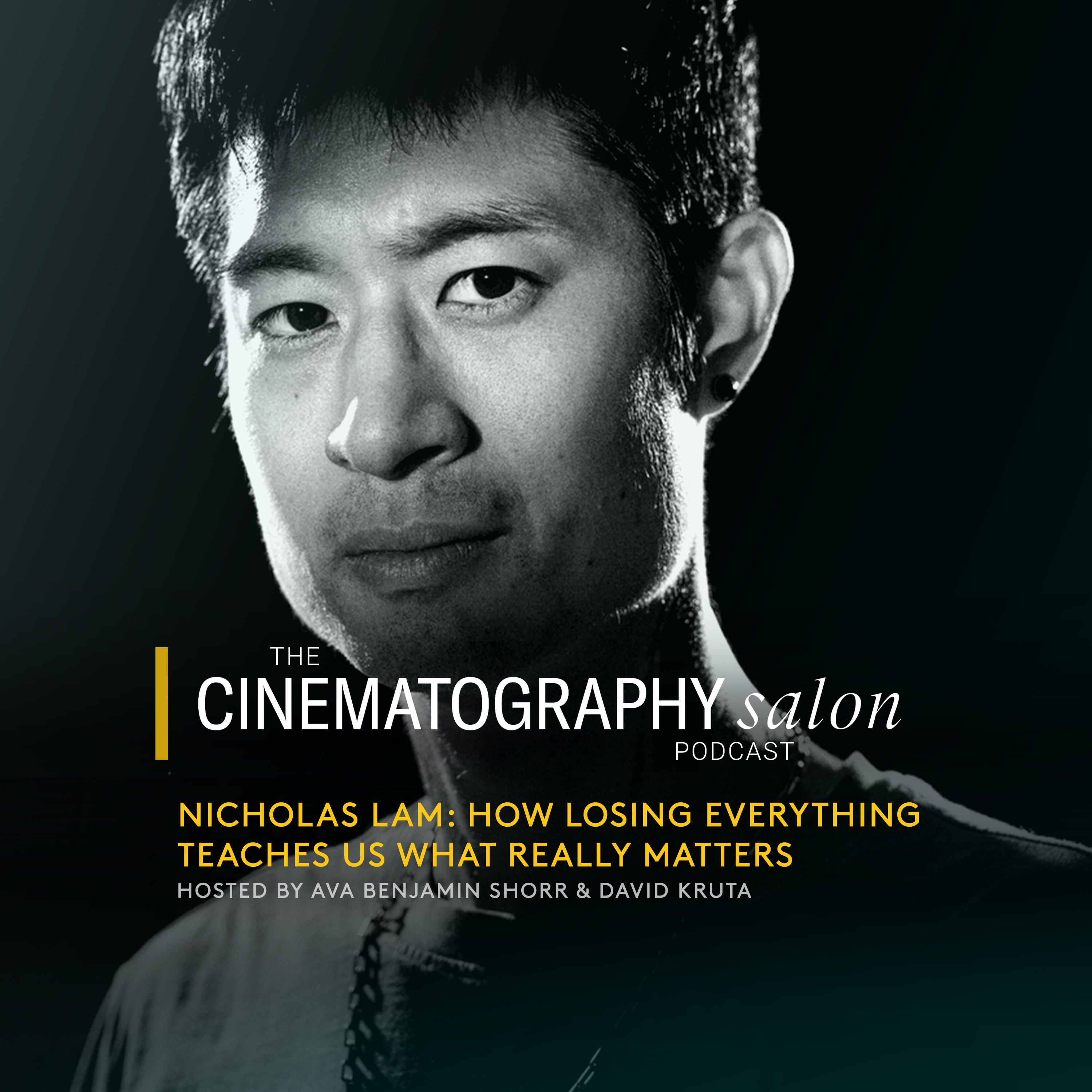 Nicholas Lam: How Losing Everything Teaches Us What Really Matters 14.08.2025 1t 26minAgainst the backdrop of industry upheaval and the rise of AI, Nicholas Lam joins hosts Ava Benjamin Shorr and David Kruta to explore what it means to future-proof creativity. Lam critiques performative diversity initiatives, warns against chasing trends, and makes a case for human, low-fi storytelling as the antidote to algorithmic content. Taking a personal turn, Lam recounts losing his home in the Los Angeles fires of January 2025, and shares how the filmmaking community rallied to support him, reshaping his priorities and reinforcing the importance of showing up for others. That experience reframes his view of work, stripping away the false urgency of the industry and grounding him in relationships over accolades.Nicholas Lam’s Instagram | WebsiteAva Benjamin Shorr’s Instagram | WebsiteDavid Kruta’s Instagram | WebsiteThis episode is sponsored by Fujifilm, Sandisk and TCP Insurance.
 -
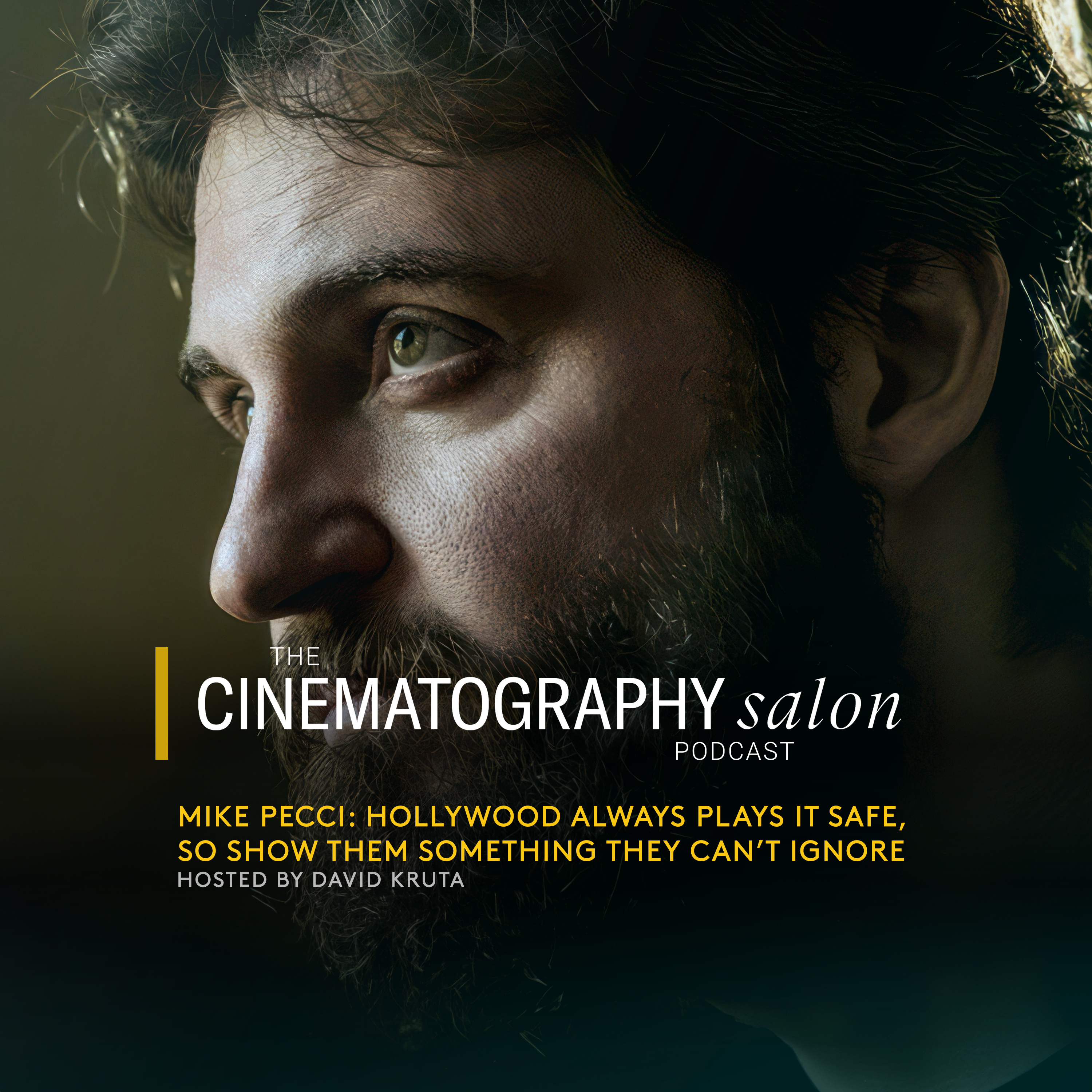 Mike Pecci: Hollywood Always Plays It Safe, So Show Them Something They Can’t Ignore 17.07.2025 1t 13minDirector Mike Pecci joins host David Kruta to dissect the chaos of post-COVID Hollywood, the false promises of AI disruption, and the suffocating gatekeeping of the studio system. Pecci lays bare the existential challenges of trying to create authentic work in an industry gripped by fear, algorithmic control, and vanishing opportunities. In a world where pitching feels like shouting into a void, Pecci finds power in simply continuing to create, and the filmmakers who will survive are the ones who know how to make something out of nothing—and do it with heart. For him, AI is not the enemy. Mediocrity is. Mike Pecci’s Instagram | Website | Watch 12 KilometersDavid Kruta’s Instagram | WebsiteThis episode is sponsored by Fujifilm, Sandisk and TCP Insurance.
 -
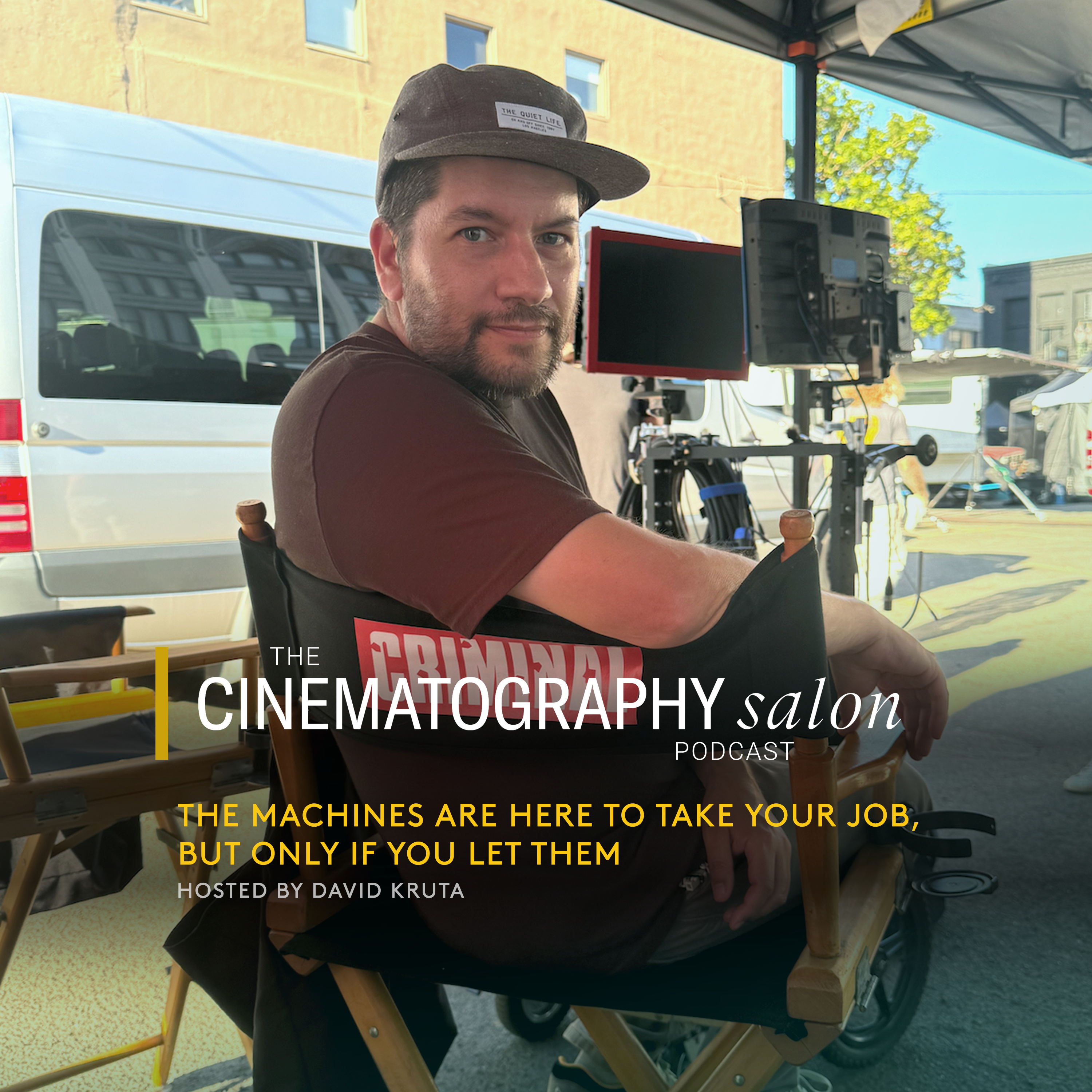 Jim Geduldick: The Machines Are Here to Take Your Job, But Only if You Let Them 03.07.2025 1t 27minAs fears mount over AI’s impact on creative labor, cinematographer and technologist Jim Geduldick joins host David Kruta to dissect the frenzy surrounding artificial intelligence and its encroachment into the film industry. As AI-generated imagery floods social media and marketing departments chase cost-cutting automation, Geduldick challenges the doom-and-gloom narrative with a nuanced, insider perspective—arguing that while jobs may shift, human storytelling will remain irreplaceable. However, decades of tech disruption, from DVX100s to LED volumes, won’t change the fact that great filmmaking has always been—and still is—about the people behind the lens.Jim Geduldick’s InstagramDavid Kruta’s Instagram | WebsiteThis episode is sponsored by Fujifilm, Sandisk and TCP Insurance.
 -
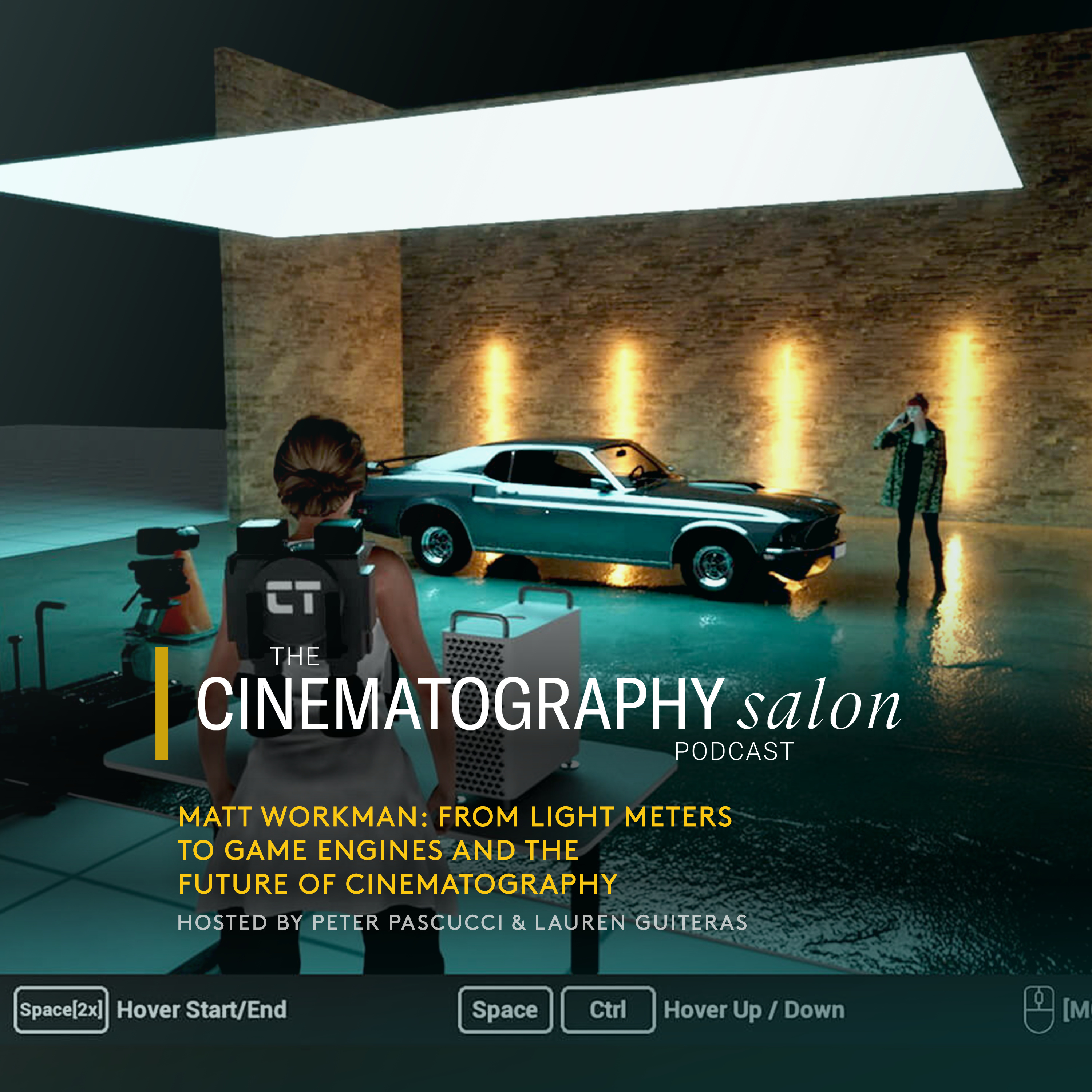 Matt Workman: From Light Meters to Game Engines and the Future of Cinematography 12.06.2025 1t 26minThis week, we’re joined by Matt Workman—filmmaker, developer, and creator of Cine Tracer—for a candid look at the shifting landscape of cinematography. We explore how filmmakers can better communicate, justify resources, and protect their creative choices in a rapidly evolving industry, and why futureproofing your skillset now means knowing both a light meter and a game engine. From the emergence of virtual production to the democratization of 3D previsualization, Workman unpacks how technology like Unreal Engine, once reserved for high-budget productions, is becoming a daily tool for working DPs.Matt Workman’s Instagram | YouTubePeter Pascucci’s Instagram | WebsiteLauren Guiteras’s Instagram | WebsiteThis episode is sponsored by Fujifilm, Sandisk and TCP Insurance.
 -
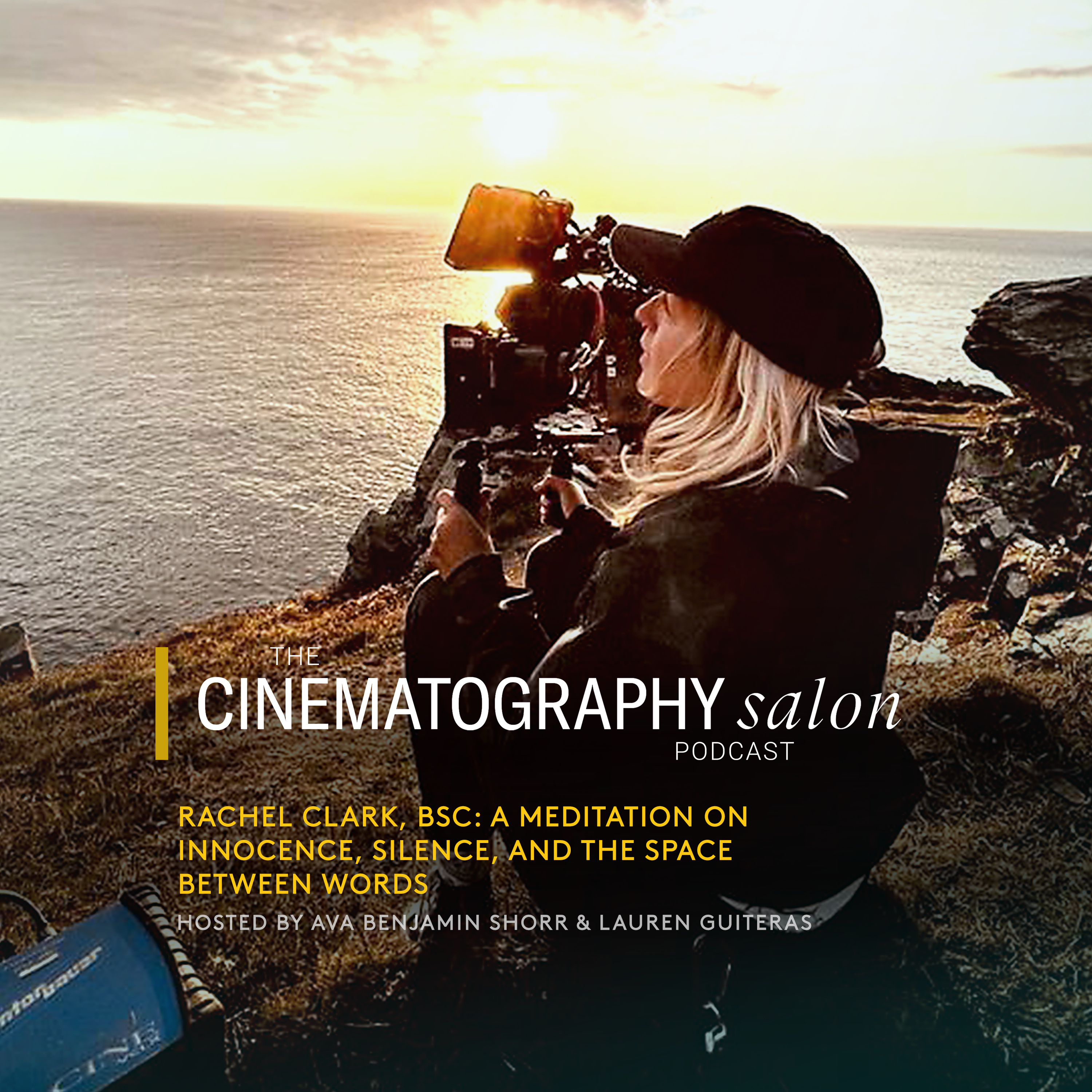 Rachel Clark, BSC: A Meditation on Innocence, Silence, and the Space Between Words (Special Camerimage Episode) 22.05.2025 47minRachel Clark, BSC, brings a poetic realism to the screen, and in this special edition episode recorded at the Camerimage Festival, she reveals how she constructs that visual language. Joining hosts Ava Benjamin Shorr and Lauren Guiteras to reflect on the making of “Edge of Summer”, a lyrical coming-of-age film set in the haunting landscapes of Cornwall. Clark unpacks her immersive handheld approach, the challenge of lighting with only headlamps, and the deeply collaborative relationship with director Lucy Cohen. Their discussion explores the aesthetics of memory, adolescence, and the subtle power of image-making that trusts the viewer’s emotional literacy.If you are enjoying the podcast, please consider supporting our efforts on Patreon.Rachel Clark’s Instagram | WebsiteAva Benjamin Shorr’s Instagram | WebsiteLauren Guiteras’s Instagram | WebsiteThis episode is sponsored by Fujifilm, Creamsource and Sandisk, with special thanks to Kondor Blue.
 -
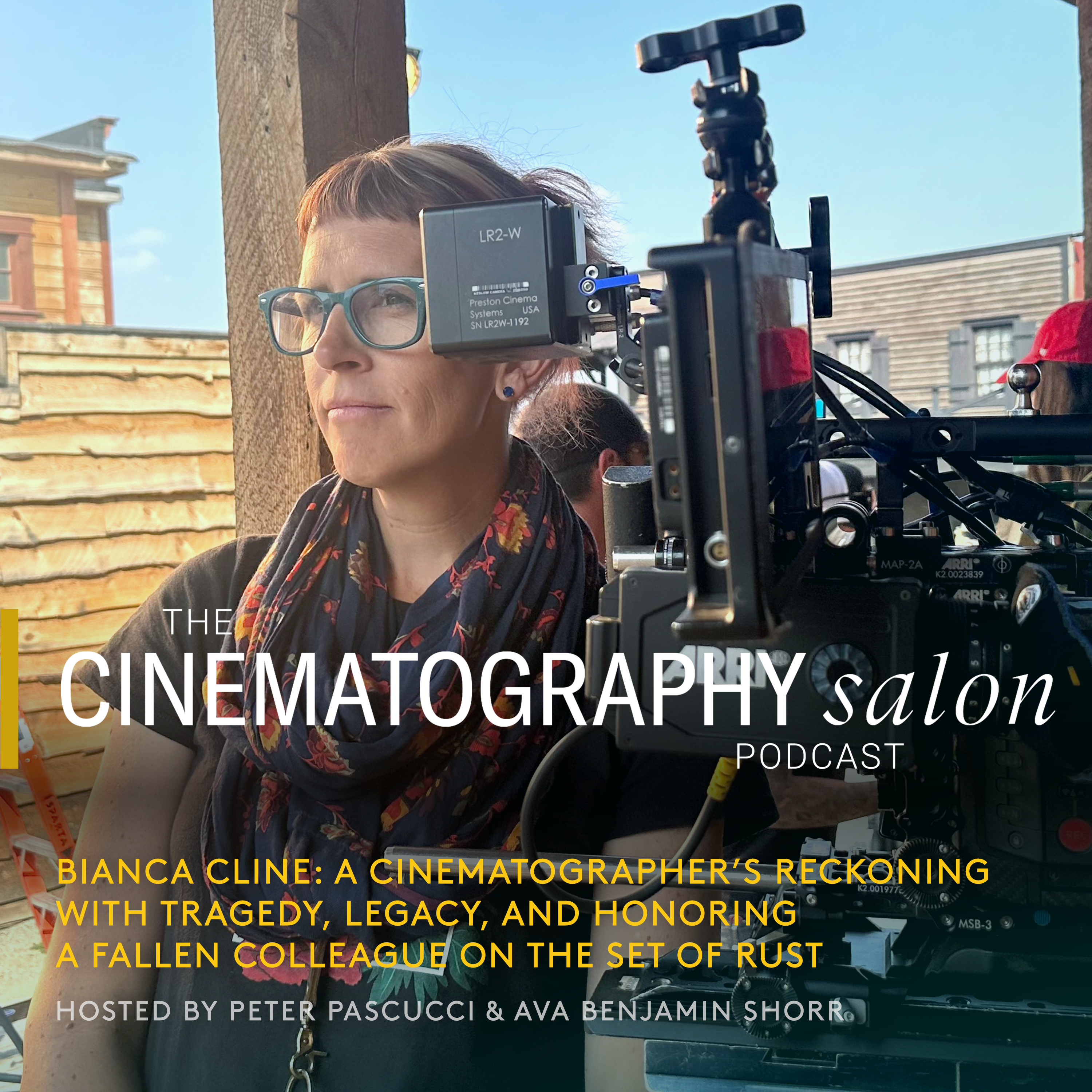 Bianca Cline: A Cinematographer’s Reckoning With Tragedy, Legacy, and Honoring a Fallen Colleague on the Set of Rust 01.05.2025 1t 36minWhat does it mean to carry someone else’s artistic legacy forward? Bianca Cline joins the Cinematography Salon Podcast to share a rare and deeply moving look behind the lens, stepping into the unfinished production of Rust following the tragic death of cinematographer Halyna Hutchins, ASC. Bianca discusses the moral and emotional calculus behind accepting the role, her consultations with Hutchins’ family, and the quiet determination to preserve Halyna’s memory. A memorial scholarship has been established in Halyna's name at the AFI Conservatory. Donate here it you wish to contribute to the scholarship fund.Bianca Cline’s Instagram | WebsitePeter Pascucci’s Instagram | WebsiteAva Benjamin Shorr’s Instagram | WebsiteThis episode is sponsored by Fujifilm, Sandisk and TCP Insurance.
 -
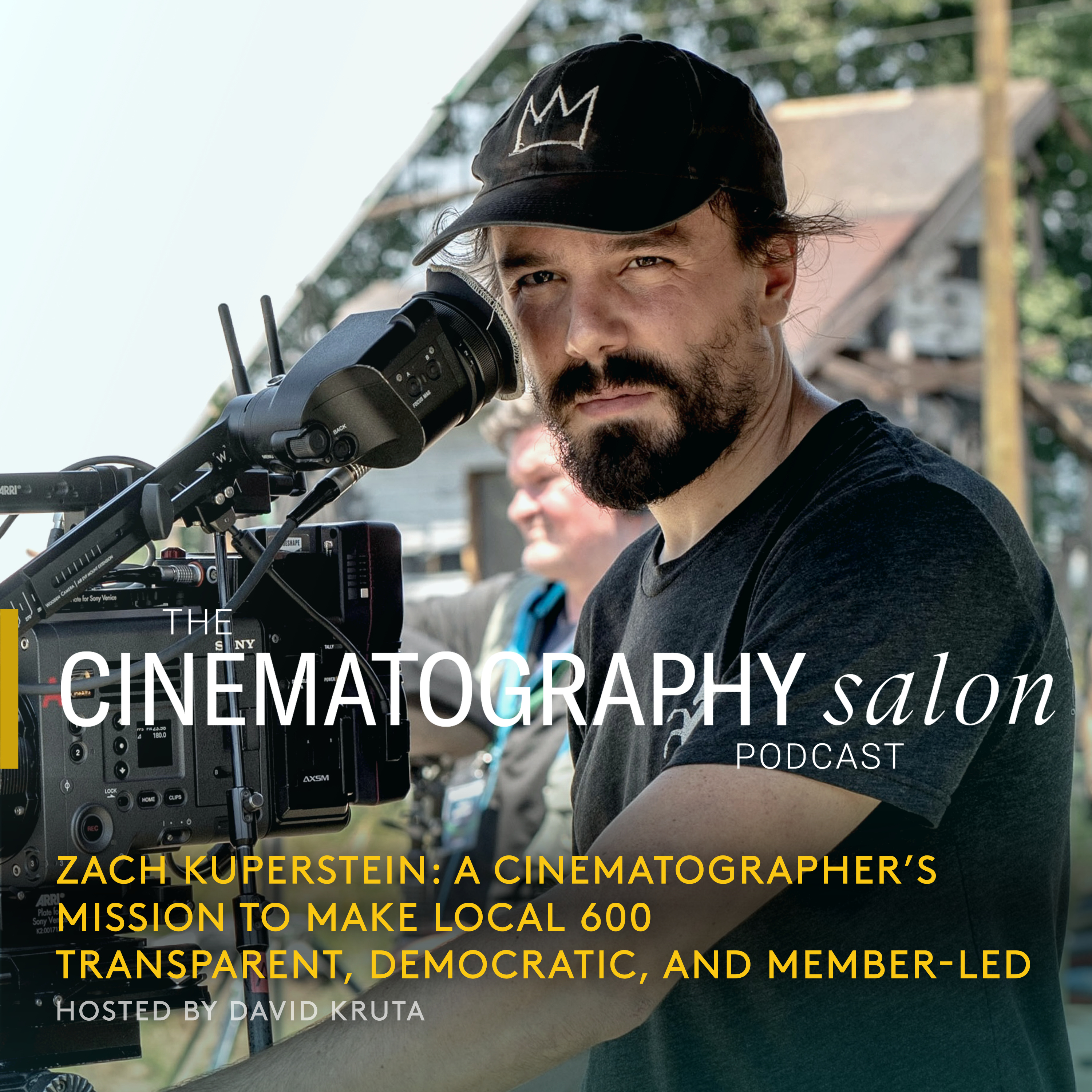 Zach Kuperstein: A Cinematographer’s Mission to Make Local 600 Transparent, Democratic, and Member-Led 10.04.2025 1t 4minJoining us this week is Zach Kuperstein, a New York-based cinematographer known for his work on "Barbarian" and his collaboration with Anna Kendrick on her highly anticipated directorial debut, "Woman of the Hour". Zach sits down with host David Kruta to discuss why he’s running for office in Local 600, breaking down contract negotiations, leadership stagnation, and why democratic engagement among union members matters now more than ever. With elections looming, Kuperstein outlines a progressive campaign for union leadership - and why the status quo is no longer sustainable for working camera professionals.If you are enjoying the podcast, please consider supporting our efforts on Patreon.Zach Kuperstein’s Instagram | WebsiteCREW’s Instagram | WebsiteDavid Kruta’s Instagram | WebsiteThis episode is sponsored by Fujifilm, Sandisk and TCP Insurance.
 -
 Sam Levy: A Well-Rested Mind and The Art of Invisible Cinematography 03.04.2025 1t 32minSam Levy’s body of work has helped define contemporary American independent cinema. In this episode, Levy pulls back the curtain on his methodical, deeply personal approach to cinematography, revealing how scripts, performances, and even sleep all shape his lens. Levy revisits career-defining moments with Greta Gerwig, Noah Baumbach, and Kelly Reichardt, and speaks on how technical mastery is often best used in service of disappearing. If you are enjoying the podcast, please consider supporting our efforts on Patreon.Sam Levy’s Instagram | WebsitePeter Pascucci’s Instagram | WebsiteAva Benjamin Shorr’s Instagram | WebsiteThis episode is sponsored by Fujifilm, Sandisk and TCP Insurance.
 -
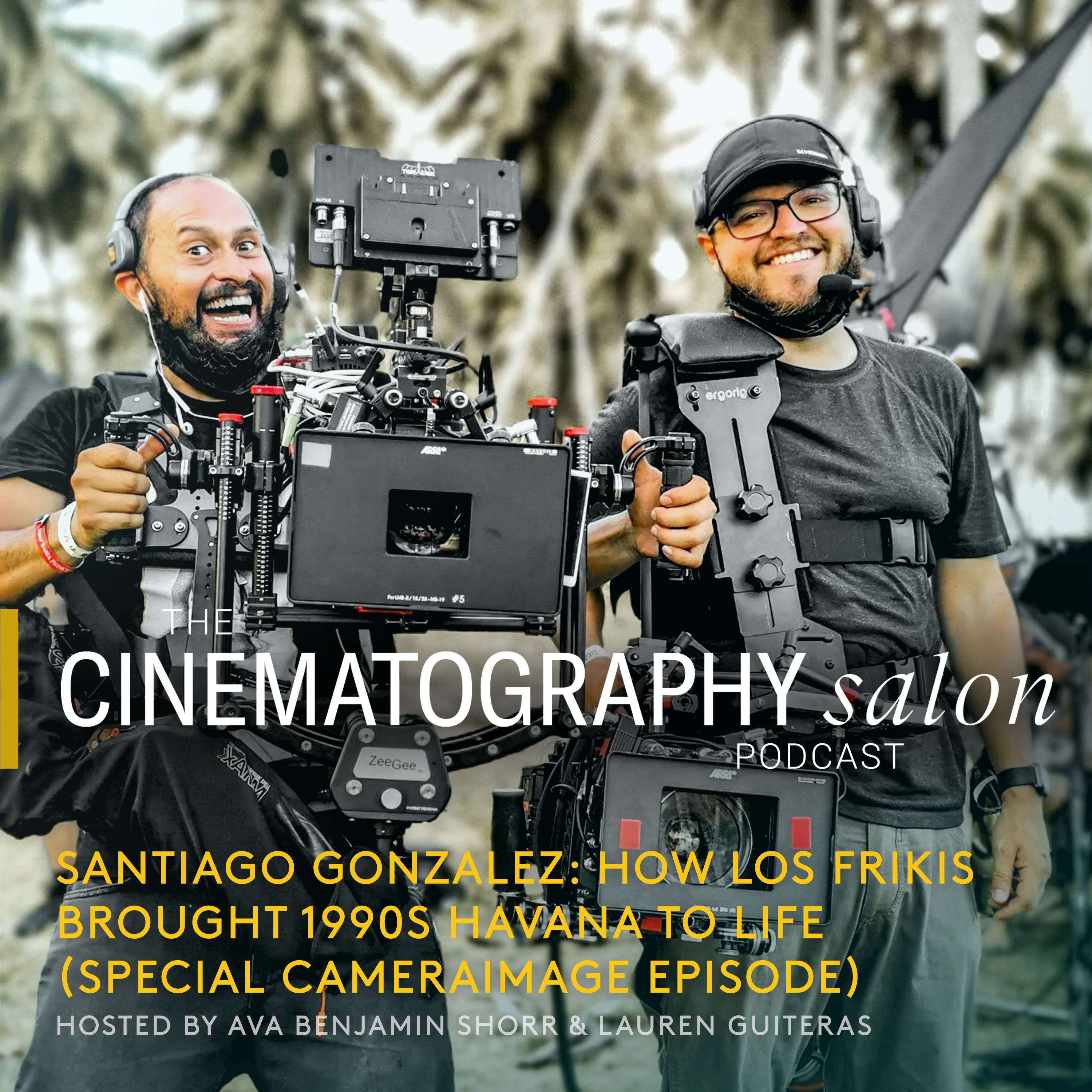 Santiago Gonzalez: How Los Frikis Brought 1990s Havana to Life (Special Cameraimage Episode) 20.03.2025 48minWhen the realities of censorship made filming in Cuba impossible, production of Los Frikis moved to the Dominican Republic, where cinematographer Santiago González and his team worked tirelessly to create a world that felt authentic down to the sodium vapor streetlights. In this special Camerimage episode, Ava Benjamin Shorr and Lauren Guiteras sit down with Santiago and break down how the film’s color palette, lens choices, and shooting methodology reinforce its themes of rebellion and freedom.Los Frikis will be available to stream beginning March 28th.If you are enjoying the podcast, please consider supporting our efforts on Patreon.Santiago Gonzalez’s Instagram | WebsiteAva Benjamin Shorr’s Instagram | WebsiteLauren Guiteras’s Instagram | WebsiteThis episode is sponsored by Fujifilm, Creamsource and Sandisk, with special thanks to Kondor Blue.
 -
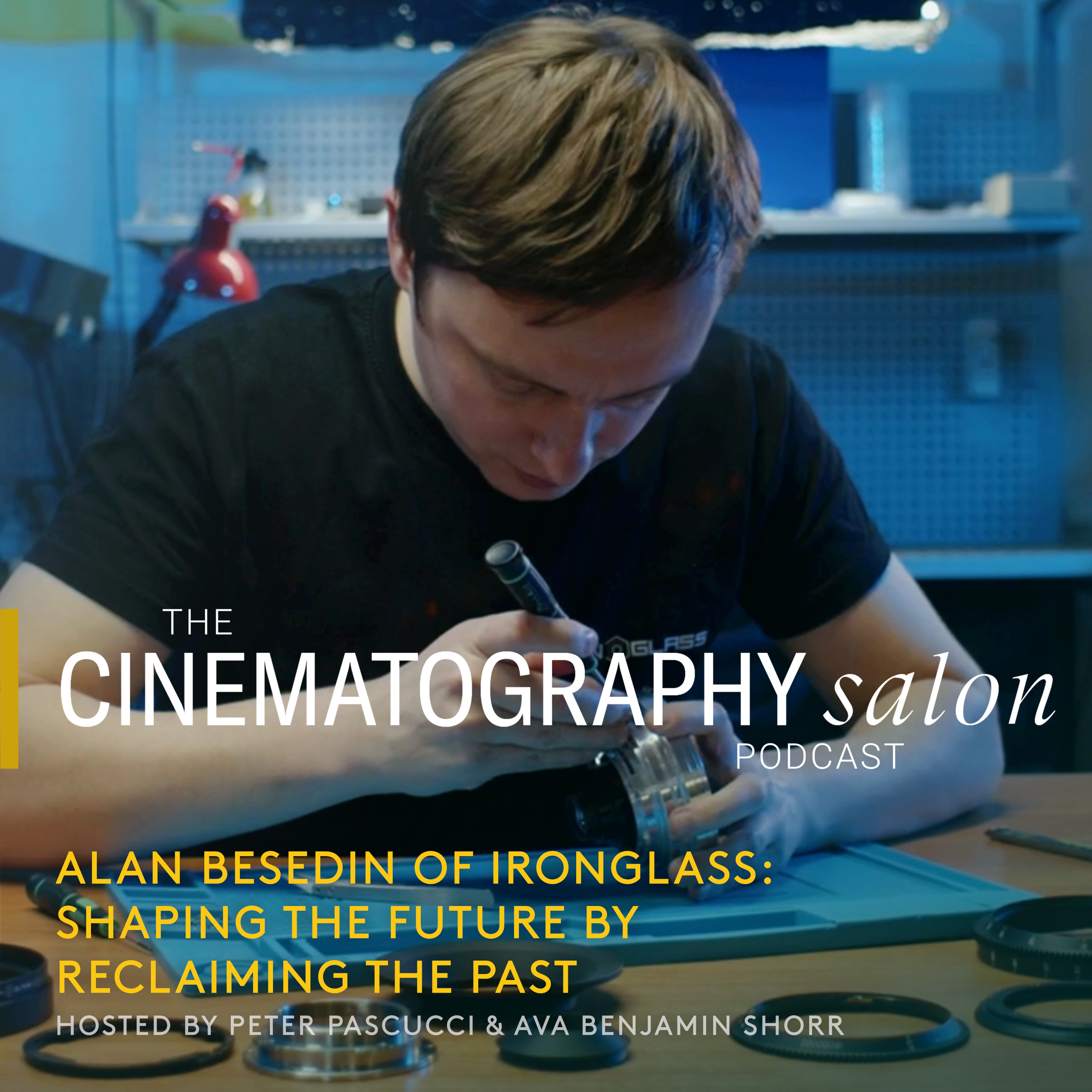 Alan Besedin of IronGlass: Shaping the Future by Reclaiming the Past 06.03.2025 1t 1minIn an age of pristine, digitally clinical imagery, cinematographers are increasingly drawn to imperfection—the swirl of a bokeh, the dreamlike haze of vintage glass. The Soviet-era lenses that once defined an era of photography are experiencing a rebirth through IronGlass, a Ukrainian company turning vintage optics into modern cinema glass. Hosts Peter Pascucci and Ava Benjamin Shorr sit down with Alan Besedin to discuss how IronGlass, despite the challenges of war and supply shortages, has built a dedicated following. From their early rehousings to supplying lenses for The Batman and Dune: Part Two, the conversation explores how artistry, resilience, and innovation converge in the pursuit of the perfect image.If you are enjoying the podcast, please consider supporting our efforts on Patreon.Alan Besedin’s/IronGlass Instagram | WebsitePeter Pascucci’s Instagram | WebsiteAva Benjamin Shorr’s Instagram | WebsiteThis episode is sponsored by Fujifilm, Sandisk and TCP Insurance.
 -
 Are We In a Golden Age of Cinematography? Feat. Jomo Fray and Oren Soffer 20.02.2025 1t 22minWith the proliferation of accessible cinema cameras, affordable lighting, and the democratization of filmmaking tools, cinematography is changing with breathtaking speed. Hosts Peter Pascucci and Ava Benjamin Shorr speak with Jomo Fray and Oren Soffer about the unprecedented access to filmmaking tools, the impact of shifting industry models, and the dangers of complacency. As filmmakers navigate AI-generated imagery, studio uncertainty, and cultural shifts, they ask: Is this truly a golden age, or are we looking at the end of an era?If you are enjoying the podcast, please consider supporting our efforts on Patreon.Jomo Fray’s Instagram | WebsiteOren Soffer’s Instagram | WebsitePeter Pascucci’s Instagram | WebsiteAva Benjamin Shorr’s Instagram | WebsiteThis episode is sponsored by Fujifilm, Sandisk and TCP Insurance.
 -
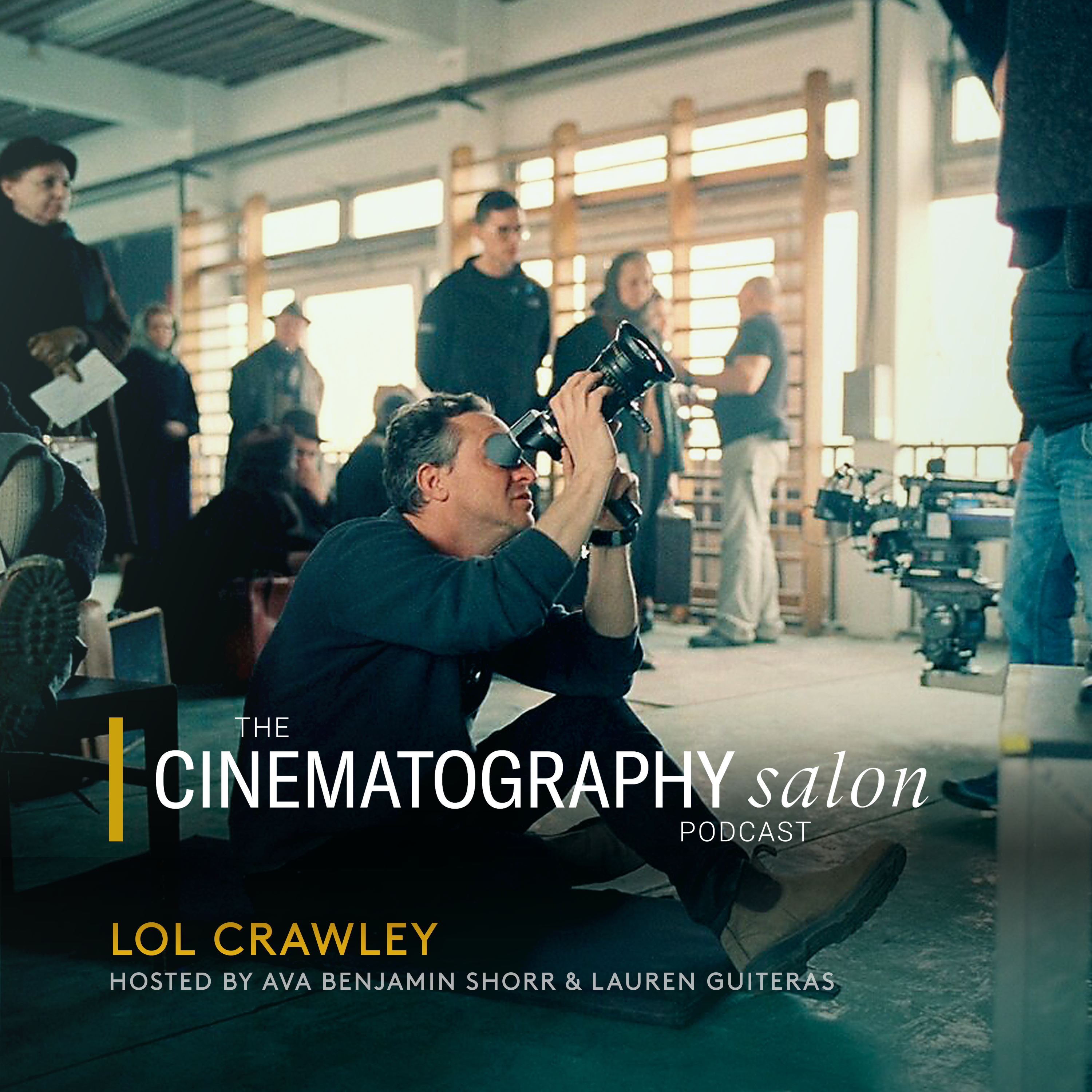 Lol Crawley: VistaVision, Underexposure and The Brutalist (Special Camerimage Episode) 06.02.2025 1t 4minOn this special edition of The Cinematography Salon Podcast, recorded at the 32nd Camerimage Film Festival, hosts Ava Benjamin Shorr and Lauren Guiteras sit down with cinematographer Lol Crawley to dissect his latest collaboration with Brady Corbet, The Brutalist. Crawley discusses the philosophy behind his bold visual choices, the interplay between maximalism and minimalism, his daring use of underexposure and the delicate art of framing iconic symbols like the Statue of Liberty in unexpected ways. A masterclass in storytelling through the lens, this episode offers a thought-provoking look at the power of perspective, composition, and the magic of imperfection. If you are enjoying the podcast, please consider supporting our efforts on Patreon. Lol Crawley’s Instagram | Website Ava Benjamin Shorr’s Instagram | Website Lauren Guiteras’s Instagram | Website This episode is sponsored by Fujifilm, Creamsource and Sandisk, with special thanks to Kondor Blue.
 -
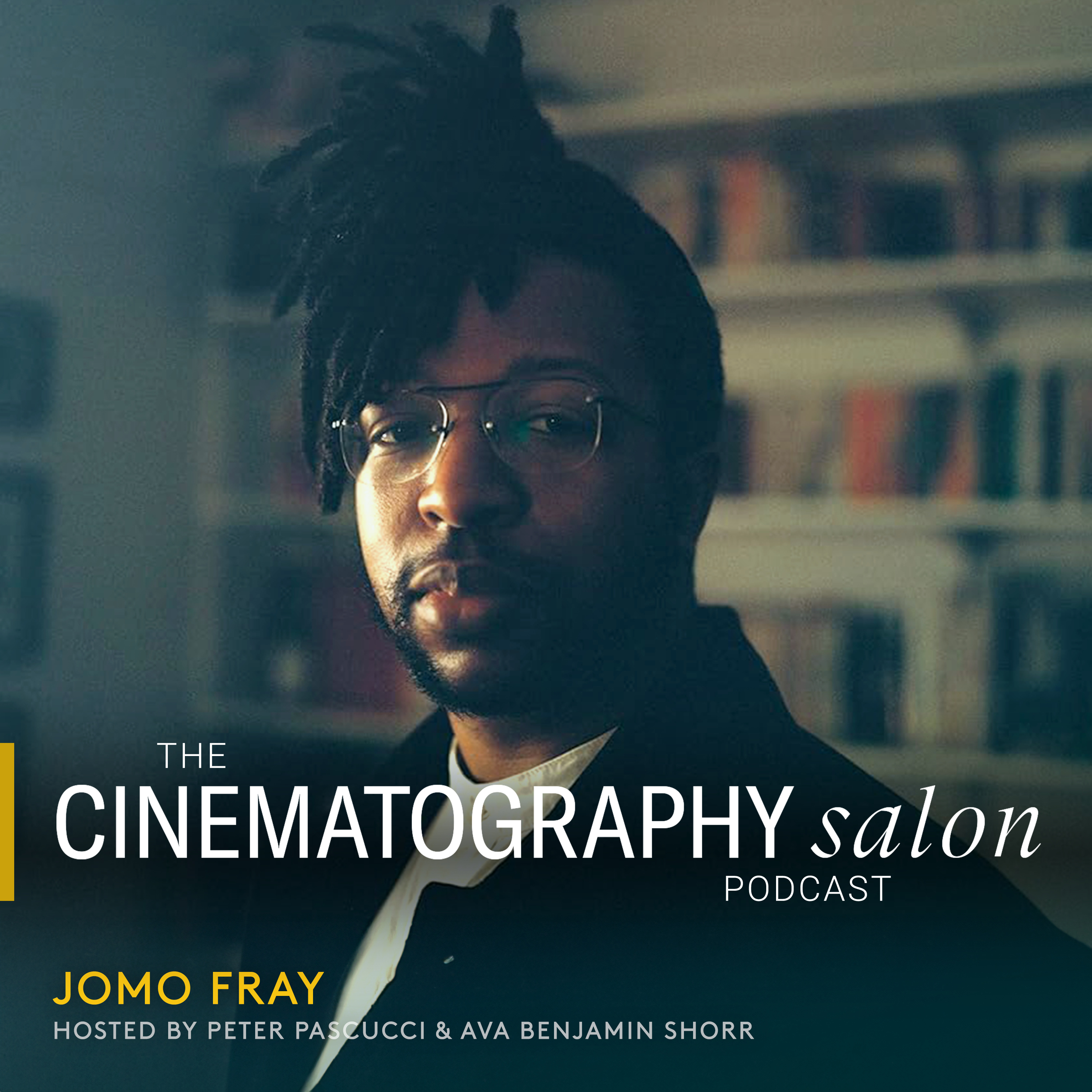 Jomo Fray: Crafting Bespoke Visual Narratives 19.07.2024 1t 49minIn this episode of the Cinematography Salon podcast, Jomo Fray discusses his distinctive approach to image-making on films such as All Dirt Roads Taste of Salt, Selah and the Spades, and Port Authority. He delves into the humanism shared by the directors he collaborates with and the significance of specificity in storytelling. Fray also explores how expanding his emotional spectrum enhances his work, the role of intuition in lighting, and the ongoing journey of self-discovery in mastering cinematography. If you are enjoying the podcast, please consider supporting our efforts on Patreon. Jomo Fray’s Instagram | Website Peter Pascucci’s Instagram | Website Ava Benjamin Shorr’s Instagram | Website This episode is sponsored by Sandisk, Laowa and Fujifilm, with special thanks to AbelCine.
 -
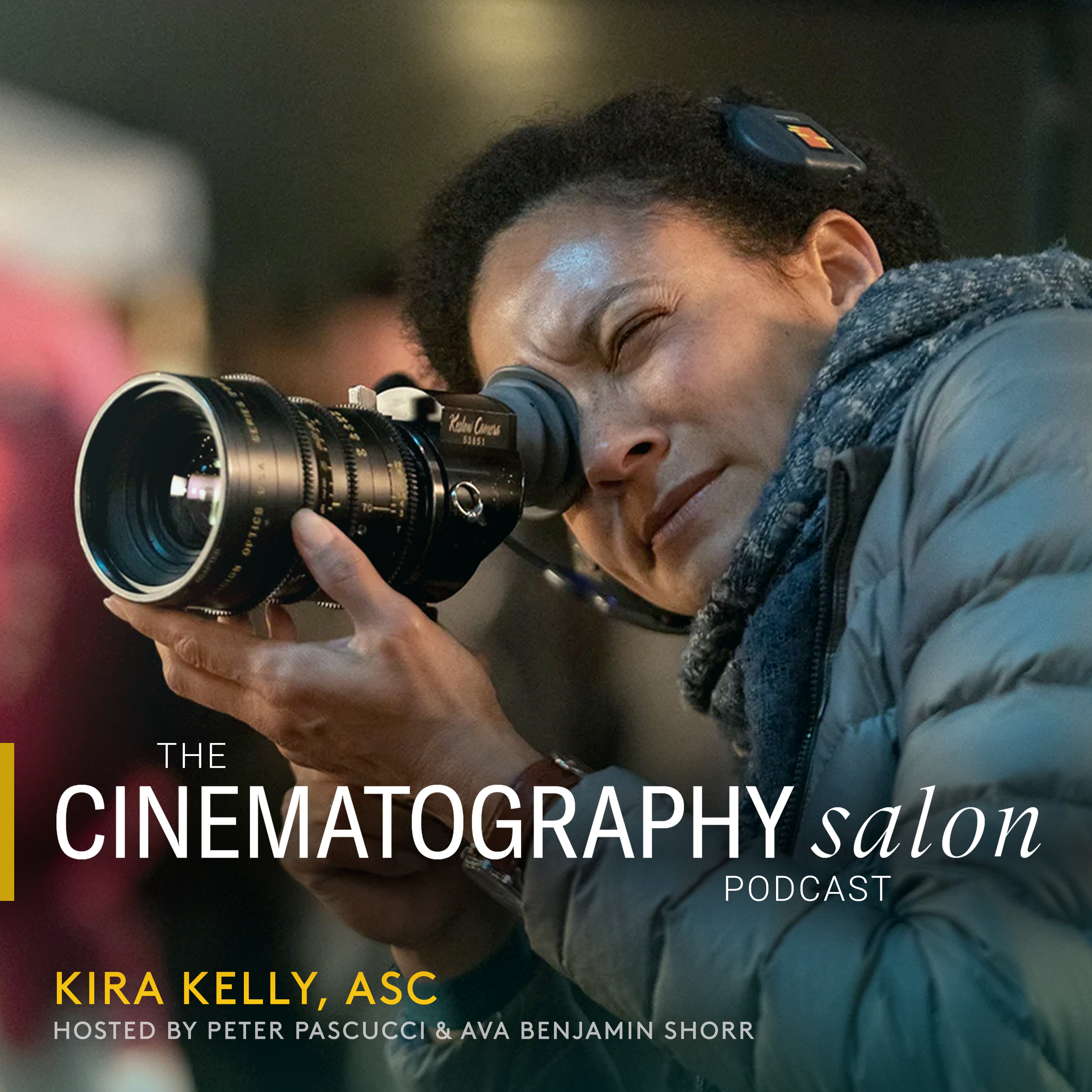 Kira Kelly, ASC: Unveiling the Power in a Frame from Working in the Electric Department to Shooting Marvel TV Shows 25.06.2024 1t 9minIn this episode of the Cinematography Salon podcast, we are thrilled to welcome Kira Kelly, ASC. Known for her work on the documentary 13th, the FX series Y: The Last Man, and the Hulu miniseries Echo, Kira has made a significant impact in the industry. With two Primetime Emmy nominations for Insecure and 13th, she shares insights into breaking barriers, pushing artistic boundaries, and the power of composition in visual storytelling. If you are enjoying the podcast, please consider supporting our efforts on Patreon. Kira Kelly’s Instagram | Website Peter Pascucci’s Instagram | Website Ava Benjamin Shorr’s Instagram | Website This episode is sponsored by Sandisk, Laowa and Fujifilm, with special thanks to AbelCine.
 -
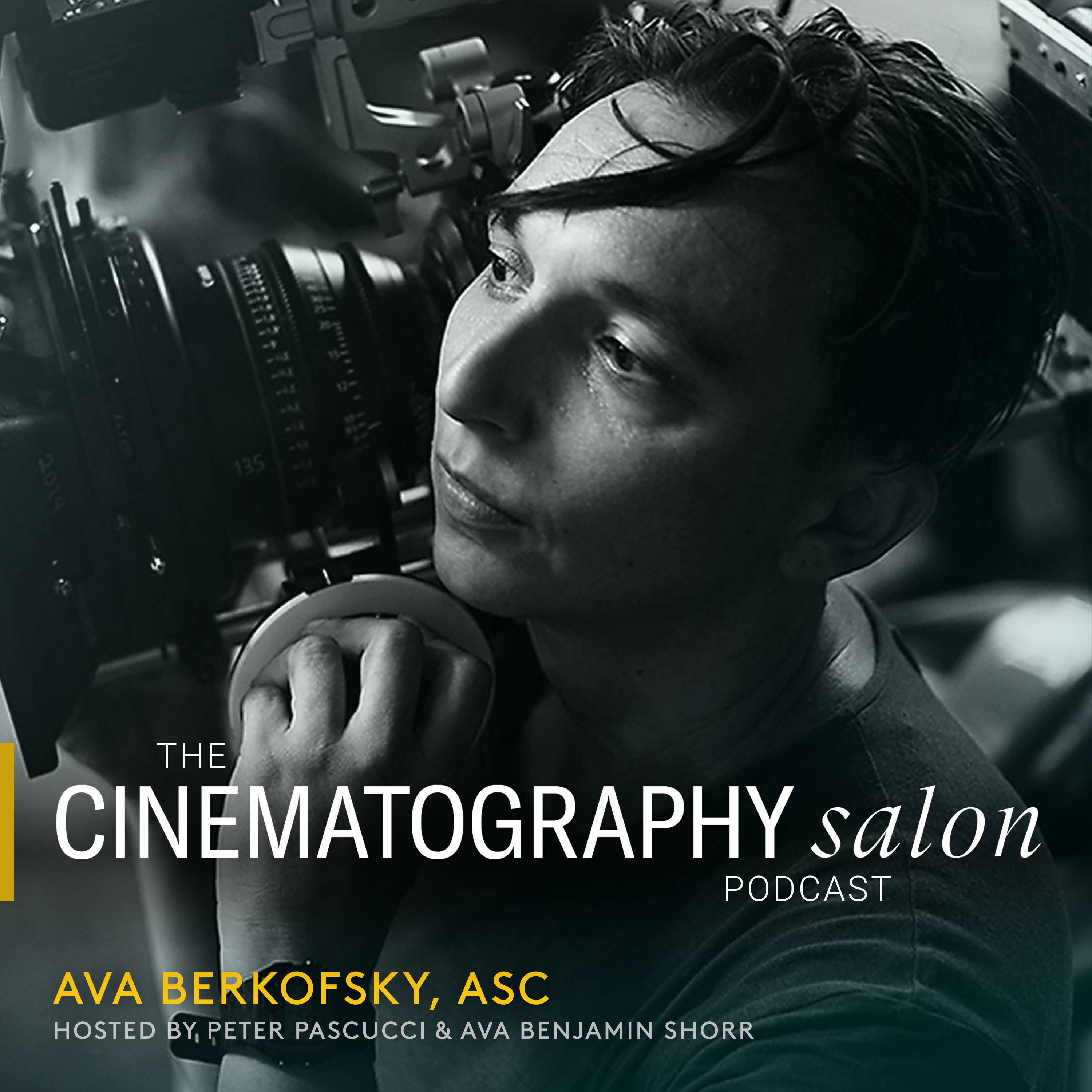 Ava Berkofsky, ASC: The Journey from Art School and Documentary Filmmaking to Emmy Nominations 06.06.2024 1t 8minAva Berkofsky, ASC, joins hosts Peter Pascucci and Ava Benjamin Shorr on the Cinematography Salon podcast to provide a view into their methodical approach to cinematography. They explore how their work aims to forge emotional connections between the subject and the viewer, particularly in their approach to lighting and composition in projects like HBO's Insecure. Ava also speaks candidly about their experiences as a non-binary cinematographer and how that informs their desire to create inclusive work environments, all the while adhering to the demands of studio film and television projects. If you are enjoying the podcast, please consider supporting our efforts on Patreon. Ava Berkofsky’s Instagram | Website Peter Pascucci’s Instagram | Website Ava Benjamin Shorr’s Instagram | Website This episode is sponsored by Sandisk, Laowa and Fujifilm, with special thanks to AbelCine.
Samankaltaiset podcastit


![Black Men Can't Jump [In Hollywood]](https://cdn.radoxo.com/images/podcasts/9936-black-men-cant-jump-in-hollywood.avif?v=1789628487)


Suosittu maassa
Tämä podcast esiintyy myös näiden maiden podcast-listoilla.
