
Modern Thyroid and Wellness
McCall McPherson, PA-C
0
Unlock the latest insights into thyroid health and wellness with McCall McPherson, PA-C. Through expert interviews, personal stories, and actionable advice, this podcast dives deep into thyroid disorders, exploring how they impact everything from energy levels to mental clarity. Whether you're navigating your own thyroid journey or seeking cutting-edge solutions for optimal health, you'll find practical tips and holistic strategies to support your well-being. Join McCall as she empowers listeners to take control of their thyroid health and live a more vibrant life.
Jaksot
-
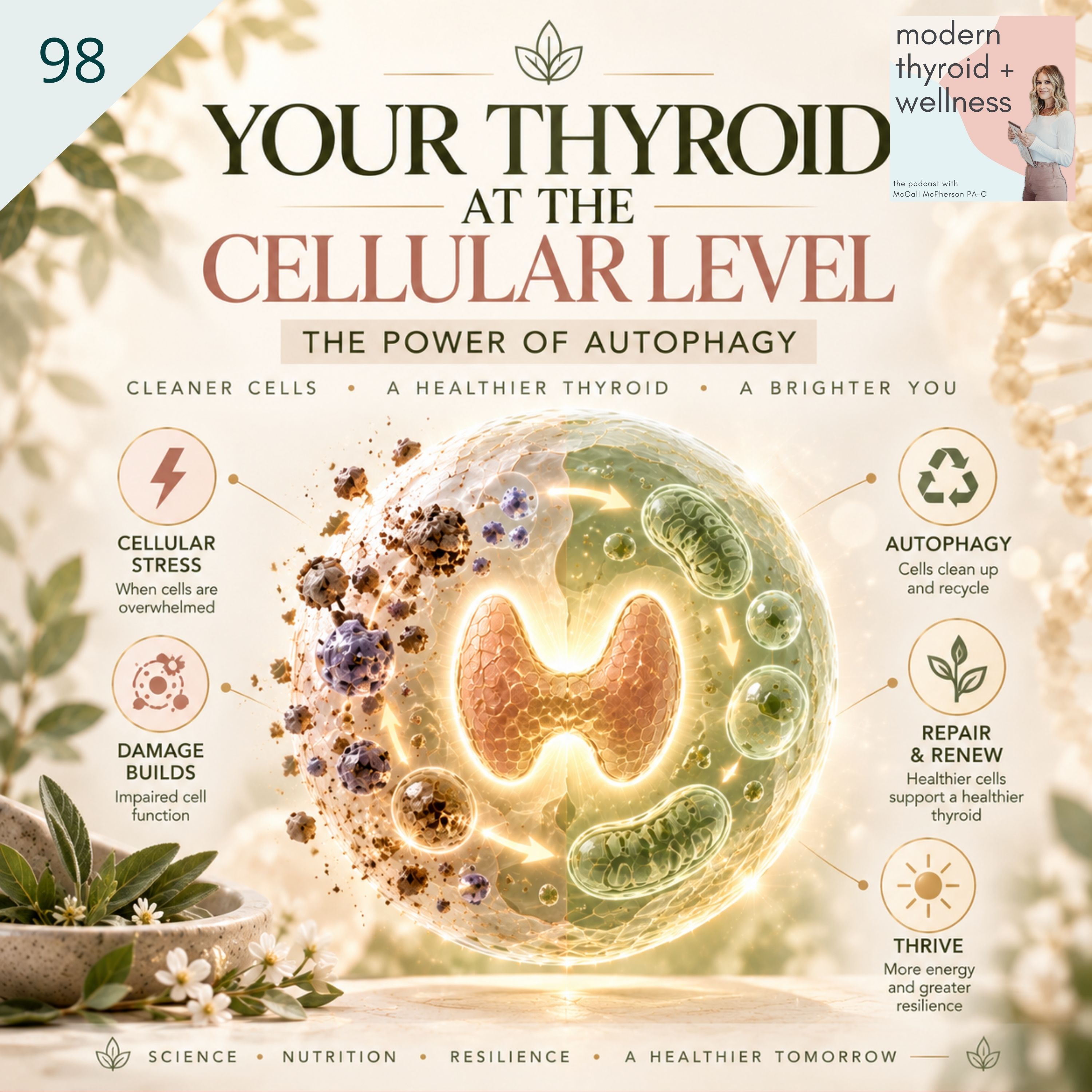 98: Thyroid Dysfunction, Cellular Stress & Autophagy: A New Way to Think About Chronic Illness with Dr. Bill Rawls 10.09.2026 1t 6minWhat if thyroid dysfunction isn’t always an isolated thyroid problem, but a signal that the cells throughout your body are under too much stress?In this episode of Modern Thyroid & Wellness, McCall McPherson sits down with Dr. Bill Rawls, physician, bestselling author, and co-founder of Vital Plan, for a fascinating conversation about cellular health, chronic illness, autophagy, microbes, stress, thyroid function, and the role herbs may play in supporting resilience.Dr. Rawls’ perspective grew out of his own health crisis. After years of intense work and inadequate sleep as an OB-GYN, his health deteriorated dramatically. He experienced fatigue, neurological symptoms, joint problems, cardiac symptoms, and eventually discovered evidence of Lyme disease. After conventional approaches failed to restore his health, his experience with herbal therapy led him into decades of research on chronic illness and cellular wellness.In This Episode, You’ll Learn:Why Dr. Rawls views cellular stress as a common thread in chronic illnessFive major categories that can stress our cellsWhy nutrition, environmental toxins, sleep, movement, and microbes matterWhat autophagy is and why cellular repair is essentialHow fasting, exercise, and stress can influence autophagyThe relationship between thyroid hormone and cellular metabolismWhy Dr. Rawls views thyroid dysfunction as a possible signal of broader cellular stressHis hypothesis about microbes, thyroid cells, and Hashimoto’sHow chronic psychological stress and cortisol affect cellular recoveryWhy whole foods, plant diversity, sleep, movement, and reducing toxic exposures form the foundation of his approachHow adaptogenic herbs may support cellular resilienceAshwagandha, rhodiola, reishi, cordyceps, Japanese knotweed, Chinese skullcap, dandelion, and milk thistleWhy herbs became central to Dr. Rawls’ approach to chronic illnessThe Five Drivers of Cellular StressDr. Rawls encourages listeners to zoom out from individual diagnoses and look at the health of the cells themselves.He organizes common sources of cellular stress into five broad areas: inadequate nutrition, toxic exposures, insufficient recovery and sleep, physical stress or inactivity, and microbes.His goal is not simply to suppress symptoms, but to create an internal environment that gives cells the resources and recovery time they need to function well.Autophagy: Your Cells’ Recycling and Repair SystemA major part of the conversation focuses on autophagy, the ongoing process cells use to recycle damaged components and maintain themselves.Dr. Rawls explains how fasting, movement, and other mild stressors may stimulate this process, while excessive stress can become counterproductive. He emphasizes balance between stress and recovery, rather than believing that more fasting or harder exercise is always better.What Does This Mean for Thyroid Health?Dr. Rawls describes thyroid hormone as an important metabolic signal that helps cells produce and use energy.His central argument is that when cells are chronically stressed, thyroid function may become part of that larger picture. Rather than viewing fatigue or thyroid dysfunction completely in isolation, he encourages looking at sleep, nutrition, stress, environmental exposures, movement, and overall cellular health.Connect with Dr. Bill Rawls🌿 Dr. Bill Rawls at RawlsMD📖 The Cellular Wellness Solution📖 Unlocking Lyme🌱 Explore Vital PlanRESTORE180™Dr. Rawls also shares RESTORE180, Vital Plan’s six-month program for people navigating complex chronic illness. The program progresses through stress regulation, gut and detoxification support, and concentrated botanical formulations.Learn More About RESTORE180📲 Follow McCall McPherson & Modern Thyroid and Wellness💻 Website: modernthyroidclinic.com🐦 X / Twitter: @thyroidexpert🌐 Host Website: mccallmcpherson.com📺 YouTube: McCall McPherson Channel📘 Facebook: McCall McPherson PAC📸 Instagram: @mccallmcphersonpa
 -
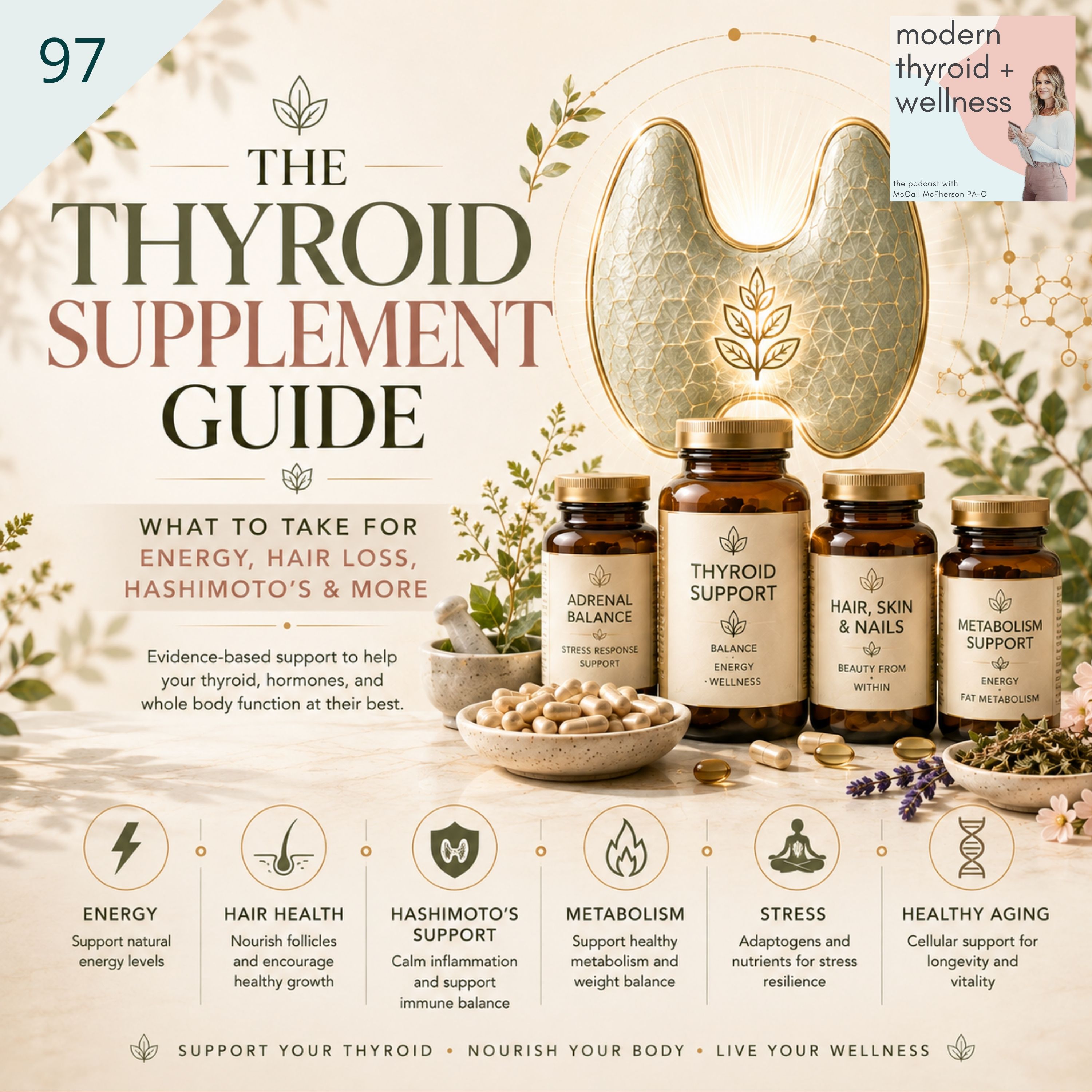 97: The Thyroid Supplement Guide: What to Take for Energy, Hair Loss, Hashimoto’s & More with Melissa Afflerbach 03.09.2026 28minWith thousands of supplements promising more energy, better hair, improved thyroid function, and healthier aging, how do you know what your body actually needs?In this episode of Modern Thyroid & Wellness, McCall McPherson sits down with Melissa “Mel” Afflerbach, Clinical Director of Weight Loss & Supplement Programs, for a practical conversation about the supplements they use and recommend within their thyroid and metabolic health programs.They break down some of the most common concerns women with hypothyroidism and Hashimoto’s experience—from persistent fatigue and low energy to hair loss—and explain why supplementation should support the bigger picture rather than replace investigating the root cause of a symptom.In This Episode, You’ll Learn:Why correcting thyroid function may not completely resolve fatigueHow adrenal and mitochondrial health relate to energy productionThe difference between stimulant energy and supporting cellular energyWhy thyroid dysfunction can contribute to hair shedding and changes in hair, skin, and nailsWhy ferritin and thyroid labs matter when investigating hair lossHow collagen, micronutrients, and antioxidants may support hair, skin, and nailsWhy myo-inositol and selenium are used in ThyroShield™Why testing and understanding the cause of a symptom still mattersHow McCall and her clinical team choose supplements for MDRN WellnessA sneak peek at what they are developing specifically for the thyroid communityMcCall also shares the deeply personal story behind the “Sol” found throughout the MDRN Health line. Her late brother, Solomon, had been working on the project before his unexpected passing, and the line now carries part of his legacy forward.Supplements Discussed in This EpisodeAdrena-Sol — adrenal and energy support Shop Adrena-SolMito-Sol — mitochondrial and cellular energy support Shop Mito-SolBeauty Glow Collagen — collagen support for hair, skin, and nails Shop Beauty Glow CollagenComplete Beauty — micronutrient support for hair, skin, and nails Shop Complete BeautyAstaxanthin Antioxidant — antioxidant and skin support Shop AstaxanthinThyroShield™ — myo-inositol + selenium thyroid support Shop ThyroShield™Shop MDRN WellnessThe MDRN Wellness store was created to make choosing supplements less overwhelming. Products are selected by McCall and the clinical team with the needs of people navigating thyroid dysfunction, hormone concerns, low energy, and related symptoms in mind.Shop All MDRN Wellness Supplements📖 Pre-Order Take Back Your Thyroid + Get a Free BonusPre-order McCall McPherson’s new book, Take Back Your Thyroid, and choose one free bonus:🎓 Thyroid Empowered Course, a $399 valueOR🩺 $150 off a new patient visit at Modern Thyroid ClinicPre-Order & Claim Your Free Bonus📲 Follow McCall McPherson & Modern Thyroid and Wellness💻 Website: modernthyroidclinic.com🐦 X / Twitter: @thyroidexpert🌐 Host Website: mccallmcpherson.com📺 YouTube: McCall McPherson Channel📘 Facebook: McCall McPherson PAC📸 Instagram: @mccallmcphersonpa
 -
 96: Your Thyroid Is a Barometer: What Chronic Disease Can Teach Us About Stress, Environment, and Prevention with Kelly McKenna 27.08.2026 31minWhat if your thyroid symptoms aren’t an isolated problem, but one signal from a body asking you to pay attention?In this episode of Modern Thyroid & Wellness, McCall McPherson sits down with Kelly McKenna, CEO and Co-Founder of End Chronic Disease, to explore thyroid health, autoimmunity, chronic stress, environmental exposures, nutrition, and what it really means to focus on prevention.Kelly’s health journey began with a celiac disease diagnosis in high school, followed by nearly two decades of autoimmune and chronic health challenges. In her early 30s, thyroid labs disrupted her plans to freeze her eggs and pushed her to ask a different question: instead of accepting hypothyroidism as inevitable, what might actually be driving it?That curiosity eventually changed both her health and career.Key Topics CoveredKelly’s experience with celiac disease, hypothyroidism, and Hashimoto’sHow childhood stress may influence long-term healthWhy sleep, nutrition, movement, relationships, and environment matterEnvironmental exposures and thyroid healthThe conversation around paraquat and chronic diseaseWhy prevention should begin in childhoodIodine, selenium, vitamin D, iron, and thyroid healthWhy Kelly calls her thyroid a “barometer” for her whole bodySimple strategies for fatigue and autoimmune flaresThe importance of boundaries and emotional healthBringing preventive health education into schoolsWhy chronic disease prevention requires both individual and systemic changeWhen Your Thyroid Becomes a Warning SystemAfter being re-diagnosed with Hashimoto’s, Kelly began closely observing how changes in sleep, nutrition, nutrient status, stress, and other aspects of daily life corresponded with her symptoms and thyroid labs.She focused on nutrients including iodine, selenium, vitamin D, and iron and experimented with dietary changes. As her thyroid markers improved, she noticed changes in her skin, digestion, fatigue, and overall wellbeing too.Today, Kelly describes her thyroid as a “barometer for my whole body.” When fatigue and familiar symptoms return, she views them as signals that her body may need more support, rest, or recovery.Stress, Environment, and Chronic DiseaseKelly also shares how growing up with a brother who experienced significant disabilities and frequent seizures created a chronic sense of uncertainty and stress, even within a loving family. Only later did she recognize how those experiences may have shaped her stress response.The conversation expands into environmental health, including paraquat exposure, ultra-processed foods, school environments, movement, and why the places where we live, work, learn, and eat deserve a larger role in conversations about chronic disease prevention.What If You’re Already Exhausted?When someone is already depleted, complicated wellness routines can feel impossible.Kelly recommends returning to basics. Her personal recovery toolbox has included restorative yoga, putting her legs up the wall, prioritizing sleep, simplifying food, gentle walking, acupuncture, positive experiences with people she loves, and examining emotional stress or boundaries that may be draining energy.The goal is to learn your body’s signals and build a collection of tools you can return to when you need them.About Kelly McKennaKelly McKenna is the CEO and Co-Founder of End Chronic Disease, an organization focused on chronic disease prevention, education, awareness, and policy change.🌐 End Chronic Disease 💼 Kelly McKenna on LinkedIn 📸 Kelly on Instagram @earth.to.kelly📖 Pre-Order Take Back Your Thyroid + Get a Free BonusPre-order McCall McPherson’s new book, Take Back Your Thyroid, and choose one free bonus:🎓 Thyroid Empowered Course, a $399 valueOR🩺 $150 off a new patient visit at Modern Thyroid ClinicPre-Order & Claim Your Free Bonus📲 Follow McCall McPherson & Modern Thyroid and Wellness💻 Website: modernthyroidclinic.com🐦 X / Twitter: @thyroidexpert🌐 Host Website: mccallmcpherson.com📺 YouTube: McCall McPherson Channel📘 Facebook: McCall McPherson PAC📸 Instagram: @mccallmcphersonpa
 -
 95: Your DNA Is Not Your Destiny: How Genetics Can Personalize Thyroid Health, Hormones, Metabolism, and Longevity with Kashif Khan 20.08.2026 39minWhat if the foods, supplements, workouts, and hormone therapies that work beautifully for someone else are completely wrong for your biology?In this episode of Modern Thyroid & Wellness, McCall McPherson sits down with Kashif Khan, bestselling author of The DNA Way, celebrity longevity coach, and two-time TEDx speaker, for a deep dive into functional genomics and personalized health. Kashif explains how DNA acts as an instruction manual for the body and why understanding those instructions may help explain why people respond so differently to the same foods, environmental exposures, exercise programs, supplements, and hormone therapies.Drawing from his own experience with chronic illness and years of genetic research, Kashif explores the relationship between genetics and lifestyle, including thyroid health, Hashimoto’s, women’s hormones, detoxification, metabolism, gut health, sleep, cognitive function, inflammation, and longevity. The conversation offers a different way to think about personalized medicine: instead of simply asking what disease you may be genetically predisposed to, ask how your biology works and what choices may better support it.Key Topics CoveredWhat DNA actually tells us about everyday healthWhy genetics are not necessarily destinyGenetics versus epigeneticsHow lifestyle, environment, and nutrition interact with genetic predispositionsKashif’s personal journey from chronic illness to genetic researchWhy two people can make the same health choices and experience very different outcomesGenetic differences in detoxificationWhy DNA testing is different from repeatedly testing hormones, cholesterol, or the microbiomeHow genetics may influence sleep and circadian preferencesPersonalizing nutrition and carbohydrate intakeGenetics, metabolism, and gut healthEnvironmental exposures and individual detoxification capacityWomen’s hormone health and estrogen metabolismGenetics, Hashimoto’s, autoimmunity, and thyroid healthWhy functional genomics goes beyond disease-risk scoresPersonalizing exercise according to individual biologyWhy nervous system regulation and gut health may need to come before advanced biohackingThe future of personalized medicine and longevityWhy understanding the biology underneath symptoms mattersDNA as Your Body’s Instruction ManualKashif describes DNA in practical terms as an instruction manual contained within the cells of the body.Genes provide instructions for countless biological processes, including producing hormones, metabolizing food, detoxifying compounds, and supporting cognitive function.The important difference is that everyone's instruction manual is slightly different.That helps explain why two people can follow the same diet, take the same hormone prescription, or perform the same exercise routine and experience dramatically different outcomes.Genetics Load the Gun, Environment Pulls the TriggerOne of the central ideas in the episode is the interaction between genetics and epigenetics.Your DNA does not change every time you change your diet or lifestyle, but the choices you make interact with the biological instructions you inherited.Kashif groups those choices into three broad areas:EnvironmentNutritionLifestyleEnvironment includes what you are exposed to. Nutrition includes food, supplements, and other nutritional interventions. Lifestyle encompasses factors such as exercise, work, and sleep.Understanding genetics, therefore, is not simply about predicting disease. Kashif sees it as a way to understand how your individual body processes the choices you make every day.Kashif’s Personal Health JourneyKashif did not enter genomics through a traditional medical or scientific career path.Around age 38, after previously considering himself healthy, he developed multiple chronic health problems, including severe eczema, psoriasis, gut issues, migraines, reflux, and inflammation.He received diagnoses and prescriptions but remained focused on a different question:Why did this happen?His search took him through traditional Chinese medicine, homeopathy, naturopathy, functional medicine, hormone health, the microbiome, and eventually genetics.Understanding genetic differences helped him begin connecting his individual biology with environmental and lifestyle exposures. His recovery ultimately inspired him to leave his previous technology consulting business and build a genetic research company.Why Your Detoxification Genetics MatterKashif uses his own GSTM1 genetics as an example of how individual differences can influence detoxification.He explains that glutathione plays an important role in neutralizing and removing unwanted compounds and that genetic differences can affect how those processes function in different areas of the body.In Kashif’s case, he discovered a copy number variation involving GSTM1, which became one piece of understanding why exposures that did not seem to affect someone living an otherwise similar lifestyle could affect him differently.This illustrates the broader problem with one-size-fits-all wellness advice: what is tolerated well by most people may not necessarily be optimal for every individual.Why DNA Testing Is DifferentHormones change.The gut microbiome changes.Toxic burden changes.Cholesterol changes.DNA does not.Kashif explains that this permanence is part of what makes genomic information valuable. Rather than repeatedly testing DNA, the goal is to understand what your genetic information means and then use that knowledge alongside changing health data throughout your life.His current mission centers heavily on education and helping people better understand their own genetic information.Start With the Foundation Before BiohackingOne of Kashif’s cautions is that people often enter the longevity and biohacking world by copying people who have already spent years optimizing their health.That can quickly become overwhelming.His suggested framework begins with identifying where you currently are.If there is an acute health problem, address that first.Then consider foundational areas such as:Nervous system regulationGut healthToxic burdenHealth optimizationLongevity and advanced biohackingTrying to fix decades of accumulated problems in two weeks is unlikely to create the sustainable outcome people are looking for.The goal is to work in the right order rather than doing everything at once.Five Areas Functional Genomics Can Help PersonalizeKashif identifies several major areas where he believes functional genomics can provide useful insights.Cognitive FunctionGenetic differences may influence neurochemical pathways involved in behavior, reward, focus, and how people perceive and respond to their environment.SleepDifficulty falling asleep, staying asleep, feeling restored, or naturally functioning better earlier or later in the day may involve different biological pathways.MetabolismPeople do not necessarily respond identically to the same macronutrient balance.Kashif shares an example involving female athletes who were struggling on a low-carbohydrate approach but performed better after carbohydrates were reintroduced based on their individual biology.Gut and Environmental HealthGenetics may help provide context for how an individual responds to environmental exposures and how effectively certain detoxification processes function.HormonesThis is one of the areas Kashif believes has enormous potential, particularly for women. Understanding how someone produces, binds, metabolizes, and clears hormones may provide a more personalized framework for women's health.Genetics, Thyroid Health, and Hashimoto’sMcCall and Kashif take the conversation directly into thyroid health.Kashif explains that people may arrive with symptoms such as fatigue without realizing that thyroid physiology could be part of the picture.They discuss potential connections among detoxification pathways, environmental exposures, gut-brain signaling, autoimmunity, estrogen metabolism, and thyroid health.The bigger takeaway is that there may not be one universal reason someone develops Hashimoto’s or another thyroid problem.Kashif’s approach is to ask what biological pathways may be contributing in that particular individual so interventions can become more precise rather than simply adding more generalized recommendations.Why Women’s Hormones Need More PersonalizationKashif describes women’s hormone health as one of the areas where his research revealed significant gaps in conventional approaches.The conversation explores estrogen metabolism and why understanding what happens after estrogen is produced may matter.Kashif discusses different estrogen metabolites and how genetics may influence their production and processing.For McCall, this aligns with what she sees clinically: thyroid hormones and reproductive hormones cannot always be treated as isolated systems.Understanding how an individual...
 -
 94: Menopause Is Not the End: How to Prepare Your Body to Thrive in Midlife with Lisa Jedan 13.08.2026 36minWhat if menopause wasn’t something to fear or simply endure, but a transition you could actively prepare for?In this episode of Modern Thyroid and Wellness, McCall McPherson sits down with Lisa Jedan, creator and host of MenoPositive, to challenge the long-standing narrative that menopause automatically means decline. After a successful career in PR and marketing, where she helped build brands and shape stories, Lisa turned those same skills toward changing the conversation around women’s health and aging.Lisa shares what she has learned from interviewing experts across conventional medicine, Chinese medicine, longevity, breathwork, nutrition, and women’s health. The message she hears repeatedly is clear: hormones do not operate in isolation, and the earlier women invest in their health, the more options they may have as they age.Together, McCall and Lisa explore strength training, nutrition, metabolism, thyroid health, Hashimoto’s, mindset, digestion, protein, fiber, sustainable lifestyle changes, and why midlife may become one of the healthiest and most fulfilling chapters of a woman’s life.Key Topics CoveredWhy Lisa created MenoPositiveChanging the narrative around menopause and agingWhy menopause preparation should begin before symptoms become overwhelmingHow thyroid health and reproductive hormones overlapLisa’s personal experience with Hashimoto’sWhy women often put themselves lastMoving from perfection toward small, sustainable health changesWhy strength training becomes increasingly important during midlifeBuilding and preserving muscle for healthy agingProtein, fiber, metabolism, and digestive healthWhy regular bowel movements matterSimple ways Lisa adds flaxseed and sprouts to her dietHow mindset may influence the menopause experienceBuilding trust with yourself through consistent habitsMoving beyond biohacking toward “bioharmony”Why wellness optimization can become exhaustingThe importance of sleep, movement, and nutrition before advanced optimizationWhy your best years do not have to be behind youChanging the Menopause NarrativeLisa began her career as a dancer and performer before moving into PR and marketing, where she built a career around storytelling and changing narratives.When she entered perimenopause and menopause herself, she noticed that the cultural story surrounding this stage of life did not match her experience.So much of the messaging centered on loss, decline, and everything women should expect to go wrong.Lisa wanted a different conversation.That desire became MenoPositive, a platform and philosophy built around educating women about hormone changes while showing them what they can actively do to support their health.After interviewing experts from a wide range of disciplines, Lisa says one message consistently emerges: menopause does not have to equal decline.Why We Should Prepare for MenopauseLisa makes a compelling comparison: we prepare for pregnancy, retirement, and marathons, so why do so many women arrive at one of the biggest biological transitions of their lives without preparation?Historically, women have often been taught to wait until symptoms appear and then figure out how to manage them.Lisa wants to reverse that approach.Instead of asking, “How can I manage these symptoms?” she encourages women to ask how they can prepare their bodies for a more positive menopause experience.For Lisa, this is not about perfection. It is about preparation and beginning wherever you are.Thyroid Health and Menopause Symptoms Can OverlapLisa also lives with Hashimoto’s, giving her firsthand experience with how difficult it can be to distinguish thyroid symptoms from hormonal changes during midlife.Mood changes, libido concerns, fatigue, brain fog, and changes in how the body feels can appear across both thyroid dysfunction and perimenopause.One of the biggest lessons Hashimoto’s taught Lisa was to become curious about what her body was communicating rather than automatically accepting symptoms as her new normal.McCall emphasizes that thyroid hormones and reproductive hormones do not exist in isolation. Understanding both can be especially important as women move through their 30s, 40s, and beyond.Why Women Need to Put Themselves Back on the ListWhether a woman is the CEO of a company or the CEO of her household, Lisa observes that women often place themselves third, fourth, or fifth on their own priority lists.Midlife can offer an opportunity to change that.Lisa encourages women to believe they deserve to be healthy and to recognize that investing in themselves does not require changing everything overnight.Cooking one additional vegetable, adding a little movement, or making one sustainable change can begin shifting the trajectory.McCall connects this idea to the power of small habits. Tiny actions may seem insignificant in isolation, but when repeated consistently, they compound.Strength Training as a Midlife “Secret Weapon”For Lisa, two changes significantly influenced her menopause experience: strength training and nutrition.She had always been active because of her background as a dancer, but midlife encouraged her to change the way she exercised.Strength training became a priority.Lisa noticed changes not only in her body, but also in her mood, sleep, confidence, and mindset.McCall emphasizes that building muscle becomes increasingly challenging as women move through perimenopause and menopause, making it valuable to establish that foundation earlier.Lisa compares strength training to putting money in the bank. Building strength now creates reserves that may become increasingly valuable later in life.Keep the Schedule, Change the ScopeOne of Lisa’s favorite ideas comes from Atomic Habits by James Clear: “Keep the schedule, change the scope.”If you planned to exercise but suddenly only have ten minutes, doing those ten minutes still allows you to keep the promise you made to yourself.Lisa and McCall discuss how this consistency builds something even bigger than fitness: self-trust.Every time you follow through, especially when you do not feel like it, you reinforce the belief that you can rely on yourself.That mindset can make sustainable health changes much more achievable than an all-or-nothing approach.From Biohacking to BioharmonyWomen today are surrounded by wellness advice.Eat more protein. Take supplements. Strength train. Optimize your hormones. Track your sleep. Improve your metabolism.Eventually, optimization itself can become exhausting.Lisa believes the conversation is beginning to shift away from constant “biohacking” toward what she calls bioharmony, a more sustainable approach to working with the body rather than endlessly trying to optimize every variable.The foundation remains surprisingly simple:Eat well. Move your body. Sleep.These habits are not always easy, but Lisa believes establishing them first creates a stronger foundation before adding more advanced interventions.Protein, Fiber, and Digestion in MidlifeNutrition is another major part of the conversation.Across Lisa’s interviews with experts, protein repeatedly emerges as an important topic, particularly alongside strength training and maintaining muscle.But protein is not the whole story.Lisa also emphasizes fiber and digestive regularity.She shares that many women assume having a bowel movement every two or three days is normal. Her own experience taught her how stress and rushed mornings could affect digestion.Two simple foods she regularly incorporates are flaxseed and sprouts. She prepares flaxseed ahead of time and adds it to yogurt, while sprouts can easily be added to eggs, salads, or meals.These small, affordable habits reflect Lisa’s larger philosophy: health does not always require expensive or complicated interventions.You Have More Influence Than You ThinkWhen McCall asks Lisa what mindset shift she wishes every woman could make, her answer is simple:You have a choice.Lisa believes women have more influence over how they approach and experience menopause than many have been led to believe.That does not mean every symptom can be prevented or that every woman will have the same experience. It means women can become informed, seek appropriate care, strengthen their health foundations, and make choices that support the decades ahead.Your Best Years Are Not Behind YouPerhaps the biggest myth Lisa wants to challenge is the idea that a woman’s best years are over once she reaches midlife.She sees the opposite.Women in their 40s, 50s, and 60s are starting businesses, stepping into leadership, pursuing new goals, and redefining what aging looks like.Instead of treating menopause as an ending, Lisa sees it as an opportunity to enter the second half of life with greater wisdom, perspective, confidence, and purpose.For her, menopause can be a powerful new beginning.Final TakeawayPreparing for menopause does not mean pursuing perfection.It means starting where you...
 -
 93: Can Your Brain Keep You Stuck in Chronic Illness? The Missing Role of Neuroplasticity in Healing with Faith Ashenden 06.08.2026 57minWhat if you've optimized your thyroid hormones, improved your nutrition, reduced inflammation, and addressed the underlying biochemistry, but you still don't feel fully well?In this episode of Modern Thyroid and Wellness, McCall McPherson welcomes chronic illness recovery educator Faith Ashenden for a fascinating conversation about the neuroscience of healing and how the brain may continue reinforcing chronic symptoms long after the body has begun to recover. After overcoming Graves' disease, chronic fatigue syndrome, IBS, panic attacks, and years of debilitating illness, Faith now teaches women how to retrain subconscious patterns, regulate the nervous system, and rebuild confidence in their health.Together, McCall and Faith explore why healing is about more than lab work alone, how chronic illness can shape identity, and why combining functional medicine with nervous system work may help people move from simply managing symptoms to truly thriving.Key Topics CoveredFaith's journey with Graves' disease and chronic illnessThe challenges of delayed diagnosis and years of debilitating symptomsGraves' disease versus Hashimoto's diseaseWhy treating thyroid disease doesn't always resolve every symptomThe role of functional medicine in Faith's recoveryWhat neuroplasticity is and how the brain adapts to chronic illnessHow chronic symptoms can become learned neurological patternsThe difference between biochemical healing and nervous system healingChronic illness identity and fear of relapseWhy trauma from chronic illness itself mattersCommon limiting beliefs that keep people feeling stuckPractical ways to begin retraining the brainWhy healing is rarely linearBuilding resilience through new beliefs and daily habitsCombining functional medicine with mindset and nervous system workFaith's Story of Chronic IllnessFaith developed Graves' disease while attending college after experiencing severe anxiety, rapid weight loss, heart palpitations, overwhelming fatigue, and multiple unexplained symptoms. After months of searching for answers, she was finally diagnosed when an endocrinologist recognized the signs almost immediately.Although treatment addressed her hyperthyroidism, Faith continued struggling for years with chronic fatigue, digestive issues, anxiety, and other persistent health challenges. Her experience eventually led her into functional medicine, where she began addressing the underlying physiological contributors to her symptoms before discovering the important role that neuroplasticity and the nervous system would play in her long-term recovery.Why the Brain Matters in Chronic IllnessFaith explains that when symptoms persist for months or years, the brain naturally adapts.Through neuroplasticity, the brain learns patterns that associate certain situations, environments, or activities with symptom responses. Even after many underlying physical issues have improved, these learned pathways may continue reinforcing chronic symptoms.Rather than suggesting illness is "all in your head," Faith emphasizes that biochemical healing and nervous system healing often work together.Healing Beyond the Lab ResultsMcCall shares that many patients improve dramatically after optimizing thyroid hormones, inflammation, nutrition, and metabolic health, yet some continue feeling as though they cannot fully regain their confidence or resilience.Faith believes this is where subconscious beliefs, fear of relapse, and nervous system regulation become important.Together, they discuss how healing often involves addressing both physiology and psychology instead of viewing them as competing explanations.The Identity of Being Chronically IllOne of the most powerful themes throughout the episode is identity.After years of illness, many people begin organizing their lives around avoiding symptoms rather than building confidence in recovery.Faith encourages listeners to recognize when the identity of being chronically ill has become part of their daily thinking and to intentionally begin creating a new vision of themselves beyond illness.Trauma Doesn't End With the DiagnosisThe conversation also highlights an often-overlooked form of trauma: the experience of living with chronic illness itself.Repeated medical appointments, unanswered questions, fear of relapse, canceled plans, and years of uncertainty can all shape subconscious beliefs about safety and health.Faith explains that recognizing and working through those experiences may become an important part of long-term recovery.Practical Steps to Retrain the BrainFaith encourages listeners to become more intentional about where they place their attention.Rather than constantly searching for evidence that reinforces illness, she recommends looking for evidence of healing, celebrating small improvements, and creating daily habits that reinforce resilience instead of fear.She also discusses limiting exposure to online communities or content that continually reinforces hopelessness while seeking stories of recovery, possibility, and growth.Healing Is a JourneyBoth McCall and Faith agree that healing rarely happens in a perfectly straight line.Setbacks and symptom flares do not necessarily erase progress. Instead, they can become opportunities to strengthen new patterns, build confidence, and continue developing trust in the body's ability to heal.The goal is not perfection but creating a healthier relationship with both the body and the mind.Final TakeawayFaith Ashenden reminds us that healing is about more than simply eliminating symptoms.Once the body's underlying physiology has been addressed, rebuilding confidence, changing limiting beliefs, regulating the nervous system, and creating new patterns of resilience may become the next layer of recovery.By combining functional medicine with neuroscience and mindset work, many people may discover possibilities for healing they never thought were available.About Faith AshendenFaith Ashenden is a chronic illness recovery educator, founder of That Healing Feeling, and host of the That Healing Feeling Podcast. After fully recovering from Graves' disease, chronic fatigue syndrome, IBS, panic attacks, and multiple chronic health conditions, she now helps women understand the neuroscience of healing, nervous system regulation, and subconscious pattern change through her educational programs and coaching.Resources & Links🌐 Faith Ashendenhttps://faithashenden.com/📸 Instagramhttps://www.instagram.com/thathealingfeeling/🎙️ That Healing Feeling Podcasthttps://open.spotify.com/show/5bOaTuON429YbnFesShdxt🎓 Free MasterclassAvailable through Faith's website and Instagram.📲 Follow McCall McPherson & Modern Thyroid and Wellness💻 Website: modernthyroidclinic.com🐦 X / Twitter: @thyroidexpert🌐 Host Website: mccallmcpherson.com📺 YouTube: McCall McPherson Channel📘 Facebook: McCall McPherson PAC📸 Instagram: @mccallmcphersonpa
 -
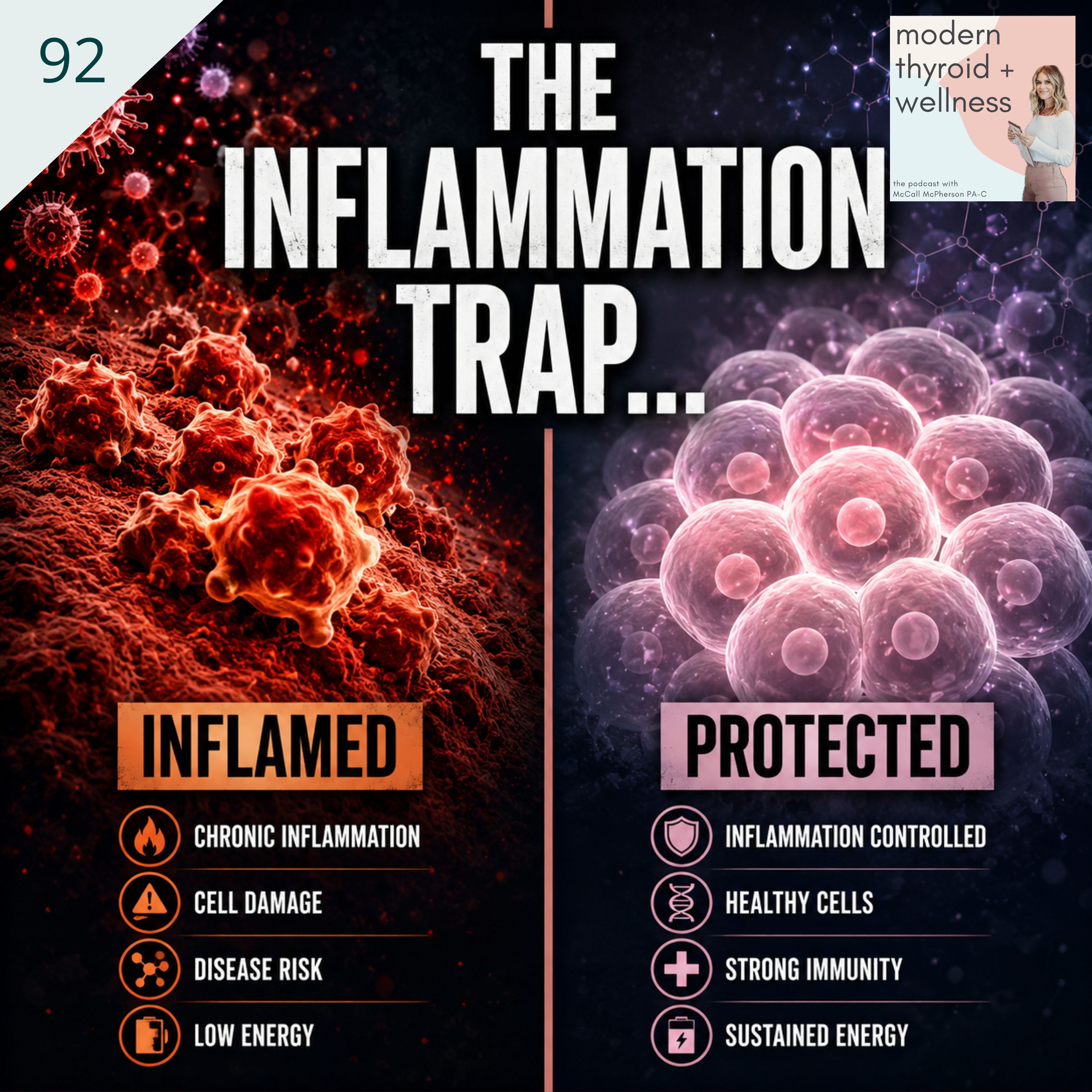 92: Could Chronic Inflammation Be the Missing Link? The Science Behind Sulforaphane, Detoxification, and Cellular Health with David Roberts & Dr. John Gildea 30.07.2026 53minWhat if the key to better thyroid health, metabolism, and longevity starts at the cellular level?In this episode of Modern Thyroid and Wellness, McCall McPherson is joined by David Roberts and Dr. John Gildea, the founders of Mara Labs, to explore the science behind chronic inflammation, oxidative stress, detoxification, and why bioavailability is one of the most overlooked factors in nutritional supplementation.David shares the deeply personal story that inspired Mara Labs after his wife Mara's battle with breast cancer, while Dr. Gildea explains how his own scientific research led him to develop innovative ways to improve the absorption of powerful natural compounds like sulforaphane and curcumin. Together, they discuss how environmental toxins, poor nutrition, gut barrier dysfunction, and chronic inflammation may contribute to many of today's chronic health conditions—and why supporting the body's natural detoxification pathways is more important than ever.Key Topics CoveredThe personal story behind the founding of Mara LabsWhy bioavailability matters more than simply taking supplementsWhat sulforaphane is and why it has become one of the most researched plant compoundsThe role of chronic inflammation in long-term healthOxidative stress and its relationship to chronic diseaseUnderstanding NRF2 and the body's natural antioxidant defensesPhase I, Phase II, and Phase III detoxificationHow gut barrier function influences toxin exposureEnvironmental toxins, microplastics, and endocrine disruptionPractical ways to reduce your toxic burdenThe connection between inflammation and thyroid hormone functionHow sulforaphane and curcumin may support healthy cellular functionWhy personalized medicine mattersThe science behind GLPerfect™, BrocElite®, CurcuElite®, BerbElite®, and Microplast-X™From Personal Tragedy to PurposeMara Labs was born from an incredibly personal journey.After David Roberts' wife Mara was diagnosed with breast cancer, he partnered with scientist Dr. John Gildea to better understand natural compounds that could support cellular health. Their research led them to sulforaphane, a compound naturally found in broccoli sprouts, but they quickly discovered that creating a stable, bioavailable form was one of the biggest scientific challenges.Following Mara's passing, David and John committed themselves to bringing scientifically formulated, highly bioavailable nutritional supplements to market in her honor.Why Bioavailability MattersOne of the biggest themes throughout the conversation is that the quality of a supplement depends on much more than the ingredient listed on the label.Many natural compounds show remarkable results in laboratory studies but are poorly absorbed by the human body.David and Dr. Gildea explain how Mara Labs focuses on improving bioavailability so these compounds can actually reach the cells where they are intended to work.Rather than simply increasing dosage, their research has centered on improving delivery.Chronic Inflammation Starts Long Before DiseaseThe conversation explores how chronic disease often develops years before a formal diagnosis.Dr. Gildea explains that declining nutrient density, increasing environmental toxin exposure, oxidative stress, and chronic low-grade inflammation gradually affect cellular function over time.Whether those changes eventually appear as thyroid disease, metabolic dysfunction, autoimmune conditions, or another chronic illness often depends on an individual's genetics, lifestyle, and overall resilience.Detoxification Is More Than a TrendDetoxification is often misunderstood.The guests explain that true detoxification involves multiple phases that occur throughout the body—not just in the liver—and depends on properly transforming, processing, and eliminating toxins.They also emphasize that reducing exposure remains just as important as supporting the body's detoxification pathways.Simple strategies discussed include improving indoor air quality with HEPA filtration, drinking filtered water, choosing less processed foods, and purchasing food from trusted local sources whenever possible.NRF2: The Master Switch for Cellular ProtectionA major focus of the episode is NRF2, one of the body's primary cellular defense pathways.The guests explain how sulforaphane activates NRF2, supporting antioxidant production, Phase II detoxification, cellular resilience, and healthy inflammatory responses.Curcumin is also discussed as another compound that complements these pathways while supporting a balanced inflammatory response.Together, these compounds may help support overall cellular health through multiple biological mechanisms.Environmental Toxins and MicroplasticsDavid and Dr. Gildea discuss the growing concern surrounding microplastics and endocrine-disrupting chemicals.They explain how microplastics may carry additional toxins into the body while potentially interfering with normal hormonal signaling.The conversation also introduces Microplast-X™, a newer Mara Labs product designed to support the body's natural ability to remove accumulated microplastics.Supporting Metabolic HealthThe discussion also explores GLPerfect™, a supplement developed to support healthy metabolism using highly bioavailable natural compounds.Rather than replacing prescription GLP-1 medications, the product was designed as a nutritional approach that supports several pathways involved in appetite regulation, blood sugar balance, fat metabolism, and muscle preservation.The conversation highlights the importance of viewing metabolism through a broader lens than weight loss alone.Thyroid Health and Cellular FunctionMcCall connects many of the concepts discussed back to thyroid health.She explains that many patients produce adequate thyroid hormone but struggle with activation, conversion, or cellular utilization.Reducing inflammation, supporting antioxidant defenses, and improving overall cellular health may help create a healthier environment for thyroid hormone function.The discussion also explores the relationship between inflammation and Hashimoto's thyroiditis and why supporting the body's underlying physiology may benefit overall wellness.Final TakeawayDavid Roberts and Dr. John Gildea remind us that long-term health begins long before disease is diagnosed.Supporting healthy cellular function, reducing chronic inflammation, minimizing toxic exposures, and improving nutrient bioavailability all contribute to building a stronger foundation for lifelong health.Rather than searching for a single miracle solution, lasting wellness often comes from consistently supporting the body's natural systems and choosing interventions backed by thoughtful science.About the GuestsDavid Roberts is the co-founder and Managing Partner of Mara Labs. Inspired by his wife Mara's battle with breast cancer, he helped establish the company to develop highly bioavailable nutritional supplements focused on supporting cellular health, detoxification, and longevity.Dr. John Gildea is the co-founder and Chief Science Officer of Mara Labs. A molecular biologist and researcher, his work focuses on cellular biology, oxidative stress, nutrient bioavailability, inflammation, and the development of innovative nutritional compounds that support healthy aging.Resources & Links🌐 Mara Labs📸 Mara Labs Instagram🎙️ Mara Labs PodcastSpecial OfferVisit: mara-labs.com/mccallUse code MCCALL for a special listener discount available after the episode release.📲 Follow McCall McPherson & Modern Thyroid and Wellness💻 Website: modernthyroidclinic.com🐦 X / Twitter: @thyroidexpert🌐 Host Website: mccallmcpherson.com📺 YouTube: McCall McPherson Channel📘 Facebook: McCall McPherson PAC📸 Instagram: @mccallmcphersonpa
 -
 91: When Standard Treatment Isn’t Enough: How Root-Cause and Regenerative Medicine Changed Nicole Peterson Doran’s Health 23.07.2026 39minWhat if PCOS, thyroid dysfunction, chronic inflammation, fertility concerns, and post-viral illness aren’t completely separate health problems, but connected chapters of a much bigger story?In this episode of Modern Thyroid and Wellness, McCall McPherson sits down with Nicole Peterson Doran, co-founder of PUR-FORM and host of The Healthspan Collective podcast. Nicole shares her personal journey from being diagnosed with PCOS at just 16 and later hypothyroidism to discovering functional and integrative medicine, preparing for pregnancy, navigating long COVID and mast cell activation syndrome, and ultimately helping build businesses focused on personalized health optimization and regenerative medicine.Together, McCall and Nicole explore why there is no one-size-fits-all approach to healing, how foundational habits and personalized care can work together, and how emerging tools such as GLP-1 medications, peptides, EBO2, and regenerative therapies are becoming part of a broader conversation around complex health challenges.🔑 Key Topics CoveredNicole’s PCOS diagnosis at age 16Developing hypothyroidism after her PCOS diagnosisWeight gain, inflammation, fatigue, brain fog, and hormonal symptomsWhy birth control and metformin did not address everything she was experiencingHow functional and integrative medicine changed her health journeyMoving beyond calorie counting toward whole-food nutritionWhy bio-individuality matters in nutrition and treatmentThe importance of sleep, blood sugar balance, nutrition, and stress managementNicole’s fertility fears after being diagnosed with PCOSHow she prepared her body before trying to conceiveHer experience becoming pregnant after years of worrying about fertilityHow severe stress and COVID triggered another health crisisLong COVID and mast cell activation syndrome (MCAS)The relationship between gut health, immune regulation, stress, and inflammationNicole’s personal experience with microdosed GLP-1 therapyThymosin alpha-1 and larazotide discussed during her recoveryEBO2 and its role in Nicole and McCall’s personal health journeysRegenerative medicine and stem cell therapies at PUR-FORMPUR-FORM’s newly launched MUSE cell offeringTherapeutic plasma exchange and health optimizationWhy finding one practitioner who truly listens can change your health journeyNicole’s Health Journey Started at 16Nicole had been a healthy athlete when her health suddenly changed during her teenage years.Within months, she gained approximately 30 pounds, developed facial hair and irregular periods, struggled with severe fatigue, and experienced significant brain fog.After seeing multiple specialists, her mother took her to a trusted OB/GYN who decided to investigate her hormones and thyroid more deeply. Nicole was diagnosed with PCOS and, a year or two later, hypothyroidism.She was prescribed birth control and metformin. While these treatments addressed certain aspects of her condition, Nicole still struggled with her weight, inflammation, and energy.She knew she needed to look deeper.Discovering a Different Approach to HealthA major turning point came after college when Nicole began working with a health coach.Instead of obsessively tracking calories and macros, she shifted her attention toward whole foods and began exploring how nutrition, stress, mindfulness, and emotional wellbeing influenced her health.She noticed her inflammation gradually improving.The experience ultimately inspired Nicole to study at the Institute for Integrative Nutrition, where she was introduced to a concept that became central to her approach to health: bio-individuality.What works for one person may not work for another.Nicole personally thrives living gluten-free, but she emphasizes that this does not mean everyone needs to eliminate gluten. Intermittent fasting may transform one person’s health while being completely wrong for someone else.McCall sees the same principle in thyroid care. There is no universally “best” thyroid medication or diet because each person’s physiology and needs are different.However, certain foundations remain important for almost everyone: whole-food nutrition, balanced blood sugar, quality sleep, movement, and stress management.PCOS, Fertility, and Preparing for PregnancyWhen Nicole was diagnosed with PCOS as a teenager, she was told becoming pregnant might be difficult.The message stayed with her because she had always wanted to become a mother.Years later, when pregnancy became a priority, Nicole intentionally focused on creating the healthiest foundation she could.Working with her practitioners, she focused on lowering inflammation and supporting her overall health through personalized nutrition and supplementation. She discusses CoQ10 and fish oil, reducing sugar, eliminating alcohol, continuing her gluten-free lifestyle, temporarily removing dairy, and significantly reducing travel and stress.Perhaps most importantly, she gave herself permission to slow down.Nicole became pregnant after approximately three months of trying.She acknowledges that fertility is complex and that no lifestyle strategy can guarantee pregnancy. Still, her experience offers an encouraging perspective for women who fear that a PCOS diagnosis automatically means they will be unable to conceive.When Long COVID Triggered a New Health CrisisBy 2023, Nicole felt healthier than she had in years.Then she contracted COVID during an intensely stressful period surrounding the launch of her business and her wedding.She became severely ill just days before getting married. After the acute infection passed, unusual symptoms remained.Nicole began experiencing significant histamine reactions, inflammation, weight changes, brain fog, fatigue, and irritability.Eventually, a practitioner recognized symptoms consistent with mast cell activation syndrome in the context of her post-viral health challenges.This became another turning point in how Nicole understood her body.Her immune system, gut health, inflammation, stress, and metabolic health were not operating independently. They were deeply interconnected.GLP-1s, Peptides, and Personalized MedicineNicole worked with practitioners to explore different strategies during her recovery.She shares her personal experience with microdosed tirzepatide, a GLP-1-based medication, which she describes as an important tool for her own inflammation and metabolic health.She also discusses peptides, including thymosin alpha-1 in the context of immune support and larazotide in relation to gut barrier health.Gut health has been a recurring theme throughout Nicole’s health journey. She describes how periods of intense stress seemed to coincide with worsening inflammation and digestive health, reinforcing her belief that the body must be viewed as an interconnected system.The larger message is not that everyone needs the same medication, peptide, diet, or intervention.Personalized medicine means selecting tools according to the individual.What Is EBO2?McCall and Nicole also discuss EBO2, short for extracorporeal blood oxygenation and ozonation.Nicole explains that PUR-FORM offers EBO2 and trains other clinics in the protocol. The procedure involves circulating blood outside the body through a system involving filtration, oxygen, and ozone before returning it to the patient.Nicole shares that EBO2 has been part of her own health strategy outside of pregnancy.The topic is also deeply personal for McCall, who shares that she underwent EBO2 while struggling significantly with long COVID and credits the treatment as an important turning point in her own recovery.Their experiences lead to a broader conversation about the evolving field of regenerative medicine and the need to evaluate advanced therapies based on each patient’s individual circumstances.From Patient to EntrepreneurNicole’s difficult health experiences eventually became part of her professional mission.She remembers working incredibly hard on her health while feeling as though her body simply would not respond.Years of inflammation, fatigue, weight struggles, and frustration also contributed to an unhealthy relationship with food at different points in her journey.Today, Nicole is running multiple businesses while preparing to become a mother.Her transformation inspired a commitment: if she could better understand her own health, she wanted to help other people avoid some of the confusion and frustration she experienced.That mission became part of the work behind PUR-FORM.Regenerative Medicine at PUR-FORMPUR-FORM is a comprehensive health optimization clinic based in Boca Raton, Florida.Nicole discusses working with orthopedic surgeon Dr. Joseph Purita and her family to expand access to integrative and regenerative therapies.Services discussed during the episode include:Stem cell and regenerative therapiesEBO2Therapeutic plasma exchangeIV therapiesRed light therapyInfrared saunaCold plungeCryotherapyNicole also shares an important new development: PUR-FORM recently launched a MUSE cell offering as part of its regenerative medicine services.She
 -
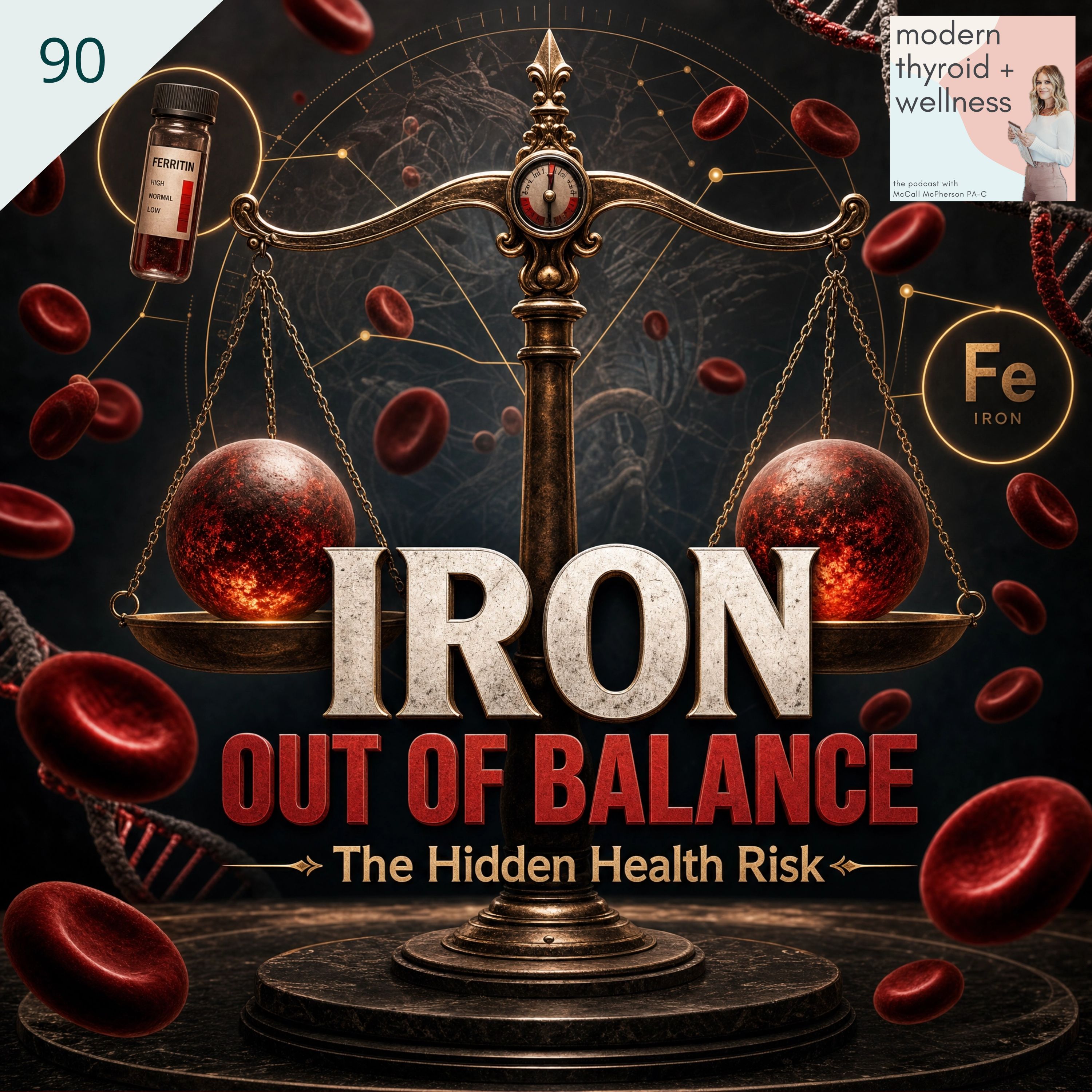 90: Too Much Iron Can Be Just as Dangerous as Too Little – The Hidden Condition Behind Fatigue, Heart Disease, and Thyroid Problems with Dr. Christy Sutton 16.07.2026 34minWhat if one of the most overlooked causes of fatigue, joint pain, thyroid dysfunction, and even heart disease wasn't iron deficiency, but iron overload?In this episode of Modern Thyroid and Wellness, McCall McPherson welcomes Christy Sutton, chiropractor, functional medicine clinician, educator, and author of The Iron Curse. Inspired by her husband's diagnosis with hereditary hemochromatosis, Dr. Sutton has dedicated her work to helping patients recognize and address iron overload before it leads to serious long-term health complications.Together, McCall and Dr. Sutton explore why hereditary hemochromatosis is far more common than many people realize, why millions of people may unknowingly carry high-risk genes, and how excess iron can silently damage the liver, heart, pancreas, brain, thyroid, and other organs. McCall also shares her own personal experience with iron overload, walking through her lab work live during the episode while Dr. Sutton explains what the results reveal and why early detection can make all the difference.Whether you're experiencing unexplained fatigue, elevated ferritin, thyroid issues, or have a family history of iron overload, this episode offers practical guidance on testing, treatment, and understanding one of the most underdiagnosed conditions in modern medicine. 🔑 Key Topics CoveredWhat hereditary hemochromatosis is and why it's commonly missedWhy iron overload can be just as dangerous as iron deficiencyThe three HFE gene variants associated with hereditary hemochromatosisWhy being told you're "just a carrier" may not tell the full storyHow excess iron creates oxidative stress throughout the bodyThe connection between iron overload and liver diseaseHow excess iron may contribute to cardiovascular disease and plaque formationIron overload and its relationship with thyroid dysfunctionWhy iron can accumulate in the brain, pancreas, pituitary gland, and jointsThe impact of iron overload on hormone production and fertilityWhy women often develop iron overload after menopause or uterine ablationMcCall's personal lab review and genetic resultsUnderstanding ferritin, transferrin saturation, and inflammatory markersWhy ferritin should always be interpreted alongside CRPThe role of therapeutic blood removal in treatmentBlood donation versus therapeutic phlebotomyDietary strategies to help manage iron overloadWhy vitamin C supplementation may increase iron absorptionFoods and beverages that influence iron absorptionSupplements that may support healthy iron regulationThe relationship between celiac disease genes and iron metabolismWhy family history plays an important role in early detection 🩸 Iron Overload Is More Common Than Most People ThinkWhen most people think about iron, they think about deficiency.But according to Dr. Sutton, hereditary hemochromatosis affects far more people than many realize, with a significant portion of the population carrying one or more HFE gene variants that can increase iron absorption.Because the body has very limited ways to eliminate excess iron, levels can gradually increase over decades, especially after menstruation ends or blood loss decreases. 🧬 Why Excess Iron Can Damage the Entire BodyIron is essential for life, but too much can become harmful.Dr. Sutton explains that excess iron contributes to oxidative stress, allowing iron to accumulate within tissues where it may damage organs over time.Areas commonly affected include:LiverHeartPancreasBrainThyroidPituitary glandJointsBecause this process develops slowly, many people don't recognize the problem until significant health issues appear. 👩 Why Women Often Don't Develop Symptoms Until MidlifePremenopausal women naturally lose iron through monthly menstrual cycles.As a result, many women remain protected from iron accumulation for years.However, after menopause, hysterectomy, uterine ablation, or other situations that reduce menstrual blood loss, iron levels may begin rising much more rapidly.McCall shares her own experience of seeing her iron markers increase after uterine ablation, creating an opportunity to discuss how these laboratory changes may appear before significant symptoms develop. 🩺 Looking Beyond a Single Lab ValueOne of the most educational moments of the episode comes when Dr. Sutton reviews McCall's laboratory results in real time.She explains why evaluating multiple markers together provides a more complete picture, including:FerritinTransferrin saturationComplete blood countRed blood cell markersC-reactive protein (CRP)Because ferritin can rise with both inflammation and excess iron, understanding the broader laboratory context becomes essential when determining the underlying cause. ❤️ Iron Overload and Heart HealthThe discussion also explores the relationship between excess iron and cardiovascular health.According to Dr. Sutton, elevated iron may contribute to oxidative stress that damages blood vessels and promotes inflammation.Over time, this process may play a role in plaque formation and increase cardiovascular risk in susceptible individuals.McCall also shares the personal story of losing her brother unexpectedly to a heart attack, highlighting why this topic carries such deep personal significance for her family. 💉 Treatment Starts by Reducing IronThe primary treatment for hereditary hemochromatosis involves removing excess iron through therapeutic phlebotomy or blood donation when medically appropriate.By removing blood, the body uses stored iron to produce new red blood cells, gradually lowering overall iron stores.Dr. Sutton explains that treatment plans should always be individualized and that blood removal is not appropriate for everyone. 🥩 Everyday Habits That Influence Iron LevelsIn addition to therapeutic blood removal, lifestyle choices can influence iron absorption.Dr. Sutton discusses strategies such as:Moderating red meat intake when iron levels are elevatedPairing iron-rich meals with tea or coffee, which may reduce iron absorptionAvoiding unnecessary vitamin C supplements with iron-rich mealsSupporting overall health through individualized nutrition and supplementationShe also discusses compounds such as curcumin, green tea extract, quercetin, and alpha-lipoic acid that are being studied for their role in supporting healthy iron regulation. 🌟 Final TakeawayIron deficiency deserves attention, but so does iron overload.Because hereditary hemochromatosis often develops silently over many years, understanding your genetics, reviewing your laboratory markers, and paying attention to family history may help identify problems before long-term complications develop.As Dr. Sutton explains throughout this conversation, awareness is one of the most powerful tools we have.Early testing, thoughtful interpretation of laboratory results, and individualized treatment can help protect long-term health while preventing unnecessary organ damage. 👤 About the GuestChristy Sutton is a chiropractor, functional medicine clinician, educator, and author specializing in genetics, iron metabolism, and chronic disease prevention. Inspired by her husband's diagnosis with hereditary hemochromatosis, she developed educational resources to help patients and practitioners better understand iron overload, genetic risk factors, and root-cause approaches to long-term health. 🔗 Resources & Links📖 The Iron Curse by Dr. Christy Sutton The Iron Curse Book🎓 The Iron Curse Educational Workshop The Iron Curse Workshop🌐 Website: Dr. Christy Sutton📸 Instagram: Dr. Christy Sutton Instagram🎵 TikTok: Dr. Christy Sutton TikTok💼 LinkedIn: Dr. Christy Sutton LinkedIn📲 Follow McCall McPherson & Modern Thyroid and Wellness💻 Website: modernthyroidclinic.com🐦 X / Twitter: @thyroidexpert🌐 Host Website: mccallmcpherson.com📺 YouTube:
 -
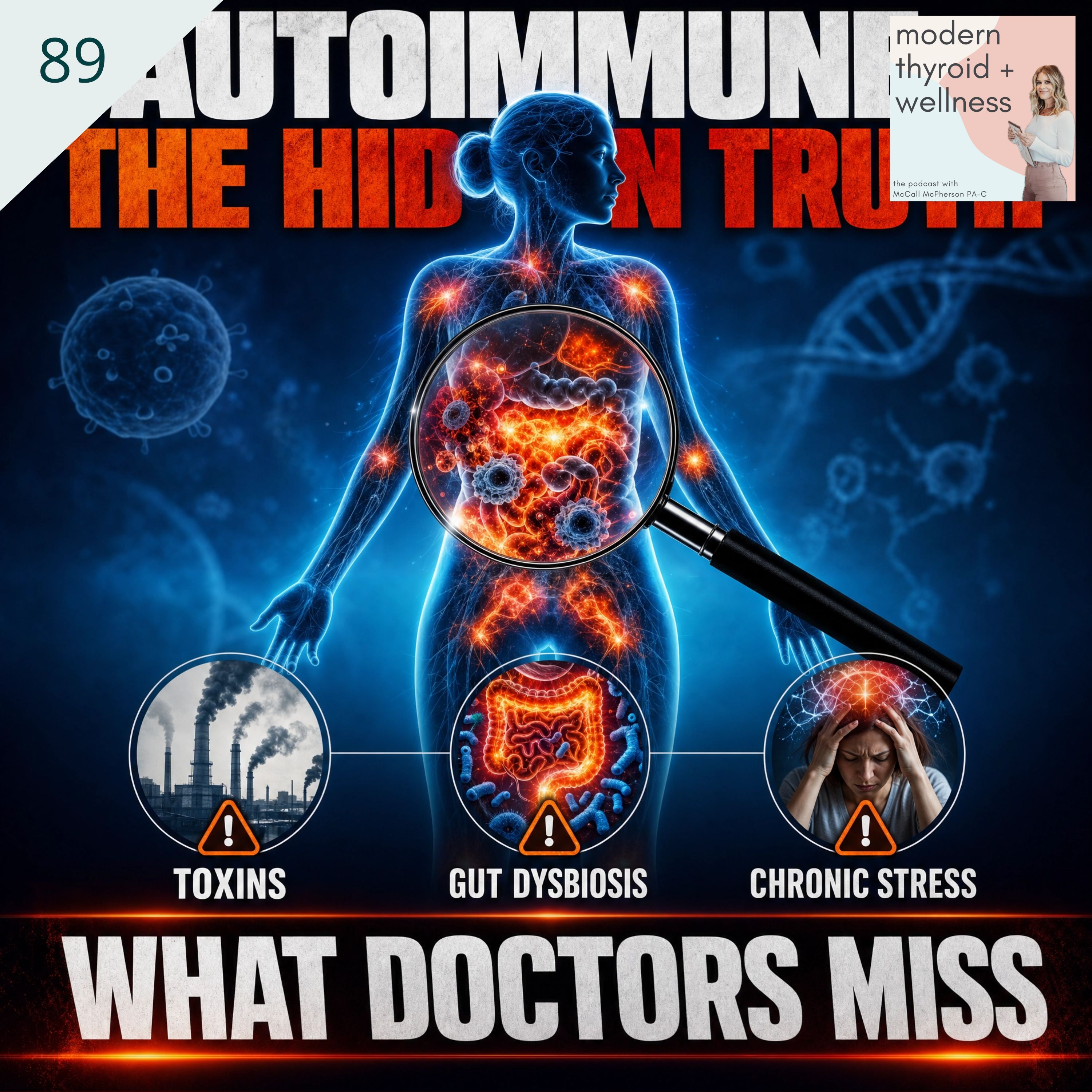 89: Autoimmune Disease Is Rising Faster Than Ever – The Root Causes Conventional Medicine Still Misses with Dr. Amy Myers 09.07.2026 53minWhat if autoimmune disease isn't something you're destined to live with forever, but a signal that your body needs help addressing deeper root causes?In this episode of Modern Thyroid and Wellness, McCall McPherson welcomes longtime mentor, friend, and functional medicine pioneer Amy Myers. A two-time New York Times bestselling author and internationally recognized functional medicine physician, Dr. Myers shares her personal journey from being diagnosed with Graves' disease during medical school to becoming one of the leading voices in autoimmune and thyroid health.Together, they explore why autoimmune diseases continue to rise, why women are disproportionately affected, and why many patients spend years searching for answers before receiving a diagnosis. Dr. Myers explains the role of gut health, environmental toxins, infections, stress, trauma, and nutrition in autoimmune disease while sharing practical strategies for supporting immune health and addressing root causes. She also introduces the newly revised edition of The Autoimmune Solution, featuring updated research and expanded guidance for today's changing health landscape.Whether you're living with Hashimoto's, Graves' disease, or another autoimmune condition, this conversation offers hope, practical tools, and a reminder that healing begins by understanding the "why" behind your symptoms.🔑 Key Topics CoveredDr. Amy Myers' personal journey with Graves' diseaseWhy autoimmune diseases continue to rise worldwideThe connection between environmental toxins and autoimmune diseaseWhy women are disproportionately affected by autoimmune conditionsCommon reasons autoimmune diseases are missed for yearsThe impact of medical gaslighting on thyroid and autoimmune patientsHow long autoimmune disease can develop before diagnosisWhy antibodies should be checked even before symptoms become severeThe autoimmune spectrum and recognizing early warning signsGenetics versus environment: what really drives autoimmune diseaseThe four pillars of autoimmune healingWhy gut health is foundational for immune regulationThe role of leaky gut in autoimmune diseaseCandida, SIBO, parasites, and hidden gut infectionsFood triggers including gluten and processed foodsEnvironmental toxins, plastics, mold, and chemical exposureSupporting the body's natural detoxification pathwaysThe relationship between chronic infections, stress, trauma, and autoimmunityWhy Hashimoto's remission looks different than stopping thyroid hormoneMonitoring thyroid antibodies over timeHope for reversing autoimmune disease through root-cause medicine🌿 From Graves' Disease to Functional MedicineDr. Myers' journey into functional medicine began with her own health crisis.While attending medical school, she developed severe anxiety, tremors, insomnia, weight loss, and other symptoms that were initially dismissed as stress.After insisting on additional testing, she was diagnosed with Graves' disease.Although conventional treatment successfully managed her thyroid, she realized no one had addressed why her immune system attacked her thyroid in the first place.That experience ultimately led her to discover functional medicine and dedicate her career to helping patients identify and address the root causes of autoimmune disease.🧬 Why Autoimmune Disease Is Becoming More CommonAccording to Dr. Myers, autoimmune disease isn't simply being diagnosed more often.She believes multiple environmental factors are contributing to a true increase in autoimmune conditions.Among the biggest contributors discussed are:Environmental toxinsChronic infectionsProcessed foodsPlastic exposureChronic stressGut dysfunctionModern lifestyle changesShe explains that while genetics influence susceptibility, environmental exposures often determine whether those genes become active.👩 Why Women Are More Commonly AffectedWomen account for the majority of autoimmune diagnoses.Dr. Myers explains that significant hormonal transitions often coincide with the development or worsening of autoimmune disease.Common life stages include:PregnancyPostpartumPerimenopauseMenopauseThese hormonal shifts can influence immune regulation and may contribute to the onset of autoimmune symptoms in genetically susceptible individuals.⏳ Autoimmunity Often Begins Years Before DiagnosisOne of the most important messages in this episode is that autoimmune disease develops long before many people receive a diagnosis.Dr. Myers explains that antibodies may be present for years before symptoms become severe enough to trigger additional testing.During this time, people often experience symptoms such as:FatigueBrain fogHair lossJoint painDigestive problemsWeight changesUnfortunately, these symptoms are frequently attributed to stress, aging, or hormonal changes rather than early autoimmune disease.🩺 The Four Pillars of Autoimmune HealingDr. Myers describes a comprehensive approach that focuses on identifying and addressing the underlying drivers of immune dysfunction.Her four pillars include:Heal the GutSupporting digestion and restoring the intestinal barrier through nutrition, digestive support, probiotics, and treatment of underlying gut infections.Improve NutritionRemoving inflammatory foods while emphasizing nutrient-dense whole foods that support immune balance.Reduce Toxic BurdenMinimizing exposure to environmental toxins while supporting the body's natural detoxification pathways through hydration, sweating, regular bowel movements, and targeted nutritional support.Address Hidden TriggersIdentifying chronic infections, reducing stress, and addressing unresolved trauma that may contribute to persistent immune activation.Together, these pillars form the foundation of her functional medicine approach to autoimmune health.🦠 Why Gut Health Comes FirstDr. Myers refers to the gut as "the gateway to health."She explains that many people with autoimmune disease also experience:Leaky gutCandida overgrowthSIBOParasitesPoor digestionBefore attempting to rebuild the microbiome, she emphasizes identifying and treating these underlying issues while also removing inflammatory foods that may continue to drive immune dysfunction.🧪 Monitoring Thyroid AntibodiesFor thyroid patients, Dr. Myers emphasizes that antibody testing provides valuable information beyond standard thyroid hormone levels.She recommends:Establishing baseline antibody levelsMonitoring antibodies more frequently during active treatmentPeriodic long-term monitoring once antibodies remain stableShe also notes that patients who have undergone thyroid ablation or thyroid surgery may still produce thyroid antibodies and should continue monitoring when appropriate. 🌟 Final TakeawayAutoimmune disease is not simply a matter of bad luck or genetics.As Dr. Myers explains, our environment, nutrition, gut health, stress, infections, and daily habits all influence how our immune system functions.While every autoimmune journey is unique, understanding and addressing these root causes can create meaningful opportunities for healing and improved quality of life.Most importantly, a diagnosis doesn't have to mean giving up hope.With the right approach, many people can reduce inflammation, improve symptoms, and support long-term immune health.👤 About the GuestAmy Myers is a physician, certified functional medicine practitioner, founder of Amy Myers MD®, and a two-time New York Times bestselling author. After overcoming her own battle with Graves' disease, she became a leading voice in autoimmune and thyroid health, helping thousands of people address root causes through functional medicine. She is the author of The Autoimmune Solution, The Thyroid Connection, and The Autoimmune Solution Cookbook.🔗 Resources & Links🌐 Official Website: Amy Myers MD🌐 Personal Website: Dr. Amy Myers📺 YouTube: Amy Myers MD YouTube📚 Books: Dr. Amy Myers Amazon Author Page🎙️ Podcast: Take Back Your Health🎁 Free Gift for MTW Listeners: Amy Myers MD / McCall Resource Page📲 Follow McCall McPherson &...
 -
 88: Your Home Could Be Affecting Your Health More Than You Realize – The Hidden Impact of Air, Water, and Everyday Toxins with Helen Christoni 02.07.2026 34minWhat if one of the most powerful ways to support your thyroid, hormones, gut, and long-term health isn't another supplement or medication, but improving the air you breathe and the water you use every day?In this episode of Modern Thyroid and Wellness, McCall McPherson welcomes Helen Christoni, Senior Vice President of Ideal Living, the parent company behind AirDoctor and AquaTru. Helen shares her personal health journey, including experiencing early menopause and severe osteoporosis in her early forties, and how that experience led her to become passionate about reducing environmental toxins in the home.Together, McCall and Helen explore why clean air and clean water are foundational to health, how everyday environmental exposures contribute to toxic burden, and practical, affordable steps families can take to create a healthier home without feeling overwhelmed.🔑 Key Topics CoveredHelen's personal story of early menopause and severe osteoporosisHow toxic burden can affect long-term healthWhy clean air and clean water are foundational to wellnessHow to check the quality of your local tap waterCommon contaminants found in municipal waterWhy boiling water can increase contaminant concentrationReverse osmosis vs. standard water filtersUnderstanding chlorine and chloramine exposureWhy shower water affects skin, lungs, and overall healthThe growing concern around microplastics and thyroid healthSimple ways to reduce plastic exposure at homeWhy indoor air is often more polluted than outdoor airWildfires, VOCs, mold, and hidden indoor air contaminantsWhy HEPA filtration alone isn't enoughThe importance of activated carbon in air purificationHow cooking, candles, and personal care products affect indoor air qualityCreating a healthier bedroom for better sleep and recoveryPractical healthy-home swaps anyone can start today🌿 Helen's Journey to Environmental WellnessHelen's passion for clean air and clean water grew out of her own health crisis.While working in the beauty industry, she developed severe osteoporosis and entered menopause unexpectedly in her early forties. After multiple fractures and searching for answers, she was encouraged to look beyond conventional health advice and consider the role environmental toxins might be playing in her overall health.That experience ultimately brought her back to Ideal Living, where she now focuses on educating families about simple, practical ways to reduce their everyday toxic burden.💧 Your Water May Contain More Than You ThinkMany people focus on eating organic foods but rarely consider the quality of the water they drink or cook with.Helen explains that municipal water supplies can contain numerous contaminants, including naturally occurring heavy metals and chemical byproducts.One of the biggest misconceptions is that boiling water makes it safer.Instead, many contaminants become more concentrated as water evaporates during cooking, meaning foods like pasta, rice, soups, and vegetables may contain even higher concentrations than the original tap water.She also explains why reverse osmosis filtration removes a broader range of contaminants than standard carbon filters, making it one of the most comprehensive options for drinking and cooking water.🚿 Your Shower Is Another Source of ExposureWater quality doesn't only matter when you drink it.Every shower exposes your body to chlorine, chloramine, and other contaminants through both skin absorption and inhalation.Because skin is the body's largest organ, these daily exposures may contribute to:Dry skinEczemaPsoriasisSkin irritationIncreased overall toxic burdenHelen recommends shower filtration as another simple improvement that supports healthier skin while reducing everyday chemical exposure.🌬️ Indoor Air Quality Deserves More AttentionMost people think about outdoor pollution.But according to Helen, indoor air can often be even more polluted because contaminants become trapped inside modern, energy-efficient homes.Indoor air may contain:Wildfire smokeVolatile organic compounds (VOCs)Mold sporesPet danderHousehold cleaning chemicalsCooking emissionsPersonal care product chemicalsSince most people spend the majority of their day indoors, improving indoor air quality can significantly reduce overall environmental exposure.Helen also explains why effective air purification requires both HEPA filtration and activated carbon, since many harmful gases and VOCs cannot be captured by HEPA filters alone. 🏡 Small Changes Add UpOne of the biggest messages throughout this conversation is that creating a healthier home doesn't require perfection.Helen encourages listeners to focus on simple, repeatable habits like:Filtering drinking and cooking waterImproving bedroom air qualityVentilating while cookingChoosing cleaner household productsReducing plastic use whenever possibleSelecting organic bedding and textiles when practicalRather than trying to change everything overnight, she recommends building healthier habits one step at a time. 🌟 Final TakeawayThe environment inside your home influences your health every single day.The water you drink.The air you breathe.The products you use.The choices you repeat.As Helen explains, reducing toxic burden isn't about creating fear or chasing perfection. It's about making practical improvements that support your body's natural ability to thrive.Sometimes the most powerful health interventions aren't found in a prescription bottle.They're found in the everyday choices that quietly shape your health for years to come.👤 About the GuestHelen Christoni is the Senior Vice President of Ideal Living, the parent company of AirDoctor and AquaTru. She is passionate about educating families on environmental wellness, helping people reduce everyday toxic exposures through cleaner air, purified water, and practical healthy-home solutions. Helen is also the co-host of the Make Time Podcast, where she shares conversations focused on wellness, longevity, and intentional living. 🔗 Resources & Links🌐 LinkedIn: Helen Christoni LinkedIn📸 Instagram: Helen Christoni Instagram🎙️ Podcast: Make Time Podcast with Emma and Helen💧 Check Your Local Water Quality: Is My Water Safe?🌬️ Learn About Air Quality & Why AQI Matters: Why Knowing Your AQI Is Essential in Today's Wildfire Era📲 Follow McCall McPherson & Modern Thyroid and Wellness💻 Website: modernthyroidclinic.com🐦 X / Twitter: @thyroidexpert🌐 Host Website: mccallmcpherson.com📺 YouTube: McCall McPherson Channel📘 Facebook: McCall McPherson PAC📸 Instagram: @mccallmcphersonpa
 -
 87: Success Is Built One Step at a Time – The Untold Story Behind Modern Thyroid Clinic with Melissa Afflerbach 25.06.2026 29minWhat does it really take to build a thriving business while navigating personal loss, single motherhood, medical challenges, and starting over from scratch?In this special episode of Modern Thyroid and Wellness, McCall McPherson steps away from her usual role as interviewer as she's joined by her longtime friend and Modern Thyroid Clinic's Weight Loss Program Director, Melissa Afflerbach. Together, they share the deeply personal story behind the creation of Modern Thyroid Clinic and the challenges, setbacks, and pivotal moments that transformed a tiny one-room practice into one of the nation's leading virtual thyroid clinics.McCall opens up about building a business while navigating divorce, raising two young daughters, advocating for her medically complex child, and caring for patients who desperately needed answers. She reflects on the lessons she learned about resilience, entrepreneurship, leadership, and the importance of finding purpose even during life's hardest seasons.Whether you're an entrepreneur, healthcare provider, working parent, or simply facing a difficult season of life, this conversation offers an honest look at perseverance, hope, and what it truly means to build something meaningful. 🔑 Key Topics CoveredThe origin story behind Modern Thyroid ClinicBuilding a medical practice from a single rented officeGrowing through word-of-mouth without a marketing budgetWhy changing patients' lives became the clinic's greatest source of growthNavigating divorce while building a businessRaising a medically complex child while working full-timeLearning to advocate when no one believes your concernsThe emotional challenges of entrepreneurship and motherhoodWhy purpose becomes your greatest source of motivationFinding your "fuel" during difficult seasonsThe difference between hustle seasons and rest seasonsPractical lessons for entrepreneurs building businesses from the ground upWhy writing down your vision can change your futureThe importance of mentorship and surrounding yourself with supportive peopleHow joining a wellness community accelerated business growthThe unexpected opportunities that came from the COVID-19 pandemicTransitioning from an in-person clinic to a national telemedicine practiceLeadership lessons learned while scaling a healthcare companyWhy helping others succeed is part of building lasting successEncouragement for anyone rebuilding after personal or professional setbacks 💙 Building a Practice One Patient at a TimeWhen McCall first opened what would eventually become Modern Thyroid Clinic, there was no large medical team, no marketing department, and no polished office.Instead, there was:One small rented officeOne exam roomA printed sign asking patients to waitOne shared phone receptionistCountless hours of hard workShe managed nearly every aspect of the business herself, from answering patient questions and reviewing lab work to scheduling appointments and completing paperwork. Every new patient felt like a gift, and each success story naturally led to another through word of mouth. 🌱 Finding Purpose During Difficult SeasonsAt the same time her practice was beginning to grow, McCall was facing enormous challenges in her personal life.She shares openly about:Navigating a difficult marriageBecoming the primary financial providerRaising two young daughtersFighting for answers regarding her youngest daughter's rare genetic conditionFeeling emotionally and physically stretched beyond her limitsThroughout these experiences, one thing continued to motivate her:Helping patients regain their health.She explains that finding purpose in changing people's lives became the fuel that carried her through some of life's darkest moments. 🚀 Growing Without Traditional MarketingOne of the most surprising parts of McCall's story is how Modern Thyroid Clinic expanded almost entirely through patient referrals.As patients experienced meaningful improvements in their thyroid health, they naturally shared their experiences with friends and family.That trust became the foundation for sustainable growth and eventually helped transform a small local practice into a nationally recognized virtual clinic. 🌸 Rebuilding After Rock BottomFollowing her divorce, McCall found herself starting over.She moved into a small apartment with her daughters and began rebuilding every aspect of her life.Rather than seeing this season only as loss, she began asking herself important questions:What kind of life do I want to create?What kind of business do I want to build?What kind of future do I want for my family?She encourages listeners to become incredibly specific when defining their vision because clarity often becomes the blueprint for future success. 🤝 The Power of Community and MentorshipAs Modern Thyroid Clinic continued growing, opportunities began opening through relationships with people who believed in McCall's vision.She reflects on how joining Austin's wellness community connected her with mentors and collaborators who helped elevate her business while encouraging her to do the same for others.Her advice is simple:As your success grows, bring other people with you.Supporting others creates stronger communities and multiplies positive impact. 💻 How COVID Changed EverythingLike many healthcare practices, Modern Thyroid Clinic experienced significant changes during the COVID-19 pandemic.The practice rapidly transitioned from mostly in-person visits to a fully virtual model, allowing patients across the country to access specialized thyroid care.While this period brought tremendous personal challenges, it also created opportunities for innovation and ultimately laid the foundation for the clinic's national expansion. 🌿 Success Requires Both Hustle and RestOne of the most valuable lessons McCall shares is that sustainable success isn't built through constant hustle.Instead, she describes entrepreneurship as a series of seasons.Some seasons require intense focus, long hours, and perseverance.Other seasons require intentional rest, recovery, and reflection.Learning when to push forward and when to step back has become one of the most important leadership lessons she's learned throughout her journey. 🌟 Final TakeawayModern Thyroid Clinic didn't become what it is today overnight.It was built one patient... one challenge... one difficult season... and one small step at a time.McCall's story is a reminder that success is rarely a straight line.Life will bring setbacks.Plans will change.Unexpected challenges will arise.But purpose, resilience, community, and the willingness to keep moving forward can create opportunities that once seemed impossible.If you're in a season of rebuilding, this episode offers an encouraging reminder:Your current circumstances do not define your future.Sometimes the most meaningful journeys begin with nothing more than the courage to take the very next step. 👤 About the GuestMelissa Afflerbach is the Weight Loss Program Director at Modern Thyroid Clinic and has more than 17 years of experience designing transformational wellness programs, luxury retreats, and community-centered health initiatives. She specializes in program development, strategic leadership, and creating meaningful experiences that empower lasting personal growth. 🔗 Resources & Links🌐 Melissa Afflerbach: Melissa Afflerbach | Modern Thyroid Clinic📲 Follow McCall McPherson & Modern Thyroid and Wellness💻 Website: modernthyroidclinic.com🐦 X / Twitter: @thyroidexpert🌐 Host Website: mccallmcpherson.com📺 YouTube: McCall McPherson Channel📘 Facebook: McCall McPherson PAC📸 Instagram: @mccallmcphersonpa
 -
 86: More Treatments Do Not Mean Better Results - The New Rules for Natural Looking Facial Rejuvenation with Dr. Prem Tripathi 18.06.2026 41minWhat if the secret to looking younger isn't doing more treatments, but choosing the right treatments at the right time?In this episode of Modern Thyroid and Wellness, McCall McPherson sits down with Prem Tripathi, double board-certified facial plastic and reconstructive surgeon and founder of Bay Hills Plastic Surgery, to discuss the rapidly evolving world of aesthetics. From filler migration and fat grafting to facelifts, lasers, skincare, and social media beauty trends, Dr. Tripathi shares his expert perspective on what works, what doesn't, and how to make informed decisions when it comes to facial rejuvenation.Together, they explore the importance of choosing qualified providers, the growing shift toward natural-looking results, and why long-term planning matters more than chasing quick fixes. Whether you're considering your first cosmetic procedure or simply want healthier, younger-looking skin, this conversation is packed with practical insights and expert advice.🔑 Key Topics CoveredHow social media has changed the aesthetics industryWhy patient safety and regulation are becoming increasingly importantWhat credentials to look for when choosing an aesthetic providerThe dangers of unqualified injectors and poorly supervised aesthetic practicesWhy board certification matters when selecting a surgeonThe shift away from overfilled faces and toward natural-looking resultsFiller migration and why many patients are dissolving old fillerFat grafting vs. filler: benefits, risks, and ideal candidatesCommon complications after lower blepharoplasty (lower eyelid surgery)How fat transfer can restore volume and improve skin qualityThe role of growth factors in facial rejuvenationWhere filler still has an important place in modern aestheticsThe most impactful in-office procedures for facial rejuvenationWhy upper blepharoplasty remains one of the highest satisfaction proceduresThe truth about Sofwave, Ultherapy, Morpheus8, and other energy-based devicesHow repeated collagen stimulators and energy devices may affect future facelift surgeryWhat to consider if a facelift is part of your long-term planThe best skincare strategies for healthy agingWhy tretinoin remains one of the most effective anti-aging tools availableThe importance of sunscreen, vitamin C, moisturizers, and growth factorsEmerging skincare technologies and the future of regenerative aesthetics👤 About the GuestPrem Tripathi is a double board-certified facial plastic and reconstructive surgeon and the founder of Bay Hills Plastic Surgery in the San Francisco Bay Area. He specializes in facial rejuvenation, eyelid surgery, facial fat grafting, skin resurfacing, and natural-looking aesthetic procedures. Through a combination of surgical expertise, advanced technology, and evidence-based skincare, Dr. Tripathi helps patients achieve refreshed, natural results while maintaining their unique appearance.🔗 Resources & Links🌐 About Dr. Tripathi: Bay Hills MD Profile💼 LinkedIn: Philip Oubre, MD LinkedIn📸 Instagram: Dr. Prem Tripathi Instagram📲 Follow McCall McPherson & Modern Thyroid and Wellness💻 Website: modernthyroidclinic.com🐦 X / Twitter: @thyroidexpert🌐 Host Website: mccallmcpherson.com📺 YouTube: McCall McPherson Channel📘 Facebook: McCall McPherson PAC📸 Instagram: @mccallmcphersonpa
 -
 85: Your Home Could Be Making You Sick – The Hidden Mold Exposure Keeping You Tired, Inflamed, and Stuck with Dr. Philip Oubre 11.06.2026 45minWhat if the reason you're still struggling with fatigue, brain fog, inflammation, gut issues, or hormone imbalances isn't because your treatment isn't working—but because you're being exposed to mold every single day?In this episode of Modern Thyroid and Wellness, McCall McPherson sits down with Philip Oubre to explore one of the most overlooked drivers of chronic illness: mold exposure. Drawing from years of clinical experience treating complex chronic conditions, Dr. Oubre explains why mold is often missed, how it disrupts nearly every system in the body, and why many patients continue struggling despite doing "all the right things."Together, they discuss mold's impact on thyroid health, gut function, hormones, brain health, autoimmune conditions, and chronic inflammation. Dr. Oubre also shares practical guidance on identifying mold exposure, testing your home, understanding common symptoms, and supporting recovery through a gut-first treatment approach.If you've been told your labs are normal but still don't feel like yourself, this conversation may help uncover a missing piece of the puzzle. 🔑 Key Topics CoveredWhy mold is one of the most overlooked causes of chronic illnessThe connection between mold exposure and persistent thyroid symptomsCommon mold symptoms including brain fog, fatigue, eczema, and hormone dysfunctionWhy many mold-related illnesses go undiagnosed for yearsThe concept of "ongoing toxic exposure" and why some patients never fully improveWhy mold doesn't always have a musty smellThe surprising mold story hidden inside Dr. Oubre's own homeHow newer homes can sometimes be riskier than older homesThe impact of mold on the nervous system, hormones, mitochondria, and immune functionMold's relationship with gut dysfunction, microbiome imbalance, and nutrient deficienciesHow mold can contribute to autoimmune conditions and chronic inflammationThe role of black mold in neurological symptomsUnderstanding the VCS (Visual Contrast Sensitivity) testWhy home testing is often more important than testing the personHow the ERMI dust test works and why it can reveal hidden mold exposureWhy mold inspectors may miss hidden mold behind wallsThe relationship between mold, children, ADHD, and neurological symptomsA gut-first approach to mold recoveryWhy rebuilding the microbiome is critical for healingCommon mistakes people make when trying to detox moldWhat realistic recovery from mold exposure looks like🏠 Mold Is Often the Missing PieceOne of the most powerful insights from this conversation is that mold can affect nearly every system in the body, creating symptoms that often seem unrelated.Dr. Oubre explains that many of the patients who eventually discover mold exposure have already seen multiple doctors and completed extensive testing without finding answers.Common symptoms include:Brain fogChronic fatigueMemory issuesHormone imbalancesThyroid dysfunctionDigestive problemsSkin conditionsNeurological symptomsAutoimmune issuesBecause mold affects so many biological systems simultaneously, it can be difficult to recognize unless providers specifically know what to look for.🦋 Mold and Thyroid HealthFor thyroid patients, mold can become a major obstacle to recovery.Dr. Oubre explains that mold has the ability to disrupt:Thyroid functionHormonal balanceBrain healthImmune regulationMitochondrial functionThis is one reason some patients continue struggling despite optimized thyroid treatment.Even when:Thyroid medication is adjustedNutrients are addressedHormones are balancedPatients may still feel unwell if they remain exposed to mold in their environment.🧠 Why Mold Often Causes Brain Fog and FatigueAccording to Dr. Oubre, the most common symptoms he sees are:👉 Brain fog 👉 Fatigue that feels out of proportionPatients frequently describe:ForgetfulnessDifficulty concentratingMental sluggishnessReduced staminaLoss of motivationThese symptoms often appear gradually, making them easy to dismiss as aging, stress, or burnout.However, Dr. Oubre emphasizes that severe changes in energy and cognition should always prompt deeper investigation.🏡 Why New Homes Are Not Always SaferOne of the most surprising parts of the discussion involves newer homes.Many people assume:👉 New house = no moldUnfortunately, that isn't always true.Modern homes are often:Highly sealedEnergy efficientLess ventilatedWhile these features reduce energy costs, they can also allow mold toxins to become concentrated indoors.Dr. Oubre explains that older homes often "breathe" more naturally, while newer homes may trap contaminants inside for extended periods.👃 Mold Doesn't Always SmellA major misconception discussed during the episode:👉 Mold does not always smell musty.In fact, many significant mold problems remain completely odorless.Dr. Oubre shares the story of hidden mold behind a window in his own home that remained undetected for years despite extensive investigations.The lesson:You cannot rely on smell alone to determine whether mold is present.🦠 The Gut ConnectionOne of the most fascinating aspects of the conversation centers on mold's impact on gut health.Dr. Oubre describes mold as a major disruptor of the microbiome.Potential consequences include:Digestive dysfunctionBloatingFood sensitivitiesNutrient deficienciesDysbiosisChronic inflammationHe explains that mold exposure often creates an environment where harmful microbes thrive while beneficial bacteria decline.Over time, this can contribute to:Sugar cravingsPoor digestionReduced nutrient absorptionOngoing health challenges👀 The VCS Test: A Simple Screening ToolOne low-cost tool discussed during the episode is the Visual Contrast Sensitivity (VCS) Test.The test evaluates how well the eyes distinguish subtle differences in contrast.Because mold can disrupt mitochondrial function and nervous system performance, some individuals with mold exposure demonstrate measurable changes on this assessment.Dr. Oubre describes it as an affordable screening option that may help identify people who should investigate mold exposure further.🏠 Why Home Testing MattersOne of Dr. Oubre's strongest recommendations:👉 Test the home first.Rather than focusing solely on mold testing for the person, he believes identifying environmental exposure is often more valuable.His preferred method is an ERMI-style dust test that analyzes household dust for mold DNA.This approach can help identify:Hidden moldWater damageOngoing exposureAreas requiring remediationThe goal is not to achieve a completely mold-free environment, but rather to create a healthy space where the body can recover.🌱 Why Gut Healing Comes Before DetoxOne of the most important treatment insights shared in this episode is that mold recovery is not primarily about detoxification.According to Dr. Oubre:👉 The gut must be rebuilt first.He explains that many people focus immediately on:Detox protocolsBindersMold toxin removalWhile these tools can be helpful, true recovery requires:Restoring digestionSupporting the microbiomeImproving nutrient absorptionRebuilding the body's natural detox pathwaysWhen the gut improves, the body's own detoxification systems become much more effective.🌟 Final TakeawayMold exposure is often invisible, difficult to detect, and frequently overlooked.Yet it can profoundly impact:Thyroid healthHormonesGut functionEnergyBrain healthImmune regulationOverall wellbeingAs Dr. Oubre explains throughout this conversation, many people continue searching for answers because they're treating symptoms without addressing an ongoing environmental exposure.If you've been doing everything right but still don't feel better, it may be worth asking a simple question:👉 Could your environment be part of the problem?👤 About the GuestPhilip Oubre is a physician focused on identifying and addressing the root causes of chronic disease. He has extensive experience helping patients navigate complex conditions involving mold exposure, environmental illness, gut dysfunction, hormones, inflammation, and metabolic health.🔗 Resources & Links💼 LinkedIn: Philip Oubre, MD LinkedIn🌐 Wellness Products & Resources:
 -
 84: You Can Look Fine and Still Be Struggling – Real Stories of Thyroid Healing, Hope, and Finding the Right Support 04.06.2026 29minWhat if the reason you still feel exhausted, overwhelmed, and unlike yourself isn't because you're lazy, aging, or doing something wrong—but because no one has truly listened to your story?In this special Modern Thyroid and Wellness VIP Retreat episode, McCall McPherson and the Modern Thyroid Clinic team sit down with three inspiring women from their founding VIP cohort: Jennifer, Allison, and Natalie. Each shares her personal journey through thyroid dysfunction, chronic fatigue, medical frustration, and ultimately finding hope through personalized, root-cause care.Their stories may be different, but the themes are remarkably similar: years of feeling unheard, being told everything looked "normal," and wondering if life would ever feel good again.This conversation is a powerful reminder that healing is possible—and that no woman should have to navigate it alone.🔑 Key Topics CoveredJennifer's journey after thyroid cancer and total thyroidectomyWhy so many women are told their labs are "normal" despite ongoing symptomsThe emotional toll of living with chronic fatigue and thyroid dysfunctionHow personalized thyroid treatment can dramatically improve quality of lifeThe importance of being heard, believed, and supported by healthcare providersWhy education empowers patients to advocate for themselvesThe connection between energy, hormones, metabolism, and overall wellnessHow chronic illness can affect parenting, relationships, and daily lifeThe value of compassionate, individualized healthcareWhy community plays a critical role in healingLessons learned during the Modern Thyroid Clinic VIP RetreatThe emotional, mental, spiritual, and physical aspects of healingHow women can reclaim hope after years of feeling dismissed💛 Jennifer's Story: Life After Thyroid CancerJennifer spent nearly twenty years trying to understand why she didn't feel well.Following thyroid cancer and a complete thyroidectomy, she found herself dependent on medication for all thyroid function. Yet despite years of appointments and treatment, she continued struggling with symptoms and began wondering whether feeling unwell would simply be her reality forever.After discovering Modern Thyroid Clinic, Jennifer joined the VIP program hoping to finally find answers.What happened next surprised her.Within a short period after beginning treatment adjustments, she noticed dramatic improvements in her energy and overall wellbeing. For the first time in years, she felt like she was moving forward rather than continuing to decline.One of the most emotional aspects of Jennifer's story is how thyroid dysfunction impacted her family life. As a mother of an energetic young son, she often found herself needing daily naps and having little energy left after work.Today, she describes feeling significantly better and grateful to have more to give to the people she loves most.🩺 The Difference Between Treatment and True CareJennifer emphasizes that one of the most meaningful parts of her experience wasn't just the medical care—it was the compassion.Like many women, she spent years feeling like a number in the healthcare system.Appointments often felt rushed. Questions went unanswered. Symptoms were minimized.What stood out most about the VIP program was feeling genuinely cared for.She describes the Modern Thyroid Clinic team as passionate, invested, and deeply committed to helping patients heal.For Jennifer, that level of support became just as transformative as the treatment itself.🌟 Allison's Story: Tired of Being TiredAllison's story begins with a phrase that many women instantly recognize:"I was tired of being tired."On the outside, she appeared successful. She was advancing professionally, supporting her family, and meeting responsibilities.But internally, she knew something wasn't right.She constantly felt exhausted and struggled to understand why she couldn't feel the way she believed she should.After hearing McCall on a podcast and following her educational content online, Allison finally decided to take action and join the VIP program.What she found was more than symptom relief.She found understanding.📚 Education Creates EmpowermentOne of the biggest transformations for Allison wasn't simply feeling better physically.It was gaining knowledge.Rather than receiving generic treatment recommendations, she learned:Why certain symptoms were occurringHow hormones interactWhat her lab values actually meantWhat treatment options were availableThis education helped her feel empowered instead of helpless.She describes the process as finally understanding the "why" behind her symptoms rather than simply being handed another prescription.That clarity gave her confidence and direction.🤝 Why Feeling Heard MattersThroughout her interview, Allison repeatedly returns to one central theme:Being heard.She explains that appointments within the VIP program felt fundamentally different because providers asked not only about labs—but about her life.Questions like:How are you feeling?What are your goals?What matters most to you?made a profound difference.For many women with thyroid conditions, this type of partnership is often missing from traditional healthcare experiences.And for Allison, it became one of the most meaningful aspects of her journey.🎉 Finding Community at the VIP RetreatOne of Allison's favorite parts of the retreat was connecting with women from different generations and life stages.Although each participant had unique experiences, they shared many common struggles.Together they:Opened up about their journeysShared vulnerabilitiesLearned from one anotherSupported each other's growthWhat began as a group of strangers quickly became a supportive community.And for many participants, that connection was healing in itself.🌿 Natalie's Story: Refusing to Accept Survival ModeNatalie entered the program shortly before her 60th birthday.After nearly twenty years of searching for answers, she found herself exhausted, frustrated, and losing hope.Despite working with numerous providers over the years—including endocrinologists, functional medicine practitioners, and holistic clinicians—she still felt terrible.The message she often received was familiar:"Your labs look great."Yet she was:Crashing every afternoonStruggling to keep up with daily responsibilitiesMissing out on experiences with familyWondering if this was simply what aging looked likeDeep down, she knew there had to be more.✨ Choosing a Different FutureNatalie decided she didn't want the next chapter of her life to look like the previous one.She wanted:EnergyVitalityTime with her grandchildrenAdventures with her husbandJoy instead of survivalJoining the VIP program felt like an investment in her future.And within months, she began noticing dramatic changes.For the first time, she could tackle large projects without crashing halfway through the day.Instead of spending afternoons in bed recovering, she found herself energized and productive.She describes going from a "2" to a "7" in only six months.💡 Personalized Care Changes EverythingNatalie's story highlights a powerful truth:Many women don't need more generic advice.They need personalized care.Rather than fitting her into a predetermined box, the Modern Thyroid Clinic team examined her unique situation, identified overlooked issues, and developed an individualized plan.That level of personalization allowed her to make meaningful progress after years of frustration.🌸 The Retreat Experience: More Than a Health ProgramAll three women describe the VIP Retreat as transformative.While they expected to learn about health, they discovered something deeper.They found:Authentic connectionVulnerabilityEmotional healingShared experiencesFriendshipSupportParticipants repeatedly describe the retreat as a safe space where women could openly discuss struggles, celebrate victories, and feel understood.The experience reinforced an important lesson:Healing is not just physical.It is emotional, mental, spiritual, and relational.🌱 Final TakeawayThe stories shared in this episode are powerful because they remind us that many women are quietly struggling.They may look healthy. They may appear successful. They may be doing everything they're supposed to do.And yet, they can still feel exhausted, overwhelmed, and unwell.Jennifer, Allison, and Natalie each demonstrate what becomes possible when women receive:Personalized careCompassionate supportEducationCommunityHopeTheir journeys remind us that healing is possible, even after years of frustration.And perhaps most importantly:👉 You are not lazy. 👉 You are not imagining your symptoms. 👉 You...
 -
 83: You’re Not Lazy, Broken, or Alone – Real Thyroid Healing Stories from the Modern Thyroid Clinic VIP Retreat 28.05.2026 27minWhat happens when women who have spent years feeling dismissed, exhausted, and unheard finally find answers—and community?In this special Modern Thyroid and Wellness VIP Retreat episode, McCall McPherson and the Modern Thyroid Clinic team sit down with several women from the founding VIP cohort to share their deeply personal thyroid healing journeys.These are not celebrity stories or perfectly polished transformations.These are real women:Trying to care for their familiesShowing up to work exhaustedFighting brain fog, inflammation, gut issues, and fatigueWondering why they still felt terrible despite being told their labs were “normal”And perhaps most importantly: 👉 Wondering if they would ever truly feel like themselves again.This episode highlights the emotional, physical, and mental shifts that can happen when women finally receive:Comprehensive thyroid careRoot-cause supportValidationCommunityHope The Common Theme: “My Labs Were Normal”One of the most powerful patterns throughout this episode is how many women shared the same frustrating experience:👉 Being told they were “fine” when they clearly didn’t feel fine.Many described:Debilitating fatigueBrain fogGut problemsLow motivationPoor sleepWeight resistanceEmotional burnoutBut appointment after appointment ended with: 👉 “Your labs look normal.”For many of these women, that message slowly created:Self-doubtFrustrationHopelessnessBecause when you feel awful but keep hearing “everything is okay,” you start questioning yourself.This episode becomes a powerful reminder that: 👉 Symptoms matter. 👉 Your experience matters. 👉 Feeling unwell is not something you should simply “learn to live with.” Karen’s Story: From Surviving to ThrivingKaren shares how hypothyroidism slowly began impacting every aspect of her life.She describes:Difficulty getting out of bedFeeling physically and emotionally depletedBrain fogBloatingPainSleep disruptionLoss of vitalityAfter discovering she had Hashimoto’s, she was essentially told: 👉 “You just live with it.”But deep down, she knew there had to be more.After finding McCall McPherson online, Karen began exploring a more comprehensive thyroid approach through Modern Thyroid Clinic’s VIP program.What ChangedKaren describes improvements in:EnergySleepWeightGut symptomsPainMental clarityOverall quality of lifeBut one of the most emotional parts of her story is realizing:👉 When you help a woman heal, it impacts her entire family.She explains how feeling better changed:Her ability to show up for loved onesHer emotional capacityHer day-to-day lifeThis reflects something many women experience: 👉 Thyroid dysfunction doesn’t just affect one person—it affects every relationship connected to them. Healing Is Not Just PhysicalKaren’s story also highlights another critical point: 👉 Healing is emotional.During the program, she experienced:The loss of her fatherMajor family stressEmotional overwhelmInstead of simply focusing on medications and labs, the VIP team helped support:Stress managementCortisol healthEmotional resilienceThis deeper level of care helped her realize: 👉 Healing isn’t just about thyroid medication. 👉 It’s about supporting the whole person. Sally’s Story: “I Thought This Was Just Life”Sally’s story will resonate deeply with many women living with chronic thyroid symptoms.For years, she went from doctor to doctor hearing: 👉 “Your labs are normal.”Meanwhile, she was:ExhaustedDrained after workUnable to fully engage with her familyStruggling with colitis and autoimmune symptomsShe describes coming home each evening and collapsing on the couch because she had nothing left physically or emotionally.The Emotional WeightOne of the most heartbreaking parts of Sally’s story is hearing her explain: 👉 She wanted to give more to her children—but physically couldn’t.This is something many women silently carry:GuiltShameFeeling inadequateNot because they don’t care. But because their bodies are running on empty. The Power of Finally Feeling SeenOne of the most impactful aspects of Sally’s experience was finally having someone:Explain her lab workValidate her symptomsDig deeper into root causesOffer ongoing supportShe repeatedly emphasizes how important it was to feel: 👉 Heard. 👉 Supported. 👉 Believed.And that emotional support became just as healing as the medical interventions themselves. Energy Changes EverythingAs Sally progressed through the VIP program, one of the biggest shifts was: 👉 Energy.She describes going from:Barely functioning after work to:Having enough energy to engage in life againThat transformation may sound simple—but for people living with chronic thyroid dysfunction: 👉 Energy changes everything.It impacts:ParentingRelationshipsMental healthConfidenceIdentity The Retreat Became a SisterhoodOne of the most beautiful themes throughout this episode is the unexpected sense of community created during the retreat.Sally describes it as: 👉 A sisterhood.For many women, this was the first time they:Didn’t feel isolatedFelt understoodRealized others shared similar strugglesThere was healing simply in hearing: 👉 “Me too.”The retreat offered:ConnectionNervous system supportBreathworkReflectionRestEmotional safetyAnd many women realized: 👉 They had spent years taking care of everyone else while neglecting themselves. Susan’s Story: Rebuilding Energy & PurposeSusan shares how she reached a point where:She lost motivationNeeded frequent napsFelt stuck physically and emotionallyShe jokingly describes living in: 👉 “Pajama town.”But underneath the humor was a deeper truth: 👉 She had lost vitality.After joining Modern Thyroid Clinic’s VIP program, she began experiencing gradual but meaningful improvements in:EnergyMotivationPhysical endurance A Half Marathon Became a Symbol of HealingOne of the most inspiring moments in the episode is when Susan shares that she completed a half marathon after previously struggling just to get through daily life.It wasn’t about athletic performance.It represented:Reclaiming confidenceRebuilding trust in her bodyRealizing healing was possibleFor many listeners, this moment becomes symbolic of something bigger: 👉 Progress can happen even after years of feeling stuck. Vivian’s Story: Finding Hope AgainVivian entered the VIP program already receiving thyroid care but wanted:More accountabilityDeeper root-cause investigationMore personalized supportOne of her biggest breakthroughs came from: 👉 Fine-tuning her thyroid medication timing and dosing.Even small adjustments created:More stable energyBetter daily functioningLess exhaustionHer story highlights something important: 👉 Sometimes healing isn’t about massive change. 👉 Sometimes it’s about precision and personalization. Mind-Body Healing Matters TooOne of Vivian’s biggest takeaways from the retreat was learning:BreathworkMeditationMind-body connection practicesShe explains that she arrived expecting: 👉 “A fun girls trip.”But left with: 👉 A deeper understanding of herself and her body.This reflects one of the most important themes of the episode: 👉 Thyroid healing is not only biochemical. 👉 It’s nervous-system based too. Why Community Changes HealingPerhaps the most powerful takeaway from the entire episode is this:👉 Healing happens faster when women stop feeling alone.Throughout the retreat, participants repeatedly mention:Feeling safeFeeling understoodFeeling supported without judgmentMany had spent years:Minimizing symptomsFeeling dismissedBelieving they were “lazy” or “dramatic”And for the first time: 👉 They felt validated.That emotional shift alone can be transformative. The...
 -
 82: GLP-1s Beyond Weight Loss – The Future of Women’s Health, Fertility, Hormones, and Longevity | SXSW Panel Discussion Featuring McCall McPherson, Natalie Crawford, Jessica Shepherd & Shannon Ritchey 21.05.2026 1t 14minWhat if GLP-1 medications are not just changing weight loss—but completely transforming the future of women’s health?In this special SXSW panel discussion, Shannon Ritchey moderates an eye-opening conversation with leading experts McCall McPherson, Natalie Crawford, and Jessica Shepherd about the rapidly evolving role of GLP-1 medications in fertility, thyroid health, inflammation, menopause, longevity, metabolic health, and chronic disease prevention.This conversation goes far beyond weight loss. The panel explores how GLP-1 medications may reduce systemic inflammation, improve insulin resistance, support fertility outcomes, influence hormone health during perimenopause and menopause, protect cardiovascular health, and potentially reshape the future of longevity medicine.The discussion also tackles common myths, cancer fears, muscle loss concerns, microdosing strategies, fertility safety, lifestyle foundations, and the importance of preserving muscle while using these medications.🔑 Key Topics CoveredWhy GLP-1 medications are far more than “weight loss drugs”How GLP-1s improve insulin sensitivity and metabolic functionThe powerful role GLP-1s may play in reducing systemic inflammationWhy microdosing GLP-1s is becoming an emerging strategy in medicineThe truth about thyroid cancer concerns and current research findingsHow under-fueling and poor nutrition contribute to muscle loss on GLP-1sWhy strength training and protein intake are essential while using GLP-1sThe connection between inflammation, thyroid disease, and metabolic dysfunctionHow GLP-1s may support fertility in women with PCOS and insulin resistanceWhy GLP-1s should be stopped before pregnancy attemptsThe impact of chronic inflammation on ovarian reserve and fertility outcomesHow GLP-1s may improve endometriosis symptoms and inflammatory reproductive conditionsThe role of GLP-1s in perimenopause, menopause, and hormonal agingWhy estrogen decline impacts glucose regulation and inflammationThe connection between visceral fat, inflammation, and chronic diseaseEmerging research on GLP-1s, addiction behavior, fatty liver disease, and longevityWhy personalized medicine and lifestyle intervention remain essential🧠 GLP-1s Are Not Just About Eating LessOne of the strongest themes throughout the panel:👉 GLP-1 medications are not simply making people lose weight because they eat less.According to McCall McPherson, these medications fundamentally improve:Metabolic functionInsulin sensitivityInflammatory pathwaysPhysiological responses to foodThis is especially important for women with:Thyroid dysfunctionPCOSAutoimmune diseaseMenopause-related metabolic changesThe panel repeatedly emphasizes:👉 Weight gain is often not a willpower problem—it is a metabolic and inflammatory problem. ⚡ The Emerging Power of MicrodosingA major topic discussed is microdosing GLP-1s.What Is Microdosing?Using:Much smaller dosesMore personalized dosing strategiesFlexible adjustments based on symptoms and goalsRather than aggressively increasing medication doses, microdosing may help:Reduce nauseaImprove tolerabilityAllow proper fueling and protein intakePreserve muscle massMaintain metabolic benefitsMcCall McPherson explains that many patients experience:Significant inflammation reductionMetabolic improvementBetter energy…even at very low doses.🔥 Inflammation: The Hidden Driver of DiseaseThroughout the panel, inflammation is described as one of the biggest underlying drivers of:Fertility strugglesThyroid diseaseInsulin resistanceCardiovascular diseaseJoint painMenopausal symptomsThe panelists repeatedly explain that GLP-1s appear to dramatically reduce inflammation—sometimes within days.Why This MattersReducing inflammation may influence:Hormonal signalingOvarian functionMetabolic flexibilityLongevity outcomesThis is one reason the panel believes GLP-1s may eventually become indicated for many conditions beyond obesity and diabetes.🦋 Thyroid Disease, Autoimmunity & GLP-1sMcCall McPherson shares extensive clinical observations from treating thyroid patients with GLP-1s.Key Insights DiscussedSignificant reductions in inflammatory markersImprovements in Hashimoto’s antibody levelsBetter metabolic flexibility in thyroid patientsPotential reduction in future autoimmune riskThe panel also directly addresses concerns about thyroid cancer.What Current Research ShowsThe fear largely originated from rodent studies involving:Extremely high dosesRat thyroid tissue with dense GLP receptorsCurrent human data has not shown meaningful increased thyroid cancer risk.In fact: 👉 Some studies suggest reductions in several cancer risks while using GLP-1s.💪 Muscle Loss, Protein & Strength TrainingOne of the biggest concerns surrounding GLP-1s is muscle loss.The panel makes an important distinction:👉 Muscle loss is not inherently caused by the medication itself 👉 It is often caused by under-fueling and inadequate resistance trainingThe Real ProblemSome individuals:Eat far too littleAvoid proteinStop strength trainingLose weight too quicklyThis creates:SarcopeniaReduced metabolic healthPoor long-term outcomesThe SolutionAccording to Shannon Ritchey:Lift heavyTrain close to muscular failurePrioritize protein intakePreserve and build muscle while losing fatThe panel strongly reinforces:👉 Muscle is metabolic currency for women’s long-term health. 👶 Fertility, PCOS & PregnancyNatalie Crawford discusses the growing role of GLP-1s in fertility medicine.Conditions Showing PromisePCOSInsulin resistanceChronic inflammationEndometriosisRecurrent pregnancy lossWhy It MattersInsulin resistance impacts:OvulationHormone productionEgg qualityFertility treatment outcomesReducing inflammation and improving metabolic health may dramatically improve reproductive outcomes.Important Safety NoteGLP-1s are not currently recommended during pregnancy.Patients are advised to: 👉 Stop GLP-1 medications at least two months before attempting conception. 🌸 Perimenopause, Menopause & Hormonal AgingJessica Shepherd explains how declining estrogen impacts:Glucose regulationInflammationVisceral fatCardiovascular riskMetabolic functionThe panel highlights that menopause is: 👉 A whole-body hormonal transition—not just a reproductive event.Why GLP-1s May Matter in MidlifeAs estrogen declines:Insulin resistance often worsensVisceral fat increasesInflammation risesGLP-1s may help:Improve metabolic functionReduce inflammatory burdenSupport healthier aging outcomes ❤️ Cardiovascular Health & LongevityAnother major theme:👉 Cardiovascular disease remains the number one killer of women.The panel discusses research showing GLP-1s may:Reduce cardiovascular eventsImprove inflammatory markersLower mortality riskPotential Longevity ImplicationsImproved:Insulin sensitivityMetabolic functionInflammatory regulation…may contribute to:Longer health spanBetter aging outcomesReduced chronic disease risk 🍷 Addiction, Fatty Liver & Emerging ResearchThe discussion also touches on newer research areas.Emerging Benefits Being StudiedReduced alcohol cravingsImproved addictive behaviorsBetter fatty liver disease outcomesImproved sperm qualityPotential ovarian longevity benefitsThe panel emphasizes: 👉 Research is still evolving, but the possibilities are significant.🌱 Lifestyle Still Matters MostDespite enthusiasm around GLP-1s, every panelist strongly reinforces:👉 Medication is not a replacement for lifestyle.Foundational habits remain critical:Resistance trainingProtein intakeSleepStress managementNutritionNervous system regulationThe medications work best when paired with: 👉 Sustainable lifestyle change. 🌟 Final TakeawayThis SXSW discussion makes one thing very...
 -
 81: You’re Doing Everything Right but Still Feel Sick - The Thyroid Nutrition Mistakes Keeping Hashimoto’s Symptoms Alive with Ginny Mahar 14.05.2026 45minWhat if the reason you still feel exhausted, inflamed, and stuck despite “doing everything right” is because no one ever taught you how to truly eat for your thyroid?In this episode of Modern Thyroid and Wellness, McCall McPherson sits down with Ginny Mahar, functional medicine health coach, chef, and author of the THYROID30 Cookbook, to explore the overwhelming world of thyroid nutrition and how to make healing feel realistic, sustainable, and empowering.After struggling for years with debilitating fatigue, brain fog, immune dysfunction, and weight resistance following her hypothyroidism diagnosis, Ginny discovered that food and lifestyle changes dramatically transformed her health. Now, she helps others simplify thyroid-friendly living through practical strategies, nourishing recipes, and realistic lifestyle shifts that support long-term healing.This conversation dives deep into anti-inflammatory eating, gut health, elimination diets, food fear, stress, nervous system regulation, and the importance of creating a sustainable lifestyle instead of chasing perfection.🔑 Key Topics CoveredWhy so many thyroid patients still feel sick despite “normal” lab workGinny’s personal Hashimoto’s journey and how food transformed her healthThe foundations of thyroid-friendly eating and why personalization mattersWhy anti-inflammatory nutrition is about more than just eliminating foodsCommon mistakes people make when trying to “eat healthy” for thyroid healthThe emotional overwhelm and fear that often develops around food choicesWhy perfectionism can actually slow down healingThe connection between gut health, inflammation, and autoimmune thyroid diseaseHow elimination diets like gluten-free, dairy-free, paleo, and AIP can help identify triggersWhy restrictive diets are meant to be temporary tools—not lifelong punishmentThe importance of nervous system regulation and reducing stress around foodWhy cooking at home dramatically improves long-term health outcomesPractical meal prep strategies for busy women and familiesThe role of community and support in long-term healing success🧠 The Problem: “Your Labs Are Normal”One of the most relatable parts of this episode is hearing Ginny describe what so many thyroid patients experience.After being diagnosed with hypothyroidism following the birth of her son, she was told:👉 “Your TSH is normal. Everything is fine.”But she didn’t feel fine.She struggled with:Extreme fatigueBrain fogWeight resistanceFrequent infectionsLow energyFeeling emotionally flatDespite repeatedly asking for help, she continued hearing the same advice:Eat lessExercise moreThis is just agingEventually, she reached a breaking point and sought a more functional, root-cause approach. That’s when she finally discovered she had Hashimoto’s disease—and for the first time, someone talked to her about food, inflammation, and gut health.🌱 Food Is Not the Only Piece—But It’s an Essential OneOne of the most important themes throughout this episode:👉 Food is not the entire solution—but it is foundationalGinny explains that while healing also involved:Gut health supportNutrient replenishmentLifestyle changesStress management…the food piece created major shifts quickly.Within weeks of changing how she ate:Energy improvedInflammation decreasedShe felt like herself againThis became the foundation for creating Hypothyroid Chef and eventually the THYROID30 Cookbook.⚖️ There Is No “One Perfect Thyroid Diet”One of the most refreshing parts of this conversation is the rejection of rigid food dogma.Ginny emphasizes:👉 There is no single thyroid diet that works for everyoneInstead, thyroid-friendly eating should be:Anti-inflammatoryGut-supportiveBlood sugar balancingNutrient densePersonalizedThis means:Some people thrive gluten-freeOthers benefit from removing dairySome need deeper elimination protocols temporarilyThe goal is not perfection.👉 The goal is understanding what works for your body.🚨 The Biggest Mistake: Trying to Do Everything PerfectlyAccording to Ginny, one of the most common mistakes people make is:👉 Trying to overhaul everything overnightMany people:Discover thyroid nutrition onlineBecome overwhelmed by conflicting adviceAttempt extreme elimination diets immediatelyDevelop fear and stress around foodThis creates:Nervous system dysregulationBurnoutFood anxietyUnsustainable routinesThe Key ShiftInstead of:👉 “What’s the perfect thyroid diet?”Ask:👉 “What small, sustainable step can I take right now?”🧘♀️ Healing Requires Nervous System SafetyOne of the most powerful points in this episode is that healing is not just about food.It’s also about:The nervous systemStress levelsThoughts around foodGinny explains that constantly fearing food can keep the body in:Fight-or-flight modeChronic stressHypervigilanceAnd that stress itself can worsen inflammation and symptoms.Important Reminder👉 It’s not just about the food you eat👉 It’s also about the thoughts you think about the food you eat🍞 Gluten-Free, Dairy-Free & Elimination DietsThe episode also breaks down practical starting points for thyroid nutrition.Common Starting ApproachGinny often begins with:Gluten-freeDairy-freeSoy-freeRefined sugar-freeFor some people, additional elimination approaches may help:PaleoAutoimmune Protocol (AIP)Important PerspectiveThese diets are not meant to become lifelong punishment.👉 They are temporary tools used to:Calm inflammationIdentify food triggersSupport gut healingThe ultimate goal is personalization and flexibility.🔬 Learning Your Own Food TriggersOne of the most empowering concepts discussed is learning how to interpret your body’s feedback.Food reactions are not always digestive.They may show up as:Brain fogInsomniaSkin issuesMigrainesFatigueThis is why structured elimination and reintroduction phases matter.Key Takeaway👉 Your body gives feedback constantly👉 Learning to recognize it creates long-term empowerment🍳 Why Cooking at Home Changes EverythingGinny shares one of the biggest lessons from her culinary medicine training:👉 The more you cook at home, the healthier you becomeResearch consistently shows that home cooking:Increases vegetable intakeLowers ultra-processed food consumptionSupports healthy weight maintenanceReduces disease riskThis doesn’t mean meals need to be complicated.Simple Foundations Matter MostFocus meals around:High-quality proteinColorful produceHealthy fatsBalanced blood sugar support🥗 Simple Meal Prep Strategies for Real LifeMany women feel overwhelmed by meal prep, especially while balancing:WorkKidsFatigueBusy schedulesGinny shares practical approaches instead of perfectionistic systems.Some ExamplesBatch cooking a few basics weeklyRotating repeat mealsBuilding meals “by the plate” instead of strict recipesCreating simple weekly meal templatesKey Insight👉 Simplicity creates sustainability🤝 Why Community MattersOne of the most overlooked parts of healing:👉 SupportGinny emphasizes how important it is to:Work with practitionersJoin supportive communitiesLearn from others who understand thyroid challengesHealing becomes easier when:You don’t feel aloneYou have guidanceYou stop trying to figure everything out yourself🌱 Final TakeawayThis episode is a powerful reminder that thyroid healing is not about:PerfectionRestrictionFearExtreme dietsIt’s about:Listening to your bodyBuilding sustainable habitsReducing inflammationSupporting your nervous systemCreating a lifestyle you can actually maintain👉 Healing happens through consistency—not perfection.👤 About the GuestGinny Mahar is a Functional Medicine Health Coach, chef, and founder of Hypothyroid Chef. After her own Hashimoto’s diagnosis, she created practical thyroid-friendly resources to...
 -
 80: What I Actually Do for My Health – My Real Routine, Supplements, Treatments & Truth Behind the Scenes with McCall McPherson 07.05.2026 30minWhat if you could see exactly what a thyroid expert actually does for her own health—no filters, no perfection, just real life?In this solo Ask Me Anything episode of Modern Thyroid and Wellness, McCall McPherson opens up in a way she never has before—sharing her personal wellness routine, supplements, medications, beauty treatments, and the honest reality behind maintaining health during a difficult season of life.From navigating grief and mental health challenges to optimizing energy, hormones, and inflammation, this episode offers a raw and unfiltered look at what it really takes to stay well—especially when life isn’t easy.🔑 Key Topics CoveredMcCall’s current wellness routine (and how it’s changed during a difficult season)The impact of grief, stress, and mental health on physical healthThe peptides she personally uses for skin, inflammation, and recoveryWhy she’s reintroducing GLP-1 therapy for inflammation and heart healthHer personal thyroid medication protocol and why it evolved over timeWhat her daily diet looks like for supporting thyroid and metabolic healthHer full supplement stack for energy, mitochondria, sleep, and hair healthThe truth about intermittent fasting and when it works best for herHer complete skincare routine (at-home and in-office treatments)Honest experiences with plastic surgery and aesthetic proceduresThe role of NAD, methylene blue, and mitochondrial support in her routineAlternative wellness tools she uses (red light, sauna, detox therapies)The importance of muscle, movement, and evolving fitness strategiesUpdates on her daughter’s health journey and resilience🧠 Real Talk: Health Isn’t Always LinearThis episode starts with something rarely talked about in the health space:👉 Even experts struggleMcCall openly shares that she’s been in a challenging season—grieving the loss of her brother, navigating mental health struggles, and not feeling like she’s operating at her best.Why This MattersHealth isn’t about perfection.Even when you:Know what to doHave the resourcesUnderstand your body👉 Life can still impact your ability to show up fullyThis episode is a reminder that health is dynamic—not static.💉 Peptides, Recovery & Inflammation SupportMcCall shares several peptides she’s currently using:GHK (for skin and hair repair)NAD (for cellular energy and longevity)BPC-157 (for injury recovery and inflammation)These are used strategically to:Support healingImprove cellular functionAddress specific challenges (like injury or hair loss)👉 The key takeaway: targeted tools can support the body—but they don’t replace the fundamentals❤️ Why Heart Health Is Now a PriorityAfter the unexpected loss of her brother due to a heart attack—with no obvious risk factors—McCall is taking a proactive approach to cardiovascular health.What She’s DoingFull cardiac workup (including advanced imaging)Reintroducing GLP-1 therapyFocusing on inflammation reductionKey Insight👉 Even “low-risk” individuals can benefit from deeper screening and preventionThis reflects a broader shift in medicine:👉 Moving from reactive care to proactive health optimization🍽️ Diet & Nutrition for Thyroid HealthWhen she’s at her best, McCall focuses on:High protein intakeDaily vegetable consumptionFiber-rich meals (like salads)Intermittent fastingReal-Life RealityShe also acknowledges:👉 She’s not always consistentAnd that’s okay.The takeaway:👉 Consistency matters more than perfection💊 Her Daily Supplement StackMcCall shares her personal supplement routine, focused heavily on:MorningNAD precursor (for mitochondrial energy)Methylene blue (for cognition and energy)Lymphatic support dropsMitochondrial support supplementsNightProgesteroneSleep support formulasAdditional SupportHair health supplementsAnti-inflammatory compounds👉 The focus is clear: support energy, mitochondria, and recovery⚡ Mitochondria: The Foundation of EnergyOne recurring theme:👉 Energy is everythingMcCall emphasizes that her own struggles with fatigue and inflammation are deeply tied to mitochondrial function.Why It MattersMitochondria:Produce cellular energyDrive metabolismInfluence brain functionWhen they’re not functioning well:👉 Everything feels harder🧴 Skincare, Aesthetics & Honest TransparencyThis episode goes deeper than most in discussing:At-Home RoutineVitamin C serumStem cell-based skincareElastin supportRetinoids (like tretinoin)In-Office TreatmentsBotoxLaser treatmentsStem cell proceduresFat transferHonest ReflectionMcCall shares openly:What workedWhat didn’tWhat she regrets👉 This level of transparency is rare—and valuable⚖️ Hormones & Thyroid MedicationMcCall explains her personal thyroid protocol:Combination therapy (T4 + T3)Transition from Armour to compounded/desiccated alternativesFocus on precision and consistencyKey Insight👉 Thyroid care is highly individualizedThere is no:One-size-fits-all medicationUniversal protocol🧘♀️ Wellness Routine (When She’s at Her Best)When she’s in rhythm, her routine includes:Intermittent fastingStrength trainingWalkingStress managementPlus Advanced ToolsRed light therapySaunaIV therapyOxygen therapy bathsDetox tools👉 These support—but don’t replace—the basics😴 Sleep, Stress & RealityOne of the most relatable parts of the episode:👉 Sleep is still a struggleEven with:SupplementsRoutinesAdvanced toolsThis reinforces:👉 Health is ongoing—not “fixed”👩👧 Family, Resilience & PerspectiveMcCall shares an emotional update about her daughter Rosie, who has a rare genetic condition.The RealityPast seizures and life-threatening eventsOngoing medical challengesThe ProgressSeizure-freeImproved developmentGreater quality of life👉 A powerful reminder of resilience and perspective🌱 Final TakeawayThis episode is not about perfection.It’s about:Being honest about where you areUsing tools to support your bodyAdjusting when life gets hardContinuing forward anyway👉 Health is not a destination—it’s a relationship📘 About the HostMcCall McPherson is a leading thyroid expert and founder of Modern Thyroid Clinic. She specializes in root-cause thyroid care, helping patients move beyond “normal labs” to true wellness through personalized, integrative strategies.📲 Follow McCall McPherson & Modern Thyroid and Wellness💻 Website: modernthyroidclinic.com🐦 X / Twitter: @thyroidexpert🌐 Host Website: mccallmcpherson.com📺 YouTube: McCall McPherson Channel📘 Facebook: McCall McPherson PAC📸 Instagram: @mccallmcphersonpa
 -
 79: You Might Not Be Sick—You Might Be Mineral Deficient: The Hidden Root Cause of Fatigue, Brain Fog, and Hormone Imbalance with Caroline Alan 30.04.2026 41minWhat if your fatigue, brain fog, hormone imbalance, and inflammation aren’t separate issues—but signs that your body is missing something fundamental?In this episode of Modern Thyroid and Wellness, McCall McPherson sits down with Caroline Alan, co-founder of BEAM Minerals, to uncover one of the most overlooked root causes of modern health struggles: mineral depletion.Caroline shares her personal journey from severe health challenges—including autoimmune issues, gut inflammation, hormonal imbalance, and chronic fatigue—to full recovery through mineral replenishment. This conversation reveals why even health-conscious individuals may still be mineral deficient, how modern food and water systems contribute to the problem, and what it actually takes to restore balance at the cellular level.🔑 Key Topics CoveredWhy mineral deficiency is one of the most overlooked root causes of modern health issuesHow soil depletion has drastically reduced the nutrient content of our foodThe connection between minerals, energy production, and mitochondrial healthWhy fatigue and brain fog are early signs of mineral depletionHow minerals act as the “fuel” for every cell in the bodyThe role of mitochondria in generating energy (ATP) and why minerals are essentialWhy your body cannot produce minerals—and must get them externallyThe difference between plant-based minerals vs synthetic or rock-based supplementsHow common electrolyte products can disrupt mineral balance over timeWhy minerals must be taken in proper ratios—not isolated high dosesThe impact of filtered water and lack of mineral intake on overall healthHow mineral replenishment supports detoxification, gut health, and immune functionWhy stress may be coming from inside the body—not just external factorsThe connection between mineral balance and nervous system regulation🧠 Minerals: The Missing Piece in Modern HealthOne of the most powerful takeaways from this episode is this:👉 Minerals are not just nutrients—they are the foundation of life itselfEverything in your body—from your bones and tissues to your cellular structure—is built from minerals.And yet, despite their importance, they are rarely discussed in modern healthcare.Why This MattersYour body:Can produce amino acidsCan regulate hormonesCan adapt to stress👉 But it cannot produce mineralsThey must come from:FoodWaterEnvironmentIf they are missing, your body cannot function optimally—no matter how healthy everything else looks.🌍 Why Everyone Is Mineral Deficient (Even Healthy People)One of the biggest misconceptions is:👉 “I eat well, so I must be getting enough nutrients”But the reality is very different.The Soil ProblemModern farming has depleted soil mineralsCrops are grown, harvested, and not replenishedNutrient density has declined dramatically over decades👉 You would need to eat significantly more food today to get the same minerals your grandparents didThe Water ProblemMost people drink filtered or reverse osmosis waterThese processes remove mineralsMinerals are rarely added back👉 You may be drinking “clean” water—but it’s empty⚡ Energy, Fatigue & the Role of MitochondriaIf you struggle with fatigue, brain fog, or low energy, this section is critical.How Energy Is MadeInside your cells are structures called mitochondria.Their job:👉 Convert nutrients into energy (ATP)But they need fuel.That Fuel Includes:MineralsAmino acidsWithout minerals:Energy production dropsThe body prioritizes survival functionsNon-essential systems slow downWhat This Feels LikeChronic fatigueBrain fogPoor focusLow resilience👉 Your body is conserving energy because it doesn’t have enough fuel🧩 Why Symptoms Keep Adding UpMany people today don’t have just one issue—they have multiple.Gut problemsHormonal imbalanceSleep issuesInflammationRecurring illnessThis happens because:👉 The body is trying to function with limited resourcesInstead of treating symptoms separately, this episode highlights:👉 The importance of addressing the root cause🧂 The Problem with Modern Supplements & ElectrolytesMany people try to fix the problem with supplements—but still don’t feel better.Why?Common Issues:Minerals taken in isolation (like magnesium only)High-dose electrolyte packetsSynthetic or poorly absorbed sourcesThe Key Insight:👉 Minerals must work together in balanced ratiosTaking large amounts of one mineral:Forces the body to rebalancePulls other minerals from tissues (like bones)Can create long-term imbalance🌿 Plant-Based Minerals: A Different ApproachCaroline introduces a powerful concept:👉 Not all minerals are created equalTraditional Sources:RocksShellsBonesSaltsThese often have:Low bioavailabilityPoor absorptionPlant-Based Minerals:Derived from natural processes in soil and plants, these are:Highly bioavailableEasily absorbedRecognized by the body👉 They mimic how nature delivers minerals🔬 Fulvic & Humic: Nature’s Delivery SystemTwo key compounds discussed:Fulvic AcidUltra-small moleculeEnters cells easilyDelivers nutrients directly to mitochondriaHelps remove toxins👉 Supports energy, focus, and brain functionHumic SubstancesLarger moleculesStay in the gut and bloodstreamBind toxins and wasteSupport detoxification👉 Work as a gentle, ongoing cleansing system🔄 Detox Without OverwhelmUnlike aggressive detox methods:Fulvic + humic work graduallySupport natural detox pathwaysAvoid overwhelming the body👉 This creates sustainable, long-term improvement🧘♀️ Minerals & the Nervous SystemOne of the most overlooked insights:👉 Stress may not just be external—it may be internalWhen your body lacks minerals:Cells signal distressThe nervous system becomes activatedAnxiety and restlessness increaseWhen Minerals Are Restored:The body feels “safe” againThe nervous system calmsSleep improvesMental clarity increases🌱 What People Notice FirstAccording to Caroline, most people experience:Increased energyReduced brain fogBetter sleepImproved resilienceOver time:Immune function improvesInflammation decreasesOverall balance returns📘 About the GuestCaroline Alan is the co-founder of BEAM Minerals and a leading voice in mineral health and cellular nutrition. After overcoming her own complex health challenges through mineral replenishment, she now helps others restore balance through a root-cause, ecosystem-based approach.📚 Featured Resource📘 Book: The Mineral Reset by Caroline Alan👉 Coming Spring (Hay House Publishing)A deep dive into mineral health, cellular energy, and how restoring mineral balance can transform overall wellness.🌐 Resources & Links🌐 Website: https://www.carolinealan.com/💼 LinkedIn: https://www.linkedin.com/in/carolinealanofficial/📲 Follow McCall McPherson & Modern Thyroid and Wellness💻 Website: modernthyroidclinic.com🐦 X / Twitter: @thyroidexpert🌐 Host Website: mccallmcpherson.com📺 YouTube: McCall McPherson Channel📘 Facebook: McCall McPherson PAC📸 Instagram:
Samankaltaiset podcastit


Suosittu maassa
Tämä podcast esiintyy myös näiden maiden podcast-listoilla.


