
Exit Rich...Retire Free Podcast
Jeff Kikel
0
Straight talk about money for people who want to exit rich and retire free. Host Jeff Kikel, with 30 years of experience helping business owners and high earners, shares practical advice on building wealth, selling businesses, and retiring on your own terms. Episodes cover money decisions that matter, including investing, market and economy insights for long-term investors, and strategies for a successful exit. The show emphasizes steady, sound decision-making over hype or hot stock tips. Education, not investment advice.
Jaksot
-
 Mega Backdoor Roth: The 401(k) Strategy Most High Earners Miss | Retire Free 16.09.2026 6minYour 401(k) may have a feature hiding in plain sight that could allow you to move tens of thousands of additional dollars into Roth savings each year.Check out the full article here: https://www.surehorizonretirement.com/mega-backdoor-roth-high-earnersIt’s called the Mega Backdoor Roth — an unfortunately complicated name for a strategy that is actually pretty straightforward once you understand how it works.In this episode of Retire Free, Jeff Kikel breaks down the Mega Backdoor Roth in plain English and explains why your 401(k) actually has two different contribution limits.For 2026, most employees can defer $24,500 from their paycheck into a 401(k). But there is also a much larger $72,000 total contribution limit from all sources, before applicable catch-up contributions.That difference can potentially create a significant amount of unused retirement savings room.Jeff walks through the three basic steps:1. Make an after-tax contribution to your 401(k)2. Convert those dollars to Roth3. Convert promptly to minimize taxable earningsBut there’s an important catch: not every 401(k) allows it.Your employer's plan needs to permit after-tax employee contributions and provide a way to convert those dollars to Roth. Jeff explains exactly what to look for in your Summary Plan Description and what to ask your 401(k) recordkeeper.You'll also hear why having access to a Mega Backdoor Roth doesn't necessarily mean it should be your next financial move.Before committing additional money to retirement accounts, you may need to address your emergency reserves, accessible savings, other tax-advantaged accounts, and any significant concentration in company stock.That's why Jeff considers the Mega Backdoor Roth a surplus-savings strategy — the last bucket you fill, not the first.In this episode:The two 401(k) contribution limits most people don't know aboutHow much additional 401(k) room you could potentially haveHow after-tax 401(k) contributions workHow those contributions get converted to RothWhy the timing of your conversion mattersThe two plan features required for the strategyHow to find out whether your employer's plan allows itThe potential long-term value of Roth retirement incomeThe liquidity trade-off you shouldn't overlookWhere the Mega Backdoor Roth fits in your overall savings prioritiesLearn more and read the complete article at Freedom Day Wealth Management.Jeff KikelPresident / Chief Investment OfficerFreedom Day Wealth Management LLCMore Than A Finish Line.Build Wealth. Protect What Matters. Live Free.This episode is for educational purposes only and is not individualized investment or tax advice. Tax rules and retirement-plan provisions can change and vary by plan. Consult a qualified professional regarding your individual circumstances.
 -
 AI's Debt Problem: What Happens When the Money Stops Flowing? | COT 162 - The Cents of Things 14.09.2026 21minAI's Debt Problem: What Happens When the Money Stops Flowing?The AI boom isn't just being funded by extraordinary earnings. In some corners of the industry, it's also being funded by a lot of debt.In Episode 162 of The Cents of Things, Jeff Kikel and Ron Lang examine debt-to-assets across companies participating in the AI infrastructure boom—and find a significant divide.Large, profitable technology companies generally have the assets and revenue to support their borrowing. But some smaller AI infrastructure companies, data-center operators and former Bitcoin miners are taking on considerably more leverage as they race to participate in the AI buildout.That works as long as capital keeps flowing.But what happens when it doesn't?Jeff and Ron also look at the history of market corrections since 1980 and explain why even strong years routinely include uncomfortable pullbacks.In this episode:Why debt-to-assets matters when evaluating AI companiesThe difference between established technology leaders and second-tier AI playersOracle's growing debt loadWhy data-center businesses can require enormous amounts of capitalCoreWeave and other highly leveraged AI infrastructure companiesWhat happens if revenue can't support all that borrowingWhy 5% market pullbacks are completely normalHow often investors experience 10%, 15% and 20% declinesWhy September and October could bring additional volatilityThe debate over the Fed's next interest-rate decisionWhy Jeff believes the Fed may hold steadyWhat PPI is telling us about inflationWhy CPI is the week's consequential economic reportHow oil prices are affecting inflationRussia, Ukraine and disruptions to global energy marketsPlus, Ron takes us through This Week in History, including America's first submarine attack, the founding of the U.S. Treasury, Elvis Presley, Star Trek, Gerald Ford, the Panama Canal—and the surprisingly recent final use of the guillotine in France.Smart Conversations. Stronger Financial Futures.#CentsOfThings #Investing #AI #StockMarket #FederalReserve #InterestRates #Inflation #FinancialEducation
 -
Oil Just Hit $100—And This Is Bigger Than the War Headlines - Daily Read #23 09.09.2026 7minBrent crude just crossed $100 a barrel.But the most important part of today's story isn't simply that oil went up.It's why oil stayed up.Some of the scariest U.S.–Iran war headlines eased overnight. The U.S. military disputed Iranian claims that two U.S. Navy ships had been hit.Normally, you'd expect some of that geopolitical risk premium to come back out of oil.Instead:OIL KEPT CLIMBING.That's an important signal.When the panic headline fades but the price continues rising, the market may no longer be trading simply on fear.It may be pricing a real supply problem.In today's Exit Rich…Retire Free Daily Read, Jeff Kikel breaks down why disruptions involving both Iran and Russia are becoming increasingly important to global energy markets—and why $100 oil raises the stakes for inflation and the Federal Reserve.TODAY'S MARKET🛢️ Brent: Above $100🛢️ WTI: Around $95📉 Dow: Down roughly 300 points💻 Nasdaq: Recovered toward flat📈 10-Year Treasury: Near 4.8%🔥 Leadership: Energy💪 Mega-Cap Standout: Meta +~5%The market remains unusually divided.Energy stocks are breaking out.Mega-cap technology continues to show resilience.But travel, cyclicals and other areas vulnerable to higher fuel costs are under pressure.THE STORY UNDERNEATH THE HEADLINESYesterday, markets were reacting to fears about what might happen.Today, some of those fears eased.But oil didn't.Why?Because the physical supply story is becoming more important.The U.S.–Iran conflict continues threatening important energy routes around the Strait of Hormuz.At the same time, Ukrainian attacks on Russian energy infrastructure are affecting another important source of global supply.Those aren't simply changes in investor sentiment.They're potential disruptions to the physical movement and production of energy.And that gives us today's lesson:WATCH THE PRICE.NOT THE PANIC.A market can become less frightened by the headlines while the underlying economic problem continues getting worse.WHY $100 OIL MATTERSThe biggest issue isn't simply what you're paying at the gas pump.Energy moves through the entire economy.Higher fuel costs can affect:🚚 Transportation✈️ Airlines🏭 Manufacturing📦 Shipping🌾 Agriculture🛒 Consumer pricesWhich brings us directly to this week's biggest economic story:INFLATION.We get producer-price data first, followed by CPI Friday morning.And now those reports arrive with $100 oil hanging over the market.The latest spike won't necessarily be fully reflected in those reports because much of the measurement period occurred beforehand.But it raises the stakes for what comes next.And it complicates the Fed's job.
-
Big Earnings, Rising Fear: Is September Setting a Market Trap? | COT 161 - The Cents of Things 03.09.2026 21minBig Earnings, Rising Fear: Is September Setting a Market Trap?The stock market remains close to record highs. The largest companies continue generating extraordinary earnings.So why are investors getting nervous?In Episode 161 of The Cents of Things, Jeff Kikel and Ron Lang examine the growing disconnect between strong corporate earnings and increasingly cautious market psychology.Ron looks at just how dominant the market's largest companies have become, including Google, Amazon and NVIDIA, and why investors who completely avoid the largest companies may risk falling behind the broader market.But underneath those strong earnings, several warning signs are emerging.The Fear & Greed Index has moved back toward fear. The junk-bond market is showing stress. The 10-year Treasury yield is moving higher. And historically difficult September seasonality is arriving just ahead of an important Federal Reserve meeting.Jeff also reviews the week's economic calendar and explains why the upcoming jobs report could be particularly important for markets.In this episode:Why the market's largest companies continue dominating earningsGoogle, Amazon, NVIDIA and the AI ecosystemWhy broad-market index exposure can matterWhat the Fear & Greed Index is telling investorsWhy September seasonality deserves attentionWarning signs coming from the bond marketWhy Jeff is moving into a more cautious "war footing"What Chairman Warsh's approach means for Fed watchersWhy investors may need to interpret economic data themselvesThe U.S. national debt passing $40 trillionThe growing cost of interest on federal debtISM, ADP, trade and jobless-claims dataWhy the upcoming jobs report matters ahead of the Fed meetingPlus, Ron takes us through another This Week in History, including the first Stars and Stripes, the founding of the U.S. Treasury, the discovery of penicillin, the first televised Major League Baseball game, the first ATM, and the discovery of the Titanic wreck.Smart Conversations. Stronger Financial Futures.#CentsOfThings #Investing #StockMarket #BigTech #FederalReserve #InterestRates #Economy #FinancialEducationCompanies mentioned in this episode:Briefing.comGoogleAmazonNvidiaMicronAlphabetChevronChemical BankChase ManhattanJ.P. MorganBank of AmericaWachoviaFirst UnionShowtime
-
September Is the Market's WORST Month—And It Started Red | Daily Read #20 03.09.2026 5minSeptember has arrived—and right on cue, the stock market started the month RED.The Nasdaq fell nearly 1%, small caps were even weaker, oil climbed back toward $88, and the 10-year Treasury yield moved near 4.77%.But here's the question:Is this really the infamous “September Effect”—or are there legitimate reasons stocks fell today?In today's Exit Rich…Retire Free Daily Read, Jeff Kikel breaks down why September has historically been such a difficult month for stocks, what actually drove today's selling, and why investors shouldn't confuse seasonality with destiny.Today's market had a nasty combination:🛢️ Rising oil📈 Rising interest rates🤖 Weakness in AI and semiconductor stocksBut something important was happening beneath the surface.Money didn't simply disappear.IT ROTATED.Capital moved away from the crowded AI trade and toward energy stocks, which were one of the few areas showing strength.That's why today's decline looks more like a rotation than a rout.WHY SEPTEMBER MATTERSSeptember has historically been the stock market's weakest month.And its record during midterm-election years has been particularly difficult.There are several relatively mundane explanations:• Institutional funds rebalance after summer • Investors return from vacation more cautiously • Portfolios get repositioned • Market liquidity and money flows changeNone of that means September must decline.And it certainly doesn't mean every day in September will be negative.SEASONALITY IS A TILT IN THE ODDS—NOT A SCRIPT.That's the distinction that matters.The wrong response is:“It's September. Sell everything.”That's superstition—not strategy.Instead:✔️ Be more selective✔️ Expect some chop✔️ Respect elevated risk✔️ Keep some dry powder✔️ Watch where the money is actually movingAs I discuss in today's episode, we've taken some profits in our own portfolios from AI-related positions that had enjoyed significant runs and moved some of that capital toward bonds and cash.We didn't abandon the market.We reduced exposure to areas that could be more sensitive to the current environment.WHAT I'M WATCHING NEXT🇺🇸 FRIDAY — AUGUST JOBS REPORTThis becomes particularly important in the Fed's new “watch the data” environment.🔥 Hot jobs → Rate-hike concerns increase❄️ Softer jobs → Stocks may get some breathing roomThen:🏦 SEPTEMBER 16 — FOMCAnother rate hike is genuinely on the table.TODAY'S REGIME READ🔴 Direction: Negative🔴 Breadth: Broadly weak; energy the exception🔴 Rates/Credit: 10-year near 4.77%🛢️ Oil: Near $88🔄 Leadership: AI/chips → Energy🟡 Confidence: Medium🔴 Risk: Significantly elevated⏱️ CHAPTERS00:00 – Welcome to September 00:30 – The Market's Most Feared Month Starts Red 00:50 – Regime Lab Flashes Caution 01:00 – Oil Near $88 & Rates Near 4.77% 01:20 – AI Sells While Energy Breaks Out 01:35 – Why September Has Such a Bad Reputation 02:05 – Why September Can Be Difficult 02:30 – Seasonality Is a Tilt, Not a Script 02:48 – Don't Sell Because the Calendar Changed 03:05 – How We're Positioning Our Own Portfolios 03:30 – Rotation, Not Collapse 03:48 – Friday's August Jobs Report 04:15 – The Fed's New “Watch the Data” Era 04:30 – September 16 FOMC Meeting 04:48 – Risk Is Elevated 05:05 – Keep Some Dry Powder 05:20 – Bottom Line: Stay Picky, Not PanickedBOTTOM LINESeptember's difficult history deserves respect.It doesn't deserve panic.Today's market wasn't indiscriminately falling apart.Money was moving from crowded AI positions toward energy.ROTATION. NOT A ROUT.So as we enter what's historically been a challenging month:STAY PICKY.NOT PANICKED.Subscribe to Exit Rich…Retire Free for The Daily Read—our plain-English look at what the market is actually telling us.Educational content only. Not investment advice.
-
The Recession That Keeps Not Showing Up | COT 160 - The Cents of Things 28.08.2026 24minFor years, investors have been warned that the next recession is just around the corner.And yet, the economic data continues to tell a more complicated story.In Episode 160 of The Cents of Things, Jeff Kikel and Ron Lang examine the growing disconnect between how consumers feel about the economy and what consumers and businesses are actually doing.Corporate earnings growth has reached its highest level since Q4 2021, with strength extending beyond technology into areas including healthcare and financials. Durable-goods orders exceeded expectations, GDP remains positive, and jobless claims remain relatively contained.Housing, however, continues to tell a different story as high home prices and mortgage rates keep many buyers and sellers on the sidelines.Jeff and Ron also discuss NVIDIA's growing investments across the AI ecosystem and compare today's enthusiasm with Cisco's expansion during the dot-com era.In this episode:What NVIDIA's latest earnings tell us about AIThe similarities—and differences—between NVIDIA and CiscoWhy earnings growth is exceptionally strongWhy strength is spreading beyond technologyWhy recession predictions can become dangerous for investorsThe importance of time in the marketWhy stocks historically rise more often than they fallSeptember and October market seasonalityWhat durable-goods orders tell us about spendingWhy housing remains an economic weak spotThe latest GDP, PCE and jobless-claims dataWhat investors should—and shouldn't—expect from Jackson HolePlus, another edition of This Week in History, from Jack the Ripper and Thomas Edison to The Beatles and Grease.Smart Conversations. Stronger Financial Futures.#CentsOfThings #Investing #Economy #StockMarket #Recession #NVIDIA #AI #FinancialEducationCompanies mentioned in this episode:NvidiaSalesforceCrowdstrikeCiscoTeslaAppleGoogleBerkshire HathawayGMChrysler
-
The Bond Bullies Are Back: Why Rising Rates Just Shook the Market | COT 159 - The Cents of Things 25.08.2026 24minhe bond market just reminded investors that the Federal Reserve isn't the only force determining interest rates.After weeks of speculation about possible Fed rate cuts, long-term Treasury yields moved sharply higher. The 30-year Treasury reached 5.33%, while the 10-year approached 4.8%.In Episode 159 of The Cents of Things, Jeff Kikel and Ron Lang explain why those moves matter for stocks, mortgages and the broader economy—and why some of the market's highest-flying AI and semiconductor names suddenly came under pressure.But money didn't simply flee the market. Instead, investors began rotating toward areas including healthcare and energy.That leads to an important distinction: this may be a market repricing, not a recession signal.In this episode:Why long-term Treasury yields surgedHow bonds compete with stocks for investor dollarsWhy the 30-year Treasury mattersHow the 10-year Treasury affects mortgage ratesWhat $40 trillion in federal debt means in a higher-rate environmentWhy AI and semiconductor stocks were hitWhere money appears to be rotatingWhy current economic data doesn't necessarily signal recessionWhat rising consumer delinquencies tell usWhy consumer sentiment remains unusually weakThe disconnect between consumer attitudes and actual spendingWhat investors should watch at Jackson HolePlus, This Week in History takes us from the Indianapolis Motor Speedway and the Mona Lisa to women's suffrage, O.J. Simpson and Michael Phelps.Smart Conversations. Stronger Financial Futures.#CentsOfThings #Investing #BondMarket #StockMarket #InterestRates #FederalReserve #Economy #AIStocks #FinancialEducationLinks referenced in this episode:cnbcbloombergnetflixCompanies mentioned in this episode:FoxcnbcBloombergWalmartTargetHome DepotModernaMerckTo Follow Jeff Kikel:www.Linkedin.com/in/JeffKikelwww.x.com/jeffkikelwww.FreedomDayWealth.comTo Follow Ron Lang:www.Linkedin.com/in/RonLangWealthBuilderwww.AtlasBuildsWealth.com
-
 Forget Iran—THIS Was Today's Most Important Economic Warning - Daily Read #16 20.08.2026 4minEveryone was watching the geopolitical headlines today.Oil jumped toward $88 as a new threat involving Iran rattled markets.But the signal that may matter more came from a much less dramatic place:Walmart.Walmart beat profit expectations, but U.S. store sales came in softer than expected—and the stock dropped roughly 6%.Why should investors care about one retailer?Because Walmart is one of our best windows into the everyday American consumer.And today, that window flashed yellow.In today's Exit Rich…Retire Free Daily Read, Jeff Kikel explains why Walmart's results may be more important than today's geopolitical noise—and why we're beginning to see a fascinating split inside the U.S. economy.IN TODAY'S DAILY READ• Why Walmart's results matter beyond Walmart • Why the stock fell despite beating profit expectations • What softer U.S. sales may tell us about household spending • Why the American consumer matters so much to the economy • The growing divide between strong manufacturing and a tiring consumer • Why today's Walmart report is a warning—not a crisis • How high interest rates continue squeezing household budgets • Why oil approaching $88 adds another potential burden • Why the market continues rotating beyond AI • The two signals I'm watching to see if today's warning spreadsTHE SPLIT-SCREEN ECONOMYOn one side:🏭 Manufacturing is running hot.A key factory index significantly exceeded expectations.On the other:🛒 The consumer may be tiring.Walmart still grew—but not nearly as much as investors expected.Those two sides of the economy can diverge for a while.But eventually, something usually gives.And because consumer spending represents such a large part of U.S. economic activity, the consumer is the side I'm watching most closely.REGIME LAB READMarket Thesis: THE WALMART WARNINGConfidence: Medium🔄 Leadership: Continuing to broaden beyond AI into areas including energy, industrials, financials and healthcareKey Watch: Does the consumer slowdown spread?Second Watch: Does oil keep climbing?TWO TELLS TO WATCH1. Does Walmart's warning spread?One disappointing report isn't a trend.If other retailers and consumer-spending data begin telling the same story, it becomes much more meaningful.2. What happens to oil?Oil moved toward $88 today.Higher gasoline and energy costs act like another squeeze on household budgets—at precisely the time Walmart may be telling us those households are already becoming more cautious.⏱️ CHAPTERS00:00 – The Market Is Watching the Wrong Story 00:34 – The Loud Headline vs. the Quiet Signal 00:58 – Oil Jumps on the Iran Threat 01:13 – Walmart's Earnings Send a Warning 01:37 – Why Walmart Matters So Much 02:04 – America's Consumer May Be Tiring 02:22 – The Split-Screen Economy 02:50 – Is This a Crisis? Not Yet. 03:05 – High Rates + Higher Oil Squeeze Households 03:24 – Two Critical Signals to Watch 03:42 – Oil Near $88 03:54 – Today's Market Thesis 04:08 – The Rotation Continues 04:30 – Bottom LineBOTTOM LINEWe're looking at a split-screen economy:🏭 Strong factories.🛒 A potentially tiring consumer.Walmart's report alone doesn't establish a trend.But it may be the first crack worth watching.And with rates still high and oil climbing, the pressure on household budgets isn't getting any easier.📈 Subscribe to Exit Rich…Retire Free for The Daily Read—our look beneath the market headlines at what actually matters.This content is for educational purposes only and should not be considered investment advice.
 -
 Market Dynamics: Understanding the Recent Rotation 19.08.2026 5minAI and chip stocks just endured two brutal sessions.But here's the part of the story that's easy to miss:The money didn't leave the market. It moved.In today's Exit Rich…Retire Free Daily Read, Jeff Kikel looks beneath the AI selloff to see where investors are actually putting their money.And two sectors stand out:Healthcare and energy.A major cancer-vaccine development from Moderna and Merck helped send Moderna soaring, while energy stocks also attracted capital as investors adjusted to a potentially higher-for-longer interest-rate environment.That's why today's lesson isn't simply about what's falling.It's about where the money went.IN TODAY'S DAILY READ• Why AI and chip stocks have been getting hammered • Why the selloff doesn't necessarily mean money is leaving the market • Where investors are rotating instead • Why healthcare suddenly became a major market leader • The Moderna/Merck cancer-vaccine story • Why energy benefits from the current environment • How higher interest rates can change market leadership • Why cash flow becomes more valuable when money gets expensive • Why today's Treasury intervention may be a patch—not a cure • What the Fed minutes could mean for the fragile bounceREGIME LAB READ🟡 Direction: Neutral 🟡 Breadth: Neutral 🟡 Credit: Neutral 🟡 Volatility: Neutral 🔄 Leadership: AI → Healthcare + EnergyToday's Market Thesis: WHERE THE MONEY WENTConfidence: Medium Risk Level: Significantly ElevatedROTATION ≠ COLLAPSEWhen investors sell a crowded trade, that capital doesn't necessarily disappear into cash.It can rotate.That's what makes today's action important.Money has been moving away from expensive, rate-sensitive AI names and toward areas with stronger current cash flows and defensive characteristics.Healthcare. Energy.That's a change in leadership—not necessarily a broken market.THE BIGGER LESSONWhen money is cheap, investors can be willing to pay enormous valuations for profits expected years into the future.When money becomes expensive?Cash flow matters more.Today's winners tell us something about the environment investors may be preparing for:Higher for longer.Companies mentioned in this episode:ModernaMerck
 -
 Bad Jobs, Cooler Inflation & the Market Risk Hiding in Japan | COT 158 - The Cents of Things 13.08.2026 25minTakeaways:The episode discusses significant historical events that occurred during this week, including Cleopatra's death.Ron explains the importance of the CAPE ratio in evaluating stock market valuations over time.A detailed analysis of recent economic reports reveals trends in jobs, CPI, and PPI data.We highlight the implications of the yen carry trade and its potential impact on global markets.The episode contrasts the performance of the Dow against the S&P 500 for this year, noting the differences.The hosts emphasize the importance of understanding the broader economic context behind market movements.Companies mentioned in this episode:NvidiaIBM
 -
 Daily Read #13 - AI Stocks Are Going Crazy—But That's NOT the Real Story 13.08.2026 5minAI stocks are giving investors whiplash.Yesterday, blowout earnings sent AI-related stocks soaring.Today, Cisco and Cerebras beat expectations—and their stocks fell sharply.So did everything suddenly change again?Not necessarily.In today's Exit Rich…Retire Free Daily Read, Jeff Kikel separates NOISE from SIGNAL and explains why the loudest market story today may not actually be the most important one.While AI stocks were swinging wildly, something much quieter happened underneath the surface:Producer prices came in cooler than expected.That follows Wednesday's cooler CPI reading, giving us two encouraging inflation reports in a row.And unlike the day-to-day swings in crowded AI trades, inflation can actually influence where interest rates, Federal Reserve policy and the broader economy go from here.IN TODAY'S DAILY READ• Why AI stocks whipsawed for a second consecutive day • Why Cisco fell despite beating expectations • Why Cerebras dropped despite another earnings beat • How to distinguish market noise from genuine economic signals • Why today's cooler PPI report matters • Why two cooler inflation readings deserve attention • What falling Treasury yields may be telling us • Why the broader market remained relatively stable • What I'm watching from Applied Materials and Friday's retail salesREGIME LAB READ🟡 Direction: Neutral 🟡 Breadth: Neutral 🟢 Credit: Positive 🟡 Volatility: Elevated 🔄 Leadership: Rotating — AI whipsaws againToday's Market Thesis: NOISE VS. SIGNALConfidence: Medium Risk Level: ModerateTHE NOISEAI continues to produce dramatic day-to-day moves.Yesterday, strong earnings were rewarded.Today, strong earnings were punished again.When essentially the same news produces violent moves in opposite directions on consecutive days, we may be learning more about positioning and investor psychology than the underlying companies.THE SIGNALInflation.Wednesday's CPI report came in cool.Today's PPI report also came in cooler than expected.Two reports don't make a trend—but they can be the beginning of one.And unlike the daily AI swings, inflation has implications for interest rates, Federal Reserve policy and the broader economy.⏱️ CHAPTERS00:00 – AI Gives Investors Whiplash Again 00:20 – Two Very Different Market Stories 00:38 – AI Earnings Get Sold Again 01:00 – The Quiet Story: Cooler Inflation 01:15 – How to Separate Noise From Signal 01:38 – Why the AI Whipsaw Is Mostly Noise 01:55 – Why Cooler Inflation Is the Signal 02:10 – What This Means for Investors 02:35 – Focus on the Boring-but-Important 02:45 – Two Cool Inflation Reports in a Row 03:00 – Can AI String Together Two Good Days? 03:10 – Applied Materials & Retail Sales 03:15 – Bottom Line & Final ThoughtsBOTTOM LINEThe market handed us two very different stories today:A loud AI tantrum—and a quiet improvement in inflation.One is noise.The other may be signal.Spend your attention on the boring-but-important, not the loud-but-noisy.📈 Subscribe to Exit Rich…Retire Free for The Daily Read and our continuing look beneath the headlines at what the market is actually telling investors.This content is for educational purposes only and should not be considered investment advice.Takeaways:The current market displays significant volatility, with fluctuations in AI stock performance indicating a lack of consistent investor confidence.Recent inflation data, including the producer price index, presents a more favorable economic outlook than previously anticipated, suggesting potential stability.Investors are advised to focus on consistent economic indicators rather than reacting to the immediate noise generated by stock market movements.Understanding the distinction between market noise and signal is crucial for effective investment strategy and long-term financial management.The AI stock market's erratic behavior highlights the importance of patience and a discerning approach to trading rather than hasty reactions to daily fluctuations.Overall, the trend of inflation appears to be moderating, which could lead to adjustments in interest rate policies by the Federal Reserve in the near future.Companies mentioned in this episode:CiscoCelebrusCoherent
 -
 Daily Read # 12 AI Stocks Just Exploded Higher—What Changed? 12.08.2026 5minToday, the market gave us a fascinating lesson in investor psychology.Two weeks ago, companies could deliver spectacular earnings—and their stocks still got sold.Today, the same kind of blowout results sent some AI stocks soaring 15%–20%.Same beats. Different mood.So what changed?This morning's CPI inflation report came in where investors wanted it: cooling, in line with expectations, and without a major surprise. With fears of another Federal Reserve rate hike easing, investors poured back into AI.Super Micro Computer jumped roughly 15%. Nebius surged about 19%. CoreWeave gained approximately 18%.But today's lesson isn't simply that “AI is back.”It's something much more useful:Read the room, not just the report.A company's earnings don't exist in a vacuum. Markets react to the news, what investors already expected, and the environment in which that news arrives.Two weeks ago, investors were nervous and crowded into many of these trades. Great earnings became an opportunity to sell.Today, inflation fears eased and the same type of earnings landed in a market ready to buy.In Today's Daily Read• Why CPI changed the market's mood • Why AI stocks surged after earnings • How similar earnings produced opposite reactions two weeks apart • Why market psychology matters as much as the headline • Why chasing AI isn't the lesson from today's rally • Whether AI enthusiasm can hold • Why market breadth remains important • What I'm watching from PPI and retail salesRegime Lab ReadMarket Thesis: SAME BEATS, DIFFERENT MOOD Confidence: Medium to High Risk Level: Moderate Watch: Does the AI trade hold and does participation broaden?⏱️ Chapters00:00 – Same Beats, Different Mood 00:37 – CPI Finally Arrives 00:55 – Inflation Comes In Where the Market Wanted 01:10 – AI Roars Back 01:35 – Same Earnings, Opposite Reaction 01:52 – Why Market Mood Changes Everything 02:25 – Mood Is the Multiplier 02:39 – What This Means for Investors 02:55 – Read the Room, Not Just the Report 03:05 – Does the AI Rally Hold? 03:20 – PPI Thursday & Retail Sales Friday 03:35 – Why Market Breadth Matters 03:49 – Regime Lab Summary 04:19 – Bottom Line & Final ThoughtsBottom LineRead the room, not just the report.The backdrop flipped essentially the same kind of news from SELL to BUY.Now we find out whether the change in mood has staying power.📈 Subscribe to Exit Rich…Retire Free for The Daily Read and our continuing look beneath the headlines at what the market is actually telling investors.This content is for educational purposes only and should not be considered investment advice.
 -
 Daily Read # 11 - The Market Voted Early—Will CPI Prove It Right? 11.08.2026 5minYesterday, the market was holding its breath.Today, it stopped waiting—and placed its bet.One day before the CPI inflation report, investors moved money out of crowded AI and software names and into some of the stocks that could benefit most if lower inflation gives the Federal Reserve room to cut interest rates.Homebuilders rallied. Chips moved higher. Industrials and defense participated.And perhaps most importantly, market breadth improved.In today's Exit Rich…Retire Free Daily Read, Jeff Kikel explains why this rotation is genuinely encouraging—but also why tomorrow's CPI report could quickly test the market's newfound confidence.IN TODAY'S DAILY READ• Why money rotated out of crowded AI and software trades• Why homebuilders jumped ahead of CPI• Why broader market participation is a healthy development• How falling rate expectations affect cyclical companies• Why today's rally is effectively a bet on tomorrow's inflation report• How a hot CPI number could punish today's biggest winners• Why oil near $82 remains the quiet inflation wildcardREGIME LAB READ🟡 Direction: Neutral🟢 Breadth: Positive — Broadening🟢 Credit: Positive🟡 Volatility: Elevated🔄 Leadership: RotatingToday's Market Thesis: THE MARKET VOTED EARLYConfidence: MediumRisk Level: ElevatedTHE GOOD NEWSToday's broadening is meaningful.For weeks, much of this market's performance has depended heavily on a relatively small number of stocks.Today, the load spread out.A market supported by homebuilders, chips, industrials, defense and other sectors is potentially healthier than one depending on a handful of mega-cap winners.THE CATCHThe rotation didn't happen randomly.Investors appear to be positioning for a tame inflation report and eventual Federal Reserve rate cuts.That makes tomorrow's CPI number especially important.A tame report could validate today's move.A hotter-than-expected number could create the opposite reaction—particularly in the rate-sensitive stocks that rallied today.⏱️ CHAPTERS00:00 – The Market Placed Its Bet Early00:20 – Today's Regime Lab Read00:35 – Money Rotates Out of Crowded Trades01:05 – Why Rate-Cut Stocks Are Rallying01:27 – Why Homebuilders Matter01:55 – What Today's Broadening Means02:15 – The Risk of Everyone Leaning the Same Way02:35 – Tomorrow's CPI Report02:51 – What Happens If Inflation Runs Hot?03:05 – Oil: The Quiet Inflation Wildcard03:15 – Bottom Line & Final ThoughtsBOTTOM LINEThe market didn't wait for CPI—it pre-bought the rate-cut winners today.Tomorrow's number tells us whether it voted right.📈 Subscribe to Exit Rich…Retire Free for The Daily Read—our daily look beneath the headlines at what the market is actually telling investors.This content is for educational purposes only and should not be considered investment advice.Takeaways:The market exhibited a notable rotation, moving away from heavily crowded sectors like AI and software towards home builders and cyclical stocks.A significant breadth improvement in the market was observed, indicating a healthier distribution of investment across various stocks.Investors are positioning themselves in anticipation of a favorable inflation report, betting on potential Federal Reserve rate cuts.The market's confidence is tempered by the realization that a negative inflation report could disrupt the current optimistic sentiment.Home builders and cyclicals are seen as primary beneficiaries of possible rate cuts, highlighting their sensitivity to mortgage rates and borrowing costs.Despite the positive rotation, risks persist regarding unexpected economic indicators that could impact market sentiment tomorrow.
 -
 Deciphering Economic Signals: Will We Experience a Soft Landing or Stagflation? 10.08.2026 5minThe primary focus of today's discussion revolves around the current market dynamics, encapsulated in the theme "Caught between two numbers." We find ourselves navigating a landscape defined by juxtaposed economic indicators, where weak job reports suggest potential Federal Reserve rate cuts, yet persisting inflation casts a shadow of uncertainty. The episode elucidates the precarious balance between the optimism of a soft landing and the perilous specter of stagflation, highlighting the critical inflation report scheduled for Wednesday as a pivotal moment for market direction. As we analyze the implications of fluctuating oil prices and their potential influence on inflation metrics, we emphasize the need for patience amidst prevailing market volatility. Ultimately, we advocate for a cautious approach, acknowledging the elevated risk levels while awaiting clearer signals from forthcoming economic data. The episode provides a comprehensive examination of the current economic situation, particularly the intersection of labor market dynamics and inflationary pressures. The speaker sets the stage by recounting the unusual market behavior observed on Friday, wherein the loss of jobs was interpreted as a signal for potential Federal Reserve rate cuts, thereby igniting a rally in stock prices. However, this seemingly optimistic interpretation is scrutinized as the speaker articulates the critical dependency of such market reactions on the behavior of inflation, which, as indicated by recent trends, remains stubbornly high. The dialogue further explores the implications of these economic indicators, particularly the concept of stagflation—a scenario characterized by stagnant economic growth coupled with persistent inflation—which poses significant risks to the stability of the market. The speaker emphasizes the precarious position that traders find themselves in, as they navigate the tension between the bullish sentiment derived from job losses and the bearish potential of escalating inflation. This dichotomy creates an environment of uncertainty, where market participants are hesitant to commit to any definitive positions ahead of the forthcoming inflation report. Additionally, the episode highlights the vital importance of the upcoming economic data releases, particularly the inflation report, which is poised to serve as a critical determinant of market trajectory. The conversation underscores a broader theme of caution, advocating for a measured approach to trading and investment strategies in light of the prevailing economic volatility. In conclusion, the episode encapsulates a moment of significant uncertainty in financial markets, urging listeners to remain informed and adaptable as they await clarity on key economic indicators.Takeaways:The market currently finds itself in a state of uncertainty, characterized by mixed signals from recent economic data.The upcoming inflation report will serve as a critical determinant for market direction this week.Investors must remain cautious, as the interplay between weak job growth and inflation presents a precarious scenario.A weak jobs report could only herald positive outcomes if it is accompanied by declining inflation rates.Rising oil prices pose an additional challenge, potentially exacerbating inflation concerns and influencing market sentiment.Overall market sentiment has shifted from euphoria to caution, indicating a need for patience and careful observation.Links referenced in this episode:exitrich.comCompanies mentioned in this episode:Exit RichRegime LabFedCPIGDPIran
 -
 The Calm Before the Jobs Report: Market Readiness 06.08.2026 6minThe salient point of today's discourse revolves around the perplexing phenomenon in the stock market, where companies reporting exceptional earnings are witnessing declines in their stock prices. This week has exhibited considerable volatility, with indices nearing record highs yet beginning to show signs of instability. A notable instance involves a company that achieved a remarkable 109% growth in earnings, only to experience a 15% drop in its stock value, indicative of an exhausted trade within the AI sector. As we approach the forthcoming jobs report, the market appears to be in a state of indecision, with participants bracing for the implications of this critical data. I urge our listeners to remain vigilant, as the current fluctuations may necessitate a reevaluation of investment strategies in light of the prevailing economic climate. A comprehensive overview of the current financial landscape is presented, underscoring the complexities and nuances of market behavior as it relates to earnings reports and the anticipated jobs data. The speaker articulates the curious phenomenon of stock price declines following impressive earnings performances, particularly within the AI sector, where a notable disconnect between positive financial results and negative stock reactions has emerged. This trend is indicative of a broader market exhaustion, suggesting that the fervor surrounding certain stocks may be waning, leading to a critical reassessment of their valuations. The dialogue further delves into the implications of this market behavior, highlighting a discernible rotation from high-flying tech stocks into more defensive positions, thereby signifying a cautious approach among investors. The speaker emphasizes the importance of recognizing these shifts, particularly as the market prepares for the forthcoming jobs report, which is anticipated to have significant ramifications for investor sentiment and Federal Reserve policy. The discussion paints a vivid picture of a market at a crossroads, where uncertainty reigns and strategic positioning becomes essential for navigating potential outcomes. In conclusion, the speaker offers insights into the necessity of maintaining a balanced portfolio, advocating for a measured approach that incorporates cash reserves to mitigate risks associated with market volatility. The conversation encapsulates a critical analysis of current market trends, urging listeners to remain proactive and informed as they navigate the intricate landscape of investment opportunities and challenges. The emphasis on preparedness and strategic foresight forms the crux of the discussion, resonating with the overarching theme of prudent investment management amidst unpredictability.Takeaways:The current market conditions indicate a potential shift away from crowded AI stocks, evidenced by their recent disappointing earnings despite substantial growth.Investors should remain vigilant as the market appears to be undergoing a subtle rotation towards more stable sectors, such as utilities and healthcare, amidst record highs.The upcoming jobs report is anticipated to be pivotal, influencing market sentiment and potentially altering the trajectory of interest rates by the Federal Reserve.A critical observation is that when stocks surpass earnings expectations yet decline, it signifies a lack of new buyers, suggesting an exhausted trading environment.Maintaining liquidity in one's portfolio is advisable during this volatile period, allowing for strategic responses to unforeseen market movements.It is prudent to exercise caution with investments that have experienced significant runs prior to earnings, as the market's confidence remains precarious.Companies mentioned in this episode:Regime LabWestern DigitalSandiskDataDog
 -
 A Broadening Market: Understanding the Drivers of Current Trends 04.08.2026 5minThe salient point of our discussion today centers on the emergence of a genuine market rally, characterized by an optimistic shift driven by two significant developments: the prospect of a peace deal in the Middle East and a coordinated intervention to stabilize Japan's currency. Over the past fortnight, the market has navigated through considerable trepidation, yet recent events have catalyzed a broad-based ascent across various sectors, not merely confined to a select few technology firms. The Dow is poised near record highs, buoyed by the participation of small caps and the Nasdaq, signifying a robust market advance. However, while we acknowledge the positive momentum, it is imperative to exercise caution, as this rally is fundamentally underpinned by hopes rather than concrete agreements. We must remain vigilant, for the potential volatility stemming from geopolitics and economic indicators looms ever-present.Takeaways:The market experienced a significant rally today, driven by hopes for a Middle Eastern peace deal and coordinated currency interventions.Investors should remain cautious, as relief rallies are often predicated on unfulfilled promises rather than concrete agreements.The upcoming jobs report will serve as a critical indicator of economic health amidst fluctuating market conditions.Both oil prices and Japan's currency movements are pivotal factors that could influence market sentiment in the near future.Real progress in the market is evidenced by broad participation rather than reliance on a select few stocks, indicating a healthier economic environment.While today's rally is encouraging, it is essential to recognize that underlying issues remain unresolved and could resurface unexpectedly.Companies mentioned in this episode:Regime LabPalantirCaterpillarIran
 -
 The Narrow Rally: Fragility in Focus 03.08.2026 4minThe central inquiry of this podcast episode revolves around the sustainability of the recent market rally, particularly in the context of artificial intelligence (AI) advancements. We delve into the implications of last week’s substantial earnings reports from industry giants such as Microsoft and Amazon, which were primarily driven by their investments in cloud computing and AI. Despite these impressive results, we caution that the market's current buoyancy rests precariously on a select few leading companies, rendering it potentially fragile. As we anticipate the forthcoming earnings releases and the pivotal monthly jobs report, we underscore the necessity of vigilance regarding market dynamics, which may prove volatile should the momentum falter. Ultimately, we aim to elucidate the delicate balance of confidence in the market and the importance of discerning what constitutes a sound investment strategy amidst these shifting conditions. The ongoing dialogue within this podcast episode meticulously explores the intricate dynamics of the financial markets, with a particular emphasis on the recent rally driven predominantly by a select cohort of influential technology firms. The central theme revolves around the sustainability of this rally, as articulated by Jeff Kickel, who navigates the complexities of market performance in light of recent technological advancements and earnings reports. One of the critical points raised is the disparity between the soaring valuations of major players such as Microsoft and Amazon and the relative stagnation of the broader market, which raises pertinent questions regarding the resilience of this upward trend. Kickel adeptly highlights that the strength of the market appears to be concentrated in the hands of a few, suggesting that this narrow rally could potentially expose underlying vulnerabilities. The podcast delves into the implications of such concentration, positing that while the current market sentiment may seem buoyant, the reality for the average stock may be far less optimistic. Listeners are encouraged to reflect on the importance of diversifying their portfolios and remaining cognizant of the risks associated with an uneven market recovery. The juxtaposition of the impressive earnings reports from key firms against the backdrop of an unresponsive average stock paints a complex picture that investors must navigate with caution. In concluding the episode, Kickel outlines the critical factors to monitor in the week ahead, notably the forthcoming jobs report and the performance of additional AI-related companies. The implications of these indicators are profound, as they will serve as a litmus test for the market's ability to maintain its rally in the absence of the mega-cap momentum that has thus far fueled its ascent. The overarching message resonates with a call to action for investors to remain vigilant and well-informed as they traverse this uncertain landscape, balancing the potential for growth against the inherent risks of a market that is increasingly reliant on a small number of dominant players.Takeaways:The market's ability to maintain its rally hinges on a select few dominant companies.Recent positive earnings from tech giants have reinvigorated interest in AI investments.A concentrated market, reliant on a few firms, is inherently more vulnerable to fluctuations.This week's economic indicators, particularly the jobs report, will greatly influence market sentiment.Companies mentioned in this episode:MicrosoftAmazonAppleMetaPalantiramd
 -
 Navigating the Chaotic Financial Landscape: Insights from a Tumultuous Week 31.07.2026 6minThe salient point of this week’s analysis is the notable reversal of market rotation, characterized by a rapid shift from a broad-based investment strategy to a concentrated focus on artificial intelligence and cloud computing stocks. Throughout the week, we witnessed a dichotomy in market behavior, with early optimism surrounding financials, healthcare, and industrials giving way to a resurgence in AI-driven equities, particularly following the impressive earnings reports from Microsoft and Amazon. This volatility underscores the market's inability to maintain a consistent narrative, necessitating a cautious approach to investment strategies. As we reflect on the week's developments, it becomes evident that the breadth of market engagement has narrowed significantly, with only a handful of stocks driving upward momentum. Looking ahead, we must remain vigilant, particularly in observing the forthcoming jobs report and the sustainability of the AI trade amidst a backdrop of fluctuating economic indicators.Takeaways:The week witnessed a tumultuous market with significant shifts in asset rotation, showcasing volatility.Initial investor sentiment favored sectors beyond technology, but ultimately, the AI trade regained prominence.Key earnings reports from Microsoft and Amazon catalyzed a swift reversal in market trends, intensifying tech investments.Market breadth narrowed dramatically as only a few major companies drove overall performance despite initial broad gains.The Federal Reserve's stance on inflation indicates a continued vigilance over economic factors, including AI spending dynamics.Upcoming economic indicators, particularly the jobs report, will be pivotal in shaping market expectations and investor sentiment.Companies mentioned in this episode:MicrosoftAmazonAppleMeta
 -
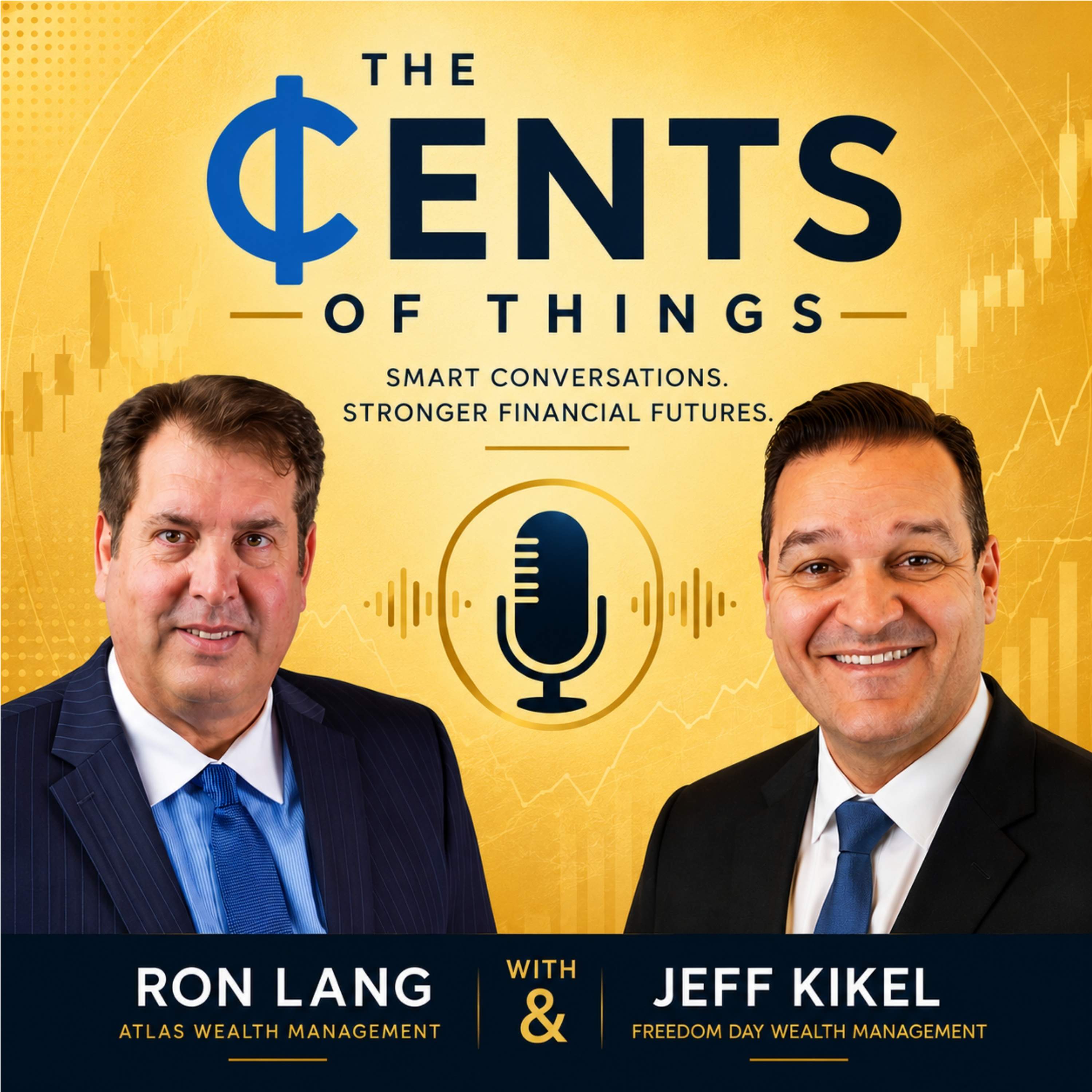 The Interplay of AI and Economic Growth: What It Means for Investors - The Cents of Things 30.07.2026 26minThe principal focus of this podcast episode revolves around the recent fluctuations in the stock market, particularly emphasizing the implications of economic indicators and corporate earnings on investment strategies. I, alongside my co-host Ron, elucidate historical trends in financial markets while providing an incisive analysis of current mortgage rates and the debt levels among leading companies in the S&P 500 and NASDAQ. We delve into the intricacies of Chairman Warsh's recent testimony, highlighting four pivotal points that are poised to influence the Federal Reserve's future policy decisions. Furthermore, we explore the ramifications of rising gas prices and credit card spending trends, particularly in light of seasonal factors such as the World Cup. Our discussion aims to equip listeners with clear and actionable insights to navigate the complexities of the current economic landscape. In the latest episode, Jeff and Ron navigate the tumultuous waters of the modern stock market, offering their audience a wealth of insights drawn from both historical precedents and contemporary developments. The hosts initiate their discussion by referencing significant events from the past that have left an indelible mark on the current market dynamics, thus providing a historical lens through which to interpret today’s fluctuations. They meticulously analyze the performance of major corporations within the tech sector, particularly focusing on the divergent fortunes of Microsoft and Meta, which exemplify the broader volatility characterizing the market. The conversation subsequently shifts to an examination of Chairman Warsh's recent address, wherein he delineates his position on monetary policy, particularly regarding interest rates. Jeff and Ron deftly unpack the implications of Warsh's testimony, identifying key points that are poised to influence the Federal Reserve's actions in the near future. Furthermore, they delve into pressing economic indicators such as inflation rates and the rising debt levels of leading firms, thereby elucidating the challenges that investors may face moving forward. As the episode unfolds, it becomes increasingly clear that Jeff and Ron are committed to fostering a deeper understanding of the intricate interplay between market forces and economic policy. By synthesizing historical context with current events, they equip their listeners with the knowledge necessary to navigate the complexities of the financial landscape, thereby underscoring the importance of informed decision-making in an era defined by rapid change and uncertainty.Takeaways:The stock market remains highly volatile, influenced by technology and AI trends, as discussed in this episode.Chairman Warsh's recent testimony highlighted four critical points that may influence the Federal Reserve's future actions.The economic landscape reveals rising inflation concerns, yet the Federal Reserve emphasizes a commitment to maintaining stable rates.Credit card spending has seen an uptick, driven by seasonal factors such as summer travel and events like the World Cup.The discussion on mortgage rates indicates a disconnect between Fed rate adjustments and actual mortgage rates in the market today.AI investments are reshaping economic dynamics, contributing to increased capital expenditures and presenting new challenges for inflation management.Companies mentioned in this episode:MicrosoftMetaGoogleAppleAmazonNvidiaGeneral MotorsCadillac
 -
 Buy Businesses, Not Jobs | David Hori on Acquisitions, Scaling Companies, and Creating Lasting Wealth 30.07.2026 30minStarting a business from scratch is exciting—but it's also one of the riskiest paths to entrepreneurship.Many founders spend years building a company only to discover that growth is harder than expected, exits are uncertain, and the business depends entirely on them.At the same time, millions of profitable small businesses owned by Baby Boomers are approaching retirement.Many of these businesses are healthy, cash-flowing companies—but without qualified buyers, they risk closing instead of continuing to serve their communities.What if there were a better path?David shares:Why he left the corporate world after helping venture-backed startups scale and exitLessons from working alongside successful foundersHow he evaluates businesses for acquisitionWhy relationships matter more than capital when raising investorsThe growing opportunity created by retiring business ownersWhy he prefers buying and holding businesses instead of flipping themHow business owners can prepare for a successful exit years before sellingWhether you're an entrepreneur, investor, or business owner planning your exit strategy, this conversation offers practical insights into business acquisitions, wealth creation, and long-term ownership.👉 Subscribe to the Freedom Nation Podcast for more conversations about entrepreneurship, investing, business ownership, financial freedom, and multiple streams of income.Why David left corporate law to work with venture-backed startups.What he learned helping founders build companies that were acquired by major organizations.Why buying an existing business can reduce entrepreneurial risk.The importance of finding mentors and implementing lessons immediately.How strategic investors bring more than just capital.Why succession planning is becoming increasingly important as business owners retire.How buying and holding businesses differs from the traditional private equity model.Why owners should build businesses that can operate without them.How AI is helping entrepreneurs scale faster with fewer resources.Why time freedom—not just financial freedom—is the ultimate goal.About the Guest:David Hori acquires profitable, local businesses (10-200 employees, $3-$15M revenue) with a focus on preserving employee teams and company culture.With 25+ years of operational leadership including scaling three tech startups through successful exits (CARMERA to Toyota), David brings hands-on operator experience to every transaction. Most recently, he integrated 1,100 employees post-acquisition with 98% retention. He structures deals that honor seller legacies while ensuring business continuity, and his background enables fast due diligence and decisive action.David maintains an approach focused on long-term value rather than quick flips.Links:https://toplineops.com/https://www.facebook.com/people/Topline-Operators/https://www.instagram.com/toplineops/https://www.linkedin.com/in/iamdavidhori/Fast Five Questions:If you woke up and your business was gone, you have $500, a laptop, a place to live, and food, what would you do first? "I'm probably going to upgrade my subscription to AI. I would invest in AI and then start calling people."What is the biggest mistake that you have made in business? "I burned the ships, I jumped all in on buying businesses, and I ran out of money. Run experiments and get paid for your time. Don't just burn the boat."What is a book that you would recommend? "Dan Martell compresses decades of blood, sweat, and tears into this book. Starting with admin is critical."What is a tool that you use every day that you would recommend? "Claude and Whisperflow.""What is your definition of freedom? "Freedom is getting to focus on time freedom. My daughter's drop-off and pickup time at school goes in my calendar first. Everything else goes around that."About Jeff: Jeff spent the early part of his career working for others. Jeff had started 5 businesses that failed before he had his first success. Since that time he has learned the principles of a successful business and has been able to build and grow multiple seven-figure businesses. Jeff lives in the Austin area and is actively working in his community and supporting the growth of small businesses. He is a board member of the Incubator.Edu program at Vista Ridge High School and is on the board of directors of the Leander Educational Excellence FoundationConnect with the Freedom Nation podcast at https://freedom-nation-podcast.captivate.fm/Connect with Jeff:Instagram: https://www.instagram.com/freedomnationpodcast/Twitter: https://twitter.com/JeffKikelLinkedIn: https://www.linkedin.com/in/jeffkikel/Thanks for listening!Thanks so much for listening to our podcast! If you enjoyed this episode and think that others could benefit from listening, please share it using the social media buttons on this page.Do you have some feedback or questions about this episode? Leave a comment in the section below!Subscribe to the podcastIf you would like to get automatic updates of new podcast episodes, you can subscribe to the podcast on Apple Podcasts or Stitcher. You can also subscribe in your favorite podcast app.Leave us an Apple Podcasts reviewRatings and reviews from our listeners are extremely valuable to us and greatly appreciated. They help our podcast rank higher on Apple Podcasts, which exposes our show to more awesome listeners like you. If you have a minute, please leave an honest review on Apple Podcasts.
Samankaltaiset podcastit


Suosittu maassa
Tämä podcast esiintyy myös näiden maiden podcast-listoilla.
