
The Court Reporter Podcast
The Court Reporter Podcast is a space for court reporters who want to leverage technology and streamline their workflows, moving from feeling overwhelmed to confident and assertive in their work and lives. Hosted by Brynn Reynolds Seymour, it offers grounded conversations and practical insight drawn from real courtroom experience. Each episode explores mental, professional, and relational challenges court reporters face, such as managing stress, communicating with attorneys, and advocating for oneself. The show provides thoughtful guidance, mindset shifts, and simple strategies for time management, boundaries, communication, and leadership within the justice system. It aims to help court reporters trust themselves, think clearly, and build a sustainable business without burnout.
Jaksot
-
 100 | From Backlogged to Building Bigger with Karina Alvarez 14.09.2026 28minWe made it to 100!When I launched The Court Reporter Podcast in January 2023, I simply described myself as “a court reporter with something to say.” Three years and 100 episodes later, here I am with someone who stepped up to help.Karina works fulltime at Regeneron, and then after work she'll come over and help me build systems and processes to streamline this business.And looking ahead, I share the bigger vision behind all of it: helping court reporters spend more time on the record and less time on administrative work, while building businesses and lives that don't require them to carry every piece themselves.This is a conversation about friendship, entrepreneurship, overwhelm, delegation, finding the right people, and figuring out what comes next.And, of course, it's a celebration of reaching 100 episodes.In this episode:Going from 18 transcripts “in the red” to getting the backlog under control by building a teamCreating scalable systemsWhy finding the right people can completely change your businessThe unexpected story behind the new Court Reporter Podcast studioMy journey from traditional court reporting to building a more flexible businessMore time on the record, less time on the adminThe vision for supporting other court reportersWhat's next for the podcast, the studio, and the communityThank you for being part of the first 100 episodes. Here's to the next 100.
 -
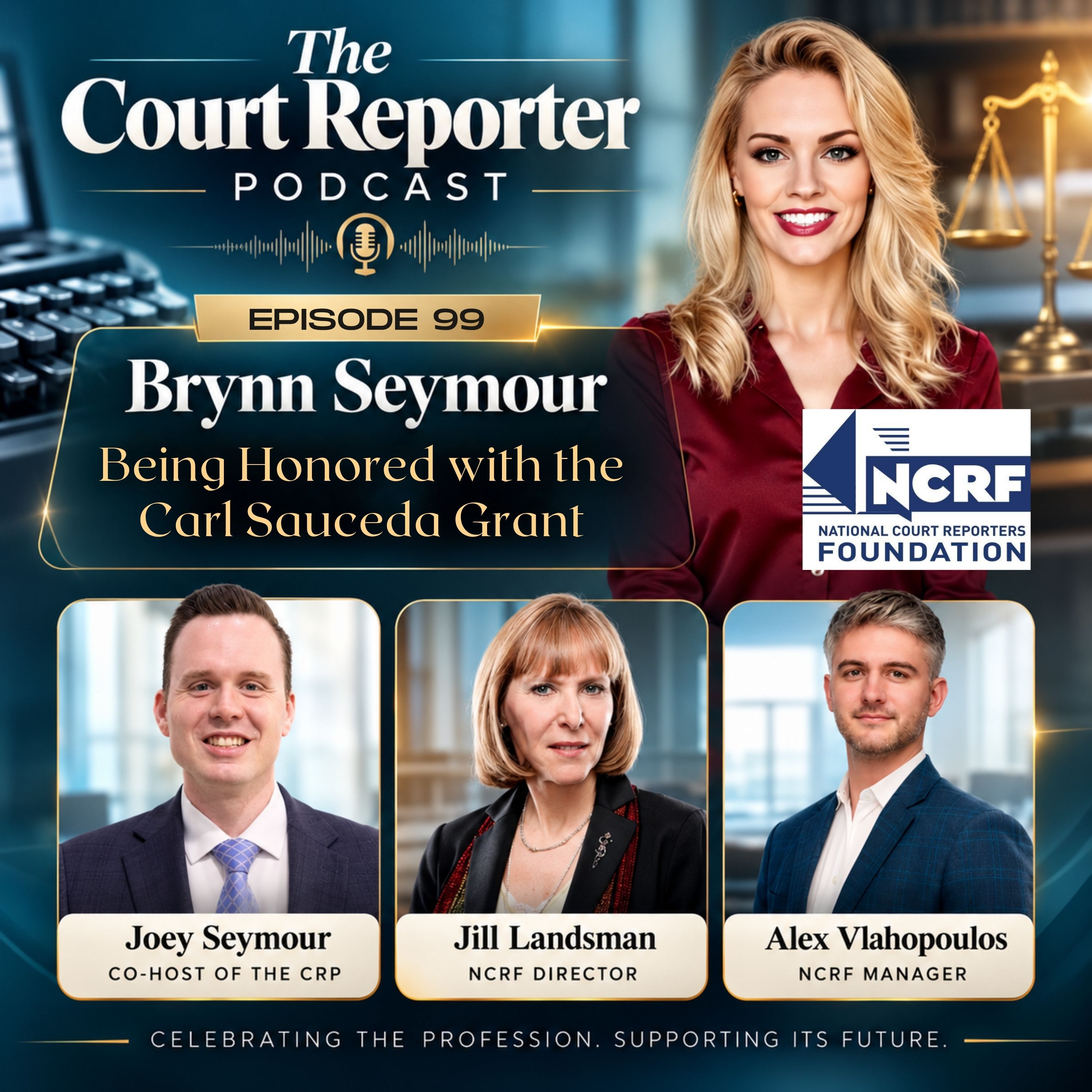 99 | Keep Showing UP: NCRF Awards the Court Reporter Podcast with the Carl Sauceda Grant ft. Alex Vlahopoulos & Jill Landsman 31.08.2026 26minIn this special episode of The Court Reporter Podcast, Joey Seymour steps behind the microphone as guest host for a conversation with Jill Parker Landsman and Alex Vlahopoulos of the National Court Reporters Foundation (NCRF).The conversation gets personal as Jill and Alex share why I, as the host of the Court Reporter Podcast, was unanimously selected as the 2026 recipient! I am truly honored and encouraged by this, so I wrote a song about it... I hope you love it! I'm so excited to continue giving back to the profession. They dive deep into the impact The Court Reporter Podcast has had inside and even beyond the U.S., and why this grant is about much more than receiving an award. I am so grateful to receive this nomination, and I have so many people to thank for supporting along the journey. Keep showing up!In this episode:The story and legacy of Carl SaucedaWhy the grant was created in his honorWhat makes someone an ambassador for court reportingWhy the grant continues to create a ripple effect years after someone receives itWhy Brynn was unanimously selected as the 2026 recipientThe role social media, mentorship, education, and outreach can play in advancing the profession, and why that matters (discussing the nationwide shortage)How to nominate a deserving reporter or captioner for a future Carl Sauceda GrantJill's advice for students and working reporters: never stop practicingWhy technical skill alone isn't enough — and why freelance reporters also need strong business skillsMost importantly, this conversation is an invitation to consider the impact each of us can have on the profession.You don't need a title, a huge platform, or decades in the field to give back. Mentor someone. Encourage a student. Introduce someone to stenography. Share what you've learned. Create something that helps the reporter coming behind you.Keep showing up — because you may never know how far that impact will travel.
 -
 98 | From Australia to the UK to the UN: Life as an International Realtime Reporter 24.08.2026 15minFrom Australia to London: The Global World of Realtime ReportingWhat happens when a childhood fascination with a court reporter on television turns into a 30+ year international career?In this episode, I sit down with Leah Willisdorf, an accomplished international realtime reporter who takes us from her beginnings in Australia to her current home in London.Leah shares how a fictional court reporter on a television show sparked her interest in the profession and ultimately led her to a career spanning more than three decades. She explains why realtime reporting has become such an important skill in today's legal industry and why reporters who master it are increasingly valuable.We also dive into Leah's experience working on international arbitrations and corporate depositions, where the expectations for speed, accuracy, and professionalism are exceptionally high. Leah opens up about the pressures of working in these environments and the reality of burnout in a demanding profession.One of the most valuable parts of our conversation is Leah's advice for creating a sustainable career. She discusses the importance of building a strong support network—including scopists and proofreaders—and finding ways to maintain a healthy work-life balance while working at a high level.Leah's enthusiasm for court reporting is contagious. From international travel and unique assignments to developing highly sought-after skills, she makes a compelling case for why court reporting can be an incredibly rewarding career.This is another episode that was recorded live at the NCRA convention expo hall.In this episode:How a television show inspired Leah to become a court reporterLeah's journey from Australia to LondonBuilding a 30+ year career in court reportingWhy realtime reporting is becoming increasingly importantWorking on international arbitrationsThe demands of corporate depositionsHandling high-pressure assignmentsBurnout and the challenges of the professionWhy scopists and proofreaders are so importantBuilding a sustainable work-life balanceThe opportunities for travel and international workWhy aspiring reporters should develop their realtime skillsTakeawaysInspiration can come from the most unexpected places—even television.Realtime reporting is one of the most valuable skills a modern court reporter can develop.International arbitrations and corporate depositions demand exceptional speed, accuracy, and preparation.A strong support network can make a demanding career much more sustainable.Burnout is a real challenge, and maintaining balance is essential for a long career.Developing realtime skills can open the door to unique assignments and international opportunities.Court reporting can provide a career filled with travel, variety, and continuous professional growth.
 -
 97 | Stop Doing Everything Yourself: How Top Court Reporters Build Teams, Earn More & Avoid Burnout with Cindy Sebo 18.08.2026 23minFrom a Chance Encounter to 30+ Years in Court ReportingIn this episode, I sit down with Cindy Sebo, a court reporter certified across 16 states with more than 30 years of reporting experience. If you weren't already convinced from my 96 other episodes that you need a VTM (Virtual Transcript Manager, basically like a super-scopist & project manager of the entire production pipeline), I think you will finally be convinced after listening to this.Cindy shares the unexpected story of how she discovered court reporting (and how similar it is to mine!!!) and how to earn more as a court reporter... spoiler alert: it's by having your own dedicated VTM!This episode was recorded live at the NCRA convention expo hall, specifically at a booth that Steno had set up which worked out very well for podcast recordings.Listen to learn business and leadership tips that will empower you to go from "transcript-to-transcript" to CEO, running the show :)
 -
 96 | What Do Catholic Clergy, Big Tobacco & the Food Industry Have in Common? 10.08.2026 26minWhat happens when a court reporter is assigned to a case that's simply too personal to remain neutral?In this episode, Brynn explores one of the profession's most difficult ethical questions: Where is the line between impartiality and personal conviction? The conversation begins with her experience covering clergy sexual abuse litigation.From there, the discussion expands into a broader conversation about corporate accountability, public health, and the responsibility of those who document history as it unfolds. Drawing comparisons between the tobacco industry's past and today's food industry, Brynn examines whether the same patterns of corporate influence and deception are repeating themselves—and what that could mean for future litigation.She also discuss the idea of a modern-day "Mississippi moment," exploring how landmark legal cases have the power to reshape industries, influence public opinion, and hold powerful corporations accountable. Throughout the conversation, Brynn reflects on the emotional weight of reporting on cases involving widespread harm and why some stories change the people who document them just as much as the people involved.Whether you're a court reporter, attorney, or simply interested in the intersection of ethics, journalism, and public health, this episode offers a thought-provoking conversation about truth, responsibility, and the lasting impact of the legal record.In this episodeThe ethical challenges court reporters face when covering emotionally charged cases.How clergy sexual abuse litigation changed one reporter's perspective on neutrality.Why the food industry is increasingly being compared to Big Tobacco.What a new "Mississippi moment" could mean for corporate accountability.The role court reporters play in documenting history during landmark litigation.Why some cases leave a lasting emotional impact on the professionals who cover them.How legal proceedings can influence public awareness and drive systemic change.
 -
 95 | Norma Alicia Thieme: 42 Years of Court Reporting 04.08.2026 27minFrom Hitchhiking to Realtime: 42 Years Behind the Steno MachineWhat do you do when your very first day on the job starts with no car... and ends with reading back testimony from double-sided paper notes because you ran out of paper?In this episode, I sit down with Norma Alicia Fame, an Official Court Reporter in Houston, Texas, who has spent more than 42 years in one of the most demanding professions out there.Norma shares unforgettable stories from the early days of court reporting, including hitchhiking to her first deposition, surviving some incredible career "horror stories," working with manual steno machines, and witnessing the evolution of our profession from paper notes to realtime technology.We also talk about AI, why the human element of court reporting still matters, and the advice she'd give to anyone considering this amazing career.Norma's passion is contagious, and after spending time with her, it's easy to understand why she's still just as excited about court reporting today as she was over four decades ago.In this episode:How Norma discovered court reportingSurviving the first days on the jobLife before computers and realtimeThe biggest changes she's seen in 42 yearsWhy AI can't replace skilled court reportersMentoring the next generationWhy she still loves the profession after all these yearsTakeawaysDetermination can take you a long way—even if it means knocking on a stranger's car window to get to your first job.Every experienced court reporter has stories that new reporters can learn from.Technology has transformed court reporting, but it hasn't replaced the need for skilled professionals.Realtime writing is becoming increasingly valuable throughout the profession.Mentorship plays an important role in helping future court reporters succeed.Loving what you do is one of the biggest keys to a long and rewarding career.Mentioned in this episodeRealtime reportingArtificial Intelligence (AI)Houston Civil Courts
 -
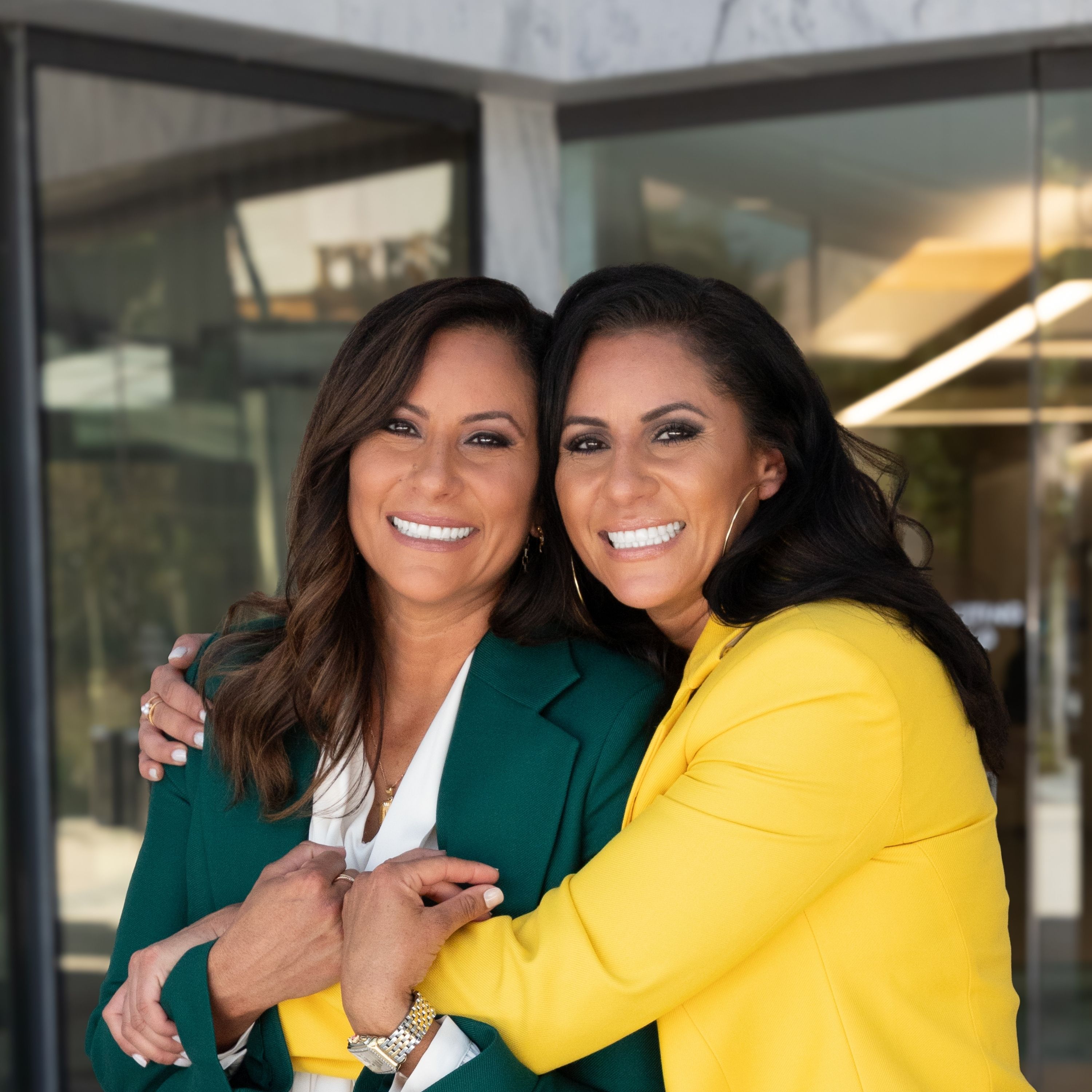 94 | Kamryn & Whitney Part 2 | The Veritext Acquisition: What Really Happened 27.07.2026 26minWhy would two of Southern California's most respected court reporters sell their agency to one of the industry's largest companies?In Part 2 of Brynn's conversation with Kamryn and Whitney, the twins address the questions and criticism that followed KW Court Reporting's acquisition by Veritext. They share why they made the decision, the realities of running an independent agency, and why they believe partnering with a larger company was the best path forward for their staff, clients, and the profession. It's an honest conversation about leadership, change, and the future of court reporting during one of the industry's most transformative periods.They explain what led to the acquisition, the realities of running an independent reporting agency, and why they believe the future of court reporting depends on adapting to a rapidly changing industry. The conversation explores everything from the nationwide court reporter shortage and evolving technology to the responsibility agency owners have to their reporters, staff, and clients.Kamryn and Whitney also respond to the criticism surrounding the acquisition, sharing why they believe compassion, transparency, and a willingness to embrace change are essential if the profession is going to thrive. Whether you agree with their decision or not, this episode offers a thoughtful look at the challenges facing court reporting today and the difficult decisions many agency owners may soon be forced to make.In this episodeWhy Kamryn and Whitney decided to sell KW Court Reporting to Veritext.The biggest challenges facing independent court reporting agencies today.How the nationwide court reporter shortage is changing the industry.The role technology and digital reporting are playing in the future of court reporting.How the twins responded to criticism following the acquisition.Why they believe leadership sometimes means making difficult decisions that others may not immediately understand.These sound more like reasons to listen than conclusions after listening.Companies mentioned in this episode:KW court reportingVeritext
 -
 93 | The Court Reporter Shortage: Is Hollywood Part of the Problem? 20.07.2026 17minIs Hollywood accidentally contributing to the court reporter shortage?It might sound like a strange question, but the way court reporters are portrayed on screen could be having a bigger impact than most people realize.In this episode, Brynn explores how decades of inaccurate portrayals have shaped public perception of the profession, why so few people understand what court reporters actually do, and how that misunderstanding may be contributing to the nationwide shortage.Brynn also shares a personal update after taking a short break from the podcast, what she's been working on behind the scenes, and why she's excited to be back with new episodes every Monday.Whether you're a court reporter, a legal professional, or simply curious about the future of the justice system, this episode offers a fresh perspective on a profession that often goes unnoticed—but is essential to making justice possible.Key TakeawaysWhy Hollywood's portrayal of court reporters may be contributing to the nationwide court reporter shortage.What court reporters actually do—and why they're an essential part of the justice system.The misconceptions that keep people from considering court reporting as a career.Brynn shares what she's been up to during her break from the podcast and why she's excited to be back.A behind-the-scenes look at the challenges of building a long-term career in court reporting.Why changing the conversation around court reporting could help inspire the next generation of professionals.Companies mentioned in this episode:IndeedLinkedInZipRecruiterUpworkPirozzi & Hillman ReportingLexitas
 -
 92 | Court Reporter Podcast Award Nominations Officially Open 01.06.2026 22min🏆 The Court Reporter Podcast Awards: Nominations Are OpenWhat makes an attorney unforgettable from a court reporter's perspective?It's probably not what you think.In this episode, Brynn officially opens nominations for the first-ever Court Reporter Podcast Awards and reveals some of the surprisingly small things that make a huge impact on the record.If you've ever worked with an attorney or judge who just "gets it," this episode is for you.🎙️ Listen now and nominate someone who deserves recognition.🔗 Nomination Form:[LINK COMING BY 6/2]
 -
91 | 🎵 On The Record #2: ReporterFlow 30.05.2026 6minEpisode 91 | 🎵 On The Record #2: ReporterFlowIf there is one song that captures the heart of the Court Reporter Podcast, this is it.ReporterFlow is about the transformation so many court reporters are seeking.Not just becoming a better writer or writing faster. Not just taking on more work (and then drowning in the admin). But finally creating a business that supports your life instead of consuming it.Most court reporters enter this profession because they love the craft. They love preserving the record, capturing testimony, and being part of the legal process.What they don't expect is the endless administrative work that comes with it.Scheduling. Billing. Collections. Scopist coordination. Workflow management. Team management. Production deadlines. And the mental load of trying to keep track of everything.ReporterFlow tells the story of what happens when you stop trying to carry all of that alone.It's about building systems, creating structure, developing a team you can trust. It's the mindset shift from freelancer to CEO.For me, that journey started in 2018 when I hired my first VTM, or Virtual Transcript Manager. It completely changed the way I operated my business and allowed me to focus more of my time and energy on the work I actually love.This song is more than a song! It's a reminder that success doesn't have to come from working harder... Sometimes it comes from building better systems.Turn it up. Play it at the gym. Play it before a deposition. Play it whenever you need a reminder that there is a better way to build your business, and you're almost there!Enjoy ReporterFlow.
-
90 | 🎵 On The Record #1: I'm on the Record 29.05.2026 7minWhat does a court reporter hear when everyone else is talking?Before you listen, I want to challenge you to listen to this song in two different ways.As court reporters, we have a unique perspective because we spend our lives preserving moments that everyone else forgets.In this special music episode of the Court Reporter Podcast, we hear a song inspired by the unique role court reporters play in preserving the spoken word. The song explores the pressure, responsibility, and quiet professionalism required to capture the record accurately while others focus on arguments, objections, strategy, and testimony. Some listeners may hear a song about court reporting. Others may hear a deeper story about truth, memory, accountability, and the lasting impact of our words. What do you think the song is really about?Send your thoughts to [email protected]'d love to hear your interpretation.New music episodes and traditional Court Reporter Podcast episodes are coming soon.
-
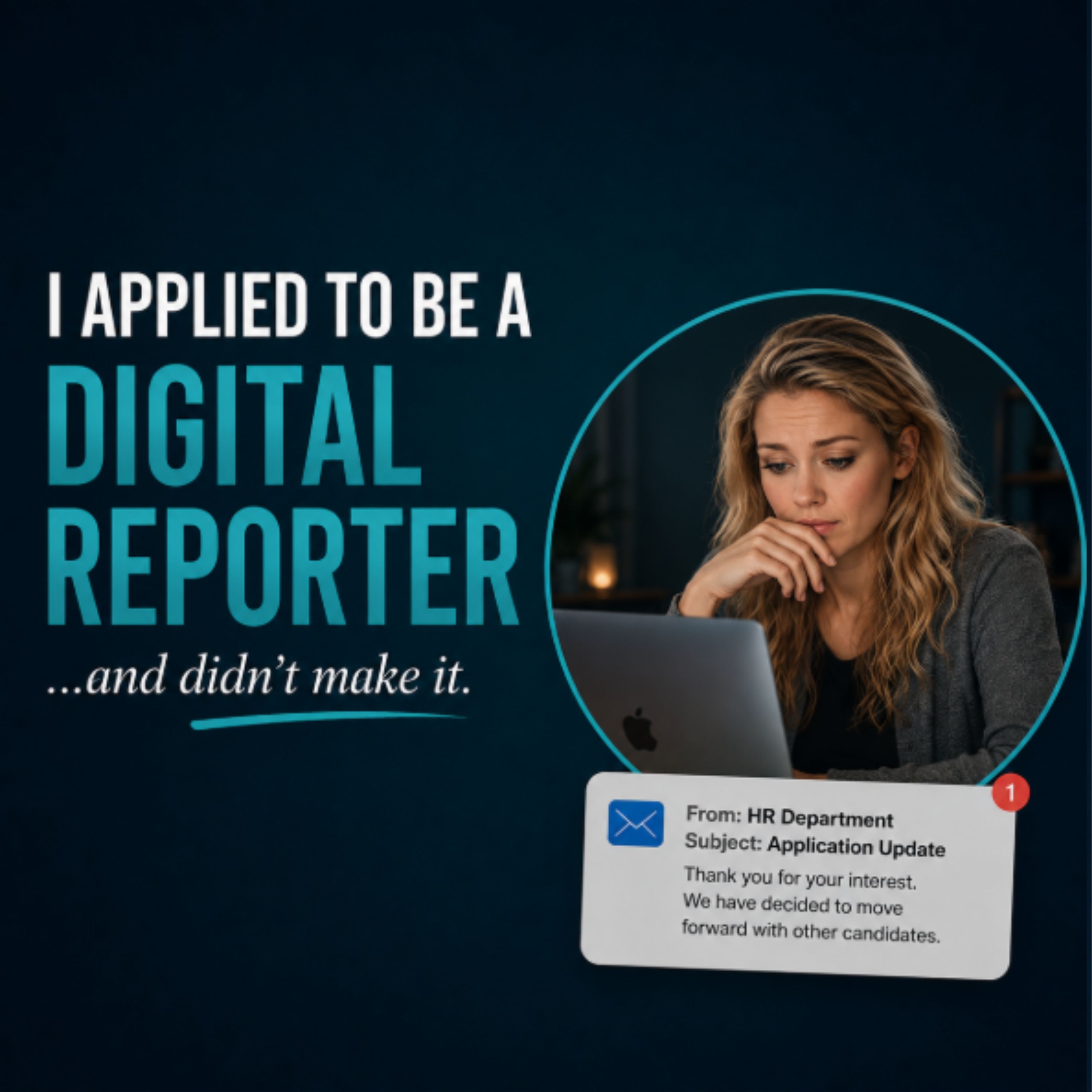 I Applied to Digital Reporting: What I Learned About Our Role 07.05.2026 26minLately, I’ve been questioning everything about my career path as a court reporter.In this episode, I share why I applied for a digital court reporting position… why I didn’t get the job… and what I learned.Topics covered:• the reality of juggling transcript production, deadlines, admin work, and life balance• why training my new VTM (Virtual Transcript Manager) has completely changed the way I view this profession• the hidden cause of so much burnout in court reporting• the CAPTUR merger between AAERT and STAR• why I believe the human being behind the record matters more than the tool being usedAnd for the first time ever… I’m releasing one of my original industry-inspired songs:🎵 “We Preserve the Testimony”This episode is honest, hopeful, personal, and the music is catchy!MENTIONS & LINKS🎵 Music created using Suno AI🎙️ Court Reporter PodcastOfficial Website📩 Interested in learning more about VTMs (Virtual Transcript Managers)?Email: [email protected]🎧 Follow me on Spotify for upcoming song releases inspired by the court reporting profession.🏛️ Organizations Mentioned:• AAERT• STAR• CAPTUR
 -
 #88 - From Steno Machine to CEO: How Two Court Reporters Built a 200-Reporter Agency from a Parking Lot 01.05.2026 28minMost court reporters don't go to school thinking they're going to become entrepreneurs. But that's exactly what happens — and nobody teaches you how.Whitney Kumar and Kamryn Villegas did it anyway. The identical twins — one minute apart — spent 13 years building KW Court Reporting from the ground up: a $350-a-month office, note cards with their names on them as business cards, and their parents following them in a separate car to law firm parking lots to watch the babies while they knocked on doors with a tin of their mom's famous chocolate chip cookies.In this episode, they walk us through exactly how they built one of Southern California's most respected court reporting agencies — a roster of 200 reporters, a reputation for treating reporters like partners, and a client base built entirely on loyalty and love for the profession.We get into:The no-backup-plan mindset that Kamryn says separates the people who make it from the people who don'tHow they ran their agency as the only two reporters on staff — and attorneys didn't even know there were two of themThe real challenge of being a freelancer and managing your time when you also want to build something biggerWhat it actually looks like to build a team around yourself so you're not the bottleneckAnd at the end — they're just about to tell us what happened with the Veritext acquisition. That's Episode 89. Don't miss it.Connect with Whitney & Kamryn: Website: kwcourtreporting.com Email: [email protected] Instagram & Facebook: @kwcourtreporting
 -
#87 - Train Your VTM (Virtual Transcript Manager) With Me! 20.04.2026 23minWhat is a VTM? A Virtual Transcript Manager is a project manager for court reporters. They manage the coordination between scopists and proofreaders, the data, the deadlines, the captions and appearances, everything that allows court reporters to focus 100% on the part of the workflow that only we can do: showing up and taking down the testimony as accurately as possible, in realtime.I already know what you might be thinking -- if you haven't heard me talk about the VTM before and explain in depth what it is, you might be jumping to conclusions about some kind of AI tool to manage our transcripts. While that is my ultimate goal, right now it's 100% human-led while we solidify the process -- so if you were ever interested in my VTM program, NOW is the time to follow along and train your VTM with me. All you have to do is pick the right person -- whether you have to post the job on Indeed and host interviews like I did, or whether you have a college student you trust and can train, or a loyal scopist that's willing to take on project management of your transcripts (for an agreed-upon rate), feel free to join my cohort (this is coming into existence as I'm writing this) and we can totally train our VTMs together! If not, don't worry, we'll find an efficient way to document the full training process and share everything. Terms that come up in this episode:VTM (Virtual Transcript Manager) A person who manages the entire transcript process for a court reporter, from organizing files to coordinating scopists and proofreaders, so the reporter can focus on writing and taking jobs.Freelance Court Reporter A court reporter who works independently, taking jobs from different agencies or clients rather than being employed by one court or company.Calendar Calls Routine court proceedings where multiple cases are quickly reviewed or updated, usually without testimony or detailed arguments.Contested Hearing A hearing where witnesses testify and evidence is presented because there is a dispute between parties.Transcript The official written record of everything said during a legal proceeding.Scoping The process of editing a transcript using specialized software to clean up translation errors while verifying against the audio which is synced to the transcript.Scopist A professional who edits transcripts for court reporters.Proofreader The final reviewer who checks transcripts for grammar, punctuation, and accuracy before submission.CaseCAT (CaseCATalyst) A widely used software program that court reporters use to write, edit, and produce transcripts.Realtime The ability for a court reporter to translate stenography into readable text instantly as they write.Includes Pre-set text elements (like appearances, headers, or formatting blocks) inserted into transcripts to save time and maintain consistency.Appearance Page A section at the beginning of a transcript listing all attorneys, parties, and participants involved in the case.Caption The case heading at the top of a transcript that includes the court, case name, and case number.Expedite / Overnight / Daily Different turnaround times for transcripts:Expedite: Faster than normal deliveryOvernight: Delivered the next dayDaily: Delivered the same dayBoard of Parole Hearings Administrative hearings where decisions are made about whether an inmate may be released from prison.Hard Stop A strict, non-negotiable time when work must end, regardless of whether proceedings are finished.Project Management (for Court Reporters) Tracking deadlines, managing transcript orders, coordinating team members, and ensuring timely delivery of work.Data Entry (in Court Reporting) Inputting case details, formatting elements, and transcript information into files and systems.OneDrive (Workflow Tool) A cloud storage system used to organize files, track deadlines, and collaborate securely.Mental Bandwidth The amount of mental capacity available to manage tasks, decisions, and responsibilities.Companies mentioned in this episode:VeritexCase CATIndeedManhattanvilleHonda Prologue
-
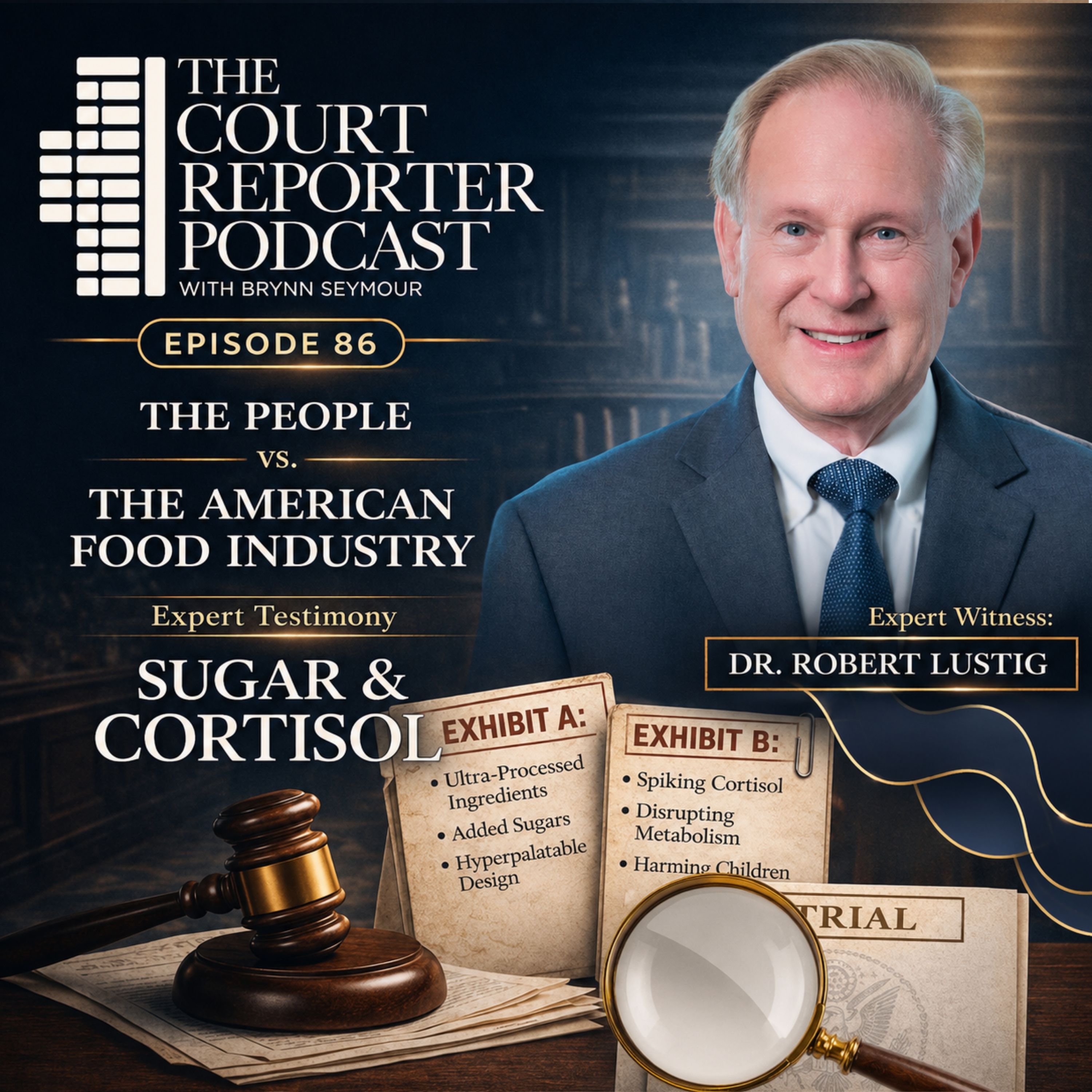 #86 - Expert Testimony, Sugar, and Cortisol: A Conversation with Dr. Robert Lustig 14.04.2026 21minIn this episode of The Court Reporter Podcast, Brynn sits down with Dr. Robert Lustig, a leading expert in metabolic health, to explore the science behind sugar, energy, and what’s really happening inside the body.From the perspective of court reporters and legal professionals, this conversation goes beyond health advice. It offers insight into how expert witnesses think, how complex medical testimony is structured, and why understanding these concepts can elevate your confidence in the room.Dr. Lustig shares his journey from medicine to studying public health law, explains the difference between behavior and biochemistry, and breaks down how systemic factors may be influencing health outcomes on a much larger scale.The conversation also touches on practical, real-life strategies for maintaining focus and energy during long depositions — something every court reporter can relate to.In this episode, we cover:The difference between behavior and biochemistry in healthWhy “calories” are not the full pictureWhat ATP is and why it matters for energy and focusHow sugar impacts the body at a cellular levelThe concept of “regulation through litigation”What court reporters can learn from expert witness testimonySimple, practical ways to protect your energy during long depo daysKey Terms Mentioned:Parens patriaeFirst Law of ThermodynamicsAdiposityDEXA scanHypothyroidismMitochondriaATPCortisolRegulation through litigationResources & Further Reading:Fat ChanceThe Hacking of the American MindConnect & Share:If you found this episode helpful, share it with another court reporter!Coming Next:A conversation with Whitney and Kamryn breaking down the Veritext acquisition and what it means for court reporters.
 -
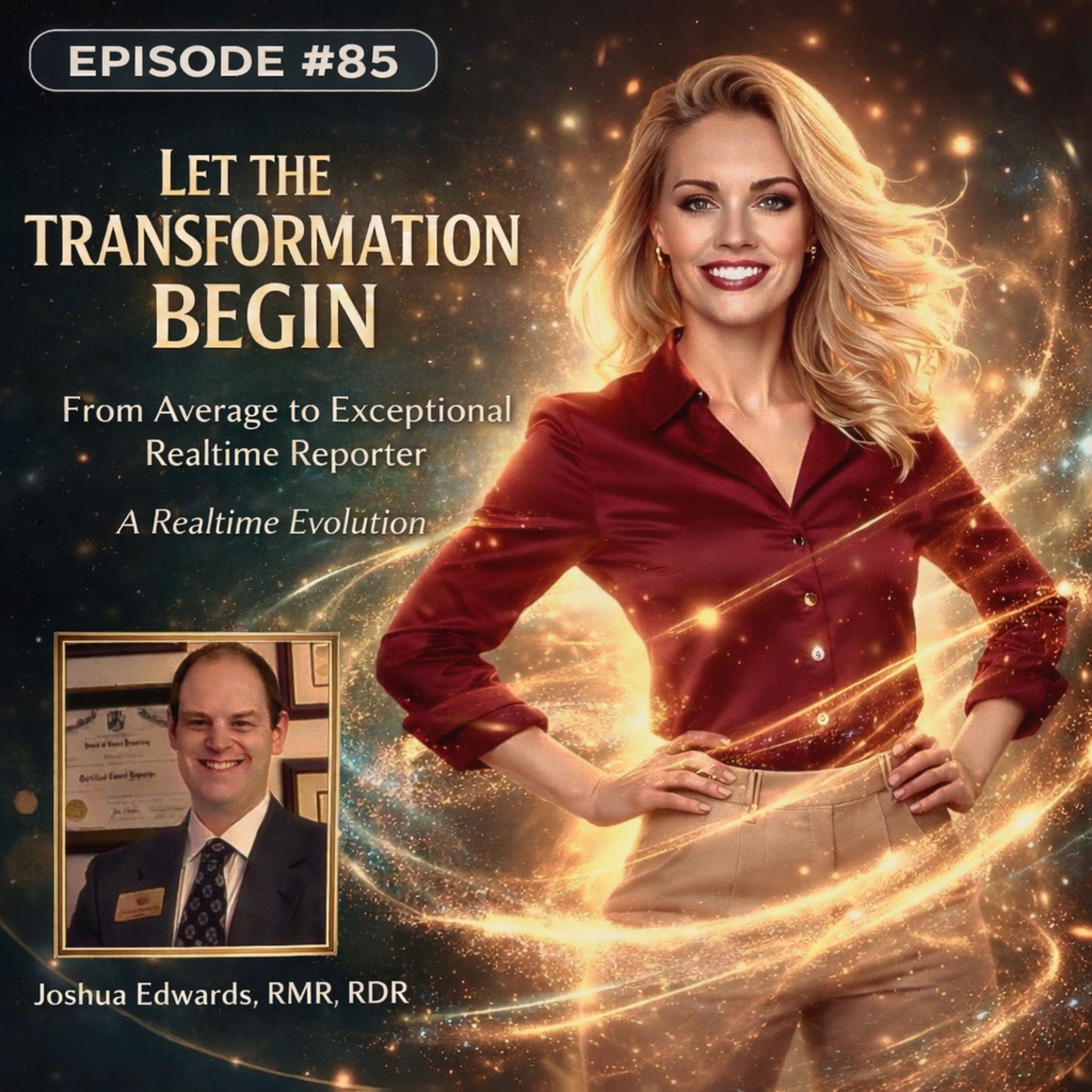 #85 - Transforming from Average to Exceptional High-Stakes Realtime Reporter: Session 1 with Joshua Edwards, RMR, RDR 04.04.2026 43minIn this episode, I’m taking you behind the scenes of a decision I’ve been talking about for years… but am finally executing.At the start of 2026, I made a commitment to either walk away from this profession or step fully into becoming a high-level, real-time court reporter. No more in-between.So I did something different.I reached out to some of the top real-time reporters in the industry and offered $10,000 for true coaching and accountability. Not casual mentorship, but real structure, real expectations, and real follow-through.Joshua Edwards was the first to say yes.This episode is a raw recording from our first session together. It’s unfiltered, honest, and full of the kinds of conversations that don’t usually get shared publicly… but probably should.We talk about:The hidden gaps between court reporting school and real-world expectationsWhy doing everything manually is slowing you down and causing burnoutThe importance of setting boundaries with agencies (including not acting as a remote technician)The difference between federal and state proceedings in a practical, usable wayWhy so many reporters feel like they’re “missing something”… and what to do about itThe systems, habits, and mindset required to move from average to exceptionalThis is just the beginning.I’m documenting the entire journey as I work toward becoming a real-time reporter, not just for myself, but for anyone else who feels stuck, overwhelmed, or unsure of what they’re missing.If that’s you… you’re not alone.
 -
 Interpreters & the Record: Where the Rules End and Reality Begins 27.03.2026 30minWhat is the court reporter’s role when something on the record feels… wrong? And how can court reporters and interpreters work together effectively to enhance the record-taking process?In this episode, Brynn explores one of the most nuanced and debated issues in court reporting: working with interpreters (including "underqualified" or reporter-illiterate interpreters). Where is the line between neutrality and responsibility? When should a reporter remain silent, and when is it necessary to speak up?Drawing from real deposition experiences, industry discussions, and state rules across New York, California, Texas, and Illinois, this episode breaks down what the law says and what actually happens in the room.More importantly, it challenges a deeper question:Are we simply capturing the record… or are we responsible for protecting it?🎧 In This EpisodeThe difference between interpretation and verbatim testimonyWhy third-person interpreting creates serious transcript issuesThe real problem with mixing English and interpreted answersWhat state rules actually say about the reporter’s roleA critical distinction between content vs. structure of the recordWhen speaking up may be necessary to preserve clarityWhy this issue points to larger gaps in interpreter and legal training⚖️ Rules & Authorities ReferencedThis episode references the following rules and professional guidance:New York – CPLR § 3113(b) Requires that testimony be recorded verbatim by the deposition officerCalifornia – Court Reporters Board Best Practices States that reporters should not interrupt or correct interpretation and are responsible for capturing, not creating, the recordTexas – Rules of Civil Procedure 203.1 & 203.2 Defines the deposition officer’s role as neutral and limited to recording testimonyIllinois – Supreme Court Rules 206 & 207 Requires the officer to record testimony and certify it as a true recordNational Court Reporters Association (NCRA) Code of Professional Ethics Emphasizes impartiality, professionalism, and maintaining the integrity of the reporting profession🎯 Key TakeawayThere is a critical difference between:Intervening in interpretation (not our role) vs.Intervening when the structure of the record breaks downThis episode explores where that line may exist—and why it matters.🎤 Join the ConversationHave you experienced this in a deposition?Would you speak up… or stay silent?🎙 You can now leave a voicemail directly for the podcast.Visit the Court Reporter Podcast website and click the green microphone button in the bottom right corner to record your message (up to 2 minutes).Longer thoughts? Submit multiple messages.Selected responses may be featured in an upcoming episode.🔗 Connect & ShareIf this episode resonated with you, share it with a fellow court reporter, scopist, or legal professional.This is a conversation our industry needs to have.
 -
 #83 - What NOT to do During Remote Proceedings: Mistakes I've Learned Over Zoom 21.03.2026 20minEpisode DescriptionYou know what no one tells you about remote depositions?It’s not the big mistakes that trip you up… It’s the small, seemingly harmless ones.The moments where you think you’re being helpful. The times you speak up when you shouldn’t… or stay quiet when you shouldn’t.In this episode, I’m sharing real stories from the field—times I learned the hard way what not to do as a court reporter.From awkward read-and-sign situations… To accidentally overstepping with attorneys… To one simple assumption that humbled me instantly…These are the lessons that don’t always get taught—but absolutely matter when you’re on the job.If you’re a new reporter—or even experienced—this episode will help you avoid the kinds of mistakes that can quietly impact your professionalism, confidence, and relationships with counsel.In This Episode, You’ll Learn:Why you should never bring up read and sign unless it’s mentionedThe “helpful” question that can actually create more work for everyoneHow one small assumption can instantly shift the tone of a proceedingWhat to do when exhibit numbering goes wrong (and why timing matters)The Zoom habit that can make you miss critical moments on the recordHow to stay in your role while still being proactive and professionalKey TakeawayIn court reporting, it’s often the smallest decisions that have the biggest impact.Learning how to navigate those moments with clarity, neutrality, and confidence is what separates someone who is simply “getting through the job”… from someone who is truly in control of the room.Share This EpisodeIf this episode helped you, share it with another court reporter—especially someone who’s just getting started. These are the lessons we usually learn the hard way… but they don’t have to be.Connect With Me🎙️ The Court Reporter Podcast 📩 [email protected] AI oversight bill receives sponsorshipU.S. Rep. Hageman and U.S. Sens. Wicker and Welch introduce
 -
 #82 - The CEO of the Record (and the Future of the Field) 13.03.2026 26minCourt reporting isn’t just about the record—it’s about the business you’re running (or the one that’s running you).In this episode, Brynn Seymour cuts through the industry noise to address the "hidden" side of the profession: the struggle to maintain total accuracy while managing the chaos of being a solo entrepreneur. Most reporters are trained to be brilliant stenographers, but they’re left in the dark when it comes to being CEOs.What we’re covering:The Business Gap: Why the transition from reporter to business owner is failing so many, and how to bridge it.The LA Executive Roundtable: A look inside the upcoming "Tea Party" at the Biltmore—where we’re sitting the "Old Guard" (Veritext/Esquire) across from the "New Tech" (Steno/Filevine) to demand transparency.The Workflow Revolution: A first look at Brynn’s automation system designed to kill the administrative burnout—from goal tracking to automated invoicing.This isn't just a podcast; it’s a call to action. It’s time to stop waiting for the "9-to-5ers" to fix our industry and start building the solutions ourselves.Key Takeaways:Own the Business, Not Just the Seat: Why you need to view your reporting as a high-margin enterprise.Tech as a Teammate: How automation (and our new app) is solving the "admin tax" on your time.The Power of the Room: Why our LA Summit is the most important conversation happening in the industry this year.
 -
#81 - Advancing Justice: Creating Sustainable Solutions for Court Reporters 06.03.2026 5minThe court reporting profession is confronted by rapid advancements in artificial intelligence and an alarming rise in reporter burnout. As the mechanisms for capturing and delivering the official record evolve, court reporters find themselves grappling with the immense responsibilities of their roles, often at full capacity. This episode delves into the tensions that have emerged within the industry, as well as the solutions.We advocate for a future where technology and the expertise of court reporters coexist harmoniously, building hybrid models that enhance efficiency without compromising the integrity of the profession. Our mission is to cultivate a collaborative environment that empowers reporters, optimizes administrative workflows, and ultimately upholds the pursuit of justice.Takeaways:The court reporting profession stands at a critical juncture, facing challenges that require our full attention.Advancements in technology and AI, artificial intelligence, are transforming the methods of record capturing and delivery.Court reporters are confronting unprecedented levels of burnout while maintaining the official record's integrity... which will be explored more thoroughly in a future episode!A collaborative approach between stenographers and tech is essential for the profession's sustainable future.The "old" system is deemed unsustainable by many practitioners, necessitating urgent reform to address systemic issues.Leadership and vision are imperative to ensure that the profession evolves while preserving vital expertise.And then, of course, my personal story for the last 5 minutes! :)
Samankaltaiset podcastit


Suosittu maassa
Tämä podcast esiintyy myös näiden maiden podcast-listoilla.
