
Hims House
Jonathan Stern
0
Hims House is a podcast for investors in Hims & Hers, the telehealth and wellness company. Hosts Jonathan Stern and Patrick Lester discuss key topics affecting the stock, including telehealth, pharma, GLP-1s, compounding, and the future of healthcare. New episodes are released weekly, with deeper analysis available on the show's Substack.
Jaksot
-
 OpenLoop CEO: the peptide gray market is 2-3x bigger than analyst estimates, likely $6-8 billion 16.09.2026 30minThanks to our partner:Superpower - https://superpower.comIn episode 80 of Hims House, Jonathan Stern talks with Dr. Jon Lensing, co-founder and CEO of OpenLoop, the white-label company that runs telehealth behind the scenes for other brands. Lensing started OpenLoop out of the University of Iowa's medical school and says the platform will see more than 8 million patients this year and treat more than a million a month, across 400-plus brands from telehealth companies to grocery stores, dating apps, and gyms. He said he thinks GLP-1s will become a default medication the way statins did for cholesterol: he expects 80% of people over 30 could be on them by 2035, and he thinks Andrew Dudum's path to $40-$50 a month cash-pay is directionally right, maybe lower. On peptides he thinks some could be legal to compound before year-end, but not all at once. And he sizes today's gray market at $6 to $8 billion. 00:00 - Sponsor: Superpower01:37 - The Shopify of virtual healthcare04:32 - OpenLoop serving 8M patients this year05:33 - MEDVi 07:08 - OpenLoop's January data breach08:13 - Consumerism in healthcare10:38 - 80% of people over 30 will be on GLP-1s16:22 - Peptides likely this year, but not all at once18:46 - Ready to launch peptides the day FDA allows21:17 - Peptide API from FDA green-listed vendors22:51 - Peptide gray market is $6 to $8 billion27:01 - AI data moatsDisclaimer: This podcast is for informational and entertainment purposes only. Nothing discussed should be considered financial, investment, or legal advice. Always consult with a qualified professional before making financial decisions.
 -
 HIMS stock token hit $132 on Robinhood over the weekend due to ... $BONER coin?! 😳 03.09.2026 39minThanks to our partner:Superpower - https://superpower.com🚨 WARNING: This is not a typical Hims House podcast! I wanted to do this interview because what happened on Robinhood Chain this weekend directly affected $HIMS -- and I think Hims investors should at minimum understand what happened.Jonathan Stern talks with Eric, an Ethereum OG and the world's largest $BONER holder, and Yoni, co-founder of Long.xyz, about BONER — a memecoin on Robinhood Chain paired with the $HIMS stock token. BONER reached roughly 12,000 holders in five days and helped make Hims a top-15 Robinhood stock token. Then, with the NYSE closed and limited Hims tokens available on-chain, $HIMS briefly traded at $132 versus a $28.75 NYSE close. Token supply jumped from roughly 20,000 to 80,000 in 72 hours. Eric and Yoni both stress that BONER is highly speculative and could go to zero. But Eric's longer-term thesis is that every major tokenized stock could eventually develop its own memecoin community.00:00 - Sponsor: Superpower01:27 - Why should Hims investors care? 03:35 - 12K Boner holders in five days06:00 - Why buy Boner instead of the stock token14:31 - 99% of meme coins go to zero19:00 - Open pairing: Boner-Hims22:27 - $132 on chain vs $28.75 on the NYSE26:44 - Could this trigger a short squeeze?34:06 - Has anyone at Hims called?36:25 - Every major stock gets a meme coin communityDisclaimer: This podcast is for informational and entertainment purposes only. Nothing discussed should be considered financial, investment, or legal advice. Always consult with a qualified professional before making financial decisions.
 -
 🚨 THE FTC SUES HIMS & HERS -- Full breakdown with Gaston Kroub 02.09.2026 53minThanks to our partner:Superpower - https://superpower.comJonathan Stern talks with Gaston Kroub, founding partner of K2K Law, registered patent attorney, and Hims House's resident legal expert on his third appearance, about the FTC's July 29 federal complaint against Hims & Hers. Kroub calls the filing a public "marketing document" aimed at a quick settlement and ranks three allegation buckets: health data sharing with Meta and Snap as the most exposure, hard cancellation under ROSCA (Restore Online Shoppers' Confidence Act) second, charging before a real consultation as the least dangerous. The case is in the Northern District of California before Judge Vince Chhabria; an overbroad sealing request triggered an order to show cause that was later lifted with a warning, and Hims' response is due Sept. 28 with an initial case management conference Oct. 30. They walk through Hims' defense lineup at BakerHostetler and Keker Van Nest & Peters, treat the $62.5M legal accrual as likely the low end of a settlement, and cover co-plaintiffs Utah and LA County. His likely path is a payment plus operational changes; absent a deal, litigation could run years, and he treats the Visa chargeback spike as a minor narrative risk.00:00 - Sponsor: Superpower01:35 - Complaint is a "marketing document"03:52 - He ranks the three buckets08:15 - Amazon Prime and Uber first11:53 - ROSCA stretched to health data17:12 - Northern District of California and Judge Chhabria19:44 - Overbroad sealing nearly got sanctions23:57 - BakerHostetler and Keker26:12 - The $62.5M legal accrual27:32 - A Motion to Dismiss costs six figures28:51 - $50M floor, nine-figure ceiling?30:31 - Utah and LA County33:06 - Pay, plus changes to the flows35:46 - Would Ro and Noom have to follow?38:00 - Why Hims, not Ro39:42 - Visa's chargeback watchlist43:03 - Worst case vs most likely scenarios48:41 - Next steps in the case51:23 - Change the flows now, or wait?Disclaimer: This podcast is for informational and entertainment purposes only. Nothing discussed should be considered financial, investment, or legal advice. Always consult with a qualified professional before making financial decisions.
 -
 Bijan Salehizadeh - Eli Lilly's War on Compounded GLP-1s, Peptides, Retatrutide, and Hims vs Ro 26.08.2026 1tThanks to our partner:Superpower - https://superpower.comIn episode 77, Jonathan Stern talks with Dr. Bijan Salehizadeh -- physician and managing director of NaviMed Capital, former pharma venture investor, founding investor in Auris Health. Bijan holds no position in HIMS. The conversation opens on the FDA: why Heidi Overton is "moldable clay," her 30-40% confirmation odds, and why pharma prefers interim commissioner Kyle Diamantis. They then move to Eli Lilly's multi-front war on compounded GLP-1s, the ReviveRx suit, the effort to pull semaglutide and tirzepatide off the 503B bulks list, and Bijan's theory of a "grand bargain" trading compounding restrictions for Medicare pricing cooperation. He walks through the retatrutide biologic fight ahead of the September 24th appellate argument in Chicago, and why Hims' 76% gross margins are gone for good as branded dispensing grows. They close on peptides: Bijan has heard Category 1 rulemaking *could* come as soon as November, and he thinks the market could be 10x bigger than current estimates.00:00 - Sponsor: Superpower01:16 - No one knows anything about Heidi Overton (FDA nominee)06:29 - Eli Lilly's war on 503A pharmacies08:47 - The Lilly "grand bargain"13:49 - When compounding becomes a "new drug" 17:34 - Branded drugs crush margins21:51 - Hims management scorecard26:29 - Retatrutide reclassification fight35:10 - Suing the reta gray market vendors37:06 - Why the Wegovy pill is beating Foundayo40:56 - Europe is a second-tier market42:15 - Can LillyDirect beat telehealth?46:14 - Peptides Wild West50:51 - Category 1 by November?52:40 - Peptides market 10x bigger than estimates55:56 - Will Ro go public?58:34 - Bullish $HIMS long term Disclaimer: This podcast is for informational and entertainment purposes only. Nothing discussed should be considered financial, investment, or legal advice. Always consult with a qualified professional before making financial decisions.
 -
 Enhanced Group CEO: Hot peptide summer is coming — but likely not till 2027 07.08.2026 54minThanks to our partner:Superpower - https://superpower.comMax's recent essays on peptides:https://maximilianbmartin.substack.com/p/six-peptides-one-signal-washingtonhttps://maximilianbmartin.substack.com/p/the-peptide-moment-is-here-enhancedIn episode 76 of Hims House, Jonathan Stern hosts Maximilian Martin, CEO of Enhanced Group ( $ENHA ), the newly public company behind the Enhanced Games and the Live Enhanced telehealth platform. Martin grades the inaugural games ten weeks out — 42 athletes, 21 personal bests, one world record, and $32M in contracted sponsorship — and argues the 40% stock price selloff that occurred after the Games is misplaced. He recounts his week in Washington D.C., around the FDA compounding advisory committee, where six of seven peptides were recommended, and explains why Enhanced will wait on FDA’s formal rulemaking to start selling peptides. He concedes peptides are essentially a “commodity”, so the edge has to come from brand and personalized protocols. Also covered: whether big pharma is quietly slowing things down, how big the market for peptides could be, and Enhanced’s recent supplements launch in 33 new countries. 00:00 - Sponsor: Superpower 01:38 - The Enhanced Games: an honest scorecard 06:35 - Why $ENHA stock fell 40% 10:13 - The athlete-led flywheel 11:52 - Why he flew to Washington for peptides 18:07 - Six of seven peptides recommended 20:21 - How long will FDA rulemaking take? 22:51 - Where the peptide moat actually is 30:16 - Is big pharma slowing down peptide approval?32:14 - Being first vs being best 40:33 - Could peptides be a $10B market in 2027? 46:00 - Enhanced now live in 33 new markets 50:25 - Life as a public company CEODisclaimer: This podcast is for informational and entertainment purposes only. Nothing discussed should be considered financial, investment, or legal advice. Always consult with a qualified professional before making financial decisions.
 -
 🚨 FDA committee votes "YES" on 6 of 7 peptides — here's what happens next, with Dr. Alex Tatem 27.07.2026 59minThanks to our partner:Superpower - https://superpower.comIn episode 75 of Hims House, Jonathan Stern talks with Dr. Alex Tatem, a board-certified urologist who has worked with peptides for 12 years and paid his own way to Silver Spring, MD, to testify on all 7 peptides before the FDA's Pharmacy Compounding Advisory Committee. The panel overruled the FDA's own scientists and recommended six of seven for the 503A Bulks List — DSIP the lone no — and Tatem describes what the national media coverage missed: specifically, briefing documents that omitted the peptide data entirely. He explains why the recommendation isn't binding, why a final rule could take months or years, and how limits on route of administration could hollow out the win. On the business side: why Hims and Noom will wait for final rulemaking while smaller players roll the dice, the API landscape, and the market dynamics of BPC-157 once approved. 00:00 - Sponsor: Superpower01:37 - What it was like in the room of the FDA05:53 - Briefing documents OMITTED the data11:33 - The one "NO" vote17:33 - Why the win isn't binding21:33 - Rulemaking timeline: likely months or years24:19 - RFK vs the FDA bureaucracy28:06 - Who will sell peptides before final rulemaking31:34 - Hims likely won't 34:43 - Peptide marketing claims 40:18 - Every raw material (API) comes from China45:23 - BPC under $100 a month? 48:29 - Where was Ro?50:08 - The best argument *against* peptides55:12 - Peptides will be an economic gold rushDisclaimer: This podcast is for informational and entertainment purposes only. Nothing discussed should be considered financial, investment, or legal advice. Always consult with a qualified professional before making financial decisions.
 -
 The FDA peptides vote is days away. This insider expects approval 15.07.2026 1t 1minThanks to our partner:Superpower - https://superpower.comIn episode 74, Jonathan Stern sits down with Dr. Jesse Morse, a board-certified family and sports medicine physician, longtime peptide prescriber who helped assemble safety evidence for the upcoming PCAC review. They discuss the FDA briefing recommending against adding seven peptides to the 503A bulks list and how the 2023 restrictions pushed demand into gray and black markets. Morse breaks down the 7 peptides under review -- BPC-157, TB-500, KPV, MOTS-c, DSIP, Epitalon, and Semax -- including their proposed uses, safety concerns, and his approval odds for each. The conversation also covers peptide efficacy standards, the politics behind the FDA process, and why U.S.-made API could become a major advantage for Hims & Hers.00:00 - Sponsor: Superpower01:37 - FDA briefing document 03:24 - Getting peptides back in front of the FDA08:58 - Prescribing peptides back in 201712:42 - Peptides safety data16:08 - BPC-157 deep-dive and odds for approval22:56 - TB-500 deep-dive26:15 - Approval odds for the other 5 peptides31:02 - Peptide efficacy data 34:40 - FDA politics and final decisions40:30 - Peptides market size42:48 - Training the doctors47:20 - Shipping hurdles and gray-market risk53:25 - Why peptides could reshape healthcareDisclaimer: This podcast is for informational and entertainment purposes only. Nothing discussed should be considered financial, investment, or legal advice. Always consult with a qualified professional before making financial decisions.
 -
 Ryan MacDonald: Peptides could be a $30B+ market, and Hims is positioned to win meaningful share 07.07.2026 1tThanks to our partner:Superpower - https://superpower.comIn Hims House episode 73, Jonathan Stern talks with Needham’s Ryan MacDonald, the lead Hims & Hers analyst with a $35 price target and Buy rating. They break down the latest peptide news, how the FDA/PCAC process actually works, and why peptides may be more of a 2027 revenue story for major telehealth platforms like Hims. They also size the peptide opportunity, debate Hims’ potential share, and dig into GLP-1s, the Novo partnership, branded vs compounded economics, competition, valuation, short interest, insider signals, and the catalysts that matter most. 00:00 - Sponsor: Superpower01:58 - FDA briefing document breakdown04:15 - The timeline of peptide approval 09:50 - Category 1 vs 503A Bulks List 11:34 - When will telehealths start to sell peptides? 14:25 - Sizing the peptide market19:31 - Hims’ peptide share21:55 - Peptide pricing & margins24:45 - Peptides likely a 2027 revenue story 29:58 - Hims-Novo deal check-in32:11 - Branded vs compounded GLP-1s margins35:27 - Pills vs injectables40:43 - International42:04 - Hims' moat46:22 - 2030 targets and valuation models50:32 - Shorts, insiders, and catalystsDisclaimer: This podcast is for informational and entertainment purposes only. Nothing discussed should be considered financial, investment, or legal advice. Always consult with a qualified professional before making financial decisions.
 -
 🚨 EXCLUSIVE: Hims board member David Wells on why he bought $1.2M of Hims 01.07.2026 51minThanks to our partner:Superpower - https://superpower.comIn episode 72 of Hims House, Jonathan Stern interviews David Wells, Hims board member and former Netflix CFO, about his recent $1.2 million open-market purchase of Hims shares. Wells explains why he believes the company is at an inflection point after the Novo dispute and why the market may be missing the larger healthcare platform story. He discusses Hims’ mission, the broken cost and access structure of U.S. healthcare, and why he focuses more on longer-term cohorts and customer value than quarter-to-quarter CAC. The conversation covers the GLP-1 transition, peptides, acquisition pace, Andrew Dudum’s leadership, remote culture, AI, wearables, and what Hims can learn from Netflix’s disruption playbook. Wells also breaks down 10b5-1 insider selling plans, the promise of preventative scans, and why poor execution is the bear case that matters most.00:00 - Sponsor: Superpower01:07 - Meet David Wells02:30 - Why he bought $1.2M in shares05:58 - Building a mission-driven company09:03 - Why he accepted the offer to join the board10:45 - Financial metrics David is tracking12:53 - Novo deal + GLP-1s15:13 - Peptides: best, not first19:45 - M&A and execution risk20:40 - What CEO Andrew Dudum does well22:30 - Remote impact on company culture24:22 - AI, tech, and wearables29:55 - Lessons from Netflix36:17 - Insider sales 10b5-1 explained45:37 - Short interest and the bear case48:23 - Hims in 2030Disclaimer: This podcast is for informational and entertainment purposes only. Nothing discussed should be considered financial, investment, or legal advice. Always consult with a qualified professional before making financial decisions.
 -
 Hedge funder Ignacio Canto on retail cults, Hims as Costco + Netflix, and why Hims has 10x upside 24.06.2026 1t 7minThanks to our partner:Superpower - https://superpower.comIn Hims House episode 71, Jonathan Stern sits down with hedge fund manager Ignacio Canto -- founder & portfolio manager at X-Square Capital, which held over 420k Hims shares as of Q1. Canto traces his interest back years, through personal product discovery and his late father's perspective as a urologist, and frames Hims as a platform business attacking a broken, expensive, and slow healthcare system. He explains why he never considered selling through the Novo Nordisk lawsuit, then lays out the moats he cares about: network effects, data ownership, proprietary wearables, and a retail following that grants rare access to cheap equity capital. He compares Hims to a mix of Costco + Netflix, makes a Tesla-style case for why the retail cult is itself part of the thesis, and argues geographic expansion widens the TAM and helps surface winning verticals. He flags regulation and competition as the main risks, but sees logarithmic upside that makes any linear price target a trap -- and thinks the stock could eventually command a 10x price-to-sales.00:00 - Sponsor: Superpower 01:38 - Why he never considered selling03:41 - Buying the collapse into the teens06:29 - Why Hims first caught his eye10:37 - Healthcare is broken and overpriced12:50 - Why Ignacio has added to his position since 202421:41 - Why price targets aren't right for Hims27:42 - Retail cults38:40 - Hims as Costco + Netflix41:33 - Why Hims should own the wearable 44:25 - Regulation as a bear case46:09 - Competition: Ro, Amazon, and others55:30 - Why Hims could command a 10x P/S ratio
 -
 Hedge fund manager Imran Khan bought more Hims at its most hated moment -- here's why 16.06.2026 53minThanks to our partner:Superpower - https://superpower.comIn Hims House episode 70, Jonathan Stern sits down with hedge fund manager Imran Khan, founder and CIO of Proem Asset Management and a Hims shareholder (110,000 shares as of March 31). Khan lays out his investment framework -- long-term growth potential, execution track record -- and argues that Hims' core asset is its loyal customer base and its ability to stack new products and services on top of it, with execution as the main bear case. Drawing on his years at Snap as Chief Strategy Officer, he explains why markets overreact in both directions and why investors should follow the numbers rather than the narrative. They dig into the risks of hiring big-company executives, the limited visibility into product progress, and gross margins hitting an all-time low (which Khan sees as non-structural for Hims). The discussion widens to SpaceX's IPO, software vs semis in the AI capex cycle, Duolingo as a "learning social network," buybacks and insider buying, and the dangers of excessive leverage and round-the-clock markets.00:00 - Sponsor: Superpower 02:07 - Conviction to double down on Hims04:32 - How being an operator reshaped his investing06:51 - Inside the Proem portfolio09:38 - The bull case for Hims14:15 - Why founder focus matters15:45 - Execution is the whole bear case17:45 - The LTV and CAC flywheel21:56 - The risk of hiring big-company execs27:03 - Is the pace of product development too slow?29:51 - Let the numbers speak31:10 - Gross margins heading the wrong way? 32:59 - What SpaceX's IPO does to markets35:33 - Software versus semis in the AI cycle38:51 - Duolingo as a learning social network42:45 - Buybacks and why insider buys don't excite him44:28 - Why memory names may go higher45:23 - The value of sell-side research48:31 - Why he loves being an investor (and spectating) 50:55 - Managing risk and avoiding leverage52:26 - Leverage, 24/7 markets, and closing advice Disclaimer: This podcast is for informational and entertainment purposes only. Nothing discussed should be considered financial, investment, or legal advice. Always consult with a qualified professional before making financial decisions.
 -
 Cremieux - Half of America could be on GLP-1s by 2030 (and why peptides are probably overhyped) 10.06.2026 48minIn episode 69 of Hims House, Jonathan Stern welcomes back researcher and data analyst Cremieux to take stock of the GLP-1 and peptides market. Cremieux points to Epic's new EHR dashboard as the best live read on adoption, backing estimates that roughly one in eight adults are on GLP-1s and one in five have tried them -- with cost and stigma holding back uptake until semaglutide generics arrive around 2031. They also dig into the next wave of GLP-1s, spotlighting glucagon combos like servadutide and mazdutide for dramatic liver-fat reductions, plus retatrutide's standout weight-loss numbers. Cremieux pushes back on the claim that retatrutide preserves muscle and throws cold water on peptide hype, especially BPC-157, while flagging thymosin alpha-1 as the one with the most real clinical support. They close on why wearables rarely change behavior, and whether Ro will ever go public. 00:00 - Sponsor: Superpower 01:37 - What America looks like in 203003:58 - How many Americans are on GLP-1s today? 05:46 - Why price still keeps people off GLP-1s06:32 - Generic GLP-1s in 203109:30 - The next-generation of GLP-1s11:02 - GLP-1 effect on fatty liver disease15:48 - Could the FDA fast-track retatrutide? 17:15 - The oral GLP-1 war: Wegovy Pill vs Foundayo21:04 - Is it a myth that reta preserves muscle? 25:05 - ADA conference takeaways 27:23 - Why GLP-1s are likely safe over the long term31:55 - BPC-157's thin evidence + cancer risk35:12 - Which peptides actually have the most evidence38:20 - Peptides market dynamics41:29 - Why wearables usually don't change behavior46:10 - Will Ro go public? Disclaimer: This podcast is for informational and entertainment purposes only. Nothing discussed should be considered financial, investment, or legal advice. Always consult with a qualified professional before making financial decisions.
 -
 Sagar & Sahil Chopra - Founders of Empower Sleep on AI-powered sleep care and the Hims opportunity 26.05.2026 54minIn episode 68, Jonathan Stern hosts Sagar and Sahil Chopra, founders of Empower Sleep, to unpack why sleep care is still fragmented, slow, and overly dependent on single-night testing. They explain how Empower uses multi-night diagnostics, wearable integrations, coaches, and clinicians to build a fuller picture of what is actually driving poor sleep. They also discuss how weight loss, GLP-1s, alcohol, congestion, and physiology changes can alter sleep therapy over time. Finally, they explore how Hims could enter sleep through diagnostics, targeted treatments, cash-pay CPAP, and AI-enabled longitudinal care.00:59 - Background on Empower Sleep07:41 - Why sleep care is broken11:12 - The single-night testing flaw15:02 - Medical-grade sensors vs wearables20:08 - Empower’s patient journey28:29 - The sleep market opportunity36:29 - How Hims could enter sleep46:02 - Future of sleep tech Disclaimer: This podcast is for informational and entertainment purposes only. Nothing discussed should be considered financial, investment, or legal advice. Always consult with a qualified professional before making financial decisions.
 -
 Eli Dorf (Bask Health) - What is Hims’ moat if anyone can launch a telehealth startup overnight? 19.05.2026 55minIn episode 67 of Hims House, Jonathan Stern hosts Eli Dorf, founder and president of Bask Health. Bask provides the operating infrastructure for telehealth brands to launch quickly, choose pharmacy and clinical partners, route patients, process payments, and fulfill medications. Eli explains why outsourced infrastructure can let small teams scale fast, what Medvi’s rise reveals about the telehealth stack, and why he sees Hims’ strongest moat as brand trust and customer scale rather than pure technology. They also discuss pricing pressure in compounded GLP-1s, FDA enforcement, 503A compounding latitude, and why fragmentation could keep compressing margins. The conversation closes with peptides, LegitScript and payments hurdles, trusted brands, wearables, the health super app race, and whether Ro could go public.00:00 - Sponsor: Superpower02:18 - What Bask Health does03:19 - Launching a telehealth brand overnight07:21 - Can anyone copy Hims?14:28 - Bask's business model16:28 - Fragmentation hits telehealth margins19:48 - Medvi’s cautionary tale21:56 - What are Hims’ real moats25:29 - Data, AI, and wearables26:39 - Should Hims sell hardware?30:15 - FDA pressure on GLP-1s33:44 - Peptides as the next GLP-1 moment36:48 - Payment processing and LegitScript41:05 - Why peptide trust matters43:52 - The health super-app race47:44 - Ro vs Hims50:45 - Will Ro go public?Disclaimer: This podcast is for informational and entertainment purposes only. Nothing discussed should be considered financial, investment, or legal advice. Always consult with a qualified professional before making financial decisions.
 -
 Brian Birnbaum - Hims & Hers Q1 earnings breakdown and the long-term bull case for Hims 13.05.2026 59minThanks to our partner:Superpower - https://superpower.comSubscribe to Hims House:https://himshouse.comBrian's excellent essay on Hims:https://thepsychoanalyst.substack.com/p/protect-this-hims-houseFollow us:https://x.com/himshousehttps://x.com/jonathanrsternhttps://x.com/therealbirnbaumIn episode 66 of Hims House, Jonathan Stern hosts Brian Birnbaum, “The Psycho Analyst,” for a post-earnings breakdown of Hims & Hers’ Q1. They unpack the transition to branded GLP-1s, the $608M in revenue (and y/y U.S. revenue decline), lower gross margins, subscriber net new adds, and why guidance matters more than the headline numbers. Brian argues Hims is still a venture-style bet, as they discuss all of the factors that will shape the next phase. They also discuss Ro’s momentum, peptides, Hims as an AI doctor / healthcare "operating system", wearables, insider selling, and valuation. The episode closes with Brian’s broader market outlook and why he remains bullish despite volatility, short pressure, and execution risk. 00:56 - Meet Brian Birnbaum01:51 - Why “The Psycho Analyst”03:03 - Market psychology and Hims04:38 - Q1 numbers that actually matter07:07 - Bullish revenue guidance07:56 - Gross margins10:17 - Testosterone and Wegovy scale13:26 - Branded GLPs14:30 - Subscribers, churn, and Q2 guidance19:02 - Novo lawsuit aftermath21:41 - Volatility and conviction23:53 - Why Brian trusts Andrew25:25 - International risk and Ro pressure28:22 - Ro’s domestic momentum31:08 - Is Ro preparing to IPO?32:14 - Peptides34:39 - Why best beats first36:34 - Speed40:40 - The AI doctor thesis41:19 - Wearables 46:59 - Insider selling50:30 - Valuing a venture-stage public company52:35 - Broader market outlook58:33 - Final takeawaysDisclaimer: This podcast is for informational and entertainment purposes only. Nothing discussed should be considered financial, investment, or legal advice. Always consult with a qualified professional before making financial decisions.$HIMS #hims #peptides #glp1 #retatrutide #tirzepatide #semaglutide
 -
 Mansi Hukmani - The #1 peptide Substacker on peptide culture, supply-chain race & coming gold rush 30.04.2026 50minIn episode 65 of Hims House, Jonathan Stern talks with Mansi Hukmani, founder of Chief Longevity Officer, about how peptide culture moved from biohacker circles into the next big frontier for telehealth. Mansi explains how New York, San Francisco, London, and Dubai each approach longevity culture differently, and why distrust in traditional healthcare has helped peptides feel more like a movement than a product category. They discuss her own experience with retatrutide, the coming FDA regulatory milestones, and why reclassification could unleash a wave of clinics, compounders, and telehealth players. The conversation then turns to the real bottleneck: supply chain control, especially China’s dominance in protected amino acids and peptide synthesis. Mansi argues the winners may not be first to market, but first to secure manufacturing, data, and trust at scale. 02:09 - The #1 peptide substacker03:45 - Inside peptide culture06:30 - NAD+ shots and different form factors08:20 - Peptide culture across cities10:54 - Dubai’s longevity gold rush12:21 - Why peptides feel a little like crypto16:41 - Mansi’s peptide experiments19:50 - FDA timeline for peptide reclassification24:46 - Why supply chain wins26:11 - The synthesis bottleneck28:15 - China’s scale advantage30:29 - Why Hims bought CS Bio31:39 - State laws33:57 - Who wins the peptide rush36:51 - Pricing power, tariffs, and trust41:53 - Why gray markets persist45:01 - Peptides with real LTV47:51 - The Flatiron Health for peptides Disclaimer: This podcast is for informational and entertainment purposes only. Nothing discussed should be considered financial, investment, or legal advice. Always consult with a qualified professional before making financial decisions.
 -
 Enhanced Games - "We're ready to go" on peptides, prepping $1.2B SPAC in May 27.04.2026 1t 14minIn Hims House episode 64, Jonathan Stern hosts Max Martin & Christian Angermayer, co-founders of Enhanced, ahead of their inaugural May 24 Las Vegas games featuring track, swimming, weightlifting, and a deadlift showdown between Thor Björnsson and Mitchell Hooper. They argue that banning PEDs drives unsafe, hidden use and that openly allowing FDA-approved substances under medical supervision, paired with an IRB-approved clinical study of about 40 athletes at a top Abu Dhabi longevity hospital, is both safer and more honest. Enhanced is also building a consumer health and longevity brand selling supplements (Longer+ and Stronger+), hormone therapy, compounded GLP-1s, and approved peptides, with plans to launch more peptides immediately once the FDA reclassifies them in July. Angermayer also discusses his family office Apeiron, his psychedelics company atai Life Sciences, and the recent White House endorsement of psychedelic therapeutics. The company is going public via SPAC in early-to-mid May at a $1.2B valuation under the ticker ENHA, with founders arguing now is the right time to bring fans along as shareholders.02:40 - The case for allowing PEDs in sports06:19 - Prize money and equal pay10:40 - Humans vs robots? 🤯15:32 - Inside the Abu Dhabi clinical trial20:07 - Why Abu Dhabi24:04 - Launching the consumer health line29:40 - Peptides ready to go32:32 - Sizing the peptide market35:42 - The shift to preventative medicine39:56 - Double digit peptide adoption forecast43:21 - Apeiron and the next human agenda47:53 - Psychedelics x White House boost51:50 - Going public to include fans55:24 - Telehealth megacycle just starting58:15 - Sports as customer acquisition engine01:08:17 - Enhanced’s Longer+ formulation01:10:57 - Biohacking roots and wrap up Disclaimer: This podcast is for informational and entertainment purposes only. Nothing discussed should be considered financial, investment, or legal advice. Always consult with a qualified professional before making financial decisions.
 -
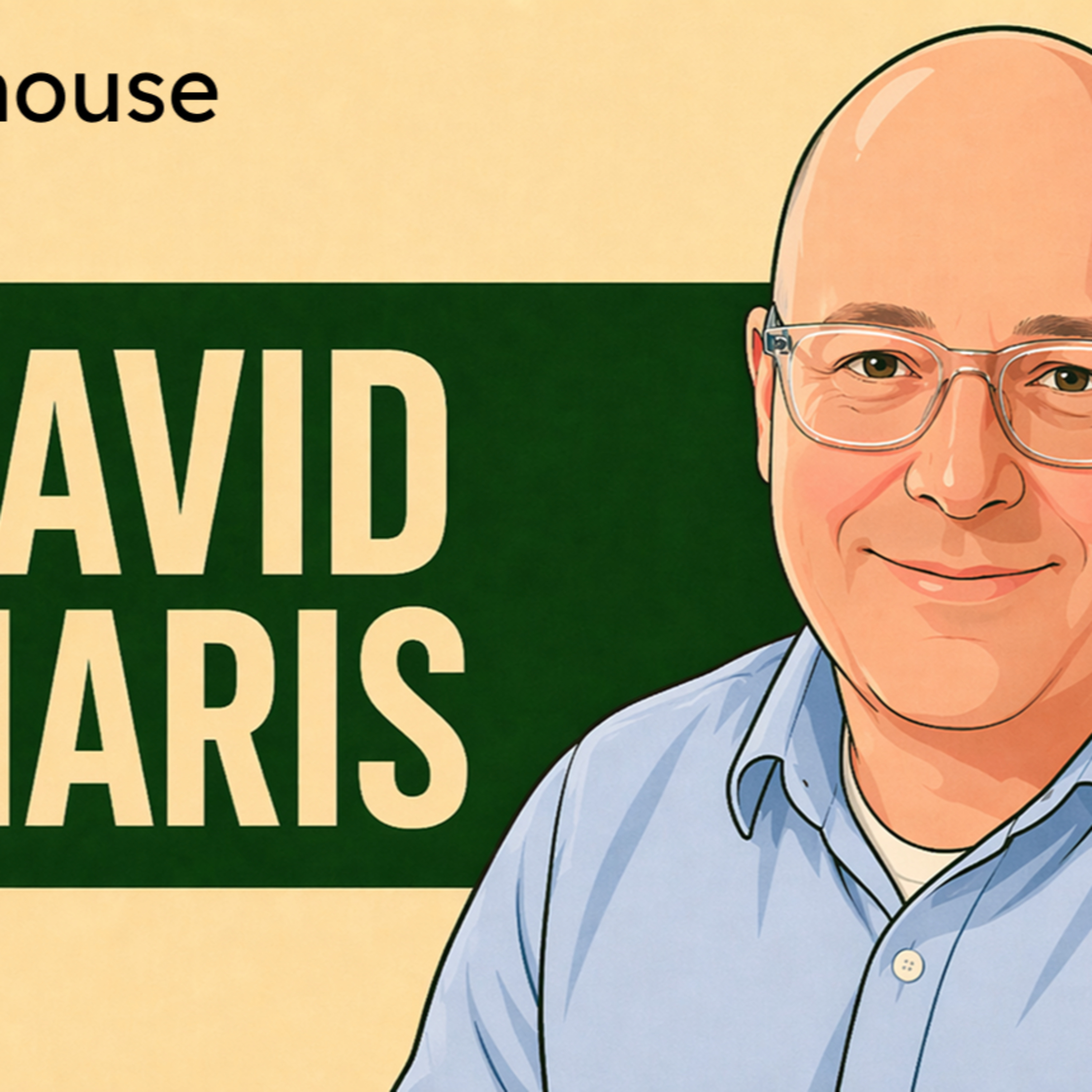 David Maris - The billion-dollar opportunity for Hims that Wall Street is "sleeping" on 22.04.2026 1t 9minIn this episode of Hims House, Jonathan Stern welcomes back six-time #1 ranked healthcare analyst David Maris to unpack everything that's happened at Hims since last July. They walk through the wild GLP-1 timeline -- the compounded semaglutide pill launch, Novo's lawsuit, FDA/DOJ referral, and surprise Novo partnership -- debating margins, the missing Lilly deal, and what the MEDVi scandal means for the broader compounding market. Maris shares mixed feelings on peptides ahead of the July FDA meeting, and makes the case that TRT and especially sleep are billion-dollar opportunities analysts are ignoring. He also critiques Hims' voting structure and insider selling, weighs in on the stubborn 34% short interest, and closes by revealing he's long Hims as of April 17, 2026, despite worries about what Q1 data is signaling.02:56 - Compounded semaglutide pill saga05:49 - The "steelman" for why Hims launched the pill07:29 - Novo deal economics14:29 - MEDVi scandal and wild west of GLP-1s18:19 - Peptides going mainstream25:57 - July FDA meeting 31:27 - TRT = billion-dollar opportunity35:31 - Sleep Sleep Sleep Sleep37:26 - Friction in getting diagnosed38:04 - The CPAP supply chain problem39:17 - How Hims could revolutionize sleep43:04 - Eucalyptus and going global46:16 - Cruise engineers (wtf are they building?!)50:25 - Short interest still out of control55:05 - Voting control and insider selling59:46 - Valuation and Q1 warning signs01:03:48 - Should Hims buy a teletherapy?01:07:12 - Why Maris is long Hims 🔥Disclaimer: This podcast is for informational and entertainment purposes only. Nothing discussed should be considered financial, investment, or legal advice. Always consult with a qualified professional before making financial decisions.
 -
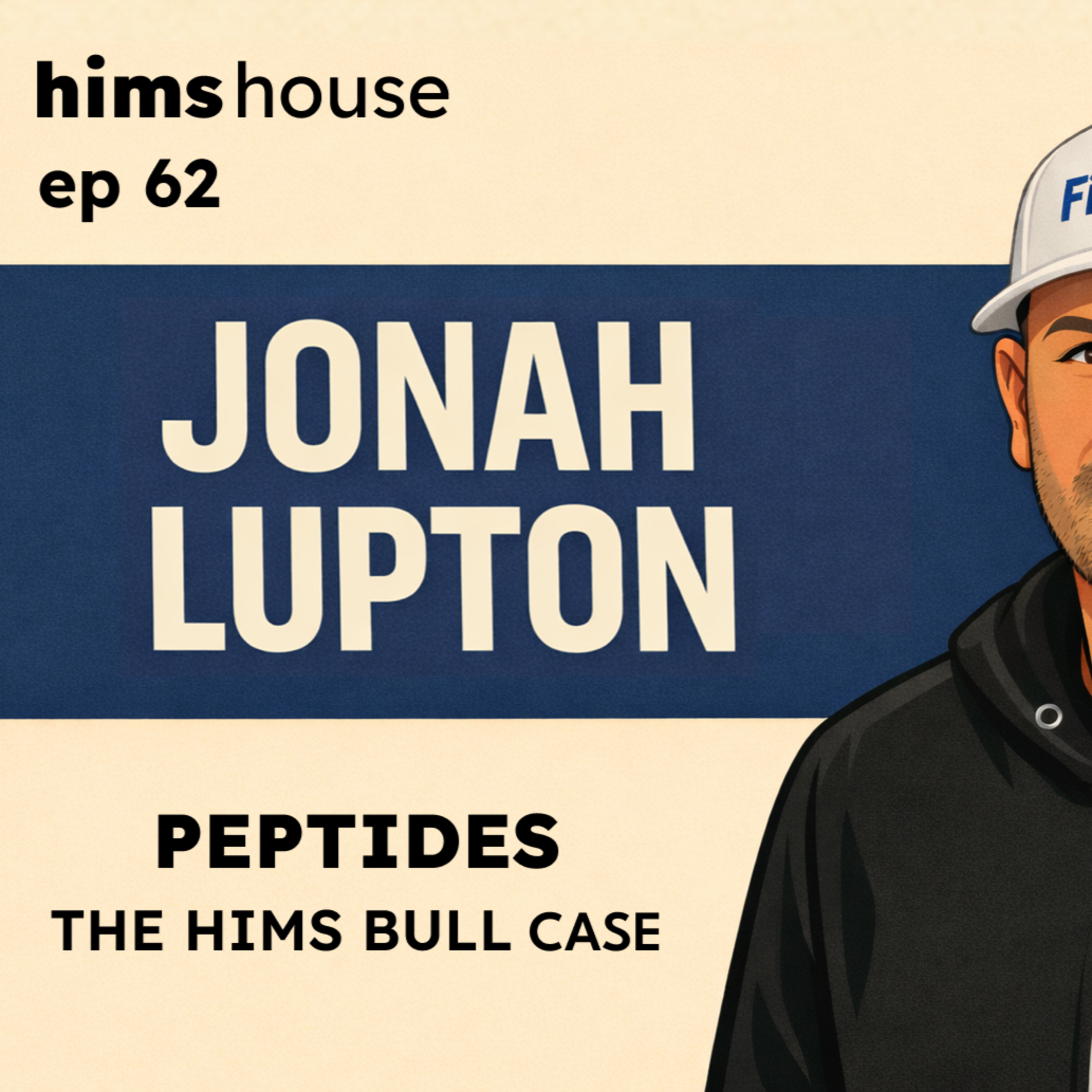 Jonah Lupton - Why peptides are so bullish for Hims & Hers 17.04.2026 58minIn this episode of Hims House, Jonathan Stern sits down with Jonah Lupton, founder and CIO of FirstWave Capital and one of the largest Hims shareholders to appear on the show, to break down his bull case around peptides. Lupton argues peptides, GLPs, and testosterone make up roughly 80% of his Hims thesis, with AI as the remaining upside. They dig into the FDA's July 23-24 advisory meeting, what reclassification could mean for the gray market, and why a Lilly partnership could be bigger than Novo. Lupton also shares his personal stack, BPC-157, TB-500, NAD+, TRT, and microdosed GLPs, plus the roughly $1,500 - $2,000 a month he spends on all of it. He closes with a long-term model projecting Hims at $15B in revenue by 2035, and flags Bachem as one of the few other public ways to play peptides.02:34 - How Jonah got into peptides03:39 - Current Hims position05:04 - Original Hims thesis in the teens09:12 - FDA peptide timeline & July meeting15:03 - Peptides are "80% of the thesis"18:37 - Jonah's personal peptide stack26:00 - Spending $30K a year on peptides28:47 - Black market and WhatsApp China30:25 - Gray market and the COA problem31:05 - Why Hims wins on legitimacy32:36 - Best, not first32:54 - Frustration with Hims transparency35:28 - Speed vs the Apple approach37:45 - Surviving the Novo scare42:46 - Branded vs compounded future44:41 - Why Lilly matters more than Novo50:18 - Valuation and the 2035 model57:04 - Wrap up and other peptide playsDisclaimer: This podcast is for informational and entertainment purposes only. Nothing discussed should be considered financial, investment, or legal advice. Always consult with a qualified professional before making financial decisions.
 -
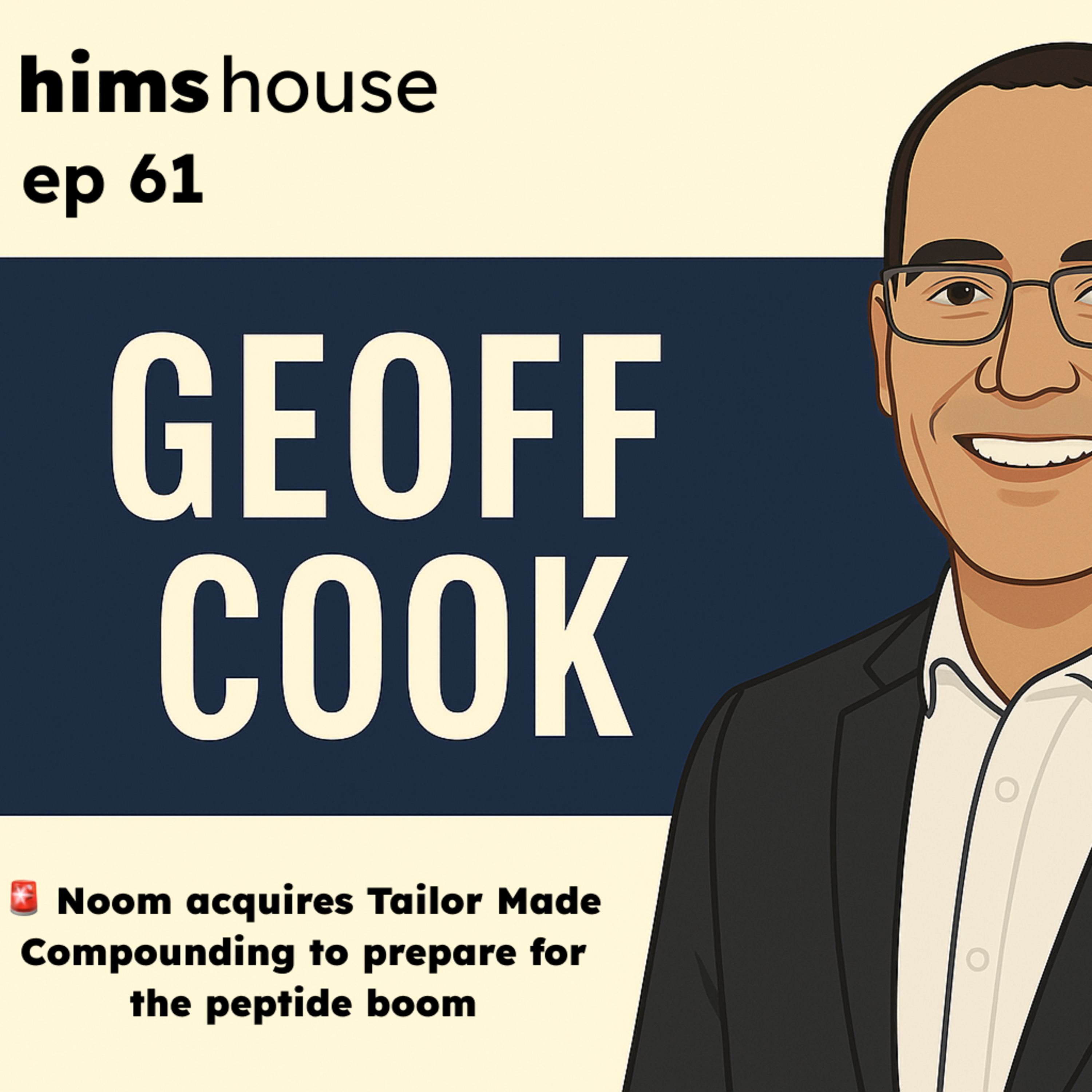 Geoff Cook (Noom CEO) - The peptide boom and why Noom just acquired a 503A pharmacy 01.04.2026 53minNoom CEO Geoff Cook returns to Hims House to discuss the company's acquisition of Tailor Made Compounding, a 503A pharmacy in 46 states, and what it signals about Noom's expansion beyond weight loss into healthy aging. Cook explains why vertical integration matters now, from supply chain control to faster R&D on peptides, as 14 peptides may soon return to being legal to compound. He shares his outlook on compounded GLP-1 regulation, branded oral offerings like the Wegovy pill, and why DTC-pharma partnerships are set to accelerate. The conversation digs into peptide market sizing, competition dynamics, and Noom's plan to expand at-home biomarker testing past 30 markers. Cook also makes the case for Noom's moat in engagement and behavior change and shares his personal BPC-157 recovery story. 00:00 - Why pharma needs DTC platforms01:12 - Sponsor: Mochi Health03:03 - Noom's 90% revenue growth05:01 - Why Noom bought Tailor Made Pharmacy (503A)07:29 - The case for vertical integration08:56 - Compounded GLP-1s aren't going anywhere16:48 - The Hims-Novo deal19:08 - Noom's pitch to next-gen pharma24:24 - Peptide market sizing25:33 - Why GLP-1 users will buy peptides first27:22 - Ten million potential peptide patients 👀30:09 - When will legalization happen? 31:09 - Tracking the FDA green list34:26 - Who wins when peptides go legal?37:58 - Why Noom won't rush peptide launch39:33 - Geoff's BPC-157 ski injury recovery46:42 - Expanding at-home labs past 30 biomarkers52:47 - Noom IPO coming?!Disclaimer: This podcast is for informational and entertainment purposes only. Nothing discussed should be considered financial, investment, or legal advice. Always consult with a qualified professional before making financial decisions.
Samankaltaiset podcastit


Suosittu maassa
Tämä podcast esiintyy myös näiden maiden podcast-listoilla.

