
The MSing Link
Dr. Gretchen Hawley PT, DPT, MSCS
0
This podcast is for people with Multiple Sclerosis who want to improve mobility, energy, and motivation. The host, Dr. Gretchen Hawley, a physical therapist and MS expert, shares MS-specific exercises and symptom management strategies. She also interviews other MS specialists in healthcare to provide research-driven education. Listeners leave each episode feeling empowered and ready to take action.
Jaksot
-
 302. Is Your MRI Telling the Full Story? A New Way to Measure MS Disease Activity 16.09.2026 37minIf you've ever walked out of an MRI appointment still wondering what's actually happening inside your body right now… this episode is for you. In this episode, I'm joined by Jennifer Chester, a neurology nurse practitioner who works with Octave Bioscience, to talk about a blood test (available in the US) built specifically for multiple sclerosis (MS). Not a diagnostic test, and not a replacement for your MRI. It's a way to measure MS disease activity between scans, using proteins in your blood. We get into what biomarkers actually are, how the test works, what the number means, and how to bring it up with your neurologist without feeling like you're overstepping. Here's what we cover 🔑: 🔬 What a biomarker actually is. A biomarker is anything measurable in your body that tells you something about what's going on inside it. Cholesterol is a biomarker. Blood sugar is a biomarker. In MS, researchers have identified specific proteins that show up in the blood when there's inflammation, myelin breakdown, or nerve fiber damage happening. Measuring those proteins gives your care team information they can't get from asking how you feel. 🩸 How an MS-specific blood test works. The Octave MSDA (Multiple Sclerosis Disease Activity) Test measures 18 different proteins in a standard blood draw, then factors in your age and sex to generate a disease activity score. Why 18 and not one? Because MS isn't one process. It's immune activity, inflammation in the nervous system, myelin biology, and nerve fiber damage happening at different rates in different people. A single protein only tells you about one of those. A panel gives a fuller picture. 📊 What the number actually means. The test produces a score from 1 to 10, along with subscores tied to those four biological pathways. On its own, one score is a snapshot. Tracked over time, it becomes a trend line, and the trend is where the useful information lives. Your neurologist is looking at whether your number is holding steady, climbing, or dropping while you're on a particular treatment. 🧠 Blood test versus MRI (they're not competing). This is the part I want you to hear clearly. An MRI shows lesions, which is damage that has already occurred. A blood-based biomarker test is designed to reflect biological activity that's happening now, at a level that may not have shown up on a scan yet. Jennifer explains why the test is intended to complement imaging and your clinical exam, not replace either one. More data points, not fewer. ❓ "Is this MS, or is it something else?" If you've ever had a new symptom appear and spent three weeks trying to figure out whether it's a relapse, an old symptom flaring in the heat, stress, perimenopause, or a virus… you know how exhausting that guessing game is. An objective disease activity score gives your neurologist one more piece of information to weigh alongside your history and your exam. It isn't a yes or no answer by itself, and it can't tell you what a symptom is caused by. But it can help your team sort signal from noise. 🗣️ How to bring this up with your neurologist. Jennifer walks through what that conversation can sound like, what to ask, and why it's completely reasonable to bring a testing option to your provider rather than waiting for them to bring it to you. You are allowed to ask questions about your own monitoring plan. 💵 The practical stuff: coverage, cost, and timing. We talk through how the test is typically ordered, what to expect around insurance coverage, and how often testing tends to be repeated. Coverage and cost vary quite a bit depending on your plan and where you live, so this is a "confirm with your own provider and insurer" situation rather than a one-size-fits-all answer. This episode is for you if: ✅ You've had an MRI come back "stable" but you don't feel stable✅ You're not sure whether a new symptom is a relapse or something else entirely✅ You're on a disease-modifying therapy and you want to know if it's working✅ You want more information about your MS than a scan every 12 months can give you✅ You like understanding the science behind a recommendation, not just being handed one About Jennifer Chester Jennifer Chester is a nurse practitioner with over a decade of experience in MS care who now works at Octave Bioscience, helping bring a brand-new blood test to people with MS, and it's one that can actually measure disease activity in real time. (One important note, this text is only available in the US). Where to reach Jennifer & Octave Bioscience: YouTube: https://youtube.com/@eventsoctave?si=vHCktRGw5NBq8q_g Facebook: https://www.facebook.com/OctaveBioscience?mibextid=wwXIfrhttps://www.linkedin.com/company/octave-bio/ Website: https://www.octavebio.com/ Resources mentioned in this episode: Conversation guide for your doctor: https://www.octavebio.com/patients Additional Resources: https://www.doctorgretchenhawley.com/insider Reach out to Me: [email protected] Website: www.MSingLink.com Social: ★ Facebook: https://www.facebook.com/groups/mswellness ★ Instagram: https://www.instagram.com/doctor.gretchen ★ YouTube: https://www.youtube.com/c/doctorgretchenhawley?sub_confirmation=1 → The Progress Method for MS: https://www.doctorgretchenhawley.com/the-progress-method-for-ms → Total Core Program: https://www.doctorgretchenhawley.com/TotalCoreProgram → The MSing Link: https://www.doctorgretchenhawley.com/TheMSingLink
 -
 301. How to Choose the Right Mobility Aid for MS (Cane, Walker, Rollator & More) 09.09.2026 17minIf walking is taking more out of you than it used to… this episode is for you. In this solo episode, I'm walking you through how to choose the right mobility aid when you have multiple sclerosis (MS). Canes, trekking poles, walkers, rollators, and wheelchairs. This isn't a ranked list of products. It's my top strategy for figuring out what your body actually needs, so you're not spending money on something that sits in the closet. Here's what we cover 🔑: The one question to ask before you choose anything. Most people start with "which device is best?" That's the wrong starting point. The better question is what specifically is happening when you walk. Are you unsteady side to side? Is one leg dragging? Are you fine for the first ten minutes and wobbly after that? The answer points you toward a very different device in each case, and I'll walk you through how to figure out which bucket you're in. Base of support, and why it changes everything. Base of support is the area between your points of contact with the ground (your two feet, plus anything else touching down). The wider that area, the more stable you are. This is the reason a cane feels like it does something and a walker feels like it does more. Once you understand this one concept, the whole category of mobility aids starts to make sense instead of feeling like a wall of options. Canes and trekking poles. A cane adds a third point of contact and widens your base of support on one side. Trekking poles do something different: they keep you symmetrical, upright, and swinging both arms, instead of shifting your weight toward one hand. If your unsteadiness shows up on both sides, or you're mostly looking for confidence on uneven ground, poles may be a better fit than a single cane. I'll explain when I'd suggest each one. Walkers and rollators. A rollator gives you a wide base of support, hand brakes for control, and a seat. That seat isn't a small detail. Having a place to sit means you can go out without calculating whether there will be somewhere to rest, which for a lot of people with MS is the actual barrier to leaving the house. We'll talk about the trade-offs, including how a rollator changes your posture if the height isn't set correctly. Wheelchairs, scooters, and the Alinker. Using a wheeled device for part of your day doesn't mean you stop walking. For many people it's the opposite: energy saved on the long distances is energy available for the walking that matters most to you. The Alinker is a walking bike that keeps you upright and at eye level with the people around you while your own legs do the moving. I'll share my honest thoughts on where it fits and where it doesn't. Matching the device to the day, not just to the diagnosis. Your symptoms may not be the same at 9am and 4pm, or in July versus January. A lot of people with MS use more than one device: poles for the neighborhood walk, a rollator for the grocery store, a scooter for the zoo with the grandkids. That's not inconsistency. That's energy conservation, and it's a strategy. Getting the fit right. A device that's the wrong height sends you right back into the postural habits you're trying to get out of. I'll cover the basics of height and positioning, and why it's worth having your physical therapist or healthcare provider check the fit before you commit. This episode is for you if: ✅ You're tripping more, or you've had a fall (or a close call) that shook your confidence ✅ You've been putting off getting a mobility aid because of what you think it says about you ✅ You already own something that isn't quite working and you're not sure why ✅ You've noticed you're skipping outings because the walking involved feels like too much ✅ You're the type of person with MS who has always been independent and wants to stay that way ✅ You want to understand why something works, not just be told to buy it A mobility aid isn't a step backward. It's a tool that changes what your day can hold. The right one, fitted correctly, can mean more distance, more energy left over, and more of the things you actually want to do. Progress, not perfection. You've got this. 🧡 Resources mentioned in this episode: MS Mobility Equipment Guide - https://www.doctorgretchenhawley.com/ms-mobility-equipment-guide-podcast Additional Resources: https://www.doctorgretchenhawley.com/insider Reach out to Me: [email protected] Website: www.MSingLink.com Social: ★ Facebook: https://www.facebook.com/groups/mswellness ★ Instagram: https://www.instagram.com/doctor.gretchen ★ YouTube: https://www.youtube.com/c/doctorgretchenhawley?sub_confirmation=1 → The Progress Method for MS: https://www.doctorgretchenhawley.com/the-progress-method-for-ms → Total Core Program: https://www.doctorgretchenhawley.com/TotalCoreProgram → The MSing Link: https://www.doctorgretchenhawley.com/TheMSingLink
 -
300. 300th Episode: Progress Is Possible With MS: Real Stories of Walking, Balance, and Strength 02.09.2026 27min300 episodes ago, I hit record for the first time and hoped a handful of people living with multiple sclerosis (MS) would find something useful in it. Now there are people in 27 countries doing these exercises. Some of you have been here since episode 1. Some of you found us last week, three days after diagnosis, at 2am, looking for anything that made sense. This one is for you. I'm not teaching a new exercise this week. I'm sharing what's actually worked for people in this community, and pointing you back to the episodes that keep helping the most people. Here's what we cover 🔑: The stories you've sent me. Progress with MS almost never looks like a before-and-after photo. It looks like standing up from the couch without using your hands. Getting through a grocery store without scanning for somewhere to sit. Walking your dog to the end of the street and back. I'm sharing some of these in this episode because when you hear someone describe your exact symptom and then describe what helped, it changes what you believe is possible for you. Why MS-specific exercise is different. Generic exercise programs train muscles. MS-specific, physical therapy-based exercise trains the signal… that wifi connection between your brain and your muscles. Repetition with intention is what strengthens that pathway. It's why 10 focused minutes can do more for your walking than an hour of the wrong thing. 📚 The MSing Link book and membership. What made me write it, what's inside, and how the membership works for people who want live feedback on how they're actually moving instead of guessing from a video. What 300 episodes have taught me. Mostly this: people with MS are not out of options nearly as often as they've been told they are. Not everything about MS can be changed. Some things are permanent, and I'm never going to pretend otherwise. But there is almost always something you can work on. This episode is for you if:✅ You're newly diagnosed and looking for a place to start✅ You've been living with MS for years and feel like your progress has stalled✅ You want to hear from other people with MS who understand what your day actually looks like✅ You're not sure which episodes to start with out of 300 ✅ You want strategies you can use this week, not someday ✅ You need a reminder that small progress still counts Thank you for 300 episodes. Thank you for the emails, the questions, the wins you send me, and the ones you didn't think were big enough to mention (they were). Here's to the next 300. You've got this. Progress, not perfection. 🧡 Special Promo for this episode: https://www.doctorgretchenhawley.com/offers/7d8oE6Cn/checkout Resources Mentioned in the episode: The MSing Link Episode 1, What Is An MS Specialist & Why Did I Become One?, Apple || Spotify The MSing Link Episode 249, Spilling the Tea: My Interview on the Messy Podcast with Christina Applegate & Jamie-Lynn Sigler, Apple || Spotify The MSing Link Episode 173, Early Symptoms of MS & MS Prodrome w/ Dr. Barry Singer, Apple || Spotify The MSing Link Episode 246, MS Walking Problems? Real Results from MS‑Specific Exercises & Expert Insights, Apple || Spotify The MSing Link Book: Amazon Additional Resources: https://www.doctorgretchenhawley.com/insider Reach out to Me: [email protected] Website: www.MSingLink.com Social: ★ Facebook: https://www.facebook.com/groups/mswellness ★ Instagram: https://www.instagram.com/doctor.gretchen ★ YouTube: https://www.youtube.com/c/doctorgretchenhawley?sub_confirmation=1 → The Progress Method for MS: https://www.doctorgretchenhawley.com/the-progress-method-for-ms → Total Core Program: https://www.doctorgretchenhawley.com/TotalCoreProgram → The MSing Link: https://www.doctorgretchenhawley.com/TheMSingLink
-
 299. MS & Vibration Plates: Benefits, Risks, and How to Use Them Safely with Debby Pelletier 26.08.2026 49minIf MS has your legs feeling tight, heavy, or slow to respond… this episode is for you. In this episode, I'm joined by vibration therapy expert Debbie Pelletier to answer the questions I get asked most about vibration plates and multiple sclerosis (MS). Not in a "here's a fancy piece of equipment" way. In a "here's what's actually happening in your body, here's how to use it, and here's what to check before you spend the money" way. Here's what we cover 🔑: What is vibration plate therapy, actually? A vibration plate sends rapid, repeated movement up through your feet and into your muscles. Those quick changes in length trigger your muscle spindles (the sensors inside your muscle that track stretch), which fire a reflex response and pull more muscle fibers into the action. It also floods your brain with sensory information from your feet and legs… which matters a lot when MS has dulled that signal. Oscillating vs. vertical: why the difference matters for you. Oscillating plates tip side to side around a center point, like a seesaw, so one foot rises while the other drops. Vertical (or linear) plates move the whole surface straight up and down. They load your body differently, they feel different, and one may suit your balance and symptoms better than the other. Debbie breaks down how to tell which is which when you're shopping. Can you use one if you're brand new to exercise or have mobility concerns? Short answer: often yes, with the right setup. We talk through seated use, holding onto a stable support, standing with a chair in front of you, and how to position your knees so you're not locking them out. How long should you actually stand on it? We get specific about session length, how to build up gradually instead of starting at the longest setting on day one, and how often per week makes sense alongside your strength work. Where it fits (and where it doesn't). A vibration plate is one tool. It can help prime your muscles before you exercise or take the edge off tightness, but it doesn't replace the exercises that build strength and retrain the wifi connection between your brain and your muscles. We talk about how to stack the two so the plate is supporting your routine, not standing in for it. What to know before you buy. Frequency range, amplitude, weight capacity, platform size, handles or no handles, warranty, price range, and the features that sound impressive but don't change your results. Bring a notebook for this part. Safety and who should check with their doctor first. There are situations where a vibration plate isn't the right call, or needs medical clearance first. We name them clearly so you can have an informed conversation with your provider. What the research does and doesn't show. Whole body vibration has been studied in people with MS, and some findings are encouraging for spasticity and muscle activation. But the studies are small and the results are mixed. I'll tell you honestly where the evidence is strong, where it's thin, and what that means for your decision. This episode is for you if: ✅ Spasticity or tightness in your legs is part of your daily life ✅ You've seen vibration plates online and can't tell if they're legit or hype ✅ You're wondering if you can use one from a seated position or with a mobility aid ✅ Fatigue makes long workouts feel impossible and you're looking for tools that work with your energy ✅ You want to understand why something works before you try it A vibration plate isn't a shortcut, and it isn't magic. Used well, it can be a useful piece of a plan that's built for your symptoms and your goals. Progress, not perfection. 🧡 About Debby Pelletier Debby Pelletier is a vibration plate specialist and clinical educator with nearly two decades of experience developing safe progression-based protocols both for home and clinical settings. She's a LifePro trainer, has been featured in Consumer Reports, and supports hospitals and doctors globally who are using vibration therapy. She knows this technology inside and out, and she's super passionate about making it accessible and understandable for everyday people. Where to reach Debby: YouTube: https://www.youtube.com/@debbypelletier Facebook Group: https://www.facebook.com/groups/586296542104578 Website: https://debsvibe.com/ Resources mentioned in this episode: LifePro: https://lifeprofitness.com/DEBBYLP Additional Resources: https://www.doctorgretchenhawley.com/insider Reach out to Me: [email protected] Website: www.MSingLink.com Social: ★ Facebook: https://www.facebook.com/groups/mswellness ★ Instagram: https://www.instagram.com/doctor.gretchen ★ YouTube: https://www.youtube.com/c/doctorgretchenhawley?sub_confirmation=1 → The Progress Method for MS: https://www.doctorgretchenhawley.com/the-progress-method-for-ms → Total Core Program: https://www.doctorgretchenhawley.com/TotalCoreProgram → The MSing Link: https://www.doctorgretchenhawley.com/TheMSingLink
 -
298. Why You Feel Like a Different Person in the Summer With MS 19.08.2026 20minIf MS symptoms feel heavier in the summer… or after a hot shower, a walk in the sun, or a workout that didn't used to wipe you out, this episode is for you. In this episode, I'm walking you through heat sensitivity and heat intolerance in multiple sclerosis (MS). Why heat can make fatigue, brain fog, spasticity, and walking difficulties ramp up, what's actually happening inside your nerves when it does, and what you can do about it. Not in a "just stay inside until October" way. In a "here's the mechanism and here's your plan" way. Here's what we cover 🔑: What heat actually does to nerve signals in MS. MS damages myelin, the coating around your nerves that helps signals travel quickly and cleanly. Even a small rise in your core body temperature can slow those signals down further, or block them entirely along nerves that are already working hard to get the message through. That's why heat doesn't create new symptoms so much as it turns up the volume on the ones you already have. Uhthoff's phenomenon (aka the temporary worsening of MS symptoms when your body temperature rises). This has a name, it's been documented for over a century, and it's not in your head. I'll explain what qualifies, why it's considered a pseudo-exacerbation rather than a relapse for most people, and why that distinction matters for how you respond in the moment. Why symptoms often ease back down once you cool off. For many people with MS, heat-related changes are temporary and reverse as core temperature drops. Knowing that can take some of the panic out of a bad heat day. It doesn't always mean nothing can be done about it, and it doesn't mean you should white-knuckle through it. It means cooling down is a legitimate intervention, not a rest break. How to actually cool your core body temperature. Not just "drink water." I'll get specific about pre-cooling before activity, which parts of your body give you the most cooling for the least effort (hands, feet, neck, and face have blood vessels close to the surface that help dump heat quickly), and how cold liquids and ice work from the inside out. Which cooling products are worth it. Cooling vests, neck wraps, cooling towels, fans, cold packs. Some do real work, some are mostly marketing, and some are worth it only for specific situations. I'll walk through what to look for and how to think about the cost, including the fact that some MS organizations offer cooling equipment programs. How to modify your exercise routine in hot weather. Time of day, room temperature, seated versus standing options, shorter bouts with cooling breaks built in, and water-based movement. The goal isn't to stop exercising in the summer. It's to keep the neuroplasticity work going (that wifi connection between your brain and your muscles) without overheating in the process. How to keep your progress through heat season. Consistency is what builds new pathways between your brain and your muscles, so the strategy is adjusting your routine, not pausing it. I'll walk you through what to scale back, what to protect, and how to tell the difference between a heat day and a day your body needs rest. This episode is for you if: ✅ Your fatigue, brain fog, or leg weakness gets noticeably worse in warm weather✅ A hot shower leaves you more wobbly than when you got in✅ You've been told heat "affects everyone" and you know what you're feeling is more than that✅ You've been skipping your exercises all summer and you're worried about losing ground✅ You want to understand why something works, not just be told to do it You don't need to hide from summer to protect your progress. You need to know what heat is doing to your nervous system, and you need a few specific strategies you can actually use on a 90 degree day. Progress, not perfection. You've got this 🧡 Resources Mentioned in the episode: Dr. Gretchen’s Amazon Storefront (Dr. Gretchen gets a small commission): https://www.amazon.com/shop/doctor.gretchen The MSing Link Episode 242, How to NOT Overdo Exercise with MS: 7 Strategies by an MS Physical Therapist, Apple || Spotify Free Walking Webinar: https://www.doctorgretchenhawley.com/Walking-Webinar Additional Resources: https://www.doctorgretchenhawley.com/insider Reach out to Me: [email protected] Website: www.MSingLink.com Social: ★ Facebook: https://www.facebook.com/groups/mswellness ★ Instagram: https://www.instagram.com/doctor.gretchen ★ YouTube: https://www.youtube.com/c/doctorgretchenhawley?sub_confirmation=1 → The Progress Method for MS: https://www.doctorgretchenhawley.com/the-progress-method-for-ms → Total Core Program: https://www.doctorgretchenhawley.com/TotalCoreProgram → The MSing Link: https://www.doctorgretchenhawley.com/TheMSingLink
-
 297. MS and Pregnancy: What Current Research Says About Medications, Breastfeeding & Safety 12.08.2026 38min If you're living with MS and wondering whether pregnancy is still on the table for you… this episode is for you. Maybe you just saw two lines on a test and your first thought wasn't joy, it was "what do I do about my medication?" Maybe you're a year out from trying and you want to plan this right. Either way, you deserve real answers, not a shrug. In this episode, I'm joined by Dr. Christina Chambers, PhD, MPH, a perinatal epidemiologist and professor of pediatrics at UC San Diego. She has spent her career studying what medications and exposures actually do during pregnancy and breastfeeding, and she brought all of it to this conversation about multiple sclerosis (MS) and pregnancy. We covered the questions people with MS ask most, and a few they're often too nervous to ask out loud. Here's what we cover 🔑: What happens to MS symptoms during pregnancy? Many people with MS notice fewer relapses while pregnant, especially later in pregnancy. The working explanation is that pregnancy shifts how the immune system behaves so it doesn't reject the developing baby, and that shift can quiet the immune activity that drives MS relapses. How do you plan a pregnancy when you have MS? Dr. Chambers walks through the questions worth asking before you start trying, including timing around your current treatment, what "washout" means and why it's different for different medications, and how to build a plan with your neurologist and your OB in the same room instead of getting two answers that don't match. What about MS medication and pregnancy / breastfeeding? This is one of the most common questions we get, and the answer is more nuanced than "yes" or "no." We talk about how researchers actually measure what passes into human milk, why some medications look very different from others in that respect, and how to weigh feeding goals against staying well yourself. What happens to MS after delivery? The postpartum window gets less attention than it should. Research has pointed to an increased relapse risk in the first few months after birth for some people with MS, which is exactly when sleep is shortest and support is thinnest. We talk about planning for that stretch ahead of time rather than reacting to it. How does anyone know any of this is safe? Dr. Chambers explains where pregnancy safety information actually comes from. Pregnant people aren't enrolled in the drug trials that come before approval, so most of what we know is built from observational studies that follow real pregnancies over time. Understanding this helps you read "we don't have enough data yet" for what it is, which is a gap in research, not a warning label. Managing MS symptoms through pregnancy and postpartum. Your body is changing shape, your center of gravity is moving, and your MS symptoms don't pause for any of it. We talk about staying steady and staying strong through it, and why consistent, functional movement matters here just as much as it does the rest of the year. This episode is for you if: ✅ You have MS and you're thinking about getting pregnant ✅ You're pregnant now and you're unsure what to do about your treatment plan ✅ You've been told to "just talk to your doctor" without getting a real answer ✅ You want to breastfeed and you don't know if your medication allows for it ✅ You're planning for the postpartum months and want to know what to expect ✅ You want to understand why the guidance says what it says, not just be handed a rule Having MS doesn't automatically close the door on pregnancy. It means you need better information and a care team that talks to each other. This conversation is a place to start. You've got this. 🧡 About Dr. Christina Chambers. Dr. Christina Chambers is a Professor in the Department of Pediatrics, School of Medicine at UC San Diego. She is Chief of the Division of Environmental Science and Health, and Co-Director of the Center for Better Beginnings. She is the principal investigator of MotherToBaby Pregnancy Studies, and the UC San Diego Human Milk Research Biorepository, two nation-wide longitudinal cohort studies focused on the safety of medications, vaccines, substances, infectious agents, and other environmental exposures in pregnancy and lactation. Dr. Chambers co-directs the HEALthy Brain and Child Development Study (HBCD), a nationwide research initiative focused on developmental trajectories of children in various environments from prenatal life through 10 years of age. In addition, Dr. Chambers leads research and educational initiatives in the U.S. and internationally on the prevention and treatment of children with Fetal Alcohol Spectrum Disorders. She co-directs the Community Engagement, Dissemination and Implementation unit in the Clinical and Translational Research Institute at UC San Diego which supports clinical research development in diverse populations. Where to reach Dr. Christina Chambers: MotherToBaby Facebook: https://www.facebook.com/MotherToBaby MotherToBaby TikTok:https://www.tiktok.com/@mothertobabyotis MotherToBaby Instagram:https://www.instagram.com/mothertobaby/ MotherToBaby “x”:https://x.com/mothertobaby MotherToBaby LinkedIn:https://www.linkedin.com/company/mothertobaby MotherToBaby Pinterest:https://www.pinterest.com/mothertobaby/ MotherToBaby YouTube:https://www.youtube.com/channel/UC0O5nm_E_rS8I1BpO-C4eLw MotherToBaby Threads:https://www.threads.net/@mothertobabyotis Organization Website: https://betterbeginnings.org/ Additional Resources: https://www.doctorgretchenhawley.com/insider Reach out to Me: [email protected] Website: www.MSingLink.com Social: ★ Facebook: https://www.facebook.com/groups/mswellness ★ Instagram: https://www.instagram.com/doctor.gretchen ★ YouTube: https://www.youtube.com/c/doctorgretchenhawley?sub_confirmation=1 → The Progress Method for MS: https://www.doctorgretchenhawley.com/the-progress-method-for-ms → Total Core Program: https://www.doctorgretchenhawley.com/TotalCoreProgram → The MSing Link: https://www.doctorgretchenhawley.com/TheMSingLink
 -
296. Why Planning Ahead Can Make Life With MS Feel Easier 05.08.2026 21minIf planning a simple outing with Multiple Sclerosis (MS) feels like juggling way more variables than it used to... this episode is for you. This one's personal. I'm sharing a bit of a reality check from my own life, and walking you through the practical strategies I use (and teach) for planning ahead with MS, so you can move through your day, your week, and even the holidays, with more independence and less second-guessing. Here's what we cover 🔑: Why planning ahead matters more with MS. It's not about being overly cautious. It's about protecting your energy and your confidence so you actually get to enjoy the outing, the trip, or the walk, instead of just surviving it. Dual-tasking (like walking and talking). When MS affects the communication between your brain and your muscles, doing two things at once, like walking while carrying on a conversation, can take more conscious effort than it used to. I'll explain why that happens and how to practice dual-tasking on purpose so it gets easier over time. Choosing the right mobility aid for the day. Canes, walkers, and other supports aren't a sign of giving something up. They're a tool that can help you conserve energy and move with more confidence. I'll walk through what to consider when choosing one for your specific symptoms and environment for that day. Energy conservation strategies. Your energy is a limited resource with MS, and spending it wisely (not just "pushing through") is what makes the rest of your day possible. I'll share specific ways to plan your outings so you have energy left when you need it most. Preparing for different environments. Holidays, vacations, and even a walk around your neighborhood all come with their own variables, like uneven ground, crowds, or long stretches without a place to sit. I'll cover how to think through an environment ahead of time so you're not caught off guard. Cognitive strategies for problem-solving on the go. MS can affect processing speed and working memory, which makes real-time decision-making (like adjusting a plan last minute) more tiring. I'll share a few strategies to make that easier on your brain. This episode is for you if: ✅ You're navigating fatigue and want to plan around it instead of being surprised by it ✅ You're considering a mobility aid but aren't sure where to start ✅ Walking and talking at the same time takes more concentration than it used to ✅ You're prepping for a holiday, trip, or event and want to feel more in control ✅ You want strategies that are actually specific to MS, not generic advice You don't need to overhaul your whole life to feel more prepared. You need a few strategies that work for your body and your symptoms, used consistently. Progress, not perfection. You've got this. 🧡 Additional Resources: https://www.doctorgretchenhawley.com/insider Reach out to Me: [email protected] Website: www.MSingLink.com Social: ★ Facebook: https://www.facebook.com/groups/mswellness ★ Instagram: https://www.instagram.com/doctor.gretchen ★ YouTube: https://www.youtube.com/c/doctorgretchenhawley?sub_confirmation=1 → The Progress Method for MS: https://www.doctorgretchenhawley.com/the-progress-method-for-ms → Total Core Program: https://www.doctorgretchenhawley.com/TotalCoreProgram → The MSing Link: https://www.doctorgretchenhawley.com/TheMSingLink
-
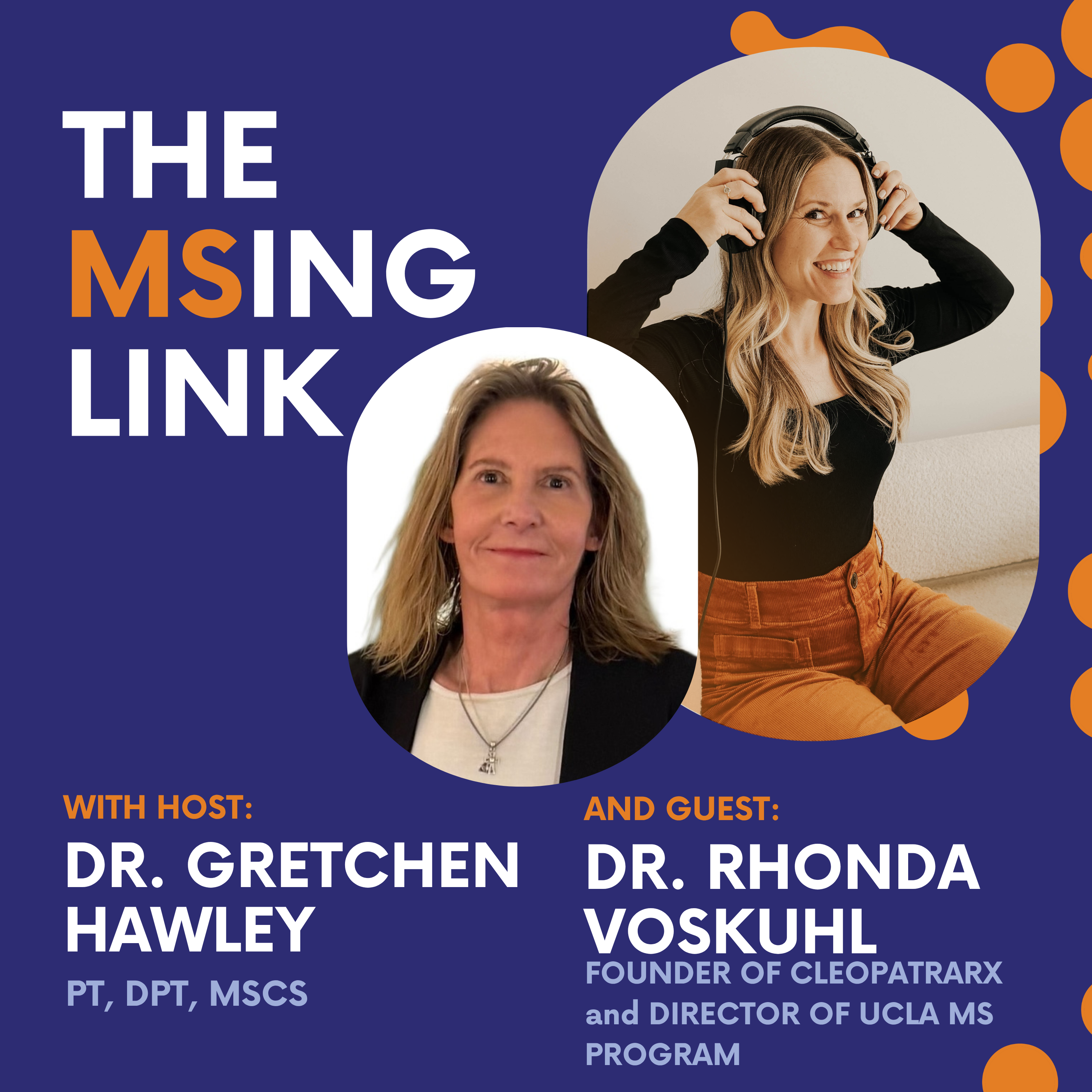 295. MS & Menopause: Are Your Symptoms Changing…or Are Your Hormones? | Dr. Rhonda Voskuhl 29.07.2026 45min If you're a woman with multiple sclerosis (MS) and you've noticed your fatigue, brain fog, or word-finding trouble getting worse in your 40s or 50s… you're not imagining it. And you're not alone in this. In this episode, I sit down with Dr. Rhonda Voskuhl, a leading MS neurologist and menopause researcher from UCLA, to talk about something the MS community rarely hears explained clearly: what menopause is actually doing to your brain, and why it can look and feel so much like an MS flare. Here's the part that surprised me most. Your MRI can come back completely clean… no new lesions… and you can still feel like your cognition is slipping. That doesn't mean nothing is happening. It means we need to look at what's happening at the cellular level, not just the lesion level. Here's what we cover 🔑: Why estrogen matters for your brain, not just your reproductive system. Estrogen receptors sit on neurons and on the cells that support them. When estrogen drops during perimenopause and menopause, those cells lose a signal they've been relying on for decades. That's one reason cognition and energy can shift so noticeably during this window. What is the difference between smoldering MS vs. menopause-related change? These two can produce similar symptoms (fatigue, brain fog, slower processing) through very different mechanisms. Dr. Voskuhl explains how to tell them apart and why your neurologist may not have brought this up. Why "your MRI looks fine" isn't the whole story? MRI shows lesions. It doesn't show gray matter atrophy well, and it doesn't show what's happening inside cells that are still alive but struggling. Your symptoms are real data. What is estriol, the pregnancy estrogen, and why it's different? Many women with MS notice their symptoms quiet down during the third trimester. Estriol is a big part of why. Dr. Voskuhl walks through the research on estriol as a potential MS treatment and how it differs from traditional hormone replacement therapy. Why this conversation matters So many women with MS are told their symptoms are "just MS" or "just menopause" and sent on their way with no plan. Both answers leave you stuck. What you deserve is a clear explanation of what's happening in your body and options you can actually act on. If you've been quietly wondering whether hormones are part of your picture, this one's for you. And if you're the type of person who wants to understand the why behind your symptoms before you change anything… you're going to get a lot out of Dr. Voskuhl's explanations. About Dr. Rhonda Voskuhl Dr. Rhonda Voskuhl is a professor of neurology at UCLA, director of the UCLA MS Program, and the faculty neurologist for the UCLA Comprehensive Menopause Care Program. She has spent over 25 years researching how sex hormones affect the brain with continuous NIH funding and over 200 publications in journals like Nature and Lancet Neurology. She's also the inventor behind the treatment that is now available through CleopatraRx, a company that she co-founded to bring this research directly to patients across the country. Where to reach Dr. Voskuhl: Instagram for Cleopatra RX: https://www.instagram.com/cleopatra_menopause_care/ LinkedIn for Cleopatra RX: https://www.linkedin.com/company/cleopatrarx/ LinkedIn for Dr. Rhonda Voskuhl:https://www.linkedin.com/in/dr-rhonda-voskuhl/ Instagram for Dr. Rhonda Voskuhl:https://www.instagram.com/dr_rhonda_voskuhl/ Website: https://cleopatrarx.com/?utm_source=spotify&utm_medium=spotify&utm_campaign=msinglink Book a consultation: https://cleopatrarx.com/start-your-treatment/?utm_source=spotify&utm_medium=spotify&utm_campaign=msinglink Resources mentioned in this episode: Article on Menopause and MS: https://www.neurologyadvisor.com/features/menopause-and-multiple-sclerosis-neurologic-manifestations/%20' Additional Resources: https://www.doctorgretchenhawley.com/insider Reach out to Me: [email protected] Website: www.MSingLink.com Social: ★ Facebook: https://www.facebook.com/groups/mswellness ★ Instagram: https://www.instagram.com/doctor.gretchen ★ YouTube: https://www.youtube.com/c/doctorgretchenhawley?sub_confirmation=1 → The Progress Method for MS: https://www.doctorgretchenhawley.com/the-progress-method-for-ms → Total Core Program: https://www.doctorgretchenhawley.com/TotalCoreProgram → The MSing Link: https://www.doctorgretchenhawley.com/TheMSingLink
 -
 294. Why Your Core Is More Important Than You Think (Especially With MS) 22.07.2026 45minIf MS has left you feeling like your body is folding forward… this episode is for you. In this episode, I'm walking you through the connection between posture, core strength, and daily function for people with Multiple Sclerosis (MS). Not in a textbook way, in a "here's what's actually happening in your body and here's what to do about it" way. Here's what we cover 🔑: Does your core matter? Your core isn't just abs. It's the group of muscles that stabilizes your trunk so your arms and legs have something solid to work from. When that stability is missing, your body compensates… and that shows up as unsteady walking, poor balance, and low back pain that won't quit. How posture changes your breathing. When your ribcage collapses forward, your diaphragm can't move through its full range. Less air in means less oxygen available for your muscles, which means more fatigue doing the same activities. Sitting taller isn't about looking better. It's about giving your lungs room to work. What are common posture imbalances I see in people with MS? Forward head position, rounded shoulders, an anterior pelvic tilt (your pelvis tipping forward, arching your low back), and the compensations that build on top of them. I'll explain why they happen and what they're costing you day to day. Targeted core and back exercises. Specific movements you can start with, why each one works, and how to modify them whether you're standing, seated, or working from a wheelchair. Neuroplasticity and functional exercise. Your brain can build new pathways to your muscles at any age… that wifi connection between your brain and your body can get stronger with the right practice. I'll explain what "the right practice" actually means and why repetition with intention beats hard workouts every time. What posture products are worth it? Braces, cushions, supports, gadgets. Some help. Some just do the work your muscles should be doing, which makes those muscles weaker over time. I'll tell you which is which. This episode is for you if: ✅ You've noticed you're slumping more than you used to✅ Low back pain has become part of your daily life✅ You feel out of breath doing things that never used to wind you✅ You're tripping more, or your walking feels less steady✅ You want to understand why something works, not just be told to do it You don't need long workouts or an hour a day. You need the right exercises for your symptoms, done consistently. Progress, not perfection. Additional Resources: https://www.doctorgretchenhawley.com/insider Reach out to Me: [email protected] Website: www.MSingLink.com Social: ★ Facebook: https://www.facebook.com/groups/mswellness ★ Instagram: https://www.instagram.com/doctor.gretchen ★ YouTube: https://www.youtube.com/c/doctorgretchenhawley?sub_confirmation=1 → The Progress Method for MS: https://www.doctorgretchenhawley.com/the-progress-method-for-ms → Total Core Program: https://www.doctorgretchenhawley.com/TotalCoreProgram → The MSing Link: https://www.doctorgretchenhawley.com/TheMSingLink
 -
293. Your MS Routine Might Not Be Working Anymore (Here's Why) 15.07.2026 15minIn this solo episode, I'm sharing a lightbulb moment I had recently... one that made me realize how easy it is to slip into autopilot with our routines when we're living with multiple sclerosis. You know the feeling. You're doing the same 10 exercises you've done for the last two years. Same stretches. Same breakfast. Same everything. Not because it's what your body needs right now, but because it's what you started doing back when you first got serious about your MS. Here's the thing... your MS isn't the same as it was two years ago. Your strength isn't. Your goals probably aren't either. So why is your routine? In this episode, I walk through: ✅ Why autopilot happens (and why it's not a willpower problem) ✅ How to tell the difference between a habit that's still working and one you've outgrown ✅ The specific questions to ask yourself when reassessing your MS exercise routine I also talk about why "just keep going" isn't always the right advice. Consistency matters — but consistency with the wrong thing keeps you stuck in a really convincing way. This isn't about starting over. It's about checking in. Your movement still counts... but it counts more when it's pointed at the goals you actually have today. Progress, not perfection. You've got this. 🧡 Additional Resources: https://www.doctorgretchenhawley.com/insider Reach out to Me: [email protected] Website: www.MSingLink.com Social: ★ Facebook: https://www.facebook.com/groups/mswellness ★ Instagram: https://www.instagram.com/doctor.gretchen ★ YouTube: https://www.youtube.com/c/doctorgretchenhawley?sub_confirmation=1 → The Progress Method for MS: https://www.doctorgretchenhawley.com/the-progress-method-for-ms → Total Core Program: https://www.doctorgretchenhawley.com/TotalCoreProgram → The MSing Link: https://www.doctorgretchenhawley.com/TheMSingLink
-
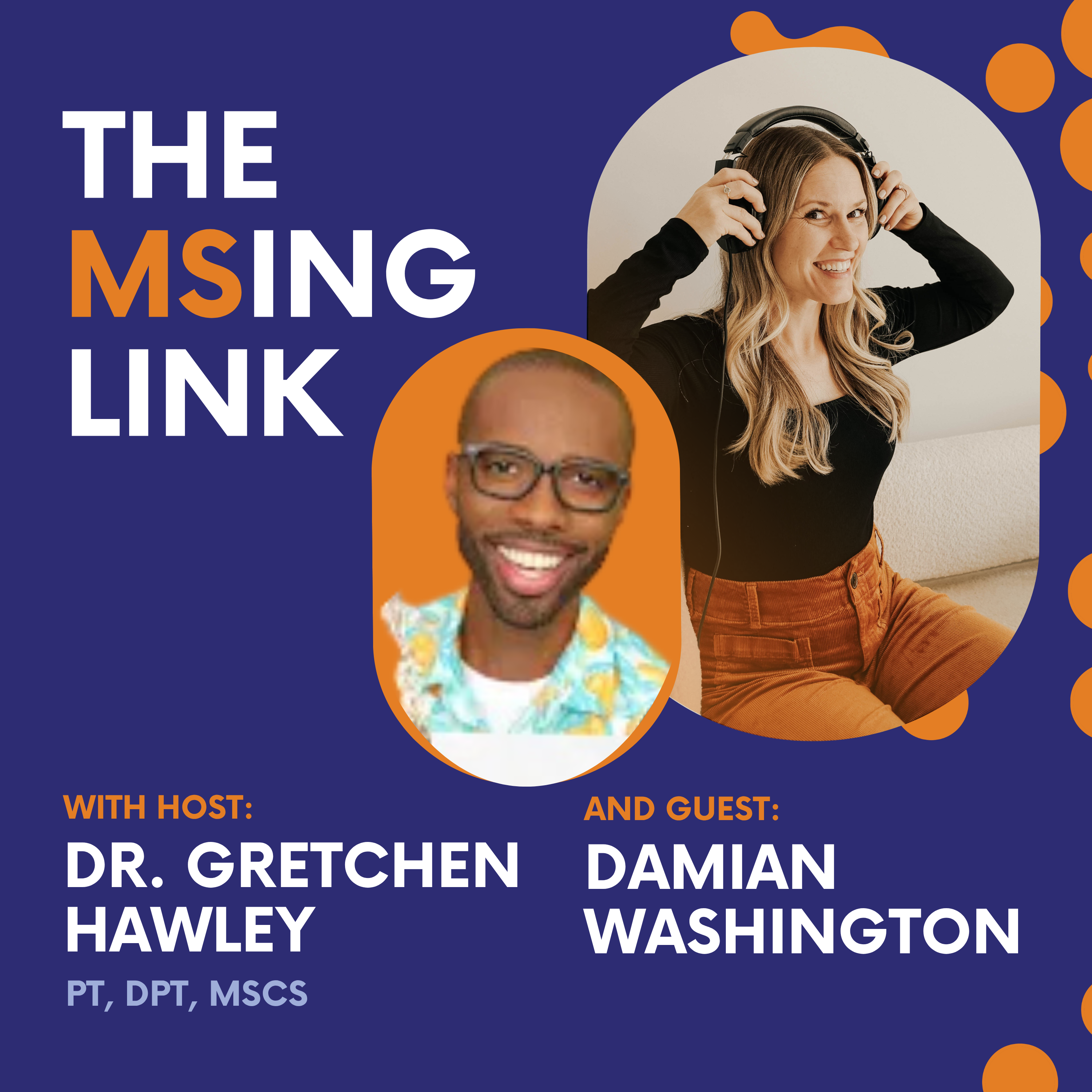 292. MS Mindset Shifts with Damian Washington 08.07.2026 52minOkay, I've been looking forward to sharing this one with you. In this episode, I'm chatting with Damian Washington about something I know so many of you wrestle with... how do you stay motivated when you're working toward goals with multiple sclerosis (MS) and the progress feels slow, or a setback knocks you back a few steps? Damian and I get into the good stuff. We talk about the power of repetition (spoiler: it matters way more than pushing yourself to the max), and why you really need both short-term and long-term goals working together. We dig into how to build healthy habits that support your mobility, strength, and daily function... the kind of habits that actually stick, even on the days when MS makes everything harder. We also talk about the role of affirmations, how to build in real accountability, and how to make room for both your wins AND your setbacks. Because here's the thing: forward motion doesn't mean every day is a good day. It means you keep going anyway. You're going to walk away from this one with actual tools. Not vague "just stay positive" stuff, but real, doable tips and mindset shifts you can use to strengthen your body and your mind, feel better in your daily life with MS, and stay consistent even when your motivation dips. Whether you're focused on your exercises, drinking more water, or just trying to build a routine that works with your real life... this conversation is full of encouragement, honest insight, and examples you can actually relate to. You've got this. And I think this episode is going to remind you of that. In this episode, I share: → Why repetition beats intensity when you're building strength and mobility with MS → Short-term vs. long-term goals, and why you need both → How to build habits that stick, even through fatigue and brain fog → The role of affirmations and shifting how you talk to yourself → Building accountability so you actually stay consistent → How to hold space for wins and setbacks without losing momentum → Keeping yourself moving forward on the tough days → Hydration and the small daily habits that support your progress → Creating sustainable routines instead of rigid, all-or-nothing rules Additional Resources: https://www.doctorgretchenhawley.com/insider Reach out to Me: [email protected] Website: www.MSingLink.com Social: ★ Facebook: https://www.facebook.com/groups/mswellness ★ Instagram: https://www.instagram.com/doctor.gretchen ★ YouTube: https://www.youtube.com/c/doctorgretchenhawley?sub_confirmation=1 → The Progress Method for MS: https://www.doctorgretchenhawley.com/the-progress-method-for-ms → Total Core Program: https://www.doctorgretchenhawley.com/TotalCoreProgram → The MSing Link: https://www.doctorgretchenhawley.com/TheMSingLink
 -
291. You're Stronger Than You Think: Dr. Gretchen's Birth Story 01.07.2026 22minI'm back, and this is my first episode recording since going on maternity leave and welcoming my second daughter into the world. So many of you in The MSing Link and on social media have been asking about my birth story, and I wanted to share part of it with you. But this episode is about so much more than childbirth. It's about realizing how strong you already are… even if you've forgotten it. Especially if you don't feel it. In this episode, I share: → The arrival of Scarlett Townsend, and the special meaning behind her name (her middle name honors my husband's mom, who we lost this past November) → The decision that weighed on me my entire pregnancy: C-section or VBAC? And why I felt so much shame around the choice I ultimately made → Why staying local turned out to be exactly the right call, especially when my heart rate dropped into the 40s for nearly 24 hours after delivery → The chaos of those first weeks home: cluster feeding, two-kids-at-once mornings, a new puppy (ask me why… I honestly don't know), and my old friend, noise sensitivity → The ordinary moment on my couch (feeding Scarlett, singing "The Wheels on the Bus" into a toy microphone, and shooing the puppy away with one foot) when it hit me: Wait, I'm doing it. Look at me go. I want to be clear: I'm not comparing my experience to living with MS. But I think this is something universal. We don't always find out what we're capable of until something asks us to rise. Strength doesn't always look the way we imagine. Sometimes it looks like asking for help. Sometimes it looks like accepting the C-section instead of carrying shame about it. And sometimes it looks like getting out of bed, getting dressed, and walking around your home, all of which take real emotional and physical strength. So this is your reminder: you are so much stronger than you think. And so much stronger than you feel. More likely than not, you did something hard today and didn't even stop to notice. Your movement still counts. You've got this. 🧡 Additional Resources: https://www.doctorgretchenhawley.com/insider Reach out to Me: [email protected] Website: www.MSingLink.com Social: ★ Facebook: https://www.facebook.com/groups/mswellness ★ Instagram: https://www.instagram.com/doctor.gretchen ★ YouTube: https://www.youtube.com/c/doctorgretchenhawley?sub_confirmation=1 → The Progress Method for MS: https://www.doctorgretchenhawley.com/the-progress-method-for-ms → Total Core Program: https://www.doctorgretchenhawley.com/TotalCoreProgram → The MSing Link: https://www.doctorgretchenhawley.com/TheMSingLink
-
290. From Me to You: Pep Talk 24.06.2026 16minIf you're someone with MS who knows exercise matters but can't seem to stay consistent… this episode is your pep talk. We've all been there. You start the week with the best intentions, then by Wednesday the negative self-talk creeps in: "I'm too tired." "It's not working." "What's the point?" Sound familiar? Here's the thing, exercise is one of the most powerful tools we have for improving mobility, strength, and independence with multiple sclerosis (MS). But the way you talk to yourself about it? That matters just as much as the workout itself. In this episode, I'm breaking down: → Why mindset is the missing piece in most MS exercise routines → The common thoughts that keep you stuck before you even start → How to shift your mental habits so they support your goals instead of sabotaging them → Practical strategies for building an exercise plan that actually fits your life → Phrases you can borrow to boost your motivation on the hard days This isn't about pretending everything is fine or forcing toxic positivity. It's about honest, research-backed strategies for people with MS who want to feel stronger, move better, and believe in what's possible again. You've got this. 🧡 Additional Resources: https://www.doctorgretchenhawley.com/insider Reach out to Me: [email protected] Website: www.MSingLink.com Social: ★ Facebook: https://www.facebook.com/groups/mswellness ★ Instagram: https://www.instagram.com/doctor.gretchen ★ YouTube: https://www.youtube.com/c/doctorgretchenhawley?sub_confirmation=1 → The Progress Method for MS: https://www.doctorgretchenhawley.com/the-progress-method-for-ms → Total Core Program: https://www.doctorgretchenhawley.com/TotalCoreProgram → The MSing Link: https://www.doctorgretchenhawley.com/TheMSingLink
-
289. Clonus with MS: Why It Happens + How to Calm It Down 17.06.2026 21minIf you've ever been sitting on the couch, just minding your business, and suddenly your leg starts bouncing like it has a mind of its own… you're not imagining it. That's clonus. And it's one of the most misunderstood symptoms of multiple sclerosis (MS). In this episode of The MSing Link Podcast, I'm walking you through everything you need to know about clonus with MS… what it actually is, why it happens (hint: it's that wifi connection between your brain and your muscles getting a little staticky), and the small adjustments that can make a big difference in your daily life. We'll talk about: → What clonus is and why people with MS experience it → The everyday moments it tends to show up (sitting, biking, standing in the shower… sound familiar?) → Simple positioning and movement strategies you can try today to calm the bouncing → Why "just push through it" isn't the answer… and what actually helps As an MS-specialized physical therapist, I've worked with so many people in The MSing Link community who've felt frustrated, embarrassed, or just plain confused by clonus. You're not alone in this. And there's more you can do about it than you've probably been told. If your legs have ever shaken in a way that felt impossible to control, this one's for you. You've got this. 🧡 Additional Resources: https://www.doctorgretchenhawley.com/insider Reach out to Me: [email protected] Website: www.MSingLink.com Social: ★ Facebook: https://www.facebook.com/groups/mswellness ★ Instagram: https://www.instagram.com/doctor.gretchen ★ YouTube: https://www.youtube.com/c/doctorgretchenhawley?sub_confirmation=1 → The Progress Method for MS: https://www.doctorgretchenhawley.com/the-progress-method-for-ms → Total Core Program: https://www.doctorgretchenhawley.com/TotalCoreProgram → The MSing Link: https://www.doctorgretchenhawley.com/TheMSingLink
-
288. Why Your Movement Isn’t Improving (And What to Do Instead) 10.06.2026 18minEver feel like you're getting stronger… but your walking, your balance, your daily movement just isn't catching up? You're not imagining it. And you're definitely not alone. In this episode, I'm breaking down one of the most common frustrations I hear from people with multiple sclerosis (MS): you're putting in the work — biking, lifting, going to physical therapy — but it's not translating to the things that actually matter in your day. Walking to the mailbox. Standing up from a chair without plopping. Getting through the grocery store without your legs giving out. Here's the missing piece: functional exercise. I'll walk you through what functional exercise actually means, why it matters so much for people with MS, and how to take a big goal (like walking more steadily) and break it down into smaller, specific movements your body can actually practice and improve. This is the wifi connection between your brain and your muscles — and it's what makes the difference between getting stronger on paper and feeling stronger in real life. You'll walk away with: → A clearer understanding of why traditional exercise often falls short for people with MS → How to identify the specific movements you want to improve → Practical ways to build strength that actually shows up in your daily life Whether you're newly diagnosed or you've been living with MS for years, this one's for you. Your movement still counts — and there's a smarter way to make it count more. You've got this. 🧡 Resources mentioned in this episode: Dr. Gretchen Hawley’s YouTube Channel: https://www.youtube.com/@DoctorGretchenHawley Additional Resources: https://www.doctorgretchenhawley.com/insider Reach out to Me: [email protected] Website: www.MSingLink.com Social: ★ Facebook: https://www.facebook.com/groups/mswellness ★ Instagram: https://www.instagram.com/doctor.gretchen ★ YouTube: https://www.youtube.com/c/doctorgretchenhawley?sub_confirmation=1 → The Progress Method for MS: https://www.doctorgretchenhawley.com/the-progress-method-for-ms → Total Core Program: https://www.doctorgretchenhawley.com/TotalCoreProgram → The MSing Link: https://www.doctorgretchenhawley.com/TheMSingLink
-
287. Let’s Talk About MS Spasticity: Causes, Triggers, and Support 03.06.2026 38minIn this solo episode, I'm getting into one of the most common (and most misunderstood) multiple sclerosis symptoms… MS spasticity. If your legs feel heavy, your muscles lock up, or you've been told it's "just tightness"… this one is for you. I'll walk you through what spasticity actually is, what's happening in your body when it shows up, and why it can have such a big impact on your daily life and mobility. We'll cover: → The Modified Ashworth Scale (and what those numbers really mean) → The difference between spasms, cramps, and true spasticity → Common triggers like fatigue, infection, heat, and stress → What actually helps… including physical therapy-based strategies, stretching, medications, and the latest research on cannabis and electrical stimulation Press play and let's get into it. Additional Resources: https://www.doctorgretchenhawley.com/insider Reach out to Me: [email protected] Website: www.MSingLink.com Social: ★ Facebook: https://www.facebook.com/groups/mswellness ★ Instagram: https://www.instagram.com/doctor.gretchen ★ YouTube: https://www.youtube.com/c/doctorgretchenhawley?sub_confirmation=1 → The Progress Method for MS: https://www.doctorgretchenhawley.com/the-progress-method-for-ms → Total Core Program: https://www.doctorgretchenhawley.com/TotalCoreProgram → The MSing Link: https://www.doctorgretchenhawley.com/TheMSingLink
-
286. Foot Drop Explained 27.05.2026 20minIf MS has ever made your toe catch on the carpet, or you've felt that frustrating slap of your foot hitting the floor before you meant it to… this episode is for you. I'm walking you through what foot drop actually is, why it happens with multiple sclerosis (MS), and how it shows up in your walking and your fall risk. As an MS-specialized physical therapist, I'm breaking down the most common causes I see in my members — weakness in the ankle muscles, tight calves, sensory changes, and limited ankle range of motion. Each one matters, and each one responds to a slightly different approach. You'll learn specific exercises to strengthen the right muscles, stretches that actually move the needle, and sensory tools that help reconnect the connection between your brain and your foot. I'm also covering the products people ask me about all the time — insoles, AFOs (ankle-foot orthoses), and electrical stimulation, and how to know which might be a good fit for you. Here's the piece most people miss… supportive devices work best when they're paired with the right strength work. One without the other leaves progress on the table. I'll show you how to combine them so the changes you're working for actually stick. Whether you're trying to trip less, walk further, or just feel steadier on your feet, this one's packed with practical, MS-specific guidance you can start using today. You've got this. 🧡 Resources Mentioned in this Episode: Cadence shoes - Use code DRGRETCHEN10 for a 10% discount The MSing Link Episode 271, Toe Exercises for MS: Improve Balance, Foot Drop & Walking - Apple Podcast || Spotify The MSing Link Episode 280, - Apple Podcast || Spotify The MSing Link Online Program - https://www.doctorgretchenhawley.com/TheMSingLink Additional Resources: https://www.doctorgretchenhawley.com/insider Reach out to Me: [email protected] Website: www.MSingLink.com Social: ★ Facebook: https://www.facebook.com/groups/mswellness ★ Instagram: https://www.instagram.com/doctor.gretchen ★ YouTube: https://www.youtube.com/c/doctorgretchenhawley?sub_confirmation=1 → Game Changers Course: https://www.doctorgretchenhawley.com/GameChangersCourse → Total Core Program: https://www.doctorgretchenhawley.com/TotalCoreProgram → The MSing Link: https://www.doctorgretchenhawley.com/TheMSingLink
-
285. How to Activate Neuroplasticity With MS 20.05.2026 28min In this episode, I'm continuing the conversation on neuroplasticity. Or, the way I like to explain it, the wifi connection between your brain and your muscles. Here's the thing: your brain can keep adapting and building new pathways, even if you've been living with MS for years. That's not wishful thinking. That's real, and it's research-backed. We'll talk through: What neuroplasticity actually is (in plain English, I promise) The MS-specific, functional exercises that help you build strength where it counts Why repetition and quality of movement matter more than how long you're working out How sleep, nutrition, and mindset quietly shape your MS symptoms day to day Simple ways to keep your routine fresh at home so you actually stick with it Resources Mentioned in this Episode: The MSing Link, Episode 270, Does MS Affect Brain Aging? What the Research Shows with Dr. Kelly Rich - Apple || Spotify Additional Resources: https://www.doctorgretchenhawley.com/insider Reach out to Me: [email protected] Website: www.MSingLink.com Social: ★ Facebook: https://www.facebook.com/groups/mswellness ★ Instagram: https://www.instagram.com/doctor.gretchen ★ YouTube: https://www.youtube.com/c/doctorgretchenhawley?sub_confirmation=1 → Game Changers Course: https://www.doctorgretchenhawley.com/GameChangersCourse → Total Core Program: https://www.doctorgretchenhawley.com/TotalCoreProgram → The MSing Link: https://www.doctorgretchenhawley.com/TheMSingLink
-
284. What Is Neuroplasticity (And Why It Matters in MS) 13.05.2026 15minWhat if the key to walking better, feeling stronger, and moving with more confidence isn't just in your muscles… but in your brain? In this episode, I'm diving into one of my favorite topics as a Multiple Sclerosis Certified Specialist and physical therapist: neuroplasticity and what it really means for people with multiple sclerosis (MS). If you've ever wondered why generic exercise programs haven't worked for you, or why "just doing more reps" hasn't moved the needle, this conversation is going to connect a lot of dots. What you'll learn in this episode: What neuroplasticity actually is, in plain language (think of it as the wifi connection between your brain and your muscles) Why neuroplasticity is especially important for people with MS, and how it relates to demyelination, lesions, and rebuilding neural pathways The difference between standard exercise and MS-specific, neuroplasticity-based functional exercise — and why that distinction matters for real progress How repetition, intention, and specificity train your brain to communicate better with your body Practical, MS-specific exercise strategies you can start using to support strength, walking, balance, coordination, and stability Daily activities and small habits (outside of formal workouts) that reinforce change How neuroplasticity supports not just physical symptoms, but also mindset, confidence, and mental resilience with MS What the research says about neuroplasticity and MS — and what it does and does not promise Why progress is still possible, even if you've been living with MS for years and feel like you've tried everything Additional Resources: https://www.doctorgretchenhawley.com/insider Reach out to Me: [email protected] Website: www.MSingLink.com Social: ★ Facebook: https://www.facebook.com/groups/mswellness ★ Instagram: https://www.instagram.com/doctor.gretchen ★ YouTube: https://www.youtube.com/c/doctorgretchenhawley?sub_confirmation=1 → Game Changers Course: https://www.doctorgretchenhawley.com/GameChangersCourse → Total Core Program: https://www.doctorgretchenhawley.com/TotalCoreProgram → The MSing Link: https://www.doctorgretchenhawley.com/TheMSingLink
-
283. What People with MS Wish You Knew 06.05.2026 24minIn honor of Mother's Day, I'm sharing something I've been sitting with for a while… the real, honest answers to the question, "What do you wish the people in your life understood about living with MS?" I asked. The MSing Link community answered. And what they shared is something every mom, daughter, sister, and friend with MS deserves to have heard out loud. We're talking about the fatigue that doesn't go away after a nap. The symptoms no one can see, but you feel every second. The emotional weight of waking up not knowing what your body will do that day. The grief, the guilt, the love, and the quiet strength it takes to keep showing up. If you have MS, I hope this episode makes you feel a little less alone. If you love someone with MS, I hope it gives you the words you've been searching for. Either way, you'll walk away with real language, real stories, and real ways to bridge the gap so the people closest to you can finally start to get it. Press play. Share it with someone who needs to hear it. And let's keep showing the world what life with MS actually looks like… together. 🧡 Additional Resources: https://www.doctorgretchenhawley.com/insider Reach out to Me: [email protected] Website: www.MSingLink.com Social: ★ Facebook: https://www.facebook.com/groups/mswellness ★ Instagram: https://www.instagram.com/doctor.gretchen ★ YouTube: https://www.youtube.com/c/doctorgretchenhawley?sub_confirmation=1 → Game Changers Course: https://www.doctorgretchenhawley.com/GameChangersCourse → Total Core Program: https://www.doctorgretchenhawley.com/TotalCoreProgram → The MSing Link: https://www.doctorgretchenhawley.com/TheMSingLink
Samankaltaiset podcastit


Suosittu maassa
Tämä podcast esiintyy myös näiden maiden podcast-listoilla.
