
By Their Own Compass
Where a love of history meets a passion for travel.
0
Historian Jeremiah Jenne and journalist Sarah Keenlyside explore historical travellers and the worlds they encountered, connecting past journeys to today's travel destinations. The show blends historical narrative with travel insights, revealing how centuries-old expeditions still resonate with modern tourism. Each episode focuses on a specific traveller and the places they visited, offering a unique perspective on both history and contemporary travel.
Jaksot
-
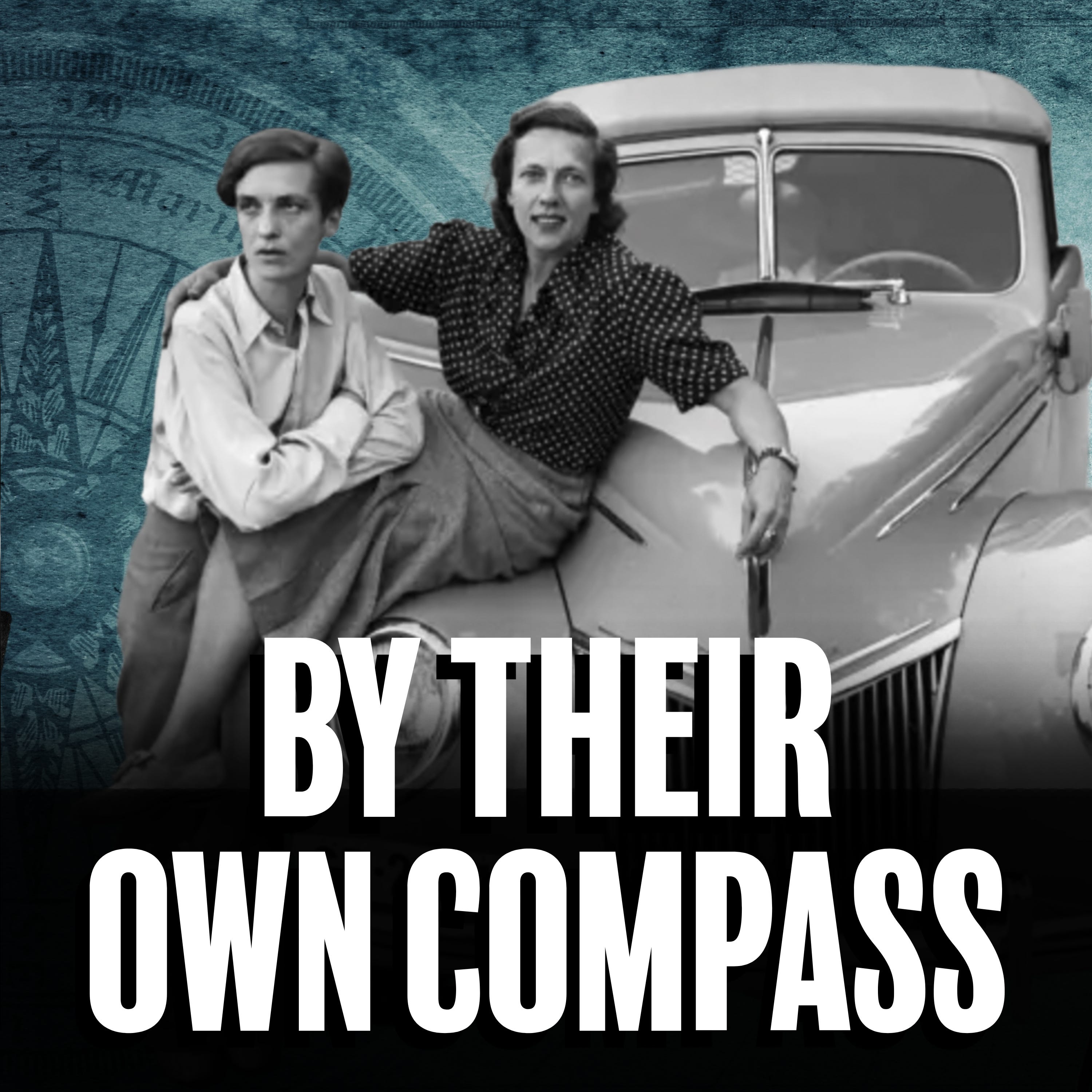 Escape to Afghanistan: Ella Maillart, Annemarie Schwarzenbach, and the promise that couldn't be kept 04.09.2026 51minIn 1939, on the eve of the Second World War, two Swiss women decided to drive a Ford from Geneva to Kabul.One of them was running out of time, and they both knew it.The driver was Annemarie Schwarzenbach – a Swiss industrialist’s daughter, archaeologist and journalist who’d been gifted the car by her father. The other was Ella Maillart – Olympic sailor, elite skier and an intrepid traveller who’d already crossed from Beijing to India by camel, lorry and foot with Bond author Ian Fleming’s older brother.Schwarzenbach had a secret, but Maillart was eager to go, so off they went – through the Balkans, across Turkey and Iran, over the Hindu Kush, and into Kabul, arriving in Afghanistan just as war broke out in Europe behind them.When they arrived, they found a country with its own problems: a king exiled a decade earlier for unveiling Kabul, girls’ schools operating unofficially against the objections of the clergy, and women whose identities were completely erased.The women recorded the journey in two separate books: The Cruel Way (Maillart) and All the Roads Are Open (Schwarzenbach) – but readers may wonder if they’re even on the same road, never mind sitting next to each other in the same car.In this episode, Sarah and Jeremiah discuss the differing versions: Schwarzenbach’s desperate need to escape and Maillart’s doomed conviction that distance could cure any problem; travelling as women who were often read as men; and the Afghanistan they drove into. This is a public episode. If you'd like to discuss this with other subscribers or get access to bonus episodes, visit www.bytheirowncompass.com/subscribe
 -
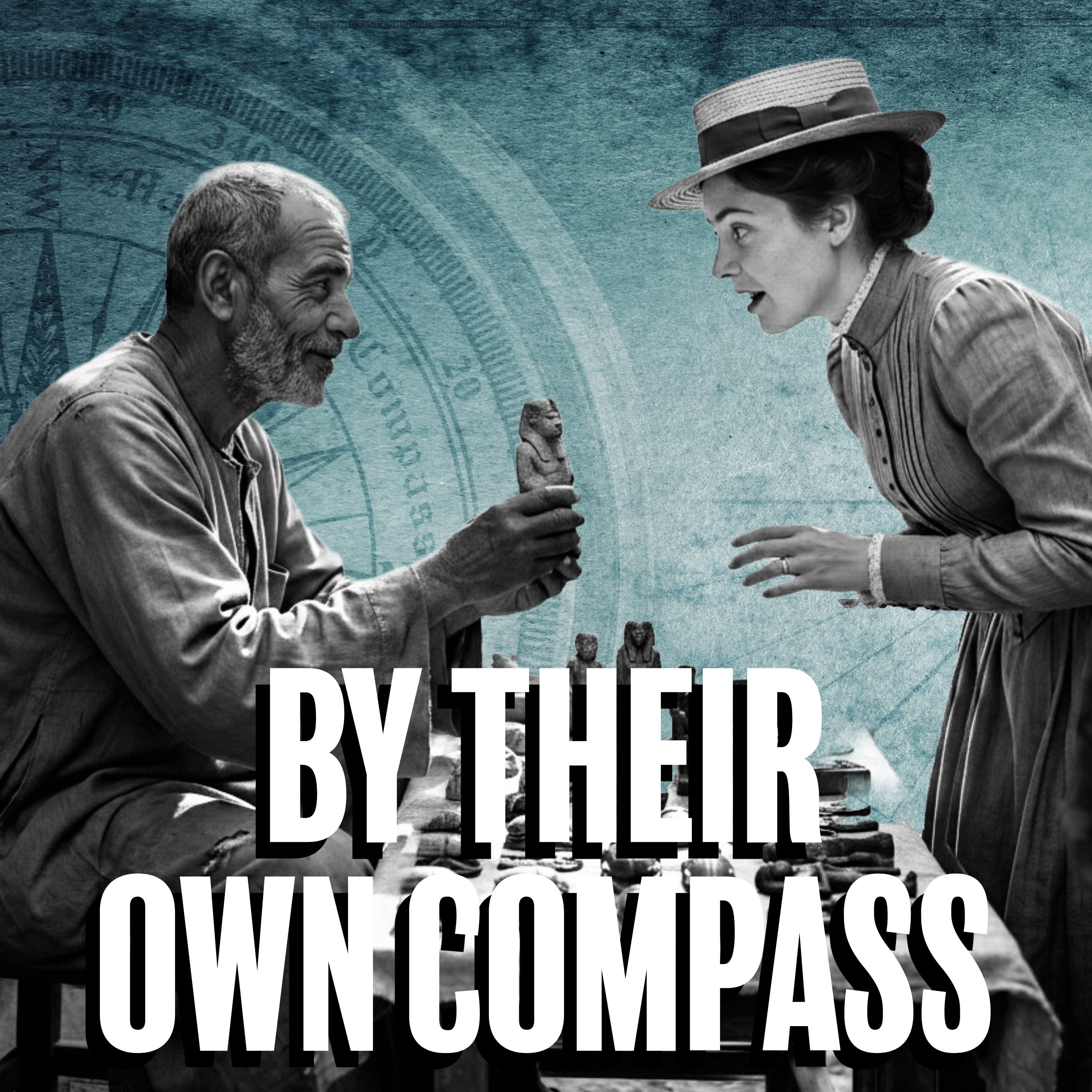 History's Greatest Travel Scams: From Medieval Relic Fraud to the Tea House Scam in Beijing 20.08.2026 35minJeremiah and Sarah are both traveling this week, but as a special treat, we’re reposting one of our favorite episodes from earlier this year. We hope you enjoy it, and we’ll be back in two weeks with a fresh episode.If you’ve ever Googled “how to avoid scams in [destination],” you already know the genre: YouTube videos breathlessly (and ominously) exposing the 15 tricks that will ruin your trip to Florence, Bangkok, or Marrakech. Full disclosure: We watch them too. But the historically minded traveler will be quick to note that almost none of these scams are new.Structurally, the “hey, did you lose your wallet” scam is identical to cons recorded in Chinese travel literature over 400 years ago. The “helpful stranger” who leads you to his friend’s shop? A porter scam from 1617. Fake antiquities? Egyptian villagers were running that play on European collectors since the days of Napoleon.In this episode, we trace the world’s most common travel scams back to their historical origins across three centuries and three continents, and then embarrass ourselves by sharing the ones we’ve fallen for personally or that have happened to people on our trips we’re supposed to be protecting.You can trust us! For a small monthly donation, join the By Their Own Compass Club for bonus content, transcripts, reading lists, and special member-exclusive offers. This is a public episode. If you'd like to discuss this with other subscribers or get access to bonus episodes, visit www.bytheirowncompass.com/subscribe
 -
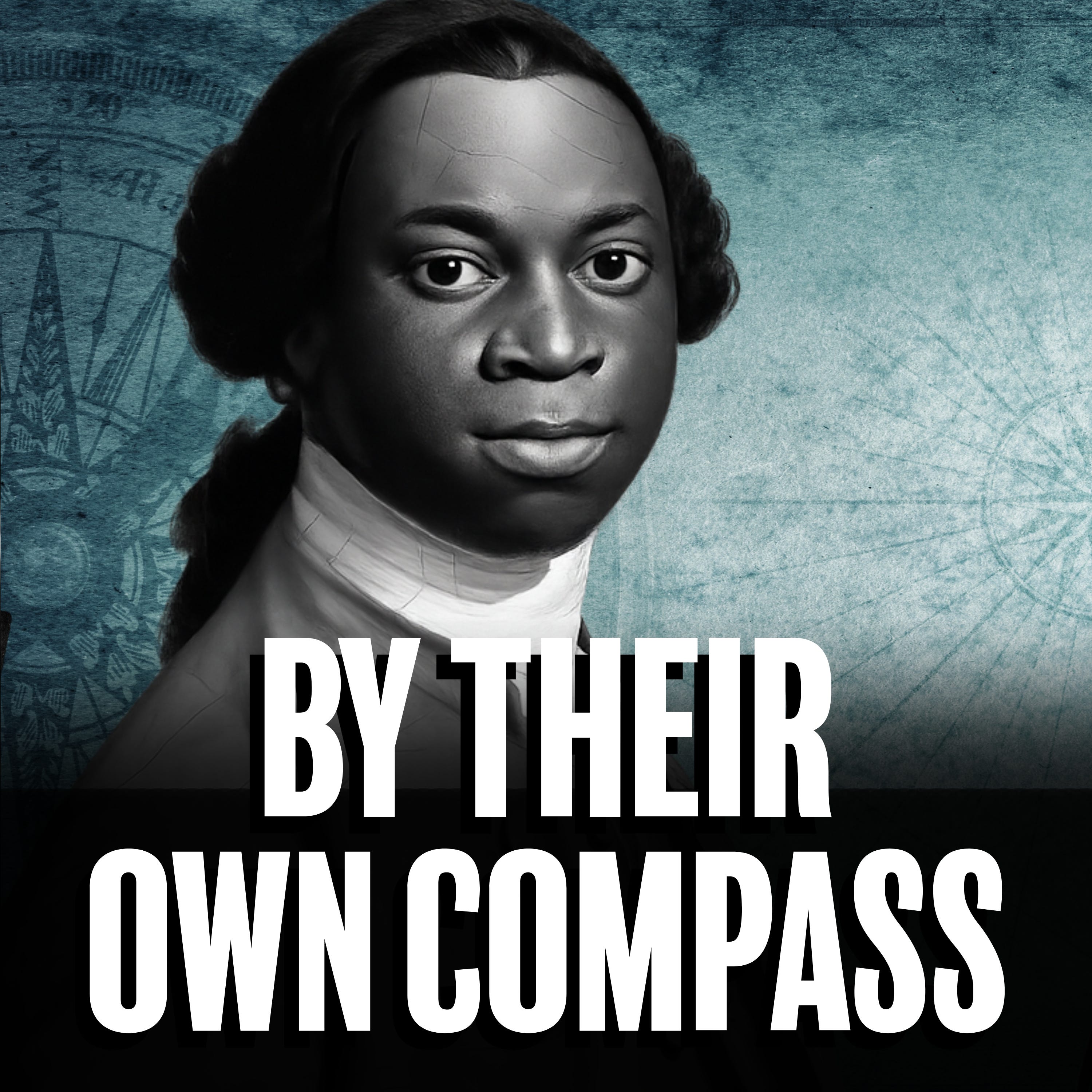 Olaudah Equiano: The Enslaved Man Who Rewrote History 10.08.2026 58minImagine being kidnapped at the age of 11, enslaved, and made to fight another country’s war as a white man pockets your wages – only to be sold off the moment you are finally owed your freedom. This was the plight of African man Olaudah Equiano – also known as Gustavus Vassa – who was passed from master to master until in 1766, aged just 21, he bought back his own freedom.From that point on, he carved out his own destiny in a way that almost none in a similar situation before him had managed. Not only did he become one of the most widely travelled individuals of the 18th century, but a one-man publishing powerhouse.Join us as we tell the incredible story of Olaudah Equiano – Royal Navy veteran, entrepreneur, merchant, hairdresser – and the spark that lit the flame under the British abolitionist movement.In his lifetime he set foot in countries ranging from Canada and America to Barbados, Portugal, France, Turkey, Nicaragua and Italy. He even sailed to the Arctic as a lab assistant on the same expedition as a young Horatio Nelson. But it was his memoir – The Interesting Narrative of the Life of Olaudah Equiano or Gustavus Vassa, the African – that turned him into a global sensation in his own right, and led to real, lasting change.This episode traces Equiano’s life from a childhood in what is now Nigeria, through the Middle Passage and the Caribbean sugar trade, to freedom, marriage, and a self-published book that made him one of the wealthiest Black Britons of his century.We ask whether Equiano was really born in Africa, discuss what freedom actually meant for a free Black man in the Atlantic world, and delve into the perils of life on the ocean in the 1700s. Plus: a walking tour of Equiano’s London, and the Black Georgian community he called home. This is a public episode. If you'd like to discuss this with other subscribers or get access to bonus episodes, visit www.bytheirowncompass.com/subscribe
 -
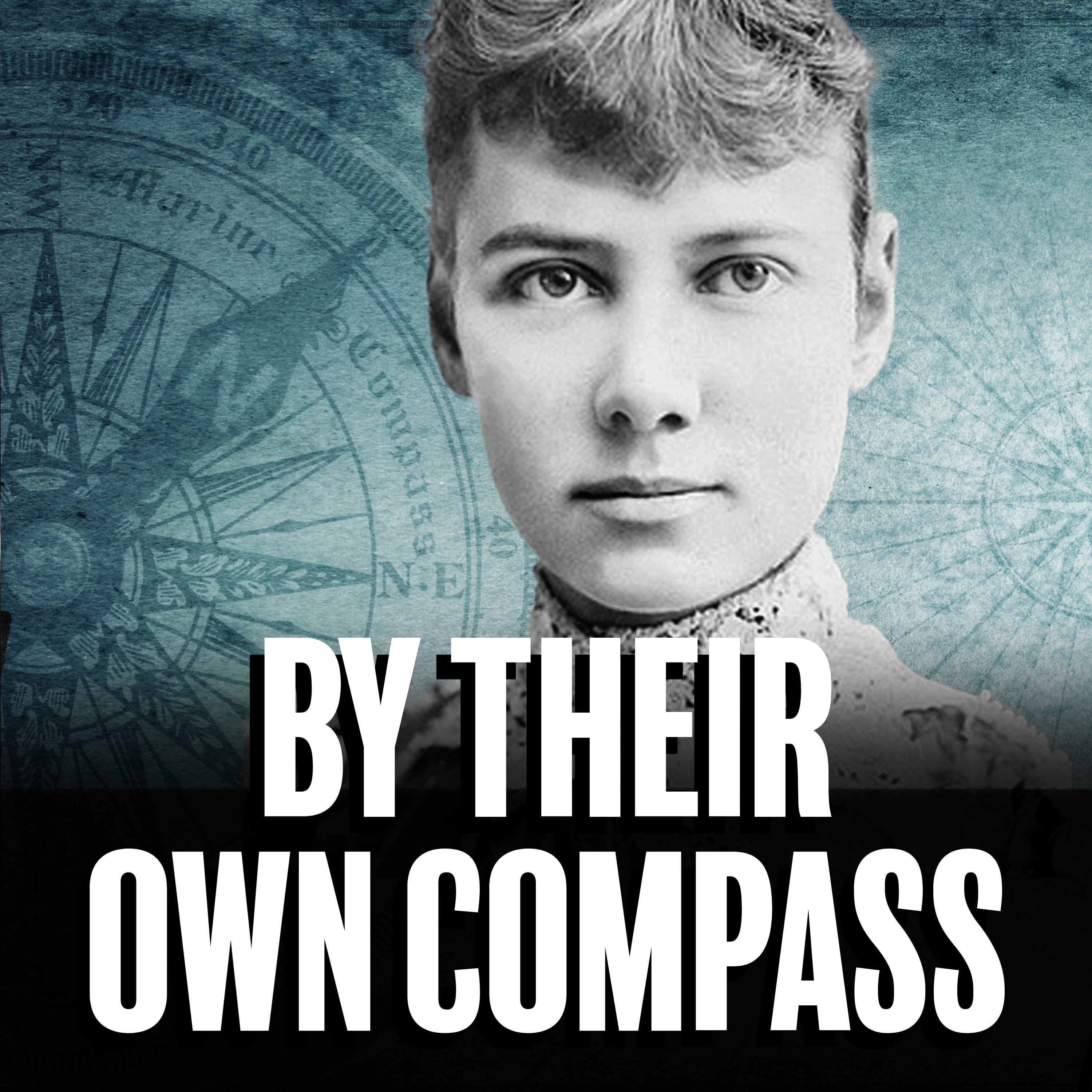 Nellie Bly's Record-Breaking Race Around the World 24.07.2026 49minThere are few women in recent history more impressive than Nellie Bly. In 1889, aged just 25, this American reporter had already pioneered undercover journalism as we know it after faking insanity to expose a poorly run asylum. Then she decided to pull off an even bigger stunt – to prove that fictional character Phileas Fogg’s achievement of going around the world in 80 days wasn’t just possible, but could be beaten.Sure enough, her record-breaking attempt for newspaper The New York World was a smash hit, and had its readers clamouring for updates day after day, collectively wondering: Where in the world is Nellie Bly?She raced by steamship and rail through England and France – including a detour to Amiens to meet Jules Verne himself – Italy, Colombo, Penang, Singapore, Hong Kong and Japan, acquired a spectacularly ill-behaved monkey en route (why is there always a monkey!?), and then embarked on a final dash across America by train to the finish line.What she didn’t know for most of her trip is that a rival newspaper had decided to pit another woman, Elisabeth Bisland, against her. So how did Nellie Bly travel around the entire world in just 72 days before the era of air travel? Who was this fearless woman, who wrote that if she failed she could never return to New York (“I would rather go in dead and successful than alive and behind.”) And what did she do with her newfound fame on her return?In this episode of By Their Own Compass, we explore the extraordinary life of Nellie Bly, the pioneering reporter who transformed investigative journalism, became one of the world’s first celebrity correspondents, smashed Phileas Fogg’s fictional record, and went on to become an inventor, industrialist and one of the most remarkable women of the Gilded age.Topics: Nellie Bly, investigative journalism, undercover reporting, Ten Days in a Mad-House, Blackwell’s Island Asylum, Around the World in 72 Days, Around the World in Eighty Days, Jules Verne, Phileas Fogg, Elisabeth Bisland, Joseph Pulitzer, New York World, Victorian travel, Gilded Age America, women in journalism, women's history, newspaper history, circumnavigation, record-breaking journeys, solo female travel, travel history.Follow By Their Own Compass on Instagram!https://www.instagram.com/bytheirowncompass/ This is a public episode. If you'd like to discuss this with other subscribers or get access to bonus episodes, visit www.bytheirowncompass.com/subscribe
 -
 North Korea's Improbable, Giant-Killing World Cup Run: Mythical Horses, Scary Crucifixes and a Chef's Revenge 09.07.2026 48minIn the summer of 1966, a group of men from one of the most isolated countries on Earth stepped off a plane into Swinging Sixties Britain. They had no idea about miniskirts or Beatlemania. Some were so unnerved by a statue of Jesus in their guesthouse that it had to be removed. They came from a nation the UK government didn’t even recognise – but within three weeks, the entire town of Middlesbrough had fallen in love with them.This is the story of North Korea at the 1966 World Cup – and one of the biggest upsets in footballing history.Not only did this diminutive, 22-man team knock out mighty Italy – one of the favourites to win the whole thing – but in the quarter-final against Portugal, barely 25 minutes in, they were 3-0 up and within touching distance of the semis. So what went wrong?In this episode, Jeremiah and Sarah invite DPRK expert Simon Cockerell to explain just how the hell Cold War era North Korea qualified for the World Cup in the first place, and to give us the inside story on what happened to the team after they returned home.Not only has Simon been to the secretive country 183 times as General Manager of Koryo Tours, but he knows the players personally, having helped organise a 2002 return visit for them to the site of their iconic victory against Italy.Was their entire game plan really based on advice from Kim Il Sung to “run fast and kick hard”? Were the players imprisoned on their return home? And did an Italian chef really try to poison striker Pak Doo-ik in revenge for his country’s most humiliating defeat?Plus: Sarah and Jeremiah dig out their favourite moments from their own trips to North Korea and ask whether you can still visit in 2026, before finishing on the Middlesbrough housing estate where, on the site of the old Ayresome Park pitch, a bronze cast still marks the exact spot of Pak Doo-ik’s winning goal.A story of pride, determination, and one of the unlikeliest runs in football history – eat your heart out, Cape Verde.Topics: 1966 World Cup, DPRK history, Pak Doo-ik, North Korea vs Italy, Middlesbrough, Ayresome Park, Cold War history, Kim Il Sung, Chollima, North Korea travel, Koryo Tours, Simon Cockerell, The Game of Their Lives documentary, Swinging Sixties Britain, football's greatest upsets, Eusébio, Teesside history, sports diplomacy, World Cup underdogs, Cape Verde 2026 This is a public episode. If you'd like to discuss this with other subscribers or get access to bonus episodes, visit www.bytheirowncompass.com/subscribe
 -
 Route 66: Cowboys, Cadillacs and Nat King Cole 26.06.2026 58minHas a more iconic road ever been built? This year, America’s famous highway turns 100. Route 66 and its fellow numbered roads were revolutionary when the federal highway system was created in 1926. For the first time ever, an ordinary person could navigate across the country without a guide and enjoy the journey for the journey’s sake: the ultimate road trip.But what made this particular route so legendary? Covering almost 2,500 miles, Route 66 passed through Illinois, Missouri, Kansas, Oklahoma, Texas, New Mexico, Arizona and California. Depression-era migrants fleeing the Dust Bowl used the Mother Road to head west; a famous footrace on the route, known as the Bunion Derby, captured the public imagination; then a Nat King Cole song and a television show cemented its place in the American psyche once and for all.As author Michael Wallis says, “Route 66 is Woody Guthrie and Mickey Mantle and Jack Kerouac. It’s thousands of waitresses, service station attendants, fry cooks, truckers, grease monkeys, hustlers, state cops, wrecker drivers, and motel clerks”.But who was the road really for – and who did it leave out?A large stretch of it also sold a decidedly manufactured Southwest – “Native American” wigwam hotels; cafés built in the shape of a giant sombrero. Roadside “trading posts” and “snake pits” promising a brush with a Wild West more imagined than real. Meanwhile, Black travellers were forced to consult The Green Book just to stay safe on the very same route – a compendium of the diners, hotels and gas stations that would actually serve them at a time when segregation and sundown towns made a simple road trip genuinely dangerous.Then, in 1956 the Interstate Highway Act slowly kills the road. Towns were bypassed in the interest of speed, and businesses die. But in 2026, the myths (and the wigwam hotels) are as alive as ever.In this episode, we dive into the romance, the reality, the open road, and everything it leaves unsaid. Plus, we unpack in detail how to do the trip yourself, which car to drive, and why this centennial year might just be the perfect moment to go.Topics: Route 66 centennial, US highway history, Dust Bowl migration, Jack Kerouac, On The Road, Beat Generation, John Steinbeck, Grapes of Wrath, Nat King Cole, Green Book, Black travel history, racial segregation, Native American representation, Chicano culture, American exceptionalism, Chicago to Santa Monica, Southwest USA travel, Interstate Highway Act.Follow By Their Own Compass on Instagram!📸 Instagram: By Their Own Compass This is a public episode. If you'd like to discuss this with other subscribers or get access to bonus episodes, visit www.bytheirowncompass.com/subscribe
 -
 Zheng He: The Eunuch Who Commanded the World’s Biggest Treasure Fleet 11.06.2026 51minDecades before Christopher Columbus and Europe’s “Age of Exploration”, a strapping Chinese admiral named Zheng He commanded the biggest fleet of ships the world had ever seen – treasure ships so enormous that nothing comparable sailed the oceans for another 400 years.Born into a Muslim family and orphaned at a young age, Zheng He was castrated around the age of 10 and forced to work as a servant for Ming Dynasty prince Zhu Di. But this young eunuch soon outgrew his role – literally and figuratively – and when his master became the emperor, found himself entrusted with an imperial expedition that would turn him into one of history’s greatest travellers.So great, in fact, that some – including 1421 author Gavin Menzies – believe that China discovered America before Columbus.Across seven voyages spanning around 30 years, Zheng sailed south and west to Vietnam, Indonesia, Sri Lanka, India, the Persian Gulf, the Arabian Peninsula, and the east coast of Africa. He captured a Sri Lankan king, saw off the most feared pirate in the Strait of Malacca, and collected exotic animals to present to the Yongle emperor, from giraffes and ostriches to zebras.So, did this roving eunuch ambassador really reach America first? And why, when the fleet was so impressive, did it suddenly just… disappear?What would have happened if Zheng He, his hundreds of enormous boats and tens of thousands of crewmen had reached European shores? What if he’d continued to be an imposing presence? Might Europe’s destructive colonial expeditions in Asia never have happened?Join Sarah and Jeremiah as they separate fact from fiction, discuss what an alternative history might have looked like, and follow in Zheng He’s footsteps today in Java, Indonesia, Malacca in Malaysia, and Galle in Sri Lanka.Topics: Zheng He, Chinese treasure fleet, Ming Dynasty, eunuch admiral, Age of Exploration, maritime history, Indian Ocean trade, Strait of Malacca, did China discover America, 1421 Gavin Menzies, Christopher Columbus, Yongle Emperor, piracy, Sri Lanka history, Malacca, Malaysia, Java, Indonesia, Sam Po Kong temple, Southeast Asia travel This is a public episode. If you'd like to discuss this with other subscribers or get access to bonus episodes, visit www.bytheirowncompass.com/subscribe
 -
 The Dark Side of the Compass: When Travellers Become the Problem 28.05.2026 39minBritish travel writer and podcaster Jamie Fullerton has spent his career documenting communities and places that the average guidebook doesn’t cover – from the Dance of the Little Devils ritual in Boruca, Costa Rica, to overnight hikes on Guatemala’s Fuego Volcano and obscure bagpipe festivals in the Rhodope Mountains of Bulgaria.His work bears witness to traditions in the midst of being revived, and cultures at risk of dying out – often asking what effect tourism has on local communities caught somewhere between preservation and exploitation.In this episode of By Their Own Compass, Jamie discusses his new podcast series, Keep Going: An Unexpected Travel Podcast, and the controversial trips that tourists make in Central America and elsewhere that do little for the local people they’re meant to help or celebrate. Sarah and Jamie examine cases ranging from Mexico’s Tren Maya railway displacing indigenous communities, to volcano guides risking their lives for tourist dollars, and ask whether the modern traveller is part of the problem.How do you know whether your presence in a foreign country is benefitting the community? Should we all travel with a journalist’s curiosity to ensure we’re doing less harm than good? And is the act of being a travel writer part of the problem – or is there an insidious new force in the content ecosystem causing even greater damage?Sarah also quizzes Jamie Fullerton on his writing inspirations, the most dramatic hike he’s ever done, and why a visit to an Albanian film archive changed his view of how we record – and preserve – history.Topics: ethical travel, responsible tourism, indigenous communities, overtourism, vanishing cultures, Central America travel, Guatemala volcano hiking, Costa Rica traditions, Mexico Tren Maya, travel writing, Keep Going podcast, Jamie FullertonFollow By Their Own Compass:📩 Substack: https://bytheirowncompass.substack.com/📸 Instagram: By Their Own Compass Listen to By Keep Going: An Unexpected Travel Podcast:Keep Going: An Unexpected Travel Podcast: https://linktr.ee/keepgoingtravelpodcastJamie Fullerton on Instagram: @jamie_w_fullerton This is a public episode. If you'd like to discuss this with other subscribers or get access to bonus episodes, visit www.bytheirowncompass.com/subscribe
 -
 Emily Hahn in China: War, Romance, and Opium 14.05.2026 59minSeeking the perfect travel companion: Must like adventure, dodgy neighborhoods, good gin joints, handsome and interesting men (a spy or a poet, if you please), gibbons (which are NOT monkeys), and opium. Not in that particular order.Meet Emily “Mickey” Hahn, a writer, an adventurer, and a professional rule-breaker whose wanderlust took her from the American Midwest to Europe and Africa, and finally to China, all before she turned 30.By the time she got to China, she had already established herself as an up-and-coming literary voice and one of the New Yorker’s earliest star writers. In her career, she published 54 books and over 200 articles, but her most famous book is China to Me, a memoir of the years that we’re going to talk about in this episode.She partied with poets (and her pet gibbon) at Shanghai soirees. Wrote biographies while dodging bombs in wartime Chongqing, and did her best to keep herself and her family alive in Japanese-occupied Hong Kong. Along the way, she became famous (some might add “notorious”) for her affairs, including with Chinese writer Sinmay Zau (Shao Xunmei 邵洵美) and the head of British intelligence in Hong Kong, Charles Boxer.Mickey lived through some of China’s most tumultuous moments. While many foreigners experienced these events, Mickey gave her readers an unvarnished look at what was happening, with a style all her own.We’ll explore Mickey’s life, travels, and adventures, and we’ll also discuss how to follow in her footsteps today through the modern cities of Chongqing, Hong Kong, and especially Shanghai. This is a public episode. If you'd like to discuss this with other subscribers or get access to bonus episodes, visit www.bytheirowncompass.com/subscribe
 -
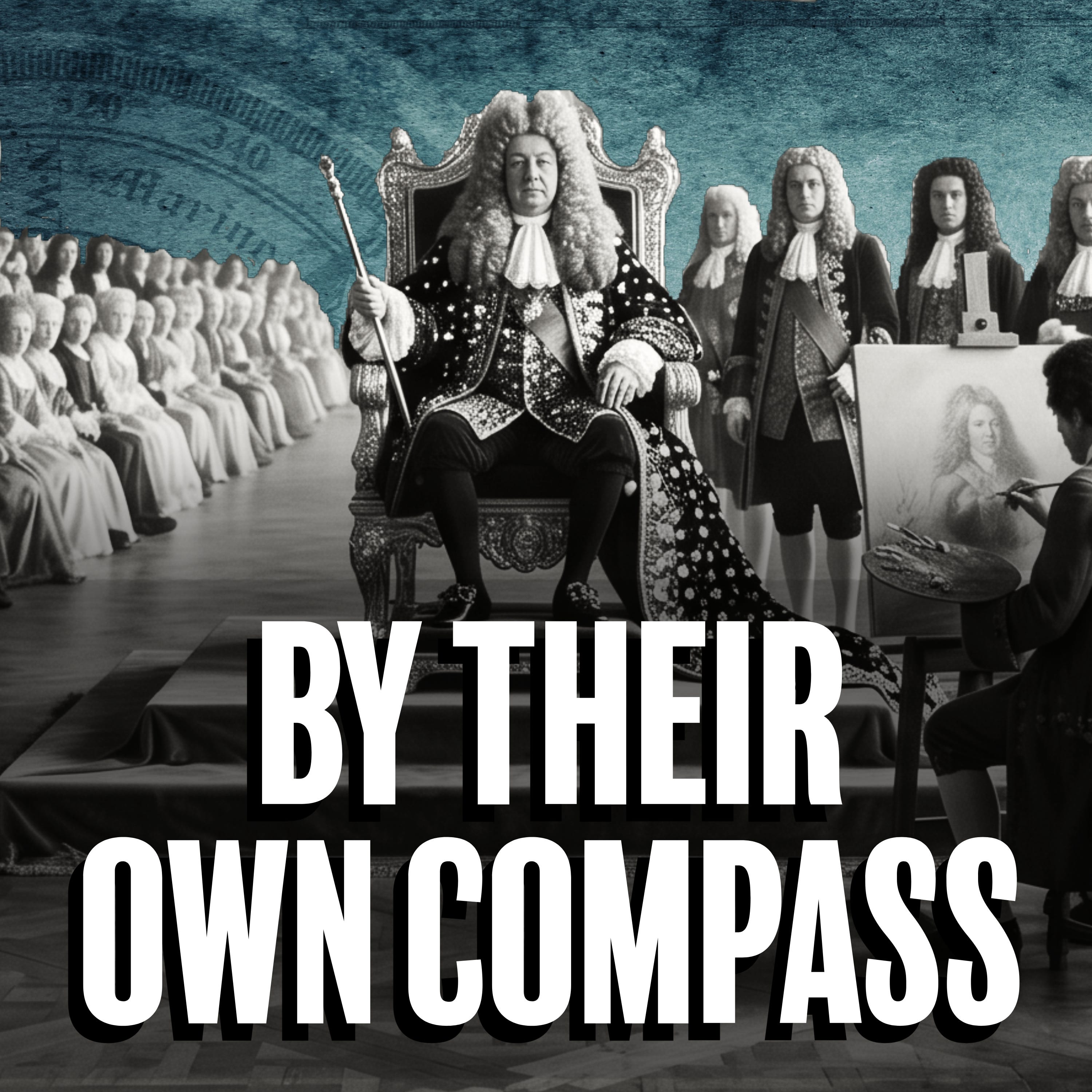 History’s Funniest Diplomatic Fails: the US in Guam, Louis XIV’s Fake Persian Ambassador and China’s Unluckiest Envoy 30.04.2026 31minIn diplomatic history, some missions don’t always go off with a bang, but with a cringe. During the Spanish-American War in 1898, the US Navy attacked Guam and waited for return fire that never came. Turns out the Spanish-run island had no idea they were enemies and sent an army officer and port commander out in a rowboat to go say a cheerful hello instead. In 1715, Louis XIV donned his finest diamond encrusted outfit to welcome a Persian “ambassador” in his spectacular Hall of Mirrors at the Palace of Versailles only to be told his translator was no good; and in 1870, Chinese diplomat Chonghou went all the way to France to say sorry for the murder of some nuns during the Tianjin Massacre, only to wait around for a year to find someone to apologize to.In this episode, Jeremiah and Sarah take turns to tell the stories of three of history’s most embarrassing diplomatic incidents and attempt to put themselves in the shoes of those who were there. Jeremiah balks at Sarah’s lack of Beatles song recognition, and Sarah reveals her favourite modern diplomatic fail: when Emmanuel Macron surprised Donald Trump with a Daft Punk medley performed by the Garde Républicaine. This is a public episode. If you'd like to discuss this with other subscribers or get access to bonus episodes, visit www.bytheirowncompass.com/subscribe
 -
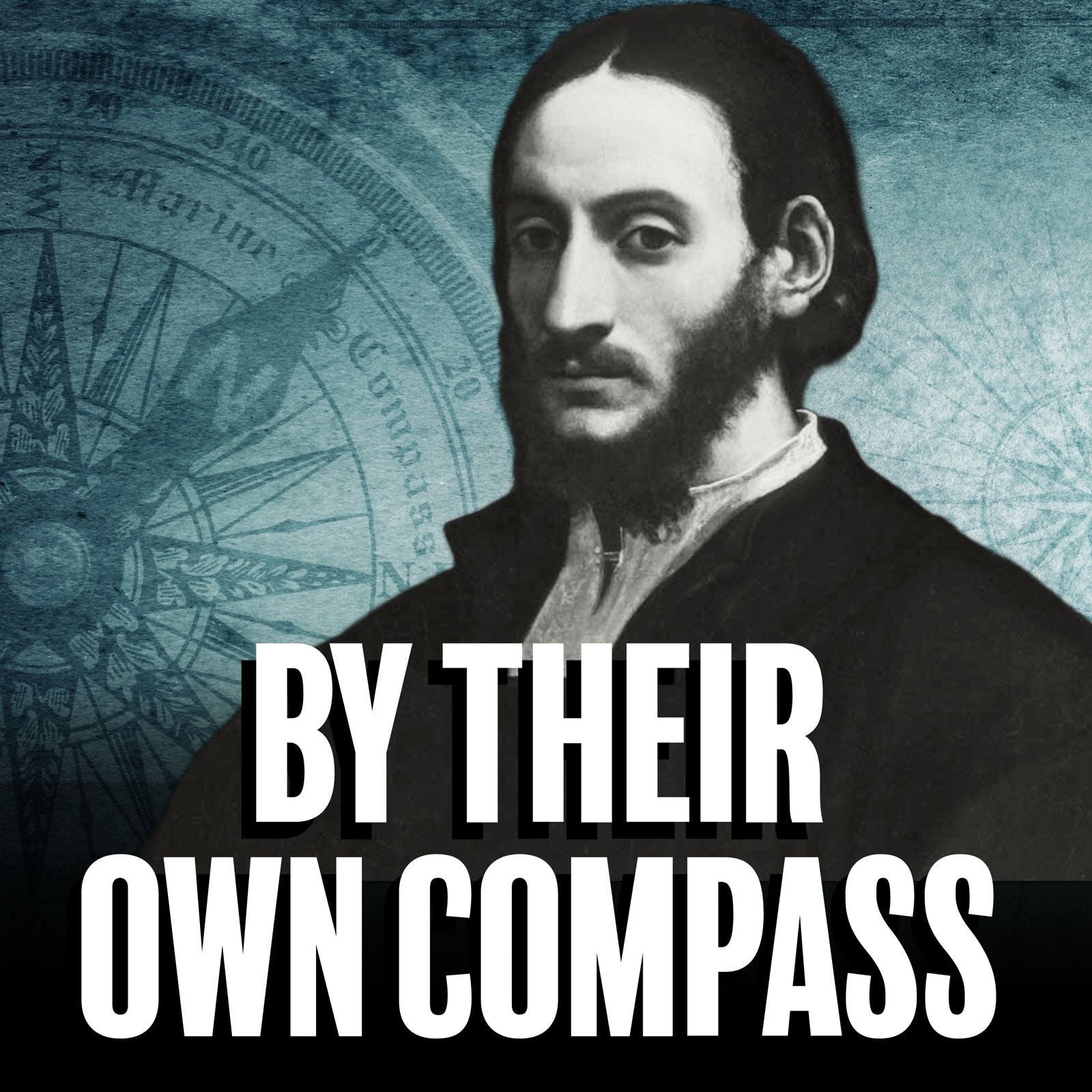 Leo Africanus: Pirates, Popes, and the Moor Who Knew Too Much 16.04.2026 43minCaptured by a Spanish pirate? A gift to Pope Leo X? Europe’s expert on Africa for nearly three centuries? Leo Africanus lived many lives. Born al-Hasan ibn Muhammad al-Wazzan around 1488 in Granada, Spain, he was trained in the madrasas of Fez to be a diplomat. He travelled across the Sahara Desert and North Africa, sailed the Red Sea, and called on courts from Tunis to Timbuktu, Cairo to Constantinople. Then he became a prisoner of Rome, a convert (possibly) to Christianity, and one of the most celebrated scholars of his era, writing the Cosmography and Geography of Africa in 1526 (published in 1550). Then he disappeared.In this episode of By Their Own Compass, we tell the story of how a roving ambassador from Fez ended up a prisoner in the Castel Sant’Angelo, the dungeons and luxury apartments rolled into a single fortress on the Tiber. We follow his capture at sea in 1518, his fifteen months in the papal cells, his baptism by the Medici pope who gave him his own names, and the nine years he spent in Rome as a convert, a scholar, and a curiosity. We also follow him out, because when the city was sacked by mutinous Imperial troops in May 1527, Leo Africanus used the chaos to disappear, most likely back to Tunis, where he becomes untraceable in the historical record.Become a member of the By Their Own Compass Club on Substack for research notes on Leo Africanus, extended travel tips for Fez and Rome, a full episode transcript, and an original parody song we’re not entirely sorry about. The gratitude is real.Along the way, we talk about what it meant to be a Muslim diplomat captured in Renaissance Europe, the family history that starts with the fall of Granada in 1492, and the Venetian editor Giovanni Battista Ramusio, who published Leo’s manuscript and, in the process, smoothed over the Islam and sharpened the Christianity for his European readers. We also ask the same question we asked of Marco Polo. How much of Leo’s Africa did he actually see, and how much did he hear about in the markets of Fez and write down as if he’d been there? Our guide through the tangle is the historian Natalie Zemon Davis, whose Trickster Travels is the most thorough reconstruction of who this man was. An updated edition of Cosmography and Geography of Africa is out from Penguin Classics, the first new English translation of the book in over four hundred years.Sarah and Jeremiah take you through the Rome and Fez of Leo’s life too, from the Castel Sant’Angelo and the Passetto di Borgo (the corridor the Pope fled down in 1527) through the May 6 swearing-in ceremony of the Swiss Guard, and across the Mediterranean to the medina of Fez and the Chouara tanneries, where the smell still hits you on the terrace.Share this episode with a friend who thinks Kashmir is part of Morocco simply because Robert Plant used to buy the really good drugs there back in 1973. This is a public episode. If you'd like to discuss this with other subscribers or get access to bonus episodes, visit www.bytheirowncompass.com/subscribe
 -
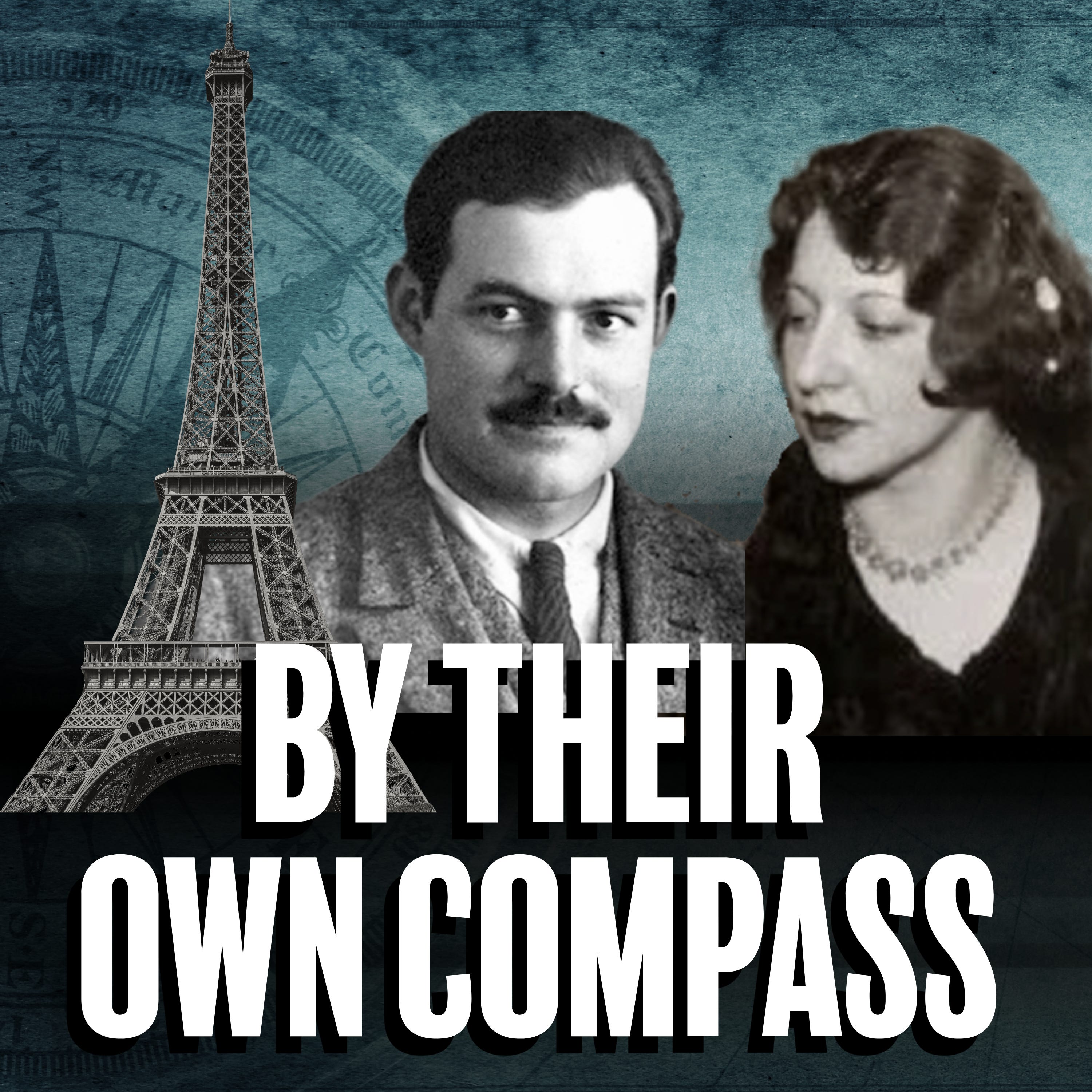 The Lost Generation in 1920s Paris: How Glamorous Was It Really? 09.04.2026 37minCobblestones. Cafes. The smell of baguettes hits you as you walk into a warm boulangerie on a rainy morning. An open notebook on a chequered tablecloth, an old-style pen, and a café au lait at the ready. Paris in April. They even wrote a song about it. Paris is probably the most pre-imagined city on earth, and the so-called Lost Generation, the writers and artists who flooded here after the First World War, wrote a version of the city that most of us still carry with us.Ernest Hemingway’s A Moveable Feast was the book that launched a thousand tote bags. But that version of 1920s Paris with its champagne, café feuds, and glamorised poverty (trust funds and inheritances conveniently hidden) is only one man’s memories, written down and romanticised decades after the fact.In this episode of By Their Own Compass, we take a look at three writers who were all in Paris at the same time, but writing about three different cities. Jean Rhys was a writer from Dominica. Later, she would become famous for her 1966 classic, Wide Sargasso Sea, but in 1920s Paris, she was a struggling writer with little money and a husband in a French prison. George Orwell was there, too. Washing dishes at a fancy hotel and scraping by in a rundown hotel just 500 metres from where Hemingway lived.We trace their haunts from the Place de la Contrescarpe to Montparnasse, from Jean Rhys’ beautifully evocative Left Bank and Other Stories to Orwell’s Down and Out in Paris and London, whose stories of crowded, profane kitchens would be among the inspirations for Anthony Bourdain and his famous book Kitchen Confidential. And we offer a Paris travel guide for those on their way to France or just dreaming of a trip. Sarah and Jeremiah walk you from the Latin Quarter to the Luxembourg Gardens. This is a public episode. If you'd like to discuss this with other subscribers or get access to bonus episodes, visit www.bytheirowncompass.com/subscribe
 -
 Historian Nicola Di Cosmo on Venice, the Mongols, and Marco Polo in China 02.04.2026 35minOur Marco Polo episode was the most downloaded show in the history of By Their Own Compass. This week, we go deeper into the world of Marco and the Mongols as we sit down with Nicola Di Cosmo, Professor of East Asian Studies at the Institute for Advanced Study in Princeton and co-author of Venice and the Mongols, out this month from Princeton University Press, to talk about how the Mongol discovery of Europe (rather than the other way around) made Marco's journey possible in the first place. We also ask Professor Di Cosmo why Marco, one of the world's most famous travellers, came home from China and chose to skip out on an entire era of growing economic and political ties between Venice and the Mongols, preferring instead to promote his book and invest in canal-adjacent real estate. Finally, we find out how a slap to the face of a Venetian merchant in a Black Sea trading post might have been responsible for the Black Death reaching Europe. This is a public episode. If you'd like to discuss this with other subscribers or get access to bonus episodes, visit www.bytheirowncompass.com/subscribe
 -
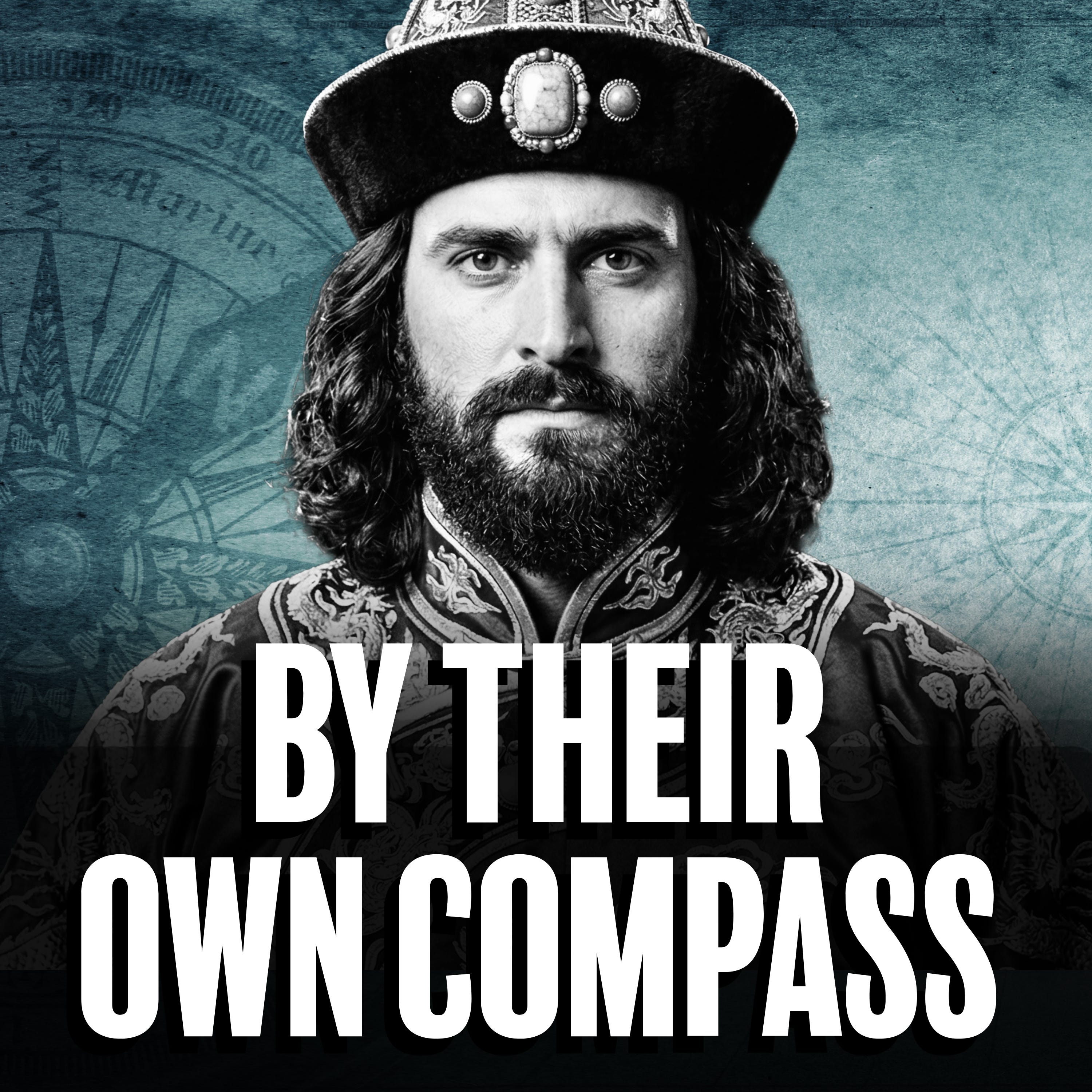 Marco Polo’s 17 Year Journey in China: Reality vs Fiction 26.03.2026 41minIt’s a question that’s puzzled historians for centuries: did Marco Polo really go to China – or is history’s most famous traveller also its greatest liar?In this episode of By Their Own Compass, Jeremiah Jenne and Sarah Keenlyside attempt to uncover the true story of Marco Polo – the Venetian merchant who left home at 17, spent 17 years at the court of Kublai Khan, and came back with a tale so extraordinary that people still argue about whether it’s true.Moreover, what was China like during the Yuan dynasty? We examine what Marco Polo actually saw – the cities he visited, the jobs he claimed to hold, the things he noticed, and, intriguingly, the things he didn’t, and ask whether those omissions work for or against him as a reliable narrator. He may not have mentioned the Great Wall, or tea, or chopsticks, but he sure went into detail about the Khan’s legions of concubines and the empire’s impressive postal system, which stretched all the way to Persia.We also look at the famous book that came out of it – The Travels of Marco Polo – dictated to his cellmate Rustichello of Pisa in a Genoese prison, and ask how much of it is memoir, how much is merchant’s log, and how much is a romance writer adding colour for a medieval audience.And, as always, we follow the Marco Polo trail in China today – from Beihai Park and the hutongs of Beijing, both built on the bones of Kublai Khan’s capital Khanbaliq, to the West Lake at Hangzhou, the city Marco called the greatest in the world. We also talk about why the bridge outside Beijing that bears his name is known to Chinese people for a very different reason. This is a public episode. If you'd like to discuss this with other subscribers or get access to bonus episodes, visit www.bytheirowncompass.com/subscribe
 -
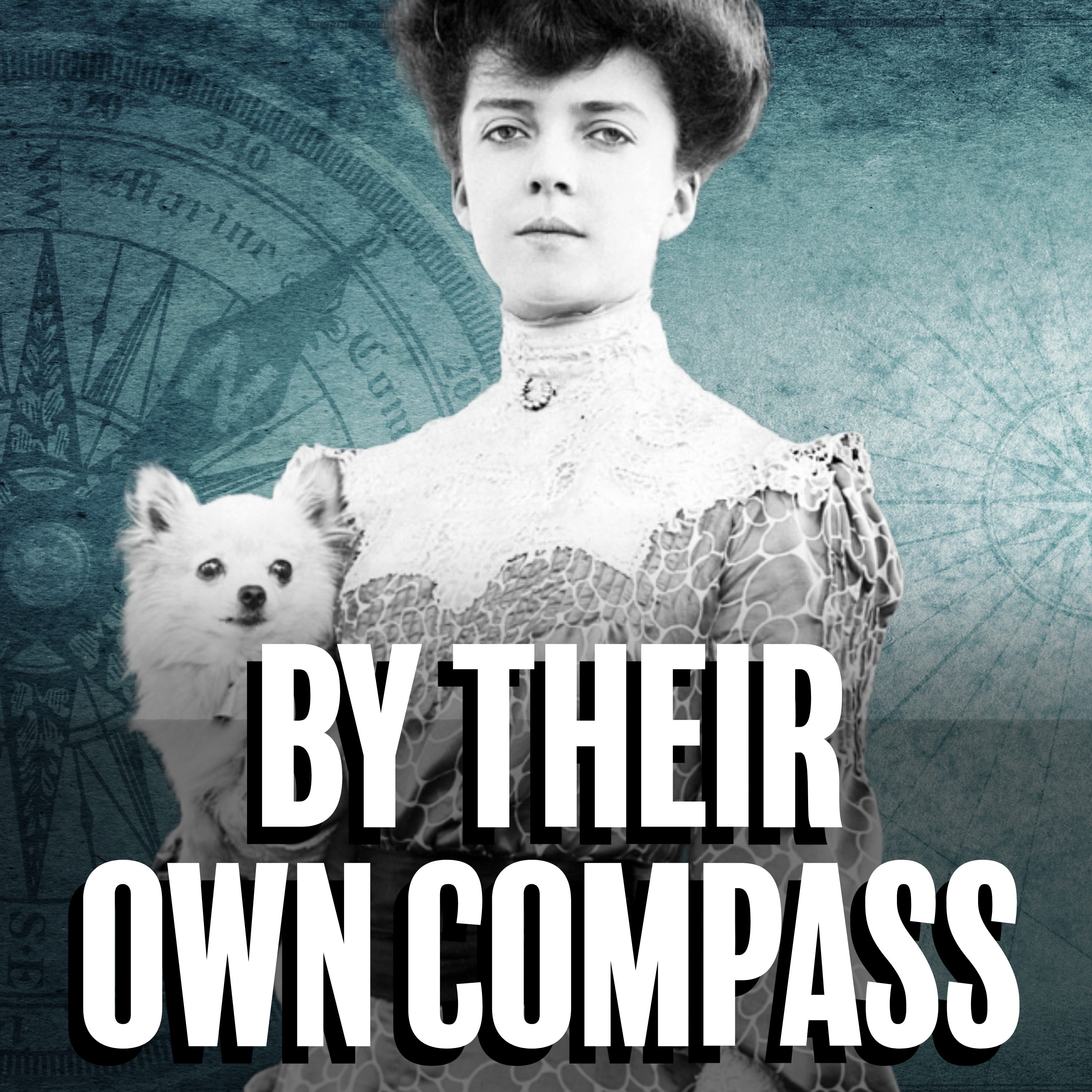 History's Biggest Travel Divas: Fanny Trollope, Empress Dowager Cixi, and Alice Roosevelt 19.03.2026 36minFrom Fanny Trollope's war on American manners to Alice Roosevelt's pet snake to the Empress Dowager Cixi's private theme park: a travel history of women who refused to behave.Every traveller knows one. You might be one. The person who sends the steak back twice, requests a different hotel room because the view isn't quite right, and has opinions about thread count that they're not afraid to share with the concierge at volume.But is it always a fair label? Are Divas difficult? Demanding? Or are they a woman who refuses to travel on somebody else's terms? We discuss.Fanny Trollope: The Woman Who Hated America (And wrote a bestseller all about it) In 1827, Frances "Fanny" Trollope was nearly broke, pushing 50, and raising five children plus a husband going mad on his own mercury cures. So naturally she decided to sail to America to join a utopian commune in Tennessee. By 1831, she was over the American experience and moved back to England to write a caustic book of her travels which earned her the name "Old Madam Vinegar." It was a smash hit.Empress Dowager Cixi: The Woman Who Built Her Own Theme Park The de facto ruler of China from 1861 to 1908 spent a dynasty's fortune rebuilding the world in her back yard. Landscapes. Temples. Famous vistas. Unfortunately, events would force this reluctant traveller to leave her theme park world behind.Alice Roosevelt Longworth: The Woman Who Simply Did Not Care WHAT You Think Teddy Roosevelt put his eldest daughter on a diplomatic ship to Asia in 1905, probably because he needed a break. She jumped fully clothed into the swimming pool, learned the hula in Hawaii, carried a pet snake named Emily Spinach in her handbag, and slid down a banister at the Korean royal court.We also share some of our own encounters with diva behaviour from years of leading trips and running a luxury travel company.To sign up for regular updates or to become a member of the By Their Own Compass Club and get bonus content, transcripts, research notes, and reading lists for each episode, visit bytheirowncompass.com This is a public episode. If you'd like to discuss this with other subscribers or get access to bonus episodes, visit www.bytheirowncompass.com/subscribe
 -
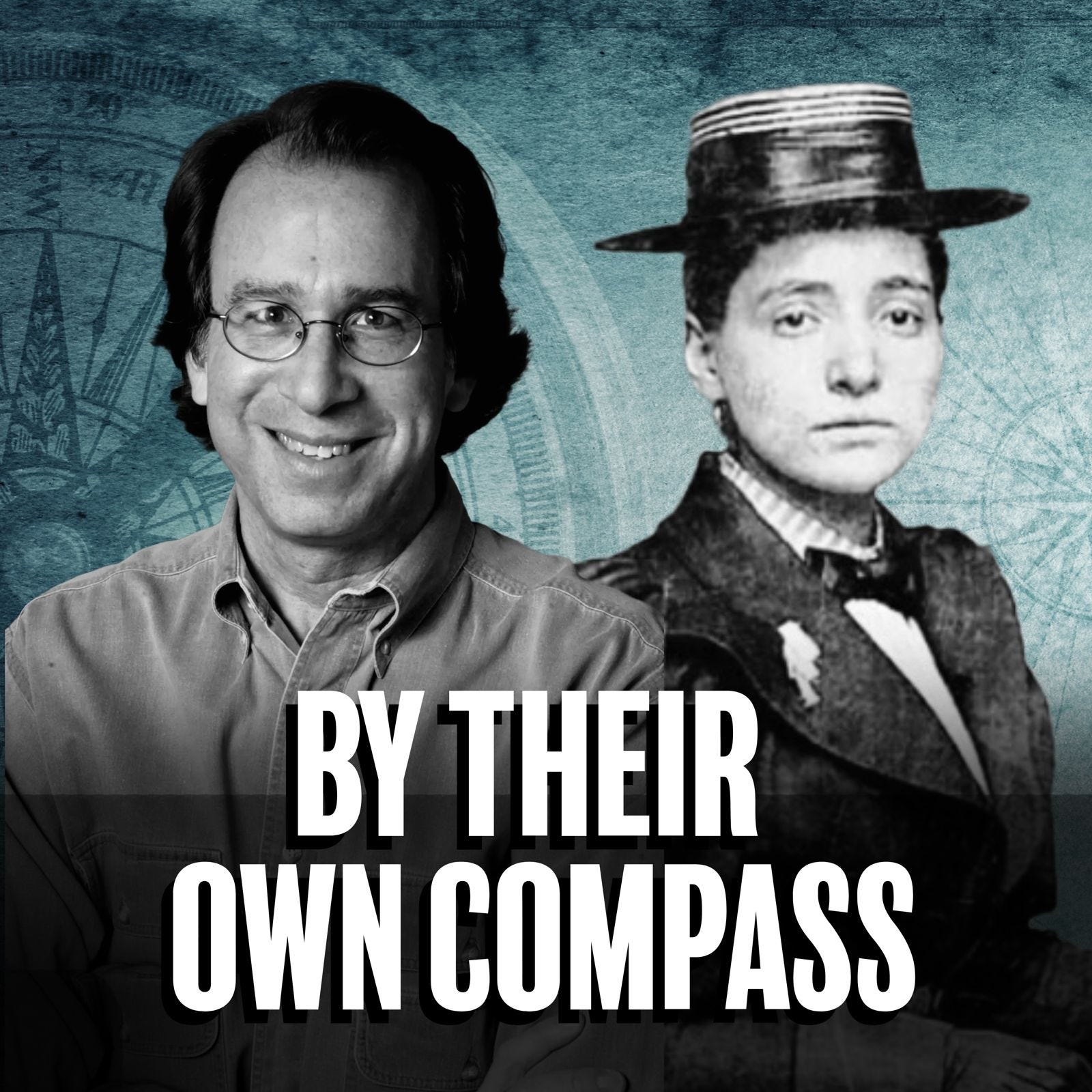 Interview: Annie Londonderry’s Great-Grandnephew Peter Zheutlin 12.03.2026 40minIt’s rare that one of history’s most iconic travellers has a living relative we can speak to – but that’s exactly the case with Annie Londonderry, whose great-grandnephew Peter Zheutlin has a remarkable story of his own.In 1894, Annie Londonderry, real name Annie Cohen Kopchovsky, became a global sensation when she claimed to be the first woman to cycle around the world. A fearless Victorian adventurer and brilliant self-promoter, she filled newspaper columns from Paris to Singapore before vanishing without a trace for nearly a century. Even her own descendants knew nothing about her.Until Peter Zheutlin got a phone call.In this bonus episode of By Their Own Compass, the US-based author and journalist recounts piecing Annie’s life together from scratch, clue by clue, until he had enough to write her definitive biography. What followed was a full-scale revival: West End musicals, documentaries, children’s books, and more.Spin: A Novel Based on a (Mostly) True Story can be found at your local independent bookseller, and an audio version of Peter’s first book, Around the World on Two Wheels, is available on Libro.fm.Want even more of the juicy details? Paid subscribers to our Substack newsletter and members of the By Their Own Compass Club get Zheutlin’s full story. Sign up at bytheirowncompass.substack.com. This is a public episode. If you'd like to discuss this with other subscribers or get access to bonus episodes, visit www.bytheirowncompass.com/subscribe
 -
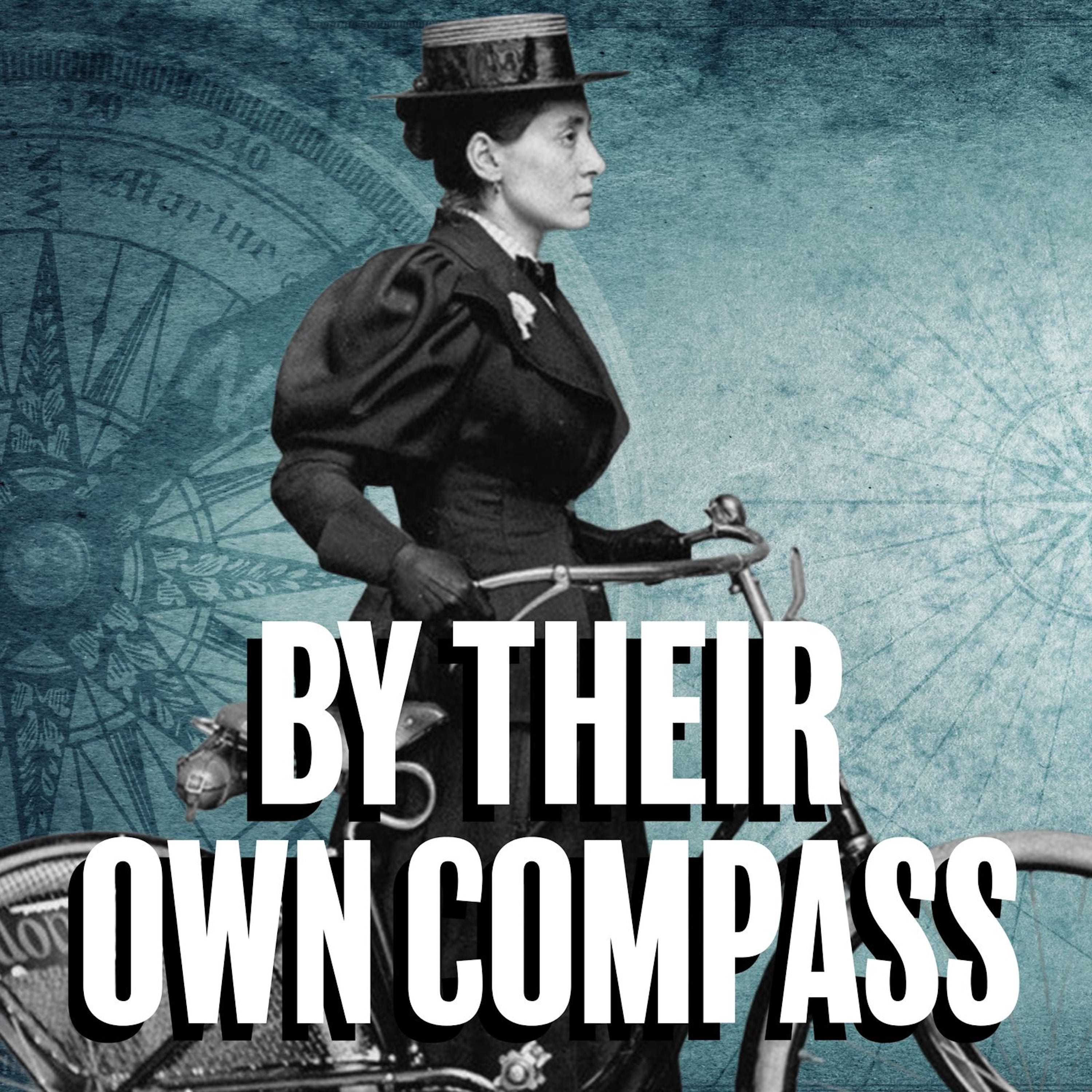 Annie Londonderry: The Woman Who Bicycled Around the World (Sort Of) 05.03.2026 51minOn June 25, 1894, five hundred people gathered on the steps of the Massachusetts State House to watch a young woman named Annie Londonderry climb onto a Columbia bicycle and ride off to circle the globe. She carried a pearl-handled revolver, a placard advertising spring water from New Hampshire, and a wager (allegedly worth thousands) that no woman could complete such a journey in fifteen months.There were a few things the crowd didn’t know. Her name wasn’t really Annie Londonderry. She’d never ridden a bicycle until a few days earlier. She had a husband and three small children at home. And the wager was almost certainly something she made up.In this episode of By Their Own Compass, we follow Annie Cohen Kopchovsky, advertising saleswoman, Latvian immigrant, mother, and one of history’s most audacious self-promoters — as she talks, pedals, and occasionally steamships her way around the world. From Boston to Chicago (where she ditches her skirts for bloomers and never looks back), across the Atlantic to Marseilles (where she tells reporters she’s a Harvard medical student), through a hopscotch tour of Asia (mostly from the deck of a ship), and back across the American West (where she crashes into a drove of pigs in Iowa), Annie’s journey is a story about the bicycle as a tool of women’s liberation, the birth of influencer marketing, and the thin line between adventurer and con artist.We explore how Annie invented her own sponsorship model, turning her body into a walking billboard decades before the concept existed, why Susan B. Anthony said the bicycle did more to emancipate women than anything else in the world, and how Annie was forgotten for over a century until a letter from a stranger led her great-grandnephew to uncover her story in dusty newspaper archives.Plus: how to follow Annie’s wheel tracks today, from the golden dome of the Massachusetts State House to the cycling routes of southern New England, and why the Boston neighbourhood she grew up in no longer exists.This episode owes a tremendous debt to Peter Zheutlin's Around the World on Two Wheels: Annie Londonderry's Extraordinary Ride, the definitive account of Annie's journey. Zheutlin, Annie's great-grandnephew, spent years piecing her story together from newspaper archives, microfilm, and the few surviving artifacts held by her granddaughter. Without his research, Annie would still be forgotten. If this episode sparks your interest, that book and his novelization of Annie’s journey, Spin, are the essential next steps. This is a public episode. If you'd like to discuss this with other subscribers or get access to bonus episodes, visit www.bytheirowncompass.com/subscribe
 -
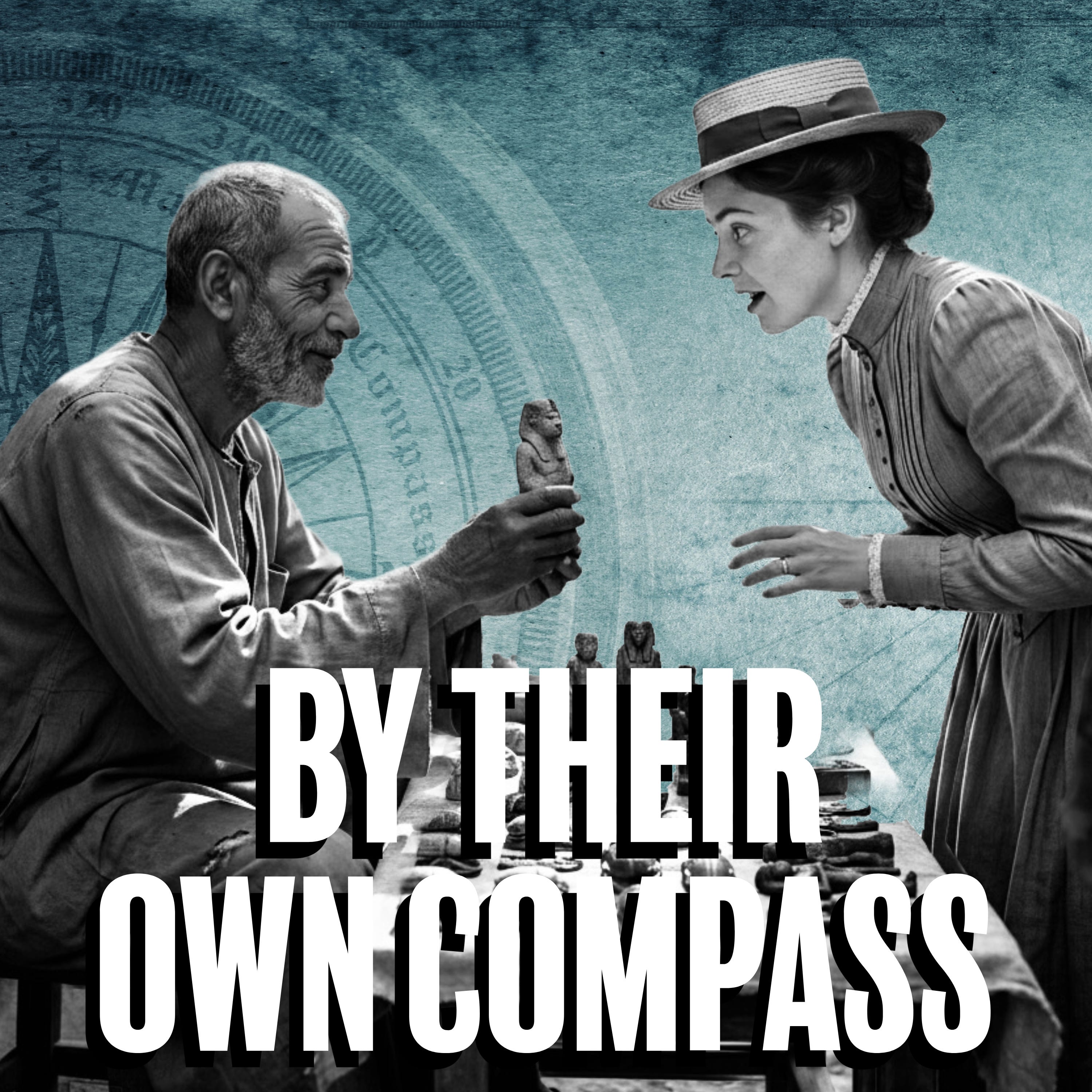 History's Greatest Travel Scams: From Medieval Relic Fraud to the Tea House Scam in Beijing 26.02.2026 35minIf you’ve ever Googled “how to avoid scams in [destination],” you already know the genre: YouTube videos breathlessly (and ominously) exposing the 15 tricks that will ruin your trip to Florence, Bangkok, or Marrakech. Full disclosure: We watch them too. But the historically minded traveler will be quick to note that almost none of these scams are new.Structurally, the “hey, did you lose your wallet” scam is identical to cons recorded in Chinese travel literature over 400 years ago. The “helpful stranger” who leads you to his friend’s shop? A porter scam from 1617. Fake antiquities? Egyptian villagers were running that play on European collectors since the days of Napoleon.In this episode, we trace the world’s most common travel scams back to their historical origins across three centuries and three continents, and then embarrass ourselves by sharing the ones we’ve fallen for personally or that have happened to people on our trips we’re supposed to be protecting.Medieval Europe: Holy Bones, Unholy BusinessThe medieval relic trade was a continent-wide fraud economy hiding in plain sight. Churches needed relics to attract pilgrims, pilgrims brought money, and money built cathedrals. The problem? There are only so many saints, and they only have so many bones. Enter the relic hunters: professional grave robbers descending into the Roman catacombs to fill orders from churches across Northern Europe, and (in the greatest heist/relic rescue of the era) two Venetian merchants who smuggled the body of St. Mark out of Alexandria (hidden under a shipment of pork). We also meet Chaucer’s Pardoner, literature’s most shameless con artist, and hear John Calvin’s withering data-driven observations about the improbable number of supposed holy relics held in churches across Europe.Ming Dynasty China: The Original Lonely Planet WarningIn 1617, a Chinese writer named Zhang Yingyu published The Book of Swindles — essentially a traveler’s field guide to every way you could get cheated on the road. The bag-drop switcheroo. The porter who disappears into the crowd with your luggage. The commentary is remarkably familiar: a traveler on the road doesn’t seek ill-gotten gains, and to keep his own property safely hidden, it’s the only way to prevent loss. Four centuries later, it still is.19th-Century Egypt: When the Scammed Deserved ItAfter Napoleon kicked off a European craze for Egyptian antiquities, colonial collectors stripped temples and bought relics by the crate. We find it difficult to feel sorry for them when it turns out local workshops were producing fake scarabs and amulets by the thousand. The crowning achievement: an entire village near Luxor that built a convincing fake royal tomb, furnished it with forged antiquities, and conned a dealer out of 600 gold pounds.And Then There’s UsWe also share some of our own less glorious moments — including the tea house and KTV bar double-hit (one student, one day, both scams), a game of bat and ball at the Temple of Heaven that turned out to have a cover charge, and a Berber market in Marrakech that supposedly only happens once every two months but whose bracelet broke in two days.The through-line? The scam works because the wanting is universal. We want to believe. We want our trip to be magical. And sometimes that plays right into the magician's hands.Have a scam story of your own? Send it in — we might feature it in a future newsletter. This is a public episode. If you'd like to discuss this with other subscribers or get access to bonus episodes, visit www.bytheirowncompass.com/subscribe
 -
 What Happens When You Recreate a Viking Voyage, with W. Hodding Carter 19.02.2026 32minIt’s one thing to read about Leif Erikson’s epic journey from Greenland to North America in the 10th century as a child; it’s quite another to build a replica Viking cargo ship and attempt the same journey as an adult.But that’s exactly what W. Hodding Carter and his team did in 1997, making them the first crew in history to authentically follow in Leif Erikson’s footsteps. In reality, that meant sailing over 3,000km in a wooden boat with no heating, no shelter, and in brutal conditions.In this bonus episode of By Their Own Compass, we chat to the man himself about why he did it, how well his replica Viking clothing held up in freezing, stormy seas, and why you shouldn’t eat abandoned whale blubber.By retracing the intrepid Norse explorer’s route using the same equipment, Carter also stumbled across several fascinating insights about what he thinks really happened, and why some items the Vikings had – in particular sun stones to help navigate through the fog – remain a complete mystery today.*You can buy A Viking Voyage by W. Hodding Carter at all good booksellersSubscribe to By Their Own Compass🎧 Want extended cuts?🗺️ Insider travel tips we don’t share anywhere else📚 Full reading lists + source material🎙 Behind the scenes silliness> Join here for the price of a coffee per month: bytheirowncompass.substack.com This is a public episode. If you'd like to discuss this with other subscribers or get access to bonus episodes, visit www.bytheirowncompass.com/subscribe
 -
 Erik the Red & Leif Erikson: The outlaw who founded Greenland and the son who reached North America 12.02.2026 54minAround the year 985 A.D., Icelandic exile Erik the Red, a man renowned for his fiery temper, founded the first Norse settlement in Greenland. Years later, his ambitious son Leif Erikson went on to become one of the first known Europeans to set foot in North America – centuries before Columbus.In this episode, we dive into the real history of Greenland’s Norse origins, the legends of Vinland, and the first confirmed European site in North America at L’Anse aux Meadows. Who exactly were these seafaring Norse explorers? How did Greenland get its name? And how on earth did they survive (and thrive) in such inhospitable conditions?Amid the modern mythmaking of Netflix’s Vikings: Valhalla and the cultural misunderstandings around Greenland thanks to one Donald J. Trump, we unpack the reality of this father-son duo’s epic travels as they got further and further from their Scandinavian homeland; how they created a fragile Norse colony built on trade (including walrus ivory), got incredibly lucky with the climate during the Medieval Warm Period, and why they failed to settle North America once landing on its shores.We also take a little detour to discuss Freydís Eiríksdóttir, Leif’s formidable sister (whose bare-breasted sword posturing in the sagas shows she wasn’t exactly a believer in the art of making friends and influencing people), and discuss how Norse encounters with those they called skrælingjar* foreshadowed later patterns of contact and conflict with Arctic indigenous peoples.Plus: how to travel to Greenland and Newfoundland today, visit Norse ruins, and follow the route of the brave (and occasionally reckless) Vikings who sailed beyond the limits of their world.Warning: This word is a pejorative term for Indigenous people and appears in the episode in quotations from the Icelandic Sagas or in contexts that reflect Norse attitudes toward some of the people they encountered. This is a public episode. If you'd like to discuss this with other subscribers or get access to bonus episodes, visit www.bytheirowncompass.com/subscribe
Samankaltaiset podcastit


Suosittu maassa
Tämä podcast esiintyy myös näiden maiden podcast-listoilla.
