
So What About AI Agents
Philippe Trounev
0
So What About AI Agents is a weekly podcast that explores the fast-evolving world of AI agents, from automating workflows to transforming industries. It breaks down the latest advancements, real-world applications, and emerging trends in artificial intelligence. The show features expert interviews, thought-provoking insights, and stories that bridge the gap between humans and intelligent systems. Whether you're an AI enthusiast, an industry professional, or just curious about the tech shaping tomorrow, this podcast aims to explain how AI agents are influencing the future in an accessible and engaging way.
Jaksot
-
 Why AI Is About to Get MUCH Faster | Vasanth Mohan, SambaNova 15.09.2026 34minAI spent the last few years competing on intelligence. Now the next major AI race is about speed.As AI shifts from simple chatbots to agents that reason, write code, call tools, search the web, and coordinate other agents, latency compounds. A task that requires dozens or hundreds of sequential model calls can quickly turn seconds into minutes — or even hours. That makes inference speed a fundamentally different problem in the agentic AI era. In this episode of So What About AI Agents?, Philippe Trounev sits down with Vasanth Mohan of SambaNova Systems to unpack what actually makes AI faster — from model architecture and memory bandwidth to batching, specialized accelerators, and next-generation inference hardware.Vasanth explains the two major stages of inference — prefill and decode — and why they create very different hardware bottlenecks. They discuss operator fusion, parallelization across chips, memory bandwidth, and why reducing latency often comes with a significant cost tradeoff. They also explore why coding agents are one of the clearest use cases for premium inference, how AI providers may eventually offer commodity, premium, and ultra-fast tiers of tokens, and why businesses willing to pay for speed may gain a meaningful productivity advantage. Vasanth also shares early performance figures for SambaNova's upcoming SN50 architecture, including benchmark results around 800 tokens per second on a large model, compared with roughly 300–400 tokens per second on GPUs in the cited comparison. We also get into a slightly crazier question: are AI agents already helping engineers design the next generation of AI hardware? The answer is increasingly yes — although humans are still very much in the loop. In this episode:Why AI agents make inference speed dramatically more importantWhy sequential agent workflows create a latency bottleneckPrefill vs. decode explainedGPUs vs. specialized AI acceleratorsThe relationship between speed, batching, throughput, and costWhy memory bandwidth matters for large AI modelsWhat SambaNova's SN40 and SN50 architectures are designed to solve800-token-per-second AI inferenceWhy coding agents benefit so much from faster modelsCommodity vs. premium vs. ultra-fast AI inferenceWhether faster AI becomes a competitive advantageHow AI agents are already being used in hardware engineeringWhy AI infrastructure may become just as important as the models themselvesChapters00:00 — The AI race is shifting from intelligence to speed00:39 — Why AI agents suddenly need faster inference02:38 — What actually makes an AI model run faster?05:30 — When does ultra-fast inference matter?08:08 — Does model architecture determine inference speed?10:05 — How do you optimize AI from model to hardware?12:44 — How fast can AI inference actually get?15:28 — The sequential latency problem with AI agents16:39 — Where faster AI creates the most value18:30 — Will premium AI inference become a competitive advantage?20:11 — What does AI inference actually cost?23:10 — How many tokens can AI hardware generate?24:46 — Building private AI infrastructure28:02 — How much faster can AI eventually become?30:14 — Are AI agents already designing AI hardware?32:50 — Why today's “fast” AI will eventually feel slow33:34 — What happens next in AI infrastructure
 -
 Can a $20 AI Hacker Outspeed Your Security Team? | Neal Iyer | Splunk AI | EP 65 08.09.2026 47minAI attackers can now move at a speed and scale that traditional security operations were never designed to handle.In this episode of **So What About AI Agents**, Philippe Trounev sits down with **Neal Iyer, Director of Product Management for AI at Splunk Security**, to talk about what happens when autonomous AI agents become part of both the attack and defense side of cybersecurity.Neal breaks the new threat landscape into three forces: **scale, speed, and sophistication**. AI can give relatively unsophisticated attackers capabilities that previously required much more expertise, while autonomous attacks can move so quickly that a security team celebrating a five-minute detection time may already be too late.We get into:• How AI changes the economics of cyber attacks• Why cheap AI agents can dramatically increase the number and sophistication of attacks• Why traditional SOC response times may no longer be fast enough• How prompt injection creates a new attack surface for defensive AI agents• Why simply deploying more security agents isn't enough• Building a security “harness” around autonomous agents• Runtime monitoring, guardrails, observability, and human escalation• When security agents should act autonomously — and when a human needs to stay in the loop• Using business context to distinguish between compromising an intern's laptop and locking out a CEO• Why security tools need better integration for agentic operations• How organizations can start testing their agents against prompt injection and other attacks today• Why Splunk and Cisco are exploring purpose-built small language models for cybersecurity• The role of open-source, self-hosted, and multi-model AI strategies• Why AI security economics may force companies to rethink how they store and process security dataWe also get into the broader question of whether frontier AI companies can really replace specialized enterprise software — or whether impressive demos fall apart when customers need reliability, support, governance, and measurable outcomes.The bigger takeaway is that the future SOC probably isn't humans versus AI attackers.It's **agents fighting agents — with humans designing the systems, permissions, guardrails, and escalation paths that keep those agents under control.**Subscribe to **So What About AI Agents** for conversations with the people actually building and deploying AI agents in production.https://www.docsie.io
 -
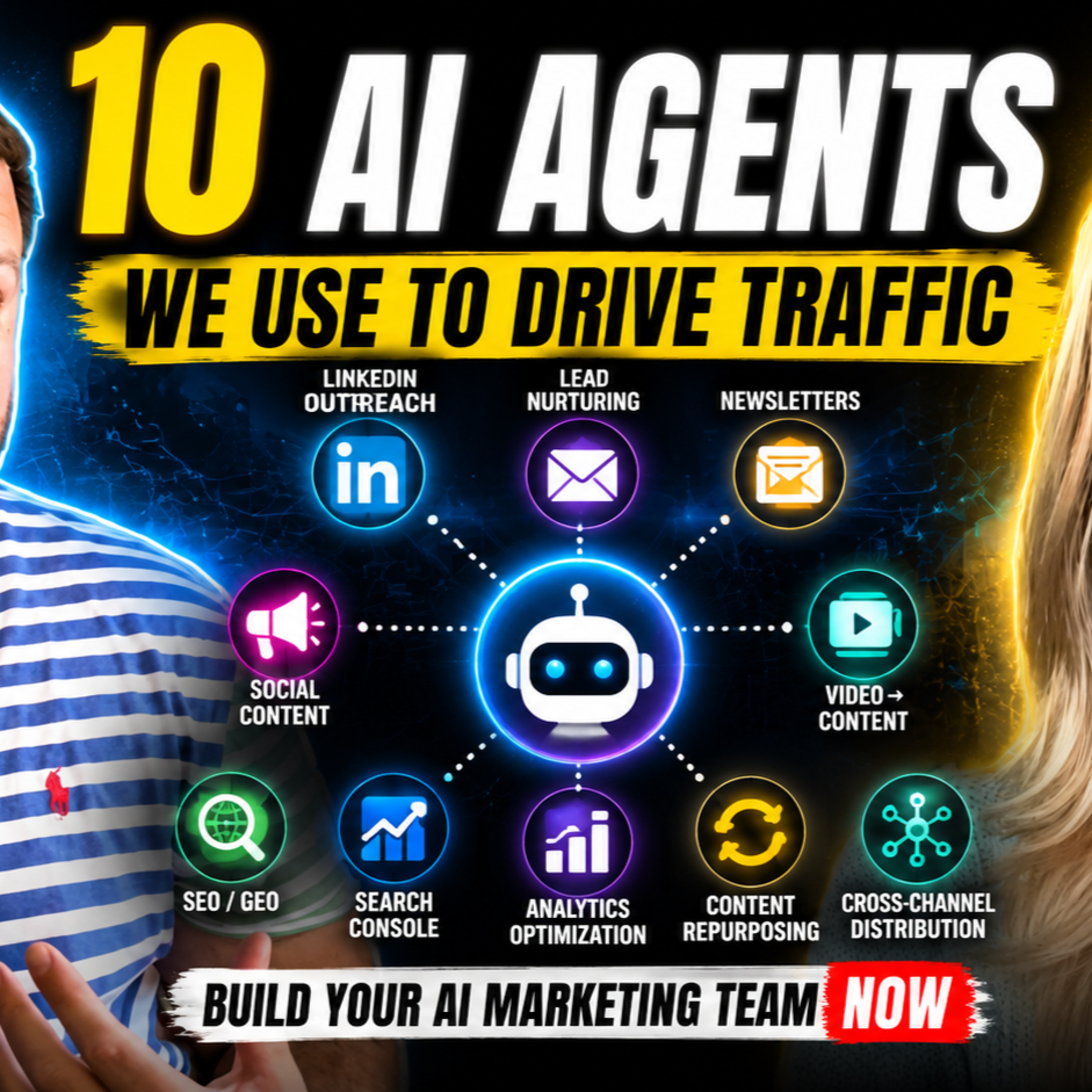 10 AI Agents That Can Run Your GTM in 2026 | Ginny de la Terre | EP 64 01.09.2026 1t 13minIn this episode of **So What About AI Agents**, we break down **10 AI agents and workflows we’ve used to drive traffic, generate demand, nurture leads, and automate parts of our go-to-market operation**.This episode was recorded a little while ago, so my own setup has evolved since then. Today I use **fewer, more capable agents with much more advanced workflows**, rather than trying to automate everything with a huge number of separate agents. But the core ideas in this conversation are still useful if you're trying to figure out where agents can actually create leverage in marketing and GTM.We cover agents for:• LinkedIn intent detection and outbound• Lead nurturing based on actual customer behavior• Automated newsletters• Social media content planning and distribution• Paid-ad creative and optimization• Turning videos into blogs, clips, and other content• Programmatic SEO and AI-search visibility• Building glossary and topic-cluster content at scale• Google Search Console and analytics-driven optimization• Cross-channel content repurposingWe also talk about what **doesn’t** work particularly well: generic cold email, blindly automating social media, expensive always-on AI employees, bad AI-generated content, and agents that cost more to operate than the value they create.The bigger lesson is that you probably don’t need one magical “AI employee” doing everything.You need a small number of well-defined agents with clear jobs, good data, specific triggers, and enough human oversight to keep them from doing something stupid.If you're building an AI-native marketing or GTM stack, this episode gives you a practical starting point for deciding what is actually worth automating — and what probably isn't.Subscribe to **So What About AI Agents** for conversations about how companies are actually building, deploying, and operating AI agents in the real world.https://www.docsie.io
 -
 Why Vibe Coding Fails in Production| Krishna Kumar Sharma | Ex-Amazon AI Head | Omokai EP 63 25.08.2026 49minAI agents can build a demo in a day. But what happens when they touch a production system with years of technical debt, undocumented decisions, security requirements, and real customers?In this episode of So What About AI Agents, Philippe Trounev sits down with Krishna Kumar Sharma, former Head of Engineering for AI at Amazon and founder of Omokai, to talk about what agentic software development looks like outside of greenfield demos and AI hype.Krishna introduces his D3 framework — Discover, Define, Deliver — an approach to AI-assisted engineering based on the same principles used by mature software teams: understand the system, define the work, execute deliberately, and review everything.We get into:• Why greenfield AI coding demos don't represent enterprise software development• How AI-generated technical debt can compound at enormous speed• Why spawning 20, 50, or 100 agents usually isn't the answer• “Token maxing” versus ROI maxing• Using different AI models to review and challenge each other's work• Why cheaper and local models can often handle implementation after good planning• Claude, Codex, Gemini, GLM and local/edge models• Prompt caching and whether context-optimization tools actually save money• Security risks created by executives and teams vibe coding directly into production• Why human review still matters in agentic engineering• The D3 framework for AI-assisted brownfield development• Why boring, structured engineering practices become even more important with AIIn the second half, we move from software agents into the physical world.Krishna explains how Omokai is developing voice-driven command-and-control systems for robots and drones, including autonomous systems capable of operating with AI at the edge.We discuss:• Voice-controlled robots and drone swarms• Running small language models directly on robotic systems• Human-in-the-loop controls for safety-critical actions• Guardrails for autonomous machines• Robotics interfaces such as ROS2, MAVLink and PX4• Operating robots without continuous cloud connectivity• Sensor fusion, LiDAR, vision and GPS-independent navigation• Defense, security, inspection, disaster response and caregiving applications• What happens when AI agents move from software into the physical worldThe central argument of the conversation is simple:More agents aren't automatically better. More tokens aren't automatically better. The goal should be producing more value for every dollar, model call, and engineering hour you spend.Subscribe to So What About AI Agents for conversations with founders, researchers, engineers and operators actually building and deploying AI agents in the real world.https://www.docsie.io
 -
 AI Agents Won't Replace IT, They Will Redesign It - EP 62 - Shayde Christian, Cloudera 30.06.2026 38minEvery CIO is asking the same question: What happens to IT when AI starts doing the work?In this episode of So What About AI Agents, Philippe Trounev sits down with Shayde Christian, SVP of Data & Analytics at Cloudera, to discuss how one of the world's largest enterprise data companies is using AI internally—not just to automate tasks, but to redesign how IT operates.Instead of focusing on AI hype, this conversation explores what actually happens inside a large enterprise when AI agents become part of daily operations.Topics include:• How Cloudera built internal AI agents for enterprise workflows• Why AI assistants and autonomous agents are fundamentally different• AI governance, testing, and production deployment• Building trustworthy enterprise AI systems• Why Cloudera reinvested AI productivity instead of laying off employees• How data teams are evolving into AI engineering teams• Measuring ROI from enterprise AI• The future role of IT departments• What CIOs and technology leaders should be preparing for todayIf you're responsible for enterprise AI, digital transformation, IT leadership, or building AI products, this episode offers practical lessons from real production deployments—not theory.GuestShayde ChristianSVP, Data & AnalyticsClouderaLinkedIn:https://www.linkedin.com/in/shaydechristian/Subscribe for weekly conversations with CTOs, CIOs, AI founders, enterprise architects, and technology leaders building production AI systems.Chapters00:00Introduction to AI Agents and Cloudera02:35The Role of AI Agents in Data Management05:46Challenges in Building AI Agents08:14AI Test Beds and Governance11:13Redesigning Roles in the Age of AI14:16The Future of AI in Business Workflows16:48AI Trust and Human Interaction19:39Agent TAM and Decision Intelligence22:28Governance and Accountability in AI25:21Concrete ROI Examples from AI Agents28:18The Future of IT and AI Integration30:50Final Thoughts and Advice for Leaders#AI #EnterpriseAI #Cloudera #CIO #ITLeadership #DataAnalytics #ArtificialIntelligence #AIAgents #Automation #digitaltransformation https://www.docsie.io
 -
 How SecureAuth Is Securing AI Agents At Enterprise Scale - EP 61 - Geoff Mattson 23.06.2026 49minIn this episode of So What About AI Agents, Philippe Trounev sits down with Geoff Mattson, CEO of SecureAuth, to explore one of the biggest unanswered questions in enterprise AI:How do you secure autonomous AI agents?As organizations rapidly deploy AI agents across customer service, operations, engineering, and internal workflows, traditional identity and security models are beginning to break down. Systems designed for human users were never built for autonomous software capable of making decisions, invoking tools, spawning sub-agents, and operating at machine speed.Geoff shares his perspective on:• Why AI agents fundamentally challenge traditional identity systems• The difference between authentication and authorization in agentic environments• Agent control planes, permissions, and governance• Prompt injection and agent hijacking risks• Multi-agent architectures and delegation chains• Why "vibe coding" executives are creating unexpected security concerns• The future of enterprise AI security and autonomous digital workers• What organizations should do before giving AI agents real authorityWhether you're building AI agents, deploying enterprise AI systems, or responsible for security and governance, this conversation explores the emerging challenges that come with autonomous software operating inside modern organizations.Guest: Geoff Mattson, CEO of SecureAuth
 -
 Agentic Commerce - Who's side is agent on? EP 60 - with Nik Sathe - Blackhawk Network (BHN) 10.06.2026 54minIn this episode, Nick Sathe, CTO of Black Hawk Network, shares insights on the evolving landscape of agentic commerce, standards development, and the future of AI-driven e-commerce and payments. Discover how standards like AP2 are shaping secure, interoperable transactions and the implications for brands, consumers, and regulators.keywordsagentic commerce, AI standards, e-commerce, payments, gift cards, loyalty, chatbots, API standards, regulation, future of AIkey topicsThe evolution of agentic commerce and standards like AP2The role of loyalty, rewards, and gift cards in AI recommendationsChallenges and opportunities in standardizing discoverability and transactionsThe impact of regulation and market power on agentic payment systemsThe speed of technological change and the importance of guardrailsChapters00:00Introduction to Agentic Commerce03:38Evolving Consumer Behavior and Chatbots07:20The Role of Loyalty and Rewards in E-commerce11:52Standards and Discoverability in E-commerce16:30The Future of E-commerce Standards and Regulation19:09Implementing AP2 and Agentic Transactions21:50The Role of Agents in E-commerce25:06Consumer Trust and the Future of Recommendations29:40Consumer Influence in AI Interactions31:14Trust and Emotional Connection with Bots35:03Deterministic Systems vs. AI Variability40:42The Role of Agents in Business Processes46:25The Future of AI and Consumer Experience52:39Final Thoughts on Innovation and Responsibility
 -
 EP 59 - Autonomous Agents at Scale with Joe Locandro - CIO of Rimini Street 15.05.2026 45minIn this episode, Philippe Trounev sits down with Joe Locandro, EVP and CIO at Rimini Street, to discuss what actually happens when organizations begin deploying AI and autonomous agents at scale.The conversation explores the real-world challenges enterprise leaders face around governance, compliance, security, agent orchestration, and operational control — including why many AI initiatives struggle to move from proof of concept into production environments.Topics covered include:• AI governance and enterprise policy frameworks• Managing autonomous agents securely• Compliance and separation-of-duties challenges• The growing attack surface of agentic AI• Why vulnerabilities now evolve in minutes• Scaling AI across enterprise organizations• Low-code and no-code development trends• The future of software engineering and AI operationsJoe also shares practical recommendations for CIOs navigating enterprise AI adoption today.Guest: Joe LocandroEVP & CIO, Rimini StreetTimestamps:00:00 Introduction to AI in Enterprise IT02:02 Governance and Policy in AI Implementation06:07 The Evolution of AI Usage in Organizations09:51 Access Control and Agent Development14:15 Compliance Challenges with Automation17:49 Tiered Access and Governance Structures21:06 Exploring Autonomous Agents in the Workplace24:33 The Evolution of Control Planes26:45 AI in Support and Sales30:08 Understanding the Real Costs of AI Adoption31:21 Security Challenges with Agentic AI33:09 The Speed of Vulnerabilities45:39 Strategic Recommendations for CIOs#AI #EnterpriseAI #AIGovernance #Cybersecurity #AutonomousAgents #CIO #GenerativeAI #AgenticAI
 -
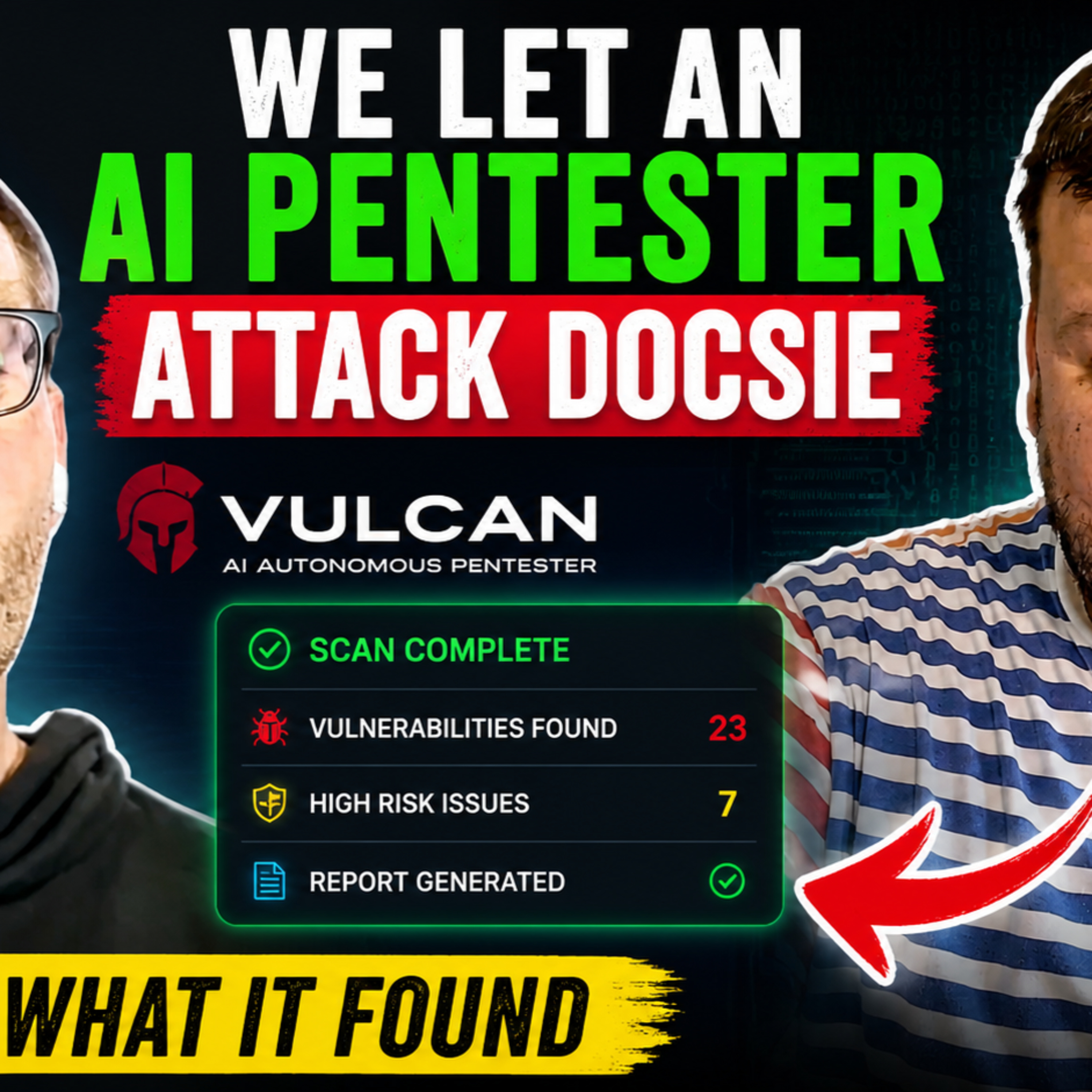 We Let an AI Pentester Attack Our App — Here’s What It Found 03.05.2026 49minWe let an autonomous AI penetration testing agent run against our production application — and the results were unexpected.In this episode, we sit down with Grant McCracken from Dark Horse Security, who built Vulcan, an AI-powered pentesting agent capable of autonomously discovering vulnerabilities in real-world systems.Instead of traditional scanners or manual pentests, Vulcan ran continuously, explored the app like a human tester, and uncovered issues we hadn’t considered — including unexpected behavior in our AI workflows.We cover:How AI penetration testing actually worksWhy traditional scanners miss critical vulnerabilitiesWhat Vulcan found in our systemHow we fixed the issues it uncoveredThe future of continuous, autonomous security testingIf you're building with AI, deploying SaaS products, or working on secure infrastructure — this is a glimpse into what security will look like going forward.
 -
 Agentic Governance #2 - with Jill Heinze - EP 57 08.04.2026 28minIn this conversation, Philippe Trounev and Jill Heinze (https://www.linkedin.com/in/jill-stover-heinze/) discuss the critical aspects of responsible AI governance, emphasizing the importance of stakeholder impact, human-centered design, and the balance between innovation and regulation. Jill shares her insights on the decision points organizations must consider when implementing AI, the role of governance in expediting development processes, and the necessity of understanding risk tolerance. They also explore the evolving regulatory landscape and the future of AI governance frameworks, highlighting the need for organizations to proactively address ethical considerations and user safety.takeawaysResponsible AI governance is essential for stakeholder impact.Organizations in regulated industries are more likely to invest in AI governance.Human-centered design is crucial for deploying AI responsibly.Understanding the risk profile of AI systems is necessary.Governance can expedite the development process when designed effectively.Organizations must assess their risk tolerance regarding AI use.Regulatory frameworks are evolving to address AI risks.AI governance should facilitate innovation rather than hinder it.Proactive governance can prevent potential litigation and rework.Engaging cross-functional teams is vital for effective AI governance.titlesNavigating the Future of AI GovernanceThe Role of Human-Centered Design in AISound Bites"AI governance is a design problem.""Every organization needs to ask these questions.""We need to surface the ground truth information."Chapters00:00Introduction to Responsible AI Governance02:56The Importance of Stakeholder Impact05:32Understanding AI Governance Decision Points08:13The Role of Human-Centered Design in AI10:57Balancing Innovation and Governance13:52Navigating Regulatory Frameworks16:47The Future of AI Regulation19:26Building Effective AI Governance Frameworks22:13Overcoming Objections to AI Governance24:56Conclusion and Resources for AI Governancehttps://www.docsie.io
 -
 Agentic Employees - 1 - EP 56 - Erkang Zheng, Ariso (ariso.ai) 01.04.2026 29minIn this episode, Erkang discusses the future of autonomous AI agents in the workplace, focusing on how they can enhance collaboration, offload tedious tasks, and serve as personalized assistants. He shares insights on building trust, managing context, and the technical challenges involved in creating truly autonomous AI partners.keywordsAI agents, autonomous AI, workplace productivity, collaboration, context management, AI privacy, AI tools, organizational AI, AI in business, AI innovationkey topicsAutonomous AI agents in the workplaceContext and memory management in AITrust, privacy, and security in AI systemsAI's role in collaboration and organizational knowledgeTechnical challenges in building autonomous AIguest nameErkangtitlesBuilding Autonomous AI Agents for the Future of WorkHow AI is Transforming Collaboration and ProductivitySound Bites"The next wave is AI helping us in collaboration""Ari caught a scam I totally missed""Ensuring reliability and trust in AI systems"Chapters00:00Introduction to Erkang and his AI journey01:05The evolution of autonomous AI agents02:20AI in collaboration and organizational overhead02:49Identifying bottlenecks in manual work04:19The concept of a continuous, context-aware AI agent05:31Meeting notes and actionable insights from AI07:55Autonomous actions and proactive AI assistance08:25Managing context and role-specific AI knowledge09:54Self-improvement and personalized coaching from AI11:16AI-generated work reports and reflections12:51Technical challenges in building autonomous agents14:09Trust, privacy, and security considerations15:46AI as a true employee and autonomous partner17:54AI detecting scams and protecting users autonomously19:49Technical architecture and decision-making in AI20:37Building full autonomy and subconscious memories21:16AI adapting to user habits and optimizing workflows22:30Tasks fully offloaded to AI and efficiency gains24:30Overcoming technical challenges and inconsistencies25:51Ensuring reliability, consistency, and deterministic actions27:19Future features: voice interaction and expansion28:41Getting started with Ari and AI adoption in organizationshttps://www.docsie.io
 -
Agentic Patient Engagement - EP 55 - Alex Zoller - PatientGenie 26.02.2026 23minIn this episode, Alex Zoller discusses the innovative use of AI agents in healthcare to improve patient engagement and access. His platform utilizes a multi-agent architecture to facilitate communication between healthcare plans and members, ensuring that patients receive personalized assistance in scheduling appointments and navigating the healthcare system. The conversation covers the challenges of maintaining context in voice interactions, the importance of compliance and validation, and the operational efficiencies gained through automation. Alex also shares insights on product management and the future of AI in healthcare, emphasizing the need for empathy and scalability in solutions.takeawaysAI agents can significantly improve healthcare access.Multi-agent architecture allows for more complex interactions.Empathy is crucial in healthcare communications.Compliance and validation are essential to avoid errors.Testing and simulation are key to agent performance.Agents can operate 24/7, enhancing patient engagement.Understanding existing workflows is vital for implementation.Healthcare solutions must be scalable and adaptable.Mistakes can be corrected in real-time by the system.Operational metrics show significant cost savings.titlesRevolutionizing Healthcare with AI AgentsThe Future of Patient EngagementSound Bites"Healthcare has zero tolerance for errors.""Quality is our top priority.""Empathy is a priority for healthcare."Chapters00:00Introduction to AI Agents in Healthcare02:46The Outreach Process for Annual Wellness Visits05:58Multi-Agent Architecture Explained08:35Navigating IVR and Provider Interactions11:33Ensuring Compliance and Quality in Healthcare14:26Handling Mistakes and Safeguards17:13Scaling and Cost Efficiency of AI Agents19:56Future Capabilities and Expanding Use Cases22:41Product Management Insights and Best Practiceshttps://www.docsie.ioJoin us on Discord https://discord.gg/pAUGNTzv
-
 Agentic Code Scanning - EP 54 - Rome Thorstenson - Rafter.so 20.02.2026 40minIn this episode, Philippe Trounev interviews Rome Thorstenson, a software engineer and AI researcher, discussing the intersection of AI and cybersecurity. They explore the current state of code security, the role of AI agents in identifying vulnerabilities, and the challenges of trusting these systems. Rom shares insights from his research at NeurIPS and emphasizes the importance of proactive security measures for developers.takeaways80% of the code shipped to production is not secure.AI agents are increasingly used to analyze code for vulnerabilities.Security often takes a backseat to feature development.Evaluating the security of a code base is a complex task.Prompt injection poses significant risks for AI systems.Developers need to prioritize security in their workflows.Rafter offers tools to simplify security scanning for developers.Research in mechanistic interpretability can enhance AI security agents.The landscape of cybersecurity is evolving with AI advancements.Proactive security measures are essential to combat emerging threats.titlesAI's Role in Cybersecurity: A Deep DiveUnderstanding Code Vulnerabilities with AI AgentsSound Bites"AI writes most of the code.""80% of the code is not secure.""Prompt injection is a huge problem."Chapters00:00Introduction to AI Agents in Cybersecurity02:41The State of Code Security and Vulnerabilities05:10Building AI Agents for Code Analysis07:52Evaluating AI Agents and Benchmarking10:27Autonomous Feedback Loops in Cybersecurity13:07Trusting AI Agents for Security Fixes15:47Understanding Vulnerabilities and AI's Role18:42Real-World Examples of Vulnerability Detection23:25Navigating App Development Challenges24:32Getting Started with Rafter28:03Understanding Mechanistic Interoperability35:06Interpreting Model Features and Security37:49Top Security Practices for Developershttps://www.docsie.ioJoin us on Discord https://discord.gg/pAUGNTzv
 -
 Voice Agents at Scale - EP 53 - Laurent Cohen - Getoblic 04.02.2026 27minIn this episode, Philippe Trounev interviews Laurent Cohen from Getoblic, who discusses the deployment of 1.6 million voice AI agents. Laurent explains the transition from a SaaS model to an infrastructure layer, emphasizing the importance of data gathering and SEO strategies. He shares insights on unit economics, cost efficiency, and the monetization strategies for their voice AI services. The conversation also covers the workflow of AI agents, team structure, early success metrics, and competitive advantages in the voice AI market.takeawaysThe deployment of 1.6 million voice AI agents is a significant achievement.Shifting from a SaaS model to an infrastructure layer is crucial for scalability.Unit economics and cost efficiency are vital for sustainable growth.SEO should be handled in-house as it is the DNA of a company.Gathering data is essential for training AI agents effectively.Monetization strategies include offering free claims for businesses to engage with the platform.AI agents work in a structured workflow to handle customer inquiries.A small team can achieve significant results with the right automation.Early success metrics include claimed pages and minutes spent with voice agents.Building competitive moats involves leveraging unique data and insights.Sound Bites"We need to scale data.""Money is the enemy.""Let's help each other."Chapters00:00Introduction to Voice AI at Scale02:54The Shift from SaaS to Infrastructure Layer05:24Unit Economics and Cost Efficiency08:13SEO Strategies and Data Gathering11:07Monetization Strategies for Voice AI14:11Workflow of AI Agents16:50Team Structure and Automation19:40Early Success Metrics and Conversion22:19Building Competitive Moats25:07The Future of Voice AI and Marketing StrategiesJoin us on Discord https://discord.gg/pAUGNTzv
 -
 Agentic Prediction - EP 52 - Michael Ulin - Tenki AI 27.01.2026 31minIn this conversation, Michael Ullam, CEO of Tenki AI, discusses the intricacies of building AI agents, particularly in the context of prediction markets. He emphasizes the importance of understanding limitations, building trust with users, and the architecture of multi-agent systems. Michael shares insights on logging practices, avoiding overfitting, and the cost-effectiveness of predictions. He also touches on the long-term vision for Tenki AI, strategies for product launch, and the advantages of bootstrapping a startup. Throughout the discussion, he provides valuable advice for founders looking to navigate the AI landscape.takeawaysUnderstanding limitations is crucial for AI agents.Building trust with users is essential for success.Multi-agent systems can improve forecasting accuracy.Breaking down problems into subcomponents enhances performance.Logging practices are vital for system improvement.Avoiding overfitting is key to reliable predictions.Rapid feedback loops are beneficial in prediction markets.Validating demand before product development is important.Bootstrapping can be more efficient than seeking venture funding.Focus on solving real problems that you personally experience.titlesUnlocking the Power of AI AgentsBuilding Trust in AI SystemsSound Bites"What actually works when building agents?""Logging everything helps improve the system.""Validate demand before building your product."Chapters00:00Introduction to Tenki AI and Michael Ullam00:48Building Trust in AI Agents03:37Understanding Tenki's Multi-Agent Architecture06:56Challenges in Multi-Agent Systems10:16Logging and Evaluation Practices12:32Avoiding Overfitting in Predictions15:01Cost and Efficiency of Predictions17:23Long-Term Vision for Tenki AI19:09Common Playbook for Building AI Agents20:58Advice for Founders in AI Development30:40Opportunities in AI and Final Thoughtshttps://www.docsie.ioJoin us on Discord https://discord.gg/pAUGNTzv
 -
 Agentic Governance - EP 51 - with Dr. Craig Kaplan 20.01.2026 40minSummaryIn this episode of So What About AI Agents Philippe Trounev and Dr. Craig Kaplan discusses the need for a new approach to AI safety and governance, emphasizing the importance of prevention in design and the concept of AI agents and collective intelligence systems. He highlights the role of ethics and morals in agentic society, the enforcement of ethics and morals in AI agents, and the purpose and values of AI agents. Dr. Kaplan also explores the blueprint for collective intelligence systems, problem-solving and coordination in multi-agent systems, transparency and accountability, decentralization of power, observation and reporting, and the role of values in AI systems. He concludes by discussing the relevance of Herbert Simon's ideas in AI research.takeawaysDemocracy in AI governance can enhance safety.AI agents can work together like a community.Ethics in AI must be enforced through safeguards.Collective intelligence can outperform individual expertise.Designing AI systems requires careful consideration.Transparency is crucial for AI agent interactions.Values from diverse individuals should shape AI behavior.The historical context of AI informs current practices.Short-term fixes are not sufficient for AI safety.Our online behavior influences future AI training.titlesBuilding Safe AI: A Democratic ApproachThe Future of AI GovernanceSound Bites"Two heads are better than one.""We need to think hard about design.""We should behave well online."Chapters00:00Introduction to AI and Superintelligence01:20Governance and Safety in AI05:30The Role of AI Agents in Society07:29Evolving Towards Agentic Democracy09:35Ethics and Morals in Agentic Society12:16Influence vs. Enforcement in AI Behavior15:52Blueprint for Collective Intelligence Systems19:39Human Traits in AI Collective Intelligence22:49Transparency and Accountability Among Agents25:25Decentralization and Power Distribution29:35Learning from Human Governance33:20Herbert Simon's Insights on AI and Morality36:42Key Takeaways for AI Governance
 -
 Agentic Payments - EP 50 with Mitchell Jones from Lava Payments 08.01.2026 34minsummaryIn this conversation, Philippe Trounev and Mitchell Jones delve into the complexities of agentic payments and the necessary payment infrastructure for the evolving AI economy. They discuss the challenges faced by AI startups in managing payments, the importance of measurement and optimization in payment systems, and the future of agent-to-agent payments. The conversation highlights the need for budgeting controls and trust in agent networks, emphasizing the role of gateways in facilitating these processes.takeawaysAgentic payments require a clear understanding of costs and value delivery.Current payment infrastructures are inadequate for the needs of AI startups.AI startups must adapt their pricing strategies beyond traditional models.Using a payment gateway simplifies the integration of multiple AI models.Measurement is crucial for managing costs in AI operations.Budgeting controls are essential for preventing runaway costs in agentic systems.Trust and accountability are vital in agent-to-agent transactions.The future of payments will involve more automation and less human intervention.Experimentation with pricing models is now more feasible for startups.Building a robust payment infrastructure is critical for the success of AI applications.Keywordsagentic payments, payment infrastructure, AI startups, payment systems, budgeting, trust, agent-to-agent payments, LavaPayments, FinTech, AI economyChapters00:00 Understanding Agentic Payments02:28 The Role of Payment Infrastructure in AI05:21 Optimizing Payment Systems for AI Startups08:07 The Future of Agent-to-Agent Payments11:03 Budgeting and Control in the Agentic Economy13:50 Building Trust in Agent Transactions16:45 The Evolution of AI Agents and Payments19:25 Challenges in Agent Communication and Budgeting22:29 The Importance of Measurement in Payment Systems25:18 Future Use Cases for Agent Payments28:08 Final Thoughts on the Agentic Economy
 -
 Agentic Sales Organization - EP 49 with Paul Schmidt from SmartBug | So What About AI Agents 17.12.2025 26minIn this conversation, Philippe Trounev and Paul Schmidt discuss the concept of agentic sales organizations, focusing on how AI can empower sales teams by alleviating mundane tasks and enhancing efficiency. They explore the role of sales research agents, essential tools for implementing AI in sales, and the importance of data hygiene. The discussion also covers the cost considerations for introducing AI and predictions for the future of sales technology.takeawaysAgentic sales organizations empower sales teams with AI tools.Sales research agents can save significant time for sales reps.Proposal agents help create polished presentations quickly.Personalization in outreach is key to engaging prospects.Data hygiene is essential for effective AI implementation.Sales teams should document processes for better AI output.Integrating AI should feel seamless for salespeople.Cost-effective solutions exist for implementing AI in sales.AI can help sales teams focus on high-value tasks.Domain expertise is crucial when selecting AI tools.https://www.docsie.ioJoin us on Discord https://discord.gg/pAUGNTzv
 -
 Agentic DevOps: Will AI Replace DevOps Engineers? | EP48 ft. NetOrca’s Scott Rowlandson 10.12.2025 32minEP 48 – Agentic DevOps | Featuring Scott Rowlandson (NetOrca)In this episode, Philippe Trounev sits down with Scott Rowlandson from NetOrca to unpack one of the most urgent questions in technology today:We dive deep into the evolution of DevOps, the rise of AI agent orchestration, and how automation is reshaping engineering teams across regulated industries like financial services.Scott brings real-world experience from working in high-compliance environments—where automation isn’t just helpful… it's essential. Together, we explore:How automation is changing the DevOps landscapeWhy DevOps roles aren’t disappearing—but evolvingAI agents and the future of engineering workflowsReducing delivery times in complex tech stacksWhy regulated industries rely heavily on automation“Human-in-the-loop” DevOps modelsWhat skills DevOps engineers MUST develop to stay relevantAutomation will eliminate some manual DevOps tasks.But demand for skilled DevOps engineers is increasing, not shrinking.AI agents will drastically accelerate deployment, compliance, and operations.DevOps pros who embrace orchestration and automation will lead the next era.The future of engineering is hybrid: AI + humans working together.Is AI automation about to replace traditional DevOps roles?🔥 Key Topics Covered🎯 Main Takeaways
 -
 Agentic Compliance - Padraic O'Reilly - Cyber Saint - So What About AI Agents | Episode 47 25.11.2025 33minIn this insightful conversation, Philippe Trounev and Padraic O'Reilly discuss the evolving landscape of compliance and automation in cybersecurity. They explore the challenges and opportunities presented by AI agents, the importance of quality assurance, and the role of human oversight in maintaining effective compliance systems. The discussion also touches on the future of agentic compliance and the balance between automation and human involvement.https://www.cybersaint.ioand https://www.docsie.ioJoin us on Discord https://discord.gg/ceKz5d4b
Samankaltaiset podcastit


Suosittu maassa
Tämä podcast esiintyy myös näiden maiden podcast-listoilla.
