
Bump, Set, Mic...The Junior Club Volleyball Podcast by TNT
Chuck Dougherty
0
Bump, Set, Mic explores junior club volleyball from the perspective of TNT Volleyball Club in the Philadelphia area. Club Director Chuck Dougherty and co-host Brian Mooney interview coaches, parents, and players to share behind-the-scenes insight into the club volleyball world. Episodes cover topics important to players, families, and coaches involved in the junior club circuit.
Jaksot
-
 Episode 47 - Visible, Not Vulnerable: Social Media & Volleyball Recruiting 16.09.2026 53minFrom recruiting DMs to viral highlight clips, today's volleyball players are building their futures in public—often without realizing what they're really sharing. In this episode of Bump, Set, Mic, Chuck takes over hosting duties while Brian and returning guest Leon Kasperski, TNT's Director of Operations, break down how athletes and families can use social media as a powerful recruiting tool without putting safety, privacy, or future opportunities at risk. Drawing on Brian's 30+ years as a middle school teacher, along with his experience as a high school and club coach, and Leon's hands-on work guiding TNT athletes through the college recruiting process, the conversation covers volleyball-specific accounts, digital citizenship, red flags in online contacts, and the long memory of your digital footprint. Whether you're a TNT family, a player hoping to play in college, or a parent trying to keep your child safe online, this episode offers clear, practical guidance on staying visible to the right people—and inaccessible to the wrong ones. Segment 1 – Social Media as a Recruiting Tool, Not a Toy (0:00 – 17:32) Chuck introduces Episode 47 and the role reversal: Chuck hosting, Brian as "color man," plus returning guest Leon Kasperski Why TNT is "all in" on social media as a major recruiting tool for its athletes How TNT leverages coaches' relationships and tournament exposure (e.g., AAU Nationals) to get players seen Leon's recommendation to create a separate volleyball/recruiting account (vs. mixing personal life and volleyball on one profile) What belongs on a volleyball recruiting profile: Name, position, graduation year Simple, professional contact info Links to highlight video and recruiting platforms (e.g., YouTube, SportsRecruits) Brian's educator perspective on teaching teens to use technology safely and appropriately, including AI, and this episode as the club's effort towards a similar goal. Early reminder: college coaches are absolutely checking social media to learn who you are off the court, not just how you play on it Segment 2 – Legit Contacts, Scams, and Online Grooming Red Flags (17:32 – 30:20) Real-life scenarios: "Hi, I'm Coach Smith from State University; I've watched your film…" "We want to pay you for your name, image, and likeness (NIL)…" Leon on how legitimate coaches actually reach out: Almost never via DM Typically via school email, through the club, or directly to coaches Verification-first approach when a player gets contacted: Look up the coach on the school's official website Move the conversation from DM to email CC a parent, club coach, or recruiting coordinator Red flags to watch for: Personal email addresses (e.g., Gmail) instead of school domains Requests to "keep this between us" or avoid involving parents Attempts to move quickly into private chats, personal photos, or non-volleyball topics Brian's shares some research found regarding how often minors—especially teen girls—report being approached online by people trying to manipulate them A clear explanation of grooming behaviors and how they can target teenage volleyball players specifically What to do if you've already shared "too much": Stop replying Tell a parent or trusted adult immediately In serious cases, involve law enforcement and the club, as TNT did in a prior possible grooming situation Segment 3 – Digital Footprints, Emotional Posting, and Long-Term Consequences (31:02 – 53:00) Brian defines digital citizenship and why "private" at one point doesn't neccessary mean private long-term Leon: college coaches are not just "likely" but certain to do a deeper dive on a player's online presence once they're interested How posts about refs, coaches, teammates, politics, or partying can quietly knock a player off a coach's list The permanence of a digital footprint: Screenshots, saved Snaps, and old posts can resurface years later Changing friend groups or conflicts can turn "private" conversations into public problems Quick-hit "lightning round" on what's okay and what's risky: Cell numbers in structured recruiting systems: maybe—but with caution Home address and always-on location sharing: no Highlight reels and volleyball clips: absolutely yes—that's what social is for Emotional venting after a loss: skip the post, cool off, and protect your future self For players: social media is step one in recruiting, not the finish line—and visibility should never come at the cost of safety For parents: Stay engaged with your athlete's accounts and communications Help with filming, building profiles, and reviewing contacts Recognize that a complete absence of social media can also hurt recruiting in today's landscape Closing thoughts from Chuck, Brian, and Leon as both coaches and parents: They want TNT players to be seen by the right people, stay safe from the wrong ones, and carry a strong digital reputation from club to college and beyond.
 -
 Ep 46: Still Playing, Now Coaching: Introducing Mike Carr 27.08.2026 1t 9minFrom high school standout to D3 starter, VLA athlete, and now assistant coach at West Chester University and head coach of TNT's girls' 16 Thunder National, Coach Mike Carr brings grit, versatility, and high standards to every player he mentors. In this episode of Bump, Set, Mic, Chuck and Brian sit down with Mike to explore his coaching philosophy, his emphasis on strength and conditioning, and what players can expect when working with him. Discover Mike's practical insights on his experiences playing multiple positions, building resilience through adversity, navigating the demands of college and semi-pro volleyball, and helping players thrive at the club level. Whether you're a TNT family member, a current player, or someone curious about elite volleyball coaching, this episode offers a compelling look at Coach Mike's journey as a player, coach, and mentor—and what TNT families can expect as he leads his national team into an exciting season. Segment 1 – From Late HS Start to College and VLA Player (0:00 – 23:51) Introduction of Coach Mike Carr His high school volleyball journey, versatility from playing multiple positions, and thoughts on players being open to playing multiple roles Mike's non-traditional path to college volleyball and his impressions from time spent at that level Lessons learned from overcoming adversity as a player (incluuding an ACL injury) now aiding in his work as a coach Mike's coaching journey from volunteering at his HS alma mater, the tremendous influence of Mike's coach on his own coaching career, and how Mike ended up connecting with TNT Segment 2 – Coaching at TNT, Philosophy, and Importance of Strength & Conditioning (24:01 - 50:40) A recap of how Mike ended up at TNT How first season success at 17U travel, plus positive feedback from parents and coaches, were stepping stones to Mike's appointment as a national-level 16s team head coach Mike's thoughts on coaching girls vs. boys at the club level His coaching philosophy, style, and the role of strength and conditioning in his approach with players Strategies for helpling players develop resilience and mental toughness Addressing the concern of younger coaches in prominent club roles, how Mike addresses that in his work, and the support provided by the club to coaches in similar circumstance at TNT Segment 3 – National Team Goals, What Gets Players Noticed, and How to Work with Coach Mike (50:49 – 69:33) Individual and team goals for 16 Thunder National for the upcoming season What Mike values most in players from the start of the season (tryouts) until the end Positions, systems, and how he adapts to fit his team Mike's reflections on the recent tryout experience at TNT as a national-level head coach Helping players reach the college level, including using the club's connections to college coaches and other recruiting resources Additional ways of working with Mike (lessons, academies, clinics) and his approach with athletes in those environments TNT's expanded academy-style plans for the coming season Final advice to ambitious young players How to connect with Mike along with the club and its ongoing and upcoming programs
 -
 Ep 45: From Player to Coach: Emily Poole's Volleyball Journey 15.07.2026 1tHard work can be fun! In this episode of Bump, Set, Mic, Chuck and Brian are joined by Coach Emily Poole, head women's volleyball coach at Arcadia University and member of the TNT Volleyball coaching staff, as she shares her volleyball journey and blueprint for how very competitive teams can also have an enjoyable time as well at both the club and collegiate levels. Chuck, Brian, and Emily cover her path from York, PA to Division I volleyball, navigating academics at Lehigh, and the moment she realized coaching—not the corporate world—was her future. Emily shares how she was thrown into college coaching during COVID, what it was like to take over the Arcadia program at 24, and how she builds competitive, academically driven teams that still have fun. Specific to the club side, Emily reflects on last year's TNT 17 Platinum run to USAV Nationals, the culture that kept them locked in through a long season, and what she's looking for as she takes over 16 Platinum this coming season. The epiosde closes with practical perspective on TNT tryouts, recruiting realities, and how families can keep their sanity during one of the most stressful times of the year. Segment 1 – Emily's Volleyball Journey and Development as a Player (0:00 - 17:58) Returning from nationals with club in full summer mode and a brief recap of the time in Florida Introducing Coach Emily Poole – Arcadia head coach, TNT coach, a Colts fan in Eagles country Emily's start in volleyball: late to the sport, middle school-only at first, invited as a guest player for nationals Her high school experience at Central York, the impact of strong coaches, and discovering grass volleyball Reaching D1 at Lehigh: the extra work put in and how Emily built full-skill IQ as a middle Reframing the middle position: not just "the tall kid," but a complete athlete who must learn all skills Balancing high academics with D1 volleyball, a sophomore slump, and how a new coach's academic standards reset Emily's approach Sharing that academic emphasis with her own college and club teams (team GPAs, study halls, support systems) Favorite memories at Lehigh When volleyball became more than "just playing" for Emily Segment 2 – Building a College Program and Coaching Philosophy (17:58 - 44:14) Emily's graduate assistant experience at Lehigh Coaching through COVID, promotion by necessity, and how the COVID-era experience helpd shape Emily's readiness The Arcadia opportunity and Emily's coaching style Chuck's perspecitve based on feedback about the 17 Platinum experience from Emily's players last season Balancing "fun" and high standards; dismantling the myth that fun and competitiveness can't coexist Building a culture at Arcadia The roads that led Emily to TNT More on the 17 Platinum experience and the dedication of the team's players "We want Puerto Rico" - players pushing for a bigger national schedule for the coming season, aiming high, and a quick discussion about playing up instead of sandbagging Key differences for Emily between college and club coaching: recruiting vs. life mentoring, opponent scouting vs. unknown brackets, systems vs. heavy skills work Segment 3 – The Coming Season, Player Traits, and Tryouts (44:24 - 59:47) Emily's new role for the coming season with 16 Platinum along with her goals for the team and its players What Emily feels that 16s players need the most: sharpening core skills, starting to layer in more complex systems, and learning to communicate productively on the court More on communication and leadership, the need to separate feedback from personal feelings, and how players must find their voice The traits Emily looks for in players: attitue, effort, coachability, and competitiveness Emily's "middle bias" - comfortable with all positions, but especially passionate (and demanding) with middles and blocking systems Contributions Emily makes to the club besides coaching a team The benefits of having college coaches at TNT to help players understand what will be expected if they want to move up and play in college The upcoming tryout season: the resulting anxiety for players and parents, rumor mills, and Chuck's firm stance on no early offers before tryouts and the club's ethical tryout philosophy Why tryout session times are assigned just before tryouts at TNT Additional perspectives on tryouts for families available in previous episodes 7 and 29 More tryout advice for families Club website and social media contacts, how to reach Emily and Leon Kasperski for recruiting help, and encouragement for everyone heading into upcoming tryouts and high school seasons
 -
 Ep 44: Why Middles Matter With LJ Brothers 11.06.2026 1t 14minWhat's volleyball life really like for the players in the middle? In this episode, the second in Bump, Set, Mic's planned series of episodes on each on-court position, Chuck and Brian sit down with college, TNT, and high school coach LJ Brothers to talk about his volleyball journey, unpack what makes middle blockers great, and share tips on how families can navigate the recruiting process. They cover the realities of playing middle at a high level, what college staffs truly look for, how to build effective highlight reels, and smart strategies for showcases, Nationals, and overall long‑term development. Segment 1 – The Modern Middle Blocker: Role, Mindset, and Development Chuck and Brian open with LJ's journey into volleyball and quickly pivot into what makes the middle blocker position unique today. LJ explains why middle is both exciting and demanding, pushing past the stereotype of "just be tall and hit hard" and into reading hitters, moving efficiently, and influencing the game on every rally. The conversation gives players and coaches a framework for how to think about the physical and mental skills involved in middle play. Segment 2 – The Recruiting Lens: What Coaches Want from Middles The second portion of the episode focuses on recruiting from a coach's perspective. LJ walks through what college staffs are truly evaluating in middles—athleticism, consistency, and court presence on both offense and defense—while Chuck and Brian probe on timelines, family expectations, and how undersized athletes can still make themselves valuable. They touch on when to start emailing coaches, how to use both high school and club footage, and why realistic self‑assessment and long‑term development matter the most. Segment 3 – Showing Your Game: Highlights, Events, and Pathways In the final stretch, the discussion turns tactical: how to build highlight reels that actually help, which camps and showcases are worth the time, and how to approach Nationals so coaches already know your name. LJ offers position‑specific ideas for what to include on film along with some some solid advice for those just staring their volleyball journey and those a bit further along the way. The episode ends with a look ahead to upcoming TNT programs as the summer season ensues.
 -
 Ep 43: Should I Stay or Should I go: Quitting Mid-Season & Choosing Your Next Club 28.05.2026 1t 16minMore athletes than ever seem to be quitting their volleyball teams mid-season — but why is it happening, and what can families learn from it? In this episode of Bump Set Mic, we take a deep dive into one of the biggest issues facing club volleyball today: quitting during the season, navigating adversity, and deciding whether it's time to stay with your current club or move on. We discuss the real reasons players leave teams, including burnout, playing time frustrations, confidence struggles, coach conflicts, academic pressure, financial stress, and the growing impact of social media comparison culture. We also explore the difficult question many families face: are athletes learning resilience through challenges, or are they being protected from discomfort too quickly? The conversation also covers: • The emotional reality of playing time and development • How parents influence quitting decisions • Balancing volleyball with other sports and commitments • The impact one player leaving has on an entire team • When leaving a team is absolutely the right decision • How to leave respectfully and professionally In the second half of the episode (37m 14s), we shift to one of the biggest offseason questions in club volleyball: "Should we stay at our current club… or move on?" We break down: • Healthy reasons families change clubs • Why the "grass is greener" mentality can be dangerous • What truly defines a strong club culture • How coaches view constant club switching • The difference between being on a #1 team versus thriving on a #2 team • The questions every family should ask before making a move This episode is designed to help players and parents make thoughtful, long-term decisions about development, adversity, expectations, and fit — both on and off the court. One of the strongest reminders from this conversation: "Sometimes the greatest growth season for an athlete is the year they struggle." Download Episode 43 of Bump Set Mic wherever you get your podcasts.
 -
 Ep 42: The Libero: What It Is, Why It Matters, and What Coaches Actually Want 04.05.2026 1t 3minIf you've ever wondered why one player on the volleyball court wears a different colored jersey, what rules actually apply to them, or how coaches decide who gets that jersey, episode 42 of "Bump, Set, Mic" covers it all regarding the libero position. Hosts Chuck Dougherty and Brian Mooney welcome Coach Jea Lee back to the show to unpack the libero, one of the most visible—and most misunderstood—positions in volleyball. Segment one covers the history and purpose of the position, key rule differences compared to a defensive specialist, and how the libero role fits into the modern game. From passing and reading hitters to leadership and mentality, the discussion in segment two focuses on what coaches are really looking for in a libero and how players can train toward that standard. The final segment covers current and future happenings at the club, including a new health and safety policy, fundraisers that highlight TNT's "family first" culture, summer training opportunities, and what families need to know heading into open gyms and tryouts. While this episode certainly dives deep into the libero position, it also connects back to the bigger picture of development, culture, and community at TNT. Show Opening (0:00 - 4:30) Welcome Launching a positional‑series of episodes TNT club season status and mid‑season point in the calendar Atlantic City tournament recap (number of teams, environment) Mid‑season surveys for parents and coaches Coaches' summit and planning for next‑year improvements Segment 1: Libero 101 – Rules, History, and the Different Jersey (4:30 - 27:30) How to pronounce "libero" Brief history: when and why the libero was introduced Purpose of the role (extending rallies, boosting defense, showcasing smaller defenders) Why the libero wears a contrasting jersey color Libero vs. Defensive Specialist (DS) Breakdown Impact of the libero on substitution strategy and lineup flexibility Typical libero usage Positioning philosophy in serve receive and defensive coverage Introduction of the two‑libero rule and how coaches can use them Libero as "captain of the defense" / defensive quarterback Segment 2 – Choosing & Developing a Libero (27:30 - 55:30) Debunking the "shortest player = libero" assumption Taller liberos and advantages in court coverage and reach Roster construction by age/level: typical numbers of liberos and DS The math and competition for back‑row spots at tryouts How the role of libero/DS changes as teams get older Core on‑court skills for liberos that coaches prioritize Off‑court and other intangibles that coaches look for Helpful training ideas and practice environments Role of coaches in mental‑skills training and consistency between practice and matches Upcoming sports‑psychology / mental‑skills seminar for TNT athletes and coaches Checking in with Volleyball Moms - a current online libero discussion Segment 3 – TNT Updates & Club Culture (55:30 - 64:00) New TNT policy restricting energy drinks at practices and tournaments "Shine for Shannon" glow‑party fundraiser recap A look ahead to the "Play 4 Abbey" annual outdoor charity event "Summer in the Armory" program overview Tryouts and open‑gym calendar The upcoming JVA Align summit TNT Socials A look ahead to future episodes with a focus on other positions as well as recruitng
 -
 Ep 41: The Truth About Sandbagging: Medals vs. Development 18.03.2026 1t 15minSome teams chase trophies, while others prioritize growth. What about pursuing both? Even if it appears that a tournament team is sandbagging, is that reality of what's really going on? In episode 41 of "Bump, Set, Mic, the TNT Volleyball Club Podcast,"Chuck and Brian are joined by Leon Kasperski, TNT's Director of Operations and scheduler extraordinaire, to go behind the scenes regarding the controversial topic of sandbagging in club volleyball. What may appear to be sandbagging on the surface might actually not be that at all. If a team is sandbagging, why does it happen? And the tough question every program wrestles with: are we prioritizing trying to win, or helping our players to get better? All of that and more, including some of the online discussions about this topic, is covered in this episode. Segment 1 – Chasing Medals vs. Chasing Improvement (0:00 -23:22) Catching up with Chuck and Leon Defining "Playing down" (aka sandbagging) Legitimate reasons for clubs choosing what are perceived as "lower" divisions Common frustrations and perceptions within the volleyball community on the subject The downsides of playing easier competition TNT's core message: long-term improvement matters more than chasing medals Segment 2 – The Value of Playing Tougher Competition (24:10 - 47:40) How consistently playing stronger opponents accelerates both player and team development Additional risks of playing weaker competition Building mental toughness and resilience, along with better habits, through tougher matches and adversity The importance of a growth mindset across players, coaches, and parents Reinforcing the need for realistic expectations based on level of competition Balancing development vs. winning: long-term improvement vs. short-term medals TNT's evolving approach to scheduling Parent expectations and the importance of trust in club leadership Alternative ways to measure success besides match wins The myth that only top divisions at tournaments attract college coaches Finding the right competitive balance to support long-term player growth Segment 3 – The Online Community Sandbagging Debate (48:15 - 75:04) Reactions to real comments from the Volleyball Moms community and broader online discussions about sandbagging that highlight strong frustrations Exhibiting sportsmanship during lopsided matches Responsibility for avoiding sandbagging at multiple levels Potential solutions to reduce sandbagging, including more intentional division-naming structure An opposing perspective focusing on player experience, growth, and enjoyment Reinforcing TNT's philosophy of long-term development and what's best for players Club updates and announcements of upcoming programs
 -
 Ep 40: The Mental Side of the Game With Stephanie Hutchman and Annemarie Tester 10.02.2026 1t 5min"Champions aren't made in gyms. Champions are made from something they have deep inside of them: a desire, a dream, a vision" - Muhammad Ali. These wise words from the greatest boxer of all time directly connect to the focus of episode 40 of "Bump, Set, Mic, the TNT Volleyball Podcast." In this episode, Chuck and Brian welcome TNT parents and mental health professionals Stephanie Hutchman (Instagram @superpsychnini and www.splatpsych.org) and Annemarie Tester to share their insights into the world of mental health. Our experts break down the pressures young athletes face, from performance anxiety and identity issues to the increasing demands being placed on athletes as part of today's world of youth sports. Together, the panel shares practical tools for players, coaches, and parents ---- including topics such as visualization, mindfulness, communication strategies, and how to support injured players—all while trying to build a supportive team culture with the understanding that mental well-being and player performance go hand in hand. Everyone has a role in helping youth athletes to achieve success, and this episode discusses various ways to support our youth athletes in all of their endeavors. Segment 1: From the Experts - Understanding Mental Health in Youth Sports (0:00 - 17:44) Recap of TNT at Charm City Tourney in Baltimore Why Mental Health Matters at TNT and Abbey's Story Introduction of Experts The Mental Health Problems / Challenges in Youth Sports in the Lives of Youth Athletes Today Discussion of Specific, Stressful Situations That Arise The Importance of Open Communication and Modeling Calm Responses Segment 2: Mental Performance Training - The Science Behind Success (18:00 - 30:32) The Importance of Mental Training vs. Physical Training Visualization as a Key Strategy Skills and Tools Required for Players to Mentally Self-Regulate Ways to Implement Strategies at the Club Level Mindfulness as Another Key Strategy Handling Adversity During the Season and From Year-to-Year Segment 3: How Parents Can Best Support Players (30:50 - 45:50) How Conversations with Players Shape Our Athletes The Impact of Youth Sports Becoming More Specialized Listening to the Athletes and Normalizing the Concerns They Voice Need for Parents to Be Mindful of Body Language on the Sidelines Responding Appropriately in Different Ways for Different Players Segment 4: Coaching Culture - Incorporating Mental Wellness Strategies (46:02 - 65:09) Creating a Culture That Supports Mental Wellness Ensuring that Coaching Practice Helps, Not Harms Balancing Seriousness and Fun at TNT Supporting and Including Players Dealing with Injuries Concrete Suggestions for Players to Embrace The Physical and Mental Connection and Importance of Proper Rest Final Takeaways Episode Wrap-Up
 -
 Ep 39: Serious. Fun. From The Armory to MLK Weekend 23.01.2026 1t 8minIt's a party at The Armory! TNT Volleyball is thrilled to mark one year since opening the doors to our wonderful facility, The Armory in Horsham, PA. This episode of "Bump, Set, Mic: the TNT Volleyball Podcast" begins with a celebration of all that The Armory has added to life here at the club. In addition, during this episode Chuck and Brian brought some of TNT's 15U and 17U Platinum players into the studio to share some insights as they talk about the dynamics of their current teams, recent tournament experiences, and their volleyball journeys to this point. While visiting, the players also answered some fun, light-hearted questions, thus allowing listeners an inside look at the many personalities that help their teams to click. There's no better way to celebrate one year at The Armory than by hearing from some of our athletes, the ones who make everything that club volleyball is about it all worth every minute. Segment 1: One Year at the Armory (0:00 - 18:59) Intro and a Look Back at the Armory Opening The Growth and Impact of Facility on TNT Offerings The Learning Curve When Opening a New Facility A Look at What's to Come Thank Yous from Chuck Segment 2: Visits from 15U and 17U Platinum Players (19:09 - 62:46) Catching Up With 15 Platinum (19:09 - 40:22) 17 Platinum Joins the Fun (40:25 - 62:46) Segment 3: Reflecting on the Player Conversations (62:56 - 68:45) Discussing the Perspectives Shared by Players of Different Ages The Value of Advice from Older Players to Younger Players TNT's Balance of High-Level Play and Fun Upcoming Programs and Wrap-Up
 -
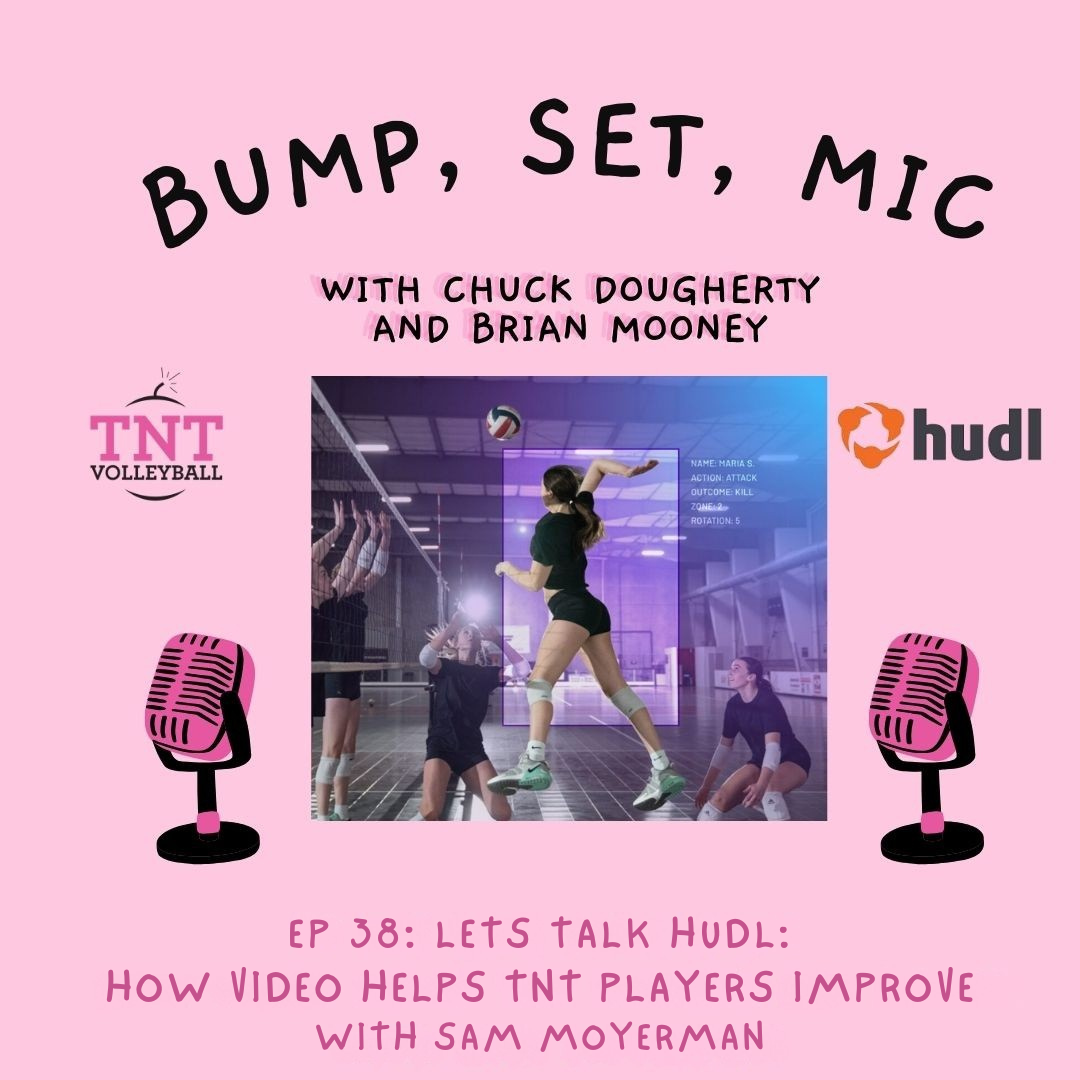 Ep 38: Lets Talk HUDL: How Video Helps TNT Players Improve - With Sam Moyerman 14.01.2026 1t 35minFilm doesn't lie - and in club volleyball, it can help coaches to improve their practice, players to devleop faster, and parents to stay aligned with the process they invest so much in for the benefit of their children. In this episode of "Bump, Set, Mic, the TNT Volleyball Podcast," hosts Brian Mooney and club director Chuck Dougherty welcome returning guest and resident analytics guru, Coach Sam Moyerman, for a deep dive into how TNT uses the platform HUDL and its video and stat capabilities to elevate players, inform coaches, and engage parents. The group discusses why film review matters, explains how AI-powered stats accelerate learning, and shares simple routines that can help turn review of game video into real, measurable ways to improve. Whether you're a parent, player, or coach, this episode provides a clear picture of the benefits of HUDL - and how to get more out of it. Segment 1: Helping Parents Watch With Purpose (0:00 - 39:00) Opening/Intro, Episode setup Atlantic City Tourney Recap Why TNT Uses HUDL + and the Balltime AI History / Integration Clearing Up HUDL Misconceptions Parents 101 Healthy Parent Use Productive Parent–Player Convo Starters Segment 2: Assisting Players in Taking Ownership of Development (39:11 - 60:35) How Watching Film Accelerates Player Learning How and What Film Watchers Do Differently Viewing Different Positions Through the Lenses of HUDL Using HUDL to Assist in Recruiting Segment 3: Helping Coaches Use Data as Part of Decision-Making (60:46 - 95:13) Usage Overview for Coaches Presenting More Advanced Uses by Coaches Using Data to Impact Strategic Decisions Properly Conducting Team Video Sessions Balancing Film Use and Stat Data With Coaching Instincts Highlighting Current TNT Events Sharing Club Social Media Contact Info and Wrap-Up
 -
 Ep 37 - Season Kickoff 30.12.2025 59minReady or not, here comes the club season! Bump Set Mic gets it started in episode 37 with an energetic, behind-the-scenes look at TNT Volleyball's kickoff to the new season. Hosts Brian Mooney and club director Chuck Dougherty, joined early by TNT's Director of Operations Leon Kasperski, break down the realities of the club's efforts when navigating tournament scheduling chaos, hotel "stay-to-play" hurdles, outfitting teams for the season, arranging for programs over the holidays, and efforts towards furthering player development during the season. Other highlights of the episode include a recap of some recent fun events at TNT (watch parties, glow volleyball, co-ed pickup), sharing parent readiness tips for the season, and taking a look at some upcoming tech and social media initiatives that will power the club moving forward. Segment 1: Behind the Scenes as The Season Approaches (0:00 - 29:11) Tournament Scheduling Process and an In-Depth Look at Why Changes Occur Coordinating Hotel Blocks for Coaches and Families and the Benefits of Keeping Teams Together Securing Uniforms and the Challenges That Process Entails Scheduling Events for Players During the Holiday Break Highlighting Some Recent Fun Events at TNT Segment 2: Maximizing Player Development During the Season (30:00 - 39:08) TNT's Approach to Academy Sessions to Further Player Development Strength and Conditioning Development Opprtunities Provided In-Season by the Club A Focus on College Recruiting, the use of Hudl, and its Benefits to Coaches, Players, and Families Segment 3: A Parent "To-Do" List and New Developments at TNT (39:56 - 59:50) Confirming AAU Membership and Affiliation with the Club Finalizing Hotel Reservations Using Links Provided by the Club Ensuring all Payment Obligations Have Been Met Preparing for the First Tournament (response to a question from the Facebook Group "Volleyball Moms") Exploring Options for a New Management System for the Club Developing a Social Media Team With Player Involvement to Enhance Our Presence Upcoming Programs at TNT and Links to TNT Socials
 -
 Ep 36 - Setting Up Success: The Value of Team Parents 25.11.2025 1t 2minTeam parents are the quiet leaders on every junior volleyball team that work closely with coaches and the club to make the season better for players, families, and everyone involved. In Episode 36 of the TNT Junior Volleyball Club podcast, hosts Brian Mooney and Chuck Dougherty discuss the crucial role of team parents in club volleyball. They emphasize the importance of team parents in fostering a positive team culture, managing logistics, and maintaining open communication. Key responsibilities include organizing team events, coordinating travel, and ensuring team cohesion. The hosts highlight the need for team parents to balance their roles as parents and team supporters, avoiding favoritism and maintaining a supportive environment. They also share examples of effective team parenting and stress the value of team parents in enhancing the overall team experience. Segment 1: Understanding the Parent Role (0:00 - 27:57) The first segment introduces the critical, often underappreciated, role of the team parent in youth volleyball clubs. Brian and Chuck discuss how the team parent serves as the glue holding together coaches, players, and other parents. They share insights from various perspectives—parent, coach, and club director—highlighting how team parents ease burdens on coaches by taking over logistics, communication, and coordination. The conversation stresses the importance of choosing the right kind of volunteer—someone organized, positive, able to set aside personal agenda, and committed to enhancing the experience for everyone involved. Some real-life anecdotes help illustrate how a good team parent positively impacts team culture, logistics, and morale. Segment 2: Building Strong Team Culture (29:06 - 44:50) The episode continues with a focus on the team parent's influence on team and club culture, especially in welcoming new families, integrating parents, and fostering camaraderie. The hosts discuss strategies such as organizing group hotel stays, meal coordination, parent chat groups, and encouraging parent cheers during tournaments. Practical tips are given to ensure all families feel included—from simple things like name tags to parent cheers and creating a supportive sideline environment. The crucial role of the team parent in diffusing issues, modeling positive sportsmanship, promoting group bonding activities (like preseason cookouts or team-themed parties), and demonstrating emotional composure during competitions is emphasized. Segment 3: Working Effectively with Coaches and Club Leadership (45:30 - 62:34) The final segment details how effective team parents support both coaches and club leadership while respecting healthy boundaries. The team parent is positioned as a communication conduit—not someone seeking influence over coaching decisions but as a liaison sharing important both ways while helping to filter out drama or non-issues. The hosts offer examples where good team parents clarify misunderstandings (such as scheduling or travel mishaps) with transparency and help manage player/parent expectations—especially around sensitive topics like playing time. They stress that being team-focused—rather than advocating only for one's own child—is vital, as is maintaining confidentiality and prioritizing the collective experience for kids and families.
 -
 Ep 35 - College Experience Series Vol 2 - Marist University Players 19.11.2025 1t 27minWondering what college volleyball life is like for a Division 1 athlete? This episode of Bump, Set, Mic, the TNT Volleyball Podcast Presents the College Experience Series continues with a focus on the player perspective featuring players from Marist University in New York. In this second episode of the series, Bump, Set, Mic co-hosts Chuck Dougherty and Brian Mooney sat down again with TNT Director of Operations Leon Kasperski to share and reflect upon his recent interview with Marist University players Claire Lewis (a 5th Year Senior Setter and Team Captain), Claudia Kasperski (a Junior Libero/DS), and Gabriella Flamish (a Sophomore Right Side). Leon spoke with them about their experiences at Marist both on and off the court, from the Spring and Summer programs, the volleyball season itself, and what college life is like in general for them as Division 1 athletes. The players shared many thoughtful insights in their discussion with Leon that are benefitical for families and players interested in playing at the next level to hear. They talk about topics such as their intense schedules, travelling as a smaller D1 school to play powerhouse schools, their academic life at Marist and how they try to maintain proper balance as a student-athlete, some of the challenges they've faced in their collegiate careers, and the absolute importance of cultivating a positive team culture. Segment 1: The Marist Volleyball Season & Competition Level (0:00 - 22:23) In this segment, Leon and his guests discuss the intense Marist season schedule which includes coming back in early August for two-and-a-half weeks of all-volleyball, all-the-time before school starts, one that includes 2-3 practices per day during preseason. Also talked about are specific travel experiences to major programs across the country, powerhouse schools like USC, Tennessee, and Michigan State. Reasons why Marist deliberately schedules strong competition early in the season and how the team maintains a postiitve mentality when facing much larger, better-funded programs are also part of the discussion. Segment 2: Academic Life at Marist & Student-Athlete Balance (22:44 - 42:31) In segment 2, listeners hear the players talk about their actual majors - from education to economics to accounting - and explain how Marist supports their academic goals. They also go into more detaail about their schedule and how a recent change at Marist from Saturday-Sunday games to Friday-Saturday has impacted their social lives. Also coming up in the chat is how study abroad opportunities are supported for athletes at Marist which is not always the case in other places. Segment 3: Team Culture, Challenges, and Growth at Marist (42:53 - 87:40) In the final segment, the players share an abundance of valuable information. As part of the talk, they are very honest about some of the toughest parts of their experience. Claire, for example, shares her emotional journey through two major injuries, the mental challenges of missing her senior season, and her eventual decision to return for a 5th year. Other topics relevant to players at all levels that are presented and elaborated on are how to deal with playing time challenges, learning to support teammates even when not getting the court time one desires, and the importance of honest, open communication between players and coaches. Finally, the players vouch for the vital role that development of team culture plays, not only in how it impacts their on-court performance but also their overall experience in general.
 -
 Ep 34 - College Experience Series Vol 1 - Temple University Coaches 08.11.2025 1t 18minBump, Set, Mic, the TNT Volleyball Podcast, is thrilled to present the first episode of our new College Experience Series. So much is often discussed about how players should go about trying to get recruited, but what is life like for college players, coaches, and others involved in the college game once that occurs? The College Experience Series will have you covered with all you need to know about life in the college volleyball world from those that live in it. In this first episode of the series, Bump, Set, Mic co-hosts Chuck Dougherty and Brian Mooney sat down with TNT Director of Operations Leon Kasperski to discuss and share his recent interview with Temple University Women's Head Coach Linda Hampton-Keith and Assistant Coach / Recruiting Coordinator Olivia Vance. For the purpose of this episode, Leon's conversation with the coaches was broken down into 3 segments. In each, the guys preview the content to be shared in the clip that follows, then afterwards briefly discuss their reactions to the information presented before moving on to the next segment. Segment 1: Meet the Temple Coaching Staff (0:00 - 20:00) In this segment, Leon and his guests discuss what makes Temple's volleyball program unique and how they're navigating the major changes in college athletics, specifically the new NCAA settlement that's transforming how programs operate. You'll learn about each of the coaches and their individual roles, coaching philosophies, and how Temple is adapting from the traditional 12-scholarship model to managing 18 roster spots. This segment provides valuable insight into the leadership style and vision driving Temple's program. Segment 2: Temple's Recruiting Philosophy (20:43 - 49:19) In segment 2, listeners hear exactly what Temple's coaches are looking for in potential recruits and how they want to be contacted. You'll hear Coaches Hampton-Keith and Vance break down their recruiting timeline, what catches their attention in recruit emails and highlight videos, and how they evaluate players at tournaments. They also share their communication preferences, including their guidelines about staying in touch every three weeks, and they also explain how they use and value recruiting platforms such as University Athlete profiles. Segment 3: The Temple Experience and Finding Your Fit (50:06 - 78:39) In the final segment, Temple's coaches share what it's really like to be part of their program and what makes the Temple experience special. They touch on their prospect camps, what recruits should know about life in Philadelphia, and their philosophy on developing players both athletically and personally. They also discuss their approach to finding the right fit - not just athletically, but culturally and academically as well. With 8 freshmen currently on their roster, they also touch on the importance of establishing and building team culture and what new players can expect when they join the Temple volleyball family.
 -
 Ep 33 Fall Tryout Recap & the New TNT College Experience Series 24.10.2025 1t 10minWe've got a fun one for you this time on TNT Bump. Set. Mic.! 🎙️ We're kicking things off with a recap of our 12U–14U tryouts—lots of energy, tons of talent, and a few process improvements to make this our smoothest tryout ever! If you ever wondered how we manage 250 girls in a single tryout, we give you peek under the covers. At TNT, we are always striving for improvement, so we develped our own home grown tryout app that made this year's process smoother, faster, and even more awesome. Chuck, Brian and Leon will give you a peek into how technology is being used at TNT to make the tryout process even better this time around. To top it off, we're giving you a sneak peek at our brand-new College Experience Series hosted by Leon Kasperski—real stories from college coaches and players about what it takes to play at the next level. There are plenty of resources out there to talk about how to get recruited, but nobody tells you what it is actually like once you are playing college volleyball at D1, D2, D3 and NAIA levels. Leon interviews college players and coaches at all levels to hear what they are looking for in a college athlete, and what they expect from their players. Buckle up—it's going to be a fun, fast-paced episode you won't want to miss! 🏐🔥 Segment 1 - TNT 12U-14U Tryout recap - 0:33s Segment 2 - TNT tryout app - how TNT uses technology to help evaluate players and form teams. 27:00m Segment 3 - Introduction to the College Experience Series hosted by Leon Kasperski - 47:30m
 -
 Ep 32: Serious. Fun. The importance of Core Values to a club. 19.09.2025 1t 16minIn Episode 32 of Bump. Set. Mic., Chuck and Brian dive into the heart of TNT Volleyball: our core values. From the early days of the club to today, these values have shaped who we are, how we play, and the community we build. We'll explore why our values matter, how they've evolved over the years, and the role they play in guiding every decision—from coaching and player development to building a culture of serious fun, family, and excellence. Whether you're a player, parent, or coach, this conversation will give you a deeper look at what makes TNT more than just a club—it's a community fueled by passion, fun, and a commitment to growth on and off the court. Segment 1: (0:00 - 28:12) Introduction and the need for Core Values Value 1: Passion for the Game Value 2: Serious. Fun. Value 3: Player Development Segment 2: (28:38 - 63:12) Value 4: Quality Coaching Value 5: Community & Family Value 6: Achievement & Excellence Value 7: Accessibility for all Segment 3: (63:42 - 75:32) Upcoming programs Intro to new program: The College Volleyball Student Athlete Experience
 -
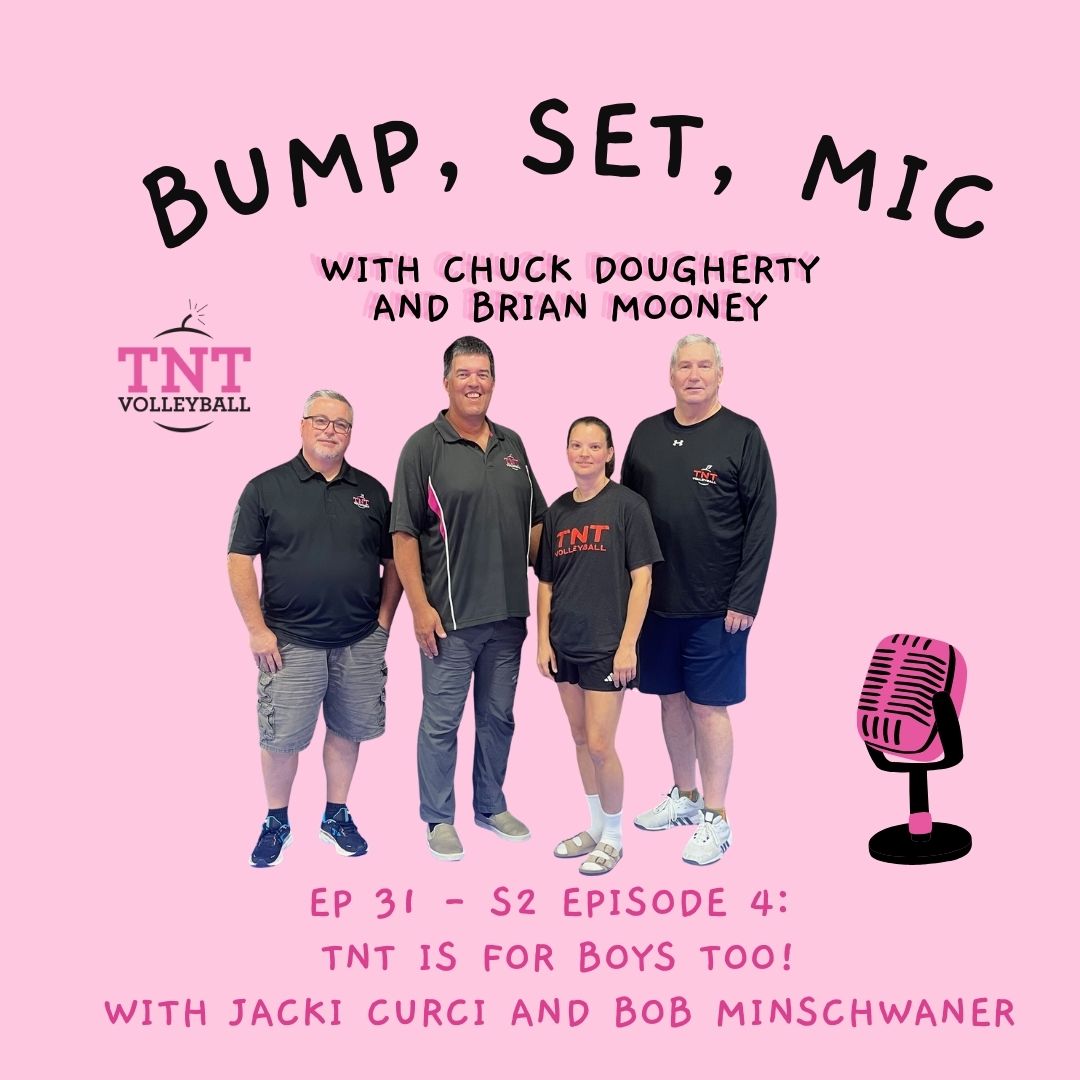 Ep. 31: TNT is for Boys Too! with Jacki Curci and Bob Minschwaner 14.08.2025 1t 2minAn exciting first for the podcast comes your way in episode 31! Chuck and Brian are joined by TNT boys' program directors Jacki Curci and Bob Minschwaner to discuss the history and growth of boys volleyball, and how they have been producing successful boys teams since 2010! They discuss relevant topics such as the challenges of building a competitive schedule, how to get recruited by colleges as well as the differences between coaching boys and girls. Chuck and Brian learn all about the underground market of Nationals jersey exchanges, and how that is a major factor when designing boys uniforms! Segment 1 begins with some history about Jacki and Bob's backgrounds in volleyball, how the boys' program at TNT came to be. Also discussed are the boys' directors perspectives on some of the major differences between coaching boys and girls, as well as the differences in the way the game is played. Segment 2 highlights the goals and mission of the TNT boys' program, especially with regard to developing well-rounded athletes both on and off the court. This mission is similar to the mission of the TNT girls programs. They discuss the growth of the boys' game and the impact Covid had on boys' volleyball. Jacki and Bob then share their thoughts about where the boys' program is headed as well as ideas on how to bring the girls' and boys' programs closer together. Jacki and Bob explain how they balance running the boys' program while also coaching National teams. The segment ends with some talk of the very popular "jersey exchange" that goes on at boys' AAU Nationals. Segment 3 discusses challenges in building competitive boys schedules in the Northeast along with steps being taken by the program directors to assist players with college recruiting. They share some success stories of TNT boys receiving quality college offers to play volleyball at the next level. The segment concludes with Jacki and Bob sharing their expectations for the coming season for the TNT boys' teams. Segment 1: How the TNT Boys' Program Came to Be (0:00 - 22:23) The Volleyball Paths Taken by Our Boys' Program Directors How the Boys' Program Became a Reality at TNT The Current Size of the Boys' Program Staffing the Boys' Teams with Quality Coaches Differences Between the Boys' and Girls' Games Segment 2: Tournament Options and Decision-Making Factors (22:53 - 40:50) Approaching a Player's On and Off-Court Development Balancing Skill Development with Character Building The Impact Covid Had on the Boys' Game Plans for Growing the Boys' Program Here at TNT The Club's Vision for Bringing the Two Programs Closer Together Balancing Running the Boys' Program While Also Coaching Club Teams The Boys' AAU Nationals Jersey Trade Segment 3: Scheduling and College Recruiting (41:16- 62:24) Choosing Tournaments for the Boys' Teams to Attend USAV vs. AAU Events and How Things Have Changed Over the Years Supporting Players Who Want to Play at the Next Level Differences in Opportunities in College for Boys and Girls Advice for Parents and Players Navigating Through the Recrutiting Process The Importance of a Strong Academic Record When Players Seek Offers Some Recruting Success Stories for TNT Boys Outlook for the Boys Teams for the Upcoming Season Upcomng Offerings for the Boys at TNT Outside of the Club Season Wrap-Up
 -
 Ep 30: Building the Perfect Schedule with Leon Kasperski 31.07.2025 1t 1minDid you ever wonder how clubs create tournament schedules for teams? If you have ever found yourself scratching your head or irritated about anything related to your schedule, you don't want to miss this episode. In Episode 30, Season 3, Chuck and Brian talk to the schedule maker extraordinaire, a.k.a The Unicorn, a.k.a Leon Kasperski to discuss all of the things that need to be considered when creating the tournament schedule for a team. The panel discusses important factors such as travel costs, availability, picking the right level, and college coach exposure among other things, and how they all factor into building the perfect schedule. We also welcome to BSM our FIRST podcast sponsor - Udis and Tokasz Orthodontics, located in Spring House, PA! Say Ahhh! Segment 1 focuses on planning, process, and goals when engaging in development of tournament schedules for a season. Leon shares info about when the process begins in advance of a reason, the process of registering teams for tournaments, and challenges resulting from registration that often occurs even before teams are formed. Chuck expands on TNT's approach to "responsible scheduling" and how that may differ from some other clubs. The discussion then moves towards the presence of college coaches at tournaments and how to go about that as a club, especially when wanting to put players in front of coaches they could potentially play for at the next level. Segment 2 delivers insights into the decision-making process with regard to creating individual team scheedules at each age group and level of competition. Leon presents a scaled approach as the players get older to increase their exposure, vary the experiences to some degree, and maintain appropriate levels of competition to ensure positive experiences for the teams. Chuck discusses some of the history of scheduling at TNT, how the club has evolved over the years, and balancing team and club needs with a desire to avoid unnecessary expense to families. Leon shares the reality of why teams from the same club can still sometimes end up playing each other in a tournament despite a club's best efforts. The importance of communicating realistic expectation to parents in advance of tournaments is also discussed, and Chuck and Leon present a positive view of the tournaments that provide medals for winners at various levels of competition. Segment 3 discusses how feedback from coaches and families can be an important part of the scheduling process. Some examples regarding tournament experiences received by the club from coaches are shared. Leon presents insights as to reasons why tournaments can be appealing to a club, including venue, location, attractions in the local area, and level of competition. An important point is also brought up regarding how a club really only learns about a tournament by sending teams there, especially for new events. Parent feedback about tournament destinations received from TNT parents at the end of last season is also presented. A few sucessful examples of TNT players being seen by college coaches at tournaments are mentioned, with Leon and Chuck sharing the reality of how players get noticed at tournaments, especially the importantance of a club having coaches on staff with connections to college coaches as part of that process. The group then shares some final thoughts about scheduling before wrapping up the episode. Segment 1: Scheduling for a Club Season (0:00 - 18:40) When the Process Begins in Advance of a Season The Tournament Registration Process: Insights and Concerns Issues to Consider When Building a Season Schedule Thinking About The Different Levels of Teams a Club Offers TNT's Approach to "Responsbile Scheduling" College Coaches at Club Tournaments, the Impact of Blackout / Quiet Periods, and Putting Players in Front of Coaches They Could Play for at the Next Level Additional Concerns With Regard to Tournaments at a Distance Segment 2: Tournament Options and Decision-Making Factors (19:10 - 43:22) A Scaled Approach to Selecting Different Events for the Various Age Groups and Levels Defining a "Better Schedule" --- Providing What is Needed vs. a Schedule with Unnecessary Expenses Finding Appropriate Competition and the Reality of What Can Occur When Teams Attend High-Level Tournaments How and Why Teams from the Same Club Can Sometimes Play Each Other in Tournaments Despite a Club's Best Efforts Communicating Realistic Expectations to Parents in Advance of Tournaments The Benefit of Tournaments that Provide Medals to Winners at Different Levels of Competition Segment 3: Considering Feedback from Coaches and Parents When Building Schedules (43:52 - 61:43) Examples of Tournament Feedback Received from Coaches Reasons for Choosing Tournament Venues: What a Club Looks for Live and Learn: Trying to Gauge the Level of Competition Especially with Regard to New Tournaments Discussion of and Reflection Upon Tournament Feedback Received from TNT Parents More Insights Regarding Cost Considerations Related to Tournaments The Truth about How College Coaches Recruit at Tournaments, How Players Really Get Noticed, and Some TNT Success Stories Final Thoughts About Scheduling Wrap-Up
 -
 Ep 29: Fun in the Summertime? Tryout Season is Upon Us 15.07.2025 53minIn Episode 29, Season 2 of the podcast continues with another episode from "The Owner's Box." (aka Chuck's Kitchen Table) Segment 1 begins with a discussion of what TNT is doing to prepare for the upcoming tryouts. Chuck and Brian discuss open gyms, TNT's commitment to honoring the tryout and USAV rules by NOT extending early offers, and the rumor of "Secret Tryouts". Chuck adds his personal feelings about the changing landscape of club volleyball and tryouts, and how TNT has had to make changes in recent years, while holding firm the the TNT Mission that all decisions should focus on "what is best for the girls". Segment 2 addresses some changes being made to TNT's approach to Nationals' teams for the 2025-2026 season, and some of the difficulties encountered in 2025. Brian ends the segment by asking Chuck his thoughts on why players sometimes want to move from one club to another at the start of a new season. Segment 3 focuses on why TNT is a good choice for families, and the road TNT has taken to expand into a club that has something to offer for all levels of players. Segment 1: Preparing for Tryouts and Addressing Some Misconceptions (0:00 - 18:35) What TNT is Doing to Get Ready for Tryouts and a Rundown of the Tryout Schedule How Can Players and Their Families Survive the Stress of Tryouts and Some Prior Episodes to Listen to in that Regard Addressing Some Misconceptions and Reflecting on the Concerns Raised Why TNT Moved to Summer Tryouts Similar to Other Clubs Segment 2: Changes to TNT's Approach to National Teams for 25-26 (19:10 - 32:25) TNT's Prior Approach to Nationals and Difficulties Experienced Last Season Designating Committed Nationals Teams at the Start and Forming Additional Teams Later for Other Players Who are Interested Discussing USAV vs. AAU Nationals Differences From a Club Perspective Reasons for Player Movement that Occurs from Season to Season Segment 3: Why Choose TNT (33:03 - 53:49) Emphasis on Player Development The TNT Experience How Our Facilities Allow Us to Offer More to Families Coaching Philosophy Providing Various Levels of Competiton for a Wide Range of Players Supporing Those Interested in Playing in College A Detailed Approach to Fair Pricing Where Flexibility Exists for Multi-Sport Athletes at the Club Additional Benefits Offered by the Club Episode Wrap-Up
 -
 Ep 28: Nationals Recap & The Road Ahead 02.07.2025 1t 34minIn Episode 28, Season 2 of the podcast kicks off at "The Owner's Box" ... i.e. Chuck's house. At the start, Chuck and Brian begin discussing their recent time in Orlando at AAU Nationals with the TNT girls' teams while also wishing the boys' teams who are currently competing there the best of luck. After that, they talk briefly about the quick tunraround from one season to the next before moving forward. The first segment provides a detailed recap of Nationals for the TNT girls' teams who participated. Segment 2 includes important information about the upcoming open gyms and tryouts for both the girls' and boys' teams plus the new TNT Tryout app that will be in use. The final segment discusses TNT's vision now and moving forward in the local volleyball community. Chuck opens up about the club's desire and ability to provide for the various different experiences that players and their families now want from the club, ranging from the highly competitive to a more casual, introductory-level approach --- and everything in between. Segment 1: The Nationals Experience (5:55 - 32:24) Experiencing the Orange County Convention Center and Keeping the Club Together at the Same Resort Overview of the Different Levels of Play at Nationals and How Our Teams Are Scheduled Wave 1 Recap (12 and 13U) Wave 2 Recap (14U) Wave 3 Recap (16 and 16U) Wave 4 Recap (15U) Thoughts on the New Doubles Rule Shouting Out an Opposing Coach at Nationals Who Listens to the Podcast Wrapping Up the 24-25 Season: Congratulating All Who Participated at TNT, Best Wishes to Players Moving on To New Chapters, and Hopes for Some Rest and Relaxation for Those Returning in Just a Few Weeks Segment 2: Plans for the 2025-2026 Season Open Gyms and Tryouts (33:00 - 59:45) 12-14U Girls' Tryouts and Open Gyms to Be Held in the Fall Upcoming Open Gym Dates and Times for 15-18U Girls The Importance of Attending As Many Open Gyms as Possible The Schedule for Tryouts and Callbacks for 15-18U Girls How the Club Will Divide the Girls Age Groups into Specific Tryout Sessions Referencing Prior Episodes (6, 8, and 17) Where Families Can Learn More About Topics Such as How to Stand Out at Tryouts, The Age Group Debate, How Teams Are Formed, and Handling the Stress of Tryouts The Schedule for the Resumption of Open Gyms, Tryouts, and Callbacks for the Boys' Teams Once They Return from Nationals Catching Up With Coach Tim Fazio About the New TNT Tryout App Segment 3: The Girls Club Vision & Various Levels of Play that TNT Offers (60:23 - 94:09) Chuck's Thoughts on Balancing TNT's Growth and Desire to Stay True to the Values the Club Was Built On What The Platinum Team Level for 15, 16, and 17U Entails Emphasizing the Level of Commitment Expected from Those on Higher Level Teams National Team Level and How It Differs From Platinum Travel Team Level and Expectations The Regional Team Experience and How it Differs From Other Levels Plans for the Second Year of the In-House Program Chuck's Advice for Families Looking at Choosing a Club Episode Wrap-Up
Samankaltaiset podcastit


Suosittu maassa
Tämä podcast esiintyy myös näiden maiden podcast-listoilla.
