
Golf 247.eu: The Global Platform for Innovative Technologies and Teaching Concepts.
Golf247.eu
0
Golf247.eu is a technology company with a global platform for innovative golf teaching concepts and digital tools. It connects golf instructors, academies, clubs, schools, national PGAs, and golf associations, aiming to improve instruction, streamline business management, and offer time-saving solutions. The platform continuously seeks new global features to enhance the capabilities of PGAs, golf clubs, academies, and instructors.
Jaksot
-
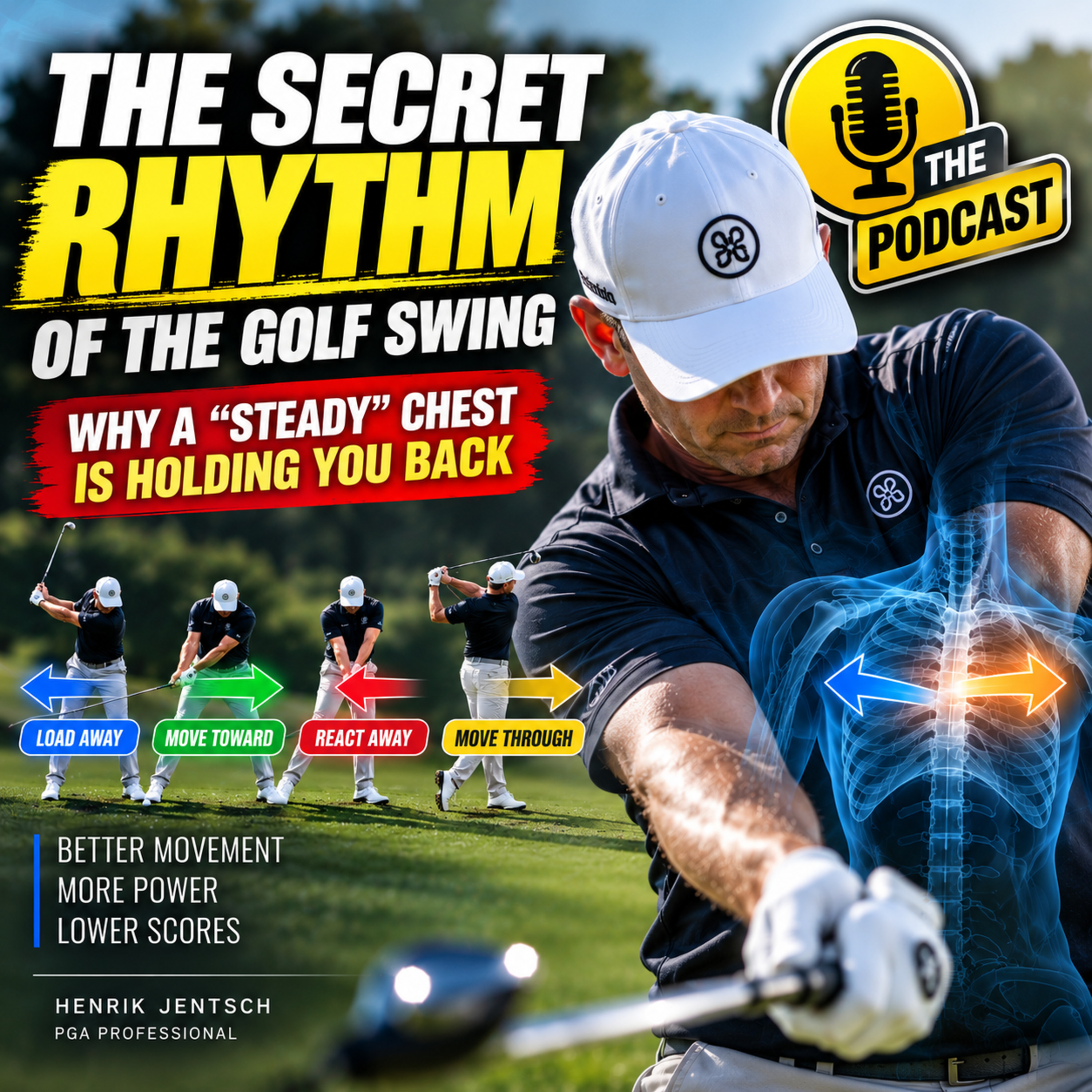 #710 The Secret Rhythm of the Swing: Why a “Steady” Chest is Holding You Back 15.09.2026 20minOne of golf’s most persistent myths is “keep your head still.” Many golfers interpret this by freezing the upper body, creating a rigid pivot that limits power and disrupts sequencing.3D biomechanics shows something different: the chest is not a fixed anchor. It moves laterally and rotationally throughout the swing. The key is not whether it moves, but when and in which direction.During the backswing, the chest moves slightly away from the target while rotating. For a right-handed golfer, this means shifting toward the trail side.This is not a slide. It is Shift + Rotate, creating dynamic width and space for the arms while allowing a deeper, more functional turn.Elite golfers often begin moving their chest toward the target before the club reaches the top.While the club is still completing the backswing, the body is already reorganizing for the downswing. This overlapping motion creates stretch, improves sequencing and produces a smoother transition.Waiting until the club stops at the top often creates a rushed change of direction.During the downswing, the chest continues toward the target—but lateral movement must be combined with rotation.A pure upper-body slide can stall rotation and block the club. Think:SHIFT + TURNThe body moves forward while continuing to rotate.Around impact, the chest may temporarily move slightly away from the target again.This is not necessarily “hanging back.” As the club and arms accelerate outward, the body can react in the opposite direction as a dynamic counterbalance.Trying to force the chest aggressively toward the target through impact can interfere with this natural response.LOAD AWAY → MOVE TOWARD → REACT AWAY → MOVE THROUGHAfter impact, the chest moves strongly through toward the target, producing a balanced finish.The most important factor is timing—not the total amount of sway. Every golfer will move differently depending on mobility, body proportions and swing speed.The elite golf swing is not built around keeping the chest still. It is a coordinated 3D sequence of lateral movement and rotation.Master the rhythm:AWAY → TOWARD → AWAY → THROUGH.1. LOAD AWAY2. MOVE TOWARD3. SHIFT + TURN4. REACT AWAYTHE FOUR-STEP RHYTHMMy BlogThe Explainerwww.ecoach360.com
 -
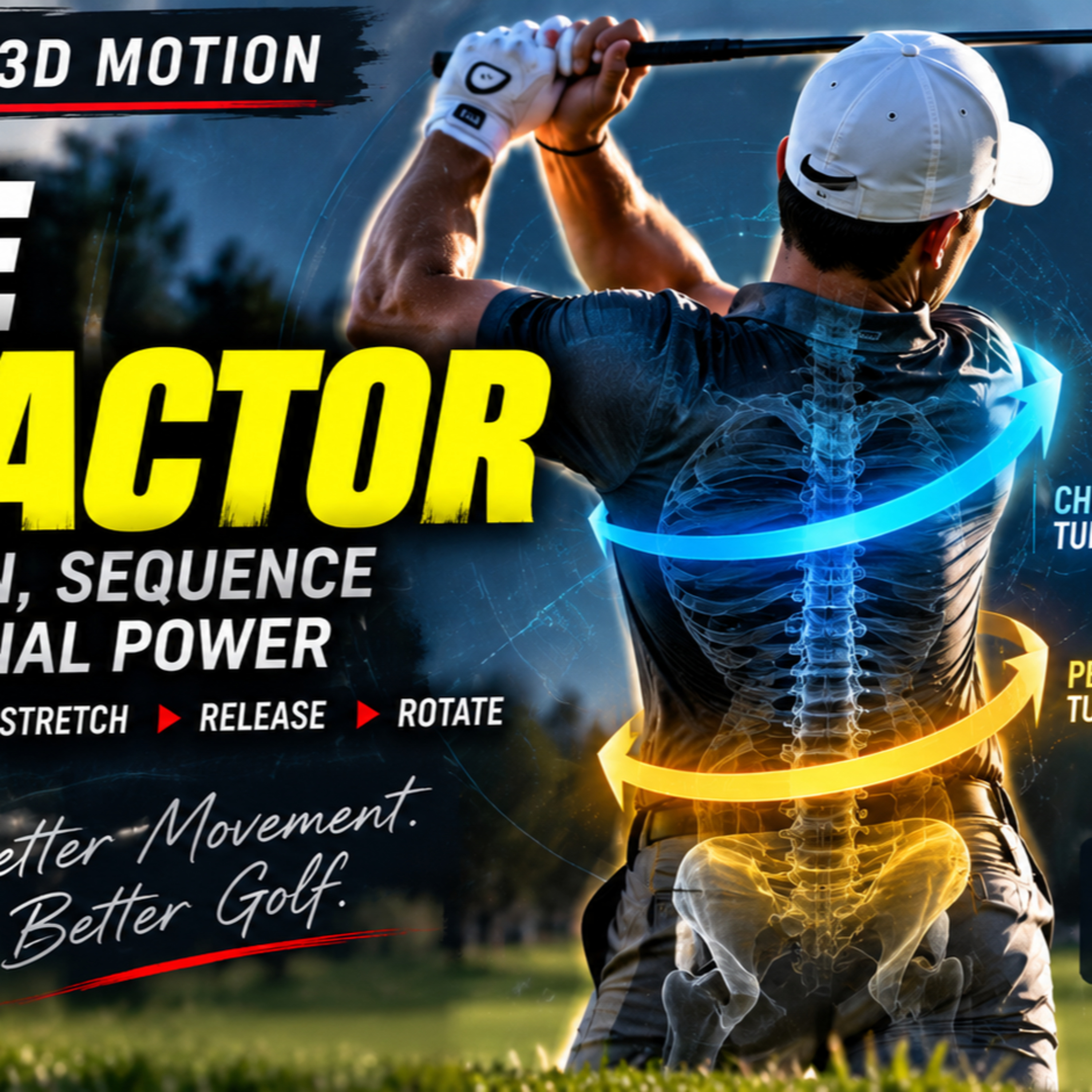 #709 THE X-FACTOR: SEPARATION, SEQUENCE & FUNCTIONAL POWER 14.09.2026 19minMany golfers try to create distance by turning harder, using more arm strength or increasing muscular effort. Efficient golf swings work differently. Speed is created through the coordinated interaction of the pelvis, chest, arms and club. A key part of this is the X-Factor.The X-Factor describes the rotational separation between the pelvis and upper body. The pelvis should not be artificially locked during the backswing. It rotates naturally while the chest rotates farther, creating functional separation. A golfer might demonstrate approximately 45° of pelvis rotation and 90° of upper-body rotation, but these numbers are examples, not universal targets.Importantly, the X-Factor is a 3D movement. Rotation interacts with forward bend, side bend and the orientation of the pelvis and torso.LOAD → STRETCH → RELEASEDuring the backswing, separation helps load the body. But maximum separation may occur during transition rather than at the top. As the pelvis begins rotating toward the target, the chest can briefly remain behind. This momentary increase in separation is known as the X-Factor Stretch and relates to the stretch-shortening cycle.PELVIS GOES → CHEST RESPONDS → CLUB FOLLOWSThis leads directly to the kinematic sequence:PELVIS → CHEST → ARMS → CLUBSequence matters more than simply rotating faster. If everything turns together, separation and potential energy transfer are reduced. But deliberately holding the chest back too long can also disrupt the sequence and leave the club stuck.At impact, the pelvis is typically more open toward the target than the chest because the body is still dynamically unwinding.There is no perfect X-Factor number for every golfer. Functional separation depends on mobility, body structure and individual movement capabilities.SEPARATION + SEQUENCE + TIMING = FUNCTIONAL POWERThe X-Factor is not only about distance. Effective sequencing organizes the swing and can reduce last-second compensations with the hands and arms, creating a more repeatable motion.1. Backswing: Rotate the pelvis naturally while allowing the chest to turn farther.2. Transition: Start the pelvis toward the target while the chest briefly remains behind. Feel the separation increase.3. Release: Allow the chest, arms and club to follow dynamically into a balanced finish.TURN → SEPARATE → STRETCH → RELEASE → ROTATEStop trying to manufacture speed with muscular effort. Create functional power through separation, sequence and timing.FEEL THE X-FACTOR DRILLMy BlogThe Explainerwww.ecoach360.com
 -
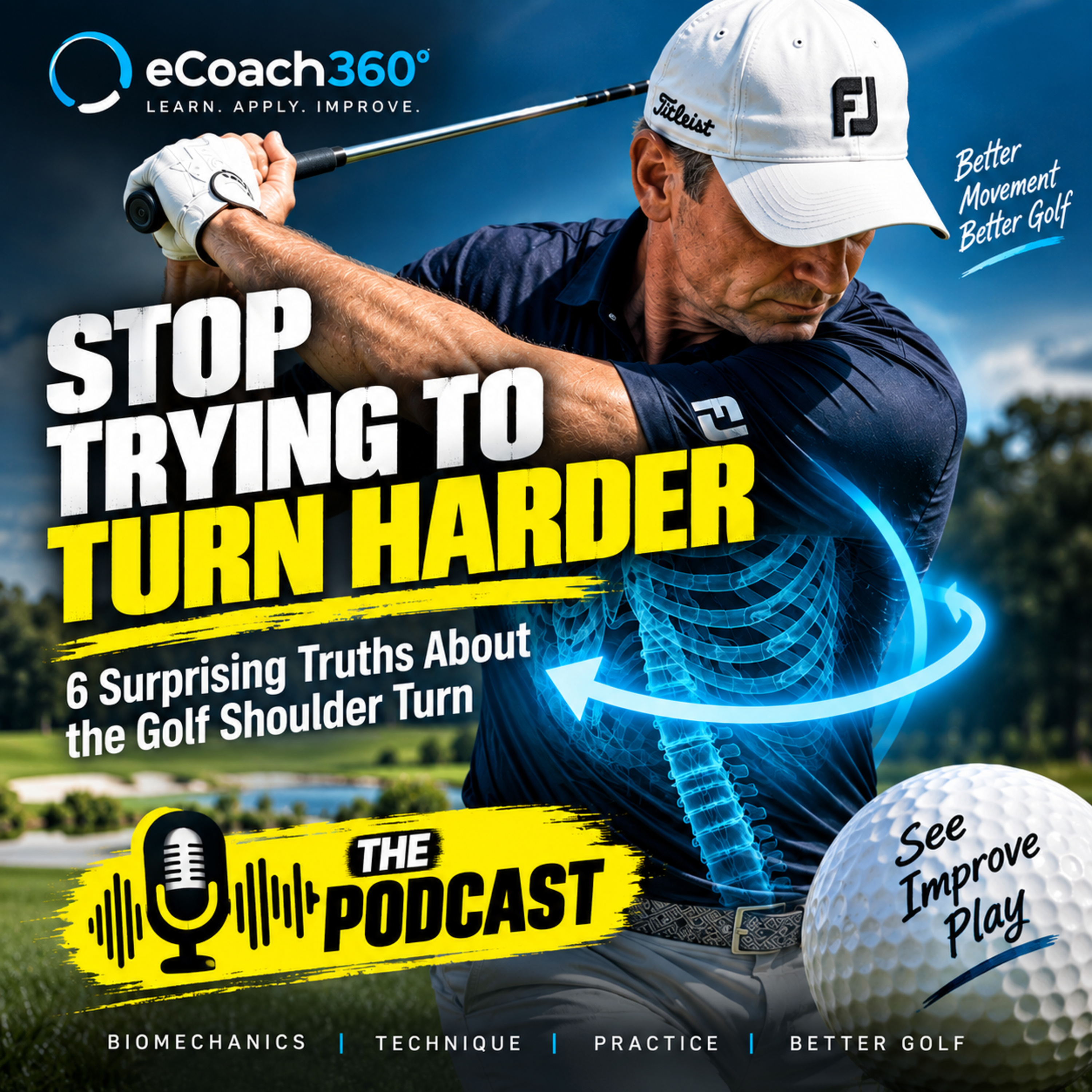 #708 Stop Trying to "Turn Harder": 6 Surprising Truths About the Golf Shoulder Turn 13.09.2026 22minMany golfers chase more distance by forcing a bigger shoulder turn. But more rotation is not always better. In biomechanics, the key is not simply “shoulder turn” but thorax rotation and sequence:TURN → TRANSITION → OPEN → ROTATE THROUGH.1. You Aren’t Square at SetupYour shoulders do not need to be perfectly parallel to the target line. Because the trail hand sits lower on the grip, the thorax naturally starts slightly open.PGA Tour: 11° openLPGA Tour: 10° openDo not force a square position. Start from a natural setup that allows free rotation.2. Let Your Chest Carry Your ArmsMany golfers make an arm-dominated backswing. Instead, let the thorax organize the movement. Your chest should help transport the arms and club away from the target.Coach’s Cue: Feel your sternum moving the club, not just your hands.Use WatchItGolf to review whether your arms are outracing your chest rotation.3. Forget the 90-Degree MythPGA Tour backswing: 92°LPGA Tour: 103°These are reference values, not targets. Functional rotation is more important than maximum rotation. If your mobility allows only 80°, forcing more can damage posture, balance and consistency.4. Master the TransitionElite players do not simply finish the backswing, stop, and then start down. The thorax can begin changing direction while the arms and club are still completing the backswing.This creates a stretch-shortening effect between body segments.Coach’s Cue: Don’t stop at the top. Let the change of direction emerge from sequence and timing.5. Impact Is Already OpenTrying to return the shoulders to square at impact can slow the rotation.PGA Tour at impact: 29° openLPGA Tour: 32° openThe body should already be opening toward the target, allowing energy to continue into the clubhead.6. Swing Through the BallThe ball is not the finish line. Rotation continues well beyond impact.PGA Tour finish: 154° openLPGA Tour: 160° openI don’t swing to the ball — I swing through the ball.From Position to FlowStop chasing isolated positions. Build a continuous sequence:UNDERSTAND → FEEL → REHEARSE → PRACTICE → MEASURE → ADJUST → INTEGRATE.Your goal is not to turn as far or as hard as possible. Create enough backswing rotation, change direction at the correct time, open through impact, and continue to a balanced finish.Stop forcing the turn. Start mastering the sequence.My BlogThe Explainerwww.ecoach360.com
 -
 The 20-Year Trap: Your Golf Coaching Business Is on a 7-Year Countdown 13.09.2026 15minYour diary is full. Your club is busy. Your students are loyal. So why change?Because current success may be hiding the biggest threat to your future.For decades, golf coaching followed one model: a student arrives, takes a 30-, 45- or 60-minute lesson, pays and leaves. Repeat.But assuming a model that worked for the last 20 years will automatically work for the next 20 is dangerous.The final countdown has started.Your Postcode Is Your CeilingYou may have 30 years of expertise in putting, biomechanics, short game or player development. But if golfers must physically travel to your club, your market is determined by geography—not your knowledge.Why should a great putting coach only teach golfers living 30 kilometres away?That isn't a coaching limitation. It's a business-model limitation.Your Next Students Are DifferentMany traditional golfers belong to an ageing generation with time and disposable income. Younger golfers live differently.Banking, fitness, education, entertainment and communication happen on smartphones. They expect flexibility, convenience and continuous access.So why should golf coaching remain completely analogue?The future isn't simply Lesson → Goodbye → Next Lesson.It is:Analyse → Coach → Practise → Communicate → Review → Improve.Stop Selling MinutesGolf Professionals traditionally sell 30, 45 or 60 minutes.But your knowledge doesn't become worthless when the lesson ends.Digital coaching changes the question from:“How many lessons can I fit into my week?”to:“How many golfers can I successfully develop?”There are three ways forward:Marketplace Coach: Take your specialist knowledge beyond your local club.Standalone Coach: Use digital tools to continuously support your existing students.Hybrid Coach: Combine personal coaching with long-term digital support. A golfer might travel 300 km for an intensive coaching day and then continue working with you digitally for 3, 6 or 12 months.Technology Doesn't Replace YouAI and platforms such as WatchItGolf should amplify the Golf Professional, not replace them.Front-on and Down-the-Line 2D analysis, supported launch information, remote feedback, practice plans and progress reviews allow the coaching relationship to continue beyond the driving range.Technology supports the Golf Professional — it does not replace the coach.Don't Wait Until Your Diary Is EmptyBuilding a digital reputation, systems, experience and online students takes time.If you wait until traditional lesson income declines, you may already be years behind.Seven years from now, “online coaching” may simply be called golf coaching.So don't build your digital business when you're desperate for students.Build it while you still have them.Book a personal One-to-One WatchItGolf Presentation with Henrik Jentsch, PGA Professional, start your 14-Day Free Trial, and discover how your coaching business can remain relevant for the next 10–20 years.Your business will change — with you or without you.YOUR FUTURE STARTS NOW.1. BOOK YOUR PRIVATE ONE-TO-ONE WATCHITGOLF PRESENTATIONDiscover how WatchItGolf can help you build your online and hybrid coaching business.BOOK HERE:2. START YOUR 14-DAY FREE WATCHITGOLF TRIALTest WatchItGolf FREE for 14 days — with no obligation.START FREE TRIAL:Don't wait for the future. Build it today.Henrik JentschPGA Professional | Head of Global Sales, WatchItGolf
 -
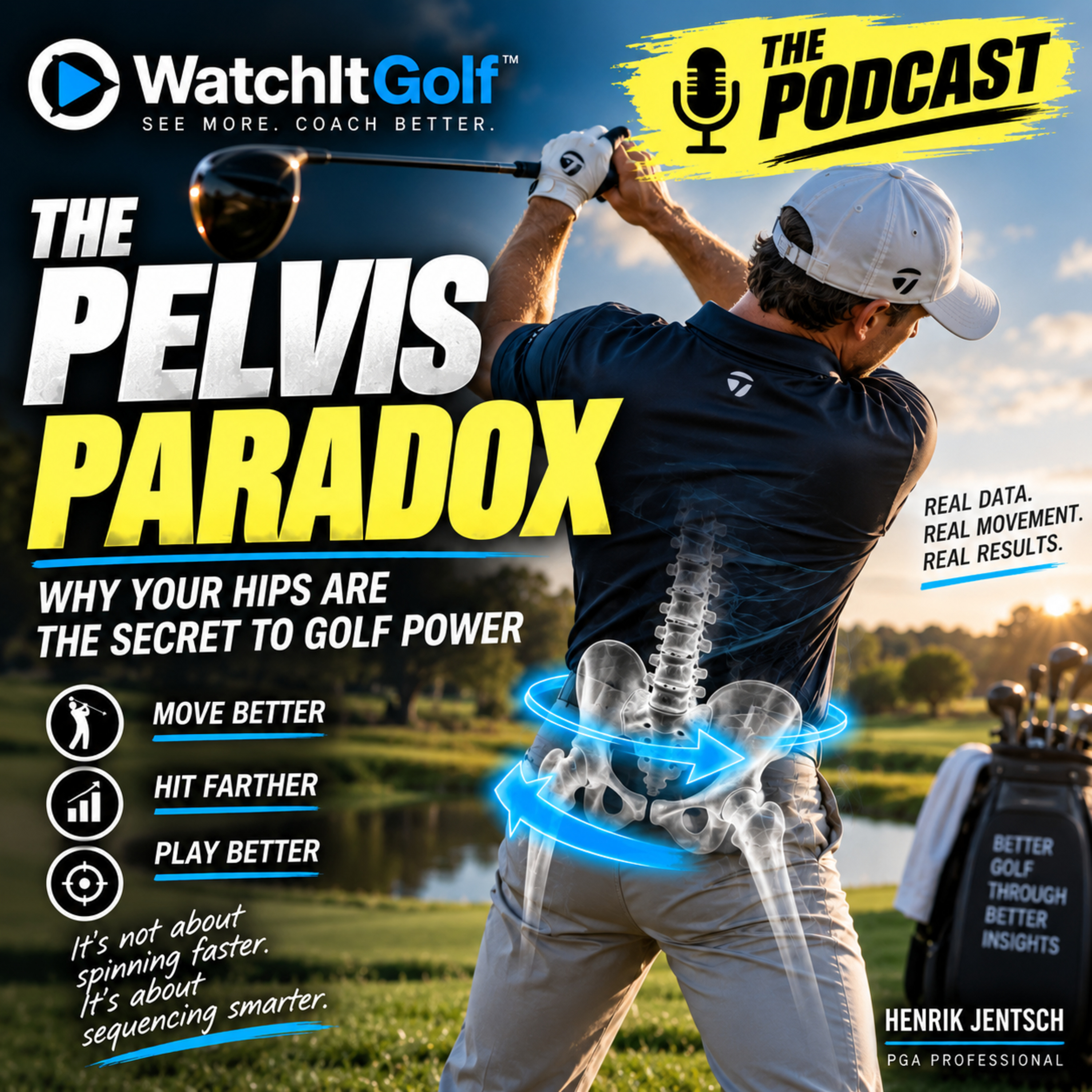 #707 The Pelvis Paradox: Why Your Hips Are the Secret to Golf Power 13.09.2026 19minMany golfers believe restricting the hips creates more “X-Factor” and power. In reality, excessive restriction can limit rotation and force the upper body to work against the lower body.The pelvis is not a passenger—it is a dynamic engine.Let the Pelvis TurnRestricting the pelvis limits torso rotation and prevents the trail hip from moving back to create depth. Instead, allow an organized rotation around the body’s vertical axis.LET THE PELVIS TURN.The Pelvis Moves Before the Club Changes DirectionElite golfers demonstrate an important sequencing pattern. The pelvis can reach maximum backswing rotation—around 48° closed—before the club reaches the top. While the arms and club are still completing the backswing, the pelvis has already started moving toward the target.This overlapping transition creates separation between body segments and supports efficient energy transfer.Deceleration Creates SpeedThe pelvis initiates the downswing by accelerating, but it must eventually decelerate. This is part of the Kinematic Sequence:Pelvis → Torso → Arms → ClubEnergy is transferred from one segment to the next, allowing the clubhead to reach maximum speed without simply trying to rotate the hips faster.Impact Is Not AddressAt impact, the pelvis should be significantly open—not back where it started. Tour data shows approximately 41° open for men and 52° for women, with rotation continuing beyond impact.Trail Hip Back → Lead Hip BackA simple movement concept can help:Backswing: Trail Hip BackDownswing: Lead Hip BackPlace a club horizontally across your pelvis. Turn the trail hip back during the backswing, then move the lead hip back during transition. Avoid sliding or thrusting toward the ball.Feel vs. RealWhat golfers feel and what they actually do can be very different. WatchItGolf helps measure key positions such as Address, Maximum Backswing Rotation, Top and Impact.The goal is not maximum hip speed. It is the right amount of rotation at the right time and in the right sequence:Turn Away → Change Direction → Open → Rotate Through.Stop restricting your natural movement. Let the pelvis turn and use your body’s natural engine.My BlogThe Explainerwww.ecoach360.com
 -
 #706 The Secret to Effortless Consistency: 5 Pre-Shot Routine Lessons 12.09.2026 17minEvery golfer knows the “range swing”: a fluid motion in practice that disappears on the first tee. The problem is often not the swing, but the preparation. A repeatable routine connects decision-making with execution.1. Thinking Box and 1:2 BreathingBegin 3–4 metres behind the ball in the “Thinking Box.” Assess the lie, wind, target and shot. Once decided, leave analysis behind. Inhale through the nose and exhale through the mouth for twice as long. This reduces tension and creates calm focus.2. Your Core Region Shapes Your SetupAccording to Henrik Jentsch’s system, every golfer has a dominant Core Region:Lower Core: Ground-up power—Shift, Shift, Turn. Use a wide stance, 90-degree spine tilt and slightly closed clubface.Middle Core: Balanced power—Shift, Turn, Extend. Use a medium stance, 10-degree clubhead drop and neutral clubface.Upper Core: Torso-driven power—Turn, Extend. Use a narrow stance, 20-degree clubhead drop and slightly open clubface.Matching your setup to your natural movement supports rotation, extension and speed.3. Align with the ShaftChoose an intermediate target 30–50 cm ahead of the ball. Hold the club at roughly 45 degrees with the trail hand and use the shaft to connect the ball to the target line. With irons, position the trail foot at 90 degrees to that line, aligned with the ball’s centre. This improves aim and creates consistent distance from the ball.4. The Money Grip and 80/50 PressureThe “Money Grip” is the connection between thumb and index finger:Lower Core: Strong grip; V outside the trail shoulder.Middle Core: Neutral grip; V toward the trail ear.Upper Core: Soft grip; V toward the nose or chin.Use 80% pressure in the lead hand and 50% in the trail hand. This prevents the trail hand from dominating and supports a fluid release.5. The Balance SandwichA consistent swing follows Static–Dynamic–Static:Stable addressDynamic Shift → Turn → ExtendStable finish held for 1–2 secondsEnergy transfers like a cracking whip—from the hips through the kinematic sequence to the clubhead. If you cannot hold the finish, your setup or movement may not match your natural mechanics.ConclusionTake every shot through Plan → Prepare → Perform. Analyse, then visualise and feel the shot. Finally use Look → Commit → Swing—with no technical interference. This personal framework helps you stop fighting your body and start using it.My BlogThe Explainerwww.ecoach360.com
 -
 #705 WHAT IS WATCHITGOLF HYPER COACH? 11.09.2026 18minGolf coaching is changing. A Golf Professional’s relationship with a student no longer has to end when the 60-minute lesson is over.WatchItGolf Hyper Coach is designed to connect traditional face-to-face golf instruction with modern digital coaching technology — creating one connected coaching environment for Golf Professionals, academies and teaching facilities.The principle behind it is simple:Technology supports the Golf Professional — it does not replace the coach.The professional’s knowledge, experience, communication and judgement remain at the centre.With Hyper Coach, professionals can work with their existing students while also creating opportunities to reach new golfers through the WatchItGolf ecosystem.YOUR STUDENTS. YOUR COACHING.Use WatchItGolf with the golfers you already teach. Smartphone swing recording and video analysis allow swings to be captured during lessons or independent practice.Supported launch data can provide additional information alongside the swing video, helping the professional understand what is happening to the ball as well as what can be seen in the swing.Student management, training plans, communication and remote coaching help connect individual lessons into an ongoing development process.Instead of:Lesson → Student Leaves → Wait for Next Bookingcoaching can become:Lesson → Record → Data → Analyse → Practise → Communicate → Adjust → ImproveLOCAL COACHING. GLOBAL OPPORTUNITIES.Hyper Coach also connects the professional with the WatchItGolf Marketplace.A coach can potentially be discovered by golfers beyond their own golf club, academy or local teaching area and present specialist expertise in areas such as Full Swing, Short Game, Putting, Junior Golf or Performance Coaching.Imagine teaching your regular students at your club during the day while also supporting golfers in another city or country remotely.Your specialist knowledge is no longer necessarily limited by geography.This creates a modern hybrid coaching model:Face-to-Face + Digital CoachingExisting Students + Potential New GolfersLocal Coaching + International OpportunitiesSwing Video + Supported Launch Data + Professional ExpertiseWatchItGolf provides the technology and infrastructure. The Golf Professional provides the most important part: coaching.Technology does not replace great coaching.Technology gives great coaches better tools.Want to discover how WatchItGolf Hyper Coach could work for your coaching business?Book a personal 1-to-1 WatchItGolf Presentation with me, Henrik Jentsch, PGA Professional and Head of Global Sales for WatchItGolf:https://calendar.app.google/cXqVWqxCWjFyf3sW9My BlogThe Explainerwww.ecoach360.com
 -
 #704 What is a WatchItGolf Marketplace Coach?Redefining 10.09.2026 21minTake Your Coaching Beyond the Driving RangeGolf coaching is changing. Traditional face-to-face instruction remains essential, but digital technology now gives Golf Professionals the opportunity to stay connected with players and potentially reach golfers far beyond their local teaching facility.WatchItGolf combines smartphone swing recording, supported launch data, remote coaching, student management, communication and training plans within one digital coaching environment.The principle is simple:Technology supports the Golf Professional — it does not replace the coach.Build Your Marketplace PresenceThe WatchItGolf Marketplace allows Golf Professionals to establish a digital coaching presence and potentially become discoverable by golfers beyond their club, academy or local area.Professionals can present specialist expertise such as:Full Swing & Short GamePuttingJunior GolfPerformance CoachingCourse ManagementGolf Fitness & MovementOnline & Remote CoachingYour specialist knowledge is no longer necessarily limited to golfers who can physically travel to your facility.From Local to International CoachingTraditional coaching is primarily limited by location and available teaching hours. Marketplace coaching introduces another possibility:Golf Professional → WatchItGolf Marketplace → Local, National & International GolfersA Golf Professional can continue teaching local students while potentially coaching golfers in other cities or countries remotely.Using smartphone swing video together with supported launch information, the coaching process can continue beyond the traditional lesson:Record → Analyse → Feedback → Training Plan → Practice → Record Again → ImproveThe technology provides information and infrastructure. The Golf Professional provides the knowledge, interpretation, communication and coaching strategy.Data does not coach the golfer. The Golf Professional uses the data to coach the golfer.From Individual Lessons to Continuous CoachingTraditional coaching often follows:Lesson → Student Leaves → Coach Waits for Next BookingWatchItGolf can support a more continuous relationship:Assess → Coach → Practise → Record → Analyse → Communicate → Adjust → ImproveRemote feedback, training plans and communication can help bridge the gap between lessons and support longer-term player development.Marketplace, Standalone or Hybrid?Marketplace CoachBuild professional visibility and potentially connect with new golfers through the WatchItGolf Marketplace.Standalone CoachUse WatchItGolf primarily as a digital coaching environment for your existing students.Hybrid CoachCombine both approaches — manage existing students while also participating in the Marketplace.Who Is Marketplace Coach For.Marketplace Coach can be relevant for Club Professionals, independent Golf Professionals, specialist coaches and academies that want to:Increase professional visibilityReach golfers beyond their local areaDevelop remote coachingPresent specialist expertiseSupport players between lessonsExplore international coaching opportunitiesBuild longer-term coaching relationshipsTechnology does not replace great coaching. Technology gives great coaches better tools.WatchItGolf extends the reach and capabilities of the Golf Professional while keeping professional knowledge, experience and judgement at the centre.Your coaching knowledge should not be limited by the location of your driving range.Book a Personal WatchItGolf PresentationWant to discover how WatchItGolf could work for your coaching business?Book a personal 1-to-1 WatchItGolf Presentation with Henrik Jentsch, PGA Professional and Head of Global Sales for WatchItGolf.Discover the platform, the different coaching models and how WatchItGolf could integrate into your coaching business.Book your personal presentation below.https://calendar.app.google/cXqVWqxCWjFyf3sW9My BlogThe Explainerwww.ecoach360.com
 -
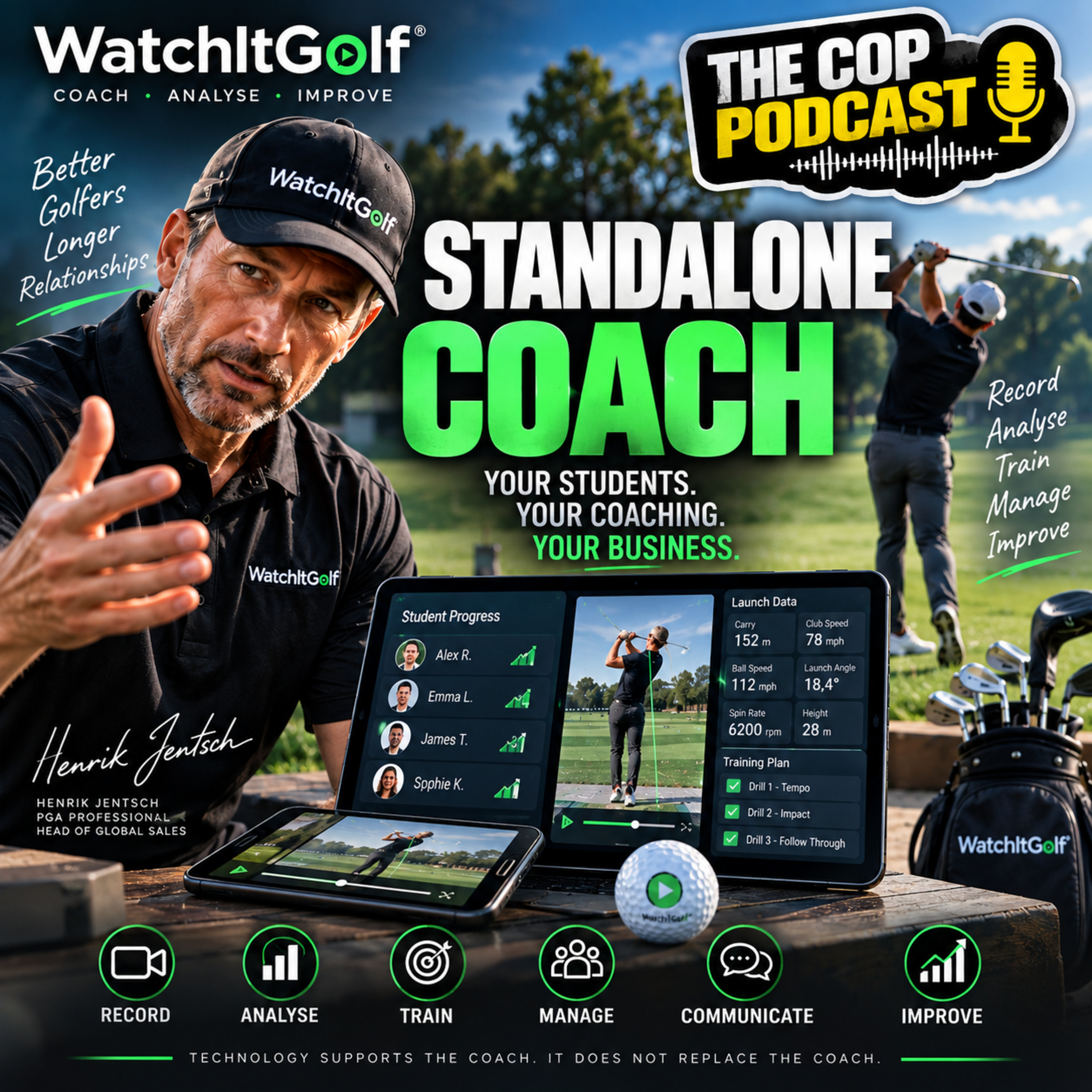 #703 WHAT IS A WATCHITGOLF STANDALONE COACH? 09.09.2026 18minModern Golf Coaching Beyond the 60-Minute LessonWatchItGolf Standalone Coach is designed for Golf Professionals, academies and teaching facilities that already have their own students and want to bring their coaching into a modern digital environment.WatchItGolf technology supports the Golf Professional — it does not replace the coach.Your Students. Your Coaching. Your Business.Standalone Coach allows you to use WatchItGolf with your existing students without depending on a marketplace to find new golfers.It creates a professional coaching environment where face-to-face instruction can connect with digital follow-up, remote coaching and ongoing player development.One Connected Coaching EcosystemWatchItGolf can bring together:Smartphone Swing Recording & Video AnalysisRecord and review swings during lessons or independent practice.Supported Launch DataVideo does not always tell the complete story. Compatible smartphones can provide additional launch information alongside the swing video.Student ManagementKeep coaching information, communication and player development organised around each golfer.Training PlansGive students structured practice assignments and clear goals between lessons.From Individual Lessons to Continuous CoachingTraditional coaching can often look like:Book → Lesson → Student Leaves → Wait for Next BookingWatchItGolf supports a more connected process:Lesson → Record → Data → Analyse → Train → Practise → Feedback → Next LessonFor example, after a lesson a golfer can practise independently, record swings and continue working with the coach remotely. The professional can review progress and provide feedback before the next physical lesson.Face-to-Face + Digital CoachingStandalone Coach does not replace traditional instruction. It extends it.Face-to-Face Coaching + Remote Support + Training Plans + Communication + Progress MonitoringThis can help turn individual lessons into longer-term coaching relationships and allow professionals to support students when they travel, live further away or cannot regularly visit the teaching facility.Is Standalone Coach Right for You?Standalone Coach is particularly relevant for:Golf Professionals with existing studentsIndependent coachesGolf academiesClubs and teaching facilitiesProfessionals combining physical and remote coachingStandalone Coach = Your students. Your coaching. Your business. Supported by WatchItGolf technology.The Golf Professional Remains at the CentreTechnology does not replace great coaching. Technology gives great coaches better tools.WatchItGolf provides video, data and digital coaching infrastructure. The Golf Professional remains responsible for understanding the golfer, interpreting the information and determining the development plan.Book Your Personal 1-to-1 PresentationDiscover how Standalone Coach could work within your coaching business in a personal presentation with Henrik Jentsch, PGA Professional and Head of Global Sales for WatchItGolf.Book your One-to-One Presentation:https://calendar.app.google/cXqVWqxCWjFyf3sW9My BlogThe Explainerwww.ecoach360.com
 -
 #702 WatchItGolf: Revolutionizing the Professional Coaching EcosystemThe Future of Professional Golf Coaching 07.09.2026 18minTraditional golf coaching is often limited by time, location and the number of hours a Golf Professional can spend on the lesson tee. WatchItGolf helps coaches move beyond this model by combining professional instruction with modern digital coaching technology.Using smartphone swing recording, supported launch data, remote coaching, student management, training plans and ongoing communication, coaches can create stronger and longer-lasting relationships with their students.Technology supports the Golf Professional — it does not replace the coach.The Marketplace Coach model is designed for professionals who want to attract new golfers beyond their existing club, academy or local area.Coaches can build a professional digital presence and showcase specialist services such as Full Swing, Short Game, Putting, Junior Golf and Performance Coaching.Through remote coaching, golfers can record and submit swings using their smartphones, allowing professionals to coach students locally, nationally or internationally without travelling.The Standalone Coach model is designed for professionals who already have their own students and want to provide them with a structured digital coaching environment.Instead of relying on disconnected lessons, emails or messaging apps, the coach can create an ongoing development process:Lesson → Record → Analyse → Practise → Communicate → Adjust → ImproveSwing video, supported launch data, training plans and coach feedback help students understand what they are working on between lessons.This transforms individual lessons into continuous coaching relationships and can improve engagement, retention and lifetime customer value.The Hybrid Coach combines both models.Professionals can manage their existing students through their private coaching environment while also using the WatchItGolf Marketplace to attract new golfers.This creates opportunities to combine local lessons with remote coaching and expand internationally without being restricted by geography or available lesson hours.Marketplace Coach: Best for professionals focused on visibility and new student acquisition.Standalone Coach: Best for coaches who want to strengthen relationships with their existing students.Hybrid Coach: Best for professionals who want both student retention and new business opportunities.WatchItGolf does not replace professional knowledge, experience or personal instruction. It gives Golf Professionals modern tools to extend their coaching beyond the traditional lesson.Technology does not replace great coaching. Technology gives great coaches better tools.Book a personal 1-to-1 presentation with Henrik Jentsch, PGA Professional & Head of Global Sales for WatchItGolf, and discover which coaching model best fits your business.Book your 1-to-1 WatchItGolf presentation:https://calendar.app.google/cXqVWqxCWjFyf3sW9Marketplace CoachStandalone CoachHybrid CoachWhich Model Is Right for You?Want to Learn More?My BlogThe Explainerwww.ecoach360.com
 -
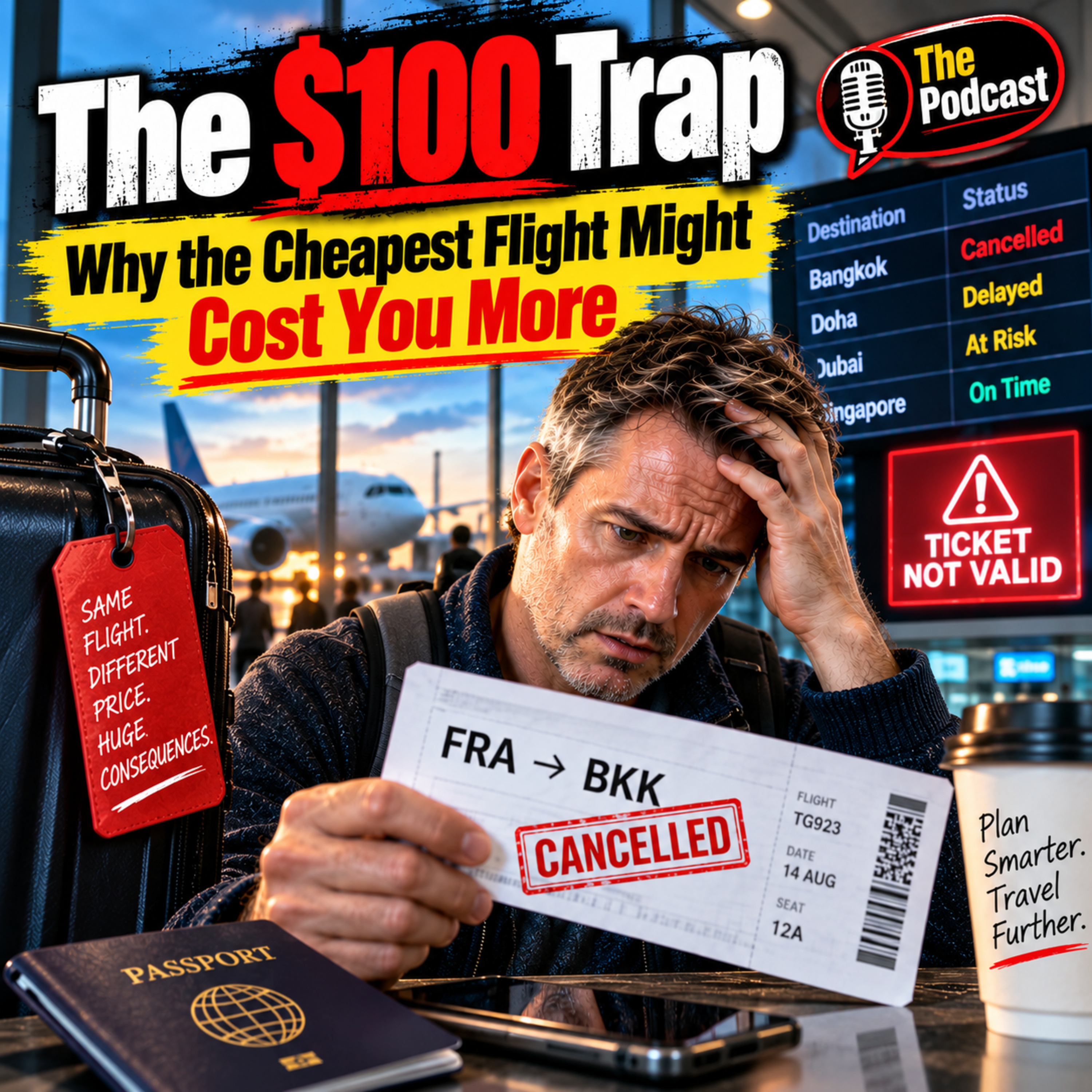 #701 The $100 Trap: Why the Cheapest Flight Might Cost You More 07.09.2026 22minImagine arriving at the airport for your flight home only to hear: “Your ticket is no longer valid.”Many travelers don’t realize that missing one flight segment can cause the remaining flights on the same itinerary to be canceled. That’s why PGA Golf Professional Henrik Jentsch applies a Smart Booking Mindset to travel. Like golf, smart travel is about Course Management: identify the hazards before making your move.The goal isn’t to find the cheapest flight. It’s to find the cheapest safe journey.A $545 ticket isn’t necessarily cheaper than a $620 ticket. Separate bookings, short connections and restrictive conditions can turn small savings into major costs.Flying Frankfurt–Doha–Bangkok? If both flights are on one protected booking and a delay causes a missed connection, you may have significantly stronger passenger protections. With separate tickets, the next airline may simply consider you a no-show.Self-transfer means you may need to collect luggage, clear immigration, change terminals and check in again. Miss the next flight and the replacement ticket may be your responsibility.A 55-minute connection may look efficient. A two-hour connection gives you protection against delays, queues and security checks. Extra airport time can be cheap insurance.A direct flight costing $100 more can eliminate missed connections, baggage transfers and multiple operational dependencies. Sometimes the more expensive ticket is actually cheaper.Booking directly with the airline creates a simpler relationship when cancellations, changes or refunds occur. Third-party bookings can add another layer of complexity.Before paying, check:What happens if you miss the outbound flight?Must every segment be flown in sequence?What are the change and cancellation rules?Is baggage included?When do check-in and boarding close?Flight A: $600, separate tickets, 60-minute self-transfer.Flight B: $700, single reservation, 2.5-hour connection.A 30-minute delay could destroy Flight A. Add a $700 replacement ticket and your $600 bargain becomes $1,300.Flight B still costs $700.That’s the golf mindset of travel: don’t just ask, “What does this ticket cost?”Ask: “What could it cost me if something goes wrong?”1. Buy the Journey, Not the Price2. Choose a Single Reservation3. Beware of Self-Transfers4. Connection Time Is Insurance5. Pay for Simplicity6. Book Direct When Possible7. Understand the No-Show RulesThe $600 vs. $700 RealityMy BlogThe Explainerwww.ecoach360.com
 -
 #700 The $10.4 Billion Void: Why Missing One Flight Could Instantly Liquidate Your Entire Trip 04.09.2026 19minMissing one flight can cost far more than the price of a replacement ticket. Imagine you paid $800 for a return journey. You arrive at the gate only a few minutes too late, boarding is closed, and you are forced to buy a $600 replacement flight. You continue your trip believing your original return flight is still valid. Then, days later, you reach the airport to fly home and hear: “Your return ticket is no longer valid.”This is the hidden danger of the airline no-show rule. Many airlines treat a ticket as a sequence of flight coupons that must be used in the correct order. If you miss the first segment, the remaining flights may be cancelled or repriced. That means a single missed flight can potentially invalidate connections and even the return journey you already paid for.The financial effect can escalate quickly. Your original $800 ticket, plus a $600 replacement outbound flight and perhaps another $700 ticket home, can turn one trip into a $2,100 problem before hotels, meals, taxis, phone calls, or missed work are included.The economics behind this system are powerful. Airlines use historical data to predict no-shows and manage capacity. If your seat is released after you miss a flight, it may be sold again to another passenger. Globally, even a small percentage of affected travellers could represent billions in economic impact. Using 5.2 billion annual passenger journeys as a theoretical base, a 1% affected rate with an average $200 impact would equal $10.4 billion. This is a scenario calculation, not reported airline profit.The most important rule is simple: if you miss any flight on a multi-segment ticket, do not assume the rest of your booking is safe. Contact the airline immediately. Ask specifically whether every remaining segment, especially your return flight, is still active and valid for travel. Request written confirmation.Also save screenshots, boarding passes, call records, emails and receipts. Before your return journey, check not only that the booking still appears in the app, but that the electronic ticket coupon itself remains valid.One missed flight should not automatically destroy an entire trip. But until passenger protections and airline policies become clearer, travellers need to understand the system and act fast. Five minutes at the gate can become hundreds—or even thousands—of dollars later.My BlogThe Explainerwww.ecoach360.com
 -
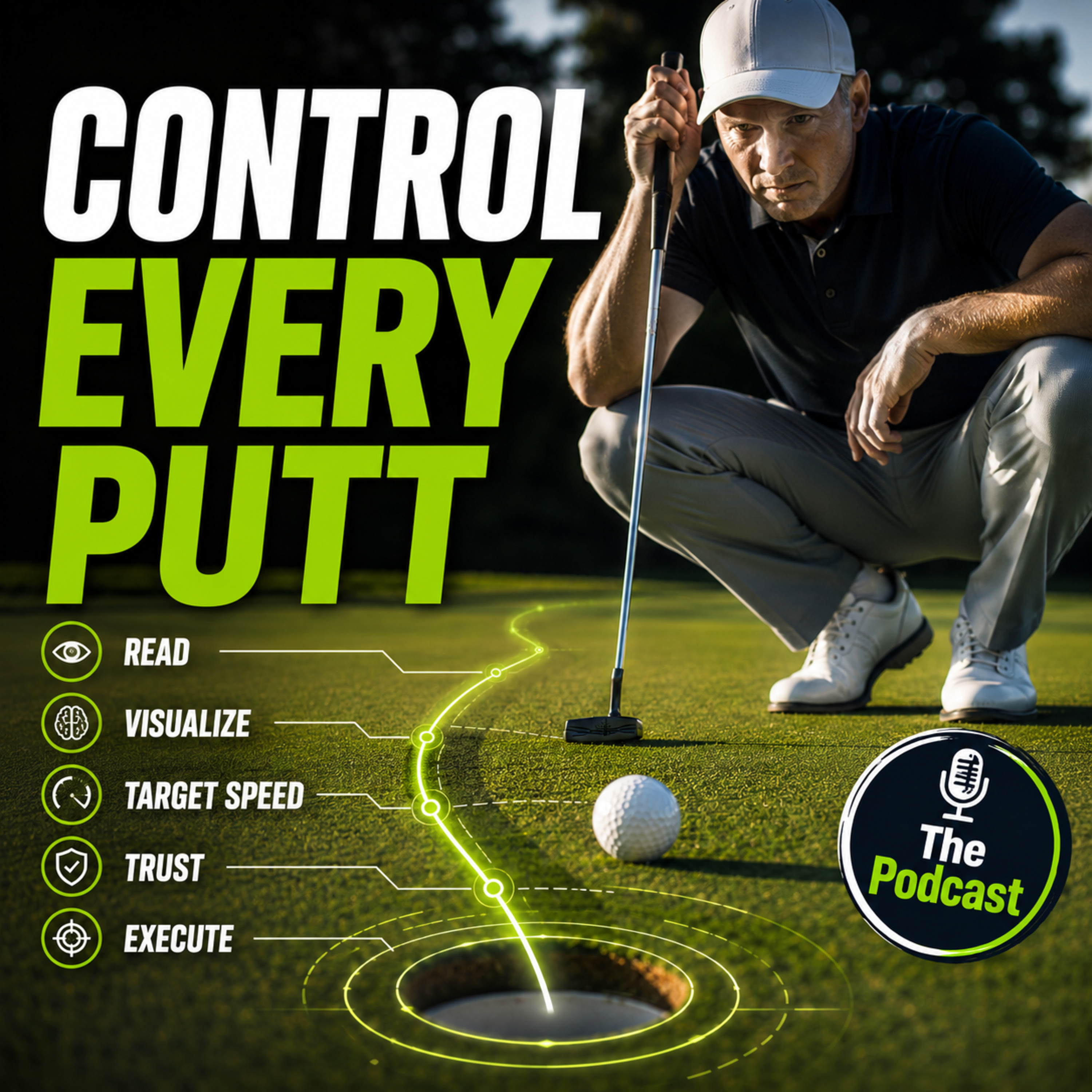 #699 The Science of Elite Putting Performance 03.09.2026 22minStop searching for a putting secret. Elite distance control is not created by one grip, putter, or technical tip—it emerges from an integrated system combining physics, biomechanics, neuroscience, perception, and trust.A golf ball responds only to physical forces. Slope and gravity determine break, friction and green speed control energy loss, and launch speed determines the initial energy of the ball. Your task is to create the correct initial conditions: Target Speed, Aim, and Energy.Efficient putting requires stable posture, centered contact, and repeatable rhythm. Through motor learning, the cerebellum continually compares intended movement with actual performance and updates the motor program. Purposeful repetition builds automatic movement—and confidence becomes the result of accumulated evidence.The learning pathway is:Thinking → Understanding → Practising → Repeating → Trusting → PerformingThe goal is to move from an internal focus on mechanics toward an external focus on the ball and its complete journey.The Puttalyze 6-Step Performance ProcessObserve slope, fall line, grain, and green speed.Visualise the complete ball journey.Define Target Speed—Puttalyze uses 3 rotations per second (3 rps) at the hole.Trust the trained movement.Execute without manipulating or steering the putter.Evaluate objectively: Was the speed correct? Was the rhythm stable?The Puttalyze system integrates Distance Control, Target Speed, Energy Management, Rhythm, Core Putt, Protective Instinct, Extension Drill, Lag Putting, and Scientific Diagnosis.Under pressure, the brain’s Protective Instinct can produce short, tentative strokes and deceleration. The Extension Drill recalibrates this response by developing trust in larger, committed movements.Remember: rhythm remains constant; movement size changes with distance. You cannot control the ball after impact—you control the initial conditions.Mastery comes from purposeful practice, objective feedback, and continuous refinement.Subscribe to eCoach360° – Golf Science & Performance and explore the 30-Day Puttalyze Green Reading & Putting Certification Course to develop a measurable, repeatable putting system.My BlogThe Explainerwww.ecoach360.com
 -
 #698 Stop Fixing Your Stroke: The Neuro-Scientific Way to Better Putting 02.09.2026 23minEvery missed putt tells you something. Instead of immediately changing your stroke, treat the result as data about perception, decision-making, movement planning, execution, and emotion.Puttalyze Principle: Never correct the movement before understanding the cause.The putting stroke is the final expression of a neurological process that begins before the putter moves. During the Pre-Stroke Process, the brain evaluates slope, distance, break, Target Speed, and required energy. The cerebellum then predicts stroke length, rhythm, timing, coordination, and energy transfer.This means many putting errors are not poor execution—they are the result of a poor movement plan based on incorrect information.Puttalyze identifies five major error categories:Perception: Incorrect information about slope, distance, or green speed.Decision-Making: Unclear Target Speed, line, or intention.Movement Planning: The brain predicts the wrong stroke size, rhythm, or energy.Movement Execution: The physical movement differs from the intended plan.Emotional Response: Fear or uncertainty changes movement and energy.Speed and line are inseparable: ball speed determines travel time, and travel time determines break. Define Target Speed before choosing the final line.Common technical faults can therefore be symptoms rather than causes. Excessive grip pressure creates muscular co-contraction. Head movement can disturb visual stability. Deceleration often reflects uncertainty or fear of hitting the ball too far. Off-center contact creates unpredictable ball speed.If three golfers leave the same putt short, one may have misread the green, another may have planned insufficient energy, while the third changed rhythm during execution. Same result—three different solutions.Diagnose putting in this order: Observe → Analyse → Identify the Root Cause → Apply the Correct Solution.Maintain stable rhythm and control distance primarily through movement size rather than constantly changing tempo.Puttalyze Principle #38: Every putting mistake contains information needed for improvement.Stop endlessly fixing your stroke. Understand what created it—and improve the process behind the movement.My BlogThe Explainerwww.ecoach360.com
 -
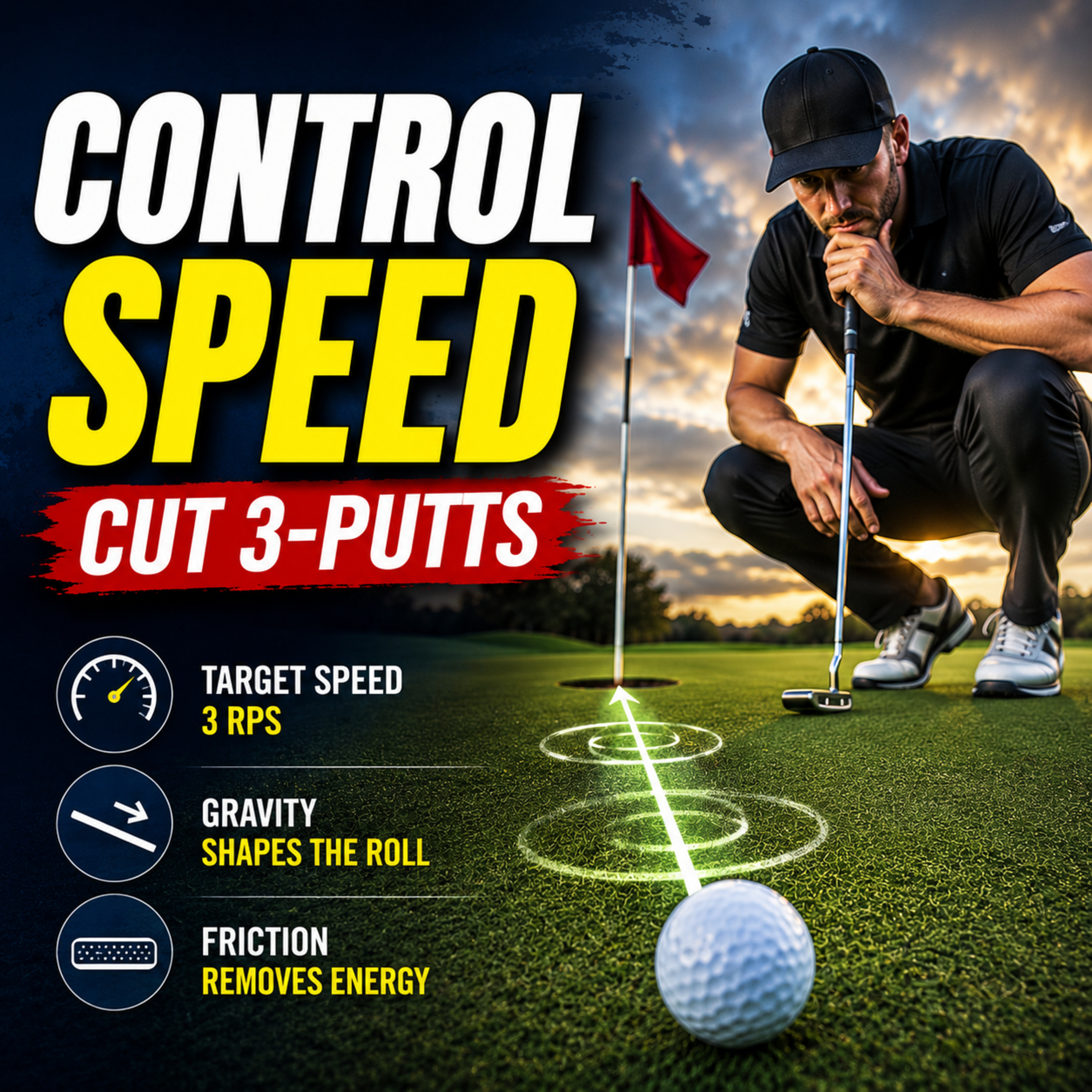 #697 Mastering Lag Putting: The Science of Target Speed, Distance Control and Eliminating Three-Putts 01.09.2026 21minGreat lag putting is not about holing 15-meter putts. It is about making the second putt easy through exceptional Target Speed, energy management, and distance control.Elite putters understand that every long putt is governed by three key factors: gravity, friction, and travel time. Gravity influences uphill, downhill, and breaking putts. Friction removes energy as the ball rolls, while travel time determines how long gravity can influence the ball. A slower ball remains in motion longer and therefore experiences more break.The foundation of the Puttalyze system is Target Speed. The desired finishing speed is approximately 3 rotations per second (3 rps), whether the putt starts from 3 meters or 15 meters. Distance changes the energy required at impact—not the intended finishing speed.This creates an important sequence: Target Speed first, Aim Point second. Without defining speed, your chosen line is only a guess.For long putts, follow five steps:Observe: Identify the Dominant Fall Line, slope, elevation, and green speed.Predict: Visualize how friction and gravity will influence the entire roll.Commit: Choose one Target Speed and one line without hesitation.Execute: Use your Core Putt with consistent rhythm and tempo. Increase movement length rather than hitting harder.Evaluate: Judge the result by speed and distance control, not simply whether the ball went in.Three-putts often result from poor energy management or the Protective Instinct—the subconscious fear of hitting the ball too far, causing deceleration and leaving putts short.Think like a rolling golf ball. Visualize the launch, transition, and late break before you stroke the putt.Puttalyze Principle: Elite lag putting integrates Target Speed, gravity, friction, slope, and commitment into one complete picture.Understand. Measure. Train. Repeat. Trust.My BlogThe Explainerwww.ecoach360.com
 -
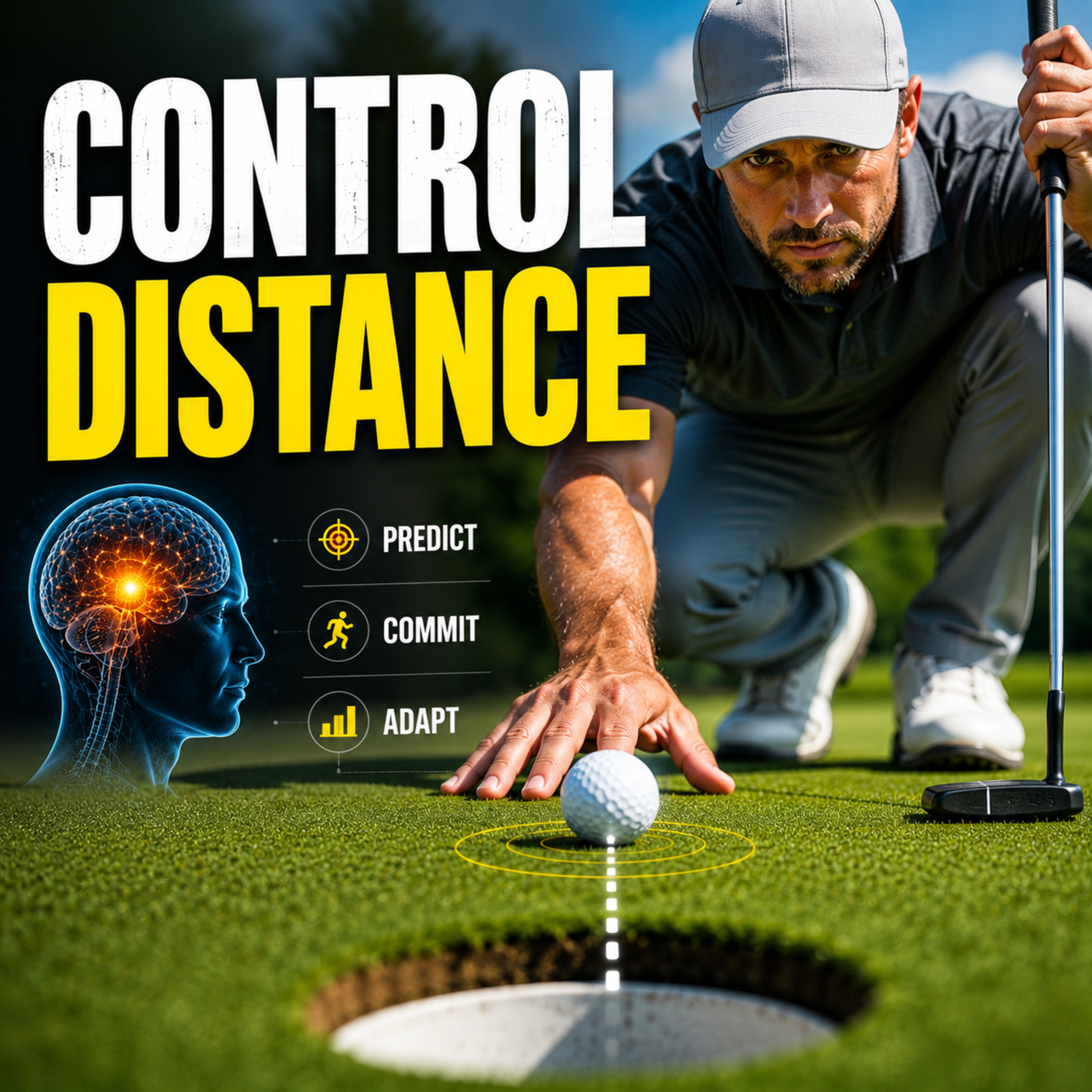 #696 Why You Keep Leaving Putts Short: The Neuroscience of Distance Control 31.08.2026 23minLeaving putts short is rarely just “poor touch.” Your brain does not directly control distance—it controls movement. Ball distance is the physical result of that movement interacting with the green.The cerebellum acts as a prediction machine. Before impact, it estimates green speed, slope, and required energy, then selects the stroke needed to achieve the intended Target Speed of 3 rotations per second (3 rps) at the hole.After every putt, the brain compares three things: the intended movement, the actual movement, and the result. Updating future predictions from these differences is called Motor Adaptation.The Protective InstinctMany golfers unknowingly shorten their stroke. Video analysis may reveal a difference of only 2–3 centimeters, but that small reduction changes energy transfer. Repeated often enough, it becomes part of the golfer’s Internal Movement Map, making short putts feel normal.The Extension DrillThe solution is not to hit harder. Keep your Core Putt, setup, grip pressure, rhythm, and tempo constant while changing only the length of the movement.Practice three contrasting movements:Too Short – establish your current baseline.Correct Extension – slightly increase the arc without adding muscular effort.Slightly Too Long – define the upper boundary of the movement.This uses Error-Based Motor Learning.Puttalyze Principle #26: The brain learns fastest through meaningful contrast.A longer stroke may initially feel wrong because your perception has not yet recalibrated. Trust the ball, not the feeling.Distance control improves when you stop trying to hit the ball harder and instead allow the correct movement to produce the required energy.Observe. Predict. Calculate. Trust. Commit. Learn.If you enjoyed this video, subscribe to eCoach360° – Golf Science & Performance.For deeper training, explore the 30-Day Puttalyze Green Reading & Putting Certification Course, covering green reading, speed and distance control, setup, alignment, stroke mechanics, and performance putting.My BlogThe Explainerwww.ecoach360.com
 -
 #695 Why Your Brain Holds You Back: The Protective Instinct in Putting 30.08.2026 18minYou read the green correctly, make what feels like a committed stroke—and the ball stops a meter short. The problem may not be your technique. It may be your brain.In the Puttalyze System, we call this the Protective Instinct: the nervous system’s natural tendency to choose a movement that feels safer and requires less energy. Even when your conscious mind knows the required distance, subconscious motor control can reduce the stroke through tiny adjustments—a slightly shorter backswing, slower transition, or reduced acceleration.These changes may be almost invisible, but they reduce ball speed and cause the putt to finish short.Why? The nervous system often perceives a short miss as safer than racing the ball past the hole and facing a difficult return putt. This creates an avoidance goal: “Don’t hit it too far.” But effective distance control requires a performance goal: produce the correct Target Speed.Trying to fix this by simply “hitting harder” often increases grip pressure, hand action, tension, and disrupted rhythm. Instead, the goal is to retrain the nervous system through progressive motor learning and neuroplasticity.Use the Core Putt to develop a balanced, rhythmic, athletic movement. Then introduce pressure drills where every putt must finish 30–60 cm beyond the hole. Focus on four questions:Did I fully commit?Was my rhythm stable?Did I create the intended Target Speed?Was the stroke free and athletic?Puttalyze Principle: The Protective Instinct cannot simply be switched off—it must be retrained. Elite distance control develops when the brain learns that committed movement is safe, predictable, and successful.Mastering speed is not about becoming aggressive. It is about becoming decisive.Subscribe for more evidence-based golf education and explore the 30-Day Puttalyze Green Reading & Putting Certification Course to improve green reading, speed control, setup, alignment, stroke mechanics, and putting performance.My BlogThe Explainerwww.ecoach360.com
 -
 #694 The Core Putt: The Science of Putting Consistency 29.08.2026 18minGreat putting is not built through complexity. It is built by mastering one repeatable movement until it becomes automatic. In the Puttalyze System, that foundation is the Core Putt.Elite performers repeatedly return to fundamentals because consistency depends on a stable Movement Blueprint. The cerebellum constantly compares intended movement with actual performance and makes unconscious corrections. Repeating the same high-quality putting motion strengthens neural pathways and gradually turns technique into an automatic motor pattern.The Core Putt removes unnecessary “noise” such as difficult green reads, changing slopes, and pressure. This allows the nervous system to focus on six essential elements:Setup: Repeatable posture, eye alignment, and ball position.Balance: Stay centered without unnecessary weight movement.Rhythm: Control distance through movement size—not changing tempo.Energy Transfer: Learn how stroke energy influences ball speed.Target Speed: Train the ball to reach the hole at approximately 3 revolutions per second.Finish: Maintain a relaxed, balanced, stable finish.The Three-Ball Core Putt Drill treats three balls as one movement repeated three times. First, visualize the starting line and Target Speed. Then execute without consciously steering or correcting the stroke. Finally, evaluate the process: Did the ball achieve the intended speed? Did you maintain balance and rhythm?Quality matters more than volume. Fifty focused repetitions are more valuable than 500 mindless putts. If you perform 20 excellent Core Putts, stop and reinforce success rather than fatigue.The Core Putt is your daily neurological calibration. Confidence comes from trusting a movement strengthened through correct repetition.Puttalyze Principle: Don’t practice until you get it right. Practice until you can no longer get it wrong.Subscribe for more evidence-based golf education and explore the 30-Day Puttalyze Green Reading & Putting Certification Course to master green reading, speed control, setup, alignment, stroke mechanics, and putting performance.My BlogThe Explainerwww.ecoach360.com
 -
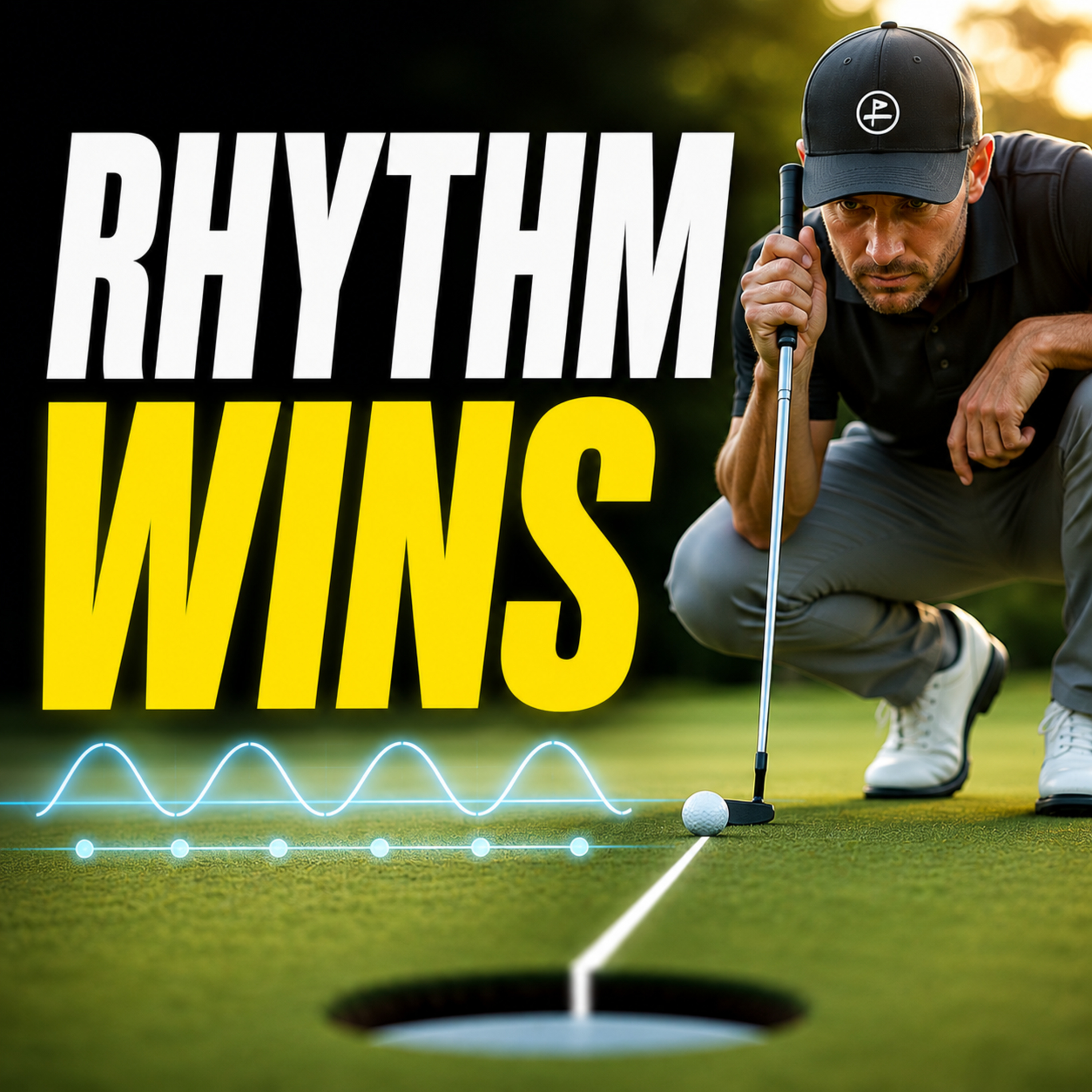 #693 The Physics of Flow: Why Rhythm Dictates Distance Control 28.08.2026 20minGreat putting is not defined by perfect mechanics—it is defined by repeatable rhythm. A golfer can have an ideal grip, square face, and textbook stroke path yet still struggle with distance control. Elite putters look effortless because their movement flows as one coordinated system.Rhythm and tempo are not the same. Tempo describes how fast the stroke occurs. Rhythm describes how the backswing, transition, forward stroke, impact, and follow-through work together. Stable rhythm creates predictable energy transfer and consistent ball speed.Motor learning supports this principle: the brain reproduces movement more reliably when timing remains consistent. Instead of creating different timing patterns for different distances, maintain the same rhythm and change primarily the stroke length.Biomechanically, the putting stroke functions as an integrated kinetic chain. The feet and legs provide stability, the pelvis anchors posture, the torso and shoulders guide the motion, and the arms and hands connect the body to the putter. Using larger muscle groups reduces unnecessary hand and wrist interference.The Puttalyze distance-control principle is simple:Maintain one consistent rhythm.Adjust stroke length for distance.Avoid suddenly hitting harder or decelerating.Select your Target Speed and trust the motion.Common rhythm errors include abrupt acceleration, slowing before impact, changing tempo for different distances, and excessive grip pressure. These increase tension and make energy transfer less predictable.Under pressure, rhythm becomes a performance anchor. A consistent routine, visualization, and controlled breathing help prevent golfers from guiding or steering the putter.Train rhythm with distance ladders, random-distance practice, metronome training, and eyes-up putting drills. Variable practice across different distances and slopes helps develop adaptable distance control.Ultimately, rhythm connects Target Speed, stroke length, energy transfer, and motor control. Stop trying to manufacture distance with extra force. Build one repeatable rhythm, vary the size of the stroke, and let the Puttalyze System turn physics into performance.My BlogThe Explainerwww.ecoach360.com
 -
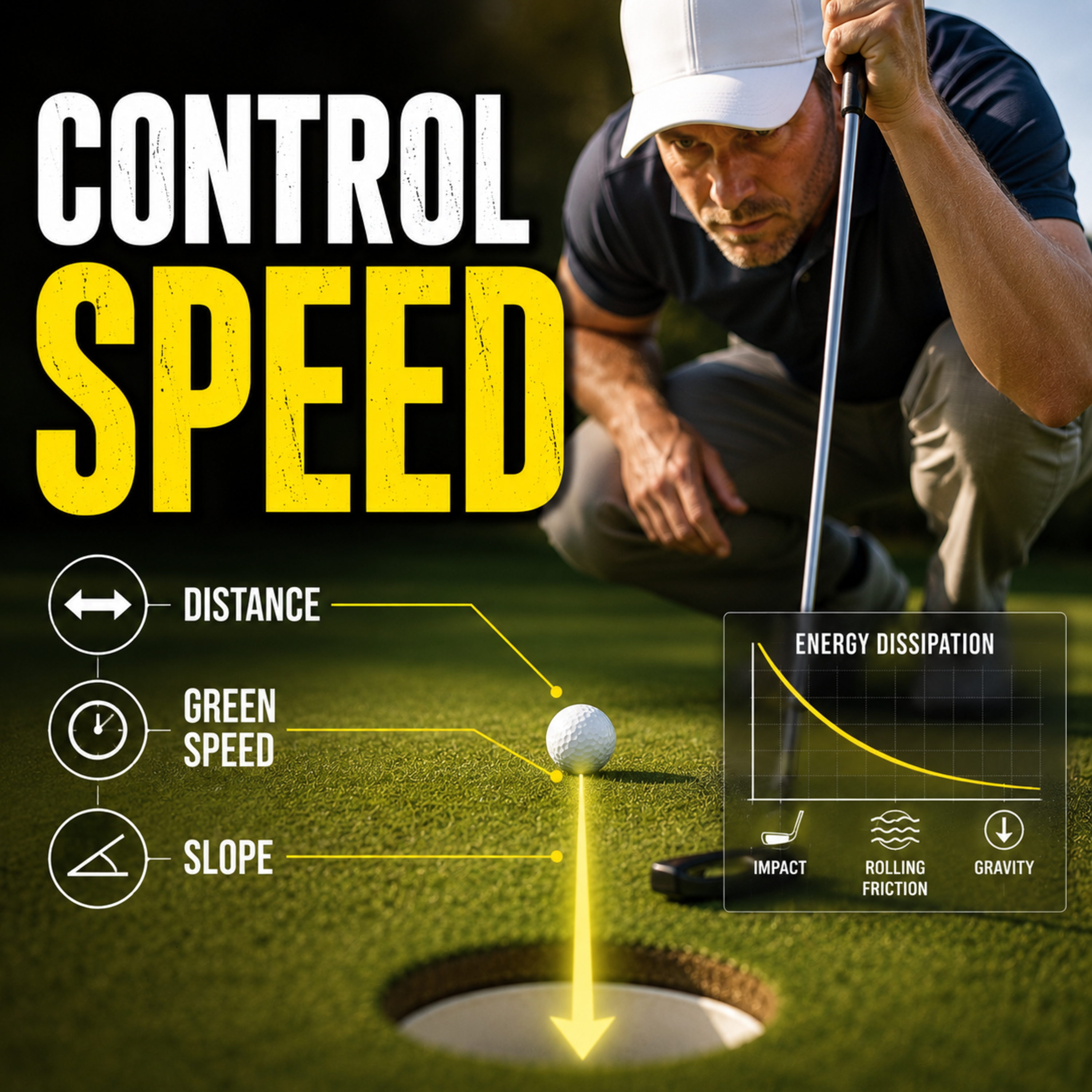 #692 Master Distance in 3 Steps 27.08.2026 21minDistance control in putting is not about hitting the ball “harder” or “softer.” It is about energy management—delivering exactly the right amount of kinetic energy so the ball reaches the hole at the intended Target Speed.At impact, the moving putter transfers energy to the ball, creating its initial velocity. From there, energy is continuously dissipated by rolling friction and influenced by gravity. Uphill putts require more initial energy; downhill putts require less because gravity helps maintain momentum.The key is understanding force versus energy. Longer putts should not feel more aggressive. Elite putters maintain a consistent rhythm and increase energy primarily by increasing stroke length. A larger movement naturally creates more putter-head velocity without disrupting tempo.Three variables determine the energy required:Distance: Longer putts require more initial energy.Green Speed: Slow greens create greater rolling resistance; fast greens preserve energy longer.Slope: Uphill putts demand additional energy, while downhill putts require less.A 10-meter downhill putt on fast greens therefore cannot be judged by distance alone. Distance, green speed, and slope must be evaluated as one energy equation.The 3-Step Energy RoutineEvaluate: Assess distance, green speed, and slope. Decide the Target Speed.Visualize: See the complete journey—the starting line, break, and entry point.Commit: Trust the picture and execute with your natural rhythm. Avoid steering or decelerating.What golfers call “touch” is actually a learned predictive system. Through practice on different distances, slopes, and green speeds, the brain builds an internal library connecting visual information, movement, and ball behavior.Key Principle: Keep tempo constant and control distance through stroke length (Puttalyze Principle #6). Make the energy decision before the stroke begins (Principle #8), then control the energy—not the putter (Principle #9).Master the energy, and distance control becomes predictable rather than dependent on “feel.”Subscribe for more evidence-based golf education and explore the 30-Day Puttalyze Green Reading & Putting Certification Course to develop green reading, speed control, setup, alignment, stroke mechanics, and putting performance.My BlogThe Explainerwww.ecoach360.com
Samankaltaiset podcastit


Suosittu maassa
Tämä podcast esiintyy myös näiden maiden podcast-listoilla.
