
The Family Biz Show
Michael Palumbos
0
The Family Biz Show is a podcast hosted by Michael Palumbos that explores the many challenges and opportunities of running a family-owned business. Each episode features conversations with guests on topics such as business and wealth transition, growth strategies, family conflict, leadership, and team development. Listeners hear real stories and practical advice from family business owners and the consultants who advise them. The show also invites family businesses and consultants to share their own stories by reaching out to the producer or submitting a form on its website.
Jaksot
-
 Cornell University's Smith Family Business Initiative and University of St. Thomas Family Business Center: A conversation with Dann Van Der Vliet and Jon Keimig. | The Family Biz Show Ep. 134 08.09.2026 48minWhere can family business owners turn when the hardest challenges aren't just about running the company—but navigating the family behind it? You don't have to figure out the complexities of family business alone. "Who can we talk to about the issues we can't discuss anywhere else?" "How do we start conversations about succession before it becomes urgent?" "How do we prepare the next generation without pushing them into the business?" "How can we make better decisions together as our family and business grow more complex?" "Everything is going well. Why should we start preparing now?" This conversation shows you where to start. In this episode of The Family Biz Show, Michael Palumbos sits down with Dann Van Der Vliet of Cornell University's Smith Family Business Initiative and Jon Keimig of the University of St. Thomas Family Business Center for an inside look at how university-based family business programs educate, connect, and support business families. While their programs operate differently, Dann and Jon share a common mission: helping family businesses navigate challenges that extend far beyond day-to-day operations. From educational programs and peer groups to research, community events, and opportunities for next-generation leaders, family business centers can give families something that is often difficult to find elsewhere—a trusted environment to ask questions, learn from other families, and have conversations they may have been avoiding. Dann Van Der Vliet has spent more than two decades working in family business education. At Cornell, he has helped build an ecosystem connecting students, alumni, family business owners, researchers, practitioners, and family office executives through education, outreach, and research. Jon Keimig leads the University of St. Thomas Family Business Center, whose roots date to 1991. His work is primarily community-facing, supporting family businesses through educational programming, peer groups, executive education, and opportunities for families to learn from one another. Together, they reveal an important truth: family business support is ultimately about people, relationships, and trust. Dann describes family business centers as being in the "trust business." Families often arrive believing they are the only ones dealing with difficult dynamics. Meeting other business families can change that perspective and create a safe environment for conversations that may not happen with an attorney, accountant, or even around the family table. And those conversations don't have to begin with complicated structures. Dann introduces the distinction between "little g governance" and "big G governance." Big G governance includes formal policies, bylaws, boards, and other structures. Little g governance can begin much more simply—with good communication. Sometimes that means sitting down with a parent and asking: What is your plan for me? Would you ever sell the business? What happens when you die? The questions may be uncomfortable, but starting these conversations early can prepare families for the decisions that become more complicated as the business grows and generations multiply. Dann and Jon also explain why the best time to prepare may be when everything is going well. Waiting for retirement, conflict, an unexpected death, a market disruption, or another crisis can make already difficult decisions even harder. Family business centers give families an opportunity to start learning and preparing before they reach that point. In This Episode, You'll Learn: Why family business centers can provide a trusted community for owners and families who feel isolated How Cornell University's family business initiative combines education, outreach, and research How the University of St. Thomas Family Business Center supports family businesses through community programming and peer learning Why trust is at the heart of effective family business education How "little g governance" can start with better family communication Why difficult conversations about succession, retirement, ownership, and the next generation shouldn't be postponed How family business centers help next-generation leaders explore whether joining the business is right for them Why spouses matter even when they aren't employees or owners How communication "triangles" can prevent families from dealing directly with difficult issues Why increasing success and multiple generations can create greater complexity Why families should prepare for the future while the business and relationships are strong You don't have to wait for a crisis to seek support. Whether you're an owner thinking about the future, a next-generation family member deciding where you fit, or an advisor working with business families, this conversation offers a closer look at the communities and resources available to help family businesses communicate, prepare, and make more informed decisions together. Want more conversations and practical insights designed specifically for family businesses? Explore more episodes of The Family Biz Show and discover insights to help your family business navigate leadership, succession, communication, and long-term continuity: https://www.familybusinessflywheel.com/podcast
 -
 How ESOPs Help Family Business Owners Exit Without Losing Their Legacy | The Family Biz Show Ep. 40 03.08.2026 59minWhat if you could step away from your family business without walking away from everything you've built? What if your exit strategy could protect your people, preserve your culture, and secure your legacy for generations to come? "I've spent decades building this business. How do I leave without losing it?" "I don't want to sell to a buyer who will change everything we've worked for." "Is there a way to retire while keeping our employees and company values intact?" "How do I create an exit plan that benefits both my family and my team?" This conversation gives you the answer. In this episode of The Family Biz Show, host Michael Palumbos sits down with Tracy Till, former Chairman and co-founder of Butler Till, and Rob Brown, a nationally recognized ESOP attorney, to explore how Employee Stock Ownership Plans (ESOPs) can provide an alternative path for family business owners preparing for succession or retirement. Rather than viewing an exit as the end of the business, they explain how an ESOP can become a strategy for preserving company culture, rewarding loyal employees, and creating a lasting legacy. The discussion also highlights why trust, leadership development, and intentional succession planning are essential long before ownership changes hands. Meet the Guests Tracy Till is the former Chairman and co-founder of Butler Till, the Rochester-based marketing and communications firm that successfully transitioned to 100% employee ownership. Today, she serves on corporate and nonprofit boards and helps private companies strengthen governance and strategic leadership. Rob Brown is a nationally recognized attorney focused exclusively on employee ownership and ESOPs. For decades, he has advised closely held and family-owned businesses on succession planning, ownership transitions, and ESOP implementation across the United States. Together, they share practical insights from both the legal and leadership perspectives of employee ownership. Why This Episode Matters This conversation goes beyond the technical aspects of ESOPs. You'll discover why the strongest succession plans begin with culture, how trust creates future leaders, why founders often struggle to let go, and what family business owners should consider before choosing an exit strategy. The episode also explores the financial advantages of ESOPs, the importance of independent boards, and why preserving a company's mission can be just as valuable as maximizing the sale price. In This Episode, You'll Learn: Why an ESOP may be the right exit strategy for preserving your family business legacy. How employee ownership can strengthen culture, retention, and long-term growth. Why trust and leadership development are critical before any ownership transition. How boards of directors help family businesses navigate succession and strategic growth. What founders should consider emotionally and financially before stepping away. How ESOPs compare with selling to outside buyers or strategic acquirers. Why protecting your people can become one of the greatest measures of business success. Whether you're beginning to think about succession, evaluating exit strategies, or looking for ways to preserve the values your family business was built on, this episode offers practical guidance and real-world experience from leaders who have successfully navigated the journey. Listen now and discover how thoughtful succession planning can help you exit your business without losing the legacy you've worked so hard to build. Learn more and explore more Family Biz Show episodes: https://www.familybusinessflywheel.com/podcast
 -
 Cameron Bishop: The #1 Mistake That Could Cost You MILLIONS When Selling Your Business | The Family Biz Show Ep. 133 06.07.2026 51minReady to sell your business? What if one mistake could cost you millions before negotiations even begin? "Am I really getting the best price?" "What if my business isn't worth what I think?" "Should I accept the first offer?" "How do buyers actually value my company?" "What if I'm not as prepared as I thought?" This conversation gives you the answer. In this episode of The Family Biz Show, Michael Palumbos sits down with Cameron Bishop, Partner and Managing Director at Raincatcher, to uncover the costly mistakes business owners make before selling their companies. From owner dependency and financial reporting to competitive bidding and succession planning, Cameron explains what buyers are really looking for—and why preparing years in advance can dramatically increase business value. With decades of experience leading acquisitions, integrating companies, and advising business owners through successful exits, Cameron shares practical insights from both the buyer's and seller's perspectives. One of the biggest revelations? Having one interested buyer doesn't necessarily mean you've received the best offer. Creating competition can dramatically change both valuation and deal terms. This episode is packed with practical advice to help you build a stronger, more valuable business—whether you're selling next year or a decade from now. In This Episode, You'll Learn: Why owner dependency reduces business value. How poor financial reporting can kill a deal. Why one buyer is rarely enough to determine your company's true market value. How investment bankers help maximize business value and negotiate stronger deals. Why exit planning should begin years before retirement. How to prepare emotionally for life after selling your business. If you want to protect your legacy, maximize your business value, and make smarter decisions before selling, this conversation is an essential resource. 🎧 Listen to more conversations that help family business owners grow, transition, and preserve their legacy: https://www.familybusinessflywheel.com/podcast
 -
 Built To Last: Sustainable Success For Family-Owned Construction Businesses | The Family Biz Show Ep. 132 14.05.2026 55minGrowth can look like success from the outside. But inside a family-owned construction business, growth can also create pressure, confusion, and decisions the original business model was never designed to handle. "You built something successful, but why does it feel harder to run?" "Why is every decision still coming back to you?" "How do you pass the business forward without damaging the family?" "What happens when wealth grows faster than communication?" "Are your advisors solving separate problems, or helping you see the whole picture?" This conversation gives you the answer. In this episode, Michael Palumbos leads a powerful discussion on what it really takes to build sustainable success in family-owned construction businesses. The conversation explores why many construction companies outgrow the systems, leadership habits, and informal family assumptions that helped them succeed in the first place. You'll hear from Ricky Stellar, Roey Diefendorf, Jerry Aliberti, and Anthony DiTucci as they unpack the hidden pressures behind growth: owner dependency, unclear roles, siloed advisors, family expectations, succession tension, and the need for stronger governance. This is not just a conversation about revenue. It is a conversation about leadership, trust, communication, ownership, and the future of the family enterprise. Ricky Stellar brings the perspective of a wealth advisor helping families coordinate planning, ownership, taxes, and long-term financial decisions. Roey Diefendorf shares deep experience as a fourth-generation family business leader and advisor focused on preparing families, not just assets, for generational transition. Jerry Aliberti brings operational insight from his work with construction companies, helping leaders develop stronger teams, accountability systems, and scalable structures. Anthony DiTucci offers a practical view of what happens inside family-owned construction businesses when leadership, planning, and people systems are not clear enough to support the next stage of growth. At the heart of this episode is a simple but powerful idea: what got the business here may not be enough to carry it forward. The founder's hustle, instincts, and relationships may have built the company. But sustainable success requires a business that can operate through systems, leadership, communication, and shared alignment. You'll also hear why preparing heirs matters as much as preparing wealth, why the owner bottleneck can quietly limit growth, and why successful families need to coordinate the business, the wealth, and the family together. This episode gives you practical, real-world insight into how family-owned construction companies can move from reactive pressure to intentional planning. You'll learn how to spot the warning signs before they become crises, how to think about succession with more clarity, and how to build a company that can last beyond one person. In This Episode, You'll Learn: Why growth changes more than the business itself How the owner bottleneck limits sustainable construction business growth Why family-owned construction companies need clearer roles and stronger leadership systems How siloed advisors can create risk for successful business-owning families Why succession planning must address emotions, communication, and family expectations How preparing heirs helps protect both wealth and relationships Why governance matters for multi-generational family businesses How coordinated planning supports long-term family business continuity Why employees need clarity during leadership transitions How to start thinking about the business, wealth, and family as connected systems If your family-owned construction business is growing, transitioning, or preparing the next generation, this episode will help you see the pressure more clearly. And once you can see it clearly, you can start building something stronger. Not just a successful business. A family enterprise built to last. For more conversations on family business growth, succession, leadership, and legacy, explore more episodes here: https://www.familybusinessflywheel.com/podcast
 -
 What Wealthy Parents Must Teach Their Children Early | The Family Biz Show Ep. 131 05.05.2026 47minIf you are raising children in a wealthy family, you may wonder how to give them opportunity without taking away their drive. This conversation helps you understand what children need to learn early so wealth becomes a source of responsibility, not entitlement. "I want my kids to appreciate what they have." "I don't want comfort to make them soft." "How do I talk about money without saying too much?" "How do I raise grounded children when life is already easier for them?" "What if I'm accidentally making things too easy?" This conversation gives you the answer. In this episode of The Family Biz Show, Michael Palumbos speaks with Jeff Savlov of Blum & Savlov about how wealthy parents and family business leaders can raise children with responsibility, gratitude, and character. Jeff explains that children can understand more than adults often assume, especially when parents use simple, age-appropriate stories to connect wealth with work, values, fairness, and purpose. Jeff Savlov is a family dynamics and family wealth coach who works with families navigating wealth, communication, parenting, and legacy. In this conversation, he shares practical examples of how parents can begin shaping a child's understanding of money long before trusts, inheritances, or financial statements enter the conversation. The core insight is simple but powerful: a parent's job is not to remove every challenge from a child's life. It is to give them the right amount of responsibility, struggle, and support so they can build resilience. When wealth makes life too easy, children can miss the everyday lessons that create confidence, accountability, and emotional maturity. You'll hear how small actions — cleaning up toys, caring for a plant, contributing to family chores, paying for part of a car, or understanding the story behind a family business — can teach children where money comes from and why responsibility matters. Jeff also shares a memorable example of how to explain family wealth to a young child through the story of a grandmother who built a cookie company from her kitchen. It is a clear reminder that children do not need complex financial details. They need stories that help them understand work, fairness, gratitude, and stewardship. In This Episode, You'll Learn: Why wealthy parents should start teaching responsibility earlier than they think How to explain family wealth to young children without overwhelming them Why making life too easy can weaken resilience and motivation How chores, small jobs, and everyday expectations build character Why children need to connect money with work, values, and gratitude How family business parents can enjoy wealth while still raising grounded kids Why parents must understand their own money stories before shaping the next generation How trusted relationships help children talk honestly about difficult topics Wealth does not have to create entitlement. With intention, honesty, and the right kind of challenge, parents can help children grow into grounded, capable, and responsible people who understand both the privilege and the purpose of what they have been given. Learn more about The Family Biz Show and explore additional family business resources here: https://familybusinessflywheel.com/podcast/the-family-biz-show
 -
 The $84 Trillion Opportunity Most Family Businesses Are Missing | The Family Biz Show Ep. 130 20.04.2026 1t 1minYou can build a successful business… and still lose the family along the way. Most family business transitions don't fail because of one catastrophic mistake. They fail because of small conversations that never happened. Because leadership wasn't prepared. Because expectations were never aligned. Because no one wanted to ask the hard questions. "What happens when I step away?" "What if my kids don't want the business?" "How do we protect both the company and the relationships?" "Why does every conversation about succession become emotional?" This conversation gives you the answer. In this episode, Michael Palumbos brings together the Family Business Flywheel team for a powerful discussion on the $84 trillion generational wealth transfer now underway — and why family businesses face far more than a financial transition. This conversation explores the hidden risks that threaten multi-generational family businesses: communication breakdowns, leadership gaps, governance failures, liquidity challenges, and unresolved family dynamics. The panel shares real-world stories of successful businesses that struggled during transition — and examples of families who created clarity, alignment, and continuity across generations. Featuring insights from wealth strategist Dianna Parker, family dynamics expert Shawn Barberis, transition advisor Dan Prisciotta, and family business strategist Richard Bryant, this episode blends practical business strategy with the emotional realities of family enterprise leadership. You'll hear why succession planning is not a one-time event… but an ongoing process of preparing both the business and the family for long-term success. More importantly, you'll learn why communication is often the single biggest factor separating thriving family enterprises from those that break apart during transition. This episode also explores: Why many founders struggle emotionally with letting go How governance creates stability during leadership transitions Why next-generation leaders need accountability and development How family businesses can preserve both enterprise value and family relationships Why unresolved communication becomes a long-term business risk In This Episode, You'll Learn: Why most family business transitions fail long before ownership changes How communication impacts succession planning outcomes Why leadership readiness matters more than timing alone How governance structures reduce family conflict Why founders often struggle with identity during transition How successful families prepare rising-generation leaders Why family alignment is critical for long-term continuity How to think about succession as enterprise growth, not exit planning The families who navigate transition successfully don't simply transfer wealth. They transfer clarity, purpose, communication, leadership, and trust. And that changes everything. Learn more about The Family Biz Show and explore additional family business resources here: https://familybusinessflywheel.com/podcast/the-family-biz-show
 -
 The Family Business Problems Legacy Can Solve | The Family Biz Show Ep. 129 30.03.2026 57minMost conversations about family business problems focus on what's broken—conflict between generations, lack of succession clarity, or stalled growth. But what if many family business problems aren't caused by dysfunction at all? What if they're caused by something far less obvious—and far more fixable? In this episode of The Family Biz Show, Michael Palumbos sits down with second-generation owner Ed Delia to explore a different lens: many family business problems are not operational failures. They are translation failures. They come from businesses that have built something meaningful over decades—but have never learned how to express that value in a way the market understands. This shift in perspective changes everything. The Hidden Nature of Family Business Problems One of the most important insights from this conversation is that family business problems often hide in plain sight. Leaders assume their challenges are tied to strategy, execution, or market conditions. But in many cases, the real issue is far more foundational. Family businesses frequently undersell themselves. They describe their legacy in ways that feel meaningful internally—but fail to build trust externally. Saying "we've been around since 1946" may feel like a strength. But to a modern buyer, it doesn't answer the only question that matters: Why should I trust you today? This is where many family business problems begin. Not because the business lacks capability—but because it lacks clarity in how that capability is communicated. Why Legacy Creates—and Solves—Family Business Problems Legacy is one of the most powerful assets a family enterprise has. It represents consistency, trust, relationships, and accumulated experience. Yet when poorly framed, that same legacy can become the source of family business problems. Ed shares a simple but powerful example. Instead of leading with how long a company has existed, he reframes the conversation around proof—what the company has actually done over time. In one case, a business shifted from saying "since 1946" to highlighting that it had produced over 24,000 custom components. That change transformed perception instantly. This is the paradox: legacy can either create family business problems or solve them—depending on how it is positioned. When legacy is translated into proof, it becomes a growth driver. When it remains abstract, it becomes invisible. The Real Gap Behind Family Business Problems As the conversation unfolds, a deeper pattern emerges. Many family business problems are not rooted in poor performance. They are rooted in a disconnect between how the business sees itself and how the market sees it. Inside the business, everything feels normal. Processes are routine. Capabilities are expected. Standards are simply "how we do things." But from the outside, those same behaviors often represent a significant competitive advantage. The problem is not that family businesses lack differentiation. The problem is that they fail to recognize—and articulate—it. This is why so many family business problems show up as stalled growth, missed opportunities, or difficulty attracting the next generation of customers. The value exists. It's just not being communicated effectively. The Role of Transition in Amplifying Family Business Problems Generational transition is one of the most critical moments in any family enterprise—and one of the most common times for family business problems to surface. As leadership changes, so does the environment around the business: New buyers enter the market Expectations shift Communication channels evolve If the brand and messaging do not evolve alongside leadership, the business creates friction for itself. Ed describes this as a form of drag—a business moving forward operationally while its identity remains stuck in the past. This is why many family business problems intensify during succession. The next generation is ready to lead. The business may even be strong. But if the story hasn't evolved, the market struggles to connect with what the company has become. Why Family Businesses Still Hold the Advantage Despite these challenges, family enterprises possess advantages that many other organizations cannot replicate. Their long-term perspective, deep relationships, and values-driven approach create a foundation of trust that is difficult to match. In fact, these strengths are exactly what private equity firms are increasingly drawn to. But those advantages only matter if they are visible. When properly articulated, they solve many family business problems: They accelerate trust They strengthen positioning They create continuity across generations Without that articulation, they remain hidden—and the same family business problems persist. A Better Way to Think About Family Business Problems One of the most practical frameworks from this episode is deceptively simple: Every initiative—especially in marketing and growth—should answer one question: Will this deepen an existing relationship, or create a new one? If the answer isn't clear, the initiative is unlikely to solve real family business problems. This principle reinforces a broader truth: family businesses are not just operating companies. They are relationship-driven enterprises. And most family business problems arise when that reality is overlooked. The Path Forward: Translating Legacy Into Growth At its core, this episode is about reframing how leaders think about family business problems. The instinct is often to fix, optimize, or restructure. But in many cases, the solution is simpler—and more strategic: Clarify what makes the business truly different Translate legacy into tangible proof Allow the next generation to express that story in a modern way When those elements align, many family business problems begin to resolve naturally. Because the business was never the issue. It was how the business was being understood. Final Thought Most family business problems are not rooted in weakness. They are rooted in untapped strength. Legacy, when left unexpressed, creates confusion. But legacy, when clearly articulated, becomes one of the most powerful tools a family business has—not just to preserve what was built, but to drive what comes next.
 -
 Common Mistakes During Family Business Estate Planning | The Family Biz Show Ep. 128 28.02.2026 52minWhat if the biggest threat to your family business legacy isn't taxes, markets, or competition… but the way your estate plan was designed? This episode challenges one of the most accepted beliefs in family wealth: that family businesses inevitably fail by the third generation. "Why does it feel harder to talk about wealth with my kids than it does to build the business?" "How do I prepare the next generation without losing control?" "What if my estate plan is protecting the money… but hurting the family?" "Why do successful business leaders struggle with family transitions?" This conversation gives you the answer. In this powerful discussion, wealth psychologist Jim Grubman joins Michael Palumbos to unpack the hidden mistakes many families make during estate planning and generational transition. Together, they explore how fear-based planning models often create rigidity, conflict, and emotional distance inside successful family enterprises. Rather than focusing only on protecting assets, Jim explains why families must learn to adapt, communicate, educate, and evolve if they want wealth and relationships to survive together across generations. Jim Grubman is an internationally recognized wealth psychologist, author of Strangers in Paradise, and co-author of Wealth 3.0 alongside Dennis Jaffe and Kristin Keffeler. He is one of the leading voices in the field of family wealth, generational transition, and family enterprise dynamics. At the center of this conversation is one transformational idea: Families do not succeed by freezing the past. They succeed by adapting to the future. The episode explores why many traditional assumptions around "shirtsleeves to shirtsleeves" and wealth failure are built more on stories than proven reality—and what successful families do differently instead. You'll also hear practical insights on: parenting and wealth preparing heirs for leadership emotional intelligence in family businesses balancing control with trust creating healthier family communication In This Episode, You'll Learn: Why traditional estate planning can unintentionally damage family relationships How fear-based succession planning creates long-term conflict Why "shirtsleeves to shirtsleeves" is not inevitable How successful family businesses adapt across generations Why parenting and communication shape wealth continuity How to prepare heirs instead of simply protecting assets Why curiosity matters more than control during family transitions If you want your family business legacy to survive beyond financial structures alone, this episode offers a healthier and more sustainable way to think about wealth, leadership, and family continuity. Listen to more episodes and resources here: https://www.familybusinessflywheel.com/podcast
 -
 How to Grow a Family Business Without Breaking The Family | The Family Biz Show Ep. 127 13.02.2026 56minWhat if you could grow your family business without losing the relationships that matter most? Too many family businesses succeed financially while quietly falling apart personally. This episode explores how to avoid that. "I feel like the business is creating distance in my family." "Growth is bringing more pressure and conflict." "How do we scale without losing trust?" "I don't want success to come at the expense of relationships." "Can family and business actually work together long term?" This conversation gives you the answer. In this episode, Christina Armentano, Chief Marketing Officer and third-generation leader at Paraco, shares how her family business has grown into one of the largest privately held propane distribution companies in the Northeast while protecting the relationships and values that built the company in the first place. Christina explains why exposure to the business at a young age mattered, how outside work experience shaped her leadership, and what family businesses often misunderstand about growth, succession, and long-term stewardship. The conversation reframes growth not as a threat to family unity, but as something that requires intentional leadership, communication, and shared values. Christina Armentano is the Chief Marketing Officer at Paraco and a third-generation leader in one of the largest privately held propane distribution companies in the Northeast. She has helped lead the company through growth, acquisitions, and leadership evolution while maintaining a strong focus on culture, legacy, and long-term family business stewardship. One of the biggest reasons family businesses struggle during growth isn't strategy—it's misalignment. As businesses scale, communication gaps, unclear expectations, and unresolved family dynamics often grow too. Christina shares how intentional leadership, outside experience, and strong values can help families grow the business without breaking trust along the way. This episode delivers practical lessons for family business owners navigating growth, succession, acquisitions, and next-generation leadership. You'll hear real-world insights on building credibility, preparing future leaders, maintaining culture during expansion, and balancing business performance with family relationships. Christina explains why earning experience outside the family business gave her the confidence and credibility to lead when she returned. In This Episode, You'll Learn: Why family businesses struggle during periods of growth How outside experience strengthens next-generation leadership Why culture becomes critical during acquisitions and expansion How early exposure prepares future family business leaders Why long-term stewardship changes leadership decisions How to protect relationships while scaling the business You don't have to choose between building a successful business and protecting your family relationships. With intentional leadership, communication, and shared values, it's possible to grow across generations while staying connected to what matters most. 🎧 Listen to more episodes here: https://www.familybusinessflywheel.com/podcast
 -
 Family Business Governance That Actually Works Across Three Generations | The Family Biz Show Ep. 126 31.01.2026 52minWhat if family business governance was less about formal rules—and more about having the right conversations before things break? If you work with family, you know the tension can feel personal fast. "Why does a small disagreement turn into something bigger?" "How do we keep family roles and business roles clear?" "What happens when the next generation wants to grow differently?" "How do we honor the founder without staying stuck?" This conversation gives you the answer. In this episode, you'll hear from Peter Roberti of Adrian Jules, a third-generation custom clothing company with more than 60 years of history. Peter shares how his family works through leadership, succession, planning, communication, and growth while staying committed to craftsmanship, service, and family connection. Peter Roberti is part of the next generation at Adrian Jules, a Rochester-based custom clothier with retail and wholesale divisions. He works alongside family members across the business and also serves as president of the Custom Tailors & Designers Association. The core insight is simple: family business governance works when people are clear about roles, willing to ask for input, and brave enough to talk about hard things early. This episode gives you practical lessons you can apply right away—especially if your family is navigating growth, transition, leadership differences, or tough conversations. In this episode, you'll learn: Why clear roles help reduce family business conflict How tough conversations protect both the business and the relationship Why legacy should guide growth, not prevent it How next-generation leaders can balance heart, data, and discipline Why client experience becomes harder—and more important—as you scale This is a hopeful conversation about building something that lasts, without losing the relationships that matter most. Listen to more episodes and resources here: https://www.familybusinessflywheel.com/podcast
 -
 What Makes a Family Business Last Across Generations | The Family Biz Show Ep. 125 20.01.2026 56minWhat actually keeps a family business alive across generations? And how do you protect both the business… and the family relationships that come with it? "Why does succession feel so complicated?" "How do you prepare your kids without creating entitlement?" "What happens when family dynamics start affecting business decisions?" "How do you know if the next generation truly wants this life?" This conversation gives you the answer. In this episode of The Family Biz Show, you'll hear the powerful story of Domenic Cortese and Cortese Construction Services — a family business that began with two immigrant brothers working factory jobs and evolved into a thriving multi-generational company. But this episode goes far beyond business growth. Domenic shares the hard lessons that shaped the company across decades: burnout from founder mentality, the dangers of forcing family members into the business, sibling ownership challenges, and the importance of building systems, leadership, and accountability that outlast any one generation. You'll walk away with a clearer understanding of what sustainable family business leadership actually looks like — and why preserving relationships may matter even more than preserving ownership. Domenic Cortese is the second-generation leader of Cortese Construction Services in Buffalo, New York. Under his leadership, the company evolved from a seasonal concrete business into a respected remodeling and construction company with third-generation family leadership already in place. Domenic and his family have also been deeply involved with the University at Buffalo Center for Entrepreneurial Leadership (CEL), mentoring other family businesses through succession and growth challenges. One of the biggest insights from this episode is that family business longevity rarely happens by accident. It requires intentional communication, earned responsibility, healthy governance, and the willingness to let each generation find its own path. This episode also explores: Why forcing succession often damages both the business and the family How to separate sibling relationships from business partnerships Why founder bottlenecks can limit growth How leadership teams create scalable family businesses Why work ethic and stewardship matter more than entitlement How grandparents can shape future generations of leadership If you're navigating succession planning, preparing the next generation, or trying to build a business that survives beyond the founder, this episode delivers practical wisdom from decades of real-world experience. Listen now: https://www.familybusinessflywheel.com/podcast
 -
 Why Brand Can Make or Break Family Business Succession & Legacy | The Family Biz Show Ep. 124 31.12.2025 39minWhat if the biggest threat to your family business succession isn't leadership… but your brand? What if the trust your family spent decades building disappears the moment leadership changes? "Why do customers only trust the founder?" "What happens when the next generation takes over?" "How do we protect our reputation across generations?" "What if our culture exists only in people's heads?" "Can a family business survive without continuity?" This conversation gives you the answer. In this episode, Michael Palumbos sits down with Megan Lynch of Six Point Strategy to unpack why brand is one of the most misunderstood — and most valuable — assets inside a family business. Together, they explore how reputation, culture, trust, customer relationships, and emotional connection directly impact succession planning and long-term continuity. Rather than viewing branding as logos or marketing campaigns, Megan reframes brand as the visible expression of a company's culture, values, and relationships. The conversation reveals why many family businesses accidentally create succession risk when trust is too dependent on one founder, one leader, or one generation. Megan Lynch is a brand strategist and partner at Six Point Strategy, where she specializes in helping family businesses strengthen brand clarity, reputation, and long-term continuity. Through deep involvement in the family business advisory community, she helps multi-generational companies align culture, customer trust, and leadership transition strategies. One of the biggest insights from this episode is the idea that brand transferability matters just as much as ownership transferability. If your customers only trust one person, your succession plan may already have a hidden weakness. This episode also explores practical ways family businesses can: systematize culture strengthen customer trust engage rising-generation leaders preserve reputation during transitions use strategic philanthropy to reinforce legacy and stewardship You'll also hear a powerful conversation about why philanthropy can become a "sandbox" for developing future family leaders and creating stronger generational alignment. In This Episode, You'll Learn: Why family business brands are deeply emotional assets How culture directly affects succession success Why customer trust must become transferable How founders accidentally create brand dependency Why strategic philanthropy strengthens stewardship How next-generation leaders can protect legacy while evolving the business Why reputation directly impacts enterprise value If you want your family business to survive beyond the founder generation, this conversation offers a practical framework for protecting the trust, culture, and reputation that make your business valuable in the first place. Listen here: https://www.familybusinessflywheel.com/podcast
 -
 Passing On the Family Business—Without Passing It Down | A Father-Daughter Story | The Family Biz Show Ep. 123 21.12.2025 49minWhat if the greatest way to protect your family business… was not passing it down at all? What happens when the next generation chooses family, balance, and a different future instead of the CEO seat? "I don't know if I can do this." "What if selling the company is the right decision?" "How do we preserve our family relationships through a major transition?" "What happens to employees when a family business gets acquired?" This conversation gives you the answer. In this episode, Brad and Olivia Mountz of Mountz Inc. share the deeply personal story behind navigating succession, leadership transition, and ultimately selling their multi-generational manufacturing company. Together, they unpack the emotional complexity of family business ownership, the pressure placed on next-generation leaders, and the honest conversations that changed the future of both their family and business. Rather than forcing succession, the Mountz family chose transparency, coaching, and long-term legacy preservation. Their story reveals that a successful family business transition is not always about passing ownership down—it can also mean knowing when to let go. Brad Mountz spent decades leading Mountz Inc., a precision manufacturing company serving major global industries including aerospace, automotive, medical devices, and technology manufacturing. Under his leadership, the company became known for its employee-first culture, customer focus, and award-winning workplace environment. Olivia Mountz brought a different perspective to the business as part of the next generation. After building experience outside the company and helping expand operations internationally, she became a key strategic leader during one of the most important periods in company history. At the center of this conversation is a powerful insight: succession is not about obligation. It is about alignment. The Mountz family explains how coaching, emotional intelligence, and honest communication helped them navigate difficult decisions without damaging family relationships or company culture. You'll also hear how they approached acquisition conversations, evaluated buyers based on values—not just valuation—and protected employees throughout the transition. In This Episode, You'll Learn: Why forcing family succession often creates long-term damage How coaching improved communication between father and daughter leadership Why employee culture became one of Mountz Inc.'s greatest assets How to navigate a family business liquidity event with clarity Why the next generation may choose a different path—and why that's okay How to evaluate acquisition opportunities beyond financial terms Why preserving relationships matters more than preserving titles This episode is a powerful reminder that family business success is not defined by whether ownership stays in the family forever. Sometimes the greatest legacy is creating freedom, preserving relationships, and ensuring the business continues to thrive long after the transition. Ready to build a stronger family business, preserve family relationships, and navigate growth, succession, or transition with greater clarity? Visit: https://www.familybusinessflywheel.com/podcast
 -
 From Basement Startup to Legacy : A Family CRM Succession | The Family Biz Show Ep. 122 02.12.2025 58minWhat if taking over the family business is not just about stepping in — but being trusted enough to truly lead? "I know I can do more, but it's not mine yet." "How do I honor what was built without staying stuck in it?" "What happens when the founder is ready to retire, but the business still has room to grow?" "This conversation gives you the answer." In this episode, you'll hear how Sarah and Ken Compter navigated the real-life transition of SynAct, a CRM business Ken started out of necessity and Sarah later took over. Their story shows that succession is not only about timing, money, or legal agreements. It is also about trust, ownership, communication, and knowing when the next generation needs space to lead. Sarah Compter is the next-generation leader of SynAct, a CRM consulting business focused on Microsoft Dynamics and sales process strategy. Ken Compter founded the company after a corporate career in sales and customer relationship management. The core insight is simple: the next generation cannot fully lead from the passenger seat. At some point, ownership, responsibility, and decision-making have to become real. This episode gives you practical lessons on business transition, recurring revenue, sales process discipline, and working with family without letting conflict damage the relationship. In This Episode, You'll Learn: Why ownership changed Sarah's commitment to the business How Ken knew it was time to step aside Why SynAct moved from project work to recurring revenue How father-daughter conflict stayed healthy Why passion matters more than obligation in family succession By the end, you'll see how a family business can move from founder-led to next-generation growth without losing trust, respect, or momentum. Listen to more episodes and explore additional family business resources here: https://www.familybusinessflywheel.com/podcast
 -
 How Families Can Reduce Legacy Risk Beyond Money | The Family Biz Show Ep. 121 06.11.2025 46minMost families think protecting wealth is enough. But what if the real risk to your legacy has nothing to do with money? What if the biggest threat is silence, lack of preparation, or disconnected generations? "I don't know how to involve my kids in these conversations." "What if our family relationships change after wealth transfer?" "How do we prepare the next generation without creating entitlement?" "Why do so many successful families still fall apart?" This conversation gives you the answer. In this episode of the Family Business Flywheel Podcast, Michael Palumbos sits down with Shawn Barberis, founder of More Than Money 360, to explore how families can reduce legacy risk beyond money. Too often, families focus exclusively on protecting financial assets while overlooking the relationships, communication, and leadership preparation required for long-term continuity. Shawn explains why successful multi-generational families intentionally prepare people — not just portfolios — and how family communication directly impacts wealth preservation, governance, and legacy outcomes. Drawing from nearly two decades of experience facilitating family meetings and advising affluent families, Shawn shares why rising generations frequently feel excluded from important conversations and how that disconnect creates long-term risks for both family harmony and business continuity. Shawn Barberis is the founder of More Than Money 360 and a recognized leader in the growing "FamTech" movement — technology designed to strengthen family communication, governance, and engagement across generations. With a background as an attorney and family advisor, Shawn has helped families and advisors create systems that support healthier multi-generational relationships and more intentional legacy planning. One of the most powerful insights from this episode is that many heirs are financially prepared but emotionally unprepared. Shawn explains why families that succeed across generations prioritize stewardship, communication, responsibility, and shared values long before a wealth transition occurs. You'll also learn how technology can help modern families create more consistent communication and engagement with younger generations who expect collaborative, digital-first experiences. This episode delivers practical and research-backed insight for family business owners, affluent families, next-generation leaders, and advisors looking to strengthen both family relationships and long-term continuity. In This Episode, You'll Learn: Why wealth transfer often fails because of communication breakdowns How to engage rising generations in meaningful family conversations Why family governance should start before transition planning How technology can strengthen family communication and legacy education Why preparing heirs matters more than simply transferring wealth How successful families preserve both relationships and financial capital Why legacy planning must go beyond estate documents and tax strategies If you want your family legacy to survive beyond financial success, this episode offers practical insight into building stronger communication, deeper alignment, and healthier multi-generational leadership. Ready to strengthen your family legacy beyond financial wealth? Visit the Family Business Flywheel Podcast for more conversations, strategies, and insights designed for family business owners and next-generation leaders: https://www.familybusinessflywheel.com/podcast
 -
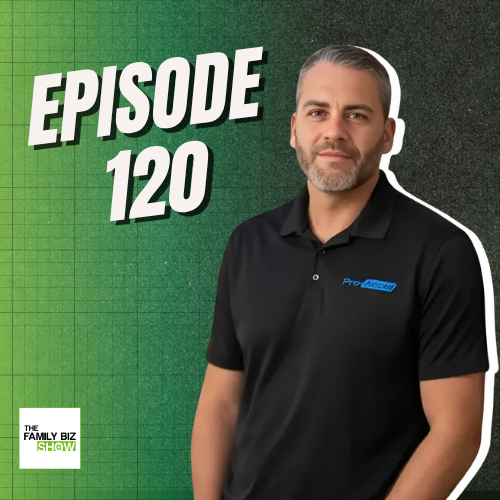 Passing the Hard Hat: Succession Planning Lessons for Family Construction Businesses | The Family Biz Show Episode 120 06.10.2025 59minWhat happens when the founder of the family business is no longer the one making every decision? And what does it really take to prepare the next generation to lead successfully? "I built this company from nothing… how do I let go?" "What if the next generation wants to run the business differently?" "How do we grow without losing control?" "Why does succession planning feel so emotional?" This conversation gives you the answer. In this episode of The Family Biz Show, Michael Palumbos sits down with construction consultant and coach Jerry Aliberti to unpack the real challenges behind succession planning in family-owned construction businesses. Together, they explore the emotional, operational, and leadership obstacles that families face when transitioning a business from one generation to the next. Rather than treating succession as a single event, Jerry explains why successful transitions require years of leadership development, trust-building, accountability, and organizational structure. The episode also explores why many founders unintentionally become the bottleneck to future growth — and how the next generation often approaches leadership, systems, and work-life balance differently. Jerry Aliberti is the founder of ProAccel and a construction consultant with more than 20 years of experience in the industry. He has managed hundreds of millions of dollars in projects, led estimating teams on multi-billion-dollar bids, and now helps construction businesses improve leadership, accountability, operations, and long-term growth. One of the biggest insights from this conversation is that succession planning is not simply about ownership transfer — it's about creating a business that can operate successfully without depending on one person for every decision. This episode also provides practical guidance on: leadership accountability organizational structure building strong management teams labor cost tracking communication between generations scaling a business without losing culture You'll also hear why many construction businesses struggle with growth after reaching a certain size, and how founders can begin stepping out of day-to-day operations without losing confidence in the business. In This Episode, You'll Learn: Why succession planning should happen over years, not months How founders unintentionally become growth bottlenecks Why accountability systems matter in family businesses How to prepare the next generation for leadership Why trust and communication are essential during transition How organizational structure impacts business growth Why construction businesses must understand labor cost tracking If you're navigating leadership transition, preparing the next generation, or trying to scale a family-owned company without losing control, this episode offers practical insights and real-world experience you can apply immediately. Listen here: https://www.familybusinessflywheel.com/podcast
 -
 The Legal Strategy That Saved a Family Business Transition | The Family Biz Show Ep 119 15.08.2025 57minWhat happens when family business partners stop sharing the same vision? And what actually saves the business when leadership conflict starts growing behind the scenes? If you've ever worried about succession, ownership transition, or communication breakdowns inside a family business… this episode will hit home. "I don't know if we're aligned anymore." "What happens if the next generation wants something different?" "How do you protect relationships when business decisions get difficult?" "What if leadership transition creates more tension instead of clarity?" This conversation gives you the answer. In this episode of The Family Biz Show, Mike Hayes of GLC Business Services shares the real-world story of navigating leadership transition, partner disagreements, succession planning, and ownership restructuring inside a multi-generational family business. Rather than avoiding conflict, Mike explains how honest communication, trust, and a properly structured buy-sell agreement helped the business move forward without destroying family relationships or company culture. Mike Hayes is the CEO of GLC Business Services, a company specializing in business process outsourcing, workplace support services, and operational staffing solutions. With a background that includes military leadership, operational management, and next-generation succession inside a family-owned business, Mike brings a unique perspective to leadership, culture, and long-term business continuity. One of the biggest insights from this episode is that many family business problems are not operational problems — they are communication and alignment problems. When ownership groups stop sharing the same vision, unresolved tension eventually impacts leadership, culture, and future growth. This episode also explores how strong company culture, mentorship, and employee trust can create long-term loyalty in industries known for high turnover. You'll also hear: Why buy-sell agreements matter more than most family businesses realize How leadership transitions expose communication weaknesses Why employee culture starts with leadership trust How to prepare a business to survive beyond one founder Why the next generation should not feel pressured into joining the business How military leadership principles shaped Mike's leadership philosophy If you're navigating succession planning, leadership transition, ownership restructuring, or family business communication challenges, this episode provides practical lessons grounded in real experience. Listen here: https://www.familybusinessflywheel.com/podcast
 -
 What Family Businesses Can Learn from Dairy Cooperatives | Family Biz Show Ep. 118 09.07.2025 49minWhat if the biggest lessons in leadership, innovation, and succession planning were coming from family farms? This episode reveals how traditional businesses can evolve without losing the values that made them successful in the first place. "Are we adapting fast enough?" "How do you modernize a family business without breaking the culture?" "What happens when the next generation wants change?" "How do you stay profitable when your entire industry is transforming?" This conversation gives you the answer. In this episode, Kevin Ellis, CEO of Upstate Niagara Cooperative, shares how a family farm upbringing shaped his leadership journey from the dairy barn to running a $1.5 billion farmer-owned cooperative. He explains how family businesses can navigate innovation, operational growth, changing consumer expectations, and leadership transformation while staying grounded in long-term values and community responsibility. Kevin leads one of the largest dairy cooperatives in the Northeast, representing more than 260 family farms and overseeing 1,800 employees. His experience spans farming, agricultural consulting, banking, finance, manufacturing, and executive leadership, giving him a unique perspective on how family-owned businesses scale and adapt over time. One of the biggest insights from this conversation is that operational excellence and adaptability matter more than simply cutting costs. Kevin explains why family businesses must stay connected to consumer trends, embrace technology, and continually improve systems if they want to remain competitive across generations. You'll also hear how AI, robotics, genetics, and automation are reshaping the future of agriculture faster than most people realize — and why every industry should be paying attention. This episode delivers practical leadership lessons, strategic thinking, and real-world examples that family business owners can immediately apply inside their own organizations. In This Episode, You'll Learn: Why family businesses must evolve with changing consumer expectations How dairy cooperatives balance fairness, profitability, and growth Why succession planning is critical for long-term family business success How AI and robotics are transforming traditional industries Why culture change is often the hardest part of leadership transition How operational alignment improves profitability and performance What next-generation leaders should understand before taking over a business Whether you lead a family business, advise business owners, or are preparing for generational transition, this conversation offers practical insights on growth, leadership, and long-term sustainability. Listen now: https://www.familybusinessflywheel.com/podcast
 -
 From Farmland to Family Office: Lessons in Legacy and Reinvention | The Family Biz Show Ep. 117 29.06.2025 46minYou don't build a lasting legacy by accident. You build it through stewardship, hard conversations, reinvention, and the willingness to think beyond yourself. But that's easier said than done. "Will the next generation be ready?" "How do we protect the family without losing the business?" "What happens when the legacy business no longer serves the future?" "How do you grow without losing family unity?" This conversation gives you the answer. In this episode of The Family Biz Show, Michael Palumbos sits down with Mike Young of Wiggis & Young to explore how one fourth-generation family business evolved from California farming roots into a modern family office focused on long-term stewardship and generational continuity. Mike shares the story of his family's journey through agriculture, vertical integration, technology, strategic exits, and family governance — all while maintaining strong relationships across generations. He explains why communication, mentorship, and adaptability have been critical to sustaining the family enterprise for more than 125 years. Mike Young is a fourth-generation family business leader, entrepreneur, and author of The Farmer's Code: How Legacies Are Built. His family business traces its roots back to the late 1800s and has evolved through multiple industries while preserving a strong culture of stewardship and family unity. One of the biggest insights from this episode is the distinction between ownership and stewardship. Mike explains that true legacy is not about holding onto assets at all costs — it's about protecting opportunities, relationships, and values for future generations. This episode also provides practical lessons on succession planning, next-generation leadership, governance structures, and preparing heirs to become responsible stewards of family wealth. You'll also hear: Why healthy communication matters more than perfect business strategy How mentorship between generations strengthens succession Why reinvention is essential for long-term survival How the family handled difficult decisions around selling legacy assets Why legacy is built "in people," not just left behind for them If you're navigating growth, succession, leadership transition, or long-term family continuity, this episode will challenge how you think about wealth, ownership, and legacy. Because the strongest family businesses don't simply preserve the past — they prepare future generations to thrive. 🎧 Listen to more episodes of The Family Biz Show: https://www.familybusinessflywheel.com/podcast
 -
 Building a Family Office That Lasts: Wealth, Legacy & Leadership with Scott Saslow | The Family Biz Show Ep. 116 04.06.2025 47minBuilding wealth is one thing. Keeping it, protecting it, and giving it lasting purpose is something else entirely. "What happens after we sell the business?" "Who should manage the wealth?" "How do we keep the family aligned?" "What kind of legacy are we really building?" This conversation gives you the answer. In this episode, you'll hear why a family office is not just a place to park wealth after a liquidity event. It is a living, evolving structure that needs leadership, mission, talent, and discipline. Scott Saslow explains why families often underestimate the work involved and how treating the family office like a business can help protect both wealth and legacy. Scott Saslow is the author of Building a Sustainable Family Office and the founder of One World Investments. After his family sold its manufacturing business, Scott became deeply involved in rebuilding and rethinking the family office structure. His work now focuses on family capital, sustainable investing, entrepreneurship, and long-term impact. The core insight is simple: making money and keeping money require different skills. A successful business owner may know how to grow an operating company, but managing family wealth requires a different kind of structure, strategy, and oversight. This episode gives you practical ways to think about advisor selection, family office structure, next-generation involvement, mission, and values-based investing. You'll also hear why preparing before a liquidity event can make the transition far less overwhelming. In This Episode, You'll Learn: Why a family office should be managed like a business How liquidity events create both opportunity and complexity Why trusted advisors may not always be the right long-term fit How mission can help engage the next generation Why sustainable investing can connect wealth with purpose How families can prepare before selling the business By the end, you'll have a clearer way to think about wealth, leadership, and legacy after a major family business transition. 🎧 Listen to more episodes and insights for family business owners here: https://www.familybusinessflywheel.com/podcast
Samankaltaiset podcastit


Suosittu maassa
Tämä podcast esiintyy myös näiden maiden podcast-listoilla.
