
Modern Integrative CBT
Scott Waltman PsyD ABPP
0
Modern Integrative CBT is a podcast about the evolving art and science of cognitive behavioral therapy. It highlights clinical innovation, cultural awareness, and recent research findings. Episodes are practice-oriented and explore the latest developments in CBT from a range of traditions. The show emphasizes innovation and integration while shaping and sharing the future of therapy.
Jaksot
-
 CBT for Existential Anxiety and Difficulties with the Current Climate 20.09.2026 45minAnyone involved in clinical practice will tell you that people are struggling. In the current era, unprecedented times has been used so often it has almost lost all meaning. I sit down with CBT experts Scott Temple and Trent Codd to discuss how to think about and work with existential anxieties. In this case, the best defense is a good offense. A goal is to make peace with the shortness of life and live a full life guided by your values.We approach the topic of the human condition from various perspectives and end with some Stoic philosophy. “Do not act as if you were going to live ten thousand years. Death hangs over you. While you live, while it is in your power, be good.” - Marcus Aurelius, Meditations 4.17We discuss their book Eight Principles for a Modern CBT: Re-Visioning Cognitive Behavior Therapy in Clinical Training and highlight was a strong resource it is for modern clinicians. I highly recommend it!Check out their book from the publisherBuy their book on Amazon This is a public episode. If you would like to discuss this with other subscribers or get access to bonus episodes, visit socraticmethodcbt.substack.com
 -
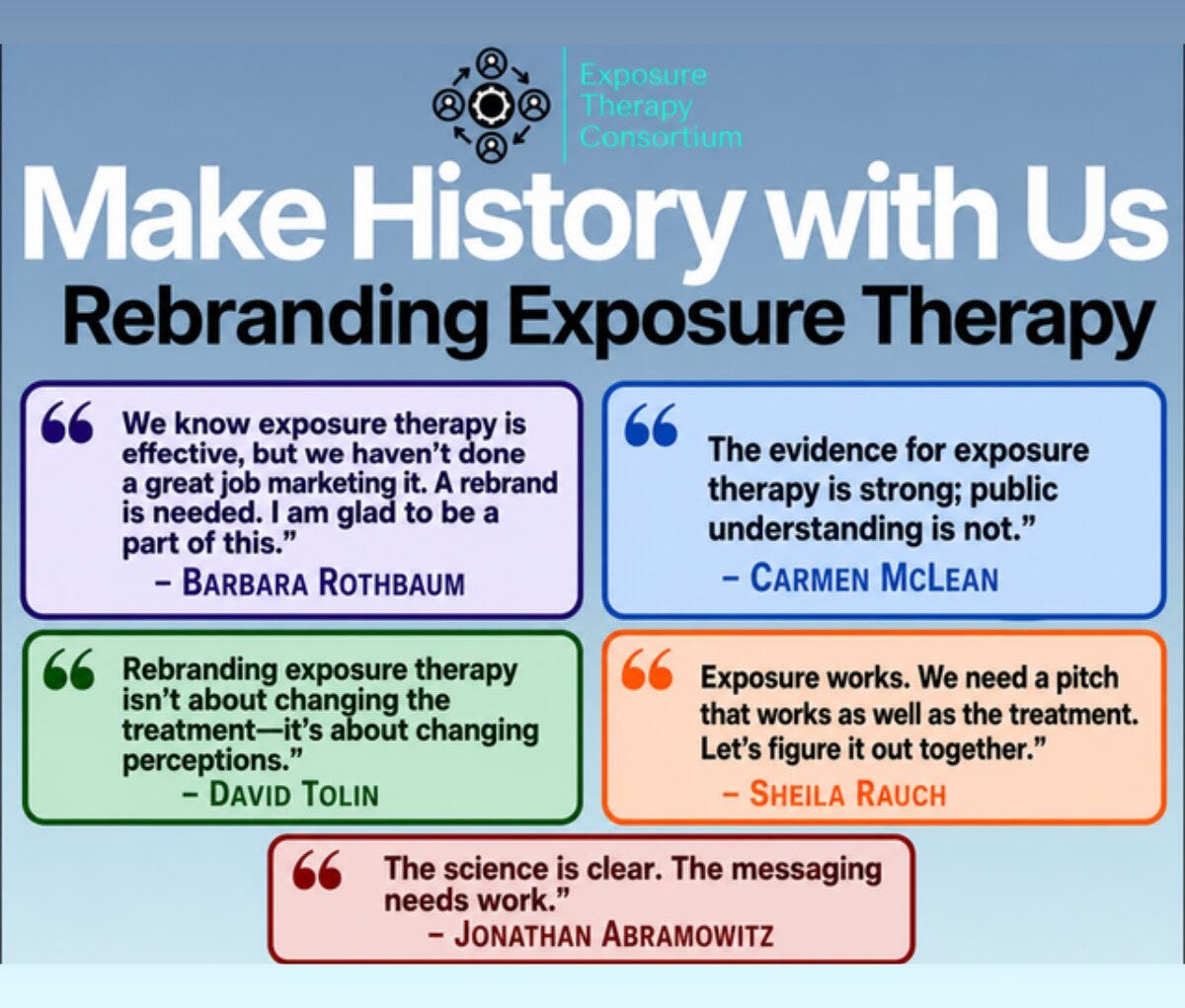 Reframing Exposure Therapy as an Approach-Based Approach 13.09.2026 50minMy conversation with Drs Keith Cox and Jolene Jacquart about the upcoming Exposure Therapy Summit in November that coincides with the annual meeting of the Association of Behavioral and Cognitive Therapies in Baltimore this November. We discuss the current state of the field and opportunities for growth. Exposure therapy is a highly effective treatment that is under-utilized—even among CBT therapists. So how do we increase the utilization of these powerful techniques to help reduce suffering? One idea is to rethink the messaging and branding associated with exposure therapy. In this episode we discuss exposure and opportunities for new learning and empowerment from a framework that is accessible from across the big tent of CBT and therapy in general. A growing consensus sees that exposure therapy needs rebranding, reimagining. Exposure Therapy is likely the most powerful psychological intervention to date yet is massively misunderstood and woefully underused. Join us for a one-day summit of exposure experts, clinicians, and researchers as we develop new ways to communicate the power of exposure therapy. Our goal is that exposure therapy is regularly implemented by the millions of therapists worldwide. Come help us make that happen. Date: Thursday November 12th (Before the ABCT Conference)Time: 9am to 5pm (lunch provided)Location: Baltimore, MD Grab your seat at the table for the: Strategic Summit to Rebrand Exposure Therapy: New Paths for Dissemination and Marketing!RSVP HereCheck out the Summit AgendaLink to AgendaExposure therapy is a stellar treatment in search of an audience. The field is coalescing around the idea that exposure therapy needs a rebrand. This will work best if we can agree on how to do that. Join us to plan the new path for improving access toTo learn more about this Working Group or inquire about future membership opportunities, please contact: Keith Cox, PhD at [email protected] This is a public episode. If you would like to discuss this with other subscribers or get access to bonus episodes, visit socraticmethodcbt.substack.com
 -
 ACT for Trauma 02.08.2026 56minCheck out this conversation I have with two of the world’s leading experts on the use of Acceptance and Commitment Therapy (ACT) for the treatment of trauma. Manualized approaches of Cognitive Behavioral Therapy (CBT) such as Cognitive Processing Therapy (CPT) and Prolonged Exposure (PE) are engineered to be effective treatments for PTSD. While post-traumatic stress disorder can have diverse presentations, there is an even greater diversity of trauma reactions one can have. Prolonged Exposure is great at treating people who have a conditioned fear response after traumatic event, but what about people who have a different type of presentation?Acceptance and Commitment Therapy is inherently a case conceptualization based approach. While there are techniques in ACT, it is process-based approach that is rooted in the functional analysis of the client. The emphasis is on workability and fostering flexibility.For the interested reader/listener, I recently did a Blog interview for Academy of Cognitive & Behavioral Therapies on the common myths and misconceptions about CBT for trauma. You can watch that here. Though it is important to note that comparing ACT for trauma with manualized therapies for PTSD such as Cognitive Processing Therapy and Prolong Exposure is essentially comparing apples and oranges. It would be erroneous to think of CBT for trauma as being only Prolonged Exposure or Cognitive Processing Therapy. From its inception CBT was designed to be a case conceptualization based approach. Manualized protocols for specific conditions do exist and are important tools, but these tools are representations of the therapy and not the therapy itself. To learn more about how to create a good case conceptualization based approach to CBT, our Socratic questioning book has and elaborated section focusing on developing a good case conceptualization. And Scott Temple and Trent Codd wrote a fantastic book on a transdiagnostic and integrative approach to holistic CBT care.In this conversation, we talk about Robyn’s new book from Guilford You are Not Your Trauma which is a fantastic read and great clinical recommendation for anyone trying to incorporate elements of Acceptance and Commitment Therapy in the treatment of the effects of trauma.This conversation features Dr. Scott Waltman, Dr. Robyn Walser, and Dr. Carmella Tress discussing trauma, Acceptance and Commitment Therapy (ACT), and the nuances of clinical work.We cover some key themes:Trauma is often viewed through the narrow lens of PTSD criteria, which can exclude many individuals who have experienced significant life-altering events, such as racial trauma or ongoing harassment. They emphasize that trauma is not always a discrete event, and individuals can suffer significant impact without meeting traditional “Criterion A” diagnostic standards.Dr. Walser explains that ACT is a principle-based, transdiagnostic approach that focuses on increasing psychological flexibility. Rather than attempting to “fix” specific symptoms, ACT addresses how a person’s learning history impacts their current functioning and aims to reduce rigid avoidance behaviors that restrict a meaningful life.Dr. Tress highlights that trauma can cause individuals to fuse with their experiences, leading to a narrowed sense of identity. Both experts stress the importance of helping clients see they are not their trauma, and that they can hold painful memories while still living a life guided by their values.We expresses concern regarding the “dilution of innovation,” where clinicians may use techniques from ACT or CBT without understanding the underlying model. We warn that in the treatment of trauma, clinicians can engage in emotional avoidance, and that this can stem from a clinician’s own avoidance of painful material, leading to the use of shallow control strategies rather than genuine, compassionate engagement with the client’s process.Contrary to misconceptions, ACT does engage with cognitions as part of a behavioral model. Cognitions are viewed as behaviors and instead of attempting to restructure or repair thoughts, the goal is to help clients increase awareness and focus on deliberate actions. The goal is workability. ACT for trauma may also include exposure to trauma narration if there is a high level of avoidance going on. Exposure if after all highly ACT compatible, even if the way it is done might be slightly different from an ACT provider.The heart of the work, according to Dr. Walser, is cultivating flexibility to move through life even when faced with challenges. This involves recognizing that avoidance—while sometimes temporarily useful—often leads to a “numbed” existence; by being willing to experience the full range of emotions, clients can open themselves back up to joy and meaning.The conversation concludes with Dr. Walser sharing her new YouTube channel, which features short videos designed to complement her book, You Are Not Your Trauma.Check out these resources: This is a public episode. If you would like to discuss this with other subscribers or get access to bonus episodes, visit socraticmethodcbt.substack.com
 -
 Acceptance and Commitment Therapy & Stoicism 16.09.2025 1min“This book is a brilliant synthesis of old and new. The authors have updated the powerful, life-affirming philosophy of Stoicism for a modern-day audience, keeping its ancient roots while infusing it with insights from contemporary approaches such as acceptance and commitment therapy (ACT). It’s an excellent and easy-to-use workbook, that among other benefits, will help you to live by your values, unhook yourself from difficult thoughts, make room for difficult emotions, be compassionate to yourself, use your core values as a compass to guide you, and live mindfully. Highly recommended!”—Russ Harris, physician, therapist, and author of ACT Made Simple and The Happiness TrapStoicism Workbook on Amazon This is a public episode. If you would like to discuss this with other subscribers or get access to bonus episodes, visit socraticmethodcbt.substack.com
 -
 Socrates facing his own death (And a preview of the upcoming Philosophy of Love and Relationships Conference) 19.08.2025 22minThis fall I'm cohosting the Plato's Academy online conference on the Philosophy of Love and Relationships. In anticipation of this event, I obtained permission to reshare a clip of my talk from a talk at a previous event. It’s been lightly edited for time. I always have so much fun at these conferences. They are free to attend and open to the general public. Please consider joining us!Register for Oct 25th Philosophy of Love & Relationships Free Conference This is a public episode. If you would like to discuss this with other subscribers or get access to bonus episodes, visit socraticmethodcbt.substack.com
 -
 Stoicism & Self Compassion 17.06.2025 1min“Every event has two handles – one by which it can be carried, and one by which it can’t. If your brother does you wrong, don’t grab it by his wronging, because this is the handle incapable of lifting it. Instead, use the other – that he is your brother, that you were raised together, and then you will have hold of the handle that carries”How can we apply this to our relationship with ourselves?Learn more with the Stoicism Workbook from New HarbingerAlso available on Amazon This is a public episode. If you would like to discuss this with other subscribers or get access to bonus episodes, visit socraticmethodcbt.substack.com
Samankaltaiset podcastit


Suosittu maassa
Tämä podcast esiintyy myös näiden maiden podcast-listoilla.
