
LBI London
LBI London
0
LBI London is a research institute dedicated to the study of German-Jewish history and culture. The podcast likely features lectures, conversations, and research insights from scholars associated with the institute. It explores topics related to German-Jewish heritage, history, and cultural memory. Episodes may also include event recordings and discussions hosted by the Leo Baeck Institute London.
Jaksot
-
 Sheila Hayman on Fanny: The Other Mendelssohn | LBI Film Club Interview 18.06.2026 23minJoin Sheila Hayman, director and writer of Fanny: The Other Mendelssohn, in conversation with the Leo Baeck Institute London about the extraordinary life and music of Fanny Mendelssohn Hensel.In this interview, Sheila discusses the research behind the film, the recovery of Fanny’s work, and the wider questions the story raises about Jewish history, women’s creativity, family, and cultural memory.This conversation accompanies our next LBI Film Club screening of Fanny: The Other Mendelssohn, available free to watch from 25 June to 2 July 2026 on our website.You can also listen to the interview on Spotify.Watch the film club screening and find out more at: https://www.lbilondon.ac.uk/events/film-club/lbi-film-club-fanny-other-mendelssohn#LeoBaeckInstituteLondon #FilmClub #FannyMendelssohn #SheilaHayman #JewishHistory #JewishCulture #WomenInMusic #ClassicalMusic #GermanJewishHistory #DocumentaryFilm #WomenInFilm
 -
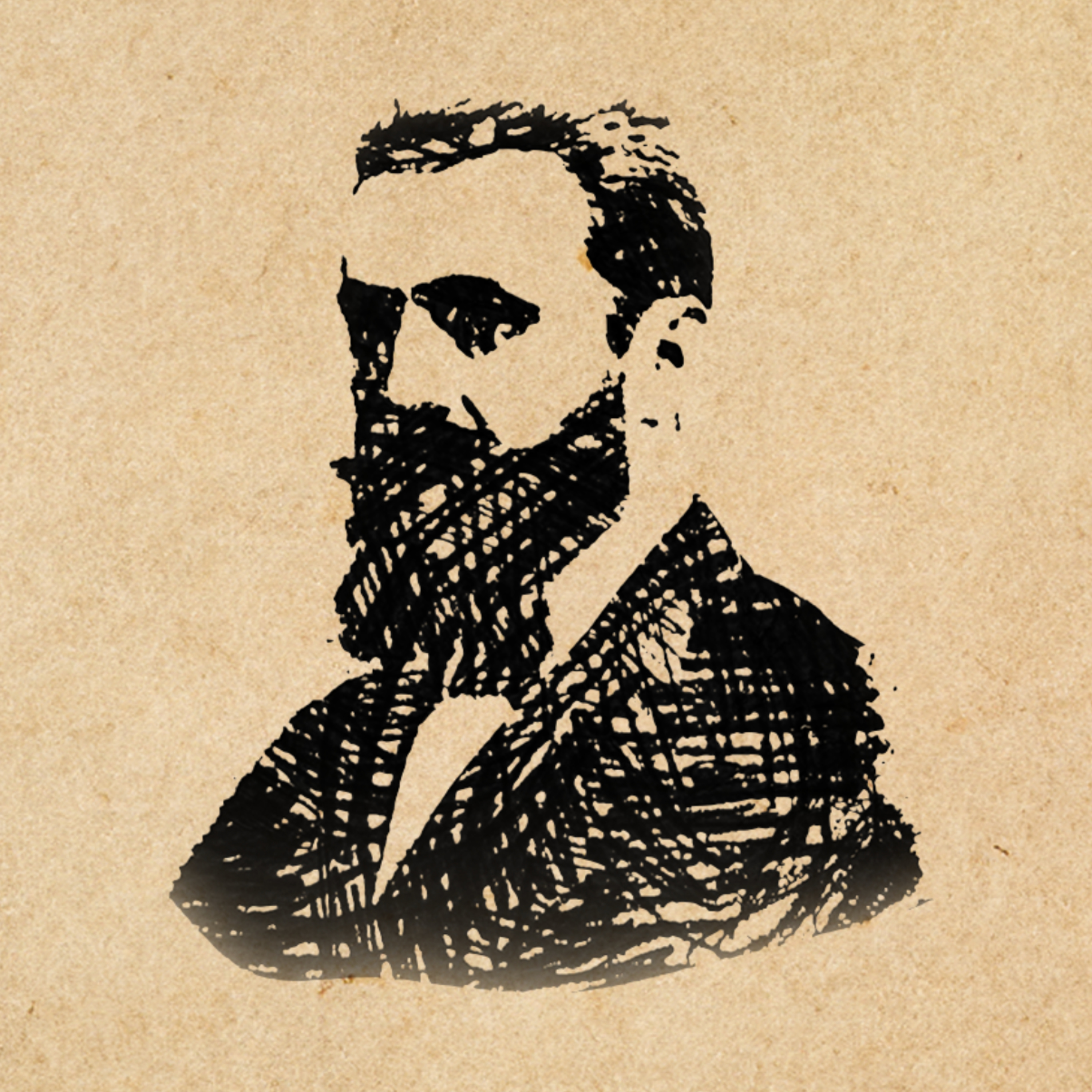 The LBI London meets Sir Bernard Zissman, producer of "Theodor Herzl: The Man Behind Israel" 14.04.2026 6minThe Leo Baeck Institute London is delighted to present an exclusive conversation with Sir Bernard Zissman, one of the producers behind the recent British documentary, Theodor Herzl: The Man Behind Israel.As the latest feature for our Film Club, we sat down with Sir Bernard ahead of our free online screening to discuss the vision and process of bringing Herzl’s story to the screen.Our heartfelt thanks to Sir Bernard Zissman for meeting us. We hope this interview provides some helpful background on the history and culture that shaped Theodor Herzl.The film is available to view free of charge for one week, from 16th–23rd April 2026 at: https://www.lbilondon.ac.uk/events/film-club/lbi-film-club-theodor-herzl-man-behind-israelFor more resources and events exploring the legacy of German-speaking Jewry, you can find full details on our website. Thank you for watching.
 -
Kindertransport in British Memory and Culture: A Roundtable Discussion 20.03.2026 1t 27minThis online roundtable brought together scholars and practitioners to examine the Kindertransport through archival research, personal testimony, and reflective practice. Exploring sources ranged from international archives to refugees’ own words, the discussion considered how the Kindertransport has been remembered, interpreted, and mobilised in British culture, and why it continues to matter today. Speakers: Dr Amy Williams (Association of Jewish Refugees) Using international, national, and local archives to construct a transnational history of the KindertransportDr Monja Stahlberger (University of Reading) Listening to Kindertransport Refugees in Their Own Words: how ego documents of the early years in Britain give us unique insightsHoward Falksohn (Wiener Holocaust Library) Kindertransporte: An archivist’s personal perspective Chair:Dr Joseph Cronin (Leo Baeck Institute London)https://www.lbilondon.ac.uk/kindertransport-26This event was hosted by the Leo Baeck Institute London in collaboration with the British-German Association.19 March 2026, 7:00PM - 08:00 PM
-
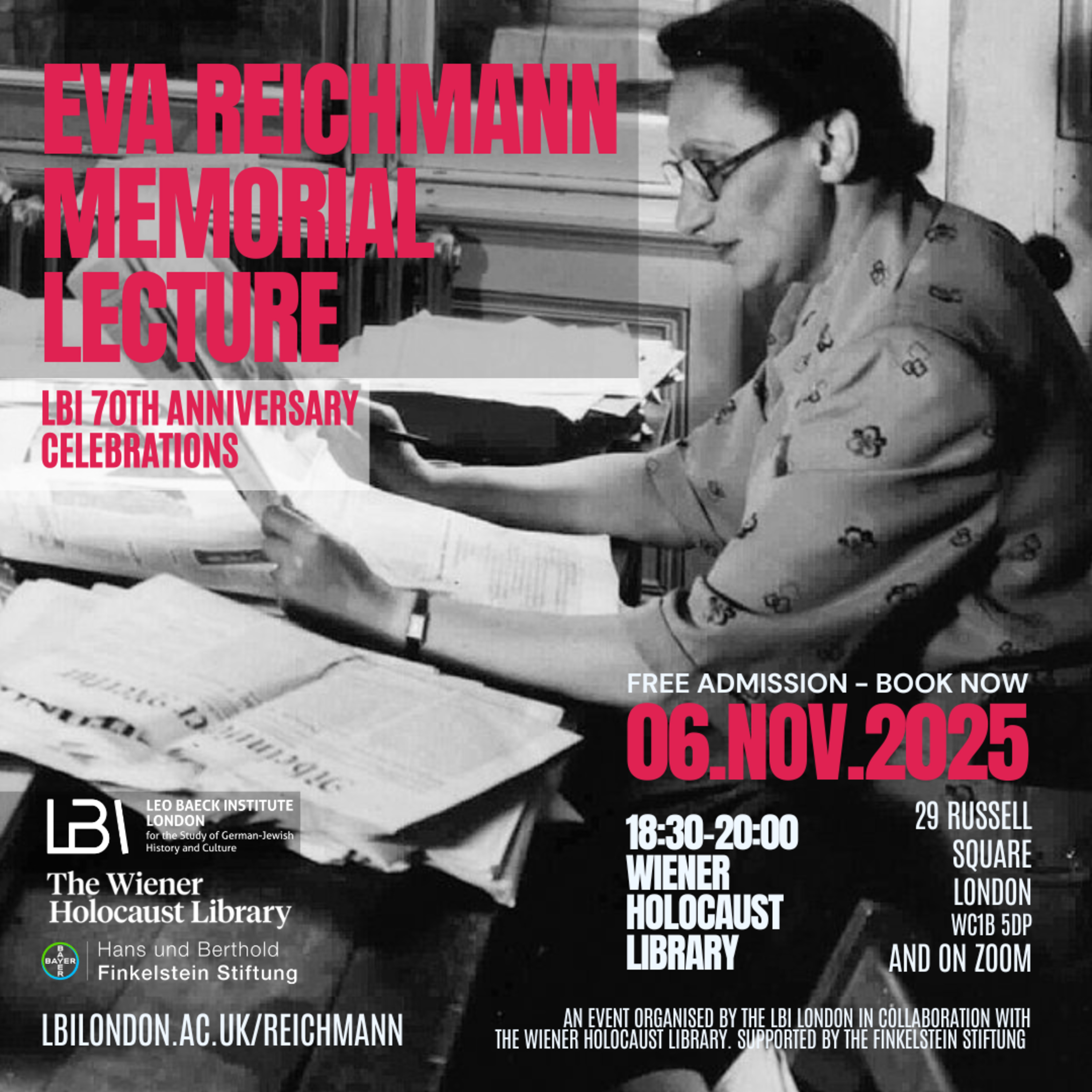 LBI 70th Anniversary Celebrations - Eva Reichmann Memorial Lecture 19.12.2025 1t 14minChristine Schmidt, Bea Lewkowicz, Natalia Aleksiun The Wiener Holocaust Library, London6 November 2025, 6:30PM - 08:00 PMThe inaugural Eva Reichmann Lecture, held as part of the LBI 70th Anniversary Celebrations: Eva Reichmann: Witness, Historian, LegacyThis special event celebrates the legacy of Dr. Eva Reichmann, a pioneering historian whose groundbreaking work continues to shape our understanding of Nazi persecution and Holocaust historiography. Welcome & Introduction Dr. Joseph Cronin (Director, Leo Baeck Institute London) and Dr. Toby Simpson (Director, The Wiener Holocaust Library) will open the evening by reflecting on Eva Reichmann’s enduring connection to both institutions and the significance of the new lecture series. Roundtable Discussion An expert panel will explore Reichmann’s life, work, and impact:Christine Schmidt (Wiener Holocaust Library)Bea Lewkowicz (AJR Refugee Voices Testimony Archive)Natalia Aleksiun (University of Florida)Topics will include Reichmann’s efforts to collect eyewitness accounts, her role in shaping Holocaust scholarship, and the contemporary relevance of her work in understanding antisemitism and historical memory. Q&A Session (20–30 minutes) Followed by light refreshments. This event will be live-streamed and recorded. Attendance is free, but registration is required.This event is co-hosted by The Leo Baeck Institute London and The Wiener Holocaust Library and sponsored by the Hans and Berthold Finkelstein Foundation.Image: The Wiener Holocaust Library collectionshttps://www.lbilondon.ac.uk/reichmann
 -
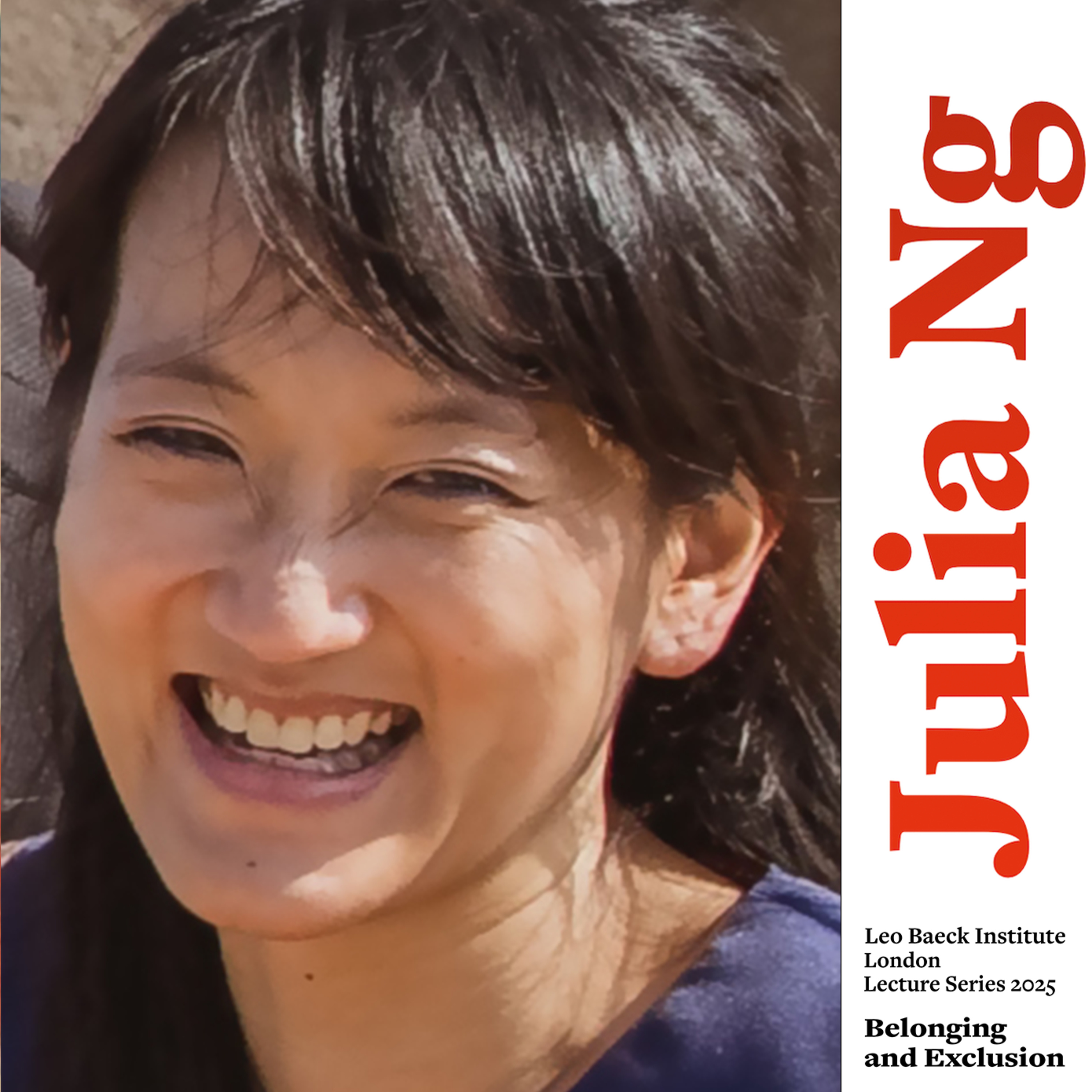 Dr Julia Ng - A Politics of Inaction: Daoism in German-Jewish Thought 01.12.2025 1t 24minIn the early twentieth century, German-Jewish thinkers converged upon Daoism as a means to criticise state power and the dominance of economic productivity in modern society. Figures like Moses Mendelssohn, Franz Rosenzweig, and Walter Benjamin explored how Daoist ideas could inspire alternative ways of organising social and economic life, thereby challenging stereotypes of ‘China’ as passive or non-productive. This talk examines how their engagement with Daoism offered a vision of religion’s role in everyday life that moved beyond racialised notions of activity and inactivity, and the mercantilist-salvational paradigm then dominant in Western societies.Julia Ng is Reader in Critical Theory and founding Director of the Centre for Philosophy and Critical Thought at Goldsmiths, University of London. A specialist in the work of Walter Benjamin, whose essay ‘Toward the Critique of Violence’ she recently translated for a critical edition she co-edited for Stanford University Press (2021), she is currently completing a book on Daoism and Capitalism with support from a British Academy Mid-Career Fellowship. Does belonging always require exclusion? This lecture series explores this universal question through the lens of the German-Jewish experience, a community deeply shaped by its complex relationship to inclusion and exclusion. Spanning key moments in modern history, these talks examine German-Jewish thinkers’ responses to the dominant ‘Protestant ethic’, debates over nationalism in interwar Germany and Austria, the warped ideology of Adolf Hitler, and the long struggle of German Jews to reclaim citizenship after the Holocaust. Join us as we situate these experiences within today’s urgent debates about identity and belonging.Lecture recorded at Senate House, London on Thursday, November 27, 2025Images from the lecture, and other streaming links, are available on the Leo Baeck Institute London website: https://www.lbilondon.ac.uk/ng-25
 -
Rethinking German Nationalism in the Interwar Period 14.10.2025 1t 15minErin HochmanDue to the horrors of the Third Reich, we have come to think of German nationalism as inherently antisemitic, racist, antidemocratic, and violent. This talk challenges this conventional interpretation. It shows how the defenders of the Weimar and First Austrian Republics used the großdeutsch idea, the notion that Austria should be part of a German nation-state, to create a democratic nationalism. Unlike their conservative and right-wing opponents, these republicans did not view democracy and Germany, socialism and nationalism, or Jew and German as mutually exclusive categories. As such, the triumph of Nazi ideas about nationalism was far from inevitable.Erin Hochman is Associate Professor of History at Southern Methodist University. She is the author of Imagining a Greater Germany: Republican Nationalism and the Idea of Anschluss (Cornell University Press, 2016). Her current book project examines how various political groups in the Weimar Republic used the concept of a German diaspora to support or challenge democracy, as well as the involvement of so-called Germans abroad in Germany’s political struggles.Does belonging always require exclusion? This lecture series explores this universal question through the lens of the German-Jewish experience, a community deeply shaped by its complex relationship to inclusion and exclusion. Spanning key moments in modern history, these talks examine German-Jewish thinkers’ responses to the dominant ‘Protestant ethic’, debates over nationalism in interwar Germany and Austria, the warped ideology of Adolf Hitler, and the long struggle of German Jews to reclaim citizenship after the Holocaust. Join us as we situate these experiences within today’s urgent debates about identity and belonging.Lecture recorded on Zoom on Thursday, October 9, 2025Images from the lecture, and other streaming links, are available on the Leo Baeck Institute London website: https://www.lbilondon.ac.uk/hochman-25
-
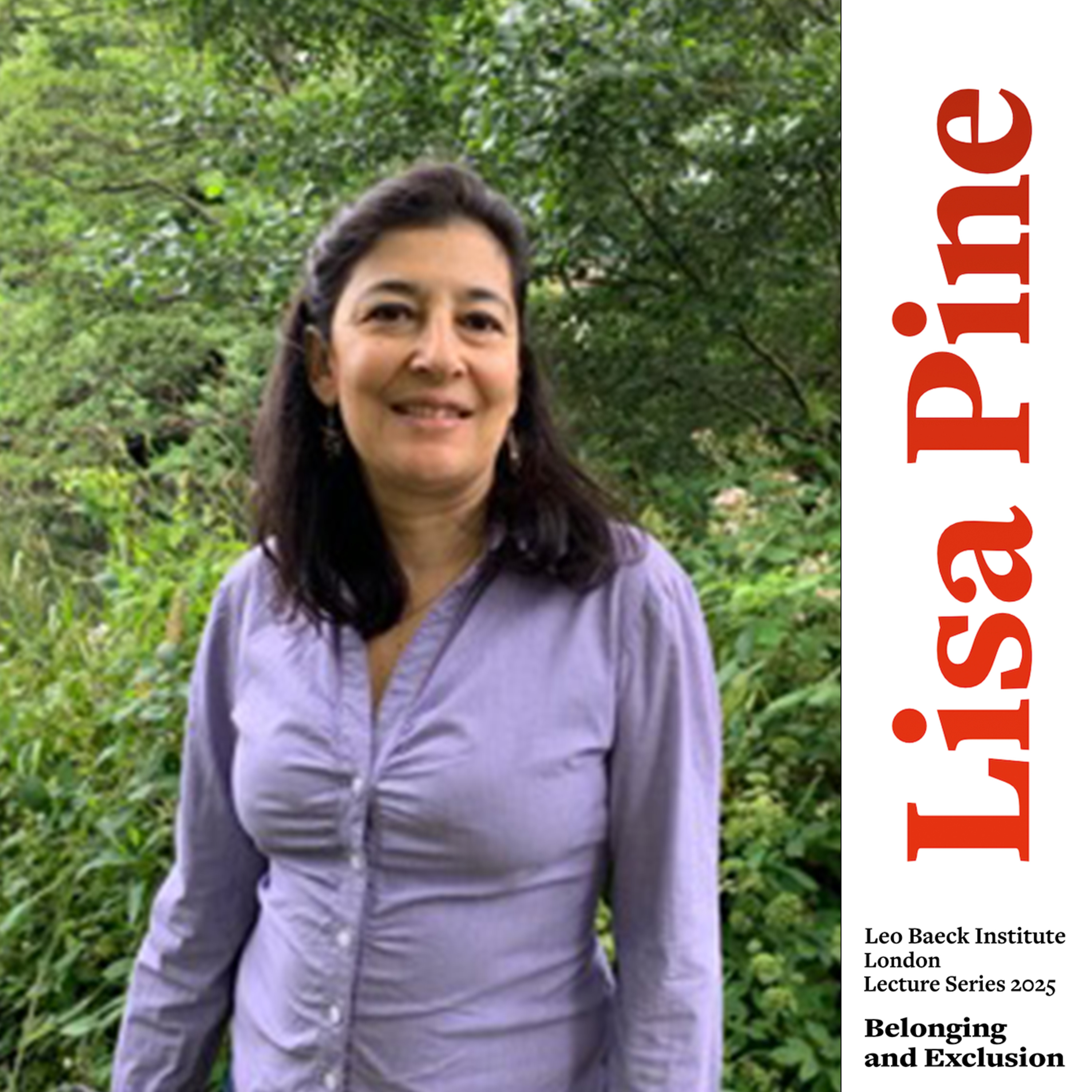 Hitler’s Mein Kampf: Reflections 100 Years On 11.07.2025 1t 30minLisa PineInstitute of Historical Research, School of Advanced Study, University of LondonHitler and the history of the Nazis remain extremely popular topics and ones that never cease to attract people’s interest, even fascination. It is crucial to comprehend the nature of Mein Kampf, the mindset of its author, Adolf Hitler, and the ideology he espoused that brought untold tragedy to millions of people – death, destruction, genocide and war. The book presents a dangerous set of ideas, regrettably ones that still have followers today, one hundred years after Mein Kampf was originally penned. This lecture focusses on some key themes of the text, as well as examining the work in its historical context.Lisa Pine is Fellow of the Institute of Historical Research, School of Advanced Study, University of London. Her main research interests are the history of Nazi Germany and the Holocaust. She is the author or editor of nine books, the most recent of which is a co-authored book (with Kees Boterbloem), Soviet and Nazi Posters: Propaganda and Policies (Bloomsbury, 2025).This event is also the LBI Summer Lecture 2025Does belonging always require exclusion? This lecture series explores this universal question through the lens of the German-Jewish experience, a community deeply shaped by its complex relationship to inclusion and exclusion. Spanning key moments in modern history, these talks examine German-Jewish thinkers’ responses to the dominant ‘Protestant ethic’, debates over nationalism in interwar Germany and Austria, the warped ideology of Adolf Hitler, and the long struggle of German Jews to reclaim citizenship after the Holocaust. Join us as we situate these experiences within today’s urgent debates about identity and belonging.Lecture recorded at Senate House, University of London on Thursday, July 10, 2025Images from the lecture, and other streaming links, are available on the Leo Baeck Institute London website: https://www.lbilondon.ac.uk/pine-25
 -
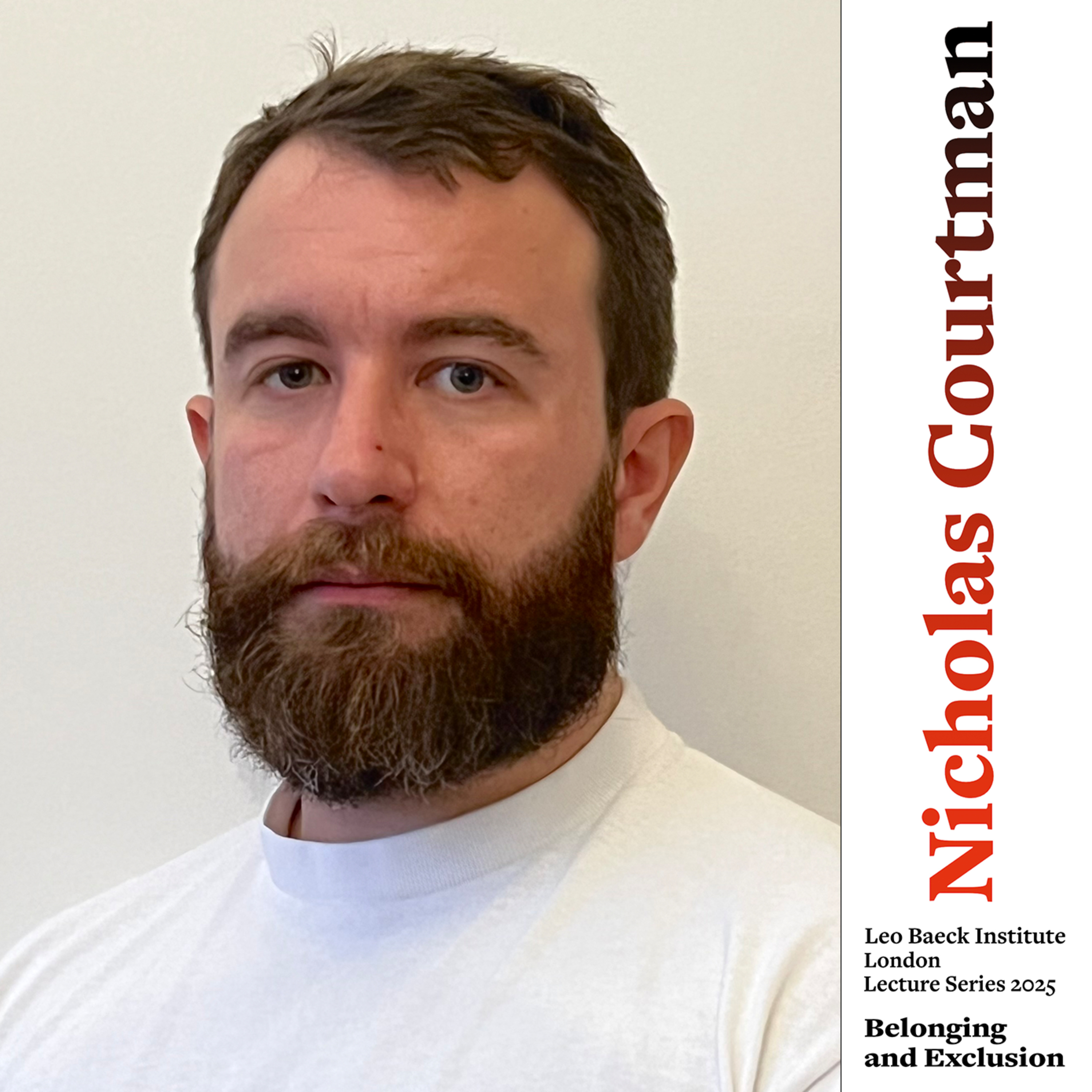 (Un)Welcome Returns? Re-Naturalisation Rights of German Jews in Germany 06.06.2025 1t 22minNicholas CourtmanKing’s College LondonSince 1949, the Federal Republic of Germany has allowed former citizens, whose citizenship was revoked by the Nazis due to their Jewish faith or ‘race’, to reclaim it. Yet, over the past 75 years, there have been significant changes regarding which German Jews – and which descendants – can enjoy that right. This talk tracks those developments, from the restrictive, often antisemitic decisions made in the 1950s, to attempts to uphold those regulations in the following decades, through to the 2021 reform of the German Nationality Act that finally redressed such exclusions.Nicholas Courtman is a Postdoctoral Research Fellow in History and Languages at King’s College London, working on the Alfred Landecker-funded project ‘Citizenship after Hitler: Continuity and Change in German Citizenship Law’. He completed his PhD in German Studies at the University of Cambridge and previously worked at The Expert Council on Integration and Migration in Berlin, authoring a report on naturalisation practices for the German government. He has also served as an expert witness in two Bundestag hearings on reparative justice in citizenship law.Does belonging always require exclusion? This lecture series explores this universal question through the lens of the German-Jewish experience, a community deeply shaped by its complex relationship to inclusion and exclusion. Spanning key moments in modern history, these talks examine German-Jewish thinkers’ responses to the dominant ‘Protestant ethic’, debates over nationalism in interwar Germany and Austria, the warped ideology of Adolf Hitler, and the long struggle of German Jews to reclaim citizenship after the Holocaust. Join us as we situate these experiences within today’s urgent debates about identity and belonging.Lecture recorded at Senate House, University of London on Thursday, March 27, 2025Organised by the Leo Baeck Institute London in cooperation with the German Historical Institute London.Images from the lecture, and other streaming links, are available on the Leo Baeck Institute London website: https://www.lbilondon.ac.uk/courtman-25
 -
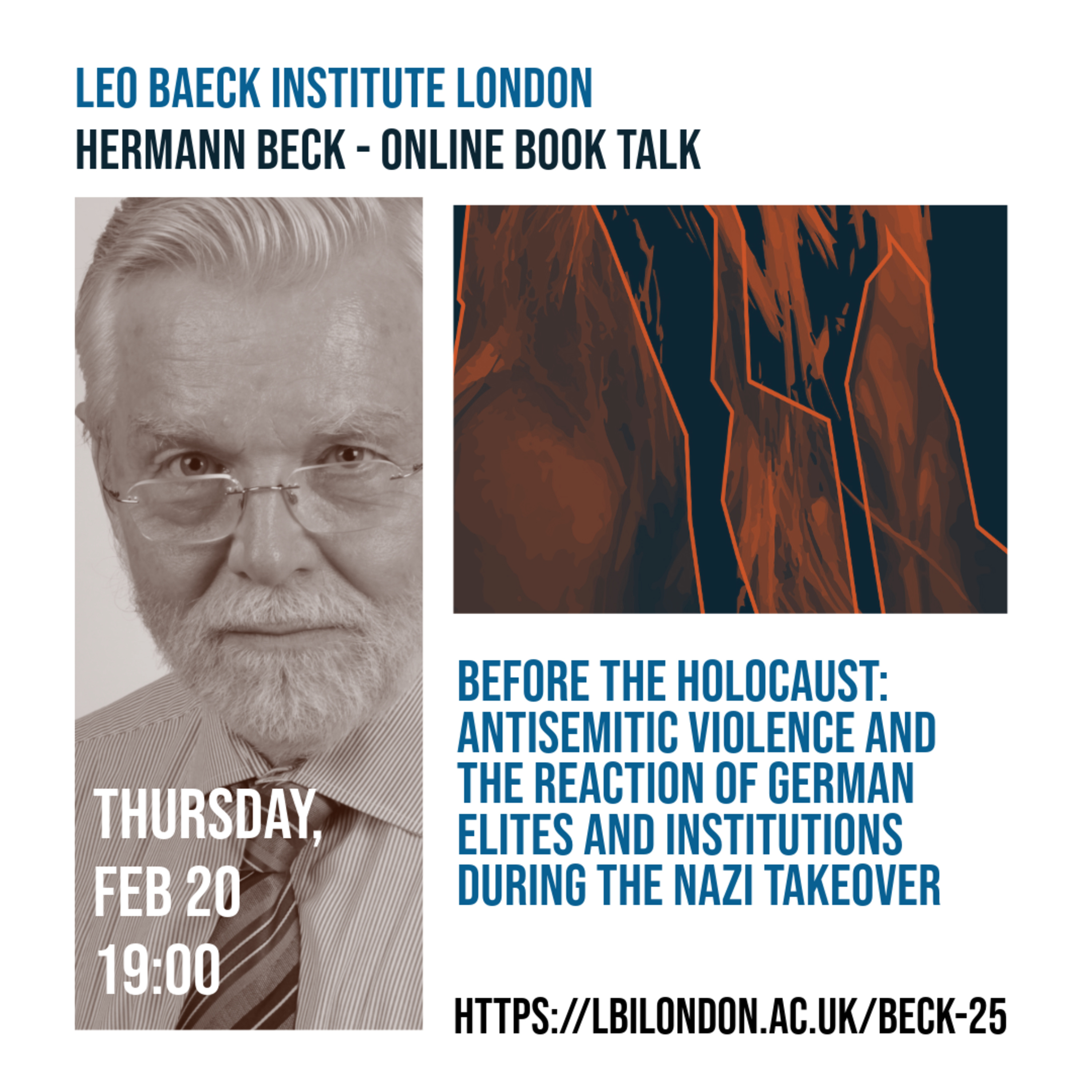 Hermann Beck - Online Book Talk 21.02.2025 1t 16minBefore the Holocaust: Antisemitic Violence and the Reaction of German Elites and Institutions during the Nazi TakeoverSpeaker: Hermann BeckHermann Beck has just been announced winner of the Yad Vashem Book Prize 2024 for his book Before the Holocaust: Antisemitic Violence and the Reaction of German Elites and Institutions during the Nazi Takeover.Historians have traditionally argued that antisemitic violence in Nazi Germany rose gradually, from low levels during the first years of Hitler's rule to a high point in the Reich-wide pogrom of November 1938. Before the Holocaust, based on research in more than twenty German archives, demonstrates that this long-held assumption is wrong. During the months-long Nazi takeover of power, beginning a mere five weeks after Hitler became Chancellor, waves of antisemitic violence engulfed large parts of Germany. Before the Holocaust examines the multitude of these hitherto unrecognized antisemitic attacks in the late winter and spring of 1933, as well as the reaction of German elites and institutions to this violence. Individual protests against violent attacks were already hazardous in March and April 1933, but established German elites were still able to voice their concerns and raise objections. By doing so, they could have stopped a radicalization that eventually led to the Kristallnacht pogrom and the Holocaust. But the elites chose to remain silent and even became complicit, if only passively, in the outrages perpetrated against German and foreign Jews in Germany. This online talk thus revises standard assumptions about antisemitic violence and it throws a powerful and revealing light on the reaction of the German elites.Hermann Beck is Professor of History at the University of Miami. He received his Ph.D. from the University of California, Los Angeles after studying History and Literature at German universities (Mannheim, Freiburg, and Berlin), the London School of Economics, and the Sorbonne. He has been a Fulbright Scholar and a member of the Institute for Advanced Study at Princeton. His publications include books on nineteenth-century Germany, The Origins of the Authoritarian Welfare State in Prussia, and the late Weimar and Nazi periods, The Fateful Alliance: German Conservatives and Nazis in 1933, and (co-editor), From Weimar to Hitler: Studies on the Dissolution of Weimar Democracy and the Establishment of the Third Reich, 1932-34 (with Larry Jones), as well as articles on conservatism, socialism, the Prussian bureaucracy, antisemitism, and the early Nazi period. These were published in British, German, and American journals and in edited collections.More information: https://www.lbilondon.ac.uk/beck-25This online talk was hosted in cooperation with the Wiener Holocaust Library and the British-German Association, and was recorded on Zoom on 20 February 2025#HermannBeck #universityofmiami #LeoBaeckInstituteLondon #GermanStudies #JewishStudies #GermanHistory #JewishHistory #LondonEvents #AcademicLondon #LondonLectures #UniversityOfLondon #Birkbeck
 -
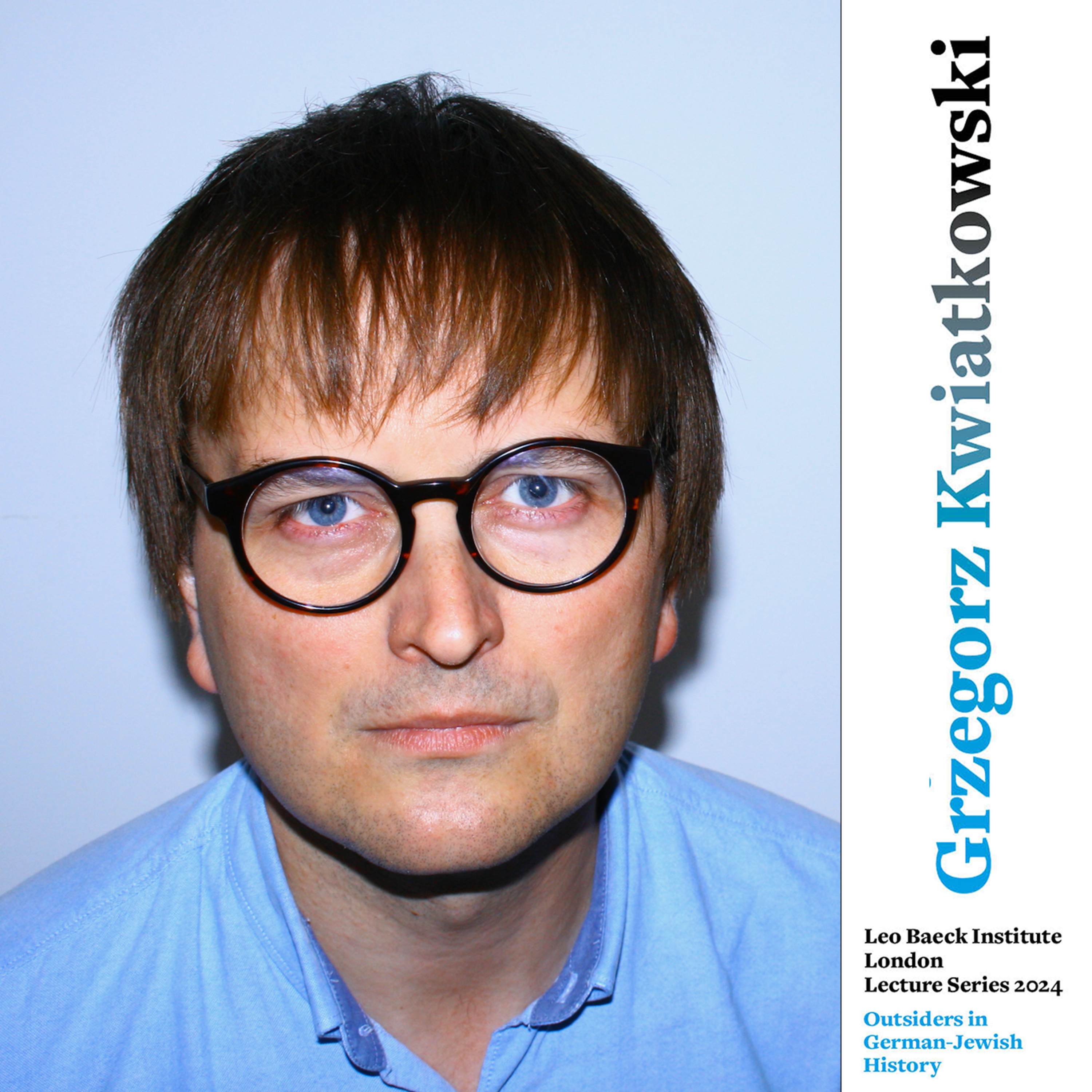 Grzegorz Kwiatkowski: More Light – Art Against Hate 29.11.2024 1t 15minMore Light – Art Against Hate: Fighting Holocaust Denial and The Rise of Right-Wing Nationalism In Poland Grzegorz Kwiatkowski The ability to accurately describe the past is not confined to historians alone. Artists use their creative expression to explore the cruelties of history, aiming to shape a more ethical present and future. In the case of Grzegorz Kwiatkowski, art is also mixed with activism and active efforts to preserve the memory of the victims and their cultural heritage. Kwiatkowski, whose grandfather was a prisoner of the Stutthof concentration camp, and whose wife’s Jewish family hid during the war in a forest near Rzeszów, has been leading an artistic and activist battle to fight antisemitism, denialism and violence for years. He does this through poetry, music (as a member of the psychedelic band Trupa Trupa), and as a guest lecturer at many universities. Grzegorz Kwiatkowski will talk about effective ways to fight violence, oblivion and denial, using the example of his work and his family history and the history of the city of Gdańsk. Grzegorz Kwiatkowski (b. 1984) is a Polish poet and musician. He is the author of several books of poetry revolving around the subjects of history, remembrance, and ethics. He is a member of PEN America and the European literature platform Versopolis. He is a member of the psychedelic rock band Trupa Trupa. Kwiatkowski co-hosts the workshop ‘Virus of Hate’ at the University of Oxford. Together with UCLA professor Vinay Lal, he created the series ‘Sangam and Agora: A Forum of Poets, Philosophers, Scholars, and Autodidacts’. Together with University of Oxford professor Paul Lodge, he launched the series ‘It Sings Therefore We Are: Philosophy and Music in Conversation’. He is taking part in ‘The Surviving Memory in Postwar El Salvador’ collaborative research initiative. This season’s lecture series Outsiders in German-Jewish History seeks to uncover the shared experiences of individuals and communities who found themselves on the margins of society. Transcending both time and geography, talks will offer different perspectives on the resilience and tenacity of those who have grappled with the challenges of being outsiders. How have they found identity and a sense of belonging in societies that have not understood or even accepted them? Organised by the Leo Baeck Institute London in cooperation with the German Historical Institute London. Recorded at Senate House, London on Thursday, November 28, 2024. Images from the lecture, and other streaming links, are available on the Leo Baeck Institute London website: https://www.lbilondon.ac.uk/kwiatkowski-24
 -
 A German-Jewish Athlete During The Age of Extremes: Alex Natan (1906–71) 11.10.2024 1t 21minProf. Kay Schiller University of Durham, UK As a gay high-performance runner, antifascist intellectual and sportswriter, Alex Natan was a quintessential outsider in Weimar Berlin. His marginal status also remained a constant during his forced emigration to Britain, as a precarious refugee in pre-war London, as a long-time internee during World War II, as well as a schoolteacher in the Midlands and author and journalist in post-war Britain and West Germany. This lecture will demonstrate how an unusual German Jew was affected by the ‘age of extremes’, making his life story quite typical of the predicaments of the 20th century. Kay Schiller is Professor of Modern European History at the University of Durham. He has published articles and books on German cultural and sports history, including on the history of the Olympics, on football history, on modern German-Jewish history and on the history of the Federal Republic and the GDR. He is currently researching (with Udi Carmi) the influence of German sports models on sports in Palestine and Israel, with a special focus on the activities of the Zionist functionary Emmanuel Ernst Simon (1898–1988). This season’s lecture series Outsiders in German-Jewish History seeks to uncover the shared experiences of individuals and communities who found themselves on the margins of society. Transcending both time and geography, talks will offer different perspectives on the resilience and tenacity of those who have grappled with the challenges of being outsiders. How have they found identity and a sense of belonging in societies that have not understood or even accepted them? Organised by the Leo Baeck Institute London in cooperation with the German Historical Institute London.Lecture recorded at Senate House, University of London on Thursday, October 10, 2024 - 18:00 Images from the lecture, and other streaming links, are available on the Leo Baeck Institute London website: https://www.leobaeck.co.uk/schiller-24
 -
 LBI London Summer Lecture: Psychologists in Auschwitz: Accounting for Survival 12.07.2024 1t 25minProf Dan Stone The writings of Dutch Auschwitz survivors Eddy de Wind, Elie Cohen and Louis Micheels merit analysis not only because they anticipated what later became known as PTSD and much of the underpinnings of trauma theory. They also advocated a theory of survival that offers a compelling contrast to well-known “self-help” theories put forward by Bruno Bettelheim and, especially, Viktor Frankl. This lecture traces the ways in which this theory of survival challenged these simplistic narratives, explains how their work informed the changing field of psychiatry after the war, and considers its relevance for the historiography of the Holocaust today. Dan Stone is Professor of Modern History and Director of the Holocaust Research Institute at Royal Holloway, University of London, where he has taught since 1999. He is the author of numerous articles and books, including, most recently, The Holocaust: An Unfinished History (Penguin, 2023) and Fate Unknown: Tracing the Missing after World War II and the Holocaust (OUP, 2023). He is co-editor, with Mark Roseman, of volume 1 of The Cambridge History of the Holocaust (forthcoming with CUP) and, with Dieter Steinert, of Holocaust Memory in Britain in the 1960s (forthcoming with Bloomsbury). He is currently writing a book on the Holocaust in Romania. Dan chaired the academic advisory board for the Imperial War Museum's revamped Holocaust Galleries, and sits on the UK's Oversight Committee for the Arolsen Archives and the UK government's Spoliation Advisory Group. Recorded Thursday, July 11, 2024 at the German Historical Institute London http://leobaeck.co.uk/events/summer-lecture/lbi-london-summer-lecture-psychologists-auschwitz-accounting-survival
 -
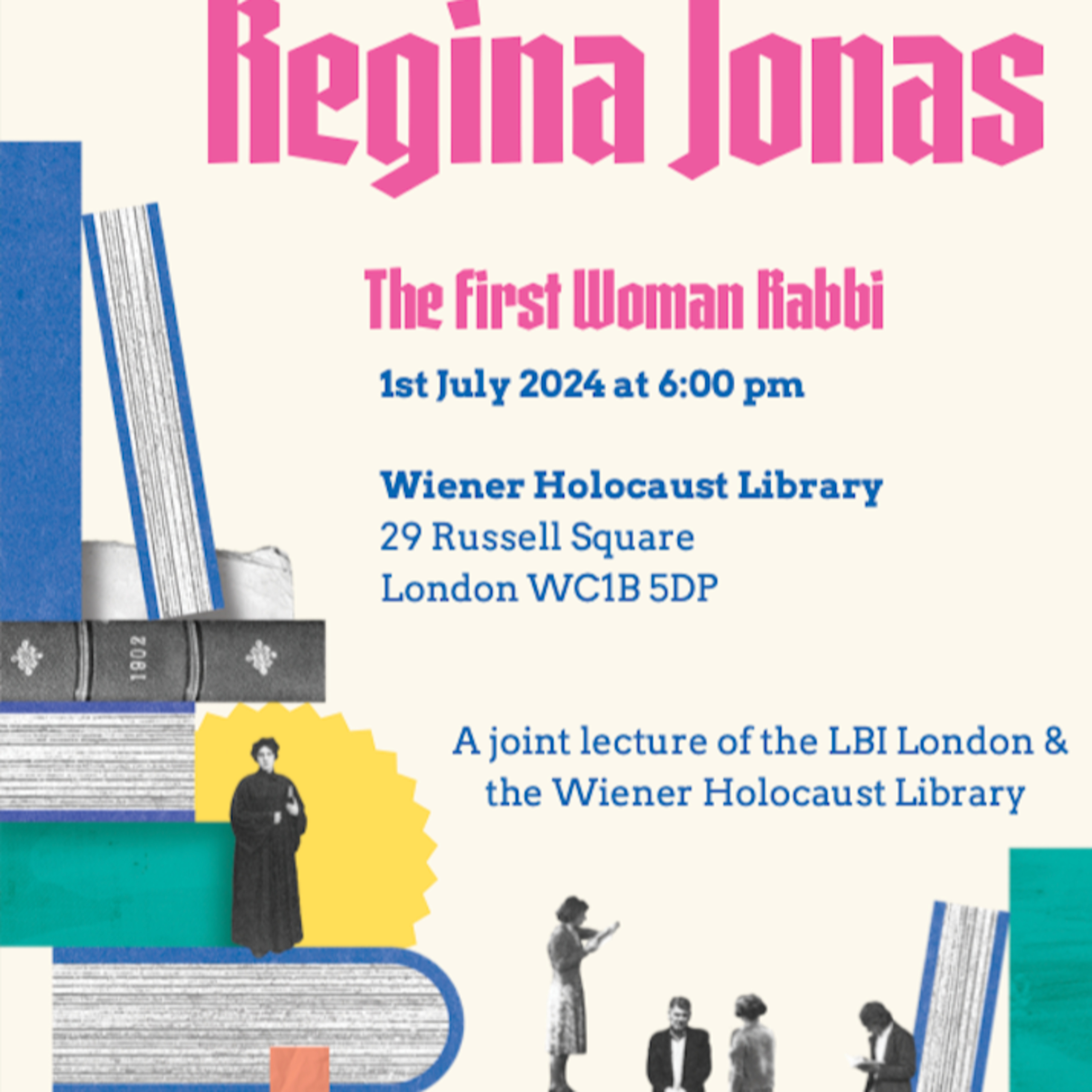 Regina Jonas – The First Woman Rabbi 08.07.2024 1t 13minRabbi Prof Dr Elisa Klapheck Wiener Holocaust Library Can women hold rabbinical office? This was one of the questions discussed at the Higher Institute for Jewish Studies, Berlin, in the 1920s and 1930s. And no one was better suited to provide an answer to this than Regina Jonas, a student at the Higher Institute who became the first female rabbi in the world in 1935. Prior to her ordination, Jonas answered the question about women’s access to the rabbinate in a halachic treatise that she submitted in 1930 as her final halachic project. Her biographer, Rabbi Prof Dr Elisa Klapheck, will share insights into a life that inspired a new kind of women’s participation in Jewish religious practice. This lecture explores the work of a determined woman who was passionate about Judaism and who was also beloved by the people whom she served in Nazi Germany and after her deportation to Theresienstadt camp in 1942. Regina Jonas was murdered in Auschwitz in 1944; her work still resonates today. Rabbi Prof Dr Elisa Klapheck is a Liberal rabbi in the Jewish community of Frankfurt am Main and a professor of Jewish Studies at the University of Paderborn. Her research engages with women and Judaism, early Jewish feminists like Margarete Susman, Regina Jonas, and Bertha Pappenheim, and religious practice in a political context. Event co-organised by the Wiener Holocaust Library Recorded Monday, July 1, 2024 - 18:00 https://www.leobaeck.co.uk/events/library-lost-books/regina-jonas-first-woman-rabbi
 -
 Jewish Life In Contemporary Germany 14.06.2024 1t 28minProf Dani Kranz Germany is home to Europe’s third largest Jewish community. Yet surprisingly little is known about them. After the Shoah, about 15,000 German Jews returned to Germany or emerged from hiding. The growth of the Jewish population in Germany after 1945 was due entirely to immigration, which is somewhat counter intuitive. Who are the Jews who live in contemporary Germany? How do they live out their Jewishness? What Jewish cultures did they bring with them, and what kind of Jewish culture is forming in Germany? Dani Kranz is the incumbent DAAD Humboldt chair at El Colegio de México, Mexico City, and an applied anthropologist and director of Two Foxes Consulting, Germany and Israel. Her expertise covers migration, integration, ethnicity, law, state/stateliness, political life, organisations, memory cultures and politics as well as cultural heritage. This season’s lecture series Outsiders in German-Jewish History seeks to uncover the shared experiences of individuals and communities who found themselves on the margins of society. Transcending both time and geography, talks will offer different perspectives on the resilience and tenacity of those who have grappled with the challenges of being outsiders. How have they found identity and a sense of belonging in societies that have not understood or even accepted them? Organised by the Leo Baeck Institute London in cooperation with the German Historical Institute London and the British-German Association (BGA). Lecture recorded at Senate House, University of London on June 13, 2024 Images from the lecture, and other streaming links, are available on the Leo Baeck Institute London website: https://www.leobaeck.co.uk/kranz-24 #JewishLife #ContemporaryGermany#LectureSeries2024 #JewishCommunity#ProfDaniKranz #JewishCulture #JewishHeritage#Migration #Integration #CulturalAnthropology#DAADHumboldtChair #ElColegiodeMéxico #GermanyIsrael#LeoBaeckInstitute #HistoricalLecture
 -
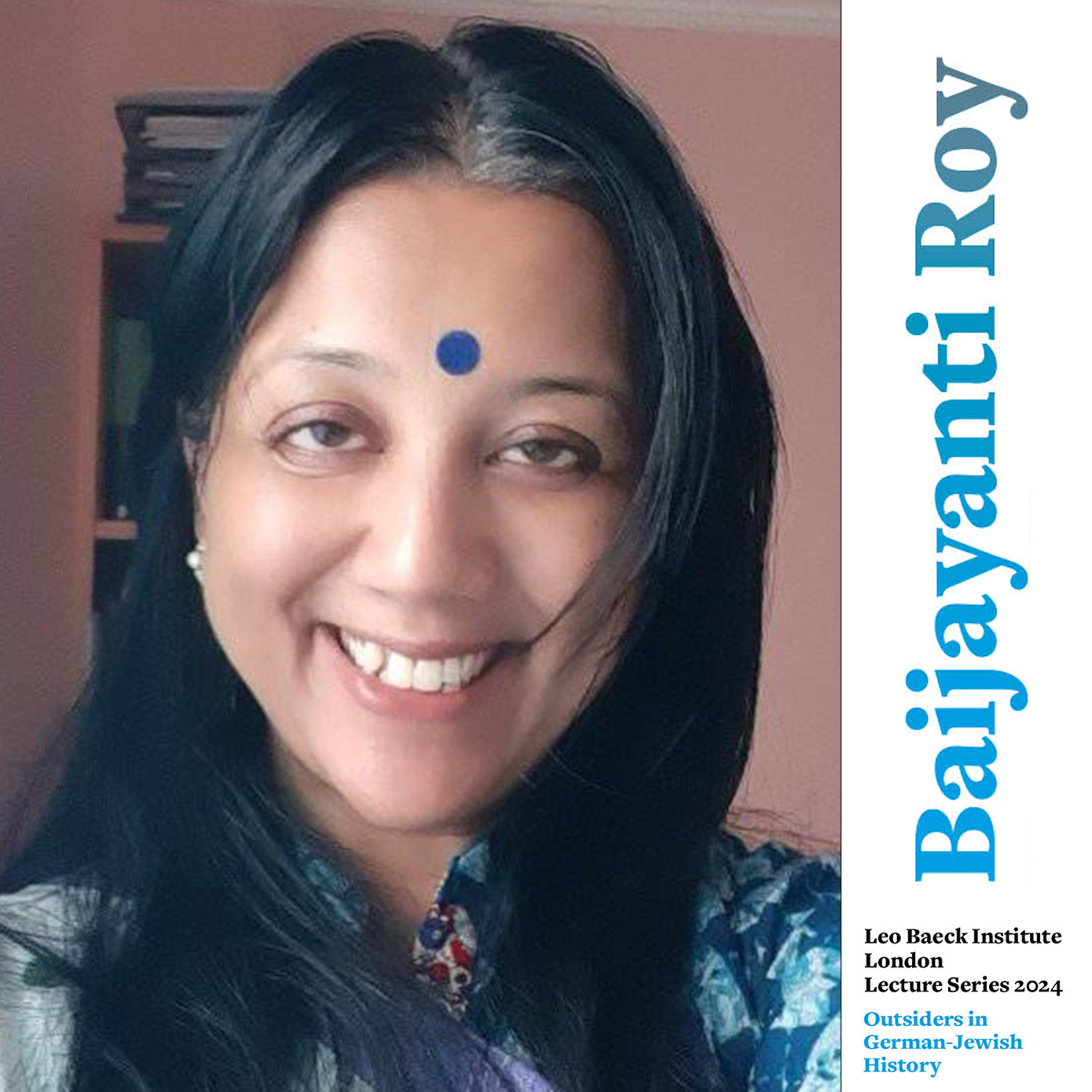 Heinrich Zimmer, Nazi Racial Politics and The University of Heidelberg, 1933–1938 03.05.2024 1t 11minDr. Baijayanti Roy University of Frankfurt This talk examines the grey zones that exist between the established paradigms of persecution and exile in the ‘Third Reich’, as demonstrated by the trajectory of the Indologist Heinrich Zimmer (1890–1943). Zimmer, who taught at the University of Heidelberg, lost his teaching license in 1938 since his wife Christiane was classified as a Mischling (mixed race) by the Nazi regime. He tried to battle his fate by offering diverse political capital to the Nazi political establishment and by counting on some sympathetic colleagues. Zimmer was able to flee Germany with his family in 1939. Baijayanti Roy is a postdoctoral researcher affiliated to the University of Frankfurt. Her monograph, The Making of a Gentleman Nazi: Albert Speer’s Politics of History in the Federal Republic of Germany was published in 2016. Another monograph, The Nazi Study of India and Indian Anti-Colonialism: Knowledge Providers and Propagandists in the ‘Third Reich’, will be published by Oxford University Press. She has published and spoken on different subjects including Nazi Germany, German Indology and the historical relationship between Germany and India. This season’s lecture series "Outsiders in German-Jewish History" seeks to uncover the shared experiences of individuals and communities who found themselves on the margins of society. Transcending both time and geography, talks will offer different perspectives on the resilience and tenacity of those who have grappled with the challenges of being outsiders. How have they found identity and a sense of belonging in societies that have not understood or even accepted them? Organised by the Leo Baeck Institute London in cooperation with the German Historical Institute London. Lecture recorded at Senate House, University of London on Thursday, May 2, 2024
 -
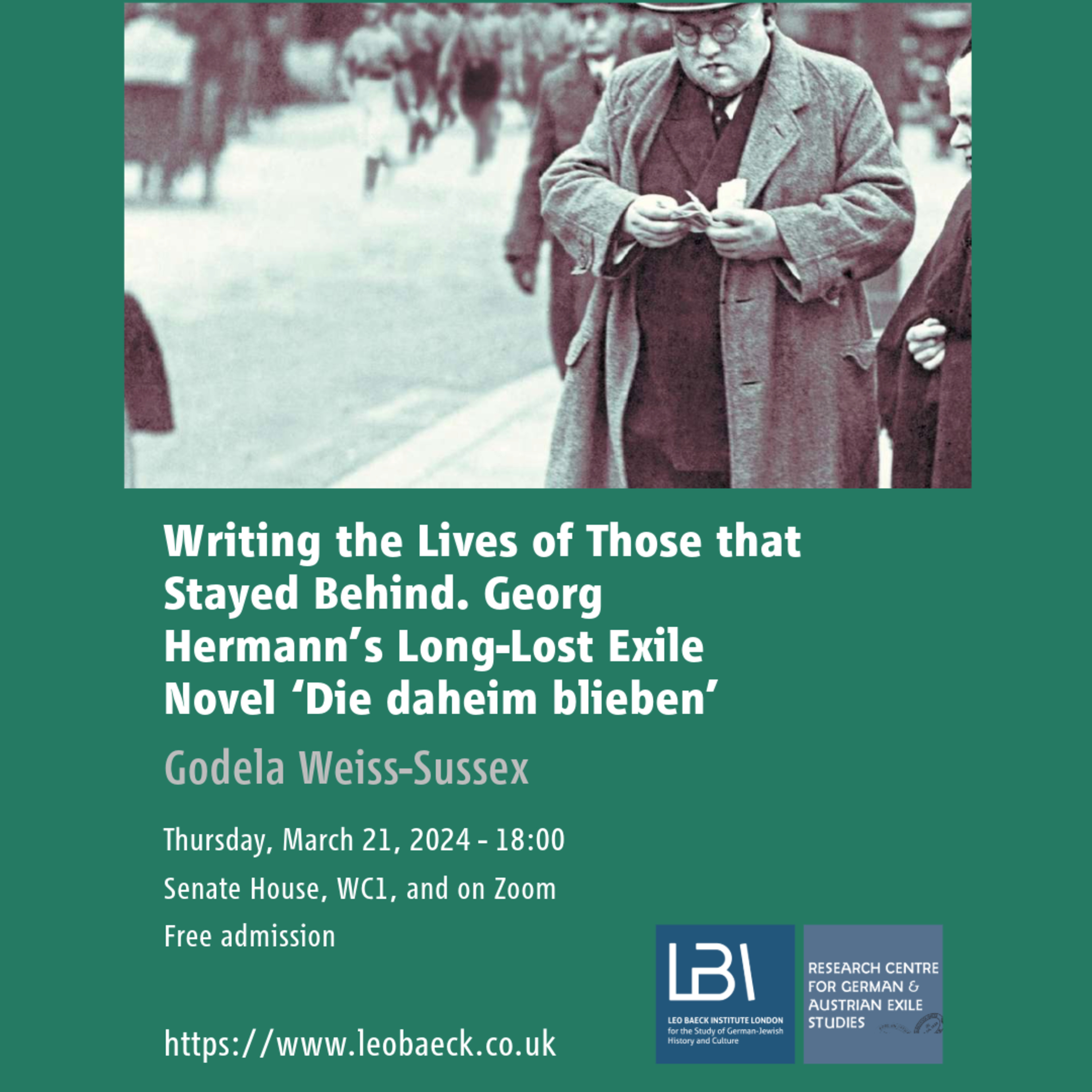 Writing The Lives of Those That Stayed Behind. Georg Hermann’s Long-Lost Exile Novel ‘Die Daheim Blieben’ 30.04.2024 1t 18minGodela Weiss-Sussex ILCS (University of London) In the winter of 1939–40, exiled in the Dutch city of Hilversum, Georg Hermann was working on a novel that he regarded as one of his most important. Entitled Die daheim blieben (Those that Stayed Behind), it was to be composed of four parts and tell the story of a large, diverse German-Jewish family in Berlin from March 1933 to November 1938. He was unable to complete the novel or see it published, and it was long thought to have been lost. Recently, however, the manuscripts of the first two parts were discovered among papers held by Hermann’s grandson, George Rothschild. After careful editing by Godela Weiss-Sussex, the text was finally published for the first time by Wallstein Verlag (Göttingen) in September 2023. In her talk Godela Weiss-Sussex, Professor of Modern German Literature at the Institute of Languages, Cultures and Societies (University of London), considers the story of the manuscript and its journey to publication, and introduces the novel’s content, characters and contexts. The talk gives a flavour of an extraordinary text that the author himself judged to be the ‘very best Georg Hermann’.This event is jointly organised by the Leo Baeck Institute London, and the Research Centre for German & Austrian Exile Studies at the Institute of Languages, Cultures and Societies, University of London. Lecture recorded on Thursday, March 21, 2024 Images from the lecture, and other streaming links, are available on the Leo Baeck Institute London website: https://www.leobaeck.co.uk/weiss-sussex-2024
 -
 International Women's Day 2024: Pauline Paucker 08.03.2024 1t 2minFor International Women's Day 2024, LBI Director Joseph Cronin interviews Pauline Paucker at her home about her memories of the Institute, her work editing the Yearbook, and her husband Arno Paucker, former director of the Institute. Her testimony is a personal reminiscence, and the views expressed therein do not necessarily reflect those of the Institute. https://www.leobaeck.co.uk/events/interviews/international-womens-day-2024-pauline-paucker
 -
Who was Fritz Kittel? A German Railway Worker Decides, 1933–2022 07.02.2024 1t 31minReading: Esther Dischereit together with Jonny Ball. In 2023, Esther Dischereit created an exhibition in cooperation with Deutsche Bahn to honour the railroad worker Fritz Kittel. In 1944 and 1945, he hid her mother Hella and sister Hannelore, who as Jews were persecuted by the Gestapo and threatened with death in Germany under National Socialism. They were liberated by U.S. troops in 1945. Dischereit began to search for the family of the rescuer and found them in 2019. Fritz Kittel had not told his own family about his courageous act throughout his life. Esther Dischereit's literary response in 17 text pieces includes other found objects from the lives of her mother, sister, and Fritz Kittel, and they offer a dialogue with those who are now the daughters and sons or grandchildren. False information given at a registration office, illegal names and addresses ... What do we read when we read these documents? What do we see when we look at these photos? Esther Dischereit lives in Berlin, writes prose, poems, essays, and radio works. She is considered one of the most important voices of Jewish literature in Germany in the second generation after the Shoah. She was honoured with the prestigious Erich Fried Prize for her work in 2009. She was a professor at the University of Applied Arts in Vienna from 2012 to 2017 and held a chair in contemporary poetics at NYU in 2019. Among her most recent publications and projects Hab keine Angst! Erzähl alles. Das Attentat von Halle und die Stimmen der Überlebenden (Ed., 2020); Sometimes a Single Leaf (2020) and Flowers for Otello On the Crimes that Came out of Jena (2022) – both translated by Iain Galbraith, as well as Wer war Fritz Kittel, Exhibition 2023: Berlin / Frankfurt am Main / Chemnitz / Nürnberg. Lecture recorded at Senate House, London Tuesday, February 6, 2024 - 18:00 Images from the lecture, and other streaming links, are available on the Leo Baeck Institute London website: https://www.leobaeck.co.uk/events/special-events/who-was-fritz-kittel-german-railway-worker-decides-1933-2022 This lecture is a collaboration between the Leo Baeck Institute London and the Goethe-Institut London. Poster photo credits: ©Abraham Pissarek, ©Katrin Hammer / Deutsche Bahn AG, ©Katrin Hammer / Deutsche Bahn AG
-
Dressing Eve: Re-drawing Biblical Women through Comics 01.12.2023 1t 13minDr Sarah Lightman Jewish women have been at the forefront of feminist autobiographical comics since the 1970’s as they challenged sexism in popular culture. But how have they revised misogynistic images and stories closer to home? Sarah Lightman will illustrate how Sharon Rudahl in her bildungsroman ‘The Star Sapphire’, Miriam Katin in her Holocaust memoir, We Are on Our Own, and her own graphic novel, The Book of Sarah, transform biblical narratives and images to reflect their own, lived, experiences. Sarah Lightman is an artist, writer and Faculty at The Royal Drawing School, London. She attended the Slade School of Art for her BA and MFA, University of Glasgow for her PhD and was an Honorary Research Fellow at Birkbeck, University of London (2018-21). She edited the multi-award-winning Graphic Details: Jewish Women’s Confessional Comics in Essays and Interviews (McFarland, 2014), published her autobiographical graphic novel, The Book of Sarah (Myriad Editions and Penn State UP, 2019) and co-edited Jewish Women in Comics: Bodies and Borders (Syracuse UP, 2023). This season’s lecture series seeks to explore the connection of visual narratives in the context of beauty, ugliness and morality with representations of Jews and Jewishness in the Western world from the Middle Ages to the present day. We aim to examine the subject from different historical, social and artistic perspectives ranging from medieval mythology to Orientalism, Zionism, Feminism or modern aesthetics, and through the lens of a selection of diverse media including painting, photography and comics. Lecture recorded at Senate House, Malet St, London WC1E 7HUThursday, November 30, 2023 - 18:30 More information: https://www.leobaeck.co.uk/events/leo-baeck-institute-london-lecture-series-2023/dressing-eve-re-drawing-biblical-women #Comics #Comic #WomenInComics #WomenInArt #WomensArt #JewishArt #FemaleArtists #Artist #Illustrator#Judaism #JewishHistory #jewishculture #LondonEvent #LondonEvents #AuthorTalk #Author #OnlineLecture #LeoBaeckInstituteLondon #UniversityOfLondon #Bloomsbury #SenateHouse
-
The Shoah and the Tragedy of Assimilation: Lessons from one German-Jewish family 29.10.2023 1t 33minSimon May Thursday, October 26, 2023 - 18:30 Between 1933 and 1941, Simon May’s mother and her two sisters pushed the boundaries of assimilation among German Jews to their limits. They resorted to conversion, aristocratic marriages, and ‘Aryan’ certificates, which likely saved them from the death camps. However, this marked the defeat of the hope that such strategies would secure acceptance for Jews in German and European society. It led to a unique vulnerability, as these three women – and many others like them – distanced themselves from their cultural roots, leaving them emotionally defenceless when disaster struck. This self-inflicted psychic violence presents challenges for their descendants, grappling with questions of identity and belonging in a world in which millions of people continue to be forcibly displaced. Simon May is Visiting Professor of Philosophy at King’s College London. His interests lie in ethics, philosophy of the emotions, questions of identity and belonging, and German 19th and 20th Century thought. His books include Nietzsche’s Ethics and His War on ‘Morality’ (1999), Love: A History (2011), Love: A New Understanding of an Ancient Emotion(2019) and The Power of Cute (2019), alongside his widely praised family memoir How To Be A Refugee (2021). May’s work has been translated into ten languages and regularly features in major newspapers worldwide. This lecture was organised by the Leo Baeck Institute London and was held at the Keynes Library, Birkbeck's School of Arts, 43 Gordon Square, London WC1H 0PD. Images from the lecture, and podcast streaming links, are available on the Leo Baeck Institute London website at https://www.leobaeck.co.uk/biennial-lecture-2023
Samankaltaiset podcastit


Suosittu maassa
Tämä podcast esiintyy myös näiden maiden podcast-listoilla.
