
The Sober Creative Podcast
with Josh Woll
0
The Sober Creative Podcast features live conversations with people navigating their sobriety journeys. Each episode explores personal transformations, practical strategies, and the unexpected creative advantages of clear-minded living. Guests share how sobriety enhances artistic expression, business success, and personal fulfillment. The series highlights greater authenticity, purpose, and creative power found through sobriety.
Jaksot
-
 Episode 070 - The Whisper Needs You Awake: Lisa Marie Simmons on Performing, Writing, and Drinking Less 25.09.2026 46minLisa Marie Simmons has been on stage since she was fifteen. She moved from Boulder to New York at nineteen to study theater and music, and she believed what a lot of young artists believe: that the tortured artist needs a drink to get up there and bare her heart. She bought all in. By her own account, she was messed up for most of the five years she spent in New York.She is sixty now, living on Lake Garda in Italy, writing and recording with her husband Marco Cremaschini. She didn’t get sober. She reined it in, mostly in her forties, and she’s careful about how she describes what changed. “I absolutely have found that reducing it has given me more energy and more clarity.” That’s the claim she’ll make. She won’t make a bigger one.What makes this conversation worth your time is how specific she gets about the cost. Not the moral cost. The working cost. Dry vocal cords that stick instead of vibrating cleanly. A thick tongue that blurs the words she works hard to enunciate. One more error to avoid on a night when there are already plenty. And underneath all of it, the thing she keeps circling back to: if the song is arriving from somewhere outside of you, you have to be awake enough to hear it.Show Notes[02:38] The Tortured Artist Myth* Lisa names the old trope directly: that artists need to drink in order to write or to perform. She says she was a victim of it early in her career.* Getting on a stage is frightening. She used alcohol as a crutch to get past the fear of standing in front of people and baring her heart.* She now sees the flow-state version of the same myth as a misconception. Alcohol is not the best way to find that state.Key Insight: “And as you mentioned, I absolutely have found that reducing it has given me more energy and more clarity.”[05:24] New York in the Nineties* She describes a tumultuous childhood: re-homed after a first adoption, adopted again, then foster homes. “I’m not an original,” she says of the pain.* She arrived in New York at nineteen and let loose. She sees it now as her way of dealing with everything that came before.* She stayed until she was twenty-four, drinking and using, in a scene where cocaine was everywhere. A job singing in the south of France was the first thing that made her start reining it in.* She didn’t really rein it in until her forties.Key Insight: “And I’d say I was messed up most of that time.”[09:10] Why the Culture Makes It So Hard* Josh and Lisa talk about music venues where everybody is drinking, and how saying no can feel like getting banished from the pack.* Lisa extends it to the ritual around the gig: a drink and a cigarette while you wait to start, a drink while you break down the stage, a drink to come down from the high.* She lives in Italy and there’s wine, which is part of why she isn’t sober. It’s just no longer a daily thing.Key Insight: “And I think that’s the thing with alcohol. There’s always a reason to imbibe if you look for one, right?”[11:05] What “Messy” Actually Means on Stage* Less precision with notes and intonation. Stumbling over words. A tongue that thickens.* She’s a professional with decades of experience, so she doesn’t think the audience sees it. She feels it, and that feeling is what can derail a performance.* Alcohol also dries out the vocal cords. She explains the mechanics: the cords vibrate against each other, then open to let air through. Dry cords stick, and control goes.Key Insight: “It’s one more error that you have to avoid that you can just easily avoid by not drinking.”[13:07] Replacing the Pre-Show Drink* Most performers have a routine before they go on, something Lisa calls talismanic. Hers used to include alcohol.* Now it’s meditation. She breathes, gets into a space, and looks for the flow state so she can be as open as possible for the audience.* The rest of the list is plain and practical: tea for her throat, good hydration, sleep the night before, a nap if sleep didn’t happen, clothing that feels good, jewelry that makes her feel protected.Key Insight: “All of these things are such a great replacement for alcohol.”[16:36] A Listener Question on Alcohol Advertising* A listener asks whether alcohol ads work against accurate medical information about alcohol’s toxicity.* Lisa’s answer is careful. She says probably, but she doesn’t know. Businesses advertise toward the positive because their bottom line depends on us consuming.* She points to cigarettes as the example: advertised as cool in the thirties and forties, smoked by every movie star, and the public was deceived for decades about the harm.* Josh brings up research on alcohol and inflammation in the brain, and how long that inflammation can last, even after just a few drinks.Key Insight: “I think there could be studies that are out there about the toxicity of alcohol, of which we’re unaware. That’s possible.”[21:14] Meditation, the Imposter, and Capturing the Ephemeral* Lisa discovered meditation at fifteen in a high school drama class, under a teacher named Rita Cotter. She had the sensation of leaving her body and looking down at the room, and a sense of peace she calls enormous. She has not stopped since.* She uses it to quiet the imposter voice, the one that says it’s arrogant to think you could be the author of something.* She talks about what she’s actually reaching for: the most honest thing, the nugget of truth, the inner landscape that nobody else can climb inside of.* Josh shares The Clear Hour, a monthly Sober Creative gathering that opens with a guided creative meditation and then lets people make something.Key Insight: “It is about capturing the ephemeral and gifting it.”[26:31] The Highway of Creativity* Before the internet, songwriters in different parts of the world would write about the same themes or land on similar melodies. Lisa takes that as evidence of something you can tap into.* The songs she loves most are the ones that feel like they didn’t come from her at all.* This is where her argument about drinking lands hardest. If the material is arriving, you need your antenna working.Key Insight: “It feels like I’m a vessel for that thing. And again, how do you hear that? How can you be receptive to that if you are drinking?”[32:22] Morning Pages and Sitting With What’s Uncomfortable* Lisa keeps shelves of notebooks full of scribblings that will never be published. Three pages in the morning, no punctuation, no editing, no deciding whose voice it’s in.* She calls it another way to get rid of the imposter without drinking to do it. Josh points out it might also help around five o’clock, when the craving tends to show up.* The conversation turns to discomfort: that we aren’t built to sit with it, and that the hard passages are where the growth happens if we let ourselves feel them.* On comparing pain, she’s direct. Everybody she knows had something happen in childhood.Key Insight: “There’s no hierarchy of pain, right?”Key Quotes“It is about capturing the ephemeral and gifting it.” — Lisa Marie Simmons“And I think that’s the thing with alcohol. There’s always a reason to imbibe if you look for one, right?” — Lisa Marie Simmons“How do you hear it? How does that truth resonate if you’ve got this thing and this fog in front of it?” — Lisa Marie Simmons“It’s one more error that you have to avoid that you can just easily avoid by not drinking.” — Lisa Marie Simmons“I’m all about storytelling. That’s how we learn empathy. That’s how we grow. Storytelling is everything.” — Lisa Marie SimmonsResources Mentioned* Morning pages — the practice of writing three unedited pages first thing in the morning* Meditation as a pre-performance ritual — breathing into a flow state before going on stage* Insight Timer — where Josh has guided meditation practices available* The Clear Hour — The Sober Creative’s free monthly session: a guided creative meditation, then time to make something. Anyone can join.* Lisa’s Substack essay on her mentor Rita Cotter — the teacher who introduced her to meditation at fifteenWhere to Find Lisa Marie Simmons* Website: lisamariesimmons.com* Bandcamp: the best place to support her directly, since artists actually earn from purchases there* Streaming: her music is everywhere under her name, Lisa Marie Simmons* DAWTA The Podcast: her show with Dionne Draper on the transracial adoptee experienceWhat’s next for Lisa:* October 1–6: in New York for a book launch supporting her friend Phoebe Boswell, and a visit to the Recording Academy, where she has an album up for members’ consideration* November 13: back at Carnegie Hall as a guest of Charu Suri. Tickets are on sale now.Thank YouA heartfelt thank you to EG, mike stock, Deborah Taylor, and everyone who joined us live for this conversation, and to Lisa Marie Simmons for her generosity, her honesty, and for giving us a look inside how the work actually gets made. Your presence and engagement make these conversations possible.This was episode 70. Seventy people, seventy different paths, and every one of them has given us something worth keeping.What If the Fog Is the Only Thing Between You and the Work?Lisa was talking about the songs that carry real truth, the ones with no hiding in them, and she asked how you’re supposed to hear that truth with fog in front of it.Most of us aren’t asking whether alcohol is ruining our lives. We’re wondering if this next question is worth doing something about it. Is it costing me something in my work that I can’t quite name? More energy. More clarity. A workday that goes further. Those are the things Lisa could point to, and she’s the first to say the rest is hard to quantify.Thirty days is enough time to find out for yourself.The Sober Creative Reset is a 30-day 1:1 program built for those who want to test that question without signing up for a lifetime identity. Weekly 60-minute sessions, one on one with me. You bring the work you’re trying to do. We look at what’s actually in the way.I take five new 1:1 clients a month, and most people start within two weeks.P.S. Missed a previous conversation? Every episode and newsletter lives in the archive at thesobercreative.com. Worth a scroll if you’re new here.What’s Next: New conversations drop weekly. Subscribe to The Sober Creative on Substack to get each one in your inbox, plus the writing between episodes. Free subscribers get everything published. Paid subscribers keep the lights on and make the whole thing possible. This is a public episode. If you'd like to discuss this with other subscribers or get access to bonus episodes, visit newsletter.thesobercreative.com/subscribe
 -
 Episode 069 - One Panel At A Time 19.09.2026 47minFor about twenty years, Tiffiny Yaxley was the one who made the party happen. Figure skater, geologist, entertainer, the girl who would moon a room full of people because she thought it was hilarious. She built that reputation on purpose. And somewhere along the way she stopped liking the person she had built.She'll tell you there was no rock bottom. Just a Friday at 10 in the morning at a stressful job, when she caught herself already craving the drink she wouldn't have until after work. Then an Instagram ad for a 30-day challenge, which she clicked because it made a joke about alcohol and your bowels. She signed up with a group of complete strangers who had no idea who she was. She stopped drinking in May of 2022.What came after surprised her. The clear-minded days brought back mornings, hot pink mountain peaks at sunrise, and a version of herself she actually recognized. They also brought a depression she had been calling weakness for years. So she did what she has always done. She drew it. Panel by panel, her character The Graphical Bear became the way she processed what she couldn’t say out loud, and eventually became a book she can hold in her hands.This conversation covers all of it, including the parts that are still hard.Show Notes[02:25] Small Town, Big Reputation* Tiffiny grew up in a small town in northern British Columbia. Her first drink was New Year’s 2000 for the millennium, at 16, at a party in her boyfriend’s dad’s logging truck garage.* She stayed pretty mellow through high school and first year university. Then she got into her geology major, found her group, and found the party culture that came with it.* A figure skater who loved to perform, she leaned into being the center of attention. The more she drank, the sillier the stunts got, and the reputation stuck.Key Insight: The image took two decades to build and she outgrew it long before she knew how to change it.“I spent the better part of 20 years really developing and building this kind of image that after a while I really wasn’t happy with but I didn’t know how to change it for quite some time.”[04:56] Chasing the “Unicorn Amount”* Her dad quit drinking cold turkey in his mid-30s when she was around 10 or 11. Years later, that gave her a model: if he could do it, so could she.* From about 30 to 38, she wasn’t happy with who she was when she drank, but she kept drinking enough to pretend she was. The dopamine hits from the attention were hard to let go of.* She hunted for moderation, what she calls the “unicorn amount.” Her husband was the only one who saw the aftermath, including the nights she ended up on the kitchen floor in what she describes as a puddle of sadness and shame.* Drink two or three was what she calls the TSN turning point. She rarely drank during the week and was, in her words, a classic binge drinker.Key Insight: The scariest moment wasn’t a rock bottom. It was noticing a craving in the middle of an ordinary workday.“this is a little weird that I’m having this extreme craving to just go get absolutely shmammered. And it’s 10 a.m. on a Friday because I want to escape what I’m doing right now.”[09:05] A Funny Ad and a Group of Strangers* Dry January and Sober October never stuck. She would hit three weeks, decide it was dumb, and feel disappointed in herself.* An Instagram ad for an online 30-day challenge caught her because it was funny. She signed up, and it worked partly because the group was completely separate from her real life. Nobody there knew who she was.* On a business trip to Ontario she listened to Annie Grace’s audiobook and related hard, even though she didn’t feel like someone who was falling apart.* When she told a coach she had 10 days, the reaction was immediate and enthusiastic. She realized that felt better than friends clapping when she fell off a stage.* She came home from that trip good at her job and not hungover, and the early wins started stacking.Key Insight: The community was the variable that changed the outcome.“I think I wouldn’t have been able to do it had I kept trying to do it alone.”[13:52] The First Six Months Were the Hardest* She quit in May, which meant summer patio season, birthdays, and mountain bike rides that end in a beer. The Rockies have a short summer and everyone is outside for it.* She drank non-alcoholic beer at the same speed she used to drink, nine in one Friday, mostly to have something in her hands. It showed her how fast she had been going.* She made excuses at first, telling people she was doing a 90-day challenge. Then friends started coming to her privately saying they wanted to slow down too, and asking how she did it.* The hardest part was mourning who she used to be and letting people down who wanted that person back.Key Insight: The self-consciousness was mostly hers to carry, and almost nobody else was watching.“helped me figure out that I could be there and no one actually gives a s**t if you’re drinking or not. Everyone’s in their own head so much.”[17:59] Getting the Mornings Back* Sleep improved fast. So did her ability to sit back at a party, listen, and contribute when it mattered rather than run the room.* She learned what she actually enjoys versus what she thought she enjoyed. Live music yes, dancing yes, staying out past 11:30 no. Arm wrestling, also no.* A lifelong morning person from years of 6 a.m. ice times, she had been trading sunrises for hangovers, including the walks where she puked in a snowbank and felt she had shortchanged her dog.* Now she does the “poop loop” around her circle street with the dog, even at minus 30, to catch Alpenglow turning the peaks hot pink. That walk is on the cover of her book.Key Insight: The mornings turned out to be worth more than she expected.“Mornings were something that I just value so hard and didn’t really realize how much I liked them in the quiet.”[26:02] How the Graphical Bear Became a Book* She created the character in 2014, two days after a Halloween party she spent mostly in a friend’s bathroom. The first drawing was a bear barfing.* Calvin and Hobbes was her safe space as a kid when she was scared or anxious, so comics were already where she went to feel better.* She draws by hand and scans it. She loves a Venn diagram, an XY chart, a bar chart, and uses them to show how life’s variables relate.* About a year into quitting, she brought the bear back and started pairing comics with written stories on her blog. Her coach Gary, who joined the episode live, pushed her to put them online. Her aunt, her childhood figure skating coach, was the first to tell her how much she related.* People kept saying the same thing, so she self-published. She later showed the work at the art gallery in Golden for a month and did a book reading.Key Insight: Drawing it gave her somewhere to put the feeling, and something real to hold at the end.“I wanted to have something tangible that I could hold and be like, I built that.”[34:30] The Demon, the Doctor, and Asking for Help* Four and a half years in, she still has hard days, and a lot of them come down to not feeling good enough. In the book, that voice is a character called the demon, sitting opposite the dog like the devil and the angel on her shoulder.* She went to her doctor frustrated. She meditates, does yoga, quit drinking, eats well, sees her coach weekly, and was still crashing. The doctor told her sometimes people’s brains are different and they need help.* She resisted medication at first. After a couple of bad episodes and her husband telling her he was worried, she did her research, talked to her mother who is a nurse practitioner, and accepted it. She also started seeing a therapist.* A friend in her late 60s read the blog and the comic that went with it, then asked her own doctor about antidepressants. She told Tiffiny her life has never been better.Key Insight: She reframed help the way she would treat any other injury.“I broke a bone. I would go to the hospital and have the doctor help me fix it. There’s something here that I’ve been trying to fix on my own and maybe I should actually accept some help.”[40:24] Why It’s Called a Practice* Tiffiny and Josh both landed on the same thing: you can do all the work and still need a lift some days. It ebbs, it flows, and it is never perfect.* She has charts about this. Quality of life trends upward over time, with all the ups and downs still in the picture.* Looking back through three years of comics, she can see comics she drew early that still describe how she feels today, and she can also see the baseline move. She didn’t know art therapy was a thing when she started doing it to herself.* The final comic in the book is a Venn diagram about success, with fame, money, and feats of strength on one side and a cozy place to have coffee on the other.* She has taken close to a year off from comics to paint and do watercolors, but she has a sketchbook and a phone full of ideas, and November in the Rockies is a slow season.Key Insight: Progress is real even when it doesn’t feel like it.“Because sometimes the journey is great and you’re on the top of a mountain and you’re getting powder turns. And then all of a sudden you f*****g crash into a tree well and now you’re stuck.”Key Quotes“Because you’re becoming a new person, and the new person is actually who you are, not who you think you should be.” — Tiffiny Yaxley“I drew it because I felt so ashamed of myself and so sad that I am doing this all the time that I was like, if I can make it into a joke, and people laugh at it, then it’s okay.” — Tiffiny Yaxley“Depression’s a real thing, and I just kind of thought I was weak and shitty.” — Tiffiny Yaxley“And I think partly why I want to talk about it and why I wrote the book is because if you don’t see other people doing it, you’re so much less willing to try it.” — Tiffiny Yaxley“And there’s no way I would have built this without stopping drinking.” — Tiffiny YaxleyResources Mentioned* Annie Grace’s book — the audiobook Tiffiny listened to on her business trip to Ontario, published as This Naked Mind* Calvin and Hobbes — the comics she read as a kid when she felt scared or anxious* Art therapy — a formal practice she discovered only after years of doing a version of it on her own* Alpenglow — the sunrise light on the snowy peaks near her home in Golden, BCWhere to Find Tiffiny* Website and blog: thegraphicalbear.com — new comics posted with the story behind each one, plus a mailing list so you get an email when one goes up* Email: [email protected]* Her book: The Graphical Bear: Expressing the Feels Through ArtEvery panel in the book is drawn by hand. It covers about three years of her life, it's funny, and it's honest about the parts most people leave out. She'll tell you the goal was never to make money, which is part of why it's worth supporting. Grab a copy here.Thank YouA heartfelt thank you to Gary Allen, KarenC-Book Collector📚⚖️🗽🗳️🧿♒️, Martinique Akinfosile, Flora Acosta, and many others who joined us live for this conversation, and to Tiffiny Yaxley for her honesty, her humor, and her willingness to talk about the parts that are still hard. Your presence and engagement make these conversations possible.Ready for Your Own Reset?Tiffiny tried to do it alone for years. Dry January, Sober October, the hunt for what she called the unicorn amount. What finally worked was a set window of time, daily support, and people in her corner while she figured out who she was without a drink in her hand.That’s exactly what The Sober Creative Reset is built to give you.It’s 30 days of 1:1 coaching designed to help you wake up feeling like yourself again. You get four 60-minute sessions, daily check-ins, trigger and pattern mapping, tools for your energy and rhythm, real strategies for social and work situations, and support when you stumble.It’s made for people who feel worn down by what alcohol is taking from their work and their energy, and who want clarity without a traditional recovery framework. It’s $497 for the first 30 days, then month to month, cancel whenever you want.Tiffiny said the first six months were the hardest, and that the wins built on each other once she got a few. The Reset is about getting you those first wins with someone in your corner.Looking for the group part? Tiffiny put it plainly: "I think I wouldn't have been able to do it had I kept trying to do it alone." If that's what's missing for you, The Sober Creative Collective is $49/month for your first three months, then $79/month, cancel whenever you want. Real people, live, with me in the room. This is a public episode. If you'd like to discuss this with other subscribers or get access to bonus episodes, visit newsletter.thesobercreative.com/subscribe
 -
 Episode 068 - What Alcohol Actually Does To Your Brain 11.09.2026 39minMost of what I know about alcohol, I learned by living it. I know what nine beers a day did to my sleep, my mornings, my work, and my sense of who I was. What I never had was the other half of the picture. The part happening at the level of receptors and stress hormones and inflammation, in a place I can’t see and was never taught to look.Dr. A Leslie Morrow spent 35 years in that place. She’s a John Andrews Distinguished Professor Emerita at UNC Chapel Hill, published more than 238 scientific articles, and served 25 years as associate director of the Bowles Center for Alcohol Studies. Her work on GABA receptors and the body’s own neurosteroids led to clinical trials for alcohol use disorder and to brexanolone for depression.She could have spent this hour on technical science. Instead she chose to tell us the one thing she thinks matters most, and it reframed how I understand my own decade of drinking. Alcohol leaves inflammation behind. Not the kind you feel in a sore knee. A specific kind, in your brain and your organs, that makes anxiety louder, pain sharper, focus harder, and craving stronger. It can last long after the last drink. And there are things you can do about it.If you have ever wondered why stopping felt harder than it should have, this conversation offers an answer that has nothing to do with willpower.Show Notes[00:00] Why this conversation is different* Instead of one person’s story of what they let go, we went into the biology underneath all of our stories.* Dr. Morrow’s background: PhD in neuroscience at UC San Diego, postdoctoral training at NIH, 35 years at UNC.* I came in with a list of questions I’ve carried for years, including why cutting back fails for people who are trying as hard as they know how.Key Insight: She chose depth over jargon from the first minute. “What I would like to kind of do is rather go through a lot of technical science that may or may not be useful to people is tell you what I think has been the most important discovery.”[02:53] The dose matters, and so does what’s already in you* One or two drinks does something very different in the body than four, six, or nine.* Alcohol is a tiny molecule that acts at many sites. At low doses it acts one way. At high doses it’s a toxin.* What alcohol does to you also depends on what you already have going on. Anxiety, stress, and pain change the picture before the first sip.* Alcohol doesn’t act only on the brain. It acts on the whole body.Key Insight: “If you add a toxin to a situation that’s already working abnormally, it’s going to have different effects than if you add that toxin to a physiology that’s normal.”[04:24] The discovery she calls the most important* A lifetime of heavy drinking creates inflammation in the brain and in every organ.* That inflammation interferes with normal function, which is part of why control is so hard and craving is so strong.* It makes your original reason for drinking worse. If you drank because you were anxious, the inflammation makes you more anxious. If you drank because of pain, it makes the pain worse.* We know this from studying the brains of people who died with alcohol use disorder. Those brains show high levels of inflammatory cytokines and chemokines, which Dr. Morrow calls “danger molecules.”* This is a specific kind of inflammation. It is not the same as arthritis or a common headache.Key Insight: “So basically, it’s making all the triggers stronger.”[10:26] Exercise, the tool with the strongest science* Researchers made rats dependent on alcohol at doses similar to what humans drink, and the rats developed the same inflammation in liver and brain that humans do.* Then they let the rats exercise. Before drinking, during drinking, or after stopping. Every version lowered the inflammatory molecules in the brain and the liver.* Dr. Morrow was clear that this work came from other labs, not hers, and that the science behind it is strong.* The type doesn’t matter. Walking, yoga, weights, whatever you enjoy. What matters is frequency.Key Insight: “Just make sure you do it more than four days a week, more than half of the days of the week.”[13:36] Leaky gut, the TLR4 pathway, and licorice root* High doses of alcohol cause leaky gut. Everyone has endotoxin in their gut, and it’s fine while it stays there. When it leaks into the bloodstream, it switches on a pathway called toll-like receptor 4 (TLR4).* TLR4 is what produces the inflammatory molecules. Once it’s on, it keeps turning itself back on and switches on other pathways too.* Those inflammatory molecules change how the brain works and how your normal neurotransmitters behave, which leads to extra anxiety, depression, pain, and craving.* A group at UNC found a natural blocker of this pathway in licorice root, a compound called glycyrrhiza. In animal models it reduced voluntary drinking, blocked brain inflammation, and reduced anxiety-like behavior. Human trials are about to begin.* No medication currently targets TLR4 directly. Natural compounds can’t be patented, so drug companies have little reason to fund them through trials.Key Insight: “Once you start that inflammatory process, particularly in the brain, it’s not easy to stop it.”[20:04] Pregnenolone and refilling your own supply* Your body already makes steroids that keep those inflammatory pathways in check. Pregnenolone and allopregnanolone.* Chronic stress drains them. Chronic drinking drains them. When your stress system is depleted, your natural defense against inflammation is depleted too.* Pregnenolone is the precursor to the other protective steroids, and it blocks TLR4 activation directly. It’s available over the counter.* In a Yale clinical trial with about 300 people, eight weeks at 300 mg a day normalized stress responses and reduced stress-induced craving, alcohol craving, and alcohol intake.* You don’t have to take it forever. Two months may be enough, unless a binge, a stressful stretch, or a toxin exposure brings the inflammation back.Key Insight: “We have an endogenous steroid that helps us relax. We have an endogenous steroid that helps us sleep. We have an endogenous steroid that protects our stress system.”[21:38] How a neuroscientist ended up studying alcohol* A college professor got her excited about science. That led to neuroscience, then to a graduate lab studying brain receptors.* During her postdoc at NIH she discovered that these natural steroids are powerful activators of GABA receptors. In the last eight to ten years her lab found they also block inflammatory pathways.* She turned to alcohol because alcohol activates GABA receptors too. At one or two drinks, that’s the source of the “ah” feeling, the relief people chase.* Part of the reason was practical. NIAAA funded the work. Then she started noticing how many people around her, including in her own family, had struggled with this.* She called alcohol probably the biggest public health problem in the world, and pointed out that NIAAA is the smallest institute with the smallest budget at NIH.Key Insight: “I think it has to do with the fact that for a long time, people thought of this as a moral problem, not as a real biological problem.”[29:15] What lingers after the hangover, and the short list* The hangover itself is mostly the immediate effects of alcohol. The things that stay after the hangover lifts are more likely to be inflammation.* Her list of those lingering effects: brain fog, anxiety, heightened sensitivity to pain, difficulty focusing. They can last a week or much longer.* Inflammation is hard to remove once it starts. In postmortem brains, the levels tracked with lifetime alcohol use.* If you already carry inflammation, even a few drinks a week keeps it going. If you don’t have any and you drink two or three a week, you might be fine.* Her short list for lowering it: exercise, pregnenolone, glycyrrhiza from licorice root. For supplements she stressed buying from a reputable, independently tested source.* She also mentioned that inflammation plays a big role in depression, through the same pathway.* Now retired, her focus is legacy work. Getting this research to the public, because the drug companies won’t.Key Insight: “When you feel like you’re living with those things and they just don’t ever leave you, to me that’s a sign that you have inflammation that you need to address. And then you’ll be much better able to change your behavior the way you want to.”Key Quotes“What a lifetime of excessive alcohol consumption does is causes a lot of inflammation in the brain and in all the organs, in fact.” — Dr. A. Leslie Morrow“If you started out drinking because you were anxious or stressed, well, those inflammatory changes just make you more anxious and more stressed.” — Dr. A. Leslie Morrow“It’s really hard to get rid of that inflammation. It’s really hard. Once it starts, it can stay your whole life.” — Dr. A. Leslie Morrow“Exercise actually counters the effects of inflammation. And we don’t know exactly how it does that, but we know that it does.” — Dr. A. Leslie Morrow“Maybe you have one bender and you’re beating yourself up because you did that. Well, instead of that, just increase your exercise for the next few weeks.” — Dr. A. Leslie MorrowResources MentionedExercise — More than four days a week, whatever form you enjoy. The strongest evidence on the list.Pregnenolone — Over-the-counter supplement. The clinical trial dose was 300 mg a day for eight weeks, with about 100 mg a day mentioned for continued use. Buy from a reputable, independently tested source.Glycyrrhiza (licorice root) — Around 400 mg a day. Dr. Morrow noted it shouldn’t affect blood pressure in most people at that dose, but if you have high blood pressure you need to watch that closely. Human trials are about to begin.The TLR4 pathway — The inflammatory pathway alcohol switches on through leaky gut.Allopregnanolone and brexanolone — Her discoveries on allopregnanolone led to brexanolone as a treatment for depression.Bowles Center for Alcohol Studies at UNC Chapel Hill — Where this research happened.One important note from me: Dr. Morrow is a scientist sharing research, and nothing here replaces a conversation with your own doctor. Before adding any supplement, especially if you take medication or have a blood pressure condition, talk to a professional who knows your health history.Where to Find Dr. MorrowDr. Morrow retired from UNC in February 2025 and is now focused on getting this research into the hands of the people it can help. She invited questions directly: send them to her on Substack. You can also find her faculty page and full publication list through the Bowles Center for Alcohol Studies at UNC Chapel Hill.What This Means for the Next 30 DaysFor years I blamed myself for the fog. The mornings I couldn’t focus. The anxiety that showed up for no reason. The sense that I was working twice as hard for half the output. I thought that was a character problem.It was a recovery problem. My system was carrying something it couldn’t clear on its own, and every drink kept topping it up.Dr. Morrow’s research says something hopeful inside all that hard news. The things that lower inflammation are things you can start doing this week. Stop adding to it. Move your body more than half the days. Give your system a real stretch of time without the thing that keeps reactivating the pathway.That’s what The Sober Creative Reset is built for. Thirty days, one on one, with weekly 60-minute sessions. We work on the daily practices that let your system come back online, and on the beliefs that made the drink feel necessary in the first place. It isn’t about counting days. It’s about restoring the loop between recovery and the work you actually want to make.I take a few new 1:1 clients a month, and most people start within two weeks.👉 Learn more about The ResetIf the fog has become so normal you stopped noticing it, thirty days is long enough to find out what’s underneath.Thank YouA heartfelt thank you to Shah Huzaifa, Bonnie Bluewater 🐦, Jeji, KarenC-Book Collector📚⚖️🗽🗳️🧿♒️, Martinique Akinfosile, and many others who joined us live for this conversation, and to Dr, A Leslie Morrow on, and for four decades of work and for the generosity of bringing it here in plain language. Your presence and engagement make these conversations possible. This is a public episode. If you'd like to discuss this with other subscribers or get access to bonus episodes, visit newsletter.thesobercreative.com/subscribe
 -
 Episode 067 - The Part Sobriety Didn't Touch 04.09.2026 49minSteve [Sage-Outlaw-Caregiver] on the crash that came six years after he quit, and finding out at 40 that he was creativeSteve didn’t take a drink until he was 21. He calls it a reverse Benjamin Button. Most people get their worst drinking out of the way young. His started late, got heavier every year, and by the back half of his 30s it was every single day.He stopped on August 4th, 2018, after his drinking got him sent home from a post in South Africa. There was no program and no meetings. He was so depressed he couldn’t leave his room, which broke the habit before he ever decided to break it.Then nothing was fixed. Six years later, still sober, he was diagnosed with ADHD, watched two decades of near-perfect performance reviews collapse, went through termination proceedings, and checked himself into inpatient care in the Colorado mountains because he couldn’t guarantee his own safety.Almost none of what he found there had to do with alcohol. It had to do with a man who had spent his entire adult life believing he was his job. What he built on the other side of it is a dog wellness company and a world of corvid characters he draws with AI, which is not where a career foreign aid officer expects to end up.A note before you read on: Steve speaks openly about depression and two suicidal episodes. He gave his full blessing to share it. If any of this hits close to home for you, please reach out to someone you trust.Show Notes[02:36] A Late Start That Got Worse With Age* Steve went to Tulane in New Orleans, a heavy drinking town, and mostly ran with the engineering and finance crowd. He barely drank in college and never blacked out there.* After graduation he took an internship with the Department of the Army and landed in a cohort with a real drinking culture. Classes ended at three and the group went straight to margaritas.* He moved every two years, served overseas with soldiers, and drank his way into every new room. He describes himself as a chameleon during those years.* By the second half of his 30s, it was daily.Key Insights“It seemed like a shortcut. So that’s how I kind of just got sucked into it.”[11:15] When Drinking Flipped From Fun to Function* Steve rose fast, three years with the Army and then 17 at USAID. Every promotion brought a fresh wave of imposter syndrome.* He was moved from Washington, D.C. to South Africa to run a large office. He remembers blacking out one night because he had to fire somebody the next morning.* The circle kept shrinking. Five people at the bar became three, then two, then just him.* Drinking stopped being about having no responsibilities and started being about having too many.Key Insights“It becomes less of a social thing and more of a, this is just something I need to do.”[14:26] August 4th, 2018* His drinking started affecting his work. He was sent back to the United States from South Africa.* The depression that followed was so heavy he couldn’t get out of his room, so he stopped drinking without ever making a plan to.* He had to leave his dogs behind in South Africa for two months and wasn’t allowed to visit them.* He never went to AA. He just stopped.Key Insights“August 4th is the day I returned to the United States and I thought my life was over.”[17:45] COVID, ADHD, and the Loss of Structure* Working from home stripped away the outside structure that had been holding him together. His ratings dropped from an average of 4.5 out of 5 down to threes, twos and ones.* He wanted to start drinking again. He went to therapy instead and came out with a diagnosis of ADHD and major depressive disorder.* Leadership gave him no coaching and no useful feedback, and he couldn’t work out what was happening to him.* Between 2020 and 2024 it built into a crash, and a second suicidal episode.Key Insights“What I found out is the lack of structure was killing me and I couldn’t figure out what was wrong with me.”[21:26] Losing the Job That Was His Whole Identity* Bad reviews turned into termination proceedings. He believed it was all his fault.* He checked into inpatient care in Colorado expecting a short stay. He thought he was better, wasn’t, and stayed a second month.* In 2025, USAID was dismantled and his 17-year career ended outright. Having the job taken from him did what he couldn’t do himself.* He had stayed off social media for 20 years. Substack is where he landed after.Key Insights“I was finally able to break Steve away from Steve, the USAID worker.”[23:07] The Depression Equation* Steve built himself a simple formula for what was happening to him, and then built his day around beating it.* His answer was to get outside, so he started walking dogs. It slowly dawned on him that this could be an actual life.* Buddhist teachings on attachment had been floating around his life for years without landing. They landed now.* He got obsessed with space, and found the scale of it comforting rather than frightening.Key Insights“Depression equals being at home. Being alone and in your own head. So at home plus alone plus in your own head equals depression. It’s just an equation.”[26:02] Finding Out He Was Creative After All* Steve was a numbers guy and a spreadsheet guy who was certain he had no creativity in him at all.* Art therapy in Colorado cracked it open. He drew stick figures and it felt good anyway.* AI became the tool that closed the distance between what he could picture and what he could make.* He learned he wasn’t a burden on the people around him, a belief that had shaped how he lived for decades.Key Insights“Didn’t think I had any artistic bones in my body or any kind of creativity ever.”[33:15] Outside Feet, Artificial Idiocracy, and What Creativity Actually Is* “Outside feet” is what Steve says to his own dogs when he’s putting his shoes on. He built the company name around that instead of a pet pun.* Artificial Idiocracy started as a joke about being the average person stuck between the pro-AI and anti-AI camps.* He’s building a Renaissance-punk world of corvid characters modeled on writers he admires on Substack, studying their sites, words and mannerisms before he designs each one. * He now makes less money than he did at USAID and says he’s happier.Key Insights“It’s just being open and being honest is what I think creativity really is.”[39:07] The DossierAbout forty minutes in, Steve shared his screen and showed me the character he’d made for me.I’m a rook. He picked it on purpose. Ravens are loud and shouting all the time, and as he put it, “the rooks are a little bit more introspective.” He called the character a sober artigiano, a working artisan, and drew me as a stone sculptor. His description: “creating something out of something very raw, but you’re shaping it into something beautiful.”He gave it a full dossier. Species, publication, class, a list of traits. Stone Sculptor: shapes new form by refusal. Radical Honesty: drops the alibi. Clear Hour: makes in the empty hour. Creative Reset: builds what sobriety gives back. He’d read enough of my work to pull The Alibis into a panel of its own, put the arm tattoo on the sleeve, and put me sitting in meditation at sunrise. Along the bottom it reads: Perfection isn’t the goal. Presence is.This is what he does now. He studies a creator’s work, their words and their mannerisms, and builds them a character in a Renaissance-punk world of corvids. “I studied their sights, I studied their words, I studied their mannerisms.” Then he gives it away.A man who spent 40 years certain he had no creativity in him made this. That’s the whole episode in one image.Key Quotes“For me, my entire life, my identity, my worth was tied up with my job.” — Steve“I just decided I needed to go to inpatient because I couldn’t guarantee my own safety.” — Steve“I’m not a burden to anybody. In fact, people like helping other people.” — Steve“The materialism is not the key to happiness. It is something within you and the community around you that has that happiness.” — Steve“I’m not here to promote anything. I’m just here to be myself. And that’s the greatest thing I can pick up right now.” — SteveResources Mentioned* Art therapy — where Steve first drew anything as an adult, during his inpatient stay.* Buddhist teachings on attachment — ideas that had been around his life for years and finally took hold after he lost his job.* Corvids and the Renaissance — the two sources behind his Renaissance-punk character world. Ravens, crows, jackdaws, nutcrackers, rooks and jays.* The Clear Hour — my free monthly gathering. A short guided practice, then everyone works, then we come back and share.Where to Find Steve* Outside Feet: outside-feet.com — daily dog wellness in D.C. and Montgomery County* Artificial Idiocracy on Substack, where the corvid characters live* Mostly, he’s in the notes. In his words: “Always happy to talk with people.”What Steve’s Story Says About StructureSteve quit drinking in 2018 and stayed sober. Six years later he still crashed.What took him down was the loss of structure. No outside scaffolding, no daily contact, no one checking in on how he was actually doing. He said it plainly: the lack of structure was killing him and he couldn’t figure out what was wrong.That's the piece most people skip. They stop drinking and leave everything around it exactly as it was.The Sober Creative Reset is 30 days of structure while you take alcohol out. Four weekly 60-minute sessions with me one-on-one, daily email check-ins with a reflection prompt, trigger and pattern mapping, and tools to steady your nervous system when it gets loud. When you slip, we adjust the plan instead of starting over.It’s $497 for the 30 days, about $124 a session, and you can cancel anytime. It isn’t therapy, rehab, or AA. It’s coaching built from having walked this myself.If you want to talk it through first, book a free clarity session from the page. No pressure either way.Thank YouA real thank you to Steve for showing up as himself, yellow glasses and all, and for talking about the hardest parts of the last few years without flinching. And thank you to Florence Acosta, EG, Love conquers hate, Duncan The Sage, and many others who joined us live and hit those buttons. These conversations happen because you show up for them. This is a public episode. If you'd like to discuss this with other subscribers or get access to bonus episodes, visit newsletter.thesobercreative.com/subscribe
 -
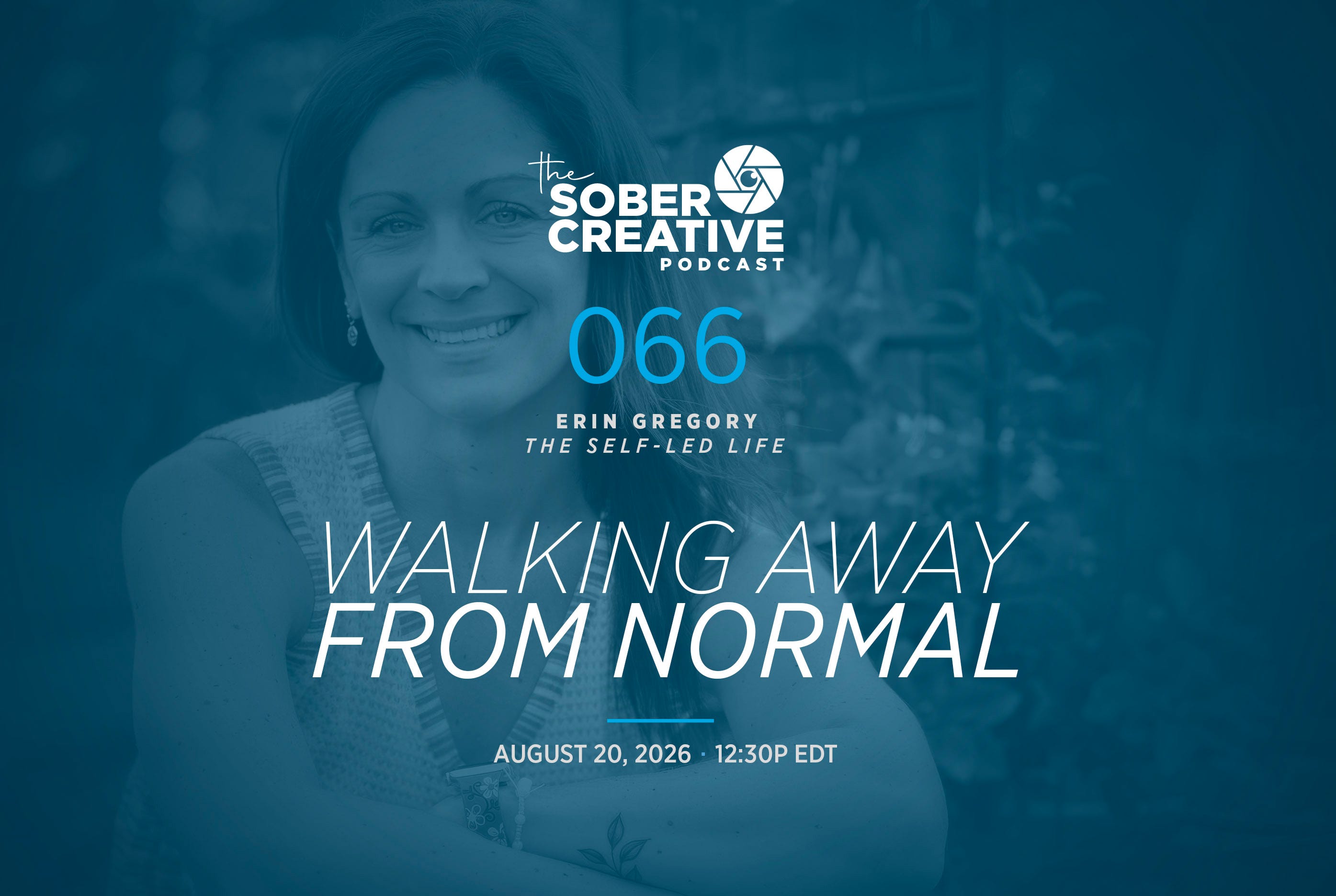 Episode 066 - Walking Away From Normal 21.08.2026 36minErin Gregory Creative did not hit rock bottom. That’s part of why her story is worth sitting with.She grew up Irish Catholic, in a family where a drink was how you celebrated and how you grieved. She was a scholarship swimmer in college, where work hard, play hard was simply the culture. She married Mike, whose family operated the same way. Nobody in her orbit thought twice about it. Then in 2018, Mike’s father died of cancer after a six-year battle, and two social drinkers with young kids at home found out what happens when grief lands on top of a habit nobody questions.Two drinks a day became three. More tired, more agitated, less motivated. Mike quit first, went to therapy, left his job, got his master’s, and started rebuilding. Erin watched that happen and asked herself a question she’d been avoiding for years. There was no dramatic moment. She just finally committed to something she’d already wanted. By 2020 they were both done.What came after took time. Mike went back to his music and now works for Habitat for Humanity. Erin built a consultancy that lets her be present for her three girls. They moved states, changed jobs, and started over in nearly every sense. In this conversation she walks through how they did it, what replaced the ritual, and why she now looks at the alcohol industry the same way she looks at tobacco.Show Notes[02:03] Where “Normal” Came From* Erin describes growing up “a good old Irish Catholic girl,” in a culture where alcohol was never discussed but always present.* In her family it was how they celebrated and how they grieved, and she never saw it as harmful.* As a young adult it became “the forbidden fruit,” then college and competitive swimming folded it into a work hard, play hard identity.Key Insight: The habits hardest to see are the ones your whole community shares.“It was really just a part of the society that I grew up in. And I never saw it as something bad or harmful.”[03:35] You Don’t Have to Hit Rock Bottom* Erin names a gray area most conversations skip past entirely.* When Mike’s father died in 2018, they were social drinkers with two young girls. Two drinks a day quietly became three.* The physical toll compounded the grief: more tired, more agitated, less motivated.Key Insight: You can be functioning and still be held back by something.“You don’t have to be a full functioning alcoholic to admit that you’ve got a problem, that something is inhibiting your life.”This is the exact gray area The Sober Creative Reset was built for. You don't need a label or a bottom to decide something's costing you more than it gives.[04:41] Mike Quit First* Mike made the decision first, and it became the start of his healing process. He went to therapy, quit his job, and got his master’s degree.* Erin had tried to eliminate it before, driven by her own guilt, but found it nearly impossible while surrounded by people who drank.* Watching Mike rebuild gave her the push. She and Mike cut it out entirely rather than saving it for special occasions.Key Insight: A moderation plan can keep the story alive. Cutting it out ends the negotiation.“I was like, why am I still holding on to this? There’s nothing in it for me. I’m literally drinking with my children.”[05:41] Seeing the Marketing for What It Is* They both read a book on alcohol, one edition written for men and one for women, and the contrast opened their eyes.* They drew a direct line between the alcohol industry and tobacco, the industry Mike had been supporting at work and hated.* From there they started looking at fast food the same way, and noticed how much of what they consumed had been sold to them as fun and celebratory.Key Insight: The advertising is designed to attach a numbing agent to your proudest moments.“All of the advertisement is like, this is a celebration. You should have something that basically numbs you from the reward that you just earned through your hard work. It’s so backwards.”[08:05] The Ritual Is What You Miss* Erin says what you actually lose is the end-of-day marker, the signal that you’re allowed to relax.* They had to build other things into that space.* At parties they bring their own fizzy water, mostly because their not drinking tends to bother other people more than it bothers them.* Since the pandemic she’s watched sober initiatives grow and the narrative start to shift.Key Insight: Replace the ritual, not just the drink.“They say it’s not like the alcohol itself you miss. It’s the ritual.”[11:10] Raising Kids Around It* Their kids were eight, five, and two when they stopped, around 2020.* Erin and Mike deliberately keep alcohol from becoming taboo in their house. Extended family still drinks on occasion, and the girls see it.* The goal is informed choice at 21 rather than a forbidden thing that gets unlocked on a birthday.Key Insight: Kids don’t need a rule. They need to watch you make a decision you can explain.“We don’t want it to seem like this forbidden fruit or like you turn 21 and you get to have it. You’ll have the freedom to make that choice when you’re of age and I hope you make the choice that is best for you.”[14:32] What Actually Changed at Home* Erin is clear that the alcohol never caused bad behavior. What it caused was guilt, the kind you carry around doing something you can’t explain to your kids.* Removing it meant they stopped hiding and stopped masking.* The relationships got better because she and Mike simply felt better about themselves.Key Insight: Guilt sits heavier on a household than the drink itself.“I think our relationships with them are better because we just feel better about ourselves. We’re living more honestly. There’s not trying to hide things or mask things.”[15:42] The Third Space* Erin defines a third space as somewhere you go that belongs only to you and your own well-being.* Hers used to be marathon running. Injuries pushed her to evolve it into gardening and walking. She dug up half her backyard after a hard family stretch and now has more than 300 plants in the house.* She points to the YMCA and group fitness as accessible options, and to community service as the other half of the equation. Mike works for Habitat for Humanity and volunteers on an arts board.* Her reasoning: depression tends to grow when you’re stuck inside your own world.Key Insight: Pick coping tools that pay you back instead of charging interest.“Addressing life’s challenges with something that is going to better you in the end, instead of make it harder to deal with.”[24:59] Advice for Anyone Making the Decision* Erin is direct about the trap of tapering. A drink on Friday becomes a drink on Saturday, then Sunday, then a fresh restart on Monday.* Find your resource. For them it was the books plus each other for accountability. She notes friends who’ve found real success in AA, including one who introduces herself as a recovering alcoholic in every new room so the boundary is set from the start.* Josh shares his own turning point at [28:04]: stopping mid-workout at Orange Theory, out of breath, and telling the coach he’d drunk too much the night before. It took two more years of tracking and research before he committed on August 19, 2020.* Erin’s larger point is that the motivation has to be yours. Theirs was their kids.Key Insight: Make one clean decision instead of a hundred small ones.“Whatever that motivation needs to be for you, figure it out and then just make that decision and don’t look back.”Key Quotes“You don’t have to be a full functioning alcoholic to admit that you’ve got a problem, that something is inhibiting your life.” — Erin Gregory“It still felt like we were treating it like a reward or a healing mechanism when we knew it was anything but.” — Erin Gregory“The last answer I wanted to get them was, Mommy, why are you drinking that? Because there’s no good answer for it.” — Erin Gregory“It’s not even that the alcohol caused bad behavior. It was just the guilt that you kind of carry along with it.” — Erin Gregory“We just built a life with intention instead of subscribing to what we had been exposed to in the past.” — Erin GregoryResources Mentioned* This Naked Mind by Annie Grace — the book that helped Josh transition* Allen Carr's Easy Way to Control Alcohol — Erin and Mike each read an edition written for their own gender* The third space — Erin’s framework for a place free of responsibility to anyone but yourself* The YMCA and group fitness classes as accessible community* Habitat for Humanity — where Mike works now* AA and Recovery Dharma — Josh facilitated a Recovery Dharma meeting for several years* Erin’s forthcoming memoir and companion workbook, distilling the work she does with clients on building income in the marginsWhere to Find ErinErin Gregory writes The Self-Led Life on Substack, where she covers workforce structure, meaningful work, and building a career around your life instead of the reverse.She runs a brand consultancy supporting mission-driven organizations, plus a personal branding and coaching practice for people who want to restructure the work they’re in or build something with more room in it. She’s also delivering workshops and keynotes to college students and recent graduates.“My mission, is to bring awareness to the possibility that is out there if you can think strategically and creatively about your career journey and not just accept what’s on paper.” — Erin GregoryReady to Find Out What’s Underneath?Erin’s story lands because nothing had fallen apart. She was functioning. Two social drinkers, three kids, jobs handled. And underneath it, something was inhibiting her life.She also named the loop exactly: a drink on Friday becomes a drink on Saturday, becomes a drink on Sunday, then Monday you start over. Cutting back, setting rules, restarting. That loop runs on depletion, and it doesn’t need a rock bottom to keep going.The Sober Creative Reset is a guided 30-day alcohol-free reset with one-on-one coaching from the first session. Four 60-minute 1:1 calls a month, daily support between them, and a short email every morning with a question to sit with through the day.You don’t have to identify as anything to be here. You just have to recognize where you are.Not rehab. Not AA. Not therapy. Not a lifetime vow. We work with your nervous system, map your triggers, and build a rhythm that makes clarity take less effort to hold.$497 for your first 30 days. Month-to-month after that, cancel anytime.Want to talk it through first? Book a free clarity call.Thank YouA heartfelt thank you to everyone who joined us live for this conversation, and to Erin Gregory for her honesty and generosity in sharing a story she’s only recently started telling out loud. Your presence and engagement make these conversations possible. This is a public episode. If you'd like to discuss this with other subscribers or get access to bonus episodes, visit newsletter.thesobercreative.com/subscribe
 -
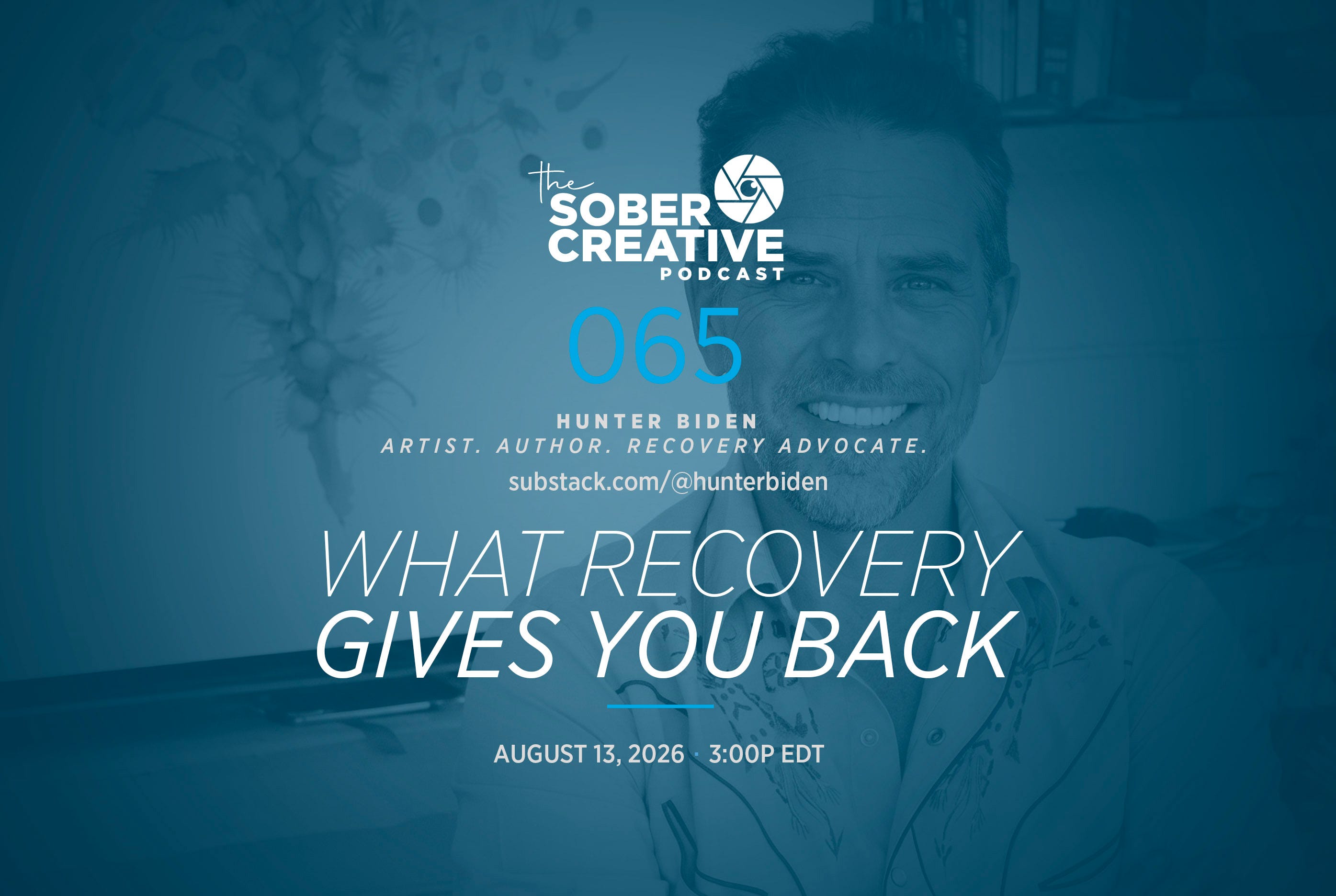 Episode 065 - What Recovery Gives You Back: A Conversation with Hunter Biden 14.08.2026 43minIn this episode, Josh sits down with Hunter Biden, a painter and writer based in Los Angeles who built a first career in law and business long before most people knew his name for anything else. Then one October, a laptop turned his private life into public property overnight. Every family photo, every relapse, and every unfinished thought got picked up by strangers and rearranged into a story he never wrote.What makes this conversation stand out is how plainly Hunter talks about the parts most people would keep hidden. He calls addiction “never an excuse,” but insists it can be an explanation. He traces almost every bad decision he’s made back to fear. He talks about the accident that killed his mother and sister when he was three years old, the decade of relapse that followed his first stint in rehab, and the moment a total loss of privacy left him with what he calls a binary choice: get up and live, or find a way to die.By the end of the conversation, Hunter has moved past the scandal. He talks about a paintbrush his wife Melissa bought him at a used furniture shop, about finding purpose in a single afternoon of painting, and about why being of service to other people secures his sobriety more than anything else. This is a conversation about what happens after the worst thing you can imagine happens to you, and what you build with what’s left.Show Notes[00:00] Meet Hunter: From Scandal to the Studio* Josh introduces Hunter as someone whose entire digital life was leaked from a laptop one October, turning private photos, relapses, and unfinished thoughts into a story other people wrote for him.* Seven years ago, at a point where Hunter says he could no longer trust his own mind, he picked up a paintbrush and started working in alcohol ink, acrylic, and Pointillism.* Hunter now paints in Los Angeles and writes about his experience on Substack, correcting himself in public when his memory proves him wrong.Key Insight: “That was the most beautiful introduction I’ve ever gotten.” - Hunter[02:08] A Beautiful Childhood, Filled With Trauma* When Hunter was about three, he and his older brother Beau were in a violent car accident with their mom and little sister. Rescue workers used the jaws of life to free them.* Hunter’s mother and sister died in that accident. He and his brother spent a month or more in the hospital together afterward.* His Aunt Valerie, Uncle Jimmy, and the rest of his family rushed in to rebuild their lives, and Hunter calls his dad “the best dad I know.”* For years, Hunter didn’t let himself believe that early trauma played a role in what came next.Key Insight: “I had an incredibly beautiful childhood filled with trauma.” - Hunter[05:01] The First Drink and the Cycle of Shame* Hunter remembers his first sip of alcohol at age eight, sneaking a champagne flute at a party and feeling like everything missing in him had suddenly been filled.* His drinking progressed through high school and college, and he went on to graduate from Yale Law School.* By his early thirties, Hunter knew his drinking wasn’t normal. He made himself promises: only drink on weekends, only drink beer, no Jack Daniels. He broke every one of them.* Breaking those promises started a cycle of shame that became, in his words, the thing that locked him into relapse.Key Insight: “When I would break that promise, I decided it was easier to hide that and lie about it than be honest with myself or anybody around me.” - Hunter[07:42] Rehab, Relapse, and the Ten-Year Spiral* On September 12, 2003, Hunter’s brother told him he needed to do something about his drinking. Hunter went to rehab and stayed sober for close to seven years.* After his first relapse, Hunter entered a ten-year cycle that got progressively worse, moving through rehab, short stretches of sobriety, and binges.* The spiral ended in a serious addiction to crack cocaine alongside daily heavy vodka drinking, which continued for about two years before Hunter got sober in June 2019.* He’s careful with his language today. He calls himself “substance free and sober,” not “clean.”Key Insight: “More than anything, though, what I learned is that I wasn’t alone.” - Hunter[13:56] Radical Honesty Requires Radical Self-Love* Hunter talks openly about the parts of his story most people keep private, including smoking crack and being in situations involving prostitutes.* He believes addiction is never an excuse for behavior, but it can be an explanation, both to other people and to yourself.* He credits an idea from Chase Hughes: real healing takes being “almost delusional in your self-forgiveness,” without giving up accountability or the work of making amends.Key Insight: “Until you can truly love yourself, it is almost impossible to truly accept and receive love.” - Hunter[15:43] Seen and Not Abandoned: How Love Rebuilt Him* Hunter says his healing began when he let one person, his wife Melissa, see every part of him, and she didn’t run.* Melissa helped him detox at home instead of going back to rehab. Hunter describes her as becoming his “jailer” for a period of time, a role he says was painful for her to take on.* His family, especially his daughters and his dad, never closed the door on him, which is what let him find a moment of clarity and walk through it.* He’s clear that unconditional love isn’t love without accountability. It still requires making amends.Key Insight: “Unconditional love does not mean love without consequences. It does not mean love without accountability.” - Hunter[21:39] Fear, the Leak, and the Greatest Gift He Ever Received* Hunter says nearly every bad decision he’s made, sober or using, came from fear: fear of being found out, fear of underperforming, fear of not being lovable.* In October, someone stole 20 years of his digital footprint and presented the most damaging images and words to the world without context, stripping away his privacy completely.* That total loss of privacy left him with what he calls a binary choice: get up and live, or find a way to die. He says he knew he didn’t have another relapse left in him.* Today, Hunter says he doesn’t fear anything or anyone, because there’s no secret left that hasn’t already been exposed.Key Insight: “The thing that people believe was the most humiliating, and it was, and the most devastating, in many ways it was, and the most destructive, in many ways it was, was also the greatest gift that I ever received in my life.” - Hunter[28:04] The Paintbrush, the Purpose, and Peak Path Health* After detoxing at home, Melissa bought Hunter a used table, a roll of Yupo paper, alcohol inks, and acrylics from a furniture shop, and told him he needed to paint.* Hunter says having his hands occupied for hours at a time gave him something the ritual of using had trained into him: focus, and a way to get out of his own head.* He believes art only becomes art once it’s shared with another person, and that finding a small, “lowercase p” purpose in each day matters more than chasing one big Purpose.* He’s now building Peak Path Health, a recovery organization focused on the continuity of care people need after the first 30 days of treatment, alongside his Substack writing.Key Insight: “There’s nothing that secures my sobriety more wholly and completely than being in service to somebody else.” - HunterKey Quotes“I had an incredibly beautiful childhood filled with trauma.” - Hunter“When I would break that promise, I decided it was easier to hide that and lie about it than be honest with myself or anybody around me.” - Hunter“Until you can truly love yourself, it is almost impossible to truly accept and receive love.” - Hunter“The thing that people believe was the most humiliating, and it was, and the most devastating, in many ways it was, and the most destructive, in many ways it was, was also the greatest gift that I ever received in my life.” - Hunter“It’s a practice until you share it.” - HunterResources Mentioned* Alcohol ink, acrylic, and Pointillism — the materials and techniques Hunter uses in his large-scale paintings* Yupo paper — the material Melissa first bought him to start painting* Peak Path Health (peakpathhealthfoundation.org) — the recovery organization Hunter is helping build, focused on continuity of care after the first 30 days of treatment* HunterBiden.com/recovery — an anonymous space where people can share their own experience, strength, and hope with addiction* Chase Hughes — referenced for the idea of being “almost delusional in your self-forgiveness,” and for the observation that “do not be afraid” is the most repeated phrase across ScriptureWhere to Find Hunter* Peak Path Health: peakpathhealthfoundation.org* HunterBiden.com/recoveryThank YouA heartfelt thank you to everyone who joined us live for this conversation, and to Hunter for his extraordinary honesty and courage. Your presence and engagement make these conversations possible.Closer Than It LooksHunter’s story played out in public, but the shape of it is familiar to a lot of us: broken promises, shame that keeps you hiding instead of asking for help, the day you finally decide to get up and live instead of just get through it. I knew my mornings were getting harder to show up for, and I was tired of pretending that was normal.If that’s where you are, The Sober Creative Reset is built for exactly this moment. It’s a guided 30-day alcohol-free reset with one-on-one coaching from the first session, four sessions a month, plus daily support in between. The goal is simple: give yourself a real chance to feel like you again. This is a public episode. If you'd like to discuss this with other subscribers or get access to bonus episodes, visit newsletter.thesobercreative.com/subscribe
 -
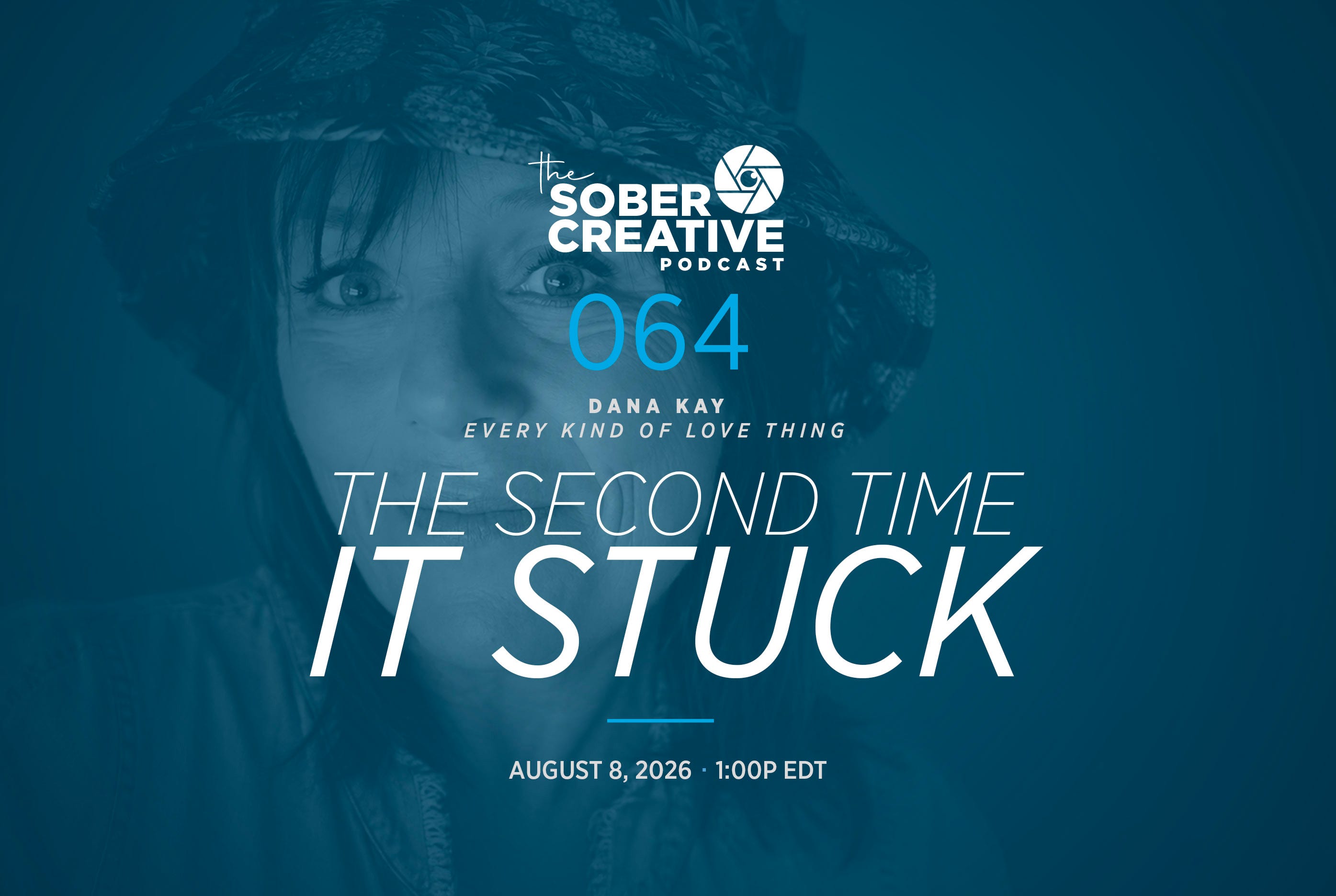 Episode 064 - The Second Time It Stuck: Dana Kay on Becoming a New Person, Not Just Stopping a Behavior 08.08.2026 49minDana Kay’s first memory of alcohol is from a dinner party when she was five or six years old. She spent the night sneaking sips while the adults were turned away in conversation, and by the end of the night she’d passed out on a beanbag in the middle of the room. Nobody worried. Everybody laughed. It became a family story people told for years, and it planted something in her that took over four decades to undo.By the time she reached her late 30s and early 40s, that early fascination had turned into two DUIs, years of drinking vodka out of water bottles during real estate inspections, and a daily system so precise she could stay “sober” for the school bus pickup every single day. She went to treatment twice in 2016. The first stay didn’t hold. The second one did, and it changed the entire direction of her life.In this conversation, Dana walks through what actually separated her two attempts. It wasn’t willpower, and it wasn’t a stronger program. It was the difference between trying to stop a behavior and committing to becoming a completely different person. As she approaches her ten-year sobriety anniversary on September 1st, she shares what that shift required, what she had to grieve along the way, and why she stopped trying to fit her writing into one tidy niche.Show Notes[00:00] Welcome and IntroductionJosh introduces Dana Kay as a writer, connector, and nurturer who’s been alcohol-free for over nine years, and the two immediately find common ground.* Dana has been alcohol-free for nearly a decade, with her ten-year mark landing on September 1st* Josh and Dana discover they’ve both had a DUI, and neither of them remembers much of the night it happened* The tone is set early: honest, unpolished, and willing to go straight into hard materialKey Insights: “I got the police report in the mail... and I was reading the police report going, that happened? I didn’t remember.” - Dana Kay[02:11] Growing Up “Cute Little Dana”Dana traces her drinking back to childhood, growing up the youngest of eight (two big brothers, five step-siblings) between two very different father figures after her parents’ divorce.* She had a well-provided-for upbringing but didn’t recognize it until she started paying her own bills* She followed “the expected track”: graduated high school at 17, college at 21, became an elementary teacher, then moved into real estate in 2006* She names her own talent and ability to always get hired as a “double-edged sword” that fed her drinking later onKey Insights: “You can over-rely on your achievements and your talents... and that definitely played into my alcohol use for sure.” - Dana Kay[04:43] The Beanbag StoryDana describes her first conscious memory of alcohol in detail: sneaking sips at her parents’ dinner parties around age five or six, and passing out on a beanbag while the adults laughed above her.* Her parents didn’t send her to bed during parties; instead they gave her small jobs, like bringing guests drinks, which kept her in the room* She picked up early that drinking was “the absolute cool thing,” because she saw adults enjoying it and wanted to feel what they felt* Looking back as a mother herself, she’s had to reckon with recreating some of the same environments for her own kids without realizing it at the timeKey Insights: “Instead of worrying or being sad, they were laughing. And they thought it was really cute.” - Dana Kay[09:22] College and the Double LifeAt UC Davis, Dana joined a Christian youth group (originally because the boys were cute) and found faith on a retreat at 18. But she kept a second, separate version of herself for home.* Her day-to-day life revolved around a sober Christian friend group, while trips back to her hometown meant drinking, flirting, and partying* She describes the pull of that split identity as its own addiction: “The complete rush was, what can I get away with?”* After friends celebrated that she’d “never party again,” she made a conscious decision in the car to keep that part of her life hidden from them going forwardKey Insights: “It was a complete rush, more than alcohol itself. The complete rush was, what can I get away with?” - Dana Kay[15:00] The Rock Bottom YearsBy her late 30s, working in real estate, Dana’s drinking became a fully hidden system built around her family’s schedule.* She lied to her husband about needing to “drop off flyers” or run open houses so she could go drink, and he had no way to track her irregular real estate hours* She drank vodka out of water bottles during home inspections for over a decade, including with an inspector she’d known for 15 years who never suspected a thing* She built a daily rhythm: sober and present for morning drop-off, drinking through the day, then timing a nap so she’d appear sober again by the time her sons got off the bus* One morning in late August, her organs seized and she couldn’t move out of bed; she still told her husband she “just had a tummy ache” before he left for workKey Insights: “That energy of wanting to get away with it, and fooling everyone, lived more in me than the substance did.” - Dana Kay[17:49] First Treatment vs. Second TreatmentDana explains the moment that sent her to treatment the first time, the relapse that followed, and the deeper shift that made the second stay permanent.* Her therapist stopped a session mid-conversation and said, “we can’t get any further until you’re honest about alcohol,” which Dana had been carefully avoiding* That night she Googled “how do you know if you’re an alcoholic” and discovered she’d searched the exact same thing on Christmas Eve, in a blackout she had no memory of* After four sober months following her first treatment, she relapsed on a trip to Europe with her son, telling herself a little drinking wouldn’t turn permanent* The second time she got sober, a therapist helped her see the real difference: the first attempt focused on stopping a behavior, while the second required building an entirely new identityKey Insights: “If you’re going to be successful at this, you have to have an entirely new identity.” - Dana Kay[34:29] Building the New IdentityDana describes the practical, unglamorous work of rebuilding her life around the new identity, not just the absence of alcohol.* She had to consciously change her driving routes because her car would automatically head toward familiar bars* She built accountability into her schedule by not leaving gaps between appointments, and leaned on close friends and her husband to hold her to it* She started a morning journaling practice, writing down small changes so she could reread her own words later, on the days she felt weak* She noticed real physical changes, like hitting new personal records at the gym, and had to stop denying that sobriety was the reasonKey Insights: “No, Dana, you know that this is going to lead to that. This feels so much better. You wrote it right here.” - Dana Kay[38:07] Noticing, Grief, and the SunriseDana connects her recovery to a growing capacity to actually notice her life, and the grief that came with realizing how much she’d missed.* She began noticing details on ordinary drives, like trees, mountains, an eagle, or a deer, that she says she never used to see* She describes a memory of watching a sunrise in Mexico while drinking, and realizing only in hindsight that it was really “a place to go hide and drink”* She’s come to believe that grieving what was missed isn’t just okay, it’s a necessary part of the process* She also became more honest in her business relationships, without the manipulation she now recognizes she’d been running for yearsKey Insights: “Not only is it okay to grieve that, it’s important to grieve that.” - Dana Kay[41:11] Family Roots, What She Writes Now, and Where to Find HerDana closes by connecting her story to her family’s long history with alcoholism, and explains what she writes about today.* Her grandparents were pillars of the local AA and Al-Anon community, and she grew up helping serve pie and coffee at their meetings, even while her own aunt struggled with alcoholism without full openness from the family* After years of trying to force her writing into one niche, she’s landed on a simple framework: Connection, Acceptance, and Noticing (C-A-N)* She writes about sobriety, motherhood of older kids, being single in your 50s, and starting over later in life, all under what she calls the umbrella of love* She’s active on Substack and Instagram as Dana Kay, offers one-on-one calls, and leads gratitude and connection sessions at retreats she’s invited toKey Insights: “There is no saying no to whatever your dreams are, whatever you want to do with your life. There’s just no no.” - Dana KayKey Quotes“The complete rush was, what can I get away with?” - Dana Kay“If you’re going to be successful at this, you have to have an entirely new identity.” - Dana Kay“My identity took me into relapse because I still wanted to be the pretty, fun, cool girl, mom, friend, daughter.” - Dana Kay“Not only is it okay to grieve that, it’s important to grieve that.” - Dana Kay“There is no saying no to whatever your dreams are, whatever you want to do with your life. There’s just no no.” - Dana KayResources Mentioned* Gabor Maté’s approach to addiction — Dana references his idea that instead of asking “where’s the addiction,” you ask “where’s the pain”* AA (Alcoholics Anonymous) and Al-Anon — the community Dana’s grandparents helped lead, which shaped her early exposure to recovery* Dana’s C-A-N framework — Connection, Acceptance, and Noticing, the three principles she now writes and coaches aroundWhere to Find Dana Kay* Instagram: Dana Kay* 1:1 Calls: Dana offers personal calls for anyone working through what she writes about, from sobriety questions to relationship decisions* Retreats and Workshops: She’s invited to lead gratitude circles, forest walks, and connection sessions at corporate and soulful retreat spacesThank YouA heartfelt thank you to everyone who joined us live for this conversation, and to Dana Kay for her extraordinary honesty and wisdom. Your presence and engagement make these conversations possible.Your Next StepDana’s second treatment worked because she stopped trying to just stop drinking and rebuilt an entirely new identity instead. The first time ran on willpower, and it wore out by June. The second time gave her whole system room to actually recover, and that’s what held.The Sober Creative Reset is built around that same shift. It’s a guided 30-day alcohol-free reset, with one-on-one coaching from your first session, not a program you follow alone. The fog and depletion so many high performers carry aren’t a discipline problem. They come from recovery that never fully completes. No labels, no moralizing, no lifetime sobriety vow, just real support while your energy, clarity, and follow-through come back online. This is a public episode. If you'd like to discuss this with other subscribers or get access to bonus episodes, visit newsletter.thesobercreative.com/subscribe
 -
 Episode 063 - Jomo the Meditating Monkey: Stillness, Sobriety, and the Busy Mind 02.08.2026 30minMost guests on this show are people who found their way to sobriety and creativity through hard-won trial and error. This week’s guest is a small golden monkey in a patchwork waistcoat who has never had a drink in his life. His name is Jomo, and he teaches meditation to millions of people on TikTok alongside his human, Jason, at The Monkeymind Meditation Club.Jomo’s origin story starts with Jason hitting a wall. He liked to drink and party until, as Jomo put it, “the bottom of the barrel was in sight.” Meditation pulled him out of it, and it worked so well that Jason wanted to teach it to others. The problem was that meditation looked strange and unapproachable to most beginners. So Jason built a version anyone could try, and gave it a monkey mascot to make the whole thing feel less intimidating and more human.What Jomo shared in this conversation goes far beyond breathing techniques. He talked about why the mind is the most important tool we have, why meditation is less about being calm and more about clearing the noise so calm can show up, and why he believes people who choose sobriety are some of the bravest people alive. If you have ever avoided sitting with your own thoughts, this one is for you.[00:50] Meet Jomo, the Meditation-Teaching Monkey* Jomo is the mascot and co-teacher behind Monkey Mind Meditation, run alongside his human, Jason.* The name plays on “monkey mind,” a term meditation teachers use for the constant jostling of thoughts and feelings we all deal with.* Jomo’s approach centers on making meditation feel ordinary instead of mystical or hard to access.Key Insight:“Hello, it’s lovely to be here.”— Jomo[03:05] From Rock Bottom to Monkey Mind: How the Journey Began* Jason struggled with drinking and partying before finding meditation as a way out.* Learning to meditate changed his life enough that he wanted to teach it to others.* Early students were put off because meditation online looked strange — people in odd positions, dramatic backdrops, nothing relatable.* Jason built a simpler, friendlier version of meditation and gave it a monkey mascot to make it approachable.Key Insight:“He liked to drink and he liked to party. And he realized that the bottom of the barrel was in sight.”— Jomo[05:55] Two Million Meditators: Growing an Audience on TikTok* The show started rough. Early viewers were confused and sometimes rude about what they were watching.* Growth was slow at first, then it exploded into hundreds of new viewers every week.* They’ve now done over 600 live sessions and reached more than 2 million people through TikTok.* New viewers tend to follow the same pattern: confusion, then curiosity, then commitment.Key Insight:“When they first come on, they think to themselves, what is this? And then they put the little acronym, WTF, which is a bit rude. But we stick with it. And then a few minutes later, they may say, oh, this is actually quite calming. And then a few minutes later, they’ll say, this is actually working. And then a few minutes later after that, they say, when are you next on? And then they’re a fan.”— Jomo[09:05] Why Your Mind Is the Most Important Tool You Own* Jomo argues the mind shapes the quality of everything else in life, including how we experience reality itself.* He points out that nobody gets a manual for how their brain works.* He describes meditation as a kind of daily software upgrade for the brain.* He calls the practice “a force field for good mental health” that needs to be recharged regularly, since life keeps throwing things at us.Key Insight:“I call it a force field for good mental health. Every time we meditate, we recharge that force field.”— Jomo[11:10] Sitting With the Monsters: Meditation and Sobriety* Jomo believes people on a sober journey are some of the bravest people around.* He connects addictive behavior to an unwillingness or inability to face what’s going on inside our own heads.* Meditation, in his view, is a way to sit with the parts of ourselves we normally avoid or numb.* He argues meditation doesn’t create calm directly. It removes noise, and calm follows from that.Key Insight:“Meditation helps us look inside. And sit with the monsters. And then when you sit with the monsters, you realize that the monsters just want to be heard. And when the monsters are heard, they go away.”— Jomo[13:32] Think Away: Making Meditation Approachable for Everyone* Jomo teaches people that trying to stop thinking is impossible, and fighting that fact just creates frustration.* Instead of suppressing thoughts, his method is to notice them and gently return to the breath or a mantra.* He reframes a common complaint — “I can’t meditate because my mind is too busy” — as the exact reason meditation is needed.* The format is deliberately ritualized (three deep breaths to start, a wriggle and stretch to close), which he says works especially well for their autistic community.Key Insight:“We teach people that you can’t stop thinking. That’s impossible. It’s like saying, don’t think of a pink elephant. And the first thing you do is you think of a pink elephant. So what we say is, think away. That’s okay. We’re not going to thought shame you here.”— Jomo[16:56] A Live Guided Meditation With Jomo* Jomo led a short mindfulness meditation live on the show, starting with three deep breaths.* The meditation focused on noticing thoughts without following them, comparing them to leaves floating past on a river.* He guided listeners toward the idea that we are the awareness watching our thoughts, not the thoughts themselves.* Several listeners in the chat reported feeling calmer immediately afterward.Key Insight:“And begin to sense that this breath is not something you’re doing, but something that’s happening to you.”— Jomo[26:03] Beyond TikTok: Variety, Reactions, and Where to Find Jomo Next* TikTok’s algorithm reportedly struggles with their content because viewers stop interacting while meditating.* Jomo shared a story about teaching meditation to someone with road rage, who learned to notice his anger instead of being swept up in it.* Their live sessions mix different formats: mindfulness meditations, Zen stories, visualization journeys (Peru, Morocco, even an imagined “Land of Cake”), and a loving kindness meditation to close things out.* They go live on TikTok Mondays, Wednesdays, and Fridays, and have recently started YouTube lives on Sundays at 9pm, with all past sessions archived on YouTube.Key Insight:“We start with a mindfulness-based meditation, then quite often we’ll have a little bit of a Zen story, and then after that we have a visualization meditation, so we go to ancient Peru, Morocco, or the Land of Cake we did the other day. And then we finally give people a taste of a loving kindness meditation at the end so that they go away feeling full of good vibes.”— JomoKey Quotes“When you sit with the monsters, you realize that the monsters just want to be heard. And when the monsters are heard, they go away.”— Jomo“It doesn’t make you calmer. It just takes away the noise. Calm follows.”— Jomo“And people say, I can’t meditate because my mind is too busy. To which we say, that’s like saying, I can’t go to the gym because I’m too unfit.”— Jomo“There’s nothing to achieve here. Nothing to get right. Just a soft arriving into this moment.”— Jomo“You’re not the passing thought. You’re the awareness that sees it. You’re not the changing story. You’re the space in which it appears.”— JomoResources Mentioned* Monkey Mind Meditation — Jomo and Jason’s meditation practice, live on TikTok and YouTube* Transcendental Meditation — the practice mentioned as Josh’s own current meditation approach* Vedic meditation — the tradition Jason teaches, described as closely related to Transcendental MeditationWhere to Find Jomo* TikTok: Live sessions Monday, Wednesday, and Friday* YouTube: Live sessions Sunday at 9pm, with all past recordings archivedThank YouA heartfelt thank you to everyone who joined us live for this conversation, and to Jomo for his humor, warmth, and unexpected wisdom on what it actually takes to sit still. Your presence and engagement make these conversations possible.A Natural BridgeJomo’s whole philosophy comes down to one idea: meditation doesn’t hand you calm directly, it clears the noise, and calm shows up on its own once the noise is gone. That’s the same principle behind alcohol and creativity. Alcohol is often the tool people reach for to avoid sitting with what’s actually happening in their heads. Removing it doesn’t hand you clarity right away either. It clears space, and clarity tends to follow from there.If this episode stirred something for you and you're ready to do that work with support instead of alone, I coach a small number of people 1:1 through exactly this process. Send me a message at and let's talk about what that could look like for you. This is a public episode. If you'd like to discuss this with other subscribers or get access to bonus episodes, visit newsletter.thesobercreative.com/subscribe
 -
 Episode 062 - Music Is The Centerpiece Of My Life, Alcohol Is Not 24.07.2026 38minJeff “H” Harrington has been playing bass and writing songs for close to 40 years. He grew up in Milwaukee, a city he describes as one of the heaviest drinking cultures in the country, and spent his 20s and 30s using alcohol to manage a shyness he calls “criminally vulgar.” Nine years ago he left a career in medical physics to chase music full time. Five years ago, he stopped drinking almost entirely.What makes Jeff’s story worth sitting with is what he found on the other side. He didn’t just give up alcohol. He learned he’s deeply introverted, sensitive to noise and to the energy of a crowded room, and far less interested in big social gatherings than he ever realized while drinking. He also traded songwriting as an emotional release valve for something different: chant music built on ancient mantras, made to help people feel calm and present rather than to process pain.In this conversation, Jeff talks about growing up in a drinking culture so strong it shaped an entire state’s identity, why his own drinking nearly disappeared the moment he lived somewhere else, and how a stomach problem sealed a decision his body had already started making on its own. He also shares a theory about sad music that’s worth thinking about, whether you drink or not.[1:36] Meet Jeff Harrington: Musician, Nine Years Removed From a Left-Brain Career* Jeff is a singer, songwriter, producer, and bass player who’s been gigging for close to 40 years, much of it in the blues scene.* Nine years ago he left his career as a medical physicist to focus on music, even though it’s never been his main income.* He’s five years sober and has pulled back from playing out live, a shift he traces directly to sobriety.Key Insight: “We’re supposed to do what we’re really terrified of, aren’t we?”[3:03] Growing Up in Wisconsin’s Drinking Culture* Jeff grew up in Milwaukee, which he says ranks nationally for excessive drinking, DUIs per capita, and bars per capita.* College at Madison took that culture to another level. He describes drinking at least 12 beers a night as normal for everyone around him.* He used alcohol to manage deep shyness and social anxiety, comparing it to an athlete numbing an injury just to get through the game.Key Insight: “I think I was literally, my growth was stunted for at least five or 10 years looking back.”[7:07] The Cleveland Contrast* When Jeff moved to Cleveland for his first job, he expected a similar drinking culture to Wisconsin. Instead, he found people drank far less, and so did he.* Looking back, this showed him how much of his drinking had been shaped by the environment around him, not by who he actually was.* When he moved back to Wisconsin, he eventually fell back into the same heavy drinking patterns.Key Insight: “I didn’t drink that much when I was in Cleveland. So looking back, I see that that’s who I really was.”[13:48] Discovering He’s an Introvert* After quitting drinking, Jeff realized he’s extremely introverted and sensitive to noise and to the energy of the people around him.* He’s meditated for about 15 years, which he thinks has made him more attuned to these subtler energies.* His social life shifted from crowds to small, comfortable gatherings that don’t leave him exhausted the next day.Key Insight: “I’m not somebody who’s going to want to go to a party at this point or any place that’s loud and crowded.”[15:54] A Stomach Issue Sealed What Had Already Begun* About 10 years ago, Jeff and his then-girlfriend already cut back on drinking a lot as they got more into health.* About five years ago, a stomach issue made alcohol physically intolerable, arriving right as he was already drinking less.* Today he has maybe three or four drinks a year, and calls it fully intentional rather than something he misses.Key Insight: “If my stomach magically healed, I wouldn’t be drinking at all. I don’t like it in my life anymore.”[17:09] From Songwriting as Therapy to Chant Music as Calm* In his 20s and 30s, Jeff used songwriting as one of his only tools for processing intense emotion, since he felt culture raised men to stay disconnected from their feelings.* Today he writes mostly chant music on his Substack, Inside Sky Chant, built around ancient mantras rather than English lyrics.* The purpose of his music has shifted from emotional catharsis to something more utilitarian: helping listeners feel calm and present.Key Insight: “The ultimate goal would be it’s music that would be used to help people just be more calm and maybe present.”[22:50] A New Earth: Spiritual Growth and Sobriety Growing Together* About 15 years ago, Jeff read Eckhart Tolle’s A New Earth, which he says completely changed his life after years of searching without finding a way in.* That book led him toward chant music, sound baths, and a spiritual practice he sees as deeply tied to his relationship with alcohol.* He’s careful to say this isn’t about judging people who drink. For him personally, alcohol just no longer serves what he’s trying to build.Key Insight: “I think the spiritual growth and the alcohol are very interconnected.”[28:23] The Hangover, the Brain, and a Theory About Sad Music* Jeff and Josh discuss how alcohol triggers inflammation in the body, which is part of what a hangover actually is.* They talk through how alcohol can worsen depression and how the brain’s negativity bias, combined with modern stressors like social media, feeds a cycle of using alcohol to regulate the nervous system.* Jeff shares a personal theory that he became addicted to sad music the same way people get dependent on alcohol, reaching for it out of habit rather than need.Key Insight: “I think if people are listening to sad music every day, I really would suggest trying to step back and take a look at that.”Key Quotes“I think that’s like a perfect analog to someone who’s shy and they’re drinking.” - Jeff Harrington“I was someone who didn’t even really want to drink that much. I was probably very influenced by the culture around me.” - Jeff Harrington“I found out so clearly that I’m extremely introverted and sensitive to all the noise.” - Jeff Harrington“If my stomach magically healed, I wouldn’t be drinking at all. I don’t like it in my life anymore.” - Jeff Harrington“I really feel more and more, I feel like people really underestimate how powerful music is.” - Jeff HarringtonResources Mentioned* A New Earth by Eckhart Tolle* Release Your Song (Jeff’s Substack on music and creativity)* Inside Sky Chant (Jeff’s Substack for his chant music)* Handpan (the instrument Jeff and Josh discuss in relation to nervous system regulation)* Sound baths (a guided meditation practice using instruments like handpans)Where to Find JeffThank YouA heartfelt thank you to Florence Acosta, Noelle Richards, Peter, and many others who joined us live for this conversation, and to Jeff for his openness and generosity in sharing his story. Your presence and engagement make these conversations possible.What This Conversation Points ToJeff and Josh spent a good chunk of this episode on something worth pulling out on its own: the cycle of reaching for alcohol the moment an uncomfortable feeling shows up, because it soothes that feeling within minutes. Jeff broke that cycle on his own timeline, over years, without a program or a guide walking alongside him.That’s exactly where 1:1 coaching comes in. If you’re recognizing that same cycle in your own life and you’re ready to shorten the timeline, let’s talk. No pitch, no commitment. Just a conversation about where you’re at and what might be possible. This is a public episode. If you'd like to discuss this with other subscribers or get access to bonus episodes, visit newsletter.thesobercreative.com/subscribe
 -
 Episode 061 - It’s Getting in My Way Now: Gary Allen on Slow Change and Building a Second Act After 45 17.07.2026 39minGary Allen had his first drink at 19, a pint of Harp he didn’t even like. He kept drinking it anyway, because for the first time, he felt like everybody else. Gary grew up in rural Ireland, the oldest of three, and has used a wheelchair full-time since he was 13. Alcohol became the thing that closed the distance between him and the room. He didn’t fully realize that’s what it was doing until decades later.For 26 years, drinking looked completely normal. Nights out with his brothers turned into nearly 20 years of sharing wine on the couch with his wife. Nothing about his life looked broken. He had a steady IT career, a mortgage, and a stable home. At 45, he just noticed something simple: it was getting in his way now.That one observation, made on a flight home from Barcelona in January 2018, led him to commit to 100 alcohol-free days. He hasn’t had a drink since. Within weeks, he stumbled onto a coaching course and knew almost instantly it was where he belonged. Nearly nine years later, at 54, Gary runs his own practice, the Life Design Collective, helping people in midlife ask the same question he once asked himself: is this it, or is there something else?[03:06] Growing Up Different in Rural Ireland* Gary was born and raised in rural Ireland and has used a wheelchair full-time since age 13.* He didn’t have his first drink until 19, well past the age most of his peers started.* Drinking made him feel like part of the group in a way he hadn’t before, since he grew up looking different from everyone around him.Key Insight: “It just made me feel like everybody else.”[07:04] The Wake-Up Call at 45* His drinking shifted over time: nights out with his brothers in his 20s, then almost 20 years of sharing wine with his wife on the couch.* Nothing about his life looked dramatic. He had a steady job, paid his bills, and everything seemed fine on the surface.* At 45, he simply noticed alcohol was in his way and decided to see what life looked like without it.Key Insight: “It’s getting in my way now.”[07:46] From IT Career to Full-Time Coach* On a flight home from Barcelona in January 2018, Gary committed to 100 alcohol-free days. He never had another drink after that.* Within about two months, he found a coaching course and knew right away it was what he wanted to do.* He ran two full workloads at once (coaching and his IT job) for years before finally leaving tech in 2023 to coach full-time.Key Insight: “I didn’t actually go, okay, I’m quitting my job and I’m going to sell a house and move to Bali.”[10:57] The Pattern Behind Change That Sticks* Most people start by naming what they don’t want: hangovers, health problems, tension at work or at home.* Once that clears, the real work begins, which is figuring out what you’re actually moving toward.* Change rarely works on the first try. Every attempt adds information, and the streaks get longer as people learn instead of judging themselves for slipping.Key Insight: “It doesn’t ever really work the first time.”[13:04] Curiosity Over Judgment* Gary calls curiosity, instead of self-judgment, the biggest shift he sees in people who make change last.* Instead of asking why they failed, the useful question becomes what they could try differently next time.* This mindset reaches far beyond drinking. It’s the difference between staying stuck in a cycle and actually moving forward.Key Insight: “If you can treat it with curiosity and not judgment, that’s the real game changer.”[17:00] Creativity, Clarity, and Finding Substack* Gary spent almost 30 years in software, which he describes as genuinely creative work, even though it was never quite the right fit for him.* About six weeks into sobriety, he experienced a level of energy and clarity he’d never felt before.* That clarity opened the door to writing. He’s been on Substack for close to two years and is nearing one full year of his weekly newsletter, Second Act Sunday.Key Insight: “Creativity almost by default jumps in.”[21:02] What Happens When the Numbing Stops* Removing alcohol doesn’t remove hard feelings. It just means you feel all of them, not only the ones you’d pick.* Gary resisted gratitude journaling at first. “Thank you very much, I’ll pass,” he says of being told to write down three things he was grateful for.* The practice ended up helping him see what he already had and who he already was, built by parents who raised him to believe he could do anything.Key Insight: “It did allow me to kind of see what I have and see who I am.”[29:19] Building a Second Act After 40* Gary pushes back on the idea that life needs to be fully figured out by 40, and that any change after that is too hard or too late.* His program, the Second Act Blueprint, is a seven-week experience helping people mostly between 40 and 60 design what comes next. The sixth cohort starts next Tuesday, with two spots still open.* He didn’t blow up his life to make his own change. He changed slowly, over eight years, while keeping his job, his house, and his marriage intact. He’s now compiling a year of his newsletter with an eye toward turning it into a book.Key Insight: “It took me, really, eight years of slow change.”Key Quotes“It just made me feel like everybody else.” — Gary Allen“It’s getting in my way now.” — Gary Allen“If you can treat it with curiosity and not judgment, that’s the real game changer.” — Gary Allen“I didn’t actually go, okay, I’m quitting my job and I’m going to sell a house and move to Bali.” — Gary Allen“It took me, really, eight years of slow change.” — Gary AllenResources Mentioned* Life Design Collective — Gary’s own coaching practice, built around midlife redesign* The Second Act Blueprint — Gary’s seven-week program helping people in their 40s, 50s, and 60s design what comes next (Next Cohort Starting on Tuesday July 21)* Second Act Sunday — Gary’s weekly Substack newsletter, closing in on its first full year* Richard Rohr and Arthur C. Brooks — authors Gary reads on the idea of a second act in midlifeWhere to Find GaryEmail: [email protected]: https://garyallen.ie/Thank YouA heartfelt thank you to everyone who joined us live for this conversation, and to Gary Allen for his openness and wisdom. Your presence and engagement make these conversations possible.Building Your Own Second ActGary’s story keeps coming back to one idea: change that lasts doesn’t come from a dramatic overhaul. It comes from removing the thing that’s been quietly draining your energy and clarity, then giving yourself time to rebuild from there.That’s the same work at the center of The Sober Creative Method™, my 90-day, 1:1 coaching experience for people who want to remove alcohol as the barrier to their full creative capacity. No labels, no rock bottom required, just a structured path back to the energy and clarity that’s already yours.If this episode resonated, send me a message and tell me where you’re at. I read every one. This is a public episode. If you'd like to discuss this with other subscribers or get access to bonus episodes, visit newsletter.thesobercreative.com/subscribe
 -
 Episode 060 - Chasing Curiosity Instead of Chasing Quiet: Bob Mathers Found There Was No Ceiling Once He Stopped Drinking 11.07.2026 38minBob Mathers spent 35 years being “Bobby Good Times.” He was the guy other people kept on speed dial for a good night out, the one always up for an extra day of drinking when everyone else had called it quits. He built a career as a speaker and coach. He raised two sons. From the outside, it looked like a full life. On the inside, he was running on a weekly cycle of shame and recovery that had become so normal, he stopped questioning it.In this conversation, Bob sits down to talk about what it actually took to break that cycle. He walks through the rules he tried and failed to follow, the Monday-morning mood he lived in for years, and the night he finally collapsed into his wife’s arms and said he had to stop. He also talks about a health scare with his son that reframed everything, and about a discovery he made once alcohol was out of the picture: a version of creativity he’d spent his whole life insisting he didn’t have.What makes this one land isn’t just the honesty. It’s the specificity. Bob doesn’t talk about sobriety in abstractions. He talks about counting bottles in a fridge at 17, a mood scale that ran from a two on Monday to a nine on Friday, and writing his first song at 55, in a single day, about a drive with his mother. If you’ve wondered what’s actually on the other side of quitting, this conversation gives you a real answer.Show Notes[02:45] The First Drink and Decades of “Bobby Good Times”* Bob’s first drink was a stolen Labatt Blue from his dad’s fridge at 17. His mom counted 23 missing bottles because he was acting strange.* The taste was awful, but the feeling hooked him. It became, in his words, the answer to being the person he wanted to be.* From 17 to 52, drinking anchored his life. Friday and Saturday nights were automatic, and he was often the one pushing for a Thursday or Sunday too.* He could count on one hand how many weekends he took off in 35 years.Key Insights: “It was actually really gross, but I loved the way it made me feel. It just seemed like the answer to being the person that I wanted to be.”[09:38] When It Stopped Being Fun* Watching his own sons go through hangovers, Bob now recognizes the anxiety he felt in his 20s and 30s but never had words for. Nobody talked about anxiety in the 80s.* The real darkness set in during the five years before he quit, at 52.* Drinking that once made him feel social and connected started making him feel isolated. He was hiding it and lying more.* COVID sped everything up. The backyard parties were fun in the moment, but when life went back to normal, the drinking never slowed back down.Key Insights: “It just felt like this thing that used to make me more social and more fun, and make me feel like a part of a group, was increasingly isolating.”[12:13] The Rules That Never Worked* Bob negotiated with himself constantly: no beers over 5%, no mixing beer and wine, no drinking on Sunday, no drinking before 4pm.* Every rule bought him about two weeks before it collapsed.* He kept waking up next to his wife, unable to remember the night before, promising things would change.* Eventually he realized the rules were never going to hold, because he was powerless the moment he took the first drink.Key Insights: “I had tried everything, and the only thing left was: I’ve got to stop. I’m powerless as soon as I have one drink.”[14:02] Living the Monday-to-Friday Mood Cycle* For two to three years before quitting, Bob’s whole life ran on a weekly mood cycle.* Monday mornings he’d cancel meetings and take long walks alone, timed so his family wouldn’t see him.* By Thursday he’d start to feel human again. By Friday he was ready to go out and do it all over.* Looking back, he realized that cycle wasn’t rest and recovery. It was survival on repeat.Key Insights: “Monday I’m a two. Wednesday I’m still pretty low, I’m a five. But by Thursday I’m a seven, and Friday morning I’m a nine.”[17:19] Two Wake-Up Calls: Quitting and a Health Scare* Bob quit on the Monday after Easter Sunday in 2022, following a messy family dinner the night before.* He came home from a walk, collapsed into his wife’s arms, and said he had to stop. That became day one.* Less than a year into sobriety, a second wake-up call hit: his son collapsed at a restaurant, and doctors found a bacterial mass pressing on his brain. He was rushed into emergency surgery and fully recovered.* Bob credits being a couple years sober for how he and his wife handled it. If he’d still been drinking, he says he doesn’t know what would have happened.Key Insights: “Life just gets really simple, really fast. I just didn’t want to waste a single day.”[21:53] Three Years to “This Is Actually Better”* Bob describes his first year sober as white-knuckling through every first: his birthday, Christmas, New Year’s, a boys’ trip, a wedding.* Year two, he started testing whether he could actually enjoy himself sober instead of just proving he could survive it.* It took a third year before he believed the people who’d told him you could have fun without drinking.* Losing his friends scared him most. His phone did stop ringing for some things, but the friendships that mattered stayed intact. He’s the only one in his friend group who’s sober.Key Insights: “Everyone quits, whether you quit 10 minutes before you take your last breath or 10 years before you die, or 20, or 30. Everyone quits. I’m just the one that went first.”[28:04] Writing His First Song at 55* Bob spent his whole life telling himself he wasn’t a creative person, even while building a career around surrounding himself with creative people.* Songwriting eluded him for years. He’d write a couple of lines, decide they were garbage, and quit before finishing a verse.* A guest on his own podcast, singer-songwriter Peter Katz, mentioned a songwriting retreat. Bob went: Friday for writing, Saturday for recording, Sunday for listening back to a fully produced song.* The song is about driving his mother to her new retirement home. He played it for his family, and they cried.Key Insights: “Creativity is inside all of us. It’s just buried under self-doubt and imposter syndrome and fear of judgment. And it’s there.”Key Quotes“I had tried everything, and the only thing left was: I’ve got to stop. I’m powerless as soon as I have one drink.” - Bob Mathers“Monday I’m a two. Wednesday I’m still pretty low, I’m a five. But by Thursday I’m a seven, and Friday morning I’m a nine.” - Bob Mathers“I’ve realized that eight was actually a six, because I found a 12 and a 13, and I think I found a 15 and a 16. Who’s to say there is a limit on this?” - Bob Mathers“Everyone quits, whether you quit 10 minutes before you take your last breath or 10 years before you die, or 20, or 30. Everyone quits. I’m just the one that went first.” - Bob Mathers“Creativity is inside all of us. It’s just buried under self-doubt and imposter syndrome and fear of judgment. And it’s there.” - Bob MathersResources Mentioned* The Growth Mixtape — Bob’s podcast, with new episodes every other Thursday* The Restless Leader — Bob’s Substack, written for people who built a successful career and now feel restless* Peter Katz — singer-songwriter and speaker from Toronto who hosts songwriting retreats* Rob Zabo — the award-winning producer who produced Bob’s song, and an upcoming guest on The Growth MixtapeWhere to Find Bob* LinkedIn: search Bob Mathers* Podcast: The Growth Mixtape, wherever you listen, new episodes every other ThursdayThank YouA heartfelt thank you to everyone who joined us live for this conversation, and to Bob Mathers for his honesty and generosity in sharing his story. Your presence and engagement make these conversations possible.Your Next StepBob spent decades telling himself he wasn’t creative. It took removing alcohol, and a lot of honesty about what he was actually afraid of, to find out that wasn’t true. What he found waiting on the other side wasn’t a smaller life. It was a bigger one, with no ceiling he could find yet.If any part of his story landed for you, that’s worth paying attention to. You don’t need a plan figured out right now. A quick conversation to feel seen and discuss where you are is a great start. This is a public episode. If you'd like to discuss this with other subscribers or get access to bonus episodes, visit newsletter.thesobercreative.com/subscribe
 -
 Episode 059 - From the Fog to the Fast Lane: Ian Fee’s Wild Ride to Sobriety 04.07.2026 30minIAN FEE took his first drink at age one, handed a sip of beer by his own dad while sitting in a highchair. He grew up in the 1970s and 80s, when parents dipped a baby’s binky in wine and nobody thought twice about it. By the time he hit his twenties, drinking wasn’t just a habit. It was the whole architecture of his social life and his career.Ian built a sales career on entertaining clients at bars, casinos, and golf courses. He called alcohol his superpower, the thing that let him build relationships and close deals. From the outside, it worked. From the inside, it cost him his health, his judgment, and eventually his second marriage.In 2017, Ian checked into a ten-day rehab program built around aversion therapy, pairing real alcohol with a drug that made him violently sick. He walked out on Halloween and was served divorce papers in his garage forty minutes later. Almost a decade on, he’s rebuilt his mornings, his body, and his relationships from the ground up. His biggest lesson isn’t about willpower. It’s about who you let into your circle.Show Notes[00:00] Meet Ian Fee: Life of the Party, Turned Sobriety Advocate* Ian is the author of Wild Ride to Sobriety, a memoir about what drove him to drink, what got him out, and what he found on the other side.* He got sober in 2017 after building an entire identity, and career, around alcohol.* His central argument: sobriety doesn’t take away who you are. It gives you better access to it.Key Insight: “I caught how to drink very, very well.”[01:41] Raised on Booze: A Childhood Built Around Drinking* Ian’s first drink was at age one. His parents dipped his binky in wine and gave him sips of beer as a toddler.* His parents were, in his words, “social alcoholics” and the life of the party. Daily drinking was never treated as a problem, it was just what everyone did.* By grade school he could name every neighbor’s drink order and knew exactly when to refill a glass, a skill he says he still has today.Key Insight: “Things are caught, not taught.”[04:55] Building a Career (and an Identity) Around Alcohol* Ian studied hotel management in San Diego and built his sales career on entertaining clients at bars, strip clubs, casinos, and golf courses.* He believed getting clients liquored up was the key to building relationships and closing business.* He was hosting people at his house five-plus days a week, sometimes 15 to 20 people on a random weeknight.Key Insight: “I thought alcohol was my superpower... and boy was I wrong.”[07:22] The Awkward Shift: Staying Social Without the Bottle* When Ian stopped drinking, longtime friends and clients assumed something was wrong with him.* He still takes clients out and stays social, he just doesn’t drink to do it.* Watching his transformation has made several longtime clients sober curious, and a few have cut back or quit entirely.Key Insight: “It’s such a ripple effect, the silent impact you’re making that you don’t even realize the reach that you have.”[10:59] Rock Bottom and Rehab: Inside Aversion Therapy* In 2017, Ian checked into Schick’s Shadow, one of only two facilities in the country offering aversion therapy for alcoholism at the time.* The ten-day program paired doses of ipecac with real alcohol, training his body to associate drinking with violent nausea. He says the aversion still works today, almost a decade later.* He walked out of treatment on Halloween, drove straight home, and was served divorce papers in his garage.Key Insight: “Unless you’re right, nothing’s going to be right, no matter what you do.”[16:56] Sobriety Was the Easy Part: Facing the Emotions Underneath* Ian says quitting drinking was simple compared to processing decades of emotions he’d been numbing.* He hired an accountability coach right out of rehab and still talks to her every week.* He rebuilt his mornings around no phone for the first 30 minutes, breath-work, journaling, a cold plunge, and a page of reading before the gym. He lost 85 pounds in the process and credits Atomic Habits for the idea of stacking small changes over time.Key Insight: “Getting sober was the easy part for me. Today you have all the emotions, all the things I was numbing for 40-plus years.”[25:28] Creativity, Impact, and the Power of Your Circle* For Ian, creativity isn’t art or a hobby. It’s making an impact by sharing his story so someone else can become a better parent, partner, or business owner.* He tells people who want to get sober that their circle is the real obstacle. Changing who you spend time with is uncomfortable, but necessary.* He’s already sketching his next book, tentatively titled Circle of Four or Power of Five, about how the people you run with decide where you end up.Key Insight: “Your circle’s your problem.”Key Quotes“I caught how to drink very, very well.” - Ian Fee“Things are caught, not taught.” - Ian Fee“I was in the fast lane, in the fog, with the emergency brake on. Today it’s sunny skies, no emergency brake, and doing 90 in the fast lane.” - Ian Fee“Unless you’re right, nothing’s going to be right, no matter what you do.” - Ian Fee“Your circle’s your problem.” - Ian FeeResources MentionedWild Ride to Sobriety - Ian Fee’s memoir, purchase link below.Atomic Habits by James Clear - referenced as Ian’s model for stacking small habits over time.Schick’s Shadow - the aversion therapy rehab program Ian completed in 2017, formerly with locations in Seattle and Florida.Where to Find Ian FeeMemoir - Wild Ride to SobrietyWebsite - https://ianfee.com/Your Next StepIan’s story keeps coming back to one idea: the people around you decide where you end up. Getting sober didn’t just change what he drank, it changed who he spent his time with, and that’s the part most people underestimate.If you’re sensing that alcohol, or the circle built around it, might be capping what you’re capable of, let’s talk about it. Coaching starts with a single conversation, no pitch, just a look at what’s actually in the way.Thank YouA heartfelt thank you to Ryan Conklin, Noelle Richards, Jill DePhillip, CRNP-PMH, and everyone who joined us live for this conversation, and to IAN FEE for his honesty and generosity in sharing his story. Your presence and engagement make these conversations possible.Discover what becomes possible when you stop creating life through a filter. Let’s explore that together. This is a public episode. If you'd like to discuss this with other subscribers or get access to bonus episodes, visit newsletter.thesobercreative.com/subscribe
 -
 Episode 058 - Two Promises I'm Keeping 26.06.2026 46minJen Benford grew up carrying more than most people ever have to carry. Adopted at age two or three, moved through four homes before then, her aunt and uncle raised her in those first few formative years. Not finding out until she was 19 that she had six or seven half-siblings out in the world somewhere. Through all of it, she kept moving forward and kept the weight of it buried.When alcohol entered the picture at 14, it did what it does. It made the buried stuff easier to ignore. By the time she was a Division I college athlete, then a corporate strategist, then a founder, she had spent decades performing for rooms that weren’t always designed for her. It wasn’t until she sat in a funeral home listening to strangers talk about a father she’d never met that something finally broke open in a way she couldn’t put back down.Jen is five and a half years alcohol-free. She coaches creators, feelers, and rebuilders. She writes on Substack at the Divergent Talent Alchemist. And in this conversation, she said out loud some things she’d never said before.SHOW NOTES[05:27] The First Drink, the First Game, and What She Thought It ProvedJen was 14, new to town, in the woods with high school friends, holding either a Busch Light or Natural Ice, something really disgusting.* The feeling she described was immediate: something lifting off her brain. Stress gone. A switch flipped.* She went home, got sick on her carpet and her pink Timberlands, flipped the rug over, and played the game of her life the next morning.* That combination, the relief plus the invincibility, told her brain something it would take decades to unlearn.* By college, she was a Division I soccer player who got injured her sophomore year and ended up at frat parties in a wheelchair. The party came to her.Key Insight: “It felt like something lifted up off of my brain. I was like, oh, you know, this kind of feels interesting. Like I feel less stress. Where has this kind of been my whole life.” — Jen Benford[09:04] Adoption, Instability, and the Weight She Carried Without KnowingJen was adopted at three, but the story started earlier than that.* She lived in four homes before she was two or three. Her birth parents showed up at her aunt and uncle’s door. Nobody even knew they were pregnant.* Her aunt and uncle raised her until circumstances led her to live with her blood grandmother, and after her grandmother passed, she was formally adopted.* At 19, she found out about the half-siblings. Her uncle paid her birth mother five dollars to sign away parental rights. These were things she processed slowly, over years.* She describes two things being true at once: deep gratitude for the family that raised her, and real grief for what happened before them.Key Insight: “I went through life saying like, oh yeah, I was adopted into this family and it’s great and I’m so, so grateful. It’s like two things can be true.” — Jen Benford[14:10] The Funeral That Became a Turning PointWhen Jen’s birth father passed away, she was with her husband Hans. Her body reacted before her mind could catch up.* She described it as “projectile, like everywhere” — a full physical response she now understands as her body finally releasing something it had been holding for years.* At the funeral, strangers kept saying “Oh, look, it’s Jimmy’s daughter.” He had talked about her soccer career to people he’d never introduced her to.* He had struggled with schizophrenia and had no car, no resources. But he walked to and from AA meetings and made the coffee for the group. People called him Coffee Pot. His purpose was to help others who were struggling.* In the parking lot afterward, Jen opened a note in her phone. Two things: start her business and dedicate it to him. And cut out alcohol before she ended up where too many people in that room already were.Key Insight: “I opened up a note in my phone afterwards and I was like, okay, two things. One, I’m going to start my own business and dedicate it to him. And two, I somehow need to cut out alcohol because specifically alcohol was the thing for me that really, like nothing good ever came from it.” — Jen Benford[20:22] Going Cold Turkey and Reliving EverythingHer last drink was March 2021, the height of COVID.* Cold turkey. No AA. Before she got there, she saw a neurologist, a psychiatrist, a psychologist. She committed to actually processing what she’d been carrying.* The first three months were the hardest. When the suppressant disappears, the suppressed stuff surfaces.* She was reliving breakups, old grief, old wounds, with a vividness that surprised her. Everything she had shoved down came back up clear.* She stayed with it. She was in therapy. She didn’t slip.Key Insight: “Once you pull that plug, everything comes up and now you don’t have a suppressant. While it was cold turkey, there were times where I was probably wanting to shove some stuff down. But I never did. I was just working. I was in therapy and I was working through processing a lot of this trauma that I had been carrying with me my whole life.” — Jen Benford[24:44] Being Bullied in Middle School and What She Did About ItJen had always felt a little different. And in middle school, that made her a target.* Two girls were spreading rumors, threatening to fight her. On picture day, she took her hoop earrings out and put her hair up.* A crowd formed in the hallway. One of the girls told her that her “real parents” gave her up because she wasn’t good enough. Said she was worthless.* Jen had the books in her arms. When the girl bumped into her, she threw them.* She never forgot that moment. Not because of the fight. Because of what it took to finally stop absorbing what other people were projecting onto her.Key Insight: "Your real parents did this and gave you up because you weren't good enough. Like you're worthless. I would have given you up too. And I can feel like I was a very soft person leading up to this and I like feel like just the anger and the rage and the like everything coursing through my veins." — Jen Benford[33:36] The Alphabet Soup of Diagnosis and What It Actually Helped Her UnderstandADHD at 29 or 30. CPTSD after that.* She was in Gifted and Talented as a kid. The system missed a lot.* She calls it alphabet soup — the medical system throwing terminology at you. But she doesn’t dismiss it either. The labels gave her access to rabbit holes that helped her understand her brain, her body, how she shows up.* The triggers don’t disappear. That’s the thing she’s clear about. The body keeps the score. The work is learning to manage and still build something meaningful while that’s true.* She sees the gaps: in schools, in the medical system, in homes. Kids aren’t taught to regulate their nervous systems, name what they’re feeling, or ask for help. Alcohol fills that void by default.Key Insight: “The thing about it is the triggers don’t go away because the body does keep the score. And so it’s like how can you manage these things and build a life that you love and just be the best that you can for you and others while you’re here.” — Jen Benford[39:11] What Life Looks Like NowJen and her husband live on a micro farm in North Carolina. Goats. Chickens. Ducks.* Slow mornings. No alarm clock. Coffee with the dogs.* She writes on Substack, coaches clients, consults on branding, and helps people build brands that start with identity before they ever touch strategy.* She launched The Divergent Brand, a 12-week cohort for creators, founders, and people leaving corporate who want to build something built around who they actually are.* Her encouragement for anyone thinking about walking away from alcohol: ask for help earlier than you think you need to. Get a mentor. You don’t have to carry it alone.Key Insight: “I feel like days have got like double or triple as long and I’m able to savor those little moments, which are what make life worth living.” — Jen BenfordKey Quotes“It felt like something lifted up off of my brain. I was like, oh, you know, this kind of feels interesting. Like I feel less stress. Where has this kind of been my whole life.” — Jen Benford“I never realized how many emotions I was actually stuffing down until, you know, the last six or seven years.” — Jen Benford“Once you pull that plug, everything comes up and now you don’t have a suppressant.” — Jen Benford“I feel like days have got like double or triple as long and I’m able to savor those little moments, which are what make life worth living.” — Jen Benford“In order to really understand yourself, I truly believe you have to do the work first, and then you can build your brand from there.” — Jen BenfordResources Mentioned* Trip by Calm — a supplement Jen uses with ashwagandha, L-theanine, and magnesium as part of her sobriety toolkit* The Divergent Brand Cohort — Jen’s 12-week brand-building program starting July 14th, covering mission, vision, values, and personal brand development for early-stage founders and people reinventing themselves. Limited spots available.* Therapy, neurology, psychiatry — Jen credits the combination of professional support as essential to her cold turkey process* The concept of “the body keeps the score” — the idea that unprocessed trauma lives in the body, not just the mindWhere to Find JenYou can also find her at BenfordTalentAlchemy.com and on Instagram and TikTok.If you’re interested in The Divergent Brand cohort starting July 14th, reach out to Jen directly through her Substack or website below. Thank YouA heartfelt thank you to Florence Acosta, Noelle Richards, Katrina Sechrest, Flora Acosta, and many others who joined us live for this conversation, and to Jen Benford for her honesty and courage. She said out loud things she had never said before, and she did it all in front of you. That’s not a small thing.From This Episode to Your Next StepIf this conversation stirred something in you, I want to hear about it.Maybe you recognize the pattern Jen described — performing for rooms that weren’t designed for you, keeping the weight hidden, not quite sure what you’ve been carrying or how long you’ve been carrying it. Maybe alcohol has been the thing helping you not look at it too closely.That’s exactly where a conversation can help. Not a sales call. Just a real talk about where you are, what you’ve been using to get through, and what might be in the way of the work you actually want to do.No pressure. No pitch. Just a conversation. This is a public episode. If you'd like to discuss this with other subscribers or get access to bonus episodes, visit newsletter.thesobercreative.com/subscribe
 -
 Episode 057 - Sobriety at 15,000 Feet: My Trek to Machu Picchu 22.06.2026 50minI almost got off the bus.Sitting there before we took off, bags being loaded, heart racing, I seriously considered stepping out and calling the whole thing off. Five and a half years sober, and fear still shows up in the body the same way it always did. What changed is what I do with it. I kept breathing. The bus started moving. And the shift happened.This is the story of a five-day, 40+ mile trek through the Andes — from altitude sensitivity, the fear of not being able to complete the hike, to ceremonies on mountaintops and sitting cross-legged at Machu Picchu. It wasn’t easy. It was a very expansive experience. And there’s no question I would have been riding a horse up the mountain if I were still drinking.The trip was organized by Ryan Lee and Capsule Adventures, a sober-based adventure travel company. I was excited to experience this first, then explore what it might look like to bring something like it to the community. I signed up. Intentionally avoided looking at the full itinerary. And boarded a plane to Peru.Show Notes[00:00] Arrival in Cusco — When Your Body Says “Wait, What Did You Sign Me Up For?”* Cusco sits just over 12,000 feet of elevation. The altitude hits fast and it hits hard — heart rate over 110 just sitting at breakfast, physically shaking across the table from Ryan while he described what to expect.* The hotel had an oxygen tank on site, which I used multiple times in those first days. I also visited a local medic — just $12 — and got altitude medication that made a real difference.* A moment of unexpected beauty broke through the anxiety: standing on the street watching a parade of women in bright red dresses spinning past, men in green playing trumpets. “I almost started to cry. I pretty much started to cry because it was just that electricity, that joy feeling that comes like a rush through your body of like — I’m here in this country.”* The group was small: Ryan, John, Kat, Abbie, and our guide Cesar from Alpaca Expeditions. That intimacy was just right.Key Insight:“When you’re told something versus when you’re feeling it is entirely different.” (Relating to the acclimation of the body in higher altitudes)[09:39] Day One — The First Test, a Lagoon, and Learning to Move Slowly* Day one was a test hike up to a mountain lagoon — steep incline, heavy breathing, taking breaks. I discovered how much I loved the slow rhythm of the climb. The physicality of it. One step at a time.* At the top, it started hailing. A crystal blue lagoon sat in front of them with a white mountain in the backdrop. Worth every step.* Learning more about Cesar and his background was fascinating. He’s been doing the Inca trail for 26 years — some months, back-to-back every week. “This human being — I don’t even think he’s a human being. He just looks like a mountain. It’s almost like he’s just connected to the mountain and the spirits there.”* First ceremony with coca leaves: holding them toward the four directions, then placing them under a rock. A ritual of respect for the mountains.Key Insight:“I really enjoyed the climbing — the climb up. I loved the slow pace of it and the physicality of it.”[17:36] Day Two — The Hardest Day (And It Showed)* 5:00 or 5:30 AM start. Cold. A massive climb with the landscape shifting from green to rock. I noticed something about perspective: standing far back and looking ahead, your mind plays tricks on the distance. Getting to the next point and looking back — “there’s like no sense of time. I had no concept of like that felt like five minutes ago and maybe it was an hour.”* We witnessed an avalanche on the mountain. Called “small” only because the mountain it fell from was enormous.* At the top, another ceremony. A moment of stillness. “You’re so small. You’re so so small in comparison to these ginormous mountains and space and you just look up and you’re just a speck.”* The descent was brutal. Old trail shoes with worn tread. Stone steps, slippery dirt, switchbacks. “The descent sucked. It was so f*****g terrible.”* That night at the glass domes: high temperature, body aches, deep fear. I skipped dinner and laid in bed wondering I could go on. I ventured to the kitchen and had tea with Cesar. Nerves started to settle. Trust. Sleep.Key Insight:“My belief is that God is everything — like it’s this phone I’m looking at, it’s all of you. You feel that, especially in these environments where you’re so small.”[29:06] Day Three — Into the Jungle, Waterfalls, and Hobbit Houses* The terrain changed dramatically. Into the jungle. Waterfalls. Creeks running through the mountains. Each day felt like an entirely different world.* Accommodations that night: “hobbit houses” — short brick structures with big round green doors, you had to duck your head to get inside.* The personal chef who traveled with our group — hauling a massive backpack full of cooking equipment, music box playing — would pass the group on the trail and arrive ahead to have food ready when we got there. “Just absolutely mind-blowing and incredibly grateful for the delicious food.”Key Insight:“Each day was just so unique and just felt like totally different environments.”[31:02] Day Four — The Fall, the Lost Phone, and a First Glimpse of Machu Picchu* Longest mileage day. This day started with a climb through jungle, a stop at a coffee farm where we made coffee on site, and then a big push to a panoramic vista.* From that vista, I saw Machu Picchu for the first time — “just this little speck very far away.” Then turned right and saw the Salkantay mountain they had come from. The scale of what we had covered hit differently from up there. “That view felt like HD.”* On a tough descent through forest and rock, I took a hard fall — and realized his phone was gone. “In my mind, when that happened, I was like — that’s okay. That’s okay if I don’t have it. That was meant to be.” Cesar quietly took his time to come up to me with my phone in his hand. He got me. Big laughs.* Along the trails, horses constantly moved through — the local “cars” for hauling materials through the mountains. We would call out “caballitos” and everyone stepped aside to let them pass.Key Insight:“That’s okay, that’s okay if I don’t have it. That was meant to be. And it’s all in here.”[36:57] Day Five — Arrival to Machu Picchu* Up at 4 AM. We climbed. Headlamp on, switchbacks in the dark, pausing to watch the clouds and mountain silhouettes take shape as the sun started to rise. “That was so, so beautiful.”* Inside Machu Picchu: weed whackers everywhere, crowds, photo stations. If I’m completely honest — it felt a little like Disneyland at first. The expectation of the place was almost too loud.* One of my favorite photos now: sitting cross-legged at Machu Picchu, looking out at the incredible landscape. Meditation has been part of my practice for over ten years. “I wanted that moment to last the whole day. I could just sit there and just feel the energy of the mountain and that space.”* I did an add-on climb up Huayna Picchu — the steep mountain directly across from Machu Picchu. Tiny stone steps, metal guardrails, the scariest single climb of the whole trip. And the view from the top was its own reward.Key Insight:“How many thousands of years that different civilizations and people took to carve out this beautiful space — all these intentional things around astrology, where certain rocks are placed, how they would align with the stars.”[45:09] Coming Home — The Contrast Is Real* Back in the U.S., the post-trip integration has been hard. Health challenges. Difficulty returning to routine. The bigness of the experience hasn’t fully settled. “I had this very big, expansive experience and now I’m in this kind of contracting phase.”* The sobriety lens on all of it: 5.5 years sober, I got to feel every moment — the fear on the bus, the joy of the parade, the exhaustion and the beauty and the fall and the ceremony. All of it unfiltered. “I get to have these experiences and get to feel the things that typically I would numb from.”* A moment on day four said it all: some people in another group had stayed up until 3 AM drinking. “I couldn’t imagine having done this trip if I was still drinking.”Key Insight:“It’s all about the feelings — really just embracing all of it. That’s what I really appreciate. Now five and a half years sober, I get to have these experiences.”Key Quotes“I wanted that moment to last the whole day. I could just sit there and just feel the energy of the mountain and that space.” — Josh Woll“That’s okay, that’s okay if I don’t have it. That was meant to be. And it’s all in here.” — Josh Woll“My belief is that God is everything — like it’s this phone I’m looking at, it’s all of you. You feel that, especially in these environments where you’re so small.” — Josh Woll“I get to have these experiences and get to feel the things that typically I would numb from.” — Josh Woll“I couldn’t imagine having done this trip if I was still drinking.” — Josh WollResources Mentioned* Capsule Adventures (Ryan Lee) — Sober-based adventure travel* Alpaca Expeditions — Trekking company; guides the Salkantay route* Salkantay Trail — The route taken to reach Machu Picchu over five daysThank YouA heartfelt thank you to Silvi Demirasi, Nick Neve, Morgan Gibbs, Steve [Sage-Outlaw-Caregiver], Sarah Gaughan, and many others for tuning into my story! Your presence and engagement make these conversations possible.If A Different Climb Is Calling YouEvery step of this trek was taken clear-headed. Every fear felt, every ceremony honored, every fall survived — all of it fully experienced because alcohol wasn’t in the way.That’s what sobriety makes possible. Not just the absence of drinking, but the presence of everything else.If you’re curious what’s on the other side of that, The Sober Creative Method is a 90-day journey designed to remove alcohol as the barrier to your greatest work. It’s where the trek begins.p.s. thought I would leave you with this photo of these insane pancakes I had. I’m still drooling about them. This is a public episode. If you'd like to discuss this with other subscribers or get access to bonus episodes, visit newsletter.thesobercreative.com/subscribe
 -
 Episode 056 - The Electricity Nobody Named: ADHD, Addiction, and the Power of Willingness 19.06.2026 48minJill DePhillip, CRNP-PMH has spent years sitting with people at the hardest parts of themselves. As a certified registered nurse practitioner in psychiatric mental health, specializing in ADHD and addiction recovery, she brings something most credentials don’t come with: she’s been there.Six years sober — since April 20, 2020 — she built a clinical practice, a writing life, and a clear understanding of who she is from pieces she once used as evidence against herself. What got her there wasn’t a clean arc. It was a lot of falling down, getting up, and eventually landing on one word that changed everything.This conversation went deep on the ADHD-addiction connection, what it looks like when shame lives in the body, and what it actually takes to rebuild a life you didn’t think you deserved.Show Notes[00:00] Welcome and Introduction* Josh introduces Jill DePhillip, a certified registered nurse practitioner in psychiatric mental health, whose clinical work focuses on ADHD and addiction recovery.* Jill and Josh share a sobriety year — both got sober in 2020 — and they open by acknowledging how many people found the pandemic to be a turning point.* Jill writes Still Growing on Substack, where she covers recovery, neurodivergence, and what it means to become more fully yourself.Key Insight: “Recovering out loud is one of the most powerful things any of us can do.” — Josh’s introduction of Jill sets the tone: this isn’t a clinical conversation. It’s a human one.[02:24] Growing Up, Losing a Father, and Living in Someone’s Shadow* Jill grew up in Maryland, one year apart from her older brother — both raised in a family where drinking was normalized and expected.* They lost their father to addiction in the late 1980s. Her brother was the all-star athlete and academic. Jill spent a lot of her early life in his shadow, fielding the buzzwords ADHD kids hear constantly: apply yourself, pay attention, why can’t you focus.* She didn’t identify drinking as a serious problem until she was 19 or 20, when wine became what she describes as “the answer” to the noise she couldn’t name.* Her brother is also in long-term recovery. The pattern ran through the family.Key Insight: “It sits in the back seat now, just doesn’t drive the car — but it’s still a part of me every day.” — Jill on shame, and how she’s learned to challenge it without pretending it’s gone.[05:52] Years of Relapses and Why It Was Never a Straight Line* Jill’s first attempt at sobriety came at 26 — attending AA meetings far from home so no one would recognize her.* What followed was years of relapses she now understands as deeply connected to undiagnosed ADHD: the impulsivity, the emotional dysregulation, the pattern of falling and getting up and falling again.* She describes her pre-sobriety years honestly: unhealthy relationships, instability, overdependence, wasted opportunities, a lot of shame.* She stayed out of AA for years telling herself her story wasn’t good enough to share. “No one’s going to want to hear my story. It’s not as good.”Key Insight: “It’s a lot of falling down. It’s a lot of getting up. It’s a lot of shame, a lot of messiness, really, like many people.” — Jill, on a recovery story that doesn’t look like the highlight reel.[11:00] The ADHD-Addiction Connection* People with ADHD are two to three times more likely to struggle with addiction — and Jill says we need to talk about it more and study it more.* For neurodiverse people, especially those who went undiagnosed, the shame loop starts early: adults who don’t understand what’s happening say “why are you so lazy” and “why can’t you just pay attention,” and kids absorb it as truth.* When something comes along that quiets the noise — wine, food, anything — it doesn’t feel like a problem. It feels like a solution.* Jill describes ADHD not as the bouncing-off-the-walls version people imagine, but as something internal: “electricity” that runs through the body all day.Key Insight: “ADHD people live with this electricity in their body all the time. So you have... emotional dysregulation and it’s that electricity that you can literally hear and feel all the time. So the alcohol snuffs it out. It calms it.” — Jill DePhillip[17:46] The Invisible Girls: Masking, Burnout, and Getting Overlooked* One of the most overlooked at-risk groups for ADHD: high-achieving girls who are masking so well that no one sees the strain underneath.* Jill tells her teachers who are patients: the kid with ADHD in your class might be your favorite student. Straight A’s. Quiet. A little anxious. Working ten times as hard as the kid next to her to get a B.* These kids go home overwhelmed and overstimulated, but because they perform, no one asks the right questions.* The result is burnout, and in the worst cases, elevated suicidal risk factors among high maskers who look, from the outside, like they have everything together.Key Insight: “We reward the performance, right? We’re performing well so you get straight A’s — good job, that means you’re worth it. Questions about emotions, we’re not asking. About executive functioning — how are you functioning, are you resting, is this hard.” — Jill DePhillip[29:30] Regulating a Nervous System That Doesn’t Fit the Template* Cookie-cutter advice — “just go for a walk” — doesn’t account for the task paralysis, task initiation difficulty, and demand resistance that come with ADHD and autism.* Jill’s approach is individualized: find what you already love, then build your regulation tools around that. If you love Pilates, Pilates becomes your nervous system regulation strategy.* The neurodiverse brain needs interest, emotion, and connection to move. When you build from desire instead of obligation, the resistance drops.* She’s clear: there’s no one answer, and the overwhelm of information out there can actually make it worse for people who are already overwhelmed.Key Insight: “The neurodiverse mind needs novelty... Interest, emotion, connection. All of that needs to be there.” — Jill DePhillip[35:00] Five Weeks in the Mountains and the Word That Stuck* In 2020, during COVID, after missing two days of work from a relapse, people showed up from every corner of Jill’s life and said: go to rehab. She agreed.* A car came and drove her eight hours to the mountains of Pennsylvania. She left her kids, went into a week of isolation — Valium, a bird feeder outside the window, and the Transformer movie Bumblebee on a DVD player slid under the door.* She stayed five weeks. She was afraid to come home, so she asked for a sixth.* What she carried out with her was one word: willingness.Key Insight: “You have to have that 100% willingness to do whatever it takes to be sober and put that first, always, every single day, the next right thing. And that’s what I wasn’t doing all these times I fell on my face. So that was the shift for me.” — Jill DePhillip[41:30] Building a Life Worth Coming Home To* Recovery wasn’t just getting sober. It was a divorce, a period of loneliness, learning what boundaries were, and removing relationships that were harmful — family included.* Jill tells her own kids: you have no obligation, family or not, to stay in a relationship that hurts you.* The rebuilding process is slow and awkward. Your relationship skills aren’t great at first. But if you hold the boundaries, the right people show up.* Today she has a practice she loves, a closet office with a ceiling fan, and a 12-year-old daughter she says is essentially her — five steps ahead of everything Jill did.Key Insight: “The real people that want to stay and love you for you will show up. But they won’t if you’re hiding from it, or in your own way.” — Jill DePhillip[45:50] What Jill Is Working On Now* Coming September: an ADHD cohort. Eight to ten people, class format, eight weeks of 90-minute sessions focused on executive functioning skills.* Originally designed for college students, but now open to anyone in transition: coming out of rehab, navigating divorce, or any life change that’s hard on a neurodiverse brain.* Jill is also writing on Substack (Still Growing) and describes it as cathartic: “Whatever’s that theme, I’m writing about it, and it’s amazing.”Key Insight: “All I can do is plant seeds. That’s about all I can do to help people. We can’t do anything else. We don’t have any control over anything other than the power that that is — is planting a seed.” — Jill DePhillipKey Quotes“It sits in the back seat now, just doesn’t drive the car — but it’s still a part of me every day.”— Jill DePhillip“ADHD people live with this electricity in their body all the time. So the alcohol snuffs it out. It calms it.”— Jill DePhillip“We reward the performance, right? Questions about emotions, we’re not asking. About executive functioning — how are you functioning, are you resting, is this hard.”— Jill DePhillip“You have to have that 100% willingness to do whatever it takes to be sober and put that first, always, every single day, the next right thing.”— Jill DePhillip“All I can do is plant seeds. That’s about all I can do to help people.”— Jill DePhillipResources Mentioned* Jill’s Website: PlantingSeedsBH.com — including details on the September ADHD cohort* Jill’s Substack: Still Growing — recovery, neurodivergence, and becoming more fully yourself* Jill on Psychology Today and Pedway* September ADHD Executive Functioning Cohort: Eight-week course, 90 minutes per week, for anyone in life transition (divorce, rehab, neurodivergent adults building new scaffolding)* AA / 12-step programs — referenced throughout as part of Jill’s recovery foundationWhere to Find JillWebsite: PlantingSeedsBH.comInstagram: @plantingseeds (and variations — search Planting Seeds)Psychology Today and Pedway directories for clinical appointmentsThank YouA heartfelt thank you Florence Acosta, Noelle Richards, Jen Benford, and many others for joining us live for this conversation, and to Jill DePhillip, CRNP-PMH for her honesty, her clinical wisdom, and the courage it takes to show up as a full human being — not just a clinician. Your willingness to share the messy parts makes all the difference.If Something Here LandedJill said it plainly: all she can do is plant seeds. Show up, share what she’s learned, and trust that it lands for the people it’s meant for.Something in this conversation might have moved something in you. The electricity she described. The idea that you’ve been running on shame since you were a kid. The sense that you’ve been solving a problem alcohol was never going to fix.If that’s where you are, I’d love to talk.Not a sales call. Just a real conversation about what’s actually going on, what you want, and whether clarity is closer than you think. This is a public episode. If you'd like to discuss this with other subscribers or get access to bonus episodes, visit newsletter.thesobercreative.com/subscribe
 -
 Episode 055 - Staying Alive Is Enough to Build Something Real 12.06.2026 37minMarya Hornbacher came out of rehab in her mid-20s not knowing how to make dinner. She could earn a graduate degree, but she couldn’t change a tire or make a doctor’s appointment. She’d been drinking and using since her early teens, and by the time sobriety arrived, basic life skills were largely theoretical.What she built from that point forward is more than something. New York Times bestselling author. Pulitzer Prize shortlisted journalist. Award-winning writer across fiction, nonfiction, memoir, and journalism. And since 2022, a solo traveler living out of a camper, logging tens of thousands of miles across America, doing the kind of deep, ground-level reporting that doesn’t fly in and fly out.This conversation covers the full arc: the hard fall, the night her BAC hit 0.45, the moment she realized she didn’t need alcohol to dance, the myth of the tortured creative she’s spent years dismantling, and what it looks like to build a life around craft and purpose. Marya is sharp, direct, funny, and clear-eyed in a way that only comes from having earned it.Show Notes[00:18] Introduction: Who Is Marya Hornbacher?* Award-winning journalist and New York Times bestselling author with 25+ years of work across fiction, nonfiction, journalism, and memoir* Shortlisted for the Pulitzer Prize; has written and taught extensively throughout her career* Since 2022, has been living out of a camper and traveling across America, writing a weekly Substack called Going Solo at the End of the World* Travels with her dog, Luna MoonbatKey Insight: “She came out of rehab in spring, her words, like a snake with a brand new skin, too raw, too tender, uncalloused of belly, electric with nerves.” — Josh Woll, reading from Marya’s own writing[03:01] The Hard Fall: Life Before Sobriety* Marya started young and describes going down “hard and fast” — no gradual descent* Got court-ordered to a 12-step program in her early teens; it didn’t land* Became a runaway, got into boarding school, tried college, kept losing opportunities to addiction* By her own account: “I kept being like, if I stop doing this, I will be able to think my way through this.” It didn’t work that wayKey Insight: “I took a drink and was face-first in the muck.” — Marya Hornbacher[06:02] Rock Bottom: The Night That Led to Rehab* In California in her mid-20s, family intervened — took her credit cards, her job, cleared out her apartment* Got picked up by police, charged with resisting arrest and assaulting an officer; ended up in a psych ward* BAC was 0.45 when she was admitted — a level that is, by any medical standard, life-threatening* Given two choices by a social worker: Duluth Women’s Prison or rehab. She tried to choose a third option. There wasn’t oneKey Insight: “I got slapped into rehab and it saved my life, for sure it did.” — Marya Hornbacher[08:45] New Orleans: The First Free Dance* Barely sober, she went to New Orleans with a fiancé she could hardly remember agreeing to marry* He wouldn’t dance. She went out on the floor anyway, in her mother’s white dress, with a Zydeco band playing* Picked up a glass of wine out of habit, paused, and set it down* That moment clarified something about who she was and what she didn’t need anymoreKey Insight: “I don’t need permission. I don’t need alcohol. I don’t need him. I don’t need to do anything except dance. And I would say that if I have a policy in my life, that’s about it right there.” — Marya Hornbacher[10:00] Building a Life: Sobriety as Foundation* Early sobriety wasn’t only about stopping substances — it was about figuring out how to be a person* Tried the conventional path: marriage, house, hosting parties, what she calls being “a corporate trophy wife for a while”* Eventually realized her values weren’t about money, titles, or diamond rings — they were about people, the world, and doing what she believed she was here to do* Sobriety gave her the clarity to act in line with those values: “How would I have done any of that drinking or high?”Key Insight: “Sobriety was part and parcel of how do I become the person that I don’t see in the world. I wanted to be the change. And whether I am or not isn’t actually the point. It’s that I can be, and I’m not inhibiting my ability to be.” — Marya Hornbacher[14:50] Four Years on the Road: Going Solo at the End of the World* In 2022, Marya bought a camper, shed most of what she owned, and started traveling America full-time* Part practical: she couldn’t afford rent and keep writing. Eliminating housing overhead made continued work possible* Part journalistic: she’d grown tired of “parachute journalism” — flying in, getting the quote, flying back to somewhere fancy* Her method is to show up, come back the next day, and the day after that, until someone in a dive bar stops seeing her as a stranger* Has spent the most time in red states and the Southeast, in places that rarely make the news cycleKey Insight: “What I do best is sit down in a dive bar and then come back tomorrow and then come back the next day, until they’re like, who is the weird old broad in the corner, and someone comes and tells me what their town is, what they’re doing there, what they care about. That’s the road trip, really. It’s not a trip.” — Marya Hornbacher[18:22] The Mad Artist Myth — and Why It’s Garbage* The idea of the brilliant, drunken creative has always struck Marya as “exhausting and nonsensical”* Her best work came from the 10 minutes between waking up and starting to drink — that window widened as sobriety took hold* She’s watched readers who were drawn to her early work chase the “young, disastrous train wreck girl” image — she’s determined to outlive it* Her position: the driving force of creativity is craft and the creative imperative, not trauma, not substancesKey Insight: “You do not have to be young and fragile to write powerfully. You have to be a powerful writer.” — Marya Hornbacher[22:00] The Craft of Truth-Telling, Writing Practice, and What’s Next* A core principle she teaches: the hotter the material, the cooler the language has to be — precise, clear writing serves hard truths better than overwrought prose* Her view of writing as service: “The writers I read are doing a service to me. They’re seeing the world in a way I don’t see it. And I want to be able to provide that same service.”* Daily practice: roughly three solid hours of generative work, usually late in the day after assignments are done — she notes 15 minutes also counts if that’s what you’ve got* Her book, coming out spring 2027, adds to a long tradition of American road narratives — told from the perspective of a woman who went on the road because she was fleeing a predator and was broke, and what it took to do it without fearKey Insight: “To describe something or observe something with precision and care is a way of loving. And this is my way of loving the world, is to observe it as clearly and as openly as I can. And that is — I truly believe — what I’m here to do.” — Marya HornbacherKey Quotes“I took a drink and was face first in the muck.” — Marya Hornbacher“I don’t need permission. I don’t need alcohol. I don’t need to do anything except dance. And I would say that if I have a policy in my life, that’s about it right there.” — Marya Hornbacher“The hotter the material, the cooler the language has to be.” — Marya Hornbacher“You do not have to be young and fragile to write powerfully. You have to be a powerful writer.” — Marya Hornbacher“To describe something or observe something with precision and care is a way of loving. And this is my way of loving the world, is to observe it as clearly and as openly as I can.” — Marya HornbacherResources Mentioned* Wasted by Marya Hornbacher — her landmark memoir (referenced by listeners in the live Q&A)* Going Solo at the End of the World — Marya’s weekly Substack, dispatches from the road* Her upcoming book on solo life on the American road (coming spring 2027)Where to Find Marya Hornbacher* Website: maryahornbacher.com* Instagram: https://instagram.com/marya.hornbacherA Word Before You GoThis conversation touched something I keep coming back to with this show. The creative life doesn’t require chaos to be real. It doesn’t need substances to have weight. What it needs is the willingness to show up to the work, day after day, with as much clarity as you can bring.Marya has been doing that for 25+ years. She’s done it broke, on the road, in dive bars, in camper parks, through hard things she didn’t ask for. And she’s produced some of the most precise, alive writing working today.If something in this conversation stirred something in you — if you’re wondering what your work could look like by changing your relationship with alcohol — let’s talk. A free call, no pressure, just a conversation about where you are and what’s possible.Thank YouA heartfelt thank you to Melinda Elena Lloyd 🌀, Noelle Richards, Joelle, Flora Acosta, everyone who joined us live for this conversation, and to Marya Hornbacher for her extraordinary clarity and honesty. Your presence and engagement make these conversations possible. This is a public episode. If you'd like to discuss this with other subscribers or get access to bonus episodes, visit newsletter.thesobercreative.com/subscribe
 -
 Episode 054 - The Intelligence You Already Have: Jenn Ocken on Navigating Uncertainty Without Abandoning Yourself 07.06.2026 56minJenn Ocken is a photographer, brand builder, and the person who gave language to something she calls creative adaptive intelligence — the human capacity to navigate uncertainty without abandoning yourself. She didn’t arrive at this framework through a research institution or a credential program. She got there through lived experience: a family where alcohol was completely normal, a father who went into ICU and never came home the same, a business that burned out before it found its footing, and a pandemic project that changed her community forever.What makes Jenn’s perspective worth paying attention to is that she doesn’t teach from a place of having it all figured out. She writes and works from the messy middle. In this conversation, she brings something rare: a framework grounded in personal values, honest failure, and the kind of trust that only comes from actually going through hard things.This episode covers grief, creative burnout, the Front Porch Project she led during COVID that put an estimated $1.28 million back into her local economy, and what it means to make decisions from your values rather than from the fear of judgment.[02:17] Growing Up Social: Alcohol as a Normal Part of Life* Jenn grew up the youngest of five siblings in a family where alcohol was woven into every social gathering — not as a problem, but as a given* Her brothers’ college years set the stage for what fun was “supposed to look like” — and when her turn came, she leaned into it fully, running the party house in college and carrying the habit into her 20s and 30s* A self-help journey started by reading The Secret in her early career planted the first seeds of wanting a better version of herselfKey Insight: “I often remember just like hating myself in the morning the day after. And it wasn’t enough to keep me to not do it for the longest time.” — Jenn Ocken[05:44] Her Father’s Heart Surgery and Choosing to Feel Grief* In 2010, Jenn’s father went in for his second open heart surgery — his heart never pumped on its own again, and he spent five months in the ICU in Indiana while she was living in Louisiana* She stopped drinking entirely during that period — not out of a rule, but because she wanted to feel the grief fully and understood the power of that* She stayed social, became the sober driver, and found that choosing to feel was its own form of loveKey Insight: “I got to feel sad and feel that sadness because to me, my dad was worth it. To feel how much I loved him, to be sad for what he was in, and for losing him.” — Jenn Ocken[08:24] Self-Respect as the Continuation of That Same Honor* After losing her father, the pattern continued: heavy drinking, a blackout, then a flood of self-hatred the next morning* Jenn connected this to the standard she had set during her father’s illness — if she could honor him by feeling fully, she owed herself that same care* She landed on a values-based relationship with alcohol rather than a rule-based one, with clear boundaries that give her more freedom, not lessKey Insight: “I’m the only person that is going to be there 100% of the days that I’m alive. If I can’t treat myself well with kindness, who can I do that for other people to, or ask other people to respect me?” — Jenn Ocken[13:57] Creative Adaptive Intelligence — What It Is and Where It Came From* CAI is “the human capacity to navigate uncertainty without abandoning ourselves” — something Jenn noticed she had been doing for years before she found words for it* She began to see the pattern by comparing her burnout in 2019 to her biggest successes: every real success aligned with her core values; the failures came when she drifted from them* She distinguishes CAI from adaptive intelligence: adaptive intelligence is how you shift when you enter a room; CAI is what you bring with you to make room for yourself thereKey Insight: “Your creativity is your intelligence. Your creativity is so needed in this world. The way that you navigate what you don’t know is a strength and confidence that is surely untapped.” — Jenn Ocken[15:04] The Front Porch Project — Creative Adaptive Intelligence in Real Time* When COVID hit and everything shut down, Jenn launched the Front Porch Project in Baton Rouge — photographing families from the curb onto their porches, asking them to pay it forward to local businesses instead of paying her* 40 photographers joined the mission; in three months, they estimated $1.28 million returned to the local economy* Jenn photographed over 900 portraits in those three months — more than she had done in the previous nine or ten years combinedKey Insight: “Every single success, like the super easy successes that come to me like what that project did...that project never negated any of my core values.” — Jenn Ocken[27:24] Self-Leadership and Being a Mirror* Jenn teaches CAI not as a prescription but as a reflection — her goal is to help people see what’s already inside them, not to hand them a system to follow* She revised her core value of “using zeal to empower” when she realized the truth: she can’t actually empower anyone else — empowerment is generated from within* Self-leadership became the frame: how do you lead yourself through failure and toward the next move with enthusiasm rather than shame?Key Insight: “I can’t empower someone. I can inspire them. I can motivate them. That empowerment is a self-job. That’s part of your self-leadership. You’re the only one that can empower yourself to do something.” — Jenn Ocken[31:18] Core Values as a Navigation System* Jenn uses her five core values as a real-time decision tool in uncomfortable or uncertain situations — not as aspirational ideals, but as functional, non-negotiable boundaries* She also separates core values from priorities: both inform decisions, but they play different roles, and knowing the difference keeps you from abandoning yourself in the moment* She shared a recent example from her own life — a friendship misunderstanding that sent her in circles until she could sit with her part in it and own her responsibility without collapsing under guiltKey Insight: “Whenever that boundary is being squeezed, you return back to yourself. You see where it’s being negated and what is the next decision that can help you navigate the uncertainty of it.” — Jenn Ocken[42:09] What Jenn Loves Most About Creating — And Why AI Can’t Replace It* The thing Jenn loves most about both photography and facilitation is the sense of peace and ease she creates with people — when both parties relax into the uncertainty and let it work* She and Josh connected on what AI-generated photos miss: the physical presence, the energy exchange between photographer and subject, the real-time adjustments, the relationship* Both agreed that AI will likely make in-person creative experiences more valuable, not lessKey Insight: “When you have a person take your picture, their energy and your energy then collide, and that energy flows throughout every time that picture is being posted.” — Jenn Ocken[49:25] Trust, Audacity, and Showing Up Anyway* Jenn is working to expand CAI into courses and community tools — and wrestling with the internal doubt that comes with claiming authority in a new space* She named the conflict directly: who is she to define a new intelligence framework, when she’s a photographer without letters behind her name?* Her answer was clear: everyone deserves access to this awareness — and being aware of it is what makes the next move possibleKey Insight: “Being aware of your own innate ability to navigate uncertainty without abandoning yourself will give you empowerment to be able to give yourself empowerment, to move forward, to trust, to grow confidence, to do the next damn thing that you want to do.” — Jenn OckenKey Quotes“I got to feel sad and feel that sadness because to me, my dad was worth it. To feel how much I loved him, to be sad for what he was in, and for losing him.” — Jenn Ocken“I’m the only person that is going to be there 100% of the days that I’m alive. If I can’t treat myself well with kindness, who can I do that for other people to, or ask other people to respect me?” — Jenn Ocken“Your creativity is your intelligence. Your creativity is so needed in this world. The way that you navigate what you don’t know is a strength and confidence that is surely untapped.” — Jenn Ocken“I can’t empower someone. I can inspire them. I can motivate them. That empowerment is a self-job. That’s part of your self-leadership. You’re the only one that can empower yourself to do something.” — Jenn Ocken“Being aware of your own innate ability to navigate uncertainty without abandoning yourself will give you empowerment to be able to give yourself empowerment, to move forward, to trust, to grow confidence, to do the next damn thing that you want to do.” — Jenn OckenResources Mentioned* The Secret by Rhonda Byrne — the self-help book that started Jenn’s personal development journey* Emotional Intelligence — Jenn referenced Daniel Goleman’s work as a touchpoint when talking about defining CAI as a new framework* Front Porch Project — community photography initiative launched during COVID-19 in Baton Rouge, Louisiana* Sunday Cup of Joy — Jenn’s free weekly newsletter, described as “my little rebellion against hustle culture”* Creative Return — Jenn’s Substack and self-guided framework for navigating uncertaintyWhere to Find Jen* 🌐 Website: jennocken.com* 📬 Substack: Creative Return — longer essays every Tuesday; Sunday Cup of Joy newsletter every Sunday, free* ✍️ Blog: Thrive Resources — a monthly deep-dive essay on creative adaptive intelligence and related themesThank YouA heartfelt thank you to Florence Acosta, Noelle Richards, KarenC-Book Collector📚⚖️🗽🗳️🧿♒️, and everyone who joined us live for this conversation, and to Jenn Ocken for her extraordinary openness and wisdom. Your presence and engagement make these conversations possible.If Something in This Conversation Stayed With YouWhat Jen shared today lands differently if you’ve ever numbed your way through something that deserved to be felt. She chose presence over escape, and that choice taught her something she’s still building from.If you’re wondering whether alcohol is the ceiling on your creative work — or whether something else is keeping you from the clarity you know is in there — let’s talk. A free 20-minute session, no pressure, just a real conversation.Schedule a Free Clarity Session → This is a public episode. If you'd like to discuss this with other subscribers or get access to bonus episodes, visit newsletter.thesobercreative.com/subscribe
 -
 Episode 053 - The Reputation You Earn: James Martin on Sobriety, Creativity, and Building Something That Lasts 22.05.2026 54minJames Martin | Made By James has spent 20 years building brands for some of the world’s most recognized companies. But the most important brand he’s ever built is his own — and he’ll tell you sobriety had everything to do with it.In this conversation, James opened up about getting kicked out of school at 17, a two-year bender that nearly derailed his life, and the moment on September 5, 2021 when his wife told him she was scared. That was the last day he drank. What followed was a five-year journey toward clarity, purpose, and one of the most honest takes on branding, creativity, and human potential you’ll find anywhere.What struck me most about James is his refusal to be preachy. He’s not here to tell you what to do. He’s here to show you what’s possible when you stop numbing the thing that makes you dangerous.[00:00] Welcome and Introduction* James Martin is a branding mentor, bestselling author, and international speaker based on the south coast of England* He has spent 20+ years advising brands including Canva’s Design Advisory Board, Affinity, and Lincoln Design Company* He publishes The Real Brand Life, a weekly newsletter for creators and founders* His central idea: a brand is a recognizable reputation — what people believe about you when you’re not in the roomKey Insight: “At the center of everything James does is one idea, that a brand is a recognizable reputation.”[02:33] The Road to Sobriety* James grew up in the UK’s binge drinking culture, starting substances at 11 and escalating through his teens* He was kicked out of school and home at 17 and spent two years “getting absolutely battered most days”* He got sober on September 5, 2021 — the day his wife told him she was scared* He went fully teetotal that day: no alcohol, no smoking, no drugsKey Insight: “My wife said that that was the first time she’d ever been scared for me and that was the last day I drank, smoked, did any drugs.”[12:50] What Clarity Actually Changed* The biggest shift James noticed was mood stability — fewer extreme highs and lows* He describes himself as fiery and intense, but sobriety made him steadier* Client feedback and online criticism are far easier to process now* He attributes his clearer sense of direction to having more control over his emotional reactionsKey Insight: “The most exciting thing for me is having more control over the mindset and the way I react and my emotions because I know if I can control those, I can f*****g change the world.”[16:37] The Three-Step Mission* James shared his personal three-step plan that guides every decision he makes* Step one: earn one of the most trusted reputations in the creative industry* Step two: build extraordinary opportunity for others* Step three: create real-world impact* He described having a clear mission as protection against distraction — what he calls finding his “azimuth”Key Insight: “My mission is to help human creativity shape the world. That is the kind of big mission. There are multiple ways in which I can do that. And will try to do that over the coming years. But that’s the thing that gets me up in the morning.”[21:00] Writing as Discipline and Discovery* James nearly hit a million followers on Instagram but found the treadmill unsustainable* Substack became a place to slow down and think deeply* He writes a monthly column for Fast Company — a goal he set at the start of the year and achieved faster than expected* Writing his second book wasn’t enjoyable, but it forced him to get clear on who he wanted to becomeKey Insight: “The pace that writing and thinking about writing and the things you want to write about want to be known for when you write are the things that empower me the most.”[32:02] Sobriety and Creativity — Is It That Simple?* James pushed back on the idea that sobriety automatically makes you more creative* He acknowledges he did strong work while drinking — the question is really about fulfilling potential* What sobriety gave him: longer days, more drive, and a clearer vision of who he wants to be* He thinks everyone is wired differently and resists labeling people as one thing or anotherKey Insight: “I feel like I am now able to fulfill my potential because I’m not in recovery a lot of the times of the day.”[36:49] Human in an AI World* James believes technology is always trying to catch up to human creativity, not the other way around* His operating principle: “automate the predictable, humanise the meaningful”* He argues that brands will be judged by what they choose to keep human* He predicts we’ll naturally gravitate toward smaller circles and closer communities as automation expandsKey Insight: “Art school will be the new MBA because people and businesses will be needing this creativity to stand out in a not very creative world. So it will be the best creative that will get these businesses and these brands and people noticed... I think creativity is our strategic advantage so we've got to f**k s**t up mate.”[41:45] The Mastery Process and What AI Is Costing Us* James cited a study across 80 countries showing intelligence scores dropping for the first time in generations* He links this to short-form content and the ability to skip struggle, trial, and error* The process of getting better at something — not the outcome — is where the real value lives* Writing his book over six to eight months was the win; what it sells is secondaryKey Insight: “The process of writing the book was the win for me. The two years of doodling around then the quite intense six to eight months of writing... was the win because it took time and it hurt and I didn’t want to do it some days but I still did it.”Key Quotes“My wife said that that was the first time she’d ever been scared for me and that was the last day I drank, smoked, did any drugs.” — James Martin“I know if I can control those, I can f*****g change the world.” — James Martin“I feel like I am now able to fulfill my potential because I’m not in recovery a lot of the times of the day.” — James Martin“Automate the predictable, humanise the meaningful.” — James Martin“Creativity is our strategic advantage so we’ve got to f**k s**t up mate.” — James MartinResources Mentioned* Reputation OS Framework — James’s system for building a recognizable reputation on your own terms* D&AD Festival — Design and art direction conference James referenced while discussing creativity and AI* Fast Company — Publication James now writes for monthly* Squarespace — Referenced through David Lee, Chief Brand and Creative Officer, discussing creativity as “the only job left”Where to Find James* His second book is on pre-order now, dropping in September — pre-order in May includes a book club, a free course, and additional bonuses* Watch for announcements in early July about his next major project around building opportunity for othersThank YouA heartfelt thank you to Florence Acosta, Noelle Richards, and many others who joined us live for this conversation and to James Martin | Made By James for his honesty, his conviction, and a vision big enough to build schools. Your presence and engagement make these conversations possible.Ready to Remove the Barrier to Your Best Work?James and I don’t come from the same path, but we arrived at the same conclusion: clarity changes what you’re capable of. More energy. Longer days. A sharper sense of who you want to become.That’s exactly what The Sober Creative Method™ is built around.It’s a 90-day 1:1 coaching journey using the Release → Create → Become framework — built for those who are done working around the thing that’s holding them back. If you’ve been circling the question of what your work could look like with full access to yourself, this is where you start. This is a public episode. If you'd like to discuss this with other subscribers or get access to bonus episodes, visit newsletter.thesobercreative.com/subscribe
 -
 Episode 052 - When Your Work Ethic Outlasts Everything Else: A Conversation with Jessica Drapluk 17.05.2026 40minJess, The Creator is the kind of person who does not slow down. A family nurse practitioner, former pediatric oncology nurse, competitive hockey player, stock market analyst, and full-time Substack writer — she has built a life that runs on discipline, curiosity, and a refusal to stay average. But behind all of that output was a year that nearly unraveled everything.In this conversation, Jessica got real about what happened when she started working from home, lost her structure, and found herself in a 20-week outpatient program for mental health and substance use. She came out the other side clear-headed, writing more than ever, and with something to say about what sobriety actually feels like when you strip it down to its simplest truth: “nothing has a grip on me.”What struck me most about talking with Jessica was how she connects her athletic background, her clinical training, and her financial education into one unified understanding of human performance. The body follows the mind. The mind follows discipline. And discipline, she would tell you, is not a personality trait — it is a practice.[00:33] Welcome and Introduction* Josh introduces Jessica as a nurse practitioner, former pediatric oncology nurse, competitive hockey player, stock market analyst, and full-time Substack writer.* Jessica is the creator of NP Fellow: Become the CEO of Your Health, a mental health and functional medicine newsletter built on science-backed, practical tools.* Her background spans five years in pediatric oncology, competitive hockey at a high level, and stock market analysis — three fields that all taught her the same thing: capacity matters more than information.* Jessica calls herself “the friend you’d call at 2 AM — the one who actually gets it.”[03:39] Her Story: Substance Use, Structure, and Starting Over* Jessica opened up about a difficult year that began when she transitioned to working from home full-time. Without external structure, she said, “every day is the weekend” — and that freedom became a problem.* She described getting deeper into stimulant use, which eventually led her to enroll in an intensive outpatient program: group therapy three hours a day, three times a week, plus individual sessions — roughly 10 hours of therapy per week for 20 weeks.* She had just completed the program about a month before this conversation and had not used any substances since entering it.* She was honest about the pull that a heavy workload can create: “with all this work it just makes you want to be like… if I just took an Adderall I could burn through this.” She is choosing to do the work differently now.Key Insight: “I’m not waiting for something to run out. Nothing has a grip on me. So it’s just freeing. And then the peace of mind and the clear mind is priceless.” — Jessica Drapluk[08:43] Pediatric Oncology and the Long Road to Nurse Practitioner* Jessica was drawn to pediatric oncology because her aunt had worked in that specialty her entire career. She described it as “super niche nursing” — a sub-specialty most people actively avoid.* After five years at the bedside, she got her master’s to become a nurse practitioner, graduating right as COVID hit. Clinics were shutting down and NPs were being laid off.* She pivoted to a flight nurse job with ICE, managing nurses on deportation and transfer flights. She described it as similar to military life — stranded on tarmacs, overnighting in different countries, working exclusively with law enforcement and military personnel.* She was eventually let go when the contract ended, and she never returned to the clinical workforce. Ghostwriting came next, and then her own Substack publications.Key Insight: “Bedside nursing is back-breaking work. It’s really hard. It’s not sustainable for anybody for 25 to 30 years. It’s a great rewarding experience but I don’t want to be doing that when I’m 50.” — Jessica Drapluk[15:47] Writing, Publishing, and Why It Doesn’t Scare Her* Jessica started writing online in 2021-2022 after watching advice to publish once a week for two years without expecting anything in return. She did it to prove to herself she could keep the commitment.* She does not schedule articles weeks in advance. Her standard: “The most that I’ll ever have an article in the queue and scheduled is 48 hours tops. That means I was really on it.”* When asked what she enjoys about writing, she was direct: “It just comes easy to me. It doesn’t really feel like work and it doesn’t feel awkward. It doesn’t feel scary.”* She now runs three Substack publications simultaneously — NP Fellow, Nurse in the Market, and Unstuck to Publish — plus ghostwriting for two additional publications, producing six original articles per week.Key Insight: “The reason why you’re publishing online once a week every week for two years is to prove to yourself that you could actually keep up your commitment as a writer.” — Jessica Drapluk[20:42] Mental Health Now: Routines, Recovery, and Rewiring* Since leaving the program, Jessica has built her own daily structure: morning yoga, walking twice a week, and continuing to participate in alumni groups from the program Monday through Friday — Canva workshops, bullet journaling, astrology — whatever keeps her connected to a rhythm.* She described the process of adjusting to sober productivity: “I’m rewiring my brain that staying up all night is not an option.” Work gets done. It just gets done differently.* The volume of her output keeps her engaged, but she is also learning to rest. She chose sleep over a late-night deadline, and it was a small but meaningful shift.* The expanded workload also creates its own temptation. She was candid about that tension — and about the fact that she is navigating it without reaching for old shortcuts.Key Insight: "It keeps me busy but it also — since my problem was with Adderall — with all this work it just makes you want to be like… if I just took an Adderall I could burn through this. There's no friction, you just do it. But I'm just trying to get away from it completely." — Jessica Drapluk[24:17] Drive, Work Ethic, and Not Wanting to Be Average* Jessica traced her drive directly to her athletic upbringing. She and her brothers woke up at 4 AM in middle school for hockey lessons before school. Two practices a day was routine. Her father took them to run sprints on the days they did not have practice.* Her definition of not wanting to be average is specific: “I don’t want to be average as in broke or overweight and tired and in pain like the average person.”* She sees financial literacy, physical health, and meaningful work as interconnected. The more you build in one area, the more capacity you have in the others.* She described a clear throughline: more success leads to more people helped; more people helped leads to greater impact and more resources to help further.Key Insight: “I just don’t want to be average. Like it’s so easy to become above average. Why not?” — Jessica Drapluk[28:32] The Stock Market as a Skill Anyone Can Learn* Jessica’s view on investing is rooted in a simple premise: there are only three ways to build wealth — own real estate, own a business, or own other businesses through the stock market. For most people, the market is the most accessible entry point.* She described the market as “rigged to go up” — it goes up 71% of the time, and the other 29% represents buying opportunities. Her advice to beginners: start with index funds like the S&P 500 (SPY or VOO) or the Vanguard Total Market Index (VTI).* Her framework for stock analysis moves top-down: start with macro conditions, move through sectors, then drill into individual stocks. She believes most people can learn to analyze the market in 15 minutes to an hour with the right system.* She plans to offer stock market workshops through Nurse in the Market to help people — particularly millennials — understand how to navigate investing without fear.Key Insight: “The stock market’s not going anywhere. So if you’re going through something rough, it’s always there for you. And if God forbid you miss it for a day or a week or a month, no one cares. It’s going to be there when you come back.” — Jessica DraplukKey Quotes“I’m not waiting for something to run out. Nothing has a grip on me. So it’s just freeing. And then the peace of mind and the clear mind is priceless.” — Jessica Drapluk“At the end of the day, having your health intact is what makes being sober worth it for me.” — Jessica Drapluk“I just don’t want to be average. Like it’s so easy to become above average. Why not?” — Jessica Drapluk“The reason why you’re publishing online once a week every week for two years is to prove to yourself that you could actually keep up your commitment as a writer.” — Jessica Drapluk“Bedside nursing is back-breaking work. It’s really hard. It’s not sustainable for anybody for 25 to 30 years. It’s a great rewarding experience but I don’t want to be doing that when I’m 50.” — Jessica DraplukResources Mentioned* SPY / VOO — S&P 500 index funds (500 stocks), mentioned as a starting point for new investors* VTI — Vanguard Total Market Index, approximately 1,500 stocks* E-Trade / Charles Schwab — Brokerage platforms recommended for beginners* Intensive Outpatient Program (IOP) — The treatment model Jessica used: group therapy three hours a day, three times a week, with individual sessions* Top-down market analysis — Jessica’s framework: macro assets → sectors → individual stocksWhere to Find Jessica* NP Fellow: Become the CEO of Your Health — Mental health and functional medicine newsletter (her original publication, running since 2022)* Nurse in the Market — Stock market analysis, swing trading picks, and investing education: NurseInTheMarket.com* Unstuck to Publish — Substack-building workshop for new writers; learn to build your publication from scratch in 60 minutes or less. Workshop runs every other Saturday.* Live Debate with Mick — May 30th, 10 AM Eastern — Eminem vs. MGK: who’s better? Catch Jessica and Mick live on Substack.Thank YouA heartfelt thank you to Florence Acosta, Patrick LaRose, Noelle Richards, Flora Acosta, and everyone who joined us live for this conversation, and to Jess, The Creator for her honesty, her energy, and her willingness to share a story that is still unfolding. Your presence and engagement make these conversations possible.From This Episode to Your Next StepJessica spent 20 weeks in an outpatient program, came out clear-headed, and immediately got back to work. She is producing six original articles a week, running workshops, ghostwriting for others, and building toward stock market education. That is not hustle culture. That is what it looks like when your nervous system is regulated, your mind is clear, and you actually have access to your own capacity.That is exactly what The Sober Creative Method™ is built around.This 90-day 1:1 coaching experience uses a Release → Create → Become framework to help individuals remove alcohol as the barrier to their most meaningful work. If you have been wondering what you could actually produce with a clear mind — or if you have started to sense that something is holding you back — this is worth a look. This is a public episode. If you'd like to discuss this with other subscribers or get access to bonus episodes, visit newsletter.thesobercreative.com/subscribe
 -
 Episode 051 - From Rock Bottom to Open Sea: How Cory Gerlach Used 18 Years of Sobriety as a Launchpad for Radical Change 10.05.2026 53minCory Gerlach did not follow the script. Teenage punk. Community college. Harvard PhD. Senior federal scientist. Congressional advisor on COVID-19. And then—in 2024—he and his husband rebuilt a dilapidated sailboat by hand, quit their jobs, and sailed away from the lives they had built.He has been sober for 18 years. He got sober at 20. He never had a legal drink in the United States.What comes through in this conversation is not a highlight reel. Cory writes about radical life transitions from the inside, in real time, through his Substack Radical Paths—documenting what it actually costs, what breaks down, and what emerges. He is currently anchored in Guatemala, living on 100 square feet of sailboat in over-100-degree heat. And he would not lead with that.This episode covers what sobriety taught him about doing hard things, how he thinks about fear, and why he believes the struggle itself is where meaning lives. If you have ever stood at a crossroads between the life you have built and the life you are drawn to, this one is worth your time.[01:45] Introduction* Teenage punk from an LA suburb who got sober at 20, went from Portland Community College to a Harvard PhD* Spent years as a senior federal scientist and congressional advisor, including real-time COVID-19 briefings with members of Congress* In 2024, rebuilt a dilapidated sailboat by hand with his husband and sailed away—nearly 5,000 miles up and down the East Coast, through the Bahamas, now anchored in Guatemala* Writes weekly about radical life transitions through his Substack, Radical PathsKey Insight: “What makes Corey’s story worth paying attention to isn’t the adventure itself—it’s how he thinks about change. He writes about radical life transitions from the inside, in real time... Not in hindsight, not with the benefit of a clean ending.” — Josh Woll[02:15] Before Sobriety — A Small Life in a Big World* Grew up in an LA suburb, came out in high school around 2003-2004, and used alcohol and drugs to cope with living in a world that was not welcoming of queer people* Wanted out of LA badly enough that at 19 he flew to Australia with $2,000 and a one-way ticket, no safety net* Australia’s drinking age was 18—one of the reasons he chose it—and within a week he was using hard drugs, including crystal meth* After six months abroad, he came home flat broke, moved back in with his parents, and things got worseKey Insight: “I know that’s a common thing that people can relate with—they call like geographics—where people deep in addiction will be like, oh, you know what I really need is just to move. Like that’s going to fix everything. And sometimes maybe that works, but a lot of times you just take your problems with you and start new ones.” — Cory Gerlach[06:20] The Turning Point — A Customer, a Phone Call, a Friday Night* A customer at the coffee shop where Cory worked recognized something in him—the man had a daughter who had struggled with heroin and he gently suggested rehab* Cory called on a Friday. They could not take him until Sunday. He told them he would be fine—and that Friday night was the wake-up call* He did not go into rehab thinking he would stop drinking forever. He thought his problem was cocaine. The realization came when he started identifying with people decades older whose stories matched his exactly* He saw his future if he kept going, and he made a different choiceKey Insight: “I trusted that in order for me to really have to build a life that I wanted, I wasn’t going to be able to do it while drinking and using—because I knew the way that I did it was not in any moderation whatsoever. I never even had the fantasy of moderation and I was a total and complete mess.” — Cory Gerlach[15:46] Sobriety as a Foundation — The Mirror Moment* About a month into sobriety, still living with his parents, Cory caught himself in a mirror and felt something shift* That moment cracked open a new belief: that being sober, having hope, forming real connections—that was enough* He carried that anchor forward into everything else: community college, Oregon State, Harvard, government work, and eventually sailing* The first year and a half of sobriety was the hardest thing he had ever done—and it set the template for every hard thing that followedKey Insight: “I feel like a millionaire right now. I feel so... I feel like I have everything I need.” — Cory Gerlach[20:43] From Harvard to Open Water — Building a Radical Path* After finishing his PhD, Cory built an unusual government career—using his science background to advise on public health policy, including one-on-one briefings with members of Congress during COVID-19* He and his husband eventually felt they had drifted from their core values of authenticity, adventure, and freedom* They decided to go sailing with almost no experience—his husband had sailed small dinghies one season; that was the sum of it* They bought a boat that needed massive work, moved to North Carolina, and spent 10 months rebuilding it by hand before it was sailableKey Insight: “It wasn’t even like a question of like can I do it—it’s like do I want to do it? And also realizing that if I’m sober, I have everything I need.” — Cory Gerlach[26:46] Fear Is Not a Stop Sign — It Is Information* Cory describes himself as an ordinary person when it comes to fear—not wired like Alex Honnold, whose brain literally registers fear differently* What has changed is his relationship to fear. He does not let it be the deciding vote* He camped alone in Yellowstone to face his irrational fear of bears. He walked alone through New Orleans and Bogotá to face his fear of violence* The finding, repeated every time: the idea of the thing is far scarier than actually doing itKey Insight: “It’s not acceptable for me to let fear stop me from doing things... there’s things I want to do and my first thought is fear and then I’m faced with a decision about, okay, do I do it or not?” — Cory Gerlach[37:35] Doing Hard Things Is the Point — Easy Is Not the Answer* Cory pushes back on the idea that the goal is to find a shortcut—he does not advocate that anyone quit their job and become a sailor* What he does believe is that real change requires committing to a timeline. In sobriety, it was “give yourself a year.” On the boat, it was the same* Meaning does not come from achieving the dream. It comes from the work toward it—and from discovering that even after you get there, you will want something else* The challenge is not an obstacle to the life. It is the lifeKey Insight: “I don’t know anyone that’s really been able to do like a big life change—including sobriety—that didn’t require a s**t ton of work, you know, at least one day at a time.” — Cory GerlachKey Quotes“I trusted that in order for me to really have to build a life that I wanted, I wasn’t going to be able to do it while drinking and using—because I knew the way that I did it was not in any moderation whatsoever.” — Cory Gerlach“Recovery and sobriety was like one of the first things where I learned that... doing hard things is actually okay. That’s how I get where I want to go next.” — Cory Gerlach“It’s not acceptable for me to let fear stop me from doing things... there’s things I want to do and my first thought is fear and then I’m faced with a decision about, okay, do I do it or not?” — Cory Gerlach“We’ve done hard things before and we can do them again.” — Cory Gerlach“There isn’t really such thing as a happily ever after when we follow our dreams, per se. Things are hard along the way and we have fear and we struggle and we have challenges. We’re able to get through it over time. And over time, you start to have a life that you are really proud of and really love.” — Cory GerlachResources Mentioned* Free Solo (documentary) — Alex Honnold’s free climb of El Capitan; discussed in the context of how individuals experience fear differently* Dark Wizard (documentary) — A climber and tightrope walker who operates without safety equipment; referenced when discussing the spectrum of risk tolerance* The Revenant — Leonardo DiCaprio film; Cory’s mental image when camping alone in bear country* “Geographics” — The phenomenon in addiction where someone believes moving will fix their problems; referenced from recovery culture* Radical Paths — Cory’s weekly Substack newsletter documenting life transition in real timeWhere to Find CorySubstack: Cory writes weekly at Radical Paths—stories about the real cost and reward of radical life change, told from a 30-foot sailboat somewhere in the Americas.He also works one-on-one with people standing at their own crossroads—people who have built the career, hit the milestones, and still feel like something is off.Thank YouA heartfelt thank you to Dr. Amber Hull, Noelle Richards, Lady Starlight***, and everyone who joined us live for this conversation, and to Cory Gerlach for his honesty and generosity of spirit. Documenting a life transition in real time—without a clean ending, without the comfort of hindsight—takes real courage. This conversation is the kind that stays with you.Is Something Holding You Back?Cory talks about what happens when you have built the career, checked the boxes, and still feel like something is off. Alcohol often lives in that space. Maybe you have made the rules, reset the counter, had the conversation with yourself more times than you can count. Maybe you are not even sure it is a problem — you just know something keeps getting in the way.Answer 10 questions, see clearly where you stand, and learn what your next step is. It takes 5 minutes and it is completely free.Discover what becomes possible when you create a life you don’t need to escape from. Let’s explore that together. This is a public episode. If you'd like to discuss this with other subscribers or get access to bonus episodes, visit newsletter.thesobercreative.com/subscribe
Samankaltaiset podcastit


Suosittu maassa
Tämä podcast esiintyy myös näiden maiden podcast-listoilla.
