
Voices from the Field
NCCIH-CCNSA
0
Voices from the Field is a podcast from the National Collaborating Centre for Indigenous Health (NCCIH), one of six National Collaborating Centres for public health in Canada. The NCCIH supports a renewed public health system in Canada that is inclusive and respectful of First Nations, Inuit, and Métis peoples. Through a holistic, coordinated, and strengths-based approach, it connects evidence, knowledge, practice, and policy. The podcast advances self-determination and Indigenous knowledge in support of optimal health and well-being.
Jaksot
-
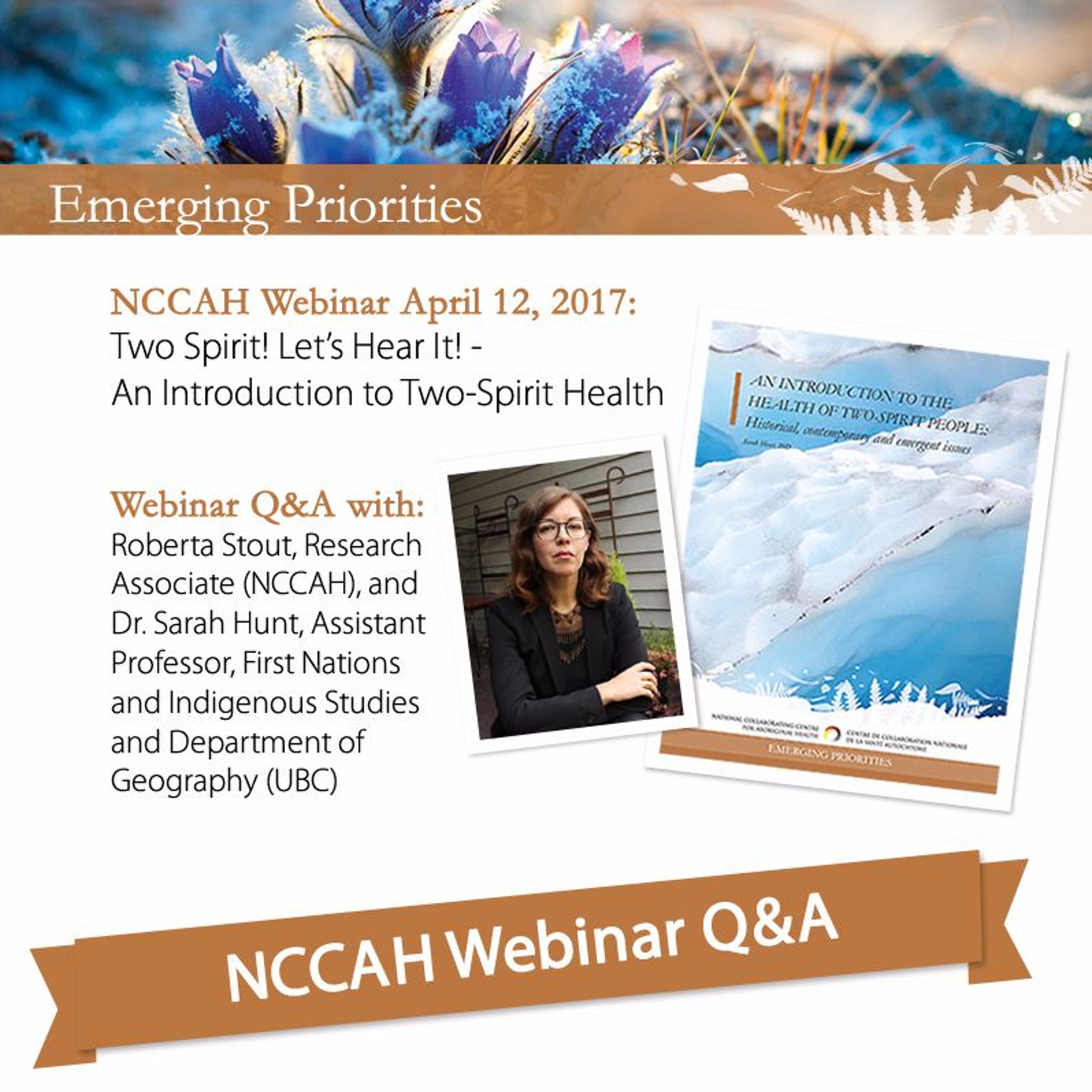 NCCIH Webinar Two Spirit! Let’s Hear It! Q&A with Dr. Sarah Hunt 08.04.2107 7minLe français suit l'anglais. NCCIH Webinar - Two Spirit! Let’s Hear It! Q&A with Dr. Sarah Hunt In this audio recording of the NCCIH Webinar “Two Spirit! Let’s Hear It! - An Introduction to Two-Spirit Health” (held April 12, 2017), Roberta Stout (Research Associate, NCCIH) discusses questions submitted by the webinar attendees with the presenter Dr. Sarah Hunt. Watch on YouTube: https://youtu.be/m1iwI2-iMew For additional information, speaker bios, learning objectives, recommended readings, and resource downloads please see: https://www.nccih.ca/495/Webinar__Two_Spirit!_Let%E2%80%99s_Hear_It!_-_An_Introduction_to_Two-Spirit_Health.nccih?id=206 Subscribe to our mailing list to receive webinar notifications: http://visitor.r20.constantcontact.com/d.jsp?llr=tbzeivcab&p=oi&m=1102372299827&sit=deidvdzdb&f=f1c9c236-a2c6-44eb-8c95-4582355710ad To join the #NCCIHWebinar conversation on Twitter follow us @TheNCCIH *As of May 30th, 2019, the National Collaborating Centre for Aboriginal Health (NCCAH) officially adopted a new name, the National Collaborating Centre for Indigenous Health (NCCIH). ______________________________________ Webinaire du CCNSA – La bispiritualité : Parlons-en! Introduction à la santé bispirituelle Dans cet enregistrement audio du CCNSA webinaire « La bispiritualité : Parlons-en! Introduction à la santé bispirituelle » (tenue le 12 avril 2017), Roberta Stout (Directrice, CCNSA) discute des questions soumises par les participants au webinaire avec et les présentatrice Mme Sarah Hunt. Le webinaire est en anglais seulement. Anglais vidéo YouTube : https://youtu.be/m1iwI2-iMew Pour plus d'informations, la biographies du conférenciers, les objectifs d'apprentissage, les lectures recommandées et le téléchargement des ressources, veuillez consulter : https://www.ccnsa.ca/525/Webinaire___La_bispiritualit%C3%A9___Parlons-en!_Introduction_%C3%A0_la_sant%C3%A9_bispirituelle.nccih?id=206 Abonnez-vous à notre liste de diffusion pour recevoir des notifications webinaire : http://visitor.r20.constantcontact.com/d.jsp?llr=tbzeivcab&p=oi&m=1102372299827&sit=deidvdzdb&f=f1c9c236-a2c6-44eb-8c95-4582355710ad Suivez-nous sur Twitter @LeCCNSA *Le 30 mai 2019, le Centre de collaboration nationale de la santé autochtone (NCCAH) a officiellement adopté son nouveau nom, le National Collaborating Centre for Indigenous Health (NCCIH).
 -
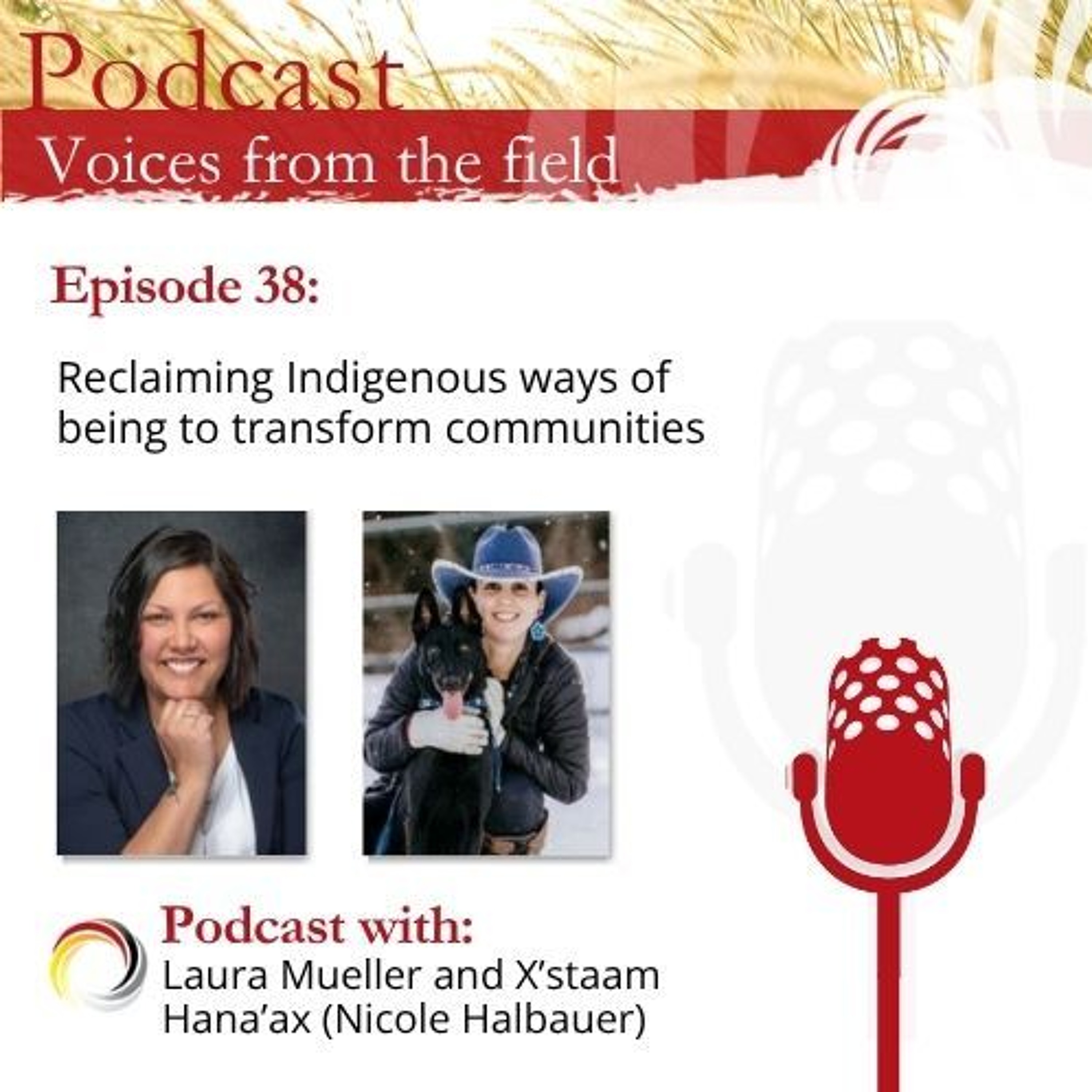 Voices from the field 38 – Reclaiming Indigenous ways of being to transform communities 30.08.2026 44min(Le français suit l'anglais) In this podcast, Laura Mueller and X'staam Hana'ax (Nicole Halbauer), two First Nations PhD candidates, researchers, and mothers, have a conversation about their efforts to decolonize community governance structures and academia. They talk about their roles as mentors, leaders, and advocates to foster environments that can support Indigenous student success and build Indigenous leadership. Rather than trying to shape Indigenous ways into western frameworks, Mueller and X'staam Hana'ax argue that embracing Indigenous knowledges and relational worldviews are key to community transformation and empowerment. They discuss ways that this can be done through, for example, developing wholistic solutions to community issues rather than using siloed approaches; leaving space for ceremony in Indigenous governance; reclaiming matriarchs as leaders and mentors in communities; using Indigenous knowledge collection and sharing methods to enhance the accessibility of knowledge for communities; and recognizing Indigenous knowledge systems as equal to western knowledge systems. Read or download a transcript (PDF): https://www.nccih.ca/docs/podcasts/2026-09-02-POD-Voices-38-Mueller-Halbauer-Transcript-EN.pdf See our website for guest bios: https://www.nccih.ca/495/podcast-voices-38-reclaim-decolonize.nccih?id=10551 Subscribe to our mailing list to receive notifications of new podcasts: https://lp.constantcontactpages.com/sl/Gwrj8dN/NCCIHsignup To join the #NCCIHPodcast conversation on BlueSky follow us @TheNCCIH. _________________________________ Les Voix du terrain 38 – À la reconquête des façons d’être autochtones pour transformer les communautés Dans ce balado, Laura Mueller et X’staam Hana’ax (Nicole Halbauer), deux doctorantes, chercheuses et mères de Premières Nations, ont une conversation à propos de leurs efforts pour décoloniser les structures de gouvernance communautaires et le milieu universitaire. Elles parlent de leurs rôles en tant que mentores, dirigeantes et défenseures pour favoriser des environnements qui peuvent soutenir la réussite des étudiants autochtones et renforcer le leadership autochtone. Plutôt que d’essayer de modeler les façons autochtones dans des cadres occidentaux, Mueller et X’staam Hana’ax soutiennent que l’adoption des savoirs et des visions du monde relationnelles des Autochtones est essentielle à la transformation et à l’autonomisation des communautés. Elles discutent des moyens d’y parvenir, notamment : en développant des solutions holistiques aux problèmes communautaires plutôt que d’utiliser des approches cloisonnées; en laissant un espace pour la cérémonie dans la gouvernance autochtone; en réintégrant les matriarches en tant que dirigeantes et mentores dans les communautés; en utilisant des méthodes de collecte et de partage des savoirs autochtones pour améliorer l’accessibilité aux connaissances des communautés; et en reconnaissant les systèmes de savoirs autochtones comme égaux aux systèmes de connaissances occidentaux. Lire ou télécharger une transcription en français : https://www.ccnsa.ca/docs/podcasts/2026-09-02-POD-Voices-38-Mueller-Halbauer-Transcript-FR.pdf Lire les biographies des intervenantes sur notre site web : https://www.ccnsa.ca/525/balado-voix-38-r%c3%a9investir-d%c3%a9coloniser.nccih?id=10551 Abonnez-vous à notre liste de diffusion pour recevoir des notifications de nouveaux balados : https://lp.constantcontactpages.com/sl/Gwrj8dN/NCCIHsignup Suivez la discussion #BaladoDuCCNSA sur BlueSky @LeCCNSA.
 -
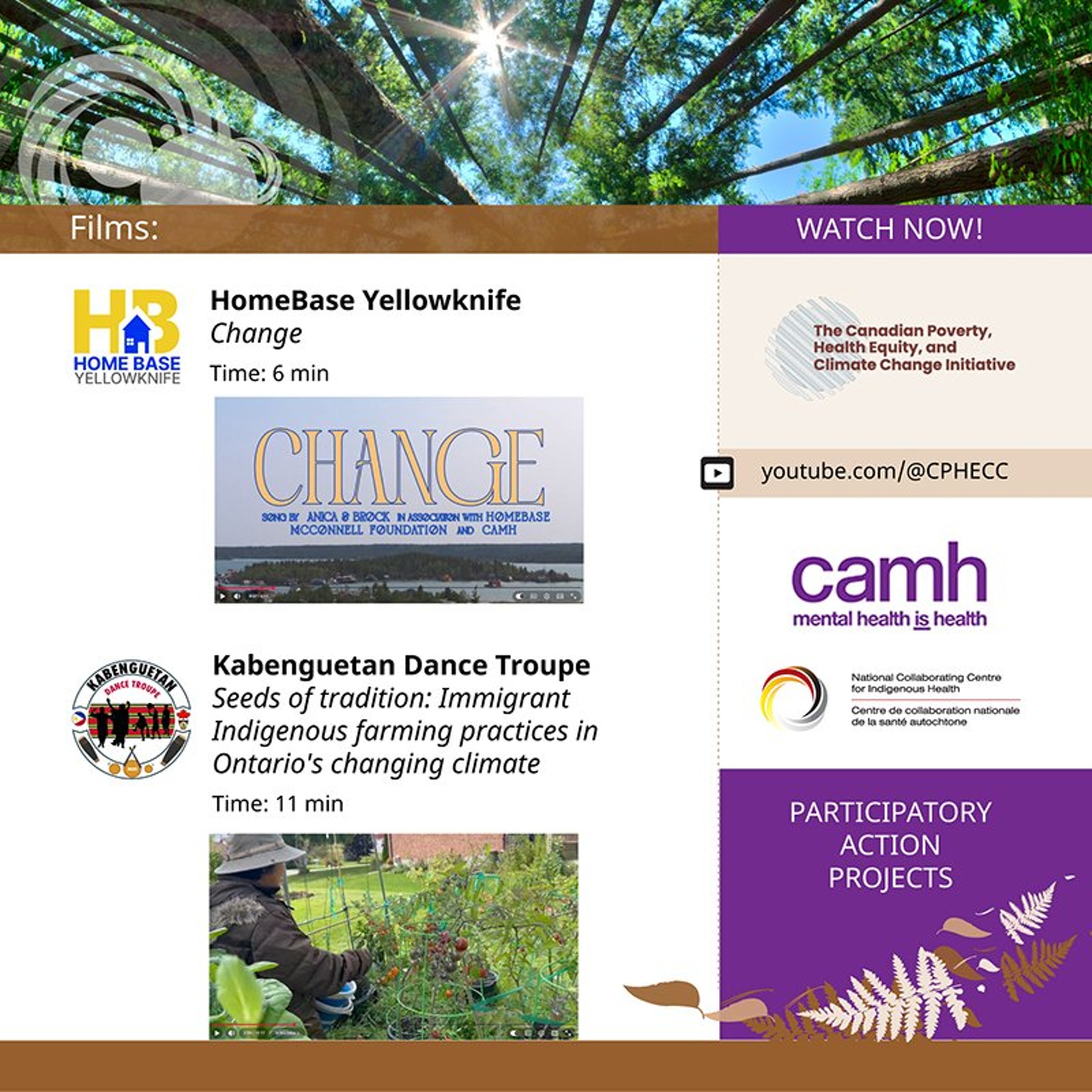 CAMH & NCCIH - Considering impacts of & responses to climate change through participatory filmmaking 20.06.2026 1t 23min(Le français suit l'anglais) CAMH and NCCIH film screening (webinar) - Considering impacts of and responses to climate change through participatory filmmaking This audio recording of the film screening “Considering impacts of and responses to climate change through participatory filmmaking: Youth perspectives from Yellowknife and the experiences of the Philippines Indigenous diaspora in Toronto" screens two films that were developed through a participatory action approach to share experiences related to climate change. One film was developed by youth involved with Home Base Yellowknife, an organization that supports young people who lack housing or are precariously housed. The second film was developed by Indigenous leaders and community members from the Philippines who now reside in Toronto. These films are part of a broader national initiative that is working to address disproportionate health impacts of climate change on individuals and communities experiencing poverty, marginalization, and social exclusion across Canada. Watch on YouTube: https://youtu.be/KziUgCQIUuY Read or download a transcript of the webinar (PDF): https://www.nccih.ca/docs/land/2026-06-23-WEB-CAMH-Screening-Transcript-EN-002.pdf For additional information, speaker bios, learning objectives, recommended readings, and resource downloads please see: https://www.nccih.ca/495/web-camh-nccih.nccih?id=10550 Subscribe to our mailing list to receive webinar and podcast notifications: https://visitor.r20.constantcontact.com/d.jsp?llr=tbzeivcab&p=oi&m=1102372299827&sit=deidvdzdb&f=f1c9c236-a2c6-44eb-8c95-4582355710ad To join the #TheNCCIH conversation on BlueSky follow us @TheNCCIH. _________________________________ Projection de films du CAMH et du CCNSA (webinaire) – Tenir compte des conséquences et des réponses aux changements climatiques par la cinématographie participative Cet audio du CAMH et du CCNSA webinaire « Tenir compte des conséquences et des réponses aux changements climatiques par la cinématographie participative : points de vue des jeunes de Yellowknife et expériences de la diaspora autochtone des Philippines de Toronto » diffuse deux films créés grâce à une démarche participative visant à faire part d’expériences liées aux changements climatiques. Un des films découle du travail de jeunes impliqués dans Home Base Yellowknife, un organisme qui vient en aide à des jeunes sans domicile fixe ou en situation de logement précaire. Des leaders autochtones et des membres de la communauté issue des Philippines qui résident à Toronto ont créé l’autre film. Ces films font partie d’une plus vaste initiative nationale qui vise à s’attaquer aux conséquences disproportionnelles des changements climatiques sur la santé des personnes et des communautés aux prises avec la pauvreté, à la marginalisation et à l’exclusion sociale au Canada. Visionner sur YouTube (en anglais avec sous-titres en français) : https://youtu.be/KziUgCQIUuY Lire ou télécharger une transcription française du webinaire (PDF) : https://www.ccnsa.ca/docs/land/2026-06-23-WEB-CAMH-Screening-Transcript-FR.pdf Pour plus d'informations, les biographies des conférencières, les objectifs d'apprentissage, les lectures recommandées et le téléchargement des ressources, veuillez consulter : https://www.ccnsa.ca/525/web-camh-ccnsa.nccih?id=10550 Abonnez-vous à notre liste de diffusion pour recevoir des notifications de webinaire ou de baladodiffusion : https://visitor.r20.constantcontact.com/d.jsp?llr=tbzeivcab&p=oi&m=1102372299827&sit=deidvdzdb&f=f1c9c236-a2c6-44eb-8c95-4582355710ad Suivez la discussion #LeCCNSA sur BlueSky @LeCCNSA.
 -
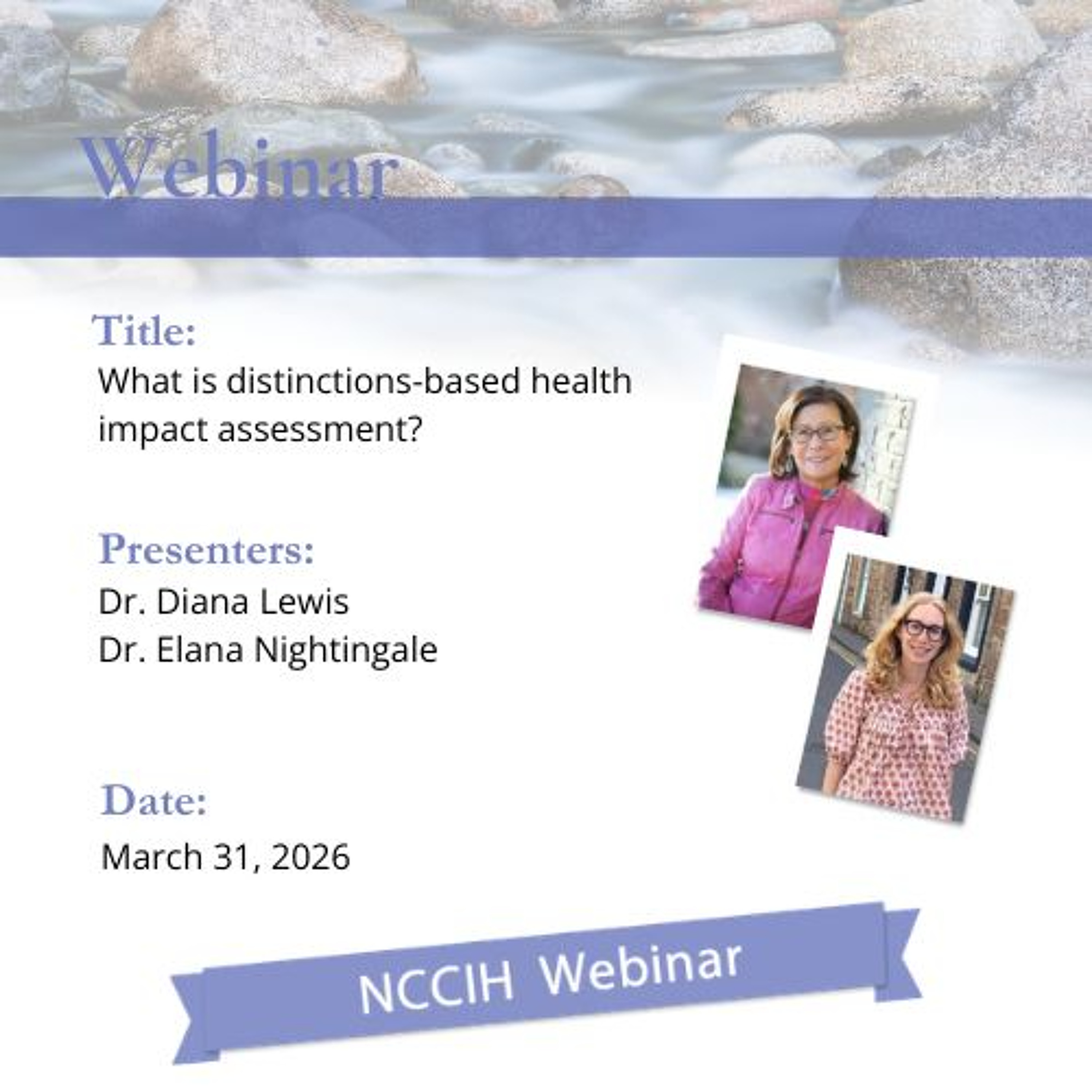 NCCIH Webinar - What is distinctions-based health impact assessment? 29.03.2026 1t 27min(Le français suit l'anglais) Health impact assessment (HIA) provides a systematic process to identify and analyze the potential effects of a proposed development project on the health and well-being of a population. For Indigenous Peoples in Canada, standardized HIAs are not able to adequately measure potential health impacts as these processes do not consider the full range of cultural, social, spiritual and economic determinants of Indigenous well-being. Instead, distinctions-based HIA approaches are required that begin from place-based, community-specific and holistic environmental health frameworks. In this webinar, join Drs. Diana Lewis and Elana Nightingale for a discussion of distinctions-based health impact assessment: what it is, what it could look like in Canada, and how it could transform HIA into a process that reflects Indigenous Peoples’ diverse worldviews, knowledge systems and values. Watch on YouTube: https://youtu.be/eg3L1ZMb84s Read or download a transcript of the webinar (PDF): https://www.nccih.ca/docs/WebinarResources/2026-03-31-WEB-HIA-004-Transcript-EN.pdf Read or download a list of related resources (PDF): https://www.nccih.ca/docs/WebinarResources/2026-HIA-004-WEB-Resource-List-EN.pdf Read or download the presenters’ PPT (PDF): https://www.nccih.ca/docs/WebinarResources/2026-03-31-WEB-HIA-004-presenter-EN.pdf For additional information, see: https://www.nccih.ca/495/Webinar_-_What_is_distinctions-based_health_impact_assessment__.nccih?id=10533 To join the #TheNCCIH conversation on BlueSky follow us @TheNCCIH. _________________________________ Webinaire du CCNSA – En quoi consiste une évaluation de l’impact sur la santé fondée sur les distinctions? Une évaluation de l’impact sur la santé (EIS) comporte une démarche systématique visant à détecter et à analyser les effets possibles d’un projet d’exploitation proposé sur la santé et le bien-être d’une population. Pour les peuples autochtones du Canada, des EIS normalisées ne sont pas à même de mesurer convenablement les répercussions possibles de ces projets sur la santé, puisqu’elles ne tiennent pas compte de l’étendue complète des déterminants culturels, sociaux, spirituels et économiques du bien-être des Autochtones. Il faudrait plutôt adopter des démarches d’EIS fondées sur les distinctions qui commencent par l’établissement de cadres de santé environnementale axés sur le lieu, propres à la communauté et holistiques. Au cours de ce webinaire, Mmes Diana Lewis et Elana Nightingale discutent de l’évaluation de l’impact sur la santé fondée sur les distinctions : de quoi il s’agit, en quoi cela pourrait-il consister au Canada, et comment cela pourrait muer l’EIS en un processus qui tient compte de la diversité de visions du monde, de systèmes de connaissances et de valeurs des peuples autochtones. Visionner sur YouTube (en anglais avec sous-titres en français) : https://youtu.be/eg3L1ZMb84s&cc_load_policy=1&cc_lang_pref=fr Lire ou télécharger une transcription française du webinaire (PDF) : https://www.ccnsa.ca/docs/WebinarResources/2026-03-31-WEB-HIA-004-Transcript-FR.pdf Lire ou télécharger une liste de ressources connexes (PDF) : https://www.ccnsa.ca/docs/WebinarResources/2026-HIA-004-WEB-Resource-List-FR.pdf Lire ou télécharger la version française la PPT (PDF) : https://www.ccnsa.ca/docs/WebinarResources/2026-03-31-WEB-HIA-004-presenter-FR.pdf Pour plus d'informations, veuillez consulter : https://www.ccnsa.ca/525/webinaire-EIS-fond%c3%a9e-sur-distinctions.nccih?id=10533 Suivez la discussion #LeCCNSA sur BlueSky @LeCCNSA.
 -
 NCCIH Webinar - Mentions and measures: How are Indigenous values considered in impact assessments? 28.02.2026 1t 14min(Le français suit l'anglais) In Canada’s oil and gas industry, impact assessments (IAs) are used to determine the positive and negative externalities of proposed projects. These assessments tend to prioritize economic gains over the values of Indigenous communities who bear the weight of impacts. In this recording of the NCCIH Webinar "Mentions and measures: How are Indigenous values considered in impact assessments?", Dr. Diana Lewis and Lara Durksen discuss how Indigenous values are understood and considered alongside standardized economic measures in decision-making. Their findings evidence how Indigenous values shared in the IAs are interconnected to health and well-being, emphasizing the importance of Indigenous leadership in IA for informed decision-making. Watch on YouTube: https://youtu.be/setXMSKkhK4 Read or download a transcript of the webinar (PDF): https://nccih.ca/docs/WebinarResources/2026-03-03-WEB-HIA-003-Transcript-EN.pdf Read or download a list of related resources (PDF): https://nccih.ca/docs/WebinarResources/2026-03-03-WEB-HIA-003-Resource-List-EN.pdf Read or download the presenters’ PPT (PDF): https://nccih.ca/docs/WebinarResources/2026-03-03-WEB-HIA-003-presenter-EN.pdf For additional information, speaker bios, learning objectives, recommended readings, and resource downloads please see: https://www.nccih.ca/495/web-hia-003-mentions-and-measures.nccih?id=10534 Subscribe to our mailing list to receive webinar podcast notifications: https://visitor.r20.constantcontact.com/d.jsp?llr=tbzeivcab&p=oi&m=1102372299827&sit=deidvdzdb&f=f1c9c236-a2c6-44eb-8c95-4582355710ad To join the #TheNCCIH conversation on BlueSky follow us @TheNCCIH. _________________________________ Webinaire du CCNSA – Mentions et mesures : comment les valeurs autochtones sont-elles prises en compte dans les évaluations d’impact? Dans l’industrie pétrolière et gazière canadienne, les évaluations d’impact (EI) servent à déterminer les externalités positives et négatives des projets proposés. Ces évaluations tendent à privilégier les gains économiques au détriment des valeurs des communautés autochtones qui subissent le poids des impacts. Dans cet enregistrement du webinaire « Mentions et mesures : comment les valeurs autochtones sont-elles prises en compte dans les évaluations d’impact? » Diana Lewis, Ph. D., et Lara Durksen discutent de la manière dont les valeurs autochtones sont comprises et prises en compte parallèlement aux mesures économiques normalisées dans la prise de décision. Leurs conclusions montrent comment les valeurs autochtones présentées dans les EI sont liées à la santé et au bien-être, soulignant l’importance du leadership autochtone dans les EI pour une prise de décision éclairée. Visionner sur YouTube (en anglais avec sous-titres en français) : https://youtu.be/setXMSKkhK4 Lire ou télécharger une transcription française du webinaire (PDF) : https://ccnsa.ca/docs/WebinarResources/2026-03-03-WEB-HIA-003-Transcript-FR.pdf Lire ou télécharger une liste de ressources connexes (PDF) : https://ccnsa.ca/docs/WebinarResources/2026-03-03-WEB-HIA-003-Resource-List-FR.pdf Lire ou télécharger la version française de la présentation Powerpoint des conférencières (PDF) : https://ccnsa.ca/docs/WebinarResources/2026-03-03-WEB-HIA-003-presenter-FR.pdf Pour plus d'informations, les biographies des conférencières, les objectifs d'apprentissage, les lectures recommandées et le téléchargement des ressources, veuillez consulter : https://www.ccnsa.ca/525/web-hia-003-mentions-et-mesures.nccih?id=10534 Abonnez-vous à notre liste de diffusion pour recevoir des notifications webinaire ou baladodiffusion : https://visitor.r20.constantcontact.com/d.jsp?llr=tbzeivcab&p=oi&m=1102372299827&sit=deidvdzdb&f=f1c9c236-a2c6-44eb-8c95-4582355710ad Suivez la discussion #LeCCNSA sur BlueSky @LeCCNSA.
 -
 NCCIH Webinar – Indigenous-specific health impact assessment: What might it look like in Canada? 27.02.2026 1t 27min(Le français suit l'anglais) NCCIH Webinar – Indigenous-specific health impact assessment: What might it look like in Canada? This video recording of the NCCIH Webinar "Indigenous-specific health impact assessment: What might it look like in Canada?" will explore what distinctions-based Indigenous-specific health impact assessment (HIA) could look like in Canada, advancing Indigenous Peoples’ knowledges, values, and priorities throughout the HIA process. Join Drs. Diana Lewis and Elana Nightingale for a presentation through conversation about the existing base of evidence on Indigenous participation in the assessment of resource and infrastructure development – globally and within Canada. They draw from the findings of Indigenous Health Impact Assessment (2026) - a systematic literature review that examines peer-reviewed and grey literature, published guidelines, and tools relevant to Indigenous health impact assessment. Watch on YouTube: https://youtu.be/B95KW99UZ3E Read or download a transcript of the webinar (PDF): https://www.nccih.ca/docs/WebinarResources/2026-01-29-WEB-HIA-001-Transcript-EN.pdf For additional information, speaker bios, learning objectives, recommended readings, and resource downloads please see: https://www.nccih.ca/495/webinar-health-impact-assessment-in-Canada.nccih?id=10531 Subscribe to our mailing list to receive webinar podcast notifications: https://visitor.r20.constantcontact.com/d.jsp?llr=tbzeivcab&p=oi&m=1102372299827&sit=deidvdzdb&f=f1c9c236-a2c6-44eb-8c95-4582355710ad To join the #TheNCCIH conversation on BlueSky follow us @TheNCCIH. _________________________________ Webinaire du CCNSA – L’évaluation d’impact sur la santé des Autochtones : à quoi pourrait ressembler un tel exercice au Canada? Cet enregistrement du webinaire du CCNSA « L’évaluation d’impact sur la santé des Autochtones : à quoi pourrait ressembler un tel exercice au Canada? » se penche sur ce en quoi pourraient consister, au Canada, les évaluations d’impact sur la santé (EIS) des Autochtones fondées sur les distinctions qui mettraient de l’avant les connaissances, les valeurs et les priorités des populations autochtones dans le cadre d’une démarche d’évaluation de cette nature. Joignez-vous à Mmes Diana Lewis et Elana Nightingale pour une présentation sous forme d’échanges où l’on abordera la base factuelle existante concernant la participation des Autochtones à l’évaluation de projets d’infrastructures ou d’exploitation des ressources – à l’échelle mondiale et au Canada. Les chercheuses s’appuient, pour leurs échanges, sur les conclusions du rapport Évaluation d’impact sur la santé des Autochtones (2026) – une analyse documentaire pour laquelle on a procédé à l’étude de documents revus par des pairs ou issus de la littérature grise, de lignes directrices publiées et d’outils pertinents pour l’évaluation d’impact sur la santé de ces populations. Visionner sur YouTube (en anglais avec sous-titres en français) : https://youtu.be/B95KW99UZ3E Télécharger ou lire une transcription française du webinaire (PDF) : https://www.ccnsa.ca/docs/WebinarResources/2026-01-29-WEB-HIA-001-Transcript-FR.pdf Pour plus d'informations, les biographies des conférencières, les objectifs d'apprentissage, les lectures recommandées et le téléchargement des ressources, veuillez consulter : https://www.ccnsa.ca/525/webinaire-évaluation-impact-santé-au-Canada.nccih?id=10531 Abonnez-vous à notre liste de diffusion pour recevoir des notifications webinaire ou baladodiffusion : https://visitor.r20.constantcontact.com/d.jsp?llr=tbzeivcab&p=oi&m=1102372299827&sit=deidvdzdb&f=f1c9c236-a2c6-44eb-8c95-4582355710ad Suivez la discussion #LeCCNSA sur BlueSky @LeCCNSA.
 -
 NCCIH Webinar - H.E.A.L. Healthcare: Hearts-based education and anticolonial learning in healthcare 20.02.2026 1t 25min(Le français suit l'anglais) NCCIH Webinar – H.E.A.L. Healthcare: Hearts-based Education and Anticolonial Learning in Healthcare This audio recording of the NCCIH Webinar "H.E.A.L. Healthcare: Hearts-based Education and Anticolonial Learning in Healthcare" engages participants in anti-bias training using anticolonial arts-based learning tools available from the H.E.A.L. Healthcare website – HEALhealthcare.ca. H.E.A.L. Healthcare, a project completed in collaboration with the National Collaborating Centre for Indigenous Health, was created in response to gaps identified in healthcare education. The website hosts over 30 individual curricula that address personal biases in healthcare, and were created by artists, Indigenous storytellers, and people with lived experience. In the webinar, the facilitators will introduce the project and website, then work through two of the curricula with participants. Through an anticolonial lens, participants will be invited to engage in active listening, write poetry, and reflect on their own personal biases. Watch on YouTube: https://youtu.be/lou2w06O8e4 Listen on SoundCloud: https://soundcloud.com/nccih-ccnsa/heal-healthcare-anticolonial-learning Read or download a transcript of the webinar (PDF): https://www.nccih.ca/docs/WebinarResources/2026-01-20-WEB-HEAL-Transcript-EN.pdf For additional information, speaker bios, learning objectives, recommended readings, and resource downloads please see: https://www.nccih.ca/495/HEAL-healthcare-webinar.nccih?id=10529 Subscribe to our mailing list to receive webinar podcast notifications: https://visitor.r20.constantcontact.com/d.jsp?llr=tbzeivcab&p=oi&m=1102372299827&sit=deidvdzdb&f=f1c9c236-a2c6-44eb-8c95-4582355710ad To join the #TheNCCIH conversation on BlueSky follow us @TheNCCIH. _________________________________ Webinaire du CCNSA – H.E.A.L. Healthcare : éducation du cœur et apprentissage anticolonial dans les soins de santé Cet enregistrement audio du webinaire « H.E.A.L. Healthcare : éducation du cœur et apprentissage anticolonial dans les soins de santé » engagera les participants dans une formation contre les préjugés en utilisant des outils d’apprentissage anticoloniaux fondés sur les arts et offerts sur le site Web de H.E.A.L. Healthcare – HEALhealthcare.ca. H.E.A.L. Healthcare, un projet réalisé en collaboration avec le CCNSA, a été créé pour combler les lacunes qui existent au sein de l’éducation en santé. Ce site Web héberge plus de 30 programmes de formation individuelle qui s’attaquent aux préjugés personnels dans les soins de santé, et ont été créés par des artistes, des conteurs autochtones et des personnes ayant des expériences vécues. Dans le webinaire, les animatrices-formatrices présenteront le projet et le site Web, puis travailleront avec les participants sur deux des programmes de formation. Sous un angle anticolonial, les participants seront invités à une écoute active, à écrire de la poésie et à réfléchir sur leurs propres biais cognitifs. Visionner sur YouTube (en anglais avec sous-titres en français) : https://youtu.be/lou2w06O8e4 Écouter sur SoundCloud (en anglais) : https://soundcloud.com/nccih-ccnsa/heal-healthcare-anticolonial-learning Télécharger ou lire une transcription française du webinaire (PDF) : https://www.ccnsa.ca/docs/WebinarResources/2026-01-20-WEB-HEAL-Transcript-FR.pdf Pour plus d'informations, la biographies des conférencières, les objectifs d'apprentissage, les lectures recommandées et le téléchargement des ressources, veuillez consulter : https://www.ccnsa.ca/525/webinaire-HEAL-healthcare.nccih?id=10529 Abonnez-vous à notre liste de diffusion pour recevoir des notifications webinaire ou baladodiffusion : https://visitor.r20.constantcontact.com/d.jsp?llr=tbzeivcab&p=oi&m=1102372299827&sit=deidvdzdb&f=f1c9c236-a2c6-44eb-8c95-4582355710ad Suivez la discussion #LeCCNSA sur BlueSky @LeCCNSA.
 -
 NCCIH Webinar - What does meaningful engagement mean 14.02.2026 1t 27min(Le français suit l'anglais) Despite several approaches to Indigenous participation and engagement proposed by the federal government, Indigenous communities are demanding that the development of distinctions-based and culturally relevant Indigenous specific HIA require a stand-alone Indigenous specific HIA process informed by guidance, expectations, and standards established by Indigenous communities themselves. In this audio recording of the NCCIH Webinar "What does meaningful engagement mean: “Drinking tea” with practitioners of Indigenous-led community-based participatory research " Drs Diana Lewis and Heather Castleden will share their experiences of working in collaborative and meaningful relationships with Indigenous communities across Canada. At the core of a community-based participatory research (CBPR) approach is the equitable and meaningful involvement of community partners in all phases of the research process, from the focus of study to knowledge mobilization (Castleden et al., 2012; Lewis et al., 2025). This webinar provides transferable insights for “how to” do meaningful engagement in research to health impact assessment. Watch on YouTube: https://youtu.be/MPV7QvaXvxo Read or download a transcript of the webinar (PDF): https://www.nccih.ca/docs/WebinarResources/2026-WEB-HIA-002-Transcript-EN.pdf For additional information, speaker bios, learning objectives, recommended readings, and resource downloads please see: https://www.nccih.ca/495/webinar-health-impact-assessment-participatory-research.nccih?id=10532 Subscribe to our mailing list to receive webinar podcast notifications: https://visitor.r20.constantcontact.com/d.jsp?llr=tbzeivcab&p=oi&m=1102372299827&sit=deidvdzdb&f=f1c9c236-a2c6-44eb-8c95-4582355710ad To join the #TheNCCIH conversation on BlueSky follow us @TheNCCIH. _________________________________ Webinaire du CCNSA – Quelle est la signification d’un engagement significatif : « boire le thé » avec les praticiens de la recherche participative communautaire dirigée par des Autochtones Cet audio du CCNSA webinaire « Quelle est la signification d’un engagement significatif : « boire le thé » avec les praticiens de la recherche participative communautaire dirigée par des Autochtones » Diana Lewis, Ph. D., et Heather Castleden, Ph. D., partageront leurs expériences de travail de collaboration en relations significatives avec les communautés autochtones à l’ensemble du Canada. Au cœur d’une approche de recherche participative communautaire se trouve la participation équitable et importante des partenaires communautaires à toutes les phases du processus de recherche, de l’objectif de l’étude à la mobilisation des connaissances (Castleden et al., 2012; Lewis et al., 2025). Ce webinaire fournit des connaissances transférables sur la façon de s’engager de manière significative dans la recherche en matière d’évaluation d’impact sur la santé. Visionner sur YouTube (en anglais avec sous-titres en français) : https://youtu.be/MPV7QvaXvxo Télécharger ou lire une transcription française du webinaire (PDF) : https://www.ccnsa.ca/docs/WebinarResources/2026-WEB-HIA-002-Transcript-FR.pdf Pour plus d'informations, les biographies des conférencières, les objectifs d'apprentissage, les lectures recommandées et le téléchargement des ressources, veuillez consulter : https://www.ccnsa.ca/525/webinaire-%C3%A9valuation-impact-recherche-participative%20.nccih?id=10532 Abonnez-vous à notre liste de diffusion pour recevoir des notifications webinaire ou baladodiffusion : https://visitor.r20.constantcontact.com/d.jsp?llr=tbzeivcab&p=oi&m=1102372299827&sit=deidvdzdb&f=f1c9c236-a2c6-44eb-8c95-4582355710ad Suivez la discussion #LeCCNSA sur BlueSky @LeCCNSA.
 -
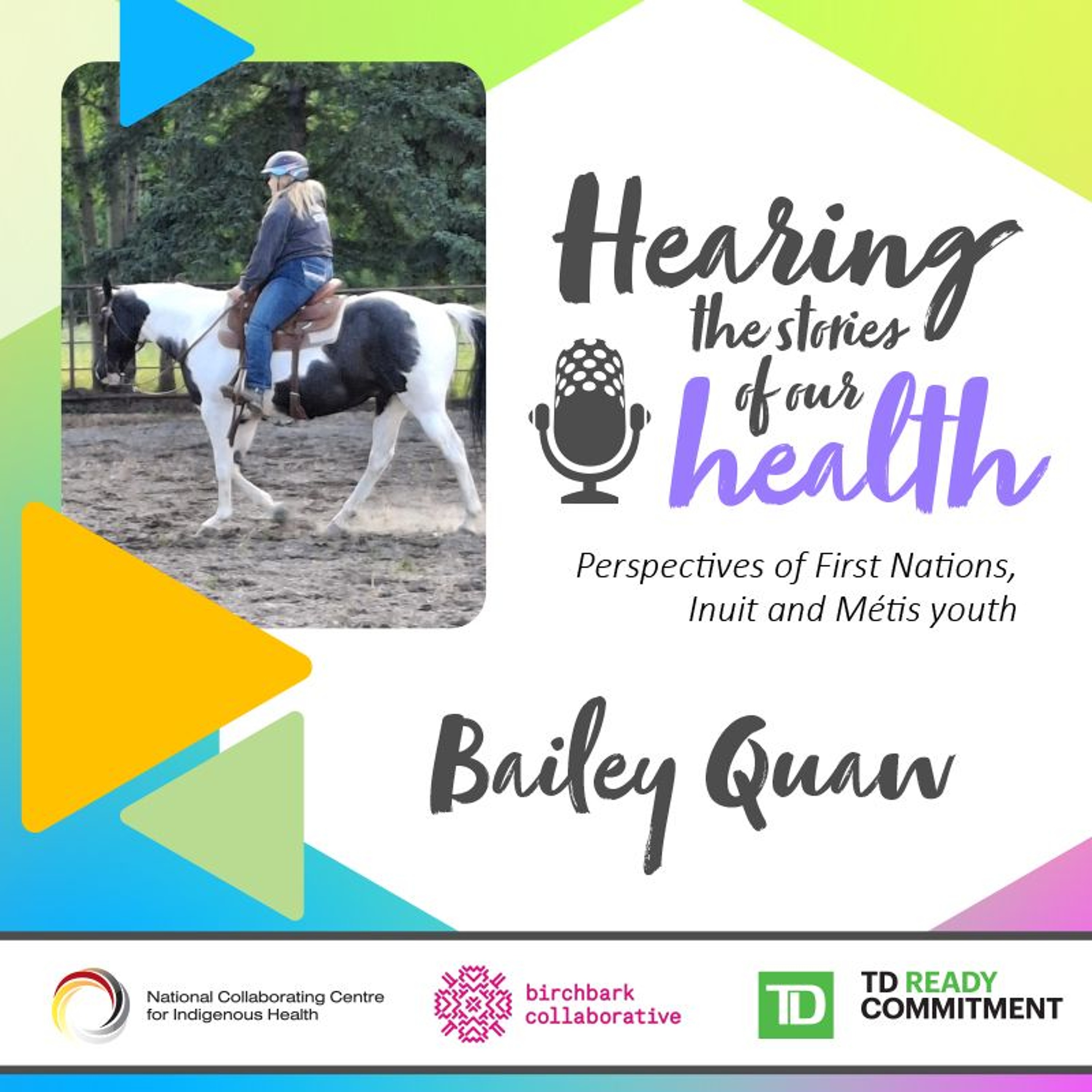 Hearing the stories of our health - Bailey Quaw 04.12.2025 8minLe français suit l'anglais. Hearing the stories of our health: Perspectives of First Nations, Inuit and Métis youth - Bailey Quaw The NCCIH undertook a national digital storytelling project, "Hearing the stories of our health: Perspectives of First Nations, Inuit, and Métis youth" to better understand what health and well-being mean to Indigenous young people. Nine of the digital storytellers participated in this podcast series where they could further reflect on their lives, their communities, and what health really means to them in a world that often forgets to ask them. Hadih, my name is Bailey Quaw. I’m fifteen and I’m from Stony Creek, Saik’uz. My future goals are to live on a farm and be a veterinarian. Learn more about the project: https://www.nccih.ca/485/NCCIH_in_the_News.nccih?id=583 Read or download a transcript (PDF): https://www.nccih.ca/docs/general/2025-12-11-POD-Bailey-BC-Transcript-EN.pdf Listen to more episodes: https://soundcloud.com/nccih-ccnsa/sets/digital-youth-stories Subscribe to our mailing list to receive notifications of new podcasts: https://visitor.r20.constantcontact.com/manage/optin?v=001I2RsqMRJGm_0Y2v9dqhXqVu9hYFvAXlmD_7m-Clfm5-n2Ge5jnQuPVVhrfpINGv7emTyFg-0ZIhl6_ZgishJu_H_PqAiKkhqTjvrgkrQpecozF510Ni_w1nxr-UF-zQDPQWgIl1dVE9kufW33x8h3Q== To join the #NCCIHPodcast conversation on BlueSky follow us @TheNCCIH. ___________________________________ Entendre les récits de notre santé : perspectives des jeunes des Premières Nations, inuits et métis - Bailey Quaw Le CCNSA a entrepris un projet national de narration numérique, « Entendre les récits de notre santé : perspectives des jeunes des Premières Nations, inuits et métis » (en anglais), afin de mieux comprendre ce que signifient la santé et le bien-être pour les jeunes autochtones. Neuf des narratrices et narrateurs ont participé à ces balados, dans le cadre desquels ils ont pu réfléchir encore plus à leur vie, à leurs communautés et à la signification réelle de la santé pour eux dans un monde qui oublie souvent de leur poser la question. Hadih, je m’appelle Bailey Quaw. J’ai 15 ans, et je suis de Stony Creek, Première Nation de Saik’uz. Mes objectifs pour l’avenir sont de vivre sur une ferme et de devenir vétérinaire. En savoir plus sur le projet : https://www.ccnsa.ca/543/Nouvelles_du_CCNSA.nccih?id=582 Lire ou télécharger une transcription en français : https://www.ccnsa.ca/docs/general/2025-12-12-POD-Bailey-BC-Transcript-FR.pdf Écoutez plus d'épisodes : https://soundcloud.com/nccih-ccnsa/sets/digital-youth-stories Abonnez-vous à notre liste de diffusion pour recevoir des notifications de nouveaux balados : https://visitor.r20.constantcontact.com/manage/optin?v=001I2RsqMRJGm_0Y2v9dqhXqVu9hYFvAXlmD_7m-Clfm5-n2Ge5jnQuPVVhrfpINGv7emTyFg-0ZIhl6_ZgishJu_H_PqAiKkhqTjvrgkrQpecozF510Ni_w1nxr-UF-zQDPQWgIl1dVE9kufW33x8h3Q== Suivez la discussion #BaladoDuCCNSA sur BlueSky @LeCCNSA.
 -
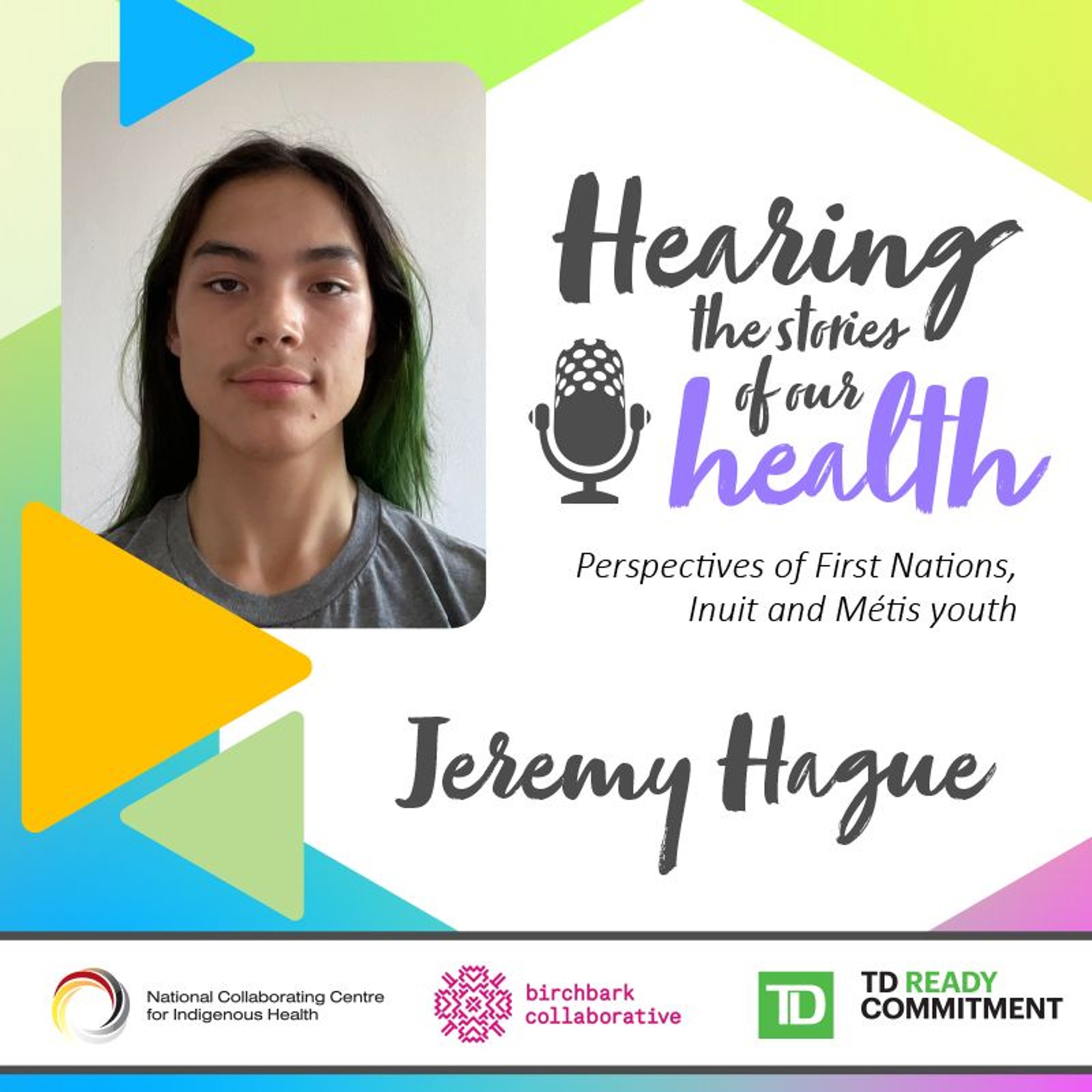 Hearing the stories of our health - Jeremy Hague 03.12.2025 7minLe français suit l'anglais. Hearing the stories of our health: Perspectives of First Nations, Inuit and Métis youth - Jeremy Hague The NCCIH undertook a national digital storytelling project, "Hearing the stories of our health: Perspectives of First Nations, Inuit, and Métis youth" to better understand what health and well-being mean to Indigenous young people. Nine of the digital storytellers participated in this podcast series where they could further reflect on their lives, their communities, and what health really means to them in a world that often forgets to ask them. My name is Jeremy. I’m from Toronto, but my mom is from Iqaluit, Nunavut and my dad is from Vancouver. I’m seventeen and I currently live in Ottawa. My nationality is Inuk. My future goals are just to be able to cook up nice meals for literally everyone and to live a good life. Learn more about the project: https://www.nccih.ca/485/NCCIH_in_the_News.nccih?id=583 Read or download a transcript (PDF): https://www.nccih.ca/docs/general/2025-12-10-POD-Jeremy-ON-Transcript-EN.pdf Listen to more episodes: https://soundcloud.com/nccih-ccnsa/sets/digital-youth-stories Subscribe to our mailing list to receive notifications of new podcasts: https://visitor.r20.constantcontact.com/manage/optin?v=001I2RsqMRJGm_0Y2v9dqhXqVu9hYFvAXlmD_7m-Clfm5-n2Ge5jnQuPVVhrfpINGv7emTyFg-0ZIhl6_ZgishJu_H_PqAiKkhqTjvrgkrQpecozF510Ni_w1nxr-UF-zQDPQWgIl1dVE9kufW33x8h3Q== To join the #NCCIHPodcast conversation on BlueSky follow us @TheNCCIH. ___________________________________ Entendre les récits de notre santé : perspectives des jeunes des Premières Nations, inuits et métis - Jeremy Hague Le CCNSA a entrepris un projet national de narration numérique, « Entendre les récits de notre santé : perspectives des jeunes des Premières Nations, inuits et métis » (en anglais), afin de mieux comprendre ce que signifient la santé et le bien-être pour les jeunes autochtones. Neuf des narratrices et narrateurs ont participé à ces balados, dans le cadre desquels ils ont pu réfléchir encore plus à leur vie, à leurs communautés et à la signification réelle de la santé pour eux dans un monde qui oublie souvent de leur poser la question. Je m’appelle Jeremy. Je suis de Toronto, mais ma mère est d’Iqaluit, au Nunavut, et mon père est de Vancouver. J’ai 17 ans, et en ce moment, je vis à Ottawa. Je suis Inuk. Mes objectifs pour l’avenir sont simplement de pouvoir cuisiner de bons repas pour n’importe qui et de vivre une bonne vie. En savoir plus sur le projet : https://www.ccnsa.ca/543/Nouvelles_du_CCNSA.nccih?id=582 Lire ou télécharger une transcription en français : https://www.ccnsa.ca/docs/general/2025-12-12-POD-Jeremy-ON-Transcript-FR.pdf Écoutez plus d'épisodes : https://soundcloud.com/nccih-ccnsa/sets/digital-youth-stories Abonnez-vous à notre liste de diffusion pour recevoir des notifications de nouveaux balados : https://visitor.r20.constantcontact.com/manage/optin?v=001I2RsqMRJGm_0Y2v9dqhXqVu9hYFvAXlmD_7m-Clfm5-n2Ge5jnQuPVVhrfpINGv7emTyFg-0ZIhl6_ZgishJu_H_PqAiKkhqTjvrgkrQpecozF510Ni_w1nxr-UF-zQDPQWgIl1dVE9kufW33x8h3Q== Suivez la discussion #BaladoDuCCNSA sur BlueSky @LeCCNSA.
 -
 Hearing the stories of our health - Halil Ibrahim Napatchie Noah Sundu 03.12.2025 6minLe français suit l'anglais. Hearing the stories of our health: Perspectives of First Nations, Inuit and Métis youth - Halil Ibrahim Napatchie Noah Sundu The NCCIH undertook a national digital storytelling project, "Hearing the stories of our health: Perspectives of First Nations, Inuit, and Métis youth" to better understand what health and well-being mean to Indigenous young people. Nine of the digital storytellers participated in this podcast series where they could further reflect on their lives, their communities, and what health really means to them in a world that often forgets to ask them. My name is Halil Ibrahim Napatchie Noah Sundu. My mom is from Iqaluit (NU) and I was born in Ottawa. I’m twenty years old and I am half Inuit and half Turkish. My main goal right now is to work towards working in heavy equipment operation. Learn more about the project: https://www.nccih.ca/485/NCCIH_in_the_News.nccih?id=583 Read or download a transcript (PDF): https://www.nccih.ca/docs/general/2025-12-11-POD-Napatchie-ON-Transcript-EN.pdf Listen to more episodes: https://soundcloud.com/nccih-ccnsa/sets/digital-youth-stories Subscribe to our mailing list to receive notifications of new podcasts: https://visitor.r20.constantcontact.com/manage/optin?v=001I2RsqMRJGm_0Y2v9dqhXqVu9hYFvAXlmD_7m-Clfm5-n2Ge5jnQuPVVhrfpINGv7emTyFg-0ZIhl6_ZgishJu_H_PqAiKkhqTjvrgkrQpecozF510Ni_w1nxr-UF-zQDPQWgIl1dVE9kufW33x8h3Q== To join the #NCCIHPodcast conversation on BlueSky follow us @TheNCCIH. ___________________________________ Entendre les récits de notre santé : perspectives des jeunes des Premières Nations, inuits et métis - Halil Ibrahim Napatchie Noah Sundu Le CCNSA a entrepris un projet national de narration numérique, « Entendre les récits de notre santé : perspectives des jeunes des Premières Nations, inuits et métis » (en anglais), afin de mieux comprendre ce que signifient la santé et le bien-être pour les jeunes autochtones. Neuf des narratrices et narrateurs ont participé à ces balados, dans le cadre desquels ils ont pu réfléchir encore plus à leur vie, à leurs communautés et à la signification réelle de la santé pour eux dans un monde qui oublie souvent de leur poser la question. Je m’appelle Halil Ibrahim Napatchie Noah Sundu. Ma mère est d’Iqaluit, au Nunavut, et je suis né à Ottawa. J’ai 20 ans, et je suis à moitié Inuit et à moitié Turc. En ce moment, mon objectif principal est de travailler pour devenir conducteur d’équipement lourd. En savoir plus sur le projet : https://www.ccnsa.ca/543/Nouvelles_du_CCNSA.nccih?id=582 Lire ou télécharger une transcription en français : https://www.ccnsa.ca/docs/general/2025-12-12-POD-Napatchie-ON-Transcript-FR.pdf Écoutez plus d'épisodes : https://soundcloud.com/nccih-ccnsa/sets/digital-youth-stories Abonnez-vous à notre liste de diffusion pour recevoir des notifications de nouveaux balados : https://visitor.r20.constantcontact.com/manage/optin?v=001I2RsqMRJGm_0Y2v9dqhXqVu9hYFvAXlmD_7m-Clfm5-n2Ge5jnQuPVVhrfpINGv7emTyFg-0ZIhl6_ZgishJu_H_PqAiKkhqTjvrgkrQpecozF510Ni_w1nxr-UF-zQDPQWgIl1dVE9kufW33x8h3Q== Suivez la discussion #BaladoDuCCNSA sur BlueSky @LeCCNSA.
 -
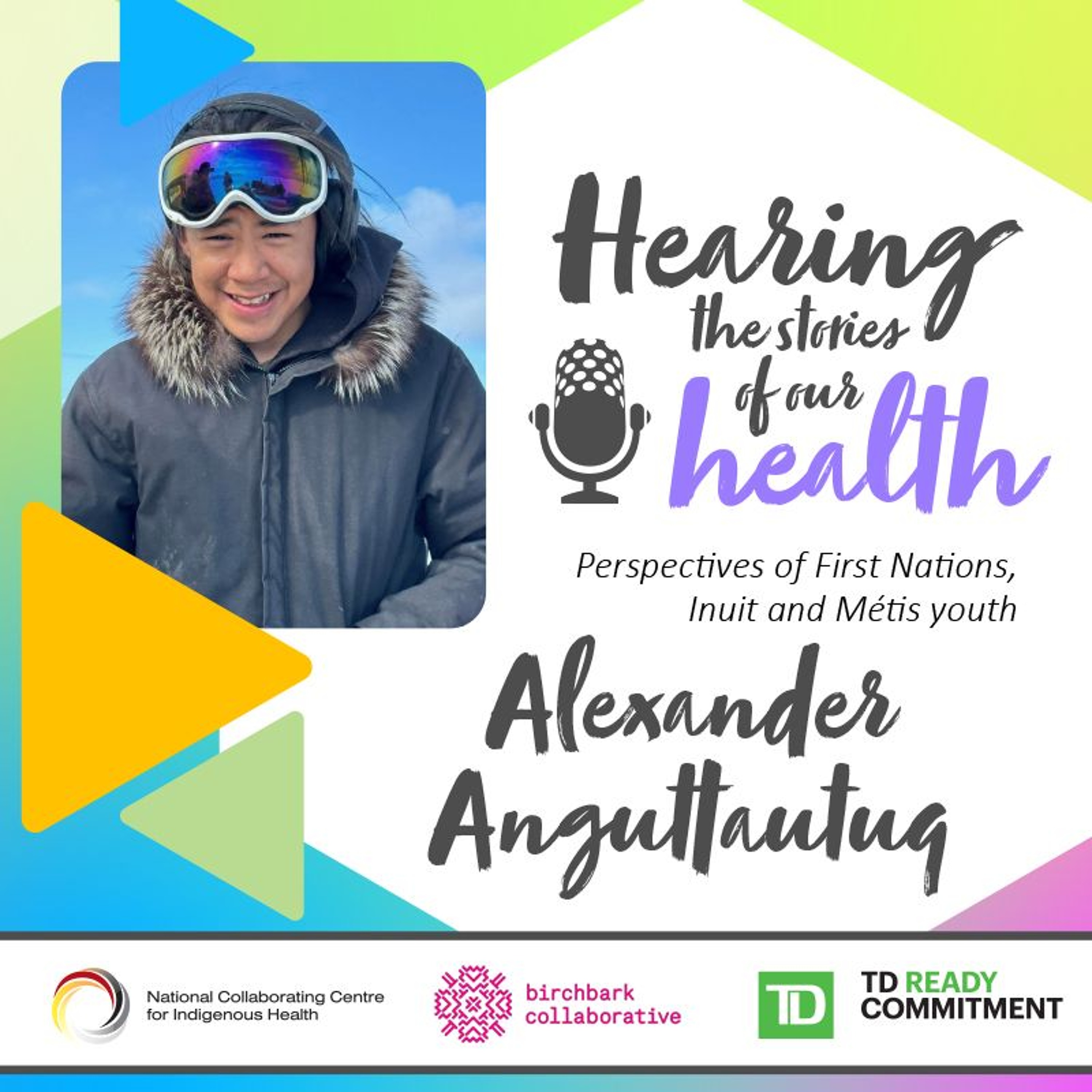 Hearing the stories of our health - Alexander Anguttautuq 03.12.2025 5minLe français suit l'anglais. Hearing the stories of our health: Perspectives of First Nations, Inuit and Métis youth - Alexander Anguttautuq The NCCIH undertook a national digital storytelling project, "Hearing the stories of our health: Perspectives of First Nations, Inuit, and Métis youth" to better understand what health and well-being mean to Indigenous young people. Nine of the digital storytellers participated in this podcast series where they could further reflect on their lives, their communities, and what health really means to them in a world that often forgets to ask them. My name is Alexander Anguttautuq. I am from Sanirajak and Igloolik (NU). I am nineteen years old. I just graduated from an electrician program. My goal now is to work in a construction job to have more of an understanding of how things are made. Learn more about the project: https://www.nccih.ca/485/NCCIH_in_the_News.nccih?id=583 Read or download a transcript (PDF): https://www.nccih.ca/docs/general/2025-12-09-POD-Alex-ON-Transcript-EN.pdf Listen to more episodes: https://soundcloud.com/nccih-ccnsa/sets/digital-youth-stories Subscribe to our mailing list to receive notifications of new podcasts: https://visitor.r20.constantcontact.com/manage/optin?v=001I2RsqMRJGm_0Y2v9dqhXqVu9hYFvAXlmD_7m-Clfm5-n2Ge5jnQuPVVhrfpINGv7emTyFg-0ZIhl6_ZgishJu_H_PqAiKkhqTjvrgkrQpecozF510Ni_w1nxr-UF-zQDPQWgIl1dVE9kufW33x8h3Q== To join the #NCCIHPodcast conversation on BlueSky follow us @TheNCCIH. ___________________________________ Entendre les récits de notre santé : perspectives des jeunes des Premières Nations, inuits et métis - Alexander Anguttautuq Le CCNSA a entrepris un projet national de narration numérique, « Entendre les récits de notre santé : perspectives des jeunes des Premières Nations, inuits et métis » (en anglais), afin de mieux comprendre ce que signifient la santé et le bien-être pour les jeunes autochtones. Neuf des narratrices et narrateurs ont participé à ces balados, dans le cadre desquels ils ont pu réfléchir encore plus à leur vie, à leurs communautés et à la signification réelle de la santé pour eux dans un monde qui oublie souvent de leur poser la question. Je m’appelle Alexander Anguttautuq. Je suis de Sanirajak et d’Igloolik, au Nunavut. J’ai 19 ans. Je viens d’obtenir mon diplôme d’un programme d’apprentissage en électricité. Maintenant, mon objectif est de travailler en construction pour mieux comprendre comment on fabrique les choses. En savoir plus sur le projet : https://www.ccnsa.ca/543/Nouvelles_du_CCNSA.nccih?id=582 Lire ou télécharger une transcription en français : https://www.ccnsa.ca/docs/general/2025-12-12-POD-Alex-ON-Transcript-FR.pdf Écoutez plus d'épisodes : https://soundcloud.com/nccih-ccnsa/sets/digital-youth-stories Abonnez-vous à notre liste de diffusion pour recevoir des notifications de nouveaux balados : https://visitor.r20.constantcontact.com/manage/optin?v=001I2RsqMRJGm_0Y2v9dqhXqVu9hYFvAXlmD_7m-Clfm5-n2Ge5jnQuPVVhrfpINGv7emTyFg-0ZIhl6_ZgishJu_H_PqAiKkhqTjvrgkrQpecozF510Ni_w1nxr-UF-zQDPQWgIl1dVE9kufW33x8h3Q== Suivez la discussion #BaladoDuCCNSA sur BlueSky @LeCCNSA.
 -
 Hearing the stories of our health - Jackson Cameron 03.12.2025 9minLe français suit l'anglais. Hearing the stories of our health: Perspectives of First Nations, Inuit and Métis youth - Jackson Cameron The NCCIH undertook a national digital storytelling project, "Hearing the stories of our health: Perspectives of First Nations, Inuit, and Métis youth" to better understand what health and well-being mean to Indigenous young people. Nine of the digital storytellers participated in this podcast series where they could further reflect on their lives, their communities, and what health really means to them in a world that often forgets to ask them. I’m Jackson Cameron. I’m sixteen years old and I’m from Yekooche First Nation (BC). My goals are to help create more opportunities for myself by working hard and to play hockey. Learn more about the project: https://www.nccih.ca/485/NCCIH_in_the_News.nccih?id=583 Read or download a transcript (PDF): https://www.nccih.ca/docs/general/2025-12-11-POD-Jackson-BC-Transcript-EN.pdf Listen to more episodes: https://soundcloud.com/nccih-ccnsa/sets/digital-youth-stories Subscribe to our mailing list to receive notifications of new podcasts: https://visitor.r20.constantcontact.com/manage/optin?v=001I2RsqMRJGm_0Y2v9dqhXqVu9hYFvAXlmD_7m-Clfm5-n2Ge5jnQuPVVhrfpINGv7emTyFg-0ZIhl6_ZgishJu_H_PqAiKkhqTjvrgkrQpecozF510Ni_w1nxr-UF-zQDPQWgIl1dVE9kufW33x8h3Q== To join the #NCCIHPodcast conversation on BlueSky follow us @TheNCCIH. ___________________________________ Entendre les récits de notre santé : perspectives des jeunes des Premières Nations, inuits et métis - Jackson Cameron Le CCNSA a entrepris un projet national de narration numérique, « Entendre les récits de notre santé : perspectives des jeunes des Premières Nations, inuits et métis » (en anglais), afin de mieux comprendre ce que signifient la santé et le bien-être pour les jeunes autochtones. Neuf des narratrices et narrateurs ont participé à ces balados, dans le cadre desquels ils ont pu réfléchir encore plus à leur vie, à leurs communautés et à la signification réelle de la santé pour eux dans un monde qui oublie souvent de leur poser la question. Je suis Jackson Cameron. J’ai 16 ans, et je suis de la Première Nation de Yekooche, en Colombie-Britannique. Mes buts sont de créer plus de possibilités pour moi-même en travaillant fort, et de jouer au hockey. En savoir plus sur le projet : https://www.ccnsa.ca/543/Nouvelles_du_CCNSA.nccih?id=582 Lire ou télécharger une transcription en français : https://www.ccnsa.ca/docs/general/2025-12-12-POD-Jackson-BC-Transcript-FR.pdf Écoutez plus d'épisodes : https://soundcloud.com/nccih-ccnsa/sets/digital-youth-stories Abonnez-vous à notre liste de diffusion pour recevoir des notifications de nouveaux balados : https://visitor.r20.constantcontact.com/manage/optin?v=001I2RsqMRJGm_0Y2v9dqhXqVu9hYFvAXlmD_7m-Clfm5-n2Ge5jnQuPVVhrfpINGv7emTyFg-0ZIhl6_ZgishJu_H_PqAiKkhqTjvrgkrQpecozF510Ni_w1nxr-UF-zQDPQWgIl1dVE9kufW33x8h3Q== Suivez la discussion #BaladoDuCCNSA sur BlueSky @LeCCNSA.
 -
 Hearing the stories of our health - Destiny Henyu-Rinsma 03.12.2025 16minLe français suit l'anglais. Hearing the stories of our health: Perspectives of First Nations, Inuit and Métis youth - Destiny Henyu-Rinsma The NCCIH undertook a national digital storytelling project, "Hearing the stories of our health: Perspectives of First Nations, Inuit, and Métis youth" to better understand what health and well-being mean to Indigenous young people. Nine of the digital storytellers participated in this podcast series where they could further reflect on their lives, their communities, and what health really means to them in a world that often forgets to ask them. My name is Destiny Henyu-Rinsma. I am originally from Telegraph Creek but I was born and raised in Prince George (BC). I am sixteen years old. I am aiming and working towards becoming a doctor. Learn more about the project: https://www.nccih.ca/485/NCCIH_in_the_News.nccih?id=583 Read or download a transcript (PDF): https://www.nccih.ca/docs/general/2025-12-11-POD-Destiny-BC-Transcript-EN.pdf Listen to more episodes: https://soundcloud.com/nccih-ccnsa/sets/digital-youth-stories Subscribe to our mailing list to receive notifications of new podcasts: https://visitor.r20.constantcontact.com/manage/optin?v=001I2RsqMRJGm_0Y2v9dqhXqVu9hYFvAXlmD_7m-Clfm5-n2Ge5jnQuPVVhrfpINGv7emTyFg-0ZIhl6_ZgishJu_H_PqAiKkhqTjvrgkrQpecozF510Ni_w1nxr-UF-zQDPQWgIl1dVE9kufW33x8h3Q== To join the #NCCIHPodcast conversation on BlueSky follow us @TheNCCIH. ___________________________________ Entendre les récits de notre santé : perspectives des jeunes des Premières Nations, inuits et métis - Destiny Henyu-Rinsma Le CCNSA a entrepris un projet national de narration numérique, « Entendre les récits de notre santé : perspectives des jeunes des Premières Nations, inuits et métis » (en anglais), afin de mieux comprendre ce que signifient la santé et le bien-être pour les jeunes autochtones. Neuf des narratrices et narrateurs ont participé à ces balados, dans le cadre desquels ils ont pu réfléchir encore plus à leur vie, à leurs communautés et à la signification réelle de la santé pour eux dans un monde qui oublie souvent de leur poser la question. Je m’appelle Destiny Henyu-Rinsma. Je suis originaire de Telegraph Creek, mais je suis née et j’ai grandi à Prince George, en Colombie-Britannique. J’ai 16 ans, et je veux devenir médecin. En savoir plus sur le projet : https://www.ccnsa.ca/543/Nouvelles_du_CCNSA.nccih?id=582 Lire ou télécharger une transcription en français : https://www.ccnsa.ca/docs/general/2025-12-12-POD-Destiny-BC-Transcript-FR.pdf Écoutez plus d'épisodes : https://soundcloud.com/nccih-ccnsa/sets/digital-youth-stories Abonnez-vous à notre liste de diffusion pour recevoir des notifications de nouveaux balados : https://visitor.r20.constantcontact.com/manage/optin?v=001I2RsqMRJGm_0Y2v9dqhXqVu9hYFvAXlmD_7m-Clfm5-n2Ge5jnQuPVVhrfpINGv7emTyFg-0ZIhl6_ZgishJu_H_PqAiKkhqTjvrgkrQpecozF510Ni_w1nxr-UF-zQDPQWgIl1dVE9kufW33x8h3Q== Suivez la discussion #BaladoDuCCNSA sur BlueSky @LeCCNSA.
 -
 Hearing the stories of our health - Anzel Labatch-Patrick 03.12.2025 10minLe français suit l'anglais. Hearing the stories of our health: Perspectives of First Nations, Inuit and Métis youth - Anzel Labatch-Patrick The NCCIH undertook a national digital storytelling project, "Hearing the stories of our health: Perspectives of First Nations, Inuit, and Métis youth" to better understand what health and well-being mean to Indigenous young people. Nine of the digital storytellers participated in this podcast series where they could further reflect on their lives, their communities, and what health really means to them in a world that often forgets to ask them. My name is Anzel Labatch-Patrick, I am from Saik’uz traditional territory and I am sixteen. When I was seven years old my auntie graduated from her university law program and I thought “that’s the direction I want to go in!”. So I am going to pursue being a lawyer. Learn more about the project: https://www.nccih.ca/485/NCCIH_in_the_News.nccih?id=583 Read or download a transcript (PDF): https://www.nccih.ca/docs/general/2025-12-11-POD-Anzel-BC-Transcript-EN.pdf Listen to more episodes: https://soundcloud.com/nccih-ccnsa/sets/digital-youth-stories Subscribe to our mailing list to receive notifications of new podcasts: https://visitor.r20.constantcontact.com/manage/optin?v=001I2RsqMRJGm_0Y2v9dqhXqVu9hYFvAXlmD_7m-Clfm5-n2Ge5jnQuPVVhrfpINGv7emTyFg-0ZIhl6_ZgishJu_H_PqAiKkhqTjvrgkrQpecozF510Ni_w1nxr-UF-zQDPQWgIl1dVE9kufW33x8h3Q== To join the #NCCIHPodcast conversation on BlueSky follow us @TheNCCIH. ___________________________________ Entendre les récits de notre santé : perspectives des jeunes des Premières Nations, inuits et métis - Anzel Labatch-Patrick Le CCNSA a entrepris un projet national de narration numérique, « Entendre les récits de notre santé : perspectives des jeunes des Premières Nations, inuits et métis » (en anglais), afin de mieux comprendre ce que signifient la santé et le bien-être pour les jeunes autochtones. Neuf des narratrices et narrateurs ont participé à ces balados, dans le cadre desquels ils ont pu réfléchir encore plus à leur vie, à leurs communautés et à la signification réelle de la santé pour eux dans un monde qui oublie souvent de leur poser la question. Je m’appelle Anzel Labatch-Patrick, je suis du territoire traditionnel Saik’uz, et j’ai 16 ans. Quand j’avais 7 ans, ma tante a obtenu son diplôme en droit de l’université, et je me suis dit « c’est ça que je veux faire! ». Je vais donc faire des études pour devenir avocate. En savoir plus sur le projet : https://www.ccnsa.ca/543/Nouvelles_du_CCNSA.nccih?id=582 Lire ou télécharger une transcription en français : https://www.ccnsa.ca/docs/general/2025-12-12-POD-Anzel-BC-Transcript-FR.pdf Écoutez plus d'épisodes : https://soundcloud.com/nccih-ccnsa/sets/digital-youth-stories Abonnez-vous à notre liste de diffusion pour recevoir des notifications de nouveaux balados : https://visitor.r20.constantcontact.com/manage/optin?v=001I2RsqMRJGm_0Y2v9dqhXqVu9hYFvAXlmD_7m-Clfm5-n2Ge5jnQuPVVhrfpINGv7emTyFg-0ZIhl6_ZgishJu_H_PqAiKkhqTjvrgkrQpecozF510Ni_w1nxr-UF-zQDPQWgIl1dVE9kufW33x8h3Q== Suivez la discussion #BaladoDuCCNSA sur BlueSky @LeCCNSA.
 -
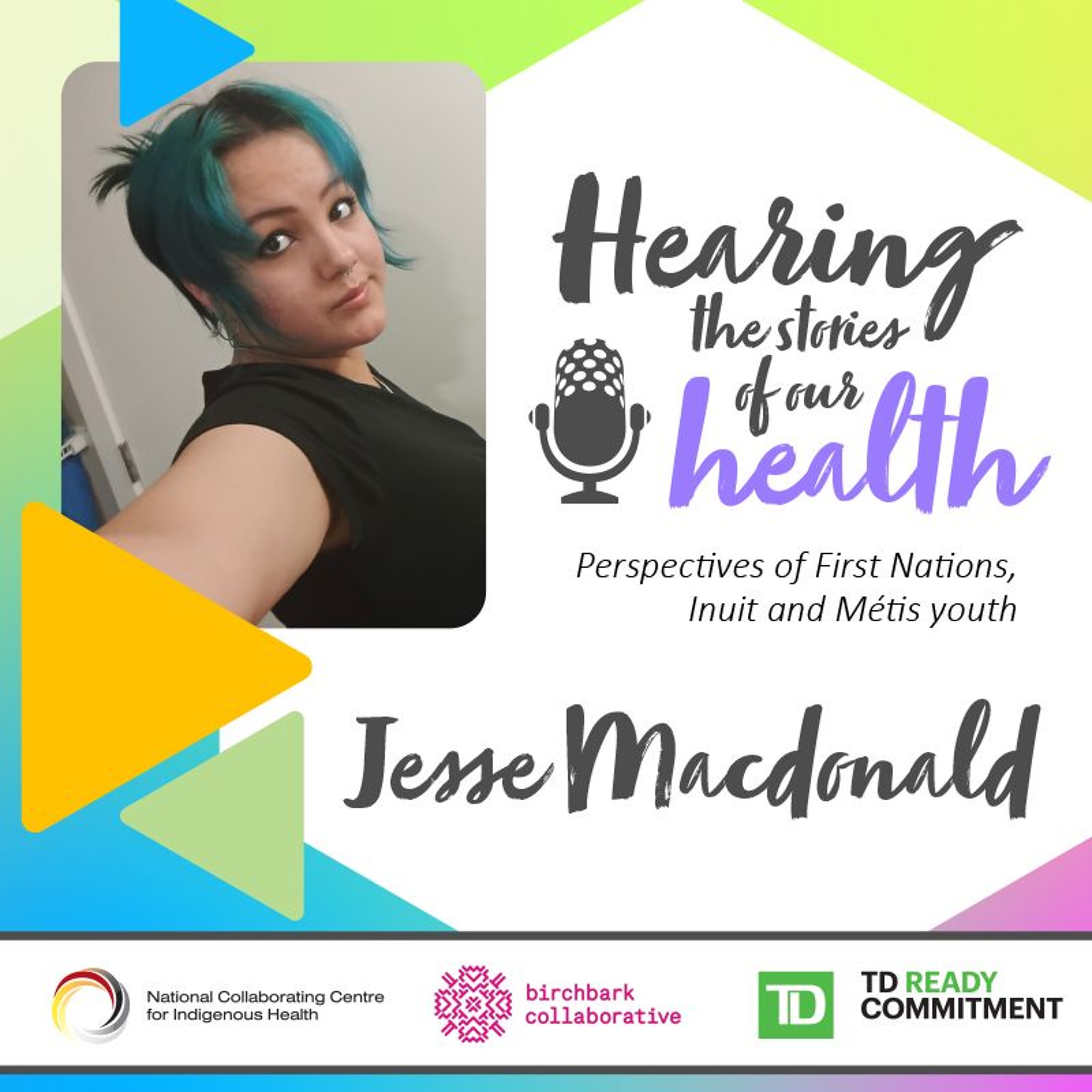 Hearing the stories of our health - Jesse Macdonald 02.12.2025 5minLe français suit l'anglais. Hearing the stories of our health: Perspectives of First Nations, Inuit and Métis youth - Jesse Macdonald The NCCIH undertook a national digital storytelling project, "Hearing the stories of our health: Perspectives of First Nations, Inuit, and Métis youth" to better understand what health and well-being mean to Indigenous young people. Nine of the digital storytellers participated in this podcast series where they could further reflect on their lives, their communities, and what health really means to them in a world that often forgets to ask them. My name is Jesse Macdonald. My dad was from Tachie and my mom is from Clay Lake (BC). I was born in Prince George and I am sixteen years old. I’m not sure yet what I’d like to do but I’ve been looking into going to a cosmetology school in Vancouver. Learn more about the project: https://www.nccih.ca/485/NCCIH_in_the_News.nccih?id=583 Read or download a transcript (PDF): https://www.nccih.ca/docs/general/2025-12-11-POD-Jesse-BC-Transcript-EN.pdf Listen to more episodes: https://soundcloud.com/nccih-ccnsa/sets/digital-youth-stories Subscribe to our mailing list to receive notifications of new podcasts: https://visitor.r20.constantcontact.com/manage/optin?v=001I2RsqMRJGm_0Y2v9dqhXqVu9hYFvAXlmD_7m-Clfm5-n2Ge5jnQuPVVhrfpINGv7emTyFg-0ZIhl6_ZgishJu_H_PqAiKkhqTjvrgkrQpecozF510Ni_w1nxr-UF-zQDPQWgIl1dVE9kufW33x8h3Q== To join the #NCCIHPodcast conversation on BlueSky follow us @TheNCCIH. ___________________________________ Entendre les récits de notre santé : perspectives des jeunes des Premières Nations, inuits et métis - Jesse Macdonald Le CCNSA a entrepris un projet national de narration numérique, « Entendre les récits de notre santé : perspectives des jeunes des Premières Nations, inuits et métis » (en anglais), afin de mieux comprendre ce que signifient la santé et le bien-être pour les jeunes autochtones. Neuf des narratrices et narrateurs ont participé à ces balados, dans le cadre desquels ils ont pu réfléchir encore plus à leur vie, à leurs communautés et à la signification réelle de la santé pour eux dans un monde qui oublie souvent de leur poser la question. Je m’appelle Jesse Macdonald. Mon père est de Tachie, et ma mère est de Clay Lake, en Colombie-Britannique. Je suis originaire de Prince George, et j’ai 16 ans. Je ne sais pas encore ce que je veux faire plus tard, mais j’aimerais peut-être aller à une école de cosmétologie à Vancouver. En savoir plus sur le projet : https://www.ccnsa.ca/543/Nouvelles_du_CCNSA.nccih?id=582 Lire ou télécharger une transcription en français : https://www.ccnsa.ca/docs/general/2025-12-12-POD-Jesse-BC-Transcript-FR.pdf Écoutez plus d'épisodes : https://soundcloud.com/nccih-ccnsa/sets/digital-youth-stories Abonnez-vous à notre liste de diffusion pour recevoir des notifications de nouveaux balados : https://visitor.r20.constantcontact.com/manage/optin?v=001I2RsqMRJGm_0Y2v9dqhXqVu9hYFvAXlmD_7m-Clfm5-n2Ge5jnQuPVVhrfpINGv7emTyFg-0ZIhl6_ZgishJu_H_PqAiKkhqTjvrgkrQpecozF510Ni_w1nxr-UF-zQDPQWgIl1dVE9kufW33x8h3Q== Suivez la discussion #BaladoDuCCNSA sur BlueSky @LeCCNSA.
 -
 Hearing the stories of our health - Miley Melnyk 02.12.2025 8minLe français suit l'anglais. Hearing the stories of our health: Perspectives of First Nations, Inuit and Métis youth - Miley Melnyk The NCCIH undertook a national digital storytelling project, Hearing the stories of our health: Perspectives of First Nations, Inuit, and Métis youth to better understand what health and well-being mean to Indigenous young people. Nine of the digital storytellers participated in this podcast series where they could further reflect on their lives, their communities, and what health really means to them in a world that often forgets to ask them. My name is Miley Melnyk, I am Anishinaabe from Sagkeeng First Nation (MB). My video is about friendships and personal connections because it’s an important part of Indigenous health. I plan to graduate from high school in 2027 and to work towards a career in nursing. Learn more about the project: https://www.nccih.ca/485/NCCIH_in_the_News.nccih?id=583 Read or download a transcript (PDF): https://www.nccih.ca/docs/general/2025-12-11-POD-Miley-MB-Transcript-EN.pdf Listen to more episodes: https://soundcloud.com/nccih-ccnsa/sets/digital-youth-stories Subscribe to our mailing list to receive notifications of new podcasts: https://visitor.r20.constantcontact.com/manage/optin?v=001I2RsqMRJGm_0Y2v9dqhXqVu9hYFvAXlmD_7m-Clfm5-n2Ge5jnQuPVVhrfpINGv7emTyFg-0ZIhl6_ZgishJu_H_PqAiKkhqTjvrgkrQpecozF510Ni_w1nxr-UF-zQDPQWgIl1dVE9kufW33x8h3Q== To join the #NCCIHPodcast conversation on BlueSky follow us @TheNCCIH. ___________________________________ Entendre les récits de notre santé : perspectives des jeunes des Premières Nations, inuits et métis - Miley Melnyk Le CCNSA a entrepris un projet national de narration numérique, Entendre les récits de notre santé : perspectives des jeunes des Premières Nations, inuits et métis (en anglais), afin de mieux comprendre ce que signifient la santé et le bien-être pour les jeunes autochtones. Neuf des narratrices et narrateurs ont participé à ces balados, dans le cadre desquels ils ont pu réfléchir encore plus à leur vie, à leurs communautés et à la signification réelle de la santé pour eux dans un monde qui oublie souvent de leur poser la question. Je m’appelle Miley Melnyk, et je suis Anichinabée de la Première Nation de Sagkeeng, au Manitoba. Ma vidéo porte sur les amitiés et sur les liens interpersonnels, parce que ce sont des éléments importants de la santé des Autochtones. J’ai l’intention d’obtenir mon diplôme d’études secondaires en 2027 et de me diriger vers une carrière en soins infirmiers. En savoir plus sur le projet : https://www.ccnsa.ca/543/Nouvelles_du_CCNSA.nccih?id=582 Lire ou télécharger une transcription en français : https://www.ccnsa.ca/docs/general/2025-12-12-POD-Miley-MB-Transcript-FR.pdf Écoutez plus d'épisodes : https://soundcloud.com/nccih-ccnsa/sets/digital-youth-stories Abonnez-vous à notre liste de diffusion pour recevoir des notifications de nouveaux balados : https://visitor.r20.constantcontact.com/manage/optin?v=001I2RsqMRJGm_0Y2v9dqhXqVu9hYFvAXlmD_7m-Clfm5-n2Ge5jnQuPVVhrfpINGv7emTyFg-0ZIhl6_ZgishJu_H_PqAiKkhqTjvrgkrQpecozF510Ni_w1nxr-UF-zQDPQWgIl1dVE9kufW33x8h3Q== Suivez la discussion #BaladoDuCCNSA sur BlueSky @LeCCNSA.
 -
 Voices from the field 37 – Indigenous knowledges and pandemic science with Dr. Nicole Redvers 10.07.2025 33minLe français suit l'anglais. Voices from the field 37 – Indigenous knowledges and pandemic science: A conversation with Dr. Nicole Redvers In this episode, guest host Nicole Halbauer speaks with Dr. Nicole Redvers, a member of the Denı́nu Kų́ę́ First Nation and Associate Professor at Western University. Dr. Redvers contrasts Western science and Indigenous science, details the worldviews that underpin and shape them, and evaluates their potential to mitigate complex planetary health problems such as pandemics. According to Dr. Redvers, an Indigenous approach to pandemics would include recognizing and better understanding the interconnectedness between humans, animals, and the environment, which could lead to taking preventive measures like tackling deforestation and loss of biodiversity. She also recommends engaging Indigenous people and communities in areas like education, international policy, environmental advocacy, and land stewardship. Read or download a transcript (PDF): https://www.nccih.ca/docs/podcasts/2025-POD-Voices-37-Indigenous-science-transcript-EN.pdf Download a list of links related to the podcast (PDF): https://www.nccih.ca/docs/podcasts/2025-POD-Voices-37-Indigenous-science-links-EN.pdf See our website for guest bios: https://www.nccih.ca/495/podcast-voices-37-pandemic-science-Nicole-Redvers.nccih?id=10498 Subscribe to our mailing list to receive notifications of new podcasts: https://visitor.r20.constantcontact.com/manage/optin?v=001I2RsqMRJGm_0Y2v9dqhXqVu9hYFvAXlmD_7m-Clfm5-n2Ge5jnQuPVVhrfpINGv7emTyFg-0ZIhl6_ZgishJu_H_PqAiKkhqTjvrgkrQpecozF510Ni_w1nxr-UF-zQDPQWgIl1dVE9kufW33x8h3Q%3D%3D To join the #NCCIHPodcast conversation on BlueSky follow us @TheNCCIH. ___________________________________ Les Voix du terrain 37 – Savoirs autochtones et science pandémique : conversation avec Nicole Redvers Dans l’épisode d’aujourd’hui, notre animatrice X’staam Hana’ax (Nicole Halbauer) parle avec Nicole Redvers, Ph. D., membre de la Première Nation Denı́nu Kų́ę́ et professeure agrégée à l’Université Western. Madame Redvers oppose la science occidentale à la science autochtone, expose en détail les visions du monde qui les renforcent et les façonnent, et évalue leur capacité à atténuer des problèmes complexes de santé planétaire comme les pandémies. Selon madame Redvers, une approche autochtone des pandémies comprendrait la reconnaissance et une meilleure compréhension de l’interdépendance existante entre les humains, les animaux et l’environnement, ce qui mènerait à des mesures préventives comme la lutte contre la déforestation et la perte de biodiversité. Elle recommande, en outre, de consulter les peuples et les communautés autochtones dans des domaines comme l’éducation, la politique internationale, la défense de l’environnement et l’intendance des terres. Lire ou télécharger une transcription en français : https://www.nccih.ca/docs/podcasts/2025-POD-Voices-37-Indigenous-science-transcript-FR.pdf Lire ou télécharger une liste de ressources liées au balado : https://www.nccih.ca/docs/podcasts/2025-POD-Voices-37-Indigenous-science-links-FR.pdf Lire les biographies des intervenantes sur notre site web : https://www.ccnsa.ca/525/balado-voix-37-science-pand%C3%A9mique-Nicole-Redvers.nccih?id=10498 Abonnez-vous à notre liste de diffusion pour recevoir des notifications de nouveaux balados : https://visitor.r20.constantcontact.com/manage/optin?v=001I2RsqMRJGm_0Y2v9dqhXqVu9hYFvAXlmD_7m-Clfm5-n2Ge5jnQuPVVhrfpINGv7emTyFg-0ZIhl6_ZgishJu_H_PqAiKkhqTjvrgkrQpecozF510Ni_w1nxr-UF-zQDPQWgIl1dVE9kufW33x8h3Q%3D%3D Suivez la discussion #BaladoDuCCNSA sur BlueSky @LeCCNSA.
 -
 Voices from the field 36 – Medical transportation with Dr. Budgell and Melodie Sammurtok-Lavallee 07.05.2025 32minLe français suit l'anglais. Voices from the field 36 – Gone south: The over-reliance on medical transportation and its impact on Inuit health and well-being In this episode, guest host Aluki Kotierk speaks with Dr. Richard Budgell, a Labrador Inuk and Assistant Professor of Family Medicine at McGill University, and Siksik, Melodie Sammurtok-Lavallee, an Inuk from the Kivalliq region of Nunavut and breast cancer survivor. They discuss how Inuit are often transported to southern Canadian cities to access health care and describe the repercussions of this long-standing practice on the health and well-being of themselves, their families, as well as individuals and communities across Inuit Nunangat. These repercussions can consist of delayed or incorrect diagnoses and treatment, poor mental health due to isolation, experiences of racism or culturally inappropriate care, and a “deep, broad impact” on the quality of life due to prolonged separation of family members. Aluki Kotierk and her guests also touch on ways to reduce the over-reliance on medical transportation and its health impacts on Inuit. These include increasing investments to improve the social determinants of Inuit health, better resourcing and equipping northern regional hubs, leveraging digital communications, and improving knowledge sharing on the specific needs of Inuit in southern healthcare settings. Read or download a transcript in English (PDF): https://nccih.ca/docs/podcasts/2025-POD-Voices-36-Aluki-transcript-EN.pdf or Inuktitut (PDF) https://www.ccnsa.ca/docs/podcasts/2025-POD-Voices-36-Aluki-transcript-IN.pdf See our website for guest bios: https://www.nccih.ca/495/podcast-36-gone-south.nccih?id=10493 Subscribe to our mailing list: https://bit.ly/nccih-newsletter ___________________________________ Balado – Les Voix du terrain 36 – Direction Sud : la dépendance excessive à l’égard du transport médical et ses répercussions sur la santé et le bien-être des Inuits Dans cet épisode, l’animatrice Aluki Kotierk parle avec Richard Budgell, Ph. D., un Inuk du Labrador occupant le poste de professeur adjoint au Département de médecine de famille de l’Université McGill, et avec Siksik, Melodie Sammurtok-Lavallee, une Inuk de la région de Kivalliq, au Nunavut, survivante d’un cancer du sein. Ils discutent du fait que les Inuits sont souvent transportés dans des villes du sud du Canada pour recevoir des soins de santé et décrivent les répercussions de cette pratique de longue date sur leur santé et leur bien-être, sur ceux de leurs familles et sur ceux d’individus et de communautés à travers l’Inuit Nunangat. Ces répercussions peuvent prendre la forme de diagnostics et de traitements retardés ou erronés, d’une mauvaise santé mentale occasionnée par l’isolement, d’expériences de racisme ou de soins non adaptés sur le plan culturel, en plus d’avoir un « impact vaste et profond » sur la qualité de vie en raison de la séparation prolongée de membres de la famille. Aluki Kotierk et ses invités présentent aussi des moyens de réduire la dépendance excessive à l’égard du transport médical et les conséquences de celle-ci sur la santé des Inuits. Ils proposent par exemple d’investir pour améliorer les déterminants sociaux de la santé, les ressources et l’équipement destinés aux centres régionaux du Nord, de tirer avantage des communications numériques et d’accroître le partage de connaissances sur les besoins particuliers des Inuits dans les établissements de soins de santé du Sud. Lisez ou téléchargez une transcription en français (PDF) : https://www.ccnsa.ca/docs/podcasts/2025-POD-Voices-36-Aluki-transcript-FR.pdf ou en inuktitut (PDF) : https://www.ccnsa.ca/docs/podcasts/2025-POD-Voices-36-Aluki-transcript-IN.pdf Lisez les biographies des intervenants sur notre site web : https://www.ccnsa.ca/525/balado-36-direction-sud.nccih?id=10493 Abonnez-vous à notre liste de diffusion : https://bit.ly/nccih-newsletter
 -
 Voices from the field 35 – The Eskimo disc system with Norma Dunning 15.03.2025 33minLe français suit l'anglais. Voices from the field 35 – Kinauvit? What's your name? The Eskimo disc system and a daughter's search for her grandmother – A conversation with Norma Dunning In this episode, guest host Aluki Kotierk speaks with Dr. Norma Dunning about her book "Kinauvit? What's Your Name? The Eskimo Disc System and a Daughter's Search for her Grandmother," which investigates the little-known system of issuing numbered identity tags to Inuit in Canada between 1941 and 1978. She situates the disc system withing the broader process of colonization, detailing the impacts of this dehumanizing system on the health and well-being of Inuit and highlighting how the disc system contributed to intergenerational impacts on herself, her children, and her relationship with her community. Read or download a transcript in English (PDF): https://www.nccih.ca/docs/podcasts/2025-POD-Voices-35-Kinauvit-transcript-EN.pdf or Inuktitut (Qikiqtaaluk nigiani, ᕿᑭᖅᑖᓗᒃ ᓂᒋᐊᓂ) (PDF): https://www.nccih.ca/docs/podcasts/2025-POD-Voices-35-Kinauvit-transcript-IN.pdf See our website for guest bios: https://www.nccih.ca/495/voices-35-kinauvit.nccih?id=10485 Subscribe to our mailing list to receive notifications of new podcasts: https://visitor.r20.constantcontact.com/manage/optin?v=001I2RsqMRJGm_0Y2v9dqhXqVu9hYFvAXlmD_7m-Clfm5-n2Ge5jnQuPVVhrfpINGv7emTyFg-0ZIhl6_ZgishJu_H_PqAiKkhqTjvrgkrQpecozF510Ni_w1nxr-UF-zQDPQWgIl1dVE9kufW33x8h3Q%3D%3D To join the #NCCIHPodcast conversation on BlueSky follow us @TheNCCIH. ___________________________________ Les Voix du terrain 35 – Kinauvit? Comment t’appelles-tu? Le système des disques d’identification des Eskimos et une fille à la recherche de sa grand-mère – Conversation avec Norma Dunning Dans cet épisode, l’animatrice Aluki Kotierk parle avec l’invitée, Norma Dunning, Ph. D., au sujet de son livre, intitulé Kinauvit? What's Your Name? The Eskimo Disc System and a Daughter's Search for her Grandmother, où elle étudie le système peu connu d’attribution de disques d’identification numérotés aux Inuits au Canada, entre 1941 et 1978. Elle situe le système des disques d’identification des Eskimos dans le processus plus général de la colonisation, détaillant les impacts de ce système déshumanisant sur la santé et le bien-être des populations inuites et soulignant ses répercussions intergénérationnelles sur elle-même, ses enfants et ses relations avec la communauté. Lire ou télécharger une transcription en français (PDF) : https://www.ccnsa.ca/docs/podcasts/2025-POD-Voices-35-Kinauvit-transcript-FR.pdf ou en inuktitut (Qikiqtaaluk nigiani, ᕿᑭᖅᑖᓗᒃ ᓂᒋᐊᓂ) (PDF) : https://www.ccnsa.ca/docs/podcasts/2025-POD-Voices-35-Kinauvit-transcript-IN.pdf Lire les biographies des intervenants sur notre site web : https://www.ccnsa.ca/525/voix-35-kinauvit.nccih?id=10485 Abonnez-vous à notre liste de diffusion pour recevoir des notifications de nouveaux balados : https://visitor.r20.constantcontact.com/manage/optin?v=001I2RsqMRJGm_0Y2v9dqhXqVu9hYFvAXlmD_7m-Clfm5-n2Ge5jnQuPVVhrfpINGv7emTyFg-0ZIhl6_ZgishJu_H_PqAiKkhqTjvrgkrQpecozF510Ni_w1nxr-UF-zQDPQWgIl1dVE9kufW33x8h3Q%3D%3D Suivez la discussion #BaladoDuCCNSA sur BlueSky @LeCCNSA.
Samankaltaiset podcastit


Suosittu maassa
Tämä podcast esiintyy myös näiden maiden podcast-listoilla.
