
The Times of Israel Daily Briefing
The Times of Israel
0
The Times of Israel Daily Briefing provides a daily update on key events in Israel, the Middle East, and the Jewish world. Each episode covers breaking news, analysis, and interviews with journalists and experts. The podcast aims to keep listeners informed about the most important developments in the region.
Epizode
-
 Flydubai attack becomes political fodder for candidates 01.10.2026 17minWelcome to The Times of Israel's Daily Briefing, your 20-minute audio update on what's happening in Israel, the Middle East and the Jewish world. Political correspondent Ariela Karmel joins host Jessica Steinberg for today's episode. As details trickled in regarding the attempted attack on the flydubai flight to Tel Aviv, Karmel discusses how the event became a political flashpoint, with less than a month before the October 27 election and the fast-approaching third anniversary of the October 7, 2023 Hamas terrorist attack. She reviews the political rhetoric from the government allies and the opposition, which created a split-screen reality. With the High Court of Justice holding hearings on the disqualification of Arab parties and candidates from the October 27 election, Karmel reviews the case of Balad chairman Sami Abu Shehadeh, which is expected to be upheld by the court in a rare occasion of consensus, in large part because of an article he wrote after October 7 in which he expressed support for Hamas. Check out The Times of Israel's ongoing liveblog for more updates. For further reading: Flydubai attack becomes election flashpoint as opponents draw Oct. 7 parallels Election panel disqualifies all Arab parties, in move likely to be overturned; Balad leader also barred AG: Disqualification of Balad leader from election ‘should be seriously considered’ Subscribe to The Times of Israel Daily Briefing on Apple Podcasts, Spotify, YouTube, or wherever you get your podcasts. This episode was produced by Ari Schlacht. IMAGE: Political correspondent Ariela Karmel appears on the Daily Briefing with host Jessica Steinberg (Flash 90)See omnystudio.com/listener for privacy information.
 -
 Israelis land safely in Saudi Arabia after suspected plane terror 30.09.2026 23minWelcome to The Times of Israel's Daily Briefing, your 20-minute audio update on what's happening in Israel, the Middle East and the Jewish world. Editor David Horovitz joins host Amanda Borschel-Dan for today's episode. Just ahead of recording today's episode, headlines began surfacing about the flydubai plane that signaled an emergency during its flight from Dubai to Tel Aviv and safely landed in Saudi Arabia. IAF fighter jets were scrambled and top Israeli leadership was given emergency briefings. Horovitz discusses what is known and still unknown this morning. (As this is a developing story, please check our live blog for real-time updates.) Prime Minister Benjamin Netanyahu on Tuesday condemned the massive overnight attack and riot by Jewish extremists in the West Bank the previous night. His call to prosecute the perpetrators “to the fullest extent of the law,” was joined by similar condemnations from Defense Minister Israel Katz and head of the Yesha settlement umbrella council Yisrael Ganz. All leaders, however, downplayed the attack as being perpetrated by a “small number” of people. Why the rare spate of condemnations? Also on Tuesday, Netanyahu claimed that there are concerns that “enemies” of Israel may attempt to attack it ahead of the October 27 election. By day's end, opposition leader Yair Lapid was briefed with details on the ostensible threat -- and subsequently dismissed them as fear-mongering. We hear more about the campaigns, four weeks until elections. Check out The Times of Israel's ongoing liveblog for more updates. For further reading: PM blames ‘small number’ of West Bank rioters as mass settler attack draws wide condemnation Over 100 settlers attack West Bank village, block Palestinian family’s return home Netanyahu claims indications of attack plot by ‘enemies’ ahead of election; Lapid, briefed, derides him Shin Bet won’t provide Eisenkot with security detail, despite earlier report to contrary Price at pump set to hit record high of NIS 8.27 per liter Subscribe to The Times of Israel Daily Briefing on Apple Podcasts, Spotify, YouTube, or wherever you get your podcasts. This episode was produced by Yitzchak Ledee.See omnystudio.com/listener for privacy information.
 -
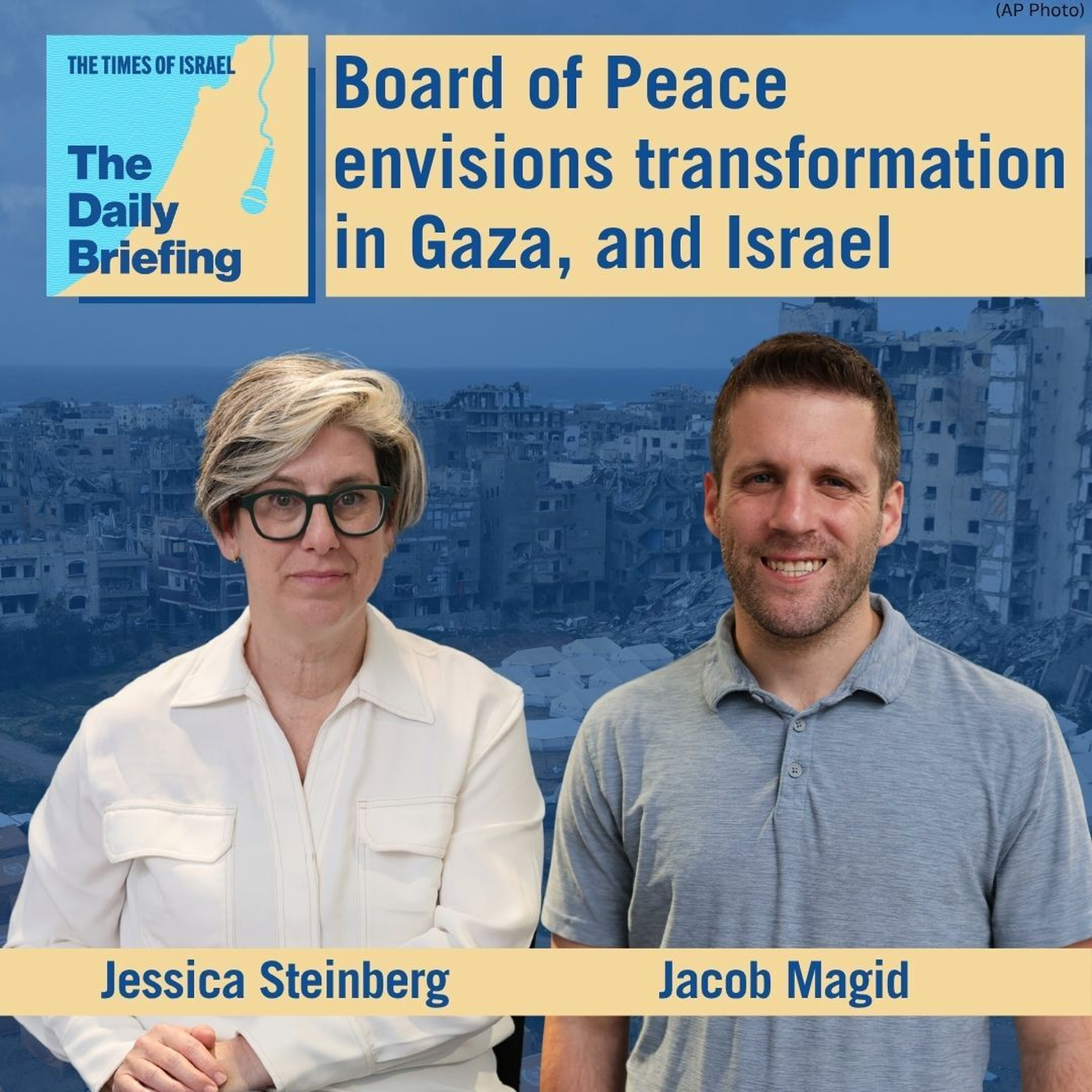 Board of Peace envisions transformation in Gaza, and Israel 29.09.2026 24minWelcome to The Times of Israel's Daily Briefing, your 20-minute audio update on what's happening in Israel, the Middle East and the Jewish world. US bureau chief Jacob Magid joins host Jessica Steinberg for today's episode. A Board of Peace official notes to Magid at the United Nations General Assembly that the organization envisions a de-radicalized Gaza as part of a broader end to war, suggesting that a similar transformation needs to happen in Israel as well, given talk amongst politicians of different stripes encouraging Palestinians to leave Gaza, a euphemism for forced displacement. As the Board of Peace unveils a six-month, $2.45 billion reconstruction plan for the Gaza Strip, Magid says that BOP's discussions with Israel have been complex given the upcoming election and work won't begin until well after the October 27 election, although they will exert pressure to begin implementing the plans. With the Norwegian government advancing legislation to outlaw trade with Israeli settlements, Magid reports on his interview with Norwegian Foreign Minister Espen Barth Eide, who says that Norway is trying to balance interests and doesn't want to boycott all of Israel. Finally, Magid discusses the ongoing confusion about the lack of a uniform response from the US regarding the UK-led settlement sanctions, as Israel wants a US reaction. He notes that US Ambassador to Israel Mike Huckabee offered a fiery response but US Secretary of State Marco Rubio's office didn't issue the same statement, leaving US President Donald Trump with a more apathetic reaction while at the recent United Nations General Assembly. Check out The Times of Israel's ongoing live blog for more updates. For further reading: Board of Peace official: Extremist views in Israel impeding effort to deradicalize Gaza Board of Peace unveils $2.4B Gaza recovery plan, but hurdles remain before implementation Norway says sanctioning settlements ‘the right thing to do,’ despite potential Israeli retaliation Trump shows apathy about UK-led settlement sanctions, ignoring Israel request for action Subscribe to The Times of Israel Daily Briefing on Apple Podcasts, Spotify, YouTube, or wherever you get your podcasts. Ari Schlacht produced this episode. IMAGE: US bureau chief Jacob Magid appears on the Daily Briefing with host Jessica Steinberg (AP)See omnystudio.com/listener for privacy information.
 -
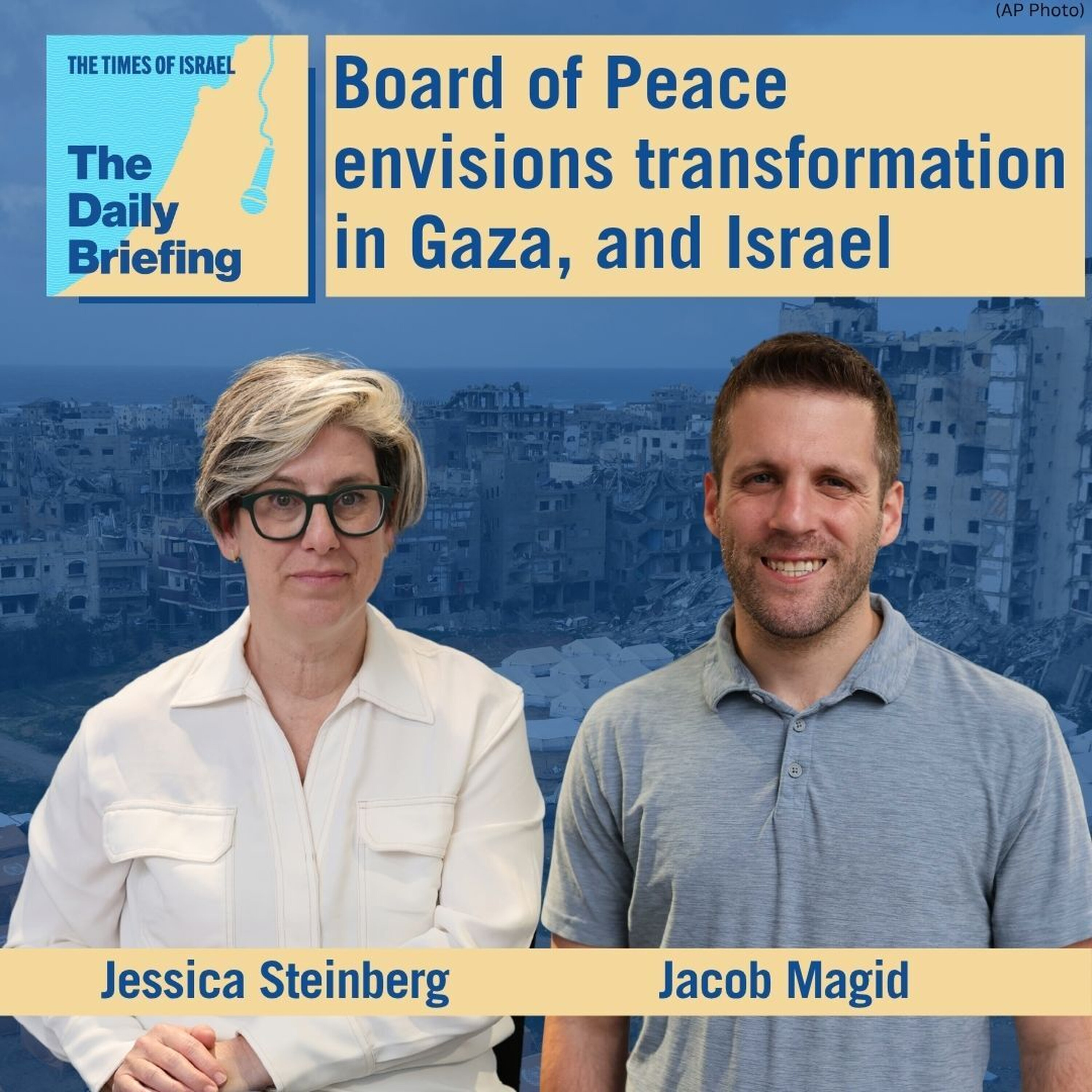 Board of Peace envisions transformation in Gaza, and Israel 29.09.2026 24minWelcome to The Times of Israel's Daily Briefing, your 20-minute audio update on what's happening in Israel, the Middle East and the Jewish world. US bureau chief Jacob Magid joins host Jessica Steinberg for today's episode. A Board of Peace official notes to Magid at the United Nations General Assembly that the organization envisions a de-radicalized Gaza as part of a broader end to war, suggesting that a similar transformation needs to happen in Israel as well, given talk amongst politicians of different stripes encouraging Palestinians to leave Gaza, a euphemism for forced displacement. As the Board of Peace unveils a six-month, $2.45 billion reconstruction plan for the Gaza Strip, Magid says that BOP's discussions with Israel have been complex given the upcoming election and work won't begin until well after the October 27 election, although they will exert pressure to begin implementing the plans. With the Norwegian government advancing legislation to outlaw trade with Israeli settlements, Magid reports on his interview with Norwegian Foreign Minister Espen Barth Eide, who says that Norway is trying to balance interests and doesn't want to boycott all of Israel. Finally, Magid discusses the ongoing confusion about the lack of a uniform response from the US regarding the UK-led settlement sanctions, as Israel wants a US reaction. He notes that US Ambassador to Israel Mike Huckabee offered a fiery response but US Secretary of State Marco Rubio's office didn't issue the same statement, leaving US President Donald Trump with a more apathetic reaction while at the recent United Nations General Assembly. Check out The Times of Israel's ongoing live blog for more updates. For further reading: Board of Peace official: Extremist views in Israel impeding effort to deradicalize Gaza Board of Peace unveils $2.4B Gaza recovery plan, but hurdles remain before implementation Norway says sanctioning settlements ‘the right thing to do,’ despite potential Israeli retaliation Trump shows apathy about UK-led settlement sanctions, ignoring Israel request for action Subscribe to The Times of Israel Daily Briefing on Apple Podcasts, Spotify, YouTube, or wherever you get your podcasts. Ari Schlacht produced this episode. IMAGE: US bureau chief Jacob Magid appears on the Daily Briefing with host Jessica Steinberg (AP)See omnystudio.com/listener for privacy information.
 -
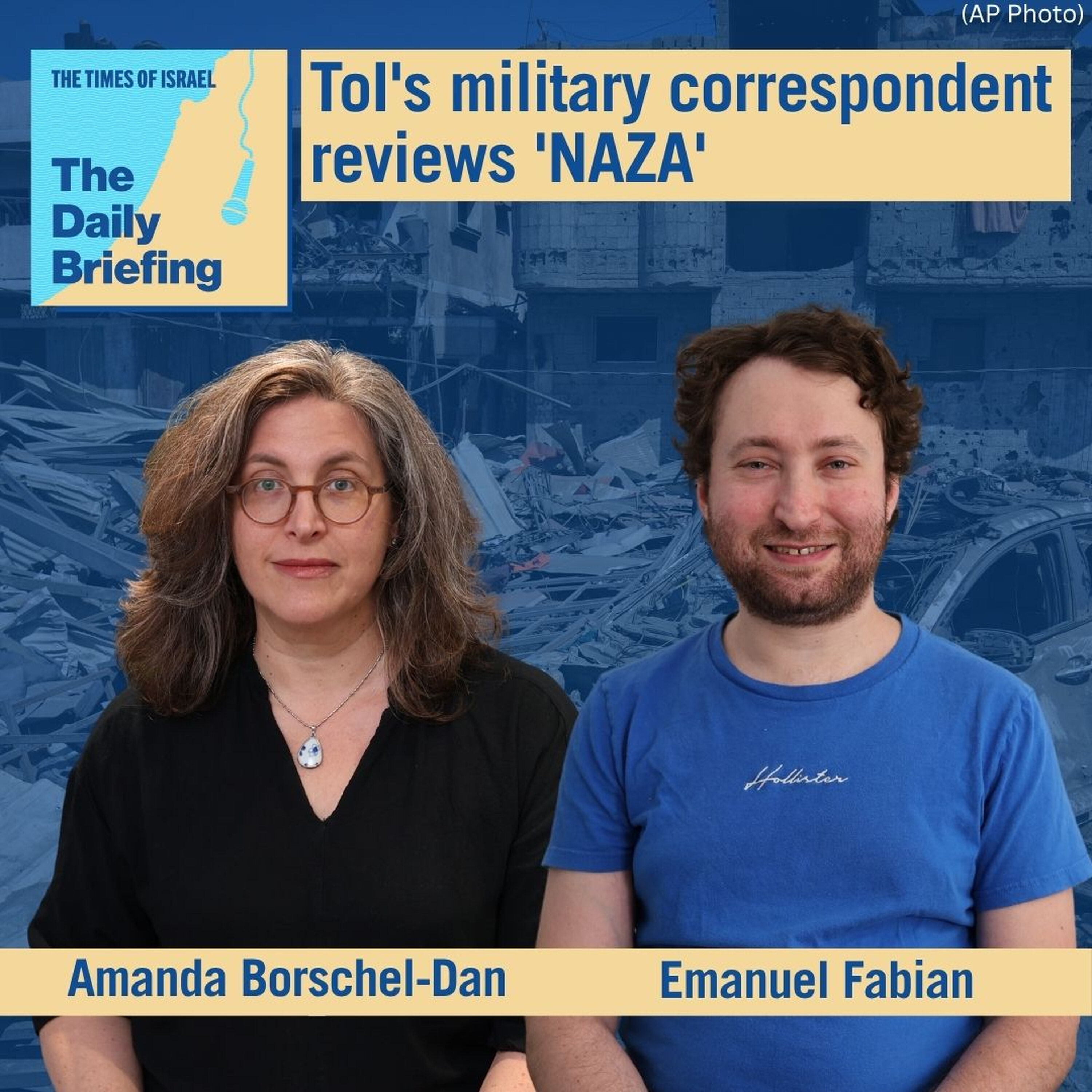 ToI's military correspondent reviews 'NAZA' 28.09.2026 29minWelcome to The Times of Israel's Daily Briefing, your 20-minute audio update on what's happening in Israel, the Middle East and the Jewish world. Military correspondent Emanuel Fabian joins host Amanda Borschel-Dan for today's episode. A Palestinian terrorist who took part in abducting Noa Argamani and Avinatan Or during the October 7, 2023, onslaught was killed in an Israeli strike in the Gaza Strip, the military and Shin Bet announced Sunday. Fabian fills us in on the strike, which was conducted by a special police unit. We discuss the renewed Hamas efforts to build up its forces and how it is using young children as weapons mules and human shields for operatives. Two years to the targeted killing of the former Hezbollah head Hassan Nasrallah, the terrorist group launched an explosive drone at Israeli troops operating in the southern Lebanon buffer zone Saturday night. We hear that the IDF keeps a list of targets to strike in response to Hezbollah drones during this ongoing fragile ceasefire. On Thursday, the Israeli filmmakers of the new controversial documentary "NAZA" (Collateral Damage) held a screening in Tel Aviv for local journalists, including from The Times of Israel, though the directors themselves were not present. Fabian weighs in on the experience of watching the film and the lack of journalistic practices exhibited in it. Also last week, Fabian boarded the INS Drakon — or Dragon — on the final leg of her maiden journey to the Haifa Naval Base from Germany. We hear about the IDF's plans to expand the Navy's capabilities and what it was like to submerge on this "beast of a machine." Check out The Times of Israel's ongoing liveblog for more updates. For further reading: Terrorist from abduction of Noa Argamani, Avinatan Or on Oct. 7 killed in strike – IDF Hezbollah fires explosive drone at troops, prompting strikes in response — IDF NAZA’s claims about IDF conduct in Gaza are grave. So are the film’s journalistic flaws Israel’s newest, largest submarine arrives, deepening Navy’s stealth capabilities Subscribe to The Times of Israel Daily Briefing on Apple Podcasts, Spotify, YouTube, or wherever you get your podcasts. This episode was produced by Ari Schlacht.See omnystudio.com/listener for privacy information.
 -
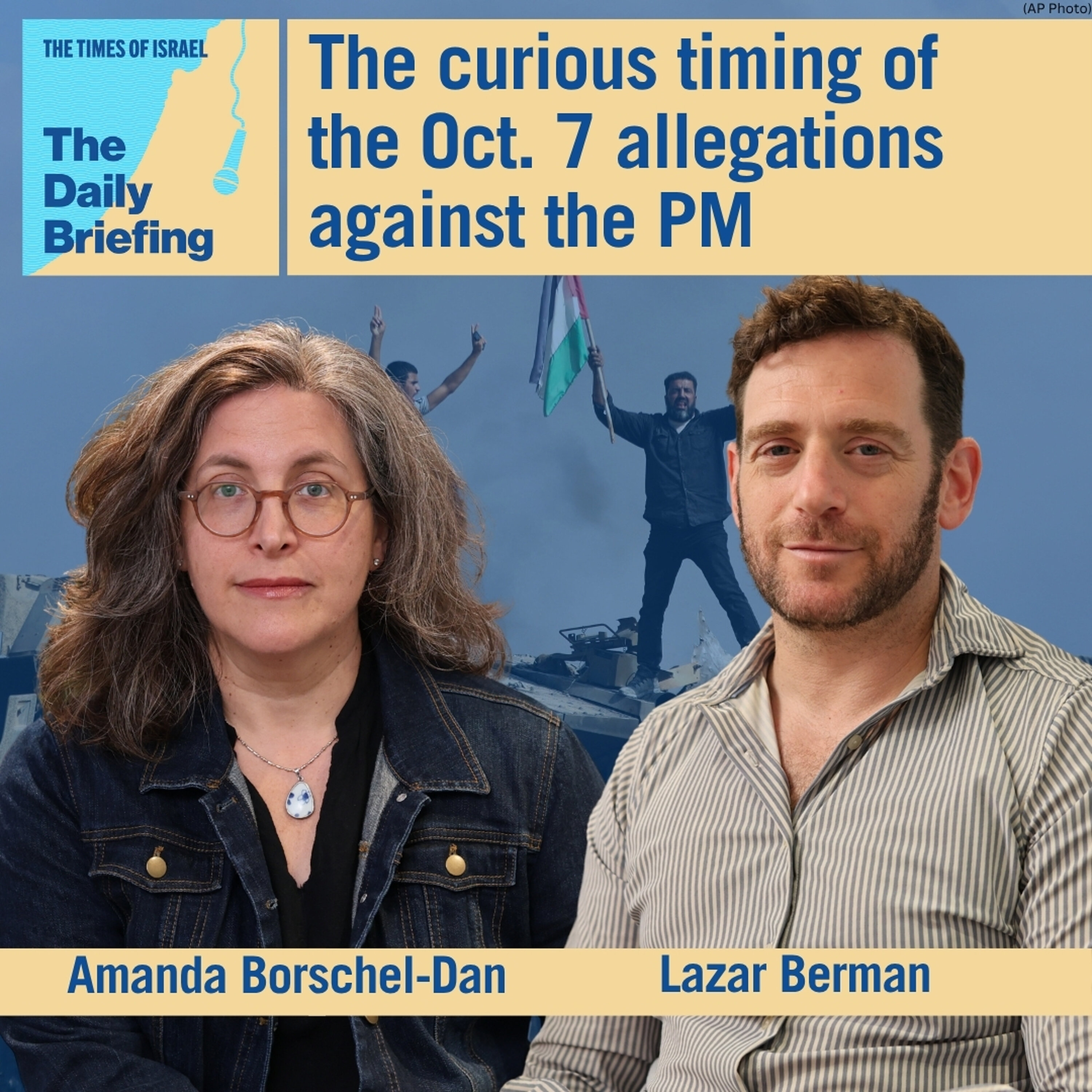 The curious timing of the Oct. 7 allegations against the PM 27.09.2026 23minWelcome to The Times of Israel's Daily Briefing, your 20-minute audio update on what's happening in Israel, the Middle East and the Jewish world. Diplomatic correspondent Lazar Berman joins host Amanda Borschel-Dan for today's episode. Berman, just back in Israel from the United Nations General Assembly, discusses how Prime Minister Benjamin Netanyahu’s 15th address to the hall on Thursday was in some ways a classic Bibi presentation -- and in many ways not. We hear what was said and unsaid during the 40-minute speech. A flurry of reports has come out in the past several weeks surrounding what the prime minister was briefed on ahead of the October 7, 2023, onslaught by Hamas on southern Israel, including a statement from former Defense Minister Yoav Gallant this morning. Berman unravels which seem credible and why. Finally, Iran stood firm Sunday on its conditions for reopening the Strait of Hormuz, after US President Donald Trump rejected its proposal. While the Iranian offer had created some optimism around the prospect of breaking the war stalemate, there's one ToI analyst who has long said that nothing will change in the near future. Berman explains why. Check out The Times of Israel's ongoing liveblog for more updates. For further reading: What Netanyahu didn’t say at the UN was as telling as what he did Days before Oct 7, PM ordered security forces to ‘minimize escalation’ in Gaza – report Former PA minister details Sinwar’s pre-Oct. 7 warning to Israel of coming ‘earthquake’ Despite pre-Oct. 7 warnings, PM reportedly opposed strikes on Hamas leaders, feared harming Saudi peace talks Iran vows not to back down after US rejects its Hormuz proposal Trump rejects Iranian ceasefire proposal, reportedly plans to renew strikes after midterms Subscribe to The Times of Israel Daily Briefing on Apple Podcasts, Spotify, YouTube, or wherever you get your podcasts. Yitzhak Ledee filmed and edited this episode.See omnystudio.com/listener for privacy information.
 -
 The Reel Schmooze on 'The Jazz Singer': How the world's first 'talkie' could not be more Jewy 26.09.2026 54minWelcome to The Reel Schmooze with ToI film reviewer Jordan Hoffman and host Amanda Borschel-Dan, where we bring you all the entertainment news and film reviews a Jew can use. Hoffman starts off with two quick Jangles -- news with a Jewish angle- before we devote the program to the original 1927 "The Jazz Singer" and a technicolor 1991 The Simpsons parody episode, "Like Father, Like Clown." Now in the public domain, a pristine digitally remastered version of the 99-year-old film can be viewed freely on YouTube. Although still primarily a silent film -- complete with hammy acting and text cards -- it features the world's first lines of synched dialogue and half a dozen songs. Hoffman recounts how the story was written especially for its star, Al Jolson, who was born to a rabbinical family in Lithuania that moved to the United States when he was five. The plot unfolds on the eve of Yom Kippur, the Jewish day of atonement, and pits a fifth-generation cantor father against his entertainer son. The film is bookended by the Kol Nidre service and its famous melody. Unfortunately, "The Jazz Singer" is likely best known for its controversial blackface scenes. In what is unimaginable today, Hoffman explains that Jolson's trademark act was incredibly popular in that era -- and especially among Black Americans. In the final section of our program, we turn to 1991 The Simpsons comic riff on the film. After Krusty the Clown's past comes to light, Bart and Lisa learn rabbinic literature to help mend bridges with his rabbi father. Let’s hear who gave this film and television episode an “oy,” “meh” or the prized “not bad” this week on The Reel Schmooze. The Reel Schmooze is produced by Ari Schlacht and can be found wherever you get your podcasts.See omnystudio.com/listener for privacy information.
 -
 A Mandatory Listen with Haviv Rettig Gur: Is the IDF justified in picking off Hamas terrorists? 25.09.2026 58minWelcome to "A Mandatory Listen," a new weekly podcast in which The Times of Israel deputy editor Amanda Borschel-Dan asks the big questions facing Israel and the Jewish people. For this inaugural episode, who better to ask "Is the IDF justified in picking off Hamas terrorists?" than The Times of Israel's senior analyst Haviv Rettig Gur. Last week, as headlines roiled world media condemning the IDF following the screening of "NAZA," which alleges Israel is using AI to commit genocide in Gaza, Prime Minister Benjamin Netanyahu reiterated Israel’s determination to eliminate Hamas terrorists in the Strip. In the past several months, the IDF has conducted a series of strikes targeting Hamas operatives in Gaza. Since the October 2025 ceasefire in Gaza, the Hamas-run Health Ministry claims 1,400 Gazans -- without differentiating between Hamas operatives and civilians -- have been killed by the IDF. Rejecting the notion that “Hamas is protected” within the area it controls in Gaza, Netanyahu asserted that “we are settling accounts with these murderers who murdered our people, our daughters, our women and our children on October 7,” adding: “There are not many left because we are dealing with them.” But is this manhunt moral? Rettig Gur sets the stage for his answer with a deep dive into history and the ideological underpinnings of the Hamas terrorist organization still ruling the Gaza Strip. We then turn to what Borschel-Dan calls a "spillover" effect, in which this manhunt may allow a kernel of far-right extremist settlers to perpetrate violence against their Palestinian neighbors in the West Bank. How can Israel rid itself of what Rettig Gur labels "Jewish terrorism"? A Mandatory Listen podcast episodes are available for download on Apple Podcasts, Spotify, YouTube, or wherever you get your podcasts. This episode was produced by Ari Schlacht.See omnystudio.com/listener for privacy information.
 -
 The PM's speech: Fiery rhetoric, inside and outside the UN 25.09.2026 24minWelcome to The Times of Israel's Daily Briefing, your 20-minute audio update on what's happening in Israel, the Middle East and the Jewish world. US bureau chief Jacob Magid and NY correspondent Luke Tress join host Amanda Borschel-Dan for today's episode. Prime Minister Benjamin Netanyahu's combative speech at the United Nations General Assembly in New York on Thursday included expected themes, such as the threat Iran poses to the world and the Jewish people’s determination to stand up to antisemitism as well as attempts to annihilate them. Magid was inside the room where it happened. We delve into which props were employed this year and the surprising amount of time devoted to the prime minister's brother, Yoni Netanyahu. A few hours before Netanyahu's speech, Palestinian Authority President Mahmoud Abbas delivered recorded remarks in which he railed against the United States' decision not to issue visas for the Palestinian delegation. We learn the reasons behind this and the thrust of Abbas's condemnations of Israel. Tress has also had a busy week with over half a dozen protests for and against Israel outside the United Nations. He describes the multitudes that attended and how there was something for almost everyone. Check out The Times of Israel's ongoing liveblog for more updates. For further reading: In fiery UN speech, Netanyahu blasts Iran, Qatar, Turkey, slams Gaza genocide accusation Netanyahu’s UN speech: Israel prevented ‘the genocide Mamdani’s Hamas buddies would have done to us’ PA’s Abbas at UN: Israel trying to force Palestinians out with ‘genocidal war,’ ‘settler terrorism’ Anti-Zionist protesters put Netanyahu effigy in a noose outside UN headquarters NYC’s Chevalier, Susan Sarandon arrested at anti-Israel protest outside UN Subscribe to The Times of Israel Daily Briefing on Apple Podcasts, Spotify, YouTube, or wherever you get your podcasts. This episode was produced by Yitzchak Ledee.See omnystudio.com/listener for privacy information.
 -
 Did Israel just bar all Arab political parties from running? Not so fast 24.09.2026 24minWelcome to The Times of Israel's Daily Briefing, your 20-minute audio update on what's happening in Israel, the Middle East and the Jewish world. Editor David Horovitz joins host Amanda Borschel-Dan for today's episode. Israel’s Ambassador to the US Yechiel Leiter's son, Neria, is hospitalized in serious condition after a car-ramming attack mowed down the reservist soldier at a checkpoint in the central West Bank yesterday. This morning, Leiter updated reporters that doctors have stabilized Neria’s condition overnight. Horovitz tells us about the groundswell of support for the ambassador, who suffered the death of his son Moshe during the war in Gaza. Prime Minister Benjamin Netanyahu is set to address the United Nations General Assembly today at 9 pm Israel time. Horovitz describes the secrecy surrounding the premier's travel arrangements and what he is likely to focus on during his address. We also hear a sampling of the anti-Israel rhetoric and allegations from world leaders this week so far. The Central Elections Committee voted Wednesday in favor of petitions to disqualify the Joint List slate — made up of Balad, Hadash, and Ta’al — altogether as well as Mansour Abbas’s Ra’am party from running in the October 27 election, effectively barring all majority Arab parties from running in the election. Horovitz weighs in on whether any of these disqualifications could be upheld by the High Court of Justice next week upon appeal. It's only five weeks until the elections and Horovitz wonders: Why hasn't the Gadi Eisenkot campaign moved into high gear? Check out The Times of Israel's ongoing liveblog for more updates. For further reading: Son of Israel’s US envoy, a soldier, seriously hurt in car-ramming attack in West Bank; assailant shot dead Election panel disqualifies all Arab parties, in move likely to be overturned; Balad leader also barred Eisenkot does not have this election sewn up. So why is he barely campaigning? Subscribe to The Times of Israel Daily Briefing on Apple Podcasts, Spotify, YouTube, or wherever you get your podcasts. This episode was produced by Yitzchak Ledee.See omnystudio.com/listener for privacy information.
 -
 Religious Zionism doubles down on judicial revolution 23.09.2026 20minWelcome to The Times of Israel's Daily Briefing, your 20-minute audio update on what's happening in Israel, the Middle East and the Jewish world. Legal correspondent Jeremy Sharon joins host Jessica Steinberg for today's episode. After Bezalel Smotrich's far-right Religious Zionism party published a campaign platform calling for further, radical constraints on the judicial system, Sharon discusses the history and aspects of the finance minister's plans and his use of an AI-generated video to advertise the overhaul plan, depicting Supreme Court justices and Attorney General Gali Baharav-Miara getting dragged away from a protest rally. Following the approval of the purchase of Channel 13 by a philanthropic group, funded by a group of entrepreneurs headed by anti-government tech titan Assaf Rapaport, Sharon reports on Communications Minister Shlomo Karhi's reaction, after months of attempting to circumvent the sale that he deemed "unlawful," given Rapaport’s outspoken criticism of the government. Check out The Times of Israel's ongoing liveblog for more updates. For further reading: Religious Zionism launches plans for more radical judicial overhaul after election Coalition scored successes in judicial overhaul, but High Court, elections, will decide its fate Sale of Channel 13 to government critic approved; minister calls decision ‘unlawful’ Subscribe to The Times of Israel Daily Briefing on Apple Podcasts, Spotify, YouTube, or wherever you get your podcasts. This episode was produced by Yitzchak Ledee. IMAGE: Legal correspondent Jeremy Sharon appears on the Daily Briefing podcast with host Jessica Steinberg (Flash 90)See omnystudio.com/listener for privacy information.
 -
 Did muting Macklemore make his message louder? 22.09.2026 26minWelcome to The Times of Israel’s Daily Briefing, your 20-minute audio update on what’s happening in Israel, the Middle East and the Jewish world. News editor Ben Sales joins host Gabriella Jacobs for today’s episode. On Sunday afternoon, a terrorist opened fire near Neve Tzuf in the West Bank, resulting in the death of Netanel Shukrun, father of six, who was buried on Monday night. On the other side of the globe, an assailant opened fire outside an Ontario synagogue during prayers on Yom Kippur eve, leaving a police officer in critical condition. Sales updates us on these two recent attacks. The fallout from the cancellation of the pro-Palestinian rapper Macklemore from Ed Sheeran’s tour continues. Sales highlights that the amplification of Macklemore’s message following his removal exemplifies a puzzle that advocates for Israel are still struggling to figure out: how to quash anti-Israel invective without drawing even more attention to their opponents. Finally, what’s on the minds of Israeli voters and politicians? Sales notes that, though a recent poll put economics and the cost of living at the top of voters’ priorities, a cursory look at the candidates’ heated rhetoric makes it seem like the economy barely exists. We discuss why economic issues are rarely at the forefront of the political agenda in Israel and what politicians are doing to address them away from the political spotlight. Subscribe to The Times of Israel Daily Briefing on Apple Podcasts, Spotify, YouTube, or wherever you get your podcasts. This episode was produced by Yitzchak Ledee.See omnystudio.com/listener for privacy information.
 -
 BONUS - Sorry, Not Sorry. For Yom Kippur: What does it mean to apologize? 21.09.2026 41minAs we at The Times of Israel prepared for the Jewish Day of Repentance, we were reminded of an episode that aired last year on Israel Story, our partner podcast. The outfit kindly allowed us to run the Yom Kippur episode in full. Here's how Israel Story described the episode last year: Exactly two years ago, in September 2023, we were in the final stages of working on an episode that we planned to release for Yom Kippur. A bunch of production hiccups made us decide to postpone publication by a week or two. Then came October 7th. Fast forward to today. Yom Kippur is, once again, upon us, and we decided to dust off that never-aired 2023 episode. Since we bring it to you as it was, the episode feels a bit like a fossil -- like a relic of a distant, saner time. But because it was recorded and edited in an entirely different reality, hearing it now somehow only accentuates the craziness of our times. First up: It's the season to reflect and repent, forgive and forget. As part of that, millions of Jews all around the world send and receive conciliatory messages. These humble pleas are usually an intimate exchange, something that happens between two people and them alone. However, one former high-school teacher from Jerusalem chose a completely different path in pursuit of forgiveness. Adina Karpuj brings us the tale of Channa Pinchasi's unusual search for absolution. In act two, we revisit the weeks leading up to Yom Kippur of 2023, when we converted two old train cars in Jerusalem’s First Station into confession booths. One was labeled “Sorry,” and the other “Not Sorry.” Hundreds of passersby stepped into one, or both, of these booths and anonymously shared their regrets and secrets. Zev Levi created a mashup of the confessions we collected. To close the episode, we explore Etgar Keret's story about his not-yet-four-year-old son Lev getting on an easily-irritable taxi driver's wrong side. Lev learned an important and difficult lesson: that saying you're sorry is a very hard thing to do. The short story, voice acted by Ofer Carmel, first appeared in Etgar's award-winning nonfiction collection, 'The Seven Good Years.' Our end song is Lu Yehi ("Let It Be") performed by HaGashash HaHiver. Produced in partnership with The Times of Israel. Subscribe to Israel Story on Apple Podcasts, Spotify or wherever you get your podcasts.See omnystudio.com/listener for privacy information.
 -
 IDF bolsters forces on all fronts ahead of Yom Kippur 20.09.2026 27minWelcome to The Times of Israel's Daily Briefing, your 20-minute audio update on what's happening in Israel, the Middle East and the Jewish world. Military correspondent Emanuel Fabian joins host Amanda Borschel-Dan for today's episode. The Israeli military said on Friday that it was ramping up its forces on all fronts ahead of Yom Kippur, the holiest day of the Jewish calendar, which starts on Sunday evening and ends on Monday night. Fabian explains what this means in practice. A Hamas commander who invaded Israel during the Hamas-led October 7, 2023, onslaught was killed in an airstrike in the southern Gaza Strip last week, the Israel Defense Forces announced Saturday, as Palestinian media reported several people killed in separate Israeli strikes across the enclave. We learn of additional targeted killings and reports of civilian fatalities alongside these strikes. Southern Lebanon saw renewed tensions over the weekend, with two IDF soldiers wounded by a Hezbollah roadside bomb and Israeli and Lebanese troops facing off near the military’s buffer zone. Fabian compares the activity in Lebanon and Gaza. Iran is rapidly advancing the reconstruction of a nuclear facility that was previously bombed by Israel, according to satellite images cited in a report Thursday by the Institute for Science and International Security. We hear Fabian's assessment of the likelihood of a third Israeli strike on the site. A senior intelligence officer who is believed to have played a key role in the failures that led to the Hamas terror group’s October 7, 2023, onslaught was formally dismissed from the military on Thursday, following months of deliberations over the matter. We hear why this still isn't exactly the end of the saga that includes pooh-poohing intel that could have prevented the massacre. President Isaac Herzog said Saturday evening that he had granted a pardon to Elor Azaria, a former IDF soldier convicted of killing an incapacitated Palestinian attacker in the West Bank city of Hebron in 2016, after the military opposed giving the pardon. Fabian reminds us of the controversial case and explains how the IDF opposes the presidential pardon that expunges Azaria's criminal record. Check out The Times of Israel's ongoing liveblog for more updates. For further reading: Ahead of Yom Kippur, IDF bolsters forces on all fronts; Gaza crossing to close Sun-Mon IDF says Oct. 7 invader killed in Gaza; strikes across Strip reportedly leave 5 dead IDF says it struck Hezbollah sites after terror group’s bomb wounded 2 troops Satellite images show Iran rapidly working to rebuild nuclear site bombed by Israel Gaza Division intel officer on October 7 formally dismissed from the IDF Herzog pardons soldier who killed incapacitated Palestinian stabber in 2016, against IDF position Subscribe to The Times of Israel Daily Briefing on Apple Podcasts, Spotify, YouTube, or wherever you get your podcasts. This episode was produced by Ari Schlacht.See omnystudio.com/listener for privacy information.
 -
 The Reel Schmooze on 'You Had To Be There': How a musical about Jesus shaped Jewish comedy 19.09.2026 37minWelcome to The Reel Schmooze with ToI film reviewer Jordan Hoffman and host Amanda Borschel-Dan, where we bring you all the entertainment news and film reviews a Jew can use. This week, we chew on the new documentary now in theaters, "You Had To Be There: How the Toronto Godspell Ignited the Comedy Revolution, Spread Love & Overalls, and Created a Community That Changed the World (In a Canadian Kind of Way)." As depicted in the delightful film, if you ever wondered how a whole parcel of comedy greats got their starts, it was in a Canadian production of "Godspell" in 1972 that was a resounding success at Toronto's Royal Alexandra Theatre. All stars aligned to bring together the constellation of Martin Short, Eugene Levy, Dave Thomas, Gilda Radner, Victor Garber, Andrea Martin and Jayne Eastwood, with musical director Paul Shaffer. Ironically, the musical depicting Jesus and his disciples was heavily Jewish -- sometimes with comical results. Let’s hear who gave this film an “oy,” “meh” or the prized “not bad” this week on The Reel Schmooze. The Reel Schmooze is produced by Ari Schlacht and can be found wherever you get your podcasts.See omnystudio.com/listener for privacy information.
 -
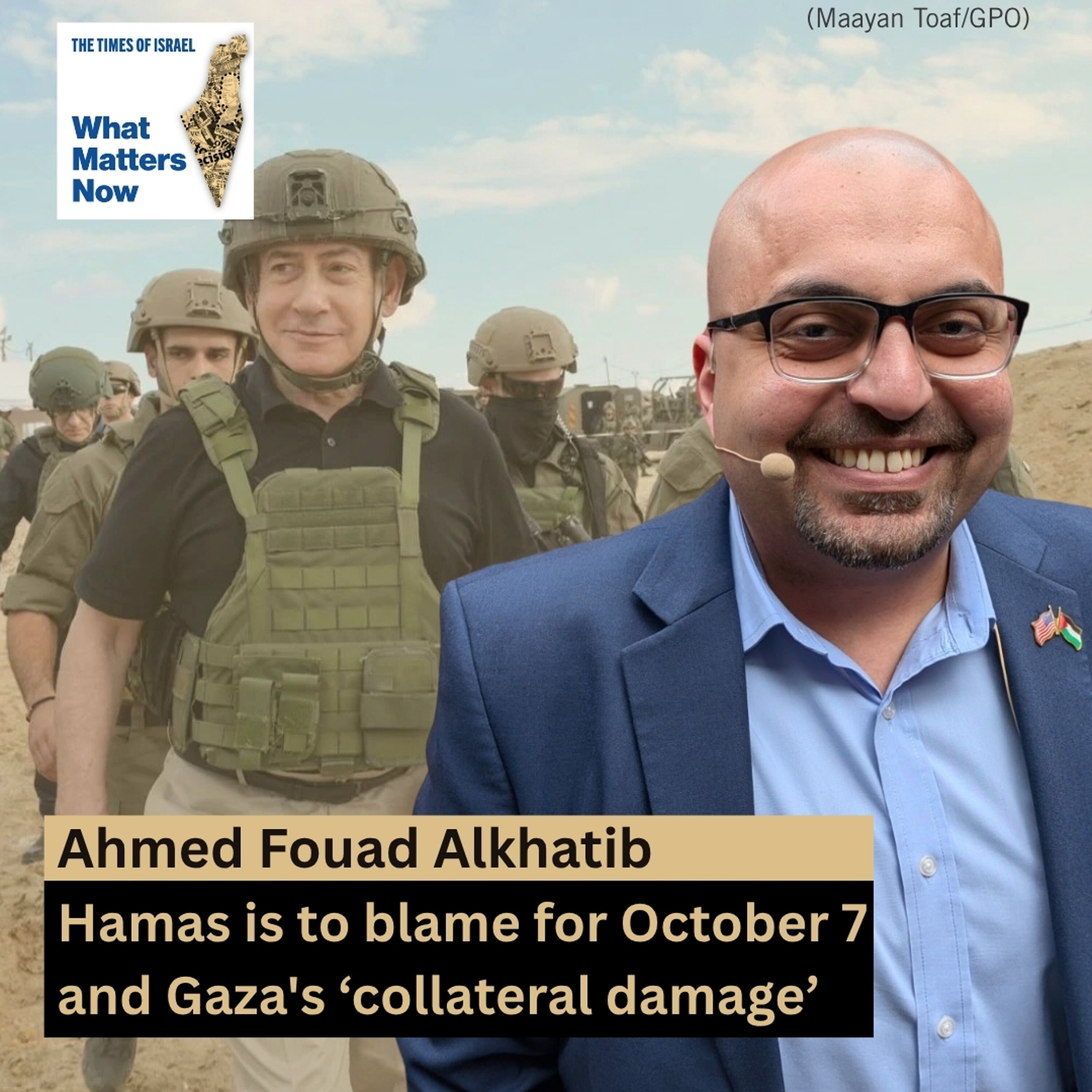 Ahmed Fouad Alkhatib: Hamas is to blame for October 7 and Gaza's ‘collateral damage’ 18.09.2026 55minWelcome to What Matters Now, a weekly podcast exploring key issues currently shaping Israel and the Jewish World, with host deputy editor Amanda Borschel-Dan speaking with Ahmed Fouad Alkhatib, the head of Realign for Palestine, an Atlantic Council project that challenges entrenched narratives in the Israel and Palestine discourse. Before Alkhatib gives us an overview of the conditions on the ground right now in the Gaza Strip, he speaks to social media allegations that he is a "Zionist" or "pro-Israel stooge" because of his staunch anti-Hamas stance and willingness to engage with Israelis and Jews. He speaks to how the "pro-Palestine industrial complex" marches in lockstep to condemn and blame Israel, giving two examples: the recent Haaretz report that Prime Minister Benjamin Netanyahu was warned about the October 7, 2023, Hamas onslaught on southern Israel and the unreserved acceptance of the narrative portrayed in the new film "NAZA." Alkhatib goes through the recent claims made against Netanyahu and explains how, in his assessment, there are other agendas at work by a variety of actors. Something doesn't add up, he says. Turning to "NAZA" and its unprecedented 25-minute standing ovation, Alkhatib again turns the spotlight on the double standard the world employs when discussing Hamas versus Israel. "Ironically, Israelis are believed when they criticize their government and their military and their people and their army, but Palestinians against Hamas in Gaza... they're not believed. They're called traitors, or they're silenced or they're viewed as inconvenient, by the same people that gave that long standing ovation," he says. "It's enraging to me that Hamas is afforded the benefit of the doubt," he says, adding that residents of Gaza are likewise enraged that they remain held captive by a terrorist regime that is given a "pass" by the international community and pro-Palestine activists. Finally, Alkhatib announces that his new short book, "Hamas and its Two Million Hostages" -- part memoir, part an attempt to explain how Hamas's stranglehold on the people in the Gaza Strip is only tightening -- will soon be translated into Hebrew. (Arabic is also in the plans.) And so this week, we ask Ahmed Fouad Alkhatib, what matters now? What Matters Now podcasts are available for download on Apple Podcasts, Spotify, YouTube, or wherever you get your podcasts. This episode was produced by Ari Schlacht.See omnystudio.com/listener for privacy information.
 -
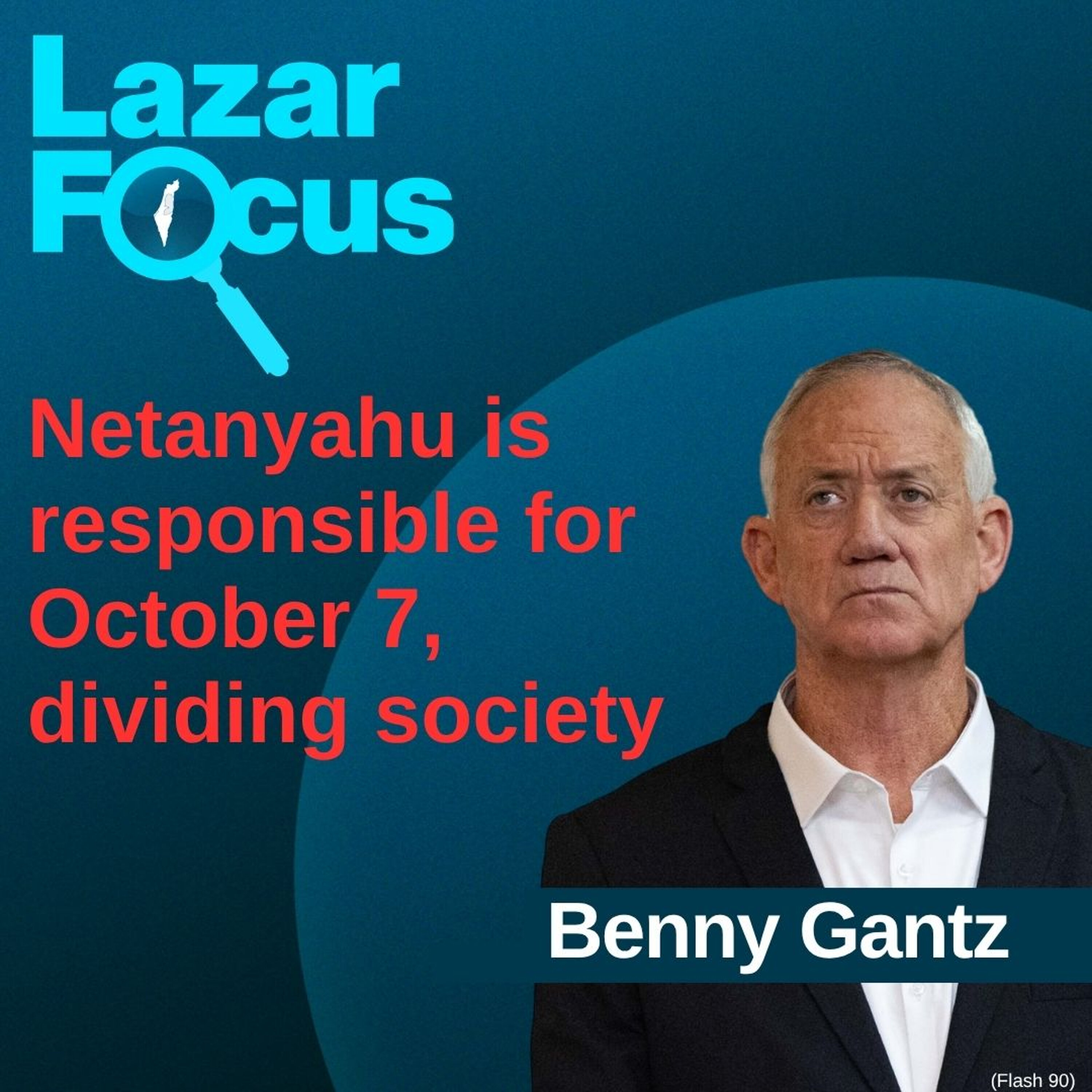 Benny Gantz: Netanyahu is responsible for October 7, dividing society 18.09.2026 32minWelcome to The Times of Israel's Lazar Focus. Each Friday, join host diplomatic correspondent Lazar Berman for a deep dive into what's behind the news that spins the globe. Benny Gantz was in the headlines in Israel and often across the globe for the better part of two decades. He was the 20th IDF chief of staff during two major operations against Hamas, was opposition leader, served as defense minister, and for the eight months after October 7, was a senior member in the war cabinet. His fortunes have changed, however, His party is polling well below the electoral threshold, and there are no signs that is about to change. Opposition figures are calling for Gantz to drop out, warning he will waste tens of thousands of votes that could prove decisive in replacing Prime Minister Benjamin Netanyahu. But Gantz insists he is in the race for the long run. Gantz said that he doesn't owe anything to anyone except his own voters. He acknowledges that he won't be prime minister, but says that he can be the bridge between the camps in a broad Zionist unity government. Everything is possible for Israel with a unity government, he said, while no problem can be addressed without one. Netanyahu, he said, needs to be replaced. October 7 was his responsibility, said Gantz, and Netanyahu has also divided Israeli society. He was fairly optimistic about Israel's operations in Gaza, Lebanon, and Iran, saying that Israel cannot allow radical forces to build up capabilities that could be used to attack Israel. Gantz stressed that Israel is not taking revenge in Gaza, but is securing its own future by working to defeat Hamas. Lazar Focus is available on all podcast platforms. This episode was produced by Gabriella Jacobs and video edited by Yitzchak Ledee.See omnystudio.com/listener for privacy information.
 -
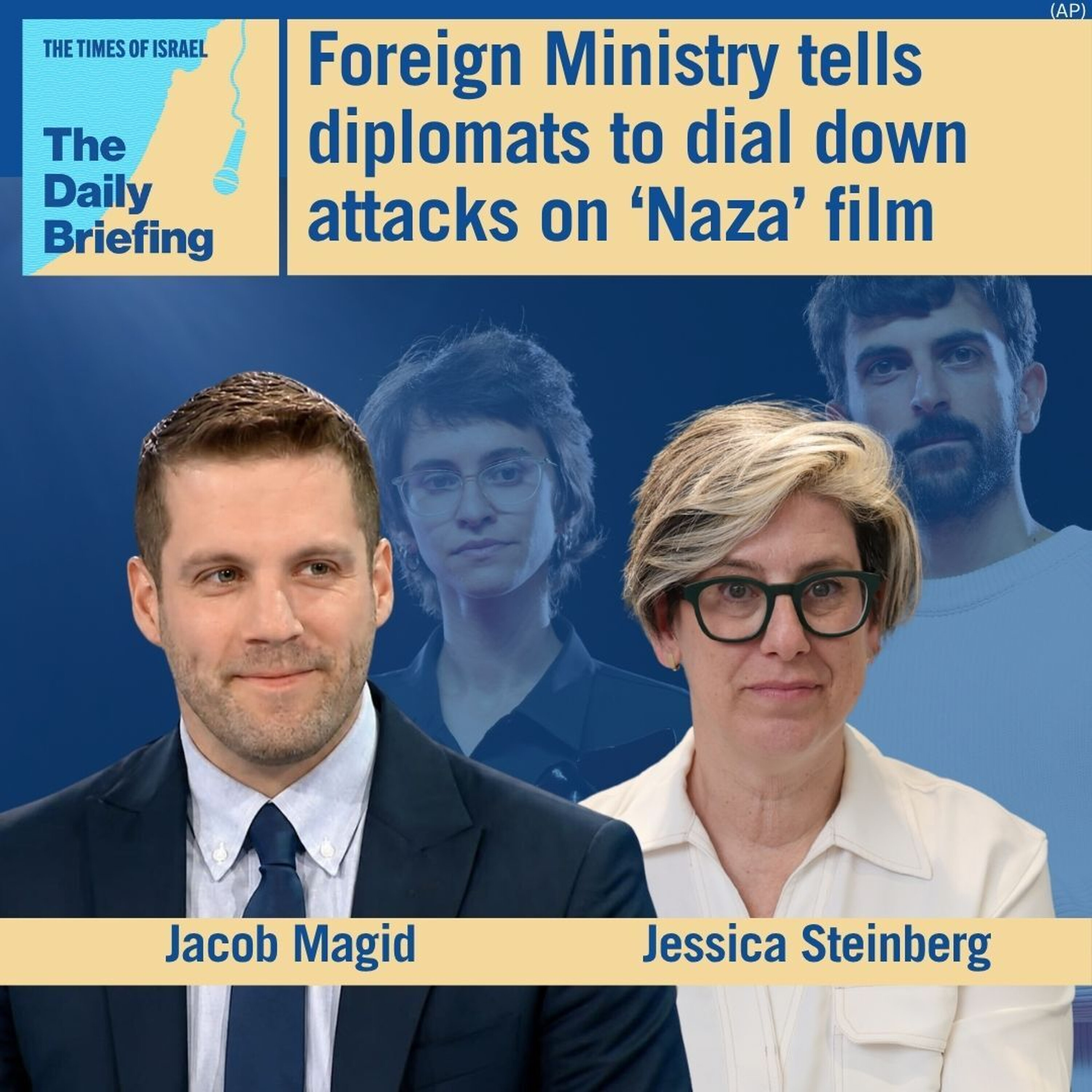 Foreign Ministry tells diplomats to dial down attacks on ‘NAZA’ film 17.09.2026 22minWelcome to The Times of Israel's Daily Briefing, your 20-minute audio update on what's happening in Israel, the Middle East and the Jewish world. US bureau chief Jacob Magid joins host Jessica Steinberg for today's episode. Following headlines worldwide and widespread anger in Israel over the allegations made in documentary film ‘NAZA’ about Israel's policies on civilian fatalities in the Gaza war, Magid reports that the Foreign Ministry has recommended to diplomats to dial down attacks on the Israeli filmmakers, assessing that ongoing furious Israeli denials are harming rather than helping. While the next official round of talks between Israel and Lebanon is delayed to next month, Magid notes that a small meeting between the Israeli ambassador to the US and the Lebanese ambassador took place in Washington, with each party reporting that there hasn't been enough progress on either side, in terms of the Lebanese army disarming Hezbollah and Israel withdrawing from some parts of southern Lebanon. Meanwhile, a Lebanese official spoke with Magid -- although interviews with Israeli press are forbidden -- relaying the message that Lebanon does want to disarm Hezbollah and that Israel’s strikes in southern Lebanon have become too indiscriminate. Magid also reports on the recent talks between the Houthis and the US regarding its seizure of a strategic stretch of the Red Sea coast, noting that engagement with the Iran-backed militia risks normalizing its status as an address for negotiation rather than an illegitimate actor. After Vice President JD Vance stated in a podcast interview that US Mideast policy can't be subservient to Israel's needs, Magid discusses other aspects of the interview, including that Vance called Israel an important partner and that relationships with all US allies are based on US interests. Finally, Magid reviews details from a leaked Board of Peace committee document summarizing 71 intended construction projects in Gaza, noting that it's all on hold because Israel hasn't agreed to the current disarmament plan. Check out The Times of Israel's ongoing liveblog for more updates. For further reading: Israeli government sends diplomats talking points to respond to ‘NAZA’ — report Israeli, Lebanese envoys hold ‘positive’ meeting in Washington Lebanese official to ToI: ‘Indiscriminate’ IDF strikes hinder Hezbollah disarmament Vance: US cannot let its Mideast foreign policy be ‘subservient to Israel’ Houthis met US officials in Oman, promised not to hit American, Israeli ships — sources Gaza-bound technocrats draw up 71 rebuilding projects, which hinge on Israeli approval Subscribe to The Times of Israel Daily Briefing on Apple Podcasts, Spotify, YouTube, or wherever you get your podcasts. Ari Schlacht produced this episode. IMAGE: US bureau chief Jacob Magid appears on the Daily Briefing with host Jessica Steinberg (AP)See omnystudio.com/listener for privacy information.
 -
 From Mecca to Mokha: Houthis flex as Saudis flail 16.09.2026 19minWelcome to The Times of Israel's Daily Briefing, your 20-minute audio update on what's happening in Israel, the Middle East and the Jewish world. Diplomatic correspondent Lazar Berman joins host Amanda Borschel-Dan for today's episode. The Saudi-led coalition battling Yemen’s Houthis accused the rebels on Wednesday of targeting Islam’s holy city Mecca, sparking outrage across the Muslim world. The rebels immediately denied the accusation but did announce later in the day that they had shot down a Saudi fighter jet. At the same time, the Houthis have captured more strategic islands in the southern Red Sea, strengthening their control of the major maritime shipping route Bab el-Mandeb, and putting more of an economic squeeze on the Saudis. We learn how the military chiefs of Israel, the US, Saudi Arabia, the United Arab Emirates, Bahrain, Kuwait, Qatar, Jordan and Egypt held a meeting in Germany last week about the war with Iran and regional tensions, according to the Axios news site. And we hear about how the recent Mecca Accords between Saudi Arabia, Pakistan and Turkey are not bearing military fruit. As the conflict deepens across the region, Berman weighs in on Saudi Arabia's requests for help from its allies and neighbors, and why, specifically, the United States appears to hope to stay out of it -- for now. Check out The Times of Israel's ongoing liveblog for more updates. For further reading: ‘Red line’: Houthis accused of targeting Mecca for first time in current flare-up IDF chief met army heads of Qatar, Saudi Arabia, other Arab states to discuss Iran – report What the closure of Saudi Arabia’s East-West pipeline could mean for oil flows Houthis seize more key islands in Red Sea, launch attacks into Saudi Arabia Subscribe to The Times of Israel Daily Briefing on Apple Podcasts, Spotify, YouTube, or wherever you get your podcasts. Yitzhak Ledee filmed and edited this episode.See omnystudio.com/listener for privacy information.
 -
 How upstart parties could determine the Israeli election 15.09.2026 31minWelcome to The Times of Israel's Daily Briefing, your 20-minute audio update on what's happening in Israel, the Middle East and the Jewish world. Political correspondent Ariela Karmel joins host Amanda Borschel-Dan for today's episode. Israel’s upcoming election officially took shape last week, as the last of 38 parties submitted their candidate slates for the October 27 vote. We learn about the last-minute drama and surprises. Yesterday, the left-wing Democrat Party petitioned the Central Elections Committee to bar National Security Minister Itamar Ben Gvir’s far-right Otzma Yehudit slate from running. The party, led by Yair Golan, accused the right-wingers of undermining democracy, denying “the existence of the State of Israel as a democratic state,” and inciting racism. Karmel explains how this is expected political theater -- used by both sides of the aisle. Karmel writes in a recent analysis that, "Reflecting a broad rightward shift among the Israeli electorate, Yashar leader Gadi Eisenkot is winning voters on the right and leading in the polls by presenting a party that in many ways resembles the Likud of yesteryear." She speaks about Likud's attempts to brand the Yashar head as a "leftist" -- and what this means in Israeli society. Check out The Times of Israel's ongoing liveblog for more updates. For further reading: Israel’s election takes shape as 38 parties submit slates, in battle between pro- and anti-Netanyahu blocs Finalizing slate, Netanyahu fills reserved Likud slots with allies, ideologues Democrats seek to bar Otzma Yehudit from election as polls show continued deadlock As parties lock in, Eisenkot plots path to power through heart of old Likud Subscribe to The Times of Israel Daily Briefing on Apple Podcasts, Spotify, YouTube, or wherever you get your podcasts. This episode was produced by Ari Schlacht.See omnystudio.com/listener for privacy information.
Slični podcasti


Popularan u
Ovaj podcast pojavljuje se i na podcast ljestvicama ovih zemalja.


