
Psychofarm Podcast
Psychiatry, Skepticism, and Integration.
0
PsychoFarm Podcast is a deep dive into the intersection of psychiatry, psychopharmacology, and the evolving understanding of mental health. Hosted by 2 psychiatrists, the podcast explores complex topics such as diagnosing mood and personality disorders, the role of medications in treatment, and the challenges of psychiatric training. Each episode breaks down the clinical insights and philosophical debates surrounding mental health care, providing both practitioners and curious listeners with thoughtful analysis, expert opinions, and practical advice.
Epizode
-
 Trauma and PTSD: How the DSM Criteria Actually Help Us Understand What’s Going On 06.10.2026 1h 1minPTSD diagnosis is more complicated than identifying a trauma history. In this episode, we break down what qualifies as Criterion A trauma, the major PTSD symptom clusters, and how intrusion, avoidance, negative beliefs, hyperarousal, and dissociation can show up in practice. We also discuss acute stress disorder, fragmented traumatic memory, and why PTSD can be mistaken for depression, anxiety, mania, concentration problems, or psychosis. Along the way, we focus on careful trauma assessment: establishing a timeline, considering alternative diagnoses, monitoring the patient’s level of distress, and gathering what you need without turning a diagnostic interview into trauma therapy. This is a public episode. If you would like to discuss this with other subscribers or get access to bonus episodes, visit psychofarm.substack.com
 -
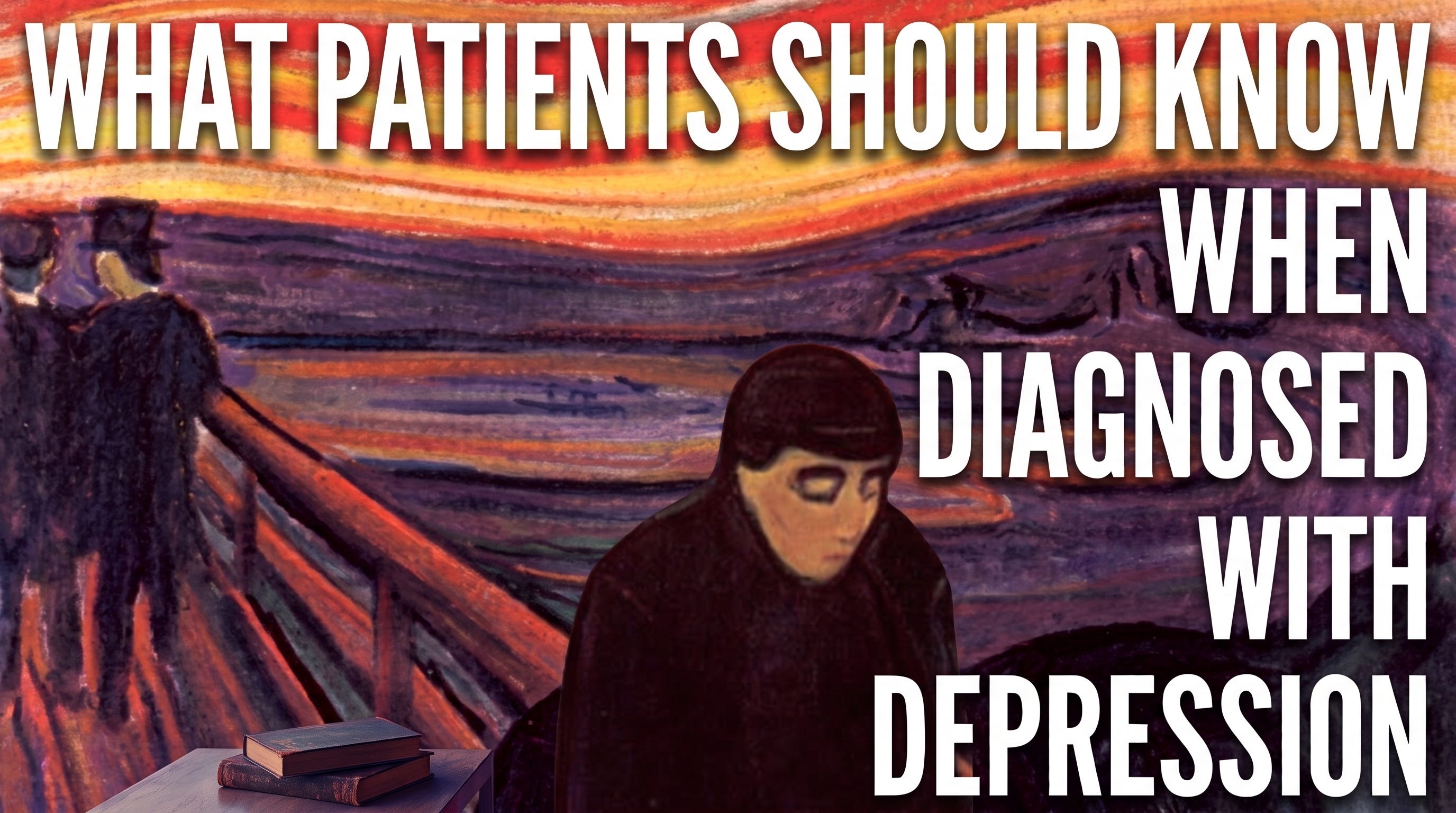 What Patients Should Know When Diagnosed With Depression 29.09.2026 1h 2minWhat should patients know when they are diagnosed with depression? In this episode, psychiatrists Dr. Malzberg and Dr. Fu cover what they wish every patient knew from the start. They explain why a depression diagnosis is a useful shorthand rather than a fixed identity, how biological, psychological, and social factors feed into each other, and how medication, therapy, and lifestyle changes work together. You will hear practical first steps like behavioral activation, a steady wake time, morning sunlight, and cutting back on alcohol and cannabis, plus what to do if treatment stalls and how to decide who to tell. It is an hour of clear psychoeducation for patients and a resource clinicians can share. This is a public episode. If you would like to discuss this with other subscribers or get access to bonus episodes, visit psychofarm.substack.com
 -
 Autism Diagnosis Explained: DSM-5 Criteria, Autistic Traits & the Difficult Differential 21.09.2026 54minAutism diagnosis is more complicated than recognizing a handful of autistic traits. In this episode, Dr. Fu and Dr. Malzberg unpack the DSM-5-TR criteria for autism spectrum disorder, including social communication differences, restricted and repetitive behaviors, developmental onset, impairment, and Levels 1–3. They then tackle one of the hardest parts of adult autism assessment: differential diagnosis, including overlap with ADHD, schizophrenia, and personality disorders. The conversation also explores theory of mind, masking, the double empathy problem, weak central coherence, and the empathizing-systemizing framework. The goal is a more clinically useful way to think about what distinguishes autistic traits from autism spectrum disorder and why developmental history matters. This is a public episode. If you would like to discuss this with other subscribers or get access to bonus episodes, visit psychofarm.substack.com
 -
 How to Diagnose Bipolar Disorder with Dr. Phelps: Hypomania, Mixed States & the Clues DSM Misses 15.09.2026 1h 5minDiagnosing bipolar disorder is rarely as simple as finding a clear episode of hypomania. Dr. Phelps explains why bipolarity is better understood across a mood spectrum and walks through the clues that can help distinguish bipolar depression from unipolar depression: age of onset, family history, course of illness, treatment response, cyclicity, and collateral history. We also dig into mixed states, the “four A’s” of anxiety, anger, agitation, and attention problems, antidepressant activation, the HCL-32, and the Bipolarity Index. The larger theme is diagnostic humility: uncertainty is often appropriate, and treatment decisions should reflect both the strength of the evidence and the risks of getting the diagnosis wrong. This is a public episode. If you would like to discuss this with other subscribers or get access to bonus episodes, visit psychofarm.substack.com
 -
 Lindsay Clancy Case: Biggest Misconceptions After the Mistrial Explained by a Forensic Psychiatrist 09.09.2026 1h 7minLindsay Clancy’s insanity defense is the focus of this forensic psychiatry follow-up after the mistrial. We revisit the case through the lens of legal insanity, postpartum psychosis, malingering, criminal responsibility, and the difference between a legal conclusion and a moral judgment. We also discuss why psychosis cannot be reduced to a single reported voice, how forensic psychiatrists think about exaggeration versus malingering, questions around expert testimony and diagnosis, and the relationship between psychosis and violence. Finally, we look at medication nonadherence, culpability, how uncommon the insanity defense may be, and what questions arise when someone is found not guilty by reason of insanity. This is a public episode. If you would like to discuss this with other subscribers or get access to bonus episodes, visit psychofarm.substack.com
 -
 Lindsay Clancy Trial: A Forensic Psychiatrist Explains Psychosis, Malingering, & the Insanity Defense 01.09.2026 58minLindsay Clancy postpartum psychosis and the insanity defense are examined through a forensic psychiatry lens in this episode. We discuss how psychiatrists distinguish psychosis from malingering, whether someone can be psychotic while still appearing organized, command hallucinations, delusions, altruistic filicide, and what criminal responsibility actually asks. We also look at Dr. Philip Resnick’s testimony, Clancy’s psychiatric treatment, fragmented care, collateral information, and the limits of ruling out bipolar disorder after a brief evaluation. Finally, we explore why the case has produced such intense public reactions and why psychiatry often requires tolerating uncertainty rather than forcing complex patients or cases into simple categories. This is a public episode. If you would like to discuss this with other subscribers or get access to bonus episodes, visit psychofarm.substack.com
 -
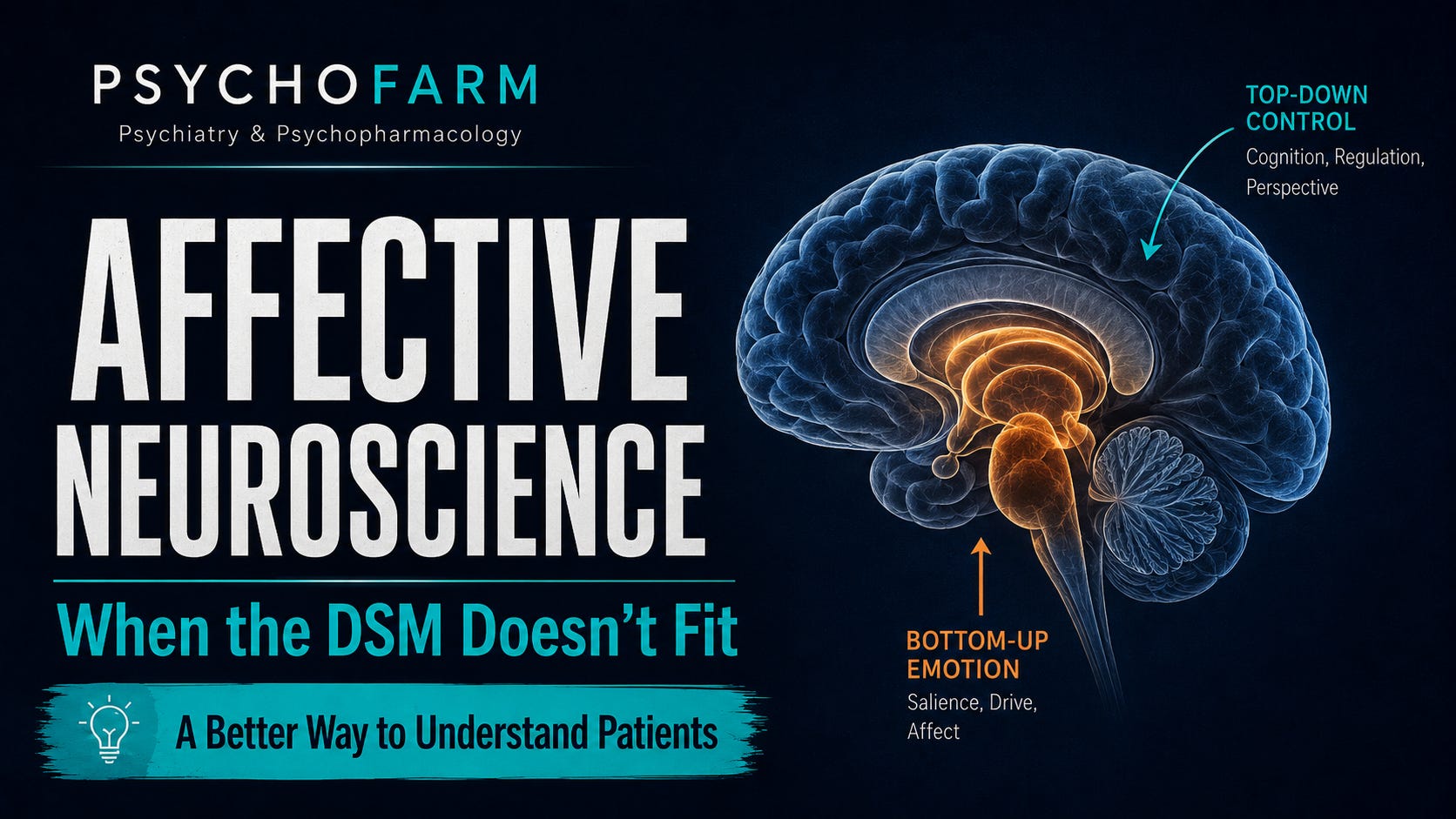 Affective Neuroscience: Understanding Patients Beyond DSM Diagnoses 25.08.2026 59minAffective neuroscience in psychiatry may offer a better way to understand patients who do not fit neatly into DSM categories. Dr. White joins us to explain Jaak Panksepp’s seven primary emotional systems, the difference between affect and emotion, and how subcortical emotional arousal interacts with cortical regulation. We discuss anger, borderline personality disorder, cognitive decline, mindfulness, ACT, emotional blunting with SSRIs, and why some cases labeled treatment-resistant depression may need a better formulation rather than another medication. We also get into the neuroscience behind the model… from decortication and brain-stimulation studies to TMS… and ask what psychiatry loses when diagnosis comes before understanding affect.Dr. White’s Substack: This is a public episode. If you would like to discuss this with other subscribers or get access to bonus episodes, visit psychofarm.substack.com
 -
 The Psychology of Seinfeld: What’s Really Wrong With George, Kramer, Jerry & Elaine? 19.08.2026 57minWe put the Seinfeld cast on the proverbial couch, not to slap diagnoses on fictional characters, but to show why personality formulation can tell us far more than a psychiatric label.Is George a vulnerable narcissist, borderline, or something more complicated? Does Jerry’s obsession with cleanliness and order actually resemble OCD or an obsessive-compulsive personality style? Could Kramer meet criteria for antisocial personality disorder despite being charming, affectionate, and largely nonviolent? And is Elaine secretly the healthiest person in the group?Along the way, we explore flanderization, narcissism, borderline personality organization, obsessive-compulsive personality traits, psychopathy versus antisocial personality disorder, gambling disorder, and the DSM-5 Alternative Model for Personality Disorders. This is a public episode. If you would like to discuss this with other subscribers or get access to bonus episodes, visit psychofarm.substack.com
 -
 Sleep Medications Treatment Tier List: Best Insomnia Medications Ranked 11.08.2026 1h 9minIn this episode, the hosts rank the behavioral and medication strategies they use for sleep problems in psychiatric practice, starting with strict wake times, CBT-I, sleep hygiene, exercise, and treating the underlying disorder. They compare doxepin, trazodone, mirtazapine, hydroxyzine, melatonin, gabapentin, benzodiazepines, Z-drugs, antipsychotics, and other options, with attention to sleep onset, sleep maintenance, side effects, dependence, sleep architecture, and comorbid conditions. The conversation also covers caffeine and stimulant timing, alcohol and cannabis, primary sleep disorders, and why diagnosis should guide insomnia treatment before medication choice. This is a public episode. If you would like to discuss this with other subscribers or get access to bonus episodes, visit psychofarm.substack.com
 -
 Mood Stabilizers for Bipolar Disorder: Lithium, Lamotrigine, Depakote & More 28.07.2026 1h 1minMood stabilizers for bipolar disorder can be confusing because lithium, lamotrigine, Depakote, carbamazepine, and oxcarbazepine have very different strengths, risks, and clinical roles. In this episode, two psychiatrists break down how they think about maintenance treatment, lithium dosing and monitoring, common side effects, lab levels, toxicity counseling, and medication interactions. They also compare Depakote for mania, lamotrigine for bipolar depression, carbamazepine’s interaction burden, and the potential role of oxcarbazepine. Along the way, they discuss combination treatment, diagnostic uncertainty, pregnancy and fertility considerations, rash counseling, and why effective bipolar care requires focusing on long-term episode prevention rather than the symptom of the day. This is a public episode. If you would like to discuss this with other subscribers or get access to bonus episodes, visit psychofarm.substack.com
 -
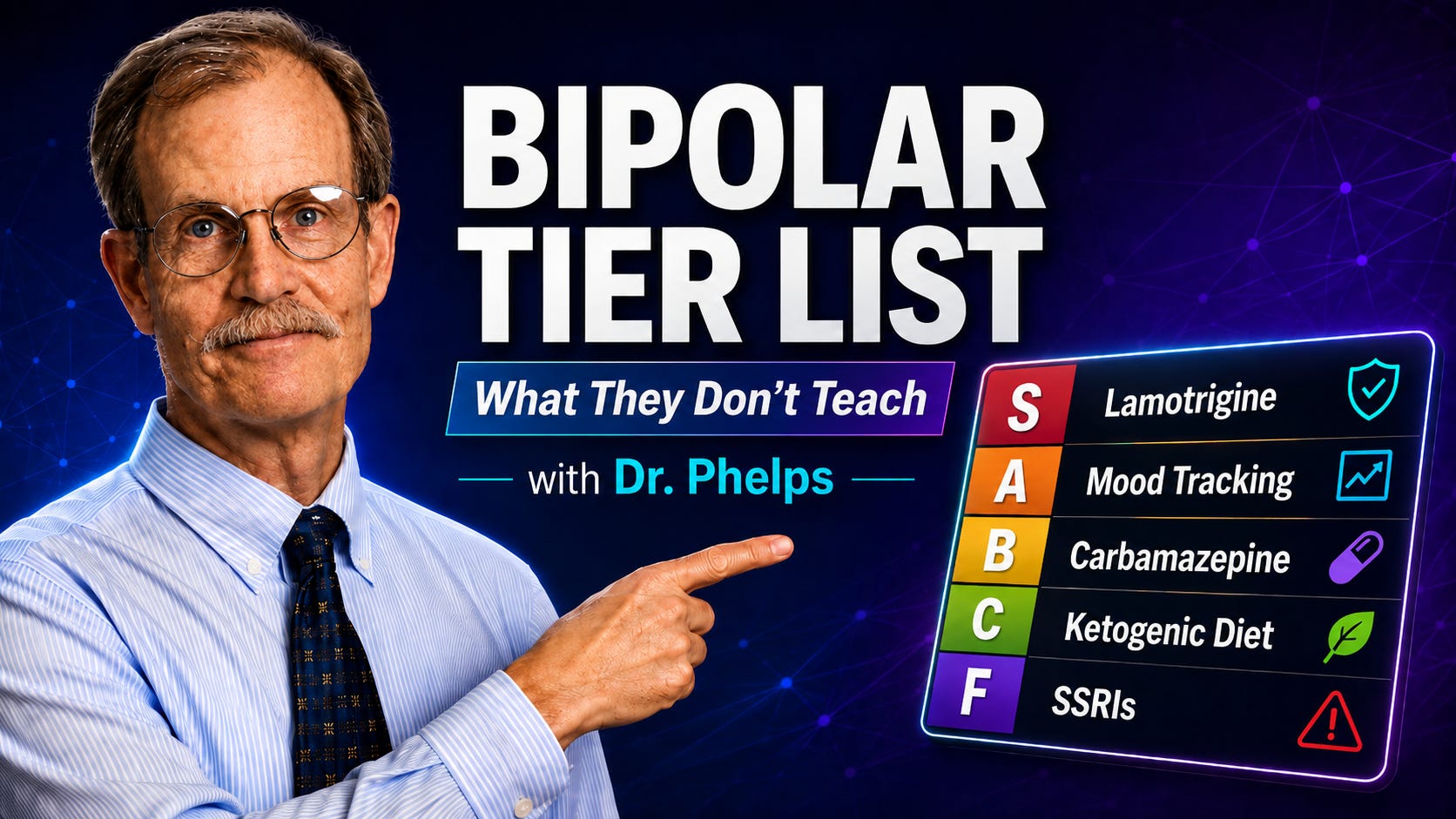 Dr. Jim Phelps’ Bipolar Treatment Tier List: Lessons from 30+ Years in Psychiatry 23.07.2026 1h 12minBipolar disorder treatment is put to the test in this clinically grounded tier list with psychiatrist Jim Phelps. He and Dr. Malzberg rank low-dose lithium, lamotrigine, social rhythm therapy, dark therapy, dawn simulators, antidepressants, carbamazepine, supplements, ketogenic diet, mood tracking, and group psychoeducation. Along the way, they discuss why sleep and circadian rhythm belong in the mood stabilizer conversation, how antidepressants may worsen cycling or mixed states, and why the long-term goal is not simply treating the mood of the day. The episode also explores practical adherence, bipolar comorbidity, passive sleep tracking, and underused nonmedication approaches.Dr. Phelps’ YouTube: https://www.youtube.com/@psycheducation This is a public episode. If you would like to discuss this with other subscribers or get access to bonus episodes, visit psychofarm.substack.com
 -
 Anxiety Medications Tier List: The Best and Worst Treatments for GAD 14.07.2026 1h 3minAnxiety medications tier list: two psychiatrists rank the treatments they actually use for generalized anxiety disorder… and the ones they avoid. The discussion covers first-line SSRIs, why buspirone may be underrated, when benzodiazepines can help or harm, and how to think about mirtazapine, hydroxyzine, propranolol, gabapentin, pregabalin, quetiapine, and bupropion. Just as important, the episode argues that “anxiety” is not a diagnosis: re-diagnosis, mindfulness, CBT and ACT principles, exercise, reducing caffeine or stimulants, and understanding avoidance may matter more than adding another prescription. The result is a practical, opinionated guide to anxiety treatment that combines evidence, clinical experience, side effects, dependence risk, and long-term recovery. This is a public episode. If you would like to discuss this with other subscribers or get access to bonus episodes, visit psychofarm.substack.com
 -
 Psychodynamic Technique and Therapeutic Intervention: Mirroring, Clarification, Confrontation, Interpretation 30.06.2026 40minPsychodynamic therapy interventions are the focus of this episode, organized through a practical levels framework for clinicians. Dr. Fu and Dr. Greg break down empathic mirroring as a way to keep the patient’s narrative moving, clarification as a tool for deepening detail, confrontation as a gentle way to point out patterns or discrepancies, and interpretation as the rare intervention that should come only after enough groundwork. Along the way, they connect these skills to diagnostic interviewing, medication management, forensic psychiatry, therapeutic alliance, and the difference between helping a patient talk more and pushing too quickly toward insight. This is a public episode. If you would like to discuss this with other subscribers or get access to bonus episodes, visit psychofarm.substack.com
 -
 ECT Treatment: When to Refer, Who It Helps, and What Actually Happens with Dr. MaryEllen Eller 17.06.2026 54minUnfortunately no Dr. Fu today, but Dr. Malzberg speaks with the wonderful psychiatrist Dr. Mary Ellen Eller, who walks through what modern electroconvulsive therapy actually looks like and when clinicians should consider it. The episode covers ECT history, stigma, seizure monitoring, memory concerns, side effects, and the real-world logistics patients face during a treatment course. It also explores where ECT fits in the algorithm for severe depression, depression with psychosis, catatonia, bipolar mania. The result is a grounded, clinician-friendly guide to a misunderstood treatment. This is a public episode. If you would like to discuss this with other subscribers or get access to bonus episodes, visit psychofarm.substack.com
 -
 Suicide Risk Assessment: Acute vs Chronic Risk, Formulation, and Suicidal Ideation Types 02.06.2026 1h 3minSuicide risk assessment is often taught like a checklist, but this episode argues that the real work is formulation. We talk about why history is only the starting point, how acute and chronic risk differ, and why suicidal ideation can mean very different things depending on context. We cover stress-related suicidality, intoxication, baseline recurrent thoughts, mood and psychotic disorders, OCD intrusive thoughts, hospitalization decisions, red flags, countertransference, and documentation. The result is a practical psychiatry conversation for clinicians and trainees who want to think more clearly about suicide risk without pretending they can predict the future. This is a public episode. If you would like to discuss this with other subscribers or get access to bonus episodes, visit psychofarm.substack.com
 -
 Antidepressant Tier List: Psychiatrists Rank Depression Medications for MDD 19.05.2026 1h 14minPsychiatrists rank antidepressants for major depressive disorder, including SSRIs like sertraline, escitalopram, fluoxetine, and paroxetine; SNRIs like venlafaxine and duloxetine; and atypical options like bupropion and mirtazapine. They also cover lithium, low-dose aripiprazole, trazodone, esketamine, stimulants, benzodiazepines, TCAs, and MAOIs, with emphasis on diagnosis, side effects, withdrawal, weight gain, sexual dysfunction, anxiety, insomnia, and why “which antidepressant is best” depends on the patient. This is a public episode. If you would like to discuss this with other subscribers or get access to bonus episodes, visit psychofarm.substack.com
 -
 Mindfulness in Psychiatry: How to Teach It as a Clinical Treatment Skill 05.05.2026 52minMindfulness in psychiatry is the focus of this episode, with Doctors Malzberg and Fu treating it as a practical clinical skill rather than vague wellness advice. They define mindfulness as deliberate attention to the present moment without judgment, then connect it to DBT, MBCT, ACT, anxiety, depression, PTSD, substance use, and trauma-informed care. The conversation also covers when mindfulness should be modified, why it is not always a standalone treatment, and how clinicians can teach it through short, scheduled practice, DBT “what skills,” grounding techniques, and careful follow-up. This is a public episode. If you would like to discuss this with other subscribers or get access to bonus episodes, visit psychofarm.substack.com
 -
 Psychiatric Technique for Diagnostic Interviewing and Therapy: 6 Mantras Every Clinician Should Know 21.04.2026 46minPsychotherapeutic techniques are the subject of this episode, as the conversation lays out six memorable therapy mantras for better diagnosis, formulation, and treatment. Rather than focusing on abstract theory, the discussion shows how clinicians can stay close to patient material, clarify vague symptom language, notice countertransference, rewind key moments, and make links that improve both psychotherapy and medication management. It’s a practical lesson in interviewing: ask simpler questions, tolerate not knowing too quickly, observe contradictions, and avoid getting lost in content when the process is where the diagnostic data actually lives. This is a public episode. If you would like to discuss this with other subscribers or get access to bonus episodes, visit psychofarm.substack.com
 -
 Psychodynamic Technique and Therapeutic Intervention: Containment 08.04.2026 58minPsychodynamic technique is the throughline of this episode, which argues that the core skills of therapy belong at the center of psychiatry, not at the margins. The conversation maps five levels of intervention, from level zero through interpretation, while stressing that the most important work usually happens earlier: frame, alliance, follow the affect, and technical containment. Rather than glamorizing clever interpretations, the episode shows why reflective listening, emotionally accurate language, and careful therapeutic interventions help patients think, regulate, and elaborate on their experience. It’s a practical discussion for clinicians who want to improve interviewing, formulation, and treatment across everyday psychiatric practice.Lots of material from this lecture is from here: https://www.appi.org/Products/Psychotherapy/Clinician-Technique-in-Personalized-Psychotherapy This is a public episode. If you would like to discuss this with other subscribers or get access to bonus episodes, visit psychofarm.substack.com
 -
 Tips to Avoid Burnout in Psychiatry (Outpatient, mostly) 24.03.2026 55minIn this episode, Dr. Fu and Dr. Malzberg share practical systems for time protection: start on time, end on time, finish documentation inside the visit, and use tools like AI scribes and quiet typing gear. They also lay out clear messaging rules so emails, texts, and forms do not become off-the-clock clinical care, plus the value of emergency slots. The deeper work is emotional: process the job with mentors or supervision, know your limits, and build a real life outside medicine so you can stay effective for the long game. This is a public episode. If you would like to discuss this with other subscribers or get access to bonus episodes, visit psychofarm.substack.com
Slični podcasti


Popularan u
Ovaj podcast pojavljuje se i na podcast ljestvicama ovih zemalja.


