
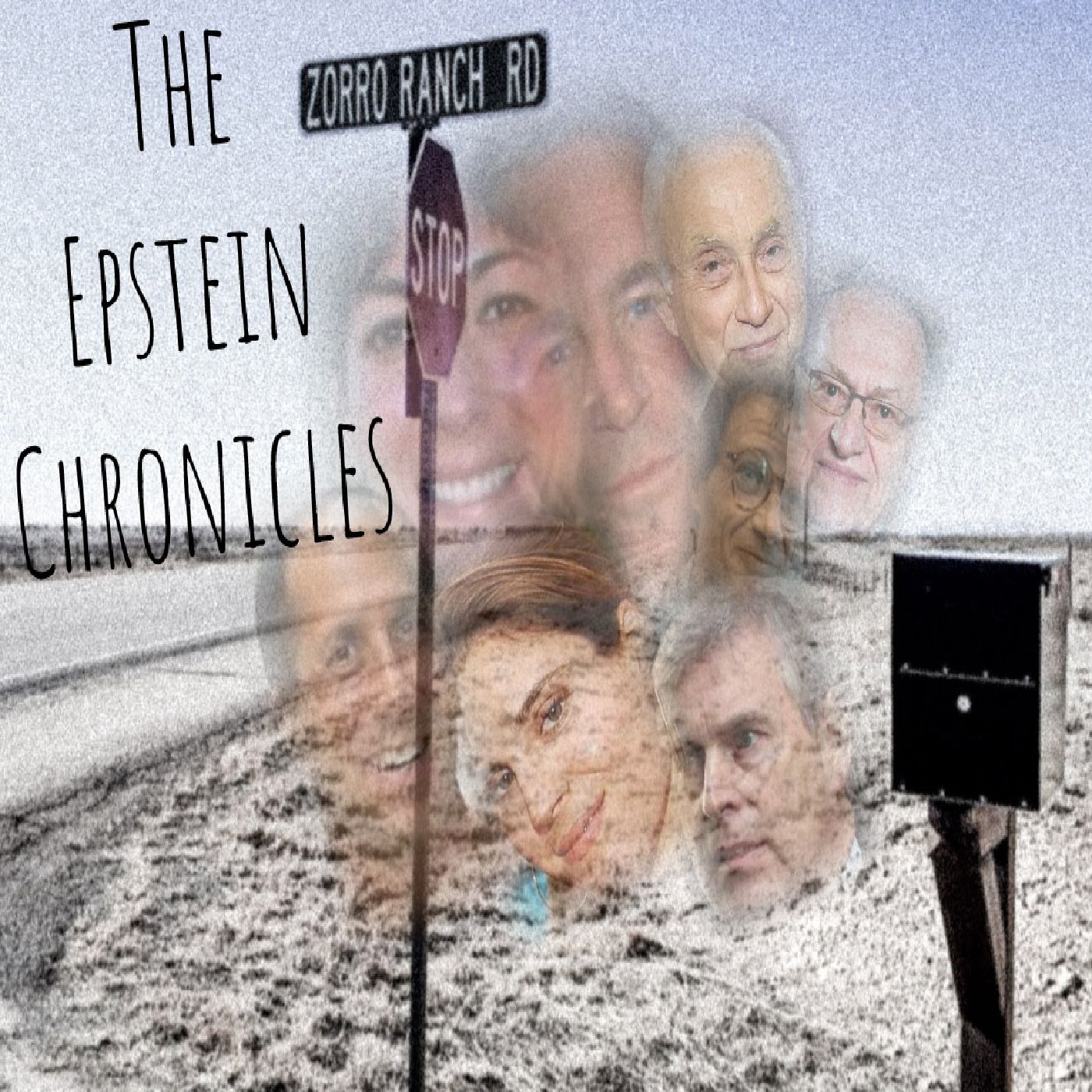
The Epstein Chronicles
Bobby Capucci
0
A true crime podcast that investigates the life and criminal enterprise of Jeffrey Epstein, his connections to influential figures, and the alleged cover-ups by media and elites. It explores his assistants, associates, and the broader conspiracy, aiming to uncover the full scope of his actions and the institutions that enabled him. The series examines Epstein's legal history, including his controversial plea deal, and the aftermath of his death and the arrest of Ghislaine Maxwell.
Epizode
-
 Mega Edition: Ghislaine Maxwell's Legal Team And The Allegations Of Juror Misconduct (9/19/26) 20.09.2026 48minAfter Ghislaine Maxwell was convicted in December 2021, her legal team moved quickly when Juror 50, Scotty David, revealed in post-trial interviews that he had been sexually abused as a child and had discussed that experience during deliberations. The disclosure raised an immediate problem because the jury questionnaire had specifically asked prospective jurors whether they or close family members had been victims of sexual abuse, and David had answered no. Maxwell’s attorneys argued that the omission amounted to juror misconduct and deprived them of the chance to question him further or seek his removal during jury selection. Prosecutors responded that a new trial was not automatically warranted and that the key questions were whether David had intentionally lied and whether his personal history showed actual bias. Judge Alison Nathan ordered a formal evidentiary hearing rather than deciding the issue from media reports alone.At that hearing, David testified under oath that he had rushed through the questionnaire and had not deliberately concealed his past in order to get on the jury. He also acknowledged that he had drawn on his own experience during deliberations when discussing why abuse survivors might remember events imperfectly or disclose them inconsistently. Maxwell’s lawyers argued that this showed his personal experience had improperly influenced the jury, while prosecutors maintained that jurors were allowed to bring ordinary life experience into deliberations so long as they remained impartial and followed the court’s instructions. Judge Nathan ultimately found that David’s incorrect questionnaire answer was inadvertent, not a calculated deception, and that Maxwell had failed to prove he was biased against her. She denied the motion for a new trial, allowing the convictions to stand despite one of the most serious juror-conduct controversies to emerge from the case.to contact me:[email protected] a supporter of this podcast: https://www.spreaker.com/podcast/the-epstein-chronicles--5003294/support.
 -
Julie K. Brown Calls Out The USVI For Their Epstein Hypocrisy (Part 2) 20.09.2026 28minJulie K. Brown, the investigative reporter for the Miami Herald, not only reignited the Jeffrey Epstein case by exposing the sweetheart non-prosecution agreement in Florida but also turned her spotlight to Epstein’s Caribbean operations. In a 2023 Miami Herald piece titled “U.S. Virgin Islands cozied up to Jeffrey Epstein. Now they’re profiting from his sex crimes,” Brown detailed how Epstein benefited from deep ties to the territory’s institutions—securing lavish tax breaks and beneficial financial dealings through shell companies like Southern Trust. Her reporting underscored how USVI authorities, including those in positions of power, either overlooked or enabled Epstein’s operations, which later came under legal scrutiny through lawsuits and settlements.In the piece, Brown argued that the USVI not only allowed Epstein to operate with little interference but later positioned itself to collect financial benefits through penalties and settlements after his death. This framing suggested that the government was both complicit in allowing the criminal enterprise to flourish and opportunistic in profiting from its collapse. The article sparked strong pushback, including from the University of the Virgin Islands, which issued a public response disputing some of the claims. The controversy reflected the tension between investigative reporting that sought to highlight systemic failures and local institutions that rejected the characterization of their role.to contact me:[email protected]:U.S. Virgin Islands profiting from Jeffrey Epstein’s crimes | Miami HeraldBecome a supporter of this podcast: https://www.spreaker.com/podcast/the-epstein-chronicles--5003294/support.
-
Julie K. Brown Calls Out The USVI For Their Epstein Hypocrisy (Part 1) 20.09.2026 21minJulie K. Brown, the investigative reporter for the Miami Herald, not only reignited the Jeffrey Epstein case by exposing the sweetheart non-prosecution agreement in Florida but also turned her spotlight to Epstein’s Caribbean operations. In a 2023 Miami Herald piece titled “U.S. Virgin Islands cozied up to Jeffrey Epstein. Now they’re profiting from his sex crimes,” Brown detailed how Epstein benefited from deep ties to the territory’s institutions—securing lavish tax breaks and beneficial financial dealings through shell companies like Southern Trust. Her reporting underscored how USVI authorities, including those in positions of power, either overlooked or enabled Epstein’s operations, which later came under legal scrutiny through lawsuits and settlements.In the piece, Brown argued that the USVI not only allowed Epstein to operate with little interference but later positioned itself to collect financial benefits through penalties and settlements after his death. This framing suggested that the government was both complicit in allowing the criminal enterprise to flourish and opportunistic in profiting from its collapse. The article sparked strong pushback, including from the University of the Virgin Islands, which issued a public response disputing some of the claims. The controversy reflected the tension between investigative reporting that sought to highlight systemic failures and local institutions that rejected the characterization of their role.to contact me:[email protected]:U.S. Virgin Islands profiting from Jeffrey Epstein’s crimes | Miami HeraldBecome a supporter of this podcast: https://www.spreaker.com/podcast/the-epstein-chronicles--5003294/support.
-
Tyler Robinson Preliminary Hearing Transcripts (Day 2 Part 3) (9/19/26) 19.09.2026 16minDay two of Tyler Robinson’s preliminary hearing focused heavily on prosecutors’ effort to connect Robinson to the Utah Valley University campus and to the physical evidence recovered after Charlie Kirk was shot. Investigators introduced additional surveillance footage they said showed Robinson moving around UVU before and after the shooting, while the State also turned to forensic evidence recovered along the alleged escape route. A screwdriver found on top of the Losee Center and a towel recovered from a wooded area near the rifle became major points of testimony. The State Bureau of Investigation introduced an FBI laboratory report concluding that DNA from both Robinson and his roommate, Lance Twiggs, was present on the screwdriver and towel, evidence prosecutors argued helped connect Robinson to the rooftop area and to the abandoned rifle. The hearing also featured argument over the State’s allegation that Kirk had been targeted because of his political and religious views, an issue relevant to the victim-targeting enhancement prosecutors had attached to several chargesThe defense spent much of the day attacking how strongly the forensic evidence could actually be interpreted. FBI forensic examiner Amanda Bakker was questioned for roughly three hours as defense attorney Michael Burt dug into the technical details of the DNA testing, mixtures, statistical interpretation and the limitations of what the results could establish about when or how DNA was deposited on the objects. Robinson’s lawyers also pushed back against the State’s motive theory, challenging the attempt to characterize the killing as being driven by Kirk’s religious beliefs in addition to political disagreement. By the end of day two, prosecutors had added important physical evidence to the surveillance case presented on day one, but the defense had begun laying out the approach it would use throughout the hearing: concede that certain items contained Robinson-associated evidence while aggressively challenging what that evidence actually proved about possession, timing, motive and the circumstances of Kirk’s killing.to contact me:[email protected] a supporter of this podcast: https://www.spreaker.com/podcast/the-epstein-chronicles--5003294/support.
-
Jane Doe # 1 And Her Motion To File Anonymously (9/19/26) 19.09.2026 13minJane Doe #1 is seeking permission to pursue her claim against Jeffrey Epstein anonymously, asking the court to let her use a pseudonym instead of placing her real name in the public record. A motion to proceed anonymously requests an exception to the usual requirement that parties identify themselves in a lawsuit. In cases involving alleged sexual abuse, such requests commonly seek to protect a plaintiff’s privacy and prevent additional emotional harm, unwanted exposure, or harassment as sensitive allegations become public.The court weighs those privacy concerns against the public’s interest in open judicial proceedings and the defendant’s ability to respond fairly to the allegations. Proceeding anonymously does not necessarily mean withholding the plaintiff’s identity from the defendant or the court, and it does not establish that the underlying allegations are proven. Jane Doe #1’s request concerns how she is identified publicly while pursuing her claim, with the judge deciding whether protection of her identity is warranted.to contat me:[email protected] a supporter of this podcast: https://www.spreaker.com/podcast/the-epstein-chronicles--5003294/support.
-
Hillary Clinton And The Transcript From Her Epstein Related Talk With Congress (Part 16) (9/18/26) 19.09.2026 18minHillary Clinton’s February 26, 2026 deposition before the House Oversight Committee centered on how much she knew about Jeffrey Epstein, Ghislaine Maxwell and Bill Clinton’s relationship with them. Clinton repeatedly testified that she had never met Epstein, never flew on his plane, never visited Little St. James and knew nothing about his crimes before they became public. She described Maxwell as no more than a “casual acquaintance,” said she did not consider her a friend and attributed Maxwell’s presence around the Clinton family largely to her relationship with longtime Clinton friend Ted Waitt. Clinton acknowledged that Maxwell attended Chelsea Clinton’s 2010 wedding, but said she had no specific recollection of speaking with her there and believed Maxwell attended as Waitt’s guest. She also said she did not remember Maxwell visiting the Clintons’ Chappaqua home, despite Maxwell later saying she had been there several times, and said she had no knowledge of Epstein having connections to American or foreign intelligence services.The questioning became much more contentious when lawmakers turned to Bill Clinton’s documented relationship with Epstein. Hillary characterized her husband’s relationship with Epstein as “limited” and primarily connected to his use of Epstein’s airplane, said she had no knowledge of Bill visiting Little St. James and maintained there was no evidence connecting him to Epstein’s crimes. When lawmakers pressed her about photographs showing Bill Clinton with Epstein, Maxwell and young women during trips, Clinton acknowledged seeing some of those photographs but said she had not become curious enough to investigate the circumstances herself, calling it simply “unfortunate” that her husband ever had dealings with Epstein. She also denied personally soliciting money from Epstein and said she was unaware of anyone doing so on her behalf, while acknowledging she knew little about whether Epstein played any role around Clinton Foundation or Clinton Global Initiative activities. The transcript therefore presented a consistent Clinton defense: she said she personally had essentially no relationship with Epstein and only a peripheral relationship with Maxwell, while repeatedly separating herself from questions about Bill Clinton by telling lawmakers that he would have to answer for his own conduct.to contact me:[email protected] a supporter of this podcast: https://www.spreaker.com/podcast/the-epstein-chronicles--5003294/support.
-
Hillary Clinton And The Transcript From Her Epstein Related Talk With Congress (Part 15) (9/18/26) 19.09.2026 14minHillary Clinton’s February 26, 2026 deposition before the House Oversight Committee centered on how much she knew about Jeffrey Epstein, Ghislaine Maxwell and Bill Clinton’s relationship with them. Clinton repeatedly testified that she had never met Epstein, never flew on his plane, never visited Little St. James and knew nothing about his crimes before they became public. She described Maxwell as no more than a “casual acquaintance,” said she did not consider her a friend and attributed Maxwell’s presence around the Clinton family largely to her relationship with longtime Clinton friend Ted Waitt. Clinton acknowledged that Maxwell attended Chelsea Clinton’s 2010 wedding, but said she had no specific recollection of speaking with her there and believed Maxwell attended as Waitt’s guest. She also said she did not remember Maxwell visiting the Clintons’ Chappaqua home, despite Maxwell later saying she had been there several times, and said she had no knowledge of Epstein having connections to American or foreign intelligence services.The questioning became much more contentious when lawmakers turned to Bill Clinton’s documented relationship with Epstein. Hillary characterized her husband’s relationship with Epstein as “limited” and primarily connected to his use of Epstein’s airplane, said she had no knowledge of Bill visiting Little St. James and maintained there was no evidence connecting him to Epstein’s crimes. When lawmakers pressed her about photographs showing Bill Clinton with Epstein, Maxwell and young women during trips, Clinton acknowledged seeing some of those photographs but said she had not become curious enough to investigate the circumstances herself, calling it simply “unfortunate” that her husband ever had dealings with Epstein. She also denied personally soliciting money from Epstein and said she was unaware of anyone doing so on her behalf, while acknowledging she knew little about whether Epstein played any role around Clinton Foundation or Clinton Global Initiative activities. The transcript therefore presented a consistent Clinton defense: she said she personally had essentially no relationship with Epstein and only a peripheral relationship with Maxwell, while repeatedly separating herself from questions about Bill Clinton by telling lawmakers that he would have to answer for his own conduct.to contact me:[email protected] a supporter of this podcast: https://www.spreaker.com/podcast/the-epstein-chronicles--5003294/support.
-
Hillary Clinton And The Transcript From Her Epstein Related Talk With Congress (Part 14) (9/19/26) 19.09.2026 15minHillary Clinton’s February 26, 2026 deposition before the House Oversight Committee centered on how much she knew about Jeffrey Epstein, Ghislaine Maxwell and Bill Clinton’s relationship with them. Clinton repeatedly testified that she had never met Epstein, never flew on his plane, never visited Little St. James and knew nothing about his crimes before they became public. She described Maxwell as no more than a “casual acquaintance,” said she did not consider her a friend and attributed Maxwell’s presence around the Clinton family largely to her relationship with longtime Clinton friend Ted Waitt. Clinton acknowledged that Maxwell attended Chelsea Clinton’s 2010 wedding, but said she had no specific recollection of speaking with her there and believed Maxwell attended as Waitt’s guest. She also said she did not remember Maxwell visiting the Clintons’ Chappaqua home, despite Maxwell later saying she had been there several times, and said she had no knowledge of Epstein having connections to American or foreign intelligence services.The questioning became much more contentious when lawmakers turned to Bill Clinton’s documented relationship with Epstein. Hillary characterized her husband’s relationship with Epstein as “limited” and primarily connected to his use of Epstein’s airplane, said she had no knowledge of Bill visiting Little St. James and maintained there was no evidence connecting him to Epstein’s crimes. When lawmakers pressed her about photographs showing Bill Clinton with Epstein, Maxwell and young women during trips, Clinton acknowledged seeing some of those photographs but said she had not become curious enough to investigate the circumstances herself, calling it simply “unfortunate” that her husband ever had dealings with Epstein. She also denied personally soliciting money from Epstein and said she was unaware of anyone doing so on her behalf, while acknowledging she knew little about whether Epstein played any role around Clinton Foundation or Clinton Global Initiative activities. The transcript therefore presented a consistent Clinton defense: she said she personally had essentially no relationship with Epstein and only a peripheral relationship with Maxwell, while repeatedly separating herself from questions about Bill Clinton by telling lawmakers that he would have to answer for his own conduct.to contact me:[email protected] a supporter of this podcast: https://www.spreaker.com/podcast/the-epstein-chronicles--5003294/support.
-
Mega Edition: Jeffrey Epstein And His Reliance On Dark Money (9/19/26) 19.09.2026 57minMoney was the lifeblood of Jeffrey Epstein’s operation, and he became exceptionally skilled at making that money difficult to follow. He moved enormous sums through a maze of personal accounts, trusts, limited-liability companies, offshore entities and businesses with vague or shifting purposes, allowing money to be transferred, invested, withdrawn as cash and routed between associates without leaving a simple, transparent trail. The trafficking operation itself depended heavily on cash: survivors alleged that girls were paid hundreds of dollars after sexualized “massages” and received additional cash for recruiting other girls, creating a recruitment system that could consume large amounts of physical currency. Court filings in the JPMorgan and Deutsche Bank litigation described that ready access to cash as essential to how Epstein operated, while later investigations showed just how many banks and entities touched his money over the years.Epstein also mastered the art of making suspicious money look ordinary by wrapping it in the language of legitimate finance: consulting fees, tax and estate planning, investments, property transactions, charitable projects and payments through corporate entities. That process effectively “colored up” the money by giving transactions an apparently respectable business purpose even when outsiders had little visibility into what the underlying relationship actually involved. The result was a financial structure in which huge sums could move through mainstream institutions while the true purpose of particular payments remained obscured. Even near the end of his life, millions of dollars were still being shifted through corporate accounts for major purchases, including nearly $27.7 million that Charles Schwab moved in connection with a proposed Moroccan property purchase shortly before Epstein’s 2019 arrest. The broader pattern was consistent throughout his financial life: legitimate banks, elite advisers, shell entities and conventional transactions created layers of respectability around a system whose internal workings were often anything but transparent.to contact me:[email protected] a supporter of this podcast: https://www.spreaker.com/podcast/the-epstein-chronicles--5003294/support.
-
Mega Edition: Ghislaine Maxwell, Prince Andrew And Their Shared Love Of "Massages" (9/19/26) 19.09.2026 49minPrince Andrew and Ghislaine Maxwell occupied very different positions in Jeffrey Epstein’s world, but the recurring theme of “massages” connected both of them to the broader story. For Epstein, massages were not simply a personal indulgence; federal prosecutors established that they were a central mechanism of his abuse scheme. Girls, some as young as 14, were recruited to give him massages that frequently became sexual, and recruiters were paid to bring additional girls into the system. Maxwell was convicted for helping Epstein recruit and groom minors, and testimony at her trial described her arranging massages, normalizing sexual behavior and sometimes being present during sexualized encounters. Virginia Giuffre testified in civil litigation that Maxwell taught her specific techniques Epstein preferred and said Epstein constantly wanted girls touching him. Maxwell herself acknowledged in deposition testimony that she knew Giuffre gave Epstein massages, although she denied knowing of criminal conduct and disputed many of Giuffre’s allegations.Prince Andrew entered that same environment through his close friendship with Maxwell and his association with Epstein. Giuffre alleged that Maxwell and Epstein trafficked her to Andrew on three occasions, including an encounter at Maxwell’s London home after a night at Tramp nightclub; Andrew has consistently denied having sex with Giuffre or engaging in wrongdoing. The significance of the massage system is that Giuffre was already inside Epstein’s orbit as one of the young women giving him massages when, according to her account, Maxwell began sending her to powerful men. Andrew therefore did not occupy Maxwell’s proven operational role in recruiting and grooming girls, but allegations against him emerged from the very pipeline that began with Epstein’s massages. Maxwell was the facilitator convicted of helping build and maintain that system; Andrew was one of the prominent men whom Giuffre alleged she was directed to encounter after becoming trapped inside it. Maxwell later denied Giuffre’s allegations against Andrew, and Andrew settled Giuffre’s civil lawsuit in 2022 without admitting liability.to contact me:[email protected] a supporter of this podcast: https://www.spreaker.com/podcast/the-epstein-chronicles--5003294/support.
-
Mega Edition: Ghislaine Maxwell Calls For A Mistrial Due To Juror Misconduct (9/19/26) 19.09.2026 1h 7minAfter Ghislaine Maxwell was convicted in December 2021, her legal team demanded a new trial after Juror 50, Scotty David, revealed in media interviews that he had been sexually abused as a child and had discussed that experience during jury deliberations. The disclosure immediately became a major issue because the juror questionnaire had specifically asked prospective jurors whether they or close family members had ever been victims of sexual abuse, and David had answered no. Maxwell’s attorneys argued that the omission deprived them of the opportunity to question him further or potentially remove him from the jury, and they contended that his personal history could have influenced how he evaluated the testimony of Epstein’s accusers. The defense therefore asked Judge Alison Nathan to throw out the verdict and grant a new trial, arguing that the integrity of the jury-selection process had been compromised.Judge Nathan ordered an evidentiary hearing and questioned David under oath about how he had answered the questionnaire. David testified that he had rushed through the form, misunderstood or overlooked the relevant questions and had not intentionally concealed his past in order to get onto the jury. He also acknowledged that he had used his own experience during deliberations to explain to other jurors why survivors might not remember every detail of abuse consistently. Nathan ultimately found that his false questionnaire answers were not deliberate and that Maxwell had failed to show he was actually biased against her, so she denied the motion for a new trial. Maxwell’s lawyers continued to argue on appeal that the controversy warranted overturning the conviction, but the juror issue did not undo the verdict.to contact me:[email protected] a supporter of this podcast: https://www.spreaker.com/podcast/the-epstein-chronicles--5003294/support.
-
Mega Edition: An NYPD Detective Gives Testimony To The Maxwell Grand Jury In 2021 (Part 5-9) (9/19/26) 19.09.2026 54minIn the lead-up to Ghislaine Maxwell’s indictment and eventual arrest, a wide range of law enforcement agents representing multiple agencies were brought before the grand jury to lay out the evidentiary foundation of the case. Their testimony reflected a coordinated federal effort that had been building quietly for years, drawing on investigative work from different jurisdictions, timelines, and investigative lanes. Agents walked jurors through financial records, travel logs, victim accounts, electronic communications, and corroborating witness statements, showing how Maxwell functioned not as a peripheral figure, but as a central facilitator in Jeffrey Epstein’s trafficking operation. The cumulative effect of this testimony was to establish pattern, intent, and continuity—demonstrating that Maxwell’s actions were not isolated or accidental, but deliberate, repeated, and essential to the enterprise prosecutors were preparing to charge.In this episode, we take a close, methodical look at that grand jury testimony and what it reveals about how the case against Maxwell was constructed. By examining how different agencies’ witnesses reinforced one another’s findings, the episode highlights how prosecutors built a layered narrative designed to withstand both legal scrutiny and defense attacks. The testimony shows how long-standing investigative threads were finally pulled together after Epstein’s death, transforming years of fragmented information into a cohesive criminal case. Rather than focusing on speculation or hindsight, this episode zeroes in on the mechanics of the prosecution itself—how law enforcement presented the evidence, why the grand jury ultimately moved forward, and how that testimony paved the way for Maxwell’s arrest and indictment.to contact me:[email protected]:EFTA00008744.pdfBecome a supporter of this podcast: https://www.spreaker.com/podcast/the-epstein-chronicles--5003294/support.
-
Mega Edition: An NYPD Detective Gives Testimony To The Maxwell Grand Jury In 2021 (Part 1-4) (9/18/26) 19.09.2026 50minIn the lead-up to Ghislaine Maxwell’s indictment and eventual arrest, a wide range of law enforcement agents representing multiple agencies were brought before the grand jury to lay out the evidentiary foundation of the case. Their testimony reflected a coordinated federal effort that had been building quietly for years, drawing on investigative work from different jurisdictions, timelines, and investigative lanes. Agents walked jurors through financial records, travel logs, victim accounts, electronic communications, and corroborating witness statements, showing how Maxwell functioned not as a peripheral figure, but as a central facilitator in Jeffrey Epstein’s trafficking operation. The cumulative effect of this testimony was to establish pattern, intent, and continuity—demonstrating that Maxwell’s actions were not isolated or accidental, but deliberate, repeated, and essential to the enterprise prosecutors were preparing to charge.In this episode, we take a close, methodical look at that grand jury testimony and what it reveals about how the case against Maxwell was constructed. By examining how different agencies’ witnesses reinforced one another’s findings, the episode highlights how prosecutors built a layered narrative designed to withstand both legal scrutiny and defense attacks. The testimony shows how long-standing investigative threads were finally pulled together after Epstein’s death, transforming years of fragmented information into a cohesive criminal case. Rather than focusing on speculation or hindsight, this episode zeroes in on the mechanics of the prosecution itself—how law enforcement presented the evidence, why the grand jury ultimately moved forward, and how that testimony paved the way for Maxwell’s arrest and indictment.to contact me:[email protected]:EFTA00008744.pdfBecome a supporter of this podcast: https://www.spreaker.com/podcast/the-epstein-chronicles--5003294/support.
-
Jeffrey Epstein And The Witness Tampering Allegations 19.09.2026 11minFederal prosecutors argued in July 2019 that Jeffrey Epstein presented a serious risk of witness tampering and should remain jailed while awaiting trial on sex-trafficking charges. They pointed to $350,000 in wire transfers Epstein allegedly sent to two people in November and December 2018, shortly after the Miami Herald published its major investigation into his earlier plea deal and the allegations against him. Prosecutors said the recipients were potential co-conspirators who could have provided information against Epstein, and they argued that the timing of the payments suggested he may have been trying to influence them as scrutiny of his conduct intensified. The allegation became a central part of the government’s opposition to Epstein’s request for bail.Epstein’s attorneys had asked that he be released to home confinement with electronic monitoring, but prosecutors said his wealth, international connections and alleged efforts to influence potential witnesses made that option inadequate. At the time, Epstein had pleaded not guilty to sex trafficking of minors and conspiracy charges stemming from allegations that he sexually exploited dozens of underage girls at his homes in Manhattan and Palm Beach. The government used the alleged payments to argue that even after the renewed public exposure of his past conduct, Epstein still had the financial means and ability to shape what potential witnesses might say. The court ultimately denied him bail, leaving him detained at the Metropolitan Correctional Center in Manhattan.to contact me:[email protected] a supporter of this podcast: https://www.spreaker.com/podcast/the-epstein-chronicles--5003294/support.
-
Jeffrey Epstein And The Second House Near Palm Beach 19.09.2026 15minJeffrey Epstein’s Palm Beach footprint went beyond the notorious mansion on El Brillo Way. As reported by the Daily Mail, he also owned a peculiar $1 million property nearby that baffled neighbors and investigators alike. Unlike a normal residence, this smaller house featured a swimming pool and several bathrooms but no bedrooms at all, raising questions about what it was actually used for. Its proximity to the main estate suggested it may have served as an auxiliary space—an extension of Epstein’s operations rather than a standalone home.What makes this “second house” striking is how little attention it received compared to the mansion that became the epicenter of police raids and court filings. While the El Brillo property was splashed across headlines, this odd structure lingered in the shadows, barely mentioned in official records or mainstream reporting. Its impractical design and obscurity only deepen the mystery, standing as another reminder of how Epstein’s wealth allowed him to accumulate and conceal unusual assets in plain sight, with few ever daring to ask why.To contact me:[email protected]:https://www.dailymail.co.uk/news/article-7349419/Jeffrey-Epstein-1-million-home-near-Palm-Beach-mansion-pool-bathrooms-no-bedrooms.htmlBecome a supporter of this podcast: https://www.spreaker.com/podcast/the-epstein-chronicles--5003294/support.
-
Tyler Robinson Preliminary Hearing Transcripts (Day 2 Part 2) (9/18/26) 18.09.2026 11minDay two of Tyler Robinson’s preliminary hearing focused heavily on prosecutors’ effort to connect Robinson to the Utah Valley University campus and to the physical evidence recovered after Charlie Kirk was shot. Investigators introduced additional surveillance footage they said showed Robinson moving around UVU before and after the shooting, while the State also turned to forensic evidence recovered along the alleged escape route. A screwdriver found on top of the Losee Center and a towel recovered from a wooded area near the rifle became major points of testimony. The State Bureau of Investigation introduced an FBI laboratory report concluding that DNA from both Robinson and his roommate, Lance Twiggs, was present on the screwdriver and towel, evidence prosecutors argued helped connect Robinson to the rooftop area and to the abandoned rifle. The hearing also featured argument over the State’s allegation that Kirk had been targeted because of his political and religious views, an issue relevant to the victim-targeting enhancement prosecutors had attached to several chargesThe defense spent much of the day attacking how strongly the forensic evidence could actually be interpreted. FBI forensic examiner Amanda Bakker was questioned for roughly three hours as defense attorney Michael Burt dug into the technical details of the DNA testing, mixtures, statistical interpretation and the limitations of what the results could establish about when or how DNA was deposited on the objects. Robinson’s lawyers also pushed back against the State’s motive theory, challenging the attempt to characterize the killing as being driven by Kirk’s religious beliefs in addition to political disagreement. By the end of day two, prosecutors had added important physical evidence to the surveillance case presented on day one, but the defense had begun laying out the approach it would use throughout the hearing: concede that certain items contained Robinson-associated evidence while aggressively challenging what that evidence actually proved about possession, timing, motive and the circumstances of Kirk’s killing.to contact me:[email protected] a supporter of this podcast: https://www.spreaker.com/podcast/the-epstein-chronicles--5003294/support.
-
Tyler Robinson Preliminary Hearing Transcripts (Day 2 Part 1) (9/18/26) 18.09.2026 20minDay two of Tyler Robinson’s preliminary hearing focused heavily on prosecutors’ effort to connect Robinson to the Utah Valley University campus and to the physical evidence recovered after Charlie Kirk was shot. Investigators introduced additional surveillance footage they said showed Robinson moving around UVU before and after the shooting, while the State also turned to forensic evidence recovered along the alleged escape route. A screwdriver found on top of the Losee Center and a towel recovered from a wooded area near the rifle became major points of testimony. The State Bureau of Investigation introduced an FBI laboratory report concluding that DNA from both Robinson and his roommate, Lance Twiggs, was present on the screwdriver and towel, evidence prosecutors argued helped connect Robinson to the rooftop area and to the abandoned rifle. The hearing also featured argument over the State’s allegation that Kirk had been targeted because of his political and religious views, an issue relevant to the victim-targeting enhancement prosecutors had attached to several chargesThe defense spent much of the day attacking how strongly the forensic evidence could actually be interpreted. FBI forensic examiner Amanda Bakker was questioned for roughly three hours as defense attorney Michael Burt dug into the technical details of the DNA testing, mixtures, statistical interpretation and the limitations of what the results could establish about when or how DNA was deposited on the objects. Robinson’s lawyers also pushed back against the State’s motive theory, challenging the attempt to characterize the killing as being driven by Kirk’s religious beliefs in addition to political disagreement. By the end of day two, prosecutors had added important physical evidence to the surveillance case presented on day one, but the defense had begun laying out the approach it would use throughout the hearing: concede that certain items contained Robinson-associated evidence while aggressively challenging what that evidence actually proved about possession, timing, motive and the circumstances of Kirk’s killing.to contact me:[email protected] a supporter of this podcast: https://www.spreaker.com/podcast/the-epstein-chronicles--5003294/support.
-
Hillary Clinton And The Transcript From Her Epstein Related Talk With Congress (Part 13) (9/18/26) 18.09.2026 16minHillary Clinton’s February 26, 2026 deposition before the House Oversight Committee centered on how much she knew about Jeffrey Epstein, Ghislaine Maxwell and Bill Clinton’s relationship with them. Clinton repeatedly testified that she had never met Epstein, never flew on his plane, never visited Little St. James and knew nothing about his crimes before they became public. She described Maxwell as no more than a “casual acquaintance,” said she did not consider her a friend and attributed Maxwell’s presence around the Clinton family largely to her relationship with longtime Clinton friend Ted Waitt. Clinton acknowledged that Maxwell attended Chelsea Clinton’s 2010 wedding, but said she had no specific recollection of speaking with her there and believed Maxwell attended as Waitt’s guest. She also said she did not remember Maxwell visiting the Clintons’ Chappaqua home, despite Maxwell later saying she had been there several times, and said she had no knowledge of Epstein having connections to American or foreign intelligence services.The questioning became much more contentious when lawmakers turned to Bill Clinton’s documented relationship with Epstein. Hillary characterized her husband’s relationship with Epstein as “limited” and primarily connected to his use of Epstein’s airplane, said she had no knowledge of Bill visiting Little St. James and maintained there was no evidence connecting him to Epstein’s crimes. When lawmakers pressed her about photographs showing Bill Clinton with Epstein, Maxwell and young women during trips, Clinton acknowledged seeing some of those photographs but said she had not become curious enough to investigate the circumstances herself, calling it simply “unfortunate” that her husband ever had dealings with Epstein. She also denied personally soliciting money from Epstein and said she was unaware of anyone doing so on her behalf, while acknowledging she knew little about whether Epstein played any role around Clinton Foundation or Clinton Global Initiative activities. The transcript therefore presented a consistent Clinton defense: she said she personally had essentially no relationship with Epstein and only a peripheral relationship with Maxwell, while repeatedly separating herself from questions about Bill Clinton by telling lawmakers that he would have to answer for his own conduct.to contact me:[email protected] a supporter of this podcast: https://www.spreaker.com/podcast/the-epstein-chronicles--5003294/support.
-
Hillary Clinton And The Transcript From Her Epstein Related Talk With Congress (Part 12) (9/18/26) 18.09.2026 17minHillary Clinton’s February 26, 2026 deposition before the House Oversight Committee centered on how much she knew about Jeffrey Epstein, Ghislaine Maxwell and Bill Clinton’s relationship with them. Clinton repeatedly testified that she had never met Epstein, never flew on his plane, never visited Little St. James and knew nothing about his crimes before they became public. She described Maxwell as no more than a “casual acquaintance,” said she did not consider her a friend and attributed Maxwell’s presence around the Clinton family largely to her relationship with longtime Clinton friend Ted Waitt. Clinton acknowledged that Maxwell attended Chelsea Clinton’s 2010 wedding, but said she had no specific recollection of speaking with her there and believed Maxwell attended as Waitt’s guest. She also said she did not remember Maxwell visiting the Clintons’ Chappaqua home, despite Maxwell later saying she had been there several times, and said she had no knowledge of Epstein having connections to American or foreign intelligence services.The questioning became much more contentious when lawmakers turned to Bill Clinton’s documented relationship with Epstein. Hillary characterized her husband’s relationship with Epstein as “limited” and primarily connected to his use of Epstein’s airplane, said she had no knowledge of Bill visiting Little St. James and maintained there was no evidence connecting him to Epstein’s crimes. When lawmakers pressed her about photographs showing Bill Clinton with Epstein, Maxwell and young women during trips, Clinton acknowledged seeing some of those photographs but said she had not become curious enough to investigate the circumstances herself, calling it simply “unfortunate” that her husband ever had dealings with Epstein. She also denied personally soliciting money from Epstein and said she was unaware of anyone doing so on her behalf, while acknowledging she knew little about whether Epstein played any role around Clinton Foundation or Clinton Global Initiative activities. The transcript therefore presented a consistent Clinton defense: she said she personally had essentially no relationship with Epstein and only a peripheral relationship with Maxwell, while repeatedly separating herself from questions about Bill Clinton by telling lawmakers that he would have to answer for his own conduct.to contact me:[email protected] a supporter of this podcast: https://www.spreaker.com/podcast/the-epstein-chronicles--5003294/support.
-
Judge Sullivan Gives Todd Blanche Another Deadline in Epstein Files Lawsuit (9/18/26) 18.09.2026 11minU.S. District Judge Emmet Sullivan warned acting Attorney General Todd Blanche that he could face civil contempt if the Justice Department failed to comply with the court’s orders in the lawsuit brought by journalist and attorney Katie Phang over the Epstein files. Sullivan gave Blanche until September 24 to satisfy several outstanding requirements, including providing support for disputed victim-name redactions, submitting handwritten FBI interview notes for private judicial review and beginning a review of foreign-language Epstein records that could fall under the Epstein Files Transparency Act. Sullivan said a contempt finding would be premature at that point, but made clear that it remained on the table if the government continued to fall short. He also gave Blanche until September 21 to seek clarification if he believed any part of the renewed order was unclear.The warning came after months of litigation over whether DOJ had fully complied with Sullivan’s earlier injunction requiring additional review and production of Epstein-related records. The department had argued that some redactions were necessary to protect victims, that handwritten FBI notes were substantially similar to reports already released and that reviewing foreign-language material was too burdensome. Sullivan rejected those explanations as insufficient, saying similarity to already released records did not automatically justify withholding responsive material and ordering DOJ to start reviewing the foreign-language files. He also refused to pause the case while Blanche appealed the June injunction, and separately ordered DOJ to answer Phang’s lawsuit by September 24, produce a certified administrative-record list by October 1 and provide the record by October 15.to contact me:[email protected]:Judge Warns Todd Blanche He Could Face Civil Contempt Over Epstein Files | Law CommentaryBecome a supporter of this podcast: https://www.spreaker.com/podcast/the-epstein-chronicles--5003294/support.
Slični podcasti


Popularan u
Ovaj podcast pojavljuje se i na podcast ljestvicama ovih zemalja.
